• About
  • The Germans

A Work in Progress

A Work in Progress

Category Archives: Uncategorized

Cannery Row, 1935

02 Tuesday Mar 2021

Posted by ag1970 in Arroyo Grande, Film and Popular Culture, Uncategorized

≈ Leave a comment

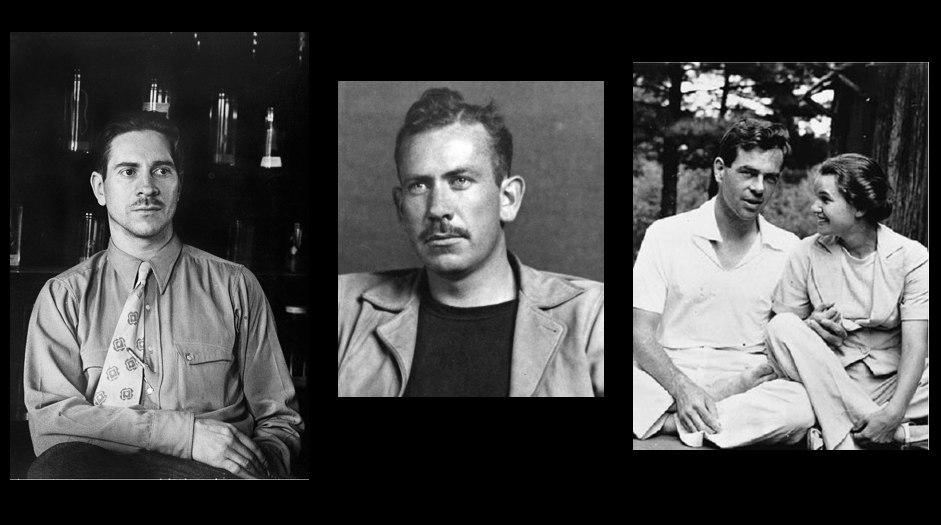
Ricketts, Steinbeck, Campbell and his wife Jean Erdman, a Martha Graham dancer.


If I had a time machine, I’d take it to Cannery Row, Monterey, about 1935.

Ed Ricketts, “Doc,” of Pacific Biological already has steaks and oysters and a loaf of sourdough, the last neatly bisected and all of them bathed in garlic and butter, ready to grill.

He crosses the street to Wing Chong’s for a gallon of red wine. He crosses back to start preparing dinner.


Wing Chong’s Market, Cannery Row, Monterey.


The guests, who drove in together from Pacific Grove, knock perfunctorily and walk in unencumbered—one of them, with luck, might’ve remembered to bring loaves of hard salami and Jack cheese. Regardless, Ricketts offers them their wine, poured generously into laboratory beakers. Then they barbecue, and one guest, the writer, offers unsolicited opinions—the very worst kind—on the proper way to grill Spencer steaks. They sip.

The steak expert is the the the novelist John Steinbeck. His friend and co-pilot on the perilous journey tomorrow morning back to Pacific Grove is the mythologist Joseph Campbell, who bears a remarkable resemblance to my Grandfather Kelly.

When their time comes, the steak and oysters and sourdough are dispatched promptly, along with a perfunctory iceberg salad with Thousand Islands dressing.

Two-thirds of the wine is left.

I don’t want the wine or the salad or the steak or the oysters–or even the sourdough, dipped in steak juices. I want to be, for just a short time, a fly on the wall, a grass snake under a warm lamp in one of Pacific Biological’s glass terrariums or even a skate breathing noiselessly at the bottom of a tank, just to listen, in my animal disguise, when the talk that won’t end until sunrise begins.

And could they talk. There would have been a lot of laughter, but there would’ve been confrontational moments, too. Ricketts, especially, with the scalpel that is a scientist’s mind, would have sliced his friends’ theories— about sexuality, life after death, about God the Father-Creator vs. God the Prime Mover, about the Great Depression and Italian Fascism— into slices as transparent as sashimi.

I can almost see Steinbeck, from my skate’s tank, slumped disconsolate into his chair once he’s been bested by his friend. In the silence, the only sound might’ve been the waves crashing into the pilings beneath the floor. But writers never shut up. Steinbeck would’ve found his voice again.

When sunrise came, I am sure that they departed wobbly friends.

Ten years away from 1935, the Allies will liberate Dachau and Auschwitz-Birkenau and they will vaporize Hamburg and Hiroshima. Three years later, Doc Ricketts, will be gone, killed on the train tracks above the Row—a little later, The Log from the Sea of Cortez will be his eulogy [Sweet Thursday would have embarrassed Ricketts]— so talks quite like this won’t happen anymore.

That’s a sadness because they told each other such grand stories, made even grander because they were told inside such a homely building.

What they told each other, thought through and distilled and re-worded, was what they’d learned from each other.

They were a biologist whose mind was so profound but whose stock-in-trade was Pacific Coast specimens for high school biology classrooms in Minnesota; a frustrated novelist, who’d written a dismal treatment of the pirate Captain Morgan and an immature and condescending novel about a paisano named Danny from Tortilla Flat and a mythologist who occupied an academic stratosphere to which no living wage could ascend.

What they discovered in each other was an electric attraction—or what Whitman called a “necessary film”— that ties all of us together. Granted, the red wine helped. They talked about our antecedence as clarified by Charles Darwin and William Jennings Bryan, they talked about Celtic and Hindi myth, about human nature’s potential, found in The Buddha, and its tawdriness, found in Huckleberry Finn. They argued about every conceivable topic, from Jungian theory to St. Francis’s wolf.

If they agreed on anything by the time the sun came up over the Gavilan Mountains, it was that this place—this planet—was a living organism, that we were its subordinates and, at the same time, its most murderous and indispensable components. They agreed that we belonged to it, and so to each other.

All of this disparate business, of course, had been hashed out a century before and a continent away from Pacific Biological by the Transcendentalists at Brook Farm. And before that, an ocean away, the same kind of talk happened, but it was in German: the Romantics there called the “necessary film” that ties all of us together weltgeist: World-Spirit.

But they didn’t have barbecue.

The talk on Cannery Row would have disappeared with the Del Monte Express that killed Ed Ricketts, except for Bill Moyers’s marvelous PBS series, The Hero’s Journey: Joseph Campbell and the Power of Myth. This was when we learned, thanks to Campbell, just how miraculous Luke Skywalker’s arrival truly was. Luke became even more miraculous when the mythologist helped us to understand, to our delight, that there was nothing new about Star Wars at all.

And then Campbell, thanks in great part to what he’d learned at Pacific Biological, told Moyers and all of us miraculous stories of his own that, of course, didn’t belong to him at all. He had learned them, too.

Bill Moyers (foreground) and Joseph Campbell, The Power of Myth. PBS.


But that series was a long time ago. But now, against the hard edges of current events, it’s in our soft remembrance of myth where we find the deepest truths, and there we have the chance to find our way back from the desolate place where we find ourselves now.

In the myth that is American film, I look to Frank Capra and Howard Hawks, and, when I can stand him, to John Ford. In writing, I look to Steinbeck and Willa Cather and to Hemingway’s short fiction; from my generation, I look to New Journalists like Tom Wolfe and Gay Talese. I look to the historians Bruce Catton and Barbara Tuchman and Doris Kearns Goodwin, to young historians like Laura Hillenbrand and Lynne Olson and Isabel Wilkerson, to baseball writers Roger Angell and Roger Kahn. I look to documentarian Ken Burns. I rely on the stories they tell me because they are true.

There are some—a harpy in Congress— who hold that our destiny lies in hating each other. That is a monstrous lie.

One way we can counteract this lie is to tell each other the truth: We belong to each other.

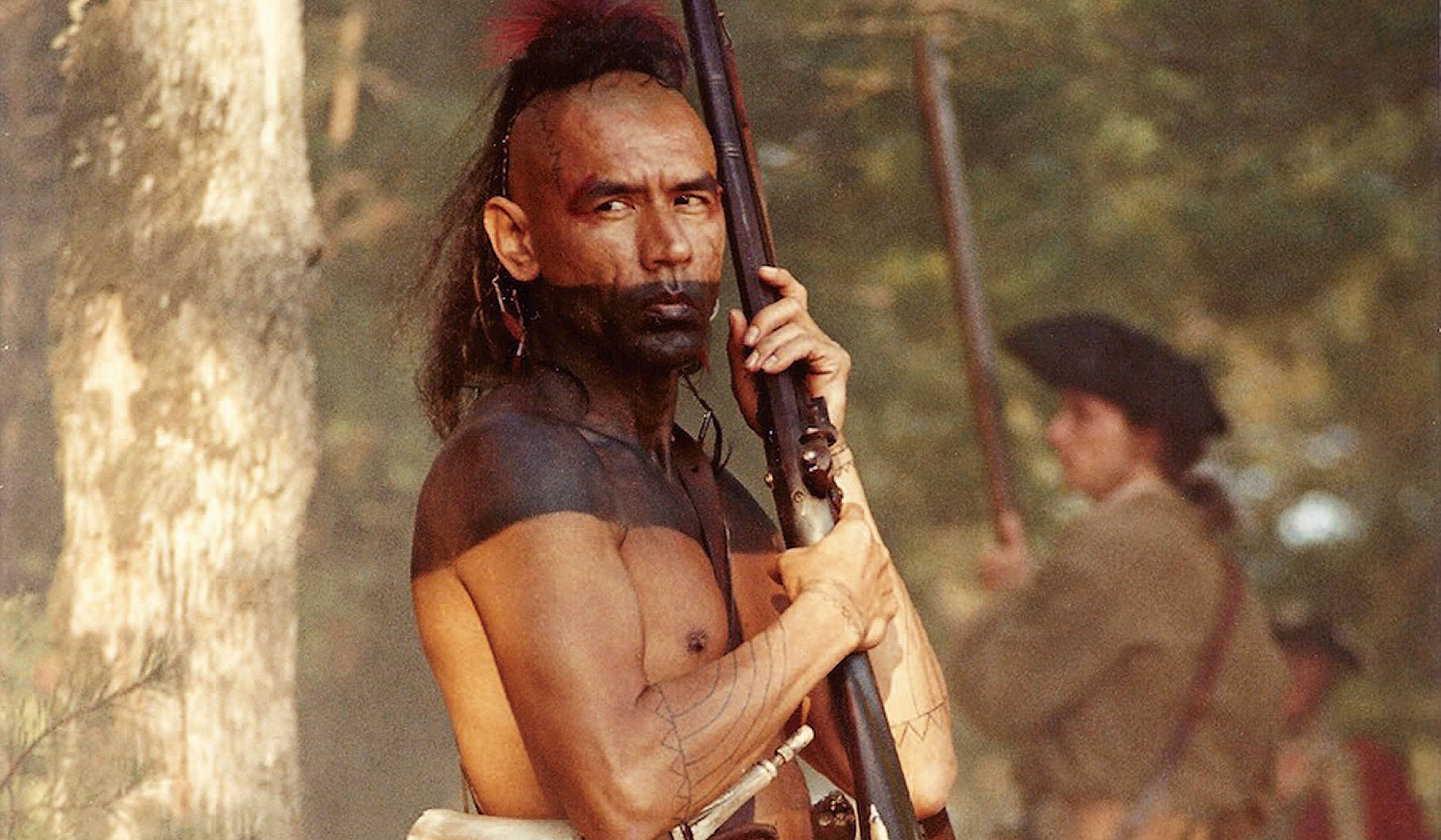
Here is just one example of what connects us: Campbell told Moyers that his research had taught him that there is a version of “Cinderella,” in one form or another, that’s found in nearly every culture in the world. I once watched Wes Studi—so terrifying as Magua in the film Last of the Mohicans—read a Native American version of the story to little children on Reading Rainbow, and he was so open-hearted and read the story so beautifully that the children at his feet, wide-eyed, knew immediately that it was a true story.


So here’s a story that I invented. The fact that it never happened doesn’t make it any less true.

It’s day’s end in Monterey in the summer of 1935. I am shivering a little in the fog despite layers of sweater and jacket. I am sitting on the bottom step of Pacific Biological. It’s cold, but I can smell the promise of warmth: red oak burning on a grill nearby. Then, in my story, I see Ed Ricketts, dressed in indifferent shades of khaki complemented by a surplus olive Army tie. He is closing a worn leather jacket across his chest and against the chill as he crosses the street with a gallon of red wine, which he carries with care, because the bottle’s green glass is thin. Its bottom is lined with sediment.

When he sees me waiting for him, an immense smile transforms his face, always serious, except for now.

Pacific Biological, Cannery Row, Monterey.


Call me Ishmael

27 Saturday Feb 2021

Posted by ag1970 in Uncategorized

≈ Leave a comment

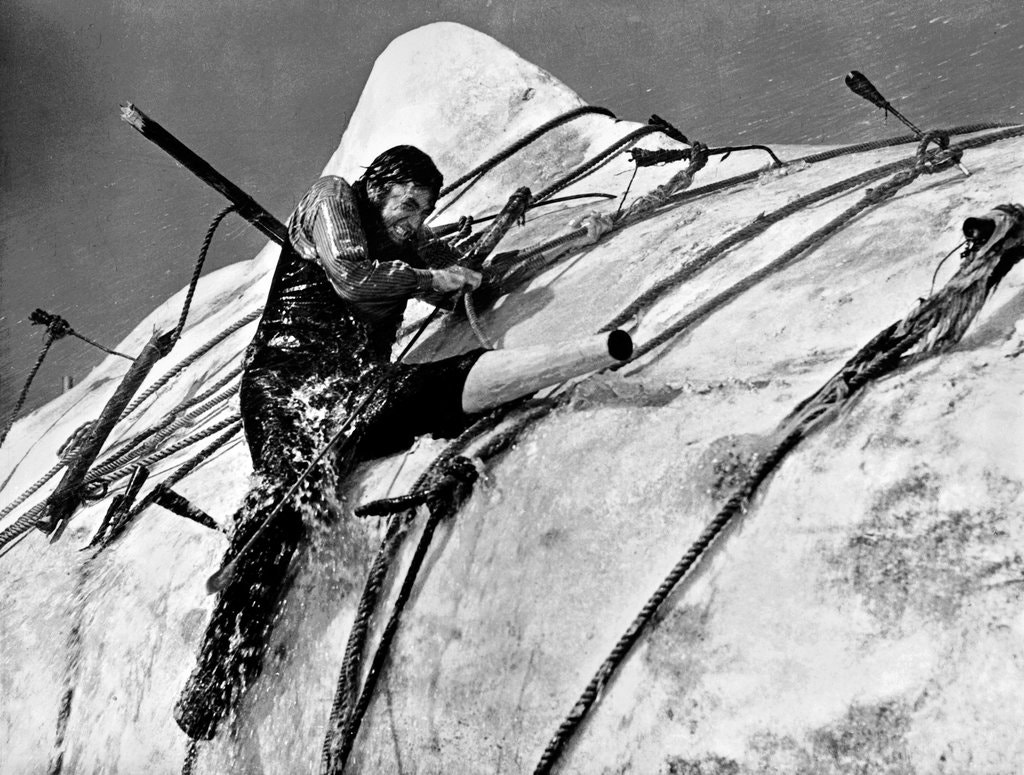
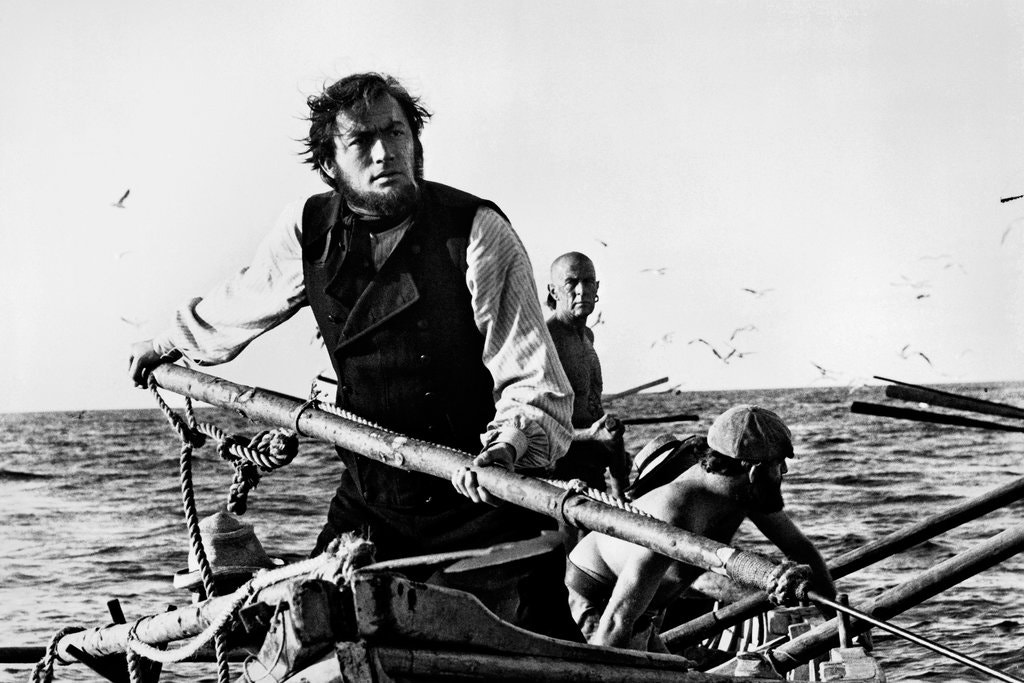
I finally got my appointment for my first Covid shot, which, of course, given the size of the needles I’ve seen on television, reminded me of Ahab and Melville’s Moby-Dick.

This was a novel I read in its entirety when I was a sophomore at Arroyo Grande High School. Two factors drove me to do this: 1) I had mono, was out of school for ten days, and the status of daytime television in 1968 was odious. You only had Herman Melville to fall back on, and he was one of our Assigned Novels. 2) While I read, our West Highland White Terrier, Winnie, napped under the comforter at my feet. Having a Westie as your best reading buddy was a marvelous experience.

And, as it turned out, so was the novel. I learned everything about cetaceans except their bowel movements, which I prefer to ignore, and Ahab was one of the most delicious fictional characters, in terms of self-destructive leadership and excepting our 45th President, whom I’ve ever encountered. (An aside: Patrick Stewart’s Ahab is fine, but Gregory Peck’s remains the standard.)

Here is what happened because I had Mono and Winnie: I discovered a latent New England fetish. Never mind Robert Frost, whom I’d loved since I was a little boy. Years and years later, when I taught American Lit at Mission Prep, I discovered, after two years of struggling with the material, how much fun teaching Hawthorne’s Scarlet Letter was. Hawthorne’s gift was never in writing, which quickly became apparent to my students; it was instead in human psychology. So I became, the third time around, a member of the Hester Prynne Marching and Chowder Society, a devotee of the short story “The Minister’s Black Veil”—Puritan guilt isn’t that far removed from my ancestral Irish guilt—and even began to like, from a distance, the frequently-infuriating Melville short story “Bartleby the Scrivener.”

All of this, of course, came a whole unit before I got to teach New Englander Emily Dickinson, whom I never much wanted to leave behind, and her Brooklyn contemporary Walt Whitman, for the more dubious pleasures of Hamlin Garland or even Huckleberry Finn. There’s not much more fun to be found in teaching American Lit than to teach these two side-by-side and to marvel at the contrast—Whitman’s obnoxious but endearingly jubilant expansiveness, Dickinson’s eccentrically-hyphenated economy—and to try to teach your students the one quality they shared, which was their audacity.


But Emily never held a harpoon in her hand. Melville did, and, given my impending vaccination, I was reminded, too, of nonfiction, which I read much more nowadays. Nathaniel Philbrick is one of our finest nautical writers, and his book In the Heart of the Sea is a marvelous re-telling of the actual event on which Melville based Moby-Dick.

In 1820, the Nantucket whaler Essex had her hull crushed by an enraged bull whale in the South Pacific. Essex was engaged in the work of whalers, harvesting calves and cows and young bulls in the important business of lighting American homes and around-the-clock New England textile mills, where thirteen-year-old girls at their power looms were frequently beaten.

Whale oil smelled sweet, but the whaling ships were brutal, too, with their crews at the mercy of a ship’s master who might prove as merciless, as prone to a “starter”—a short knotted rope— as a Mississippi Delta overseer was to his whip. A whaler’s voyage frequently took three years or more, and from them we derived a feature of late Georgian and early Victorian American architecture, the “Widow’s Walk.” From their heights, women whose hearts would break as surely as Emily Dickinson’s did could watch for ships that would never return. Even for husbands who did return, Philbrick writes of polished whalebone dildos–they were called “he’s at homes”—that served as transitory relief for young wives condemned to the celibacy that whaling imposed on their lives.


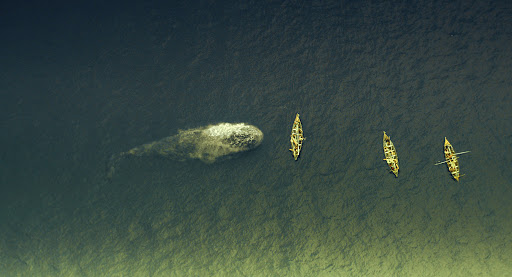
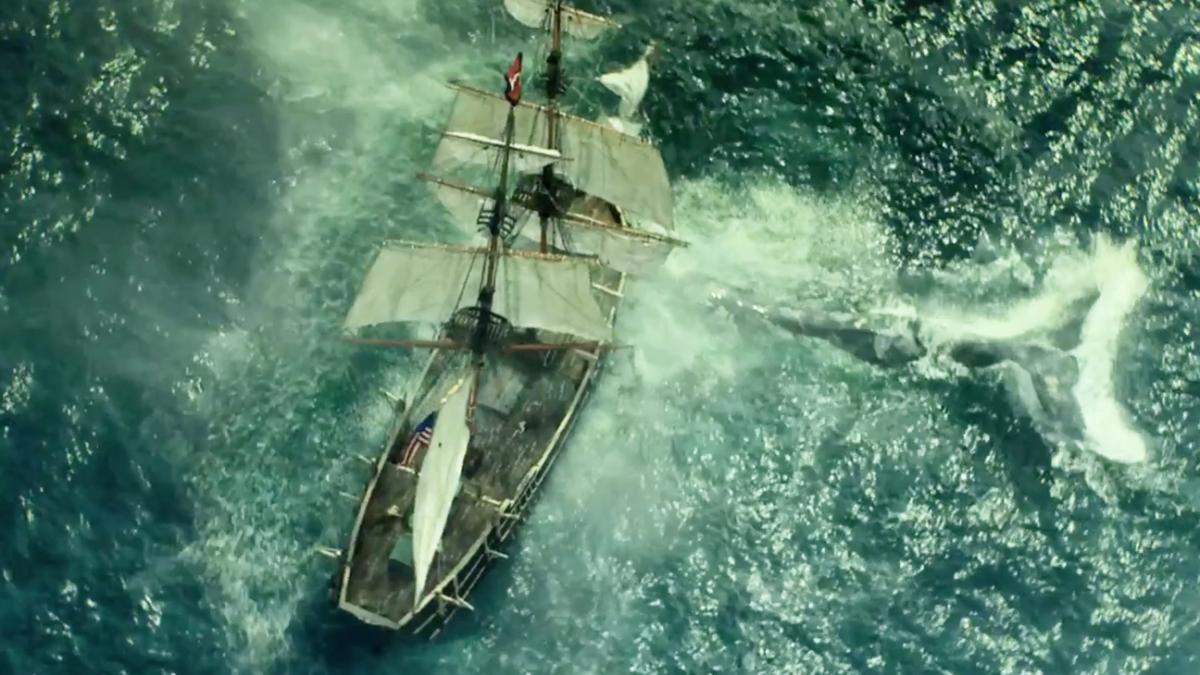
Essex didn’t return, of course. These marvelous stills from the film version, directed by Ron Howard, of In the Heart of the Sea suggests why. The things that men make don’t stand a chance against the whales that God makes:

One of the ironies of Essex’s wreck is that the crew, in three tiny whaleboats, made for the shore of Chile, 3,000 miles away. The Hawaiian, or Sandwich, Islands were much closer, but the Americans heard that the natives there were cannibals. On the day Essex left Nantucket, a Boston newspaper might’ve hit the docks, bundled in twine, and one of its articles remarked on the kindness of the people who lived in the Sandwich Islands.

Of course, during the ninety days that it took Essex’s crew—what was left of it—to get themselves rescued, they had to eat each other to survive.

Hence the value of local journalism, something rapidly disappearing in 21st century America.

I was a journalist. I was frequently complimented for my accuracy, which made me immensely uncomfortable. That meant I was telling a story that someone wanted to hear. That’s not the same as reporting objective reality, or its closest approximation, which is the best that any reporter an hope to do. The reporters I knew and worked with were young men and women of immense integrity. They agonized, as I did, over misstated facts or misquoted quotes. A misspelled name would keep me awake for two nights running.

Years and years after, Murdochian journalism appeared—with its antecedents in the 1860 Charleston Mercury, in Hearst’s Journal, in Father Coughlin’s broadcasts from the National Shrine of the Little Flower–but this was seven nights running, loud and shrill and strikingly blond, skilled in telling stories that Americans wanted to hear, skilled in the kind of seduction that Ahab used to lure Pequod’s crew to its doom.

The Americans who tuned in, in their Nielsen millions, lacked my father’s editorial snort.

Now it’s come to this: We are in the same sea that Essex sailed in 1820. Our hull has been stove in and we are taking on water. We call out to each other across the sea that separates us in our isolated whaleboats, but the loudest voices, the ones that carry above the wavetops and against the current, belong to men and women fully as mad as Pequod’s Ahab was. In the aftershock of January 6, we watch our ship in her agony, but we remain shocked and silent, listening to boat-captains urging us to steer east, toward a landing we will never make.

As meek as they might seem—and all of these truly are–wearing a mask, displaying the flag on Inauguration Day, questioning the wisdom, given Exodus, of the golden statue of Donald Trump at CPAC and even getting a vaccination are all now politically fraught. I hate shots, so I will get my shot. It’s my only oar in the water, but even a gentle pull might help us come home again.

Call me Ishmael.

The fighter pilot from the Gospel of John

02 Tuesday Feb 2021

Posted by ag1970 in Uncategorized

≈ Leave a comment

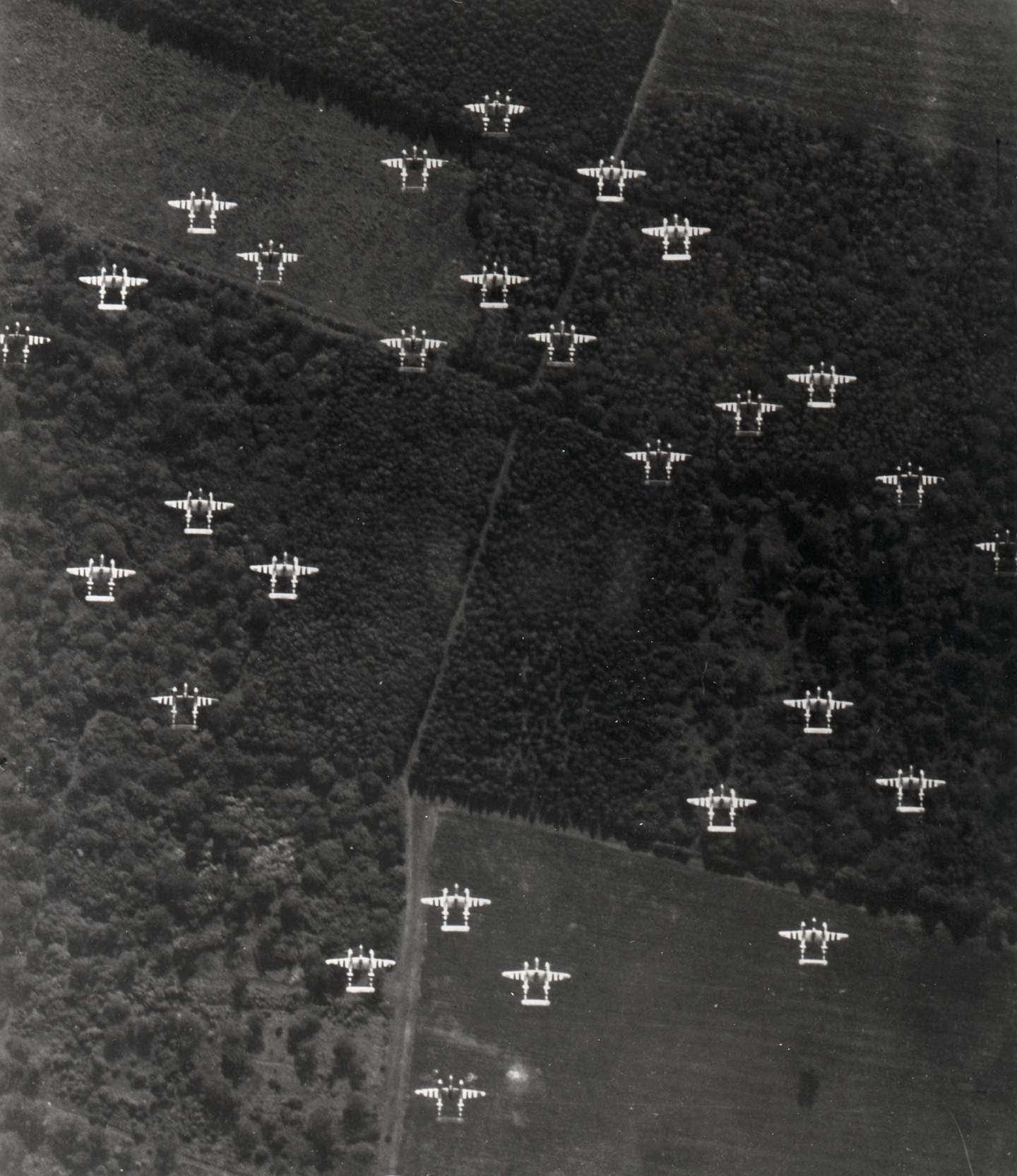
A squadron of P-38s over Normandy, June 1944

https://drive.google.com/file/d/1BESc8LlHaIGTnP6wKCAXEFz1HeS1u8c6/view?usp=s

I was asked to write a Lenten reflection. It came from a marvelous story about a young World War II pilot who lived in Orcutt after he’d retired from the Air Force. The verse from John reminded, me, too, of Arroyo Grande’s war.

Three years before the buses took them away in 1942, Arroyo Grande’s Japanese, in a moment of immense generosity and tragic irony, gifted the church to which many of them belonged–the Methodist Church– with a painting of Jesus in Gethsemane, in a solitary moment without the friends He loved so much, praying for deliverance from a death He knew was inevitable. We begin to see that in John:20-33.

I found the reflection, on Verse 24, in an odd place, in my studies of World War II and in a book I wrote, Central Coast Aviators in World War II. If you click on the link just below the photograph, the video will explain my choice.

The theme, which seems so lost to us today, is Selflessness.

I found this quality in a man, nicknamed “Ike,” so self-effacing and so seemingly colorless–the parakeet in the background of this interview is far louder than he–that at first glance I wouldn’t have looked for Jesus in him at all.

But John XXIII reminded us that Jesus loved food and, even more, He loved the company that being at table brought Him.

From “Ike” Eckermann’s 2012 obituary:

He enjoyed traveling, gifts of service to others, genealogy study, the [Lutheran] church, sharing stories of his military adventures, birdwatching, gardening, and music. Cooking was one of Ike’s greatest talents, and his recipes are treasured by those who were blessed to share meals at his home. 

And there you find Christ, busy in Ike, who is busy in Ike’s kitchen, hovering over an omelet that will emerge lighter than the clouds that protected him such a long time ago and served, with such happiness, at the table of the man whose machine-guns refused to fire.

What was that rain song?

27 Wednesday Jan 2021

Posted by ag1970 in Uncategorized

≈ Leave a comment

Since it’s pouring proverbial buckets, I remembered a song about rain from my teen years. Turns out it was “The Rains Came,” 1965, an earlier song covered by the Sir Douglas Quintet. I loved the Sir Douglas Quintet, but I couldn’t find a live version on the YouTube that I liked.

Then I found this one, lovely, performed by the late Freddy Fender.


Hm, I wondered. Why would a Tejano Country-Western star cover a Brtish group’s song? I let it go and found another Sir Douglas Quintet song, “She’s About a Mover,” with Go-Go dancers and a vaguely scary lead singer, Doug Rahm, and a just-as-scary organist, an instrument that was a Sir Douglas trademark.


They’re not English at all. They’re Texans! From San Antonio!

In fact, Sir Douglas—er, Doug Rahm—would go on to found the Texas Tornados. Here’s “Mover,” by the Tornados, from a 1990 “Austin City Limits.”

And that’s Freddy Fender next to Rahm.

And, about 3:47, just past the accordionist Flaco Jimenez, theres a solo by a guitarist in a striped shirt. That’s San Luis Obispo’s Louie Ortega.

Cool.


The Men Who Knew Too Much

18 Monday Jan 2021

Posted by ag1970 in American History, Uncategorized

≈ Leave a comment

By 1957, over 35 million prescriptions for the sedative Miltown had been written, overwhelmingly for American women.

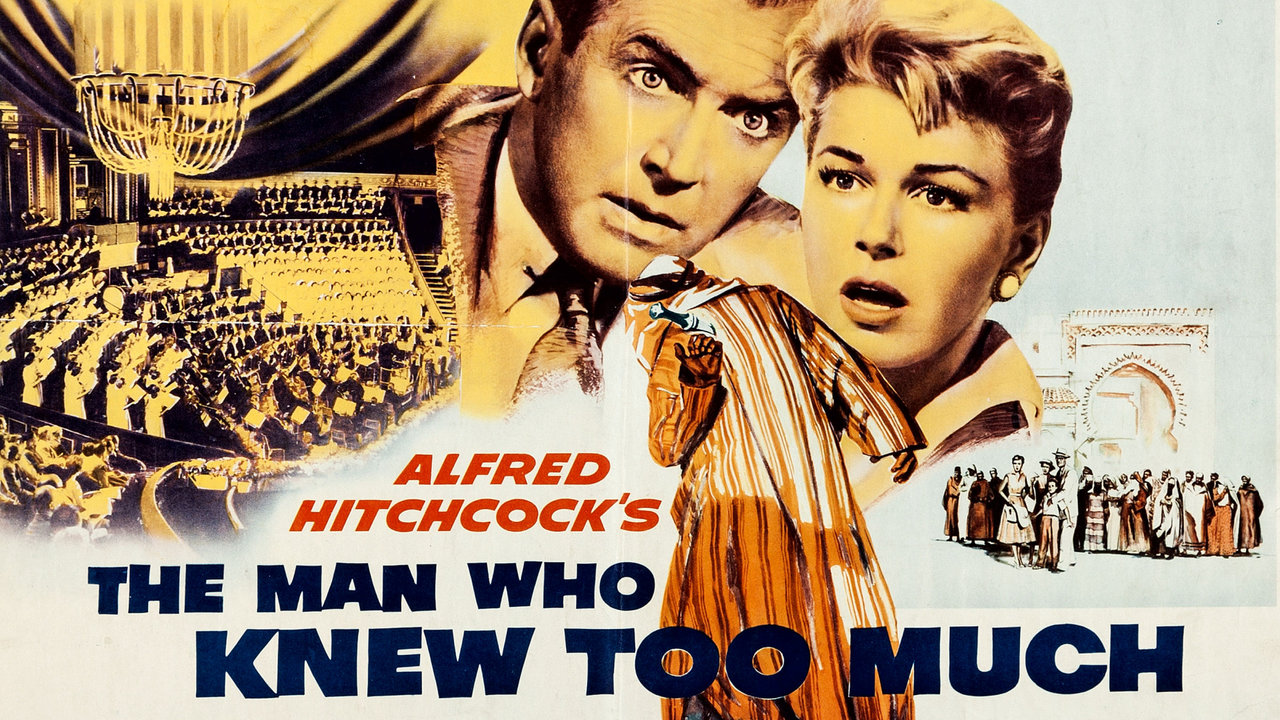
Being a History Guy, and knowing that, it startled me in the midst of watching a 1956 Hitchcock film I otherwise enjoy. This one:


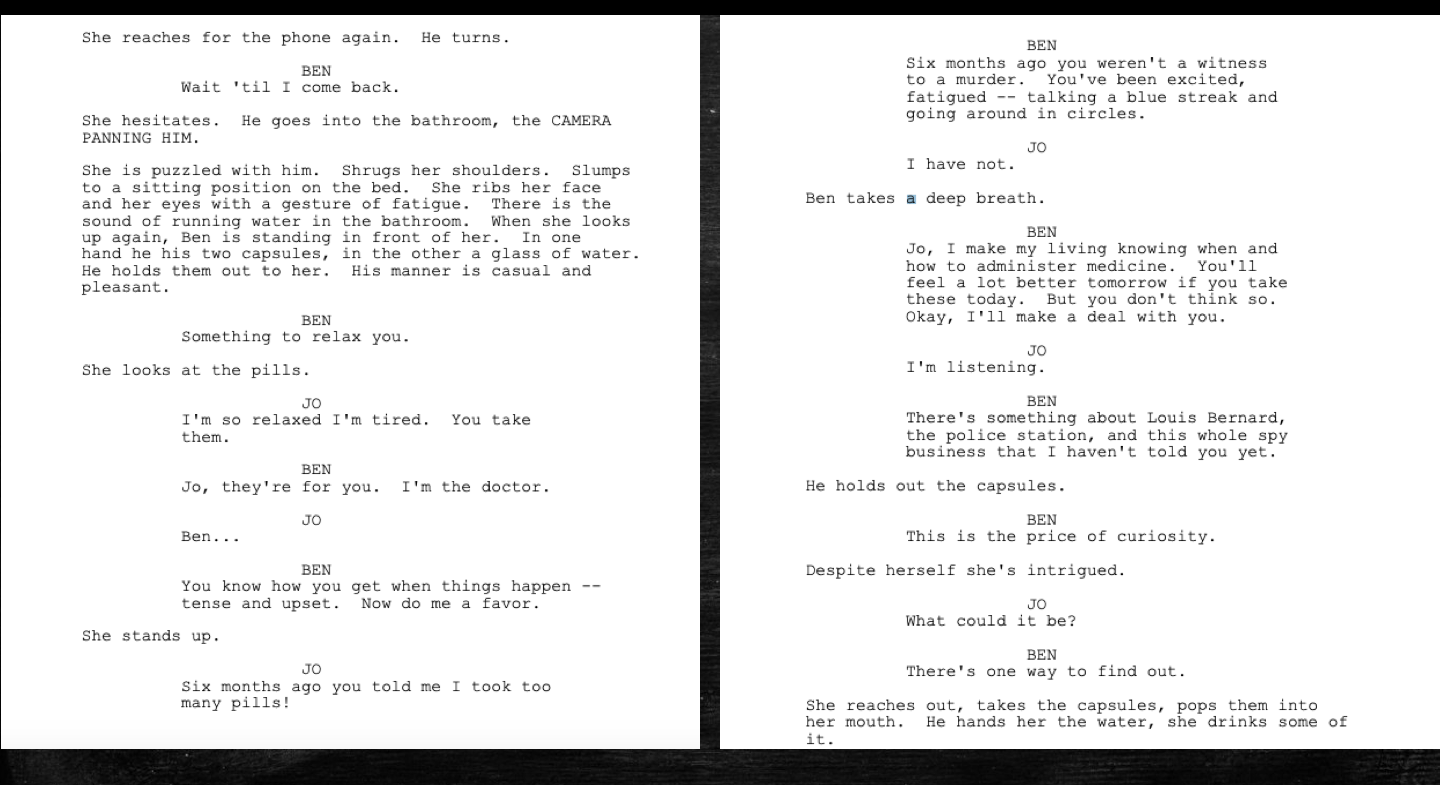
The film scene that brought me up short happens in a Marrakech hotel room, when James Stewart’s Dr. Ben Makenna must disclose to his wife, Doris Day’s Jo, that their young son has been kidnaped. This is how Dr. Ben breaks the news, with the help of Modern Pharmaceuticals:


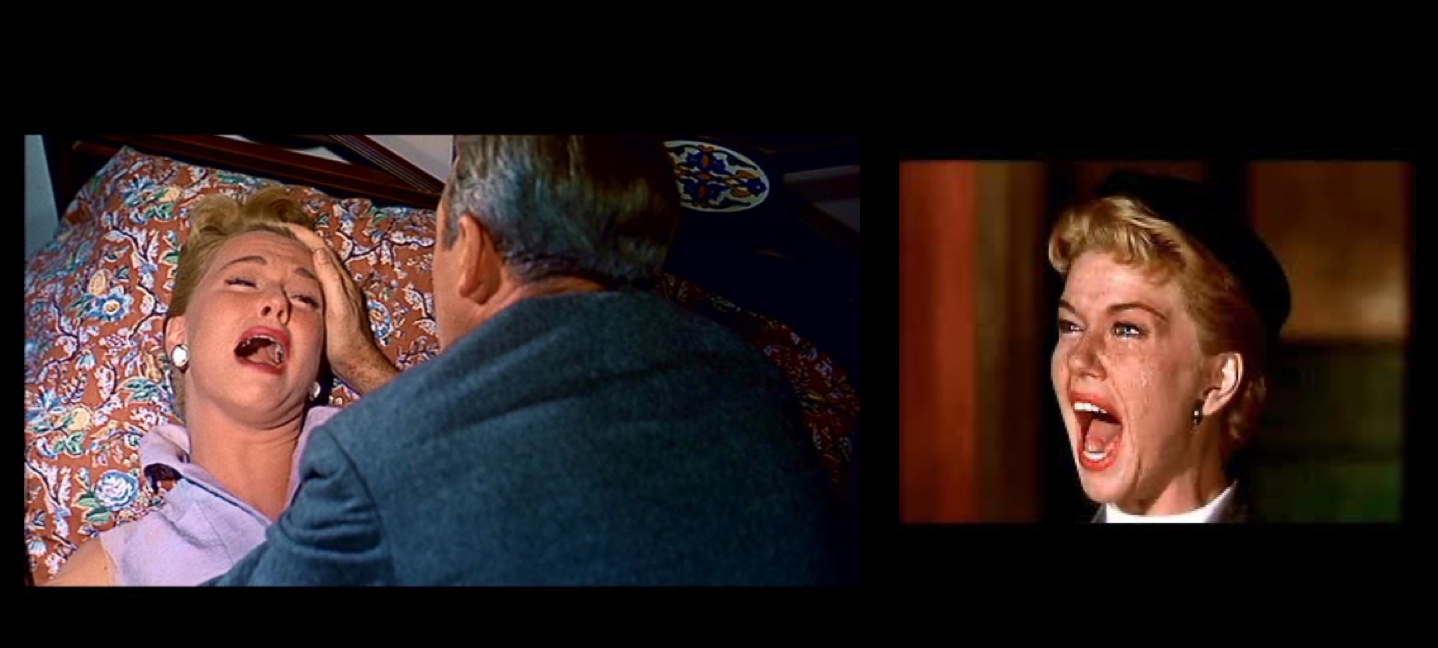
To her credit, it’s Jo who finally realizes that the man Ben is looking for in London—the lead to their missing son— is not a man named Ambrose Chapell, but a church called Ambrose Chapel. While she runs to the phone to summon the authorities, Ben gets into a manly fight inside the chapel and is cold-cocked by blackjack. Later, in the Albert Hall, Jo gets to scream, throwing off an assassin’s aim, while Ben gets into a manly fight with said assassin, who falls, kerplop! to his death, making a new hole in the Albert Hall. [Sorry. Arcane Beatles reference.]


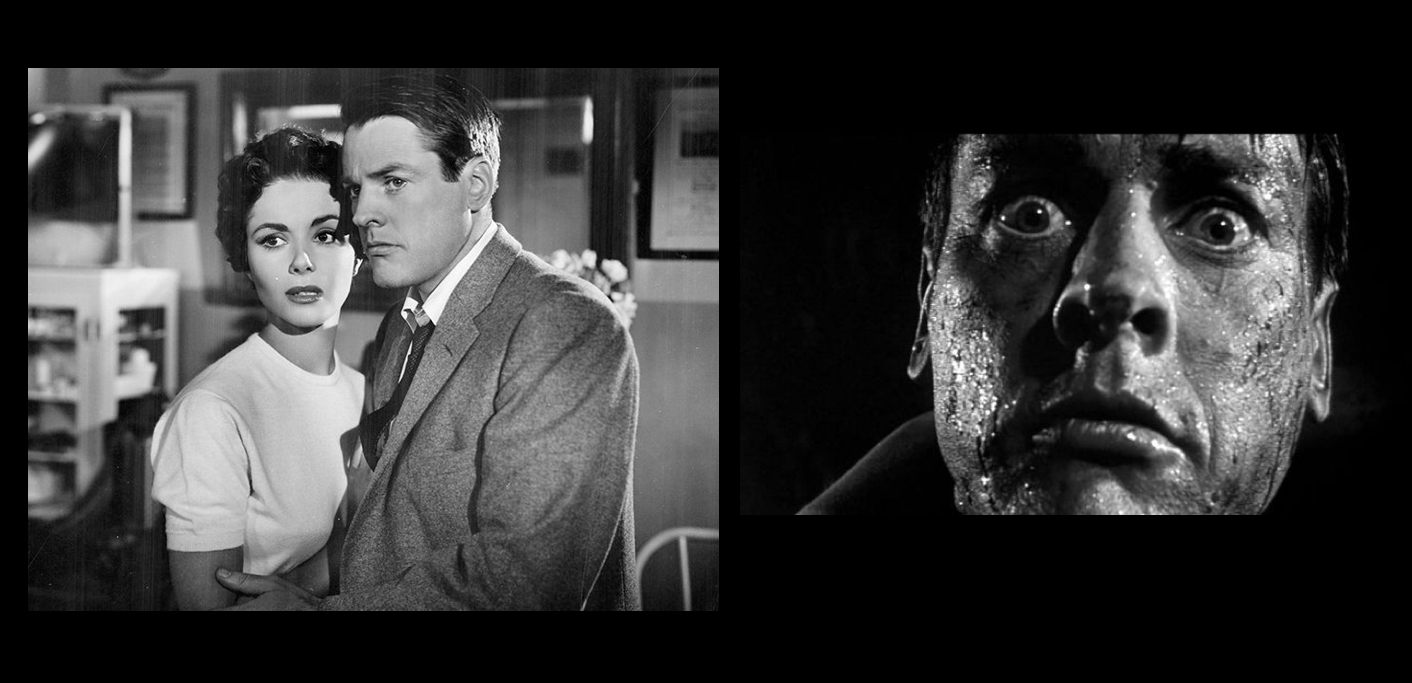
This scene reminded another 1956 film, Invasion of the Body Snatchers, in which Dr. Miles J. Bennett, played by Kevin McCarthy (Not the funny one. He’s still the House Minority leader.) repeatedly urges his beloved, Becky Driscoll (Dana Wynter), amid all the poddage, “TAKE TWO OF THESE!” Sometimes they seem to be Miltown or Librium; in one scene I think they’re dexedrine—so Becky can run faster, I suppose. They don’t do her any good—nor Dr. Miles J. Bennett. Becky becomes a 112-pound snow pea. Bennett winds up loony alongside the 101.


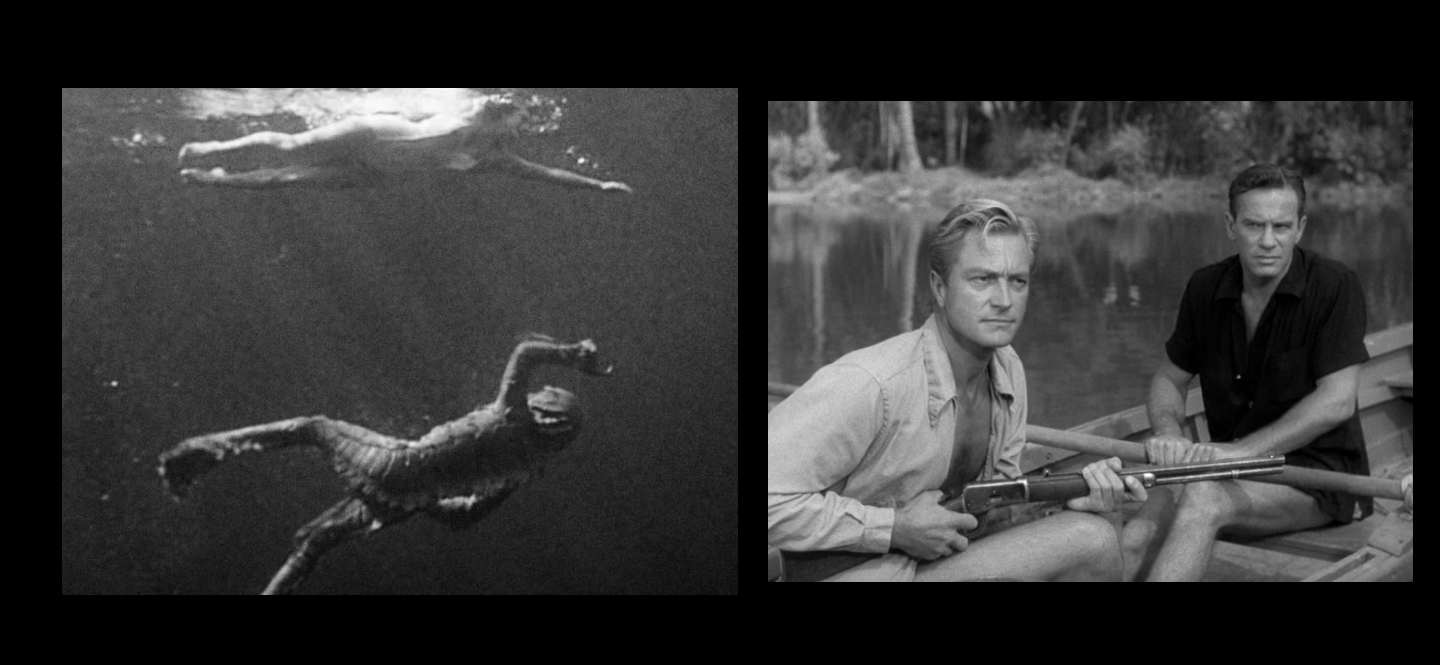
A kind of Female Learned Helplessness theme can be seen throughout Fifties films. Creature from the Black Lagoon’s Julie Adams (1956) gets to swim fetchingly and faint a lot, but only the boys have access to the cool stuff, like the lever-action Winchester and what appears to be a Jumbo Economy Size Spear Gun.

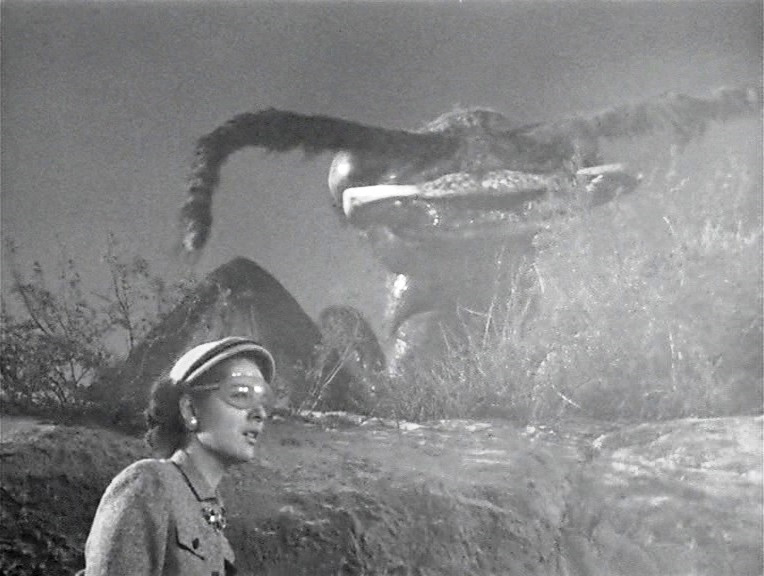
The same holds true for the 1954 classic and I think one of the best scifi/horror films ever made, Them! It’s established pretty early on that Joan Weldon’s Dr. Patricia Medford is by far James Arness’s (FBI agent James Graham) intellectual superior, but who goes wandering absent-mindedly through a desert dense with drooling Atomic Ants the size of RVs? Yup, The girl.

Tum-te-tum-te-tum. I wonder what’s under that sagebrush over there?

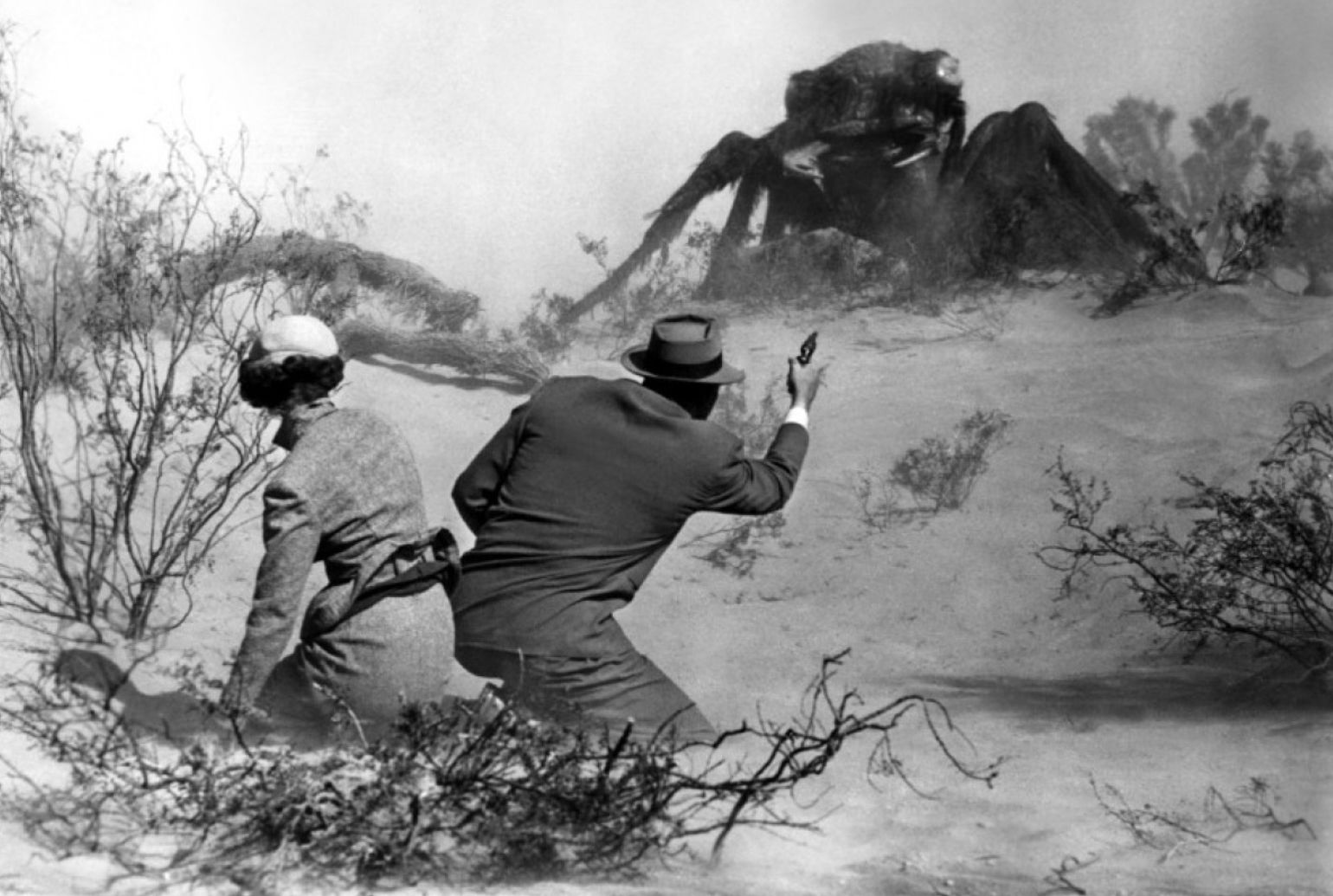
Arness somehow manages to discourage the ravenous ant with a snub-nosed Detective .38 Special, which I find not convincing at all.

For God’s sake, Agent Graham! He wants the Juicy Fruit in your pocket!

But does Dr. Patricia Medford get to use any weapons? Especially the flamethrowers? Nosirreebob. Those are left to Arness and the unfortunate James Whitmore, who gets squished by Ant Mandibles. Medford gets a half-hug from James Arness.

[Are you beginning to see why I liked Alien’s Ripley so much?]

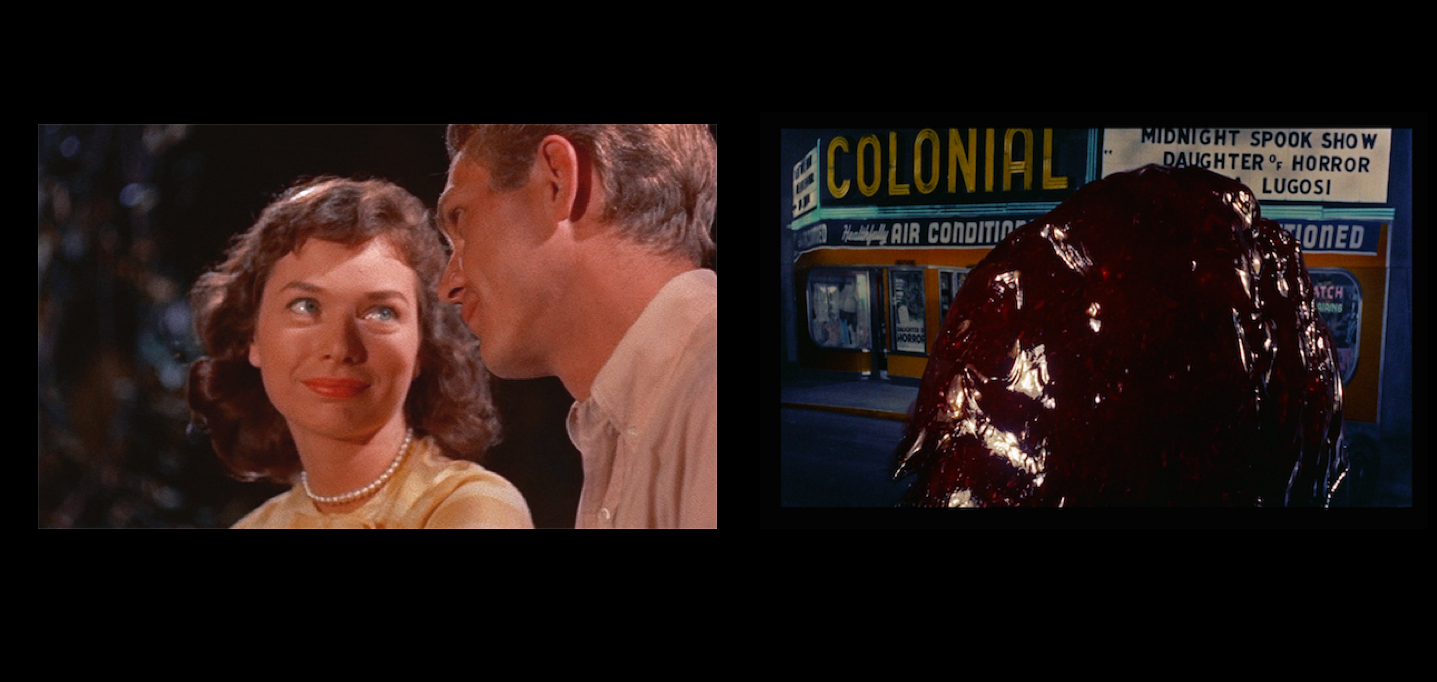
Aneta Corsault and Steve McQueen; the Blob emerges from the movie theater sliding effortlessly across Main Street thanks to all the popcorn butter he’s consumed. Or, “she.” Let’s be fair.

The one film where the female lead gets something close to Equality in Pluckiness would be in another favorite, 1958’s The Blob, where Steve McQueen and Aneta Corsault get to rush around what seems to be an incredibly obtuse San Joaquin Valley town. Even for the San Joaquin Valley. They’re trying to convince their elders that a huge ball of Olallieberry Jam from Space has eaten an old man, but not his dog, the town doctor and, alas, his nurse and the most of the Class of 1960 at the movie theater. They get a lot of “Crazy kids!” and “They’re just teenagers!” but Aneta doesn’t panic, does her own fair share of rescuing, and just as the Blob is about to eat the diner she and McQueen are sheltering in (Warning to future Blobs: The sheer volume of cheese, hamburger meat and onions stockpiled in a typical 1958 diner is enough to kill most alien life forms), she doesn’t get gypped out of any cool weaponry. McQueen figures out that Blobs don’t like cold and he spritzes it with a fire extinguisher.

Sensibly, Corsault moved from the San Joaquin Valley to Mayberry, North Carolina, where she changed her name to Helen Crump, took a teaching job, and began dating Sheriff Andy Taylor. They will go steady in a noncommittal way for what seems like twenty years until, one season, Miss Crump just up and disappears. I bet she left behind a drawerful of ungraded social studies reports about Our Latin American Neighbors. Except for Paraguay. Nobody ever wants to do a report on Paraguay.

One of Corsault’s contemporary actresses, Nancy Kwan, starred in 1961’s Flower Drum Song, a Rodgers and Hammerstein film so condescending that it reminds me of Quint from Jaws dragging his fingernails down the chalkboard, but for two hours.

She sang a song called “I Enjoy Being a Girl.”

I can’t imagine why.


Talent

11 Friday Dec 2020

Posted by ag1970 in Arroyo Grande, Uncategorized

≈ Leave a comment


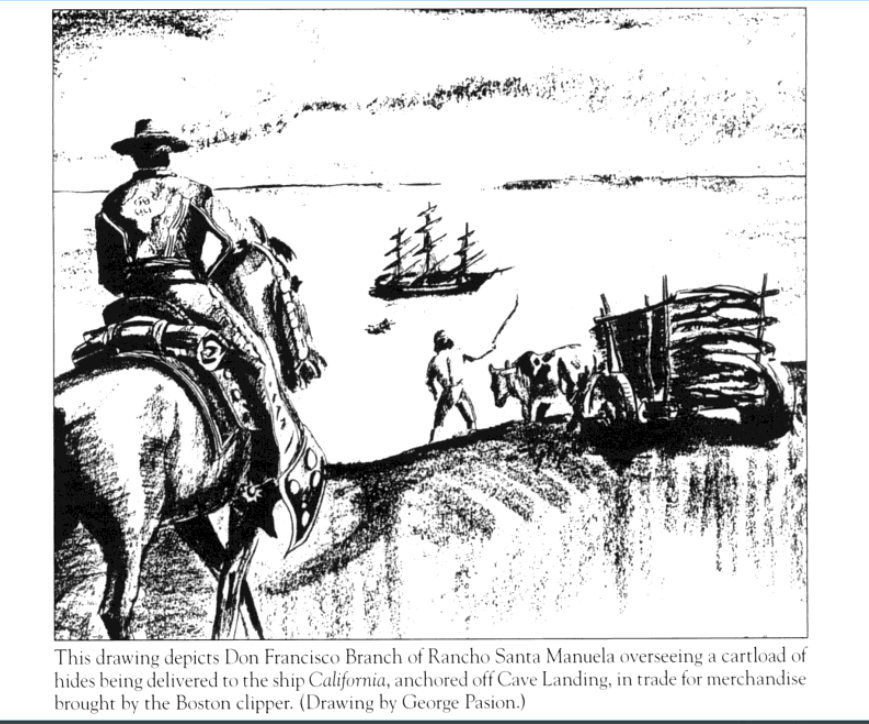
This drawing appears in Jean Hubbard and Gary Hoving’s outstanding book, from Arcadia Publishing, about Arroyo Grande’s history.

It moves me every time I see it. This is why.

The artist was my best friend in first grade at the two-room Branch School. George’s original hangs on a wall of the South County Historical Society’s research library, so every time I go inside I feel an instant of intense pain. George Pasion died two years ago.

George introduced me to empathy. He wore heavy leg braces—the film Forrest Gump replicated them— and running, for him, was awkward and painful. I remember distinctly one day when he could not keep up with the rest of us boys, and his eyes filled with tears. He was frustrated and enraged.


That moment broke my six-year-old heart, which is as good a way as any to begin a friendship.

George’s heart carried immense weight that belied the weakness of his legs. He was strong in ways we couldn’t understand. He was intensely focused but sometimes far, far away; his art, at which we always marveled, took him to places we couldn’t begin to imagine. This piece indicates he found the ability to time-travel while the rest of us were stuck in the Cold War and Mouseketeers.

There was immense wisdom in George, even then, when he was just a second-grade boy.

It was, of course, a wisdom he must’ve inherited from his parents. His father was Filipino, a member of the manong—Elder Brother—generation, bachelor men who came to Arroyo Grande to help support their parents back home. They fought, like tigers, in World War II and, at war’s end, they brought war brides home from the Islands, thanks to newfound liberality on the part of the federal government. Before the war, almost no Filipinas were allowed to immigrate; in California, male immigrants outnumbered them a hundred to one.

This was thanks to some of the most virulent racism, including in Arroyo Grande, that I’ve ever encountered in my research.

So it was World War II, and the families that soldiers started, that made my friend from sixty-two years ago possible. I last saw him fifty years ago. In learning of his passing, and in seeing this drawing, I’m reminded of the Whitman line.

Time avails not, the old fellow wrote in one of my favorite poems, “Crossing Brooklyn Ferry.” Time, according to the poet, doesn’t matter. There are some moments, when we keep them, that can never escape us. And there are some people, like the audacious poet, the old silky-bearded rascal, who inserts himself into his poem, who are looking at us fondly just beyond the reach of our vision.

And so George remains as vivid a presence in my life today as he was in that moment, in 1958, when I saw his eyes fill with tears. That was the moment that made him my first best friend.

Teaching history through film

06 Sunday Dec 2020

Posted by ag1970 in Uncategorized

≈ Leave a comment

From Swing Kids

Forgive me, but I once got the chance, thanks to an immensely talented student, to design a course on Film History for the high school where I taught Advanced Placement European History. I’ve never worked quite so hard on a project and never loved working that hard quite so much.

The course was approved and adopted by the panel that resembles, I suppose, the faculty at Hogwarts, by which I mean UC Berkeley, but it was a great sadness that there was no room in my schedule to teach it. Film history is a passion of mine.

But when I taught my students AP European History. I would sometimes use film excerpts to make a point that was beyond me to teach. There is no shame in that. Even if the film--Amadeus is an example—wasn’t 100% historically accurate, if it gave them a sense of the times we were learning—an emotional connection–then that was enough and more than enough.

I was reminiscing about  a few of their favorites. And mine.

Dali’s cameo in Midnight in Paris. This is when they “caught” my love for the Lost Generation.

In Amadeus, the “improvement” on Salieri’s march. I adore this scene because someday nearly all my students would meet someone far more gifted than they thought they were. Thanks to them, I’d already made acquaintance with people far more gifted than I thought I was.


2003’s Luther relieves us of the idea that he was so constantly dour. He was a brilliant teacher.


The absurdity of the Cold War was something students instantly grasped, thanks to Dr. Strangelove:

Where did nationalism come from? Shakespeare put these words into Henry V’s mouth at Agincourt, but they explain the idea exactly:


The horror of World War I? Australia’s Gallipoli remains one of the finest war/anti-war films ever made. Peter Weir, director. Here’s, Mel Gibson’s runner is trying to stop a costly Australian attack against the Turks.


And this battle scene from Weir’s Master and Commander teaches us that Napoleonic warfare could be just just as terrible:


What kind of leader was Elizabeth I? The Tilbury speech—an this is verbatim, not the work of screenwriters—is from the mini-series The Virgin Queen. This is extraordinary political leadership. We could use an Elizabeth.


For a sense of what it was like young in a fascist dictatorship, this thrilling dance sequence—just before the police raid—from Swing Kids:


And belonging to fascism was never better captured—until perhaps Jojo Rabbit– than in this scene form Bob Fosse’s Cabaret:


How terrifying was Stalin? The Boss loved movies, so this film is about his movie projectionist. From The Inner Circle.


How terrifying was Henry VIII? I guess no powerful man’s temper tantrums can be shrugged off. This one couldn’t. From the classic A Man for All Seasons.

And, as to royalty, there can’t be a better way to demonstrate the disconnect between the Bourbons and their people than in this scene–thanks to music by Bow Wow Wow–from Marie Antoinette.


What scenes like these—-and there are many more—teach both teachers and students is that history isn’t the province of textbooks reduced to chaff by center-right selection committees. It’s about the people we recognize, if only for an instant, in a few feet of film. This is the medium, after all, that so often gives us the chance to recognize ourselves, even if the selves we see shock us suddenly with shame. Film can lead us, too, toward the people would like to be. That’s when the learning comes, in that moment of recognition when we see ourselves, when we become actors in the past that belongs to all of us.

O, my frozen youth!

17 Tuesday Nov 2020

Posted by ag1970 in Arroyo Grande, Uncategorized

≈ Leave a comment

The first TV Dinners began appearing in the mid-1950s, and the Turkey Dinner may have been the first. The turkey had the consistency of papyrus; the mashed potatoes were bland, the dressing turned to goosh, but the peas made outstanding projectiles.

We survived the privation younger kids would never know: Cranberry Sauce, added years later, kicked up Swanson’s game a notch. You could dunk the turkey in it to more or less give it some zip.

The fried chicken dinners always disappeared from the freezer first. The batter was kidnip (instead of catnip) because it was faintly sweet; the peas this time came with buddies, which made them tolerable, but the mashed potatoes were still disappointing. They tasted like beach sand. The apple/peach combo was a nice notion but they had consistency of banana slugs, whose consistency I do not care to contemplate.

I do not understand this cowpoke’s happiness. The one thing you’d think an American TV dinner could do well would be beef. Wrong. This looked like roadsplat and tasted like ketchup, which you could chug anytime out of Mom’s fridge. The fries were an abomination but you ate them first because they were fries. Sort of. The peas were, well, Swanson peas. Boring. Uninspired. Still, they were throwable or, even better, launchable–they traveled at great velocity from your spoon, a kind of dinner-table catapult.

Another failed attempt in the World of Beef. The beef tasted like recycled shoe tongues or perhaps the “bully beef” salvaged from the vast British stockpiles left over from the Battle of the Somme (1916). No self-respecting penitentiary would serve a meal this bad. Not even a British one.


The closest thing to success with beef, due largely to the thin brown gravy, which was actually tasty and the only corrective in the Scientific Literature for the mashed potatoes–finally, if you drowned them, they tasted almost good. The gingerbread brownie? The work of a madman.


We never had this one, but any meal with pickled red cabbage gets my hearty approval. Sadly, the photographer who took this shot for the TV Dinner carton appears to have dropped his glass eye into the dessert.

More international genius. The enchilada wasn’t too bad. You could just about stand the refried beans, whose aroma brought to mind molten rubber at the Goodyear Tire Factory, but they improved if you mooshed them together with the rice. Nice chili gravy with Undetermined Meat Objects within. The real disappointments were the two “tamales,” essentially surplus Mexican Navy torpedoes and, as torpedoes sometimes do, they’d settle to the bottom and just stay there. For days.

Took FOREVER to cook, and by the time it was ready, your twelve-year-old self was so famished that its just-out-of-the-oven super-steamed heat burned away the top layers of skin cells on your palate and tongue, which meant that you couldn’t taste anything for several days. But if you had the patience to let it cool a bit, this little gem was Comfort Food Supreme. After a tough day at school, a nice snack to eat during Rocky and Bullwinkle or while watching dreamy girls dance the Frug or the Slauson on a music show called Where the Action Is. The natural order was restored.

When mourning is what we need

14 Friday Aug 2020

Posted by ag1970 in Arroyo Grande, Uncategorized

≈ 3 Comments

I have been stunned, but not at all surprised, by the sadness so many of us feel at the closing of The Grad, the burger/bar/nightclub in an immense building that seemed to hold the south side of San Luis Obispo down for the last forty-five years.

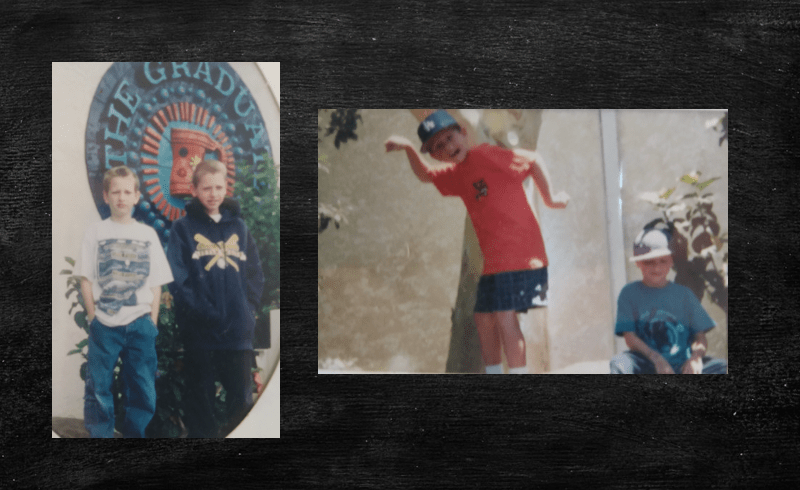
The grief is authentic and I would like to argue that it’s justified, too. Even my wife had tears in her eyes last night: when we were young parents, lunch at The Grad was a supreme treat for our two little boys, who ran about like wildebeest on the dance floor and played video games and then, when they were very little, after their Junior Gradburgers, they’d fall asleep in the back of our VW Westphalia on the way home to Los Osos.

Grad lads. John is 31; Thomas is 29.


I had my share of burgers there–and beers, too, as a bachelor–with friends like David Cherry and Ricky Monroe and Cleo Cooper and with the fine young man, Rob Rosales, once a Grad bouncer, who would become my best man in 1986. My friend Randy Fiser, a fine teacher and a master of the pizza oven, was once a Grad bouncer, too. I didn’t need much bouncing back then, being a raging introvert. The dancing at night always disoriented me a little–I don’t do well with noise–but it was still fun and the girls were pretty and, as Hemingway would say, the bathrooms were (mostly) clean and well-lighted. And the bartenders were friendly.

But I mostly remember The Grad because of Elizabeth and our little boys.

And, being a lifelong devotee of bread products, I remember the fresh-baked Gradburger buns, which were exquisite, baked by a tiny lady whose eyes were intent behind thick glasses and who was the figurative grandmother to every young person who worked there. A kid took your order, and they were almost always cheerful, but seeing Herself in her bakery, in her stolidity, was assurance of permanence, like the Washington Monument or St. Patrick’s Cathedral. She was a monument, too. But a tiny one.

But nothing, of course, is permanent.


There are plenty of people, as cold-blooded as snakes but far less attractive, who are dismissive of us when something fundamental changes in our lives and we are saddened, even if it’s just a burger joint. Or even if it’s a place like Alex’s BBQ in Shell Beach, far older and just as homely as The Grad. But Alex’s had aromatic ribs whose smokiness you can still smell and it had industrial-strength Martinis that recalled its happily scandalous connections to Prohibition bootlegging. Alex’s was the last restaurant where my Dad and I shared a meal before his death. It was destroyed capriciously, with no more warning than the Japanese carrier task force gave Pearl Harbor.

Even though the snaky people are probably correct, I’d argue that
we have a right, if only for a moment, to mourn Progress. We have no power to stop it.

But we leave pieces of our lives in vacant buildings or in the powdered brick that rises from buildings broken up by wreckers as merciless at the Caterpillars that flattened Okie farmhouses in The Grapes of Wrath.

I long ago gave up trying to understand San Luis Obispo, where Progress, when measured in storefronts, is so constant and so fickle that it’s the historic equivalent of a strobe light, freezing us in one moment that’s gone in the next.

But here is where I left pieces of my life: The Sno-White Creamery on Monterey, where Mom took me for consolation after getting a doctor’s shot; Corcoran’s lunches with my mother and grandmother, where you raised a little Bear Flag to let the waitress know you were ready to order; Riley’s Department Store, where Santa, with soft whiskers and a crushed velvet suit, sat in a big chair expecting you; Gabby’s Bookstore, where my parents found a collection of Robert Frost poems, a Christmas gift now sixty years old;  Green Brothers clothing, where I rented my Prom tuxes and endured the sardonic but delightful humor of my favorite Green brother, Joe, as he measured me.

I even miss Aethelred’s, a bar where I left parts of myself that I never noticed were missing, including much of my hearing, and the Taco Bell on Santa Rosa, where 29-cent (or were they 19 cents?) tacos and burritos around the big round fire out front kept me sustained in my early college years.

I might miss, most of all, Muzio’s Market on Monterey Street, with its wooden floors and cramped colorful shelves and just-pink, just-sliced roast beef under the glass counter.

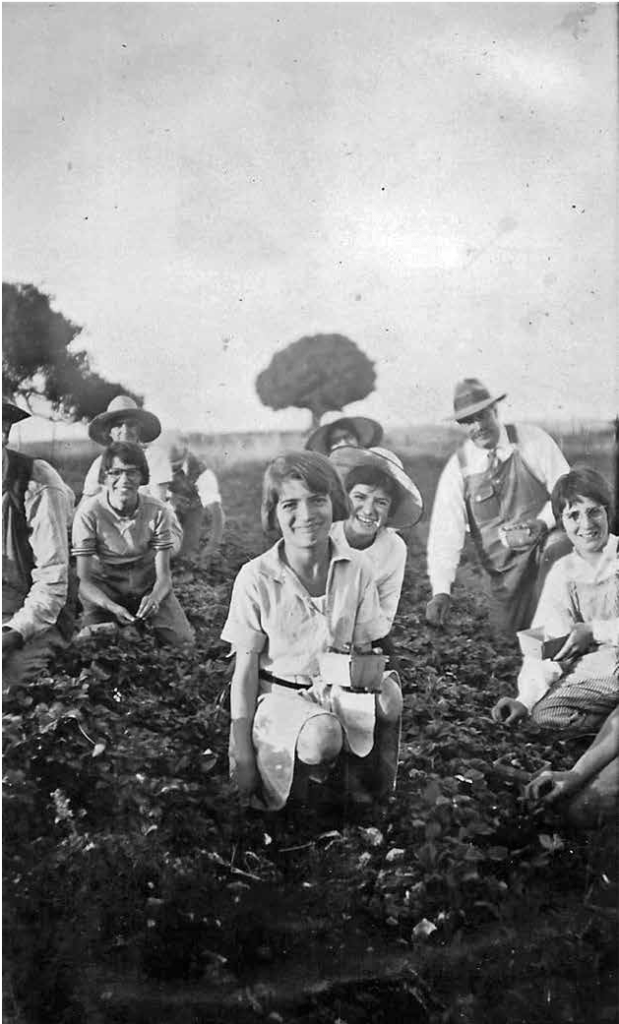
Joe Gularte of Corbett Canyon once delivered fresh strawberries to Muzio’s in a Model A pickup whose bench seat was lined with excited Gularte girls going to town.

Joe Gularte and his daughters picking strawberries.


Joe’s son, Frank, died a decade later, in November 1944, during a firefight in the streets of a beautiful mountain French town, Merten, in the Moselle Valley along the German border. Frank’s last moments were chaotic. The first tank destroyer in his battalion to creep into Merten was fired on and returned fire, but then, in moving around a tank barrier,  it  got mired in the mud was destroyed by a German anti-tank crew. The next destroyer turned back, the third tumbled into a ditch and was set ablaze by enemy fire and the fourth’s gun jammed.

Tank destroyers from Frank Gularte’s unit make the river crossing across a pontoon bridge into Germany, April 1945.


Frank’s son, and Joe’s grandson, Frank Jr., was born in the Mountain View Hospital on Upper Marsh Street three days after the sniper robbed him of his father.

It took another week for the War Department telegram to come home to Corbett Canyon.

Progress hasn’t the time for details like these.

So this business about mourning the latest victim of Progress, The Grad, strikes me as perfectly sensible. What we’re mourning is a place where we’ve shared our lives. In a time when we are so bitterly divided against each other, with the kind of venom we haven’t seen since the Civil War, we will miss The Grad because it reminded us that we, all of us, belong most of all to each other.


Caterpillars and the Little Bighorn

03 Monday Aug 2020

Posted by ag1970 in Uncategorized

≈ Leave a comment

Our caterpillars are advancing into pupage. We’ve got four now.


Some of the little fellers, having been out-eaten, have sunk, disconsolate and disoriented—a condition common to caterpillars, given the marked similarity between their fores and afts— to the bottom of the milkweed pot.

It is sad and it is the way of all life, I guess.

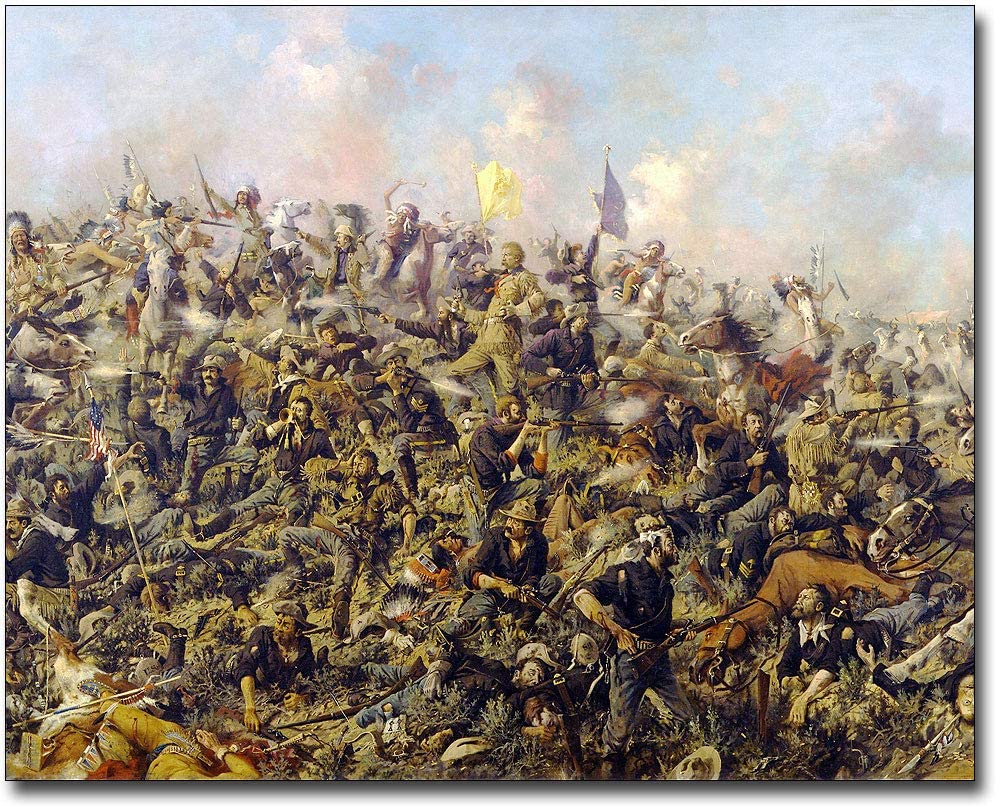
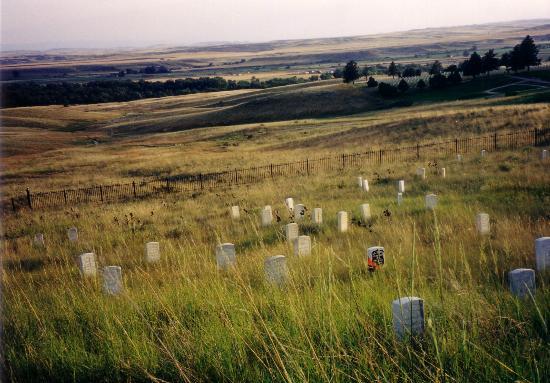
But the poor caterpillars on the bottom reminded me of my hitch with the Seventh Cavalry, when we rode into the Valley of the Greasy Grass in Eighteen Hundred and Seventy-Six.


Nothing takes the sand out of a man quicker than a jammed ejector in his government-issue Springfield carbine combined with the sudden appearance, like a swarm of enraged hornets, of 3,000 Lakota and Cheyenne, Dog Soldiers and dare riders and the coup counters who’d bonk a soldier on the backside with a crooked stick to humiliate him. At sights like this, those poor boys in the Seventh just dropped to the bottom of the pot.

It was a hard day.


Hoka-hey, little caterpillars.

← Older posts
Newer posts →

Subscribe

  • Entries (RSS)
  • Comments (RSS)

Archives

  • March 2026
  • February 2026
  • January 2026
  • December 2025
  • November 2025
  • October 2025
  • September 2025
  • August 2025
  • July 2025
  • June 2025
  • May 2025
  • April 2025
  • March 2025
  • February 2025
  • January 2025
  • December 2024
  • November 2024
  • October 2024
  • September 2024
  • August 2024
  • July 2024
  • June 2024
  • May 2024
  • April 2024
  • March 2024
  • February 2024
  • January 2024
  • December 2023
  • November 2023
  • October 2023
  • September 2023
  • August 2023
  • July 2023
  • June 2023
  • May 2023
  • April 2023
  • March 2023
  • February 2023
  • January 2023
  • December 2022
  • November 2022
  • October 2022
  • September 2022
  • August 2022
  • May 2022
  • April 2022
  • March 2022
  • February 2022
  • January 2022
  • December 2021
  • November 2021
  • October 2021
  • September 2021
  • August 2021
  • July 2021
  • June 2021
  • April 2021
  • March 2021
  • February 2021
  • January 2021
  • December 2020
  • November 2020
  • August 2020
  • July 2020
  • June 2020
  • May 2020
  • April 2020
  • January 2020
  • December 2019
  • November 2019
  • October 2019
  • September 2019
  • August 2019
  • May 2019
  • April 2019
  • March 2019
  • February 2019
  • January 2019
  • December 2018
  • November 2018
  • October 2018
  • September 2018
  • July 2018
  • June 2018
  • May 2018
  • April 2018
  • March 2018
  • February 2018
  • January 2018
  • December 2017
  • November 2017
  • October 2017
  • April 2017
  • March 2017
  • December 2016
  • November 2016
  • October 2016
  • September 2016
  • August 2016
  • July 2016
  • June 2016
  • April 2016
  • March 2016
  • February 2016
  • January 2016
  • December 2015
  • November 2015
  • October 2015
  • September 2015
  • August 2015
  • July 2015
  • June 2015
  • May 2015
  • April 2015
  • March 2015
  • February 2015
  • January 2015
  • December 2014
  • November 2014
  • September 2014
  • August 2014
  • July 2014

Categories

  • American History
  • Arroyo Grande
  • California history
  • Family history
  • Film and Popular Culture
  • History
  • News
  • Personal memoirs
  • Teaching
  • The Great Depression
  • trump
  • Uncategorized
  • World War II
  • Writing

Meta

  • Create account
  • Log in

Blog at WordPress.com.

  • Subscribe Subscribed
    • A Work in Progress
    • Join 69 other subscribers
    • Already have a WordPress.com account? Log in now.
    • A Work in Progress
    • Subscribe Subscribed
    • Sign up
    • Log in
    • Report this content
    • View site in Reader
    • Manage subscriptions
    • Collapse this bar
 

Loading Comments...