• About
  • The Germans

A Work in Progress

A Work in Progress

Category Archives: Uncategorized

“Beat to Quarters, Mr. Bush!”

09 Tuesday Jan 2018

Posted by ag1970 in Uncategorized

≈ 1 Comment

ef9ebf605e226efe77007b7c5ebf6536

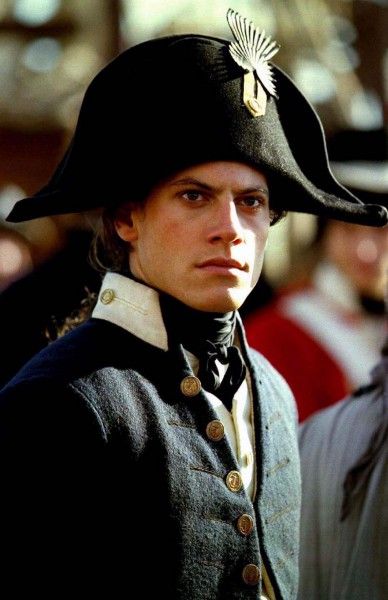
Ioan Gruffud as a hunky Lieutentant Horblower
in the television miniseries

My first adult reading had to have been, at least in terms of fiction, the trilogy of Horatio Hornblower novels my father had bought some time during World War II, possibly when he was stationed in London. He liked the books and they may have inspired him to take the steam train down to Portsmouth to see Admiral Nelson’s HMS Victory. One of the souvenirs he brought home with him, besides several bottles of Cointreau, was a little tin box of hard candy, its lid embossed with the image of the great ship on which Nelson–Hornblower’s real-life inspiration, just as Hornblower would inspire Captain Kirk– had died in 1805. My mother kept the box for years to store bobbins of her brightly-colored sewing-machine thread.

Hornblower, like Nelson, was a Royal Navy officer during the Napoleonic Wars, and he became so popular the his creator, C.S. Forester, could not get rid of him, in much the same way L. Frank Baum could not get rid of Dorothy nor Conan Doyle kill off Sherlock Holmes. Forester would eventually write nearly twenty in the series that followed the hero from his days as a green (This is meant quite literally. See below.) midshipman, with feet the size of shovels, to his last posting as an admiral in the West Indies, and in the process, his novels would spawn a little trailing fleet of fictional acolytes: Nicholas Ramage, Richard Bolitho and, of course, Jack Aubrey, the creation of Patrick O’Brian, a writer–like spy novelist John LeCarré–who has, through the force of his prose, leaped the gap between popular fiction and literature.
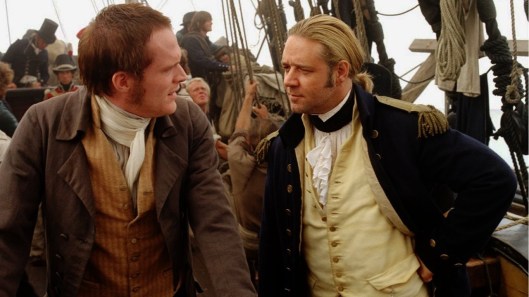
mastercommander

The best of friends: the logician Dr. Maturin and the passionate Captain Aubrey in director Peter Weir’s Master and Commander.

If Hornblower’s leap didn’t quite make it, blame his big feet. But that was what immediately lovable about Forester’s character: He was imperfect, a little cranky, relentlessly critical of himself, and modern. In the first few pages of the first novel in series, we learn he is disgusted because he, a frigate captain in his thirties, is beginning to develop a pot belly. He is given to shouting “God damn your eyes!” at his coxswains and servants, a phrase, sadly, that I never revived. Like his real-life inspiration, Lord Nelson, he starts each voyage confined to his cabin, where he is violently and spectacularly seasick. He sits a horse, elbows akimbo, buttocks and saddle at war with each other, with no more grace than Ichabod Crane did. He is trapped in an unhappy marriage with the unhappy Maria (“simpering” is the adjective Forester chooses) —had they lipstick in Napoleonic Europe, Maria’s would have been very red, liberally and inaccurately applied, and since she was constantly weeping at her husband’s departures, her mascara would’ve run like printer’s ink.

Fortunately for Hornblower, Forester kills Maria off by the third novel, replacing her with the far more elegant Lady Barbara, sensitive to and soothing of her husband’s many moods. She is, I think, a fictional counterpart to the sensitive and soothing Clementine Churchill, who deserved a Victoria Cross for not only putting up with Winston, but for her courageous persistence in loving him.  Hornblower’s men love him, too–a phenomenon he can’t quite understand, which is charming in itself–because he inspires them and he is, in his prickly way, devoted to them, despite their tendency, in battle, to be skewered by splinters or reduced to jelly by enemy cannonballs bouncing their way along the main deck. (“Jelly” is a favorite of Forester’s, since it was in such short supply, I suppose, in wartime England)

Not that this moodiness of Hornblower’s was ill-earned: As a very young officer, his first prize ship—a “prize” was a captured enemy vessel that meant money for a crew, and Hornblower was given command of this one—was a French coaster hauling a cargo of rice. What Hornblower and his prize crew didn’t realize was that the little ship was holed below the waterline. So sea-water rushed into the hold and the rice did the usual thing that rice does when it gets flustered and wet: it expanded, tearing young Hornblower’s little command into pieces, the ship’s planks exploding like gunshots, before he and his crew had to be rescued. Hornblower has a history of leaks. In a later novel, Hornblower and the Atropos, as a junior post-captain, he’s given the honor of commanding Lord Nelson’s funeral barge—and balanced on the barge is the massive coffin that contains the tiny admiral—when, in mid-Thames, it begins to spring leaks. Hornblower manages to bring the barge safely to its destination, St. Paul’s, for Nelson’s funeral—I’ve seen that barge, in the Royal Naval Museum in Portsmouth—but not before suffering what has to be the most epic panic attack in English-language fiction.

Even his fighting ships betray him. His first ship-of-the-line, an early 19th century equivalent to a battleship, Sutherland, is Dutch-built and so is shallow-drafted—she’s meant to protect a coastline on which Hans Brinker occasionally skates—and so sails with all the grace of pig iron. The French sink Sutherland, good news for Hornblower, but capture him and Mr. William Bush, his stolid and mildly dim-witted First Lieutenant, which is not so good. Hornblower will escape eventually to go on to command, as a commodore, a little fleet of ships in the Baltic, including a bastardization of naval architecture called a bomb-ketch, which is essentially a floating mortar and so graceless as to make Sutherland look like a clipper ship.
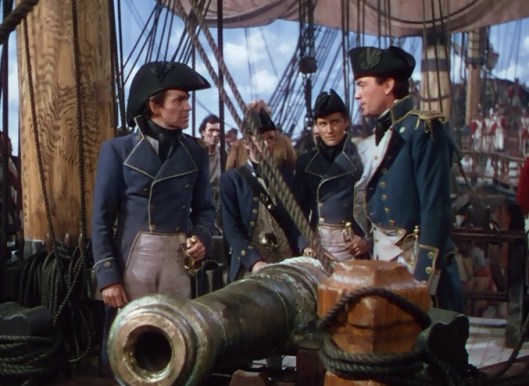
Hornblower6

Robert Beatty, as Lt. Bush, at left; Gregory Peck, as a mysteriously American-sounding Hornblower, at right, in the 1951 film version of the first novels.

Forester wrote so many Hornblower novels and wrote them so well that one of my favorites was not a novel and was not written by him at all. A gentleman named C. Northcote Parkinson, thanks to his discovery of the mythical Hornblower Family Papers, wrote a biography, The Life and Times of Horatio Hornblower, as if his subject was not mythical at all. It is enchanting.

The best part reveals another facet of Hornblower’s character that redeems his crankiness and his seeming ill-luck: He is a man of immense courage. His moral center, part of what makes him so critical of himself, is clear from the first moment we meet him, as a midshipmen. A little later, as an immensely junior lieutenant, he is assigned to the luckless ship-of-the-line Renown, whose captain, Sawyer, is mean-spirited, vengeful, and flagrantly paranoid. He makes Bligh look liked Billie Burke’s Glenda the Good in 1939’s Wizard of Oz.

Before Sawyer can foul up a mission against the Spanish by court-martialing his officers on trumped-up charges of mutiny, he mysteriously tumbles down a hatch, fractures his skull, and so command passes to a far more capable man, First Lieutenant Buckland. Buckland will then lead the Renowns to a daring victory (the shore party is commanded by Bush) over the perfidious Spanish, who, in Hornblower’s world, are just as perfidious as they’d been in 1588, Good Queen Bess’s time.

At a much later time, 1970, it is Parkinson, thanks to the Hornblower Papers, who reveals the ultimate and shocking truth. Sawyer was in part right: There was a mutiny, but it was, according to C. Northcote Parkinson, a mutiny of one, on the part of the lowly Fifth Lieutenant, Horatio Hornblower. While Renown’s coterie of officers fretted about what to do about their mad captain—they were seized with paralysis with the enemy virtually within sight—it was Hornblower who shoved Sawyer down the open hatchway. It was an action motivated by Hornblower’s unfailing devotion to his duty, and it was the mad Captain Sawyer who was preventing Renown from doing hers.

Wes Studi

07 Sunday Jan 2018

Posted by ag1970 in Uncategorized

≈ Leave a comment


26168508_2011746602439462_6439320735585962278_n

I hope Hollywood doesn’t screw this up. The plot involves Indian fighter/army captain Christian Bale, who is charged with escorting a captive Cheyenne chief, in what seems to be a brief moment of compassion in Indian policy, back home to die.

The escort, which is made up of Buffalo Soldiers (accurate to the setting, 1892) is set upon by a common enemy–Comanches, easily the most feared tribe on the Great Plains.

You know all those old Westerns that show Indians firing at full gallop while hanging along their horses’ flanks? Only the Comanches could do that. All the other Plains tribes–even the Lakota, the majority present at the rubbing-out of Custer’s command–fought dismounted, just as the Bluecoat cavalry did.

All the other Plains tribes reckoned their wealth in horses. The Comanche saw their horses as utilitarian only. They would ride them to death, it is said, and then eat them. The formidable Apaches, who shared territory, very briefly, with the Comanches, were terrified of them. I think that’s what makes one of my favorite Westerns, The Searchers, so riveting: when the Comanches show up, unseen except for a flickering mirror-signal and unheard except for their mimicking of bird calls, you know the settlers they’re about to attack are doomed.

vlcsnap-2017-01-08-11h04m04s599.png

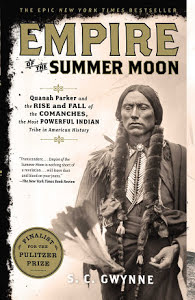
The book about them, Empire of the Summer Moon, and about their leader Quanah Parker–and about the raid and kidnapping that inspired The Searchers–is first-rate. It would turn out that the only fighters equal to the Comanches were the Texas Rangers, and what gave them their edge was their scrappiness (think Woodrow and Gus from Lonesome Dove), and, even more important, the technological advantage the Rangers gained once they’d armed themselves with Samuel Colt’s revolver.m6VWBwMAox4C

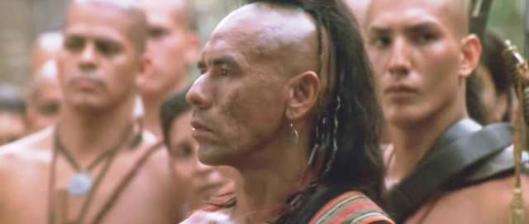
The about-to-get-here film features Wes Studi, a wonderful actor, as the dying Cheyenne leader. He was Magua in Last of the Mohicans [a book it is not at all necessary to read: Mark Twain’s essay “Fenimore Cooper’s Literary Offenses” is far better] and the title character in Geronimo: An American Legend, which was a far better film that the stupid title would indicate.

My favorite Studi role, however, came on a chance viewing of Reading Rainbow. He read a Native American version of “Cinderella” to very little kids, who were enthralled. His remorseless Magua was just a role. This is a very gentle man.

video.0-28-37.232


Perfection.

04 Thursday Jan 2018

Posted by ag1970 in Uncategorized

≈ Leave a comment


Hogan_Merion_1_iron_better.ashx_

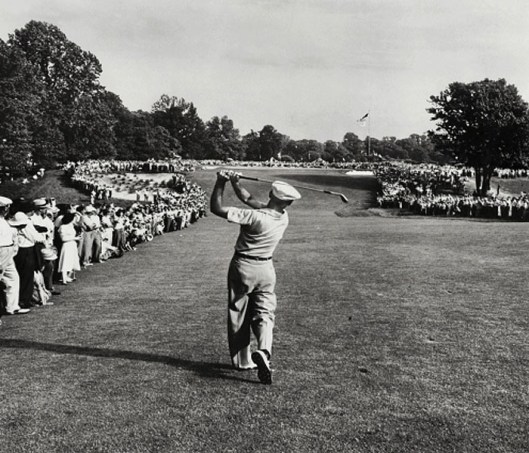
Number One Son got me not one, but TWO books about golfer Ben Hogan. This is a photo of his one-iron to the green to win the 1950 U.S. Open on the last and 72nd hole.

Hogan was not a warm man. He loved golf. He loved his wife, Valerie, and there it ends. But the year before this shot, he’d thrown his body, instinctively, in front of Valerie’s as their car crashed head-on into a bus that emerged suddenly from a dense Texas ground-fog while they were on the road between tournaments.

The impact nearly crushed Hogan. He walked with a limp for the rest of his life. But he’d saved Valerie’s life, and his own, in that moment. Had he not loved her so much, had he not thrown himself in front of her, the steering column would have impaled him.

So the next year, limping, he won the U.S. Open with this one-iron, with a club so difficult to hit that almost no modern golfer carries it anymore. His shot ranks with breaking the sound barrier, with an Olympic triple-axel triple-toe, with climbing Everest, with baking a weightless souffle.

His talent was modest, compared to that of his contemporaries, naturals like Sam Snead, Byron Nelson and Jimmy Demaret.  But he had an engineer’s mind, and he rationalized the elusiveness of the golf swing and broke it down into component parts in a way that made sense to him. In so doing, he practiced , it’s said, until his hands bled, but he wasn’t a drudge. He loved to practice, loved to live for the moment when his timing and the impact point met to create a perfect one-iron–his described a gentle fade–in a way that seemed (it was a lie, of course) to be effortless.

Shagging balls for Hogan wasn’t effortless, because he could be merciless with the young boys who shagged for him in practice: he grew so accurate that he hit them repeatedly, and it hurt. He didn’t notice. He was focused on the impact as much or more than the shot’s destination. His cigarette glowed furiously between shots. Impatient, he motioned his shagger to move backward ten yards, out of the line of fire, until he changed clubs and started to hit him repeatedly with a six-iron rather than a seven.

Once a knot of overbearing Kern County oilmen begged Hogan, playing an exhibition in Bakersfield, to give them lessons. He would be paid handsomely. He looked at them narrowly through his cigarette smoke, and flat turned them down. He was angry. Didn’t they know what he knew? They already had the best teaching pro in America, a stubby little guy named Eddie Nowak.

Nowak, many years later, would teach me how to play at Black Lake, in Nipomo. Hogan was right: Nowak was one of the best teachers I’ve ever had, and one of the toughest. The discipline and the work ethic he taught me has lasted me all the days of my life, one in which golf has been mostly absent.  Eddie didn’t just teach me golf. He taught me how hard you have to work to take on life. He was my Hogan.

A Lifetime of Teachers

02 Tuesday Jan 2018

Posted by ag1970 in Arroyo Grande, Uncategorized

≈ Leave a comment


One of the reasons I decided to write books was this man, Stanford’s David Kennedy.

 
20161218094946003_hd
 
 
I took a class in 2004 from Dr. Kennedy, who won the Pulitzer Prize for his history of America during the Great Depression and the Second World
War, Freedom from Fear, and was transfixed by his clear-headed and richly anecdotal re-telling of the years that formed my parents, and, of course, myself.
 

Dan Krieger (European history) and Jim Hayes (Journalism), two Poly professors in a lifetime of wonderful teachers, are among the other reasons I wanted to teach history and write about it, as well.

 
2014.07_Jim-Hayes-Legacy
Jim Hayes. I know that look very well. It says: “Re-write.”
 

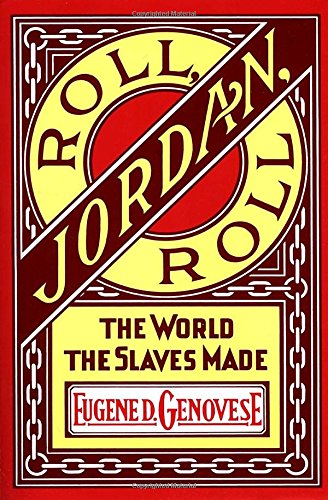
At the University of Missouri,  Charles Dew’s teaching on the history of African-American slavery–another book that was formative to me was Genovese’s, part of Dew’s required readings–David Thelen’s teaching on Populism and the Progressive movement, Winfield Burggraff’s teaching on Latin American history, and Richard Bienvenu’s teaching on the history of socialist thought all made me want to be like them.

 
613IChmB9qL
 
 
Two teachers at Arroyo Grande High School–Carol Hirons (Journalism) and Sara Steigerwalt (Speech) had already taught me, without me knowing it, HOW to teach history.
 
The first teacher who told me that I should write books was my Branch School teacher in 5th and 6th grades, Mr. William E. Burns Jr.
 
 
Branch
Branch School, in its two-room version. In 1962, we moved to a school with four rooms.
 
I am inordinately lucky.
 
So when I found out that Prof. Kennedy’s wife, Judy, grew up in SLO County, I contacted him to send her a copy of the “Outlaws” book, a proposition he very kindly accepted.
 

Here’s the surprising part: Mrs. Kennedy is Alex Madonna’s niece, and my Dad was Madonna Construction Company’s comptroller in the 1950s and 1960s. It is, after all, a small world, and still rich with stories to be told.

 
20160203_135223
This is where I grew up–the Upper Arroyo Grande Valley.
 
 
I wouldn’t have any stories to tell except for the place where I grew up, except for my parents, except for my teachers. I don’t think any of the last, from Mr. Burns to Dr. Kennedy, know how profound their impact has been, and how long it will last–past their lifetimes, past mine, in small ways, in small stories vividly re-told.
 
Teachers live lives that will color and enliven the lives of children not yet born. It is these children, God willing, who will heal the wounds that history inflicts on all of us.
 
It is teachers that will show them the way home to their ideals, and to ours.

Funeral Crossing, Arlington Bridge

30 Saturday Dec 2017

Posted by ag1970 in trump, Uncategorized

≈ Leave a comment

479D7B1B00000578-5219541-image-a-23_1514509165045


One of the many things that makes the president’s tweet so cruel was our shocked discovery during our trip north this week on 101. I am 65 years old, nearly 66, a native Californian, and I have never seen California so dry.

The oaks, I think, are dying–their leaves a khaki shade I’ve never seen; the willows along empty riverbeds are as bare as trees in a Midwestern winter; the maples’ leaves are blanched, yellow, crisp as papyrus. The hills have dried beyond their normal wintertime yellow to a dull gray.

It doesn’t take a great deal of imagination to visualize a terrible fantasy: California catching fire in Paso Robles and burning all the way to Morgan Hill, where there’s a smattering of green grass that won’t last another week. There is no rain in the forecast for yet another week, and there may be none the week after, either.

And here is what matters: We have a leader who is so blissfully stupid that he can’t distinguish between “climate” and “weather.” Beyond that, he doesn’t care.

He doesn’t care about the land, our greatest inheritance and obligation; and he doesn’t care about Americans, including the sick among us; he despises immigrants who have made our history so rich, except for the richness in victimizing them; he doesn’t care about American workers–he rejoiced, to his rich friends, at Mar-a-Lago, about how he’d fleeced us in taxes they will never pay and that we won’t see for years to come, when it’s too late for us to realize, preoccupied as we are with mortgages and car payments and credit-card usury, that we’ve been robbed.

He doesn’t care about our heritage and knows nothing about our history. He thinks Frederick Douglass is still alive; is amazed that no one but he knows that Lincoln was a Republican. He visited Gettysburg with Steve Bannon.


15241343_10210730464315729_3385114292250421575_n


He knows nothing about working hard, a drudgery he leaves to lawyers and Executive Assistants, he knows nothing about about the world, including the tradition we owe the West and the fractures, mutually inflicted, between the Orient and the West, between Islam and Christianity, and, last, the wounds inflicted by men on women, the latter a group he rejoices in wounding because he finds such strength and validation in humiliating them.


tussauds_jabba4

Jabba and Leia, Madame Tussaud’s.


California humiliated him in the November Election. And so California could very well burn from Paso Robles to Morgan Hill, and he wouldn’t care.

Of course, he would read a speech afterward, California’s official obituary, about our immolation. But he would read from a teleprompter the way he read about the struggle for civil rights a few weeks ago in Mississippi, the way a chagrined fourth-grader reads aloud when called on by his teacher in his reading circle: flat-toned, impassive–emotionless, save for petulance, because–can we be honest?–he doesn’t care.

Finally, there is no group he cares for less than our children, grandchildren, and great-grandchildren. California will be burned by their time, I guess.

He will be dead then by then, I hope, as fat and sleek (and as indifferent) as Nero. His post-mortem will reveal arteries collapsed in plaque, snapped shut by double orders of Big Macs, Filet o’ Fish, and personal buckets of Kentucky Fried Chicken.

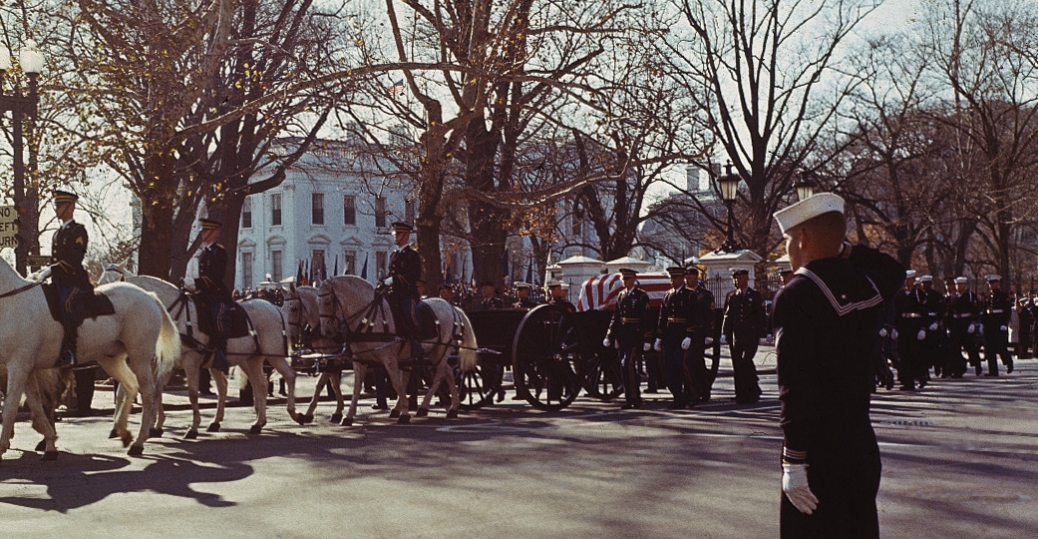
He will be perfectly embalmed. His hair will be as golden as Caligula’s. He will wear his blue suit and red-striped tie, made in China–he will be dressed, in death, by morticians, as he was dressed, in life, by servants. His body will ride in a flag-draped mahogany coffin towed atop its caisson in solemn parade, flanked by young men and women from every service branch. The caisson in turn will be pulled by a team of sixteen-hand greys, their hooves polished brilliant black; these magnificent animals will be guided along Pennsylvania Avenue by the soldiers of the Old Guard.


kennedy-casket-P.jpeg

John F. Kennedy’s casket leaves the White House, November 1963.


It was the Old Guard that carried President Kennedy’s body, in my memory, to its rest in Arlington. Before that, in the last weeks of fascism’s collapse, in memories that are buried with my parents, the Old Guard accompanied Franklin Roosevelt’s body at the beginning of its journey home to Hyde Park.

I don’t think there will be their kind of dignity in Trump’s last public moment because his legacy will be so bitter. There will be only smatterings of mourners, little knots of dead-enders at street corners, watching silently as his cortege crosses the Arlington Memorial Bridge over the Potomac and into Virginia.

By then, everything behind the procession will have been burnt to ashes by America’s Nero. The ashes will be all that remains of what we once valued as a people.

Except for one thing more.

We will still have each other.

But we will have to learn to live beyond him and without him, and, finally, we will have to learn how to live with each other once more. Maybe then, and only then, we can learn to be Americans again.


FT_17.04.10_immigrant_featured


“Gunpowder:” The Stuarts, Guy Fawkes, and various ways to die.

22 Friday Dec 2017

Posted by ag1970 in Uncategorized

≈ Leave a comment

A few reasons why history isn’t boring:

Gunpowder

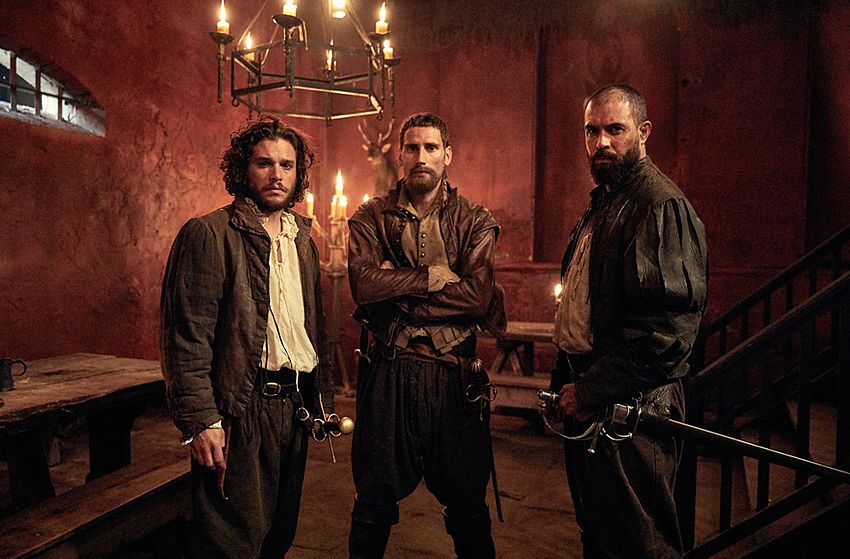
Harington, as Catesby, at left, in the midst of plottage.

“Game of Thrones'” Kit Harington produced and starred in the HBO miniseries “Gunpowder,” which we watched last night. I enjoyed it, excluding the drawing-and-quartering but including the costuming, which was superb. Harington is a direct descendant, on his Mum’s side, of the plotter he portrayed, ringleader Robert Catesby–it was Catesby’s sidekick, Guy Fawkes, who was found with several barrels about-to-be-lit gunpowder underneath Parliament and the King, James I, who could have done with a little detonation. The three episodes reminded me of how savagely Catholics were treated in Stuart England.

v_for_vendetta_wp_66089-1920x1200_2525

Elizabeth and I loved “V for Vendetta,” based on a graphic novel.

Fawkes defied the executioner by diving off the scaffold and breaking his neck. In a later incarnation, the film “V for Vendetta,” Natalie Portman falls for him, so sometimes these things work themselves out.

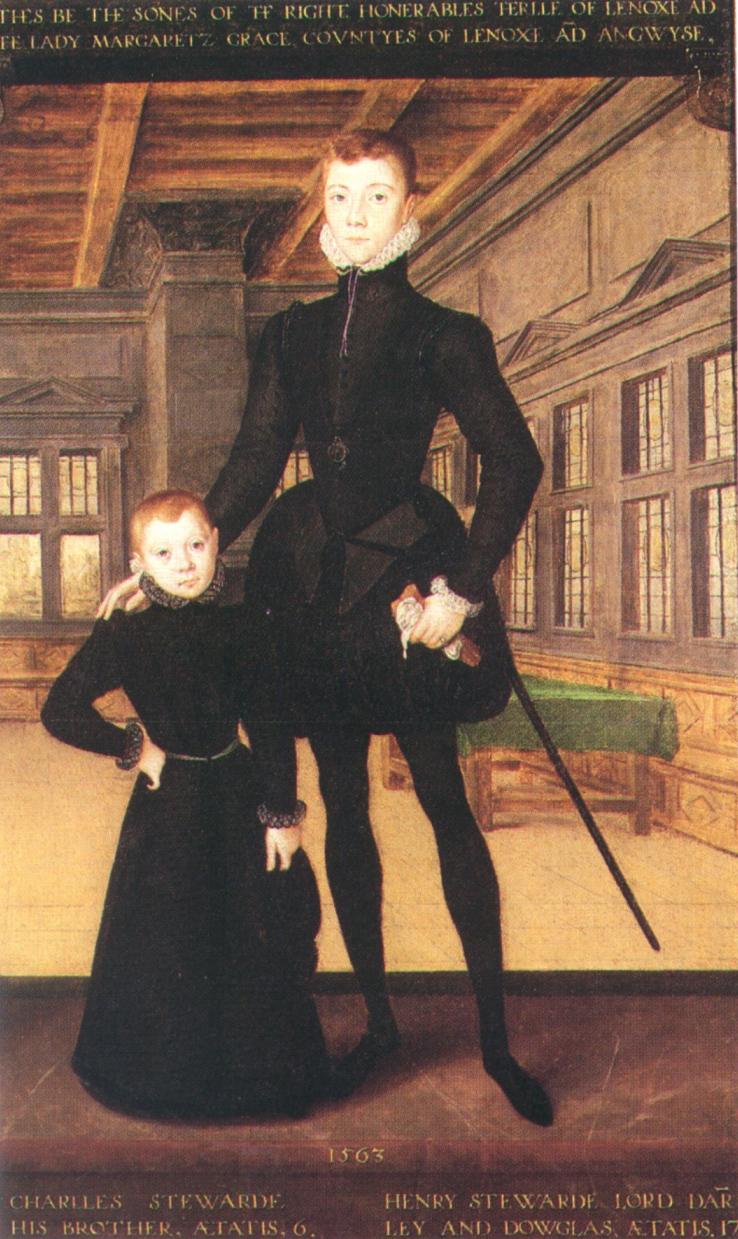
Years before Guy Fawkes, plotters also attempted to blow up James I’s father, Henry Stuart, Lord Darnley, Mary Queen of Scots’ alcoholic, abusive husband. They were heard digging in the the dead of night in the basement of Darnley’s home, so his retainers lowered him out his bedroom window in a chair. Darnley, still clad in his nightie, took off like a jackrabbit as soon as his feet touched the ground. Sadly, for Darnley, if not for anyone else in the British Isles, he collided head-on with the plotters in the dark, who dispensed with their plan to blow him up and strangled him instead.

Stuart(lennox)Brothers

Darnley, with a little brother. One historian noted that royal blood ran in Darnley’s veins, along with generous portions of Scotch whisky. Mary thought he had beautiful legs.


Mary then married Bothwell, the ringleader of the killers, a terrible public relations move. Posters depicting her as a mermaid–a whore–appeared all over Scotland. She fled for her life to England, where, of course, she began plotting against her cousin, Elizabeth I (Elizabeth intercepted Mary’s baggage once she’d fled Scotland and kept the best jewels for herself).


mary-queen-of-scots-young1

Mary at thirteen, when she was already discovering that her eyelashes’ flutter could reduce men to puddles.

Mary would be beheaded, ineptly and repeatedly, in 1587, while wearing a blood-red slip beneath her gown. No one told the poor executioner, as he lifted her head aloft for the witnesses, that Mary was also wearing a wig. Her little dog, a Skye terrier, had been cowering beneath her slip and skirts during the execution; he emerged whimpering and, it’s said, died soon after.

Mary has a magnificent alabaster tomb in Westminster Abbey all to herself. Elizabeth lies nearby, sharing a tomb with the half-sister who detested her, Mary Tudor.

Elizabeth died childless. Mary Tudor died thinking herself with child: it was most likely uterine cancer instead. Mary Stuart, Queen of Scots, delivered the son who would become James I of England.


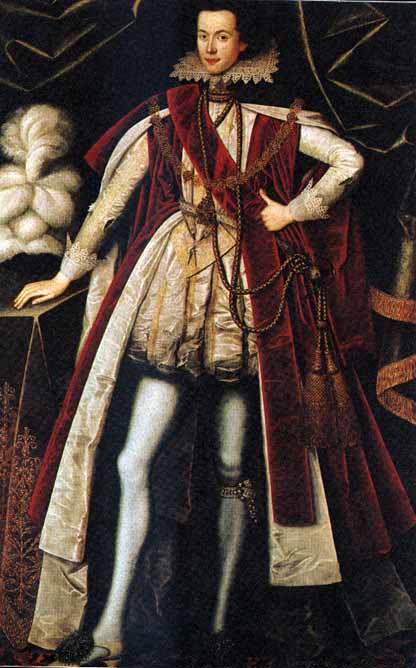
Duke_of_Buckingham

George Villiers, the Duke of Buckingham, James I’s favorite. The King thought he had beautiful legs.

So it goes.

Another Christmas.

20 Wednesday Dec 2017

Posted by ag1970 in Uncategorized

≈ Leave a comment


St.Francis

Francis

When I was a high school history teacher, I took my students to Italy. We visited Assisi. We sat quietly in front of Francis’s little tomb–fitting, because he was such a little man–and we sat in perfect silence. It was in the silence where I felt the solemnity and the joy of Christ’s spirit washing over me and claiming me again. At the same time, and very appropriately,  little Francis made me feel very small again. He made me, a man in his fifties, a child.

images

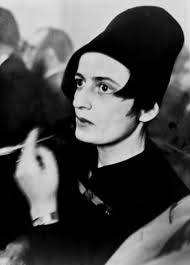
Ayn Rand

This woman, the writer Ayn Rand, seems to be our secular saint today. It’s her nihilistic spirit that washes over Congress today, in late 2017, as it gleefully passes a tax bill so regressive that it would make Dickens’s Scrooge blush in shame. I have never seen anything like what they all tax “reform.”

And then I remember, of course I have!

I spent thirty years teaching history: I remember the English traveler Arthur Young’s letters home in 1788, scored with his disbelief in the inequity and illogic of France’s tax burden, which fell most heavily on those who could afford it least. He predicted the inevitability of revolution.

It came only a year later.

I  recognize, too, the disparity in today’s distribution of wealth., and I remember that there has been nothing this illogical in our own history–at least, not since the summer of 1929.

Of course, the politicians must be right: the poor deserve to be poor. They are hungry because they are lazy–or worse, because they are both lazy and less than Caucasian. The wealthy rise to the top because they are genetically and inherently superior–haven’t we heard this somewhere before?  They must be  inherently superior, for example, to my own father, a mere accountant.

And, easily, the most brilliant man I’ve ever known.

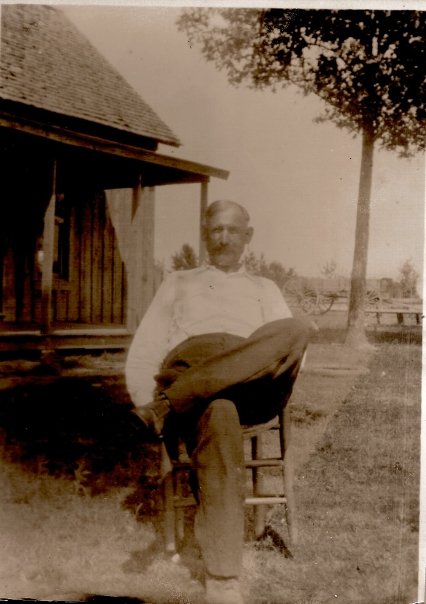
1929425_1124498396411_7620943_n

My Grandfather, John Smith Gregory.

My father inherited little from his father, an Ozarks tobacco farmer, except for a little lined notebooks, from the 1920s, kept in a little lined notebook that I still have, that recorded the sales, to his neighbors, of ginseng, of all things, because my Grandfather John ventured a century beyond tobacco and cotton and hogs and landed squarely in the frontier of New Age farmers of the 21st Century. Beyond that, he had a  gift for numbers that was both so imaginative and so precise that he could, as a lumber estimator, calculate a thousand-acre stand of Missouri hardwood to within 100 cubic feet of its eventual yield in a sawmill owned by wealthy men dressed in  double-breasted suits, felt hats and silk ties who lived in an impossible place that was far away, called Kansas City.

It was silk-tied men from Boss Pendergast’s notorious Kansas City machine who left bank-bags full of five-dollar bills on my grandmother’s kitchen table on the weekends before Tuesday elections in the Depression years. She was the local head of the Democratic Central Committee and one of the first women invited to a national political convention–1924, in Madison Square Garden.

A decade later, FDR never would never lose an election in that part of the Ozarks. In return, the Hill People who came down my grandmother’s home town, who came to schoolhouse to vote, never starved.

That was her doing.

Dad inherited that arithmetical gift from my grandfather, that gift for mathematics. Since gifts like that seem to skip generations, I inherited, from Dad, a gift for telling stories and from my grandmother, a love for history and politics.

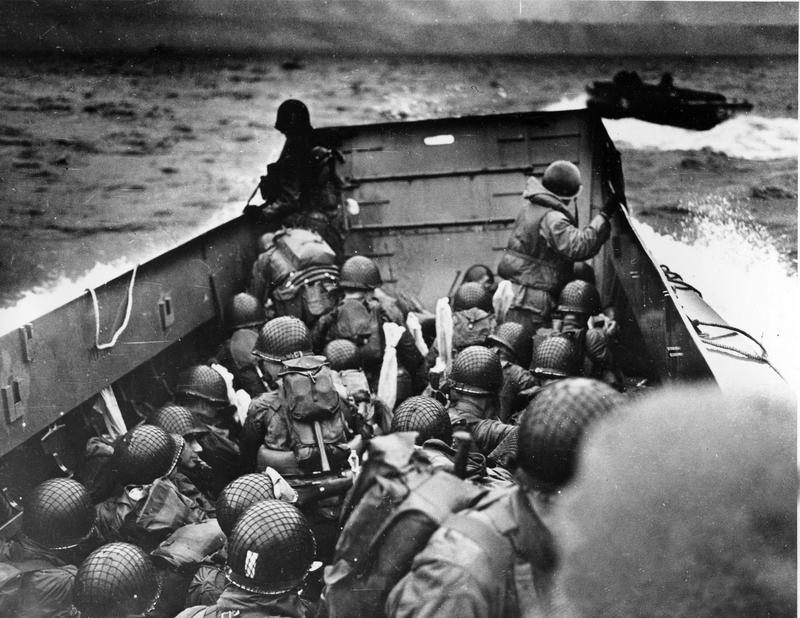
8fab5fd5d9f8cc24605607a8d48567ea

A Higgins Boat headed for Omaha Beach, June 6, 1944.

And then–I am confounded by the irony of this–Dad’s generation, many of then rejected by the Draft for their teeth, rotten after a decade of poverty like that visited on many of the Hill People of Missouri-went to faraway places: New Guinea, Tarawa, Iwo Jima; to North Africa, Normandy, the Ardennes.

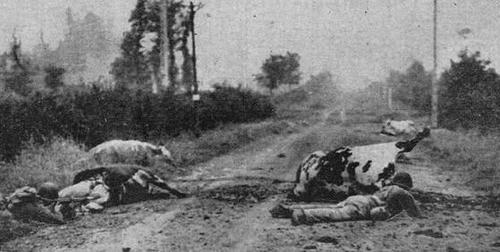
This generation repaid the injustice visited on them in the Depression by dying in hedgerows, their bodies caught within tangles of roots that had been planted in Agincourt’s century. Their only company, lying in the fields the hedgerows enclosed, were the bloated bodies of Norman milk cows killed in the crossfire.

440617 Dead cows

Normandy, Summer 1944

In 1945, my father taught Army Quartermaster burial teams the basics of forensics:  his students were boys who had hoped to become heroes, but were born too late, so they came to a war that had become history.

Instead, their duty was finding dead teenagers, graduates from high schools the year before the teens in Dad’s Quartermaster Corps burial teams had graduated. They disinterred Lettermen and student body officers and what were once called “juvenile delinquents,” but these boys remained only in scraps of viscera and bone, sinew and hair that lay on heads once stroked gently by their mothers, and the young Quartermasters identified them, if they could, for burial.

I inherited, somehow, the memory of those boys, living and dead,  from Dad.

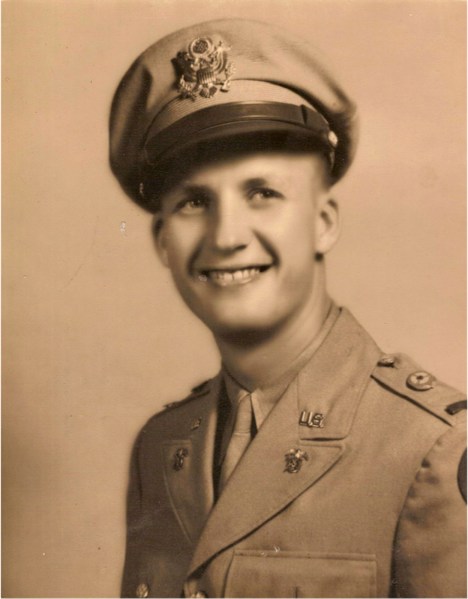
003 (1)

Dad, 1944.

I inherited from Mom the steel she’d kept deep inside to overcome the shame of her own father, a stereotypical Irish drunk and laughingstock of an oil boomtown in the San Joaquin Valley of California.

Yet beneath the steel, she became the kind of woman who would teach her children that there was nothing more important on this earth–there must have been something in her DNA that recalled in her ancestral memories of County Wicklow’s hunger in 1847 Ireland–that there was nothing more important, beyond the arts, than empathy, and generosity, and kindness. Most of all, there  nothing more dignified than Poverty.

1929425_1124481235982_1907209_n

Mom, and big sister Roberta, 1943.

She understood Francis completely. More than that, she accepted him completely. That took steel, too

These are the lessons I’ve drawn from my father’s stories and from my mother’s example. I’ve thought about them, still and quiet before her grave, in my California home town, and before Francis’s grave, in faraway Assisi.

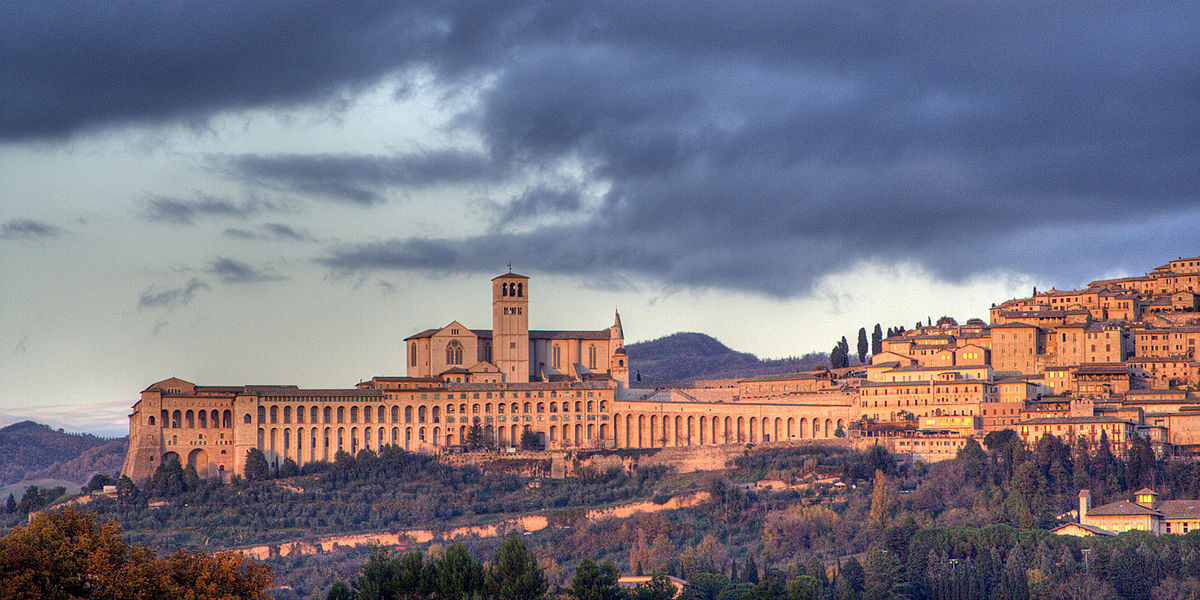
1200px-Assisi-skyline

Assisi.

Here is what I wish for you:

I wish that you get the chance to  gaze, in perfect silence, at the beauty of Umbria below you from Assisi’s hilltop, from that little town of stone and cobblestone. That is where it is so much easier to understand that what Jesus intended for us was love, what Jesus wished for us was love, what Jesus taught us until–and within–the agony of His death by suffocation, was love.

I am just beginning to understand, too, that what Jesus gave us, from His first moments of consciousness, shivering in the arms of his young mother, was His love.


All Dogs go to Heaven

16 Thursday Nov 2017

Posted by ag1970 in Uncategorized

≈ Leave a comment

23473253_10155552222998801_1764987599255084952_n

Ashley and Isadora

This lovely young woman is Ashley, who was a student of ours when Elizabeth and I taught at Mission Prep. With her is another lovely girl, Isadora, her Wheaten. My sister, Sally, has a Wheaten named Tillie. They are lovely dogs–eager, frolicky, and more affectionate than your typical terrier, a prickly but adorable lot. Wheatens are charmers and even more charming because they aren’t pretentious about it. Their main business is going about being a dog.

Isadora has a tumor in her lung and so her days are  numbered. When I learned this, there was a deep and profound hurt inside.  I have a hard time with death.

The worst, of course, was Mom’s, who died at only 48. She was and will always be the most formative person in my life, the main reason I get into trouble (when I perceive injustice of any kind, I can’t keep my mouth shut), the main reason, too, for me becoming a teacher, and she instilled in me a belief in God that a lifetime of hurt and anger can’t dent.

One reason I still believe the way my mother did has nothing to do with Mom. It has everything to do with dogs. I’ve been around them all my life–beginning with a Scottish Terrier and a Cocker Spaniel in my first memories, on Sunset Drive in Arroyo Grande–and the dogs who complete my life today are Mollie and Brigid, our Irish Setters, and Wilson, our Basset.

23319399_10214587525865611_1591498690775319867_n

Mr. Wilson

Mollie will leave us soon. I notice this more because the grizzling of her muzzle and the gradual slowing of her gait, her struggles to climb onto the sofa or our bed, make her aging so obvious.  (At sixty-five, I secretly identify with her, especially when I go to the gym and watch, out of the corner of one eye, twentysomethings doing workouts I could never hope to do. Damn them!)

Every time a dog leaves us, when we hold their heads in our hands and talk softly to them, we aren’t quite sure whether the last moments we spend together are somehow wasted, if the understanding between us and our dog is somehow incomplete. As I get older, I have come to believe these moments aren’t wasted at all. I think the animals somehow know what is happening and understand  the earnestness of our words when we tell them how much we love them. We are part of their passage and they need, as we all will someday, the comfort of company as they cross that fearful space that leads to the other side.

In a lifetime of dogs, I have loved each a little differently and they have loved me with no discrimination whatsoever. They are entirely unselfish in love, if not in food or rawhide treats. We don’t encounter that kind of love very much in life–the “unconditional” kind, to use a trite adjective–and that’s what makes losing an animal one of the most painful moments in any human’s life.

This how much they love us: When I was researching the book Central Coast Aviators in World War II, the historian for the 92nd Bomb Group told me that a dog would grow so close to her human that ground crews noticed that she would get noticeably excited when the B-17s returned to base. Of course, the dogs could hear the bombers long before the ground crewmen. But what they noticed was the dog’s excitement at the sound of her human’s B-17. She had learned to recognize the individual pitch of his airplane’s engines.

23517933_10214626934730808_5781607896525190584_n

Brigid, with her ball, and Mollie

So it’s supposed to hurt because they love us the way God does: without stipulation, without judgment, without reservation, and so when they leave us they leave an immense empty space inside. I spend, and have spent, much of my life criticizing myself, condemning myself, and finding fault with myself. But every morning there is a miracle: Brigid is so transparently happy–and wiggly– to see me again after a night’s sleep that she gives me enough confidence to start another day. There is something in me that she finds invaluable and joyful. I think God must see that something, as well.

I think, too, that God understands that dogs and their humans need to be together. Ashley’s dog, Isadora, has a bond with her that can’t be broken. Heaven, I suspect, is a place for happy mornings where we will see each other once again and forever.

Kids who can breathe.

15 Sunday Oct 2017

Posted by ag1970 in Uncategorized

≈ Leave a comment


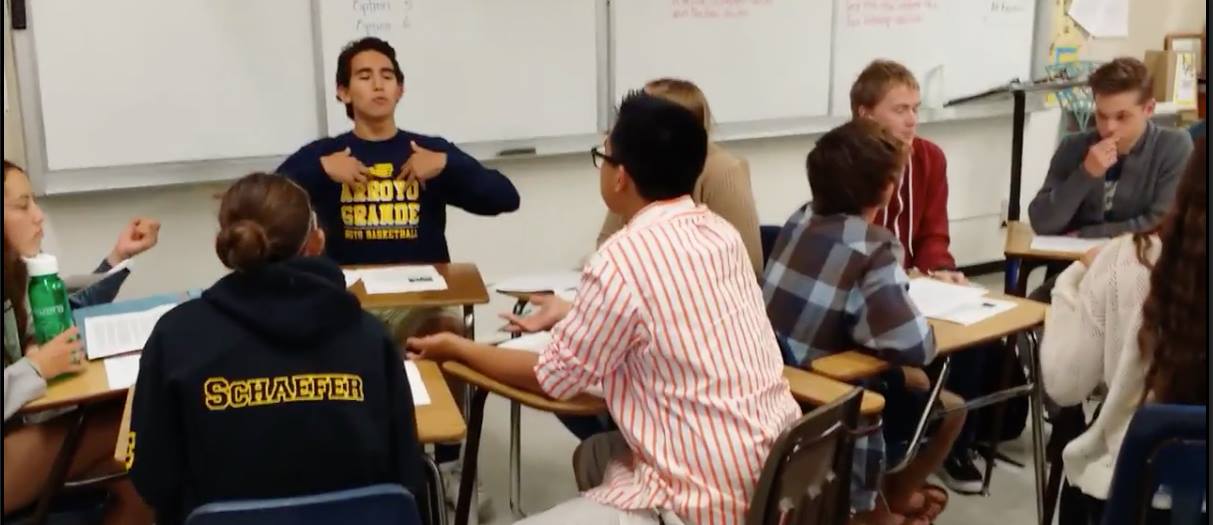
11021332_10206180776982143_8018641079003443320_o

My kids, as JFK’s ExComm, debate what course they should take in the Cuban Missile Crisis. Life is short: Bunn, the young man in the striped shirt, was a delightful person and a gifted student. He was killed this year in an automobile accident.

I found the article below heart-breaking, in part because it was so familiar to my thirty years of teaching high school, in part because it was so alien to my own experience.

What marked my childhood and teens was the relative simplicity of those years. We got three TV channels, on a good day, on Huasna Road. There were land lines and, after school dances, pay phones, not “smart phones.” If I needed to take the pressure off, I would sneak into my Dad’s car, turn on the radio, and listen to Wolfman Jack and the wonderful rock ‘n’ roll that came from somewhere in Mexico via station XERB.

Another blessing was how unstructured our time was. I had endless room to breathe–lost in the pages of books, exploring the hills of the Upper Arroyo Grande Valley, learning Spanish from braceros, trout-fishing in the Arroyo Grande Creek.

I am not suggesting an idyllic childhood. I grew up in an alcoholic, sometimes violent home, but my parents tried hard to be the best parents they could be, and the values I inherited from them made me decide to become a history teacher, and allowed me, in the teaching, to recognize and to love the vitality in the 32 teenaged lives arranged in rows before me every class period of every day for thirty years.

I have my parents to thank for that.

But I saw this anxiety, the kind documented in the Times article, over and over again in the kids I taught every class period of every day for thirty years.

It was as if they had to prove themselves, to prove their worthiness to themselves and to their parents, and there was no reliable inner measure for them to rely on. They had, instead, to do things–club volleyball, student government, six Advanced Placement classes (I would never have allowed my child to take six AP classes, and I taught AP for most of my career), or winning awards. If they didn’t have these extrinsic measures, they would never get into the college of their choice, never have a career that was rewarding, never have the spouse they deserved, never have the kind of validation that, ironically, God never requires nor desires.

Sometimes, when they were taking a test or writing an essay, I would just stare at them, my heart full, at the miracle of their youth and the promise of their future. (It saves me from the despair that is so much a part of our present political life. It is about all that saves me.)

Those were moments every good teacher experiences, and that fullness of heart stays with you all your life.

They never had anything to prove to me. I just wish I had made that clearer.

The most famous sinner in America

13 Friday Oct 2017

Posted by ag1970 in Uncategorized

≈ Leave a comment


51JQ5z85TkL

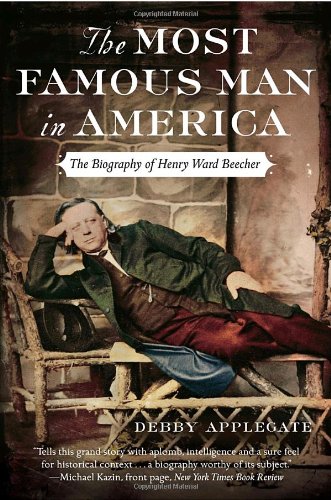
The shamelessness of powerful, predatory men has reminded me of Debby Applegate’s superb biography of the Civil War-era preacher Henry Ward Beecher, “The Most Famous Man in America.”

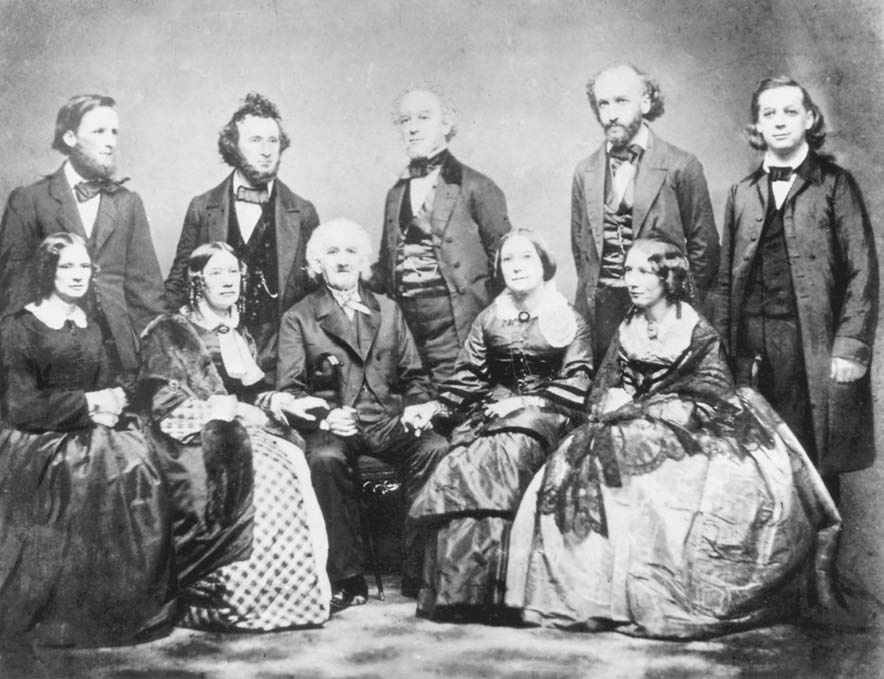
Beecher, a New England Congregationalist, was progressive,an immensely powerful preacher, a committed abolitionist, and he came from a stellar family (sister Harriet wrote “Uncle Tom’s Cabin” and my AP Euro students may remember sister Catharine as the inventor of the modern kitchen and a formative influence on the Victorian “Cult of Domesticity”)

The family’s patriarch, Lyman, was an unbending man who knew with certainty that Catholics, Unitarians and Methodists were going to hell, postage-paid. Lyman also forbade Catharine’s marriage to a young minister because the elder Beecher was unconvinced of the depth and authenticity of the young man’s conversion. The young preacher then sailed for England, in part to rededicate his commitment to Christ, and drowned in a shipwreck. Catharine never married.

H.W. strayed from his father’s path and instead preached a message that emphasized God’s mercy and love. The younger Beecher was never able to keep his trousers in order, however, was accused of multiple affairs, and was charged with adultery in one of the most sensational trials of its day.

Applegate’s biography won the 2006 Pulitzer Prize. She is an enormously talented writer and a steady, dogged and meticulous historian. It’s one of those books that’s more than a “mere” biography. It’s also a fascinating education on mid-Victorian American religion, politics and sexuality.


1300224636_lyman-beecher

The Beechers. Lyman at center, Catharine on her father’s immediate right, Harriet Beecher Stowe at far right, her brother Henry Ward Beecher standing at far right.

.

← Older posts
Newer posts →

Subscribe

  • Entries (RSS)
  • Comments (RSS)

Archives

  • March 2026
  • February 2026
  • January 2026
  • December 2025
  • November 2025
  • October 2025
  • September 2025
  • August 2025
  • July 2025
  • June 2025
  • May 2025
  • April 2025
  • March 2025
  • February 2025
  • January 2025
  • December 2024
  • November 2024
  • October 2024
  • September 2024
  • August 2024
  • July 2024
  • June 2024
  • May 2024
  • April 2024
  • March 2024
  • February 2024
  • January 2024
  • December 2023
  • November 2023
  • October 2023
  • September 2023
  • August 2023
  • July 2023
  • June 2023
  • May 2023
  • April 2023
  • March 2023
  • February 2023
  • January 2023
  • December 2022
  • November 2022
  • October 2022
  • September 2022
  • August 2022
  • May 2022
  • April 2022
  • March 2022
  • February 2022
  • January 2022
  • December 2021
  • November 2021
  • October 2021
  • September 2021
  • August 2021
  • July 2021
  • June 2021
  • April 2021
  • March 2021
  • February 2021
  • January 2021
  • December 2020
  • November 2020
  • August 2020
  • July 2020
  • June 2020
  • May 2020
  • April 2020
  • January 2020
  • December 2019
  • November 2019
  • October 2019
  • September 2019
  • August 2019
  • May 2019
  • April 2019
  • March 2019
  • February 2019
  • January 2019
  • December 2018
  • November 2018
  • October 2018
  • September 2018
  • July 2018
  • June 2018
  • May 2018
  • April 2018
  • March 2018
  • February 2018
  • January 2018
  • December 2017
  • November 2017
  • October 2017
  • April 2017
  • March 2017
  • December 2016
  • November 2016
  • October 2016
  • September 2016
  • August 2016
  • July 2016
  • June 2016
  • April 2016
  • March 2016
  • February 2016
  • January 2016
  • December 2015
  • November 2015
  • October 2015
  • September 2015
  • August 2015
  • July 2015
  • June 2015
  • May 2015
  • April 2015
  • March 2015
  • February 2015
  • January 2015
  • December 2014
  • November 2014
  • September 2014
  • August 2014
  • July 2014

Categories

  • American History
  • Arroyo Grande
  • California history
  • Family history
  • Film and Popular Culture
  • History
  • News
  • Personal memoirs
  • Teaching
  • The Great Depression
  • trump
  • Uncategorized
  • World War II
  • Writing

Meta

  • Create account
  • Log in

Blog at WordPress.com.

  • Subscribe Subscribed
    • A Work in Progress
    • Join 69 other subscribers
    • Already have a WordPress.com account? Log in now.
    • A Work in Progress
    • Subscribe Subscribed
    • Sign up
    • Log in
    • Report this content
    • View site in Reader
    • Manage subscriptions
    • Collapse this bar
 

Loading Comments...