San Luis Obispo County Tourists: The James Brothers and the Dalton Brothers

Tags

,

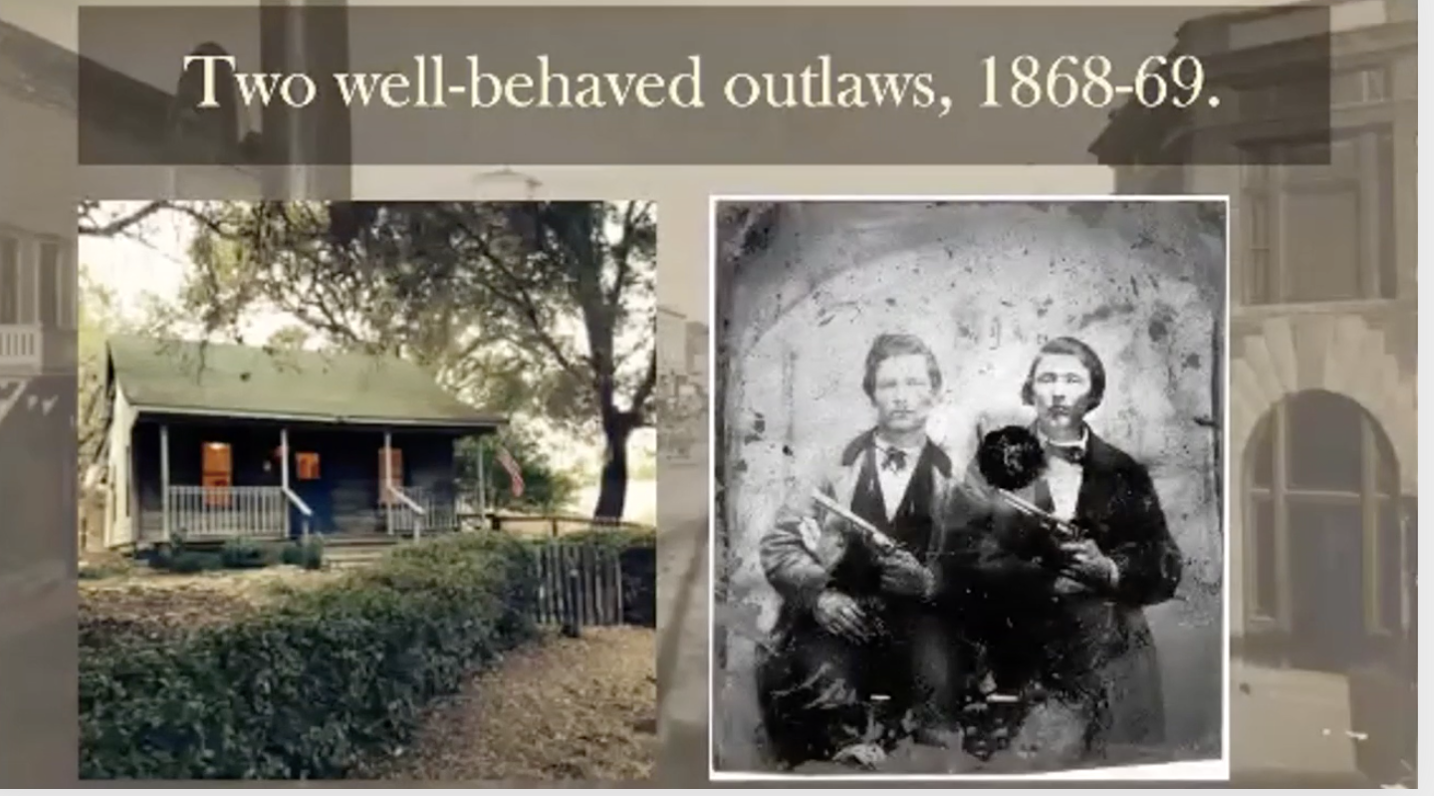
Frank and Jesse and the cabin where they allegedly lived near Paso Robles.

Not that San Luis Obispo County needs outside consultants, thank you very much, when it comes to crime. The first recorded mass murder in California history, in December 1848, happened in the North County, at Mission San Miguel.

It was the mountain man James Beckwourth who found the bodies of ten victims—the Reed family and their servants— in the mission carpenter shop. He’d also found, on previous occasions, the bodies of mountain men Hugh Glass (The Revenant), killed by the Arikara, and Jedediah Smith, killed by the Comanche. I have a theory that it’s not going to be a good day if you see Jim Beckwourth riding up your driveway.

Later, the good citizens of my South County hometown, Arroyo Grande, lynched a father and his fifteen-year-old son, suspected killers, from a railroad trestle during the night of March 31, 1886, and in 1904, an inebriated cowboy shot Constable Henry Lewellyn dead in the doorway of the Capitol Saloon on Branch Street.

In between, a resident from Lopez Canyon, east of Arroyo Grande, was found in a vacant lot by a prostitute from a San Luis Obispo bordello, extravagantly named The Palace, sleeping off a drunk. He wasn’t going to be sober again, because he was dead. A suspect was arrested—victim and suspect had been heard arguing loudly by more prostitutes (San Luis Obispo was a busy place in the 1890s)—outside a bar on Monterey Street, dubiously named The Olive Branch.

The suspect was eventually acquitted, in 1894, for lack of evidence. So was the cowboy who shot Constable Lewellyn; the jury bought the defense lawyer’s claim that it was self-defense.

And in between 1848 and 1904, there were enough robberies, murders, arson fires, vigilante visits and citizen posses firing their revolvers enthusiastically into the air to fill a dozen Louis L’Amour novels.

But we had visiting celebrities, too. When things got too hot in Missouri, the James Brothers, Confederate irregulars under the notorious William Quantrill during the Civil War, lived on their Uncle Drury’s ranch for awhile—Drury James was the co-founder of the Paso Robles Inn, still around today—and played at being cowboys. They weren’t. But Uncle Drury’s vaqueros learned to overlook Frank and Jesse’s cow-punching deficiencies because Jesse passed the time by idly picking off rattlesnakes and jackrabbits with his Colt revolver.

They returned to Missouri to pass into legend, etc.

And darn if I didn’t run into them there. Last May, my wife Elizabeth and I went to Missouri to see our much-beloved niece, Becky, graduate from the school that’s also my Alma Mater, Mizzou, where I’d studied at the Journalism School before the History Department began to captivate me and I changed majors.
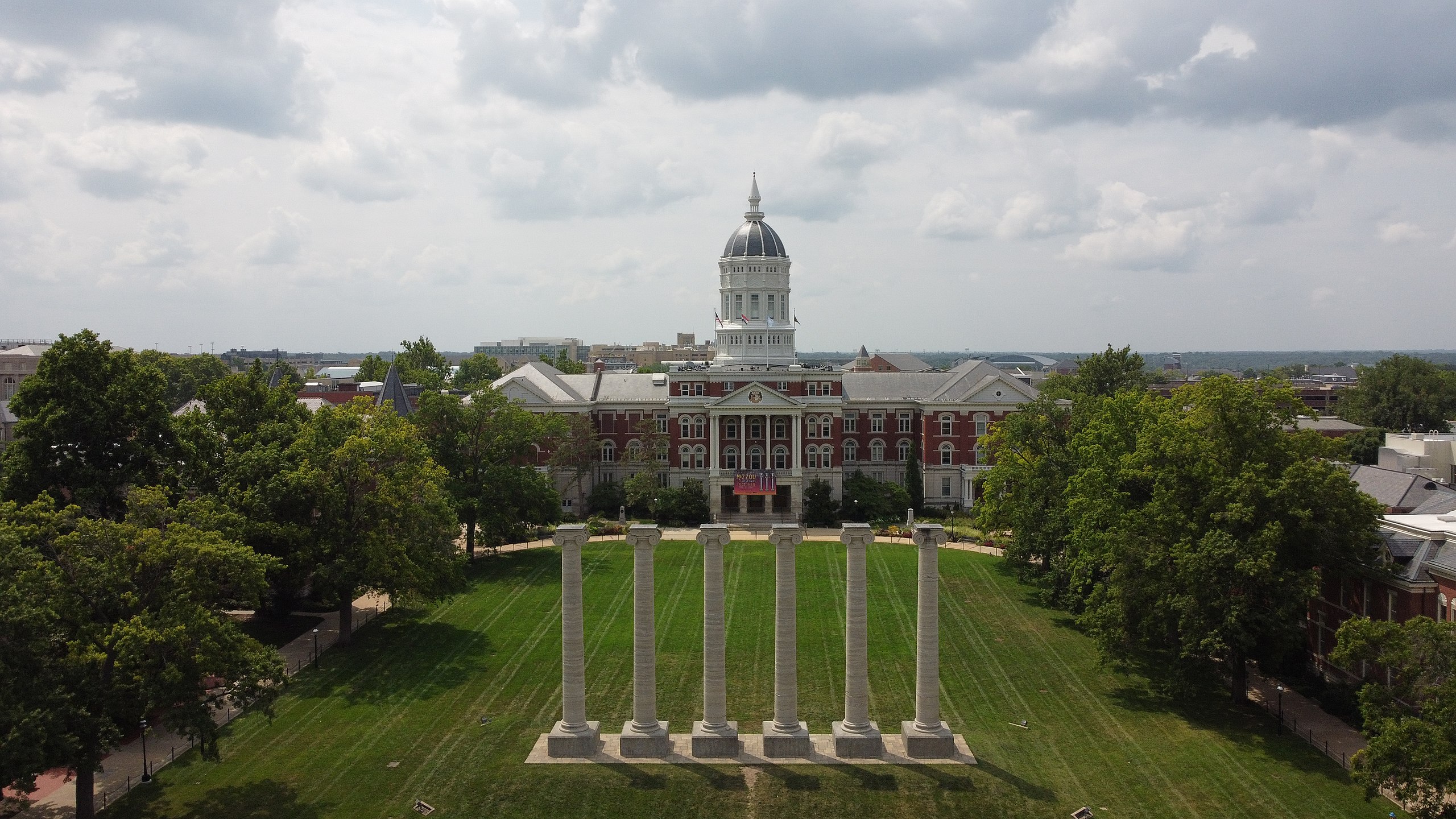
Francis Quadrangle, University of Missouri.

Elizabeth and I decided to drive to the western part of the state, to Lexington, Missouri, where my Confederate great-great grandfather, whose promotion to brigadier general evidently got lost in the mail—that’s States’ Rights for you—fought in 1861. The opposing forces left behind that souvenir in the column of the County Courthouse. I am named for that great-great grandfather, James H. McBride, who appears, from his portrait on the left, to have died from Terminal Constipation. My middle name, Douglass, comes from his son, a Confederate staff officer, who had an unfortunate encounter with a Yankee artillery shell in 1862 Arkansas.

So, as Kurt Vonnegut noted, it goes.



Not-quite Brigadier Grandfather James is less important than where we had lunch in Lexington, at that tall and narrow mid-Victorian restaurant, The Heist II. It was there where we discovered, along with a stunning Reuben Sandwich and a stellar BLT, the delight of fried pickles. They were incredible. My father was raised on the Ozark Plateau, and I once wrote an essay entitled “My Father and Fried Food,” and after The Heist, I understand him on a whole new level.

Anyway, it got its name from when it was a bank and was robbed by Frank and Jesse. Nellie-bar-the-door, that gave me, in between bites of fried pickles, to regale the waitress and most everyone within a four-table radius of Frank and Jesses James stories from San Luis Obispo County, California.
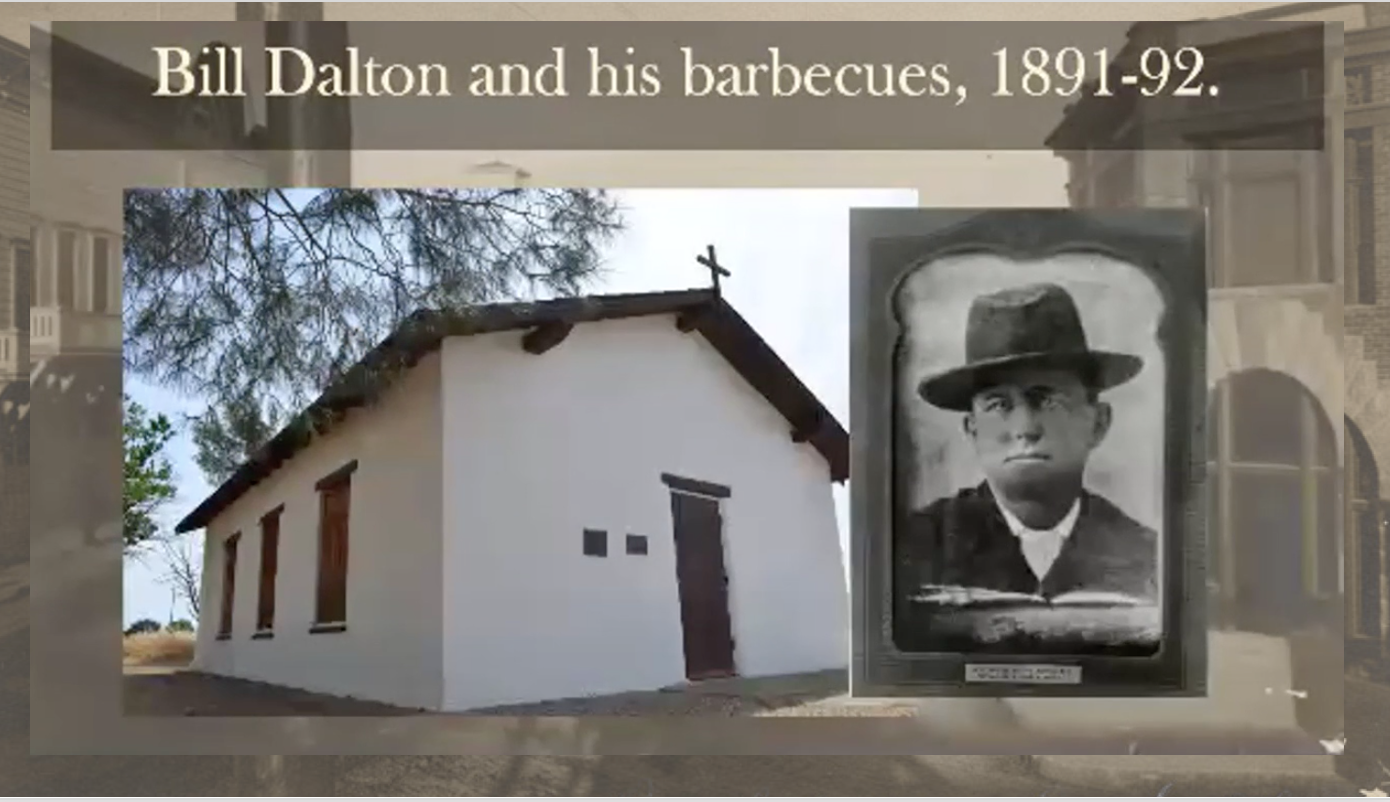
The Estrella Adobe Church and Bill Dalton, San Miguel, California.

The James Gang was known also as the James-Younger Gang, thanks to Frank and Jesse’s cousins, and it was a Younger who became the mother to a brace of outlaws from a later generation, the Daltons. Bill was not an outlaw. He was a well-respected cattleman in San Miguel—some accounts that I’ve never verified claimed that he was a State Assemblyman—and one summer his brothers came to visit California.

(Which, of course, reminds me: the other reason for the James Brothers’ visit was their search for the grave of their Baptist preacher father, come to California to evangelize the gold fields, which needed it badly. They never found their father. Similarly, the ship Arkansas, loaded from ballast to main deck with Methodist missionaries, came to Methodize the gold fields at about the same time as Rev. James. It ran aground on Alcatraz and was towed across the Bay and beached, where it became a brothel.)


What Bill’s brothers, excitable boys, liked to do—within earshot of the adobe church congregation—was to barbecue, drink whiskey and target practice with their Colt revolvers. I don’t advise against doing things like this, but maybe not all at the same time.

Bye and bye, Bill’s brothers returned to the Midwest, where they conceived of the idea of robbing two banks simultaneously in Coffeyville, Kansas. They had not thought this through completely, I think. Their timing was thrown off when the good citizens of Coffeyville realized what going on, denuded the hardware store of firearms, and air-conditioned the Dalton Gang, including brothers Grat and Bob.

They also air-conditioned brother Emmett, shot twenty-three times. He survived to become a script consultant for Hollywood westerns and autographed this photo for San Luis Obispo County Sheriff Jess Lowery.

Lowery’s career highlight was pulling over a truck near Pismo Beach, prying apart the two-by-fours atop its bed, and finding, just beneath, 72 five-gallon jerricans of bootleg Canadian whiskey headed for Los Angeles and gangster Tony Cornero, famed later for the gambling ships he operated just beyond the three-mile limit. Cornero also opened one of the first casinos in Las Vegas, which burned, due to either faulty wiring or Lucky Luciano. His life ended due to either a heart attack or Lucky Luciano.

So it goes some more.
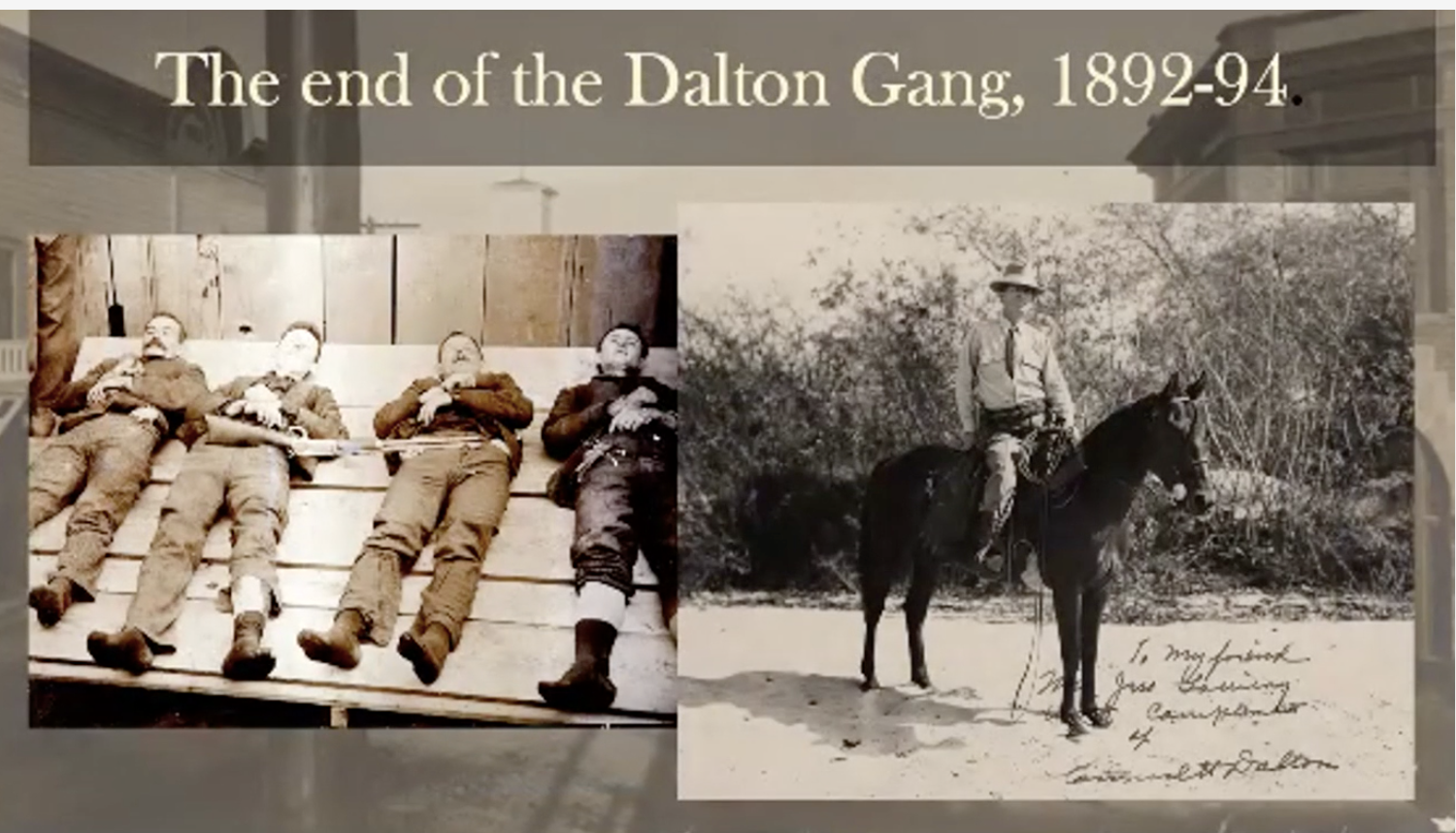
Dead Daltons and the not-quite-dead-yet Emmett.

Bill Dalton’s life ended with a day that started out to be pretty optimistic. For reasons I still don’t understand, he decided to follow, after Coffeyville, the Outlaw Trail. His career was brief. A posse, led by Marshal Selton T. Lindsey, took off after Bill in Indian Territory—Oklahoma—and were hot on the trail until they encountered a wagonload of contraband whiskey intended for the Indian Nations.

The posse confiscated the evidence and drank it.

The next morning, only Marshal Selton T. Lindsey and one deputy were sober enough to continue the pursuit of Bill Dalton. While crouching behind the weeds atop a rise, they found him.

Bill evidently loved children. He was playing in the front yard of a friend’s house with his friend’s children when one daughter, leading a milk-cow in from pasture and back to the barn, passed Marshal Lindsey and his deputy, who were not doing a very good job of being surreptitious. When she reached Bill, she whispered to him urgently.

He ran for it. Urgently.

Lindsey and his deputy lit out after Bill, paused to get their aim, and began to air-condition him with their Winchester rifles. He fell, dead.

Not quite. When the lawmen crept up to Bill, he was still alive. He smiled at them.

Then he was dead.
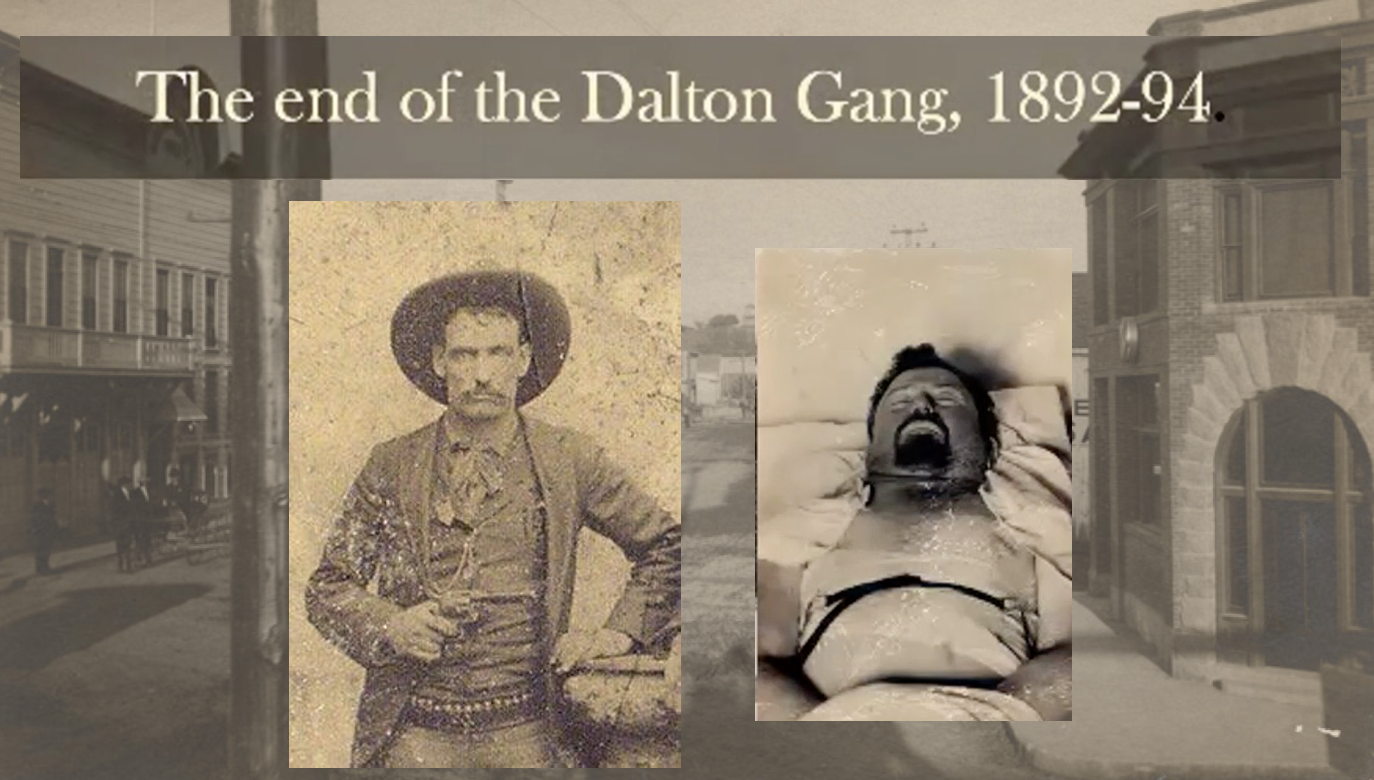
Marshal Selton T. Lindsey and the deceased Bill Dalton.

The Daltons weren’t quite done with San Luis Obispo County. In 1972, soon after the release of their concept album about the gang, Desperado, The Eagles played a concert at Cuesta Community College. A fairly prominent Canadian, Neil Young, opened for them. Tickets were $5. I did not buy one: I didn’t know much about The Eagles, and $5, in 1972, $36 today, was for a starving college student like me—-who subsisted largely on 19-cent tacos and burritos at the San Luis Obispo Taco Bell where Creedence Clearwater Revival once dined—Highway Robbery.

Damn. I wish I’d bought that ticket.

More kitchen adventures

Yes, even MORE culinary adventures!

* * *

I made a corn chowder yesterday. I pronounce it “chowda,” of course.

When I got up early to put it together, I thought “Why not garnish it with green onions from our yard?”

I was so proud of myself that I had to tell Elizabeth.

“I did a taste test and it’s yummy. And I garnished it with green onions from our front yard. We are living thanks to the sweat of our farmers’ brows!”

Pause.

“The onions are in the back yard, Jim.”

“Nope. I found a bunch out front next to the St. Francis statue.”

Pause.

“Jim, I think those might be daffodils.”

I did a taste test. Hmmm. Yuk. Whatever my garnish was, it wasn’t onions.

So, deciding against opening a restaurant called “The Daffodil Café,” I began carefully scraping off the garnish. It was replaced with green onions from the back yard.

My sense of Vegetable Recognition (I’m okay on cabbage and Brussels sprouts, but only because Mr. Ikeda and Mr. Shannon grew those next our our house on Huasna Road) is no better than my sense of direction. I have always maintained that I would’ve led Lewis and Clark to Paraguay.

I corrected my error. I replanted everything and apologized to both the daffodils and the onions.

It was, I will admit, pretty yummy, complemented by a killer sourdough bread baked by Jim Egan, our neighbor.

Jimmy’s Taco Salad Recipe

This is not my taco salad. I just like to pretend it is.


STEP 1.

1 lb. ground beef. I will only buy a certain grade and quality of ground beef: The label must read “on sale.”

Sweet onions and bell pepper, grated in your $39.99 food processor that you love so much because it goes “WHIRRRRRRR!”       

Brown above in a little olive oil and crushed garlic. Brown, brown, brown. Smells great.

Meanwhile, get out the food processor again. Grate a hunk o’ Mexican cheese—Queso Fresco. “WHIRRRRRRRR!” Damn, this is fun. Try not to eat all the grated Questo Fresco.

STEP 2.

Meanwhile, get out the special knife, the one Jim Bowie invented. (Okay, I made that up). But we got a set of knives from Elizabeth’s brother, Dana, for Christmas, and you could cut through an aircraft carrier deck with this particular knife. It’s a humdinger.

Now it’s time to chop chop chop! Red onion, carrots, red and yellow baby peppers, celery. While you’re chopping the celery, hum the tune from the Monkees’ song “Valleri,” because it sounds like “celery.”

Celler-y! I love my cell-ell-el-elery!

When I schmeer it with peanut butter it’s so good
Wouldn’t leave it outta taco salad even if I could
They call it cell-ell-el-elery!I love my cell-ell-el-elery!


STEP 3.

While the burger mix is cooling, provided it hasn’t blown up inside the fridge, it’s time to chop chop chop some more. Romaine lettuce. I do not use “iceberg” out of respect for the victims of Titanic.

Throw in some shredded red cabbage. Cherry tomatoes, because, let’s face it, they’re cute. They remind me of the Minions from Despicable Me.

Add a can of red kidney beans. I despise gall bladder beans.

Line up your bejarred ingredients: Salsa (chunky, if possible. I like Trader Joe’s Cowboy Caviar), pepperoncinis (Banana peppers. Whatever. My teaching friends Trevor Coville and Ryan Huss kept a jar always in the AGHS faculty room refrigerator, which also just might have contained a lunch that journalism teacher Carol Hirons brought to school in 1969. We all three believed that no sandwich was complete without banana peppers.)


Olives. I prefer Greek olives. After all, it was the Mexican-Irish actor Anthony Quinn was was Zorba.

STEP 4.

Arrange all the ingredients in a pleasantly symmetric manner in a large bowl. (“Pleasantly symmetric” can be suggested by either the black-and-gold crowd gathered for a Pittsburgh Steelers home game or by the cemetery in Stratford-Upon-Avon, England, where Shakespeare is not buried. He’s in the church, doubtless waiting for a decent taco salad.)

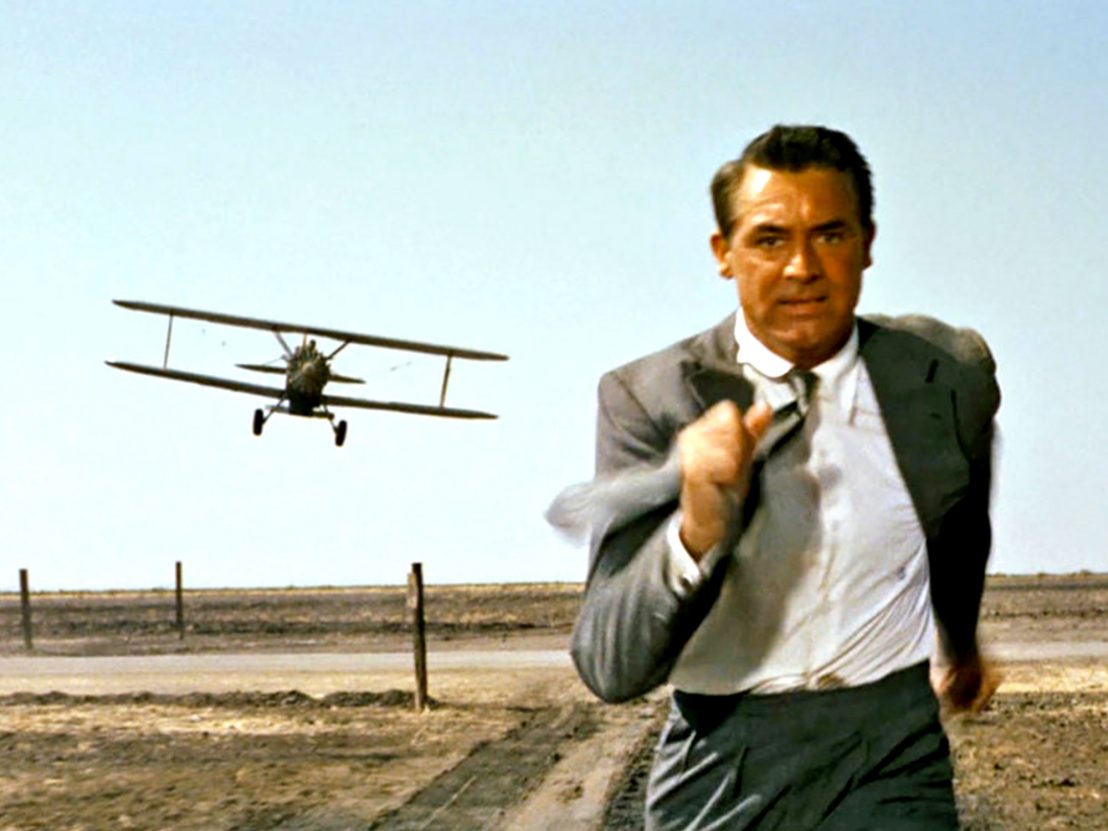
In the center of your vegetable conglomeration, after a short speech of welcome, place atop them the hamburger meat, ringed by queso, bombarded by banana peppers and Greek olives. I like to pretend I’m a crop-dusting biplane during this step.


FINAL STEPS.

Almost finally, glorp an ice-cream scoop of either sour cream or Greek yogurt into the middle. Drizzle, in a pleasant manner, a line of salsa along the length of the salad. Or the breadth. It’s really up to you.

Finally, it’s time for the chips. I only use an authentic Mexican tortilla chip; I think you can find them at local Mexican groceries. I believe they’re called “Doritos.”

Line the perimeter of the salad with “Doritos” as if they were English tombstones. Scatter the surface with some more. Eat the rest of the bag before your sons can find it.

Ta-daaa! Taco Salad!

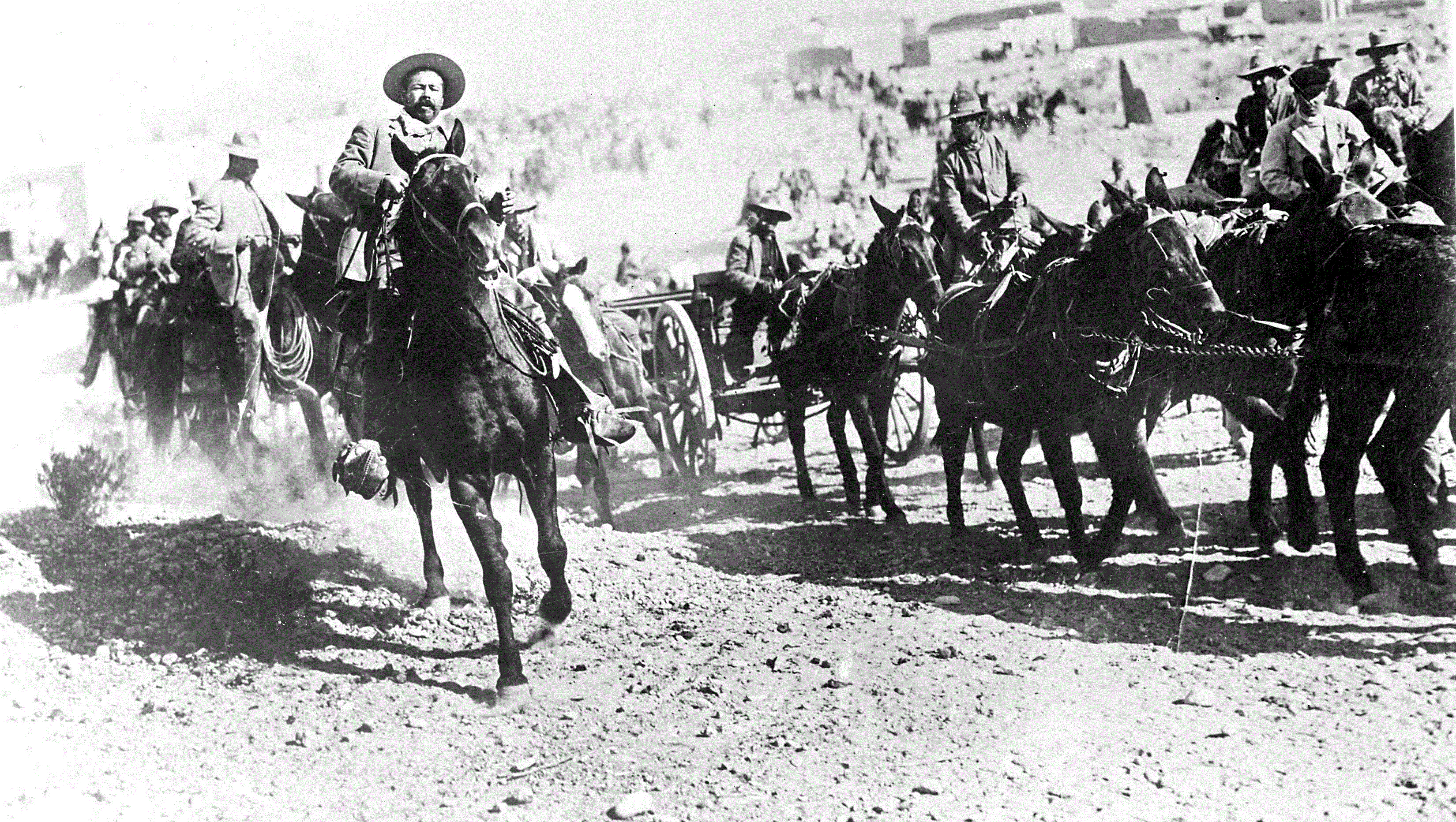
Pancho Villa and his dorados—his light cavalry. It’s a True Historical Fact that it was Doritos that gave those mules the strength to pull Villa’s artillery into battle.

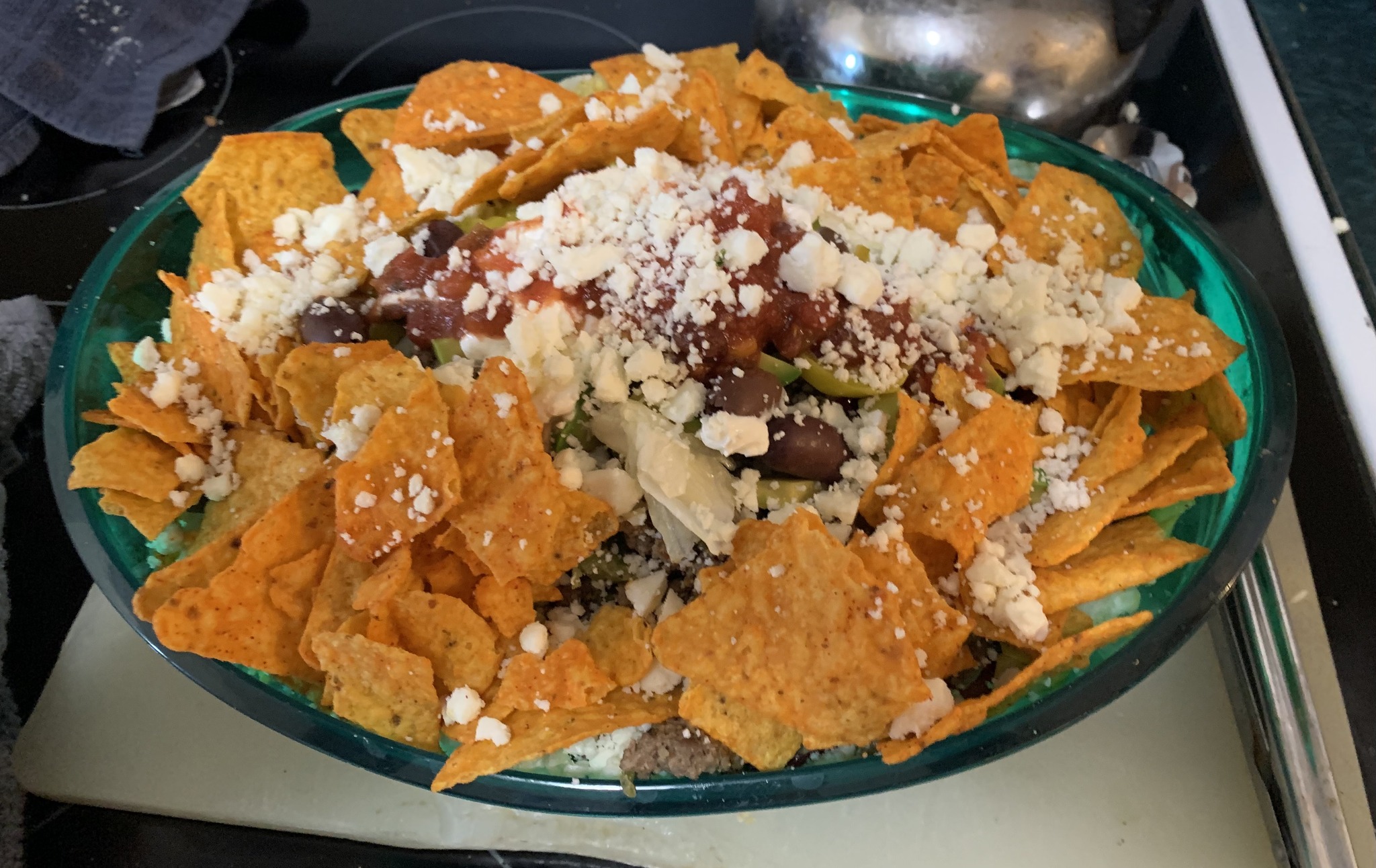
And here it is! The completed Taco Salad. There’s lettuce and the other vegetables down there. Somewhere. We’re sending in a team to locate them.

The King of England visits Hamburg, March 2023

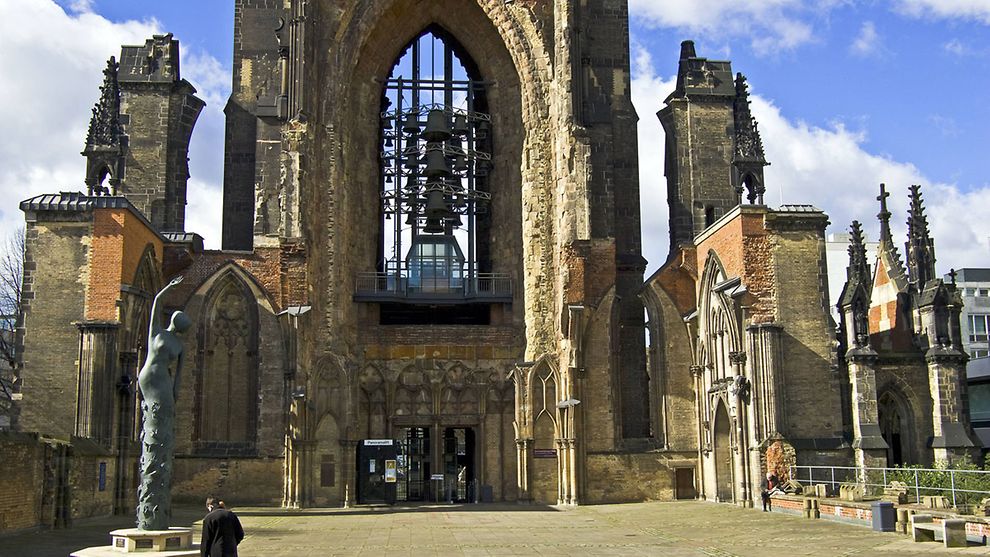
The ruins of St. Nikolai Church, Hamburg

King Charles III visited Hamburg yesterday to pay tribute to the estimated 30,000 German civilians killed in the Allied firebombing of the great port city in 1943, in an operation code-named “Gomorrah.”

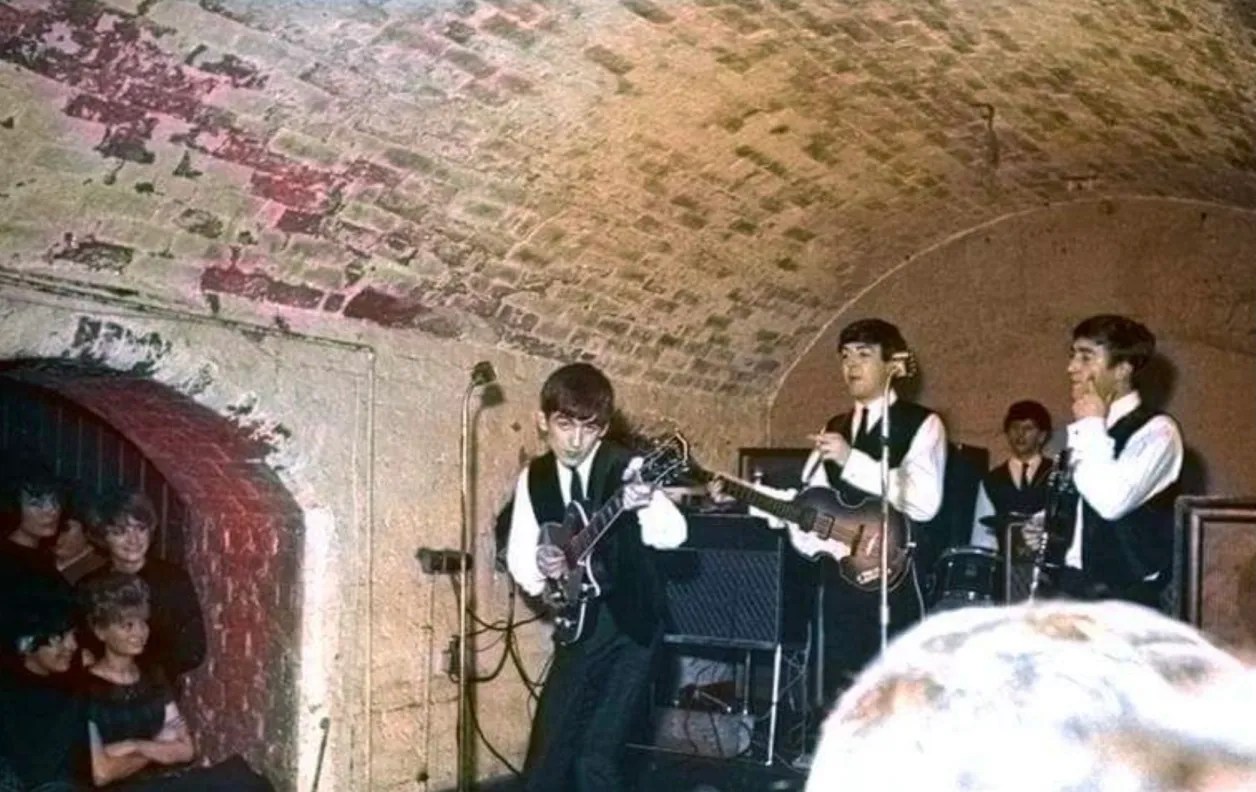
Twenty years later, ironically, the last stop for The Beatles before they hit the big time was a tiny nightclub in Hamburg called The Cellar.

It’s been replicated, exactly, in Liverpool, where the MonaLisa Twins, two young women who expertly and faithfully perform Beatles songs, perform today.

The Beatles at the Cavern, 1963. Ringo Starr has replaced Pete Best at the drums.


I wrote a book about the air war, a testament in its bulk to the immense courage of the American heavy bomber crews–in B-17s and B-24s–who contributed to the destruction of Europe.

I have never liked the Superheavy, the B-29 Superfortress, which not only destroyed Japan but, in its development, killed dozens of aircrews, including waist gunners. When the cabin was pressurized, the gunner’s Plexiglas bubble, in early models, separated from the fuselage and so carried the gunner with it. The Army Air Forces’ solution was a leather harness. The plane was also noted also for the ease with which is caught fire.

I hate that airplane.

A doomed B-29 over Tokyo.

And while I will forever love the aircrews of the heavies, and I will never forget, either, what they were doing to the people below. Henry Hall of Cayucos was twenty when he saw a B-17 from his squadron, badly shot up, begin to lazily tumble toward the ground. Along the way, it clipped the wings of two more American bombers. They went in, too.

The passage below is from my book about airmen like Hall.

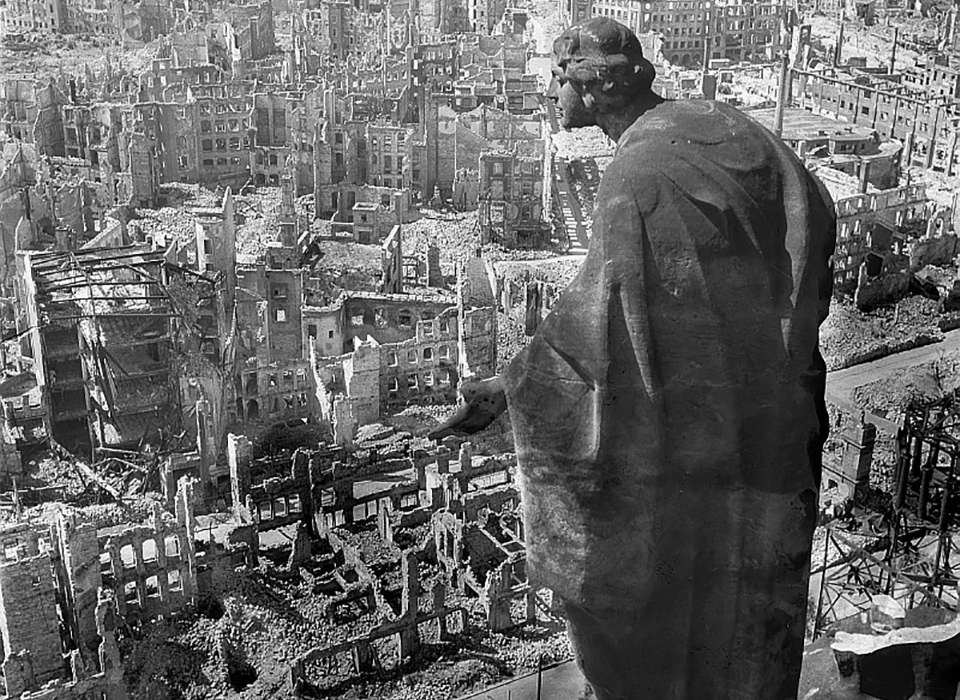
Sheila Varian’s prize cow horse, Ronteza, was an Arab and her sire was an award-winning Polish stallion, Witez II. Stablehands were desperately trying to evacuate Arab stallions from the east–horses were being eaten there by the Red Army–when they reached Dresden, the ancient city that was firebombed in February 1945. (POW Kurt Vonnegut escaped incineration in Slaughterhouse-Five).

One of the Arabs’ handlers watched in horror as the tail of Ronteza’s uncle, Stained Glass, burst into flames.

Stained Glass survived. Twenty Arabians perished. So did at least 25,000 human beings.

Dresden in ruins, 1945.

Sometimes the aircrews could smell, from 25,000 feet, wafted up to them by vast columns of black smoke, what they’d done to the children below. Even into old age, many of them would awake, in a terrified moment of cold sweat, when, in their dreams, they were smelling their combat missions again.

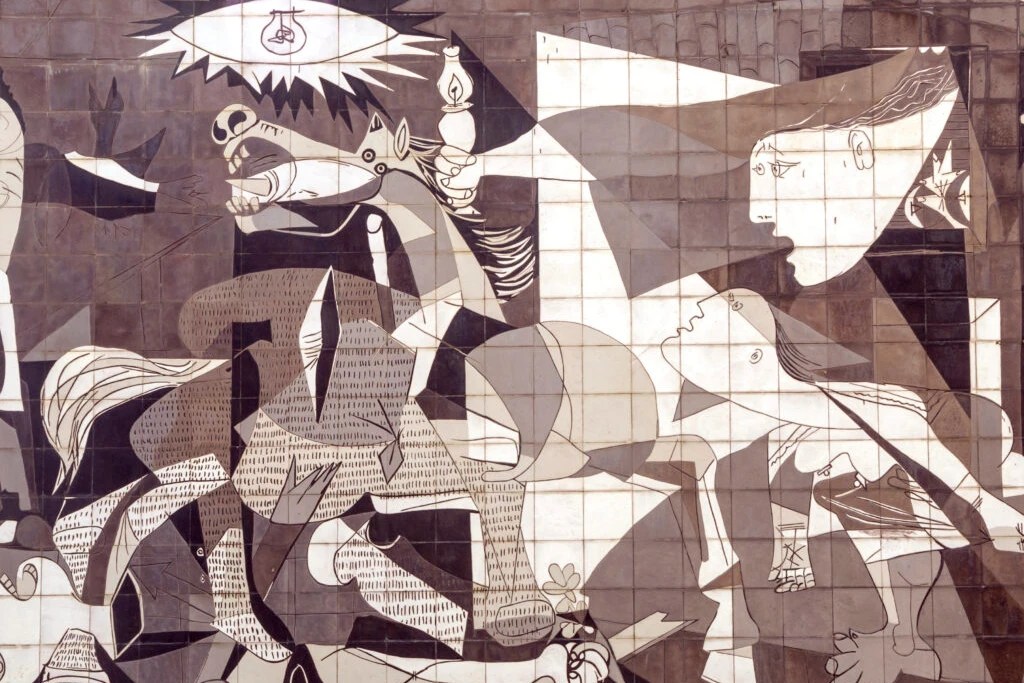
When we were still capable of outrage, Pablo Picasso’s “Guernica” was a passionate protest against Hitler’s bombing of a Basque town during the Spanish Civil War, in 1937. That painting has been replicated, exactly, in the United Nations building in New York City. It’s a reminder, albeit with the Russian Federation remaining in the Security Council, of what the UN is intended to prevent.

Guernica


And I fervently hope that I never lose my capacity for outrage. That is one quality that made be a history teacher. And that, after all, was just a cover story. My real intent was to teach my faith, by which I mean, the value of each and every single human life.

We are precious in God’s eyes. My students needed to know that. The gift of history is in reminding young people of the richness of their heritage. The stories that history teachers tell remind young people that their lives, too, enrich us beyond measure.

Without being either a proselytizer– and while being a terribly negligent churchgoer–I knew that God’s eyes were always on me when I was in the classroom. I was constantly aware of that.

She had entrusted Her children to me, you see.

Liza, a four-year-old Ukrainian child with Down Syndrome—the light of her parents’ lives—was riding in this stroller when a Russian missile struck nearby. Liza was killed.

All Quiet on the Classroom Front

I had the most extraordinary experience yesterday, a beer-and-brats meeting with retired Arroyo Grande High School, California, teachers at Kulturhaus Brewing Company in Pismo Beach, a marvelous little restaurant owned by the daughter of one of those teachers. AGHS is both my Alma Mater and the place where I taught history for nineteen years.

I am not sure how to make the equivalence, but John F. Kennedy, probably courtesy of his speechwriter, Ted Sorensen, once made this remark at a White House dinner that honored several Nobel Prize awardees. I will paraphrase:

Never has there been, in this room, such a brilliant gathering. With the possible exception of when Thomas Jefferson dined here alone.

That was what my gathering yesterday was like. I was so incredibly honored to be in the presence of so many people who were—let’s face it, my heroes—math and English and Industrial Arts and history teachers.

I was stunned but not necessarily surprised when two of them said that they had subbed at our high school and would never do so again.

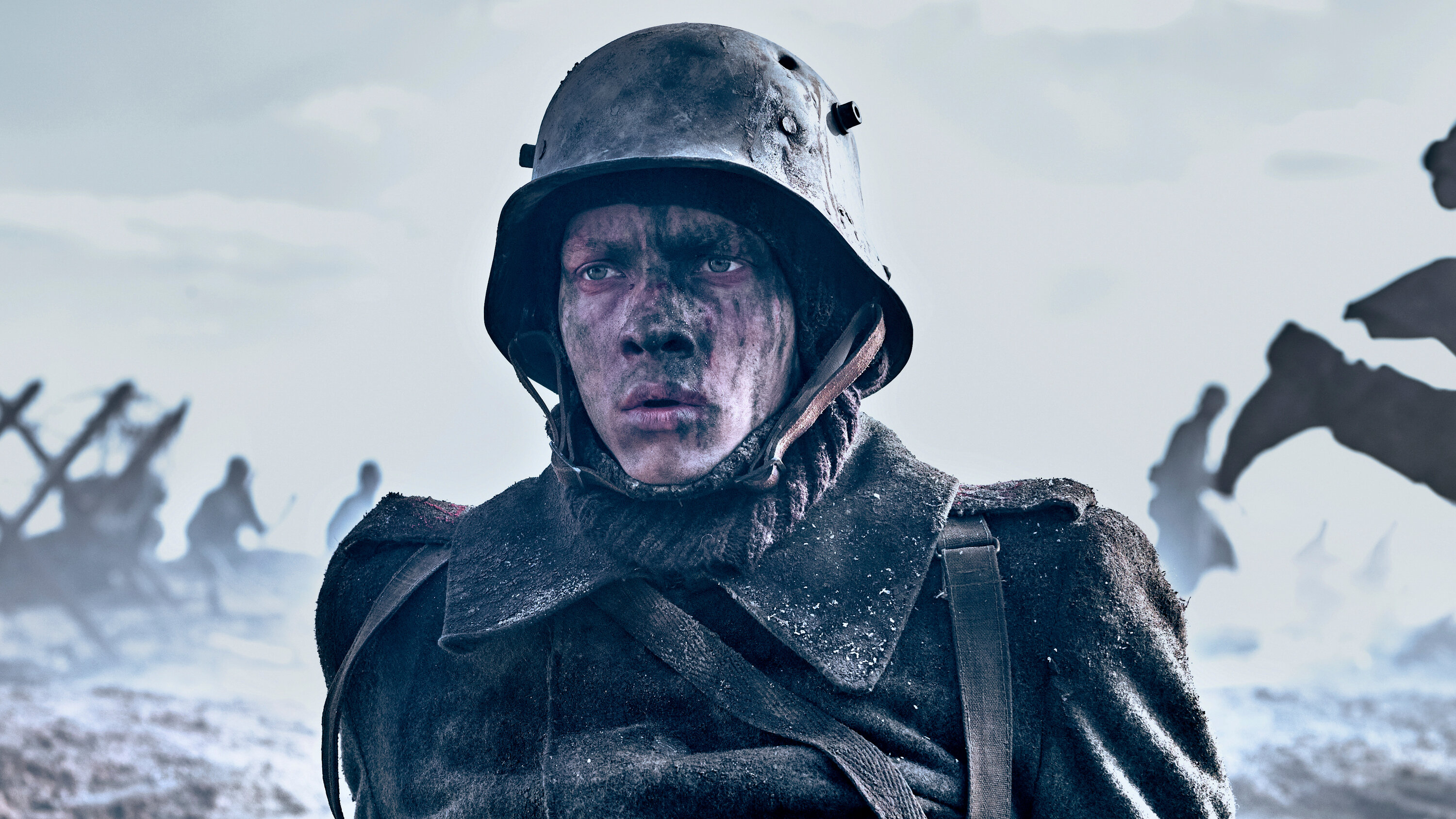
Of course, they reminded me immediately of one of the most formative novels of my sophomore year when I was a student at AGHS, All Quiet on the Western Front. The guilty party in that novel, sadly, is a teacher. His jingoism seduced the protagonist, Paul, into joining the army where, on the Western Front, everything he believes in is gradually destroyed by shellfire and poison gas. Finally, his idealism vanishes alongside the French poilu he watches die, slowly, in a shell-hole where dead rats the size of dogs remain afloat in the crater created by heavy artillery.

Teachers are suckers, like Paul. By that—I have to be careful here—I don’t mean that they are stupid. Paul wasn’t. They are instead idealistic and generous and self-denying. They work impossibly long hours that no one ever sees. Good teachers are good soldiers.

And, of course, All Quiet, the book about good soldiers, was banned by the Nazis once they’d come to power.

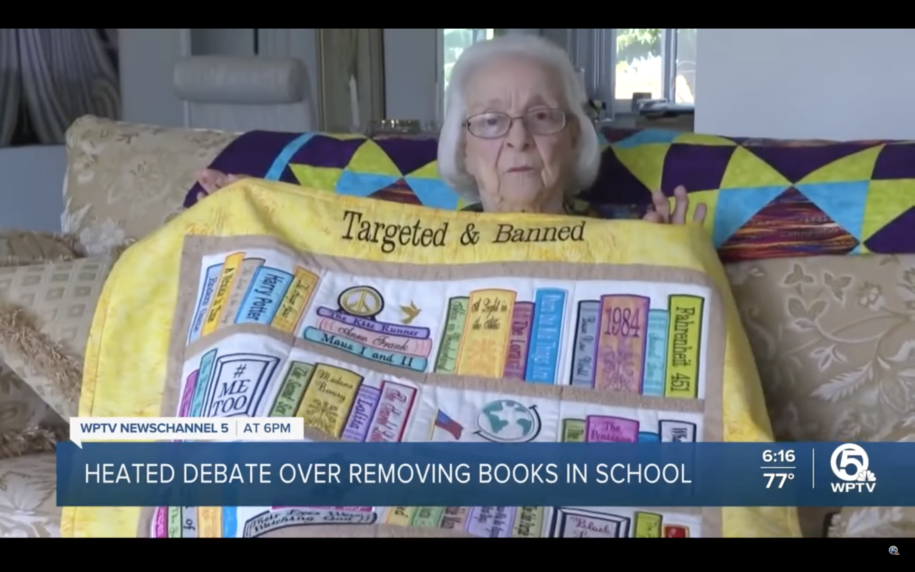
So are these books commonly taught in American classrooms today. The Florida widow of another soldier, killed in another war in 1944—she is now 100 years old—made this quilt to protest the censorship that now weighs heavily on American schools. Her husband died, she said, to preserve the freedom of thought that these books represent:

Ironically, one of the titles, Ray Bradbury’s Farenheit 451, is about burning books. Fire brigades are devoted, in Bradbury’s novel, to setting them afire, as good citizens once did, on Chester Avenue in Bakersfield, California, to a pyre made up of Steinbeck’s Grapes of Wrath, which they felt insulted their town for its treatment of migrant farmworkers.

A sign today that the walls that are closing in on teachers—particularly on history teachers—is the controversy over “Critical Race Theory,” which is taught in law schools or graduate schools. It is not taught in any K-12 school in any district in any part of the United States.

But the deliberately misinformed insist that it is. I once wrote this about perhaps the most threatening part of history, Black history, a discipline that may vanish, as Paul’s idealism did, in the rapidly contracting MAGA universe.

The passage refers to the student assessment, which required them to produce a computer-generated newspaper about what they’d learned about America in the 1920s.


When White 17-year-olds from Arroyo Grande, California, learned about the life of Louis Armstrong, a Black prostitute’s son from New Orleans, Louisiana, nearly every single newspaper at unit’s end had an article about Louis Armstrong.


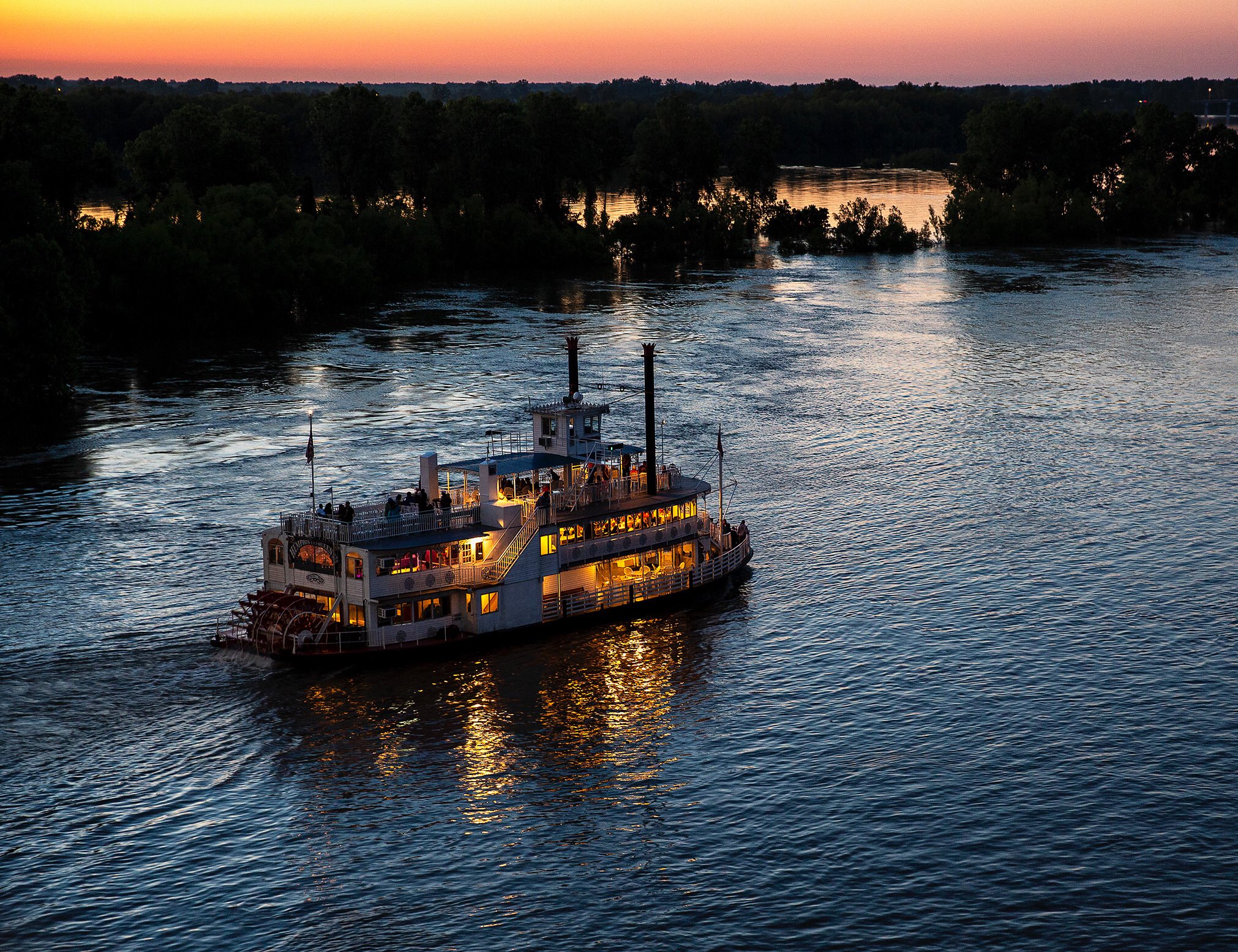
They caught what a masterful trumpet player Bix Beiderbecke, the son of German immigrants—“Bix” is short for “Bismarck,” the Iron Chancellor— to Davenport, Iowa, caught one night when a Mississippi riverboat approached out of the fog on the great river’s surface. There was a jazz band aboard, and Beiderbecke heard the sweet—and saucy—notes of Armstrong’s cornet floating above the steamer’s superstructure. He was enchanted.

This is what I taught and what my teenagers learned. 

When students learn that the hymn “Steal Away to Jesus” was the signal for carrying out a group escape from a slave plantation, when they learn about Crazy Horse’s generosity, after a big hunt, to Lakota widows and orphans; when they learn that one of the greatest frontier lawmen was a Mexican-American named Elfego Baca, or, in San Luis Obispo County, a sheriff named Francisco Castro; when they learn about the 54th Massachusetts driving up the beach toward Fort Wagner or the 442nd Regimental Combat Team advancing fearlessly under shellfire through the Vosges Forest in France; when they learn about Rosa Parks quietly refusing to give up her seat, they don’t feel ashamed to be Americans.

They are instead immensely proud.

They don’t feel ashamed because all of the people who perpetrated all of the cruelty that marks much of our history pass their knowing only briefly; these people are dead. But Louis Armstrong is alive to our children. He touches them.

There is nothing to be afraid of in teaching all of our past to all of our kids. It’s actually very hard to indoctrinate schoolchildren. What comes easy to children is recognizing needless cruelty—would you have us teach them to admire cruelty?– and, even more, kindred hearts. If we teach them to listen, then quiet ourselves, they’ll hear the cornet notes, sweet and saucy, clear and sharp, high and weightless above the river’s current.


It’s not safe to teach Louis Armstrong anymore.

And the classroom—once my sanctuary, the place where, in the course of my life, I was my truest self—is no longer safe, either.

What my retired friends were suggesting was something I’ve heard over and over from classroom teachers today. Whether it was the interruption of Covid, which retarded the socialization of young people for two years and when teaching was done remotely—both young people and teachers hated it—or the example of a president who mocked disabled people, there has been, I believe, a collapse in civility that is the societal equivalent of the climate crisis. Our future is in peril.

Both crises are being ignored.

Meanwhile, what teachers bring to the classroom are their open hearts, hearts that are open to America’s future.

But in many classrooms in America, every day in every way—whether it be by parents who challenge the teacher’s scholarship or by students who surreptitiously message their friends on iPhones hidden just beneath their desks, or by both teachers and students who come into the classroom with an immense and unassailable sense of entitlement—teachers are struggling with broken hearts.

I am a believer in Catholic education as well as public education, yet the many friends of mine who teach in four local parochial schools have seen the same decline in civility.

And so enrollment in teacher education programs has declined by a third in the last decade.

No wonder. If I could replace a broken windshield and get the thanks due me from a customer, I would fix windshields until I died.

Broken hearts are far more problematic than broken windshields.

And, to be honest, I didn’t teach history, not exactly. What I taught came from my heart: My classroom was a safe place where students could find acceptance. That allowed me to lead them toward a place where they could respect each other and, more, to travel to places they would never have the chance to visit and to meet people they’d never have the chance to meet. The people who’d inhabited those places were dead, you see. My job was to bring them to life again so that the young people I loved so much could meet them, wonder at them, honor them, remember them.
My classroom was a place where we could celebrate being human together. This was, for lack of a better word, my faith, which came from my mother.

Just one example of my faith is this man, whom I will remember all my life. Al Findley Jr. was shot down as a B-24 radioman—shot down twice—in World War II, yet he became a lifer in the postwar Air Force, a Command Master Sergeant. After his career he became, with his wife, an antique collector with a shop in England and then another in Los Osos, California and when he died at 94, it broke my heart. I only knew the man briefly—he used to drive his retirement home G.I. buddies to breakfast every Sunday just up the coast to Morro Bay—but he became part of a book I wrote and, in the process, became as well one of the dearest friends of my life.

Al had let me touch the past, you see, and there are powerful and terrified men and women who want to draw a curtain across our past so that we can never see it honestly again.


Growing up in the Upper Arroyo Grande Valley

This is the place that made me a teacher and a writer.

I probably haven’t got everything right–I rarely do–but my wife took me on a little trip this morning that meant a lot to me. My big sister was wondering what the Arroyo Grande Creek looked like after the rains, so we went to take some photos.

So Elizabeth drove me out to our old house, where I grew up, on Huasna Road, and along the way I began prattling.


This has happened to me only once before, but that was at Gettysburg. I had read so much about the battle that I knew exactly where we were–Elizabeth and our sons, John and Thomas–and what had happened there.

This was far more personal.

* * *

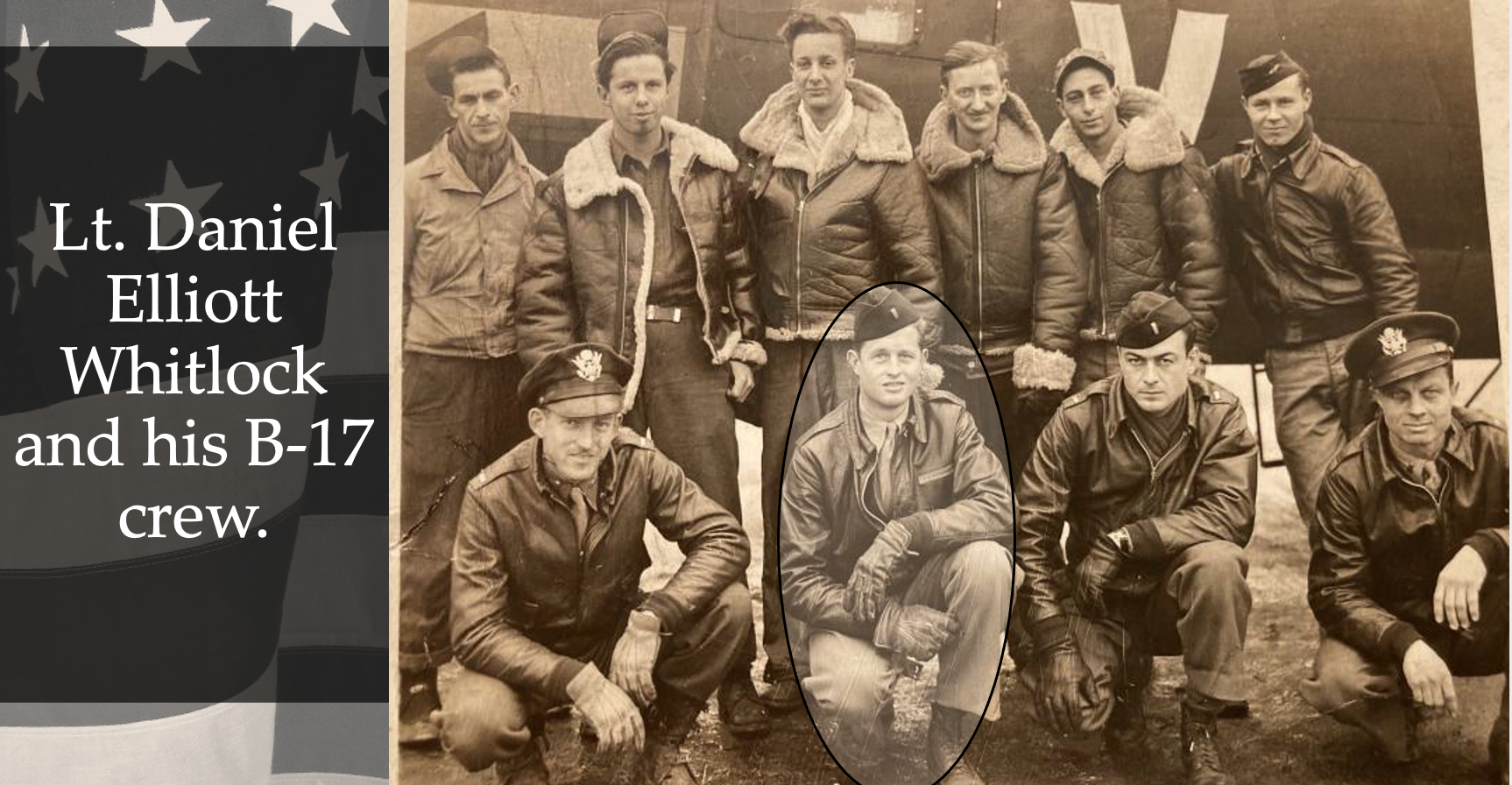
–Mason Bar. The son of the owner when it was the Commercial Company, Lt. Daniel Elliott Whitlock, was awarded a Silver Star for bringing his crippled B-17 home safely after a mission over Berlin. A flak hit set the ship afire. Elliot’s pilot, Jim Lamb, ordered the crew to bail out. Elliott, the co-pilot, countermanded the order when he saw Jim was badly burned. So was his parachute harness, burned through. Whitlock refused to abandon his friend. He knocked down the fire with an extinguisher–he never remembered where it came from–and turned the plane back to the safety of England’s Norfolk Coast.

He was terrified, he admitted to his folks in Arroyo Grande, whose home still stands just below Paulding. “Your prayers are standing by me,” he wrote them.

–Paulding Middle School. The gym was a PWA project completed for $14,300 in 1938 for the old Arroyo Grande Union High School and it put a lot of local men to work. The high school student body gathered inside the gym on December 8, 1941. They listened to a radio set up on the stage, where my son Thomas performed for Mr. Liebo, to hear FDR’s call for a declaration of war on Japan.

Haruo Hayashi, whom we have just lost, was the team manager for Coach Max Belko, who coached basketball in that gym. He also coached the Eagle football team. Belko, the son of tough Jewish immigrant steelworkers from Gary, Indiana, was overlooked by nearby Notre Dame and instead became an All-American at USC. His field goal against Montana–they drop-kicked field goals then, enormously difficult–would be the last field goal kicked by a Trojan for fifteen years. Some Bakersfield kid named Frank Gifford kicked the next one.

Belko’s coach, Howard Jones, called him “the finest example of a man I have ever coached.”

Belko, a Marine lieutenant, was killed on the beach at Guam in 1944.

The Arroyo Grande Men’s Club, including my friend Randy Fiser, restored the stone retaining wall below the campus that was originally a WPA project. So are the basketball courts below. And the cemetery stone wall. The Orchard Street building, now the AGHS math wing, was another PWA project. (The campus’s landscaping was done for free by volunteers–Japanese American farmers whose children attended the school. Twenty-five of the 58 members of the high school’s Class of 1942 were Japanese American.)

The beautiful park that’s now underneath Lopez Lake was another WPA project. So was the hard-surfaced Musick Road, a CWA work project early in the New Deal, supervised by county supervisor Asa Porter, that led to that park.

Arroyo Grande doesn’t today look like North Africa in part because of the reclamation work, made urgent by overcultivation, a product of collapsing farm prices in the Great Depression.

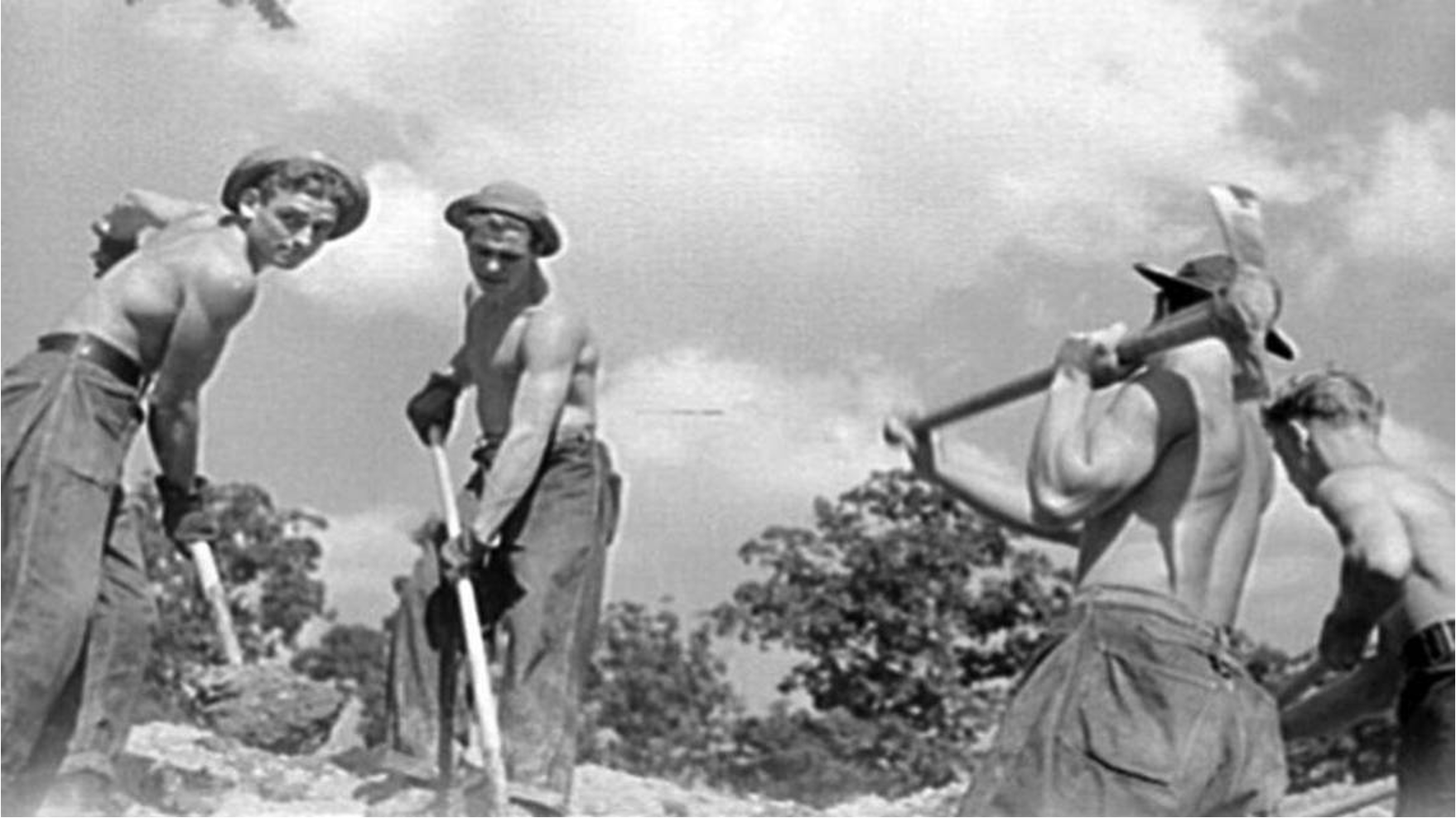
CCC workers in Arroyo Grande.


Arroyo Grande had the worst soil erosion the head of the New Deal’s Soil Conservation Service had ever seen in America. It was the Civilian Conservation Corps, 230 kids from New Jersey, Delaware and New York City, who lived in barracks on the site of today’s Arroyo Grande Woman’s Club, who terraced hills, built check dams and planted trees and so, at the very least, began to reverse the effects of what could have been an environmental disaster here. It was that damnable Federal Government Overreach that accomplished these things.

–The IDES Hall. This one was built in 1948. It’s the second one. The first one was the remnant of the old Columbian Hall on Branch Street. They had lectures, concerts and meetings there. Young women, in gauzy Greek gowns, used to dance to honor sweet peas at the Sweet Pea Festival.

Frank Gularte, killed in action on the Franco-German border in 1944, grew up on the farm that includes the hill just above the Hall. His son, Frank Jr. was born the same week; his widow, Sally, would’ve celebrated a christening and endured a funeral mass at St. Patrick’s on Branch Street in the same month.


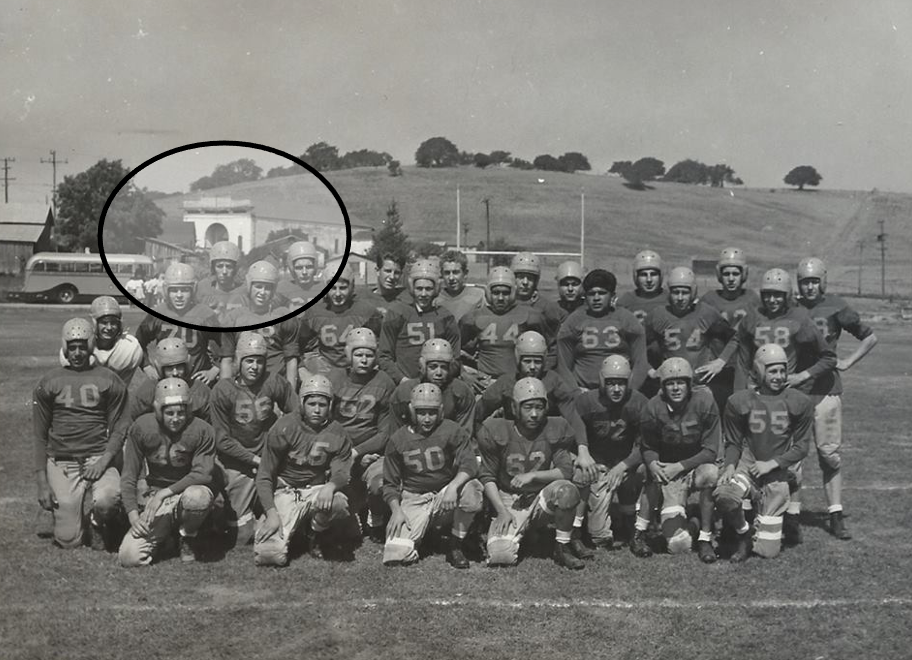
The old IDES Hall, just behind the 1946 AGUHS football team.

–Unplanted fields on the right, along Huasna Road. Those were, and probably will be, reserved for seed flowers. Thanks to Louis Routzahn and the Waller Family, Arroyo Grande flower seeds were known all around America. You can still find their seed catalogues online.

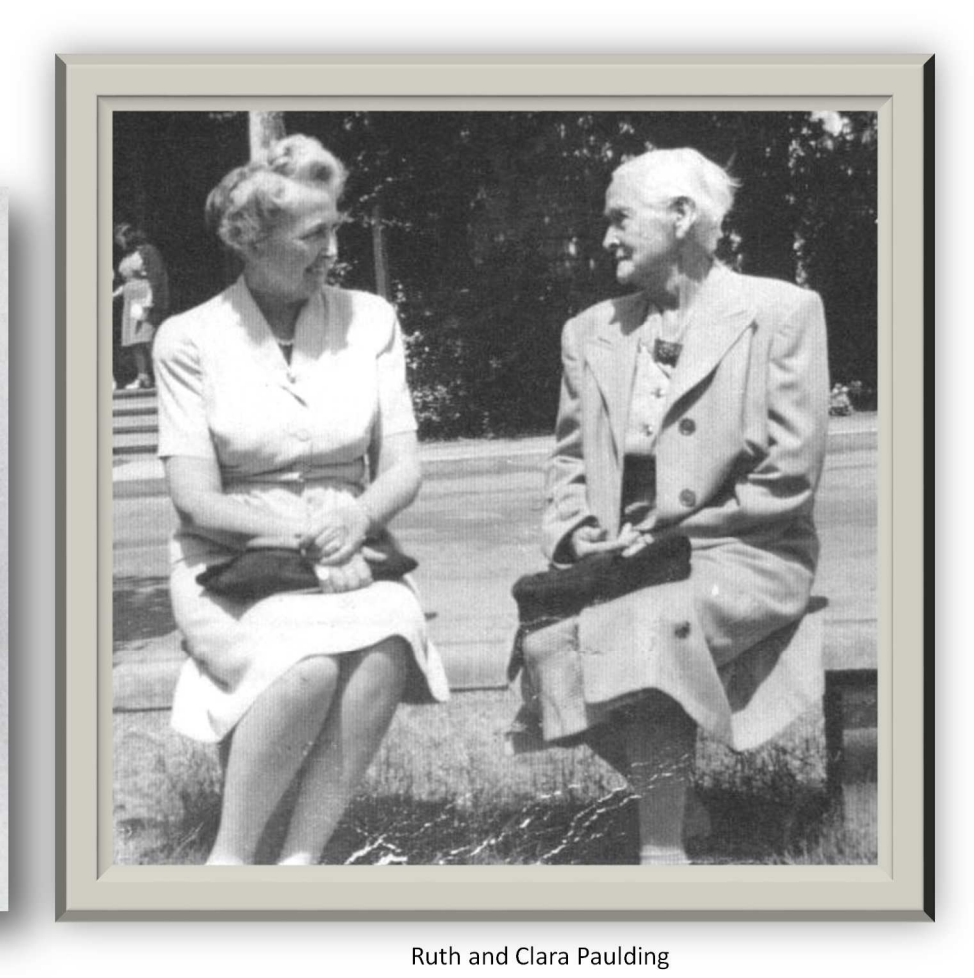
Clara Paulding, who taught here for so many years, rode her bicycle to my Alma Mater, the two-room Branch School, in the 1890s. It was so much fun for me to write a piece about her bike ride, because the smell of seed flowers and sweet peas must have been delicious. She loved Branch kids, by the way. A woman of sound judgment, Clara was.


My favorite Clara anecdote: She went back to her Alma Mater, Mills College in Oakland, with her daughter, Ruth, for whom the middle school is named, during World War II, when there was finally money enough for teachers like Ruth, whose commute consisted of walking across the street from the house in which she was born to her Spanish classes at Arroyo Grande Union High School–to earn salary advancement for taking college course. So she invited her retired teacher Mom—Clara was in her nineties– to come along. Clara did. She decided to take a Mills College course entitled “The History of the United States before 1865.”

“That’s because I remember everything else,” she told a newspaper reporter.

–Strother Park. This was a Chumash village, or rancheria, whose chief was dubbed “Buchon” by the Portola Expedition, after the large goiter on his neck. That’s why we have a Buchon Street in San Luis Obispo. The rancheria was called Chiliquin; Rosario Cooper, the last speaker of Obispeño Spanish, has roots here—this is probably where her mother, a “Mission Indian” only because of catastrophic drought and the chance of survival the Mission Fathers offered, was born. I taught two of Rosario’s descendants, beautiful and brilliant young women, at Arroyo Grande High School.

Newell Strother was the editor of the Arroyo Grande Valley Herald-Recorder for twenty years. After Pearl Harbor, he urged his readers to suspend judgement on their Japanese American neighbors. They were loyal to America, he explained in an editorial message some in Arroyo Grande did not want to hear.

–Tony Azevedo’s place. Elsie Cecchetti, our beloved Branch School bus driver, was an Azevedo. Her father’s dairy, on the site of today’s Trader Joe’s, was a dairy farm where Elsie’s first driving lessons were on a Farmall tractor. The Azevedos were Azoreans, come to America because of earthquakes, volcanoes and political unrest in the Islands. They were whalers—there was a shore whaling station at Port San Luis—before John Davison Rockefeller and Thomas Alva Edison put them out of business. They turned toward crops and dairy farming. “I don’t know much about history,” my Branch School friend John Silva told me once when he was helping me research a book. He then proceeded to name every Azorean dairy family between Lopez Canyon and Corbett Canyon. My mouth fell open.

John’s father, Johnny, and his uncle, Manuel, among the kindest men I have ever known, used to pull up pickup cab to pickup cab on Huasna Road to gossip, even thought they’d probably had breakfast together that morning at Sambo’s, many years later the still un-demolished Francisco’s Country Kitchen. I’ve seen farmers do the same thing in Kansas and Colorado, by the way. When a car approached, the Silvas would pull just off the road to the edge of their farm fields to let the motorist pass. They would wave cheerily at the driver. Then they’d pull back onto the road and resume their conversation.

–Clair Gibson’s home. Two generations of bankers—first, the Bank of Arroyo Grande then the Bank of Italy and finally the Bank of America. Today it’s Lightning Joe’s. The Gibsons were the kind of bankers you read about, but only in novels. They were generous with credit in hard times and with loans when they believed in what we today call a “business startup.” Once Mr. Gibson advanced a desperately needed emergency loan to the rock and roll star Peter Frampton. Frampton, needed it to secure a concert and couldn’t get the money from his own bank. Afterward, his people began to make deposits in the Bank of America in Arroyo Grande, California.

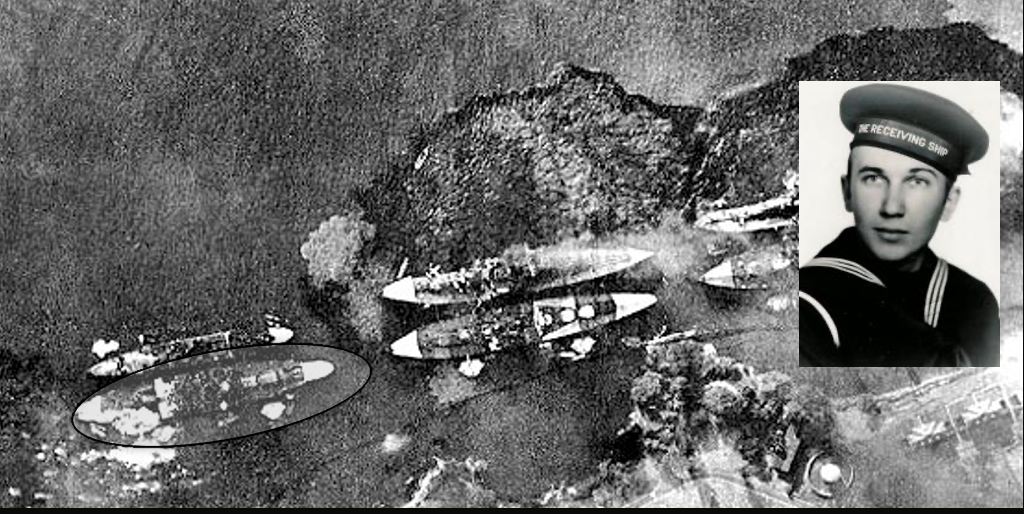
When I wrote a piece about Jack Leo Scruggs, a USS Arizona trombonist killed in the attack on Pearl Harbor, Clair called me. “Jack Scruggs,” he said—the two had been classmates in the Arroyo Grande Grammar School that stood where Mullahey Ford stands today—“I haven’t thought about him in years.” He chuckled over the phone line. Then there was a long quiet. He thanked me before he hung up. The memory of his lost classmate still moved him.

Bomb hits off Arizona’s stern, in the oval, mark the moment of Jack Scrugg’s death (his image is in the insert.) Concussion from those near-hits killed Scruggs as the ship’s band was assembling for the National Anthem. The ship blew up about twelve minutes later from a bomb hit forward.


–The Kawaguchi Home. Japanese immigrants, mostly from Kyushu, the southernmost Home Island, were Buddhists and Methodists. The Kawaguchis, if I remember right, were Catholics, which means that history has a long reach. St. Francis Xavier proselytized in Japan in the 17th Century; both cities targeted by the atomic bombs had large Catholic populations. Carolyn Kawaguchi, along with Vard and Patricia Ikeda, was the fastest runner I ever saw as a little kid. In those P.E. tests they used to do in grammar school, she would pass by me—in skirts, mind you—laughing apologetically.

Kaz Ikeda gently cured me of the uppercut in my softball swing on a visit to Branch School one day. The wooden home plate behind which he caught at the Gila River Internment Camp is now on loan to the Baseball Hall of fame. And, of course, one son is named “Vard” because Vard Loomis, a Stanford baseball alum, a pitcher, coached the Nisei team, the Arroyo Grande Growers, before World War II. After the enforcement of Executive Order 9066, Vard invited Kaz to stay in his family’s home. (His wife, Gladys, had been the Growers’ Team Mom.) Kaz had stayed behind until his father, Juzo, the assistant manager of the Growers, was strong enough to travel. A team of horses dragged him away on the Ikeda farm one day and Juzo was paralyzed as a result. Kaz made it back home. His dad didn’t. Juzo died in a camp hospital in the desert heat of Arizona in 1943.

But my favorite Arroyo Grande Growers story is about a rest stop at a park in the Valley. The team bus, which Vard drove, pulled up next to another bus. The passengers in that bus were young Black men, members of a touring jazz orchestra. The Black kids approached the Nisei kids and asked if they’d like to play ball in the park. That sounded like a good idea to everyone. So there was a game—the Growers tossing their mitts to the musicians during in between innings–and what sounded like a good idea turned out to be a good baseball game.

Since Vard was kind of the odd man out, he became the empire. Jokingly, both sides agreed, at the end of the game, that they’d never met a White man with eyesight as bad as Vard’s.

–The Gularte Home. I’m not sure where to start with this family, parented by Rudolph and Mary Gularte. We loved them. Rudy was a vegetable broker who bailed us out frequently when either our creek pump (for irrigation) or our spring pump, which we shared with his family (for drinking water) broke down. He drove at first a dark olive 1953 Chevy stepside pickup and then one of the first El Caminos in town—copper-colored, with Chevy fins. It was classy. He was a pallbearer at my Mom’s funeral. He cried, which moved me, because Rudy was a quiet, undemonstrative man. We would nearly drive off the road waving at him when we saw the El Camino approaching. Rudy, with not much more than his felt hat visible just above the steering wheel, was intent on driving. He was a small man; it took Mom’s death to make me realize what a big heart he had.

The size of her heart was immediately apparent with his wife. Mary was a warm, generous woman with a sharp bite when my friend Dennis, one of her sons, crossed her. Her bite was very brief. She’s the one who one day, because Elsie Cecchetti’s bus was somehow, inexplicably, late, took me that cold morning from the bus top and fed me a bowl of sopa—Portuguese Stew—with a big hunk of coarse bread intended for soaking. I soaked. I did not have to eat for the rest of the day.

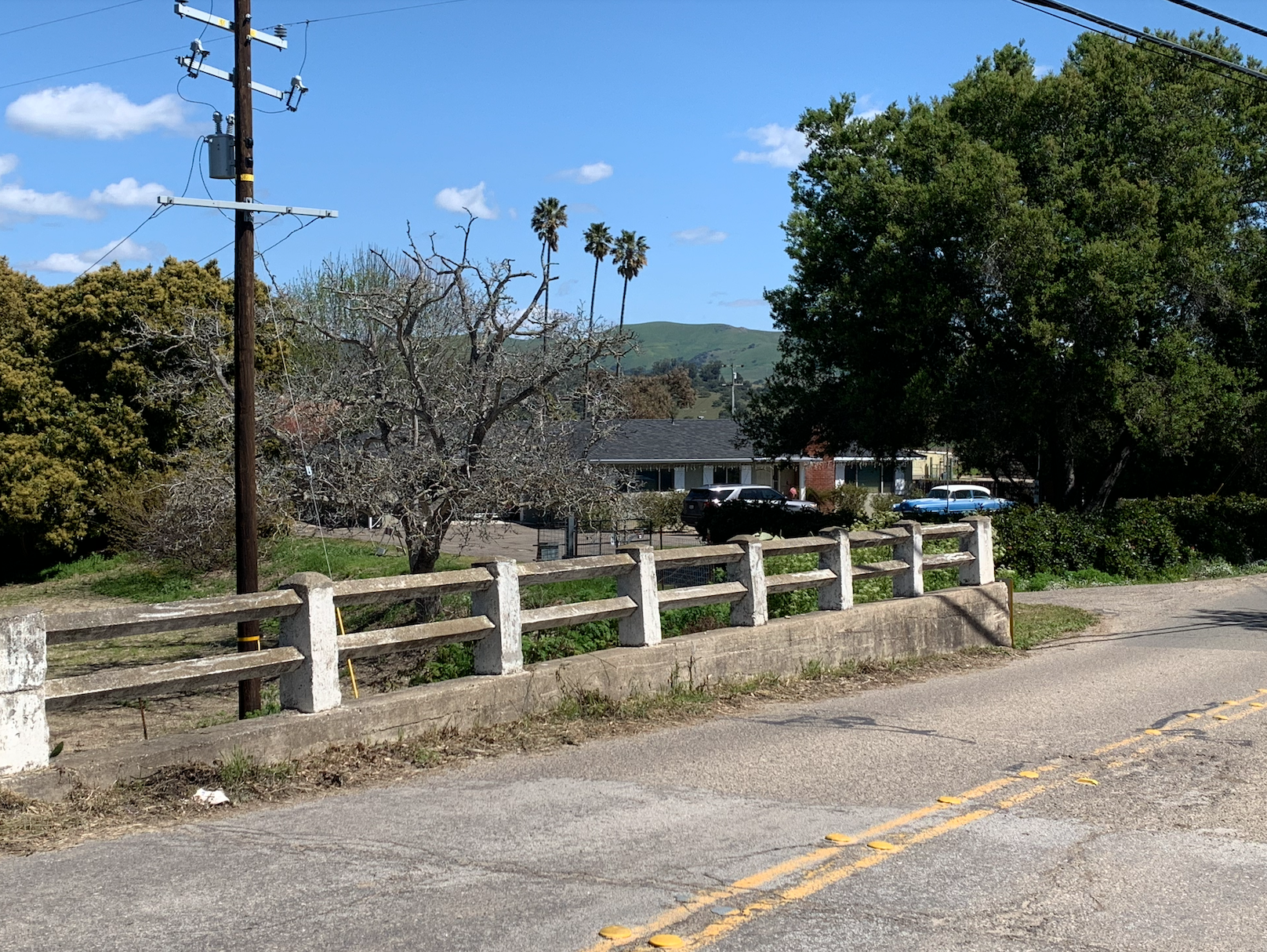
–The Harris Bridge. Before the bridge, this was near the spot where fourteen-year-old Sam Cundiff drowned in the flood of 1911.

Our house was (and is, much improved) just over the bridge, which was built, I think in 1927, when Lopez Drive was called Musick Road. I was very happy to see that our walnut trees, just beyond that bank of Queen Anne Lace, are dead. I hated harvesting walnuts, stoop labor, and your hands and nails were black for weeks. Walnut trees used to cover the fields between the high school and Halcyon Road before an insidious pest, the husk fly larvae, began to kill them. I did not much mind. The only way I found walnuts tolerable was in my Mom’s chocolate-chip cookies.

In the winter of 1968-69—you can get a sense of it from the video below—the creek rose above that chasm and spilled into our walnut orchard. There were ponds and lakelets in the Upper Valley for months afterward.

I used to catch rainbow trout in the chasm below and, of course, I did NOT catch the big female steelhead who hit my line one afternoon. She was so fierce that I nearly had a twelve-year-old heart attack. It was glorious the way she broke the surface, with a terrific splash, and it was only seconds before she snapped my leader and went upstream for the business of motherhood.

In the winter of 1911, when the tragic Cundiff family returned to their home—fourteen-year-old Sam had been swept away by the flood, one of three sons they lost in the space of a year— which had been underwater, they found the skeletal remains of a steelhead and, not far away, a very contented cat, fast asleep.

Once my friends and I found the heads and innards of two spike bucks—yearlings, illegal to hunt in California—tossed over the side of the bridge by the hunters who’d butchered them and who wanted to get rid of the evidence. We pondered their remains, appalled, for a long time as the creek rushed past.

But once, on a ledge just below the bridge railing, I saw two barn owls asleep, one’s head sweetly on the other’s shoulder. I will never forget them.

Then we turned up Huasna Road toward the Four Corners at Huasna and Branch Mill Roads, near the bridge over Tar Spring(s) Creek. Don’t get me started. I did, on monte, the willow scrub that used to cover the Upper Valley. But I was–finally–starting to get a little tired. It was time for Elizabeth and me to come home.

Fun with Plagiarism

I decided today, frantically looking around for an excuse while my barbecue fire was dying fitfully because of aging briquets, if William Shatner can rip off Elton John and Bernie Taupin’s “Rocket Man,” then I can have fun with some of my literary heroes, too. Here is Shatner’s ironically unforgettable performance—“ironic” because you wish you could forget it— in 1978. Shatner, to his credit, is not a smoker. He never inhales.


So today—there seems to be a theme here, more or less, probably less— I barbecued. But it’s windy and a little chilly—it took me three tries to get the fire lit after I’d decided that my sons absolutely positively needed a Burger Fix—and so I turned to Hamlet for inspiration.

To barbecue, or not to barbecue, that is the question;

   Whether ‘tis nobler in the back yard to Weber the burgers

   Upon the mesquite briquets well-purchas’d at Vons

   Or to retreat into the warmth of our little home

   To lay down the manly arms of barbecue: the battle spatula, long-handled

   And by using the Air Fryer, grill them falsely

   No smoky smell, no briquets revived by

   The natural drippings of burger patties, the master’s craft

   Surmounted by cheese–Pepper Jack, provolone, American

   To grill, perchance to smell—ay, there’s the burger rub.

–Hamelt, Act 3 Scene 1 [A play often confused with Hamlet ]


As if that weren’t enough—and it truly is, and I will stop soon—I had a personal point to make. This one, of course, had nothing to do with barbecuing.

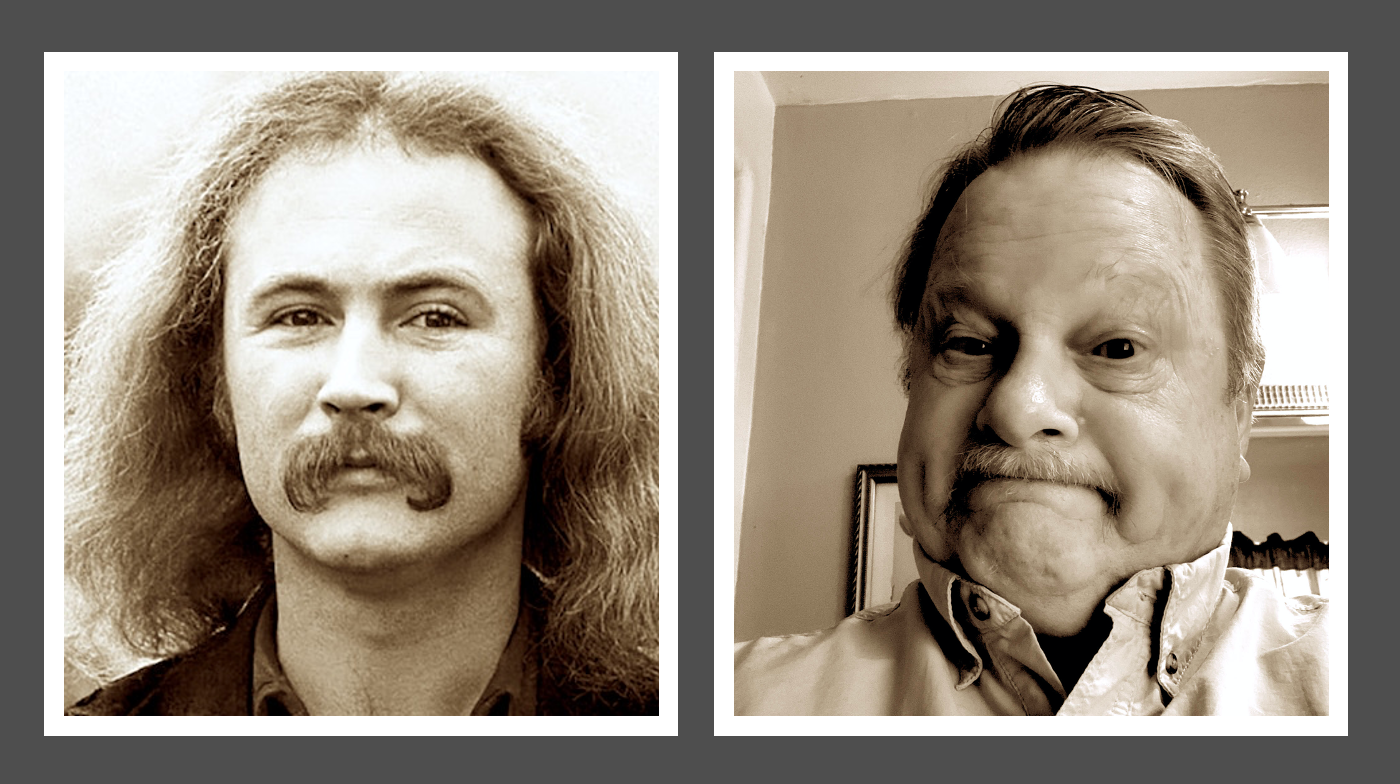
Yes, I shaved my beard

Happened just the other day

 It was gettin’ kinda gray

I coulda said it was gettin’ in my way

So I did. And a  long, long time it’s been        

Since anybody’s seen my chin…

–Apologies to David Crosby


So you think I’m done yet? Nossirreebob!


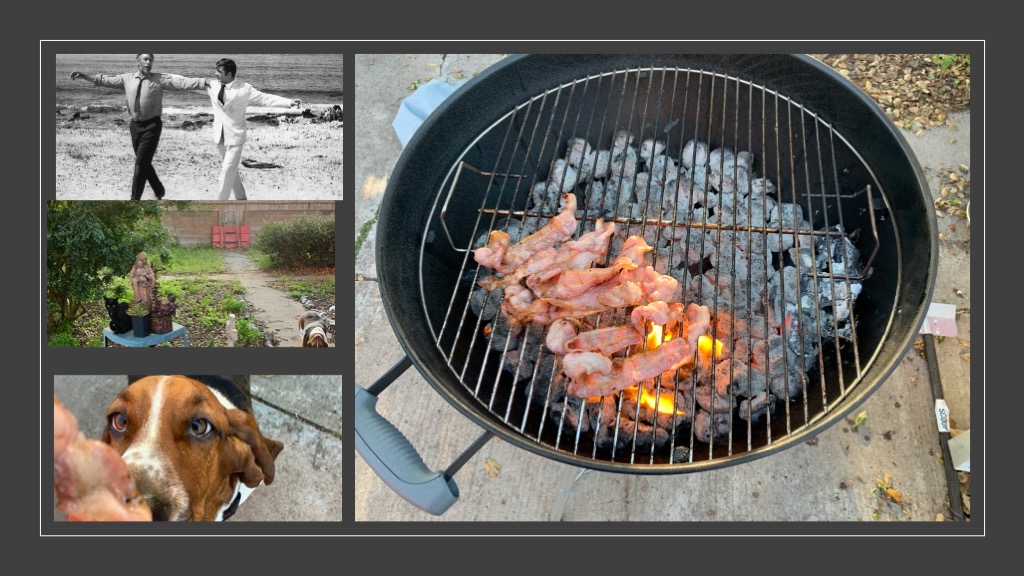
Boss, there is one sin even God cannot forgive. And that is when a man lets a Weber Barbecue fire go to waste.

–Nikos Kazantzakis, Zorba the Greek. This novel was a big deal to me in high school. Mind you, this might be a liberal paraphrase of what Zorba actually said. It was Elizabeth who introduced me to the thrifty Scots idea of using a dying barbecue fire to cook breakfast bacon ahead of time. It is a fine and civilized custom. Hattie the Cat, in a very safe place in our back yard, approved. Walter, of course, got a sample.


Finally, my big sister, Roberta, who lives in Oildale, wondered what the creek looked like next to our old house. So Elizabeth drove me out there and I took this video. Which led, of course, to John Steinbeck.


The rain beat on steadily. And the streams and the little rivers edged up to the bank sides and worked at willows and tree roots, bent the willows deep in the current, cut out the roots of cottonwoods and brought down the trees.

John Steinbeck, The Grapes of Wrath, Chapter 29. The Arroyo Grande Creek this morning at the Harris Bridge. I grew up in the house just over the bridge.

Yup. I am shameless.


The President has spoken.

OUR NATION IS NOW THIRD WORLD & DYING. THE AMERICAN DREAM IS DEAD! THE RADICAL LEFT ANARCHISTS HAVE STOLLEN OUR PRESIDENTIAL ELECTION, AND WITH IT, THE HEART OF OUR OUR COUNTRY. AMERICAN PATRIOTS ARE BEING ARRESTED & HELD IN CAPTIVITY LIKE ANIMALS, WHILE CRIMINALS & LEFTIST THUGS ARE ALLOWED TO ROAM THE STREETS, KILLING & BURNING WITH NO RETRIBUTION. MILLIONS ARE FLOODING THROUGH OUR OPEN BOARDERS, MANY FROM PRISONS & MENTAL INSTITUTIONS. CRIME & INFLATION ARE DESTROYING OUR VERY WAY OF LIFE. NOW ILLEGAL LEAKS FROM A CORRUPT & HIGHLY POLITICAL MANHATTAN DISTRICT ATTORNEYS OFFICE, WHICH HAS ALLOWED NEW RECORDS TO BE SET IN VIOLENT CRIME & WHOSE LEADER IS FUNDED BY GEORGE SOROS, INDICATE THAT, WITH NO CRIME BEING ABLE TO BE PROVEN, & BASED ON AN OLD & FULLY DEBUNKED (BY NUMEROUS OTHER PROSECUTORS!) FAIRYTALE, THE FAR & AWAY LEADING REPUBLICAN CANDIDATE & FORMER PRESIDENT OF THE UNITED STATES OF AMERICA, WILL BE ARRESTED ON TUESDAY OF NEXT WEEK. PROTEST, TAKE OUR NATION BACK!

Hey, that’s why they call it “Truth Social!”

* * *

The only place that’s worse off than us is Scotland. Those haggis snorters—it’s been documented that haggis is ten times stronger than Fentanyl—have referred to Mr. Trump as a “Cheeto-faced ferret-wearing s___gibbon,” an “idiot cockwomble,” (alternatively, a “polyester cockwomble”), a “hamster heedit bampot,” an “incompressible j__ztrumpet,” and a “leather-faced s___ tobbagonist.”

Shame on them.

* * *

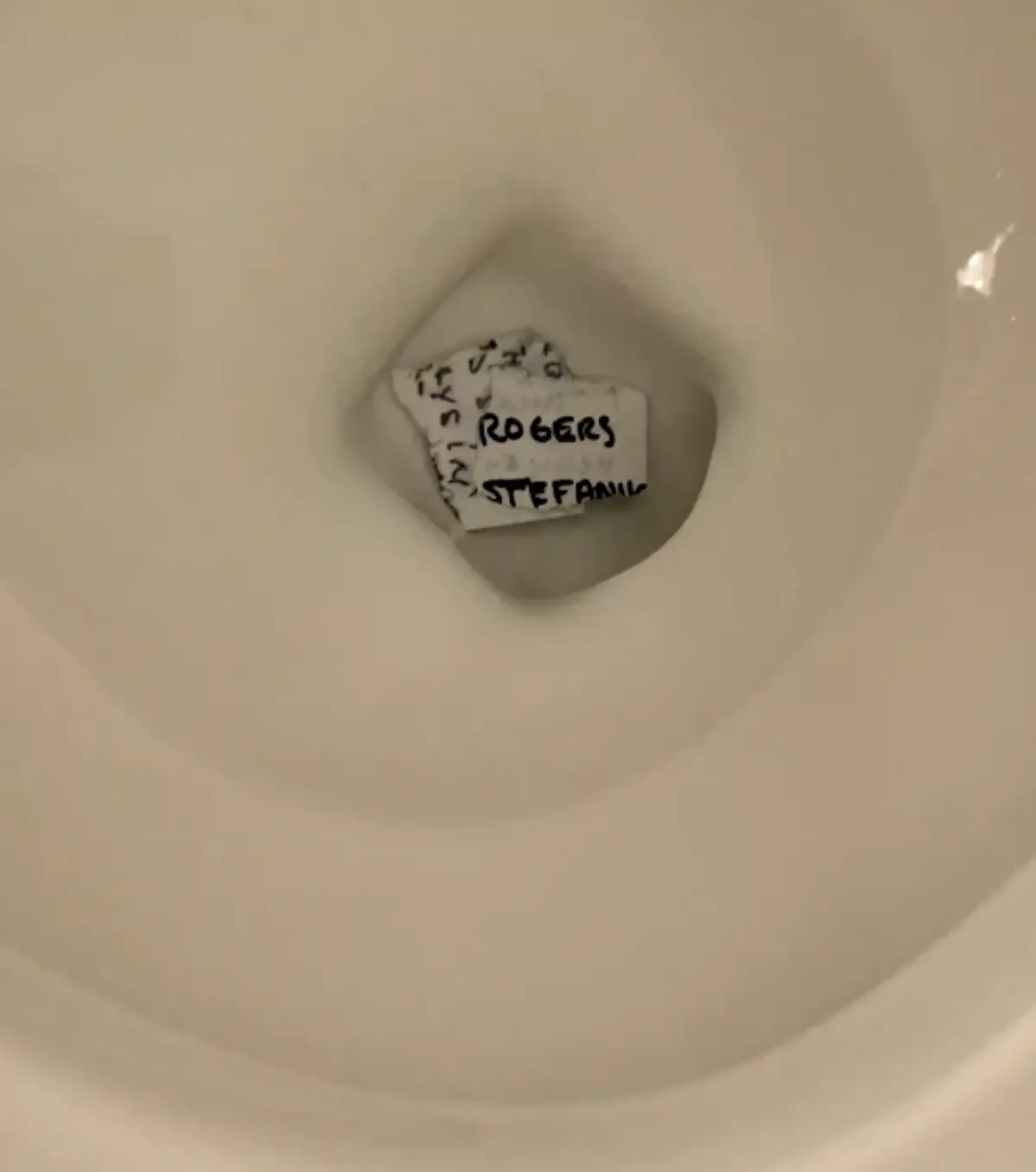
In the States, since My President is due to be indicted Tuesday, here are all the False Allegations I am going to protest tomorrow:

1. He paid a Playmate of the Year—Hef is dead. Get over it, people!–and a horse-faced porn star (the man has a way with words, doesn’t he?) so they wouldn’t reveal that he had sex with them, those lucky girls, and that he wears Tidy Whitey briefs.

The women in question and the President on Air Force One, One shudders to think how Gov. DeSantis would eat a fine meal like that being consumed by the Greatest President Since Lincoln And Probably Greater. There would be grease everywhere, gravy on his tie and a couple of chicken bones might foul the jet engine’s intake. He must not be president. VOTE TRUMP!

2. The bogus claim, brought in a civil suit for defamation, based on the contention that The Greatest Lover Since Rudolph Valentino raped E. Jean Carroll in a department store. “She’s not my type!” he has said clearly about the woman he’s twice confused in depositions with his former wife. The same goes for the other 26 women who’ve claimed everything from rape to job-place sexual harassment. They’re all dogs, anyway.

3. The audio tapes made by Georgia Republicans that have him trying to change the 2020 vote count in his favor. It’s patently obvious that the voice on the telephone is Alec Baldwin’s, who imitated Mr. Trump on the lowly-rated Saturday Night Live—Sad!— and who shoots people in the face pretty much every day.

4. The New York Attorney General’s civil suit that alleges he inflated his properties while applying for bank loans and deflated their value for the IRS. So what’s wrong with THAT? That’s what made America great! Also, those offshore banks in The Bahamas are a splendid example of the most important foreign aid since the Marshall Plan.

5. The documents, allegedly classified, that were carefully stored at Mar a Lago, not too far from where they put together the shrimp cocktails for dinner, and in the White House toilet bowl. The National Archives asked for those documents twice, and politely, before the subpoena. Hey! He’s a busy guy! Anyway, My President has amply demonstrated that he can declassify those documents, as he himself said, just by thinking about them.

6. The lawsuit brought by those snowflake cops who got their feelings hurt on January 6. Waaaah!

7. The giant fibberooni that The Greatest President Since Jesus encouraged violence January 6. “Be there. Will be wild.” was an obvious reference to the Super Bowl that year–the Chiefs beat the Niners–which was (Oh, my! What a coincidence!) played in FLORIDA. It’s obvious, too, that the Justice Department investigating January 6 is riddled with Commie Pinko Preeverts (scratch an FBI agent, find a Maoist pedophile), Liberal Bleeding Heart Quiche-Eating All Creatures Great and Small viewers and Drag Queens who Frug at middle school assemblies while singing Donna Summer’s “Hot Stuff.”

8. “I HATE HIM PASSIONATELY!”

–Tucker Carlson.

That’s a classic Lamestream Media Lie, posing as an actual text Tucker sent to a Fox News colleague. It’s “posing” as a real text because, technically and legally, Fox’s lawyers had to surrender it during Discovery in the pending Dominion Voting Machines lawsuit. That’s a mere trifle.

You can’t fault a guy, in my opinion, who still wears bow ties and whose voice gets so high and whiny that you’re afraid he’s going to burst into tears any second. That’s passion, my friends.

(Just in case this isn’t a lie, I’m willing to throw a frozen Chicken Pot Pie through Tucker’s windshield—he’s the heir to the Swanson TV Dinner fortune—if I ever get the chance.)

9. Another snowflake: United States Marine Corps General and former Chief of Staff John Kelly, who, among other White House staffers, heard Trump call the Marines who died at Belleau Wood in 1918 “losers” and “suckers.” Semper Fickle” to you, Kelly. (But many thanks to the staffers who informed the president which side had won the First World War.) The Germans said the Marines approached their machine guns almost casually, smoking cigarettes and firing from the hip. The Germans were terrified; they called the Americans “Devil Dogs.”

Have you ever seen the Greatest President Since Darryl F. Zanuck with a dog?

I rest my case.

Anyway, it was raining that day and, staffers said, rain plays hell with the presidential hairs, all gossamer and wispy in their origins from the other tectonic plates that shift so frequently on the skull of the Greatest President Since Grover Cleveland Alexander. That ‘do was representing the United States of America to the world that day in 2018, my friends, on the hundredth anniversary of the Battle of Belleau Wood

I rest my case some more.


10. An exploding golf ball or seven needs to go into the bag of Sports Illustrated writer Rick Reilly, whose book “Commander in Cheat” alleges that The Greatest Presidential Golfer Since Trump Voter Jack Nicklaus is also the biggest cheat since Auric Goldfinger. And two snowflake awards for pro golfer Rory McIlroy, who has said he will never play with Our President again. McIlroy has won the British Open, the U.S. Open and the PGA Championship. Yawn.

McIlroy has NEVER fired Khloe Kardashian, that Fat Piglet, as The Greatest President Since Zsa Zsa Gabor so accurately described her, from Celebrity Apprentice because she was getting a little chubby. That takes Golf Balls, people.


I’m sure there are other things I must protest strongly and bigly, but I think those ten are enough for Monday.

In the meantime, I leave you with the most eloquent presidential words since Lincoln’s Second Inaugural:

“Person. Man. Woman. Camera. TV.”

Please keep your dreams alive.


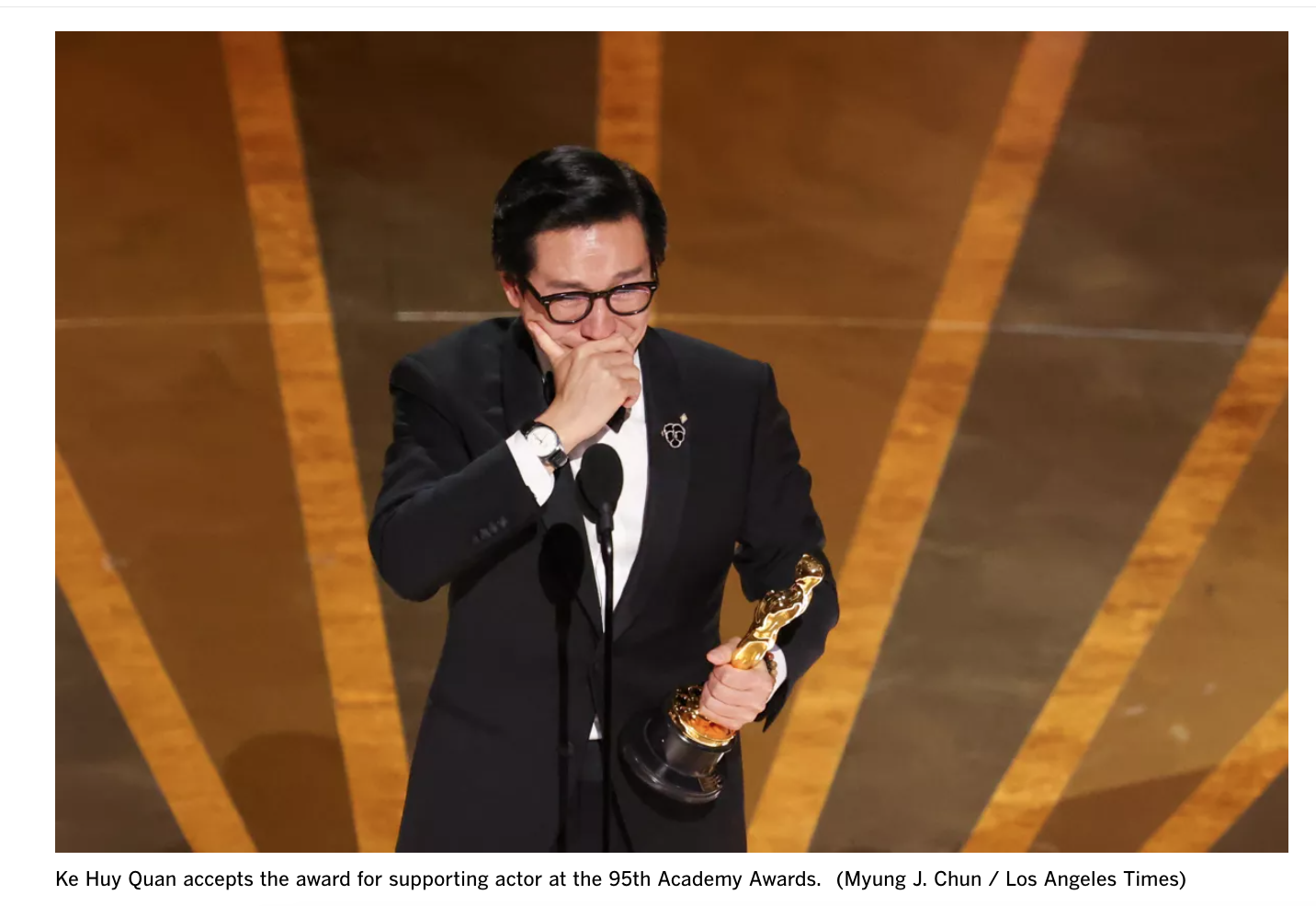
My mom is 84 years old and she’s at home watching. Mom, I just won an Oscar. My journey started on a boat, I spent a year in a refugee camp, and somehow, I ended up here, on Hollywood’s biggest stage.

They say stories like this only happen in the movies. I cannot believe it’s happening to me.

This—this is the American dream.

Thank you so much, thank you so much to the Academy for this honor of a lifetime. Thank you to my mom for the sacrifices she made to get me here. To my little brother, David, who calls me every day to [tell me to] take good care of myself. I love you, brother…

I owe everything to the love of my life, my wife Echo, who month after month, year after year, for twenty years, told me that one day my time will come.

Dreams are something you have to believe in. I almost gave up on mine—to all of you out there, please keep your dreams alive…

–Ke Huy Quan, Oscar acceptance speech for Best Actor in a Supporting Role for Everything Everywhere All at Once, March 12, 2023.


This is my country and I am so proud of my countryman, who reminded us tonight of what we’re about. Thank you, Ke Huy Quan, for the grace you shared with us.