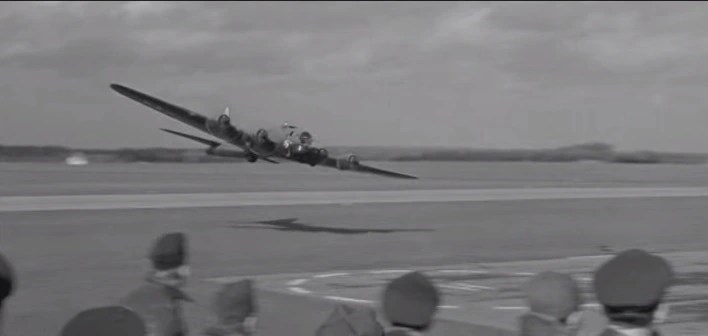
In a scene filmed at the Santa Maria Airport, a B-17 piloted by Steve McQueen takes aim at his British airfield’s control tower. McQueen, as a self-destructive airman in The War Lover (1962), seems to me to have been part of a trend—call it the Cult of Toxic Masculinity.
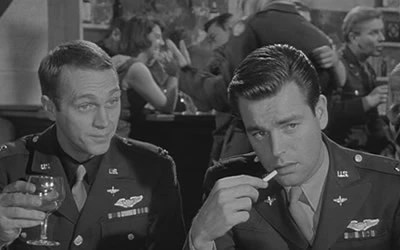
Steve McQueen and Robert Wagner, The War Lover.
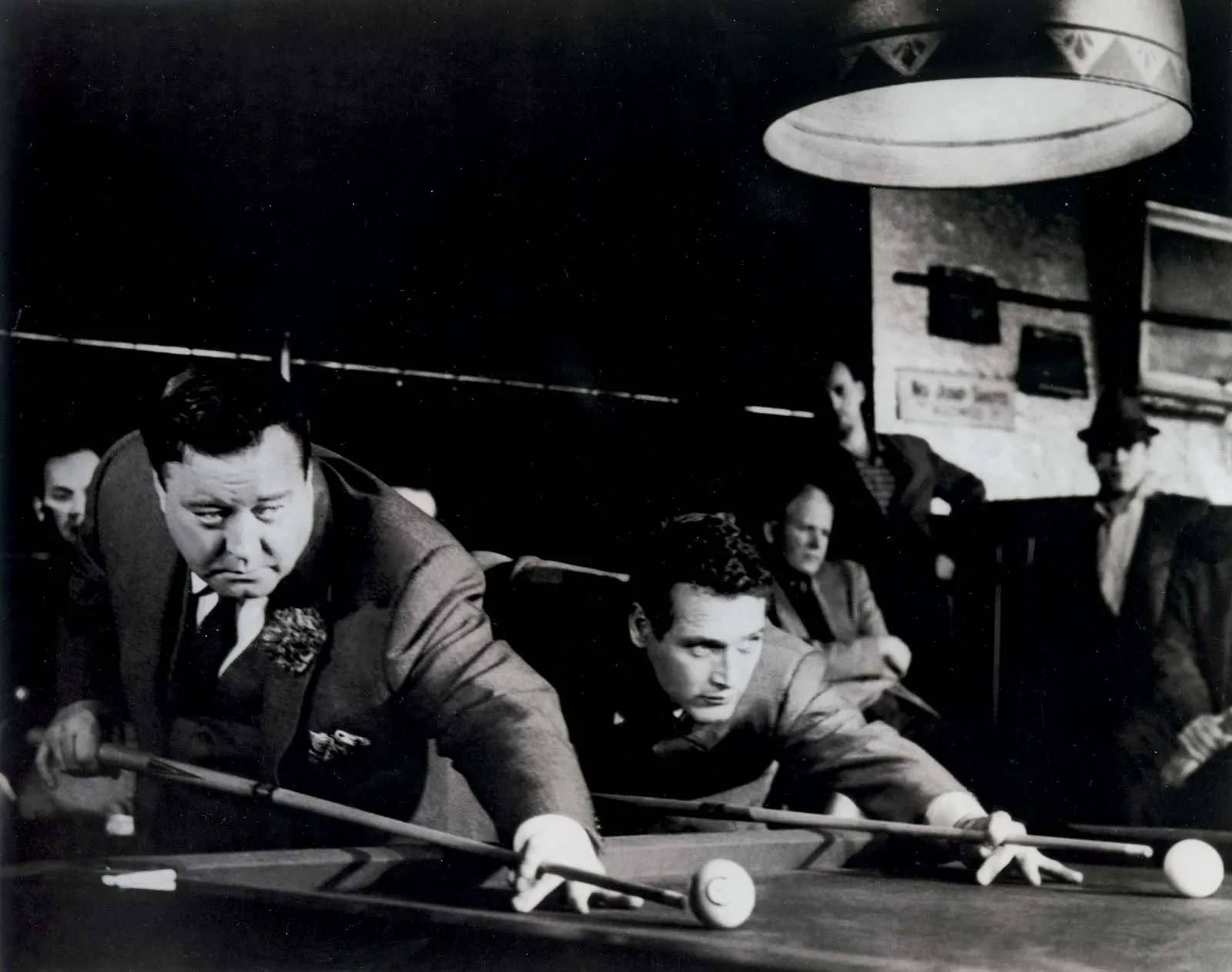
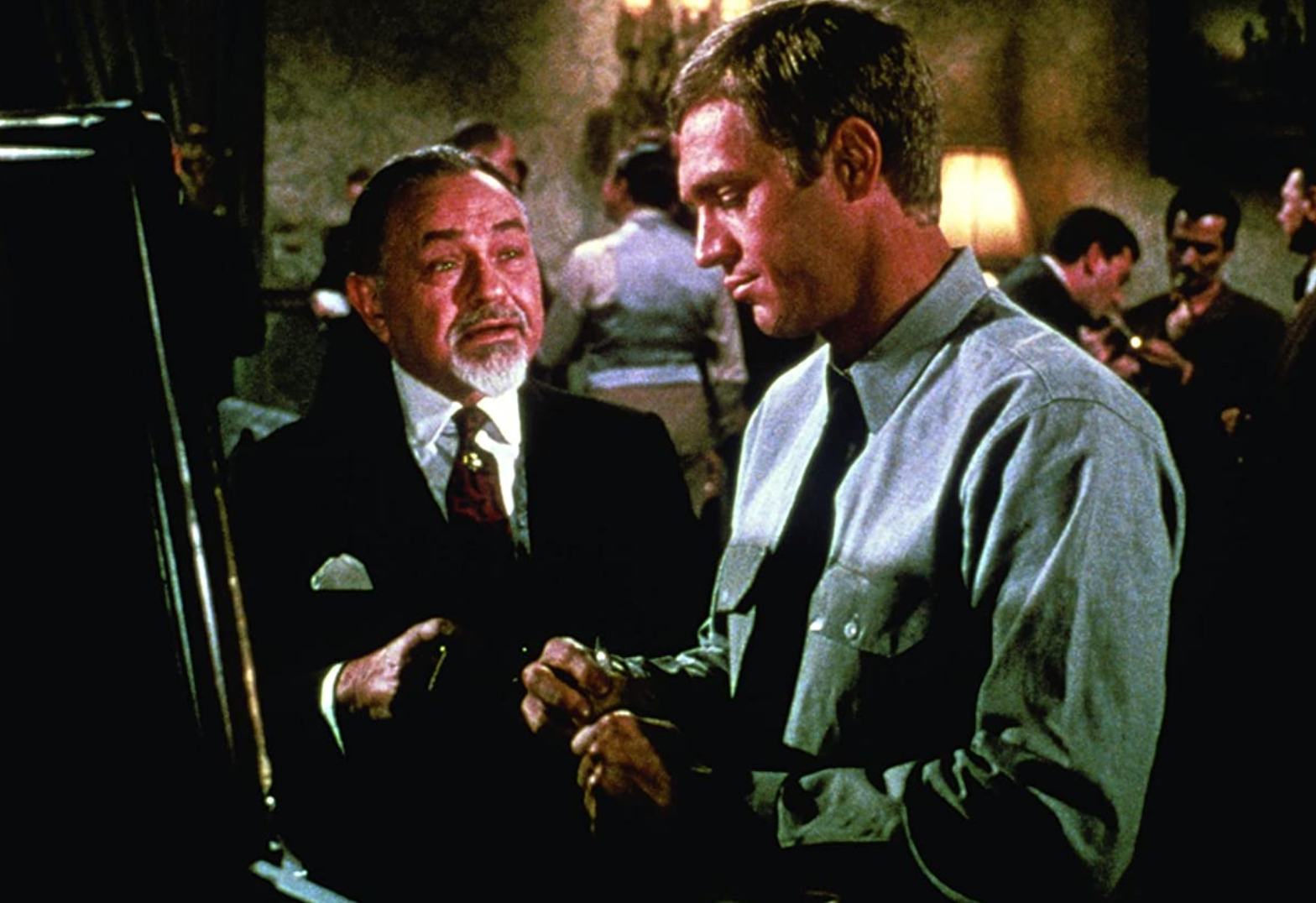
Jackie Gleason and Paul Newman, The Hustler; (Below) Edward G. Robinson and Steve McQueen, The Cincinnati Kid.
Toxic masculine films seem to have a theme we need bear in mind: Men are often self-destructive.
McQueen does just that himself in The Cincinnati Kid, where his poker gambler upstart is demolished by Edward G. Robinson’s pro, just as Paul Newman’s is demolished by Jackie Gleason, “Minnesota Fats,” in The Hustler.
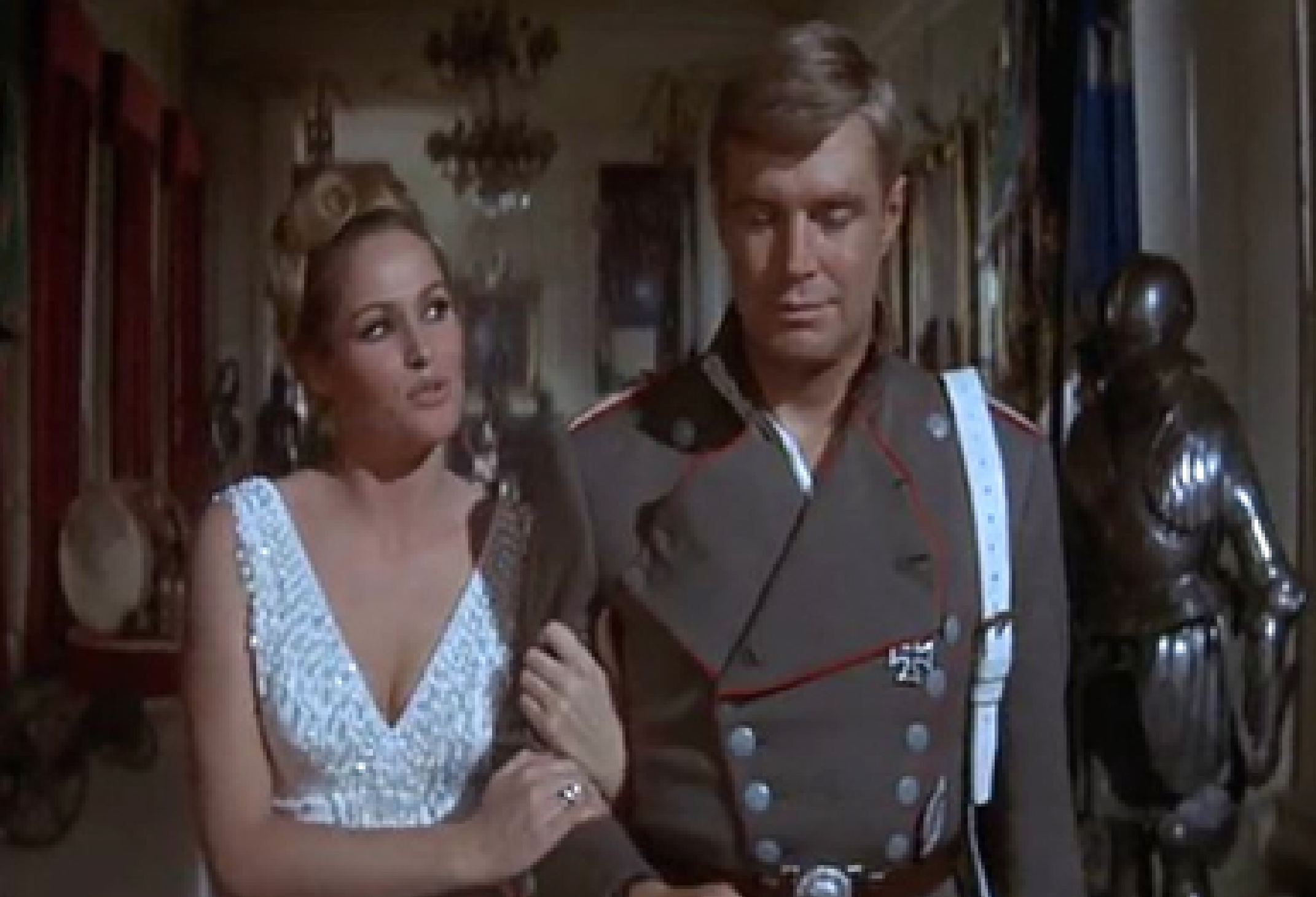
This occurred to me yesterday while watching The Blue Max, a 1966 film about German fighter pilots. (The title refers to a medal conferred for twenty kills.) The lead, George Peppard, who’d just finishing rescuing Cat from the rain in Breakfast at Tiffany’s, is now a self-destructive Toxic Male in this just-above average film. The flying sequences are still thrilling, and Peppard grounds us in every scene in between. He has a charming, empty smile, cares about no one other than himself, which shows in combat, where he shows no mercy. Even in his scenes with the architecturally impossible, for 1918, Ursula Andress (Richthofen’s red Fokker triplane is prettier), he is emotionally empty.
Ursula Andress and George Peppard, The Blue Max.
So you wind up wishing they’d killed him 45 minutes into the film.
Not all 1960s toxic males are as euthanizable at McQueen and Peppard in those two films.
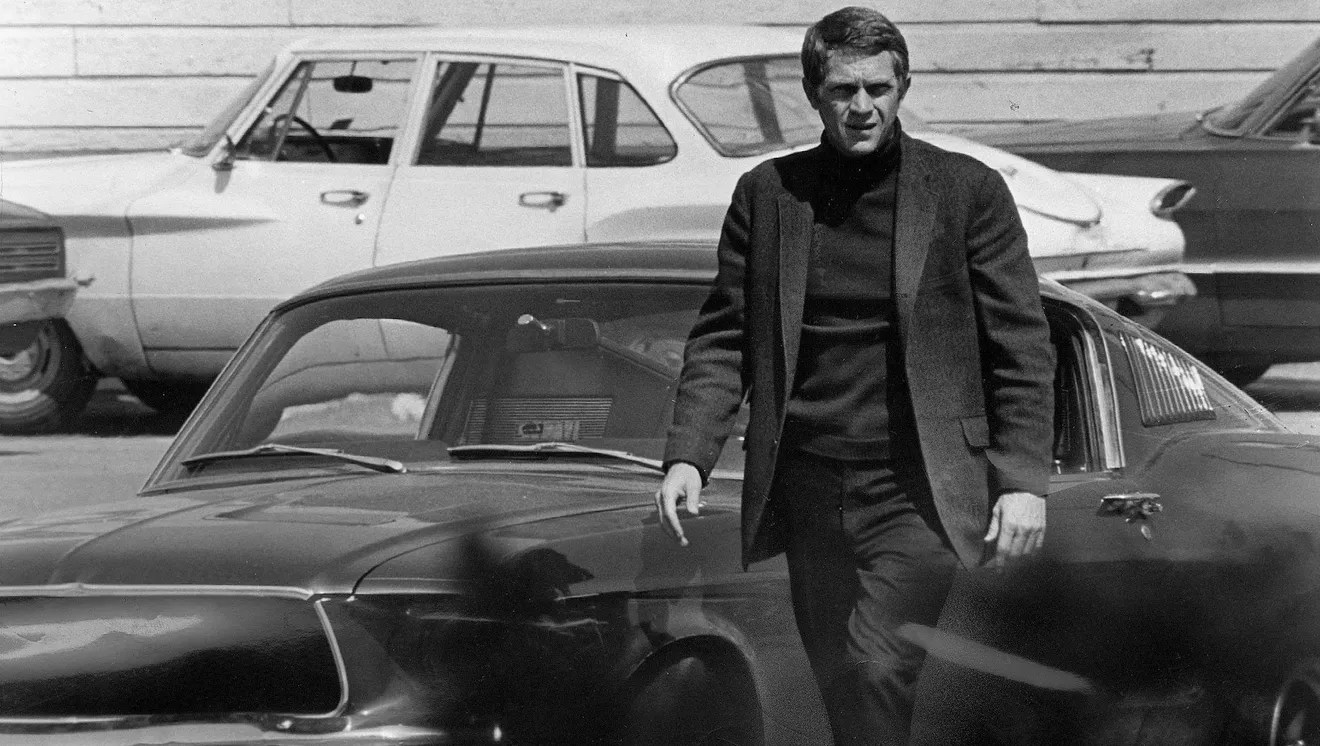
McQueen’s Bullitt is a prime example. After the famed car chase that incinerates two mafioso and a bloody gunfight in the presence of Rome-bound nuns the San Francisco Terminal, and exhausted detective comes home to his apartment and—this with Jacqueline Bisset still warm in his bed—he washes his face, as Pilate did his hands—and looks bleakly at himself in his bathroom mirror. He hates what, and whom, he sees.
McQueen enters his fastback Mustang, with a dreadful car, a 1963 Plymouth Lancer, in the background
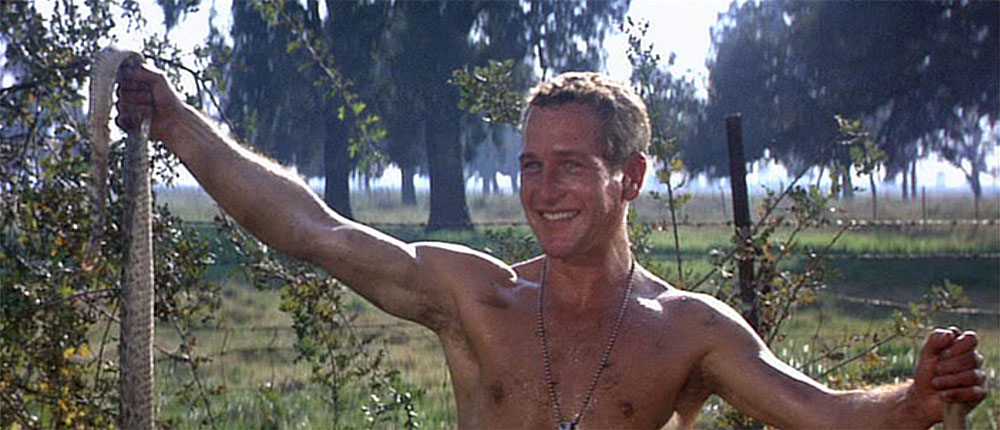
Toxic males need not be self-loathing to be toxic. The king of the genre, and one of my favorite actors, must be Paul Newman. His charming road-gang convict in Cool Hand Luke—look at that incredible Newman smile in the still below!— charms every inmate, including the oafish George Kennedy, and the hardboiled egg-eating scene is epic, yet Luke doesn’t seem to mind that he’s killed the bloodhounds trailing his escape, run to death, nor does he care much about his convict friends; he abandons them in the end to trying running way just one more time. Luke is as heroic as Hercules but as empty as an amphora run out of oil.
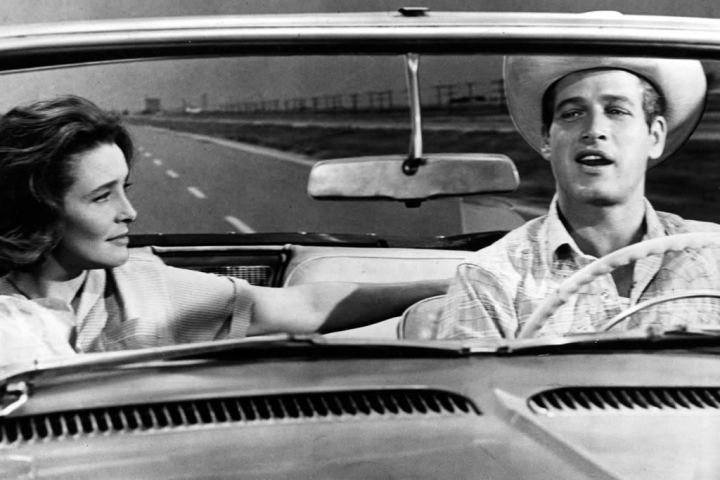
But it was Newman who perfected the Toxic Male in an earlier film, Hud, as a sociopathic Texas rancher who brutalizes his father, his lover, Patricia Neal, who drives a convertible Cadillac, womanizes in Toxic Male ways that enchant his young nephew, played by Brandon de Wilde (whom I could’ve cheerfully strangled for his bleating in Shane), and drinks more hard liquor in a weekend than Dallas does in a fiscal year.
De Wilde, thank god, outgrows Shane and finally learns to become a man by turning on Uncle Hud, so empty and so suddenly weak. He has no more substance than a tumbleweed.
Patricia Neal and Paul Newman, Hud.
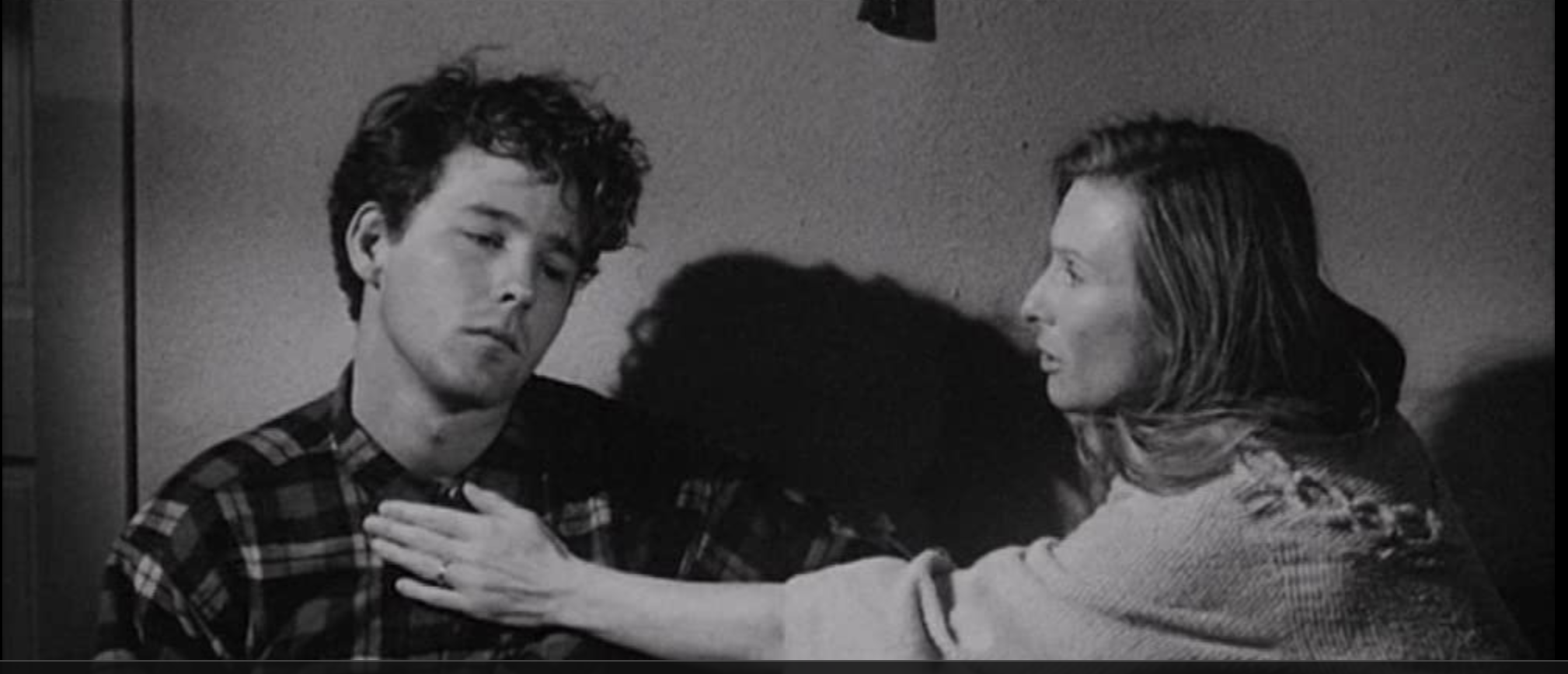
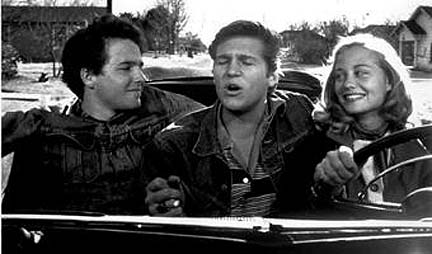
Here, I think is where the great director Peter Bogdanovich and the even-greater writer Larry McMurtry arrive with The Last Picture Show (1971), a film I hated for years until I became a grownup. It’s full of Toxic Males: the oafish Randy McQuaid is an oafish predator whose fondest wish in life is the see Cybill Shepherd, Jeff Bridges’ sometime girlfriend, naked. Bridges is mostly inarticulate yet somehow appealing. He’s a football hero who has forever reached his limits. I think the movie belongs most to Timothy Bottoms, who wants to be a good man but, as a teenager, beds his despondent football coach’s wife (Cloris Leachman, who is, in a performance that won her an Oscar, incredible) but finally pursues, and wins, Cybill Shepherd, the object of every boy’s desire.
Timothy Bottoms Cloris Leachman, The Last Picture Show
She betrays him within five minutes’ screentime.
The film ends with the accidental killing of a special-needs boy, one of Bottoms’s longtime friends, Bottoms unleashes deep reservoirs of anger. It should be a depressing moment, but it isn’t. The character, Sonny Crawford, has suddenly discovered that he deeply cared for someone other than himself. The fact that he’s almost ready to kill for his lost friend means that he’s escaped the toxic masculinity that doomed character like Hud.
When Elizabeth and I drove through dying Maricopa a few weeks ago, I recognized instantly the town McMurtry wrote about. There was an abandoned coffee shop with a barstool counter; you could almost imagine a teenager like Sonny swiveling in his tool, restless from the two teaspoons of sugar in his coffee, until, you hope, he twists his hips suddenly—almost violently—and bolts out the coffee shop door, never to return.
Timothy Bottoms, Jeff Bridges, Cybill Shepherd, The Last Picture Show.
Along Huasna Road, Arroyo Grande. I saw this mountain from our picture window every day of my life between the ages of five and eighteen.
Because I grew up in a place where I woke up to the whistling of braceros going down to the fields to work, the men who taught me Spanish…
Because I cause I saw a redwood home set alight by fire, burning white-hot, like a diamond, in the middle of the night—a home built, out of devotion, by the sons of a woman who’d come to the Arroyo Grande Valley in 1837, where the principal inhabitants were grizzly bears, irritable and possessive and hungry…
Because I was lucky enough to grow up in a Valley still populated by mule deer, red-tailed hawks, flat red weasels (after my Plymouth Rocks), parade lines of baby quail following their mothers; marauding parties of of multigenerational raccoons; barn owls asleep, one’s head on the other’s shoulder; once a king snake, upright and menacing, but dead; once a mountain lioness sniffing along the baselines of our school’s softball field…
Because I grew up learning to love sushi and lumpias made by the mothers of friends and, in high school, girlfriends…
Because of those, I was arrogant enough to believe that no one could possibly feel the feelings I feel for my home for a place like Monterey Park, California. That’s a place, I assumed, that is overrun by strip malls.
I was flat wrong.
CBS ran this brief interview with an incredibly eloquent young man about his home, which is of course Monterey Park.
I admit that I was, terribly guilty to be sure, relieved that the shooter was not a White man.
In a powerful way, the young man reveals that the perp’s ancestry is almost irrelevant. The man who shot 20 people wounded all of us, because our ancestry is irrelevant, too. We are all of us Americans.
This is only about a minute long. It is a stunning piece of journalism.
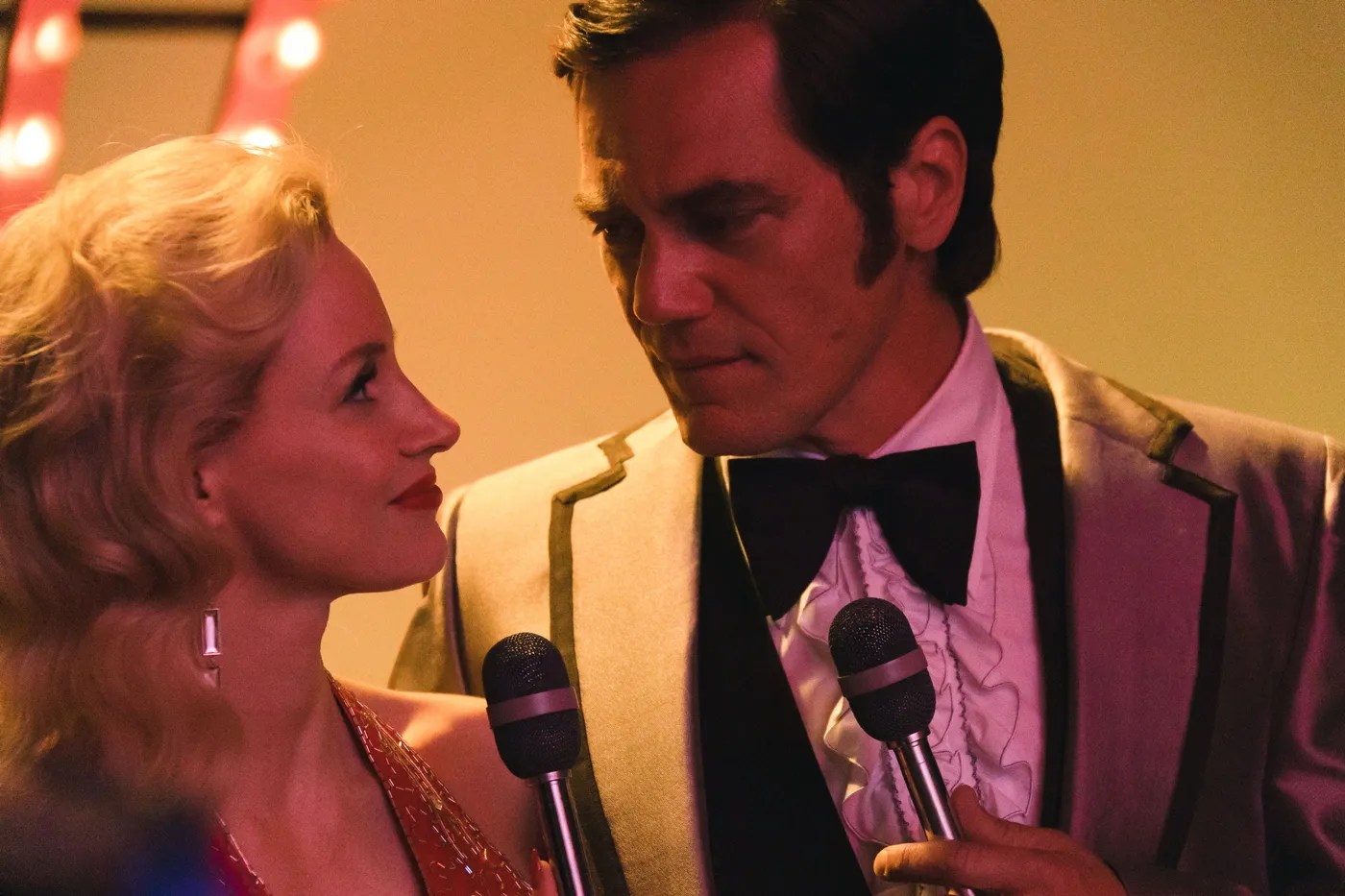
Jessica Chastain as Tammy Wynette and Michael Shannon as George Jones.
From the Twenty-Five Cent Cable TeeVee Critic’s Corner: .
I missed most of George and Tammy, but the parts I saw were mesmerizing primarily because of Michael Shannon’s performance as George Jones. He was incredible.
Living in Bakersfield for awhile helped. I KNEW people like these.
They, too, drove big Cadillac El Dorados, usually yellow, with a hood long enough to land a Navy F-18 on. You’re tempted to laugh at them—Okies!—until you look at their hands and the damage cotton bolls have done them. Like many of Tammy and George’s generation, they dealt with the hand life dealt them by drinking and smoking, or with painkillers—an addiction that makes heroin look like Ovaltine— and they go out with breathing tubes in their noses and skin like paper, these people who once did the most demanding kind of field work, in cotton or in potatoes.
Their lives were measured then, when they were younger, by how much row was left to harvest in a farm field. When they looked up to see, the heat shimmered at the field’s edge.
Cotton scarred their hands, blister on blister and blood on the white fluff. For potatoes, they wore a spud belt that towed a gunny sack behind them that easily weighed fifty or sixty pounds when it was filled. Work like that would have reduced me to weeping within fifteen minutes. Work like that bent their spines forever.
The oeople who loved George and Tammy were among the people who built America, even as the work they did tore them down.
I watched the final episode last night and it was a tale, as fraught with dysfunction as the relationship was, about two people who never really stopped loving each other. They just couldn’t BE together.
And the music was wonderful: Shannon covered Jones’s “He Stopped Loving Her Today” and Jessica Chastain did a version of Kris Kristofferson’s “Help Me Make It Through the Night” that would’ve melted anybody’s heart except, of course, for Vladimir Putin’s, who’s missing his.
I wouldn’t even have watched those parts except for my hero, Ken Burns, whose miniseries on country music was, to me, a masterpiece. [So are Baseball, Jazz, and The Civil War.]
We got Netflix primarily because of Babylon Berlin, dropped it, but may have to re-up. I, like 68% of America, am hooked on Wednesday Addams’s high school dance scene.
The actress, Jenna Ortega, is stunning, and, like our niece Emmy, also stunning, a graduate of the Tisch School of Drama at NYU. She choreographed the sequence herself. She also, for reasons I haven’t divined yet, shows off some cool martial arts moves (you GO, Michelle Yeoh!) on three bullies dressed as Pilgrims.
It all looks very cool, and, by the way, I’ve never gotten over my crush on Carolyn Jones, Morticia in the 1960s Addams Family series. Elizabeth hasn’t recovered from the death of Raul Julia, sublimely charming as Gomez Addams in the 1991 film.
In July 1932, German elections energized the Nazi Party, which won 38 percent of the seats in the Reichstag, the Weimar (German) Republic’s Parliament.
The irony was that the sole reason the Party entered candidates in elections was to give it enough power within the Reichstag to destroy the Reichstag.
The past two days in the House of Representatives have revealed that the spirit of antidemocratic sabotage survives.
July 1932 marked the Party at its electoral peak. Later elections that year revealed that the Nazis were losing popular support.
But it was already too late. Even though they were a minority, the Nazis joined another antidemocratic minority party, the Communists. [Both the Communists and the Nazis turned to elections after failed armed coups—for the Communists, the Spartacist Revolt in 1919; for the Nazis, Hitler’s failed attempt to topple the Bavarian government in the 1923 “Beer Hall putsch.” I will point out the obvious: January 6 is two days away.]
When the July Reichstag met, with Hermann Goering as Speaker, he immediately called on a Communist deputy, who moved that the Reichstag session be immediately dissolved.
It was. Everyone went home.
Thanks to byzantine plotting and an enfeebled President, Paul von Hindenburg, Hitler was appointed chancellor in January 1933.
A new Reichstag, purged of all deputies except for National Socialists, would meet twenty times in the next twelve years, mostly as an obedient audience for Hitler’s bombast. It passed a total of four laws.
The emphasis below is mine.
“Our participation in the parliament does not indicate a support, but rather an undermining of the parliamentarian system. It does not indicate that we renounce our anti-parliamentarian attitude, but that we are fighting the enemy with his own weapons and that we are fighting for our National Socialist goal from the parliamentary platform.”
–Wilhelm Frick, who would become Interior Minister under Hitler. Executed, 1946.
“…[W]e National Socialists never asserted that we represented a democratic point of view, but we have declared openly that we used democratic methods only in order to gain the power and that, after assuming the power, we would deny to our adversaries without any consideration the means which were granted to us…”
–Joseph Goebbels, Propaganda Minister under Hitler. In 1945, as Soviet troops were overrunning Berlin, Goebbels and his wife murdered their six children—five girls and a boy—with cyanide before taking their own lives.
“The parliamentary battle of the NSDAP [Nazi Party] had the single purpose of destroying the parliamentary system from within through its own methods. It was necessary above all to make formal use of the possibilities of the party-state system but to refuse real cooperation and thereby to render the parliamentary system, which is by nature dependent upon the responsible cooperation of the opposition, incapable of action.”
–Ernst Rudolf Huber, Nazi legal and constitutional scholar. He was eighty-seven when he died in 1990.
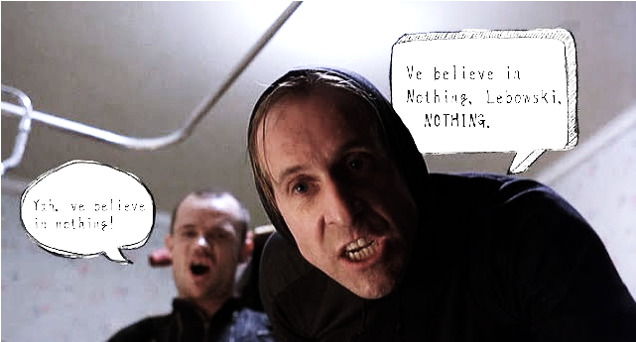
Donny: Are these the Nazis, Walter?
Walter: No, Donny, these men are nihilists, there’s nothing to be afraid of.
Yes, I went on another movie-watching binge. Big Fish was first. Ewan MacGregor has to have the most earnest smile in film history. Helena Bonham Carter, one of my favorite actresses (and the granddaughter of Winston Churchill’s one-time flame, Violet, and, later, his trusted political advisor) appeared as a blonde and carried it off, Southern accent included. Alas, she lost MacGregor to Alison Lohman/Jessica Lange, as MacGregor’s wife in younger and older versions. I guess that’s understandable.
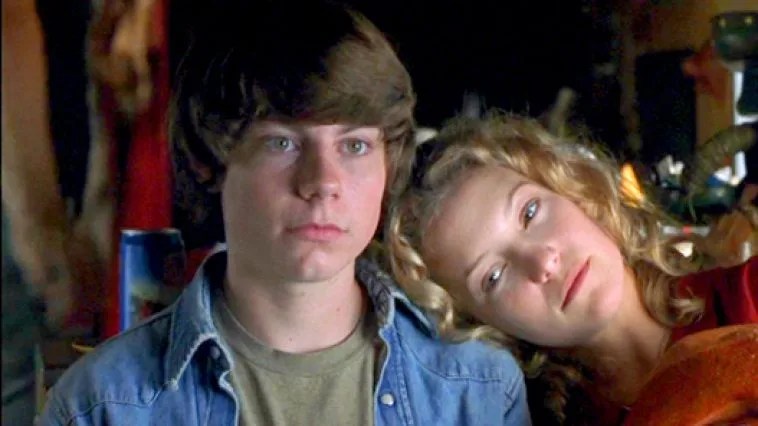
Then Elizabeth and I watched—believe it or not, for the first time— Almost Famous. We were enchanted. I guess that’s the right word. Kate Hudson’s eyes are amazing; they are small and slightly hooded, but the directness of their look is fierce. Her eyes, in that look, are brilliant green torpedoes. I’ve seen that look once before, in the eyes of a girl I dated more than fifty years ago. She had a pet raccoon who detested everyone except for her. She had long blonde hair, Rapunzelian, when girls ironed their hair to straighten it, and rode her Quarter horse in the Upper Valley bareback and barefoot. I was a bedazzled oaf, one on the small side. Maybe a bedazzled Hobbit.
The impossibly handsome Billy Crudup was in Almost Famous and in Big Fish, too. I had a hard time at the end of Big Fish, when Crudup’s estranged son reconciles with his father—Ewan MacGregor is by now Albert Finney—and, in the son’s mind, he carries his dying father, who is insufferably delighted to see all his old friends and lovers, down to the river to die. When Crudup lets his father slip beneath the surface, he suddenly becomes the legendary, immense catfish he’d always said he was.
When you’re seventy, a moment like that is vivid and real. My time, in a relative and so indeterminate sense, is running short.
So, thank goodness for youth and for Almost Famous, which included Jason Miller (My Name is Earl). And Jimmy Fallon. And Ryan Reynolds. And Anna Paquin. And Jann Wenner. And Zooey Deschanel (I still miss New Girl. I wrote an essay about that show, which New Times, perhaps when the staff was gloriously drunk, actually published.) And Rainn Wilson. And Philip Seymour Hoffman.
I missed somebody, I’m sure. Had he been alive, Abraham Lincoln might’ve been in it. (In the credits: “Tall and Immensely Strong Roadie/Philosopher.”)
I admit that the very idea of a fifteen-year-old getting the go-ahead from Ben Fong-Torres for a 5,000 word Rolling Stone piece made me insanely jealous. And then, when the fifteen-year-old, Cameron Crowe, grew up, he got to write and direct the film about Cameron Crowe. Then it became a Broadway musical.
Something not that deep inside me hopes that a seagull poops on Cameron Crowe’s head tomorrow.
I did get a letter into Rolling Stone once, about Michael Douglas and the film China Syndrome. I think it was maybe 125 words. After reading an excellent piece about Bonnie Raitt, my letter to her was unanswered. Alas.
If a Hunter Thompson piece was in Rolling Stone, there went, except for the record and film reviews and the advertising space, the whole issue. We had jalapeño poppers wrapped in bacon as part of dinner tonight. If a Hunter Thompson piece was in Rolling Stone, I pretty much devoured it the way I do jalapeño poppers wrapped in bacon.
The same went for other “New Journalists” like Gay Talese or Tom Wolfe or Joan Didion or Jimmy Breslin. Or even (The Executioner’s Song), Norman Mailer. Or, before they’d invented the term “New Journalism,” Truman Capote–In Cold Blood was, to me, a supreme accomplishment, given, and perhaps because of, the density of Capote’s emotional freight, as heavy as Marley’s chains. My tastes now run to popular historians who also happen to be women: Laura Hillenbrand, Elizabeth Letts, Lynne Olson.
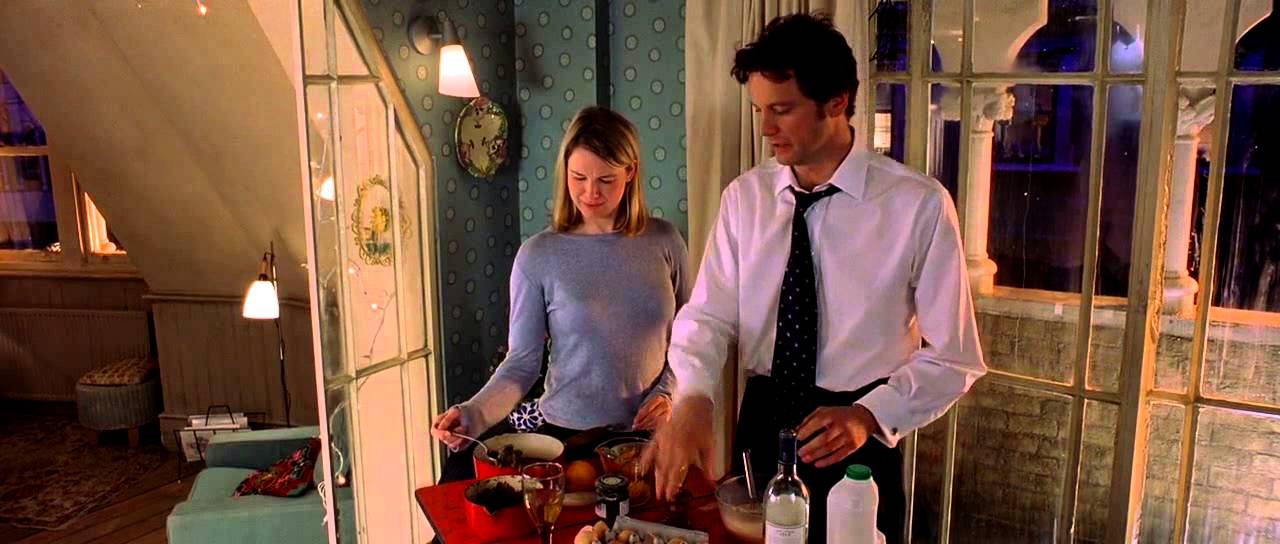
Then it was Bridget Jones’s Diary, because I could even watch Colin Firth do something as mundane as prepare a meal, which he did. It reminded me of another favorite actor, Michael Caine, breaking an egg with one hand in The Ipcress File, a marvelous 1965 spy film. (Alas, it turns out that the real cook was Len Deighton, the novelist who wrote the book on which the film was based. He had to break the egg for Caine on camera, so it’s Len Deighton’s hand you see in the film.)
And I enjoy the fight between Firth and Hugh Grant. And I like Bridget’s dad, too.
A sniper (and former lover) shot Colin Firth dead with a rifle bullet placed squarely in his forehead in a later spy film, Tinker Tailor Soldier Spy. There were a tragic few seconds, thanks to masterful direction, from the rifle shot being fired, with a silencer’s cough, the entrance wound appearing, a small and precisely round red dot, to Firth, his eyes widening slightly, realizing something was wrong in the last moment of realization granted him, to his collapse.
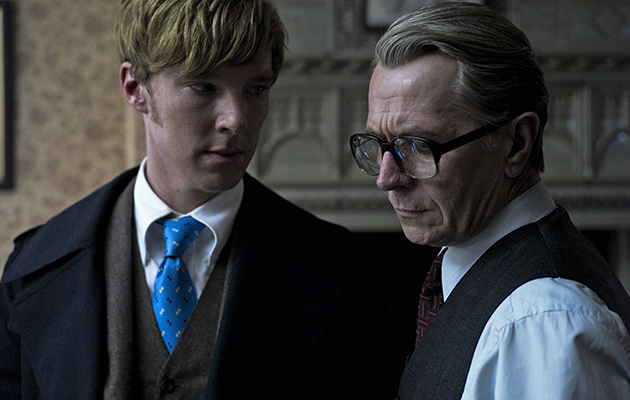
Even though Firth was a thorough bastard in the film, I was bummed for a day or two after. That film was based on the John LeCarre novels, and my friend John Porter and I are LeCarre devotees. They are so thickly plotted that I understand about 58% of them, but the protagonist, the British espionage bureaucrat, George Smiley, (below, played by Gary Oldman, with Benedict Cumberbatch as his neophyte) is brilliant and reserved. What he reserves is his venom, injected without passion, for those who deserve it. Like several modern American Congressmen. Or Colin Firth.
(Incidentally, Firth was Darcy in BOTH Pride and Prejudice and Bridget Jones. So there.)
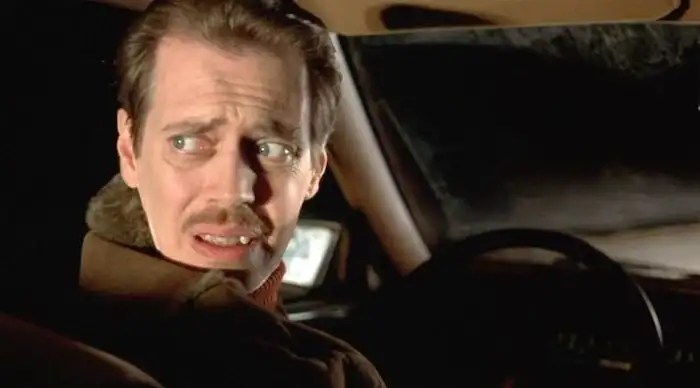
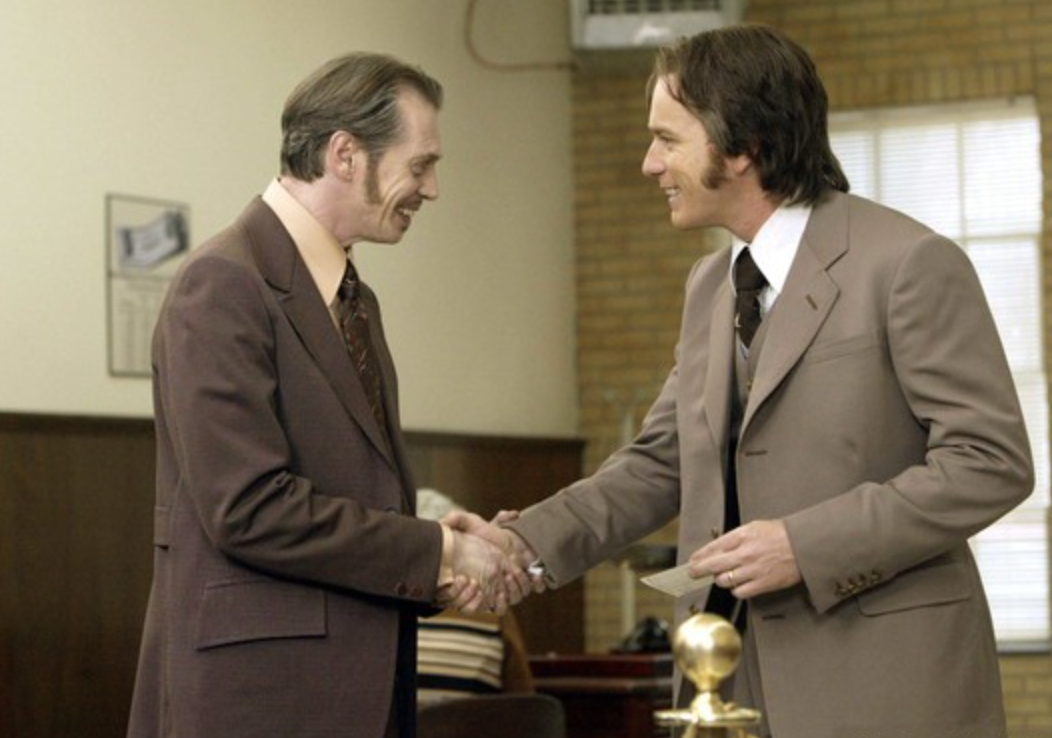
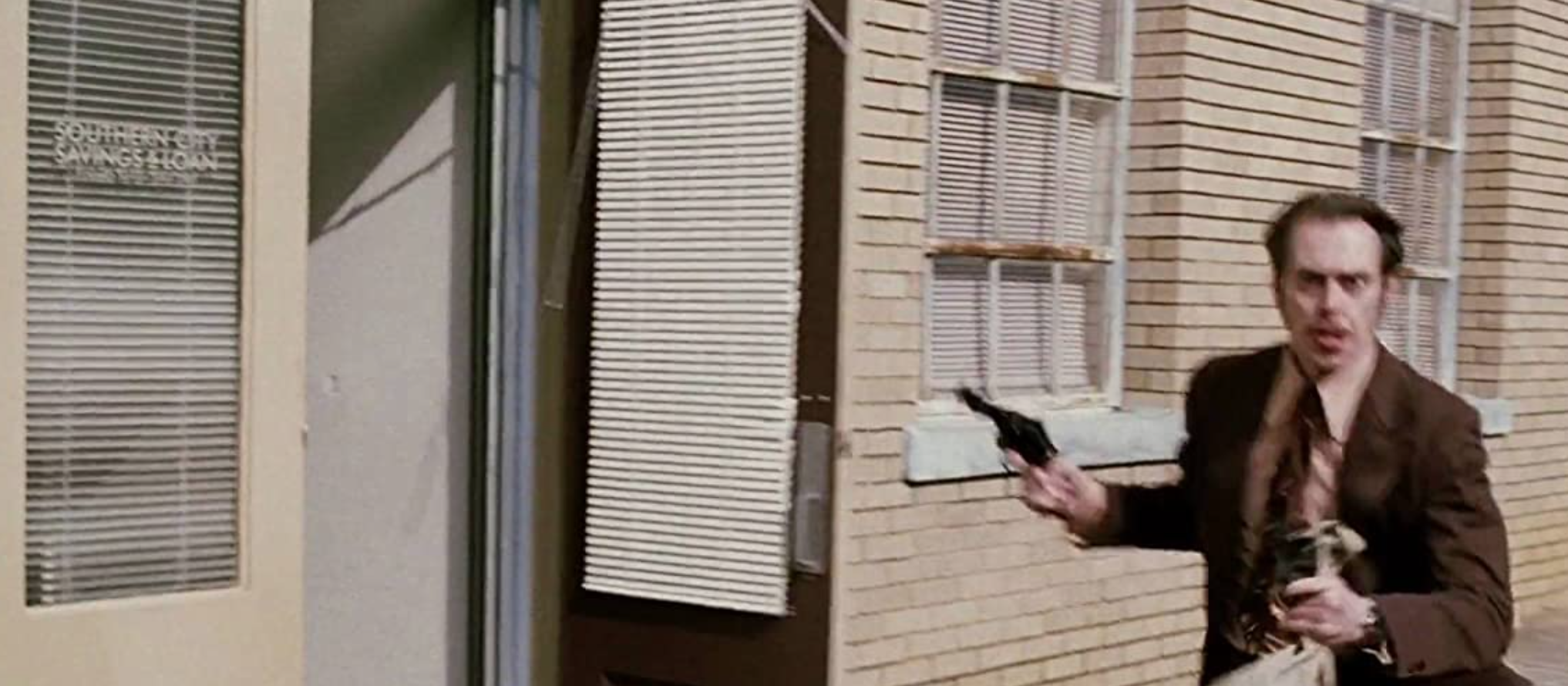
I am posting about none of them especially. What amazed me about Big Fish is that I’d forgotten that Steve Buscemi appears in it, when he recruits MacGregor as an unwilling accomplice in a bank robbery.
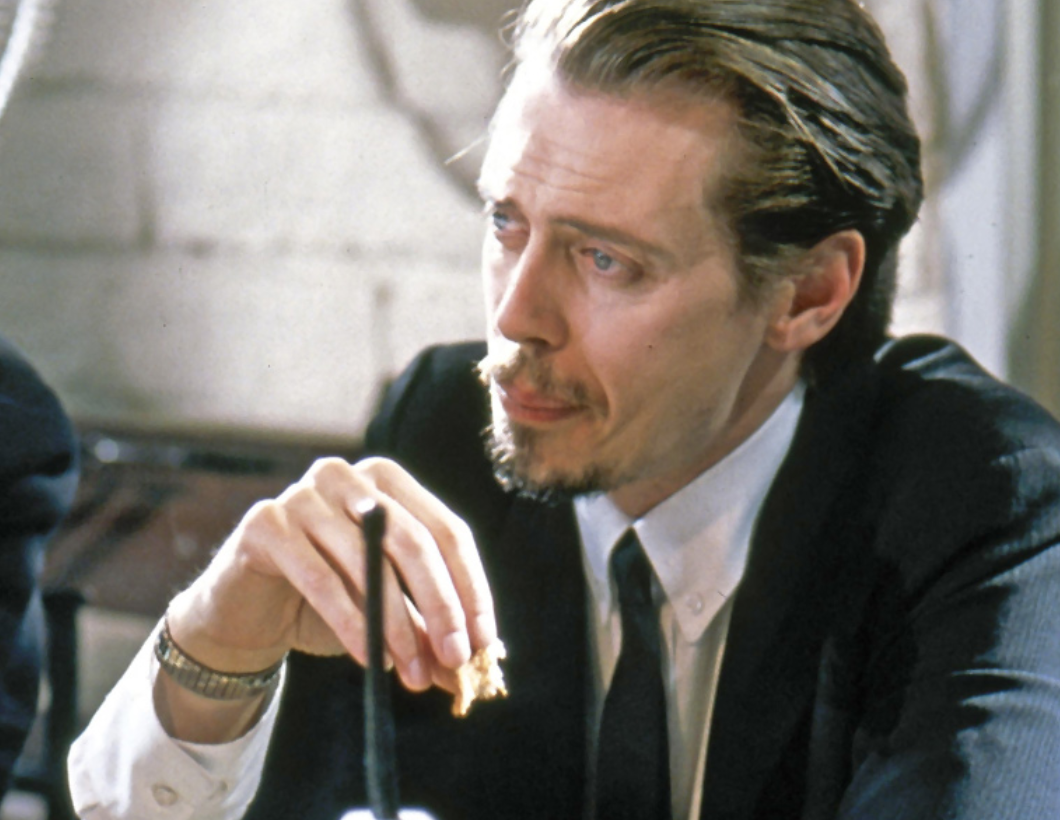
I would just like to state, for the record, how much I admire Steve Buscemi. I think almost any film he’s in exceeds its expectations.
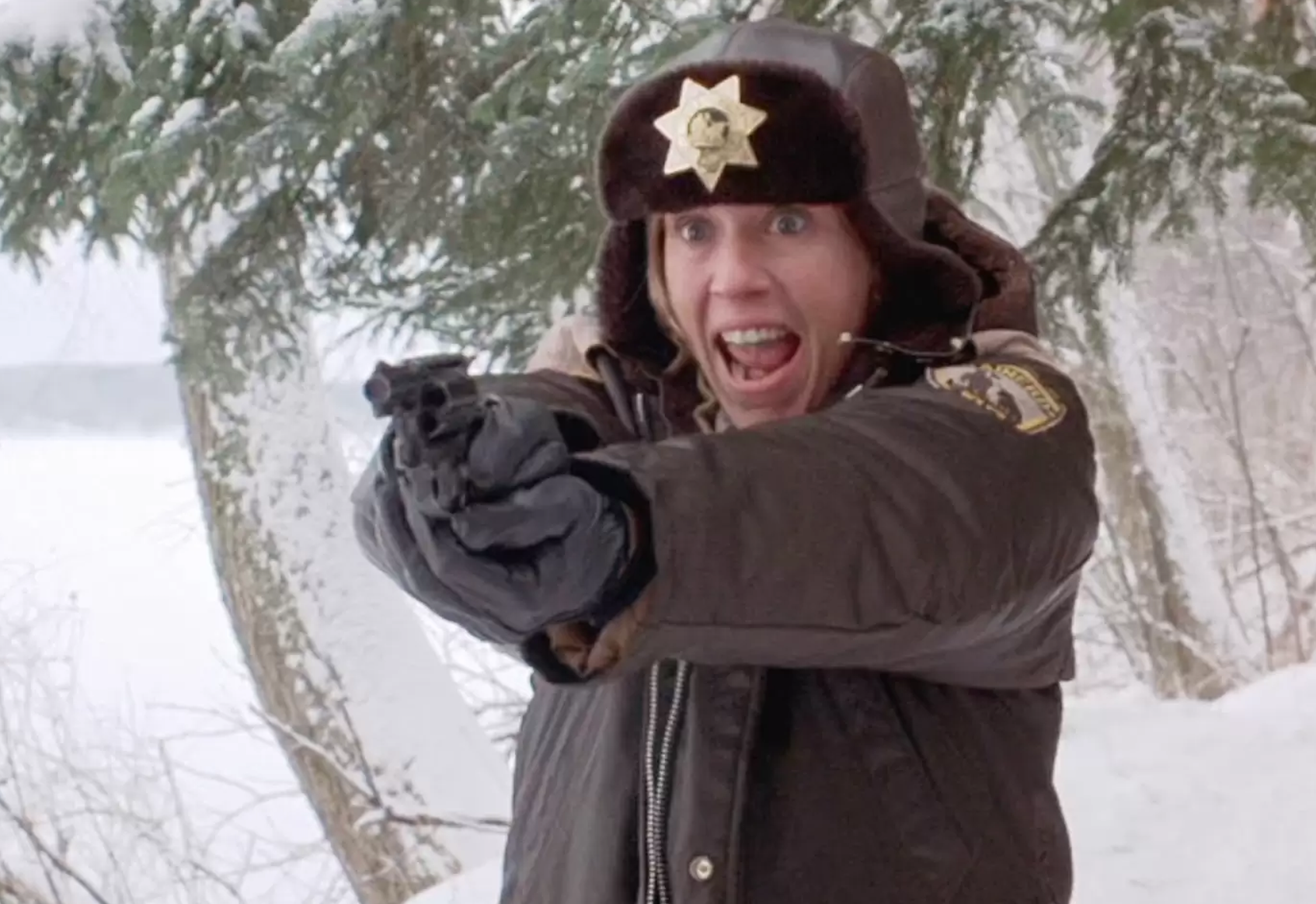
Frances McDormand co-stars with Crudup in Almost Famous and with Buscemi in Fargo, one of my all-time favorite films. And her Marge Gunderson is one of my all-time favorite characters. Don’t EVEN get me started on her.
Anyway, I hope you get some time to watch movies over Christmas. The turkey’s starting to defrost, we’ve got wassail and egg nog, our little tree with white lights, four dogs (Cousin Rocky is visiting) and we have Rick, Sally and Rebecca over for Friday and Saturday. We might even watch a movie together. (Or a football game.)
Shoot howdy, I just might invite Steve Buscemi over, too. I have a hunch he’d like my mashed potatoes. Oh, and I’d be careful, given the opening scene in Reservoir Dogs, to turn down any tips.
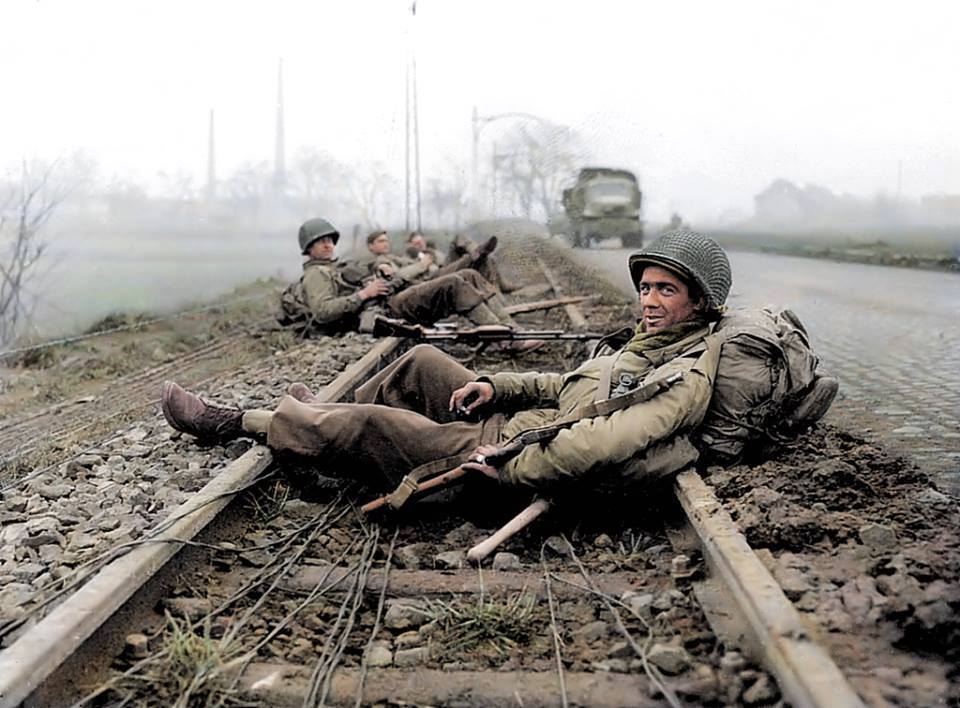
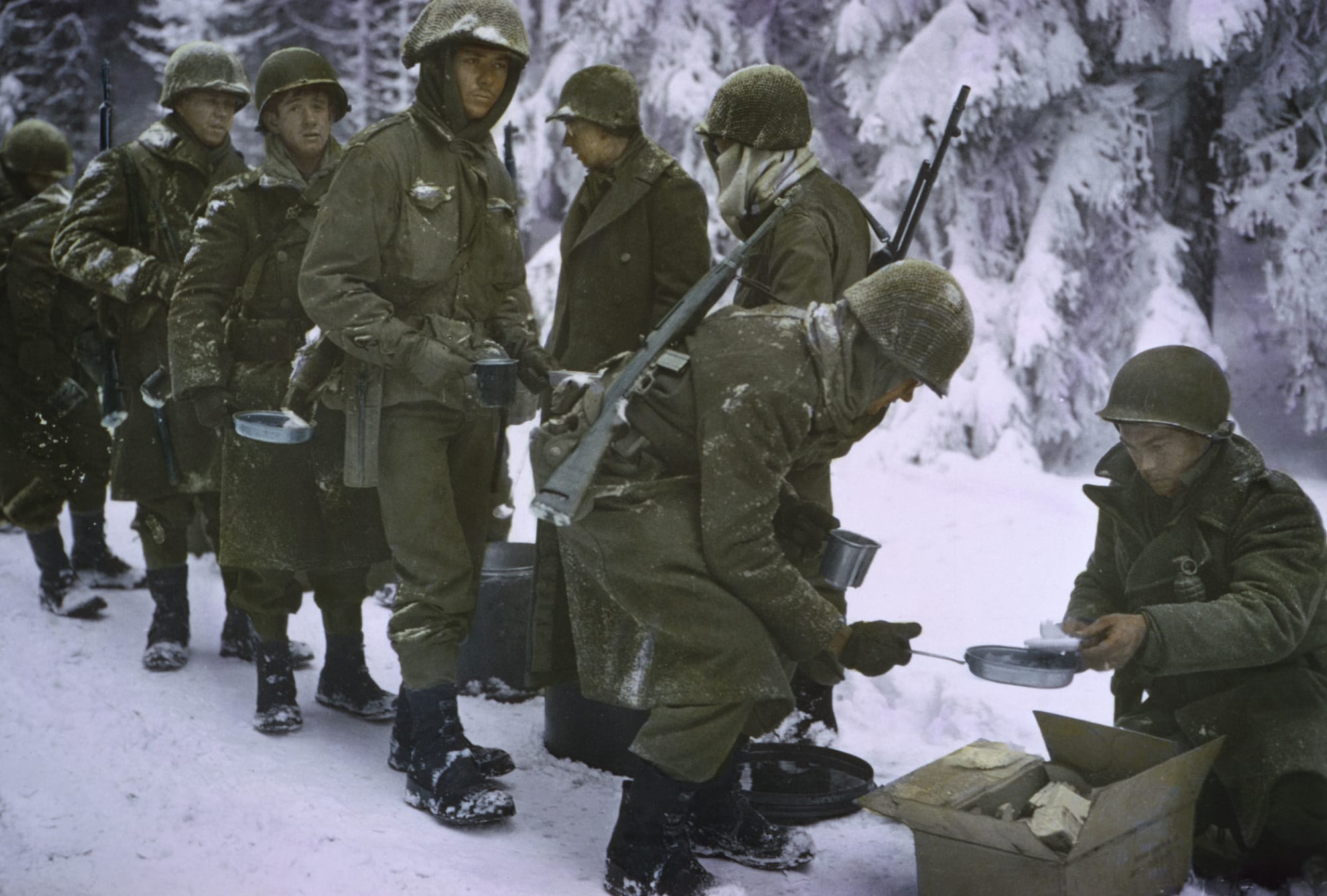
These GI’s are members of the 104th Infantry Division, the “Timberwolves.” The division had done part of its training at Camp San Luis Obispo. Now, six months after they’d arrived in Europe, these GI’s take a smoke break during the Battle of the Bulge, the horrific weeks-long battle fought in the Ardennes. The photo was taken just inside Germany, but the Bulge crossed several borders. The heaviest fighting for men like these would last into late January and it would come in the mountains and dense forest that mark the Ardennes.
It was the coldest winter in Europe in thirty years.
I’ve never seen a starker contrast in borders than the one between Holland and Belgium. Holland is flat enough to roll a tennis ball for miles, and the roads help. They’re smooth and noiseless. In the pastures that flank Dutch roads, the happiest cows I’ve ever seen would placidly watch the tennis ball roll by.
Then you see the Belgian border. The Ardennes, mountains and forests, rise so suddenly that I was reminded of that terrific animation of Paris rising in the film Inception.
And so the Ardennes is where Americans like these GIs in the 104th were essentially inhaled by the urgency of the the Battle of the Bulge, which had caught the Allied high command, suddenly desperate for riflemen, flat-footed.
Because they were mostly replacements, rookies, the high command hadn’t listened before the battle opened to the reports of tank engines and trembling trees shedding snow beyond the American lines. Sherman hadn’t listened to the reports of movement in the trees near Shiloh Church, either.
Then the Panzers came, followed by the infantry who were, along with Caesar’s Third Gallica and Thomas Jackson’s Confederate “foot cavalry,” possibly the finest soldiers in history.
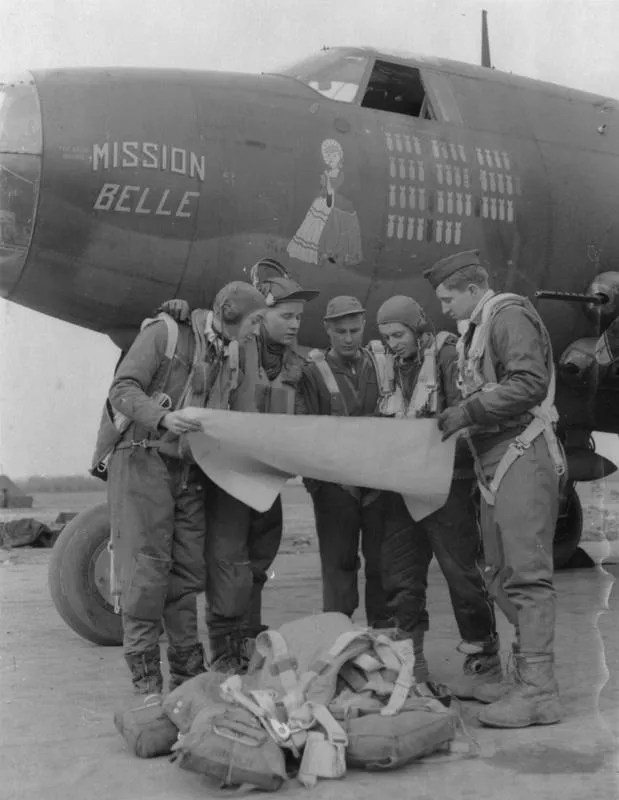
Art Youman of Arroyo Grande, of Easy Company, was there, too, in Bastogne. So was James Pearson of Templeton, lost with his B-26 crew—their plane, “Mission Belle,” is seen here with an earlier crew (they look young, don’t they?)—shot down over a Belgian town, Houffalize, the day after Christmas. So was Manuel Gularte of Arroyo Grande, a crewman on a 155-mm “Long Tom” cannon whose work had helped to delay the German advance on a Belgian town, St. Vith.
Once again, I am stunned by a “cow county” so small—33,000 people in the 1940 census—soon to be outnumbered by 96,000 servicemen from Camp Roberts in the north to Camp Cooke, near Lompoc–that contributed so significantly to World War II.
I heard a war story I did not want to hear a few days ago. It was a guy about my age, maybe with the tread worn down a bit more than mine, but his Dad was a member of an Army cavalry scout unit during the Battle of the Bulge.
They were among the units that found the bodies of more than eighty GIs who’d been machine-gunned—murdered—by a Waffen-SS unit in Malmedy, Belgium on December 17. They had surrendered and were unarmed.
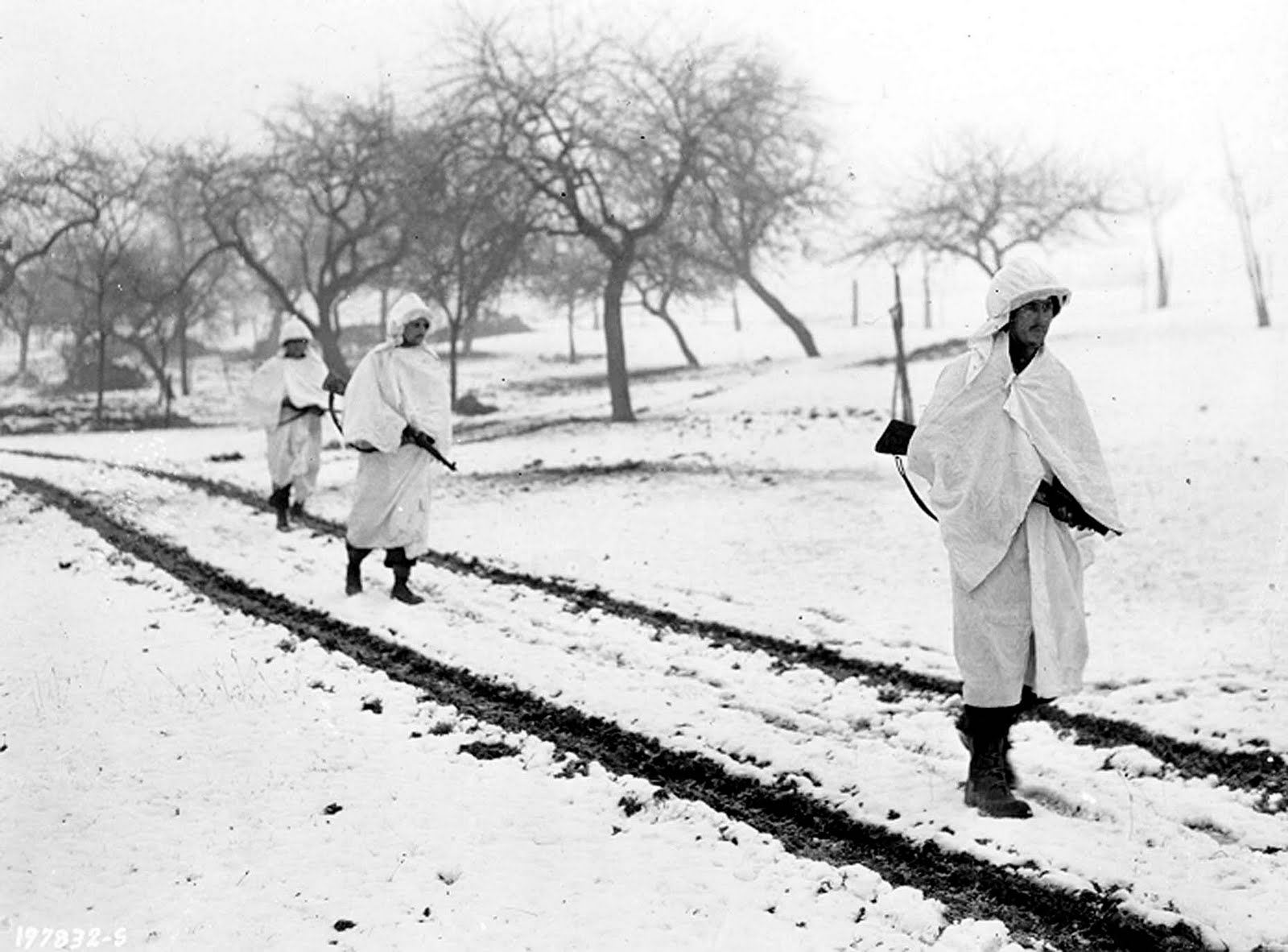
Three Americans on patrol, Luxembourg, during The Bulge.
His father’s unit stopped taking prisoners after that, the man told me. And so the Germans they murdered for the next six months became some of the fifty million casualties this war produced, in a war that demonstrated that humans were as efficient at killing as the Spanish Flu, with its fifty million victims, had been in 1918.
It was a horrific war in which Americans were not blameless. In writing Central Coast Aviators in World War II, I noted that airmen could never completely rid themselves of the memory of burning human flesh that came to them in updrafts over cities like Dresden or Tokyo. The Army executed 102 GIs for crimes against civilians during World War II, so we were capable of much more personal brutality, too.
But it’s a telling statistic that, in nation fighting to preserve democracy and destroy the racism fundamental to National Socialism and to Japanese chauvinism, that 83% of the soldiers executed for rape were Black Americans. The irony would’ve have escaped us then and would probably escape 30% of voting Americans today.
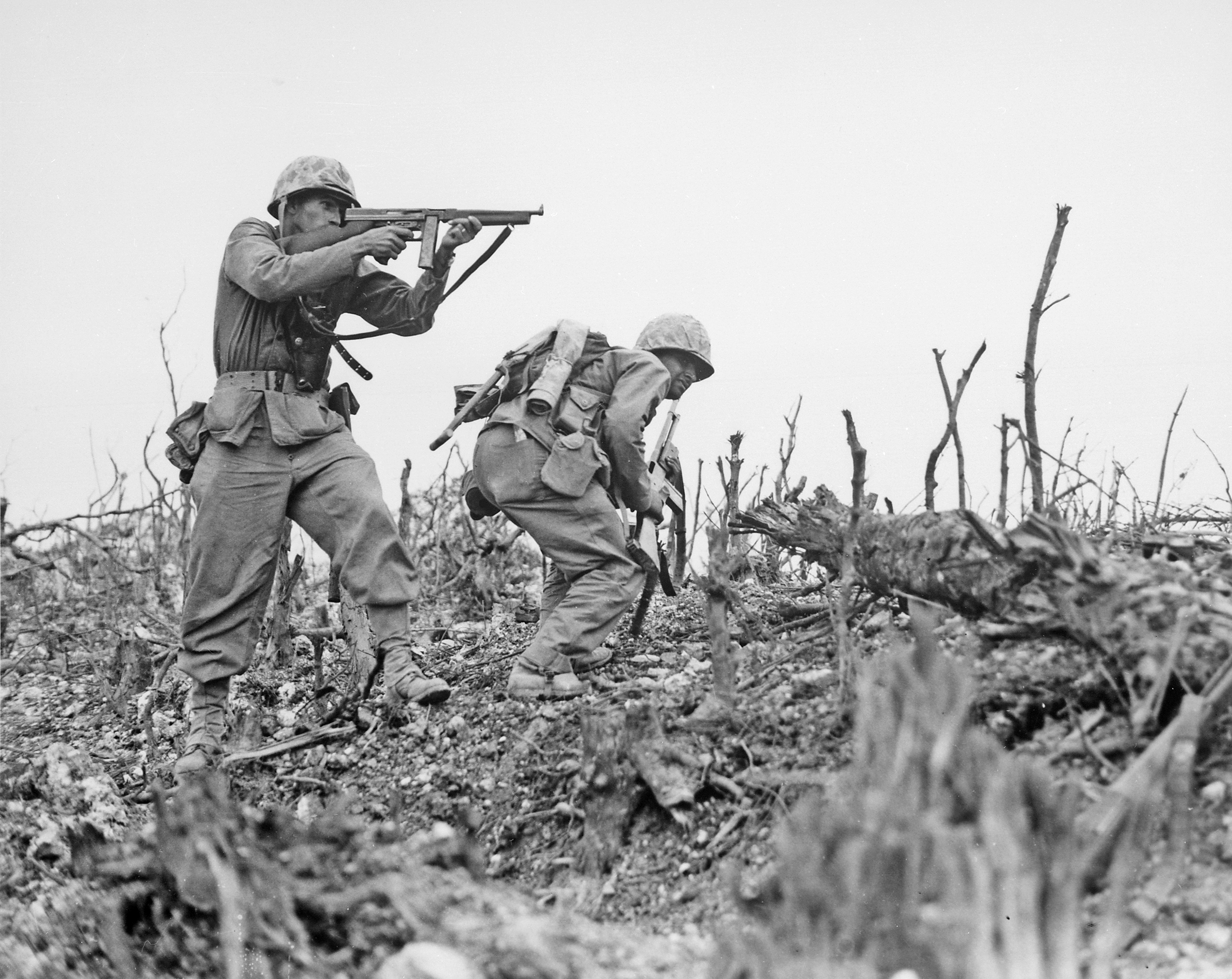
A Marine, a member of the First Marine Division, fires a burst from his Thompson submachine gun on Okinawa. John Loomis of Arroyo Grande was at Okinawa as a member of the First.
And, as to the debasement that war can confer, even on Americans: in Eugene Sledge’s masterful With the Old Breed at Peleliu and Okinawa, he remembered a fellow Marine absently tossing pieces of coral, like basketball free throws, into the skull of a dead Japanese soldier; the top of the man’s skull had been neatly sheared off by machine-gun bullet or a shell fragment. Even Sledge, who was not a blameless man—war debases all in mostly equal measures—was sickened.
Fifty thousand Americans grew sickened by the war and deserted. For a time, a gang of them took control of Paris and tried to run the place the way Capone had run Chicago.
The miracle, one author has noted, is that only fifty thousand GIs deserted.The vast majority didn’t. Here, they were farm boys and Poly students (usually one and the same) and store clerks, farm laborers and high-school football heroes, even the guys with Coke-bottle glasses whom nobody took seriously–not until they proved to be someone different altogether in places like the Ardennes.
They constantly amaze me. I keep returning to them because the debasement of recent history compels me to. I have learned that the cruelty of war, a cruelty some of them practiced, is always overwhelmed by other, more important, American traits: generosity, humanity and courage. We must not forget that.
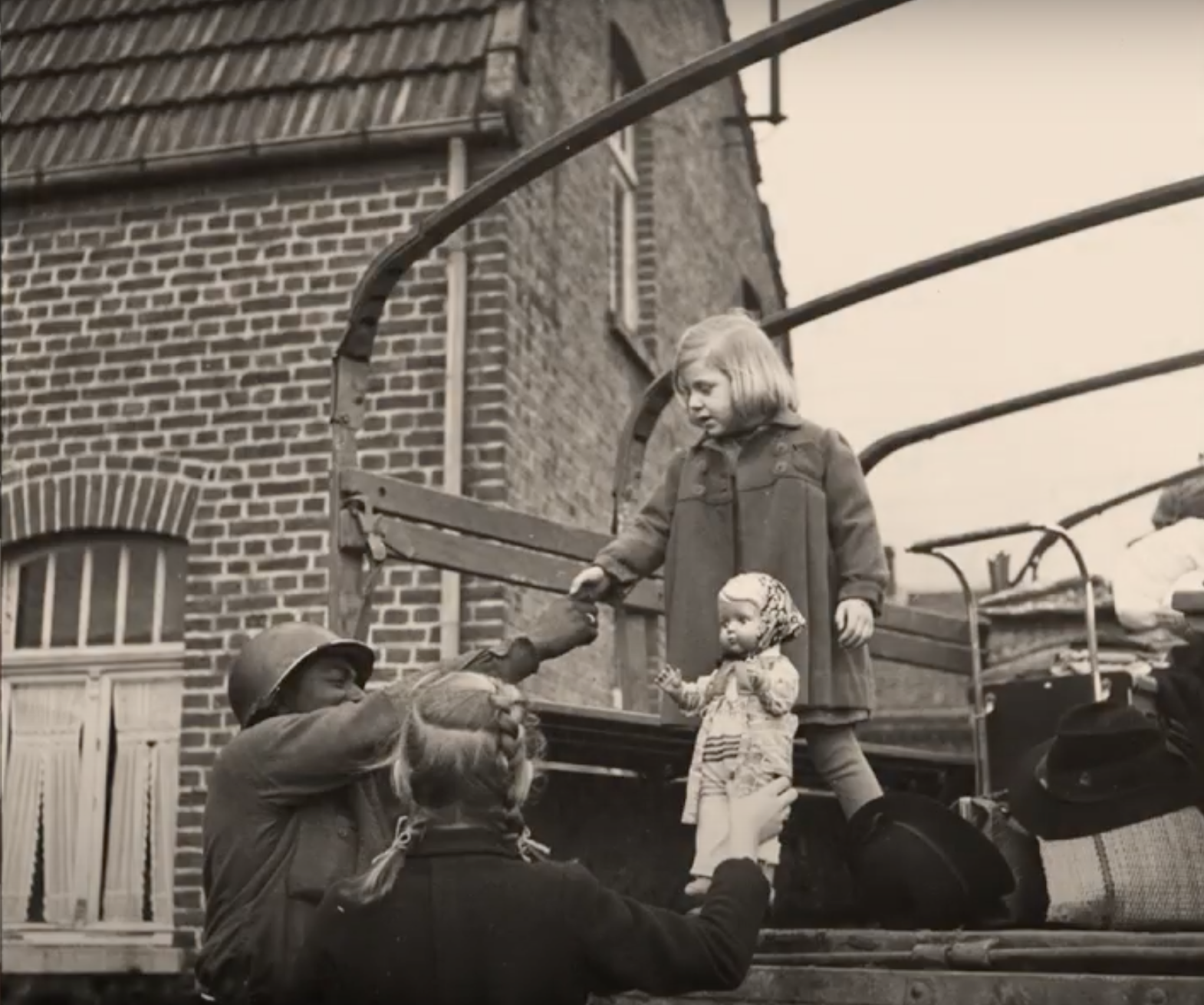
An Army Quartermaster truck driver makes a friend, 1944.
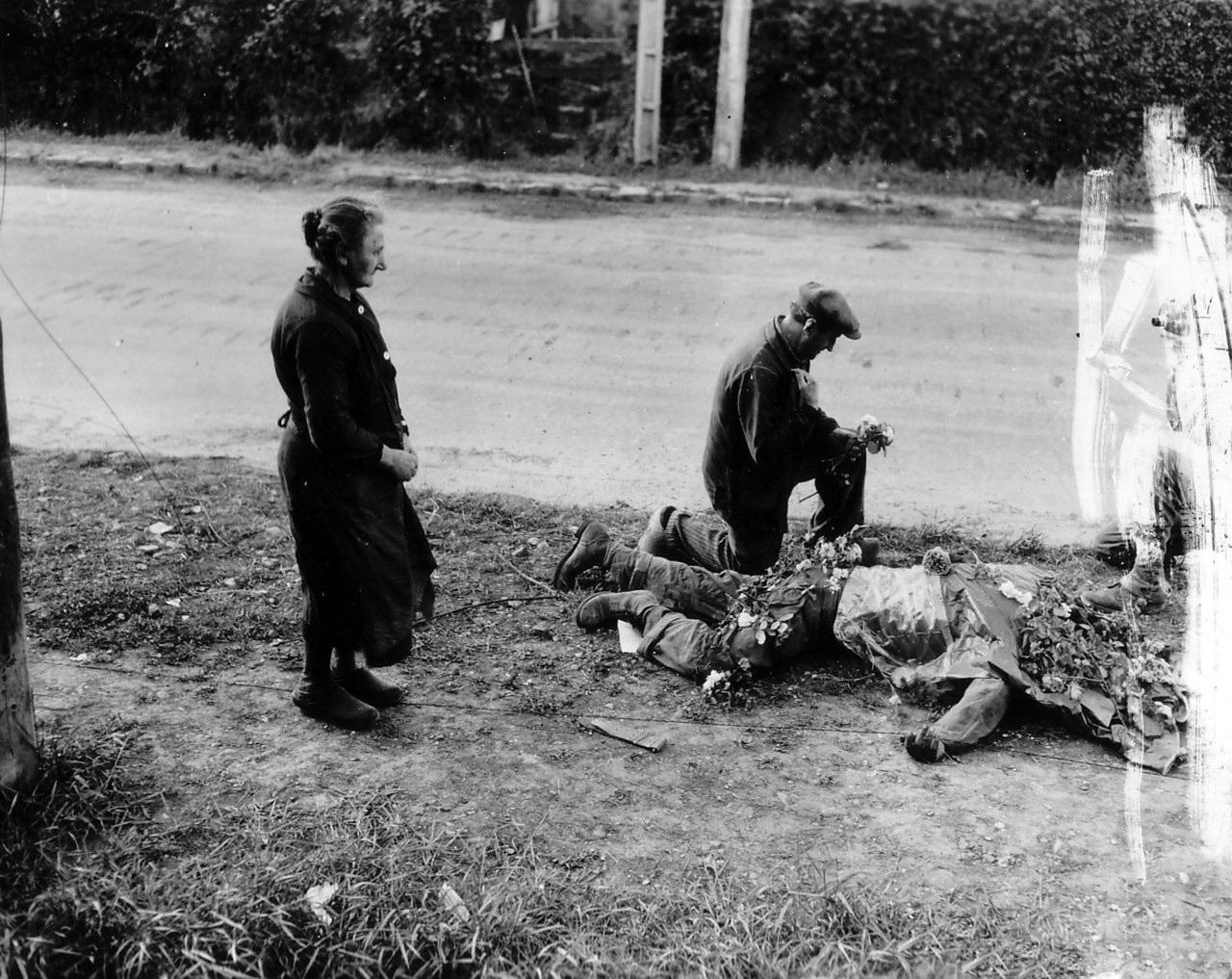
An elderly French couple honors an American paratrooper, killed in Carentan, Normandy, on D-Day.
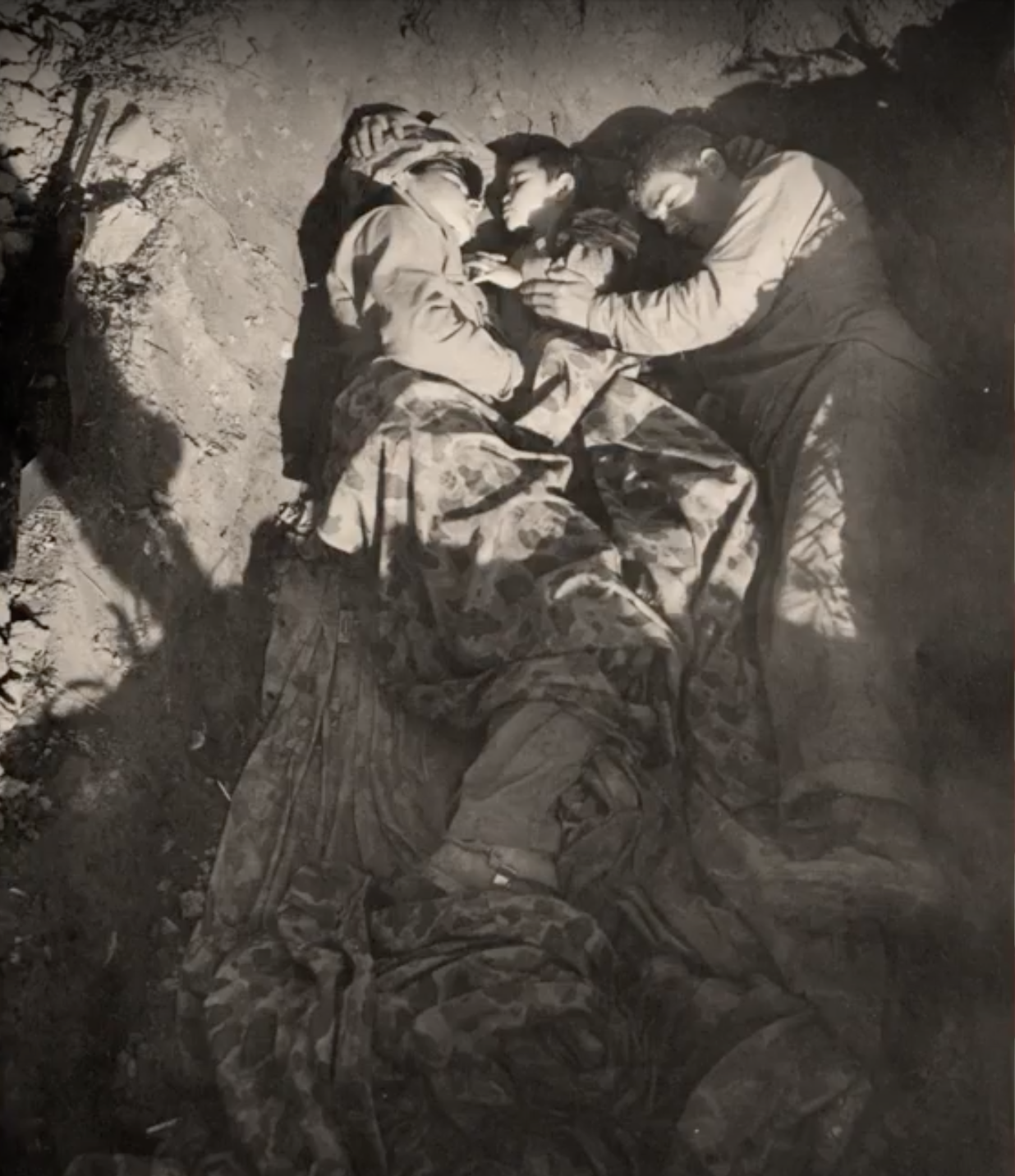
These Marines “adopted” this little boy, orphaned by the terrible fighting on Okinawa.
Please allow me a history teacher moment. It’s John Donne’s fault: “Any man’s death diminishes me.” This is about two women.
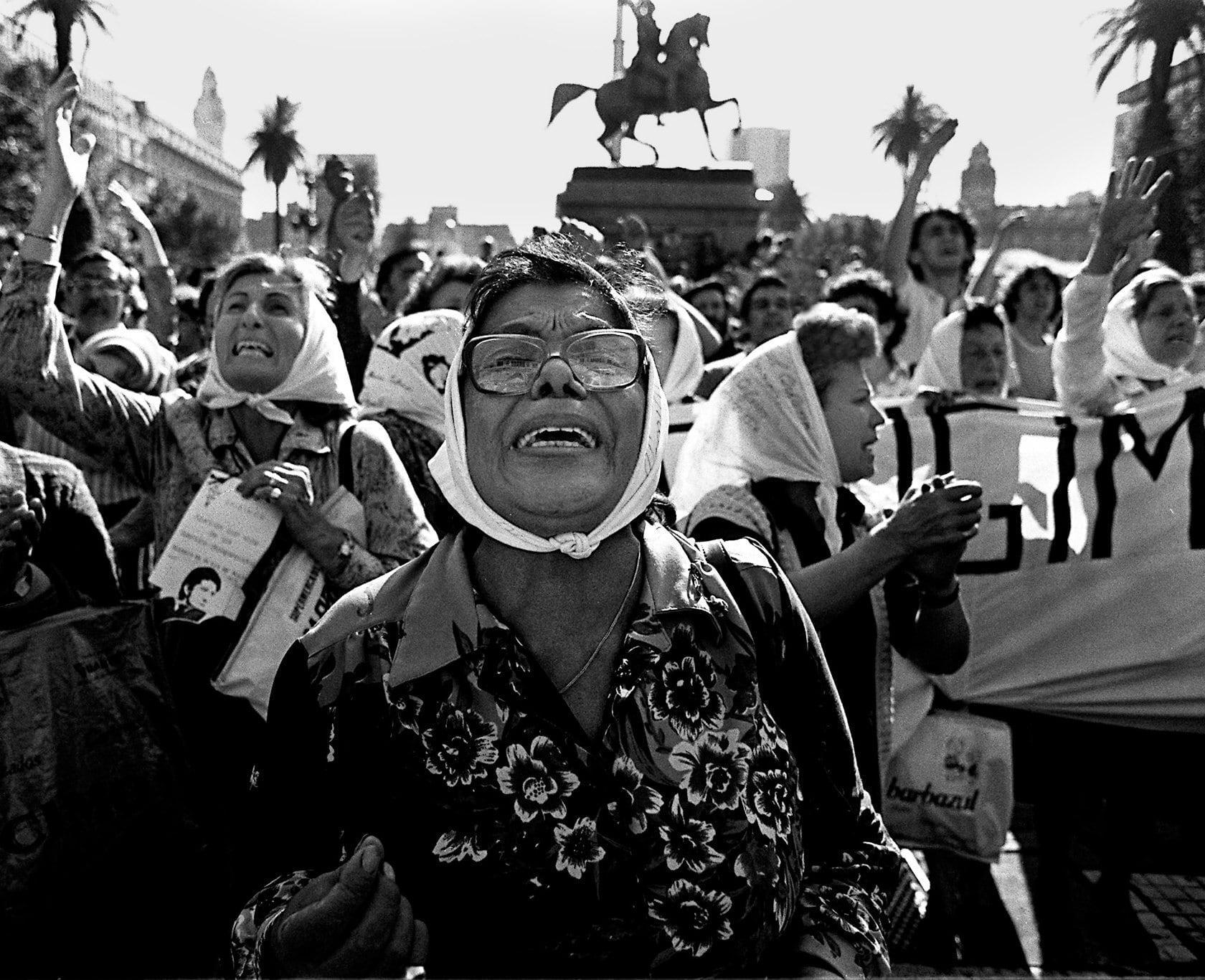
This is Clara Jurado, Mothers of the Disappeared (Desaparecidos), during a protest in Buenos Aires in 1983.
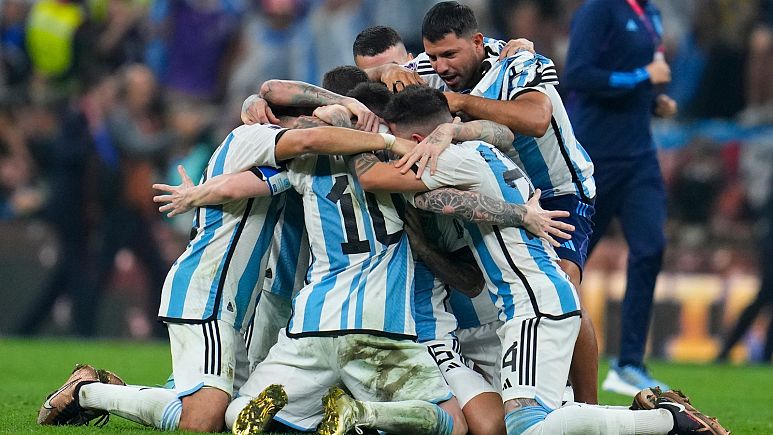
While I am happy for the Argentine football team, victors in Sunday’s World Cup, what is happening in Iran today happened in Argentina in 1976. When a military dictatorship came to power, a wave of arrests and extrajudicial killings followed.
30,000 Argentines, overwhelmingly young people, were “disappeared.” Pregnant detainees were executed soon after they had given birth.
I hope that the World Cup victory somehow brings healing—and much joy— to Argentina this year.
But last year, the Argentine government issued thousands of DNA kits to help identify the human remains still being unearthed. Because the two nations are so close, some of the DNA samples match living Italians.
There are still mass graves from the 1936-39 Spanish Civil War that remain undisturbed; previous generations knew where they were but did not talk about them. Young Spaniards talk about them but they have now passed into myth.
The writer Adam Hochschild wrote of the Russian River Ob changing course in 1976, exposing sandbanks packed densely with human bodies. Permafrost had preserved some so completely that relatives could recognize the man or woman who had gone missing in the 1930s. What the Ob revealed lay below what was the headquarters of Stalin’s secret police, the NKVD, in a town called Kolpashevo.
And now people are being “disappeared” in Iran.
This week actress Taraneh Alidoosti was arrested. She committed two crimes: protesting the brutal repression of protestors and posting this photograph. Her hair is uncovered.
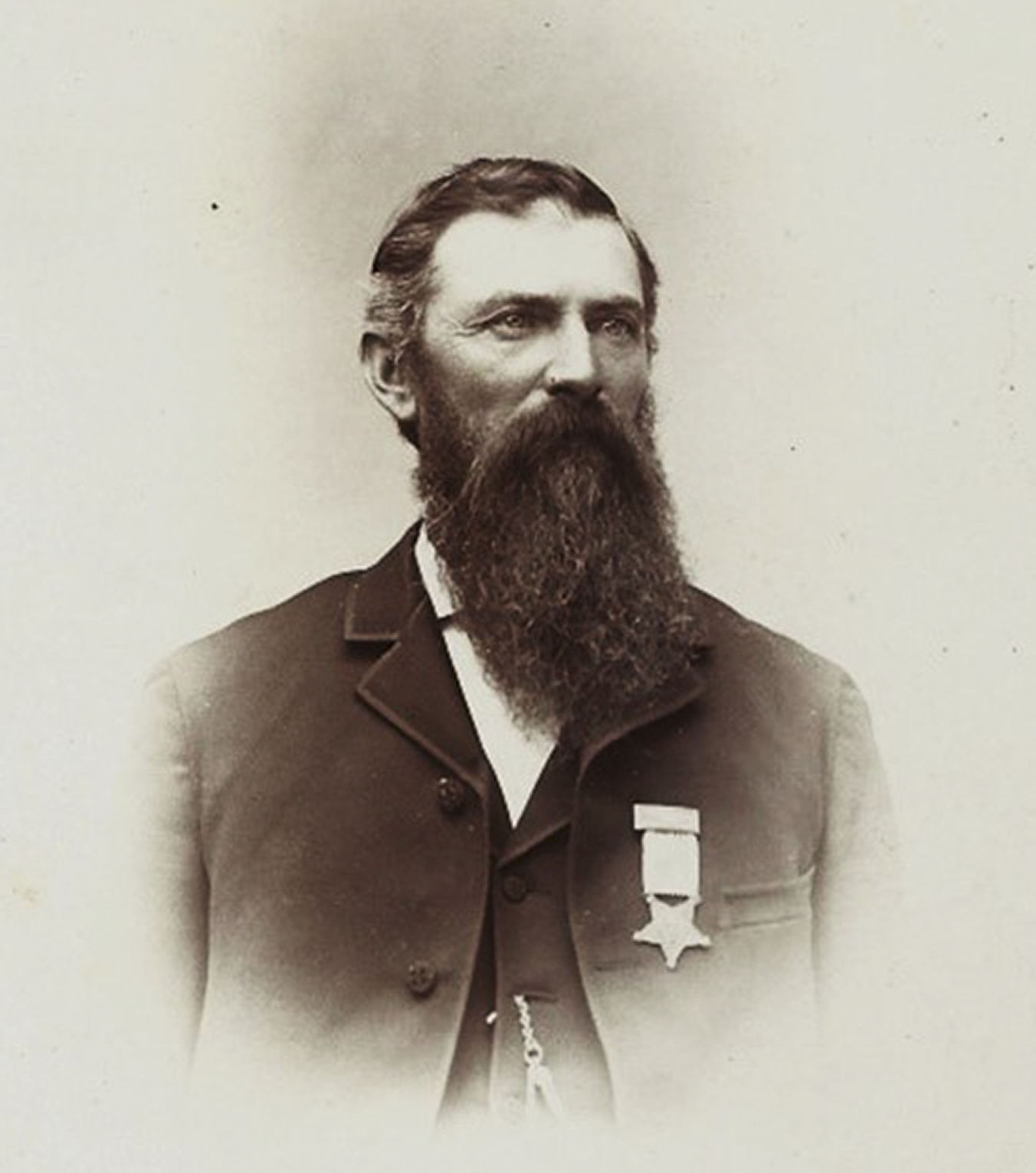
In the 1880s, Erastus Fouch farmed along was is today Lopez Drive. As a sixteen-year-old he’d fought in the Shenandoah Valleywhere he saw his brother killed in action. He later fought at Chancellorsville and Gettysburg. Here he wears his Grand Army of the Republic badge. Jack English photo.
Nearly sixty Civil War veterans are buried in the Arroyo Grande District Cemetery. This excerpt from the book Patriot Graves describes the forces that drove them here.
…A soldier who had endured the third day of Gettysburg and emerged unhurt, and who had then seen his own boys in their counterattack destroy Pickett’s Charge…had already passed the zenith of his life. Nothing like this would ever happen to him again, and what had happened to them brought them, ironically, great joy.
So, for a generation enmeshed in the ethical web spun tightly by mid-Victorian Protestantism—these were Christian soldiers who fought in armies, on both sides, marked by intense waves of wartime revivalism within their camps—the excitement of battle generated a profound moral contradiction. In This Republic of Suffering, a superb account of coming to terms with the scale of death the Civil War generated, Harvard president and historian Drew Gilpin Faust describes the experience of a stunned Confederate who, during a firefight, came to the aid of a shrieking comrade, only to find out that he was “executing a species of war dance,” exulting over the body of the Union soldier he’d just killed. In another battle in 1862, Union soldiers on the firing line called their shots, as if combat were billiards: “Watch me drop that fellow,” one said to his comrades; battle was, indeed, like a game.[1]
The killing didn’t end when the war did. Violent crime rose at three times the rate of population growth in the decades following the war, and perhaps as many as two-thirds of the nation’s convicted felons were veterans.[2] Soldiers understood, on some level, that combat had changed them irrevocably and some worried about it. Society, one Vermont soldier wrote his sister, “will not own the rude soldier when he comes back, but turn a cold shoulder to him, because he has become hardened by scenes of bloodshed and carnage.”[3] He was, in many respects, right: some of the soldiers who came home to Vermont, New Jersey or Iowa brought with them a measure of fear—they had become, in the Civil War novelist Michael Shaara’s term, “Killer Angels.”
Many Union soldiers had demonized themselves and by extension all of their comrades by celebrating their mustering out with epic alcohol binges and episodic violence throughout the demobilization summer of 1865.[4] A Chicago civilian’s insulting comment about William Sherman set off a saloon brawl that cascaded into a riot that police were helpless to put down. Only the fortuitous appearance of the legendarily hard-drinking Gen. Joseph Hooker, who had the credibility to intervene with combat veterans, brought the violence to an end.
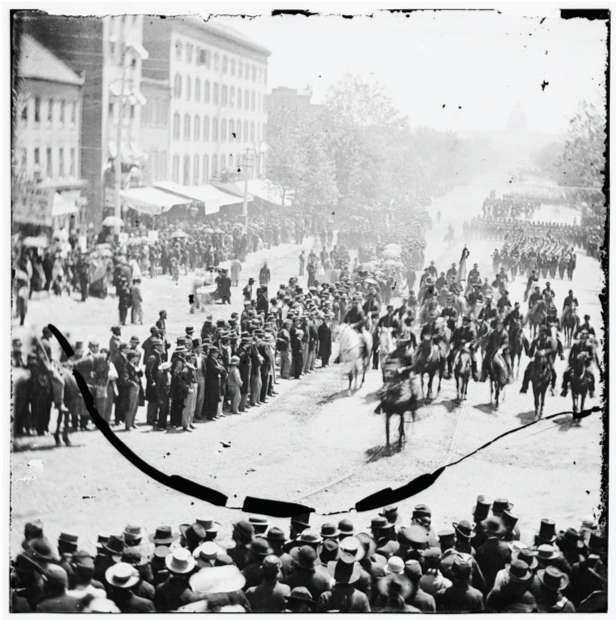
The Grand Review of the Armies at war’s end, Washington D.C., May 1865. Arroyo Grande settler Morris Denham marched with this unit, Francis Blair’s XVII Corps, Sherman’s army.
But for even the most sober of veterans that was precisely the problem with homecoming: it brought them little peace. Professor Jordan describes a sense of what, at its mildest, could be called disorientation. Home wasn’t home anymore. Even little farm towns had changed so much in four years that, for some veterans, they didn’t feel like home at all. Soldiers from the hard-fighting regiments of the Old Northwest, states like Iowa and Minnesota, couldn’t reconcile themselves to the cold winters they’d forgotten while fighting in Mississippi or Georgia. There was a more sinister change to which they couldn’t adjust: Union veterans resembled the little boys who’d survived the 1918 influenza epidemic and were finally let out to play, only to find there was no playmate on their city block left alive. The survivors of “Pals” Battalions who’d joined the Great War’s British Army together went home to neighborhoods empty of the young men with whom they’d grown up. Their pals were gone, swallowed up by the Western Front.
Gone too, in 1865, were whole towns of young men in New York or Vermont or Indiana, dead and buried on Southern farmland that had been poisoned by violence, land still studded with spent bullets. Other young men had vanished without a trace in dark, dense woodlots or fetid swamps. Soldiers came home, then, ostensibly alive and whole and strong but with unseen dead spaces inside where their comrades had once lived. Missing them, or the trauma of seeing them killed, figured in the chronic depression with which so many veterans struggled. Now that the war was done, they still were caught in its aftermath like swimmers in an undertow, struggling to break surface, to find light and cool air, to breathe again.
They recognized, too, that what they had fought for—for the rededication of the democracy Lincoln had described at Gettysburg in November 1863—was fast slipping away. Union veterans remained intensely suspicious of and hostile toward the defeated South; Lincoln’s assassination had been one impetus for their rancor but their anger only intensified when they read the newspaper accounts of the postwar emergence of the old Slave Codes, now called Black Codes. They read, too, of the defiance and the terrorism of the Ku Klux Klan, co-founded by a cavalryman, Nathan Bedford Forrest, who had bedeviled some of them in the Deep South. When Reconstruction ended in 1877, Jim Crow laws revived white supremacy in a way that rivaled the days of slavery. The Union veterans’ hostility was exacerbated because the other side refused to admit—significantly, on a moral level—that they’d lost the war. Typical, in 1894, were the dedicatory remarks that accompanied the unveiling of a Confederate memorial in Richmond, when newspapers noted that the clouds parted and the sun emerged when the speaker, the Rev. R.C. Cave, began an oration that included passages like this:
But brute force cannot settle questions of right and wrong. Thinking men do not judge the merits of a cause by the measure of its success; and I believe
The world shall yet decide
In truth’s clear, far-off light,
that the South was in the right; that her cause was just; that the men who took up arms in her defence were patriots who had even better reason for what they did than had the men who fought at Concord, Lexington, and Bunker Hill; and that her coercion, whatever good may have resulted or may hereafter result from it, was an outrage on liberty.[5]
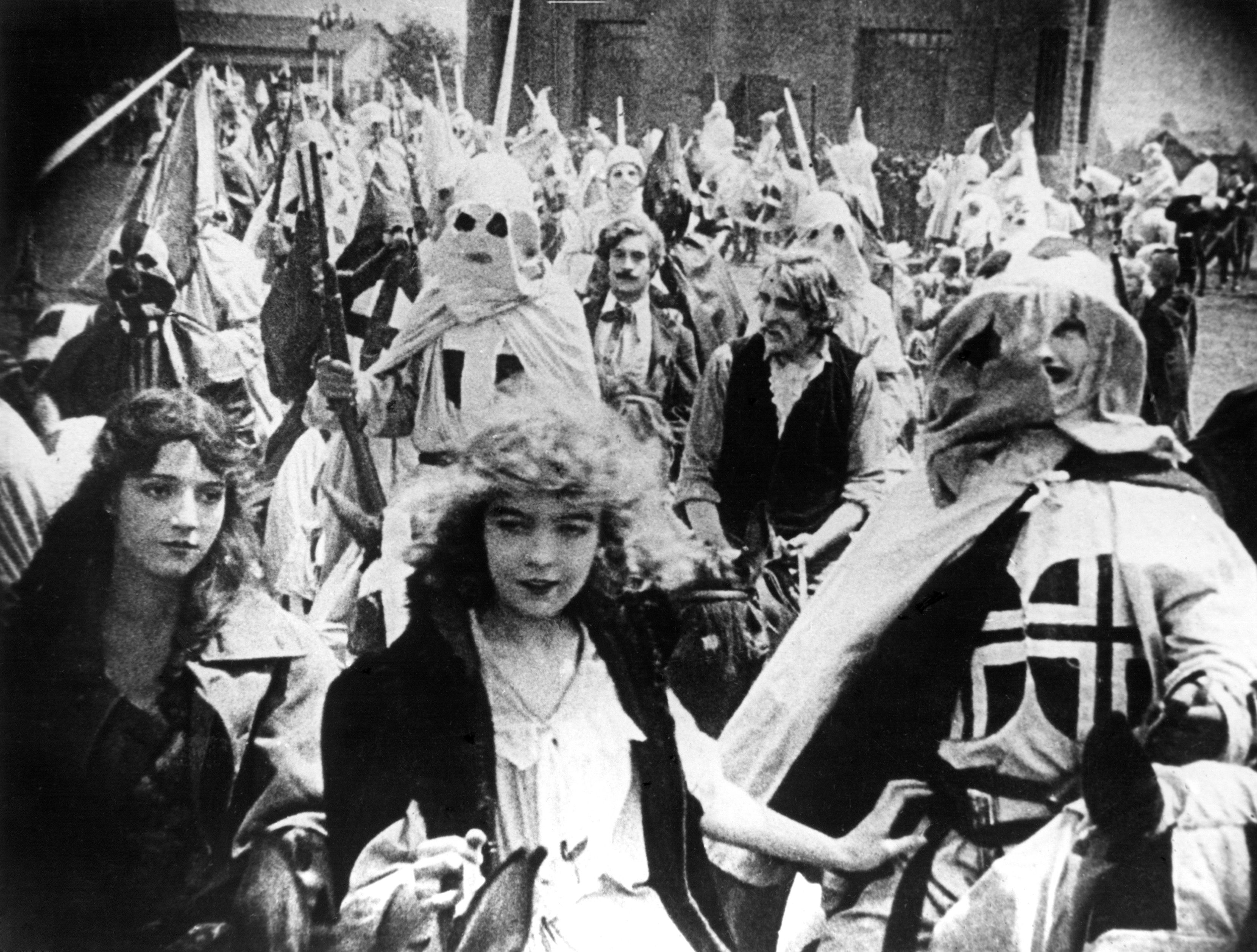
White supremacy triumphant, Birth of a Nation.
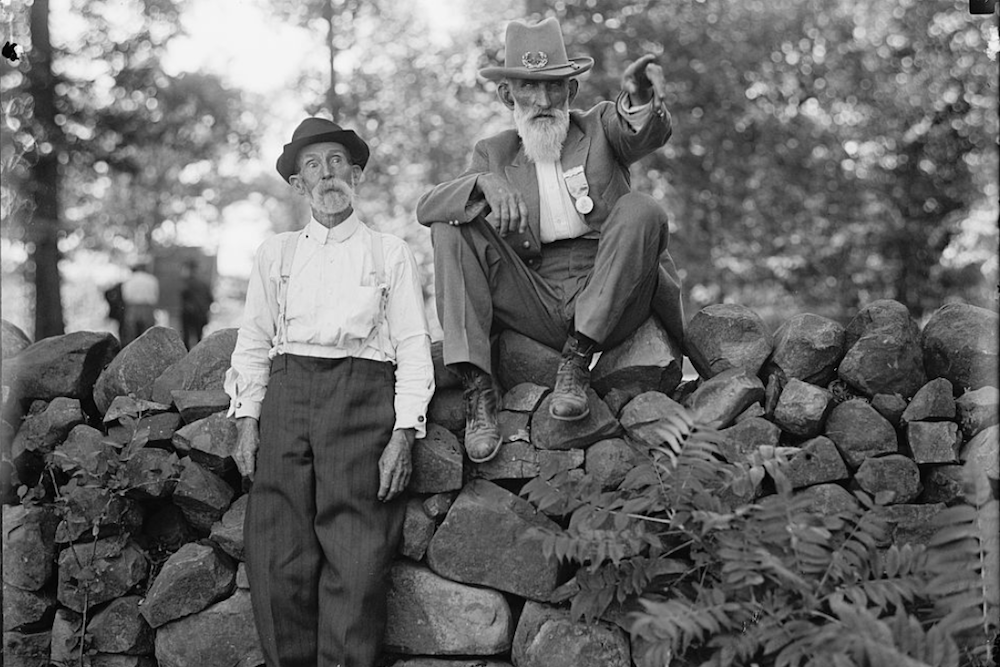
Similar remarks by Southern speakers invited to a Gettysburg reunion in 1913, Professor Jordan notes, rankled the same Union veterans who had protested another unveiling, in 1909, in the Capitol’s Statuary Hall: a sculpture of Robert E. Lee. No matter how chivalrous Lee had been (He never, for example, uttered the word “Yankees,” using instead, in his verbal orders to his subordinates, the term “those people.”), he was a killer, and he had harvested thousands of solders’ lives. The survivors of what they saw as Lee’s war would protest again at the rapturous reception, one that included the Southern-bred President Woodrow Wilson, awarded the 1915 D.W. Griffith film Birth of a Nation, which depicts Klansmen, too, as chivalric heroes who reassert Southern white supremacy over rapacious carpetbaggers and predatory African Americans. “It is like writing history with lightning,” the president said, “and my only regret is that it is all so terribly true.”[6] The most enduring image of the 1913 Gettysburg reunion is that of Confederate survivors of Pickett’s Charge reaching across the stone wall–fifty years before, it had been their objective–to shake the hands of Pennsylvania veterans. What goes unmentioned is the fistfight at the same event that sent seven aged Yankees and Confederates to the hospital.[7]
Two Gettysburg veterans, seemingly reconciled at the 1913 Reunion.
Even as Southern whites reasserted their social and political primacy, American democracy in the North was no tribute to the sacrifice of Civil War veterans, either. The Radical Republican Congress and Andrew Johnson finished what should have been Lincoln’s second term in what resembled the political equivalent of a Western range war. Johnson escaped conviction on impeachment charges by one Senate vote. Grant’s relentlessness and drive had served him well in the struggle against Lee, but another aspect of his personal character—an almost childlike credulity—ate his presidency alive in a series of scandals perpetrated by subordinates who betrayed Grant as surely as Warren G. Harding would be betrayed by his “Ohio Gang” in the 1920s.
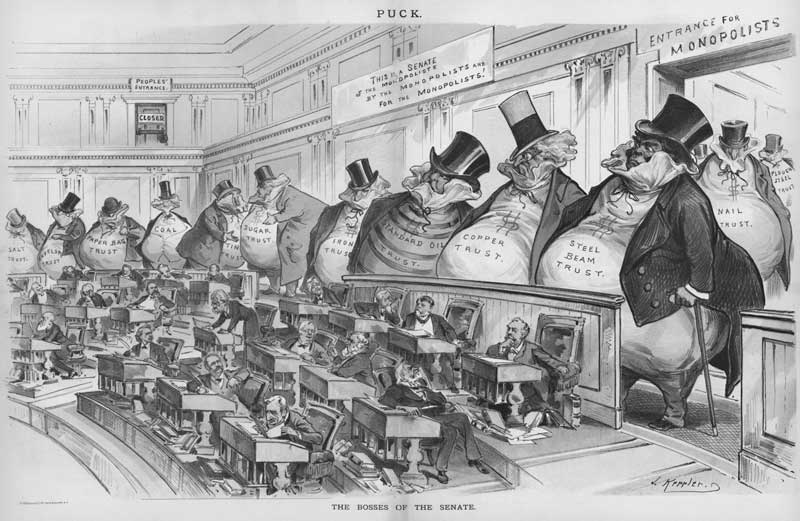
The corruption penetrated to state houses, where the lobbyist for the Santa Fe Railroad kept a slush fund in his office safe for the frequent lubrication of Kansas legislators about to vote on regulatory bills; the monopoly that railroads enjoyed in their American fiefdoms and the freight rates they demanded were so egregious that it cost a farmer more to ship a bushel of wheat from Topeka to Chicago, by rail, than it did to ship that bushel from Chicago to Liverpool, mostly by water. Machine politics dominated cities from New York to San Francisco, where Irish-American voters really did vote early and often, and deceased. In New York, the most famous political machine was Tammany Hall, and it was Tammany Hall’s Boss Tweed who disbursed the equivalent of $4 million to a Tammany-contracted plasterer for two days’ work on City Hall.
The 1889 cartoon “Bosses of the Senate” exemplifies the corruption of Gilded Age America.
In both their disillusionment and in their restlessness, the Civil War generation seems to resemble the generation that came of age during the First World War. After that war, they would become expatriates–Ernest Hemingway, F. Scott Fitzgerald, John Dos Passos among them—young men, many of them veterans, and young women, who no longer recognized or understood the America they’d known as children. They were among the members of Gertrude Stein’s “Lost Generation.”
…[Like}the young people of the 1920s, Civil War veterans were members of a generation on the move. In postwar America, veterans, according to a 2010 study by Seoul University economist Chulhee Lee, were 54% more likely to move to a different state and 36% more likely to move to a different region than non-veterans.[8] Lee posits several reasons for this phenomenon: a central one is the idea that veterans had been exposed to the concept of a wider nation, one beyond their rural farms or row tenements, by campaigns in the South. Westerners, too, fought along the Atlantic seaboard, and some Easterners saw combat or garrison duty during the 1860s Indian Wars on the frontier.
Lee’s point is a key one: Americans had been so isolated and disparate before the war that an outbreak of measles that would make a New York regiment sick would kill soldiers in the Iowa regiment bivouacked alongside, soldiers that, before the war, were so geographically isolated that they lacked the immunity to that particular strain of measles–measles, in fact, killed 11,000 soldiers during the war.[9] The war had begun to break that isolation down, and the troop movements necessary to fighting it had opened young soldiers’ minds to the vastness of their nation and to the possibility of starting over somewhere else.
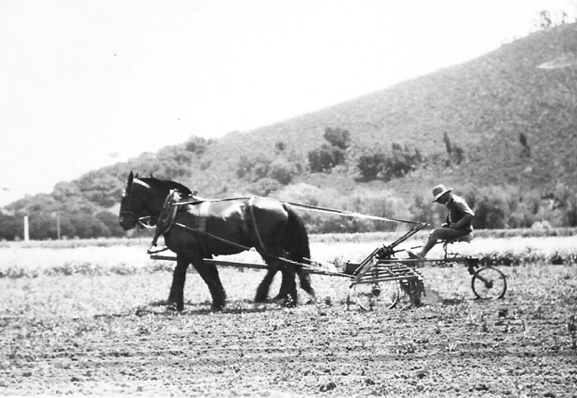
Among the area’s crops were flowers grown for seed. Here, a Waller Farms worker and his team are sowing a field. Photo courtesy Richard Waller
This pattern of increased mobility was a key factor in the lives of Arroyo Grande’s Union veterans. Over fifty would settle the Arroyo Grande Valley and nearby Nipomo. Enough census data exists to follow twenty-three of them, in the course of their lives. After the war, seven of them moved once from the state they’d served as soldiers; seven moved twice. Nine moved three times or more before they came to the Arroyo Grande area. So the men who came here had come as far as they could—like Jody’s grandfather in the Steinbeck novella The Red Pony, they had to stop because they’d arrived at the Pacific: their days of “Westering” were over.
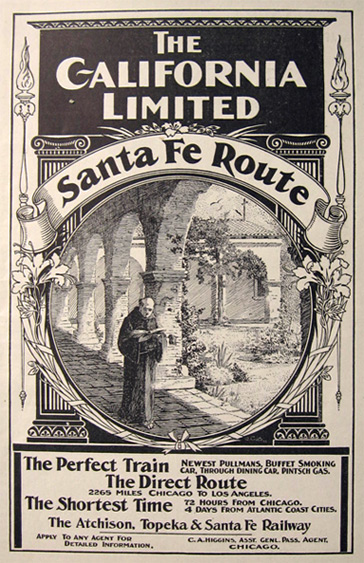
Santa Fe Ad, 1898. The fare from Chicago to Los Angeles was only $25 during the 1880s competition between the Santa Fe and Southern Pacific for California-bound passengers.
[1] Drew Gilpin Faust, This Republic of Suffering: Death and the American Civil War. Vintage Books: New York, 2008, pp. 37-38.
[2] Michael C.C. Adams, Living Hell: The Dark Side of the Civil War, Johns Hopkins University Press, Baltimore: 2014, p. 198.





 A Work in Progress