I keep going over it in my mind: Muhammad Ali, Sandy Koufax, Bo Jackson, Walter Payton, Michael Phelps, Mickey Mantle, Serena Williams, Roger Federer, Tiger Woods, Martina Navratilova, Willie Mays, Joe Montana, Michael Jordan, Jackie Joyner-Kersee, Megan Rapinoe.
And so on. It’s a subjective list.
That doesn’t matter. This young woman may be the greatest athlete of my time. She had two bobbles on the balance beam in this week’s U.S. Championships. She’s human.
Then there are the moments when she’s very nearly superhuman. Here are three performances from the championships:
The great golfer Bobby Jones once said this about Jack Nicklaus: “He plays a game with which I am not familiar.” Many, many years later, Nicklaus used the same sentence to describe Tiger Woods.
That’s about the right way to think about Simone Biles, I think.
On the morning of June 5, 1968, I was at the end of my sophomore year at Arroyo Grande High School and for some reason, I was up before my parents. After I’d turned on the television, I went to their room to wake them. Robert Kennedy was dead. My mother said “No,” but the word was drawn-out and painful.
I’ve written before about Kennedy, and I have no illusions about him. He was once the family’s attack dog, sometimes merciless, whose assigned mission in the family order was to serve as his older brother’s protector.
Ironically, I think it was his brother’s death that set him free. Robert discovered an appetite for politics and for power that probably exceeded JFK’s. And now he was free to pursue his ambitions, as Senator from New York and then, in 1968, as an antiwar candidate for president, sprinting through the door the Eugene McCarthy had opened.
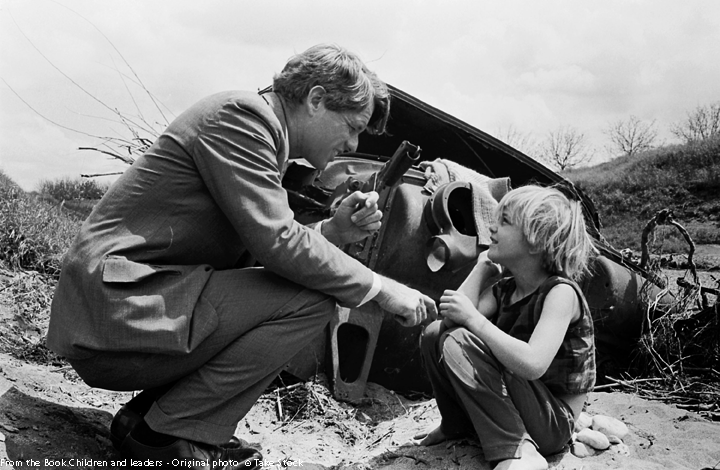
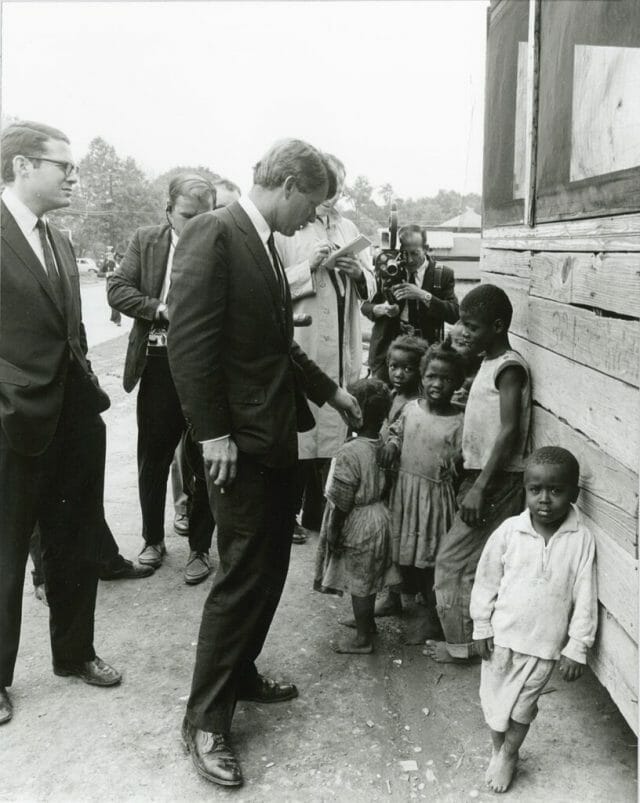
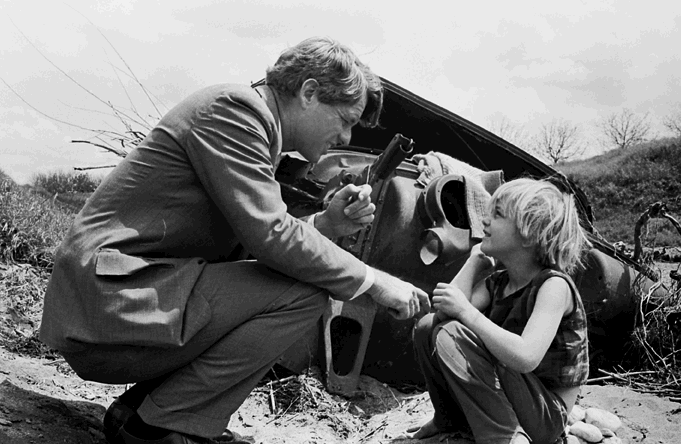
Robert and his children, November 22, 1963
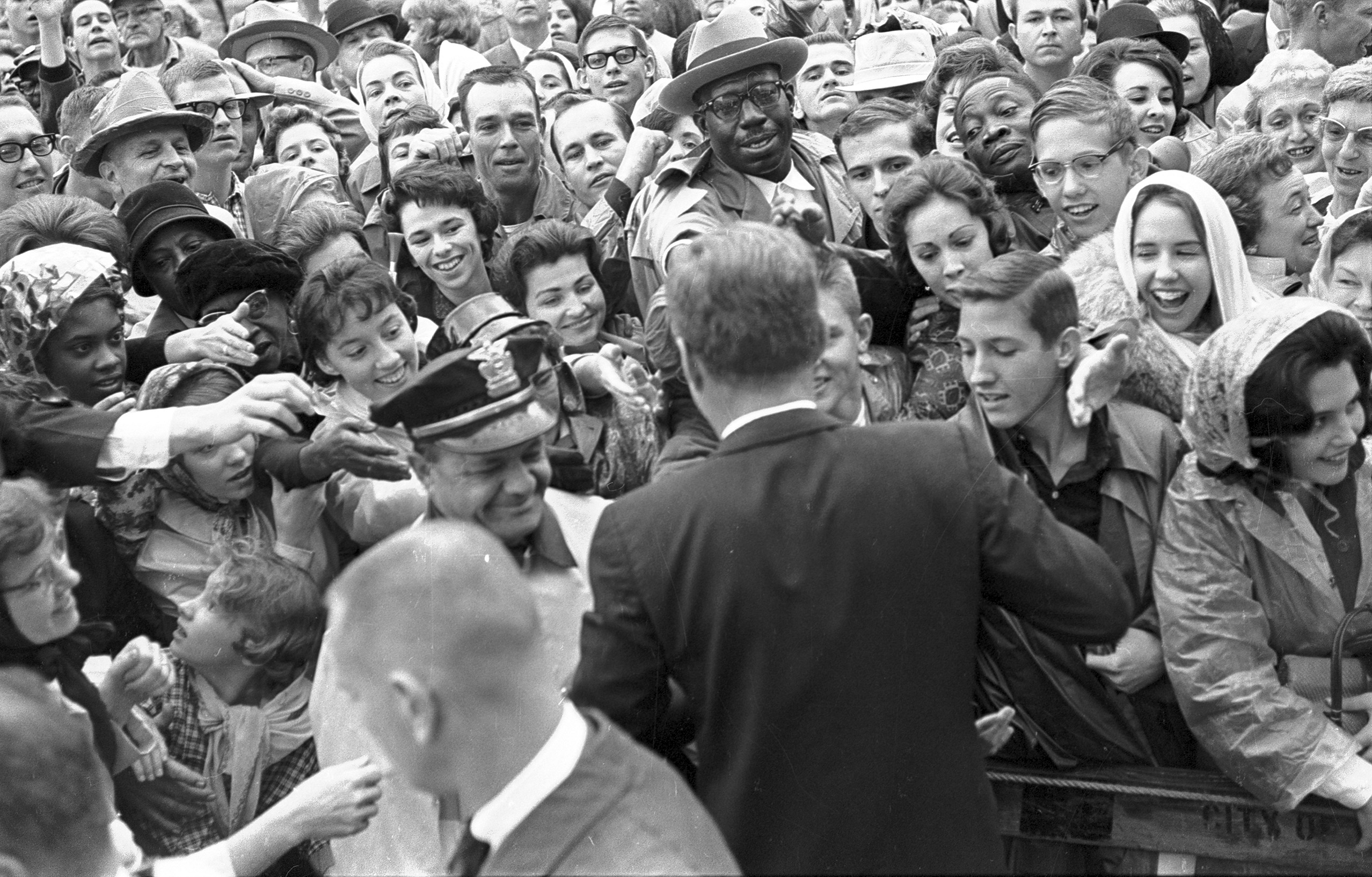
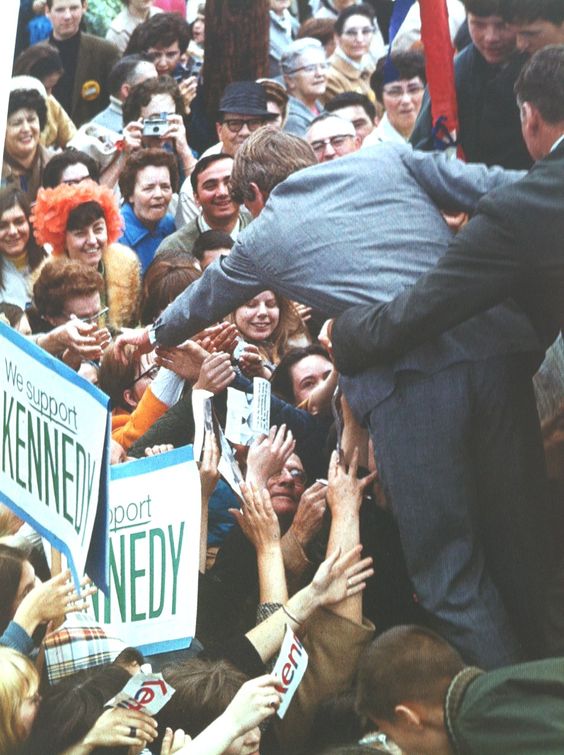
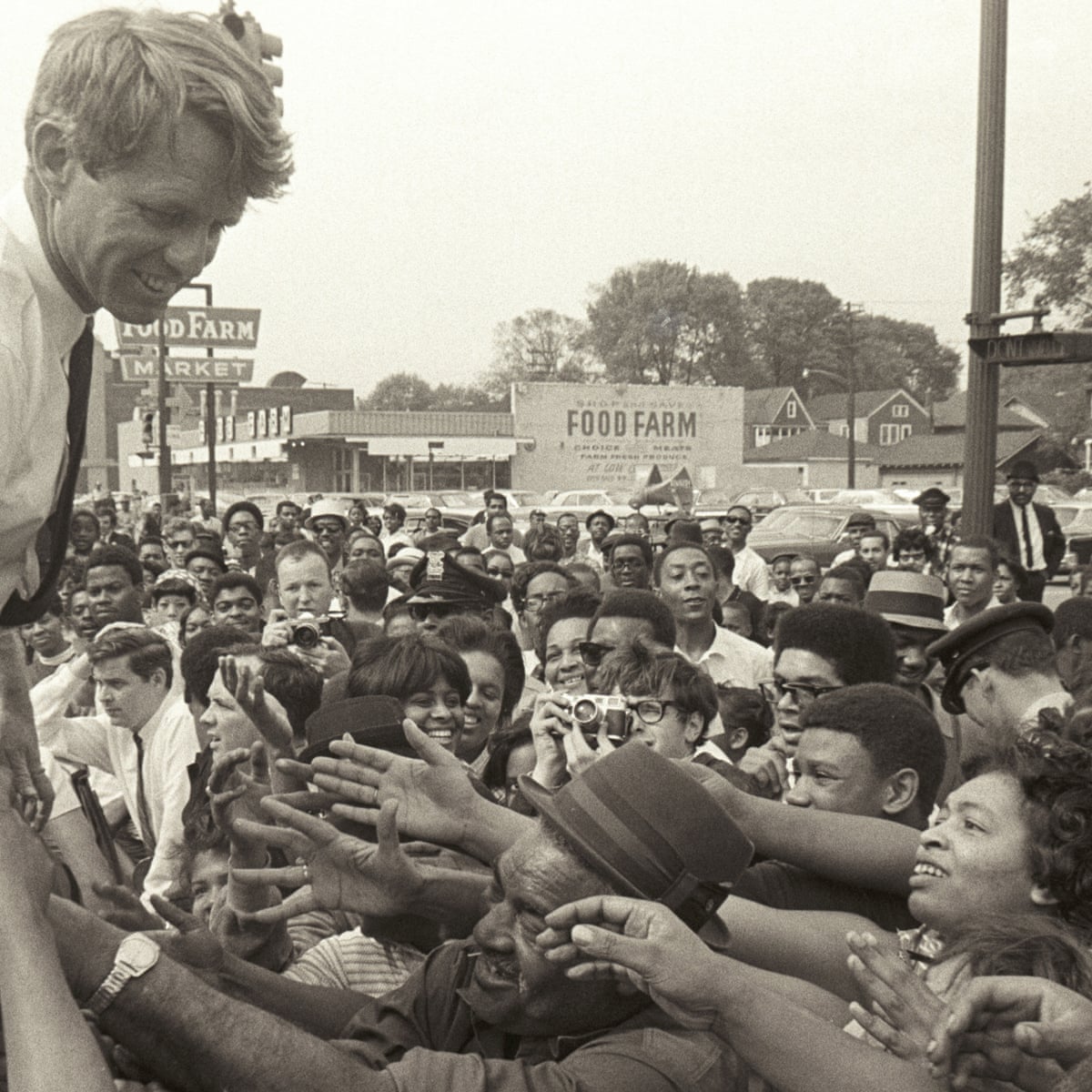
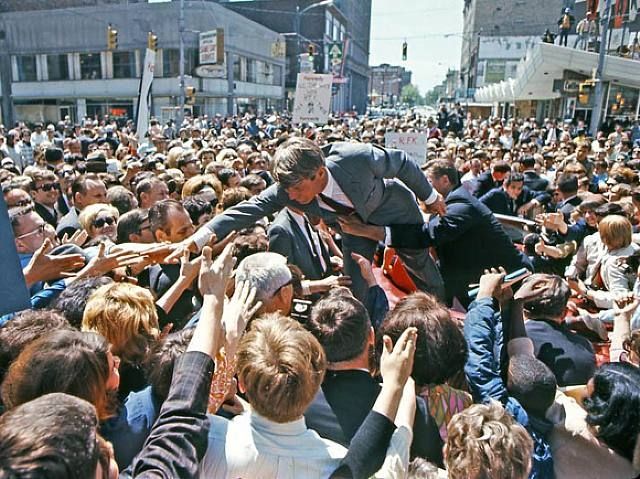
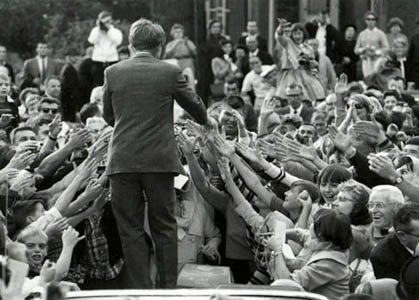
The response to him in that campaign was powerful, and in the old photos, the only equivalent from that time that I’ve found, sadly, is in the crowd greeting his brother in Fort Worth a few hours before the assassination.
John F. Kennedy, Fort Worth, November 22, 1963
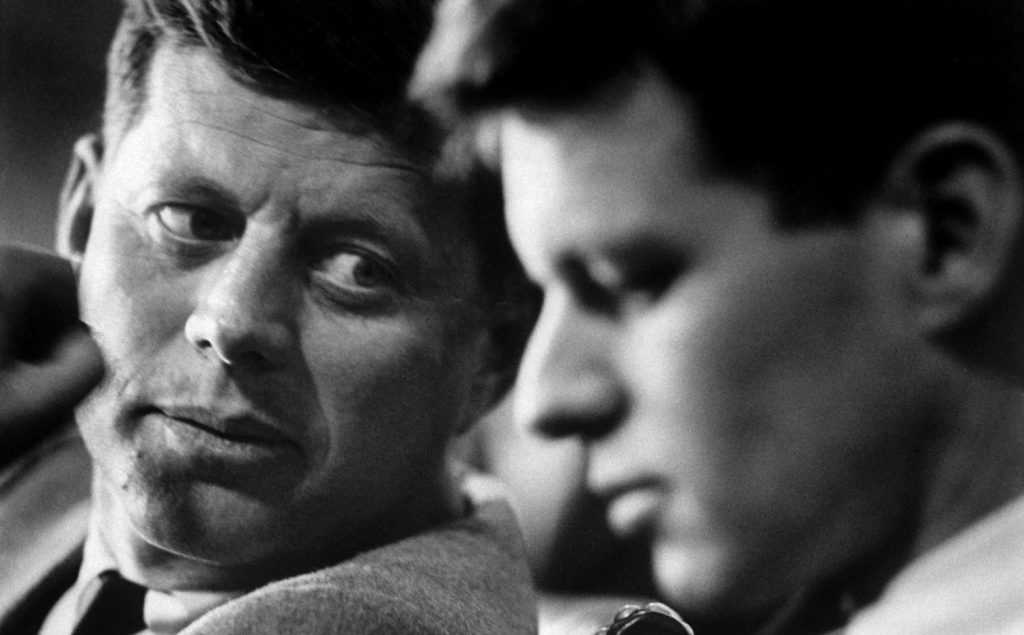
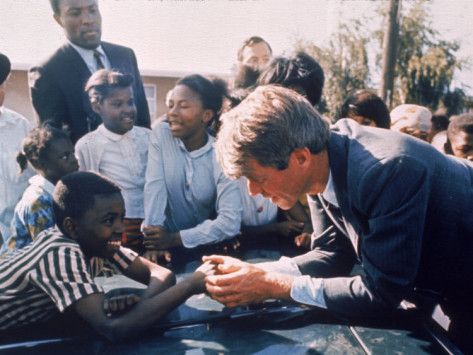
JFK was cerebral and aloof and his little brother—like me— burned hot, but both evoked deep emotions. Robert, for example, could not keep a pair of cufflinks. They were invariably torn off by crowds who felt the overwhelming urge to touch him. Bodyguards grabbed him around the waist to keep him from being absorbed by the people who were so drawn to him. If the brothers were unalike in many ways, the faces of the people who’ve come to see them are similar. They are joyful.
Photo by WALTER J. ZEBOSKI/AP/REX/Shutterstock
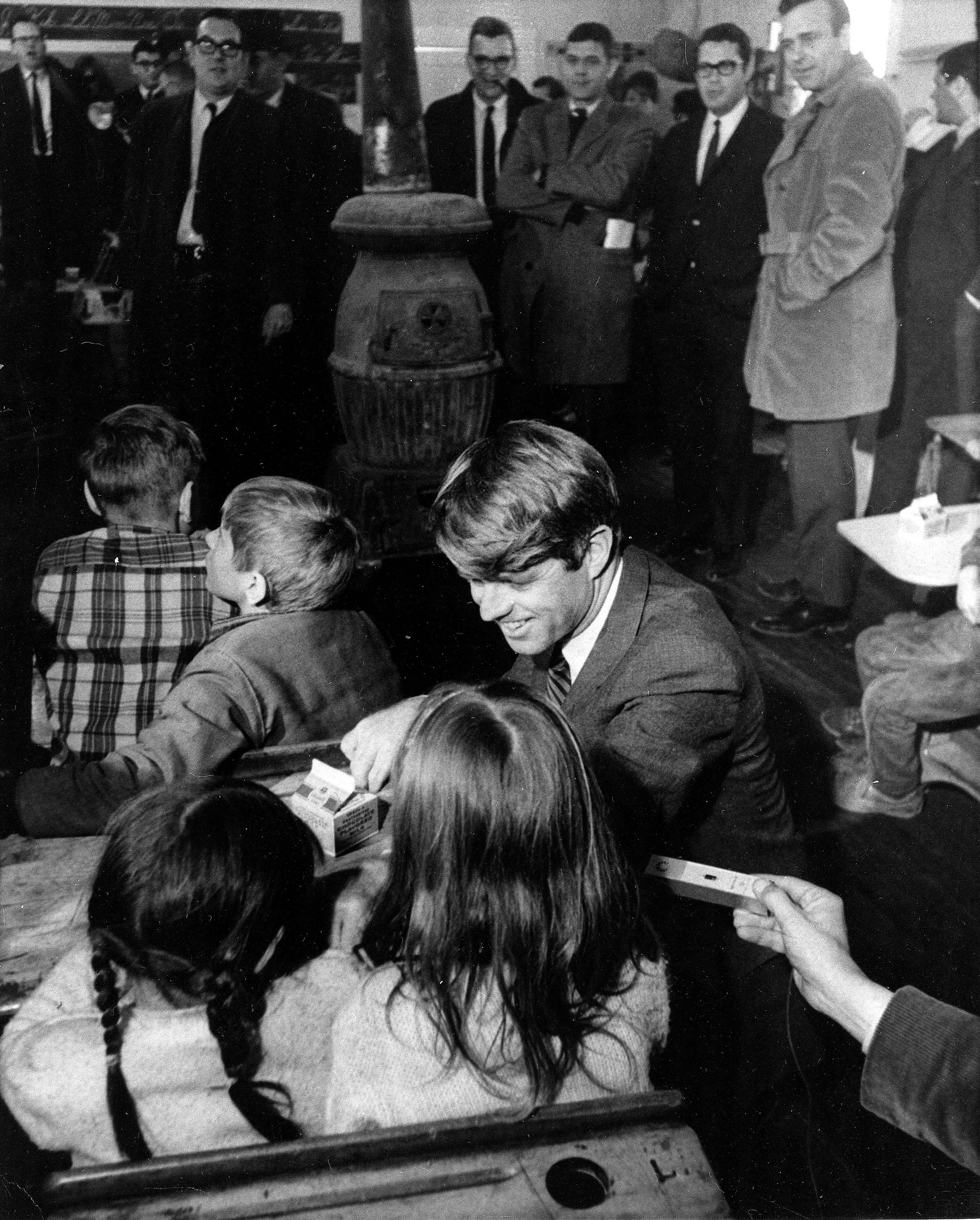
I found his youth compelling; he was relatable, like a favorite young uncle whose visits you always looked forward to. And even then, I recognized his obvious love for children. It’s no coincidence that I became a teacher, for 31 years, a high school history teacher. This is the man that pointed the way for me.
And, since after June 5, 1968, there seemed to be no one left to believe in, I was, as he had been, painfully and disconcertingly free. At sixteen, I would have to begin to make my own way in a painful and disconcerting process that took almost twenty years. I found my way only when I was surrounded by children.
That was such a long time ago. And that night in the Ambassador Hotel kitchen was such a long time ago. Robert Kennedy was forty-two when he died and, in the way time changes us, the man who was my hero, lost on this day in history, will always be young enough to be my son.
Below is the trailer for the HBO documentary on RFK’s funeral train, which took his body from the funeral Mass at St. Patrick’s in New York City to his rest in Arlington National Cemetery.
The ten-year-old me would get out of bed at 4 a.m. at our house on Huasna Road in my robe and pj’s to watch the Mercury astronauts lift off, so I kind of grew up with the space program. I fell asleep in class sometimes, too.
The third Mercury flight, John Glenn’s, was a nail-biter because there was a warning that the heat shield on the little space capsule had become dislodged. If it went, so did John Glenn. They didn’t dare jettison the retro-pack, the little rockets that slowed the capsule in its descent, because the metal straps that held the pack to the capsule might also last long enough, before their incineration, to hold the heat shield in place. What the nation held was its breath.
We exhaled, after several moments of radio silence, when the flickery television images finally showed “Friendship 7” swinging like a pendant from its parachute array.
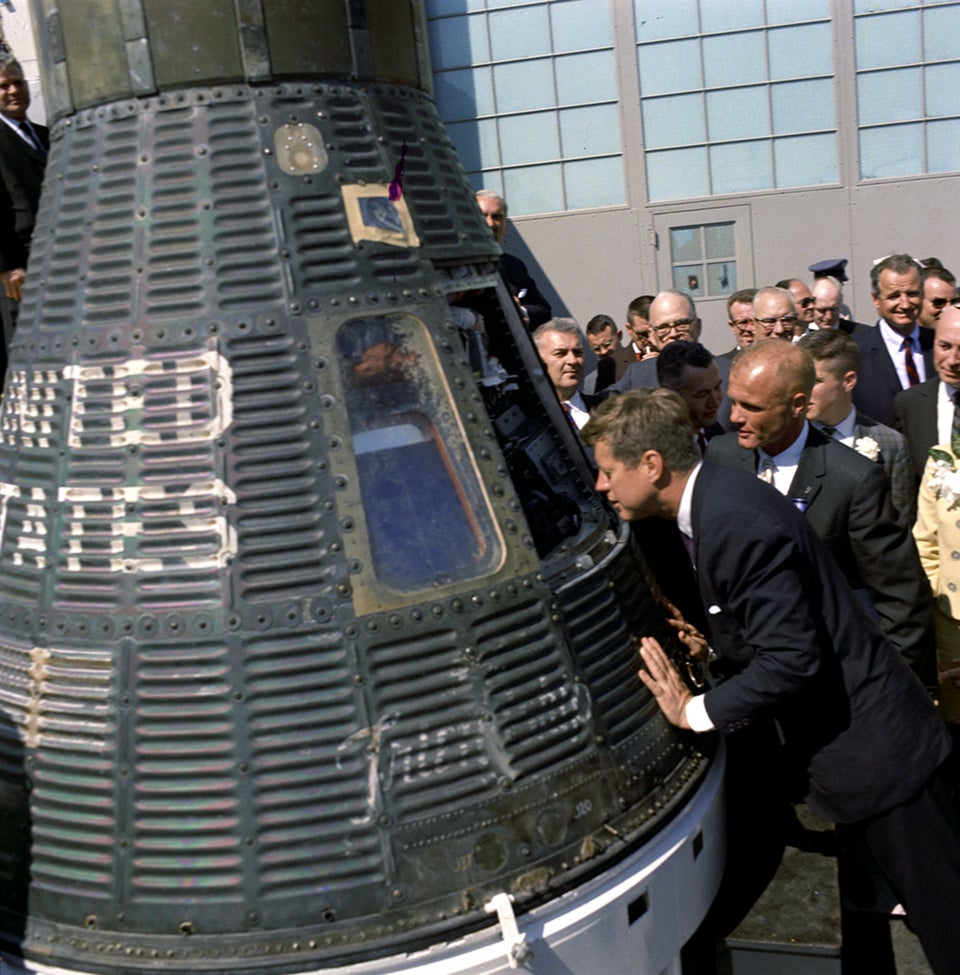
President and Kennedy and John Glenn with Glenn’s Mercury capsule after the mission. Glenn was the first American to orbit the earth.
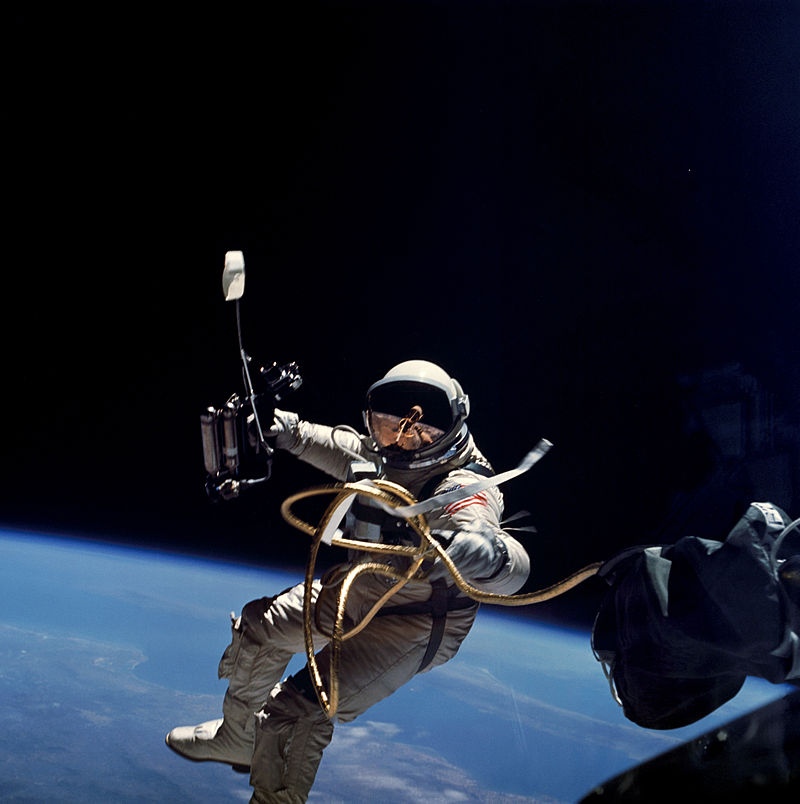
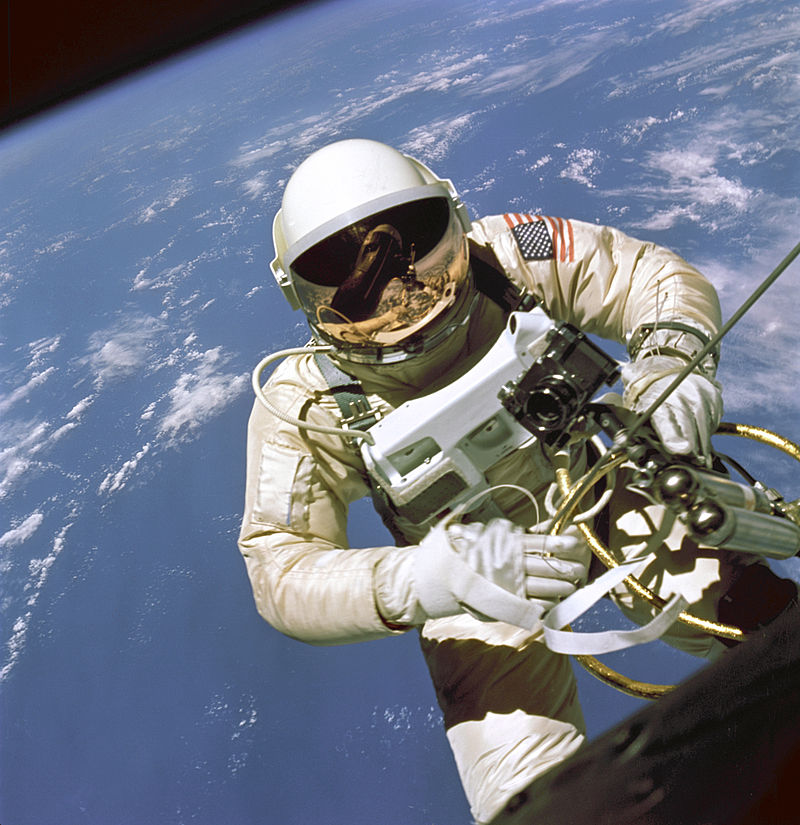
Today is the anniversary the first American spacewalk, assigned astronaut Ed White on the Gemini 4 mission–Gemini, with its two-man crews, represented the second stepping-stone toward putting an American on the Moon. White, 150 miles above the earth, tethered to his capsule by a nylon umbilical cord sheathed in a layer of heat-treated gold, performed a twenty-minute weightless ballet.
Two years after that mission, what didn’t happen to John Glenn did to Ed White. In 1967, he was consumed in the horrific fire that engulfed the Apollo 1 capsule during a test on the launch pad.
So, many years later, like the space nerd that I am, I watched the vivid but melancholy “First Man” once again yesterday, with Ryan Gosling as Neil Armstrong.
I had to turn off the sound in the scene that depicts the Apollo 1 fire, the one brought on by the sense of urgency that infected the space program. We had to beat the Russians. That intemperance cost the Apollo I crew their lives–including Ed White and the hard-luck Gus Grissom, whose Mercury mission ended when the bolts that secured the hatch blew prematurely and sent his capsule to the bottom of the Atlantic.
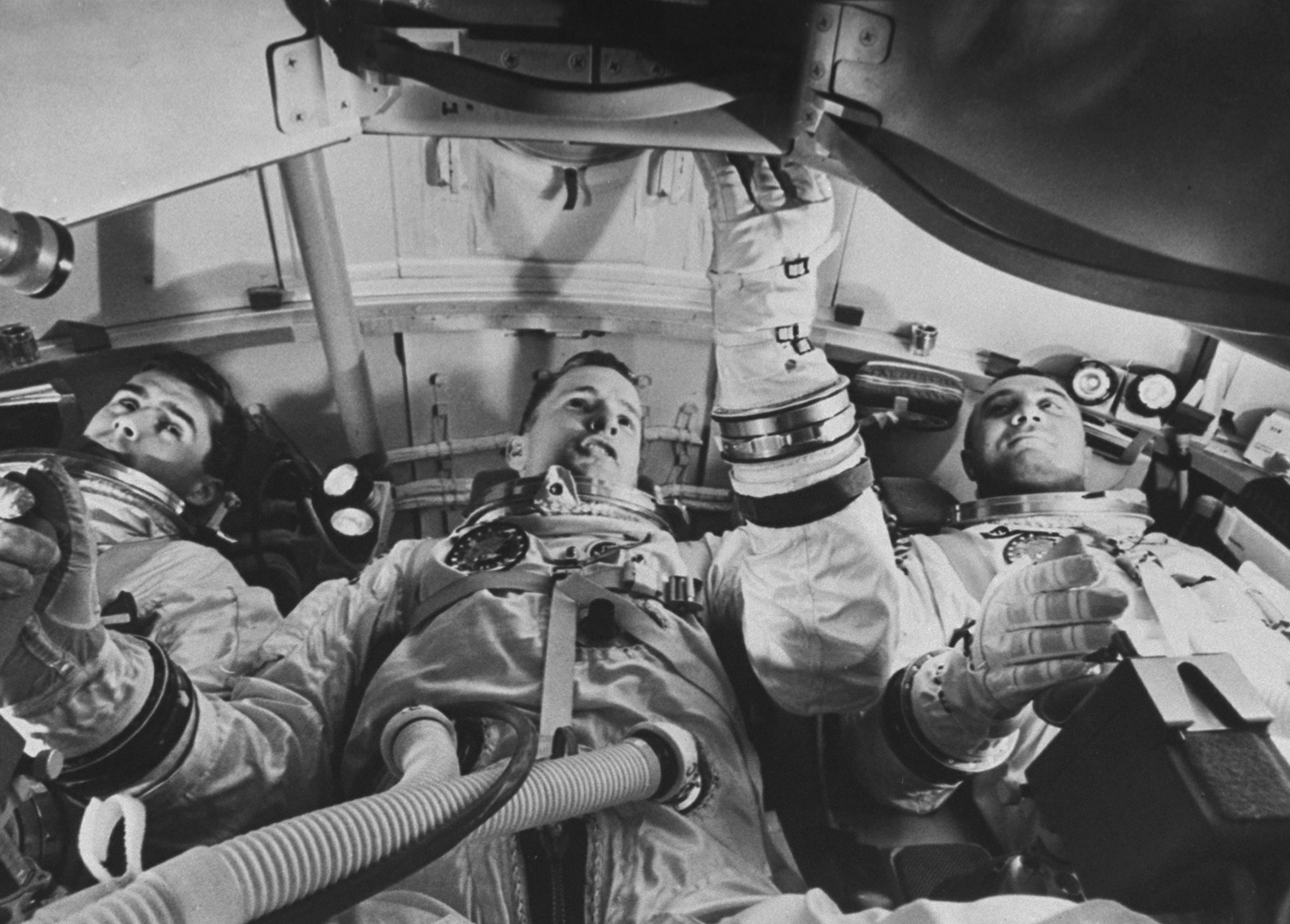
The doomed Apollo I crew: Roger Chafee, Ed White, Gus Grissom
But I turned the sound way up again a little later. The launch sequence for Apollo 11–the mission that would take Armstrong to the Moon–is an incredible piece of film-making. Especially the sound effects–you can hear steel groaning as the booster rocket climbs, shaking the crew violently. The film won two Academy Awards for sound.
You can find the sequence here, on YouTube. Turn the sound way up.
And, of course, years after the jubilation of Apollo 11, the two shuttle disasters brought shock, disbelief and heartbreak. They brought all of us back to earth.
But those images of Ed White in space made a powerful impact on me when I first saw them in Life magazine. So I just wanted to take a moment today to think about him. He was, his Wikipedia biography asserts, a devout Methodist. I am sure that what he experienced on this day in history made his faith even stronger. This is my prayer for him.
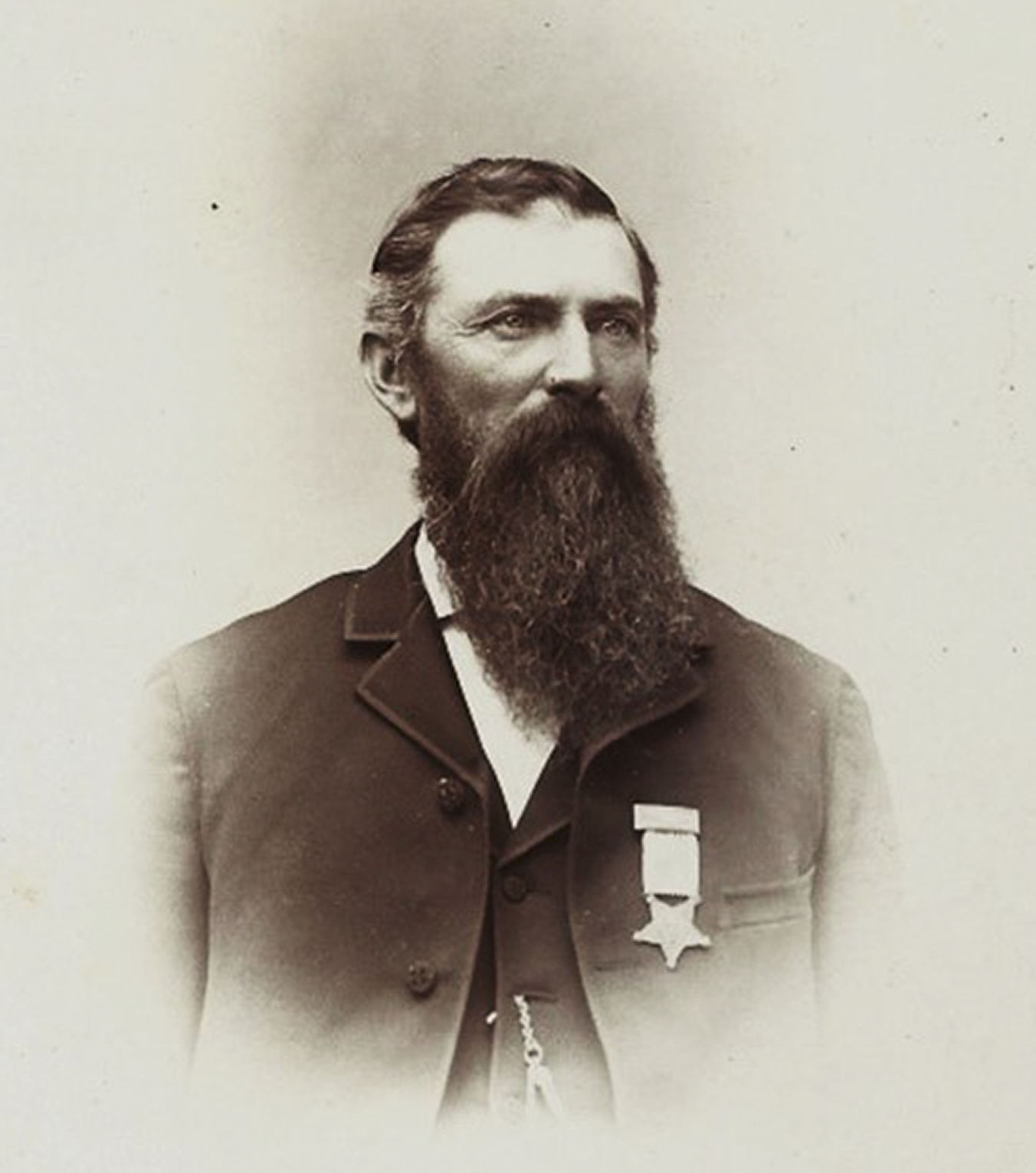
In the 1880s, Erastus Fouch farmed along was is today Lopez Drive. As a sixteen-year-old he’d fought in the Shenandoah Valleywhere he saw his brother killed in action. He later fought at Chancellorsville and Gettysburg. Here he wears his Grand Army of the Republic badge. Jack English photo.
Nearly sixty Civil War veterans are buried in the Arroyo Grande District Cemetery. This excerpt from the book Patriot Graves describes the forces that drove them here.
…A soldier who had endured the third day of Gettysburg and emerged unhurt, and who had then seen his own boys in their counterattack destroy Pickett’s Charge…had already passed the zenith of his life. Nothing like this would ever happen to him again, and what had happened to them brought them, ironically, great joy.
So, for a generation enmeshed in the ethical web spun tightly by mid-Victorian Protestantism—these were Christian soldiers who fought in armies, on both sides, marked by intense waves of wartime revivalism within their camps—the excitement of battle generated a profound moral contradiction. In This Republic of Suffering, a superb account of coming to terms with the scale of death the Civil War generated, Harvard president and historian Drew Gilpin Faust describes the experience of a stunned Confederate who, during a firefight, came to the aid of a shrieking comrade, only to find out that he was “executing a species of war dance,” exulting over the body of the Union soldier he’d just killed. In another battle in 1862, Union soldiers on the firing line called their shots, as if combat were billiards: “Watch me drop that fellow,” one said to his comrades; battle was, indeed, like a game.[1]
The killing didn’t end when the war did. Violent crime rose at three times the rate of population growth in the decades following the war, and perhaps as many as two-thirds of the nation’s convicted felons were veterans.[2] Soldiers understood, on some level, that combat had changed them irrevocably and some worried about it. Society, one Vermont soldier wrote his sister, “will not own the rude soldier when he comes back, but turn a cold shoulder to him, because he has become hardened by scenes of bloodshed and carnage.”[3] He was, in many respects, right: some of the soldiers who came home to Vermont, New Jersey or Iowa brought with them a measure of fear—they had become, in the Civil War novelist Michael Shaara’s term, “Killer Angels.”
Many Union soldiers had demonized themselves and by extension all of their comrades by celebrating their mustering out with epic alcohol binges and episodic violence throughout the demobilization summer of 1865.[4] A Chicago civilian’s insulting comment about William Sherman set off a saloon brawl that cascaded into a riot that police were helpless to put down. Only the fortuitous appearance of the legendarily hard-drinking Gen. Joseph Hooker, who had the credibility to intervene with combat veterans, brought the violence to an end.
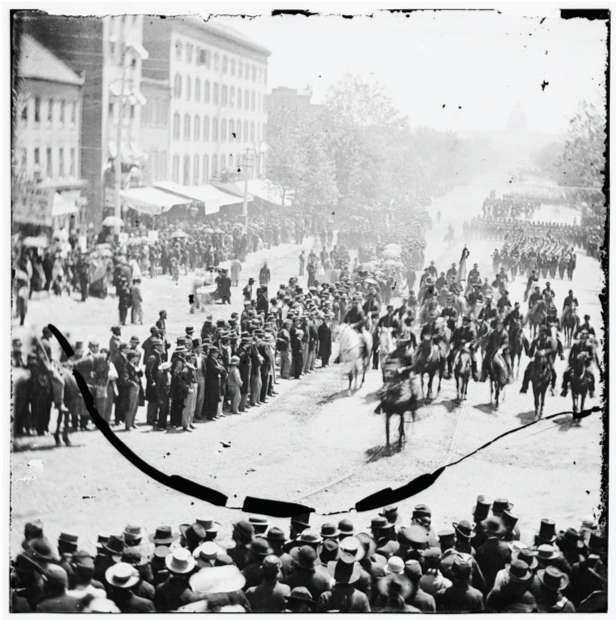
The Grand Review of the Armies at war’s end, Washington D.C., May 1865. Arroyo Grande settler Morris Denham marched with this unit, Francis Blair’s XVII Corps, Sherman’s army.
But for even the most sober of veterans that was precisely the problem with homecoming: it brought them little peace. Professor Jordan describes a sense of what, at its mildest, could be called disorientation. Home wasn’t home anymore. Even little farm towns had changed so much in four years that, for some veterans, they didn’t feel like home at all. Soldiers from the hard-fighting regiments of the Old Northwest, states like Iowa and Minnesota, couldn’t reconcile themselves to the cold winters they’d forgotten while fighting in Mississippi or Georgia. There was a more sinister change to which they couldn’t adjust: Union veterans resembled the little boys who’d survived the 1918 influenza epidemic and were finally let out to play, only to find there was no playmate on their city block left alive. The survivors of “Pals” Battalions who’d joined the Great War’s British Army together went home to neighborhoods empty of the young men with whom they’d grown up. Their pals were gone, swallowed up by the Western Front.
Gone too, in 1865, were whole towns of young men in New York or Vermont or Indiana, dead and buried on Southern farmland that had been poisoned by violence, land still studded with spent bullets. Other young men had vanished without a trace in dark, dense woodlots or fetid swamps. Soldiers came home, then, ostensibly alive and whole and strong but with unseen dead spaces inside where their comrades had once lived. Missing them, or the trauma of seeing them killed, figured in the chronic depression with which so many veterans struggled. Now that the war was done, they still were caught in its aftermath like swimmers in an undertow, struggling to break surface, to find light and cool air, to breathe again.
They recognized, too, that what they had fought for—for the rededication of the democracy Lincoln had described at Gettysburg in November 1863—was fast slipping away. Union veterans remained intensely suspicious of and hostile toward the defeated South; Lincoln’s assassination had been one impetus for their rancor but their anger only intensified when they read the newspaper accounts of the postwar emergence of the old Slave Codes, now called Black Codes. They read, too, of the defiance and the terrorism of the Ku Klux Klan, co-founded by a cavalryman, Nathan Bedford Forrest, who had bedeviled some of them in the Deep South. When Reconstruction ended in 1877, Jim Crow laws revived white supremacy in a way that rivaled the days of slavery. The Union veterans’ hostility was exacerbated because the other side refused to admit—significantly, on a moral level—that they’d lost the war. Typical, in 1894, were the dedicatory remarks that accompanied the unveiling of a Confederate memorial in Richmond, when newspapers noted that the clouds parted and the sun emerged when the speaker, the Rev. R.C. Cave, began an oration that included passages like this:
But brute force cannot settle questions of right and wrong. Thinking men do not judge the merits of a cause by the measure of its success; and I believe
The world shall yet decide
In truth’s clear, far-off light,
that the South was in the right; that her cause was just; that the men who took up arms in her defence were patriots who had even better reason for what they did than had the men who fought at Concord, Lexington, and Bunker Hill; and that her coercion, whatever good may have resulted or may hereafter result from it, was an outrage on liberty.[5]
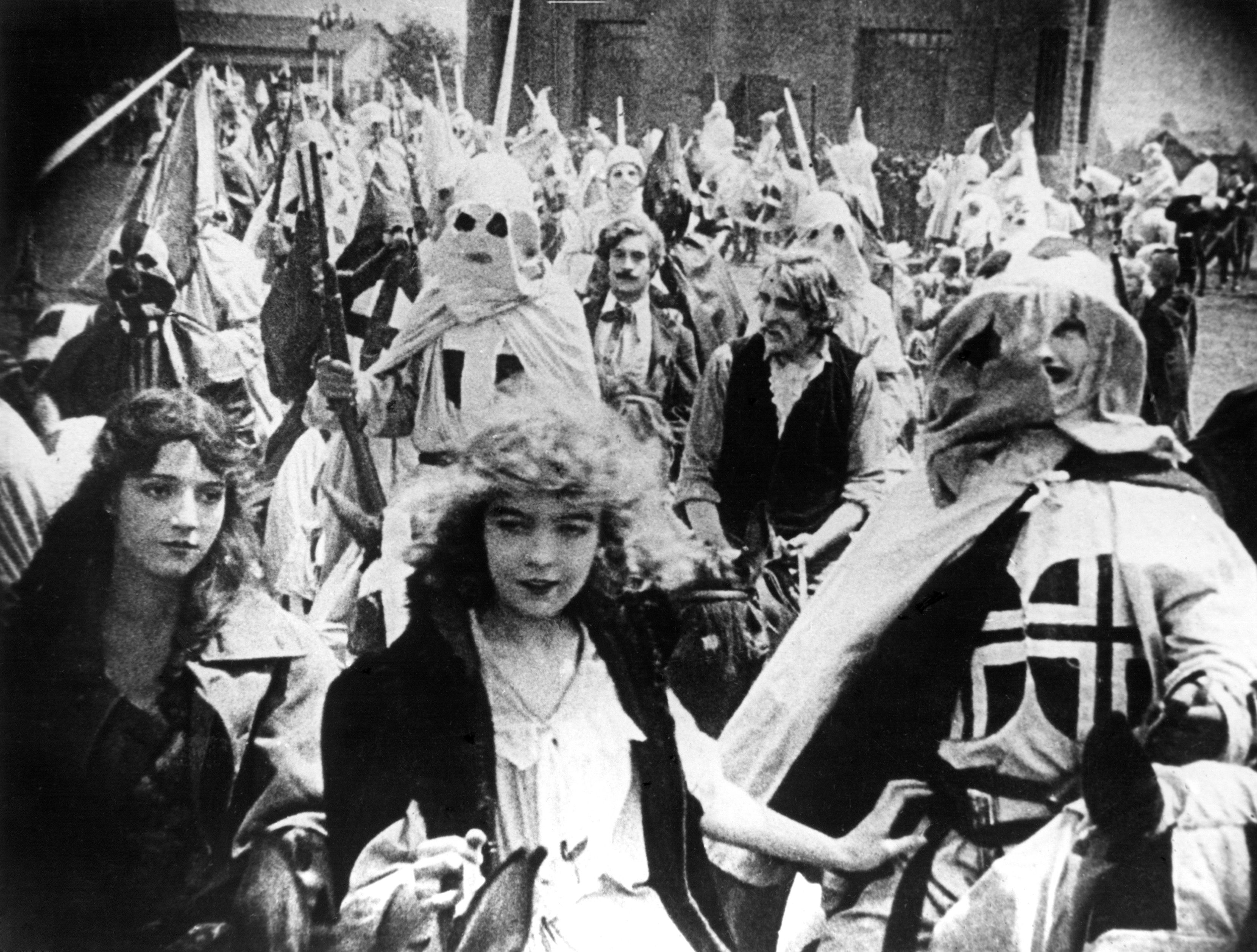
White supremacy triumphant, Birth of a Nation.
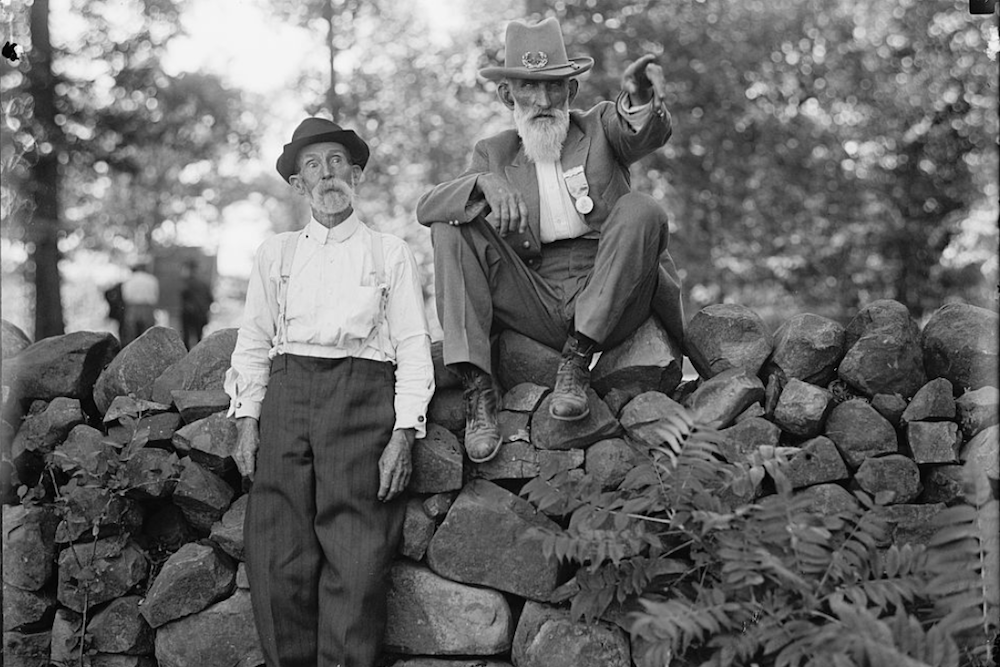
Similar remarks by Southern speakers invited to a Gettysburg reunion in 1913, Professor Jordan notes, rankled the same Union veterans who had protested another unveiling, in 1909, in the Capitol’s Statuary Hall: a sculpture of Robert E. Lee. No matter how chivalrous Lee had been (He never, for example, uttered the word “Yankees,” using instead, in his verbal orders to his subordinates, the term “those people.”), he was a killer, and he had harvested thousands of solders’ lives. The survivors of what they saw as Lee’s war would protest again at the rapturous reception, one that included the Southern-bred President Woodrow Wilson, awarded the 1915 D.W. Griffith film Birth of a Nation, which depicts Klansmen, too, as chivalric heroes who reassert Southern white supremacy over rapacious carpetbaggers and predatory African Americans. “It is like writing history with lightning,” the president said, “and my only regret is that it is all so terribly true.”[6] The most enduring image of the 1913 Gettysburg reunion is that of Confederate survivors of Pickett’s Charge reaching across the stone wall–fifty years before, it had been their objective–to shake the hands of Pennsylvania veterans. What goes unmentioned is the fistfight at the same event that sent seven aged Yankees and Confederates to the hospital.[7]
Two Gettysburg veterans, seemingly reconciled at the 1913 Reunion.
Even as Southern whites reasserted their social and political primacy, American democracy in the North was no tribute to the sacrifice of Civil War veterans, either. The Radical Republican Congress and Andrew Johnson finished what should have been Lincoln’s second term in what resembled the political equivalent of a Western range war. Johnson escaped conviction on impeachment charges by one Senate vote. Grant’s relentlessness and drive had served him well in the struggle against Lee, but another aspect of his personal character—an almost childlike credulity—ate his presidency alive in a series of scandals perpetrated by subordinates who betrayed Grant as surely as Warren G. Harding would be betrayed by his “Ohio Gang” in the 1920s.
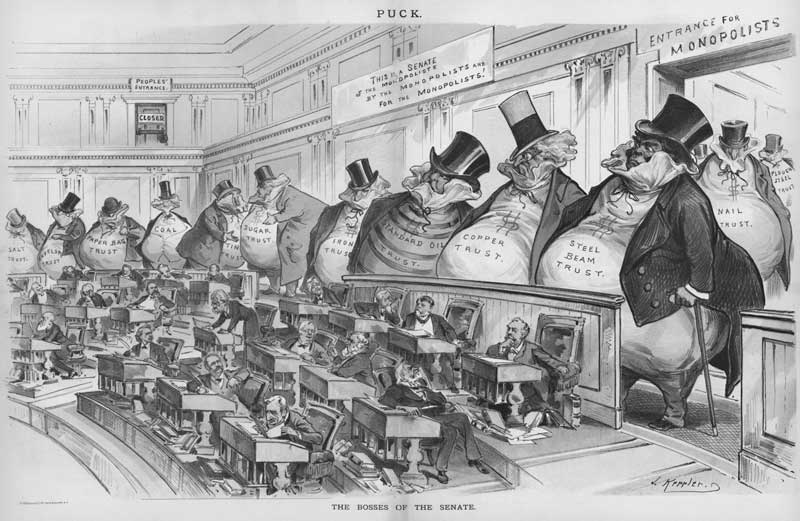
The corruption penetrated to state houses, where the lobbyist for the Santa Fe Railroad kept a slush fund in his office safe for the frequent lubrication of Kansas legislators about to vote on regulatory bills; the monopoly that railroads enjoyed in their American fiefdoms and the freight rates they demanded were so egregious that it cost a farmer more to ship a bushel of wheat from Topeka to Chicago, by rail, than it did to ship that bushel from Chicago to Liverpool, mostly by water. Machine politics dominated cities from New York to San Francisco, where Irish-American voters really did vote early and often, and deceased. In New York, the most famous political machine was Tammany Hall, and it was Tammany Hall’s Boss Tweed who disbursed the equivalent of $4 million to a Tammany-contracted plasterer for two days’ work on City Hall.
The 1889 cartoon “Bosses of the Senate” exemplifies the corruption of Gilded Age America.
In both their disillusionment and in their restlessness, the Civil War generation seems to resemble the generation that came of age during the First World War. After that war, they would become expatriates–Ernest Hemingway, F. Scott Fitzgerald, John Dos Passos among them—young men, many of them veterans, and young women, who no longer recognized or understood the America they’d known as children. They were among the members of Gertrude Stein’s “Lost Generation.”
…[Like}the young people of the 1920s, Civil War veterans were members of a generation on the move. In postwar America, veterans, according to a 2010 study by Seoul University economist Chulhee Lee, were 54% more likely to move to a different state and 36% more likely to move to a different region than non-veterans.[8] Lee posits several reasons for this phenomenon: a central one is the idea that veterans had been exposed to the concept of a wider nation, one beyond their rural farms or row tenements, by campaigns in the South. Westerners, too, fought along the Atlantic seaboard, and some Easterners saw combat or garrison duty during the 1860s Indian Wars on the frontier.
Lee’s point is a key one: Americans had been so isolated and disparate before the war that an outbreak of measles that would make a New York regiment sick would kill soldiers in the Iowa regiment bivouacked alongside, soldiers that, before the war, were so geographically isolated that they lacked the immunity to that particular strain of measles–measles, in fact, killed 11,000 soldiers during the war.[9] The war had begun to break that isolation down, and the troop movements necessary to fighting it had opened young soldiers’ minds to the vastness of their nation and to the possibility of starting over somewhere else.
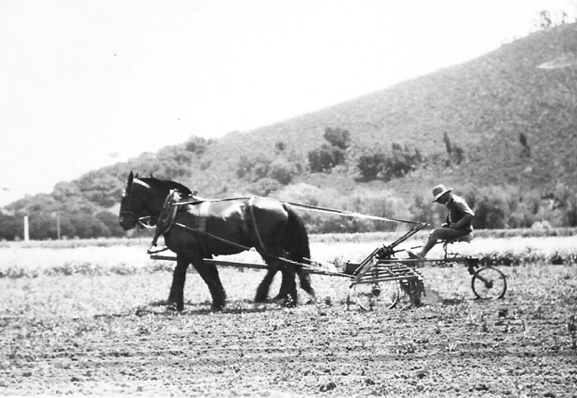
Among the area’s crops were flowers grown for seed. Here, a Waller Farms worker and his team are sowing a field. Photo courtesy Richard Waller
This pattern of increased mobility was a key factor in the lives of Arroyo Grande’s Union veterans. Over fifty would settle the Arroyo Grande Valley and nearby Nipomo. Enough census data exists to follow twenty-three of them, in the course of their lives. After the war, seven of them moved once from the state they’d served as soldiers; seven moved twice. Nine moved three times or more before they came to the Arroyo Grande area. So the men who came here had come as far as they could—like Jody’s grandfather in the Steinbeck novella The Red Pony, they had to stop because they’d arrived at the Pacific: their days of “Westering” were over.
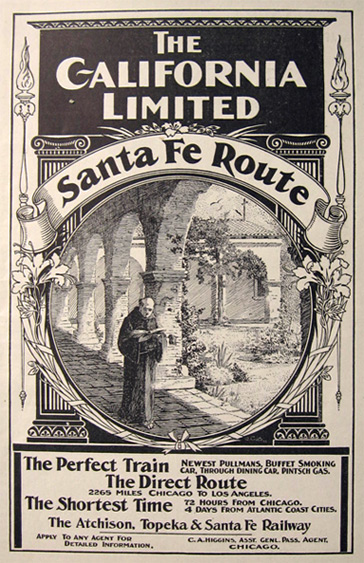
Santa Fe Ad, 1898. The fare from Chicago to Los Angeles was only $25 during the 1880s competition between the Santa Fe and Southern Pacific for California-bound passengers.
[1] Drew Gilpin Faust, This Republic of Suffering: Death and the American Civil War. Vintage Books: New York, 2008, pp. 37-38.
[2] Michael C.C. Adams, Living Hell: The Dark Side of the Civil War, Johns Hopkins University Press, Baltimore: 2014, p. 198.
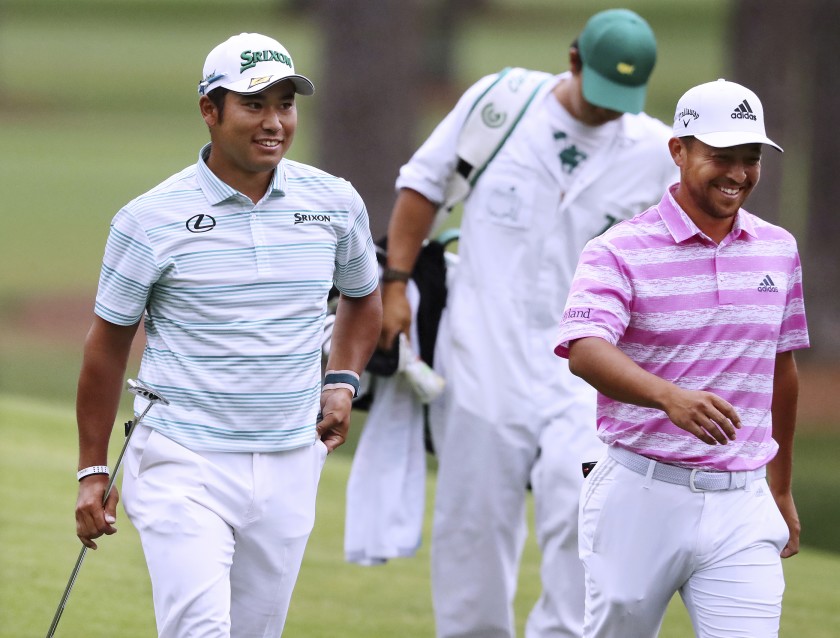
The photo shows Hideki Matsuyama and Xander Schauffele, playing together today at Augusta in the final round of The Masters, in a happy moment about an hour before the golf course mugged them.
I was watching the TV and just about to make a knowing comment about Hideki’s seeming nerves of steel because he was leading the tournament by four or five strokes and hitting approach shots closer than the gravy bowl at Thanksgiving.
But he promptly hit an enthusiastic shot on the 15th hole that made the following noises: whoosh!! emphatic bounce! lesser bounce. SPLASH!!!
Bogey.
Meanwhile, Schauffele, his playing partner, was busy studying his manicure in between making four birdies in a row. He was stalking Matsuyama and now he was getting close.
But then. on the sixteenth, Schauffele hit a tee shot that went whoosh!! *whisper whisper.* dribble… splash. It made lovely ringlets in the water, like little fishes coming up to feed.
The penalty shot described a high arc and then went emphatic bounce! …skid…. LOOK OUT, MARTHA!!! It landed among four male spectators with an aggregate age of about 308. At least two of them must have seen Gene Sarazen’s double eagle at the 1935 Masters.
Triple bogey.
Schauffele was in pain, and it was painful to watch the young man’s face.
Matsuyama finished the tournament by hitting his approach into the bunker on the 18th hole in front of God and everybody. He won by one stroke.
He not only won the Masters. He survived it.
Hideki walked off the 18th green with tears in his eyes, gently touching outstretched hands. At the end of the congratulatory gauntlet, Jordan Spieth was waiting for him with a big grin on his face.
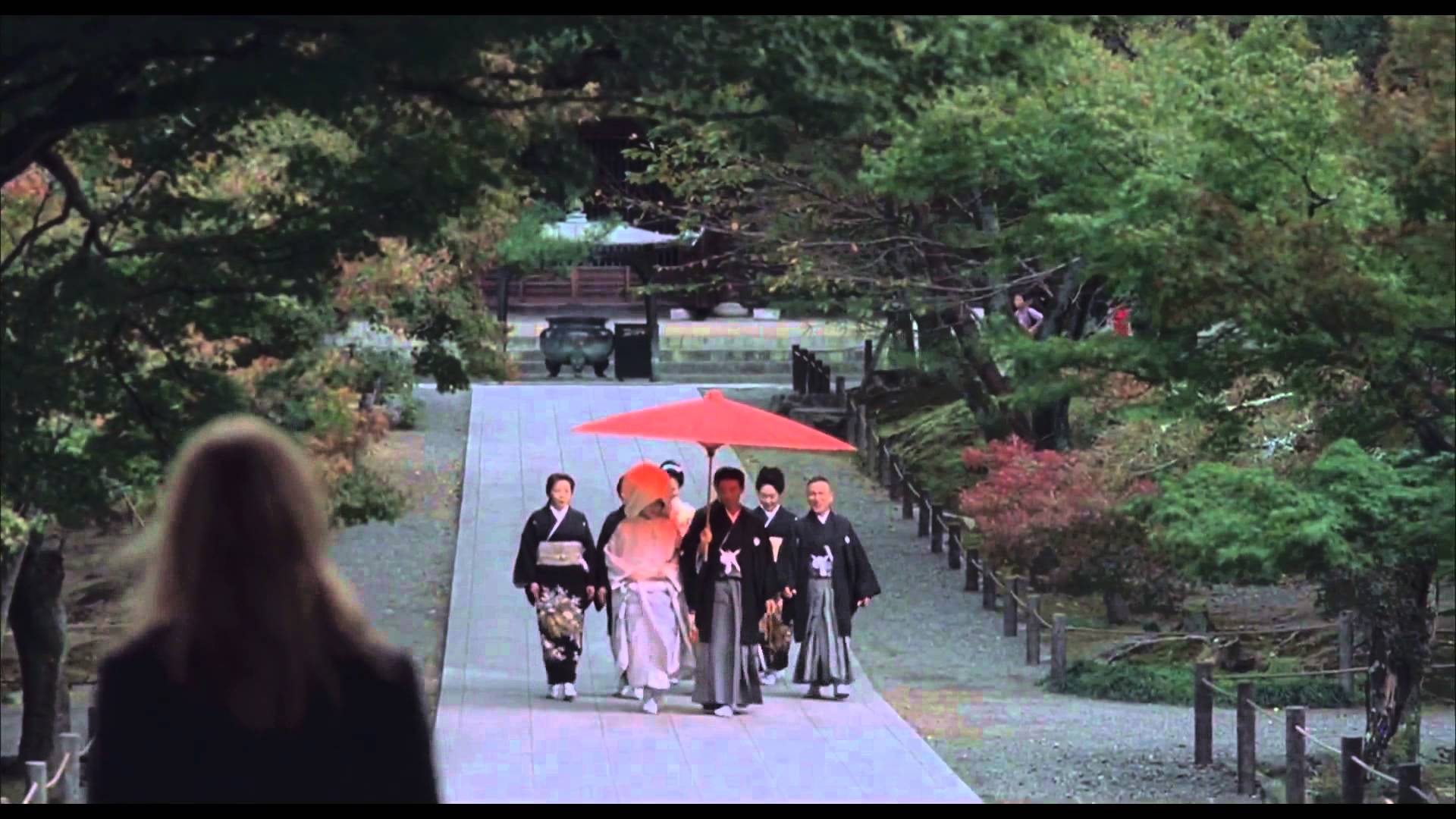
Because I tend to think cinematically, what happened next reminded me of Sofia Coppola’s Lost in Translation. I think there are two supremely beautiful scenes in this film. In one of them, Scarlett Johansson’s character, alone in a Kyoto park, watches transfixed as a wedding party approaches.
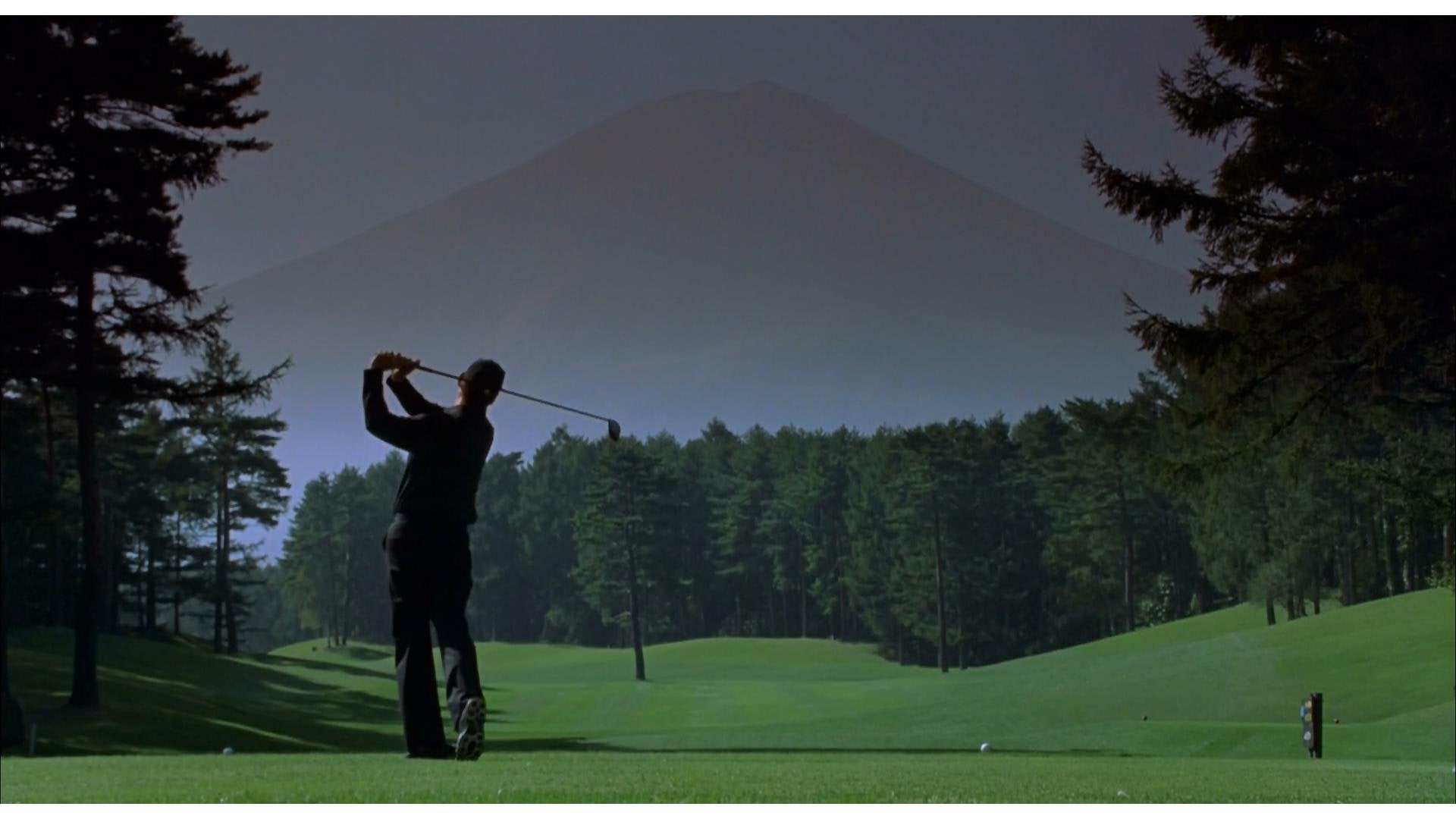
In the other, Bill Murray hits a lovely tee shot down an impossibly verdant fairway far below Mt. Fuji. You know the scene meant much to Coppola because she composed it so carefully.
It’s as if a golf course can be as evocative of life and grace as the garden that frames the wedding party. Maybe, in the way that the Japanese understand landscape architecture, that is exactly so. I think they understand golf, too, with an aesthetic that eludes the American golfers who attempt to overwhelm a golf course with their brawn.
The Par 3 16th Hole at Augusta
That kind of golfer doesn’t do well at The Masters. No one overwhelmed Augusta this year. Matsuyama won because he learned to play within the will of one of the most beautiful golf courses in the world.
He understands that this course has a life of its own. I know this is true because of what happened at the end of the tournament.
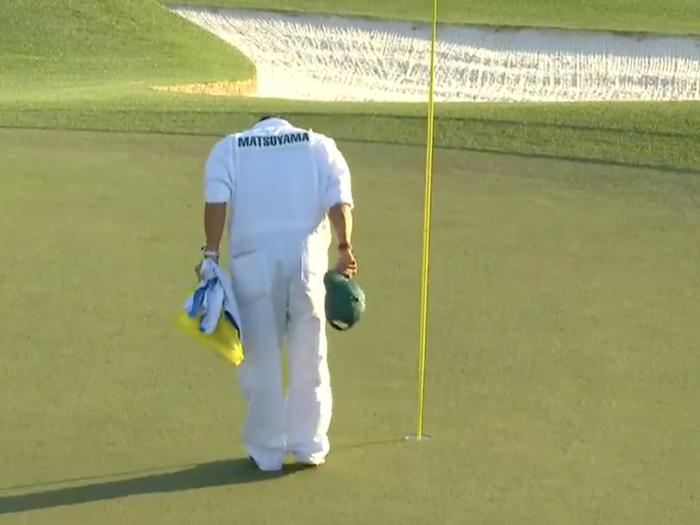
The champion was gone, but the network camera captured his caddy, alone on the 18th green.
Hideki’s caddy replaced the flag. Then he turned toward the fairway and bowed.
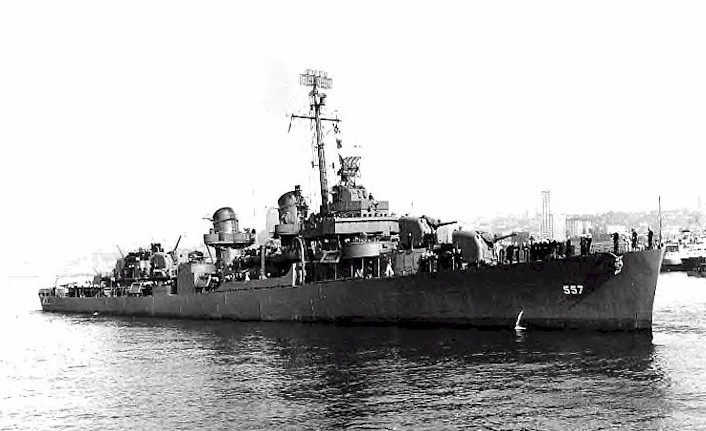
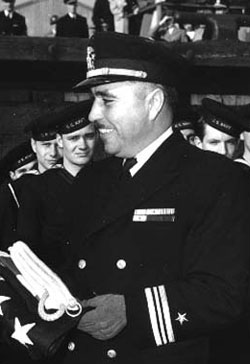
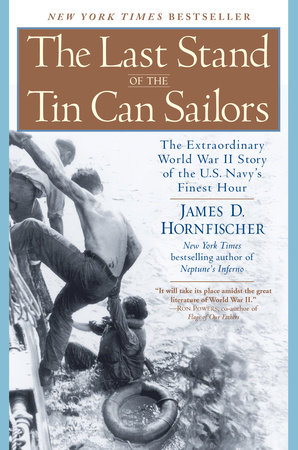
Lt. Cdr. Ernest Evans—vividly portrayed in the book “Last Stand of the Tin Can Sailors”— was commanding USS Johnston in October 1944.
His nickname, “Chief,” typical of the old Navy’s casual racism, alluded to his Cherokee/Creek ancestry. Annapolis must have been an ordeal for him.
Now, his destroyer was among those protecting landings in the Philippines when a massive Japanese task force—four battleships included—appeared from the northwest.
The main American force that was supposed to be guarding the invasion beaches—capital ships and big fleet carriers— was commanded by Adm. William Halsey.
It was gone. Halsey had been made the fool, lured away from the invasion by a Japanese decoy force that was essentially harmless.
The main battle force now appeared, intending to destroy the Americans as they landed.
Facing them were ships no bigger than USS Johnston and a complement of small aircraft carriers, “baby flattops.”
Evans was like Jesus’ Good Shepherd. The ships that were landing the GIs and their supplies were his flock; he was accountable for them and to them.
So he turned Johnston directly toward the enemy fleet. His destroyer, at 5500 tons, was armed with five 5-inch guns.
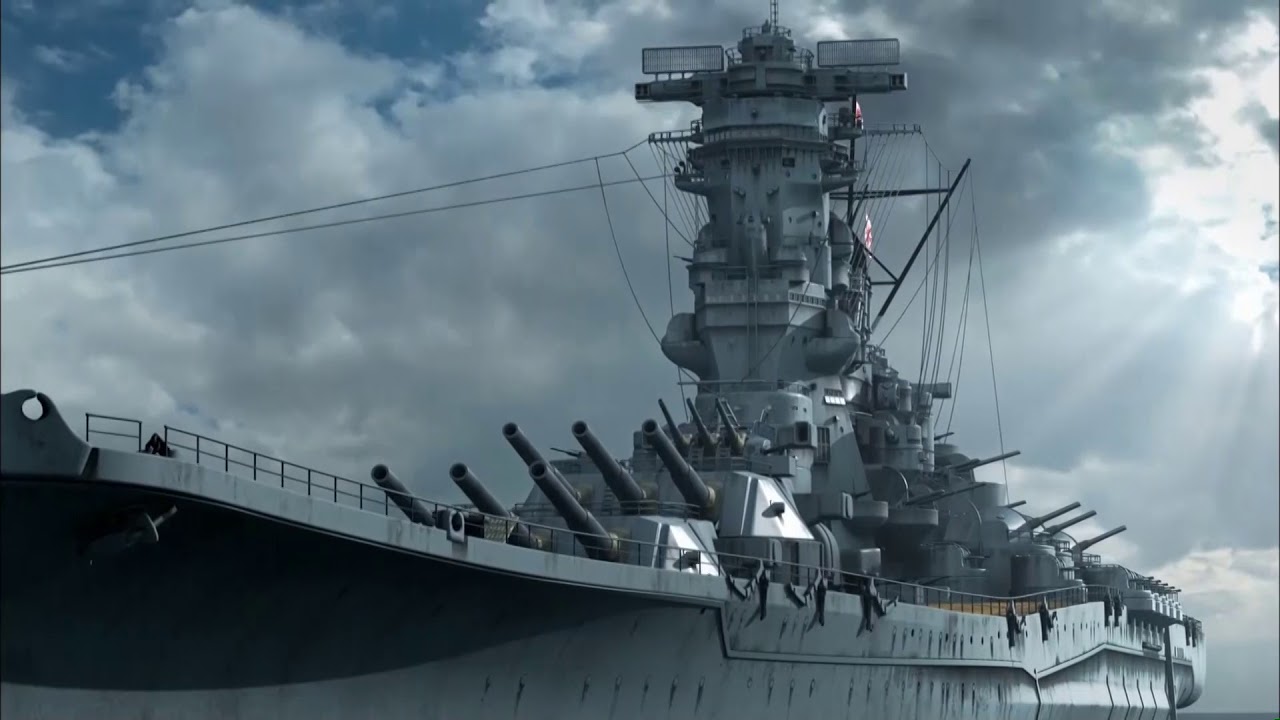
He was up against the battleship Yamato, 70,000 tons with nine 18-inch guns, twelve 6-inch guns and twelve 5-inch guns.
On her first run, Johnston fired two hundred shells and her entire complement of ten torpedoes: one of them blew the bow off a Japanese cruiser.
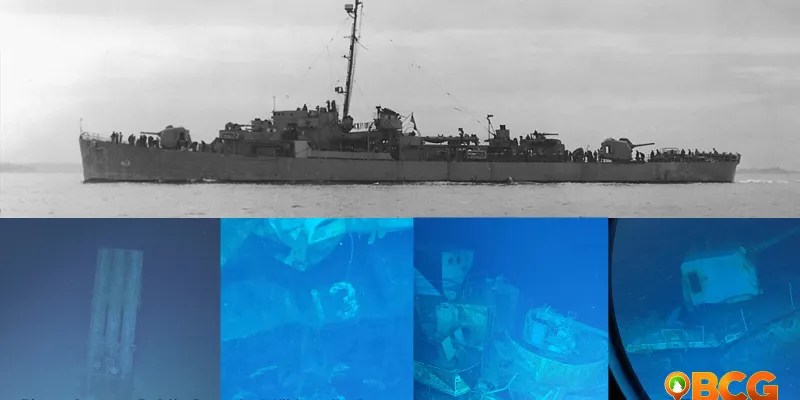
Johnston
Ships even smaller than Johnston—destroyer escorts—followed her lead and went in to attack. Yamato’s armor-piercing shells, intended to cripple battleships, went completely through the fragile destroyer escorts.
Yamato
Although eighteen-inch shells from Yamato struck Johnston’s engine room and so nearly halved her speed, Evans kept his ship fighting, dodging in and out of rain squalls or the smokescreen the destroyer escorts had laid down.
He fought two ship-to-ship battles, one against a heavy cruiser, another against a battleship seven times the size of his ship, at one point crossing an enemy ship’s “T” in a maneuver that would have made Lord Nelson proud.
The blue ships are crossing the T, bringing all their guns to bear.
Johnston scored at least sixty hits on the two enemy ships, but a six-inch shell from Yamato struck Johnston’s bridge, inflicting terrible casualties and mangling Evans’s left hand.
Evans kept his ship fighting.
The shellburst had nearly wiped out the bridge crew. It destroyed the wheel. Witnesses on a destroyer speeding past Johnston saw the badly hurt Evans–he’d suffered burn wounds and two fingers from his hand were gone—standing on the stern, bellowing orders down a hatch to where his ship was now being steered.
He waved at the passing ship.
Evans had taken Johnston into the fight at 7 a.m. By 9:45, the destroyer was dead in the water.
A swarm of Japanese destroyers then concentrated their fire on the ship that had bedeviled the entire fleet, and Evans finally ordered his men to abandon the sinking ship. He went into the water with them.
That was the last time Johnston’s crew saw their captain.
Evans
Ernest Evans was the first Native American naval officer to be awarded the Medal of Honor. 190 of his 327-man crew died with him.
But the Americans —little ships like Johnston and combat airplanes launched from the baby flattops—fought so fearlessly and so recklessly that after six hours of combat the Japanese, finally concluding that a fleet much bigger than theirs was about to prevail, abandoned their attack and withdrew.
Earlier this month, when the submersible found the wreck of the Johnston at 20,000 feet, her five-inch guns were still elevated, still pointed toward the enemy.
In June 2022, the same expedition discovered Johnston’s comrade, USS Samuel B. Roberts (below), at 22,000 feet. In the same battle, Roberts, 1370 tons, took on the heavy cruiser Chokai, blowing off her stern with a torpedo hit; the ship later had to be scuttled. Roberts’s commander, Lt. Cdr. Robert Copeland, then turned his attention to the heavy cruiser Chikuma, setting that ship’s bridge afire and destroying her No. 3 guns before three fourteen-inch shells from the battleship Kongo sent Roberts to the bottom. Ninety of her 210-man complement died, among them Gunner’s Mate 3c Paul Carr. His aft 5-inch gun turret is at far right in the photo sequence below. Carr died only after firing 325 shells at the enemy in a little over 35 minutes. A guided missile frigate is named for him today.
In “The Clock,” (1945) Robert Walker is a GI about to ship out overseas from New York City when he meets Judy Garland, courts her and marries her–all within 24 hours. It’s a charming and poignant film. Garland is radiant.
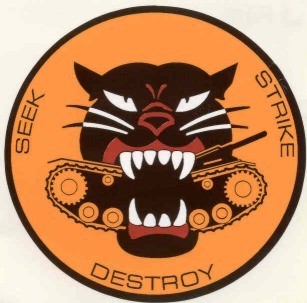
In the film still, Walker wears the shoulder patch of a solider in a Tank Destroyer Battalion.
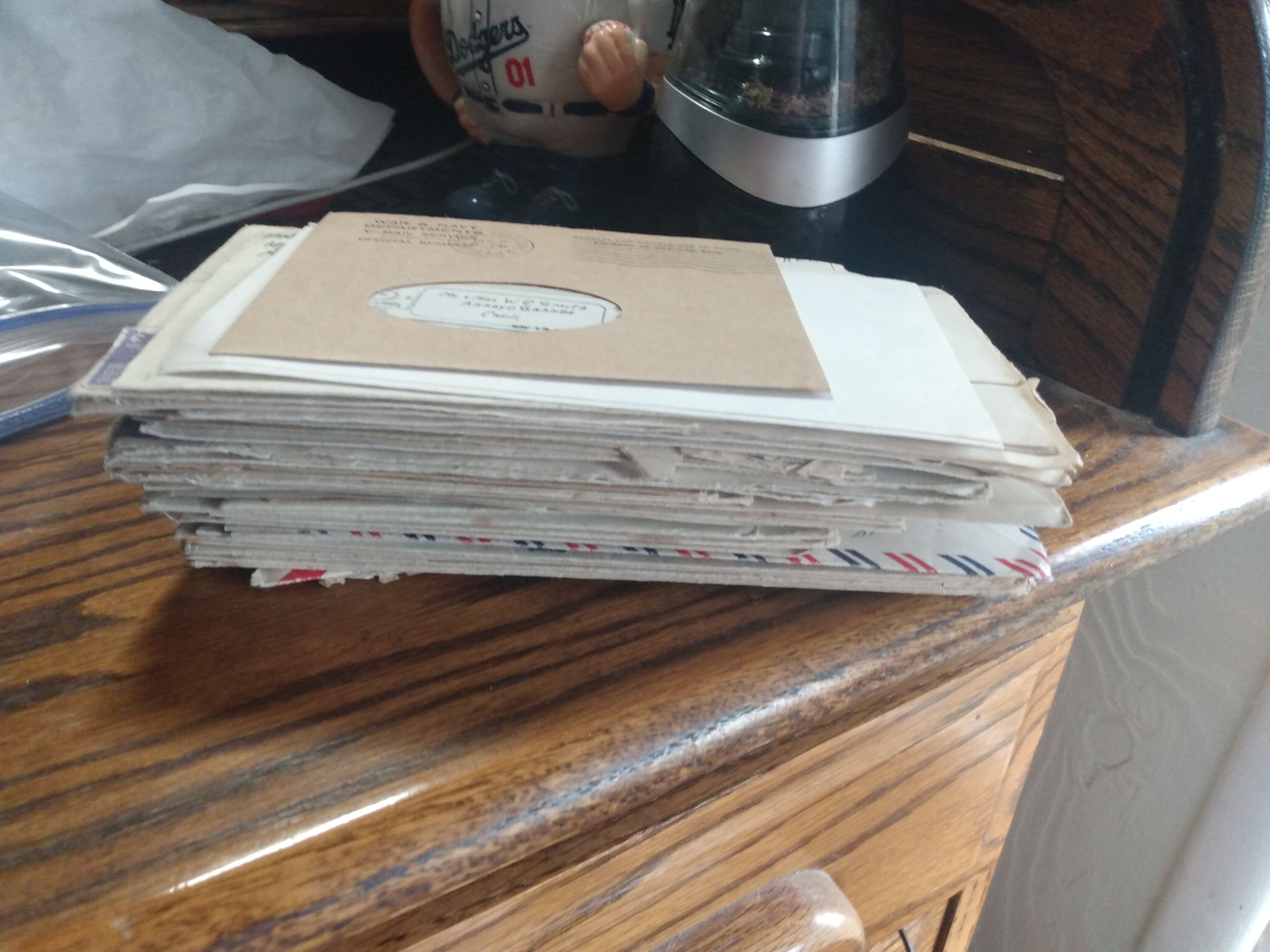
This bundle of letters belongs to a soldier who served in the 703rd Tank Destroyer Battalion. They begin in the fall of 1941 and end in the winter of 1945.
The battalion fought in Normandy, across France, into the Rhineland, in the Battle of the Bulge and finally in Bavaria, where they helped to liberate the Dachau concentration camp, which my students and I have visited.
This soldier, who was awarded a Silver Star, was from Arroyo Grande.
A Tank Destroyer from the 703rd TD Battalion in the Battle of the Bulge.
Somehow I’ve got to get up the nerve to start organizing them, reading them and writing about them while following the unit through Europe so I know where he is in his war.
Elsie Cecchetti. San Luis Obispo Tribune; photo by Vivian Krug
Elsie Cecchetti was our bus driver. In the same way that Louis Tedone was SLO’s baby doctor. Elsie was everybody’s bus driver.
Yes, I go back to the days of Branch School’s yellow pickup with bench seats and the tarp overhead, when we bounced happily over creek crossings.
We waited for her at the Harris Bridge.
I think she had mechanical problems one morning–and it was a cold one–when Mary Gularte took me inside from the bus stop for some sopa. That was a good morning.
Both Mary and Elsie called me “Jimmy.”
We tormented Elsie with “99 Bottles of Beer on the Wall” and then, in 1964, with “She Loves You,” ” I Want to Hold Your Hand” and she always headed us off in “The Name Game” song, before we got to “Chuck.”
And I always looked over the edge of the bus window as she drove confidently up Corralitos Canyon. There were some good drops there, but Elsie knew what she was doing. At the Canyon’s end, past the Dentons, she made a three-point turn that the California Department of Motor Vehicles should have filmed for posterity.
If there was a girl on whom I had a crush–and this was frequent–I looked a long time out the bus window after we’d dropped her off.
I once saw Elsie’s wedding photo, the day she married George, on the steps of Old St. Patrick’s on Branch Street. She was so beautiful that she took my breath away.
But she cleaned up after us at school.
She chewed us out when when we were jerks.
She laughed when we tried to be funny.
She cocked an eyebrow dubiously when we had excuses for being late.
But my most vivid memory is the day she cried. We were on our usual route with most of the stops ahead of us, near what is today Lopez Drive and Cecchetti Road, when she stopped the bus.
The old farmhouse, where she’d made a home and a family, was on fire. And it wasn’t just smoke. It was violent–big, ugly orange flames and billowing, acrid black smoke. Elsie threw the lever that opened the bus doors and stood at the bottom of the steps and she began to sob.
I don’t know–I was only about eight–that any of us, fifteen or so of us, had ever seen an adult in such pain.
And it wasn’t just an “adult.” It was Elsie.
I guess then we heard sirens from the CDF and they knocked the fire down, but it was too late. I don’t remember that part.
What I do remember is walking the rest of the way home in complete silence. We were shocked because we realized, just then, how much we loved Elsie and just how cruel life could be even toward the people we loved the most.
What we began to learn from her, in that terrible moment, was empathy.
Even a school-bus driver can guide you toward wisdom. I finally understand, now that she’s gone, that it was Elsie who always got me home again.
Former and much-beloved Arroyo Grande High School student Victoria, whom I teased for being distantly related, from my college studies, to a moderately reformist Mexican president, listened so intently in my classes and was so unafraid to ask hard questions that she became one of those students you never forget.
When you wanted to see whether your thirty-two kids had “got it,” your eyes always traveled back to Victoria’s because she was so transparently honest. She was your reality check.
She knew as well and all along that teaching history was just my cover story.
When I was teaching material as arcane and fun as social history (using parish registers to discover that many, many Tudor brides were heavily pregnant) or the more conventional stuff, like the stages of the French Revolution— or when we went on our little classroom trips to Paris in the Second Empire or to interwar Berlin–what I was really teaching, I hoped, transcended mere information. I wanted the thirty-three to learn humanity and empathy and hope. In teaching art, I had the chance to inspire them. In teaching war, I had the chance to make them angry.
History’s inert unless it inspires feelings we didn’t know we had that we discover in people we’ll never know.
Victoria got all that. And then she used it.
So now she is a mother and is a mover and shaker for environmental and cultural causes. I am so immensely proud of her.
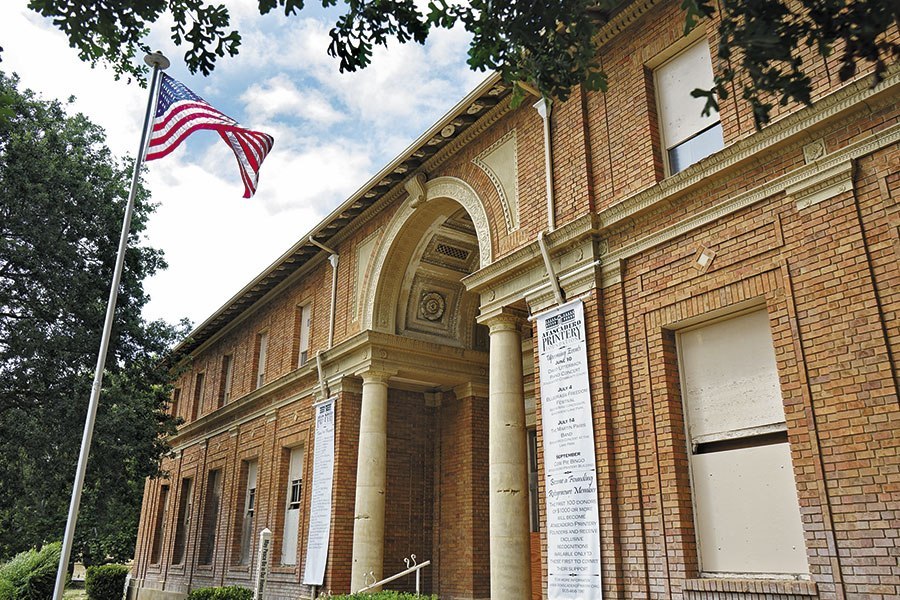
She’s part of Atascadero Printery Foundation–you can find it online, along with some photos of this beautiful building–and so is working toward the restoration of the old Printery to make it a community center for the arts.
This is how Victoria makes history live again.
And the photo above shows her daughter on a tour of the Printery. I haven’t seen an image like this one—not in a long, long time, and not until now, when I need it most—that made me so hopeful for the future.
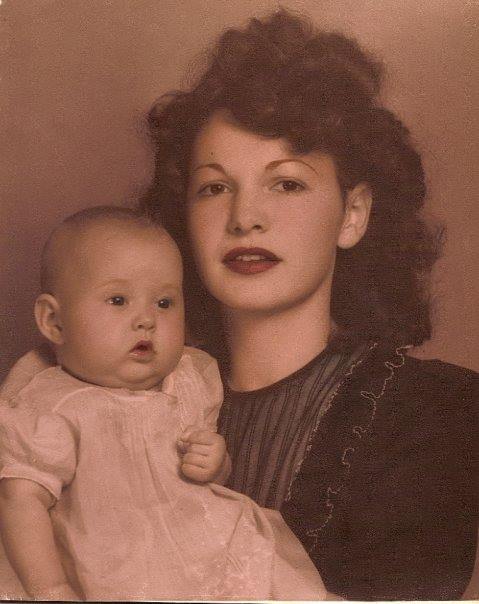
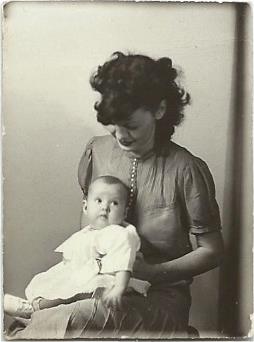
My mother at twenty-three, with my big sister, Roberta.
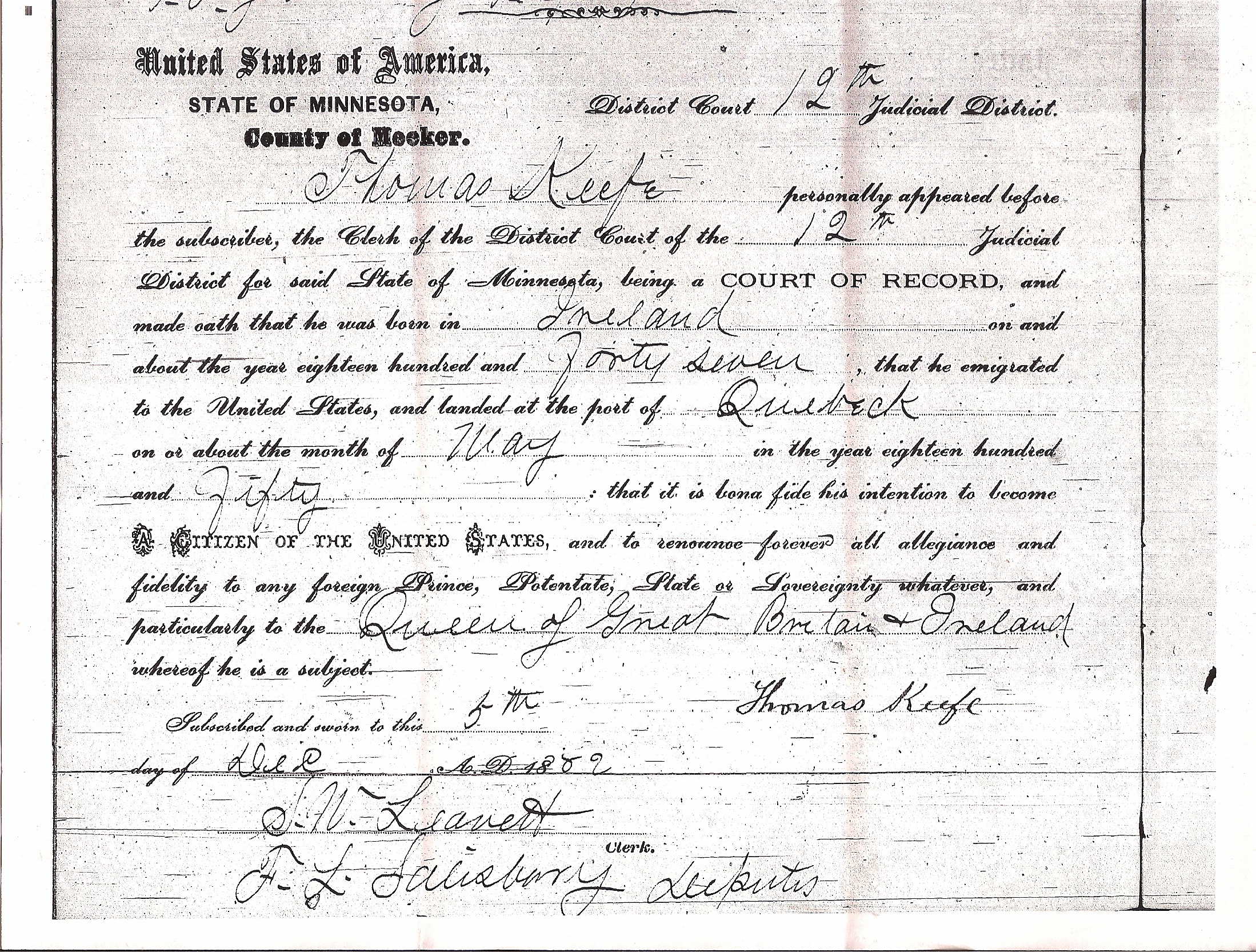
This is my Irish-American Mom. Her grandfather, Thomas, was born there and now I have a son named Thomas. Both her great-grandfathers were Patricks, both from County Wicklow, south of Dublin, and her grandmother was a Margaret, so she was Patricia Margaret Keefe.
The family went from Famine Ireland to Ontario; a brace of them, brothers and cousins from the same Irish village, worked in the Pennsylvania oilfields in the 1870s and then my great-grandfather headed west. He farmed a Minnesota homestead in the 1880s in the same county that had been marked, twenty years earlier, by the Sioux Uprising of 1862.
My great-grandfather’s declaration of American citizenship.
I would write about that tragic event 120 years after my great-grandfather’s time in Meeker County. It kind of followed me. My home town is Arroyo Grande, and one of our pioneers was a Minnesota soldier—he would’ve been among those on horseback in the contemporary illustration below—who witnessed the execution of 38 Sioux from a massive gallows in Mankato on the day after Christmas. A farmer whose family had been murdered was given the honor of springing the trap.
One of the thirty-eight hanged that day was because of mistaken identity; one of the Sioux had saved a white woman and her family–she spoke forcefully for him at his perfunctory trial–but he had a name nearly identical to that of a condemned man. And so he was hanged shortly after his exoneration.
The whole affair started because the Sioux were starving. Their reservation land had been halved and so had the beef and flour distributed by their reservation agent. His response to the reports that the people in his charge were hungry? He channeled Marie Antoinette. “Let them eat grass,” he said.
So the war began when some young men were caught stealing warm eggs from beneath a Meeker County homesteader’s irate hen. Soon after, the reservation agent was found dead with his mouth full of grass.
The uprising ran its course and ended with the mass exeuction. It must have been cold on the day after Christmas in 1862.
My wife and I once met a charming couple in Iowa, Minnesotans (they’d heard of Solvang, where Elizabeth and I were married) come down to Iowa City on vacation to escape the cold.
And so, tired of Minnesota cold, Mom’s people, the Keefes, moved from Meeker County to Orange County (for the oranges) and their son, my grandfather, to Kern County (for the oil).
But I think I wrote about the Minnesota Sioux because of Mom. The woman had no patience for injustice or for cruelty of any kind.
With my big brother, Bruce, 1948.
The British shot thirty-seven Irish rebels from the Wolfe Tone Rising dead — in front of their families–in 1798 on the village green in Dunlavin. Only twelve years later, my mother’s great-great-great grandfather was baptized in St. Nicholas, the church that faced the green. Maybe my mother’s impatience was in her DNA.
St. Nicholas’ Church, Dunlavin, County Wicklow
The obverse side of her “impatience”—a gentle word—was a trait that not all the Irish come to America, I’m afraid to say, necessarily shared, and that was a respect for others who are strangers here. Here’s a story, set in the Upper Arroyo Grande Valley, that I’ve told many times, but here it is again. Since it really happened, it serves to make my point.
* * *
One lesson [I learned from her] appeared to my mother in the form of a Mexican fieldworker, a bracero, who one day walked into our front yard and up to her. She kept her garden shears at port arms and shoved me behind her skirts. The man signaled that he wanted to fill an empty wine gallon jug with water for himself and his friends, who were working the pepper field adjacent to our pasture. His face, with a tiny Cantínflas mustache, radiated good humor. My mother relaxed and filled the jug from her garden hose. The water was cold.
I knew that because of what she said next.
“Now, help him carry it back.”
So I did. And I stayed awhile…I learned a little Spanish from them in a barracks that smelled of damp earth and Aqua Velva. They spread snapshots across their bunks of wives and girlfriends and children, and they laughed when I tried out my new words in their language. That encounter would lead to my college studies’ focus, the history of Mexico and Latin America.
I attended a state college in the Midwest two decades later, where my Spanish teacher informed me one day that I had a pronounced Mexican accent.
It was such a fine compliment.
* * *
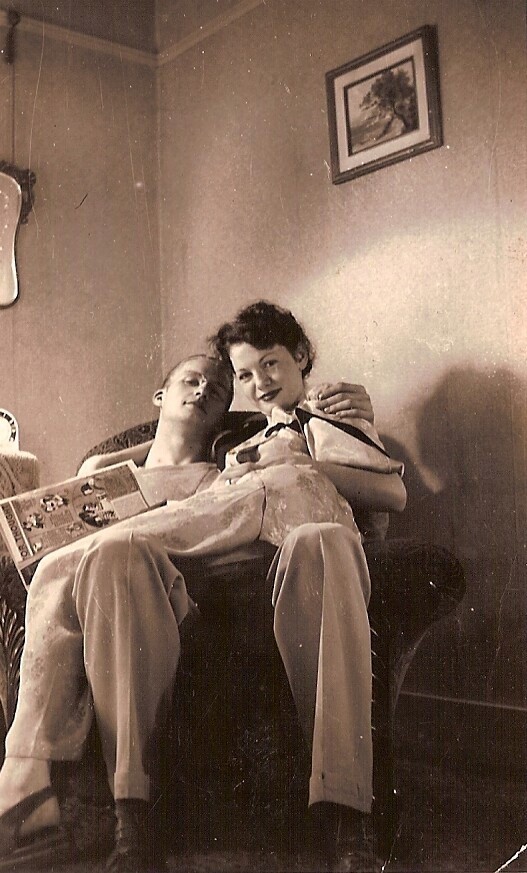
Dad and Mom, about 1941.
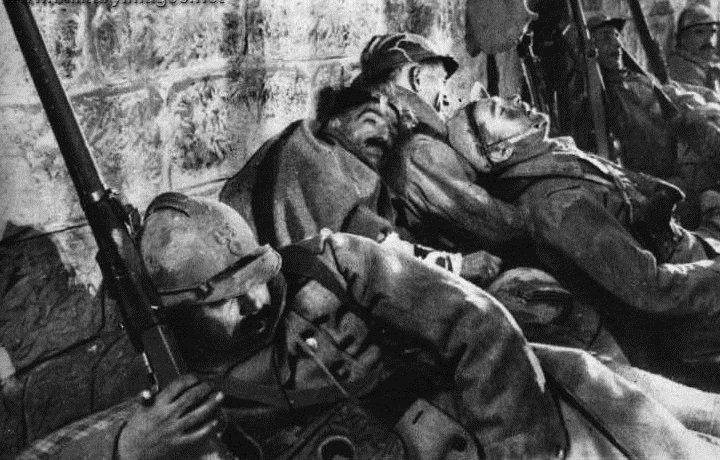
So I became a history teacher because my father, the most marvelous storyteller I’ve ever heard, taught me how to tell stories. It was my mother who put the edge to them. I guess that I was pretty passionate about teaching history. I never got over, for example, the anger I felt every year in teaching my young people about the First World War.
Exhausted poilus, Verdun.
At the end of the year, I once asked a student what unit she’d liked the most in the AP European History class I was teaching.
She didn’t hesitate. “The First World War,” she said.
I was a little flummoxed. I would’ve picked the Renaissance or La Belle Époque.
Why? How can you “like” the First World War?
“Because,” she replied, “now I understand the value of human life.”
It was such a fine compliment, because this marvelous young woman understood the lessons my mother had taught me. My mother was still teaching them.
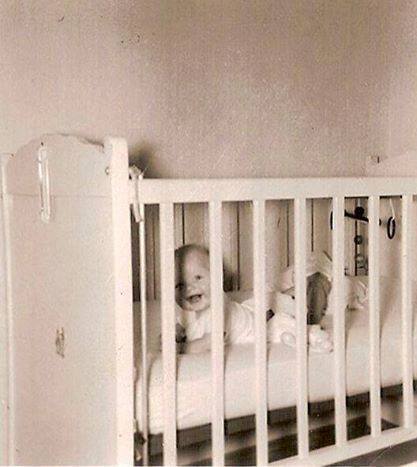
And that’s me in the crib. From the look on my face, it’s Mom’s face that I see.














 A Work in Progress