Tags
9/11, Hal Moore, Ia Drang, Joseph Galloway, Rick Rescorla, Vietnam
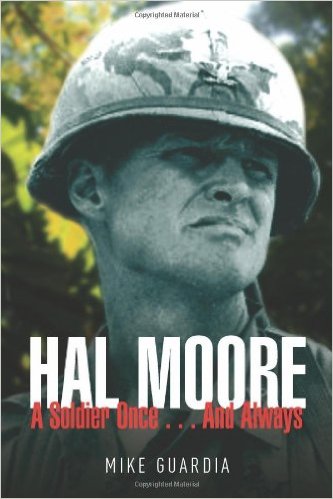
When I taught U.S. History, we spent a day every year studying the 1965 Battle of Ia Drang. There is a brand-new biography out of Hal Moore, the commander of the young Americans there. Moore was, and is, to put it mildly, a “quality human being.” His men came close to being overwhelmed by North Vietnamese regulars. One company was virtually annihilated, like their predecessors, the 7th Cavalry. But Moore and his men–he was, to his boots, both commander and father— hung on, calling air and artillery strikes virtually on their own positions, and they defeated superb North Vietnamese troops.
Sadly, we drew the wrong conclusion from that victory. We were assured, I think, that air mobility and firepower would defeat the NVA in a standup fight, which was absolutely right. But the lesson the North Vietnamese learned was to never fight Americans that way again. (To say we missed the lesson of our own Revolution is another story for another time.)
The fact remains that Moore and his men were unbelievably brave and tenacious. One of them, a British immigrant, Rick Rescorla, would go on, in civilian life, to become a civilian security consultant. After the Lockerbie Pan Am bombing, Rescorla urged his bosses, Morgan Stanley, to move out of the World Trade Center, which he sensed would be an inviting terrorist target. Morgan Stanley agreed with him, but their lease ran until 2006.
So Rick Rescorla died in the South Tower on 9/11.
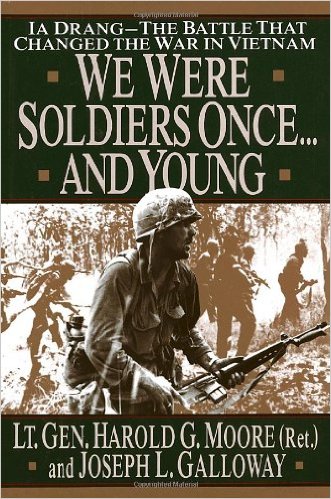
That’s his photograph on the cover of Joe Galloway’s gripping account of the battle. The paradox–of discovering such admirable people in the midst of such unspeakable violence–is something I find heartbreaking. They may be heroes, but they are also very human, and so make me feel very human, as well. That kind of connection is a gift, and it is a generous and deeply moving gift to get from men you will never get the chance to meet.
 A Work in Progress