• About
  • The Germans

A Work in Progress

A Work in Progress

Monthly Archives: February 2018

Sink the Bismarck!

28 Wednesday Feb 2018

Posted by ag1970 in Uncategorized

≈ Leave a comment


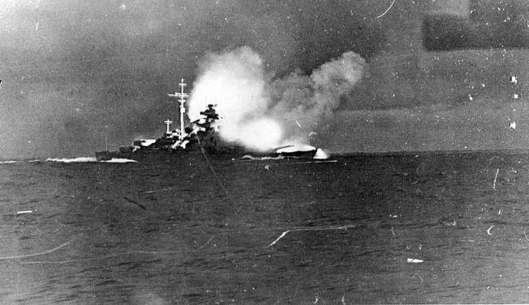
Bismarck-firing-on-Hood1

Bismarck fires a salvo at HMS Hood, 24 May 1941

I’m following a thread of fellow naval enthusiasts about the still-excellent 1960 film Sink the Bismarck!, a classic study of British stiff upper-lipness and, at the same time, a taut thriller.

A dark moment in that film, and in history, came on May 24, 1941, when the battlecruiser Hood and the battleship Prince of Wales confronted Bismarck in the Denmark Strait during her escape into the North Atlantic. The battle began at about 5:52 a.m. Ten minutes later, a shell from Bismarck detonated a powder magazine inside Hood and the ship blew up. There were, in a crew of over 1400 men, only three survivors.


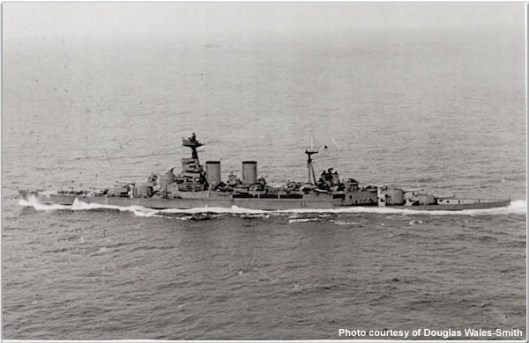
lastpictureofHood

HMS Hood, in a photo taken two days before her destruction.


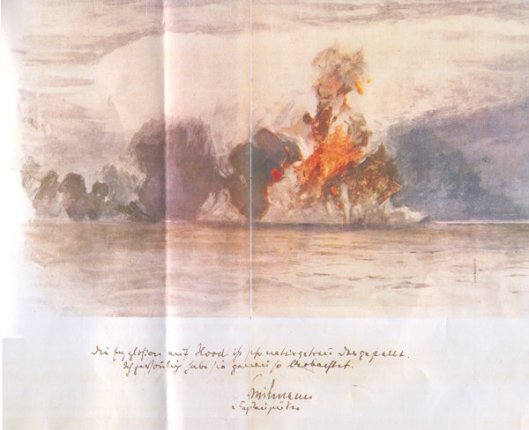
signalart1

An eyewitness on Bismarck made this sketch of Hood blowing up.

Prince of Wales hit Bismarck at three times, but when a German shell killed the entire bridge crew except for Captain J.C. Leach, she broke off action and the battle was over. Bismarck would eventually be hunted down and destroyed—or scuttled—three days later.

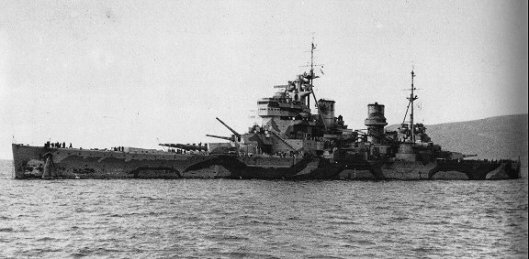
Prince_of_wales

Prince of Wales, with her “dazzle” paint scheme.

Prince of Wales would be the site for the August 1941 meeting of FDR and Churchill, when the two drafted the Atlantic Charter. Three days after Pearl Harbor, a Japanese air attack sank Prince of Wales off Malaya, and Captain Leach was among the casualties.

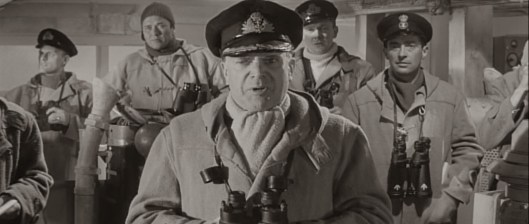
Esmond Knight as Captain Leach

Captain Leach, played by actor Esmond Knight in Sink the Bismarck!

What I did not know is that the actor who played Captain Leach in the film was himself a young lieutenant, a gunnery officer, on Prince of Wales when she took on Bismarck. Esmond Knight, hit by shell fragments, was blinded and would remain that way for two years until a specialist restored sight in one eye. Knight would go on to a long and stellar stage career, acting with contemporaries like Laurence Olivier and John Gielgud, and would appear in dozens of films in both Britain and America.

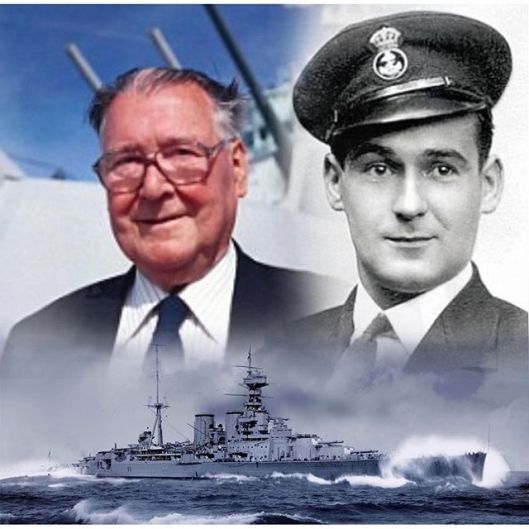
He died in 1987. The last of the three survivors of Hood, a dear man named Ted Briggs, died in 2008.

So it goes.

12093800_1691178731113987_68241045_n

Ted Briggs

Teachers and Humility

27 Tuesday Feb 2018

Posted by ag1970 in Uncategorized

≈ Leave a comment

10462813_10204064704081643_4755616275869953070_n

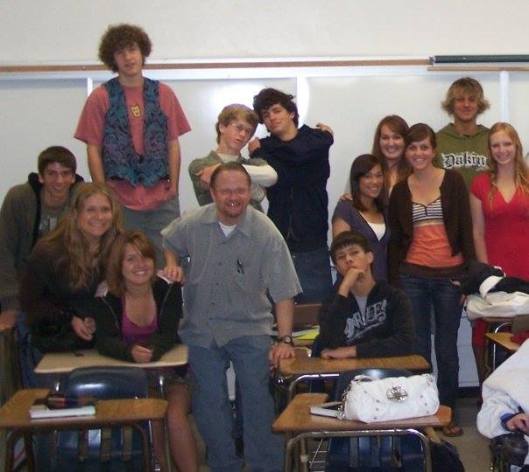
It must’ve been Friday. I’m wearing jeans.

It just occurred to me that one of the great joys in teaching high school for over thirty years was in finding students who were far brighter than I am.  They were always polite about it, because I had the armaments of age and study to wield as cudgels if they ever got too saucy with me. Once a very bright student disputed evolution with me, and I used the Gulf Current and the tropical orchids that grow in the Ireland’s west country to bring his argument gently to earth–but those weapons were things I deployed warily, because I didn’t trust myself with them.

The best alternative to cudgels that I had to offer students who were that bright was the perspective that comes from learning, and communicating, empathy for people neither they nor I would ever meet: Scots women condemned as witches; the terror of German Catholics dying brutal deaths in the 17th-century Sack of Magdeburg;  the defiance of Parisians who stood as straight as soldiers in the face of the artillery fire that destroyed their barricades; the barbarity of spousal abuse, revealed in the deaths of working-class London women grimly recorded in the archives of the Old Bailey’s criminal courts;  the outrage of poilus in mutiny in 1917 France, demanding, and claiming, the citizenship that had rightly belonged to them since 1789; the joy of Berliners in 1947, waving scarves and handkerchiefs at C-47’s when those planes, bearing food and fuel, flew so low that their their wheel-carriages brushed tenement rooftops.

You don’t teach brilliant kids: You show them the course, as if they were Winter Olympics bobsled teams, and you gently nudge them when they run too close to the banks at the course’s edge. You coach them, point the path ahead for them, and then you let them run as fast as they can.

If all you see of them, in the school year when they are yours, is the blur of their passing, it is a sight that remains with you the rest of your life.


At the Retirement Home

25 Sunday Feb 2018

Posted by ag1970 in Uncategorized

≈ Leave a comment

308323568

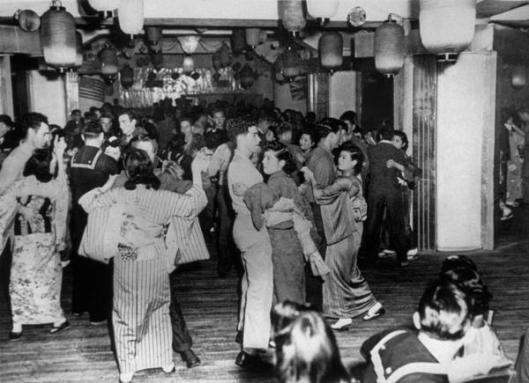
GI’s and their dates at a Tokyo jazz club, 1945.


“You are from Atascadero?”

“No, ma’am. Arroyo Grande.”

“Oh. I am from Paso Robles. My husband built us a house there. Now I live here. But I still have that house.”

She was Japanese, and before I could show off my fancy-pants history knowledge, wondering if she had come from Kyushu, like the ancestors of so many of my childhood friends, I realized: She was Japanese.

She was a war bride.

“You are from Atascadero?”

“No, ma’am. Arroyo Grande.”

“This is my husband. He built us a house in Paso Robles. Now I live here. But I still have that house.”

She fished inside her purse and brought out two photos. The one that caught my eye was black and white, frayed at the edges from so much handling, and the image was that of a handsome young serviceman.

“Air Force?” I asked.

“Yes!” she brightened. “Air Force!  He built our house.”

In Paso Robles.

Stop yourself. Don’t pity her.

“You are from Atascadero?”

I let her take a book with her because she promised to pay me when I came back to visit in June. That was twenty dollars well lost.

You could tell, easily, that she had been a beauty sixty-six years ago, the year I was born, when her husband had built that house. She is still beautiful.

You could tell just as easily that there was more than a little steel in her personality.

There had to be.

She had made the leap from postwar Japan—they must have met during the Korean War– to the United States when this nation was at full tide, in the boom of the 1950s and 1960s, and she’d left everything she’d known behind to take up a new life in a strange place with a Byzantine language that she had mastered nearly completely except for the conjugation of verbs.

But she stayed.

She must have loved him dearly.

But sixty-six years later, she is the only Asian in the retirement home. Was she lonely because of that? [You remember Filipino soldiers in 1943, many from our county, on short passes into Marysville, where the first place they hit wasn’t a bar. It was a Chinese restaurant. They were desperate for rice. They were, of course, refused service, because they were Asians.]

She must have made him rice. Maybe, in the years after the war, he got odd looks from his co-workers when he opened up his lunch box and munched contentedly on the rice balls she’d made for him that morning, flavored with nori paste.

Kimi Kobara had made a similar cultural leap when she came to the Arroyo Grande Valley, twenty years before the war, as a picture bride. She’d wept every morning for weeks, every morning as soon as her husband, Shig, was out of the house and into the fields, where it it was just light, with his horses and their plow, or their cultivator, or their harvester.

Kimi, a middle-class girl from Kyushu, had no idea that life could be so hard in California.

But she must have loved Shig dearly, because she persevered, and she raised a beautiful family. Kimi had steel, too.

This woman—I am so sorry that I don’t remember her name, but I have never been good with names—elicited in me a wave of pity at first.

Stop yourself.

It wasn’t hard to let the pity wilt in the face of her dignity.

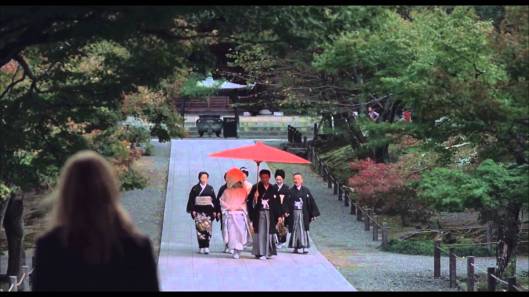
She had been a great beauty with great courage, and her husband had built her a house and she kept his photographs from as far back as his service days, their courting days, and you hope (and you know) that they will meet again, perhaps in a Kyoto park, like the one that enchants and haunts Scarlett Johannson’s character in Lost in Translation, she, elegant, in a pale yellow kimono, he in his Air Force dress blues, and when they embrace this time, they will never have to let go.


maxresdefault

A wedding in a Kyoto garden, from Lost in Translation.

Air War in the time of Trump

22 Thursday Feb 2018

Posted by ag1970 in trump, Uncategorized

≈ Leave a comment

4d4c75c4e316c73e6489a3894d6e9ea2

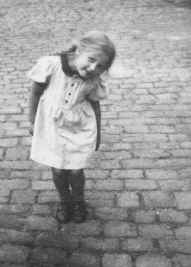
A little girl in Berlin, 1945.

I am especially fond of the passage below in the next book, Central Coast Aviators of World War II, in part because, despite my half-Irishness, the half-English in me is so passionate about England.

The passage reminds me, too, of the cheapness of current events when compared to the selflessness, the courage, and the occasional nobility of our past. These young American airmen-some of them, sixteen and bald-faced liars to their enlistment sergeants–made a bond with the English so powerful that modern tourists can find stained-glass windows in little Anglican churches where American fliers from World War II, forever young, look heavenward toward Christ, forever Risen.

But I need to remind myself, an American, of the terrible evil we’ve done. Wounded Knee comes to mind immediately, and slavery, of course. Another vivid memory is that of the slave mother I learned about in college. She used Master’s hatchet to chop her own foot off to queer the sale that would have separated her from her children.

Multiply her agony and you arrive at 1944-45, when Army Air Forces commander Tooey Spaatz ordered the powdering, from the air, of German rail-yards. Adjacent to them were dense rows of working-class tenements, and so we powdered, too, whole families, whole blocks of German children–in Dresden, they stacked them in the streets, still smoking, as best they could without breaking them–and 25,000 feet above, the young Americans knew what they were doing.

And they hated it.

[On the ground, meanwhile, the young men of Easy Company, 101st Airborne, would eventually discover that the Europeans they loved most of all were German.]

Some of the airmen hated their missions so much, late in the war, that, like the poet Randall Jarrell, who walked in front of a car years afterward, they never completely recovered. They hated what was happening below them because they were Americans, and because they were Americans, they appreciated the humanity in the children they were burning. They could feel the heat, sweating in their electric suits, despite the subzero cold just beyond the thin protection of their steel-and-aluminum airframes, built in Seattle to inflict pain on Berlin.

So I write books for many reasons, but the most important reason is to remind myself of how much I love my country, and how hard it is to look away from its cruelties, yet how necessary it is to look squarely at them. And, too, I am reminded of how much I admire the decency and the idealism that redeems us–sometimes when those qualities are least apparent to us.


Chapter 4. This Seat of Mars

This royal throne of kings, this sceptred isle, 
This earth of majesty, this seat of Mars
…This precious stone set in the silver sea
…This blessed plot, this earth, this realm, this England.

Shakespeare, King Richard II.

P-38s

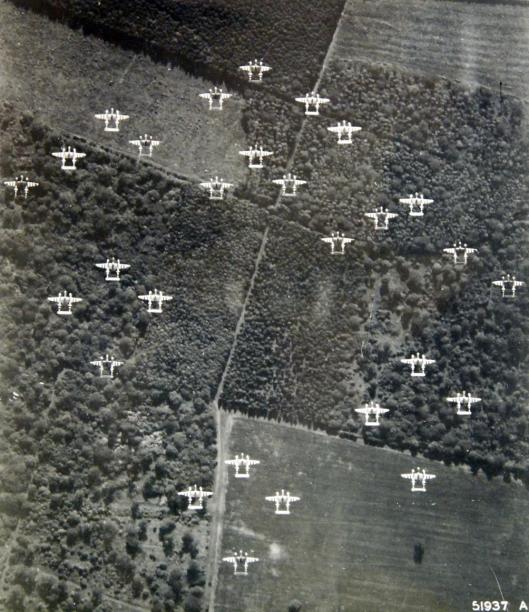
P-38s over Normandy, 1944. Library of Congress.

If there was a military historian with a gift close to Shakespeare’s, it was another Englishman named John Keegan. Keegan was a little boy in the English countryside, in Somerset, when the Americans began to arrive in their numbers in late 1943 and into the spring of 1944. Little English boys had lived for years with the deepest of privations—thanks, in large part, to the U-boat campaign that had nearly starved Shakespeare’s “sceptred isle” to death—and then the Americans came. They were, as Keegan later said in narrating a television history of the Great War in the pivotal spring of 1918, when he for once arrived at a loss for words, “…well, they were Americans.” By which he meant they were boisterous, cocky, well-fed, well-clothed, and, thank God, they were friendly, with an innocence and immediacy that was distinctly American. Their World War II counterparts taught English boys baseball and flirted with their big sisters, and married some of them, but most of them not, which meant that little boys Keegan’s age would inherit littler half-Yank nieces and nephews. Most of all, they were generous. There seemed to be no end to their Hershey bars (there wouldn’t be after the war, either, when, during the Berlin Airlift, one of bomber pilot Jess Milo McChesney’s comrades, Gail Halverson, air-dropped Hershey bars, floating on little parachutes, to the hungry children of blockaded Berlin) and no end to the rough affection for children that came with these big, loud men from across the sea.


GI's baseball

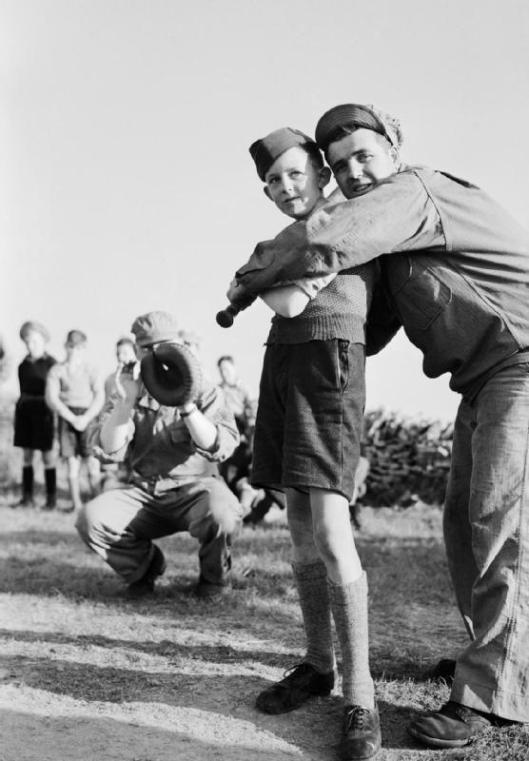
American GI’s teach British war orphans the finer points of baseball. Imperial War Museum.

And then they were gone. Keegan has vividly described the early-morning dark when that happened, when the chinaware and modest family crystal on every shelf in the Keegan home began protesting, rattling an alarm so loud that it woke the family up, if the motion beneath their beds hadn’t already made them sit bolt upright. The anxiety of Keegan’s family, and their neighbors, and of other families all across East Anglia, was relieved only when they went outside. Then anxiety gave way to wonder. They could feel in their breastbones the vibrations—“the grinding forced you to the ground,” Keegan remembered– of the engines of thousands of airplanes, but could they could see only the dim red warning lights of C-47s headed slowly east. Some of the Americans Keegan had grown to love so quickly, his heroes, were on those airplanes, and tens of thousands more, his heroes, were riding deathly pale on landing craft corkscrewing in foul Channel waters, and they were all headed for Normandy.[1]

It was D-Day.

For the two years before D-Day, the Americans in England who had been carrying the brunt of the fight to Nazi Germany were the airmen of the Eighth Air Force. They made up 49 bomb groups and 22 fighter groups and their bases were 71 airfields concentrated in East Anglia, from Norfolk south to Essex, in places that must have sounded quaintly medieval  to American ears:  Bury St. Edmunds, Knettishall, Little Staughton, Matching Green, Molesworth, Snailsworth, Snetterton Heath, and Thorpe Abbots.

Dickson

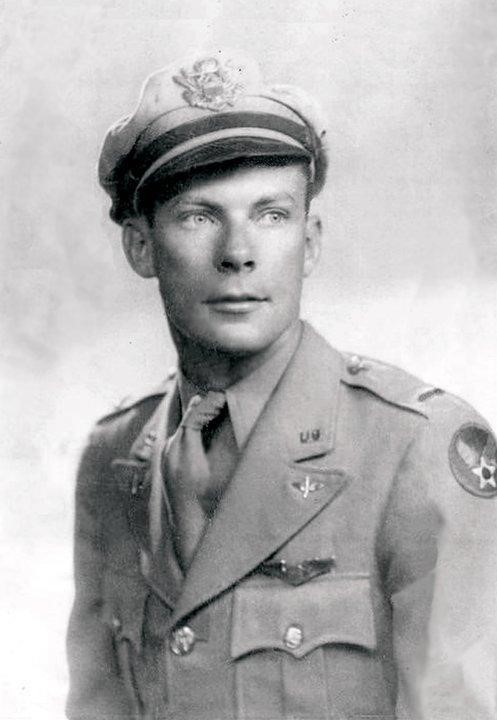
Robert Abbey Dickson of Morro Bay. Courtesy the Dickson family.

Shaw’s  charming line about “two peoples separated by a common language” must have rung true, then, for young men, newcomers to England who’d ferried their bombers from Labrador (or for the luckier men, like Robert Abbey Dickson who’d shipped out on Queen Mary, or future Cal Poly professor Richard Vane Jones, who’d made his trip on Queen Elizabeth.) Dickson’s luck held: when he first arrived in England, he was sent to the 381st Bomb Group, where he flew two orientation missions as a co-pilot. The 381st’s base was American-built, at Ridgewell, Essex, which meant that it had been built quickly in prefabricated stages by hard-working soldiers, black men, in army construction units. Bases like Ridgewell were marked by Quonset-hut barracks, each with a single, feeble, coal-burning stove, muddy streets, and mercilessly cold showers. But Dickson was quickly transferred to the 91st Bomb Group, based at RAF Bassingbourn, and the “RAF”—Royal Air Force—prefix made all the difference. An Eighth Air Force Base with the “RAF” designation had originally been built by the British, and, given Britons’ stubborn reluctance to give up their island, such bases had been built to last. Bassingbourn had paved streets and central heating. Dickson was delighted. It was, he remembered, almost like a country club compared to the 381st’s home base.

Army food wasn’t country club fare. American soldiers would never recognize this, but they were, comparated to their British Commonwealth allies, well-fed. Bill Mauldin, the great cartoonist who created the imaginary Willie and Joe, his comrades in the Italian campaign, once remarked, without malice, that his mother was the worst cook in the world. Then he encountered army food, which was infinitely worse.[2] At least airman understood that they were fed better than men like Mauldin, dogfaces, who commonly used G.I. powdered lemonade to wash their socks. Still, even in the Army Air Forces, the green-hued powdered eggs, along with the ubiquitous Spam, were breakfast standards, and creamed chipped beef on toast—referred to as “shit on a shingle”– followed airmen across the Atlantic from the air bases stateside where they’d first encountered what seemed to be, to the military, a perverse culinary masterpiece. Radioman/gunner Albert Lee Findley Jr. found little relief off-base. “English food took some getting used to,” he admittted tactfully. One vegetable, Brussels sprouts, was as common to English fare as Spam was to American mess halls, and, at war’s end, many English-based G.I.’s swore they would never eat them again.

There were other features of English culture that the Americans found more to their liking. Airmen almost immediately found pubs near their bases, and the attraction was powerful. Historian Donald Miller writes of the 1943 arrival of an AAF engineer battalion, charged with laying out an airstrip outside the village of Debach, near the North Sea. Their discovery of what English called “the local,” this one called The Dog, resulted in the Yanks buying so many rounds “for the house”—the last round, just before closing time, was for forty-seven drinks—that the next day, a doleful little sign was posted outside The Dog: “No beer.” It was, Miller notes, the first time the pub had been closed in 450  years.[3] The Americans, of course, also found young English women to their liking, as well. The War Department discouraged what were called “special relationships,” and made it nearly impossible, thanks to a bureaucratic maze, for the best-intentioned American soldier to marry, but, of course, the War Department failed. “Special relationships” were as common as visits to the local pub. Al Spierling of Arroyo Grande, a B-17 flight engineer, lost a little of  his youthful idealism—Spierling was a thoughful young man who made a special trip to York to explore the setting for Brönte’s Wuthering Heights– when he learned that a gunner he knew, a married man, had taken up with an English girl. He was a little shocked. “For a twenty-year-old,” he said, “I learned a lot.”[4]


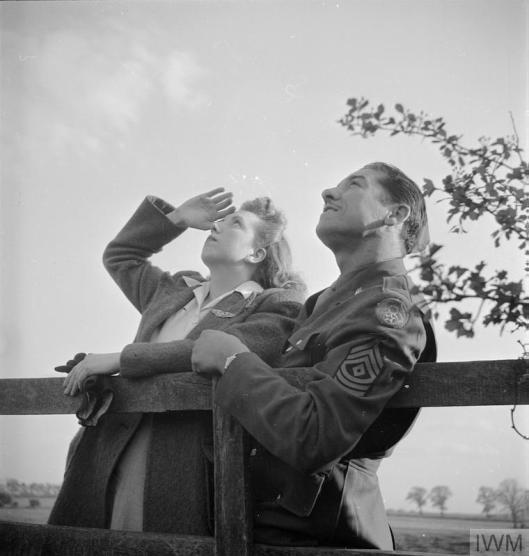
couple

A young British woman and her airman–she’s wearing his wings on her lapel–watch American bomber return to base. American Air Museum in Britain.


There was the other special relationship, the one historian Keegan remembered, and that was with English children. Airmen seemed to have great affection, just as other G.I.s did,  for their smallest neighbors, and the affection was reciprocated. A typical sight at the beginning of any combat mission would be the childen gathered at an airbase’s perimeter fence. They were there to wave goodbye to the crews as their big airplanes took off to reach their assembly points high above the English countryside.


[1] Elizabeth Grice, “War Memories: John Keegan’s Life and Times,” The Telegraph, September 17, 2009. http://www.telegraph.co.uk/culture/books/6203052/War-memories-John-Keegans-life-and-times.html. Accessed July 2, 2017.

[2] Foot Soldiers, “The Allies.” The History Channel, 1998.

[3] Donald L. Miller, Masters of the Air, Simon and Schuster Paperbacks, New York: 2006, pp. 137-38.

[4] “Albert Spierling,” oral history interview.


The Amazing McChesneys, from Corbett Canyon

11 Sunday Feb 2018

Posted by ag1970 in Arroyo Grande, Uncategorized

≈ Leave a comment

10666295_123155394868

Jess Milo McChesney, B-24 pilot, top right.

The reason I write books is to disabuse us of the notion that, because we’re from a rural California county, we’re not all that important to American history.  This is not so.

The McChesney family of Corbett Canyon–I was taught by a relative, Eva Fahey, at Branch School, went to Arroyo Grande High with another, Leroy McChesney III, and finally, taught a third, Kathryn, who is quietly but incandescently brilliant–is a perfect example of what I’m talking about.

They ran a dairy out there (the McChesney children would lay out milk cans on a trestle for the Pacific Coast Railway and, magically, have it return to them as ice cream from the Golden State Creamery in San Luis Obispo), but dairy cows were far from their chief interest.

Leroy McChensey Jr., tall and rangy, would take breaks from the milk barn to, in borrowing Whitman’s phrase, “stare in perfect wonder” at the vultures drifting effortlessly overhead. He caught the flying bug early.

leroy_jr_300-L

Leroy McChesney Jr.

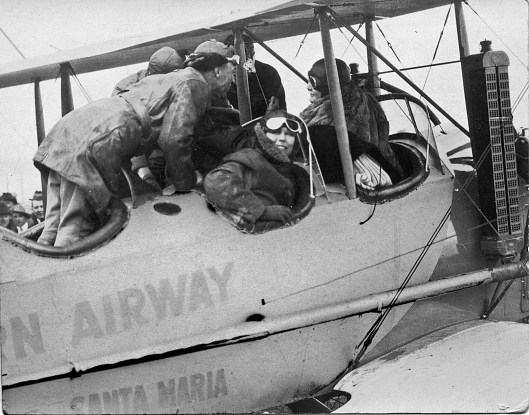
The urge to fly got worse when a wrong-way biplane from Santa Maria landed in a pasture alongside the McChesney farm, which the pilot, in 1922, had mistaken for his landing strip in Santa Maria, most likely another pasture just a tad bit farther south.


crash landing ranch

The wrong-way airplane, with passengers who don’t seem too upset, Corbett Canyon, 1922.

The proof that Leroy had been bitten badly by flying came long after he’d earned a pilot’s license, once he’d married and started a family. He began building a full-scale glider, for whatever reason, in the living room. It grew. The kids had to dodge the fuselage to make their way to the kitchen for Golden State ice cream in the freezer. I think eventually Leroy’s project migrated outside, but his love for flying remained such a constant in the family that, years later, after he’d suffered a heart attack, his wife, Grace, took up flying. She reasoned that she’d have to land the damned plane. Truth be told, she, a member of the “99’s,” a women’s flying group, may have been the better pilot.

But, unlike Leroy, she didn’t get the country airport, McChesney Field, named for her. It was Leroy’s boundless energy as an advocate for fellow fliers and as a member of several state and national aviation boards that got that well-deserved honor.

His little brother, Jess, caught the bug, too. And he was a war hero, like the more famous son of another dairy family, the Edna Valley Righettis, who gave us P-51 pilot Elwyn, an enormously gifted flier and leader, lost in 1945.

Jess flew his thirty-five B-24 combat missions, in the Fifteenth Air Force, out of Italy, a pilot whose career was book-ended by crash landings on both his first and final bomb missions, which wended their way over the Alps and into Austria, Germany, and Hungary, where civilians lynched downed aircrews. On both those book-end missions, the latter a belly-flop on a British airfield, the big bomber he piloted had been shot to pieces.

One of his gunners tried to contact the family many, many years later, and learned, over the phone, that Jess had died. He was devastated.

“I would fly to the gates of hell with that man,” he said simply over the long-distance connection.

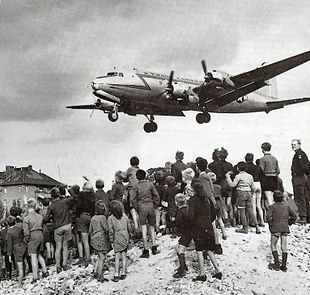
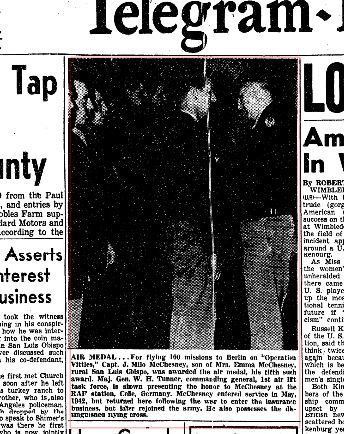
Jess’s career did not end with the end of World War II. He would win his fifth Air Medal in “Operation Vittles,” which we know better as the 1948-49 Berlin Airlift, when Stalin, determined to starve the western Allies out of Berlin, deep inside East Germany, closed the borders to ground traffic.

Of course, it wasn’t Allies who were going to starve. It was German children. So in one 310px-C-54landingattemplehofof, I think, the most heroic episodes in our history, veteran World War II pilots who had been shot to pieces by German 88-mm flak or by German fighters, FW-190s, turned instead to airlifting fuel and food and medicine to Berliners, and especially to children. That’s when Jess Milo McChesney was activated from the Reserves and flew the 100 missions that would add a fifth Air Medal to his DFC.

We tend to downplay the Berlin Airlift in favor of the “Memphis Belles” of World War II but, truth be told, what Jess did in 1948-49 was nearly as dangerous. The relief flights were so relentless and so constant–one of the biggest cities in the world had to be supplied completely by air–that exhausted pilots made mistakes that killed them and their aircrews, or exhausted airframes failed and plunged, in pieces, into Berlin suburbs. These were enormously courageous and compassionate young men.

4d4c75c4e316c73e6489a3894d6e9ea2

An American GI in Berlin’s occupation force recorded this image of a little girl in 1945.

Of course, the most famous of Jess’s comrades was Gail Halverson, “Der Schockoladen Flieger,” who tied handkerchiefs to Hershey Bars and dropped them, in their little parachutes, to the children of Berlin on his approach to the airfield at Templehof.

Halverson did this because he loved children. I watched a story, on CBS news on, I think, the fiftieth anniversary of Halverson’s chocolate campaign. When he landed in Berlin, he was immediately buried by a mass of adoring and middle-aged German hausfraus, who had never and would never surrender their love for Americans.

And Jess Milo McChesney, far less famous than Halverson but just as brave and just as bound by duty and by compassion, is just as important to American history. There is a powerful connection between Berlin and Corbett Canyon, California.


jess


How to write a [little] history book

04 Sunday Feb 2018

Posted by ag1970 in Uncategorized

≈ Leave a comment


P-51_katydid_850

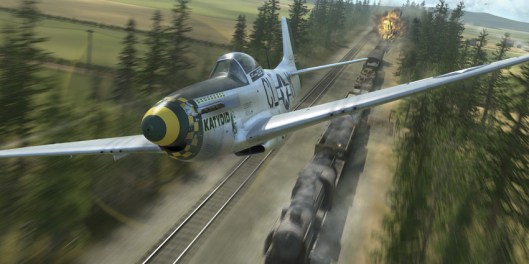
Lt. Col. Elwyn Righetti’s P-51, “Katydid,” on a strafing run. Righetti disappeared after being shot down over Germany in 1945. He was raised in San Luis Obispo.

I get asked sometimes how I do my research for my books. They are small books, but I was asked again yesterday and decided, just to be able to answer future questions semi-coherently, to set down how I researched the next book, Central Coast Aviators in World War II, coming out in May. Okay (deep breath), here goes:

  1. I started by looking up the names of the county war dead on the Atascadero Veterans’ Memorial. From there, I identified eighteen young men—all Army Air Forces, the branch in which nearly all local men served (and the vast majority in Europe)—killed in action or in training accidents.
  2. I used three websites—newspapers.com, genealogy bank and ancestry.com—to locate the obituaries and circumstances of death for each airman. In some cases (Lt. Clair Tyler of Morro Bay, for example, a B-17 co-pilot killed over Brittany; Capt. Jack Nilsson of San Luis Obispo, a B-29 Pathfinder pilot, killed over Japan) I was able trace these young men through virtually every stage of their lives, which was both fascinating and heart-breaking to write: Tyler’s best man was Alex Madonna; Nilsson, as an eight-year-old, went to a birthday party for a little Berkemeyer daughter. Since her family owned the local bakery, the cake must’ve been awesome!
  3. Those websites were also invaluable in tracing the history of aviation in our county, including the first airplane flight over San Luis Obispo, in 1910 (other sources, primarily San Francisco newspapers, taught me about the lives of the Beachey brothers–Hillery, who’d flown that airplane, and Lincoln, who drowned when his monoplane plunged into San Francisco Bay–and were the West Coast equivalent of the Wright Brothers), Amelia Earhart’s visit to Cal Poly and the history of San Luis Obispo Airport.
  4. Another incredible source, as usual, was Cal Poly’s Special Collections and Archives, which helped me to pin down the history of the Aeronautical Engineering Program—Poly students built the first student-constructed airplane in American history, in 1928, “Glen-Mont”—and rare photographs. Michael Semas was  generous in allowing me to use photos from 1910 and the Camp Merriam (now Camp San Luis Obispo) airfield during the 1930s.
  5. As always, California military historian Sgt. Major Dan Sebby and his California Military History website were incredibly helpful in both the history of Hancock Field and in helping me find information on the aviation program at Camp Merriam.
  6. For the living fliers, including WASP pilot Dorothy Rooney, the SLO Veterans’ Museum has compiled about 200 oral history interviews. (The lioness’s share of this remarkable effort has fallen on two interviewers, Joanne Cargill and Joy Becker, and all of us owe them a terrific debt.) I narrowed that list down to World War II aviators, about thirty, and then attempted to contact each one or their survivors for permission to use the material, now on a Library of Congress website. I was successful in about twenty cases. These interviews were the single most important resource for this book, and when I get hammered, as I will be, for leaving fliers out, it would have been helpful if they’d set their memories down as these fliers did!
  7. Another wonderful source for the WASPs was Texas Women’s University, where I learned more about Dorothy Rooney and about two Santa Barbara County WASPs, one killed in a training accident and another, raised in Solvang, who became a lifelong flier after the war. I found her children interviewed one son on the phone and got permission to quote from the marvelous obituary they’d written for her.
  8. The Santa Maria Museum of Flight was another excellent resource; I spent a day with the curator there and got his permission to use several photos of Primary Training at Hancock Field (today’s Hancock College) and material from one yearbook: a class from 1941 yielded seven participants in the Doolittle Raid, five Air Aces, two future four-star Air Force generals, and one cadet who didn’t make it as a pilot but became a B-24 bombardier in the Pacific: Louis Zamperini, the subject of Laura Hillenbrand’s excellent book Unbroken. About 8,000 cadets went through Primary Flight Training at Hancock Field.
  9. For Cal Poly’s Naval Aviation Cadet pre-flight program (about 3,000 cadets went through Poly), I found first-hand material in a memoir written by former Poly President Robert Kennedy, two online autobiographies written by pilots who’d gone through Poly’s program, and back issues of Mustang Roundup, the wartime magazine that replaced the El Rodeo yearbook during the war years.
  10. Particularly useful as a local source: David Middlecamp’s always-revelatory column, “Photos from the Vault” and Dan Krieger’s “Times Past,” particularly on the life and death of perhaps our best-known local hero, P-51 pilot Elwyn Righetti (I also corresponded with Righetti’s biographer, Jay Stout, who was very helpful.)
  11. Foreign sources were just as helpful, particularly the Imperial War Museum and its sister institution, the American Air Museum in Britain. These sources yielded wonderful wartime photographs of aircrew, air bases and aircraft. The also corroborated the fate of lost airmen and were a starting point for determining the fates of lost aircraft. Other websites, in Holland and France, were also useful in helping to find both bombers and fighters in which local fliers had been lost.
  12. In the European Theater, the Air Museum provided the name, if applicable, and serial numbers of both American bombers and fighters. The are websites with MACR (Missing Aircrew Reports) listed by date and the plane’s serial number, and I used those websites to verify the identities and losses of aircraft. In a few cases, the Air Museum provides, in some cases,  Deceased Personnel Files; in two cases, I was able to discover the fate of a local flier by using the file belonging to another crewman on his aircraft. Both sources were also helpful in determining the fates of lost airmen and aircraft in the Pacific Theater.
  13. Army Air Forces accident reports are also available online and provide some detail on both stateside and overseas plane crashes. I was amazed to discover, for example, that there were nine P-38 crashes among fighters based at the Santa Maria Army Airfield in January 1945 alone, claiming the lives of three pilots and two civilians (in a cafe on Broadway in Santa Maria) on the ground.
  14. Although most of the World War II generation is gone, I was able to conduct interviews with Albert Lee Findley Jr of Los Osos, shot down twice as a B-24 crewman, and John Sim Stuart, a retired Cal Poly professor and P-47 fighter pilot who witnessed the flash of the Nagasaki bomb. The McChesney family, both in person and on a family website, was wonderful in revealing the history of local aviation—the County Airport is McChesney Field.
  15. Hometown Heroes Radio and the Estrella Warbirds Museum in Paso Robles were key in providing information on Hal Bauer, an Atascadero resident who was a Luftwaffe test pilot (he flew the wooden jet, the He-162) with an incredible story. As an American citizen, Lt. Commander Hal Bauer flew intelligence missions along the Chinese and Soviet borders during the Korean War.
  16. Several units maintain online histories that include Mission Reports. I was able, for example, to locate and identify aircrew, target, mission duration and losses for virtually every mission that Flight Engineer Sgt Al Spierling ever flew, including his thirteenth, in B-17 “Georgia Peach,” which survived a near-collision over the target–Berlin–and a flak hit that took out two engines. (Spierling later taught Auto Shop at Arroyo Grande High School.) Roy Lee Grover’s 405th Bomb Squadron, based in Australia and then New Guinea, has an incredible website, heavily illustrated. Arroyo Grandean Jess Milo McChesney’s 376th Bomb Group has another superb website that fills in a lot of gaps on the neglected Fifteenth Air Force, based in North Africa and then in Italy. One source—on lost flier Clair Tyler’s 303rd Bomb Group—even provided an illustrated diagram of each B-17’s position in his bomb squadron on the day he was killed on a mission over Lorient.
  17. One wonderful find was the 303rd Bomb Group’s “Duties and Responsibilities of the B-17 Crewmen,” a wartime manual for each of the ten men who flew the heavy bomber and the 303rd’s “Aerial Bombs,” a detailed description of bomber ordnance. Just one more: Maj. James J. Carroll, “Physiological Problems of Bomber Crews in the Eighth Air Force during World War II,” a paper prepared for the Air Command and Staff College, which detailed just how uncomfortable, including the difficulty of taking a pee,  flying a combat mission was, “uncomfortable” being an understatement. Another paper, on tropical diseases in World War II, revealed how life for Pacific fliers was even more “uncomfortable.”
  18. Other websites provided both visual and written information on POW’s, even including artwork and cartoons, which were delightful, of camp life. The oral history interviews from local fliers also provided incredible detail on the meagerness of diet, on the menace of German civilians (there were lynchings of downed Americans by enraged Germans, Hungarians and others), and the frequent and unexpected kindness of German soldiers toward their captives.
  19. Family members, and correspondence with them, were incredibly helpful. Particularly helpful were the daughters of B-17 co-pilot Robert Abbey Dickson of Morro Bay, the daughter of P-38 and P-51 pilot William K. Pope of Paso Robles , the descendants of B-17 pilot Harold Schuchardt of Los Osos, the sister of B-26 pilot Richard Vane Jones, a Cal Poly education professor, and Bruce Gibson, the son of a B-29 crewman taken prisoner by the Japanese.
  20. Beyond the primary sources and interviews, there were several books, secondary sources,  that were very important. By far the most important was John McManus’s book, Deadly Sky. I think he is one of our finest World War II writers.
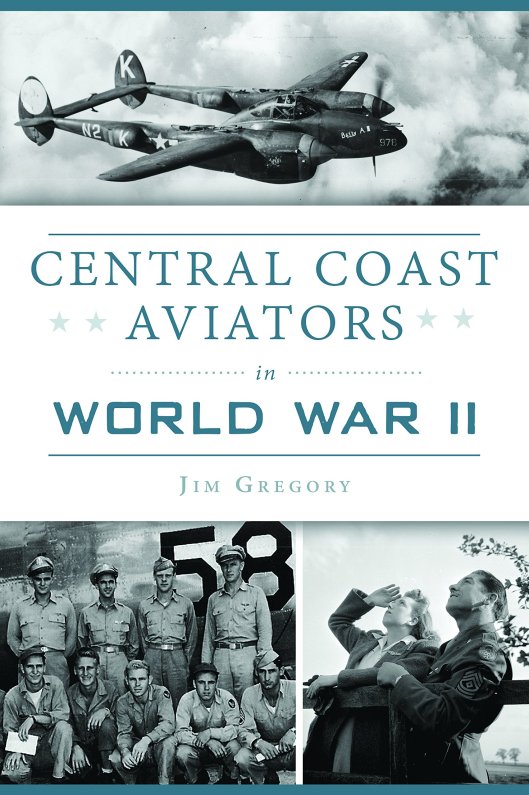
 

Cover


Just for grins, here are the book’s notes, one of the parts of any history book that I always take time to read:

Notes

1 “303rd BG(H) Combat Mission No. 20, 6 March 1943,” http://www.303rdbg.com/missionreports/020.pdf
2 Eddie Deerfield, editor, Hell’s Angels Newsletter. “The Terrifying Last Mission of the Mart in Plocher Crew,” May 1999. http://www.303rdbg.com/missionreports/020.pdf.
3 The information on 2nd Lt. Tyler is taken from several articles in the San Luis Obispo Telegram-Tribune, beginning November 24, 1931 and ending August 27, 1943.
4 “100 Years Ago: July 5, 1898-July 12, 1898,” Wilmar N. Tognazzini, compiler, http://wntog.weebly.com/1898.html.
5 Carly Courtney, “Lincoln J. Beachey: The Tragic Rise and Fall of the Master Birdman,” Disciples of Flight, October 31, 2016, https://disciplesofflight.com/aviation-pioneer-lincoln-j-beachey/.
6 “Official Program for Celebration that Began This Afternoon,” San Luis Obispo Daily Telegram, July 2, 1910, p. 3.
7 Frank Marrero, “Lincoln Beachey: The Forgotten Father of Aerobatics,” Flight Journal Magazine, April 1999, http://www.frankmarrero.com/Beachey/The_Forgotten_Father_of_Aerobatics.html.
8 David Middlecamp, “Aerial Pioneer Harriet Quimby,” from the blog Photos from the Vault, San Luis Obispo Tribune, July 14, 2010, http://sloblogs.thetribunenews.com/slovault/2010/07/aerial-pioneer-harriet-quimby/
9 “Harriet Quimby,” National Aviation Hall of Fame, http://www.nationalaviation.org/our-enshrinees/quimby-harriet/ Accessed June 17, 2017.
10 Earl Miller, “Famous Flier Inspects Poly Aerial Building,” San Luis Obispo Daily Telegram, June 25, 1936, p. 1.
11 Interview with Leroy McChesney III, Arroyo Grande, California, May 9, 2017.
12 “Airplane Lands at Arroyo Grande by Mistake,” San Luis Obispo Tribune, March 22, 1922.
13 Barnes McCormick, Conrad Newberry, Eric Jumper, eds. Aerospace Engineering during the First Century of Flight, American Institute of Aeronautics and Astronautics, Reston, Virginia, 2004. Pp. 861-62.
14 “Matriarch of music in SLO dies at 98,” San Luis Obispo Tribune, Dec. 7, 2010, http://www.sanluisobispo.com/news/local/article39139020.html.
15 “Guardsman Praises Airport,” San Luis Obispo Daily Telegram, Feb. 17, 1939, p. 1.
16 “Learn to Fly!” San Luis Obispo Telegram-Tribune, Sept. 6, 1940, p. 20.
17 Jay A. Stout, Vanished Hero. Casemate Publishers, Havertown, PA, 2016, p.18.
18 Stout, p. 53-54.
19 Read D. Tuddenham, “Soldier Intelligence in World Wars I and II,” http://www.iapsych.com/iqmr/fe/LinkedDocuments/tuddenham1948.pdfb.
20 Elena Sullivan, “Cal Poly Women: Roles and Depictions during World War II,” Research Paper, History 303-01, California Polytechnic University-San Luis Obispo, March 2016. http://digitalcommons.calpoly.edu/cgi/viewcontent.cgi?article=1022&context=cphistory.
21 Robert E. Kennedy, Learn by Doing Memoirs of a University President, Monograph, Robert E. Kennedy, California Polytechnic University-San Luis Obispo, 2001, p. 83.
22 Eldon N. Price, Senior Birdman: The Guy Who Just Had to Fly, iUniverse Inc. Publishing, 2006, pp. 21-22.
23 Wendell Bell, Memories of the Future, Transaction Publishers: New Brunswick, New Jersey, 2012, pp. 42-43.
24 “Boeing / Stearman PT-17 ‘Kaydet,’” http://www.warbirdalley.com/pt17.htm. Accessed June 21, 2017.
25 The accounts of San Luis Obispo County airmen lost to training accidents comes from various issues of the San Luis Obispo Telegram-Tribune, 1943-45.
26 Marilyn R. Pierce, Earning Their Wings: Accidents and Fatalities in the United States Army Air Forces During Flight Training in World War Two. PhD Dissertation, Kansas State University, Manhattan, Kansas: 2013.
27 “Capt. G. Allan Hancock,” http://www.hancockcollege.edu/public_affairs/capt-hancock.php. Accessed June 22, 2017.
28 Justin Rughe, “Historic California Posts, Camps, Stations and Airfields: Hancock Field,” http://www.militarymuseum.org/HancockField.html. Accessed June 22, 2017.
29 Interview with Santa Maria Museum of Flight CEO Mike Geddry Sr., May 4, 2017
30 Eugene Fletcher, Mister: The Training of an Aviation Cadet in World War II. The University of Washington Press, 1992: pp 61-62.
31 John C. McManus, Deadly Sky: The American Combat Airman in World War II, New American Library, New York: 2000, p. 23.
32 Stout, Vanished Hero, p.23.
92
33 “Lt. Hagerman, Paso Robles, Killed in Air Crash,” San Luis Obispo Telegram-Tribune, February 14, 1944, p. 1.
34 “Dorothy May Moulton Rooney,” oral history interview by Joanne Cargill, January 27, 2010. Dorothy May Moulton Rooney Collection(AFC/2001/001/71857), Veterans History Project, American Folklife Center, Library of Congress.
35 “Betty Pauline Stine,” https://airforce.togetherweserved.com/usaf/servlet/tws.webapp.WebApp?cmd=ShadowBoxProfile&type=PersonAssociationExt&ID=22008. Accessed June 23, 2017.
36 “Above and Beyond: Gertrude “Tommy” Tompkins-Silver,” http://www.wingsacrossamerica.org/above—beyond.html. Accessed June 23, 2017.
37 Susan Stambeg, “Female WWII Pilots: The Original Fly Girls,” NPR transcript for Morning Edition, March 9, 2010, http://www.npr.org/2010/03/09/123773525/female-wwii-pilots-the-original-fly-girls. Accessed June 23, 2017.
38 Katherine Sharp Landdeck, “A Woman Pilot Receives the Military Funeral the Army Denied Her,” The Atlantic, September 8, 2016, https://www.theatlantic.com/politics/archive/2016/09/wasp-elaine-harmon-arlington-national-cemetery/499112/. Accessed June 23, 2017.
39 “WASP Final Flight: Sylvia Barter, 43-W-7,” http://waspfinalflight.blogspot.com/2009_02_01_archive.html. Accessed June 23, 2017.
40 “Albert Lee Findley Jr,” oral history interview by Joy Becker, September 26, 2013, Albert Lee Findley, Jr. Collection (AFC/2001/001/93273), Veterans History Project, American Folklife Center, Library of Congress.
41 “Consolidated B-24J Liberator,” http://www.joebaugher.com/usaf_bombers/b24_18.html. Accessed July 7, 2017.
42 “Robert Abbey Dickson,” oral history interview by Joanne Cargill, September 19, 2007, Robert Abbey Dickson Collection (AFC/2001/001/56287), Veterans History Project, American Folklife Center, Library of Congress.
43 Jay A. Stout, Hell’s Angels: The True Story of the 303rd Bomb Group in World War II, Berkley Caliber Books, New York: 2015, pp. 96-98.
44 Don Moore, “He Flew with Jimmy Stewart in WW II,” https://donmooreswartales.com/2010/05/05/jim-myers/. Accessed June 24, 2017.
45 Sam McGowan, “The Boeing B-17 Flying Fortress vs. the Consolidated B-24 Liberator,” February 21, 2017, http://warfarehistorynetwork.com/daily/wwii/the-boeing-b-17-flying-fortress-vs-the-consolidated-b-24-liberator/
Accessed June 24, 2017.
46 “Harold Edgar Schuchardt,” oral history interview by Joanne Cargill, May 10, 2007, Harold Edgar Schuchardt Collection (AFC/2001/001/51597), Veterans History Project, American Folklife Center, Library of Congress.
47 “Duties and Responsibilities of the B-17 Crewmen,” 303rd Bomb Group (H), http://www.303rdbg.com/crew-duties.html. Accessed June 23, 2017.
48 “Aerial Bombs,” 303rd Bomb Group (H), http://www.303rdbg.com/bombs.html. Accessed June 27, 1942.
49 John T. Correll, “Daylight Precision Bombing,” Air Force Magazine, October 2008. http://www.airforcemag.com/MagazineArchive/Pages/2008/October%202008/1008daylight.aspx. Accessed June 27, 2017.
50 Sandra MacGregor, “Richard Cowles, World War II Tailgunner,” SLO Journal Plus, August 2015: pp. 28-29.
51 McManus, Deadly Sky, pp. 37-42.
52 “Albert Spierling,” oral history interview by Joanne Cargill, Nov. 21, 2003, Albert A. Spierling Collection (AFC/2001/001/10402), Veterans History Project, American Folklife Center, Library of Congress.
53 Maj. James J. Carroll, “Physiological Problems of Bomber Crews in the Eighth Air Force during World War II,” paper prepared for the Air Command and Staff College, March 1997. http://www.dtic.mil/cgi-bin/GetTRDoc?AD=ADA398044. Accessed June 27, 2017.
54 “Richard Vane Jones,” oral history interview by Joy Becker, May 7, 2009. Richard V. Jones Collection (AFC/2001/001/71933), Veterans History Project, American Folklife Center, Library of Congress.
55 “Henry Joe Hall,” oral history interview by Joy Becker, May 21, 2009. Henry J. Hall Collection (AFC/2001/001/71890), Veterans History Project, American Folklife Center, Library of Congress.
56 Elizabeth Grice, “War Memories: John Keegan’s Life and Times,” The Telegraph, September 17, 2009. http://www.telegraph.co.uk/culture/books/6203052/War-memories-John-Keegans-life-and-times.html. Accessed July 2, 2017.
57 Foot Soldiers, “The Allies.” The History Channel, 1998.
58 Donald L. Miller, Masters of the Air, Simon and Schuster Paperbacks, New York: 2006, pp. 137-38.
59 “Albert Spierling,” oral history interview.
60 Jerome O’Connor, “U Boat Sanctuary—Inside the Indestructible U Boat Bases in Brittany,” January 1, 2008,
http://historyarticles.com/gray-wolves-den/ Accessed July 2, 2017.
93
61 “The Bombing of Germany 1940 – 1945: Allied air-strikes and civil mood in Germany,” University of Exeter, http://humanities.exeter.ac.uk/history/research/centres/warstateandsociety/projects/bombing/germany/. Accessed July 2, 2017.
62 “Individual Deceased Personnel File: 1st Lt. Clarence H. Ballagh,” 1949. American Air Museum in Britain. https://www.americanairmuseum.com/person/32316. Accessed June 2, 2017.
63 “Sidewalk dedication, 1944, Arroyo Grande, California.” https://www.ancestry.com/media/viewer/viewer/c22332c1-e9fc-40d8-8b55-cbc5d6b3488b/7516801/-1076227646. Accessed June 2, 2017.
64 “File 164. 1944-02-21/21 B-17 42-30280 Holcombe IJsselmeer Zeewolde,” http://www.zzairwar.nl/dossiers/164.html. Accessed July 2, 2017
65 J. David Rogers, PhD, University of Missouri-Rolla, “Doolittle, Black Monday, and Innovation,” https://web.mst.edu/~rogersda/american&military_history/Doolittle-Black%20Monday-Need%20for%20Innovation-1944.pdf. Accessed July 4, 2017.
66 Telephone communication with 91st Bomb Group historian Jody Kelly, July 9, 2017.
67 “Marshall Stelzriede’s Wartime Story: The Experiences of a B-17 Navigator During World War II,” http://www.stelzriede.com/ms/html/marshwcp.htm. Accessed June 17, 2017.
68 Roy Lee Grover, Incidents in the Life of a B-25 Pilot, AuthorHouse, Bloomington, IN: 2006, pp. 40-41.
69 “John Sim Stuart,” oral history interview by Joy Becker, November 17, 2009. John Sim Stuart Collection (AFC/2001/001/71863), Veterans History Project, American Folklife Center, Library of Congress
70 McManus, Deadly Sky, p. 110.
71 Capt. James J. Sapero, USN, “Tropical Diseases in Veterans of World War II.” New England Journal of Medicine, December 1946, Vol 235, No.24, p. 843.
72 Grover, Incidents, pp. 40-41.
73 Grover, pp. 37-38.
74 Allen D. Boyer, “Legendary WWII pilot Pappy Gunn gets his due in new biography,” The Oregonian, November 27, 2016. http://www.oregonlive.com/books/index.ssf/2016/11/indestructible_pappy_gunn_john.html. Accessed July 7, 2017.
75 “Roy Lee Grover, 2014 Veterans’ Day Honoree,” University of Utah. http://veteransday.utah.edu/?p=2543. Accessed July 8, 2017.
76 Joseph Rogers, “Arthur Rogers: The Jolly Rogers,” https://prezi.com/5syuymfh9obl/arthur-henry-rogers-the-jolly-rogers/. Accessed July 7, 2017.
77 Pacific Wrecks, “B-24J-150-CO Liberator Serial Number 44-40188,” https://www.pacificwrecks.com/aircraft/b-24/44-40188.html. Accessed June 20, 2017.
78 “County Men in the Fight: Purple Heart Award,” San Luis Obispo Telegram-Tribune, February 27, 1945, p. 1.
79 “Historical Snapshot: B-29 Superfortress,” Boeing Corporation, http://www.boeing.com/history/products/b-29-superfortress.page. Accessed July 8, 2017.
80 “John Sanderson Gibson,” oral history interview by Margie Shafer and Maxine Fischer, July 14, 2003. John Sanderson Gibson Collection (AFC/2001/001/07842), Veterans History Project, American Folklife Center, Library of Congress.
81 “Aviation History Online: Boeing B-29 Superfortress,” http://www.aviation-history.com/boeing/b29.html. Accessed July 9, 2017.
82 Jack Nilsson’s biographical information comes from several stories from the San Luis Obispo Telegram-Tribune, 1931-1940.
83 Joe Baugher, “B-29 Attacks on Japan from the Marianas,” March 15, 2002, http://www.joebaugher.com/usaf_bombers/b29_10.html. Accessed July 9, 2017.
84 Herman S. Wolk, “The Twentieth Against Japan,” Air Force Magazine, April 2004, pp. 68-73. http://www.airforcemag.com/MagazineArchive/Documents/2004/April%202004/0404japan.pdf. Accessed July 7, 2017
85 “B-29 Combat Mission Logs, 1945, of William C. Atkinson, Radar Navigator,” http://www.atkinsopht.com/atk/saipan.htm. Accessed July 6, 2017
86 Spierling, oral history interview.
87 The information on targets comes from Bob Brown’s missions list, courtesy of the Central Coast Veterans’ Museum, and from the missions list kept by SSgt. John Ward, who flew with McChesney, courtesy of Michael McChesney.
88 “D-Day Leaders: Spaatz,” Military.com. http://www.military.com/Content/MoreContent1/?file=dday_leaders7. Accessed July 10, 2017.
94
89 Spierling, oral history interview.
90 Interview with Albert Lee Findley, Jr., Central Coast Veterans’ Museum, July 7, 2017.
91 “County Men in the Fight: Jess M. McChesney,” San Luis Obispo Telegram-Tribune, May 17, 1945, p. 1.
92 Interview with Leroy McChesney III, Arroyo Grande, California, May 9, 2017.
93 David Middlecamp, “Arroyo Grande veteran survived three plane crashes in World War II,” Photos from the Vault. San Luis Obispo Tribune, May 27, 2016. http://www.sanluisobispo.com/news/local/news-columns-blogs/photos-from-the-vault/article80444052.html. Accessed July 11, 2017.
94 McManus, Deadly Sky, p. 269.
95 Victor Gregg, “I survived the bombing of Dresden and continue to believe it was a war crime,” The Guardian, February 15, 2013, https://www.theguardian.com/commentisfree/2013/feb/15/bombing-dresden-war-crime. Accessed July 11, 2017.
96 Miller, Masters of the Air, pp. 305-306.
97 Jeffrey Meyers, “The Death of Randall Jarrell,” VQR: A National Journal of Literature and Discussion, Summer 1982, http://www.vqronline.org/essay/death-randall-jarrell. Accessed July 11, 2017.
98 Miller, pp. 387-388.
99 “Stalag XIII-D,” http://wwii-pow-camps.mooseroots.com/l/264/Stalag-13D-Oflag-73. Accessed July 17, 2017.
100 Gibson, interview, American Folklife Center, Library of Congress.
101 “Messerschmitt Bf 110 (Me-F110),” Acepilots.com, 2011. http://acepilots.com/german/bf110.html. Accessed July 18, 2017.
102 McManus, Deadly Sky, p. 51.
103 Jim Gregory, World War II Arroyo Grande, The History Press, Charleston, SC: 2016, p. 102.
104 David Middlecamp, “Photos from the Vault: P-38 training crash in Santa Maria, World War II week by week,” San Luis Obispo Tribune, http://www.sanluisobispo.com/news/local/news-columns-blogs/photos-from-the-vault/article39511437.html. Accessed July 18, 2017.
105 “Chester Eckermann,” oral history interview by Joanne Cargill, Central Coast Veterans’ Museum, April 26, 2007. Chester Earl Eckermann Collection (AFC/2001/001/49482), Veterans History Project, American Folklife Center, Library of Congress.
106Stout, Vanished Hero, xvi.
107 Dr. Henry Goodall, “Joe Griffin : Memoirs of summer 1944 : 367th USAF Fighter Group,” Friends of the New Forest Airfields, March 21, 2016, https://fonfasite.wordpress.com/2016/03/21/joe-griffin-memoirs-of-summer-1944-367-fg/. Accessed July 18, 2017.
108 “France—Crashes 39-45: Crash du P-38 Lightning type J-15-LO s/n 42-104212,” http://francecrashes39-45.net/page_fiche_av.php?id=6175. Accessed July 18, 2017.
109 “Quesada, Elwood Richard, Aviation Pioneer,” National Aviation Hall of Fame, http://www.nationalaviation.org/our-enshrinees/quesada-elwood-richard/. Accessed July 19, 2017.
110 Michael D. Hull, “Embattled Skies: Air Power at the Battle of the Bulge,” Warfare History Network, January 7, 2016, http://warfarehistorynetwork.com/daily/wwii/embattled-skies-air-power-at-the-battle-of-the-bulge/. Accessed July 19, 2017.
111 “Heinkel He 162 Jet Fighter Test Pilot,” PeninsulaSrVideos, December 28, 2012. https://www.youtube.com/watch?v=xmJqjx9VVKM. Accessed July 19, 2017.
112 “William K. Pope,” oral history interview by Joanne Cargill, Central Coast Veterans’ Museum, December 3, 2009. William Pope Collection (AFC/2001/001/71853), Veterans History Project, American Folklife Center, Library of Congress.
113 Stout, Vanished Hero, p. 83.
114 “Statistical Record, 55th Fighter Group,” http://www.55th.org/. Accessed July 19, 2017.
115 Stout, Vanished Hero, xi-xiii.
116 David Middlecamp, “Remembering Elwyn Righetti on Memorial Day,” Photos from the Vault, San Luis Obispo Tribune, May 21, 2015, http://www.sanluisobispo.com/news/local/news-columns-blogs/photos-from-the-vault/article39533085.html. Accessed July 17, 2017.
117Personal communication with former Cal Poly architecture student David D. Floyd, July 10,
2017.
118 Stuart, oral history interview.
119 Record of KIA status for Lt. Raymond Ranger, National Archives, https://www.fold3.com/image/29032675. Accessed July 20, 2017.
120 Incident report, Hickam Field, 21 April 1945. https://www.fold3.com/image/295871536. Accessed July 20, 2017.

 

Doomed boys, lucky boys, brave boys. Our boys.

02 Friday Feb 2018

Posted by ag1970 in Uncategorized

≈ Leave a comment


18EtRC.So.76

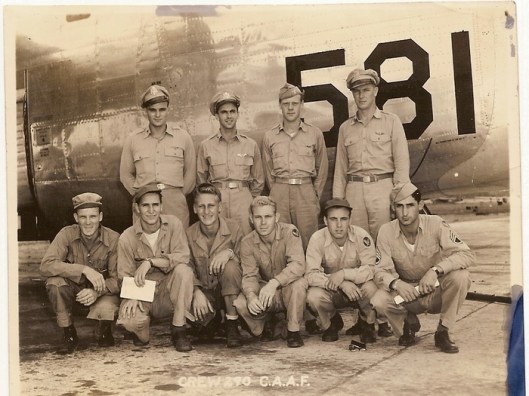
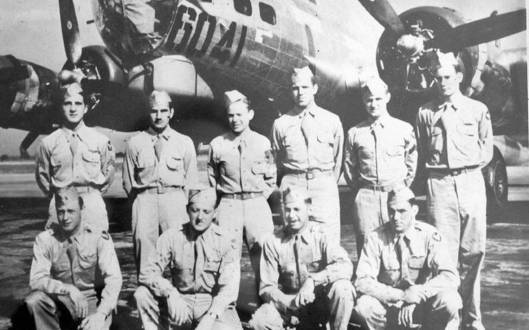
Sgt. Donal Laird, San Luis Obispo, third from left, top row, was a ball-turret gunner killed on his first combat mission in 1944. The wristwatch he wore that day was returned to his family in 2016.

At least eighteen local fliers were killed in World War II, brought down by German fighters, flak, engine malfunctions or by the mistakes they’d made in training.

Here are some of them:

https://drive.google.com/file/d/1TWlbAK0uCcNWUVefk_GZsWy5BJ16qZ1U/view?usp=sharing

But not all the stories that will be told in the book I’ve written, due out in May, are sad ones.

–Nearly 9,000 Army Air Forces cadets went through their Primary flight training at Hancock Field in Santa Maria, now the site of Hancock College. One of them was Louis Zamperini, the subject of Laura Hillenbrand’s book Unbroken. At least two would go on to become four-star Air Force generals after he war. Another 3,000 young men did their Navy pre-flight training at Cal Poly, which mostly abandoned civilian education, except for about eighty students, during the war.

–Lt. Elliott Whitlock of Arroyo Grande won a Silver Star for bringing his crippled B-17 home after a mission over Berlin in 1944. His bomb squadron’s mascot, a Tunisian donkey named Lady Moe, waited quietly each mission alongside the ground crews until Whitlock and all of his comrades who could come home had come home.

–Roy Lee Grover of Santa Maria was such a daring pilot that, after one mission near New Guinea, he dived so low in stafing a Japanese freighter that he brought the ship’s radio antenna home to base, draped around one wing of his B-25 Mitchell bomber.

–The P-38 was, at least in Europe, an inferior fighter to the vaunted P-51. It proved so for Lt. Chester Eckermann of Orcutt when the lubricant to his machine guns froze during a mission over the Alps. But the P-38 was valued for its forward armament, and Eckermann, in escorting his bombers home, found that he could intimidate German fighters by turning and pointing his ship’s nose at them. They immediately broke off contact and flew away.

–Capt. Jess Milo McChesney of Arroyo Grande crash landed twice, on both his first and final missions as a B-24 pilot in Italy, but his ship was so badly shot up that one of his crewmen later side admiringly: “I would fly through the gates of hell with that man.” McChesney later won his fifth Air Medal for flying 100 missions during the Berlin Airlift.

–TSgt Albert Lee Findley Jr., of Los Osos, was shot down twice. The second time was over Germany, and led to him spending the last months of the war as a POW. The first time was far more pleasant: his B-24 Liberator crash-landed near a village in just-liberated France, and the village adopted Findley’s aircrew, feting, feasting, and celebrating them—one villager became pen-pals with Findley’s Mom, back in Oklahoma—until finally, their commanding officer flew low over the village and dropped a canister with a stern message for Findley and his comrades to get back to base. Immediately.

–Harald Bauer, from Paso Robles, was a teenaged Luftwaffe test pilot. When a P-51 shot his jet down, he crash-landed behind American lines. Badly wounded, he was treated by U.S. Army medics. When his captors found out he was half-American, they returned Bauer to his mother’s front door in Germany, in the path of their advance. “Here’s your son, Ma’am,” the GI’s said politely.


Subscribe

  • Entries (RSS)
  • Comments (RSS)

Archives

  • January 2026
  • December 2025
  • November 2025
  • October 2025
  • September 2025
  • August 2025
  • July 2025
  • June 2025
  • May 2025
  • April 2025
  • March 2025
  • February 2025
  • January 2025
  • December 2024
  • November 2024
  • October 2024
  • September 2024
  • August 2024
  • July 2024
  • June 2024
  • May 2024
  • April 2024
  • March 2024
  • February 2024
  • January 2024
  • December 2023
  • November 2023
  • October 2023
  • September 2023
  • August 2023
  • July 2023
  • June 2023
  • May 2023
  • April 2023
  • March 2023
  • February 2023
  • January 2023
  • December 2022
  • November 2022
  • October 2022
  • September 2022
  • August 2022
  • May 2022
  • April 2022
  • March 2022
  • February 2022
  • January 2022
  • December 2021
  • November 2021
  • October 2021
  • September 2021
  • August 2021
  • July 2021
  • June 2021
  • April 2021
  • March 2021
  • February 2021
  • January 2021
  • December 2020
  • November 2020
  • August 2020
  • July 2020
  • June 2020
  • May 2020
  • April 2020
  • January 2020
  • December 2019
  • November 2019
  • October 2019
  • September 2019
  • August 2019
  • May 2019
  • April 2019
  • March 2019
  • February 2019
  • January 2019
  • December 2018
  • November 2018
  • October 2018
  • September 2018
  • July 2018
  • June 2018
  • May 2018
  • April 2018
  • March 2018
  • February 2018
  • January 2018
  • December 2017
  • November 2017
  • October 2017
  • April 2017
  • March 2017
  • December 2016
  • November 2016
  • October 2016
  • September 2016
  • August 2016
  • July 2016
  • June 2016
  • April 2016
  • March 2016
  • February 2016
  • January 2016
  • December 2015
  • November 2015
  • October 2015
  • September 2015
  • August 2015
  • July 2015
  • June 2015
  • May 2015
  • April 2015
  • March 2015
  • February 2015
  • January 2015
  • December 2014
  • November 2014
  • September 2014
  • August 2014
  • July 2014

Categories

  • American History
  • Arroyo Grande
  • California history
  • Family history
  • Film and Popular Culture
  • History
  • News
  • Personal memoirs
  • Teaching
  • The Great Depression
  • trump
  • Uncategorized
  • World War II
  • Writing

Meta

  • Create account
  • Log in

Blog at WordPress.com.

  • Subscribe Subscribed
    • A Work in Progress
    • Join 68 other subscribers
    • Already have a WordPress.com account? Log in now.
    • A Work in Progress
    • Subscribe Subscribed
    • Sign up
    • Log in
    • Report this content
    • View site in Reader
    • Manage subscriptions
    • Collapse this bar
 

Loading Comments...