
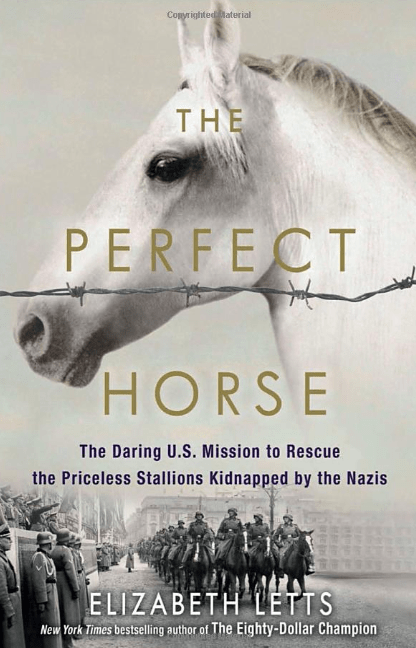
My friend Judy Cecchetti–we go back to Branch School together– posted on Facebook about how much she enjoyed the story “Sheila Varian’s Perfect Horse” from the new book.
That meant the world to me.

That story happened because of the Elizabeth Letts book The Perfect Horse. Letts has become one of my favorite authors. Lynne Olson (Citizens of London, Troublesome Young Men) is masterful at using the colorful and telling anecdote to bring a historical character alive. My favorite popular historian is Laura Hillenbrand, whose word choice is so incredibly vivid; her writing also has a marvelous rhythm. You’re so absorbed that it’s stunning to realize how much Hillenbrand is teaching you-about the world of Thoroughbred racing, for example. She wrote Seabiscuit, which is phenomenal, during an agonizing and courageous struggle with Chronic Fatigue Syndrome–she was in constant pain–and Louis Zamperini’s story in Unbroken.
All three writers, obviously, are young women.
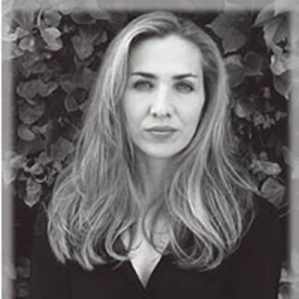
Laura Hillenbrand
I hope that the long-overdue emphasis on STEM, on teaching science and math to girls and young women, doesn’t completely overshadow our need for good writers–journalists and novelists and historians– who also happen to be young women. (That’s one reason I’m such a fan of Trib reporter Kaytlyn Leslie, a student of Janine Plassard’s when she taught journalism at Nipomo High.)
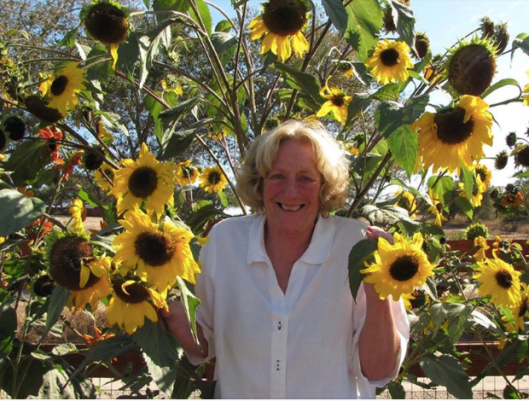
Janine Plassard
It reminds me, too, that JFK read Barbara Tuchman’s The Guns of August, about the failure in leadership that led to World War I, just before the Cuban Missile Crisis. Tuchman’s book helped to guide his thinking in October 1962, so it’s not hyperbole to say that we may very well owe our lives to a great historian who happened to be a woman.
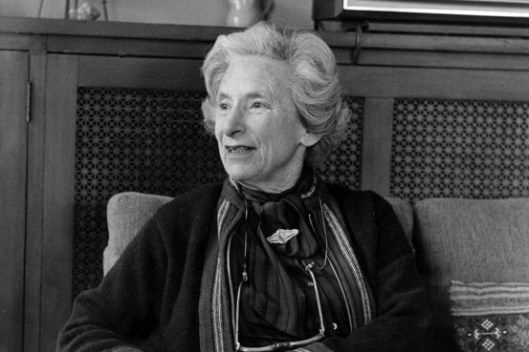
Barbara Tuchman
The Sheila story began with me asking if there might be any connection between Varian Arabians and one of the central characters in Letts’s book, Witez II. He was a famous Polish Arabian, a championship stallion, whose story was shaped by World War II, the war that began with Hitler’s invasion of Poland in September 1939.
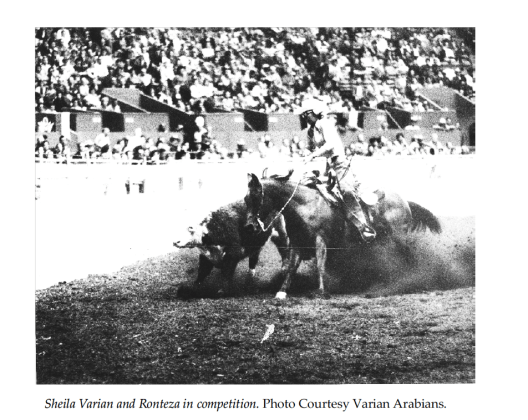
When I found out that Sheila’s mare Ronteza was Witez’s daughter, I nearly fell out of my chair. My big sister, Roberta, had ridden with Sheila, but Roberta’s Morgan mare was a product of Sid Spencer’s Lopez Canyon ranch. It was Sid who taught Sheila and her Arabian, Ronteza, how to work cattle.
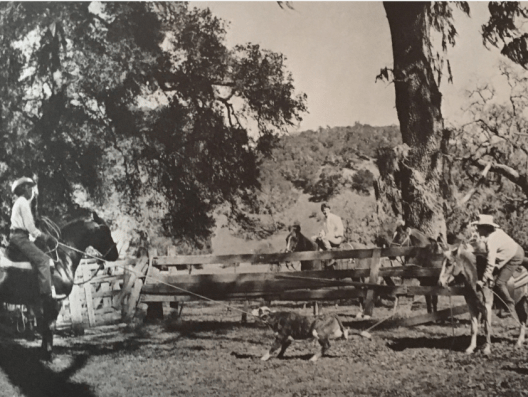
Sid Spencer, Roberta, Anne Westerman on her Welsh Pony, Lopez Canyon, about 1965. Photo by Jeanne Thwaites
The story of the American Army’s rescue of Witez and the Lipizzaner, alongside the story of Ronteza and Sheila and their miraculous Cow Palace performance, took weeks to write. It’s so hard to interweave two stories and still keep the narrative logical and understandable, so it took many, many rewrites, too.
So Judy, it’s one of my favorite stories, too. The best part might be that it happened both in World War II Europe and in, of all places, Corbett Canyon, California. And–what a coincidence!–it just happened to be a story, too, about a courageous young woman.
Finally, I am fond of the way that story made up its mind, thanks in great part to the band U2, about the way it wanted to end:
Varian remembered a moment from the Cow Palace competition vividly: at the start of one round, she could feel distinctly Ronteza’s heartbeat through the panels of the saddle. She knew then that her mare was ready. When the signal was given, when horse and rider entered the Cow Palace arena, two hearts beat as one.
 A Work in Progress