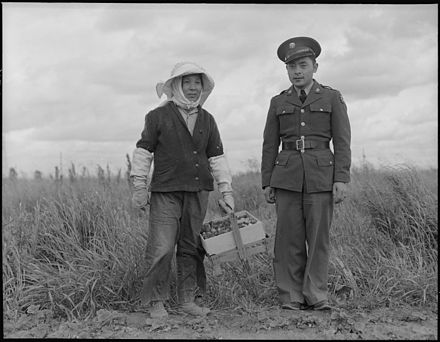
THANK YOU FOR REMINDING US THAT THE COST OF FREEDOM IS NOT FREE.
- A local woman responding to an article I wrote about a World War II veteran
* * *
“That is not what I meant at all;
That is not it, at all.”
- T.S. Eliot, “The Love Song of J. Alfred Prufrock”
The bullet that kills a soldier passes first through his mother’s heart.
- A veteran of the North Vietnamese Army (NVA)
This is a course in history, not patriotism.
- Cary Nerelli, my master teacher, Morro Bay High School
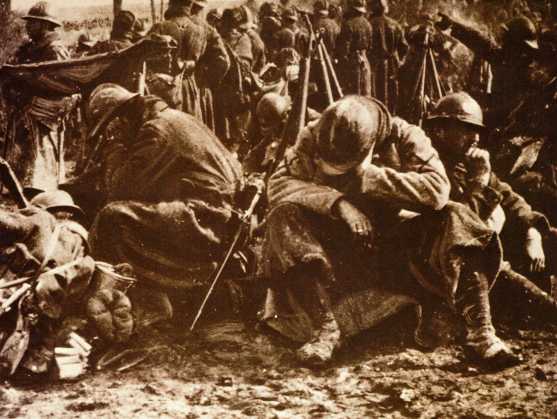
I taught history for thirty years, and I never, never ceased to get angry every spring when I taught the First World War. It was this war and its peace treaty that did so much to make World War II possible. In 2010, I took some of my students to Western Europe’s World War II battlefields but also to Verdun, site of a horrific 1916 battle that lasted over ten months. The stacked bones in the ossuary there once belonged to boys like my two sons, whose parents had cheered when they scored their first football goal.
I made it my business to help all of my students understand that idea—that war cheats us all so cruelly—and so I led them, every year in my classroom, into dark places, like Fort Douaumont at Verdun, so dark that it swallowed the light of five hundred years of Western culture. To go inside Douaumont, where 100,000 young men were killed or wounded, to study war doesn’t mean we glorify it. A few years ago, a student told me the First World War was her favorite unit. (Not mine—I much prefer La Belle Èpoque.) I asked her why, and she replied, “Now I understand how precious human life is.”
She understood precisely why I became a history teacher.
–From the introduction to World War II Arroyo Grande
But American artillery units still found many of them there—artillery spotters were nearly incoherent because there were so many targets to call in on their field radios—and the slaughter they inflicted was horrific. Seventy years later, one of the 607th’s soldiers, Frank Kunz, remembered the results in an interview with his hometown newspaper: “Christ help me. There were 6 to 8 inches of bodies and horses ground up on the road. There was nothing you could do. You had to drive through it.” People, Kunz added, don’t understand what war is.
- From a member of Arroyo Grandean Frank Gularte’s 607th Tank Destroyer Battalion, on what happened to the Germans who failed to escape through the Falaise Gap in Normandy. From World War II Arroyo Grande
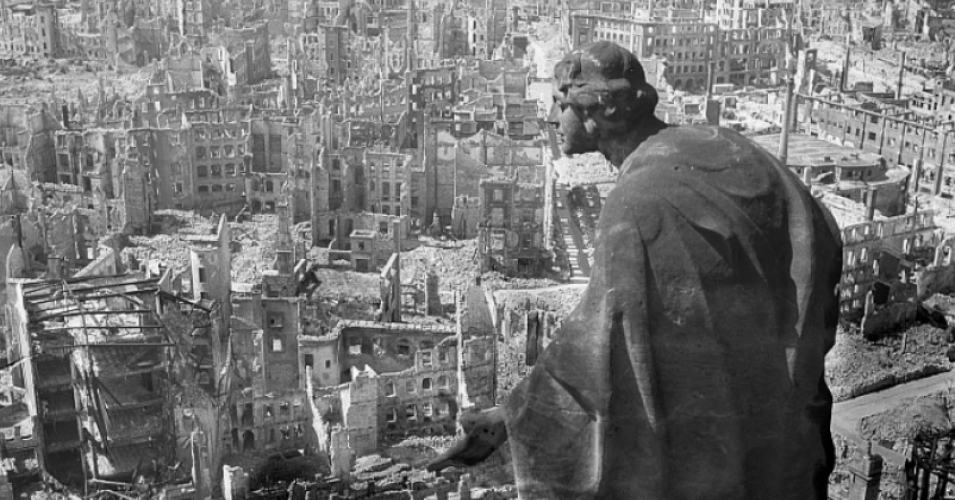
200 Arabians fled Janow Podlaski and headed west, away from the Soviets. Among them were Stained Glass and Grand Slam, two of Witez’s brothers. The exhausted horses arrived in Dresden on the night of February 13, 1945, just as the Allied command unleashed the notorious fire raid, involving over 700 British and American heavy bombers, on the ancient city.
After a wave of bombers had dropped its incendiary bombs, one of the Polish handlers watched, horrified, as Grand Slam’s tail burst into flames. He held on as best he could to the powerful horse and closed his eyes. When he dared to open them again, the flames that had engulfed Grand Slam’s tail had sputtered out and the bombers were gone. So were over half of the Polish Arabians, incinerated in the fires or asphyxiated by the oxygen-consuming firestorm the incendiaries had been intended to produce. By the time the surviving animals reached their ultimate destination in western Germany, fewer than fifty remained.
- “Sheila Varian’s Perfect Horse,” from Will This be on the Test?
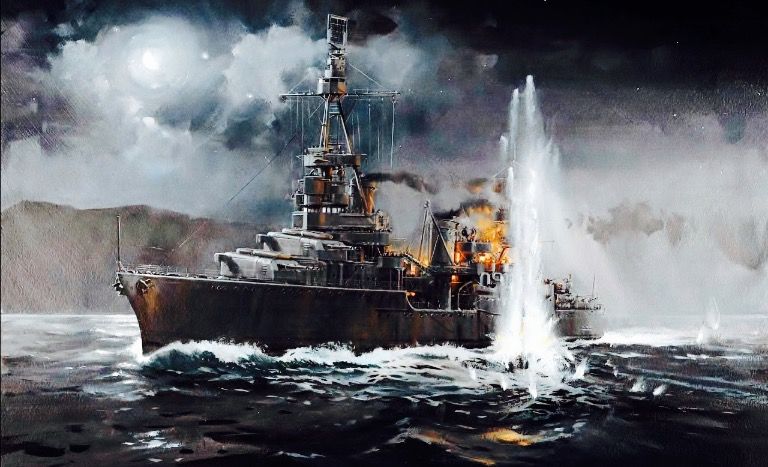
Two torpedoes struck Northampton in the engine room and stern, and the explosion that followed was so violent that men at their bridge stations on the nearby light cruiser Honolulu reacted immediately. They burst into tears.
- The night action near Guadalcanal that killed Donald Runels of Nipomo, a crewman on Northampton, from World War II Arroyo Grande. The anecdote belongs to Samuel Eliot Morrison, the official United States Navy historian of World War II
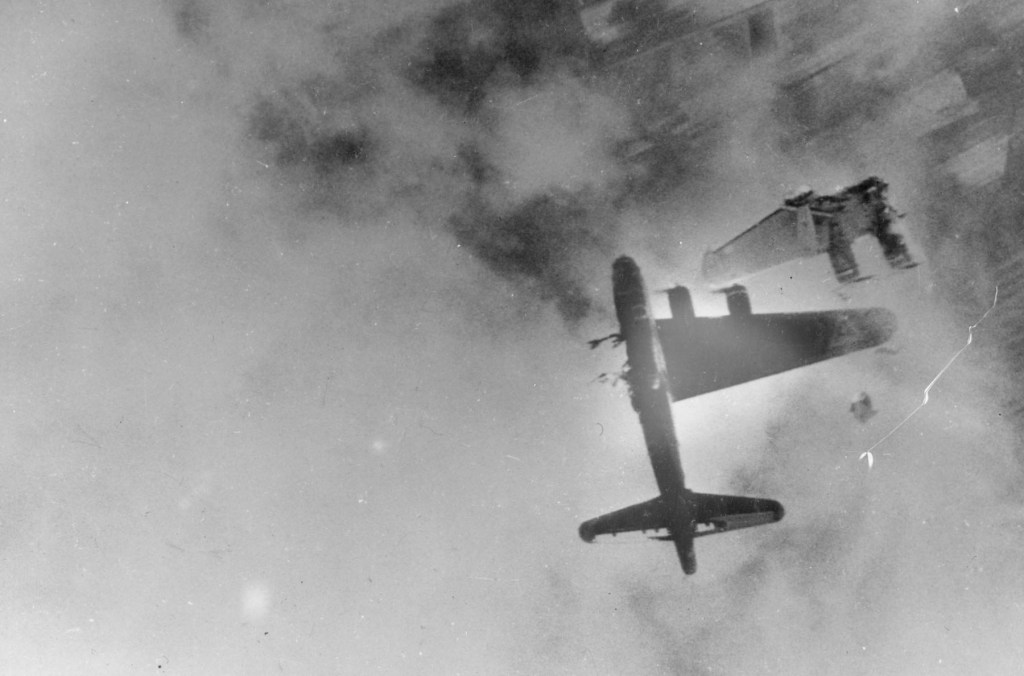
That was Hall’s first mission. He was twenty years old when he saw the three Ragged Irregular bombers plummet to earth together. Many members of his bomb group were even younger. Some of them, thanks to crafty misdirection aimed at recruiting sergeants pressured to meet their quotas, were as young as sixteen. Far below them, in German cities like Hamburg and Dresden—or in relatively obscure Japanese cities like Toyama, the size of Chattanooga, or Kagoshima (the seat of the prefecture from which most San Luis Obispo County Japanese had emigrated) the size of Richmond, Virginia—the ashen bodies of schoolchildren stained sidewalks and streets.
- On B-17 crewman Henry Hall of Cayucos, from Central Coast Aviators in World War II
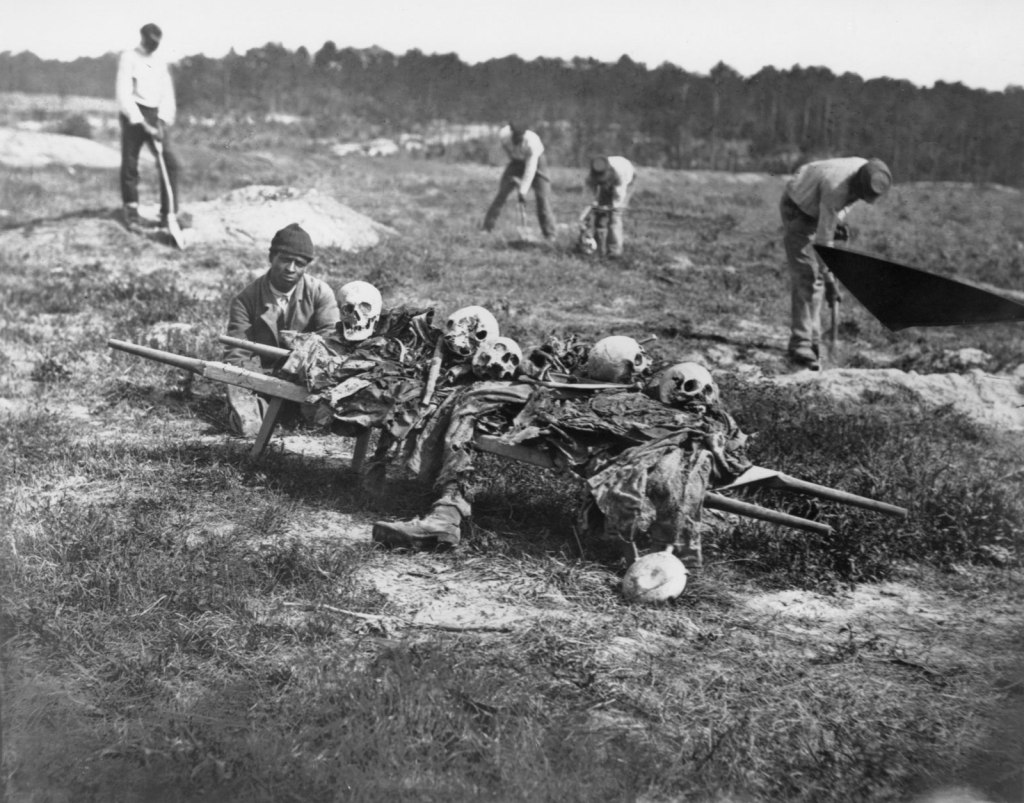
It was yet another battle, like Gettysburg, that seemed to take on a life of its own. After four days of combat, it was Adam Bair and the 60th Ohio’s turn. On the morning of June 3, the Union army, shrouded in mist, moved across the open ground that led toward the Confederate entrenchments.
The 60th was to assault Lee’s left. Unlike the general staff—coordination and communication throughout June 3 would be chaotic, and staff had not adequately scouted the ground to Lee’s front—private soldiers were fully aware of what they were up against; many wrote their names on pieces of paper and pinned them to their uniforms.
- Adam Bair, later a rancher in the Huasna Valley, fought with the 60th Ohio at this 1864 battle, Cold Harbor; 7,000 Union soldiers were killed or wounded that day. From Patriot Graves: Discovering a California Town’s Civil War Heritage
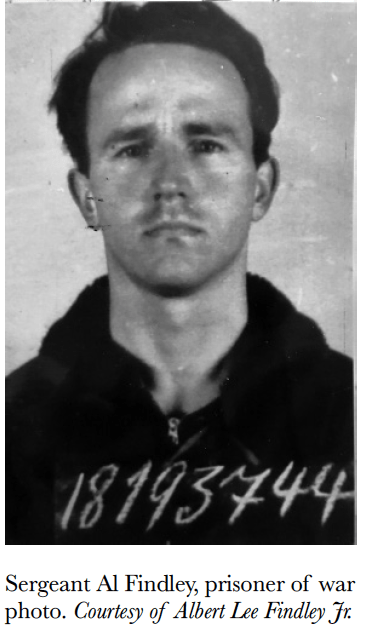
I met my pilot, Byron Johnson, from Oklahoma; my copilot, James Gill, from California; my navigator, Robert Cramer, from California; my bombardier, Nolan Willis, from California; my engineer, Morgan Fowler, from South Dakota; my nose gunner, Homer Smith, from Texas; my left gunner, Theodore Mabee, from Illinois; my right waist gunner was James Walter…and he was from some eastern state that I don’t recall, and my tail gunner was Johnny Gates—he was from some eastern state, also. That was the crew. Plus me.
It’s hard to fault Findley for not remembering every one of his crew members’ home states. The Los Osos retiree was speaking from memory in 2013, nearly seventy years after he’d met the men who became “very dear” to him.
–Findley could not remember the home states of two B-24 crewmen he had known for two years. They were killed on his 26th combat mission in February 1945. Findley would make the Air Force a career, retiring as a Command Master Sergeant. From Central Coast Aviators in World War II
Once a Bavarian woman approached Mr. Kamin, our [Arroyo Grande High School] German teacher, and his students near Munich and thanked him and them for the kindness World War II GI’s had shown her when she was a little girl. There were tears in her eyes. Of course, many of the young Americans she remembered with such emotion had died before Mr. Kamin’s students were born.
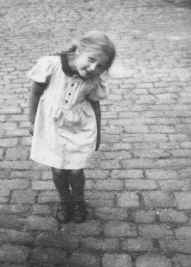
a GI with the occupation forces, 1945
Young Americans, including young men like those soldiers, may be the best evidence we have of the faith we’ve had in ourselves—the faith that we will ultimately do the right thing. In my experience, there are few images more evocative of this than visits to places like the American cemeteries in the Ardennes, at Colleville-sur-Mer above Omaha Beach and in the Punch Bowl on Oahu. Those visits never made me want to wave flags or blow trumpets.
I always think instead of men who were once wavering toddlers, who took their first steps to a little smattering of applause from their parents. They waited expectantly and sleeplessly on Christmas Eves stalked by the Great Depression. When they did sleep, it would be with a dog close by. I think of boys whose hands shook when they tried to pin the corsage on the dress of their prom date. And then they aren’t boys anymore: They’re young men fresh out of Basic whose last moments in America, maybe a few free moments in San Diego or Philadelphia, were marked by ribald laughter and 3.2 beer or poker, by any distraction that would somehow increase the distance between themselves and the troopships waiting to take them into the crucible.
So I never think of patriotism at places like Colleville-sur-Mer. I think of baby shoes and I think of mothers.
–From Will This Be on the Test? Reflections from a History Teacher