Don’t get me wrong. Covid-19 is horrific, and I’d have to go back 700 years to find its equivalent. But …
The joys of sheltering in place
27 Monday Jul 2020
Posted in Uncategorized

27 Monday Jul 2020
Posted in Uncategorized
Don’t get me wrong. Covid-19 is horrific, and I’d have to go back 700 years to find its equivalent. But …
24 Friday Jul 2020
Posted in Arroyo Grande, Uncategorized
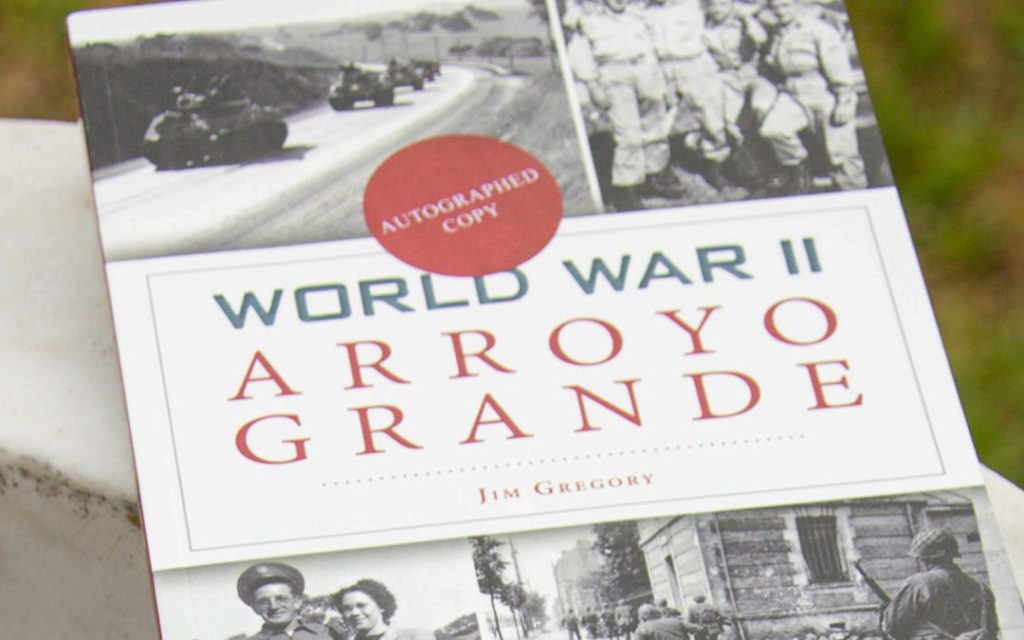
Adapted from the book World War II Arroyo Grande
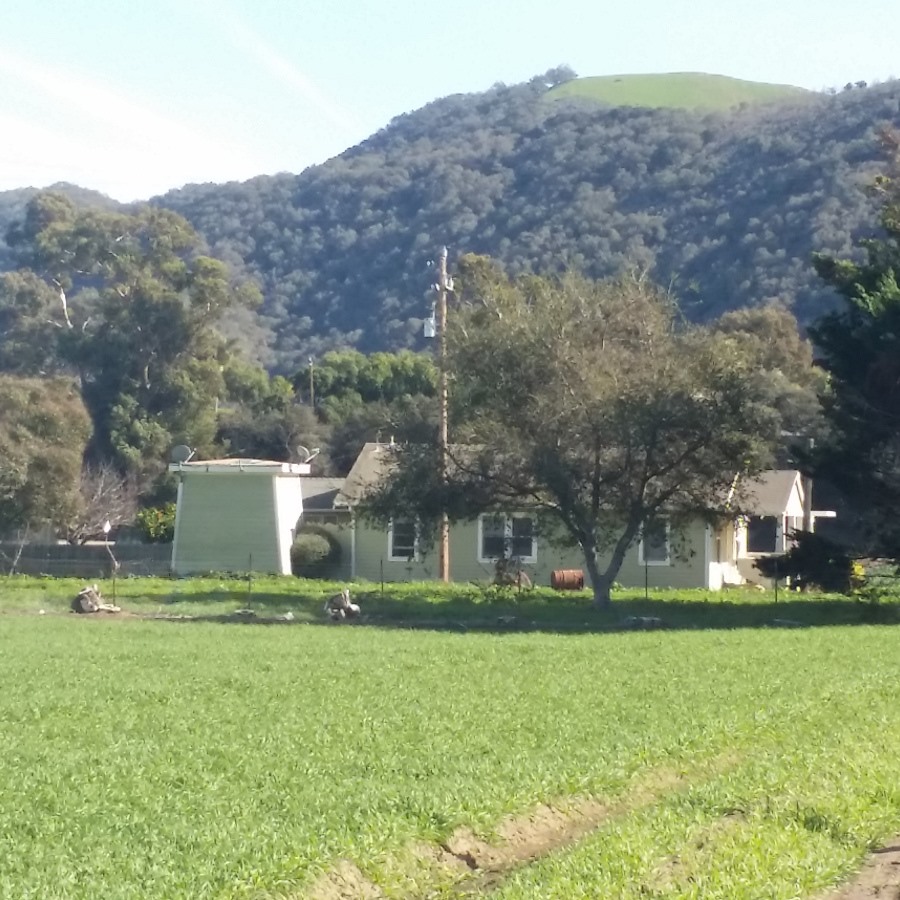
…Just east of Old Arroyo, farm fields also bordered the house where I grew up during the 1950s and 1960s. With my big brother, I walked through them on my way to school, past men cultivating crops with el cortito, the “short hoe”—backbreaking work with a tool that would be outlawed in 1974. The soil of these fields is rich and loamy, alluvial deposits that are the gift of the Arroyo Grande Creek, which flows into the Pacific Ocean seven miles from its origins in the Santa Lucia Mountains.
During my childhood, the creek was my playground. My friends and I fished for rainbow trout in little eddies and in a beaver pond adjacent to farmer Kazuo Ikeda’s cabbages. In fact, steelhead trout still swam upstream to spawn; they are now gone this far south in California. I hooked one once when I was eleven, and the shock of the big fish hitting and then fighting made me nearly drop my pole. I had never seen anything quite so beautiful and so violent—so determined to escape and to live. She did both.
It was earning a living that absorbed my father; a brilliant man with a gift for numbers, he became an accountant who was determined that his children would not suffer anything like the poverty he’d seen among his neighbors in the Ozark foothills during the Great Depression. Beyond that, he was determined that they would all get a college education. His mother, our grandmother Gregory, had been a rural schoolmarm. My education began with two severe but gifted women at the two-room Branch Elementary School, another rural school, with some seventy-odd students in grades one through eight.
Though our teachers dressed like the women in Grant Woods’s Daughters of the American Revolution, they had none of the insipid smugness of Wood’s subjects. These women were teachers because they had the calling; their lives had purpose. Each had to choreograph teaching six subjects to four grades—first through fourth in one room, fifth through eighth in the other— and so they ran a tight ship. We would learn their way, a requirement for which, many years later, I would be deeply grateful.
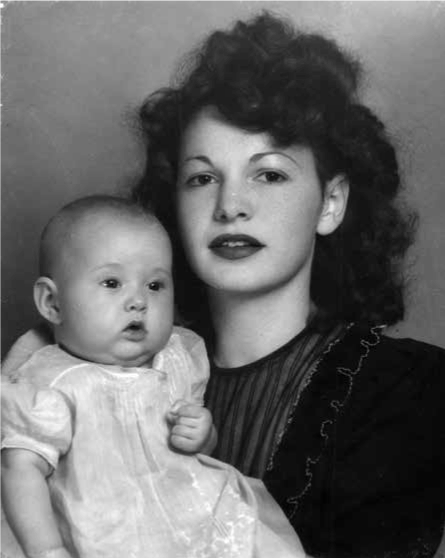
My first teacher, however, was my mother, and she was remarkable. Her childhood had been a hard one. She grew up poor. Her ne’er-do-well Irish father deserted the family when she was a toddler in an oil boomtown, Taft, just over the county line. When I was very little, we played school. She even rang a hand bell—it had been Grandmother Gregory’s—when “recess” was over. On my first day of formal education, I remember realizing, with a little shock of pleasure, that I could read the names of my classmates as our teacher, Mrs. Brown, wrote them on the blackboard.
One lesson appeared to my mother in the form of a Mexican fieldworker, a bracero, who one day walked into our front yard and up to her. She kept her garden shears at port arms and shoved me behind her skirts. The man signaled that he wanted to fill an empty wine gallon jug with water for himself and his friends, who were working the pepper field adjacent to our pasture. His face, with a tiny Cantínflas mustache, radiated good humor. My mother relaxed and filled the jug from her garden hose. The water was cold. I knew that because of what she said next.
“Now, help him carry it back.”
So I did. And I stayed awhile. These men worked for George Shannon, a man of immense warmth, and on later visits to their barracks at Shannon’s farm—it smelled of earth and Aqua Velva and laundry soap—I learned a little Spanish from the braceros. They spread snapshots across their bunks of wives and girlfriends and children, and they laughed when I tried out my new words in their language. That encounter would lead to my college studies’ focus, the history of Mexico and Latin America.
Year later, a Spanish professor—I am ashamed at how much of the language I’ve forgotten– at my Midwestern college took me aside after class and told me this:
“Mr. Gregory, you have a pronounced Mexican accent.”
It was one of the finest compliments I’ve ever received.
In the early summer of 1944—when Gen. Dwight Eisenhower receives his weather officer’s report for June 6 and says simply, “OK, we’ll go,” when Rome falls to Mark Clark’s armies and when horrified marines watch Japanese civilians leap to their deaths from the cliffs of Saipan—the war, for Americans at home, was both distant and, for grieving families, painfully intimate, but even the war could not touch the work to be done.
That month, in the upper Arroyo Grande Valley of coastal California, this is what you would see, possibly through the dense, cold morning fog: labor contractors drop off pickup loads of fieldworkers at the Harris Bridge, which spans the creek that nourishes and gives the valley its name.
The workers cross the bridge whistling, an incredibly beautiful, almost baroque whistling of Mexican folk tunes from the time of the revolution or love songs, as they walk down to the fields to their work with their lunches— wine jugs filled with drinking water and perhaps chorizo-and-egg burritos wrapped in wax paper, fuel for the kind of physical work that would make most men sit in the freshly turned field gasping within fifteen minutes and woefully regarding their quickly blistered hands.
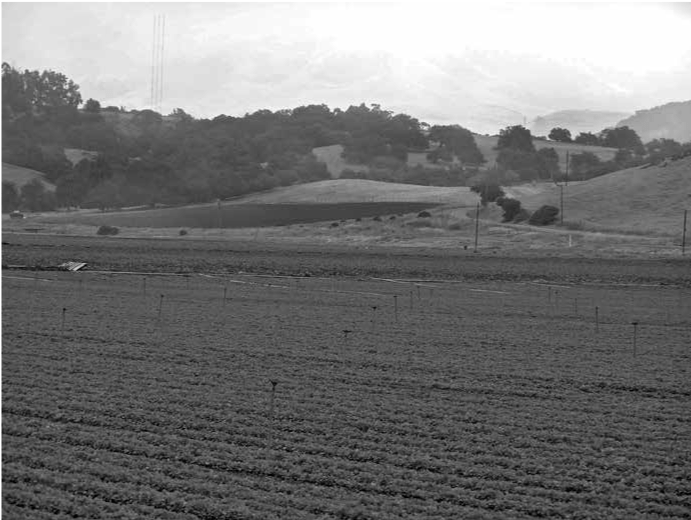
Their summer work might be in a new bean field, where the whistling would eventually stop because it is such a tax on men who work hard, whose breathing soon becomes laborious and therefore precious. To begin a newly planted field of beans, the fieldworkers have to drive wooden stakes into precise parade-ground lines along the furrows, so that the bean vines can use the stakes to climb and twist—they will eventually bear delicate, bell-shaped flowers that stretch toward the sun. The sun invariably appears in late morning, when it burns the sea fog away, and the colors of the valley— wheaten hills and verdant bottomland where the crop is in—are reborn, vivid and sharply focused.
To drive the wooden stakes, the fieldworkers use a heavy metal tube, a driver, with a handle attached that resembles that of an old-time pump primer that nineteenth-century settlers used to draw water from the ground. So the whistling stops and is replaced by the rhythmic ring of the stake drivers as the workers pound hundreds of stakes into the field.
It is a musical sound. But of course, what you cannot hear are the grunts of the men at each stroke of the stake driver; what you cannot feel is the enormous weight that exhausted arms and shoulders soon take on; and what you cannot avoid, if you think about it sensibly, is admiration for the men who feed you.
Since World War II, agriculture here has changed—pole beans and the seemingly limitless groves of walnut trees that once competed with row crops are gone, the latter victims of a malevolent infestation of insect larvae. Today, farmers grow more exotic crops, like bok choy and kale, and along the hillsides given over to beef cattle as far back as the beginning of the nineteenth century, there are new farmers and new rows of wine grapes, profitable, lovely and greedy for water—a commodity that isn’t plentiful in California—multiplying every year. The beef cattle haven’t dominated the coastal hills since the 1860s, when the drought that periodically afflicts the state hit as hard as it ever has. The cattle, either killed outright by ravenous coyotes or mountain lions come down from distant folds in the hills or dead of thirst and hunger, would have covered the hills with their bones.
It was that kind of drought that may have brought a fieldworker, whose family had lived for generations in New Mexico, to these coastal valleys in 1940. Much of his native state in the years before had been swept away by the Dust Bowl. Winds had carried the copper-red soil as far east as the Mid- Atlantic to drop it, like gritty rain from a place that had none, onto ships still sailing freely between continents.
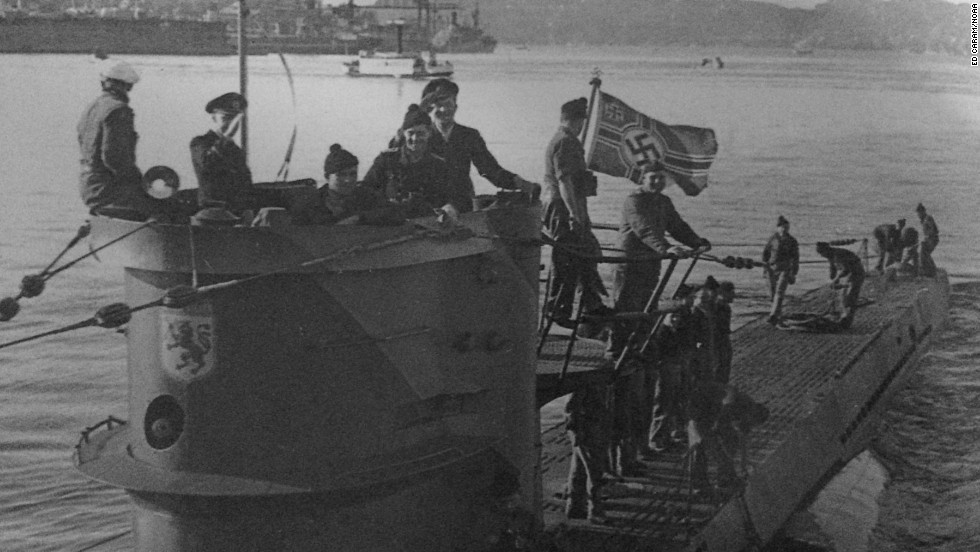
Those ships would lose their freedom in the years immediately after, and the coyotes that hunted them without fear were U-boats come out of their lairs in Kiel and later in Lorient. U-boat captains called this the “Happy Time.” The U-boats would someday kill that young fieldworker, if indirectly, as part of an inexorable chain of events that would lead him to Normandy, so far away from the fields that border Arroyo Grande Creek, and to pastures bound by hedges and grazed by fat dairy cows, cows that lowed piteously to be milked in what had become killing zones. One of them, dead in the crossfire, may have provided scant cover from the German machine guns that harvested crops of young men for fieldworker, now rifleman, Private Domingo Martinez.

19 Sunday Jul 2020
Posted in Uncategorized
I am constantly amazed by the hardships of frontier life in our county. Infant and child mortality statistics were horrific: Mr. and Mrs. William Dana of Rancho Nipomo lost 11 of their 21 children, a statistic comparable, a century before, to Johann Sebastian Bach’s family. One little girl, named for Dana’s sister, must have been especially beloved. Adeline is buried in the sanctuary wall of Mission San Luis Obispo.
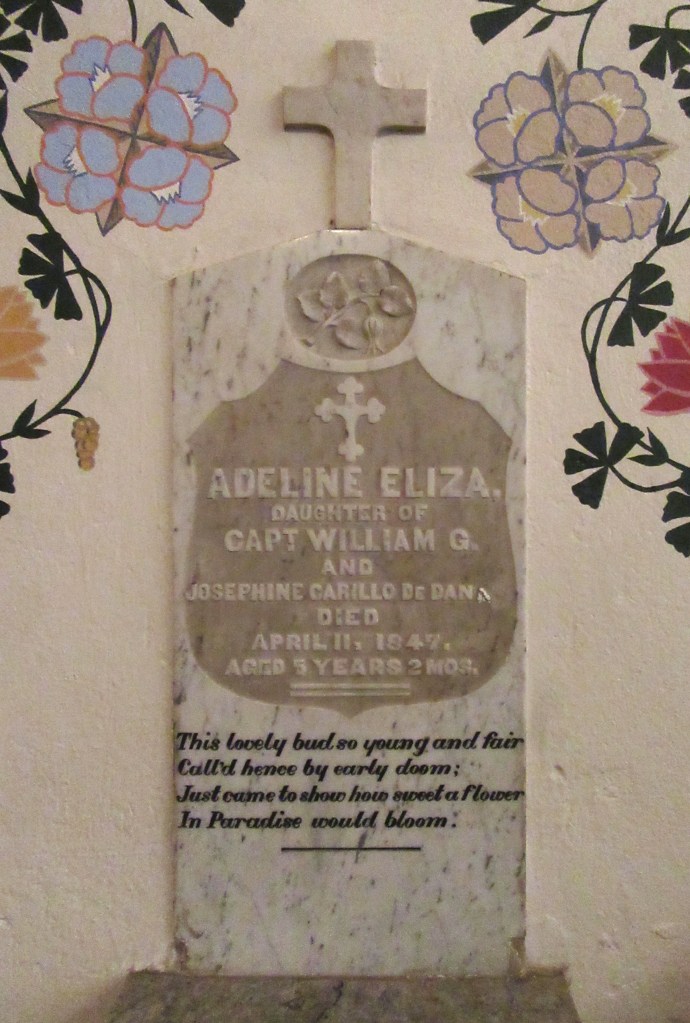
It’s pretty clear that the Danas adored their children. [And that Mr. Dana adored his wife, Josephine Carrillo de Dana. When the gentlemen adjourned after dinner for brandy and cigars—this is how Dana might’ve heard the news of the 1848 gold strike at Sutter’s Mill— she, like many Californio women, joined them.] One story has another daughter climbing up to the little cupola of the family adobe, sited on one of the most beautiful spots in the county, to direct one of the rancho’s vaqueros to rope for her the horse she wanted to ride that day.
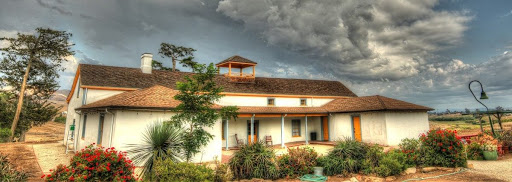
Another Dana, a little boy, hasn’t left Rancho Nipomo. Docents and volunteers still see him from time to time: he’s solid and real but his visits are very brief.
Deaths like these among the Dana family came at a time when, thanks largely to better diet, infant and child mortality among the middle classes of Europe and America was declining rapidly. We would be shocked at the detachment between parents and their children in the centuries before the Victorian Era (Francis Branch, Arroyo Grande’s founder and William Dana’s friend, came to the Valley in 1837, the same year that Victoria ascended the throne.) That detachment was a function of mortality among children: Parents could not afford to invest emotionally in children who were likely to die.
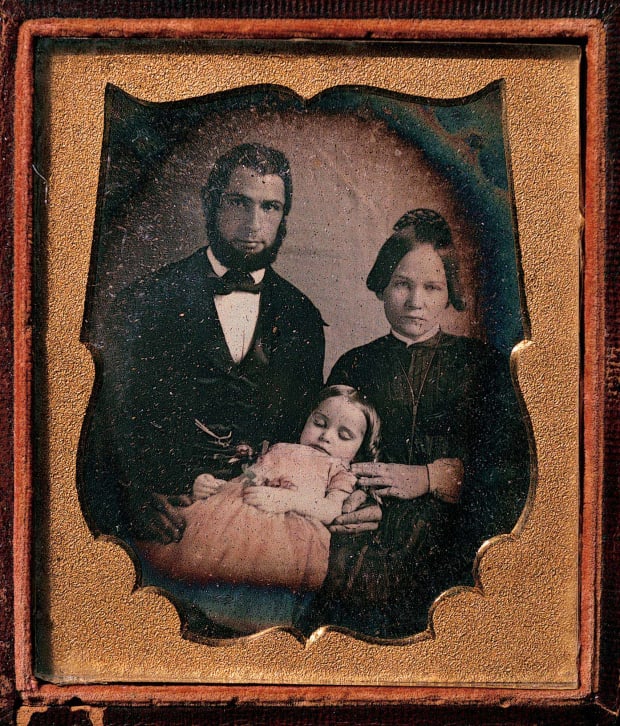
By the 1860s, that had changed. It’s macabre to us, but by then photography was common enough so that affluent parents who’d lost a little girl or boy paid to have them photographed. They weren’t willing to let them go.
In the summer of 1862, Francis Branch, by now the wealthiest man in the county, with tens of thousands of acres as his portfolio, was away on business in San Francisco when one of Rancho Santa Manuela’s vaqueros found him and told him that a traveler passing through had brought smallpox to the ranchero’s family.
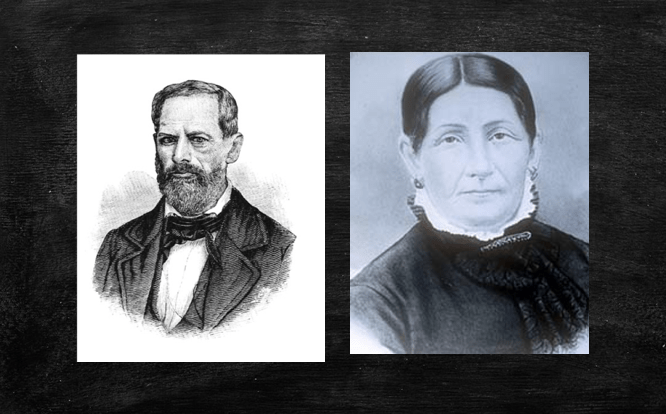
Branch rode hard—the man must have been desperate—to get home to his wife, Manuela, and his children. By the time he got to Santa Manuela (the ranch house was sited on a hilltop just below today’s Branch School) two of his girls were dead and a third died soon after. They ranged in age from five to sixteen.
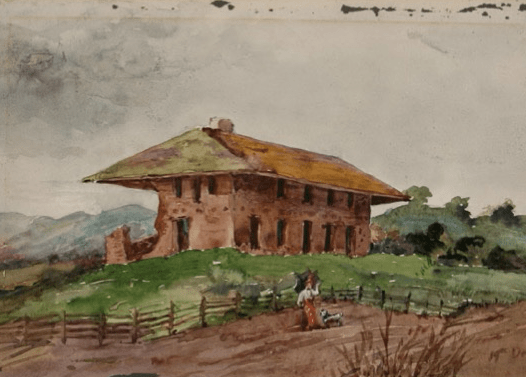
The next year, a drought came that killed thousands of Branch’s cattle. He lost the modern equivalent of eight million dollars.
Bad as it was, the drought wasn’t the central tragedy of Branch’s life.
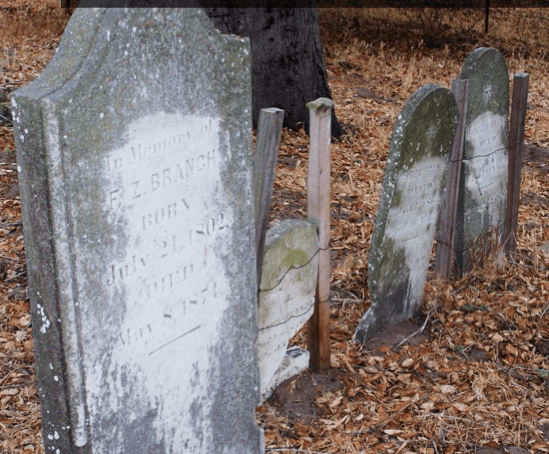
Next to his big tombstone in the family graveyard are the smaller tombstones of the three daughters. Branch died eight years after the smallpox had come to the big adobe atop the hill. When his family laid the great man to rest, they made sure he was close to his little girls.
Posted in Film and Popular Culture, Uncategorized
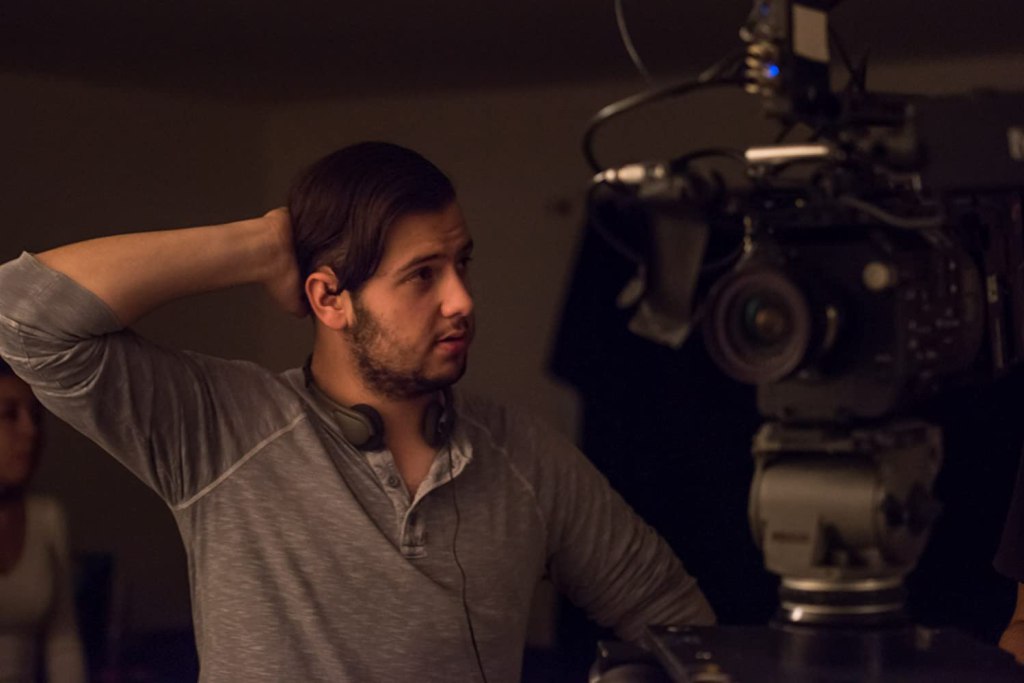
One of the great joys of my teaching career was getting approached by this young man when he was a junior at Arroyo Grande High School. He had the sheer audacity—the kind that’s required of directors—to ask me to design a high school semester course in film history.
Which I did, because it was Barry’s idea, which made it an honor.
I once designed a course in Cultural Anthropology, so this was only my second attempt at inventing a class from scratch. But the Grand Poobahs at UC Berkley approved that course and, to my delight, they approved this one, too.
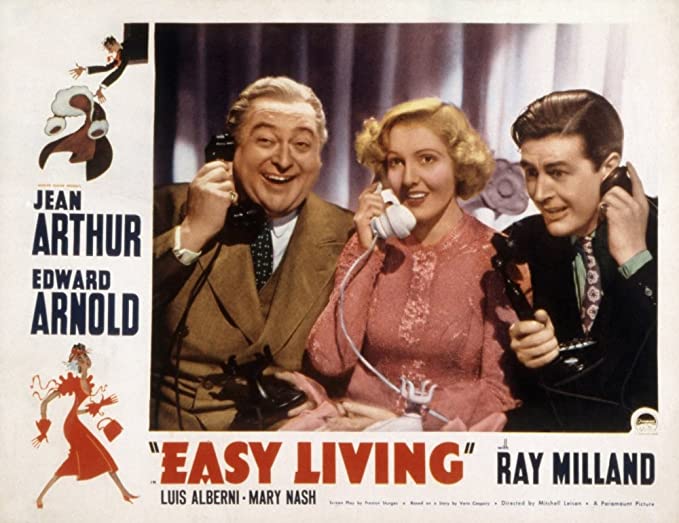
Designing the film course took me a long time, but I don’t much mind creating things. The only sadness was that I didn’t have room on my schedule to teach it—or to watch again films ranging from Chaplin’s The Gold Rush to Preston Sturges’ Easy Living (I have a great fondness for the actress Jean Arthur, who also finds James Stewart’s courage for him in Mr. Smith Goes to Washington) to John Ford’s The Searchers to Ridley Scott’s Blade Runner.
But I was pretty proud of myself—almost but not nearly as much as I am of Barry, a now-seasoned professional who directs and writes screenplays. He is possessed of immense courage.
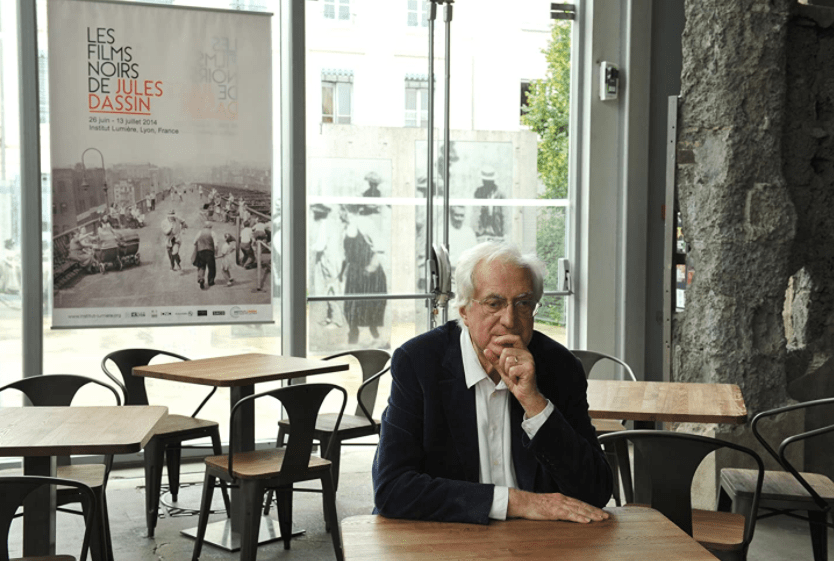
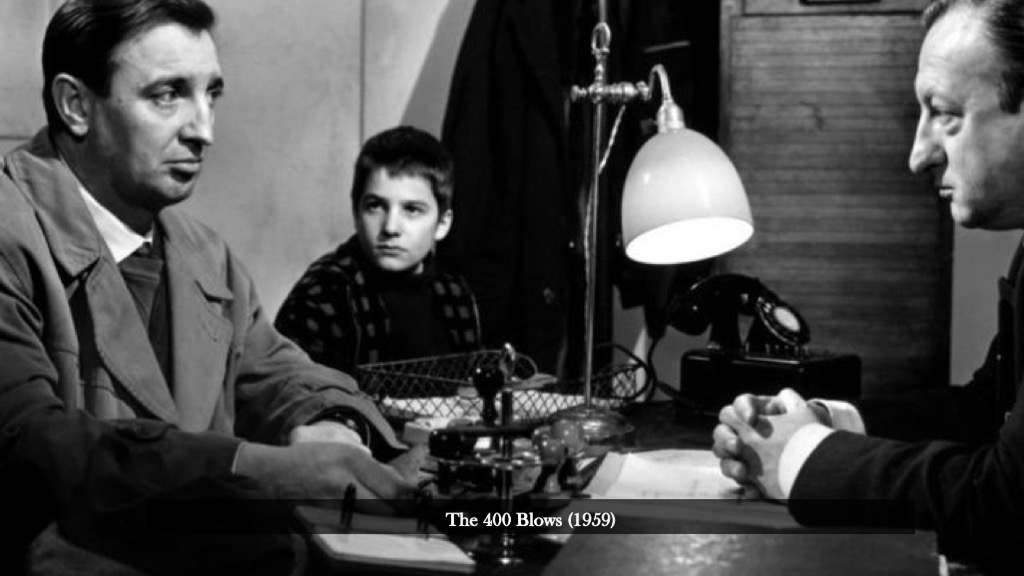
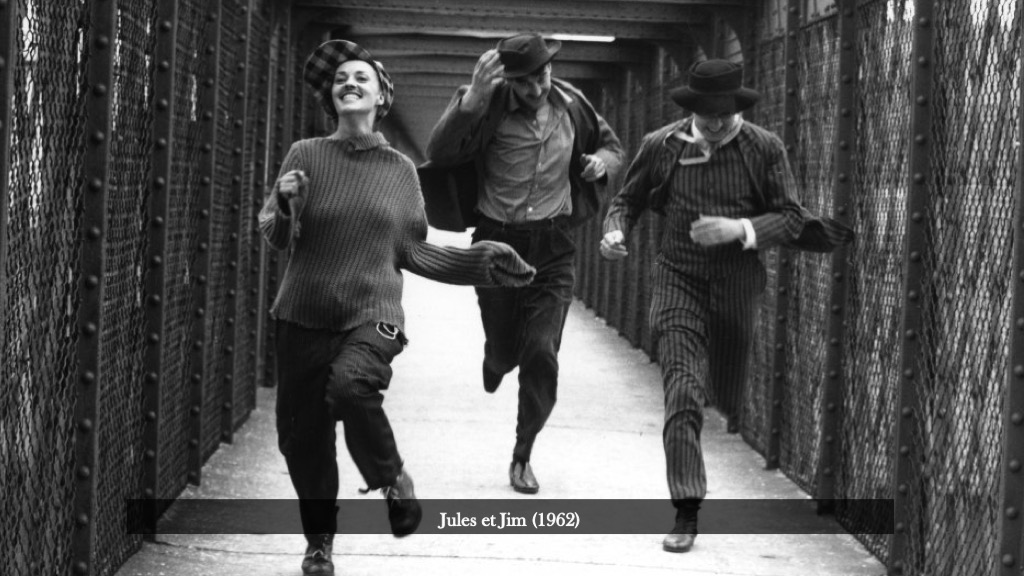
Last night, I had an immense and badly-needed dose of humility. I was merely channel-surfing when—damn you, PBS!—I tuned in, midway, into a three-hour documentary from 2016, My Journey through French Cinema, about the critic Bertrand Tavernier.
No, I had no idea who he was.
The film was subtitled, but the French the narrators spoke bore no resemblance to the proper names I was reading in the subtitles. I was always sorry that I did not take French in my years as an AGHS student. The teacher, Mrs. Koehn, was enormously attractive to us teenaged boys. She took to driving a convertible MG at high speed in her later years, which endeared her to me in a whole new way when she became my teaching colleague.
But this documentary cured me of learning French. I could never force my American mouth to make sounds like that.
That’s not the point. The point that was brought home to me was how little I actually know about film.
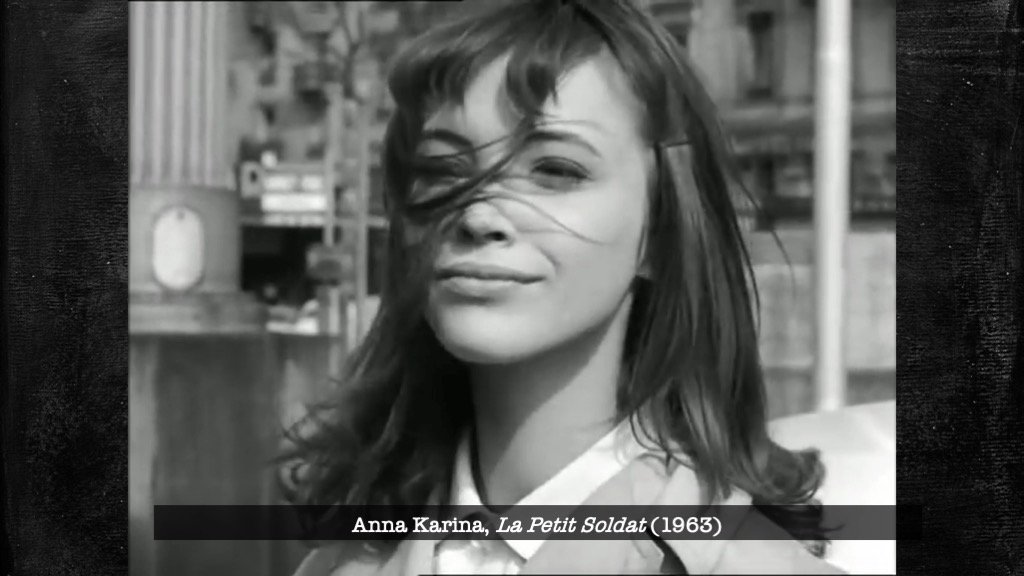
The scenes they selected took my breath away—I don’t know enough yet to connect the scenes with their films—but I saw an interior scene with both the camera and three characters in constant motion until a lovely young woman suddenly uses a bottle to bludgeon her older lover unconscious. I saw another man die in a rollover car accident shot from both outside and inside the car, punctuated, at its end, by a surviving tire in its rim careening across the road. There were criminal escapes through tunnels and sudden screaming matches between couples who only seemed comfortably married and a Paris street scene with two young women chanting casually amid the sidewalk crowds they pass, while heads turn in their passage. There were exterior scenes, young couples walking beneath trees and holding hands in dappled sunlight, that would’ve made Renoir weep. There was a sudden and violent street robbery, shot in Milan with a hidden camera, in front of a shocked crowd who would learn only much later that they’d been film extras.
There was Belmondo, an ultra-cool alloy of Bogart and Paul Newman.
There were, of course, entire Gauloises assembly lines of cigarettes smoked.
I watched all of this without breathing too much. It was a wonderful humbling to realize how much you don’t know.
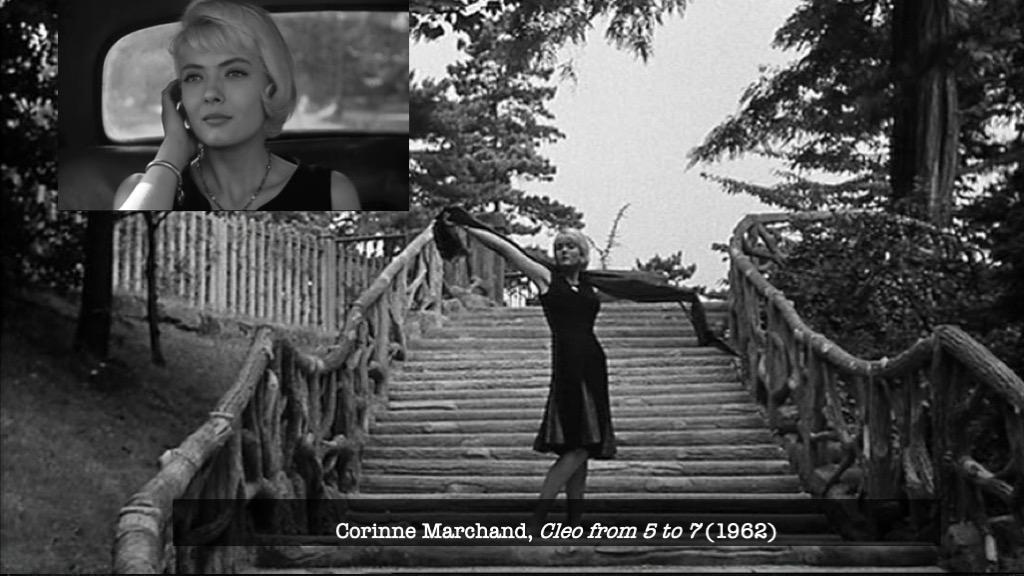
It was touching to feel your heart melt a little in watching the actress Corinne Marchand, her character doomed by cancer, sing as she descends a staircase in one of Hausmann’s Paris parks in a scene, filmed so gracefully, and sixty years ago, that it makes you fall in love with her.
It was exciting to know that I, even at sixty-eight, have so many films yet to watch, and that they are gifts from the French.
I spent most of my life dismissive of the French, in the American manner, until my students and I, ten years ago, took a trip across northern France where the Americans and Germans had left behind a path of destruction, in 1944 and 1945, from Carentan to Metz. In the ferocity of the fighting, entire towns were reduced to splinters by bombers and shellfire and in Norman pasturelands, GI’s took scant cover in the shelter of dairy cows, their udders still filled with milk, who’d been butchered by machine-gun fire.
We were typical tourists on our trip sixty-five years after that terrible war—in European history, that’s a hiccup— when the Frenchwoman, on discovering that we were Americans, insisted on giving us a tour of St Joan’s cathedral at Reims. She was insistent precisely because we were Americans.
This was the trip when I learned to love France and the French.
This was the trip where we visited the 1916 battlefield at Verdun. Verdun will cure you forever of the myth, broadcast by simpletons, that the French are cowards. The battle lasted nine months. The taking of one fortress—Douaumont—took 100,000 lives.
There is a vast ossuary beneath the Verdun Memorial. You can see, just below plexiglas panels, enormous stacks of the bones of French and German soldiers. These are the macabre remains of a generation of young men who were lost forever to their parents. And to us.
An attendant took me aside as we toured the Memorial. “Your students are so respectful,” she whispered to me.
So that moment, and the visit to Reims, cured me forever of the belief that the French are cold people. The woman who guided us through the cathedral was so immensely proud that she was French and so immensely happy that we were Americans.
My homework, for her, will be watching the French New Wave. Merci, my friend.



07 Tuesday Jul 2020
Posted in Uncategorized




 A Work in Progress