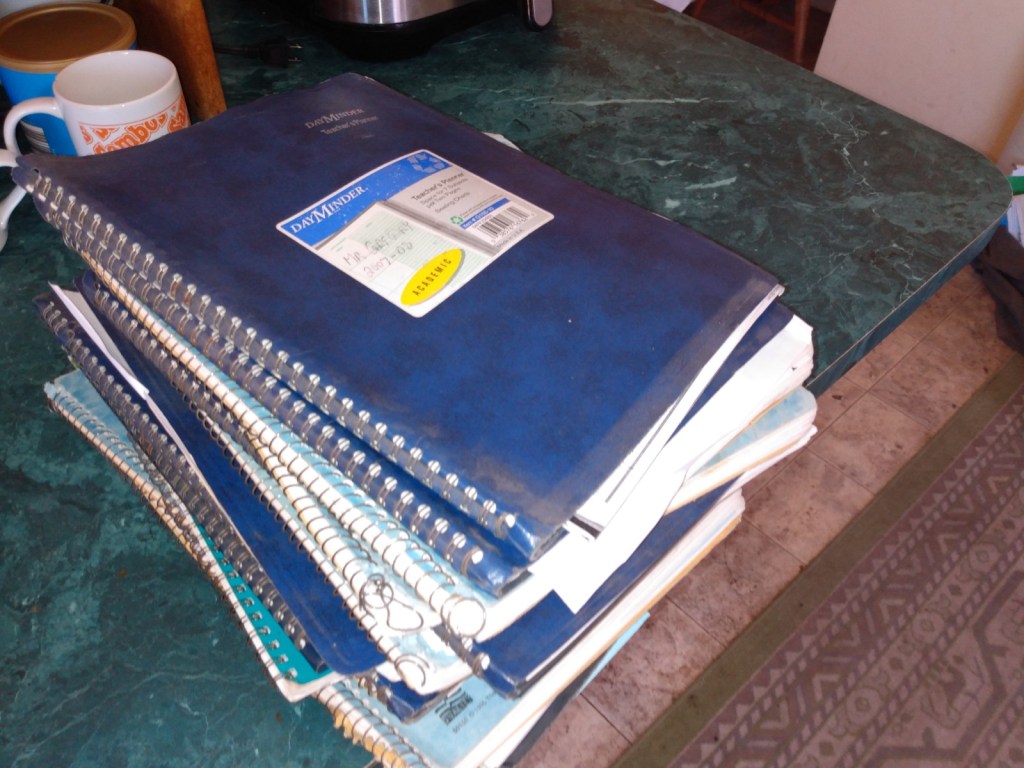
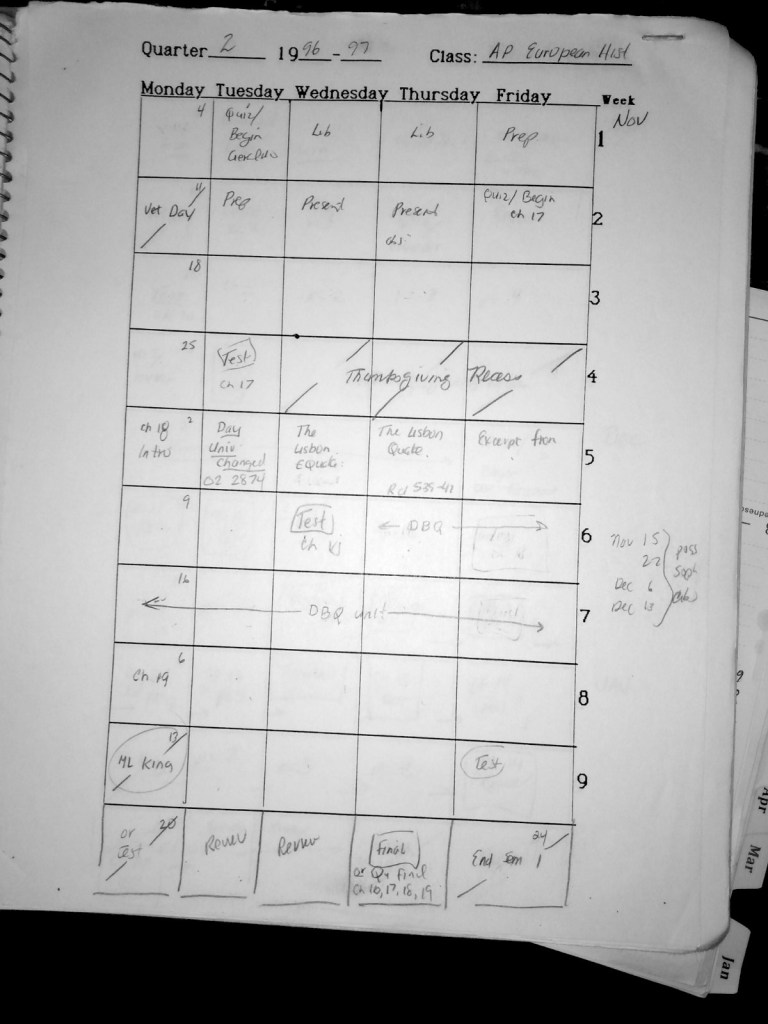
When I was in the garage today, I found a stack of my old lesson plan books. These represent about half the books from my teaching career.But planning happens in stages. First, you plan the quarter.And then you plan the month.
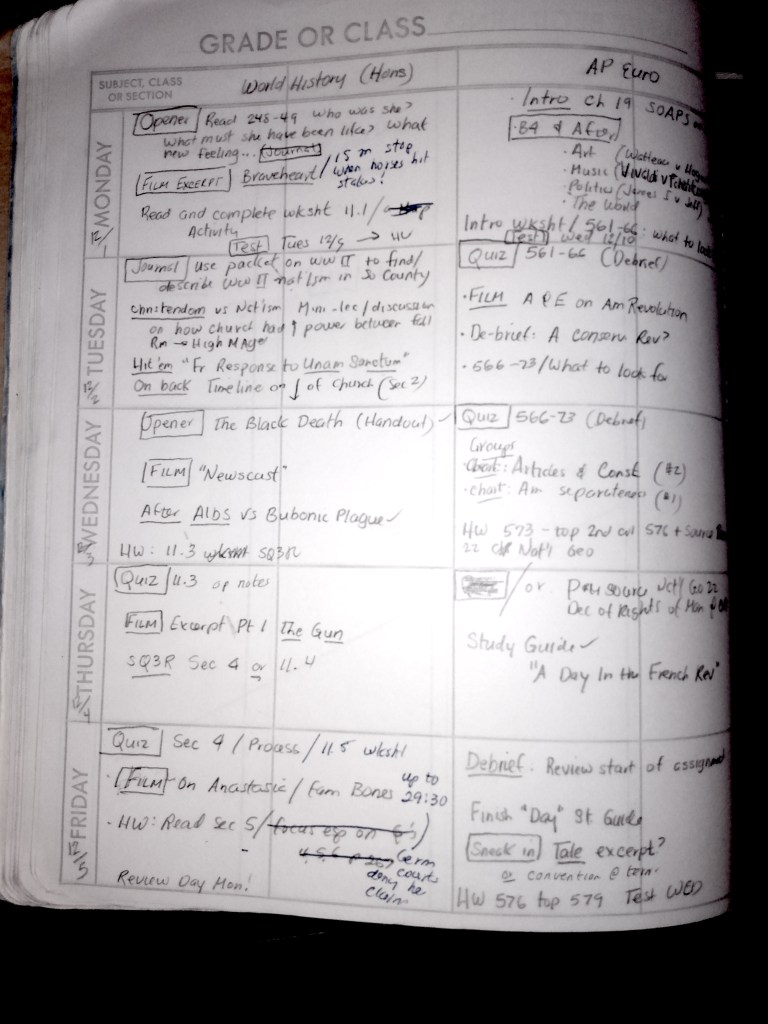
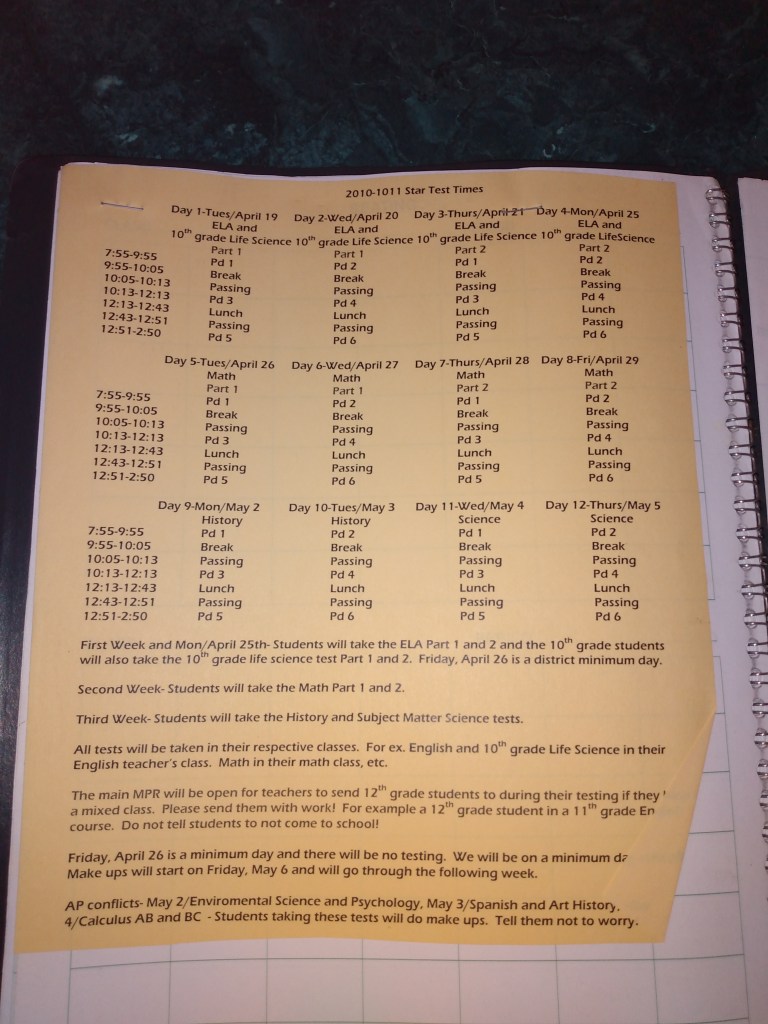
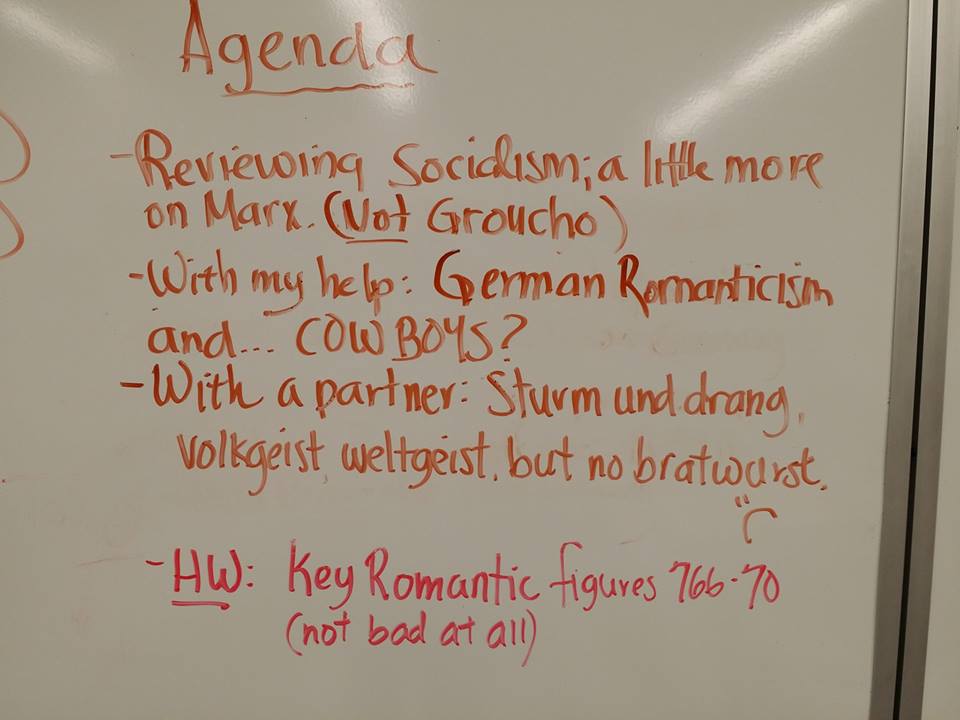
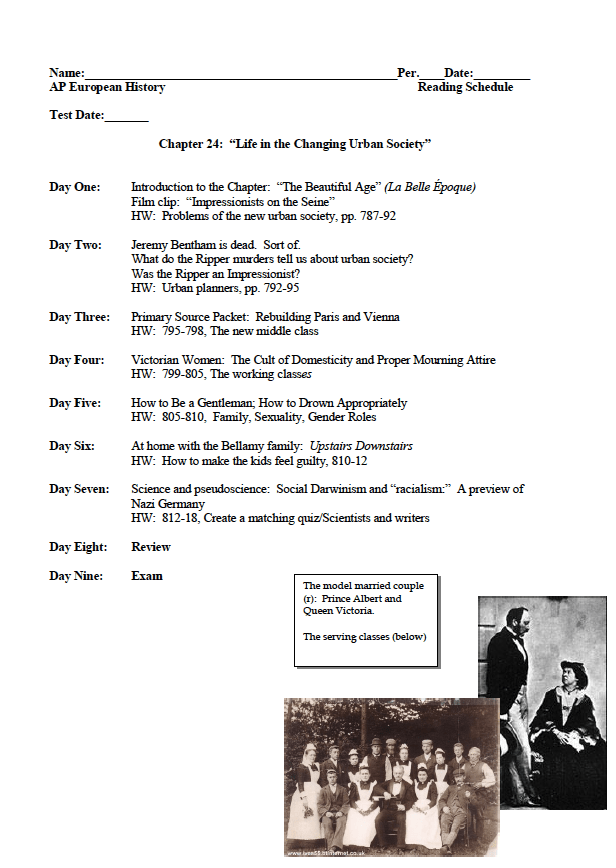
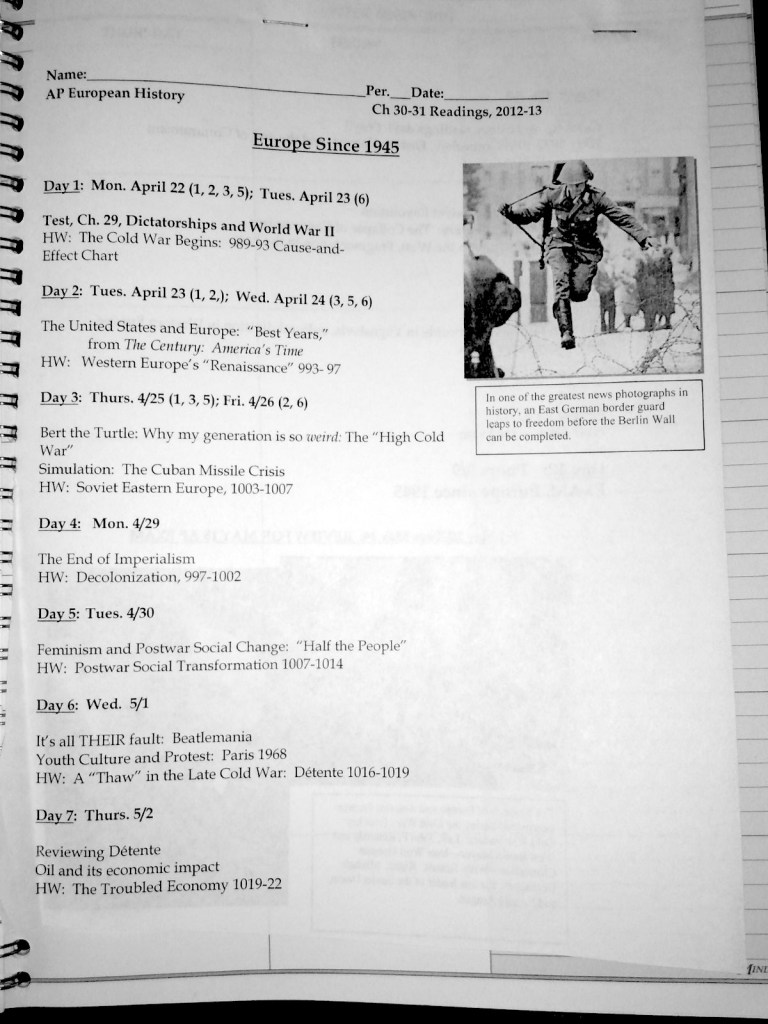
And then the unit, in this case, two units from European history, structured around the assigned readings. The lesson will usually augment or expand the homework readings, which they read. Sometimes.Now you’re ready for the weekly plans. These are what you find in the plan book. Each block (the top is vertical; the bottom horizontal) represents a “prep,” or academic class. I usually had two preps at AGHS; at a smaller school, like Mission, I usually had three and once I had four.All that planning has to take into account a multitude of interruptions. This is the schedule for the old state STAR tests, which took up several days. There was also the CAHSEE test in the fall, for sophs (two days), hearing and vision check days, fire drills, accidental fire drills, when the alarm went off by itself (once because of burnt churros in an office microwave), active shooter drills (always depressing) and the never-to-be missed Josten’s Ring Presentation.You always want the lesson’s objectives up on the whiteboard or TV monitor. This was a fun lesson, but right after the socialism review, I introduced them to German Romanticism with the scene from Bambi where Mother is uh…ah…ooh…you know. They Cowboys saved the lesson. Germans love cowboys.
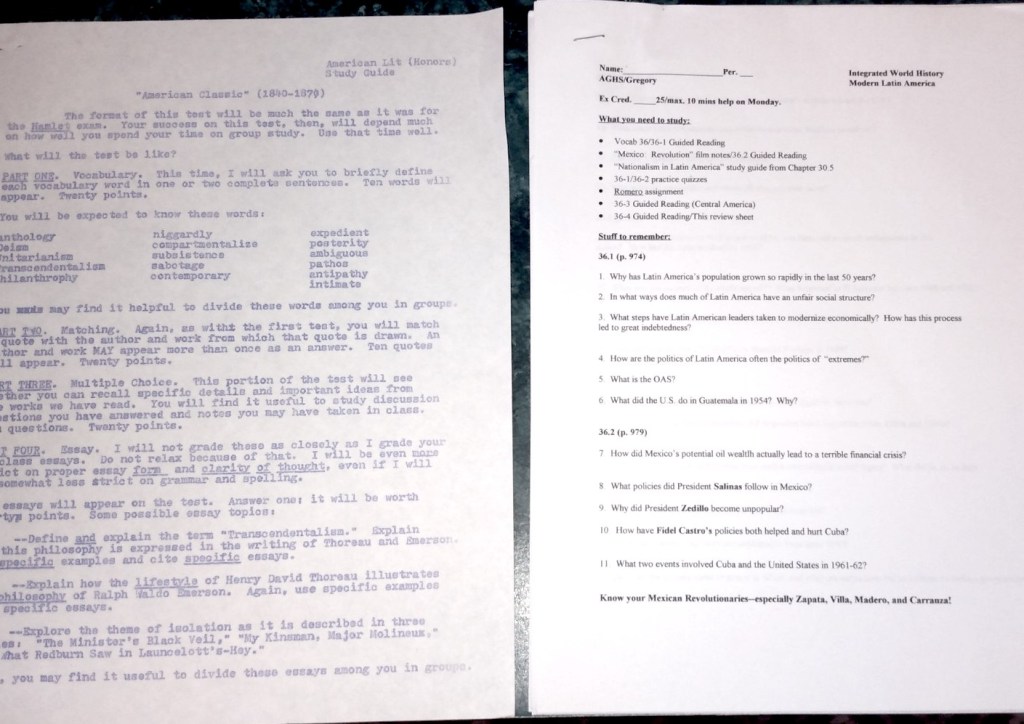
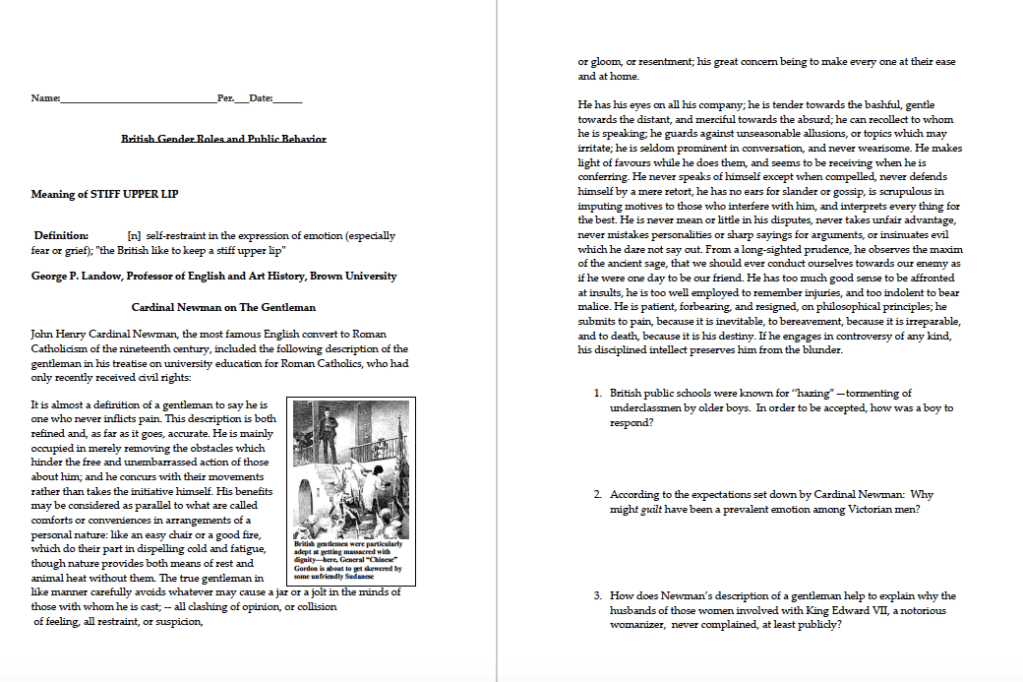
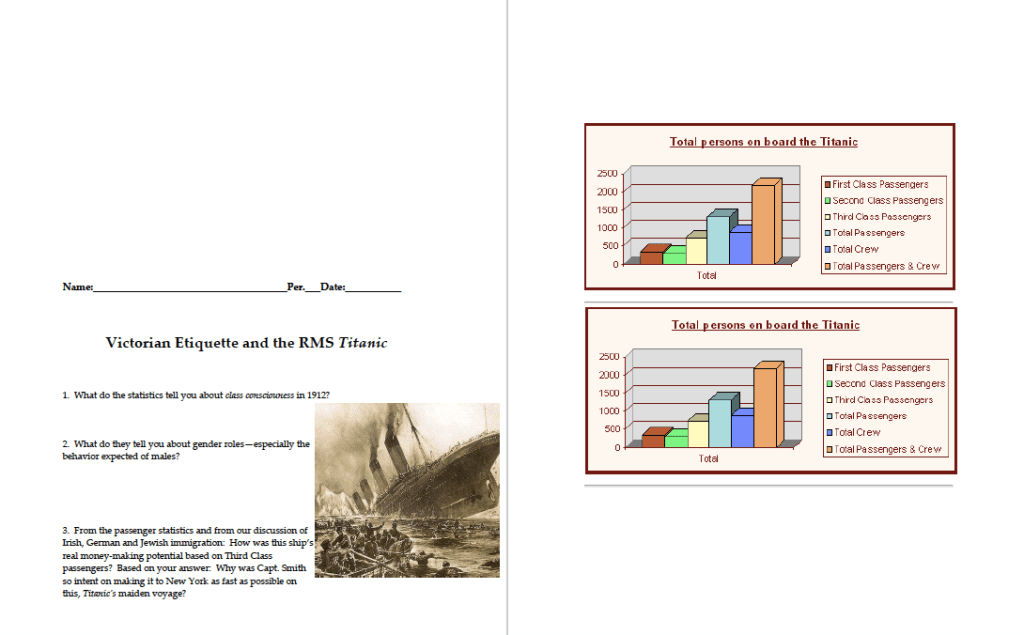
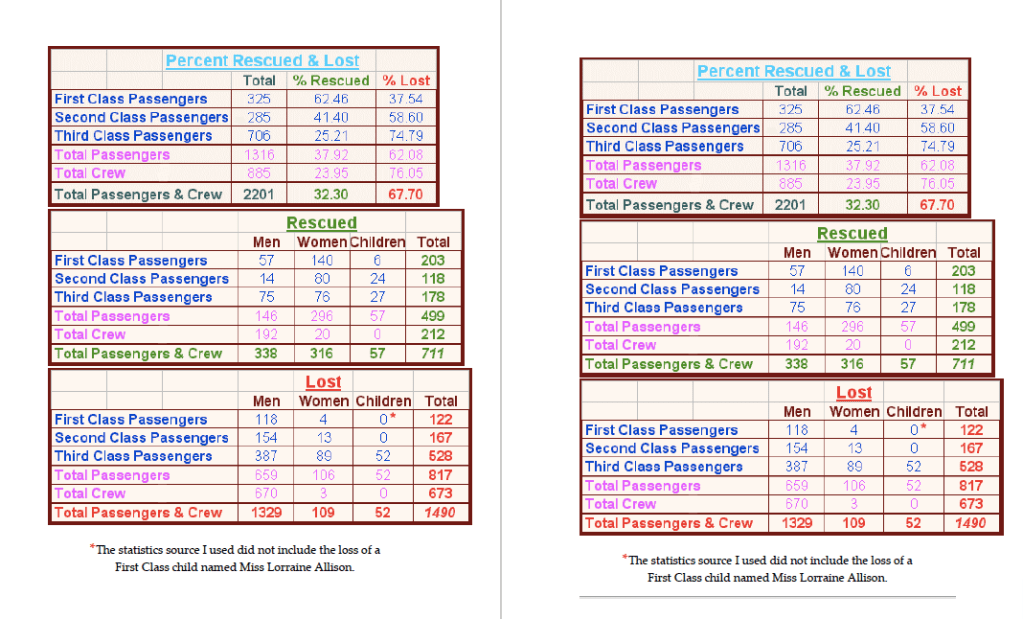
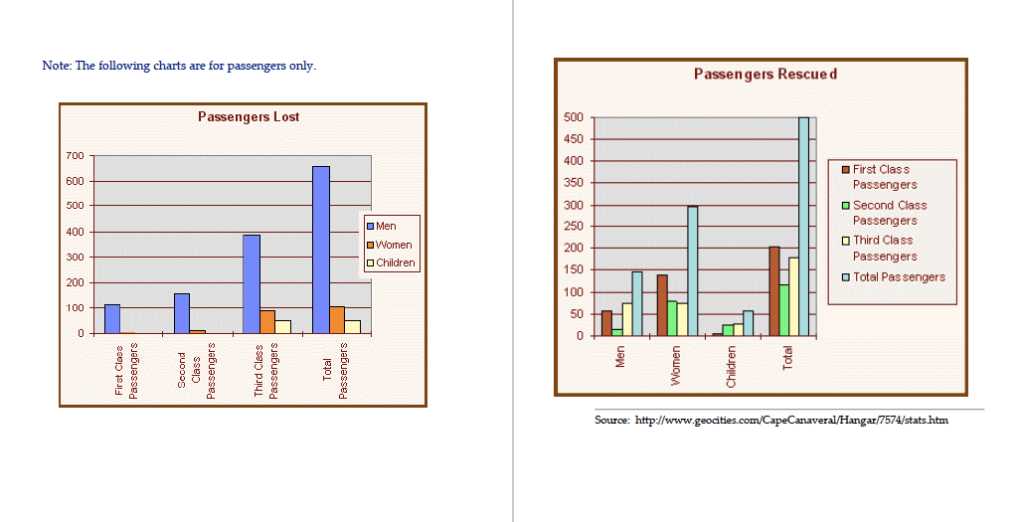
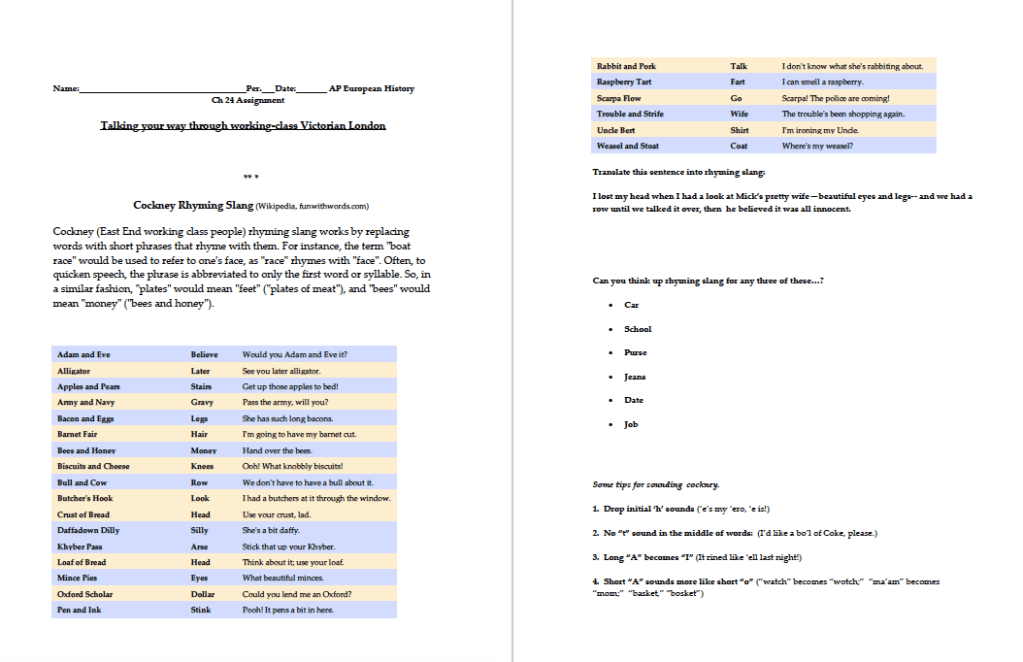
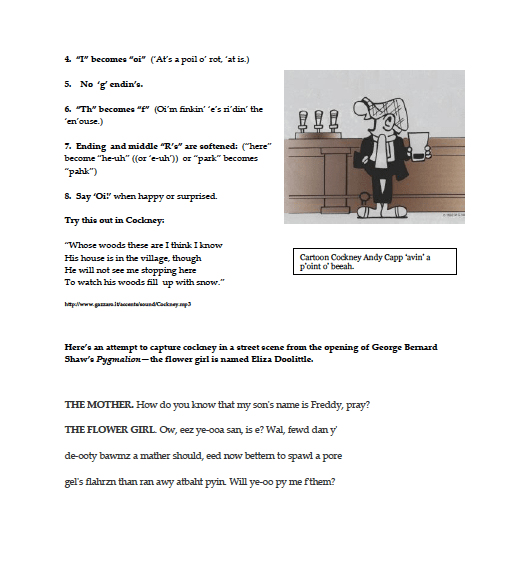
Lesson plans vary. Sometimes you’ve got it in your head and just need an outline. This one involved quiet individual reading, then group work in analyzing the charts and finally group participation in helping each other to sound “Cockney.” All of this in fifty minutes. I enjoyed this lesson. I think they did, too.Intro every unit an assessment must fall. Sometimes they’re fun, like a performance assessment–I loved the 1920s newspaper they did and Mr. Huss had an oral history assessment that involved an AGHS junior interviewing an older person. I became one of those, eventually. On the left is the review for an American Lit test, from Mission; on the right a Modern World History test, from AGHS. More traditional assessments.
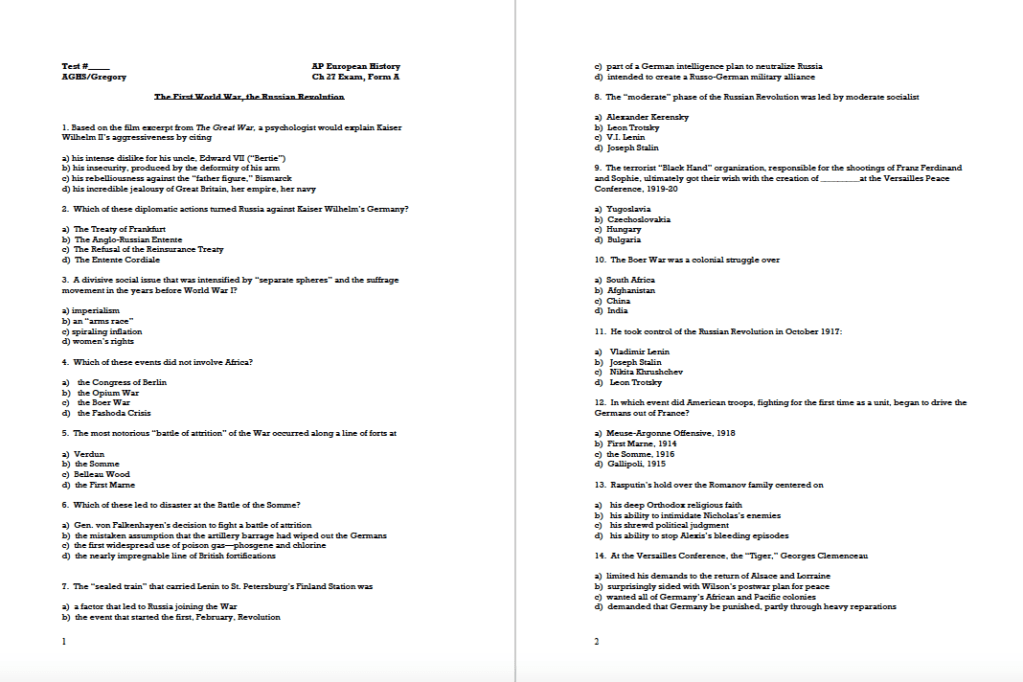
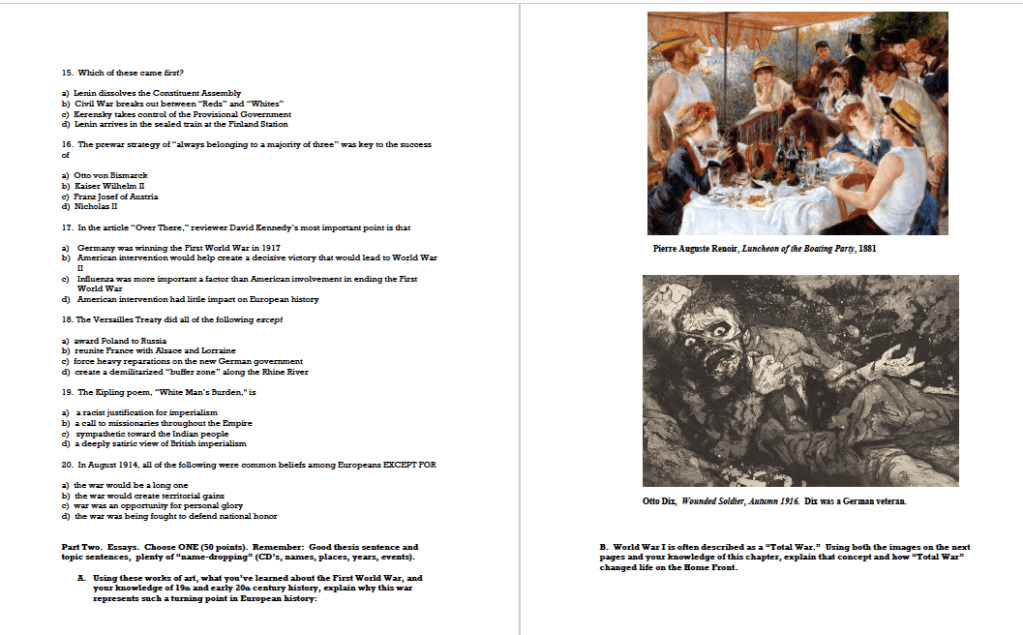
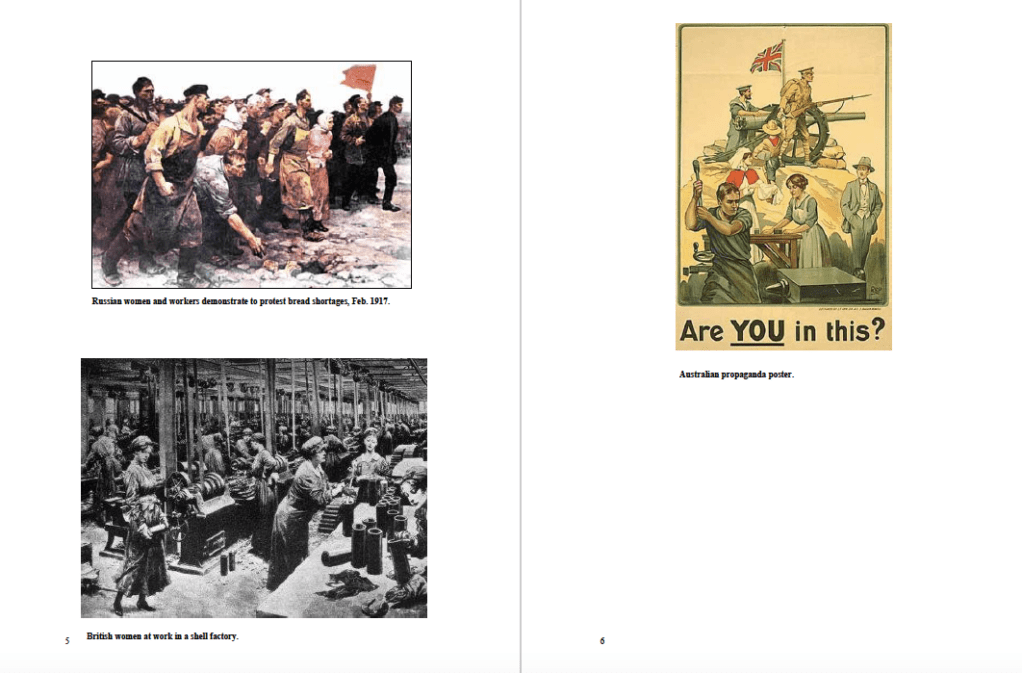
For European History, here’s one version of the First World War test.
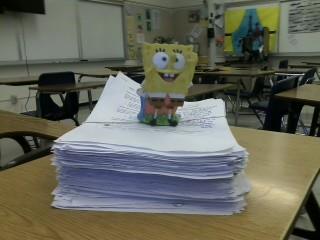
Stack of test essays; they usually came in batches of seventy; I could grade about five an hour. Nothing compared to what English teachers have to do, though.
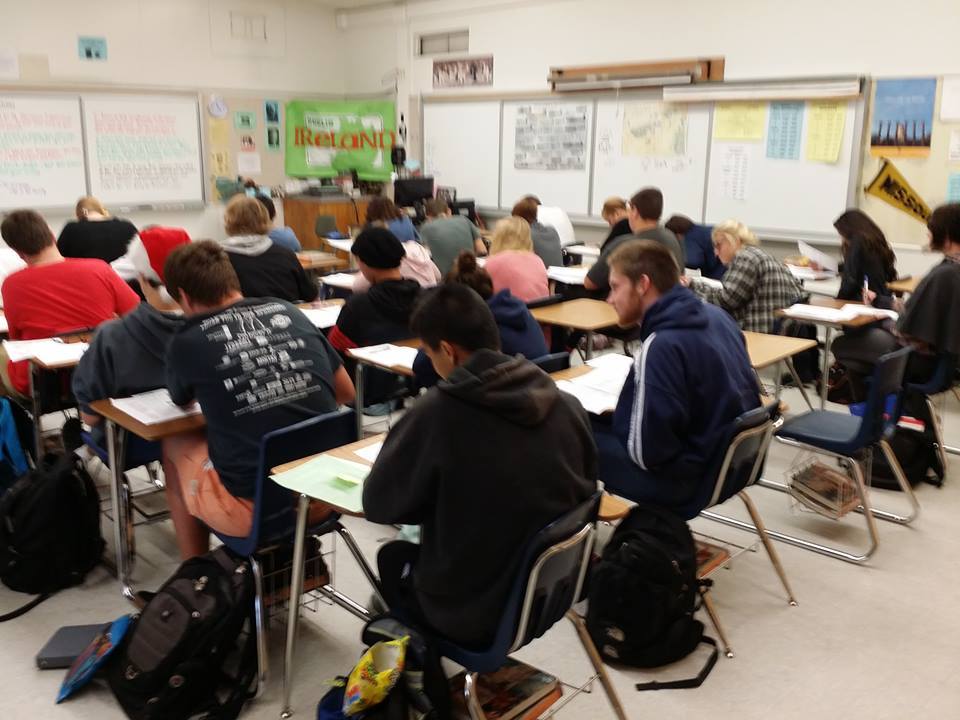
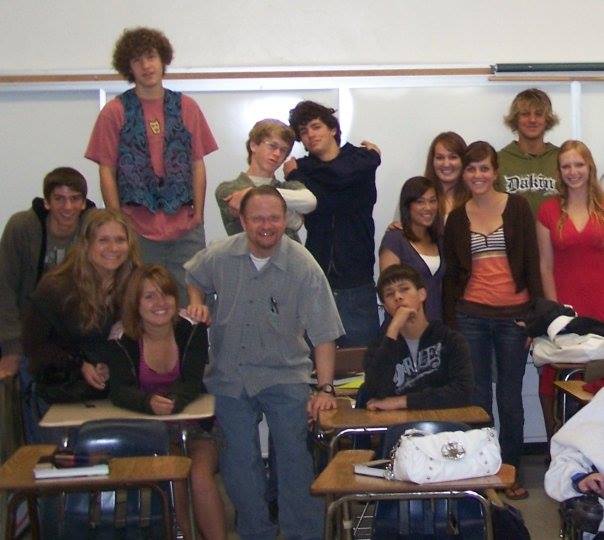
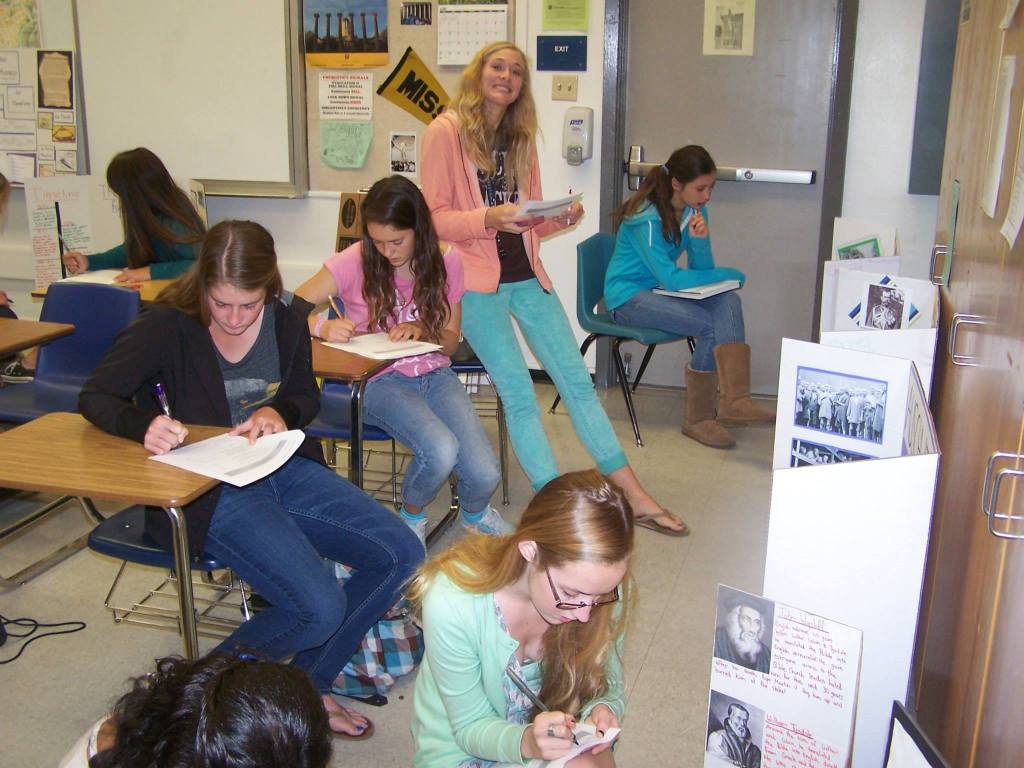
Kids. Charlie and me at graduation (he became a firefighter, which makes me very proud of him); classroom activities. It is NOT true that I referred to them as “varmints.” Okay. Maybe a couple of times.




 A Work in Progress