
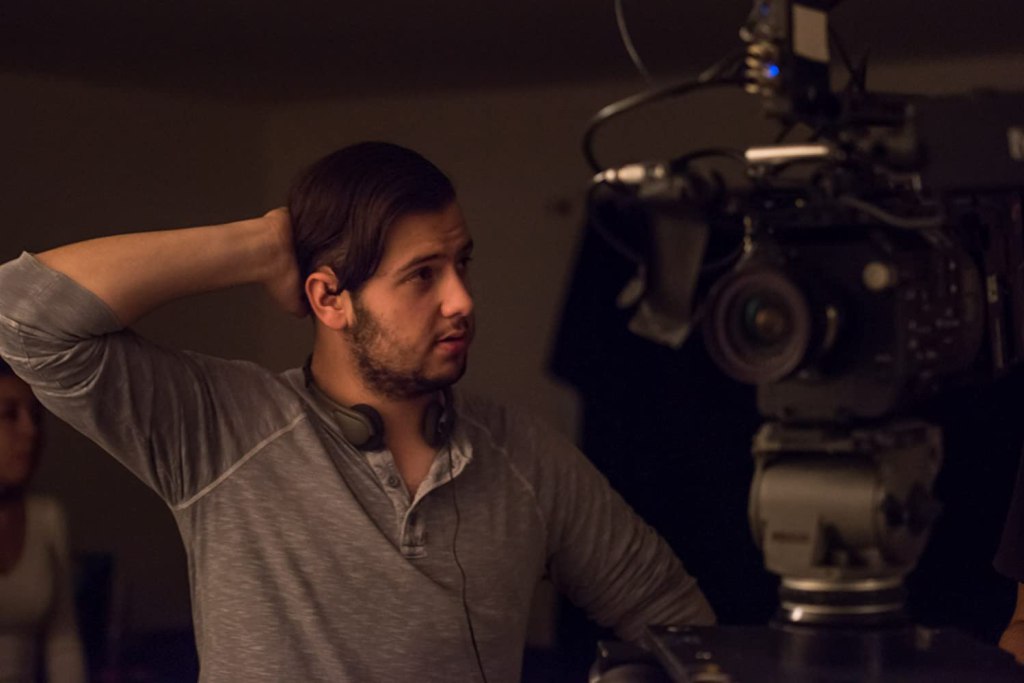
One of the great joys of my teaching career was getting approached by this young man when he was a junior at Arroyo Grande High School. He had the sheer audacity—the kind that’s required of directors—to ask me to design a high school semester course in film history.
Which I did, because it was Barry’s idea, which made it an honor.
I once designed a course in Cultural Anthropology, so this was only my second attempt at inventing a class from scratch. But the Grand Poobahs at UC Berkley approved that course and, to my delight, they approved this one, too.
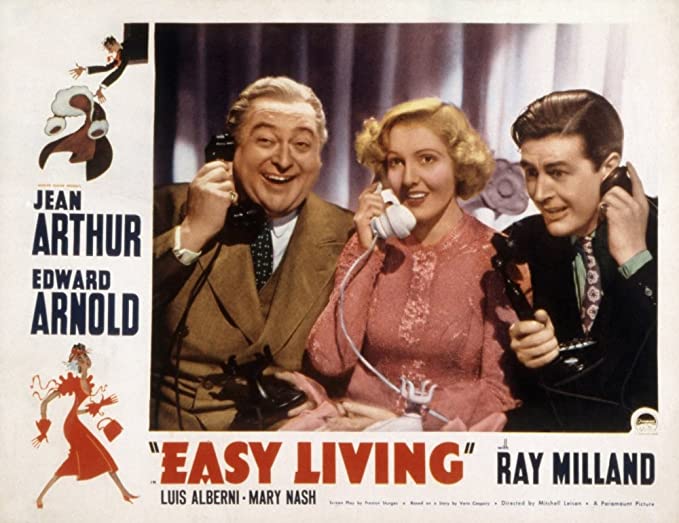
Designing the film course took me a long time, but I don’t much mind creating things. The only sadness was that I didn’t have room on my schedule to teach it—or to watch again films ranging from Chaplin’s The Gold Rush to Preston Sturges’ Easy Living (I have a great fondness for the actress Jean Arthur, who also finds James Stewart’s courage for him in Mr. Smith Goes to Washington) to John Ford’s The Searchers to Ridley Scott’s Blade Runner.
But I was pretty proud of myself—almost but not nearly as much as I am of Barry, a now-seasoned professional who directs and writes screenplays. He is possessed of immense courage.
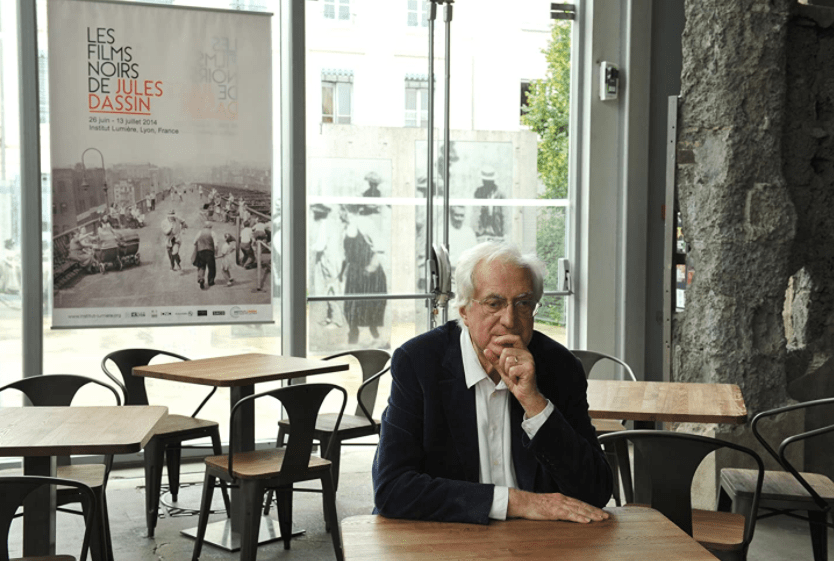
Last night, I had an immense and badly-needed dose of humility. I was merely channel-surfing when—damn you, PBS!—I tuned in, midway, into a three-hour documentary from 2016, My Journey through French Cinema, about the critic Bertrand Tavernier.
No, I had no idea who he was.
The film was subtitled, but the French the narrators spoke bore no resemblance to the proper names I was reading in the subtitles. I was always sorry that I did not take French in my years as an AGHS student. The teacher, Mrs. Koehn, was enormously attractive to us teenaged boys. She took to driving a convertible MG at high speed in her later years, which endeared her to me in a whole new way when she became my teaching colleague.
But this documentary cured me of learning French. I could never force my American mouth to make sounds like that.
That’s not the point. The point that was brought home to me was how little I actually know about film.
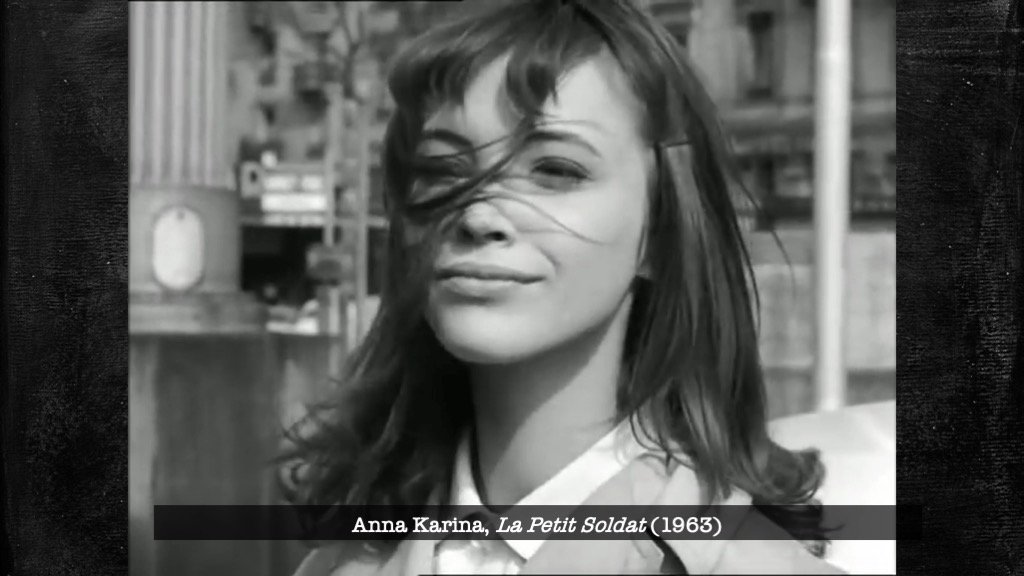
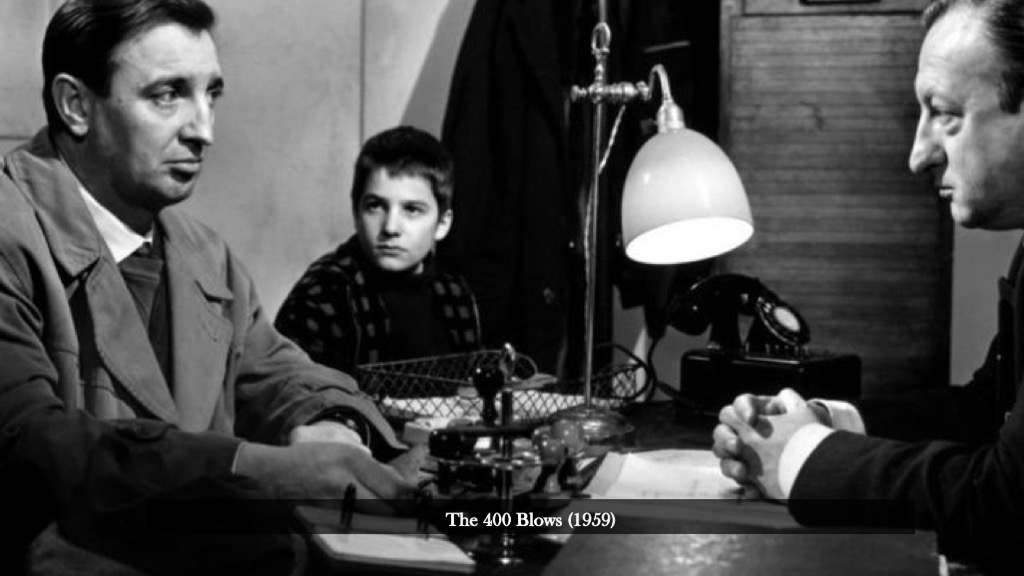
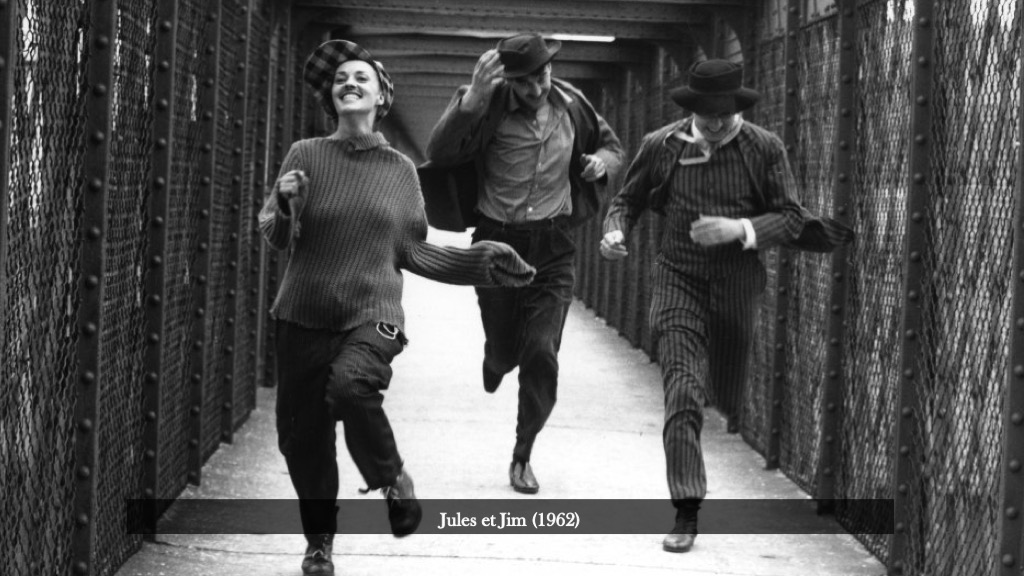
The scenes they selected took my breath away—I don’t know enough yet to connect the scenes with their films—but I saw an interior scene with both the camera and three characters in constant motion until a lovely young woman suddenly uses a bottle to bludgeon her older lover unconscious. I saw another man die in a rollover car accident shot from both outside and inside the car, punctuated, at its end, by a surviving tire in its rim careening across the road. There were criminal escapes through tunnels and sudden screaming matches between couples who only seemed comfortably married and a Paris street scene with two young women chanting casually amid the sidewalk crowds they pass, while heads turn in their passage. There were exterior scenes, young couples walking beneath trees and holding hands in dappled sunlight, that would’ve made Renoir weep. There was a sudden and violent street robbery, shot in Milan with a hidden camera, in front of a shocked crowd who would learn only much later that they’d been film extras.
There was Belmondo, an ultra-cool alloy of Bogart and Paul Newman.
There were, of course, entire Gauloises assembly lines of cigarettes smoked.
I watched all of this without breathing too much. It was a wonderful humbling to realize how much you don’t know.
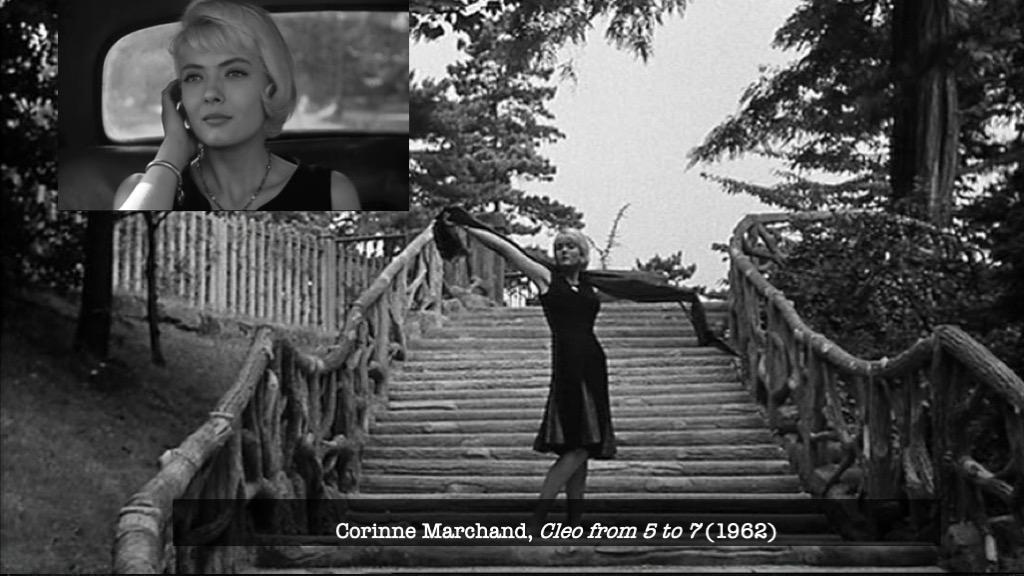
It was touching to feel your heart melt a little in watching the actress Corinne Marchand, her character doomed by cancer, sing as she descends a staircase in one of Hausmann’s Paris parks in a scene, filmed so gracefully, and sixty years ago, that it makes you fall in love with her.
It was exciting to know that I, even at sixty-eight, have so many films yet to watch, and that they are gifts from the French.
I spent most of my life dismissive of the French, in the American manner, until my students and I, ten years ago, took a trip across northern France where the Americans and Germans had left behind a path of destruction, in 1944 and 1945, from Carentan to Metz. In the ferocity of the fighting, entire towns were reduced to splinters by bombers and shellfire and in Norman pasturelands, GI’s took scant cover in the shelter of dairy cows, their udders still filled with milk, who’d been butchered by machine-gun fire.
We were typical tourists on our trip sixty-five years after that terrible war—in European history, that’s a hiccup— when the Frenchwoman, on discovering that we were Americans, insisted on giving us a tour of St Joan’s cathedral at Reims. She was insistent precisely because we were Americans.
This was the trip when I learned to love France and the French.
This was the trip where we visited the 1916 battlefield at Verdun. Verdun will cure you forever of the myth, broadcast by simpletons, that the French are cowards. The battle lasted nine months. The taking of one fortress—Douaumont—took 100,000 lives.
There is a vast ossuary beneath the Verdun Memorial. You can see, just below plexiglas panels, enormous stacks of the bones of French and German soldiers. These are the macabre remains of a generation of young men who were lost forever to their parents. And to us.
An attendant took me aside as we toured the Memorial. “Your students are so respectful,” she whispered to me.
So that moment, and the visit to Reims, cured me forever of the belief that the French are cold people. The woman who guided us through the cathedral was so immensely proud that she was French and so immensely happy that we were Americans.
My homework, for her, will be watching the French New Wave. Merci, my friend.



 A Work in Progress