
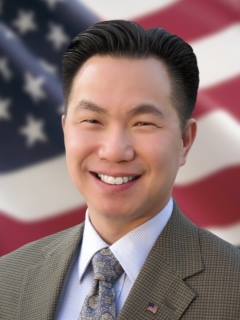
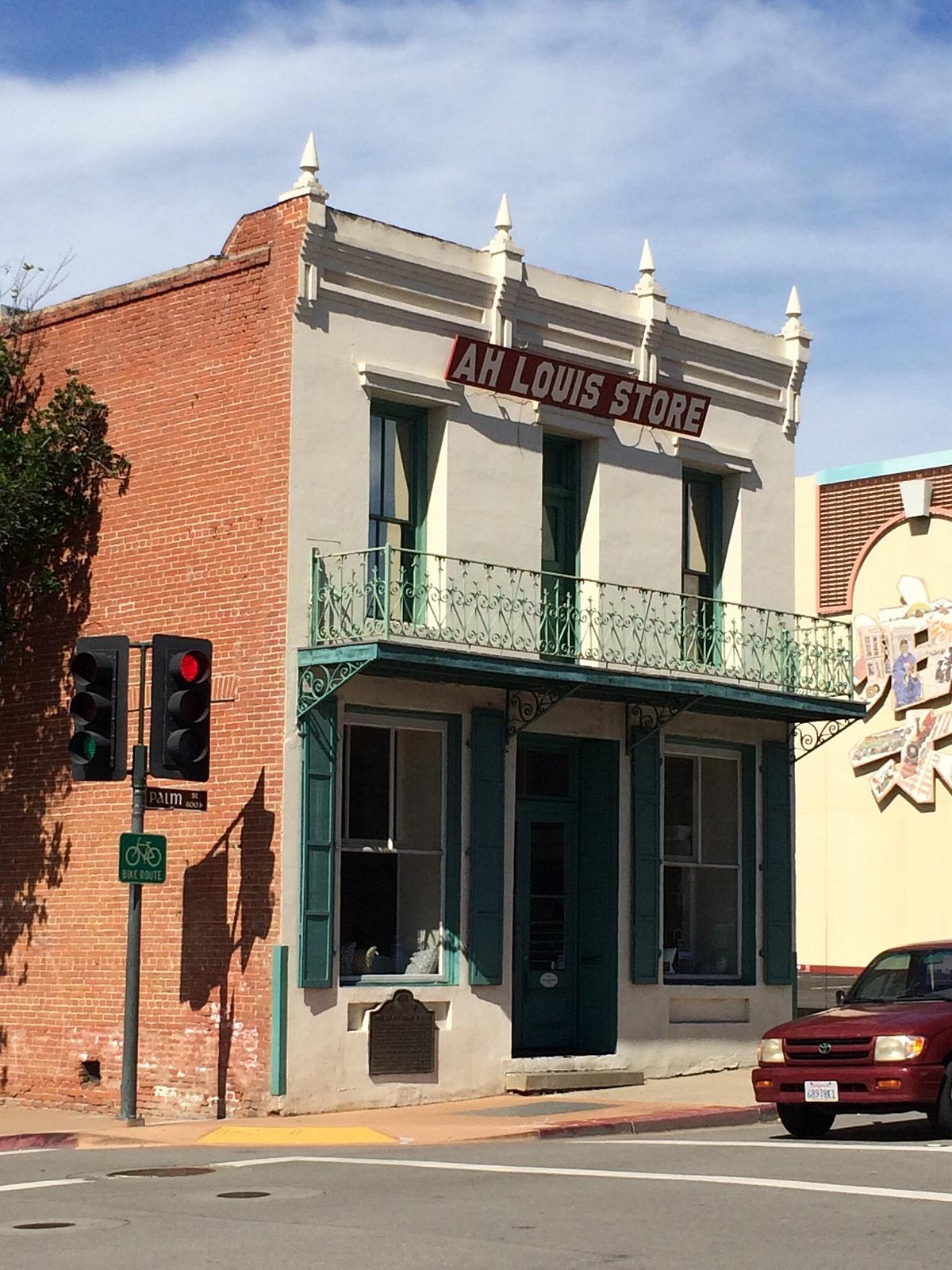
KSBY reporter Erin Fe roped me into an interview in the parking lot beside the Ah Louis Store today. The subject was Asian-American and Pacific Islander history in our county—Chinese, Japanese, Filipino. I put on the little mic thingy, she started the camera, and forty minutes later, I finally shut up.
I was stunned—not by me, but by the richness of the heritage I was passing on and by once again realizing the enormity of the hatred our neighbors had to overcome. Some, like Arroyo Grande 442nd Regimental Combat Team GI Sadami Fujita or the GIs of the First Filipino Infantry Regiment, formed at Camp San Luis Obispo, had to overcome the bigotry visited on them by sacrificing their lives.
It made me very happy to tell the stories. But at the end, I was overcome by melancholy. SLO County Clerk-Recorder Tommy Gong’s departure made me realize that realize that Santayana was right: Those who do not remember the past are condemned to repeat it.
And those who nurture their ignorance about the past have immense power over the rest of us; they seem to prove Hitler’s dictum that “reason can deceive a man.”
All I can offer is stories. Among my favorites are those of Asian-Pacific Islander immigrants to our county and since the World War II years are among my passions, here are three that came to mind almost instantly.
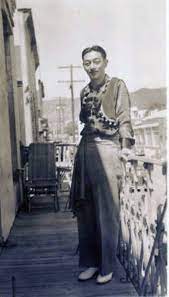
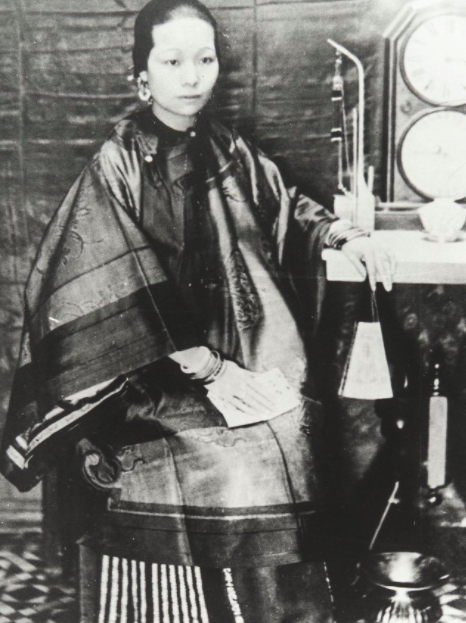
Howard Louis, San Luis Obispo, US Army–seen in the top photo in a prewar La Fiesta Costume on the balcony of the family’s store—served in George Patton’s Third Army, World War II. He was the last of eight children from a remarkable family—musicians, athletes, an army officer–who wryly admitted that he, being the baby and the last served, wasn’t aware until he was twenty that were parts to the chicken other than the neck. As an older man, he loved to tell stories about Chinatown to schoolchildren: His father owned a brickyard from which the 1885 store—and many other downtown buildings—were built, farmed in the Laguna Lake area, along Biddle Ranch Road, partnered with Louis Routzahn in cultivating seed flowers in the Arroyo Grande Valley, organized the construction crews that built the PCRR and roads throughout the county and served as the workmen’s unofficial father-figure and Chinatown mayor and, in what may have been his greatest accomplishment, married a young woman, En Gon Ying, in 1889 San Francisco. She was as beautiful as the translation of her name: “Silver Dove.” They must have been marvelous parents.
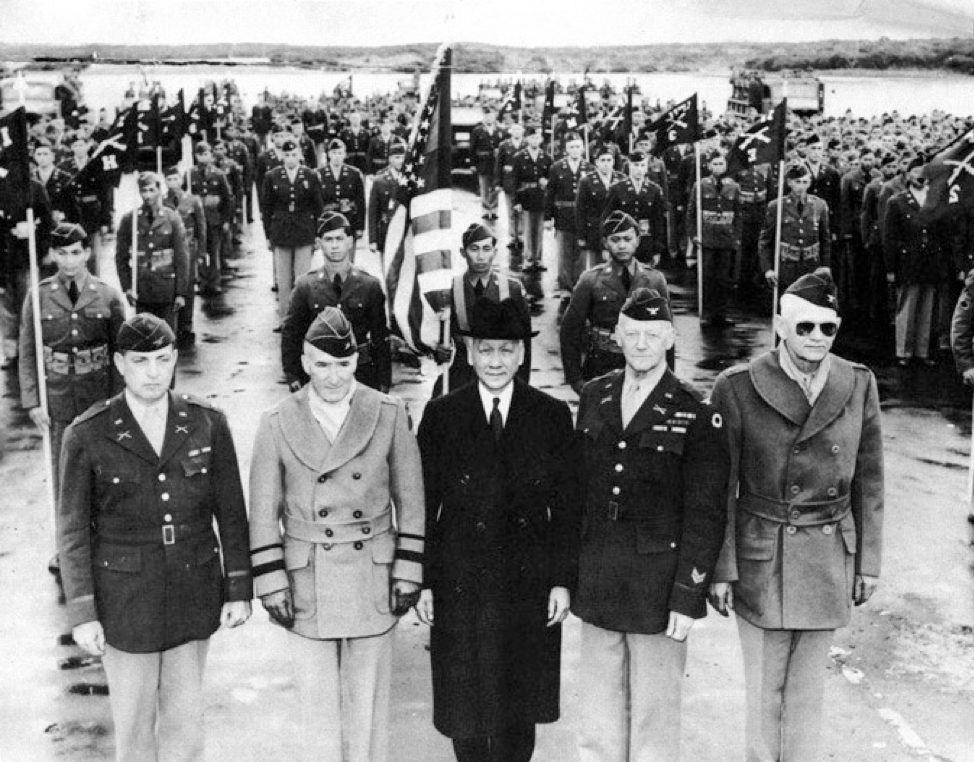
Lt. Col. Robert Offley, commander of the First Filipino Infantry, formed at Camp San Luis Obispo. When his soldiers were denied service in a Marysville Chinese restaurant, he burst into City Hall and threatened to put Marysville under martial law. “My soldiers,” he thundered, “are American soldiers, and you will treat them as such.” So his GIs finally got to eat rice, a scarcity in the World War II creamed-chipped-beef-on-toast Army. When his soldiers fell in love and wanted to marry—Filipinas were denied immigration, and California’s miscegenation laws forbade marriage to Caucasian women—Offley formed a shuttle-bus caravan to New Mexico, where they could get married, called “The Honeymoon Express.” Not surprisingly, Offley’s GIs proved to be superb combat soldiers.
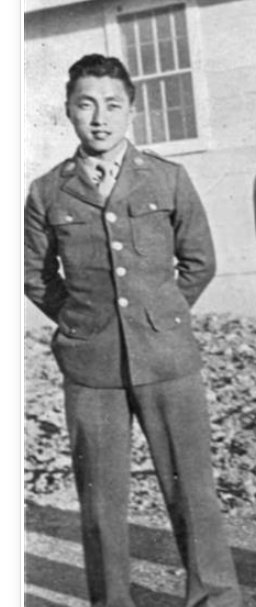
Sadami Fujita, an Arroyo Grande GI in the 442nd Regimental Combat team, was killed in action in the Vosges Mountains of France and was awarded a Bronze Star and Purple Heart. The 4-4-2 was on a mission to free 230 terrified nineteen-year-old Texas draftees—World War II’s “Lost Battalion”—surrounded by the Germans. The Nisei GI’s were successful, but it took six days of combat to break the German lines. It cost them 1,000 casualties. Fujita, who volunteered to bring up more ammunition under relentless fire–the Germans fired .88 shells into the treetops and flying splinters claimed many of his comrades—was killed in the attempt.
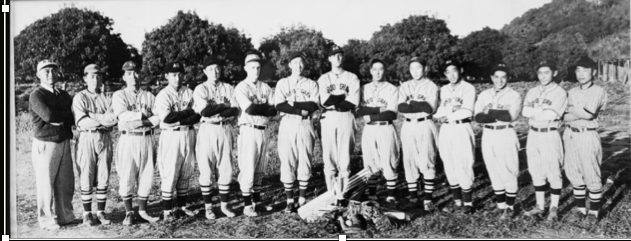
And one more, since I knew the man personally: Cal Poly catcher Kaz Ikeda was interned at Gila River, where the temperatures were at or above 109 degrees for twenty of the first thirty days that our neighbors were there. Kaz did not suffer this insult lightly, nor did he let it embitter him. He came home from the camps to resume farming and to found Arroyo Grande’s Little League, Babe Ruth and Youth Basketball.
I’m still angry because the British shot 38 Irish rebels outside the County Wicklow church where my third great-grandfather was baptized.
Kaz came home from Gila River and eighteen years later, he cured me of the uppercut in my baseball swing.
At Kaz’s funeral, the closing hymn at graveside was “Take Me Out to the Ballgame.”
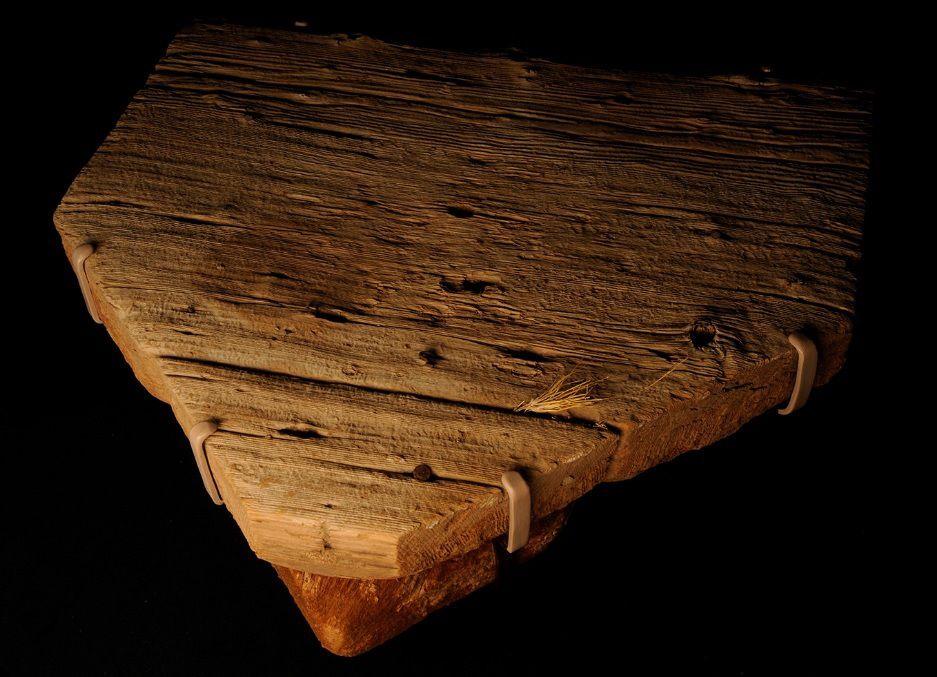
This is the home plate behind which Kaz caught at the camp. It’s now on loan to the Baseball Hall of Fame.
To the American who accused Tommy Gong of being a Chinese Communist: Go to Cooperstown and study this artifact in perfect silence. You might learn, in the quiet, what it means to be a real American.


My father said Vard Loomis took care of the Japanese farmers’ land when they were interned. He returned the land to them when they returned.
No charge to them.
LikeLike
That is true. So did the Silveira family, Ed Taylor and Cyril Phelan. Cyril lived in the Kobara family’s farmhouse during the war and let any potential mischief makers know that he was armed with a 30.06. If you want to learn more, my book “World War II Arroyo Grande” goes into detail. Thanks for your comment!
LikeLike