
This is the place that made me a teacher and a writer.
I probably haven’t got everything right–I rarely do–but my wife took me on a little trip this morning that meant a lot to me. My big sister was wondering what the Arroyo Grande Creek looked like after the rains, so we went to take some photos.
So Elizabeth drove me out to our old house, where I grew up, on Huasna Road, and along the way I began prattling.
This has happened to me only once before, but that was at Gettysburg. I had read so much about the battle that I knew exactly where we were–Elizabeth and our sons, John and Thomas–and what had happened there.
This was far more personal.
* * *
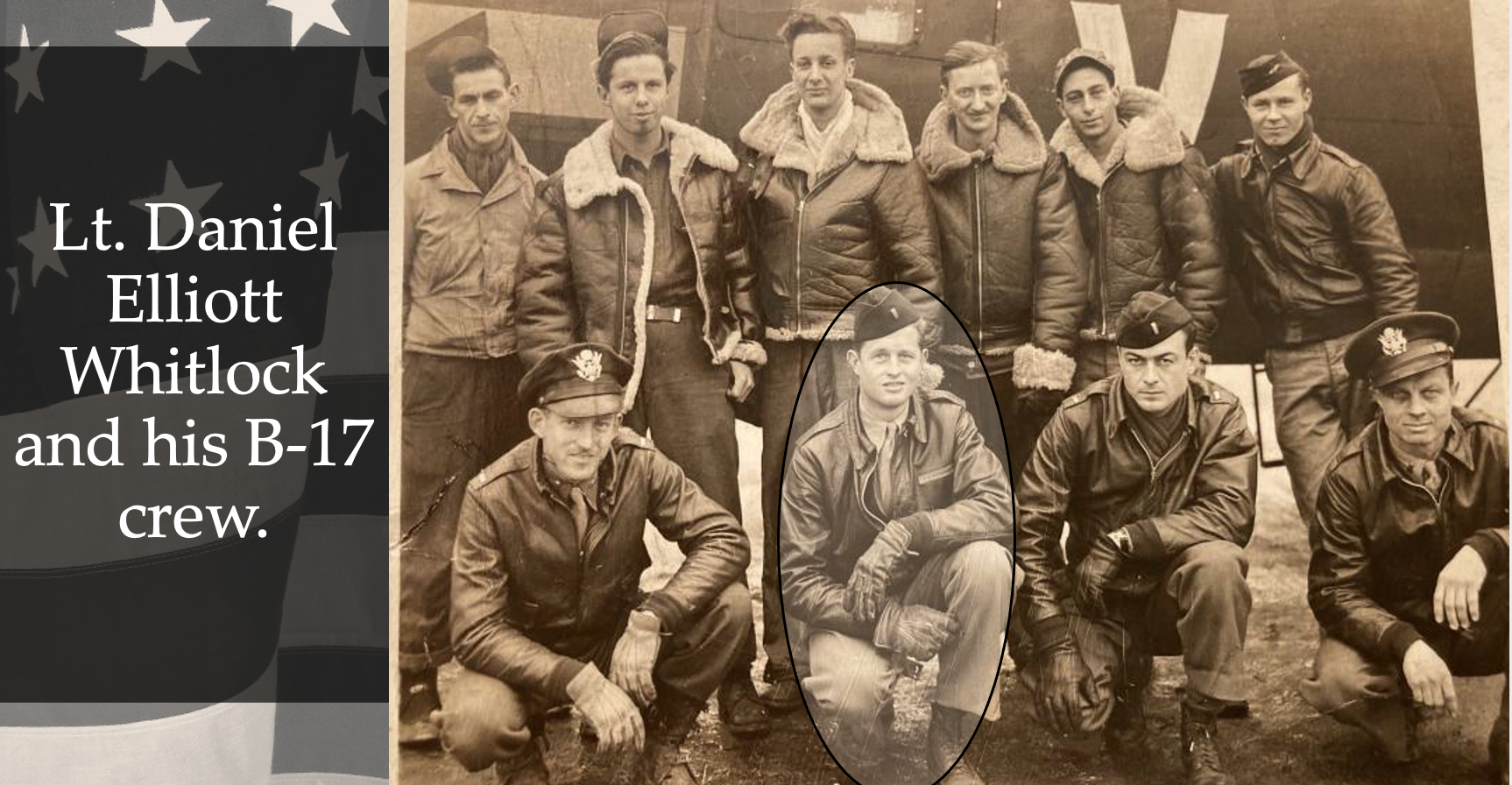
–Mason Bar. The son of the owner when it was the Commercial Company, Lt. Daniel Elliott Whitlock, was awarded a Silver Star for bringing his crippled B-17 home safely after a mission over Berlin. A flak hit set the ship afire. Elliot’s pilot, Jim Lamb, ordered the crew to bail out. Elliott, the co-pilot, countermanded the order when he saw Jim was badly burned. So was his parachute harness, burned through. Whitlock refused to abandon his friend. He knocked down the fire with an extinguisher–he never remembered where it came from–and turned the plane back to the safety of England’s Norfolk Coast.
He was terrified, he admitted to his folks in Arroyo Grande, whose home still stands just below Paulding. “Your prayers are standing by me,” he wrote them.
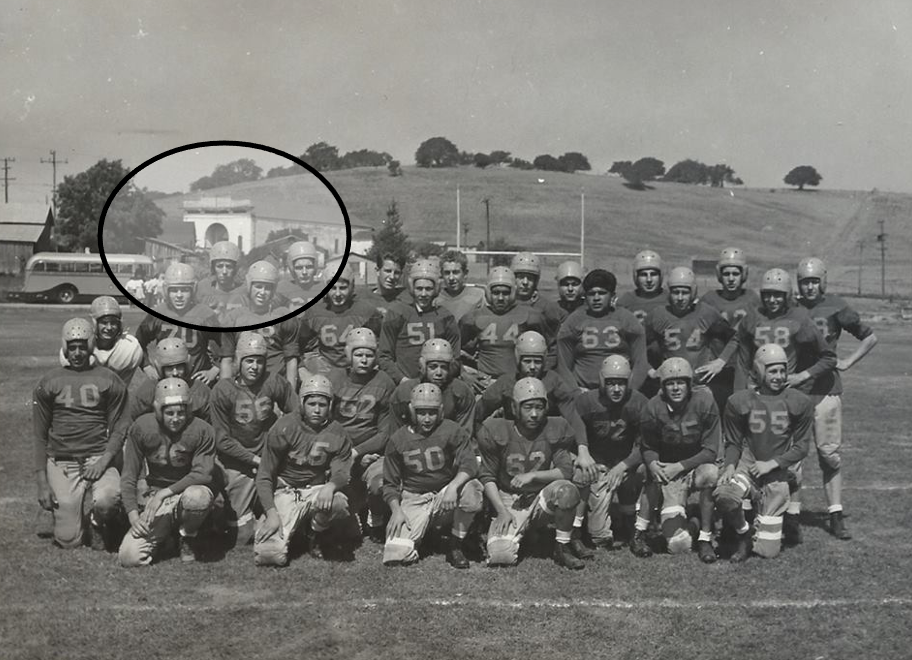
–Paulding Middle School. The gym was a PWA project completed for $14,300 in 1938 for the old Arroyo Grande Union High School and it put a lot of local men to work. The high school student body gathered inside the gym on December 8, 1941. They listened to a radio set up on the stage, where my son Thomas performed for Mr. Liebo, to hear FDR’s call for a declaration of war on Japan.
Haruo Hayashi, whom we have just lost, was the team manager for Coach Max Belko, who coached basketball in that gym. He also coached the Eagle football team. Belko, the son of tough Jewish immigrant steelworkers from Gary, Indiana, was overlooked by nearby Notre Dame and instead became an All-American at USC. His field goal against Montana–they drop-kicked field goals then, enormously difficult–would be the last field goal kicked by a Trojan for fifteen years. Some Bakersfield kid named Frank Gifford kicked the next one.
Belko’s coach, Howard Jones, called him “the finest example of a man I have ever coached.”
Belko, a Marine lieutenant, was killed on the beach at Guam in 1944.
The Arroyo Grande Men’s Club, including my friend Randy Fiser, restored the stone retaining wall below the campus that was originally a WPA project. So are the basketball courts below. And the cemetery stone wall. The Orchard Street building, now the AGHS math wing, was another PWA project. (The campus’s landscaping was done for free by volunteers–Japanese American farmers whose children attended the school. Twenty-five of the 58 members of the high school’s Class of 1942 were Japanese American.)
The beautiful park that’s now underneath Lopez Lake was another WPA project. So was the hard-surfaced Musick Road, a CWA work project early in the New Deal, supervised by county supervisor Asa Porter, that led to that park.
Arroyo Grande doesn’t today look like North Africa in part because of the reclamation work, made urgent by overcultivation, a product of collapsing farm prices in the Great Depression.
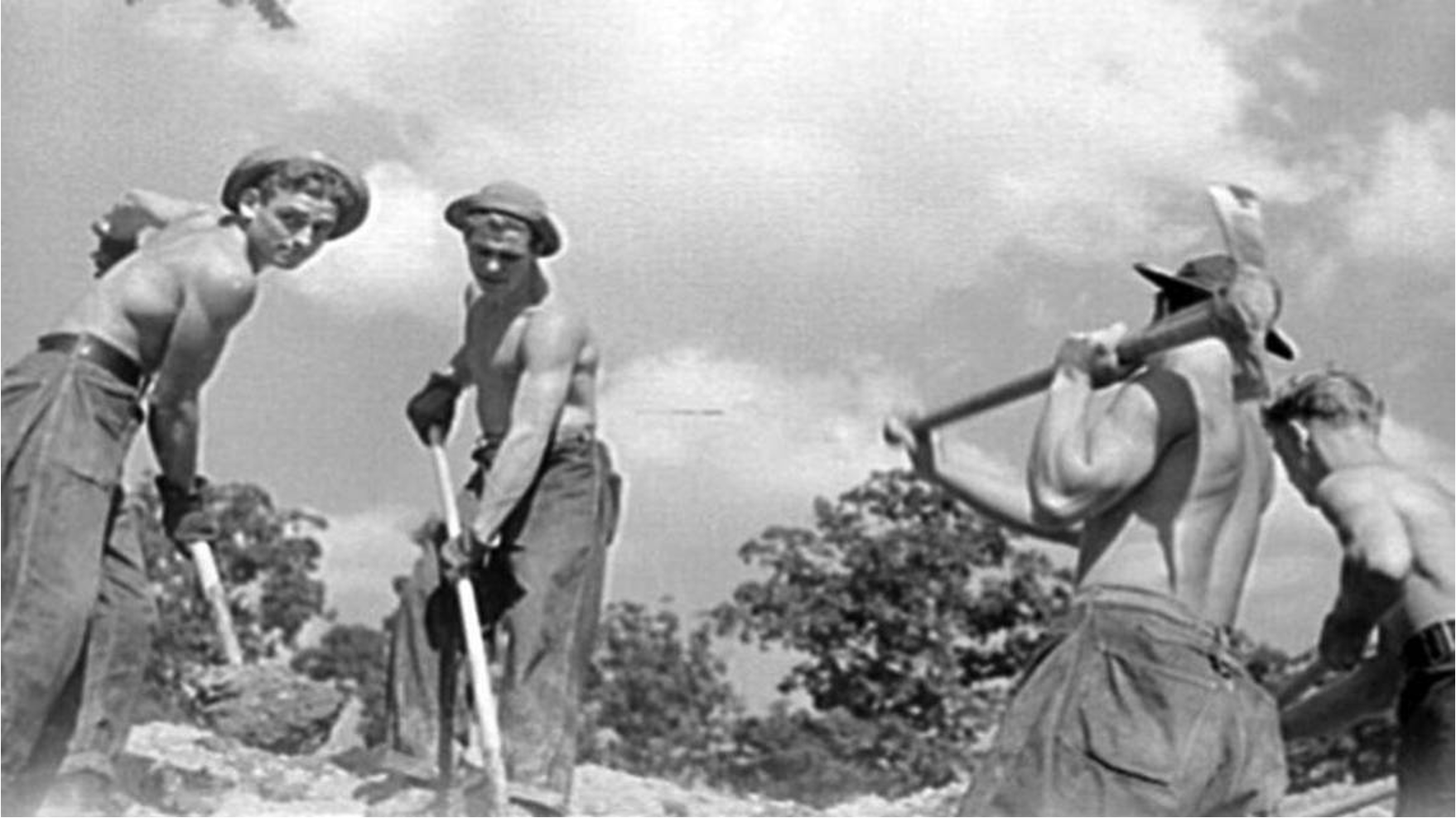
Arroyo Grande had the worst soil erosion the head of the New Deal’s Soil Conservation Service had ever seen in America. It was the Civilian Conservation Corps, 230 kids from New Jersey, Delaware and New York City, who lived in barracks on the site of today’s Arroyo Grande Woman’s Club, who terraced hills, built check dams and planted trees and so, at the very least, began to reverse the effects of what could have been an environmental disaster here. It was that damnable Federal Government Overreach that accomplished these things.
–The IDES Hall. This one was built in 1948. It’s the second one. The first one was the remnant of the old Columbian Hall on Branch Street. They had lectures, concerts and meetings there. Young women, in gauzy Greek gowns, used to dance to honor sweet peas at the Sweet Pea Festival.
Frank Gularte, killed in action on the Franco-German border in 1944, grew up on the farm that includes the hill just above the Hall. His son, Frank Jr. was born the same week; his widow, Sally, would’ve celebrated a christening and endured a funeral mass at St. Patrick’s on Branch Street in the same month.
–Unplanted fields on the right, along Huasna Road. Those were, and probably will be, reserved for seed flowers. Thanks to Louis Routzahn and the Waller Family, Arroyo Grande flower seeds were known all around America. You can still find their seed catalogues online.
Clara Paulding, who taught here for so many years, rode her bicycle to my Alma Mater, the two-room Branch School, in the 1890s. It was so much fun for me to write a piece about her bike ride, because the smell of seed flowers and sweet peas must have been delicious. She loved Branch kids, by the way. A woman of sound judgment, Clara was.
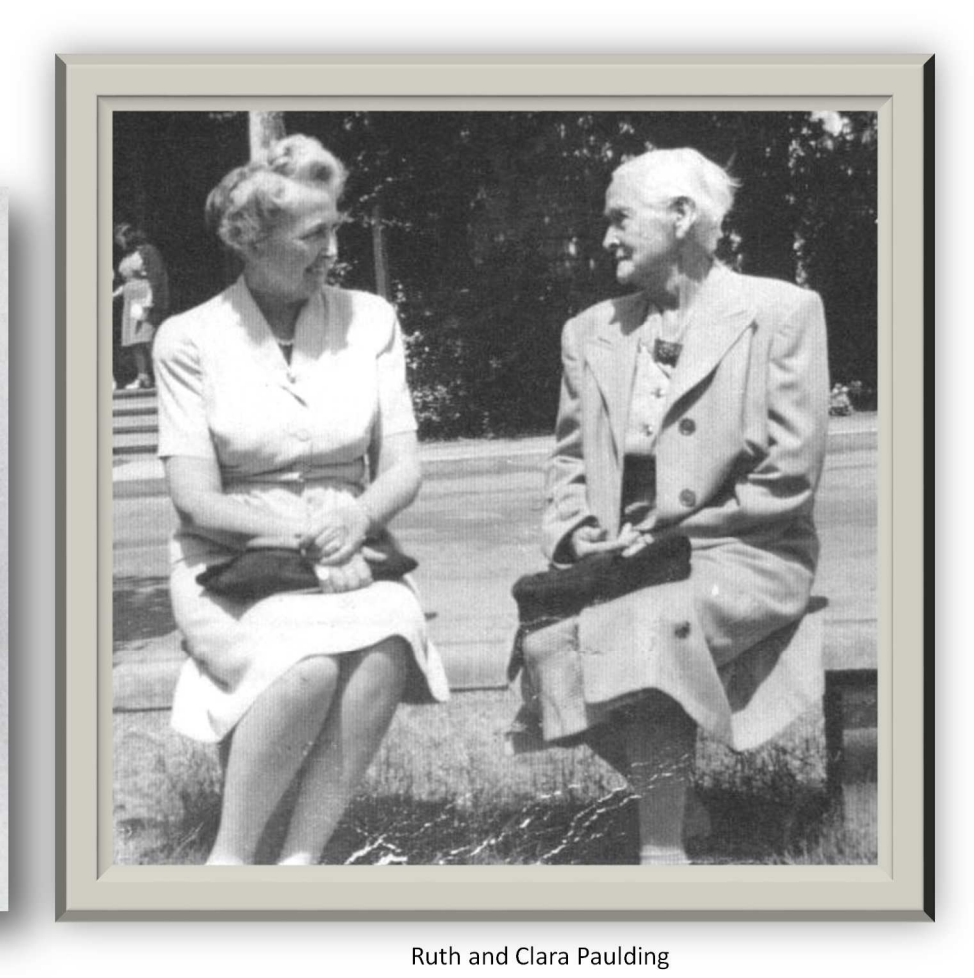
My favorite Clara anecdote: She went back to her Alma Mater, Mills College in Oakland, with her daughter, Ruth, for whom the middle school is named, during World War II, when there was finally money enough for teachers like Ruth, whose commute consisted of walking across the street from the house in which she was born to her Spanish classes at Arroyo Grande Union High School–to earn salary advancement for taking college course. So she invited her retired teacher Mom—Clara was in her nineties– to come along. Clara did. She decided to take a Mills College course entitled “The History of the United States before 1865.”
“That’s because I remember everything else,” she told a newspaper reporter.
–Strother Park. This was a Chumash village, or rancheria, whose chief was dubbed “Buchon” by the Portola Expedition, after the large goiter on his neck. That’s why we have a Buchon Street in San Luis Obispo. The rancheria was called Chiliquin; Rosario Cooper, the last speaker of Obispeño Spanish, has roots here—this is probably where her mother, a “Mission Indian” only because of catastrophic drought and the chance of survival the Mission Fathers offered, was born. I taught two of Rosario’s descendants, beautiful and brilliant young women, at Arroyo Grande High School.
Newell Strother was the editor of the Arroyo Grande Valley Herald-Recorder for twenty years. After Pearl Harbor, he urged his readers to suspend judgement on their Japanese American neighbors. They were loyal to America, he explained in an editorial message some in Arroyo Grande did not want to hear.
–Tony Azevedo’s place. Elsie Cecchetti, our beloved Branch School bus driver, was an Azevedo. Her father’s dairy, on the site of today’s Trader Joe’s, was a dairy farm where Elsie’s first driving lessons were on a Farmall tractor. The Azevedos were Azoreans, come to America because of earthquakes, volcanoes and political unrest in the Islands. They were whalers—there was a shore whaling station at Port San Luis—before John Davison Rockefeller and Thomas Alva Edison put them out of business. They turned toward crops and dairy farming. “I don’t know much about history,” my Branch School friend John Silva told me once when he was helping me research a book. He then proceeded to name every Azorean dairy family between Lopez Canyon and Corbett Canyon. My mouth fell open.
John’s father, Johnny, and his uncle, Manuel, among the kindest men I have ever known, used to pull up pickup cab to pickup cab on Huasna Road to gossip, even thought they’d probably had breakfast together that morning at Sambo’s, many years later the still un-demolished Francisco’s Country Kitchen. I’ve seen farmers do the same thing in Kansas and Colorado, by the way. When a car approached, the Silvas would pull just off the road to the edge of their farm fields to let the motorist pass. They would wave cheerily at the driver. Then they’d pull back onto the road and resume their conversation.
–Clair Gibson’s home. Two generations of bankers—first, the Bank of Arroyo Grande then the Bank of Italy and finally the Bank of America. Today it’s Lightning Joe’s. The Gibsons were the kind of bankers you read about, but only in novels. They were generous with credit in hard times and with loans when they believed in what we today call a “business startup.” Once Mr. Gibson advanced a desperately needed emergency loan to the rock and roll star Peter Frampton. Frampton, needed it to secure a concert and couldn’t get the money from his own bank. Afterward, his people began to make deposits in the Bank of America in Arroyo Grande, California.
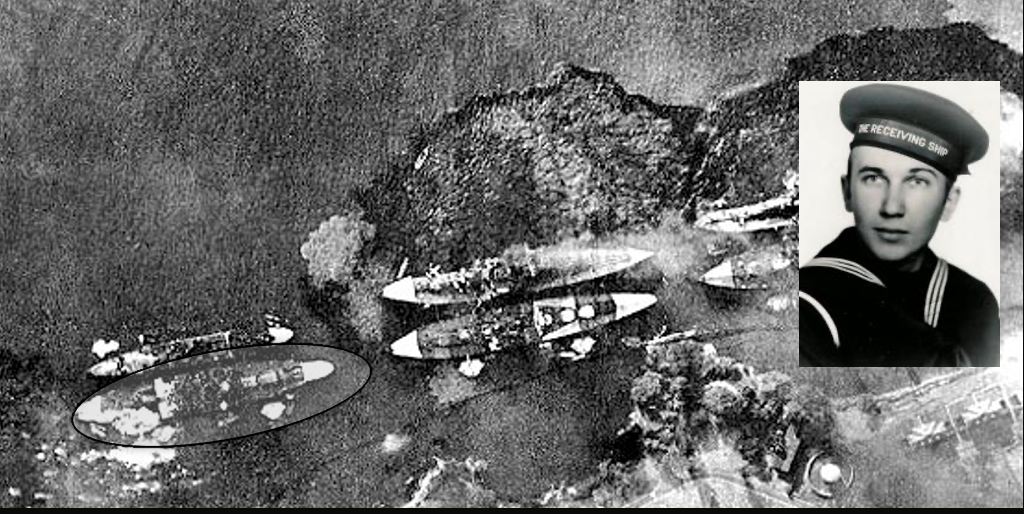
When I wrote a piece about Jack Leo Scruggs, a USS Arizona trombonist killed in the attack on Pearl Harbor, Clair called me. “Jack Scruggs,” he said—the two had been classmates in the Arroyo Grande Grammar School that stood where Mullahey Ford stands today—“I haven’t thought about him in years.” He chuckled over the phone line. Then there was a long quiet. He thanked me before he hung up. The memory of his lost classmate still moved him.
–The Kawaguchi Home. Japanese immigrants, mostly from Kyushu, the southernmost Home Island, were Buddhists and Methodists. The Kawaguchis, if I remember right, were Catholics, which means that history has a long reach. St. Francis Xavier proselytized in Japan in the 17th Century; both cities targeted by the atomic bombs had large Catholic populations. Carolyn Kawaguchi, along with Vard and Patricia Ikeda, was the fastest runner I ever saw as a little kid. In those P.E. tests they used to do in grammar school, she would pass by me—in skirts, mind you—laughing apologetically.
Kaz Ikeda gently cured me of the uppercut in my softball swing on a visit to Branch School one day. The wooden home plate behind which he caught at the Gila River Internment Camp is now on loan to the Baseball Hall of fame. And, of course, one son is named “Vard” because Vard Loomis, a Stanford baseball alum, a pitcher, coached the Nisei team, the Arroyo Grande Growers, before World War II. After the enforcement of Executive Order 9066, Vard invited Kaz to stay in his family’s home. (His wife, Gladys, had been the Growers’ Team Mom.) Kaz had stayed behind until his father, Juzo, the assistant manager of the Growers, was strong enough to travel. A team of horses dragged him away on the Ikeda farm one day and Juzo was paralyzed as a result. Kaz made it back home. His dad didn’t. Juzo died in a camp hospital in the desert heat of Arizona in 1943.
But my favorite Arroyo Grande Growers story is about a rest stop at a park in the Valley. The team bus, which Vard drove, pulled up next to another bus. The passengers in that bus were young Black men, members of a touring jazz orchestra. The Black kids approached the Nisei kids and asked if they’d like to play ball in the park. That sounded like a good idea to everyone. So there was a game—the Growers tossing their mitts to the musicians during in between innings–and what sounded like a good idea turned out to be a good baseball game.
Since Vard was kind of the odd man out, he became the empire. Jokingly, both sides agreed, at the end of the game, that they’d never met a White man with eyesight as bad as Vard’s.
–The Gularte Home. I’m not sure where to start with this family, parented by Rudolph and Mary Gularte. We loved them. Rudy was a vegetable broker who bailed us out frequently when either our creek pump (for irrigation) or our spring pump, which we shared with his family (for drinking water) broke down. He drove at first a dark olive 1953 Chevy stepside pickup and then one of the first El Caminos in town—copper-colored, with Chevy fins. It was classy. He was a pallbearer at my Mom’s funeral. He cried, which moved me, because Rudy was a quiet, undemonstrative man. We would nearly drive off the road waving at him when we saw the El Camino approaching. Rudy, with not much more than his felt hat visible just above the steering wheel, was intent on driving. He was a small man; it took Mom’s death to make me realize what a big heart he had.
The size of her heart was immediately apparent with his wife. Mary was a warm, generous woman with a sharp bite when my friend Dennis, one of her sons, crossed her. Her bite was very brief. She’s the one who one day, because Elsie Cecchetti’s bus was somehow, inexplicably, late, took me that cold morning from the bus top and fed me a bowl of sopa—Portuguese Stew—with a big hunk of coarse bread intended for soaking. I soaked. I did not have to eat for the rest of the day.
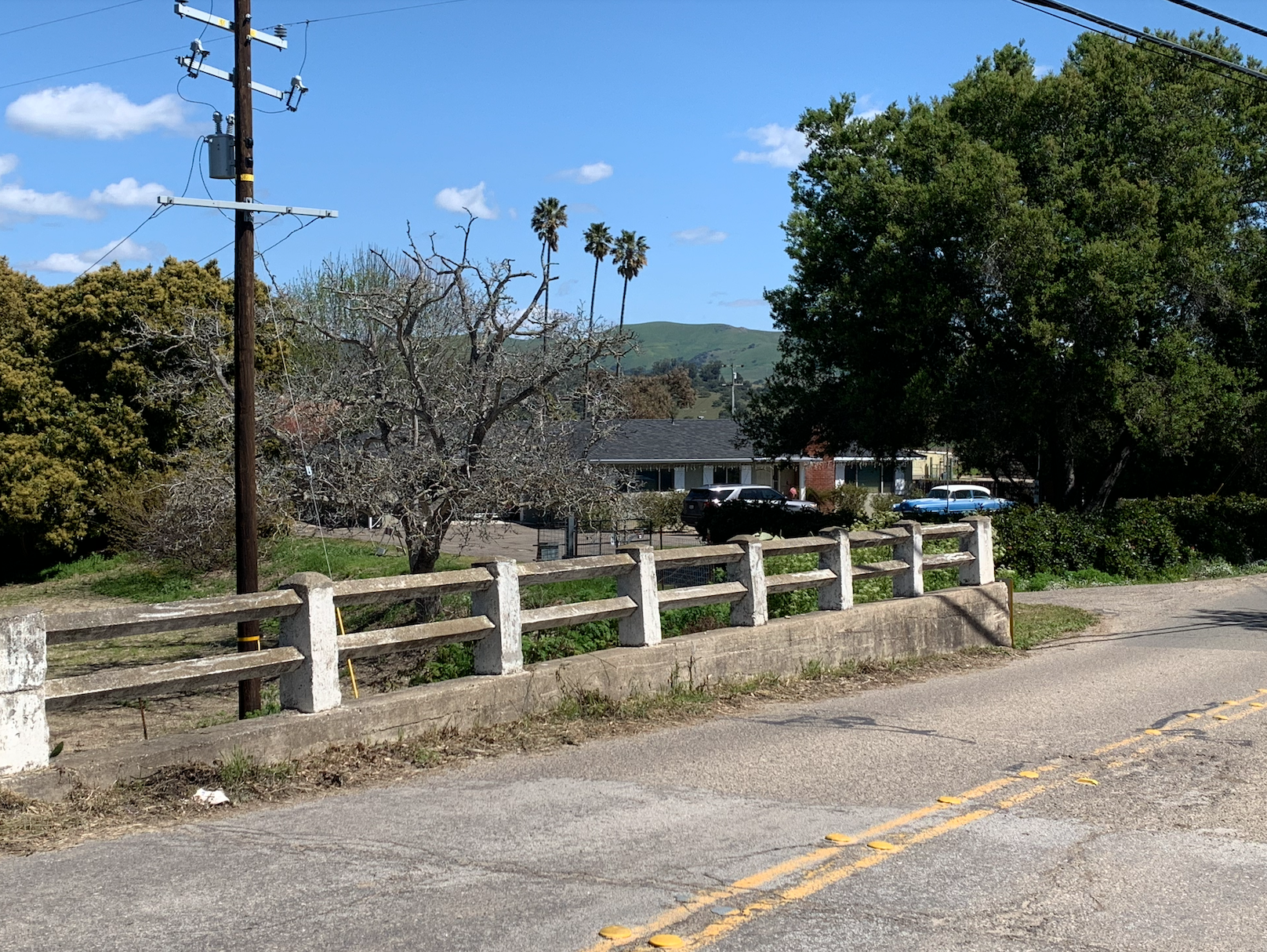
–The Harris Bridge. Before the bridge, this was near the spot where fourteen-year-old Sam Cundiff drowned in the flood of 1911.
Our house was (and is, much improved) just over the bridge, which was built, I think in 1927, when Lopez Drive was called Musick Road. I was very happy to see that our walnut trees, just beyond that bank of Queen Anne Lace, are dead. I hated harvesting walnuts, stoop labor, and your hands and nails were black for weeks. Walnut trees used to cover the fields between the high school and Halcyon Road before an insidious pest, the husk fly larvae, began to kill them. I did not much mind. The only way I found walnuts tolerable was in my Mom’s chocolate-chip cookies.
In the winter of 1968-69—you can get a sense of it from the video below—the creek rose above that chasm and spilled into our walnut orchard. There were ponds and lakelets in the Upper Valley for months afterward.
I used to catch rainbow trout in the chasm below and, of course, I did NOT catch the big female steelhead who hit my line one afternoon. She was so fierce that I nearly had a twelve-year-old heart attack. It was glorious the way she broke the surface, with a terrific splash, and it was only seconds before she snapped my leader and went upstream for the business of motherhood.
In the winter of 1911, when the tragic Cundiff family returned to their home—fourteen-year-old Sam had been swept away by the flood, one of three sons they lost in the space of a year— which had been underwater, they found the skeletal remains of a steelhead and, not far away, a very contented cat, fast asleep.
Once my friends and I found the heads and innards of two spike bucks—yearlings, illegal to hunt in California—tossed over the side of the bridge by the hunters who’d butchered them and who wanted to get rid of the evidence. We pondered their remains, appalled, for a long time as the creek rushed past.
But once, on a ledge just below the bridge railing, I saw two barn owls asleep, one’s head sweetly on the other’s shoulder. I will never forget them.
Then we turned up Huasna Road toward the Four Corners at Huasna and Branch Mill Roads, near the bridge over Tar Spring(s) Creek. Don’t get me started. I did, on monte, the willow scrub that used to cover the Upper Valley. But I was–finally–starting to get a little tired. It was time for Elizabeth and me to come home.
 A Work in Progress
Thank you for taking me along on your ride on Huasna and Lopez Drive. I lived next door to Stother Park when it was still walnut orchards. I loved riding my donkey through the trees and thistles as tall as her shoulders. I also remember loving Routzahn Park. My dad worked at the gravel pit beyond.
Your stories are a gift. They give me background on the place that’s been my home since before I started first grade. They refresh my memories of people and places that are part of our shared history. I was trying to remember the name of Commercial Company Market the other day. And I, too, remember farmers and ranchers stopping pickup cab to pickup cab in the middle of Branch Street to chat while other vehicles just went around them.
Good memories and gifted stories. Thank you!
LikeLike
Thank you, my new friend Joni. I am blessed.
LikeLike
I just finished reading the amazing recolections of the place I called home since 1997. I joined the South County Historical Society soon after moving here to help preserve and appreciate my community. Since Jim Gregory has become president and always has an interesting article on the history of my hometown, I look forward to the Historical Society’s Heritage Press and read each from cover to cover.
Thank you, Jim, for your service! Joyce with a choice
LikeLiked by 1 person
I am honored, Joyce. Thank YOU!
LikeLike
Wasn’t it wonderful growing up here when we did?
LikeLike
Agree 100%. We were so lucky!
LikeLike
William Whitlock was my Great Grandfather. His offspring included Gertrude, Adella and Charles. Until I read your column, I was completely unaware of Daniel Elliot Whitlock. Adella was my grandmother. Mom worked at her grandpa William’s general store on Mason St. during her senior year at Paulding. Thank you so much for sharing this enlightning information!
LikeLike
He was an incredible man, David. Thank you for sharing this!
LikeLike