
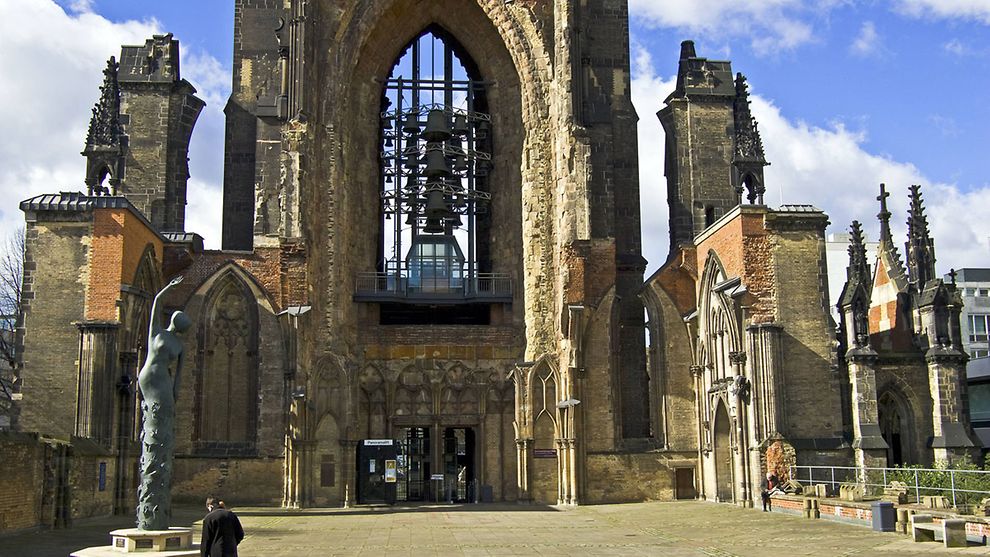
King Charles III visited Hamburg yesterday to pay tribute to the estimated 30,000 German civilians killed in the Allied firebombing of the great port city in 1943, in an operation code-named “Gomorrah.”
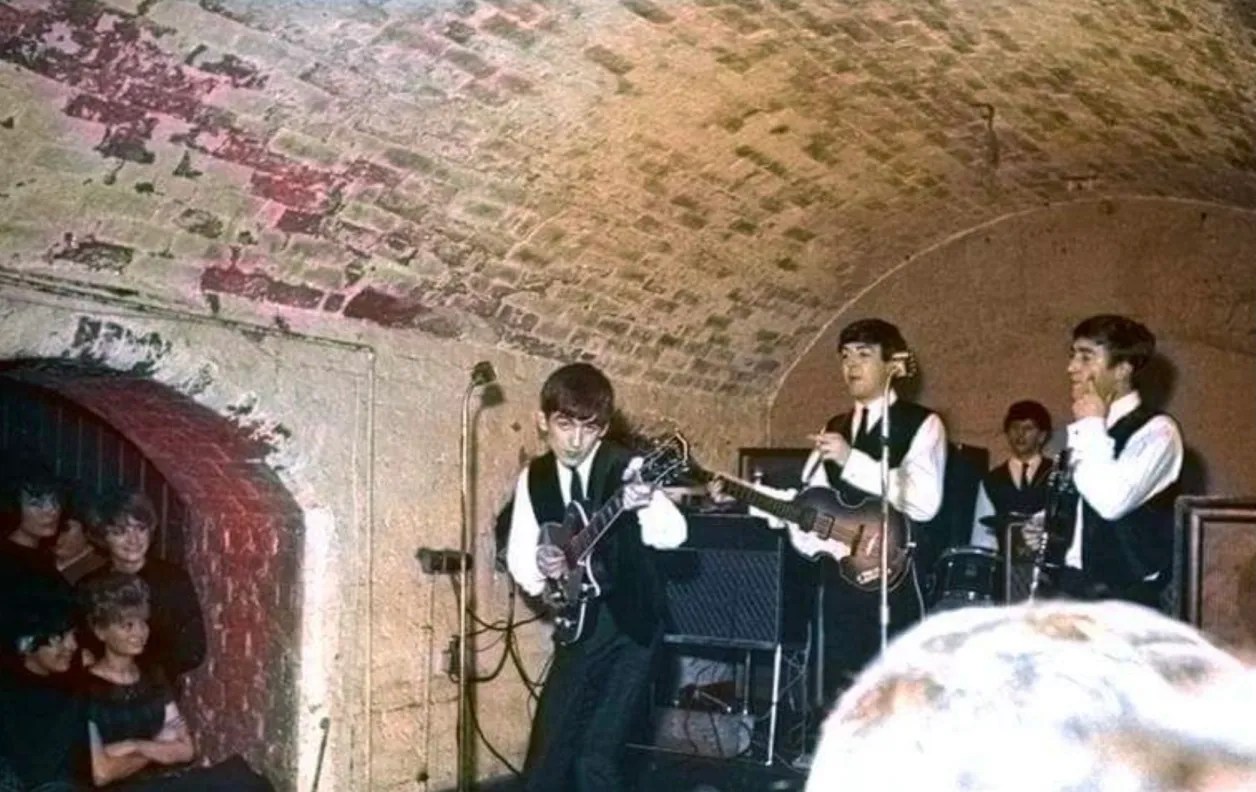
Twenty years later, ironically, the last stop for The Beatles before they hit the big time was a tiny nightclub in Hamburg called The Cellar.
It’s been replicated, exactly, in Liverpool, where the MonaLisa Twins, two young women who expertly and faithfully perform Beatles songs, perform today.
I wrote a book about the air war, a testament in its bulk to the immense courage of the American heavy bomber crews–in B-17s and B-24s–who contributed to the destruction of Europe.
I have never liked the Superheavy, the B-29 Superfortress, which not only destroyed Japan but, in its development, killed dozens of aircrews, including waist gunners. When the cabin was pressurized, the gunner’s Plexiglas bubble, in early models, separated from the fuselage and so carried the gunner with it. The Army Air Forces’ solution was a leather harness. The plane was also noted also for the ease with which is caught fire.
I hate that airplane.
And while I will forever love the aircrews of the heavies, and I will never forget, either, what they were doing to the people below. Henry Hall of Cayucos was twenty when he saw a B-17 from his squadron, badly shot up, begin to lazily tumble toward the ground. Along the way, it clipped the wings of two more American bombers. They went in, too.
The passage below is from my book about airmen like Hall.
Sheila Varian’s prize cow horse, Ronteza, was an Arab and her sire was an award-winning Polish stallion, Witez II. Stablehands were desperately trying to evacuate Arab stallions from the east–horses were being eaten there by the Red Army–when they reached Dresden, the ancient city that was firebombed in February 1945. (POW Kurt Vonnegut escaped incineration in Slaughterhouse-Five).
One of the Arabs’ handlers watched in horror as the tail of Ronteza’s uncle, Stained Glass, burst into flames.
Stained Glass survived. Twenty Arabians perished. So did at least 25,000 human beings.
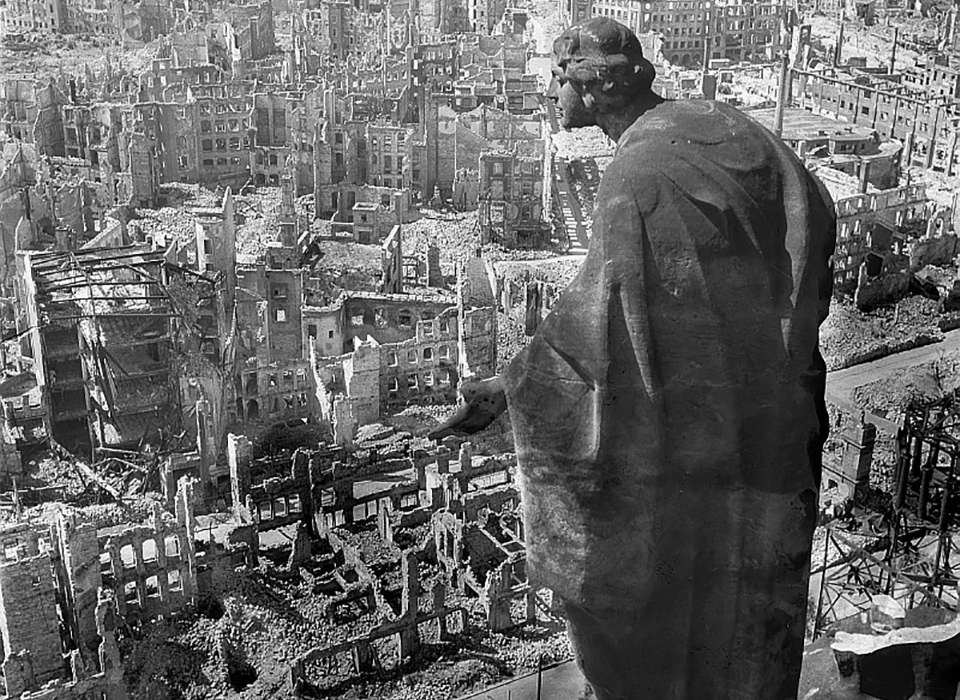
Sometimes the aircrews could smell, from 25,000 feet, wafted up to them by vast columns of black smoke, what they’d done to the children below. Even into old age, many of them would awake, in a terrified moment of cold sweat, when, in their dreams, they were smelling their combat missions again.
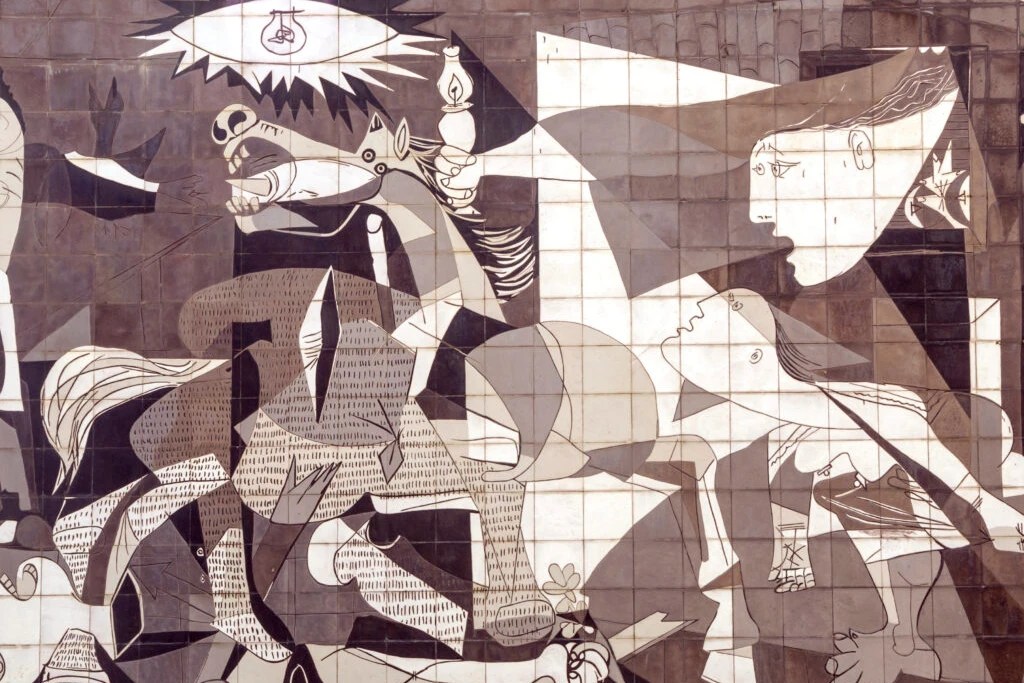
When we were still capable of outrage, Pablo Picasso’s “Guernica” was a passionate protest against Hitler’s bombing of a Basque town during the Spanish Civil War, in 1937. That painting has been replicated, exactly, in the United Nations building in New York City. It’s a reminder, albeit with the Russian Federation remaining in the Security Council, of what the UN is intended to prevent.
And I fervently hope that I never lose my capacity for outrage. That is one quality that made be a history teacher. And that, after all, was just a cover story. My real intent was to teach my faith, by which I mean, the value of each and every single human life.
We are precious in God’s eyes. My students needed to know that. The gift of history is in reminding young people of the richness of their heritage. The stories that history teachers tell remind young people that their lives, too, enrich us beyond measure.
Without being either a proselytizer– and while being a terribly negligent churchgoer–I knew that God’s eyes were always on me when I was in the classroom. I was constantly aware of that.
She had entrusted Her children to me, you see.



Life has no coincidences?
On a whim, my husband and I took the kids seven minutes down the road from where we are staying with my sister. We wanted to get out of the house but not be walking around in the rain for a third day.
We ended up at the The Steven F. Udvar-Hazy Center in Chantilly, VA. The draw for my husband was the Lockheed SR-71 “Blackbird”. While he and my stepson debated the merits of various aircraft— my stepson’s grandfather twice received a Distinguished Service Cross medal for heroism flying a B-19 during World War II- I prowled around some of the other areas.
James caught up to me.
“Huh. That’s a B-29.”
“It’s not just any B-29, Jimmy. It’s the Enola Gay.”
Tristan joined us. “What’s the Enola Gay?”
James shrugged his shoulders in the plane’s direction. “That’s the plane that killed 100,000 people.”
Something rose in my throat, choking me.
“Planes don’t kill people. People kill people.”
I think my mother phrased it better during the course of her lifetime: “Man’s inhumanity to man.”
It’s a marvelous museum.
LikeLiked by 1 person
Wow. Thank you so much for sharing this, Dami.
LikeLike