
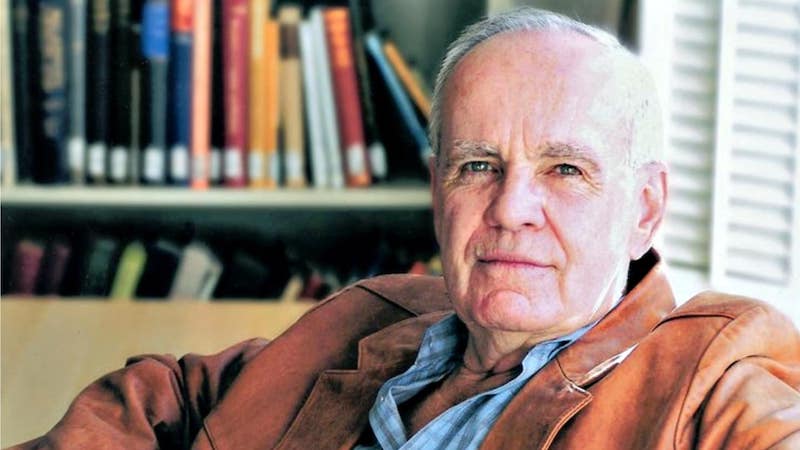
The great American fiction writer Cormac McCarthy died today. I know him best from his Western novels and even more from the two films made from them that stand out to me: All the Pretty Horses and No Country for Old Men.
My favorite Western writer is Larry McMurtry, whose ear for the American language is so clear in both his books and the films/television series adapted from them, including The Last Picture Show and Lonesome Dove. You can curl up inside a McMurtry dialogue and rest there awhile, in admiring silence, until someone like Gus McCall finishes what he has to say, just as you can in True Grit, by Charles Nelson Portis, Little Big Man, by Thomas Berger, or a novel long forgotten, The Travels of Jamie McPheeters, by Robert Lewis Taylor, which won the Pulitzer Prize after its 1959 publication. All of them are Westerns, all of them fall, in unexpected ways, sweetly on the ear.
McCarthy wrote westerns, but they weren’t meant for the ear. A McCarthy paragraph is an adventure—I’m reminded of Faulkner or Kerouac—because you don’t know, when you go in, how the paragraph will end once you see daylight again. His writing reminds me, in fact—which is why I used that word—of Vin Scully’s comment on the brilliant but erratic Dodger centerfielder, Willie Davis: “Every fly ball is an adventure.”
McCarthy’s novels are stunningly visual—they are movies that run inside your head— and so they must have been simple to adapt to film, because, in a way, he’d already framed and shot the scenes in his mind in the same way one of our finest directors, John Ford, did in films like My Darling Clementine and The Searchers.
All the Pretty Horses, with Matt Damon and Henry Thomas (the little boy in E.T., and he is excellent in this film), two Texas cowboys and close friends who make the mistake of heading south to Mexico for new jobs, is a vivid example of McCarthy’s vision. It’s also one of the most heart-breaking love stories I’ve ever seen. Here’s the trailer:
All the Pretty Horses is at least redeemed a little by the survival of its protagonist, but his own personal life is about all he has left. Despite what he’s gotten himself into, you can’t help but root for Josh Brolin in No Country for Old Men. Mexico, and jealous fathers, are the forces that doom Matt Damon. In No Country, it’s an even more elemental force: Javier Bardem. It’s no coincidence, I guess, that my favorite filmmakers (The Big Lebowski, Fargo, O Brother Where Art Thou?, Raising Arizona) the Coen Brothers, were the best choice to bring this McCarthy novel to the screen. Again, the trailer:
Since Tommy Lee Jones figures in No Country for Old Men, he stars, as well, in a third film that is not based on a Cormac McCarthy novel—it was in part inspired by Faulkner’s As I Lay Dying—called The Three Burials of Melquiades Estrada. Jones, one of our finest actors and one of our finest movie horsemen (see the street scene in Lonesome Dove when the cavalry scout is quirting Newt)—is a cowboy who takes the body of an undocumented worker, his friend, back to his village in Mexico. Along the way, he confronts the Border Patrol agent, played by Barry Pepper (the American sniper in Saving Private Ryan) who took his friend’s life. It’s a small film, with a punch, and as gorgeously filmed, for the barrenness of much of the landscape, as is All the Pretty Horses. Northern Mexico is a kind of costar.
Here is the scene from Lonesome Dove:
And here is the trailer for Three Burials:
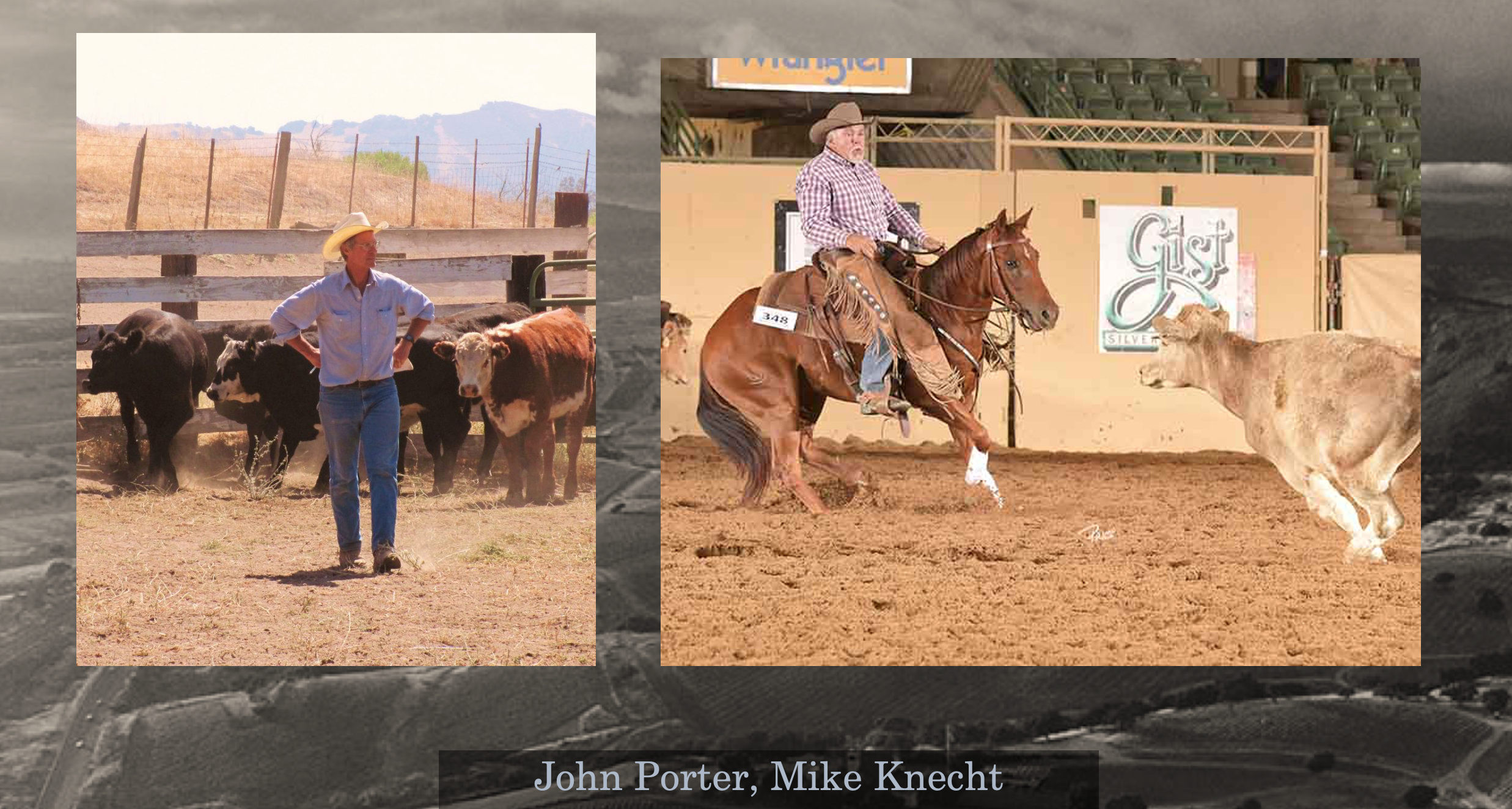
I flatter myself in suggesting that this blog post is like a Cormac McCarthy paragraph, but the final point is the most important: I have two friends from my graduating class at AGHS (1970) who write Western fiction, John Porter and Mike Knecht, and they are good.
I cannot write fiction. I would lose the thread of my characters’ backstories by Chapter Three when, I like to joke, I’d put all of them on an airplane and fly it into the side of a mountain.
But John, whose characters are resolute and often doomed—he makes you want to follow them anyway—and Mike, whose characters grab you in the opening sentences, where at least one was staked to an anthill, don’t need my airplane. These two know how to write and they know how to finish the thread of the stories they begin. That takes time, more time, and rewriting, and then more rewriting.
Writing is easy, as the famous saying goes: You just open a vein and let it bleed onto the page.
The best part is that both write Westerns because they know what they’re talking about. John, who’s written film scripts, as well, is the manager of a Huasna Valley ranch that’s been in his family since the 1840s. Mike knows cowhorses—the best thing I ever wrote was about a cowhorse, a mare named Ronteza—but Mike writes of them with precision and simple, powerful elegance. His love for horses is deeply moving.
So these are the men who immediately came to mind when my son Thomas told me that Cormac McCarthy had died today, at 89. At 71, I can think of few friends who amaze me as much as these two.
Thank you, John and Mike, for the gift of your friendships.


It may not be fiction but it is superb writing.
LikeLike
That’s a compliment I could dine for a week on, right there1
LikeLike