

Arroyo Grande’s Ben Dohi died last month, and his obituary was so beautifully written that I wanted to include it below:
Benjamin Hideo Dohi
November 8, 1927 – May 26, 2023
Arroyo Grande, California – A little piece of our community’s history was lost last week with the passing of Benjamin Hideo Dohi at age 95. Ben passed peacefully at home on May 26 after a long life filled with hard work and the love of family.
Benjamin Hideo Dohi was born on November 8, 1927 into a farming family to parents Hugh Setsugo Dohi and Hide Kobayashi Dohi in Santa Maria, California. Ben contracted pneumonia as an infant and after the doctors had given up hope on his recovery, it was the love of his mother that nurtured him through his illness and his early months of life.
That same tenacity and determination would be what saw him through his early adult years as an internee in the Japanese internment camp at Poston, Arizona from 1942-1945. Benjamin was 14 when he, along with his parents and two brothers and two sisters, were evacuated from Arroyo Grande to a waiting facility in Clovis, California before being transported to Poston, where he resided until the end of World War II. Although Ben would end up starting high school at Arroyo Grande High School as a freshman, he moved to Clovis High School then on to Poston High School where he earned his high school diploma. “The only thing I lost was my youth,” said Ben when interviewed by Mathew Donovan for Cal Poly in 2006. He credits his teachers at the internment camp, who were mostly Quaker volunteers, for the valuable lessons learned while there. When the Japanese were released from the camp in 1945, Ben successfully transferred to college in Kansas City, Missouri where he said he knew as much as the other students but was mostly treated like a “novelty.”
But Ben’s education was once again interrupted in 1946 when he enlisted into the US Army and began training in Military Intelligence. He served two years in Japan as an interpreter after completing a language program at the Language School in Monterey, California. After being discharged from the army, Ben completed one year of law school at the University of California, Berkeley, but the draw of farming and the love of the Arroyo Grande community brought him home.
In 1955 Ben became a grower for POVE, Pismo Oceano Vegetable Exchange, the largest Japanese cooperative of farmers in California. He joined the Hayashi, Ikeda, Kobara, Saruwatari, Fuchiwaki, Kawaoka, and Fukuhara families. It was in the office of POVE that Benjamin Dohi met the woman who would change his life. Ty Yamaguchi, who had also been a young woman in the same internment camp, won Ben’s heart and they married soon after Ben joined the family of growers who would go on to become one of the most successful farming operations in the state.
The young Dohi family experienced heartbreak when their first child, Leslie Naomi Dohi, died at childbirth in 1958; Ben and Ty were later blessed with the birth of their sons, Hugh Jonathan in 1959 and Peter Benjamin 1961. Ben, along with his wife, Ty, dedicated their lives to growing their business, Dohi Farms, and although there were struggles in the beginning, once he began growing bell peppers they found their stride. Ben took great pride in growing bell peppers which was his most important crop in the early years of farming. As Ben’s sons got older he was able to build a home for his young family on the same property where he was raised as a child.
Ben split his time between farming and watching his boys play sports, as well as coaching some of their baseball teams, a skill he learned in the internment camp. Ben loved to take his family on vacations and loved to teach his boys how to fish in Arroyo Grande and Lopez Creek. He instilled in his boys a love of farming, family, and community. He showed his sons how to be honest, generous, and humble in life, and these values became theirs in their own lives.
Ben never wanted to dwell on the past; instead, he focused on his work, his family, and his business. Nothing made him happier than driving in his pickup truck alongside sons Hugh and Peter overseeing each farm which he referred to as “making my rounds.” He always gave credit to “the Man upstairs” for any success he had.
His was a life well-lived.
Ben is preceded in death by his wife, Ty, and his baby daughter, Leslie, brother, Abe, and sister, Ruth. He is survived by his son, Hugh Dohi (Shawnah Dohi), son, Peter Dohi, brother, Paul Dohi, sister, Grace Dohi, nephews Gregory Dohi and Anthony Dohi, and niece Sylvia Roldan-Dohi.
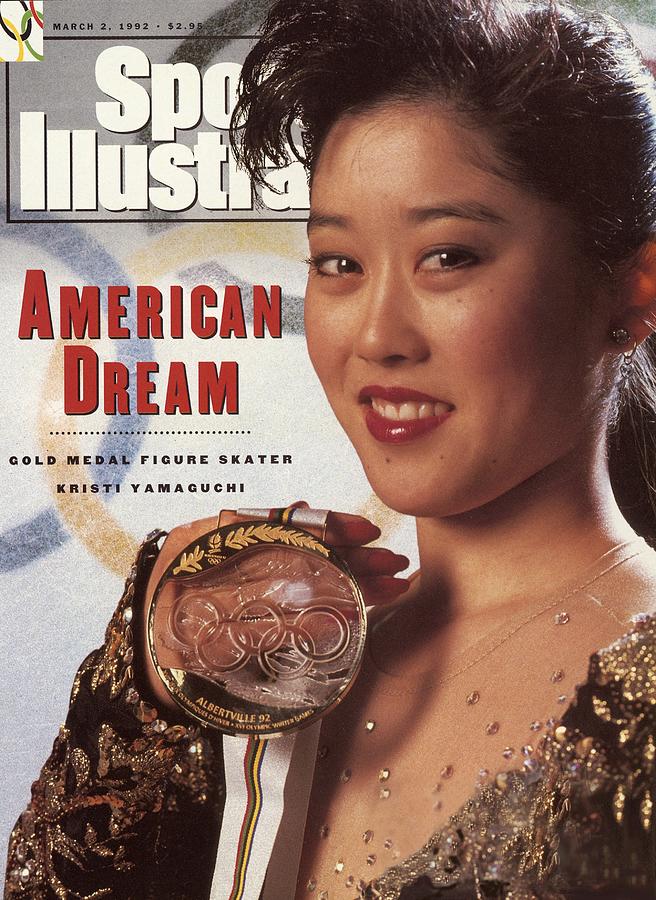
The family expresses its deep appreciation and gratitude to the community of Arroyo Grande, the farm families of POVE, and the doctors and nurses of Arroyo Grande Hospital and San Luis Post Acute. In lieu of flowers, donations can be made to Arroyo Grande Community Hospital Foundation 345 S. Halcyon Road Arroyo Grande, CA 93420 or to Kristie Yamaguchi Always Dream at 125 Railroad Ave, Suite 203 Danville, CA 94526. No services are planned.
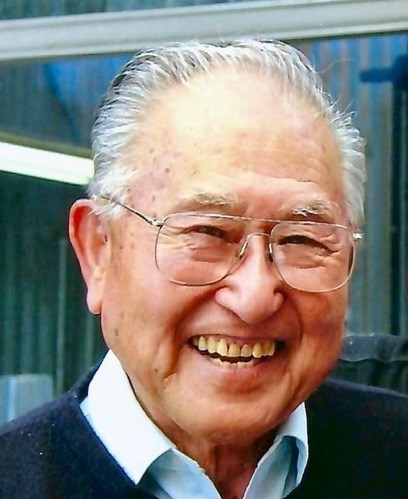
So Ben’s sons still farm land, near the high school, that his family has been farming for nearly a hundred years. I knew Ben and his wife, Ty Yamaguchi Dohi, in high school, where I was a sometimes visitor to the Dohi home. This is where I first discovered sushi, a treat reserved for special Japanese holidays like the Fourth of July and Labor Day. The three Yamaguchi sisters prepared it in the kitchen, frequently giggling—they must have been a handful as teenagers—and I’d break away frequently from the men and the TV sports we were watching to hang with the sisters, who sometimes fed me samples.
On one such occasion, I got to hold the beautiful baby girl who would grow up to be Kristi Yamaguchi.
Ben’s death led to updating a video—I’m a historian—that I’ve shared with schools and community groups about the experience of people like Ben during World War II. Executive Order 9066, as you’ll see, was perhaps the single most tragic event in my hometown’s history. But the way that both Japanese Americans and their friends responded brings to mind the word that so marks Ben Dohi’s life: Honor.
 A Work in Progress
Thank you for this interesting account of a life well lived. Ben was an overcomer and I was very interested in this. I have worked with young people all of my adult life and hope to relay his story as an inspiration to them. I just gave my husband a couple of books for Father’s Day—Arroyo Grande by Jean Hibbard and Gary Hoving, South County Historical Society, and World War II Arroyo Grande by you!!
LikeLike
Thank you, Carolyn. His is a story that deserves to be shared with young people.
LikeLike