
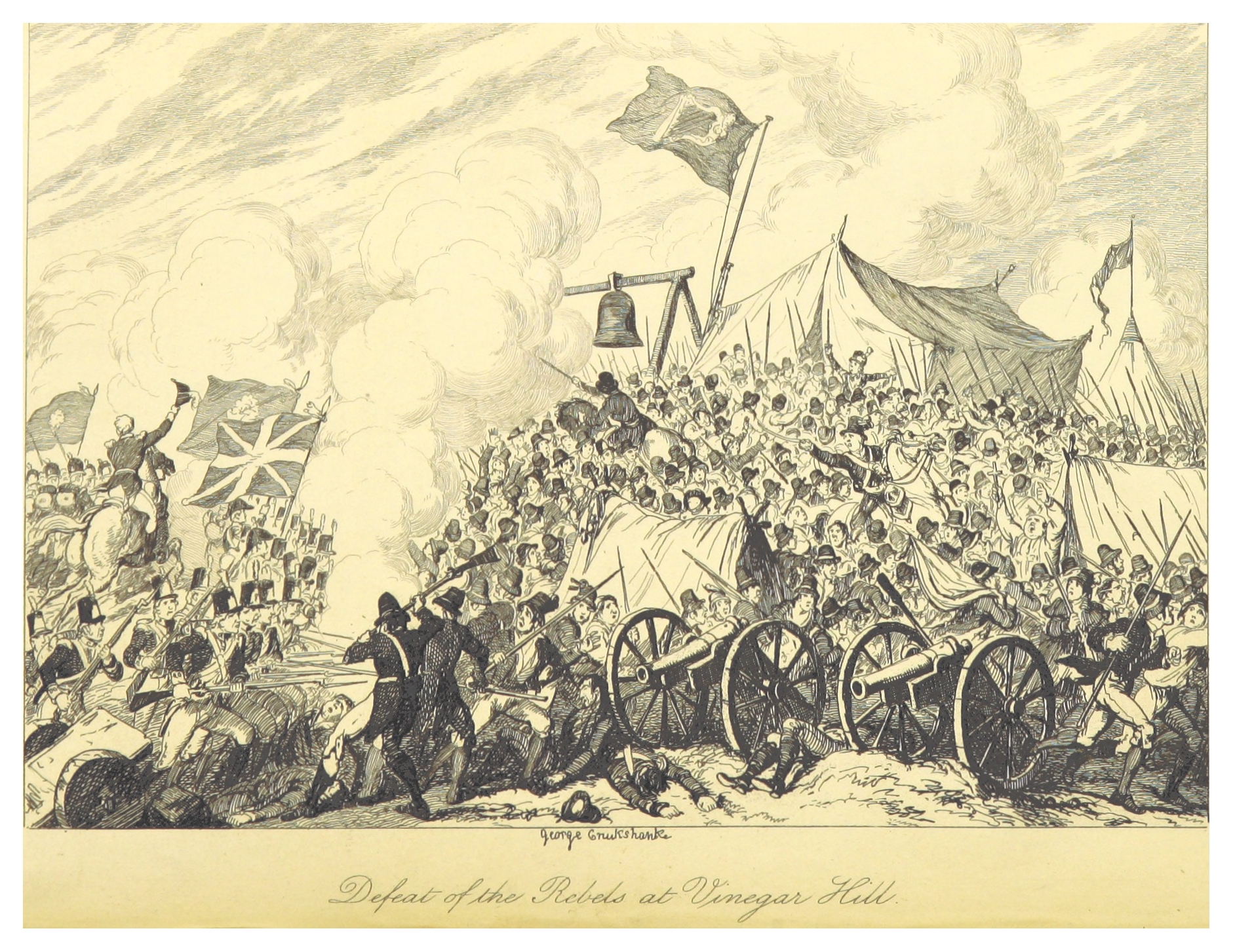
Today is a sad day for Irish nationalism. The culmination of the Wolfe Tone rebellion in 1798—planned with the hope that the French would intervene against England—was a humiliating defeat at the Battle of Vinegar Hill, June 21, 1798. The illustration below, by an artist George Cruikshank, depicts the defeated Irish (1,200 dead and wounded to England’s 100) and they are terrified. Justly so. British soldiers were disciplined, trained with brutality, and so remorseless. The Americans, twenty years before, had the magic formula, including foreign help, which the French provided—but half-heartedly—to the rebels like those who died that day.
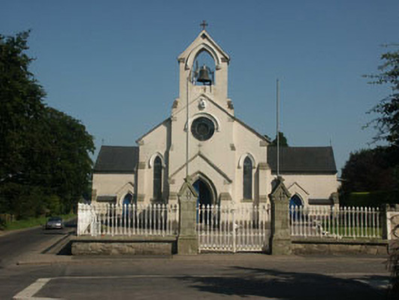
The month before, in what was called the Wolfe Tone rebellion, after its nationalist (and Protestant) leader, firing squads executed thirty-six suspected rebels, in front of their families, on the village green in Dunlavin, County Wicklow. Wicklow is where my ancestors came from. Twenty years after the firing squads, St. Nicholas Church (below) was completed. This is where my third great-grandfather, Hugh Keefe, was baptized in 1821. The church faces the Dunlavin green and the memorial to the executed.
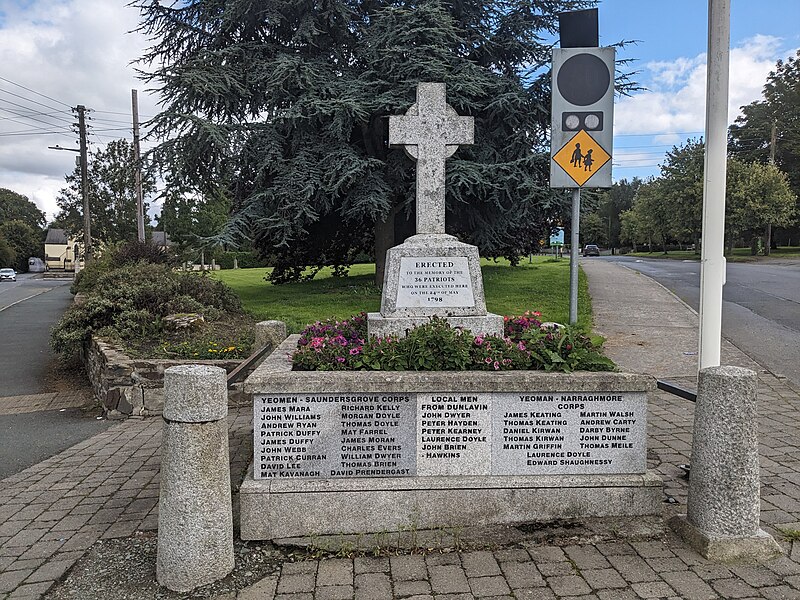
The executioners, as it turns out, weren’t English at all. The Yeomanry was the Irish paramilitary group, allied with England, that did the deed that day in May 1798. This pattern would continued for over a hundred years. The memorial below, from the 20th Century, is in County Kerry, where our friend Sister Teresa O’Connell is buried
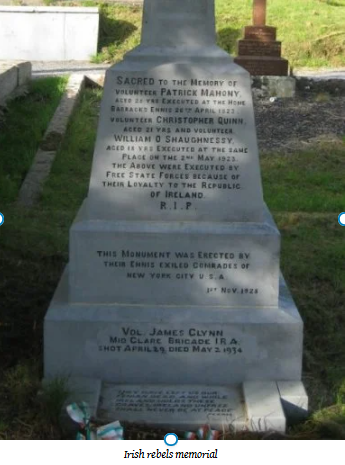
This is what I wrote about this memorial in Sister Teresa’s cemetery:
Maybe it’s typical that this memorial was made possible by expatriates, Irish living comfortably and happily distant in New York. What it commemorates might be too painful to remember for the people who live in Ennis today. The four Irish Republican Army men cited on this monument were killed in the Civil War that followed the Republic’s creation, but not by the English. Three of the four were shot by firing squads made up of fellow Irishmen during the Civil War of 1922. Two were eighteen years old. They were Republicans executed by soldiers of the Irish Free State, the government that shot three times as many Irish revolutionaries in 1922 as the English had during the rising of 1919-1921.
One of the eighteen-year-olds wrote this on the eve of his execution:
Home Barracks, Ennis
Dearest Father,
My last letter to you; I know it is hard, but welcome be the will of God. I am to be executed in the morning, but I hope you will try and bear it. Tell Katie not to be fretting for me as it was all for Ireland; it is rough on my brothers and sisters–poor Jim, John, Joe, Paddy, Michael, Cissie, Mary Margaret–hope you will mind them and try to put them in good positions. Tell them to pray for me. Well father, I am taking it great, as better men than ever I was fell. You have a son that you can be proud of, as I think I have done my part for the land I love. Tell all the neighbours in the Turnpike to pray for me. Tell Nanna, Mary and Jimmy to pray for me, Joe, Sean, Mago, Julia, Mrs. Considine and family, also Joe McCormack, the Browne family, my uncle Jim and the Tipperary people which I knew. I hope you will mind yourself, and do not fret for me. With the help of God I will be happy with my mother in Heaven, and away from all the trouble of this world, so I think I will be happy...
…Dear father, I will now say goodbye – goodbye ‘till we meet in heaven.
I remain,
Your loving son,
Christie
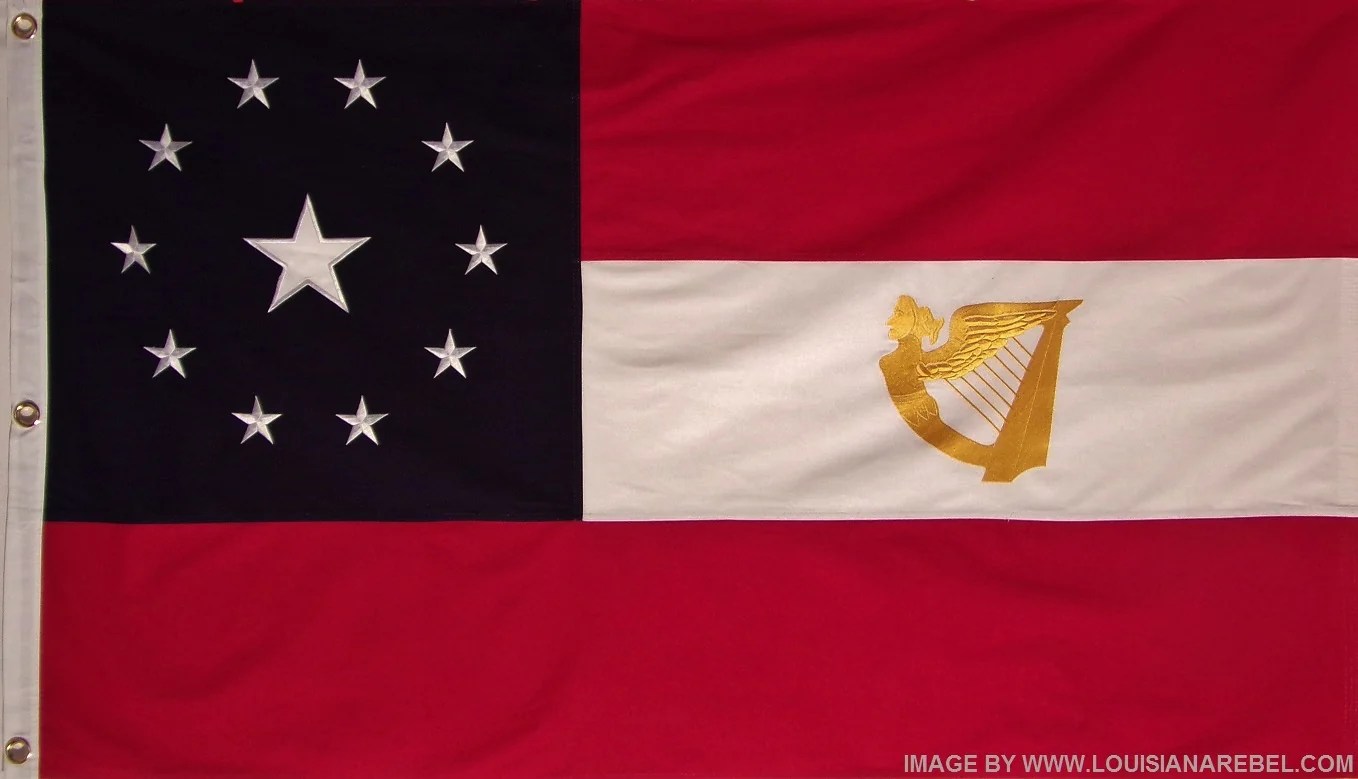
An Arroyo Grande resident, buried in our cemetery, fought in the 24th Georgia, recruited and raised in counties dense with Irish immigrants. There was a gold Irish harp on the 24th’s flag.
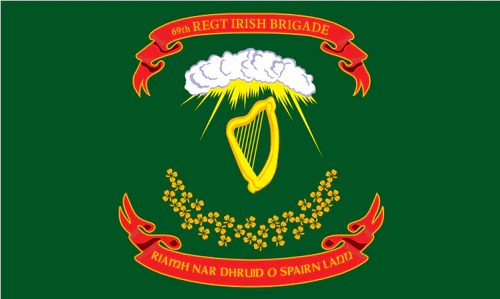
In December 1862, the Irish in the 24th repeated the terrible pattern from 3,000 miles away, from their homeland. This is what about I wrote about them and the Battle of Fredericksburg, transmuted into a short video.
 A Work in Progress