
Tags
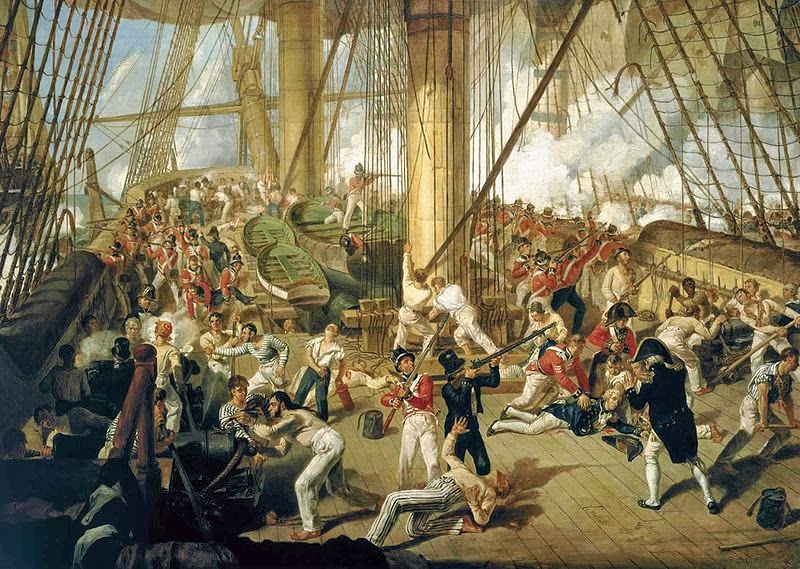
October 21 is “Trafalagar Day,” commemorating the overwhelming victory of Lord Admiral Horatio Nelson’s British fleet over a combined Franco-Spanish fleet off Spain’s Cape Trafalgar. It’s also the day Nelson died. As he paced the quarterdeck of his flagship, HMS Victory, a French sniper shot him in the shoulder. The musket ball wento on to puncture Nelson’s lung and shatter his spine. He died several hours later belowdecks.
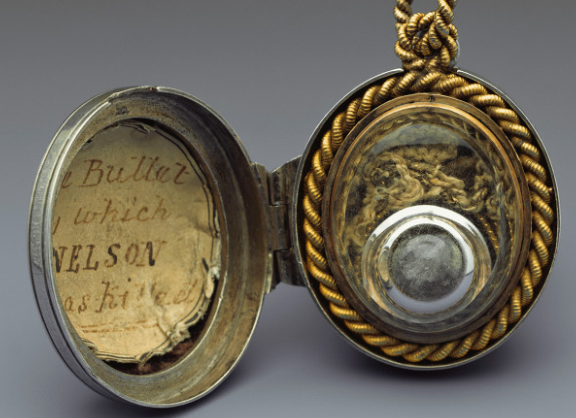
The musket ball was removed by Victory’s surgeon. It wound up preserved in this locket, surrounded by gold braid taken from the little admiral’s dress coat. (He was somewhere between 5’4″ and 5’7″.)
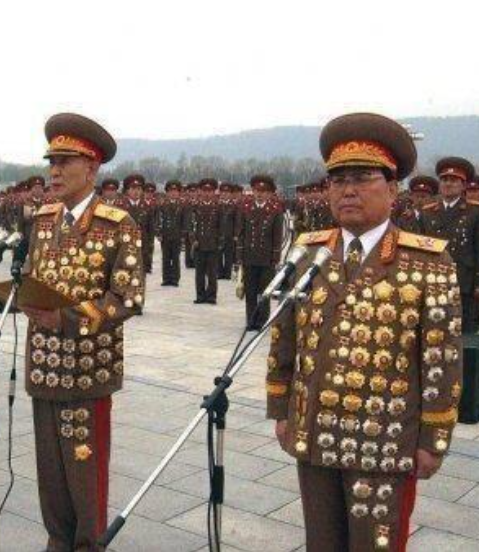
–To be truthful, Nelson got himself shot. He gloried, as George Custer did, in elaborate uniforms and was wearing all his medals (not quite so many as a North Korean general, to be sure) as Victory went into battle, including the diamond-encrusted cockade presented him by the Sultan of Turkey in 1798. This replica (the original was stolen years ago) shows what it looked like. All those medals and foofery made him an easy target for an ambitious sniper.
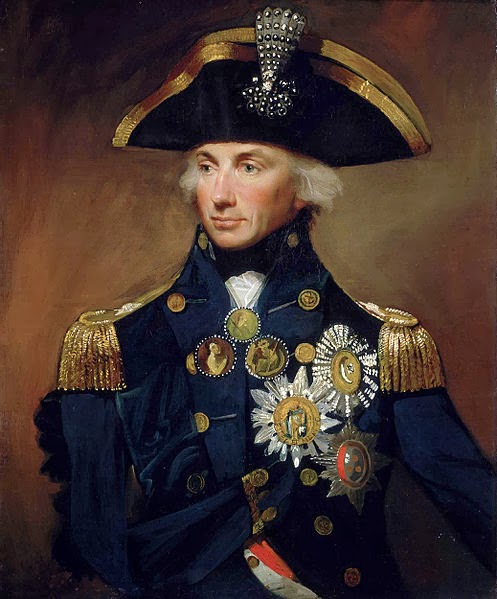
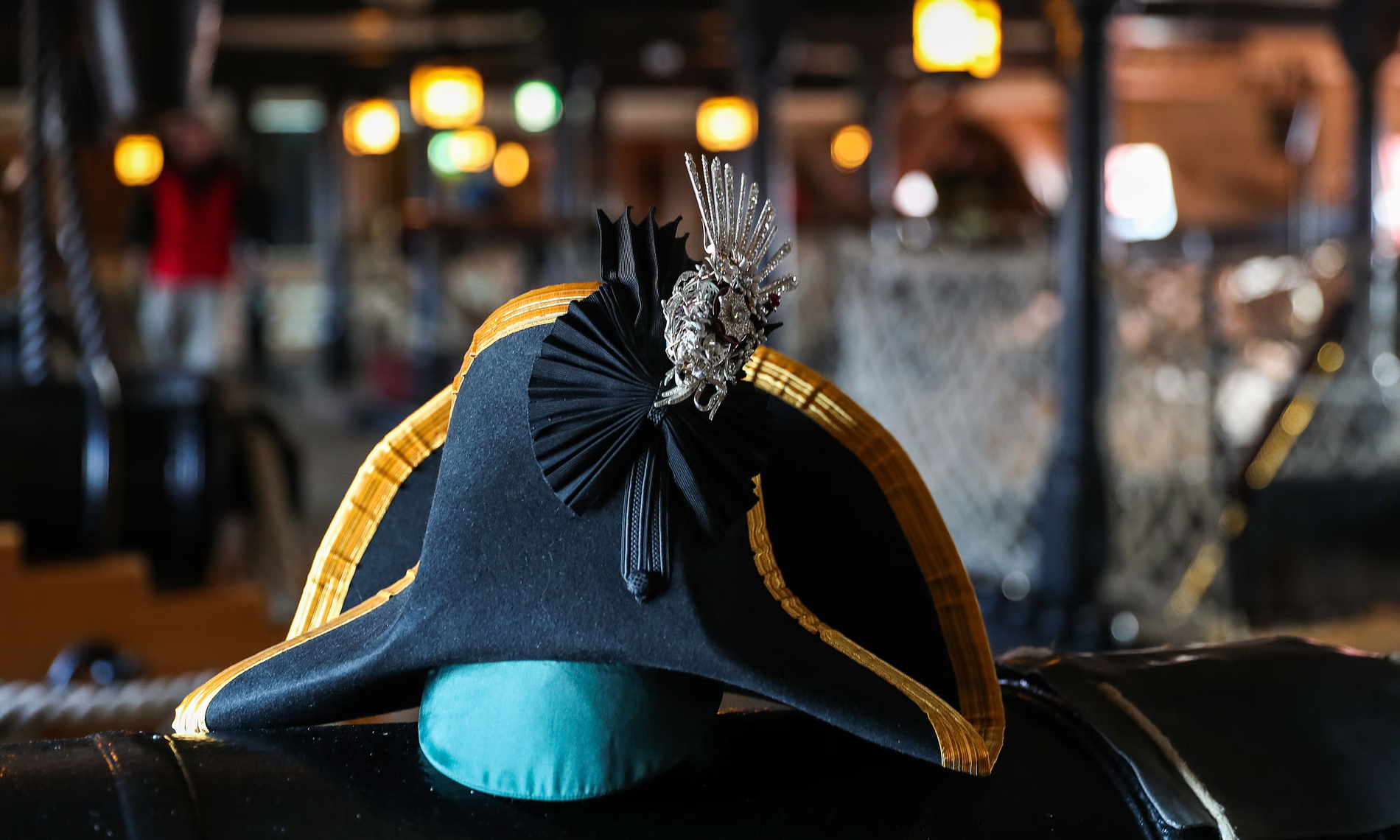
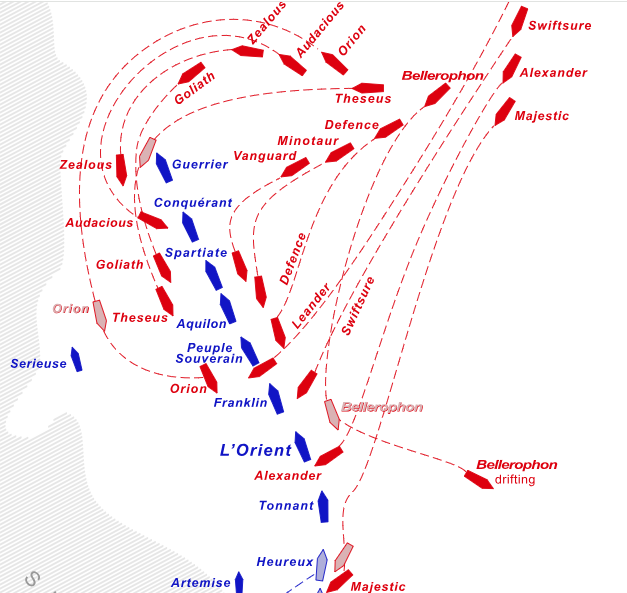
–Nelson was awarded that hat accessory after his victory over a French fleet at Aboukir Bay in Egypt. What came to be called “The Nelson touch”—shameless audacity—was in full display at Aboukir Bay. The French had anchored their fleet just beyond shoal waters, so shallow that no attacking ship would dare enter. They were wrong. Nelson divided his fleet, sending half into the shallowest part of the bay. Another column of British ships attacked the seaward side of the French ships, meaning that all of the French guns, port and starboard, were very, very busy that day. The British lost 218 sailors at what came to be called the Battle of the Nile. The French lost over 5,000. The fleet was there, by the way, in support of Napoleon’s invasion of Egypt. After Nelson’s victory, the Emperor, as he would do in the retreat from Moscow, abandoned his army and went back to Paris.
–Nelson’s audacity was shown even when he was a sixteen-year-old midshipman. On a voyage to the far north in search of the Northwest Passage, he was onshore and confronted a polar bear. I think both parties eventually fled, but the incident’s notoriety led to this 1809 painting.

–In 1794, during an assault on Corsica, a cannonball’s impact sent sand and stone into then-Captain Nelson’s face, leaving him nearly blind in his right eye. Seven years later, in an attack on the French-Allied Danish fleet at Copenhagen, the admiral in command used signal flags to order a withdrawl. Nelson raised his telescope toward the flagship and insisted that he saw no such order. He was holding the telescope to his blind eye—we get the expresson “to turn a blind eye” from this incident. The Brtish went on to win the Battle of Copenhagen.

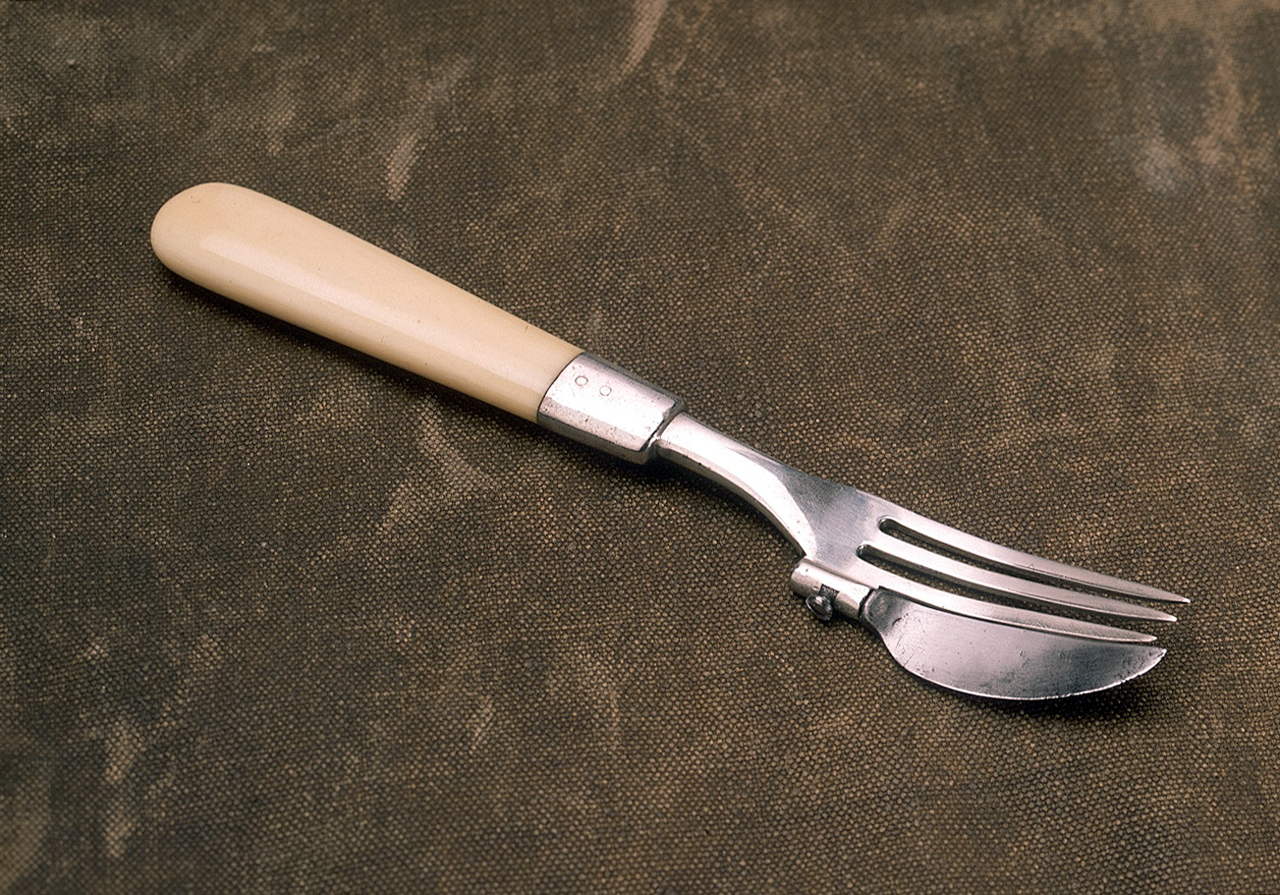
–A musket ball hit Nelson in the right arm during an attack on Spanish forces in the Canary Islands. The wound was so serious that a surgeon had to amputate. Nelson adapted, teaching himself to write left-handed and using this combined fork and knife to eat.
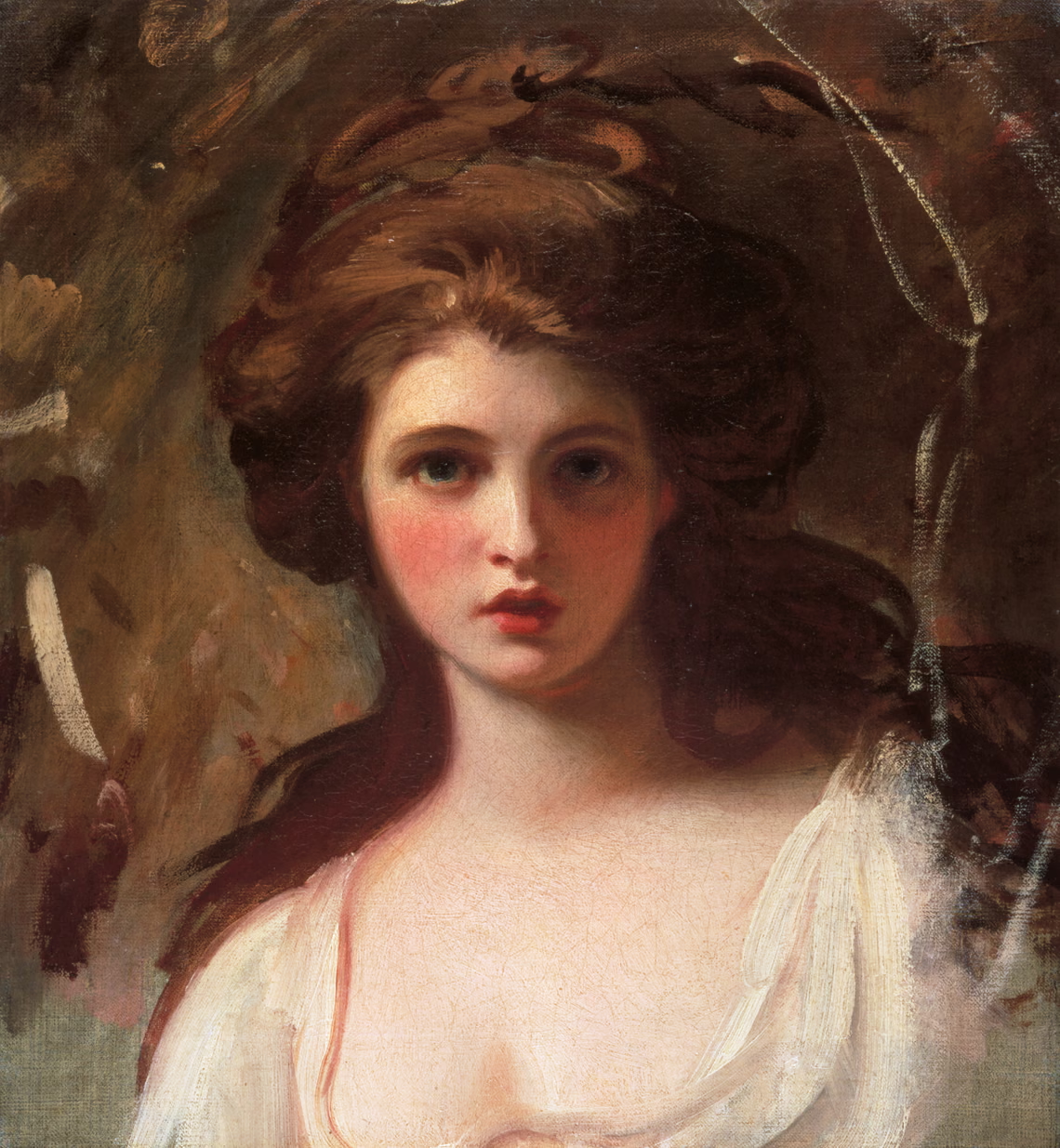
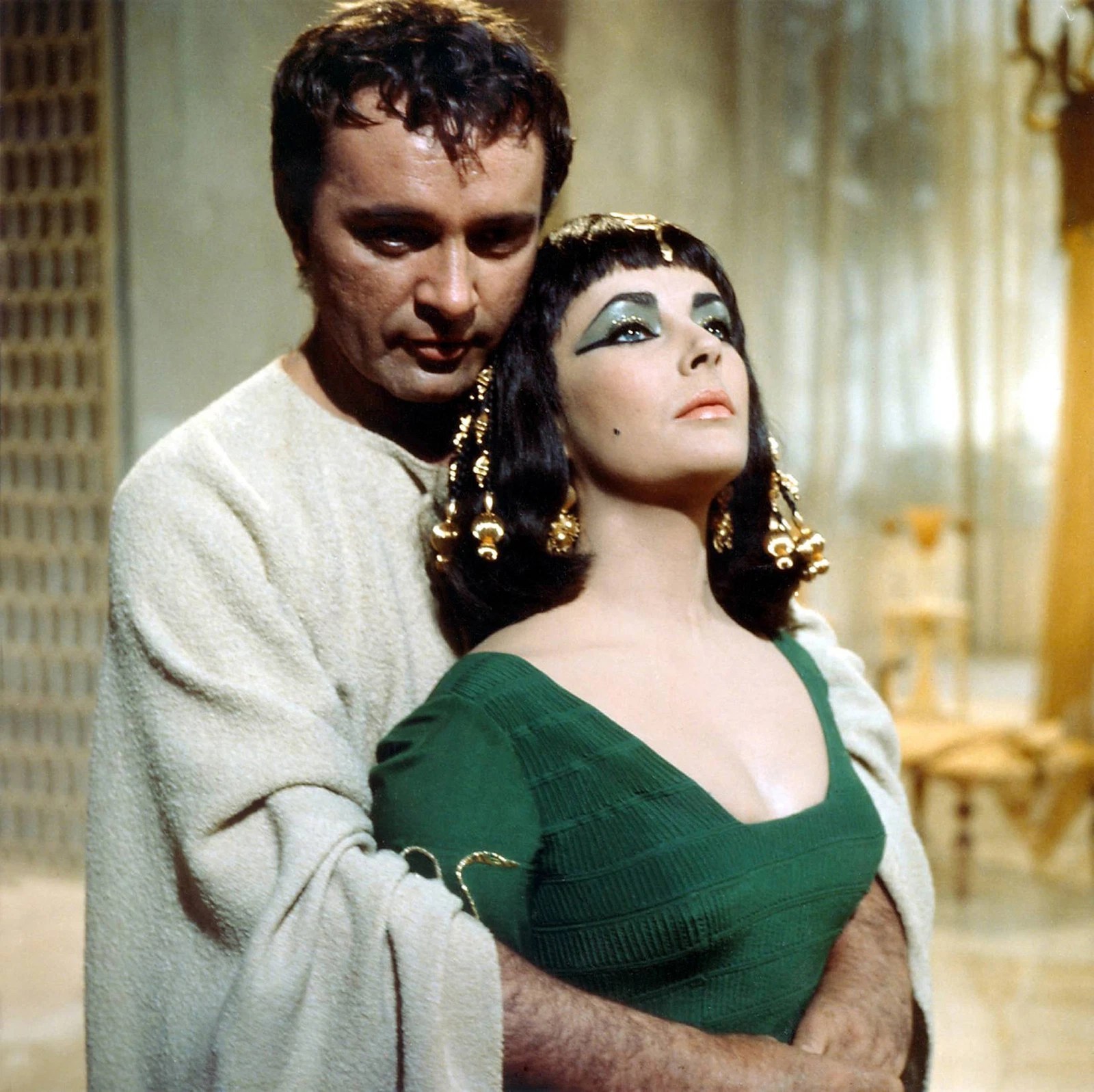
–He was the son of an Anglican minister and was properly married to a widow, Frances Nisbet, in 1787. Six years later, on a visit to Sir William Hamilton, the British ambassador to Naples, he first caught sight of Sir William’s wife, Emma. It was all over after that. The two marrieds entered into a lively relationship that was analogous perhaps only to the Richard Burton/Elizabeth Taylor scandal that began during the filming of Cleopatra. While Nelson continued to support his wife—she remained “devoted” to him, it’s said—Nelson’s devotion lay forever after in the charming arms of Emma. The relationship produced a daughter, tragically named Horatia.

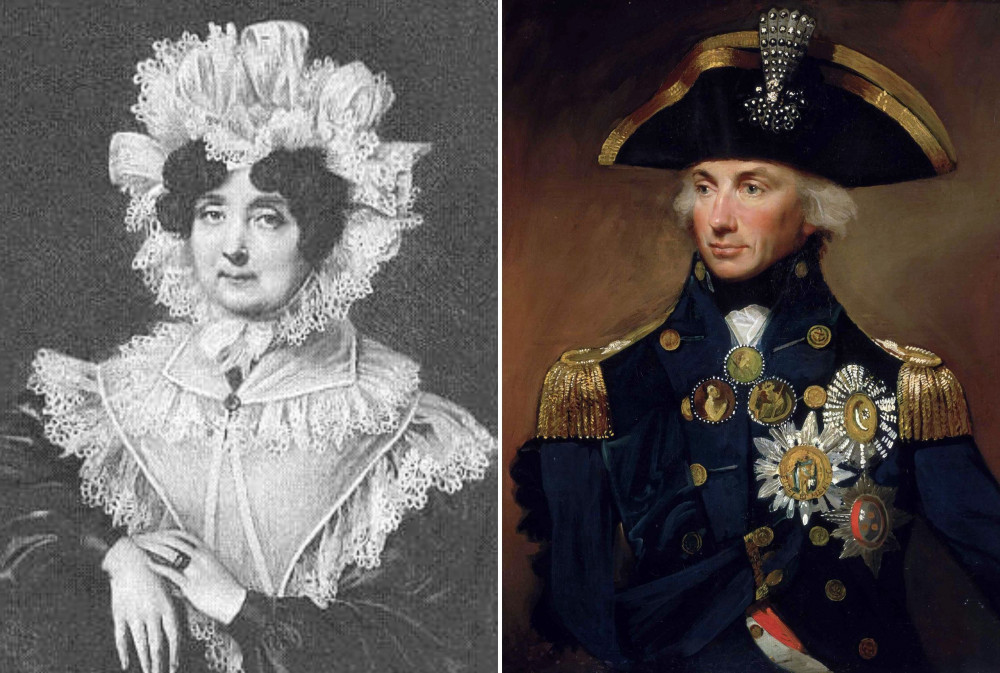
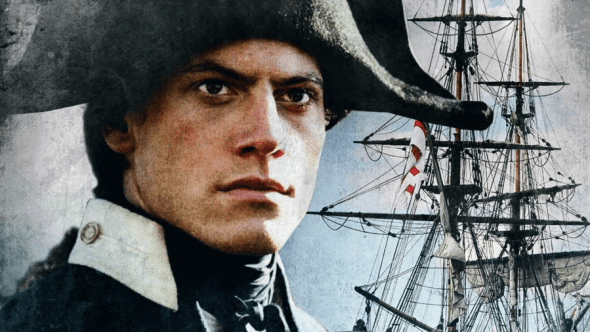
–Like my fictional naval hero, Horatio Hornblower, played by Ioan Gruffudd in a TV miniseries, Nelson was largely out of sight once his ship sailed from England. That’s because both salty sea-dogs were prone to violent seasickness, which both overcame only after several miserable days at sea.
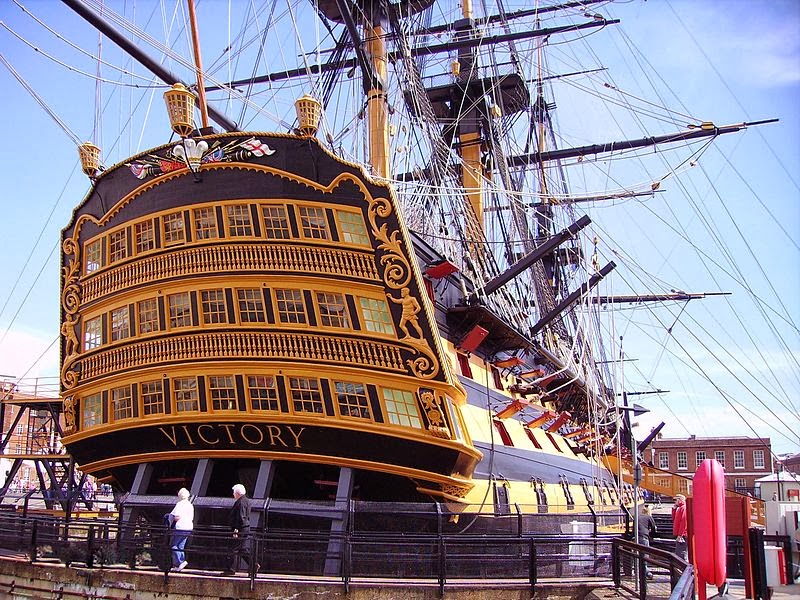
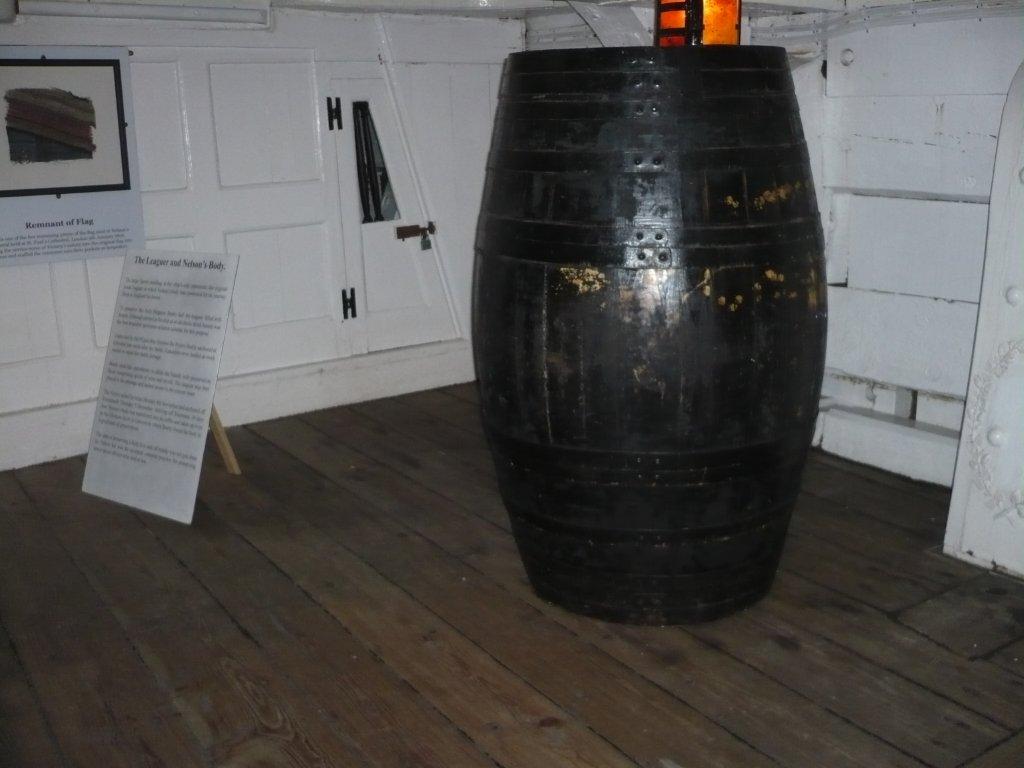
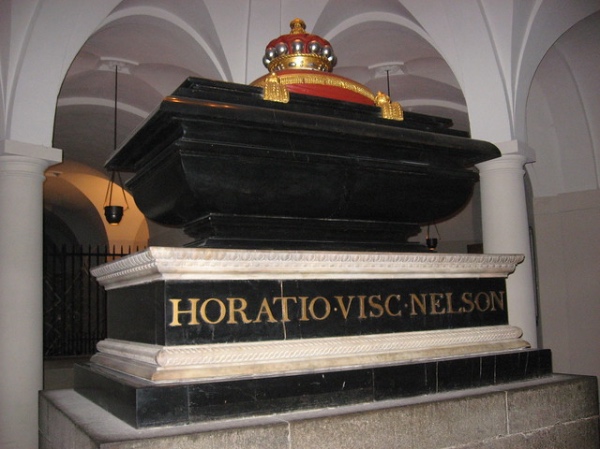
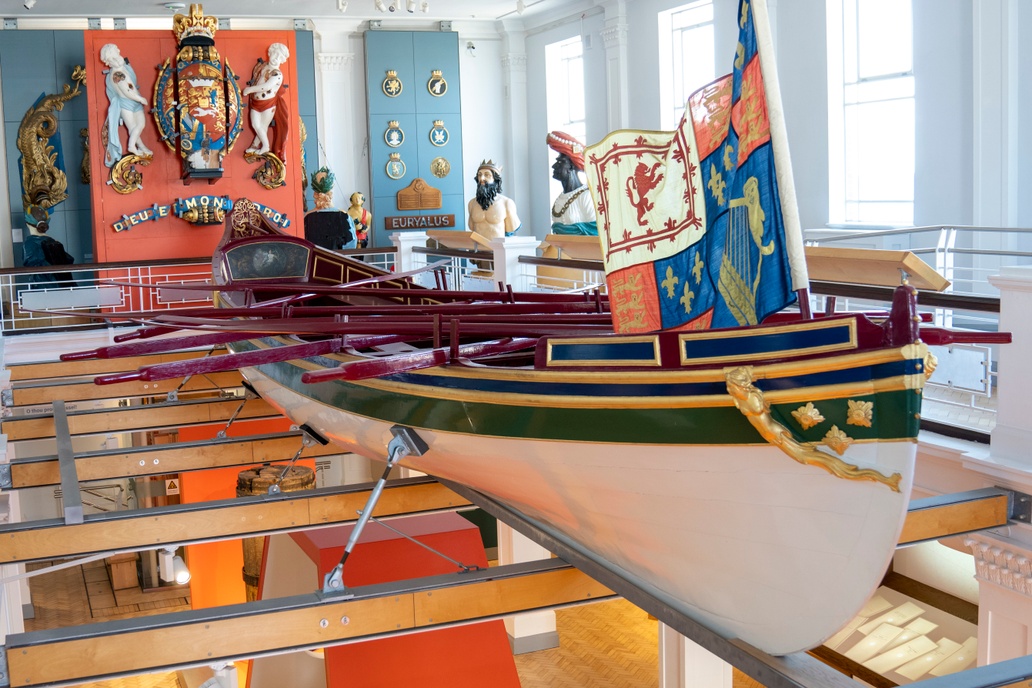
–Nelson died on the orlop deck of HMS Victory, the 104-gun ship still on display in Portsmouth. But in 1805, it was a long voyage (Victory had been mostly dismasted) back to England. What to do with his lordship? It was decided to insert him into an empty ship’s cask and then fill the cask with brandy to preserve the body. It worked. Mostly. On lying in state, Nelson’s face had to be covered with a handkerchief; the rest of him was in his full-dress uniform. He’s buried in a massive tomb in St. Paul’s that belies the actual size of its occupant. Elizabeth and I saw the funeral barge that carried his coffin to St. Paul’s. In the novel Hornblower and the Atropos, the junior captain is in charge of the barge when it begins to take on water from the Thames. Hornblower and the barge crew make it to the cathedral, but not before he suffers the most epic panic attack, I think, ever recorded in fiction.
Oh, and a ration of rum or brandy allotted daily to British sailors came to be known as “Nelson’s Blood.” Ew.
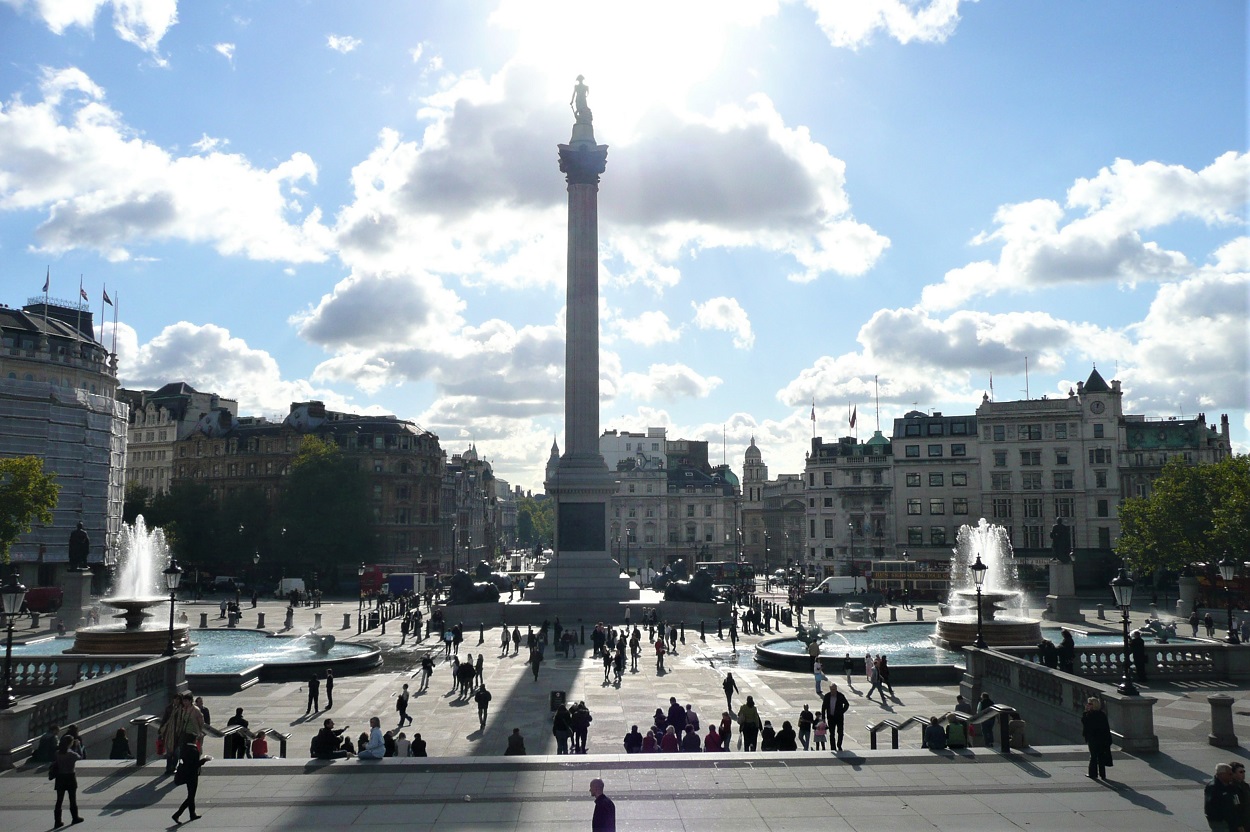
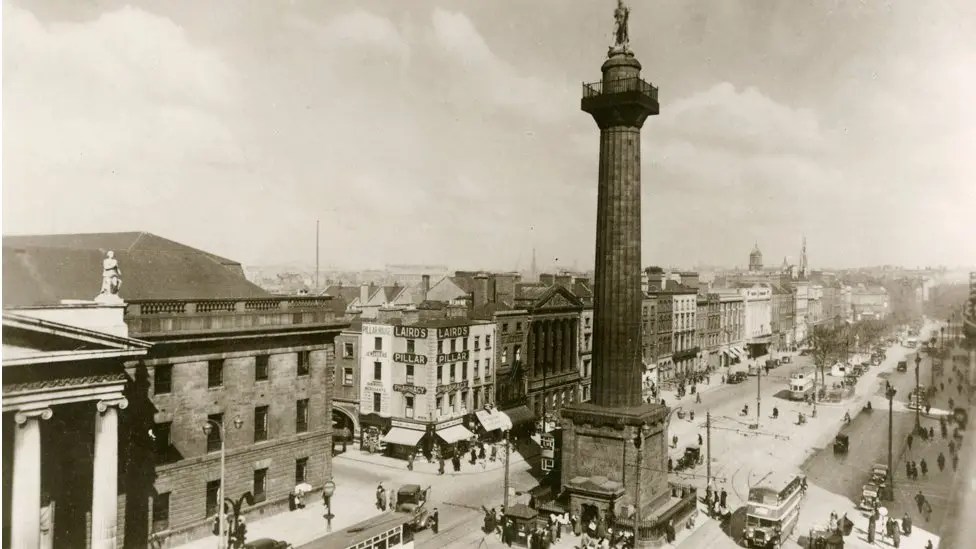
–What Nelson lacked in height he made up for in monuments. The little admiral was placed, in stone, atop two famous columns. One stands in, of course, London’s Trafalgar Square. Another once stood on O’Connell Street in Dublin, uncomfortably close to the General Post Office, the site of the 1916 Easter Rising. Fifty years after the Rising, the IRA blew Lord Nelson up.
So it goes.
And it’s only appropriate to close this piece with this song.
 A Work in Progress