
Tags
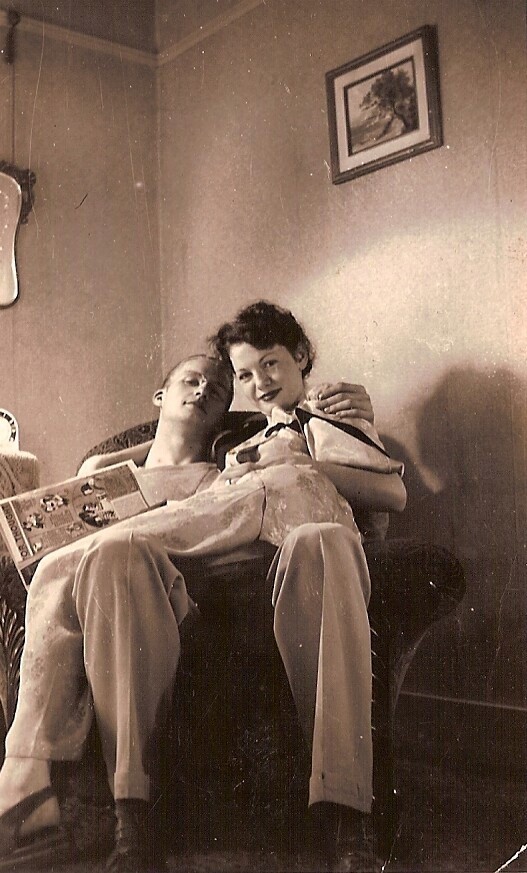
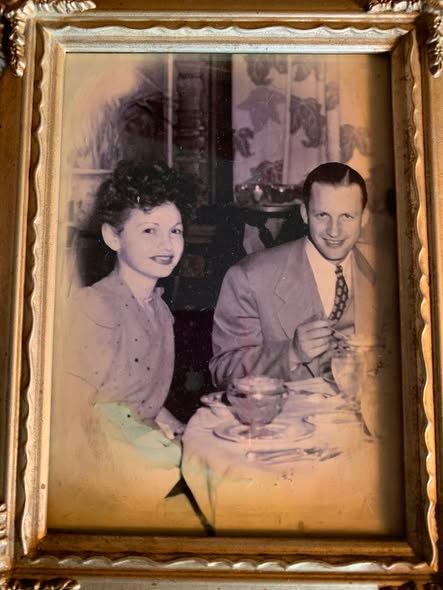
These are my parents, Robert Wilson Gregory and Patricia Margaret Keefe Gregory, before and after World War II. I remember that painting of the Monterey Cypress on the wall of our home in Arroyo Grande. In the photos, my folks are newlyweds, innocent of the catastrophe would be me several years later.. The photo on the right shows them after Dad had come home from the war in Europe. They’re at the Biltmore in Santa Barbara, as far a remove from an oil town like Taft as you can get.
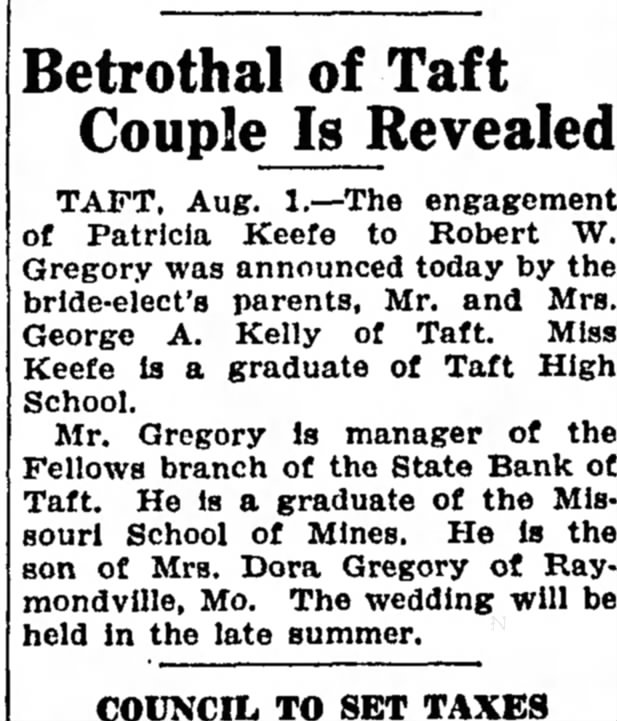
They met in 1939, when this storefront was a sweet shop/soda fountain owned by Mom’s parents, the Kellys. Dad ordered a banana split, struck up a conversation and the little newspaper clip, from July 1940, shows what followed. It’s true that my young father, only 22, was the manager of the Fellows Bank of America. He was also the teller and the janitor.

It’s what’s in between the banana split and the wedding that fascinates me. My parents were dating in 1939. Here are some of the films that were released that year:
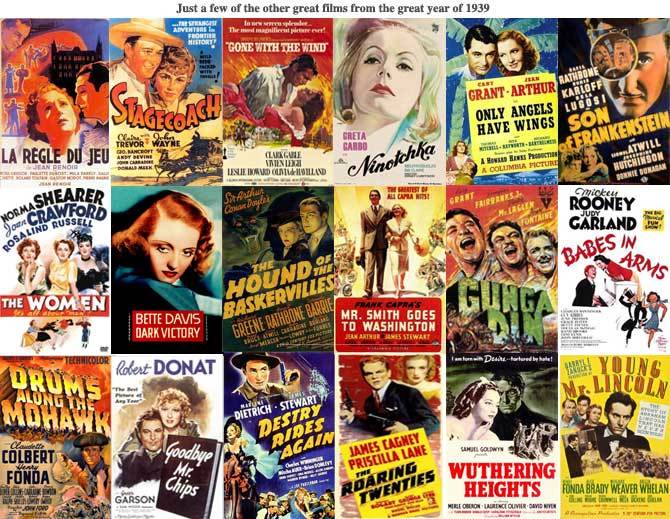
In a very real sense (here’s to you, Turner Classic Movies!), Hollywood made my life possible.
I will now embark on a fool’s errand. If I were forced to pick three 1939 that mean the most to me, which would I choose?
I will toss two of the most obvious films: Gone with the Wind didn’t reach smaller California markets until 1940. And I’m only omitting The Wizard of Oz because, providing we strike oil in our Arroyo Grande backyard, I want desperately to see that surround-you show (DUCK! Flying monkey!) in Las Vegas.
Here, then, are my choices:
Young Mr. Lincoln. John Ford. You can criticize me for omitting Ford’s Stagecoach, a favorite, and you can condemn Ford’s hagiography, as naive as a sixth-grade textbook, but the is the first film in which Ford emphasized Henry Fonda’s legs. They are inordinately long, and young Abe—a nickname he detested—is far more comfortable resting them along a Sangamon County riverbank than he his trying to find a place for them inside a Sangamon County courtroom. Ford used those legs again, in My Darling Clementine, in a brief and funny scene where Fonda’s Wyatt Earp attempts to balance his chair along a Tombstone boardwalk. Just in case you think I’m nuts, a distinct possibility, look at what Sergio Leone did with Fonda’s legs in Once Upon a Time in the West, twenty-nine years after Young Mr. Lincoln.

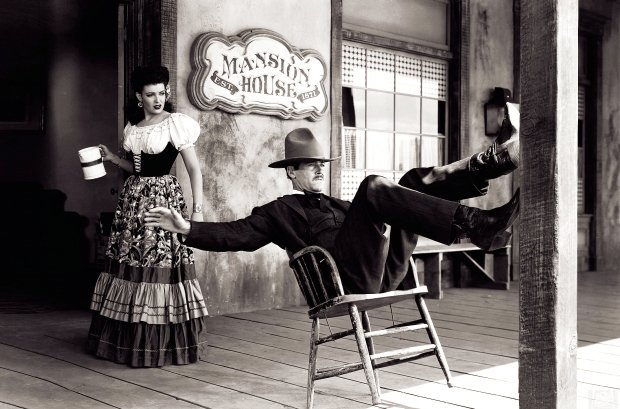
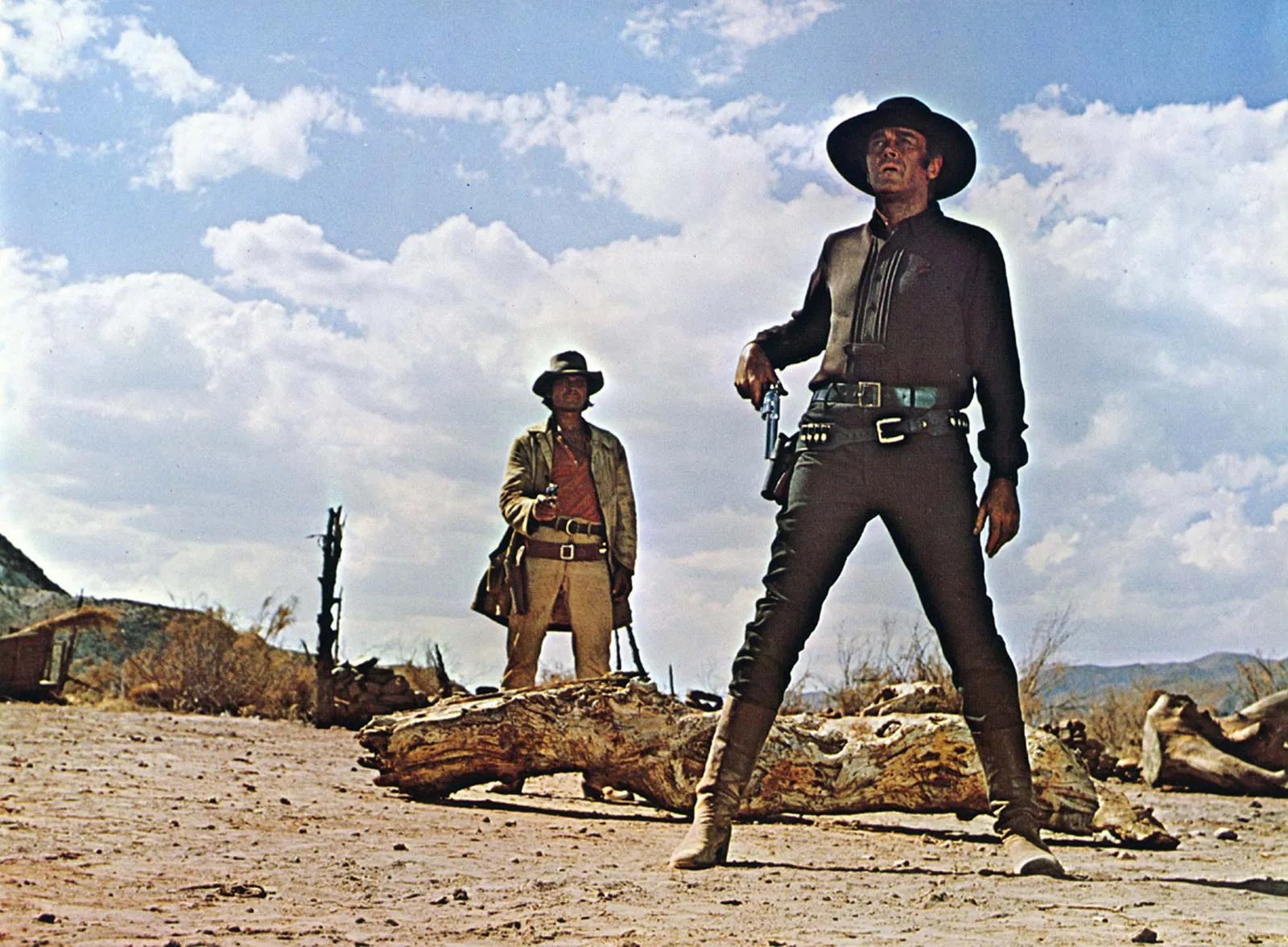
In a way, I met Lincoln in Daniel Day-Lewis’s portrayal of him in Spielberg’s marvelous film. But I was a little boy when I saw the Ford film on television, and that was the Lincoln I fell in love with, the Lincoln that led me toward teaching history to young people.
2. Mr. Smith Goes to Washington. If you want to know my politics, they’re hopelessly romantic—I’m Irish. It’s allowed—-than the perfect counterpoint to Young Mr. Lincoln is Mr. Smith Goes to Washington, where idealism collides with venality. The other thread that makes these films powerful is that their leading actors. Fonda and James Stewart were the best of friends, going back to Depression-era summer stock, and sharing a cheap apartment in New York City (Gene Hackman’s roommates, in his New York stage days, included Robert Duvall and Dustin Hoffman). In either case, you can imagine the young actors splitting a can of pork and beans.
But what made Fonda and Stewart authentic is that both loved America is vastly different ways: Fonda the Hollywood liberal, Stewart, the lifelong conservative from Indiana, Pennsylvania. Mr. Smith’s love for America is illuminated, as well, by its immigrant director, Frank Capra. You first meet that America in an earlier film, It Happened One Night, with Clark Gable and Claudette Colbert, when a busload of weary passengers suddenly comes to life by joining in singing “The Daring Young man in the Flying Trapeze.” It is an indelible scene, and Capra even inserts himself singing at the left edge of the movie frame.
It’s Stewart’s dogged idealism that makes Mr. Smith so appealing to me, but even he, one of my favorite actors, is not my favorite part. My favorite part is his co-star, Jean Arthur, today underappreciated. Arthur was smart, appealing, and suffered, all her career, from debilitating stage fright, including on film sets, but she delivered touching and very funny performances. Stewart and Arthur had been paired before in You Can’t Take It with You, another Capra film. In Mr. Smith, she is a cynical reporter who takes Stewart under her wing. After young Smith is humiliated on the Senate floor, there’s a quiet streetside dialogue where she helps him find his courage again. It’s stunning. Arthur’s performance is stunning.
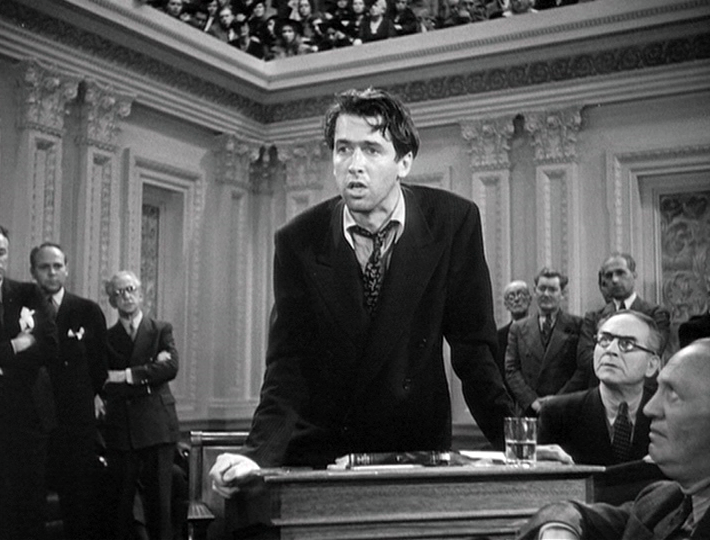
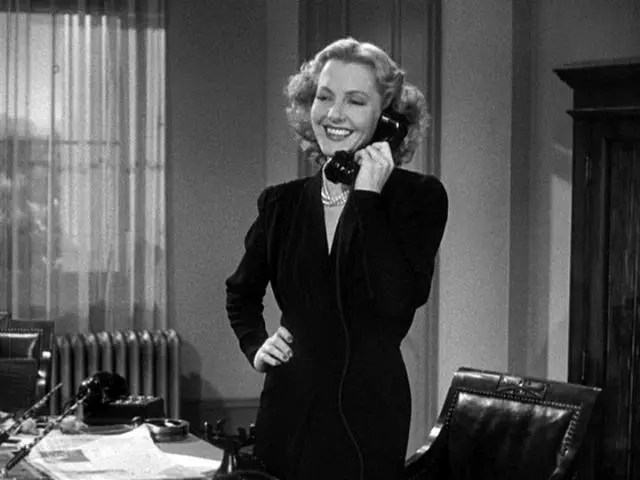
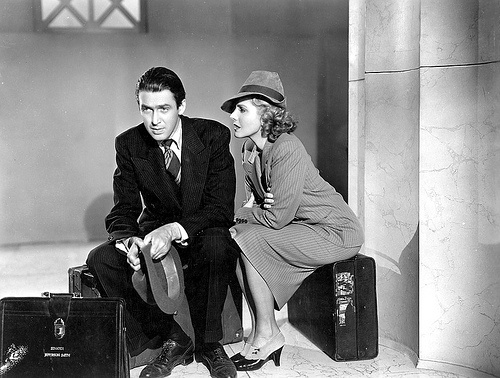
Above: Stewart near collapse in Mr. Smith’sfilibuster sequence; Arthur, as Clarissa Saunders, picks up the phone in Mr. Smith’s office; in a studio still—the scene was shot in deep shadow–Saunders restores Smith’s faith in himself.
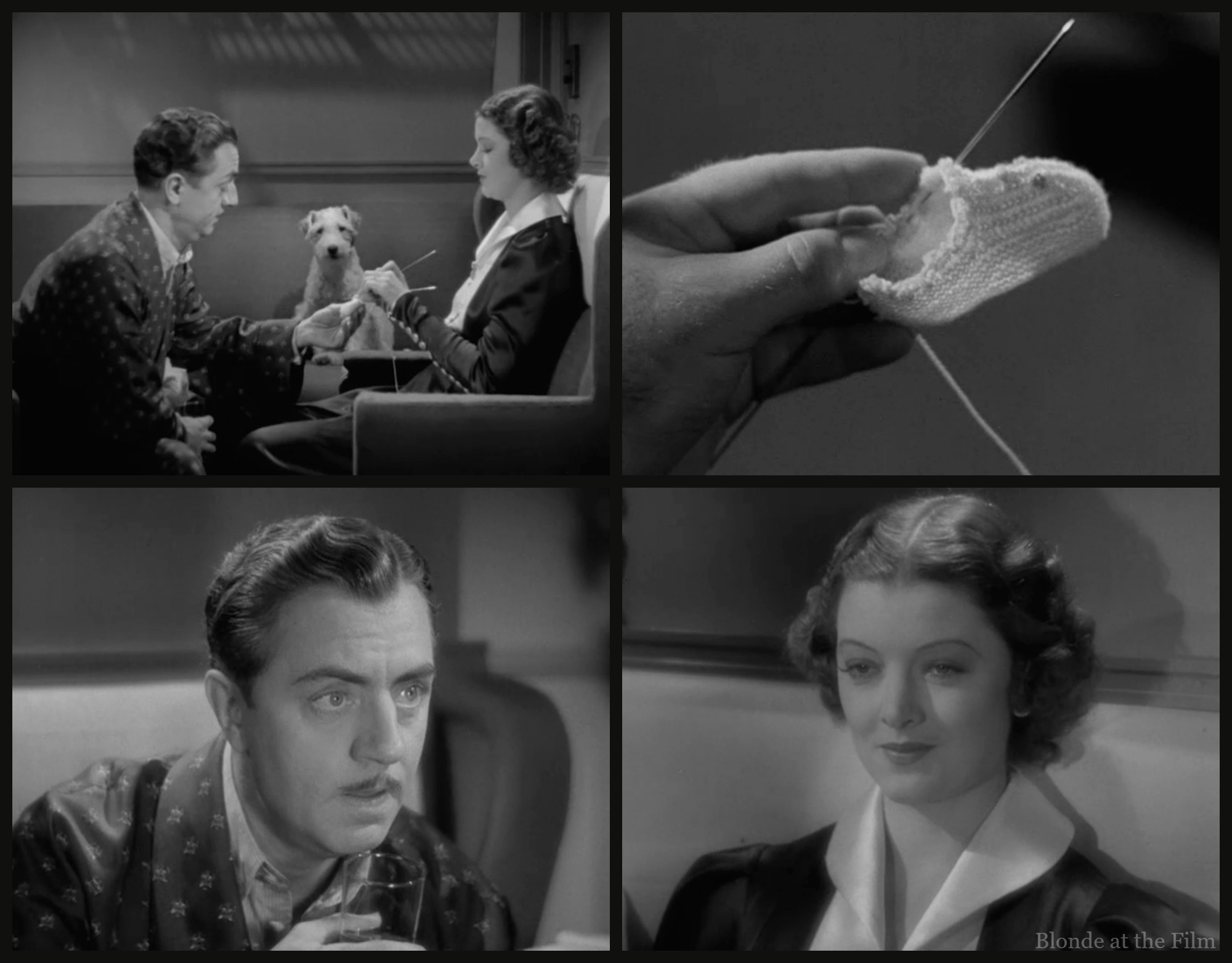
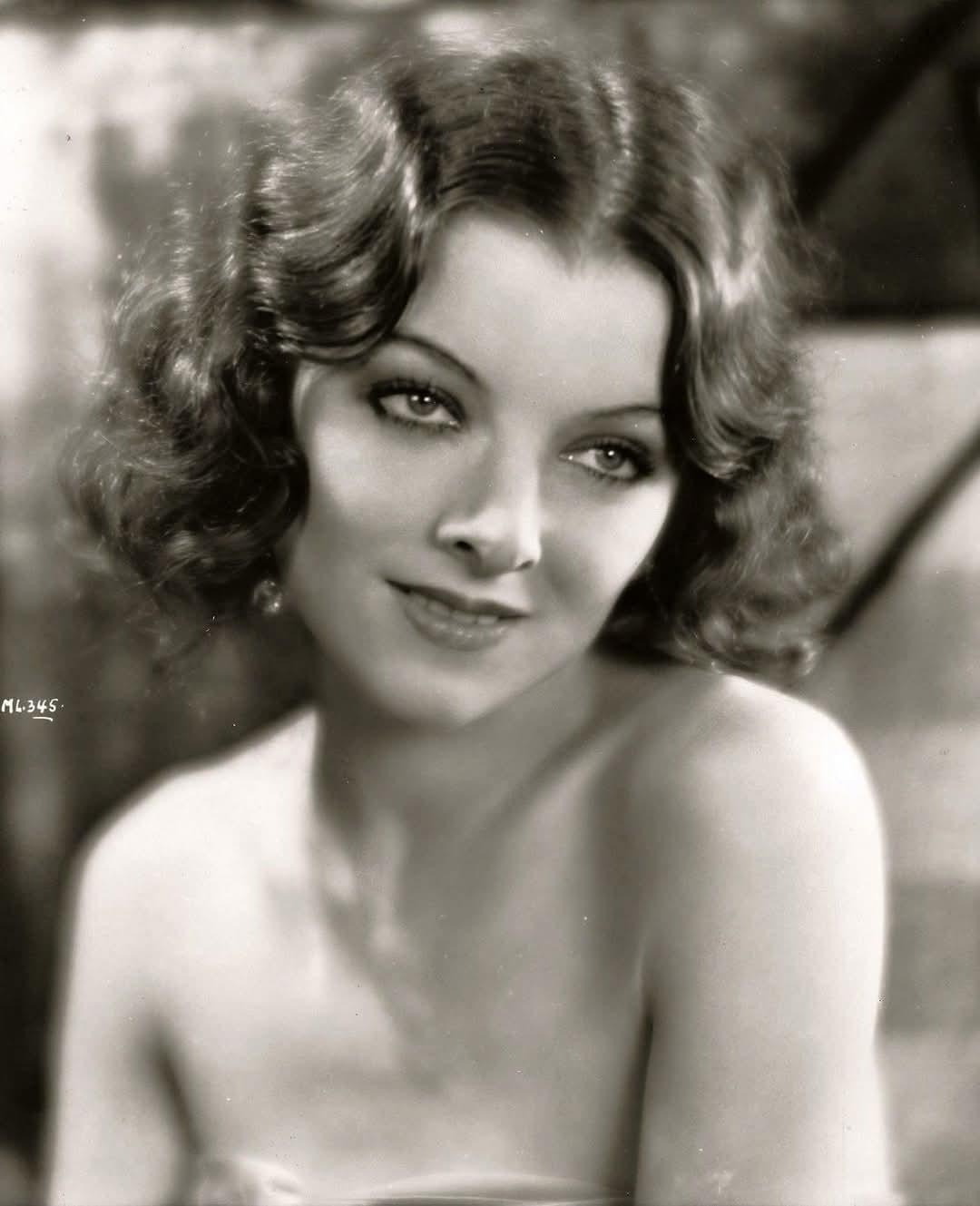
Another Thin Man. The Nick and Nora Charles film series, based on a detective invented by San Francisco writer Dashiell Hammett, may seem a trifle compared to other films from 1939. But once again, it’s the chemistry between the two leads, William Powell and Myrna Loy, that make this lighthearted detective film enduring. Their relationship was such that millions of Americans assumed they were married in real life. In this entry, the couple, new parents, are invited to a swanky estate. Their host winds up very dead. Here’s the trailer:
Powell and Loy weren’t married, of course. The woman who wanted to marry the impossibly suave Powell was the actress Jean Harlow. They spent time together at Hearst Castle, where Harlow continued her courtship. Powell wasn’t ready for that kind of commitment. When Harlow died of kidney failure in 1937, the impact on Powell, seen here with his mother at Jean’s funeral, was overwhelming. He had lost the love of his life.
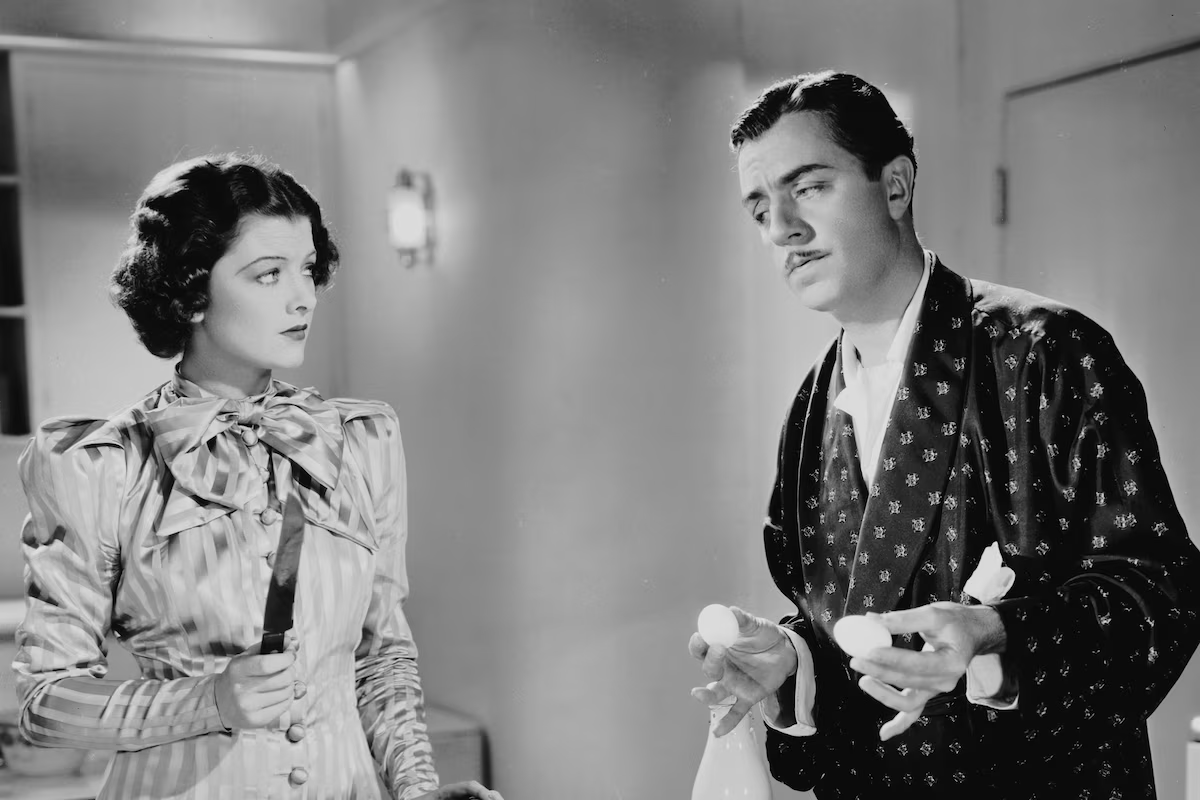
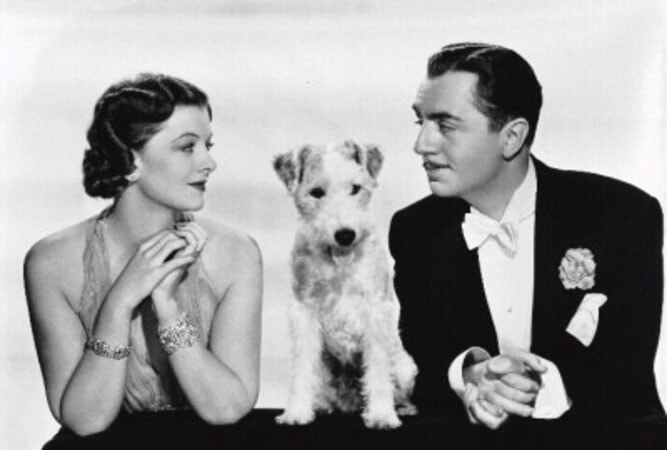
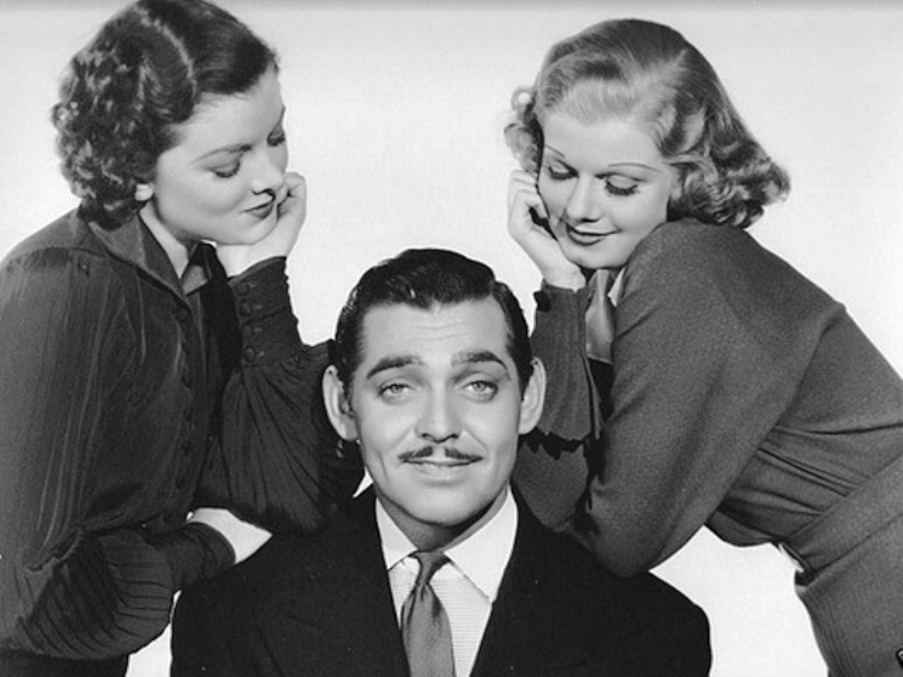
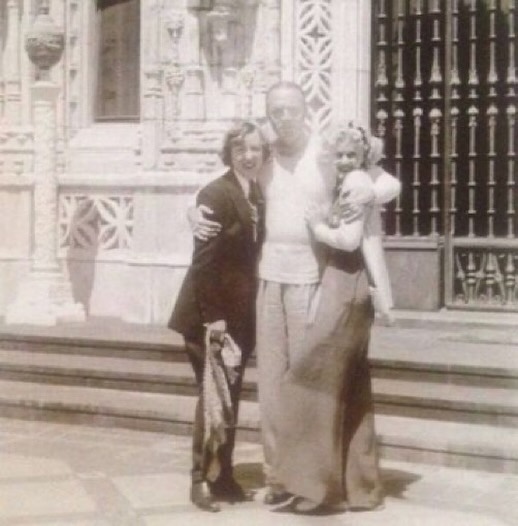
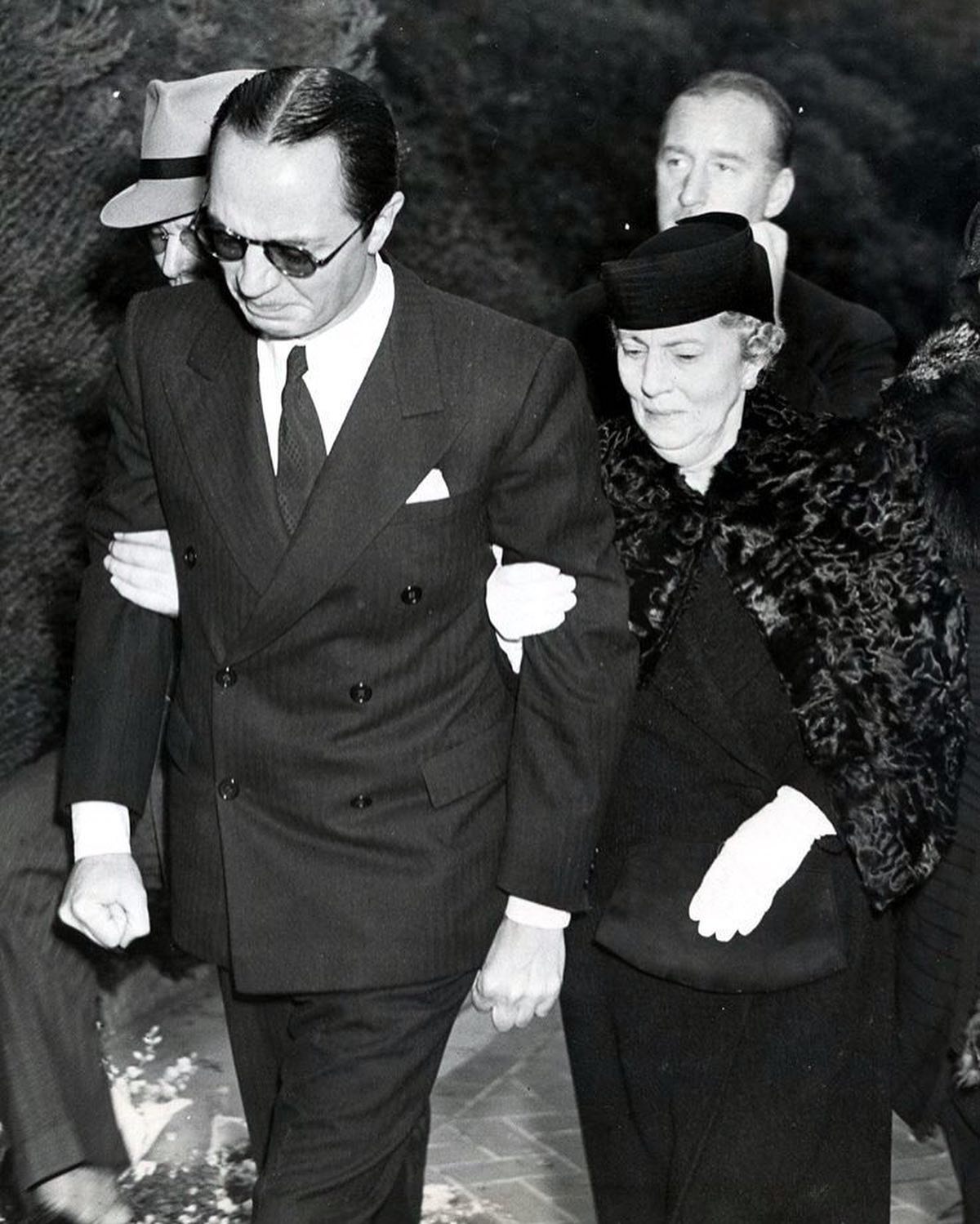
Above: Nora (Myrna Loy) can’t sleep, so Nick (William Powell fixes her scrambled eggs; the couple with their dog, Asta; Loy, Jean Harlow–
real-life friends–with Clark Gable; an unidentified woman, Powell and Harlow at Hearst Castle, 1934; Powell at Harlow’s funeral three years later.
I am not ashamed of my fondness for Myrna Loy. She was beautiful and her characters were played layers deep-, most notably in The Best Years of Our Lives, in her portrayal of a veteran’s wife who discovers that her husband has become an alcoholic. If her Nora Charles is far less worldly than Nick, she can still get the best of him, as she does in this charming closing scene from After the Thin Man, the 1936 film and predecessor to Another Thin Man.
I’m not alone in my admiration for Myrna Loy. That’s her in the statue in front of her Alma Mater, Venice High. My students and I visited the Frank home in Amsterdam many years ago. In Anne’s room, inside the Secret Annex, she’d cut a photo of Loy from a movie magazine and glued it to the wall. It was still there, carefully preserved beneath plexiglass.
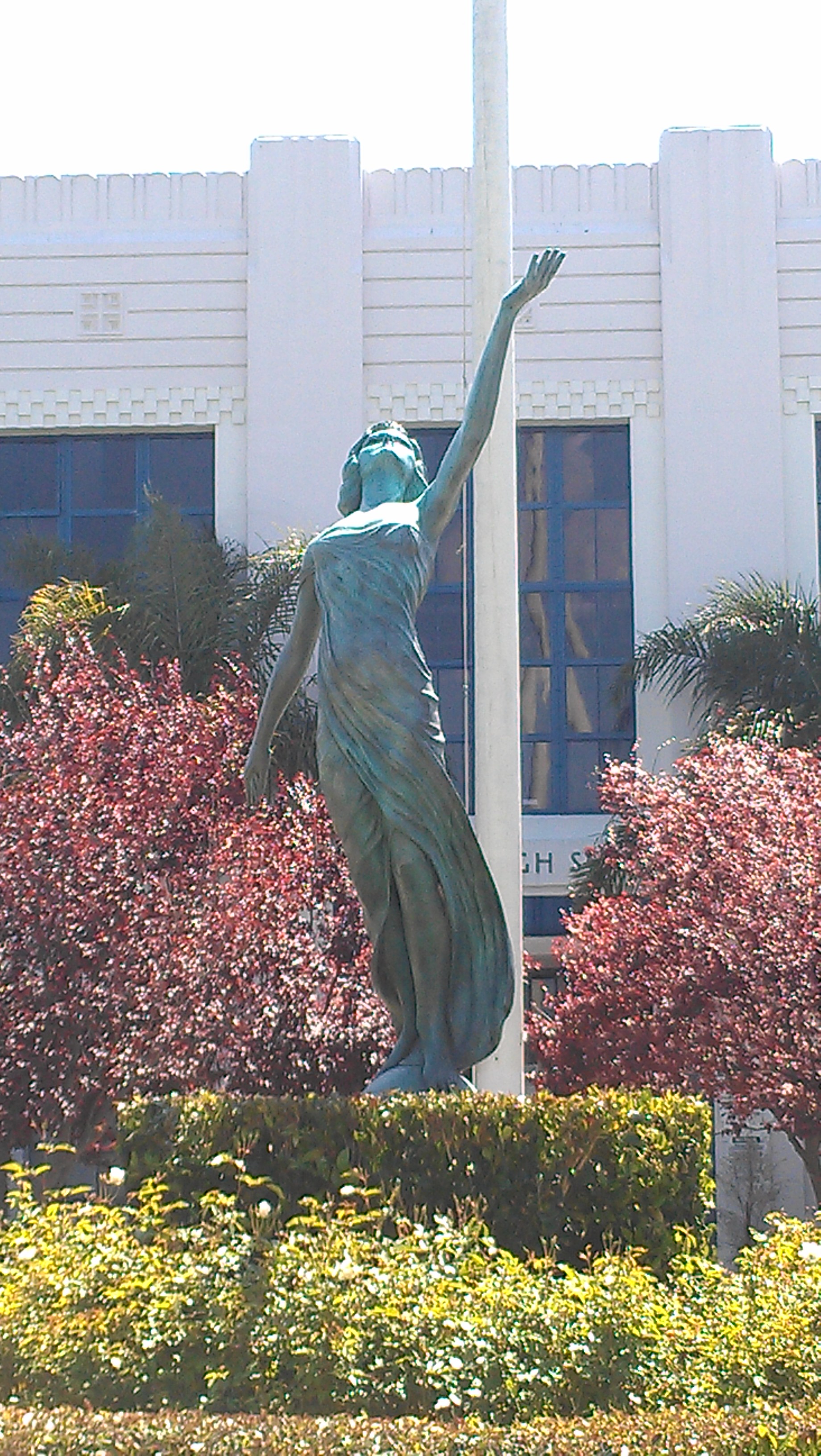

The statue, Venice High School; Loy as a very young actor; the Frank home, Amsterdam.
 A Work in Progress