• About
  • The Germans

A Work in Progress

A Work in Progress

Author Archives: ag1970

Damn you, “Vertigo!”

10 Monday Sep 2018

Posted by ag1970 in Uncategorized

≈ Leave a comment

vertigo

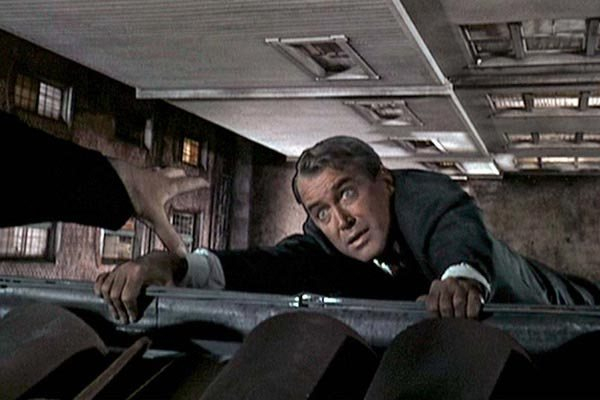
Scottie (James Stewart) in the film’s opening scene.

I really should not read essays about films. The one I read yesterday has messed with my head, because, citing the British Film Institute, it put Hitchcock’s Vertigo (1958) at the top of the all-time greatest films list, bumping Citizen Kane from the top spot.

FJN2RBRW4VGURJFTWMIZU5X4NY

The_searchers_Ford_Trailer_screenshot_(6)

MV5BZDgwNmYwZTgtMzcyYy00NmNkLWJlNmQtMTQzYmQ4ZDgwN2JjXkEyXkFqcGdeQXVyNjUwNzk3NDc@._V1_

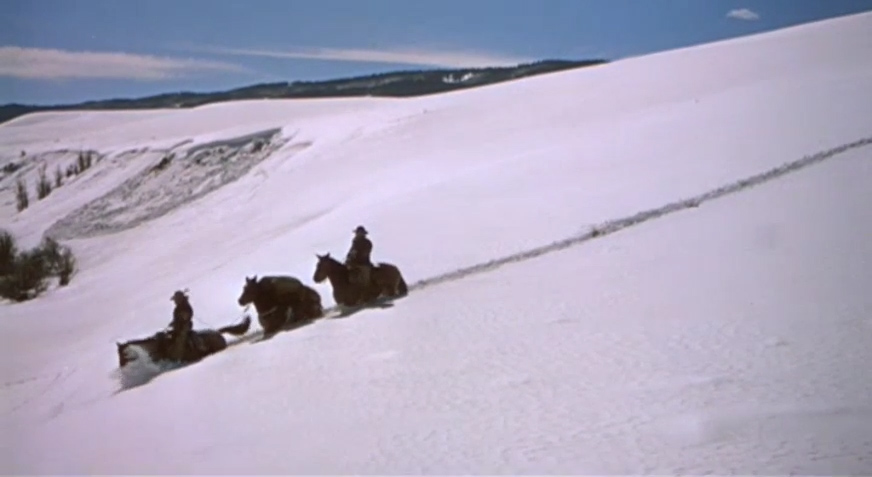
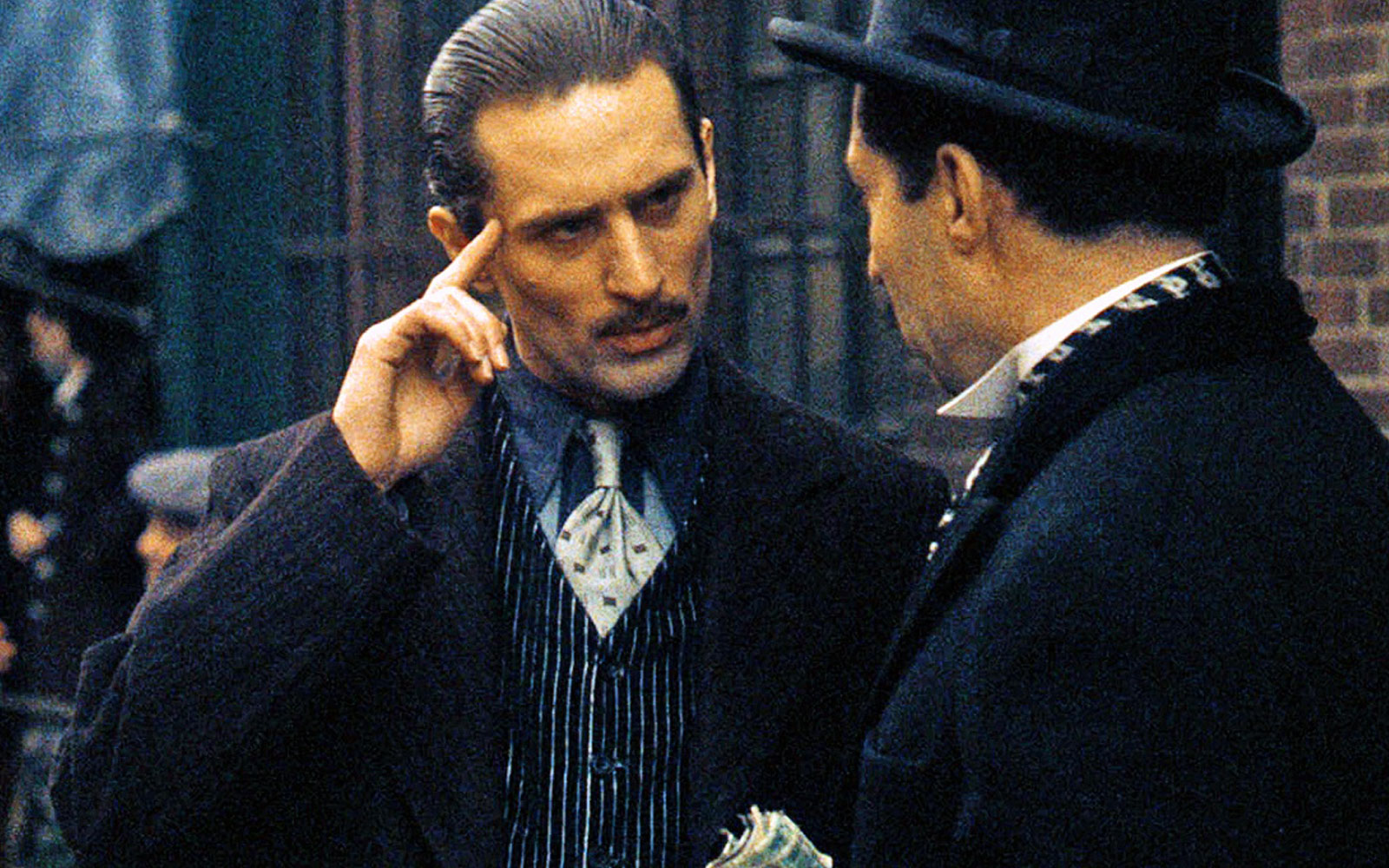
Welles in Kane; Wayne’s Ethan and Jeffery Hunter’s Martin descend a winter hillside in The Searchers; DeNiro in Godfather II.

I have never doubted Kane to be a great movie, but it would never be my #1. It is stylistically and technically stunning, but it’s cold at the heart. My picks, if I were in charge of things—which would be a mistake—at least for American films, would be John Ford’s The Searchers, one of the most gorgeous films ever made, or Coppola’s The Godfather Part II, for the incredible history it retells while leaping from one part of the twentieth century to another. And I’ve never seen a more arresting appearance than Robert DeNiro’s as the young Don Corleone. I was, I think, pinned to my movie-chair seat (so I hope it was comfortable) because I immediately recognized Brando’s Don and also connected emotionally with DeNiro’s portrayal, which was no imitation: the character’s coiled, implicit power, tempered by a kind of gallantry, and his devotion to family, the fundament of the whole film series, was deeply moving and deeply authentic.

James-Stewart-and-Jean-Arthur-in-Mr.-Smith-Goes-to-Washington

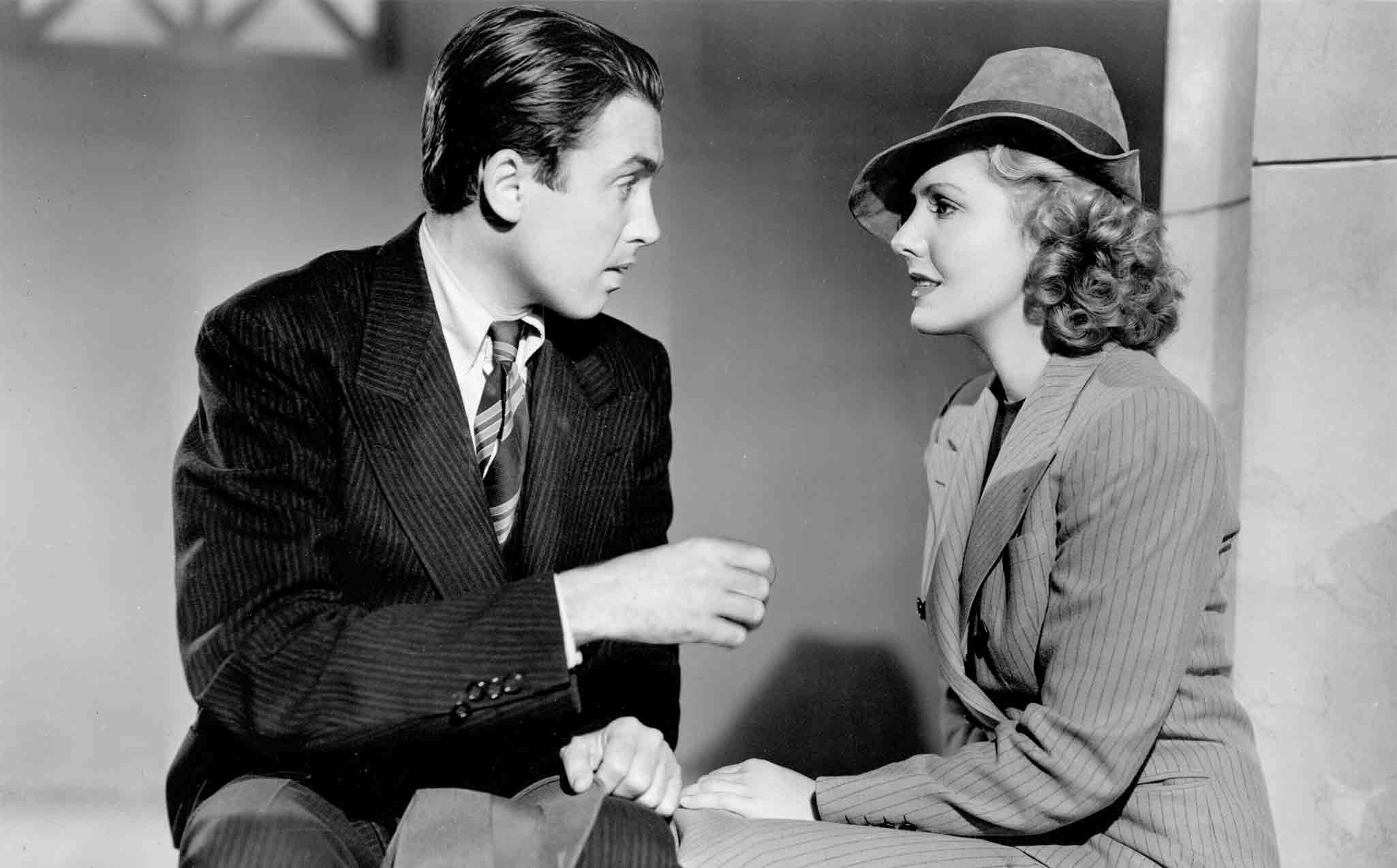
Stewart and Jean Arthur, Mr. Smith Goes to Washington (1939).

But in Vertigo, James Stewart is the lead—Scottie, the washed-up SFPD detective—and if I immediately connected with DeNiro, I was repelled by Stewart. He’d betrayed me: This was the James Stewart of Mr. Smith Goes to Washington (and with Jean Arthur, one of my favorite actresses), The Philadelphia Story and It’s A Wonderful Life. This was the war hero. This was the man, an arch-Republican, whose best friend was Henry Fonda, a Henry Wallace Democrat.

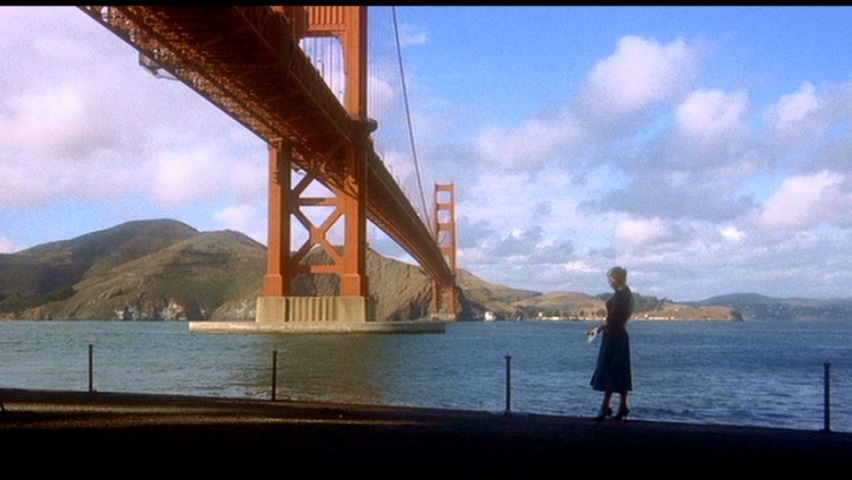
And in Vertigo, he is—to borrow Keenan Wynn’s pronunciation from Dr. Strangelove—a damned pree-vert. He’s a stalker, obsessed with Kim Novak’s Judy because she looks so much like a lost love, done away with in the second reel, Kim Novak’s Madeline, who fell from a church tower to her death (supposedly) because Scottie the police detective was afraid of heights and so failed to prevent her death (something he’d done earlier in the film, when Madeline jumped into the Bay off Fort Point with the Golden Gate Bridge, much more efficient for suicide, standing conveniently in the background.)

0393

hero_EB19961013REVIEWS08401010371AR

Scottie saves Madeline off Fort Point…

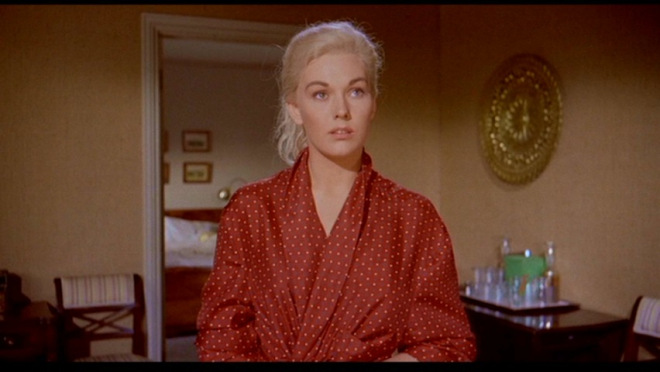
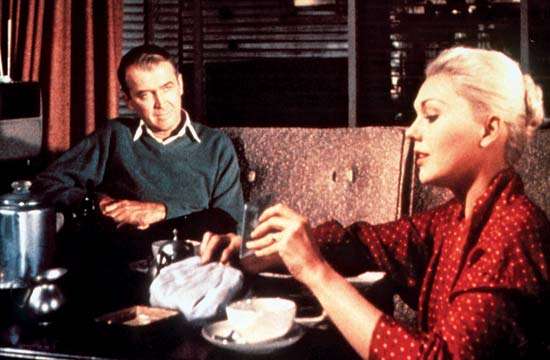
Scottie saves her that time, brings her home (his apartment was on Lombard Street) and she awakes wrapped in his robe. In 1958, this was explosive stuff. Scottie had seen her nude, a precondition to getting her dry. My mother would not have let me see this film.

vertigo6

153002-004-0DB41ABA

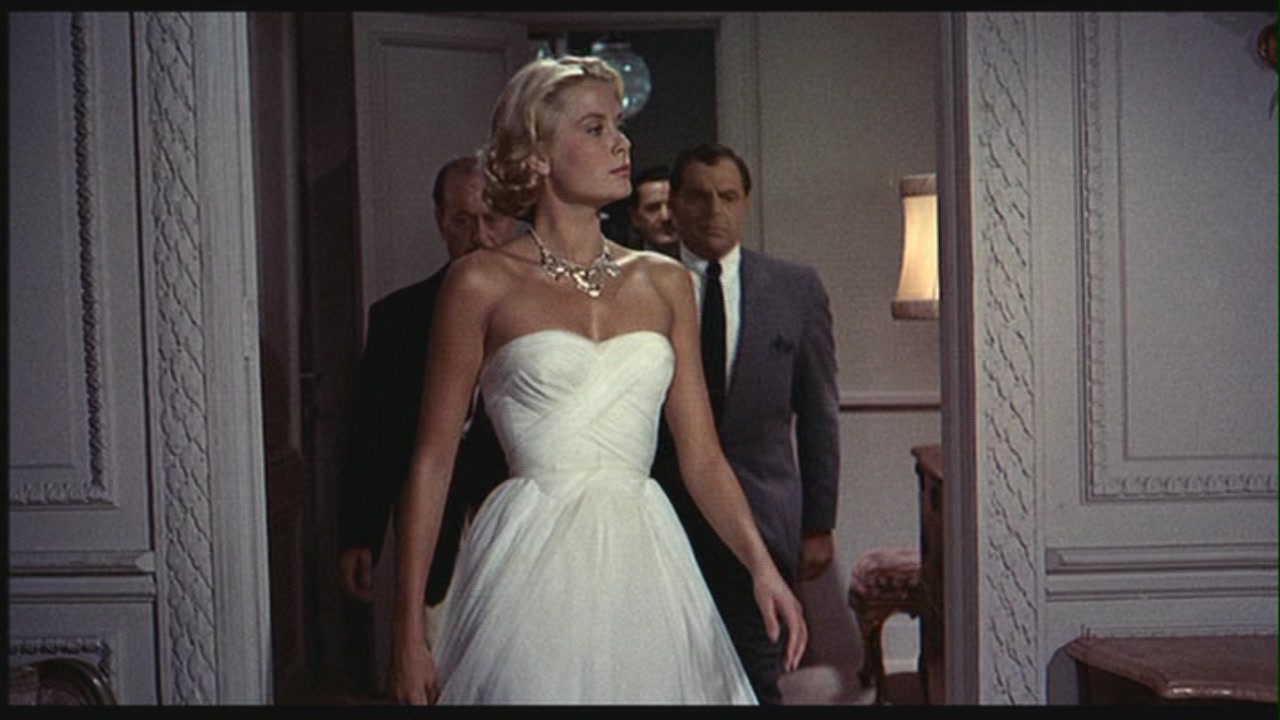
…and brings her home. Novak’s vulnerability in the top frame is such a soft counterpoint to the Judy she plays later in the film. Hitchcock’s obsession with cool blondes, of course, would continue with (below) Grace Kelly–in my humble opinion, the most beautiful actress in American film history– and Tippi Hedren.

Grace-Kelly-in-To-Catch-a-Thief-grace-kelly-30066431-1280-720

Screen_Shot_2015-12-13_at_2.43.29_PM

And then he loses her anyway, with her jumping off that church tower at San Juan Bautista (it turns out that she was murdered, anyway). Are you confused yet? So was I.

To be even more confusing, some smart-aleck has written that Hitchcock was fascinated by the Ambrose Bierce (Bierce was a San Franciscan) short story “Occurrence at Owl Creek Bridge,” in which a Union Army detail hangs a Confederate saboteur. The rope breaks, the condemned man escapes after a harrowing journey, returns home to his loving wife and family and…

…Realizes that he’s imagined the whole thing. He’s back at the bridge, swinging slightly after the drop, thoroughly dead.

bscap0143[1]

A scene from the French film version of “Owl Creek Bridge.”

The smart-aleck proposed that the same thing happened to James Stewart’s Scottie. In the opening scene, Scottie the detective and a uniformed SFPD officer are chasing a suspect across rooftops. Scottie slips and his hanging by his fingertips from a rain gutter when the uniformed officer, trying to help him, falls to his death.

The scene ends. The next time we meet Scottie he’s on disability retirement—the trauma of that moment on the rooftop. But Mr. Smart-Aleck argues that Scottie died up there, too—after all, no one was around to rescue him and his grip was slipping—so everything that follows, for the next two hours, is just a dream, like the condemned man’s dream in “Owl Creek Bridge.”

I’m not buying it.

vertigo1

1bc31f0325a1688ef28bfa5dc5a65be1

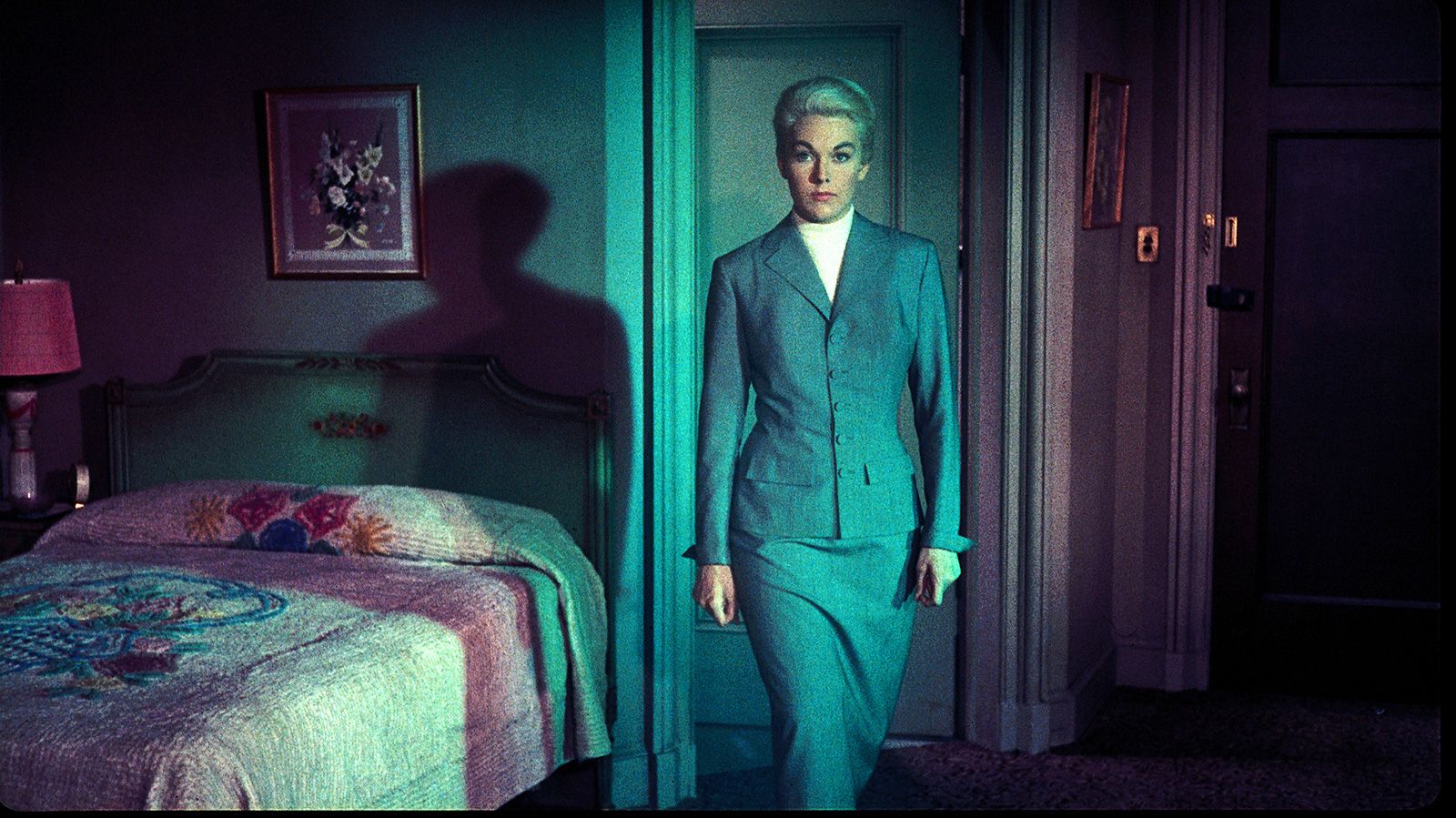
Judy and Scottie meet;  Judy, now fully remade in Madeline’s image, emerges, in the proper gray suit, from that sickly green light that floods her apartment.

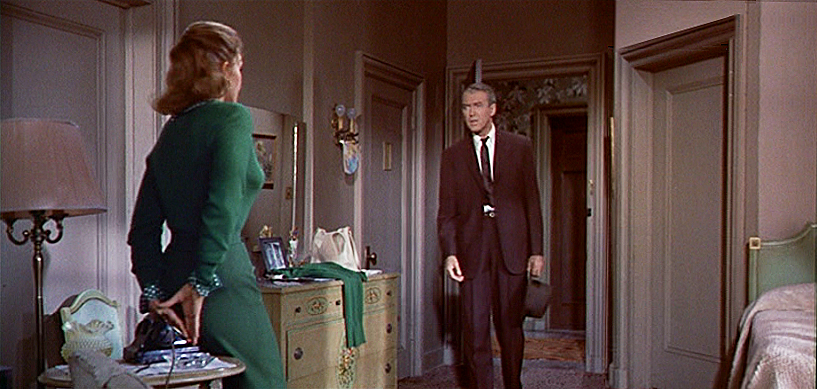
But this guy’s essay added another layer of disturbance to a movie that already disturbed me. Stewart loses Madeline, then finds a girl walking on a San Francisco street—Judy, also played by Kim Novak—who reminds him immediately of Madeline. I’m not sure why. Judy is no Madeline: she is coarse, with eyebrows layered thicker than Van Gogh pigment. She lives in a cheap walkup apartment bathed in sinister green light from a nearby sign. She’s from Salina, Kansas. Yet Scottie somehow intuits the refinement that both Madeline and her early California ancestor, Carlotta, shared–a painting of Carlotta figures in the Madeline part of the film. So Scottie spends the greater part of the film’s second half trying to remake Judy into Madeline in a kind of creepy Pygmalion way: she dyes her hair, wears the same gray suit Madeline favored—after an excruciating scene at a fashion house in which model after model fails to meet Scottie’s requirement for the exact gray suit–dines with Scottie at the same steakhouse—Ernie’s, an actual City restaurant—and so they fall in love on the pretense that she’s not Judy: She’s Madeline.

0167

0164.jpg

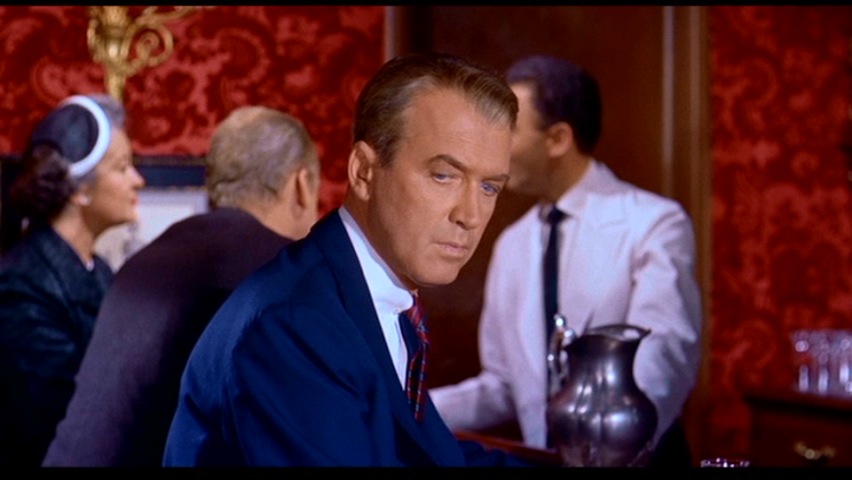
Real San Francisco places:  Scott first meets Madeline by eavesdropping on her, as a private detective, at Ernie’s Restaurant.

Yes, it’s weird.

0206

download

download (1).jpeg

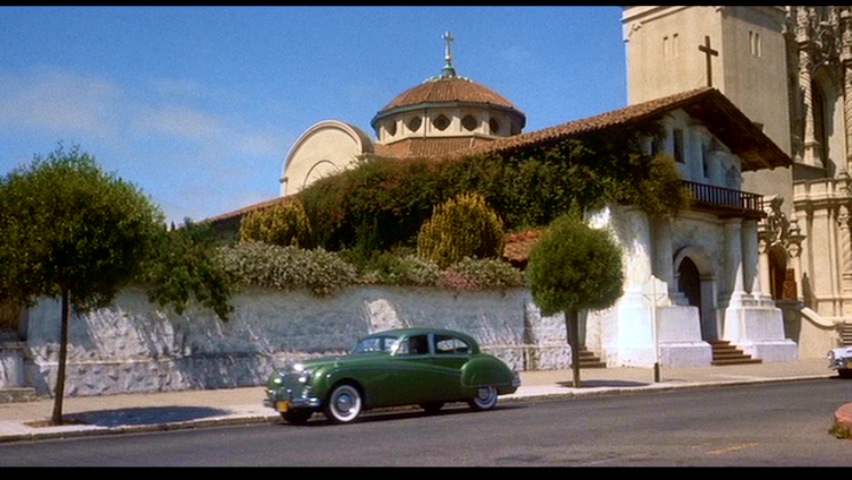
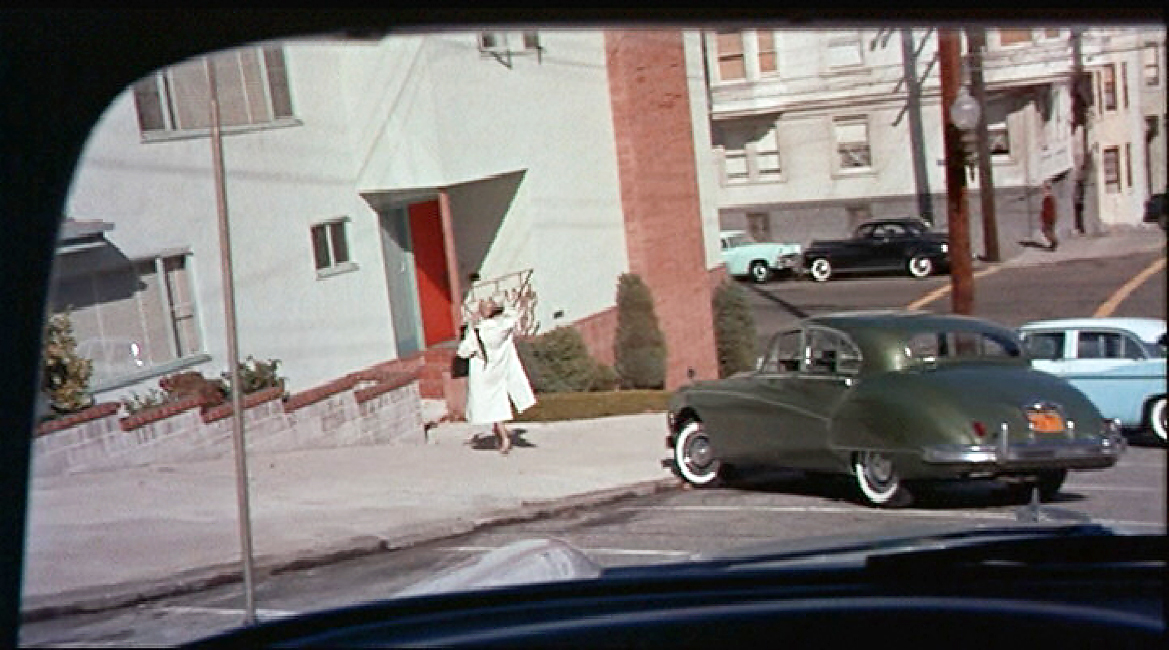
Madeline’s car, a 1956 Jag, outside Mission Dolores, in front of Scottie’s apartment; the view from Scottie’s includes Coit Tower.

But, for me, it’s resonant because location filming, in 1957, would’ve been about the same time I first saw San Francisco, as a little boy (there was a lightning storm atop the skyscrapers, something I’ll never forget) when my Dad was bidding a job there for Madonna Construction. So the film that in many ways repels me is intimate—in the way DeNiro was—because it’s in so many ways familiar, and it’s a betrayal because the James Stewart I know best is so unfamiliar. But I think that’s why it’s a great film (it was panned on its debut; Hitchcock blamed Stewart, at fifty, he thought, too old to have been Kim Novak’s love interest) and one that needs to be watched several times. It’s unfamiliar, it’s disturbing, and it leaves you as disoriented and disheartened as Stewart’s Scottie must have been.

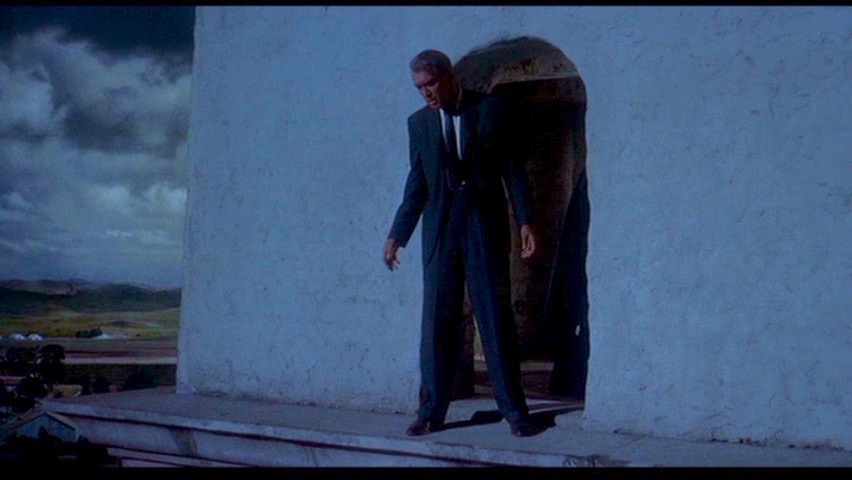
In the final scene, he’s staring from a mission belltower—not really there; the original was in such disrepair that Hitchcock had to substitute an artificial replacement— into the space below. He can look down now, for the first time in a long time, but there’s nothing left for him below. He is completely alone.

vertigo15

The final scene.

Education and other disasters

03 Monday Sep 2018

Posted by ag1970 in Uncategorized

≈ Leave a comment

AGClassSize063.source.prod_affiliate.76

I will be the first to admit that I’m a very emotional person: anger, sadness, delight, despair, outrage. I got ’em all. So that’s how I taught, I guess.

It wasn’t enough for my history kids to “know the material.” I wanted them to feel sadness (Wounded Knee), delight (the detail in “Phiz’s” drawings for Dickens’s works), despair (Auschwitz-Birkenau), outrage (The Triangle Shirtwaist Fire). So my classes always carried the freight of my personality.

My personality was a product of and a tribute to my Dad, who grew up in the Depression Ozarks,  who grew up to become the most amazing storyteller I’ve ever known, and my Mom, of Irish descent, fiercely spiritual and fine-tuned to injustice. She never forgave Germany for the Holocaust (overlooking the fact that some of her ancestry was from Baden-Wurttemberg) and she constantly modeled respect for others, which led to the five-year-old me carrying a gallon wine-jug full of cold water to the braceros working the fields alongside our house.

They were marvelous teachers. I had stern but also marvelous teachers in my two-room country school, Branch Elementary, in the Upper Arroyo Grande Valley. My big sister was a teacher. College further corrupted me because it threw even more amazing teachers at me: at Missouri, Charles B. Dew on the History of the American South, David Bienvenu, the History of Socialist Thought, Winfield J. Burggraaff, Latin American History, David Thelen, American Populism and Progressivism; at Poly, Dan Krieger, European History (his lectures were so vivid that I’d forget to take notes) and Robert Burton, East Asian History.

I was doomed.

It took awhile, but I became a teacher—a history teacher, and what could be more useless than that?—for thirty years.

I accumulated some favorite lessons along the way: re-enacting the Estates-General in 1789 and JFK’s ExComm during the Cuban Missile Crisis in 1962; teaching Art History as  fundamental to understanding European History; teaching Relativity Theory by momentarily disappearing from the classroom and returning younger than they were; using battlefield archaeology to hit them to the bone about the inhumanity of the First World War, introducing them to a high-school classmate they’d never know because he was killed on Arizona on December 7 or helping them to understand the alienation of the 1920s by reading Hemingway (“Cat in the Rain” or “In Another Country”) to them aloud. I loved reading to them.

There is no place for nonsense like this in Modern Pedagogy, which, based on my admittedly faulty understanding, consists of enclosing students in a Skinner Box and then beating the box repeatedly with a baseball bat.

That’s what they want us to do, those Educational Theorists, who, to paraphrase George C. Scott’s speech in Patton, (Scott was a dropout from my Alma Mater, the University of Missouri), probably know less about teaching than they do about fornication.

Here is some of what we endured as teachers during my time in education, which is why the part I miss about education is closing the door once the bell rings and the shock, which never quite goes away, of realizing that you are responsible for thirty-two teenagers. That was a happy moment, that realization. So I miss the children. There is nothing else I miss about education.

No Child Left Behind.  Back in its day, we were told, solemnly and without flinching, by a district administrator that it was the goal for every child in the district to pass the state exams within ten years.

Every child.

No exceptions.

I raised my hand–because I have a big mouth–and allowed, in front of 150 people, that this kind of idealism was a mite less than realistic. There was a shocked silence. A stern correction of my disbelief followed that should have eased my mind and put me in my place.

It didn’t. It began to occur to me that the people who make up the ranks of what might be called Educational Leadership are, in fact, insane, every bit as nuts as the World War II commanders who recruited kamikaze pilots.

The single most offensive line I have ever heard from a District Superintendent: “I am a data-driven kind of guy.” (So my lesson, the one that demanded that my students make up a livable family budget during the Great Depression, was heresy. It wasn’t data-driven.) He didn’t last long, but he  was replaced by another data-driven guy, one who would have joyfully flown the kamikaze plane himself: 100% of those kids are going to pass those damned standardized tests.

Integrated Teaching. We had a special inservice (“Inservice” is a special educational term for a day when you and your peers are locked in an airless room and psychologically abused for eight hours, with young eager teachers, like the kapos at Auschwitz, monitoring your progress) on interdisciplinary teaching—in theory, a dandy idea. It made wonderful sense for them to be reading Scott Fitzgerald in English and learning about bootlegging in history, for example. But the charming conceit of this idea was corrupted into the requirement that we be in absolute lockstep with each other, that we had to teach Gatsby and bootlegging on the exact same day, and that day had to be February 16, and not being at that point on that day could only mean one thing: You were a terrible teacher and possibly a pervert and a communist.

Outcome-based Education. This one was a whopper, and it had the longest shelf life.  Basically it meant that a student could not progress until she had passed the unit test. So she would be given the unit test over and over and over and over and over until she passed. This led to one of the few times I got not only frustrated but genuinely nasty with a student in the classroom.

“What would you like for your fortieth birthday?” I asked him.

“Huh?” he asked.

“Because you’re still going to be here.”

Wag the Dog.  The state testing got so overwhelming and pernicious that it was decided that the History Department would spend at least four inservices (see above: stress airlessness and psychological abuse) picking our way through a massive bank of state-generated multiple-choice questions (What kind of person writes multiple-choice history questions for a living? In what State Prison must they be doing time, and for how many homicides?), choosing the ones we liked and assembling them into unit tests, quarter tests and semester finals.

It was excruciating. My Grandmother Gregory was a delegate to the 1924 Democratic Convention at Madison Square Garden. It was a sweltering summer. It took the Democrats 105 ballots and five weeks to nominate John W. Davis, who would not only be trounced by Calvin Coolidge but whose only other notable contribution to American History would be arguing against Brown v. Board in front of the Supreme Court. So this was like the 1924 Democratic Convention.

Once we’d assembled our batteries of test questions, here was the strategy:

At the beginning of the unit (say, “America in the 1920s,”) we give the the test:

24. The Scopes Trial in Tennessee in July 1925 was focused on

A. The constitutionality of the death penalty

B. Due process for immigrants suspected of radicalism

C. Teaching the theory of evolution in schools

D. Klan activities in the 1920s South

Then we would give them the answers to the test.

Then we’d teach the unit.

Then we’d give them the exact same test.

When their scores improved from the first to the second test, we had made our point, pedagogically speaking. Learning had taken place.

I was flabbergasted.

So I continued to tell my students stories, to make them, whenever I could, live the history and feel the history.  I wasn’t the only one, either—many of my friends, some who still teach at places like AGHS, which is a wonderful school  because of them, were doing the same, like Reformation Christians in Henry VIII’s England with their English Bibles tucked behind a brick in the fireplace mantle.

Even in Catholic schools—and one of the things I always valued about Catholic education was its thoughtful disconnect from trendy pedagogy and its ethical underpinning (Jesus is such a fine role model), so poorly modeled by the church hierarchy—teachers are being bombarded by the latest in educational theory.

By the way, the Germans announced their presence in Poland with Stuka dive-bombers. The latest in educational theory appears in acronyms.

The answer is C.

Now, tell me how your great-great-grandmother felt when your great-great-grandfather lost his job in 1931.  Show me your grandfather’s photograph from Vietnam in 1967. Tell me about where you came from and why you are here. Tell me about the people you most admire. Tell me why you admire them. Tell me how evil presents itself and tell me about the tricks that charlatans use to lead whole nations astray.

Tell me about the kind of person you want to be someday.

You are sixteen years old. This is what you should know about history. This is what you need to learn. Tell me.


 

My father. And fried food.

28 Saturday Jul 2018

Posted by ag1970 in Uncategorized

≈ Leave a comment

0727181751-1

This is my Baby Dad. The 100th anniversary of his birth is July 31, so we are wondering what we should eat to celebrate his memory. Since he grew up on the Ozark Plateau, some of the potential dishes:

–Chicken-fried steak. I haven’t had chicken-fried steak in thirty-five years. The last time I tried it, it was so good that I only noticed momentarily that my arteries were slamming shut like the WalMart electric doors at closing time Black Friday.

–Ham-hocks and Lima beans. Nope. Lima beans are the only culinary abomination I find more disturbing than kale. Their interiors have the texture of beach sand and taste the same. Lima beans deserve to be extinct, like Dodo birds and Tea Party Republicans. Kale, by the way, reminds me of concertina wire.

–Squirrel stew. Not bad. A little peppery when Dad made it, about as bony as a Lake Trout but darker and more mysterious in flavor. Not for me: The squirrels around here, I assume, are all rabid and homicidal. The ones who aren’t carry the Plague bacillus.

–Missouri fried chicken. Not as batter-y as Southern Fried chicken. Dust it with either corn meal or flour, add Secret Spices, fry, inhale. Grandma Gregory’s Missouri fried drumsticks were divine, so good that we almost forgot she used to absently whack us with her cane. She’d been a country schoolteacher, you see, and whacking then was what refer to now as “Classroom Management.”

Screen Shot 2018-07-27 at 6.56.11 PM

My grandmother, about 1910, in one of her sunny moods.

–A full-out Ham Dinner, with accompaniments, but it requires a table at least twelve feet long. And an immensity of hams. Fruit salad, potato salad, hot German potato salad, jello salad, macaroni salad, mounds of deviled eggs, cinnamoned yams grown in the Old Confederacy but invaded by melting Yankee marshmallows, biscuits smeared generously with butter melted in honey, string-bean casserole, mashed potatoes that remind you of fluffy clouds–if we could somehow get butter up there–and so many pies that another table is required just for them: Sweet potato pie, pumpkin pie, Dutch apple pie, chocolate pie, lemon meringue pie, peach pie and, most of all, pecan pie, with the “can” in “pecan” pronounced the way you’d pronounce it in the term “tin can.”

Also, the emphasis is emphatic on the first syllable in the words “July” and “insurance” and you go to see a movie at the “thee-AY-ter.”

In defense of the Ozark Plateau, a meal like this Meal of Many Hams is intended to reinforce ideals like Family and Community, and it’s eaten in several shifts that are interspersed with funny stories, family stories, local scandals, livestock inspection–Ozarkers love horses, and love commenting on them, as much as County Wicklow Irish do–neighborhood walks to work the food off where the neighbors wave from the front porch. Afterward, for folks my age, there are pleasant naps in rockers on those front porches while the kids screamed at Badminton to the Death on the back back lawn, because yards in the Border States and the tier of states below were and are immense and fenceless. They make you wonder, with all that room and neighborly welcome, why Fort Sumter ever happened.

1483874_10202932872506561_316264286_o_10202932872506561 copy

My Grandfather, John Gregory, born in Kentucky in 1862, the second year of the Civil War. The appropriate term for me is “Older Than Dirt.”

–Here’s the favorite potential Celebrate Dad meal so far, and it’s intended for breakfast: BISCUITS AND GRAVY, with a creamy gravy studded with nougats du pork and sided by fried (Do you notice a pattern here? Teenaged Dad brought grapefruit to some Hill People in a New Deal relief program and they tried to fry them, too) eggs and bacon. The Ozark Plateau, you may have noticed as well, is no place to be a hog. Biscuits, to be measured with calipers, must be at least four inches thick and also must be able to float effortlessly just before serving. CJ’s and Francisco’s Country Kitchen both serve up biscuits and gravy like that.

EXPS_BMZ17_8030_D10_25_3b

The mental picture in the author of  Exodus had in mind when he coined the term “Promised Land.’

I think that’s the meal I’ll go for. Don’t tell Dr. Tackett, my cardiologist. She is, however, from Kentucky, where they eat the EXACT SAME STUFF. Dr. Tackett eats kale and might occasionally and accidentally smell a halibut if it’s served on a table at the opposite end of the restaurant. She is a much stronger person than I could ever hope to be.

download

My cardiologist, whom I both admire and adore.

The beach at Cabo, the hospital bed

27 Friday Jul 2018

Posted by ag1970 in Uncategorized

≈ Leave a comment


depositphotos_66990517-stock-photo-fresh-margarita-cocktail-on-a


Every once in awhile, breaking through all those Facebook posts from Cabo and Maui and Paris that make us question our own self-worth and our boring, pedestrian lives, a little truth gets posted.

A friend of mine is mentally ill, and his Facebook posts have no Margaritas, no white ribbons of beach, no banks of elms along the Seine with Notre Dame’s towers soaring just beyond.

My friend is in a hospital.

I emailed the hospital and asked if there’s anything I-—or we-—could do to help him. I don’t know that there is. I had to ask.

When I knew him almost fifty years ago, he was one of the finest young men I’d ever met. He impressed me so much with his integrity, his intellect and, underneath his shyness, his personal warmth. We grew up together in both high school and in the Episcopal Church, so that means a lot to me, too. The kind of young man he was-—the kind of person each of us once was, or the person that we hoped to be-—is something profound and deep and enduring. But it’s not unassailable.

We spend great parts of our lives, I think, under siege, rather than sipping Margaritas, fighting so hard just to survive that we never quite become the person we were going to be in our dreams. We get worn down. Sometimes, in our exhaustion, we lose faith in ourselves and we have to fight to get it, and ourselves, back again. Life is a war, constant and merciless, for so many of us.

My friend’s war may be the most frightening any of us has ever fought.

I know a little, and it’s a very little, about what he’s going through. So do many of the young people I’ve taught who fought their struggles so quietly but with so much courage.

I’ve been hospitalized several times in my life for depression—it killed my mother and twice almost killed me—and while the spectrum of our illnesses might be vastly different, the constant in both is the voice inside my head and inside my friend’s, insistent and seductive, that tells you lies about yourself, your self-worth, and about reality itself (it may be as menacing as the green fog in Eliot’s “Prufrock,” or, conversely, reality might be a kind of English garden, lavender-scented, where you are a barren stinking weed). That voice is a damnable liar.

It’s also cunningly persuasive—-the most persuasive when it makes the least sense—and it is powerful. It’s a voice that lies almost as much as Facebook.

So I’ve been crazy, too, and I wanted to say that in my friend’s defense. I also wanted to say that because it gives me an extra measure of responsibility toward him.

I am also a devout coward. I like mental hospitals and long-term care institutions only a little less than I liked bulls when I was a little boy, when, laden with fresh jolts of testosterone and adrenaline, they would look up at me from their grazing with suddenly murderous eyes. I get the same catch in my throat today when I see large men driving pickup trucks garnished with Confederate battle flags.

Fear’s the only thing that stops me trying to do something for my friend. I don’t know that seeing him would do any good, or even if his doctors would think it a good idea. Maybe it wouldn’t be a good idea for me.

But maybe it is.

Maybe anything we can do, even if it’s tollhouse cookies, is a good idea. Compassion is never a small gesture and, in the research and the writing I’ve done, it’s never rare, either, not even when the war is even more murderous than the one we fight inside ourselves, when it’s the kind of war young men fight to murder each other.

You’re right, by the way, if you think that this is none of my damn business and that I’m in way over my head. I agree with you completely. Maybe, and I’ve done this before, I am confusing myself with Jesus.

Maybe that’s exactly what He wants of me.

The President visits Blenheim Palace

13 Friday Jul 2018

Posted by ag1970 in Uncategorized

≈ Leave a comment

Churchill

42ec40b7-ab54-489f-a5f8-6f6e51ef9848

The photos above are of Churchill’s famous portrait (Cecil Beaton got the expression by reaching out and snatching the cigar out of Winston’s mouth) and of Trump visiting Blenheim Palace today.

Blenheim Palace was Churchill’s birthplace, named for the victory his ancestor, Marlborough, won in Bavaria, fighting for Queen Anne and for Britain in the War of the Spanish Succession, when the Bourbons aimed at disrupting the balance of power in a manner only slightly blunter than Putin’s. The intent, the malevolence, was otherwise the same.

blenheim-palace-view

Capability Brown’s work, Blenheim.

The palace is magnificent—-my wife, Elizabeth, and I have visited—but it’s the estate that’s even grounder, with the grounds so beautifully and carefully designed, yet with a seeming artlessness that gives hillsides and lakes and copses of trees the appearance of happy accidents, and all of it was executed by my favorite landscape architect, Capability Brown, a man I used to explain the Enlightenment, in visual language, during nineteen years of teaching history to the high-school sophomores I loved so much. Churchill proposed to Clementine in a neoclassic Greek temple recessed in Capability Brown’s shade, cast by trees that he hadn’t planted yet. He had faith that the shade would be there when it was required. That kind of faith leads to the imperfection we call “democracy.”

35c7d2db858b3e8508a972a8a2b26eb3

Temple of Diana, Blenheim.

The two men, Churchill and Trump, have much in common. Both had emotional lives that were stunted by neglectful mothers. Winston’s Jennie, a Philadelphian, resented his very birth, in a cloakroom, because his arrival made her miss a ball, and in revenge, she practiced premeditated and cruel neglect on her son until she discovered her love for him, finally, in the moment that he began winning elections.

42e59814d686b010923438d9d67d9561

Jennie Jerome Churchill

Trump’s mother grew ill when he was a toddler and she was so consumed with staying alive that he was, for several years, a virtual orphan.

As a result, both men grew up terribly insecure, petulant, self-centered, childish and given to bouts of anger that were frequently cruel. Both men were impatient with arcane bureaucracies and took cudgels to them, beating shortcuts through the red tape that often proved disastrous. The disasters resulted from their certainty that they were smarter than every expert summoned to counsel them.

Both men were racists: Churchill witnessed with satisfaction the salutary effect the Maxim Gun had on North Africans and he loathed Gandhi; Trump delights in making orphans by the hundreds, as long as they’re brown.

Both held forth interminably at social gatherings, impatient with the contributions of their guests because they interrupted the flow of their own brilliant monologues.

But only one of them was brilliant, and brilliant, most of all, in our language.

Only one of them was a statesman.

Only one of them instructed, elevated and inspired his people.

Only one of them studied history, understood it, after his fashion, and appreciated the depth of history’s lessons and used them to shape his decisions.

Only one of them was a patriot.

BN-SP287_bkrvch_P_20170322165127

FDR and Churchill

Only one of them was a man so profoundly gifted, and so determined to use his gifts, that he was able to transcend his deepest and most grievous flaws. For Churchill, the most crippling flaw was the depression, the trait he shared with the one man he admired more than the Duke of Marlborough, and that was Lincoln–the Black Dog, he called it–that he fought, admittedly and in part with generous doses of brandy and champagne, but he found his steel in fighting it, in pushing it aside in every waking hour of his life.

Trump finds his steel–his is no stronger than tin– in insults and in cruelty. There is none of Churchill’s spine in the man. There is no man there at all.

Yet Trump was at Churchill’s ancestral home today. In keeping him away from London, in evoking Churchill’s birthplace, Her Majesty’s Government may have reminded us, deliberately or not, of Trump’s tragic smallness.

180713101211-10-trump-baby-0713-large-169

Trump is Shakespearean, but only in a minor key: He is Rosencrantz, or Guildenstern, or perhaps, in his best moments, Polonius. He is a character best dismissed offstage, behind an arras, where he can’t harm the plot.

But the same was said, and I’ve read the journalists who said it, about Mussolini and Hitler. They were, seemingly,  petit-bourgeois clowns, nearly as crude as Trump, yet they dragged the world down with them, and they made orphans from the Atlantic to the Urals. And then, having dispatched the parents, Hitler burned the orphans.

Where is our Churchill?  Where is the statesman with the talent to remind us all of our own greatness? That’s the faith, naive as it might seem, that Churchill kept and that Americans as diverse as Abigail Adams, Thomas Jefferson, Walt Whitman, Abraham Lincoln, Willa Cather, Dorothea Lange, Frank Capra, and Martin Luther King Jr. kept. It’s a faith I try so hard to summon in the little books I write. one that’s been validated in places as far away as Antietam and Cold Harbor, Papua New Guinea and Iwo Jima, Normandy and Berchtesgaden.

Le Haye de Puits

Exhausted 79th Division soldiers leave Le Haye du Puits, in Normandy, July 1944. One of them, local farmworker Domingo Martinez, was killed during the assault on this crossroads town.

It’s a faith that was lived by Army nurses who whispered gently and urgently into soldiers’ ears to keep them alive. It was a faith lived by the big Missouri farm boy, a B-17 waist gunner, who got his comrades out in their parachutes but went down with his bomber. It’s a faith that was  lived by the Japanese-American teenager, sent from Arroyo Grande to a desert concentration camp, who answered this insult by becoming an Army intelligence officer serving his country in the mountains of China: he won a Bronze Star, he won a Congressonal Medal of Freedom and he never came back to Arroyo Grande again. Until he died. He told his son, a Texan, to bring  his ashes home to Arroyo Grande, seventy years after the buses had taken him and his family and his friends away.

image107

Arroyo Grande intelligence officer George Nakamura, dressed in a Chinese uniform, 1945. Nakamura disguised himself as a Chinese peasant to rescue an American flier behind Japanese lines and won both a Bronze Star and a battlefield promotion to lieutenant. He was twenty years old.

So where is our Churchill? Today reminded me that we don’t need him. We need ourselves. We need to remember who were are. There was Churchill’s genius: it was all in the reminding.

9398666cf10f38f581d4ccb4848ebade

Churchill, with Ike, inspecting the newly-arrived GI’s of the 101st Airborne.

The Better Angels of Our Nature

19 Tuesday Jun 2018

Posted by ag1970 in Uncategorized

≈ Leave a comment

An excerpt from the book Central Coast Aviators in World War II.

Amazon.com: Central Coast Aviators in World War II (Military):  9781467139526: Gregory, Jim: Books
*  *  *

Cc5oqgWUEAAV_ze

Southern England, Spring 1944.

This royal throne of kings, this sceptred isle,
This earth of majesty, this seat of Mars
…This precious stone set in the silver sea
…This blessed plot, this earth, this realm, this England.

Shakespeare, King Richard II.

If there was a military historian with a gift close to Shakespeare’s, it was another Englishman named John Keegan. Keegan was a little boy in the English countryside, in Somerset, when the Americans began to arrive in their numbers in late 1943 and into the spring of 1944. Little English boys had lived for years with the deepest of privations—thanks, in large part, to the U- boat campaign that had nearly starved Shakespeare’s “sceptred isle” to death— and then the Americans came. They were, as Keegan later said in narrating a television history of the Great War in the pivotal spring of 1918, when he for once arrived at a loss for words, “…well, they were Americans.” By which he meant they were boisterous, cocky, well-fed, well- clothed, and, thank God, they were friendly, with an innocence and immediacy that was distinctly American. Their World War II counterparts taught English boys baseball and flirted with their big sisters, and married some of them, but most of them not, which meant that little boys Keegan’s age would inherit littler half- Yank nieces and nephews. Most of all, they were generous. There seemed to be no end to their Hershey bars (there wouldn’t be after the war, either, when, during the Berlin Airlift, one of bomber pilot Jess Milo McChesney’s comrades, Gail Halverson, air-dropped Hershey bars, floating on little parachutes, to the hungry children of blockaded Berlin) and no end to the rough affection for children that came with these big, loud men from across the sea.

4361b8f453e987ccaf9ad3989fe3f77f

GI’s introduce British war orphans to baseball.

And then they were gone. Keegan has vividly described the early-morning dark when that happened, when the chinaware and modest family crystal on every shelf in the Keegan home began protesting, rattling an alarm so loud that it woke the family up, if the motion beneath their beds hadn’t already made them sit bolt upright. The anxiety of Keegan’s family, and their neighbors, and of other families all across East Anglia, was relieved only when they went outside. Then anxiety gave way to wonder. They could feel in their breastbones the vibrations—“the grinding forced you to the ground,” Keegan remembered– of the engines of thousands of airplanes, but could see only dim red and amber lights in the sky, heading east, toward France. Some of the Americans Keegan had grown to love so quickly, his heroes, were on those airplanes, and tens of thousands of more, his heroes, were riding deathly pale on landing craft corkscrewing in foul Channel waters, and they were all headed for Normandy.

It was D-Day.

528c4be40504061a8094cb53f4e4c952--chewing-gum-american-soldiers

A GI introduces himself to two Norman children, 1944.

For the two years before D-Day, the Americans in England who had been carrying the brunt of their nation’s fight to Nazi Germany were the airmen of the Eighth Air Force. They made up 49 bomb groups and 22 fighter groups and their bases were 71 airfields concentrated in East Anglia, from Norfolk south to Essex, in places that must have sounded quaintly medieval to American ears: Bury St. Edmunds, Knettishall, Little Staughton, Matching Green, Molesworth, Snailsworth, Snetterton Heath, and Thorpe Abbots.

B-17s_Taxiing

B-17s from the 398th Bomb Group prepare to take off on a combat mission, RAF Molesworth.

Bernard Shaw’s charming line about “two peoples separated by a common language” must have rung true, then, for young men, newcomers to England who’d ferried their bombers from Labrador (or for the luckier men, like Robert Abbey Dickson, who’d shipped out on Queen Mary, or future Cal Poly professor Richard Vane Jones, who’d made his trip on Queen Elizabeth.) Dickson’s luck held: when he first arrived in England, he was sent to the 381st Bomb Group, where he flew two orientation missions as a co-pilot. The 381st’s base was American-built, at Ridgewell, Essex, which meant that it had been built quickly in prefabricated stages by hard-working soldiers, black men, in army construction units. Bases like Ridgewell were marked by Quonset-hut barracks, each with a single, feeble, coal-burning stove, muddy streets, and mercilessly cold showers. But Dickson was quickly transferred to the 91st Bomb Group, based at RAF Bassingbourn, and the “RAF”—Royal Air Force—prefix made all the difference. An Eighth Air Force Base with the “RAF” designation had originally been built by the British, and, given Britons’ stubborn reluctance to give up their island, such bases had been built to last. Bassingbourn had paved streets and central heating. Dickson was delighted. It was, he remembered, almost like a country club compared to the 381st’s home base.

Screen Shot 2021-12-31 at 4.37.25 PM91st Bomb Group airmen serve Thanksgiving dinner to British children, 1944. The GI on the left is Joseph Running Bear, a Lakota soldier. Imperial War Museum.

Army food wasn’t country club fare. Bill Mauldin, the great cartoonist who created the imaginary Willie and Joe, his comrades in the Italian campaign, once remarked, without malice, that his mother was the worst cook in the world. Then he encountered army food, which was infinitely worse. At least airmen understood that they were fed better than men like Mauldin, dogfaces, who commonly used G.I. powdered lemonade to wash their socks. Still, even in the Army Air Forces, the green-hued powdered eggs, along with the ubiquitous Spam, were breakfast standards, and creamed chipped beef on toast—referred to as “shit on a shingle”– followed airmen across the Atlantic from the air bases stateside where they’d first encountered what seemed to be, to the military, a perverse culinary masterpiece. Radioman/gunner Albert Lee Findley Jr. found little relief off-base. “English food took some getting used to,” he admittted tactfully. (Many years after the war, Findley and his wife would live in England as the proprietors of an antique shop.) One vegetable, Brussels sprouts, was as common to English fare as Spam was to American mess halls, and, at war’s end, many English-based G.I.’s swore they would never eat them again.

brookins_story

An American St. Nicholas in Luxembourg, 1944.

There were other features of English culture that the Americans found more to their liking. Airmen almost immediately found pubs near their bases, and the attraction was powerful. Historian Donald Miller writes of the 1943 arrival of an AAF engineer battalion, charged with laying out an airstrip outside the village of Debach, near the North Sea. Their discovery of what English called “the local,” this one called The Dog, resulted in the Yanks buying so many rounds “for the house”—the last round, just before closing time, was for forty-seven drinks—that the next day, a doleful little sign was posted outside The Dog: “No beer.” It was, Miller notes, the first time the pub had been closed in 450 years. The Americans, of course, also found young English women to their liking, as well. The War Department discouraged what were called “special relationships,” and made it nearly impossible, thanks to a bureaucratic maze, for the best-intentioned American soldier to marry, but, of course, the War Department failed. “Special relationships” were as common as visits to the local pub. Al Spierling of Arroyo Grande, a B-17 flight engineer, lost a little of his youthful idealism—Spierling was a thoughful young man who made a special trip to York to explore the setting for Brönte’s Wuthering Heights— when he learned that a gunner he knew, a married man, had taken up with an English girl. He was a little shocked. “For a twenty-year-old,” he said, “I learned a lot.”

77407e5a7c3fbbc34dc5941b93b1f82f

These two young Marines cared for this Okinawan orphan until family members were eventually found.

There was the other special relationship, the one historian Keegan remembered, and that was with English children. Airmen seemed to have great affection, just as other G.I.s did, for their smallest neighbors, and the affection was reciprocated. A typical sight at the beginning of any combat mission would be the children gathered at an airbase’s perimeter fence. They were there to wave goodbye to the crews as their big airplanes took off to reach their assembly points high above the English countryside.

Capture

Berlin, May 1945.

Children’s Crusade

06 Wednesday Jun 2018

Posted by ag1970 in Uncategorized

≈ Leave a comment

bobby-k

In April 1967, Robert Kennedy went into a shotgun shack in the Mississippi Delta and saw a malnourished toddler playing listlessly with grains of rice on the floor. He knelt down and put his head on the floor, his face at the child’s level, and talked to him softly. He stroked the baby’s cheek and his distended belly. (“He touched those children [on the Delta visit] as if they were his own,” a writer noted.) He got no response from the hungry baby. When he finally stood, after several minutes, his eyes were welling with tears.

4d23de7f4ce61058da42db2c30104812--robert-kennedy-african-americans

A year later, when he ran for President, he could not keep a pair of cufflinks. Crowds surged around him, reaching out to touch him, propelled toward him by some primitive and powerful emotional urge they felt for him–perhaps they felt validated by him—-and so the cufflinks were invariably lost. When the people so desperate for Kennedy’s touch surrounded his car, a bodyguard—sometimes a Los Angeles Ram– had to grab him around the waist and hold on with all his strength to keep Kennedy in the car, to keep the crowd from absorbing him.

RFK crowds.

I think he was my favorite precisely because, as a young man, he was so vindictive and mean-spirited. He, the family’s savage runt, was Jack’s protector and enforcer, but with Jack dead, Robert had to find others to protect. He found them, forgotten and isolated,  and so found himself, re-invented himself, in moments when he was surrounded by children, both by his own and by the children he met in the Delta and in Appalachia. These were his children, too.

In the winter of 1937, Arroyo Grande’s Muriel Loomis Bennett learned that children in the “Okie” migrant camp on the Mesa (some of those Okies were from Vermont) were desperately sick in one of the wettest years of the decade. She was outraged and did something about it: She and her son, Gordon, drove up to the camp with pots of hot soup and piles of blankets.

She had the same understanding that Kennedy did. Those children were hers–and ours.

0Eyc7bl

Kindness in a time of war

01 Friday Jun 2018

Posted by ag1970 in Uncategorized

≈ Leave a comment

B-17s_Taxiing

Two photos about the Eighth Air Force’s war in England: 398th Bomb Group B-17G’s taxi on the runway of their base in Hertfordshire, 1944; a young American airman with an even younger British friend.


_77967304_fre_000266


British schoolchildren adored the Yanks, and, of course, their Hershey bars. At the start of any combat mission, the perimeter fence around any American airfield in East Anglia would be lined with children, waving goodbye as the big bombers took off.

Many of their Yank friends wouldn’t come back, of course. For every American infantry soldier killed in World War II, three were wounded. For every American airman wounded in World War II, three were killed.

My father was no flier–he was a Quartermaster officer, stationed in London for much of the war. But he, too, found that link–that “Special Relationship”–with the English, who treated him with great kindness.

At the war’s end, he found something remarkably similar–a great kindness– in Germany. The photograph of4d4c75c4e316c73e6489a3894d6e9ea2 the other little girl, the shy little charmer, validates, in its way, my father’s fondness for the Germans he came to know. Her photo was taken by a GI in occupied Berlin in 1945.

Mr. Kamin, our German teacher, was leading a student trip there when he was approached by a matronly woman who had once been a little girl like the one in the photograph.

“You’re Americans, aren’t you?” she asked.

Mr. Kamin confessed it.

Her eyes welled with tears. “I just want to thank you for the kindness your soldiers showed me after the war.” She shook Mark’s hand, the German teacher born long after her GI’s had gone home.

I enjoy military history, obviously, and it is both tempting and dangerous to romanticize war. But I found, over and over again, in writing the book, incidents of kindness—there’s that word again—on the part of luftwaffe soldiers toward the American fliers they’d captured.

In several instances, they actually saved the lives of airmen who were about to be lynched by outraged civilians. That’s because these people had seen German schoolchildren reduced to ash by incendiaries or buried alive beneath tenement rows, collapsed in unrecognizable heaps by high explosives. The Americans were terrorfliegers, terror fliers, and cold-blooded killers.  The only thing that saved the Yanks from German civilians was the intercession of German soldiers.

One 88-mm crew among them offered a local co-pilot, a man who lived in Morro Bay after the war, a bowl of potato soup for lunch after they’d shot his B-17 down one afternoon. Another one, a luftwaffe sergeant, while taking an airman by train to the interrogation center near Frankfurt, popped open the latches on his briefcase, reached inside, and brought out a thick slice of sausage on black bread that he handed wordlessly to his prisoner.

I don’t know how, and never will know how, to reconcile those Germans with the the SS guards in the camp photo albums who ate bowls of blueberries with their pretty secretaries or sang folk songs in manly choruses just beyond the smell of the children reduced to smoke in the crematoria chimneys of Auschwitz-Birkenau.

Those moments when I despair in history–and they are so frequent, and so barbaric– are never balanced completely by moments of decency. So I savor decency where I can find it.

War can reveal, in the briefest of moments, in gentle accidents, our decency, our deepest humanity. That’s when we find, as my father did, our best intentions and most generous impulses returned to us, even from people we were taught to hate.


GI

Berlin, 1 May 1945

Making Friends, Living and Dead

18 Friday May 2018

Posted by ag1970 in Uncategorized

≈ Leave a comment


3f56f9934d0dd46b32995cf4646e1be9

B-17s from Clair Abbott Tyler’s 303rd Bomb Group.

I wish I could write fiction. I have neither the talent nor the patience: I would put protagonists, antagonists and all those minor characters and plot-advancers in front of a firing squad before I got to Chapter Five.

End of book.

This is not a bad thing. A well-trained firing squad would save both me and my potential readers substantial agony and would be no loss to the Literary Canon.

The good news—I think— is that I was a history major, and that devotion to a college major with such a dismal financial future stuck through thirty years of teaching the teenagers that I still miss three years after my retirement. What being a history major meant, additionally, is that I am hopelessly addicted to historical research. That’s a pursuit, for writers of  both history nonfiction and fiction, that is as infuriating and tedious as it is rewarding and fascinating.

For the book Central Coast Aviators in World War II, that meant four hours of research inside a World War II database of every American military aircraft built during World War II, in this case to match a B-17’s serial number with the name of the B-17. Was it “Flaming Mayme?” or “Flaming Maybe?” I decided on the latter. That particular B-17 collided with Mr. Skiddaw in the Lake District in September 1943, killing every airman aboard.

One of the passengers on “Maybe,” who was just hitching a ride for a weekend pass to Edinburgh—my father’s favorite city during his World War II stint in Great Britain—was from my home town, Arroyo Grande.

His name was Hank Ballagh. He was the Class Valedictorian, 1938, of the high school I attended and where I later taught. He graduated from Cal with an engineering degree, did his training as a B-17 co-pilot in Florida, fell in love and married Frances Marie Hogan there, in Broward County, and the two would become the parents of a little girl who was just beginning to walk when “Flaming Maybe” ran into dirty weather with a pilot, new to flying on instruments, who flew the bomber into the face of Mr. Skiddaw.

This happened three weeks before Hank’s first combat mission. He would almost have certainly been killed on one of those. His B-17 was a “Pathfinder,” with a radar bulb in place of the ball turret underneath, designated to pinpoint the aim point for the bombers following. As the first in over the target, the Pathfinders were usually the first planes downed. But Hank didn’t die taking the war to the enemy. He died in a terrible accident.

His wedding band—Hank-Fran 7-17-42, the inscription inside read—was returned to Frances Marie Hogan Ballagh, who lived on Cornwall Avenue in Arroyo Grande, in 1949. (The wristwatch of San Luis Obispo ball-turret gunner Donal Laird, killed on his very first B-17 mission in 1945, was returned to his family in 2016.) Hank and Frances’s little girl, Enid, pressed her small handprints into the fresh concrete of a sidewalk, dedicated to her father’s memory, just outside of her Dad’s Methodist church on Branch Street in Arroyo Grande.


8751483360_6a9fbcd46c_o

Fragments from “Flaming Maybe” remain on  Mt. Skiddaw today.

The sidewalk is gone now. My job is to make sure, in some small way, that Hank Ballagh’s memory isn’t. The problem is, even for a research nerd for me, is how attached the writer becomes to characters who lie wholly and thankfully outside his invention.

Second Lt. Clarence Abbott Tyler of Morro Bay had a little girl, too. He married a local girl, a Renetzky, who was descended from an old-time ranchero family, the Danas. Alex Madonna, he of  the Inn, was the best man at their wedding. Two years later, cannon rounds from a Focke-Wulf 190 obliterated him in his co-pilot’s seat and so from his toddler’s memory on a B-17 mission over Lorient in March 1943.

Nick Covell’s fifth-grade class toured the local newspaper offices of the San Luis Obispo Telegram-Tribune and plugged their ears in the din of the press room; he attended Patsy Berkemeyer’s birthday party, and the Berkemeyers were bakers, so the cake must’ve been terrific. He went to Cal Poly and the steer he exhibited at the Los Angeles County Fair won a ribbon. The B-29 he piloted was on fire when it went down over the Kawasaki District of Tokyo in the spring of 1945.

In researching an earlier book, I met Mess Steward Felix Estibal, essentially a U.S. Navy servant–his was a rating reserved for Filipino- and African-Americans—who provided me with a touching and hilarious letter home (the boatswain’s mate was “the leather-lunged whistle-blower”), written from his destroyer in the South Pacific, which I found published in an early 1943 edition of the local weekly.

Three hours later, I found the article that listed him as “Missing in Action” after a Japanese Long Lance torpedo had blown the bow off his little fighting ship, USS Walke. Some of Walke’s sailors survived the sinking, I found out later, only to be killed by the concussion of the ship’s depth charges as they exploded while tumbling to the seabed of Ironbottom Sound off Guadalcanal. Felix Estibal’s body was never recovered. Reading the bare-bones little 1943 newspaper article about Felix’s death so soon after reading such a warm and life-affirming letter did what it should have done. It broke my heart.

So that’s the problem with writing historical nonfiction. You make friends or you adopt surrogate sons—ironically, mine are from my father’s generation—and sometimes you lose them.


ban_416walke_02

August 1942: After a refit at Mare Island Navy Yard, USS Walke (DD416) leaves San Francisco for the last time.

For the book Aviators, I made friends that I will never forget. Lucy May Maxwell, young enough to be my daughter—or, I fear, my granddaughter—is a British researcher with the Imperial War Museums and its Duxford branch, the American Air Museum in Britain, which has more information on the American air war in Europe than any three comparable American organizations. Lucy was invaluable to me in tracking down photographs, identifying planes and fliers, and she reminded me, no matter how strained it becomes, of that “special relationship” the United States and Britain share.

The sources for Aviators included MACRs (Missing Aircrew Reports), the aforementioned and endless lists of aircraft serial numbers, mission reports from websites dedicated to bomb groups in England, Italy and South Pacific—some included strike photos, aircrew lists, and even formation diagrams for bomb squadron missions–four local museums and their staffs, The New England Journal of Medicine (for the tropical diseases Pacific fliers had to endure), aviation archaeology groups who locate and memorialize crash sites around the United Kingdom and Hawaii, training and personnel manuals from the 303rd Bomb Group, part of the Eighth Air Force, genealogical websites like ancestry.com and genealogybank.com (the latter is invaluable for its newspapers), video interviews of local fliers that are now part of a Library of Congress collection, and, best of all, interviews with two new friends, two 94-year-old Army Air Forces veterans.


Findley

23319262_10214584284464578_1260845643530065578_n

Al Findley Jr. as a German POW; Al and me, 2017


Al Findley Jr.,  a B-24 radioman, was shot down twice. The first time was over a newly-liberated French town, Epernay, whose residents were so delighted with their crash-landed American guests (they put them up in warm straw or even feather-beds and the wine, as the saying goes, flowed) that one became pen-pals with Al’s mother, in Oklahoma. Al’s  squadron commander finally had to buzz Epernay to drop a canister that contained the sad order for the aircrew to get their sorry rear ends back to base. There was a war on.

The second time Findley was shot down was over Germany, and that was less pleasant, made even less pleasanter by getting strafed, twice, by American P-51 Mustangs. Thankfully, Findley not only survived but became a lifelong Air Force sergeant—a Command Master Sergeant—who opened a little antique shop, in England, with his wife after his retirement. He moved to Los Osos. Seventy years after his wartime service, Sgt. Findley drives to a retirement home outside Morro Bay every Sunday and takes his World War II friends out to breakfast.

The other nonagenarian (that’s the only chance I’ll ever get to use that word!) is John Stuart Sim, a longtime Cal Poly architecture professor and, in the war, a P-47 Thunderbolt pilot who flew out of his Ie Shima base on August 9, 1945, to witness the blood-red flash and then the mushroom cloud of the Nagasaki bomb.

A year before that mission, John was a flight instructor with his two closest friends at an Army Air Forces base in Pierre, South Dakota, when he met a young woman named Mary at the Hopscotch Inn (The Hopscotch Inn was in another time zone, which meant an extra hour of beers for Stuart and his two friends, a kind of Army Air Forces version of the Three Musketeers). John and Mary met at the Hopscotch every night for the next week. They decided it made no sense to wait to get married, so they didn’t.

A few months later, at a party on an isolated little base in Texas, one of John’s flight-instructor friends, one of the musketeers, told Mary quietly and earnestly that he was certain her new husband would survive the war. He wasn’t as sure about the others–and he was one of them. He was right, of course. John made it. The other two—one, after an engine failure over the East China Sea, the other in a fiery crash at the edge of Hickam Field on Oahu—didn’t.

Stuart

Lt. John Sim Stuart and the P-47 Thunderbolt he named for Mary.

But seventy-three years after that first meeting at the Hopscotch Inn, John and Mary Stuart are still married.

The deaths stay with you. The lives do even more.

Elvis: The Searcher

16 Monday Apr 2018

Posted by ag1970 in Uncategorized

≈ Leave a comment

FQICFMYBOVD2NDDBVBSVEAZ6I4

The two-part HBO documentary on Elvis, The Searcher, was absorbing. Tom Petty–sigh!– and Bruce Springsteen were among the commentators. It was also, of course, heart-breaking, because Elvis never exactly found what he was searching for.

You wonder, of course, about the dead twin, the early poverty, the almost Jesuitical sense of mission he felt to overcome his family’s seeming failure and to heal their heartbreak. And you wonder about his mother. It wasn’t that he was a mother’s boy, according to the documentary: it was instead that the son and the mother were extensions of each other. They were, in some ways, the same person. He never recovered from her death.

She died just before he went into the Army, which was a pivotal and in many ways tragic break in his career. He lost his mother and he lost contact with that first vital wave of rock ‘n’ roll, which died while he was overseas. He also, in Germany, discovered the uppers that would keep him awake on overnight duty and which would help to kill him seventeen years later.

He really wanted to be a movie star, but he hated the stupid movies, too, three a year, each with meaningless “Elvis” soundtracks. [Significantly, the one possible exception to stupid Elvis musicals was King Creole, when so many of the supporting musicians were African-Americans. His delight in performing the music for this film is transparent.]

Later, he did Vegas and the insane, exhausting tours because he was compelled to do so. For five years, he was on the road for a hundred-fifty concert dates a year. I think they, combined with that damnable sense of duty, with Colonel Tom Parker and with the prescription drugs, were more than enough to kill him. They were more than enough to kill anybody.

But Part One of the documentary portrays a young man alive to every sound coming from every black blues club on Beale Street in Memphis, alive to every stylish walk he saw there (“A’hm gonna USE that!” he told a friend. I don’t know about the Forrest Gump bit.), alive, most of all, to Gospel, but understanding also of the Scots-Irish ethic that permeates Southern culture, and so understanding of the Country-Western tradition kept carefully and jealously at the Grand Old Opry. (He horrified the Opry; it was the Louisiana Hayride that spread the Gospel of Elvis instead.)

When he first went into Sun Records he took everything he’d absorbed growing up and created, in a studio no bigger than a custodian’s closet, Elvis. Sam Phillips knew instantly that he had found someone like no one else in music history–and then was generous enough to let him go to RCA Records because Sun just wasn’t big enough for Elvis’s talent.

Elvis knew that he was like no one else, either. He was both self-aware of this and shocked by it. Springsteen spoke movingly about the early recording sessions, about how the epiphany that visited both of them: both realized just how powerful their talents were. And in those moments and in those sessions, both young men (and later, the Beatles, with George Martin) recorded music with such purity that it will move us all always.

Addendum November 2022: I finally got around to watching Baz Lurhmann’s version of Elvis. I have a complex relationship with the director, and this film disappointed me: it was perhaps too accurate in its portrayal of Elvis’s later life, which is unremittingly depressing. The first half remain inspirational to me, especially in this shorthand sequence on the influence of Black culture on Elvis. This is Lurhmann at his best.


← Older posts
Newer posts →

Subscribe

  • Entries (RSS)
  • Comments (RSS)

Archives

  • January 2026
  • December 2025
  • November 2025
  • October 2025
  • September 2025
  • August 2025
  • July 2025
  • June 2025
  • May 2025
  • April 2025
  • March 2025
  • February 2025
  • January 2025
  • December 2024
  • November 2024
  • October 2024
  • September 2024
  • August 2024
  • July 2024
  • June 2024
  • May 2024
  • April 2024
  • March 2024
  • February 2024
  • January 2024
  • December 2023
  • November 2023
  • October 2023
  • September 2023
  • August 2023
  • July 2023
  • June 2023
  • May 2023
  • April 2023
  • March 2023
  • February 2023
  • January 2023
  • December 2022
  • November 2022
  • October 2022
  • September 2022
  • August 2022
  • May 2022
  • April 2022
  • March 2022
  • February 2022
  • January 2022
  • December 2021
  • November 2021
  • October 2021
  • September 2021
  • August 2021
  • July 2021
  • June 2021
  • April 2021
  • March 2021
  • February 2021
  • January 2021
  • December 2020
  • November 2020
  • August 2020
  • July 2020
  • June 2020
  • May 2020
  • April 2020
  • January 2020
  • December 2019
  • November 2019
  • October 2019
  • September 2019
  • August 2019
  • May 2019
  • April 2019
  • March 2019
  • February 2019
  • January 2019
  • December 2018
  • November 2018
  • October 2018
  • September 2018
  • July 2018
  • June 2018
  • May 2018
  • April 2018
  • March 2018
  • February 2018
  • January 2018
  • December 2017
  • November 2017
  • October 2017
  • April 2017
  • March 2017
  • December 2016
  • November 2016
  • October 2016
  • September 2016
  • August 2016
  • July 2016
  • June 2016
  • April 2016
  • March 2016
  • February 2016
  • January 2016
  • December 2015
  • November 2015
  • October 2015
  • September 2015
  • August 2015
  • July 2015
  • June 2015
  • May 2015
  • April 2015
  • March 2015
  • February 2015
  • January 2015
  • December 2014
  • November 2014
  • September 2014
  • August 2014
  • July 2014

Categories

  • American History
  • Arroyo Grande
  • California history
  • Family history
  • Film and Popular Culture
  • History
  • News
  • Personal memoirs
  • Teaching
  • The Great Depression
  • trump
  • Uncategorized
  • World War II
  • Writing

Meta

  • Create account
  • Log in

Blog at WordPress.com.

  • Subscribe Subscribed
    • A Work in Progress
    • Join 68 other subscribers
    • Already have a WordPress.com account? Log in now.
    • A Work in Progress
    • Subscribe Subscribed
    • Sign up
    • Log in
    • Report this content
    • View site in Reader
    • Manage subscriptions
    • Collapse this bar
 

Loading Comments...