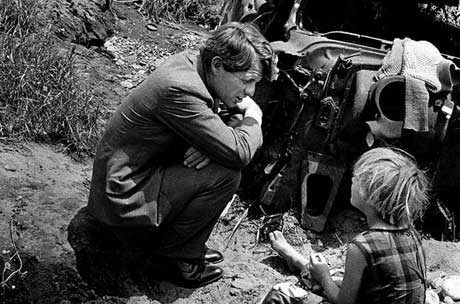
In April 1967, Robert Kennedy went into a shotgun shack in the Mississippi Delta and saw a malnourished toddler playing listlessly with grains of rice on the floor. He knelt down and put his head on the floor, his face at the child’s level, and talked to him softly. He stroked the baby’s cheek and his distended belly. (“He touched those children [on the Delta visit] as if they were his own,” a writer noted.) He got no response from the hungry baby. When he finally stood, after several minutes, his eyes were welling with tears.
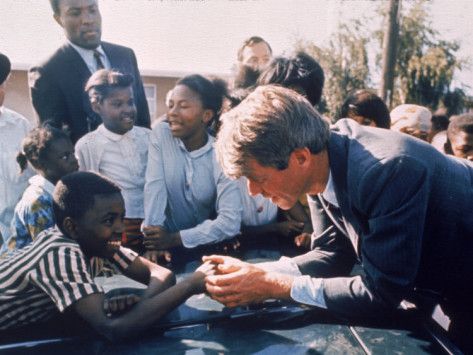
A year later, when he ran for President, he could not keep a pair of cufflinks. Crowds surged around him, reaching out to touch him, propelled toward him by some primitive and powerful emotional urge they felt for him–perhaps they felt validated by him—-and so the cufflinks were invariably lost. When the people so desperate for Kennedy’s touch surrounded his car, a bodyguard—sometimes a Los Angeles Ram– had to grab him around the waist and hold on with all his strength to keep Kennedy in the car, to keep the crowd from absorbing him.
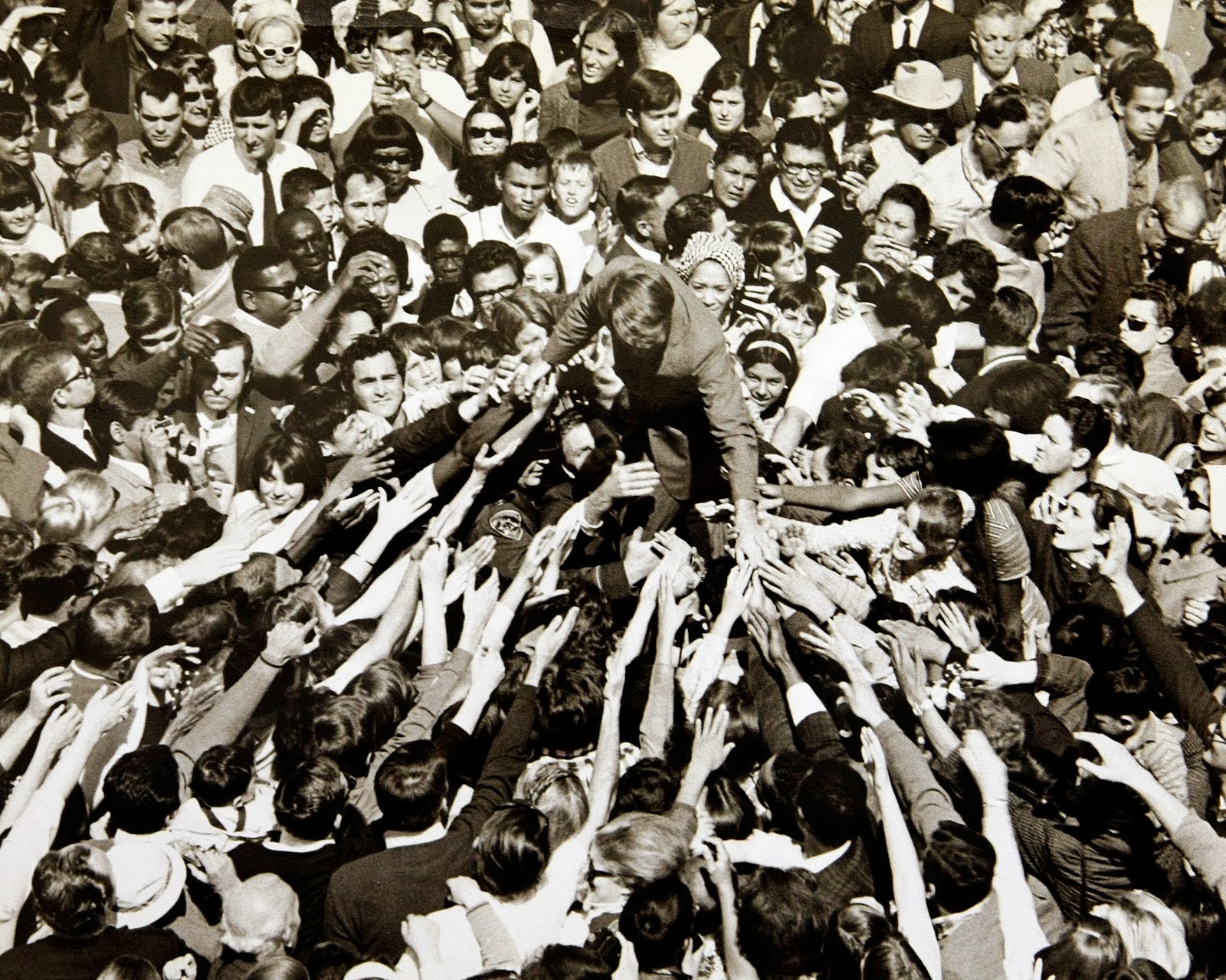
I think he was my favorite precisely because, as a young man, he was so vindictive and mean-spirited. He, the family’s savage runt, was Jack’s protector and enforcer, but with Jack dead, Robert had to find others to protect. He found them, forgotten and isolated, and so found himself, re-invented himself, in moments when he was surrounded by children, both by his own and by the children he met in the Delta and in Appalachia. These were his children, too.
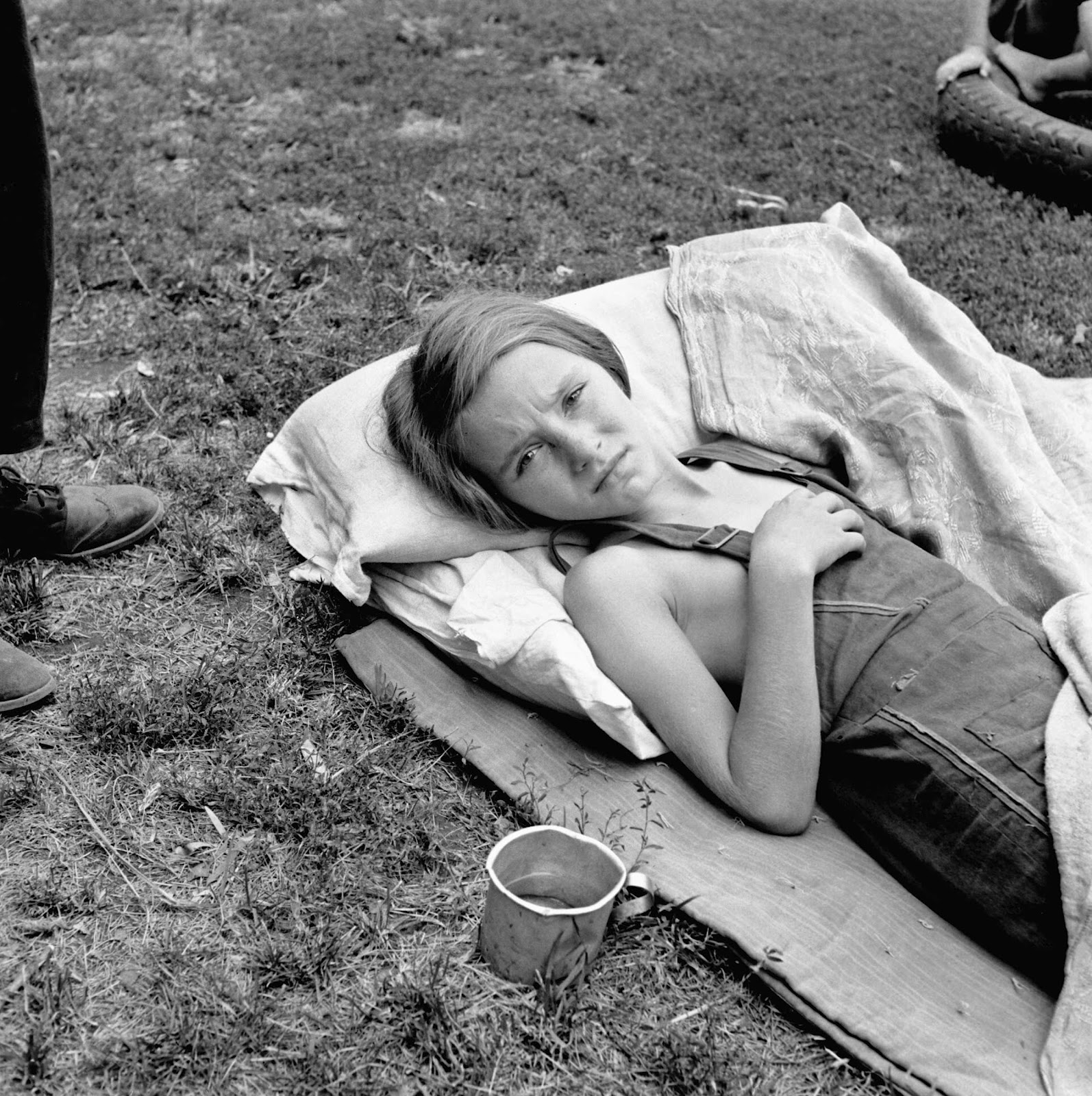
In the winter of 1937, Arroyo Grande’s Muriel Loomis Bennett learned that children in the “Okie” migrant camp on the Mesa (some of those Okies were from Vermont) were desperately sick in one of the wettest years of the decade. She was outraged and did something about it: She and her son, Gordon, drove up to the camp with pots of hot soup and piles of blankets.
She had the same understanding that Kennedy did. Those children were hers–and ours.