• About
  • The Germans

A Work in Progress

A Work in Progress

Author Archives: ag1970

Meditation on a silver Corvette

17 Tuesday Sep 2019

Posted by ag1970 in Arroyo Grande, Film and Popular Culture, Uncategorized

≈ Leave a comment


ext_GAN_deg04Usually when I’m under the Brisco Road underpass, I reflect nervously on the 1989 Loma Prieta Earthquake, when part of the Nimitz Freeway pancaked. Or, as you wish, tortilla’d.

[We felt that quake in Los Osos. I was feeding John in his high chair and noticed, suddenly, that I had to move the spoon to track his mouth, because he was swaying. I snatched him up and dragged him, mostly but not completely out of the high chair, into the safety of the hallway. John was unfazed. The boy likes to eat.]

Thank goodness, I did not think about the earthquake today. What I thought about instead was the vision just beyond my windshield.

It was a silver 2019 Corvette that looked just like the one above.  It was beautiful and it sounded glorious, too. The engine purred and then, when the driver accelerated, it growled.

There was a time in my very young life when I wanted to grow up to be a 1963 Corvette Stingray.


tumblr_po9clcycxw1ttxfeno1_400


The Corvette I saw today looked so futuristic I would not have been at all surprised to see George or Jane Jetson behind the wheel.

Amber Derbidge and I once took kids to Europe and one of our stops was in Monaco, where the biggest yacht in the basin was owned by a man in Ladies’ Underwear. That was his business, to clarify. Then we passed one of the biggest Ferrari dealerships in Europe, but there were so many Ferraris on display that they were kind of dull, like Ford Escorts in the Mullahey lot.

But if you see one good thing, say, Princess Grace’s grave, which was strewn with rose petals, or a shooting star Elizabeth and I once saw in an empty sky over Utah—or a silver Corvette you weren’t at all prepared to see—that’s a singular beauty. Oh, and as much as I love sports cars, there’s no beauty like Grace Kelly’s. None.


gettyimages-75876421

When a place gets under your skin

14 Saturday Sep 2019

Posted by ag1970 in Arroyo Grande, Uncategorized

≈ Leave a comment

I grew up in Arroyo Grande, California, but we didn’t get here–we relocated from a tough oil town, Taft–until 1955, and not 1953, as I’d earlier thought. I always felt a little ashamed since I grew up with friends whose families had been here since the 1840s or the 1880s. Some of my best friends have been, and are, and always will be, Japanese-Americans, and their families came here fifty years before mine did.

So when I write about the history of this town, going on five books now, I sometimes feel like an impostor, a poser. But, as I’ve written in one of those books, when we moved out to Huasna Road, east of town, in 1957, I recognized instantly, as a five-year-old, that this was Home.

And since most of my childhood was spent in delightful anarchy, in creekbeds and foothills and sometimes in and around abandoned houses, some of them adobe and some of them haunted, I discovered that I was an incurable explorer. So if not quite a native and nowhere near a Founding Family, I was, at least, a learner, and in learning the Arroyo Grande Valley I became entranced. It’s a love affair that began when I was five, and and here we are sixty-two years later.

This place gets under your skin. After many, many years away—twenty-six—I was so happy to come home again in 1996 and, best of all, to come home to teach young people. My parents are buried here, my schools still stand here and so do my memories. My friends, both living and dead, are never quite so much alive as they are in my imagination.

I am a lucky man to love a place so much.

I am thinking through a presentation to local students about the town’s history, and I tend to think vividly and visually in storyboards, so PowerPoint, as my high-school students would confirm, is the way I think history through.

So this is a very selective and in-the-rough history of Branch Street, Arroyo Grande, California, in my home town.

Branch Street

President, Spider.

27 Tuesday Aug 2019

Posted by ag1970 in trump, Uncategorized

≈ 1 Comment


Screen Shot 2019-08-26 at 6.28.42 PM


Our president*.

I’ve never heard such gobbledygook as the answer he gave on the last question at today’s presser—it was the last question because he didn’t want to answer it and abruptly walked off as soon as he hadn’t—on global climate change.

He talked about American energy production instead–about fossil energy–and he talked about his dedication to the wealth it generates (wealth that will never reach the 98% of Americans who will pay for it instead) and then he had the audacity to call himself an “environmentalist.”

Gobsmacked as they must have been, the reporters’ gaggle couldn’t break the White House press corps honor code: Honor requires that they treat him with the respect due a leader.

And then you realize, as the passengers did on Flight 97, that this leader’s seized the flight controls and is determined to take all of you down with him. So you wake from your shock, find your courage, and rush the cockpit.

It’s too late.

The president is–even beyond Laurence Harvey’s Manchurian Candidate or Bill Haydon’s MI6 mole in the John LeCarre novels–the perfect traitor. He has no conscience. He has no principles. He has no empathy. He has no loyalty, except to himself and to his spymaster–LeCarre called Haydon’s “Karla.”

So if it means making profit for himself, he will take all of us down with him. We will die betrayed. He will die a rich man—for once. He will die. What he leaves behind means nothing to him.

Even knowing the wreckage he’ll leave, I pray daily for a massive stroke that will drop him in the early morning before his hair is gathered into its ludicrous combover—when he still looks like Gollum—when he’s on the toilet with his tiny thumbs in mid-Twitter.

I would never do harm to another human, but I’ve never, in my life, prayed for another human to die. This is a first.

There have been so many deaths—so many lives—that have made  a better difference.

I’ve seen the grave of a young Marine from Arroyo Grande who died on Iwo Jima three days before he turned twenty-one.

I’ve seen the grave of a local farmworker, killed in Normandy, at the American Cemetery at Colleville-sur-Mer, above Omaha Beach.

I’ve seen the grave of a schoolteacher who gave over forty years of her life to local children and loved them in every moment of the giving.

I’ve seen the grave of an immigrant, a World War II internee, who grandmothered a dozen children–Sansei, third generation Japanese-Americans—who were among my best friends in high school She taught them to live lives without bitterness.

These are my heroes. Naive as it may be, Frank Capra’s James Stewart, in Mr. Smith Goes to Washington, is my hero. Barbara Jordan of the House Judiciary Committee in 1974 is my hero. Jane Goodall, who taught me, from my first reading years, so much about the value of all life, is my hero.

Abraham Lincoln is my hero, and so it’s the ultimate obscenity, to me, that this man lives in the same home where Lincoln once lived.

Nothing will erase—not even the absence of Donald Trump—the hatred that empowers him so. It’s been with us since the nation’s beginning. It cost Lincoln 620,000 lives to crush it, and even that terrible resolution turned out to be transitory.

But defeating Trump might scatter that hatred again into the dark corners where it belongs.

If there is a closet in Lincoln’s Springfield home—the one that pre-dates his White House— with a spider-web spun in its corner, then the spider in its center would be the closest Trump could ever hope to come to the sixteenth president’s legacy.

It would mean nothing for a Lincoln curator to find the the web and obliterate it with the stiff bristles of a broom.

Maybe then we could hope to become clean again.

But it’s entirely possible that the aftermath of the cleansing may be nearly as painful as the war that caused Lincoln so much despair. It may take as may generations as have passed since the great man, our most lucid and our most faithful president, left Springfield in the late winter of 1861.

Or it may be that we will never be clean again.

abb892ef94d791d01e339384c36b6dd1

Lincoln, just behind the fence in Springfield, 1860, with is son Willie–his best beloved, who would die of typhoid fever in the White House in 1862.

Shoah. Again.

22 Thursday Aug 2019

Posted by ag1970 in Uncategorized

≈ Leave a comment

https://drive.google.com/open?id=17RhbYpC6RRzouV2PKMd2LZpN09bK57P_

I’ve been retired five years. You would think I wouldn’t have to teach this lesson every year then and every year since.

But it needs to be taught because it obviously hasn’t registered in some dark places.

Using a word like “disloyal” is so pernicious. Captain Alfred Dreyfus, sentenced to Devil’s Island after a court-martial that brought France to the brink of civil war, was accused of disloyalty.

Statelessness would be one of the canards that would be used to excuse the persecution and attempted extermination of European Jewry.  The flip side of that canard is the suggestion that somehow being an American Jew—in other words, an American—requires loyalty to Netanyahu’s Israel, to his particular brand of chauvinism, which has such ironic precursors.

“Jews will not replace us,” the crowd, made up of fine people, chanted in Charlottesville.  Students in an Orange County’s Pacifica High School were recorded, in a video released earlier this week ,giving the Nazi salute.

I don’t understand the kind of stupidity that embraces deliberate forgetting. I never will.

The law, in its majestic equality

12 Monday Aug 2019

Posted by ag1970 in Uncategorized

≈ 2 Comments

h2-mississippi-ice-raid-poultry-plant-immigration-arrests-kock-foods

Th’ abuse of greatness is when it disjoins remorse from power.
—Julius Caesar II.i.18-19

I’ve been reading extensively about laws and legality on Facebook lately. Most of what I’ve read would be funny but the people who write these things take themselves so seriously. Their insistence on obedience to the law, at the expense of compassion and logic, isn’t funny. It’s heartless. And it’s terrifying.

So for all of you legal eagles out there, especially those who specialize in illegal immigration, here are things in the past that have been scrupulously legal:

–The Sanhedrin turning Christ over to the Romans for crucifixion. But Christ had committed sedition, once with such delicacy, by saying “render unto Caesar what is Caesar’s,” not a comment on obeying civil law, but a subtle and very sharp dig at the illegitimacy of Roman coinage, frequently debased, and so at Roman authority.

–The Fourth Lateran Council, 1215, required European Jews to wear badges—Stars of David, a precursor to the laws of Nazi-occupied Europe. You can still see bolts of cloth with Stars of David ready for the cutting in the Jewish Museum in Amsterdam.

–A series of laws enacted by the Scottish Parliament in the 1500s and early 1600s that mandated the death sentence for convicted witches. Witchcraft convictions, in duly-constituted civil courts, were particularly common in Scotland and Reformation Germany, where the overwhelming majority of victims were women, immediately suspect in a time of great social and political change.

–The Indian Removal Act of 1830, when gold was found on Cherokee land, was perfectly legal. Until John Marshall’s Supreme Court struck it down. The removal was nonetheless enforced by Andrew Jackson, the present president’s hero, who reportedly said: “Marshall has made his decision. Now let him try to enforce it.”

–Slave codes forbade the legal recognition of slave marriages, making it convenient for slaveholders in the Upper South to break up families for sale to the harsh conditions of places like Louisiana or the Mississippi Delta. One Virginia mother, to be sold South away from her children, defied the law by chopping off her foot with a hatchet to queer the deal.

–The legal justification for the Mexican War was that American soldiers had been killed on American soil. One young Congressman who disputed this was savaged for his lack of patriotism when he urged a series of resolutions, the “Spot Resolutions,” which demanded the government reveal the exact spot—more than likely on disputed territory along the Nueces River—where, more than likely, the war that gave us one-third of Mexico had begun illegally.

The Congressman was Abraham Lincoln.

–The Fugitive Slave Act, part of the Compromise of 1850, required northerners to return runaways to their masters. Thousands of white people flagrantly and shamelessly broke this law.

–In 1872, sixteen women were arrested for breaking the law. They attempted to vote.

–In the South before the civil rights movement, it was illegal for a black driver to pass a white driver on the road. No matter who arrived at an intersection first, the black driver had to yield the right of way to the white driver.

–In 1930-32, the Hoover Administration and local law enforcement officers, including the LAPD, “repatriated” 1.6 million Mexicans rounded up in raids throughout the Southwest. 60% of them were U.S. citizens. Four years later, the LAPD also appeared at the Arizona border to turn away more U.S. citizens, refugees from the Dust Bowl.

–Executive Order 9066, which led to the imprisonment of West Coast Japanese-Americans, was, according to Franklin Roosevelt, completely lawful, despite the objections of two powerful Americans: FDR’s attorney general, Francis Biddle, and the First Lady, Eleanor Roosevelt. By the way, it had been long illegal for Issei, first-generation Japanese immigrants, to become citizens because they were not white people. This was based on law, on the Naturalization Act of 1790.


9002

My ancestors came here legally.

That’s because there was no way for them to come here otherwise. They weren’t Chinese, they weren’t Filipinas, they weren’t Guatemalans.

They were from England, Ireland and Germany, so they broke no laws, most importantly the Naturalization Act of 1790. By happy accident, they were white people. That gave them substantial claim to legality and far more comfortable train seats.

Would I come here legally if I lived in a place like Guatemala, where my kids’ lives were threatened by street gangs or by government-sponsored death squads? The latter, by the way, have been a longtime South of the Border custom born, bred, trained and armed by the School of the Americas at Fort Benning, Georgia.

You bet I would. And that’s what thousands of “illegals” have tried to do: To present themselves, under international refugee law–laws drafted in the wake of the ill-fated ship St. Louis and the logical outcome of that debacle, lives swept up in chimneys in places like Auschwitz–at American ports of entry. Most of them, ultimately, would have been denied entry by immigration courts. That doesn’t matter. They’ve been turned away from the immigration courts and they’re sweltering in Mexico today. Those are the lucky ones. The others are in Immigration and Naturalization lockup.

Would I come here illegally if I lived in a place like Guatemala, where my kids’ lives were threatened by street gangs or government-sponsored death squads?

You bet I would.

Would I come here to work illegally slaughtering chickens in the fetid Mississippi heat if it meant my kids had a chance at a college education? Or at surviving to adulthood? Would I be willing to work and live here if it meant paying American taxes and obeying every American law,  except for the one that forbids me from being a better father? Would I try to be someone as devoted to his children as that slave mother had been to hers?

You bet I would.

Whose job am I taking?  There are now too many jobs and not enough white Americans to fill them. I’ll take one of those. As an immigrant, who am I hurting?

No one.

Who am I helping?

This one. Her father loves her more than life itself. She knows that. She feels, at this moment of missing him, a fear so powerful that we can only pray that we will never feel anything like it.

maxresdefault


None of this matters, the legal eagles cackle—the law being such a splendid shield to conceal moral cowardice.

The law has been used so skillfully to that end from characters as disparate as Henry VIII, who used the headsman to rid himself of embarrassments like Thomas More, and Henry Clay Frick, who used instant deputies, Pinkertons, to shoot down the steel strikers at Homestead.

What if it’s the law—and those who insist on its application, their power disjoined from remorse—who are evil?

So what would you do in the chicken-slaughterer’s place, a man who, more than likely, did come here legally but who’s overstayed his visa?

That reminds me. My car payment is overdue.


46ca6570-d736-4c39-b5b6-81eec3ee328e-AP19219654744333


Not exactly “Nanny Dogs,” but…

12 Sunday May 2019

Posted by ag1970 in History, Uncategorized

≈ Leave a comment

1557674035972646492976
15576742080181470627974
1557674111007558841500
15576741541541791997489
1557674241641997484157
1557674069834277904576

Bear with me on this one. In AP European History, one phenomenon we studied was the mid-Victorian custom in middle-class homes of photographing dead children. What we got around to learning was that this macabre (to us) practice was actually a by-product of the Agricultural Revolution. Largely because of improved diet, more and more children were surviving to adulthood. In the 18th century and on the American frontier, both Mrs. J.S. Bach and Mrs. William G. Dana lost half of the twenty or more children they gave birth to.

Because of improved diet and improved health, by the mid 1800s children were surviving, even thriving. This meant that parental bonds between parent and child were growing stronger: you could afford to invest your love in something as precious as a child because you weren’t going to lose her. In fact, this is when the forerunners of the Dr. Spock books appeared and were almost guaranteed to be best-sellers.

So the photography of little boys and girls who had died was visible evidence of something very poignant: By the 1850s, parents loved their children so much that they didn’t want to let them go.

Which brings me to pit bulls.

While they weren’t exactly “Nanny Dogs”—it’s never wise to leave a child alone with any dog for too long—pits were the single most popular family dog in late Victorian and Edwardian England. Since parental bonds were by then far closer and more enduring, my guess is that you wouldn’t leave your child alone–or photograph her, for that matter–with a dog that’s considered vicious. I did read a study that claimed that, after Goldens, pits were the most patient breed who would endure the most pokes from children. And we did have a pit cross, Honey, who was one of the sweetest dogs we’ve ever owned. But she’s anecdotal.

Still, it again makes me wonder if the problem is less with dogs and more with humans. There are strains of the pit that have been bred to fight; the “toughening” of dogs like these, and the former quarterback Michael Vick is an example, involves inflicting pain on them. I’ve known people innocently walking their dogs who were attacked by a pit, and it’s a singularly terrifying experience. They are trying to kill your dog. Or you. Or both.

It’s not only terrifying, it’s disheartening. Some pits may have a killer instinct, but it’s a trait that’s been bred into a dog, or trained into a dog, by a human who has no heart. (Or, in the recent case involving a Belgian Malinois attacking and killing a local man, a wonderful man, a dog owned by a human who has no brain.)

It’s not my intent to argue for or against the breed here.

What I am trying to say is simply this: These photographs are fascinating.

But they may demonstrate that the traditional views we hold of dogs—or of other human beings—need to be subject to examination and reflection. I’m afraid that we are much more comfortable with tradition. It’s almost as if our prejudices have been bred, or trained, into us.

Remembering San Luis Obispo County Airmen on Memorial Day

10 Friday May 2019

Posted by ag1970 in Uncategorized

≈ Leave a comment

9781467139526

The statistics are as somber as Memorial Day itself: for every American infantryman killed in World War II, three were wounded; for every American airman wounded, three were killed.

Twenty-six thousand Marines died in the Pacific; the same number of Eighth Air Force airmen died over Europe.

Other fliers died here. P-38 fighters would have been a common wartime sight over San Luis Obispo County; today’s Santa Maria Airport was an Army Air Forces base that specialized in advanced training of pilots about to head overseas. There were eight fighter crashes near that base in January 1945 alone.

One pilot died when his plane went down in the Oceano dunes. Two fighters collided over Corbett Canyon, but only one pilot survived. Three died—a pilot and two civilians– when another P-38 fell into a Santa Maria café.

Meanwhile, accidents claimed about half the eighteen county airmen killed in World War II. Those deaths seem especially capricious and cruel.

In 1943, Clarence Ballagh, a B-17 co-pilot, was merely hitching a ride north on another bomber for a few days’ leave in Edinburgh. That B-17 flew into the side of an English mountain. Fragments of the plane remain on Mt. Skiddaw today, 5,000 miles away from Ballagh’s Arroyo Grande grave.

Templeton’s Norman Hoover died, ironically, when his bombing mission was scrubbed in January 1945. His B-24 crashed returning to its Yorkshire base. It was the only plane lost that day.

Sgt. Charles Eddy of Templeton died in Idaho. Eddy’s B-24 was on a practice bomb run when it suddenly fell from 20,000 feet. The pilot and co-pilot fought desperately to regain control of the plane. They did, at one hundred feet. When they banked gently to return to base, the bomber plummeted into the ground and exploded.

Three county airmen, combat casualties, remain missing.

In 1943, a German fighter’s cannon round killed Clair Abbott Tyler of Morro Bay in his co-pilot’s seat. His B-17, returning from a mission to Lorient, France, went into the sea and took Tyler’s body with it.

French civilians reported seeing Cholame’s Jack Langston bail out when German anti-aircraft guns set his P-38 afire over Cherbourg in July 1944. His body was never found.

In Germany, near the war’s end, famed San Luis Obispo P-51 pilot Elwyn Righetti was never seen again after he’d crash-landed his crippled fighter and radioed that he was all right.

In a tragic coincidence, Righetti, Tyler and Ballagh all left behind little girls who were just beginning to walk when they lost their fathers.

Details like those are haunting.

Clair Tyler’s mother made wonderful enchiladas and Alex Madonna was the best man at his wedding.

Clarence Ballagh’s wedding band was returned to his wife in 1949. Lost B-17 gunner Donal Laird’s wristwatch was returned to his San Luis Obispo nieces in 2015.

Jack Langston played the saxophone; Lt. Ted Lee, shot down near New Guinea, was a trombonist.

As a little boy, lost B-29 pilot Jack Nilsson had been invited to Patsy Berkemeyer’s sixth birthday. Since Patsy’s parents owned a San Luis Obispo bakery, the cake must have been spectacular.

So is the life of P-47 pilot John Sim Stuart, a retired Cal Poly professor still married to Mary, the girl he met in 1944.

Despite being shot down twice, Los Osos retiree Al Findley, a B-24 radioman, was a joyful man who filled his life with friends. He died, at 96, April 28.

Another retiree, Morro Bay’s Jack Gibson—the father of County Supervisor Bruce Gibson–died in 2016 at 95.

Gibson was a B-29 crewman who got a letter from his mother, a knitter, about socks. Did Jack want argyle, striped, or plain? He wrote back that he didn’t care as long as she was the one who knitted them.

Soon after, the Japanese shot his bomber down. POW Gibson endured beatings, starvation and dysentery, but he survived. When he finally came home, he opened a dresser drawer in his bedroom.

Inside were six new pairs of socks.


An older writer’s role models: Young women who write

06 Monday May 2019

Posted by ag1970 in Uncategorized

≈ Leave a comment

Screen Shot 2019-05-06 at 6.25.21 AM


My friend Judy Cecchetti–we go back to Branch School together– posted on Facebook about how much she enjoyed the story “Sheila Varian’s Perfect Horse” from the new book.

That meant the world to me.


Screen Shot 2019-05-06 at 6.26.05 AM


That story happened because of the Elizabeth Letts book The Perfect Horse. Letts has become one of my favorite authors. Lynne Olson (Citizens of London, Troublesome Young Men) is masterful at using the colorful and telling anecdote to bring a historical character alive.  My favorite popular historian is Laura Hillenbrand, whose word choice is so incredibly vivid; her writing also has a marvelous rhythm. You’re so absorbed that it’s stunning to realize how much Hillenbrand is teaching you-about the world of Thoroughbred racing, for example. She wrote Seabiscuit,  which is phenomenal, during an agonizing and courageous struggle with Chronic Fatigue Syndrome–she was in constant pain–and Louis Zamperini’s story in Unbroken.

All three writers, obviously, are young women.


equisearch-exclusive-seabiscuit-author-chat-promo-image

Laura Hillenbrand


I hope that the long-overdue emphasis on STEM, on teaching science and math to girls and young women, doesn’t completely overshadow our need for good writers–journalists and novelists and historians– who also happen to be young women. (That’s one reason I’m such a fan of Trib reporter Kaytlyn Leslie, a student of Janine Plassard’s when she taught journalism at Nipomo High.)


Screen Shot 2019-04-30 at 5.50.18 AM

Janine Plassard


It reminds me, too, that JFK read Barbara Tuchman’s The Guns of August, about the failure in leadership that led to World War I, just before the Cuban Missile Crisis. Tuchman’s book helped to guide his thinking in October 1962, so it’s not hyperbole to say that we may very well owe our lives to a great historian who happened to be a woman.


tuch_tuch

Barbara Tuchman


The Sheila story began with me asking if there might be any connection between Varian Arabians and one of the central characters in Letts’s book, Witez II. He was a famous Polish Arabian, a championship stallion, whose story was shaped by World War II, the war that began with Hitler’s invasion of Poland in September 1939.

When I found out that Sheila’s mare Ronteza was Witez’s daughter, I nearly fell out of my chair. My big sister, Roberta, had ridden with Sheila, but Roberta’s Morgan mare was a product of Sid Spencer’s Lopez Canyon ranch. It was Sid who taught Sheila and her Arabian, Ronteza, how to work cattle.


Screen Shot 2019-05-06 at 8.13.48 AM

Sid Spencer, Roberta, Anne Westerman on her Welsh Pony, Lopez Canyon, about 1965. Photo by Jeanne Thwaites


The story of the American Army’s rescue of Witez and the Lipizzaner, alongside the story of Ronteza and Sheila and their miraculous Cow Palace performance, took weeks to write. It’s so hard to interweave two stories and still keep the narrative logical and understandable, so it took many, many rewrites, too.

So Judy, it’s one of my favorite stories, too. The best part might be that it happened both in World War II Europe and in, of all places, Corbett Canyon, California. And–what a coincidence!–it just happened to be a story, too, about a courageous young woman.

Finally, I am fond of the way that story made up its mind, thanks in great part to the band U2, about the way it wanted to end:

Varian remembered a moment from the Cow Palace competition vividly: at the start of one round, she could feel distinctly Ronteza’s heartbeat through the panels of the saddle. She knew then that her mare was ready. When the signal was given, when horse and rider entered the Cow Palace arena, two hearts beat as one.


Screen Shot 2019-05-06 at 7.08.54 AM


That is not what I meant at all

05 Sunday May 2019

Posted by ag1970 in Uncategorized

≈ Leave a comment

THANK YOU FOR REMINDING US THAT THE COST OF FREEDOM IS NOT FREE.

  • A local woman responding to an article I wrote about a World War II veteran

* * *

“That is not what I meant at all;
That is not it, at all.”

  • T.S. Eliot, “The Love Song of J. Alfred Prufrock”

The bullet that kills a soldier passes first through his mother’s heart.

  • A veteran of the North Vietnamese Army (NVA)

This is a course in history, not patriotism.

  • Cary Nerelli, my master teacher, Morro Bay High School
map00-05
Exhausted French soldiers, Verdun

I taught history for thirty years, and I never, never ceased to get angry every spring when I taught the First World War. It was this war and its peace treaty that did so much to make World War II possible. In 2010, I took some of my students to Western Europe’s World War II battlefields but also to Verdun, site of a horrific 1916 battle that lasted over ten months. The stacked bones in the ossuary there once belonged to boys like my two sons, whose parents had cheered when they scored their first football goal.

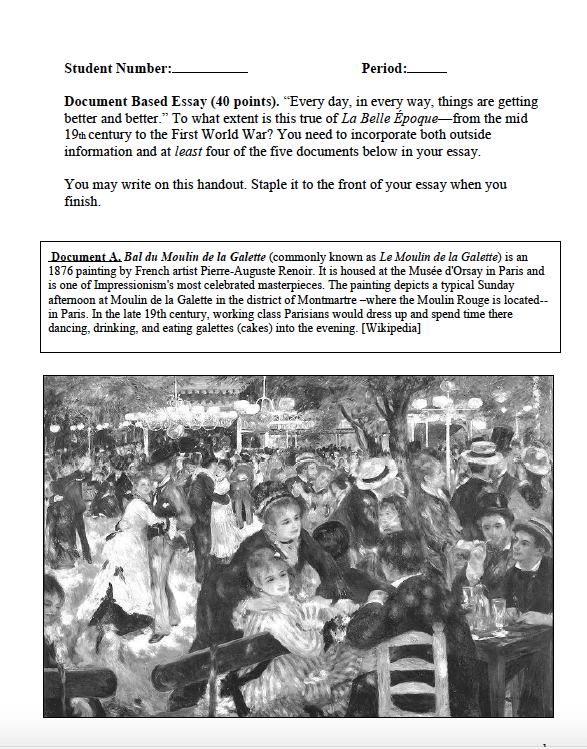
I made it my business to help all of my students understand that idea—that war cheats us all so cruelly—and so I led them, every year in my classroom, into dark places, like Fort Douaumont at Verdun, so dark that it swallowed the light of five hundred years of Western culture. To go inside Douaumont, where 100,000 young men were killed or wounded, to study war doesn’t mean we glorify it. A few years ago, a student told me the First World War was her favorite unit. (Not mine—I much prefer La Belle Èpoque.)  I asked her why, and she replied, “Now I understand how precious human life is.”

She understood precisely why I became a history teacher.

–From the introduction to World War II Arroyo Grande


But American artillery units still found many of them there—artillery spotters were nearly incoherent because there were so many targets to call in on their field radios—and the slaughter they inflicted was horrific. Seventy years later, one of the 607th’s soldiers, Frank Kunz, remembered the results in an interview with his hometown newspaper: “Christ help me. There were 6 to 8 inches of bodies and horses ground up on the road. There was nothing you could do. You had to drive through it.” People, Kunz added, don’t understand what war is.

  • From a member of Arroyo Grandean Frank Gularte’s 607th Tank Destroyer Battalion, on what happened to the Germans who failed to escape through the Falaise Gap in Normandy. From World War II Arroyo Grande
A column from the 607th crosses the Saar River into Germany, 1945. Gularte was dead by the time this photo was taken, killed by a sniper a few days before his first and only child, a boy, was born in San Luis Obispo.

200 Arabians fled Janow Podlaski and headed west, away from the Soviets. Among them were Stained Glass and Grand Slam, two of Witez’s brothers. The exhausted horses arrived in Dresden on the night of February 13, 1945, just as the Allied command unleashed the notorious fire raid, involving over 700 British and American heavy bombers, on the ancient city.

After a wave of bombers had dropped its incendiary bombs, one of the Polish handlers watched, horrified, as Grand Slam’s tail burst into flames. He held on as best he could to the powerful horse and closed his eyes. When he dared to open them again, the flames that had engulfed Grand Slam’s tail had sputtered out and the bombers were gone. So were over half of the Polish Arabians, incinerated in the fires or asphyxiated by the oxygen-consuming firestorm the incendiaries had been intended to produce. By the time the surviving animals reached their ultimate destination in western Germany, fewer than fifty remained.

  • “Sheila Varian’s Perfect Horse,” from Will This be on the Test?
Dresden, after the firebombing.


Two torpedoes struck Northampton in the engine room and stern, and the explosion that followed was so violent that men at their bridge stations on the nearby light cruiser Honolulu reacted immediately. They burst into tears.

  • The night action near Guadalcanal that killed Donald Runels of Nipomo, a crewman on Northampton, from World War II Arroyo Grande. The anecdote belongs to Samuel Eliot Morrison, the official United States Navy historian of World War II
Artist’s conception, the torpedo hit on Northampton. A destroyer escort would be named for Donald Runels


That was Hall’s first mission. He was twenty years old when he saw the three Ragged Irregular bombers plummet to earth together. Many members of his bomb group were even younger. Some of them, thanks to crafty misdirection aimed at recruiting sergeants pressured to meet their quotas, were as young as sixteen. Far below them, in German cities like Hamburg and Dresden—or in relatively obscure Japanese cities like Toyama, the size of Chattanooga, or Kagoshima (the seat of the prefecture from which most San Luis Obispo County Japanese had emigrated) the size of Richmond, Virginia—the ashen bodies of schoolchildren stained sidewalks and streets.

  • On B-17 crewman Henry Hall of Cayucos, from Central Coast Aviators in World War II
A doomed B-17 over Germany, 1945

It was yet another battle, like Gettysburg, that seemed to take on a life of its own. After four days of combat, it was Adam Bair and the 60th Ohio’s turn. On the morning of June 3, the Union army, shrouded in mist, moved across the open ground that led toward the Confederate entrenchments.

The 60th was to assault Lee’s left. Unlike the general staff—coordination and communication throughout June 3 would be chaotic, and staff had not adequately scouted the ground to Lee’s front—private soldiers were fully aware of what they were up against; many wrote their names on pieces of paper and pinned them to their uniforms.

  • Adam Bair, later a rancher in the Huasna Valley, fought with the 60th Ohio at this 1864 battle, Cold Harbor; 7,000 Union soldiers were killed or wounded that day. From Patriot Graves: Discovering a California Town’s Civil War Heritage
Burial detail, Cold Harbor


I met my pilot, Byron Johnson, from Oklahoma; my copilot, James Gill, from California; my navigator, Robert Cramer, from California; my bombardier, Nolan Willis, from California; my engineer, Morgan Fowler, from South Dakota; my nose gunner, Homer Smith, from Texas; my left gunner, Theodore Mabee, from Illinois; my right waist gunner was James Walter…and he was from some eastern state that I don’t recall, and my tail gunner was Johnny Gates—he was from some eastern state, also. That was the crew. Plus me.

It’s hard to fault Findley for not remembering every one of his crew members’ home states. The Los Osos retiree was speaking from memory in 2013, nearly seventy years after he’d met the men who became “very dear” to him.

–Findley could not remember the home states of two B-24 crewmen he had known for two years. They were killed on his 26th combat mission in February 1945. Findley would make the Air Force a career, retiring as a Command Master Sergeant. From Central Coast Aviators in World War II


Once a Bavarian woman approached Mr. Kamin, our [Arroyo Grande High School] German teacher, and his students near Munich and thanked him and them for the kindness World War II GI’s had shown her when she was a little girl. There were tears in her eyes. Of course, many of the young Americans she remembered with such emotion had died before Mr. Kamin’s students were born.

A little Berlin girl meets her first American,
a GI with the occupation forces, 1945

Young Americans, including young men like those soldiers, may be the best evidence we have of the faith we’ve had in ourselves—the faith that we will ultimately do the right thing. In my experience, there are few images more evocative of this than visits to places like the American cemeteries in the Ardennes, at Colleville-sur-Mer above Omaha Beach and in the Punch Bowl on Oahu. Those visits never made me want to wave flags or blow trumpets.

I always think instead of men who were once wavering toddlers, who took their first steps to a little smattering of applause from their parents. They waited expectantly and sleeplessly on Christmas Eves stalked by the Great Depression. When they did sleep, it would be with a dog close by. I think of boys whose hands shook when they tried to pin the corsage on the dress of their prom date. And then they aren’t boys anymore: They’re young men fresh out of Basic whose last moments in America, maybe a few free moments in San Diego or Philadelphia, were marked by ribald laughter and 3.2 beer or poker, by any distraction that would somehow increase the distance between themselves and the troopships waiting to take them into the crucible.

So I never think of patriotism at places like Colleville-sur-Mer. I think of baby shoes and I think of mothers.

–From Will This Be on the Test? Reflections from a History Teacher

Senior Moments

04 Saturday May 2019

Posted by ag1970 in Uncategorized

≈ 1 Comment


Screen Shot 2019-05-03 at 5.35.41 PM

From Jean Hubbard and Gary Hoving’s Arroyo Grande: Images of America (Arcadia Press)

I got the nicest thank you from the Companions of Our Lady–that’s the widows’ organization at Nativity Church in San Luis Obispo. I have to admit that I really enjoy speaking to older people, although the borderline between “me” and “older people” is eroding rapidly. I’ve made six or seven presentations at senior homes and at least three to the widows/widowers group in the South County.

Thomas was helping me, and the women loved having him. They loved it especially when he won the door prize, a succulent that he promptly named “Frazier.”

I really felt for one woman. She and her husband had lived in the same house on the North Coast for thirty years. They’d come down here and perused some mobile home communities to look for a place to live when they couldn’t take care of a big house and yard anymore.

Then he died, of course. And she still misses him, of course. There was absolutely nothing self-pitying in the way she said this. So she moved into one of the trailer parks down here and she’s having a hard time fitting in. I gave her my card and told her to give me a call for some coffee some time.

Of course, she won’t call. I’m going to have to go backwards and she if I can find out her phone number instead.

It made me wonder if there is something we’ve lost.

In Patriot Graves, the Civil War book, here’s what would happen every Decoration Day (Memorial Day) in Arroyo Grande.

The old veterans and local schoolchildren would start a little parade and then march to the cemetery to honor their comrades who had passed on. Their would be patriotic songs and speeches and recitations–like “Barbara Fritchie,” the poem that Churchill recited once from memory to an astonished FDR– and all the things they made kids do in 1905. They were the kinds of things we still did at Branch School in 1958.

When that was all over, the veterans and the schoolchildren would walk (or ride, for the older vets) back to the IOOF Hall or the Grand Army of the Republic Hall, then across Bridge Street, and have a big chicken dinner.

The thought charms me: I can see the image of an silky-bearded veteran of Chancellorsville or Gettysburg or Missionary Ridge sitting next to an eight-year-old girl missing those top front teeth and both of them getting a little messy eating their chicken.

Maybe that never happened, but I think it did.

The idea of two generations so distant from each other–one ascending the arc of their lives, the other nearing its end–sitting down to table together seems to me to be such a healthy and vital idea.

Civil War veterans suffered terribly from PTSD and from drug and alcohol addiction; a decade after the war, 80% of the inmates in American prisons were veterans. The psychic damage the war had inflicted on them is what brought many  veterans to Arroyo Grande. This was a place where they could start over again. For some, this was their third and final chance to start over:  a third of the veterans buried in our cemetery had moved at least twice before coming to Arroyo Grande or Nipomo. They’d run out of continent.

So they were restless and troubled men and kept most of this hidden, of course.

Marching alongside children and then chatting with them over chicken dinners must have healed, if just a little, so many of the wounds so many of them carried.

Their wounds were invisible, for the most part–although many local veterans died decades after the war from wounds or disease they’d suffered as young men, and they’re not counted among the 620,000 lives we lost in that war.  But, of course, the invisible wounds were deep and painful and, most of all, they were fearful.

Having a child–her littleness next to your relative bigness–sitting next to eat you can either be terror-inducing, or it can be enchanting, once you begin to chat.

Then you weren’t thinking about the eighteen-year-old brother you saw die in the Shenandoah Valley in 1862. All your attention would have been riveted, as you smiled with the teeth you had left, at the little girl with the gap in her teeth trying her best to eat her drumstick.

Here’s what children meant to one of those veterans: Richard Merrill, buried in our cemetery, fought at Antietam, the deadliest battle in American history, and at Chancellorsville. He contracted a disease, possibly dysentery, and was, according to a family history, “a great sufferer” for the rest of his life. He married, but his job history is a checkered one. He never joined any veterans’ group. So far as I know, he never talked about the war, not even with his wife.

His last job was at the Arroyo Grande Grammar School, on the site of today’s Ford agency. When Civil War veteran Richard Merrill, the school janitor, died in 1909, the children asked their teachers if they could have the afternoon off on the day of the old soldier’s funeral. Permission was granted them.

“Mr. Merrill,” his obituary concludes, “was a great favorite with the children.”


Screen Shot 2019-05-03 at 5.56.57 PM

← Older posts
Newer posts →

Subscribe

  • Entries (RSS)
  • Comments (RSS)

Archives

  • June 2026
  • May 2026
  • April 2026
  • March 2026
  • February 2026
  • January 2026
  • December 2025
  • November 2025
  • October 2025
  • September 2025
  • August 2025
  • July 2025
  • June 2025
  • May 2025
  • April 2025
  • March 2025
  • February 2025
  • January 2025
  • December 2024
  • November 2024
  • October 2024
  • September 2024
  • August 2024
  • July 2024
  • June 2024
  • May 2024
  • April 2024
  • March 2024
  • February 2024
  • January 2024
  • December 2023
  • November 2023
  • October 2023
  • September 2023
  • August 2023
  • July 2023
  • June 2023
  • May 2023
  • April 2023
  • March 2023
  • February 2023
  • January 2023
  • December 2022
  • November 2022
  • October 2022
  • September 2022
  • August 2022
  • May 2022
  • April 2022
  • March 2022
  • February 2022
  • January 2022
  • December 2021
  • November 2021
  • October 2021
  • September 2021
  • August 2021
  • July 2021
  • June 2021
  • April 2021
  • March 2021
  • February 2021
  • January 2021
  • December 2020
  • November 2020
  • August 2020
  • July 2020
  • June 2020
  • May 2020
  • April 2020
  • January 2020
  • December 2019
  • November 2019
  • October 2019
  • September 2019
  • August 2019
  • May 2019
  • April 2019
  • March 2019
  • February 2019
  • January 2019
  • December 2018
  • November 2018
  • October 2018
  • September 2018
  • July 2018
  • June 2018
  • May 2018
  • April 2018
  • March 2018
  • February 2018
  • January 2018
  • December 2017
  • November 2017
  • October 2017
  • April 2017
  • March 2017
  • December 2016
  • November 2016
  • October 2016
  • September 2016
  • August 2016
  • July 2016
  • June 2016
  • April 2016
  • March 2016
  • February 2016
  • January 2016
  • December 2015
  • November 2015
  • October 2015
  • September 2015
  • August 2015
  • July 2015
  • June 2015
  • May 2015
  • April 2015
  • March 2015
  • February 2015
  • January 2015
  • December 2014
  • November 2014
  • September 2014
  • August 2014
  • July 2014

Categories

  • American History
  • Arroyo Grande
  • California history
  • Family history
  • Film and Popular Culture
  • History
  • News
  • Personal memoirs
  • Teaching
  • The Great Depression
  • trump
  • Uncategorized
  • World War II
  • Writing

Meta

  • Create account
  • Log in

Blog at WordPress.com.

  • Subscribe Subscribed
    • A Work in Progress
    • Join 69 other subscribers
    • Already have a WordPress.com account? Log in now.
    • A Work in Progress
    • Subscribe Subscribed
    • Sign up
    • Log in
    • Report this content
    • View site in Reader
    • Manage subscriptions
    • Collapse this bar

Loading Comments...