
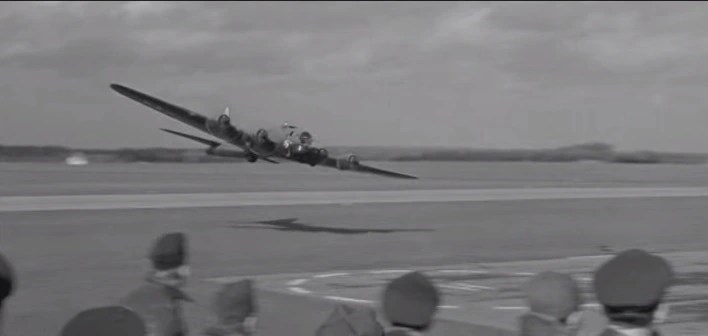
In a scene filmed at the Santa Maria Airport, a B-17 piloted by Steve McQueen takes aim at his British airfield’s control tower. McQueen, as a self-destructive airman in The War Lover (1962), seems to me to have been part of a trend—call it the Cult of Toxic Masculinity.
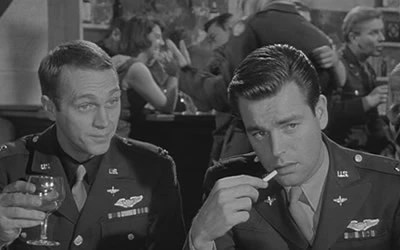
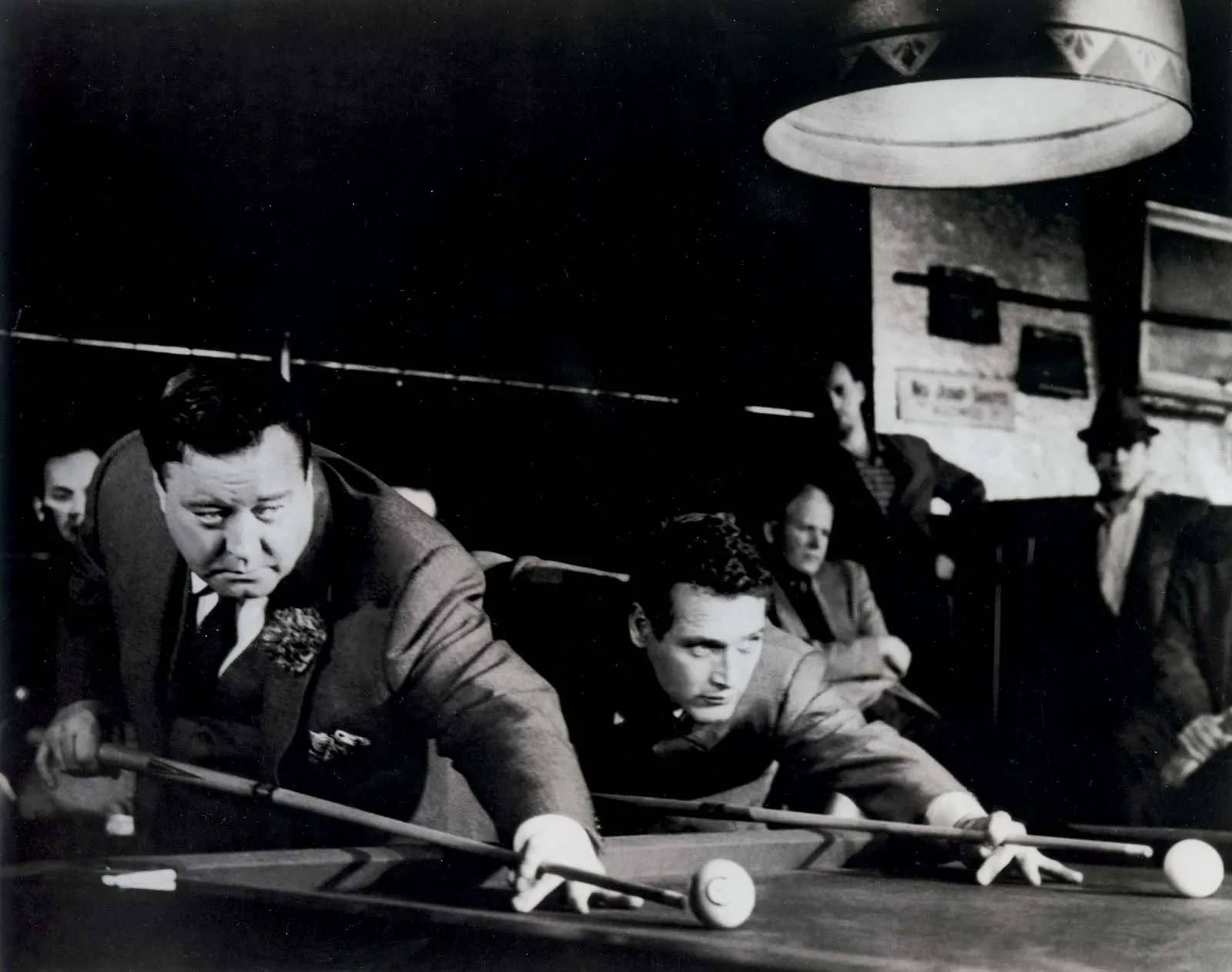
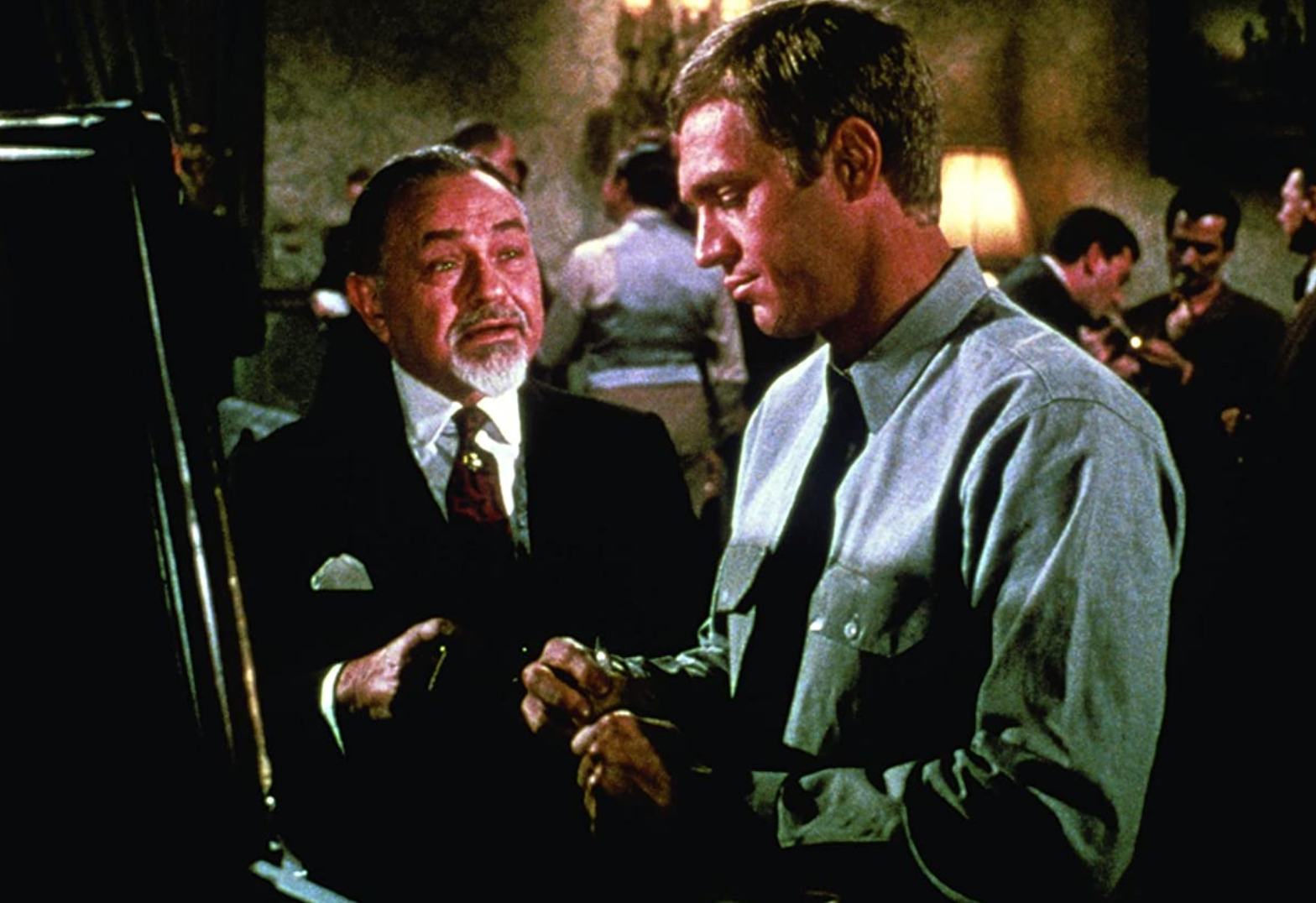
Jackie Gleason and Paul Newman, The Hustler; (Below) Edward G. Robinson and Steve McQueen, The Cincinnati Kid.
Toxic masculine films seem to have a theme we need bear in mind: Men are often self-destructive.
McQueen does just that himself in The Cincinnati Kid, where his poker gambler upstart is demolished by Edward G. Robinson’s pro, just as Paul Newman’s is demolished by Jackie Gleason, “Minnesota Fats,” in The Hustler.
This occurred to me yesterday while watching The Blue Max, a 1966 film about German fighter pilots. (The title refers to a medal conferred for twenty kills.) The lead, George Peppard, who’d just finishing rescuing Cat from the rain in Breakfast at Tiffany’s, is now a self-destructive Toxic Male in this just-above average film. The flying sequences are still thrilling, and Peppard grounds us in every scene in between. He has a charming, empty smile, cares about no one other than himself, which shows in combat, where he shows no mercy. Even in his scenes with the architecturally impossible, for 1918, Ursula Andress (Richthofen’s red Fokker triplane is prettier), he is emotionally empty.
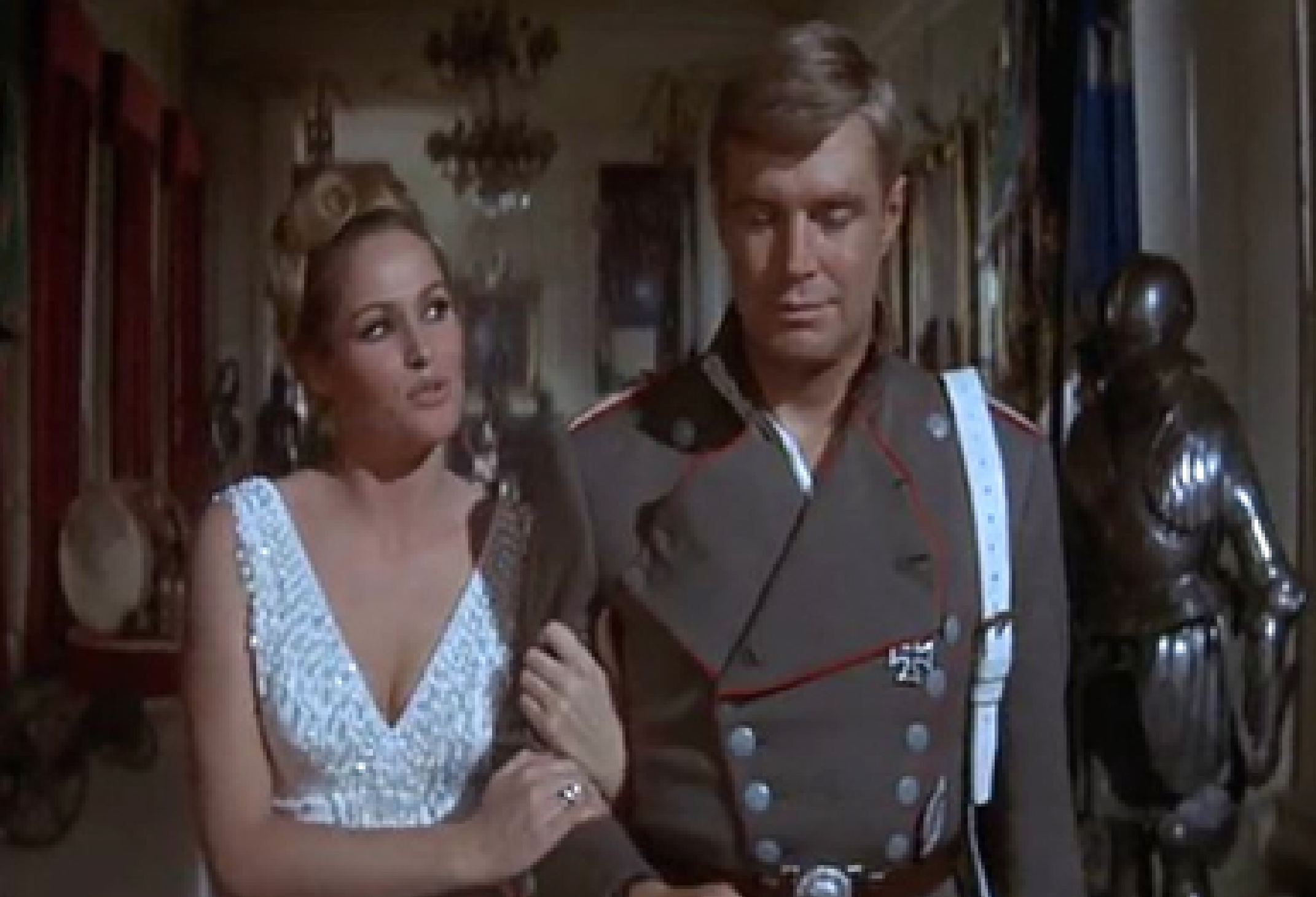
So you wind up wishing they’d killed him 45 minutes into the film.
Not all 1960s toxic males are as euthanizable at McQueen and Peppard in those two films.
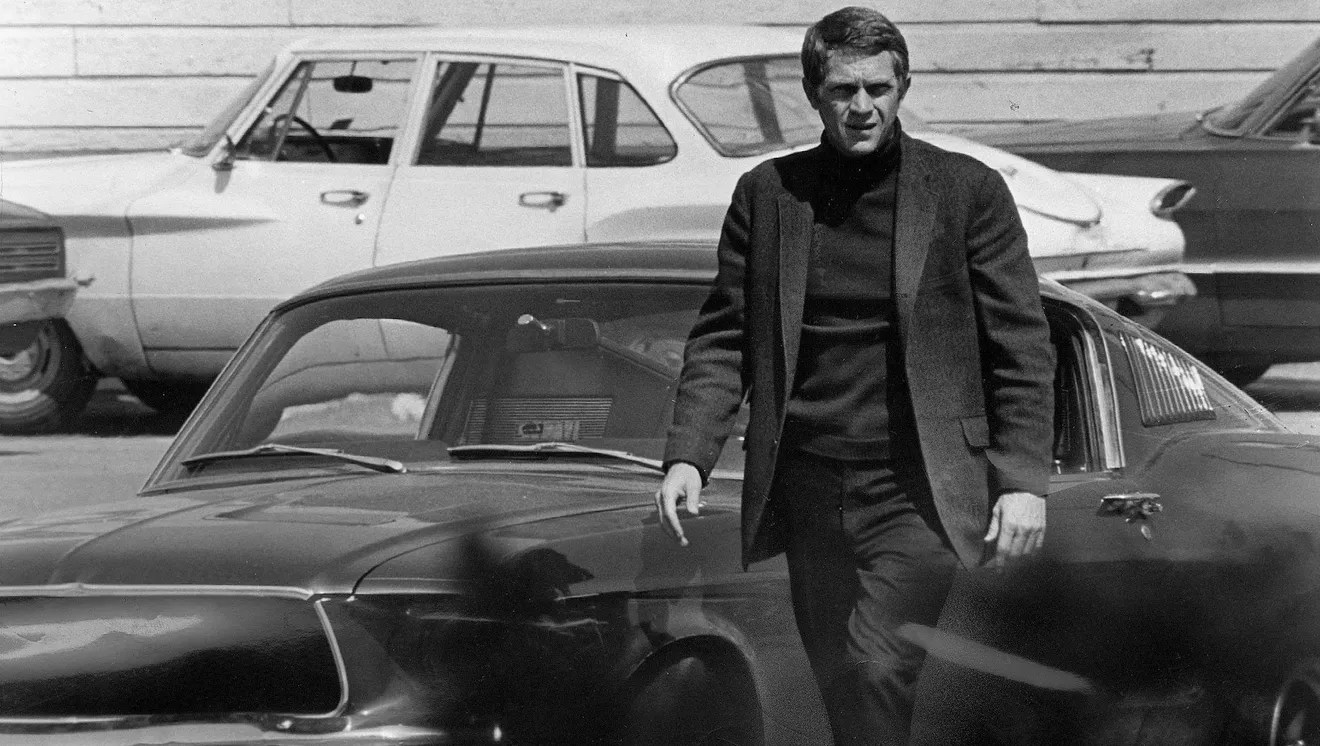
McQueen’s Bullitt is a prime example. After the famed car chase that incinerates two mafioso and a bloody gunfight in the presence of Rome-bound nuns the San Francisco Terminal, and exhausted detective comes home to his apartment and—this with Jacqueline Bisset still warm in his bed—he washes his face, as Pilate did his hands—and looks bleakly at himself in his bathroom mirror. He hates what, and whom, he sees.
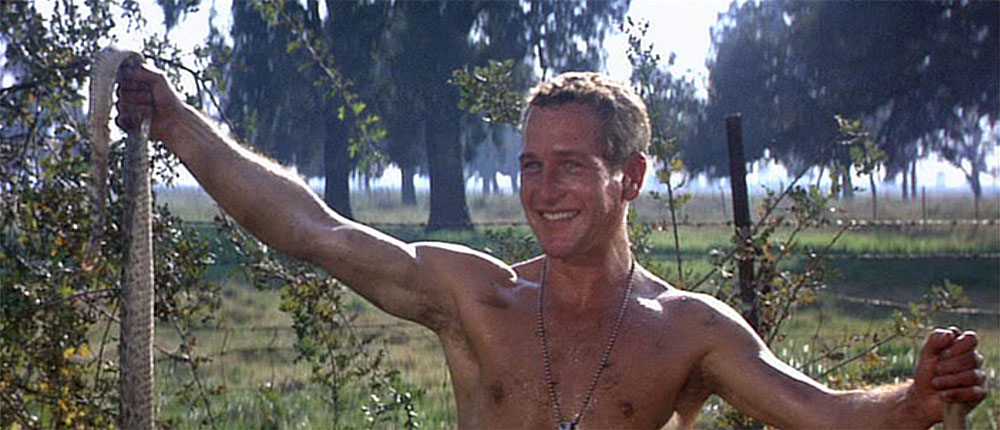
Toxic males need not be self-loathing to be toxic. The king of the genre, and one of my favorite actors, must be Paul Newman. His charming road-gang convict in Cool Hand Luke—look at that incredible Newman smile in the still below!— charms every inmate, including the oafish George Kennedy, and the hardboiled egg-eating scene is epic, yet Luke doesn’t seem to mind that he’s killed the bloodhounds trailing his escape, run to death, nor does he care much about his convict friends; he abandons them in the end to trying running way just one more time. Luke is as heroic as Hercules but as empty as an amphora run out of oil.
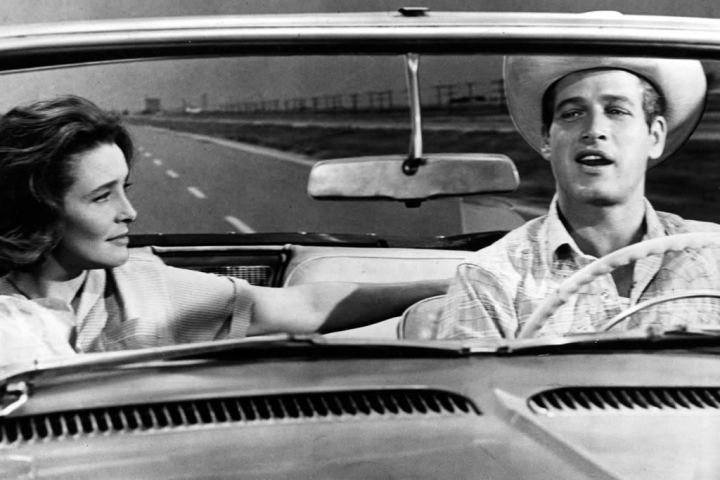
But it was Newman who perfected the Toxic Male in an earlier film, Hud, as a sociopathic Texas rancher who brutalizes his father, his lover, Patricia Neal, who drives a convertible Cadillac, womanizes in Toxic Male ways that enchant his young nephew, played by Brandon de Wilde (whom I could’ve cheerfully strangled for his bleating in Shane), and drinks more hard liquor in a weekend than Dallas does in a fiscal year.
De Wilde, thank god, outgrows Shane and finally learns to become a man by turning on Uncle Hud, so empty and so suddenly weak. He has no more substance than a tumbleweed.
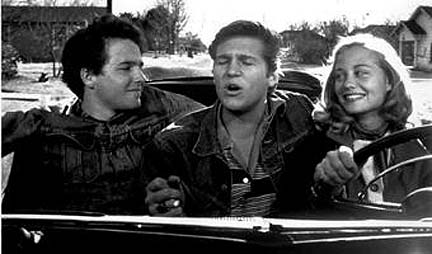
Here, I think is where the great director Peter Bogdanovich and the even-greater writer Larry McMurtry arrive with The Last Picture Show (1971), a film I hated for years until I became a grownup. It’s full of Toxic Males: the oafish Randy McQuaid is an oafish predator whose fondest wish in life is the see Cybill Shepherd, Jeff Bridges’ sometime girlfriend, naked. Bridges is mostly inarticulate yet somehow appealing. He’s a football hero who has forever reached his limits. I think the movie belongs most to Timothy Bottoms, who wants to be a good man but, as a teenager, beds his despondent football coach’s wife (Cloris Leachman, who is, in a performance that won her an Oscar, incredible) but finally pursues, and wins, Cybill Shepherd, the object of every boy’s desire.
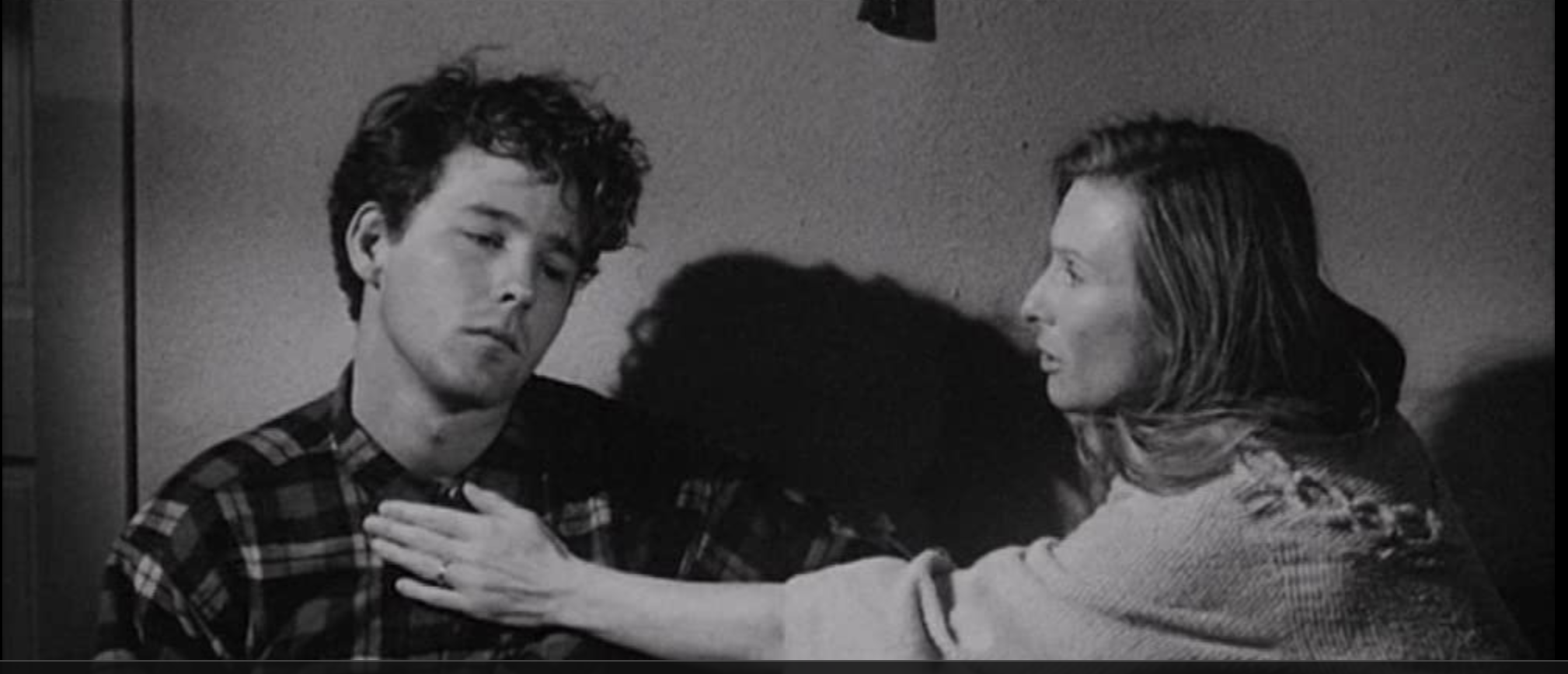
She betrays him within five minutes’ screentime.
The film ends with the accidental killing of a special-needs boy, one of Bottoms’s longtime friends, Bottoms unleashes deep reservoirs of anger. It should be a depressing moment, but it isn’t. The character, Sonny Crawford, has suddenly discovered that he deeply cared for someone other than himself. The fact that he’s almost ready to kill for his lost friend means that he’s escaped the toxic masculinity that doomed character like Hud.
When Elizabeth and I drove through dying Maricopa a few weeks ago, I recognized instantly the town McMurtry wrote about. There was an abandoned coffee shop with a barstool counter; you could almost imagine a teenager like Sonny swiveling in his tool, restless from the two teaspoons of sugar in his coffee, until, you hope, he twists his hips suddenly—almost violently—and bolts out the coffee shop door, never to return.













 A Work in Progress