I’ve been obsessing over this particular anniversary this year. I think it’s in part because we lost Captain Steve, USN, my brother-in-law, an Annapolis grad. I miss that man.
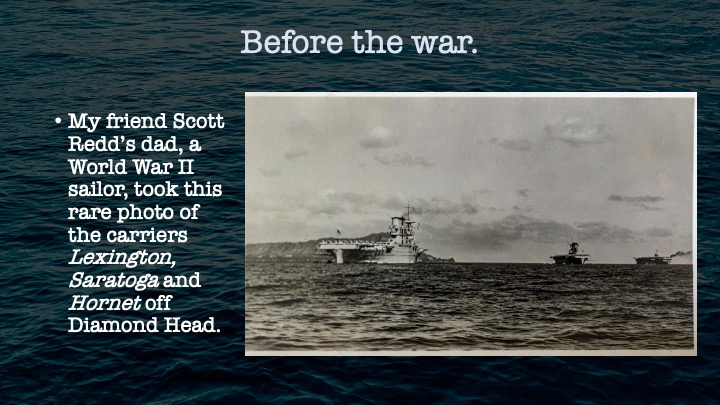
So this video is for Steve Bruce, and for Jack Scruggs and Wayne Morgan, Arroyo Grande boys, for two little Arroyo Grande girls, Jeanne and Yoshi.
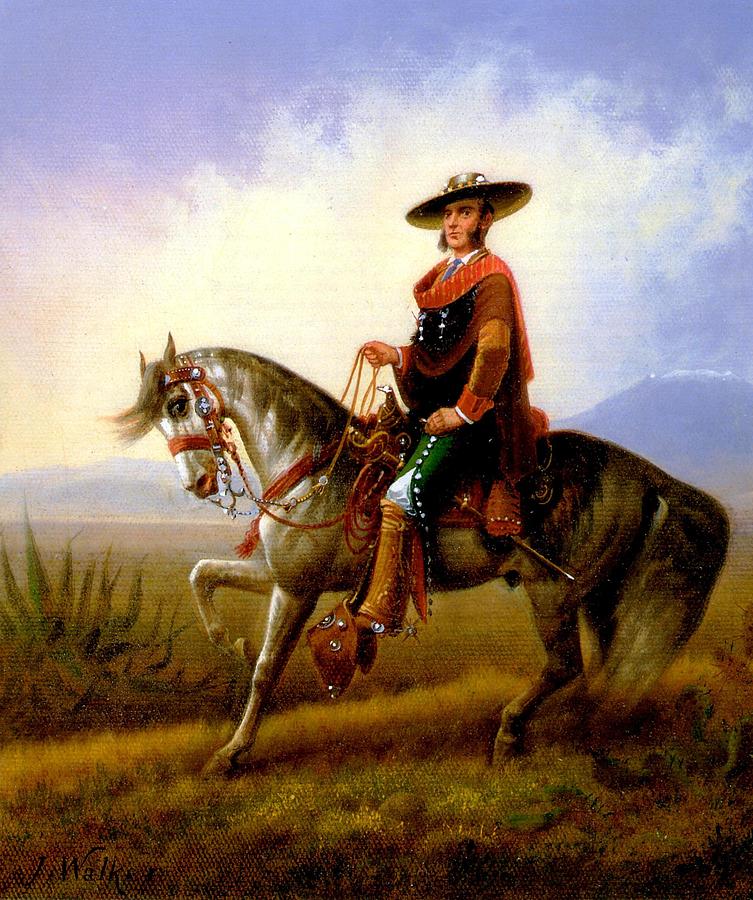
A California ranchero suitably dressed (and tacked) for the holidays.
Since Arroyo Grande founder Francis Branch assumed Mexican citizenship to obtain the 1837 patent on his 17,000-acre Rancho Santa Manuela, his family’s Christmases would’ve had a distinctly Mexican flavor.
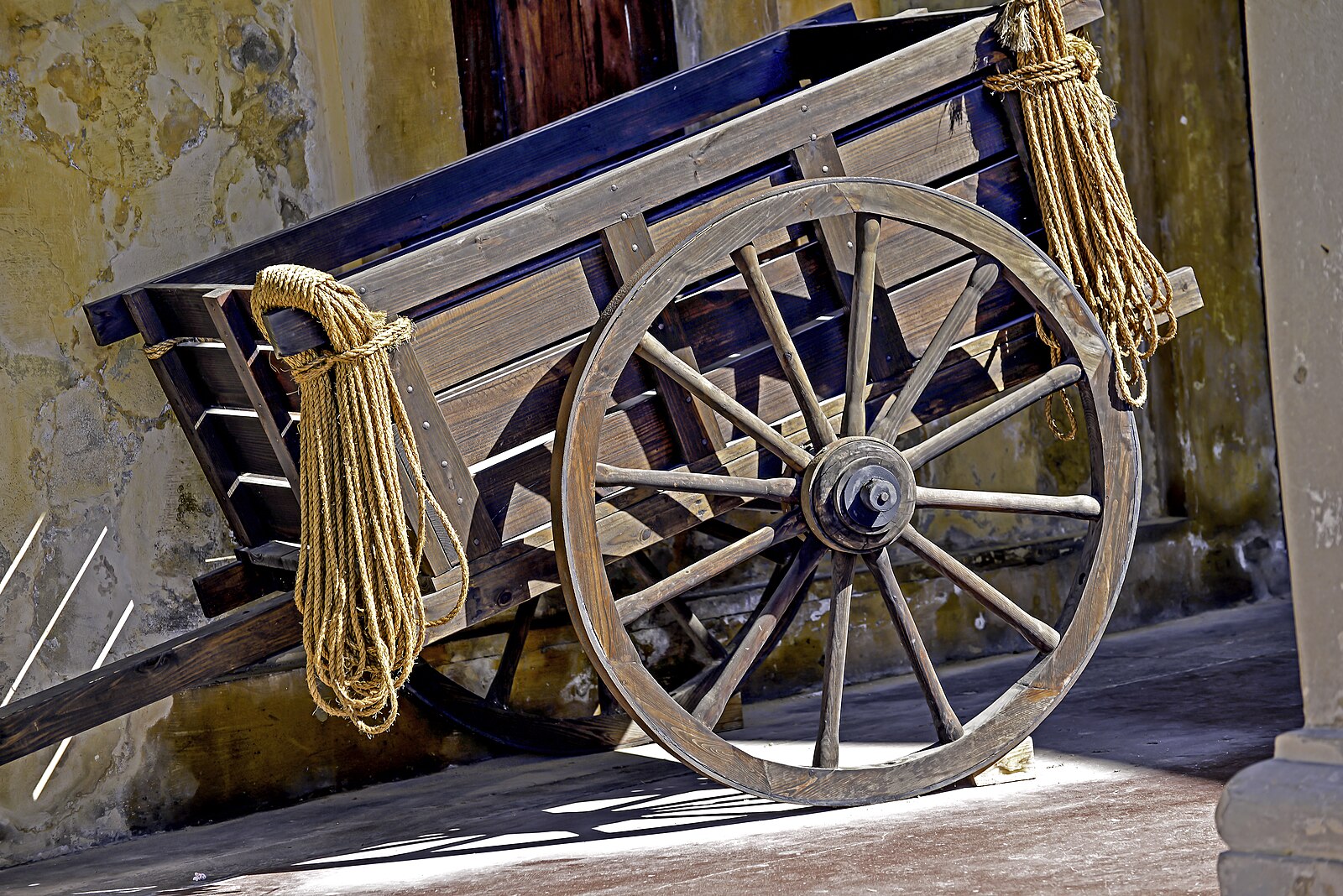
The dean of county historians, Dan Krieger, wrote a 2018 column with his wife Liz about Christmases in the rancho days. Rancheros, Krieger explained would’ve ridden into San Luis Obispo dressed in their finest, including their silver-inlaid saddles. Their families might’ve followed in the two-wheeled carretas, or carts, decorated for the occasion.
A carreta ride from Santa Manuela to the Old Mission couldn’t have been comfortable.
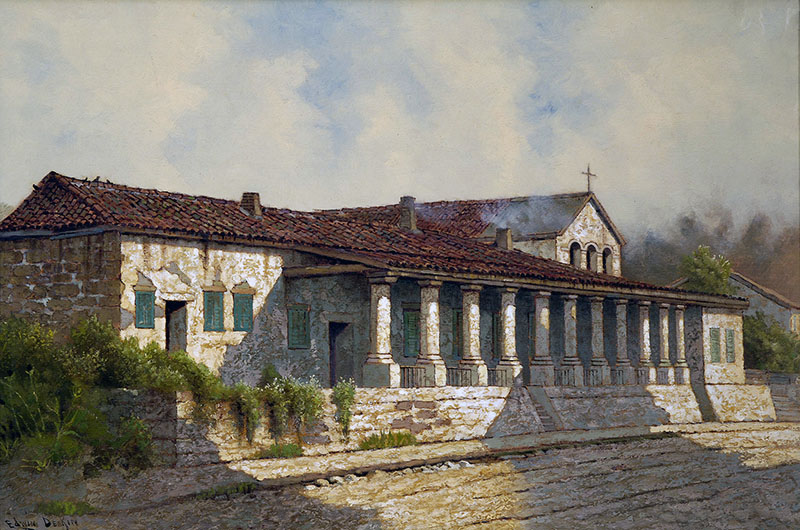
In town, Branch and his wife, Manuela, might’ve attended Christmas Eve mass. That would be followed by a Christmas play that focused on the shepherds’ discovery of the Christ child. And, for children, no holiday celebration would’ve been complete without the piñata, filled with the sweets that would spill out once the successful blow had been delivered.
Mission San Luis Obispo.
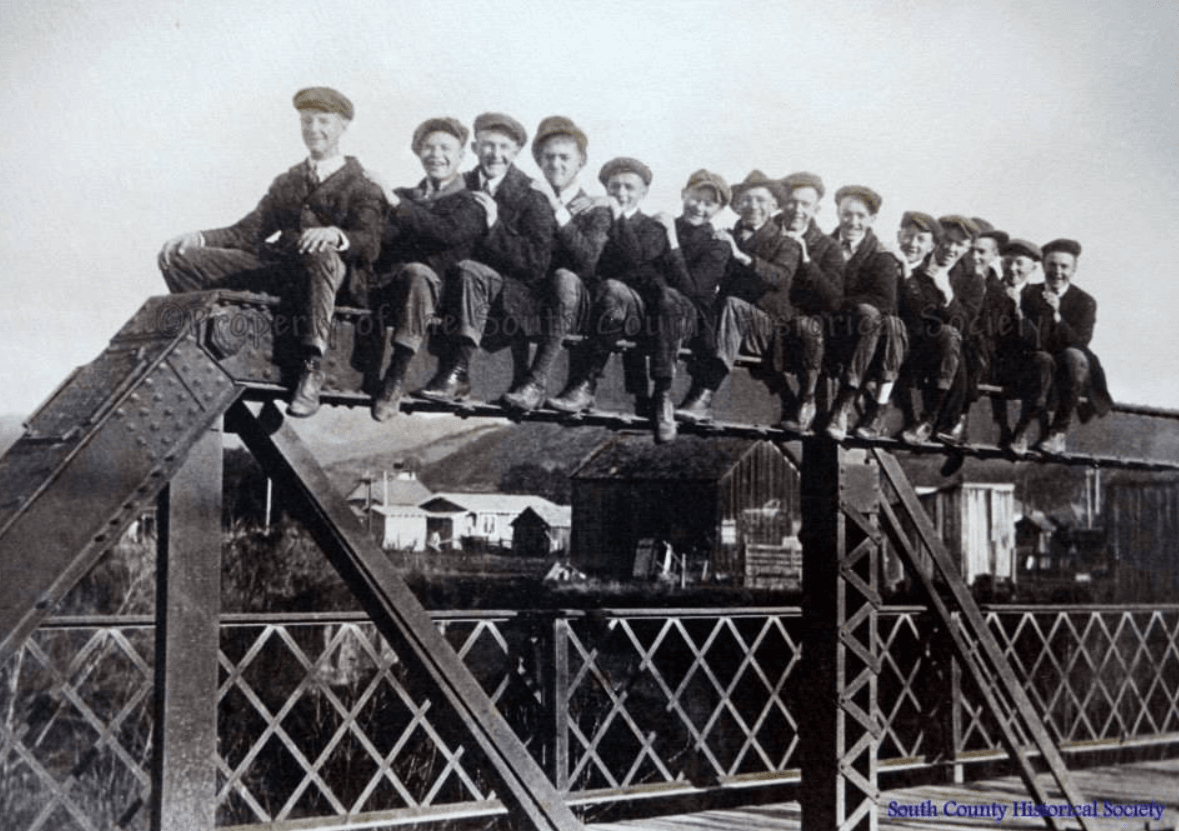
It was Queen Victoria’s German husband, Albert, who introduced the Christmas tree to the English-speaking world, and by the 1890s, it was central to Arroyo Grande’s celebrations. An 1896 Arroyo Grande Herald notes the big tree sponsored by the Grand Army of the Republic—Civil War veterans—put up outside their hall on Bridge Street, roughly across the street from the IOOF Hall.
Young lads atop the Bridge Street bridge, built in 1909.
Later, community Christmas trees marked the holidays. The whole town gathered for its lighting in a custom that began in 1898 went into the 1940s. The Christmas trees were tied to the nation’s history: a 1937 Herald-Recorder article—this Christmas was observed during the Great Depression–notes with some alarm that the community Christmas expense fund, whose goal was $100, had not yet been met. Another issue Depression-era paper notes the generous contribution of a man who sent a check for $2.50 toward that year’s Christmas fund.
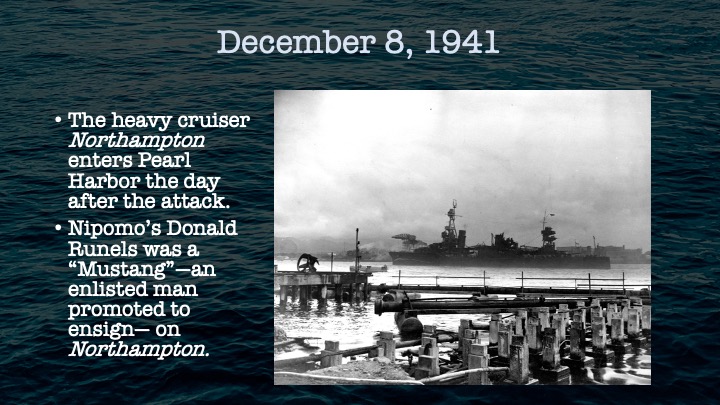
Sadly, a December 5, 1941 article anticipates the lighting of that year’s tree, an event that never would have happened because of the strict blackout regulations enforced immediately after Pearl Harbor. Arroyo Grande would later learn that two of its own, sailors on USS Arizona, had been killed on December 7.
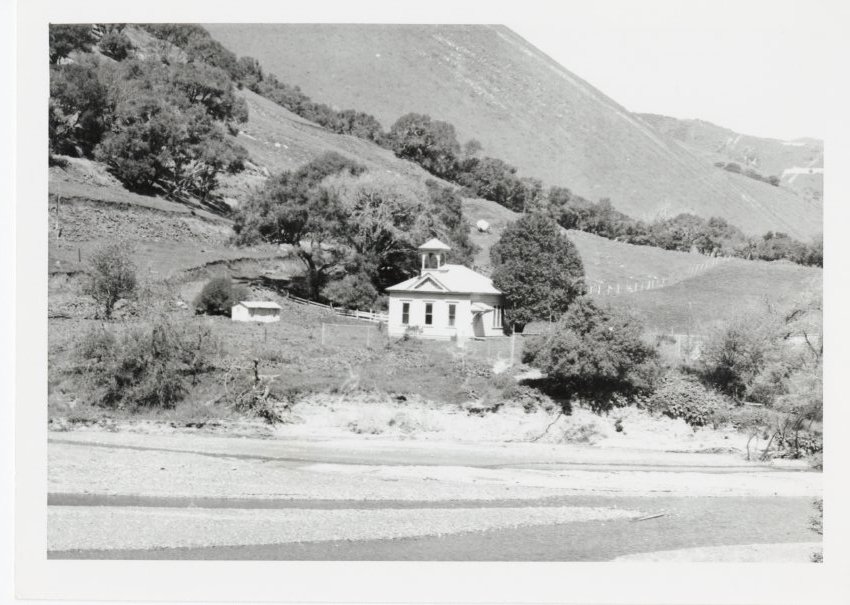
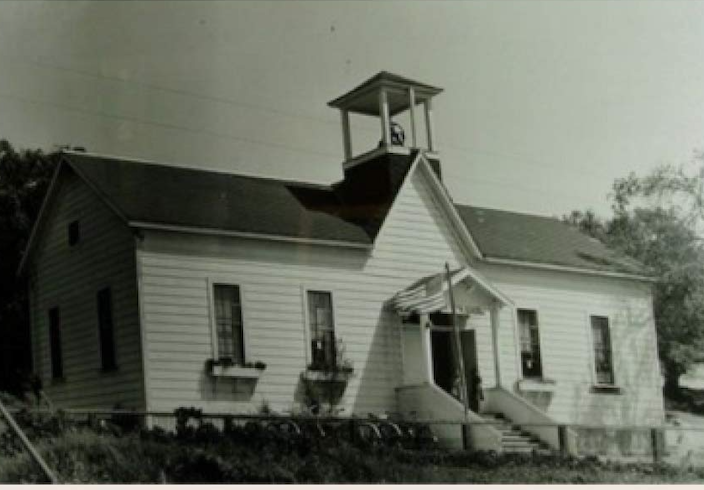
Santa ManuelaBranch Elementary
School pageants were another way to the bring smaller, rural communities that surrounded Arroyo Grande together; little country schools were central to farm life in Arroyo Grande; they served as voting precincts and as meeting places for organizations like the Farmers’ Alliance.
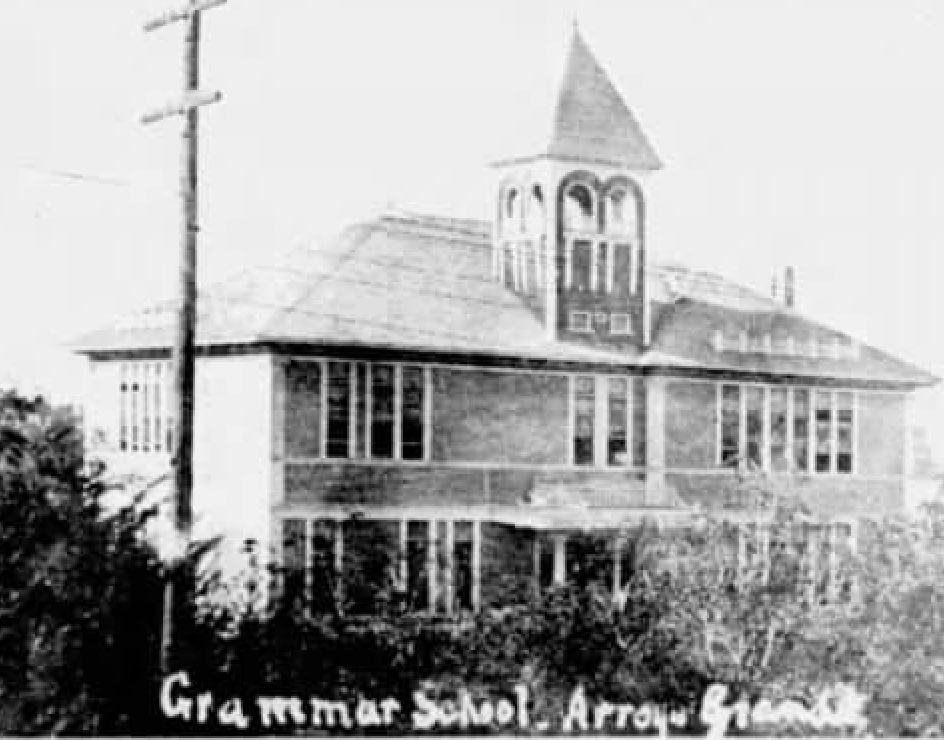
In town, an 1896 Arroyo Grande Grammar school program includes a play entitled “Brownies in Fairyland,” with an extensive cast that includes many pioneer surnames—Clevenger, Phoenix, Ballagh, Parsons, Musick, Whiteley and Silva are among them.
Even the tiny Santa Manuela School had a pageant in 1936, featuring familiar carols like “Hark! The Herald Angels Sing” and less familiar ones, like “Down the Chimney.” The teacher, Adelaide Rohde, would’ve spent countless hours rehearsing her students in addition to teaching her daily lessons, directed to multiple grade levels in a school that probably had no more than twenty or twenty-five students. But Santa Manuela was still prominent enough so that Santa himself made an appearance at the end of the program, handing out bags filled with popcorn and sweets, including to Miss Rohde and the eight audience members.
Since Branch School was twice the size of Santa Manuela—two rooms—it attracted an impressive audience of 125 in 1934. Both teachers—Mrs. Bair and Miss Whitlock—were also from prominent families—the Bairs ranched in the Huasna Valley and the Whitlocks owned the Commercial Company, a dry-goods store on Branch Street. The names here, too are familiar, many of them Azorean—Coehlo, Silva, Amaral, Reis—but George Cecchetti Sr., whose father came from Pisa, and four Agawas, two boys and two girls, whose parents came from Japan, also sing and act. The program features two harmonica solos, one by Billy Agawa and another by Francis Fink, who performed “Red River Valley.”
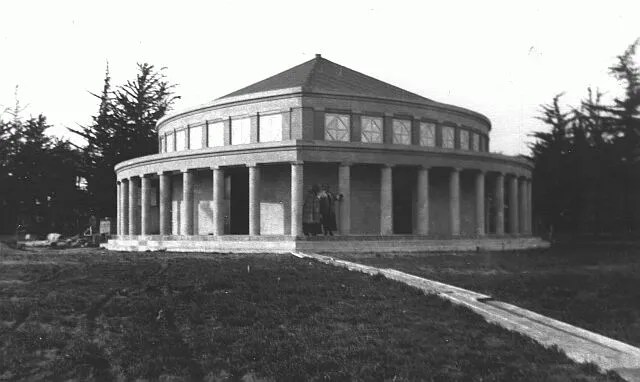
The Temple of the People’s Christmas observation seems to have been organized by Madame Borghild Janson, “the noted teacher of vocal culture.” A 1927 Herald-Recorder notes that the previous year’s program “overfilled” the Hiawatha Lodge, so 1927’s would feature two performances. Madame Janson staged a mystery play, a medieval tradition whose subject was biblical stories or the lives of the saints. In her choice of songs, she stuck to her theme. “Scandinavian Christmas songs from the 12th century” were part of the part of the program as well as more familiar Christmas carols.
The Temple of the People will celebrate its 100th anniversary in 2024.
A common thread in all of the holiday observations is the bringing together of people; Christmas broke down the isolation typical of far-flung rural farms and ranches. Seeing distant friends and neighbors must have been as much a celebration as was Christmas.
Adapted from The Heritage Press, published quarterly by the South County Historical Society. (Membership is $25 annually for individuals and $40 for couples.)
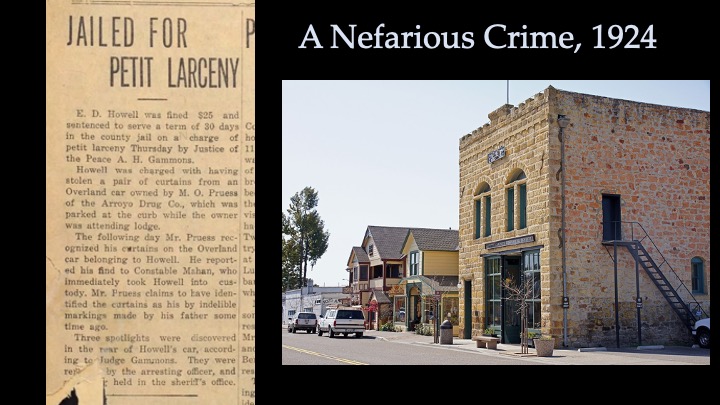
This article from the January 3, 1924 Arroyo Grande Herald-Recorder records a theft on Bridge Street. Mr. Pruess’s automobile curtains were stolen while he was in a lodge meeting. A little research evealed that the town druggist was a steadfast member of the International Order of Odd Fellows (an organization more popular than the Freemasons in the late 1800s) and so it’s likely that the crime took place here, on Bridge Street, outside the IOOF Hall that is now the South County Historical Society’s home.
Several things about this little story amazed me. Judge Gammons threw the book at the malefactor, a $23 fine (over $400 in 2023 dollars) and 30 days in jail. His victim, Mr. Pruess, was enormously popular. His friends included Ole Gullickson, likewise popular, and the two were among a group of local businessmen who went deer-hunting annually somewhere up north. They always bought lubricant–whiskey– first, purchased on the beach from a local bootlegger. Ole’s son Don remembered this because they always took Ole with them. Nobody would suspect and illegal booze purchase with a six-year-old -boy amid the grown men.
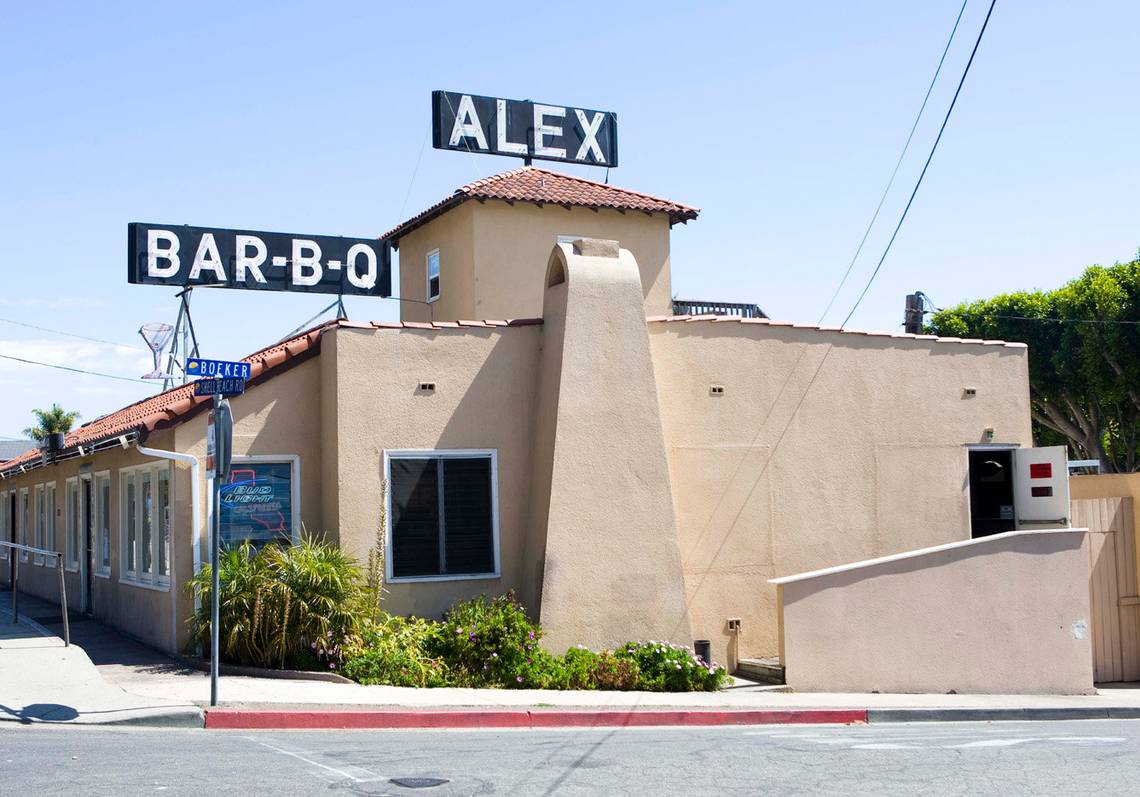
Don, probably in the Top Ten of the nicest people I have ever met, told me this story. He wasn’t 100% sure, but he thinks they bought the whiskey from “some guy named Alex.”
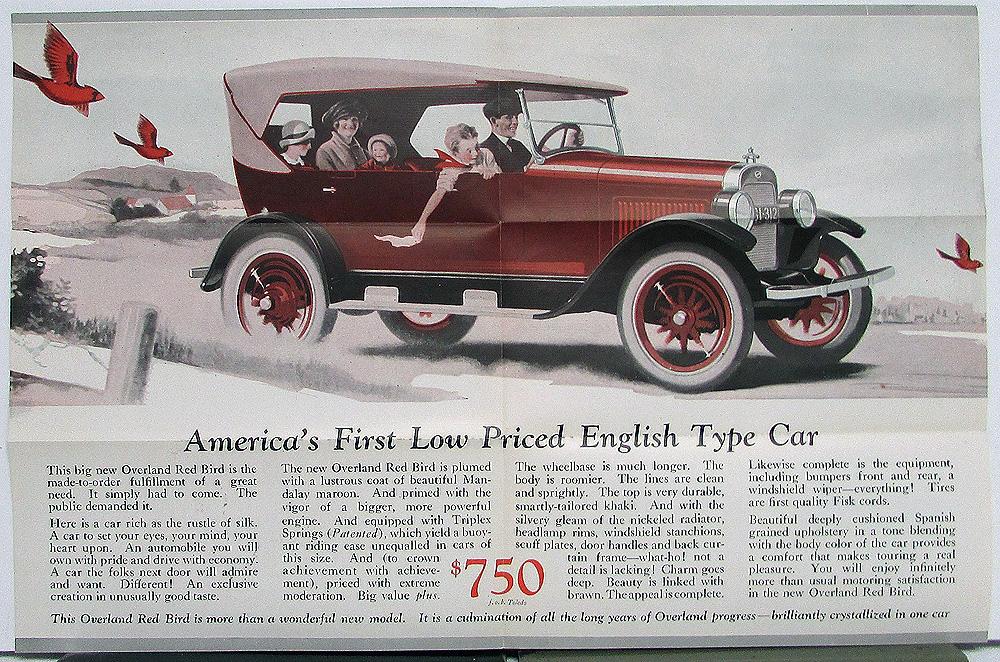
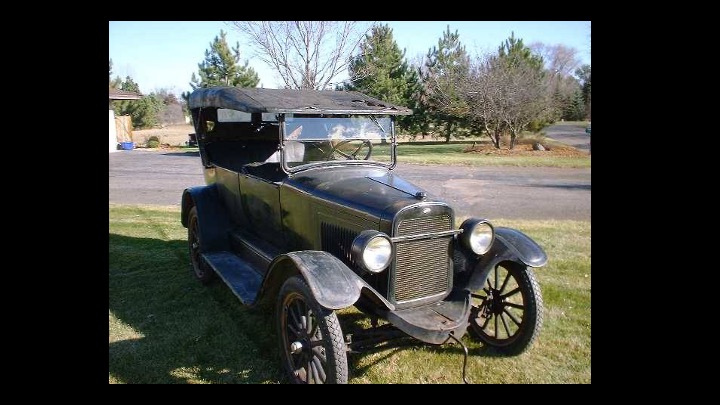
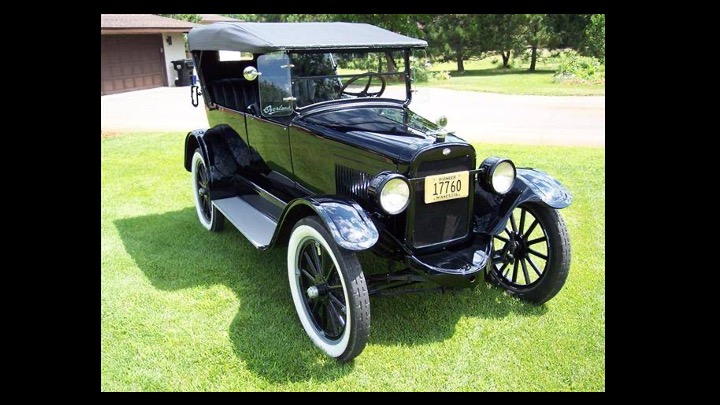
Mr. Pruess’s car was an “Overland,” a brand I’m not familiar with. So I looked it up. The ad above is for a 1923 model. The arrest came about because Mr. Pruess recognized his curtains the very next day.They were inside another Overland.It must’ve been a popular make then, even though it’s not around today.
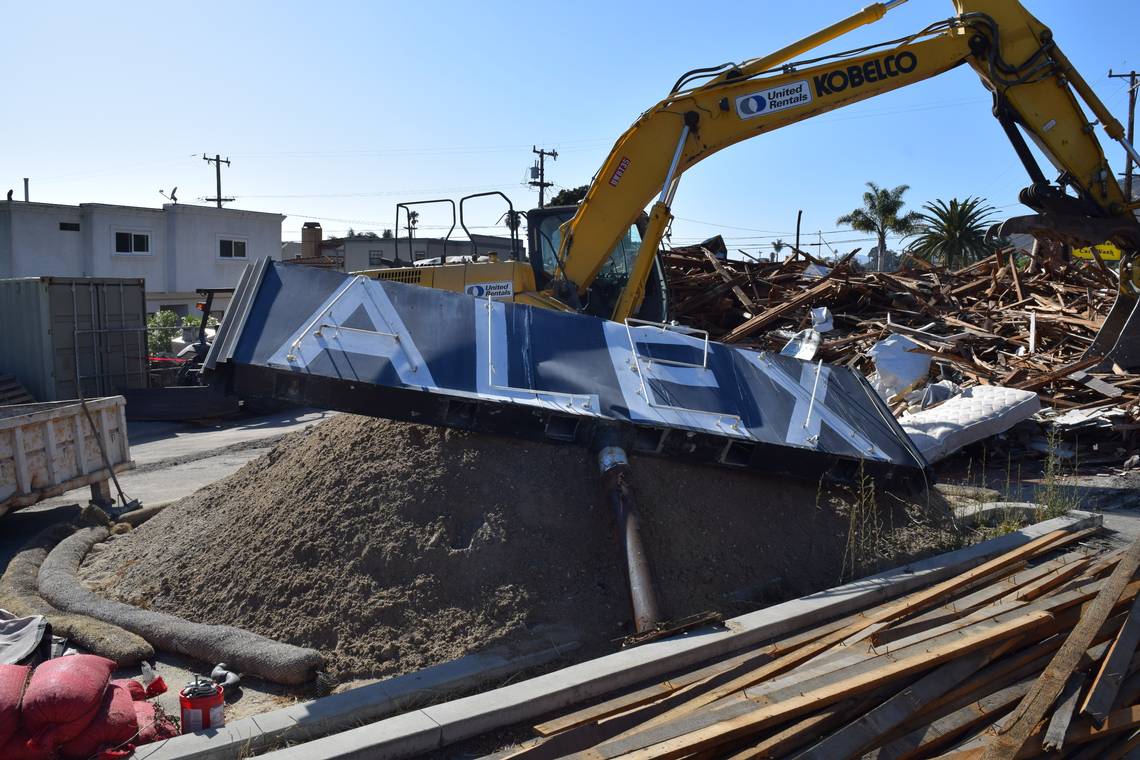
Unlike Alex’s, almost not around.
Look at the job one man did in restoring this 1924 Overland, at one point in pieces in his garage. It took three years. It’s a beautiful car, I think, even though when you look closely at the front bumper, you realize that folks needed one of those arm-breaking cranks to start the engine.
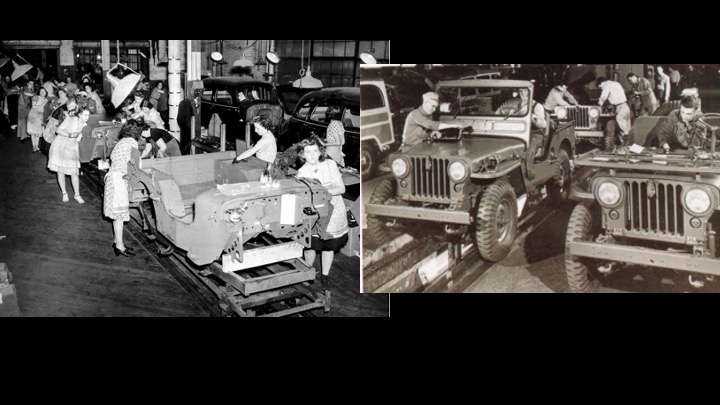
I had one more little search to do. Who made “Overlands?” It turned out that the man was one John Willys, whose name will be connected forever to a little four-cylinder car that went to war after Pearl Harbor. Here are some of them being made at the Overland-Willys plant in Toledo, Ohio. John Willys was the father of the Jeep.
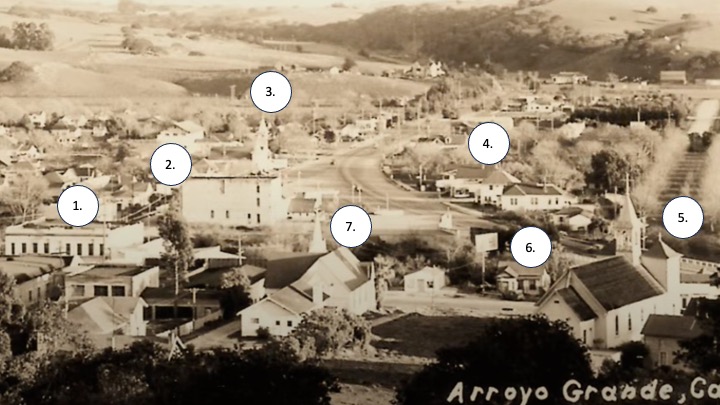
One more thing: I love photos of Old Arroyo (we do not use the term “The Village” in my house. It’s pretentious.), so here’s one that includes the IOOF Hall, built in 1902.
The Olohan Building, home to Klondike Pizza. (I think, but I’m not sure, that the Mosher building is across the street, at the left lower edge of the photo. It’s Posies in the Village today; in the 1920s, it was the Mission Theater, busy showing silents and then talkies.)
The IOOF Hall.
The Presbyterian Church. Some Lucia Mar offices are there today.
The doctor’s office–a beautiful building. It was Dr. Cookson’s office when I was little and today it’s a pediatrician’s office.
St. Patrick’s Church, which had to be demolished because of termite damage.
Mr. Giacomini’s house. He carved his own tombstone–it’s in the cemetery today, but he didn’t quite yet need it, it so he kept it in his front yard.
The Methodist Church, today the Harvest Church.
I’m a little unsure as to the picture’s date. The lettering suggests it’s from the very early 1900s, but I don’t see the very large and imposing grammar school, which stood on the site of today’s Ford agency. Its successor, the Orchard Street School, was a PWA New Deal project, so maybe this photo’s actually from the 1930s.
I hope, by then, that Curtain Thief E.D. Howell had taken up the Straight and Narrow Path in life.
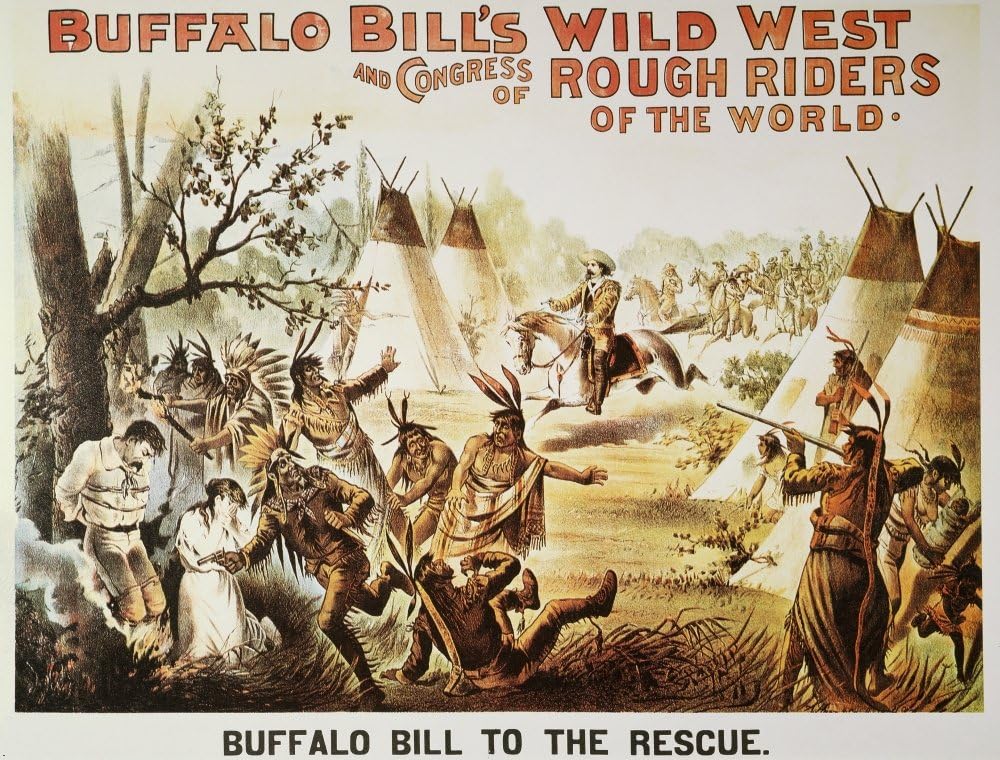
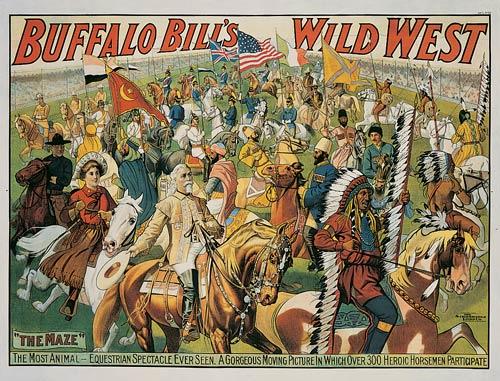
Long before there were the television Westerns I grew up with, and long before there was television, there was Buffalo Bill’s Wild West Show, which played all over the world, including for Queen Victoria and a panoply of royal princesses. What I did not know is that before impresario Bill Cody died in 1917, his Wild West show visited San Luis Obispo twice, once in 1908 and once more in 1914.
The advance the 1908 show got—notices in the Tribune for weeks beforehand–rivals the publicity for the first airplane flight over San Luis Obispo two years later. Here’s the poster locals would’ve seen in 1908:
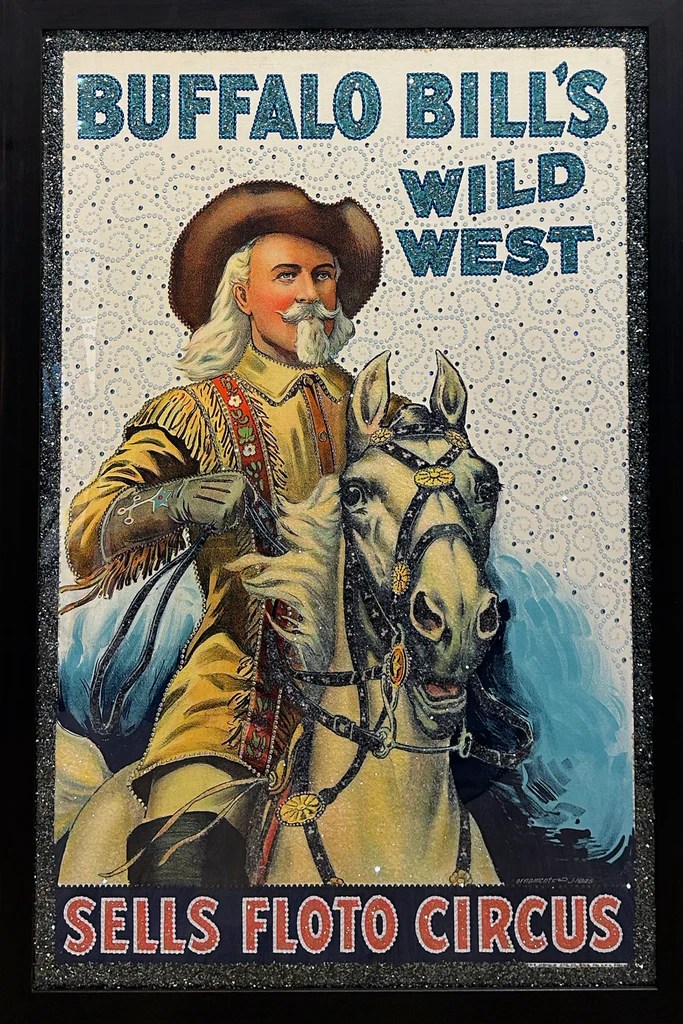
And here’s the 1914 version, when Cody’s show, maybe fading a little by then, was traveling alongside the Sells-Floto circus:
San Luis was tiny, so where are you going to put all those elephants and lions and Bill’s buffalo? For the 1918 show, he City and the showmen finally agreed on Mitchell Park, which remains a park today, near the corner of Osos and Pismo.
San Luis Obispo Tribune, October 13, 1908
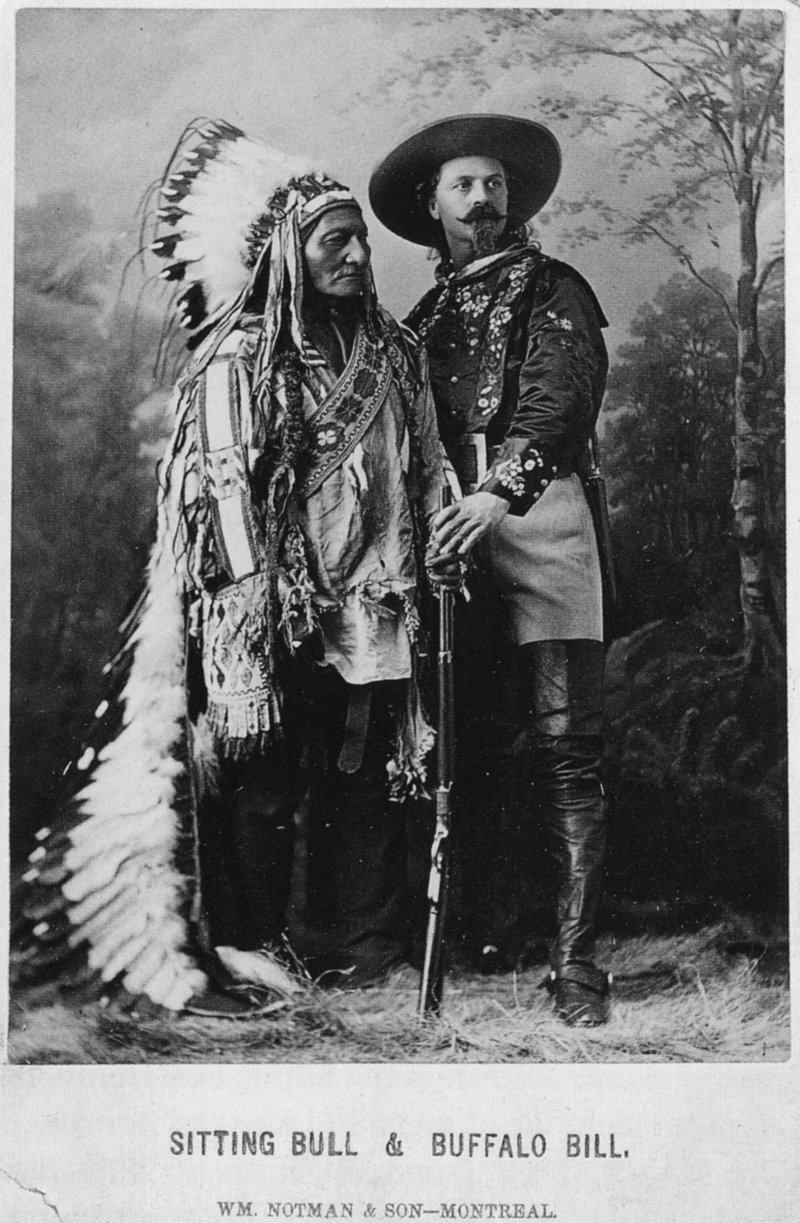
By 1908, a onetime main attraction was eighteen years dead. Sitting Bull, the Lakota Chief, appeared with the show in the 1880s, near the close of his life. He was shot dead by Indian police at the Standing Rock Agency on December 15, 1890 at the climax of the Ghost Dance movement .
(That was just two weeks before the Seventh Cavalry’s revenge at Wounded Knee. Nineteen troopers received the Medal of Honor for their hard day’s work in killing 300 Lakota. The troopers had to ride two miles to gun down two women running in the snow.)
Back at Standing Rock on December 15, one of Sitting Bull’s horses had been a souvenir from the Wild West Show, trained to rear and prance at the sound of gunfire. The horse did just that when the shooting broke out.
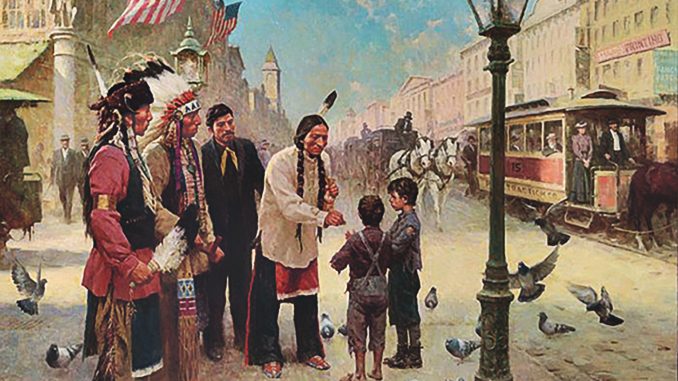
In 1884, one of the show’s stops was Philadelphia. In addition to his stipend for appearing with Cody, Sitting Bull sold autographs. Then, as was typical with him, he gave all the money away.
It was in Philadelphia where was appalled by the sight of ragged children in the street, so that was where his Philadelphia tip money went. Likewise, Sitting Bull’s contemporary, Crazy Horse—two Arroyo Grande settlers, soldiers in 1865, saw him perform a “dare ride” across their front—was the same. He was among the finest hunters in his band, and, on the return to camp, he made sure that widows and orphans were fed first.
The Lakota loved children. Another thing that shocked Sitting Bull in 1884 was that so many urban children worked, from shining shoes to factory machine-tending, which killed them sometimes. Children, he believed, should be free, and they should be free to play.
So the sight of ragged children, many of them immigrants, moved Sitting Bull. “The White Man knows how to make everything,” he remarked to his companions. “He does not know how to distribute it.”
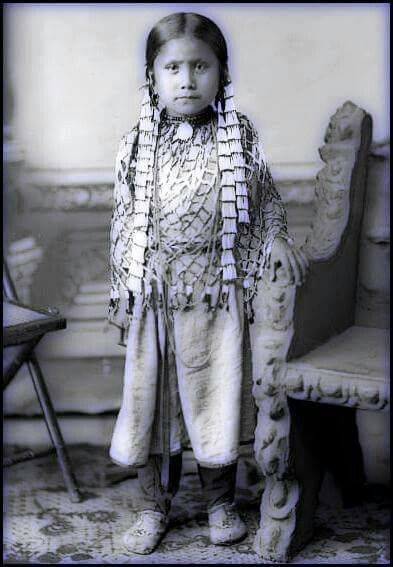
This is White Dove, one of his daughters:
Crazy Horse had a daughter, too. Her death had hurt him deeply. In the late spring of 1876, he visited his little girl on her funeral scaffold. He stayed for a few days, praying, fasting, talking to his daughter and listening for her answer. He got it. When he left, she had given him the calm he needed for the upcoming fight. All the Lakota knew it was coming. Sitting Bull had a vision of it happening. The fight was the one that would break out in the Valley of the Greasy Grass, what the waischus–White people—called “Little Bighorn.”
I have never had a linear mind. Mine is lateral. I don’t go from A to Z: A reminds me of M and M has a slight connection to E–oh, did you know that E and T are distant cousins?–and, about a half-hour later, I arrive at Z. It just takes longer for me. I love the side-trips, though. I still don’t know, however, how all this stuff gets trapped, historical ants in amber, in what passes for my brain.
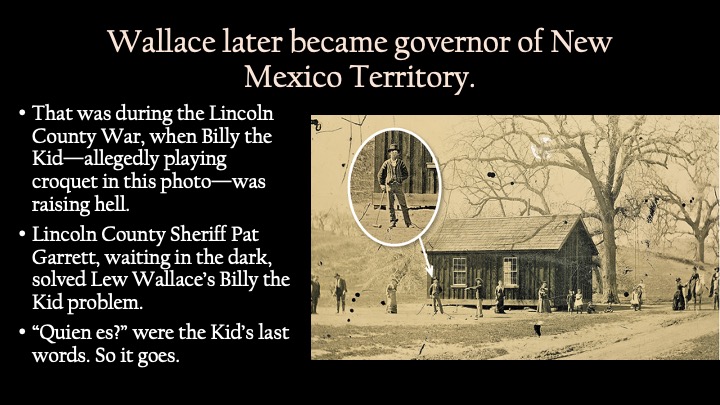
Take this song, from Pat Garrett and Billy the Kid. It’s my favorite Bob Dylan song, folks:
The 1973 Sam Peckinpah film starred Kris Kristofferson, James Coburn, Jason Robards, Slim Pickens, Kathy Jurado and, oh yeah, Bob Dylan.
This may or may not make sense. But this is how I got from Ben-Hur to Pat Garrett and Billy the Kid with an Arroyo Grande stop along the way.
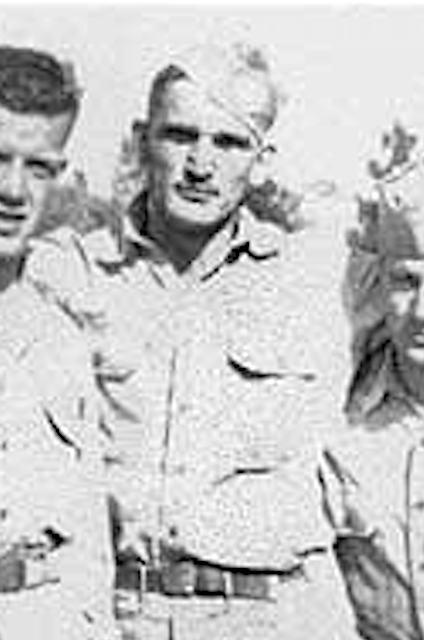
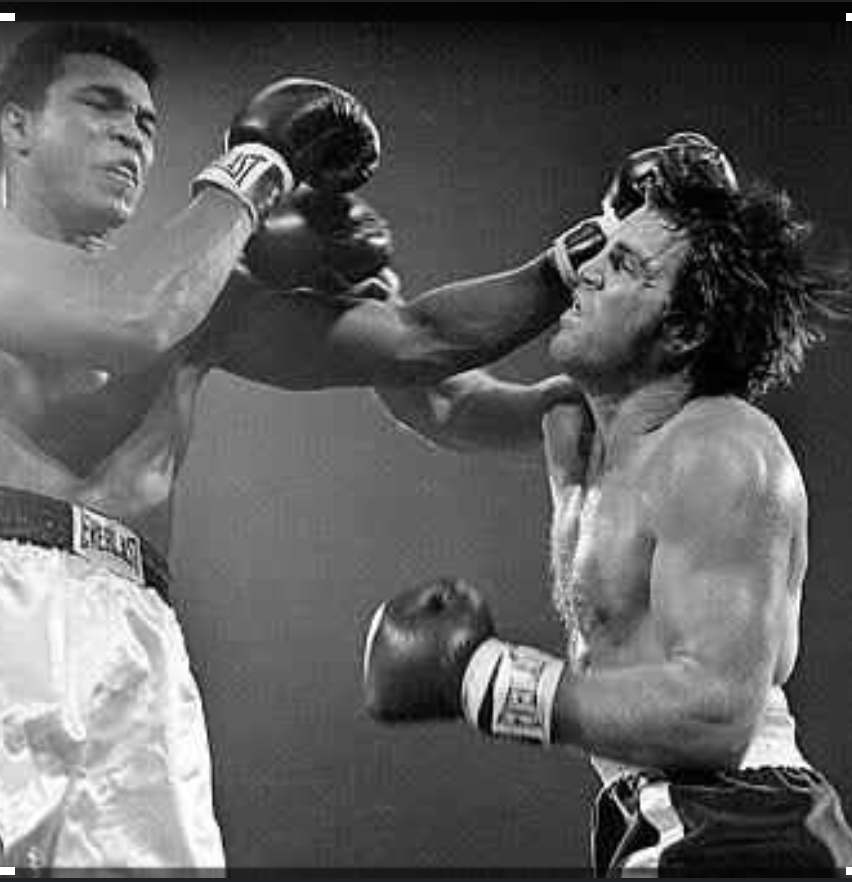
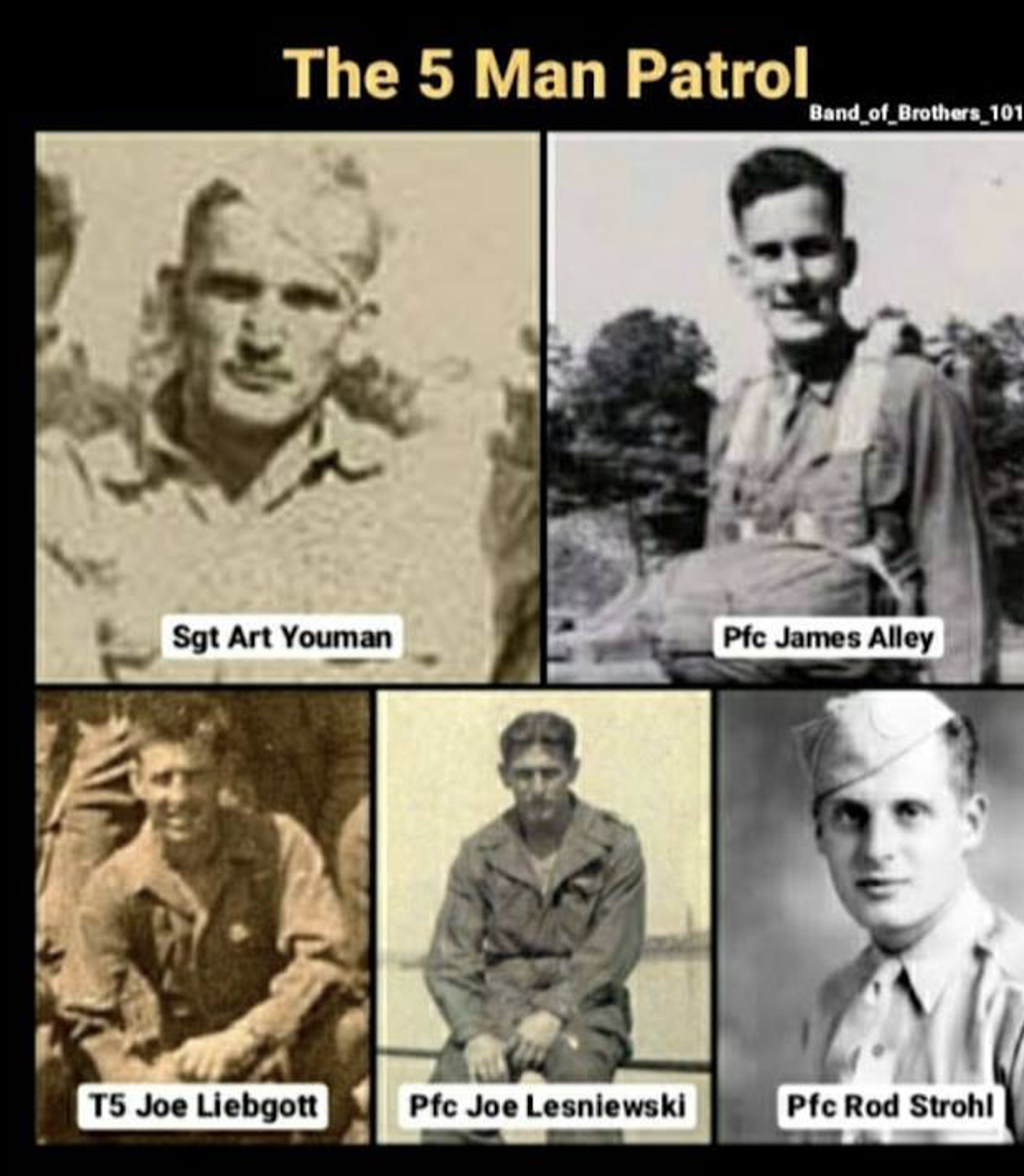
I was thinking about one of my heroes from Arroyo Grande’s past, Staff Sgt. Art Youman, a member of the 101st Airborne’s Easy Company in World War II. This closeup of Youman, taken in training in South Carolina, shows what just might be a boxer’s nose. That’s Jerry Quarry (his little brother Mike, a light heavyweight, lived in San Luis Obispo County for a time) in the right-hand photo, having his nose adjusted by Muhammad Ali. Quarry, always a contender but never a champion in the heavyweight division, was a man of enormous courage. Youman shared that quality.
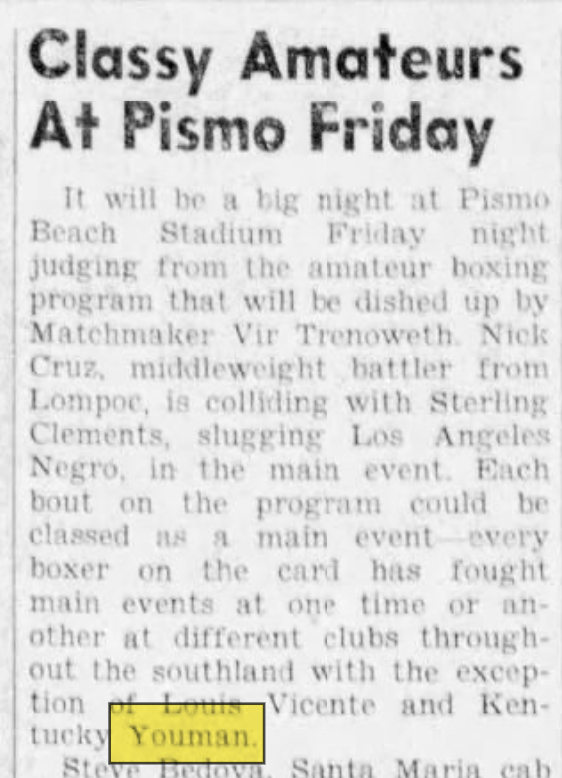
Well, my hunch was right. This item from a fall 1940 San Luis Obispo Telegram-Tribune, when boxing was big in Pismo Beach:
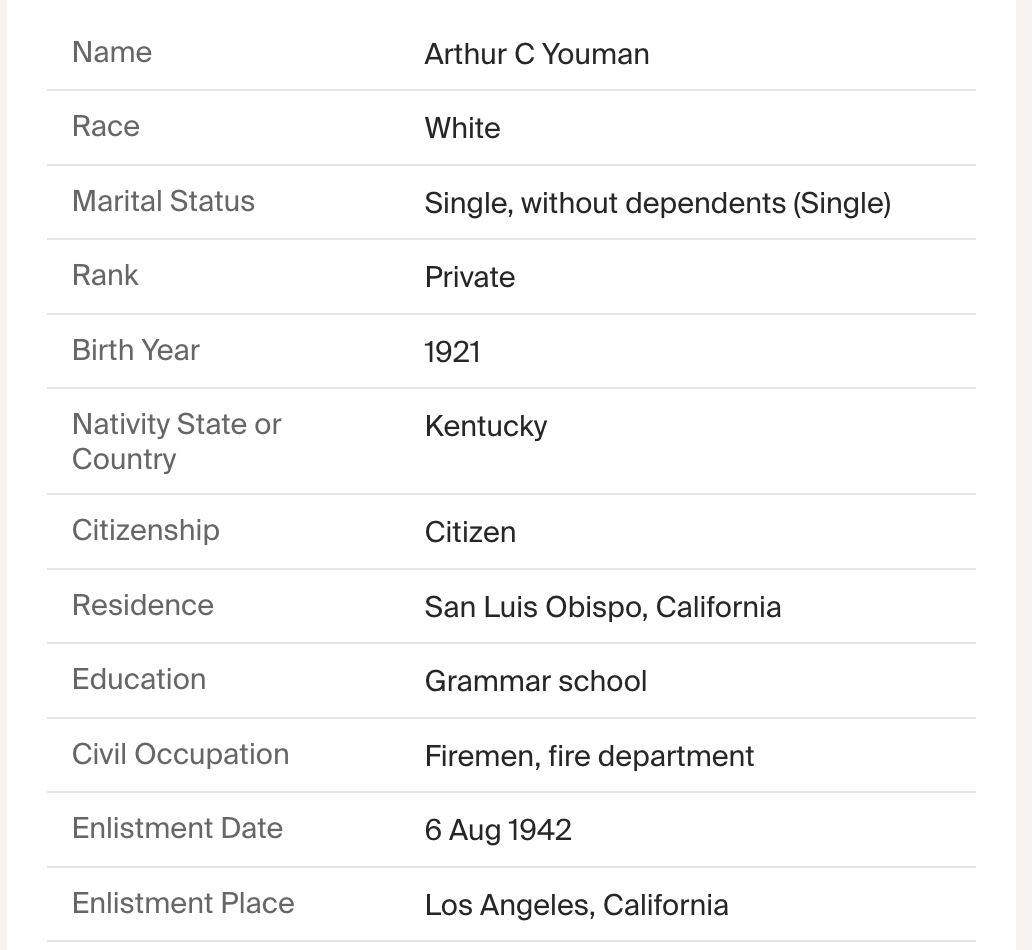
You wince at the “slugging Negro” reference—in a similar fashion, Filipino fighters were identified by their homeland—but “Kentucky Youman” won his bout via a TKO (Technical Knockout.) Why was an Arroyo Grande fighter named “Kentucky?” Ancestry.com provided the explanation from Youman’s August 1942 enlistment record.
My grandfather was a Kentuckian, too. Youman’s his draft card yielded a little more information:
I knew that Youman was a firefighter in San Luis Obispo, but I didn’t know it was for the Camp San Luis Obispo fire department (absorbed after the war by what is today CAL FIRE). I’d assumed that he worked for the City of San Luis Obispo. This new information was even better, because, thanks to my two military history experts and friends, Erik Brun and Dan Sebby, I found this photo yesterday that they’d posted late last year:
The California National Guard acquired this 1942 Seagrave fire engine in 2022 and the Guard’s history division hopes to restore it. It was, in fact, assigned to Camp San Luis Obispo in 1942, and since Art Youman didn’t enlist until August, there’s a chance that he rode on or even drove this engine. So this is, in a way, Easy Company’s fire engine, too.
Youman’s life accelerated quickly the next two years, with the tough training that shaped paratroopers and with combat.
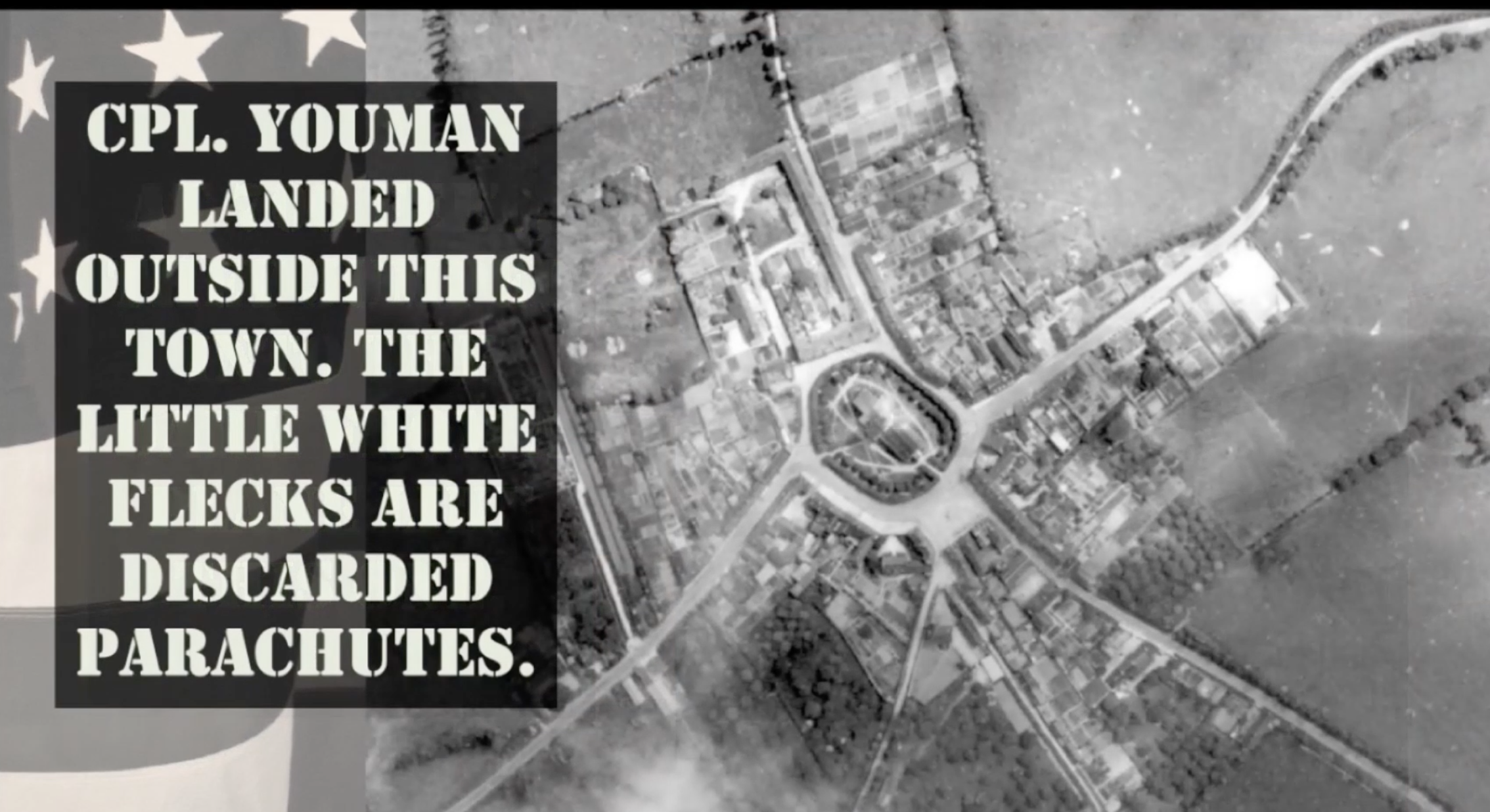
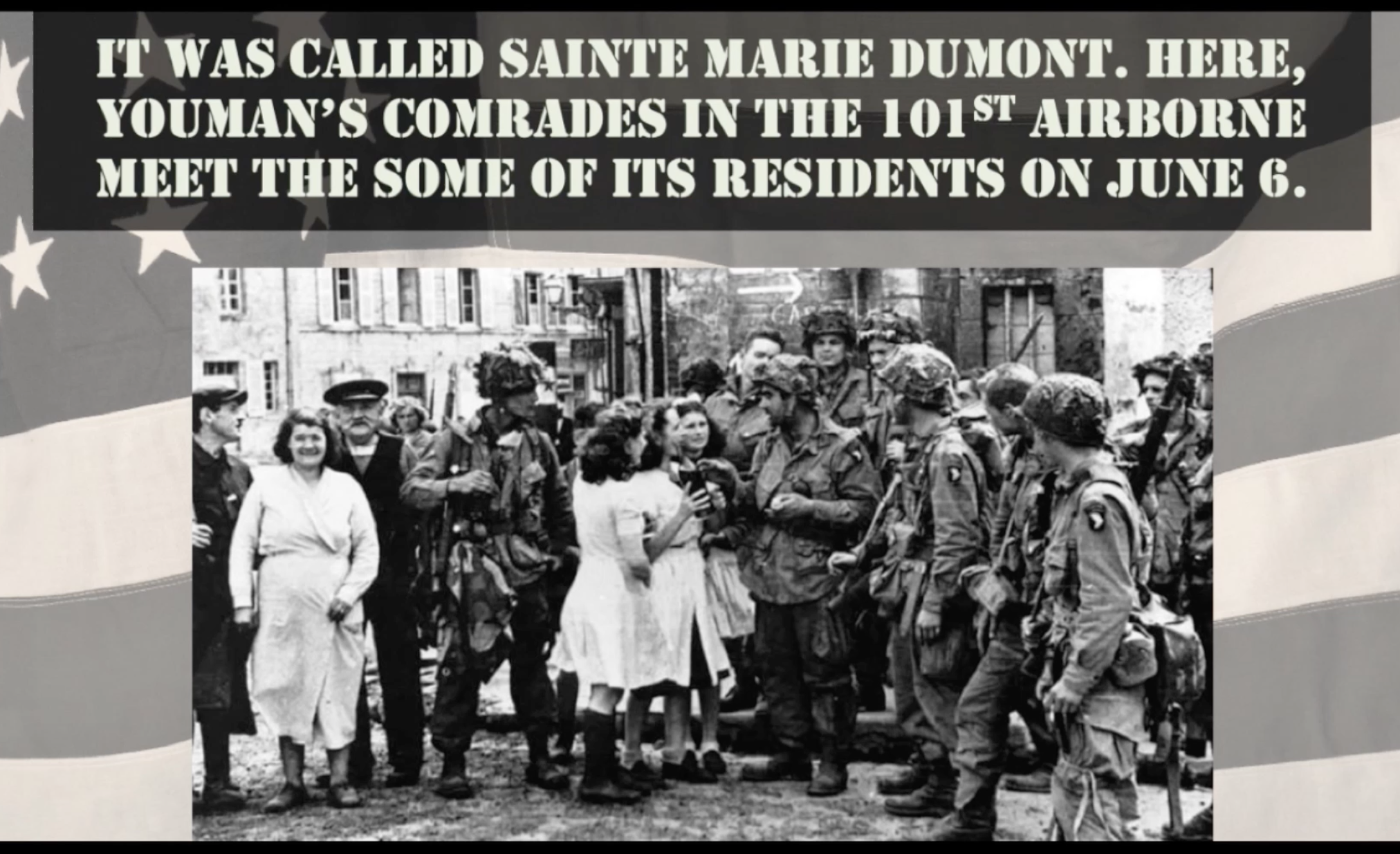
He parachuted into Normandy on D-Day.
Later, in the fall during Operation Market Garden, Youman had led a small patrol to this Dutch crossroads when he and his men encountered a German patrol. A flurry of hand grenades came down on the paratroopers, which they returned—one of Youman’s men threw his entire consignment of six grenades. They returned to Easy Company mostly intact except for the shrapnel splinters. October 8 marks the 79th anniversary of that encounter.
Source: “Dalton,” Flickr.
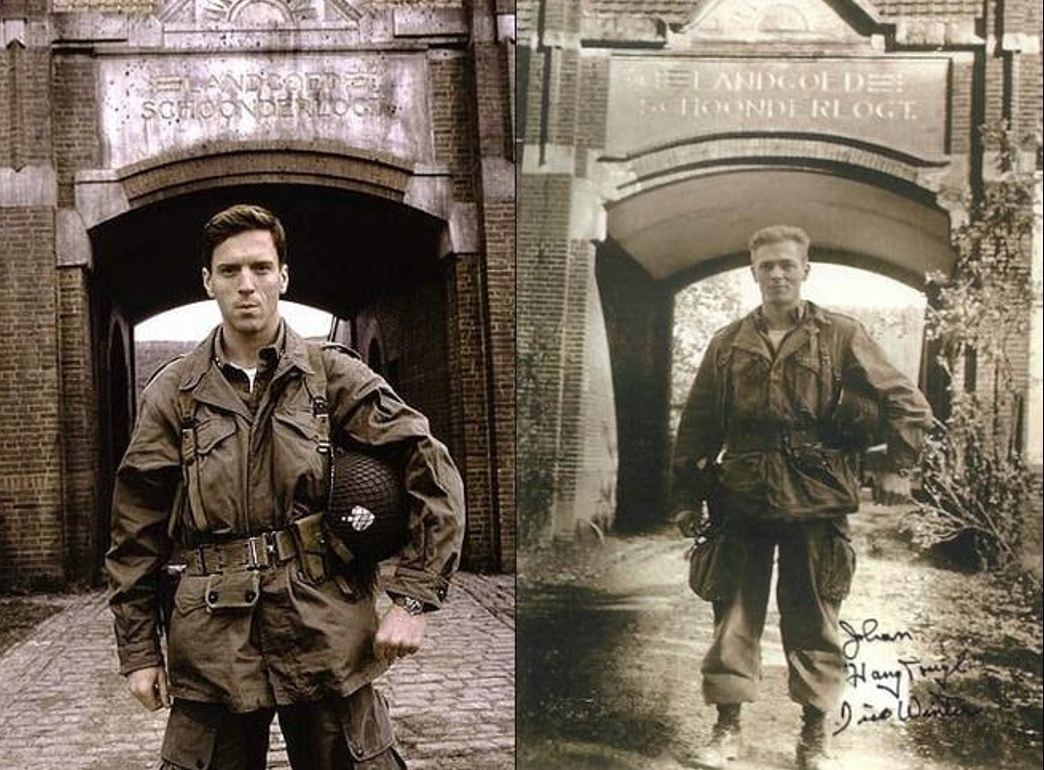
It was in Holland where the Arroyo Grande fighter with the boxer’s nose was promoted to staff sergeant by Capt. Dick Winters, portrayed by British actor Damien Lewis (at left; Winters at right) in HBO’s Band of Brothers, based on the Stephen Ambrose book.
Eight weeks later, on either his 23rd or 24th birthday—the records differ—Art Youman marched into Bastogne with the 101st Airborne, a Belgian town my students and I visited in 2010. Their resistance there, during the coldest winter in Europe in thirty years, did much to foil the great German counteroffensive in the Battle of the Bulge. Art Youman’s combat career lasted about six and a half harrowing months, interrupted only briefly by a furlough in England. That career ended in the Battle of the Bulge and his hospital record is a testament to both the power of German artillery and the punishment of that winter’s cold.
Youman was only 54 when he died, but he has family still in San Luis Obispo County, in Paso and in Nipomo. I’ve met a few of them, and they are warm people, nice people, proud of Art. They have every right to be.
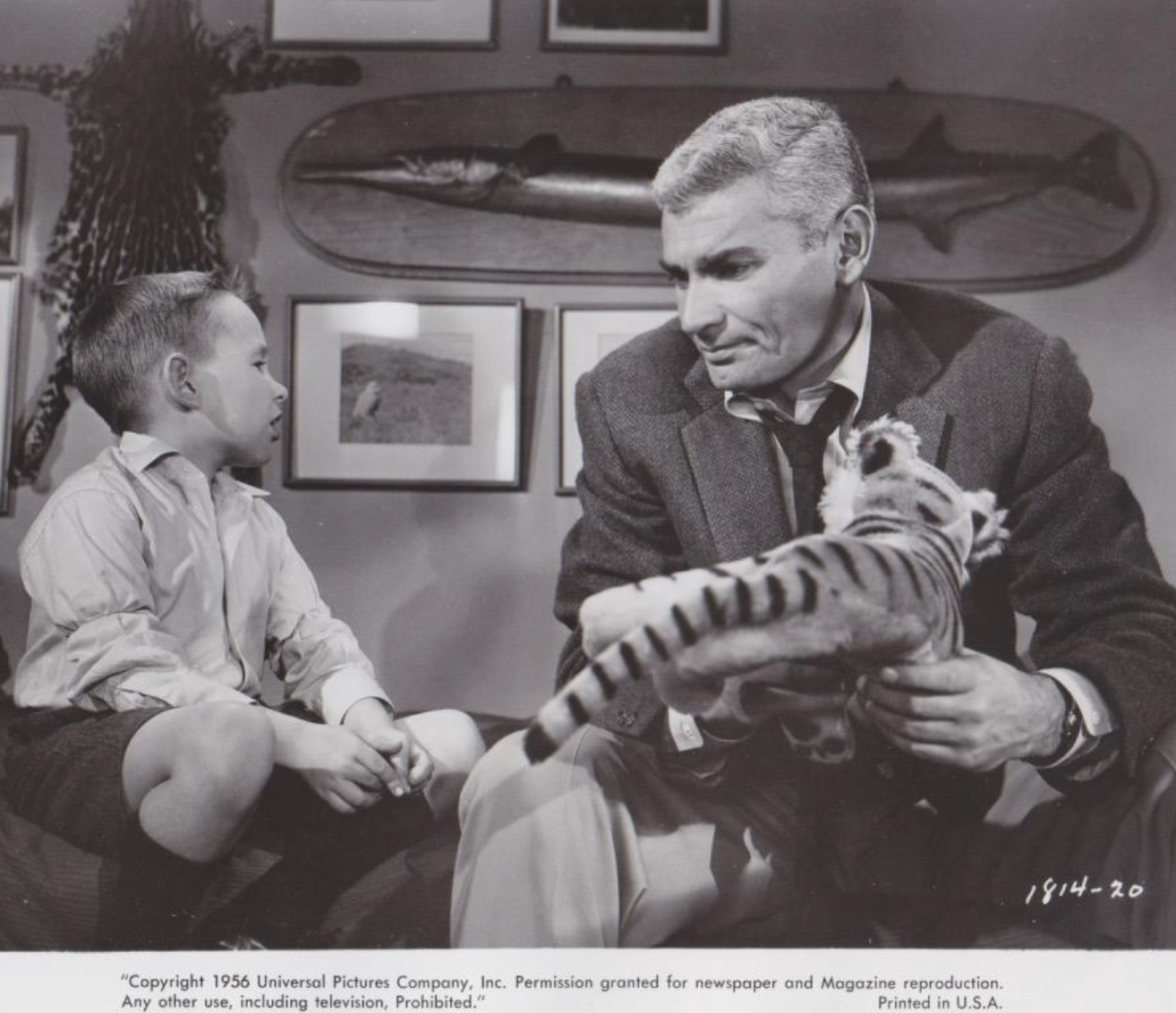
In 1956, Mom took me to the Fair Oaks Theater—just a short walk from where me and my family live today—to see a romantic comedy, Toy Tiger, starring Jeff Chandler.
Chandler was not your romantic comedy kind of guy. Usually he was a Marine officer leading his rifle platoon onto a Central Pacific beach, or a lawman protecting a frontier town from evil gunslingers or an Apache chieftain. He was an awesome Apache chieftain.
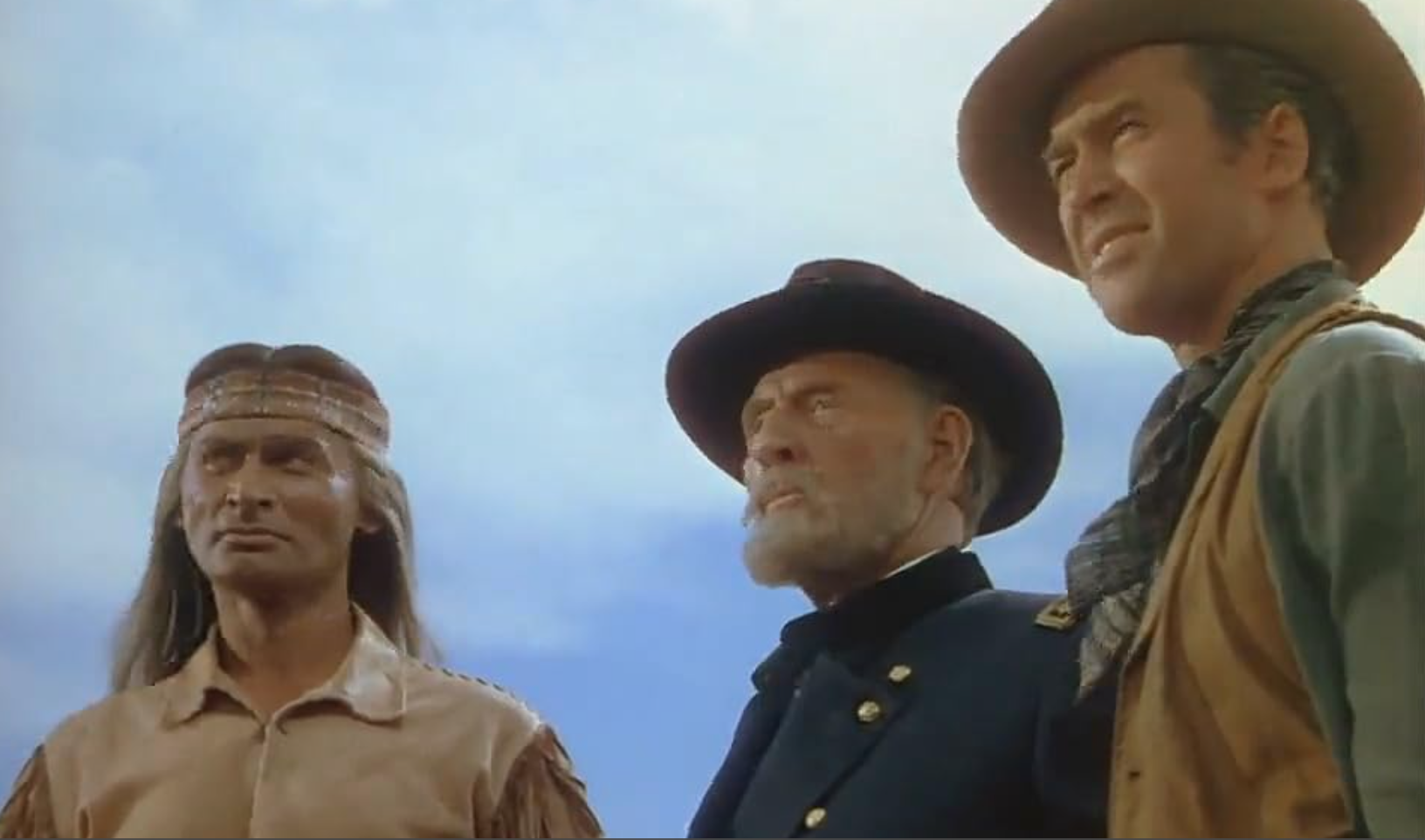
Jeff Chandler, Basil Somebodyorother and James Stewart in Broken Arrow (1950).
But the Toy Tiger in the film was an early experiment in Hollywood merchandising. I don’t think the Scarlett O’Hara whalebone corsets went over so well. I fell for this one. Hard. I think he came into my life at Christmas.
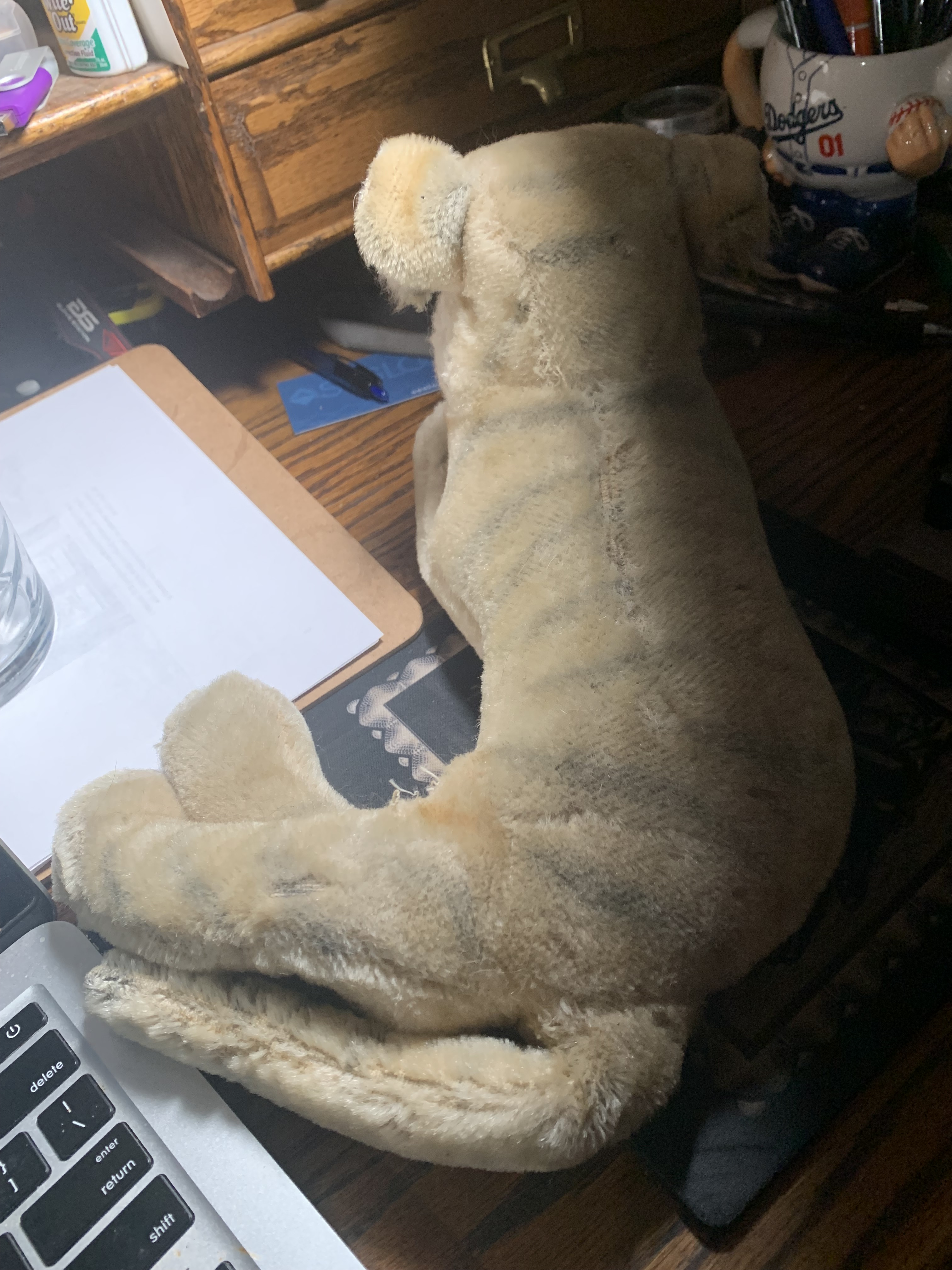
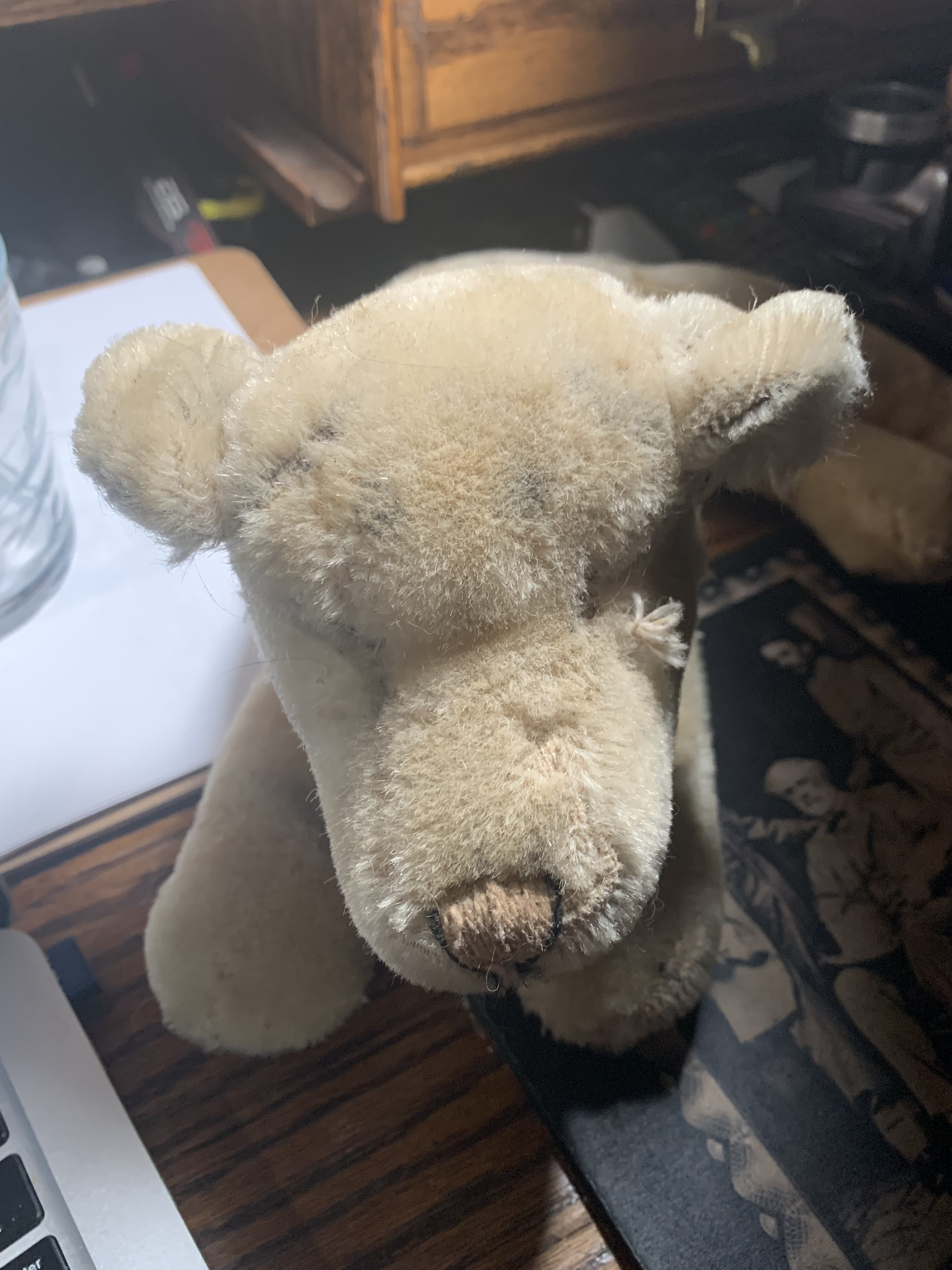
That’s the original Toy Tiger in the film still above and this is mine, sixty-seven years later. He’s blind and faded and some of his stuffing is starting to come out, but he’s always within reach, just above my computer. I needed him when I was four.
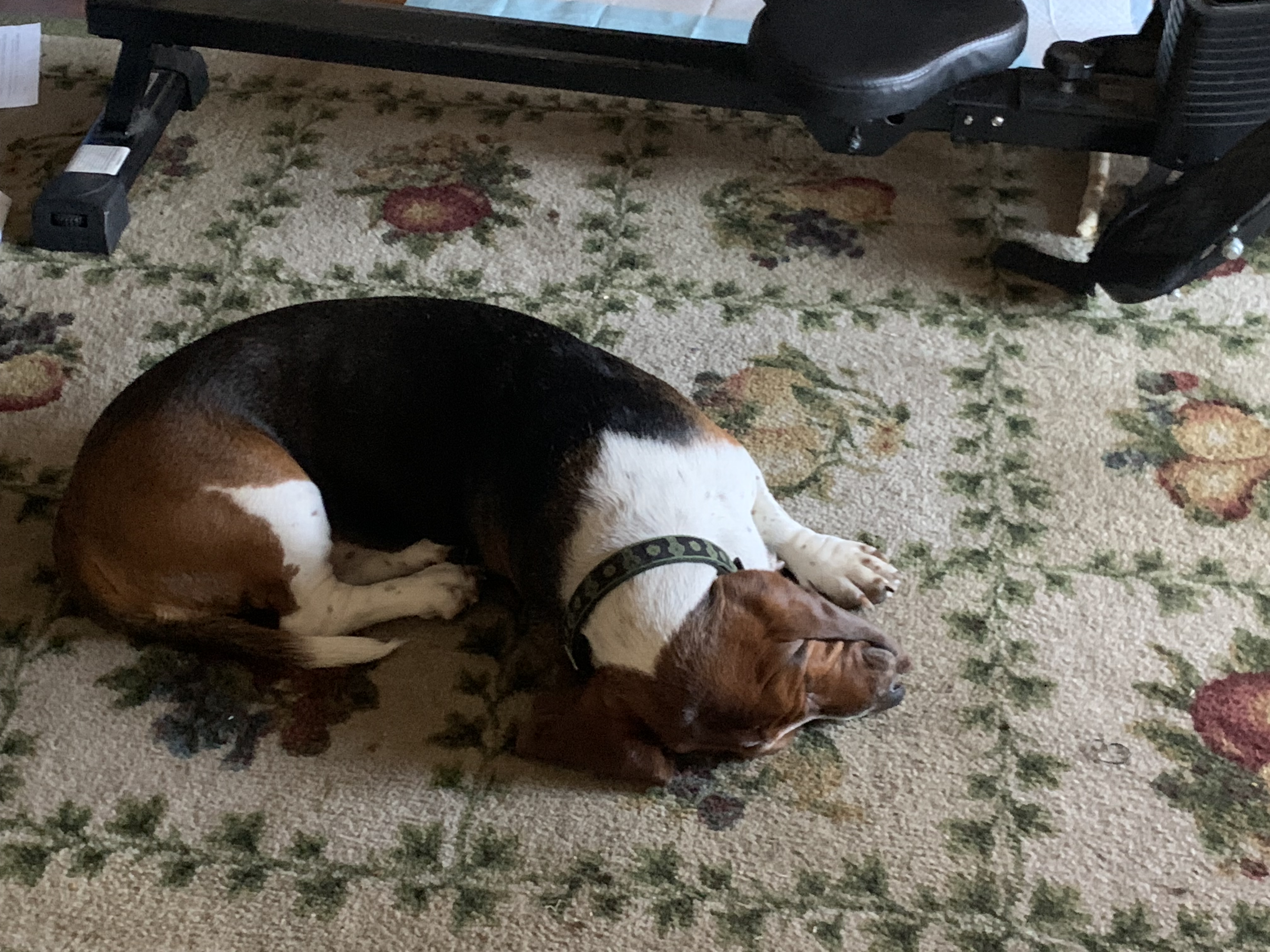
Walter fills a similar need today. Sometimes in the middle of the night I will feel a very cold Basset Hound nose pressing into the nape of my neck. It’s Walter sniffing to make sure I’m still there. I’ll turn over and gather him next to me and then we go back to sleep.
Walter doesn’t know this—-wait, maybe he does—but he makes me feel just as safe at seventy-one as Toy Tiger did when I was four.













 A Work in Progress