

28 Saturday Oct 2023
Posted in Arroyo Grande, Uncategorized
06 Friday Oct 2023
Posted in Arroyo Grande, Film and Popular Culture, Uncategorized
I have never had a linear mind. Mine is lateral. I don’t go from A to Z: A reminds me of M and M has a slight connection to E–oh, did you know that E and T are distant cousins?–and, about a half-hour later, I arrive at Z. It just takes longer for me. I love the side-trips, though. I still don’t know, however, how all this stuff gets trapped, historical ants in amber, in what passes for my brain.
Take this song, from Pat Garrett and Billy the Kid. It’s my favorite Bob Dylan song, folks:
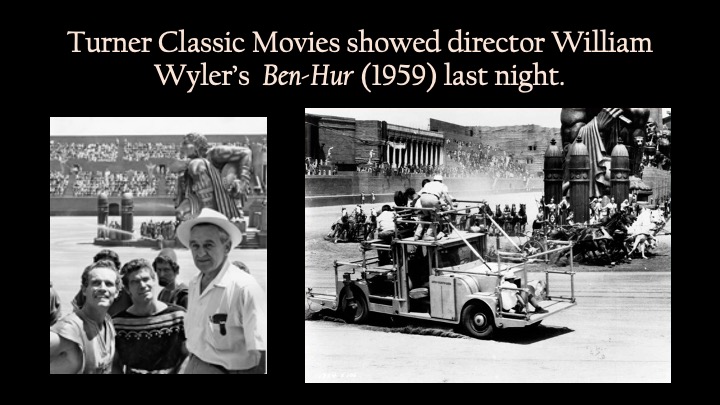
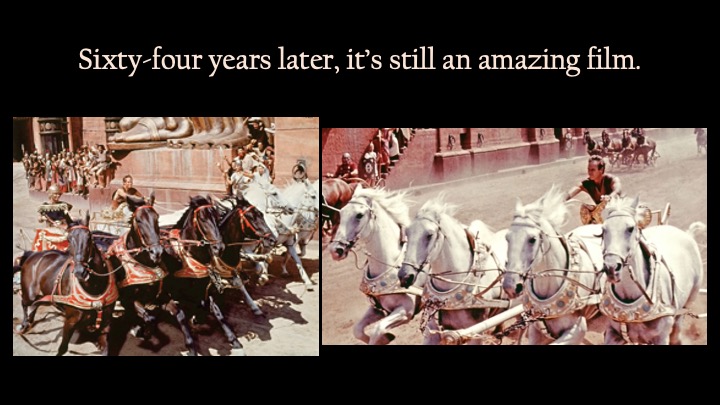
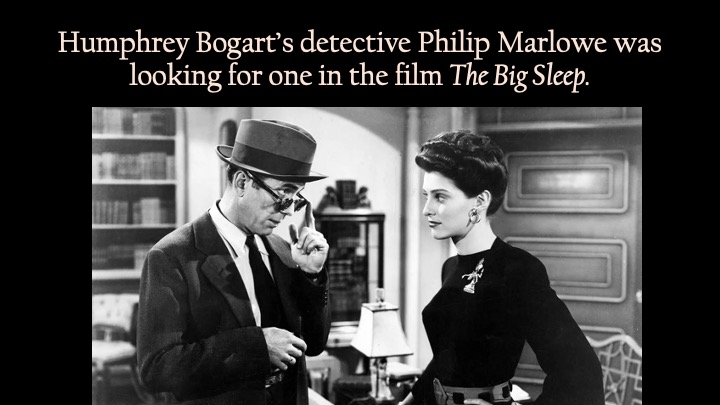
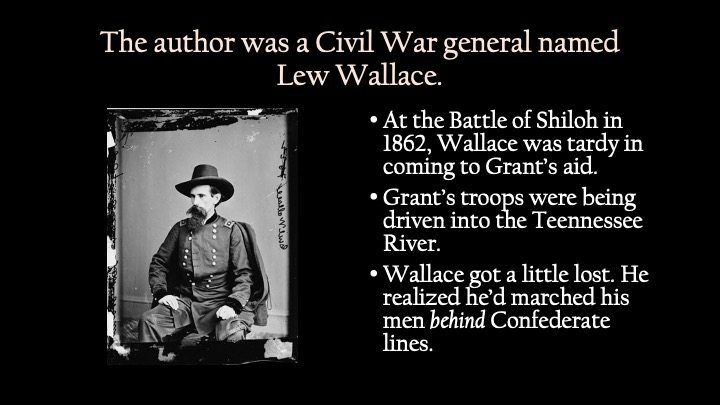
This may or may not make sense. But this is how I got from Ben-Hur to Pat Garrett and Billy the Kid with an Arroyo Grande stop along the way.

25 Monday Sep 2023
Posted in Arroyo Grande, Uncategorized, World War II
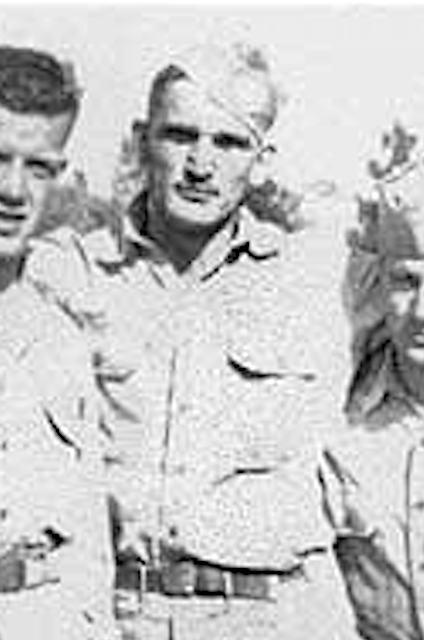
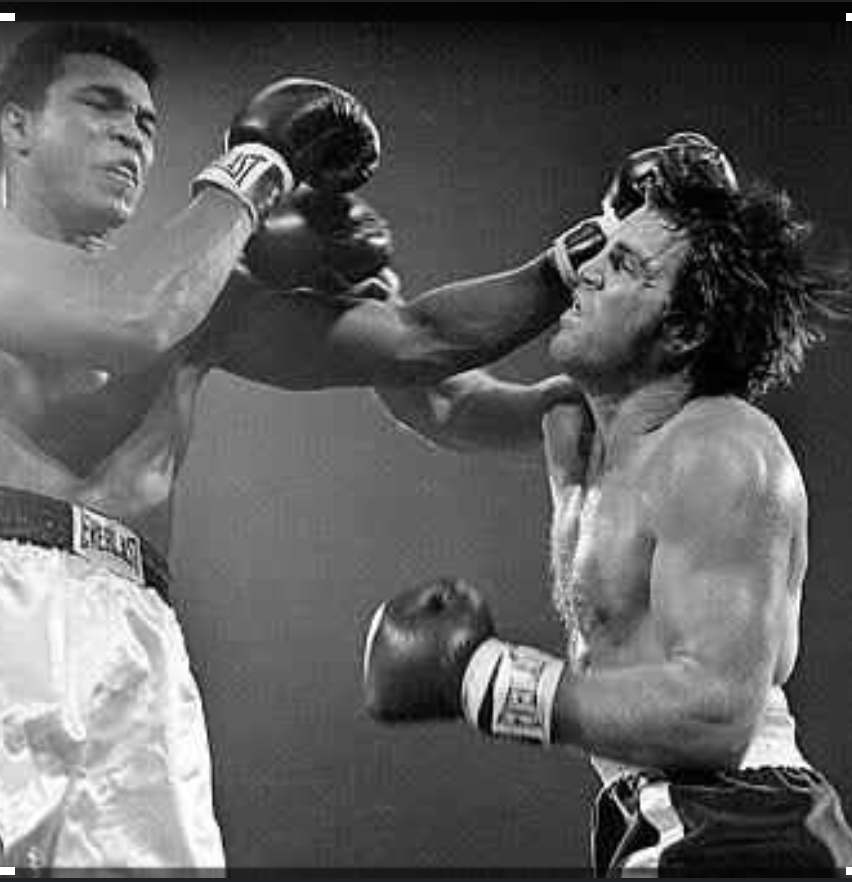
I was thinking about one of my heroes from Arroyo Grande’s past, Staff Sgt. Art Youman, a member of the 101st Airborne’s Easy Company in World War II. This closeup of Youman, taken in training in South Carolina, shows what just might be a boxer’s nose. That’s Jerry Quarry (his little brother Mike, a light heavyweight, lived in San Luis Obispo County for a time) in the right-hand photo, having his nose adjusted by Muhammad Ali. Quarry, always a contender but never a champion in the heavyweight division, was a man of enormous courage. Youman shared that quality.
Well, my hunch was right. This item from a fall 1940 San Luis Obispo Telegram-Tribune, when boxing was big in Pismo Beach:
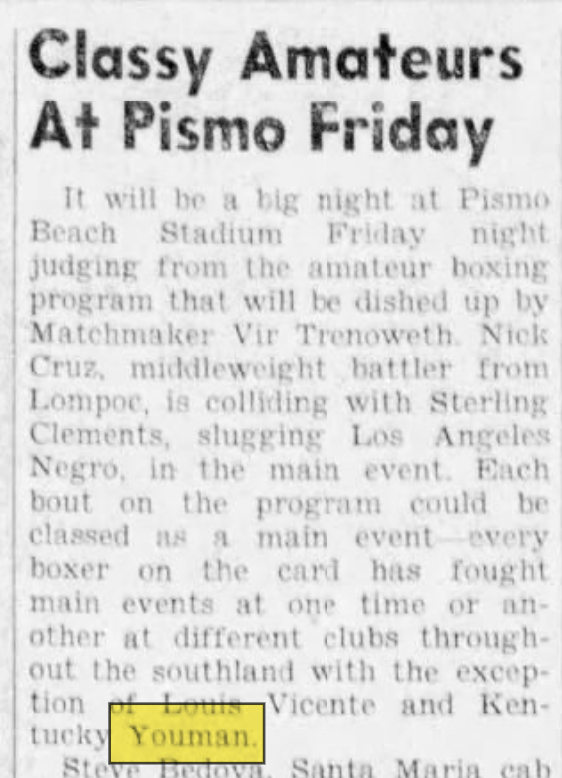
You wince at the “slugging Negro” reference—in a similar fashion, Filipino fighters were identified by their homeland—but “Kentucky Youman” won his bout via a TKO (Technical Knockout.) Why was an Arroyo Grande fighter named “Kentucky?” Ancestry.com provided the explanation from Youman’s August 1942 enlistment record.
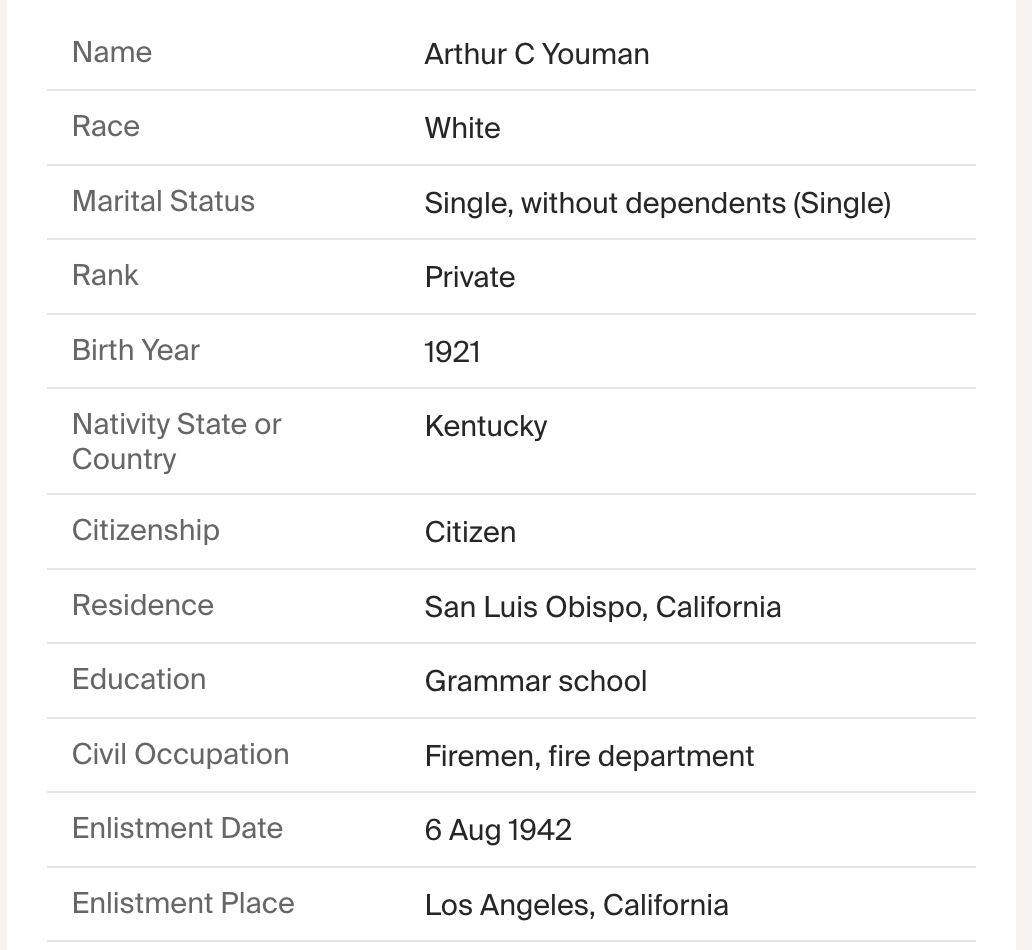
My grandfather was a Kentuckian, too. Youman’s his draft card yielded a little more information:

I knew that Youman was a firefighter in San Luis Obispo, but I didn’t know it was for the Camp San Luis Obispo fire department (absorbed after the war by what is today CAL FIRE). I’d assumed that he worked for the City of San Luis Obispo. This new information was even better, because, thanks to my two military history experts and friends, Erik Brun and Dan Sebby, I found this photo yesterday that they’d posted late last year:

The California National Guard acquired this 1942 Seagrave fire engine in 2022 and the Guard’s history division hopes to restore it. It was, in fact, assigned to Camp San Luis Obispo in 1942, and since Art Youman didn’t enlist until August, there’s a chance that he rode on or even drove this engine. So this is, in a way, Easy Company’s fire engine, too.
Youman’s life accelerated quickly the next two years, with the tough training that shaped paratroopers and with combat.
He parachuted into Normandy on D-Day.
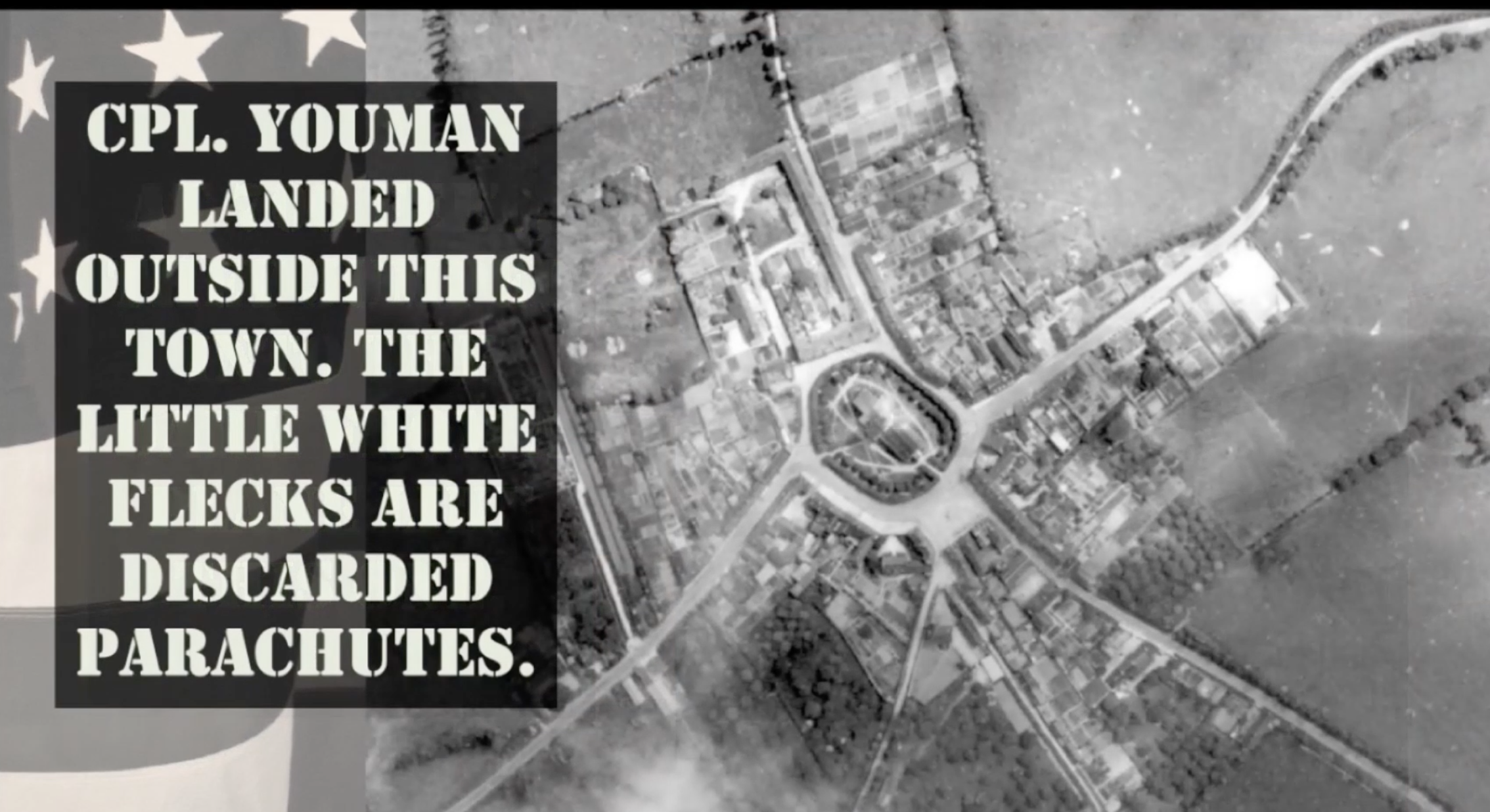
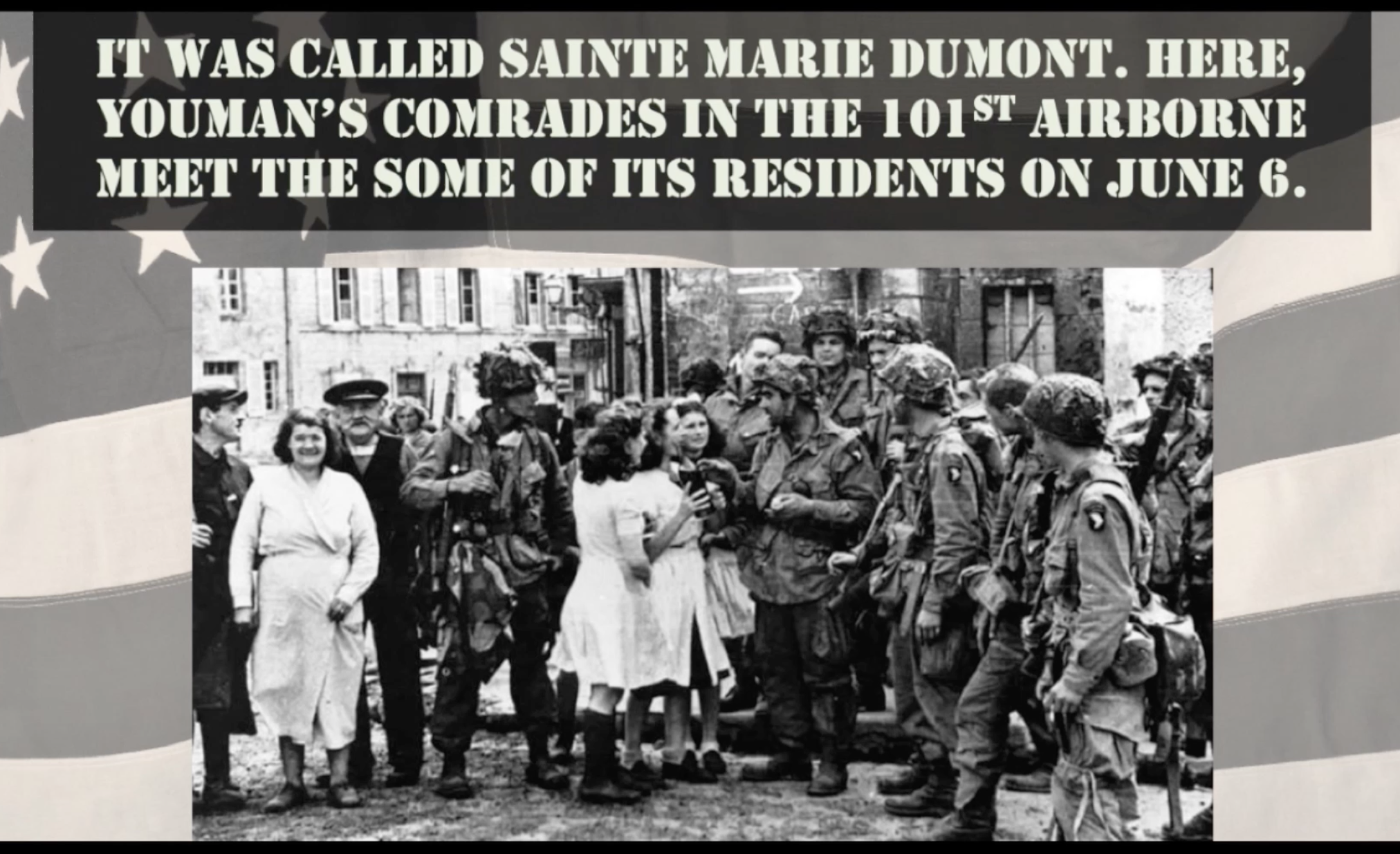
Later, in the fall during Operation Market Garden, Youman had led a small patrol to this Dutch crossroads when he and his men encountered a German patrol. A flurry of hand grenades came down on the paratroopers, which they returned—one of Youman’s men threw his entire consignment of six grenades. They returned to Easy Company mostly intact except for the shrapnel splinters. October 8 marks the 79th anniversary of that encounter.

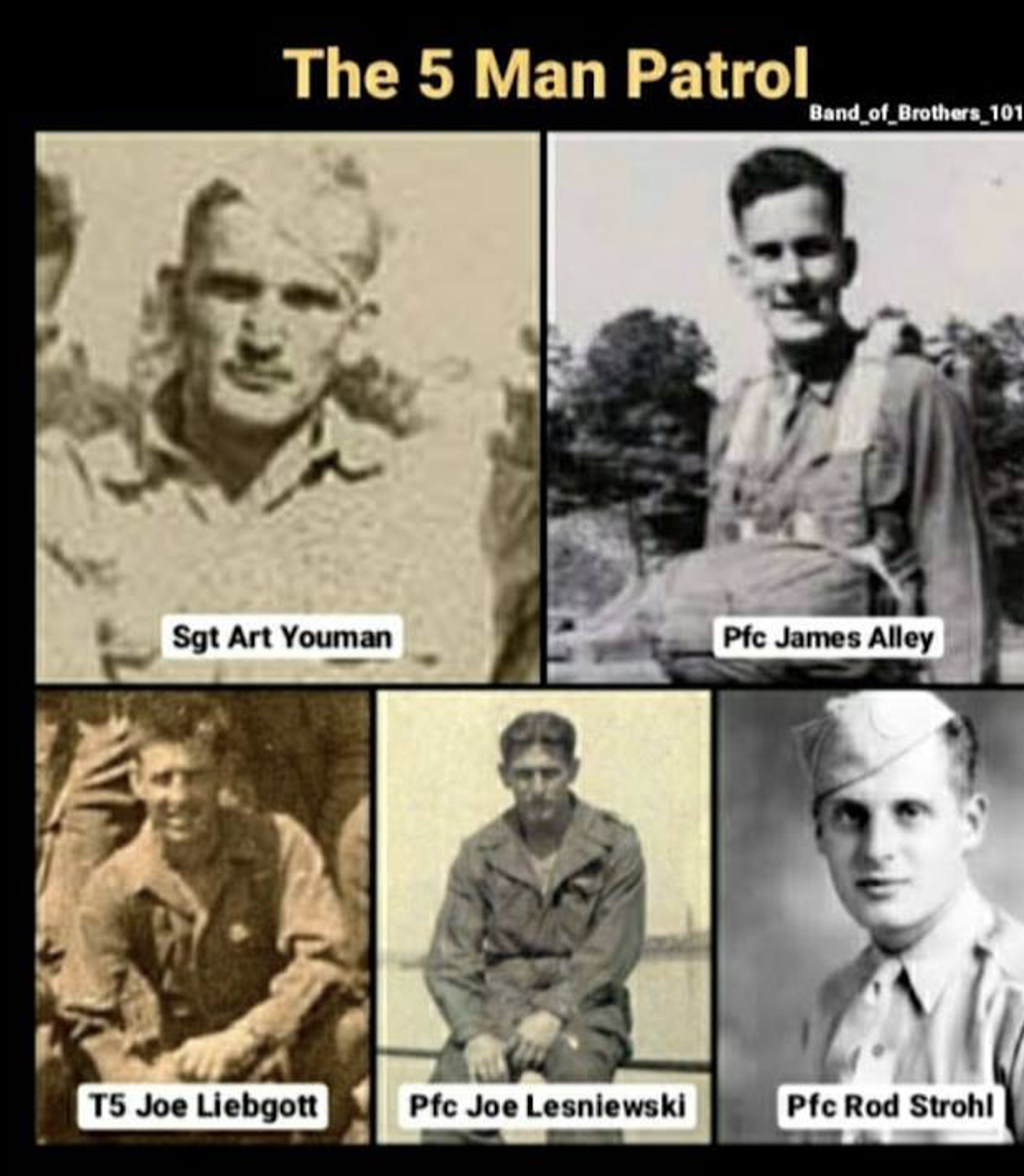
It was in Holland where the Arroyo Grande fighter with the boxer’s nose was promoted to staff sergeant by Capt. Dick Winters, portrayed by British actor Damien Lewis (at left; Winters at right) in HBO’s Band of Brothers, based on the Stephen Ambrose book.
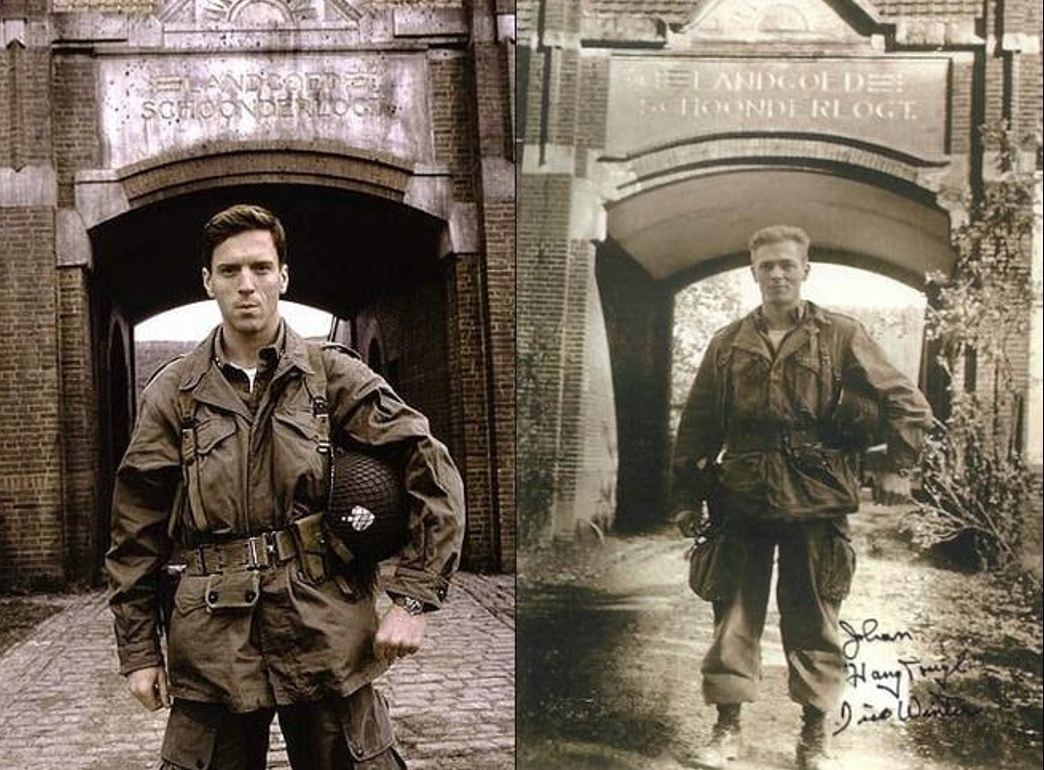
Eight weeks later, on either his 23rd or 24th birthday—the records differ—Art Youman marched into Bastogne with the 101st Airborne, a Belgian town my students and I visited in 2010. Their resistance there, during the coldest winter in Europe in thirty years, did much to foil the great German counteroffensive in the Battle of the Bulge. Art Youman’s combat career lasted about six and a half harrowing months, interrupted only briefly by a furlough in England. That career ended in the Battle of the Bulge and his hospital record is a testament to both the power of German artillery and the punishment of that winter’s cold.
Youman was only 54 when he died, but he has family still in San Luis Obispo County, in Paso and in Nipomo. I’ve met a few of them, and they are warm people, nice people, proud of Art. They have every right to be.
21 Thursday Sep 2023
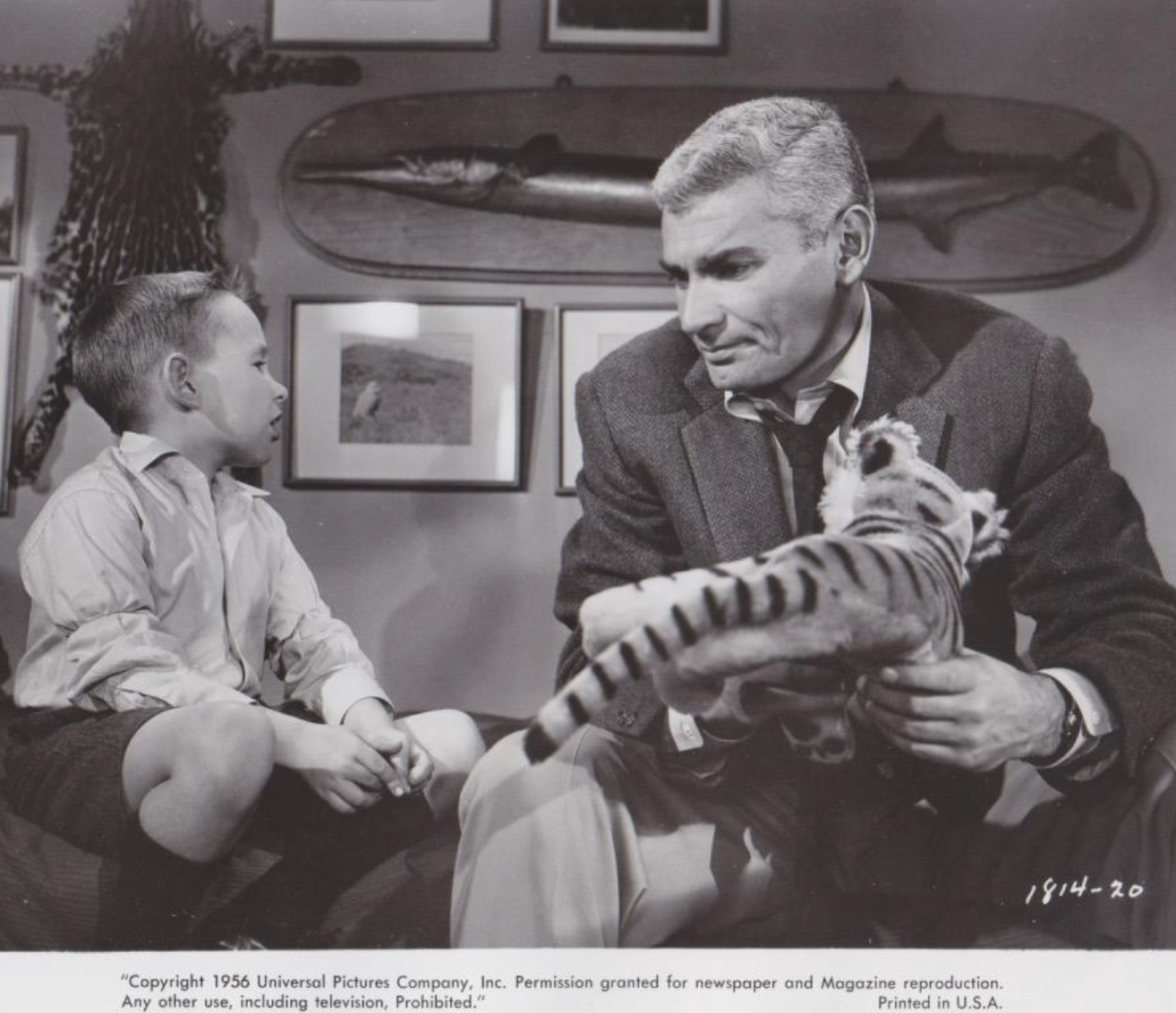
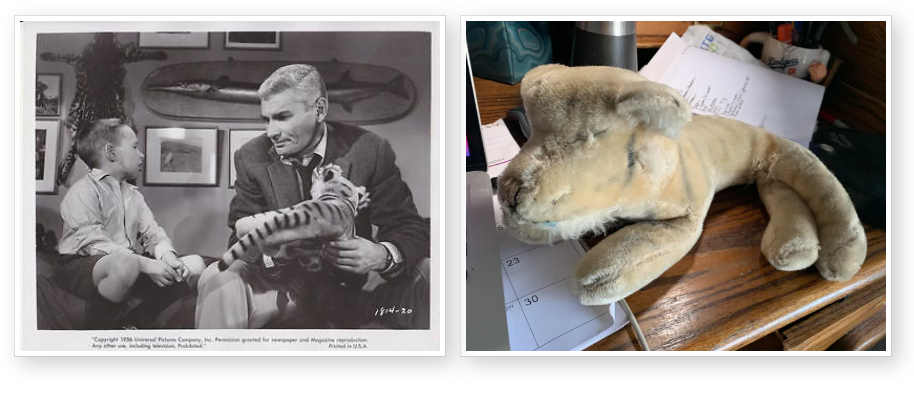
In 1956, Mom took me to the Fair Oaks Theater—just a short walk from where me and my family live today—to see a romantic comedy, Toy Tiger, starring Jeff Chandler.
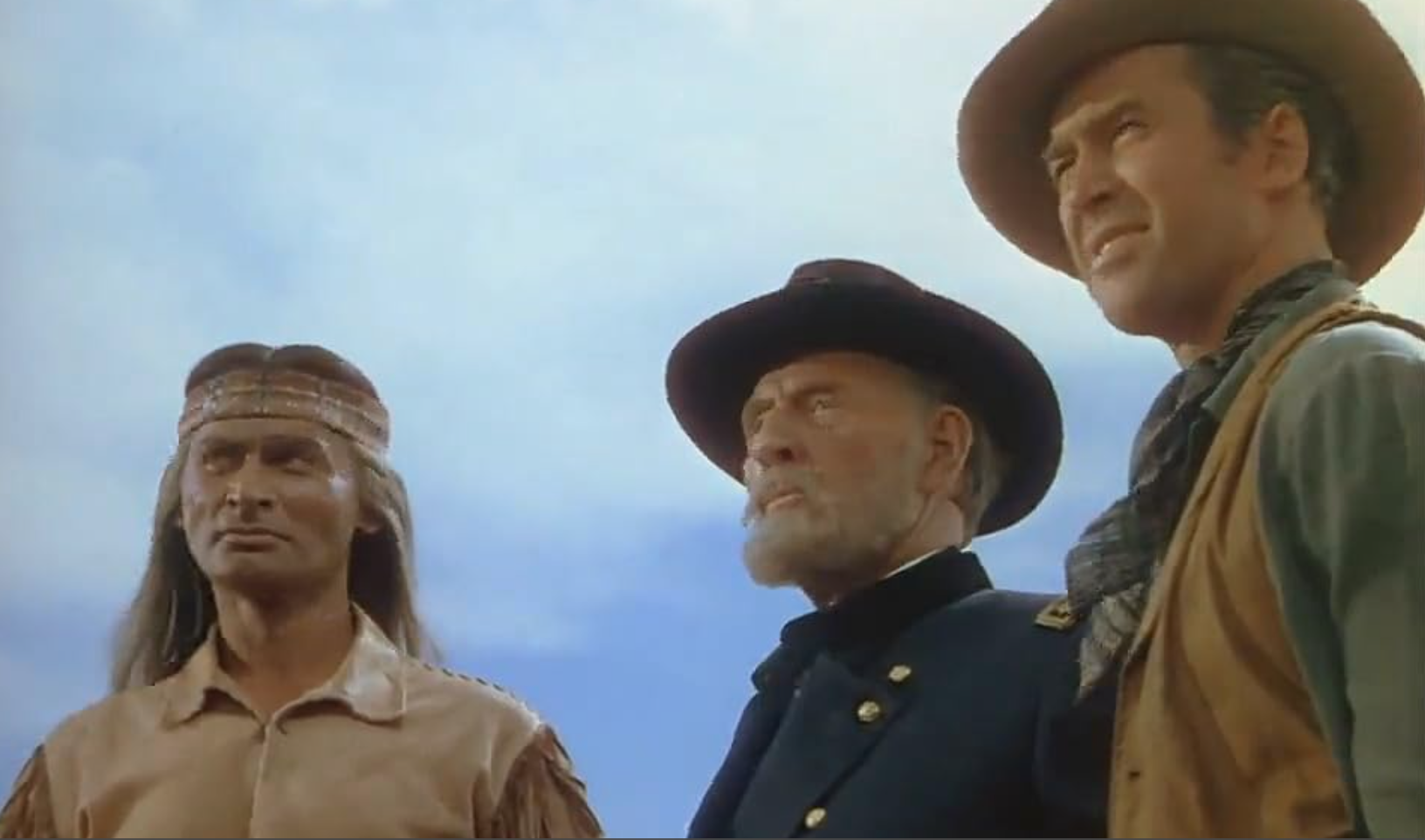
Chandler was not your romantic comedy kind of guy. Usually he was a Marine officer leading his rifle platoon onto a Central Pacific beach, or a lawman protecting a frontier town from evil gunslingers or an Apache chieftain. He was an awesome Apache chieftain.
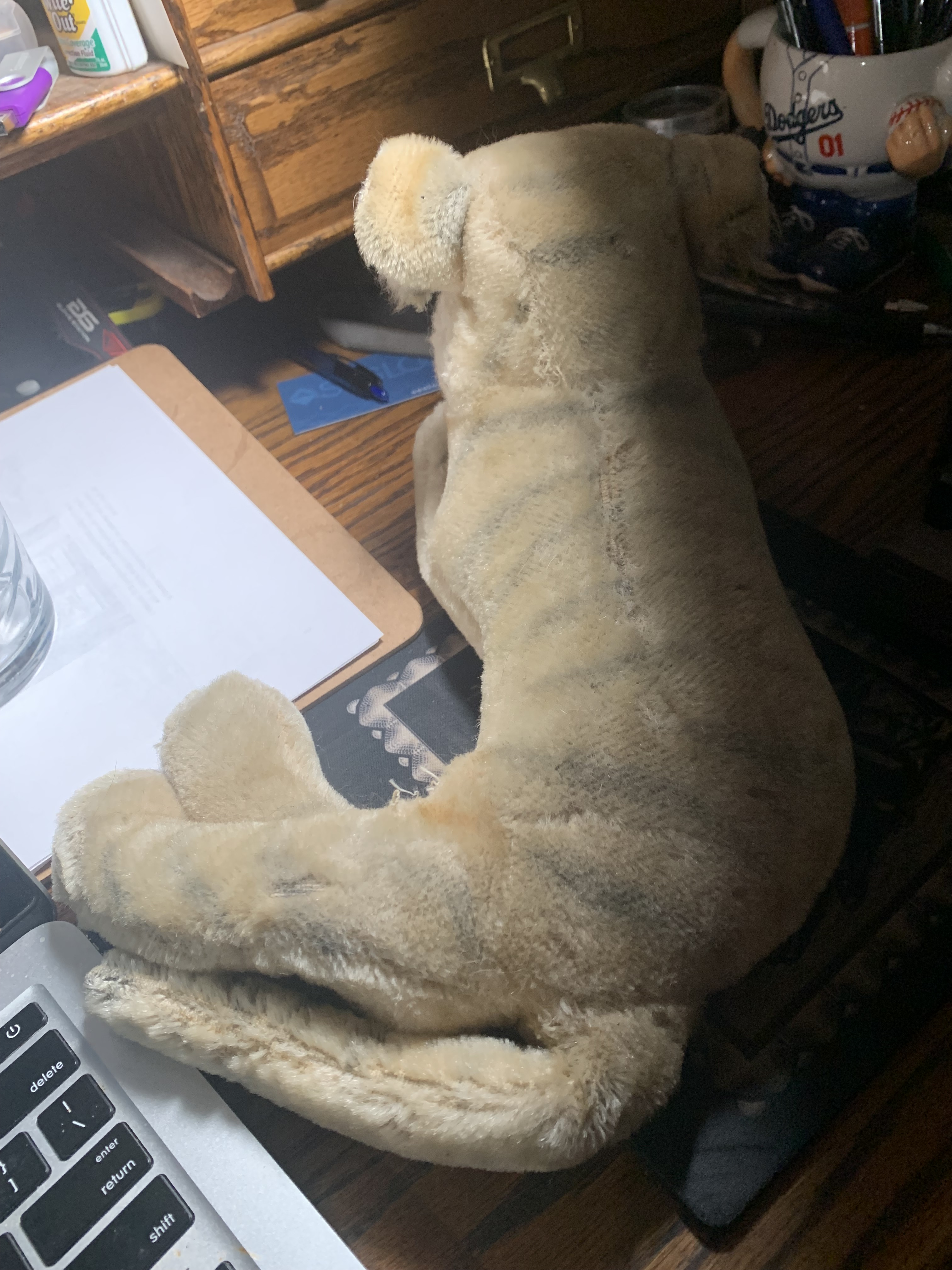
But the Toy Tiger in the film was an early experiment in Hollywood merchandising. I don’t think the Scarlett O’Hara whalebone corsets went over so well. I fell for this one. Hard. I think he came into my life at Christmas.
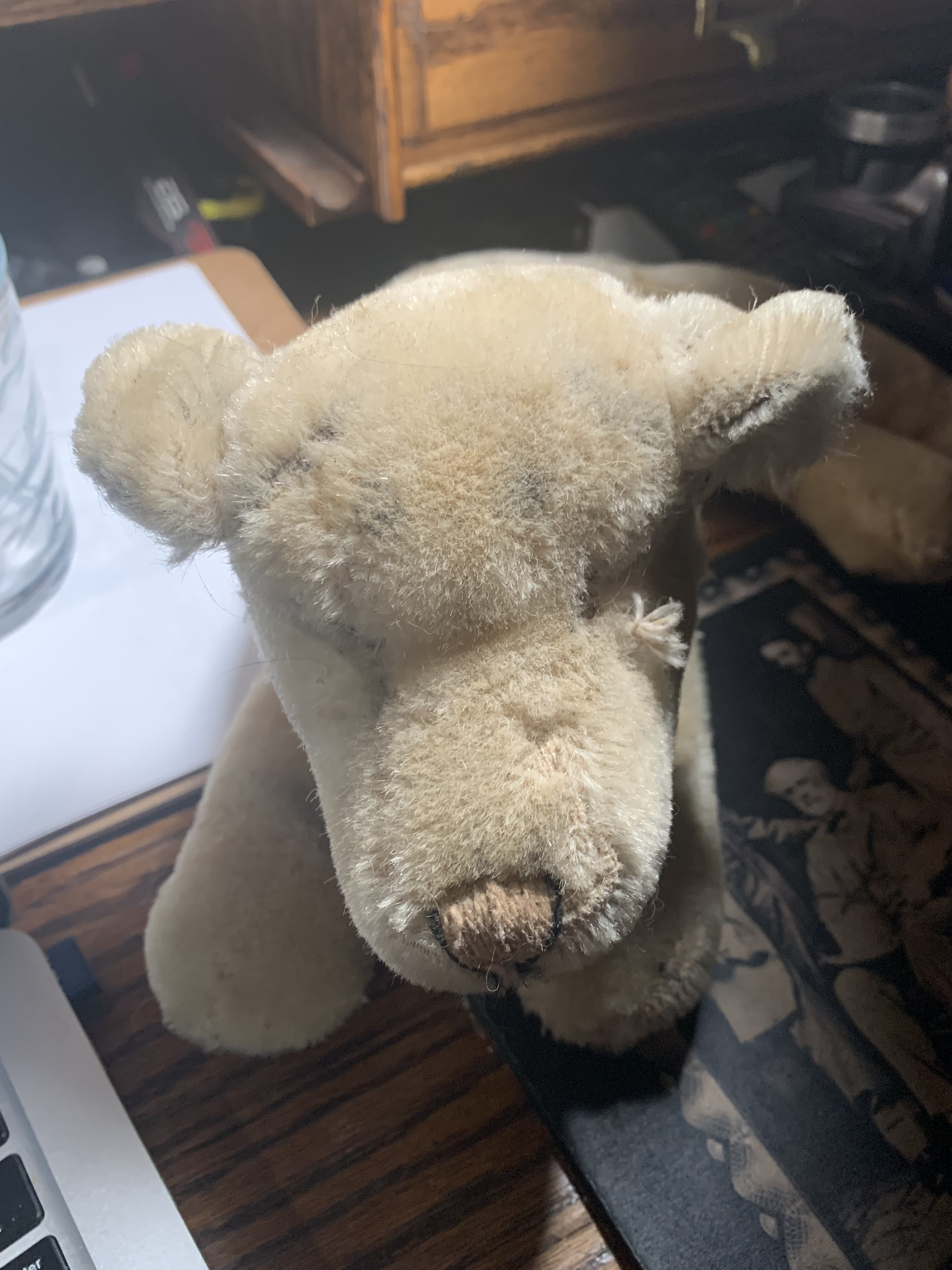
That’s the original Toy Tiger in the film still above and this is mine, sixty-seven years later. He’s blind and faded and some of his stuffing is starting to come out, but he’s always within reach, just above my computer. I needed him when I was four.
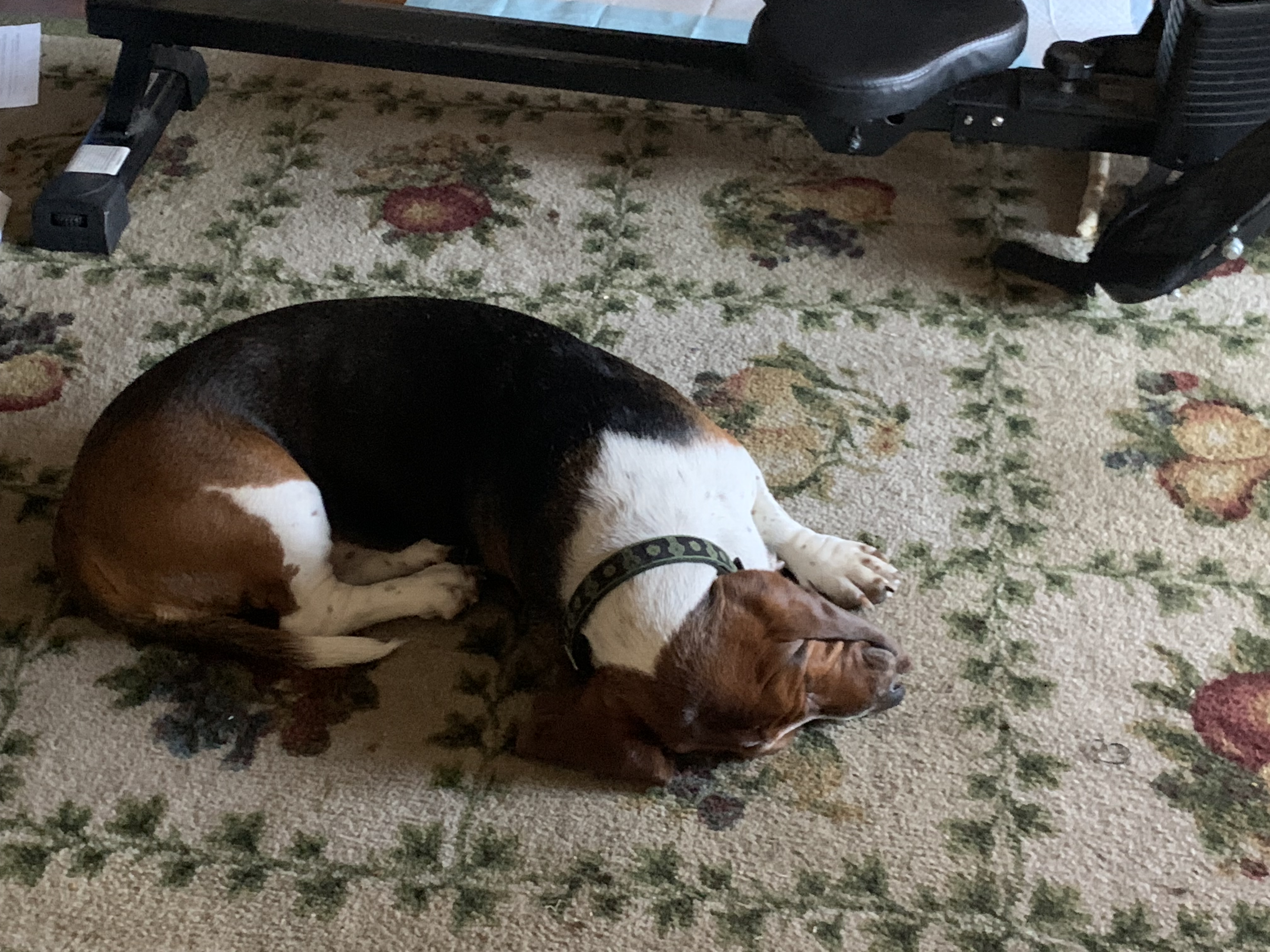
Walter fills a similar need today. Sometimes in the middle of the night I will feel a very cold Basset Hound nose pressing into the nape of my neck. It’s Walter sniffing to make sure I’m still there. I’ll turn over and gather him next to me and then we go back to sleep.
Walter doesn’t know this—-wait, maybe he does—but he makes me feel just as safe at seventy-one as Toy Tiger did when I was four.
You can’t ask for better friends than these.
18 Monday Sep 2023
Posted in Arroyo Grande, Uncategorized

17 Sunday Sep 2023
Posted in Arroyo Grande, Personal memoirs, Uncategorized
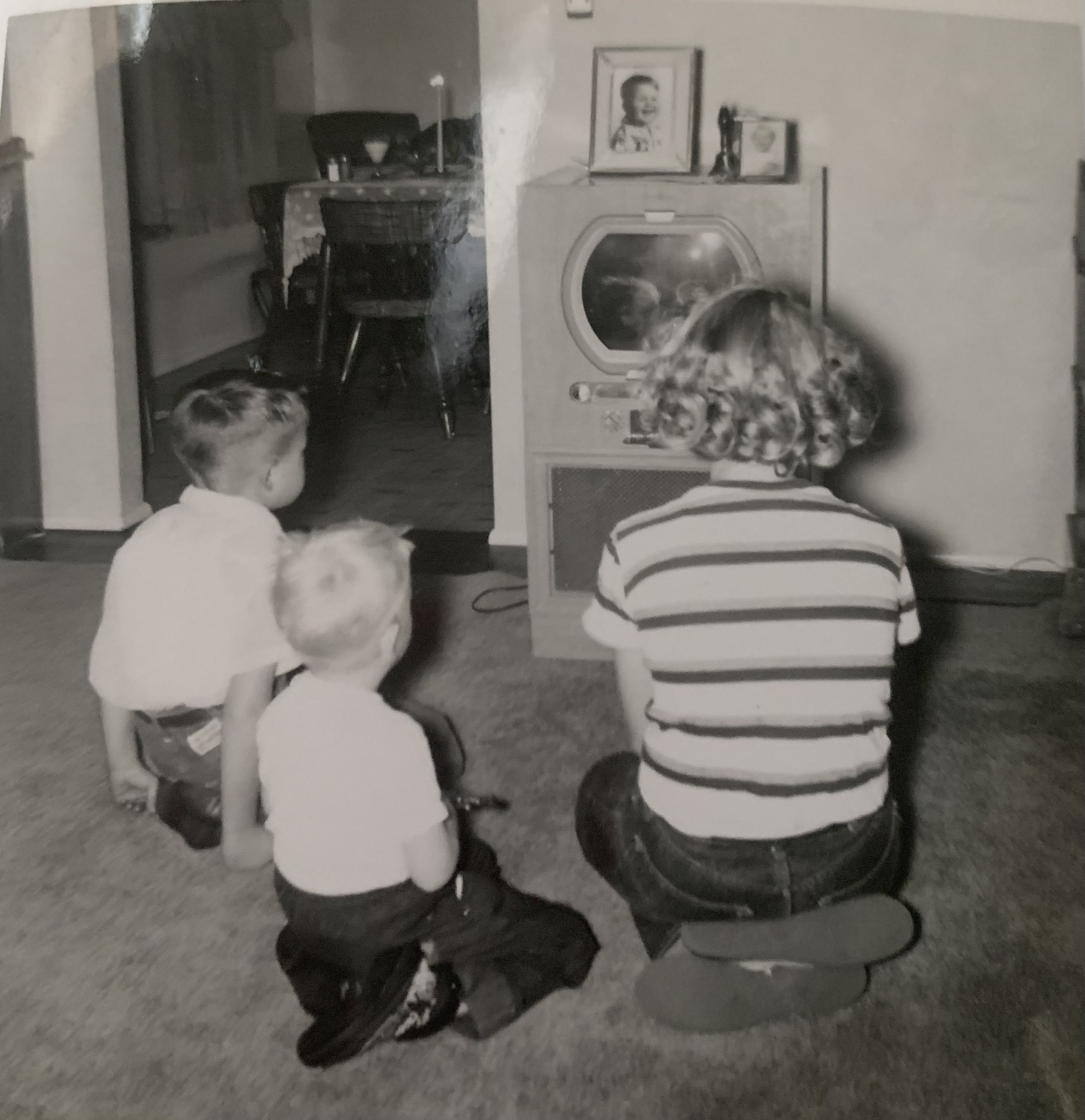
This was taken in 1956, when the as-yet-incomplete Gregory family (Sally would debut later, when we lived on Huasna Road) lived at 1063 Sunset Drive.
In the first photo in the gallery below, it appears that I have just been informed that the Soviets have the hydrogen bomb.
Either that or Bishop Fulton J. Sheen was on TV. He appeared fully vested and berobed, complete with skullcap. I think I confused him with Count Dracula.
I didn’t realize for years that Sheen was a kindly man whose spiritual bent tended toward the optimistic.
Or it might’ve been another favorite show of theirs, Liberace. He scared me, too.
Here’s a little video that helps to demonstrate why.
Note Mom’s Singer showing machine, behind me at left.
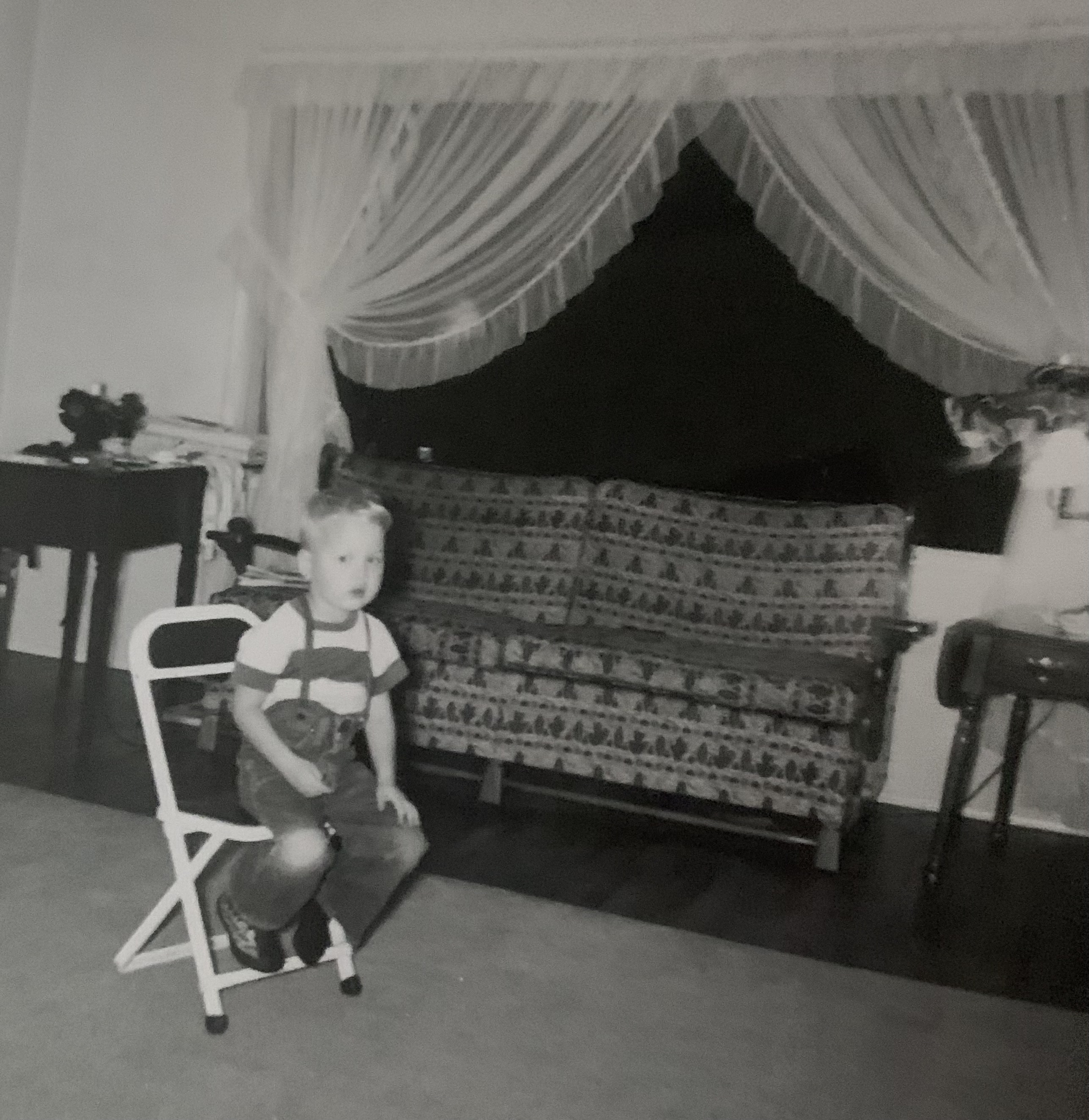
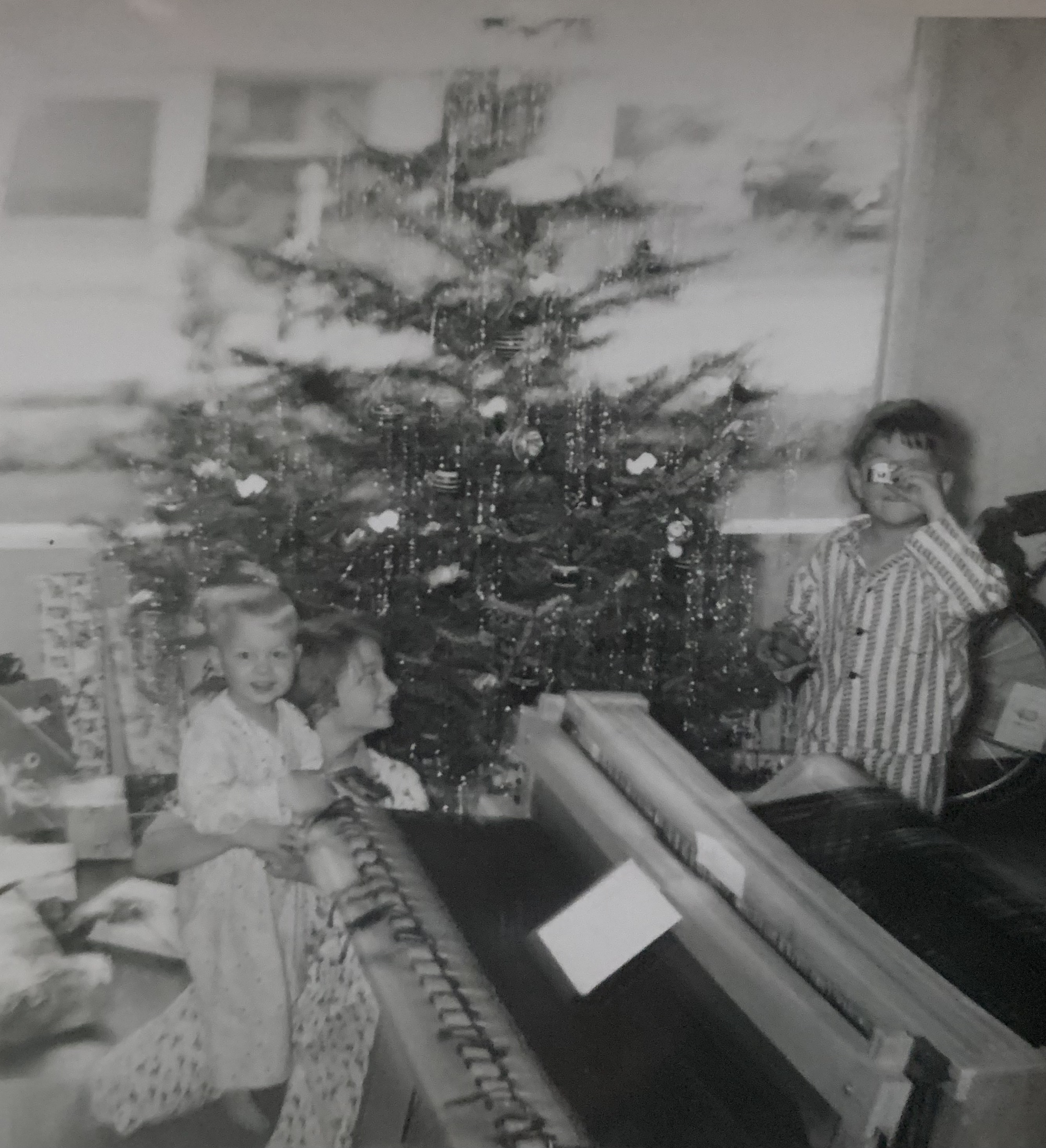
She also had a loom. Since the Industrial Revolution began in textiles, that made teaching that topic so easy for me fifty years later. I could explain power looms and flying shuttles and spinning jennies. The loom was a Christmas gift, seen in the photo above.
And Mom was kind of an artist: knitting, sewing, weaving, crocheting, a little needlepoint here and there.
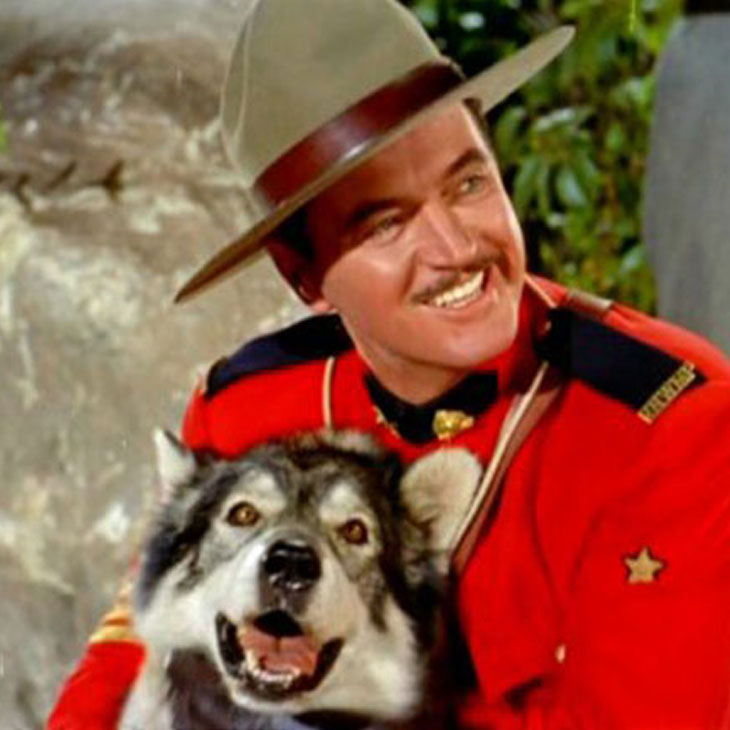
That is a washing machine we are watching in the photo at the top of the blog enrtry. We were simple folk. Just kidding. Sgt Preston of the Yukon must be on. With his dog, King.
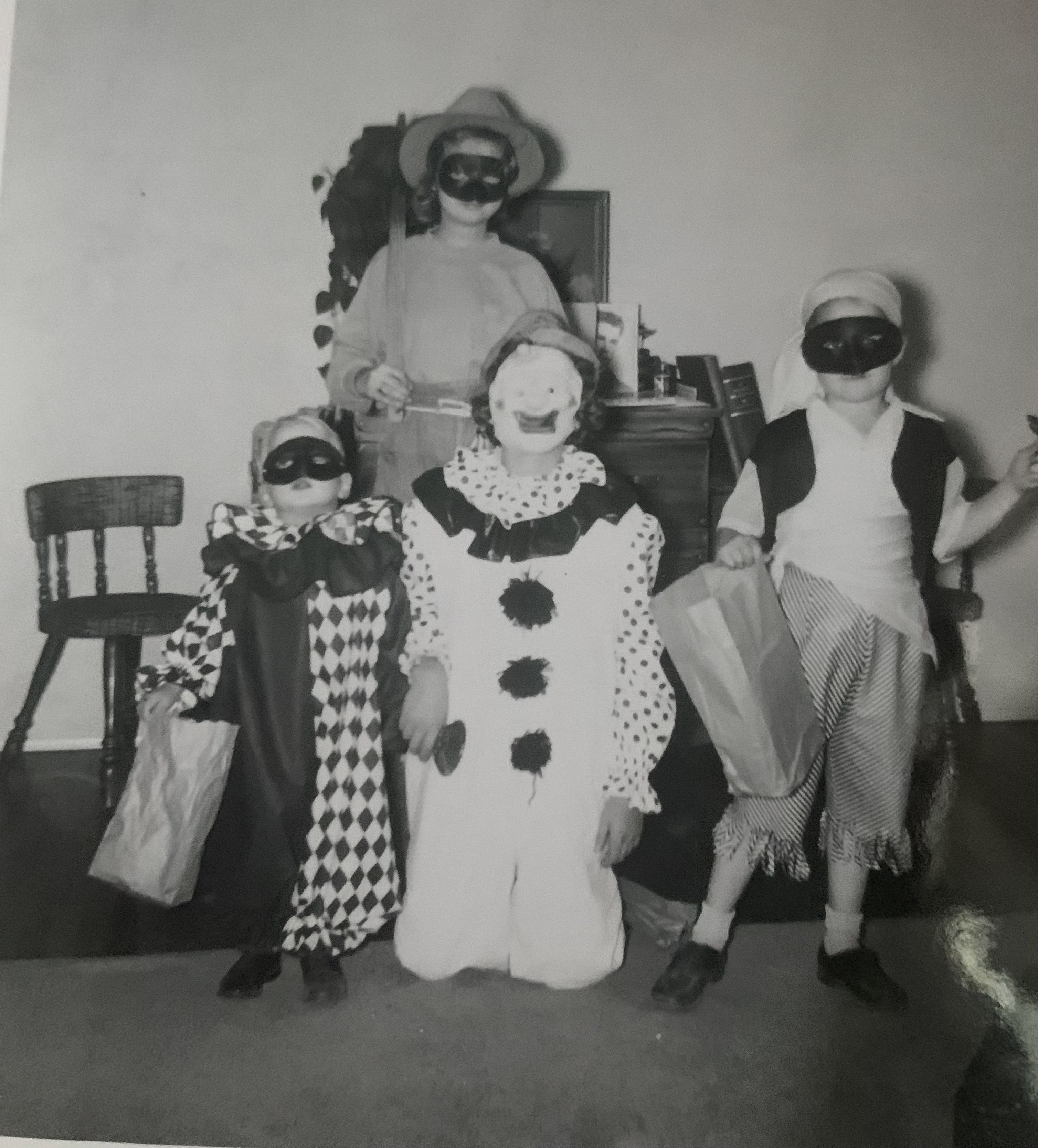
That’s me, Roberta as a hobo and Bruce as a pirate at Halloween. Roberta’s wearing Dad’s beautiful felt hat, which were just out fashion. That makes me sad. Men’s hats are one reason I love old movies so much. The other clown, holding my hand, was all grown-up. At least twelve. She was very kind to me.
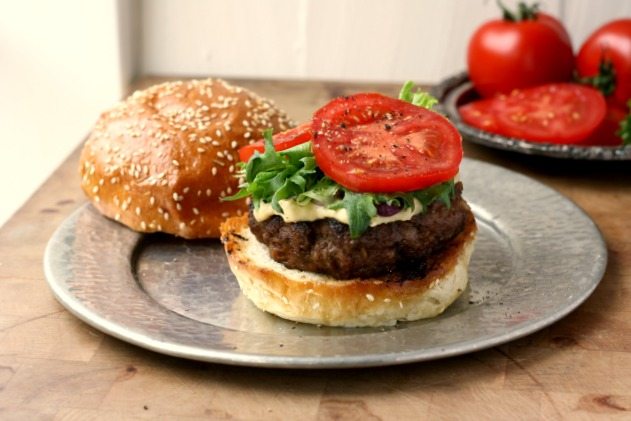
Once Mom and Dad went out on a date and dropped me off at another very kind person’s house, an older lady (meaning ten-fifteen years younger than I am now.) She made me hamburger. She put a tomato slice in it. I shrugged and took a bite. When my parents came back to pick me up a couple of hours later, I was still raving about how good tomatoes on hamburgers were. Elizabeth pointed out that it probably was a home-grown tomato, because they taste so much better than the store-bought once, and I bet she’s right.
Once it snowed. Once I ran out the front door and realized I hadn’t put on my pants yet. That was embarrassing.
Once Mom dressed us all up, including the Cocker spaniel, as desert Bedouins. She used eyeliner, I think, to give Bruce and me curly mustachioes. Both Roberta and the Cocker, a little girl, had gauzy headdresses and the boys wore burnooses made out of dishtowels. We all wore our bathrobes. Yup. Mom was pretty cool.
And the Fair Oaks was pretty close. That’s where we saw Lady and the Tramp (the Cocker’s name was Lady, of course.) and also The Ten Commandments (hated it when Pharaoh’s horsies drownded in the Red Sea) and The Searchers (the Comanche attack scene, where you don’t see the Comanches, scared the hell out of me.)
We also saw a movie with Jeff Chandler, The Toy Tiger, and I still have mine, eyeless but more or less intact. We were gullible, what with Cocker spaniels and stuffed animals. I think I also watched a couple of Tammy movies with my big sister, and Darby O’Gill and the Little People. Scared the hell out of me.
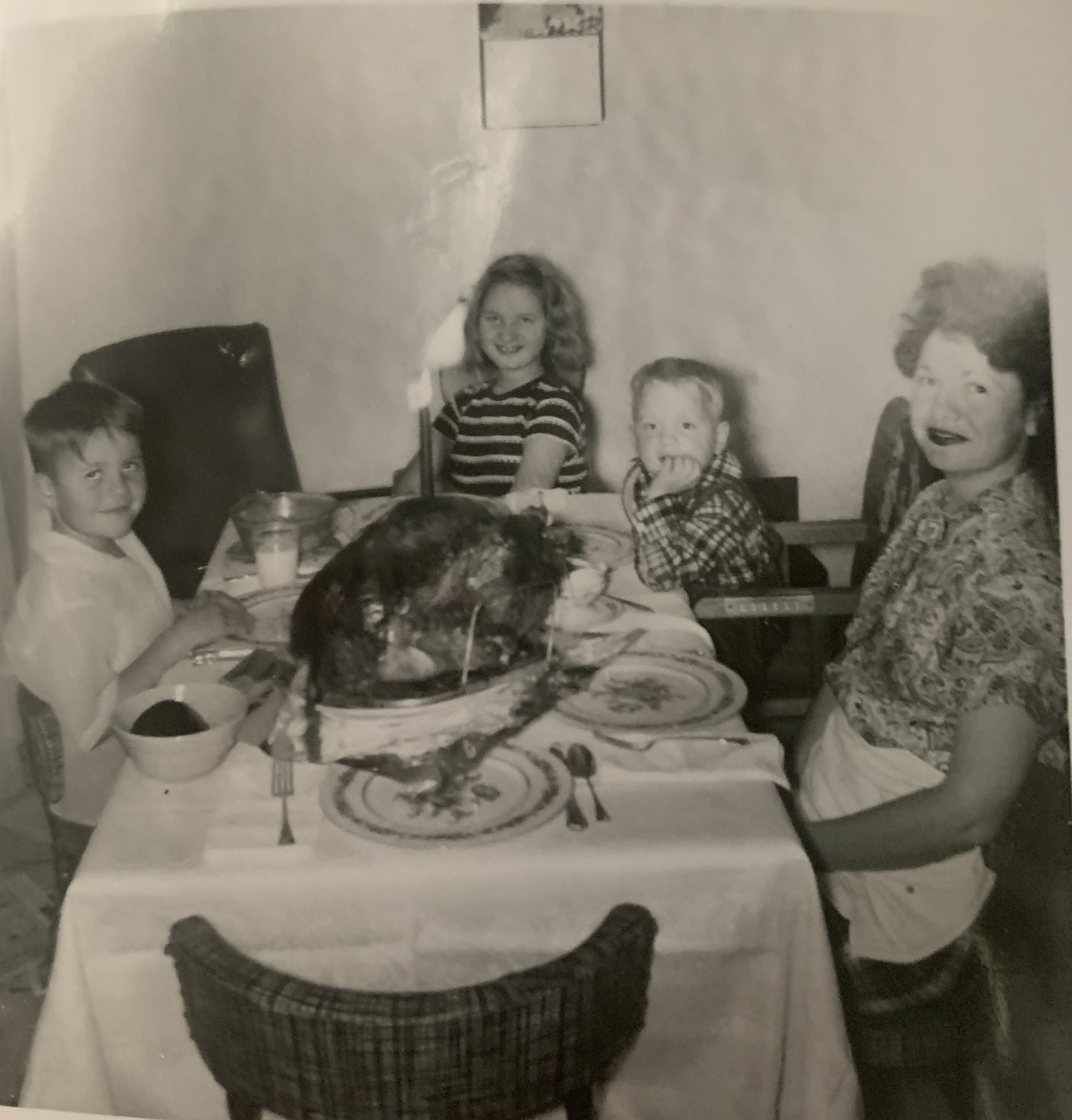
Note Dad’s love of large turkeys. Shipped overseas (Grandma Kelly STILL said “Clean your plate. Children in Europe are starving!”), one of ‘em would need its own container ship. That’s what nearly twenty years of Great Depression and wartime rationing did to Dad. We always ate well.
Speaking of food, I was a ham even then.
28 Monday Aug 2023
Posted in Arroyo Grande, Uncategorized
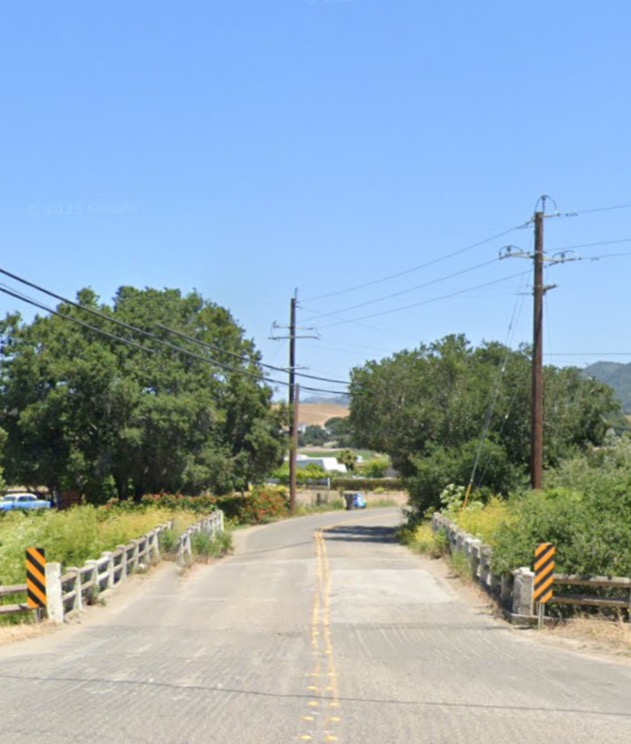
lt looks as if the County is finally going to replace the 100-year-old Harris Bridge, a focal point for my childhood. It’s about time, I guess.. But it’s also bittersweet. It was named for this man, who farmed nearby. From 1936:
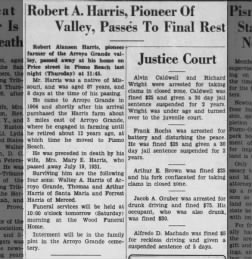
The bridge was completed in November 1923 with some fanfare:
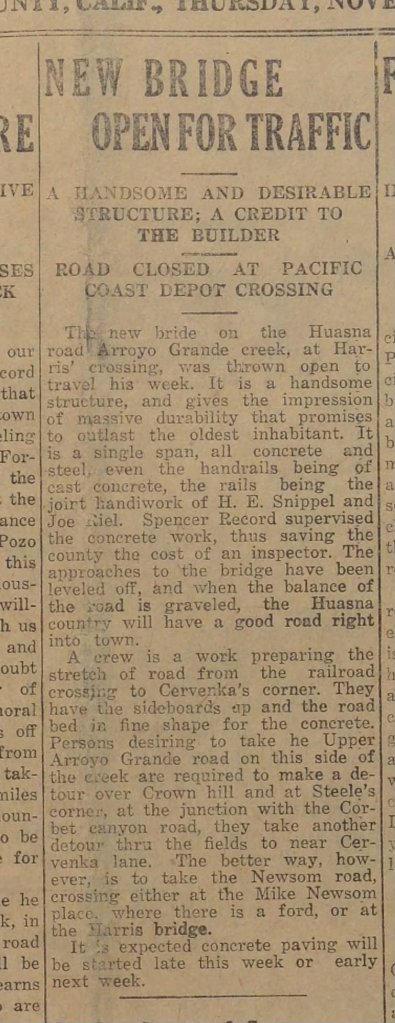
Here it is in 1934. The CWA, a precursor to the WPA, was oiling what was then called Musick Road to Lopez Canyon, a project administered by Supervisor Asa Porter.
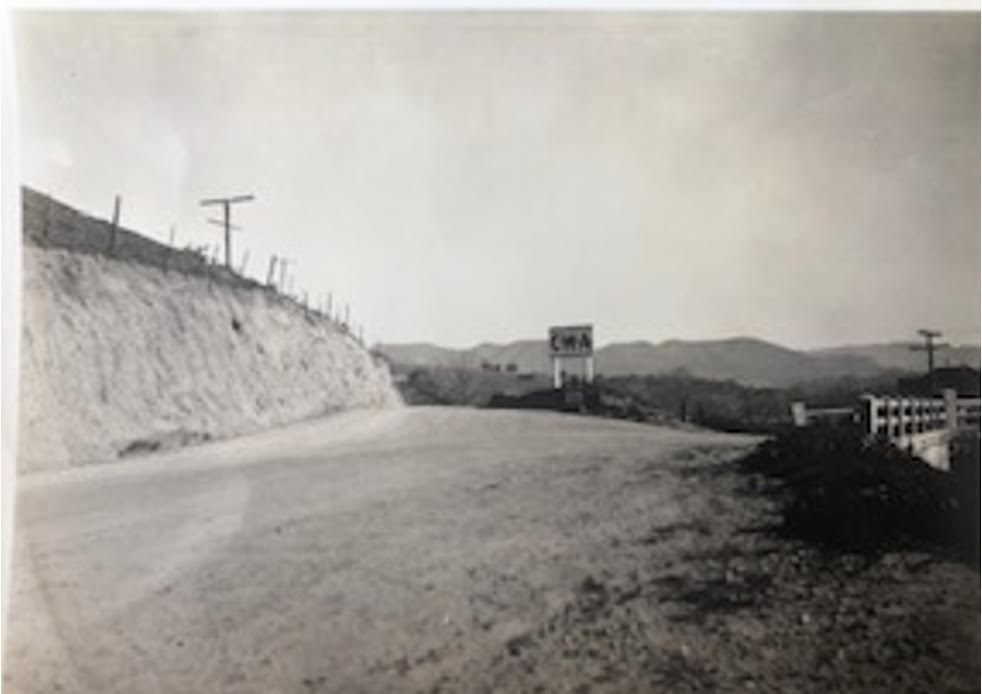
Twenty-three years later, we moved into the house just past the bridge, on the left.
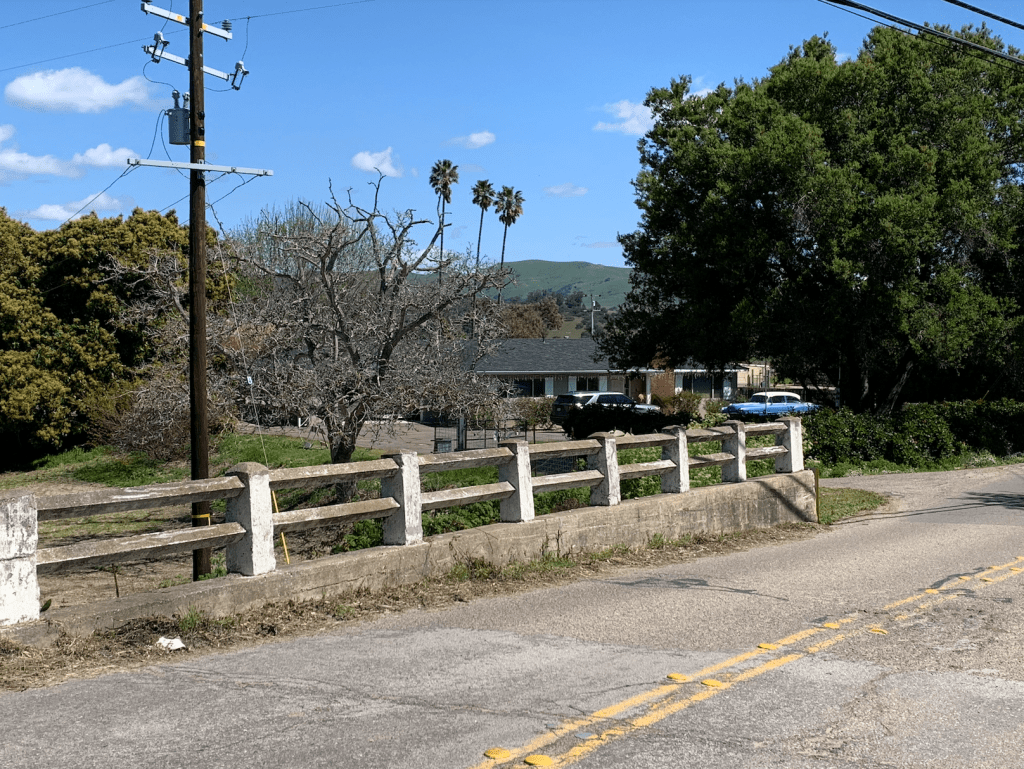
So it’s figured a lot in my writing. From World War II Arroyo Grande:
That month, in the Upper Arroyo Grande Valley of coastal California, this is what you would see, if not clearly, because the cold morning fog can be dense: labor contractors drop off pickup loads of field workers at the Harris Bridge, which spans the creek that gives the valley its name and that nourishes it.
The workers cross the bridge whistling, an incredibly beautiful, almost baroque whistling, Mexican folk tunes from the time of the Revolution, or love songs, as they walk down to the fields to their work with their lunches–wine-jugs filled with drinking water and perhaps chorizo-and-egg burritos, wrapped in wax paper, the fuel a man needs to do the kind of physical work that would make most men sit in the freshly turned field, gasping and woefully regarding their quickly-blistered hands, within fifteen minutes.

Their summer work might be in a new bean field and the whistling would stop because it is such a tax on men who work beans, whose breathing soon becomes laborious and therefore precious. To begin a newly planted field of beans, the field workers have to drive wooden stakes into precise parade-ground lines along the furrows, so that the bean vines can use the stakes to climb and twist—they will eventually yield bell-shaped flowers–toward the sun.
The sun invariably appears in late mornings when it burns the sea fog away and the colors of the valley, wheaten hills and verdant bottom land where the crop is in, are reborn, vivid and sharply focused.
To drive the wooden stakes, the field workers use a heavy metal tube, hollowed, with a handle attached that resembles that of an old-timed pump primer pioneer men and women once used to draw water out of the ground. So the whistling stops and is replaced by the rhythmic ring of the stake drivers as the workers pound hundreds of them into the field.
It is a musical sound, but, of course, what you cannot hear are the grunts of the men at each stroke of the stake driver and what you cannot feel is the enormous weight that exhausted arms and shoulders soon take on and what you cannot avoid, if you think about it sensibly, is admiration for the men who feed you. In turn, they are determined to feed families who live in camps or tarpaper shacks in the Valley, or, for some, part of the work force that will dominate agriculture here for the next twenty years, for families who are living in the tier of states of northern Mexico.
This is what the creek looked like this spring in this view from the bridge:
From a blog post inspired by that scene this spring:
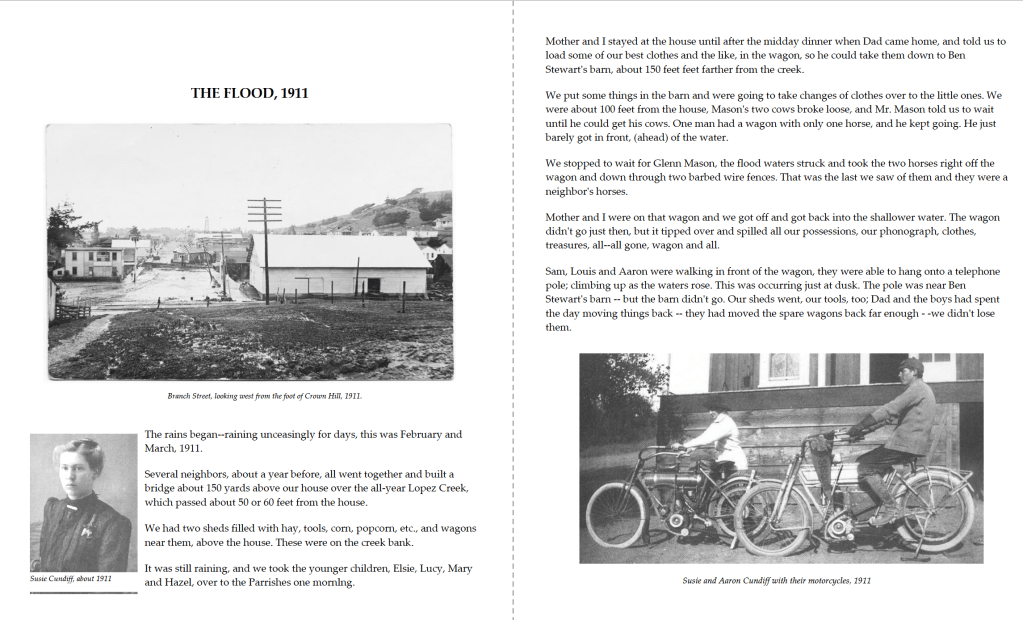
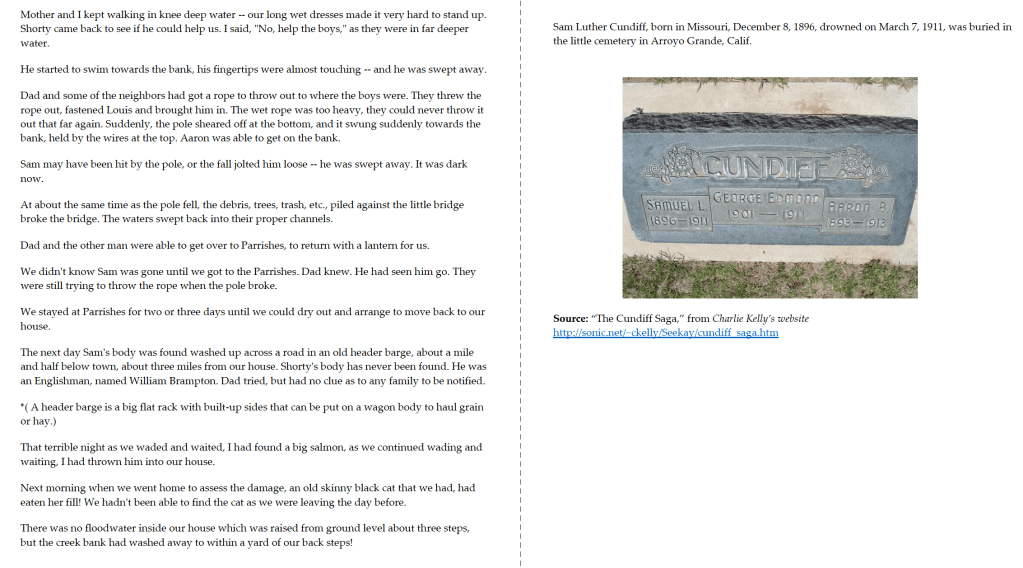
–The Harris Bridge. Before the bridge, this was near the spot where fourteen-year-old Sam Cundiff drowned in the flood of 1911.
Our house was (and is, much improved) just over the bridge, which was built, I think in 1927, [it was 1923] when Lopez Drive was called Musick Road. I was very happy to see that our walnut trees, just beyond that bank of Queen Anne Lace, are dead. I hated harvesting walnuts, stoop labor, and your hands and nails were black for weeks. Walnut trees used to cover the fields between the high school and Halcyon Road before an insidious pest, the husk fly larvae, began to kill them. I did not much mind. The only way I found walnuts tolerable was in my Mom’s chocolate-chip cookies.
In the winter of 1968-69—you can get a sense of it from the video above—the creek rose above that chasm and spilled into our walnut orchard. There were ponds and lakelets in the Upper Valley for months afterward.
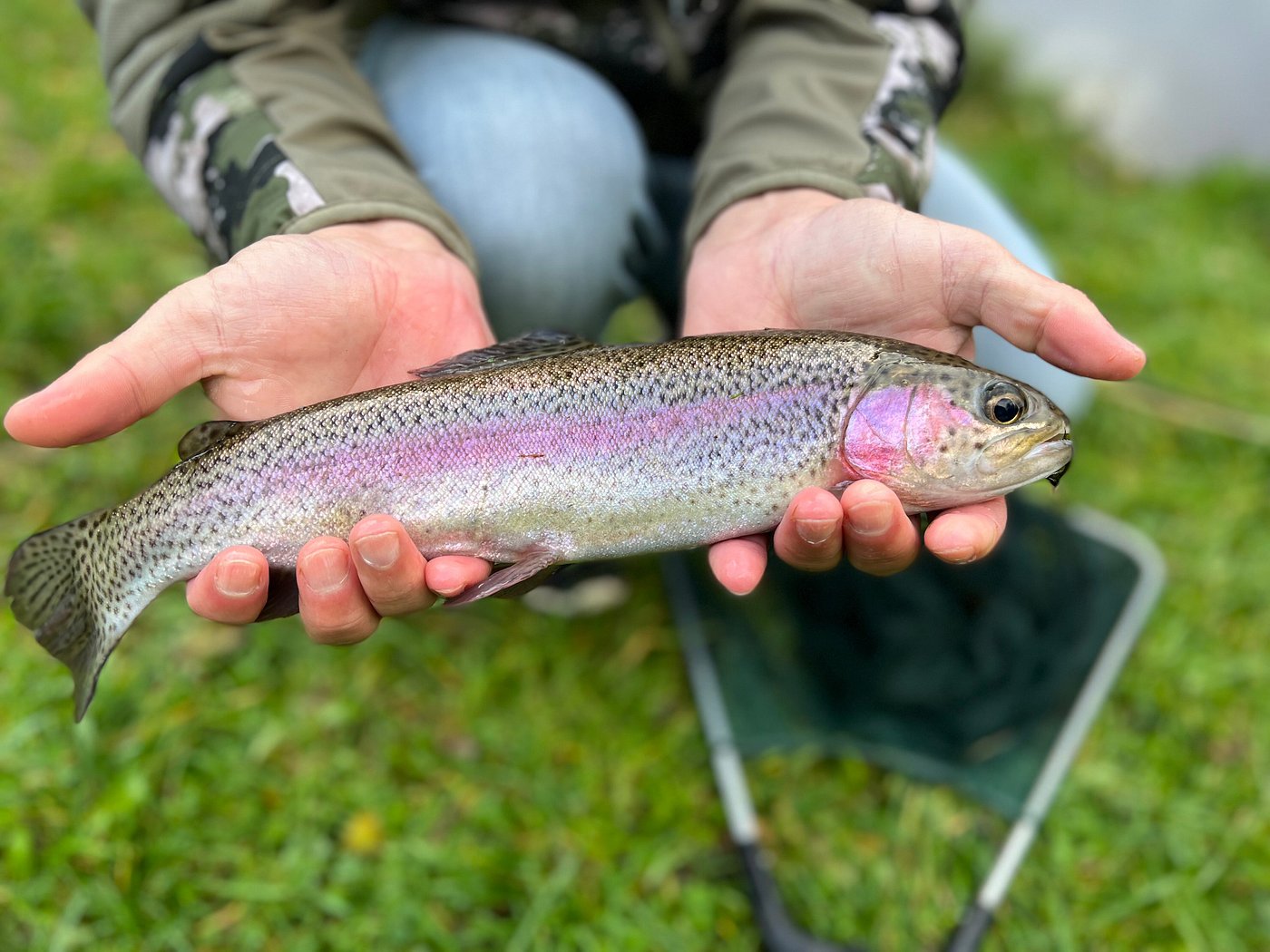
I used to catch rainbow trout in the chasm below and, of course, I did NOT catch the big female steelhead who hit my line one afternoon. She was so fierce that I nearly had a twelve-year-old heart attack. It was glorious the way she broke the surface, with a terrific splash, and it was only seconds before she snapped my leader and went upstream for the business of motherhood...
Once my friends and I found the heads and innards of two spike bucks—yearlings, illegal to hunt in California—tossed over the side of the bridge by the hunters who’d butchered them and who wanted to get rid of the evidence. We pondered their remains, appalled, for a long time as the creek rushed past.
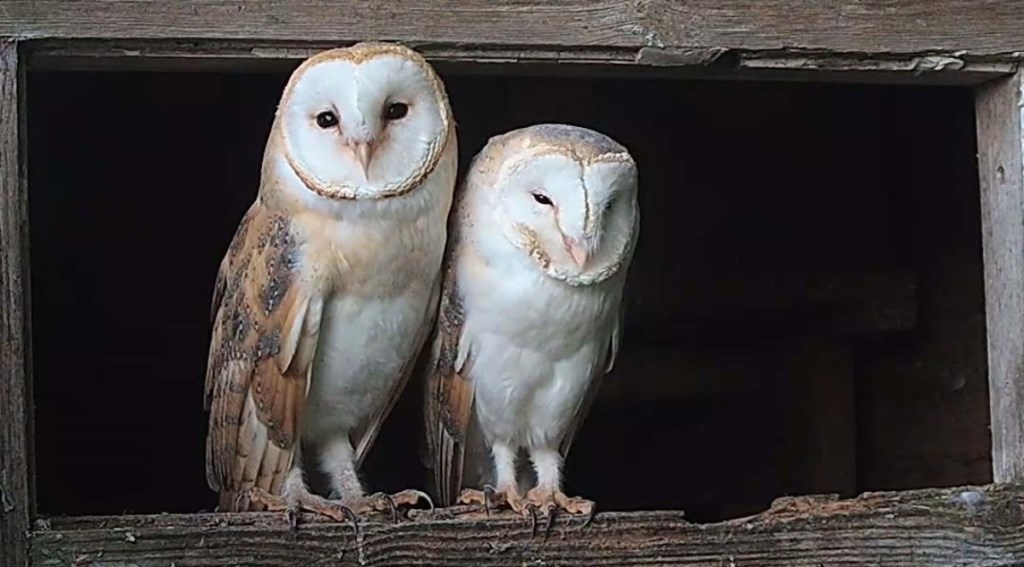
But once, on a ledge just below the bridge railing, I saw two barn owls asleep, one’s head sweetly on the other’s shoulder. I will never forget them.
I wrote about what happened to the Cundiff family at just about the site where the bridge would be built twelve years later. You can click on each image to enlarge it:
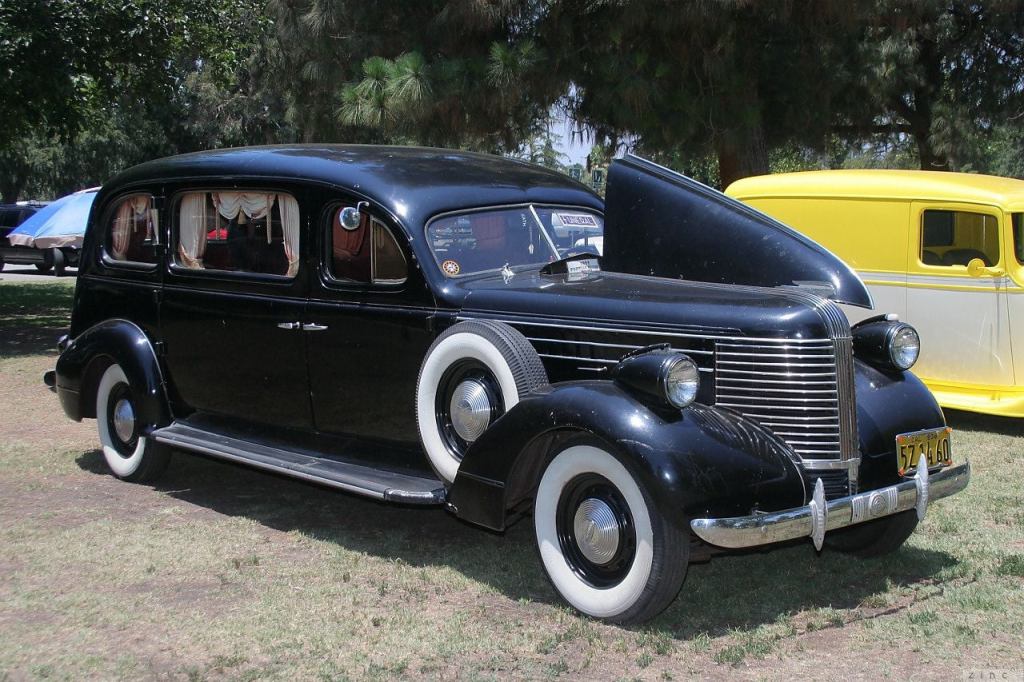
And since our house fronted Huasna Road, I got to know every car (a lot of celery trucks, too) as it approaced the bridge, including Michael Shannon’s hearse:
I grew up near the Harris Bridge, at the intersection of Huasna Road and what is now called Lopez Drive. So a favorite pastime was waving at neighbors as they approached the intersection.
–Mrs. Coehlo, a stunning woman (Wait, that’s not the right word. One of the most beautiful women I’ve ever known.), and so nice, drove a navy-over- powder-blue 1954 Cadillac.
–The Esteban family, including my friends Frieda and Paula, had a kinda funky light gray 1952 Plymouth.
–Glenn Cherry had a 1968 green Pontiac GTO. Forgive me, but in the argot of the times: Bitchen car. 400 cubic inches under the hood. (Glenn’s was green. Stone Saruwatari’s was a kind of midnight blue. Stone’s daughter, Gayle, was, I think, one of the prettiest girls at AGHS, so seeing Gayle behind the wheel caused teenaged males to tumble like felled redwoods when she drove past.)
–Sometimes a woodcutter would drive past in a ’58 Chevy pickup. We lost a Beagle named Snoopy once. Then we saw him, months later, his tongue wagging happily, atop a load of the woodcutter’s red oak.
–Cayce Shannon drove an orange VW bug.
–The Berguia family had a 1958 Chevy wagon–the only year they came out with the taillight design seen on Ron Howard’s Chevy in “American Graffiti.” There were a LOT of Berguias, which is a good thing, because they’re such a marvelous family, so the wagon was usually packed. I interviewed Jean Wilkinson Frederick, whose father owned the meat market on Branch Street, and she still has the ledgers. The first page I opened, there was Mr. Berguia’s tab. I know it doesn’t seem like a big deal, but I was thrilled. He paid on time, by the way.
–Occasionally a Sheriff’s deputy would drive by. The cars then were silver, and deputies wore straw cowboy hats. When I was five, my Mom asked one of them if he’d give me a ride. No problem. He punched the gas and let me hit the siren button. That was a great moment in my life.
–It’s kind of cheating, because he drove past the bridge, not over it, but Arroyo Grande High School principal Earl Denton drove a 1960 Ford Falcon, the brainchild of Robert McNamara, who also brought you the Vietnam War. Denton was so incredibly tall that you could almost see his kneecaps just under the Ford’s steering wheel.
–My speech team partner Jon Bolton drove a 1954-ish, tan-ish–there was a lot of “ish” about Jon’s car–Chevy station wagon. Once he stopped in front of our house with a leaky radiator. We chewed a lot of bubblegum together to plug the leaks.
–Mitzi Ikeda drove a 1964-ish Ford station wagon. Mitzi liked to drive fast, so you had to wave real quick.
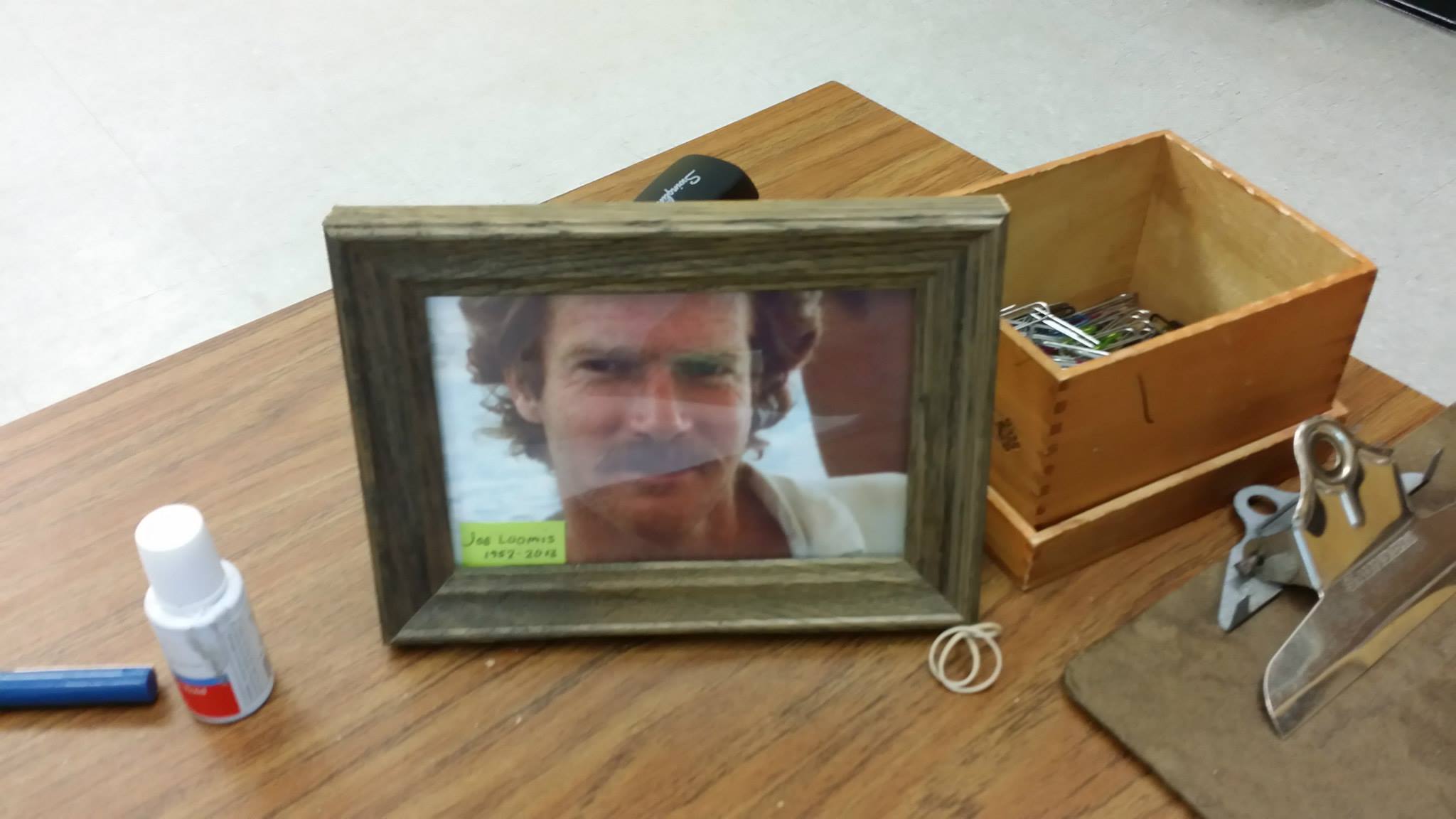
–My speech team partner Joe Loomis drove an eminently practical 1964 blue Chevy Nova. When my Mom died, he showed up in our driveway in a blue Jeep. “Hop in!” he said. The Loomises took care of me for awhile.
–Manuel and Johnny Silva drove also eminently practical Ford F150s. When they weren’t driving by our house, they were stopped cab-to-cab in the middle of Huasna Road talking about garbanzo beans, I guess, even though they’d just had breakfast together at Sambo’s. A car would pull up behind them, and they’d pull to the side to let the car pass. That wasn’t enough. They’d wave cheerily at the driver. The Silvas kind of invented “Have a Nice Day!’ about forty years before some other guy took credit for it.
But by far my favorite car–the whole family’s, in fact– was Michael Shannon’s Pontiac hearse, I think a 1938 model. It was for his surfboards, of course.
The hard-packed dirt between the bridge-rail that fronted Huasna Road (now Lopez Drive, before that Musick Road) was our bus stop for Elsie Cecchetti’s little Branch school bus. Later, for high school and Bus #34, driven by Betty, it was the Four Corners, where we waited with a bunch of Polettis and Evensons, nice company indeeed. So I associate the bridge, the Branch School stop, with Elsie and with Mary Gularte, and with Richard Ayres’ corn, which we covered in wet gunny sacks and sold from a pickup bed on the same spot. We were sunburnt strawberry red by sundown.
Elsie Cecchetti was our bus driver. In the same way that Louis Tedone was SLO’s baby doctor. Elsie was everybody’s bus driver.
Yes, I go back to the days of Branch School’s yellow pickup with bench seats and the tarp overhead, when we bounced happily over creek crossings.
We waited for her at the Harris Bridge.
I think she had mechanical problems one morning–and it was a cold one–when Mary Gularte took me inside from the bus stop for some sopa. That was a good morning.
Both Mary and Elsie called me “Jimmy.”
We tormented Elsie with “99 Bottles of Beer on the Wall” and then, in 1964, with “She Loves You,” ” I Want to Hold Your Hand” and she always headed us off in “The Name Game” song, before we got to “Chuck.”
And I always looked over the edge of the bus window as she drove confidently up Corralitos Canyon. There were some good drops there, but Elsie knew what she was doing. At the Canyon’s end, past the Dentons, she made a three-point turn that the California Department of Motor Vehicles should have filmed for posterity.
I remembered that ther’s a plaque on the bridge with the names of the Board of Supervisors that commemorates its completion one hundred years ago. I had sense enough to ask that it be donated to the South County Historical Society, so at least that small piece of a bridge that’s felt the weight of so much history—and so much weight!—will remain with us.

17 Thursday Aug 2023
Posted in Arroyo Grande, Uncategorized
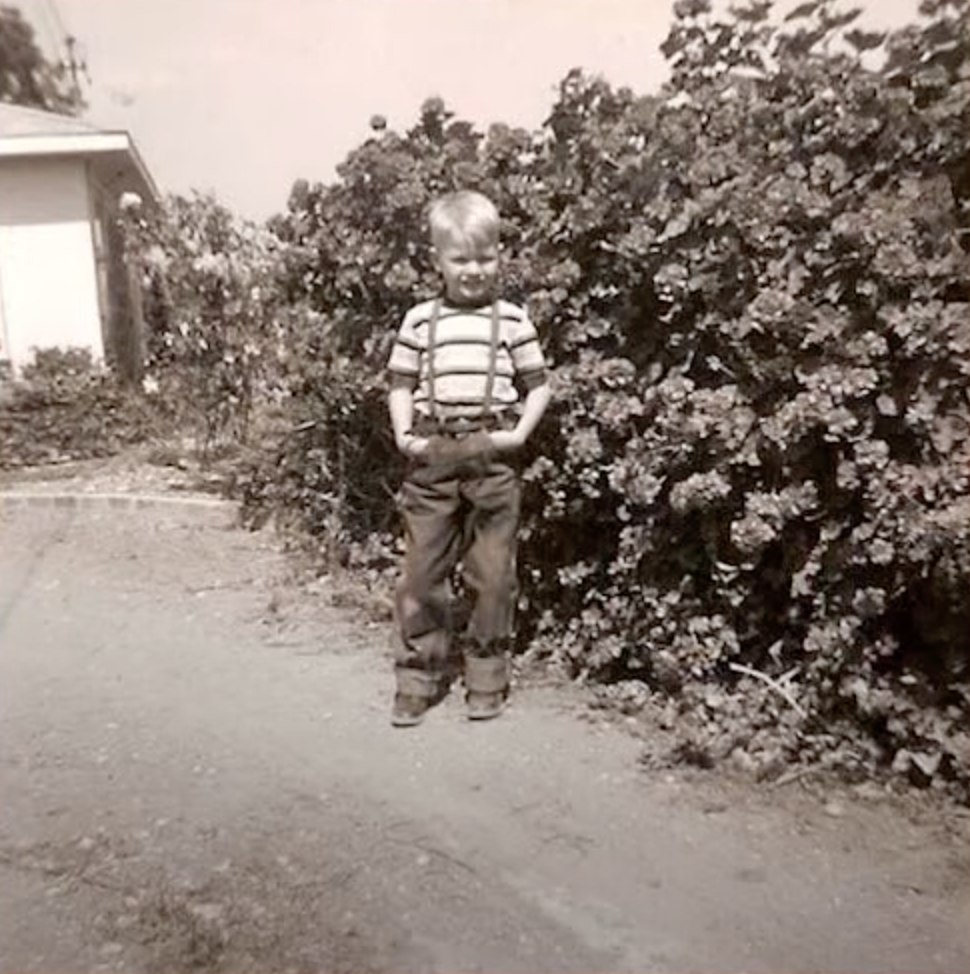
My first day of school, Branch Elementary, 1958. First through fourth grades met in the right-hand classroom, fifth through eighth in the left.
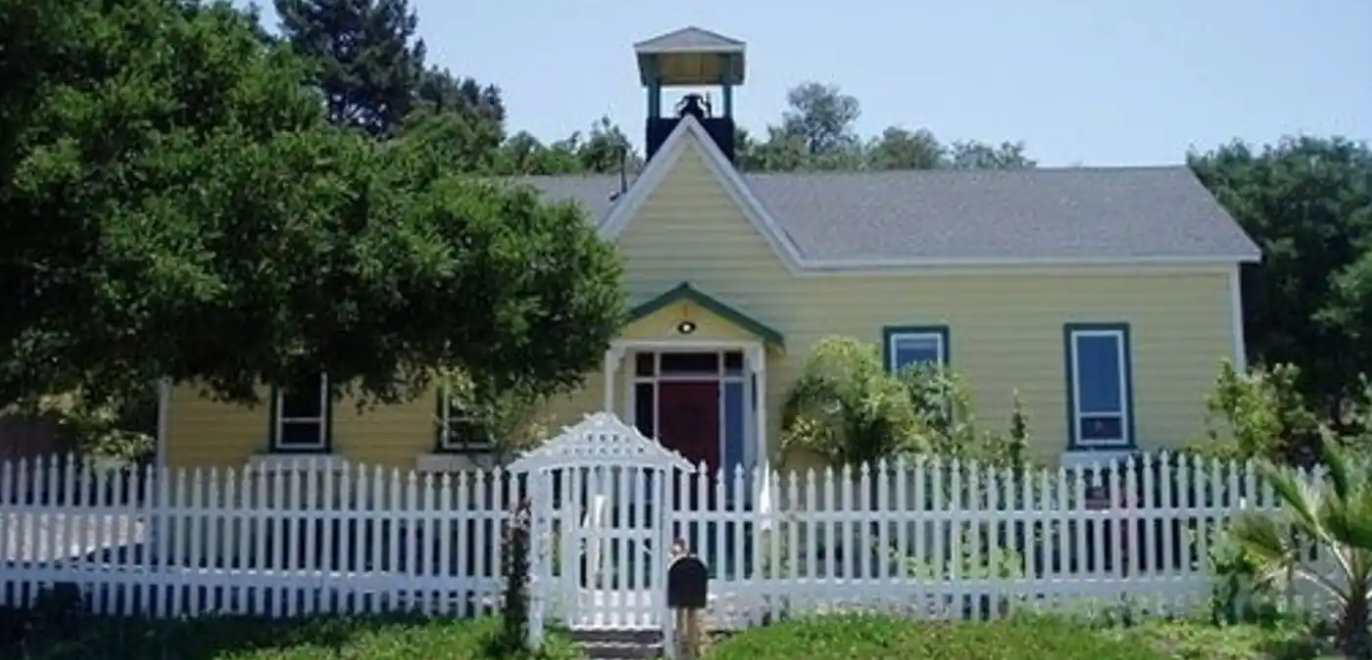
I could read my classmates’ names as our teacher, Mrs. Edith Brown, wrote them on the board. Fifty years later, I realized that my Mom, a remarkable woman, had already taught me how to read.
Each teacher taught six subjects to four different grade levels simultaneously. First grade might be in a reading circle, second at penmanship (those big green pencils and the coarse paper with those big green lines), third reading “My Weekly Reader,” fourth doing a multiplication worksheet.
My teachers were remarkable, too. I got a superb education.
17 Thursday Aug 2023
Posted in Arroyo Grande, Uncategorized
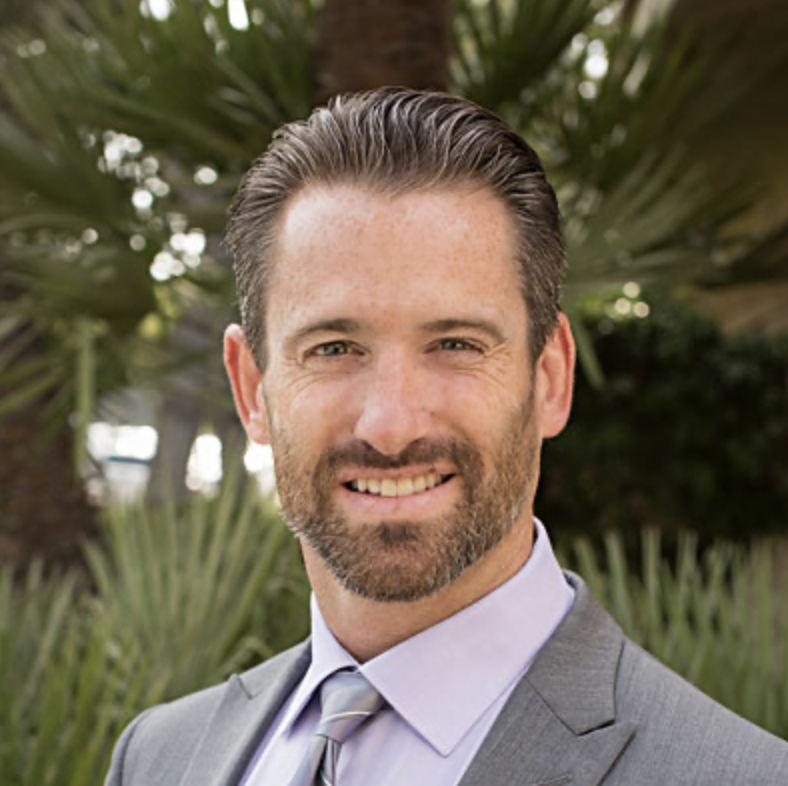
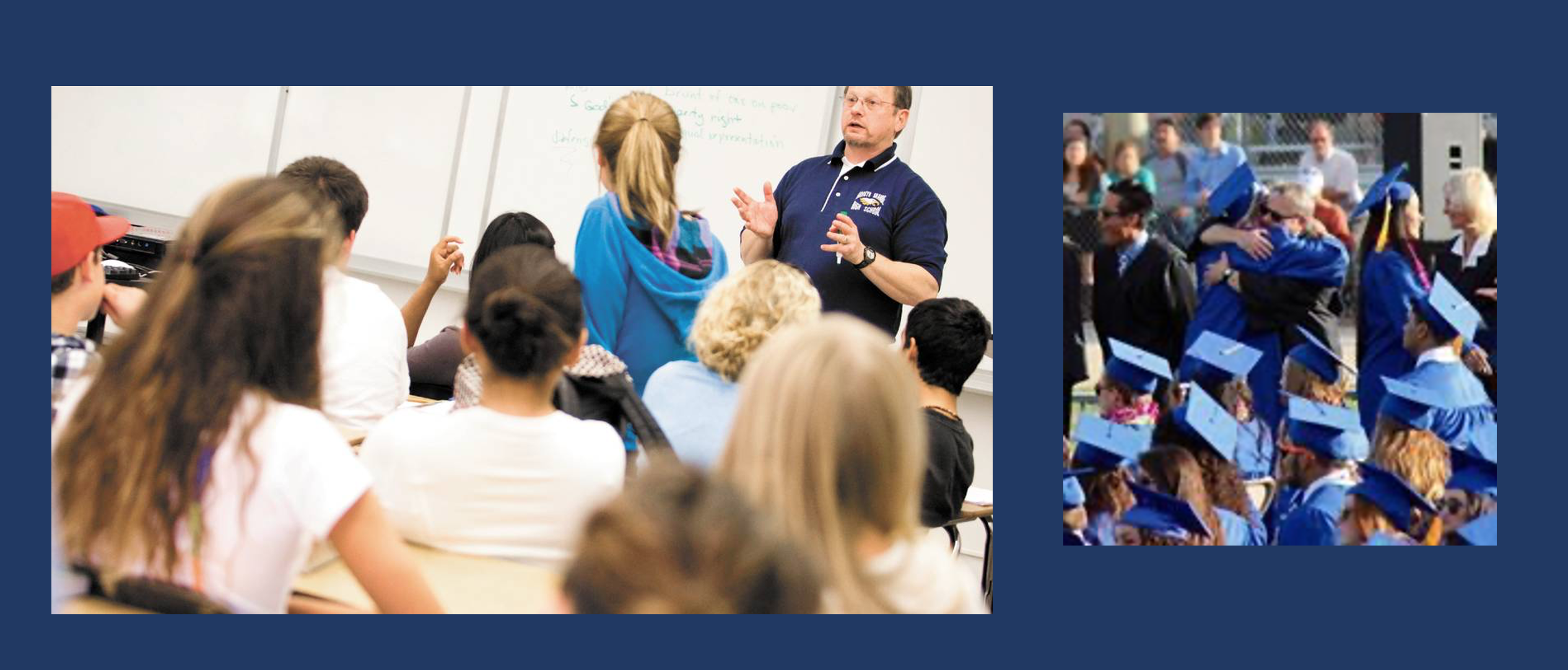
My life’s been punctuated by awards. Three of my books, on local history, have won national recognition. For thirty years, I taught literature and history at Mission Prep in San Luis Obispo and at my Alma Mater, Arroyo Grande High School. I was a Lucia Mar Teacher of the Year. I’ve had three babies named for me. They are far more meaningful awards.
I have the devotion of thousands of students, some now in their fifties, who somehow still love me—I just don’t understand this— every bit as much as I have always loved them. At least nine of them teach history. Two of them are specialists, university professors, in areas dear to me, military history and the history of farm labor.
And I am an alcoholic. I am, as a writer, very open about that.
That’s why I’m devastated right now. My primary care doctor, Scott Davis, died unexpectedly yesterday. He was caring, funny, extremely bright and he actually listened to you.
He was also relentless in badgering me—somehow he did this gently—about my drinking. I mean no disrespect, and I have no proof, but I somehow had a hunch that he’d had demons, too—like all of us—at points in his life. That made him both my hero as well as my doctor. He was, to borrow the wonderful Yiddish word, a mensch.
I made two appointments with him earlier in the year and broke both of them because I hadn’t stopped drinking, was ashamed, and I didn’t want to disappoint him. That’s how much he meant to me.
I had an appointment with him in October, and I didn’t want to let him down again. That’s why I’m getting help now and that’s why I’ve been sober for ten days. This was for Scott.
I wanted so much to come into his office and hear him say, as he had a few years back when I managed a brief burst of sobriety, how healthy and alive I looked. I wanted to hear him say that in October.
I won’t get the chance to hear him again. I do have the chance to honor him by staying sober.
A doctor named Dykes Johnson delivered me. He was a private pilot at an air meet in Shafter and got the call, from Taft, that my Mom had gone into labor a month before I was due. Dykes had a hunch and flew back to Taft. I was both premature, at four pounds, and the umbilical cord was wrapped tightly around my deck. I was being strangled. Dykes arrived, intense and worried, burst through the delivery room doors, roughly shoving my Dad aside, and saved my life.
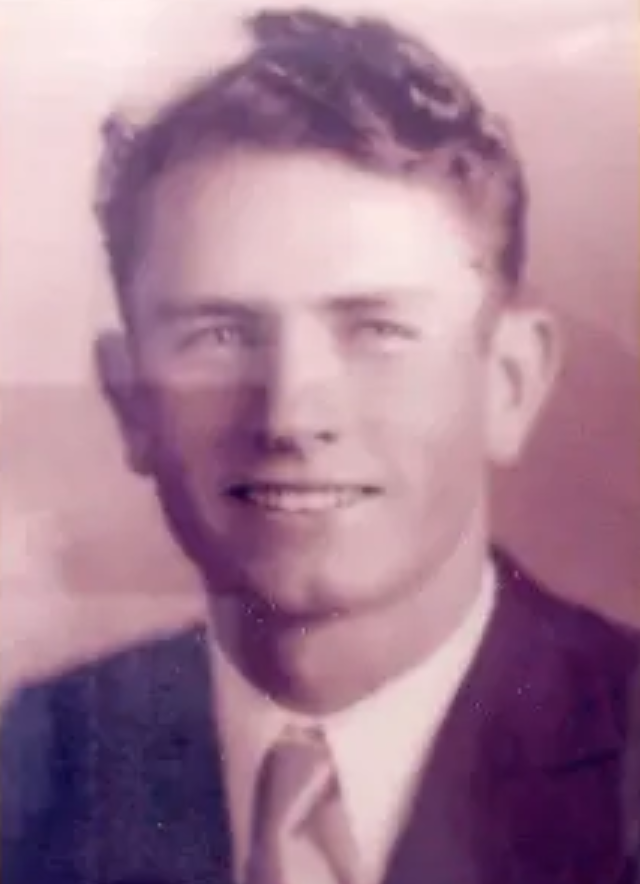
How blessed I am, at seventy-one, to have known the best doctor of my adult life in Scott. He saved my life, too.
I will not let this good doctor down again. I will never forget him, either.
11 Tuesday Jul 2023
Posted in Arroyo Grande, Personal memoirs, Teaching, Uncategorized
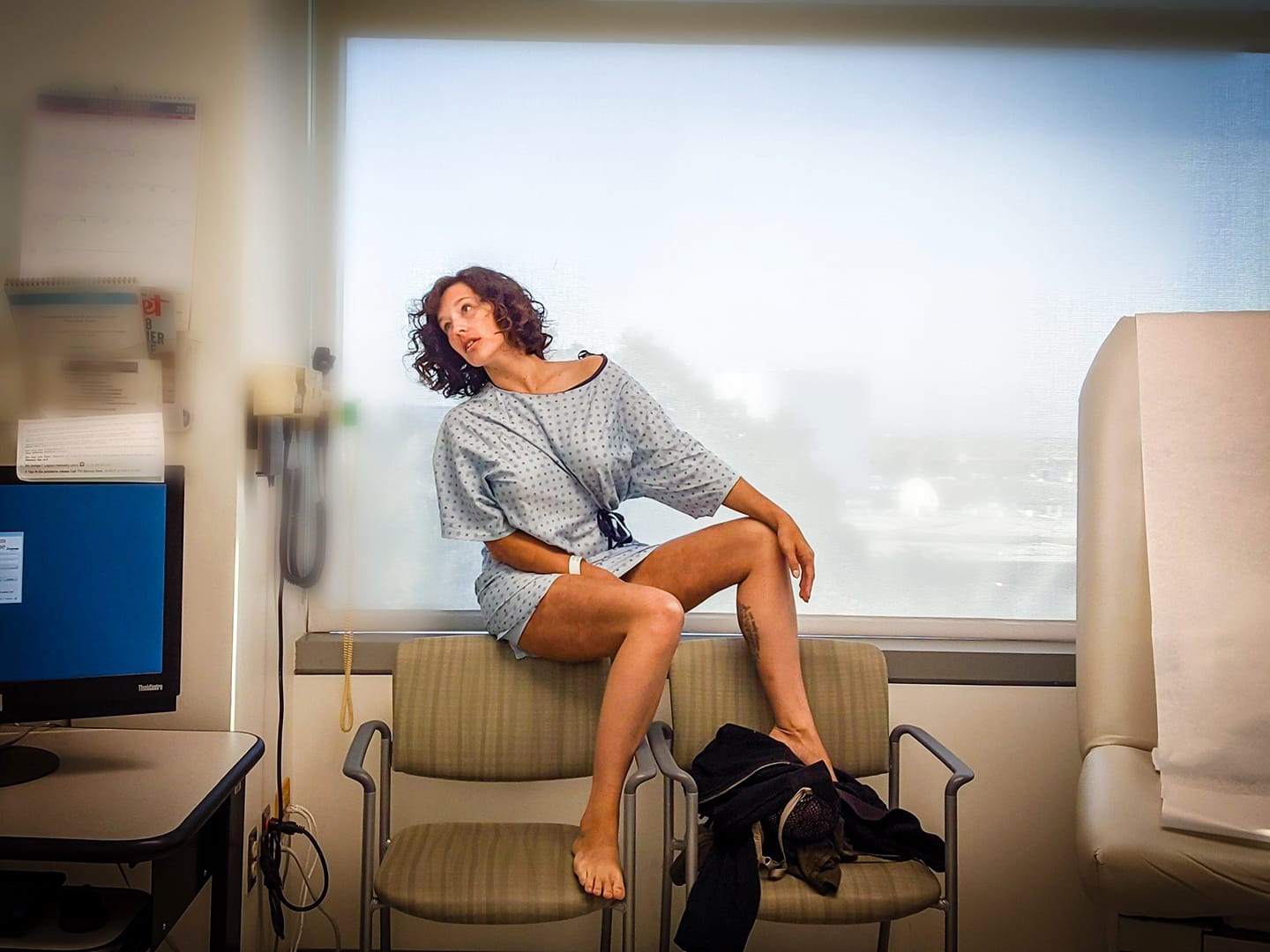
There is so much to say about Britt, whose life was so vast.
But there’s one thing that I need to say:
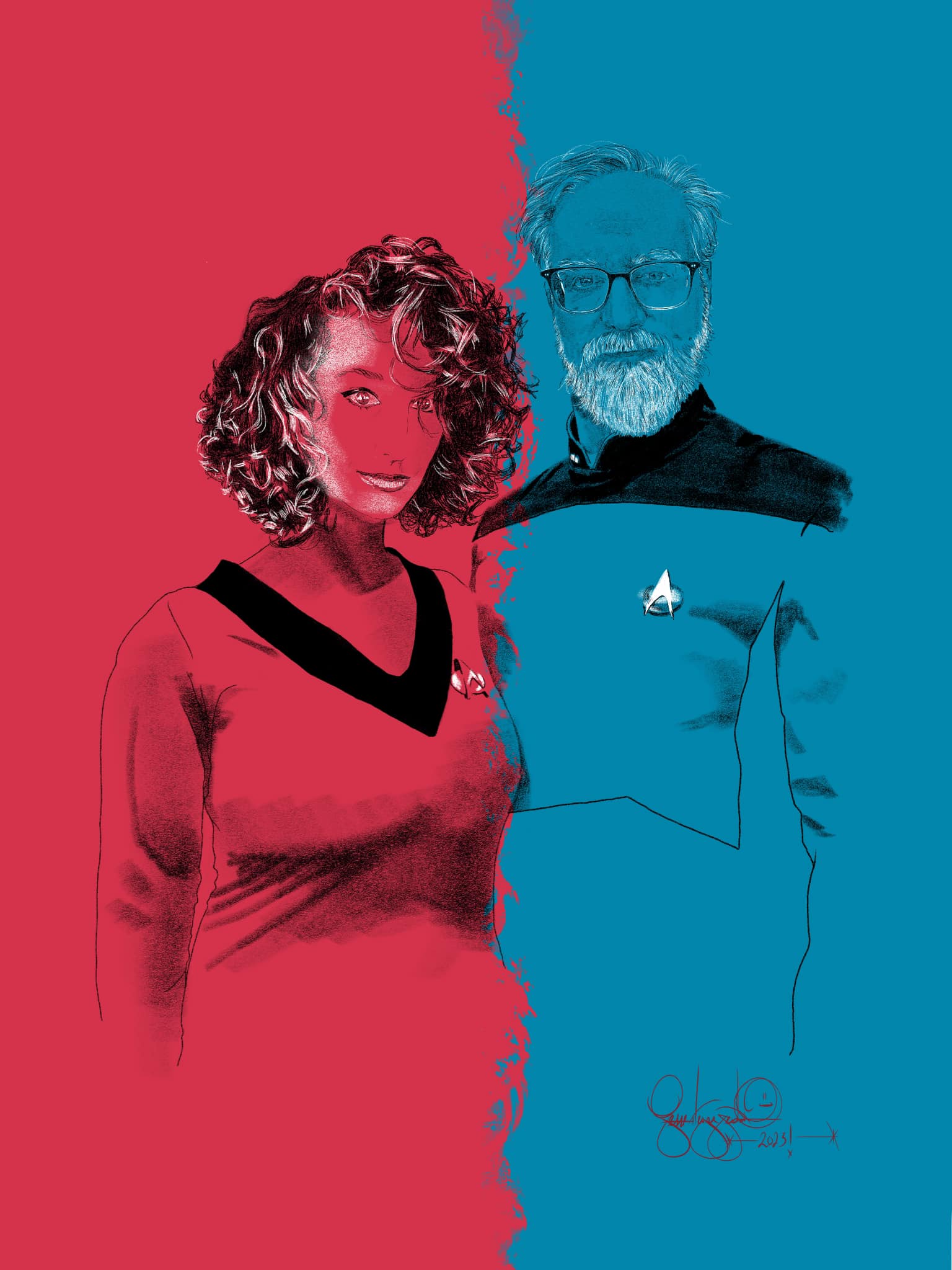
Britt and I are total nerds, and it is Star Trek that has makes this so.
Before we knew that, she was my student in AP European History at Arroyo Grande High School. That’s when I realized, in reading her essays, that she was gifted beyond measure.
I was adamant about writing clear essays. It brought out my Napoleonic Complex, and maybe Mussolini, too.
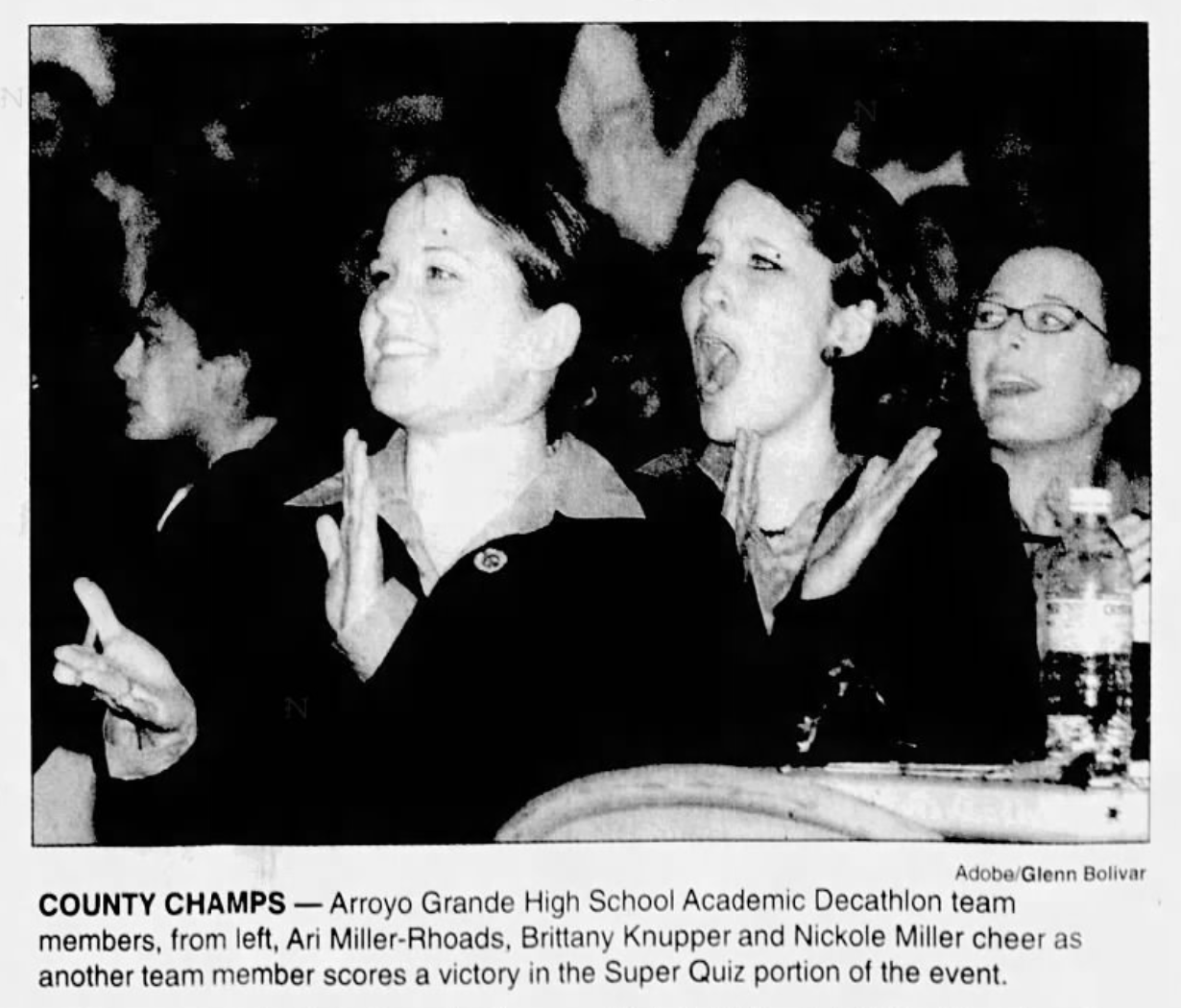
When you have seventy history essays to grade, you play a trick on yourself. You grade in a nice coffeehouse with a latte nearby. And you bunch essays in groups of five so you can take a moment for a break at the end of each group.
On your break, you take a sip of your latte and glare poisonously at the other people in the coffeehouse because they are having fun.
And at the bottom of each group of five essays you insert one that you know will be good. They are the correctives to the bloopers you can find in student essays, like the classic Abraham Lincoln was born in a log cabin he built with his own hands.
Britt’s essays were always at the bottom.
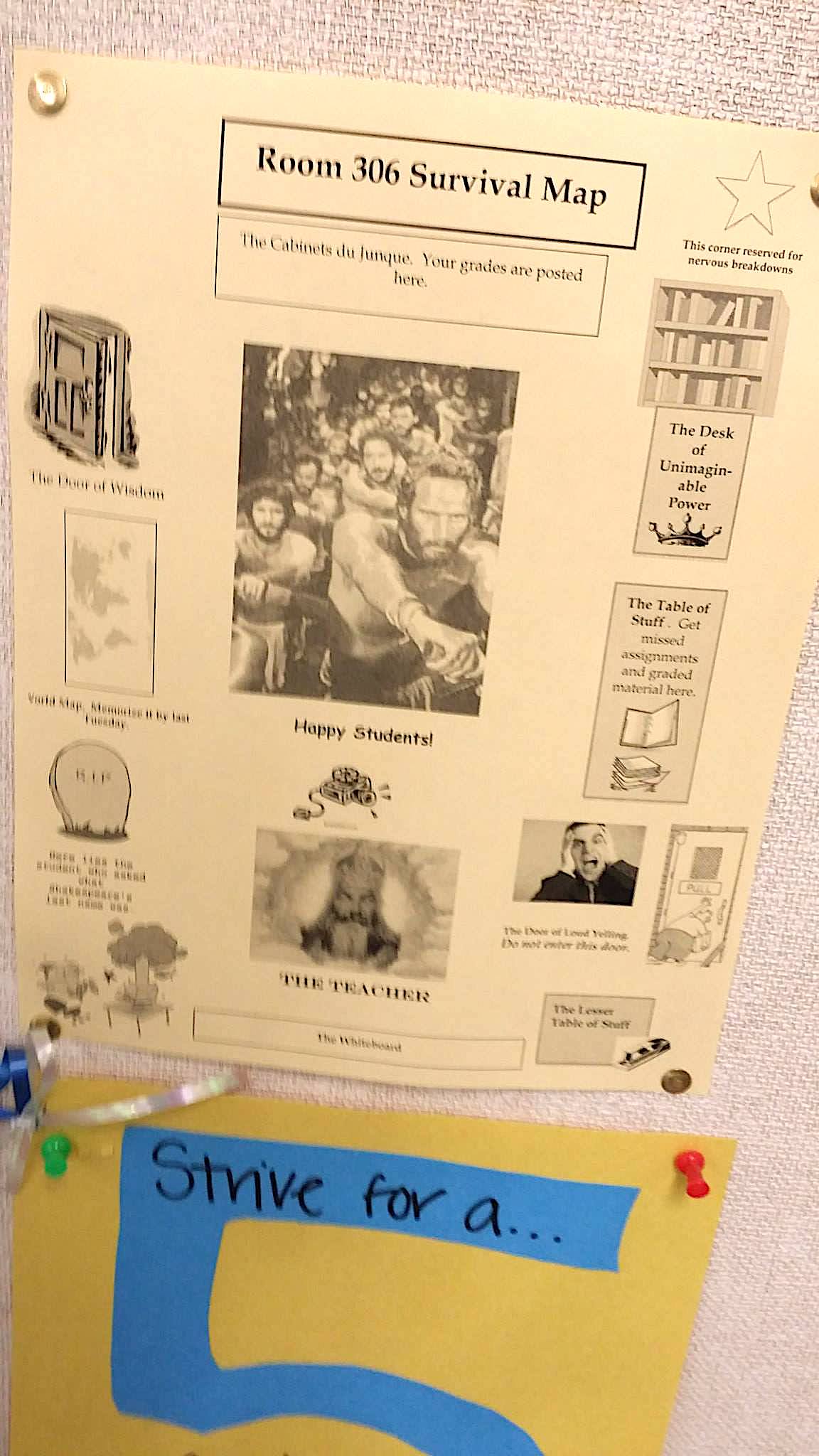
She sat in the first desk in the third row from the bank of windows in Room 306 at AGHS. She was quiet. When she asked a question, it would be a zinger, albeit one marked by guileless curiosity. The question revealed, too, that her mind traveled at warp speed in galaxies far beyond ours.
But a Britt question could take me in a different direction, far beyond my lecture notes. Suddenly, she reminded me, it was story time. This was why I became a history teacher.
So we might leave London in 1666 to visit London in the summer of 1944. There, on a barstool in his favorite pub, was Lt. Dad, enjoying a pint of Watney’s Red Barrel.
There was an air raid going on.
In between the wails of the sirens, you might hear the ugly growling cough of a V-1 flying bomb high above Regent’s Park. But my father refused to take shelter. It was a matter of principle. He refused to abandon his pint to Nazi Terror.
And so he won an honorary commendation for Meritorious Drinking Under Fire.
I think Britt liked that story.
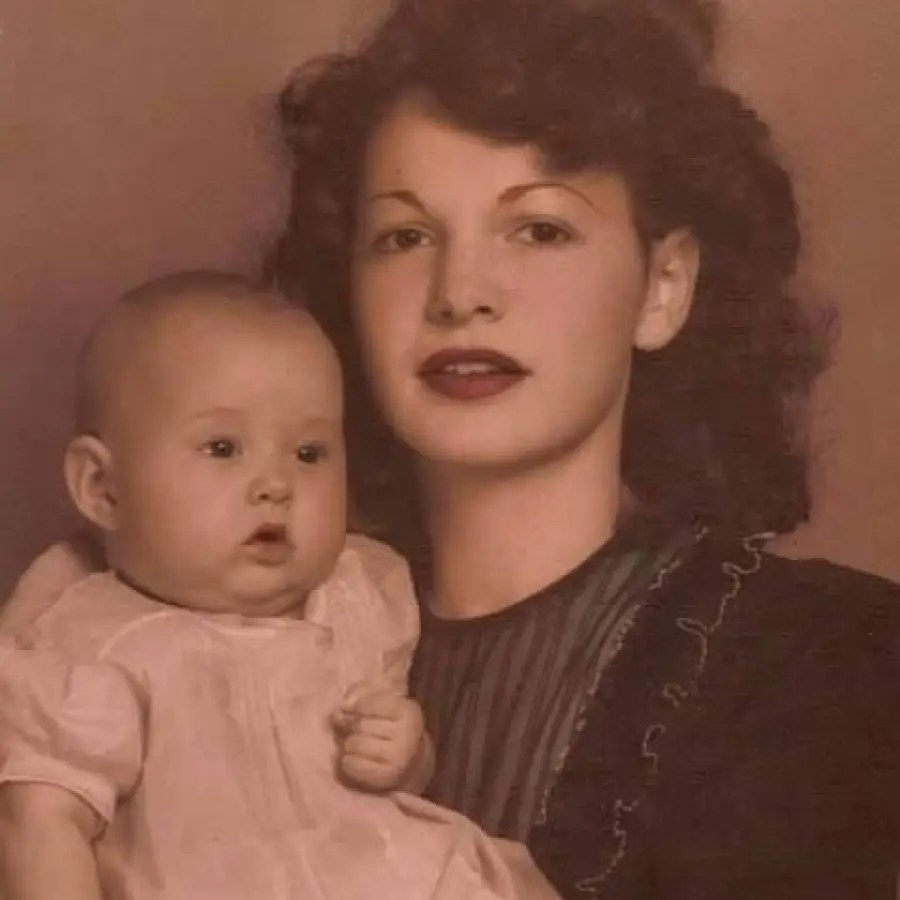
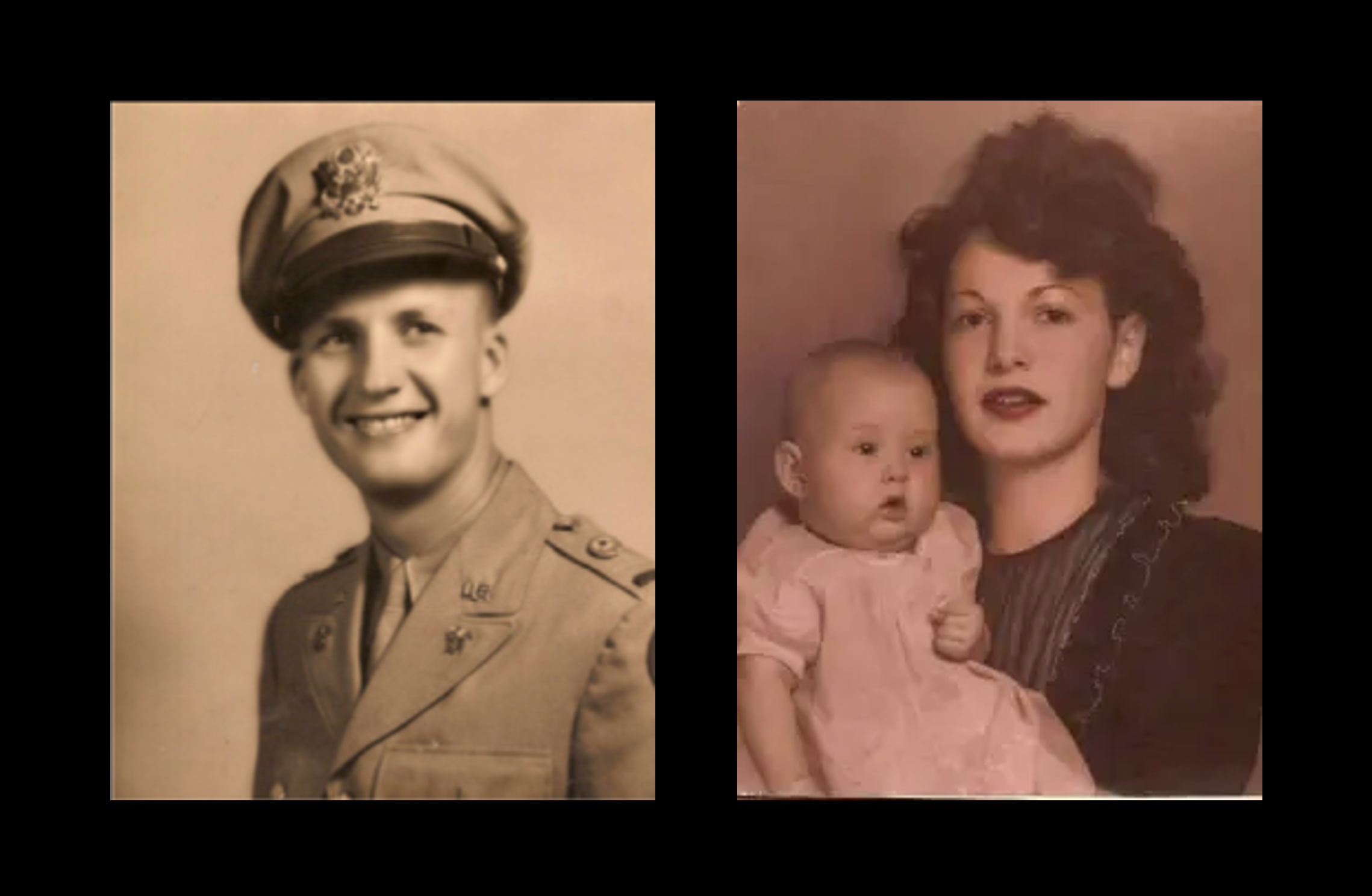
Here are Lt. Dad, 1944 and Mom with my big sister, Roberta, 1943.
Her fifth-grade teacher, Mary Hayes, told my wife Elizabeth that she’d had the identical experience. Britt was quiet in class and then she’d ask a question that left Mrs. Hayes, just like me, gobsmacked. Both of us adored her.
Years after high school, Britt and I found each other on Facebook, my preferred method for procrastinating. That’s when I began to follow her writing career. I found out, too, that we were brother and sister Trekkies.
The breadth of Britt’s writing, from political commentary to gender issues to the arts, was vast. She was insightful, funny, and, when it was deserved, she could use ink to draw blood.
She had discovered her voice. Rather, she had revealed the voice that had been there all along.
And she was wicked funny.
–She described the barren planet where Luke Skywalker grew up as “the Modesto of the Star Wars Universe.”
–Excited by the prospect of a film that would reunite the original cast of Star Trek: The Next Generation, she wrote “That’s right, everyone. Set your phasers to ‘cry’.”
–She wrote about Kyrsten Sinema, “our manic-pixie senator from Arizona,” and archly compared her to Veruca Salt, the brat who disappears down a garbage chute in Willy Wonka.
She interviewed actors and writers and producers in the Star Trek franchise we both loved. So we remember together Tribbles, Romulan Ale, Jefferies Tubes, McCoy snapping “I’m a doctor, dammit, not a coal miner!” and Picard snapping “Shut up, Wesley!”
We were both big fans of Captain Janeway from the series Voyager.
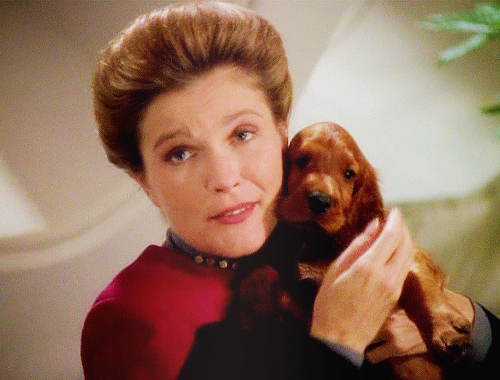
We admired her love of coffee. When Voyager’s food replicator broke down, Janeway, in her withdrawals, wanted to strangle the ship’s cook, who’d offered a kind of interstellar Sanka. The cook was irritating, so we empathized with Janeway.
Britt did a piece on the Star Trek Series and ranked them from worst to best. “Best” Honors, according to Britt, went to Deep Space Nine, about a space station that was kind of a 24th Century Dodge City,with Avery Brooks’s Benjamin Sisko and Terry Farrell’s Jadzia Dax.
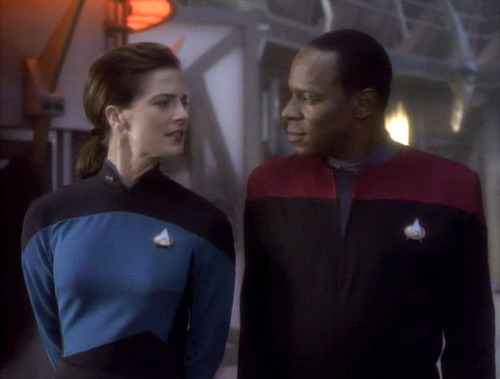
What stunned me is that this was my favorite, too, but I never had the courage to come out and say it. Britt did.
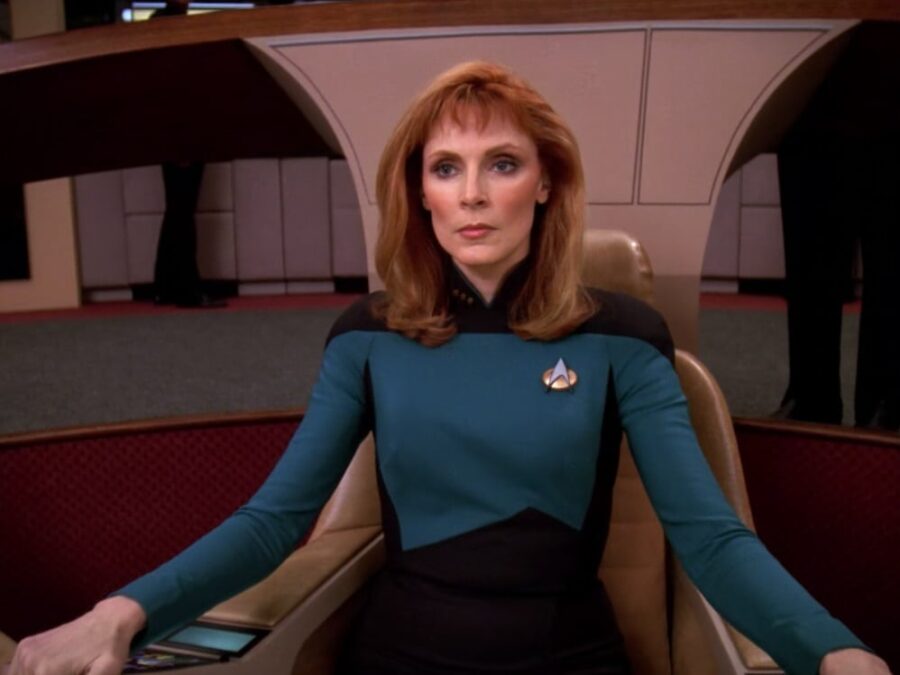
But it was Gates McFadden, Dr. Beverly Crusher in The Next Generation, who sent Britt a video message of comfort that comforted me, too.
I’ve taken comfort, too, in two Star Trek films. In The Wrath of Khan, memorable for Ricardo Montalban’s impressive pectoral muscles, Spock saves the Enterprise.
He does so by jump-starting the warp drive, which involves inserting himself into the matter-anti-matter chamber. And so he dies.
They shoot Spock out into space in what looks like a jumbo Prozac capsule.
And, of course, in the next film, The Search for Spock, he comes back, all of him, including the arched eyebrow.
Elizabeth and I were watching 2013’s Star Trek: Descent into Darkness, in which Khan is played by Benedict Cumberbatch, who looks and sounds nothing like Ricardo Montalban.
However, since Cumberbatch was once spotted country-western line-dancing at the Madonna Inn, near where both Britt and I grew up, I will let this go.
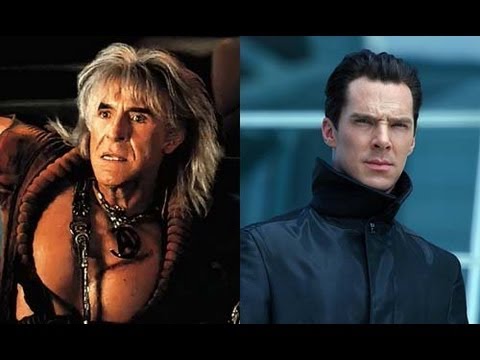
This time, to save Enterprise, it’s Chris Pine’s Kirk who likewise enters the matter-anti-matter chamber, which in my mind resembles an immense and lethal lava lamp. And so he dies.
It’s Bones, of course, who saves him. It’s complicated, but essentially he revives Kirk with the help of—wait for it— a tribble.
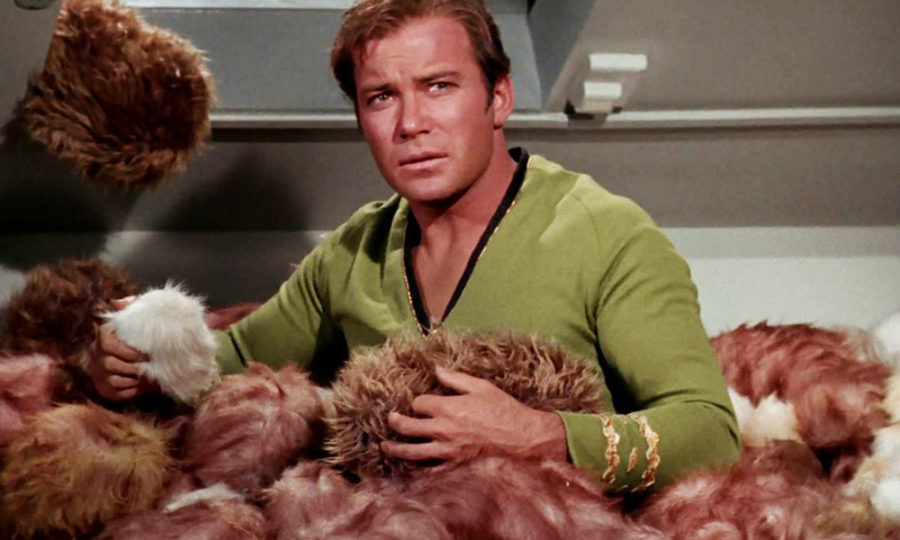
Coming back to life after death isn’t confined to altar boxes or the toolboxes of science fiction writers.
Five years ago, I lost another student, Dawn, to cancer. In my heart, she is Britt’s twin. They share the same audacity.
Both grew up in small towns, but both made careers in L.A., Dawn in film casting and Britt in writing about film.

I heard this at Dawn’s memorial. This is a true story.
Just before she died, a visitor wheeled Dawn into the garden. It was a sunny day and there were two dragonflies flitting among the flowers. Her friend pointed them out, but Dawn had seen them first.
They were her father and grandmother, she explained, come to be with her.

A few days later, when it was over, the visitor left Dawn’s darkened sickroom and walked into the sunlit garden.
Just above her shoulder, there was a dragonfly.
“Hello, Dawn,” the visitor whispered.
Hello, Britt. Your life was vast. So is our love for you.