• About
  • The Germans

A Work in Progress

A Work in Progress

Category Archives: California history

The Department of War

08 Monday Sep 2025

Posted by ag1970 in American History, Arroyo Grande, California history, History, trump, Uncategorized, World War II

≈ Comments Off on The Department of War


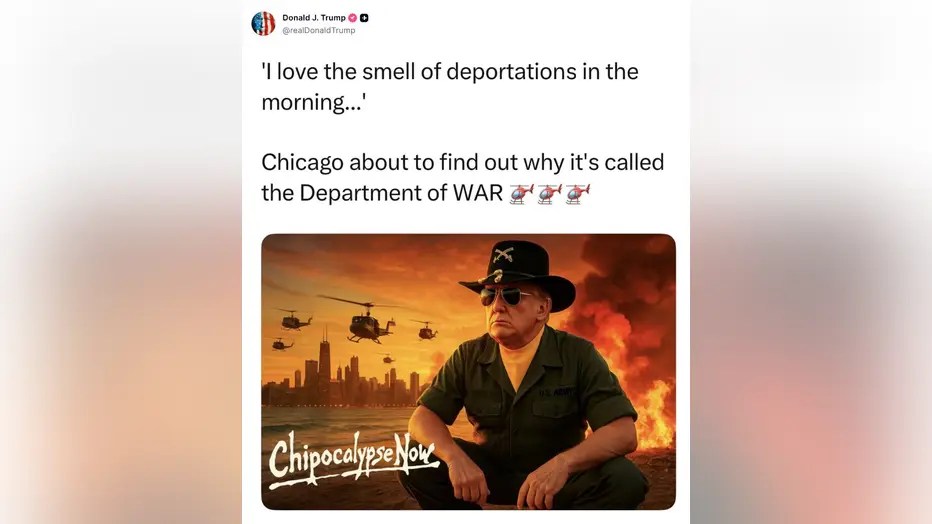
This was Saturday. He’s half-heartedly apologized today: “We’re not going to war with Chicago.” I’m sure, with the bellicose re-naming of the Department of Defense, that Chicago is overwhelmed with gratitude.

War would overwhelm this president* because, like all bullies, he is a coward. It takes so much air to fill him, but he has a kind of army—his sycophants—who stand ready to provide it.

The president* visits London


This is a re-creation of the 1918 Battle of Belleau Wood (the re-enactors are real Marines), but the men who actually fought that battle were called by the first-term Trump, the milder version, “losers” and “suckers.” He was to honor them on the 100th anniversary of the assault, but it was raining in France.


And this is what war was like for local men who endured it.

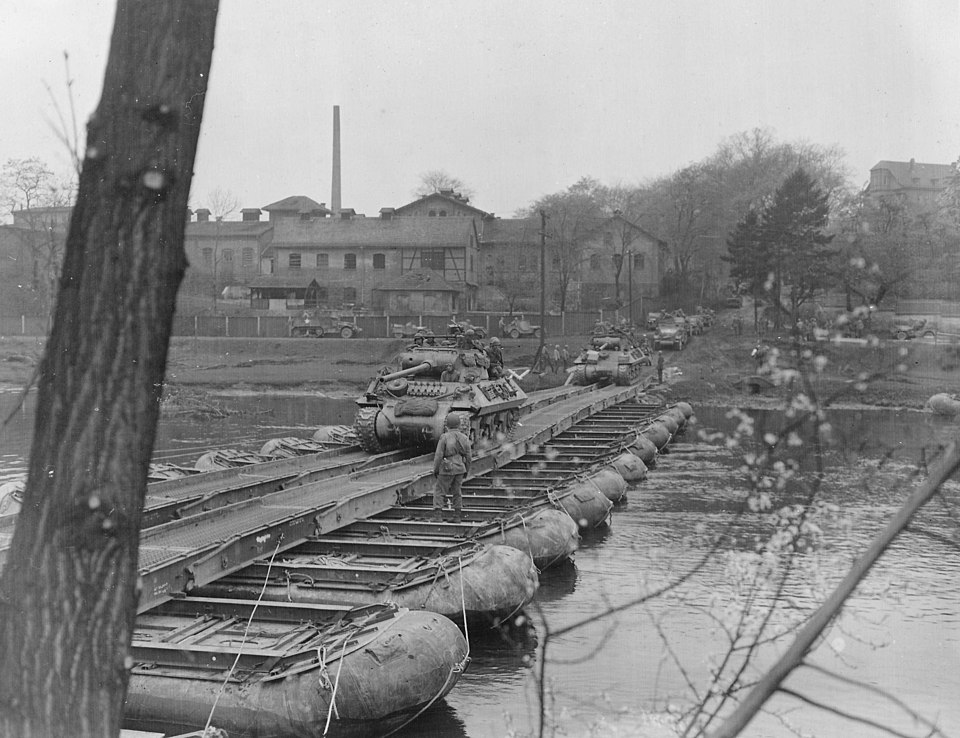
The 607th Tank Destroyer Battalion, 1944.


   The Americans’ breakout from Normandy, after claustrophobic weeks in the death traps of the hedgerows, must have been a jubilant one, but the 607th would encounter another death trap whose brutality sobered them. The Americans, under Omar Bradley, and the British and Canadians, under Bernard Law Montgomery, had the chance to encircle the entire German Army in Normandy. They would fail, and thousands of Germans would escape, battle-weary, some of them now barefoot, running for their lives along narrow roads and cattle trails through what became known as the Falaise Gap.

    But American artillery units still found many of them there–artillery spotters were nearly incoherent because there were so many targets to call in on their field radios–and the slaughter they inflicted was horrific.19 Seventy years later, one of the 607th’s soldiers, Frank Kunz, remembered the results in an interview with his hometown newspaper:  “ Christ help me. There were 6 to 8 inches of bodies and horses ground up on the road. There was nothing you could do. You had to drive through it.” People, Kunz added, don’t understand what war is.20

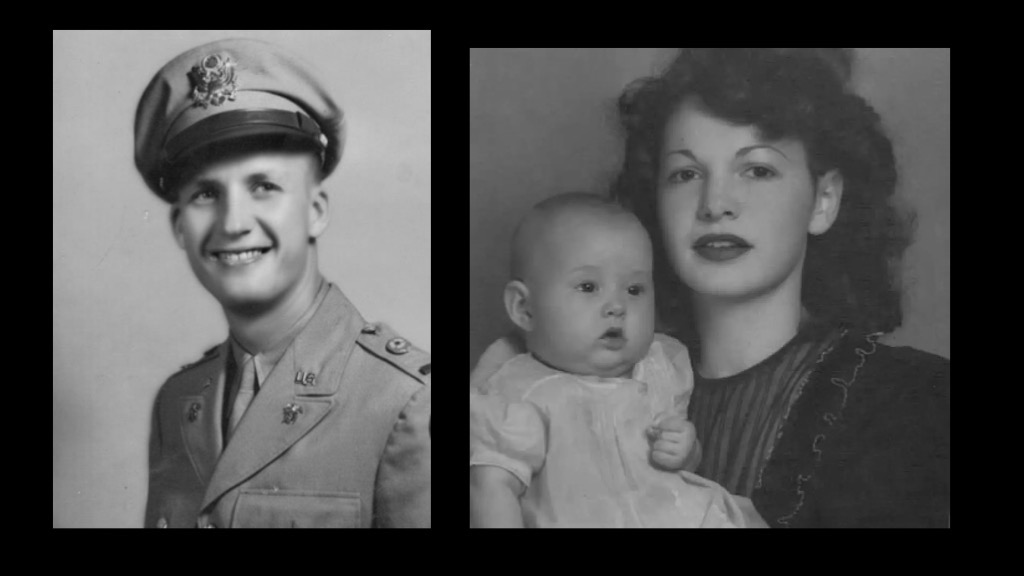
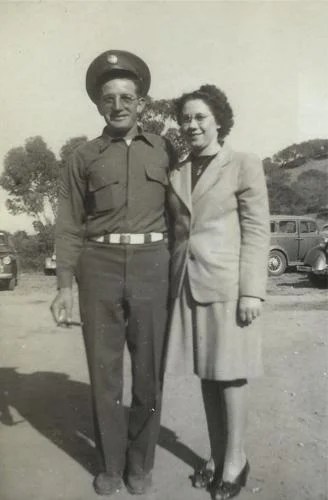
In the photos: Frank and Sally Gularte at a family barbecue in Arroyo Grande before he shipped out as a member of the 607th Tank Destroyer Battalion, seen crossing a river into Germany. A German sniper claimed Frank’s life in November 1944. Sally gave birth to Frank Jr. five days later. From the book World War II Arroyo Grande.


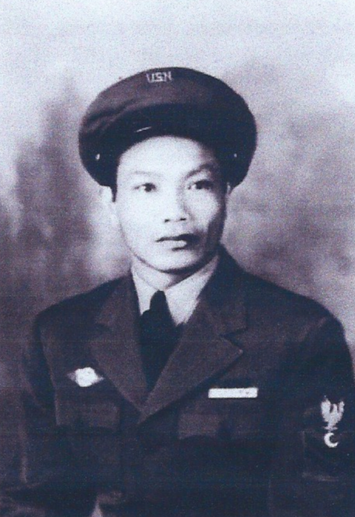
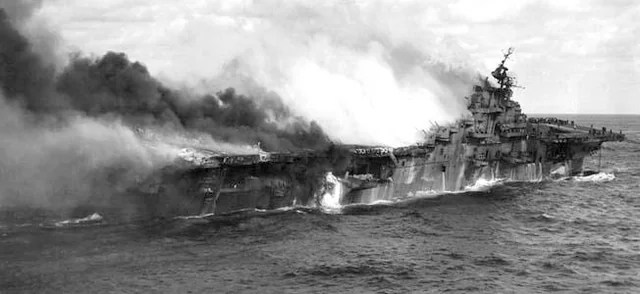
The aircraft carrier Ben Franklin, 1945

The bomb’s detonation [one of two that his the aircraft carrier Franklin off Japan in 1945] flipped a 32-ton deck elevator like a flapjack, leaving it canted at a 45-degree angle in its well. The shaft below it and the decks adjacent were an inferno: crewmen were incinerated instantly; aircraft on the hangar deck melted and plummeted to decks farther below. Twelve of the 13 pilots in the famed Marine Corps “Black Sheep” Squadron, based, since the beginning of the year, at a naval air station near Goleta, died in their ready room.19

Ships below the horizon felt the explosions. Camilo Alarcio clambered up to the flight deck only to realize that he was freezing: he made his way back to his quarters to fetch a jacket, flak jacket and flashlight and bolted topside again with his shipmates. Those emerging from below would have seen sailors running for their lives as the fires spread. In the black, heavy smoke, some ran into the turning propellers of aircraft, their engines still running for their next combat mission.

Alarcio’s deliverance, and that of many others, began when he saw the cruiser Santa Re move alongside. That ship’s crew began to throw lines across to Franklin as the flames threatened to engulf the entire flight deck. He grabbed one of the lines and made his way across–other sailors fell and drowned, some so badly burned that they couldn’t save themselves, while others were pulled under by the turning of Franklin’s screws. Alarcio survived.2020

   Franklin’s survival was in doubt. The initial explosion was just the beginning. As fires reached twenty more aircraft, fueled and ready for flight on the hangar deck, and ignited a chain reaction that, throughout the day, set off stores of bombs, rockets, anti-aircraft ammunition and aviation gasoline. At one point, the violence inside Franklin made the 32,000–ton ship shudder and spun her, like the needle on a compass, hard to starboard, where she lay dead in the water. 

Photos: South County sailor Camilo Alarcio; his ship, the carrier Ben Franklin, afire. Somehow Franklin, with Alarcio aboard, made it back to her birthplace, the Brooklyn Navy Yard.
The 91st Bomb Group, 1945

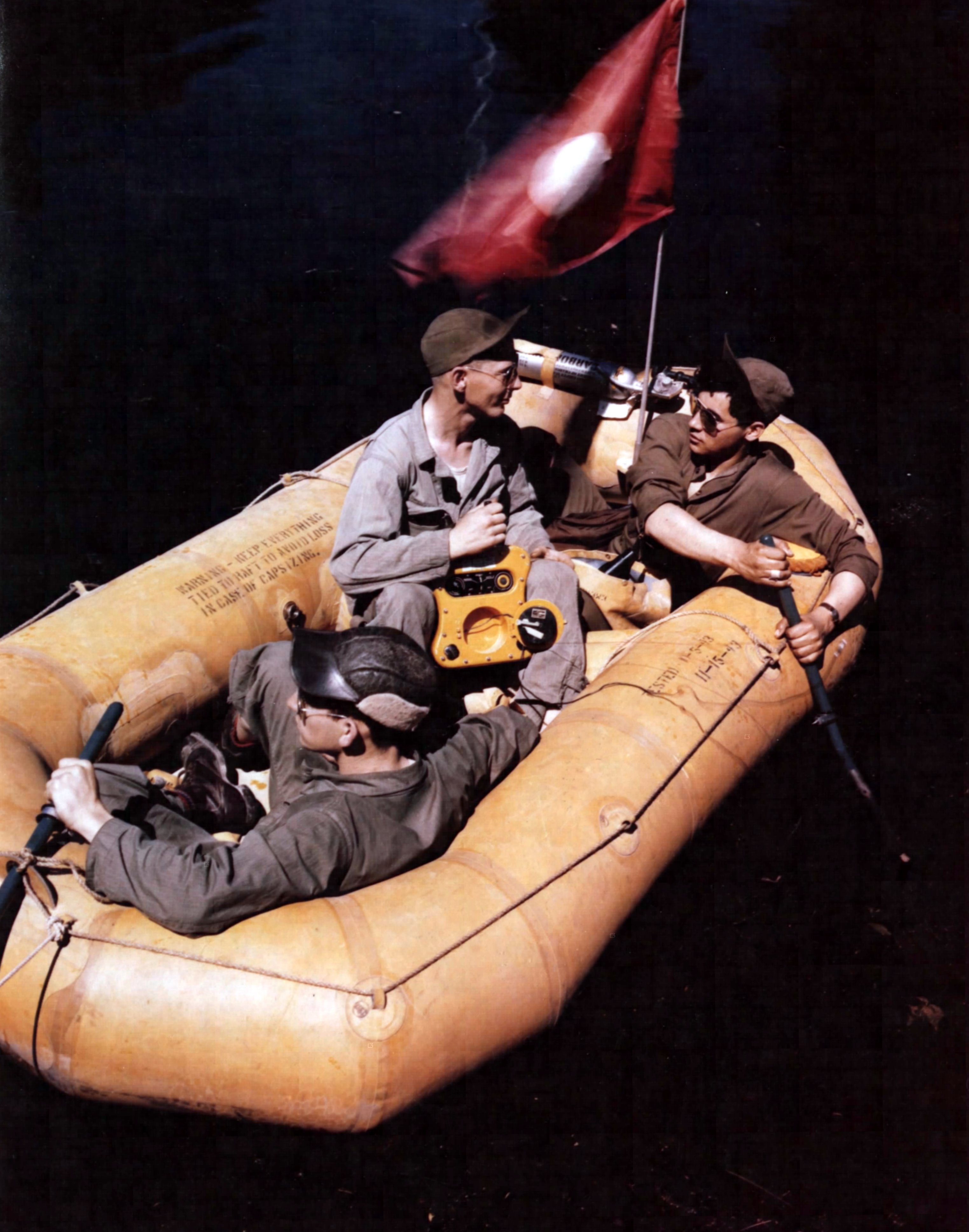
Henry Hall now lives in Cayucos; he was a Kansan transplanted to Bakersfield before the war and then to San Luis Obispo County afterward to become a gunner in the Ninety-First Bomb Group, the “Ragged Irregulars.”

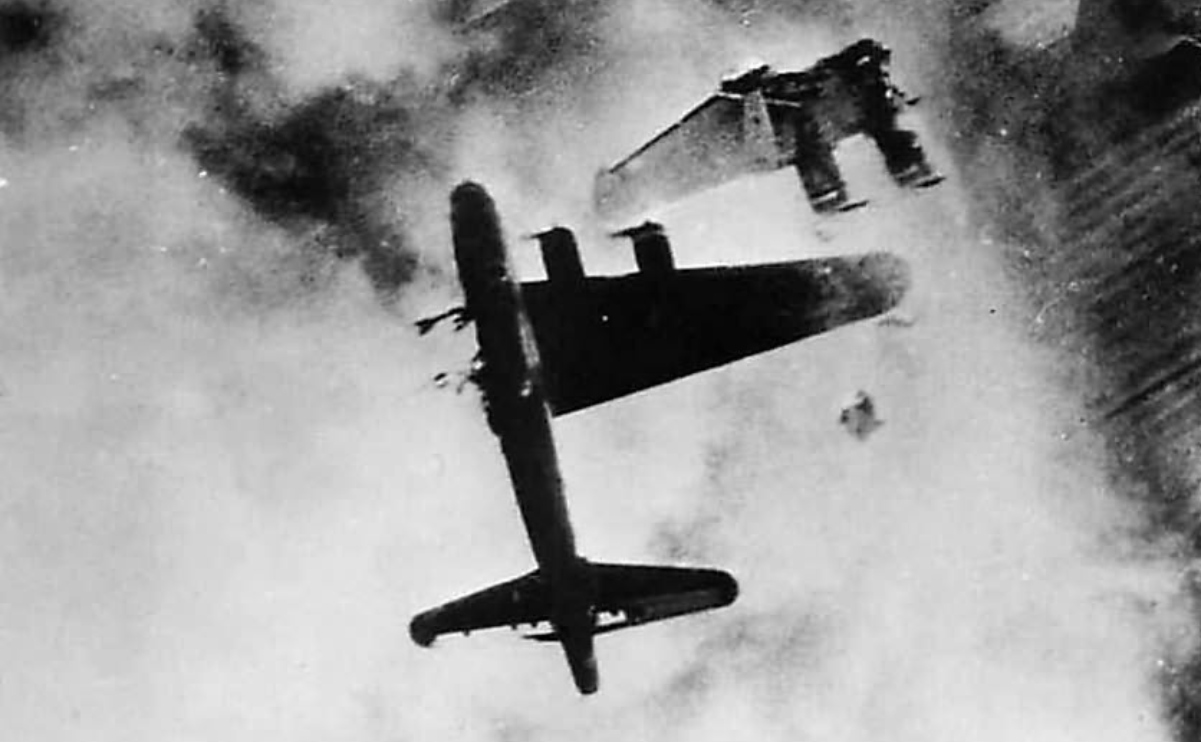
Hall witnessed a horrific chain reaction over Holland: a swarm of German fighters singled out a B-17 ahead, and the multiple hits on the bomber registered for him when he saw the right- side landing gear listlessly drop and an engine on the right wing catch fire. When the out-of-control bomber began its final plunge, it clipped two more B-17s in the formation—both of them went down as well.

It was the hardest of days for Hall’s bomb group: they lost six B-17s on a mission that gained nothing: their primary target, a ball-bearing factory near Berlin, was obscured by clouds, so the Ninety-First dropped their payloads on “targets of opportunity”—on this day, Hall remembered, on a little crossroads town that probably contributed little to the Nazi war effort.55

That was Hall’s first mission. He was twenty years old when he saw the three Ragged Irregular bombers plummet to earth together. Many members of his bomb group were even younger. Some of them, thanks to crafty misdirection aimed at recruiting sergeants pressured to meet their quotas, were as young as sixteen.

Far below them, in German cities like Hamburg and Dresden—or in relatively obscure Japanese cities like Toyama, the size of Chattanooga, or Kagoshima (the seat of the prefecture from which most San Luis Obispo County Japanese had emigrated), the size of Richmond, Virginia—the ashen bodies of schoolchildren stained sidewalks and streets.

Photos:  Henry Hall, with his back turned, practicing water survival with his comrades. The B-17 “Wee Willie,” from Hall’s 91st Bomb Group, on its way down. There was one survivor. From the book Central Coast Aviators in World War II.
The 60th Ohio Volunteer Infantry, 1864

So under [Union Gen. Ambrose] Burnside, the 60th Ohio, on the afternoon of May 5, crossed the Rapidan River at the Germanna Ford. From a rise, they could see dust clouds raised by Lee’s army on the move and began to march into The Wilderness, a vast tangle of forest and scrub so dense that it shut out the sun. Adam Bair was a corporal and therefore, like Richard Merrill had been at Antietam, a file closer. Bair must have been tired after the river crossing. His role was like that of a border collie, striving constantly to keep his company together and moving forward, cajoling potential stragglers, barking, like a collie, at men who’d packed too heavily when they had been warned to travel light.

The wake of the 60th would have been a Civil War treasure-collector’s dream, strewn as it would have been with all manner of equipment: rubber blankets, coffeepots, needless overcoats and extra clothing, books that would never be read. Eventually, as the sounds of battle began to become more distinct, the 60th would leave behind what many Civil War soldiers left: playing cards, dice, flasks of brandy or whiskey, packets of what were euphemistically called “French postcards” with their leering plump models. These are not the items a man would want on his person if he “fell,” to use another euphemism common to describing the indescribable violence of a Civil War soldier’s death in combat.

Union soldiers would begin to see, as they crunched through the carpet of leaves in the closeness of the woods, dead soldiers grinning  at them in their  passage.  These  were the skulls of the men who’d fought the year before at Hooker’s debacle, Chancellorsville, either disinterred from their shallow graves by hungry animals, perhaps by a hardscrabble Virginia farmer’s hogs, or simply lost and left where they’d fallen in the days when Lee and Jackson had played hammer and anvil with the Army of the Potomac.

The woods themselves would become the enemy in this new battle, in 1864, because the dark wasteland made a mockery of combat drill; its density cut up infantry formations into little knots of soldiers  who became separated from one another as they struggled forward, whipped by branches, tripping over roots, cursing in the close humidity and heat already descending on northern Virginia. For many Union soldiers, the dark was suddenly illuminated by the muzzle flashes of Confederate infantry with their bullets amputating tree branches, vaporizing leaves, buzzing like hornets past men’s ears. Some of them, with a dull thud, a sound familiar to Civil War soldiers but now as lost as the sound of the rebel yell, found their targets in the bodies of young men. The flash of powder did something else: firefights sparked fires that would rage in the tangle of trees and scrub and the fires burned wounded men alive as they shrieked for help. No battle in the Civil War was more grotesque than the one fought in this forbidding place.

Photos: 60th Ohio soldier Adam Bair became a Huasna Valley farmer after the war. Combat artist Alfred Waud depicts the fires that swept The Wilderness in May 1864. From the book Patriot Graves: Discovering a California Town’s Civil War Heritage.

The Cypress Trees along Halcyon Road

02 Friday May 2025

Posted by ag1970 in Arroyo Grande, California history, History

≈ 1 Comment

Tags

Writing

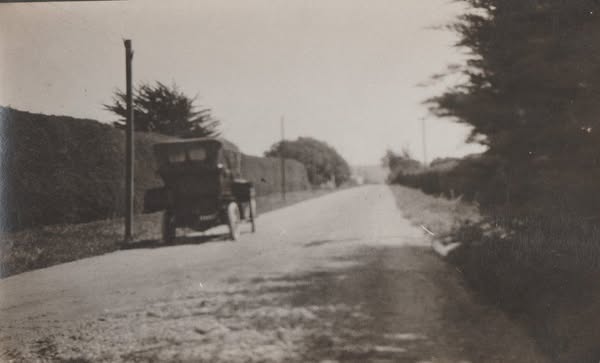
My Facebook friend Jason Blanco posted this photo and leave it to my historian friends Shirley Gibson and Michael Shannon, all of us are now pretty sure that this is Halcyon Road, somewhere between the mobile home park and the Halcyon store today. 

Jason’s photo is from about 1908.

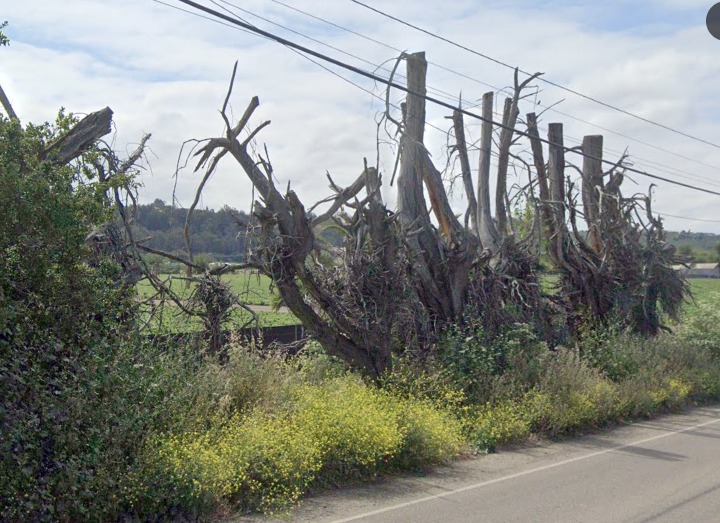
Those cypress trees are nearly all dead now, and ghastly-looking, but more than 100 years ago, they were dense. Halcyon Road was like a funnel, bounded by thick and dense green cypress, until you hit the County Highway, today’s Highway 1, to Oceano.

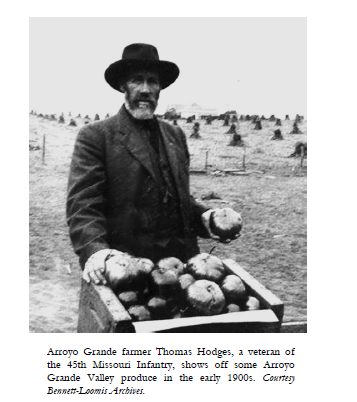
Shirley and Michael pinpointed the man who planted the cypress. He was Thomas Hodges, a Civil War veteran (45th Missouri Volunteer Infantry), who planted them as a windbreak to protect his fruit trees. He made a guest appearance in my Civil War book.

Arroyo Grande has always been famous for its row crops. You can read about them in old newspapers as far away as Kansas and South Carolina. Our pumpkins were astonishing.

But tree crops were important too—some of you may remember dense walnut groves that surrounded AGHS, until they were decimated by the husk fly larvae.

Arroyo Grande High School at the bottom of the photo with the vast walnut orchards beyond.

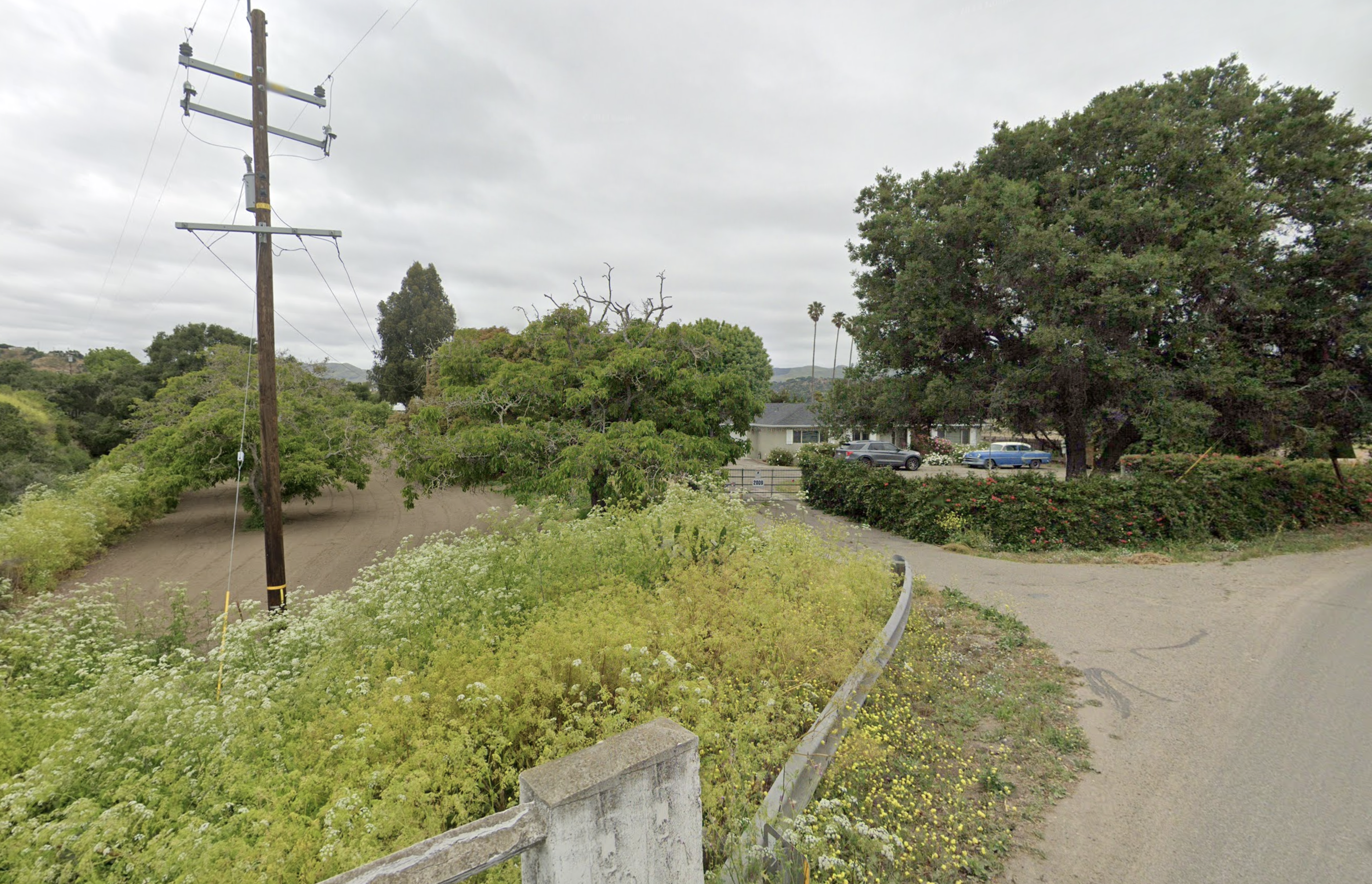
But even on the “farmette” (3 acres) where I grew up, on Huasna Road, there were fruit trees that preceded our house, built in 1956. So I grew up with:

–Plums

–Apricots

–Peaches

–Apples

–Oranges

–Lemons

–Avocados. 

The house where I grew up, Lopez Drive and Huasna Road. Two walnut trees remain at left, in the lower pasture. The big fella out front is a loquat tree. The Queen Anne’s Lace in the foreground was always there. Arroyo Grande Creek is just beyond the left edge of this photo.

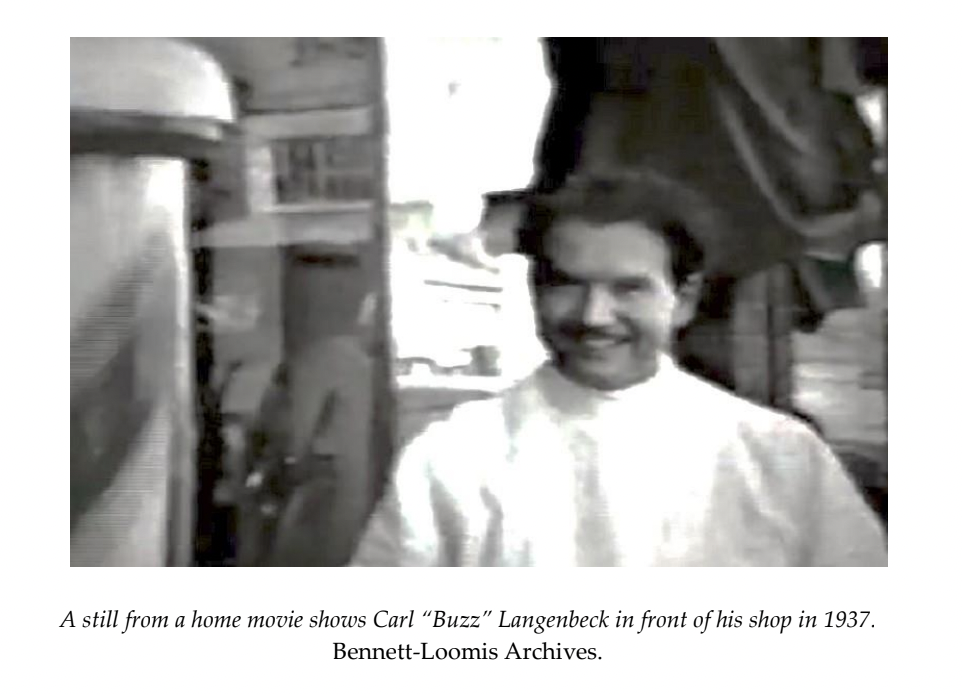
We had nine avocado trees. They were nowhere near the best. The best avocados were grown by barber “Buzz” Langenbeck, whose barbershop is today’s Heritage Salon on Branch Street. Sadly, I did not appreciate avocados until the day I discovered guacamole, probably when I was in my twenties.

And you can find, if you look for them, at least two more generations of Hodges at AGUHS, playing sports, starring in school plays, elected to class office, graduating–the venues varied–at the movie theater in Pismo or the one in Arroyo Grande, today’s Posies in the Village.
Like any other living thing, cypress trees get old, turn brittle, and die. I don’t think that my hometown’s ties to history, even to the Civil War, ever die.

Adapted from The Heritage Press, South County Historical Society

HMS Bounty’s Arroyo Grande Connection

28 Monday Apr 2025

Posted by ag1970 in Arroyo Grande, California history, History

≈ Leave a comment

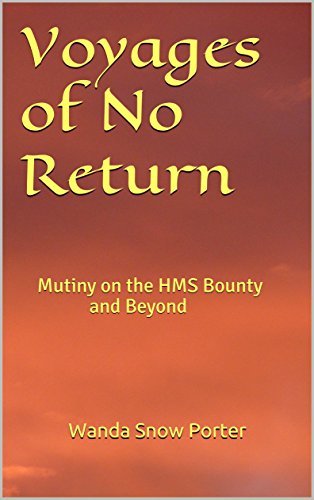
Wanda Snow Porter’s wonderful book about her husband’s ancestor. Charles Porter was a descendant of Isaac Sparks.

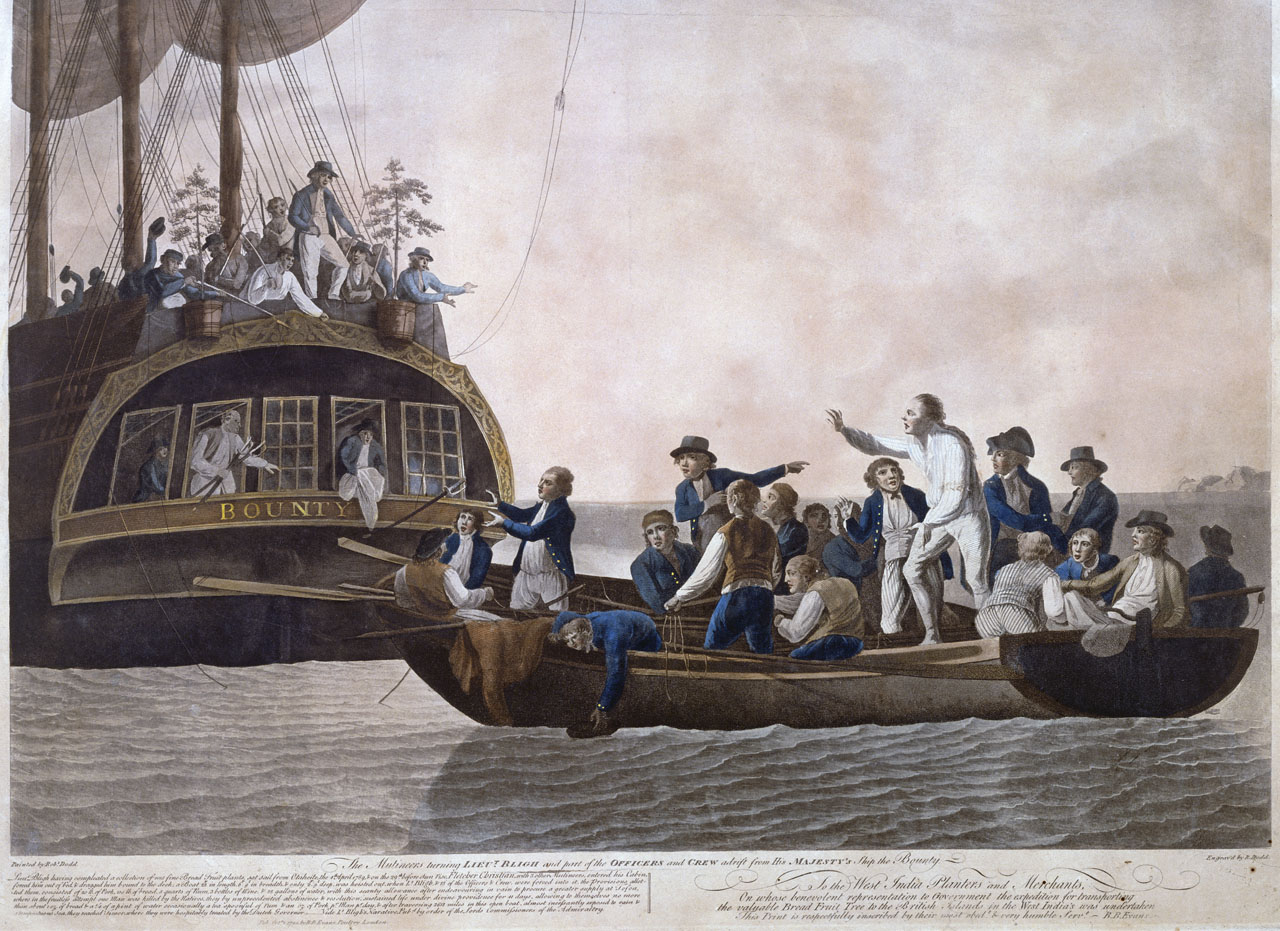
On April 28, 1789, mutineers led by Fletcher Christian put Capt. William Bligh and his loyalists into a longboat and sailed away with HMS Bounty. Bligh navigated his way to safety.

The mutineers sailed for Pitcairn Island and settled there, but violence was frequent. Some of their descendants still live on Pitcairn.

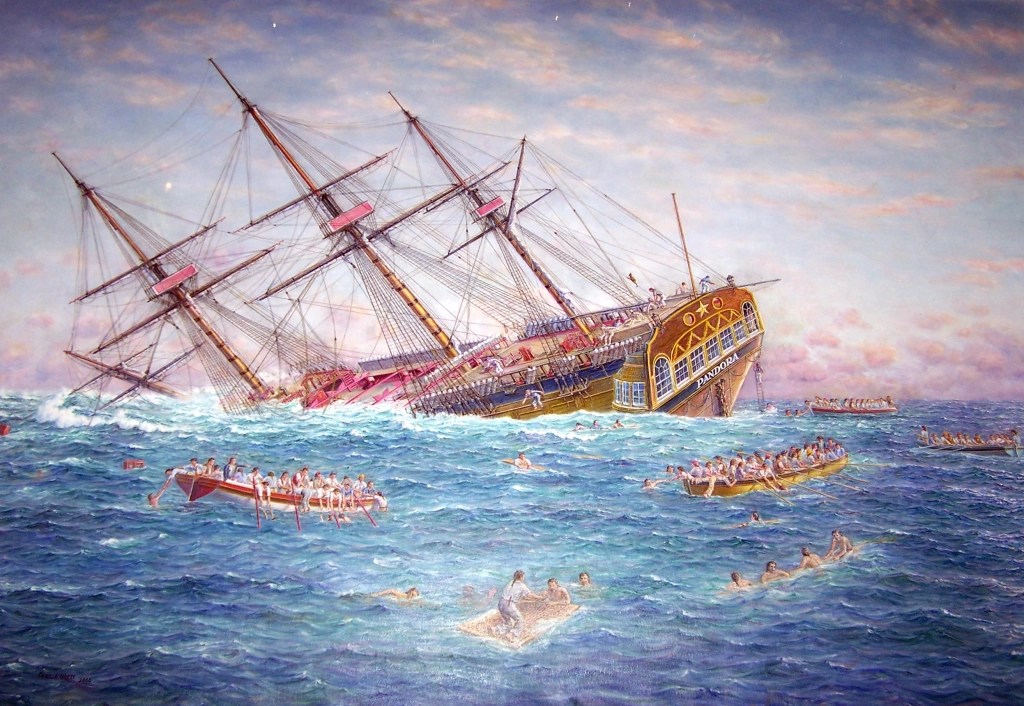
In 1791, the frigate HMS Pandora captured some of the mutineers and sailed for England for their trials. But Pandora wrecked on a reef near Australia and several mutineers died.

Among them was midshipman George Stewart, 21, killed by a falling gangway as Pandora broke up.

Stewart left behind his Polynesian wife, Pegue (“Peggy”) and their little girl, Maria Stewart (1790-1871).

Maria married George Washington Eayrs (1775-1855), an American ship captain, in Tahiti in 1809.

Their little girl, Maria de Los Remedios Josefa Antonio Eayrs, was born aboard Eayrs’s ship, Mercury, in Bodega Bay in 1813. (She died in 1871).

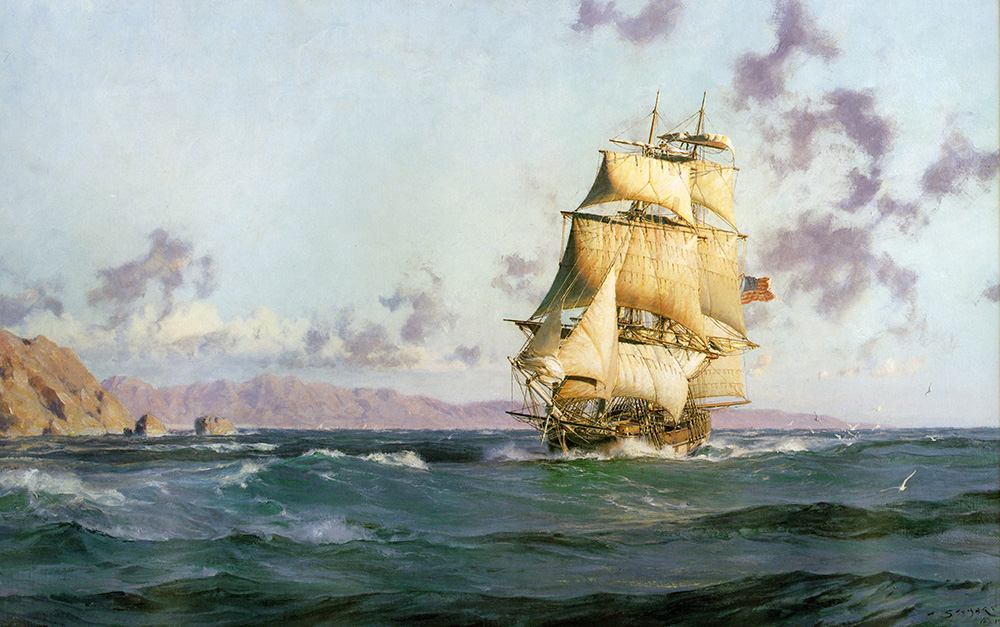
The brig Pilgrim, depicted leaving Santa Barbara for Monterey, was part of the active California trade with the East Coast, as was George Washington Eayrs.

She married Isaac James Sparks (1800-1865), the master of the Huasna Rancho, in Santa Barbara in 1836.

Their daughter, Maria Rosa, married Arza Porter in Santa Barbara in 187-.

The Porters still own the Huasna ranch today, and it’s still an active cattle ranch. This incredible pioneer family is our connection to the mutiny on HMS Bounty.

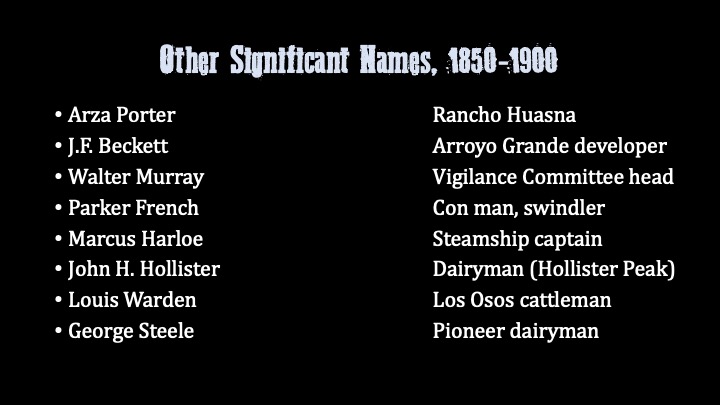
Prominent (but dead) San Luis Obispo County state legislators, 1850-1900

20 Wednesday Dec 2023

Posted by ag1970 in California history, Uncategorized

≈ Leave a comment

El día de los Muertos, 1981

31 Tuesday Oct 2023

Posted by ag1970 in California history, Uncategorized

≈ Leave a comment

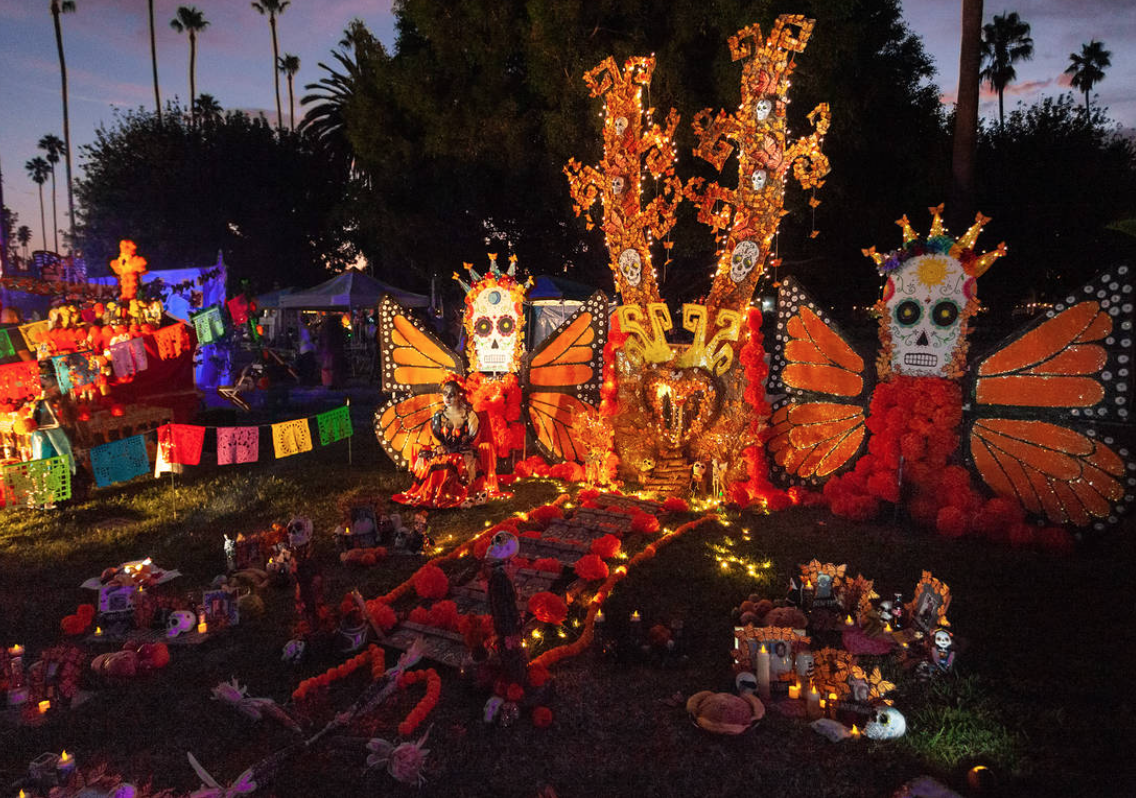
Día de los Muertos, Hollywood Forever Cemetery

When my grandmother died in 1963, we buried her in Bakersfield and then were horrified when distant family members began to lay out blankets and carry immense amounts of food—sliced ham, fried chicken, salads and jello salads, biscuits and butter, sweet iced tea—to the graveside. We had not encountered this Midwestern/Southern tradition before.

It made complete sense to me a year ago when I was at the Arroyo Grande cemetery soon after All Saints’ Day and noticed that the Catholic section, particularly among Mexican-American graves, with brilliant flowers and helium balloons, looked like the assembly point for the Rose Parade’s floats. (The Protestant side was Calvinist and austere.) I was delighted. This is a tradition that celebrates the lives of those we will see again. We had our paper pates of fried chicken and macaroni salad because we had one more chance to eat in my grandmother’s presence. It was her celebration, after all.

I wrote a piece about Chavez Ravine and Fernando Valenzuela earlier this year. In this slightly different version, November 1, All Saints’ Day, El dÍa de los Muertos, plays a more central role.


Fernando

14 Monday Aug 2023

Posted by ag1970 in California history, Uncategorized

≈ Leave a comment


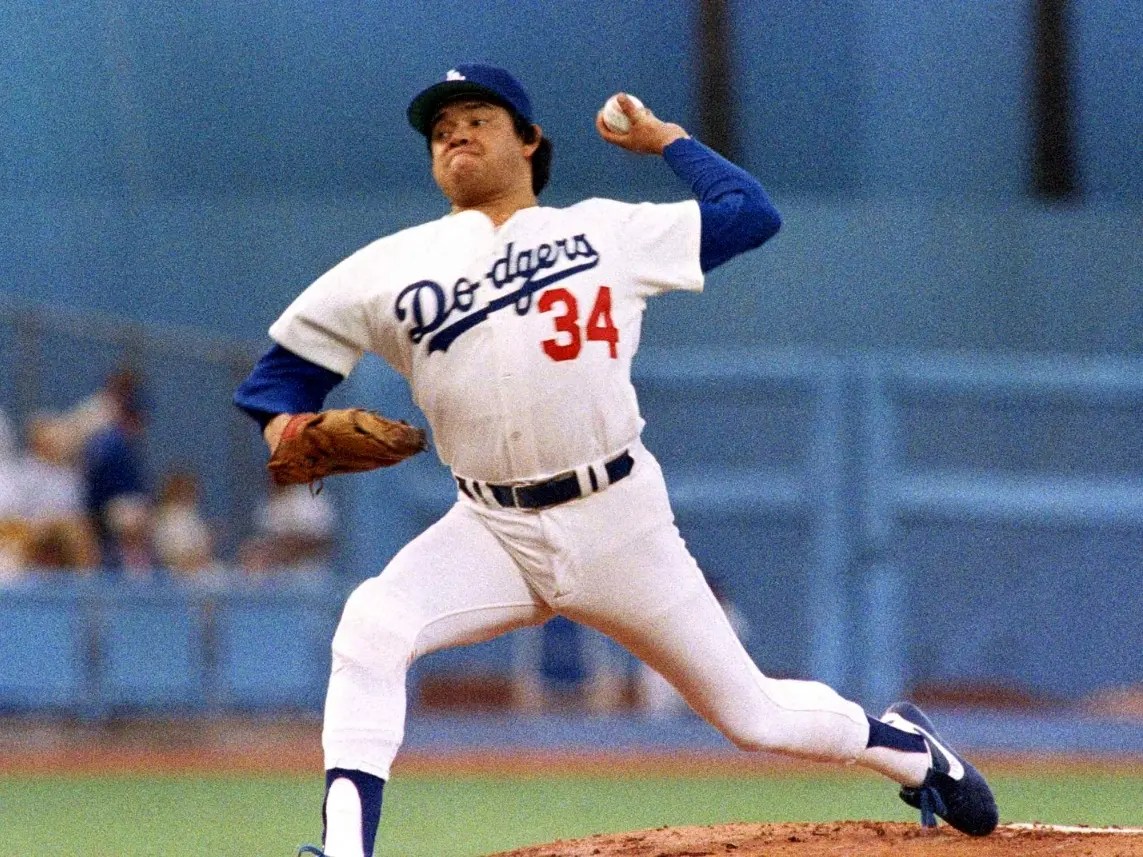
With that win, [May 14, 1981] the left-hander improved to 8-0 with a minuscule 0.50 ERA, 68 strikeouts over 72 innings while holding opponents to a .172/.225/.212 batting line. Four days later, Valenzuela fell short of throwing a complete game for the first time and suffered a loss.

–Writer Matthew Moreno on Fernando Valenzuela’s first full season.

He started on opening day when Jerry Reuss had injured himself. Valenzuela had appeared in ten games in 1980 and he’d been sharp, but he was still an unknown quantity. So instead of the tall blonde German-American (“Reuss” is derived from the German “Russian.” That’s uncomfortable), Dodger Stadium got a starter who was not tall, not blonde, not German (or Russian). He was from Sonora. the same state as Mexican President (1920-24) Alvaro Obregón, the “Happy Man with One Arm,” his right, lost in battle in 1915.

Obregón at his Presidential desk, 1920, when Mexico was emerging from the ten-year revolution that had claimed one million lives.


Luckily, Valenzuela was a lefty.

I could not watch him by myself. I needed to share him. I began to watch his games over at Ricky and Jane Monroe’s house, both because they were such good company and because Ricky, a born color man, has a knack for wit, sometimes caustic, at the exact moment it’s needed—not before, not after.

Valenzuela’s specialty was a screwball, a pitch that will eventually make some pitchers’ elbows explode spontaneously while they’re reaching across the dinner table for some mashed potatoes.

We soon learned, too, that another Valenzuela specialty was hitting. He won a Silver Slugger award in 1981 to put over his fireplace, probably resting on brackets just above his 1981 Cy Young and 1981 Rookie of the Year awards. Oh. And his Major League Player of the Year Award.

In 1981, after we’d seen a Fernando screwball strike out an Astro or a Giant or a Cub swinging, as if his bat was a feather boa, Ricky and I might look at each other without saying a word. And sometimes, once the Miller Beer commercial had begun, Ricky would shake his head in disbelief.

It was euphoric, watching that twenty-year-old pitch.

When Fernando Valenzuela came to the big leagues, Bob Lemon, then a Yankee scout, stared in disbelief. He leaned over and asked a Dodger scout, “How old is he?”

“Twenty,” was the reply.

Lemon thought about it a moment. “Twenty what?” he wanted to know.

–Los Angeles Times sports columnist Jim Murray

This is what is important, I think: Valenzuela may have been from Sonora, but Chavez Ravine was home.

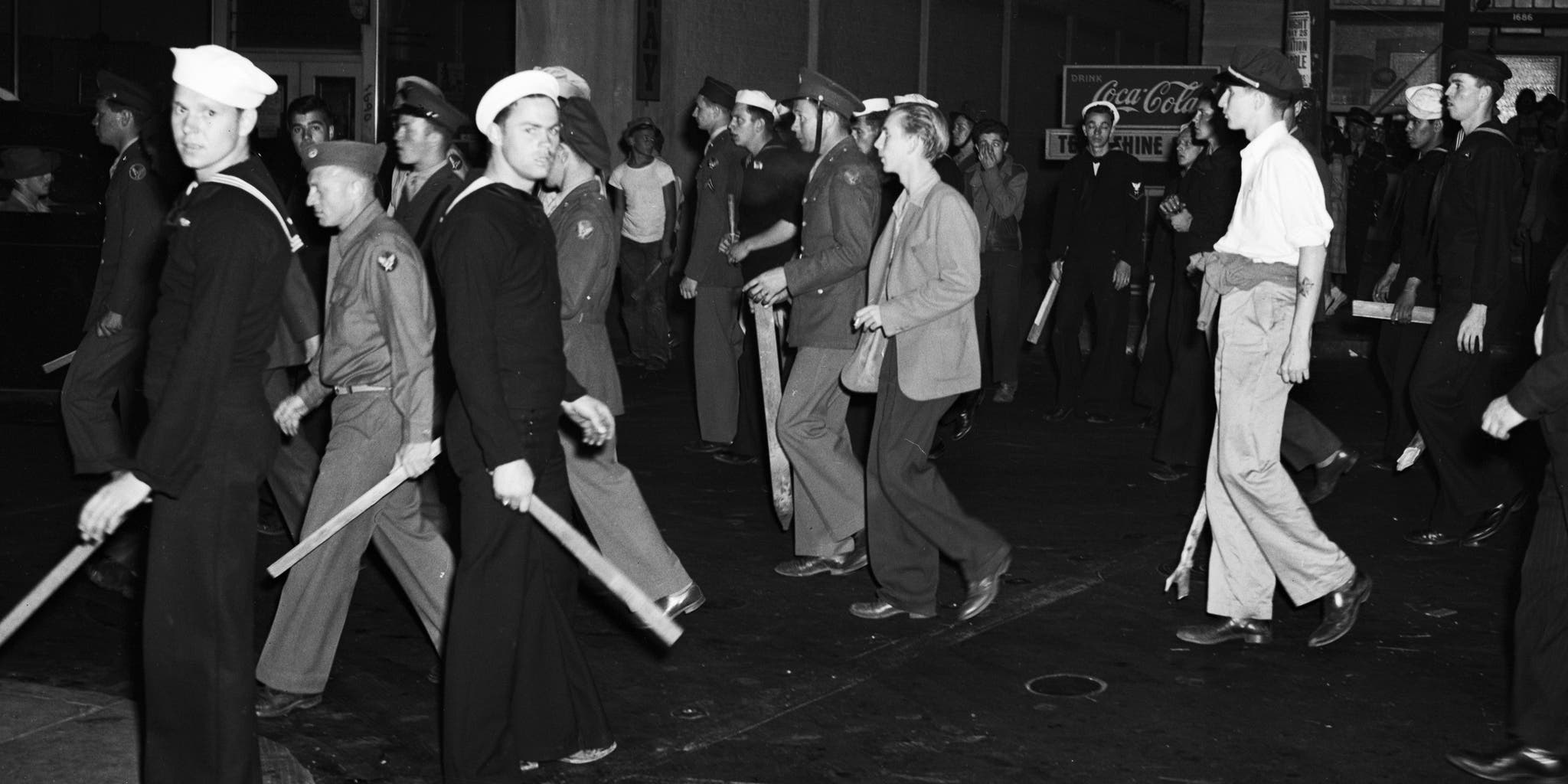
This was the barrio, demolished to make way for Dodger Stadium, where the Zoot Suit riots began in 1943. My kids and I learned about them, every year, when I taught U.S. History. It was important to me to teach them the dark side of the war even as we learned about its heroes, from Torpedo Squadron 8 at Midway to the 442nd Regimental Combat Team in Italy to the third of the wartime industrial force that was made up of women.

The Zoot Suit riots, along with the others that broke out across America and overseas that summer of 1943, represented a moment when we’d forgotten who we were and what we were fighting against. Racism was the sickness that typified the Imperial Japanese Army’s officer corps and Hitler’s SS.


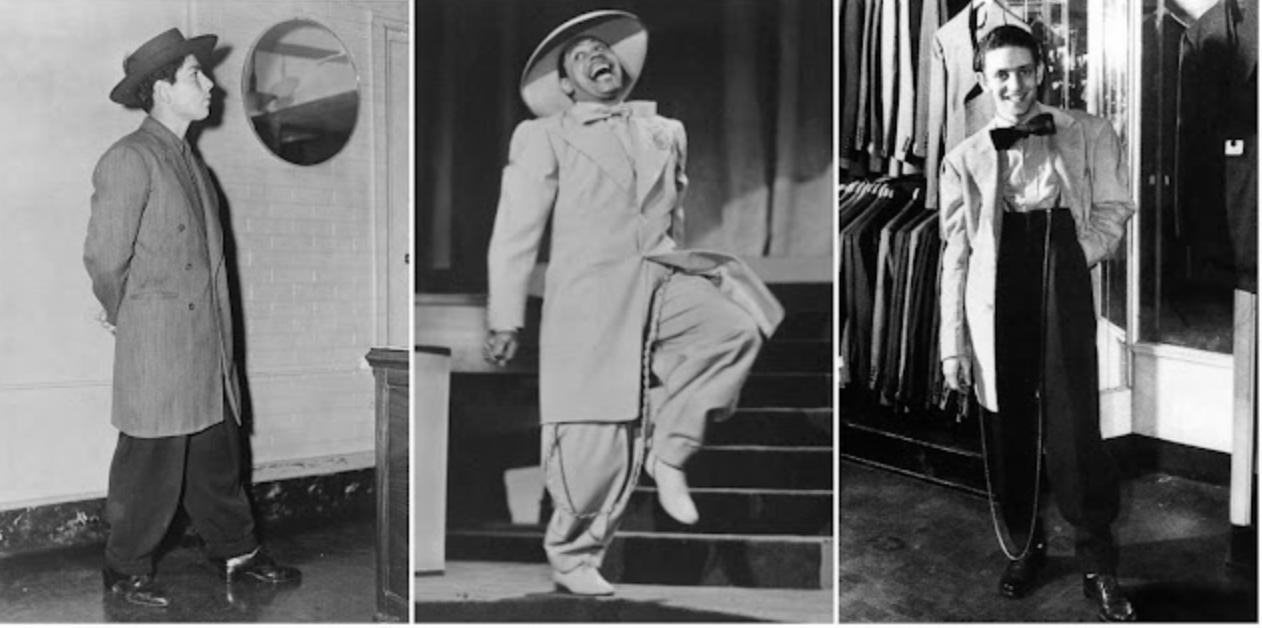
For several nights, then, in June 1943 gangs of roving sailors and soldiers beat the living hell out of East L.A. kids, pachucos, whose sole offense seemed to be the elegance of their clothes—the fashion, Zoot Suits, was popular with Black kids, too. The suits must’ve offended some servicemen in a time of wartime austerity, when suits, for civilians, lost their cuffs and wide lapels. Double-breasted suits were as rare as 1943 Ford coupes. and there was no such car. Ford was making B-24 bombers.

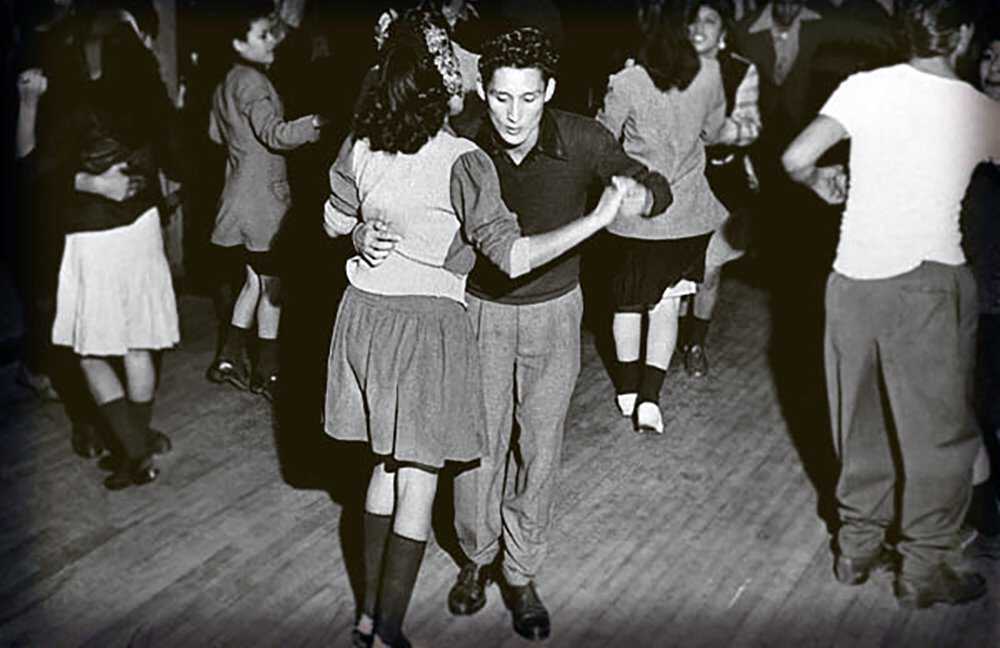
It’s possible, too, that the servicemen were a little envious of the Zoots’ mastery of the jitterbug, honed in hot L.A. jazz clubs. And they were, after all, brown people, those kids in those suits.

Cab Calloway (center) was perhaps the epitome of Zoot Suit style.


“Those” kids danced with lovely girls who rode the streetcars out of the oppressiveness of the Ravine, and of their rigidly traditional Mexican parents, to meet their dates downtown. They were Jitterbug Divines, those young couples on the dance floors inside noisy, smoky clubs.


The dancing was interrupted in June 1943 because of a U.S. Navy auxiliary post on the fringes of the Ravine. That’s where the fighting began. Sailors wolf-whistling at chicanas and shoving teen boys off the sidewalk were among the foreshocks.

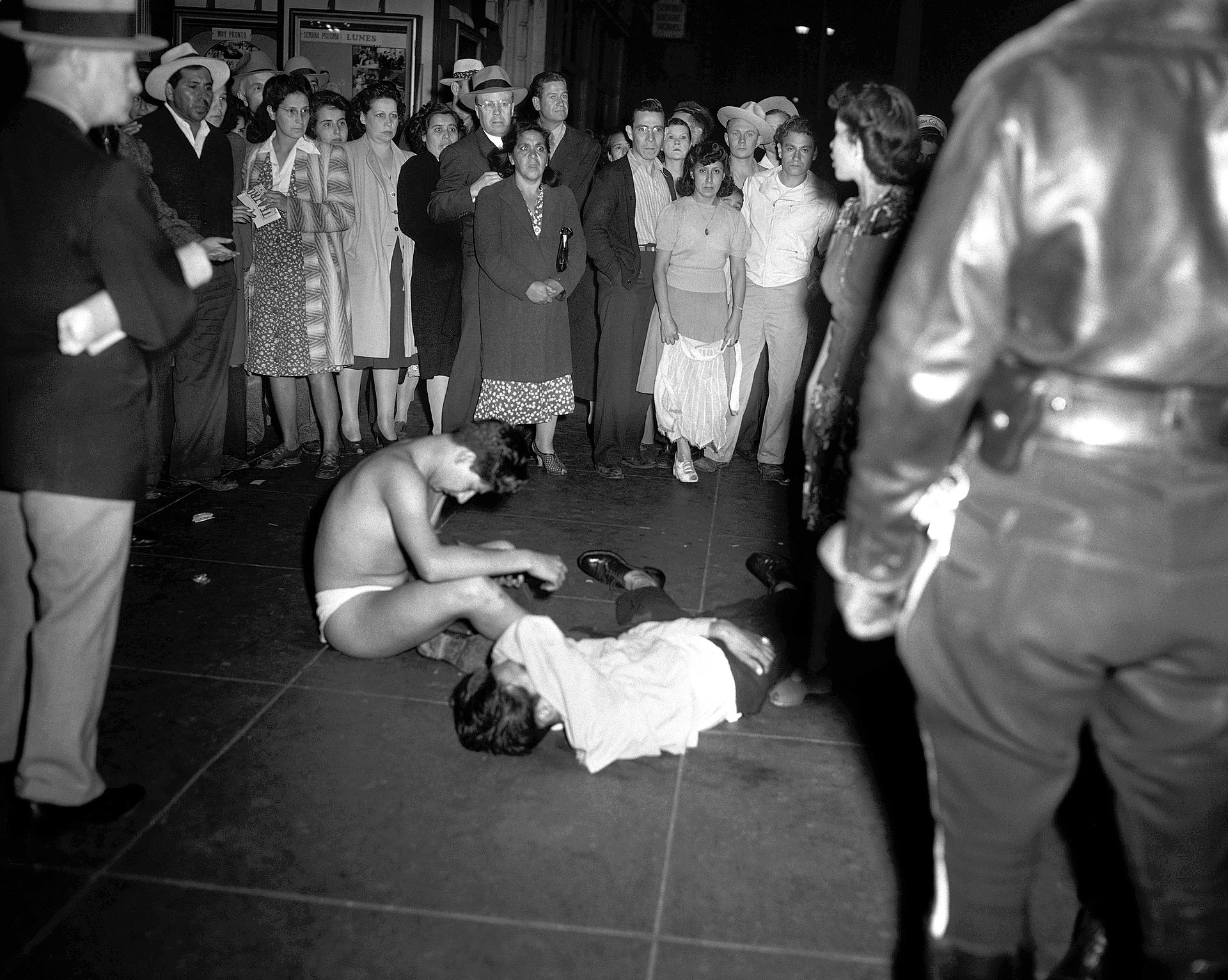
The riots soon took fire, spreading from Chavez Ravine to Boyle Heights and ending at what is today the 405. The LAPD watched passively as the G.I. gangs, sailors and soldiers from San Pedro and scatterings of Marines up from Pendleton, went after the Mexican-American kids with axe-handles.

The LAPD arrested the Mexican kids, but only after they’d had been bloodied and stripped naked by swarms of malevolent Nebraskans who were defending their country.


This is the history that colored the background of Opening Day 1981, when Valenzuela pitched a five-hit shutout over the Houston Astros, then in the National League.

Fernando humbled the Astros that day.

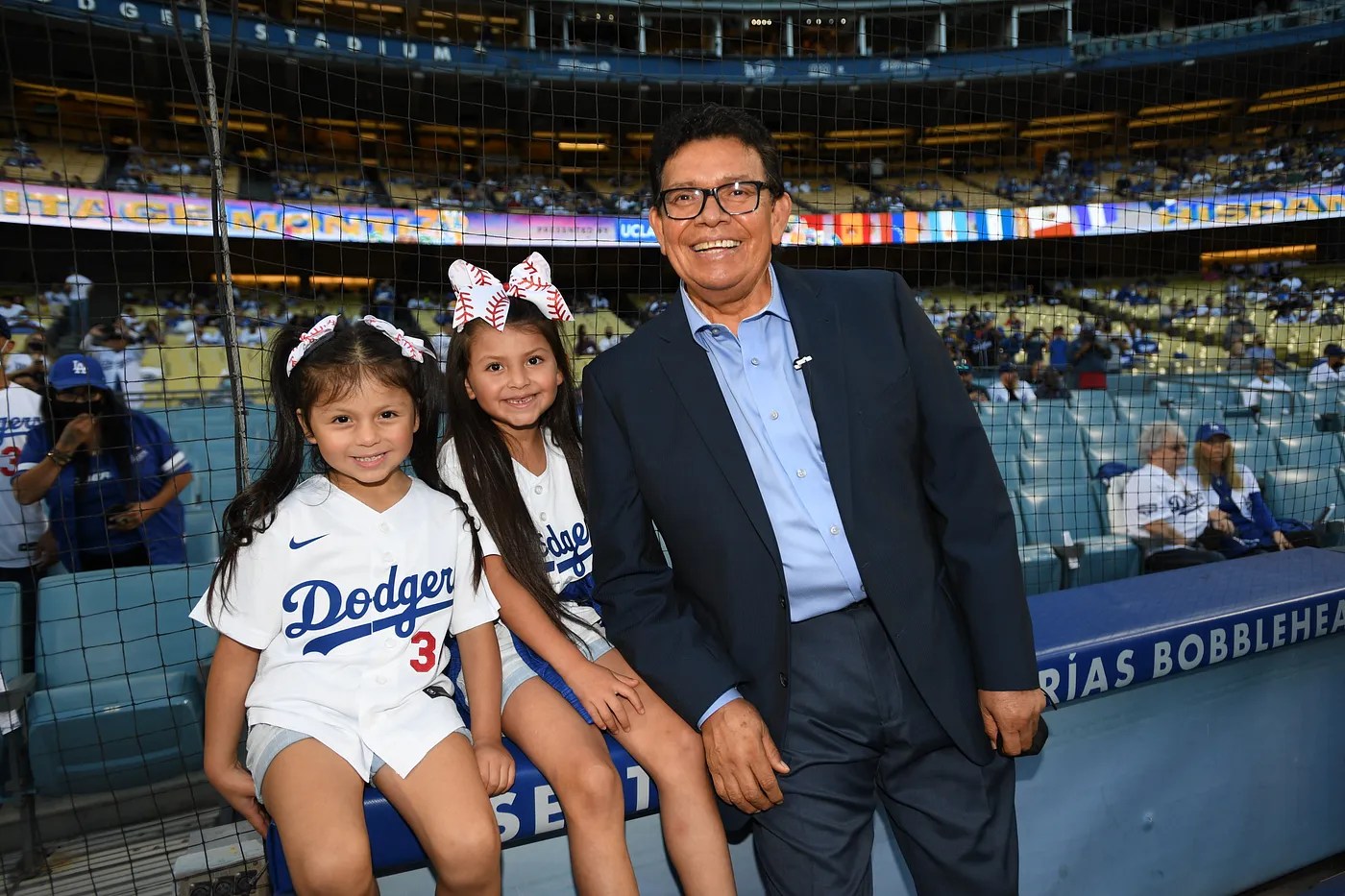
That year, what Fernando did was to restore Chavez Ravine to its people. Dodger Stadium, as trivial as it may sound, began to serve churros. Now you can get carne asada nachos in a Dodger helmet bowl. Tuesday night will be Mexican Heritage Night.


This is what I began to think about after his number was retired this week.

Fernando didn’t really “arrive” on that Opening Day 1981. Again, I think that he came home. So did all of those who shared his ancestry. They reclaimed the town once called El Pueblo de Nuestra Señora la Reina de los Ángeles de Porciúncula.

Perhaps that fall, on the Day of the Dead–el dia de los muertos–families spread blankets on the grass and unpacked hibachis and began to make carne asada or carnitas tacos. While the meat was grilling, they decorated the graves of the people they loved, whom they always will love, with white glass prayer candles that illuminate the image of Our Lady, and with flowers—a lot of flowers—with helium-filled balloons, with saints’ medals and with ofrendas, little clay pots filled with corn or chiles or sweets, and maybe a bottle of Mexican Coca-Cola—the real deal, like World War II Coca-Cola.

Then they sat down, those young people and their even younger children, and began to talk, across generations, to the tombstones, They told the jitterbuggers stories about Fernando Valenzuela.

After, it got graveyard quiet, but only because it was time to eat.

Los Lobos, Good Morning Aztlán.


H.S. Laird, San Luis Obispo Architect

09 Sunday Jul 2023

Posted by ag1970 in California history, Uncategorized

≈ Leave a comment

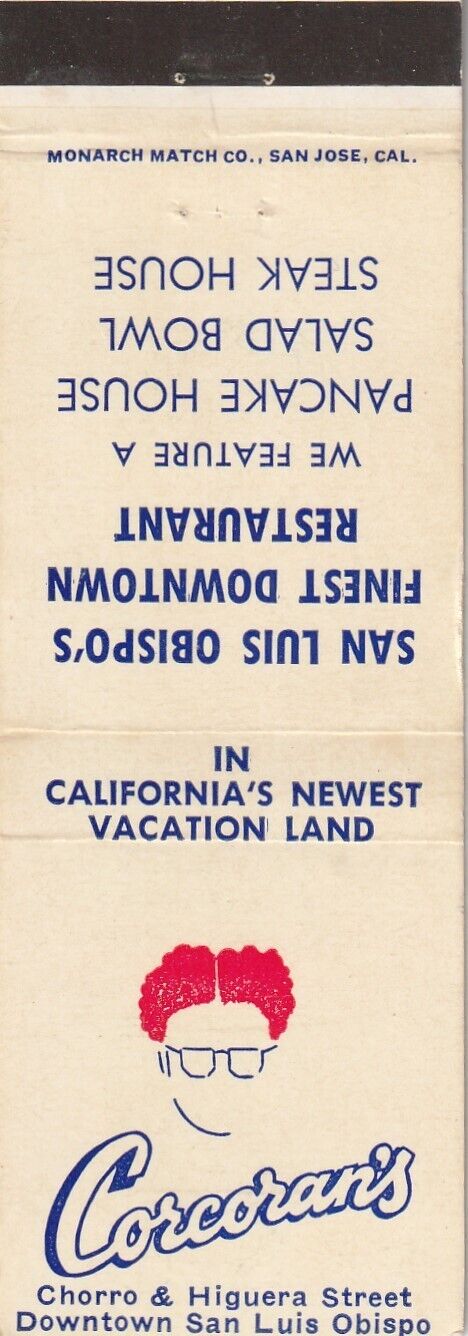
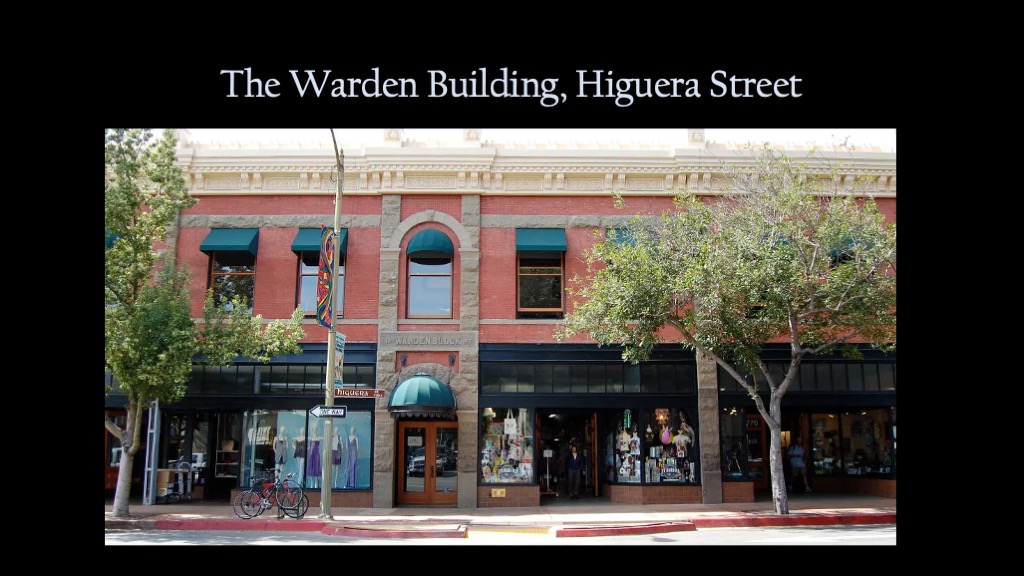
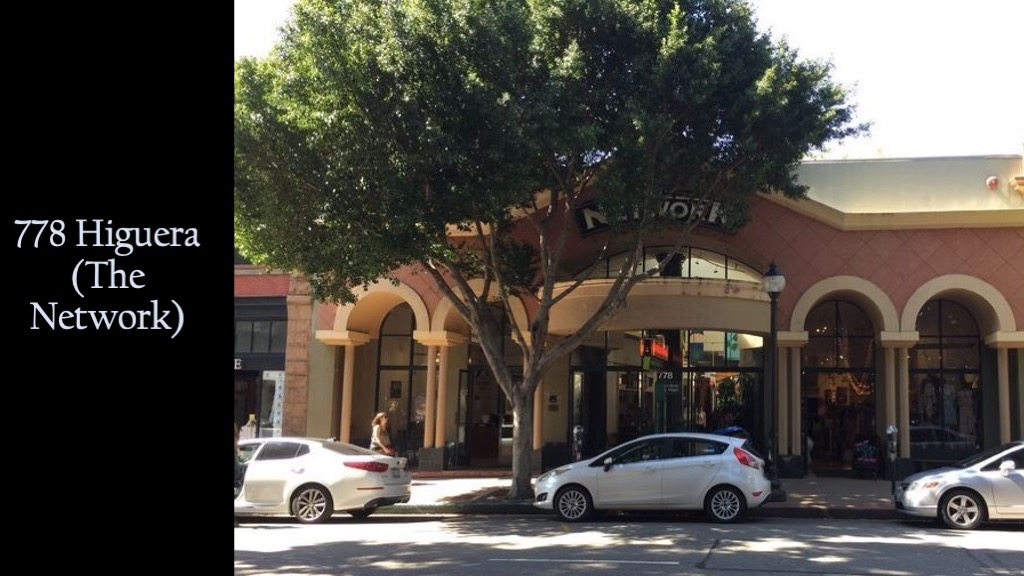
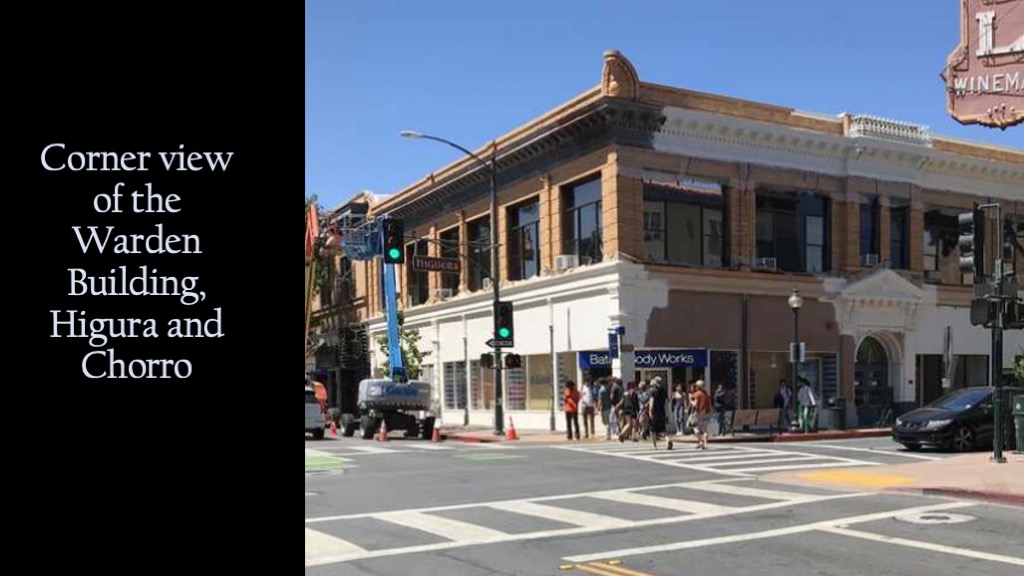
I guess they’re painting over the brick of the H.M. Warden Jr. Building (1905) in San Luis Obispo—most memorable to me as the onetime home of Corcoran’s Restaurant, in business at that site from about 1943 to 1974. The brick, of course, is beautiful on its own.

Throughout 1904 and into early 1905, a series of old San Luis Obispo Tribune articles follow its construction from the letting out of bids to its completion, when the building, which would become a beehive of retail stores and medical offices, was praised for its beauty.

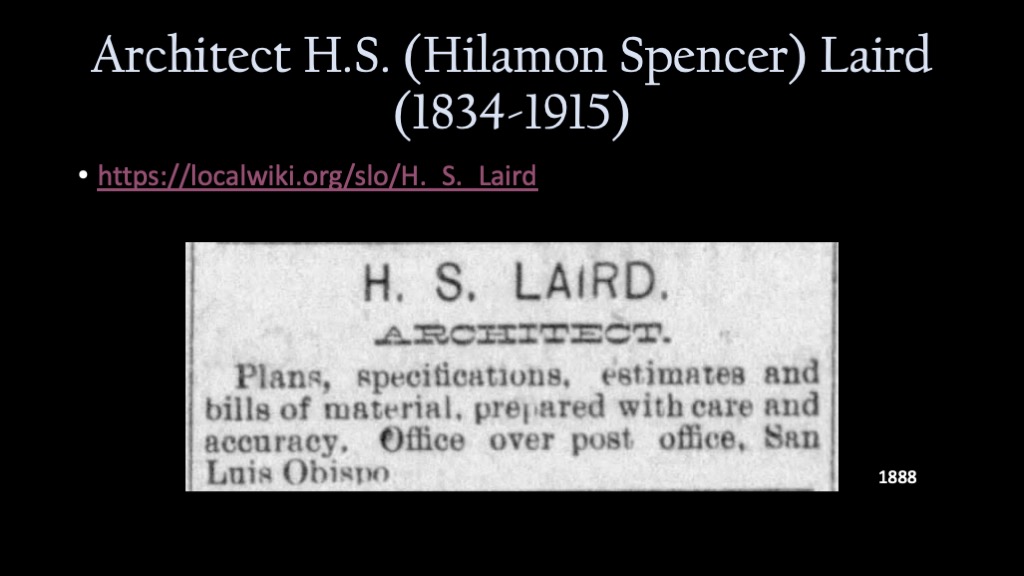
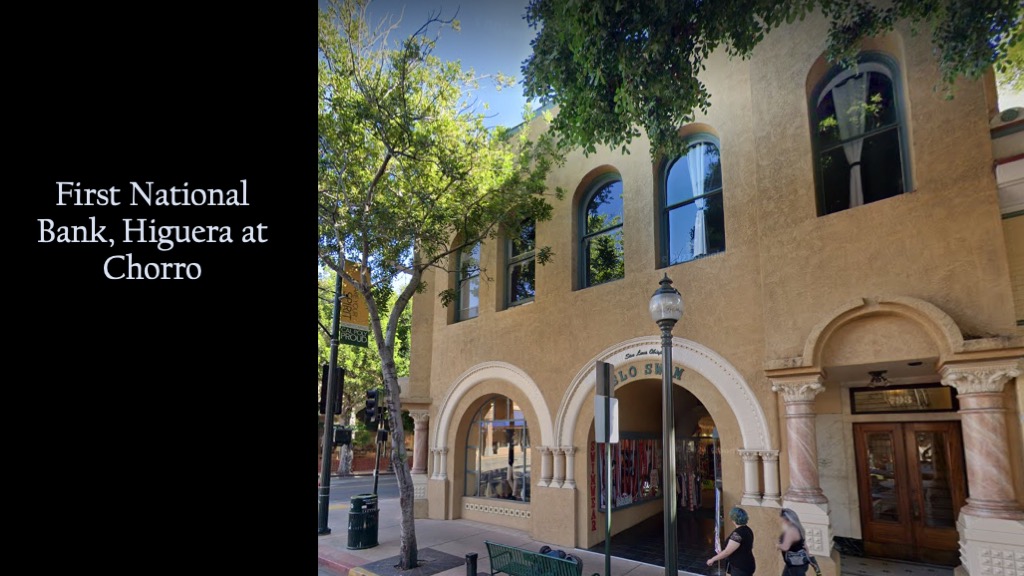
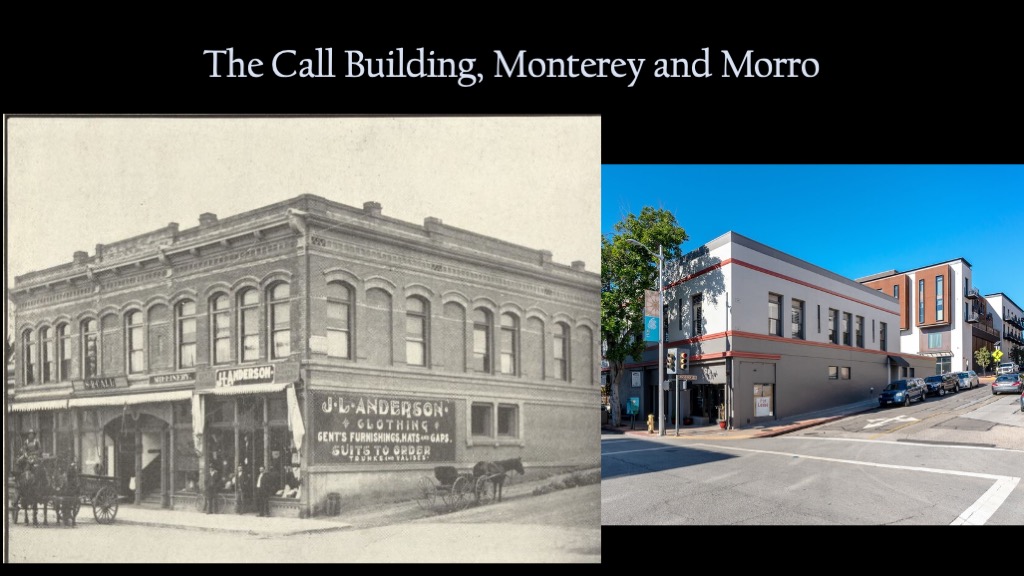
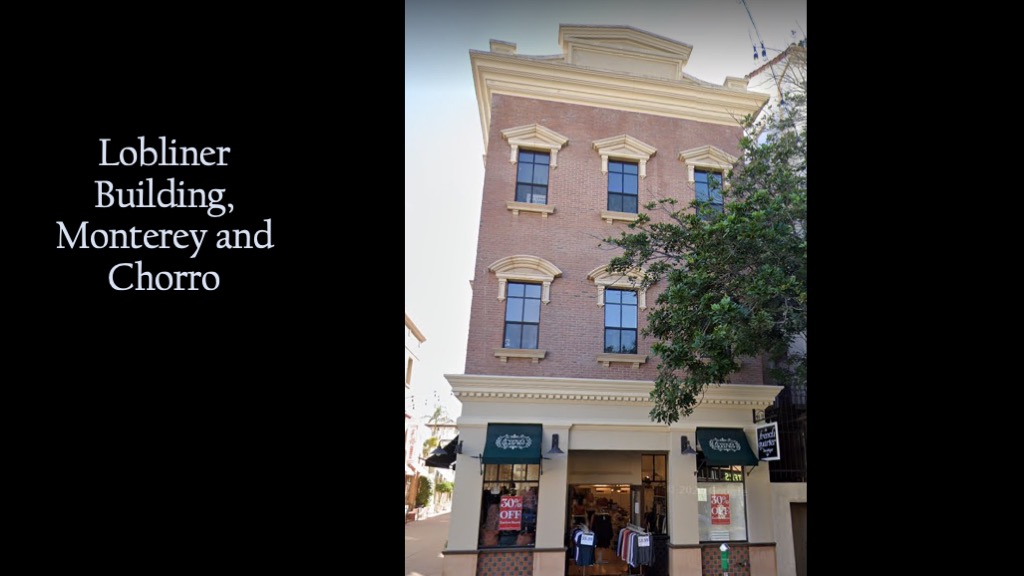
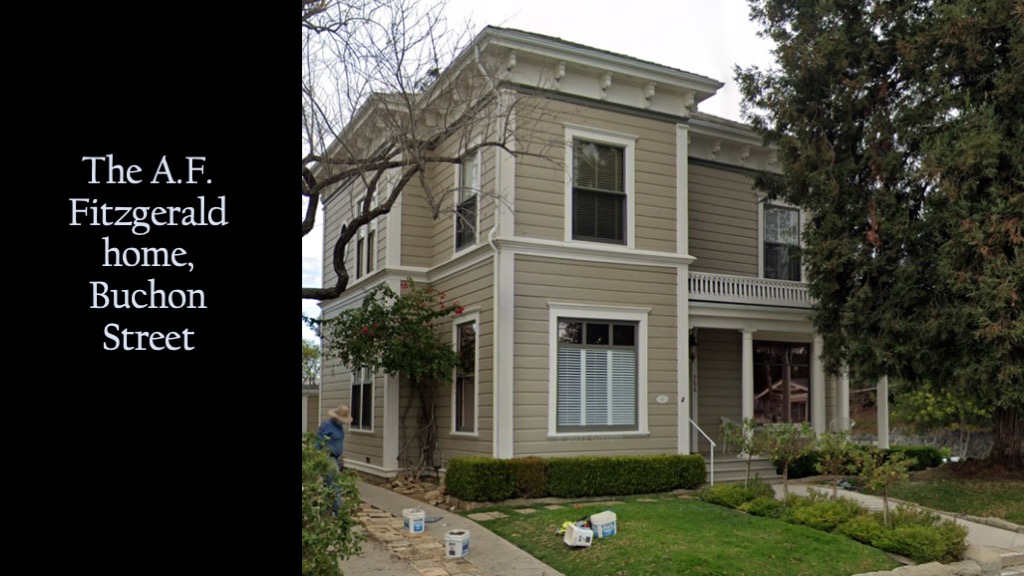
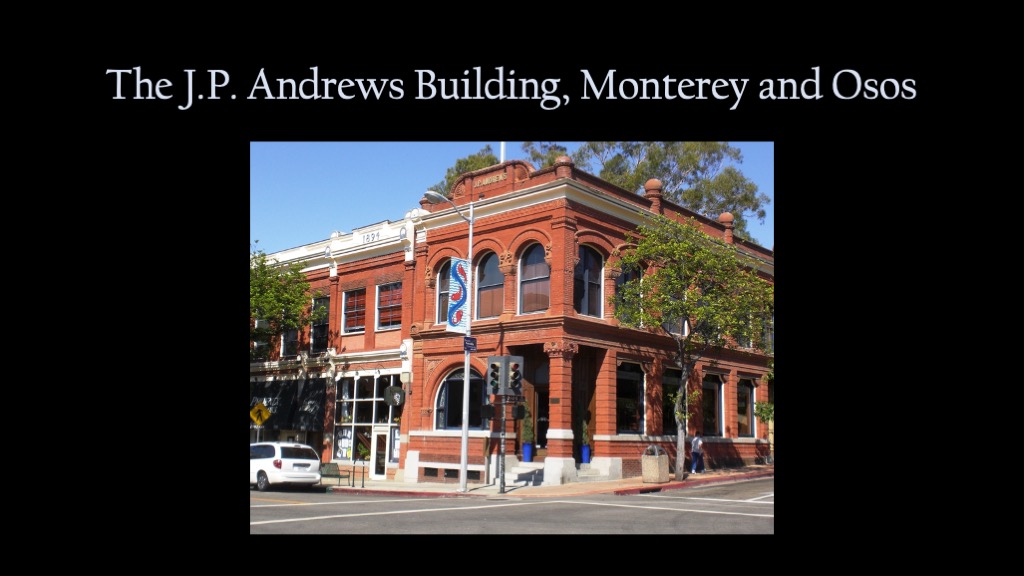
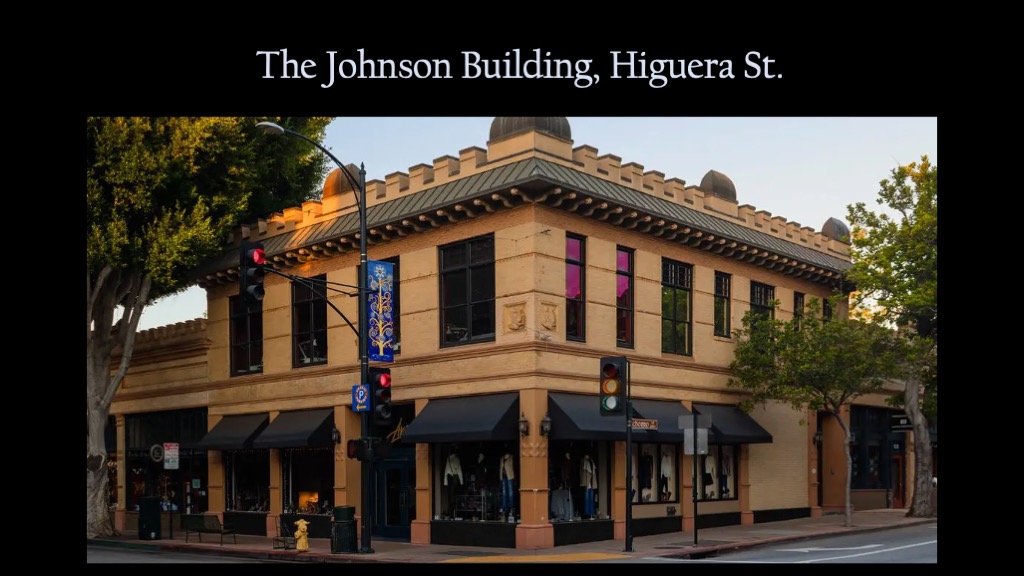
So I, being nosy, looked up the architect. It turns out that the man was a local—H.S. Laird was born in New York but came to San Luis Obispo in the late 1870s and lived out his life here. And during his time, he designed a stunning number of buildings, many of them still with us, from the 1890s and the early 1900s, are still with us. Some, like the Call Building (once the home of Gabby’s Bookstore) have been sadly reshaped, but all of them, I think, are a tribute to a remarkable architect.


American Twilight: The Golden Gate Exposition of 1939

Featured

Posted by ag1970 in Arroyo Grande, California history, Uncategorized, World War II

≈ Leave a comment

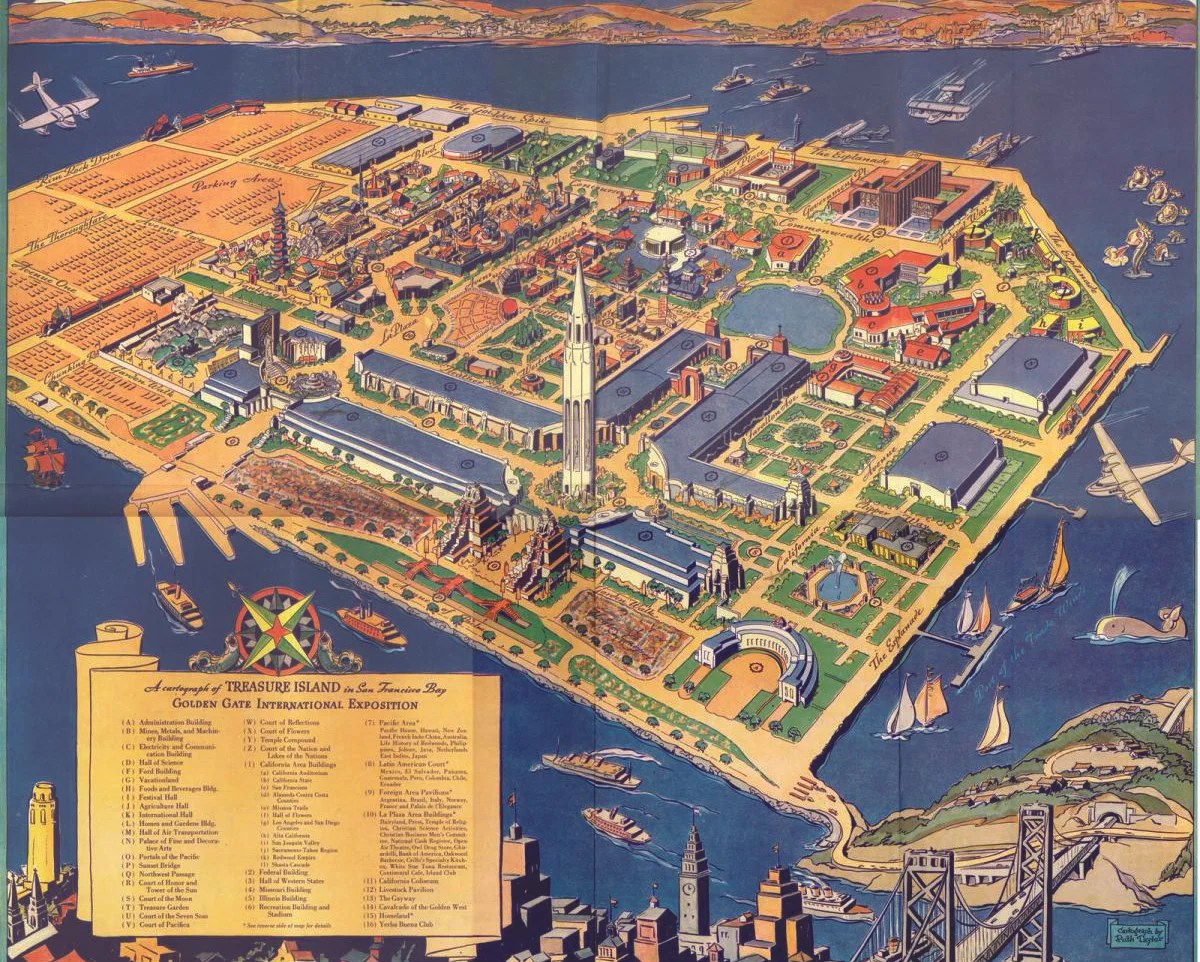
In 1939, San Francisco’s Treasure Island was the site for the Golden Gate Exposition, a showcase dedicated to a world beginning to emerge from the Great Depression. The Exposition was a masterpiece of Art Deco design and, with California comfortably distant from Europe, tinges of optimism must’ve remained awhile; I imagine the fall of France ended all that.

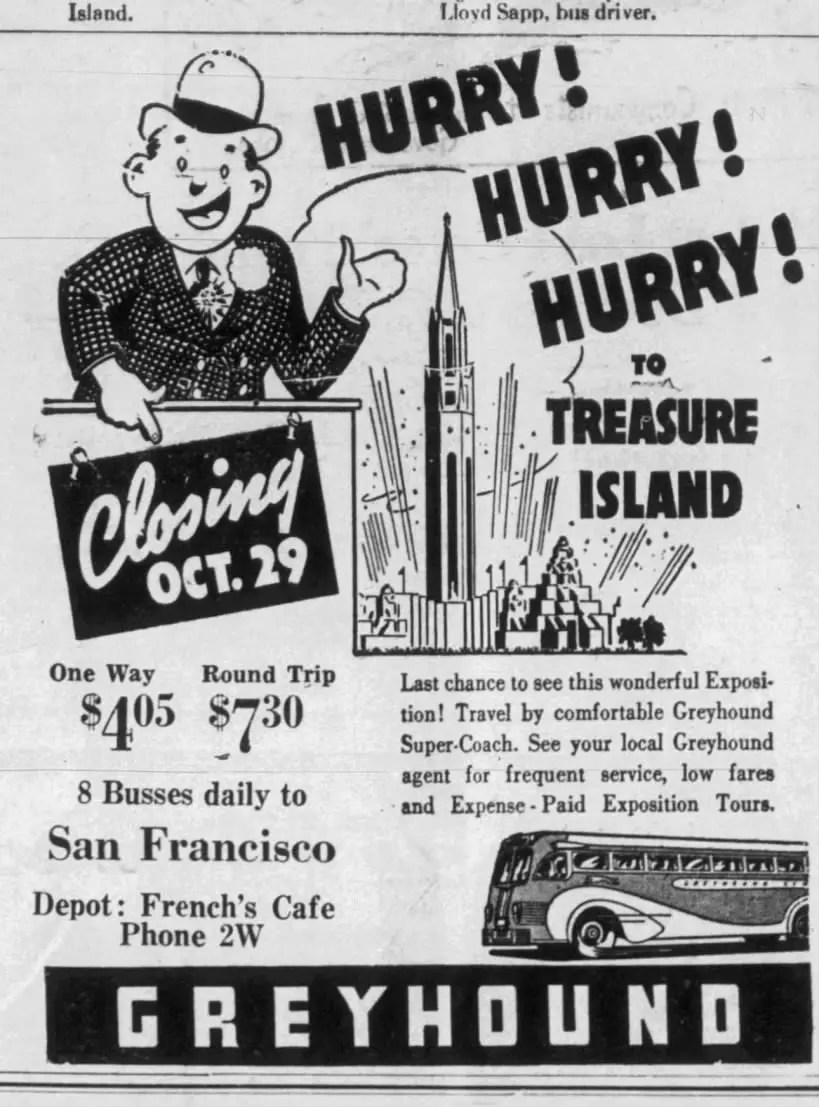
The Exposition even won periodic mention in the little Arroyo Grande Herald-Recorder, including this October 1939 display ad. I think the Greyhound station was in the Olohan Building, whose basement is now home to Klondike Pizza. A Klondike pizza is also good for transient moments of optimism, if I may be allowed to editorialize.

What had to be a highlight of the Exposition came in June and July 1939, when most of the Pacific Fleet, just off maneuvers, sailed into San Francisco Bay for a visit. Many years ago, my wife and my sons and I spent a delightful visit to our favorite city during Fleet Week, when we saw the Blue Angels, sailors from twenty nations, and, on a Muni Bus, a bearded lady (who was very nice) and a man who could do 360s with his dentures. I preferred the visits to the submarine Pompanito and the Liberty Ship Jeremiah O’Brien, but I’m built that way, I guess.

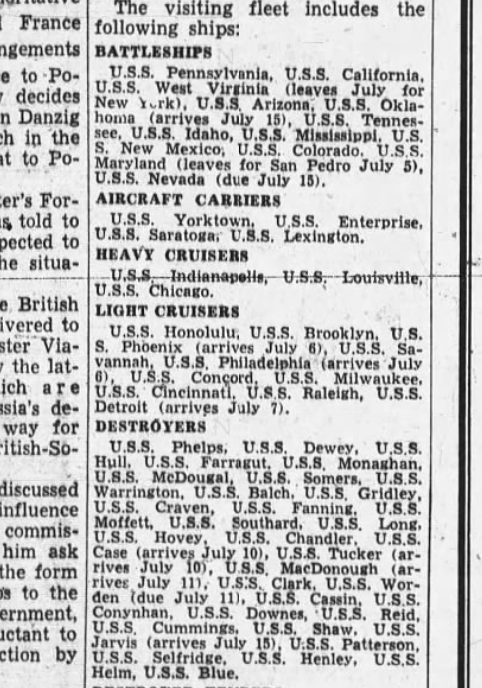
Here’s an article from an Oakland newspaper—with little seeming regard for what we’d call “national security” today— about the ships, and their 40,000 men, headed for the Exposition:


And here, also from British Pathe, is a remarkable video as the fleet arrives, led by battleships, then a light cruiser and finally the preciuus carriers. And then, best of all, happy sailors coming ashore for liberty.


The scale of these ships is hard to imagine, even though they’re relatively small when compared to modern aircraft carriers. A Pennsylvania-class battleship, like the one in the video below, displaced 32,000 tons, was 600 feet long and carried a complement of about 60 officers, 70 Marines and 1,000 enlisted men. These ships were small cities. And small cities need the mail delivered, even in mid-Caribbean. This film is from the early 1930s:


And the battleship in the newsreel—you had to know this was coming—was, of course, USS Arizona, lost with 1100 crew, including two sailors who were raised in Arroyo Grande, on December 7, 1941.

Maybe it’s just me, but I am a devoted fan of American film, and as a cultural barometer, 1939 was a sign of renewed confidence in the same way the Exposition was. My parents began dating that year, when their movie dates might’ve included The Wizard of Oz, Stagecoach, Goodbye Mr. Chips, Ninotchka, Destry Rides Again and Gone With the Wind.

And that brief moment of renewed self-confidence, of hope, is what makes the images of these ships and their young men so poignant to me. These are the fates of some of the ships cited in the Oakland newspaper article above:

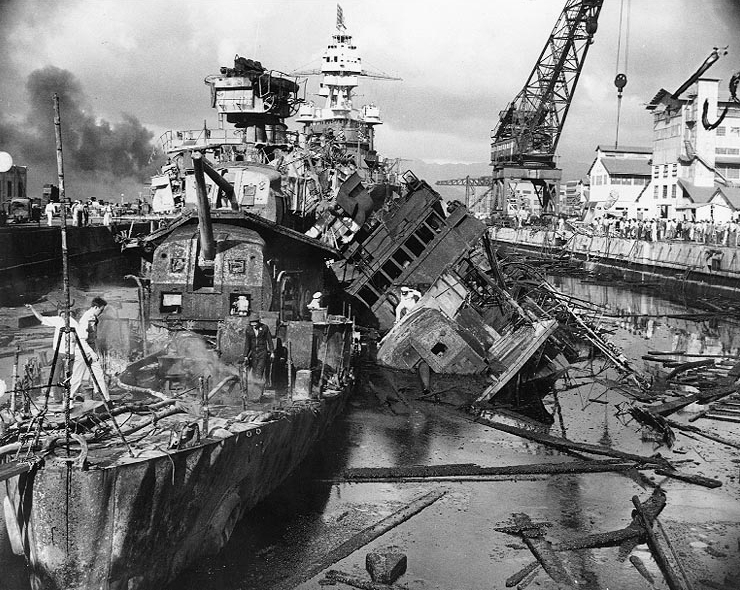
Downes and Cassin in the aftermath of the Pearl Harbor attack. The battleship Pennsylvania, also in drydock that day, is just beyond.


As devastating as the photograph above is, both destroyers were salvaged, rebuilt and returned to duty, as were the damaged battleships. One of them, Nevada, which made a heroic run under attack for the Pearl Harbor exit channel, was, on June 6, 1944, hurling 14-inch shells at the Germans defending the Normandy invasion beaches. Nevada, in fact, was granted the honor of firing the opening salvo that day.

One of my favorite lessons in U.S. History was devoted to the construction of the Oakland Bay Bridge, truly, to steal a term, an engineering marvel. It, and its sister bridge, are emblematic of the way we responded to the Great Depression.

We responded to the shattering of our confidence at Pearl Harbor with new ships and old ships pulled to the surface from Pearl Harbor mud and made new again. Vast fleets of warplanes, tanks, trucks, artillery and small arms, Spam and K-ration Lucky Strikes, a labor force that went to war— a third them women and many of them killed in factory accidents—and over 400,000 young men killed in combat, all of these made up our response.

These things happened because of a generation that, before the war, was dismissed by intellectuals as pleasure-seeking, selfish and shallow. This was my parents’ generation. My parents were hard-working, generous and deeply read. I became a history teacher because of the values they instilled in me.

Learning about the Exposition, in what remains—after a fair amount of European travel (Dublin, London, Edinburgh, Paris, Nice, Amsterdam, Munich, Salzburg, Florence, Venice, Rome) with twenty to forty of my closest teenaged friends, my students—the city I love the most. The Exposition reminded me of my mother and father and their generation. If this was a twilight time in our history, followed by four years of wartime dark, we were still here in the morning.


San Luis Obispo County Tourists: The James Brothers and the Dalton Brothers

06 Thursday Apr 2023

Posted by ag1970 in American History, California history, Uncategorized

≈ 2 Comments

Tags

dailyprompt, dailyprompt-1898

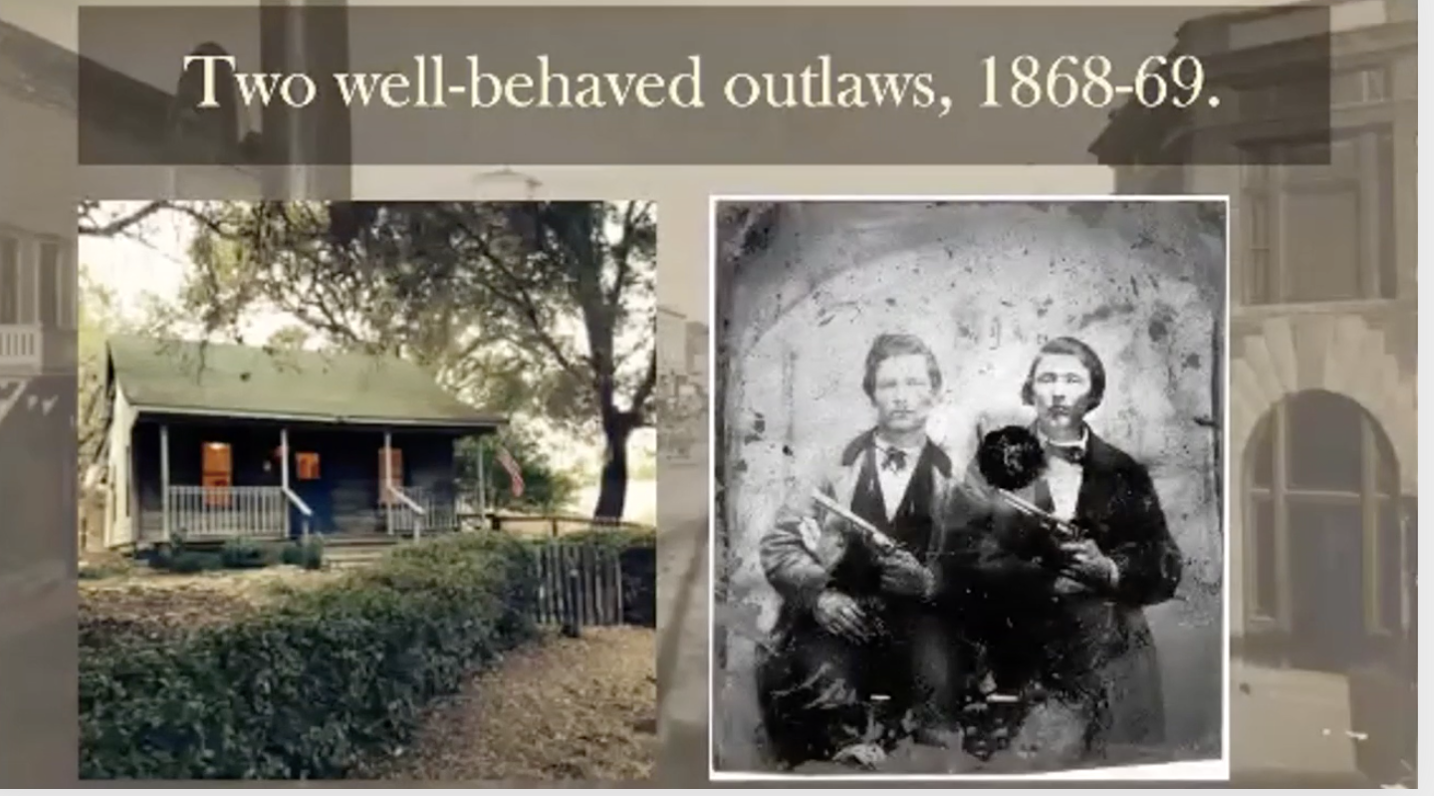
Frank and Jesse and the cabin where they allegedly lived near Paso Robles.

Not that San Luis Obispo County needs outside consultants, thank you very much, when it comes to crime. The first recorded mass murder in California history, in December 1848, happened in the North County, at Mission San Miguel.

It was the mountain man James Beckwourth who found the bodies of ten victims—the Reed family and their servants— in the mission carpenter shop. He’d also found, on previous occasions, the bodies of mountain men Hugh Glass (The Revenant), killed by the Arikara, and Jedediah Smith, killed by the Comanche. I have a theory that it’s not going to be a good day if you see Jim Beckwourth riding up your driveway.

Later, the good citizens of my South County hometown, Arroyo Grande, lynched a father and his fifteen-year-old son, suspected killers, from a railroad trestle during the night of March 31, 1886, and in 1904, an inebriated cowboy shot Constable Henry Lewellyn dead in the doorway of the Capitol Saloon on Branch Street.

In between, a resident from Lopez Canyon, east of Arroyo Grande, was found in a vacant lot by a prostitute from a San Luis Obispo bordello, extravagantly named The Palace, sleeping off a drunk. He wasn’t going to be sober again, because he was dead. A suspect was arrested—victim and suspect had been heard arguing loudly by more prostitutes (San Luis Obispo was a busy place in the 1890s)—outside a bar on Monterey Street, dubiously named The Olive Branch.

The suspect was eventually acquitted, in 1894, for lack of evidence. So was the cowboy who shot Constable Lewellyn; the jury bought the defense lawyer’s claim that it was self-defense.

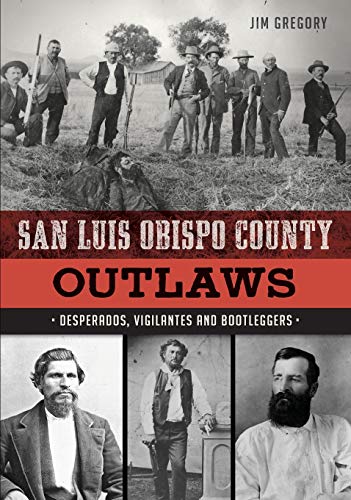
And in between 1848 and 1904, there were enough robberies, murders, arson fires, vigilante visits and citizen posses firing their revolvers enthusiastically into the air to fill a dozen Louis L’Amour novels.

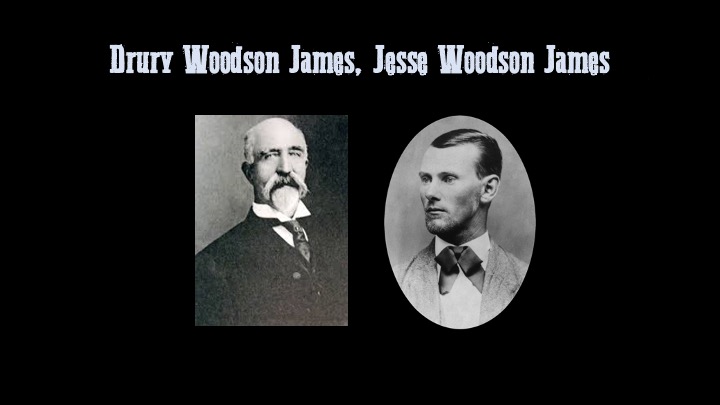
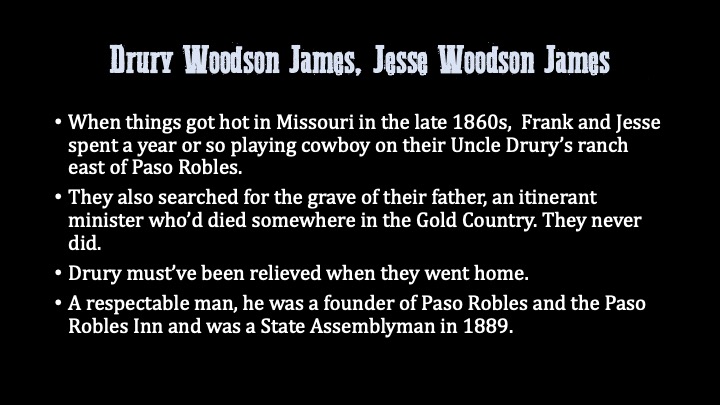
But we had visiting celebrities, too. When things got too hot in Missouri, the James Brothers, Confederate irregulars under the notorious William Quantrill during the Civil War, lived on their Uncle Drury’s ranch for awhile—Drury James was the co-founder of the Paso Robles Inn, still around today—and played at being cowboys. They weren’t. But Uncle Drury’s vaqueros learned to overlook Frank and Jesse’s cow-punching deficiencies because Jesse passed the time by idly picking off rattlesnakes and jackrabbits with his Colt revolver.

They returned to Missouri to pass into legend, etc.

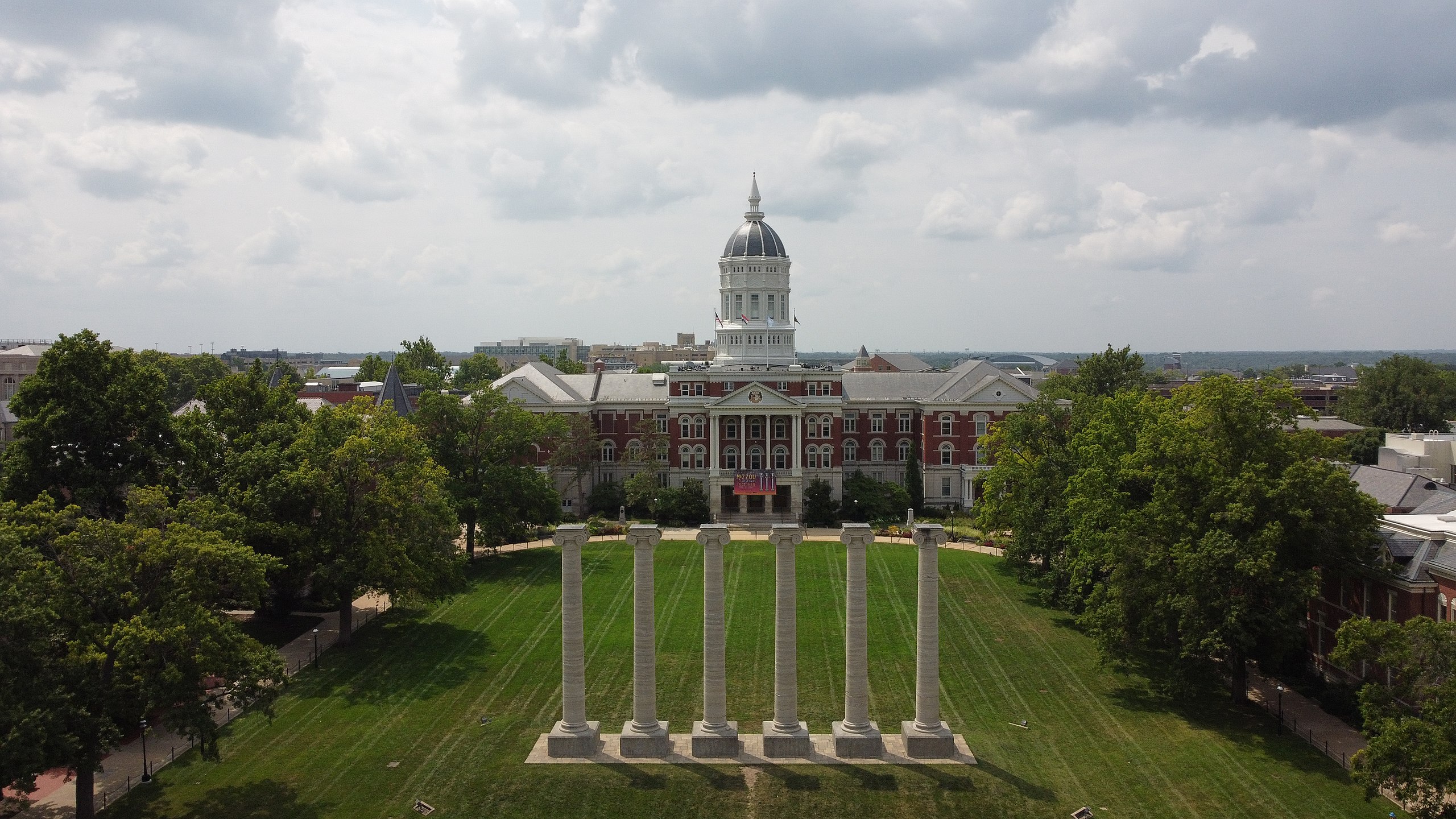
And darn if I didn’t run into them there. Last May, my wife Elizabeth and I went to Missouri to see our much-beloved niece, Becky, graduate from the school that’s also my Alma Mater, Mizzou, where I’d studied at the Journalism School before the History Department began to captivate me and I changed majors.

Francis Quadrangle, University of Missouri.

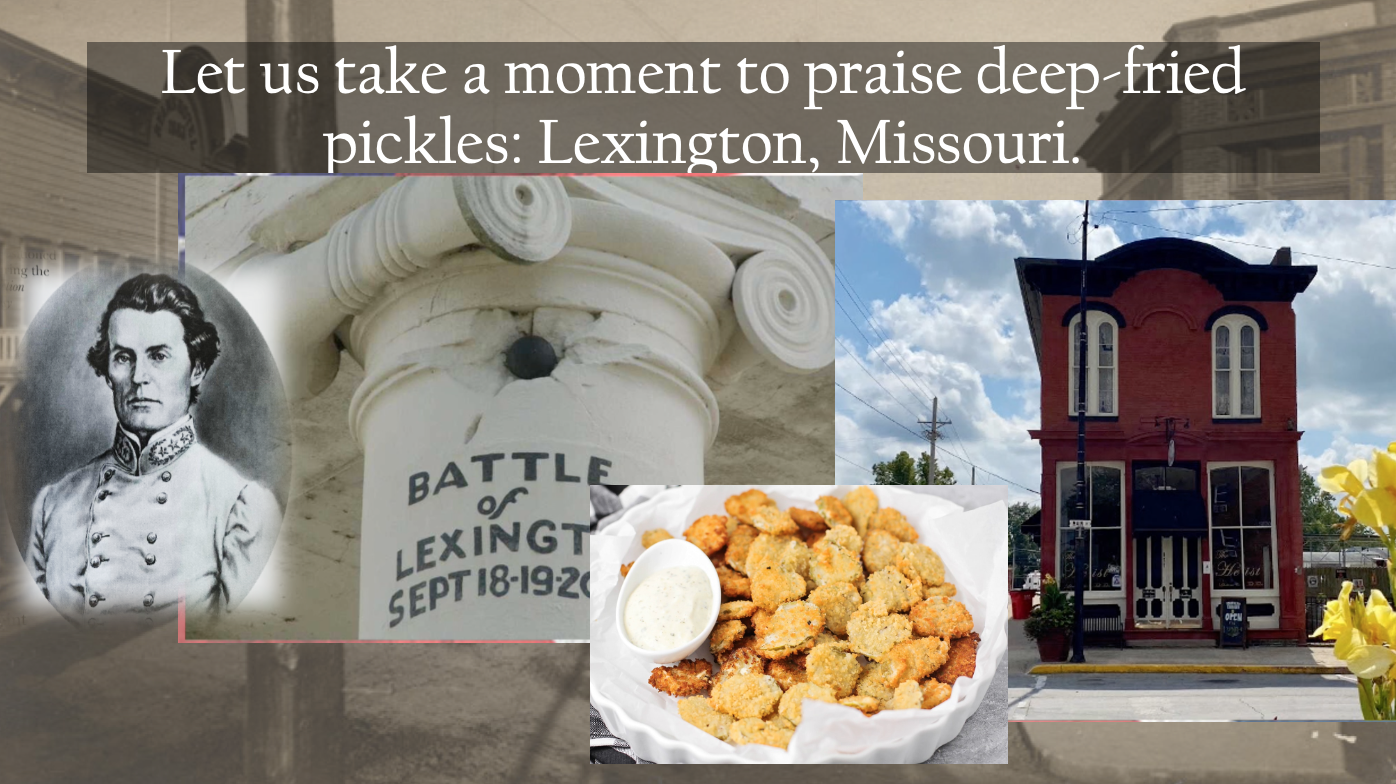
Elizabeth and I decided to drive to the western part of the state, to Lexington, Missouri, where my Confederate great-great grandfather, whose promotion to brigadier general evidently got lost in the mail—that’s States’ Rights for you—fought in 1861. The opposing forces left behind that souvenir in the column of the County Courthouse. I am named for that great-great grandfather, James H. McBride, who appears, from his portrait on the left, to have died from Terminal Constipation. My middle name, Douglass, comes from his son, a Confederate staff officer, who had an unfortunate encounter with a Yankee artillery shell in 1862 Arkansas.

So, as Kurt Vonnegut noted, it goes.


Not-quite Brigadier Grandfather James is less important than where we had lunch in Lexington, at that tall and narrow mid-Victorian restaurant, The Heist II. It was there where we discovered, along with a stunning Reuben Sandwich and a stellar BLT, the delight of fried pickles. They were incredible. My father was raised on the Ozark Plateau, and I once wrote an essay entitled “My Father and Fried Food,” and after The Heist, I understand him on a whole new level.

Anyway, it got its name from when it was a bank and was robbed by Frank and Jesse. Nellie-bar-the-door, that gave me, in between bites of fried pickles, to regale the waitress and most everyone within a four-table radius of Frank and Jesses James stories from San Luis Obispo County, California.

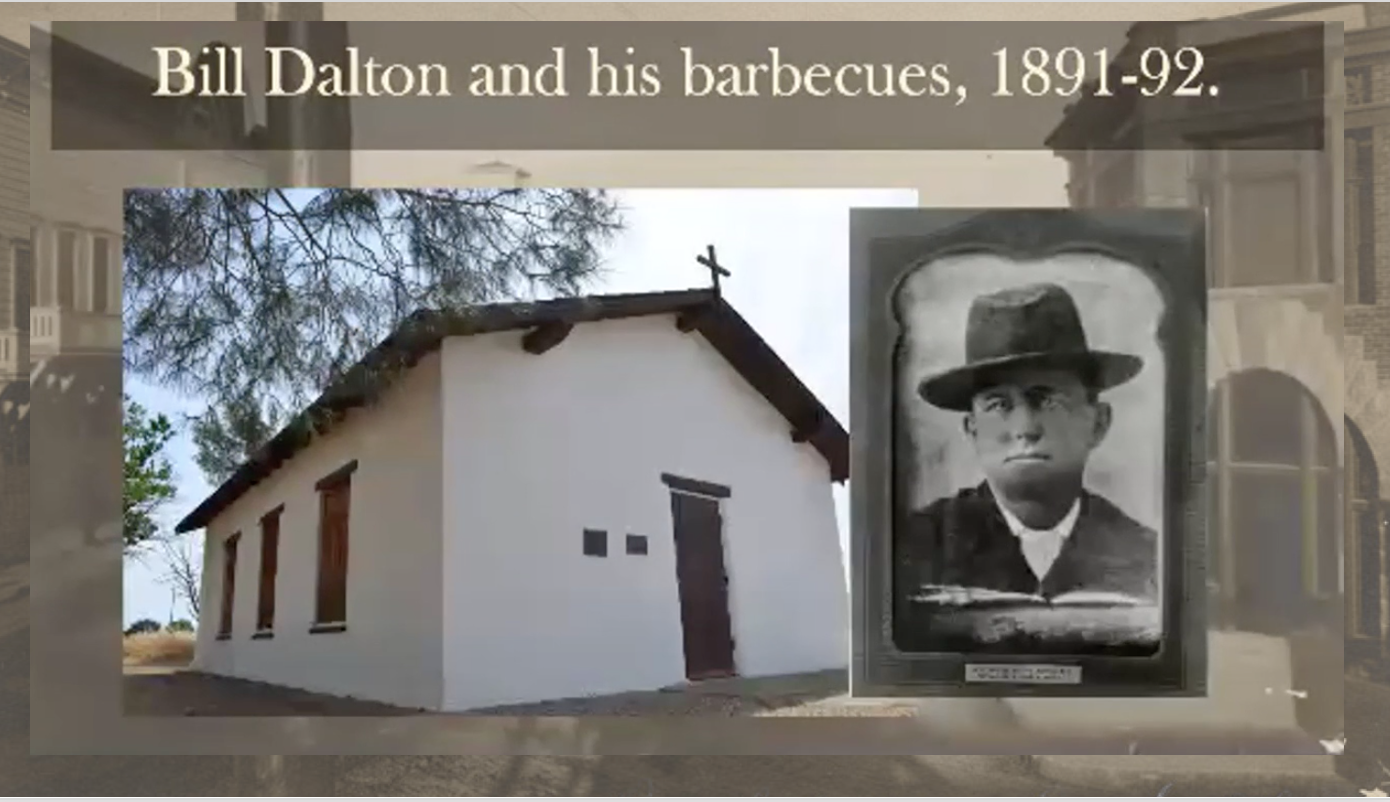
The Estrella Adobe Church and Bill Dalton, San Miguel, California.

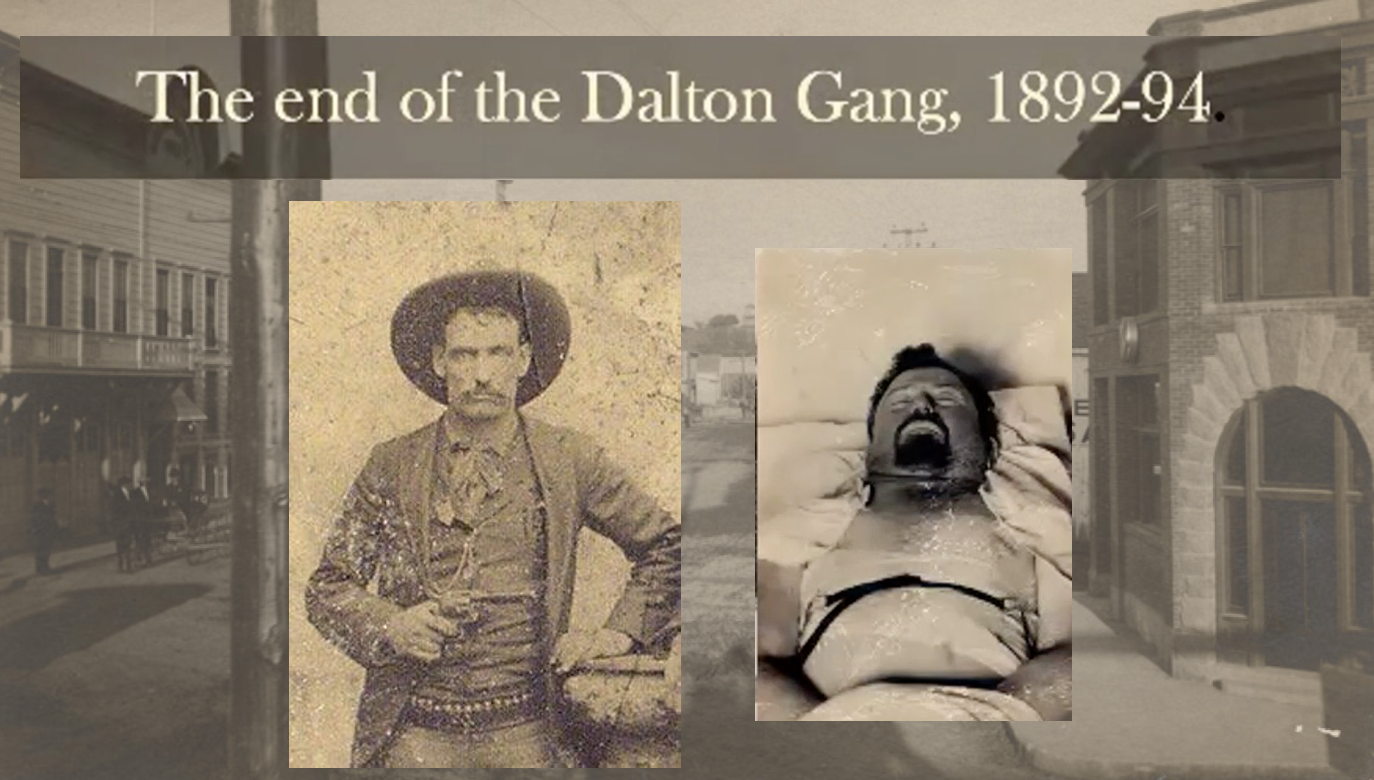
The James Gang was known also as the James-Younger Gang, thanks to Frank and Jesse’s cousins, and it was a Younger who became the mother to a brace of outlaws from a later generation, the Daltons. Bill was not an outlaw. He was a well-respected cattleman in San Miguel—some accounts that I’ve never verified claimed that he was a State Assemblyman—and one summer his brothers came to visit California.

(Which, of course, reminds me: the other reason for the James Brothers’ visit was their search for the grave of their Baptist preacher father, come to California to evangelize the gold fields, which needed it badly. They never found their father. Similarly, the ship Arkansas, loaded from ballast to main deck with Methodist missionaries, came to Methodize the gold fields at about the same time as Rev. James. It ran aground on Alcatraz and was towed across the Bay and beached, where it became a brothel.)


What Bill’s brothers, excitable boys, liked to do—within earshot of the adobe church congregation—was to barbecue, drink whiskey and target practice with their Colt revolvers. I don’t advise against doing things like this, but maybe not all at the same time.

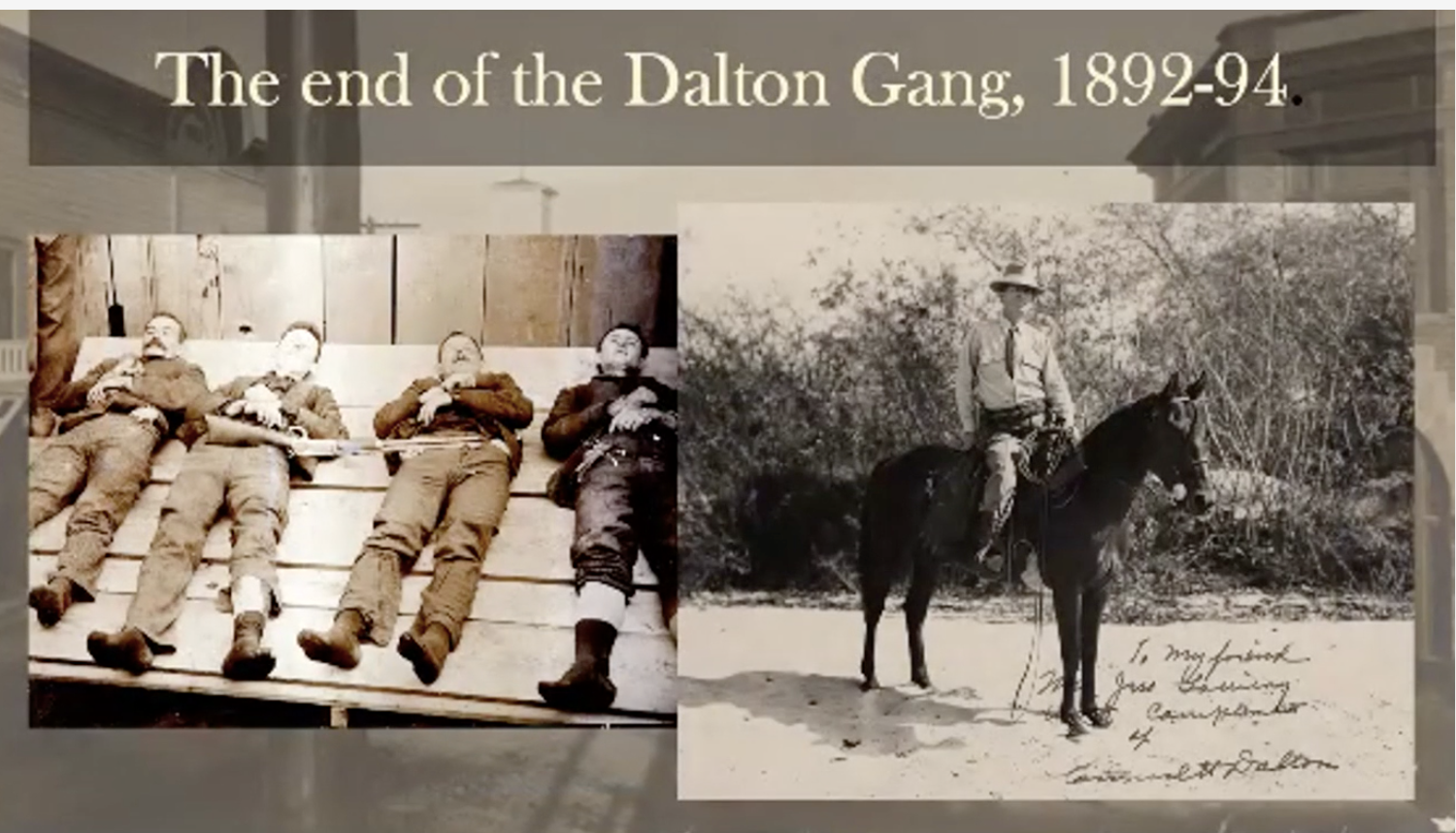
Bye and bye, Bill’s brothers returned to the Midwest, where they conceived of the idea of robbing two banks simultaneously in Coffeyville, Kansas. They had not thought this through completely, I think. Their timing was thrown off when the good citizens of Coffeyville realized what going on, denuded the hardware store of firearms, and air-conditioned the Dalton Gang, including brothers Grat and Bob.

They also air-conditioned brother Emmett, shot twenty-three times. He survived to become a script consultant for Hollywood westerns and autographed this photo for San Luis Obispo County Sheriff Jess Lowery.

Lowery’s career highlight was pulling over a truck near Pismo Beach, prying apart the two-by-fours atop its bed, and finding, just beneath, 72 five-gallon jerricans of bootleg Canadian whiskey headed for Los Angeles and gangster Tony Cornero, famed later for the gambling ships he operated just beyond the three-mile limit. Cornero also opened one of the first casinos in Las Vegas, which burned, due to either faulty wiring or Lucky Luciano. His life ended due to either a heart attack or Lucky Luciano.

So it goes some more.

Dead Daltons and the not-quite-dead-yet Emmett.

Bill Dalton’s life ended with a day that started out to be pretty optimistic. For reasons I still don’t understand, he decided to follow, after Coffeyville, the Outlaw Trail. His career was brief. A posse, led by Marshal Selton T. Lindsey, took off after Bill in Indian Territory—Oklahoma—and were hot on the trail until they encountered a wagonload of contraband whiskey intended for the Indian Nations.

The posse confiscated the evidence and drank it.

The next morning, only Marshal Selton T. Lindsey and one deputy were sober enough to continue the pursuit of Bill Dalton. While crouching behind the weeds atop a rise, they found him.

Bill evidently loved children. He was playing in the front yard of a friend’s house with his friend’s children when one daughter, leading a milk-cow in from pasture and back to the barn, passed Marshal Lindsey and his deputy, who were not doing a very good job of being surreptitious. When she reached Bill, she whispered to him urgently.

He ran for it. Urgently.

Lindsey and his deputy lit out after Bill, paused to get their aim, and began to air-condition him with their Winchester rifles. He fell, dead.

Not quite. When the lawmen crept up to Bill, he was still alive. He smiled at them.

Then he was dead.

Marshal Selton T. Lindsey and the deceased Bill Dalton.

The Daltons weren’t quite done with San Luis Obispo County. In 1972, soon after the release of their concept album about the gang, Desperado, The Eagles played a concert at Cuesta Community College. A fairly prominent Canadian, Neil Young, opened for them. Tickets were $5. I did not buy one: I didn’t know much about The Eagles, and $5, in 1972, $36 today, was for a starving college student like me—-who subsisted largely on 19-cent tacos and burritos at the San Luis Obispo Taco Bell where Creedence Clearwater Revival once dined—Highway Robbery.
Damn. I wish I’d bought that ticket.

For Yoshi, who never came back

Featured

Posted by ag1970 in American History, Arroyo Grande, California history, History, Uncategorized, World War II

≈ 3 Comments

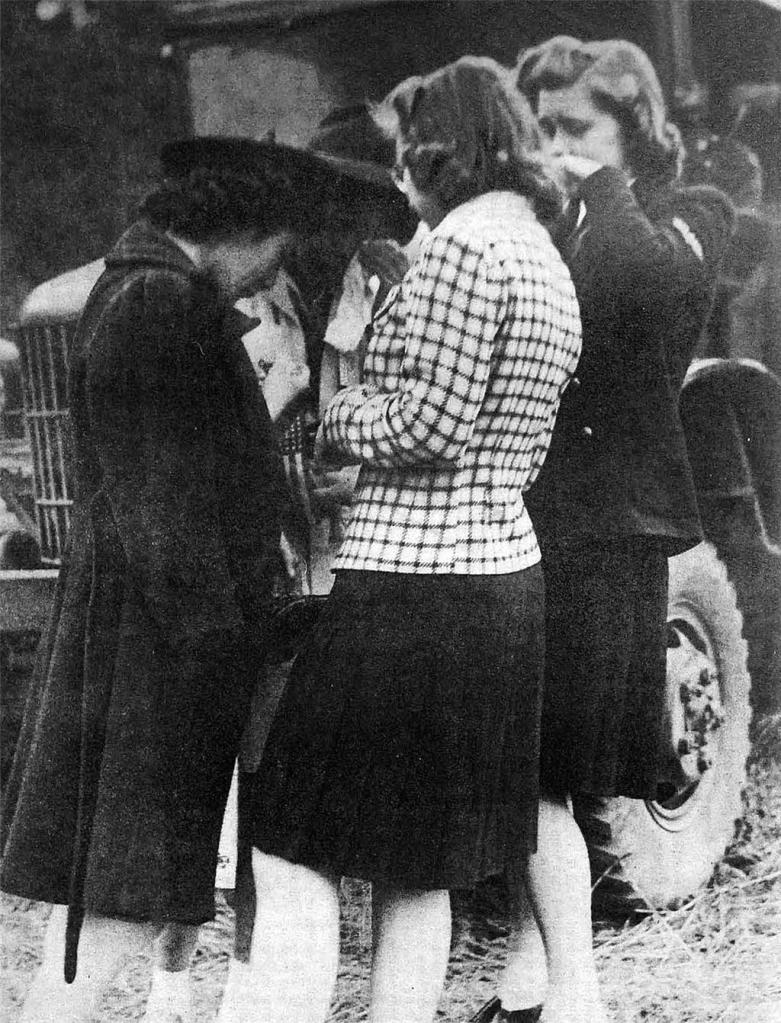
This photograph was taken on Bainbridge Island, Washington, on the day Executive Order 9066 was executed and these friends were separated.

There’s a good chance they never saw each other again.

When the buses came to take our Arroyo Grande, California, neighbors away on April 30, 1942, many of them—less than half—came back. I grew up here, and I don’t recognize many of the surnames in the old high school yearbooks.


One woman told me this: On the day the buses came to the high school parking lot, her mother saw a line of high-school girls, some Japanese, some not, walking up Crown Hill, walking up toward their high school, holding hands and sobbing.

Arroyo Grande’s Japanese-Americans went first to the Tulare County Fairgrounds, where they slept in livestock stalls, and then to the Rivers Camp in Arizona, where the temperature was at or above 109 degrees for twenty of their first thirty days there.
I interviewed a remarkable woman named Jean a few weeks ago. She is 94, is briskly intelligent, articulate and gracious. Her father owned the meat market on Branch Street in Arroyo Grande, population 1,090 in the 1940 census, and when his Japanese-American customers, farmers, came in to settle up before the buses came, he refused to take their money. “You keep it,” he told them. “You’re going to need it.”

When they came home three years later, he extended them easy credit until they could begin to bring in crops again. Jean showed me her father’s business ledgers, so I have no reason to doubt it when she told me that every one of those farmers paid her father back. In full.

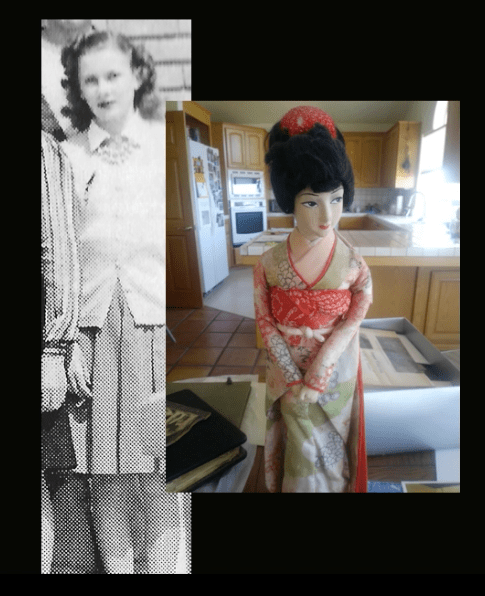
This is Jean as a high-school freshman. The doll, with her handmade kimono, came to Jean from Gila River in gratitude for her family’s friendship. For their loyalty.

At ninety-four, that loyalty runs in Jean as deeply as it ever has. One of her best high-school friends was named Yoshi. I can find a photo of the two together in second grade. I found a photo, too, of two second-grade boys in the Arroyo Grande Grammar School in 1926. They would die, about twelve minutes apart, on USS Arizona.

Yoshi’s brother became a war hero. He won a battlefield promotion to lieutenant when he went behind Japanese lines in China to rescue a downed American flier.

Yoshi’s brother brought that flier in and made him safe. Jean never saw Yoshi again and, because of April 30, 1942, there is a part of her that can never feel safe.

The war, at its outset for America, killed two of our sailors. It would claim many more local young men, killing them in Ironbottom Sound off Guadalcanal and on the beach at Tarawa. It would kill a young paratrooper in Holland during Operation Market Garden. It would kill, with a sniper’s bullet, a tank-destoyer crewman on the German frontier three days before his first child, a son, was born.

The war killed neither Jean nor Yoshi. They remain its casualties, nonetheless.

We had to stop the interview for a moment. In remembering her friend, Jean was fighting hard to stop the tears. One escaped. That moment taught me so much history, and with such intensity, that I almost couldn’t bear it.

← Older posts

Subscribe

  • Entries (RSS)
  • Comments (RSS)

Archives

  • January 2026
  • December 2025
  • November 2025
  • October 2025
  • September 2025
  • August 2025
  • July 2025
  • June 2025
  • May 2025
  • April 2025
  • March 2025
  • February 2025
  • January 2025
  • December 2024
  • November 2024
  • October 2024
  • September 2024
  • August 2024
  • July 2024
  • June 2024
  • May 2024
  • April 2024
  • March 2024
  • February 2024
  • January 2024
  • December 2023
  • November 2023
  • October 2023
  • September 2023
  • August 2023
  • July 2023
  • June 2023
  • May 2023
  • April 2023
  • March 2023
  • February 2023
  • January 2023
  • December 2022
  • November 2022
  • October 2022
  • September 2022
  • August 2022
  • May 2022
  • April 2022
  • March 2022
  • February 2022
  • January 2022
  • December 2021
  • November 2021
  • October 2021
  • September 2021
  • August 2021
  • July 2021
  • June 2021
  • April 2021
  • March 2021
  • February 2021
  • January 2021
  • December 2020
  • November 2020
  • August 2020
  • July 2020
  • June 2020
  • May 2020
  • April 2020
  • January 2020
  • December 2019
  • November 2019
  • October 2019
  • September 2019
  • August 2019
  • May 2019
  • April 2019
  • March 2019
  • February 2019
  • January 2019
  • December 2018
  • November 2018
  • October 2018
  • September 2018
  • July 2018
  • June 2018
  • May 2018
  • April 2018
  • March 2018
  • February 2018
  • January 2018
  • December 2017
  • November 2017
  • October 2017
  • April 2017
  • March 2017
  • December 2016
  • November 2016
  • October 2016
  • September 2016
  • August 2016
  • July 2016
  • June 2016
  • April 2016
  • March 2016
  • February 2016
  • January 2016
  • December 2015
  • November 2015
  • October 2015
  • September 2015
  • August 2015
  • July 2015
  • June 2015
  • May 2015
  • April 2015
  • March 2015
  • February 2015
  • January 2015
  • December 2014
  • November 2014
  • September 2014
  • August 2014
  • July 2014

Categories

  • American History
  • Arroyo Grande
  • California history
  • Family history
  • Film and Popular Culture
  • History
  • News
  • Personal memoirs
  • Teaching
  • The Great Depression
  • trump
  • Uncategorized
  • World War II
  • Writing

Meta

  • Create account
  • Log in

Blog at WordPress.com.

  • Subscribe Subscribed
    • A Work in Progress
    • Join 68 other subscribers
    • Already have a WordPress.com account? Log in now.
    • A Work in Progress
    • Subscribe Subscribed
    • Sign up
    • Log in
    • Report this content
    • View site in Reader
    • Manage subscriptions
    • Collapse this bar
 

Loading Comments...