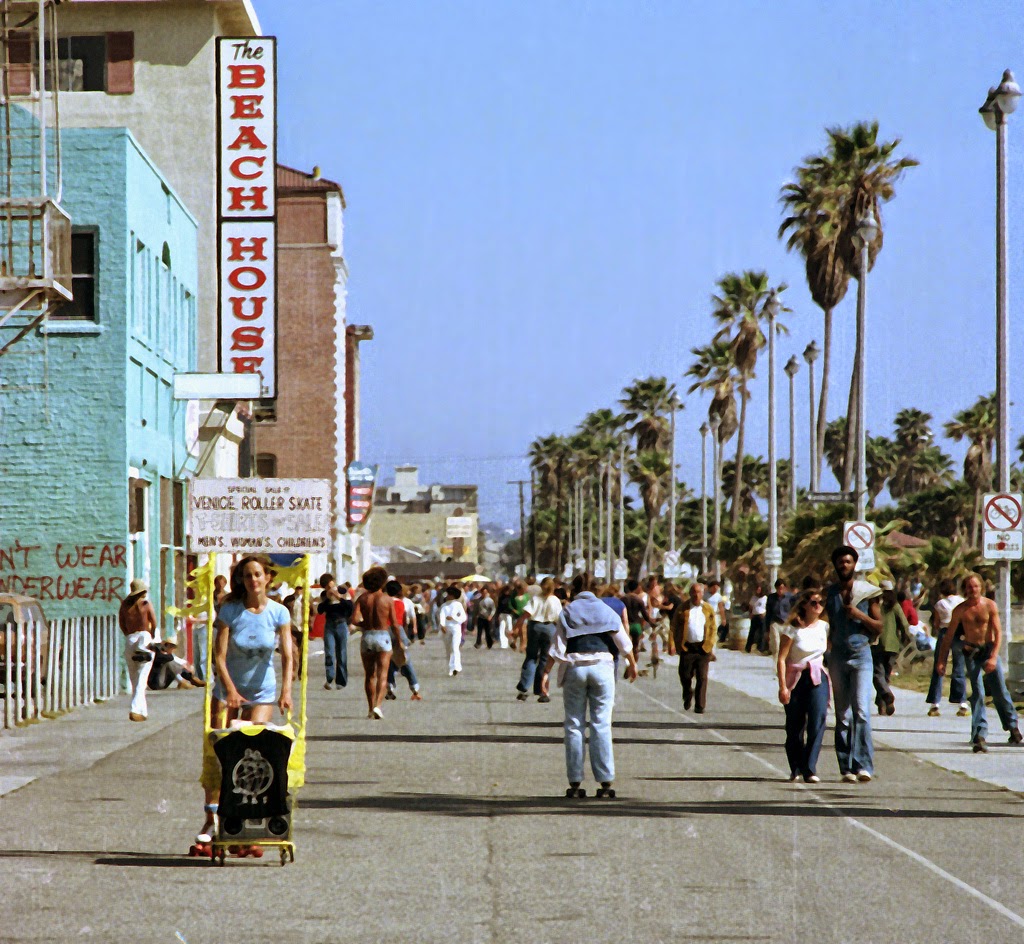
I have been a longtime fan of Dire Straits, Mark Knopfler, this album and this song, “Skateaway,” based on watching young women like these zipping through L.A. traffic.
And then, years later, I found this video and I thought it was brilliant. I still do today. I’ve always been hesitant to share it for fear of being labeled a dirty old man, but the video’s meaning is closer to the song’s: it’s a tribute, too, to freedom, strength, athleticism and…oh, yes…to beauty, I guess.
The Los Angeles Dodgers has their World Series victory parade yesterday and that, of course, set me to wondering. This is downtown downtown L.A. What filming locations are nearby?
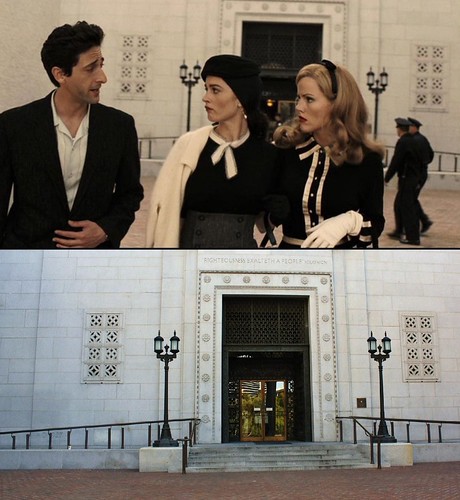
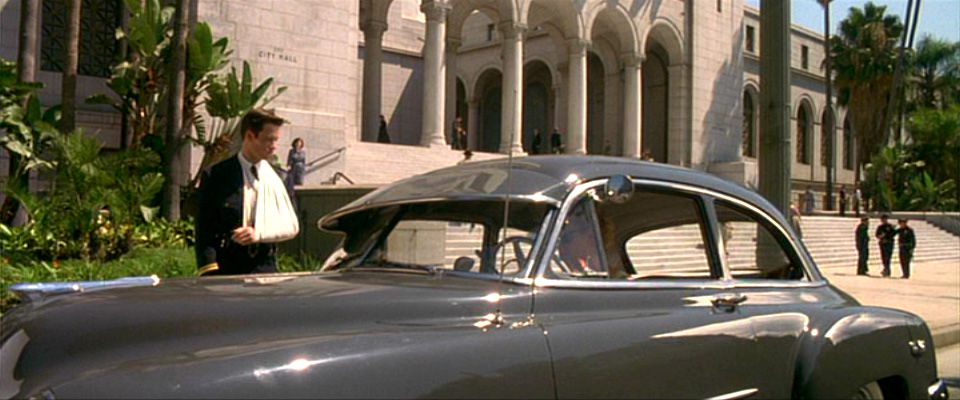
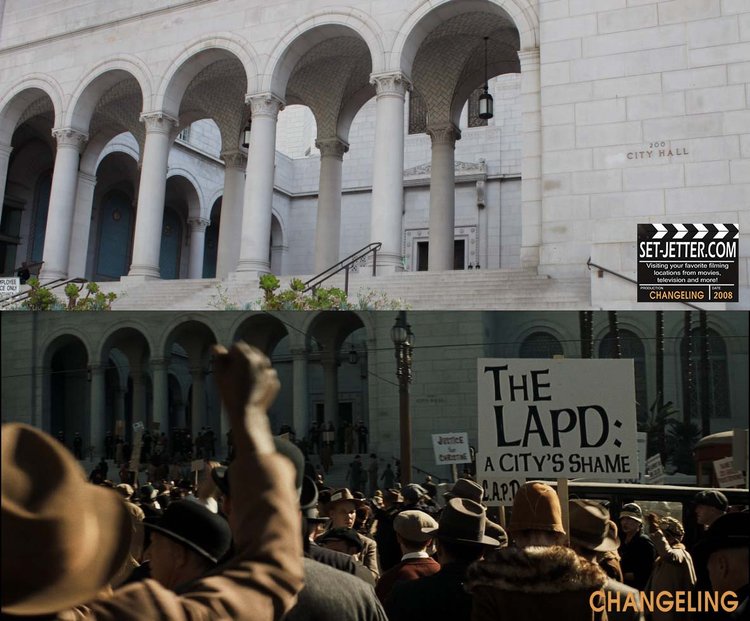
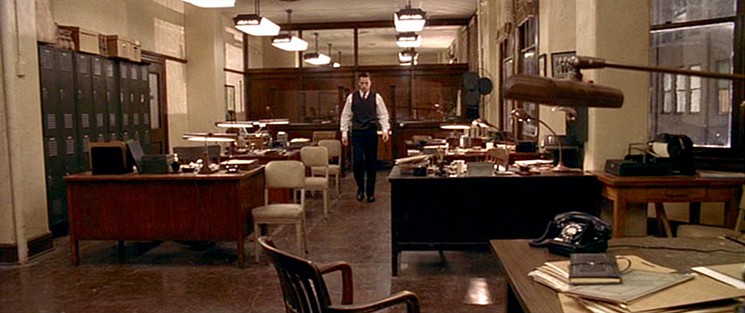
City Hall:
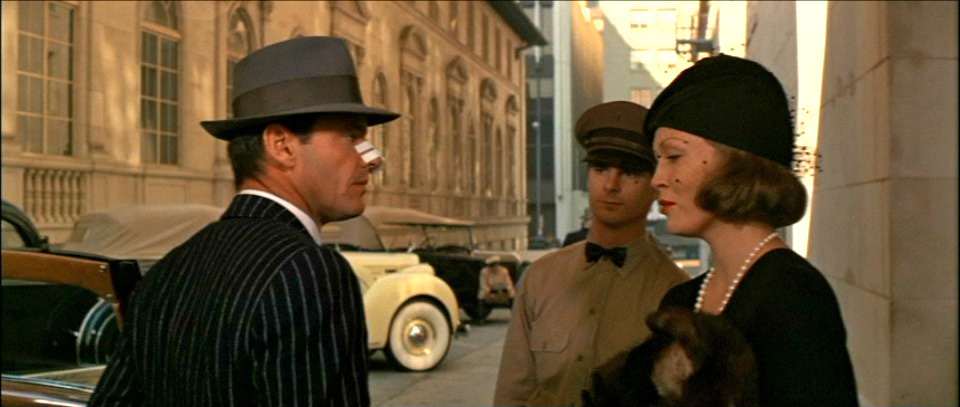
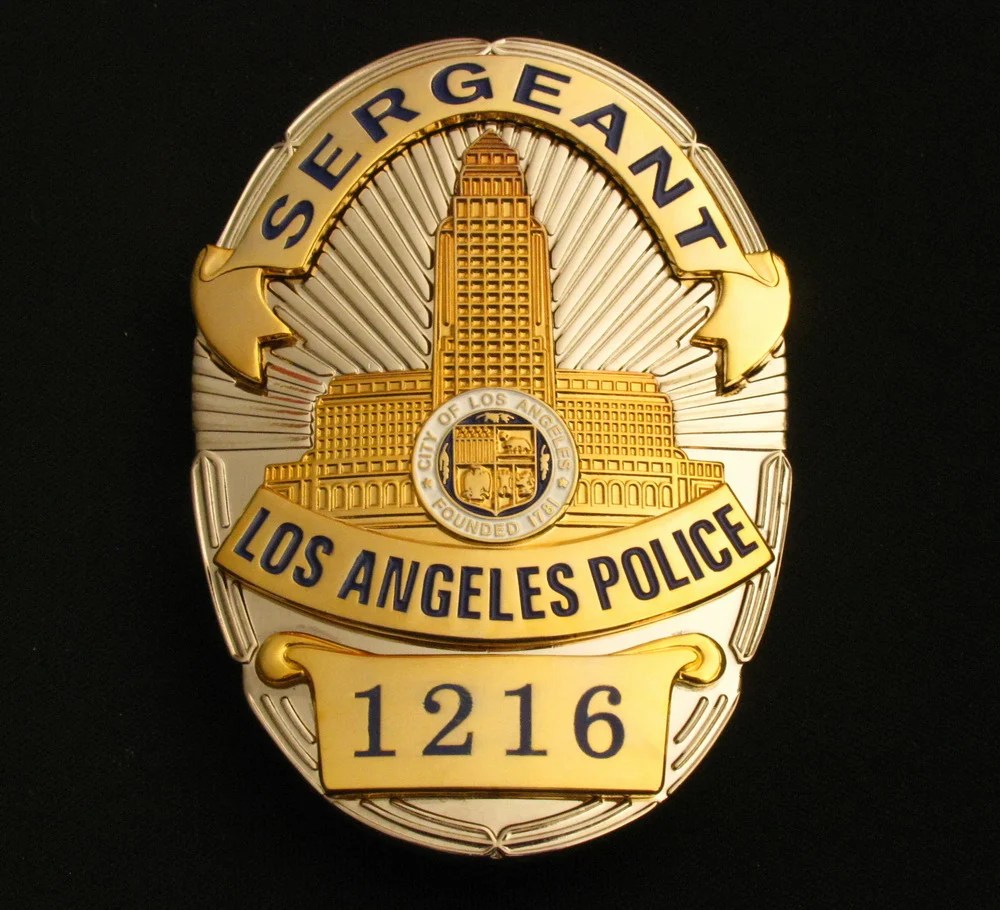
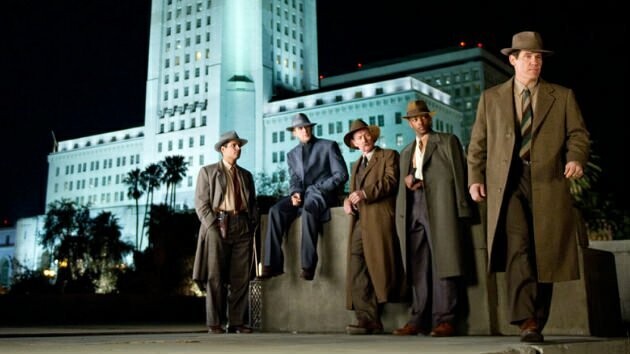
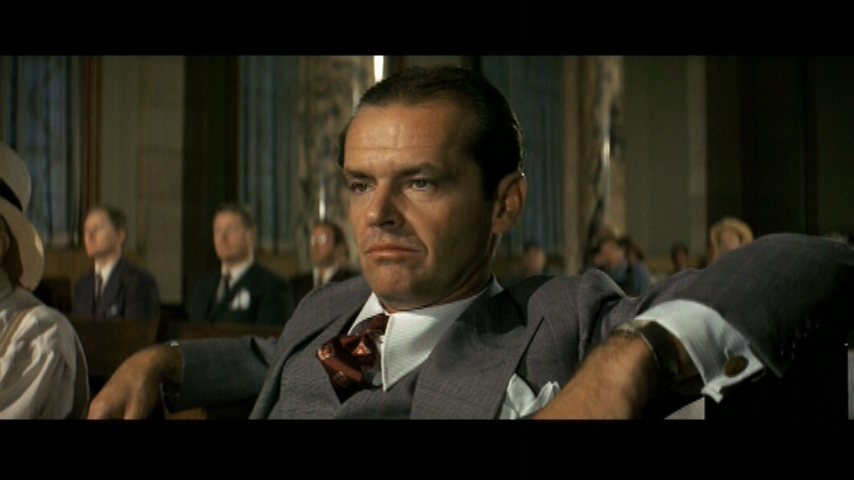
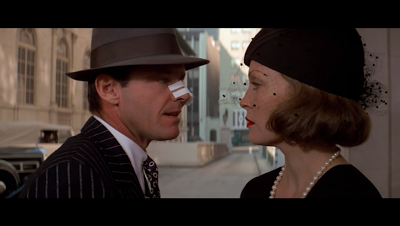
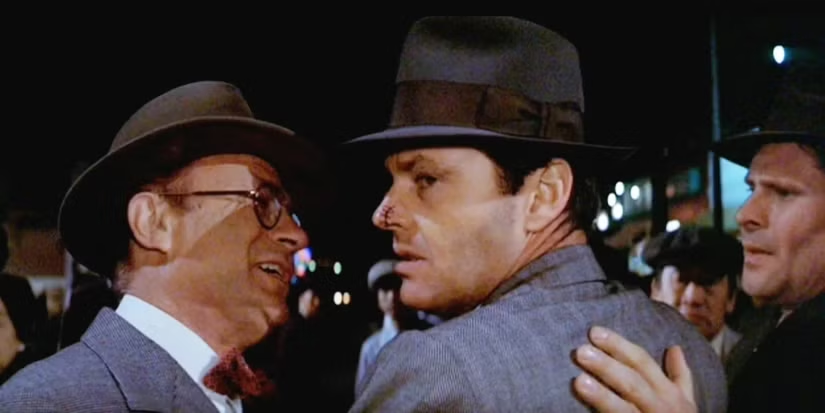
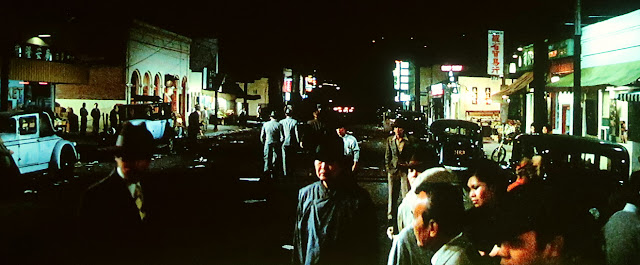
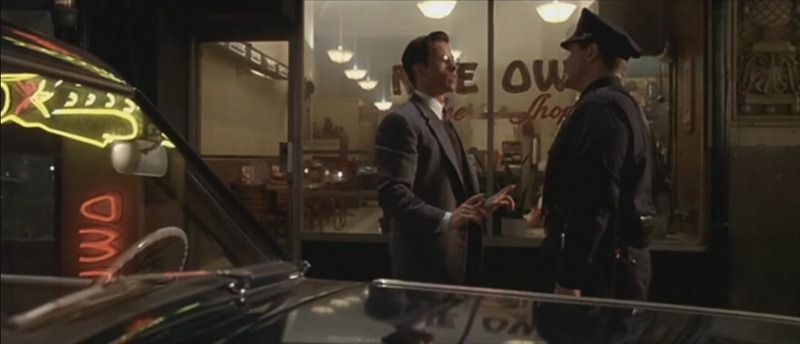
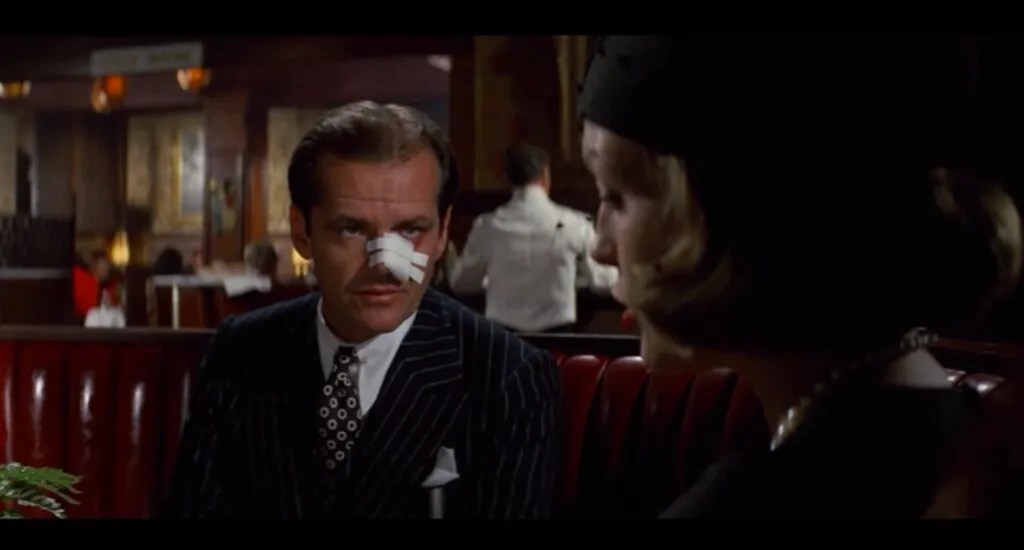
Top Row: An LAPD shield with the Hall; the not-very-good Gangster Squard; the only L.A. scene in Hollywoodland. The rest of the film was shot in Montreal.Second Row: The ending to L.A. Confidential; the same arches in Clint Eastwood’s The Changeling; L.A. Confidential’s detective bullpen was also shot inside City Hall.Bottom: A bored JJ Gittes at the City Council meeting, shot inside City Hall, as well.
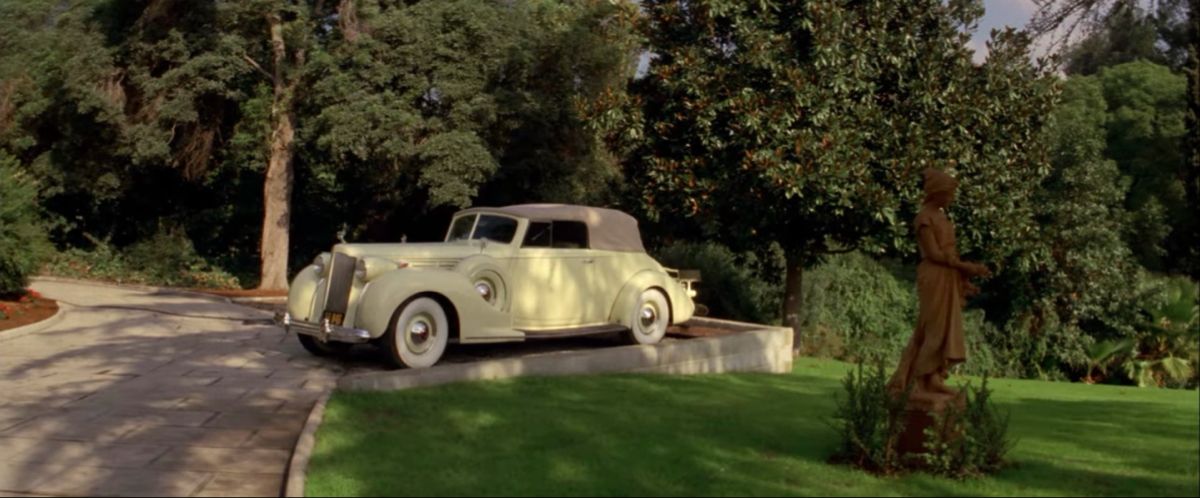
Grand Avenue: In Chinatown, a valet brings up Mrs. Mulwray’s car outside the Millenium Biltmore. It’s a dreamy 1936 Packard.
Second Street Tunnel: Featured in Blade Runner (1982).
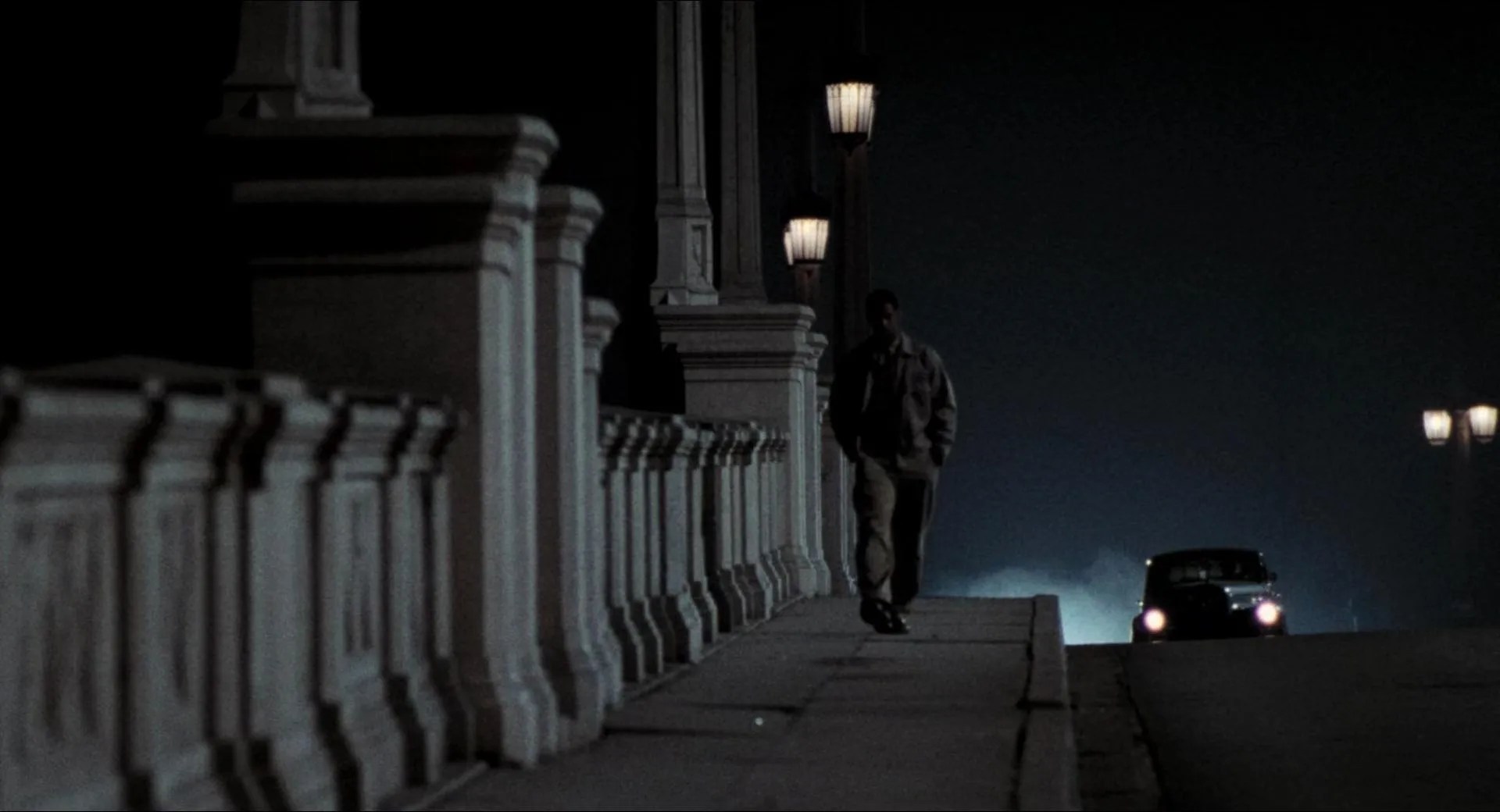
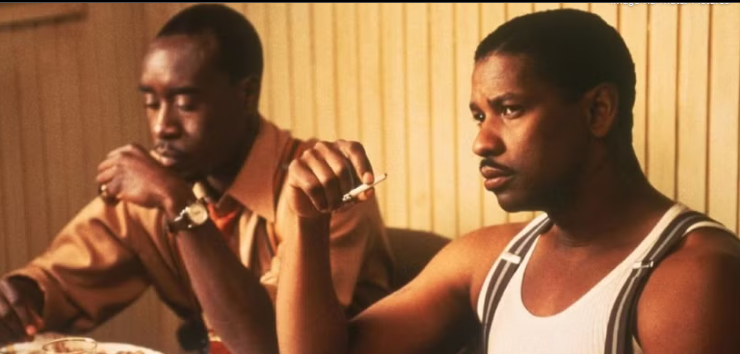
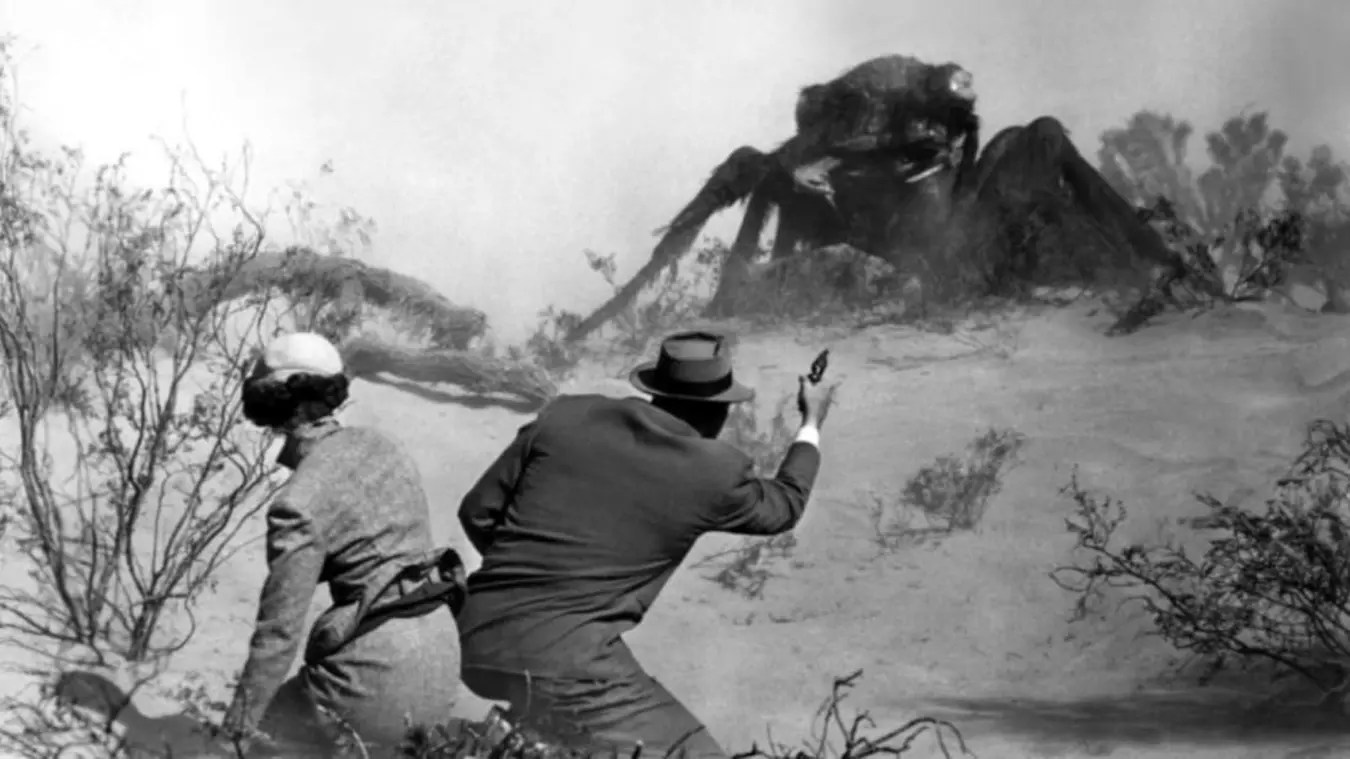
Fourth Street Bridge: In Devil in the Blue Dress, Denzel Washington is about to be picked up by that approaching car; Washington as Easy, Don Cheadle as his sidekick, Mouse.The Bridge and the “river” below were also featured in the 1954 Giant Ant Thriller, Them! Them! is no match for James Arness’s snub-nosed .38.
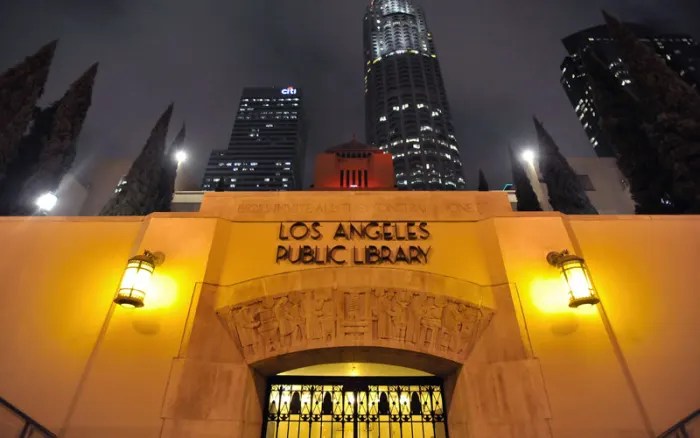
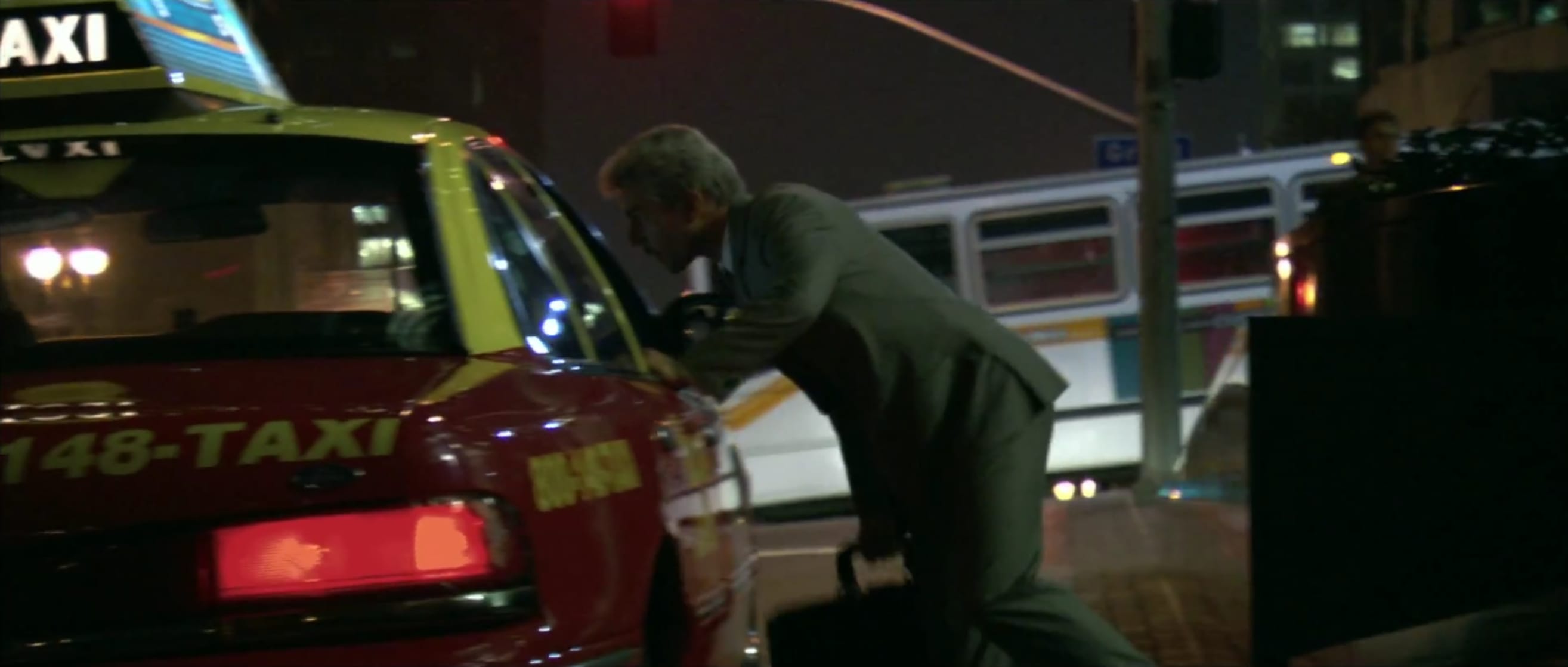
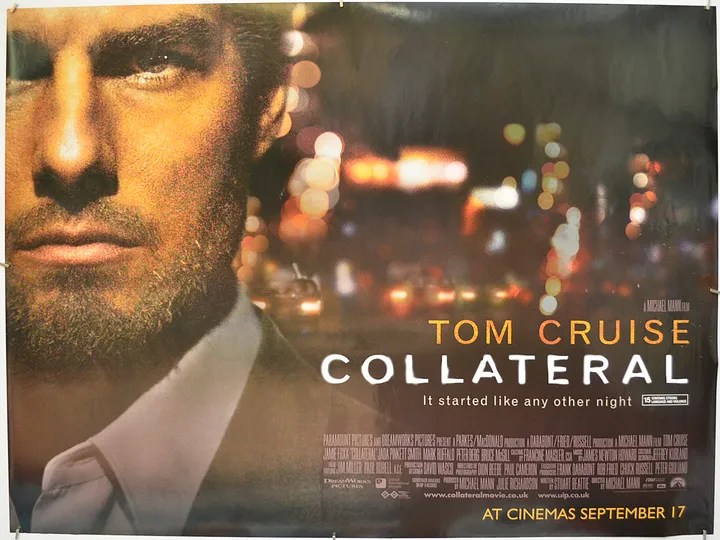
Los Angeles Central Library, Fifth and Grand. In Collateral, accrosss the street, hapless cabbie Max (Jamie Foxx) picks up a fare named Vincent, who turns out to be a hit man.
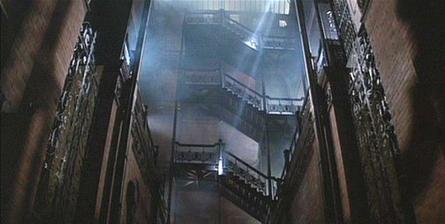
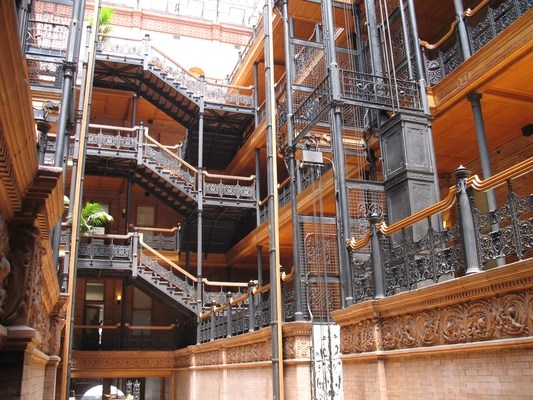
The Abercombie Building, W. Fifth. The interior was featured in Ridley Scott’s Blade Runner (1983).
Nearby:
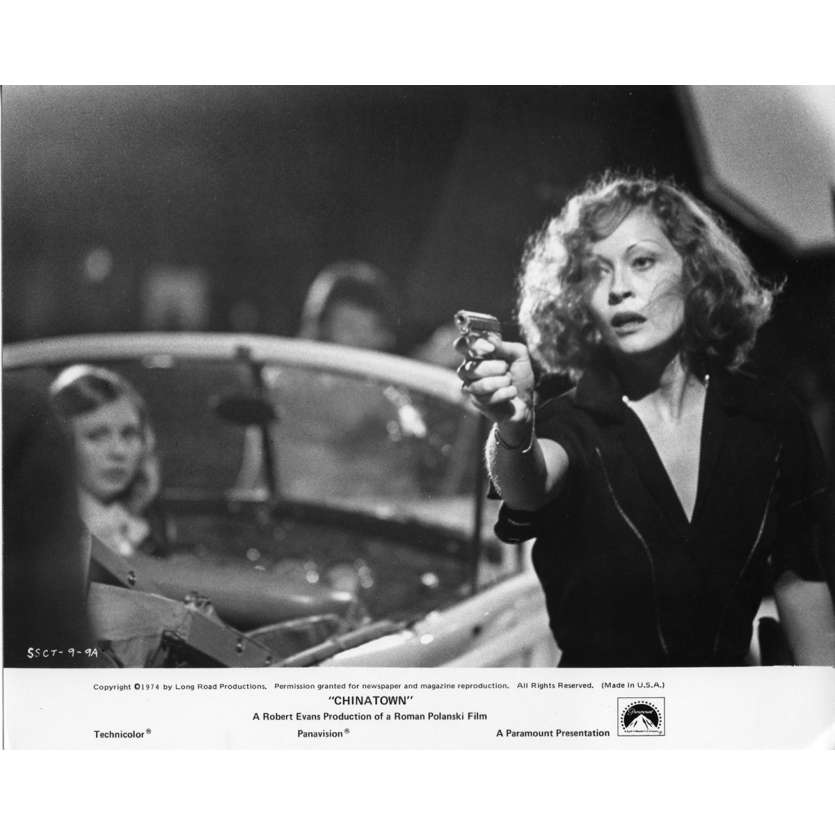
Spring Street: An unlikely long-distance revolver shot kills Evelyn Mulwray in the tragic finale of Chinatown.
W. 6th Street. The Bliss Cafe stands in for an Asian-American nightclub in Collateral. In it, hit man Vincent seeks his victim, kind of messily.
E. 6th Street: In L.A. Confidential, what seems to be a gangland hit at The Nite Owl turns out to be an LAPD job.
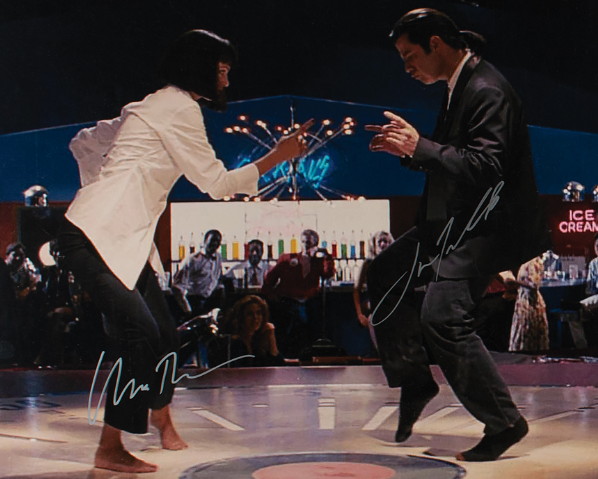
Flower Street: Uma Thurman and John Travolta enter the twist contest at Jack Rabbit Slim’s in the noir-ish Pulp Fiction.
West 7th Street: The Prince stands in for the 1926 Brown Derby in Chinatown.
I was just working on a history presentation on local outlaws that included this song, Banderas singing, from the opening to Desperado. I admire the way he restores order.
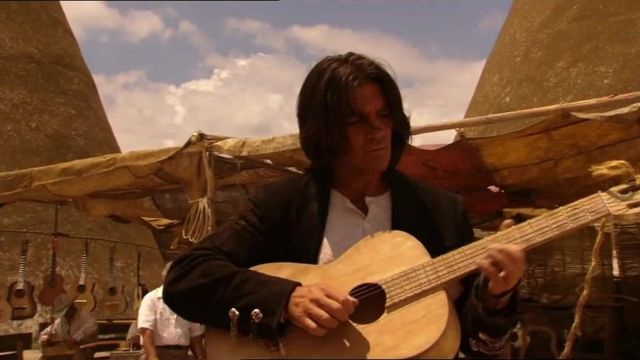
And, of course, he opens Once Upon a Time in Mexico with a little guitar work…
Oh, no. Banderas does not stop there. “Oh, What a Circus!” from Evita, at the Royal Albert Hall.
And, of course, the man can dance, too. Damn him. A tango with Catherine Zapata.
I cannot think of an actress who stunned me more than Catherine Zeta-Jones in 1998’s Zorro. So let’s allow Banderas to dance with her, too. “That is the way they are dancing in Madrid these days.”
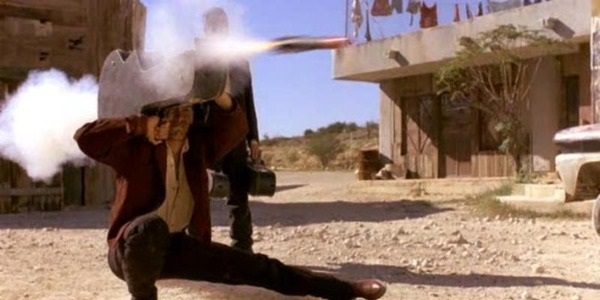
Just one more point. Any guy whose friends carry guitar cases that double as rocket launchers HAS to be my kind of guy.
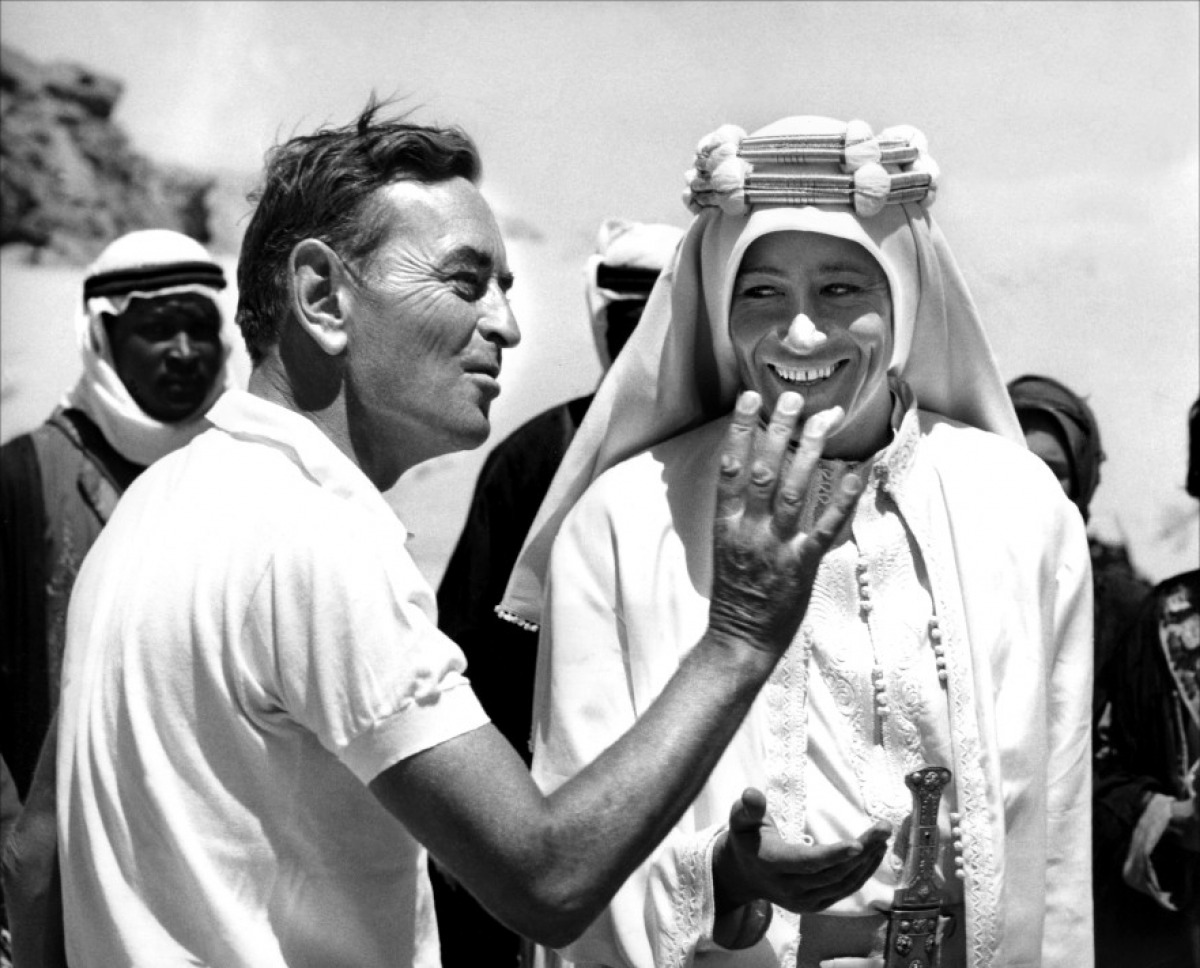
I’ve always thought of the director David Lean in terms of vastness and Technicolor. The desert scenes in Lawrence of Arabia come to mind—it’s said that thirsty theater patrons mobbed the concession stand for Cokes at the intermission. The most epic entrance in film history, I think—when Omar Sharif kills the Bedouin stealing water from his well—is an example of vastness.
And in Dr. Zhivago—theater patrons were warned to wear sweaters because that film’s cold was so vivid—there’s a set piece, where Lean communicates “cold” as Sharif’s Zhivago and Lara seek refuge from the Revolution in his family’s dacha, far, far away from Moscow or what was no Petrograd. It’s stunning and Dickensian scene, like Miss Haversham’s cobwebbed parlor and wedding cake in Great Expectations.
Dickens’ novels had as their fattest pages richly-depicted English eccentrics, from the delightful Micawber to the lizard-like Uriah Heep to the tragic Sidney Carton. In Bridge on the River Kwai, the Allied POW’s are led by Alec Guinness, who has crossed the line that divides eccentricity from madness. (The film also features one of William Holden’s finest performances.) Alert moviegoers might have spotted something off at the film’s beginning, when Guinness’s Col. Nicolson marches him POW’s into camp while whistling “The Colonel Bogey March.” It’s a little mad.
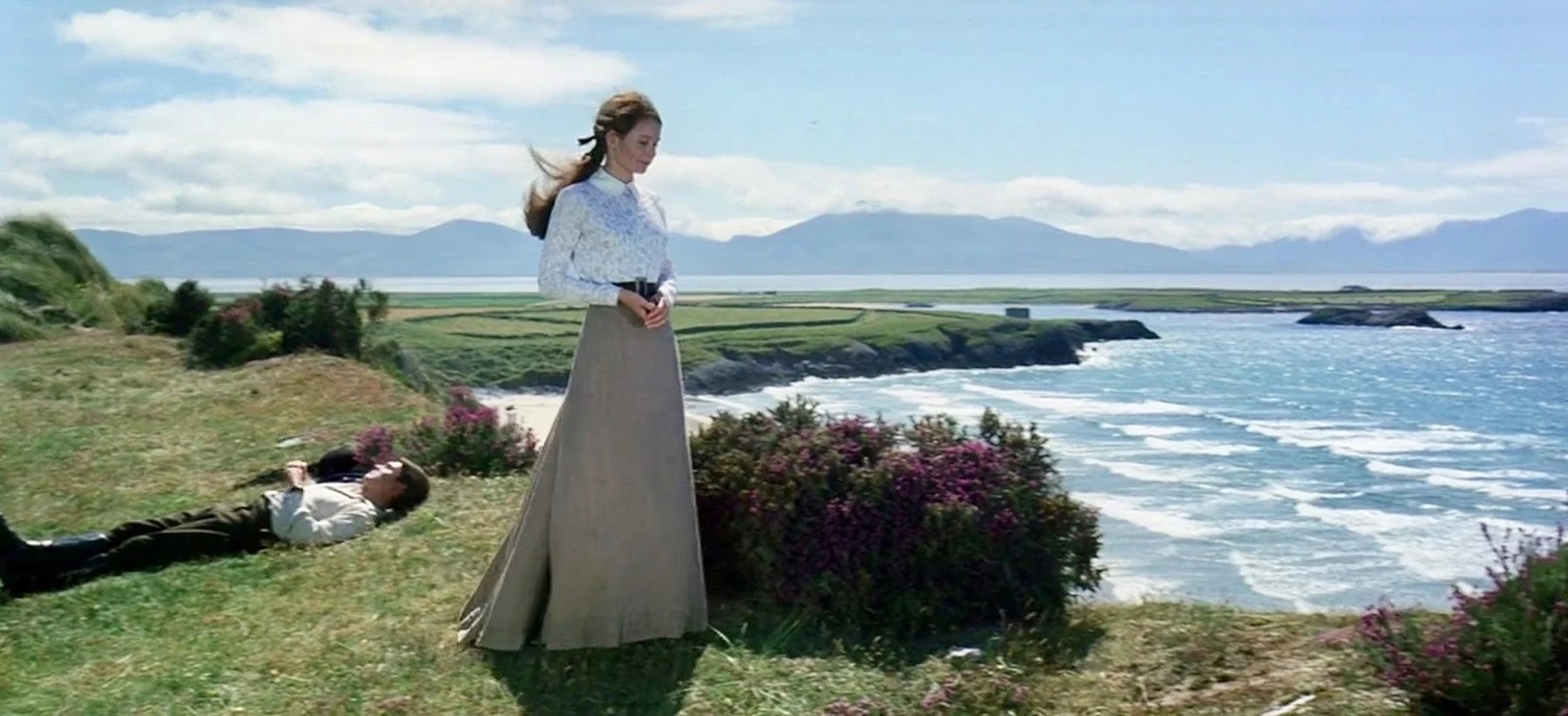
But long before Lean made grand color films–Ryan’s Daughter, while not among his great films, still made evocative use of the Ring of Kerry, a landscape far different from that of the Arabian desert.
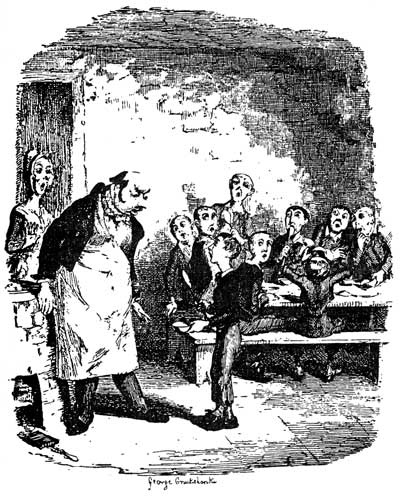
I realized that Lean’s earlier work, in black and white, is just as stunning. I’d long ago seen Great Expectations, with John Mills and Guinness, but I hadn’t seen Oliver Twist in a long time. It’s a film that makes you feels as if you’re inside a Dickens novel (Turner Classic Movies noted that the film’s dialogue was lifted almost verbatim from the novel.
Oliver asks for more. Illustration by George Cruikshank.
What struck me in yesterday’s viewing was the pathos of Oliver’s mother as she trudges exhausted, to the workhouse where she will give Oliver life and lose her own. Someone had the idea of setting the scene (the original, with its sound effects, is stunning) this one’s set to haunting music from an Australian World Music duo, Dead Can Dance. I don’t know if David Lean would approve. For what it’s worth, I do.
I was on the rowing machine that goes nowhere (“Louie Louie” on the earbuds made me zip a little), when this little number popped up on one of my playlists.
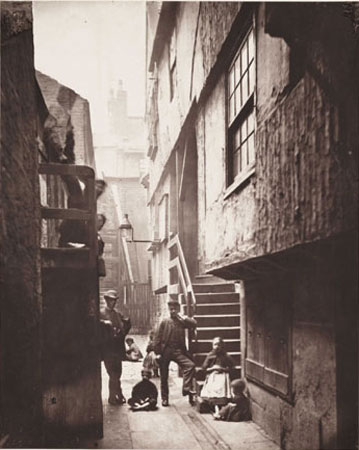
The Animals, from 1965. The lead singer, Eric Burdon, remains one of my favorites, with a surliness quotient, when he looks into the camera, that is sublime. They dress like Beatles. They don’t act like Beatles. And the lyrics, for a historian, are sublime: The sun didn’t shine in working-class tenements like this in Victorian/Edwardian London, in the photos below. Young women did die before their time was due—or, in 1965, were artlessly-smudged television models– often violently, and fathers did lie abed, worn out from factory labor or from the mines. These things lasted into the Animals’ childhoods. This is a wonderful song and a wonderful artifact, come to think of it.
Burdon was born into a working-class family, in Newcastle, which is about as working class as British history allows. “Coals to Newcastle” is an old British saying that refers to doing something useless. You didn’t need to take coals to Newcastle. They had plenty already.
In working-class London tenements, the sun might appear for only two hours a day–and not at all in wintertime.
They Tyne River, Newcastle, 2015
“Salt of the Earth,” from one of my favorite Stones albums, Beggars’ Banquet. This little sing-along includes Jagger’s muse, Marianne Faithfull, Moonie from The Who, and a remarkably youthful Keith Richards. This is an anthem, and it looks as if they’re all having great fun singing it. Perhaps with some psychedelic additives. They’re not industrial workers here; they appear to be farmhands out of a Thomas Hardy novel, like Far from the Madding Crowd.
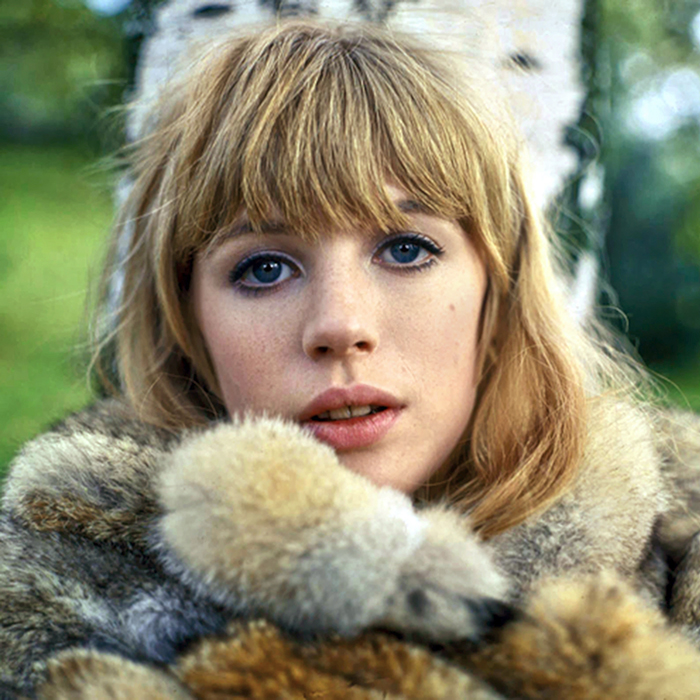
Marianne Faithfull, about 1965
Thirty years later, Faithfull covered John Lennon’s “Working Class Hero.” I bought her album, Broken English, brought it home, put it on the turntable, and then paralysis set in after the this song had ended. It is enormously painful.
“Factory Girl” is from the same album, Beggars Banquet, that includes “Salt of the Earth.” . I’ll try out the lyrics video first:
The same song, from Madams Pants, a Japanese cover band. The lyrics may be a little uncertain, but that’s a fine mouth harp. And, I could be wrong—is there a Japanese version?—but another member of the group appears to playing the bohdran, the Irish hand-held drum.
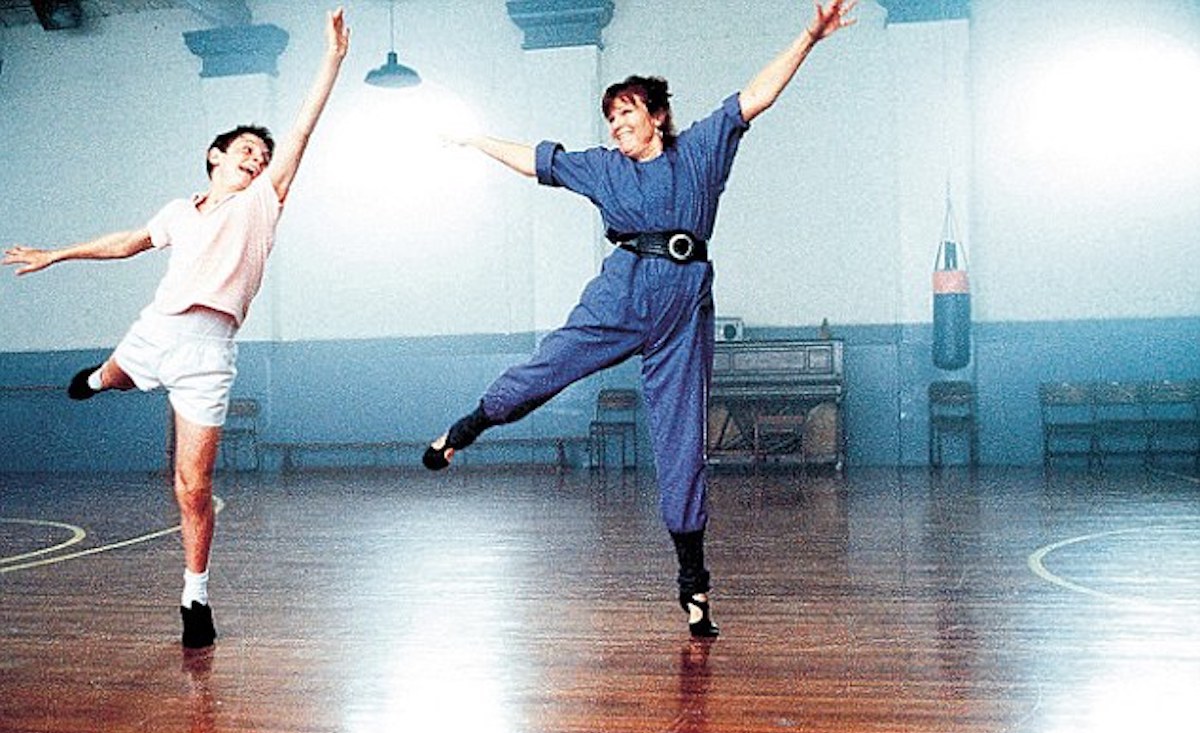
Elizabeth and I recently watched Billy Elliot, the wonderful film about a kid from a tough union town who wants to become a dancer, and it reminded me of this lesser-known working-class song from 1973, by a British group, The Strawbs. I like its anthem-like sound, too.
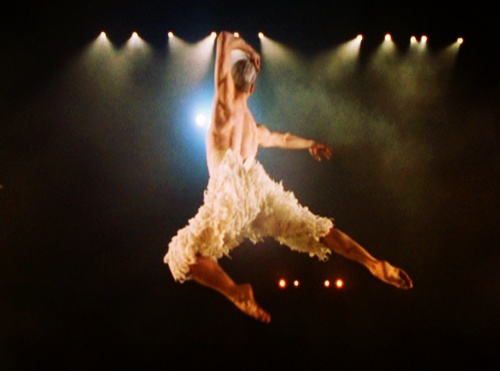
And we do love that film—that’s Billy, learning ballet from a chain-smoking dance teacher and, in the final scene, with his immensely proud Da in the audience, Billy bursts onto the stage in Swan Lake.
This song was one of my favorites when I was a working-class teen. I didn’t work all that hard, mind you, but The Easybeats expressed exactly what I felt about Fridays. And I like the pinstripes in this video. Posh.
A decade or more later, The Waterboys, a Scots band, cast their workingman’s hopes far beyond a mere Friday. The lyrics, and then a performance, of “Fisherman’s Blues,” also the marvleous opening song to the Irish comedy Waking Ned Devine.
Fisherman’s Blues
I wish I was a fisherman Tumblin’ on the seas Far away from dry land And its bitter memories
Casting out my sweet line With abandonment and love No ceiling bearin’ down on me Save the starry sky above
With light in my head You in my arms
I wish I was the brakeman On a hurtlin’ fevered train Crashing headlong into the heartland Like a cannon in the rain
With the beating of the sleepers And the burnin’ of the coal Counting the towns flashing by In a night that’s full of soul
With light in my head You in my arms
For I know I will be loosened From bonds that hold me fast That the chains all hung around me Will fall away at last
And on that fine and fateful day I will take thee in my hand I will ride on the train I will be the fisherman
With light in my head You in my arms
Light in my head You in my arms Light in my head You
Light in my head You in my arms Light in my head
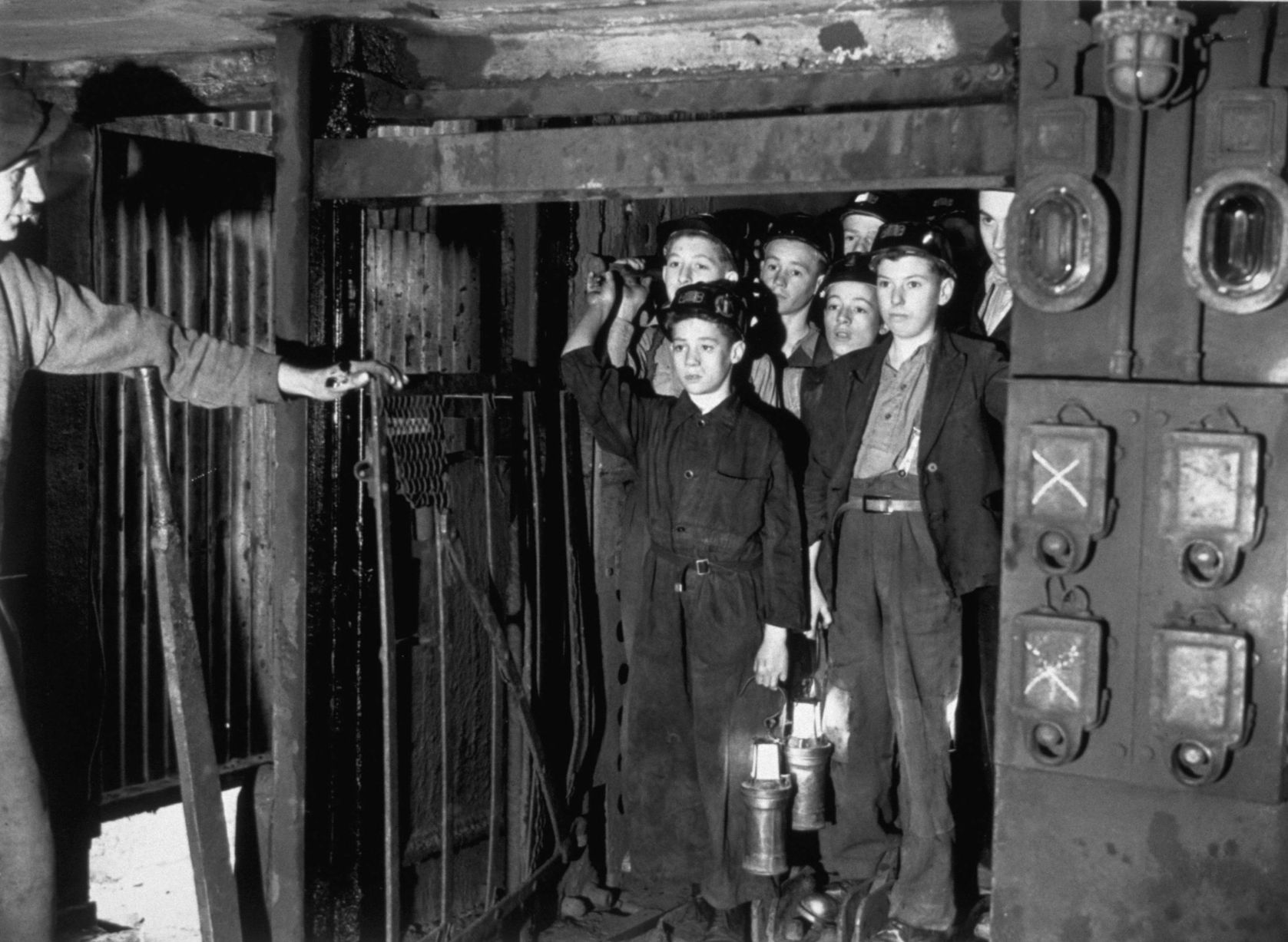
It was Sting who reminded us of the work that gave us the Industrial Revolution in the first place. Yes, these are English coal miners.
If we cross The Waters to America, we come, finally, to this fellow. This is a wonderful working-class song, among many of his, so many written from a workingman’s perspective. The thrill of this performance, I guess, as so often happens with his concerts, is as much in the audience—Catalan, in this case— as it is in the band.
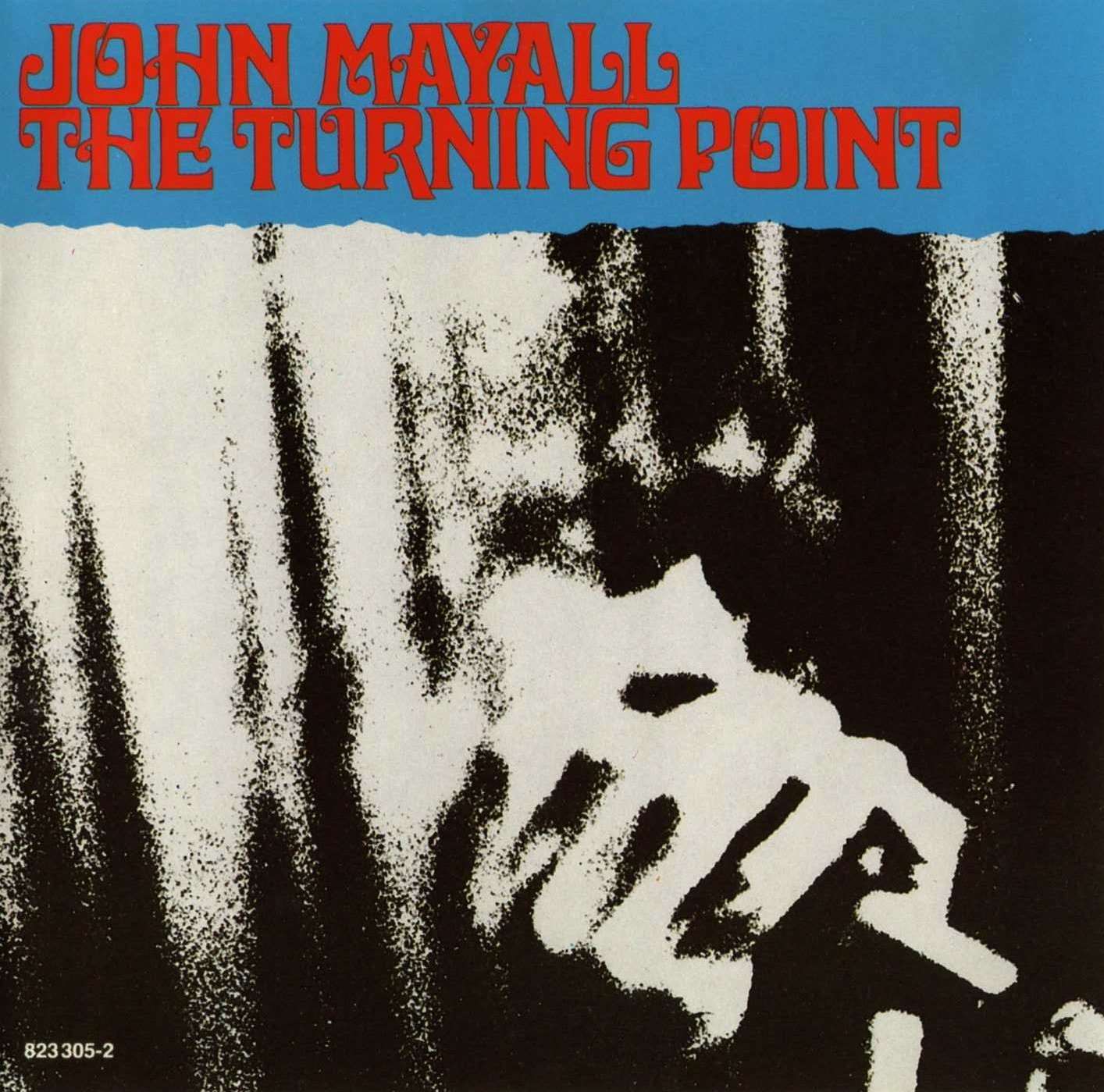
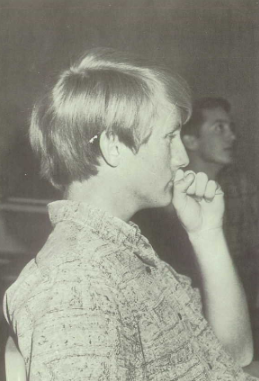
I first heard this song when I was eighteen, and my friend Paul Hibbard’s house in Arroyo Grande, not far from Sambo’s (later Francisco’s, now a derelict) where we drank endless cups of coffee and talked about Life and Stuff. I thought Paul immensely wise, older than his years, and a kind of hero. Him introducing me to this John Mayall album, and to this song, only confirmed my feelings about him. That’s Paul, in the photo from the 1969 AGHS yearbook.
So did this man confirm my feelings about Mayall. This is one of those “First Time Hearing” YouTube videos, and they’re so often young Black People, but this man has a few miles on him and he may not have heard Mayall before, but he knows music.
The best part, I think, is watching this man’s face. Then it gets better, when he admits how jealous he is. Of Mayall’s audience fifty-five years ago.
So what? Here’s an excerpt from one of my favorite British newspapers, The Guardian:
Eric Clapton* fled the Yardbirds in the spring of 1965, dismayed by the prospect of their latest single, For Your Love, bringing commercial success and thereby compromising his musical integrity. The 20-year-old guitarist found comfort in the arms of John Mayall, who welcomed him into his band, the Bluesbreakers. Within weeks their relatively purist approach to the blues, while not producing hit singles, had put them among the hottest attractions on the UK’s club circuit.
In Mayall, the young blues-hungry audiences knew they were in the presence of a slightly older figure whose knowledge and understanding of the idiom gave him an immense authority. In Clapton they had an idol who was one of their own.
In those days, it was instructive to see Mayall and his musicians on two occasions either side of Clapton’s arrival: the first time on a club tour accompanying the veteran American guitarist T-Bone Walker, playing the role of devoted and self-effacing disciples; the second time, suddenly bathed in the glow of cult worship.
He had come from Manchester to London in 1963 with a record collection that included Muddy Waters, Elmore James, Robert Johnson, Sonny Boy Williamson and many other more obscure bluesmen and women. He and Alexis Korner, a man of similar vintage and tastes, encouraged their acolytes to share and absorb the music they loved, eventually adopting it – in an audacious but ultimately fruitful act of cultural appropriation – as their own language.
Out of Korner’s Blues Incorporated and Mayall’s Bluesbreakers flowed a stream of prodigies who were soon ready to head off in their own directions. When Clapton left Mayall after a year – and one hugely influential album, Blues Breakers – to form Cream, he was replaced by the 19-year-old Peter Green. When Green left a year later, taking the group’s drummer, Mick Fleetwood, and bassist, John McVie, with him to form the first version of Fleetwood Mac, his place was taken by the 17-year-old Mick Taylor. Two years later Taylor would accept an offer from the Rolling Stones.
While they were with Mayall, they became the young gods of the club scene: a new generation of note-bending guitar heroes, beautiful long-haired boys whose skills had been attained through long hours of bedroom practice and were now delivered to audiences mesmerised by their virtuosity…
So thank you, John Mayall, and thank you YouTuber Barri, who doesn’t yet know that he’s made a new friend. I never heard nothing like this, either.
P.S.: Two of the Mayall proteges cited in the Guardian article:
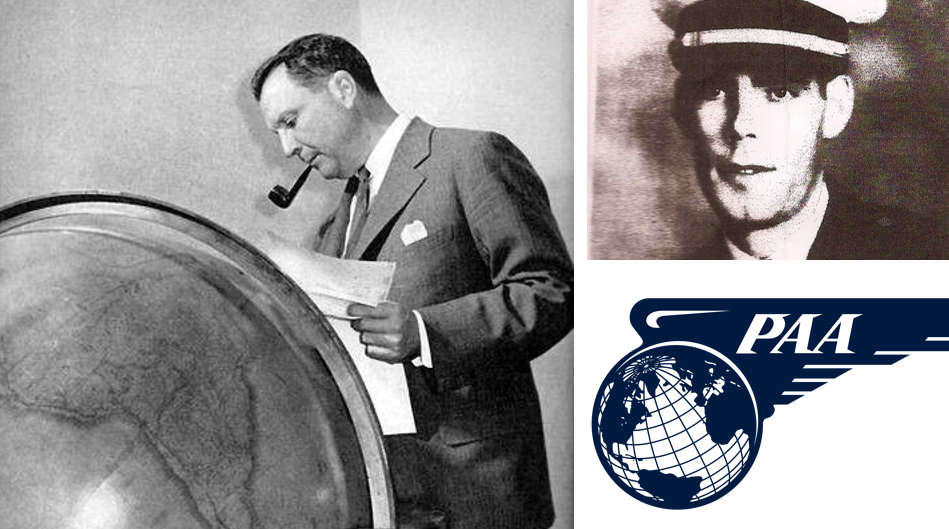
I can’t tell you how much I love this song. I was doing some local history research when I made a connection with Pan American extending its routes into Rio in the early 1930s, at the same time that Halcyon’s Sigurd Varian was flying seaplanes into Mexico and Central America.
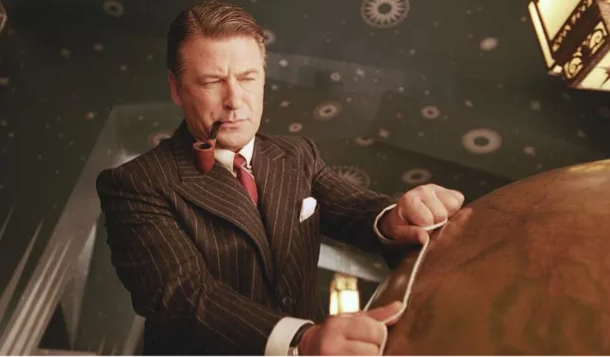
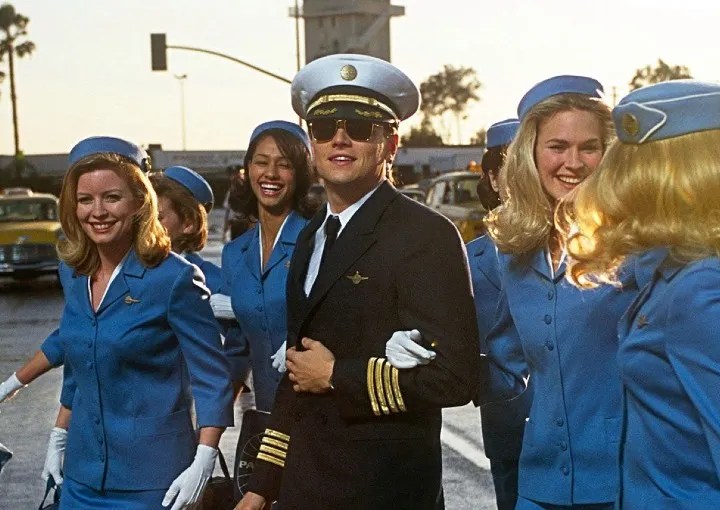
Above: Juan Trippe, a handsome Sigurd Varian at upper right; Alec Baldwin as Trippe in Scocese’s The Aviator; Leo Dicaprio, in the film that changed by mind about Leo Dicaprio (I loved this performance, and his Howard Hughes was several notches higher), as a bogus Pan Am pilot in Catch Me If You Can.
“Mas, Que Nada” (roughly translated: “So WHAT?”) was first performed by Jorge Ben in 1962.
Sergio Mendes and Brasil ’66, a group I still love, quickened the tempo and made the song a big hit.
It’s such an infectious, happy song. I like this version, very close to that of Brasil ’66:
But the “Playing for Change” people do a marvelous version, as well, a little downtempo and likely closer to the song’s original version (if you’re down in the dumps, may I also recommend, from Playing for Change, “Guantanamera,” Cuban, and “La Bamba,” Mexican.)
There’s even a choral version. I like this one. Dang, they’re cute. (They also do a fine version of Annie Lennox’s “Walking on Broken Glass.”)
Finally, this is my favorite version. I can’t tell you how many times I’ve posted this on Facebook and then taken it down, lest I be accused of being a dirty old man, a label I cannot abide. Nossa is a French group, and they are gorgeous and sexy (equal time: so’s the young man wo pursues them through Rio alleys). But this video makes me happy, because they are beautiful, but they’re not the most beautiful element of the video.
The street dancing scene, albeit brief, is the beautiful part. There’s a little girl, about twelve, multiracial, learning the dance’s elbow moves, then there’s a a young Black man, a dancer, with tight curls, whose smile is ebullient. Because the Nossas are so glamorous, the camera doesn’t stray from them for too long. It’s those two minor players, however, who generate inside me little waves of volcanic joy.
We’re struggling just now with the idea of being a multiracial society. So has Brazil struggled.
Among the immigrant families that have enriched Arroyo Grande history are the Coehlos, from Brazil. Growing up with them has enriched my life immensely. And, as beautiful as Nossa is, they are no match for Mrs. Coehlo, maybe the most beautiful woman, along with my Mom, that I’ve ever known.
She, born in Rio, like her husband, Al, used to drive by our house on Huasna Road in a navy-over-powder blue 1954 Cadillac (Mr. Coehlo, a farmer, did well because he worked so hard) and the eight-year-old me would run out to the front yard to wave to her. I was a hopeless Romantic even then.
So this video, and this song, make me happy. Seeing Mrs. Coehlo made me happy. This song, that place, that family, that mother, refresh the waters that are my hope.
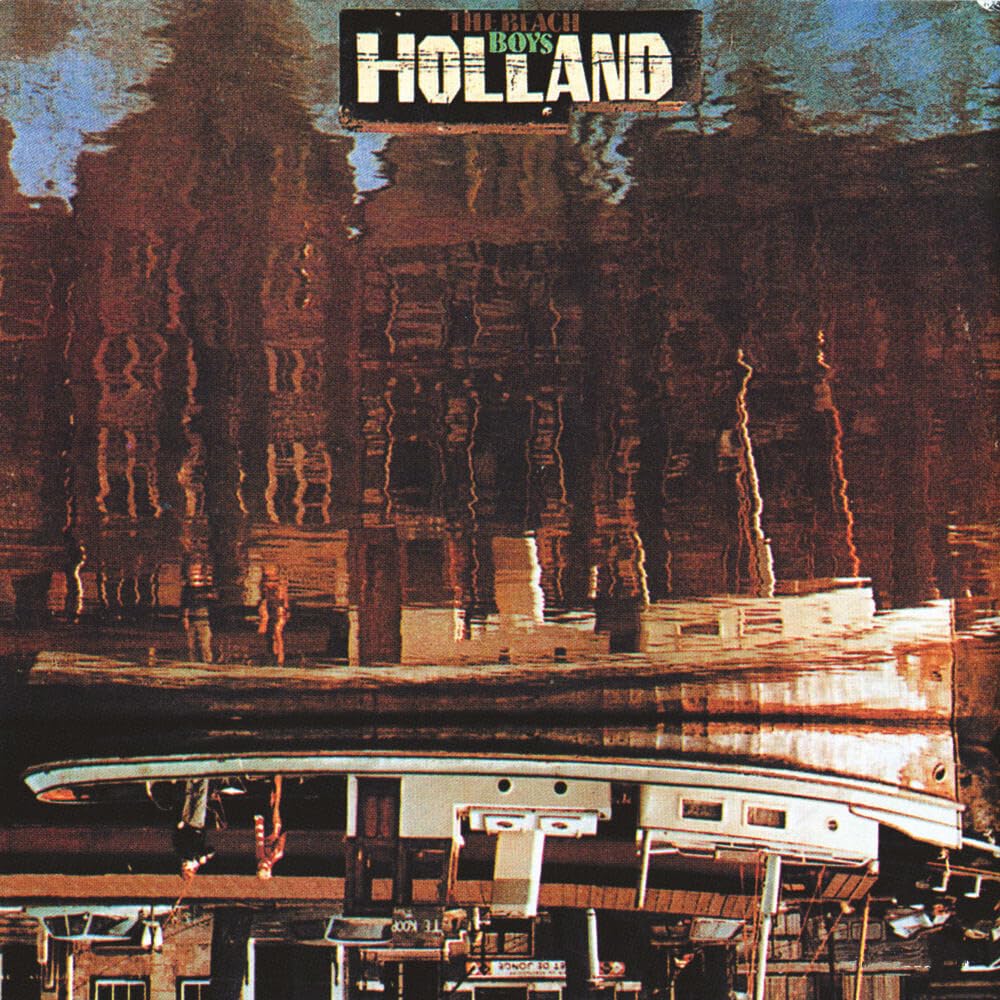
Yes, I know. Pet Sounds is the masterpiece—the album that goaded the Beatles into recording Sgt. Pepper—but this 1973 album remains one of my Beach Boys favorites. It cites Morro Bay, borrows from the Carmel naturalist poet Robinson Jeffers, and begins with this elegant song. What makes it unique is that the lead singer isn’t Brian Wilson, nor Carl, nor Al Jardine, nor is it Mike love. The singer on the album and in the video was South African Blondie Chaplin, a temporary Beach Boy who belongs in the Beach Boy Pantheon for All Time and Then Some.
This guy belongs, too.
And then there’s this band, one of my all-time favorites. This is the studio cut rom the album Native Sons–Los Lobos are, of course from L.A.
Oh, and why do I love Los Lobos so much? A brief aside, with a different song. Watsonville High School, 1989. I know this has nothing to do with Holland. I don’t mind that if you don’t.
This version of “Sailor” is sublime. Darius Rucker (Hootie and the Blowfish) has a gravelly, immensely soulful voice that fits the song exactly. Ray Charles and Darius Rucker. Oh, my.
Foxes and Fossils, a cover band that features old farts like me and, as a complement, young women, do the song justice, too. The lead singer is fine, but what gives this live version its Beach Boys lift are the not the Fossils, but the background harmonies from the Foxes.
And I wish we had Jimmy Buffett’s sweet face for this video, but we do have his voice, and I’m pretty sure he wouldn’t mind the visual images.
And, of course, Brian Wilson was the song’s co-writer, and he’s been on my mind a lot lately. Here are the lyrics, and they fit him exactly in this fearful stage of his life—one I’ll face soon—and these words, and that life, even now, remain beautiful to me.
I sailed an ocean, unsettled ocean Through restful waters and deep commotion Often frightened, unenlightened Sail on, sail on sailor
I wrest the waters, fight Neptune’s waters Sail through the sorrows of life’s marauders Unrepenting, often empty Sail on, sail on sailor
Caught like a sewer rat alone but I sail Bought like a crust of bread, but oh do I wail
Seldom stumble, never crumble Try to tumble, life’s a rumble Feel the stinging I’ve been given Never ending, unrelenting Heartbreak searing, always fearing Never caring, persevering Sail on, sail on, sailor
I work the seaways, the gale-swept seaways Past shipwrecked daughters of wicked waters Uninspired, drenched and tired Wail on, wail on, sailor
Always needing, even bleeding Never feeding all my feelings Damn the thunder, must I blunder There’s no wonder all I’m under Stop the crying and the lying And the sighing and my dying
Sail on, sail on sailor Sail on, sail on sailor Sail on, sail on sailor Sail on, sail on sailor Sail on, sail on sailor Sail on, sail on sailor Sail on, sail on sailor
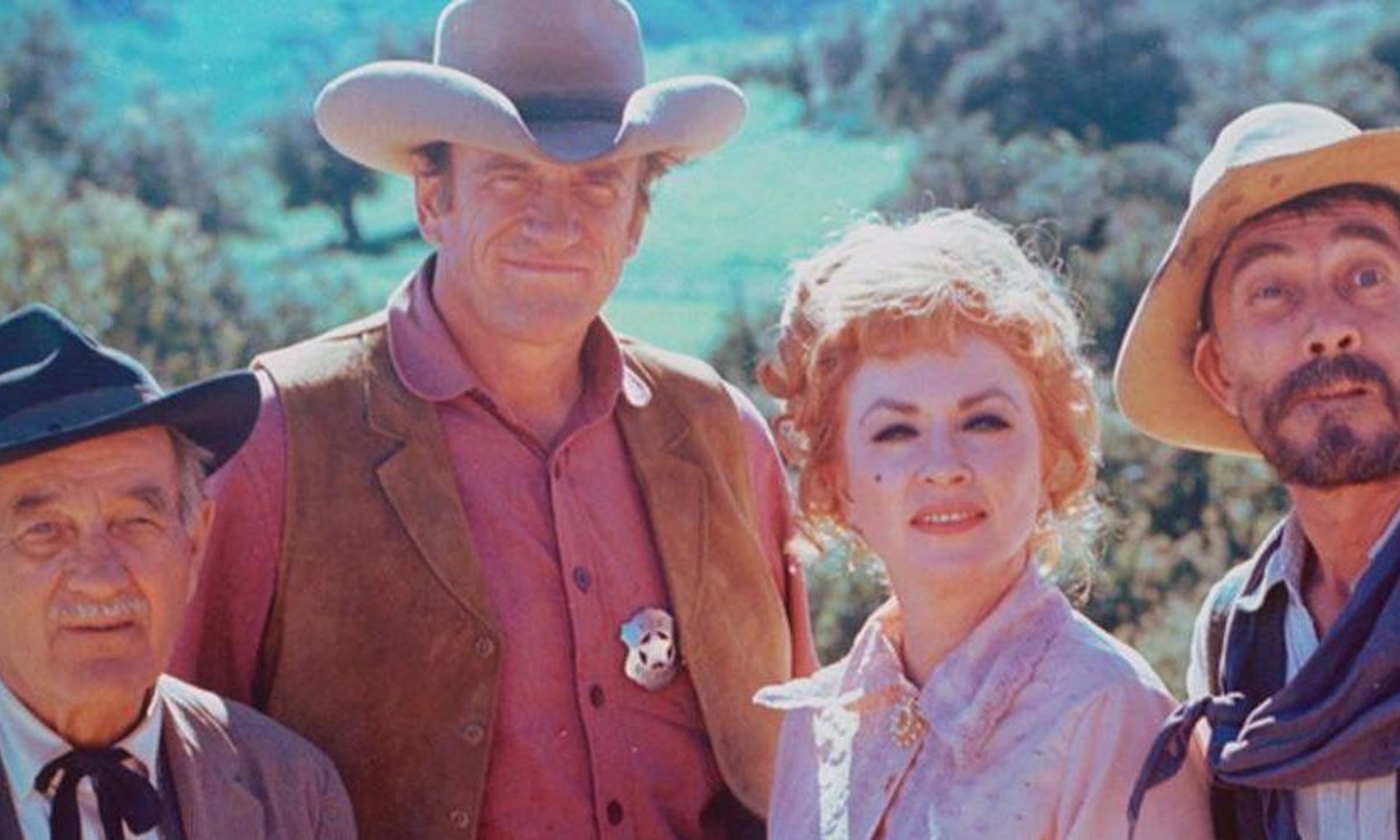
The cast of Gunsmoke: Miburn Stone, James Arness, Amanda Blake, Ken Curtis.
Sometimes when I, being ancient, wake up at 3 a.m., I watch Westerns from my childhood. What follows are purely personal opinions:
1. “Gunsmoke:” A-. Because of James Arness, a genuine war hero; and Ken Curtis (Festus), a staple in John Ford Westerns; Milburn Stone (Doc), reincarnated as the prickly Bones in “Star Trek, played by DeForest Kelley, once a guest on “Gunsmoke”: and Miss Kitty (Amanda Blake) as the hostess at the Long Branch Saloon. Just what the heck were all those girls who drifted seductively about the Long Branch cowboys DOING, in their ostrich feathers and bosoms? Was it Biblical instruction?
Far more important, the series set aside whole episodes in which the stars took back seats to actors like Harrison Ford, Bruce Dern and Cloris Leachman. This generosity launched the careers of many gifted actors.
Harrison Ford, even dumber in Gunsmoke than he would be as Bob Falfa in American Graffiti.
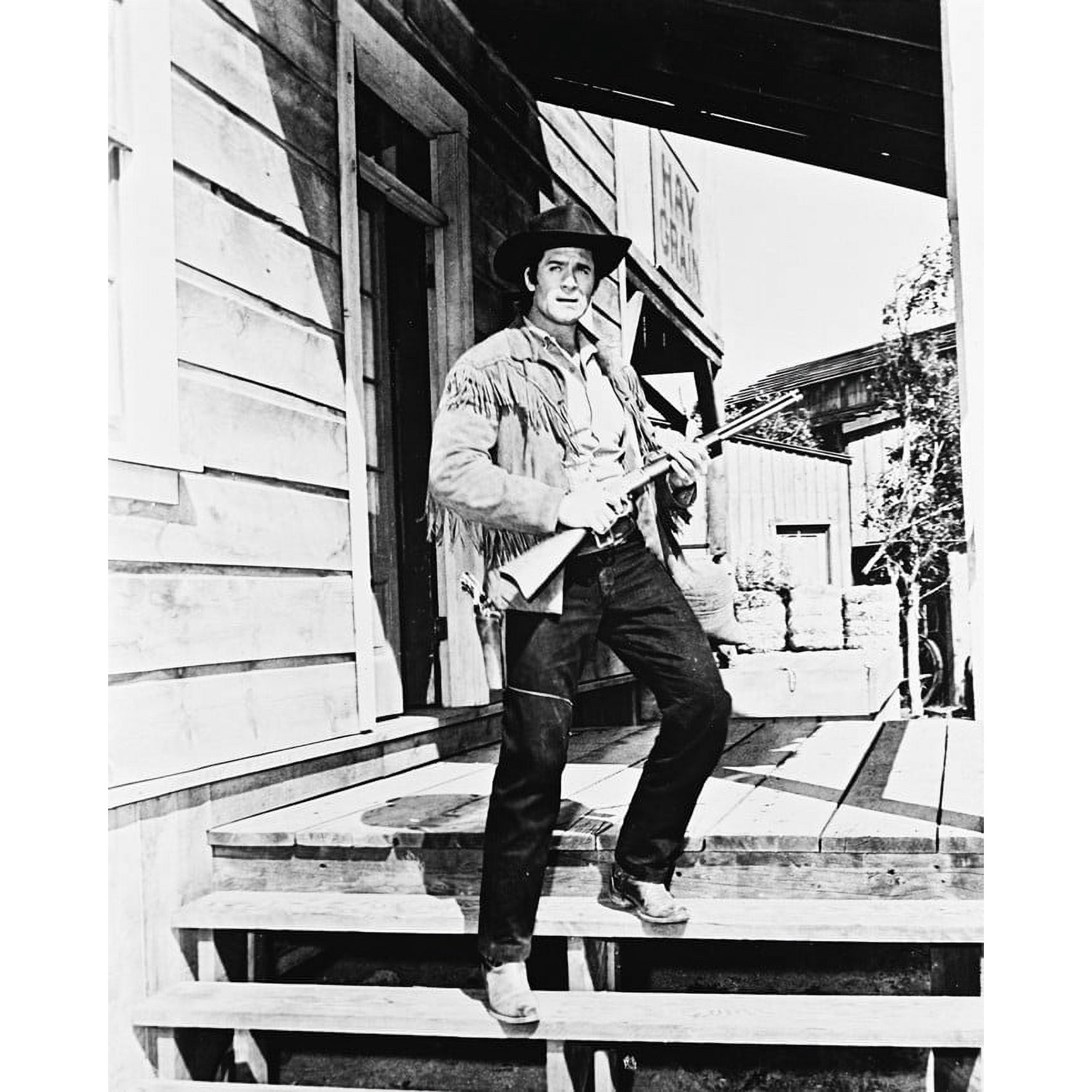
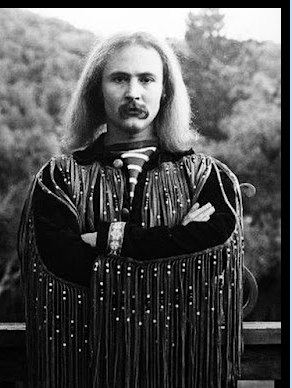
2. “Cheyenne:” C-. Not because of its star, Clint Walker, who was hunky (He appeared also in “The Dirty Dozen”) but because of the episode that feature Michael Landon as a young Comanche warrior. Cheyenne was honorable, decent and courageous but, by far the most important, he way- cool buckskin shirts with fringes, which became enormously popular in late 1960s Laurel Canyon in just before the Manson Family paid its visit to Cielo Drive.
David Croby’s buckskin—Elizabeth and I met him once at the San Lorenzo Capuchin Franciscan Friary, above Santa Ines, where oiur sons were baptized—added waycool little beady things to the buckskin fringes. Before he got dead, Crosby (SEE: Joni Mitchell and David Crosby) was almost as gorgeous as Clint Walker,
Good Lord.
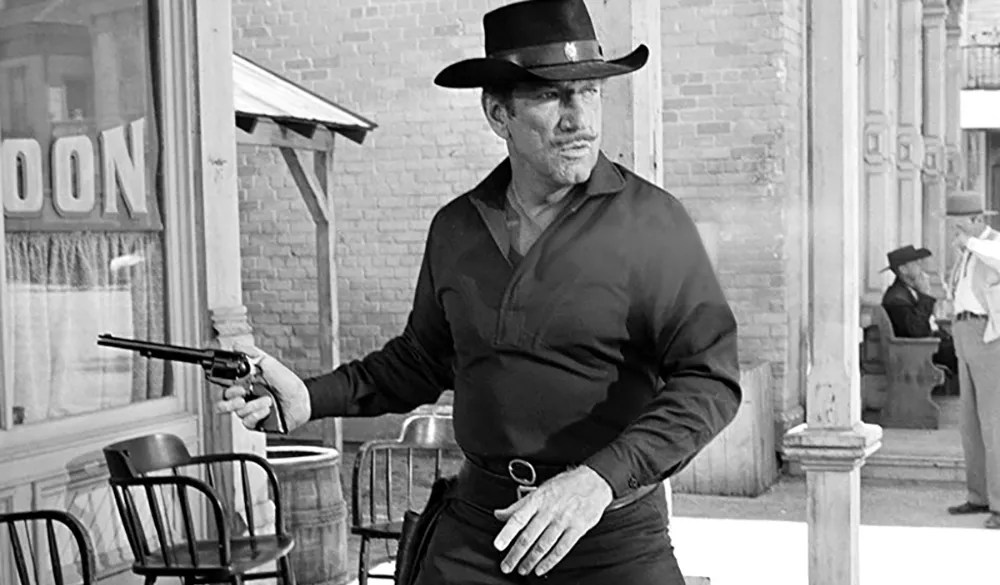
3. “Have Gun, Will Travel.” A+. Richard Boone as the knight-errant, given to spectacular monologues—think “Now is the winter of our discontent,“ feom Richard III—before he did away with the dirty guy that was oppressing poor folks, My only qualm, and it’s a big one, is that his San Francisco Chinese immigrant friend was named “Hey Boy.” To set that right, Paladin’s face lit up like the Fourth of July in one episode as he regarded an impossibly beautiful Chinese woman as she descended the staircase, in her whalebone corset, hoop-supported silk skirts and pearl-buttoned bodice and the obligatory ostrich feather in her hair—the late 19th century was a bad time to be an ostrich– as she descended the staircase.
That might seem prurient and sexist, but the fact is, in a time when Rawhide’s cowboy, Jesus, had his name spelled “Hey-Soos” in the closing credits, Richard Boones long, langurous and delighted look at a beautfiul Chinese immgrant was, in fact, revelatory and even inspirational. That character had the sheer audacity to be not white and spectacular in the same moment. I love Boone’s character, Paladin from that moment on.
And then I discovered, years later, that my mother and big sister loved this show because they thought that Richard Boone had a cute butt.
Here is Richard Boone’s character, Paladin. I have omitted his hind end in the name of more or less Common Deccency.
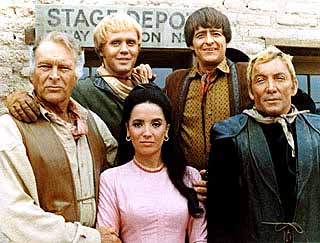
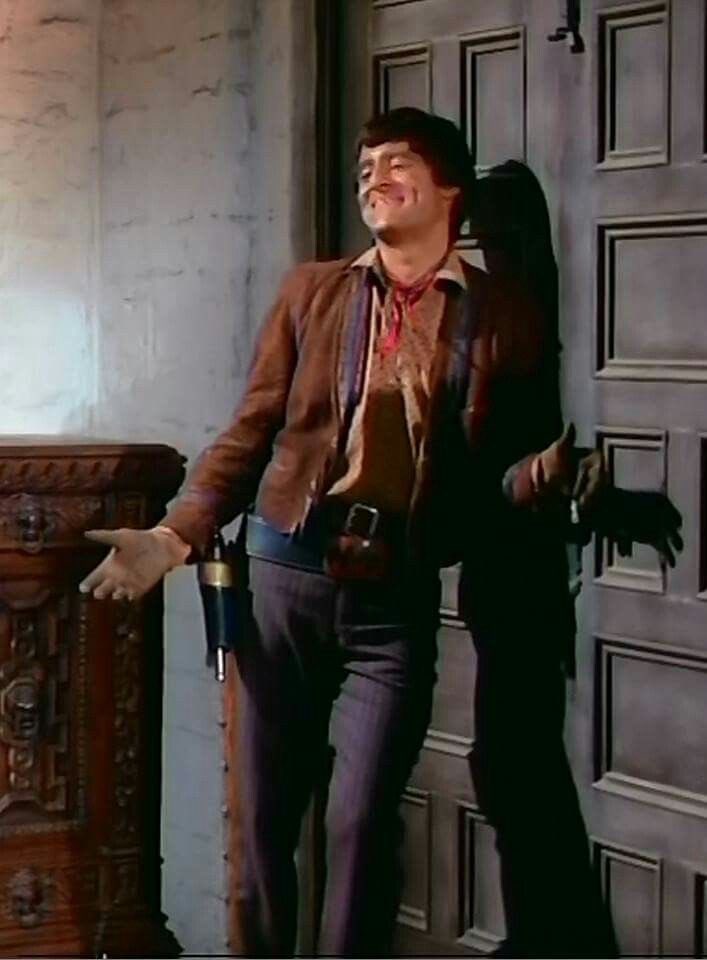
4. ‘High Chapparal:” B+. Set in the Arizona desert, about as barren as the far side of the Moon, a family (elderly rancher, young and beautiful Mexican wife, played by Linda Cristal). My Mom loved Manolito, played by Mexica-American Henry Darrow. Agree 100% with Mom on this one. Manolito was a charmboat.
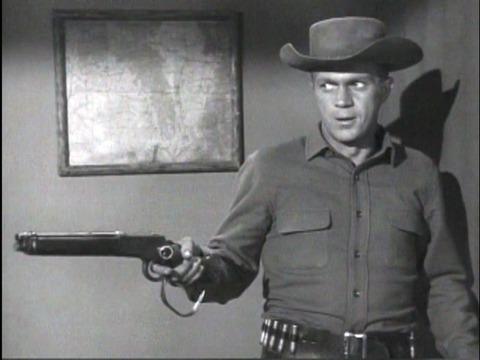
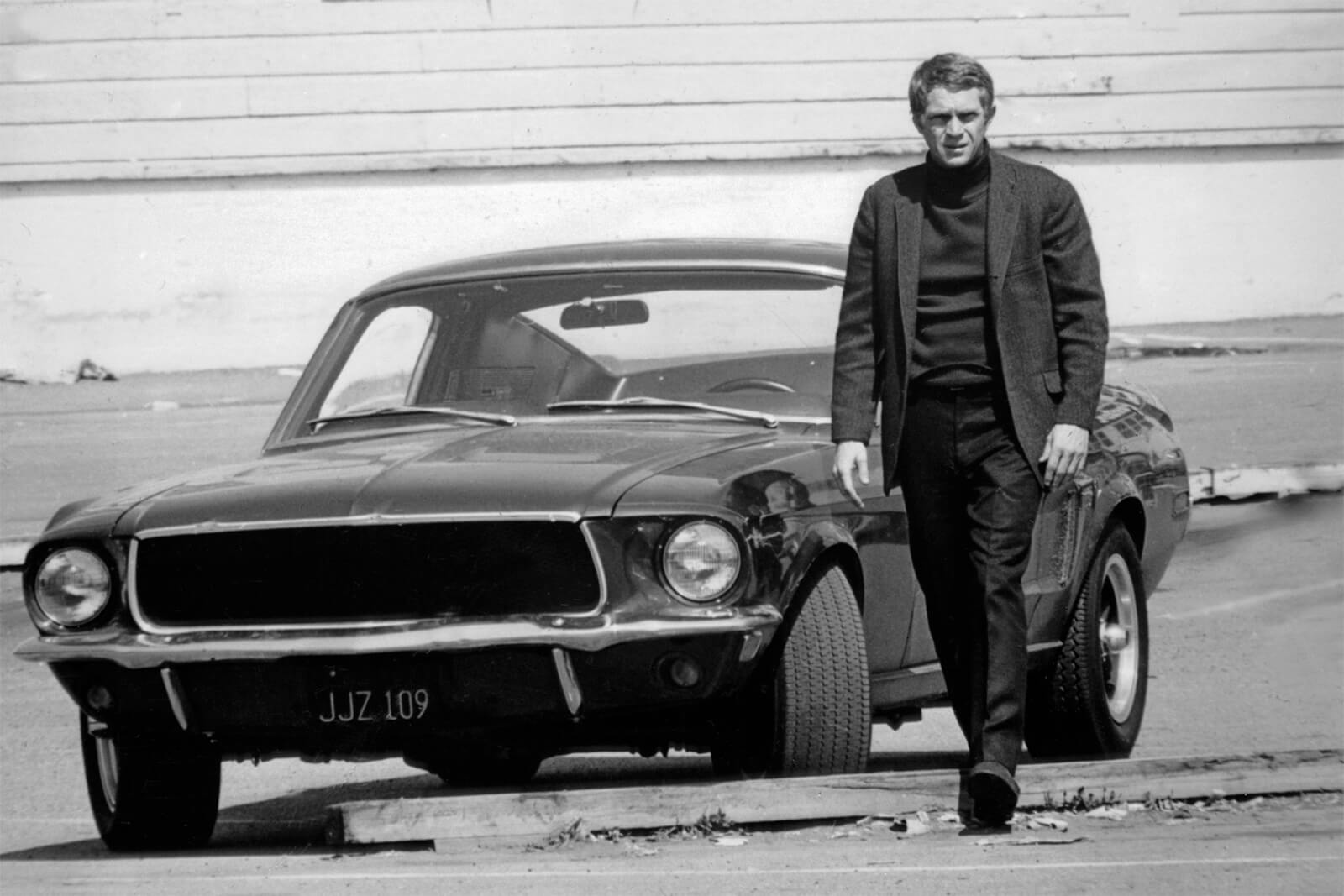
5. “Wanted! Dead or Alive!” C+. This series began my lifelong enchantment with Steve McQueen, which reached its apotheosis with the “Bullitt” car chase. Okay, and “The Thomas Crown Affair.” I do not include “The Great Escape,” because I know how that actually turned out in history, despite the motorcycle scene. McQueen had already been splendid as a 28-year-old teenager in “The Blob,” co-starring Miss Crump from “The Andy Griffith Show.” However, the sawed-off rifle he carried in “Wanted! Dead or Alive!” in its Penis Envy leather holster would have, on firing, thrown McQueen’s arm 300 feet behind him and wouild’ve slain four or five innocent bystanders.
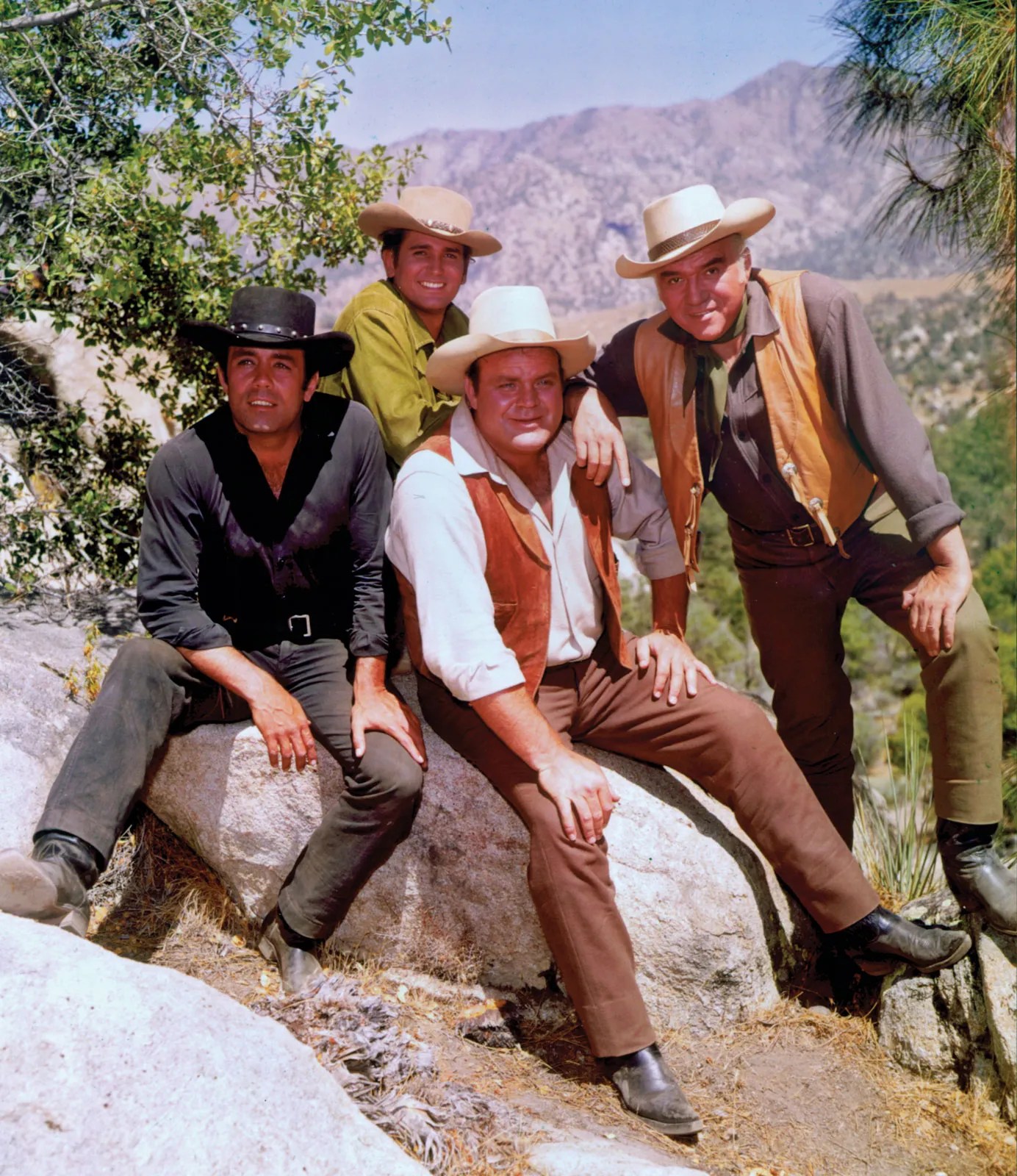
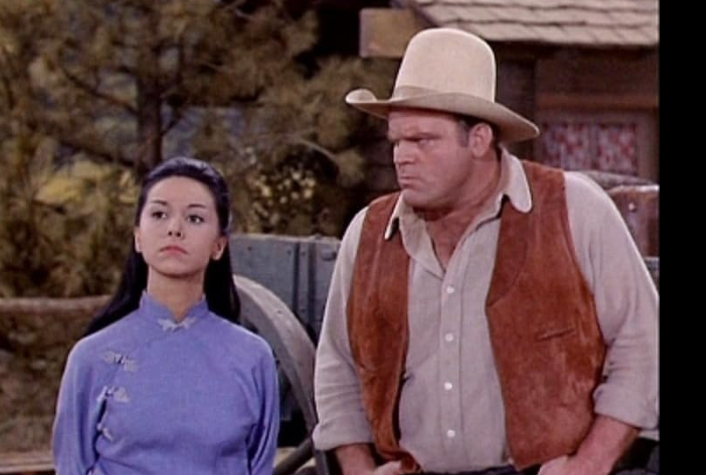
6. “Bonanza!” B-. The first American TV program to appear in color, on NBC. Virtually every female guest star who ever appeared on this show died, including all three of Ben Cartwright’s wives. The Cartwrights were hell on women. Hoss, the middle son, was our favorite, although Little Joe (Michael Landon again) was brilliantly satirized in MAD magazine as “Short Mort:’ MAD also maintained that the Cartwright ranch, the Ponderosa, was so immense that it was a three-day ride from the living room to the kitchen. Two more Chinese immigrant slanders: Hop Sing, the Ponderosa cook and, for God’s sake, Marlo Thomas, whom I later loved in the comedy That Girl, as a Chinese mail-order bride. Thomas is Lebanese-American. I met her father, Danny Thomas, at the Madonna Inn in 1969, and he didn’t look Chinese to me, either.
(Above): The original cast of Bonanza: Pernell Roberts (Adam), Michael Landon (Little Joe); Dan Blocker (Hoss), Lorne Green (Ben). At right: Marlo Thomas in her 1959 guest turn as a Chinese immigrant, Dan Blocker.
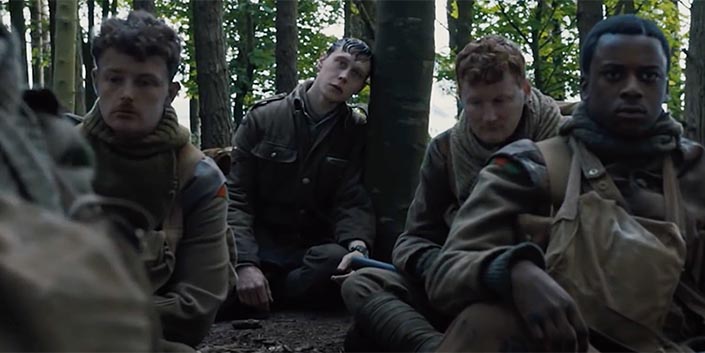
In Sam Mendes’ 1917, Lance Corp. Scholfield has survived a harrowing journey when a voice calls him into a woods. A soldier is singing an old song, “(I Am a Poor) Wayfaring Stranger,” as his regiment prepares to go into an assault that will doom most of them. It’s Schofield’s task to stop them, but he needs to regather his strength first.
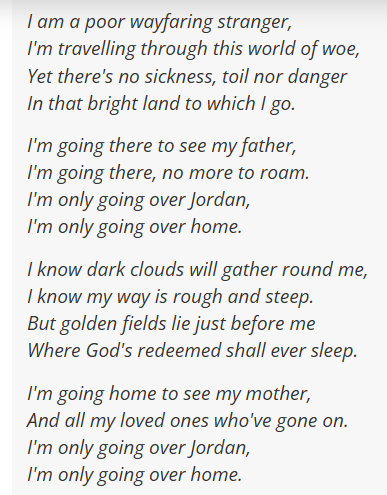
It’s a mesmerizing moment. Here is the song, performed by Joe Slovick and recorded at Abbey Road:
And here are the lyrics:
The irony, according to an excellent website, Counting Stars, is that the song has its origins in 1816 as a German hymn. But it gained new life recast as an American song in 1858 and became popular among other soldiers in another war–our Civil War. In the 20th and 21st centuries, it became a bluegrass staple, performed by Johnny Cash, Emmylou Harris and Jack Black in the Civil War film Cold Mountain.
This borrowed German song—it must’ve come here with the “Forty-Eighters,” the wave of German immigrants fleeing a failed revolution as their Irish contemporaries were fleeing hunger—is now completely American.
I am fond of this version, quite different from Slovick’s stunning solo but valuable because it restores the song to its bluegrass roots. The beauty of American music? This is a Norwegian band.













 A Work in Progress