

Jack Nicholson, 85, has finally done the unforgivable. He has gotten old. The photo in the montage below got widespread play about a month ago, but I have some things to say about him.
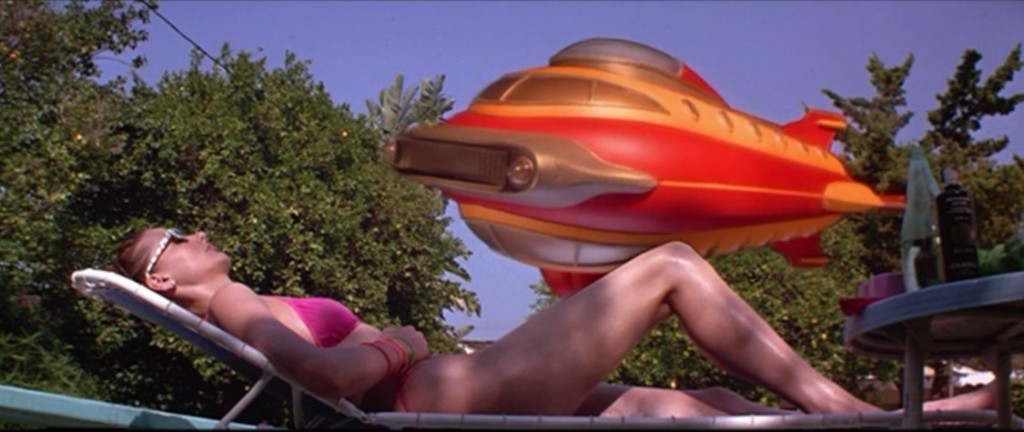
Mind you, I am fully aware that Nicholson is…well… kind of a lecher. After Geena Davis appeared in a pink bikini in Earth Girls Are Easy–here, an Alien Spacecraft bearing her soon-to-be real-life love, Jeff Goldblum, is about to land in her swimming pool—she got a phone call from Nicholson. “Well, Geena,” he said. “How about it?”
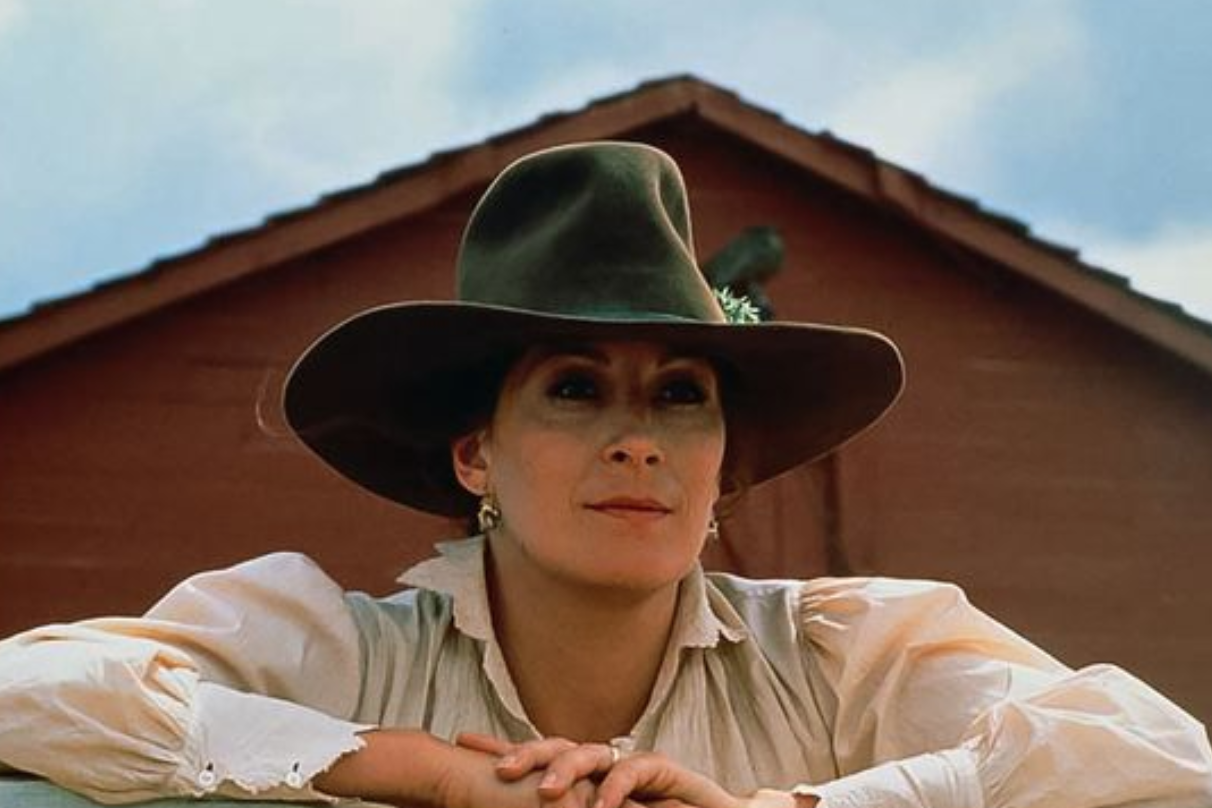
He was known for dating beautiful women, like Michelle Phillips, formerly a Mama, as in the Mamas and the Papas, and for maybe the only long relationship he ever sustained, with Anjelica Huston. I remember her best as Clara, an enormously attractive and powerful woman, deeply grounded, in Lonesome Dove. Hell’s bells, Jack: Robert Duvall’s Gus made a mistake not marrying Clara. Get a clue!

But, as to his films, there are two seemingly trivial things I remember about Nicholson and remember vividly: His wardrobe in Chinatown, including the vented tan suit he wears to Mulwray’s place on Santa Catalina and the dark pinstripe in the interview with Evelyn in the bar (it still stands in L.A.’s Koreatown.) It broke my heart to see J.J. Gittes’ suits get bloodied and rended by bullies—or to see that convertible coupe impale itself on an orange tree.
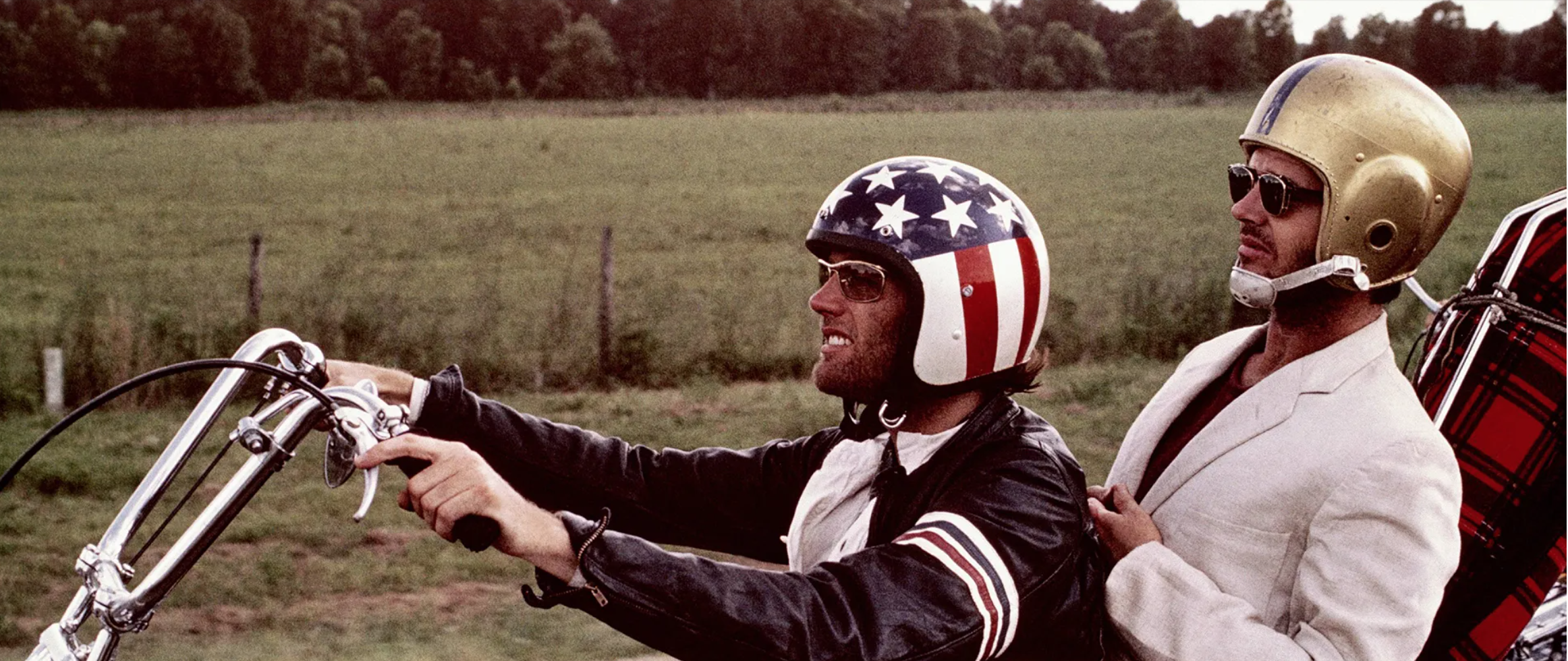
But—sorry to go all Boomer on you—this was the scene, from Easy Rider—that first knocked me and my Arroyo Grande High School friends out, when Nicholson’s alcoholic small-town lawyer meets bikers Peter Fonda and Dennis Hopper:
And here’s the helmet:
It’s even more Boomerish to bring up Cuckoo’s Nest, but I have some reliability in this direction, having read Ken Kesey’s novels and, just as good, Tom Wolfe’s portrayal of Kesey in The Electric Kool-Aid Acid Test. I think Randle McMurphy and Jack Nicholson are pretty much the same person, and I like the man’s sand and the electricity of his interaction with Nurse Ratched. This scene is his mid-film act of rebellion. The patients see their reflection in the little television screen—that and Ratched’s face seal McMurphy’s victory.
And, since Sandy Koufax was my childhood hero, I remember the 1963 World Series.
The other segment that stuck with us was from director Hal Ashby’s The Last Detail, where two sailors, lifers, escort a large and bumpkinlike eighteen-year-old sailor to the Portsmouth Naval Prison. (He’s made the mistake of stealing his base commander’s wife’s coin-collecting jar for, I think, the March of Dimes.)
Nicholson takes a liking to the young sailor, played by Randy Quaid, who is genuinely large and bumpkinlike,so he persuades his fellow Shore Patrolman, Mulhall, played with beautiful restraint by Otis Young, to take the kid out for a beer. (Just before Saturday Night Live, Gilda Radner makes a brief appearance as the member of a chanting group that meets behind the inevitable 60s-70s curtain of strung glass beads.)
Here are the two Nicholson turns I still love, even if he is 85 years old, That’s not his damn fault:
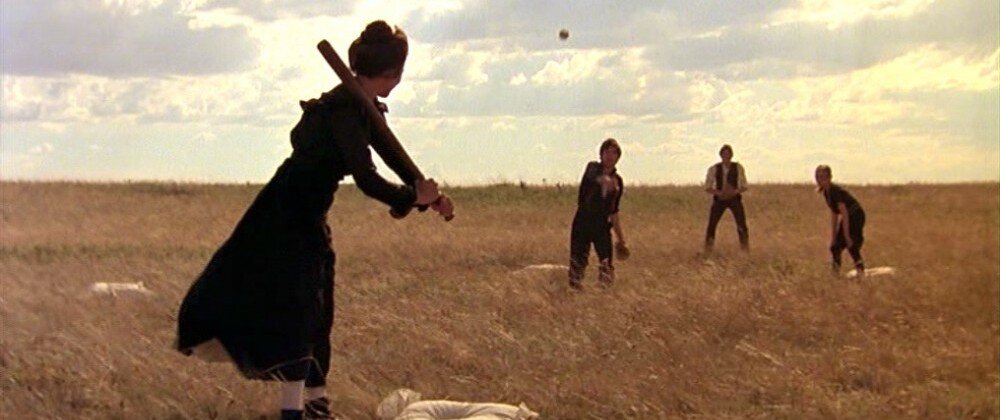
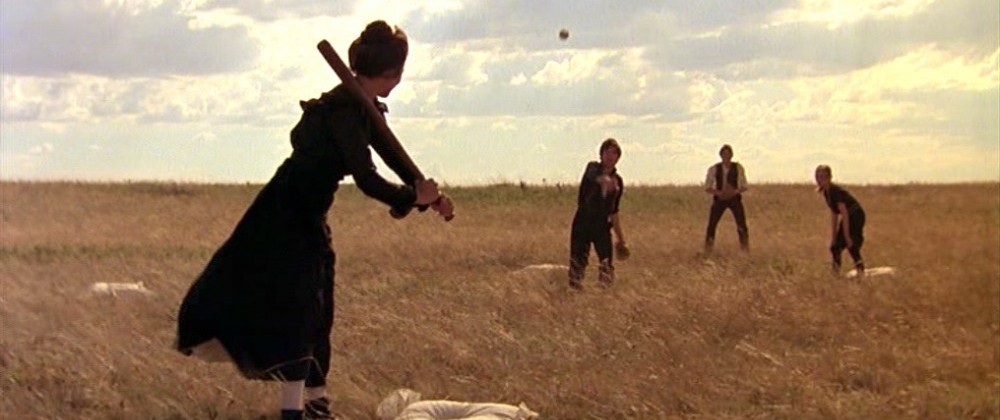
I waxed poetic in an earlier blog post about Terence Malick’s Day of Heaven, which even Richard Gere didn’t ruin (SEE: Gere’s victory dance in King David) It is not a great film, but it is beautiful. What I found interesting about it—I haven’t seen shots framed with this artistry since John Ford’s Monument Valley days—is the great ease in which Malick tells the story without dialogue. These scenes can go on for a long time (you start to get uncomfortable until somebody in Days, hopefully Sam Shepard, interrupts with a declarative sentence or two.)
I saw the same comfort in silence last night in watching Malick’s The Thin Red Line, based on the James Jones novel. Like Days, it is a gorgeous film, but the exteriors aren’t North Texas, but the jungles, swamps and shoreline of Guadalcanal, one of the earliest and most decisive Pacific land battles of World War II.
Malick’s comfortable with us gazing for long stretches, in complete silence at faces of actors like Jim Caviezel or Adrien Brody or Sean Penn. Then he will dissolve to sawgrass or dense tree canopies or impossibly steep hillsides, again in silence, and then, when you just can’t take it anymore, because you know the enemy is hiding just behind the silence, a fusillade from a Japanese Nakajima machine gun or a series of explosions from the impact of a Marine 105-mm artillery barrage comes as a relief.
An even better silence breaker is Nick Nolte’s Lt. Col. Tall. Here, in my imagination, is Nolte’s script:
CAPT GAFF (John Cusack): My men need water, sir.
LT COL TALL: RANTS. FINISHES AFTER THE SIXTH “GODDAM.”
But it was an earlier film, Badlands, that I now realize was the first Malick film to resonate with me. It featured Martin Sheen and Sissy Spacek as two crazy teenaged kids—Charlie Starkweather and Carol Fugate—were the real-life models for Sheen’s Kit and Spacek’s Holly—who go on a 1950s killing spree in the Great Plains, filmed, lovely and desolate, and so vast as to make the kids’ Cadillac seem tiny.
But there are no Great Plains in the closeness of this opening scene. Inchoate, restless Kit is riding his garbage truck in narrow small-town alleys, suggesting his need to break out into the open as the film widens the story. Holly, in her lonely baton twirling, needs to break out, too, from an oppressive household and into the short, violent journey of her sexuality.
Holly will spend a long time in the oppressive confines of prison; Kit’s liberation will come from the hangman and in the space between the killing chamber’s trap door and the dirt floor beneath his swaying feet.
The opening is made perfect, too, I think, because of Malick’s choice of the Carl Orff song “Gassenhauer,” (“Street Song.”) This was not a film we’d seen before, not in 1973, the year of The Last Detail.






 A Work in Progress