I can get through one episode at a time of the Spielberg/Tom Hanks series Band of Brothers, which speaks more to me because my Dad was an Army officer in Europe. Sometimes I can’t get that far in The Pacific. It’s so harrowing that I don’t know how any Marine came home undamaged. I don’t imagine that any did.
I read, many years ago, With the Old Breed, by Eugene “Sledgehammer” Sledge, a character in the miniseries, and the historian/biographer William Manchester’s account of his war service, Goodbye Darkness, and both left me deeply troubled. That’s exactly the impact they should’ve had.
Somehow, thanks to the work of computer artists and the incredible composition, “Honor,” by Hans Zimmer, the opening credits to the miniseries are strangely and surpassingly beautiful.
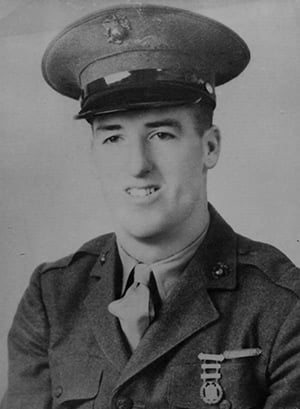
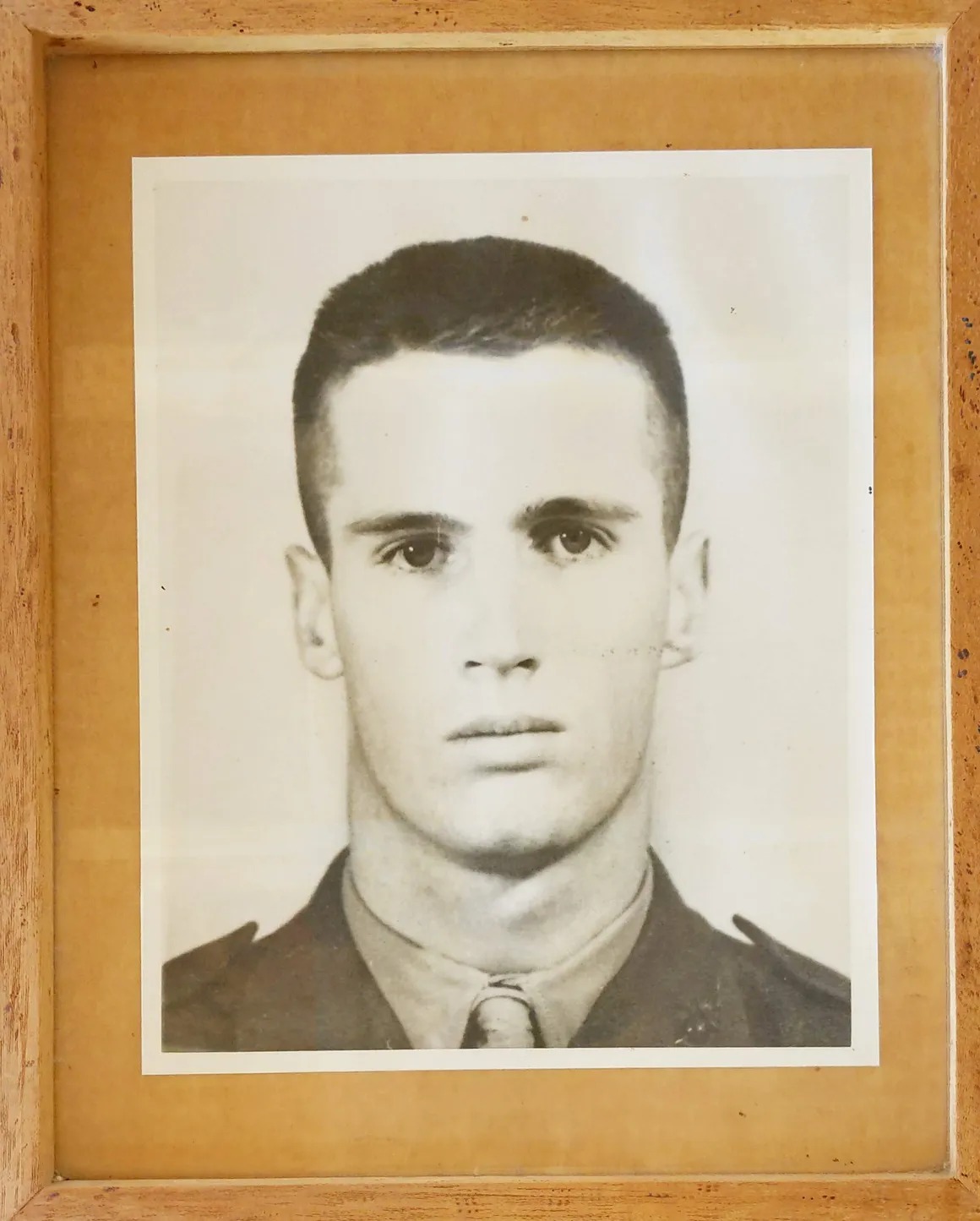
But it remains a disconnect in my spirit, to imagine what young men from my hometown went through. There were other Marines, but here are five who resonate for me.
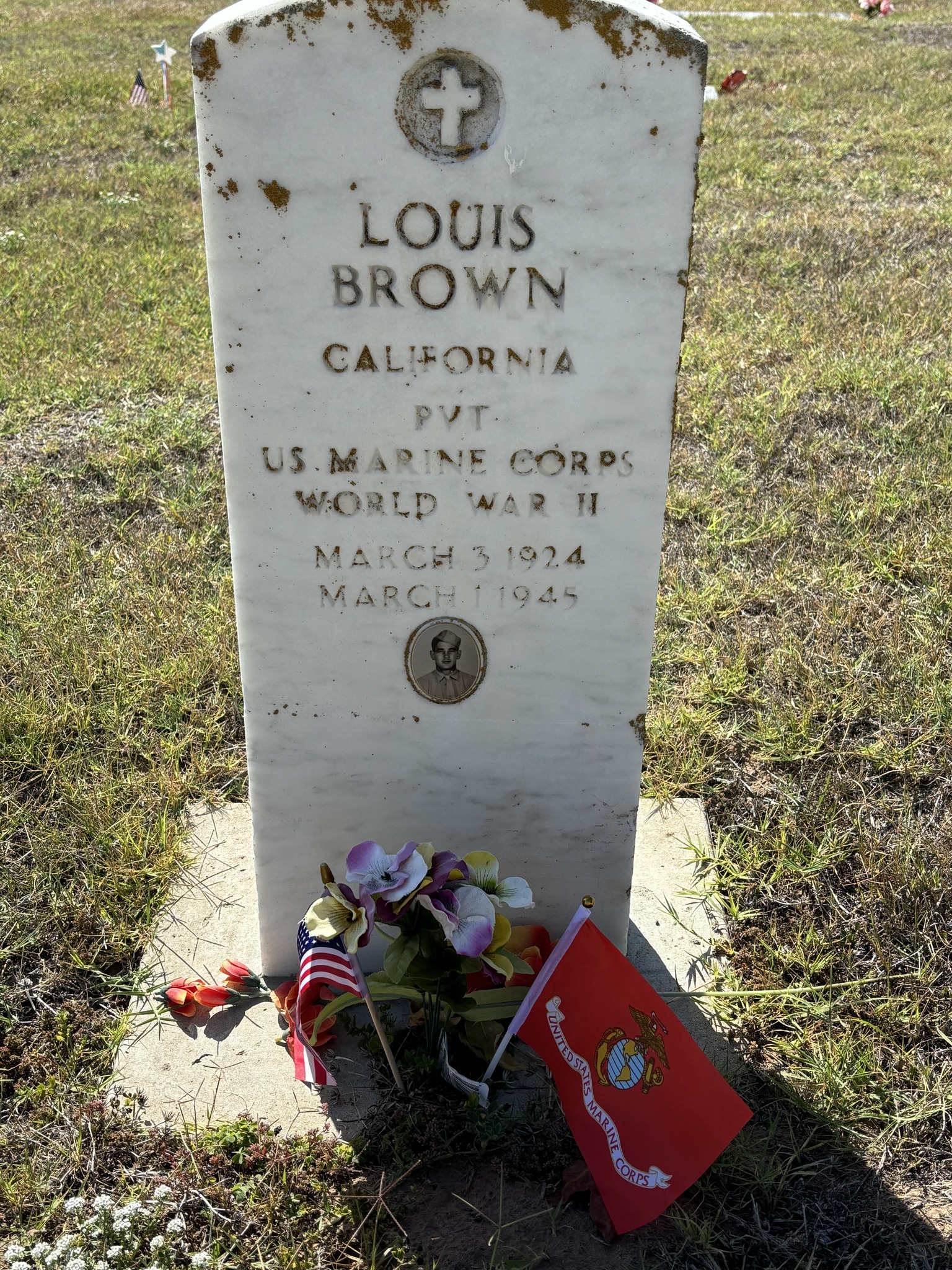
Louis Brown, killed on the beach at Saipan in 1942, finally came home to his mother in 2017.
Archie Harloe, son of the schoolteacher, was part of the invasion Saipan. He survived, but Marines watched, horrified, as islanders leaped to their deaths from ocean cliffs. They’d been told the Americans would torture them.
Louis Brown, the son of a Corbett Canyon farmer, an Azorean immigrant, stepped on a Japanese on Iwo Jima. Cause of death: “Burns, entire body.” This is the young man who, on finding his grave, started me writing books. What I owe him is beyond measure.
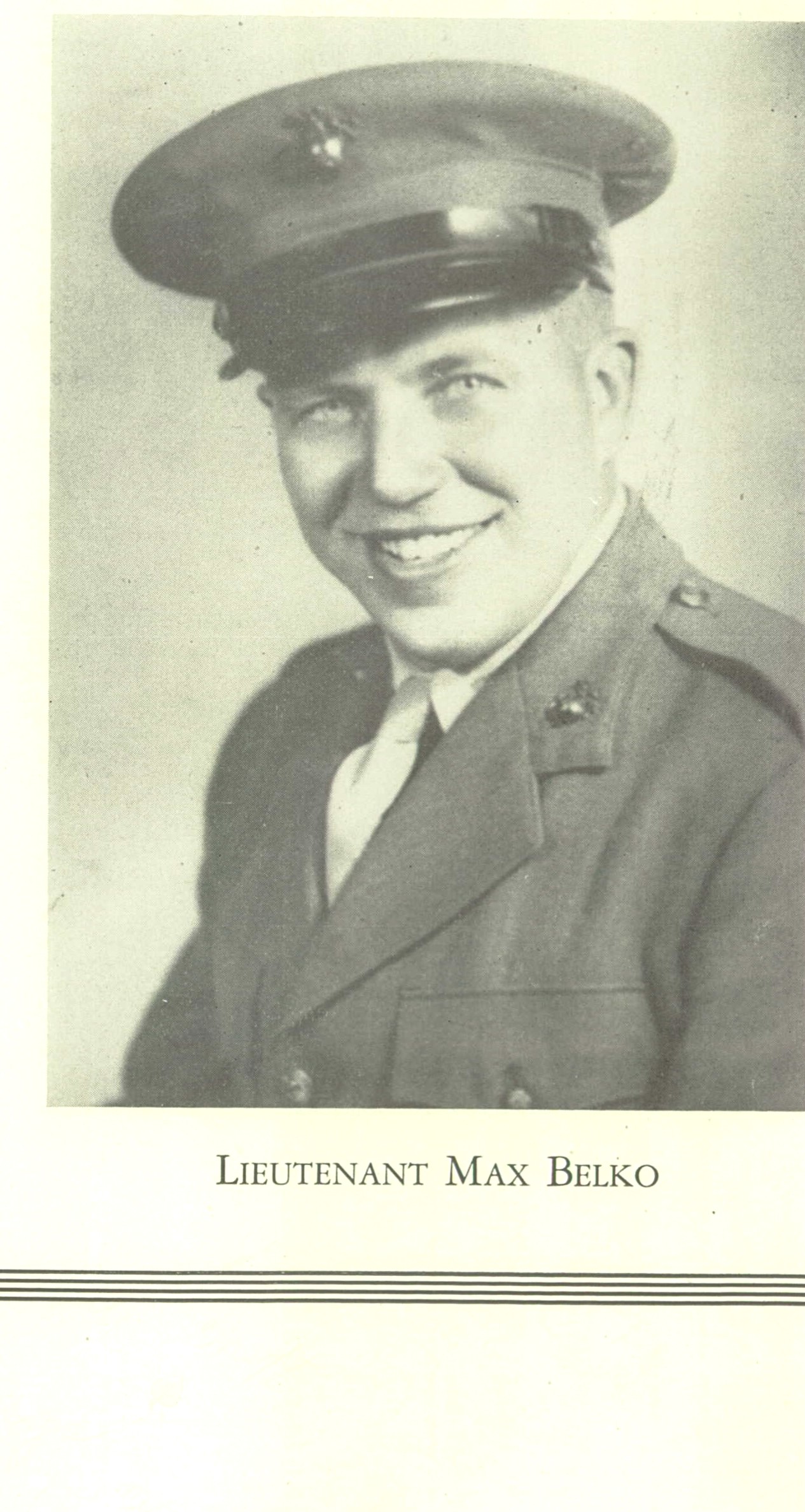
Lt. Max Belko, a USC All-American football player, became a P.E. teacher and football/basketball coach at Arroyo Grande Union High School–his kids would’ve played in today’s Paulding Gym. He was killed on the beach in the invasion of Guam.
John Loomis, AGUHS ’44, joined the Marines so he could get into the war before it ended. He did, at Okinawa, one of the costliest battles in the Pacific. He survived to raise the daughters and the son who would be among my closest friends growing up.
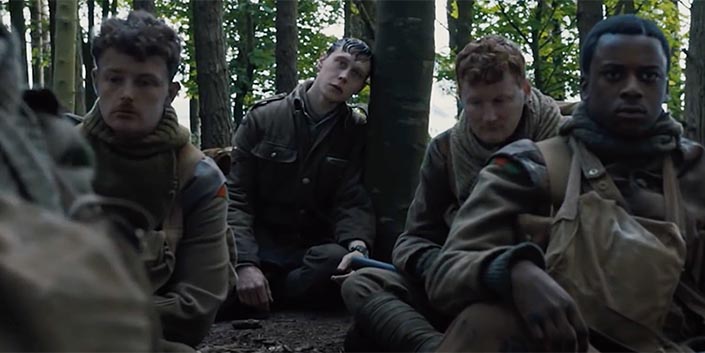
In Sam Mendes’ 1917, Lance Corp. Scholfield has survived a harrowing journey when a voice calls him into a woods. A soldier is singing an old song, “(I Am a Poor) Wayfaring Stranger,” as his regiment prepares to go into an assault that will doom most of them. It’s Schofield’s task to stop them, but he needs to regather his strength first.
It’s a mesmerizing moment. Here is the song, performed by Joe Slovick and recorded at Abbey Road:
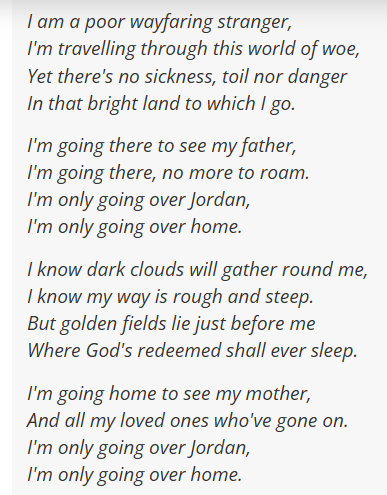
And here are the lyrics:
The irony, according to an excellent website, Counting Stars, is that the song has its origins in 1816 as a German hymn. But it gained new life recast as an American song in 1858 and became popular among other soldiers in another war–our Civil War. In the 20th and 21st centuries, it became a bluegrass staple, performed by Johnny Cash, Emmylou Harris and Jack Black in the Civil War film Cold Mountain.
This borrowed German song—it must’ve come here with the “Forty-Eighters,” the wave of German immigrants fleeing a failed revolution as their Irish contemporaries were fleeing hunger—is now completely American.
I am fond of this version, quite different from Slovick’s stunning solo but valuable because it restores the song to its bluegrass roots. The beauty of American music? This is a Norwegian band.
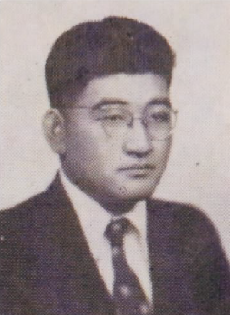
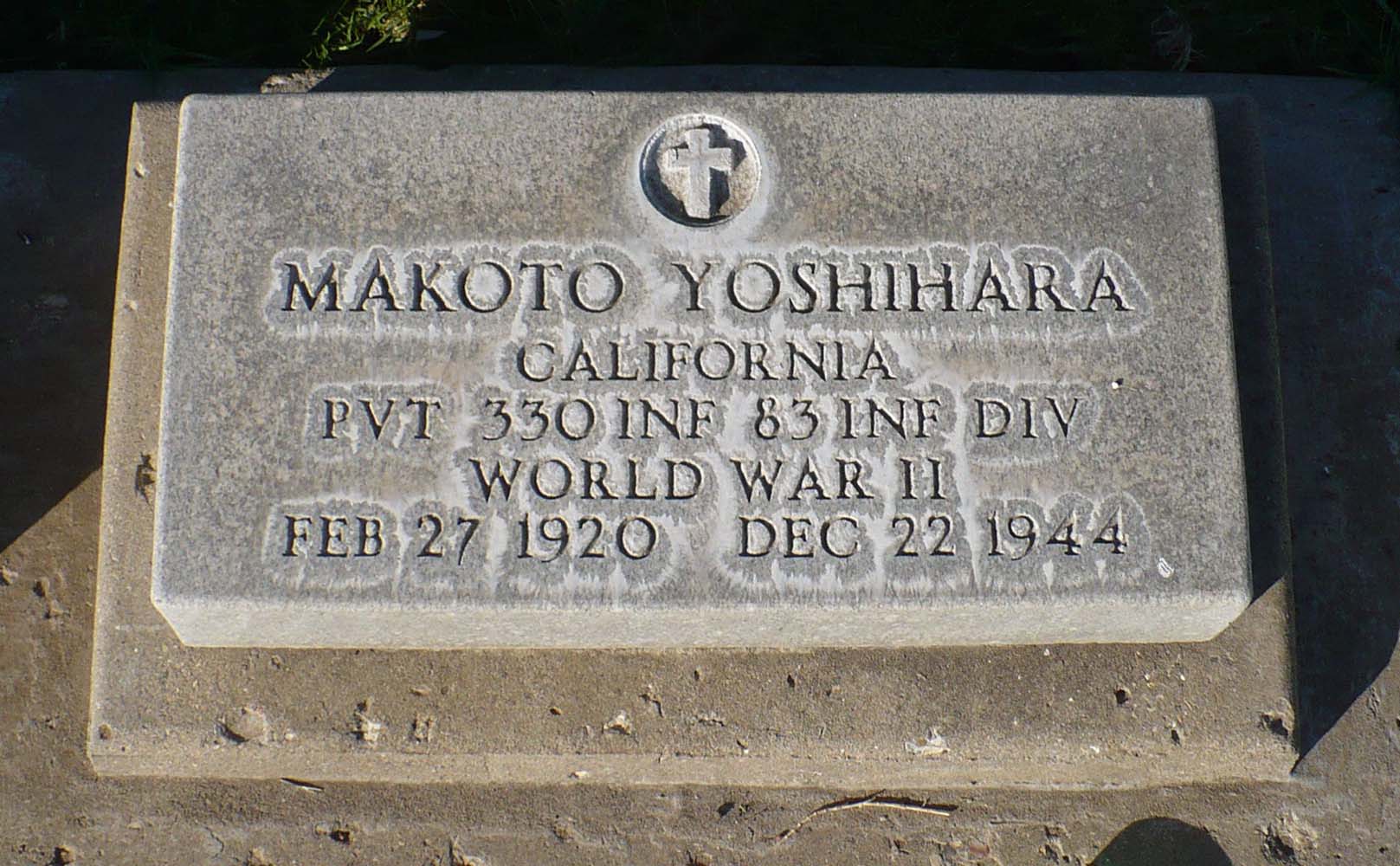
Makoto Yoshihra was a Guadalupe boy who played football for Santa Maria High School. He wanted to become an automobile mechanic, but Pearl Harbor intervened.
He instead became the only Nisei medic in the 83rd Infantry Division, a unit made up overwhelmingly of White boys from Ohio who’d never seen a Japanese-American in their lives.
This Japanese-American, once the 83rd went into action in Europe, began to save their lives.
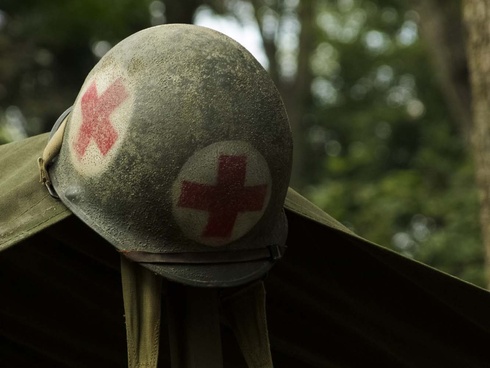
Because he was a medic, he wore the helmet insignia–a red cross on a white background–that designated him as such. Because medics wore that helmet, they became favored targets for German snipers. If a sniper could kill a medic, then he could kill, indirectly, the six or seven or twenty lives that the medic might save.
So that is why the sniper shot Makoto dead in the Huertgen Forest in late 1944. He was kneeling over a wounded comrade when the bullet hit.
Makoto’s helmet doomed him.
So did the logo of the World Central Kitchen convoy.
If you are about to accuse me of being anti-Semitic, you don’t know me. You don’t know what I taught my students about anti-Semitism and you don’t know the emotional toll that teaching the Holocaust took on me every year of the thirty years I taught.
You don’t know my mother, who never forgave Germany.
But now we have the Israeli airstrike on the World Central Kitchen convoy. My mother would never have forgiven that, either.
There is a difference between Israel and Bibi Netenyahu. I am convinced that he pulled the trigger on Chef Andres’ people. The impact? Now the people of Gaza are deprived of the 300,000 meals a day that the World Central Kitchen provided them.
And so they will die. They will die because that is what Netenyahu and the extremists in his cabinet want.
In the last great shipment of European Jews from Hungary to Auschwitz-Birkenau, once they’d been offloaded from the cattle cars, processed through the selection ramp and then shunted to a field near the gas chambers, there are photos of Jewish children who have only a half-hour or so to live.
They are eating bread provided by the SS. One photo shows another little girl still eating her bread on the way to her death.
There will be no bread for the children of Gaza. They won’t enjoy even the cynical mercy of the SS.
This is mercy: The Army’s Graves Registration Teams gently carried Makoto’s body–it did not matter that he “looked” Japanese– away from the battlefield, perhaps with the body of the G.I. he could not save. They would have meticulously catalogued his personal effects, enclosed him in a canvas shroud, and then they would have taken him to a military cemetery on the Franco-German border.
When the war ended, the Army brought him home to Guadalupe. His coffin would’ve come across the Atlantic in the cargo hold of a Liberty Ship, inside a metal coffin draped in an American flag. We have a tradition of treating our war dead with care.
The children of Gaza will die now because now there is no one left to care for them. Because they will die in such great numbers, bulldozers will bury them.
You may bring up October 7, and you have every right to do so. I will counter with December 7.
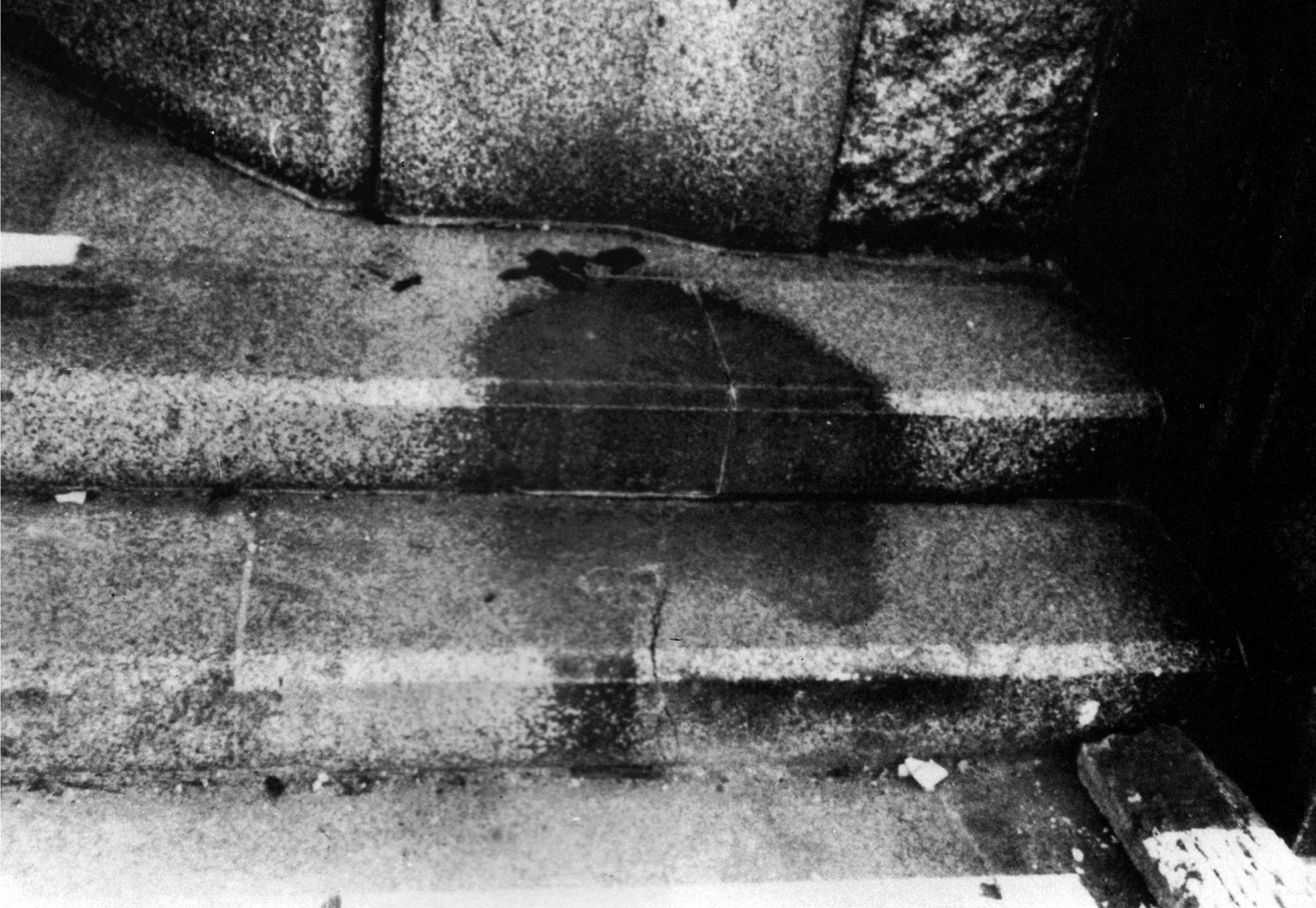
This is the image of a woman waiting for the bank to open in Hiroshima—rather, this is the shadow of her vaporized body. Can you tell me which plane she flew along Battleship Row? Was it a Zero? A torpedo bomber? Did she fly the dive bomber that dropped the fatal bomb on USS Arizona?
Fluttering eyelashes, botched beheadings, purloined pearls, bodies tumbling down the stairs, Notre Dame, Holyrood, mermaids, dispatch riders galloping over the moors, intense sexual attraction, three powerful queens, being strangled in your nightie, a thing for men’s legs, a loyal dog, secret codes and spymasters, four centuries of sweet revenge. If you’ve been sold on the notion that history is boring, you have been misinformed. Or badly informed.
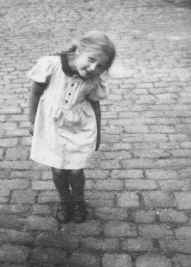
Some of my favorite World War II photos include children. The first is of a little Berlin girl, soon after the war’s end. She is meeting her first American, a G.I. in the 77th Infantry Division.
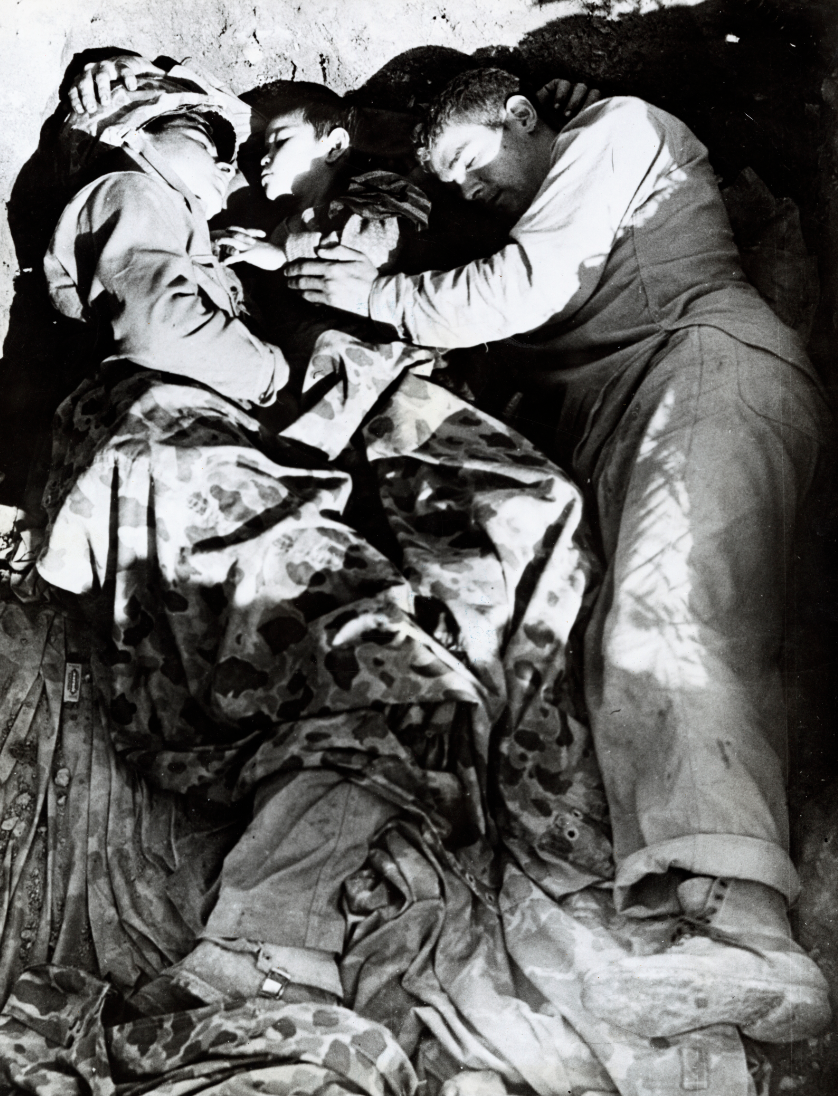
The second gets me misty. The little boy lost his immediate family in the horrific battle for Okinawa. The two young Marines cared for him until relatives were found.
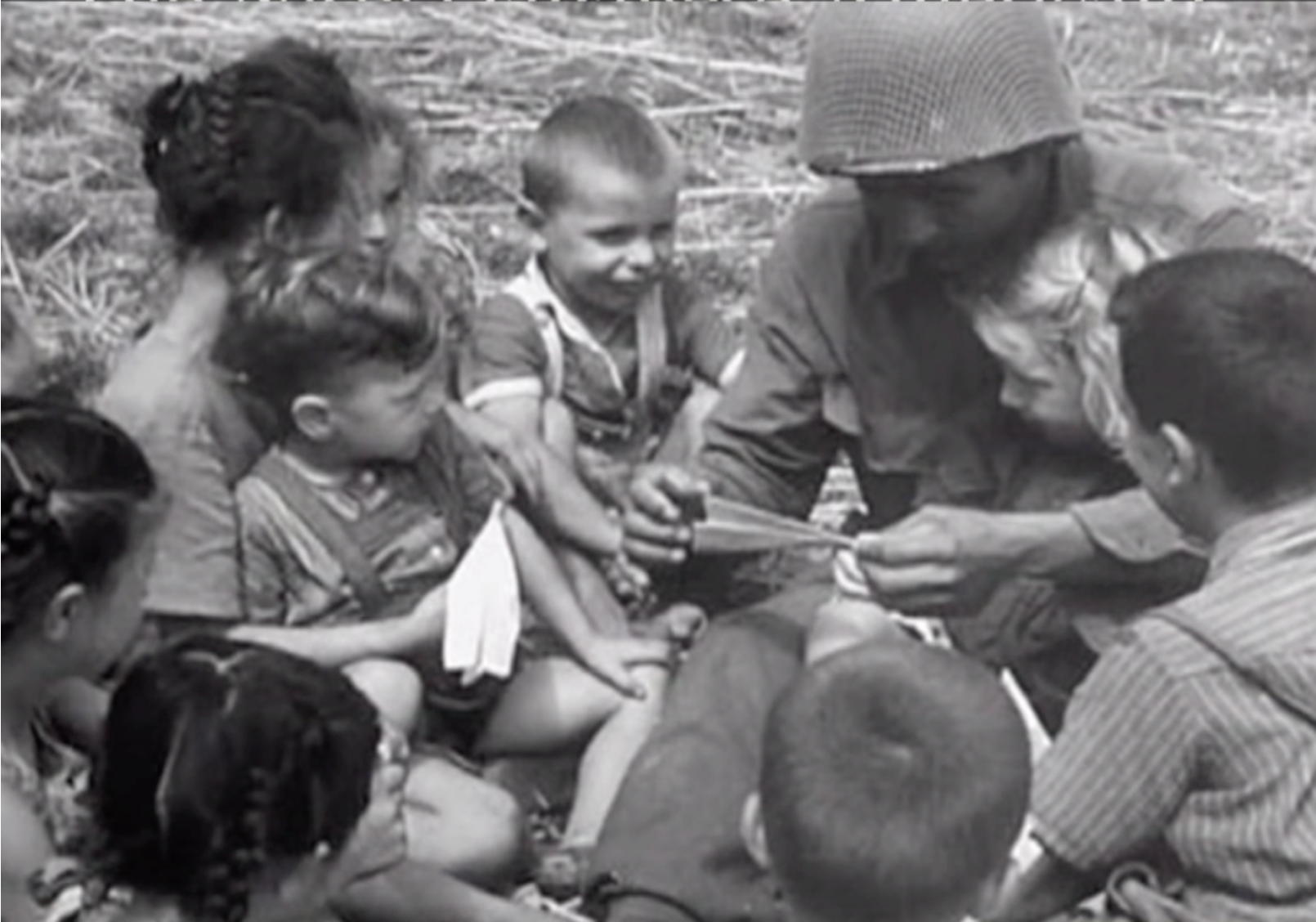
A Nisei G.I. with the 442nd Regimental Combat Team teaches a rapt audience how to make a paper airplane. His arm’s around a little girl who’s nestled close to him. I suspect that in this moment she feels safe, probably for the first time in a long time.
In England, shortly before D-Day, a G.I. gives a British lady help with the jump rope.
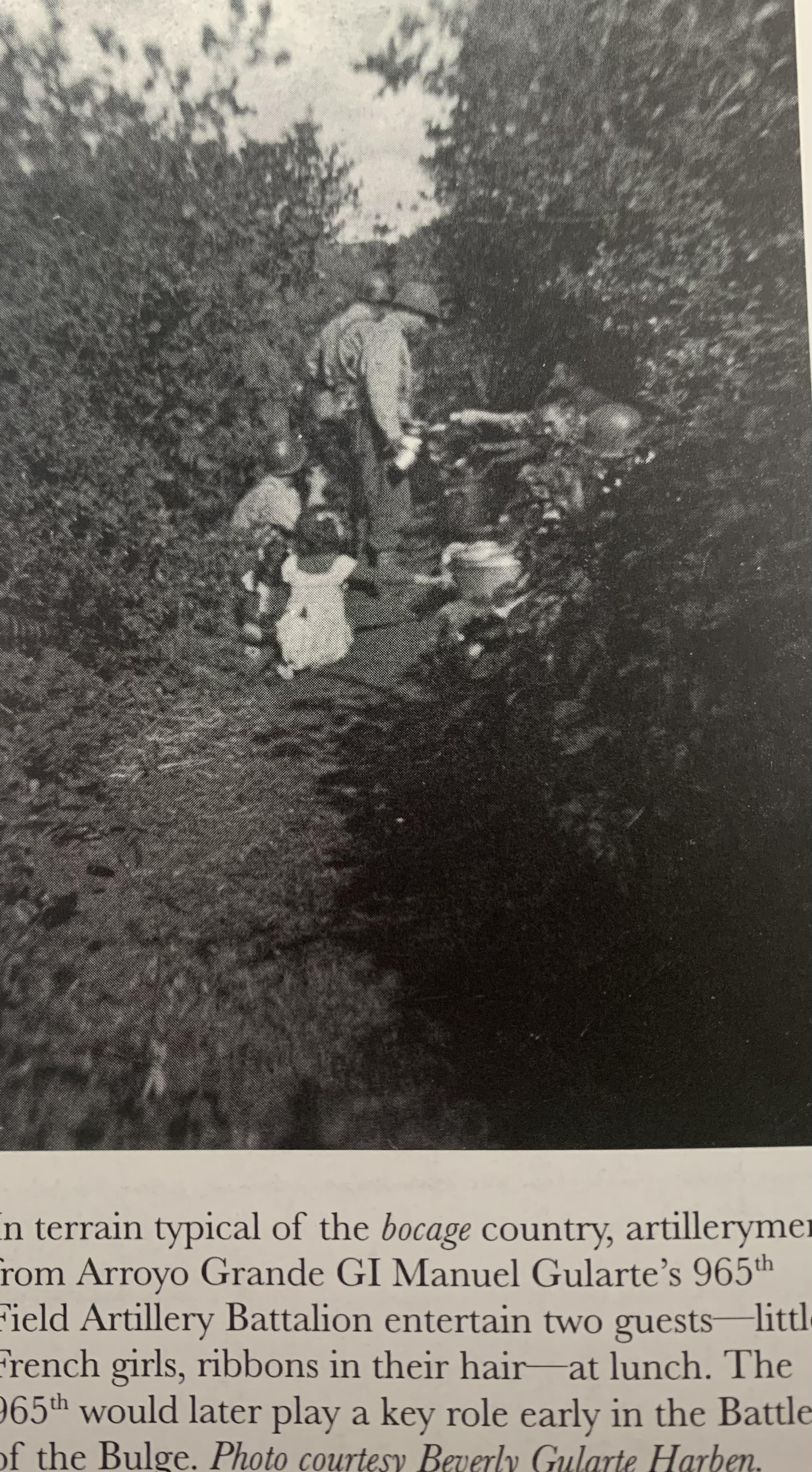
Manuel Gularte of Arroyo Grande and his comrades entertain guests for lunch in Normandy. Manuel’s brother, Frank, was killed on the German border just five days before his son, Frank Jr., was born at the Mountain View Hospital in San Luis Obispo.
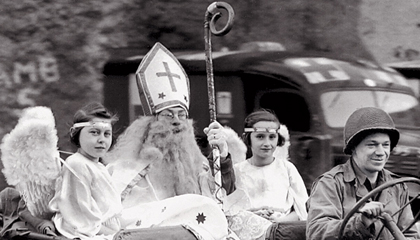
And in Luxembourg, Christmas 1944, while the Battle of the Bulge is raging nearby–there’s an amazing Battle of the Bulge museum in Diekirch, Luxembourg–a G.I. playing St. Nicholas, flanked by two angels, heads out to distribute gifts. Note the expression on the jeep driver’s face.
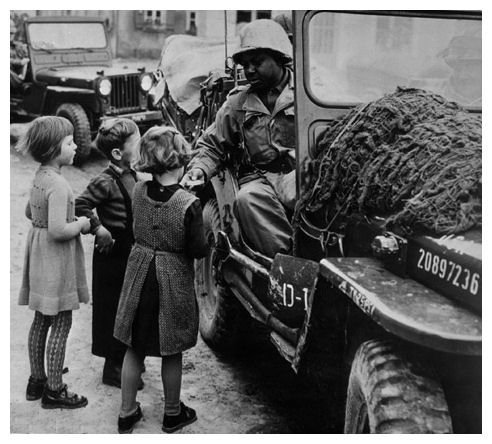
Finally, a soldier, I suspect a member of the famed Red Ball Express, makes friends with a little refugee while another little girl–her sister?–makes sure that she doesn’t leave her doll behind.
I am not naive enough to suggest that all Americans were angels. They weren’t. There were rapes, murders, thefts. Racism was a given and violence, especially attacks on Black G.I.’s, was commonplace, at its height in 1943. In New Zealand, American Marines attacked Maori soldiers for entering the bar where the Yanks were drinking beers.
Filipino-Americans were subject to some of the most virulent and racist invective–you can find examples in the old Arroyo Grande “Herald-Recorders”–and they responded by becoming some of the finest infantrymen of the war.
While their parents and grandparents were behind barbed wire, Japanese-American G.I.’s were marked by the frequency of their Purple Hearts, by Bronze Stars that should’ve been Silver Stars, by Silver Stars that should’ve been Medals of Honor. Nearly 1,000 of them were killed or wounded in October 1944 to break through and rescue a Texas National Guard Unit–240 justifiably terrified 19-year-olds- surrounded by the Germans in France’s Vosges Mountains.
These weren’t hyphenated Americans. They were Americans.
My parents’ generation was condemned before the war by sociologists who saw them as self-indulgent and frivolous. They proved the eggheads wrong. Spectacularly. That’s why I write about World War II so much.
In my book Central Coast Aviators in World War II, I wrote about a brilliant man named John Keegan:
If there was a military historian with a gift close to Shakespeare’s, it was another Englishman named John Keegan. Keegan was a little boy in the English countryside, in Somerset, when the Americans began to arrive in late 1943 and into the spring of 1944. Little English boys had lived for years with the deepest of privations—thanks, in large part, to the U-boat campaign that had nearly starved Shakespeare’s “sceptred isle” to death—and then the Americans came. They were, as Keegan later said—for once at a loss of words while narrating a documentary on the 1918 turning point of World War I—“Well, they were Americans!” By which he meant they were boisterous, cocky, well fed, well clothed and, thank God, friendly, with an innocence and immediacy that was distinctly American. Their World War II counterparts taught English boys baseball, and they flirted with their big sisters and married some of them—but most of them not—which meant that little boys Keegan’s age would inherit littler half-Yank nieces and nephews. Most of all, they were generous. There seemed to be no end to their Hershey bars (there wouldn’t be after the war, either, when, during the Berlin Airlift,one of Arroyo Grande bomber pilot Jess Milo McChesney’s comrades, Gail Halverson, air- dropped Hershey bars, floating on little parachutes, to the hungry children of blockaded Berlin) and no end to the rough affection for children that came with these big, loud men from across the sea.
And then they were gone. Keegan has vividly described the early morning dark when that happened, when the chinaware and modest family crystal on every shelf in the Keegan home began protesting, rattling an alarm soloud that it woke the family up, if the motion beneath their beds hadn’t already made them sit bolt upright. The anxiety of Keegan’s family, their neighbors and other families all across East Anglia was relieved only when they went outside. Then anxiety gave way to wonder. They could feel in their breastbones the vibrations—“the grinding forced you to the ground,” Keegan remembered—of the engines of thousands of airplanes, but they could see only dim red and amber lights in the sky, heading east, toward France. Some of the Americans Keegan had learned to love so quickly, his heroes, were on those airplanes, and tens of thousands of more, his heroes, were riding deathly pale on landing craft corkscrewing in foul Channel waters, and they were all headed for Normandy.
It was D-day.
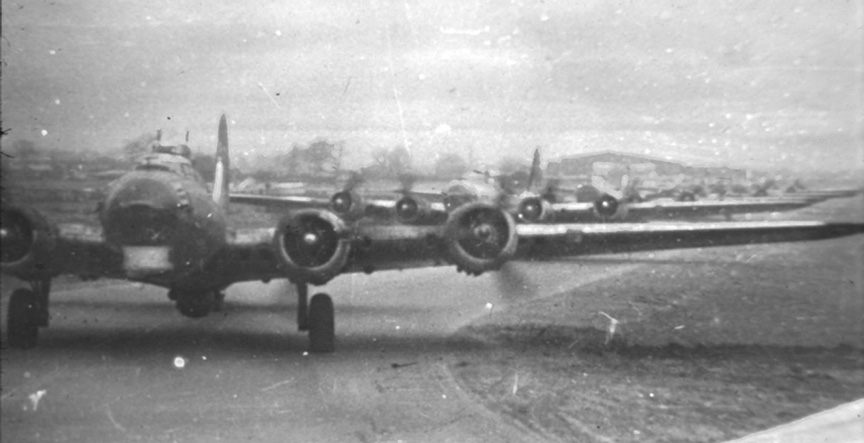
B-17’s from the 398th Bomb Group assemble for takeoff. At most any American airfield, British children were there for moments like this. Pressed agains the airfield’s perimeter fence, they’d come to wave goodbye to “their” Yanks.
A (wonderful) AGHS German teacher, Mark Kamin, was leading a group of students on a tour of Bavaria. I think they were waiting for their bus when an older German woman approached them.
“You’re Americans, aren’t you?” she asked Mark.
Yes, we are, Mark replied
Her eyes began to fill with tears. “I just wanted to thank you,” she said, “for how kind your soldiers were to me when I was a little girl.”
Candy, Berlin, May 1 1945
We are so divided now, but these photos of men long dead fill me with hope. Their generation lit a path for us to follow. It’s up to us to find it.
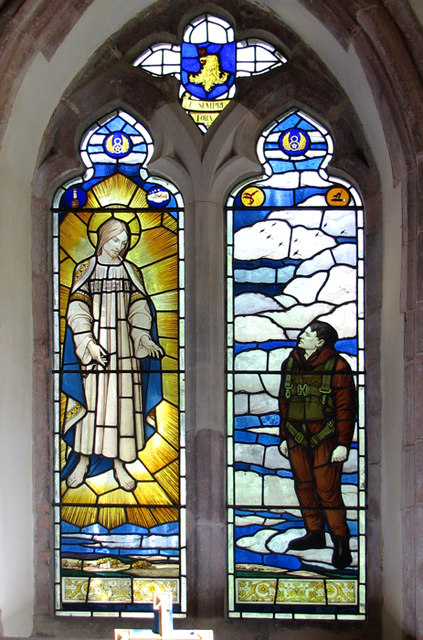
St. Andrew’s Church, England. Two Arroyo Grande B-17 fliers served at the nearby 8th Air Force Base at Snetterton Heath. One of them, Clarence “Hank” Ballagh, the AGUHS 1937 Valedictorian, was killed eighty years ago next month. Here, an American airman looks up to the Risen Christ. The English have not forgotten Yanks like Hank Ballagh.
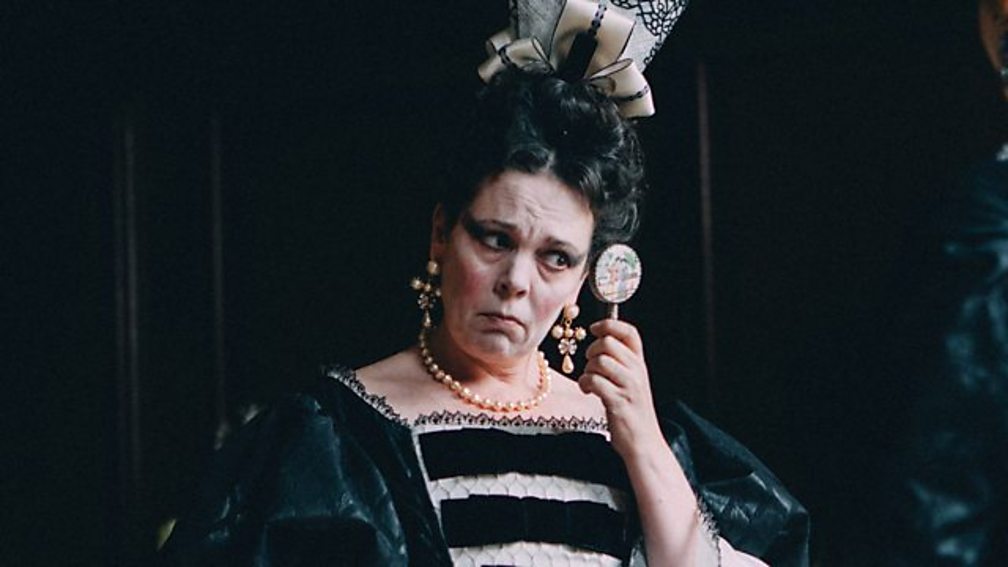
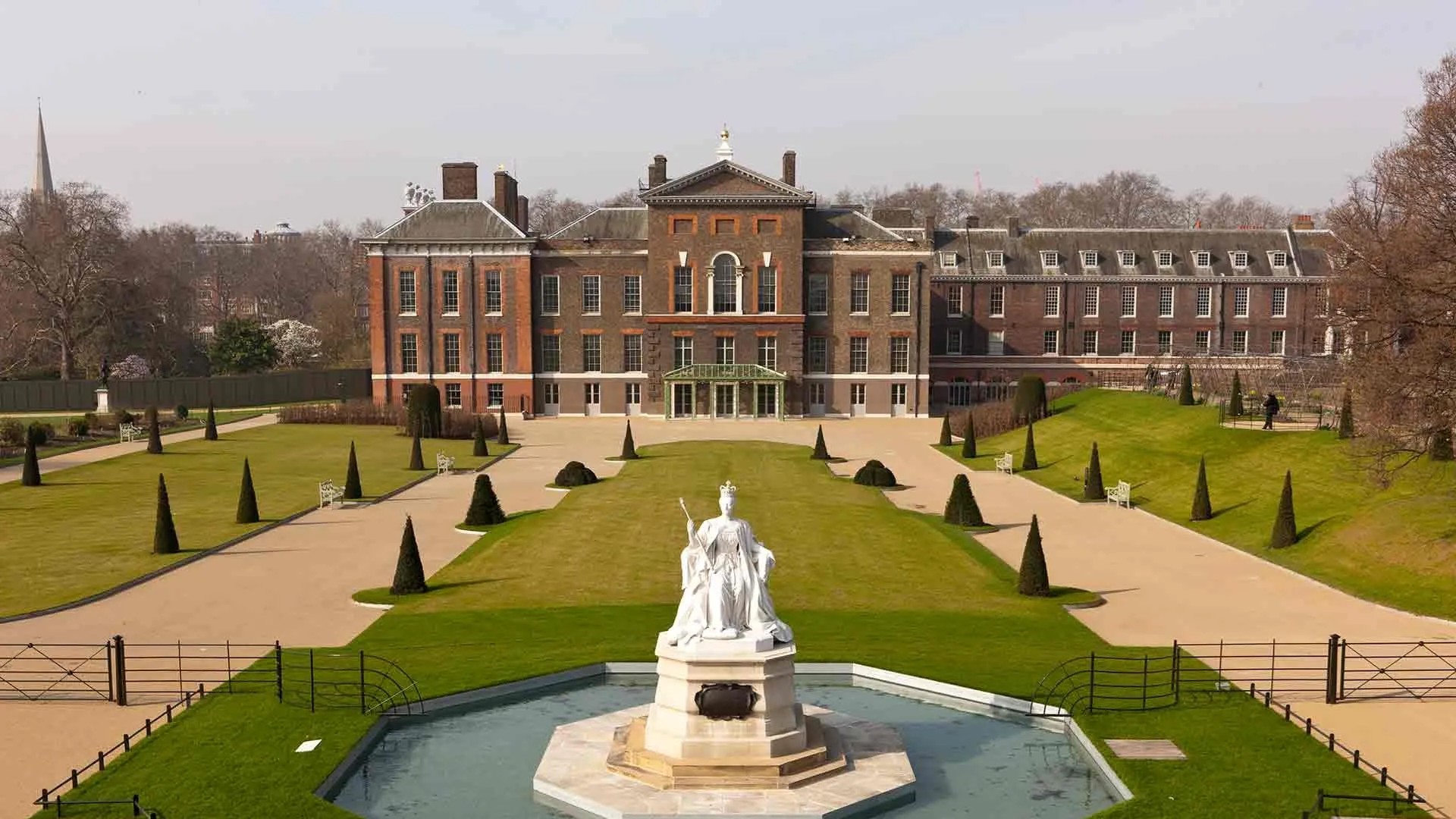
On August 1, 1714, the last Stuart monarch, Queen Anne, 49, died at Kensington Palace, today the home of Prince William, Princess Kate and their children. The eccentric, sickly and probably underrated Anne was brilliantly played by Olivia Colman in The Favourite.
Anne’s life was tragic, marked by widowhood, poor health and by the unimaginable physical and emotional pain that came with seventeen miscarriages and stillbirths. The Favourite suggests that Anne’s beloved little pet rabbits became her surrogate children.
And so the Stuart line ended with Anne, ended with her hopes for the children she’d wanted, the heirs that her duty required. England turned to Germany for the next dynasty, whose descendants make up the modern royal family.
Colman and Emma Stone in The Favourite, filmed at Hampton Court, the palace of Cardinal Wolsey, Henry VIII’s chancellor and, after his fall, the residence of Henry and Anne Boleyn. The later Queen Anne lived here, as well.
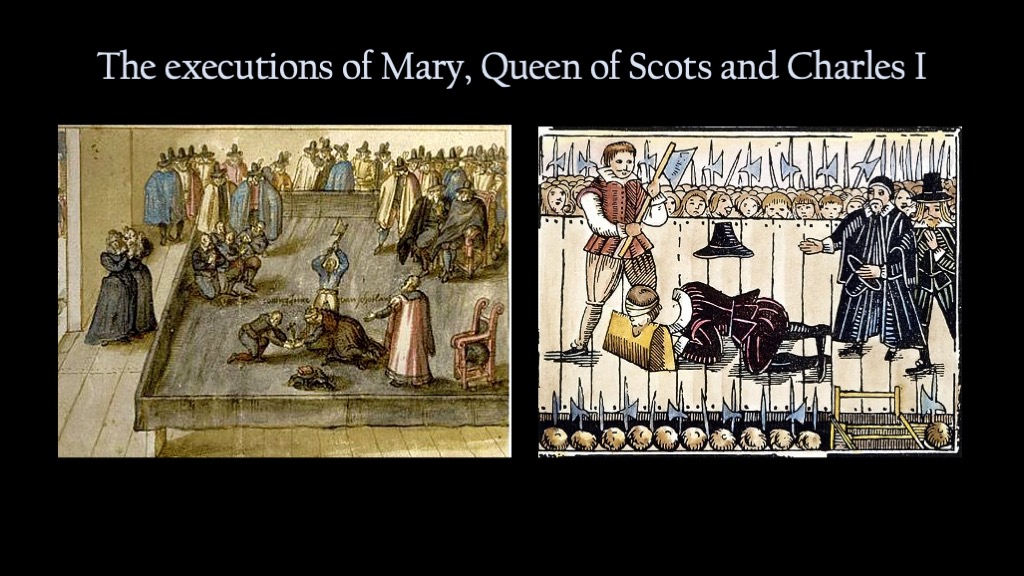
The Stuart line, of course, began inauspiciously, since these royals were descended from Mary Queen of Scots, ordered beheaded for high treason by her cousin, Elizabeth I, in 1587. Mary, the Great Catholic Hope, was dispatched while another Great Catholic Hope, the Armada, was being planned.
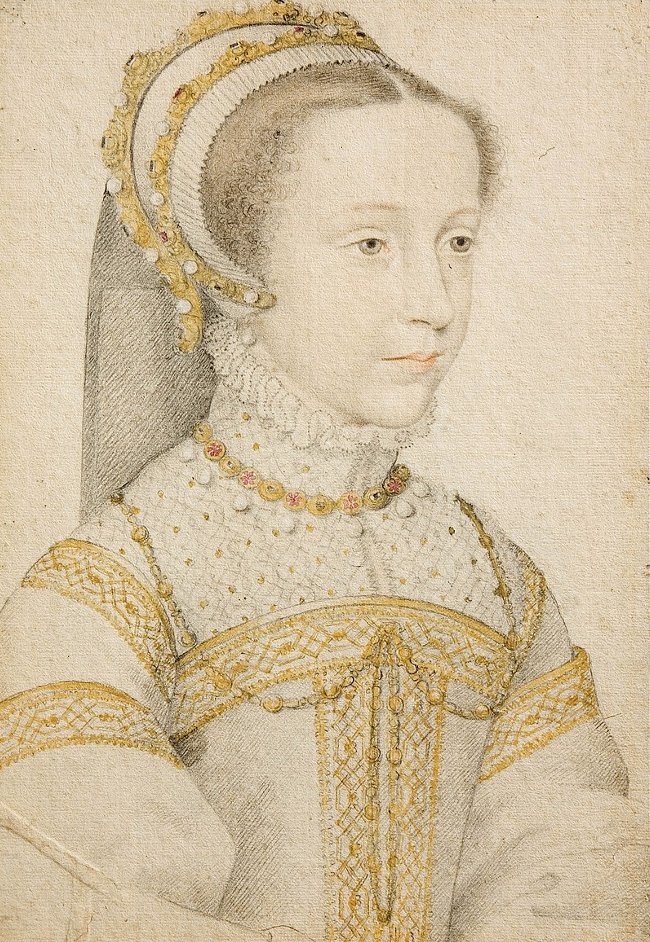
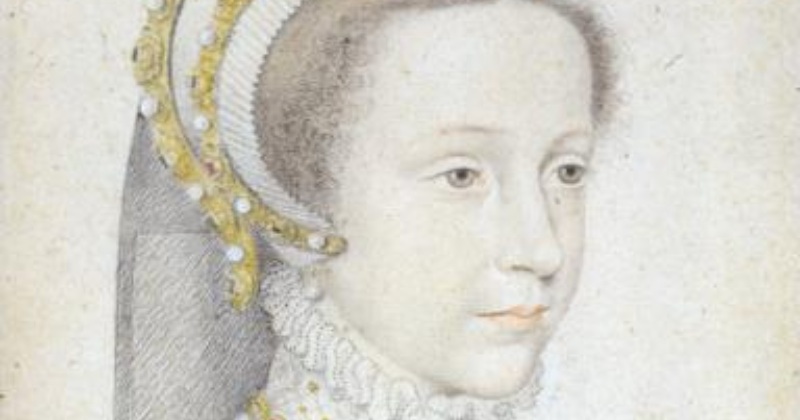
Mary in adolescence. Her eyelashes’ flutter, it was said, could reduce men to something resembling Silly Putty.
She went out with panache—blood-red petticoats beneath the shift she wore to the the block. Sadly, she drew a nervous executioner, and it took two tries to separate Mary’s head from the rest of her. Afterward, her disconsolate little Skye terrier crept out from beneath her petticoats.
No one told the hapless executioner that Mary was wearing a wig. He only discovered this when, in the ceremonial moment required of traitors’ executions, he held her head high aloft for the crowd to see.
So it goes.
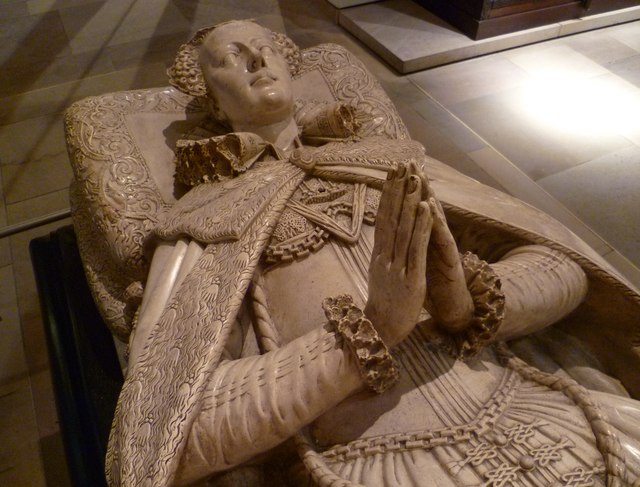
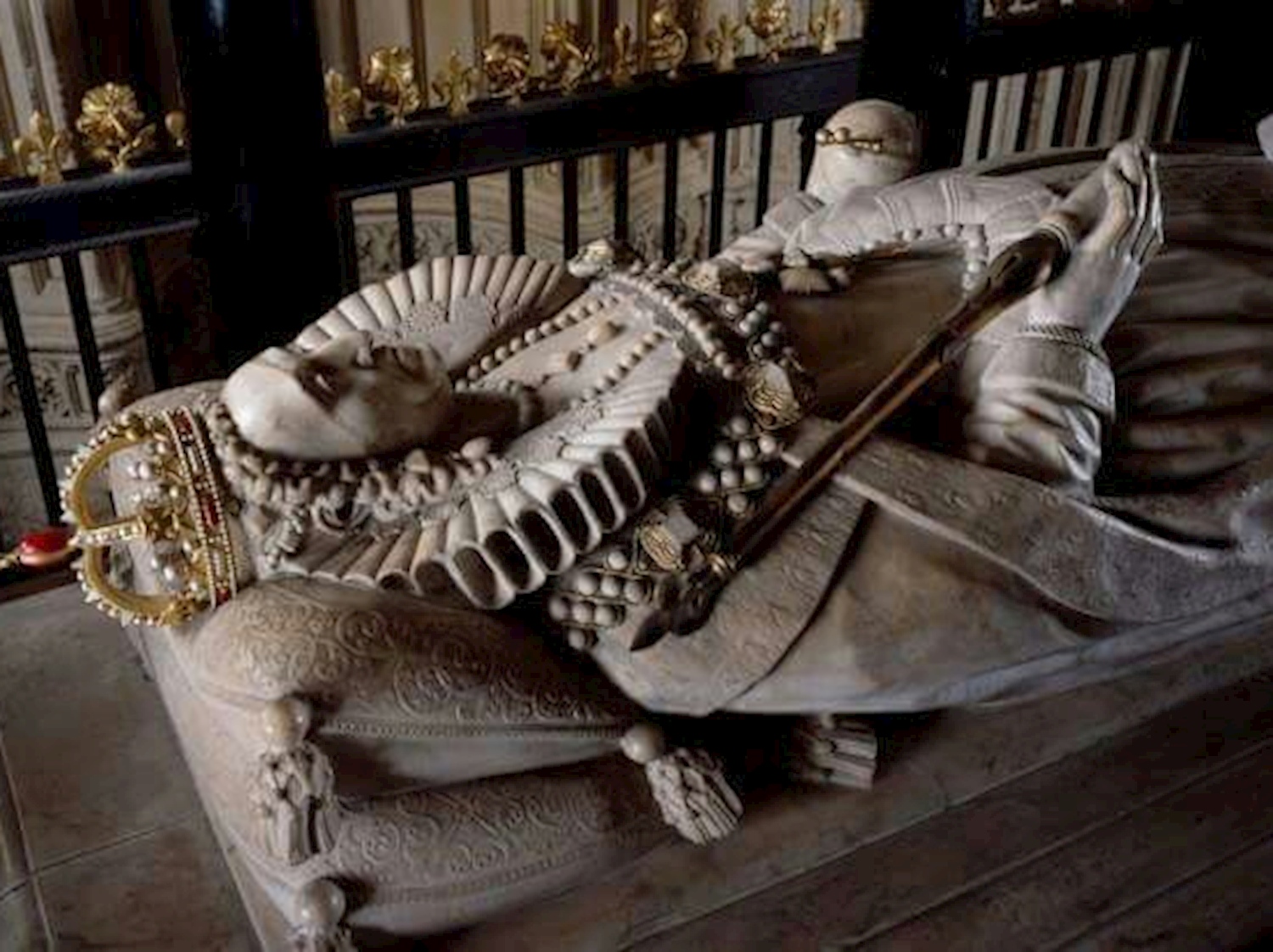
In a way, Mary got even. She lies in splendid isolation in Westminster Abbey, while her cousin, Elizabeth, is in a tomb version of bunk-beds with the half-sister who was her predecessor— and who feared and despised her—Queen Mary Tudor (“Bloody Mary”). Elizabeth is on top.
Ha.
Mary, top and Elizabeth, bottom, Westminster Abbey.
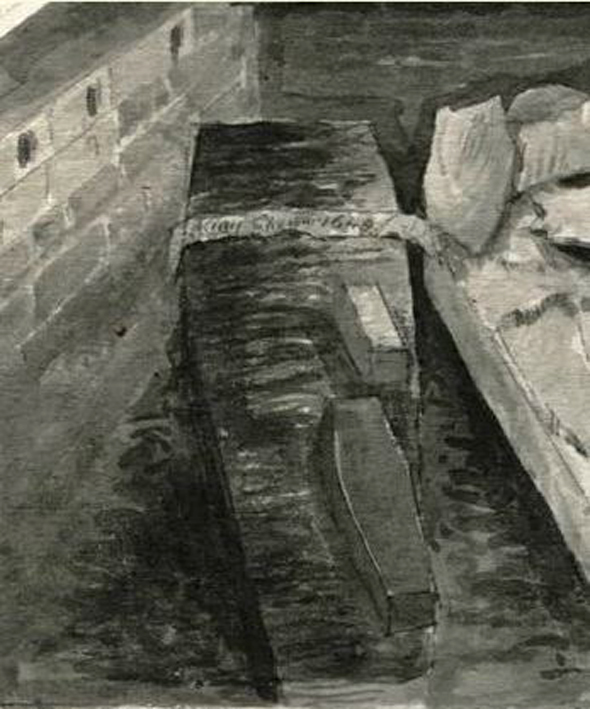
Mary’s grandson, Charles I, was likewise beheaded in 1649 at the outset of the Interregnum, when Cromwell’s Puritan dictatorship interrupted the royal parade.
And in 1813, a funeral vault beneath the floor Windsor Castle—Philip and Elizabeth II are buried at Windsor, as well– was opened and they found Charles I’s coffin. The old boy’s head, it was reported, was in fine shape; nearby were the coffins of Jane Seymour, Henry VIII’s favorite wife, and Henry himself, who was all bones. His coffin had exploded from expanding gases, in my mind the result of the King’s gargantuan appetite. Some historians maintain he was close to 400 pounds when he expired.
So his lead coffin was large.
It was a small coffin atop that of King Charles that surprised the little crowd of morbid scholars murmuring beneath the floor. They found that it was one of Anne’s stillborn children, at rest with his great-great uncle.
Executions, lost babies, little rabbits. Monarchs are, of course, an anachronism, as Charles and Camilla so amply prove. But some of them, like Anne—who delivered a stunning inaugural speech to Parliament and whose armies vanquished those of Louis XIV—deserve a second look, and perhaps our sympathy, as well.
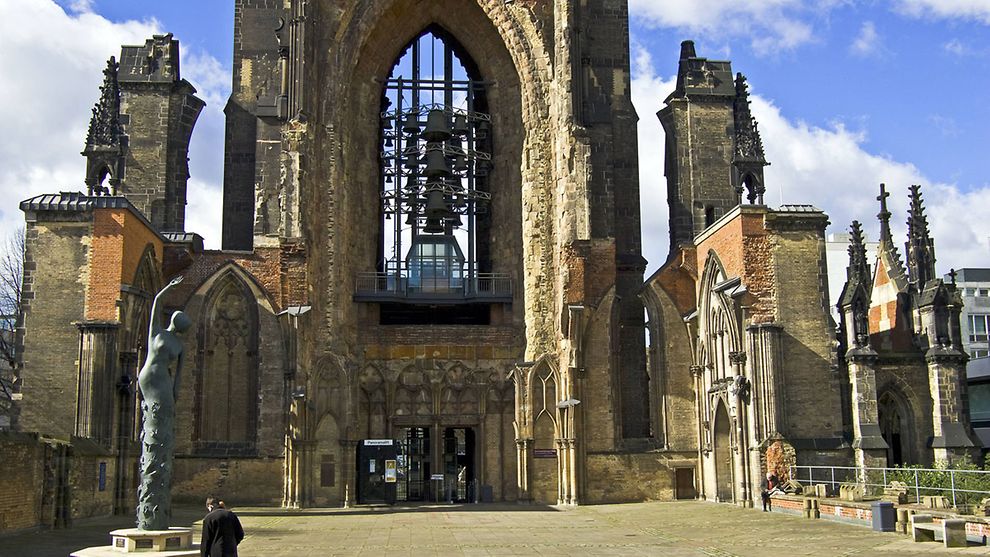
King Charles III visited Hamburg yesterday to pay tribute to the estimated 30,000 German civilians killed in the Allied firebombing of the great port city in 1943, in an operation code-named “Gomorrah.”
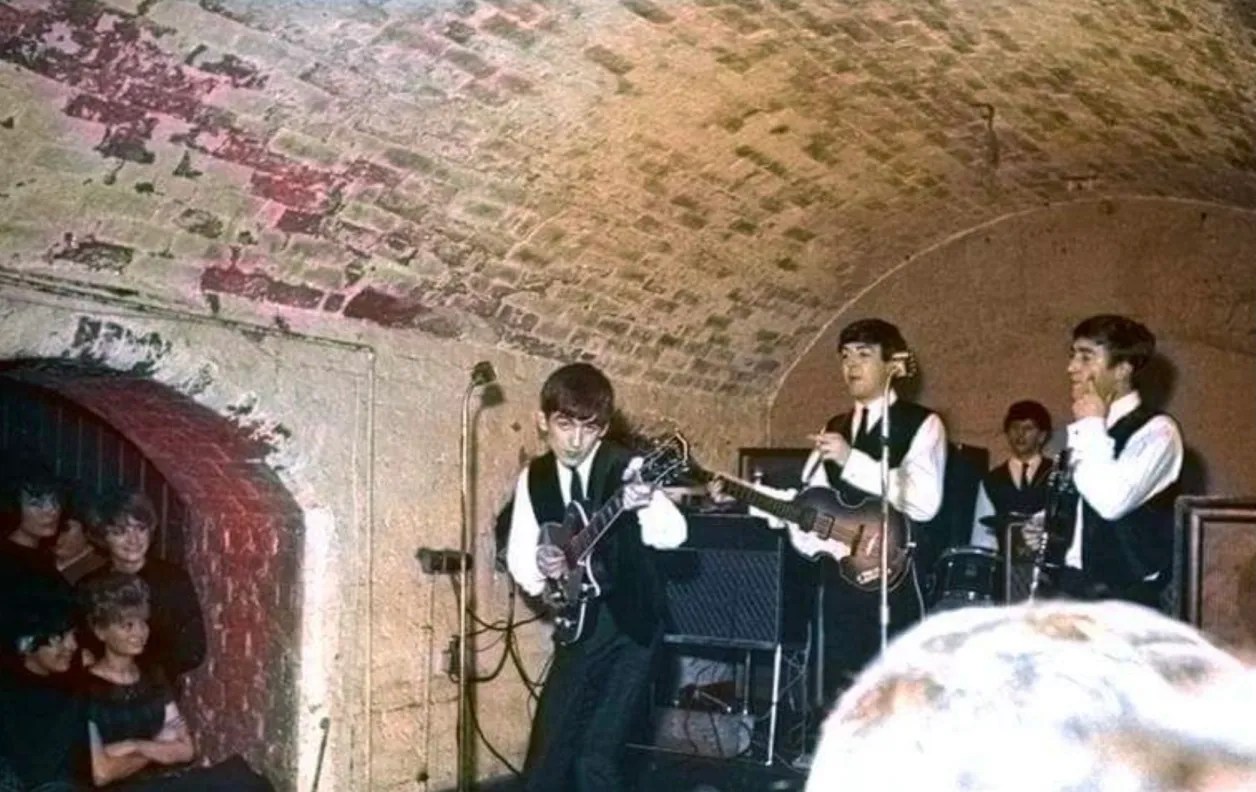
Twenty years later, ironically, the last stop for The Beatles before they hit the big time was a tiny nightclub in Hamburg called The Cellar.
It’s been replicated, exactly, in Liverpool, where the MonaLisa Twins, two young women who expertly and faithfully perform Beatles songs, perform today.
The Beatles at the Cavern, 1963. Ringo Starr has replaced Pete Best at the drums.
I wrote a book about the air war, a testament in its bulk to the immense courage of the American heavy bomber crews–in B-17s and B-24s–who contributed to the destruction of Europe.
I have never liked the Superheavy, the B-29 Superfortress, which not only destroyed Japan but, in its development, killed dozens of aircrews, including waist gunners. When the cabin was pressurized, the gunner’s Plexiglas bubble, in early models, separated from the fuselage and so carried the gunner with it. The Army Air Forces’ solution was a leather harness. The plane was also noted also for the ease with which is caught fire.
I hate that airplane.
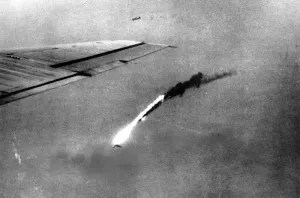
A doomed B-29 over Tokyo.
And while I will forever love the aircrews of the heavies, and I will never forget, either, what they were doing to the people below. Henry Hall of Cayucos was twenty when he saw a B-17 from his squadron, badly shot up, begin to lazily tumble toward the ground. Along the way, it clipped the wings of two more American bombers. They went in, too.
The passage below is from my book about airmen like Hall.
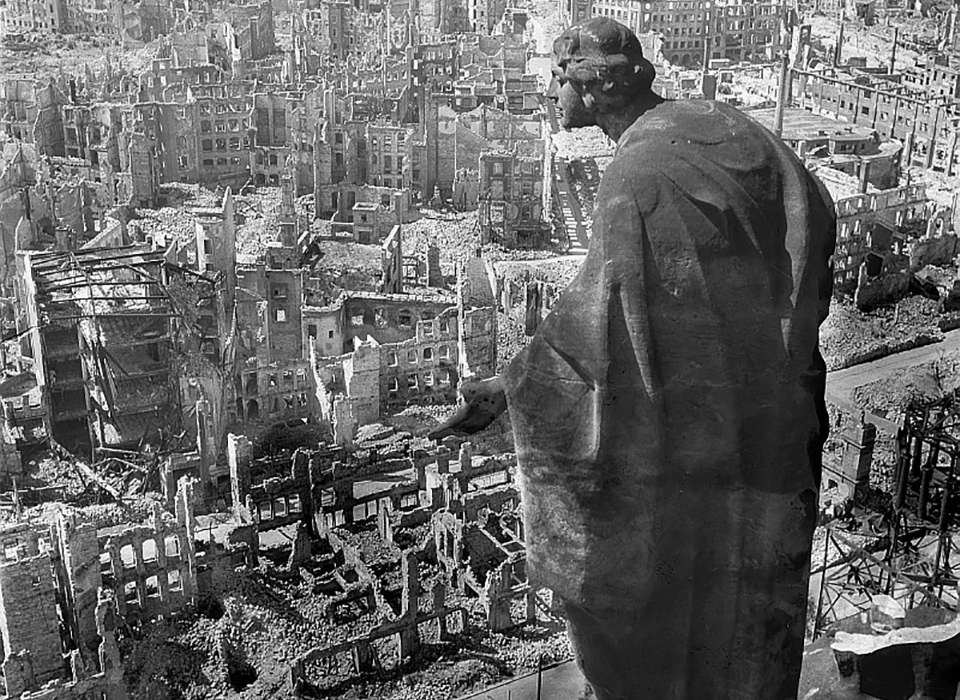
Sheila Varian’s prize cow horse, Ronteza, was an Arab and her sire was an award-winning Polish stallion, Witez II. Stablehands were desperately trying to evacuate Arab stallions from the east–horses were being eaten there by the Red Army–when they reached Dresden, the ancient city that was firebombed in February 1945. (POW Kurt Vonnegut escaped incineration in Slaughterhouse-Five).
One of the Arabs’ handlers watched in horror as the tail of Ronteza’s uncle, Stained Glass, burst into flames.
Stained Glass survived. Twenty Arabians perished. So did at least 25,000 human beings.
Dresden in ruins, 1945.
Sometimes the aircrews could smell, from 25,000 feet, wafted up to them by vast columns of black smoke, what they’d done to the children below. Even into old age, many of them would awake, in a terrified moment of cold sweat, when, in their dreams, they were smelling their combat missions again.
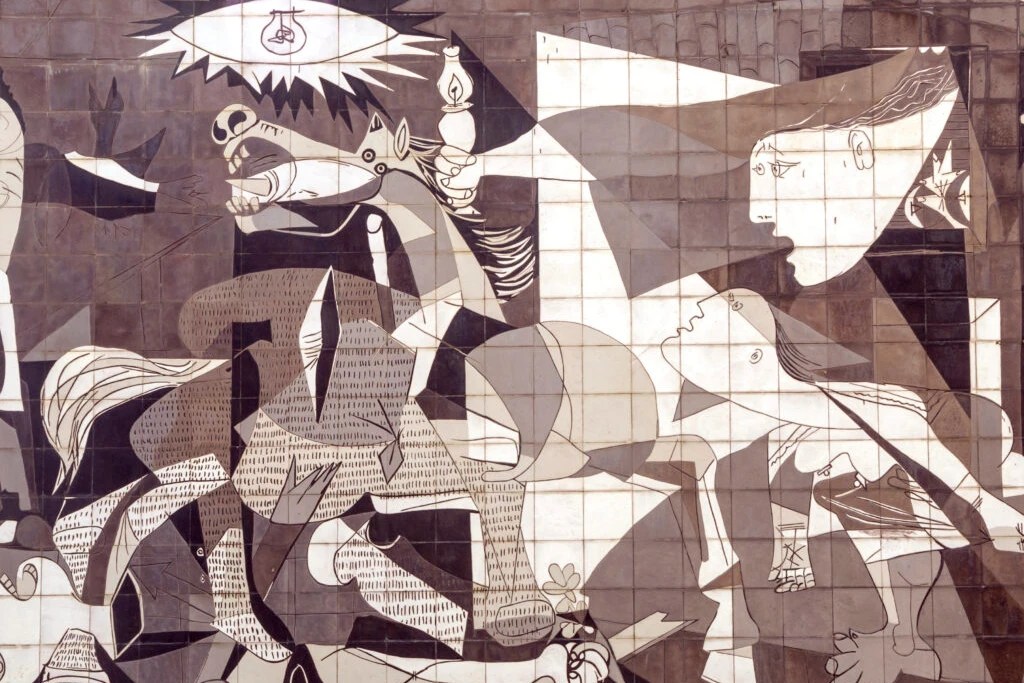
When we were still capable of outrage, Pablo Picasso’s “Guernica” was a passionate protest against Hitler’s bombing of a Basque town during the Spanish Civil War, in 1937. That painting has been replicated, exactly, in the United Nations building in New York City. It’s a reminder, albeit with the Russian Federation remaining in the Security Council, of what the UN is intended to prevent.
Guernica
And I fervently hope that I never lose my capacity for outrage. That is one quality that made be a history teacher. And that, after all, was just a cover story. My real intent was to teach my faith, by which I mean, the value of each and every single human life.
We are precious in God’s eyes. My students needed to know that. The gift of history is in reminding young people of the richness of their heritage. The stories that history teachers tell remind young people that their lives, too, enrich us beyond measure.
Without being either a proselytizer– and while being a terribly negligent churchgoer–I knew that God’s eyes were always on me when I was in the classroom. I was constantly aware of that.
She had entrusted Her children to me, you see.
Liza, a four-year-old Ukrainian child with Down Syndrome—the light of her parents’ lives—was riding in this stroller when a Russian missile struck nearby. Liza was killed.
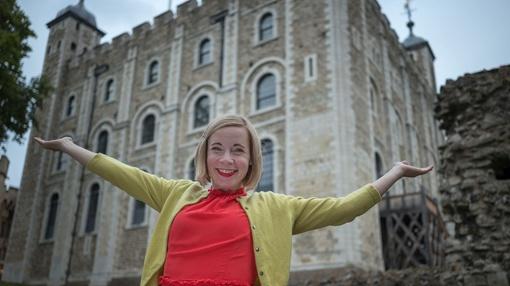
I’m kinda nuts about British historian Lucy Worsley; she is a hoot.
I first discovered her, while teaching European history, when she went to a modern grocery store to go shopping for Henry VIII.
The students were kinda nuts about her too: she’s a small person and the shopping cart was bulging at the seams, so she was huffing and puffing as she pushed it through the aisles. It was loaded mostly with meat (beef, pork, fowl, eels).
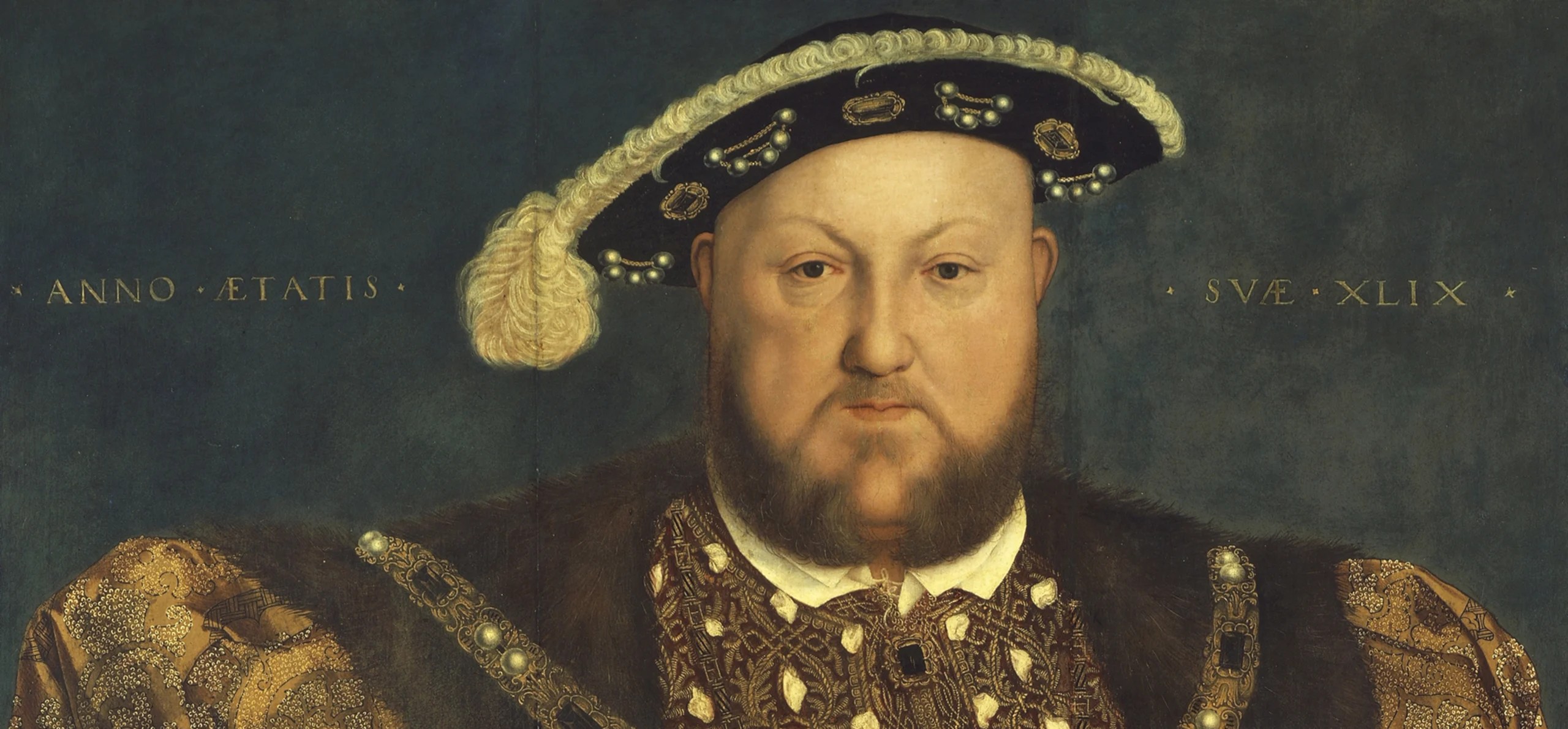
Turns out it’s no wonder Henry VIII weighed almost 400 pounds at the time of his death.
Sadly, on the tour to his final resting place at Windsor Castle, while Henry lay in repose in a church, his coffin exploded. Pent-up Royal Gas.
Gastly.
He’s Henry VIII he is; Henry VIII he is he is.
Anyway, if you get a chance, Worsley appears pretty regularly on PBS. She’s now the Chief Curator of Historic Royal Palaces.
Not a bad job, that.
She did a show that ran Sunday on three palaces:
1. The Tower of London. The oldest part, the White Tower, was intended to impress the local Saxons, whom the Normans considered imbeciles. To their horror, they’d built the privies in full view of London so that the beautiful stonework soon became, er, corrupted. Ah, who were the imbeciles NOW? So moved all the Royal Eliminatories to the back.
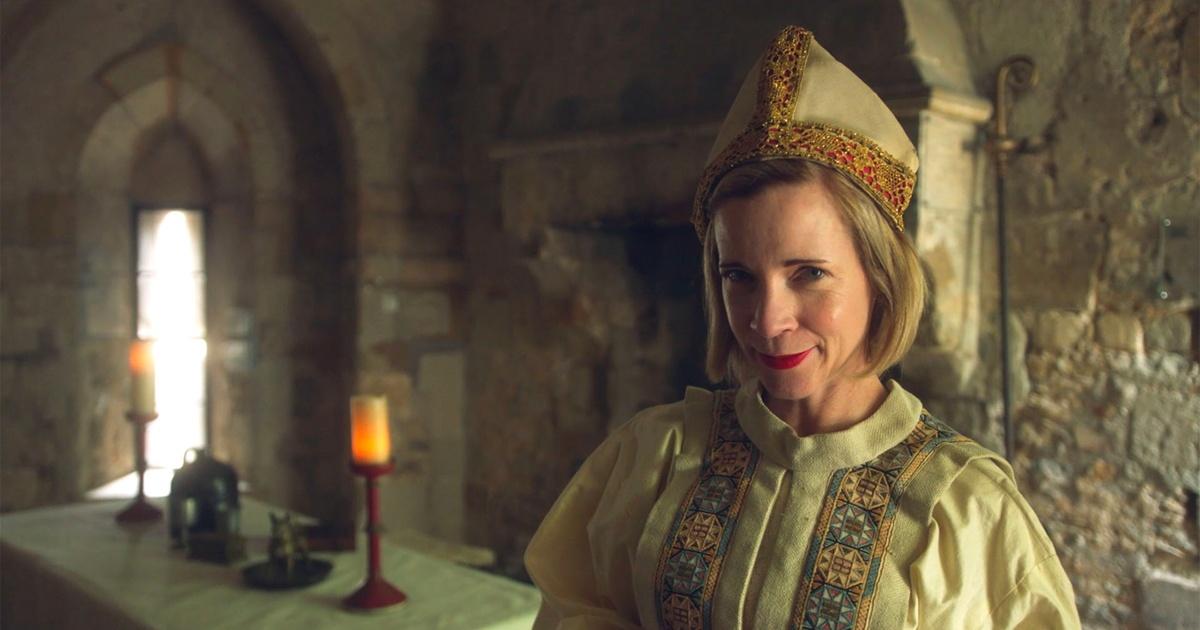
Worsley then played the first prisoner to escape from the tower–it became a prison, of course, as well as a palace– an obnoxious Norman bishop. She went clattering away down the cobblestones clutching her crozier. Oh, she also helped the Yeoman Warder, a Beefeater, feed the ravens, who are Mouseaters.
Worsley as the naughty bishop.
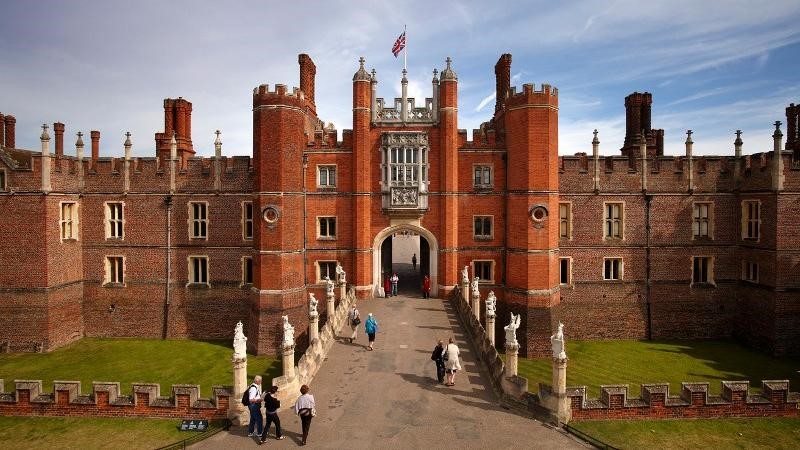
2. Hampton Court, once Cardinal Wolsey’s palace, was appropriated by Henry VIII once the Cardinal fell out of favor (couldn’t get the king his divorce.)
Wolsey took her show up to a nondescript room on an upper floor–desks and computers, used for training. But that was the bedroom of, in succession, Catherine of Aragon, Anne Boleyn and Henry’s favorite, Jane Seymour, who died in the room soon after giving birth to Edward, the king’s long-awaited and ultimately worthless royal heir.
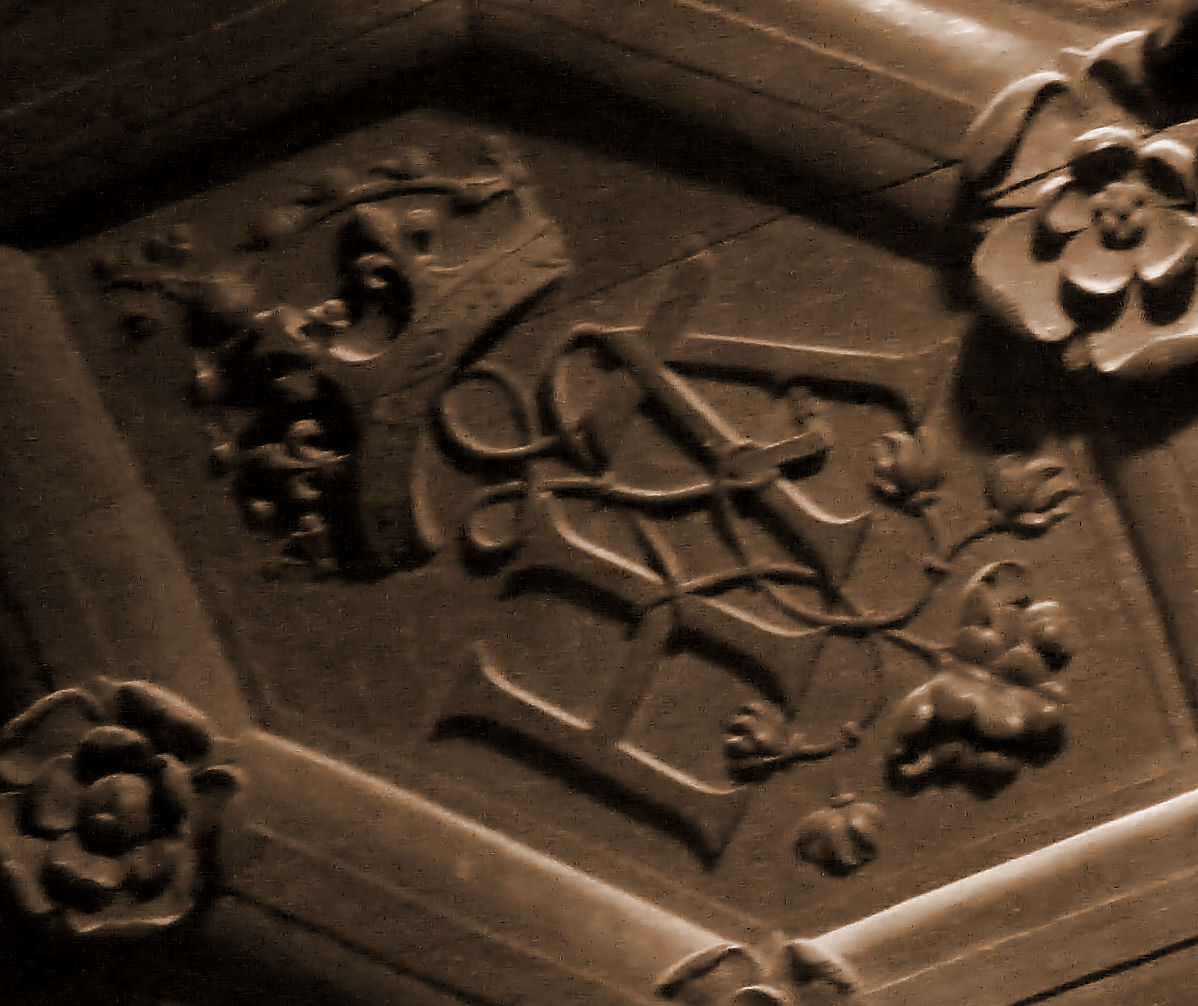
But Henry was once smitten (besmitten? besmot?) by Anne, so the royal dining hall was framed by gilt and woodwork with the interlocking initials “H” and “A.” But Henry married Jane only 11 days after Anne’s head and her body went in separate directions, so workmen were in a hurry. Worsley spotted a corner where they’d missed, in the woodwork, one set of interlocked initials.
Interlocked “H” and “A,” Hampton Court. Anne, depending on which way she was facing, she would’ve resembled a lower-case “b” or “d” when she married Henry. She was thoroughly pregnant with Elizabeth.
This palace was added onto, on the cheap, by the Stuarts, so it has a Tudor front, seen in the photograph, and a Palladian add-on (Queen Anne, played by the Oscar-winning Olivia Colman in “The Favourite,” would’ve lived here. With her rabbits.) It includes sharp spiky rails in some of the corners, to discourage the courtiers from relieving themselves thereupon.
Royal palaces–even Versailles–were notoriously smelly.
Hampton Court. The chimneys indicated the number of kitchens required to keep Henry VIII properly fed.
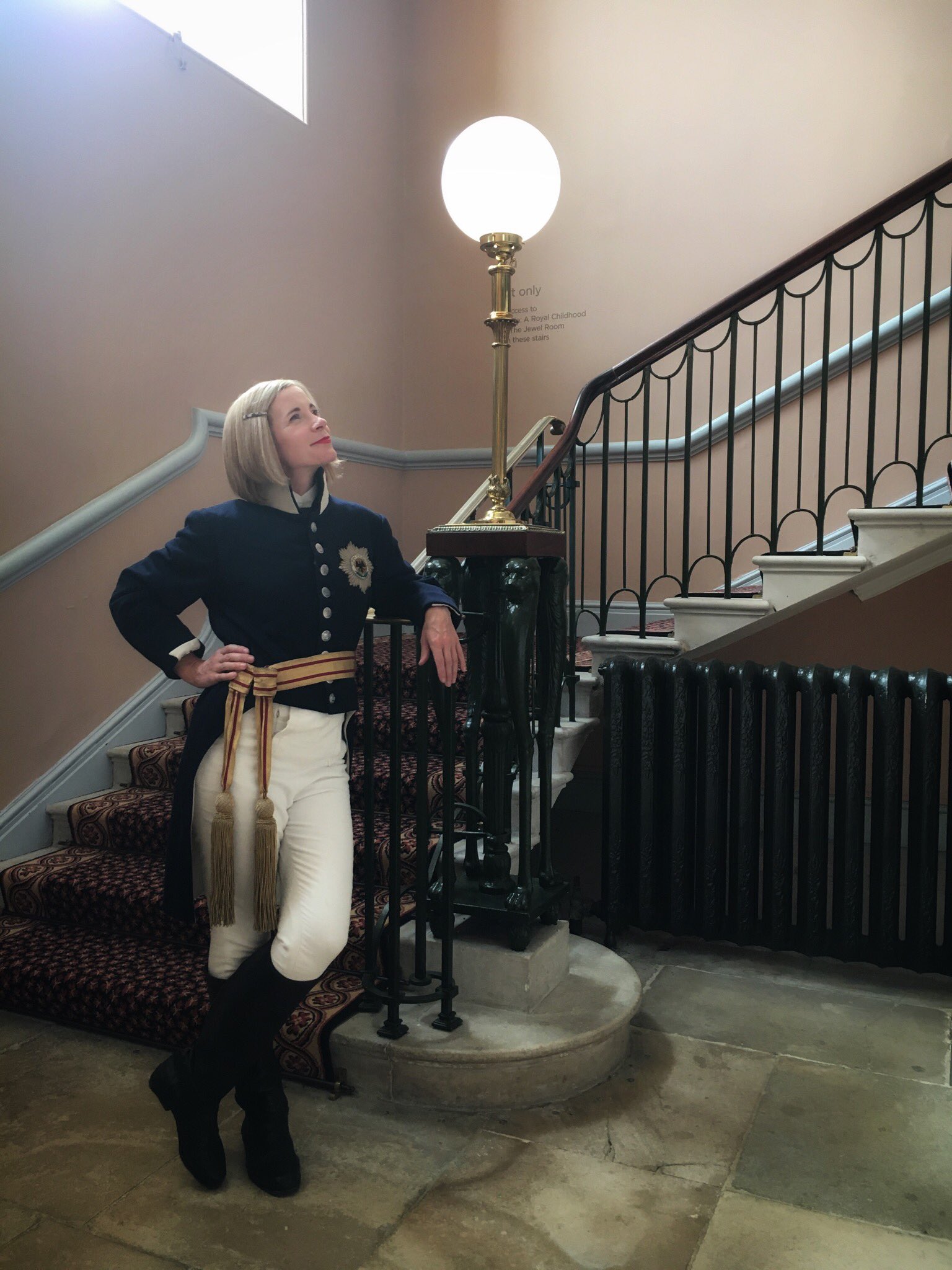
3. Kensington Palace was where Princess Victoria lived. Worsley–playing both roles, stood atop the staircase landing where Victoria first set eyes on Albert, at the bottom of the stairs. She was besmot and wrote at length in her diary about his eyes, his nose, his mouth and his limbs (“legs” was a dirty word in those days).
Albert thought she was okay.
That’s Worsley, as Albert, trying to look casual, at the bottom of the staircase.
But once the two were married, they were a lusty pair. They must’ve worn out a host of royal bedsprings. Victoria adored Albert and adored sex. The end result–children–she was less than enthusiastic about. Especially her eldest son. Poor Bertie.
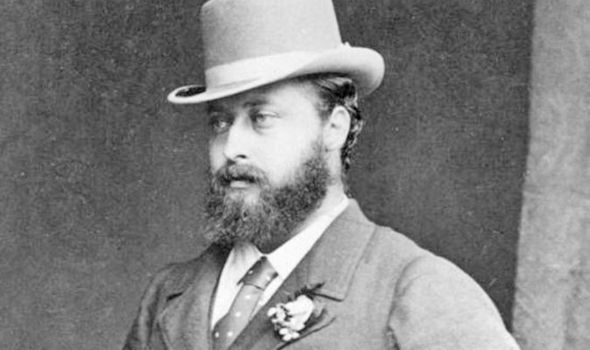
(Bertie, too, adored sex, especially with married women to whom he was not married. And he adored food. I guess he was a bit of a Henry VIII throwback. To this day, the custom of men leaving the bottom button on their sports coats or suit-coats unbuttoned was one that began with Bertie–Edward VII–who needed a little more room for the royal tummy.)
Flirty Bertie, who could never please his Mum
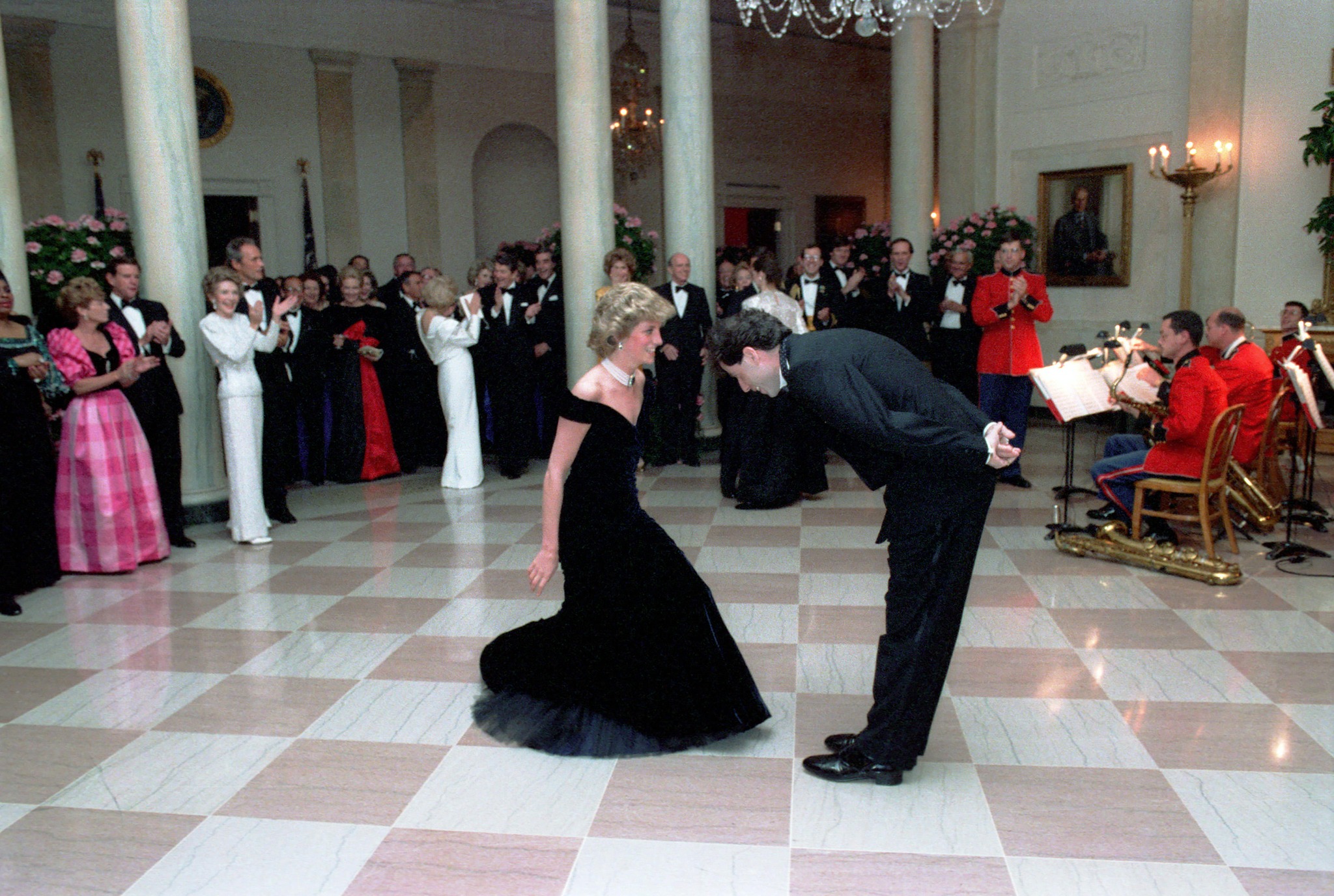
Kensington also features a big collection of court dress going back 300 years, and among them–what a prize!–is the dress Princess Diana wore when she danced with John Travolta at the White House. It’s a deep, deep blue and it’s stunning; all it lacks is, of course, Diana.