• About
  • The Germans

A Work in Progress

A Work in Progress

Category Archives: trump

“We are all Americans and we all belong to each other.”

17 Wednesday Nov 2021

Posted by ag1970 in American History, trump, Uncategorized

≈ Leave a comment

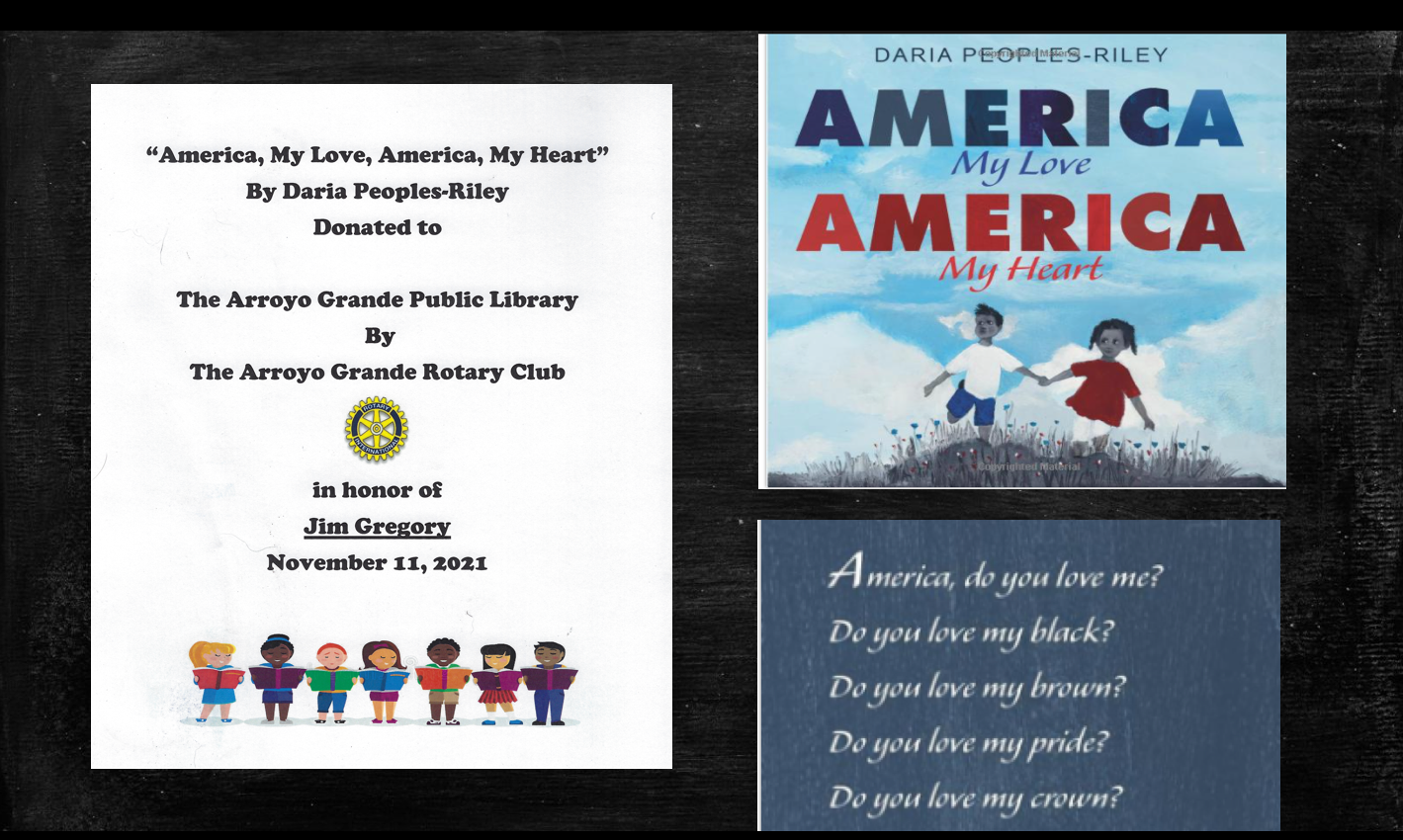
Okay, this was a big deal. The Rotary Club of Arroyo Grande, in gifting our library with this book,  has divined my subversive message in teaching U.S. History for almost thirty years: We are all Americans and we all belong to each other. I spoke to the Rotary Club about Arroyo Grande’s Civil War veterans. What else could they have fought for except for the idea that we are all Americans?

No one taught me this concept better than Mr. Ryan Huss, my colleague at AGHS. He came up with one of the junior U.S. History assessments for Arroyo Grande High School, a 1920s newspaper the students created.

Here’s just one example of what that assessment taught them.


When White 17-year-olds from Arroyo Grande, California, learned about the life of Louis Armstrong, a Black prostitute’s son from New Orleans, Louisiana, nearly every single newspaper at unit’s end had an article about Louis Armstrong.


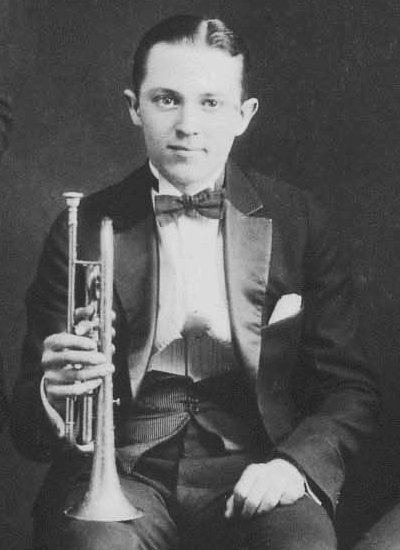
They caught what a masterful trumpet player Bix Beiderbecke, the son of German immigrants—“Bix” is short for “Bismarck,” the Iron Chancellor— to Davenport, Iowa, caught one night when a Mississippi riverboat approached out of the fog on the great river’s surface. There was a jazz band aboard, and Beiderbecke heard the sweet—and saucy—notes of Armstrong’s cornet floating above the steamer’s superstructure. He was enchanted.

Bix Beiderbecke

His story, from Ken Burns’s  Jazz, and the archival footage of Armstrong talking so gently to his audience between numbers likewise enchanted my students. Armstrong made them proud to be Americans, too.

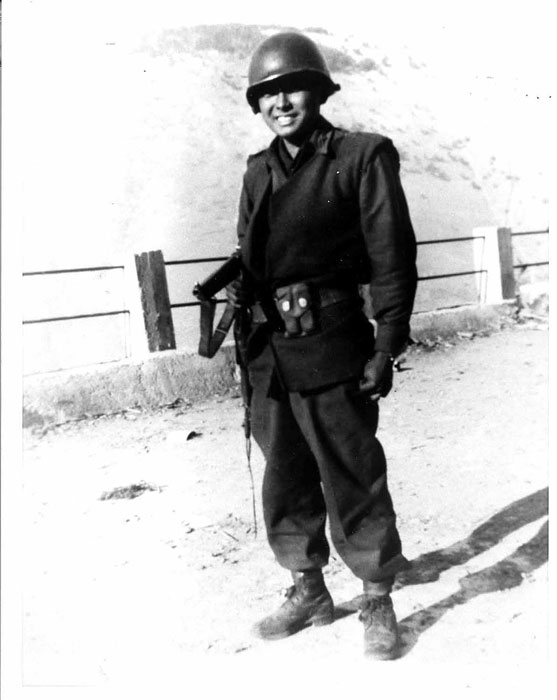
Dan Inouye, Medal of Honor recipient, 442nd Regimental Combat Team

This is what I taught and what my teenagers learned. 

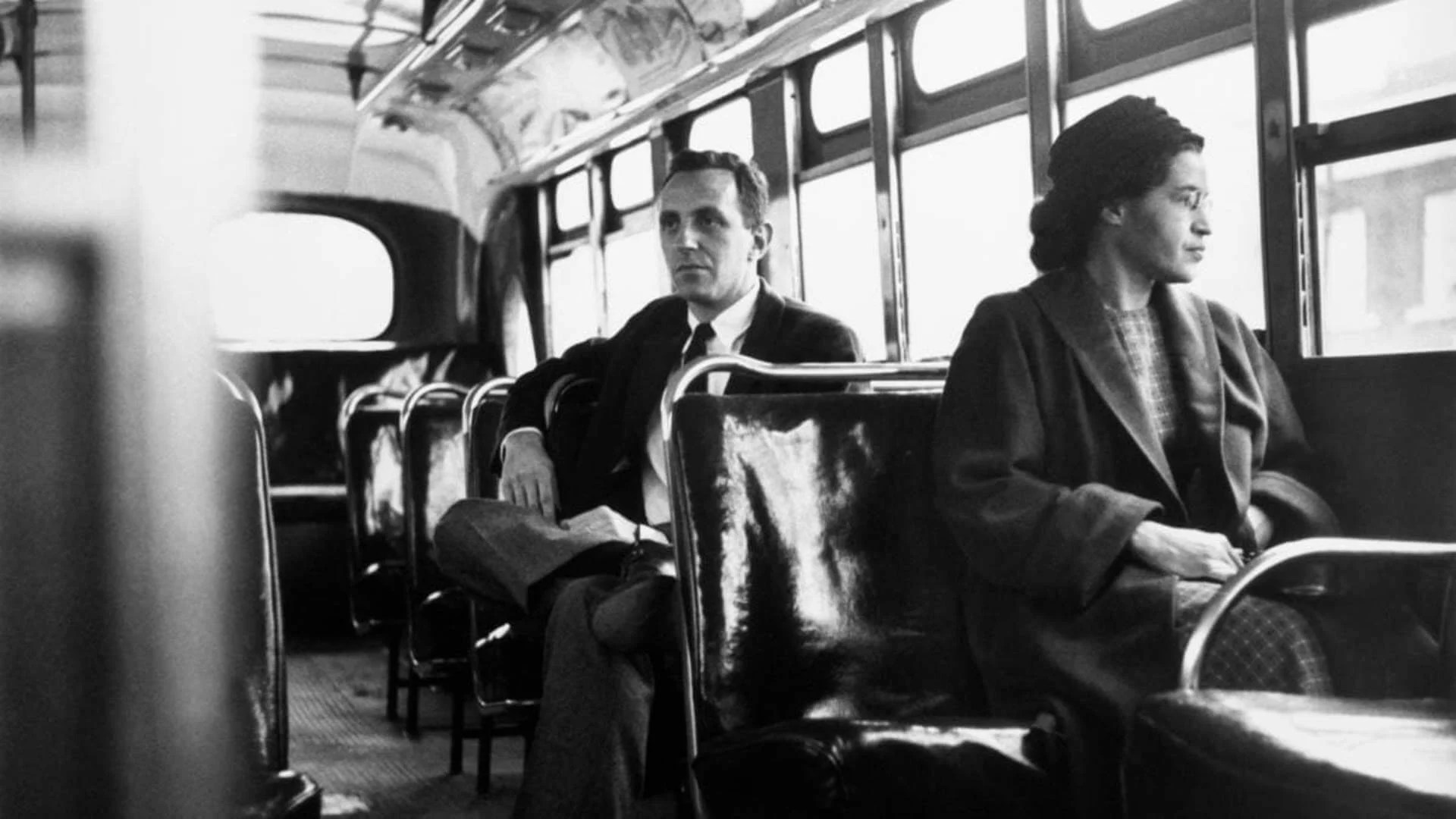
When students learn that the hymn “Steal Away to Jesus” was the signal for carrying out a group escape from a slave plantation, when they learn about Crazy Horse’s generosity, after a big hunt, to Lakota widows and orphans; when they learn that one of the greatest frontier lawmen was a Mexican-American named Elfego Baca, or, in San Luis Obispo County, a sheriff named Francisco Castro; when they learn about the 54th Massachusetts driving up the beach toward Fort Wagner or the 442nd Regimental Combat Team advancing fearlessly under shellfire through the Vosges Forest in France; when they learn about Rosa Parks quietly refusing to give up her seat, they don’t feel ashamed to be Americans.

Rosa Parks

The word, again, is proud.

They don’t feel ashamed because all of the people who perpetrated all of the cruelty that marks much of our history pass their knowing only briefly; these people are dead. But Louis Armstrong is alive to our children. He touches them.

There is nothing to be afraid of in teaching all of our past to all of our kids. It’s actually very hard to indoctrinate schoolchildren. What comes easy to children is recognizing needless cruelty—would you have us teach them to admire cruelty?– and, even more, kindred hearts. If we teach them to listen, then quiet ourselves, they’ll hear the cornet notes, sweet and saucy, clear and sharp, high and weightless above the river’s current.


American Heritage: For Tommy Gong

07 Monday Jun 2021

Posted by ag1970 in trump, Uncategorized

≈ 2 Comments

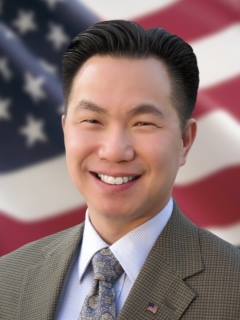
SLO County Clerk-Recorder Tommy Gong

KSBY reporter Erin Fe roped me into an interview in the parking lot beside the Ah Louis Store today. The subject was Asian-American and Pacific Islander history in our county—Chinese, Japanese, Filipino. I put on the little mic thingy, she started the camera, and forty minutes later, I finally shut up.

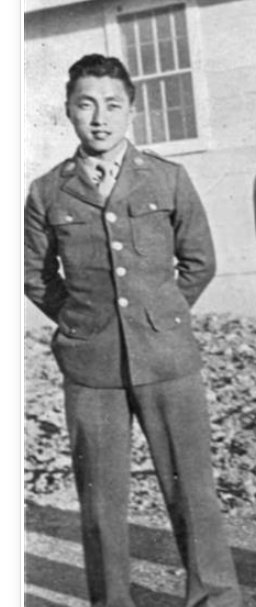
I was stunned—not by me, but by the richness of the heritage I was passing on and by once again realizing the enormity of the hatred our neighbors had to overcome. Some, like Arroyo Grande 442nd Regimental Combat Team GI Sadami Fujita or the GIs of the First Filipino Infantry Regiment, formed at Camp San Luis Obispo, had to overcome the bigotry visited on them by sacrificing their lives.

It made me very happy to tell the stories. But at the end, I was overcome by melancholy. SLO County Clerk-Recorder Tommy Gong’s departure made me realize that realize that Santayana was right: Those who do not remember the past are condemned to repeat it.

And those who nurture their ignorance about the past have immense power over the rest of us; they seem to prove Hitler’s dictum that “reason can deceive a man.”

All I can offer is stories. Among my favorites are those of Asian-Pacific Islander immigrants to our county and since the World War II years are among my passions, here are three that came to mind almost instantly.

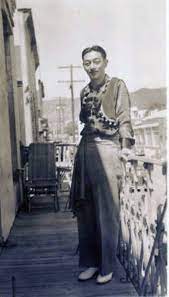
Howard Louis

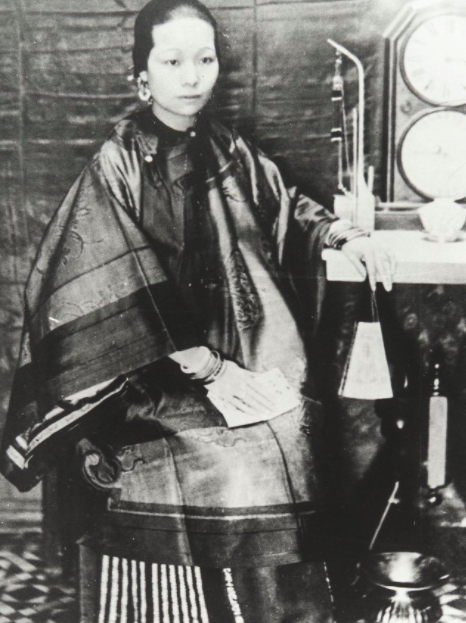
Gon Ying. Howard was a baby asleep in her arms when she was tragically shot to death in 1909 in the family apartments above the store.

Howard Louis, San Luis Obispo, US Army–seen in the top photo in a prewar La Fiesta Costume on the balcony of the family’s store—served in George Patton’s Third Army, World War II. He was the last of eight children from a remarkable family—musicians, athletes, an army officer–who wryly admitted that he, being the baby and the last served, wasn’t aware until he was twenty that were parts to the chicken other than the neck. As an older man, he loved to tell stories about Chinatown to schoolchildren: His father owned a brickyard from which the 1885 store—and many other downtown buildings—were built, farmed in the Laguna Lake area, along Biddle Ranch Road, partnered with Louis Routzahn in cultivating seed flowers in the Arroyo Grande Valley, organized the construction crews that built the PCRR and roads throughout the county and served as the workmen’s unofficial father-figure and Chinatown mayor and, in what may have been his greatest accomplishment, married a young woman, En Gon Ying, in 1889 San Francisco. She was as beautiful as the translation of her name: “Silver Dove.” They must have been marvelous parents.

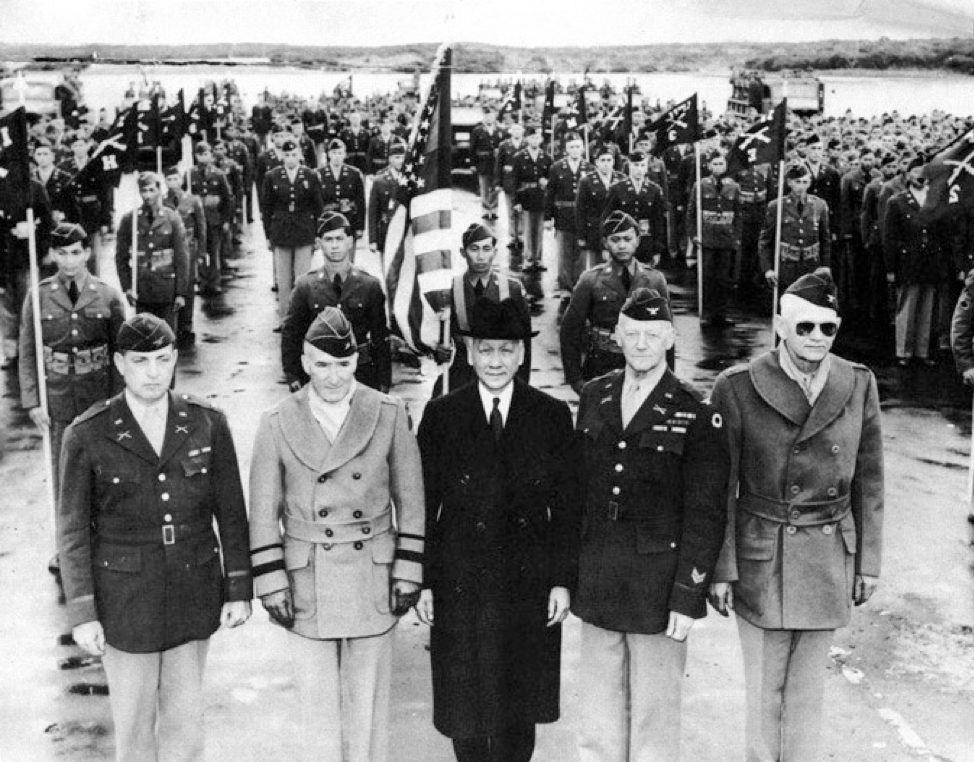
Lt. Col. Offley, second from left, front row. His GI’s called him “Tatay”–Tagalog for “Papa.”

Lt. Col. Robert Offley, commander of the First Filipino Infantry, formed at Camp San Luis Obispo. When his soldiers were denied service in a Marysville Chinese restaurant, he burst into City Hall and threatened to put Marysville under martial law. “My soldiers,” he thundered, “are American soldiers, and you will treat them as such.” So his GIs finally got to eat rice, a scarcity in the World War II creamed-chipped-beef-on-toast Army. When his soldiers fell in love and wanted to marry—Filipinas were denied immigration, and California’s miscegenation laws forbade marriage to Caucasian women—Offley formed a shuttle-bus caravan to New Mexico, where they could get married, called “The Honeymoon Express.” Not surprisingly, Offley’s GIs proved to be superb combat soldiers.

Sadami Fujita, an Arroyo Grande GI in the 442nd Regimental Combat team, was killed in action in the Vosges Mountains of France and was awarded a Bronze Star and Purple Heart. The 4-4-2 was on a mission to free 230 terrified nineteen-year-old Texas draftees—World War II’s “Lost Battalion”—surrounded by the Germans. The Nisei GI’s were successful, but it took six days of combat to break the German lines. It cost them 1,000 casualties. Fujita, who volunteered to bring up more ammunition under relentless fire–the Germans fired .88 shells into the treetops and flying splinters claimed many of his comrades—was killed in the attempt.

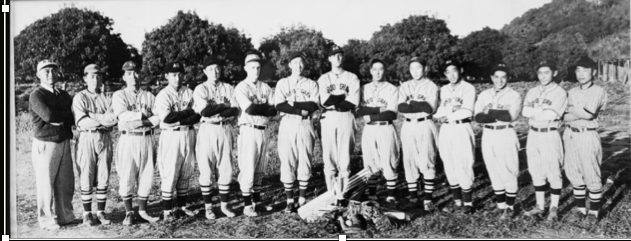
The Arroyo Grande Growers, a powerhouse Japanese-American baseball team in prewar Arroyo Grande. Kaz Ikeda is fourth from left; his father, Juzo, who died at Gila River, is on the far left. Former Stanford pitcher and team manager Vard Loomis is at center.

And one more, since I knew the man personally: Cal Poly catcher Kaz Ikeda was interned at Gila River, where the temperatures were at or above 109 degrees for twenty of the first thirty days that our neighbors were there. Kaz did not suffer this insult lightly, nor did he let it embitter him. He came home from the camps to resume farming and to found Arroyo Grande’s Little League, Babe Ruth and Youth Basketball.

I’m still angry because the British shot 38 Irish rebels outside the County Wicklow church where my third great-grandfather was baptized.

Kaz came home from Gila River and eighteen years later, he cured me of the uppercut in my baseball swing.

At Kaz’s funeral, the closing hymn at graveside was “Take Me Out to the Ballgame.”

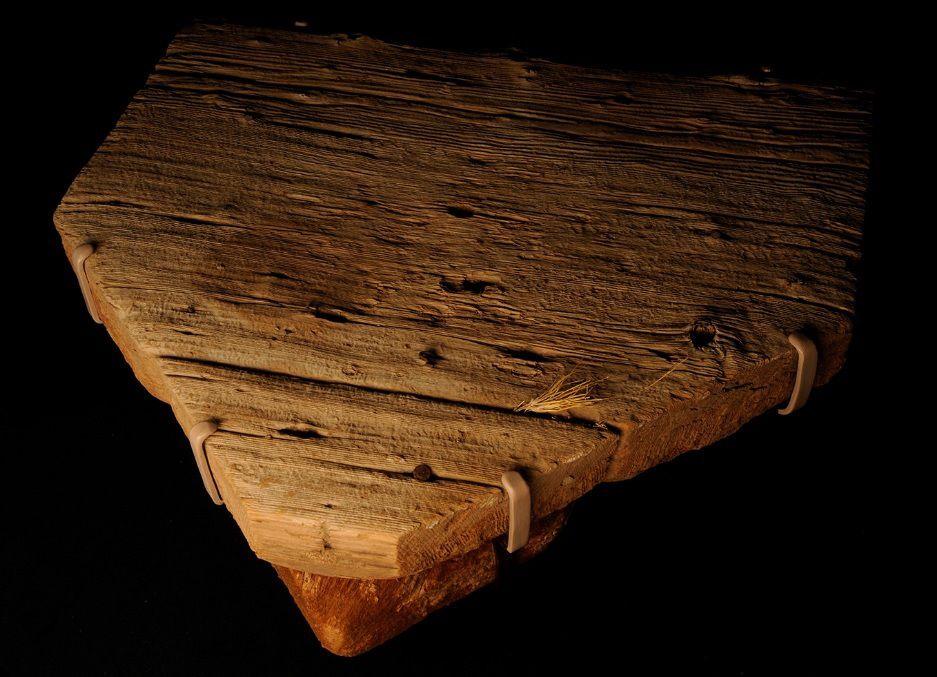
This is the home plate behind which Kaz caught at the camp. It’s now on loan to the Baseball Hall of Fame.

To the American who accused Tommy Gong of being a Chinese Communist: Go to Cooperstown and study this artifact in perfect silence. You might learn, in the quiet, what it means to be a real American.

Lessons on Leadership from the Dead

Featured

Posted by ag1970 in trump, Uncategorized

≈ Leave a comment

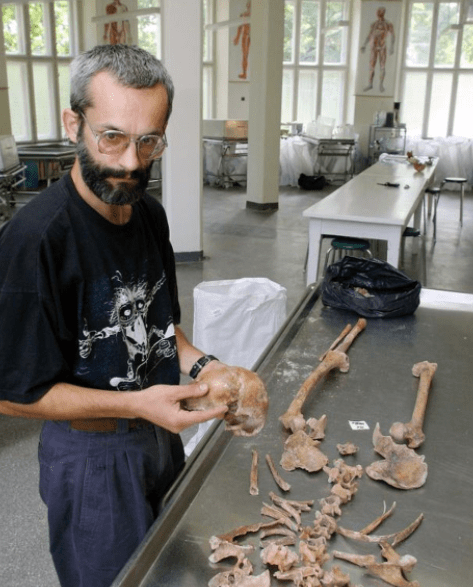
In the early 2000s in Vilnius, in Lithuania, when construction workers began unearthing skeletons, they called in the anthropologists. The work these scientists do is familiar in this part of the world. Thanks to Stalin’s NKVD and Hitler’s einsatzgruppen, mass graves that would be a horror anywhere else are common in Eastern Europe.

The only place remotely familiar is Spain, where everyone knows about the mass graves, legacies of the Civil War, but no one speaks about them.

In Vilnius, the skeletons were even older than the ones left behind by Stalin and Hitler and Franco. These were Napoleon’s soldiers.

The Vilnius burials

Nearly four thousand individuals were isolated, only part of the estimated 20,000 soldiers who died here. The numbers are staggering: Napoleon had taken a multinational army of 675,000 men into Russia in 1812. Near the end of his retreat, at Russia’s western frontier, only 40,000 remained. Half of them staggered into Vilnius.


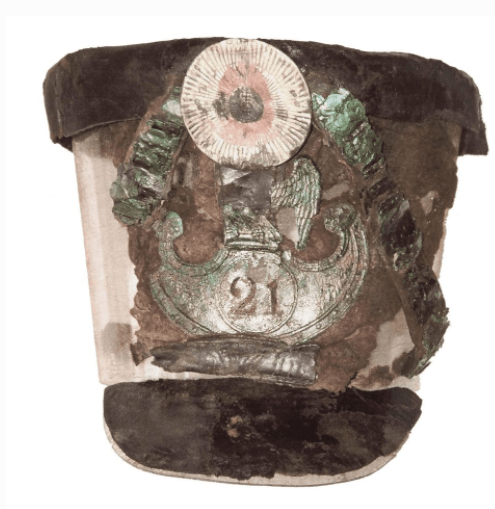
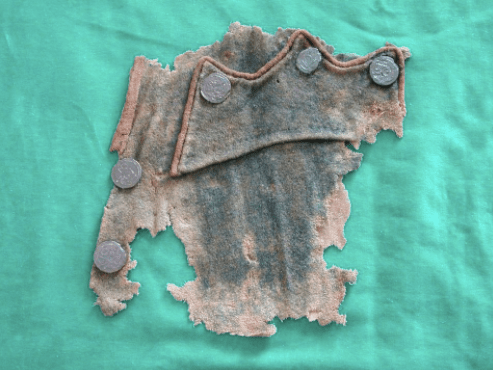
Some of the finds were fascinating. Many individuals had a notch in the front teeth of their lower jaws. This is where the stems of their clay pipes had fit. Bits of uniform cloth and infantry helmets, like this one, allowed archaeologists to match some soldiers with their units in what Napoleon called the Grand Armee.


Chemical analysis of the Vilnius bones hinted, from fragmentary nutritional evidence, at those soldiers who were more likely French and ate a diet based on wheat and those where millet was detected. These were the Italians.

By the end of the retreat, none of the Vilnius survivors was eating much at all. They’d slaughtered the horses that had drawn their baggage and then they’d begged the bewildered townsmen bare. Some starving soldiers broke into a medical office to steal the doctor’s anatomical specimens, suspended in formaldehyde.

Uniform fragments like this one revealed the final killer: The scat left behind that was evidence of typhus, the same opportunistic disease that would kill so many in Ireland’s famine thirty-five years later.


Some of the skeletons would’ve belonged to the military doctors who remained behind in Vilnius. Napoleon didn’t. He abandoned his dying army—just as he had in Egypt fourteen years before—and, wrapped in furs, safe inside a fast sled, he raced in relays of horses, killed in their harnesses, to get back to Paris, where he could minimize the news of this epic disaster, reshape it in the imperial press.

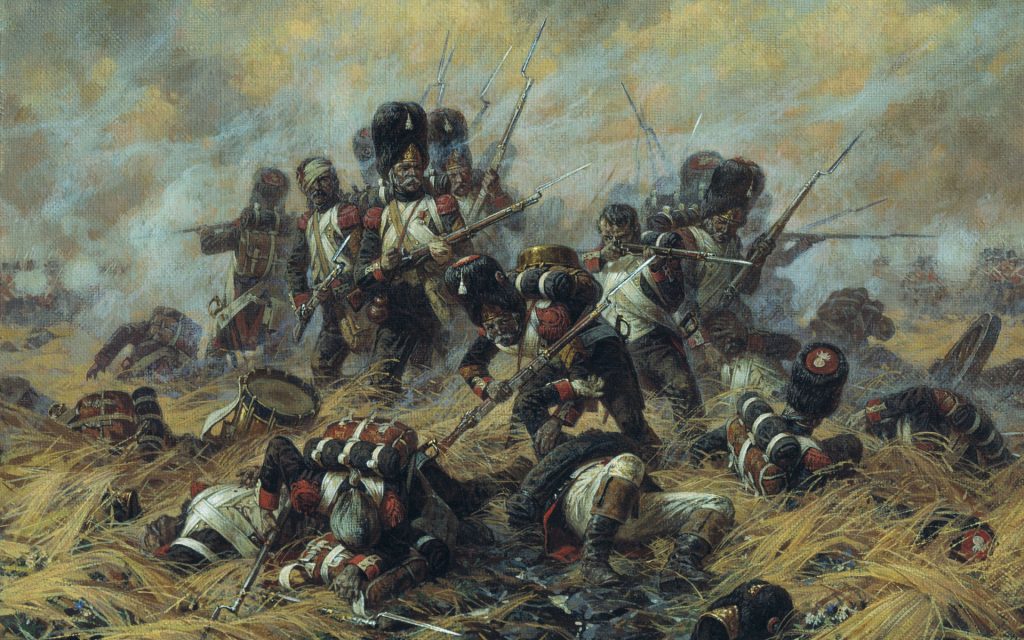
In this, he was spectacularly successful. He would make a comeback and lead let another army to spectacular failure at Waterloo two years later. This army included the troops esteemed more than any others, the Old Guard, his personal bodyguard. Many of them, tall men made taller by their bearskin helmets, were grey-mustached veterans who had been with him since the beginning. By the end, they were ironically the safest soldiers in his army. They were so venerated that they would always make up the emperor’s strategic reserve, to be used only as a last resort.

At Waterloo, that last resort came when the Guard was called on to cover the flight of the Emperor as his carriage sped, again at a horse-killing pace, toward Paris. The Old Guard would die, abandoned on the field in the moment that their emperor realized that the weight of late-arriving Prussian troops was more than his empire could bear. He realized, too, in the same moment and with perfect clarity, that his life was far more valuable than the lives of the veteran warriors who loved him the most.

The Old Guard at Waterloo


This week the president announced that “we are all warriors.” Here are warriors in New York City in a grave different only from the grave in Vilnius for the decency of its caskets and the symmetry of its trench.


But this grave, like the Vilnius grave, demonstrates some of the similarities between the emperor and the president. Like Napoleon, Trump has demonstrated a perverse genius for altering reality.

The president and his people are preparing to magically reduce the casualties of the last two months. They will claim that hospitals, eager for the Medicare money that comes with treating coronavirus patients, are inflating the numbers of admissions and, of course, the numbers of dead—the ones who lie unburied in a fleet of refrigerated trucks in Brooklyn, the trucks organized in neat rows where, in the distance, you can see the Statue of Liberty.

The president has blamed one of his more vivid leadership failures on hospitals, too. He obliquely and darkly implied that the lack of personal protective equipment was traceable to doctors, nurses and respiratory therapists who were selling the gear on some kind of coronavirus black market.

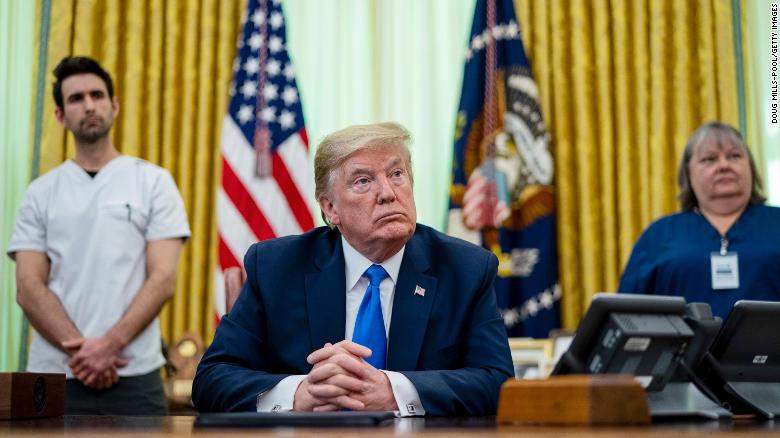
Yesterday, in the Oval Office, he quickly and sharply contradicted a nurse he was supposed to honoring when she revealed that the supplies of PPE were still sporadic and unreliable.

Nurses head to the White House to protest lack of protective ...
Trump prepares to humiliate an honored nurse.


“That’s not what I hear,” he said, without revealing, as he never does, where he’d heard it. “Many people tell me” is the closest we get to attribution from a president who constantly excoriates the background sources from the reportage of the New York Times or the Washington Post.

He was far more obvious in his repeated references to “The China Virus,” the one he claimed to have quashed at American ports of entry. But the tragic numbers in New York City came from Europe, from Heathrow and Orly and da Vinci-Fiumicino, as passengers made their transit through JFK and Newark.

When he did respond to the East Coast threat, he did so with his customary incompetence, announcing “enhanced screenings” that left hundreds funneled into Customs hallways where they had far less freedom to move than the virus did.

But these were warriors, weren’t they?

Coronavirus: US airports in disarray over screening - BBC News
JFK International, March 2020


Trump’s ignorance of history remains his greatest and most enduring personal virtue. He knows nothing about Napoleon and Russia and does not care. He refers repeatedly to “the 1917” flu. You could see his restlessness on a visit to Gettysburg, early on in what he called, early on, his “reign.” (Someone in the West Wing got him stop using this term, one he used for previous presidents, as well.) Later he passed on a visit to Belleau Wood because it was raining. He did speak, to his credit, at Normandy on the same trip, but it was transparently empty because he spoke in the same uncomprehending monotone that he reserves especially for the dead. The words written for him meant nothing to him. He was, as someone so aptly pointed out, like a sixth-grader delivering a book report about a book he hadn’t read.

And he did speak, to be fair, in the rain. In a July 4 speech, he praised the Continental Army for seizing airports from the British during the American Revolution.

And so the ignorance he so carefully cultivates—the coronavirus deaths are fake news, after all—will shield him until, God willing, he leaves office. The man who has called himself “a wartime president” will be whisked away from the battlefield.

He’ll be flown home to Mar-a-Lago where he will finally be alone with the thing he loves the most: A New York steak, very well-done, with a a side of fries and plenty of ketchup. And then there will be a thick slice of chocolate cake with two scoops of ice cream.

All he will have left behind are trenches filled with warriors. But the country will be opened again. We will have that much. And, in truth, when the trenches are covered over, the scars they leave behind will grow over and so fade away.

When the Vilnius warriors were finally unearthed, the scars there reopened. You can see it in the scowling face of the Lithuanian anthropologist. You can see it in the compassionate face of the young woman field technician as she reveals a young man who’d died nearly two centuries before she was born. What you see in both images, in both expressions, are human beings registering their humanity.

A little humanity is not too much to ask for. Unless you ask for it from the misshapen man who claims to leads us.

Twelve-thirty

04 Saturday Apr 2020

Posted by ag1970 in trump, Uncategorized

≈ Leave a comment


I thought this YouTube video was stunning, and not just for Margot Robbie, who is exactly that.

What struck me even more was how much I loved the song, how much I loved The Mamas and The Papas. My first records weren’t LPs, but 45s, and I played “Monday Monday” and “California Dreamin'” on the same little record player on which I’d once played “Little Toot” and “Tubby the Tuba” as a very little boy.

I was enchanted with harmony—and, of course, I had a huge crush on Michelle Phillips—but beyond that, the Beach Boys, the Beatles, the Byrds and Crosby Stills and Nash always drew me because of the sublime harmonies. They carried me away to places I’d never known but had always wanted to visit, which explains why I played those old 45s until you could practically see through them.

What saddens me is the subtext of this song–the Laurel Canyon of Joni Mitchell, David Crosby, Judy Collins, Neil Young, and, a little later, the Eagles and Linda Ronstadt and Jackson Browne–was so debased by the Tate-LaBianca murders.

I remember reading the first thirty pages of Vincent Bugliosis’s Helter-Skelter and not sleeping for two nights after.

It’s not that my generation deserved Charles Manson–he’s an aberration, not a logical product of historical forces—but I thoroughly get Quentin Tarantino’s thesis: If we had it to do over again, wouldn’t we have relished the chance to destroy Manson, to be heroes?

If we had the chance to do that part of history over again, I think we would embrace it.

But, since history is impassive and indiscriminate in the way it inflicts cruelty, the road my generation took led to a different kind of monster. We voted for him in droves.


And so we’ve empowered leaders, like this one and many more, who laugh at us even as they systematically destroy all the stubborn and self-assured idealism that so maddened our parents.

And then, to make matters worse, we—my generation— refuse to get out of the way. I’m cynical enough to think, if only in halves, that the Coronavirus is Darwinian and so salutary in its selection of victims.

It doesn’t end there. I find myself wishing aloud—embracing the kind of sinfulness that my Irish Catholic background would require consignment to hell, postage paid—that the virus would embrace a president who is much more promiscuous–even moreso than the Manson Family was—in the destruction of his victims.

He kills stupidly and without regret. If he lacks Manson’s premeditation—and only because he lacks the imagination to think beyond the moment he inhabits— he stays behind the way Charlie did to let others, or other forces, do the killing for him.

This is because is a coward.

So he kills indirectly, but, unlike Charlie, he kills the powerless. They will never have movies made about them.

I am not sure how we go to the point where we are today and, of course, the Manson murders weren’t some profound historic tipping point.

Maybe what’s more historically authentic– and so much more painful to confront–is the possibility that all those gifts under Boomer Christmas trees spoiled us and there’s nothing we fear quite so much as having our presents taken away from us. And so we seek the terrible protection of someone who seems a caricature of every Disney villain we hated when we still had the wisdom of children.

When we met the Disney villains we emerged, blinking in the sunlight coming out of the movie theater, sure in the comfort that we would never be like them—or, even more, that we would never be so foolish and weak as to taste the sweet apples that they offered us. They were poisoned, after all.

No. We would be instead like Cinderella—our strength and our beauty and our nobility would defeat any number of wicked stepsisters. Or we would be like Zorro, manly and generous, righting injustices and humiliating the unjust, all the time hidden in the anonymity and the humility of our disguise.

We were, in fact, graced by our intolerance for injustice. We took that to the streets, and we should, I think, be proud of that. But the humiliation didn’t fall on the unjust, did it?

It’s fallen on us instead. So it might be time for us to get out of the way—imagine the absurdity of two septuagenarians running for president when our president was the youngest elected in American history—when, a little later, we said we would never trust anyone over thirty.

But we said that in the comfort of youth, when the young girls coming into the Canyon were strong and beautiful and noble, and when I, if I remember it right, was not quite old enough to have left my belief in heroism behind.

What’s damnable is that I’m still not old enough, not even at sixty-eight.

I taught young people, and I learned, to my delight, that the heroism I once cherished still lives in them. I learned to recognize it in my classrooms over thirty years of teaching, and in those moments when I saw it, their heroism was incandescent and unforgettable.

Maybe it’s the meaning of my generation’s music that’s now forgettable. It’s now so distant and long-ago, even if the harmonies, no matter how faint, are still unmistakeable to me.

But

The music reminds me there’s still a chance to take the road that will make all the difference. If we can find it, we might walk, with our young people–I am just beginning to enter the fragility of age, so that I would need them to hold my hand over the rough spots and mind for me the loose shale on the steeper downslopes—until we would find together a narrow hardpan road that leads into a sunlit California canyon.

This is the road, we would understand, all of us, instantly and without words, when would turn to each other and let smiles suffice, that belongs to us.

The road ends where a window opens, and then, for the first time, we will see a little yard flush with wildflowers–lupine and blood-orange poppies and shooting stars–and smelling of sage and just-turned soil. Through the window we will see the warm light of a welcome house and smell the sweetness of fresh-baked bread and, most of all, we will hear again the music we loved so much.

And then we will be home, in a place where’s there is room for everything except for fear.

View Post

Joni Mitchell in Laurel Canyon.

President, Spider.

27 Tuesday Aug 2019

Posted by ag1970 in trump, Uncategorized

≈ 1 Comment


Screen Shot 2019-08-26 at 6.28.42 PM


Our president*.

I’ve never heard such gobbledygook as the answer he gave on the last question at today’s presser—it was the last question because he didn’t want to answer it and abruptly walked off as soon as he hadn’t—on global climate change.

He talked about American energy production instead–about fossil energy–and he talked about his dedication to the wealth it generates (wealth that will never reach the 98% of Americans who will pay for it instead) and then he had the audacity to call himself an “environmentalist.”

Gobsmacked as they must have been, the reporters’ gaggle couldn’t break the White House press corps honor code: Honor requires that they treat him with the respect due a leader.

And then you realize, as the passengers did on Flight 97, that this leader’s seized the flight controls and is determined to take all of you down with him. So you wake from your shock, find your courage, and rush the cockpit.

It’s too late.

The president is–even beyond Laurence Harvey’s Manchurian Candidate or Bill Haydon’s MI6 mole in the John LeCarre novels–the perfect traitor. He has no conscience. He has no principles. He has no empathy. He has no loyalty, except to himself and to his spymaster–LeCarre called Haydon’s “Karla.”

So if it means making profit for himself, he will take all of us down with him. We will die betrayed. He will die a rich man—for once. He will die. What he leaves behind means nothing to him.

Even knowing the wreckage he’ll leave, I pray daily for a massive stroke that will drop him in the early morning before his hair is gathered into its ludicrous combover—when he still looks like Gollum—when he’s on the toilet with his tiny thumbs in mid-Twitter.

I would never do harm to another human, but I’ve never, in my life, prayed for another human to die. This is a first.

There have been so many deaths—so many lives—that have made  a better difference.

I’ve seen the grave of a young Marine from Arroyo Grande who died on Iwo Jima three days before he turned twenty-one.

I’ve seen the grave of a local farmworker, killed in Normandy, at the American Cemetery at Colleville-sur-Mer, above Omaha Beach.

I’ve seen the grave of a schoolteacher who gave over forty years of her life to local children and loved them in every moment of the giving.

I’ve seen the grave of an immigrant, a World War II internee, who grandmothered a dozen children–Sansei, third generation Japanese-Americans—who were among my best friends in high school She taught them to live lives without bitterness.

These are my heroes. Naive as it may be, Frank Capra’s James Stewart, in Mr. Smith Goes to Washington, is my hero. Barbara Jordan of the House Judiciary Committee in 1974 is my hero. Jane Goodall, who taught me, from my first reading years, so much about the value of all life, is my hero.

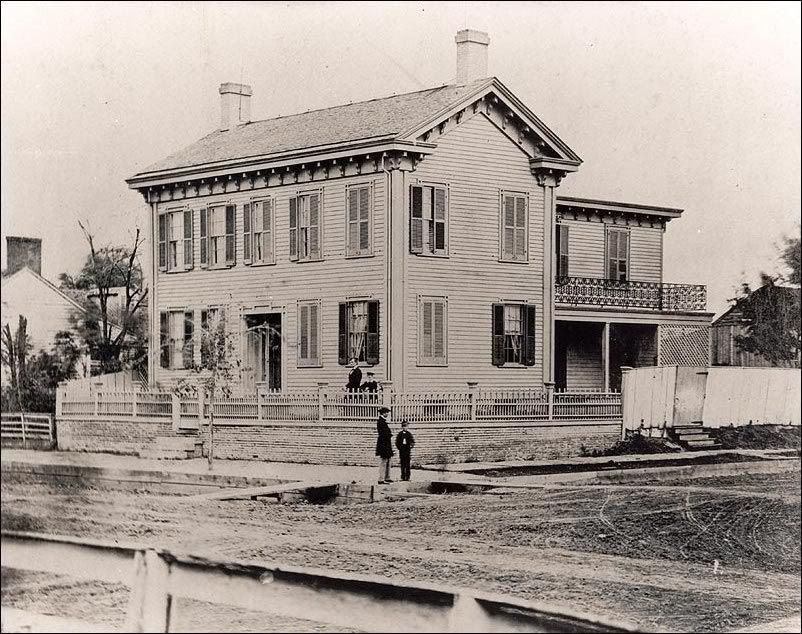
Abraham Lincoln is my hero, and so it’s the ultimate obscenity, to me, that this man lives in the same home where Lincoln once lived.

Nothing will erase—not even the absence of Donald Trump—the hatred that empowers him so. It’s been with us since the nation’s beginning. It cost Lincoln 620,000 lives to crush it, and even that terrible resolution turned out to be transitory.

But defeating Trump might scatter that hatred again into the dark corners where it belongs.

If there is a closet in Lincoln’s Springfield home—the one that pre-dates his White House— with a spider-web spun in its corner, then the spider in its center would be the closest Trump could ever hope to come to the sixteenth president’s legacy.

It would mean nothing for a Lincoln curator to find the the web and obliterate it with the stiff bristles of a broom.

Maybe then we could hope to become clean again.

But it’s entirely possible that the aftermath of the cleansing may be nearly as painful as the war that caused Lincoln so much despair. It may take as may generations as have passed since the great man, our most lucid and our most faithful president, left Springfield in the late winter of 1861.

Or it may be that we will never be clean again.

abb892ef94d791d01e339384c36b6dd1

Lincoln, just behind the fence in Springfield, 1860, with is son Willie–his best beloved, who would die of typhoid fever in the White House in 1862.

The Caravan and Captain Dreyfus

02 Friday Nov 2018

Posted by ag1970 in trump, Uncategorized

≈ Leave a comment


honduran-caravan-17-e1540945189730


https://drive.google.com/file/d/1vp8S_KnFfP8uWfGk-rtSpfpJnKrL8i4N/view?usp=sharing

The link above leads to a PowerPoint from an old lesson plan from the AP European History course I taught for nineteen years. The music, by the way, is from Thomas Newman’s incredible score for the film American Beauty.

As if you haven’t noticed, the current state of the nation worries me greatly, and daily, in my sleep and with my first coffee.

I haven’t got a handle on it yet.

Emotions today are as high as they were on the eve of the Civil War, when Rep. Preston Brooks of South Carolina nearly beat the abolitionist Sen. Charles Sumner of Massachusetts  to death on the Senate floor. (Sumner was a bit of a prig, by the way. Spielberg treats him with justifiable unkindness in Lincoln.)

But we aren’t as neatly divided geographically as we were in the Election of 1860. If you look at the electoral map for 2016, we’re two coasts interrupted by a continent, with Oklahoma its epicenter. We’re as isolated as what we used to call “Pakistan” and “East Pakistan” on the maps I studied in high school.

So the division isn’t conveniently geographic, as it was in Lincoln’s time. (Nothing else about Lincoln’s time was “convenient”.)

It’s instead deep inside our national spirit, and deep among ourselves.

The nearest comparison I could come up with, one similarly marked by fear of outsiders, of The Other—and, to be discussed some other time, by a deep fear of change— was not American. It was French.

It came from a conflict deferred from the Revolution, between tradition and modernity, between church and state, between advocates of  Blood and Soil and unaccepted national communities who were, ironically, passionately French.

There was no civil war in France. They’d already had revolutions in 1789. 1830, 1848 and 1870, so they subsumed their passions until 1894, when The Dreyfus Affair set them aflame again.

The Affair revealed a spiritual sickness, like ours, that tore the French nation apart. It tore Renoir and Monet apart. The cartoon about a French family dinner struck me as especially relevant to America today.

What I learned about the destruction of French comity has been made fresh again in my time, in the exploitation of a “caravan” of refugees fleeing from nations in Central America that have become nightmares. These are refugees funded, “many people say,” by nefarious Zionists. Like George Soros.

In reality, they’re fleeing from homes made strange and deadly by gangs, fat ticks engorged by our appetite for drugs, and from death squads directed by Central American officer-graduates from the old School of the Americas at Fort Benning, Georgia.

For my Trump-supporting friends: Do the research.

Somehow, thanks to presidential innuendo and sanctuary walls perforated by .223 rounds, we have woven anti-Semitism into what was already a story tragic enough to fill yards of dusty and unexplored library shelves at Cal or Princeton.

Our story, like the one in Dreyfus’s France, has a similar element: we’re blissfully unaware of history and of our own historical power. We haven’t read the books.

We exert, for example, an immense gravitational pull on Central America. I’m  reminded of Titanic’s screws turning for the first time inside the harbor at Southampton; the powerful current they generated nearly sucked harbor boats to their destruction beneath the great, and doomed, ocean liner.

The Mexican poet Octavio Paz got this idea precisely once:

“Poor Mexico,” he said. “So far from God, so close to the United States.”

So our current fear of refugees and the implicit but insistent rumors about the Jewish plot to fund them reminded me of the old fear of The Other, and of the Dreyfus Affair, which I’ll never understand completely.

The closest anyone can come to understanding the Dreyfus Affair, I think, is to read Barbara Tuchman’s treatment of the case in her masterful book The Proud Tower.

Even after reading Tuchman, my favorite historian, when I taught this lesson about The Affair, I thought it peculiarly and quaintly French.

I stand corrected.


Belleau Wood in Trumptime

10 Monday Sep 2018

Posted by ag1970 in trump, Uncategorized

≈ Leave a comment

I used to show this short but harrowing film clip to my students every year when we studied the First World War. It depicts the opening of the Marine attack on German machine-gun positions in Belleau Wood in the summer of 1918–unbelievably, one hundred years ago.

One Marine top sergeant encouraged the men behind him by bellowing: “Come on, you sons of bitches. Do you want to live forever?”

The Marines were under-equipped: Their helmets are Army knock-offs of British helmets, and the light machine guns they’re using are French Chaucats. Our troops went into the Meuse-Argonne in French trucks driven by French colonials from Indochina. They were Vietnamese. Our tanks were French Renaults. Our airplanes were obsolete Nieuports.

The Americans were under-trained, too. Pershing was still enamored of a tactical doctrine that called on the audacity of the individual soldier and the lethality of the bayonet, lessons the Europeans had unlearned by 1915.  When they’d first gone into action, the Americans had died in parade-ground rows; they were babies to war.

But this ignorance saved the Marines—who died by the bushel-load, too—because the survivors kept advancing anyway. The Germans remembered them coming toward them in Belleau Wood: They were smoking cigarettes and firing from the hip.

The Germans, themselves disciplined and courageous soldiers, finally could take no more of this madness. They broke and ran.

I wonder if our president knows about Belleau Wood. I wonder what those Marines would think about him.

Postscript: I later found out what Mr. Trump thought of the Marines at Belleau Wood. According to Atlantic in an anecdote later attributed to Kelly:

United States Marine Corps General and former Chief of Staff John Kelly was among others, who heard Trump call the Marines who died at Belleau Wood in 1918 “losers” and “suckers.” It was White House staffers had to inform the president as to which side had won the First World War….Anyway, it was raining the day Trump was to visit Belleau, and one insider noted rain plays hell with the presidential hairs, all gossamer and wispy in their origins from the other tectonic plates that shift so frequently on the skull of the man who said this in 2016: “I will be the greatest president that God ever created.”

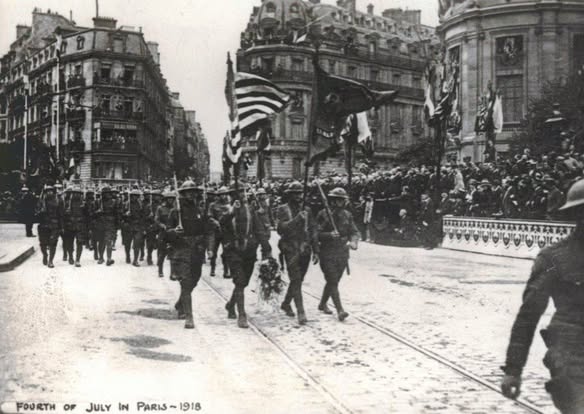
The Fifth Marines on parade in Paris, July 4, 1918. Gerard Dana had joined the regiment by this time, a badly-needed replacment in a regiment that had been decimated by German machine guns in Belleau Wood.


The Marine Silent Drill Team at Belleau.

A Marine at Belleau.

Air War in the time of Trump

22 Thursday Feb 2018

Posted by ag1970 in trump, Uncategorized

≈ Leave a comment

4d4c75c4e316c73e6489a3894d6e9ea2

A little girl in Berlin, 1945.

I am especially fond of the passage below in the next book, Central Coast Aviators of World War II, in part because, despite my half-Irishness, the half-English in me is so passionate about England.

The passage reminds me, too, of the cheapness of current events when compared to the selflessness, the courage, and the occasional nobility of our past. These young American airmen-some of them, sixteen and bald-faced liars to their enlistment sergeants–made a bond with the English so powerful that modern tourists can find stained-glass windows in little Anglican churches where American fliers from World War II, forever young, look heavenward toward Christ, forever Risen.

But I need to remind myself, an American, of the terrible evil we’ve done. Wounded Knee comes to mind immediately, and slavery, of course. Another vivid memory is that of the slave mother I learned about in college. She used Master’s hatchet to chop her own foot off to queer the sale that would have separated her from her children.

Multiply her agony and you arrive at 1944-45, when Army Air Forces commander Tooey Spaatz ordered the powdering, from the air, of German rail-yards. Adjacent to them were dense rows of working-class tenements, and so we powdered, too, whole families, whole blocks of German children–in Dresden, they stacked them in the streets, still smoking, as best they could without breaking them–and 25,000 feet above, the young Americans knew what they were doing.

And they hated it.

[On the ground, meanwhile, the young men of Easy Company, 101st Airborne, would eventually discover that the Europeans they loved most of all were German.]

Some of the airmen hated their missions so much, late in the war, that, like the poet Randall Jarrell, who walked in front of a car years afterward, they never completely recovered. They hated what was happening below them because they were Americans, and because they were Americans, they appreciated the humanity in the children they were burning. They could feel the heat, sweating in their electric suits, despite the subzero cold just beyond the thin protection of their steel-and-aluminum airframes, built in Seattle to inflict pain on Berlin.

So I write books for many reasons, but the most important reason is to remind myself of how much I love my country, and how hard it is to look away from its cruelties, yet how necessary it is to look squarely at them. And, too, I am reminded of how much I admire the decency and the idealism that redeems us–sometimes when those qualities are least apparent to us.


Chapter 4. This Seat of Mars

This royal throne of kings, this sceptred isle, 
This earth of majesty, this seat of Mars
…This precious stone set in the silver sea
…This blessed plot, this earth, this realm, this England.

Shakespeare, King Richard II.
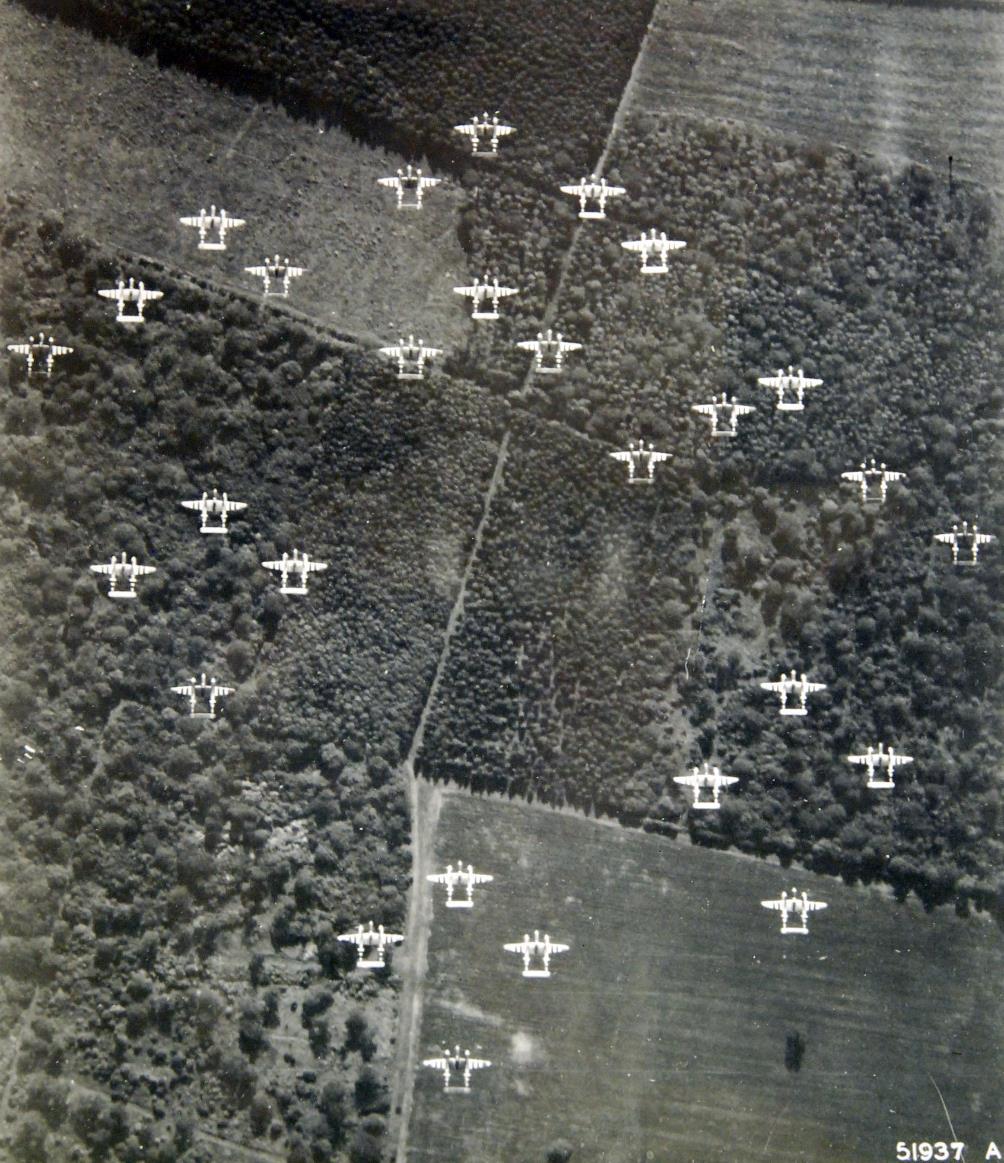
P-38s

P-38s over Normandy, 1944. Library of Congress.

If there was a military historian with a gift close to Shakespeare’s, it was another Englishman named John Keegan. Keegan was a little boy in the English countryside, in Somerset, when the Americans began to arrive in their numbers in late 1943 and into the spring of 1944. Little English boys had lived for years with the deepest of privations—thanks, in large part, to the U-boat campaign that had nearly starved Shakespeare’s “sceptred isle” to death—and then the Americans came. They were, as Keegan later said in narrating a television history of the Great War in the pivotal spring of 1918, when he for once arrived at a loss for words, “…well, they were Americans.” By which he meant they were boisterous, cocky, well-fed, well-clothed, and, thank God, they were friendly, with an innocence and immediacy that was distinctly American. Their World War II counterparts taught English boys baseball and flirted with their big sisters, and married some of them, but most of them not, which meant that little boys Keegan’s age would inherit littler half-Yank nieces and nephews. Most of all, they were generous. There seemed to be no end to their Hershey bars (there wouldn’t be after the war, either, when, during the Berlin Airlift, one of bomber pilot Jess Milo McChesney’s comrades, Gail Halverson, air-dropped Hershey bars, floating on little parachutes, to the hungry children of blockaded Berlin) and no end to the rough affection for children that came with these big, loud men from across the sea.
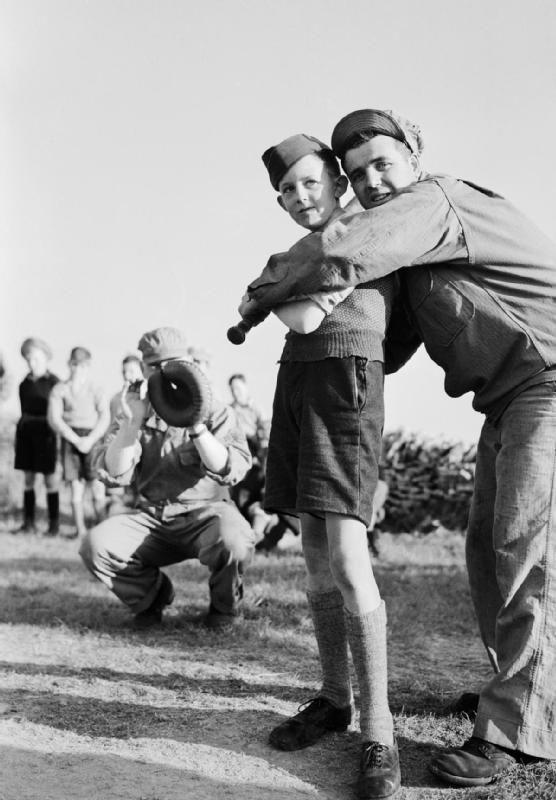
 

GI's baseball

American GI’s teach British war orphans the finer points of baseball. Imperial War Museum.

And then they were gone. Keegan has vividly described the early-morning dark when that happened, when the chinaware and modest family crystal on every shelf in the Keegan home began protesting, rattling an alarm so loud that it woke the family up, if the motion beneath their beds hadn’t already made them sit bolt upright. The anxiety of Keegan’s family, and their neighbors, and of other families all across East Anglia, was relieved only when they went outside. Then anxiety gave way to wonder. They could feel in their breastbones the vibrations—“the grinding forced you to the ground,” Keegan remembered– of the engines of thousands of airplanes, but could they could see only the dim red warning lights of C-47s headed slowly east. Some of the Americans Keegan had grown to love so quickly, his heroes, were on those airplanes, and tens of thousands more, his heroes, were riding deathly pale on landing craft corkscrewing in foul Channel waters, and they were all headed for Normandy.[1]

It was D-Day.

For the two years before D-Day, the Americans in England who had been carrying the brunt of the fight to Nazi Germany were the airmen of the Eighth Air Force. They made up 49 bomb groups and 22 fighter groups and their bases were 71 airfields concentrated in East Anglia, from Norfolk south to Essex, in places that must have sounded quaintly medieval  to American ears:  Bury St. Edmunds, Knettishall, Little Staughton, Matching Green, Molesworth, Snailsworth, Snetterton Heath, and Thorpe Abbots.
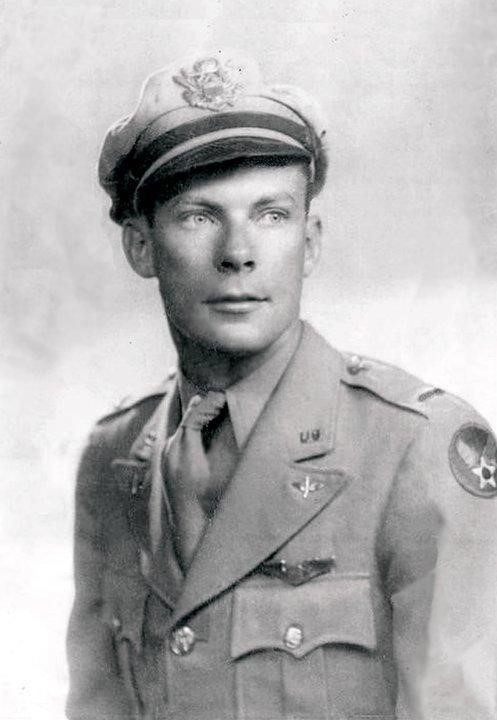
Dickson

Robert Abbey Dickson of Morro Bay. Courtesy the Dickson family.

Shaw’s  charming line about “two peoples separated by a common language” must have rung true, then, for young men, newcomers to England who’d ferried their bombers from Labrador (or for the luckier men, like Robert Abbey Dickson who’d shipped out on Queen Mary, or future Cal Poly professor Richard Vane Jones, who’d made his trip on Queen Elizabeth.) Dickson’s luck held: when he first arrived in England, he was sent to the 381st Bomb Group, where he flew two orientation missions as a co-pilot. The 381st’s base was American-built, at Ridgewell, Essex, which meant that it had been built quickly in prefabricated stages by hard-working soldiers, black men, in army construction units. Bases like Ridgewell were marked by Quonset-hut barracks, each with a single, feeble, coal-burning stove, muddy streets, and mercilessly cold showers. But Dickson was quickly transferred to the 91st Bomb Group, based at RAF Bassingbourn, and the “RAF”—Royal Air Force—prefix made all the difference. An Eighth Air Force Base with the “RAF” designation had originally been built by the British, and, given Britons’ stubborn reluctance to give up their island, such bases had been built to last. Bassingbourn had paved streets and central heating. Dickson was delighted. It was, he remembered, almost like a country club compared to the 381st’s home base.

Army food wasn’t country club fare. American soldiers would never recognize this, but they were, comparated to their British Commonwealth allies, well-fed. Bill Mauldin, the great cartoonist who created the imaginary Willie and Joe, his comrades in the Italian campaign, once remarked, without malice, that his mother was the worst cook in the world. Then he encountered army food, which was infinitely worse.[2] At least airman understood that they were fed better than men like Mauldin, dogfaces, who commonly used G.I. powdered lemonade to wash their socks. Still, even in the Army Air Forces, the green-hued powdered eggs, along with the ubiquitous Spam, were breakfast standards, and creamed chipped beef on toast—referred to as “shit on a shingle”– followed airmen across the Atlantic from the air bases stateside where they’d first encountered what seemed to be, to the military, a perverse culinary masterpiece. Radioman/gunner Albert Lee Findley Jr. found little relief off-base. “English food took some getting used to,” he admittted tactfully. One vegetable, Brussels sprouts, was as common to English fare as Spam was to American mess halls, and, at war’s end, many English-based G.I.’s swore they would never eat them again.

There were other features of English culture that the Americans found more to their liking. Airmen almost immediately found pubs near their bases, and the attraction was powerful. Historian Donald Miller writes of the 1943 arrival of an AAF engineer battalion, charged with laying out an airstrip outside the village of Debach, near the North Sea. Their discovery of what English called “the local,” this one called The Dog, resulted in the Yanks buying so many rounds “for the house”—the last round, just before closing time, was for forty-seven drinks—that the next day, a doleful little sign was posted outside The Dog: “No beer.” It was, Miller notes, the first time the pub had been closed in 450  years.[3] The Americans, of course, also found young English women to their liking, as well. The War Department discouraged what were called “special relationships,” and made it nearly impossible, thanks to a bureaucratic maze, for the best-intentioned American soldier to marry, but, of course, the War Department failed. “Special relationships” were as common as visits to the local pub. Al Spierling of Arroyo Grande, a B-17 flight engineer, lost a little of  his youthful idealism—Spierling was a thoughful young man who made a special trip to York to explore the setting for Brönte’s Wuthering Heights– when he learned that a gunner he knew, a married man, had taken up with an English girl. He was a little shocked. “For a twenty-year-old,” he said, “I learned a lot.”[4]
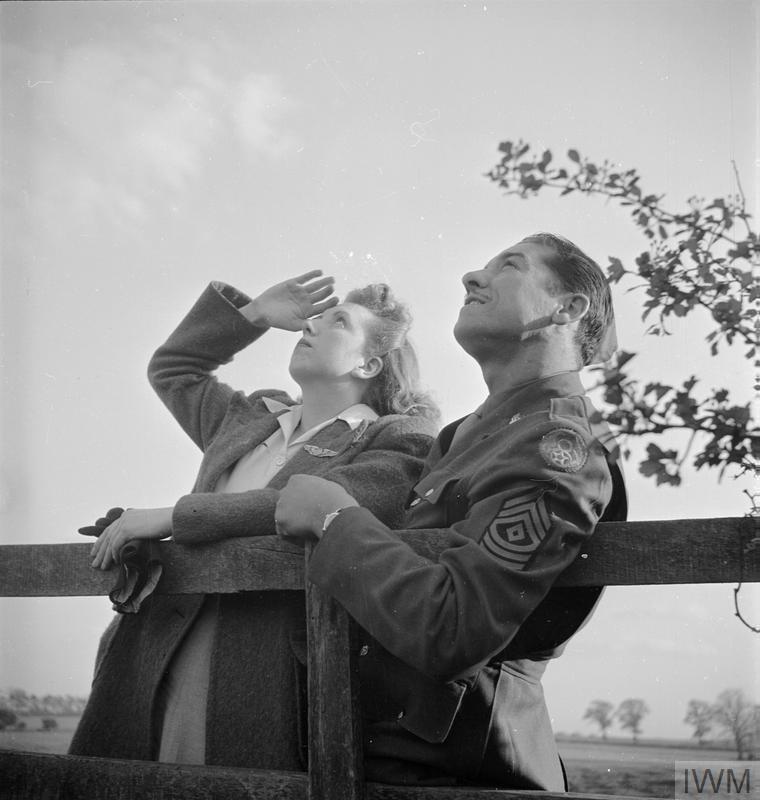
 

couple

A young British woman and her airman–she’s wearing his wings on her lapel–watch American bomber return to base. American Air Museum in Britain.


There was the other special relationship, the one historian Keegan remembered, and that was with English children. Airmen seemed to have great affection, just as other G.I.s did,  for their smallest neighbors, and the affection was reciprocated. A typical sight at the beginning of any combat mission would be the childen gathered at an airbase’s perimeter fence. They were there to wave goodbye to the crews as their big airplanes took off to reach their assembly points high above the English countryside.


[1] Elizabeth Grice, “War Memories: John Keegan’s Life and Times,” The Telegraph, September 17, 2009. http://www.telegraph.co.uk/culture/books/6203052/War-memories-John-Keegans-life-and-times.html. Accessed July 2, 2017.

[2] Foot Soldiers, “The Allies.” The History Channel, 1998.

[3] Donald L. Miller, Masters of the Air, Simon and Schuster Paperbacks, New York: 2006, pp. 137-38.

[4] “Albert Spierling,” oral history interview.

 

Funeral Crossing, Arlington Bridge

30 Saturday Dec 2017

Posted by ag1970 in trump, Uncategorized

≈ Leave a comment

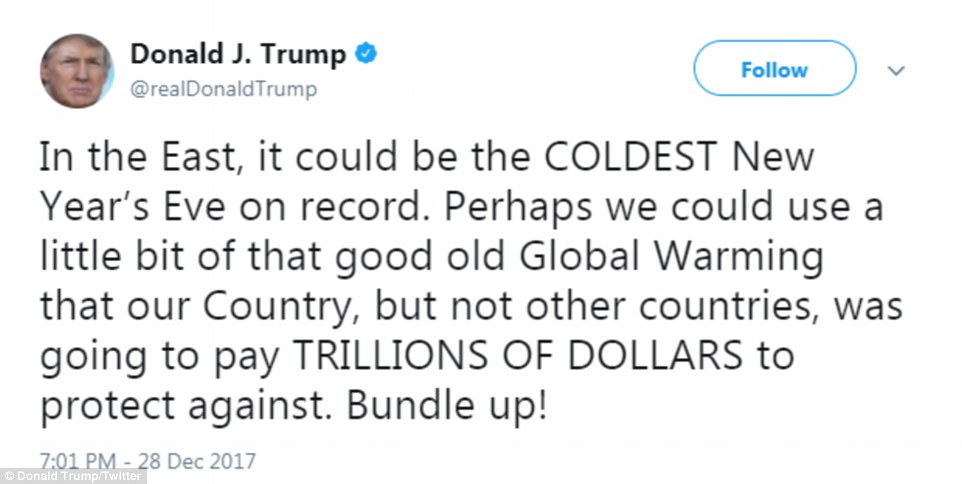
479D7B1B00000578-5219541-image-a-23_1514509165045


One of the many things that makes the president’s tweet so cruel was our shocked discovery during our trip north this week on 101. I am 65 years old, nearly 66, a native Californian, and I have never seen California so dry.

The oaks, I think, are dying–their leaves a khaki shade I’ve never seen; the willows along empty riverbeds are as bare as trees in a Midwestern winter; the maples’ leaves are blanched, yellow, crisp as papyrus. The hills have dried beyond their normal wintertime yellow to a dull gray.

It doesn’t take a great deal of imagination to visualize a terrible fantasy: California catching fire in Paso Robles and burning all the way to Morgan Hill, where there’s a smattering of green grass that won’t last another week. There is no rain in the forecast for yet another week, and there may be none the week after, either.

And here is what matters: We have a leader who is so blissfully stupid that he can’t distinguish between “climate” and “weather.” Beyond that, he doesn’t care.

He doesn’t care about the land, our greatest inheritance and obligation; and he doesn’t care about Americans, including the sick among us; he despises immigrants who have made our history so rich, except for the richness in victimizing them; he doesn’t care about American workers–he rejoiced, to his rich friends, at Mar-a-Lago, about how he’d fleeced us in taxes they will never pay and that we won’t see for years to come, when it’s too late for us to realize, preoccupied as we are with mortgages and car payments and credit-card usury, that we’ve been robbed.

He doesn’t care about our heritage and knows nothing about our history. He thinks Frederick Douglass is still alive; is amazed that no one but he knows that Lincoln was a Republican. He visited Gettysburg with Steve Bannon.


15241343_10210730464315729_3385114292250421575_n


He knows nothing about working hard, a drudgery he leaves to lawyers and Executive Assistants, he knows nothing about about the world, including the tradition we owe the West and the fractures, mutually inflicted, between the Orient and the West, between Islam and Christianity, and, last, the wounds inflicted by men on women, the latter a group he rejoices in wounding because he finds such strength and validation in humiliating them.


tussauds_jabba4

Jabba and Leia, Madame Tussaud’s.


California humiliated him in the November Election. And so California could very well burn from Paso Robles to Morgan Hill, and he wouldn’t care.

Of course, he would read a speech afterward, California’s official obituary, about our immolation. But he would read from a teleprompter the way he read about the struggle for civil rights a few weeks ago in Mississippi, the way a chagrined fourth-grader reads aloud when called on by his teacher in his reading circle: flat-toned, impassive–emotionless, save for petulance, because–can we be honest?–he doesn’t care.

Finally, there is no group he cares for less than our children, grandchildren, and great-grandchildren. California will be burned by their time, I guess.

He will be dead then by then, I hope, as fat and sleek (and as indifferent) as Nero. His post-mortem will reveal arteries collapsed in plaque, snapped shut by double orders of Big Macs, Filet o’ Fish, and personal buckets of Kentucky Fried Chicken.

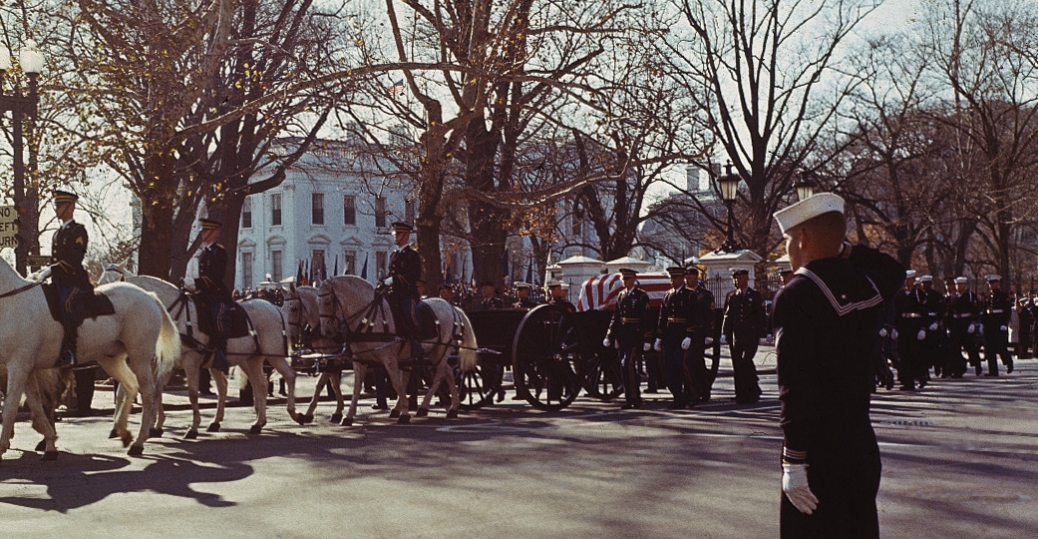
He will be perfectly embalmed. His hair will be as golden as Caligula’s. He will wear his blue suit and red-striped tie, made in China–he will be dressed, in death, by morticians, as he was dressed, in life, by servants. His body will ride in a flag-draped mahogany coffin towed atop its caisson in solemn parade, flanked by young men and women from every service branch. The caisson in turn will be pulled by a team of sixteen-hand greys, their hooves polished brilliant black; these magnificent animals will be guided along Pennsylvania Avenue by the soldiers of the Old Guard.


kennedy-casket-P.jpeg

John F. Kennedy’s casket leaves the White House, November 1963.


It was the Old Guard that carried President Kennedy’s body, in my memory, to its rest in Arlington. Before that, in the last weeks of fascism’s collapse, in memories that are buried with my parents, the Old Guard accompanied Franklin Roosevelt’s body at the beginning of its journey home to Hyde Park.

I don’t think there will be their kind of dignity in Trump’s last public moment because his legacy will be so bitter. There will be only smatterings of mourners, little knots of dead-enders at street corners, watching silently as his cortege crosses the Arlington Memorial Bridge over the Potomac and into Virginia.

By then, everything behind the procession will have been burnt to ashes by America’s Nero. The ashes will be all that remains of what we once valued as a people.

Except for one thing more.

We will still have each other.

But we will have to learn to live beyond him and without him, and, finally, we will have to learn how to live with each other once more. Maybe then, and only then, we can learn to be Americans again.


FT_17.04.10_immigrant_featured


Dickens at Christmas, 2016

05 Monday Dec 2016

Posted by ag1970 in trump, Uncategorized

≈ Leave a comment

dickens-at-desk

We keep coming back to A Christmas Carol, in all its variations, from Alistair Sim’s  film archetype to the Muppets, and it suddenly, since November, means as much now as it did when it was first published at Christmas in 1843.

Unlike another cinematic descendant, It’s a Wonderful Life,  Dickens’s novella was an instant sensation. It was beautifully timed: the Prince Consort, Albert, was bringing German Christmas traditions to England and transforming it into the holiday, down to gloriously lit Christmas trees, that Americans recognize today. I can still remember the German words to “A Christmas Tree” from Branch Elementary School:

Du grunst nicht nur zur Sommerzeit,
Nein, auch im Winter, wenn es schneit.
O Tannenbaum, O Tannenbaum
Wie treu sind deine Blatter!

And for that I have to thank Albert, doomed to perpetual marblehood by his neurotic widow. But even she read Dickens. (And Harriet Beecher Stowe: Uncle Tom’s Cabin made the Queen weep.)
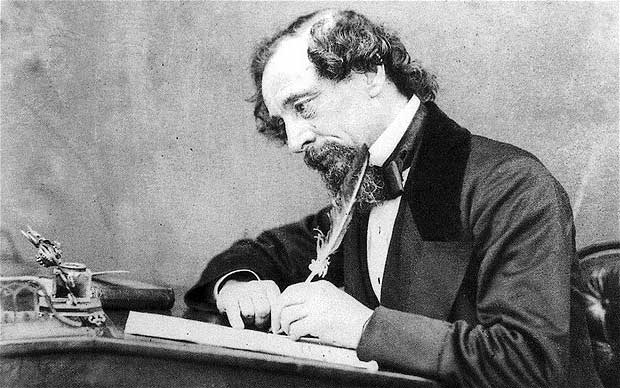
And the rest of England was moved, as well, by literature, thanks to Dickens. Since most of his novels were serialized in newspapers, the Queen’s subjects were as addicted to them as modern Americans are to soap operas or to the next Star Wars release.

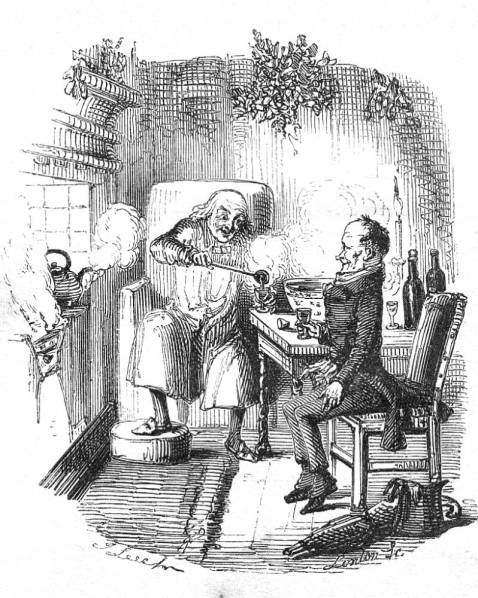
What we miss–and what Dickens intended–was that this little work was every bit as much about the nature of evil, especially when it’s deliberately chosen, as it was about Christmas. What saved Scrooge from his choices was the chance at redemption,  a theme constant in Dickens’s works, from Pip to Sidney Carton.

Here is the evil that was England’s freight in 1843: Already the white moths that  lived on birch trees in the Midlands and in London’s suburbs were disappearing. because the birch bark was no longer white: it was soot-gray, painted by the waste pouring out of coal-fired factories. The white moths became fodder for hungry birds, you see, and, as the devoutly Christian Darwin realized, nature selected the grayish mutations who were less conspicuous.

Other victims happened to be human beings. Child labor, like little Copperfield, Dickens’s equivalent in the bootblack factory, was commonplace and so were the debtors’ prisons where Dickens’s father, thinly disguised as the feckless and delightful Micawber, spent time. Parliament’s Sadler Commission toured and gathered the testimony of children who had watched numbly as their friends’ arms were crushed in the maws of power looms and of mothers whose lives were so fragile that they were never quite sure of just how old they were.

`Are there no prisons?’ asked Scrooge.

`Plenty of prisons,’ said the gentleman, laying down the pen again.

`The Treadmill and the Poor Law are in full vigour, then?’ said Scrooge.

`Both very busy, sir.’

`Oh! I was afraid, from what you said at first, that something had occurred to stop them in their useful course,’ said Scrooge. `I’m very glad to hear it.’

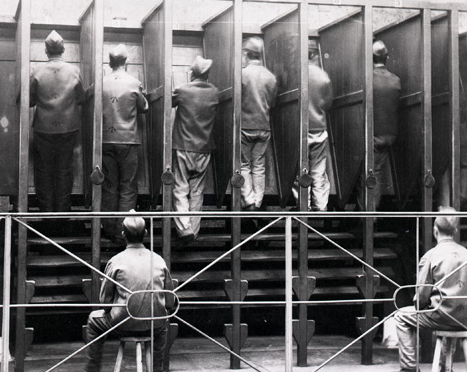
This is a treadmill, adapted, with the moral superiority attendant to imperialism, to India. Its ultimate purpose was to humiliate the poor.

prison-treadmill-resized

Unlike the poor, Scrooge is uncommonly and inscrutably lucky (he doesn’t much deserve it, does  he?) , of course, because Dickens offers him salvation through a series of haunts. First he is greeted by that inimitable “indigestible bit of beef:” his former partner, Marley.

episode_02_534x300

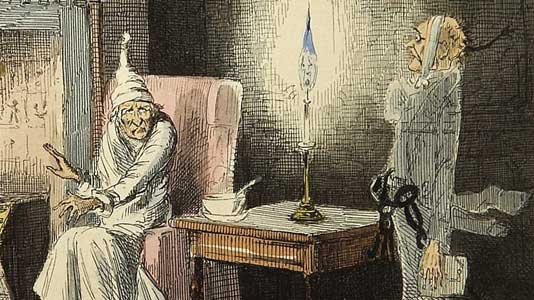
Marley’s ghost.

 “But you were always a good man of business, Jacob,’ faltered Scrooge, who now began to apply this to himself.

“Business!’ cried the Ghost, wringing its hands again. “Mankind was my business; charity, mercy, forbearance, and benevolence, were, all, my business. The deals of my trade were but a drop of water in the comprehensive ocean of my business!” 

It was the business of Victorian capitalists to magnify profit at the expense of humanity. They were helped by an influx of country folk whose land had been enclosed, accompanied by an ironic burst in population made possible by the food provided by the progressive farmers–Thomas Hardy’s folk– who had done the enclosing. There were an infinite number of prospective industrial workers and a finite number of industrial jobs.

01-1

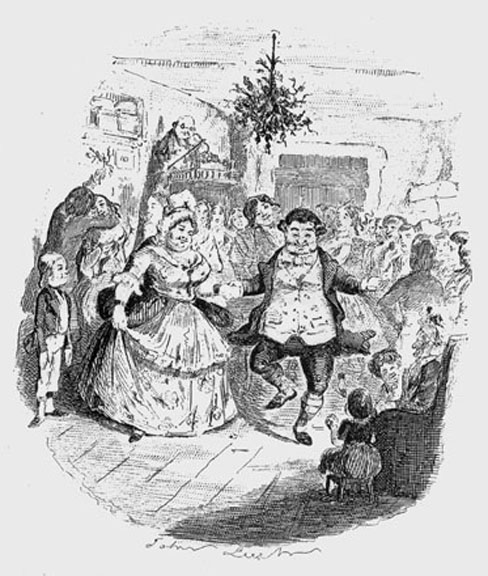
Fezziwig at Christmas.

It is the pleasant duty of the Ghost of Christmas Past to remind Scrooge of what a good man of business Fezziwig was.  This was not a man prone to hiring and exploiting ignorant foreigners, to stiffing subcontractors, to using attorneys as if they were pit bulls. Not Fezziwig. And Scrooge is, course, such a vivid contrast:

725f2437cd79007d8f3fc89cfe5b0767

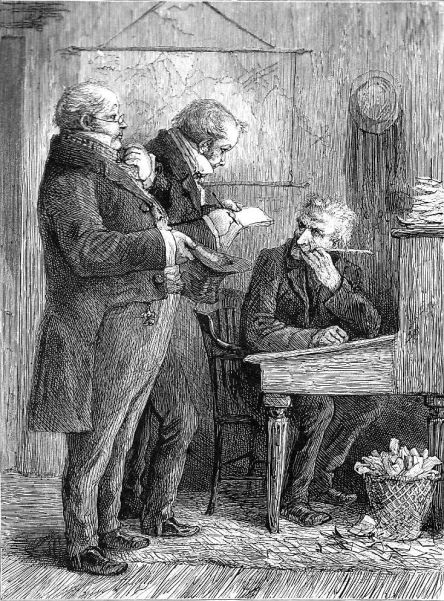
The Charitable Gentlemen visit Scrooge and Marley.

`If they would rather die,’ said Scrooge, `they had better do it, and decrease the surplus population.'”

In this passage, Dickens is mocking the economics–then called “the dismal science”–of Thomas Malthus, who argued that while the food supply increased arithmetically, the population increased geometrically, so starvation was a necessary and inevitable corrective. So, argued David Ricardo, Malthus’s acolyte, were depressed wages: since there were always more workers than there were jobs, wages, obedient to the laws of supply and demand, would always be depressed. It was a law of nature, and the capitalist was powerless to oppose it.

The Ghost of Christmas Present introduced Scrooge to reality:

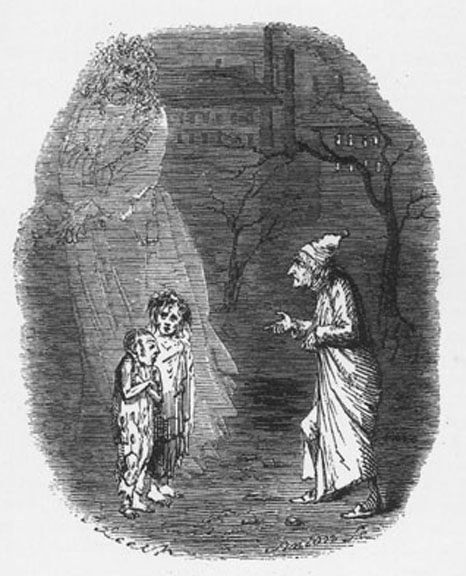
257e645f677ed82382760e145d3df600

“This boy is Ignorance. This girl is Want. Beware them both, and all of their degree, but most of all beware this boy, for on his brow I see that written which is Doom, unless the writing be erased.

“Have they no refuge or resource?” cried Scrooge. ‘Are there no prisons?’said the Spirit, turning on him for the last time with his own words. ‘Are there no workhouses?'”

8

Scrooge and Cratchit keep Christmas

Scrooge’s one positive quality was that he was teachable. That smoothed his path to redemption.

At Christmas we celebrate the hope, incarnate in a newborn,  that we will find redemption. Many of us–perhaps all of us?–hunger for a force powerful enough to recognize, understand, and then burn away our shame. Beneath it is our core: the person who is our truest self.

The ultimate source of this kind of power, of course, was the child born in poverty. Perhaps it was his confrontation with poverty, and not with ghosts, that allowed Ebenezer Scrooge to discover the meaning of Christmas.


India.
← Older posts
Newer posts →

Subscribe

  • Entries (RSS)
  • Comments (RSS)

Archives

  • January 2026
  • December 2025
  • November 2025
  • October 2025
  • September 2025
  • August 2025
  • July 2025
  • June 2025
  • May 2025
  • April 2025
  • March 2025
  • February 2025
  • January 2025
  • December 2024
  • November 2024
  • October 2024
  • September 2024
  • August 2024
  • July 2024
  • June 2024
  • May 2024
  • April 2024
  • March 2024
  • February 2024
  • January 2024
  • December 2023
  • November 2023
  • October 2023
  • September 2023
  • August 2023
  • July 2023
  • June 2023
  • May 2023
  • April 2023
  • March 2023
  • February 2023
  • January 2023
  • December 2022
  • November 2022
  • October 2022
  • September 2022
  • August 2022
  • May 2022
  • April 2022
  • March 2022
  • February 2022
  • January 2022
  • December 2021
  • November 2021
  • October 2021
  • September 2021
  • August 2021
  • July 2021
  • June 2021
  • April 2021
  • March 2021
  • February 2021
  • January 2021
  • December 2020
  • November 2020
  • August 2020
  • July 2020
  • June 2020
  • May 2020
  • April 2020
  • January 2020
  • December 2019
  • November 2019
  • October 2019
  • September 2019
  • August 2019
  • May 2019
  • April 2019
  • March 2019
  • February 2019
  • January 2019
  • December 2018
  • November 2018
  • October 2018
  • September 2018
  • July 2018
  • June 2018
  • May 2018
  • April 2018
  • March 2018
  • February 2018
  • January 2018
  • December 2017
  • November 2017
  • October 2017
  • April 2017
  • March 2017
  • December 2016
  • November 2016
  • October 2016
  • September 2016
  • August 2016
  • July 2016
  • June 2016
  • April 2016
  • March 2016
  • February 2016
  • January 2016
  • December 2015
  • November 2015
  • October 2015
  • September 2015
  • August 2015
  • July 2015
  • June 2015
  • May 2015
  • April 2015
  • March 2015
  • February 2015
  • January 2015
  • December 2014
  • November 2014
  • September 2014
  • August 2014
  • July 2014

Categories

  • American History
  • Arroyo Grande
  • California history
  • Family history
  • Film and Popular Culture
  • History
  • News
  • Personal memoirs
  • Teaching
  • The Great Depression
  • trump
  • Uncategorized
  • World War II
  • Writing

Meta

  • Create account
  • Log in

Blog at WordPress.com.

  • Subscribe Subscribed
    • A Work in Progress
    • Join 68 other subscribers
    • Already have a WordPress.com account? Log in now.
    • A Work in Progress
    • Subscribe Subscribed
    • Sign up
    • Log in
    • Report this content
    • View site in Reader
    • Manage subscriptions
    • Collapse this bar
 

Loading Comments...