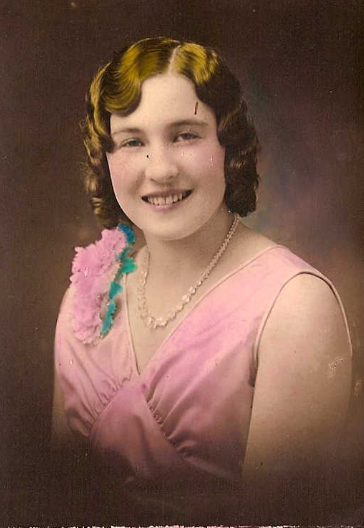
My Great Aunt Jane, or Jennie, or Mildred Jane Wilson, a name that has persisted, unfortunately ever since a collateral Gregory married the great man’s aunt, Mildred Washington. Even my Aunt Mildred Gregory preferred “Aunt Bill.” That’s Aunt Bill circa 1935.
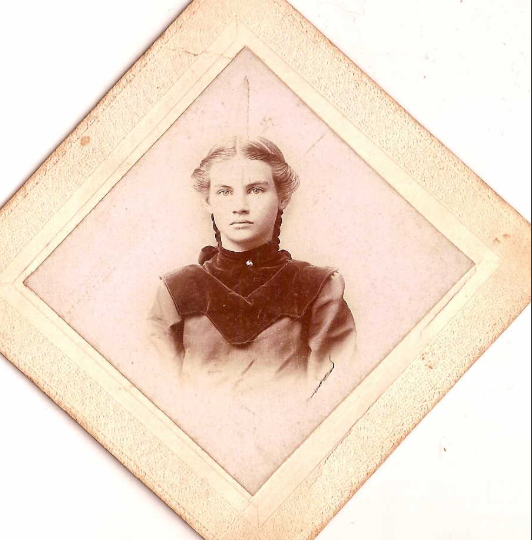
But, you must admit, Great Aunt Jane, or Jennie, was an enchanting little girl. She was born in Licking, Missouri, in 1884 and died in Yellowstone, Montana, in 1978.
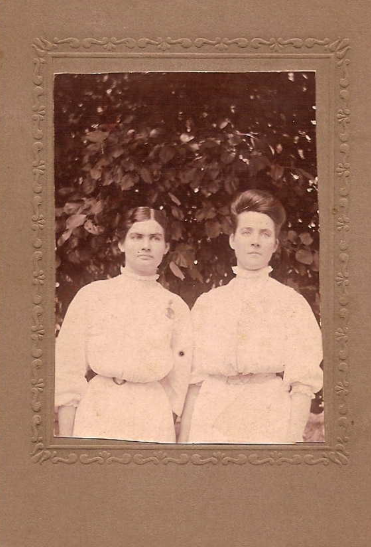
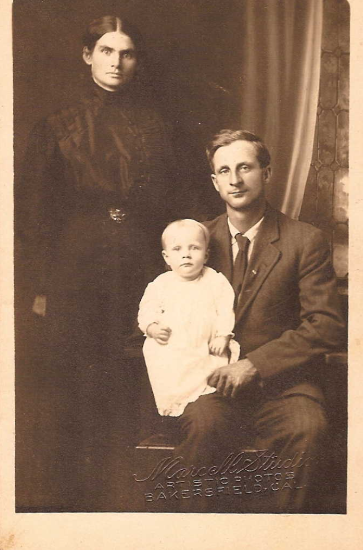
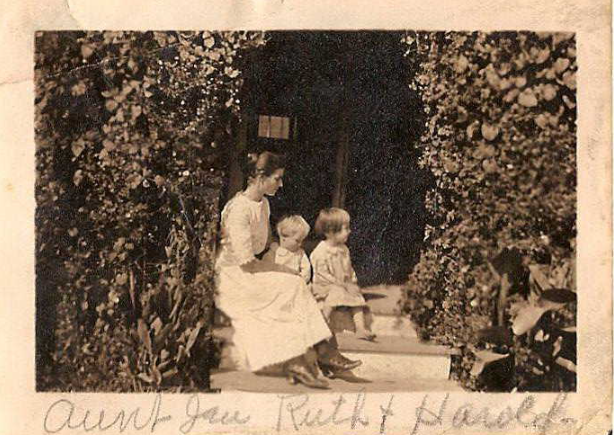
So that’s Jennie, then Jennie with my grandmother Dora (a year older), then Jennie with her husband, Mr. Kofahl, and daughter, Sally Ruth, (who died in Taft, where there are entire regiments of Kofahls.)
So that’s Jennie, then Jennie with my grandmother Dora (a year older), then Jennie with her husband, Mr. Kofahl, and daughter, Sally Ruth, (who died in Taft, where there are entire regiments of Kofahls.)
What disturbs me a little is that Jennie, such a lovely little girl, looks more and more like Rasputin.
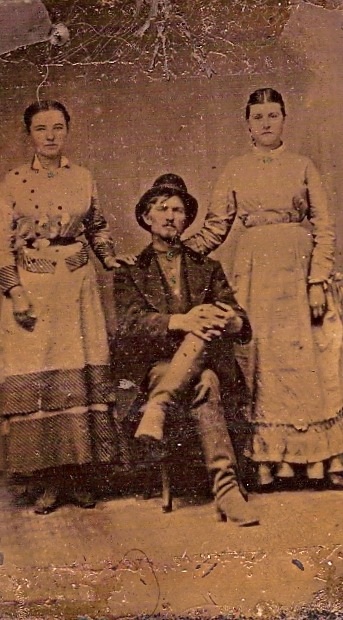
She did not get that from her mother—my great-grandmother, Sallie McBride Wilson. That’s Sallie, on the right, her sister on the left and my great-grandfather, Taylor Wilson, in the center. Sallie has such a sweet face; she died young and left Taylor the heartbreak he never got over. This photo, a tintype, was in a Texas County, Missouri root cellar for thirty-five years before it was restored to my father.
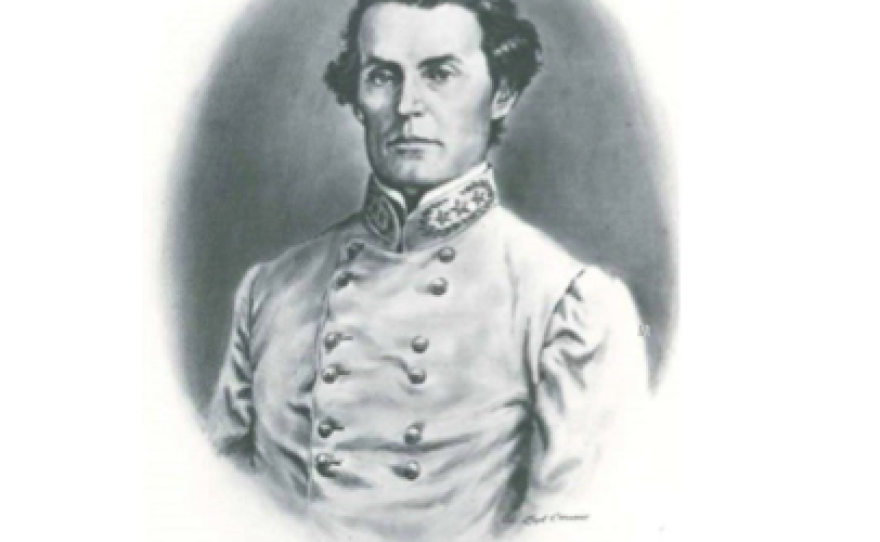
Then, good grief, I realized where Jennie’s expression came from. It wasn’t Rasputin. It was my Confederate ancestor, Gen. James McBride, for whom I am named. He was Jennie’s grandfather.
That’s the General’s look, which I always ascribed to chronic constipation.
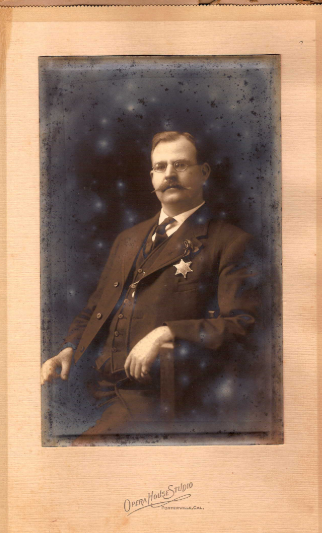
However, Jennie evidently was a wonderful mother to Sally Ruth, and her brother, Jim Ed Wilson, was the police chief of Shafter.
Missourians like two names.
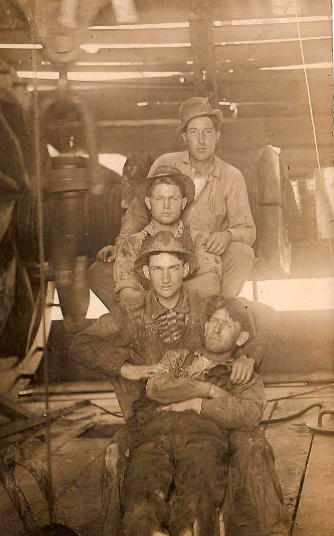
Three more Wilson brothers worked in the Taft oilfields–the top three in the photo. One of them, I think Cal, grew so frustrated with the camp cook that he threw him into a boiler. We have never ascertained whether it was lit. He must’ve been crabby, like the General.
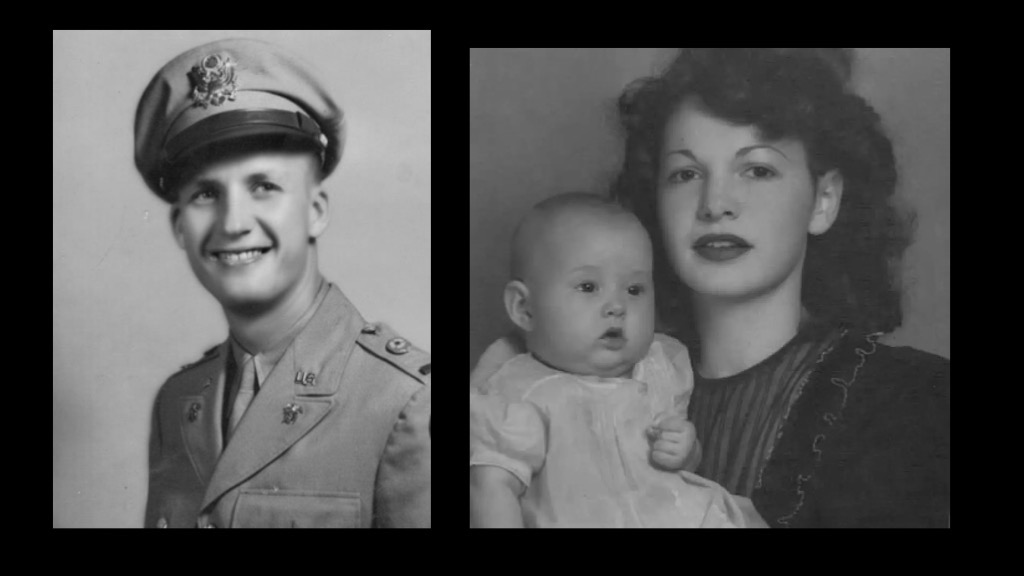
Cal’s nephew, Robert Wilson Gregory, was stationed at Gardner Field in Taft—Chuck Yeager trained there—discovered that not only was the food terrible, but that the head cook was embezzling mess funds and serving substandard farm, when Army food was already awful, while pocketing the Army’s money. Busting the cook got Dad into Officers’ Candidate School.
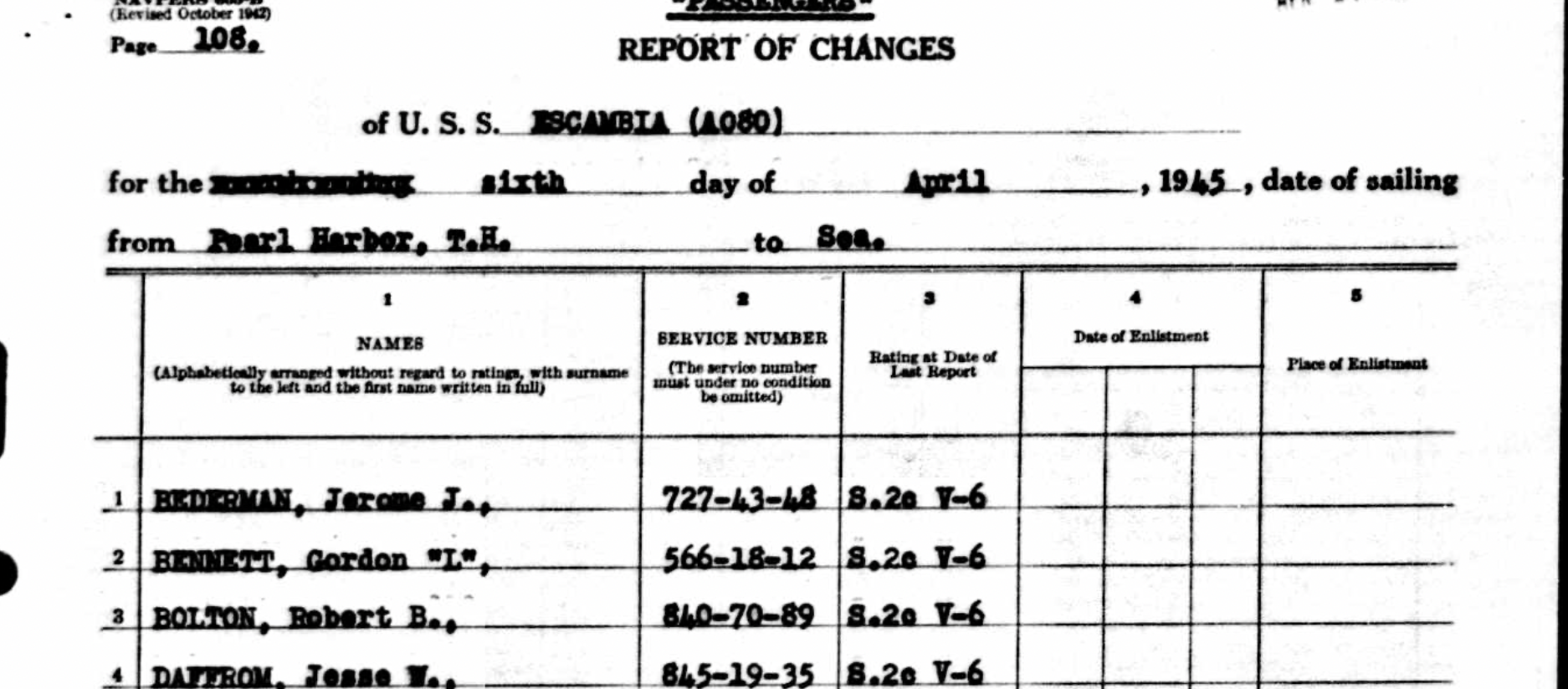
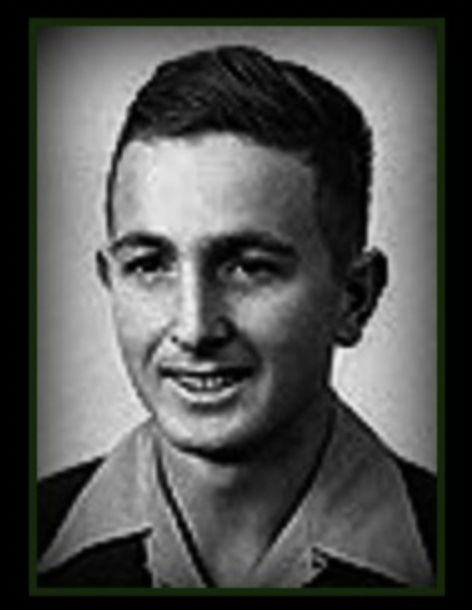
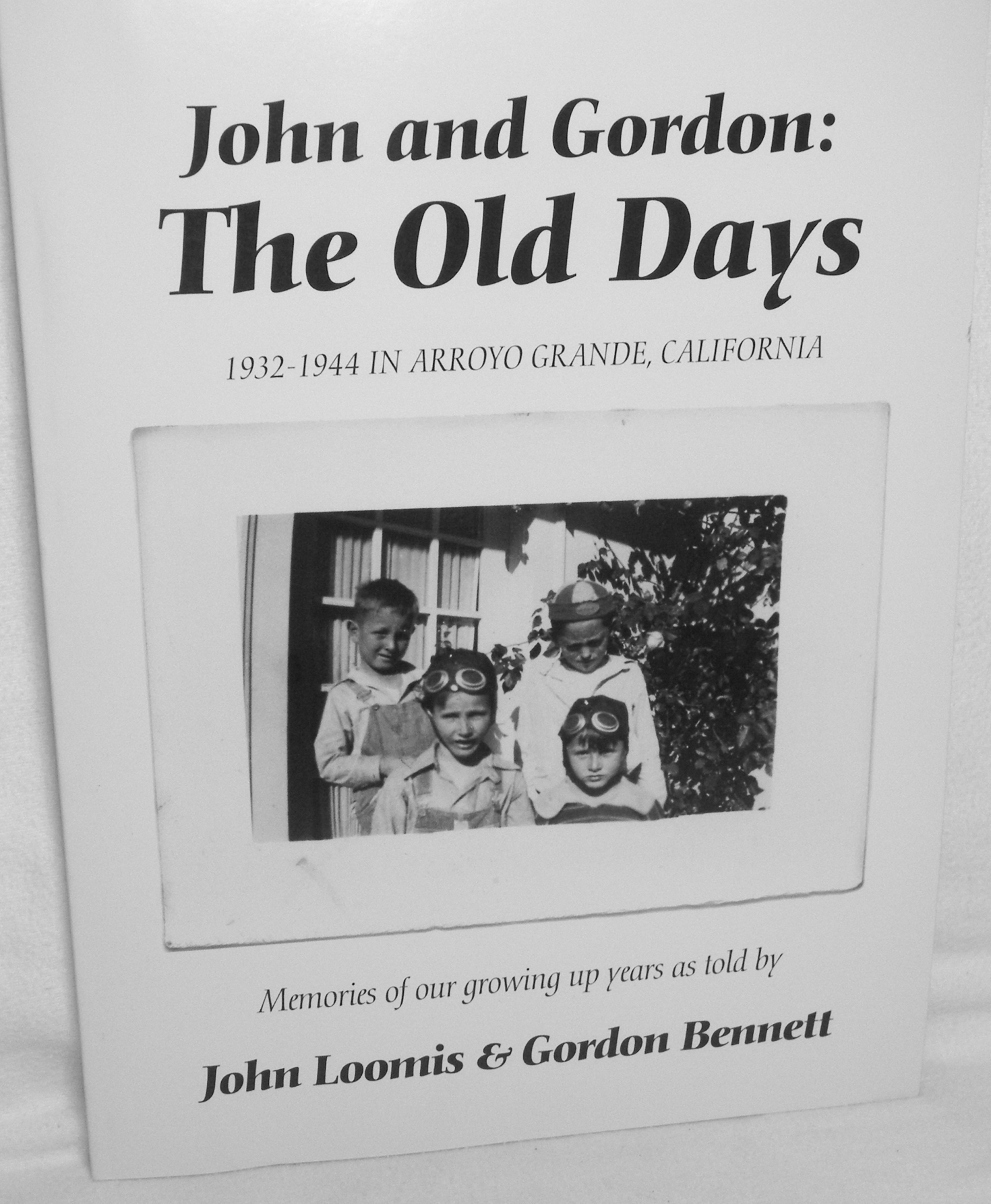
Gordon Bennett, Arroyo Grande Union High School ’44, was one of my students’ favorite guest speakers when I taught U.S. History at AGHS. He was a gifted storyteller with a sense of humor as dry as vermouth. My students and I loved hearing his stories about growing up in Arroyo Grande during the Depression and World War II.
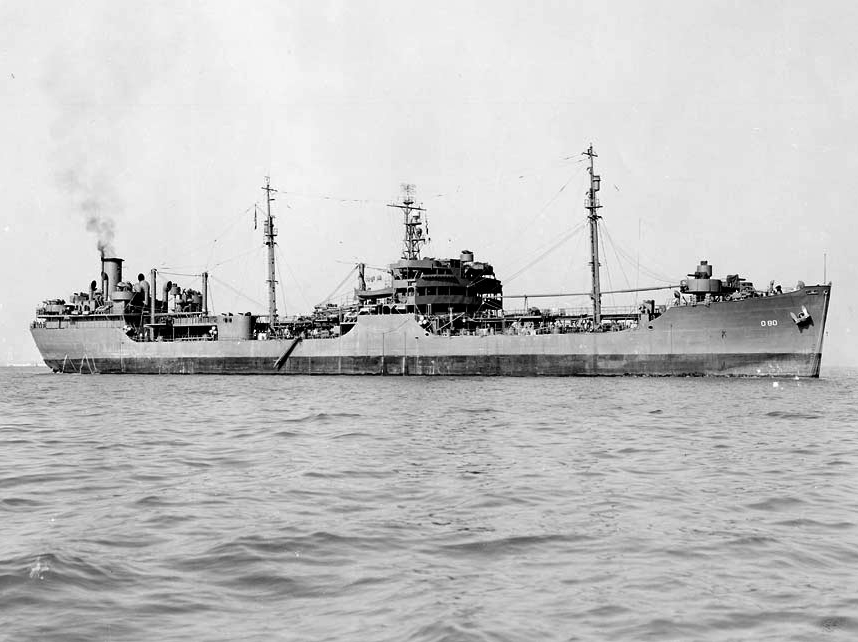
World War II was waiting for them when both Gordon and his cousin, John Loomis, joined the service. The two found themselves not that far apart during the Battle of Okinawa, which had begun April 1, 1945. John was onshore with the 1st Marine Division, Gordon offshore serving as a sailor on the fleet oiler Escambia (named after a river in Florida).
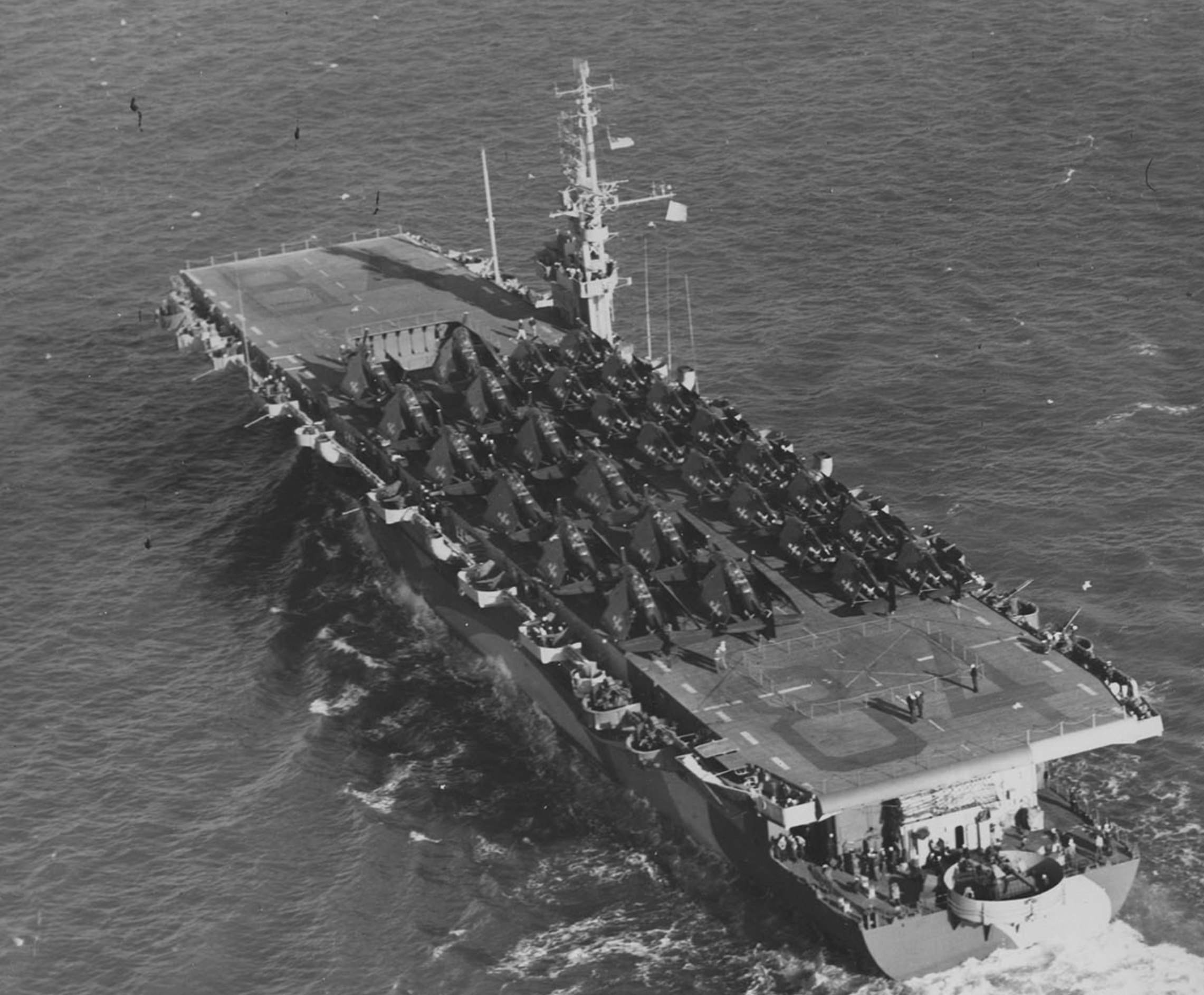
Gordon and his shipmates serviced escort carriers (small carriers that carried around thirty planes, like Emerald Bay (above), during the height of the kamikaze attacks off Okinawa. Thirty-four Navy vessels were sunk and over 280 damaged during the last, desperate battle of the war. The little carriers that were Escambia’s responsibility escaped and launched a series of airstrikes on the island. Both Escambia and Emerald Bay were based at Ulithi, where Gordon, according to legend, experimented in the distillation of medicinal beverages.
Above: The Ulithi anchorage; Gordon in high school; USS Escambia’s logo, designed by a Disney artist.
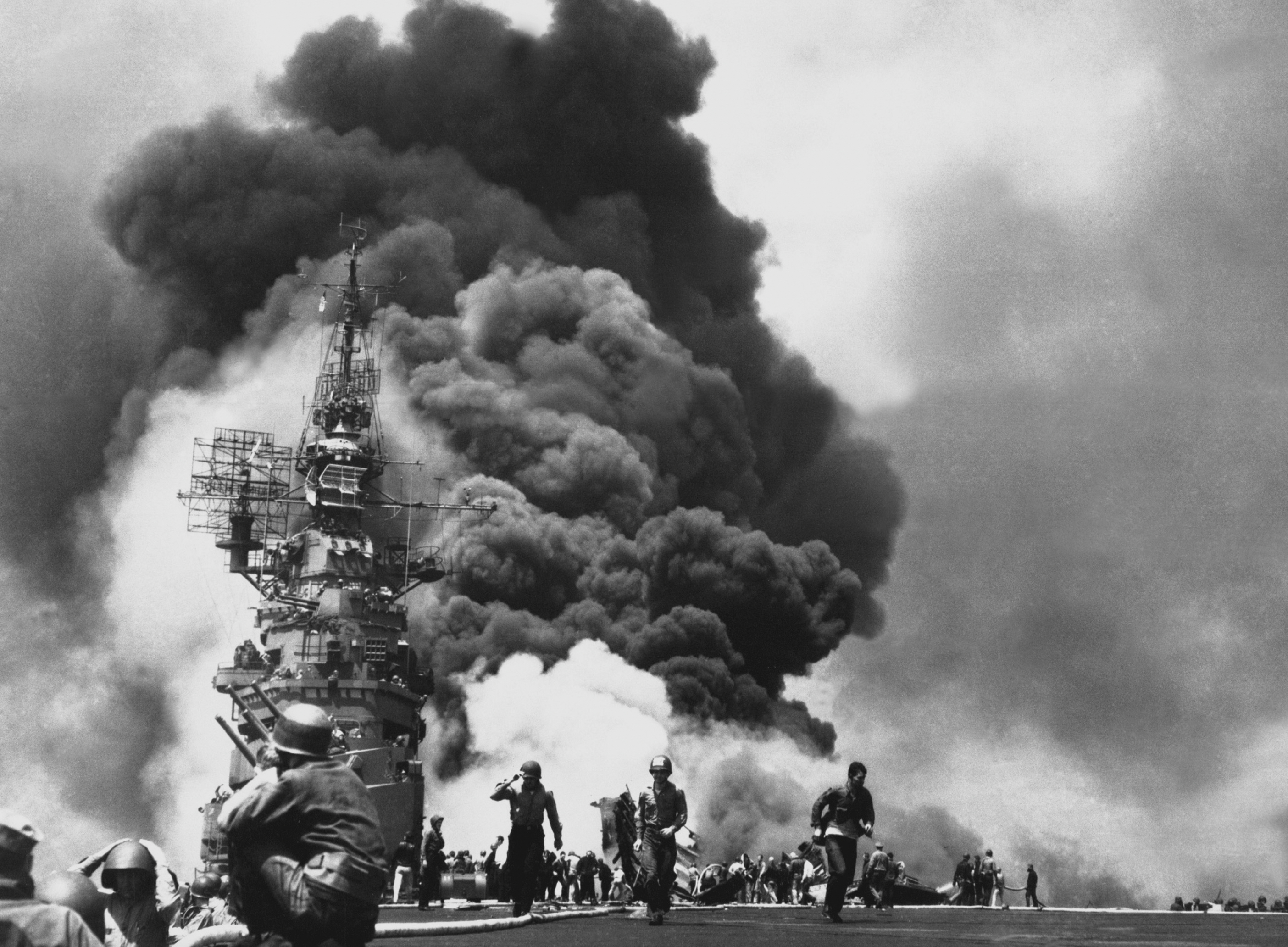
Which, given the ferocity of the kamikaze attacks, I might’ve sipped. The carrier Bunker Hill after once such attack, below.
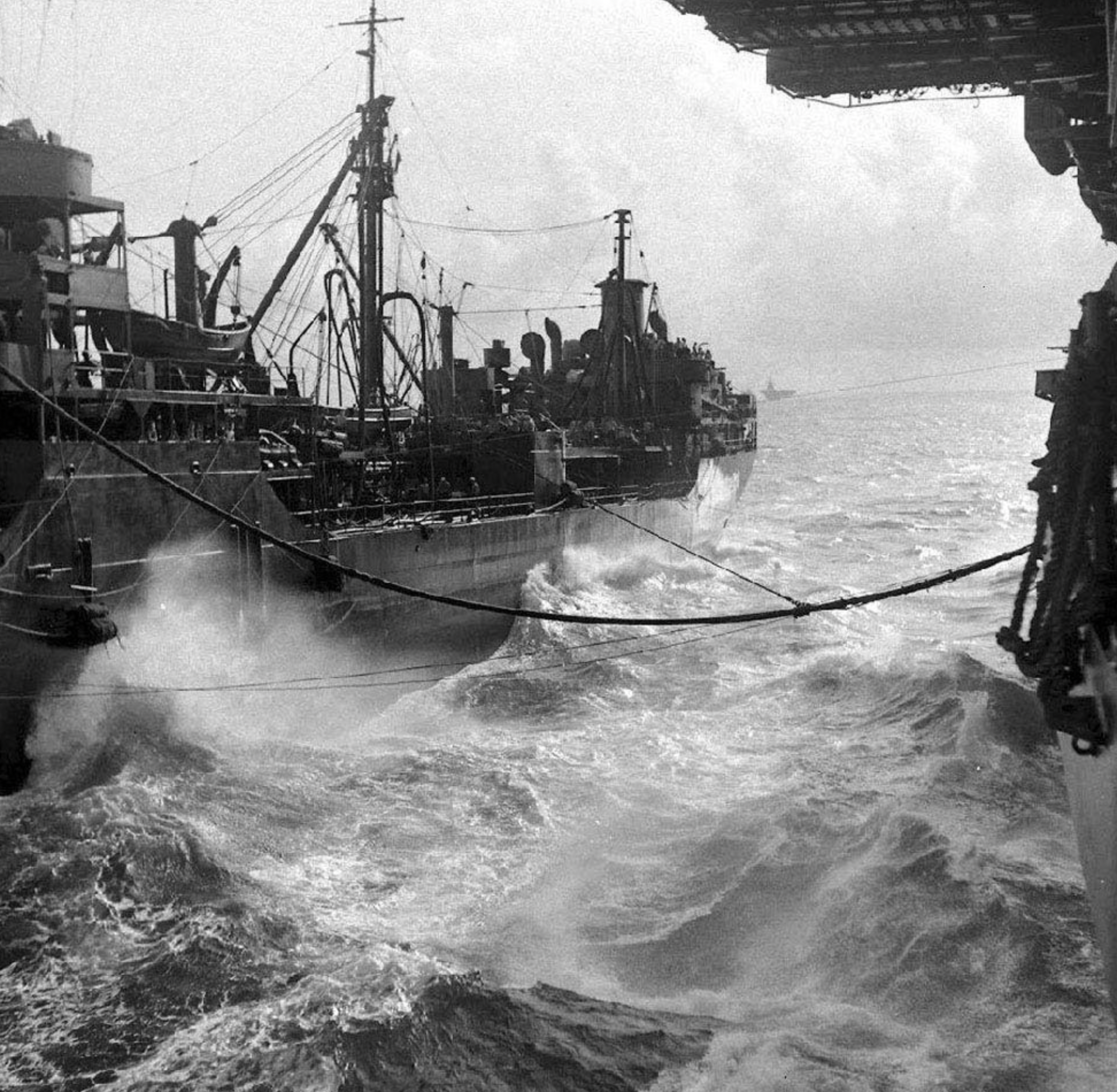
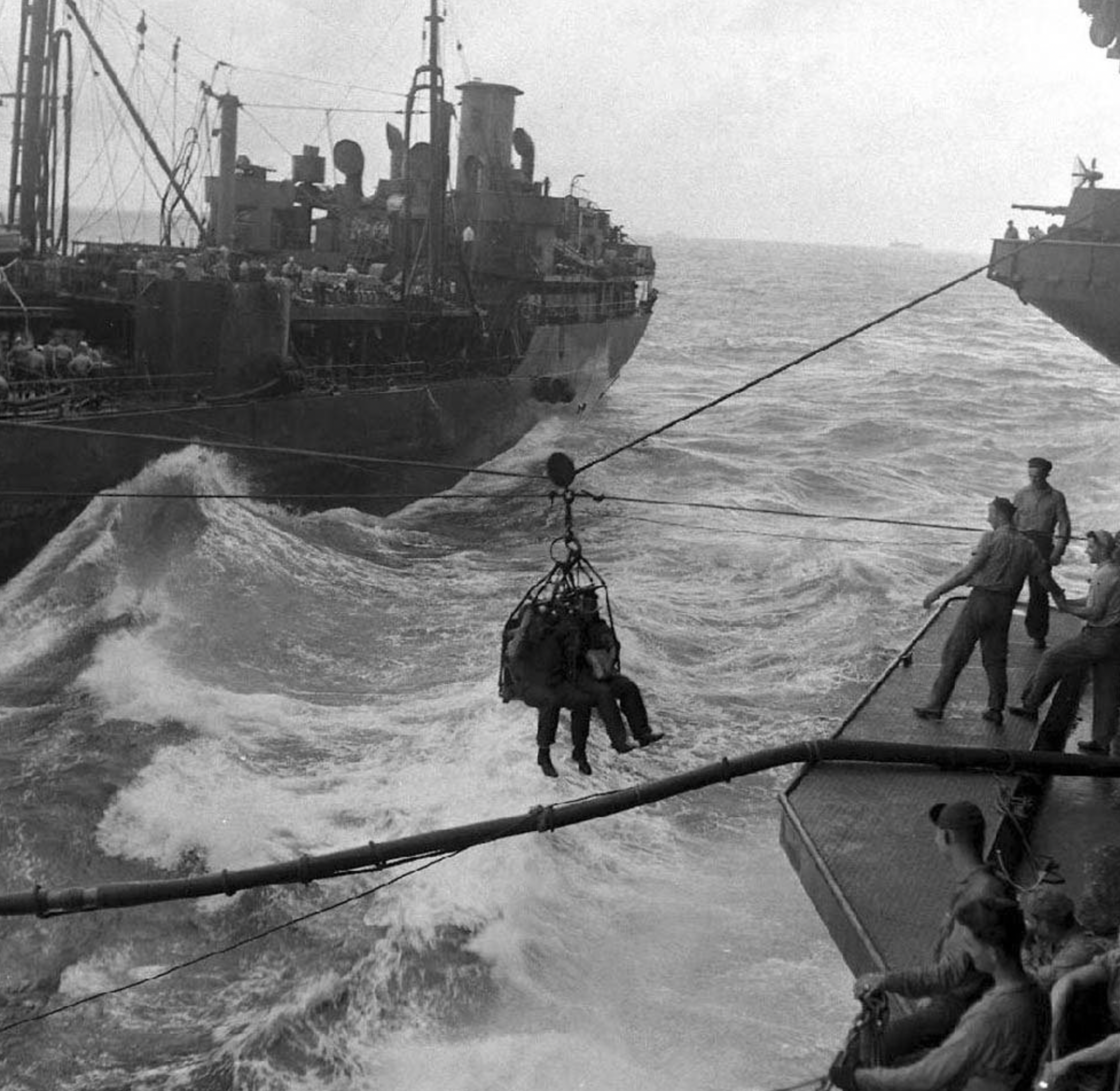
The sailors on the fleet oilers were tough men. Fueling at sea was smelly, dirty, and very dangerous. The two photos show a fueling operation between Escambia and the fleet carrier Ticonderoga in July 1945. The way Escambia sailors return to their ship, in that breeches buoy, does not seem safe to me, but my guess is that Gordon would have had his turn in the same kind of conditions.
Sadly, Escambia (below, about 1950) would be used by, of all institutions, the United States Army during the Vietnam War as an auxiliary power plant. Transferred to the Vietnamese government in 1971, Gordon’t ship was scrapped.
Happily, Gordon came home safe. So did his cousin, John. They had many years of storytelling ahead of them. Gordon, in my classroom, fueled the imaginations of the young people who were high-school juniors in 2003, just as Gordon had been in 1943.
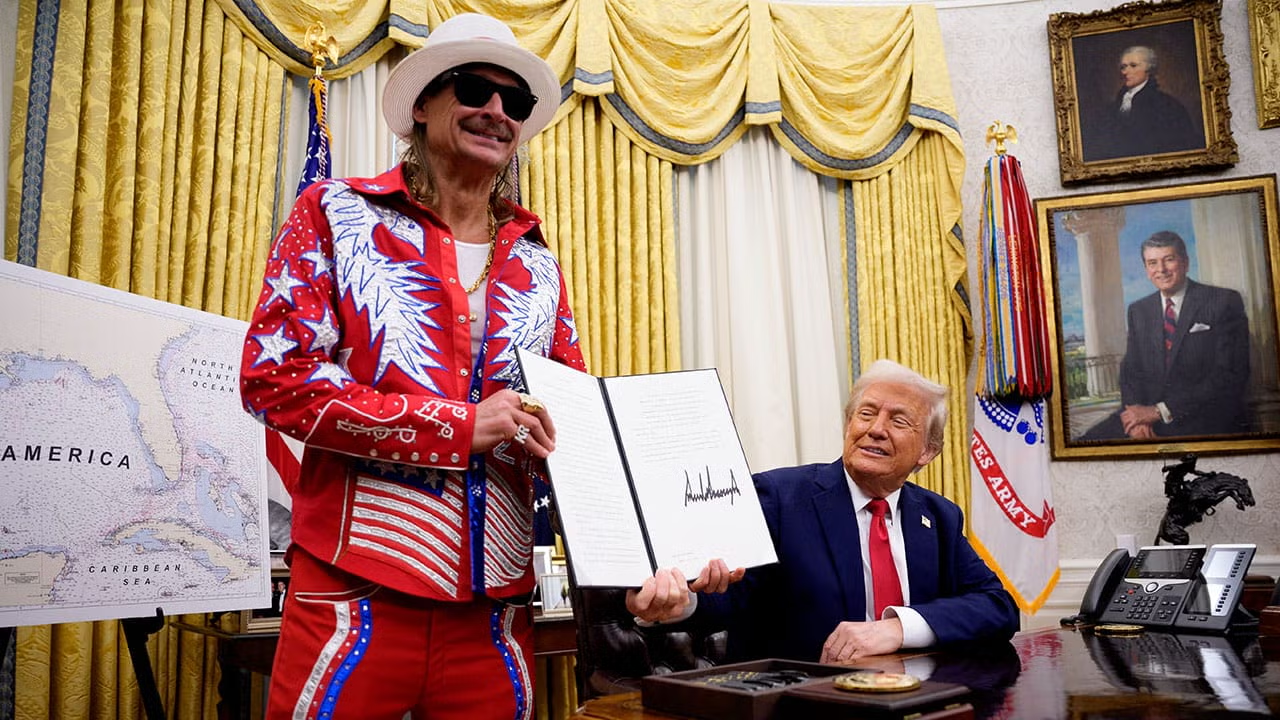
President Trump’s latest attack is on the Smithsonian Institution, which he excoriates for exhibits that demonstrate “improper ideology.”
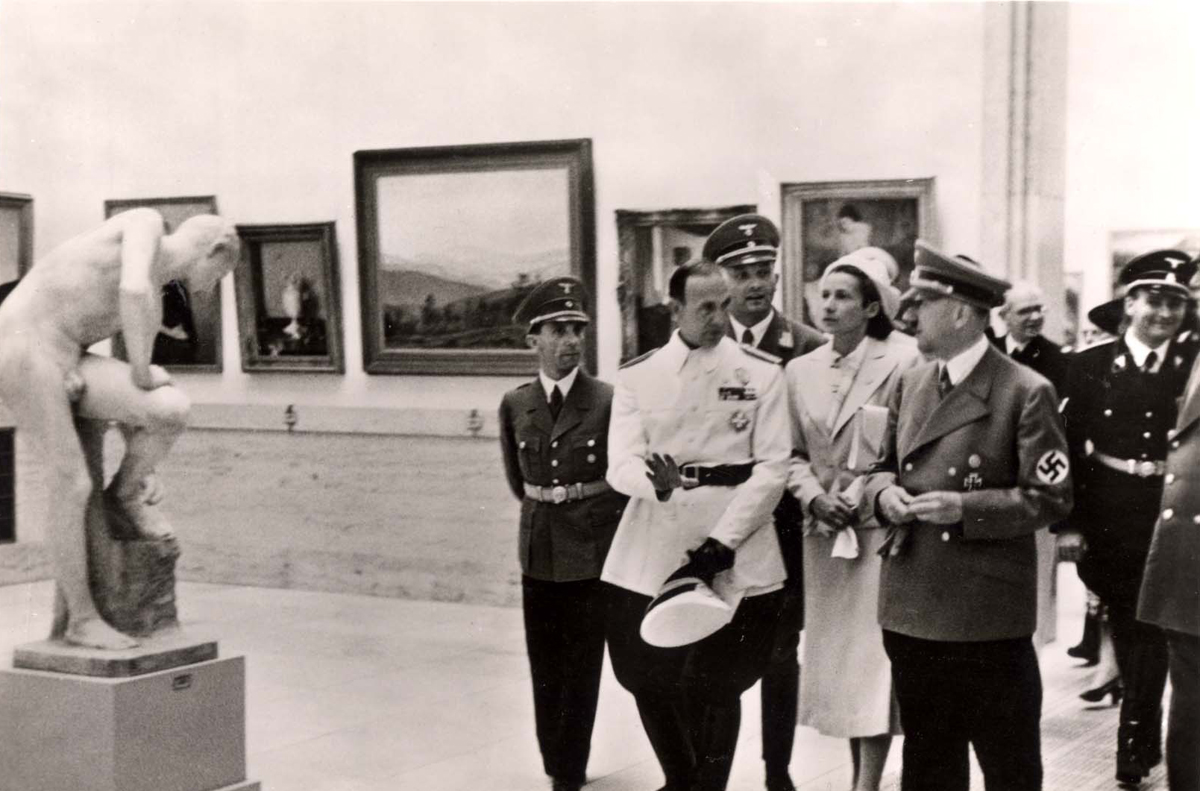
I’ve spent forty years teaching and writing history, and those words first brought to mind the Nazi “Degenerate Art” exhibition in 1937 Munich.
In that exhibition, the “degenerate” artists included Paul Klee, Otto Dix, Wasily Kandinsky, foreigners like Grant Wood, Marc Chagall, Pablo Picasso and Piet Mondrian.
The Degenerate Art received a showing that year, but so did properly ideological Nazi art, dominated by great nude sculptures that celebrated Aryan beauty. They were in another gallery, far grander, gallery.
Two million Germans ultimately attended the Degenerate Art exhibition. About 600,000 attended Hitler’s Große Deutsche Kunstausstellung—“Great German Art Exposition.”
If you’re in the mood for Aryan nudes, they were inert in the Great German Art Exposition. They are far less so in the first ten minutes of Leni Riefenstahl’s “Olympica,” the filmmaker’s tribute 1936 Berlin Olympics–what we Americans remember as the Jesse Owens Olympics.
But not even Jesse Owens nor Paul Klee could stop the immense, and immensely seductive, power of fascism. It was simply too late.
And it might well be today.
In the links: An excerpt from “Olympia;” a long-ago lesson plan on modern art from AGHS that includes some of the “Degenerates.”
Thirty years ago, this pilot, Kara Hultgreen, became the first Navy fighter pilot assigned to an aircraft carrier. She died in a crash in 1994. Naval and military aviation is dangerous.
Twenty-eight women pilots died in World War II at a rate, if you need to know, and I think you do, far, far below their male counterparts, like the twenty-year-old air cadets who came to these women for flying tips. I’ve written about these women. They matter to me.
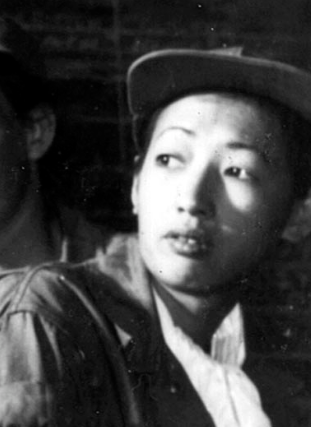
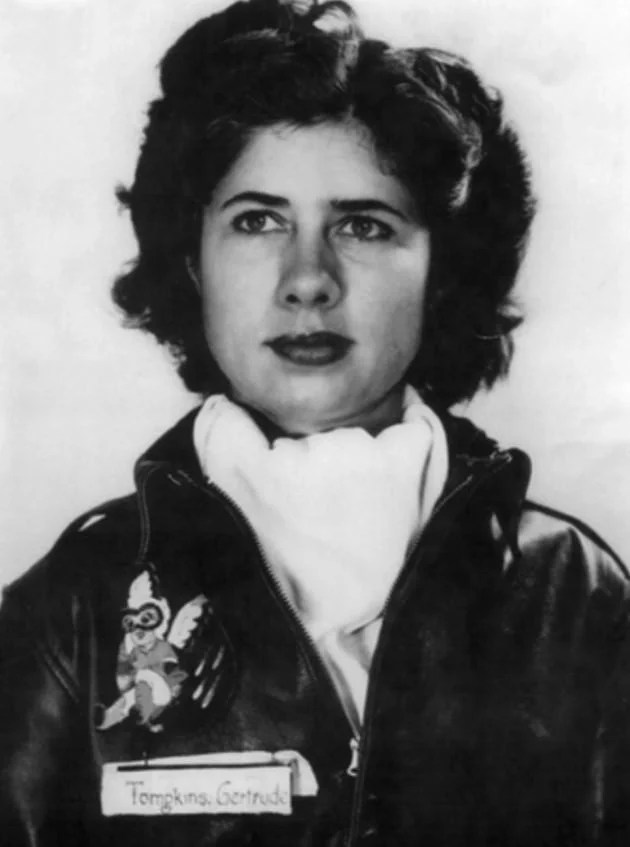
(Above) World War II pilots Betty Pauline Stine (Santa Barbara High School); Hazel Ying Lee and Getrude “Tommy” Tompkins, all killed in 1944. Tompkins and her fighter plane, the elite P-51 Mustang, have never been found after disappearing in fog above Santa Monica Bay.
Last July, another Navy pilot became the first woman to score an air-to-air victory, shooting down a Houthi Drone over the Red Sea. She flew her F-18 Super Hornet off the USS Eisenhower’s flight deck.
Her name has never been revealed, for security reasons.
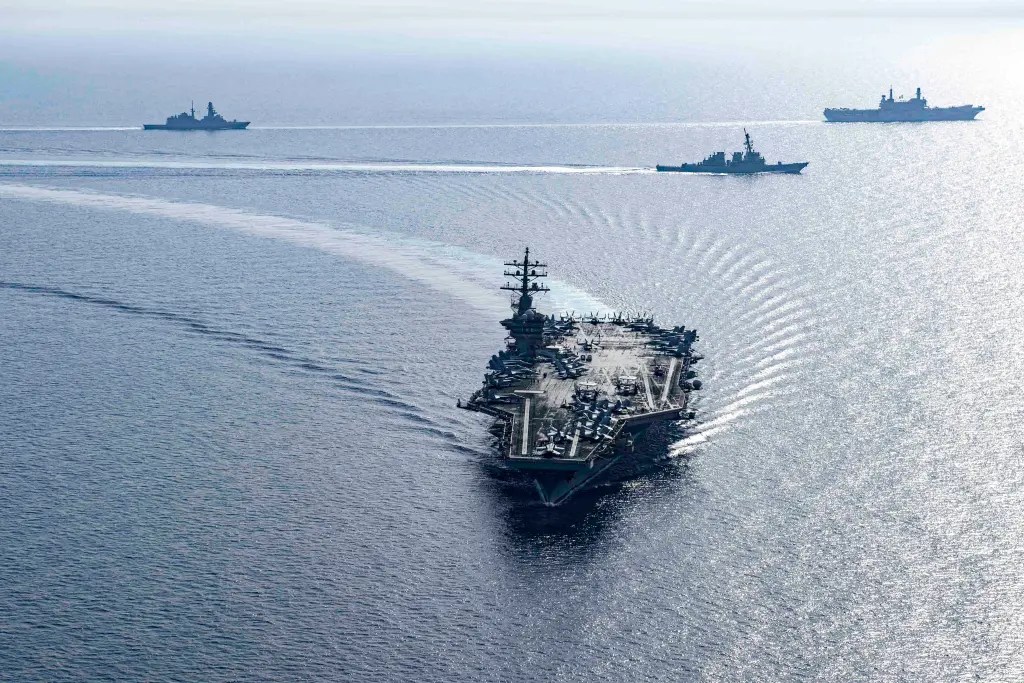
Above: Eisenhower and her escorts; an F-18 Super Hornet at the moment it breaks the sound barrier.
Today’s Cabinet meeting, after stunningly stupid bureaucrats at the top of the food chain had accidentally revealed the plans for this year’s strike on the Houthis, was, well, stunningly stupid. They blamed the editor of one of America’s oldest and most prestigious magazines— the “failing poet” Walt Whitman published in The Atlantic, for God’s sake—for the incident. In fact, the editor refused to publish the details because that might have cost the lives of young Navy pilots.
After the Airing of Grievances and the Feats of Strength and the Condemnation of the Principled, the bureaucrats at the top of the national food chain abased themselves in the presence of the president. The president’s national security advisor (the fall guy, even moreso than the Secretary of Defense, an alcoholic sexual predator) for this carelessness in the matter of young fighter pilots’ lives—delivered a speech so fulsome in its praise that the president became nearly Christlike. The president enjoyed this. Everyone around the Big Peoples’ table applauded.
A marked contrast in tone was adopted by the Secretary of Defense. At the time of the meeting, Pete Hegseth was landing at Joint Base Oahu. This is not a well man.
The day after this ad hominem attack, the editor of The Atlantic revealed the content of the texts exchanged. It became clear that none of the Cabinet or Cabinet-level bureaucrats is well. Not a one, including those who posted little flame emojis as the Houthis and their girlfriends were being incinerated.
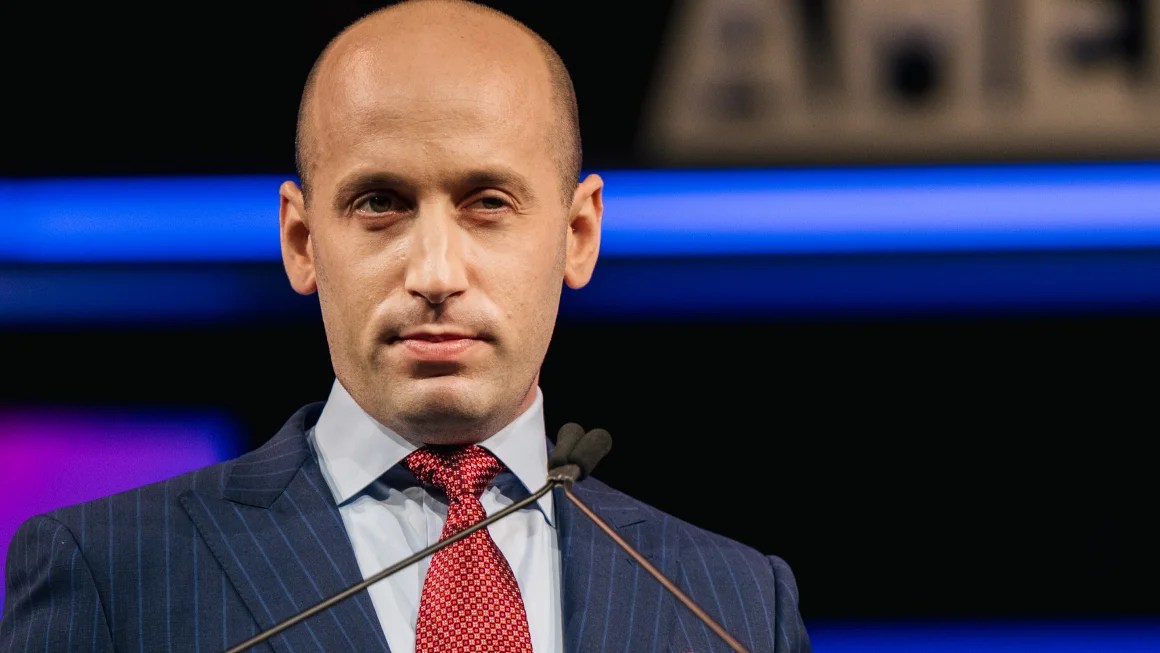
What also became clear is how terrified all of them are of presidential advisor Stephen Miller, whose go-ahead set the attack into motion.
Not even Scrooge’s ghosts could redeem Stephen Miller, America’s Martin Bormann.
Miller has no military credentials. He does make war, however, on elderly Americans, nonwhite Americans, working-class Americans, teachers, judges, journalists, and on what Jefferson Airplane called, in the song “White Rabbit,” Logic and Proportion/Fallen sloppy dead.
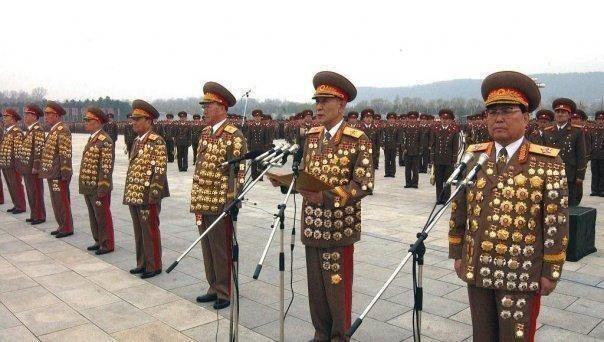
While it was an American history moment, the Cabinet meeting was far more remindful of Stalin or Dear Leader, North Korea’s Kim Jong Il. the father of the dictator that the president admires so much. In making 45/47 the infallible Captain of our Ship of State, the Cabinet, I think, secretly hoped for medals.
FDR was posing for a portrait at Warm Springs, Georgia, his “Southern White House,” in April 1945. The painter was flattering the American president, now beginning a fourth term that his intimates knew he could not survive. The “flattery” consisted of a proximate version of Roosevelt, with his great leonine head, albeit with more gray hair than the man actually possessed. The artist did not attempt to hide the dark circles under his eyes, sure markers of a presidency marked by economic calamity and war.
“I have a terrific headache,” Roosevelt suddenly exclaimed. He was dead the next moment, the victim of a cerebral hemorrhage. They were homely and mundane last words, but presidential speechwriters aren’t constant companions. Lucy Mercer Rutherfurd was FDR’s constant companion. She was the mistress Franklin had ostensibly put aside in 1918, when Eleanor found a packet of love letters between her husband and Lucy, her social secretary.
That day in 1945, Lucy was hustled away from Warm Springs before Eleanor arrived. It was the last indignity Franklin visited on her.
So even the powerful leaves messes behind them. Some die, though, with a brief moment of grace. William McKinley was visiting Buffalo, wearing his lucky red carnation in his lapel. He saw a charming little girl, stopped to unfasten the carnation to give it to her, and was promptly shot.
Fortunately, the “mess” that McKinley left behind was his successor, Theodore Roosevelt, who inherited McKinley’s imperialism but introduced the “Square Deal,” a program aimed at curbing the immense power of monopolies, protecting public health and establishing our system of national parks.
He was also, by the way, a wonderful father, with the possible exception of his imperious eldest daughter, Alice. I think there’s an explanation for that estrangement. Alice’s mother, also named Alice, died two days after giving birth to her in 1884. Roosevelt’s mother died the same day. TR dealt with the trauma by leaving New York and going West to become a cowboy.
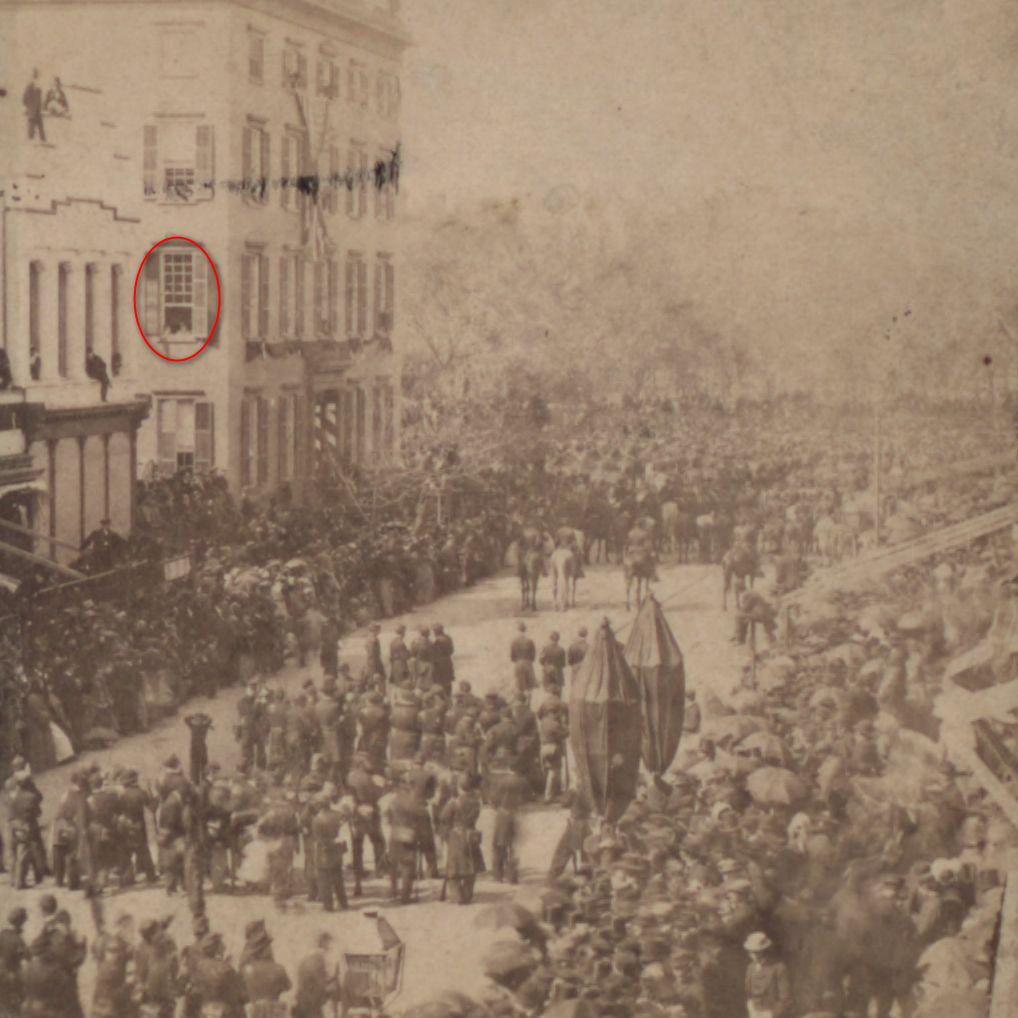
Theodore Roosevelt and his brother, Elliott—future father to Eleanor—watch Lincoln’s funeral cortege pass in New York City in April 1865.
Sometimes the last words that powerful men hear are mundane. At Ford’s Theater on April 14, 1865, Abraham and Mary Lincoln were holding hands like teenagers. “What will Miss Harris (part of a young couple who were their guests) think of us?”
Lincoln, I choose to believe, smiled. “She won’t think anything of it,” he replied. Booth then fired his derringer.
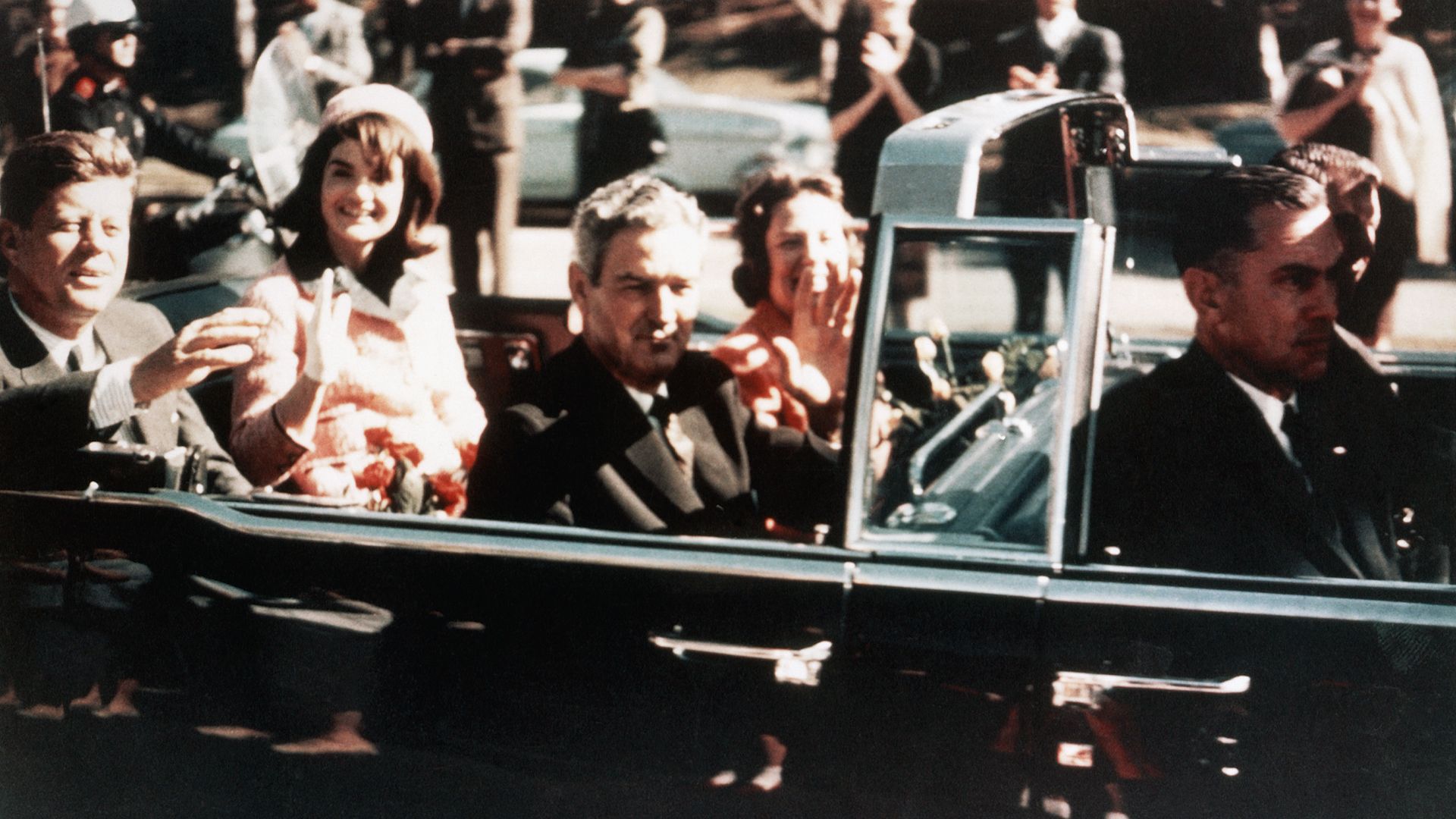
John and Jacqueline Kennedy, John and Nellie Connally moments before the assassination, Nov. 22, 1963.
A century later, John F. Kennedy was on a campaign swing in unfriendly territory in Texas. There threats against his life in a state where the right-wing John Birch Society and segregation were powerful institutions. To the Kennedys’ surprise, they got a warm sendoff in Fort Worth and, after landing at Dallas’s Love Field, Texans lined the streets for blocks waving flags, applauding, sometimes screaming “Jackie!”
The governor’s wife, Nellie, turned to Kennedy. She was beaming. They can’t say now that people in Dallas don’t love you, she said.
“No, they sure can’t,” Kennedy replied. What immediately followed was the first horrific image from Abraham Zapruder’s little Kodak film camera: the president’s arms jerked suddenly and violently upward, his elbows splayed, as the first bullet struck him.
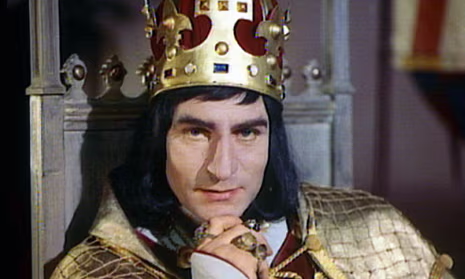
Sometimes the powerful are lucky in that they die the way they would want to. The much-maligned Richard III fell in battle at Bosworth Field, overwhelmed by forces commanded by a usurper, Henry Tudor, who became Henry VII. Shakespeare knew which side his scone was buttered on, and he was writing for a Tudor/Stuart audience, so he created, in Richard III, perhaps the most memorable villain in English literature.
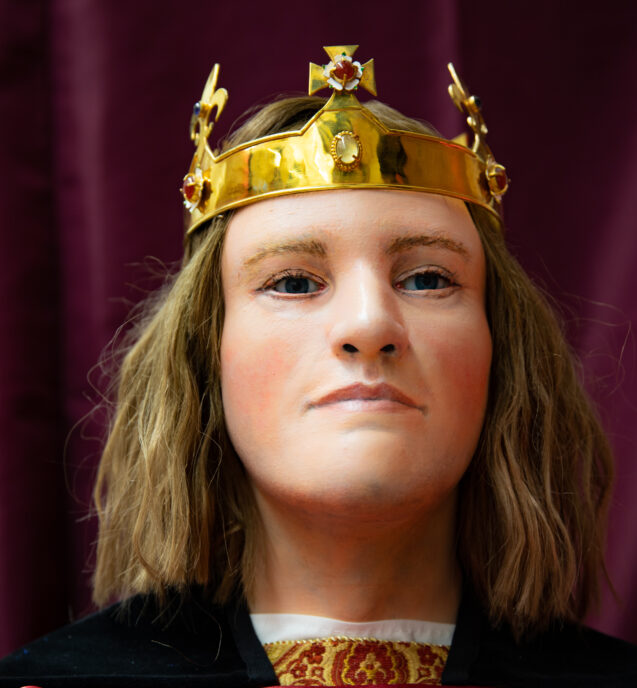
Richard, as the saying goes, was lost to history, except for every stage actor who would’ve killed to play him. (Laurence Olivier’s film version is especially delicious). Then, in 2015, a dogged researcher, Philippa Langley, led scholars to his burial site in Leicester, a city a, out thirty miles away from where the Gregorys came from. He was beneath what the British call a “car park” and what we call a parking lot. Gone since 1485, he was reinterred with honors, but not before forensic pathologists created the sculpture on the right: That is Richard III. They’ve even—somehow—reconstructed his voice, or at least his accent. He would’ve sounded remarkably like a farmer from All Creatures Great and Small.
Despite his restoration, in a way, to the 21st Century, there was a final indignity visited on the king in the 15th. His skeleton revealed a massive puncture wound at the base of his spine. It was postmortem. The Tudor forces, in short, had stabbed the king in the ass.
The point of all this? I love sushi, pasta, chiles rellenos. And dogs. And cats. And, most of all, my family.
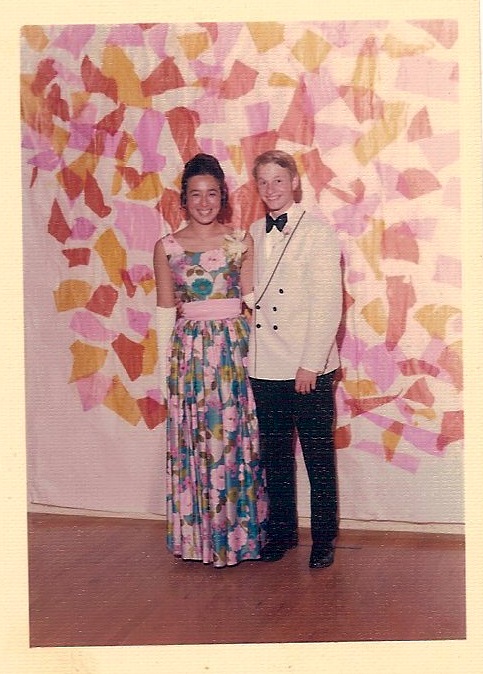
It’s struck me that write a lot about Japanese Americans. That’s Callie (Yamaguchi) Elliston and me at the 1970 Arroyo Grande High School Prom.
This is why.
Callie’s mother, Louise, known as “Dragon Lady” for her fierce protection of the Lucia Mar Superintendent—she was the District secretary–was unfailingly kind to me. She introduced me to cheesecake, which I first encountered at nineteen. Hers was magical. She and the Yamaguchi sisters introduced me to sushi, long before it was fashionable. It, too, was magical.
Many years later, due to a gross administrative error, I was named the Lucia Mar Teacher of the Year. That was for Louise.
What I owe the Hirase family is likewise beyond imagining. It was Joe Loomis and Larry Hirase who took me in after my beloved mother took her own life in 1969, when I was seventeen. Cancer takes some lives, heart disease others, and depression takes many more. Joe and Larry did me the favor on not considering me weird because of the manner of my mother’s death.
When I visited the Hirases’ home, there was a big fifty-pound sack of sushi-grade rice just inside the front door and a jeroboam of sake on the kitchen counter, an exotic counterpart to my family’s potatoes and bourbon.
I had entered a new world in which I felt completely at home.
In my home, on Huasna Road, in the late 1960s, my parents—brilliant, passionate, loving, terrifying, hopeless and endlessly inspirational–were beginning to come apart. They were beautiful. They were the finest parents anyone could’ve hope for; they made me who I am. So did staggering flaws in generations of DNA, Anglo-Irish, forged in famine, in Pennsylvania oilfields, in Missouri cornfields and milo fields and tobacco fields plowed by big, beautiful, powerful horses.
All of these were carried down to my folks, and so to me, by generations of men and women marked by integrity and fearlessness. And by failure.
My Dad, Mom, and my big sister Roberta, AGUHS ’60, who adores Reiko Kawaoka Fukuhara, whose sister, Stehpie, AGHS ’71, who died March 17.
When my mother died, I felt ugly. With the Ellistons or the Hirases, I felt restored. Kaz Ikeda corrected the uppercut in my baseball swing. Keith Sanbonmatsu and I were chosen to greet the U.S. Congressman visiting AGHS. The Fuchiwaki sisters, as another generation had been–at least before 1942 arrived—and all of them, our dearest neighbors, were taken away from us—were instrumental to the feel that made AGHS feel like home, just as AGUHS had been in 1941.
When I became an AGHS teacher, I taught three Kobaras, one Nakano, two Ikedas, four Hayashis.
So this is why I write so much about Arroyo Grande Japanese Americans. They are home. In some way—my friend Dennis Donovan gets this—this wee Anglo-Irish American belongs to these people, too. I am home with them. I am safe.
Aimee Mann. Love the song, love the hair, including that braid.
Still have to look up the lyrics. This is a mighty fine performance, from 2018, and it made me happy Nena can still bring it.
This song might seem slight. I would argue that it isn’t. Its popularity resurged after the Election of 2020. It was a nice thought. Patty Smyth? You BOUNCE, girl! You’ve still got it, too.
From 1985, Aretha. Pure joy. And Clarence Clemons on the sax.
Annie Lennox at the concert for Nelson Mandela, 1988. Wow.
The official music video. That bow. That hair. Dear Lord, that RANGE. Sigh!
Here performed twenty years after its 1982 release, the Pointer Sisters’ “I’m So Excited” is so electric. It’s pure joy.
Finally, and I actually will quit now, there is this group. The song was written by Prince. I have never recovered from my crush on the singer, Susannah Hoffs, who is 65 going on 66. Shoot, I’ve got TIES older than that.
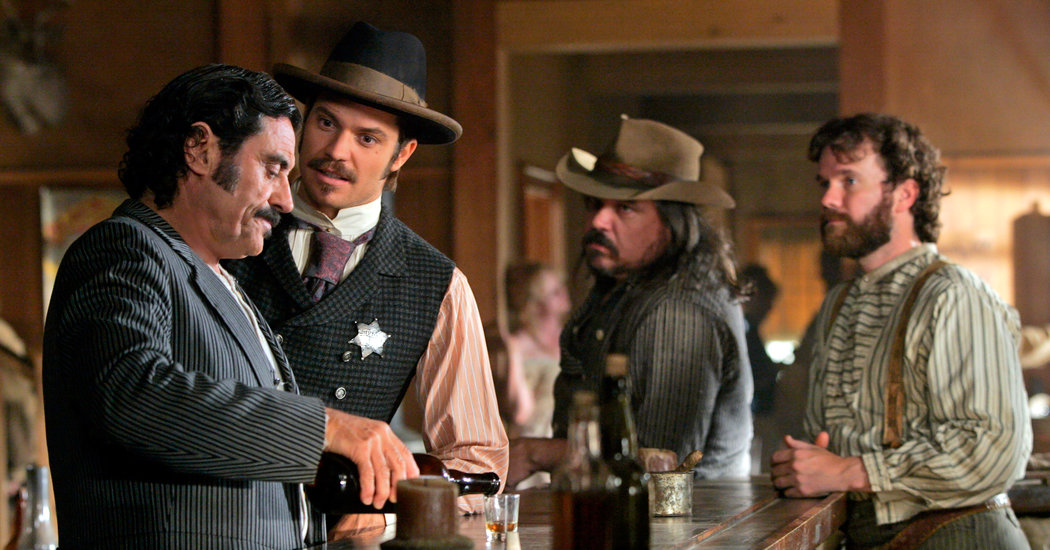
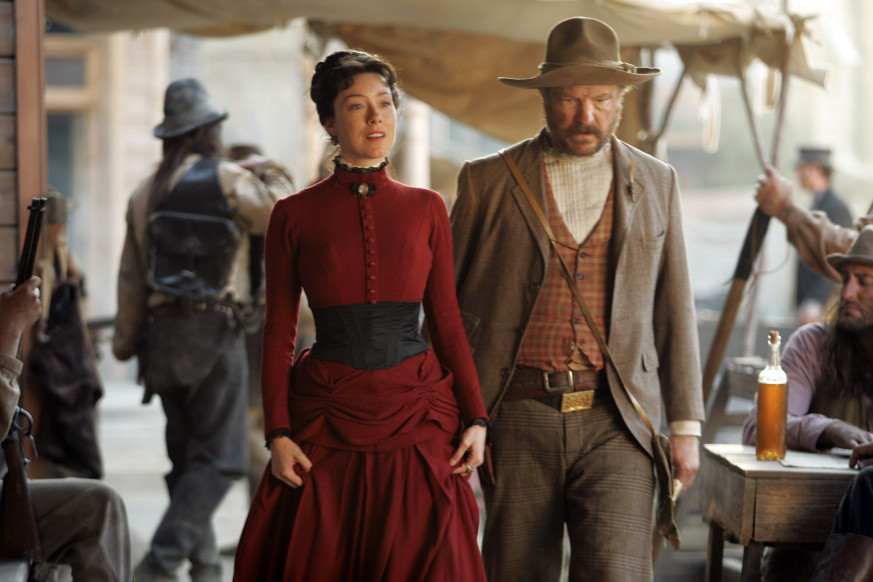
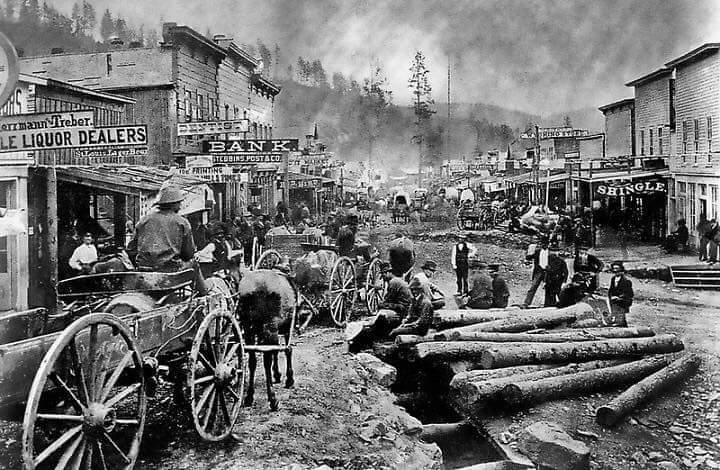
I am now on Day Five of said rotten cold, so thank goodness it coincided with HBO re-running its Western Deadwood, with its elegant Shakespearean dialogue punctuated by frequent “f___s.” and “c_______ers” It’s the only Western I’ve ever seen that demands a libretto, so you can have the time after to deconstruct the dialogue, rich with philosophy and with honeyed insults that are almost inscrutable.
My favorite character, of course, is Ian McShane’s deceptively admirable barkeep, Al Swearengen. Al, a pimp, hustler, thief, murderer and moderate drinker—he’ll limit himself to three shots at a time before he takes a pause–is magnificent. He is, as the mythologist/philosopher Joseph Campbell said of Han Solo, “a hero who doesn’t know he’s a hero.” Yes, he disguises it well, “Irascible” is Swearengen’s best mood. The rest of him would make Machiavelli blush.
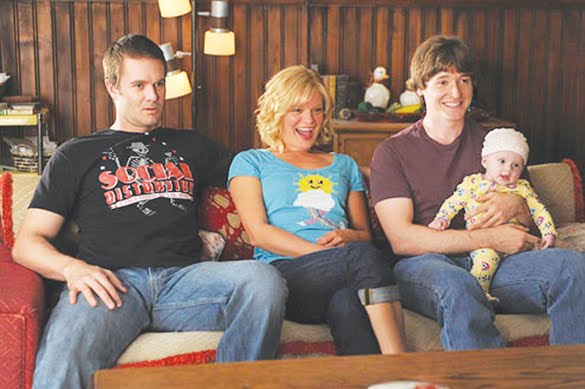
I was sick enough this time to notice that another actor, Garret Dillahunt, appears twice. Dillahunt was the hapless but adorable grandfather figure in a charming sitcom, Raising Hope, centered around the little girl that a working-class family is trying to raise up right. Dillahunt had all kinds of problems, including a certain intellectual density, but his failures (fruitless schemes, minor dishonesty, brain farts) were mitigated by his devotion to his family. He was wonderful.
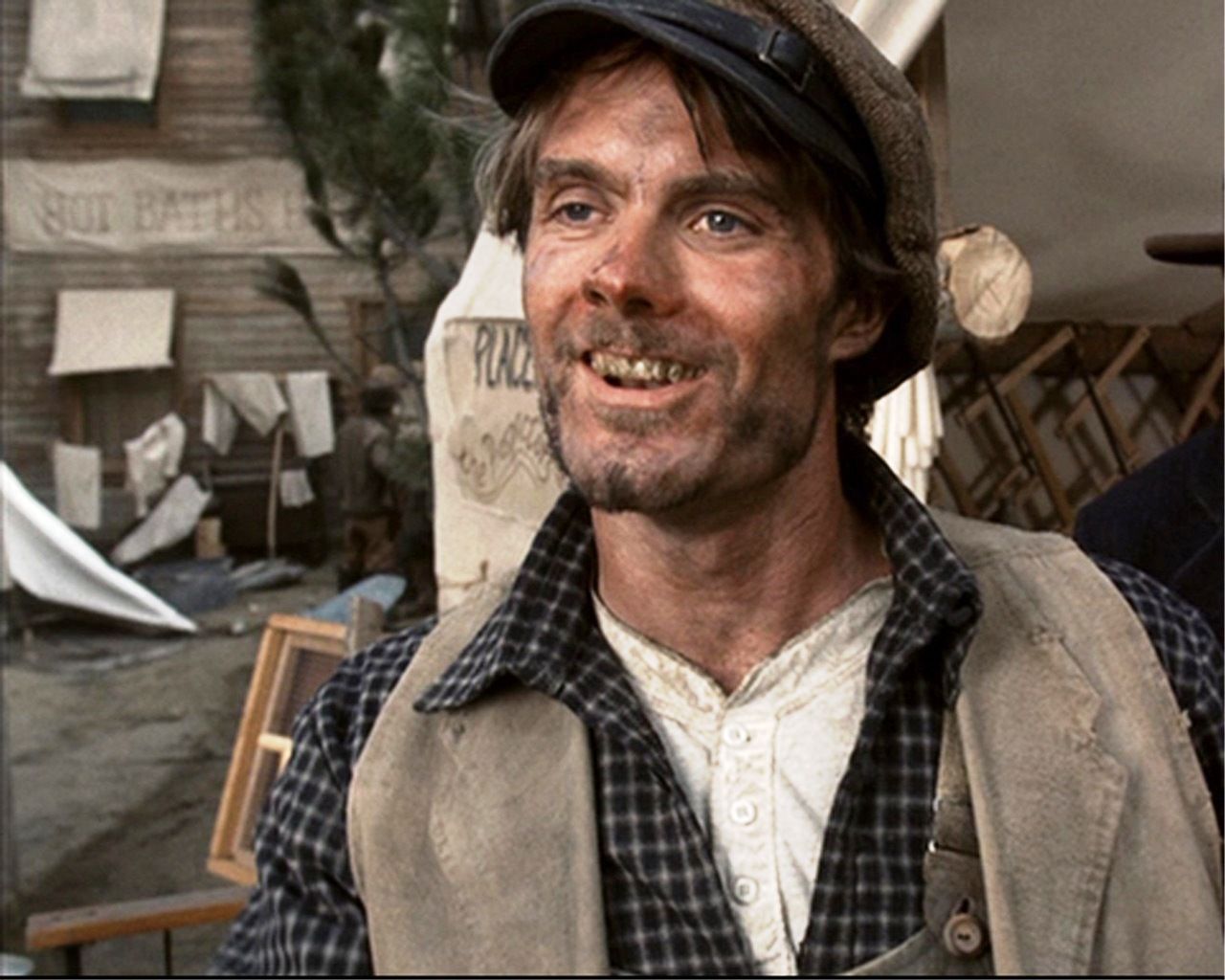
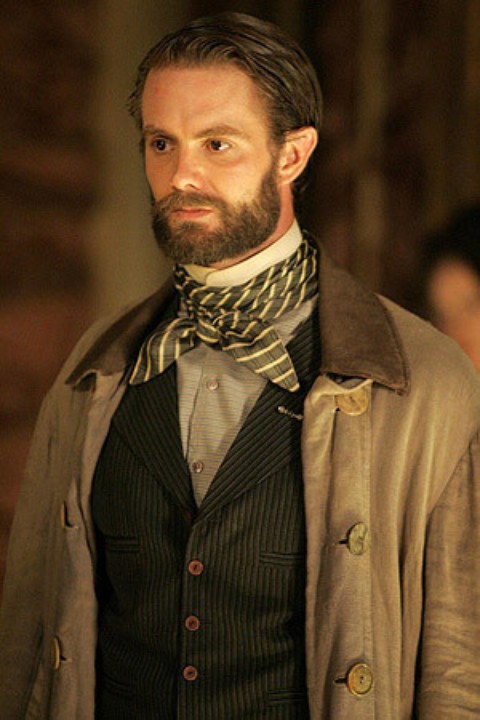
In both the Deadwood roles I’ve seen so far, Dillahunt was a miserable human being. Early in the miniseries, he was the drunk Jack McCall (at left) badly in need of dental work, who shot Keith Carradine’s Wild Bill. Midway through the series, he reappears as a smooth and silky agent (at right) for the ruthless silver baron George Hearst, and his job is swindling miners out of their claims. His avocation—he is a psychopath–is murder; his victims are the prostitutes he kills with a straight razor. He is as much a bastard in this show as he was a sweetheart in Raising Hope. That’s fine acting.
As to the primary cast, there really was a parallel to Timothy Olyphant’s sheriff, Seth Bullock. His name was Seth Bullock, and in his time (1849-1919) he really was a sheriff, a U.S. Marshal and he really did operate a hardware store in Deadwood. There was, of course, a real Calamity Jane, a real Swearengen (crueler, had to believe, than McShane’s character), a real Sol Star (born in Bavaria), and so on.
McShane is my favorite, but alongside him I admire the prostitute Trixie and Brad Dourif’s town doctor.
Another detail that struck me today was the peculiarity of Olyphant/Seth Bullock’s walk. As soon as he leaves the hardware store or his home, he claps his felt hat atop his head and he elevates to his full height. His walk, then, is fluid but stiffly upright. He walks narrowly, too, down the street, as if to avoid passing bullets.
I’ve seen this walk before. I think Olyphant is paying tribute to Henry Fonda. Fonda had abnormally long legs, championed by John Ford in My Darling Clementine, Ford’s wildly extravagant version of the Wyatt Earp story. I’ve written about those legs before, but let me show you, rather than tell you.
You can see, albeit briefly, the same kind of walk as Bullock and Wild Bill confront a man who’s murdered a family—the only survivor is the little girl he missed— outside Deadwood.
I even decided to take the “Which Deadwood character are you? I came up as Whitney Ellsworth, a prospector and gentleman who comes to the aid of Alma, Seth Bullock’s onetime lover. He proposes marriage to her to legitimize her pregnancy, but she demurs, goes back to the dope and Ellsworth, one of the few townies with the courage to stand up to George Hearst, is shot dead by Hearst’s gunmen, probably Pinkertons. Yup. It fits.
I can get through one episode at a time of the Spielberg/Tom Hanks series Band of Brothers, which speaks more to me because my Dad was an Army officer in Europe. Sometimes I can’t get that far in The Pacific. It’s so harrowing that I don’t know how any Marine came home undamaged. I don’t imagine that any did.
I read, many years ago, With the Old Breed, by Eugene “Sledgehammer” Sledge, a character in the miniseries, and the historian/biographer William Manchester’s account of his war service, Goodbye Darkness, and both left me deeply troubled. That’s exactly the impact they should’ve had.
Somehow, thanks to the work of computer artists and the incredible composition, “Honor,” by Hans Zimmer, the opening credits to the miniseries are strangely and surpassingly beautiful.
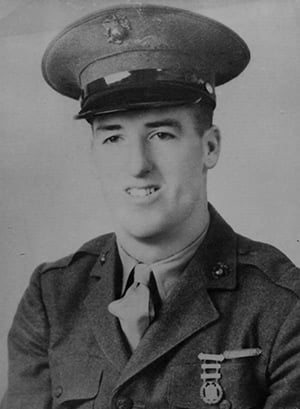
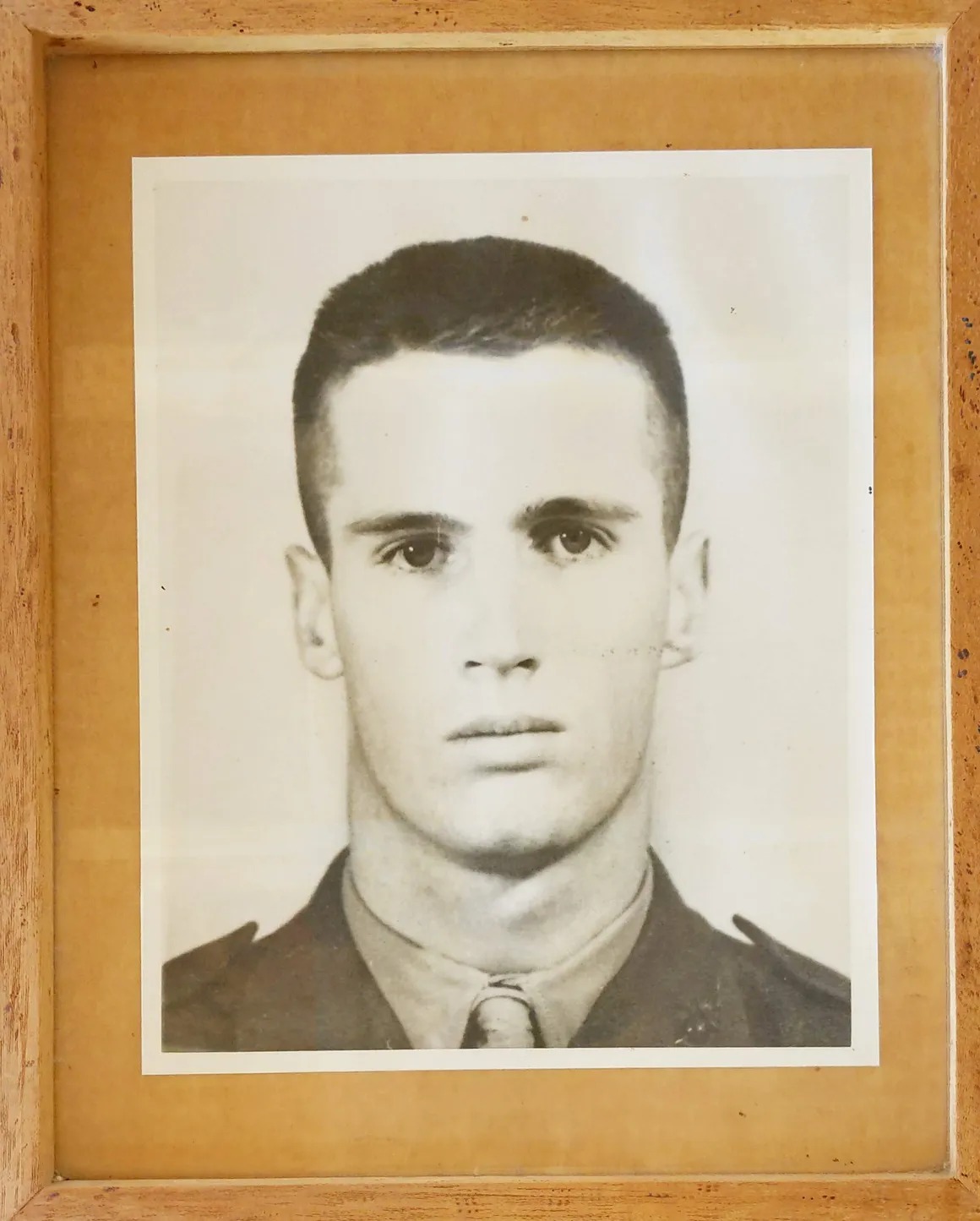
But it remains a disconnect in my spirit, to imagine what young men from my hometown went through. There were other Marines, but here are five who resonate for me.
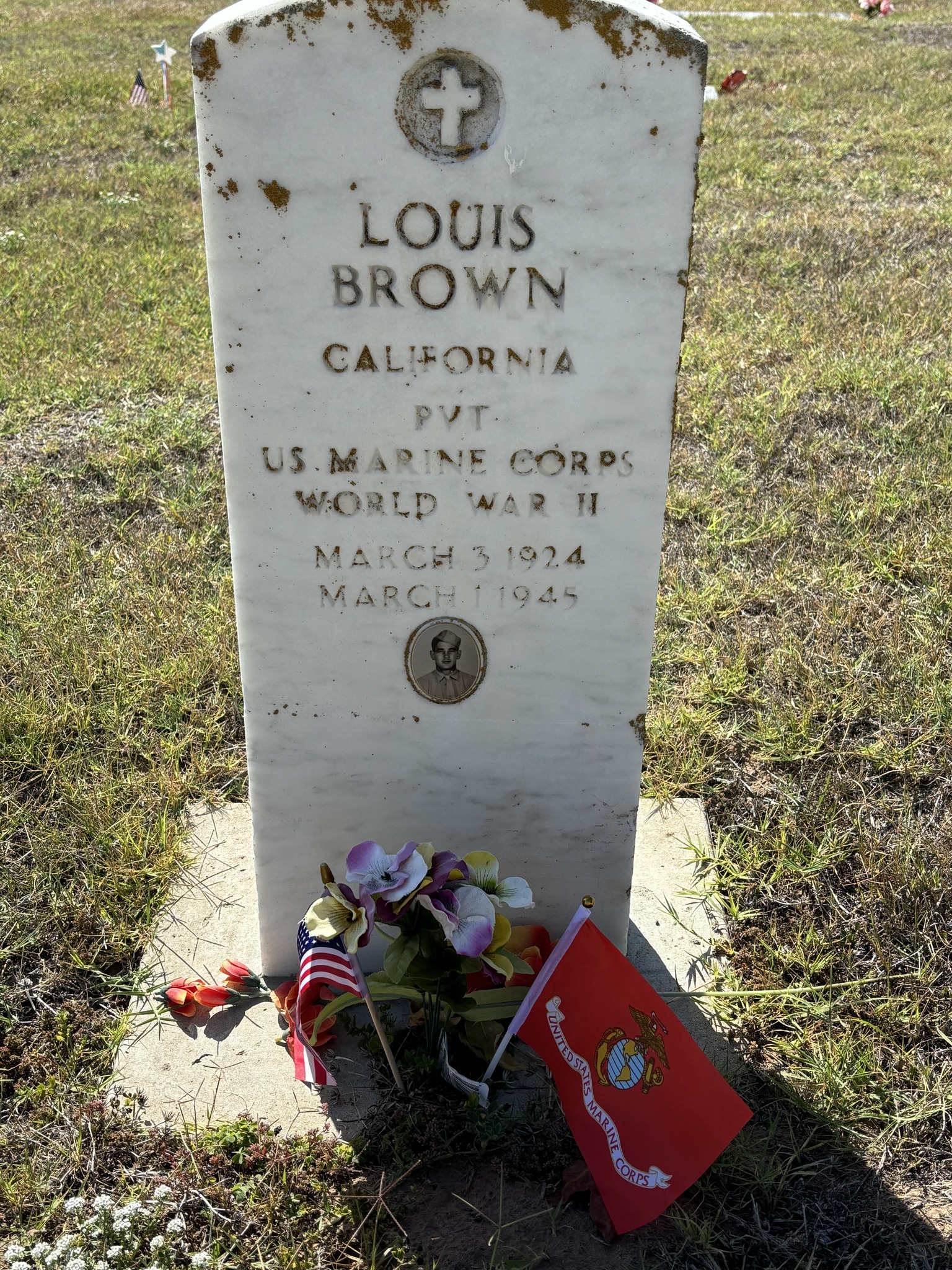
Louis Brown, killed on the beach at Saipan in 1942, finally came home to his mother in 2017.
Archie Harloe, son of the schoolteacher, was part of the invasion Saipan. He survived, but Marines watched, horrified, as islanders leaped to their deaths from ocean cliffs. They’d been told the Americans would torture them.
Louis Brown, the son of a Corbett Canyon farmer, an Azorean immigrant, stepped on a Japanese on Iwo Jima. Cause of death: “Burns, entire body.” This is the young man who, on finding his grave, started me writing books. What I owe him is beyond measure.
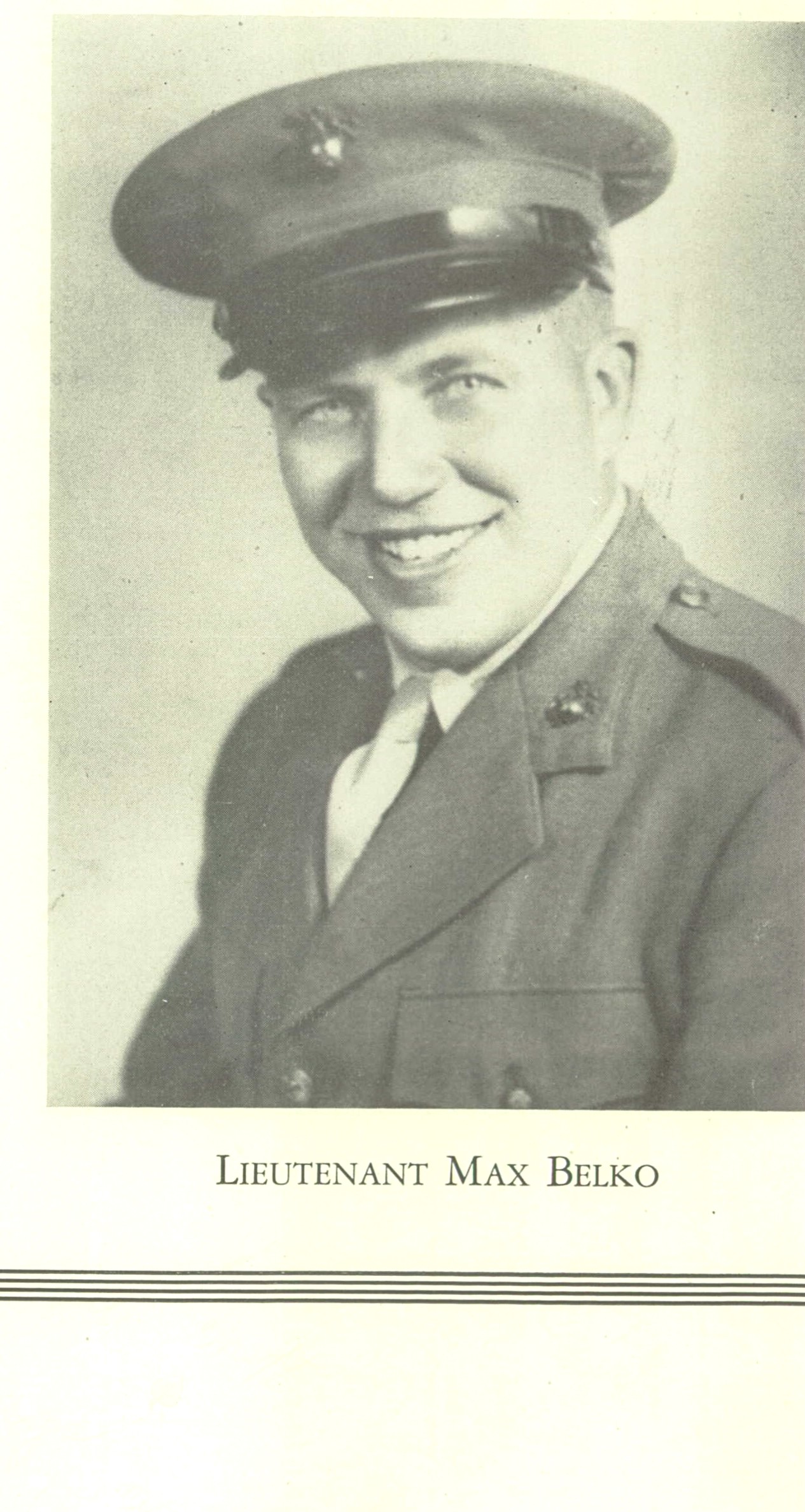
Lt. Max Belko, a USC All-American football player, became a P.E. teacher and football/basketball coach at Arroyo Grande Union High School–his kids would’ve played in today’s Paulding Gym. He was killed on the beach in the invasion of Guam.
John Loomis, AGUHS ’44, joined the Marines so he could get into the war before it ended. He did, at Okinawa, one of the costliest battles in the Pacific. He survived to raise the daughters and the son who would be among my closest friends growing up.













 A Work in Progress