How has history influenced my life?

Tags

, , , ,

This is a first draft–most of it borrowed from other writing of mine–of remarks I’m to give for the History Center of San Luis Obispo on October 19 at the beautiful octagonal barn just south of town.

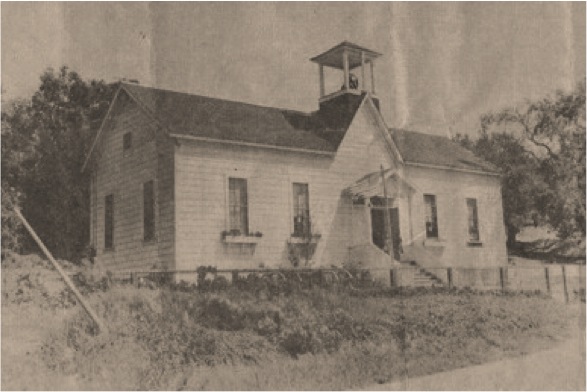
I began my formal education in a two-room schoolhouse in the Upper Arroyo Grande Valley that had been built in 1888. Some of our desks still had inkwells. A two-cubicle outhouse was our restroom. One day a mountain lion came down from the hill above the schoolhouse and sniffed around our baseball field.
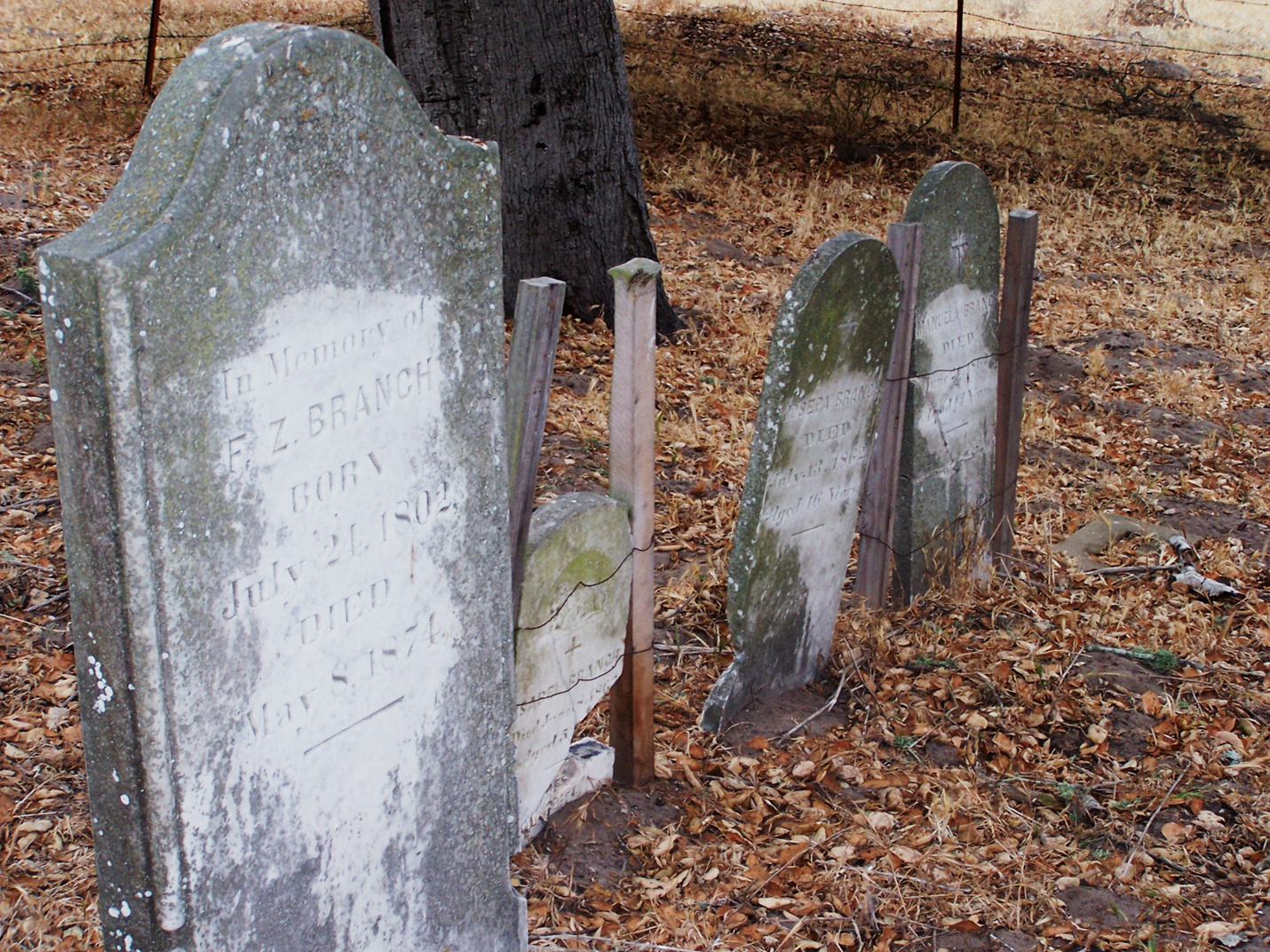
Just over the hill was a little family cemetery that contained the graves of the Branch family, rancheros and founders of Arroyo Grande. Mr. Branch, who died in 1874, is buried beside three daughters, all taken by smallpox in the summer of 1862. And nearby are the graves of a father and son, suspected killers, lynched from a railroad trestle over the creek in 1886.
I had no choice but to become a history teacher. Later, I had the chance to write books about the history—local history—that I love so much.
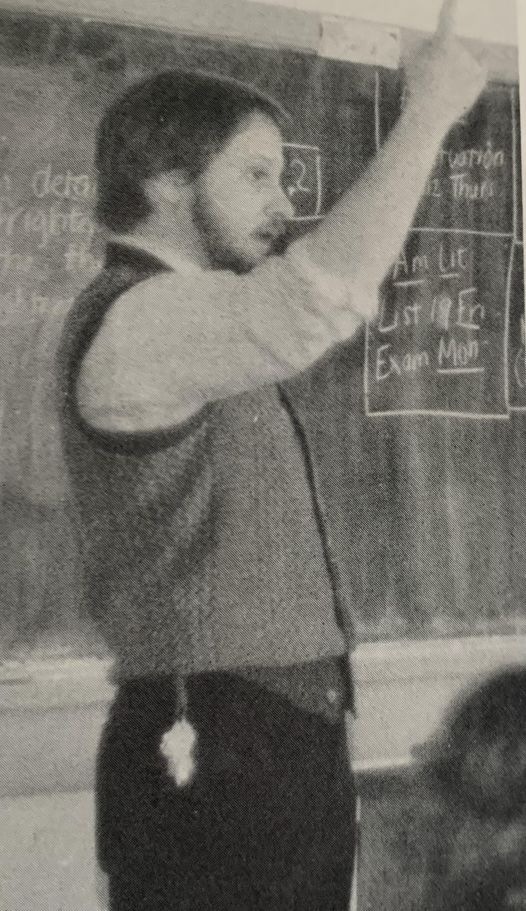
Me, teaching, I guess, at Mission Prep. It’s probably Civil War-era, either Whitman’s poem “Crossing Brooklyn Ferry” or Little Round Top on July 2 at Gettysburg.

The lynch mob’s victims, a father and his fifteen-year-old son, led to a book about San Luis Obispo County outlaws.

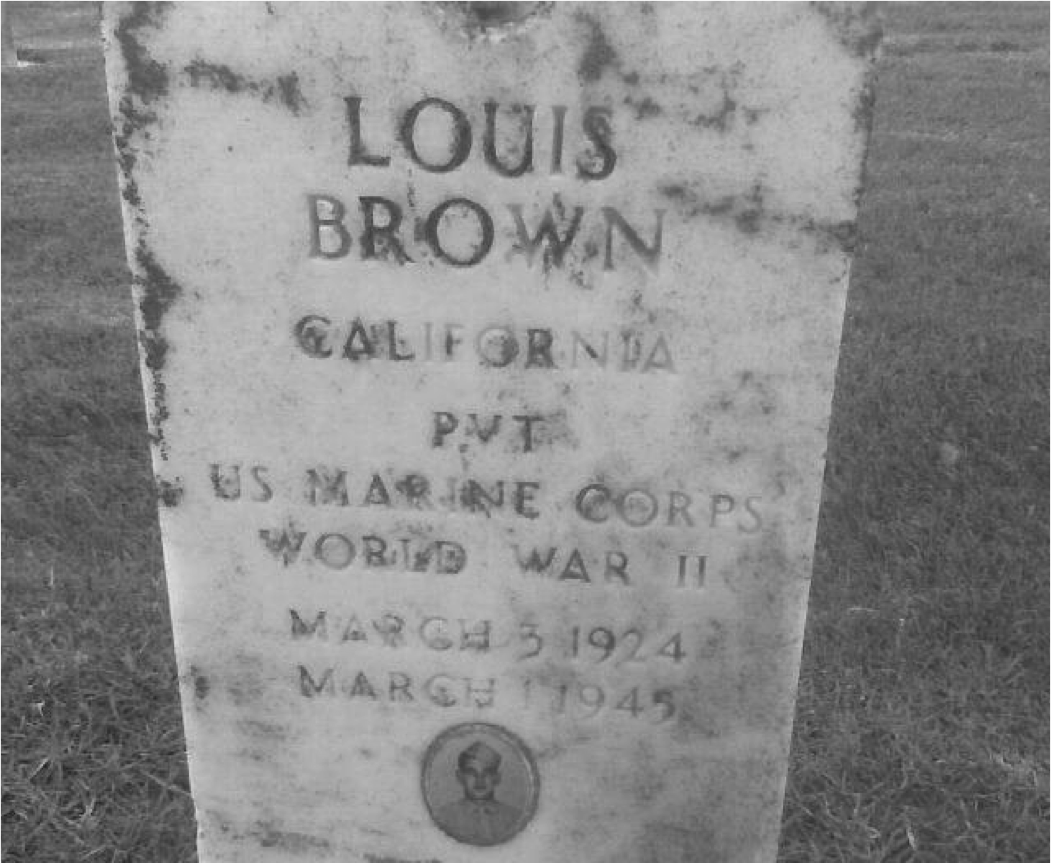
Finding a Marine’s tombstone—he grew up in Corbett Canyon and died on Iwo Jima three days short of his twenty-first birthday—led to a book about World War II.


My father was Madonna Construction’s comptroller. He took my brother Bruce and me on  an airplane with him once—I was six—while he bid a job in Marysville. The plane was Madonna’s twin-engined Aerocommander; the pilot was Earl Thomson, co- founder of the county airport. I was enthralled by that trip. Sixty years later, it led to a book about Central Coast aviators in World War II.
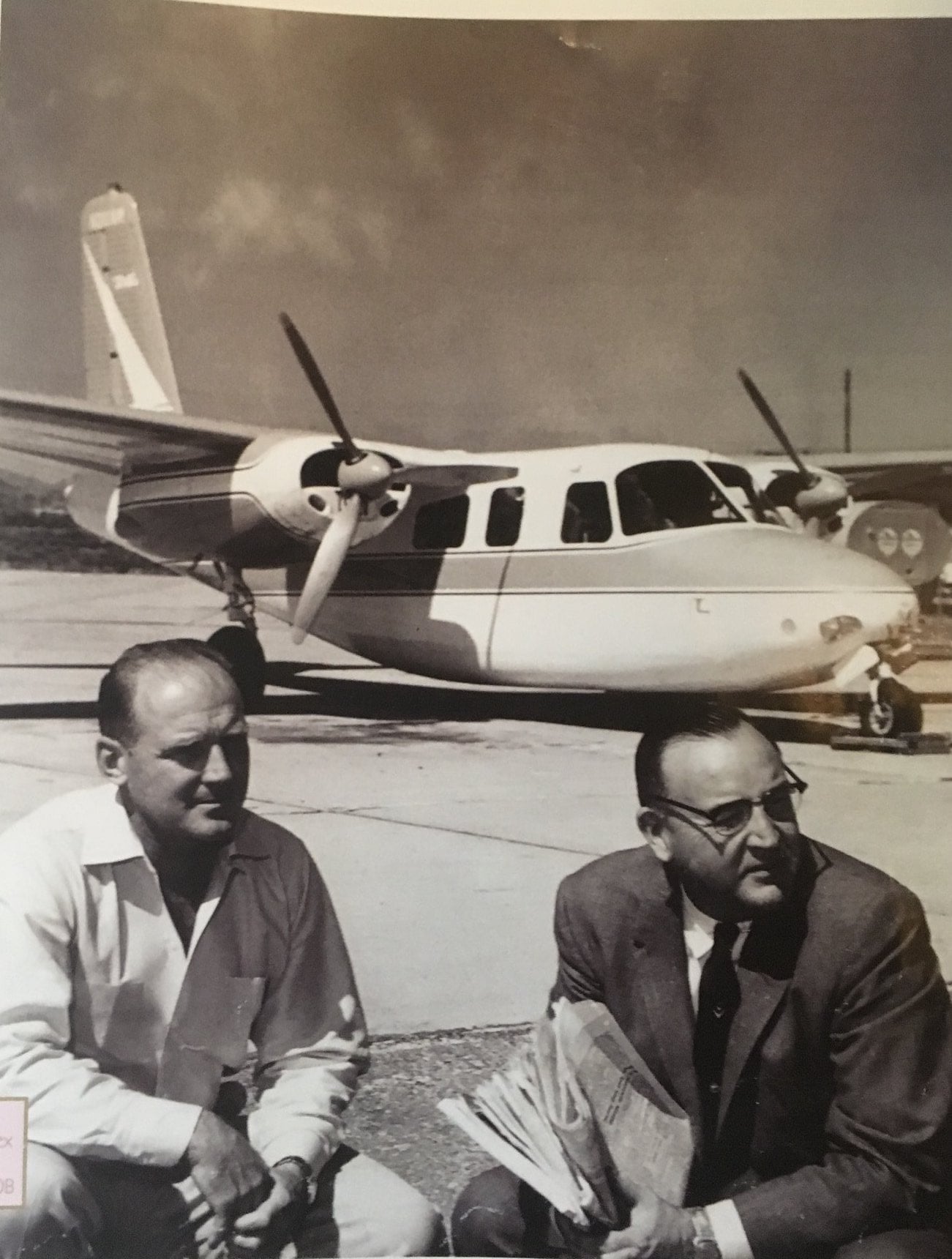
Alex Madonna, Gov. “Pat” Brown, and the Aerocommander.


My father liked to tell family stories. Dad and Dan Krieger were the best storytellers I have ever known, and that is how I taught history for thirty years.

My name, James Douglass, is from Dad’s family. James comes from my great-great grandfather, an undistinguished Confederate brigadier general. Douglass comes from his son, a young staff officer who had an unfortunate encounter with a Union artillery shell in Arkansas in 1862.  Dad’s stories about his family, influding these two, would lead to my writing a book about the Civil War and the sixty veterans buried in Arroyo Grande’s cemetery. To my distinct pleasure, they are all Yankees.

I do not want to cause a political ruckus here, but I am a Lincoln man.
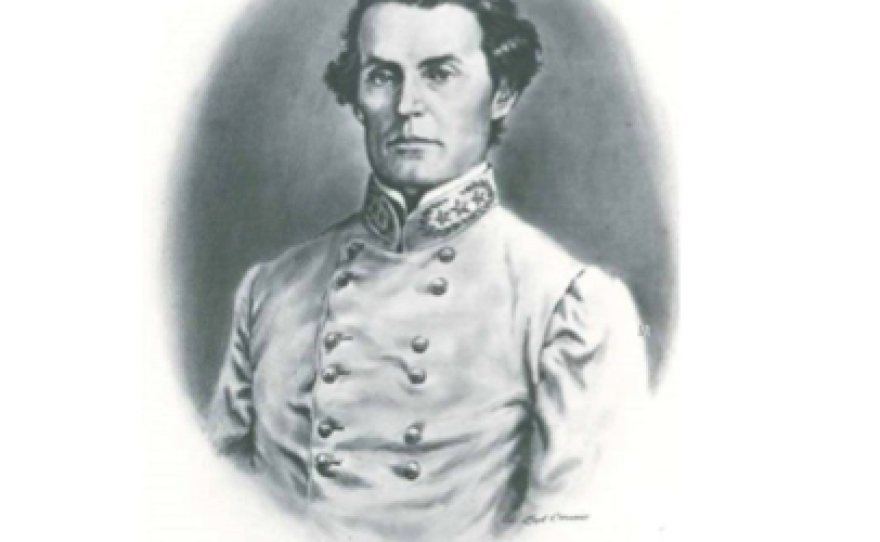

Gen. James H. McBride, for whom I am named.


History can touch us in what seem to be the most casual of ways.

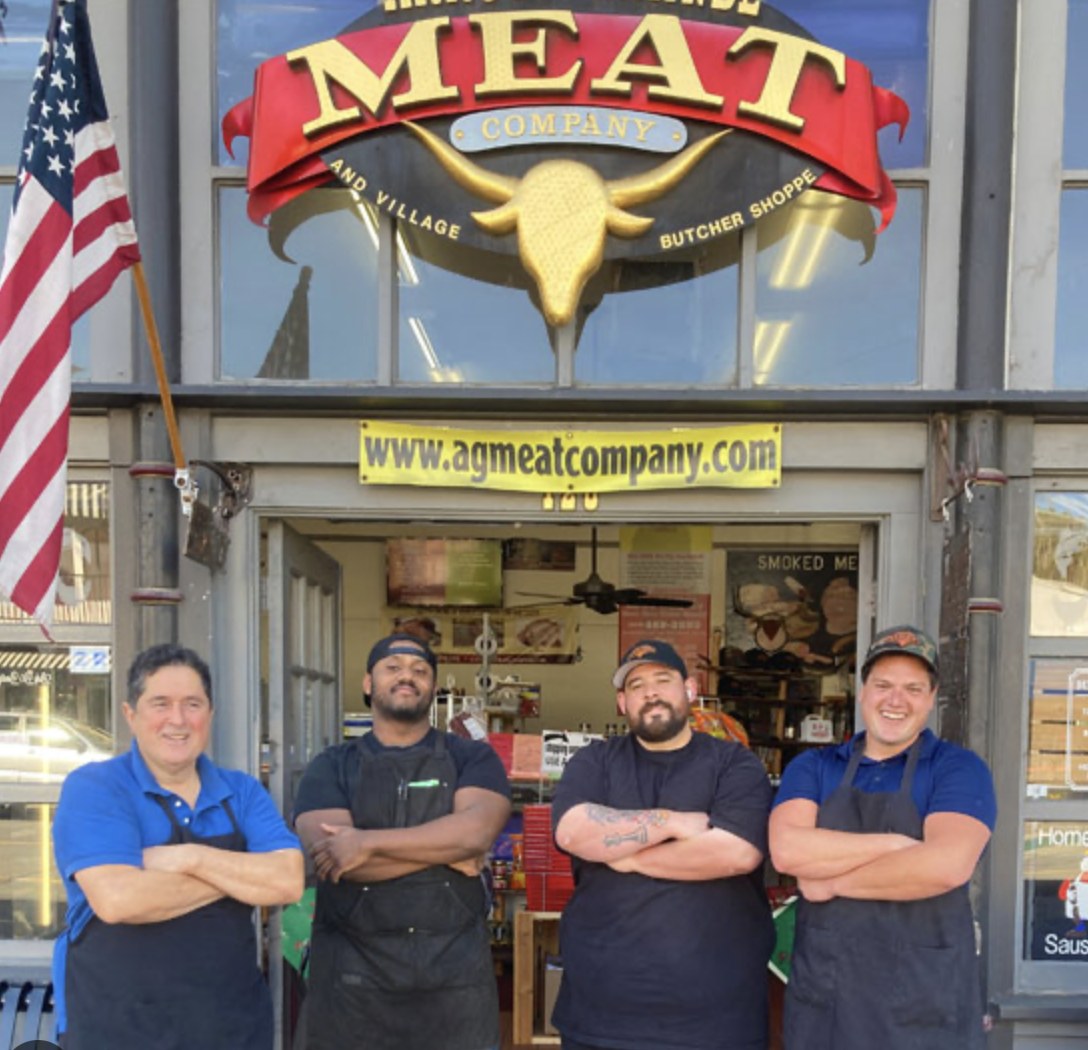
Last week I  spent a large sum of cash at the Arroyo Grande Meat Co. on Branch Street, and it was money well spent: Five grass-fed Spencer steaks for my son John’s birthday.

While I waited for the steaks to be wrapped, I remembered that

–This has been a meat market since 1897.

–It, and the storefronts alongside it, were built with brick quarried from Tally Ho Creek clay.

–The brick was fired in a lot owned by Pete Olohan, Saloonist Extraordinaire, and the building named for him includes today’s Klondike Pizza.

–Two of the early meat market partners were E.C. Loomis, he of the feed store, now empty, at the base of Crown Hill, and Mathias Swall, who also built the bank that is now Lightning Joe’s.

–Mr. and Mrs. Swall lived in the home that is now the Murphy Law Firm on Branch Street. They both loved music and played instruments and resolved to teach their children to play instruments, as well. There were twelve little Swalls. Noisiest house in town.

–E.C. Loomis’s sons, including Vard, a onetime Stanford pitcher who coached a local Nisei team, safeguarded the farms and farm equipment of their Japanese American customers during internment, among many local families who did so out of simple admiration for their neighbors, their values and for their devotion to the little town they shared.

–That is how Vard Ikeda got his name, and those families’ friendship is in part why two generations of Ikedas have been so incredibly important to local youth sports.

–Shortly before they were “evacuated” to internment camps in 1942, Japanese farmers came into the meat market to settle their bills. Paul Wilkinson, then the owner, refused to take their money. These were his friends.

“You keep it,” he told them. “You’re going to need it.”

After the war, they paid Mr. Wilkinson back. In full.

I grew up with schoolmates whose grandparents came from Kyushu, the southernmost Japanese home island. Some of my friends’ families came from the Azores and some from Luzon, in the Philippines.

When I was a little boy, the whistling of braceros—baroque and beautiful—woke me up summer mornings as they went down to the fields next to us for work.

I learned my first Spanish from them. Years later, one of my university Spanish professors took me aside to offer me one of the greatest compliments of my life::

“Mr. Gregory, you have a distinct Mexican accent.”

My first sushi was on a special Japanese holiday—I think it was Labor Day—at Ben Dohi’s house. Ben was married to a Yamaguchi sister, and Dr. Jim Yamaguchi came down with his wife and baby girl from the Bay area to visit. I got to hold Jim Yamaguchi’s daughter. Her name was Kristi. She would grow up to be an Olympic gold medalist. I did not drop her.
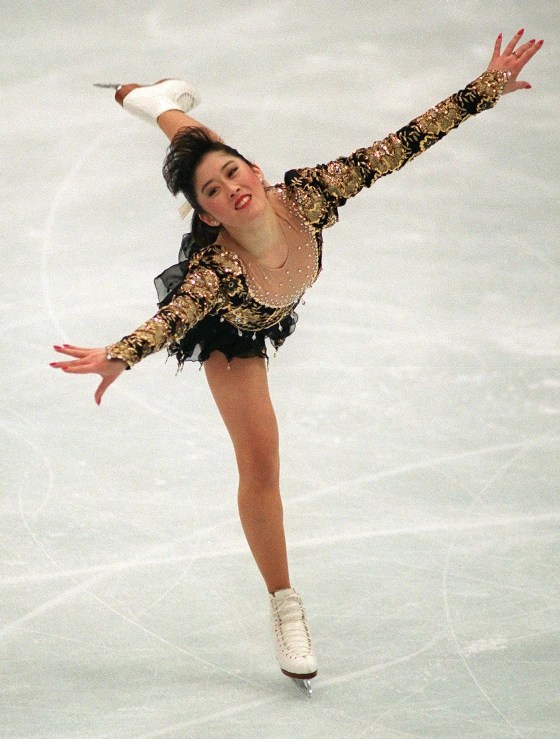
Kristi Yamaguchi, 1992 Winter Olympics


Mary Gularte took pity on me one cold morning when the schoolbus was late. She took me inside her kitchen and kept an eye out for the bus while setting a dish of sopa—Portuguese stew—on the kitchen table in front of me. I inhaled it. I did not have to eat the rest of the day.

My friends included families with surnames like Pasion and Domingo and sometimes they’d bring back sugarcane from the Philippines and gift me with a stalk to gnaw on. It was wonderful, but I later discovered lumpias, the divine Filipino egg roll, at the Arroyo Grande Harvest Festival. It gave me the greatest pleasure to watch Filipino mothers, most of them, once upon a time, war brides, watch me as I took my first bite of lumpia. My reaction must have been transparent. They beamed.

These were the helping hands that built our county. They helped me in my growing up. These people filled me with their history, by which I mean our history, and they remind me that history is always around us, sometimes just beyond the reach of our understanding. I write about history because I owe the past so much. My writing is the least, and it’s the very least, that I can do for my friends, including those I never had the chance to meet.


My grandfather, Ozark Plateau farmer John Smith Gregory (1862-1933) died eighteen years before I was born. He was the sweetest waltzer in Texas County, Missouri; I wish he’d lived long enough to teach me how to dance.

Superman: Our immigrant hero.

David Corenswet as Superman in James Gunn’s feature, to be released in July.

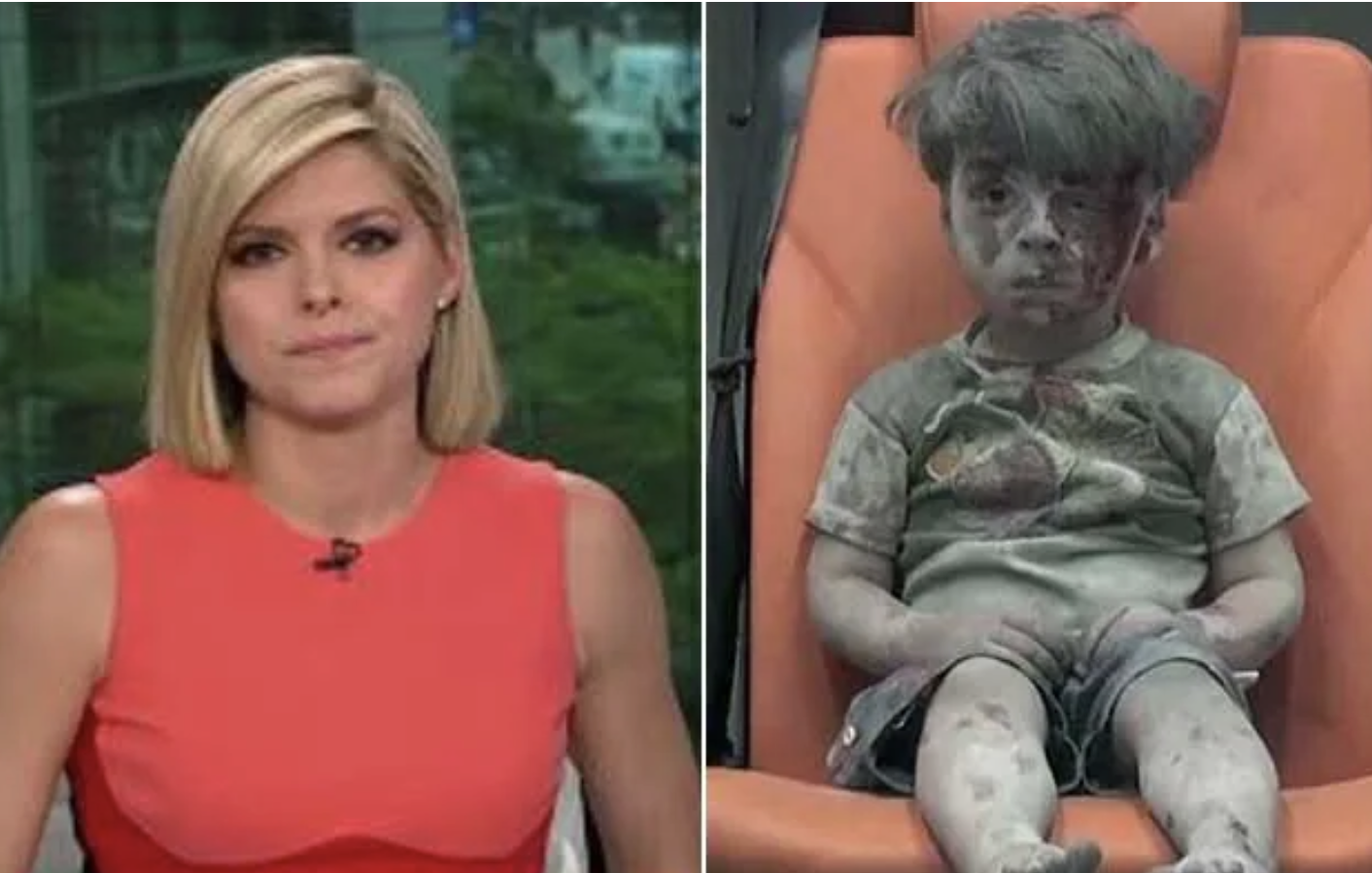
I was watching CNN’s morning news and they handed the feature on the upcoming Superman film to Richard Berman. I love Richard Berman because he is ebullient about popular culture, especially rock music and movies. He is, like me, a geek. His geekiness was overwhelming—and utterly charming—in presenting this story today. I’ve loved Kate Bolduan, the mother of two, since 2016, when she began to cry while presenting a story on Omran, a little boy, here in the back of an ambulance after surviving an airstrike in Syria. Sara Sidner, on the right, has shown immense dignity during her struggle with breast cancer; there are days when she’s not on and your suspicion is that she just isn’t feeling well.

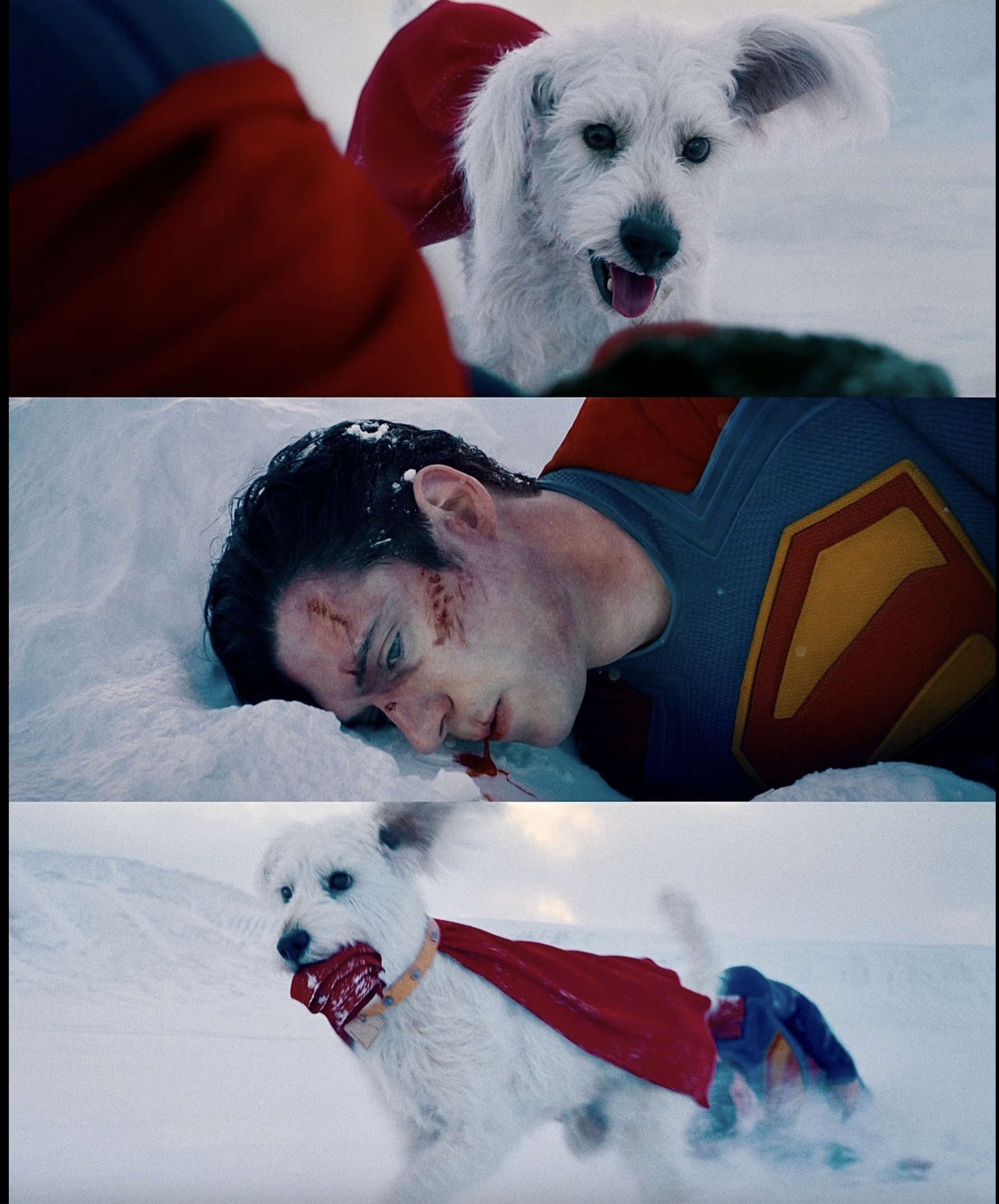
“Take me home, Krypto.” Part of the enthusiasm Berman showed was because the upcoming film features Superman’s dog, Krypto, and the hero plummets to earth in bad shape. Krypto saves him. This drove folks on the internets nuts—remember, the trailer was released just this morning—and Berman is a dog lover, like so many of us.


Berman is talented, funny and he is Jewish. I knew that, knew that my ancestors were not terribly kind toward Jews (my Mom, when I was four, scolded me for wearing my underwear under my pajamas. “Only Sheenies do that!” “Sheenie” is an Irish pejorative for “Jew.”) I hope my Mom didn’t know that.
Once, when Roberta brought home a German boy from Poly, a date, Mom refused to come out of her room to meet him. The Irish hold grudges, and they hold them hard—it’s the flip side of their sense of humor. In the marvelous book Paddy’s Lament, about the Great Famine, the sure sign that an Irish victim (simple malnutrition or, more likely, typhus) was about to die was when he or she lost their sense of humor.
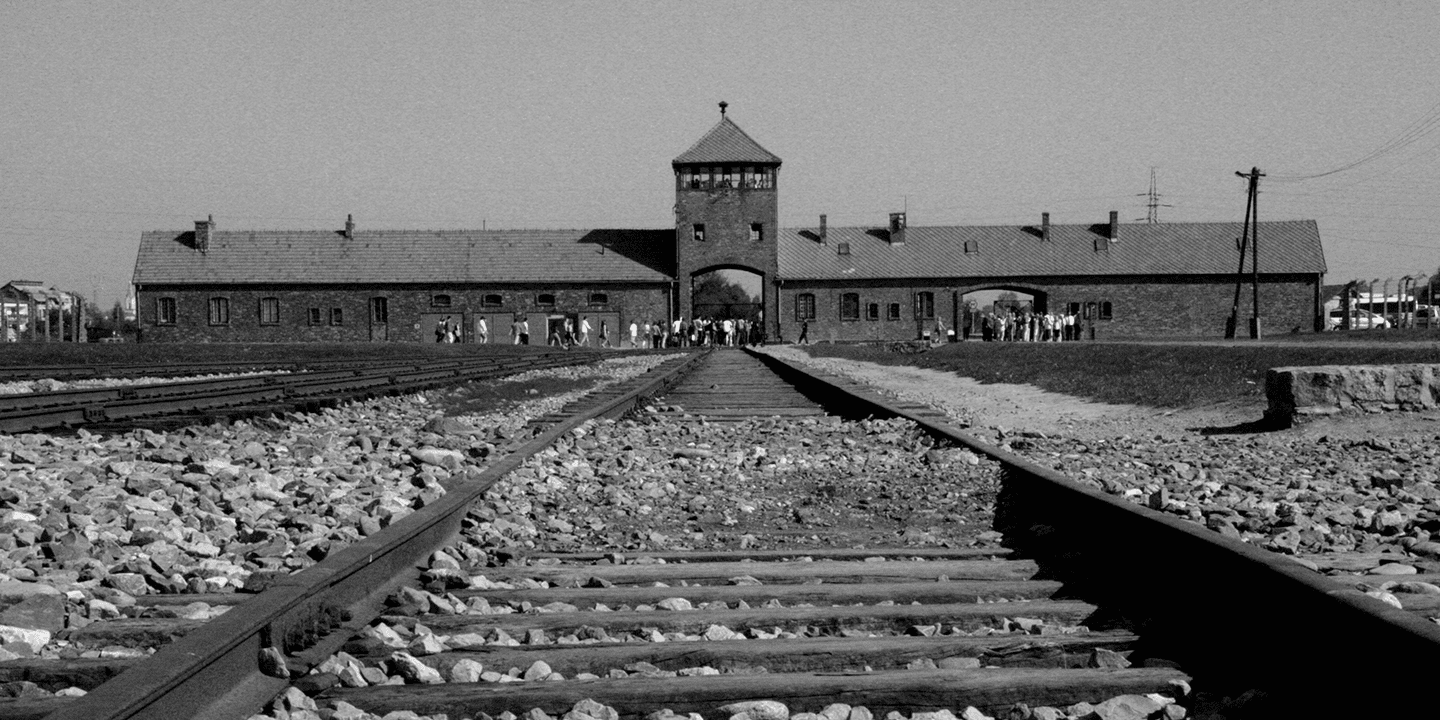
My mother’s grudge? It was called Auschwitz-Birkenau.


But was at least a small part of Berman’s reaction to the movie trailer rooted in his Jewish heritage? Superman’s own Jewishness is a point that will never, ever be resolved, but of course, I had to look it up. I found this article, in the link below, fascinating—and ambiguous, which is just as it should be. History is ambiguous. Individuals aren’t. If Superman’s creators, Jerry Siegel and Joe Schuster, thought of him a a fellow Jew, then surely he must be. His nationality, of course, is American, and he is an immigrant, along with the 3.5 million Jews from our past who preceded him. They are Americans, too.

https://bigthink.com/the-present/supermans-jewish-history


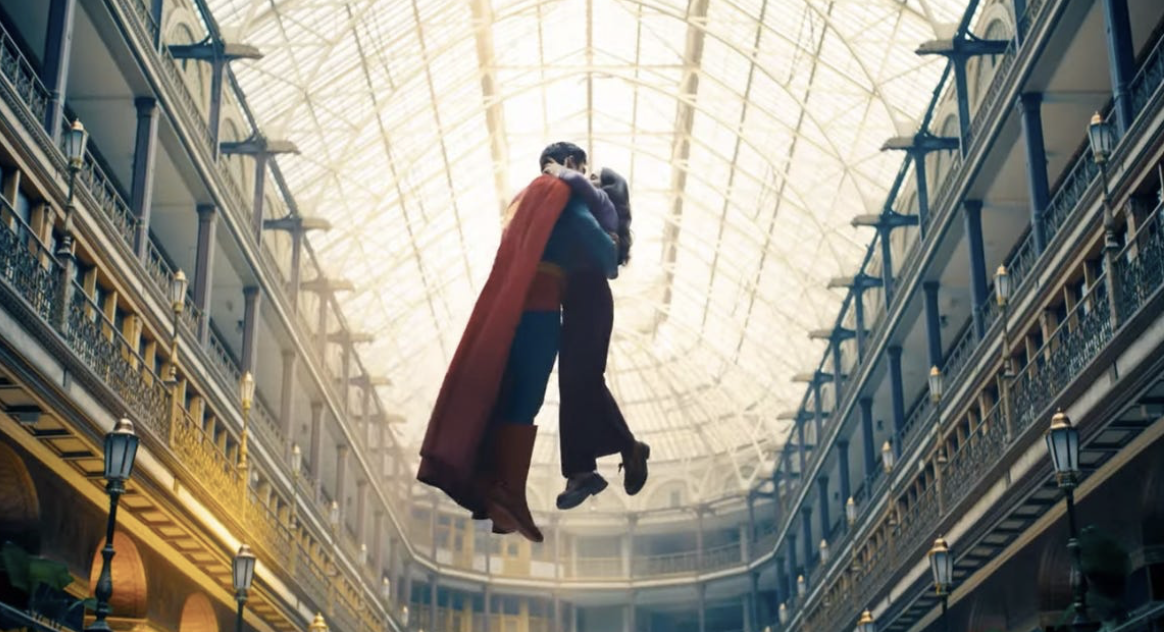
I need to make one more point about the trailer. The director, James Gunn, St. Louis-raised, did not slight the love story. The film is said to contain scenes that are tributes to Christopher Reeve, our late 20th-Century Superman, the actor known for his decency, kindness and immense reservoirs of courage. So it’s appropriate that in both versions of the story, Superman and Lois fall in love in the air.


I am the proud father of two fine sons, but my nieces, Emily and Rebecca, are my surrogate daughters, and they are from the same miracle that produced that immigrant who calls himself Clark Kent. On their mother’s side—my younger sister—they are County Wicklow Irish. On their Dad’s side, they are descended from Russian Jews who escaped the Romanov pogroms. The first of them who was an American was a junk dealer, not a Superman. That role fell in equal parts on his grandsons, three of them university professors.

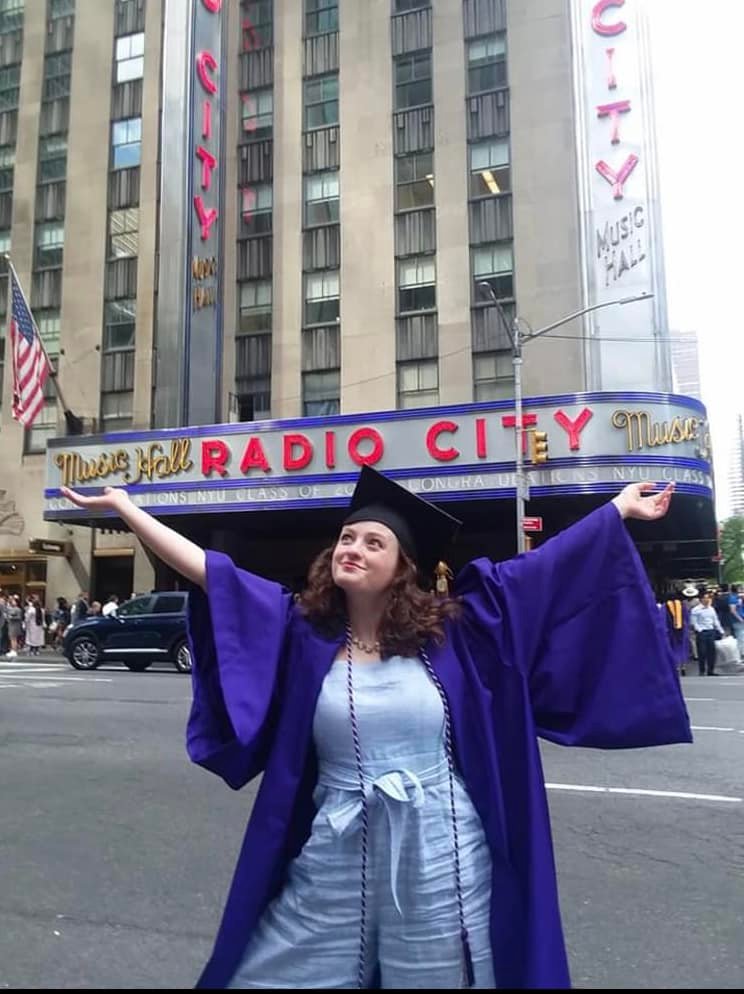
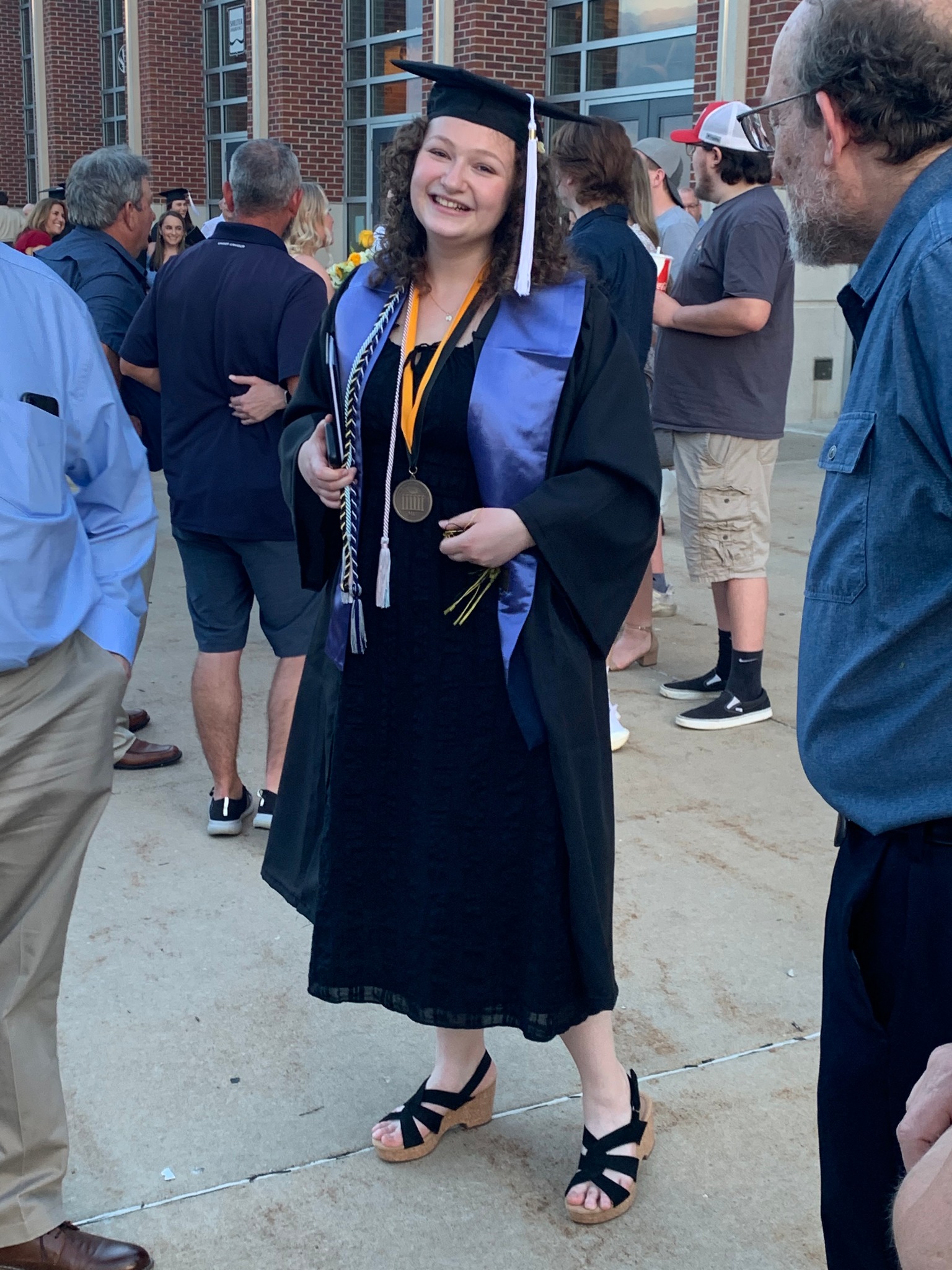
As to their descendants, my nieces? Emmy (NYU) is the actor, in New York City. Becky (Honors, University of Missouri, my Alma Mater) is the poet who combines words, seemingly discordant, and makes them shimmer. Maybe that’s why I love Superman now even more than I did when I was twelve, inhaling the comic books while waiting my turn for a haircut in my hometown, a little farm town, Arroyo Grande, California.

Arroyo Grande Irish.

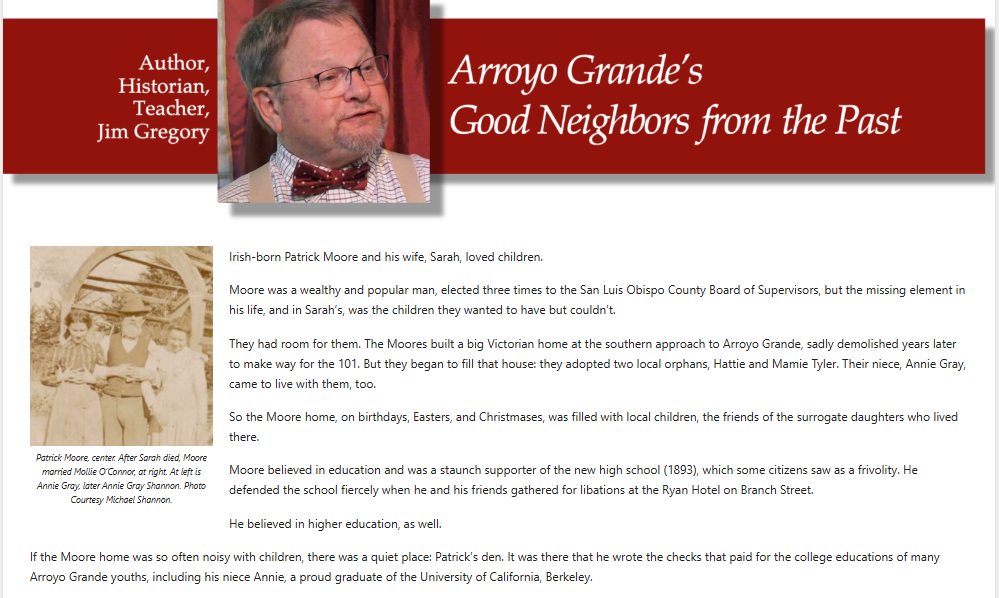
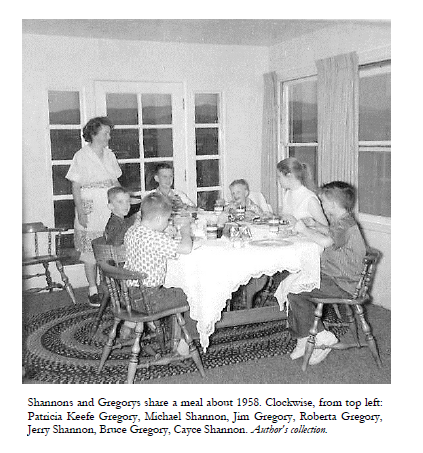
Charlotte Alexander was kind enough to publish this little piece in SLO Review today. It means a lot to me. We grew up with Patrick Moore’s descendants, farmer George Gray Shannon, his wife Barbara and their sons. You can tell from the photo what Mom thought of the Shannon boys. The Irish knit tablecloth is out, and it was normally reserved for Thanksgiving, Christmas and Easter.

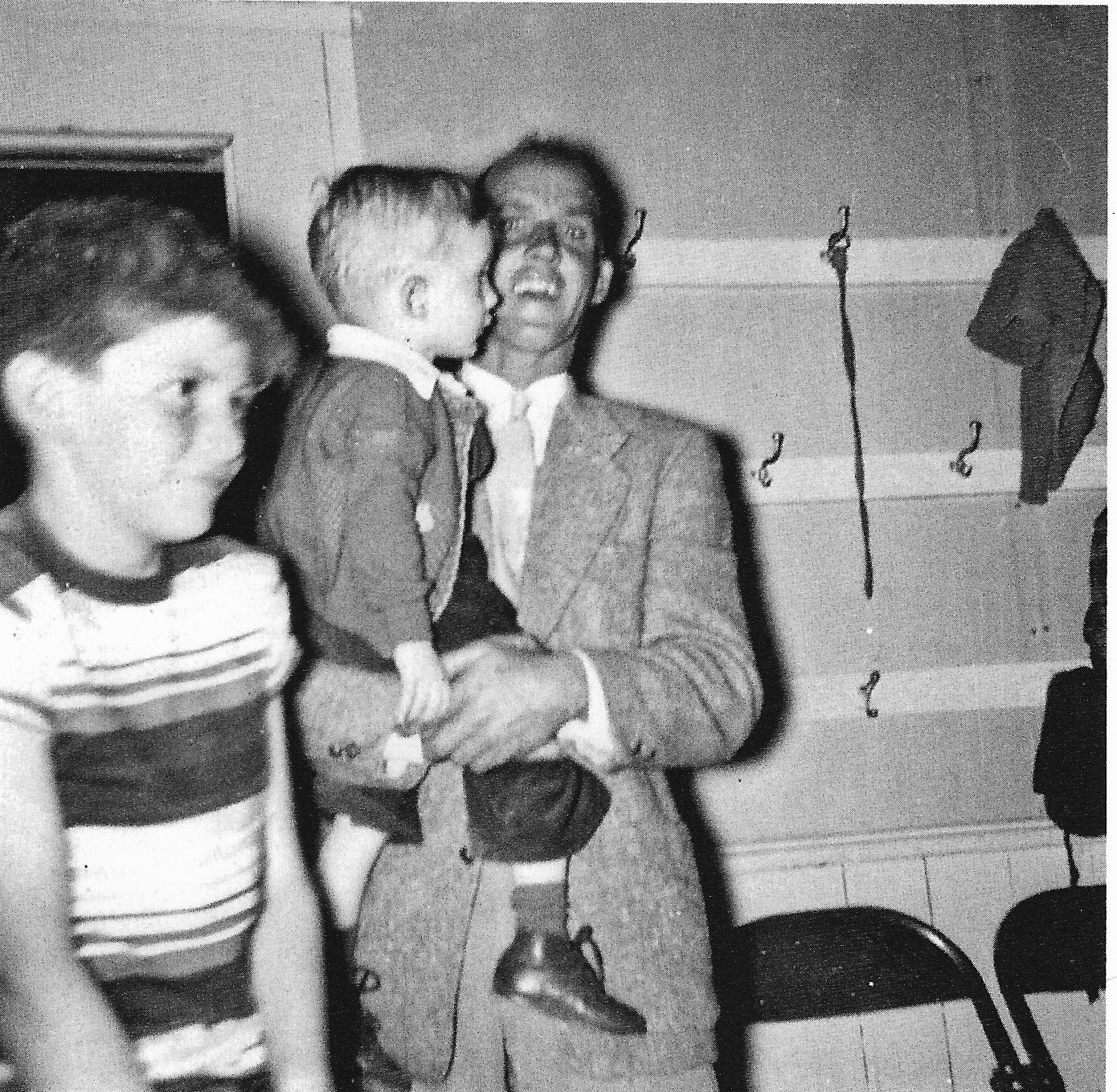
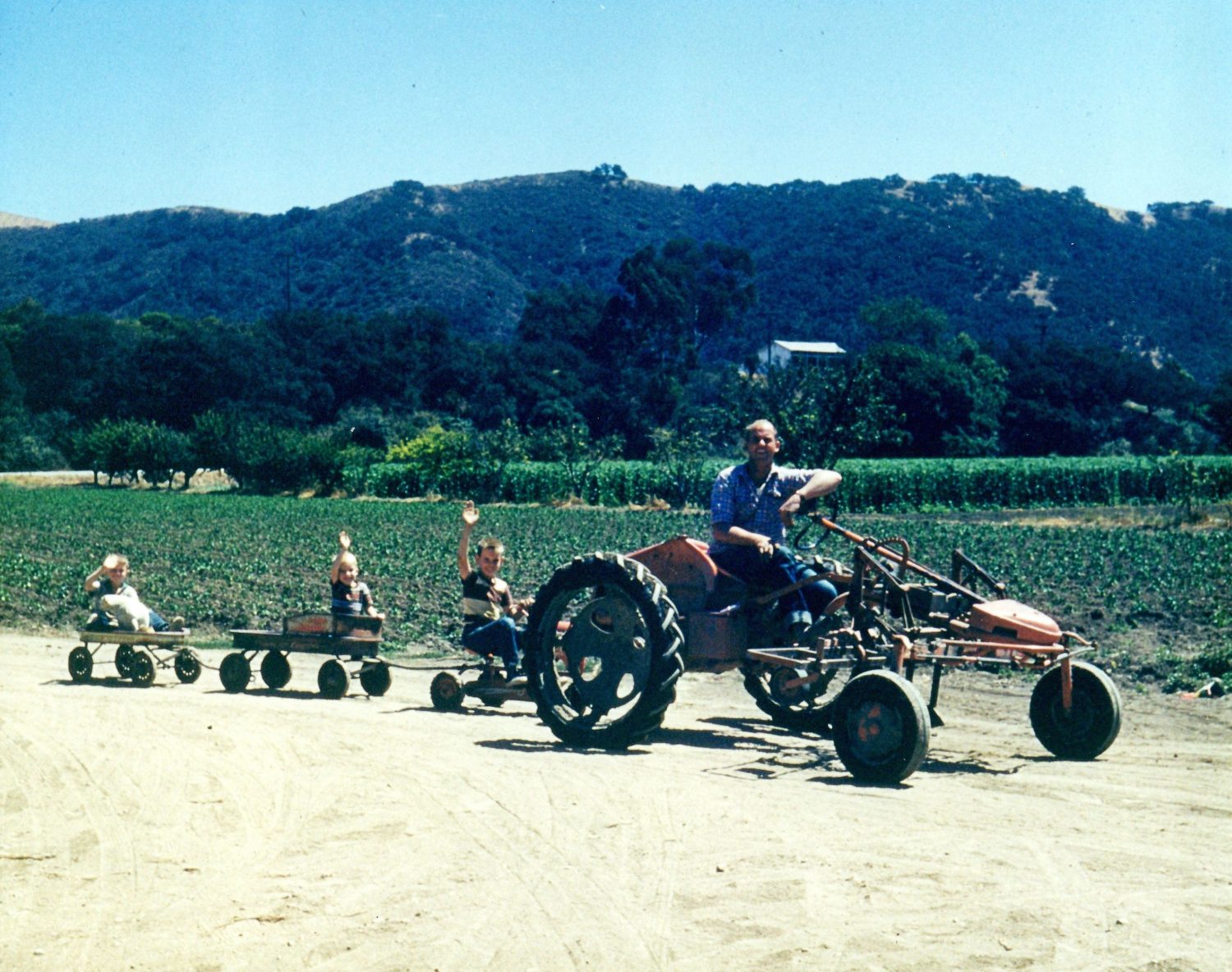
Michael, the eldest, is now a writer, and he is marvelously gifted. Here are two photos of his Dad, one of them with George holding Jerry in the two-room Branch School hallway, the other, on the family farm, shows George towing the boys and, if you look closely, a dog keeping Cayce company at the rear.

George married Barbara Hall, an elegant woman. She worked at Baxter’s Men and Boys and took care of us every year at Back-to-School time. I did not know for many years that Kaz Ikeda had been nearly arrested, soon after Pearl Harbor, because he was giving a high-school girl, a friend of his family’s, a lift. It was Barbara.

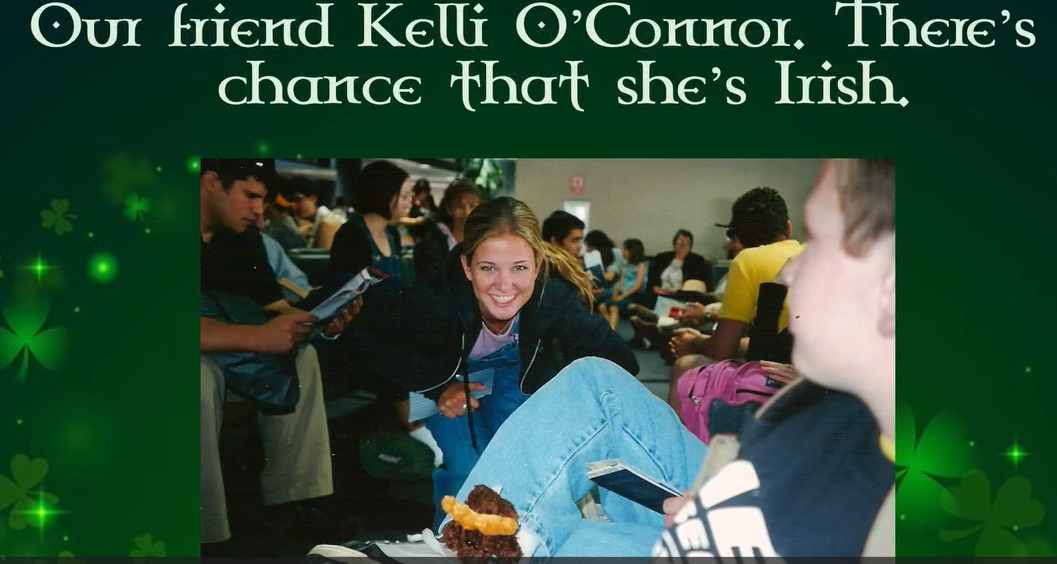
Here are Barbara, on the right, and the Irish-by-marriage Georgie O’Connor, dressed up for the Harvest Festival, Arroyo Grande’s annual salute (more or less, recently) to its agricultural history. Elizabeth and I had the luck to take Georgie’s granddaughter, Kelli, one of my history students, to Ireland with us. She turned out to be the most delightful traveling companion we could ever want.

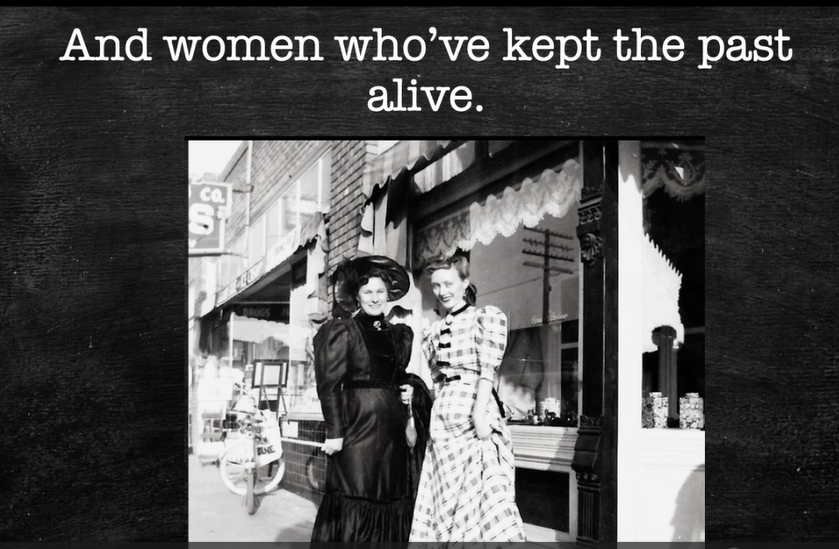
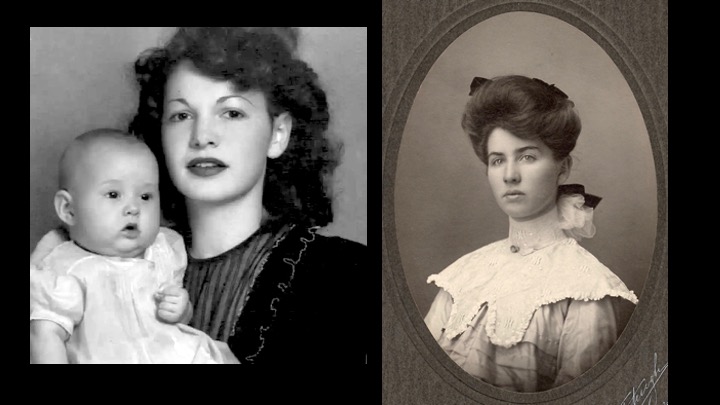
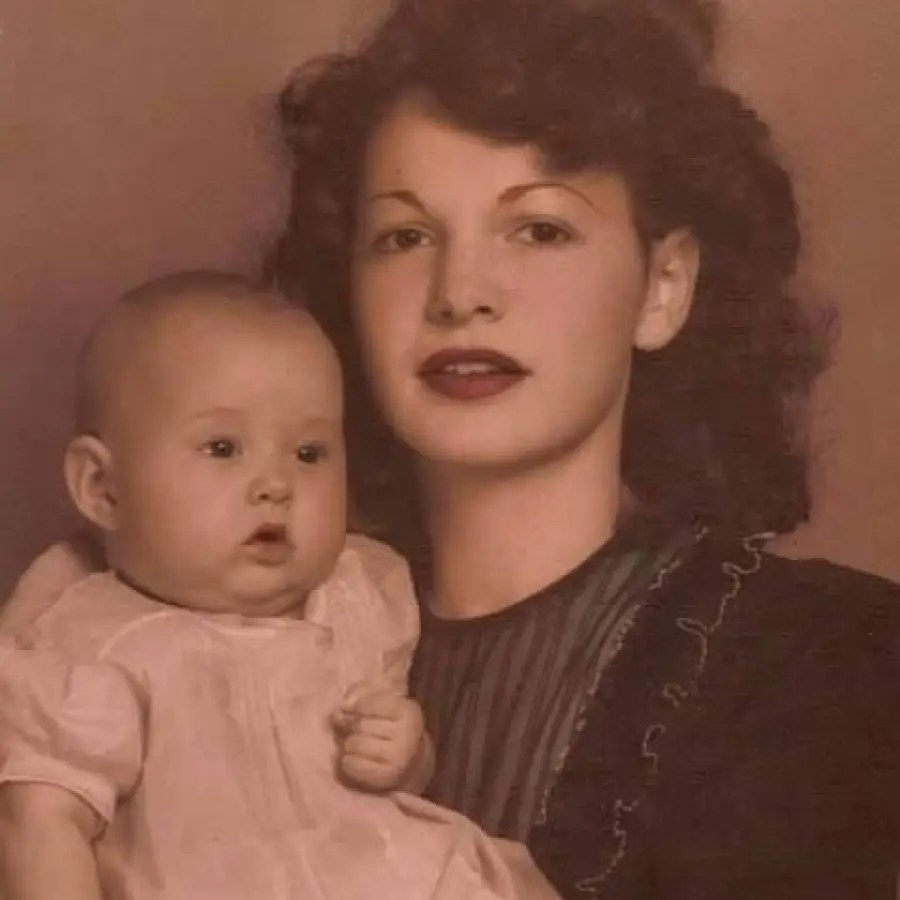
But the muse for this piece was Patrick Moore’s niece and Michael’s grandmother, Annie Gray Shannon. I’m pretty sure my jaw hit my chest the first time I saw her photo. I tend to show it, shamelessly, with another Irish girl, my Mom, on the left, with Roberta, when Mom—Patricia Margaret Keefe, with roots in County Wicklow— was twenty-two.

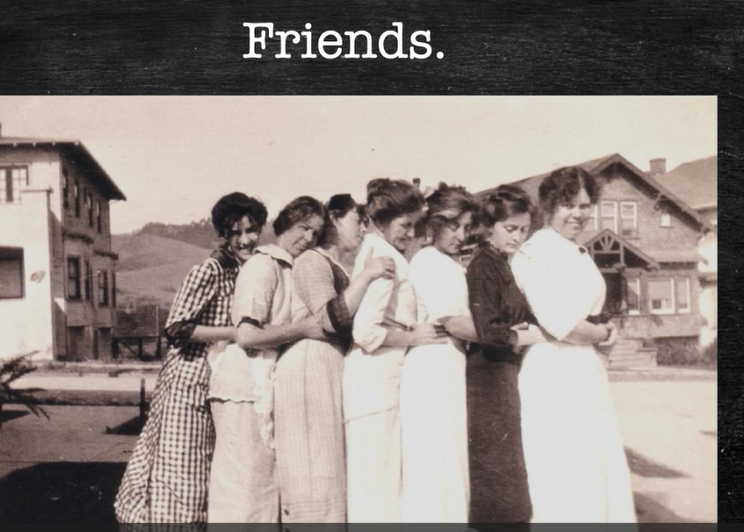
If Annie looks a bit too serious in this photo, with her expanse of lace collar and the immense bow holding her hair tight for the photographer, I am sure she had her unserious moments, too. Michael has shared these photos of Annie with her friends at Berkeley. She’s on the left.

Inglorious Basterds: The opening scene

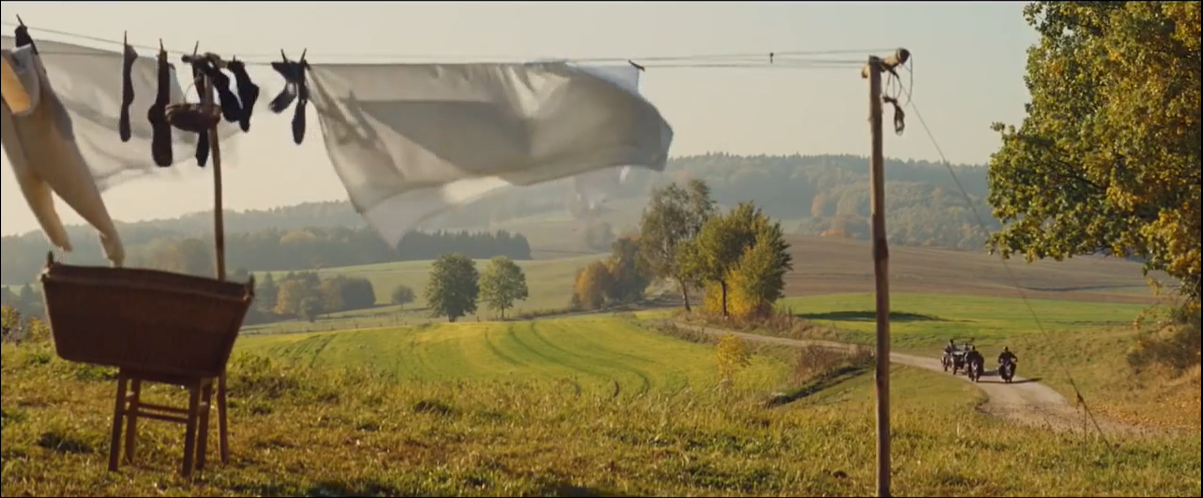
The SS detail approaches the French farmer’s home.
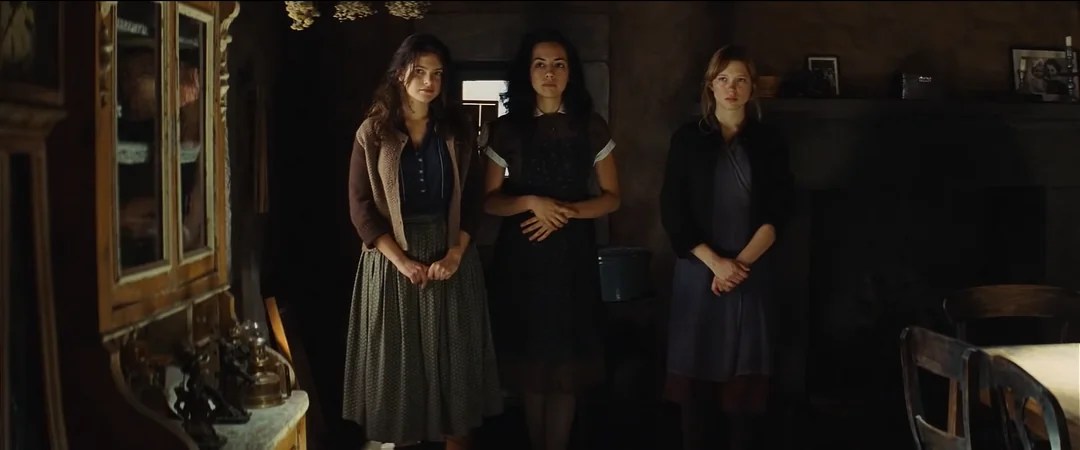
The farmer’s daughters. One, glancing downward, reveals to Landa, the SS “Jew-hunter” that the family he seeks is below the floorboards.
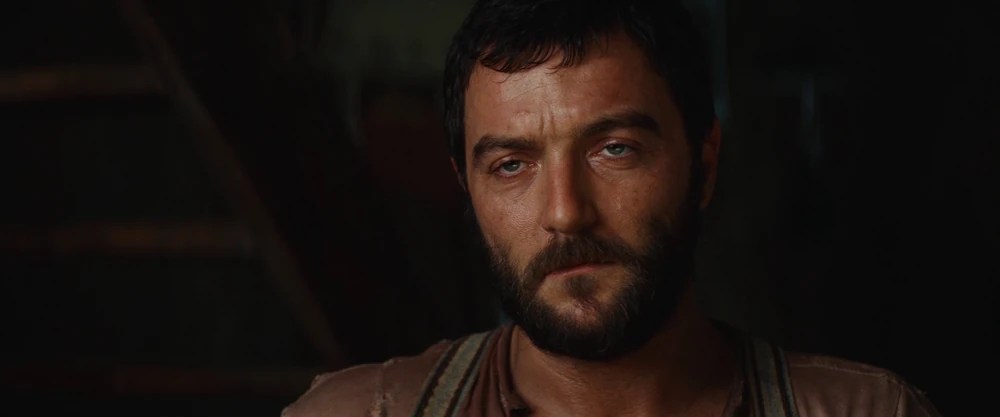
Pierre LaPadite, the farmer hiding his Jewish friends, just before the tear–he realizes he and his daughters are doomed unless he betrays the SS officer’s prey.

Mr. Amateur Movie Critic strikes again.

I started to watch the opening scene to Quentin Tarantino’s “Inglorious Basterds” last night and I was transfixed. Luckily (yeah, we’re still cable) I found it, I think on Showtime, and was able to start the film over again.

This has to be one of the most beautiiful–and most sinister–film scenes I have ever seen. This part shows of the arrival of the immensely charming SS officer and his interrogaton of a French farmer. (One of the lovely daughters, Lea Seydoux, became Owen Wilson’s love interest at the end of “Midnight in Paris.”)

I will not show the rest of the scene because it’s too cruel–as is the rest of the film, with its brain-bashings, forehead carvings, index finger wound-probings, scalping of Nazis, German MP-40 (submachine gun) massacres, mass incinerations, and so on.

The usual Tarantiono stuff. I could do without about 70% of it., stuff that might make even San Peckinpah blush. I guess I have a love/grossed out relationship with this Tarantino (“Pulp Fiction” is one of my favorite films).

But this scene, with the interplay between the SS hunter and the farmer hiding his prey–a family of Jews is just beneath the floorboards of the farmhouse, is one of the most brilliant film sequences I have eve seen. Ever. Both actors–Perrier LaPadite at the farmers and Christopher Walz at the SS officer, charming and ingratiating and clever, and increasingly murderous, deliver one of what I think is one of the finest film dialogues I have ever seen.

To me, what makes it brilliant comes near the end, when, in silence, a tear creeps down the farmer’s face.

Here is the scene, in its entietry. Warning: it is violent at its end. It needs to be stopped. So did the SS. As fraught as our relationship is today, that’s exactly what the Allied Powers did. It took too long.

“In our military, diversity is not our strength.”

Defense Secretary nominee Pete Hegseth. All hat, no cattle?

So says Defense Secretary nominee Pete Hegseth, who went on to say that “unity is our strength.” I fail to see the contradiction that he does.

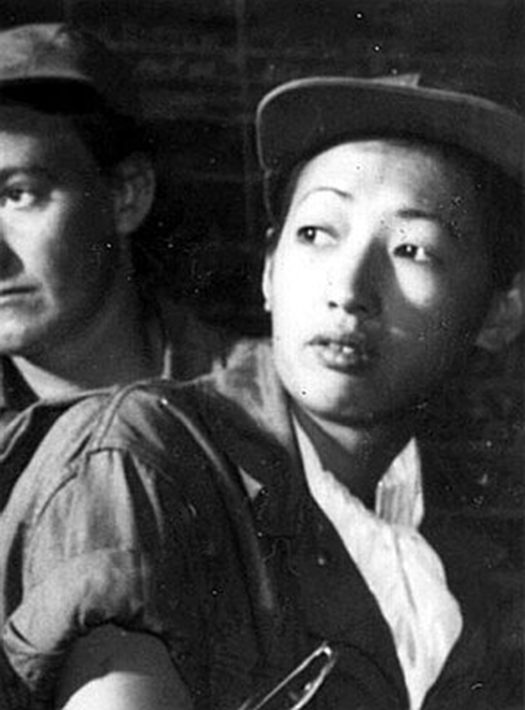
Women’s Airforce Service Pilot Hazel Ying Lee, killed in the line of duty, 1944.

Baron Friedrich von Steuben, who played a major role in training Washington’s Continental Army, was gay.

Sen. Daniel Inouye, 442nd Regimental Combat Team, Medal of Honor.

Navy veteran Tammie Jo Shults, who, in 2018, brought her Southwest Airlines passenger jet safely in after an engine had exploded in mid-flight.

Henry Johnson, 369th Infantry, “The Harlem Hellfighters.” When Johnson and a comrade were attacked by twelve Germans in May 1918, he defended his friend in hand-to-hand combat, killing or wounding several Germans with a bolo knife. He was awarded a Croix de Guerre with a Gold Palm, the highest French decoration for bravery.

Lt. Col. Bree Fram is an astronautical engineer with the U.S. Space Force. She is transgender.

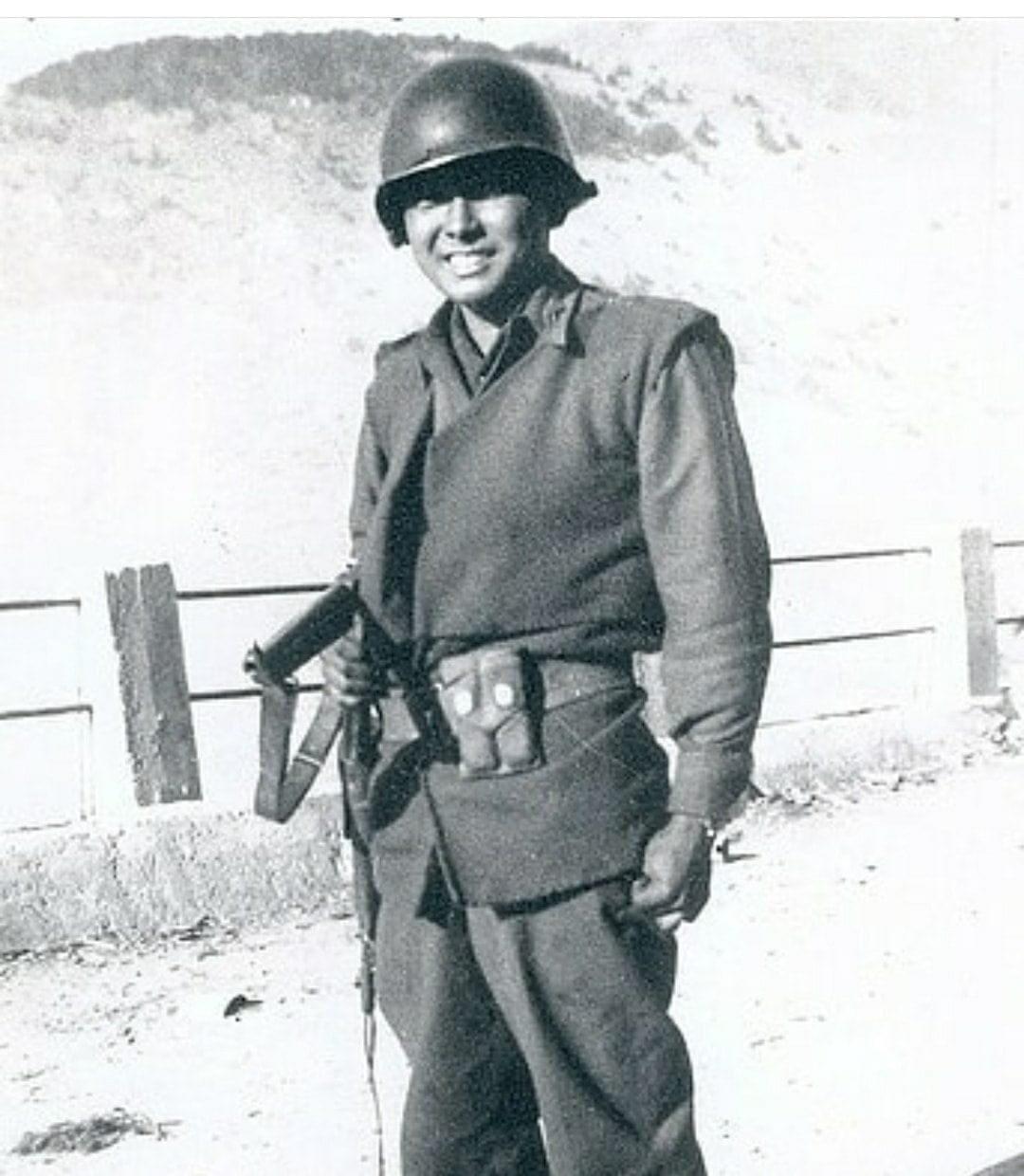
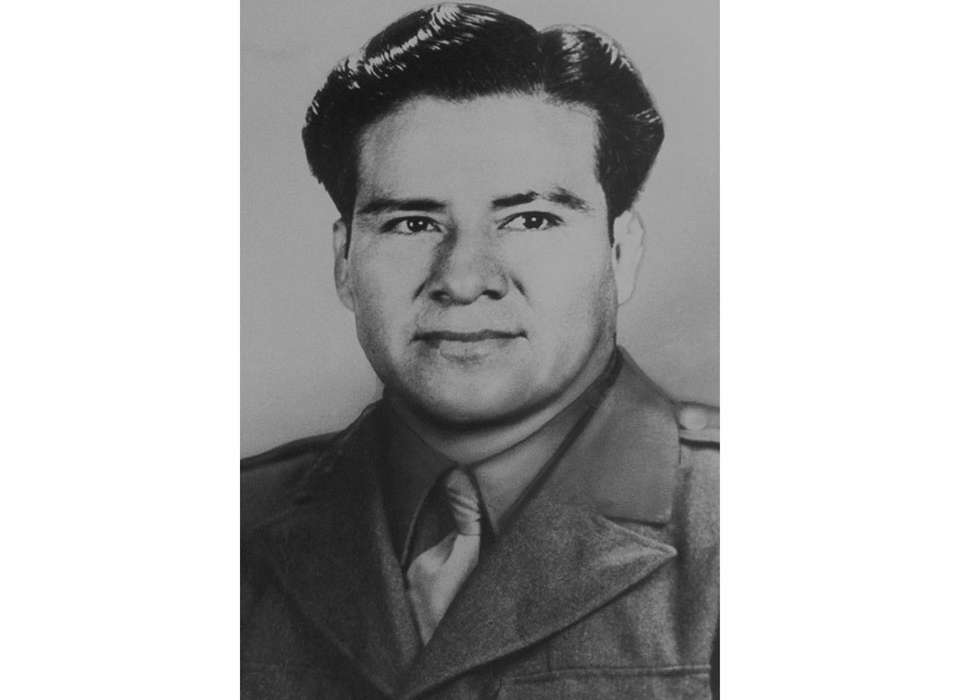
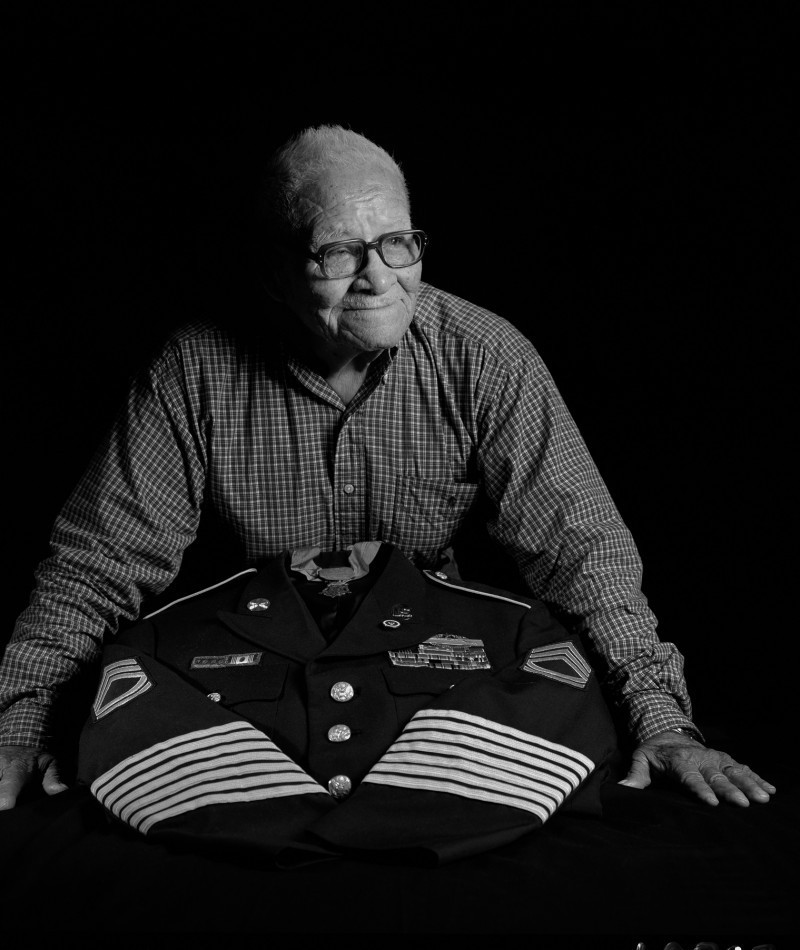
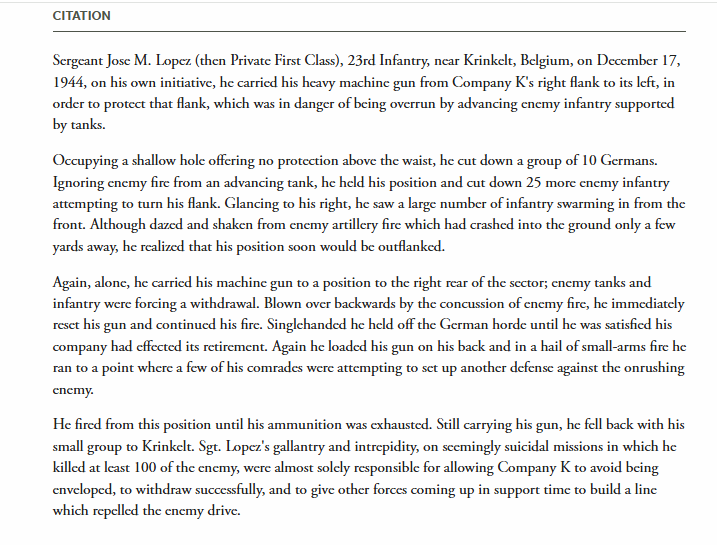
Sgt. Jose Mendoza Lopez was born in Mexico. Below is his Medal of Honor citation.

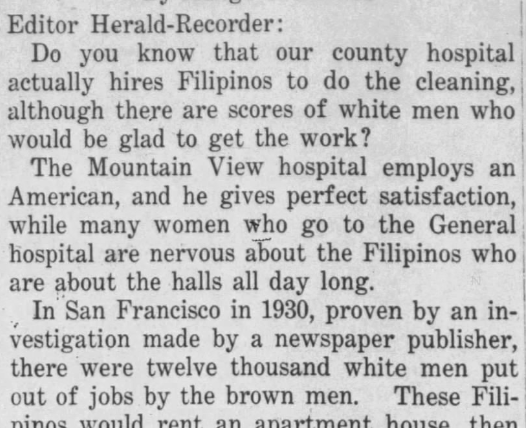
A view of Filipino immigrants from the Arroyo Grande Herald-Recorder, March 1934:

How Filipionos responded:

https://www.militarymuseum.org/1FIR-SLO.html

When my mother died, I read.

When my mother died, I was seventeen. “Tell your father I said goodbye,” she said. Those were the last words she said. She said them to me.

She had taught me to love words. She was Irish, so that made sense.

For years after she left us, I read. Incessantly. Hemingway, Graham Greene, John LeCarre, Katharine Anne Porter, Barbara Tuchman, Richard Brautigan, Tom Wolfe and Thomas Wolfe, Ken Kesey, Michener and Rutherford, in their vastness, electric Kerouac, the murderous men and women captured in ways that kept me up at night (Vincent Bugliosi, Norman Mailer, Truman Capote); the science fiction of Vonnegut and Heinlein, the strangeness of Hesse, and all the New Journalism that I could inhale.

But the books I kept turning back to included the Civil War historian Bruce Catton and his three-part study of the Army of the Potomac (“Mr. Lincoln’s Army.”) Many years later, I had read Catton’s books so often—I read them every time I missed my Mom—and so deeply that when we visited Gettysburg with my little boys, we didn’t need a tour guide. At every stop, I knew where we were and what had happened there.

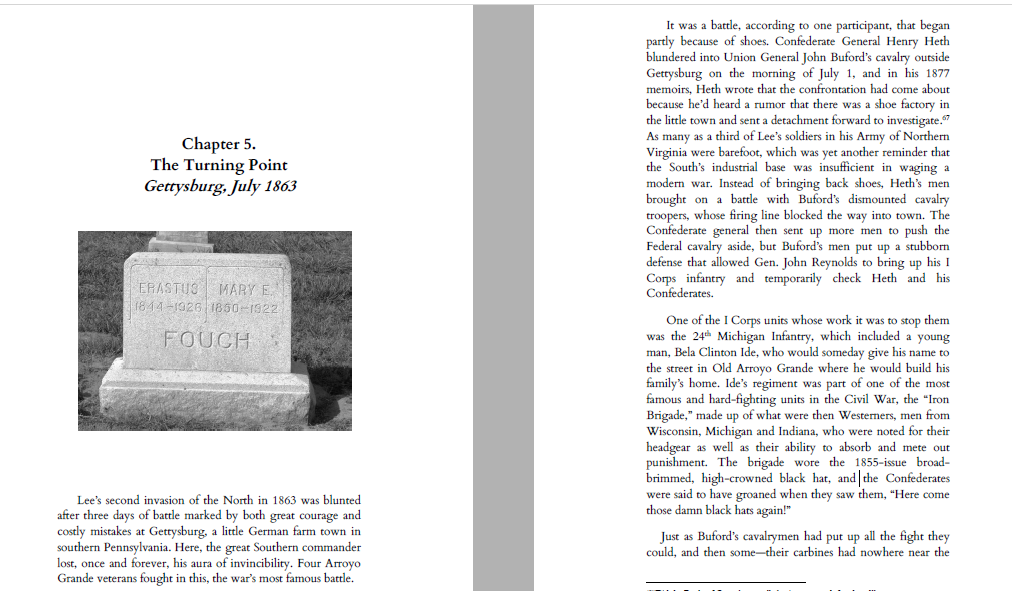
That led, fifty years later, to a book I wrote about the Civil War. Hare are a few passages about Gettysburg.

As disgusted as I am with Steinbeck—recently revealed to have stolen much of his research for The Grapes of Wrath from Sanora Babb, a gifted writer, a woman,—the other book that sustained me when I missed my mother was the ever-so-slight Cannery Row. Mom loved Doc, in real life biologist Ed Ricketts, his politeness toward dogs and the time he ordered, out of whimsy, a beer milkshake.

We took Mission kids on a field trip to Cannery Row when I was a young teacher, to the Aquarium, which I still love despite the fact that they won’t let me bring a penguin home with me, and there was an exhibit that replicated the lab and office of Doc’s Pacific Biological. It would be several years before I’d be as enchanted and as humbled as I was that day. That was when we took AGHS kids to Assisi, and I prayed below St. Francis’s little tomb.

And I am due to take flowers to my Mom.

She would’ve been pleased to know that high-school kids loved to be read aloud to (sorry for the gracelessness of that construction) just as much as little kids do. There’s not much more that I loved than reading aloud to them. Years later, I decided to try it again (below) with the slightest of books, Cannery Row, the book my mother, an incredible woman, loved, and the book that made me love her all over again.

“Skateaway,” Dire Straits, 1980

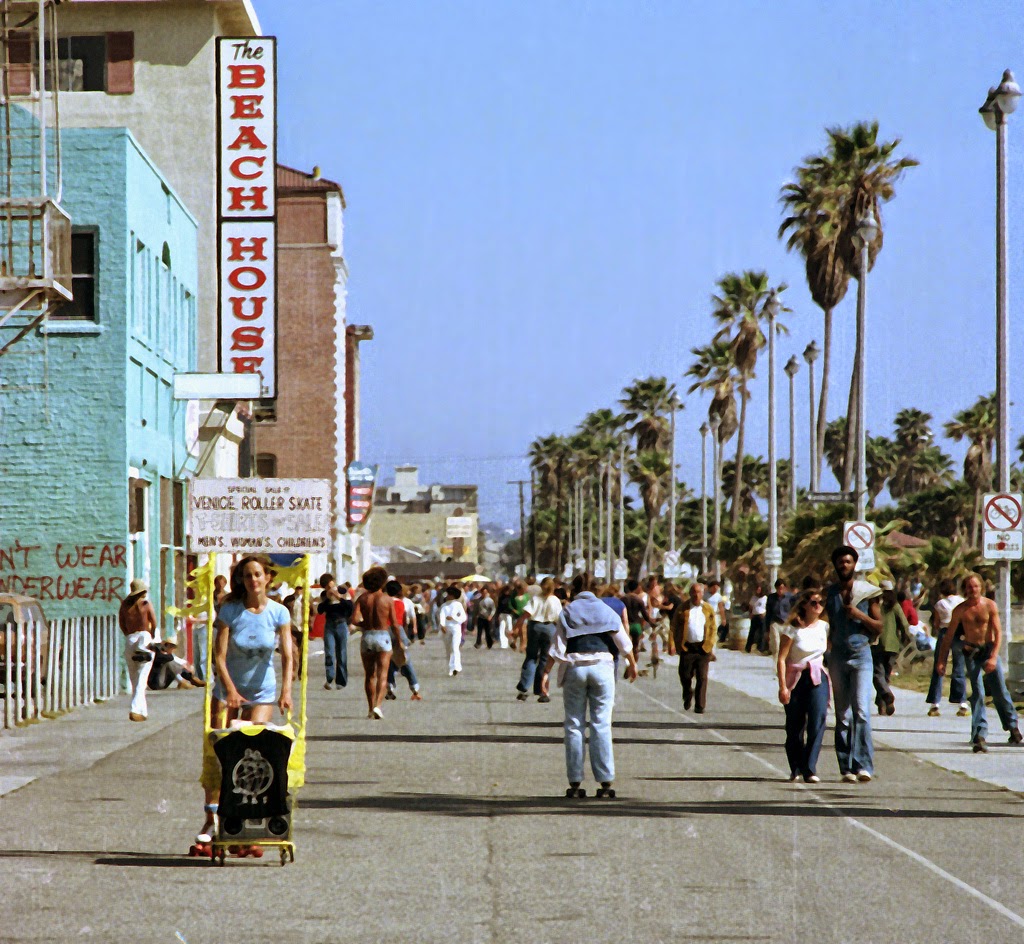
Venice Beach, CA, 1979

I have been a longtime fan of Dire Straits, Mark Knopfler, this album and this song, “Skateaway,” based on watching young women like these zipping through L.A. traffic.

And then, years later, I found this video and I thought it was brilliant. I still do today. I’ve always been hesitant to share it for fear of being labeled a dirty old man, but the video’s meaning is closer to the song’s: it’s a tribute, too, to freedom, strength, athleticism and…oh, yes…to beauty, I guess.


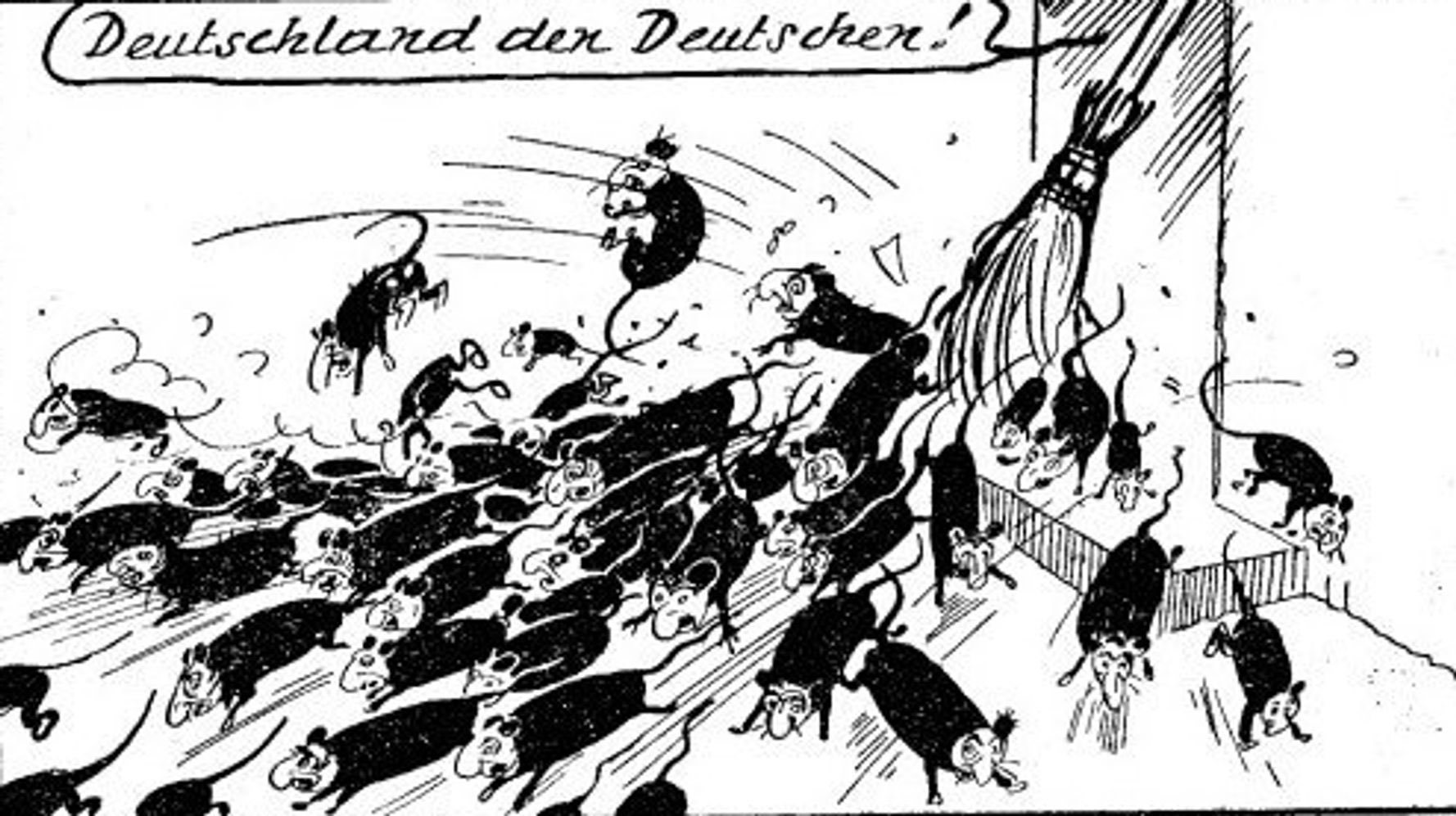
A short list of similarities: 1933, 2025


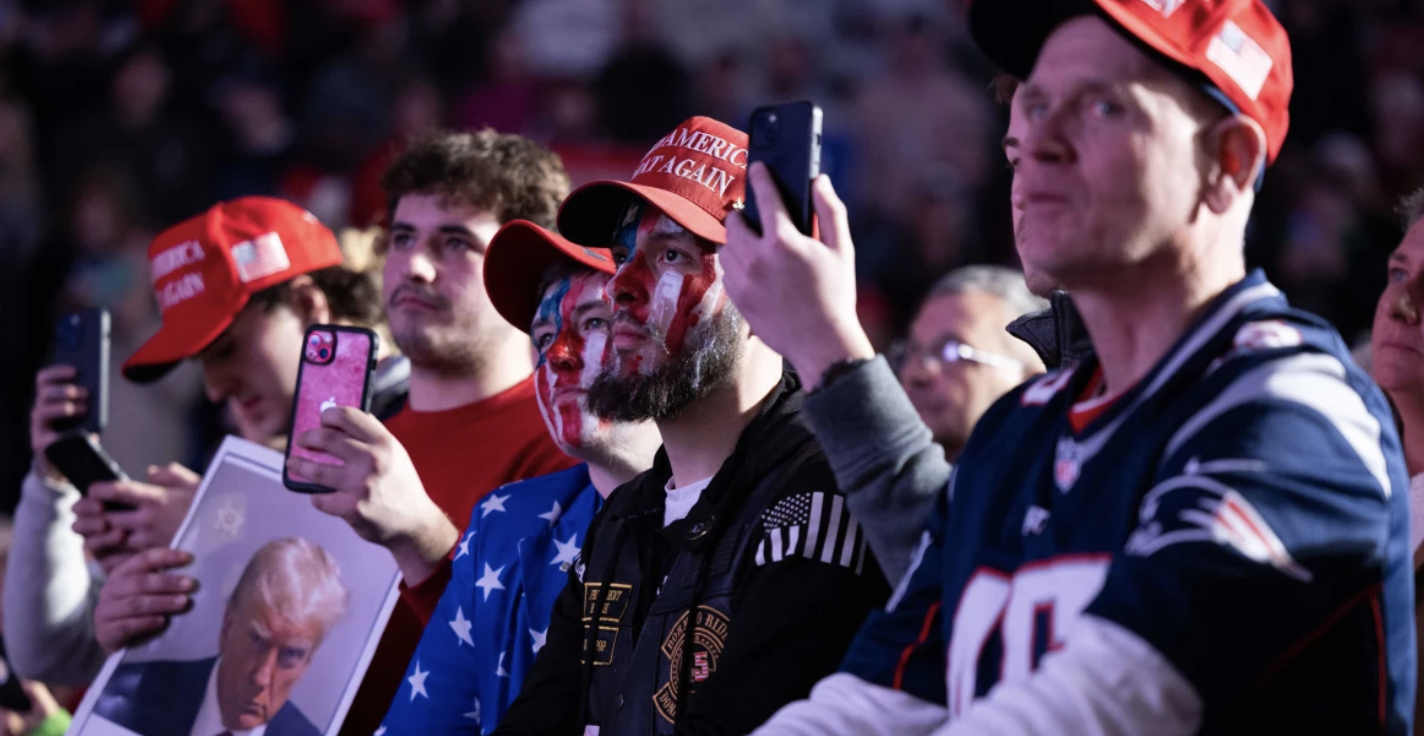
A citizenry that feels victimized.

The promise, for them, of vindication and retribution.

Propaganda that effectively generates alternative reality.

The promise of quick solutions to the nation’s problems.

An obedient and cowed legislature.

A legislature, thanks to minority dominance, that has proved unable to pass meaningful legislation.

Hypermasculine appeal to young men.

Executive power magnified by placing sycophants in high office.

The threat—or the actuality—of purging the military command and replacing its leaders with loyalists.

The threat of prosecution of political opponents, including imprisonment of the same—Dachau’s major purpose.

Allusions to mythical greatness in the nation’s past.

Pseudobiological assertions about threats to national /racial purity.

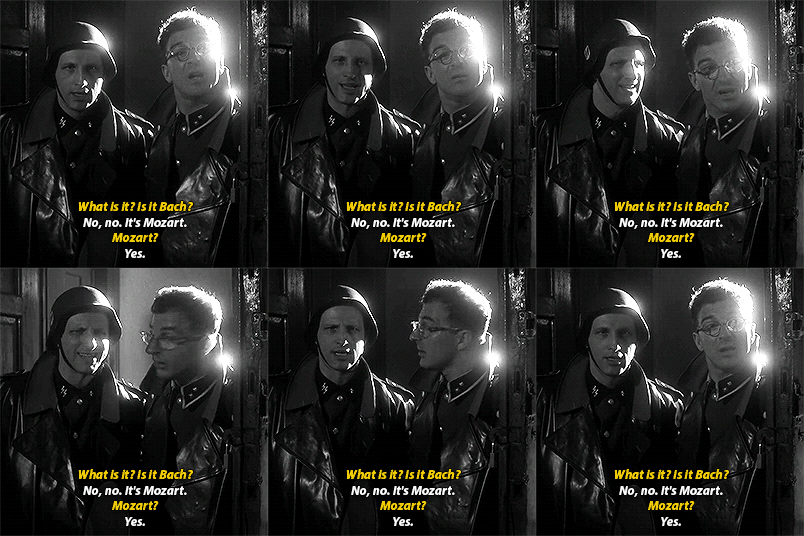
The denial that a dictatorship could ever happen in a nation like Germany (Goethe, Bach) or the United States (Lincoln).

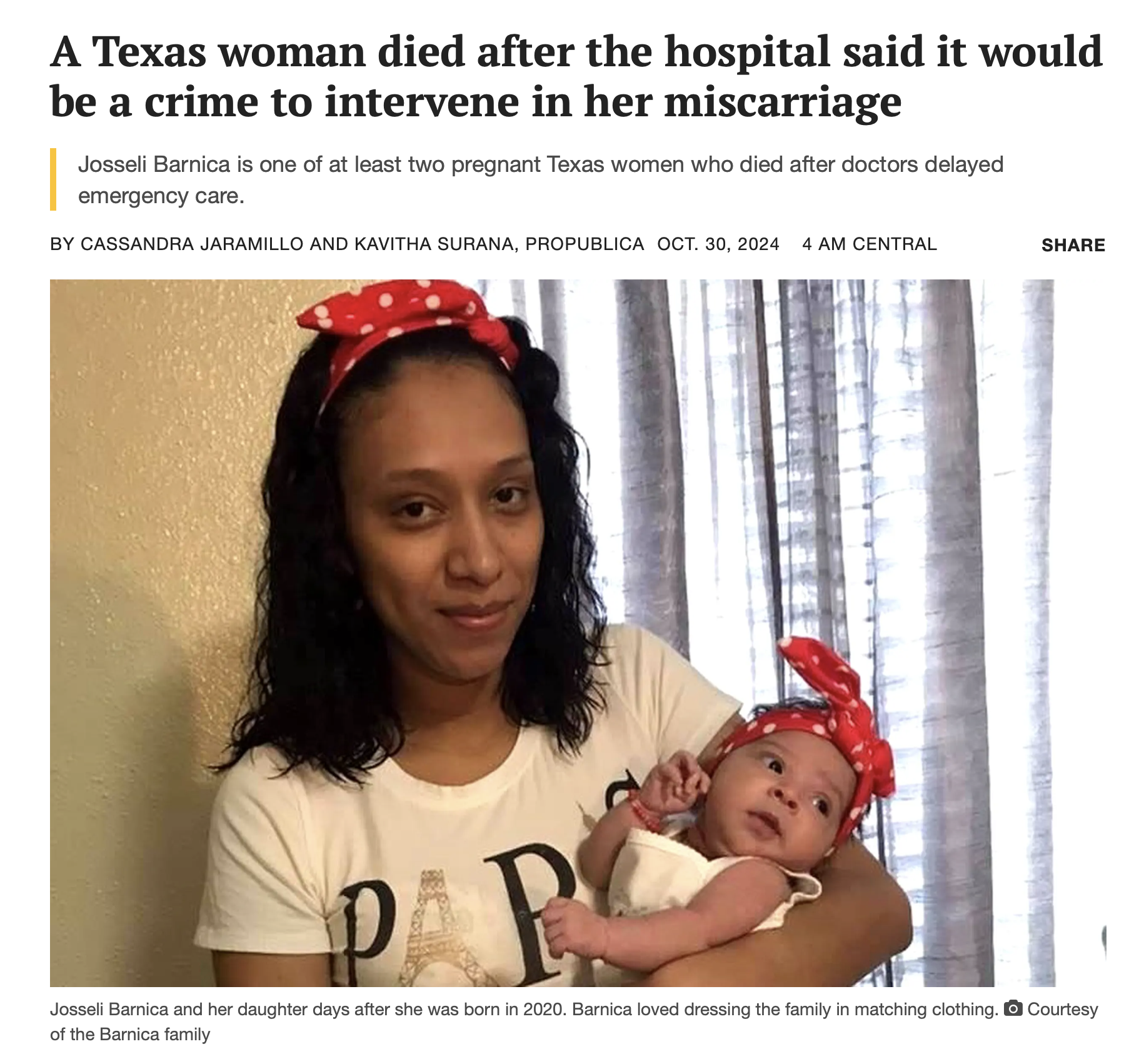
The subordination of women.

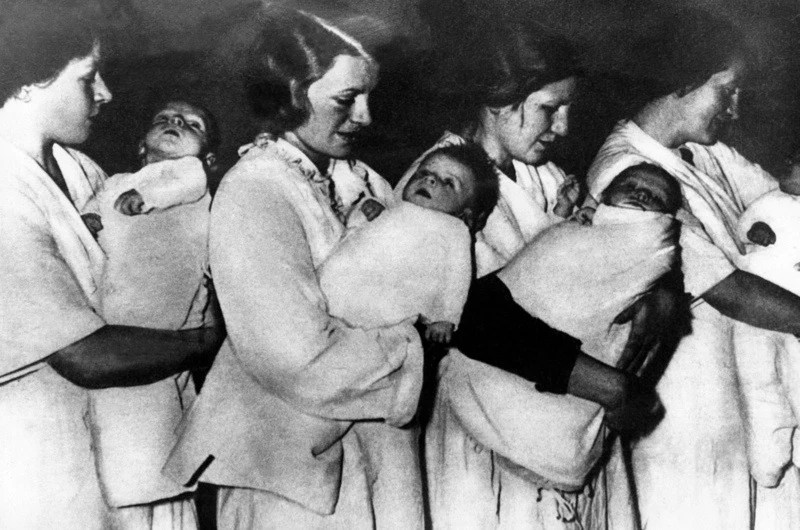
Mothers and babies, part of the SS “lebensborn” movement.