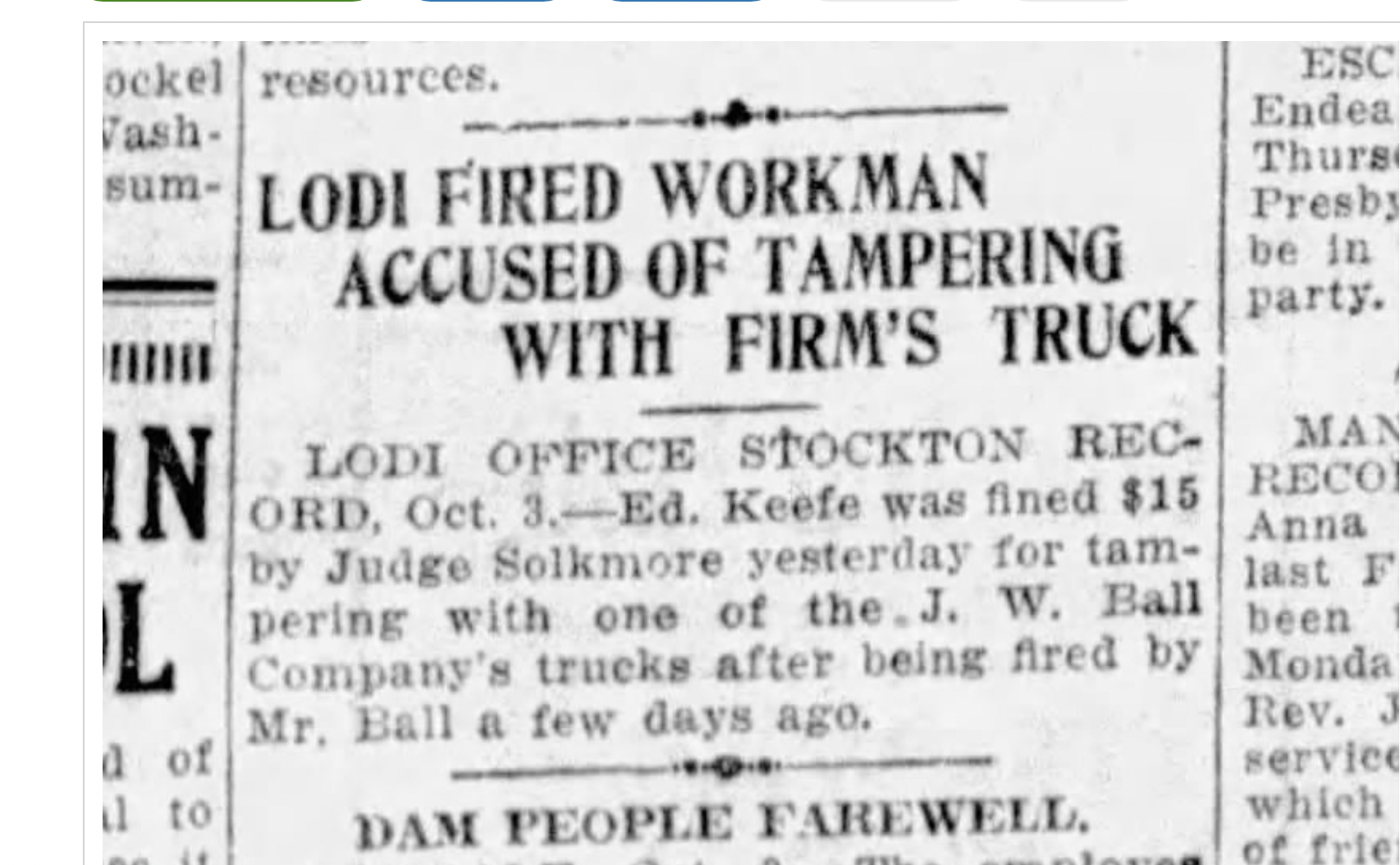
I plunged back into genealogy this morning and found our grandfather again. You may remember that, in Taft, he had a habit of borrowing cars without first notifying their owners. That was later. This is from 1917:
Here’s the house he was living in at the time, on Main Street in Lodi:
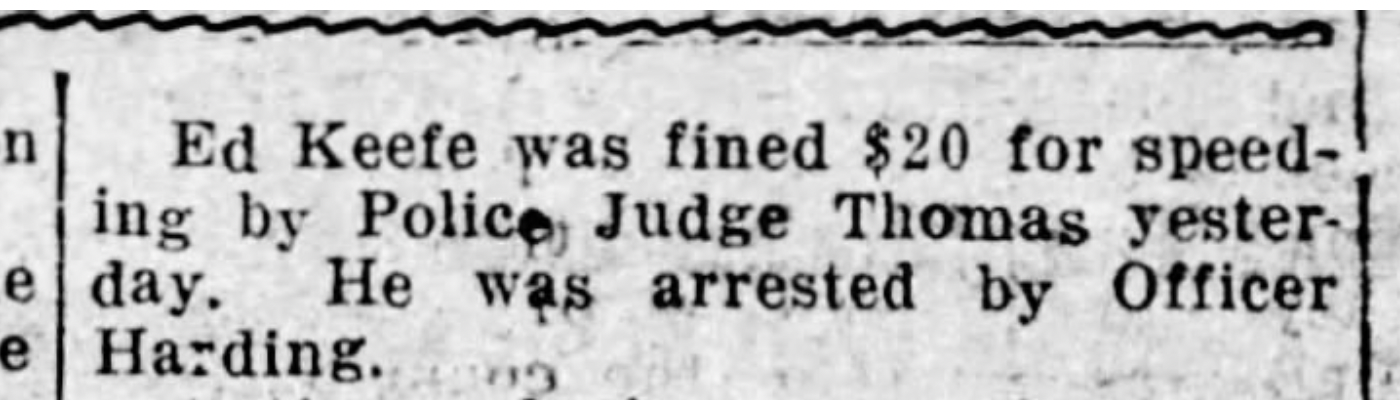
Couldn’t stay out of trouble. From the Bakersfield Echo, 1919:
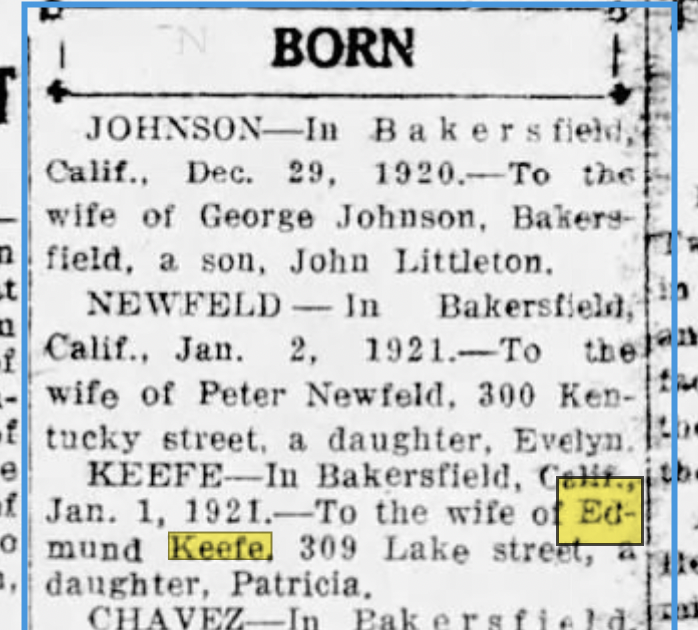
Mom’s birth announcement (the address is now an industrial area and seems to be a vacant lot):
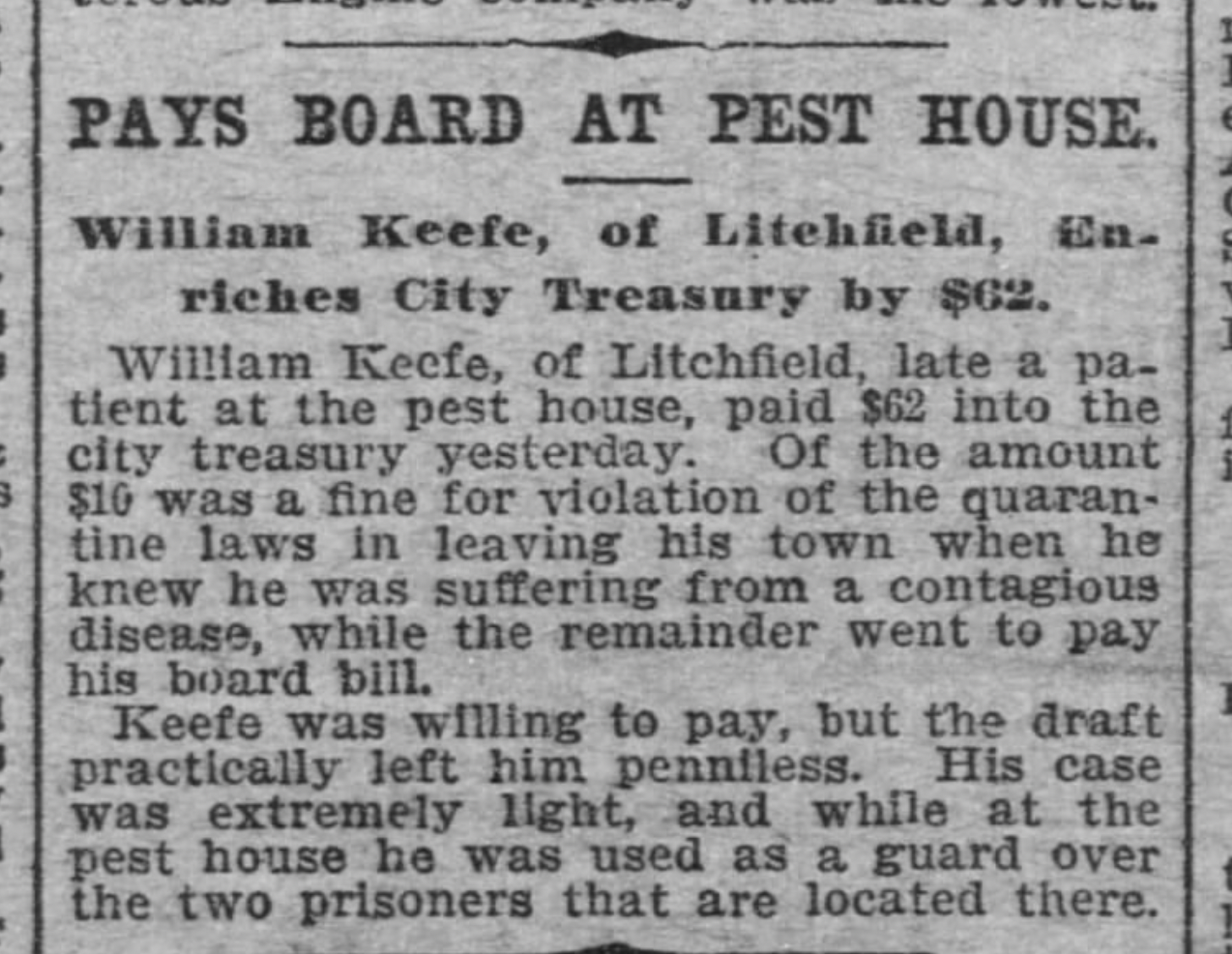
And in 1902, his big brother Willie got into a little hot water, too.
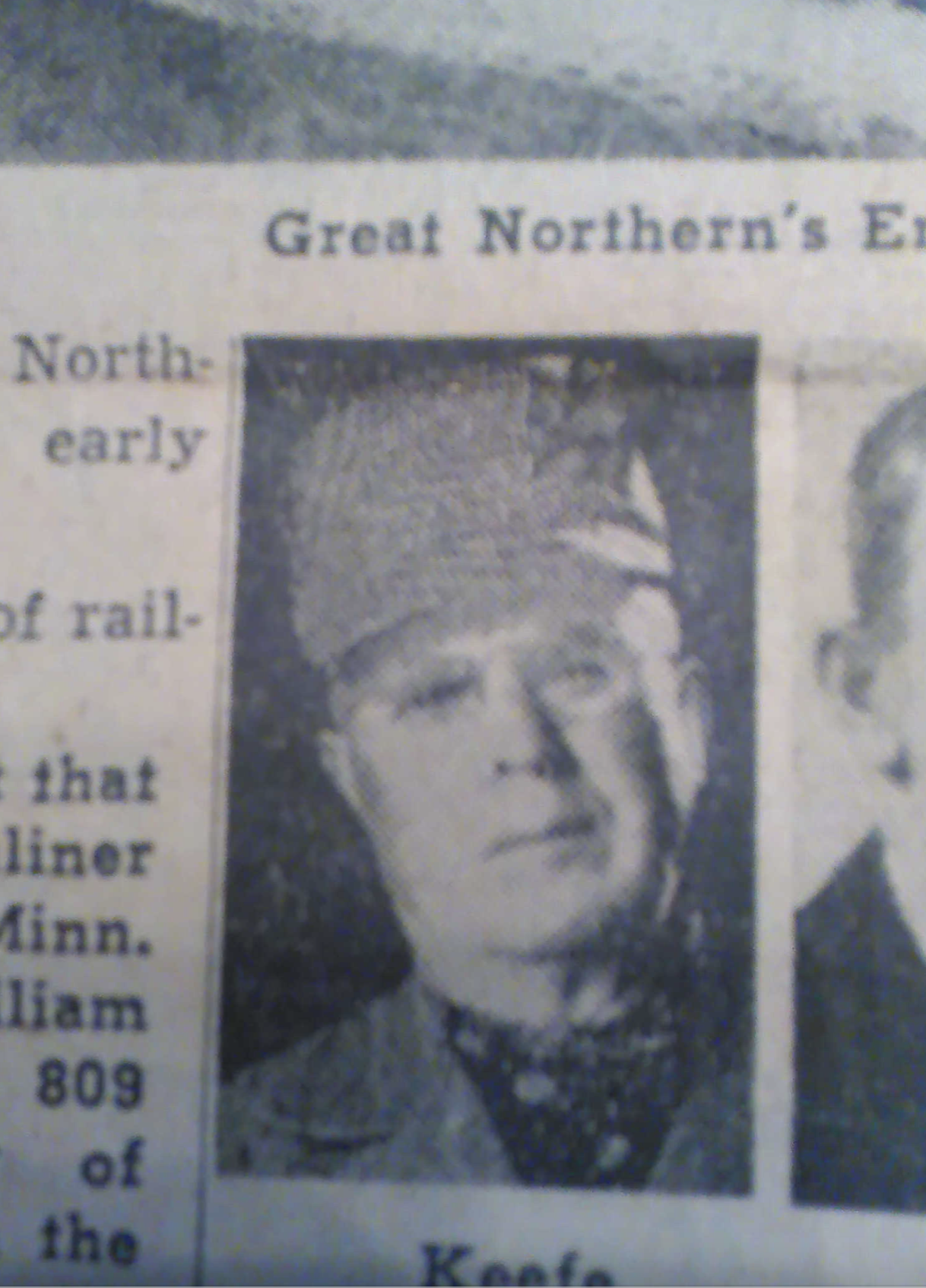
But Granduncle Willie turned out just fine. He was an engineer on the Great Northern Railway and died at his post:
And that Great Northern wasn’t some mouse fart railroad, nor was the Empire Builder. Here’s a photo:
And, as to the Irish part of our background, I’ve been able to push about as far back as is possible for the Irish, to the 18th century. I’ve just discovered a “Margaret Lambert,” who married Patt Keeffe, who was born in Edinburgh, but I haven’t positively identified her as the same Margaret Lambert who would be our 4th great-grandmother.
Meanwhile, as to Grandma Kelly, I’ve found the German village, Geißelhardt, Schwäbisch Hall (I have no idea how German names work) where her grandfather, Michen Kircher, was born and baptized. It’s beautiful.
And this is the church (Lutheran), appropriately named St. Michael’s, where Michen Kircher (“Kirch” = “Church”) was baptized in 1831.
Given the last century’s unpleasantness (1939-1945), I’ve always been a little uneasy about our German heritage. But our ancestral village is in Baden-Wurttemberg, the home of Claus von Stauffenberg, played, not too ineptly, by Tom Cruise (Valkyrie), who tried to blow up Hitler in July 1944.
And, by golly, we even have a sort of connection to von Stauffenberg. I got to do an inservice at Stanford twenty years ago, and we visited the Hoover Institution, whose archives include the X-ray of Hitler’s skull taken immediately after the bomb went off. I got to hold it in my hot little hands!
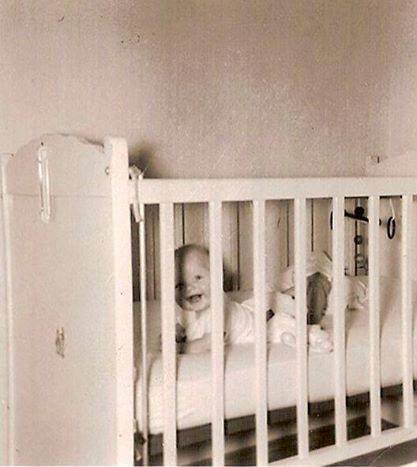
My mother taught me, the little joker in the crib, how to read a few years later. On my first day of education, first grade at Branch School in the Upper Arroyo Grande Valley, I realized that I could read the names of my classmates as Mrs. Edith Brown wrote them on the blackboard.
My mother’s teaching made me want to be a teacher.
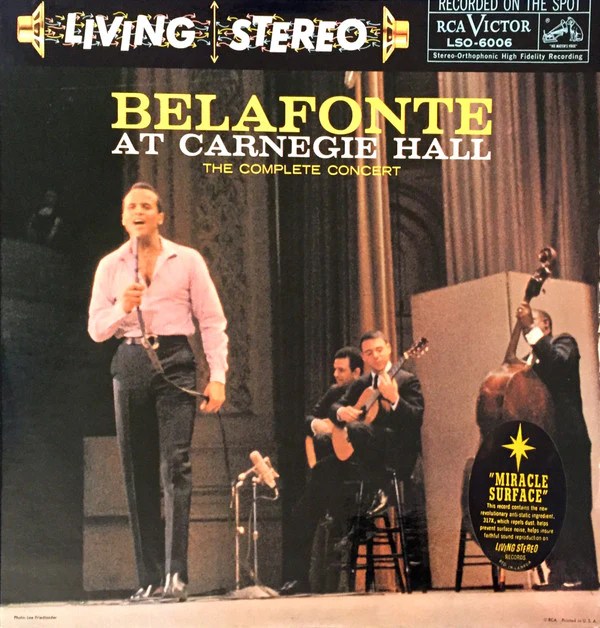
She taught me about music and art. Harry Belafonte and Mozart and Glenn Miller were on our Zenith cabinet record player and there were immense and immensely heavy art books in our den, along with several decades of National Geographic magazines. I spent hours in the den, inside the big cabinet built into the wall —it was like a little house—where the books were kept.
She taught me to love God—admittedly, with me, still a work in progress— with the intensity and the intellectual hunger of a Jesuit. Her favorite was Teilhard de Chardin, the Jesuit, an anthropologist who saw no contradiction between Darwin and Genesis, and her margin notes in his books, declamatory and questioning and meticulously written in Ticonderoga #2 pencil, were nearly as brilliant as Chardin’s text.
She wanted to go to college, but it was the Great Depression. Still, I can almost see her, as I’ve written before, with her notebooks and textbooks spread on a lawn, Memorial Glade outside UC Berkeley’s Bancroft Library. My mother is wearing a pearl-buttoned blouse with a knotted sweater around her shoulders, a pleated skirt, bobby socks and saddle shoes, and there’s a bright red ribbon restraining her curly auburn hair. She brushes her hair aside, irritated, because it gets in the way of her reading.
I can almost hear her, respectful but premeditated, questioning a history professor on Wednesday about a point he’d made about the French Revolution on Monday.
She didn’t go to college, but she used tulip bulbs to teach me about death.
She instructed me to carry a jug full of cold water down to the braceros who were working a pepper field just beyond our pasture fence.
When we lived on Sunset Drive in Arroyo Grande, she was a Den Mother to my brother’s Wolfpack, which included my brother Bruce, the Fesler twins and the Cub Scout she adored, Greg Folkerts. Greg, AGUHS ’66, became a surfer, impossibly handsome and effortlessly charismatic, and when he was killed on the beach at Pismo in a car accident, at 17, Mom was heartbroken. So was my brother.
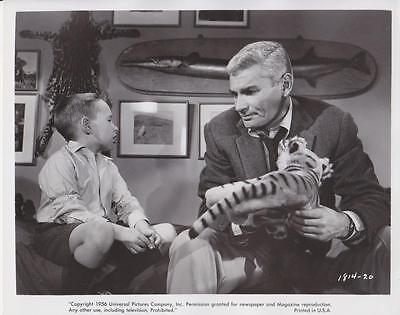
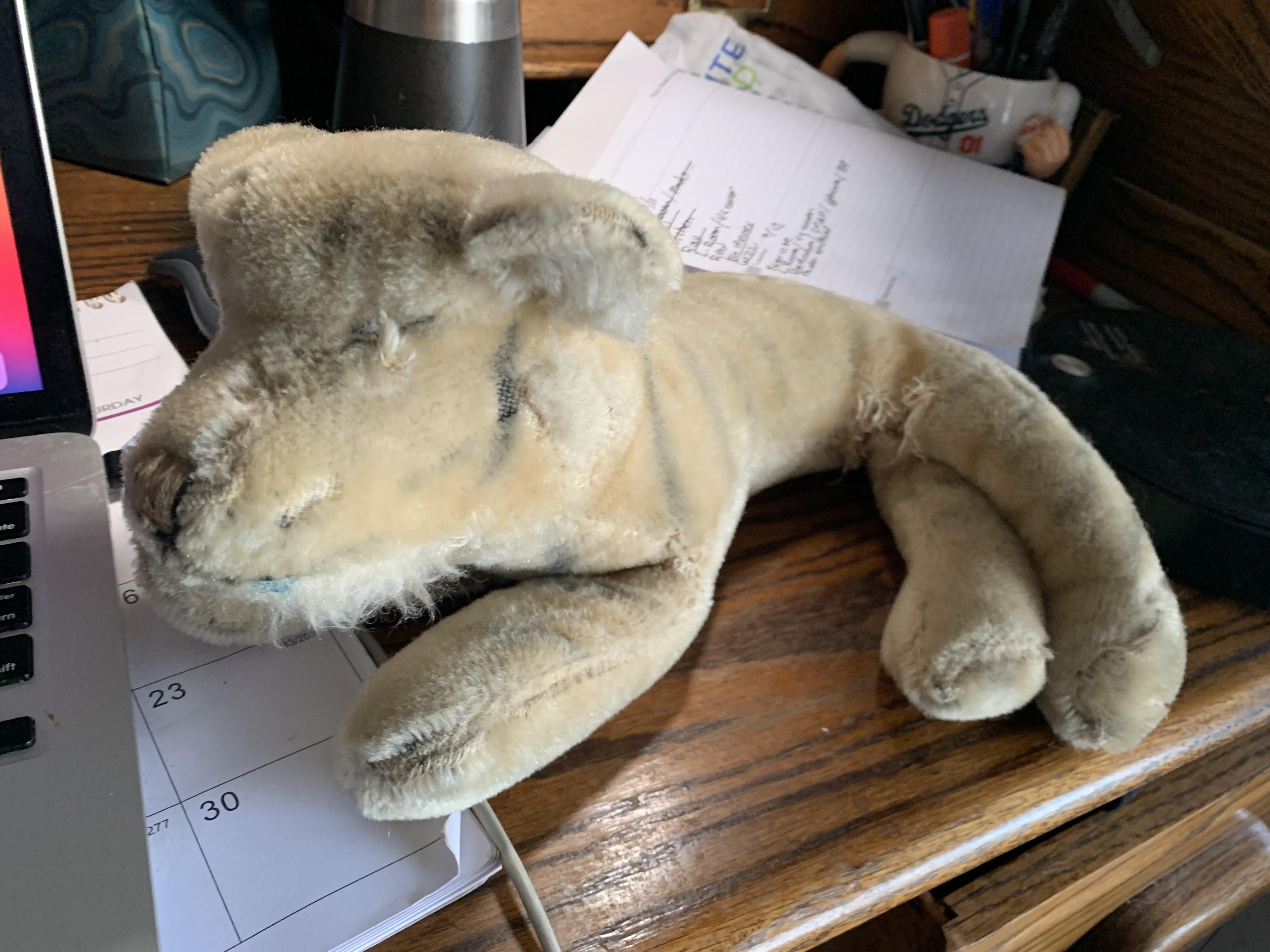
Since we lived on Sunset Drive, we were close to the Fair Oaks Theater, so we saw a lot of movies together. One of them, from 1956, was a Jeff Chandler comedy-drama, The Toy Tiger, about a little boy and his stuffed animal. I still have mine, now sixty-eight years old. He’s named “Toy Tiger.” I stuck to the script.
She had a wonderful sense of play. Once, on Sunset Drive, we all decided we wanted to be Bedouins. Mom thought that was a fine idea. She dressed us up in bathrobes, made us all burnooses out of towels, used eyeliner to paint curly mustaches on my brother and me. She even made a gauze burnoose for our Cocker Spaniel, Lady—she was a beautiful little dog, named, of course, for the Cocker in Lady and the Tramp. We stuck to the script.
She was a delegate, from St. Barnabas, then the Camp SLO World War II chapel where the Arco station stands today, to the Grace Cathedral convention that elected James Pike bishop.
When we lived on Huasna Road, she was vice president of the Branch School PTA.
On Huasna Road, she grew roses—I remember one varietal, a Sutter Gold—and there were two long rows of them alongside the house. We once visited Mission San Antonio de Padua to the north, near the Hunter-Liggett Military Reservation, just to buy some of their famed rose cuttings. The manurage from my big sister’s Roberta’s horses—Quarter horses and Morgans and Welsh Ponies—were perfect for growing roses.
Despite the San Antonio mission, she loved Mission Santa Ines above all others. We visited often when were were little. (The aebeslskivers and frikadeller and the nearby Andersen’s Split Pea Soup added to the attraction for the rest of us.) She bought me a little book, a juvenile novel, about Pasqaule, a little Native American girl, a neophyte at Santa Ines. My fourth-grade obligatory mission model was of Santa Ines. Elizabeth and I were married there, not by Jesuits, but by Irish Capuchin Franciscans. Mom loved that, I am sure.
She was, in anything to do with fabric, an artist: knitting, crochet, needlepoint, weaving, sewing.
She loved the Beatles, Ringo most of all. He reminded her of a Basset Hound.
She asked for Richard Burton one year for her birthday. That was the name of her Basset Hound puppy. It’s no coincidence that I love Basset Hounds.
She was forty-two when she went into labor during a driving rain–Dad drove her to the hospital, seventeen miles away, in his big 1961 Dodge Polara station wagon, roughly the size of a World War II jeep carrier. She gave birth to Sally, the youngest, the family beauty, who turned out to be a wonderful mother, too. I can’t tell you how much she would have loved her granddaughters and our sons, John and Thomas, her grandsons.
This coming March 19 marks fifty-five years since Patricia Margaret Keefe Gregory died.
I was seventeen. I am seventy-two. I still miss her, and that’s probably because she was such a beautiful woman. When I say “beautiful,” I’m referring to her heart and to her mind, not to her looks.
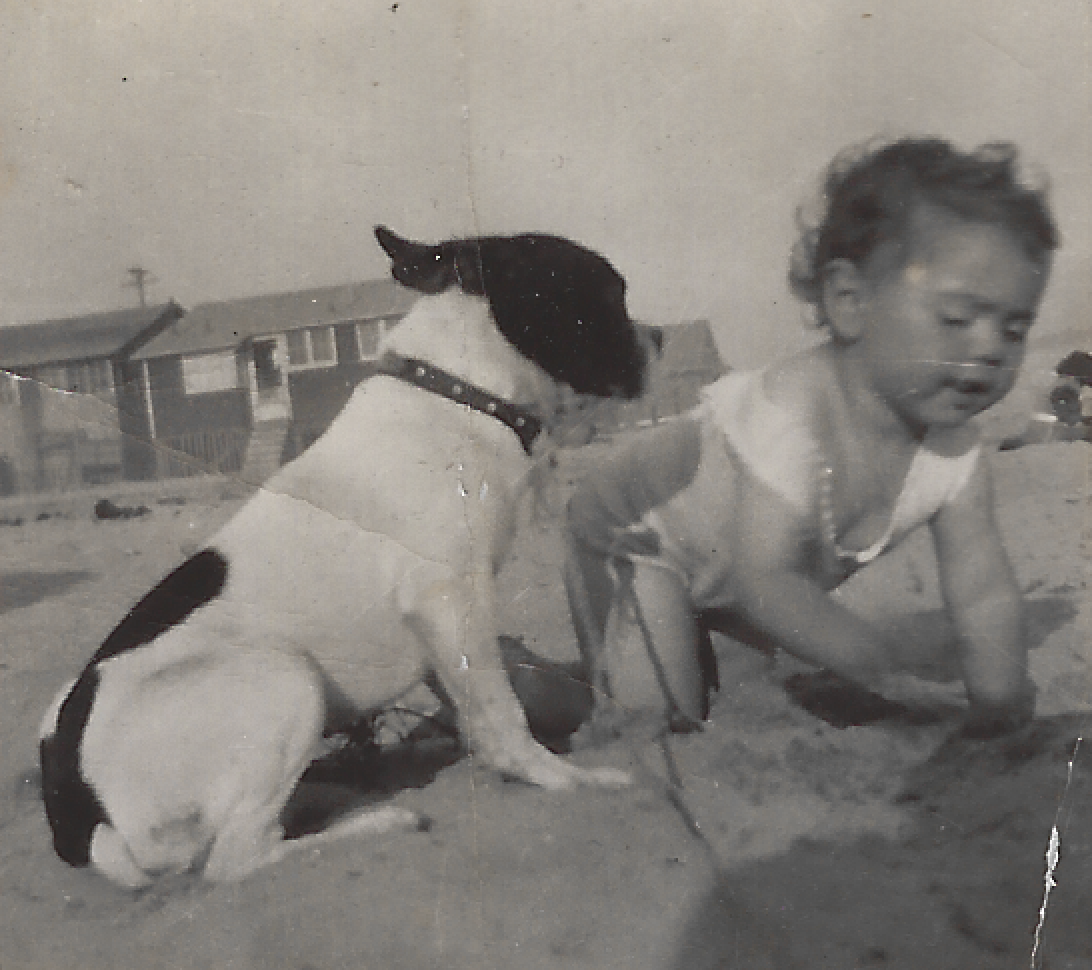
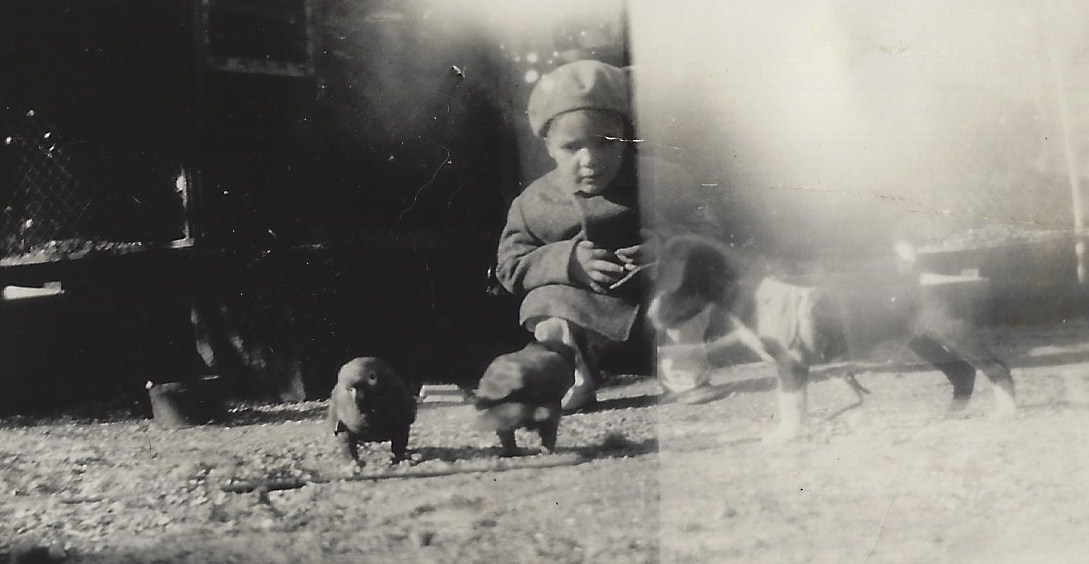
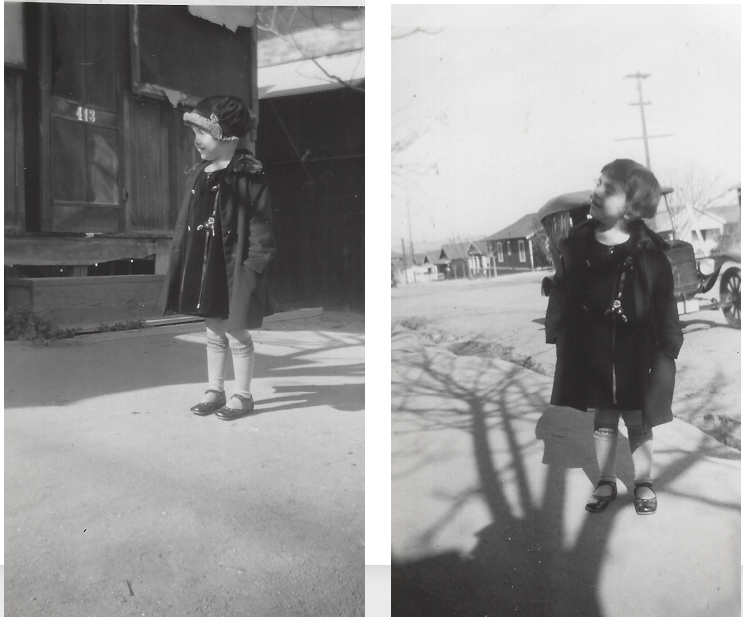
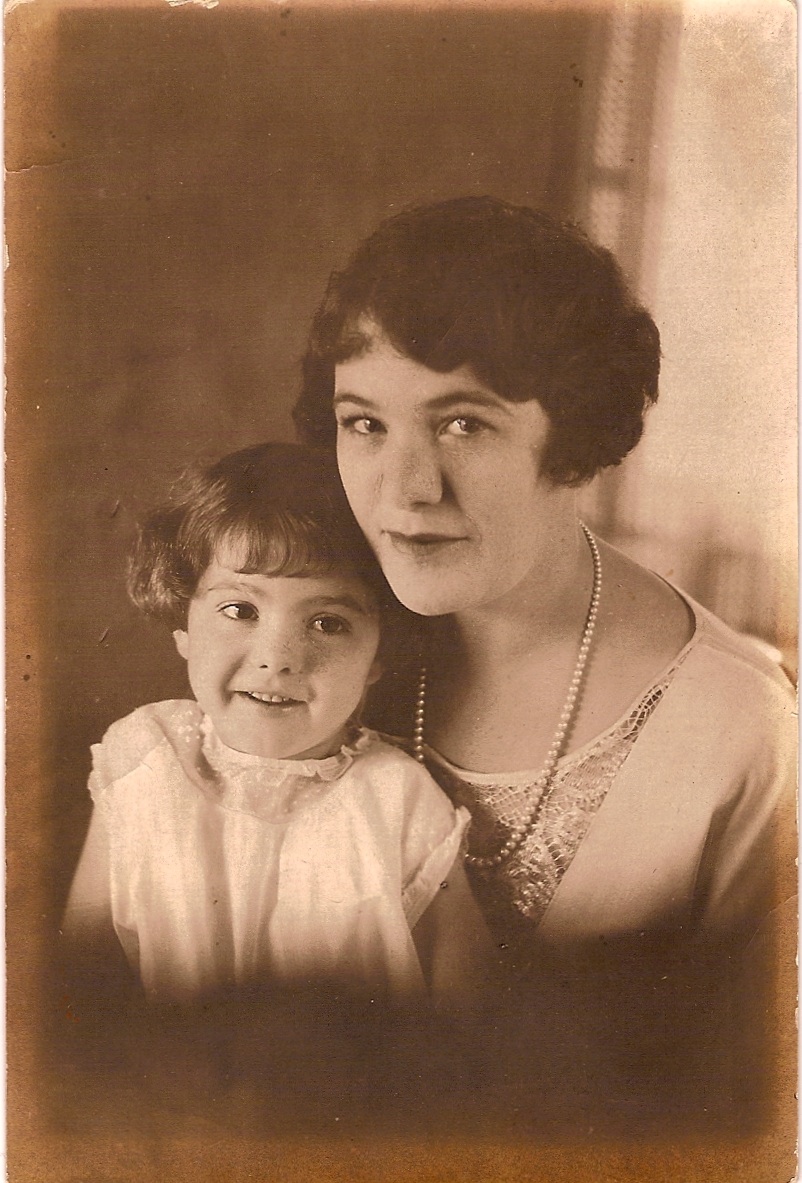
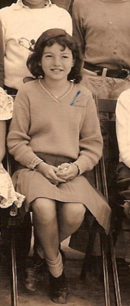
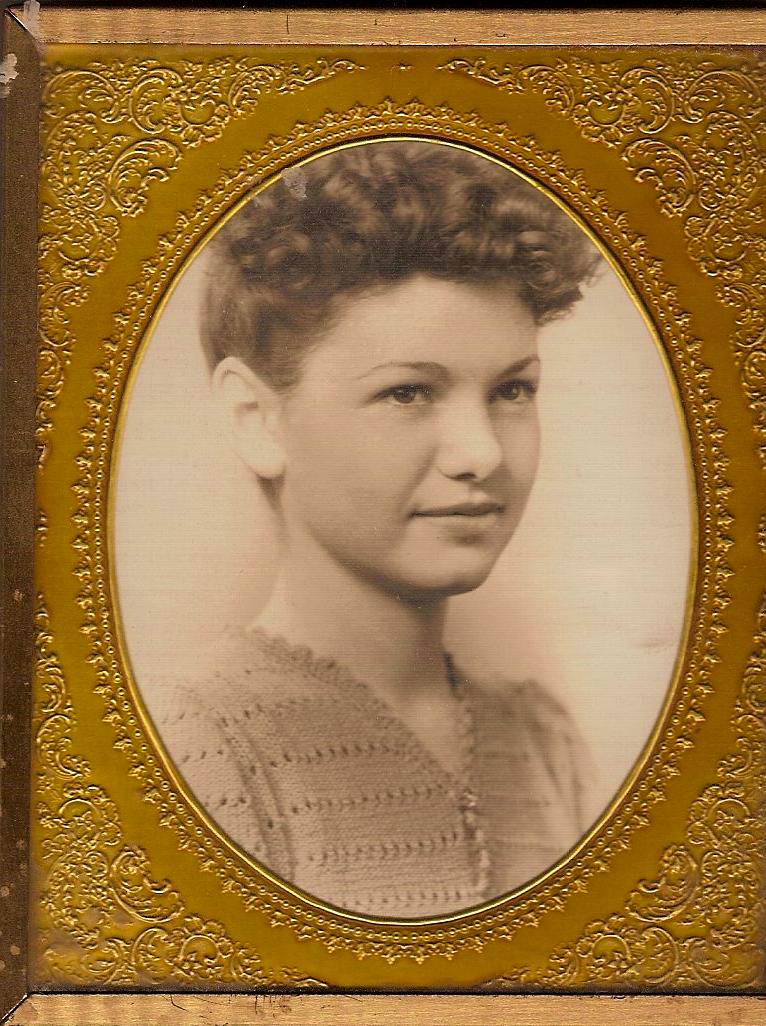
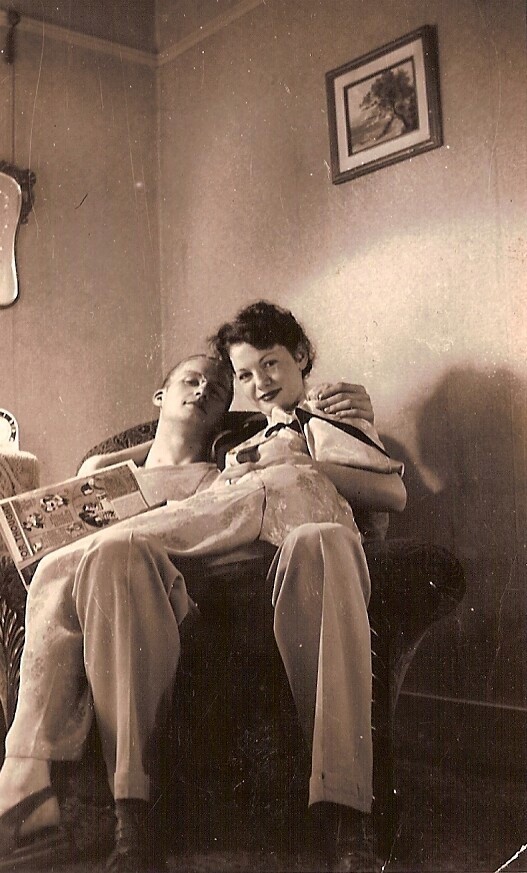
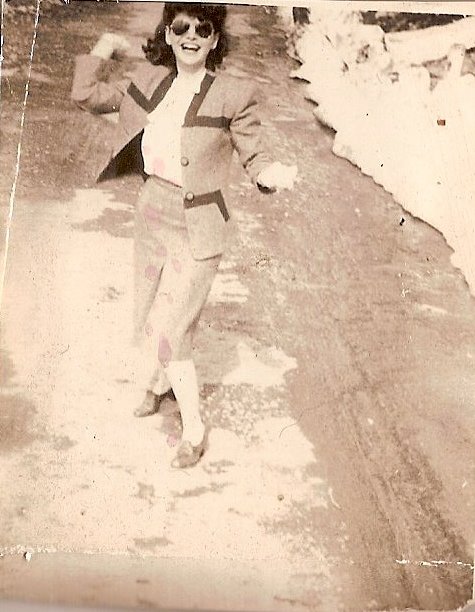
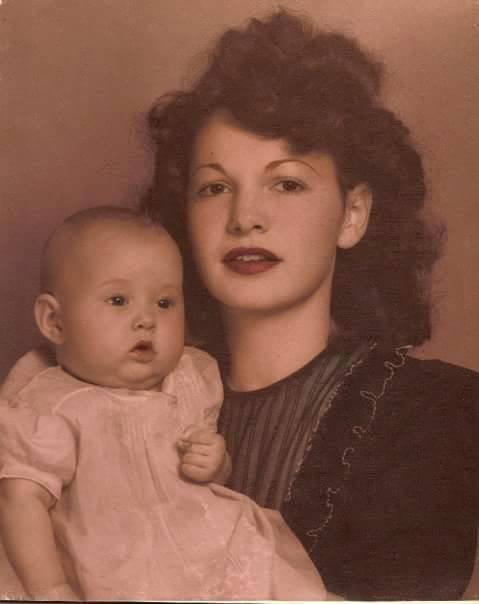
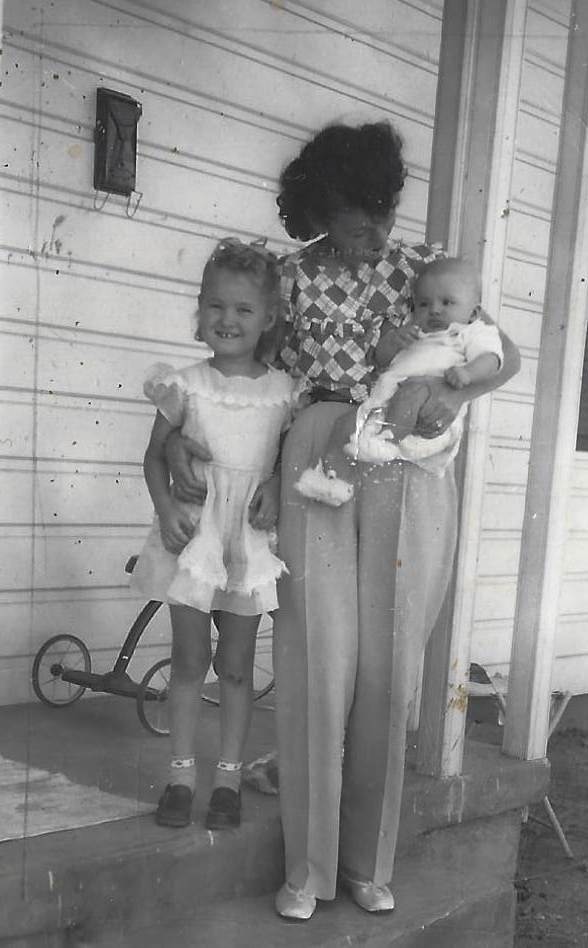
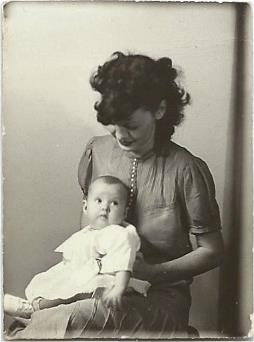
She was named “Patricia,” after two grandfathers, Patrick Keefe and Patrick Fox, Famine refugees from County Wicklow, two men who would’ve been immensely proud of the little girl they never met. The two Patricks came from Coolboy, the village below. Then there’s some photos of my mother, of the kind of woman the Irish would refer to as “Herself.”
Students, St. Jean Baptise High School, New York City
I was interviewed yesterday, via Zoom, by a wonderful young woman who, like I did once upon a time, teaches AP European History. I am among a brace of teachers she’s interviewing as part of her Master’s thesis for Columbia Teachers’ College in New York City.
Her ancestry is Chinese. She grew up in Brooklyn in a neighborhood still dense with the children and grandchildren of immigrants from Italy and Ireland.
She teaches at St. Jean Baptiste High School on East 75th Street, founded by a teaching order, the Congregation de Notre Dame, with origins in 17th-Century France, who came to Quebec to teach.
Quebec is where my Famine ancestors from County Wicklow arrived as immigrants in 1849.
Many of her students are Black, and several are the children of recent immigrants from West Africa.
Two of what were called “coffin ships” in 1849 wrecked on icebergs on their way from Ireland to the New World. All were lost except for the crew of one ship who abandoned their passengers.
For years after the American slave trade ended in 1808, sharks trailed ships sailing in the same latitudes as the slavers.
Americans, despite Hitler’s dismissing us as “a mongrel race,” are not weak, being galvanized, as we have been, by the immensity of our tragedies.
All of this reminded me of a film I’ve always loved about immigration–“The Godfather Part II”–and a more recent film, “Brooklyn,” with Saoirse (“Sur-shuh”) Ronan, about an Irish girl from Wexford–next door to Wicklow—who comes as an immigrant to America soon after World War II.
Ronan’s character falls in love with a charming Italian-American boy, a plumber, Tony, who is played by a young Jewish actor.
Oh, America.
We are galvanized by tragedy, but it’s true, too, that we are an alloy of many people from out past, from many places. I think that we owe them, in these terribly dangerous and divisive times, the future
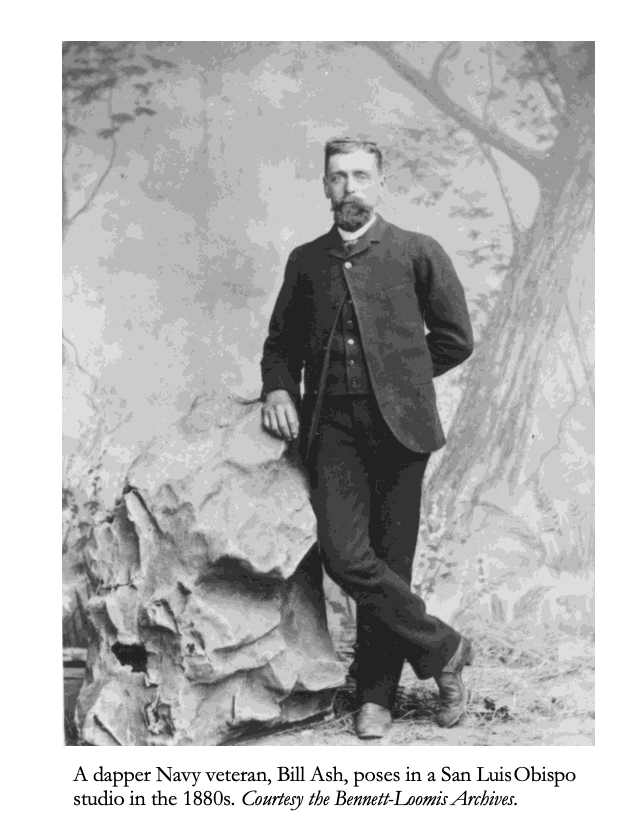
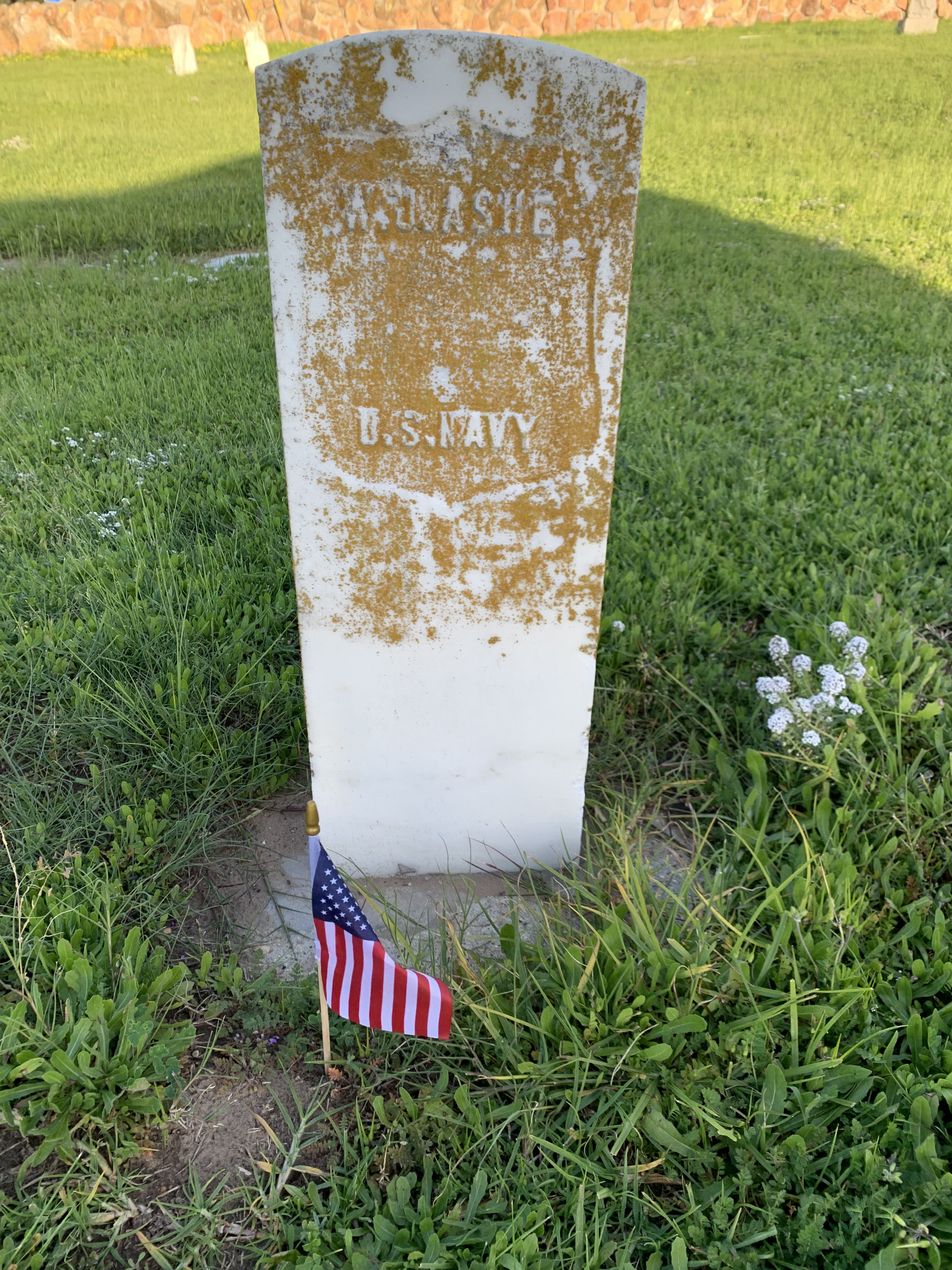
We can’t even get his name right. The majority of newspaper and official records spell it the way I did in the caption above, from the Civil War book Patriot Graves. But Bill Ash’s tombstone adds an “e”—Ashe—as does the tombstone of his son, both buried in the Arroyo Grande District Cemetery. A researcher nicknamed “Big Sur Baby,” who is diligent and valuable, lists at least one other name for him, “Charles Lewis,” on the website findagrave.com. There may have been at least one more name he gave himself in what turned out to be a relatively short life.
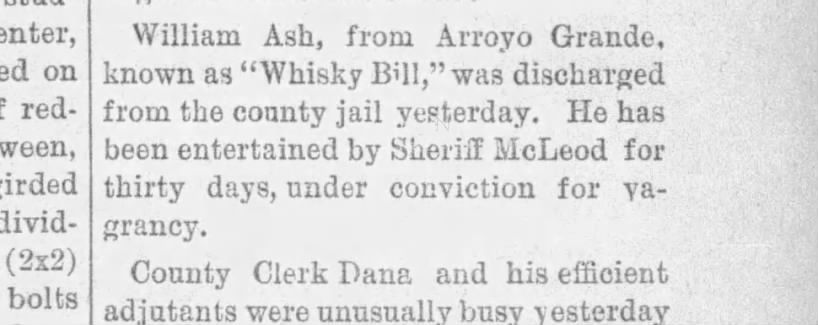
He was known, sadly, as “Whiskey Bill.” In this June 1889 clipping, he’s a guest of San Luis Obispo County Sheriff A.J. McLeod:
:
But in May 1861, he was a different man, an enlistee in the United States Navy only a month after the attack on Fort Sumter. Here’s the record:
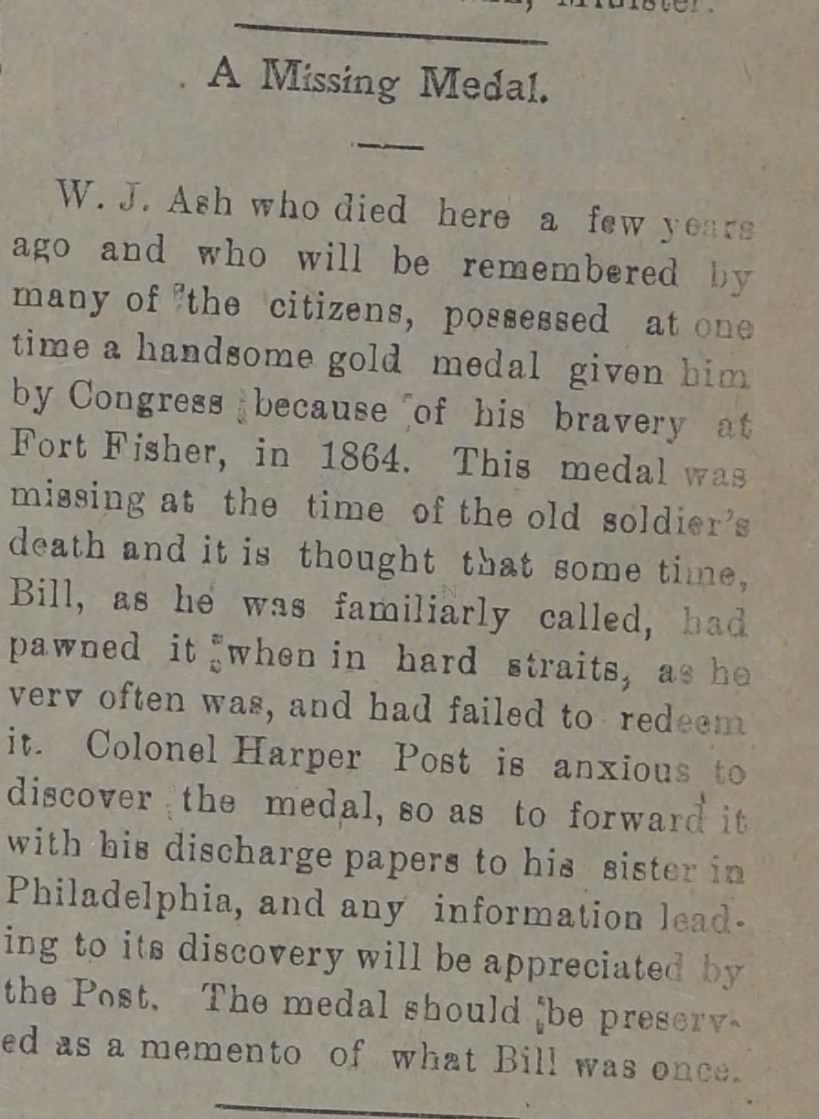
He’s a little fellow, about my size–it was more “average” in 1861–and his prewar occupation was, in fact as a “mariner,” so he was not a fresh fish in Lincoln’s navy. He’s twenty-six, born in Philadelphia, but I haven’t been able to learn much more than that. He’s enlisted for two years, but he served far longer than that. This poignant story is from an 1898 Arroyo Grande Herald-Recorder. I guess Bill Ashe needed whiskey money:
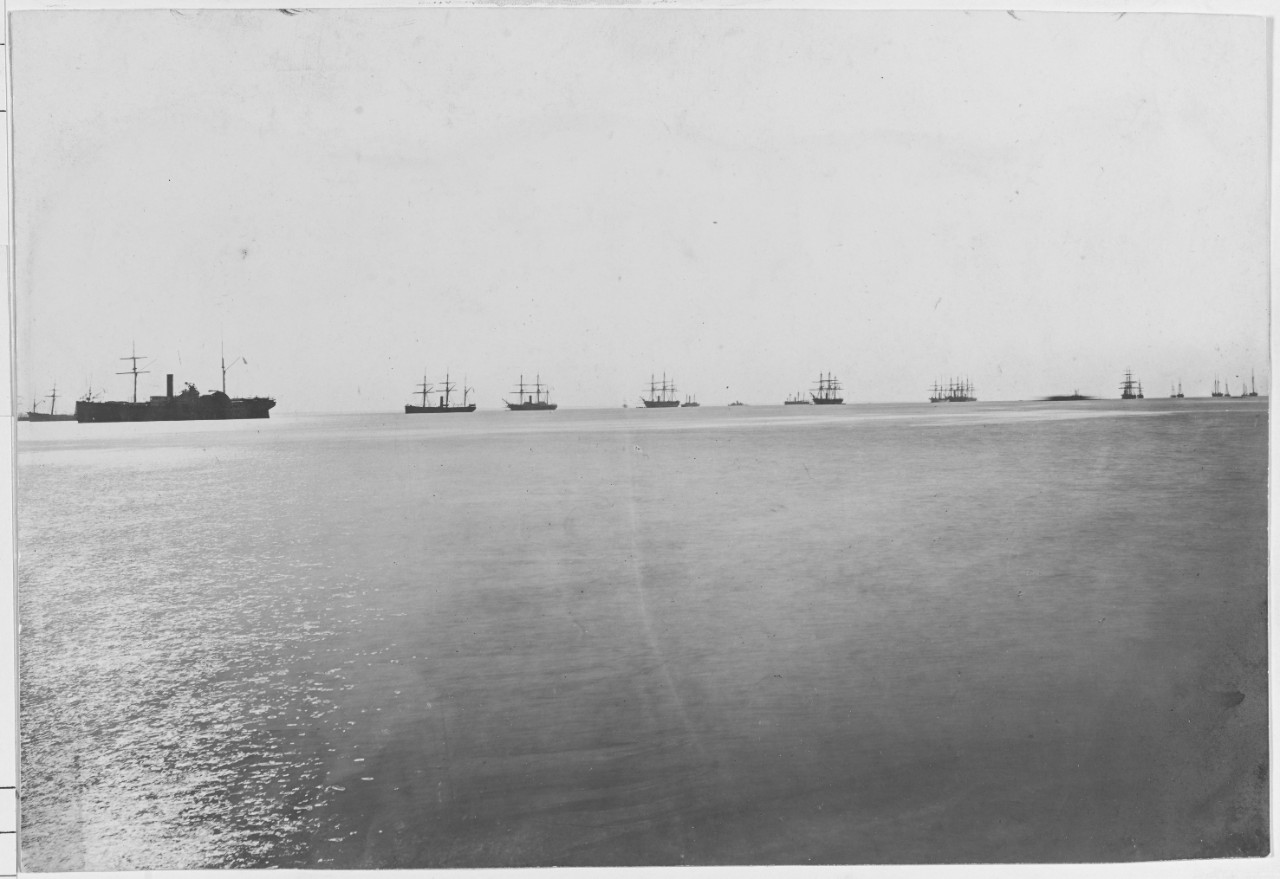
He wasn’t an “old soldier,” of course. He was a sailor, and a member of David Porter’s North Atlantic Fleet, seen in this photo leaving for Fort Fisher, a Confederate stronghold guarding Wilmington Harbor, North Carolina, in December 1864.
The assault was commanded by Gen. Ben Butler, notorious for his corruption as a military governor in New Orleans, and by Admiral Porter, who’s had a brace of warships named for him. Despite what was the heaviest naval bombardment in history up to that time, the 1864 assault ultimately failed.
I cannot find a record—yet—of that handsome gold medal that Bill Ashe earned and I wondered how he might’ve earned it. Bombarding an enemy fort from a relatively safe distance doesn’t seem to be heroic, unless you’ve actually done something like that.
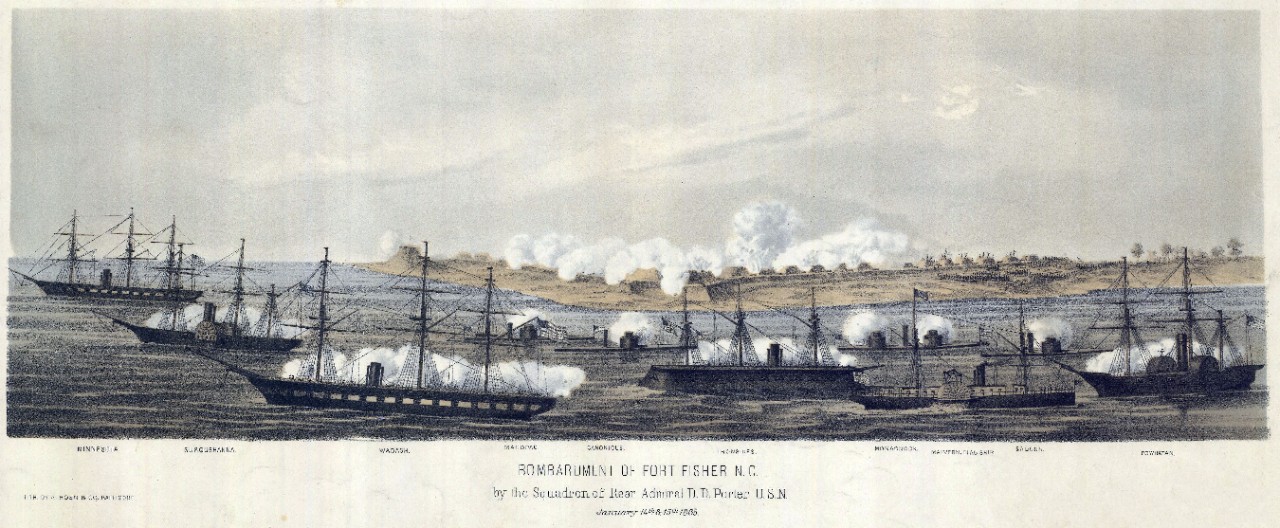
Then I found this illustration from a U.S. Navy website:
So it’s possible that Ordinary Seaman Ashe earned that recognition for heroism on dry land, on the kind of frontal assault that reminds you of the doomed one undertaken by the 54th, on Fort Wagner, in the film Glory.
Bill survived Fort Fisher—it would fall the following year, 1865, a moment featured in Spielberg’s Lincoln, when the president’s about to tell his Ethan Allen story.
Ashe would be a Navy man for a long time. Big Sur Baby notes that one of his ships was the USS Jamestown, a sloop of war. This wouldn’t have been his ship at Fort Fisher—Jamestown was then in the Pacific, protecting merchant ships and whalers from Confederate commerce raiders.
After the Civil War, Jamestown remains a presence in the Pacific, showing the flag as far west as Tahiti and as far north as Sitka, until, in 1872, she becomes a shipboard training school at Mare Island, San Francisco. That’s the year when we find Bill again in this Navy record:
He’s an Old Salt now—thirty-eight years old—and has acquired, along the way, two tattoos: a ballerina on one hand and his initials “W.A.” on the other. After 1872, I was able to find a couple of possible Bill Ashes in northern California, but the next solid lead came in my hometown, Arroyo Grande.
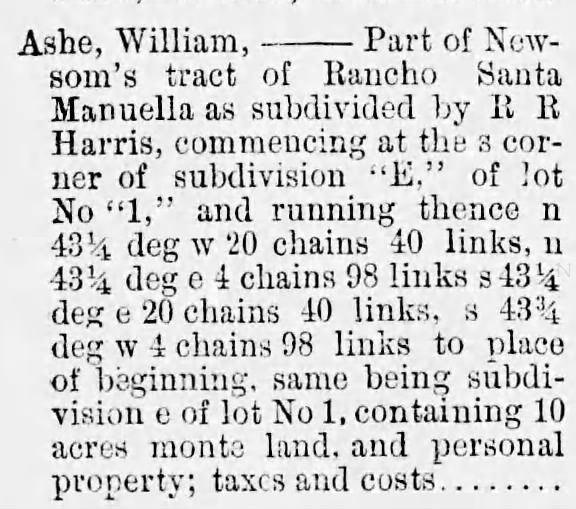
This notice, in February 1882, reveals that Ashe has acquired ten acres of land in the Upper Arroyo Grande Valley, potentially bottom land passed down from town founder Francis Branch and his son-in-law, David Newsom. But there’s a caveat: It’s “monte land,” which means that, like most of the Arroyo Grande Valley, it’s still covered by monte–a dense mixture of scrub, including willow, that was as sharp as razor wire. That’s why Branch’s vaqueros wore leather chaps: chasing a runaway calf into the monte would cut a cowboy’s legs to pieces without the protection of his chaps.
So you guess that Bill began to clear his ten acres. My friend, historian Shirley Gibson, has told me that Bill was an extraordinarily hard worker who, in the years after this, took his pay in whiskey for clearing the monte off his neighbors’ land.
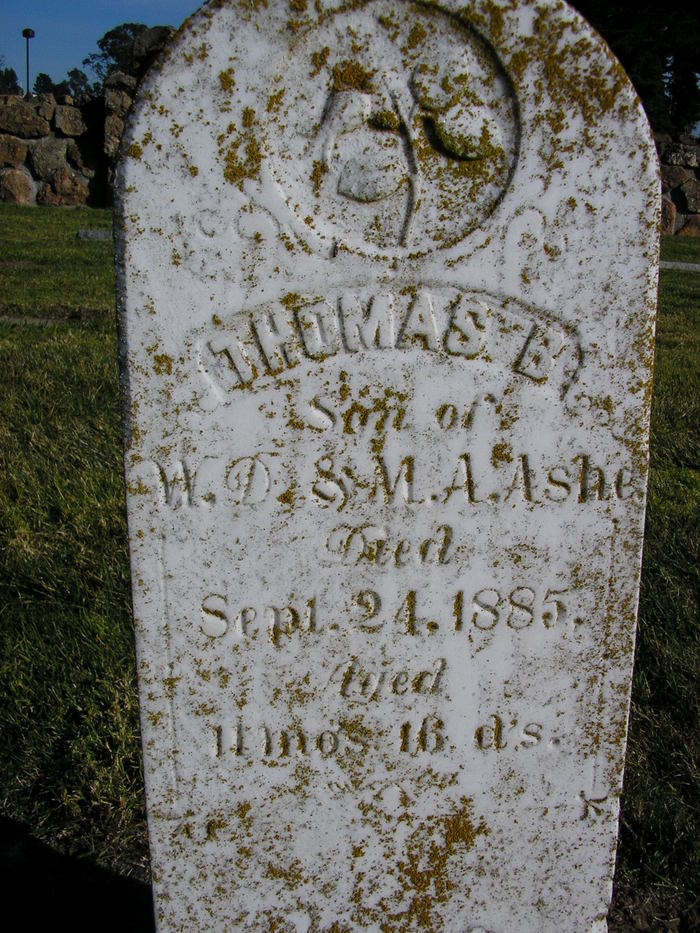
I am not sure what happened to Bill. It’s likely that he’d always struggled with alcohol addiction. While I am no psychiatrist, Bill’s seemingly precipitous decline may have begun with a brief life recorded by this tombstone in our cemetery:
I haven’t been able to find out a record of Mrs. Ashe, but the fact that Thomas’s age was calculated down to the days is revelatory to me. Bill would have been fifty-one in 1885, and Thomas, a name I’m fond of, must have been a great gift to him at that age. For a man whose life might’ve seemed to have reached its zenith at Fort Fisher in 1864, this little boy pointed to the future. You wonder if Bill’s future died, too, on September 24, 1885.
Four years later, Ashe is the guest of Sheriff McLeod, only to be humiliated in the local paper.
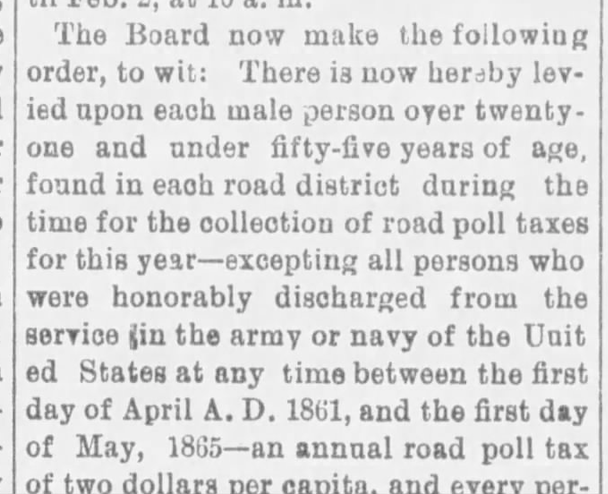
But in January 1892, the county Board of Supervisors reminded the navy veteran—and the rest of San Luis Obispo County, too—that they remembered “what Bill was once.” A road tax is levied on the farmers of the Upper Valley, with this notable exception in the language of the ordinance:
There were plenty of Army veterans in the Upper Valley—Erastus Fouch and Sylvanus Ullom, Gettysburg veterans, are just two examples—but there is only one Civil War navy veteran in our history, the only one buried in our cemetery, and that’s Bill Ashe.
Ashe’s death, from a stroke, came soon after this seemingly minor honor from the gentlemen who made up the Board of Supervisors. Twenty-eight years after— and a continent away from Fort Fisher, North Carolina—I don’t think the honor they paid Bill Ashe was in any way “minor” to the Supervisors.
The most memorable navy battle of the Civil War began today. On March 8-9, 1862, USS Monitor fought her duel with CSS Virginia in Hampton Roads, Virginia, and the little Monitor, with her rotating gun turret, presaged an age of American battleships that would dominate the U.S. Navy until December 7, 1941, when Arroyo Grande lost two sailors on USS Arizona.
So it’s a good day, March 8, to remember a Union Navy sailor like Bill Ashe. I will take him a little American flag tomorrow.
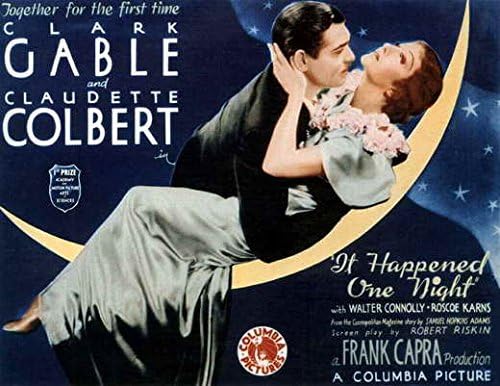
I love the Turner Classic Movie hosts because I learn so much from them. Last night’s host—it’s the annual “Month of Oscars” series—Dave Karger, taught me a lot about It Happened One Night, so his introduction made me watch it more closely than I ever have before. Among the items Karger pointed out:
–The studio that produced it, Columbia, was a shoestring operation in danger of going under. This film saved it.
–The resemblances to my favorite film, Casablanca, are amazing. Nobody expected either this film or Casablanca to be very good. Gable had gotten into the doghouse with his contract studio, MGM, so they lent him to a studio made of tin, Columbia, with the thought of disciplining him.
–No matter how much the Gable and Colbert seemed to enjoy each other, Colbert confided after It Happened had wrapped that she’d just finished the most awful film.
She was, as Bogart deadpanned in Casablanca, misinformed.
–It Happened One Night won won five of the most prestigious Academy Awards: Best Picture, Best Director, Best Screenplay, Best Actor, Best Actress. That had never happened before, on one night nor on any other in particular.
It must’ve helped hat Gable was the King of Hollywood (yes, I know about the bad teeth and the urban legend about the the fatal hit and run.) I’ve always been interested in Gable—I started out as a reporter, and it was Teacher’s Pet, with Doris Day, and not GWTW, which would’ve been one of my parents’ first “date”movies in 1940—that first attracted me. But I’ve also always been interested in Carole Lombard, too.
When I showed a similar film in spirt to It Happened One Night—My Man Godfrey—with Lombard and William Powell, to my U.S. History classes (Gregory La Cava directed), they loved it and they learned from it. That intersection between the privileged rich and us plebes attracted them immediately and it held them. They learned empathy from a film made before their grandparents were born.
And, of course, Lombard was madly in love with Gable, learned to hunt and fish because he loved to hunt and fish. She didn’t have to learn anything about dogs—I’ve written before about her love for them—because Gable loved them, too. Including Irish Setters. (We’ve had two, among many pound puppies in our thirty-seven wedded years, named Mollie and Brigid.)
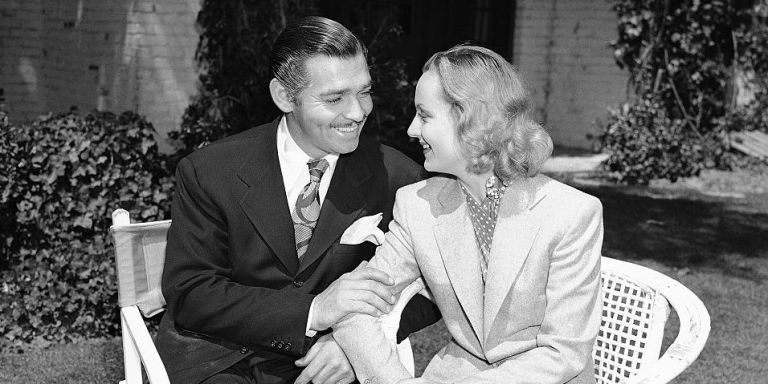
Those two, Gable and Lombard, like Elizabeth and me, finally found each other, married. Tragically, Lombard died in an air crash soon after Pearl Harbor, during a War Bond Drive. It’s an incredible and incredibly sad love story.
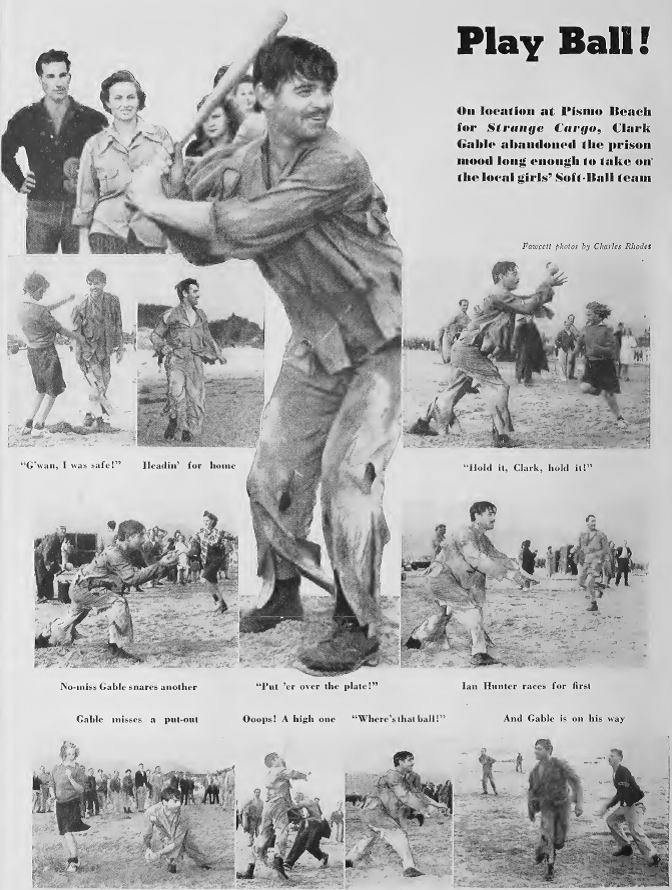
The two were part of our history, San Luis Obispo County’s history, too. They’d been guests at the Hearst Estate in San Simeon and, six years after It Happened. Gable and Joan Crawford filmed Strange Cargo in Pismo Beach, stayed at the Landmark Hotel, which is still there, on Price Street, and one day, The King of Hollywood thrilled a group of San Luis High kids by joining them in a pickup game of softball n the beach.
But here are some of the things that caught my eye in last night’s viewing, thanks to Dave Karger’s inspired introduction:
A quick summary: Claudette Colbert (Ellen) is running away from her father–she gracefully dives from his Florida yacht and swims to shore—so that she can marry a man, King Westley, an aviator who looks like Howard Hughes, as played by Bela Lugosi. He’s a creep. So she’s incognito and riding an interstate bus north when she runs into Gable’s reporter, Peter. Peter needs money and Ellen, the runaway heiress, is his scoop. Ellen needs Peter’s street smarts. So they become uneasy seatmates on a northbound bus.
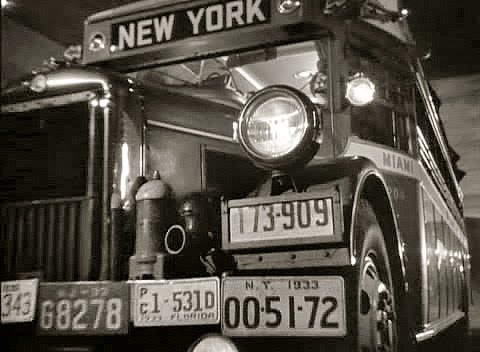
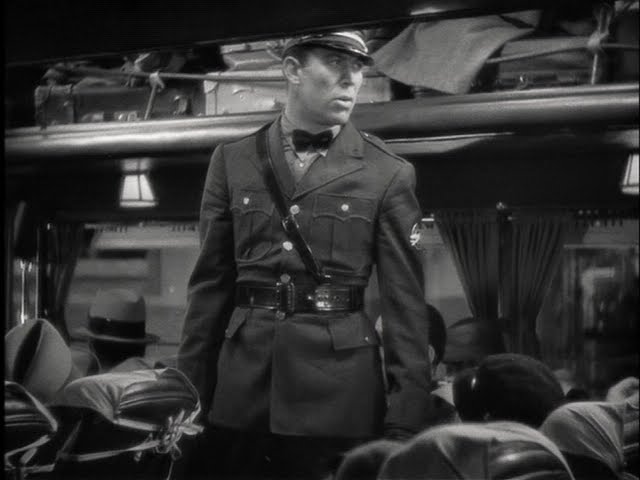
The bus alone is amazing: It’s big and square with fog lamps and headlights and an air horn that blasts when it pulls out of the terminal. It’s a damned impressive Atlantic Greyhound. So’s the driver: the first one is Ward Bond, who will have a bigger role in Capra’s postwar It’s A Wonderful Life, where he’s the Bedford Fall cop. But he’s uniformed impressively as a Greyhound driver, too, from his Sam Browne Belt to his soft high-topped boots.
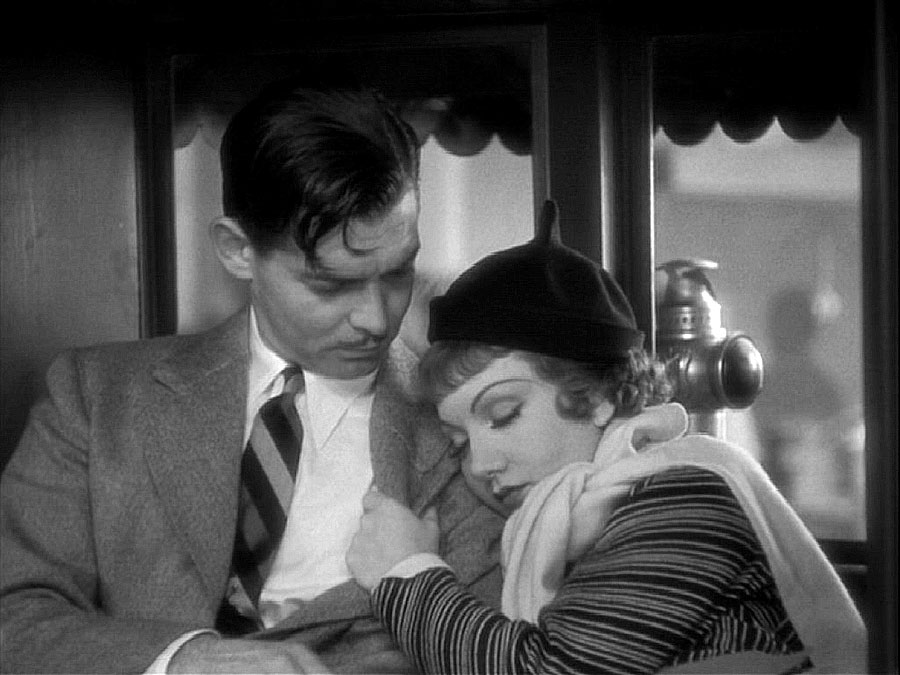
It’s all over for Gable, even though his hard-boiled reporter type won’t admit it, in the first night on the bus, when Ellen falls asleep against Peter. She is, let’s face it, adorable.
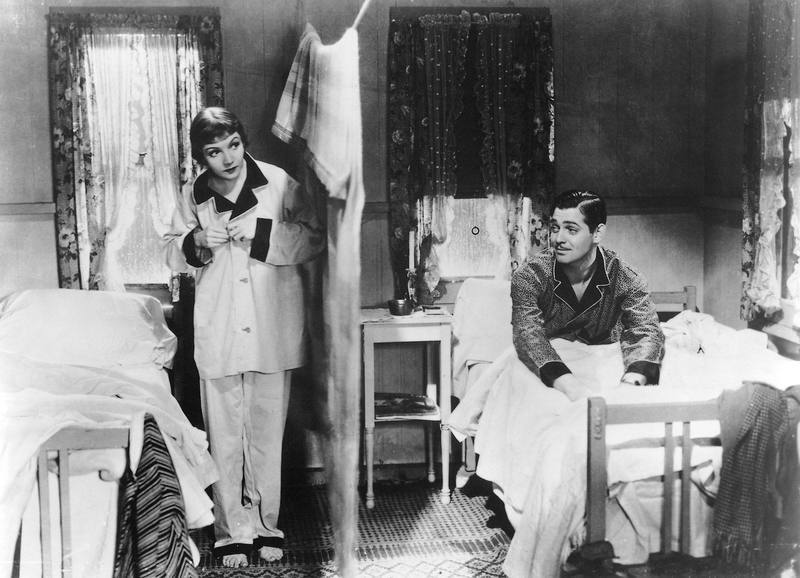
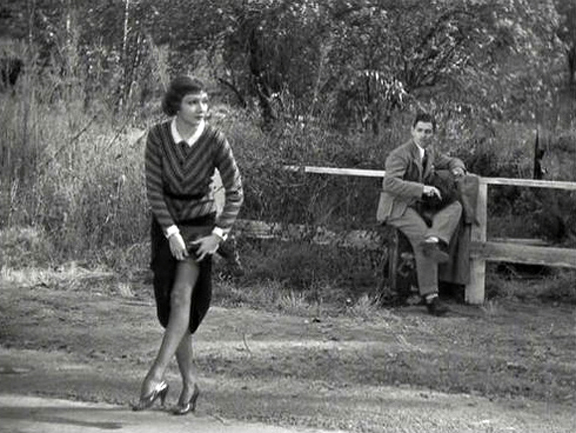
But the two, as is required, fuss and fight. She doesn’t carry cash. He doesn’t have it to begin with. So, when the bus runs up against a bridge washout, they have to share a room at an overnight camp. That, of course, leads to the film’s most famous scene, where Gable undresses and reveals to the world that Peter does not wear undershirts. I guess Jockey took a hit after that scene. He loans Ellen his best pajamas and erects a divider—“the Wall of Jericho”—between their beds for decency’s sake. The next morning, when Ellen clumps to auto court showers in Peter’s overcoat and oversized shoes, Colbert somehow makes even a clumsy walk seem charming.
Still, you’re glad when spoiled Ellen has to learn to stand in line in a place that closely resembles the Weedpatch Camp in The Grapes of Wrath. Another part of this film’s allure is its uncanny ability to transport you back to 1933, when it was shot, and to the Great Depression.
Ellen’s lucky to have that shower, and those pajamas and that overcoat and those shoes—-and the toothbrush and toothpaste that are Peter’s little gifts.
And therein lies Peter’s charm. He’s cocky, a big drinker, insubordinate and not quite as smart as he thinks he is. He passes himself off as an expert at hitchhiking, piggy-back riding and the art of dunking a doughnut. But he is also, with the exception of stealing Alan Hale’s Model T and tying the man to a tree (Hale deserved it, if only for his awful singing), he is decent. He is, to use an old-fashioned word that needs desperately to be revived, honorable. He is also generous; he is, to borrow Joseph Campbell’s remarkable observation about Han Solo, “a hero who doesn’t know that he’s a hero.”
And Peter makes breakfast, too. The doughnut-dunking scene meant a lot to me. The film was made in 1933, when the Depression was at its depths, and the care with which Peter and Ellen share a breakfast— two eggs, two doughnuts, two cups of coffee—made me a little hungry and made me, in some silly way, want to march in and add hash browns, ham, biscuits and gravy and another pot of coffee. That kind of extravagance—the big breakfasts I love so much— just wasn’t there in 1933.
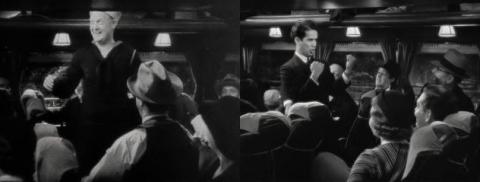
The intimate scenes between the two principals are barbed and funny and eventually they are…well, intimate…but one of my favorite scenes comes on the crowded bus, when the passengers joint in three rousing choruses of “The Daring Young Man on the Flying Trapeze,” which includes a sailor whose verse is pretty racy for 1934 (“His eyes would undress every girl in the house…”) and who looks remarkably like Popeye, who would also sing this song.
I noticed for the first time that the third and final verse is led by the director. That is Frank Capra, painfully young but already wise enough to know that we Americans are at our best when we are together, even if singing this song, than we are when we battle each other. The one painful part of the film comes when the bus stops and a Black man, ringing a bell, bellows out what’s on the menu in Stepin Fetchit English. He’s a moment of comic relief, a kind of cinematic comma, and while Capra has so much to offer modern, divided, Americans, this scene, mercifully brief, hurts.
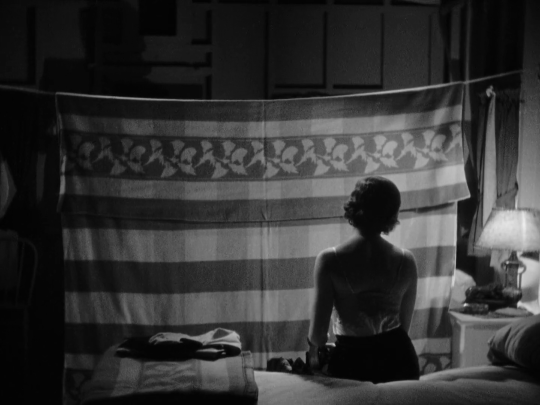
The battle between Ellen and Frank begins to end in their stay at another auto court, considerably more rustic than the first, when the blanket goes up again. This is Ellen, on her side, as she realizes that she’s in love with the arrogant man on the other side and not with the man she’s running away to for her New York wedding. This might be the film’s most poignant scene.
When her intended arrives at the wedding in his ludicrous gyrocopter—wearing a top hat, which you wish the rotors would lop off, along with his head—Peter is in the den of Ellen’s father, demanding he be paid for his efforts in returning the prodigal daughter home.
That amounts to $39.60.
That seals the deal for Ellen’s father. His sideways whispers as he takes her to the altar lead to her to dump King, Mr. Hughes-Lugosi, right then and there. Gasps ensue.
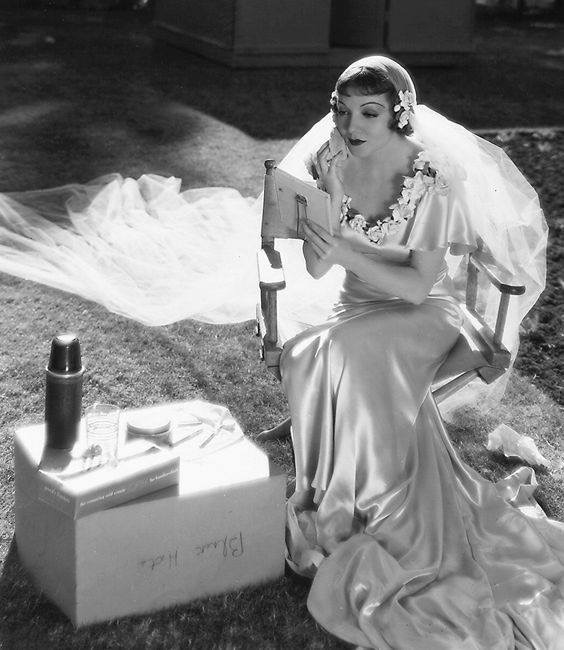
I don’t know how many runaway bride films have been made, but this one has set the standard, as far as I’m concerned. Ellen’s breath-taking wedding gown, satin, is stunning, from the cloche headdress (like Colbert’s bob, it’s on the edge of going out of style) to the train which trails behind her, by about the length of three freight cars.
A little earlier, stuck at a crossing in his Model T, Peter waves jauntily at a freight car loaded with what were called “hoboes” in 1933. My grandfather John let men like these stay the night at his farmhouse on the Ozark Plateau while my grandmother made them bacon and eggs. They were poets, engineers, one a classical violinist who played by the warmth of my grandmother’s stove.
Decency.
So Ellen, quite sensibly, runs away to her destiny.That would be with Peter.
The Walls of Jericho come down later, in a third auto court somewhere in Michigan, maybe in the Upper Peninsula, where Gable would’ve found fine fly-fishing. That would mean trout frying for breakfast, just like Hemingway’s “Big Two-Hearted River.” That’s another meal altogether, of course, but. there’s a common link between Hemingway’s prose, and Capra’s films. They are miraculous to me. They are miraculously American.
A little meal was the centerpiece of this little film. It Happened One Night, I think, is the equivalent of a breakfast of one egg, one doughnut, and one cup of coffee. By the time it’s over, you realize, in making every bite count, that it was perfect.
Claudette Colbert, in that dress, studies her lines in between takes.
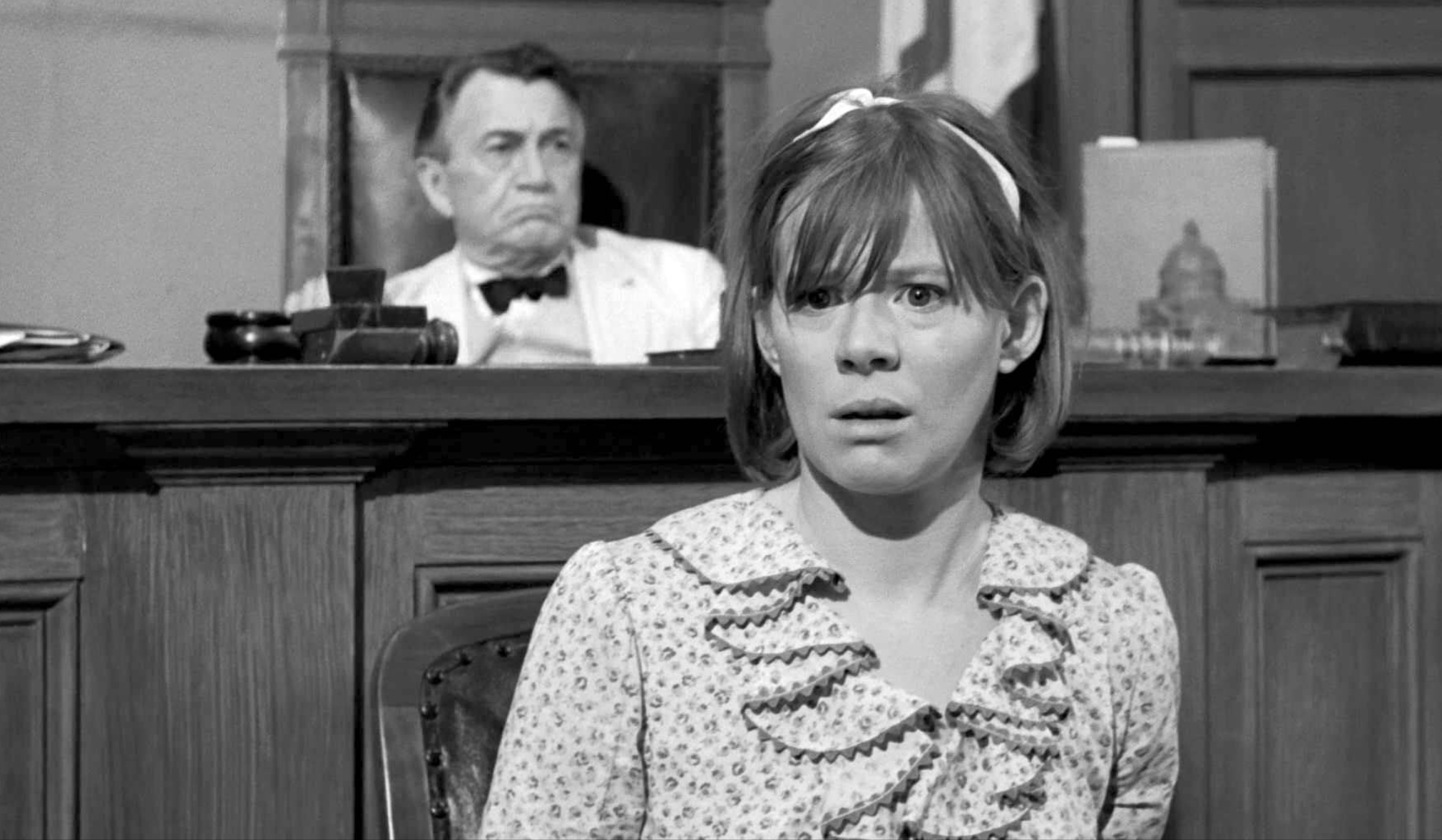
Collin Paxton as Mayella Violet Ewell, To Kill a Mockingbird
She introduced the word “chifforobe” to the rest of us. To prepare for her audition for this film, she selected her own wardrobe, which included an old blouse and dirty tennis shoes with holes in them. She rubbed cold cream into her hair to make it look disheveled and dirty. Collin Paxton (1935-2009), as Mayella, who accuses Tom Robinson of rape, has an epic breakdown on the witness stand in To Kill a Mockingbird. It’s a scene that is still, sixty-plus years later, shocking and, even more, stunning. It is masterful acting.
I’ve written before about Frank Overton’s quiet decency as the county sheriff in the film. I’ve written about our niece Emmy’s acclaimed turn as Scout in the St. Louis Metro Theater Company’s production and her getting the wonderful chance to meet Mary Badham, the film’s Scout.
Someday, I guess, I’ll have to turn to Jem and Calpurnia, too, and to Dill, Capote’s fictional counterpart. But this role is central to the film because Mayella’s testimony—bigotry trumps reason and Atticus’s empiricism—dooms Tom Robinson.
The irony? Collin Paxton was a civil rights activist, passionate about the struggle of Black Americans. When she appeared at an NAACP meeting in Monterey she got silent, sullen looks until it was pointed out the “the actress is not the person.” She did good works, including, with her husband Bill, founding actors’ studios that offered training for free.
That was in Malibu. Paxton was raised in North Carolina, so when she auditioned for the role, she stood out among the young women, pretty and made-up, who had no chance at being Mayella, the daughter of an abusive father, a character who takes his name from two Confederate generals. The role was Paxton’s. It was always meant to be.
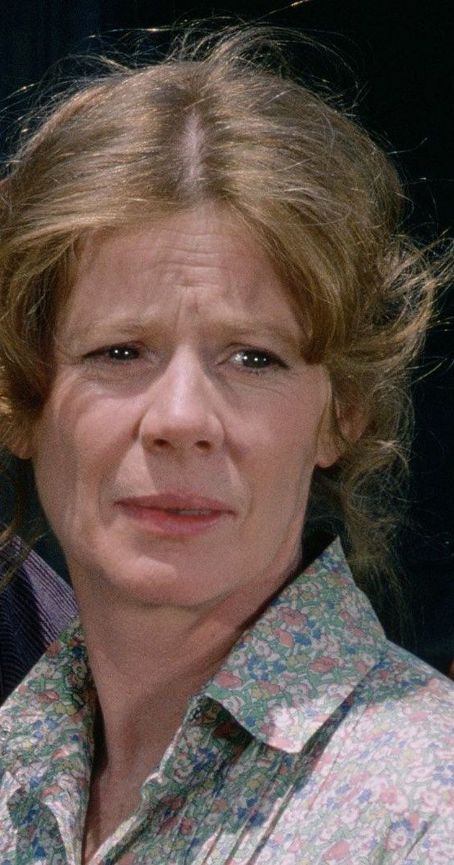
Paxton in 1974 in one of her many television roles.
Happy Heavenly Birthday to Harry Belafonte (1927-2023). I’ve only mentioned this about twenty times, but when I was a kid, we listened to his Carnegie Hall concerts, double LPs, so often that you could almost see through them.
And I’ve posted Belafonte concert clips before–he is utterly charming and quite possibly the handsomest man God ever created–but these clips from Beetlejuice still make me smile. Big time.
“The Banana Boat Song,” With, among others, Winona Ryder, Catherine O’Hara (“Schitt’s Creek”) and Dick Cavett.
And Ryder dances to “Shake Señora/Jump in the Line” as a bonus.
I once did a lesson where I showed my classes slides with photos of the interscholastic sports teams from when I was a student at their high school, Arroyo Grande, in the 1960s. I’d show the varsity football team, then the girls varsity soccer team. That was a blank slide. Then I’d show the boys varsity basketball team—it was a good one, coached by Mario Pecile, who became a legend—then the girls b-ball team. Blank slide.
I was making a point.
There were not girls’ interscholastic sports when I was in high school. They had Aqua Festival, which featured synchronized swimming. There were intramural sports, and one of the biggest clubs on campus was the Girls’ Athletic Association, but it if someone had asked you in 1968, “Are you going to the girls’ varsity game tonight in San Luis?” in 1968, you would have thought them insane.
That athletic desert for young women persisted until Title IX was passed in 1972, mandating that schools provide young women equal opportunity to participate in interscholastic sports.
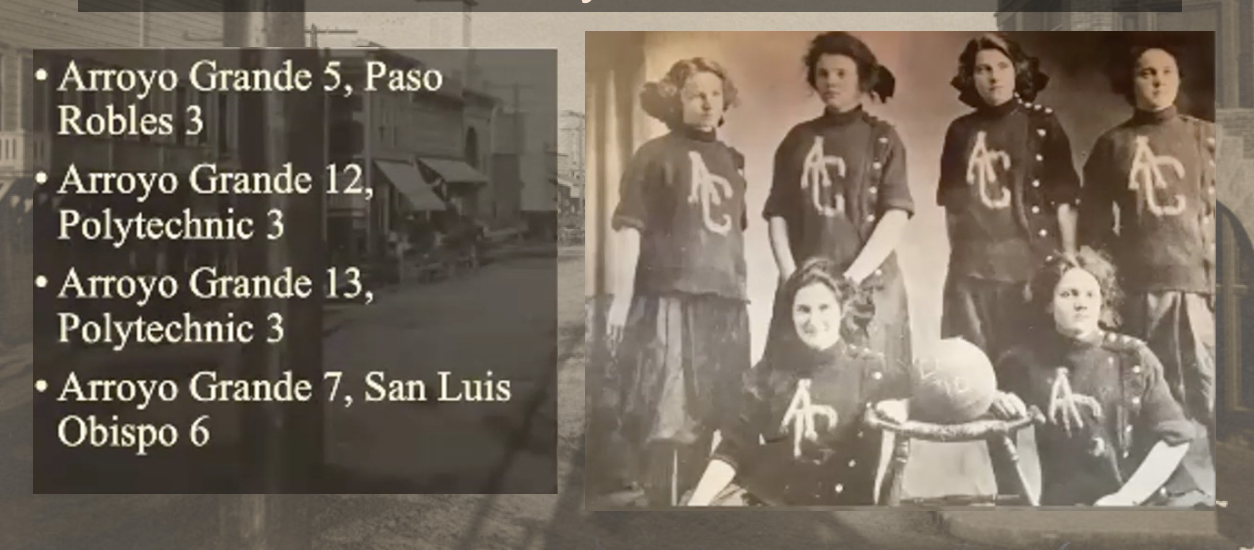
There was no Title IX in 1910, but Arroyo Grande Union High School did have a women’s basketball team. The were 4-0–not, not a big season, and the scores indicate that the baskebtball spent a lot of time on the ground (“ground,” not “floor.” No AGUHS gym until 1937), but they had uniforms and they had a reputation and the newspapers covered their games. And we have this marvelous photo from the Bennett-Loomis Archives.
I don’t know what happened between 1910 and Title IX, but it was a tragic waste in human potential. Young women, to borrow a line from On the Waterfront, should’ve been contenders. A young woman and former student, Sarah—a fellow Basset Hound lover–put me in mind of this. She posted a picture of herself scaling a climbing gym’s wall and it looked as if she wasn’t having much trouble at all. Sarah is a terrific athlete, a gymnast, small but powerful, and flexible, too, in ways I haven’t been since I was a baby and could put my foot in my own mouth, a habit that continued, figuratively, long into adulthood.
So, thinking of Sarah and other women athletes I, of course, made a little video.
I follow Women’s NCAA basketball now and again, and so Caitlin Clark’s in here. Nelly Korda’s clubhead points directly at the target in her follow-through, and you have to be about a flexible as Baby Me to do that. Her swing is both fluid and immnesely powerful. Tia Jones—okay, I’ll admit it, she is beautiful, she reminds of FloJo, whom I adored—but I don’t see how anybody can leap hurdles, let alone the way she does in the clip.
And, of course, Simone Biles is my hero because she has both the courage of a champion and the kind of honesty that requires far more courage. She risked a storm of condemnation when she admitted her vulnerablity, her emotional exhaustion, at the last Olympics, and withdrew from some events. She’s back. The video clip of her tumbling run is from last fall.
All four have one more trait that makes them great athletes. They are a joy to watch. I’m looking forward to the Paris Olympics because of young American women.
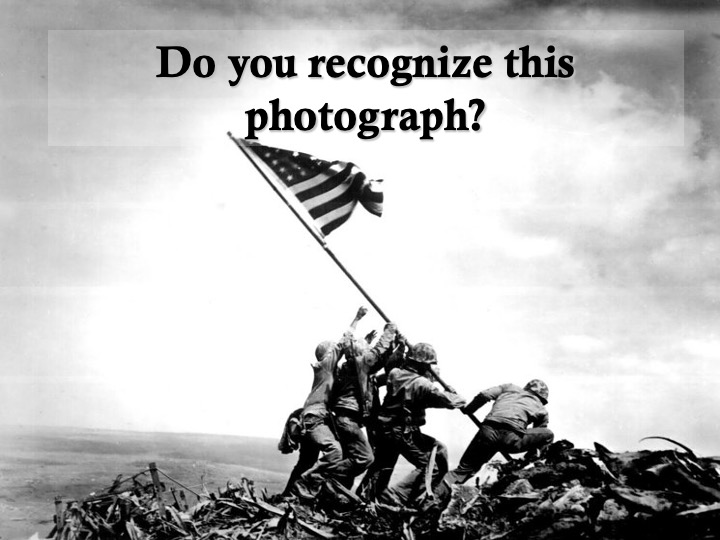
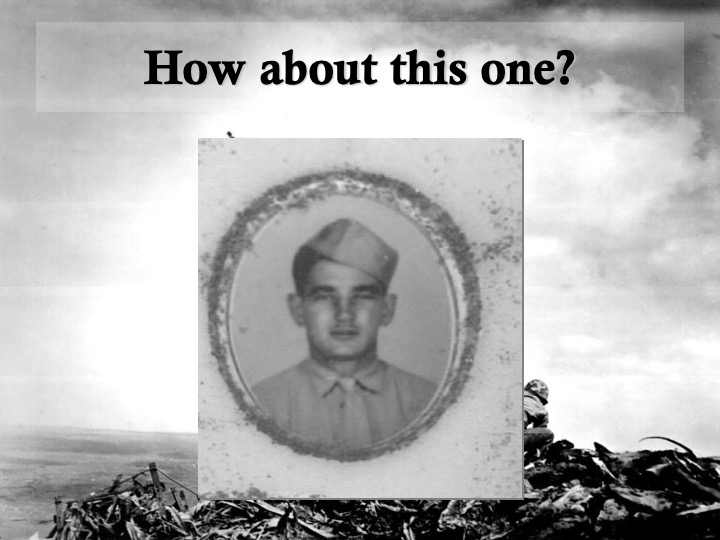
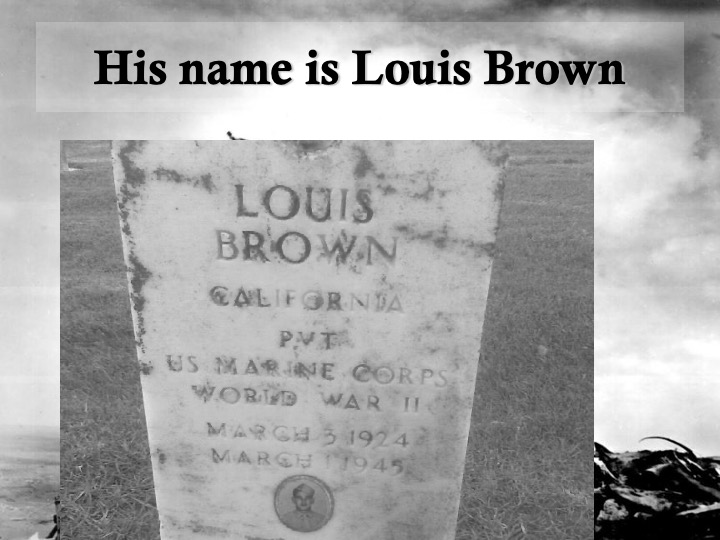
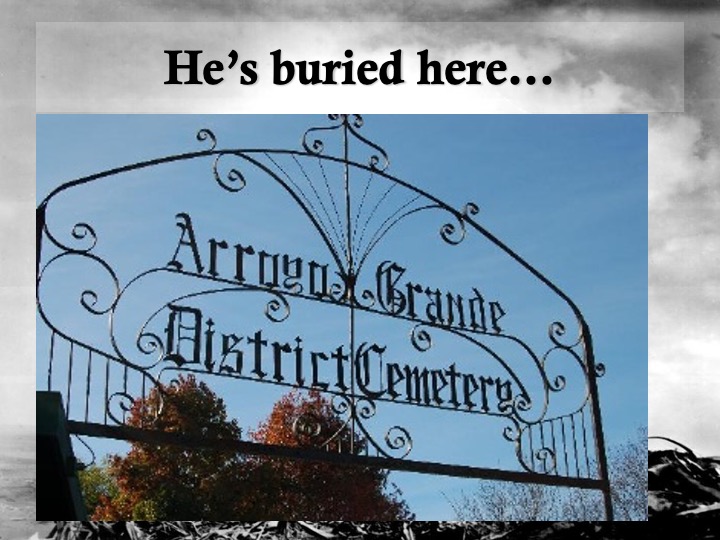
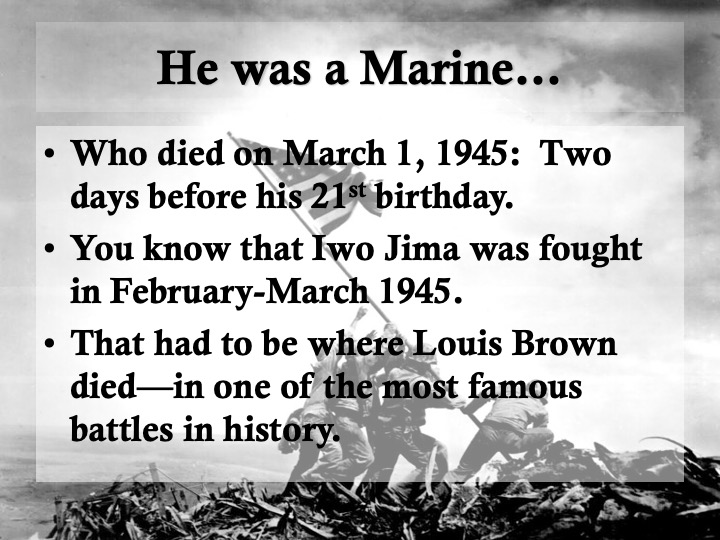
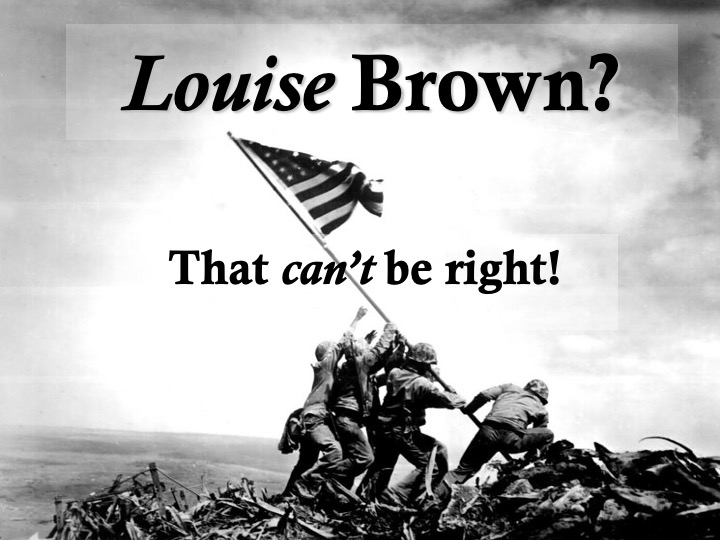
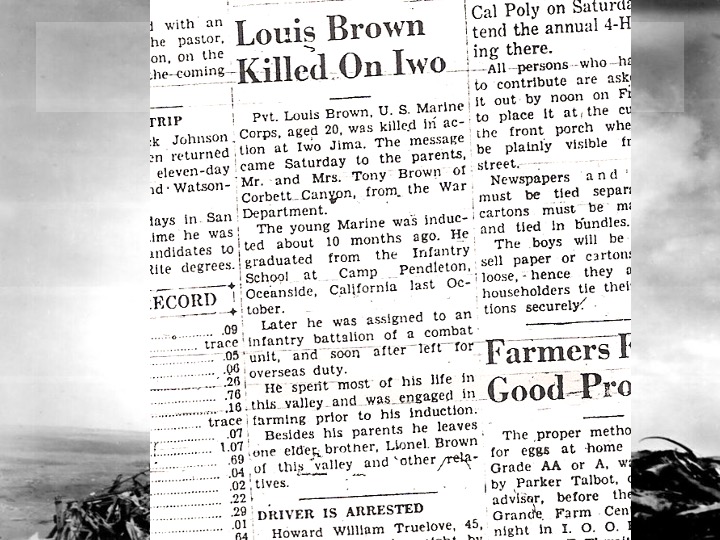
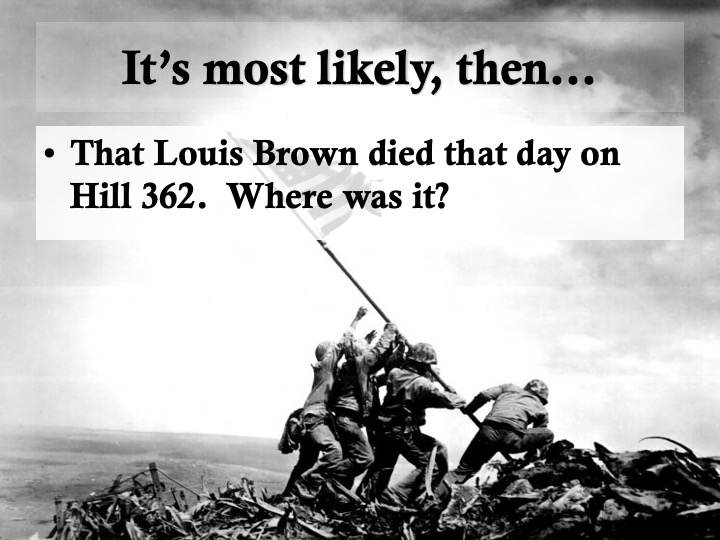
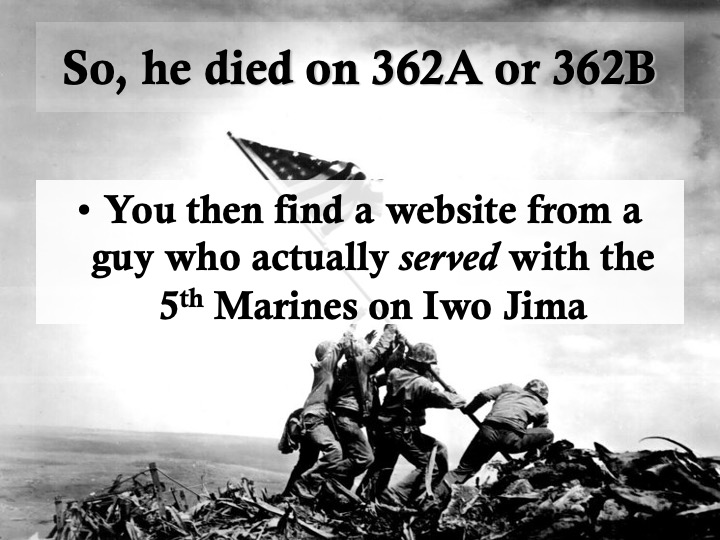
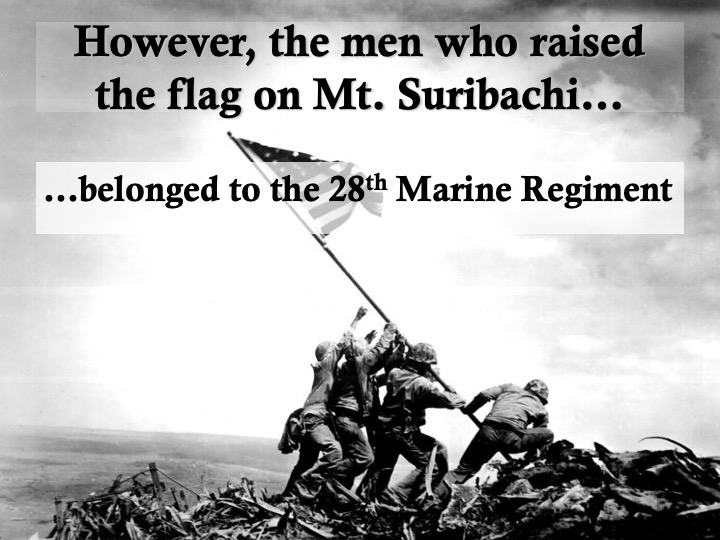
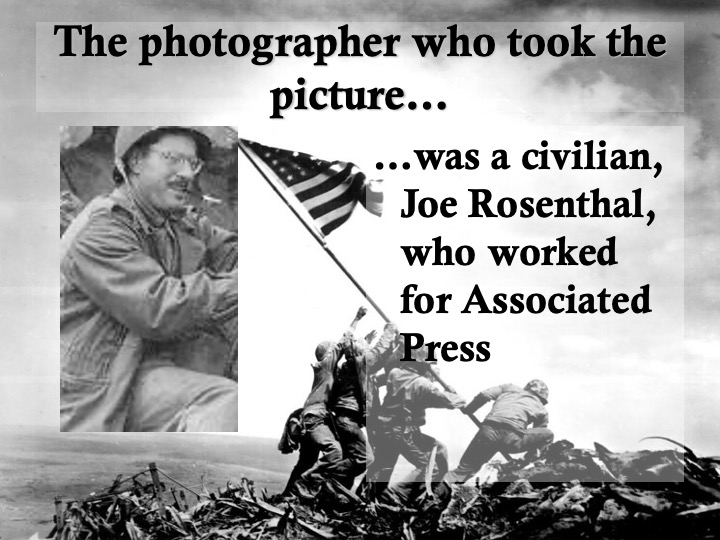
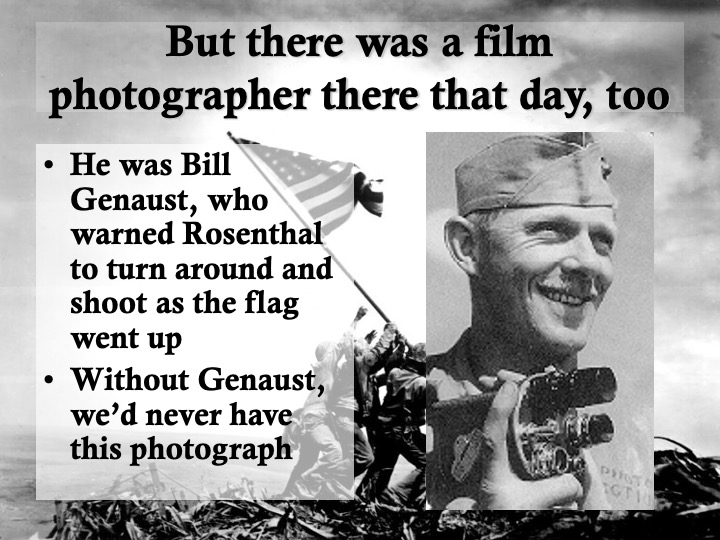
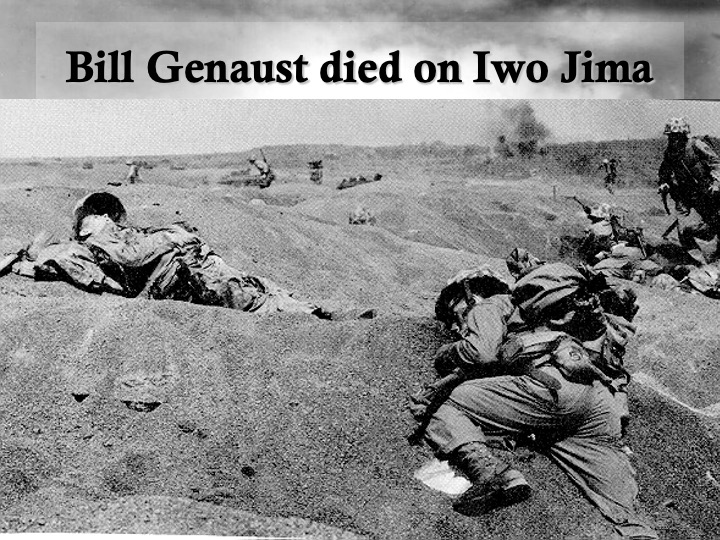
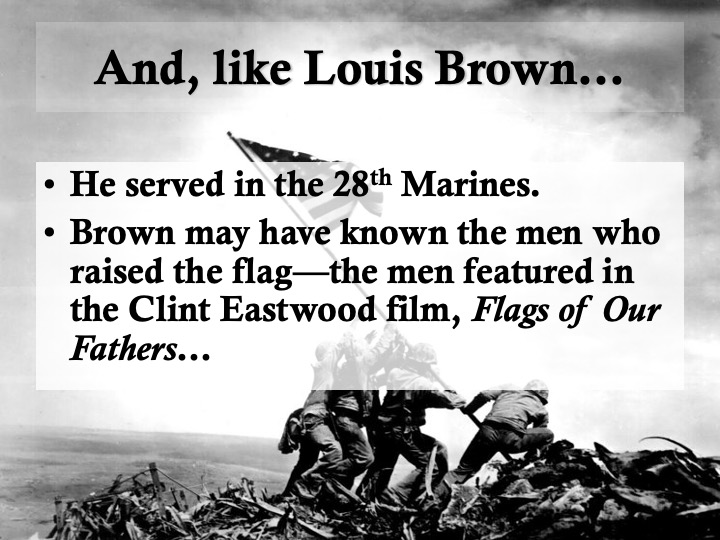
Today is February 23. On this day in 1945, a detail from the 28th Marine Regiment was immortalized in this Joe Rosenthal photograph as, still under fire, they raised a second, larger, flag atop Mt. Suribachi on Iwo Jima. The young Marine on the right had six days to live. He was a farmer’s son from Corbett Canyon, near Arroyo Grande. His parents were Azorean immigrants. And I knew, from the date on his tombstone, that he died on Iwo Jima.
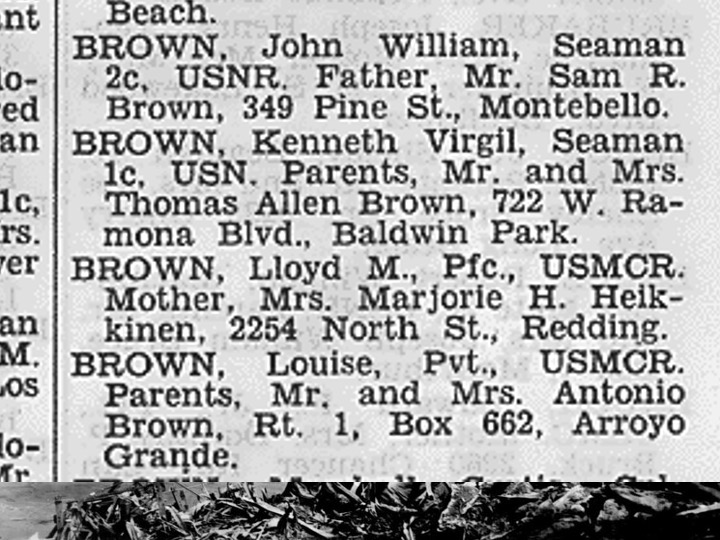
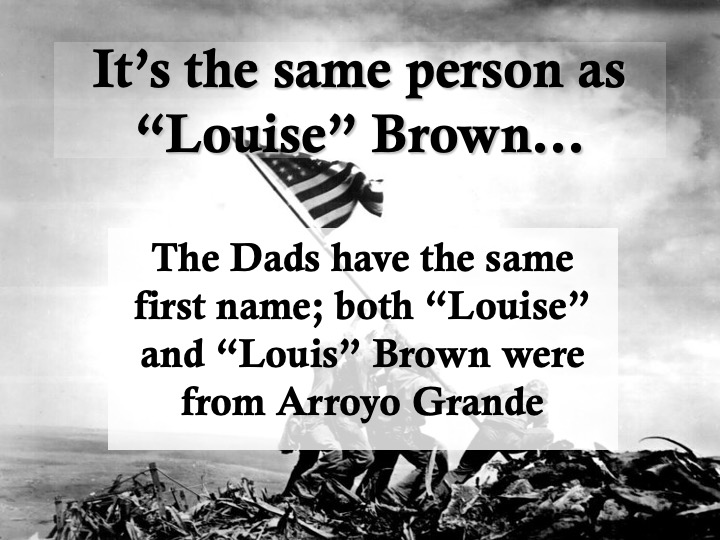
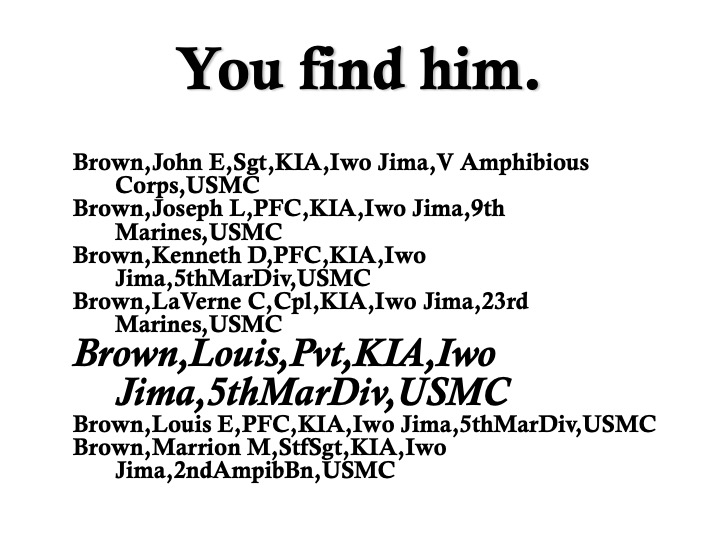
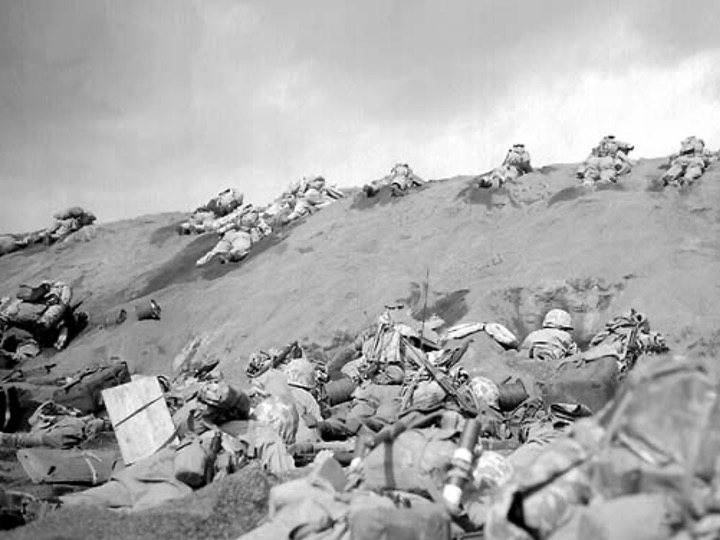
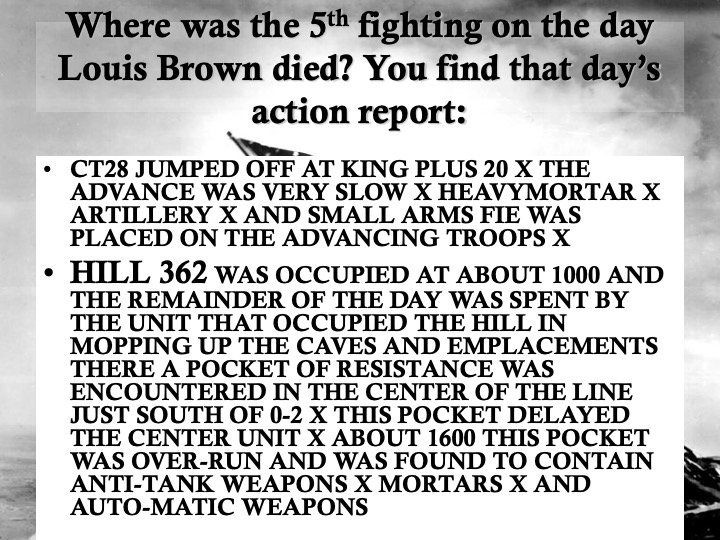
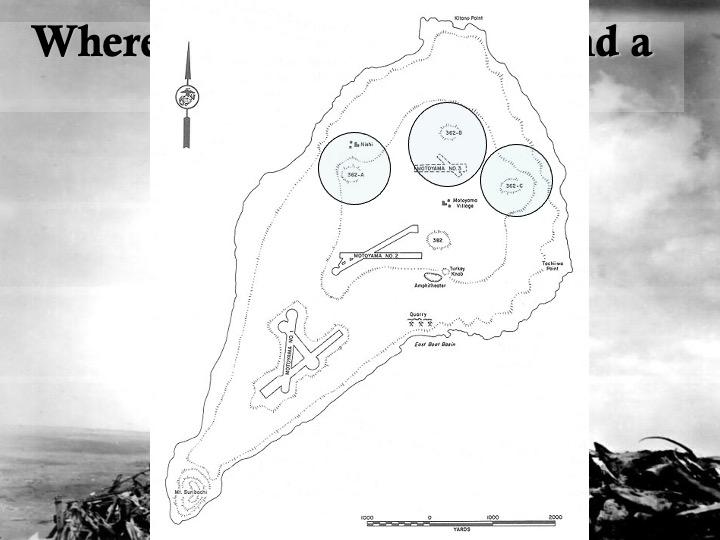
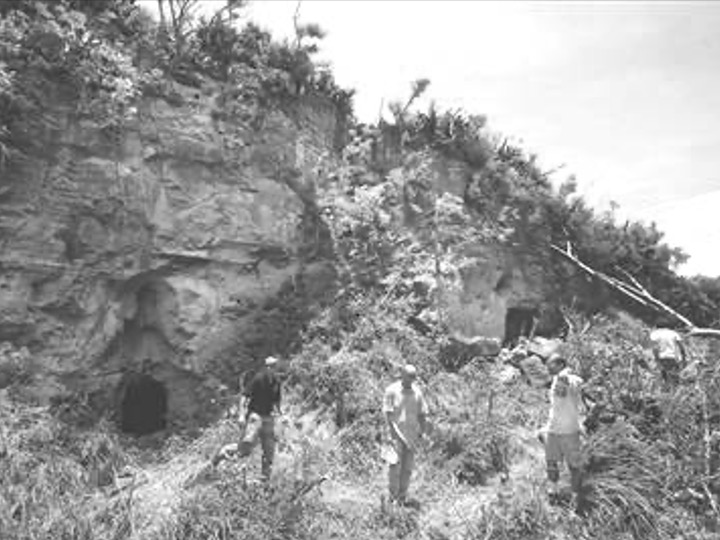
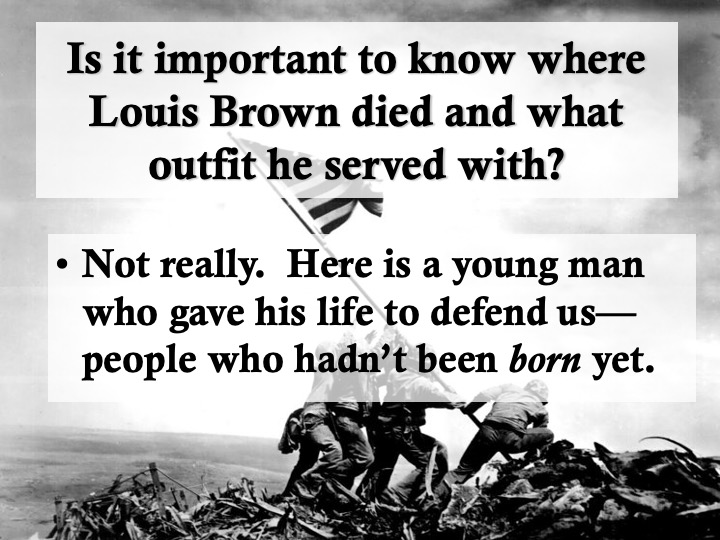
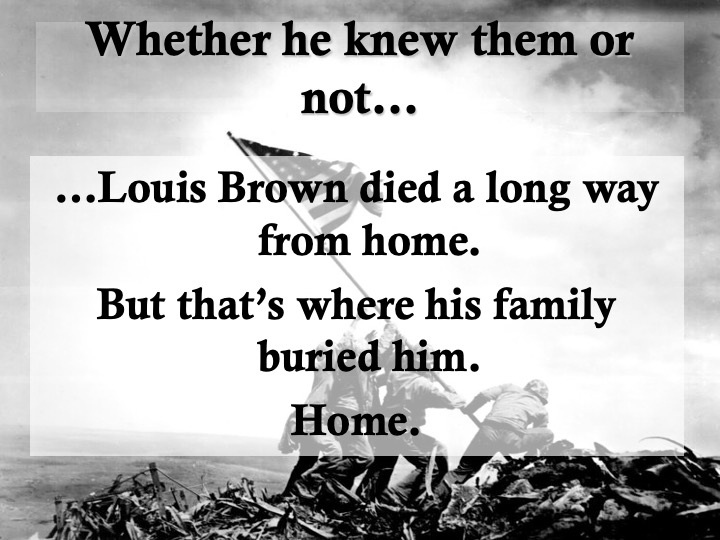
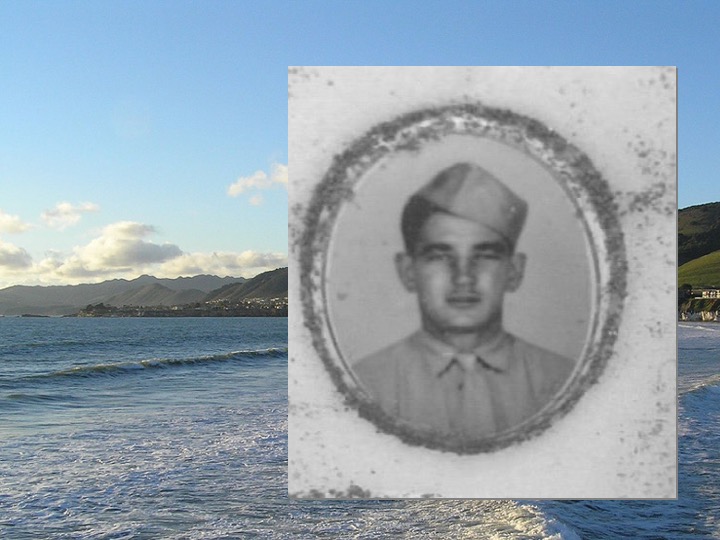
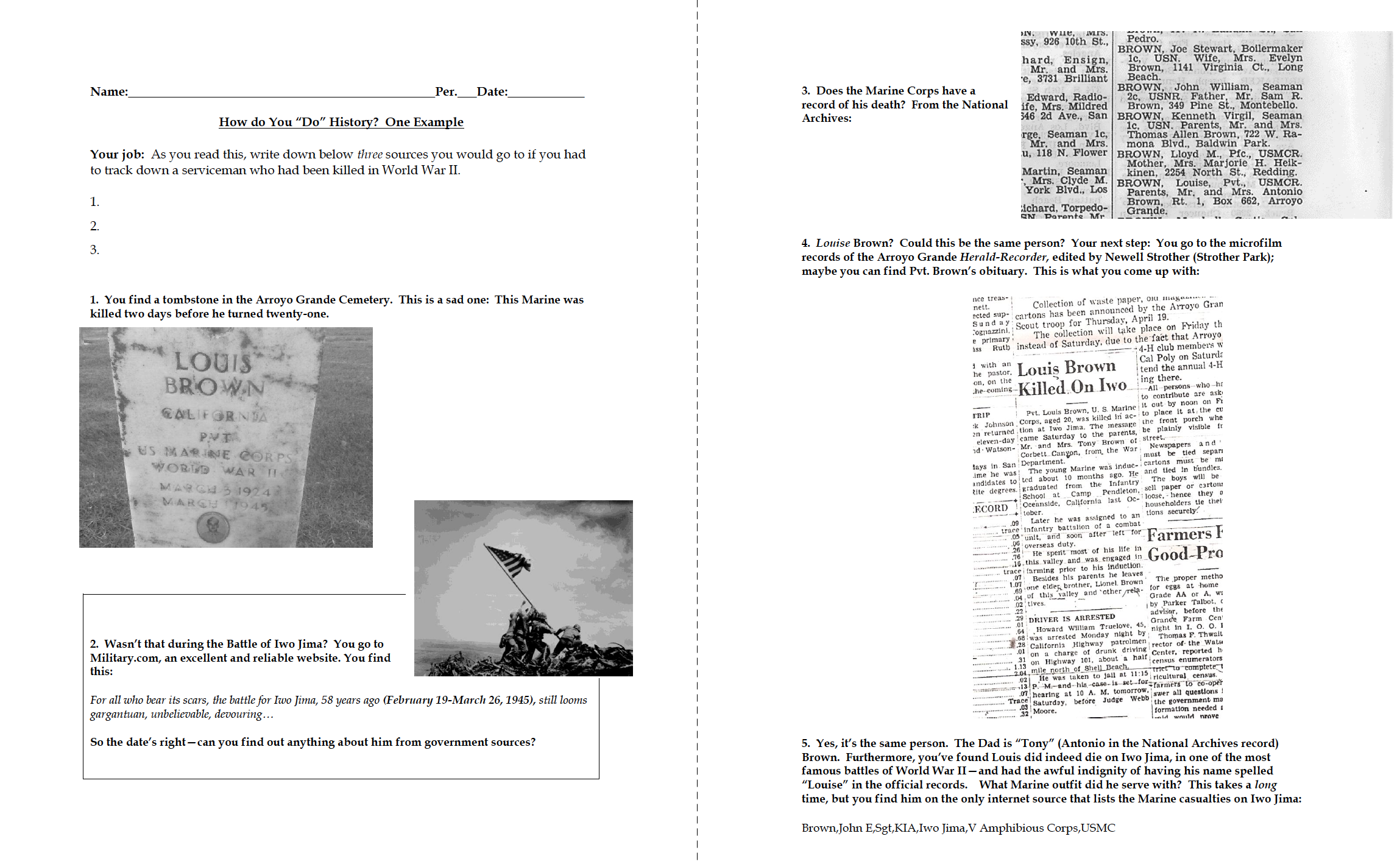
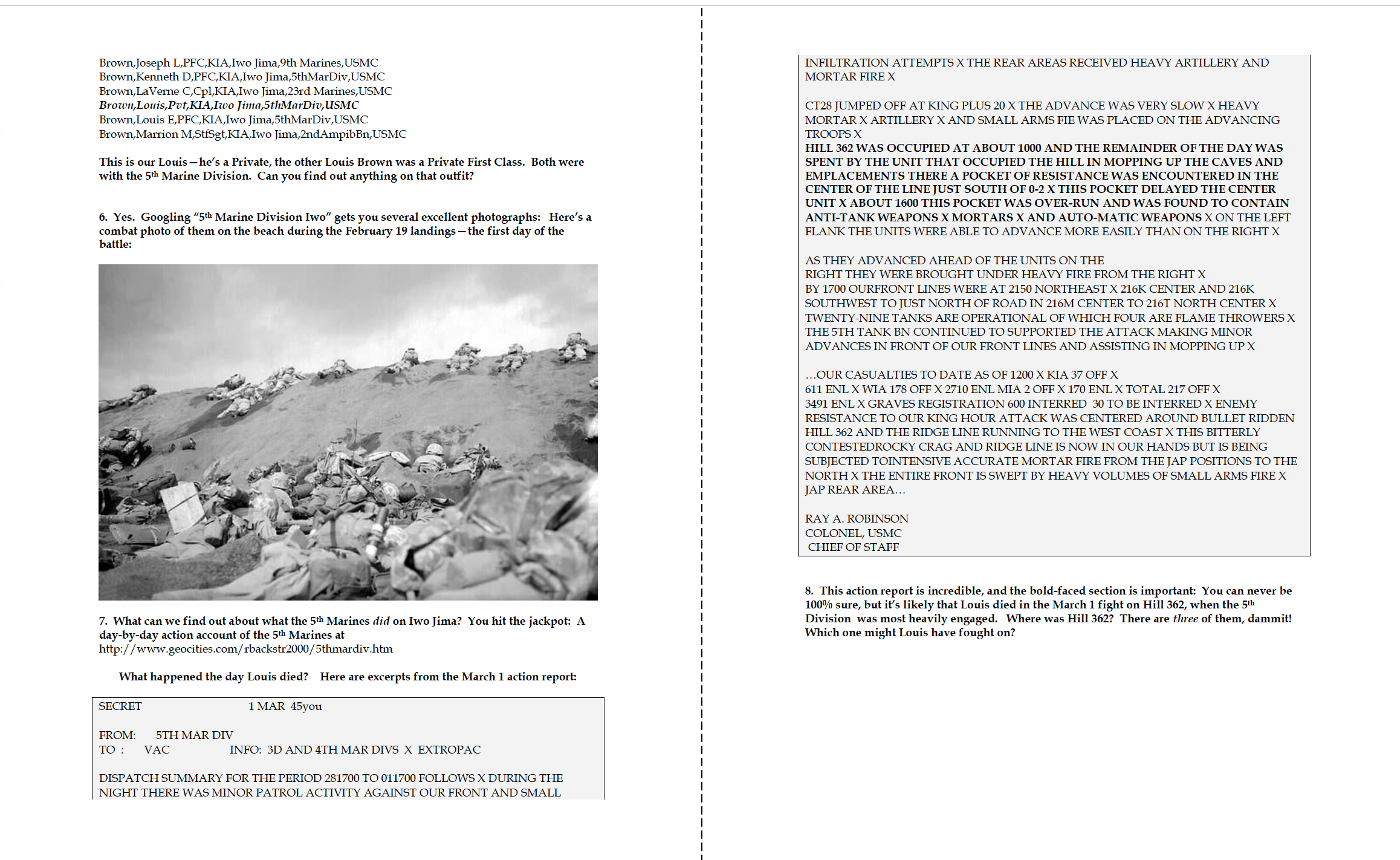
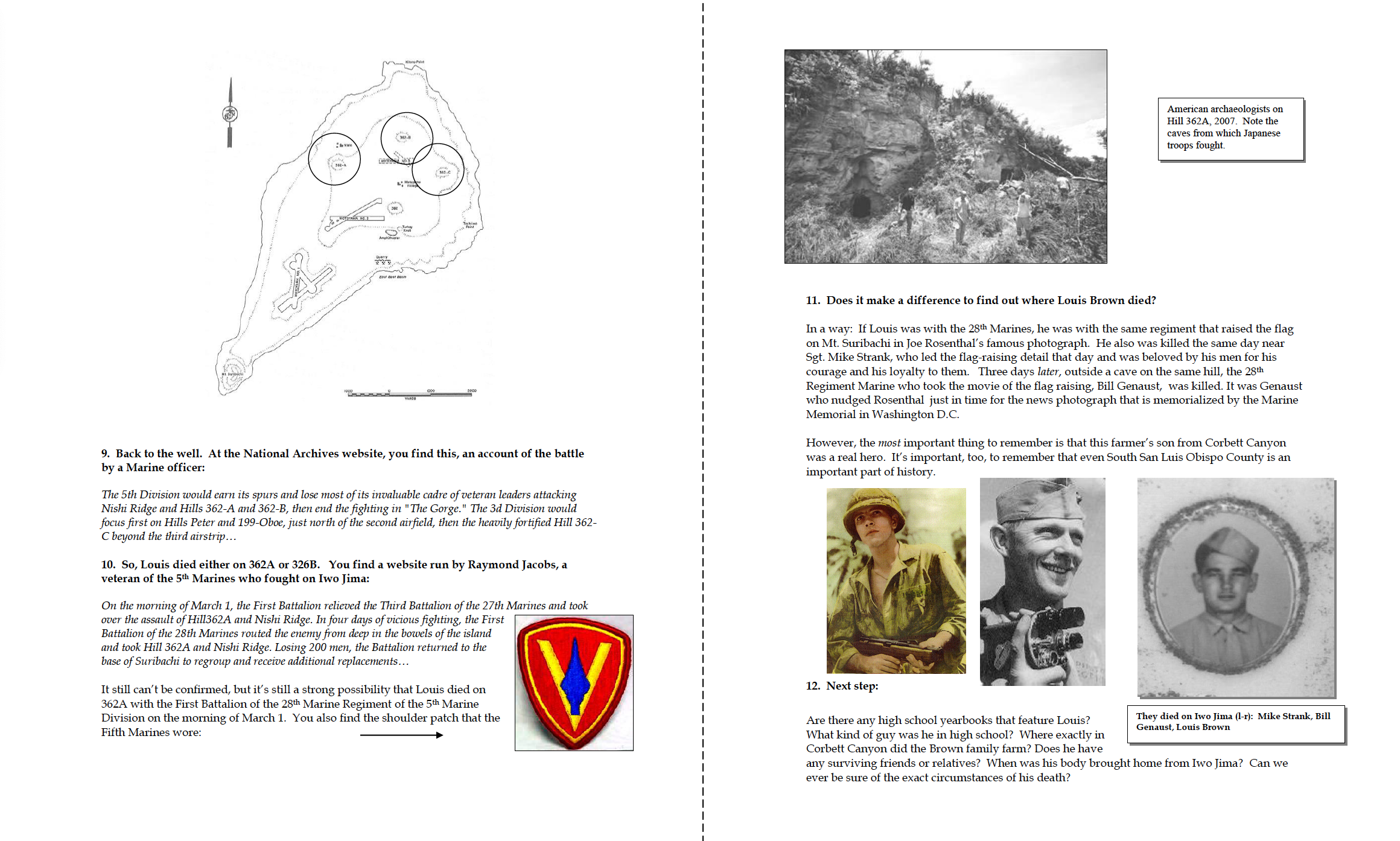
I owe Pvt. Louis Brown so much for many reasons. In my history classes, I wanted my students to learn the basics of research, including forensic study of a battlefield (The Little Bighorn) and using deductive reasoning to analyze a murder scene (the Lizzie Borden home) so that they could begin to appreciate how historians think. So the sad business of finding this young man’s tombstone inspired a lesson plan. I walked students through the steps of researching a World War II combatant—may they might research an ancestor someday—by modeling what I’d done, in a series of PowerPoint slides:
And, yes, this would be on the test, so they had a notes handout to help them follow along:
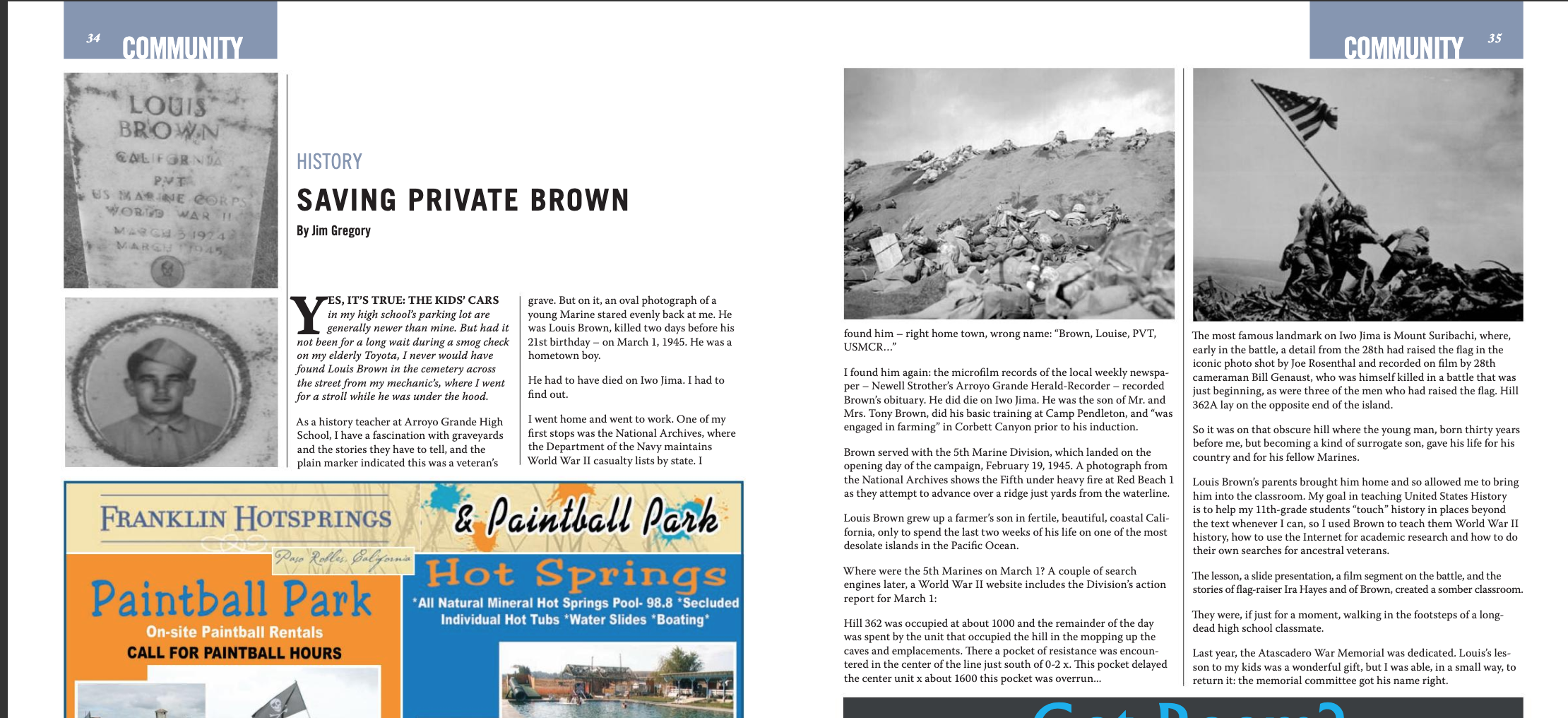
Louis Brown had by now become important to me. I wanted other people to know him, too, hence this article in the June 2009 SLO Journal Plus.
Even that wasn’t enough, so, when I began to give talks on local World War II history, Louis Brown was part of them.
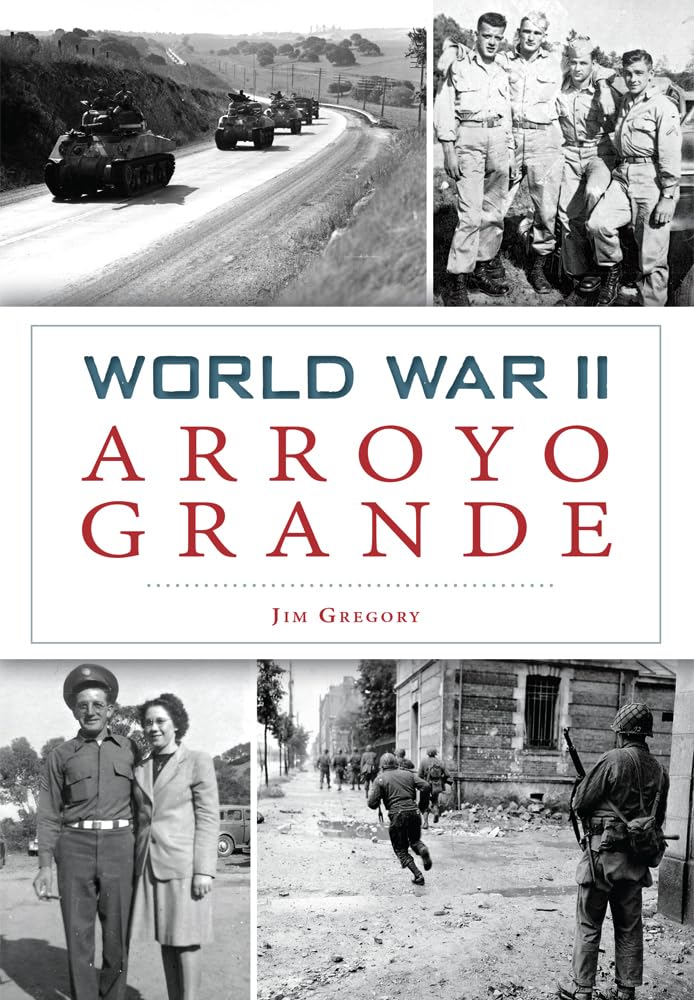
By now, of course, I was hooked on doing research like this, so Brown inspired this 2016 book, my first.
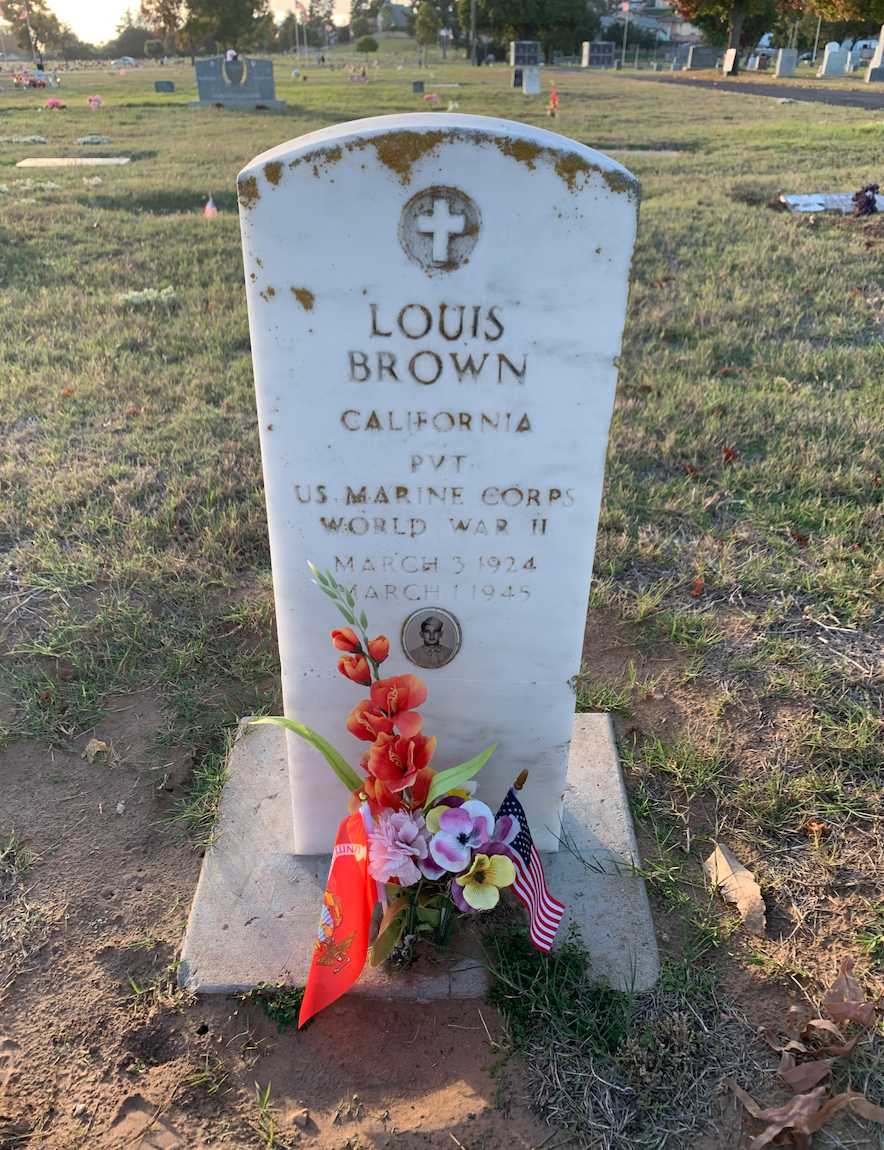
And this is why, every few months, I make sure that he has new American and Marine Corps flags. Sometimes, as this photo shows, someone else has left him flowers. That is a great kindness: Brown is their Marine, too.
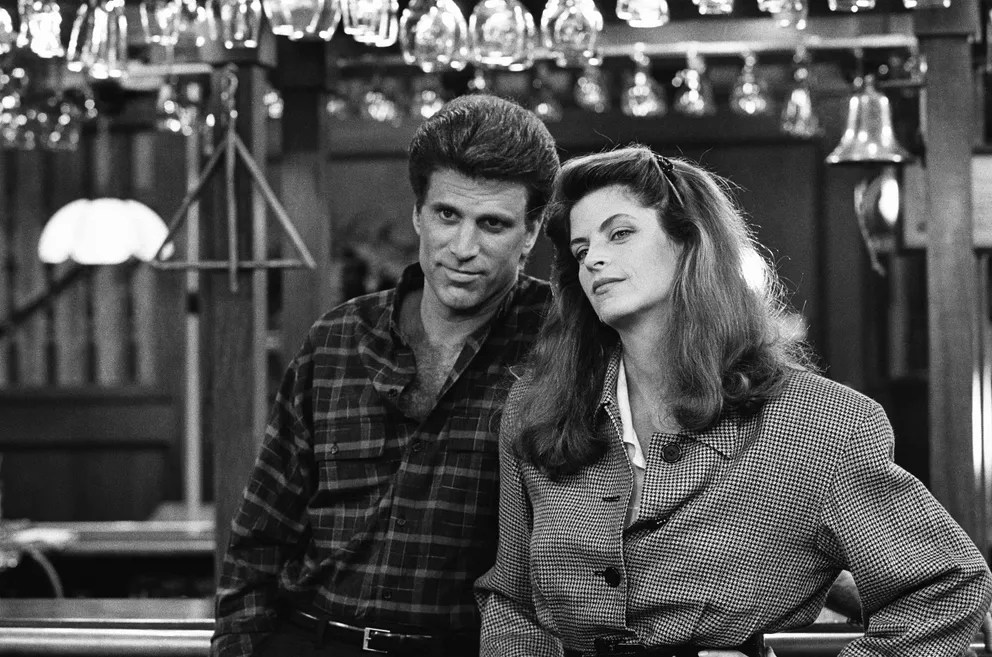
Cheers was an immensely popular NBC comedy about a retired Red Sox pitcher and bar owner. His photo, behind the bar, was actually that of San Luis Obispo’s Jim Lonborg, also a Red Sox picture. The bar owner, Sam (Danson) ardently pursued his boss, Rebecca (Alley, who won multiple Emmys), who was marvelously skilled at shutting him down.
There was only one chink in Rebecca’s formidable armor, and it was this song. Her entire skeleton turned to boiled spaghetti. She swooned. I would argue, if there’s a song and a performance that deserves swooning, it’s “Unchained Melody,” as performed by the Righteous Brothers’ Bobby Hatfield.
Let the swoonage commence!
And, of course, I am not done. Let us take a moment to appreciate Hatfield and his baritone brother, Bill Withers. Wow.


























 A Work in Progress