Braggin’ on my Pop

ag1970's avatarA Work in Progress

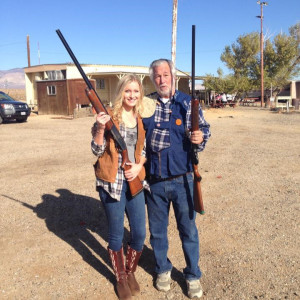
Kali and her Grandfather A wonderful Facebook exchange began when Kali, a a former student, posted a photo of herself and her late grandfather, trap shooting.  I think, to use a trite phrase I would never tolerate from any student, that he looks like a really cool guy. Look at their faces and you can see they loved each other–and there’s plenty to love about Kali.

She was my student, I was a sponsor in her confirmation class at St. Patrick’s, and she is an outstanding young woman.  You can tell, too, that they loved being together.

Sometimes, and I had this experience with a photo of Joey Rodgers’s Grandpa, a World War II Marine, you can see a man and know instinctively that you would’ve loved him, too.  That’s what struck me about this photograph. Kali has just lost him, but another reason I know he was a good man is that he’s…

View original post 842 more words

Ending the book


churchill

I don’t know how many times I’ve re-written the ending to Patriot Graves. Today I lucked into a discovery, revealed below, about Arroyo Grande farmer Otis W. Smith, who received the Medal of Honor after the 1864 Battle of Nashville.  So I will try this one out. It will change, too.

The last verified survivor of the Civil War died in 1955, at 109. The passage picks up with his death:

He was the last survivor of a war that, in many ways, has survived his generation and many since. It left battles that still needed to be won and others that still need to be fought for the “new birth of freedom” that Lincoln identified in two transcendent minutes at Gettysburg. In January 1941, Medal of Honor winner Otis W. Smith’s grandson, Johnnie, would enter the army to fight for freedom in a new and terrible war. When Hitler joined it, at the end of that year, he did so jubilantly, thinking America decadent and Americans, in his simplistic and twisted Darwinian worldview, a mongrel people. Churchill was said at the time to have been nearly as pleased as the parochial Austrian dictator was because, unlike Hitler, Churchill knew about Grant and Sheridan, knew what the Iron Brigade had done at Gettysburg and he knew Americans—his mother, Jennie, was born in Brooklyn. As Johnnie Otis Smith, a soldier from the other end of the nation, from the Huasna Valley of California, prepared to go to war, Churchill knew with crystalline certainty that the two nations were destined to vindicate their faith. Democratic government would not perish from the earth.

Not in God’s house


gettyimages-478534434_custom-d6fee927157169d14b001a1fe43bdfc63f3f3ba8-s300-c85


My third great-grandfather’s will, 1812:

Washington, Kentucky

I Richard Gregory being of perfect mind and memory do make this my Last Will and Testement and revoking and disannulling all and every other Will or Wills before made by me. And first of all I give to my wife Anne Gregory the plantation whereon I now live and the first choice of two of my Negroes and also as many of Cattle and hoggs and Sheep as she thinks fit and one horse such as she may Choose and all the rest of the house hold furniture during her natural life. Also I give unto my Grandson Uriah Sandifer Gregory one negroe boy Named Stephan and one feather bed and one horse namely a bluish in stud colt that he has now in possession and also to divide equally with my nine Children in each division of my estate.

* * *

I thought I’d re-read some of the Ordinances of Secession, hip-deep as I am in the Civil War, to see just how Southerners justified their separation. I looked at those issued by South Carolina, Georgia, Mississippi and Texas. What I discovered was stunning.

Only one of them mentioned “States’ Rights,” and that was South Carolina’s, and it was not as that state’s rationale for secession.

States’ rights were mentioned, instead, in a clause that condemned the federal government for failing to exercise its power to return fugitive slaves from Northern states who claimed “states’ rights” as the basis for protecting them.

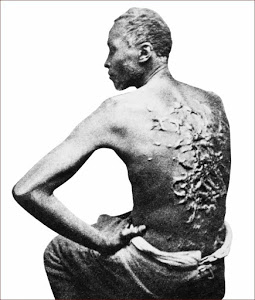
Every ordinance cited the incipient threat, posed by Lincoln’s election, to their right to own human chattel as the fundamental reason for secession. They also accused the new government of exciting “servile insurrection”–that’s a vile term, isn’t it?–and of advocating equality of the races–a clear violation, the Texas ordinance said, of God’s will.

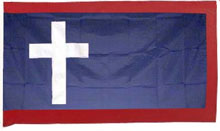
That would explain, of course, the flag my second great-grandfather fought under as a Missouri secessionist in 1861:

moflag

This week the National Cathedral in Washington, good Episcopalians, decided it might be time to re-discern God’s will. Once they had, they decided to remove stained-glass windows put up in tribute to the Southern heroes, Lee and Jackson, with their Confederate battle flags. They’d been installed in 1953–the year before Brown v. Board.

White Southerners understood then and understand now what that flag represents. It flew in defense of slavery, and Southerners themselves were explicit about that in 1861. Read the ordinances of secession. A century later, it flew in the face of the civil rights movement, in response to what whites had once called “servile insurrection.”  The Confederate flag doesn’t belong in God’s house. Neither is it appropriate to validate treason in a National cathedral. The windows should come down.

It’s about time.

Escaped Slave, Gordon

Missing Muhammad Ali

muhammad_ali2012-bw-art-exhibit-wide1

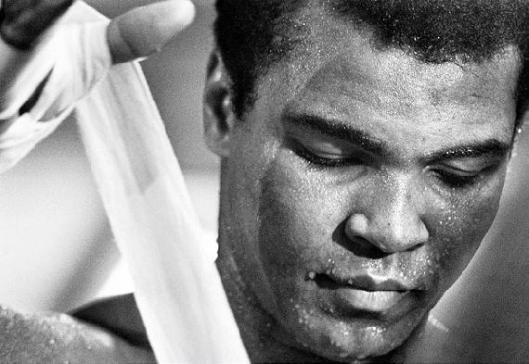
Muhammad Ali’s nemesis, Joe Frazier, was a counterpuncher—I used to teach Frazier to my high school students to help them learn how to write argumentative essays—but that label belies his savagery. Opponents said that Frazier hit so hard that they thought they were going to die. Frazier hit so hard that the disbelief on Ali’s face when the Philadelphia fighter knocked him down is indelible. Frazier hit him just as hard in the rematch, the “Thrilla in Manila”—he said afterward that he’d hit so hard that he landed punches that would’ve knocked down the wall of a house—but Ali took them, kept talking to him, kept making delicate little circular gestures to Frazier with one glove, goading him to come in closer.

Ali’s left jab was his most famous and most electric weapon, but what finally put Frazier away was a staccato series of rights, the last one quick as a cobra strike; it traveled only a little more than eighteen inches and it left Frazier on the canvas in the fetal position. Death would travel more slowly than Ali’s right, but this was the night that both men began to die.

* * *

From The Telegraph (UK), from an interview with Ali’s business manager, Gene Kilroy:

I remember a lady came by our camp in Zaire and said her son was sick.

“Ali said: ‘We’ll go visit him.’ She took us to a leper colony. The staff would put the food down and walk away. Ali was soon lying down with the lepers, hugging them. I took about 10 showers when we got back. Ali just said: ‘Don’t worry about it, God’s looking out for us.’”

* * *

At a press conference at the Waldorf-Astoria before leaving for the 1974 Zaire fight against George Foreman, the “Rumble in the Jungle,”, Muhammad talked about his training:

“I’ve wrestled with alligators,
I’ve tussled with a whale.
I done handcuffed lightning
And throw thunder in jail.
You know I’m bad.
just last week, I murdered a rock,
Injured a stone, Hospitalized a brick.
I’m so mean, I make medicine sick.”

* * *

The novelist Norman Mailer, going into that fight, said that Muhammad was afraid. Foreman had destroyed Frazier, destroyed Ken Norton—two fighters who had beaten Ali—in two bouts that had lasted two rounds each. Mailer implied that the volume of Muhammad’s poetry was in direct proportion to the intensity of his fear.

But Ali had watched films of the fights, and when Foreman had knocked those men down, he’d meekly and quickly retired to his corner, breathing heavily. He didn’t have the stamina it would take to escape the trap Ali was laying for him—a fight intended to be a marathon. As Foreman pounded a crumpled Ali, gloves up, forearms locked at the elbows, in merciless showers of blows that would have hospitalized most men, Ali whispered to him, from the ropes, after one particularly jarring punch, “That the best you got, George?”

In the end, Mailer probably was right. Ali, the victor, was afraid of George Foreman. That is why he was so remarkable. George Foreman grew to love Muhammad Ali. That is why he is the greatest.

* * *

My late brother-in-law, Tim O’Hara, then living in Los Osos, took my nephew Ryan, then a little boy, to meet Ali at a Los Angeles-area sports-card show and signing. Ali signed a pair of boxing gloves, and took a moment to look at Ryan and remark on something I’m not sure Ryan had ever much liked. “I love your curly hair,” the Champ said softly.

* * *

In Famine Ireland, an English clergyman and his companion climbed into their carriage to leave a stricken town. A thirteen-year-old girl, expressionless, her clothing in tatters and so exposing ribs like an accordion’s bellows, her clavicle and shoulder joint with their contours visible just below her skin, began to run after the carriage. When the horses picked up speed, so did she. The clergyman, distressed, kept looking out the window and the girl and her long, bony legs were keeping pace with them. She did so for two miles. The clergyman could finally take no more, ordered the driver to stop, and gave the girl money. She took the money, expressionless and silent, and turned her back on them to walk home.

In the film When We Were Kings, African children, in the same way, ran after Ali’s car. They weren’t expressionless. Their faces were radiant with joy. They weren’t silent. They sang for Ali when his car stopped for them, a call-and-response song so beautiful that it makes you shiver to hear it. What the clergyman gave the little girl would have kept her alive, but only for a short time. What Ali gave these children would feed them all their lives.

The Haunted Men


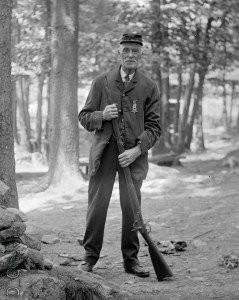
Civil-War-Vet-D_Chadwick_0

…A soldier who had endured the third day of Gettysburg, and emerged unhurt, and who had then seen his own boys destroy Pickett’s (12,500 Confederates participated in the charge on July 3, the last day of the battle. Only half of them made it safely back to their own lines.) and so destroy the myth of Robert Lee’s invincibility, had already passed the zenith of his life. Nothing like this would ever happen to him again.  For a generation enmeshed in the ethical web spun so tightly by mid-Victorian Protestantism—these were Christian soldiers who fought in armies marked  by intense waves of  wartime revivalism—the excitement of battle  generated a  profound moral contradiction. In This Republic of Suffering, a superb account of coming to terms with the scale of death the Civil War generated, Harvard president and historian Drew Gilpin Faust describes the experience of a stunned Confederate who, during a firefight, came to the aid of a shrieking comrade, only to find out that he was “executing a species of war dance,” exulting over the body of the Union soldier he’d just killed. In another battle in 1862, Union soldiers on the firing line called their shots, as if combat were billiards: “Watch me drop that fellow,” one said to his comrades; it was, indeed, like a game.[1]

The killing didn’t end when the war did. Violent crime rose at three times the rate of population growth in the decades following the war, and perhaps as many as two-thirds of the nation’s convicted felons were veterans.[2] Soldiers understood, on some level, that combat had changed them irrevocably and some worried about it. Society, one Vermont soldier wrote his sister, “will not own the rude soldier when he comes back, but turn a cold shoulder to him, because he has become hardened by scenes of bloodshed and carnage.”[3] He was, in many respects, right: some of the soldiers who came home to Vermont, New Jersey or Iowa brought with them a measure of fear—they had become, in the Civil War novelist Michael Shaara’s term, “Killer Angels.”

Many Union soldiers had demonized themselves and by extension all of their comrades by celebrating their mustering out with epic alcohol binges and episodic violence throughout the demobilization summer of 1865.[4] A Chicago civilian’s insulting comment about William Sherman set off a saloon brawl that cascaded into a riot that police were helpless to put down. Only the fortuitous appearance of the legendarily hard-drinking Gen. Joseph Hooker, who had the credibility to intervene with combat veterans, brought the violence to an end.

But for even the most sober of veterans that was precisely the problem with homecoming: it brought them little peace. Professor Jordan describes a sense of what, at its mildest, could be called disorientation. Home wasn’t home anymore. Even little farm towns had changed so much in four years that, for some veterans, that they didn’t feel like home at all. Soldiers from the hard-fighting regiments of the Old Northwest, states like Iowa and Minnesota, couldn’t reconcile themselves to the cold winters they’d forgotten while fighting in Mississippi or Georgia.  There was a more sinister change to which they couldn’t adjust: Union veterans resembled the little boys who’d survived the 1918 influenza epidemic and were finally let out to play, only to find there was no playmate on their city block left alive. The survivors of “Pals” Battalions who’d joined the Great War’s British Army together went home to neighborhoods empty of the young men with whom they’d grown up together. Their pals were gone, swallowed up by the Western Front.

Gone too, in 1865, were whole towns of young men in New York or Vermont or Indiana, dead and buried on Southern farmland that had been poisoned by violence, land still studded by spent bullets. Other young men had vanished without a trace in dark, dense woodlots or fetid swamps. Soldiers came home, then, ostensibly alive and whole and strong but with unseen dead spaces inside where their comrades had once lived. Missing them, or the trauma of seeing them killed, figured in the chronic depression that so many veterans fought. Now that the war was done, they still were caught in its aftermath like swimmers in an undertow, struggling to break surface, to find light and cool air, to breathe again.

Their struggle was only  intensified by the recognition that what they had fought for—for the rededication of the democracy Lincoln had described at Gettysburg in November 1863—was fast slipping away. Union veterans remained intently suspicious of and hostile toward the defeated South; Lincoln’s assassination had been one impetus for their rancor but their anger only intensified when they read the newspaper accounts of the postwar emergence of the old Slave Codes, now called Black Codes.  They read, too, of defiance and the terrorism of the Ku Klux Klan, co-founded by a cavalryman, Nathan Bedford Forrest, who had bedeviled some of them in the Deep South. When Reconstruction ended in 1877, Jim Crow laws revived white supremacy in a way that rivaled the days of slavery. The Union veterans’ hostility was exacerbated because the other side refused to admit—significantly, on a moral level—that they’d lost the war. Typical, in 1894, were the dedicatory remarks that accompanied the unveiling of a Confederate memorial in Richmond, when newspapers noted that the clouds parted and the sun emerged when the speaker, the Rev. R.C. Cave, began an oration that included passages like this:

But brute force cannot settle questions of right and wrong. Thinking men do not judge the merits of a cause by the measure of its success; and I believe

The world shall yet decide

In truth’s clear, far-off light,

that the South was in the right; that her cause was just; that the men who took up arms in her defence were patriots who had even better reason for what they did than had the men who fought at Concord, Lexington, and Bunker Hill; and that her coercion, whatever good may have resulted or may hereafter result from it, was an outrage on liberty.[5]

gburg

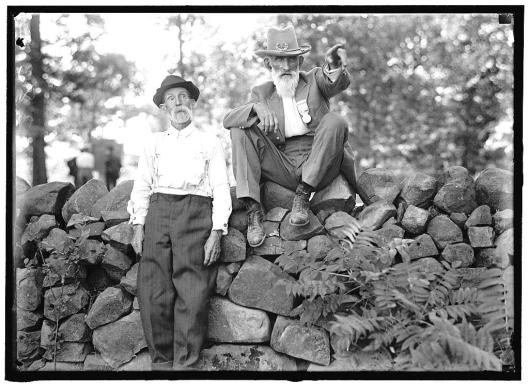
At least two veterans seem to have worked out a truce at the 1913 Gettysburg Reunion. Library of Congress.

Similar remarks by Southern speakers invited to a Gettysburg reunion in 1913, Professor Jordan notes, rankled the same Union veterans who had protested another unveiling, in 1909, in the Capitol’s Statuary Hall: a sculpture of Robert E. Lee. They would protest again at the rapturous reception, one that included the Southern-bred President Woodrow Wilson, awarded the D.W. Griffith film Birth of a Nation, which depicts Klansmen as chivalric heroes who reassert Southern white supremacy over rapacious carpetbaggers and predatory African Americans. “It is like writing history with lightning,” the president said, “and my only regret is that it is all so terribly true.”[6] The most enduring image of the 1913 Gettysburg reunion is that of Confederate survivors of Pickett’s Charge reaching across the stone wall–fifty years before, it had been their objective– to shake the hands of Pennsylvania veterans. What goes unmentioned is the fistfight at the same event that sent seven aged Yankees and Confederates to the hospital.[7]

Even as Southern whites reasserted their social and political primacy, American democracy in the North was no tribute to the sacrifice of Civil War veterans, either. The Radical Republican Congress and Andrew Johnson finished what should have been Lincoln’s second term in what resembled the political equivalent of a Western range war. Johnson escaped conviction on impeachment charges by one Senate vote. Grant’s relentlessness and drive had served him well in the struggle against Lee, but another aspect of his personal character—an almost childlike credulity—ate his presidency alive in a series of scandals perpetrated by subordinates who betrayed Grant as surely as Warren G. Harding would be betrayed by his “Ohio Gang” in the 1920s (Harding had the good sense to die mysteriously as the worst scandal broke—Teapot Dome, which also involved kickbacks involving the Elk Hills reserve, just over the San Luis Obispo County line. By contrast, in some ways Grant’s finest hours were his dying ones, as he raced, penniless and reliant on Samuel Clemens’s charity, to finish his memoirs, now a classic, as cancer slowly took his life.) The corruption penetrated to state houses, where the lobbyist for the Santa Fe Railroad kept a slush fund in his office safe for the frequent lubrication of Kansas legislators about to vote on regulatory bills; the monopoly that railroads enjoyed in their American fiefdoms and the freight rates they demanded were so egregious that it cost a farmer more to ship a bushel of wheat from Topeka to Chicago, by rail, than it did to ship that bushel from Chicago to Liverpool, mostly by water. Machine politics dominated cities from New York to San Francisco, where Irish-American voters really did vote early and often, and deceased. In New York, the most famous political machine was Tammany Hall, and it was Tammany Hall’s Boss Tweed disbursed the equivalent of $4 million to a Tammany plasterer for two days’ work on City Hall.


bristol

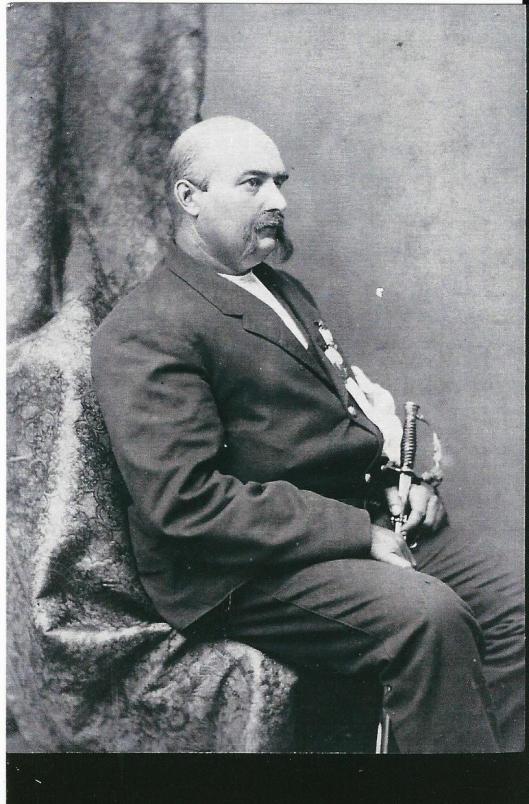
Charles Bristol typifies the restlessness of his generation. After his service–he’s seen holding his wartime 8th Michigan Cavalry saber here—he lived in Missouri and Kansas before moving to Nipomo, just south of Arroyo Grande, in 1892. Photo Courtesy of Blake Bristol.


In both their disillusionment and in their restlessness, the Civil War generation seems to resemble the generation that came of age during the First World War. Afterward, they became expatriates–Ernest Hemingway, F. Scott Fitzgerald, John Dos Passos among them—young men, many of them veterans, who no longer recognized or understood the America they’d known as boys. They were among the young people of Gertrude Stein’s  “Lost Generation.” During the 1920s, they were always on the move: Ernest and Hadley Hemingway, for example, lived in Paris–a Paris captivated by American musicians like Sidney Bechet and entertainers like Josephine Baker– fished mountain streams and watched matadors at their work in Spain and put up in little Italian penziones. In fact,  the couple moved so frequently that on one trip they left behind a steamer trunk that contained everything young Hemingway had ever written. It was never found.

So, like the young people of the 1920s, Civil War veterans were members of a generation on the move.  In postwar America, veterans, according to a 2010 study by Seoul University economist Chulhee Lee, were 54% more likely to move to a different state and 36% more likely to move to a different region than non-veterans.[8] Lee posits several reasons for this phenomenon: a central one is the idea that veterans had been exposed to the concept of a wider nation, one beyond their rural farms or row tenements, by campaigns in the South. Westerners, too, fought along the Atlantic seaboard, and  some Easterners saw combat or garrison duty during the 1860s Indian Wars on the frontier. Lee’s point is a key one: Americans had been so isolated and disparate before the war that an outbreak of measles that would make a New York regiment sick would kill soldiers in the Iowa regiment bivouacked alongside, soldiers that, before the war, were so geographically isolated that they lacked the immunity to that particular strain of measles. (Measles, in fact, killed 11,000 soldiers during the war.[9]) Ironically, the war and the troop movements necessary to fighting it had opened young soldiers’ minds to the vastness of their nation and to the possibility of starting over somewhere else.

This pattern of increased mobility was a key factor in the lives of Arroyo Grande’s Union veterans. Over fifty would settle the Arroyo Grande Valley and nearby Nipomo. Enough census data exists to follow twenty-three of them, in the course of their lives. After the war, seven of them moved once from the state they’d served as soldiers; seven had moved twice. Nine had moved three times or more. So the men who came to Arroyo Grande had come as far as they could—like Jody’s grandfather in the Steinbeck novella The Red Pony, they had to stop because they’d arrived at the Pacific: their days of “Westering” were over. Most of them were farmers—census data show them living in the Huasna Valley, the Branch Tract of the Upper Arroyo Grande Valley, Los Berros, Oak Park, the Arroyo Grande Township, Pismo Beach, and Oceano or in Nipomo.[10] They’d arrived here when the area was being touted as a kind of agricultural paradise, marked by dairy farming and by the truck gardening of vegetables, tree crops, and seed flowers.


waller

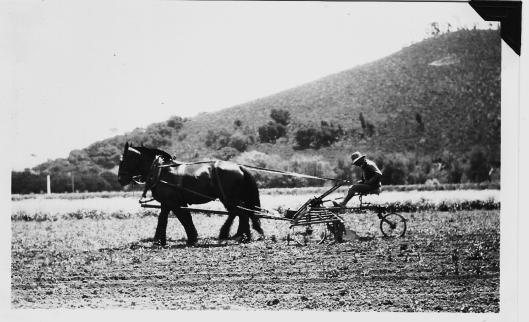
A Waller Seed Company employee tills  a field in the Lower Arroyo Grande Valley. Photo courtesy Richard Waller.


Most of the veterans had arrived in the Valley earlier, but nearly all of them were established by 1900, when Arroyo Grande’s population was approaching 1,000. Thirty-eight years before, in a single day’s combat, Antietam had claimed the equivalent of twenty-two Arroyo Grandes in killed and wounded men. Whatever wounds these men still carried inside, they made a decision to move their lives forward; here, they had work to do in planting pumpkins and onions, peas and tomatoes, squash and beans. They were still, in their mature years, building a nation that had come perilously close to disappearing in the darkest months of the Civil War, in the long casualty lists produced by Antietam and the humiliation of the defeat inflicted at Chancellorsville.

[1] Drew Gilpin Faust, This Republic of Suffering: Death and the American Civil War. Vintage Books: New York, 2008, pp. 37-38.

[2] Michael C.C. Adams, Living Hell: The Dark Side of the Civil War, Johns Hopkins University Press, Baltimore: 2014, p. 198.

[3] Edward Alexander, “Life of the Civil War Soldier in Battle: And Then We Kill,” Hallowed Ground Magazine, Winter 2013, http://www.civilwar.org/hallowed-ground-magazine/winter-2013/life-of-the-civil-war-soldier-battle.html?referrer=https://www.google.com/

[4] Jordan, pp. 46-47.

[5] R.C. Cave, “Dedicatory Remarks, Soldiers’ and Sailors’ Monument, May 30, 1894,” Southern Historical Society Papers, Volume 22. Reverend J. William Jones, Ed. http://www.perseus.tufts.edu/hopper/text?doc=Perseus%3Atext%3A2001.05.0280%3Achapter%3D1.27%3Asection%3Dc.1.27.198

[6] “D.W. Griffith’s Birth of a Nation,” The Rise and Fall of Jim Crow, PBS., http://www.pbs.org/wnet/jimcrow/stories_events_birth.html

[7] Jordan, p. 197.

[8] Chulhee Lee, “Military Service and Economic Mobility: Evidence from the American Civil War,” February 2010. http://www.sciencedirect.com/science/article/pii/S0014498312000046

[9] “Civil War Diseases,” http://www.civilwaracademy.com/civil-war-diseases.html

[10] Census figures were taken from the website ancestry.com


Adam Bair’s Civil War, 1864-65

http13714849_92c661efa1

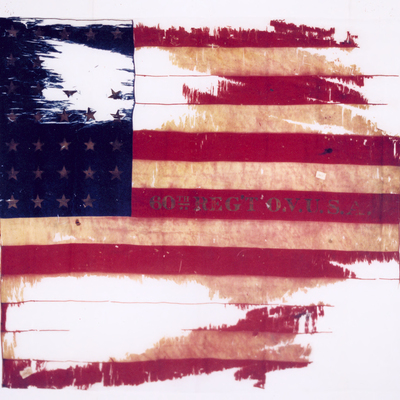
The 60th Ohio’s regimental colors.

On May 4, 1864, Adam Bair began a forty-mile march into the darkest part of the Civil War with his 60th Ohio Volunteer Infantry Regiment. He would survive this journey to make another, by covered wagon, to California in the 1870s where he would establish deep family roots in the Arroyo Grande and Huasna Valleys.

That was far in the future. In the spring and summer of 1864, Bair and the boys and men of the 60th Ohio were meant to be finishers. The regiment had begun training in Columbus in February 1864, and was sent east to Washington to prepare for this offensive, the push to end the war. In April their training had intensified at their camp near Alexandria. They were assigned to IX Corps, commanded by Ambrose Burnside, the short-lived commander of the Army of the Potomac who’d sacrificed his men in frontal attacks on Lee’s army at Fredericksburg in the winter of 1862. He had afterward gratefully accepted demotion the lesser demands of corps command.

So, under Burnside, the 60th , on the afternoon of May 5, crossed the Rapidan River at the Germanna Ford–from a rise, they could see dust clouds raised by Lee’s army on the move—and began to march into The Wilderness, a vast tangle of forest and scrub so dense that it shut out the sun. Adam Bair, a corporal and therefore a file closer in B Company, must have been tired by then. His role was like that of a border collie, striving constantly to keep his company together and moving forward, cajoling potential stragglers, barking, like a collie, at men who’d packed too heavily when they had been warned to travel light.

The wake of the 60th would have been a Civil War treasure-collector’s dream, strewn as it would have been with all manner of equipment: rubber blankets, coffeepots, needless overcoats and extra clothing, books that would never be read. Eventually, as the sounds of battle began to become more distinct, the 60th would leave behind what many Civil War soldiers left: playing cards, dice, flasks of brandy or rum, or dirty postcards with their leering plump models. These are not the items a man would want on his person if he “fell,” to use the euphemism common to describing the indescribable violence of a Civil War soldier’s death in combat.

The Wilderness was something out of the Brothers Grimm and then, even darker, something out of the Dutch nightmare painter Hieronymus Bosch, because Union soldiers would begin to see, as they crunched through the carpet of leaves in the closeness of the woods, dead soldiers who were grinning at them in their passage. These were the skulls of the men who’d fought the year before at Hooker’s debacle, Chancellorsville, either disinterred from their shallow graves by hungry animals, perhaps by a hardscrabble Virginia farmer’s hogs, or simply lost and left where they’d fallen in the days when Lee and Jackson had played hammer and anvil with the Army of the Potomac.

The woods themselves became the enemy in this battle because the dark wasteland made a mockery of combat drill; its density cut up infantry formations into little knots of soldiers who became separated from one another as they struggled forward, whipped by branches, tripping over roots, cursing in the close humidity and heat already descending on northern Virginia. For many Union soldiers, the dark was suddenly illuminated by the muzzle flashes of Confederate infantry with their bullets amputating tree branches, vaporizing leaves, buzzing like hornets past men’s ears. Some of them, with a dull thud, a sound familiar to Civil War soldiers but now as lost as the sound of the Rebel Yell, found their targets in the bodies of young men. The flash of powder did something else: firefights sparked fires that would rage in the tangle of trees and scrub; the fires burned wounded men alive as they shrieked for help. No battle in the Civil War was more grotesque than the one fought in this forbidding place.

Adam Bair’s comrades could hear the fighting that had already been going on all day; in Grant’s army, IX Corps had come up last, and the 60th Ohio would go into camp on the edge of the battlefield during the late afternoon of May 5. Grant ordered them to attack early the next day through the woods between the Orange Turnpike and the Orange Plank Road. They were to find a seam he believed to be there, and push their way into the rear of Confederate Gen. A.P. Hill’s corps. The tired soldiers would have been wakened at midnight to move out for an attack scheduled for 4:30 a.m. It didn’t get off until much later, a failing one diarist laid completely on Orlando Willcox, the 60th Ohio’s divisional commander.[2] When Willcox’s men finally moved up a country road through the woods, they would emerge in a clearing, in sunlight, where they discovered enemy artillery instead of the gap in Confederate lines they’d hoped for.

They’d run into James Longstreet’s men, heavyweight fighters, and Burnside’s IX Corps, including Willcox’s division, quickly became so bloodied that they were forced to withdraw. Adam Bair and the 60th were brought up last and put on the firing line to cover the retreat. By the end of the day on May 6, the battle was over, and Lee had mauled Grant’s army: over 17,000 Union soldiers had been killed, wounded or were missing in two days of fighting.

Grant, in a technical sense, had lost the battle. But what mattered more than May 6 was what happened on May 7.

When McClellan, Burnside or Hooker had been dealt the kind of punishment Lee inflicted on Grant in The Wilderness, they’d crept across the river fords and back to their encampments near Washington. But when Lee’s men awoke on May 7, Grant’s men were still there. In fact, they began moving around Lee’s army. They were headed for Richmond and Lee would be forced to follow the. It was a deadly strategic dance that resembled the campaign Sherman was waging at the same time against Joseph Johnston and John Bell Hood in Georgia. It would take eleven months for Grant to worry Lee’s Army of Northern Virginia down to surrender but, like the bulldog Lincoln wanted his general-in-chief to emulate, Grant had a grip on Lee and he would not let go. Now, after The Wilderness, the two armies, a combined 150,000 men, ran a footrace to seize a crossroads at the tiny town of Spotsylvania Court House. If Grant could get there first, get in between Lee and Richmond, he could force a battle—with Lee the attacker this time–that might be decisive.

But Grant didn’t move fast enough. Part of the problem was clogged roadways leading out of The Wilderness. Monumental traffic jams developed that were exacerbated, at one point, by a veteran regiment of Union cavalry who came upon a regiment of new recruits, their brass buttons still shiny and their uniforms, even under their layer of road dust, a more vivid blue. The veterans eyed the fresh and well-fed mounts of the rookies, eyed each other, and smiled. A battle within a battle soon broke out, knots of fistfights and wrestling matches in an hour-long riot that ended with one regiment riding off with the other’s horses  The melee was one of many factors that slowed the Union advance down. Another was sheer exhaustion; some infantrymen literally fell asleep on the march toward Spotsylvania, and as they stumbled toward Laurel Hill, not far from their objective, they found, to their chagrin, Confederates behind the entrenchments that they’d just thrown up. Lee had won the race, and the two sides—both made up of soldiers so tired that their hand-to-hand combat, as they began to claw at each other, was nearly in slow motion.

Adam Bair and the 60th Ohio came up to Spotsylvania on May 9, in the van of Gen. Willcox’s Third Division, and it was Willcox himself who ordered them to form a line of battle. A veteran of the 60th described what happened next in a speech he delivered at a regimental reunion many years later:

…the enemy came out of the woods in front and on each flank, and opened on us, and then how the dust flew. After they had been engaged for some time, General Wilcox said: “The fools (meaning the 60th) did not know when they were whipped.” Then he ordered one of his staff officers to go at once and order up other regiments to our relief. During that fight, which did not last long, we lost in killed or wounded, more than one-half of those actually engaged.

It was in this engagement that Bair lost his first sergeant, a popular 23-year-old and “one of the finest-looking young men” of Wayne County, named Michael Silver. What made Silver’s death especially tragic was the fact that he didn’t have to be the fight that day:

On a 40-mile hike from Alexandria, Michael Silver succumbed to sun stroke and was laid up at a field hospital for several days. After hearing of an upcoming battle at Spotsylvania, Silver and several of his sick comrades left the field hospital to rejoin their regiment. On May 9th, at the Battle of Mary’s Bridge, Michael Silver lost his life when he took up the flag after several color bearers before him had been wounded. “But as he waved the colors making himself a target of attack, he quickly became the victim of a bullet, being shot by a Confederate sharp-shooter. He was mortally wounded and died on the field of battle. His comrades later buried him on the battlefield, marking the grave the best they could before having to move on.

It was a measure of the 60th’s devotion to Silver and to each other that a year later, Company B men located Silver’s battlefield grave and brought his remains home to Wayne County. It was also a measure of the determination of men like Adam Bair that three days later, the regiment locked itself into a firefight that lasted seventeen hours; bullets from the two sides pulverized a tree twenty-two inches in diameter. At the war’s end, Sherman’s “little devils,” on their way to Washington City for the Grand Review, whittled away fragments of the shattered tree stump as souvenirs until nothing was left.

After nearly three weeks, Grant disengaged and again moved south, toward Richmond, with Lee and the Army of Northern Virginia following on parallel roads. The two armies had lost 32,000 in killed, wounded or missing men, but the losses had a grim calculus: Grant could afford grim statistics like these, given the North’s superior population, and Lee couldn’t. Now, in the late spring of 1864, it appeared that Civil War was beginning to evolve into a war of attrition. In the next battle at Cold Harbor, Grant’s tactics seemed to confirm that. In the campaign that followed Cold Harbor, one of the casualties would be Cpl. Bair.

*  *  *

Bruce Catton has brilliantly described Grant’s movements in Northern Virginia, cut from east to west by river after river, to that of a sailing ship tacking against the wind. Grant would move toward Richmond to draw Lee south. Lee would head Grant off and throw up his entrenchments. Grant would probe Lee’s position and then slip around it, usually to the east, or Lee’s right, by several miles, ford the inevitable river in his path, and then jog to the left, to the west, and slightly south, incrementally closer to Richmond, which interested Grant not at all. What Grant wanted was to interpose himself between Lee and Richmond, and then let the great man throw his forces on the northerners’ entrenchments in exactly the same way Hood would throw his against Schofield’s at Franklin, Tennessee, later in the year.

It wasn’t military genius that made Grant a battlefield master so much as it was an acute understanding of reality. This business and tacking right and then reversing course left was interrupted only by battles that were enormously costly to both sides but, because of his inferior numbers, always more costly to Lee. It was inelegant and it was necessary.

But by the late summer, Grant was running into Virginia delta—marshy and impassable—so there was no more room for tacking to the right because there was no more right on which to move 100,000 men and their baggage. He would have to confront Lee more directly, and that confrontation came at Cold Harbor in late May.

Cold Harbor was another tiny Virginia hamlet; it was neither near a body of water nor was it cold. It was instead oppressively hot, the kind of heat that makes it nearly impossible, for those not accustomed to it, to move or even to breathe. Neither was it especially attractive; Catton notes that many Union soldiers talked of someday returning to the verdant Virginia farm fields where they’d fought Lee. Nobody ever talked about coming back to visit Cold Harbor. The battle that began there at the end of May was another marathon, like Spotsylvania, which had lasted thirteen days. So would the Battle of Cold Harbor, but by the time it was over, Grant would have lost, from the beginning of May to mid-June, nearly 48,000 soldiers, killed, wounded and missing.

What Grant did at this battle was such an error in judgment that it is certain that even a young corporal like Adam Bair would have seen it; it would have produced an inward wince like a perceptive student might feel when a favorite professor misattributes a quote in an otherwise brilliant college lecture. Misattributed quotes don’t kill young men. Grant did. Grant’s stolidity is sometimes mistaken for cold-bloodedness. The man, perhaps the best horseman of all Civil War generals, could not bear cruelty to animals. When Grant once saw an army teamster beating a team of horses, he leaped from his mount, grabbed the teamster by the throat, took the man’s whip away and then ordered him tied to a tree for six hours. It was not a lesson the teamster was likely to forget; Grant was no more likely to forget Cold Harbor.

It was a simple case of overconfidence. Grant believed that Lee was nearly finished—again, if Union losses had been heavy, Lee’s were nearly as heavy and he couldn’t replace the men he’d left dead on the May battlefields. After Grant’s cavalry commander, Phil Sheridan, found a mixture of Confederate cavalry and infantry at Cold Harbor, Grant and his subordinate commander, George Meade, began feeding division after division in to support Sheridan. It was yet another battle that seemed to take on a life of its own. After four days of combat, it was Adam Bair and the 60th Ohio’s turn. On that morning, the Union army, shrouded in mist, moved across the open ground that led toward the Confederate entrenchments.

The 60th was to assault Lee’s right. Unlike the general staff—coordination and communication throughout June 3 would be chaotic, and staff had not adequately scouted the ground to Lee’s front—private soldiers were aware of what they were up against; many wrote their names on pieces of paper and tagged them to their uniforms. The Confederates, as they’d done under John B. Gordon at Bloody Lane at Antietam, held their fire until the last possible moment, and what Bair would have seen resembled nothing so much as the terrible punishment Gordon’s men had inflicted that day before they finally had to give way. Under withering rifle and artillery fire, soldiers fell, not singly or in pairs, but in large groups. To observers raised in a more agrarian America, that day looked as if young men were being harvested like wheat. Ahead of Bair, a small group from Winfield Scott Hancock’s corps stood for the briefest of moments above the enemy’s entrenchments before they were swept away. The entire federal line—five army corps—shivered and buckled under the intensity of the fire; Grant called off the attack hours later. He’d lost perhaps as many as 7,000 men in the first forty minutes of the Battle of Cold Harbor alone, an attrition rate that wouldn’t be equaled until the British assault on German machine-gun teams at the Somme in 1916.

Grant had not properly surveyed the ground before Cold Harbor, he had tragically underestimated Lee and the strength of Lee’s troops, he had ordered a frontal attack on positions that were expertly built and virtually unbreakable, he had persisted in the assault until noon, he and his junior officers had failed to communicate clearly once it became apparent that the assault was fruitless. That night, Grant told his subordinates that he had never regretted an assault so much as the attack on June 3, 1864. After that, he rarely—if ever—spoke of Cold Harbor again.

If anything, what followed Cold Harbor was even more unspeakable.

Two weeks later, on June 17, Adam Bair was wounded—evidently, a minor wound in the arm—during an assault on Confederate trenches around Petersburg, Virginia, a rail and industrial center south of Richmond. If Lee was to hold Richmond, he had to have Petersburg as a supply base—and supplies were already problematic for his Army of Northern Virginia. While Union soldiers wrote of fresh vegetables brought down from Grant’s base at City Point, Confederates complained of eating nothing but cornbread for days on end. Meanwhile, Grant ordered is men to dig trenches, as well.

So what followed for Bair and his comrades was nine months of trench warfare, of the scuttling of rats, of infestations of lice called “graybacks,” of mud, which permeated even what soldiers ate, of disease caused by vermin and foul water, of the intense discomfort felt by soldiers who could never get completely dry in the winter and who baked in the heat and  choked in the dust of summer, and all of this amid a treeless moonscape they’d created from constant digging and constant artillery bombardments.

One of the most costly battles of the First World War, the Somme, began with the detonation of a massive mine under German lines—the crater it created remains today, looking like a massive sinkhole in the midst of a patchwork of farm fields. A mine explosion also would mark a surrealistic and shocking moment in the trenches of Petersburg. The crater that explosion left behind was, of course, The Crater, and Adam Bair and the 60th Ohio were eyewitnesses to the tragedy that followed.

Unlike the debacle at Cold Harbor, the assault on Confederate lines in the Battle of the Crater had logic, foresight, and planning. It was the execution of the plan that verged on criminality, and it would finally cost the genial, consistently incompetent Ambrose Burnside, Bair’s IX Corps commander, his job.

In July, Union soldiers who had been Pennsylvania coal miners began digging a tunnel over 500 feet long to a point underneath trenchworks held by soldiers from South Carolina. Meanwhile, Burnside decided to use inexperienced troops, but troops that were highly motivated and would be specially trained to move through the tunnel and into the Confederate trenches once four tons of powder were detonated beneath the South Carolinians. The troops that began training for the assault were African Americans—the nine regiments of U.S. Colored Troops that made up Burnside’s Fourth Division. These were men who understood completely what would happen to them in battle—there would be no quarter for black troops, a precedent that had already been set at Fort Pillow in April, when Nathan Bedford Forrest’s cavalry had attacked and overwhelmed a detachment of black troops in Tennessee and murdered soldiers trying to surrender. The Fourth Division chose “Fort Pillow!” as its battle cry for the day they would go into the Pennsylvanians’ tunnel and emerge on the other side. In a letter to his mother two days after the Battle of the Crater, a Union soldier wrote admiringly of the black troops: “they would charge into the city [Petersburg] if they order had been given…They don’t know when to stop.”

The orders seemed clear-cut:

At 3.30 in the morning of the 30th Major-General Burnside will spring his mine and his assaulting columns will immediately move rapidly upon the breach, seize the crest in the rear, and effect a lodgment there. He will be followed by Major-General Ord, who will support him on the right, directing his movement to the crest indicated, and by Major-General Warren, who will support him on the left. Upon the explosion of the mine the artillery of all kinds in battery will open upon those points of the enemy’s works whose fire covers the ground over which our columns must move, care being taken to avoid impeding the progress of our troops. Special instructions respecting the direction of fire will be issued through the chief of artillery.[12]

The detonation of the mine was spectacular—Adam Bair and the 60th Ohio, held in reserve to the left of the planned assault, would have watched in awe when the explosion went off at 5 a.m. on July 30, 1864, and scores of unfortunate South Carolinians were vaporized or blown high into the sky. 85 Union artillery pieces then opened fire on the Confederate lines. It was at that moment that the Union troops charged into the tunnel to follow the shock of the explosion with the shock of a concentrated infantry assault.

The problem for Grant is that they were the wrong troops. George Gordon Meade, Grant’s subordinate and commander of the Army of the Potomac—a command he held uneasily, sharing his ill-defined role with the general-in-chief—at the last moment changed Burnside’s plans. Meade didn’t trust black troops—unlike the soldier who’d written his mother, Meade didn’t understand their motivation and drive—and he ordered Burnside to replace them, to put white troops in charge of leading the charge into the tunnel.

Burnside became petulant and had his divisional commanders draw straws for the dubious privilege of leading the attack. The winner was Brig. Gen. James H. Ledlie, who may have been drunk in his bombproof when his men went into the tunnel. Once they emerged in the crater, they stayed. The black troops had been trained to skirt around the edges of the crater and not to go into it, where they would be trapped, as Ledlie’s men were now. Subsequent attackers, including the black soldiers, ran into what essentially was a human traffic jam inside the tunnel and on the other side. The Confederates brought up reinforcements and began firing into the masses of soldiers below. When they closed with the U.S. Colored regiments, they showed no mercy: wounded soldiers were bayoneted and soldiers trying to surrender—or soldiers who had surrendered, and were being led to the rear—were shot. A Virginia officer watched, sickened, as two soldiers tormented their black prisoner, whipping him with a ramrod, shooting him in the hip and finally killing him with a second shot to the stomach.

Over 400 African American soldiers would be killed and 750 wounded in the four hours of fighting after the mine’s detonation. Generals Burnside and Ledlie were cashiered and sent home. Other soldiers, like Adam Bair, were condemned to seven more months in the trenches around Petersburg.


*  *  *

The war’s end came so swiftly that it’s easy to forget how long the wait had been.  Arroyo Grande veterans Joseph Brewer, Austin Abbott, Adam Bair, William Strobridge, Charles Clark, Samuel McBane, and George Purdy were all involved, directly or indirectly, in the chase to Appomattox Court House and Lee’s surrender. The Appomattox Campaign lasted a little over two weeks and it was lost because Lee could not overcome multiple enemies: the Army of the Potomac, Edward O.C. Ord’s Army of the James, Sheridan’s cavalry– all told more than 150,000 men, or triple Lee’s numbers. Grant’s numbers did not include John Schofield’s veterans of Tennessee fighting, headed east to link up with either Grant or with Sherman, as need dictated.

One more enemy, and perhaps the most telling, was hunger. By March of 1865, the proud men of the Army of Northern Virginia, hunched in their trenches, were reduced to pitiable daily rations—a pint of corn meal and an ounce or two of bacon. That meant that Lee’s strength—50,000 men—was dwindling every day, as hungry men left Petersburg and headed home, where they had fields to prepare.

In northern Virginia, spring meant mud—horses, wagons and even infantrymen could not move through Virginia mud, whose chief property was suction– so Grant’s next offensive would have to wait for dry roads. When the roads were ready, Grant would resume the dance he’d led the previous spring: this time, if he continued to stretch Lee’s line, to the Confederate right, by sliding troops to the west, the string would snap: either Lee’s dwindling army would be stretched so thin that a weak spot in the miles of trenchlines would present itself or—even better—Grant would finally force Lee to come out and fight on open ground, where the Union numbers would crush him. In fact, since Lee’s only supply line, the Weldon and Petersburg Railroad, was directly in the path of this westward shift, Lee would have to come out and make a run for it; without the railroad, he couldn’t feed his hungry men.

And coming out of the trenches would prove to be Lee’s only choice after a disappointing defeat on March 25, 1865. The last important offensive of the Army of Northern Virginia came on Lee’s far left, when the indefatigable Georgian, John B. Gordon, led an assault on Fort Stedman, inside the Union lines. Gordon had the same idea Grant had: if he could punch a hole in the Union lines at this point, then Grant’s major supply line, the railroad link to City Point, just beyond the fort, would be severed and then the Army of the Potomac would be in serious trouble. Lee gave the talented Gordon his blessing, and on the morning of March 25, he launched the assault, which had been meticulously planned, down to teams of axemen to break up the abatises—the obstacles, made of sharpened wooden spikes, that prefigured barbed wire–that so impeded infantry. It was a stunning success, at first.

Adam Bair and his 60th Ohio regiment were part of the defenses nearby, and Hezekiah Bradds, a soldier in the 60th’s Company C, recounted the morning of March 25 years later:

Early that morning I was the first to give alarm, “Johnnies in our works!” They (the Johnnies) had taken about all of the 14th N. Y. regiment and had gotten all there were in the videt [sic] pits. They had also entered Fort Stedman.

I had chosen a place between two flankers. I ran to place and Sergt. Bulin furnished me with cartridges- -tossed them at my feet. Not a Johnnie got north of Fort Stedman. Five hundred of their bravest men were picked to take Romer’s Battery, nearly a mile away on a hill, but they failed, for a Pennsylvanian regiment moved into the fort, and when their force came they were badly worsted and retreated.

Lee’s reinforcement did not arrive in time and the retreating force was passing back, getting over our works. Their reinforcements arrived and the situation looked desperate to me.

A General on a gray horse got over their works and came in full tilt, waving sword to stop the fleeing force. At pull of trigger and crack of gun he fell. He always bore on my mind. That pull of trigger and crack of gun saved many lives – maybe 10,000.

Their reinforcements hadn’t arrived in time. I was in plain sight of all reinforcements and of the fleeing rebels. There were many carried off the field, and my last shot was necessary there. I then went down into Fort Stedman and found two Johnnies there badly wounded and inquiring what we were going to do with them. I consoled them the best I could. Our colors and our flag were still waving over the fort.

I said, “Don’t you like our colors better than your own?”

They said, “we are not talking now.”

In the attack on Fort Stedman, Lee lost 4,000 men he could not afford to lose: no amount of audacity could compensate for the numbers game that Grant had been playing since The Wilderness, and now it was a game that he was more clearly winning.

The explosion at City Point

Featured

74366489_133912947730


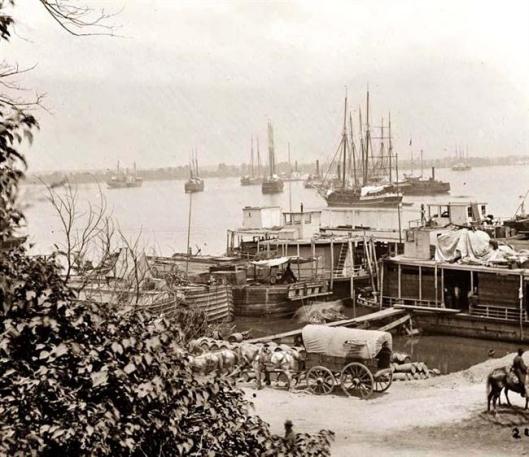
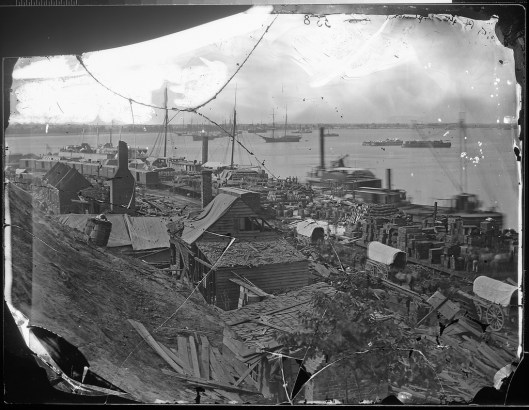
City Point, Virginia, was Grant’s supply base the last year of the war. It would would have astounded the men at Gone with the Wind’s barbecue because of its acres of artillery parks, stacked cannonballs, warehouses full of shoes, Springfield rifles, boxes of hardtack—the army cracker almost durable enough to build a home, and just as indigestible—row after row of tents in a city of soldiers, even its bakery, capable of turning out 100,000 loaves of bread a day. Quartermaster wagons offloaded cargo along a river controlled by navy ironclad gunboats; the wagons traveled in a never-ending stream so busy that it might have reminded the gentlemen from Margaret Mitchell’s Georgia of worker ants, charged with energy and purposeful.


waterfront-city-point

Wharf, City Point, Virginia


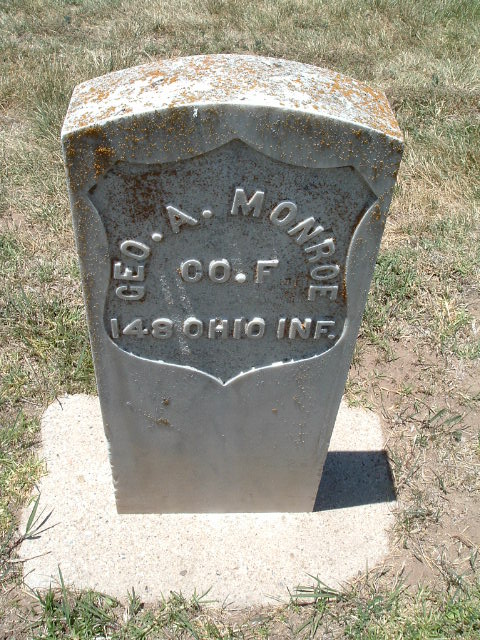
By 1865, even Lincoln’s presidential yacht, the River Queen, was anchored in the river when he visited with Grant and Sherman to sketch out the final acts of the war. Lincoln treasured these trips to see his soldiers, away from the constant assault of favor-seekers who paraded through his office. On another visit earlier in the war, to McClellan’s headquarters, Lincoln had idly picked up an ax on the deck of the Treasury Department yacht Miami, smiled, and lifted it, holding it straight out at arm’s length for several moments. None of Miami’s sailors, when they attempted it, could do the same. On April 14, 1865, John Wilkes Booth’s bullet would traverse Lincoln’s brain; logically, it should have killed him instantly, so it was only Lincoln’s will and physicality that allowed him to live for nine hours after the shot had been fired. George Monroe, another Arroyo Grande settler, would have felt the president’s loss in a very personal way: the 148th Ohio Infantry and Pvt. Monroe had been the recipients of a thank-you, a short Lincoln speech, in August 1864.

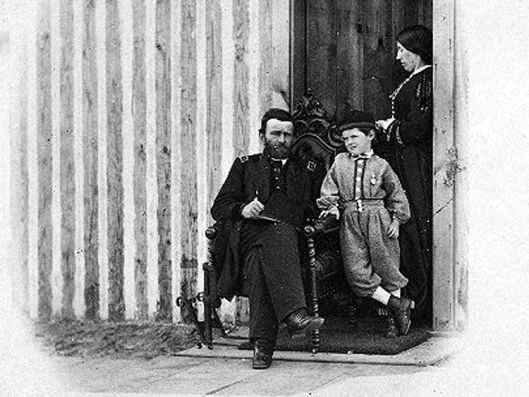
Even though  Monroe and his comrades were short-termers—100-day men, usually relegated to guard duty on railroads, at strategic bases like City Point, or as support troops—the 148th, came close, thanks to the spectacular attempt at sabotage, to never seeing Lincoln at all. On August 9, 1864, two Confederate secret agents penetrated the picket line that surrounded the wharves simply by crawling through it on their hands and knees. The letdown in security might at in part be traced to the heat that day. City Point’s pickets may have found themselves dulled by the kind of torpor ninety-eight-degree temperatures can induce. Even the stoic Grant found it hard to deal with the heat; he emerged from his tent and was doing his paperwork in his shirtsleeves.


c253652adce791f3e434aaffcd0c7062

Grant, his son Fred and his wife Julia at City Point.


While Grant was at his labors, the lead Confederate agent, John Maxwell, left his companion behind and approached a barge, the J.E. Kendrick. From Maxwell’s report.

I approached cautiously the wharf, with my machine and powder covered by a small box. Finding the captain had come ashore from a barge then at the wharf, I seized the occasion to hurry forward with my box. Being halted by one of the wharf sentinels I succeeded in passing him by representing that the captain had ordered me to convey the box on board. Hailing a man from the barge I put the machine in motion and gave it in his charge. He carried it aboard.

The hapless man from the barge did not know that he’d just been handed–Maxwell’s “machine”—was a time bomb, packed with about twelve pounds of explosives. Maxwell and his accomplice did not know, since they were attempting both nonchalance and rapid flight at the same moment, that the box they’d delivered was now aboard an ammunition barge.


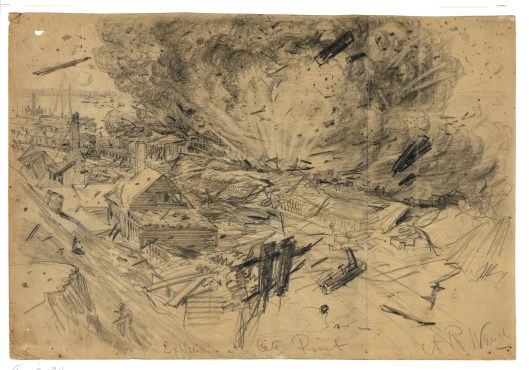
city-point-explosion-waud

Artist’s conception of the August explosion.

What a Union soldier heard, ten miles away, in the trenches outside Petersburg, Virginia, was like a thunderclap. What a group of officers near Grant’s headquarters heard in the middle of their poker game was a cannonball ripping through the canvas of their tent, from one side to the other, after the explosion had sent it flying. What a soldier felt was immense pain at the sight of a white horse, on which a woman had been seated at the moment of the explosion. The woman was gone, and a Whitworth bolt—a shell from an artillery rifle—had gone through her horse, now standing, shivering in shock. The soldier held the muzzle of his rifle next to the animal’s head and fired. What a woman on a riverboat nearby felt was a dull thud on the deck beside her. She noticed it was a human head. She picked it up by its hair and placed it carefully in a fire bucket full of water. The only other person as nonplussed as she was Grant, who looked with concern after some slightly wounded staff officers, gave a few orders, and returned to his paperwork.

The barge Kendrick was gone, as was much of the City Point wharf. So were unknown numbers of contrabands, former slaves who were working for pay as stevedores. Three members of Monroe’s 148th Ohio were killed, along with forty other soldiers, clerks and civilians, and over a hundred were wounded. The disaster was deemed an accident—not until after the war would it be revealed that it had been the act of John Maxwell, who escaped.

Nine days later, the wharf at City Point had been rebuilt and was as busy as it had been in the moments before Maxwell’s bomb had detonated. What happened at City Point was a tragedy, but it did nothing to stop the industrial machine that would continue to grind the Confederacy down. George Monroe and the 148th Ohio would soon be headed home; Adam Bair, the soldier who would settle in the Huasna Valley, and his 60th Ohio were three-year men, not 100-day men, and so they were headed for wherever Robert E. Lee was headed.


Landscape

City Point after the explosion; damage can still be seen in the foreground.

Champion Hill, Mississippi, May 1863


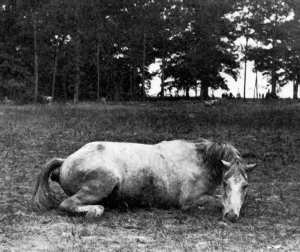
antietamhorse

A casualty at the Battle of Antietam, 1862.

William Lane, who would someday raise cattle and a herd of Lane children in the Huasna Valley, was a lieutenant in the 24th Iowa’s Company C when the regiment, on May 16, 1863, confronted a large Confederate force, part of John C. Pemberton’s command. They were digging in on plantation property atop Champion Hill, whose slopes were covered with tangled scrub and cut by deep gullies. It would be difficult to take, but at 10:30, Grant arrived and ordered the division that included the 24th up the hill. Typically, the regiment shook out skirmishers—a thin line of advance troops whose assignment it was to probe the enemy’s positions—and the skirmishers were followed by dense lines of attackers, and it was the job of lieutenants, perhaps even more expendable than privates, to order the maneuvers that would transform a company from a marching column into an attack formation. It was also a lieutenant’s job one to lead from the front, to keep his men closed up, and wave his sword in an attempt to project ferocity. It might be understandable if, given his duties that day, twenty-eight-year-old William Lane was feeling as if every Confederate atop Champion Hill was aiming at him.

The men he was leading were confident, if the account left by a corporal in Company H, James Oxley, is any indication. Oxley succinctly and in his own spelling recounted what happened next:

a short hault was ordered and we was informed that in a fiew hundred yards wer the Rebs. Strongly posted they had a battery which was for us to charge and capture it…The enemy was fast massing his forces more left when the [24th] Iowa was ordered to charge a six gun battery which was only a fiew hundred yards in our front.

No sooner had the gallent sons of Iowa received the orders to charge till they went not willing that the fare fame of Iowa soldiers deminished rushed like wild and enraged tigers upon the men & batteries. Giving at the same time one of those furious yells which startled fear…dinging the Rebs and they wer driven like chaf before the wind.

The 24th was triumphant in its capture of the guns and a successful episode of Reb-dinging—they’d shot or bayoneted most of the artillery crews—when they were confronted by a counterattack; after a fifteen-minute firefight, they were driven back down the hill, the Confederates re-took their guns, and Major Edward Wright of the 24th, badly wounded, still managed to capture a burly Confederate who carried the wounded officer downhill and out of harm’s way. The tide of the battle seemed to be turning when a brigade that included Francis X. Belot and the Fourth Minnesota fell on the Confederates’ flank. The Fourth galloped up to, into, and over the other side of a ravine and captured 118 prisoners. They then confronted a sight so vividly described by Alonzo Brown, a corporal in Company B, that it must have haunted many in the regiment for the rest of their lives

When the fighting ceased we walked along the wooded, hill and examined the artillery captured from the enemy, and, unless mistaken, counted twenty-eight pieces which had been captured and which the enemy bad abandoned in the road after taking away the horses. We saw one battery upon the brow of the hill. Some of the horses had been killed, and upon one of them sat its rider, – dead. The animal lay on the side of a sharp little slope so that the right leg of the rider was under its body while the other was extended naturally, with the foot in the stirrup. He held the bridle rein in his right hand and with eyes wide open, as if looking to the front, sat upright in the saddle as naturally as if still alive. His features looked like marble, and he was apparently not over seventeen years of age.

By 4:00 p.m., Pemberton’s fight was ending, and the general was both disheartened and furious at a recalcitrant division commander who had failed to move up in time to support the defenders on Champion Hill. He ordered a general retreat toward Vicksburg. Grant now had Pemberton where he wanted him, trapped in the town on the Mississippi bluffs. Grant attempted to attack Pemberton’s fortifications there—the 4th lost twelve killed and 42 wounded in one assault a week after Champion Hill —but then decided to besiege the city and starve it into surrender. The surrender came, appropriately, on the Fourth of July, the bookend in the West to the great victory of the day before in the East, at Gettysburg. The first regiment to enter the conquered city was Francis X. Belot’s 4th Minnesota.

Dear English Majors


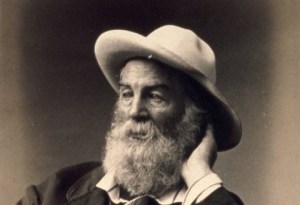
walt-whitmanI have been thinking all day about Walt Whitman’s “Crossing Brooklyn Ferry.” And I am not a Whitman guy. I am a Dickinson guy–“a narrow fellow in the grass;” “the nerves sit ceremonious, like tombs;” “…rowing in Eden…” I have always liked her economy, and there is nothing I’ve ever written that wasn’t better when written with fewer words. Whitman’s appetite for words was vast and he savored every one of them, but he was always hungry for more.
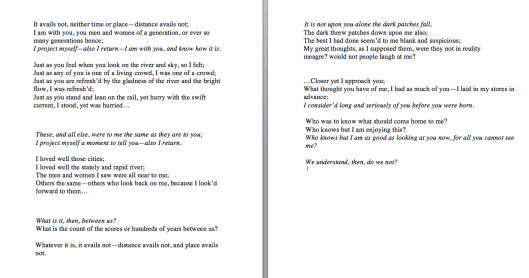
Whitman will come over to your house, drink your imported beer, eat the meatiest ribs off the barbecue, hold the center of attention at the dinner table for four hours, this Niagara of verbiage, then leave singing sea chanties with the wicker basket full of tollhouse cookies that Emily had baked clamped firmly under one arm.

But I always loved teaching this poem–excerpts attached–and I was especially fond of the italicized parts.

Sooner or later, you realize, as you you navigate your way through his hallooing and disgusting jubilance, his ecstatic self-regard, you realize…

…He’s reading his poem with you, right over your shoulder. It is the damnedest thing. He’s smiling, too, the old coot, under those cotton-candy whiskers. It is a miraculous and timeless poem, and he knows it. He sees you, too, and the smile grows broader when he sees you looking backward to try to see him.

SouthFerry


I think that’s why I loved teaching. Good teaching has a chance at timelessness, too. The results of what you teach you see in patches, but they flicker and disappear. The consequences of how you teach may come years later, may even come beyond your own lifetime. They may appear, as a small causative, in someone you’ve taught who decides to do something courageous and decent–it might even be something immensely unpopular because it’s courageous and decent.

I was thinking today, too, of Eileen Taylor’s defense of our Japanese-American neighbors when they returned to our home, to our valley, justifiably fearful (Iso Kobara heard gunshots in the night) in 1945. A grocer told Iso’s mother, Kimi, never to come in his store again.

Eileen heard about this incident. She was the president of the Arroyo Grande Women’s Club. She decided, I think, to read the membership the riot act at the next meeting–we’ll never really know, because, like Lincoln’s Cooper Union speech in 1860, nobody was taking notes. She must have spoken about their obligation, as women, as mothers, as neighbors, to open their arms and their hearts to people who needed, and who had earned, their compassion.

Kimi Kobara remembered in an interview many years later that the atmosphere improved immediately after that Women’s Club meeting. And what  Eileen Taylor did meant, many years later, that I had the great pleasure of teaching both Eileen’s great-grandchildren and Kimi Kobara’s.

So an event that happened before I was born–time avails not–became an important part of my life. The lives of Eileen and Kimi, two women I never met,  became entwined with my life.

And my teaching–how I taught my Taylors and Kobaras– was a product of people they had never met, either.  My teaching was shaped by the  good teachers I’d had, and there were many, and it was shaped by my mother and father. If you were a student of mine, and knew me, then you also know Arroyo Grande High School speech teacher Sara Steigerwalt, Cal Poly journalism teacher Jim Hayes, University of Missouri history professor Richard Bienvenu.

Most of all, you know my Mom and Dad.

That’s why I so enjoy this poem. It’s life-affirming, and lives lived 150 years ago are just as important today as they were then.

Even better, they are just as much alive. They are right beside us, like Whitman standing at the rail of the Brooklyn Ferry, these old lives that give life.


Screen Shot 2016-03-19 at 8.16.11 PM