What I learned from writing a book about outlaws
20 Monday Mar 2017
Posted in Uncategorized

20 Monday Mar 2017
Posted in Uncategorized
13 Monday Mar 2017
Posted in Arroyo Grande, Uncategorized
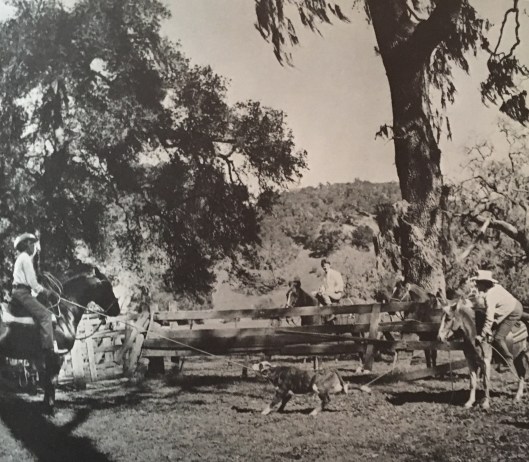
I was so happy to find this book, Horses of the West, by the superb photographer Jeanne Thwaites, from 1971, because it’s out of print AND because that’s my big sister, Roberta Gregory, on her Morgan mare, in the center of this photo, between two noted local horsewomen, Sid Spencer and Anne Westerman.
Sid and Anne were sisters. Anne raised her Welsh ponies off of Carpenter Canyon Road and the little fellows were unintimidated by Sid’s Herefords, some of them as big as the ponies, at roundup time. [Welsh ponies used to haul carloads of coal out of mines, so they’re tough little beasties.] Anne taught locally for many years, including a stint at the one-room Santa Manuela School, now in Arroyo Grande’s Heritage Square. P.J. Hemmi, lynched at fifteen in 1886 from the Arroyo Grande PCRR trestle, also attended a previous version of that school, which burned. Lumber from that school was salvaged to build “our” 1901 schoolhouse. That was a long, long, long time, of course, before Anne’s tenure there.
Sid was a widow who raised cattle and her Morgans in Lopez Canyon. At roundup time, it was an all-woman occasion: Anne, Sid, Sheila Varian and her foundation stud, Bay-Abi, who was both beautiful and beautifully trained at working with cattle, and a host of young women, including Roberta. They were, I think, undogmatic and unaware feminists, because they had absolutely nothing to prove to any man, didn’t give a damn what men thought of them, and didn’t need them or their advice. They roped, branded, nutted, fell off and got knocked silly, survived rollovers, broke horses, and, more often, broke bones. Mature horsepeople are about as arthritic as NFL veterans.
They were wonderful.
By the way, Dad and some friends once went dove hunting on Alex Madonna’s land, adjacent to Sid’s, and they wandered onto her property. They were dismayed when she threw down on them with a 30-30 carbine and suggested that everybody just relax until the sheriff got there. Everybody relaxed. Sort of. Sid was quiet, soft-spoken, but very direct. She was a force of nature.
23 Friday Dec 2016
Posted in Uncategorized
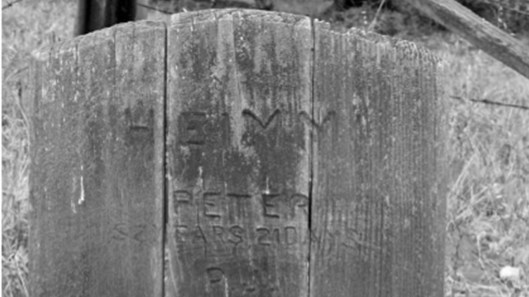
From the San Luis Obispo Tribune:
County Correspondence
SANTA MANUELA SCHOOL
EDITOR TRIBUNE:–Following is a report of the Santa Manuela school for the month ending November 2nd, 1883. Total days attendance 299 1/2; days absence 22 ½, whole number of pupils enrolled 19; average number belonging 15. Present during the month, Joe Branch, Julius Hemmi, Leroy Jatta, Charlie Kinney and Addie Hemmi.
CLARA GANOUNG, Teacher.
Arroyo Grande, Nov. 3, 1883.
When the Lopez Dam was completed in the Upper Arroyo Grande in 1969, San Luis Obispo County officials were hopeful that it might fill in five years. It filled in one. So much rain came in 1968-69—the opposite of the terrible 1860s drought−that the dam spilled in April. During the winter, Arroyo Grande Creek filled to twenty feet deep where it flowed under Harris Bridge, at the intersection of Huasna Road and today’s Lopez Drive. School had to be canceled some days. With the high school built on top of hardpan in the floodplain of the Lower Valley, upperclassman joked that the standing waters were too deep for freshmen,so the school board had chosen wisely at placing such short people on a separate campus, atop Crown Hill. One of the great examples of historical foresight came when authorities moved the historic one-room Santa Manuela School away from what would have been lake bottom. Today it sits near the swinging bridge that spans the creek in downtown Arroyo Grande. It is a lovingly preserved and charming evocation of the kind of education that mattered most to 19th century farmers.
That meant, for students like Julius Hemmi, the wisdom of the basics. Julius would have been one of the bigger boys of the nineteen students and near the end of his education, because the high school was still thirteen years in the future. Julius, if he was attentive, and his father was a clever man, would have mastered, by the time the 1883 notice appeared in the Tribune, his times tables and percents, his state and his European capitals, would be able to recite “The Gettysburg Address” and to write, for a boy, passable longhand. That was all that Julius would need to take up farming with his immigrant father, Peter. If Julius was a big boy, and he probably was, there is always the chance that he got to practice the kind of tyranny over his younger classmates depicted in novels like Tom Brown’s School Days. But, with nineteen students, a big boy like Julius would have been on Miss Ganoung’s short leash. If she was typical of rural schoolmarms in the late 19th century, she kept that leash tight, she protected the younger children, and she kept a small circle on her blackboard against which saucy students would press their noses, without moving, for an hour at a time.
Julius, and we don’t know this, may not have needed the chalkboard circle at all, because the other names in the newspaper notice—Branch and Jatta, for example−belonged to families far more important and far more established than the Hemmis. Joseph Branch’s grandparents had been the first to settle the Arroyo Grande Valley, in 1837, and his grandfather had had to contend with monstrous grizzly bears and Tulare Indian raids, and he had vanquished both threats. Leroy Jatta’s family, Canadians, were more recent arrivals, but the Jattas would marry into the Loomis family and together they would form the foundation of Arroyo Grande’s merchant class, families together that would be important to the Valley deep into the twentieth century, families known for their enterprise and, even more, for their integrity. We do know this much about Julius: he had a little sister, Addie, to look after at school, and he would always know that she was looking at him. We know, too, that Mrs. Hemmi adored her son.
It was April Fool’s Day, 1886, so the teachers in town, at the two-story school that stood on the site of today’s Ford agency in Arroyo Grande, would have refused to believe the boys that morning, a little ashen-faced, as they walked into the Arroyo Grande Grammar School to hang their coats and hats on two tiers of brass hooks, and below place them their lunches, wrapped in oilcloth. These boys attended a school monstrously bigger than Santa Manuela. (The Arroyo Grande kids would have seen Santa Manuela as a school for country hicks.) Since they were boys of the town, a little more sophisticated and a little more jaded than the children from the one- or two-room schools of the Upper Arroyo Grande Valley, Los Berros, Edna, or Nipomo, no teacher with more than two years’ experience would have believed for a moment any of them when they insisted that they’d seen two men hanged from the Pacific Coast Railway trestle at the upper end of town, just below Crown Hill. No teacher would have hesitated to rebuke a little boy with such a cruel April Fool’s joke, one so tasteless that it merited a circle on the blackboard or, even better—far better−a mouthful of powdered soap.
But the little boys weren’t lying.
There were two men hanging from the Pacific Coast Railway trestle, and they would remain there until the coroner drove down that afternoon from the city, from San Luis Obispo, stared up at them, testily convened a work party that doubled as a panel for his inquest, and ordered them finally cut down for examination. One of the bodies belonged to Addie Hemmi’s big brother. He had strangled at the end of his rope.
Julius was fifteen years old when the good citizens of Arroyo Grande lynched him from the little railroad bridge over the Arroyo Grande Creek. He would have been as stiff as a dead mule deer buck by the time the awed little third-graders found him the morning of April Fool’s Day. This was the only kind of death these little boys might ever have seen, a hunter’s death, dealt at the hands of their fathers. Above the empty stiffness of his body, Julius Hemmi’s face would have been the color of clay. So would the face of his father, Peter, who was hanging next to him. The little boys did not yet know that these deaths, too, were dealt at the hands of their fathers.
17 Saturday Dec 2016
Posted in Uncategorized
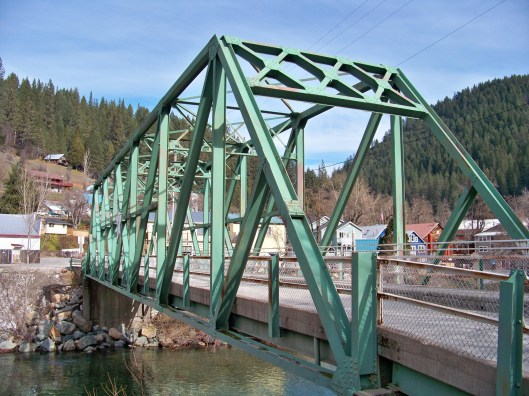
The modern Durgan Bridge, Downieville, marks the spot of the earlier bridge that served as Juanita’s gallows.
His name was Joseph Cannon, and he was just that subtle. He was a big man, over six feet tall and two hundred thirty pounds. On July 4, 1851, in the mining camp at Downieville, even though Cannon was an Australian, he was determined to celebrate the Fourth and he had decided that every miner in the settlement needed to celebrate with him. So big Joseph Cannon began pounding on the cabin doors, causing them to shudder, since they were held gingerly in place by wooden latches and leather hinges. The inevitable happened: he broke down the door of a cabin belonging to a young couple who occupied a precarious place in Downieville’s social order. The cabin belonged to José, a gambler. He and his kind were seen as parasites, and they were a bit too well-dressed and smooth-talking for the rough-and-tumble miners. His lover, or common-law wife, was a prostitute named Juanita. José and Juanita were Mexicans, and that, too, made them vulnerable in a place like Downieville.
Meanwhile, Joseph Cannon, either despite or because of his boisterous nature, was a popular miner. But he compounded his error by knocking down the cabin door and then falling with it, tumbling into the private space of the horrified young couple. In a society were order was based on the respect of property rights, Cannon was the most egregious of trespassers. A drinking companion righted the big man and pushed him back outside.
It was José who took up the issue of trespassing the next day when he confronted a reasonably sober Cannon with the issue of the broken door. The conversation between the two began amicably, some said, but soon grew heated, bilingual, and profane as the massive Cannon began to jaw at point-blank range with the smaller gambler. That’s when Juanita, perhaps out of protectiveness, joined the argument. Cannon called her a whore. Juanita raised the ante with a Bowie knife. She killed Joseph Cannon with it.
A platform had been erected for the Fourth of July observance and it now became the stage for an extemporaneous murder trial as 5,000 enraged miners crowded around it, howling for Juanita’s execution. They got it, and promptly, despite the intervention of a local doctor, who maintained that Juanita was pregnant. The crowd nearly turned on him, too.
Juanita was perhaps the calmest person in Downieville on July 5, 1851. She carefully climbed a ladder, along with an executioner, to a noose suspended from the crossbeams of the Durgan Bridge. She told the men below her that she would do the same thing again had any of them insulted her honor the way that Cannon had. The last thing she did was to free a braid of her hair from the noose before it was cinched tight.
14 Wednesday Dec 2016
Posted in Uncategorized
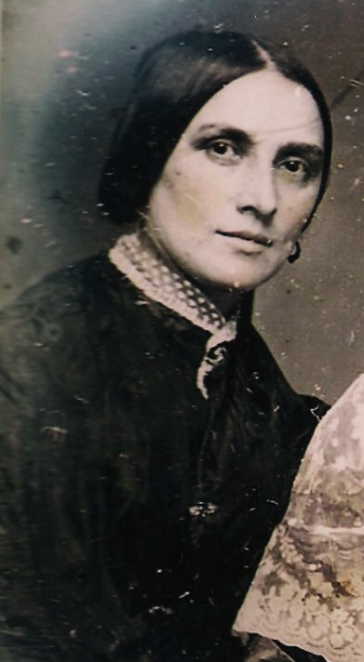
Her full name was Maria Ramona de Luz Carrillo Pacheco de Wilson. I think. I accidentally found this photograph of her, age 37, while I was looking for something else entirely, which is how I usually find the material I need the most for writing history. It’s a puzzler, that.
She, more importantly, was born a Carrillo, in San Diego, which immediately assigns her a special place in our history. There was no family more prominent in Mexican California. Her father was the commandante of the Santa Barbara Presidio, her son would become the twelfth governor of California, and her (second) husband, Yankee sea captain John Wilson, owned the lengthily-named Rancho Canada de Los Osos y Pecho y Islay, which translates in modern terms, to pretty much everything between Montana de Oro and Cambria.
Owning that much land boggles my mind. I grew up on three acres, and thought that much land immense.
Here is the point: She is, at 37, a handsome woman. It is difficult to imagine the self-assurance a man must have felt with a woman like this on his arm.
And she must have been, at sixteen, a delight.
To watch her dance must have been mesmerizing, and Californio women didn’t expend that much energy at fandangos. Dancing was prized, but it was a male pursuit. Young men, and even older men, like Juan Bandini, reputedly the best dancer in Mexican California, did the dancing, like Mick Jagger roosters on Dexedrine, and sixteen-year-olds like Maria moved chastely and modestly, their lacquered Chinese fans held aloft and their long lashes cast downward, while the young men, as is the the perfect right of young men, made fools of themselves in public.
Even Maria Ramona’s downcast eyelashes, I believe, must have been devastating. I would consider giving one or more arms to get the chance to go backward in time to see her at sixteen.
But this photograph–undoubtedly, part of a group portrait, because you can detect, at lower right, the wedding lace or First Communion lace or the quinceañera lace of another woman–is a revelation. It’s one more reason why I love women. I don’t “cherish” them. You don’t “cherish” a human being who can give birth to another human being with the density of a bowling ball and the kinetic energy of a herd of buffalo on the Yellowstone. No. You love them. You acknowledge your own gender’s fragility, then you move on, loving them, and trying to keep up with them.
Maria, for example. She was born in 1812 and died in 1888, the same year my two-room school, Branch School, was built. When my parents drove me to that school for the Hallowe’en carnival (Houses were too far apart in the Upper Arroyo Grande Valley for trick or treating. You’d wind up in Pozo.), I could see, in the limbs of California oaks, bandidos reaching to snatch me from the car, especially if the moon was full. There was always history, in my little-boy imagination, just beyond the moonlight.
One of my first memories in the Valley was that of the home of another Californio matriarch, Manuela Branch, as it caught fire, about 1958, in the corner opposite the Valley from our home on Huasna Road. I had never seen anything burn so bright, and it would take me a few years to realize how costly that fire had been, how completely it had erased the traces of a woman so important. She was buried over the hill from our two-room school, alongside her husband–from Scipio, New York, of all places–-and alongside him, three little girls taken by smallpox in 1862, and, a few yards beyond their tombstones, the common tombstone of a father and son lynched in 1886.
How did they endure? Maria Josefa Dana gave birth to twenty-one children and lost more than half of them at birth or within five years. Nine of Manuela Branch’s survived, but she lived thirty-five years beyond her husband, who died in 1874. Maria Ramona de Luz Carrillo Pacheco de Wilson’s progeny was modest by Californio standards: seven children, but three of them would die before they’d reached twenty-five.
So here she is, in 1849, looking squarely at the photographer without flinching, and this was an age when the camera lens remained open so long because the “film” in those days, on glass-plate negatives, was so slow, that chancing a smile, even a faint one like hers, likely meant that her face would be lost to posterity. It would be a blur. Matthew Brady, in his Washington City studio, kept on hand a variety of neck and head braces, reminiscent of the Inquisition, to keep his subjects, including Lincoln, perfectly still.
And here she is, smiling, albeit faintly, like some kind of San Luis Obispo County Mona Lisa.
What is she smiling about?
It is, more than likely, an event in which she is a peripheral character. If it is a First Communion, a quinceñeria, or a wedding, it is certainly not hers. She is merely a guest. But the fact that she is included, even at the edge of what seems to be a group photo, one in which the celebrants wanted her presence, is indicative of her prominence and indicative of so much more: her personal strength, her unshakable calm, her dignity, and, most of all, her integrity.
You cannot “cherish” a quality like integrity. You either understand it, or you don’t. This woman was bred into it, born into it, grown into it, and she would impart it in the generations who lived far beyond her death in 1888.
Her husbands were lucky enough to live with it, and with her.
She lived a life as strong as Christ’s rock—Jesus, fond of puns, changed Simon’s name to Peter, or “rock”—and soft as velvet. This is a proud woman.
She has every right to be.
07 Wednesday Dec 2016
Posted in Uncategorized
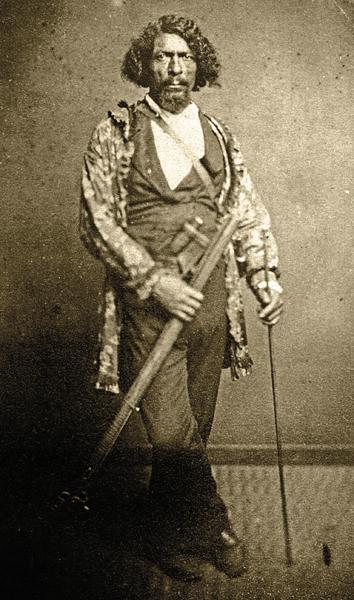
James Beckwourth
The horse’s hooves punctuated the long ride with a steady tattoo of crunches as they crushed grass stiffened by winter. His rider had to admit that it was getting harder to leave the warmth of a December hearth. He was nearing fifty now, in mid-century, and, truth be told, he shouldn’t have lived this long, but he had an instinct for detecting death and pulling his horse up short of it. That’s what had happened when he’d found what was left of Hugh Glass back on the Yellowstone. Glass was the army scout, the famed survivor of a grizzly attack, the man who’d taken months to heal himself and then to track down the trappers who’d left him for dead. He wanted it back. Later, the Arikara got Glass. That was fifteen years ago, in 1833.
There could be no greater contrast with the somber discovery of a cold scalped white man than the Christmas ribbons and the children who had surrounded the rider, James Beckwourth, in the adobe ranch house he’d left sixty miles ago. He’d picked up the mail there, in Nipomo, California, at the home of a Yankee ranchero named William Dana. Beckwourth liked children, didn’t mind them climbing on him, and there were seven young climbers so far, at the Dana adobe and two more in their teens, nine of the twenty-one Dana and his wife, Josefa, ultimately would bring into the world. They would lose half of them in infancy or a little beyond. Beckwourth’s children were lost, too, but in a different way. There were four that he knew of, mothered by Crow and Mexican women he’d left behind in a lifetime of trapping, exploring, scouting, and now, carrying the mail north along El Camino Real, the old highway the Franciscans had traveled, north to Monterey.
It was long enough between Nipomo and the Dana children and his next stopping place, San Miguel and the Reed children, so that as he got close, Beckwourth clucked encouragement to his mount, who responded eagerly because there would be oats and the great relief of a currying and a rubdown with blankets once the saddle and the mailbags had been removed.
But even the horse might have sensed something wrong, either in the scent that reached his nostrils or in the dark that cloaked the mission colonnade at San Miguel. There should have been light, even if it was the flicker of a single candle. There should have been voices from the warmth of the tavern William Reed kept in the old adobe outbuildings, now beginning their inexorable decay back into the California earth. Most of all, there should have been children.
Beckwourth’s instincts, for once, almost failed him. Maybe he was getting too old. When he dismounted, slowly and stiffly, he walked cautiously into the Mission grounds, toward the tavern kitchen the Reed family kept so well, along with the other black man, other than James Beckwourth, in this part of California.
Dark comes quickly in December, and Beckwourth tripped over something in the kitchen doorway. When he kneeled next to the obstacle and ran his fingers over it, it was cold as Hugh Glass. He realized it was a corpse. Beckwourth sprang to his feet and went back to his mount to retrieve his pistols from their saddlebags, and the animal shied and retreated a step when he reached for them.
Beckwourth didn’t know it, but his horse did. They weren’t alone.

05 Monday Dec 2016
Posted in trump, Uncategorized
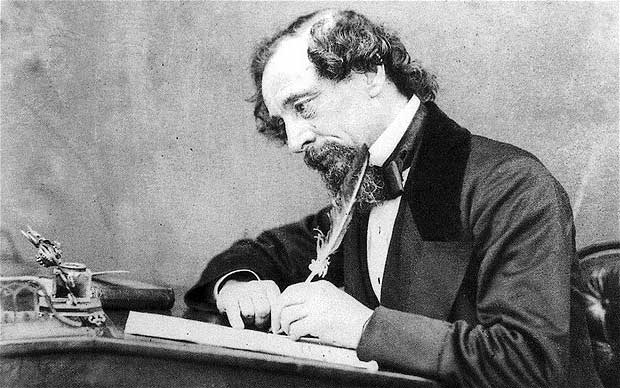
We keep coming back to A Christmas Carol, in all its variations, from Alistair Sim’s film archetype to the Muppets, and it suddenly, since November, means as much now as it did when it was first published at Christmas in 1843.
Unlike another cinematic descendant, It’s a Wonderful Life, Dickens’s novella was an instant sensation. It was beautifully timed: the Prince Consort, Albert, was bringing German Christmas traditions to England and transforming it into the holiday, down to gloriously lit Christmas trees, that Americans recognize today. I can still remember the German words to “A Christmas Tree” from Branch Elementary School:
Du grunst nicht nur zur Sommerzeit,
Nein, auch im Winter, wenn es schneit.
O Tannenbaum, O Tannenbaum
Wie treu sind deine Blatter!
And for that I have to thank Albert, doomed to perpetual marblehood by his neurotic widow. But even she read Dickens. (And Harriet Beecher Stowe: Uncle Tom’s Cabin made the Queen weep.)
And the rest of England was moved, as well, by literature, thanks to Dickens. Since most of his novels were serialized in newspapers, the Queen’s subjects were as addicted to them as modern Americans are to soap operas or to the next Star Wars release.
What we miss–and what Dickens intended–was that this little work was every bit as much about the nature of evil, especially when it’s deliberately chosen, as it was about Christmas. What saved Scrooge from his choices was the chance at redemption, a theme constant in Dickens’s works, from Pip to Sidney Carton.
Here is the evil that was England’s freight in 1843: Already the white moths that lived on birch trees in the Midlands and in London’s suburbs were disappearing. because the birch bark was no longer white: it was soot-gray, painted by the waste pouring out of coal-fired factories. The white moths became fodder for hungry birds, you see, and, as the devoutly Christian Darwin realized, nature selected the grayish mutations who were less conspicuous.
Other victims happened to be human beings. Child labor, like little Copperfield, Dickens’s equivalent in the bootblack factory, was commonplace and so were the debtors’ prisons where Dickens’s father, thinly disguised as the feckless and delightful Micawber, spent time. Parliament’s Sadler Commission toured and gathered the testimony of children who had watched numbly as their friends’ arms were crushed in the maws of power looms and of mothers whose lives were so fragile that they were never quite sure of just how old they were.
`Are there no prisons?’ asked Scrooge.
`Plenty of prisons,’ said the gentleman, laying down the pen again.
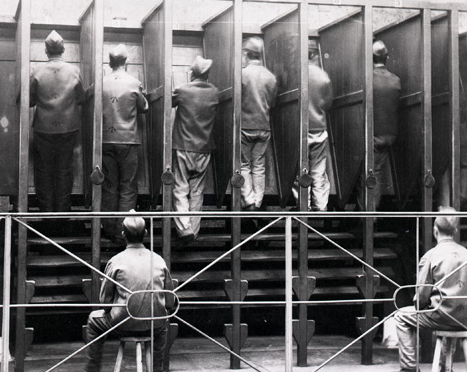
`The Treadmill and the Poor Law are in full vigour, then?’ said Scrooge.
`Both very busy, sir.’
`Oh! I was afraid, from what you said at first, that something had occurred to stop them in their useful course,’ said Scrooge. `I’m very glad to hear it.’
This is a treadmill, adapted, with the moral superiority attendant to imperialism, to India. Its ultimate purpose was to humiliate the poor.
Unlike the poor, Scrooge is uncommonly and inscrutably lucky (he doesn’t much deserve it, does he?) , of course, because Dickens offers him salvation through a series of haunts. First he is greeted by that inimitable “indigestible bit of beef:” his former partner, Marley.
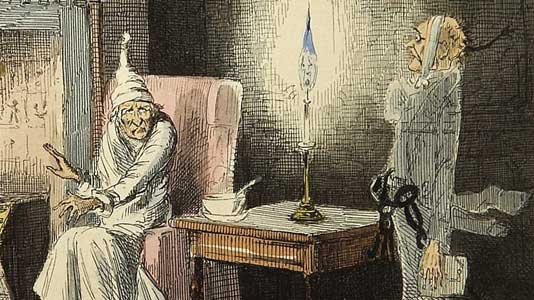
Marley’s ghost.
“But you were always a good man of business, Jacob,’ faltered Scrooge, who now began to apply this to himself.
“Business!’ cried the Ghost, wringing its hands again. “Mankind was my business; charity, mercy, forbearance, and benevolence, were, all, my business. The deals of my trade were but a drop of water in the comprehensive ocean of my business!”
It was the business of Victorian capitalists to magnify profit at the expense of humanity. They were helped by an influx of country folk whose land had been enclosed, accompanied by an ironic burst in population made possible by the food provided by the progressive farmers–Thomas Hardy’s folk– who had done the enclosing. There were an infinite number of prospective industrial workers and a finite number of industrial jobs.
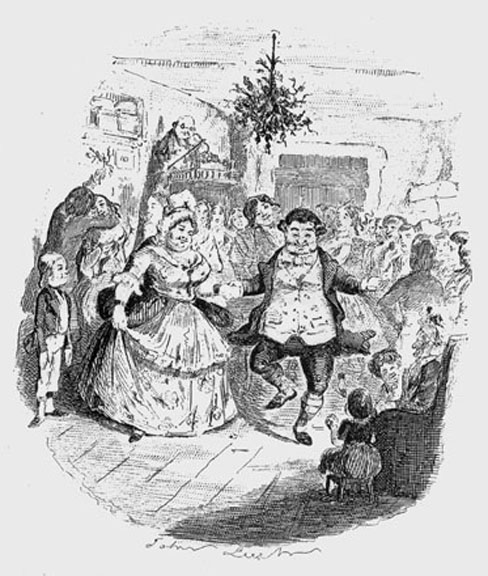
Fezziwig at Christmas.
It is the pleasant duty of the Ghost of Christmas Past to remind Scrooge of what a good man of business Fezziwig was. This was not a man prone to hiring and exploiting ignorant foreigners, to stiffing subcontractors, to using attorneys as if they were pit bulls. Not Fezziwig. And Scrooge is, course, such a vivid contrast:
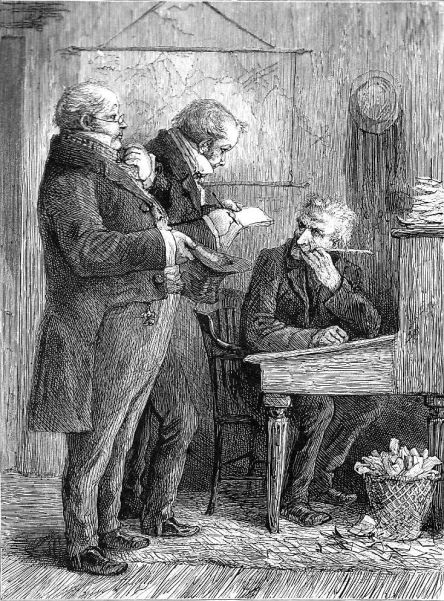
The Charitable Gentlemen visit Scrooge and Marley.
`If they would rather die,’ said Scrooge, `they had better do it, and decrease the surplus population.'”
In this passage, Dickens is mocking the economics–then called “the dismal science”–of Thomas Malthus, who argued that while the food supply increased arithmetically, the population increased geometrically, so starvation was a necessary and inevitable corrective. So, argued David Ricardo, Malthus’s acolyte, were depressed wages: since there were always more workers than there were jobs, wages, obedient to the laws of supply and demand, would always be depressed. It was a law of nature, and the capitalist was powerless to oppose it.
The Ghost of Christmas Present introduced Scrooge to reality:
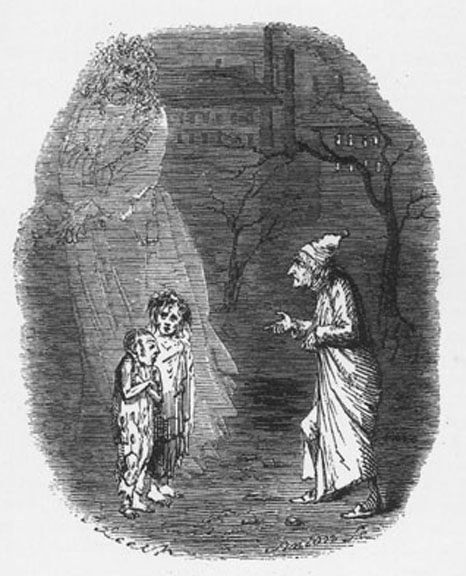
“This boy is Ignorance. This girl is Want. Beware them both, and all of their degree, but most of all beware this boy, for on his brow I see that written which is Doom, unless the writing be erased.
“Have they no refuge or resource?” cried Scrooge. ‘Are there no prisons?’said the Spirit, turning on him for the last time with his own words. ‘Are there no workhouses?'”
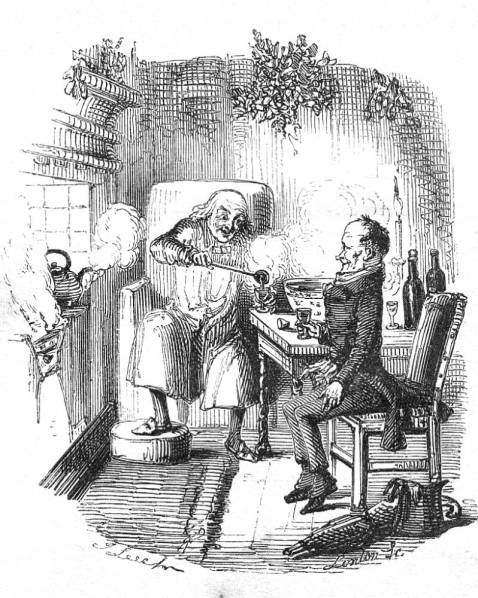
Scrooge and Cratchit keep Christmas
Scrooge’s one positive quality was that he was teachable. That smoothed his path to redemption.
At Christmas we celebrate the hope, incarnate in a newborn, that we will find redemption. Many of us–perhaps all of us?–hunger for a force powerful enough to recognize, understand, and then burn away our shame. Beneath it is our core: the person who is our truest self.
The ultimate source of this kind of power, of course, was the child born in poverty. Perhaps it was his confrontation with poverty, and not with ghosts, that allowed Ebenezer Scrooge to discover the meaning of Christmas.

17 Thursday Nov 2016
Posted in Uncategorized

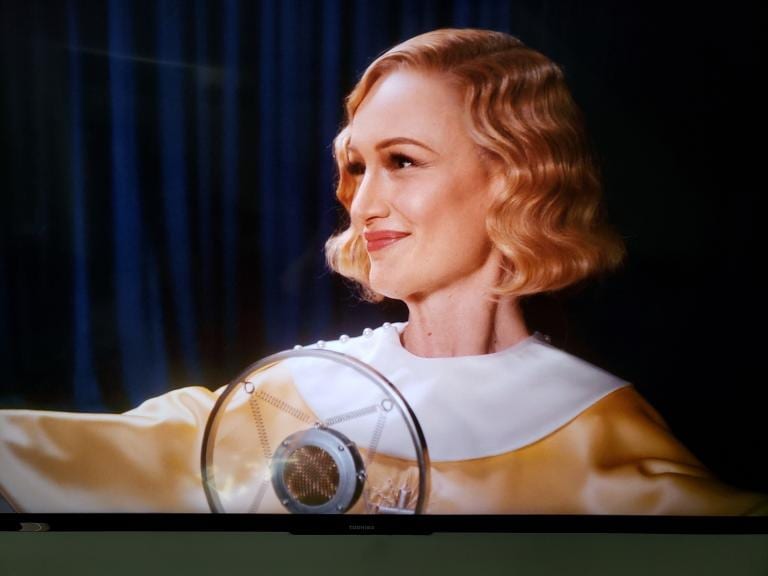

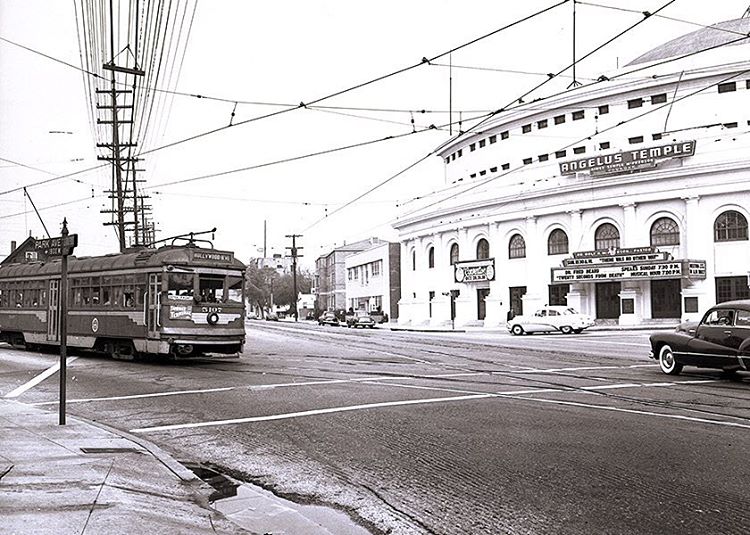
Aimee Semple McPherson was, in the 1920s, one of the most famous evangelists in America and was the founder of the Foursquare Gospel Church, which is now 1,400 churches strong. She was a marvelous actress–advised in part by friend Charlie Chaplin, her sermons were framed by elaborate stage settings and she dressed in various costumes, as a little Dutch girl, for example, complete with sabots. The milkmaid-revivalist portrayed by Jean Simmons in the film production of Elmer Gantry was based on Sister Aimee, as was a character in Nathanael West’s dark novel, The Day of the Locust. She was flamboyant, dramatic, attractive and enormously successful.
She was known for her good works. In the 1925 Santa Barbara earthquake, she took the microphone away from a stunned broadcaster and immediately requested aid for the stricken city. Convoys of food, blankets and emergency supplies were soon on their way. She was insistent integrating her congregation, a courageous policy at a time when the power of the Ku Klux Klan, even in California, was at its height. She ran a commissary for the homeless out of her Angelus Temple that was shut down briefly in 1932 when a still was discovered in the kitchen.
In May 1926, Aimee disappeared. Presumed drowned off Venice Beach, a search that included the California National Guard failed to turn up any trace of the beloved Aimee. She was gone.
For a month.
In June, she turned up, disheveled and disoriented, in the town of Agua Prieta, on the Mexican border, revealing that she’d escaped from an adobe house in Mexico where she’d been held captive by two kidnappers named “Steve” and “Rose.” She was hospitalized in Douglas, Arizona, and the newspaper accounts of her survival were welcome news to her followers: as many as 50,000 Angelenos were waiting for her when her train arrived from Arizona.
As it turned out, Aimee’s story was a fabrication. When her account began to come under scrutiny, she brazenly, and foolishly, demanded the grand jury investigation whose focus soon became Aimee herself.

Enough character witnesses appeared on her behalf to muddle the case, which was eventually dismissed, but this is what most likely happened: Aimee had an affair with a former employee, a radio engineer named Kenneth Ormiston, and the dates of her disappearance coincided with his rental of a seaside cottage in Carmel.
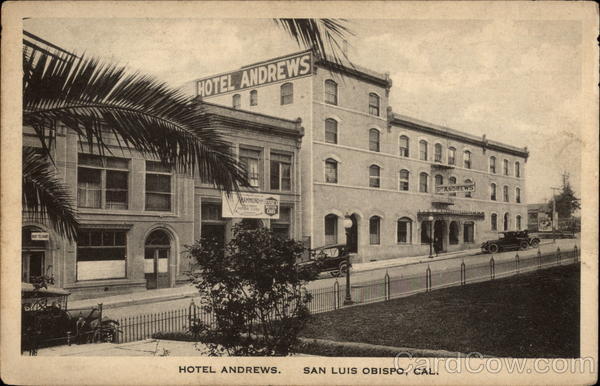
The plot thickened when Ormiston was identified as the male half of a couple that had registered as “Mr. and Mrs. Gibson”–the female was heavily veiled–when they’d checked in at the Hotel Andrews in San Luis Obispo shortly after Aimee’s alleged drowning. The Andrews, which stood on the corner where the San Luis Obispo City-County Library today stands, reached the height of its fame in a 24-hour cycle of national newspapers.
Aimee had reached the height of her fame, as well. She continued to preach until her death in 1944, but the luster was gone; in-fighting between Aimee and her mother, Mildred Kennedy, took both a personal and business toll on the evangelist; when her body was found in an Oakland hotel, a bottle of Seconal was found nearby and the coroner’s inquest suggested that both an accidental overdose and kidney problems figured in Sister Aimee’s death.
Admirers sent eleven truckloads of flowers, valued at $50,000, to her funeral at the Angelus Temple. She is buried, along with so many other Hollywood stars, at Forest Lawn in Glendale.

The only Hollywood star who could exceed Sister Aimee, in my mind, was Burt Lancaster in one of the most stunning opening scenes in film history, from Elmer Gantry.
16 Wednesday Nov 2016
Posted in Arroyo Grande, Uncategorized
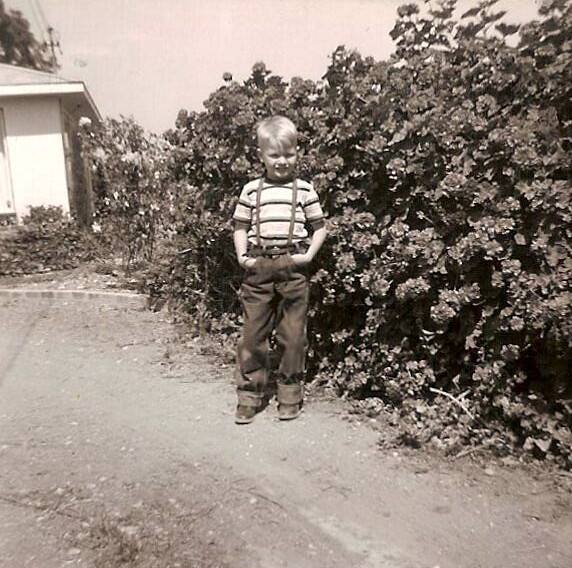 A ten-mile corridor of land between Valley Road in Arroyo Grande and Mary Hall Road in the Huasna Valley has been the most formative influence of my life. I grew up on Huasna Road in the Upper Arroyo Grande Valley, and I knew instantly the day we moved there, when I was five, that this was home.
We never lacked for guests. There were mule deer, a weasel, red-tailed hawks, an unexplained peacock, and two barn owls that slept together on a ledge beneath the Harris Bridge. Coyotes yipped in the hills and a colony of beavers built a dam in the Arroyo Grande Creek that ran with rainbow trout I did catch and one big steelhead that I didn’t. Once a mountain lion sniffed around our Branch School softball field.
Just over the hill from the two-room school was the Branch family burying ground. I used to visit to wonder what Arroyo Grande Valley must have been like when Francis and Manuela Branch arrived in 1837, wonder at the heartbreak represented by the small tombstones of three daughters taken by smallpox in 1862.
It was in part the Branch family that would lead me to teach history for thirty years, when I found that my life’s calling and greatest joy was to be surrounded by teenagers.
I’ve written two books about Arroyo Grande since I retired in 2015, and I constantly find hope in our past:
• In 1862, a Civil War soldier, Erastus Fouch, lost his eighteen-year-old brother during a firefight with Stonewall Jackson’s forces in the Shenandoah Valley. Thirty years later, Fouch, now an Arroyo Grande farmer, would be the most forceful advocate for the founding of the high school, a perfect memorial to a lost brother.
• Ruth Paulding taught at the high school in the 1940s and 1950s. Her mother, Clara, had taught locally for over forty years, including, at one point, teaching sixty students in eleven grades at Branch by herself. Both Pauldings loved children. In the family home on Crown Hill, there are several tea and coffee services. In one of them, Ruth, at the end of the school year, would serve her students Mexican hot chocolate so rich that the teenagers would remember it the rest of their lives.
• The Ikeda brothers were superb athletes and passionate about baseball, which is the sport that that kept the internees together, body and soul, in the desolate World War II camp at Gila River. More than half of Arroyo Grande’s Japanese internees never came home after the war. The Ikedas did, to teach baseball to two generations of children who will never forget Coach Saburo Ikeda because, as one of them wrote, “Coach always had a smile on his face.”
On the day that we moved to Huasna Road, there had just been a thunderstorm, and the air was pungent with ozone and earth just turned over by a farmer’s tractor. In writing about our past, I am always inspired by chronicling lives as rich as the soil of the Valley, and I always come back to that moment, sixty years ago, when I knew I was home.
30 Sunday Oct 2016
Posted in Uncategorized
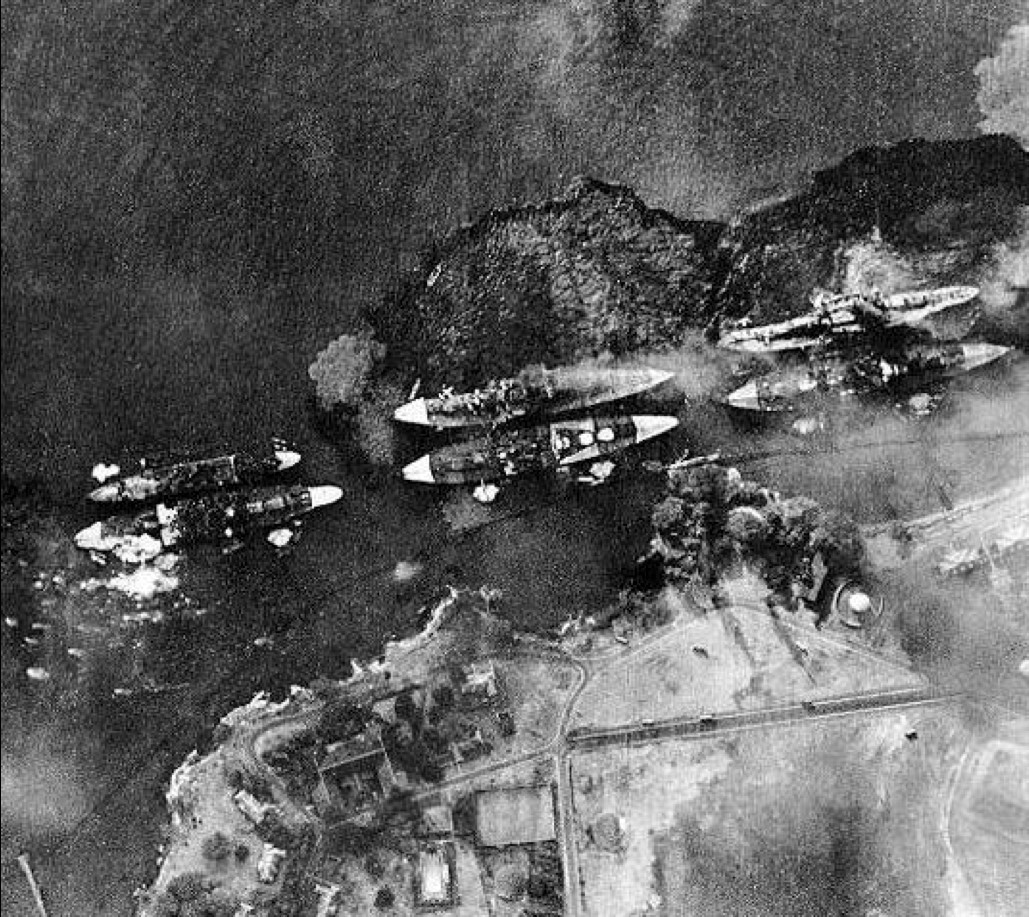
Battleship Row, December 7. Arizona, at left, just inboard of the smaller ship Vestal, has just taken two bomb hits astern. This is the moment when Arroyo Grande sailor Jack Scruggs died.
Just before eight o’clock on December 7, 1941, a bomb’s concussion on battleship Arizona’s stern blew the lifeless body of Navy bandsman Jack Scruggs into Pearl Harbor. A little more than five minutes later, the second, fatal, bomb penetrated the teak deck, killing a second sailor, Wayne Morgan, and nearly 1200 of his shipmates when it detonated the forward powder magazines. Scruggs and Morgan had grown up in Arroyo Grande, a farm town in San Luis Obispo County.
Park Service divers can still see, just behind portholes, December 7 air trapped inside Arizona’s submerged compartments. A clock recovered from the chaplain’s cabin was frozen at just past 8:05 a.m., the moment the ship blew up.
Few moments can be frozen in time. History is remorseless and it demands change. The war changed Arroyo Grande forever. In a way, the little town of just under 1100 people was torn apart just as Arizona had been.
Residents here heard the first bulletin at about 11:30 a.m., as they were preparing for Sunday lunch, the big meal of the day for churchgoers like Juzo Ikeda’s family. Like many of the town’s Japanese-American residents, the Ikedas were Methodists. They were also baseball fans. Juzo’s sons had played for local businessman Vard Loomis’s club team, the Arroyo Grande Growers, and for Cal Poly.
Juzo was technically not “Japanese-American.” He was not permitted citizenship. The Supreme Court maintained that this honor was never intended for nonwhite immigrants.
The court couldn’t deny citizenship to Juzo’s sons, born Americans, or to the sons and daughters of families like the Kobaras, the Hayashis, the Fuchiwakis, the Nakamuras.
These young people played varsity sports at the high school on Crown Hill, or served in student government or on The Hi-Chatter, the school newspaper, or joined the Latin Club or the Stamp Collecting Club, the brainchild of young cousins John Loomis and Gordon Bennett, known for committing occasional acts of anarchy as little boys (John’s mother grew so frustrated that she once tied him to a tree. Gordon freed him.) and known even more for being good and loyal friends.
Two of those friends were Don Gullickson and Haruo Hayashi. Loomis, a Marine, and Bennett and Gullickson, sailors, would fight the Japanese in the Pacific in the last year of the war. They would also continue to write to Haruo at his internment camp at Gila River, Arizona.
Haruo joined the 442nd Regimental Combat Team, but he was very young—only a sophomore when Pearl Harbor was attacked—and the war ended before he could ship out for Europe.
Haruo never understood an incident at the 442nd’s training camp at Camp Shelby, Mississippi. A wonderful USO show arrived and while both the white and Nisei GI’s watched it in the camp auditorium, black GI’s had to content themselves with hearing what they could of the show while standing outside.
It wasn’t right, Haruo thought.
In April 1942, buses had appeared in the high school parking lot atop Crown Hill to take Haruo and his family to the assembly center in Tulare. A line of teenaged girls—twenty-five of the fifty-eight members of the Class of 1942 were Nisei—walked up the hill together to where some would board the buses. They were holding hands. They were sobbing.
Many young men would join the army after they and their families were moved to the desolate Gila River camp. Sgt. George Nakamura won a Bronze Star and a battlefield commission to lieutenant for rescuing a downed flier in China. Pfc. Sadami Fujita won his Bronze Star posthumously. German small-arms fire killed him as he brought up ammunition during the relief of the “Lost Battalion” in France in 1944. Nearly a thousand Nisei GI’s were killed or wounded in freeing the 230 young Texans pinned down in dense woodland splintered by German shellfire.
When Sgt. Hilo Fuchiwaki first came home at war’s end, he went to the movies in Pismo Beach in his uniform. A patron spat on him. When the Kobara family came home from the Gila River camp, they could hear gunshots in the night as they slept, for protection, in an interior hallway of their farmhouse.
As others began to come home, they found that families like the Loomises, the Silveiras and the Taylors had watched over their farmland and farm equipment. Insurance agent and football booster Pete Bachino, killed in the 1960 Cal Poly plane crash, had taken care of their cars.
But more than half of Arroyo Grande’s Japanese-Americans never came home again.
Arizona, twisted grotesquely at her mooring, burned for two days after the Pearl Harbor attack. The scar that this terrible fire left behind, even here, seems invisible only because it is so deep.