This gallery contains 17 photos.
A casualty of war.
14 Thursday Jan 2016
Posted in Uncategorized
14 Thursday Jan 2016
Posted in Uncategorized
This gallery contains 17 photos.
10 Sunday Jan 2016
Posted in Uncategorized

10 Sunday Jan 2016
Posted in History, Personal memoirs, Teaching
Tags


I re-read the manuscript of my little book, World War II Arroyo Grande, this morning, found it brilliant, and then remembered, because of a degenerative neck disk, that I was loopy on Norco, and “The Berenstain Bears Dig a Septic Tank” on Norco would have exactly the same impact on me as the first time I read From Here to Eternity or Cold Mountain.
Here’s the Magic part.
There are three books, out or about to be released, written by former students of mine. I take no credit for anything they write–except for their history essays–but I am every bit as happy for these books as I am for mine, and now that I know how hard the work in writing a book truly is I don’t even have the words for how proud I am of three young writers: Alex Bittner, Maeva Considine, and Evan Devereaux.
No work is more demanding and more lonely than the craft of writing. With one exception, and that is teaching.
What we do every day in the classroom isn’t work–for me, it was the greatest joy to teach young people like these in my years at Mission Prep and then in Lucia Mar. Nowhere was I more authentically myself than in a classroom, in the time I shared with teenagers.
For most of us, the “work” begins at three o’clock and ends in the dark. The weekends are just two more workdays: we write our weekly plans at our kids’ Babe Ruth games and we grade our essays at Cafe Andreini–seething a little at the guy at the next table burrowed deep inside the Sunday “Times” or the fiftysomethings in bicycle tights about to head up the Huasna. It’s galling to see leisure flaunted so shamelessly while we work in such anonymity.
It takes a toll. My serum cholesterol levels dropped 61 points in the five months after I retired.
We work hard, but the toll is exacted most in the extra work we are required by distant decision-makers to do–mandated in a fantasy world where we actually have the time to do it–and what we do for them is eventually written up in a barbaric language, Educationese. It’s work that almost always has no meaning and does almost nothing to make us better teachers, when wanting to be a better teacher is a constant hunger every good teacher feels. A good teacher would never force her students to do this kind of work because she respects children.
And the work we amass really is meaningless, because within three years it’s all thrown away. A new model rolls into Education–NCLB, OBE, Integrated Teams, The Common Core–so a new paradigm shift sweeps us away and we start a new round of what is most accurately called “busywork.” We feel a little like Rose Parade princesses, with fixed smiles that make even a princess’s jaw ache and endless Rose Princess waves that will eventually numb her arm. We’re like prisoners on a pedagogical Rose Float whose petals will turn brown as quickly as the last one’s did.
And we are told, every time, that we should not fear change. This is insanity, of course, not “change,” what we do to teachers. It’s the kind of busywork that crushes the second-greatest gift a classroom teacher has: her idealism.
Her greatest gift, of course, is the roomful of children entrusted to her, the complex and precious aggregate of human beings she has to face every Monday morning.
I hated Monday first period. I am an introvert and I was terrified every first period of every Monday for thirty years. My hands trembled every Monday for thirty years. But we force ourselves to begin because we worked so hard, when we were alone and anonymous, on our lesson plan. Plans. Mine usually went through two and sometimes three revisions.
Sometimes they don’t work at all and you have to learn to throw the plan out in the middle of a class and fly by wire.
A lot of good teaching is like that: it’s not meant to be weighed, measured and stored in the Skinner boxes the distant decision-makers build for teachers. A lot of good teaching is instinctual, improvisational, and attuned to what the students need in the moments where they depend on your leadership and on your humanity.
By the way, thank God, the anxiety of starting a class dissipates and in a few minutes: we are so absorbed in teaching the plan well and clearly that we really have just the faintest connection to it. Even in the lessons that go well, we teach instinctively, because now we are in a deep, living and constantly evolving relationship with our students.
We aren’t dispensing information. We’re inspiring, infuriating, affirming, correcting, evoking, and confronting.
There is nothing in my life–only the births of my sons come immediately to mind– that has made me happier than my time with children, and the captivity of all the unseen we work we do to prepare is transformed, as if it were alchemy, into the kind of freedom only a teacher understands.
What other career gives you something that approaches the sensation Orville Wright might have felt that day at Kitty Hawk?
And then young adults like these three remind us that what we do is important and powerful. It makes an old teacher like me very quiet inside. My little Wright flyer is safely on the beach again, and the miracle of what we’ve done together is overwhelming.
09 Saturday Jan 2016

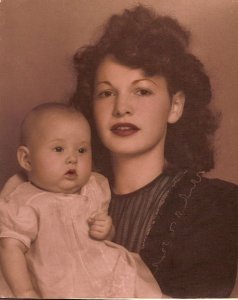
Mom and Roberta, 1943
Ten Lessons
06 Wednesday Jan 2016
Posted in American History, Arroyo Grande, Family history, History, World War II

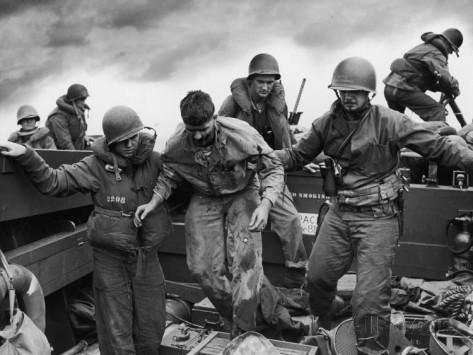
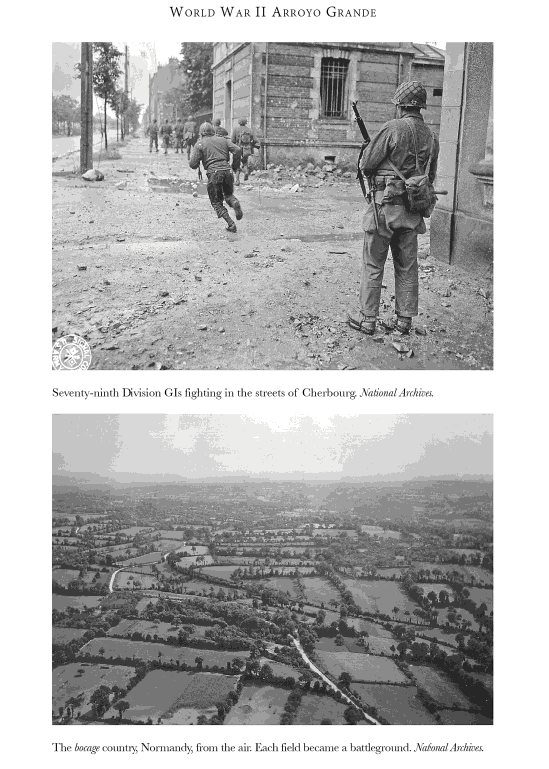
I’ll be sending two copies of the book World War II Arroyo Grande to young active-duty soldiers. This makes me a happy new/old writer: one reason I wrote the book, I think, was to reintroduce the World War II generation to my generation and to my students, and I’ve always had a soft spot for students who’ve gone into the service. I’m also very happy that I’ll be sending a copy to Judith, a favorite student who achieved the highest grade ever in my U.S. History classes. Judith is from Germany. She loved learning American history.
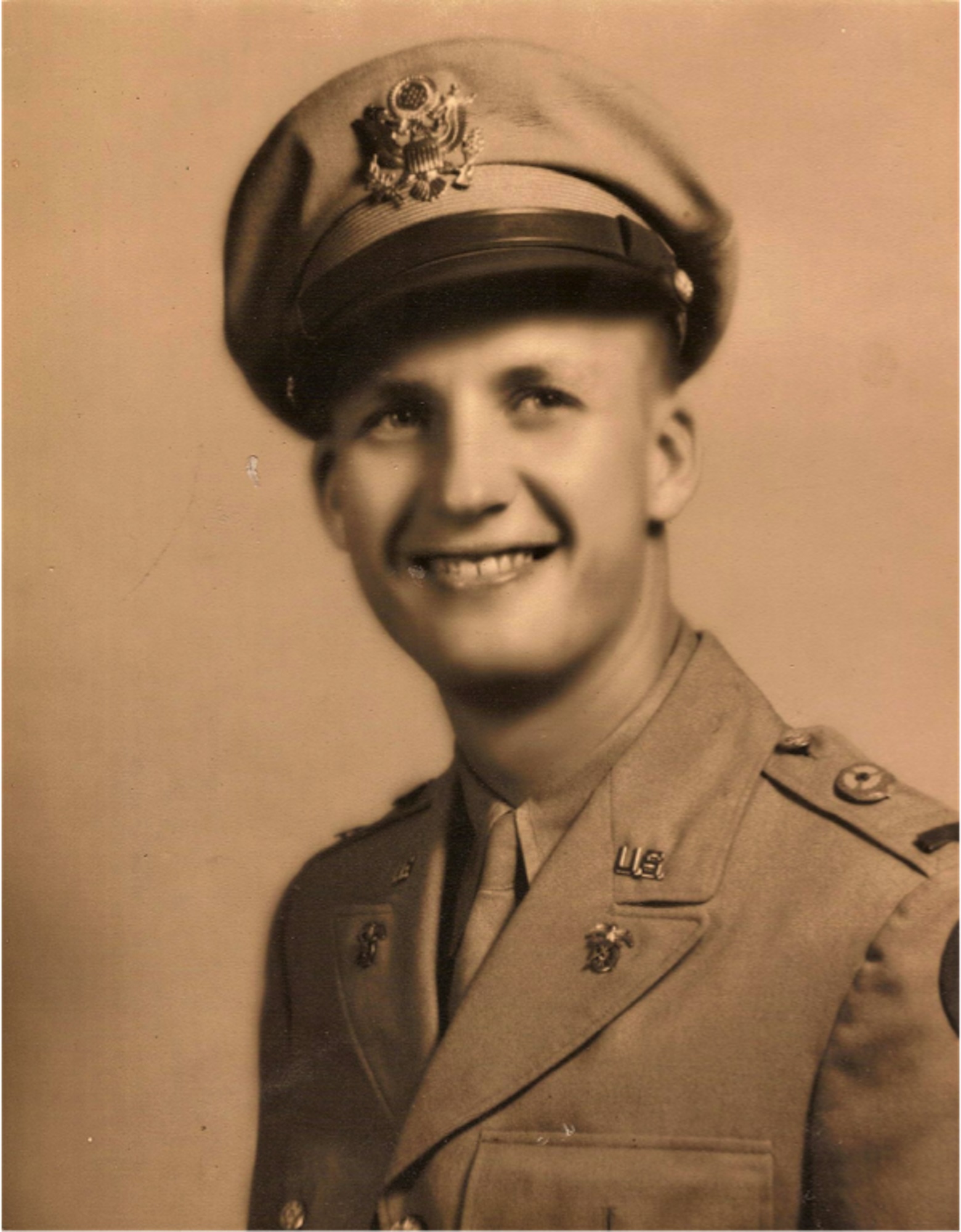
The photo is of my father when he was a young man on active duty in 1944. I’ve told Judith this story, but once the war had ended in the spring of 1945, Europe went hungry–the Continent’s infrastructure had been obliterated by ground combat and by the Allied air campaign. The footage of German kids eating out of garbage cans in 1945, in the long months before the Marshall Plan, always stunned my students. In the meantime, thousands of POW’s in our care died of hunger or of opportunistic diseases because civilians got first priority for food, and there never was enough.
A Wehrmacht major, who outranked my father, then a U.S. Army captain on occupation duty, somehow latched onto him and for a few weeks became his personal bodyservant: the German officer cooked for him, cleaned his quarters, washed and pressed his uniforms, the works.
He did that because Dad was a Quartermaster officer and so had access to food. (A year before, my father repaid an English family’s kindness to him with a bag of oranges. The mother’s British reserve crumbled. She wept. Her family hadn’t seen oranges in five years.) The young German officer wanted to live: his pride meant nothing when compared to the wife and children he wanted in his arms again once he was cashiered. My father was his ticket home.
In summer, he would begin the long walk home along roads choked with refugees and gaunt, tired soldiers. Dad never learned what happened to him but hoped, in talking about him years later, that the German major had lived a long and happy life. What started as a relationship of expedience had begun to edge into a friendship. Perhaps, very faintly in the recesses of my imagination, there was the unspoken thought that my student Judith was the major’s great-granddaughter. I owed it to this soldier to be the best teacher I could be for her.
The tough American soldiers of Easy Company–-the “Band of Brothers”–-liked the English, for the most part, loved the Dutch, but, like my father, felt most at home with Germans.
It does make you wish that British Pvt. William Tandey had shot Hitler in 1918, when he had the man in his sights at Marcoing. We could have done without Clemenceau as well, I guess, in his 1918-19 incarnation, but a younger Clemenceau had done great good for France and for the revolutionary ideals of tolerance and of the equality that citizenship confers.
These are ideals that Hitler despised because, of course, they included Jews, like Alfred Dreyfus. Clemenceau had been one of Dreyfus’s most adamant defenders. Dreyfus was a good French soldier, but the older Clemenceau dominated the drafting of a foolish, vindictive peace treaty dictated, in his mind, by a generation of good French soldiers whose bones littered the nation’s soil. Even today, farmers in northern France, in turning over fields there, find the bones of boys their harrow blades.
A generation after that war, there were more good soldiers, good young men on both sides who in a better world should never have been enemies. But they didn’t live in a better world; theirs had been penetrated by evil.
Americans had fought a war in the face of great evil once before. There was a lull in a Civil War campaign that gave a Union army band, its vast audience in bivouac, time enough for a concert. Confederates on a nearby hillside were listening. One of them called “Yank! Play one of ours!” So the band played “Dixie,” and at the song’s conclusion, both sides erupted, thousands cheering, tossing their caps in the air. They embraced a vivid moment when they were at peace together, before the close-quarters murder so characteristic of that war—and, sadly, so necessary for its resolution—resumed.
Similarly, once their war was over, a German soldier reached across the divide to make a necessary peace with my father. I hope my book will allow two young soldiers today to reach across the divide that time imposes to meet other young soldiers, including some who died such a long time ago. In a small way, it gives them life again.
Walt Whitman may have articulated this idea best in what I think is one of his finest poems, “Crossing Brooklyn Ferry.” Time and distance avail not, Whitman wrote. They are irrelevant. Indeed, when you read the poem you have the uncanny sense that Whitman is reading with you, just over your shoulder, or that you’re leaning on the ferry’s rail, together with the old man, the harbor’s breeze in his whiskers.
In the same way, we are all of us on the road together in the journeys of our lives. I think that sometimes, without recognizing them, we walk alongside our ancestors, and among them is the German major who yearns for home.
06 Wednesday Jan 2016
Posted in California history, Family history, Personal memoirs

It took me almost 64 years, but I finally found this handsome young fella last night. This is Dykes Johnson, Taft Union High School ’27, Stanford University BS, University of Louisville M.D., Taft Union High School Hall of Fame.
He passed away in 1996. Damn it.
I was born on January 25, 1952, when I should’ve been arriving some time around Washington’s birthday. Dykes was our family doctor in Taft. He was a flying enthusiast–he’d also served in the Navy as a doctor during the War–and was gone to the other end of a Valley on some kind of fly-in.
When Dad took Mom to the hospital, things weren’t going so well. Dad was scared. I was about to make my appearance (or not) when Dykes burst through the door, which almost hit my Dad in the face.
Dykes, I guess, was a blunt man, and especially that night. “Get the hell out of here!” he told my father. “Something’s wrong.”
He’d flown back down to Taft. He’d had a hunch.
I was not only a preemie–four pounds–but the cord was wrapped around my neck and I was blue. I’d stopped breathing.
Meet the man who saved my life

05 Tuesday Jan 2016
Posted in Family history, News, Teaching

I’ve been seeing a lot of this in recent years on Facebook: a former female student gets married. To another female. So I guess I’ll keep this as a link on Facebook, rather than a direct entry, to avoid the stone-throwing.
But, again, you’re dealing with my Irish mother’s son, and she’s the Irish mother who loved God with her mind as much as her heart: she amazed priests, to the point of devastation, with her knowledge of theology. Her first prime directive, similar to Christ’s, was that love is a gift from God. From that flows a corollary: To love another human being is the most terrifying leap anybody can make, and to have the courage to commit yourself to the leap—both to the letting go, and to the hanging on on the other side—is the most perfect gift a person can give back to God.
So seeing those photos of young women who’ve made that commitment has a deep impact on me. The photos show two young women who are happy. So they make me happy, too.
These young people, just starting new lives together, don’t need my blessing. I don’t have that kind of power, and that’s not the point I’m trying to make. I can only tell you–please forgive my forwardness–that I love you and I am very proud of you. You have reciprocated God’s greatest gift. And no stone can wound the strength in two people united together.
Before you throw yours, if you’re infuriated by my impious linkage of God with same-sex marriage, wait and listen quietly to discern whether condemnation—when you might be as confident in your faith as the Sanhedrin was in its faith when it arrested Jesus—is really what God desires. I believe from the bottom of my heart that She has a surprise for you.
03 Sunday Jan 2016
Posted in American History, History, News

Gisela Mota became the mayor of Tenmixco, Mexico–in Morelos, the state of a hero of mine, Emiliano Zapata–on Friday. She’s seen here at her swearing in. Yesterday, Saturday, drug cartel gunmen shot her to death outside her home.
I hate drugs because they are so much more insidious than bullets. So it’s jarring when a little research reveals that recent marijuana legalization may have been the most effective tactic yet used against the Mexican cartels. They are losing a significant part of the immense flow of dollars that sustains them. They are hurting.
So was a recovering heroin addict I knew once. But he was having a far, far easier time than the guy trying to kick his—legal—prescription painkillers. That man was going to pieces. Both were sick men; I’m not sure why they’re alive, but not this vital young woman. None of this makes sense to me.
Two more things, in our relationship with Mexico, don’t make sense to me, either:
“Poor Mexico,” the poet Octavio Paz once wrote. “So far from God, so close to the United States!” Few nations are so tightly linked yet so insistent on denying their kinship. The first victim of the Mexican Revolution was an El Paso housewife hanging out her laundry, killed by a bullet that crossed the border. More than a century later, the cartel murders represent the worst violence since the Revolution, which killed a million people, or one of every ten Mexicans.
Somehow, the drug violence must stop. I don’t know how to stop it. But I know that this not what Zapata died for when he, too, was assassinated in 1919. I know, looking at Gisela’s image, that the Mexican people have been cheated again, robbed of a young woman of promise in the young part of a year that now promises nothing at all.
02 Saturday Jan 2016

Mark Rylance, as Thomas Cromwell; Claire Foy as Anne.
It took Anne Boleyn to help me to understand why I cringe when Donald Trump asserts that he “cherishes” women. Henry VIII cherished Anne, and that diminishment is what made killing her so much easier for him.
I thought about Anne recently while watching PBS’s Wolf Hall, based on the wonderful Hilary Mantel novels, whose protagonist is Henry’s minister, Thomas Cromwell.
One of my favorite lines–Cromwell’s, and typically, it stings–involves Anne’s alleged lack of cleavage. There’s an exchange between him and Jane Boleyn, when Cromwell asks Jane, who has little love for her brittle sister, if Anne and Henry’s love has been consummated.
Not yet, Jane tells him. But Anne allows Henry to kiss her breasts.
A pause. Just a slight one.
“Good man if he can find them,” Cromwell replies, and exits.
* * *
Henry wrote about them in his love letters. He refers to Anne’s breasts as “pritty Duckys” in 1533, three years before he has her executed.
There was, by the way, bad weather in the Channel that day. Anne had prepared herself to die, only to be told the superb French executioner, her husband’s parting gift, was delayed. She had to do it all over again the next day, when he arrived and she departed.
She did so with immense courage.
Her grave is beneath the altar of St. Peter ad Vincula—I’ve taken students there–within the Tower of London, only a short walk for her ladies-in-waiting, who brought her coffin down from the scaffold, once they’d carefully wrapped Anne’s head and body in damask and reunited them inside. In reality, it wasn’t a coffin. It was a chest for storing bow staves, originally bound for Ireland to kill humbler subjects there.
It’s hard to hate Anne, with her being there the way she is. It’s such a tiny grave. So was her neck, she remarked with a laugh before the execution. Her alleged lovers, including her brother, were buried at the other end of the little chapel, and their bones now are intermingled there, as if they finally were co-conspirators, after all. But the Boleyn family was evidently a piece of work: arrogant, ambitious, tone-deaf–-much like the Greys, who beat Lady Jane all through her growing up–-they boxed her ears, punched her, flailed at her legs with a birch rod, and then they got her beheaded, still a child, in the name of their own ambition.
I would not have chosen a life as a noblewoman, I remember telling my students. The lives lived by the wives of peasants or tradesmen, I think, were in many ways more substantive: the executions, disinheritances, serial affairs, and the emotional and physical abuse so prevalent in Henry’s circle set noblewomen apart from most English women, who could count on the smallness of their rural villages for protection.
One example. No pregnant girl was left bereft. There are virtually no illegitimate births in rural England in the sixteenth century. There are plenty of marriages recorded in parish registers that produce issue in the christening books four months later. [Anne herself was heavy with Elizabeth when she finally married Henry in a midnight ceremony.] Young men, anonymous to us, were held accountable for their actions; we can’t even hold a famous man, Trump, accountable for his words.
No woman’s life was easy. But the lives of women like the Boleyn sisters or Jane Grey had such cruel edges. Their personal power was cleaved as decisively as if they’d all gone to the block.
Meanwhile, Henry’s love letters are in the Vatican Library, which seems a waste. So does his life: all the statecraft, the parsimony and the ruthlessness of his father, Henry Tudor, was wasted by Henry VIII, a soft, self-indulgent man, in the single-minded pursuit of a son of his own.
Neither Trump nor Henry, so often true of soft, self-indulgent men, show evidence of a sense of humor, so the irony would have eluded them: within Henry’s court, in her little petticoats, there was Anne’s red-haired toddler daughter, who would become twice the king her father ever hoped to be. Donald, just as oblivious as Henry was to an obviously gifted daughter, has opined, creepily, that he would date his if their lives had been different.
There’s a scene in one segment of Wolf Hall where Henry holds Elizabeth in his arms. He is enchanted, but only momentarily. Mistress Seymour catches his eye, so Henry abruptly hands the little girl off to her governess. Damian Lewis, who plays Henry, is such a good actor that you can see the king forgets his daughter in the instant he loses physical contact with her. Meanwhile, Jane might burst into flames, so intense is his focus.
I think that’s why Cromwell is so appealing in Wolf Hall. Henry’s self-absorption, like Trump’s, is suffocating, so Cromwell’s competence, which is so unlike Trump, is like a candle that won’t go out. Not yet.
Jane Seymour finally gave Henry the son he wanted, only to die after the little boy’s birth. She was another female sacrificed for her king. Henry was heartbroken. Of his six wives, Jane was the one he cherished most.
Of course, little Elizabeth would grow up to decide that she would never marry. There’s no mystery in that at all. She’d grown up in a world dominated by vain and powerful men like her father. There was nothing they had that she wanted.

Anne-Marie Duff as Elizabeth, Tom Hardy as Leicester, as she approaches Tilbury to speak to her troops, assembled for the Armada invasion. Duff’s delivery of the speech is, I think, pitch-perfect.
23 Wednesday Dec 2015

In trying to come to grips with Donald Trump, I’ve been lost. I don’t have that many frames of reference–Huey Long certainly comes to mind; some say George Wallace, both men fire-throwing Populists who took on the political establishment. He has some of the tone-deafness, too, of Charles Lindbergh in his America First days. They’re all close, but I think now that Trump belongs to a different species, and its origins are European, not American.
Trump’s political, if not biological, family has its origins in the House of Saxe-Coburg-Gotha. Victoria’s family. There you’ll find his twin brother from a different mother, Kaiser Wilhelm II of Germany. The two seem to share some significant personality traits.

Both men are marked by deep insecurity about their physical appearances. A doctor’s forceps mangled Wilhelm’s left arm as his mother, Crown Princess Victoria, gave birth to him in 1859. His arm remained withered despite various medical “treatments,” including the new wonder cure, electricity, which caused great pain in the little boy. The adult Wilhelm took great pains to conceal his arm’s deformity, resting his left hand, for example, on the pommel of his sword in formal photographs.
If Wilhelm suffered trauma at birth, Trump’s came in middle age. He lost his hair. Trump is absolutely truthful: that is his own hair. What he’s concealing, as elaborately as Wilhelm hid his arm, is the amount of hairspray it takes to present that hair for public consumption. He relies on the skill of his stylist, who must have as much training in combing over as a sushi chef has in preparing fugu, that potentially lethal delicacy. [Kaiser Wilhelm kept a barber, meanwhile, whose sole function was to ensure that the Imperial mustache always had the correct amount of parade-ground precision and upturn at its tips.]
Trump’s vanity, in one way, makes him even more vulnerable than his counterpart: were the world to see him before his every-morning transformation, just before he hits the tanning booth, with an orange bald pate framed by oddly-spaced golden tresses that cover his face and fall to his shoulders, then the world, in its wisdom, would laugh him off the stage. The world has little patience for vanity as delusional as Trump’s, and that might be his undoing. Not even Americans would vote for Gollum to be our president. I think.

Both men learned to be bullies. Trump was as a child, while Wilhelm bullied as an adult and emperor, when Victoria said of him, when he was forty, that “what Willy needs is a good spanking.” Trump’s parents interceded when he was a boy and sent him to a military school to get straightened out. Wilhelm entered the German army when he was in his late teens. For both men, a military environment was their deliverance. Trump loved military school, loved following orders, loved the comfort of authoritarian structure. [He came closest to breaking the rules with his hair, which was just long enough to be fashionable but short enough to forestall demerits.]
For Wilhelm, the army provided him with a family, and one he needed badly, since his own seems to have been ashamed of him and his deformity. As Emperor, his unbounded love for the military extended to the Kaiserian wardrobe, home to over 200 uniforms to suit Wilhelm’s every mood: he could be an Admiral of the Grand Fleet of a Tuesday, a Colonel of Hussars of a Friday.
Another similarity between the two would be their illusion of infallibility. Trump will never admit to making a mistake. Wilhelm insisted that his side always win in war games. Anything or anyone who threatened the Emperor’s carefully-constructed view of himself had to be eliminated: if Trump’s catch phrase, from his television show, was “You’re fired!” then that’s exactly what Wilhelm did with such alacrity when he cashiered the grand old man, Chancellor Otto von Bismarck, Germany’s unifier, early in his reign.
The problem with infallibility is that it tends to generate a Manichean world-view: the Kaiser’s Germany was outflanked by enemies, both by his English and his Russian cousins, who had to be destroyed, and Trump classifies anyone who doesn’t agree with him as a “loser,” an enemy who must be humiliated with every vulgar weapon in his arsenal. Americans seem to love it; you see the same joy in Trump’s followers that you do in bourgeois Germans celebrating in the streets when war comes in 1914. [In Munich, you can see the future fuhrer’s face–he’s as bourgeois as they come–in the crowd. He is jubilant.]
All bullies are at heart cowards–it’s ironic that Trump’s cowardice was revealed when he ridiculed another man’s physical handicap. When the Great War began in August 1914, Wilhelm timorously asked his general staff if the mobilization couldn’t be stopped. It was too late: the troop trains had left because the military machinery Wilhelm so admired had been so well-oiled by him. At war’s end, he would go into exile in Holland; in one newsreel, he’s still in uniform with ostrich plumes and epaulets and gold braid, and there’s still a sword buckled to his left side, but he’s accompanied by an adorable little dog whose presence renders him ridiculous: the Emperor of Germany had a fondness for dachshunds.
Wilhelm’s narcissism humiliated Germany in 1918 and contributed to its destruction in 1945. Hopefully, it will not take armed conflict to reveal what a buffoon Donald Trump truly is. Let him be caught, without his handlers and his hairspray, out in a good rain, followed by a better wind, and the hair which his stylist grooms with such single-minded dedication will finally betray him. Would this be shallow of us, to judge him by his hair? Of course it would be, and that is all this shallow man deserves.