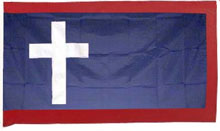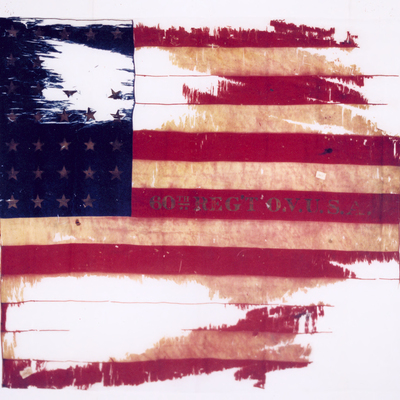
The 60th Ohio’s regimental colors.
On May 4, 1864, Adam Bair began a forty-mile march into the darkest part of the Civil War with his 60th Ohio Volunteer Infantry Regiment. He would survive this journey to make another, by covered wagon, to California in the 1870s where he would establish deep family roots in the Arroyo Grande and Huasna Valleys.
That was far in the future. In the spring and summer of 1864, Bair and the boys and men of the 60th Ohio were meant to be finishers. The regiment had begun training in Columbus in February 1864, and was sent east to Washington to prepare for this offensive, the push to end the war. In April their training had intensified at their camp near Alexandria. They were assigned to IX Corps, commanded by Ambrose Burnside, the short-lived commander of the Army of the Potomac who’d sacrificed his men in frontal attacks on Lee’s army at Fredericksburg in the winter of 1862. He had afterward gratefully accepted demotion the lesser demands of corps command.
So, under Burnside, the 60th , on the afternoon of May 5, crossed the Rapidan River at the Germanna Ford–from a rise, they could see dust clouds raised by Lee’s army on the move—and began to march into The Wilderness, a vast tangle of forest and scrub so dense that it shut out the sun. Adam Bair, a corporal and therefore a file closer in B Company, must have been tired by then. His role was like that of a border collie, striving constantly to keep his company together and moving forward, cajoling potential stragglers, barking, like a collie, at men who’d packed too heavily when they had been warned to travel light.
The wake of the 60th would have been a Civil War treasure-collector’s dream, strewn as it would have been with all manner of equipment: rubber blankets, coffeepots, needless overcoats and extra clothing, books that would never be read. Eventually, as the sounds of battle began to become more distinct, the 60th would leave behind what many Civil War soldiers left: playing cards, dice, flasks of brandy or rum, or dirty postcards with their leering plump models. These are not the items a man would want on his person if he “fell,” to use the euphemism common to describing the indescribable violence of a Civil War soldier’s death in combat.
The Wilderness was something out of the Brothers Grimm and then, even darker, something out of the Dutch nightmare painter Hieronymus Bosch, because Union soldiers would begin to see, as they crunched through the carpet of leaves in the closeness of the woods, dead soldiers who were grinning at them in their passage. These were the skulls of the men who’d fought the year before at Hooker’s debacle, Chancellorsville, either disinterred from their shallow graves by hungry animals, perhaps by a hardscrabble Virginia farmer’s hogs, or simply lost and left where they’d fallen in the days when Lee and Jackson had played hammer and anvil with the Army of the Potomac.
The woods themselves became the enemy in this battle because the dark wasteland made a mockery of combat drill; its density cut up infantry formations into little knots of soldiers who became separated from one another as they struggled forward, whipped by branches, tripping over roots, cursing in the close humidity and heat already descending on northern Virginia. For many Union soldiers, the dark was suddenly illuminated by the muzzle flashes of Confederate infantry with their bullets amputating tree branches, vaporizing leaves, buzzing like hornets past men’s ears. Some of them, with a dull thud, a sound familiar to Civil War soldiers but now as lost as the sound of the Rebel Yell, found their targets in the bodies of young men. The flash of powder did something else: firefights sparked fires that would rage in the tangle of trees and scrub; the fires burned wounded men alive as they shrieked for help. No battle in the Civil War was more grotesque than the one fought in this forbidding place.
Adam Bair’s comrades could hear the fighting that had already been going on all day; in Grant’s army, IX Corps had come up last, and the 60th Ohio would go into camp on the edge of the battlefield during the late afternoon of May 5. Grant ordered them to attack early the next day through the woods between the Orange Turnpike and the Orange Plank Road. They were to find a seam he believed to be there, and push their way into the rear of Confederate Gen. A.P. Hill’s corps. The tired soldiers would have been wakened at midnight to move out for an attack scheduled for 4:30 a.m. It didn’t get off until much later, a failing one diarist laid completely on Orlando Willcox, the 60th Ohio’s divisional commander.[2] When Willcox’s men finally moved up a country road through the woods, they would emerge in a clearing, in sunlight, where they discovered enemy artillery instead of the gap in Confederate lines they’d hoped for.
They’d run into James Longstreet’s men, heavyweight fighters, and Burnside’s IX Corps, including Willcox’s division, quickly became so bloodied that they were forced to withdraw. Adam Bair and the 60th were brought up last and put on the firing line to cover the retreat. By the end of the day on May 6, the battle was over, and Lee had mauled Grant’s army: over 17,000 Union soldiers had been killed, wounded or were missing in two days of fighting.
Grant, in a technical sense, had lost the battle. But what mattered more than May 6 was what happened on May 7.
When McClellan, Burnside or Hooker had been dealt the kind of punishment Lee inflicted on Grant in The Wilderness, they’d crept across the river fords and back to their encampments near Washington. But when Lee’s men awoke on May 7, Grant’s men were still there. In fact, they began moving around Lee’s army. They were headed for Richmond and Lee would be forced to follow the. It was a deadly strategic dance that resembled the campaign Sherman was waging at the same time against Joseph Johnston and John Bell Hood in Georgia. It would take eleven months for Grant to worry Lee’s Army of Northern Virginia down to surrender but, like the bulldog Lincoln wanted his general-in-chief to emulate, Grant had a grip on Lee and he would not let go. Now, after The Wilderness, the two armies, a combined 150,000 men, ran a footrace to seize a crossroads at the tiny town of Spotsylvania Court House. If Grant could get there first, get in between Lee and Richmond, he could force a battle—with Lee the attacker this time–that might be decisive.
But Grant didn’t move fast enough. Part of the problem was clogged roadways leading out of The Wilderness. Monumental traffic jams developed that were exacerbated, at one point, by a veteran regiment of Union cavalry who came upon a regiment of new recruits, their brass buttons still shiny and their uniforms, even under their layer of road dust, a more vivid blue. The veterans eyed the fresh and well-fed mounts of the rookies, eyed each other, and smiled. A battle within a battle soon broke out, knots of fistfights and wrestling matches in an hour-long riot that ended with one regiment riding off with the other’s horses The melee was one of many factors that slowed the Union advance down. Another was sheer exhaustion; some infantrymen literally fell asleep on the march toward Spotsylvania, and as they stumbled toward Laurel Hill, not far from their objective, they found, to their chagrin, Confederates behind the entrenchments that they’d just thrown up. Lee had won the race, and the two sides—both made up of soldiers so tired that their hand-to-hand combat, as they began to claw at each other, was nearly in slow motion.
Adam Bair and the 60th Ohio came up to Spotsylvania on May 9, in the van of Gen. Willcox’s Third Division, and it was Willcox himself who ordered them to form a line of battle. A veteran of the 60th described what happened next in a speech he delivered at a regimental reunion many years later:
…the enemy came out of the woods in front and on each flank, and opened on us, and then how the dust flew. After they had been engaged for some time, General Wilcox said: “The fools (meaning the 60th) did not know when they were whipped.” Then he ordered one of his staff officers to go at once and order up other regiments to our relief. During that fight, which did not last long, we lost in killed or wounded, more than one-half of those actually engaged.
It was in this engagement that Bair lost his first sergeant, a popular 23-year-old and “one of the finest-looking young men” of Wayne County, named Michael Silver. What made Silver’s death especially tragic was the fact that he didn’t have to be the fight that day:
On a 40-mile hike from Alexandria, Michael Silver succumbed to sun stroke and was laid up at a field hospital for several days. After hearing of an upcoming battle at Spotsylvania, Silver and several of his sick comrades left the field hospital to rejoin their regiment. On May 9th, at the Battle of Mary’s Bridge, Michael Silver lost his life when he took up the flag after several color bearers before him had been wounded. “But as he waved the colors making himself a target of attack, he quickly became the victim of a bullet, being shot by a Confederate sharp-shooter. He was mortally wounded and died on the field of battle. His comrades later buried him on the battlefield, marking the grave the best they could before having to move on.
It was a measure of the 60th’s devotion to Silver and to each other that a year later, Company B men located Silver’s battlefield grave and brought his remains home to Wayne County. It was also a measure of the determination of men like Adam Bair that three days later, the regiment locked itself into a firefight that lasted seventeen hours; bullets from the two sides pulverized a tree twenty-two inches in diameter. At the war’s end, Sherman’s “little devils,” on their way to Washington City for the Grand Review, whittled away fragments of the shattered tree stump as souvenirs until nothing was left.
After nearly three weeks, Grant disengaged and again moved south, toward Richmond, with Lee and the Army of Northern Virginia following on parallel roads. The two armies had lost 32,000 in killed, wounded or missing men, but the losses had a grim calculus: Grant could afford grim statistics like these, given the North’s superior population, and Lee couldn’t. Now, in the late spring of 1864, it appeared that Civil War was beginning to evolve into a war of attrition. In the next battle at Cold Harbor, Grant’s tactics seemed to confirm that. In the campaign that followed Cold Harbor, one of the casualties would be Cpl. Bair.
* * *
Bruce Catton has brilliantly described Grant’s movements in Northern Virginia, cut from east to west by river after river, to that of a sailing ship tacking against the wind. Grant would move toward Richmond to draw Lee south. Lee would head Grant off and throw up his entrenchments. Grant would probe Lee’s position and then slip around it, usually to the east, or Lee’s right, by several miles, ford the inevitable river in his path, and then jog to the left, to the west, and slightly south, incrementally closer to Richmond, which interested Grant not at all. What Grant wanted was to interpose himself between Lee and Richmond, and then let the great man throw his forces on the northerners’ entrenchments in exactly the same way Hood would throw his against Schofield’s at Franklin, Tennessee, later in the year.
It wasn’t military genius that made Grant a battlefield master so much as it was an acute understanding of reality. This business and tacking right and then reversing course left was interrupted only by battles that were enormously costly to both sides but, because of his inferior numbers, always more costly to Lee. It was inelegant and it was necessary.
But by the late summer, Grant was running into Virginia delta—marshy and impassable—so there was no more room for tacking to the right because there was no more right on which to move 100,000 men and their baggage. He would have to confront Lee more directly, and that confrontation came at Cold Harbor in late May.
Cold Harbor was another tiny Virginia hamlet; it was neither near a body of water nor was it cold. It was instead oppressively hot, the kind of heat that makes it nearly impossible, for those not accustomed to it, to move or even to breathe. Neither was it especially attractive; Catton notes that many Union soldiers talked of someday returning to the verdant Virginia farm fields where they’d fought Lee. Nobody ever talked about coming back to visit Cold Harbor. The battle that began there at the end of May was another marathon, like Spotsylvania, which had lasted thirteen days. So would the Battle of Cold Harbor, but by the time it was over, Grant would have lost, from the beginning of May to mid-June, nearly 48,000 soldiers, killed, wounded and missing.
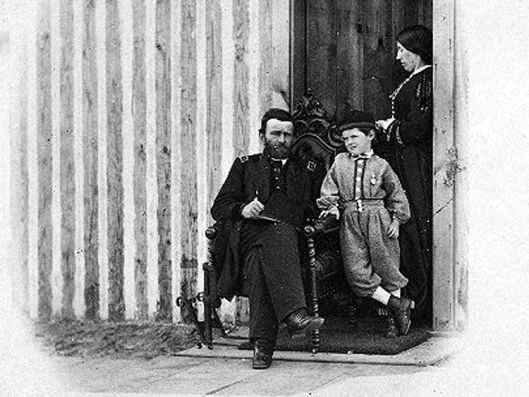
What Grant did at this battle was such an error in judgment that it is certain that even a young corporal like Adam Bair would have seen it; it would have produced an inward wince like a perceptive student might feel when a favorite professor misattributes a quote in an otherwise brilliant college lecture. Misattributed quotes don’t kill young men. Grant did. Grant’s stolidity is sometimes mistaken for cold-bloodedness. The man, perhaps the best horseman of all Civil War generals, could not bear cruelty to animals. When Grant once saw an army teamster beating a team of horses, he leaped from his mount, grabbed the teamster by the throat, took the man’s whip away and then ordered him tied to a tree for six hours. It was not a lesson the teamster was likely to forget; Grant was no more likely to forget Cold Harbor.
It was a simple case of overconfidence. Grant believed that Lee was nearly finished—again, if Union losses had been heavy, Lee’s were nearly as heavy and he couldn’t replace the men he’d left dead on the May battlefields. After Grant’s cavalry commander, Phil Sheridan, found a mixture of Confederate cavalry and infantry at Cold Harbor, Grant and his subordinate commander, George Meade, began feeding division after division in to support Sheridan. It was yet another battle that seemed to take on a life of its own. After four days of combat, it was Adam Bair and the 60th Ohio’s turn. On that morning, the Union army, shrouded in mist, moved across the open ground that led toward the Confederate entrenchments.
The 60th was to assault Lee’s right. Unlike the general staff—coordination and communication throughout June 3 would be chaotic, and staff had not adequately scouted the ground to Lee’s front—private soldiers were aware of what they were up against; many wrote their names on pieces of paper and tagged them to their uniforms. The Confederates, as they’d done under John B. Gordon at Bloody Lane at Antietam, held their fire until the last possible moment, and what Bair would have seen resembled nothing so much as the terrible punishment Gordon’s men had inflicted that day before they finally had to give way. Under withering rifle and artillery fire, soldiers fell, not singly or in pairs, but in large groups. To observers raised in a more agrarian America, that day looked as if young men were being harvested like wheat. Ahead of Bair, a small group from Winfield Scott Hancock’s corps stood for the briefest of moments above the enemy’s entrenchments before they were swept away. The entire federal line—five army corps—shivered and buckled under the intensity of the fire; Grant called off the attack hours later. He’d lost perhaps as many as 7,000 men in the first forty minutes of the Battle of Cold Harbor alone, an attrition rate that wouldn’t be equaled until the British assault on German machine-gun teams at the Somme in 1916.
Grant had not properly surveyed the ground before Cold Harbor, he had tragically underestimated Lee and the strength of Lee’s troops, he had ordered a frontal attack on positions that were expertly built and virtually unbreakable, he had persisted in the assault until noon, he and his junior officers had failed to communicate clearly once it became apparent that the assault was fruitless. That night, Grant told his subordinates that he had never regretted an assault so much as the attack on June 3, 1864. After that, he rarely—if ever—spoke of Cold Harbor again.
If anything, what followed Cold Harbor was even more unspeakable.
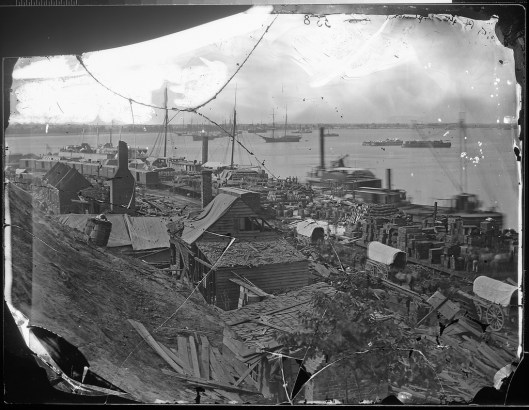
Two weeks later, on June 17, Adam Bair was wounded—evidently, a minor wound in the arm—during an assault on Confederate trenches around Petersburg, Virginia, a rail and industrial center south of Richmond. If Lee was to hold Richmond, he had to have Petersburg as a supply base—and supplies were already problematic for his Army of Northern Virginia. While Union soldiers wrote of fresh vegetables brought down from Grant’s base at City Point, Confederates complained of eating nothing but cornbread for days on end. Meanwhile, Grant ordered is men to dig trenches, as well.
So what followed for Bair and his comrades was nine months of trench warfare, of the scuttling of rats, of infestations of lice called “graybacks,” of mud, which permeated even what soldiers ate, of disease caused by vermin and foul water, of the intense discomfort felt by soldiers who could never get completely dry in the winter and who baked in the heat and choked in the dust of summer, and all of this amid a treeless moonscape they’d created from constant digging and constant artillery bombardments.
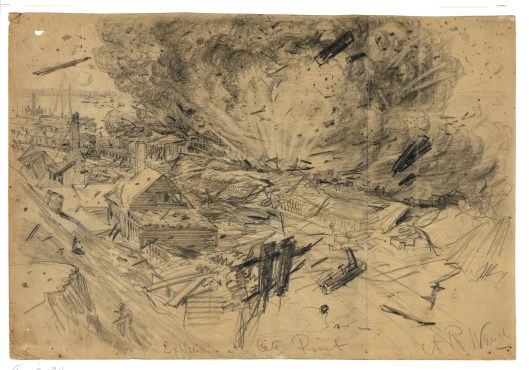
One of the most costly battles of the First World War, the Somme, began with the detonation of a massive mine under German lines—the crater it created remains today, looking like a massive sinkhole in the midst of a patchwork of farm fields. A mine explosion also would mark a surrealistic and shocking moment in the trenches of Petersburg. The crater that explosion left behind was, of course, The Crater, and Adam Bair and the 60th Ohio were eyewitnesses to the tragedy that followed.
Unlike the debacle at Cold Harbor, the assault on Confederate lines in the Battle of the Crater had logic, foresight, and planning. It was the execution of the plan that verged on criminality, and it would finally cost the genial, consistently incompetent Ambrose Burnside, Bair’s IX Corps commander, his job.
In July, Union soldiers who had been Pennsylvania coal miners began digging a tunnel over 500 feet long to a point underneath trenchworks held by soldiers from South Carolina. Meanwhile, Burnside decided to use inexperienced troops, but troops that were highly motivated and would be specially trained to move through the tunnel and into the Confederate trenches once four tons of powder were detonated beneath the South Carolinians. The troops that began training for the assault were African Americans—the nine regiments of U.S. Colored Troops that made up Burnside’s Fourth Division. These were men who understood completely what would happen to them in battle—there would be no quarter for black troops, a precedent that had already been set at Fort Pillow in April, when Nathan Bedford Forrest’s cavalry had attacked and overwhelmed a detachment of black troops in Tennessee and murdered soldiers trying to surrender. The Fourth Division chose “Fort Pillow!” as its battle cry for the day they would go into the Pennsylvanians’ tunnel and emerge on the other side. In a letter to his mother two days after the Battle of the Crater, a Union soldier wrote admiringly of the black troops: “they would charge into the city [Petersburg] if they order had been given…They don’t know when to stop.”
The orders seemed clear-cut:
At 3.30 in the morning of the 30th Major-General Burnside will spring his mine and his assaulting columns will immediately move rapidly upon the breach, seize the crest in the rear, and effect a lodgment there. He will be followed by Major-General Ord, who will support him on the right, directing his movement to the crest indicated, and by Major-General Warren, who will support him on the left. Upon the explosion of the mine the artillery of all kinds in battery will open upon those points of the enemy’s works whose fire covers the ground over which our columns must move, care being taken to avoid impeding the progress of our troops. Special instructions respecting the direction of fire will be issued through the chief of artillery.[12]
The detonation of the mine was spectacular—Adam Bair and the 60th Ohio, held in reserve to the left of the planned assault, would have watched in awe when the explosion went off at 5 a.m. on July 30, 1864, and scores of unfortunate South Carolinians were vaporized or blown high into the sky. 85 Union artillery pieces then opened fire on the Confederate lines. It was at that moment that the Union troops charged into the tunnel to follow the shock of the explosion with the shock of a concentrated infantry assault.
The problem for Grant is that they were the wrong troops. George Gordon Meade, Grant’s subordinate and commander of the Army of the Potomac—a command he held uneasily, sharing his ill-defined role with the general-in-chief—at the last moment changed Burnside’s plans. Meade didn’t trust black troops—unlike the soldier who’d written his mother, Meade didn’t understand their motivation and drive—and he ordered Burnside to replace them, to put white troops in charge of leading the charge into the tunnel.
Burnside became petulant and had his divisional commanders draw straws for the dubious privilege of leading the attack. The winner was Brig. Gen. James H. Ledlie, who may have been drunk in his bombproof when his men went into the tunnel. Once they emerged in the crater, they stayed. The black troops had been trained to skirt around the edges of the crater and not to go into it, where they would be trapped, as Ledlie’s men were now. Subsequent attackers, including the black soldiers, ran into what essentially was a human traffic jam inside the tunnel and on the other side. The Confederates brought up reinforcements and began firing into the masses of soldiers below. When they closed with the U.S. Colored regiments, they showed no mercy: wounded soldiers were bayoneted and soldiers trying to surrender—or soldiers who had surrendered, and were being led to the rear—were shot. A Virginia officer watched, sickened, as two soldiers tormented their black prisoner, whipping him with a ramrod, shooting him in the hip and finally killing him with a second shot to the stomach.
Over 400 African American soldiers would be killed and 750 wounded in the four hours of fighting after the mine’s detonation. Generals Burnside and Ledlie were cashiered and sent home. Other soldiers, like Adam Bair, were condemned to seven more months in the trenches around Petersburg.
* * *
The war’s end came so swiftly that it’s easy to forget how long the wait had been. Arroyo Grande veterans Joseph Brewer, Austin Abbott, Adam Bair, William Strobridge, Charles Clark, Samuel McBane, and George Purdy were all involved, directly or indirectly, in the chase to Appomattox Court House and Lee’s surrender. The Appomattox Campaign lasted a little over two weeks and it was lost because Lee could not overcome multiple enemies: the Army of the Potomac, Edward O.C. Ord’s Army of the James, Sheridan’s cavalry– all told more than 150,000 men, or triple Lee’s numbers. Grant’s numbers did not include John Schofield’s veterans of Tennessee fighting, headed east to link up with either Grant or with Sherman, as need dictated.
One more enemy, and perhaps the most telling, was hunger. By March of 1865, the proud men of the Army of Northern Virginia, hunched in their trenches, were reduced to pitiable daily rations—a pint of corn meal and an ounce or two of bacon. That meant that Lee’s strength—50,000 men—was dwindling every day, as hungry men left Petersburg and headed home, where they had fields to prepare.
In northern Virginia, spring meant mud—horses, wagons and even infantrymen could not move through Virginia mud, whose chief property was suction– so Grant’s next offensive would have to wait for dry roads. When the roads were ready, Grant would resume the dance he’d led the previous spring: this time, if he continued to stretch Lee’s line, to the Confederate right, by sliding troops to the west, the string would snap: either Lee’s dwindling army would be stretched so thin that a weak spot in the miles of trenchlines would present itself or—even better—Grant would finally force Lee to come out and fight on open ground, where the Union numbers would crush him. In fact, since Lee’s only supply line, the Weldon and Petersburg Railroad, was directly in the path of this westward shift, Lee would have to come out and make a run for it; without the railroad, he couldn’t feed his hungry men.
And coming out of the trenches would prove to be Lee’s only choice after a disappointing defeat on March 25, 1865. The last important offensive of the Army of Northern Virginia came on Lee’s far left, when the indefatigable Georgian, John B. Gordon, led an assault on Fort Stedman, inside the Union lines. Gordon had the same idea Grant had: if he could punch a hole in the Union lines at this point, then Grant’s major supply line, the railroad link to City Point, just beyond the fort, would be severed and then the Army of the Potomac would be in serious trouble. Lee gave the talented Gordon his blessing, and on the morning of March 25, he launched the assault, which had been meticulously planned, down to teams of axemen to break up the abatises—the obstacles, made of sharpened wooden spikes, that prefigured barbed wire–that so impeded infantry. It was a stunning success, at first.
Adam Bair and his 60th Ohio regiment were part of the defenses nearby, and Hezekiah Bradds, a soldier in the 60th’s Company C, recounted the morning of March 25 years later:
Early that morning I was the first to give alarm, “Johnnies in our works!” They (the Johnnies) had taken about all of the 14th N. Y. regiment and had gotten all there were in the videt [sic] pits. They had also entered Fort Stedman.
I had chosen a place between two flankers. I ran to place and Sergt. Bulin furnished me with cartridges- -tossed them at my feet. Not a Johnnie got north of Fort Stedman. Five hundred of their bravest men were picked to take Romer’s Battery, nearly a mile away on a hill, but they failed, for a Pennsylvanian regiment moved into the fort, and when their force came they were badly worsted and retreated.
Lee’s reinforcement did not arrive in time and the retreating force was passing back, getting over our works. Their reinforcements arrived and the situation looked desperate to me.
A General on a gray horse got over their works and came in full tilt, waving sword to stop the fleeing force. At pull of trigger and crack of gun he fell. He always bore on my mind. That pull of trigger and crack of gun saved many lives – maybe 10,000.
Their reinforcements hadn’t arrived in time. I was in plain sight of all reinforcements and of the fleeing rebels. There were many carried off the field, and my last shot was necessary there. I then went down into Fort Stedman and found two Johnnies there badly wounded and inquiring what we were going to do with them. I consoled them the best I could. Our colors and our flag were still waving over the fort.
I said, “Don’t you like our colors better than your own?”
They said, “we are not talking now.”
In the attack on Fort Stedman, Lee lost 4,000 men he could not afford to lose: no amount of audacity could compensate for the numbers game that Grant had been playing since The Wilderness, and now it was a game that he was more clearly winning.