• About
  • The Germans

A Work in Progress

A Work in Progress

Monthly Archives: May 2026

An Oceano Sailor in Harm’s Way, 1944

31 Sunday May 2026

Posted by ag1970 in American History, Arroyo Grande, California history, History, Uncategorized, World War II

≈ Leave a comment

Tags

Arroyo Grande, History, military, pearl-harbor, usa, World War II, wwii
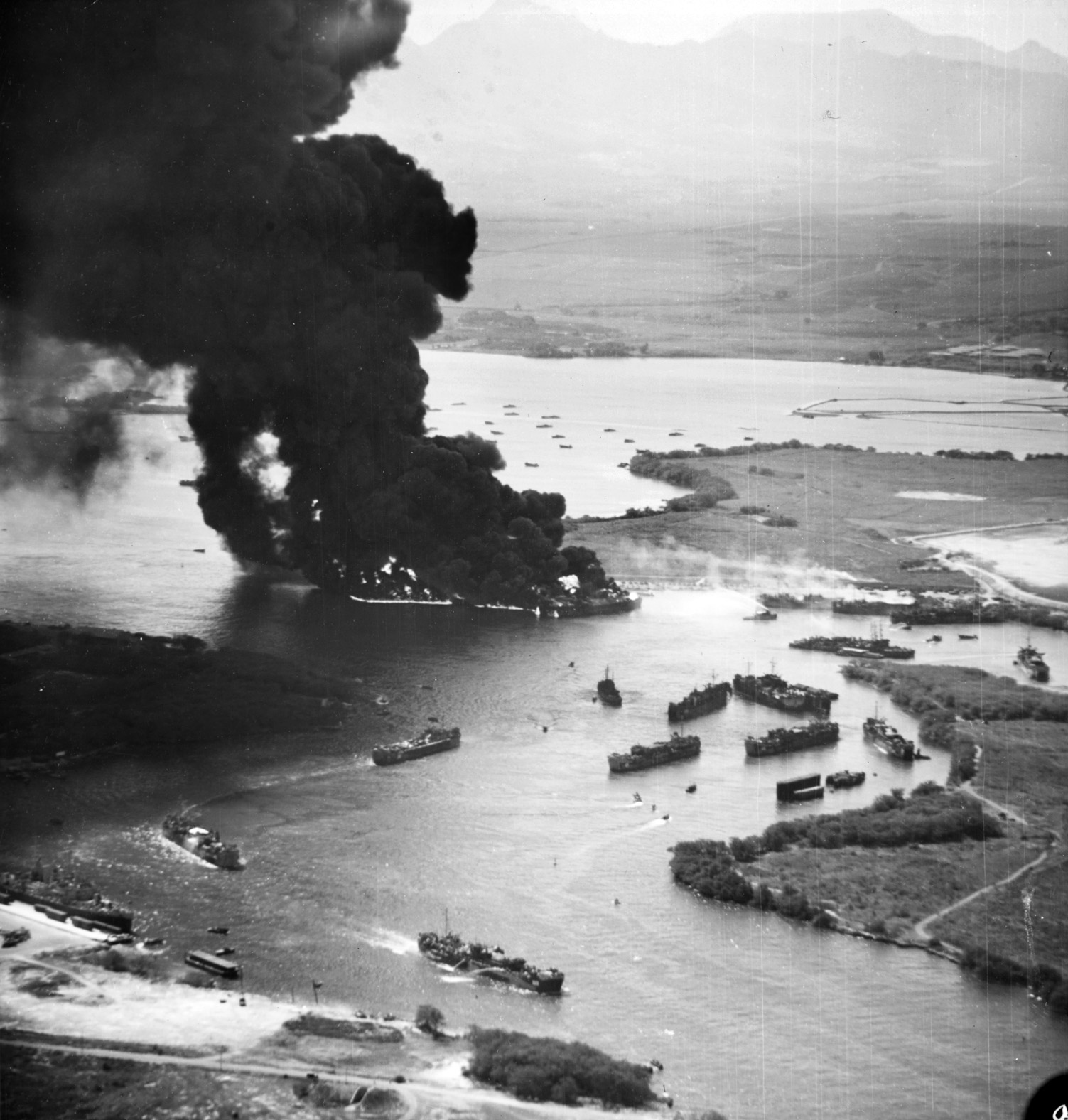
Aerial photograph of Pearl Harbor’s West Loch, showing the burning LSTs at berths T-8 and T-9. Some LSTs are manuevering in the foreground, leaving the vicinity of the explosions and fire, while other ships have yet to get underway. Official U.S. Navy Photograph, now in the collections of the National Archives.

My Facebook friend Shannon Ratliff-Evans keeps a faithful record of Arroyo Grande High School Eagles who have passed on. I noted today this article she posted from the local weekly, probably from 1943, citing this sailor from the high school class of 1941, the last peacetime class for four years:
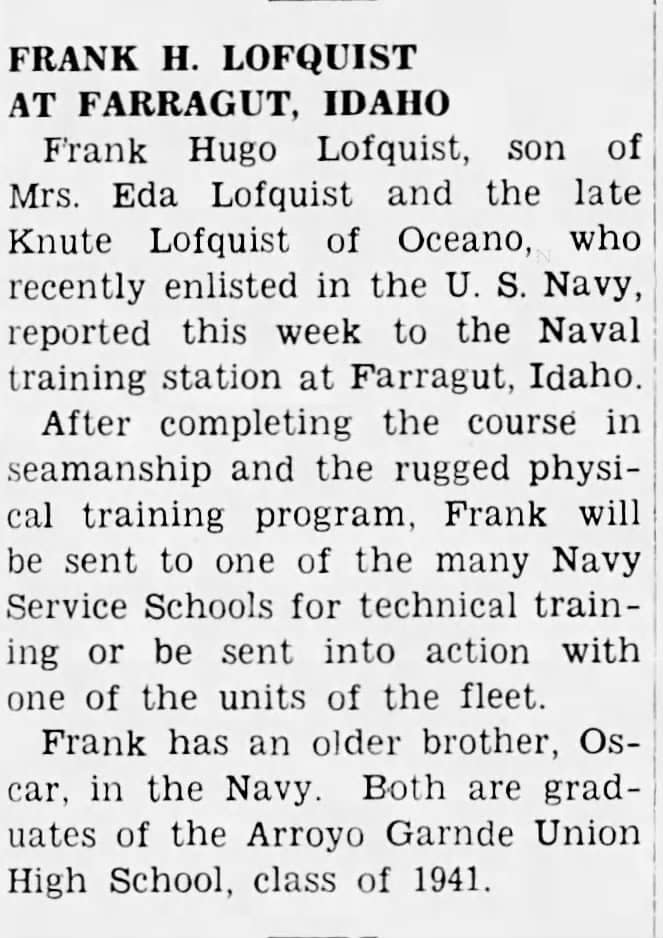

I had to find out more. I’m nosy that way.

Here’s Frank’s draft card (his father, as the article notes, had died by then: Knute was a Swedish immigrant, but Frank’s mother was a Californian)
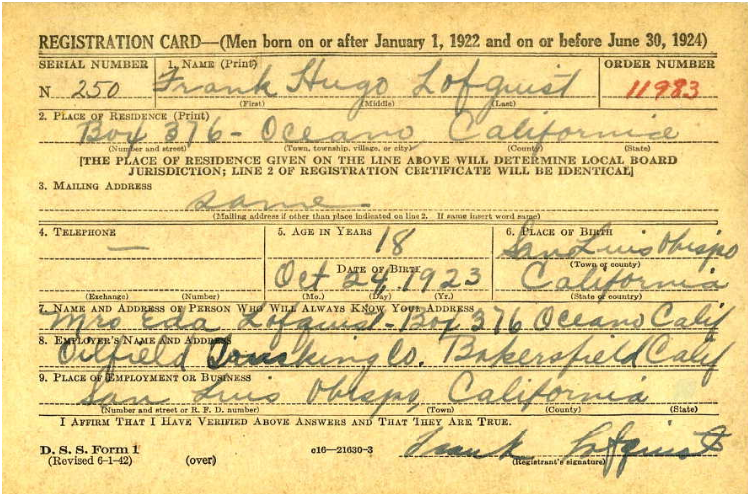

After his time at Farragut–named for a Civil War admiral–Frank would be sent to another landlocked place, Ames, Iowa, home of Iowa State University, for specialized training as a mechanic.
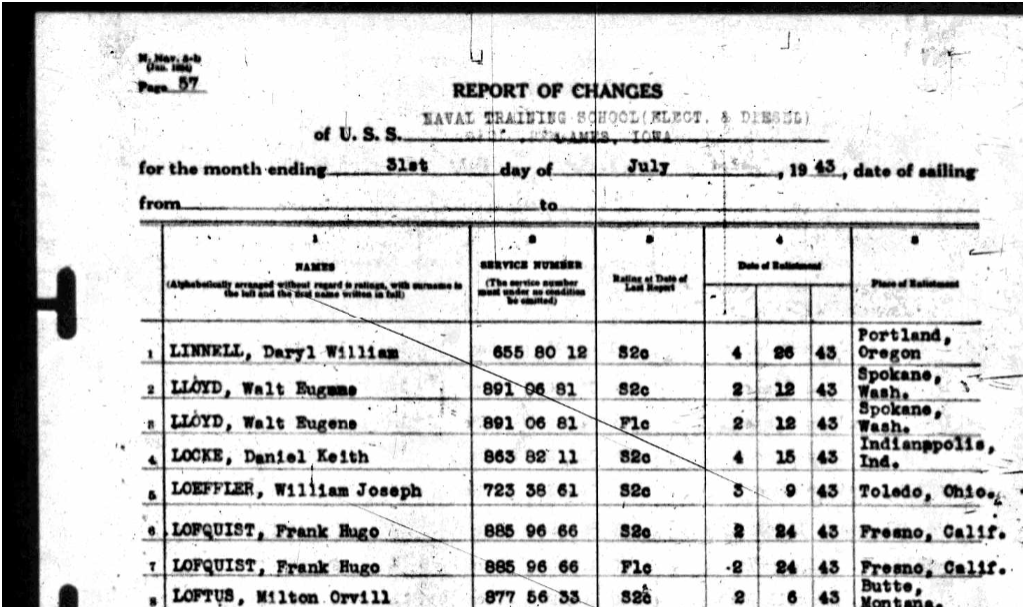


After this, Frank would go to war. I was hoping he would see service on a carrier or a cruiser or a destroyer. No. His skills sent him to the Landing Craft Unit 34 at the Waipo Amphibious Operating Base, on a peninsula bounded by Pearl Harbor’s West Loch. So, if Frank wasn’t steaming into action against the Imperial Navy, he was doing something just as important: helping to train servicemen and maintain landing craft in preparation for the costly landings across the Central Pacific in 1944-45.

Among the craft at Waipo:
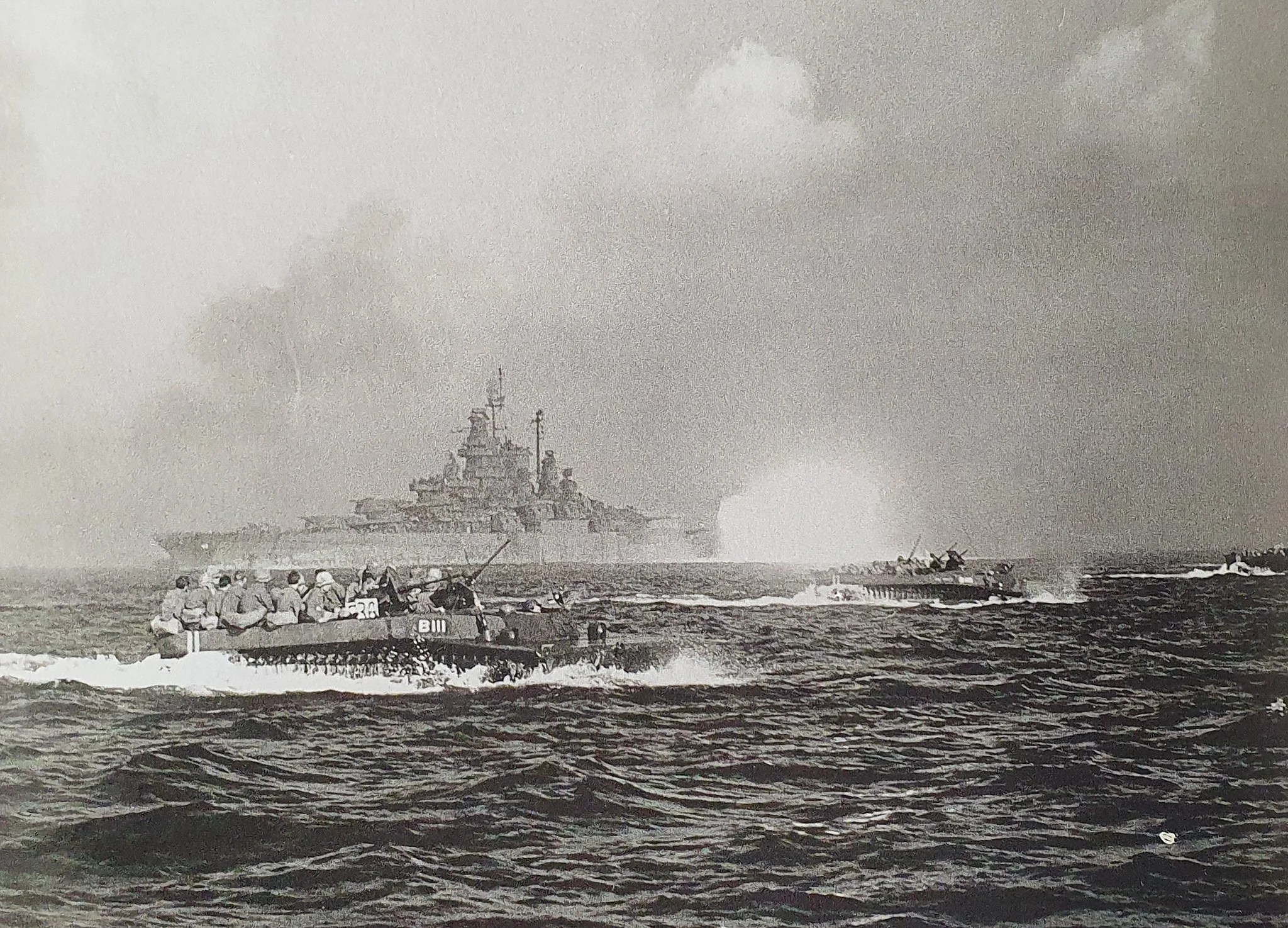
LVI’s: Amphibious Tractors, carrying 1st Division Marines to Okinawa
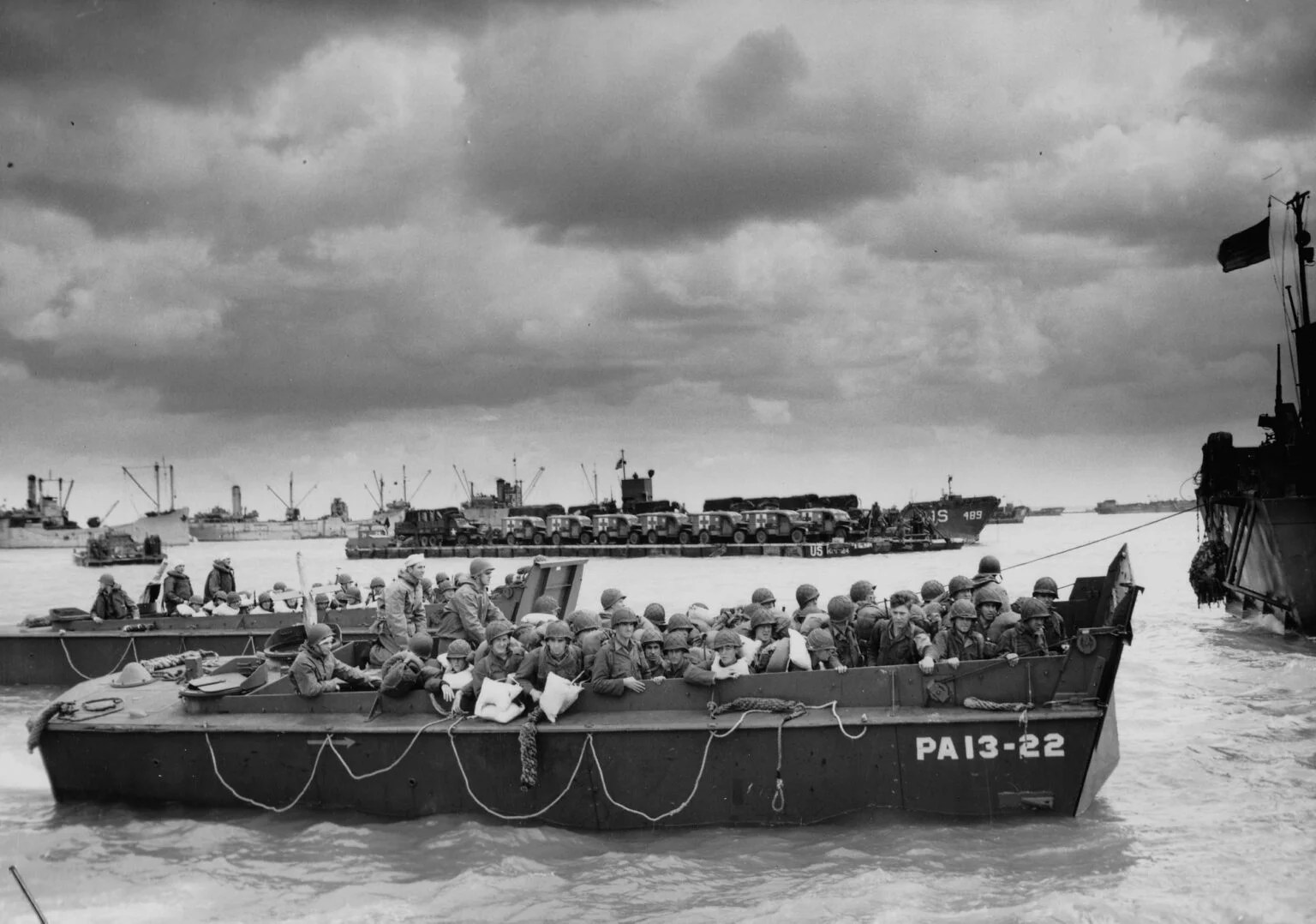
LCVP’s, better known as Higgins Boats, featured in Saving Private Ryan
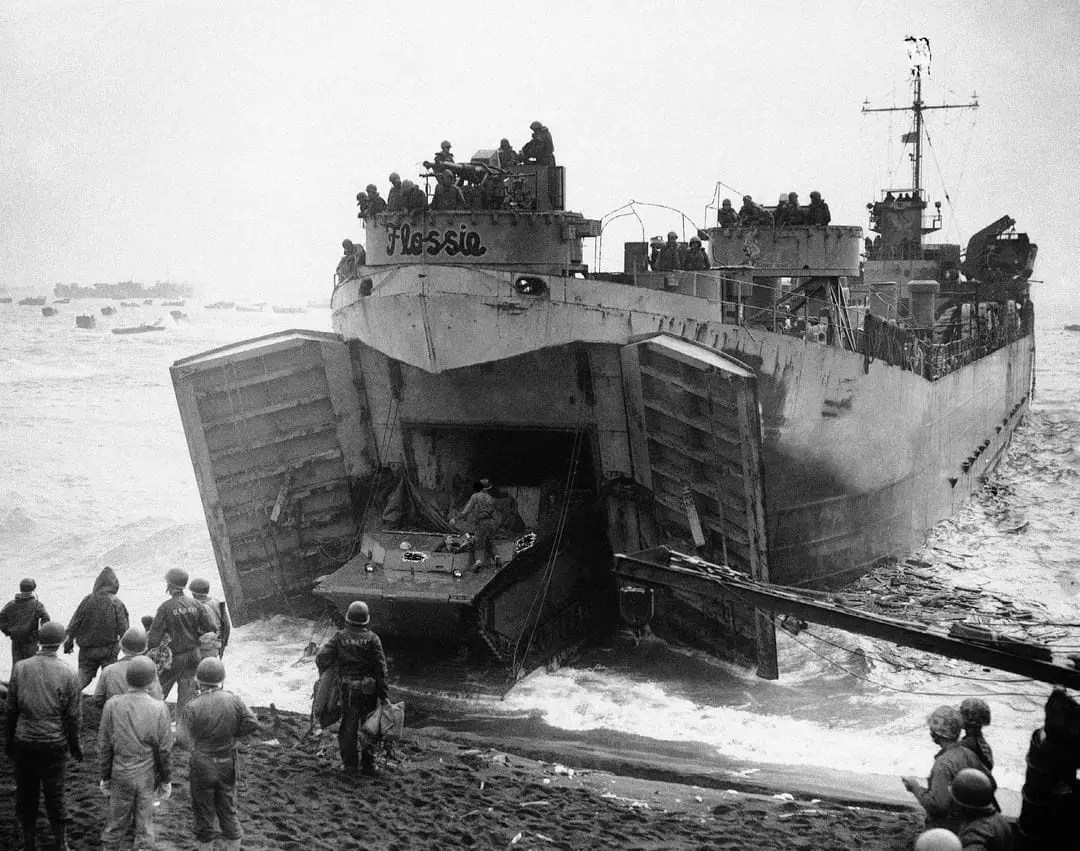
LSTs, Landing Ships, Tanks–big fellows


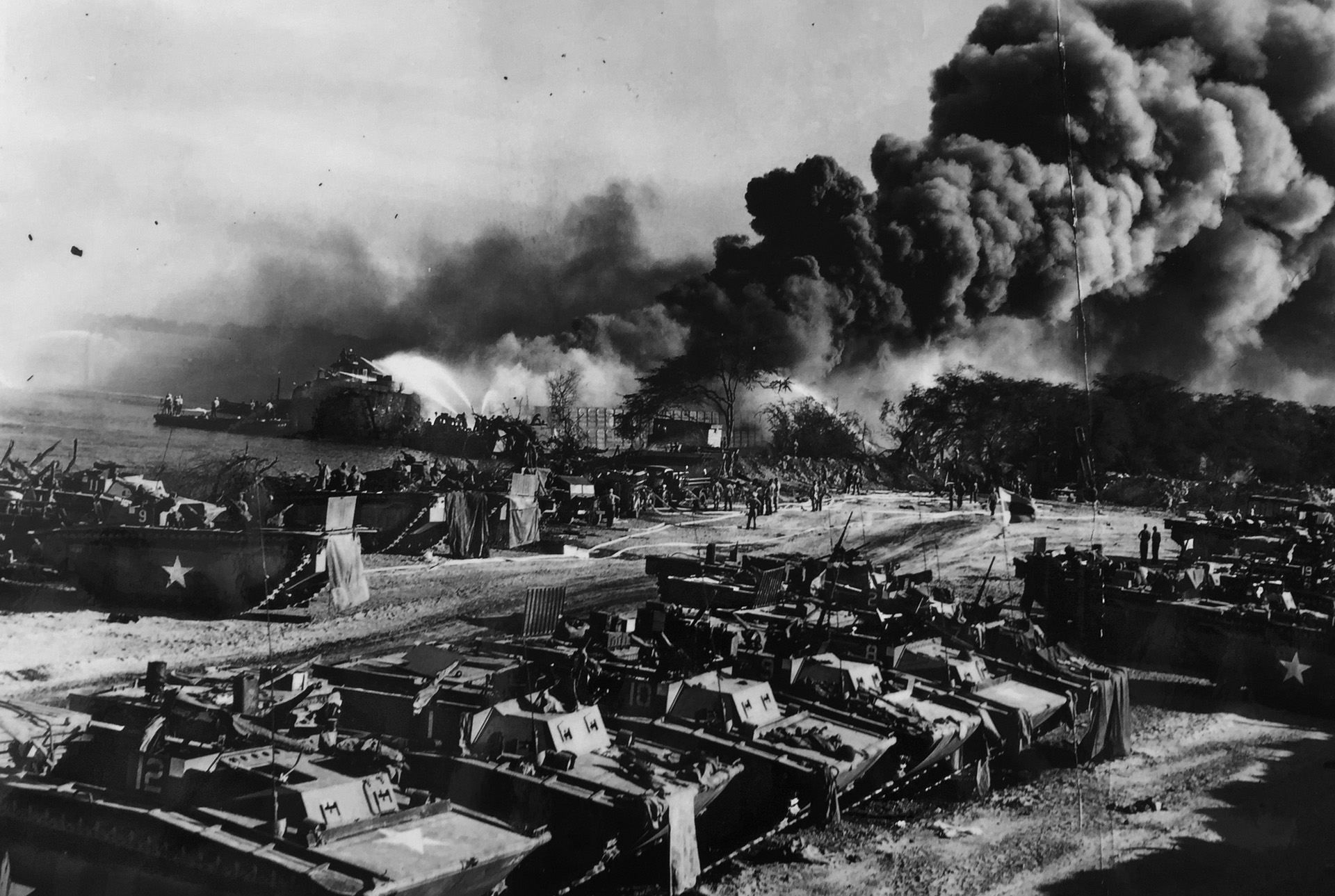
Amphibious tractors in the foreground as fires rage along the West Loch, May 1944.

According to U.S. Navy Muster Rolls, Frank (at the bottom, below) reported to Waipo in April 1944. He would be stationed there until the end of the war. But it only took a month for the war to come to him.
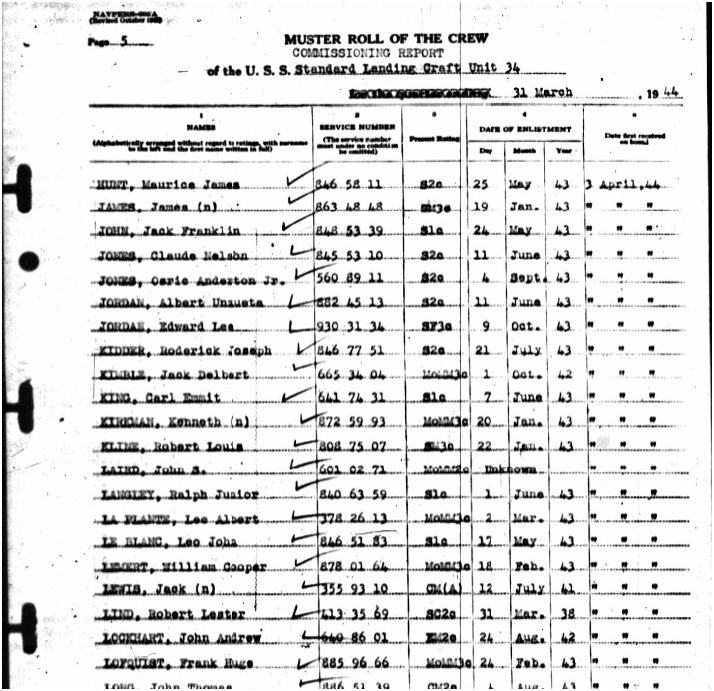


In May 1944, Unit 34 would have been preparing sailors, Coast Guardsmen and Marines for the invasion of the Marianas Islands, which included the horrific Battle of Saipan. The invading Marines included Archie Harloe, the son of the Arroyo Grande schoolteacher, and some of them witnessed civilians, convinced that the Americans would torture them, leaping to their deaths from sea cliffs.
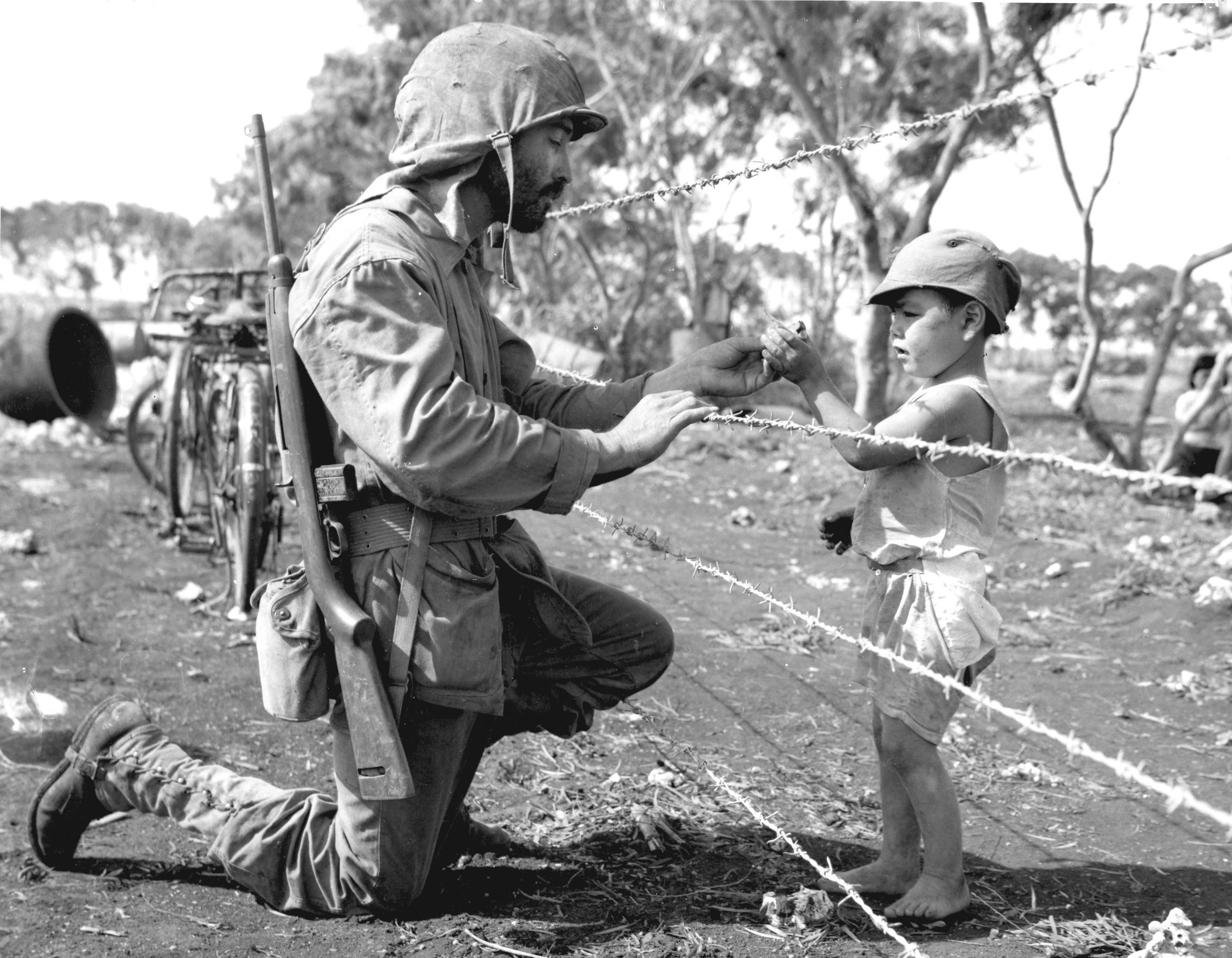
Had the people who committed suicide waited, they would’ve met Americans like this one: A Marine shares food with a Saipanese child.


That was in June. Another tragedy–this one at Waipo–preceded Saipan’s. On May 21, 1944, the West Loch, in preparation for the Marianas, was packed with the big ships, the LST’s. Mortar ammunition was being transferred to one of them when a mortar round either fell or was detonated by gasoline vapors, The resultant explosion was massive, but not as massive as the second explosion, which showered the LST’s with burning debris, which in turn set off aviation fuel and ammunition.

The fires burned for twenty-four hours. Six LST’s were destroyed. One of them, LST-480, remains alongside the West Loch today:
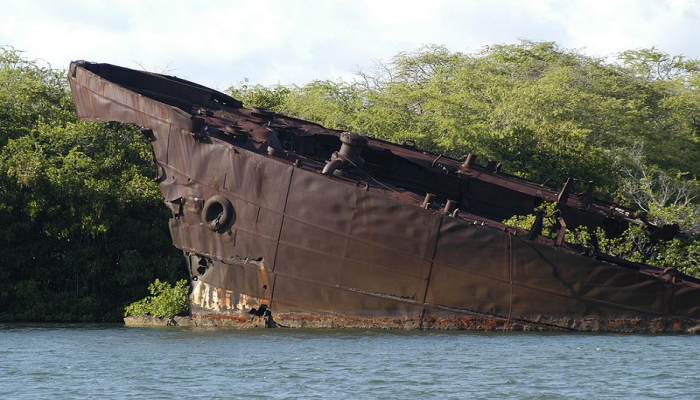


The official Navy casualty list cites 163 killed. That is almost certainly an underestimate. It may not reflect the deaths of Marines from the 2nd and 4th Divisions and soldiers from Schofield Barracks acting as stevedores at Waipo. Some estimates put the deaths at 1,000 young Americans.

Frank Lofquist was there, and, as fate would have it, he would live a long life–he died, at eighty, in 2003. I’ll post below a video of some South County sailors and their ships, but it occurred to me that Lofquist’s service at Pearl Harbor was just as important, and, since I just learned about the West Loch disaster, almost as dangerous.

Using the World War II Army ratio, for every American combat soldier, there were 4.3 support troops (like my father, a quartermaster officer who sent gasoline supply companies to Omaha Beach, and like Lofquist). World War II was their war, too.

Thank you for your service, Frank Hugo Lofquist.
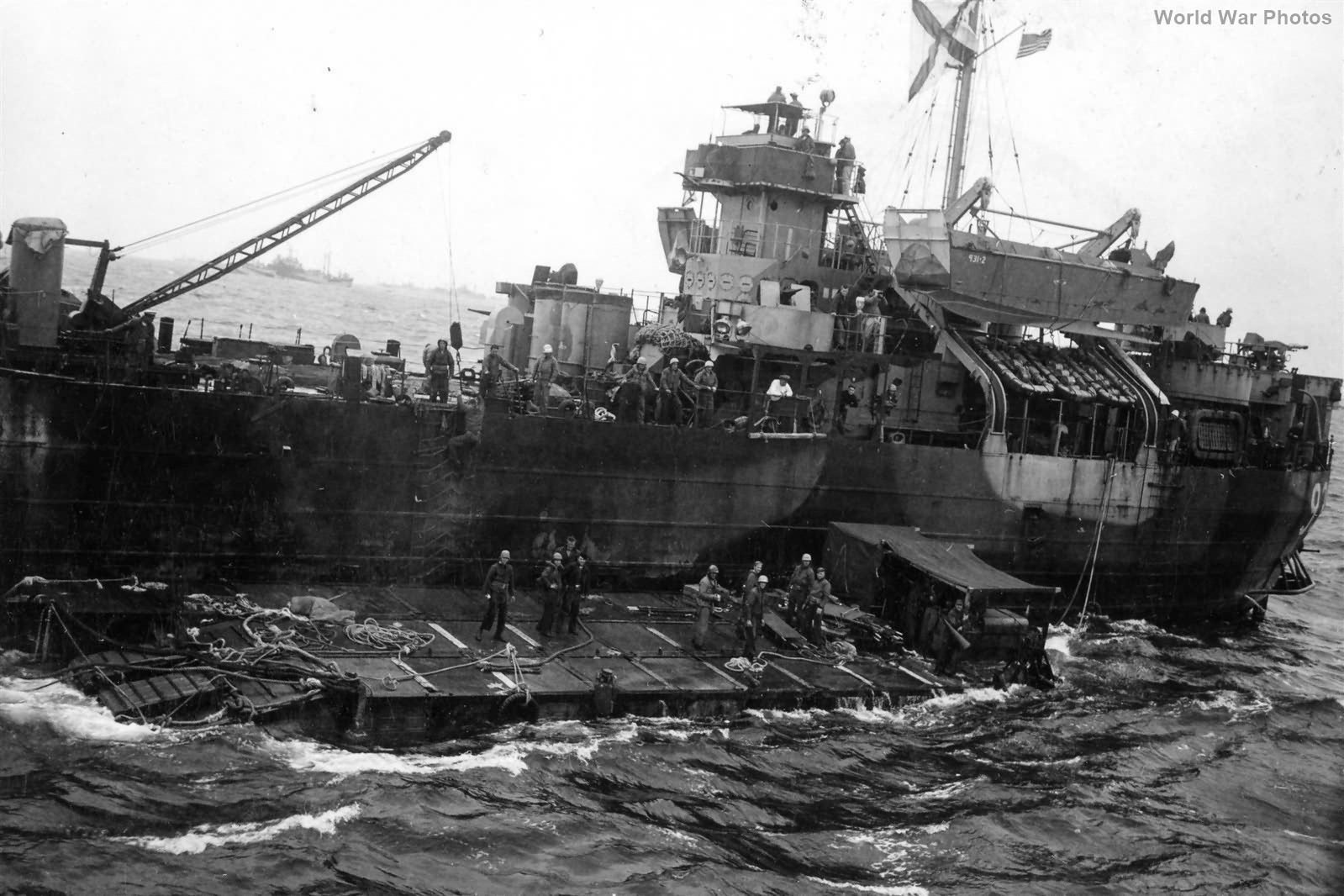
An LST takes on wounded Marines at Iwo Jima, March 1945, where Arroyo Grande Marine Louis Brown was killed three days short of his 21st birthday.


It was Lofquist’s war, and, of course, it was the war of the Black sailors at Port Chicago, near San Francisco. An explosion there three months later killed at least 320 of them, detailed as stevedores, when an ammunition ship blew up. What happened after is another story that needs to be retold every few years.

Cuter than bug’s ears

23 Saturday May 2026

Posted by ag1970 in Uncategorized

≈ Leave a comment

The MonaLisa Twins really are twins, fraternal sisters born in Austria—I think in Vienna. Their Dad , Rudolf, Wagner, is a Boomer, like me, taught the girls his love for playing music and his love for British Invasion music. The girls inherited both loves and, as young women, are the featured act in The Cavern Club, a Liverpool pub that duplicates the Hamburg Cavern where the four lads first made a big splash.

So they do Beatles. Like this:


And this:


They do Revolver:

They do Rubber Soul:


They let old guys onstage for one of my favorite Beatles songs:


They do Hollies.


And they cover one of my favorite one-hit wonders:

So,, if bug’s ears are cute, these two are. They are also great fun. And, no, I haven’t yet figured out which is Mona and which is Lisa


P.S. There’s “cute” and then there’s “beautiful.” Like this:


Kash Patel’s dive on USS Arizona

18 Monday May 2026

Posted by ag1970 in Uncategorized

≈ Leave a comment

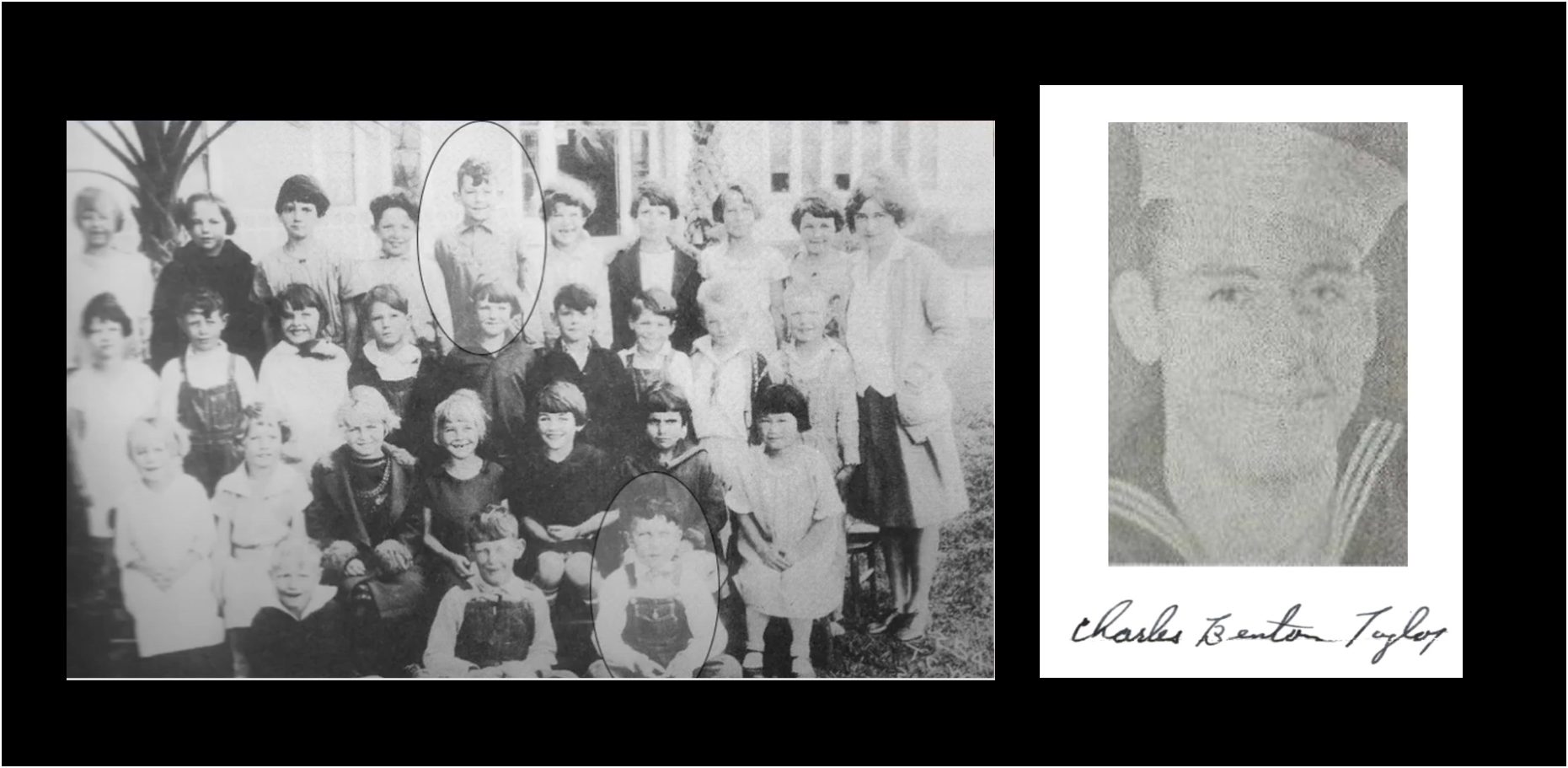
Wayne Morgan, top, and Jack Scruggs, bottom, as second-graders in Arroyo Grande, California. On the right: Electrician’s Mate 3c Charles Taylor, killed, missing in action, USS Arizona.

There was something terribly morbid and terribly wrong about FBI Director Kash Patel’s VIP snorkeling dive on USS Arizona. It’s yet one more example of this administration’s casual indecency.

I take it personally, and this is why.

Two sailors who died on Arizona were from my hometown, Arroyo Grande, population 1,090 in the 1940 Census. Wayne Morgan and Jack Scruggs had been second-grade classmates in Arroyo Grande in 1932.

Arizona’s destruction had a tragic impact here: 25 of the 58 seniors in the high school’s Class of 1942 were Nisei, or second-generation Japanese. On April 30, 1942, they were taken away to be incarcerated in the Arizona desert. Many never came back.

More than eighty years later, Project 85 is devoted to using refined DNA science to identify the battleship’s casualties. Many of the unidentified sailors and Marines were buried, some in mass graves, in the Punchbowl Cemetery on Oahu.

In December, those remains will be disinterred for DNA testing.

I just sent Project 85 a sample of my DNA. An Arizona sailor, Electrician’s Mate 3c Charles B. Taylor, is my cousin—we share a common grandfather—and, God willing, they might find him so that my family can bring him home.

“Home” would be the Boone Creek Cemetery in Missouri. His mother, my Aunt Aggie, is buried there, along with Charles A. Taylor, the sailor’s father. Despondent over his lost son, in July 1942, Charles A. Taylor walked out to the middle of one of his farm fields, put a .22 rifle to his heart, and pulled the trigger. Aggie Gregory Taylor carried the burden of those losses for the rest of her life, for thirty-eight years.

We got Christmas cards from her, and my dad a birthday card, every one of those years.


So, yes, Kash Patel, in my mind, you had no right to your little “joy dive.”


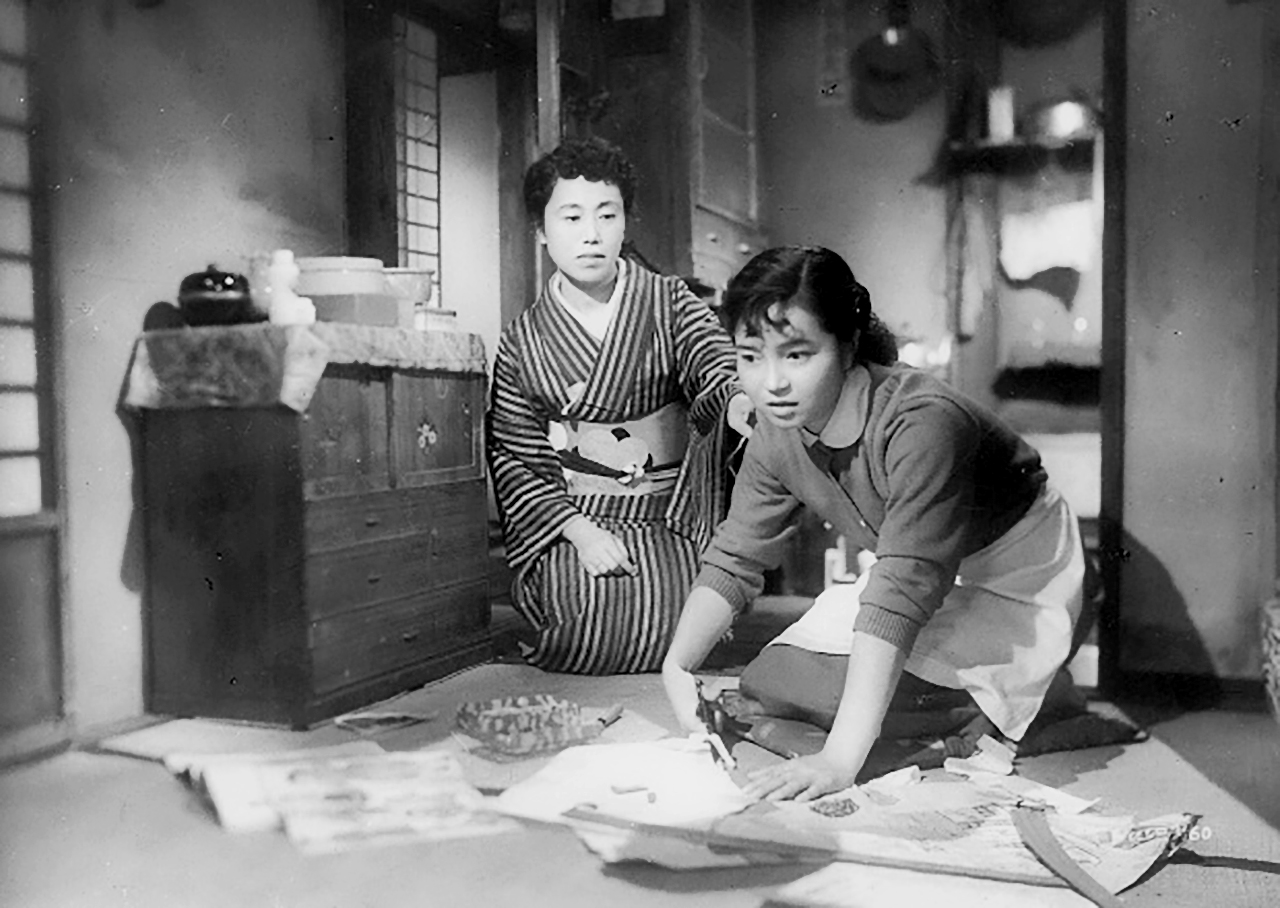
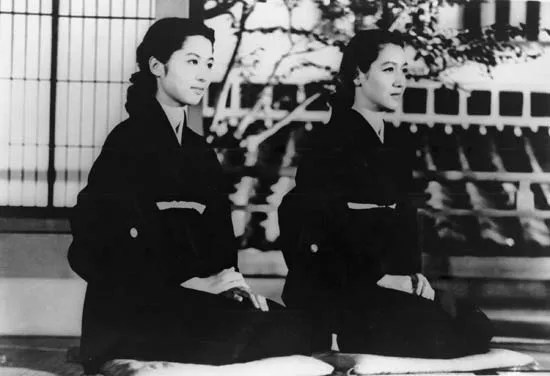
A poignant look inside postwar Japan

06 Wednesday May 2026

Posted by ag1970 in Uncategorized

≈ Leave a comment

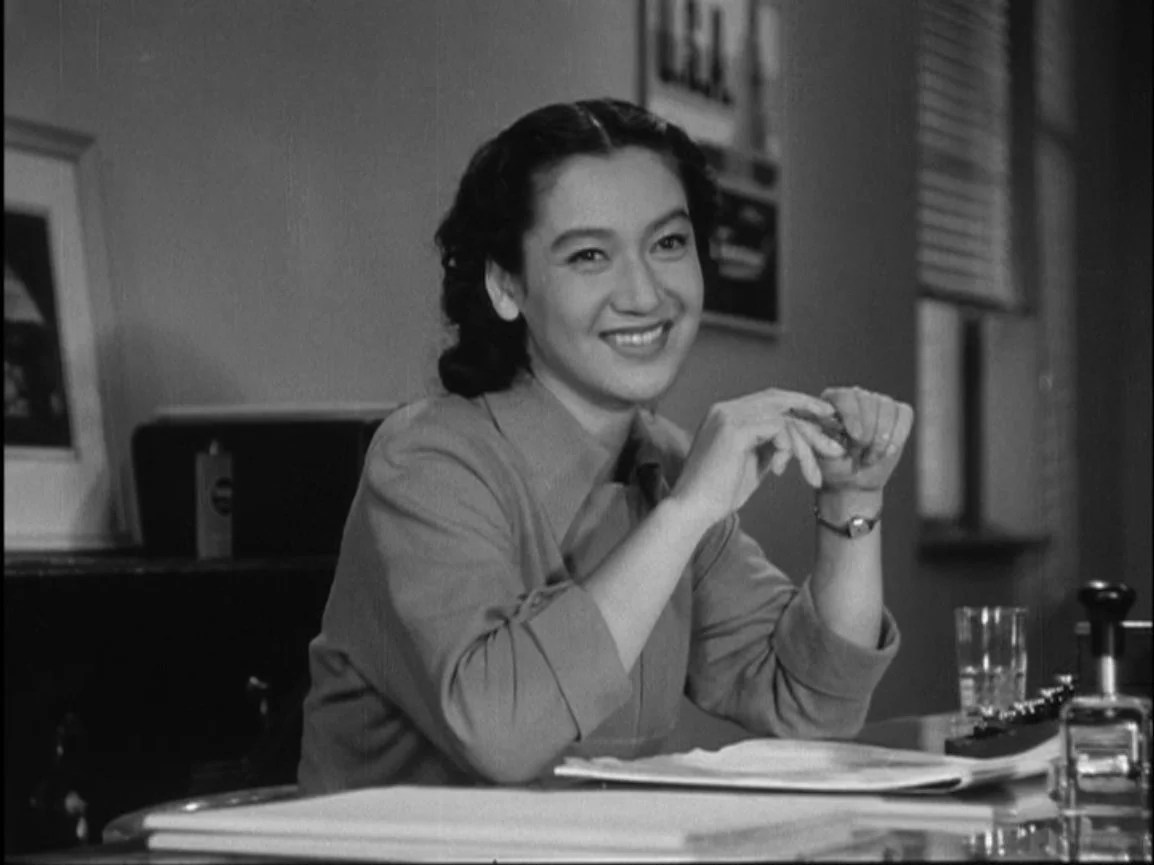
My knowledge of Japanese cinema pretty much begins with “Seven Samurai” and ends with “Rashomon.”

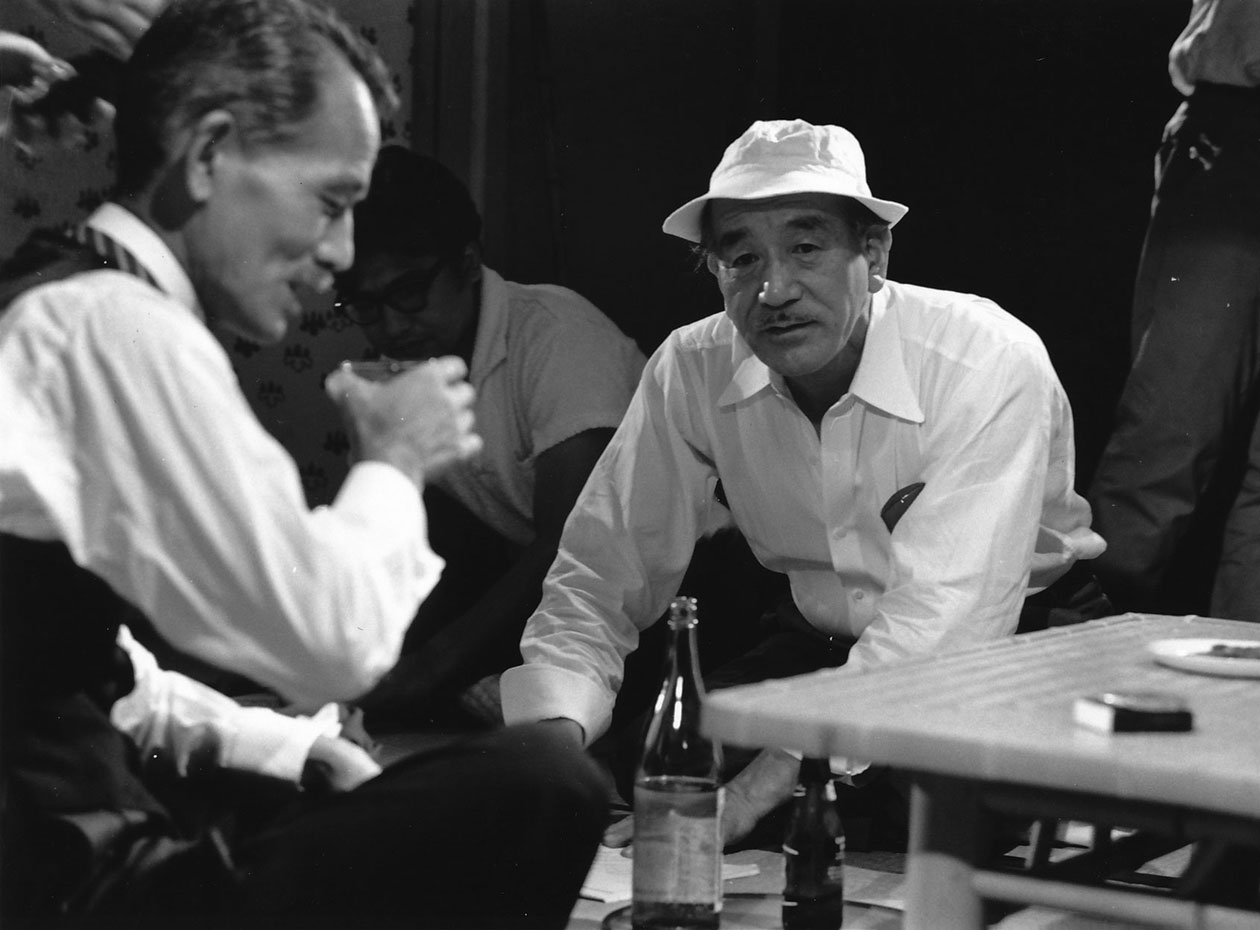
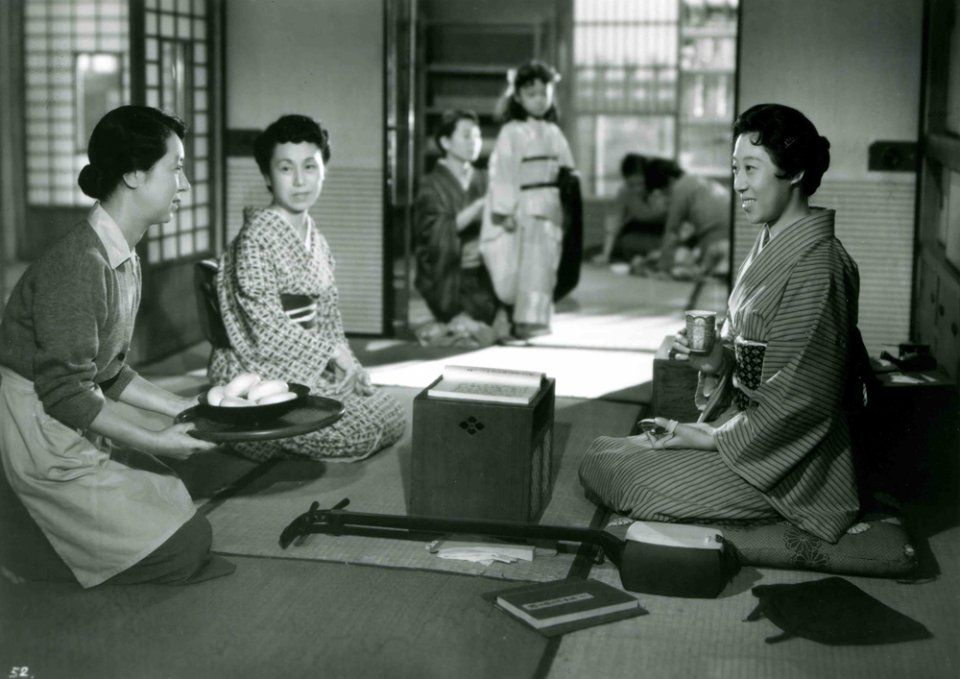
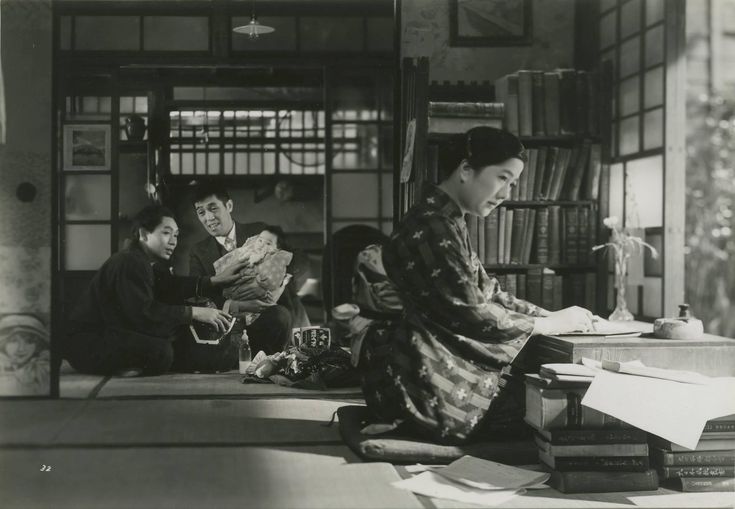
Director Yasujirō Ozu knew–directing, in the hat, above, knew to compose a frame, as John Ford did. Ozu’s, framed by Japanese interior screens, are particularly intimate. And, unlike Ford, he was much more understanding of women–his women were lovely, and they register emotion, including deep anger–and he worked particularly well with children. With children, he liked to include fart jokes in their scenes. I am okay with that.

That’s a good thing, because much of his work–he died in 1963–was focused on postwar Japanese families, bewildered and drifting apart in a sea of social change.

It reminded me of a song that played a lot on KSLY, our San Luis Obispo County, California, AM station in 1963, with the Americanized title “Sukiyaki.”

But it’s a song about the kind of loss that Ozu addressed. The lyrics follow the excerpt from his performance.

The singer, Kyo Sakomoto, born three days after Pearl Harbor, was killed in the 1985 crash of Japan Airlines Flight 123. It was the worst single-airplane accident in history; claiming the lives of 520 passengers and crew.

Hey! Let’s arrest some aliens!

02 Saturday May 2026

Posted by ag1970 in Uncategorized

≈ Leave a comment

Tags

executive-order-9066, History, japan, nikkei-immigration

A mother and child are taken into custody, May 2025, Worcester, Massachusetts


Terrific talk this morning by historian Naomi Shibata about the Japanese–Nikkei– immigrant experience before, during and after World War II.

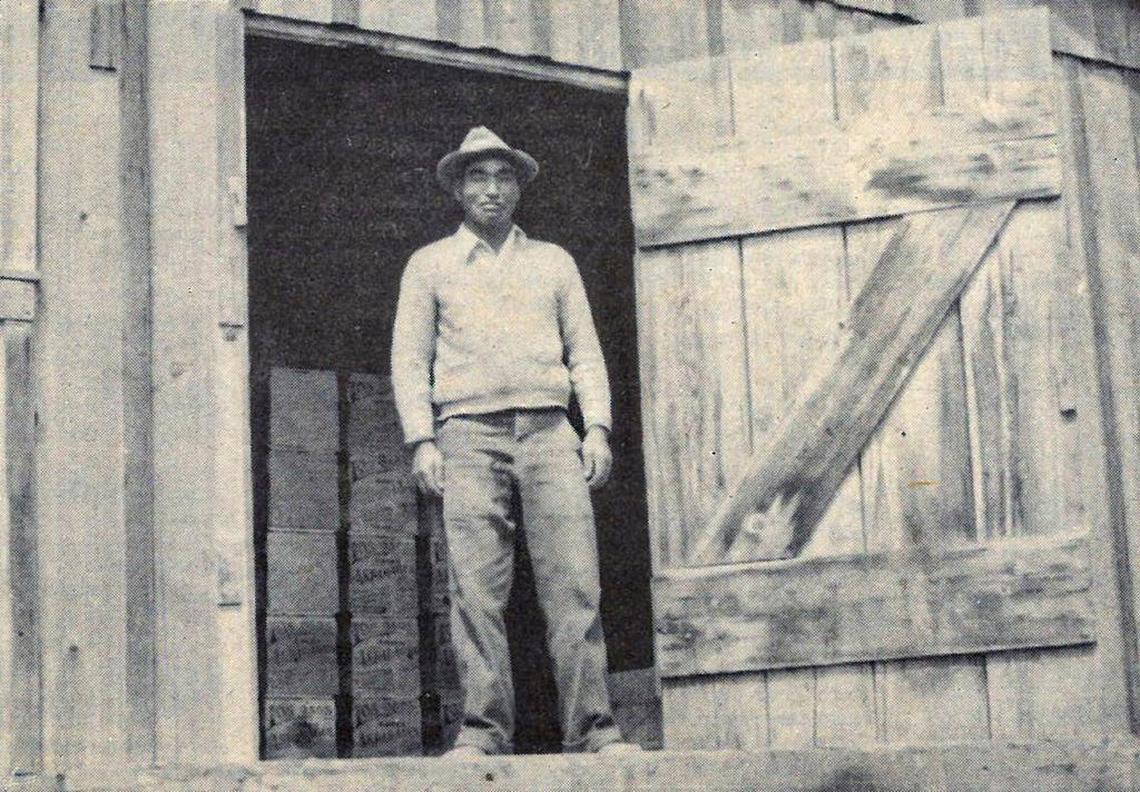
Her grandfather, Tameji Eto, farmed the Los Osos Valley. He was still in his work clothes, about to go to bed, when a knock on the door roused him about ten at night on December 7, 1941.

It was the sheriff and two FBI agents. They just wanted for him to come along for a few questions.

Mr. Eto asked them to wait for a few moments. He left the room and changed into his suit–it was a sign of respect for authority, including the three men inside his home.

On the way out the door, one of the FBI agents said, “you may want to bring your coat.”

Eto was bound for a prison camp for “enemy aliens” in Missoula, Montana. He spent a week or so first in the Santa Barbara County Jail.

He was allowed to tell his family where he was headed–his train would come through San Luis– but he had no clothes. Certainly, no clothes for Missoula, Montana, in December.

The family contacted Mr. Sinsheimer, who opened his store in the middle of the night so they could find some warm clothing. I’m pretty sure he told them to pay him later.

They were waiting at the SLO train station, with their purchases wrapped in paper and twine, for Tameji’s train. They waited all night.

It had been re-routed.

* * *

Vard Loomis, so deservedly lauded for the support he gave to the South County interned, made sure the property taxes on the Eto family’s farm were paid on time.

* * *

The FBI picked up Eto and, here, in Arroyo Grande, men like Shig Kobara, because they were successful men perceived as natural leaders. The aim was to decapitate Nikkei leadership. That would make the enforcement of 9066, five months later, a little easier.

* * *

Shibata made a stunning point about Executive Order 9066, which ordered the removal of “all alien and non-alien” Japanese. She found that a curious passage.

What do you call a “non-alien?” she asked the audience.

“An American citizen,” a man called from the back of the room.

* * *

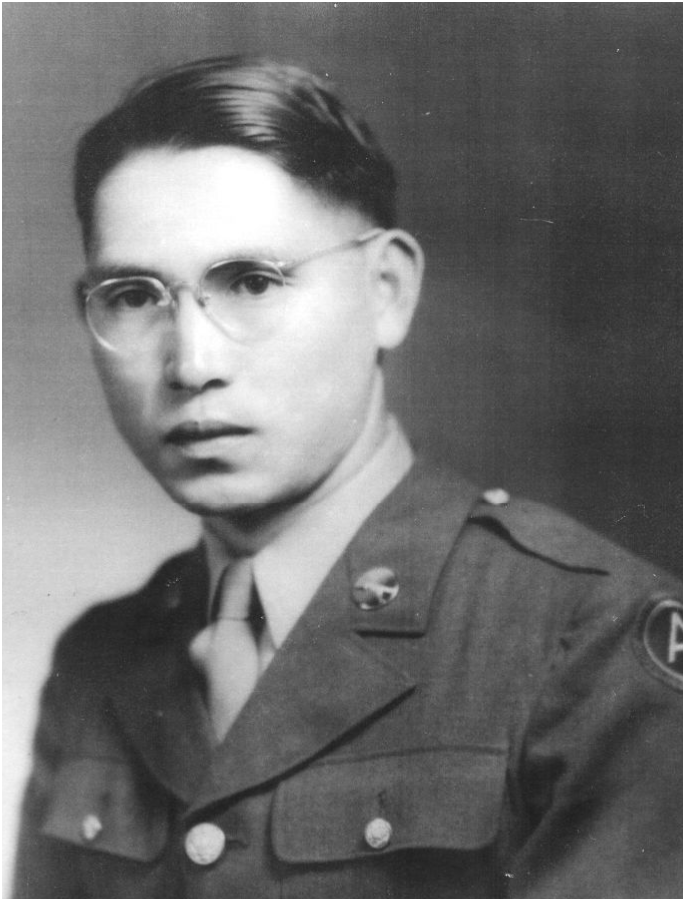
Mr. Eto’s son-in-law, Leo Kikuchi, was killed in action in Italy. Here, in the South County, Arroyo Grande farmworker Sadami Fujita was killed in action in France.

They were American citizens.

Mr. Eto
Leo Kikuchi
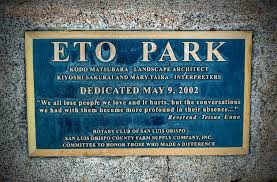
There used to be an “Eto Street.” This park was intended to honor the name that had been discarded during World War II>

Subscribe

  • Entries (RSS)
  • Comments (RSS)

Archives

  • June 2026
  • May 2026
  • April 2026
  • March 2026
  • February 2026
  • January 2026
  • December 2025
  • November 2025
  • October 2025
  • September 2025
  • August 2025
  • July 2025
  • June 2025
  • May 2025
  • April 2025
  • March 2025
  • February 2025
  • January 2025
  • December 2024
  • November 2024
  • October 2024
  • September 2024
  • August 2024
  • July 2024
  • June 2024
  • May 2024
  • April 2024
  • March 2024
  • February 2024
  • January 2024
  • December 2023
  • November 2023
  • October 2023
  • September 2023
  • August 2023
  • July 2023
  • June 2023
  • May 2023
  • April 2023
  • March 2023
  • February 2023
  • January 2023
  • December 2022
  • November 2022
  • October 2022
  • September 2022
  • August 2022
  • May 2022
  • April 2022
  • March 2022
  • February 2022
  • January 2022
  • December 2021
  • November 2021
  • October 2021
  • September 2021
  • August 2021
  • July 2021
  • June 2021
  • April 2021
  • March 2021
  • February 2021
  • January 2021
  • December 2020
  • November 2020
  • August 2020
  • July 2020
  • June 2020
  • May 2020
  • April 2020
  • January 2020
  • December 2019
  • November 2019
  • October 2019
  • September 2019
  • August 2019
  • May 2019
  • April 2019
  • March 2019
  • February 2019
  • January 2019
  • December 2018
  • November 2018
  • October 2018
  • September 2018
  • July 2018
  • June 2018
  • May 2018
  • April 2018
  • March 2018
  • February 2018
  • January 2018
  • December 2017
  • November 2017
  • October 2017
  • April 2017
  • March 2017
  • December 2016
  • November 2016
  • October 2016
  • September 2016
  • August 2016
  • July 2016
  • June 2016
  • April 2016
  • March 2016
  • February 2016
  • January 2016
  • December 2015
  • November 2015
  • October 2015
  • September 2015
  • August 2015
  • July 2015
  • June 2015
  • May 2015
  • April 2015
  • March 2015
  • February 2015
  • January 2015
  • December 2014
  • November 2014
  • September 2014
  • August 2014
  • July 2014

Categories

  • American History
  • Arroyo Grande
  • California history
  • Family history
  • Film and Popular Culture
  • History
  • News
  • Personal memoirs
  • Teaching
  • The Great Depression
  • trump
  • Uncategorized
  • World War II
  • Writing

Meta

  • Create account
  • Log in

Blog at WordPress.com.

  • Subscribe Subscribed
    • A Work in Progress
    • Join 69 other subscribers
    • Already have a WordPress.com account? Log in now.
    • A Work in Progress
    • Subscribe Subscribed
    • Sign up
    • Log in
    • Report this content
    • View site in Reader
    • Manage subscriptions
    • Collapse this bar

Loading Comments...