• About
  • The Germans

A Work in Progress

A Work in Progress

Monthly Archives: October 2025

Oct. 21, 1805: Lord Nelson is dead. But he’s still kind of fun.

20 Monday Oct 2025

Posted by ag1970 in Uncategorized

≈ Leave a comment

Tags

british-history, england, History, nelson, royal-navy

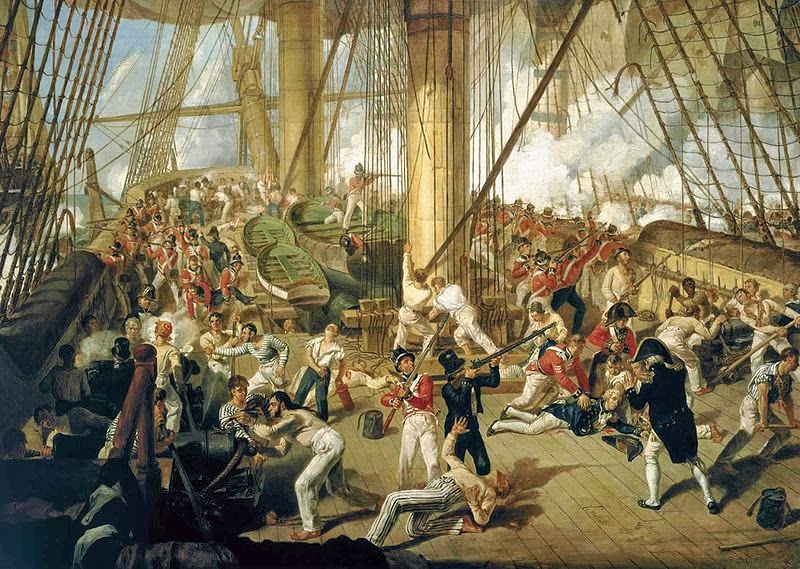
A royal marine and a midshipman return fire on the French sniper that has just shot Admiral Nelson, lying on the deck, right-center.

October 21 is “Trafalagar Day,” commemorating the overwhelming victory of Lord Admiral Horatio Nelson’s British fleet over a combined Franco-Spanish fleet off Spain’s Cape Trafalgar. It’s also the day Nelson died. As he paced the quarterdeck of his flagship, HMS Victory, a French sniper shot him in the shoulder. The musket ball wento on to puncture Nelson’s lung and shatter his spine. He died several hours later belowdecks.

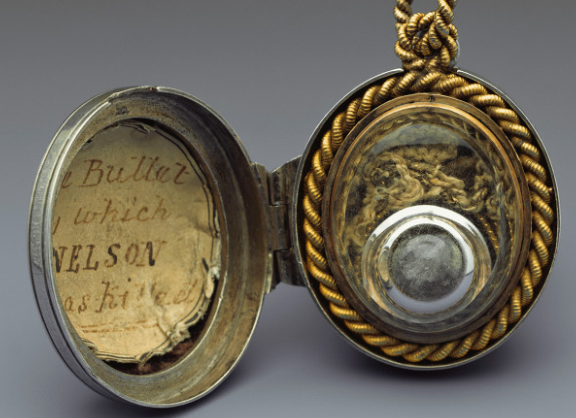
The musket ball was removed by Victory’s surgeon. It wound up preserved in this locket, surrounded by gold braid taken from the little admiral’s dress coat. (He was somewhere between 5’4″ and 5’7″.)
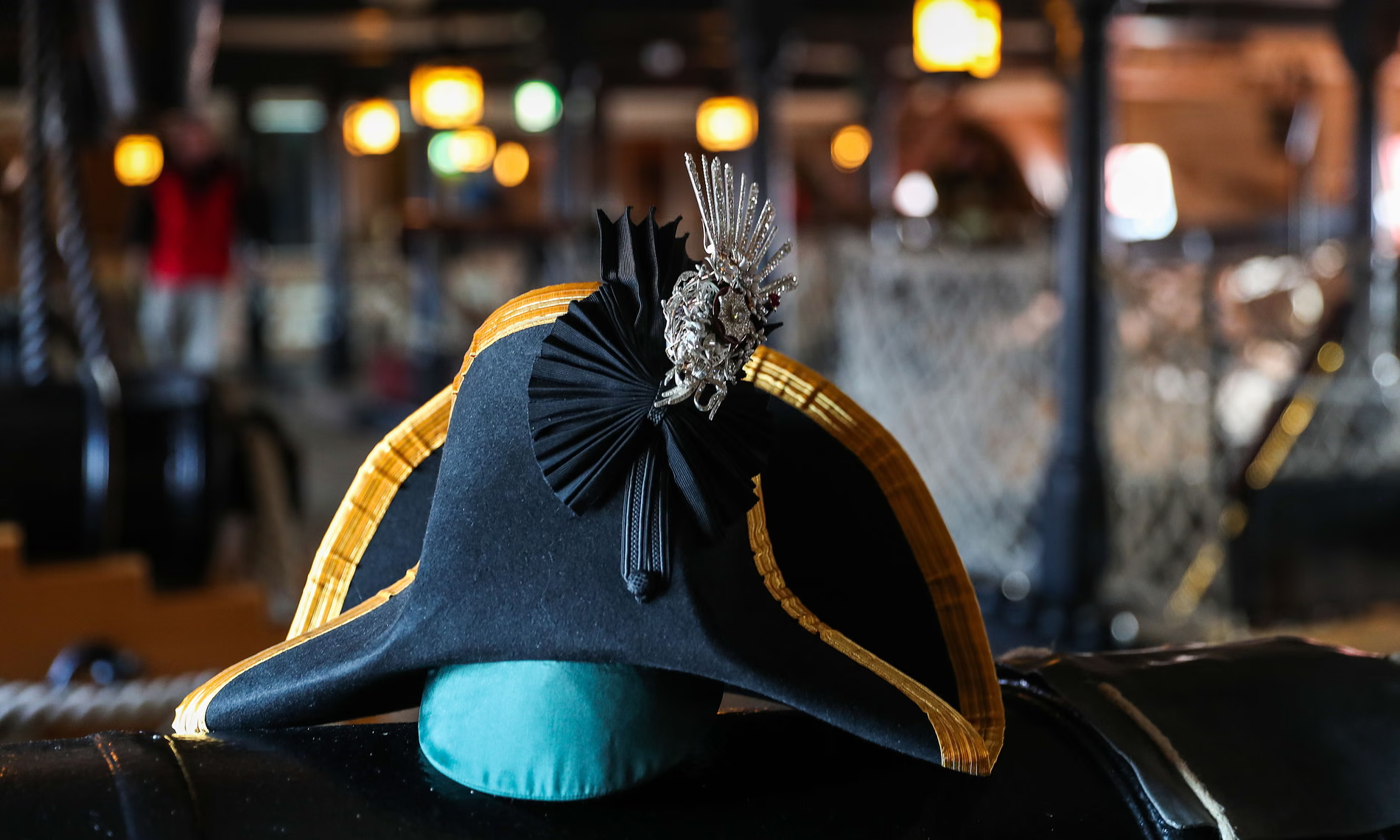
–To be truthful, Nelson got himself shot. He gloried, as George Custer did, in elaborate uniforms and was wearing all his medals (not quite so many as a North Korean general, to be sure) as Victory went into battle, including the diamond-encrusted cockade presented him by the Sultan of Turkey in 1798. This replica (the original was stolen years ago) shows what it looked like. All those medals and foofery made him an easy target for an ambitious sniper.
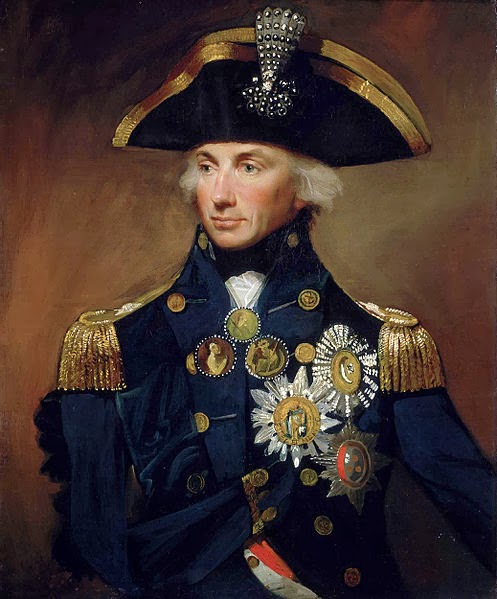

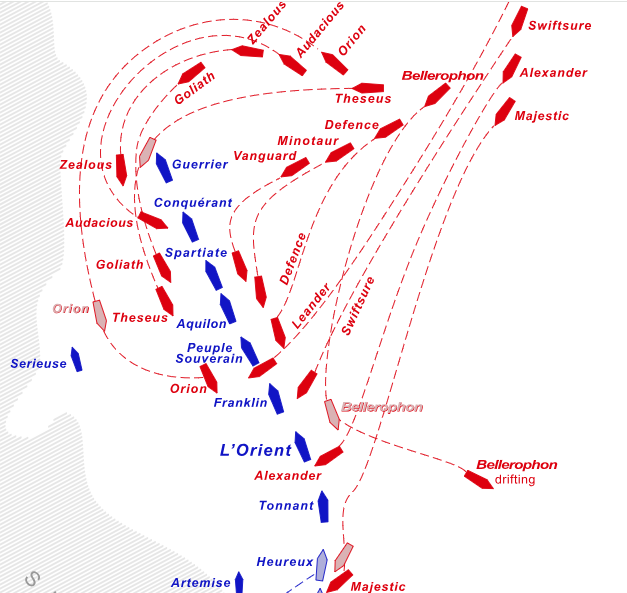
–Nelson was awarded that hat accessory after his victory over a French fleet at Aboukir Bay in Egypt. What came to be called “The Nelson touch”—shameless audacity—was in full display at Aboukir Bay. The French had anchored their fleet just beyond shoal waters, so shallow that no attacking ship would dare enter. They were wrong. Nelson divided his fleet, sending half into the shallowest part of the bay. Another column of British ships attacked the seaward side of the French ships, meaning that all of the French guns, port and starboard, were very, very busy that day. The British lost 218 sailors at what came to be called the Battle of the Nile. The French lost over 5,000. The fleet was there, by the way, in support of Napoleon’s invasion of Egypt. After Nelson’s victory, the Emperor, as he would do in the retreat from Moscow, abandoned his army and went back to Paris.
–Nelson’s audacity was shown even when he was a sixteen-year-old midshipman. On a voyage to the far north in search of the Northwest Passage, he was onshore and confronted a polar bear. I think both parties eventually fled, but the incident’s notoriety led to this 1809 painting.


–In 1794, during an assault on Corsica, a cannonball’s impact sent sand and stone into then-Captain Nelson’s face, leaving him nearly blind in his right eye. Seven years later, in an attack on the French-Allied Danish fleet at Copenhagen, the admiral in command used signal flags to order a withdrawl. Nelson raised his telescope toward the flagship and insisted that he saw no such order. He was holding the telescope to his blind eye—we get the expresson “to turn a blind eye” from this incident. The Brtish went on to win the Battle of Copenhagen.

A collector peers through the telescope Nelson used at Trafalgar in 1805.

–A musket ball hit Nelson in the right arm during an attack on Spanish forces in the Canary Islands. The wound was so serious that a surgeon had to amputate. Nelson adapted, teaching himself to write left-handed and using this combined fork and knife to eat.



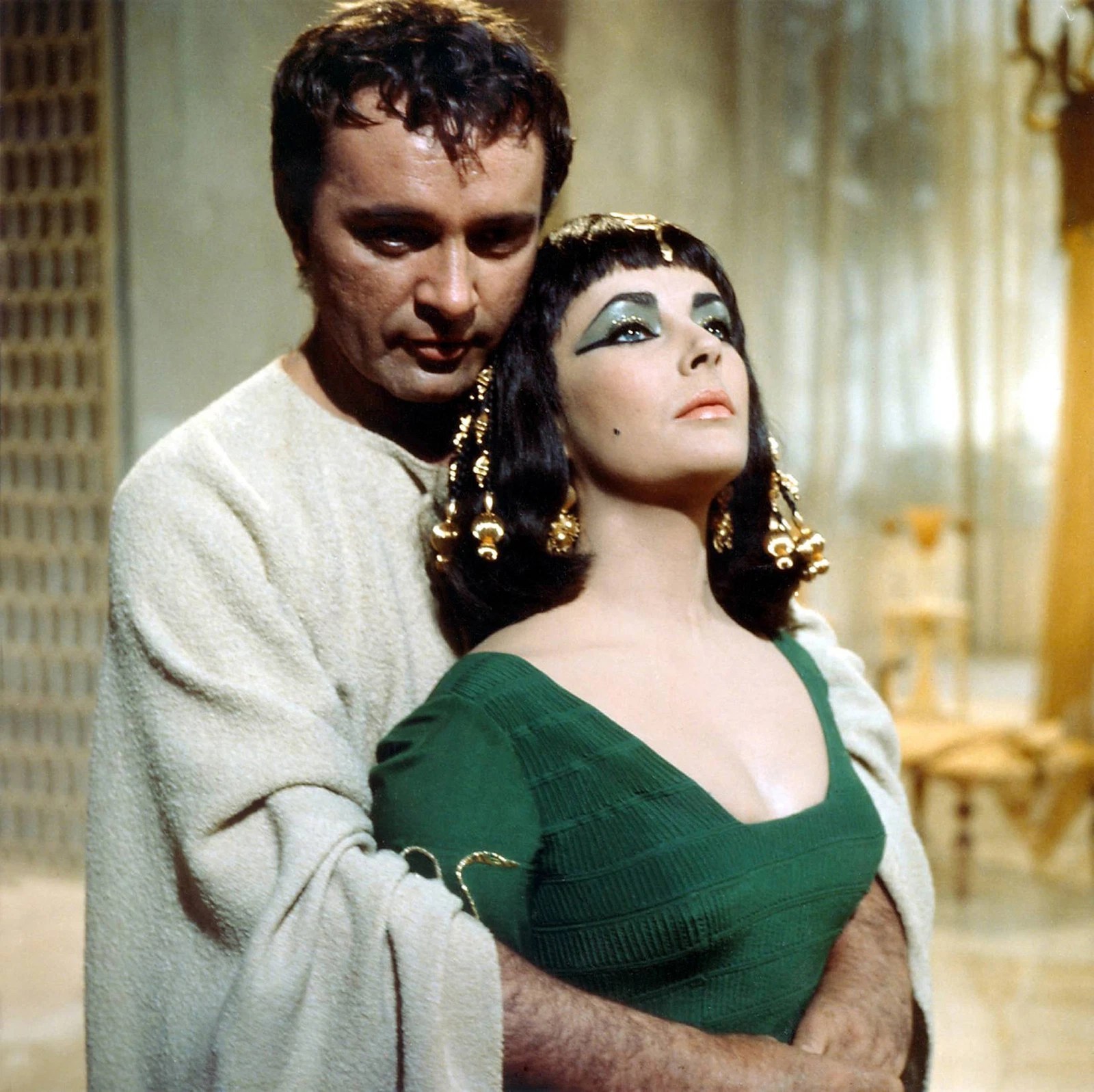
–He was the son of an Anglican minister and was properly married to a widow, Frances Nisbet, in 1787. Six years later, on a visit to Sir William Hamilton, the British ambassador to Naples, he first caught sight of Sir William’s wife, Emma. It was all over after that. The two marrieds entered into a lively relationship that was analogous perhaps only to the Richard Burton/Elizabeth Taylor scandal that began during the filming of Cleopatra. While Nelson continued to support his wife—she remained “devoted” to him, it’s said—Nelson’s devotion lay forever after in the charming arms of Emma. The relationship produced a daughter, tragically named Horatia.
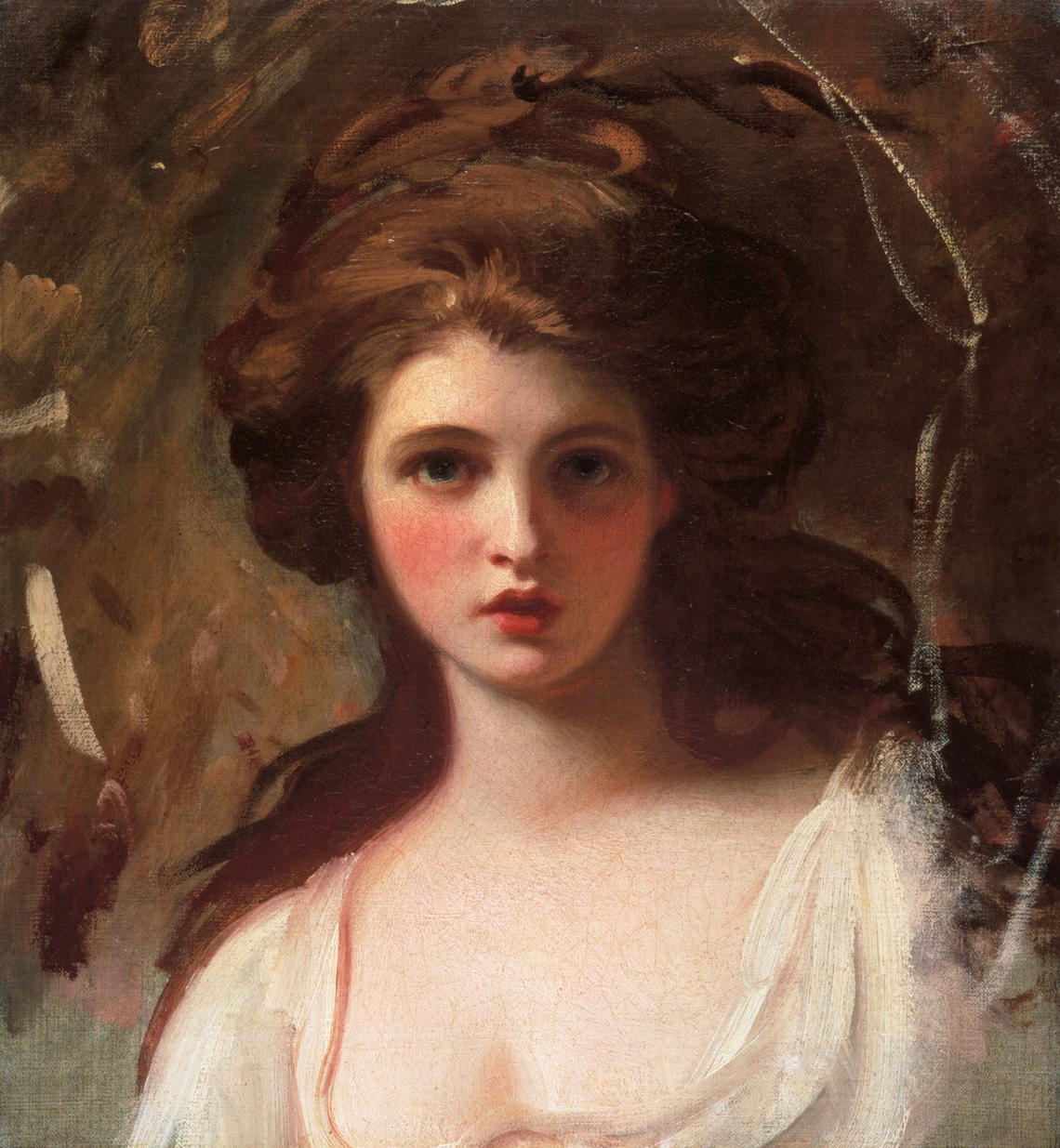
A young Emma Hamilton.
An artist imagined Nelson and Emma in Naples.
Liz and Dick in a scene from Cleopatra.
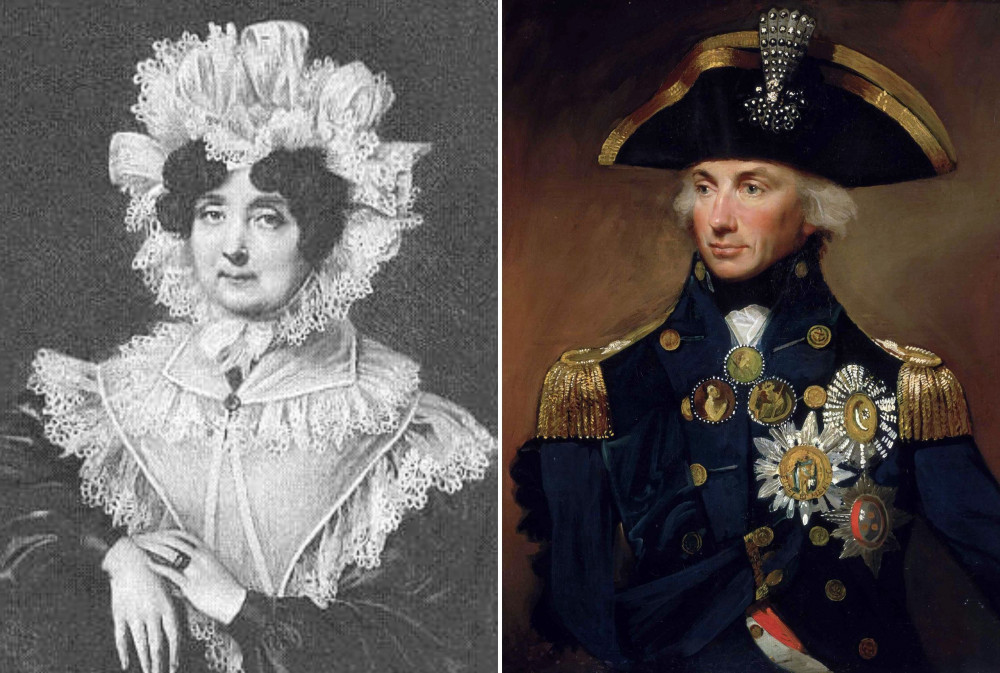
Frances Nisbet—“Fanny”—and His Lordship. Her father had lots of money.

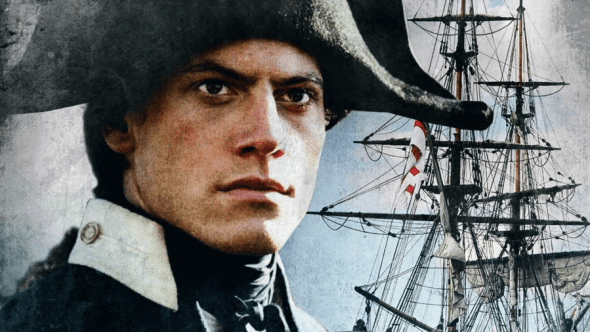
–Like my fictional naval hero, Horatio Hornblower, played by Ioan Gruffudd in a TV miniseries, Nelson was largely out of sight once his ship sailed from England. That’s because both salty sea-dogs were prone to violent seasickness, which both overcame only after several miserable days at sea.

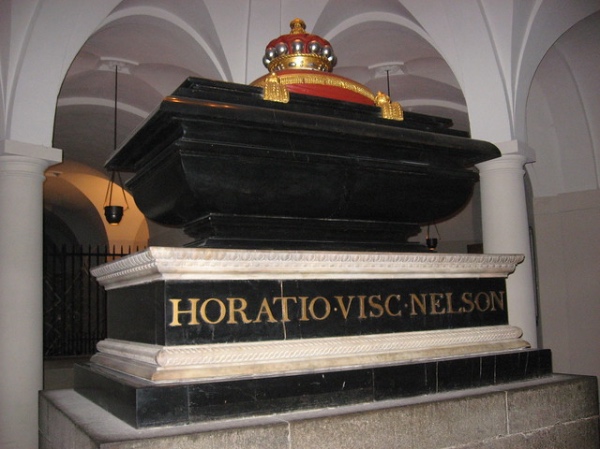
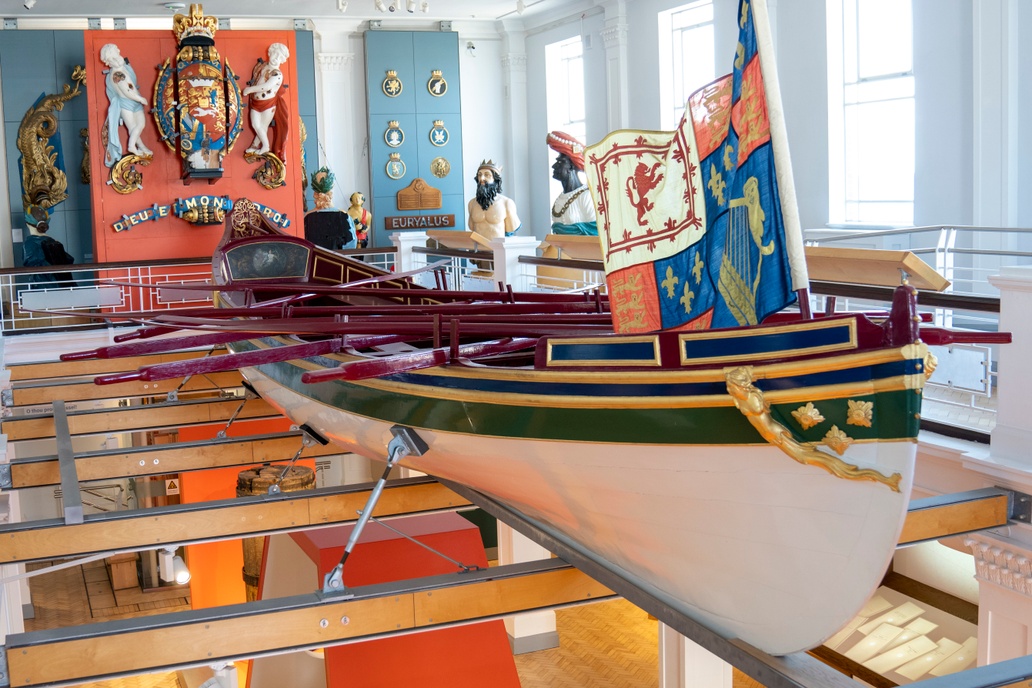
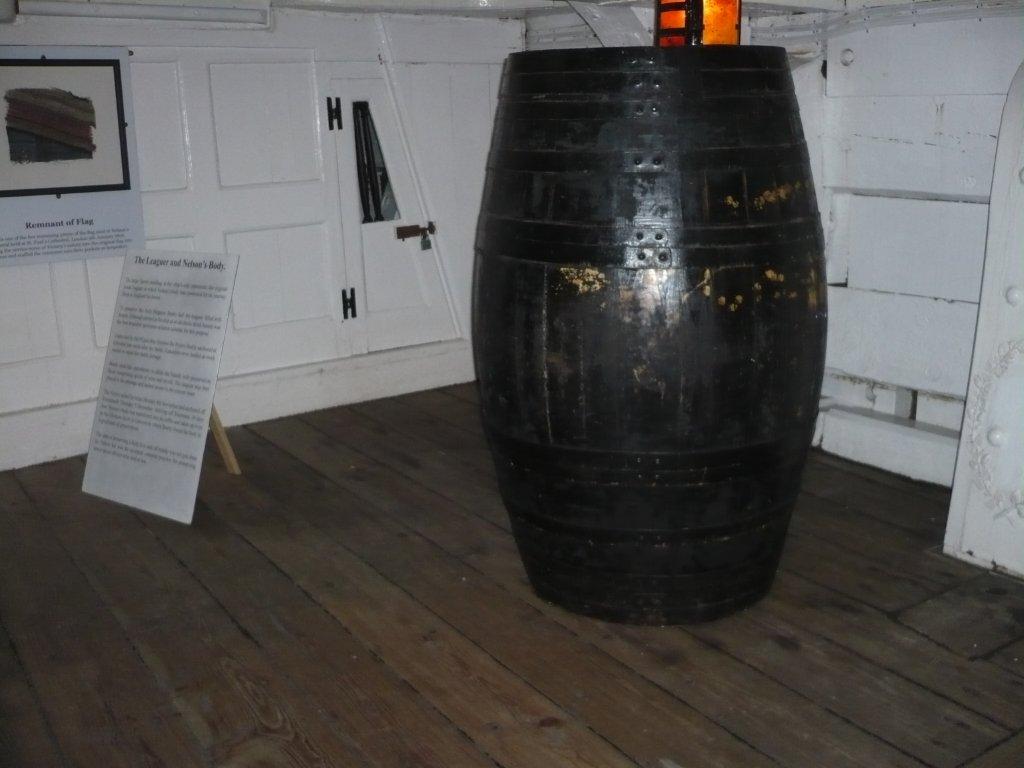
–Nelson died on the orlop deck of HMS Victory, the 104-gun ship still on display in Portsmouth. But in 1805, it was a long voyage (Victory had been mostly dismasted) back to England. What to do with his lordship? It was decided to insert him into an empty ship’s cask and then fill the cask with brandy to preserve the body. It worked. Mostly. On lying in state, Nelson’s face had to be covered with a handkerchief; the rest of him was in his full-dress uniform. He’s buried in a massive tomb in St. Paul’s that belies the actual size of its occupant. Elizabeth and I saw the funeral barge that carried his coffin to St. Paul’s. In the novel Hornblower and the Atropos, the junior captain is in charge of the barge when it begins to take on water from the Thames. Hornblower and the barge crew make it to the cathedral, but not before he suffers the most epic panic attack, I think, ever recorded in fiction.

Oh, and a ration of rum or brandy allotted daily to British sailors came to be known as “Nelson’s Blood.” Ew.
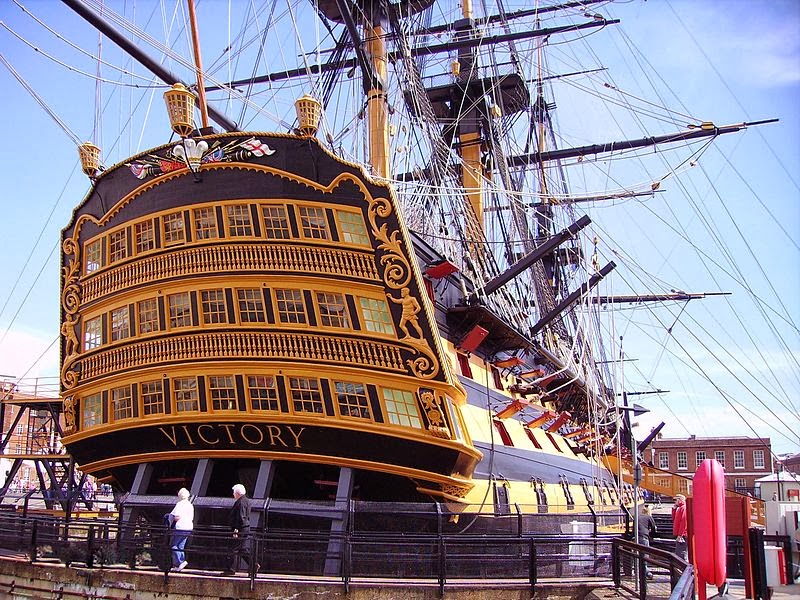
HMS Victory’s stern, Portsmouth.
A water cask like the one that carried Nelson’s body.
Nelson’s tomb in the crypt of St. Paul’s, London.
The royal barge, on display in Portsmouth, that gave young Capt. Hornblower such a hard time.

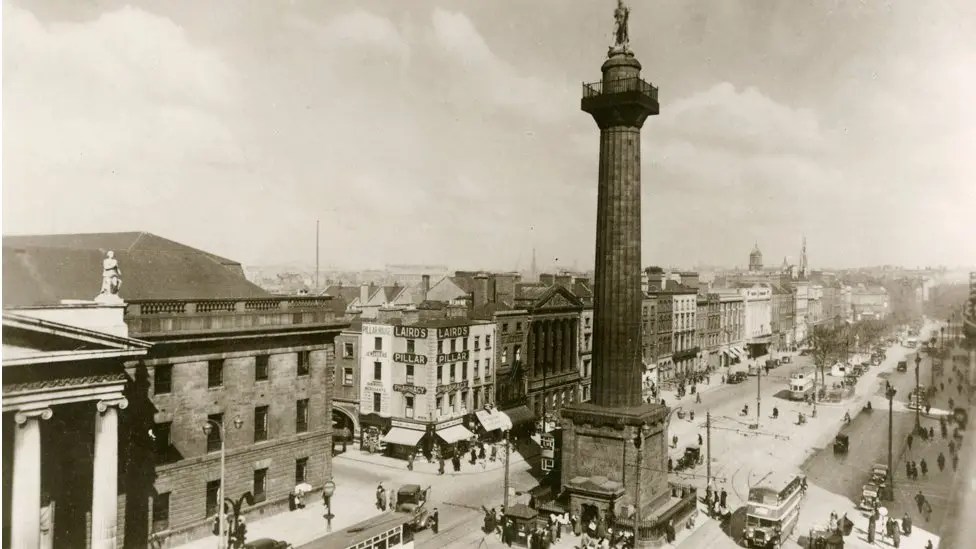
–What Nelson lacked in height he made up for in monuments. The little admiral was placed, in stone, atop two famous columns. One stands in, of course, London’s Trafalgar Square. Another once stood on O’Connell Street in Dublin, uncomfortably close to the General Post Office, the site of the 1916 Easter Rising. Fifty years after the Rising, the IRA blew Lord Nelson up.

So it goes.
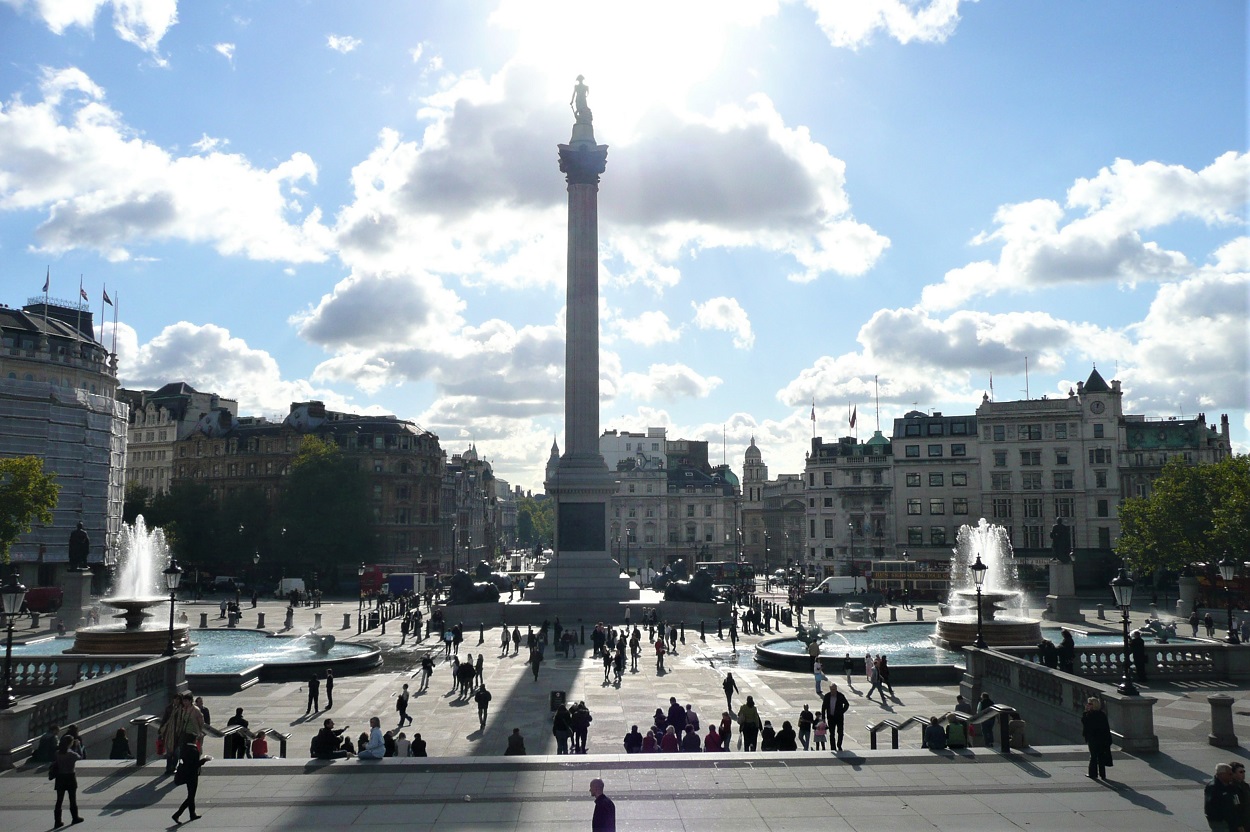
Nelson’s Column, Trafalgar Square.
“Nelson’s Pillar,” Dublin. The General Post Office ia at the extrme left edge of this photo.
My doggie, Nelson, was a West Highland White Terrier.

And it’s only appropriate to close this piece with this song.


MAGA, 1764

12 Sunday Oct 2025

Posted by ag1970 in trump, Uncategorized

≈ Leave a comment

Tags

ancestry, family, Family history, genealogy, History

I love that Arroyo Grande—especially Branch Street Arroyo Grande—has an independent bookstore. My ego is happy because Monarch Books carries my books. We were waiting for a table to open across the street—my elder son’s and my younger sister’s birthdays—so I wandered across Branch to look for my books. I found them, but even I’m not so vain as to go into a bookstore and just looky-loo.

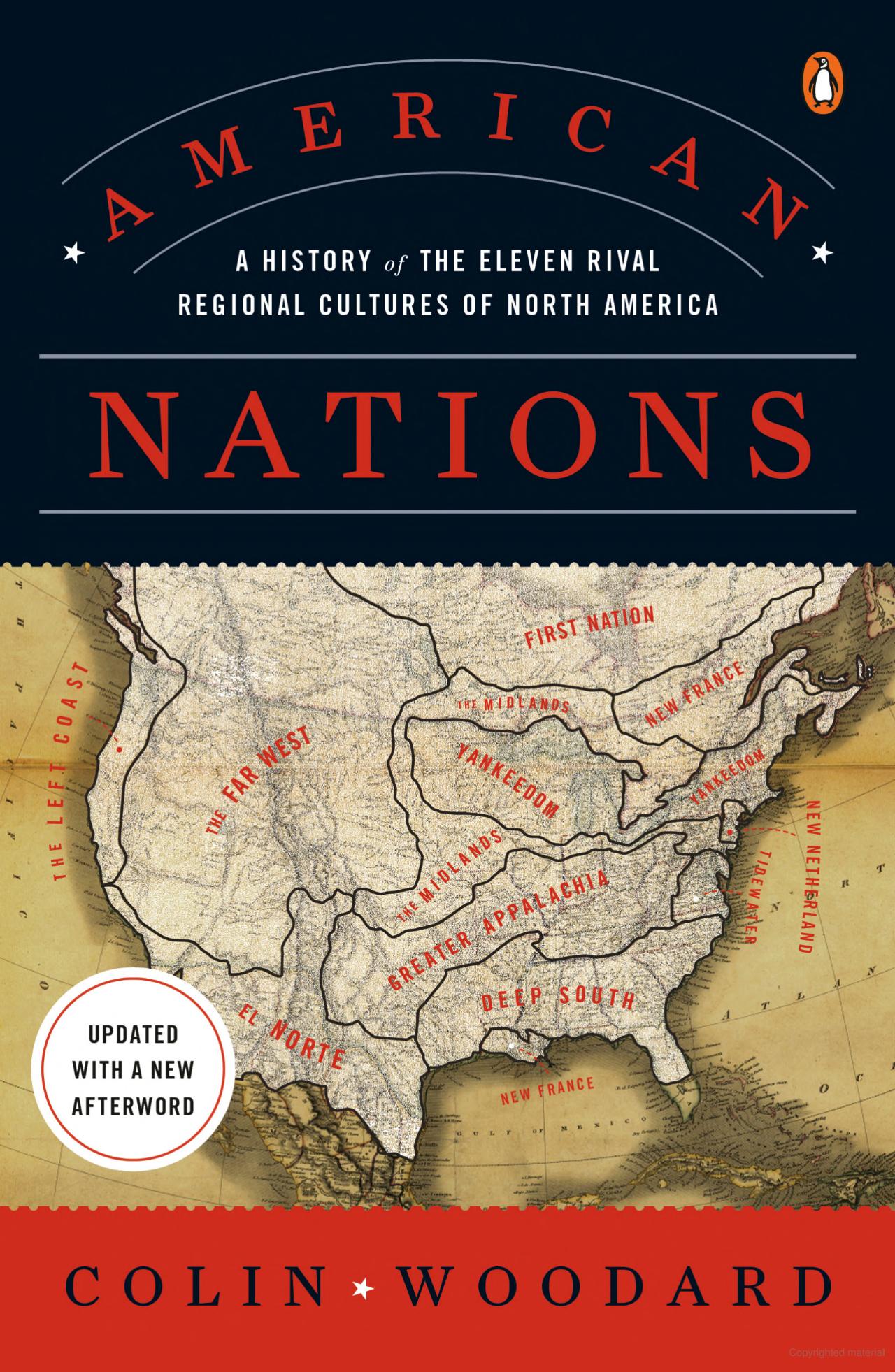
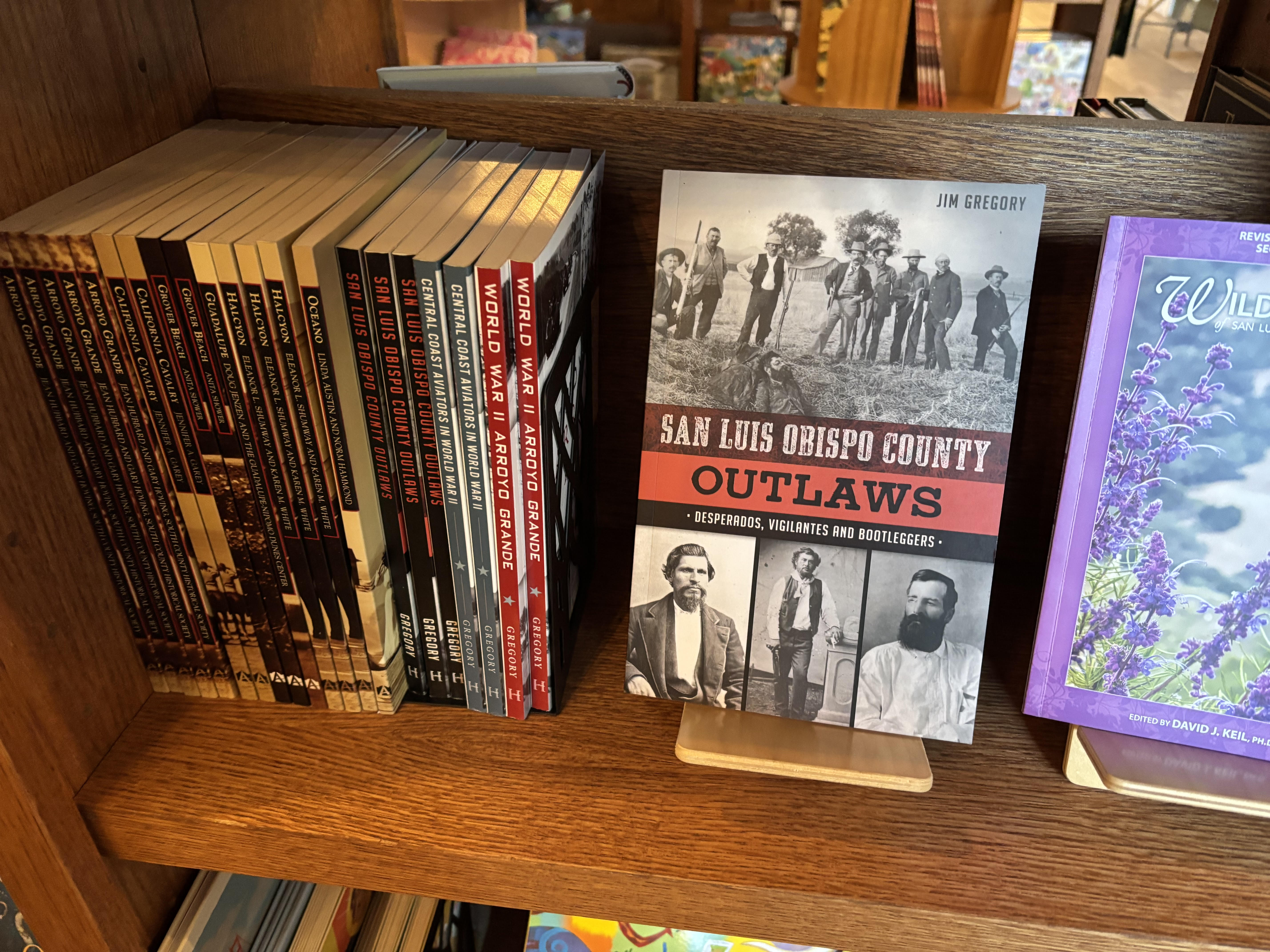
So I bought a book. This book.

I’ve only just started it, but it’s already one of the most extraordinary books I’ve read in years. I rarely start books at the beginning, so I dove into the first chapter about one of Woodard’s seven nations, “Greater Appalachia,” because my father’s family has roots there, planted firmly on Missouri’s Ozark Plateau.

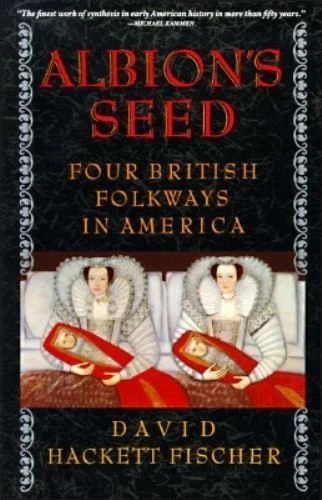
It reminded me of another extraordinary book I read years ago. I shared excerpts from Albion’s Seed with my AGHS history students, again, partly out of vanity, because another part of my family, Episcopalians all, comes from a second nation in Woodard’s book, “Tidewater.” They lived in places whose names—Fredericksburg, Spotslyvania, Petersburg—would be known as terrible battlefields a century after their arrival in America.


One of them, a collateral ancestor, Roger Gregory, married Mildred Washington, the great man’s aunt, and that homely name has persisted in my family, down to my own Aunt Mildred, who preferred to be called “Bill.”

Roger eventually sold Mt. Vernon to Washington’s father. My family is not known for its real estate acumen.

But Albion’s Seed revealed that Tidewater Virginians socialized their children by teaching them dance. That tradition carried down to my grandfather, John Smith Gregory, allegedly the sweetest waltzer in Texas County, Missouri. John could make his partner believe that the sawdust-strewn floor at a barn dance was polished glass. Even in his fifties, his partners were usually teenaged girls, waiting patiently for their turn on Mr. Gregory’s dance card.

My grandmother seethed. What can I say about my Grandmother Gregory? When she visited us kids in Arroyo Grande, we hid her dentures.

Her fried chicken, however, was sublime.

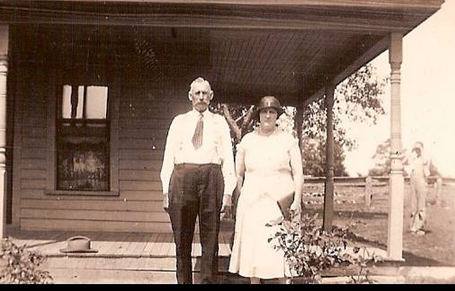
My grandparents, John and Dora Gregory, in front of the farmhouse. As you can tell, my grandmother–a delegate to the 1924 Democratic Convention in Madison Square Garden—was a hard woman to knock down in a windstorm. My dad is at right.

One day in 1933, she called my dad back to the farmhouse, which is still there, because he was barefoot. Dad was going to cross the road with Grandfather John to visit a neighbor. Grandma Gregory’s Scots-Irish pride would not permit a son of hers to visit Mr. Dixon barefoot.

So my grandfather, mostly deaf by then, never heard the speeding Ford roadster that killed him.

They let schools out the day of Mr. Gregory’s funeral.

There have been other books written about people like my ancestors, who migrated from the English Midlands to Tidewater Virginia, then Kentucky, then Missouri, until oil brought them to California. But other ancestors, like my Grandmother Gregory’s, came from Ulster or the Scots Lowlands, desperately poor, oppressed and spoiling for a fight. If they couldn’t get one in the British Isles, they’d be happy to start one in America. Woodard calls them the Borderlanders.

Former Virginia Sen. James Webb wrote Born Fighting, about the Scots-Irish military tradition in American history. Many of them, of course, marched in Stonewall Jackson’s “foot cavalry,” perhaps the finest infantry in the Victorian world, named for the rapidity of their marching. My Uncle Tilford’s middle name was “Stonewall.” So it goes.

And, of course, JD Vance’s offering was Hillbilly Elegy, a petulant book I started twice and then put down, never to return. I have started David Copperfield six times, and I will finish it because the book deserves it.

American Nations deserves a first reading and then many more.

To my shock, I discovered the echo of the January 6 people in the first chapter about “Greater Appalachia,” a region whose culture informs the Ozark Plateau.

REUTERS/Leah Millis/File Photo


Among the observations that Woodard makes about the people of Greater Appalachia, whom he calls the Borderlanders:

–They didn’t trust law courts. Justice, instead, was personal and retributive. The Hatfield-McCoy bloodletting is an example of a Borderland tradition that persisted long after their ancestors came to America.

–Within the group, Borderlanders did not tolerate dissent. Those, including kin, who violated the moral code, grounded in a cultural construct of reality, were dealt with violently.

–Borderlanders hated outsiders, most of all Native Americans, on whose land they squatted. When indigenous people resisted, the retribution visited on them was merciless, including the scalping of children.

–Because they’d been so exploited by absentee landlords in England, Scotland and Ulster, they despised city people, including those in Philadelphia, where a group took up arms, marched on the City of Brotherly Love (even Philadelphia’s Quakers took up arms) and were turned back by cannon loaded almost to the muzzle with grapeshot and by sweet Enlightenment reasoning. Negotiation with Benjamin Franklin finally persuaded the insurrectionists, known as “the Paxton Boys,” to go home.

–While Borderlanders resented the wealthy and the powerful, they followed their own leaders, who rose to the top not because of their command of policy or sweet reasoning, but by the force of their personalities, their emotional appeal and the blandishment of their personal wealth. Disparities in wealth were enormous among these people, and they were tolerated. Woodard notes that the top ten percent monopolized land in AppalachianAmerica, while the lower half had no land at all.

It struck me, in reading the passage about the march on Philadelphia, that MAGA, as far back as 1764, has been an American tradition. Today’s movement, of course, is not ethnic, but it has the trappings—a sense of injustice, of entitlement, of envy and of incipient rage— the same forces that drove the Paxton Boys’ march on the city they despised.

I found some comfort in this understanding, which I hope is accurate, because, after all, we survived 1764.

There are other inklings of hope in my Borderland ancestry. I am named for and descended from two Confederate officers, one, a brigadier general (James McBride died of illness in 1862); the other, his son, Capt. Douglass McBride (my middle name), was vaporized by a Yankee artillery shell in Arkansas the same year.

You’d think we would’ve learned, except for my Uncle Tilford Stonewall Gregory’s middle name.

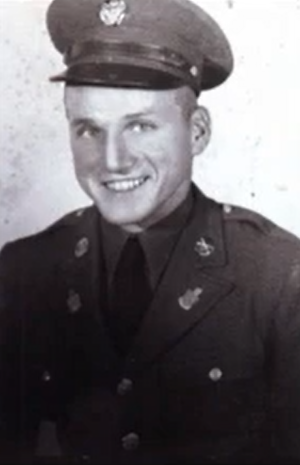
One of Tilford’s sons, Roy, was my cousin. When World War II came to America, Roy, from the Missouri Ozarks, joined the Army and became a member of the Oklahoma-based 45th Infantry Division. He would fight in Italy and Western Europe and was wounded twice—both times from shell fragments from the superb German field gun, the 88— and was recovering from the second when the Germans launched Operation Nordwind in January 1945, in support of the greater offensive in the Battle of the Bulge.

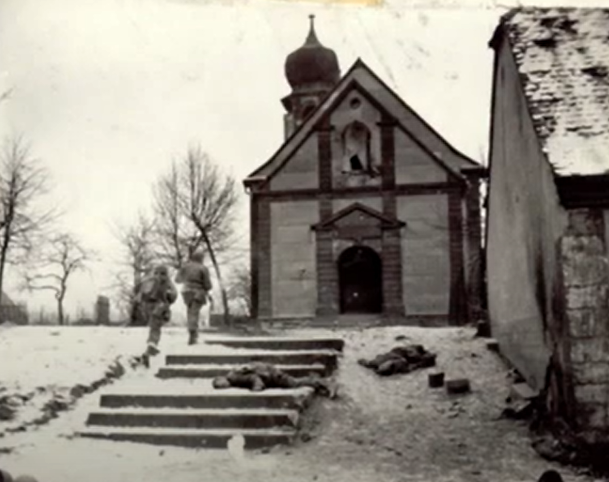
Roy, in recovery, was discharged from the hospital and sent to the front, to a French town, WIngen-sur-Moder, on the German frontier. His company was attacked by Waffen-SS mountain troops, soldiers who fought without mercy, and it was their artillery that finally claimed him. He died on the steps of the village church.

He came home to Greater Appalachia, to the Allen Cemetery in Texas County, Missouri, where his grave is not far from our Grandfather John’s, the sweetest waltzer in Texas County, Missouri.

My cousin, you see, was an Antifascist.

My cousin Roy; the church where he died.


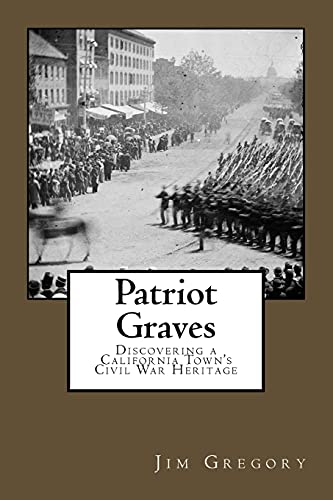
–Jim Gregory’s book Patriot Graves: Discovering a California Town’s Civil War Heritage, is about the sixty Union Civil War veterans buried in the Arroyo Grande District Cemetery.

Version 1.0.0

John Lennon’s Birthday

10 Friday Oct 2025

Posted by ag1970 in Uncategorized

≈ Leave a comment

Tags

History, john-lennon, Writing

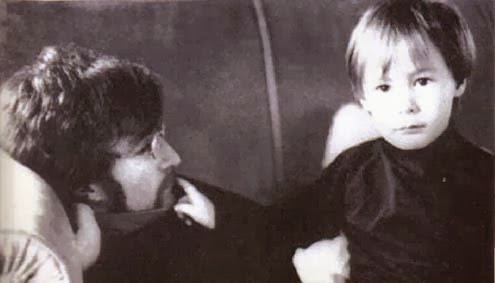
John and Julian, his elder son.

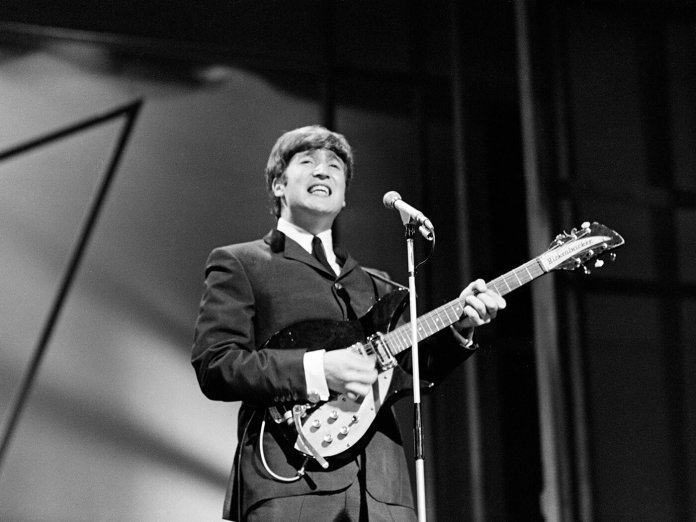
John Lennon was born on October 9, 1940, in Liverpool. The following month, the first round of raids from The Blitz, the Nazis’ attempt to pulverize England from the air, began. In an often merciful phenonmenon that neuroscientist call “infantile amnesia,” Lennon’s earliest memories, as he tried to sleep in the arms of his mother, would’ve been the detonations of Luftwaffe bombs, both muffled and instant, the fetid stink of human waste in the network of shelters designed to protect the port city’s workers and stevedores and their families, and, when the raid was over, he would’ve felt cold air and smelled the stink of burning buildings, burned Liverpudlians, and air made dense and moist by firehoses.

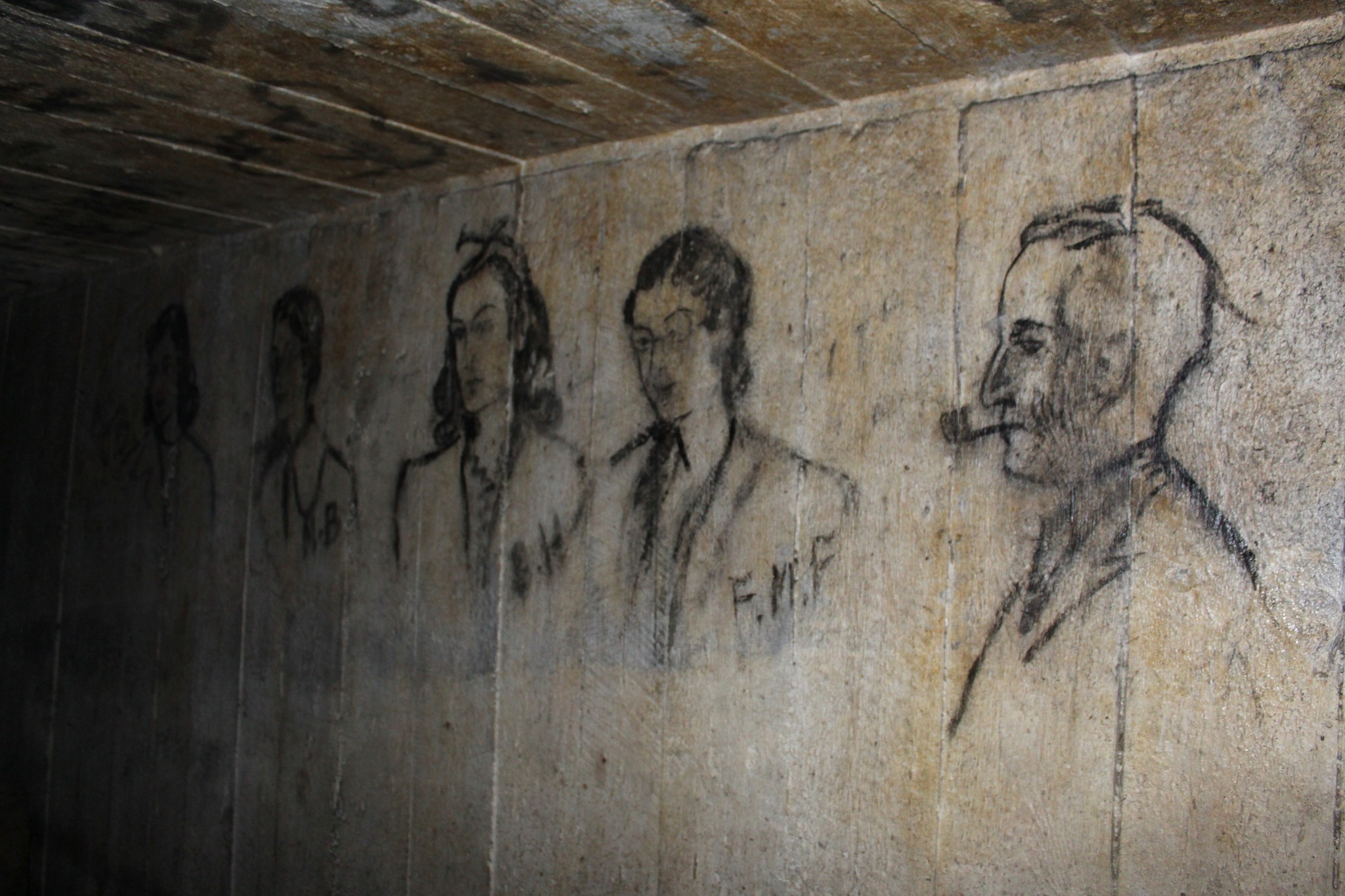
An artist of a different kind left his or her mark in this Liverpool air-raid shelter.


So that’s how Lennon’s life began.

John and Cynthia Lennon


His father, Alfred, was a merchant seaman; and the month John was born, U-boats sent 350,000 tons of Allied shipping to the bottom. The u-boats’ goal was to starve Great Britain, and, in 1940, they were winning. Alfred, also known as “Freddie,” wasn’t. He went AWOL in 1943, allegedly fleeing for stealing a bottle of beer, and the checks he sent to his little family stopped coming.

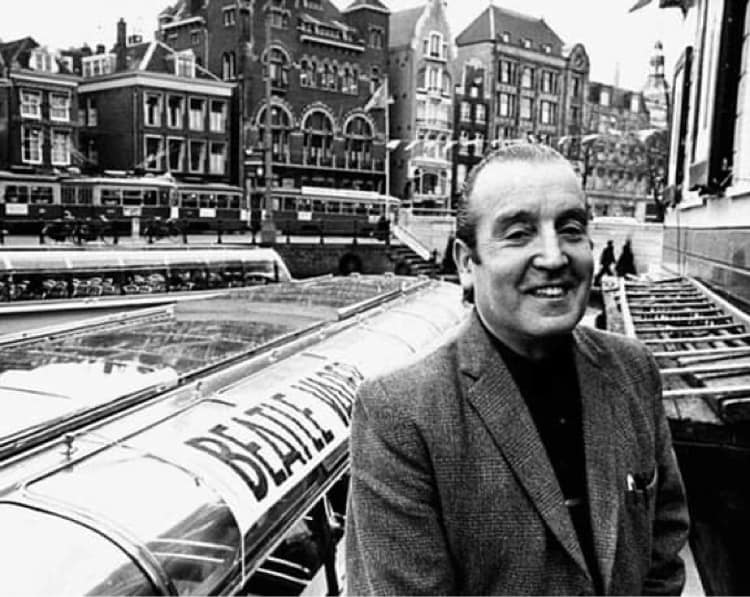
Freddie in the 1970s.

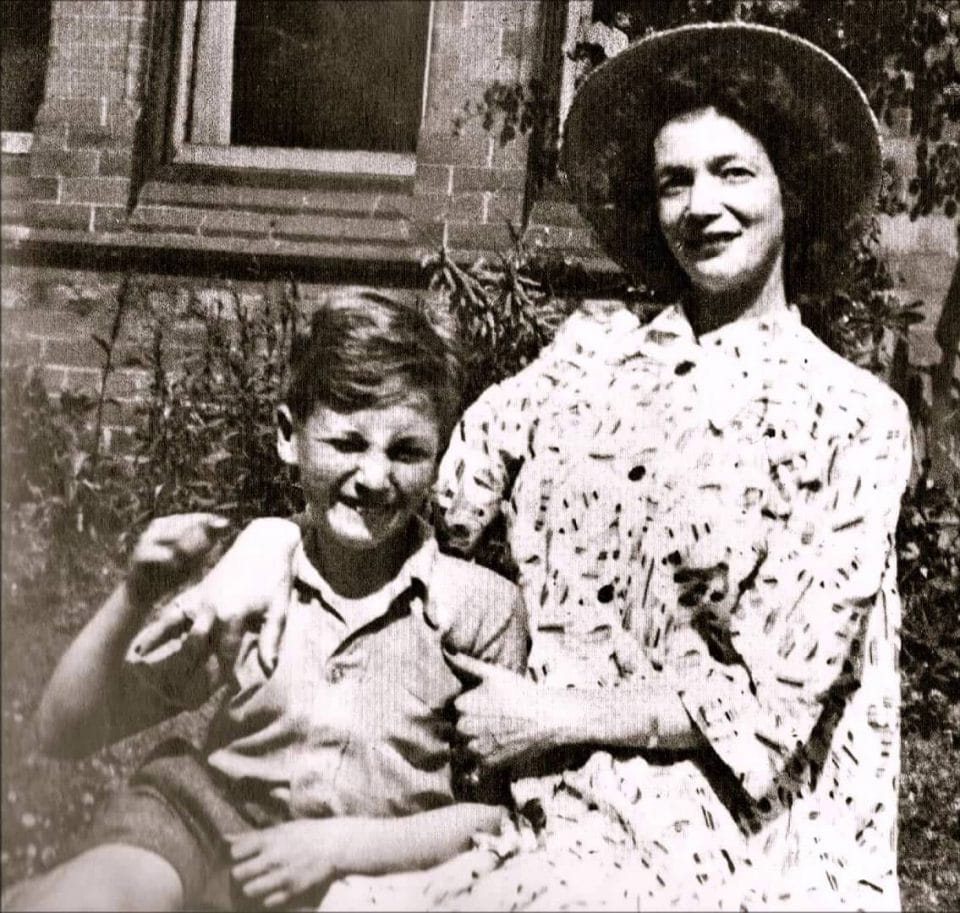
This means that John’s childhood would’ve been a meager one, and that included the love any little boy would’ve wanted from his parents. He adored him Mum, Julia, but she was more of a playmate—musical, as was Freddie, high-spirited, funny—than a real Mum. It was her sister, Mimi, who did the mothering when Lennon was five.

Julia was walking near Mimi’s house in 1958 when she was killed. She was run down by a car driven by an off-duty policeman. John succumbed to what he called a “blind rage” for the next two years, fighting and drinking.

But what Julia left behind for her son the guitar she bought for him. It was his first.

Subscribe

  • Entries (RSS)
  • Comments (RSS)

Archives

  • January 2026
  • December 2025
  • November 2025
  • October 2025
  • September 2025
  • August 2025
  • July 2025
  • June 2025
  • May 2025
  • April 2025
  • March 2025
  • February 2025
  • January 2025
  • December 2024
  • November 2024
  • October 2024
  • September 2024
  • August 2024
  • July 2024
  • June 2024
  • May 2024
  • April 2024
  • March 2024
  • February 2024
  • January 2024
  • December 2023
  • November 2023
  • October 2023
  • September 2023
  • August 2023
  • July 2023
  • June 2023
  • May 2023
  • April 2023
  • March 2023
  • February 2023
  • January 2023
  • December 2022
  • November 2022
  • October 2022
  • September 2022
  • August 2022
  • May 2022
  • April 2022
  • March 2022
  • February 2022
  • January 2022
  • December 2021
  • November 2021
  • October 2021
  • September 2021
  • August 2021
  • July 2021
  • June 2021
  • April 2021
  • March 2021
  • February 2021
  • January 2021
  • December 2020
  • November 2020
  • August 2020
  • July 2020
  • June 2020
  • May 2020
  • April 2020
  • January 2020
  • December 2019
  • November 2019
  • October 2019
  • September 2019
  • August 2019
  • May 2019
  • April 2019
  • March 2019
  • February 2019
  • January 2019
  • December 2018
  • November 2018
  • October 2018
  • September 2018
  • July 2018
  • June 2018
  • May 2018
  • April 2018
  • March 2018
  • February 2018
  • January 2018
  • December 2017
  • November 2017
  • October 2017
  • April 2017
  • March 2017
  • December 2016
  • November 2016
  • October 2016
  • September 2016
  • August 2016
  • July 2016
  • June 2016
  • April 2016
  • March 2016
  • February 2016
  • January 2016
  • December 2015
  • November 2015
  • October 2015
  • September 2015
  • August 2015
  • July 2015
  • June 2015
  • May 2015
  • April 2015
  • March 2015
  • February 2015
  • January 2015
  • December 2014
  • November 2014
  • September 2014
  • August 2014
  • July 2014

Categories

  • American History
  • Arroyo Grande
  • California history
  • Family history
  • Film and Popular Culture
  • History
  • News
  • Personal memoirs
  • Teaching
  • The Great Depression
  • trump
  • Uncategorized
  • World War II
  • Writing

Meta

  • Create account
  • Log in

Blog at WordPress.com.

  • Subscribe Subscribed
    • A Work in Progress
    • Join 68 other subscribers
    • Already have a WordPress.com account? Log in now.
    • A Work in Progress
    • Subscribe Subscribed
    • Sign up
    • Log in
    • Report this content
    • View site in Reader
    • Manage subscriptions
    • Collapse this bar
 

Loading Comments...