How to take teenagers to Europe
10 Tuesday Dec 2024
Posted in Uncategorized
10 Tuesday Dec 2024
Posted in Uncategorized
22 Friday Nov 2024
Posted in Film and Popular Culture, Uncategorized


Mr. Amateur Movie Critic strikes again.
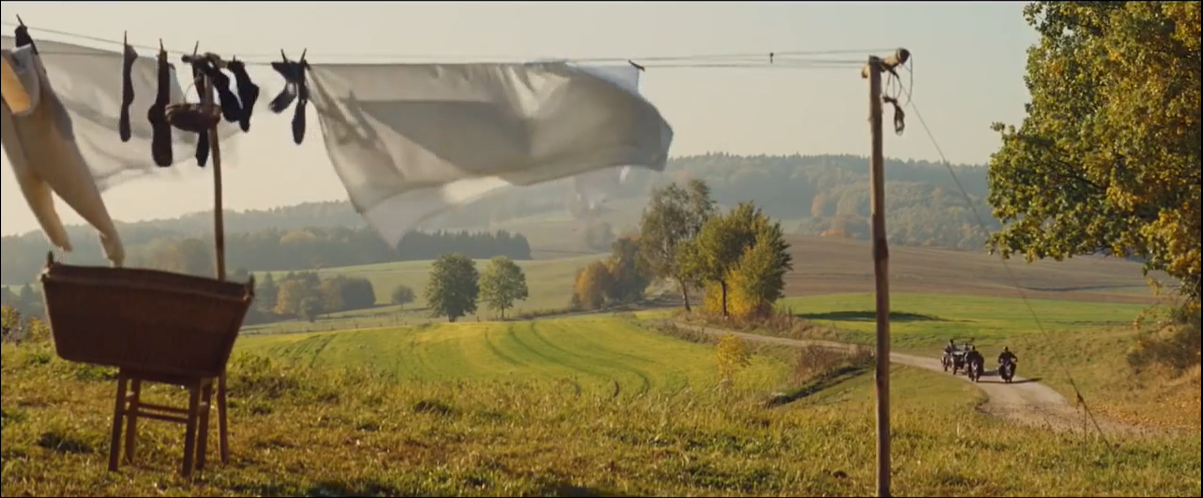
I started to watch the opening scene to Quentin Tarantino’s “Inglorious Basterds” last night and I was transfixed. Luckily (yeah, we’re still cable) I found it, I think on Showtime, and was able to start the film over again.
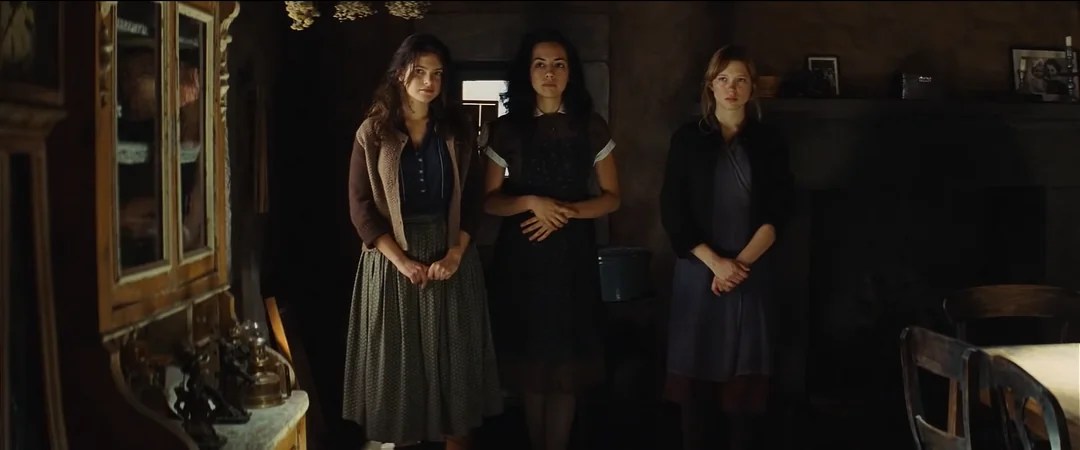
This has to be one of the most beautiiful–and most sinister–film scenes I have ever seen. This part shows of the arrival of the immensely charming SS officer and his interrogaton of a French farmer. (One of the lovely daughters, Lea Seydoux, became Owen Wilson’s love interest at the end of “Midnight in Paris.”)
I will not show the rest of the scene because it’s too cruel–as is the rest of the film, with its brain-bashings, forehead carvings, index finger wound-probings, scalping of Nazis, German MP-40 (submachine gun) massacres, mass incinerations, and so on.
The usual Tarantiono stuff. I could do without about 70% of it., stuff that might make even San Peckinpah blush. I guess I have a love/grossed out relationship with this Tarantino (“Pulp Fiction” is one of my favorite films).
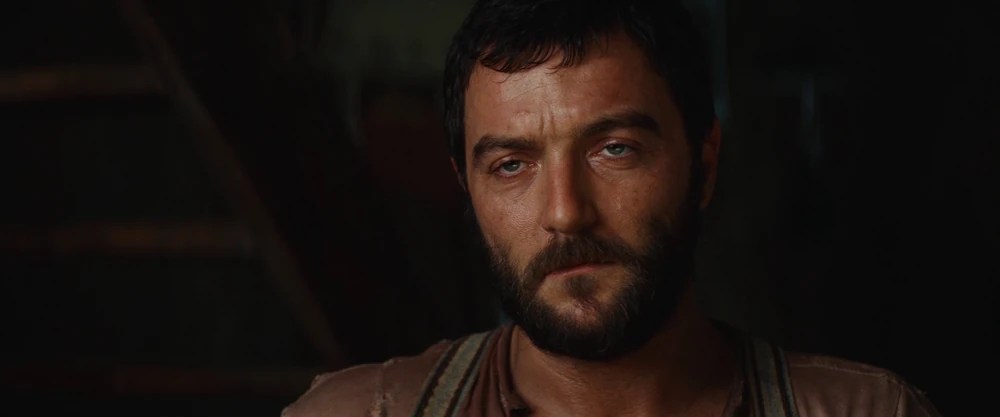
But this scene, with the interplay between the SS hunter and the farmer hiding his prey–a family of Jews is just beneath the floorboards of the farmhouse, is one of the most brilliant film sequences I have eve seen. Ever. Both actors–Perrier LaPadite at the farmers and Christopher Walz at the SS officer, charming and ingratiating and clever, and increasingly murderous, deliver one of what I think is one of the finest film dialogues I have ever seen.
To me, what makes it brilliant comes near the end, when, in silence, a tear creeps down the farmer’s face.
Here is the scene, in its entietry. Warning: it is violent at its end. It needs to be stopped. So did the SS. As fraught as our relationship is today, that’s exactly what the Allied Powers did. It took too long.
17 Sunday Nov 2024
Posted in trump, Uncategorized

So says Defense Secretary nominee Pete Hegseth, who went on to say that “unity is our strength.” I fail to see the contradiction that he does.
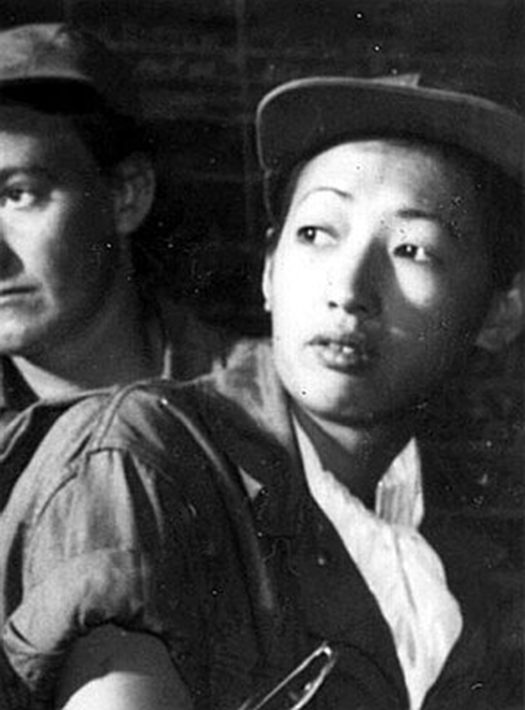
Women’s Airforce Service Pilot Hazel Ying Lee, killed in the line of duty, 1944.
Baron Friedrich von Steuben, who played a major role in training Washington’s Continental Army, was gay.
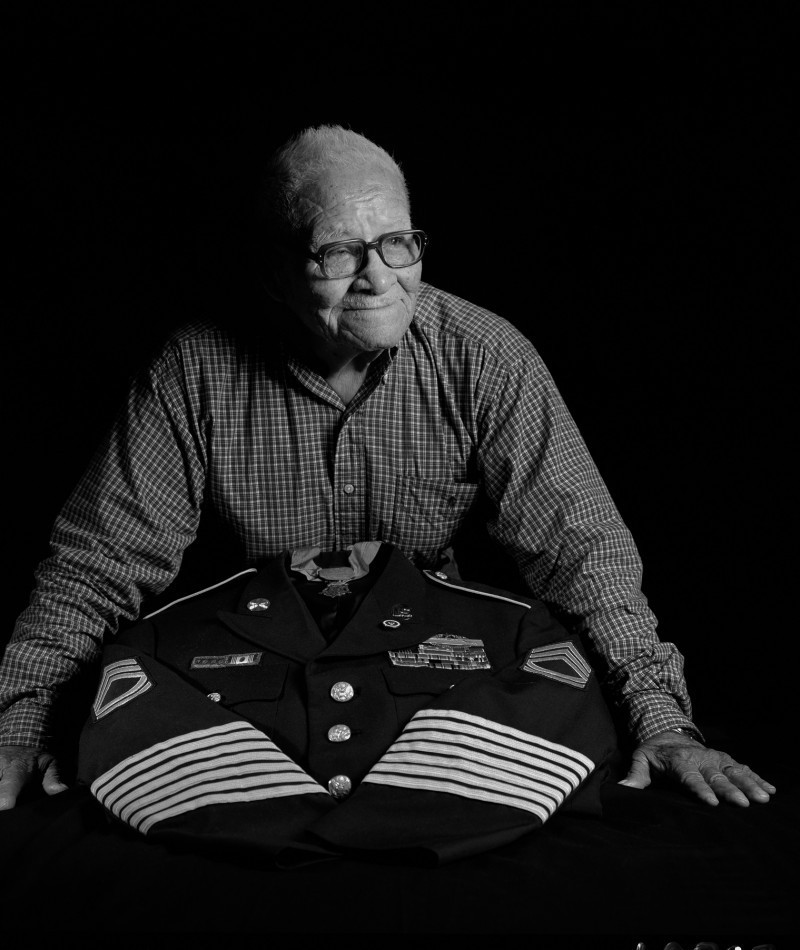
Sen. Daniel Inouye, 442nd Regimental Combat Team, Medal of Honor.
Navy veteran Tammie Jo Shults, who, in 2018, brought her Southwest Airlines passenger jet safely in after an engine had exploded in mid-flight.
Henry Johnson, 369th Infantry, “The Harlem Hellfighters.” When Johnson and a comrade were attacked by twelve Germans in May 1918, he defended his friend in hand-to-hand combat, killing or wounding several Germans with a bolo knife. He was awarded a Croix de Guerre with a Gold Palm, the highest French decoration for bravery.
Lt. Col. Bree Fram is an astronautical engineer with the U.S. Space Force. She is transgender.
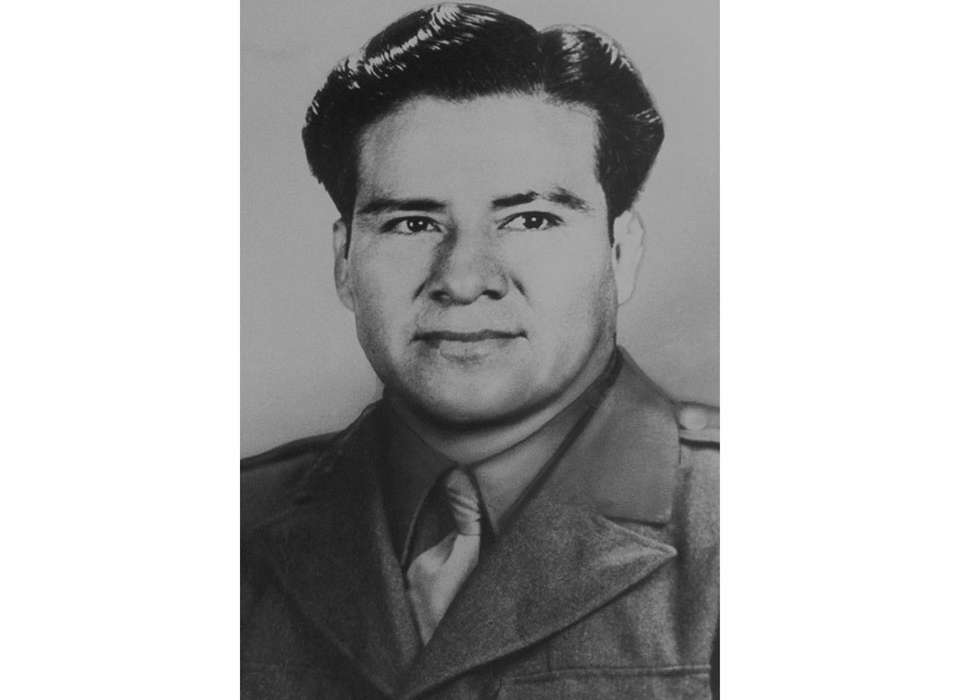
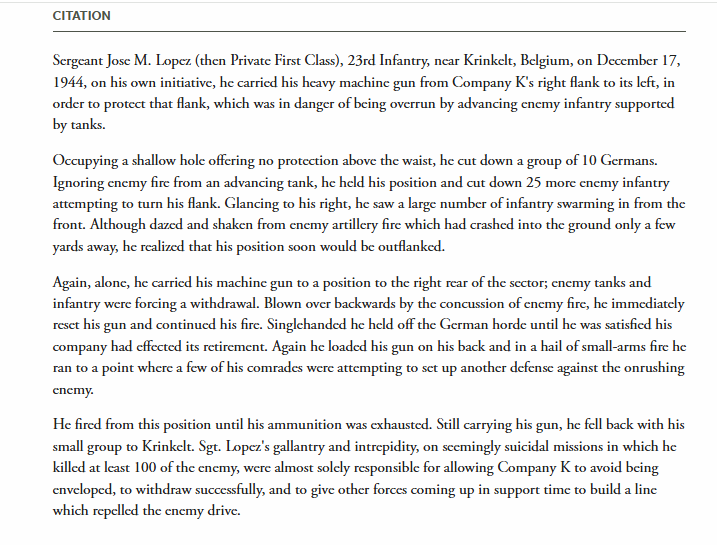
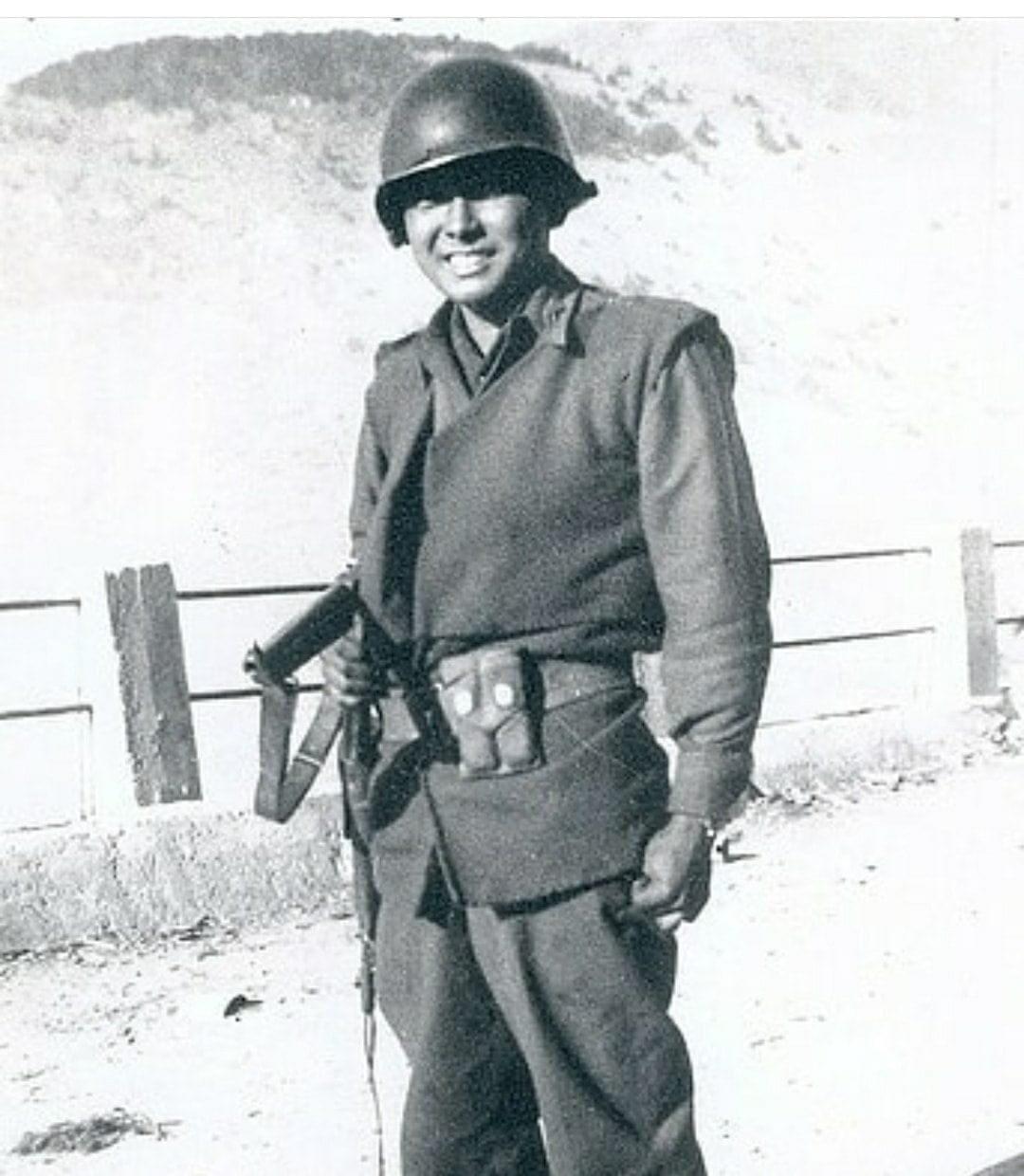
Sgt. Jose Mendoza Lopez was born in Mexico. Below is his Medal of Honor citation.


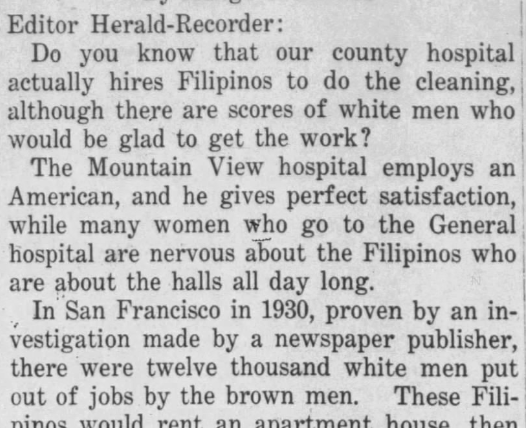
A view of Filipino immigrants from the Arroyo Grande Herald-Recorder, March 1934:
How Filipionos responded:
https://www.militarymuseum.org/1FIR-SLO.html
15 Friday Nov 2024
Posted in Arroyo Grande, Uncategorized
When my mother died, I was seventeen. “Tell your father I said goodbye,” she said. Those were the last words she said. She said them to me.
She had taught me to love words. She was Irish, so that made sense.
For years after she left us, I read. Incessantly. Hemingway, Graham Greene, John LeCarre, Katharine Anne Porter, Barbara Tuchman, Richard Brautigan, Tom Wolfe and Thomas Wolfe, Ken Kesey, Michener and Rutherford, in their vastness, electric Kerouac, the murderous men and women captured in ways that kept me up at night (Vincent Bugliosi, Norman Mailer, Truman Capote); the science fiction of Vonnegut and Heinlein, the strangeness of Hesse, and all the New Journalism that I could inhale.
But the books I kept turning back to included the Civil War historian Bruce Catton and his three-part study of the Army of the Potomac (“Mr. Lincoln’s Army.”) Many years later, I had read Catton’s books so often—I read them every time I missed my Mom—and so deeply that when we visited Gettysburg with my little boys, we didn’t need a tour guide. At every stop, I knew where we were and what had happened there.
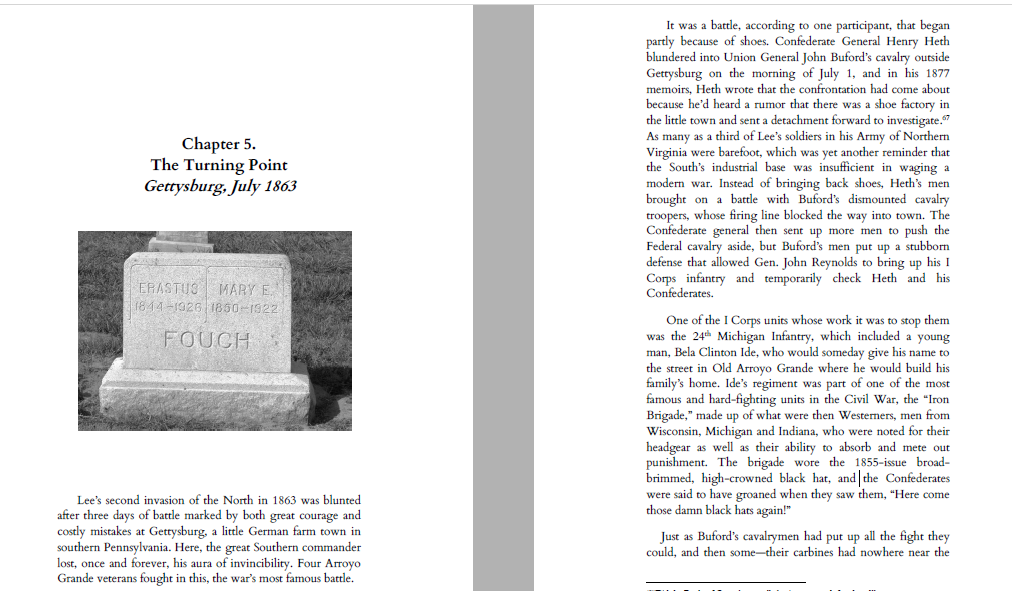
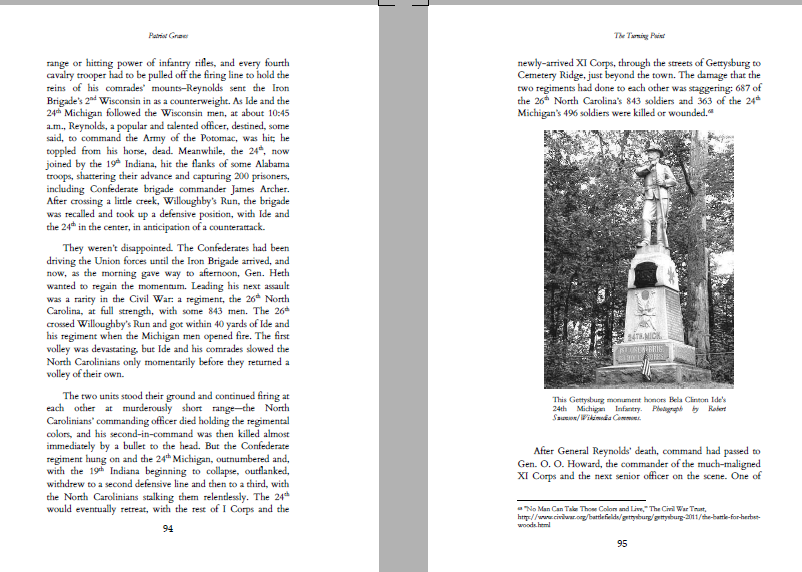
That led, fifty years later, to a book I wrote about the Civil War. Hare are a few passages about Gettysburg.


As disgusted as I am with Steinbeck—recently revealed to have stolen much of his research for The Grapes of Wrath from Sanora Babb, a gifted writer, a woman,—the other book that sustained me when I missed my mother was the ever-so-slight Cannery Row. Mom loved Doc, in real life biologist Ed Ricketts, his politeness toward dogs and the time he ordered, out of whimsy, a beer milkshake.
We took Mission kids on a field trip to Cannery Row when I was a young teacher, to the Aquarium, which I still love despite the fact that they won’t let me bring a penguin home with me, and there was an exhibit that replicated the lab and office of Doc’s Pacific Biological. It would be several years before I’d be as enchanted and as humbled as I was that day. That was when we took AGHS kids to Assisi, and I prayed below St. Francis’s little tomb.
And I am due to take flowers to my Mom.
She would’ve been pleased to know that high-school kids loved to be read aloud to (sorry for the gracelessness of that construction) just as much as little kids do. There’s not much more that I loved than reading aloud to them. Years later, I decided to try it again (below) with the slightest of books, Cannery Row, the book my mother, an incredible woman, loved, and the book that made me love her all over again.
13 Wednesday Nov 2024
Posted in Film and Popular Culture, Uncategorized
I have been a longtime fan of Dire Straits, Mark Knopfler, this album and this song, “Skateaway,” based on watching young women like these zipping through L.A. traffic.
And then, years later, I found this video and I thought it was brilliant. I still do today. I’ve always been hesitant to share it for fear of being labeled a dirty old man, but the video’s meaning is closer to the song’s: it’s a tribute, too, to freedom, strength, athleticism and…oh, yes…to beauty, I guess.
13 Wednesday Nov 2024
Posted in American History, History, News, Uncategorized
A citizenry that feels victimized.
The promise, for them, of vindication and retribution.
Propaganda that effectively generates alternative reality.


The promise of quick solutions to the nation’s problems.
An obedient and cowed legislature.
A legislature, thanks to minority dominance, that has proved unable to pass meaningful legislation.
Hypermasculine appeal to young men.


Executive power magnified by placing sycophants in high office.
The threat—or the actuality—of purging the military command and replacing its leaders with loyalists.
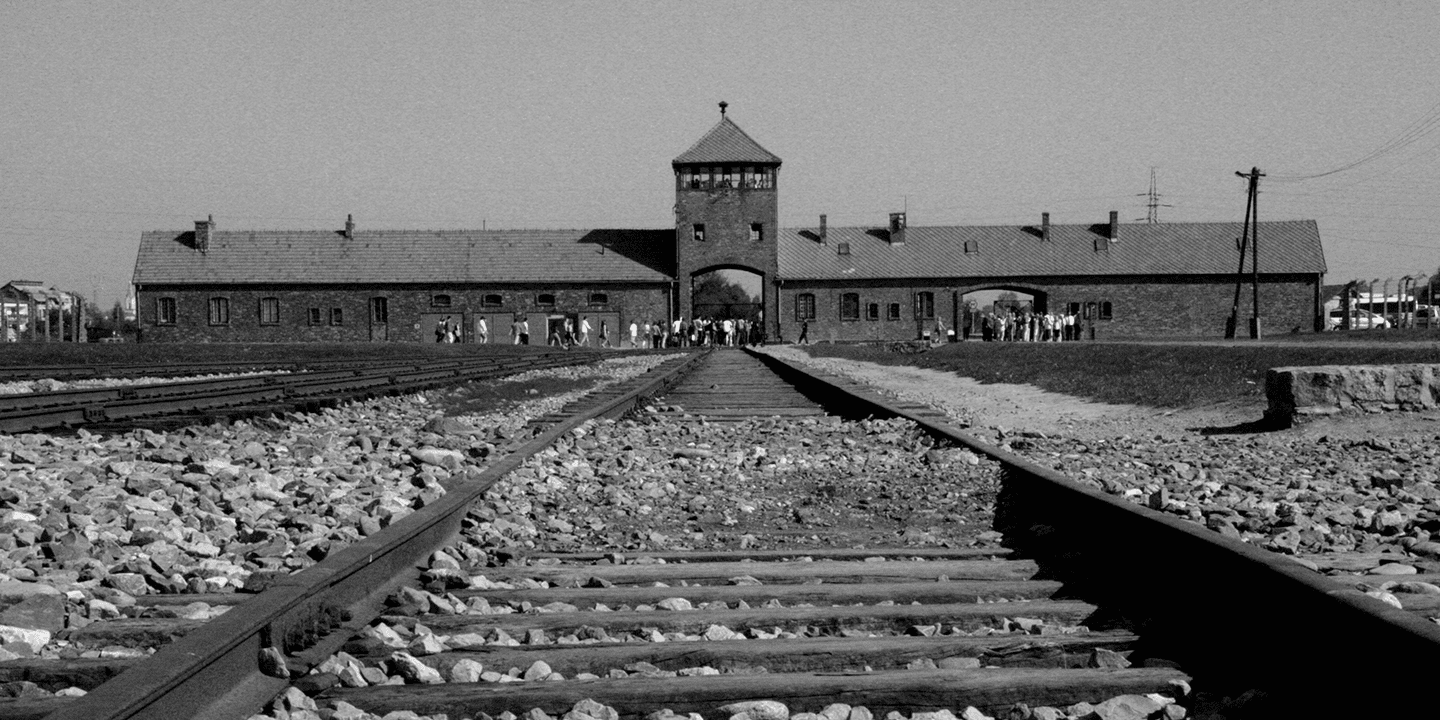
The threat of prosecution of political opponents, including imprisonment of the same—Dachau’s major purpose.
Allusions to mythical greatness in the nation’s past.
Pseudobiological assertions about threats to national /racial purity.


The denial that a dictatorship could ever happen in a nation like Germany (Goethe, Bach) or the United States (Lincoln).


The subordination of women.

07 Thursday Nov 2024
Posted in Uncategorized
Tags
2024-election, britain, england, History, politics, womens-history


The best of times, the worst of times. Nineteen years after the Diamond Jubilee, Britain’s vaunted Navy was mauled by the German High Seas Fleet at the 1916 Battle of Jutland. At right is the British battle cruiser Invincible. She wasn’t.
And so, as of last night, neither are we. Neither am I. In my self-doubt—was everything I taught about America for over thirty years a lie?—I needed to turn to a constitutional monarchy to tamp down, if only in shallow ground, my fear for the loss of our republic. I turned, specifically, the this Shelley poem.

Shelley’s poem reminds me a bit of Jonathan Edwards’ sermon “Sinners in the Hands of an Angry God.” Both men beat the hell out of you, only to let you off the hook with the faintest of hope at the ends of their respective literary landmarks. Edwards—after some of his Puritan parishioners had fainted in the pews out of abject terror—held up the reputation of a loving God. Shelley’s more nebulous, with his “glorious Phantom.” It’s a thinner sliver of hope than God is.
Shelley was a Romantic, but he was in this case an accurate political analyst. George III, having lost America, was dotty, slipping in and out of bouts with insanity that were made worse by treatments that neither a king nor a commoner deserved. His pinch-hitter was the Prince Regent, George IV on Papa’s death, who lacked morals and wisdom and common decency. With the locomotive being invented in his time, George IV was definitely a train wreck. He was, a shipwreck, too.
And finally, way down here in the essay, is my thesis: England was saved, after 1819, by a stunning series of reforms that transformed a plutocracy into something approaching democracy and likewise transformed the kind of soulless capitalism, evoked so passionately by Dickens, into an economy that—finally and reluctantly—recognized the working class as human beings.
It was not a straight path. The president-elect has theatened to turn the military loose on protestors. The British government did just that. In Manchester’s St. Peter’s Square in 1819, British cavalry charged into a crowd of working-class protesters who had the audacity to demandy parity in Parliament for urban boroughs vs. rural boroughs, dominated by the immense power of the landed aristocracy. About a dozen were killed; 400 were injured.
England would continue with the kind of xenophobia that marks successful modern American politics.
Theirs was deadly, too: A million Irish died in their Famine while grain harvested in Ireland was sent to England; the Sepoy Rebellion in 1857 India would be crowned by lashing suspected ringleaders to the muzzles of cannons, which were then fired. And, of course, Britain would join in the plunder of Africa, the European competition there tempered—so fierce that it threatened war among White people on the Continent— finally, by the Congress of Berlin in 1885. In the interlude, Britain used Indian poppies to win over the Chinese, who became addicted to opium, and then fought two wars to force their trade conditions on the devastated nation. It was the Art of the Deal.

So Britain struggled and inflicted great cruelty. But along the way, as the power of the monarchy began to ebb and pass to Parliament (It’s notable that Article One in our Constitution is devoted to Congress). For Victorian England, this meant a kind of golden age of power and prosperity—named for a queen who thought it unwise Royal Navy sailors to grow beards–in which there was painful, incremental, but important progress.
I’m not suggesting that we are entering a similar age of reform. We are in for hard times.
Trump, born at the onset of the Boomer Generation, is the final prank we—pampered and indulged as children— have to play on the generations after us, who deserve so much better from us.
The next four years will be especially hard on women, as they were on British women in Victoria’s time, in the age of the Ripper murders, of women being banished from the industrial workforce to become the Ripper’s prey, of suffragists being force-fed in prison, a harrowing version of rape, of Emily Wilding Davison throwing herself in front of a horse at The Derby to show how ready women were to sacrifice themselves for the right to vote, of middle-class widows, required to wear, in mourning, black crepe—they went up in flames in an age when gas jets lit up middle-class homes—and of young women shell-fillers in World War I factories, called “canaries” because of the TNT poisoning that turned their skin bright yellow. TNT would sterilize some and kill others.
Women will suffer, now as they did in Victorian (and Edwardian) England. I do not know where American women are headed. I only know that I want to be there with them. I want to be there, too, with Dreamers, with union workers, with journalists, with teachers, with clergy.
Mary Travers, gone 15 years now, sings here, more cogently and more brilliantly, with Woody Guthrie’s lyrics, everything that I mean to say here.
02 Saturday Nov 2024
Posted in Film and Popular Culture, Uncategorized

The Los Angeles Dodgers has their World Series victory parade yesterday and that, of course, set me to wondering. This is downtown downtown L.A. What filming locations are nearby?
City Hall:


Top Row: An LAPD shield with the Hall; the not-very-good Gangster Squard; the only L.A. scene in Hollywoodland. The rest of the film was shot in Montreal. Second Row: The ending to L.A. Confidential; the same arches in Clint Eastwood’s The Changeling; L.A. Confidential’s detective bullpen was also shot inside City Hall. Bottom: A bored JJ Gittes at the City Council meeting, shot inside City Hall, as well.
Grand Avenue: In Chinatown, a valet brings up Mrs. Mulwray’s car outside the Millenium Biltmore. It’s a dreamy 1936 Packard.


Second Street Tunnel: Featured in Blade Runner (1982).

Fourth Street Bridge: In Devil in the Blue Dress, Denzel Washington is about to be picked up by that approaching car; Washington as Easy, Don Cheadle as his sidekick, Mouse. The Bridge and the “river” below were also featured in the 1954 Giant Ant Thriller, Them! Them! is no match for James Arness’s snub-nosed .38.


Los Angeles Central Library, Fifth and Grand. In Collateral, accrosss the street, hapless cabbie Max (Jamie Foxx) picks up a fare named Vincent, who turns out to be a hit man.


The Abercombie Building, W. Fifth. The interior was featured in Ridley Scott’s Blade Runner (1983).


Nearby:
Spring Street: An unlikely long-distance revolver shot kills Evelyn Mulwray in the tragic finale of Chinatown.


W. 6th Street. The Bliss Cafe stands in for an Asian-American nightclub in Collateral. In it, hit man Vincent seeks his victim, kind of messily.
E. 6th Street: In L.A. Confidential, what seems to be a gangland hit at The Nite Owl turns out to be an LAPD job.

Flower Street: Uma Thurman and John Travolta enter the twist contest at Jack Rabbit Slim’s in the noir-ish Pulp Fiction.
West 7th Street: The Prince stands in for the 1926 Brown Derby in Chinatown.


23 Wednesday Oct 2024
Posted in trump, Uncategorized

U.S. Army Specialist Vanessa Guillen was murdered at what was then Fort Hood, Texas, in April 2020. She was twenty years old. The details are horrific. She was beaten to death with a hammer and her body was dismembered and buried along the Leon River. The prime suspect, Aaron Robinson—who may have been sexually harassing Guillen—was arrested for the murder, He escaped but shot himself dead with a handgun before he could be re-arrested.
The crime was so horrific that it became integrated into the “Me Too” movement, which is no less important now than it was, a short but forgotten memory ago, for men like Harvey Weinstein and Bill Cosby.
Coincidentally, then-President Trump met with Guillen’s mother at the White House. Here is the photo op.
Trump promised to pay for Vanessa’s funeral expenses.
Today, multiple sources, including The Atlantic, whose credibility includes the fact that it’s been a journal of literature, culture and politics since 1857, are reporting that Trump reneged on that promise.
It gets worse.
What the former president balked at was the bill for the soldier’s funeral.
“$60,000? For a fucking Mexican?”
It’s a quote in keeping with his previous comments on American soldiers: He called the Marines at Belleau Wood “losers.” In 1918, they assaulted German machine-gun nests at Belleau Wood–the Germans remembered that the Yanks were firing from the hip and smoking cigarettes as they advanced–and overran them.
These are modern-day Camp Lejeune Marines re-enacting that assault. This is hard to watch, but the Marine Spirit is evinced in the weapons of some of the assault troops: They are armed with short-barreled pump-action shotguns, which means that they intended to fire their weapons into the faces of the German machine-gunners.
At Arlington, he confessed that he didn’t understnd the place. “What as in it for them?”
He objected to the presence of a disabled veteran at a public ceremony: “Nobody wants to see that!”
In a fundamental—eighth grade—misunderstanding of the Constitution, he referred to military commanders as “my generals.”
And Mexicans? “Murderers and rapists,” from the day he rode down that escalator.
History teaches us that there is nothing new, not even the most venal. This was a stunning moment at the 1954 Army-McCarthy hearings, when Sen. McCarthy accused the United States Army of being riddled with communists and “fellow travelers,” including a young soldier. The chief counsel for the Army, Joseph Welch, finally confronted the powerful McCarthy:
Thankfully, McCarthy soon died. His influence hasn’t. His counsel, Roy Cohn, later became one of Donald J. Trump’s most important mentors.
What passes for Trump’s faith comes from the otherwise benign Norman Vincent Peale, whose book The Power of Positive Thinking, has been fused with the thinking of Nazi propagandist Joseph Goebbels: If you believe in anything strongly enough, it becomes the truth.
Trump borrowed another concept from Joe McCarthy: The senator began his anti-communist crusade in 1950 with a West Virginia speech entitled “The Enemy Within.”
I keep thinking, because I am a history teacher who loves his country, that I have outgrown my capacity at outrage for those who don’t. Every time i see a pickup truck with an American flag and a Trump flag, I see a contradiction. It’s a conclusion based in fact: On January 6, 2020, the Capitol rioters tore down an American flag and replaced it with a “Trump 2020” flag.
The two flags don’t belong together. They are mutually contradictory.
I have one more thing to say, because it’s important to me.
“A fucking Mexican?” So was this soldier, Jose Mendoza Lopez, born in Mexico.
Here is this man’s Medal of Honor citation:
Sergeant Jose M. Lopez (then Private First Class), 23rd Infantry, near Krinkelt, Belgium, on December 17, 1944, on his own initiative, he carried his heavy machine gun from Company K’s right flank to its left, in order to protect that flank, which was in danger of being overrun by advancing enemy infantry supported by tanks.
Occupying a shallow hole offering no protection above the waist, he cut down a group of 10 Germans. Ignoring enemy fire from an advancing tank, he held his position and cut down 25 more enemy infantry attempting to turn his flank. Glancing to his right, he saw a large number of infantry swarming in from the front. Although dazed and shaken from enemy artillery fire which had crashed into the ground only a few yards away, he realized that his position soon would be outflanked.
Again, alone, he carried his machine gun to a position to the right rear of the sector; enemy tanks and infantry were forcing a withdrawal. Blown over backwards by the concussion of enemy fire, he immediately reset his gun and continued his fire. Singlehanded he held off the German horde until he was satisfied his company had effected its retirement. Again he loaded his gun on his back and in a hail of small-arms fire he ran to a point where a few of his comrades were attempting to set up another defense against the onrushing enemy.
He fired from this position until his ammunition was exhausted. Still carrying his gun, he fell back with his small group to Krinkelt. Sgt. Lopez’s gallantry and intrepidity, on seemingly suicidal missions in which he killed at least 100 of the enemy, were almost solely responsible for allowing Company K to avoid being enveloped, to withdraw successfully, and to give other forces coming up in support time to build a line which repelled the enemy drive.
Lopez became a Texan. Vanessa Guillen was Houston-raised. We may not have all that much power over our lives, but we do have the power to choose those whom we admire, those whom we aspire to be.
I choose “Mexicans.”
20 Sunday Oct 2024
Posted in trump, Uncategorized


I voted today and it was painless, almost joyful. This is why.
At Latrobe, Pennsylvania, Arnold Palmer’s hometown, one of the candidates–the one who’s clueless, shameless, and gutless, if only in the moral sense—opened a campaign speech with an extended commentary on the size of Palmer’s manhood.
Manhood does not make the man. Rasputin was well-endowed, too. His member, thanks to macabre Russian archivists, is preserved in alcohol. Both the Russians and the candidate appear to be confused about this business of manhood.

It’s class and grace and courage that makes manhood. Palmer had all of these, all of them somehow embodied in a golf swing so violent that it might’ve summoned tornadoes.
Palmer was a polio-stricken greenskeeper’s son whose talent got him a scholarship at Wake Forest. When he became a pro, it was his personal magnetism and his charm that started peeling away the galleries from other pros. They became “Arnie’s Army.”
He was fearless and often took chances that cost him tournaments and huge prizes.
He was as cordial as his swing was violent. The Brits instantly loved him. Palmer loved children, including his own.


He broke my heart many years ago, when I was fourteen.
In the 1966 U.S. Open at San Francisco’s Olympic Club, Palmer dropped a seven-shot lead on the back nine of the final round, on Sunday. A playoff followed the next day. I stayed home from school to watch it.
I had just learned golf, and I adopted the same knock-kneed putting stance that Palmer used.
But his opponent in the Open playoff could sink a putt placed on Holland’s northern border and sink it in a cup holed just inside Belgium’s.
The man who’d tied him, a somewhat pudgy golfer named Billy Casper, a devout Mormon who eschewed beef for buffalo meat, defeated Palmer in the Monday playoff. I stayed home from school on Tuesday, too, all by myself.
Palmer was disconsolate. So was Billy Casper, seen here with his arm around Arnie’s shoulders.
Arnold Palmer meant as much to the classy, sportsmanlike Casper as he did to all of us.
The man who cracked wise about manhood, a subject he knows little about, knows nothing about sportsmanship, either–sportswriter Rick Reilly’s book about his golfing, Commander in Cheat, is more revelatory about Donald J. Trump as anything any political analyst has ever written about him.
He hits drives that disappear into sawgrass and suddenly reappear in front of the green. An opponent’s ball, once visible in the fairway, is found, resembling the yolk of a fried egg, embedded in a fairway sand trap. He drives his golf cart over greens that are manicured with the care of Grace Kelly’s Hollywood stylists, greens that get more love than babies in a preemie ward.
He kicks inconvenient golf balls so regularly that his caddies secretly call him “Pele.”
Rory McIlroy will no longer play with him. Golfers like Bryson DeChambeau will, but he plays on the LIV Tour, sponsored by Mohammed bin Salman, who sees the public beheading of women as an invaluable tool for teaching his Saudi subjects proper citizenship.
Stateside, Trump historically has played his first round on courses he’s just bought and then declares himself the club champion. The clubhouse is later doomed to a monstrous portrait of the champion that would embarrass Jay Gatsby.
The way the Commander in Cheat plays golf was foretold by Auric Goldfinger—a man who, interestingly, shared the same hair color.
Before he died, Palmer openly expressed his distaste for Trump’s lack of civility, both on and off the course. Arnold Palmer was bewildered by a man who so openly and constantly disgraced himself.
Palmer, only to himself, disgraced himself in his performance at the 1966 Open at Olympic. He lost. He got over it. He accepted defeat.
That part of his character—his bedrock authenticity—is what made the jubilation with which he won such a joy to watch. I got over my heartbreak rapidly, too. I loved to watch this man in the same way I loved to watch Sandy Koufax, who refused a starting assignment, on Yom Kippur, in the World Series.
These men were the kind of men I wanted to be someday. The only quality that surpassed their athletic power and grace was their integrity. That is what I wanted more than anything else.