He calls them “Japs”
18 Friday Jul 2014
Posted in American History, California history, World War II

18 Friday Jul 2014
Posted in American History, California history, World War II
16 Wednesday Jul 2014
Posted in American History, News
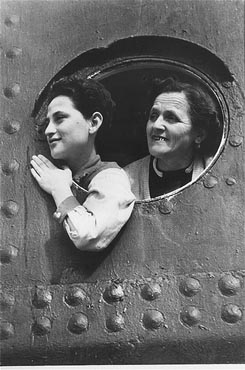
St. Louis passengers waiting to disembark in Havana. They would be turned away.
In May, 1939, the German liner St. Louis left Hamburg, bound for Havana, with over 900 passengers—most of them European Jews.
They hoped their stay in Cuba would be a short one; they’d applied there for U.S. visas. But when the St. Louis reached Havana, only 28 of the passengers were admitted. The rest were turned away at the demand of Cuban President Frederico Laredo Bru. Cuba was still feeling the effects of the Depression, the immigrants were seen as a threat, and Cuba’s right-wing press was powerful.
St. Louis had not stayed in Havana long enough for the Europeans, now stateless refugees, to have their U.S. visas processed. But her German captain–a determined man, and one deeply sympathetic to the passengers in his care–set course for the American mainland.
Despite intense press coverage of the passengers’ plight—Kristallnacht and the “racial laws” had bluntly served notice of what Nazi Germany had in store for them—this, according to the Holocaust Encyclopedia, is what happened.
Sailing so close to Florida that they could see the lights of Miami, some passengers on the St. Louis cabled President Franklin D. Roosevelt asking for refuge. Roosevelt never responded.
U.S. Coast Guard cutters shadowed St. Louis to make sure she did not try to enter an American port. Despite pleas on the passengers’ behalf, Canadian Prime Minister Mackenzie King also denied them entry. Eventually the ship returned to Europe. The UK admitted 288 passengers; the remainder were dispersed throughout France, Belgium, and Holland, all overrun by the Wehrmacht in 1940.
At least 227 vanished in the Holocaust.
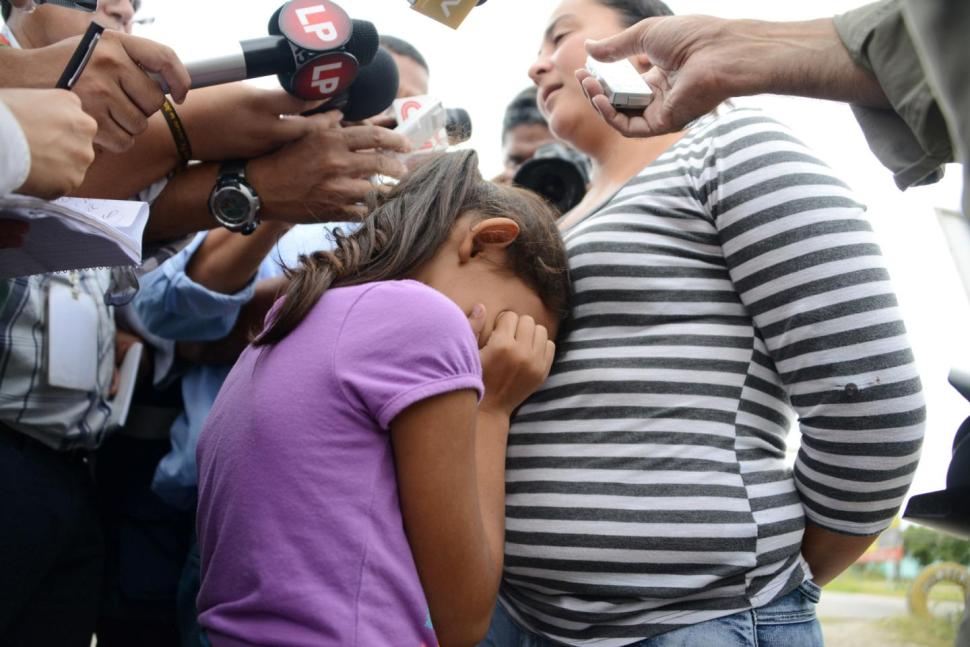
Today the United States deported a group of Hondurans: 17 women and 21 children, boys and girls between 15 and 18 months. Their charter flight landed in San Pedro Sula, Honduras, the city, according to U.N. data, with the highest murder rate in the world.
This is where the photograph of these deportees, a mother and daughter, was taken.
15 Tuesday Jul 2014
Posted in American History, California history, World War II
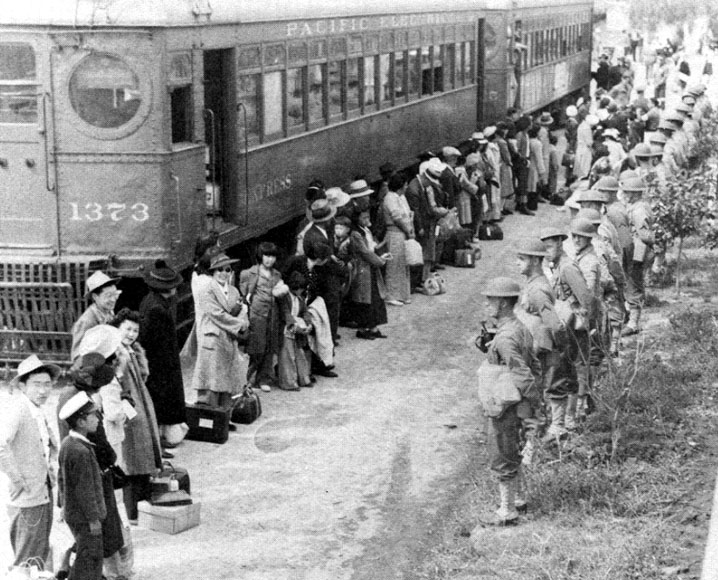
Japanese-Americans await transport at the Santa Anita Racetrack. They slept in the stables.
From a letter to a University of Oregon alumni magazine that ran an article on the internment of World War II:
“In 1942, U.S. Marines were battling the Japanese in the Guadalcanal jungles. American aircraft carriers were sunk by Japanese warplanes. So many ships were sunk in the Solomon Islands ‘slot’ that it was nicknamed Iron Bottom Sound. The fighting was a match of equals that could have gone either way. The American public was frightened of a West Coast invasion. We cannot condemn 1942 policy using our 2013 mores and sensibilities. The prospect of a ready made collaborationist population, following a Japanese invasion, impelled the internments of Japanese Americans.”
This, of course, excuses the irrational. Consider the other coast of the United States:
–In 1941, German U-boats were already attacking American warships: the destroyers Greer and Kearny came under fire before a torpedo took the Reuben James and 115 of her 159-man crew in October, five weeks before Pearl Harbor. Even before then, with the fall of France in June 1940, war hysteria in America had been intense. With FDR’s blessing, J. Edgar Hoover would compile voluminous lists, aided by wiretaps, of suspected German Fifth Columnists living in the United States; the agency included more lists of any American who subscribed to periodicals written in German or Italian, and until FDR ordered the registration and monitoring of all aliens, there were isolated but frightening cases of Germans or German-Americans who were attacked–one was murdered–by wrongheaded “Patriots,” deprived of our 2013 mores and sensibilities.
–By 1942, American troops were fighting Rommel’s Afrika Korps—and getting routed, at Kasserine Pass. In general, the war was going against the Allies on both the Western Front—the disastrous Dieppe Raid is a notable example–and Eastern Front, with Gen. von Paulus’s Sixth Army, which would eventually surrender at Stalingrad, defeating Soviet forces in combat around Kharkov.
In the Pacific war, we had lost the Philippines, just as the War Department knew we would, and our Pacific possessions, but we’d taken the war to Japan with the Doolittle Raid in April and achieved a much more substantive victory–the first American turning point–at Midway in June with destruction of four of the six carriers that had begun the war against us at Pearl Harbor, along with the cadre of the Japanese naval air forces.
–German U-boats sank 82 American ships in all waters in December 1941 alone; In 1942, they sank 121 American ships off the East Coast and 42 along the Gulf Coast out of a total of 500 American merchant marine ships sunk by German submarines that year. Americans on holiday, from Coney Island to Miami, could see our ships glowing at night as they burned,, with their crews. A U-boat also delivered a team of Abwehr saboteurs onshore near Jacksonville, Florida. We were bleeding ships and English children were beginning to go hungry: they were allowed one small egg every four weeks.
During the same period, Japanese submarines sank a total of four ships off the West Coast.
–120,000 Japanese-Americans were interned under Executive Order 9066. Fewer than 3,000 Italian-Americans or Italian aliens and 11,000 German-Americans or German aliens were interned.
14 Monday Jul 2014
Posted in American History, Film and Popular Culture
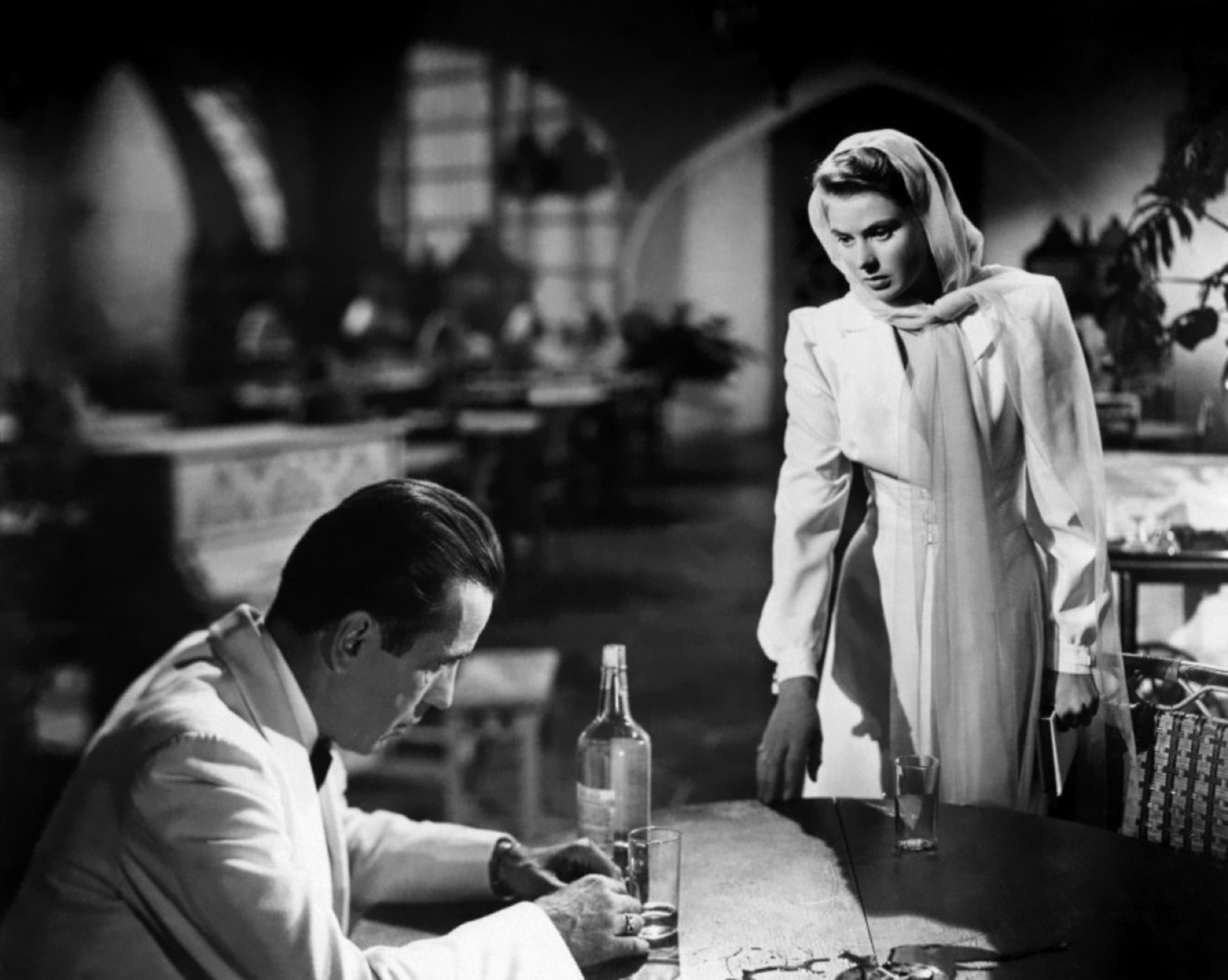 Since it’s Bastille Day, and we’ll always have Paris. I’m thinking about Casablanca.
It is fascinating to read about this film because so much of the cast was caught up in the events of the day: A native Berliner, Conrad Veidt, had played one of the principal roles in the 1920 Expressionist masterpiece The Cabinet of Dr. Caligari. Veidt, who despised the Nazis, played the remorseless and humorless Major Strasser and thus set the standard for a generation of faux-Nazi film officers. He was not remotely like Strasser in real life: he loved golf as much as he hated Hitler, but died, tragically, of a heart attack only a year after Casablanca’s release, while playing at the Riviera Country Club.
Strasser’s nemesis, the freedom fighter Victor Laszlo, was played by an Austrian who was living in England when war broke out in 1939, Paul Heinreid. The English were about to deport him as an enemy alien when Veidt spoke up for his friend and made his Hollywood career possible.
Peter Lorre was another Austrian—his character, who has the stolen Letters of Transit, is shot ten minutes into the film—and Lorre was, like Veidt, a star in German Expressionist film: he was the child-killer in the sensational and controversial 1931 film, M. Lorre, a Jew, recognized quickly the nature of Hitler’s rule and fled Germany. Several of the lesser players are, like Lorre, refugees from the Third Reich: Hitler was indirectly responsible for a real Golden Age in American film.
Neither the studio nor Bogart thought much of Casablanca at the time–it was just another job for him, for Warner Brothers, just another assembly-line feature; it was shot in a little over nine weeks. Off the set, Bogart’s major concern was surviving the violent temper tantrums of his alcoholic wife—his third—Mayo, whom he sardonically nicknamed “Sluggy.” On the set, Bogart was extremely uncomfortable with the love scenes: he didn’t consider himself a romantic lead, and his favorite part of the film must have been when he finally got a revolver in his hand. That was his moment—not, as is the case for the rest of us, the closing dialogue with Ingrid Bergman’s Ilsa.
Bergman wasn’t even thinking about Casablanca. She was preoccupied with snagging the role of Maria in For Whom the Bell Tolls. The bromide that “the camera loved her” was certainly true in Casablanca; director Michael Curtiz’s cinematographer, Arthur Edeson, used soft focus skillfully in her closeups–not to hide Bergman’s age, because there wasn’t a need to, but to idealize her beauty, which, for Rick, would always be a dream. She was delighted, near the end of the filming of Casablanca, to hear that she had been cast as Maria, never realizing, of course, that her Ilsa would be the role that would endure.
Other than Ilsa, my favorite part of the film–my favorite film–is the banter between Bogart’s Rick and Claude Rains’s corrupt Captain Renault. I am always thinking of Renault when I tell my students that wonderful things MIGHT happen to their essay grade if a latte magically appears at my table at Cafe Andreini while I’m grading them.
If you read the script alone, this is a melodrama that is graced by some of the funniest dialogue in American film. The policeman, Captain Renault, gets my favorite line:
“I’m shocked, shocked to find that gambling is going on in here!” [Pocketing his winnings from the roulette wheel in Rick’s Place.]
One of Bogart’s lines is a very close runner-up.. Major Strasser asks Rick his nationality.
“I’m a drunkard,” Bogart deadpans.
14 Monday Jul 2014
Posted in American History, California history, World War II
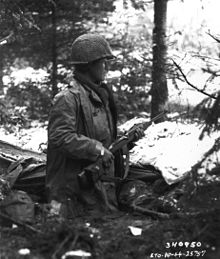 I recently found a local man who fought, like this soldier, with the 442nd Regimental Combat Team. Pfc Sadami Fujita was killed in action and awarded the Bronze Star and Purple Heart during the relief of the “Lost Battalion” in the Vosges Mountains in October 1944.
Sadami was born and raised in Hawaii. Here he is, as an eight-year-old, in the 1920 census. You can click on the images to make them larger.

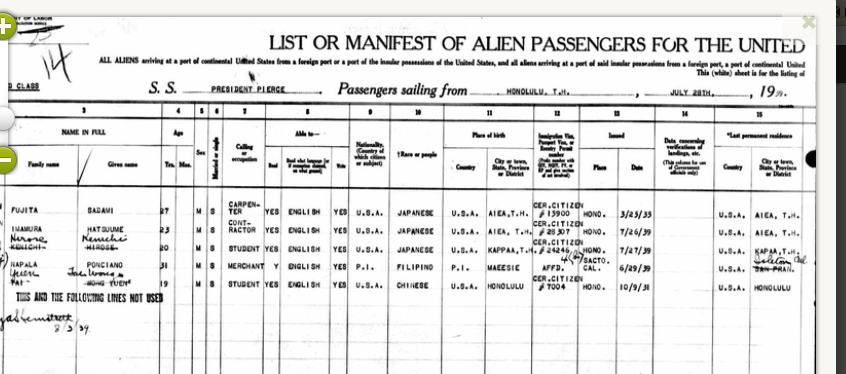
But in 1939, he left Hawaii for California on the President Pierce, evidently with a younger brother, Jimmy. Here’s the “alien” passenger list and; below, Pierce passes one of the Bay Bridge’s towers, probably in 1935, the year before the bridge opened.
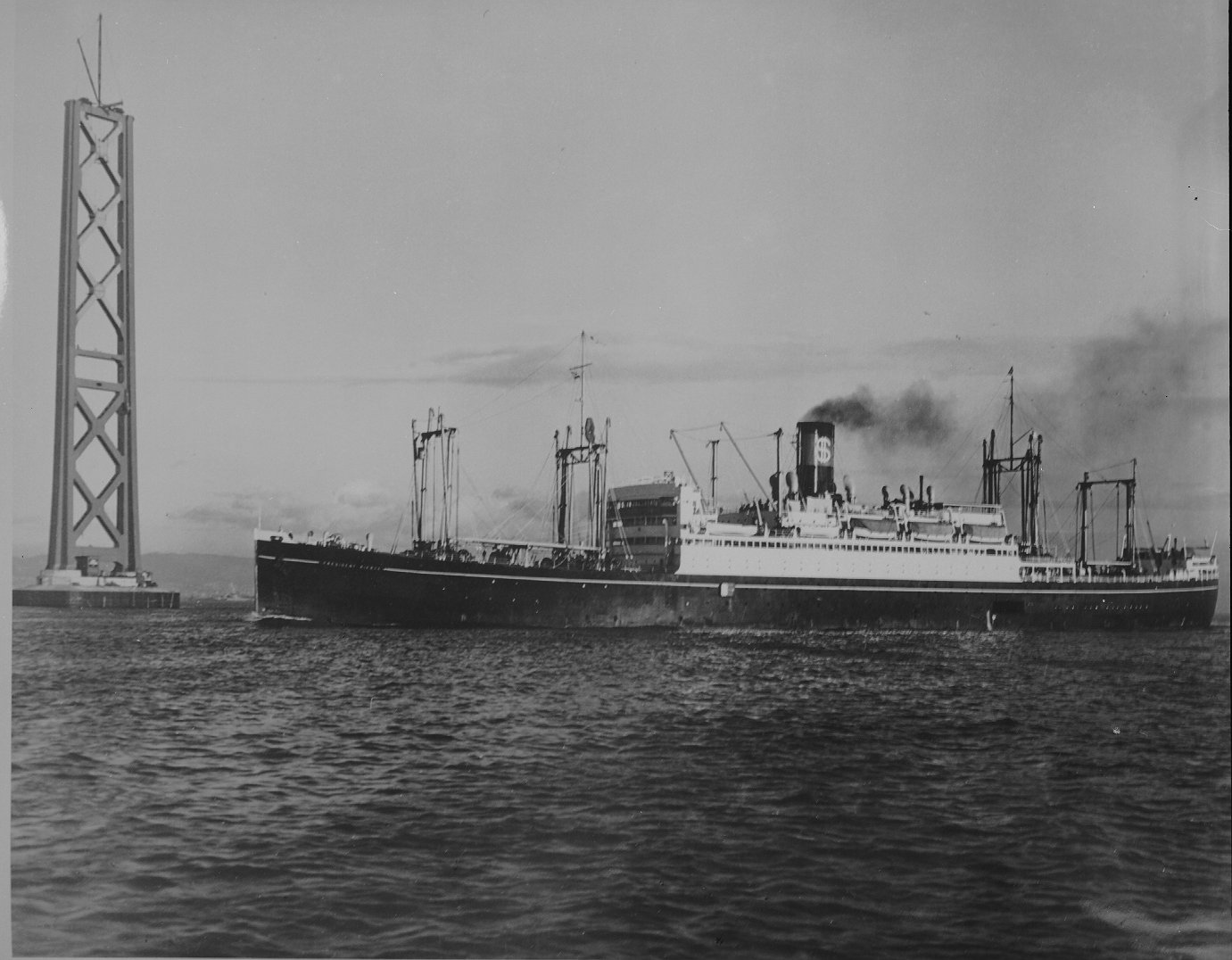 This ship was intimately tied to the career of Amelia Earhart. She was one of the dozens of ships, both military and civil, which searched fruitlessly for the lost flier in 1937. But in 1934, Pierce had saved Earhart’s life on her Hawaii-to-California flight, in her beloved Lockheed Vega. From a website on that flight:
In the final hours of the journey Earhart found herself surrounded by a thick blanket of fog. Glancing down through a hole in the fog, she suddenly caught sight of a ship. She dove down through the hole, she wrote later, “faster than I ever flew before from 8,000 feet to 200!” The ship was the President Pierce, outward bound from San Francisco. Earhart lined her plane up with the wake of the ship and headed for California—now only 300 miles away!
In the 1940 Census, Sadami, too, has found a home in California: he is living with two brothers, Jimmy, who will go to the Poston internment camp, and Dick, in Arroyo Grande. The page from that year’s census is like a Who’s Who–it includes the Ikedas, the Hayashis, the Fukuharas, and Javier Pantaleon, the foreman at the Waller Seed Co. to whom doomed sailor Felix Estibal wrote one of his last letters before being killed in action off Guadalcanal in November 1942. 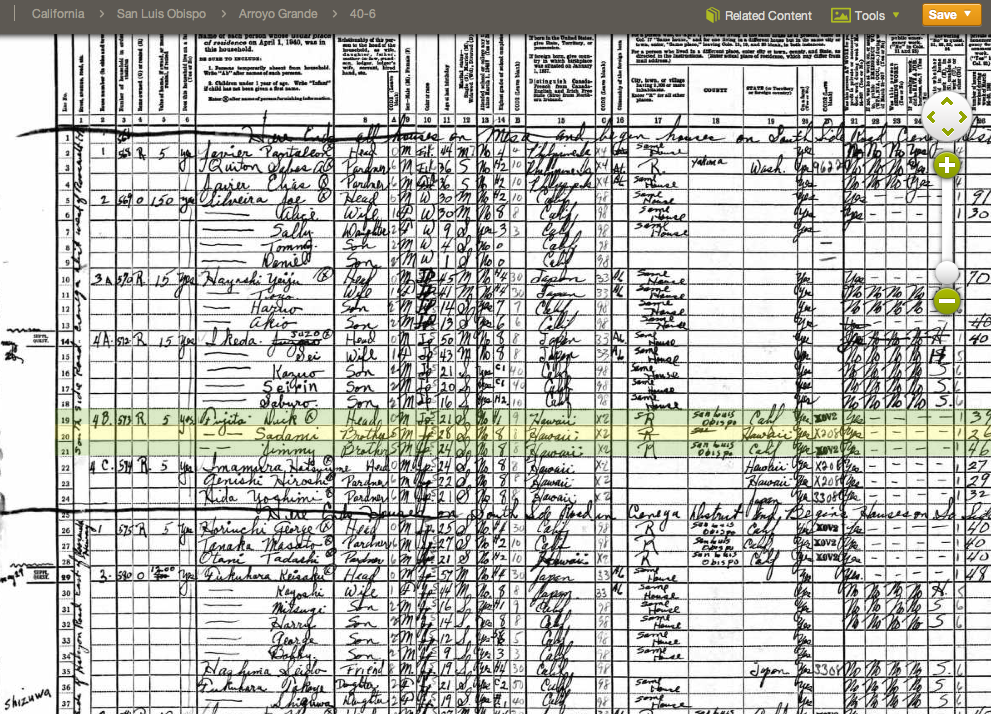
Five months after FDR re-instated the draft, the United States Army tapped Sadami on the shoulder–and, not unusual in the Army–they spelled his name wrong, though not as egregiously as the case of Marine Private Louis Brown, from Corbett Canyon. Killed on Iwo Jima, the twenty-year-old’s name was spelled “Louise” in the Navy casualty records.
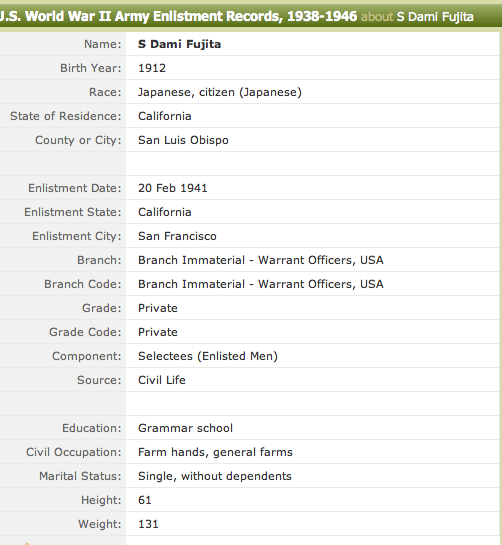 He would be assigned to the 100th Infantry Battalion, a tough outfit made up of Hawaiian Japanese-Americans. The 100th would later be merged with the famous 442nd Regimental Combat Team as that unit’s First Battalion. The 442nd included Nisei soldiers from all 48 states. The unit would do most of its fighting in Italy, but was transferred to France in the fall of 1944.
Sadami, a PFC in “B” Company of the 100th Battalion, was killed on October 28 in the relief of the “Lost Battalion,” a unit made up largely of Texans that had been surrounded by German troops in the Vosges Mountains.
This is what it was like that day, from a website on the 442nd: (http://www.the442.org/battlehistory/vosges.html)
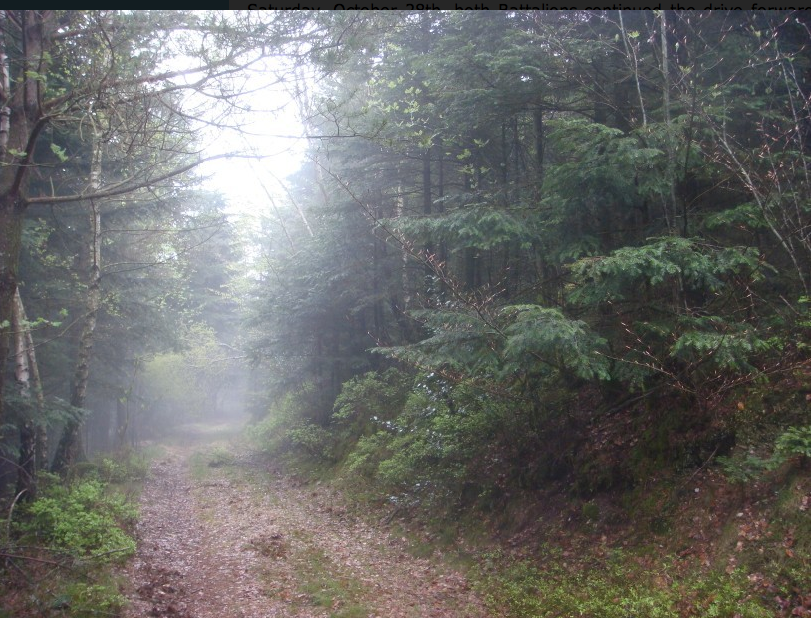
The following day [October 28th], both battalions continued the drive forward in the teeth of stubborn resistance and heavy artillery and mortar fire. Casualties went up and up, caused largely by tree bursts, from which there was no escape. Our own artillery was active, and the Cannon Company and 4.2 mortars performed yeoman service, but the Germans were below ground, while our troops were up and moving forwards. At the end of the day, the regiment was 1,500 yards nearer to the “lost battalion,” but only at [a] terrible cost in men and material. During the night, biting cold and rain kept the men from resting.
So it’s probable that it was artillery fire that killed Fujita–the Germans fired .88 shells into the treetops and, as was the case in the Hurtgen Forest, a ferocious battle being fought at the same time in in Germany, just over the Belgian border, many GI’s were killed by flying shrapnel and splinters. This is what the combat zone looked like then, and today: 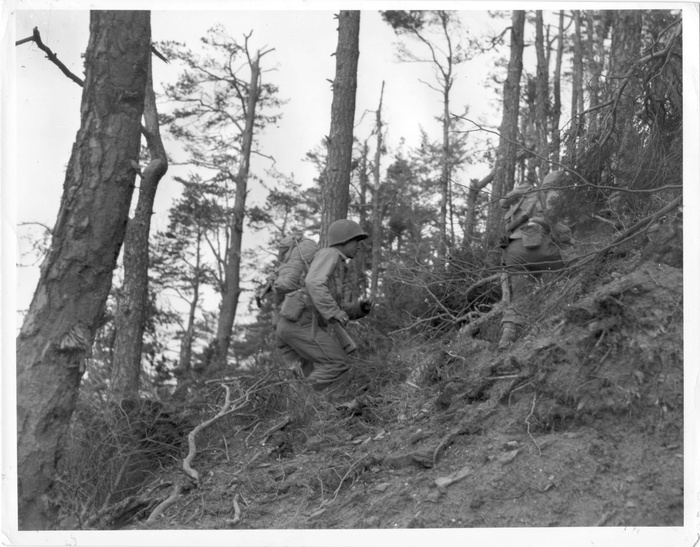
 The 442nd broke through two days later. 800 Nisei soldiers were killed or wounded to rescue the 230 Texans.
Several Nisei soldiers, like Masami Hamakado, in Fujita’s “B” Company, kept extensive photographic records of their service years and of their comrades. Two of Hamakado’s photographs show paired soldiers, but each is labeled only with last names. In both photos one of the names is “Fujita.”
This is what drives historians nuts. No first names. Here’s the first photograph, labeled “Ono and Fujita at Parade Rest.” 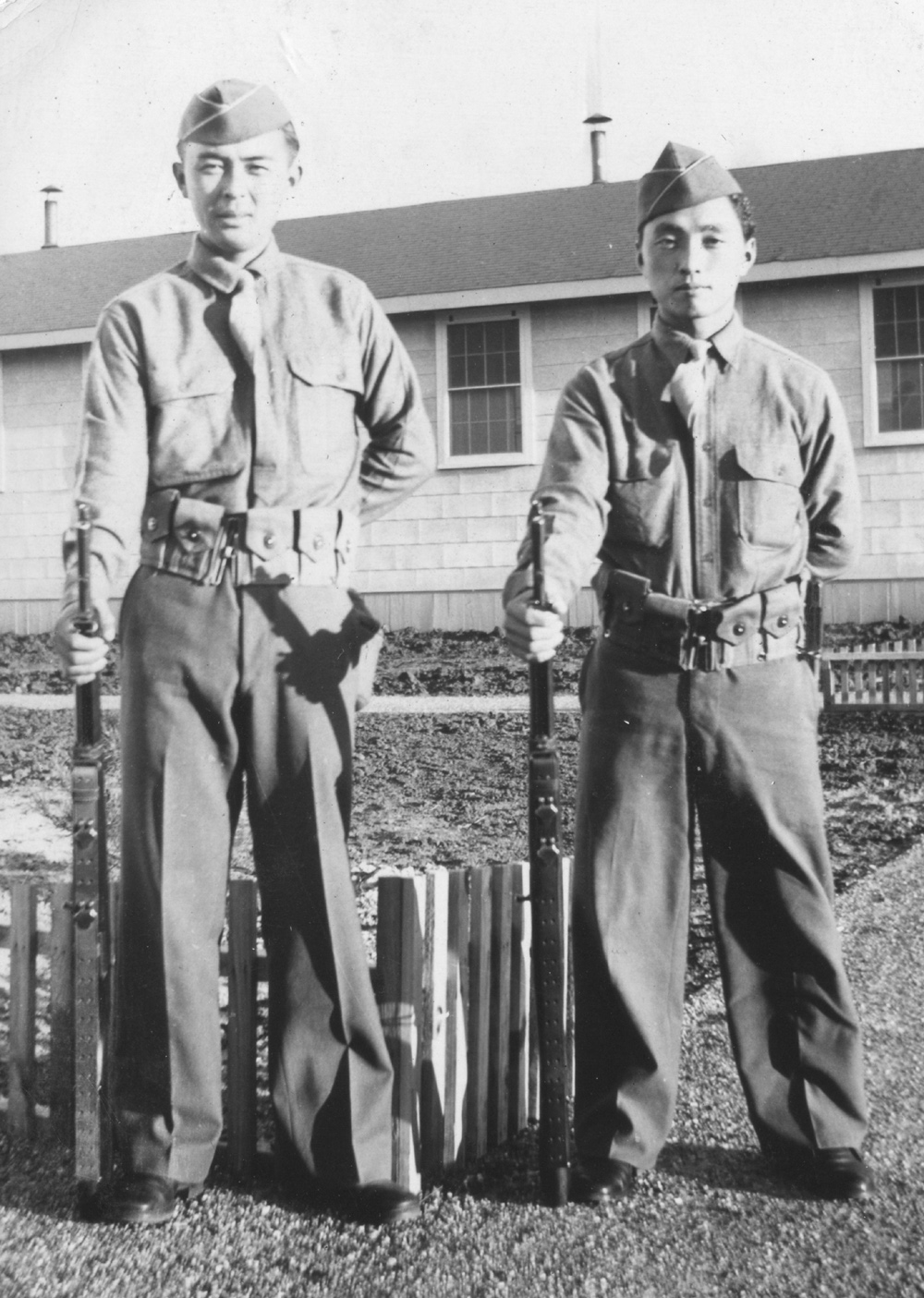
Here’s the second, “Fujita and Umihara.” 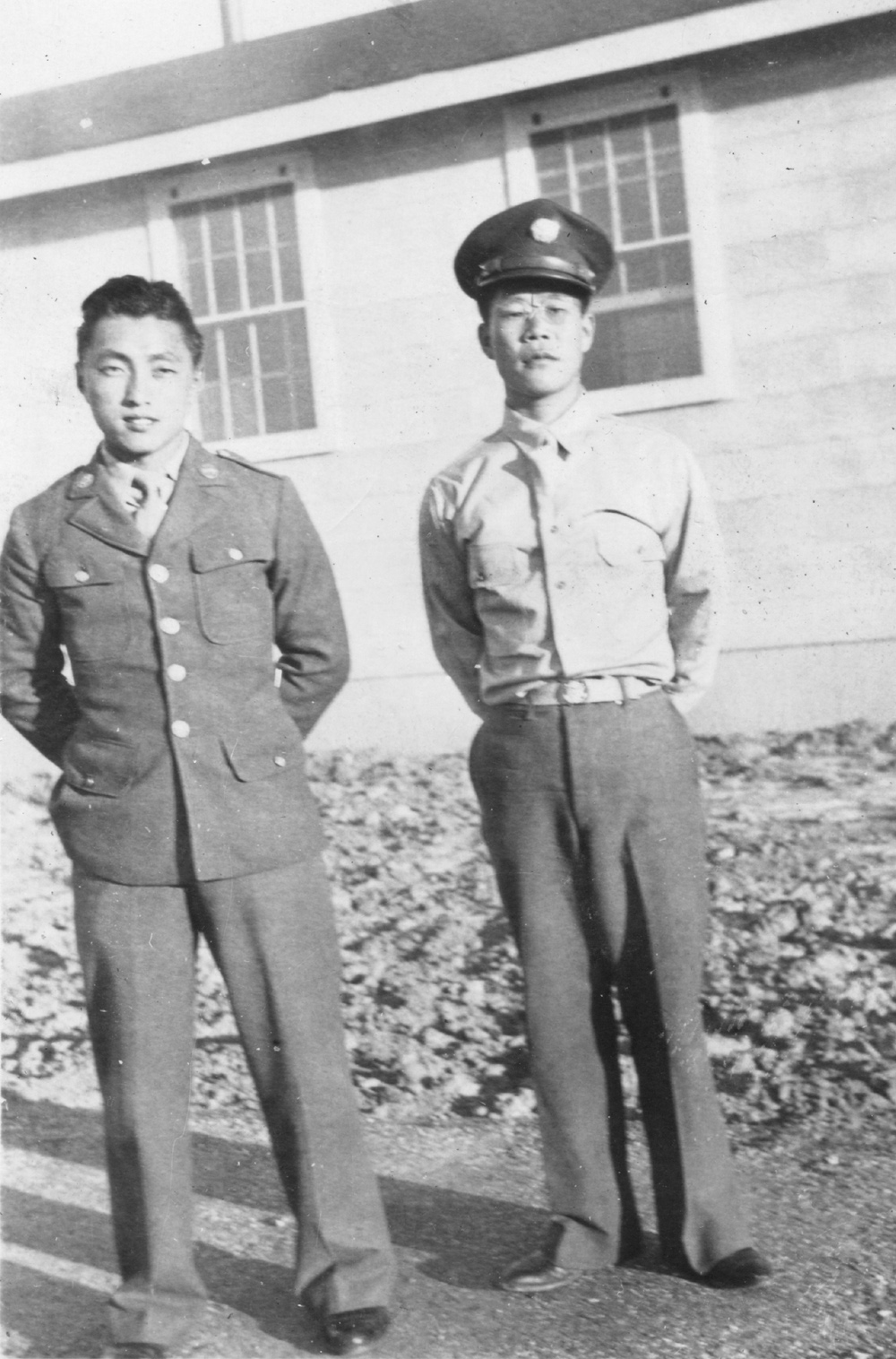 One of these men has to be the Arroyo Grande Fujita. A hint: Sadami was only 5′ 1″, so he’s likely to be the shorter man in either photograph. I looked up the enlistment record of the other “B” Company Fujita., whose first name was Hasami.
He was 5′ 2″. Great.
I’m reasonably sure–but will never be certain– that the lower photo is of “our” soldier, because Sadami Fujita outweighed Hasami Fujita by 22 lbs., so the smaller soldier in the lower photograph is a more likely choice.
He’s a nice-looking young man.
My next step is to hope to get a return email from the Fujita family still living in Hawaii–maybe the will know more about Sadami and maybe they’ll have photographs.
Sadami Fujita would go home to his family. His grave is in the Punch Bowl, an incredibly beautiful place; I visited in 1996. I owe it to him to find out more. 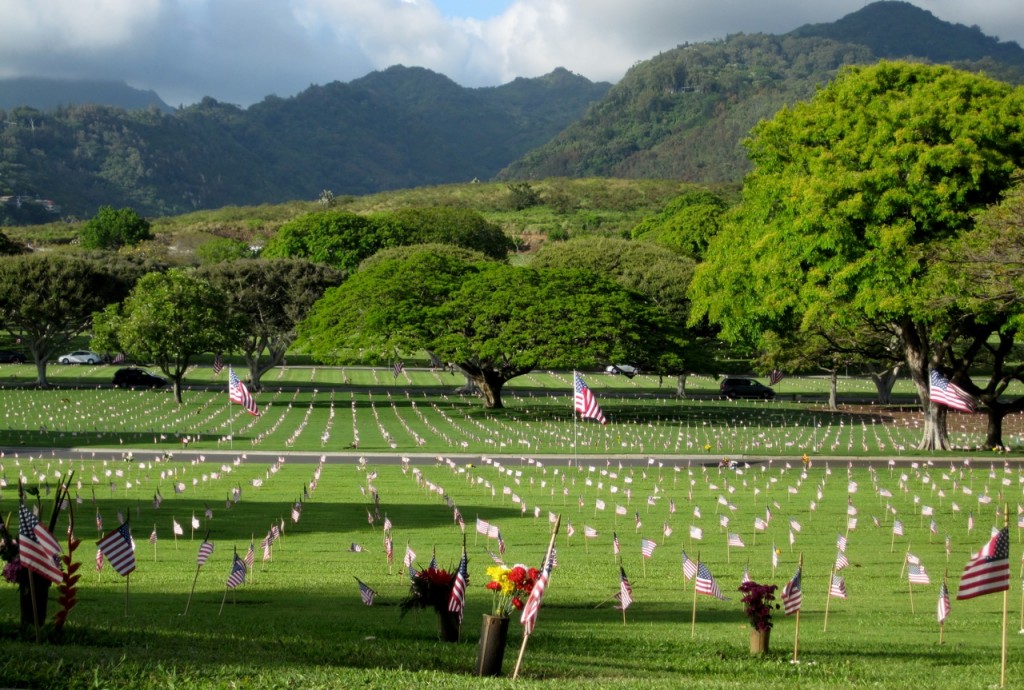
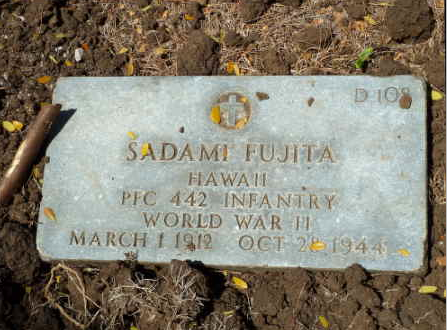 I owe to these young men, too. These are the 442nd Regimental Combat Team soldiers who gave their lives for the country:
MEMBERS OF THE 100th INFANTRY BATTALION AND 442nd REGIMENTAL COMBAT TEAM KILLED IN ACTION IN WORLD WAR II
Chester K. Abe / Matsuei Ajitomi / Tokio Ajitomi / Frank Chujiro Akabane / John Akimoto / Victor Akimoto / Hideo Akiyama / Zentaro G. Akiyama / Eugene T. Amabe / Nobuo Amakawa / James H. Anzai / Yoshiharu N. Aoyama / Harold J. Arakawa / James Y Arakawa / Masashi Araki / Frank N. Arikawa / Hiroaki Arita / Shiro Asahina / Ralph Y. Asai / Shotaro H. Asato / Kenneth L. Asaumi / Shigeo Ashikawa / Daniel D. Betsui / James Boodry / Howard Vernon Burt / Joseph Lawrence Byrne / Henry Chibana / Guchi Chinen / Onso Chinen / Jenhatsu Chinen / Danny K. Chorike / Cloudy Gary Connor Jr. / Walter Maurice Crone / Haruo Doi / Kenneth E. Eaton / Tetsu Ebata / George Eki / Hachi Endo / Hiroo H. Endo / Masaharu Endo / Robert T. Endo Kaname Enomoto / Kiyozo Enomoto / Ralph Burnell Ensminger / Harold C. Ethridge / Charles Oliver Farnum Jr. / Fred H. Fritzmeier / Abe M. Fuji / Paul Fuji / Masao Fuji / Richard T. Fujii / Samuel A. Fujii / Yutaka Fuji / Jitsuro Fujikawa / Masaki Fujikawa / Hideo Fujiki / Toshiaki Fujimoto / Noboru Fujinaka / Russell Takeo Fujino / Yasuo R. Fujino / Yoshimi Fujino / Teruo Fujioka / Wendell S. Fujioka / Sadami Fujita / Ross K. Fujitani / Peter Fujiwara / Takeo Fujiyama / Akira W. Fukeda / Shigeo F. Fukuba /Masami Fukugawa / Barbara Fukuhara /Herbert M. Fukuhara / Kakutaro Fukuhara / Edward Fukui / Roy S. Fukumoto / Ichiji Fukumura / Chester T. Fukunaga / Arthur M. Fukuoka / Katsumi Fukushima / Kaoru Fukuyama / Stanley K. Funai / Satoshi Furukawa /Tatsumi Furukawa / Tsuyoshi Furukawa / Kenneth K. Furukido / Henry T. Furushiro / Mitsuo Furuuchi /George M. Futamata / Shigeto Fuyumuro / Roland Joseph Gagnon / Seikichi Ganeko / Hiroshi Goda /Kazuo Goya /Yeiko Goya / George Gushiken / Frank T. Hachiya / Victor Hada / Hatsuji Hadano / Eichi F. Haita / Tom S. Haji / Tetsuo Hamada / Kenichi Hamaguchi / Katsuyoshi Hamamoto / Seuchi Hamamoto / Fred Y. Hamanaka / Clifford H. Hana / Richard S. Hanaumi / Tamotsu Hanida /Ben Hara / Charles K Harada /John Y Harano / Kiyoshi Hasegawa / Mikio Hasemoto / Denis M. Hashimoto / Hisao Hashizume /Masao Hatanaka / Kunio Hattori / Harry M. Hayakawa / Makoto Hayama / Stanley Hayami / Donald S. Hayashi / Eugene Hayashi / Joe Hayashi / Robert N. Hayashi /Tadao Hayashi / Torao Hayashi / Henry Hayashida / Henry Y. Hayashida / Hideyuki Hayashida / Robert Hempstead / Eiji Hidaka / Charles Higa / Eddie K. Higa / Katsumori Higa / Masao Higa / Takei Higa / Toshio Higa / Wilson E. Higa / Yeiko Higa / Bert K. Higashi / Harold T. Higashi / James T. Higashi / Harry N. Hikichi / Aranari Hiraga / Tomosu Hirahara / Mitsuo Hiraki / Kazuo L. Hiramatsu / Hiroyuki Hiramoto / Frederick M. Hirano / John Hirano / Robert R. Hirano / Genichi Hiraoka / Satoru Hiraoka / Gerome M. Hirata / Louis M. Hirata / Himeo Hiratani / Yasuo Hirayama / Yutaka Hirayama / Masao Hisano / Gary T. Hisaoka / Yeichi Hiyama / Richard M. Honda / Tomio Honda / Kay I. Horiba / James J. Horinouchi / Paul F. Horiuchi / Robert S. Hoshino / Earl Hosoda / Max M. Hosoda Jr. / Kihachi Hotta / Teruo Hozaki / Toshio Hozaki / Kenichi Ichimura / Edward Y. Ide / Shigeo Igarashi / Kiyoshi Iguchi / Masao Iha / Kazuo Ihara / Martin M. Iida / George Ikeda / Isamu Ikeda / Masao Ikeda / Roy Y. Ikeda / William Y Ikeda / Yoshio Ikeda / Lloyd Ikefuji / Henry S. Ikehara / Kikuichiro D. Ikehara / Haruyuki Ikemoto / James S. Ikeno / Tomio lmai / William I. Imamoto / Larry M. Imamura / Shunichi Imoto / Thomas T. Inada / Ben M. Inakazu / Masami Inatsu / Minoru Inoue / Henry Inouye / Masato Inouye / Takeshi Inouye / Masaji Irie / Tadayoshi Iriguchi /Mitsuo M. Iseri / Haruo Ishida Hidemaro Ishida / Minoru Ishida / George F Ishii / Richard H. Ishii / Stanley T. Ishiki / Walter S. Ishiki / Kiyoshi lshimizu / Kusaku Isobe / Hachiro Ito / Roy Ito / Takashi Ito / Tetsuo Ito / Robert K. Iwahiro / Hisashi lwai / Yoshio Iwamasa / Lawrence T. Iwamoto / Henry S. Izumizaki Thomas M. Jichaku / Katsui Jinnohara / John A. Johnson / Chitoshi Kadooka / Joe Y. Kadoyama / Yasuo Kagawa James J. Kagihara / Tsugito Kajikawa / Nobuo Kajiwara / Fred Y. Kameda / Bob T. Kameoka / Shinobu Kametani / Mitsuo Kami / Shizuto Kamikawa / James J. Kanada / Walter E. Kanaya / John S. Kanazawa / Frank Kanda / Takezo Kanda / Takeo Kaneichi / Katsuhiro Kanemitsu / Seichi Kaneshiro / Yasuo Kaneshiro / Isamu Kanetani / Jero Kanetomi / Akira Kanzaki / James S. Karatsu / Haruo Karimoto /Kenneth G. Kashiwaeda /Yoshitaka Kataoka /Noritada Katayama /John S. Kato /John J. Kato /Joseph Kato /Kenji Kato /Yoshio Kato /Masaichi Katsuda /John R. Kawaguchi /Richard H. Kawahara /Tetsuro Kawakami Kazuo Kawakita /Haruo Kawamoto /Sadao Kawamoto /Toshio Kawamoto /Yutaka Kawamoto /Kikumatsu F Kawanishi /Cike C. Kawano /George Kawano /Tetsuo Kawano /Yasuo Kawano /Albert G. Kawata /Satoshi Kaya /Stephen M. Kaya /Yasuo Kenmotsu /Lewis A. Key /Tadashi Kijima /Leo T. Kikuchi /John S. Kimura /Matsuichi Kimura /Paul Kimura Jr. /Tsuguo Kimura /Shomatsu E. Kina /Francis T. Kinoshita /Mamoru Kinoshita /Richard K. Kinoshita /Toshio Kirito /Robert T. Kishi /Roy J. Kitagawa /Paul T. Kitsuse /Ronald S. Kiyabu /Edward Y. Kiyota / Kiichi Koda /Sadaichi Kohara /Sadamu Koito /Hayato Koizumi /Yutaka Koizumi /Shaw Kojaku /Tadashi Kojima /Nobuo Kokame /Jimmie T. Kokubu /James K. Komatsu /Katsuto Komatsu /Fred H. Komeda /Nobuo Komoto /Harry M. Kondo /Harushi Kondo /Herbert Y. Kondo /Howard N. Kondow /Seichi Kotsubo /Shigeo Kuba /George M. Kubo /Tadashi Kubo /James Kubokawa /Mitsuharu Kuboyama /Thomas T. Kuge /Isamu Kunimatsu /Tetsuo Kunitomi /Katsuji K. Kuranishi /Jerry S. Kuraoka /Minoru Kurata /James S. Kuratsu /Ichiji H. Kuroda /Robert T. Kuroda /Satoshi Ben Kurokawa /Shigetoshi Kusuda / Shosei Kutaka /Masaji Kutara /Shozo Kuwahara /Sunao Kuwahara /John Kyono /Clarence E. Lang /Leonard H. Luna /Harry F. Madokoro /Saburo Maehara /Richard K. Magarifuji /Matsutada Makishi /Harry Makita /Seiso J. Mana /Ben Masaoka /Kay K. Masaoka /Masa Mashita /Dick Z. Masuda /Eso Masuda /Kazuo Masuda /Yoshito Masuda /George A. Matsumoto /Noriyuki Masumoto /Lawrence K. Masumura /Kiyoshi Masunaga /Peter S. Masuoka /Carl G. Matsuda /Masao Matsui /Hiroshi Matsukawa /Isamie Matsukawa / Dick Y. Matsumoto / Goro Matsumoto / Kiyuichi Matsumoto / Sadao Matsumoto / Tommy T. Matsumoto / Renkichi Matsumura / Kaname Matsunaga / Satoshi Matsuoka / Shizuo Matsushida / Kazuo Matsushima / George M. Mayeda / Jimmy Mayemura / Thomas T. Mekata / Torae Migita / Katsuaki Miho / Yoshio Minami / lsamu Minatodani / Kiyoshi Mine / Nobue Mine / Tom T Misumi / Kazuo Mitani / Kazuo Mito / Larry N. Miura / Toshio Miura / Charles M. Miyabe / Masayoshi Miyagi / Masayuki Miyaguchi / Tetsuo Miyake / James H. Miyamoto / Thomas T. Miyamoto / Yasuo Miyamoto / George S. Miyaoka / Isami Miyasato / Tamotsu Miyata / Tokio Miyazono / Tsuyoshi Miyoga / Mitsuru E. Miyoko / Noburo Miyoko / Timothy Mizokami / William S. Mizukami / Hideo Mizuki / Morio Mizumoto / Yukitaka Mizutari / Henry T. Mochizuki / Edward V. Moran / Kiyoto Mori / Shigeru Mori / Haruto Moriguchi / Rokuro Moriguchi / Arthur A. Morihara / Roy T. Morihiro / Haruto Morikawa / Hiromu Morikawa / Toshiaki Morimoto / Harold Morisaki / Joseph Morishige / Takeo Morishita / Iwao Morita / George K. Moriwaki / David Leander Moseley / Hiroshi Motoishi / Susumu Motoyama / Hachiro Mukai / Sadao S. Munemori / Isamu Murakami / Kiyoshi Murakami / Sakae Murakami / Tadataka Murakami / Tokiwo Murakami / Toshio T. Murakami / Kiyoshi K Muranaga / Richard K Murashige / Robert S. Murata / Mitsugi Muronaka / Roy L Naemura / Grover K Nagaji / Hiroshi Nagami / Hiroshi Nagano / Setsuo Nagano / Martin M. Naganuma / Goichi Nagao Hitoshi Nagaoka / Hideo Nagata / Jim Nagata / Taichi Nagata /Fumitake Nagato /Yoshiiwa Nagato /Kaoru Naito /Hitoshi Najita /Masaru Nakagaki /Hirao Nakagawa /Usho Nakagawa /Hitoshi Nakai /Masao Nakama /Shigenori Nakama /Shinyei Nakamine /Joe K Nakamoto /Seichi Nakamoto /Edward E. Nakamura /George S. Nakamura /Henry Y. Nakamura /John M. Nakamura /Kosei Nakamura /Masaki Nakamura /Ned T. Nakamura /Tadao Nakamura /Wataru Nakamura /William K Nakamura /Yoshimitsu Nakamura /Masao Nakanishi /Tsutomu Nakano /Robert K. Nakasaki /Dick S. Nakashima /Raito R. Nakashima /Wataru Nakashima /Frank K. Nakauchi /Donald T. Nakauye /Kiyoshi C. Nakaya /Minoru Nakayama /Saburo Nakazato /John T. Narimatsu /Tetsuo Nezu /Yutaka Nezu /Willie S. Nieda /Shigeto Niide /Edward Joseph Nilges /Minoru Nimura /Ban Ninomiya /Takao T. Ninomiya /Chikao Nishi /Takanori A. Nishi /Kazuo Nishihara /Takaki Nishihara /Akio Nishikawa /Tohoru Nishikawa /Joe M. Nishimoto /Tom T. Nishimoto /Shigeki Nishimura /Wilfred K. Nishimura /Charles J. Nishishita /Chieto Nishitani /Taro Nishitani /Sueo Noda /Yoshito Noritake /Al Y. Nozaki /Tadashi Nozaki /Alfred S. Nozawa /Toshio Numa /Masayoshi Oba /Sanichi Oba /Stanley T. Oba /Tadashi Obana /Larry M. Ochiai /Benjamin F. Ogata /Fred S. Ogata /Masaru Ogata /Masayoshi Ogata /Tsugio Ogata /Edward Ogawa /John N. Ogawa /Sadao Ogawa /Yoshio W. Ogomori /Abraham G. Ohama /Arnold Ohki /Muneo Ohye /Shigeo Oikawa /Teiji T. Oishi /Akira Oiji /John T Okada /Donald M. Okamoto /James S. Okamoto /James T. Okamoto /Ralph S. Okamoto /Tomiso Okamoto /Togo Okamura /Isao Okazaki /Takaaki Okazaki /Katsu Okida /Richard M. Okimoto /Seiei Okuma /Toyokazu Okumura /Susumu Okura /George Omokawa /Ken Omura /Takeyasu T. Onaga /Satoru Onodera /Lloyd M. Onoye /Choyei Oshiro /Edward Oshiro /Kenneth Oshiro /Sam Y. Oshiro /Seikichi Oshiro /Wallace H. Oshiro /Yeishin Oshiro /Daniel C. Ota /Randall M. Ota /Roy Ota /Tadashi Otaguro /Masanao Otake /Douglas K. Otani /Kazuo Otani /Bill M. Otomo /Akira Otsubo /Jiro Otsuka /Harumatsu Oyabu /Francis K. Oyakawa /Robert Y. Ozaki /George Y. Ozawa /Francis J. Rerras /Roy T. Reterson /Neill M. Ray /Masatsugu Riyu /Ben W Rogers Jr. /Herbert K. Sadayasu /Yohei Sagami /Thomas T. Sagimori /Atsuo Sahara /Masami Saiki /Hoichi Saipan /Calvin K. Saito /Chuji Saito /George S. Saito /Kinji Saito /Masuto Sakada /Masaaki Sakaguchi /Richard M. Sakai /Yoshinori Sakai /Atsushi Sakamoto /Louis K. Sakamoto /Masa Sakamoto /Noburo Sakamoto / Robert /. Sakamoto / William Samonji / Minoru Sasaki / Yoshio Sasaki / Toshio Sasano / Itsumu Sasaoka / Andrew Y. Sase / Michael Sato / Saburo Sato / Shin Sato / Shukichi Sato / Tadao Sato / Yukio Sato / George K. Sawada / Kurt E. Schemel / Toll Seike / Koichi K Sekimura / Hihumi Seshiki / Hiroshi Shibao / Kenneth K. Shibata / Mitsuru Shibata / Tetsuo Shigaya / Masao F. Shigemura / Hideo Shigeta / Masao Shigezane / Takeshi Shigihara / George M. Shikata / Ted T. Shikiya / Roy K. Shimabuku / Hideo Shimabukuro / Tomoaki Shimabukuro / George M. Shimada / Akira R. Shimatsu / Jimmy T. Shimizu / Takeo Shimizu / Robert Shinde / Takeo Shintani / Nathaniel A. Shiotani / Joe A. Shiomichi/ Roy R. Shiozawa / Shigeomi Shiraishi / Kiyoshi J. Shiramizu / Kizo Shirokane / Henry M. Shiyama / Toshiaki Shoji / David I. Suda / Sadami R. Sueoka / Theodore T. Sueoka / Shinichi Sugahara / Kenji Sugawara / Hiroshi Sugiyama / ltsuo Sugiyama /Togo S. Sugiyama / Michiru Sumida / Albert M.Sunada / Nobuyuki Suwa / George W. Suyama / Jiro Suzawa / Kenny R. Suzuki / Takashi Suzuki / YonezoSuzuki / Edward H. Sweitzer / Teruo Tabata / Shigeo Tabuchi / Sadao Tachibana /Yoshio Tagami / Hitoshi B. Taguchi / Cooper T. Tahara / Masaru Taira / Seitoku Taira / Boon E. Takagi / David Kiyoshi Takahashi / ltsuo Takahashi / lwao A. Takahashi / Mon Takahashi / Toru T. Takai / Thomas T. Takao / Ronald K. Takara / Gordon K. Takasaki / Katsumi L. Takasugi / Shigeo J. Takata / Jo Takayama / Yoshito Takayama / Masaharu Takeba / Jimmy Takeda / Shoichi J. Takehara / Yosh Takei /Haruo Takemoto /lwao Takemoto /Tami Takemoto /Tooru Takenaka /Robert M. Takeo /Jimmy Y. Taketa /Peter Taketa /Shigeto Taketa /William H. Taketa /Ichiro S. Takeuchi /Tadashi Takeuchi /Thomas Takizawa /Kenji Takubo /Douglas Tamanaha /Kuneo Tamanaha /Masao H. Tamanaha /Thomas T. Tamashiro /Masaru Tamura /Osamu Tamura /Toyoshi Tamura /Kei Tanahashi /Harley Tanaka /Jack M. Tanaka /James J. Tanaka /Jiro Tanaka /John Y. Tanaka Keichi Tanaka /Ko Tanaka /Matsusaburo Tanaka /Saburo Tanamachi /Larry T. Tanimoto /Teruto Tanimoto /Yukio Tanimoto /Mitsuo Tanji / Katsushi Tanouye /Ted T. Tanouye /Yukio Tanouye /Masaru Tashima /Michio Tachima /Haruyoshi H.Tateyama /George Tatsumi /Masaru Tengan /Yoshio Tengwan /Henry M.Terada /Ted A. Teramae /Lloyd M. Teramoto /Shizuo Teramoto /Henry Terazawa /Herman T. Teruya /Kenkichi K. Teruya /Michio Teshima /Theodore T. Tezuka /Shiro Togo /Clifford T. Tokunaga /Hidetoshi Tokusato /Harry H. Tokushima /Patrick M. Tokushima /Minoru Tokuyama /Takaya Uragami /Moriichi Uyeda /Theodore T. Uyeno /Daniel M. Wada /Kenneth Y. Wasada /Shigeo Wasano /Hiroshi Watanabe /Kiyotoshi Watanabe /Kozo Watanabe /Theodore H. Watanabe /James D. Wheatley Jr. /Earl White Jr. /Steve S. Yagi /Hideo Yamada /Raymond T. Yamada /George T Yamaguchi /Fred M. Yamamoto /George I. Yamamoto /John T. Yamamoto /Masaru Yamamoto /Takeo Yamamoto /Tsuyoshi Yamamoto /Thomas I. Yamanaga /Tsutomu Yamaoka /Harry S. Yamasaki /Gordon K. Yamashiro / Lei S.Yamashiro /Joichi Yamashita /Kazuo Yamashita /Setsuro Yamashita /Chioyoaki J. Yamauchi /GoroYamaura /Thomas T. Yamazaki /Fred S. Yasuda /Joe R. Yasuda /Arata Yasuhira /Hideo Yasui /Yoji Yasui /Mitsuru Yeto /Masuichi Yogi /Hideo Yonamine /Satoshi Yonekura /Hitoshi Yonemura / Kenjiro Yoshida /Yoshiharu E. Yoshida /Mitsuichi Yoshigai /Makoto Yoshihara /Toraichi Yoshihara /Minoru Yoshimura /Saburo Yoshimura /Akira Yoshinaga /Hajime Yoshino /Isami Yoshioka /S. Yoshioka / Tatsuo Yoshizaki /Don Yumori /Shiyoji Yunoku .
13 Sunday Jul 2014
Posted in American History, Family history, Personal memoirs
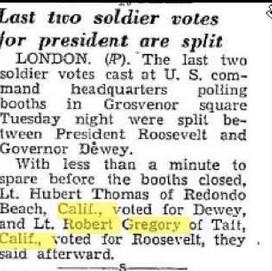
Somewhere we have a penciled thank-you note from John W. Davis, who is about as famous as whichever team finished third in the NL pennant race in 1939. (It was the Dodgers, 12 1/2 games out.) Davis was the Democratic nominee for President in 1924, and he did far worse than the 1939 Dodgers.
He was trounced by the less-than-effervescent Calvin Coolidge. Coolidge’s workdays at the White House were at most seven hours, punctuated by summer naps on the portico. Sadly, these had to be suspended when Coolidge began collecting dense crowds, silent tourists, watching gravely and debating among themselves in urgent whispers over whether the president had passed. After all, Harding had pulled that trick.
To be fair, the White House staff frequently had the same problem when the president was conscious.
Meanwhile, John W. Davis would go on to a distinguished career, arguing 150 cases before the Supreme Court. Today, Davis is noted mostly for being on the wrong side of every one of them. If it was racist, reactionary, or repressive, he defended it passionately, with the conviction and confidence of one who knows that God Almighty is his co-counsel. The crowning of his legal career—thank the aforementioned Lord–came when he lost Brown v. Board before the Warren Court. (Earl Warren, who turned out to be the biggest booby prize Ike had gotten since Field Marshal Montgomery, was the former Republican Governor of California, which goes to show how much times have changed–and Davis demonstrates the same for Democrats.)
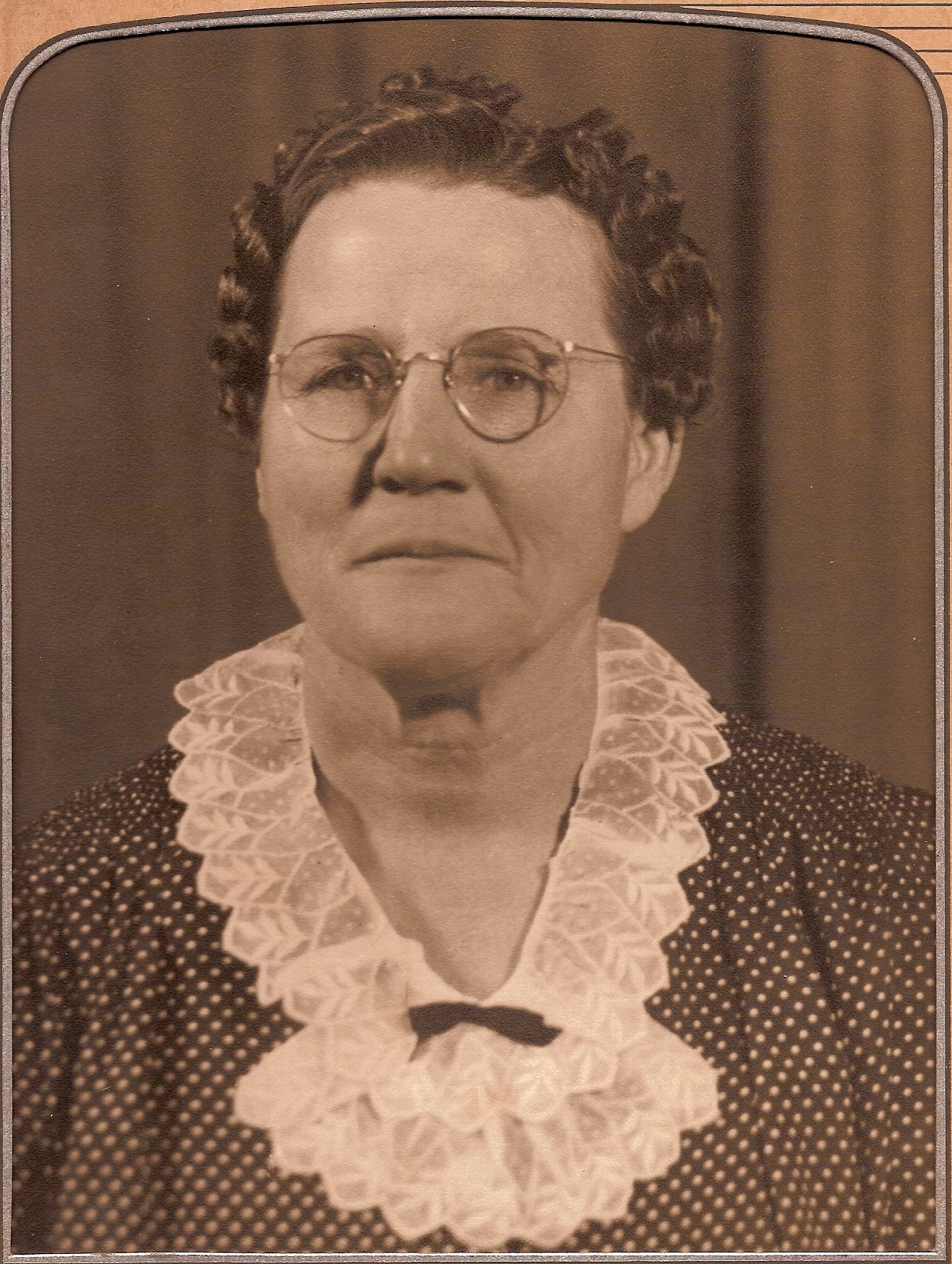
But the Democrats could’ve run Sacco and Vanzetti (has a nice ring, doesn’t it, for a law partnership?) in 1924, and I think Grandma Gregory–the woman, hard to knock down in a windstorm, next my Grandpa John in the photo below–would’ve worked her heart out for them as long as they were Democrats. She got to the convention as a delegate that year–103 ballots in a sweltering New York City summer, the delegates trapped in a battle to the death inside Madison Square Garden–and this was only four years after women had gotten the vote. She would later become the Texas County, Missouri, Party Chairwoman and a powerful figure in downstate Missouri politics.
She is undoubtedly why, when I actually watched a national political convention for the first time, when I was 12–-and when they actually meant something– I was entranced. Barry Goldwater would eventually beat my guy, William Scranton, for the 1964 Republican nomination. Probably our favorite film, in my high school years, was The Graduate. I enjoyed the following year’s Democratic convention just as much, for the Democrats in 1968 had the same intense focus and sense of direction that Dustin Hoffman’s Benjamin had shown in the movie. None.
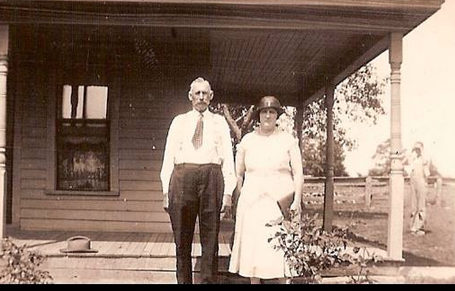
In Depression-era Missouri, before every election, my Dad remembered, a new car would pull up outside my Grandfather’s farmhouse and two men in three-piece suits (usually reserved for funerals, and even then for the Deceased) would deposit a bank-bag full of cash on Dora Gregory’s kitchen table. For them, it was but one more stop on a kind of purgatory circuit. That part of the state was thinly populated, so you had have a real passion for soybeans to make the drive enjoyable.
They were bagmen for the Kansas City Pendergast Machine, one of those old-timey operations that brought dead voters back to life, among other shenanigans.
Pendergast’s Kansas City was a kind of cultural hub for the Depression-era Midwest. Louis Armstrong played here, for example, and a new variant of Barbecue found a home here, too.
Meanwhile, in Texas County in the 1930s, the Civil War had not quite ended. When my father was 12 or 13, there was a Confederate veteran still alive in in Houston, the county seat. There also was one Union veteran in the same town. The two had not spoken since 1865.
FDR’s first term was past its midpoint when, on July 4, 1935, the county band was playing the National Anthem. A frayed cartridge belt in the old Confederate’s mind finally snapped: he leaped on the old Yankee, and the two rolled around on the courthouse lawn, knocking over potato salads and tubs of sweet tea in their personal Antietam. When six young man finally pried the two apart, the old Confederate triumphantly held up the Yankee’s ear, which he’d removed with a Barlow knife.
Most of the people of Texas County were considerably calmer and much kinder, especially if you happened to be a horse, about which, like my Mom’s ancestors from County Wicklow, they were passionate.
Tom Pendergast had Texas County in the bag, because, come Election Day, my pre-teen Dad handed out fives to waiting voters, murmuring, “The Democratic Party thanks you,” over and over, like a priest at Eucharist, so the Democrats never lost Texas County. The bank bag on Grandma’s kitchen table assured that.
To be fair to the Machine, it distributed food, not just bribes, and people in the hills were hungry in the depths of the Depression. A young Dad also helped distribute food to the needy. Grapefruit stymied them. “We boiled it, Bob,” they told him apologetically, “an’ then we fried it, but it still tasted putrid.” (Dad, a supply officer in 1944 London, also gifted an English family he knew with a bag of oranges. They virtually adopted him: the British had not seen oranges since the fall of France in 1940. Citrus fruit seems to follow the course of my father’s life.)
Boss Pendergast also made the career of Harry Truman possible, which, in turn made me possible: Truman favored my grandfather’s blackberry wine on campaign swings downstate–he’d stop for a sip or seven– and that little talent of Grandpa Gregory’s paid off in World War II: Truman got Dad appointed to Officers’ Candidate School as a Quartermaster, and so he served much of the war defending London’s pubs from the Nazi Hordes, which saved me the inconvenience of having him get killed before I had the chance to be born.
After, the war, my Mom was an Eisenhower Republican, so my parents had lively political discussions. One of them doomed dessert, because the colander of fresh strawberries, washed for strawberry shortcake, wound up on my father’s head, upside-down. JFK’s nomination brought political harmony to the marriage: Dad voted for him because he was a Democrat; Mom because he was Irish Catholic.
I wish I could say I loved my Grandmother Gregory, but she was a steel-spined schoolmarm who didn’t tolerate foolishness, by which she meant Consciousness, and she used to whack us absently with her cane. We stole her eyeglasses in revenge. And, sadly, by the time I knew her, she was edging into dementia, and though she couldn’t locate her dentures, or her eyeglasses, she could remember, in vivid detail–you could almost smell charred flesh and sick-room alcohol–how every person in southern Missouri had died between the War Between the States and the 1939 Dodgers.
It didn’t take a lot to prompt a Grandma Gregory Death Story, and, looking back from the fullness of years, I now realize that some of them were humdingers.
My favorite was the neighbor who suddenly disappeared. The family and the authorities and happy coonhounds–they like to be kept busy, or they get saucy– looked for several days, to no avail. When one of the kids finally did find him, he was at the bottom of the family’s well, where he’d plummeted after a massive coronary, which makes you wonder if they ever thought of lemonade the same way again.
Grandma liked that one, too.
Oddly, these stories were poignant because they showed she was already living in the past; her connections to modernity would grow more and more fragile. But, as a younger woman, she was shrewd, forceful, and I think had the same instinct, in a political sense, that leads orcas to crippled seals. I would not mess with that woman. And for that, and for her steel, I admire her and I am immensely proud to be her grandson.
13 Sunday Jul 2014
Posted in American History, Family history, Personal memoirs
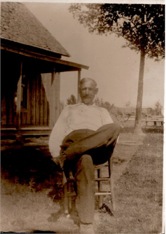
My grandfather, John Smith Gregory, was born in Shelby County, Kentucky, in 1862. He was a father of eight, a farmer in south-central Missouri, a lumber estimator, outdoorsman, and a sipper of life, in that life included lovingly fermented batches of blackberry wine. Harry Truman was a fan of that wine. On campaign swings downstate, he made it a point to pay court to my grandmother, a local Democratic powerbroker with money ties to Truman’s patrons, the Kansas City Pendergast Machine, but after those formalities, the heart of the Senator’s visit would be a sip or four of John’s blackberry wine.
That wine may have made me possible. When my father–who was a kind of miraculous afterthought, the last of eight children, born in the vigor of my grandfather’s fifty-sixth year–went into the Army in World War II, he stood as good a chance as any other country boy of being vaporized by a German 88 shell somewhere in the dark canopy of the Ardennes. Instead he spent the War, as a Quartermaster officer, in a series of frontal assaults on London’s pubs, or, as he did one evening, bellowing seditious rebel songs– after splitting a bottle of Johnnie Walker Scotch with an Irish elevator operator he’d befriended–and this was thanks to Sen. Truman’s endorsement of his candidacy to Officers’ Candidate School at Camp Lee, Virginia.
(By the way, London Bobbies tried to arrest Dad and the elevator operator, who knew ALL the verses to “Wearin’ of the Green,” but he was a good elevator operator. Up to the fifth floor. Down to the third. Up to the fourth floor. Up to the sixth. Down to the second. After sprinting up the hotel staircase and clumping down it, the exhausted Bobbies gave up.)
This is the song they were singing, as performed, logically, by the Orthodox Celts. They’re from Serbia.
Since my family’s forebears were Virginians, teaching dance had been central to the way they socialized their children. My family must have raised their children that way from the days they’d emigrated, in the 1690s, from the dismal Midlands of England to the banks of the James River, so Grandfather’s most formidable talent may have been his dancing. (On the other hand, the Gregorys had no gift for real estate. They sold Mount Vernon to the Washingtons.)
So his Virginia roots meant that John Gregory had become, by reputation, a kind of Ozarkian Astaire and every girl who had the chance to be his Ginger Rogers would have a moment on the dance floor with him where she would realize, with a sudden pang of delight, that she was gliding, as if the sawdust-strewn floor had become polished glass.
My grandmother was not amused by the line of pretty teenagers who shyly sought a place on Mr. Gregory’s dance card. She suspected, too, and I’ll bet she was right, that those girls liked also his twinkly eyes and the soft smile beneath his silky white mustaches. My Grandmother was not given to smiling. She had a temper and, with it, a strong and wide body: she was a hard woman to knock down in a windstorm.
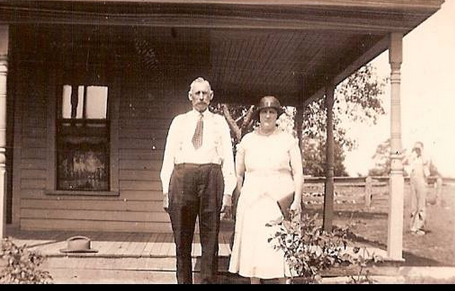
Years later, on her visits to us in Arroyo Grande–visits we regarded with as much enthusiasm as an Irish monastery might muster for a Viking raid–she’d absently whack us with her cane, and she had a forehand that would’ve shamed Rafael Nadal. She had been a schoolmarm and we think it was PTSD, and where veterans might see phantom Vietcong, Grandma saw farm boys eighteen hands high spitting streams of tobacco juice at recess. Something snapped inside her then and set her to whacking the nearest target of opportunity.
We hid her glasses, or, if that particular whack had an extra sting, her dentures, in revenge, but gave them back because she otherwise tended to describe, in graphic clinical detail, how every person in Texas County, Missouri had died between the end of the War Between the States and the Eisenhower Administration. Her grandfather, by the way, had been a Confederate brigadier general of modest accomplishment and minimal talent–I was named for him, and for his son, a staff officer killed in action, thanks to a lucky but devastating Yankee artillery shot, in Arkansas–so that branch of the family saw themselves as gentry. They were insufferable. Despite that, John Gregory indulged my grandmother; he was a tolerant man.
He had a genius for math. My Dad inherited this gift; he became a gifted accountant and, for almost twenty years, the comptroller for Madonna Construction. I, as my geometry teacher at Arroyo Grande High School, Mrs. Otsuji, noted ruefully, had no talent in that direction, nor in any plane. But lumber companies sought out Grandfather because he could eye a stand of pine and calculate, with eerie precision, how many board-feet it would yield.
He was a competent but unorthodox farmer: in the Ozark foothills any money there was to be made–and there wasn’t much–was to be made in tobacco and corn and hogs. John accepted that reality but his real passion was an anomaly. Cultivating ginseng was to John Gregory was what stamp collecting was to Franklin Roosevelt; given my grandmother’s personality, it was his outlet—he was not a talkative man, but I can imagine him, almost poetic, winning over dubious neighbors at the local grocer’s about the miraculous attributes of ginseng. He won them, too. In a little shirtpocket notebook I still have he has meticulously recorded his sales figures: J.K. Davis, $250; John Helsey, $50; W.T. Eliot, $62.50.
But his hallmark, the essence of his character, was his kindness. My father remembered this most of all: during the Depression, there’d be an occasional knock on the farmhouse door. It’d be a jobless man on the move.
–May I sleep the night in your barn, sir?
–Young man, you may not. Grandfather would eye the stranger coldly, for dramatic effect.
–However, we DO have a spare bed. How about some bacon and eggs?
It was these visits that so impressed my own father with the cruelty of the Great Depression. These strangers, who wolfed down my grandmother’s meals (beneath her stony exterior there was a deep humanity she didn’t like to let out much), were not “bums:” they were college students, engineers, veterans of the Great War, and one, a violinist, paid for his supper and bed with a solo concert: Bach and Boccherini found a rapt audience in a little farmhouse on the Ozark Plateau, in a kitchen warmed by a wood stove and lit by kerosene lamps instead of footlights.
When they hung a ne’er-do-well –the local bully–at the Missouri State Penitentiary, the barbershop crowd bet that not even John Gregory, in town for his every-other-day shave, could find anything nice to say about him. There was a pause, but not a long one, underneath the hot towels: ”The man,” he said, “had a beautiful set of teeth.”
My grandfather was killed by a driver from Wichita Falls, Texas. He was deaf in the direction of the Texan’s Ford roadster, traveling fast; Grandma had called Dad back to the house because he was barefoot and no son of hers–what would the general think?– was going to make a social call to Mr. Dixon’s looking like a hillbilly. He never forgave her. Had my father been crossing the road with his father, he would’ve heard the Ford’s approach.
The impact broke both of John’s legs. But even at seventy, he had an athlete’s body and he fought hard to live in a Catholic hospital that must have caused my Church of Christ grandmother intense anxiety, looking out for Grandfather while listening intently for any Papist heresy, like the click of Rosary beads.
As a teenager, Grandfather had accepted a dare from two friends to swim across the Red River in flood, and John was the only survivor. Not this time: the river was too strong and there was nothing to do but to watch him, as graceful then as he’d ever been waltzing with a pretty girl, when he finally made the choice to let the current carry him away.
After they drove him back home from Springfield, there was a big funeral. I still have the yellowed obituary. Despite the fact that it was the darkest year of the Great Depression–1933–there would have been big honey-cured baked hams and fried chicken and candied yams and mashed potatoes smooth as clouds and a battery of salads, casseroles, and pies, dusted with sugar, from every farmhouse in a twenty-mile radius.
Both my father and his sister, my Aunt Bill, talked about him always in Homeric terms. He was their father, and he was their hero. They found it hard to let him go, so they never did. That turned out to be a good thing, for me. It’s good to love a man you never met.
07 Monday Jul 2014
Posted in American History, California history, Family history, Personal memoirs
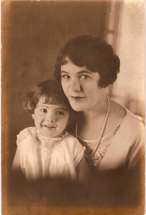
My mother and grandmother, about 1925.
What’s hard about doing your family tree is finding some branches you’d rather break off. The one that comes to mind is the ancestor with 19 slaves in the 1850 census, identified only by gender and age, as if they were machine parts rather than human beings. That’s not the case with my Grandma Kelly. When she died in Cambria in 1974, I think she’d finally found some happiness in that beautiful place. She deserved it. Her life, I now realize, represents a significant slice of California’s economic history, and the wealth the Golden State has generated came because of people like her, proud independents whose only wealth was their determination to keep going.
When I was little she took us out to lunch at a restaurant, now torn down, where the Carl’s Jr. is today on the northern edge of San Luis Obispo, off Santa Rosa. When the waitress handed out the menus, her eyes widened and locked on Grandma’s bracelet: It was made of gold nuggets.
I found out a lot I didn’t know researching my Mom’s family tree over the summer. Emma Martha Kircher—my Grandma Kelly—was born in a mining town now underneath Lake Shasta–Kennett, California–and the nuggets on her bracelet were her father’s. Charlie Kircher, the son of German immigrants from Baden-Wurttemberg, refugees from the humiliating collapse of the German revolution of 1848, was a restless Kansas farmer who came west in a lesser-known California Gold Rush near the turn of the century.
Kennett was at its epicenter: From the photographs it’s a town that looks like a Universal Studio version of Dodge City; later photos, by the 1910s, show a huge and menacing copper smelter—the industry that sustained Kennett after the gold ran out—dominating the little town.
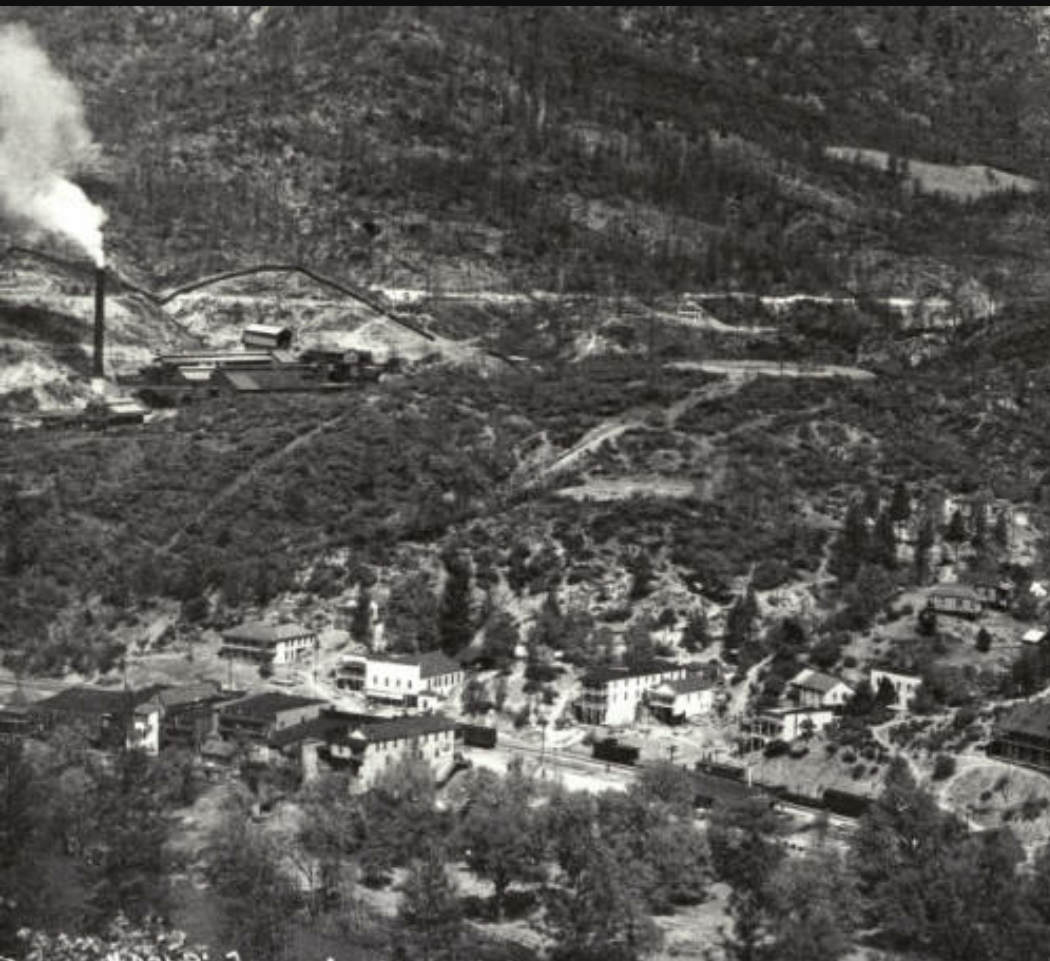
Charlie Kircher, my great-grandfather, was not the romantic figure I thought him to be, not a hardy 49er with shovel, pan, and cradle. He was a company man. The mine where he worked—the Uncle Sam mine—eventually would yield over a million dollars in ore, and one of his jobs, as a chlorider, was to separate the gold ore from the rock in which it was embedded. It wasn’t romantic at all—it was tedious, smelly, but important to an industry that could be immensely destructive: the photographs of what hydraulic mining, for example, did to the land of Shasta County are as shocking in their way as the photographs of bombed-out German cities at the end of World War II.
But it’s here where Charlie seems to have found his vocation, and it’s in Kennett’s goldfields where he set down his roots. He married a 14-year-old native Californian, Nellie Wilson, in 1894, and the couple promptly produced three children: my grandmother, Emma Martha, born in 1895, Violet, in 1898, and Charlie Jr., in 1900.
My grandmother’s earliest memory was of “a house on stilts.” I had visions of her living over the Sacramento River—I seem to 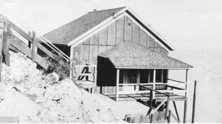 remember an urban legend that Country-Western star Merle Haggard owned a house like that over the Kern River with a trap door to facilitate fishing. That wasn’t Emma’s situation at all: her house was terrifying. It was a Company house for a Company man, built flush into the steep sides of Iron Mountain, and below the stilts is a sheer drop, seen in an old photograph, that makes it a miracle she survived her childhood.
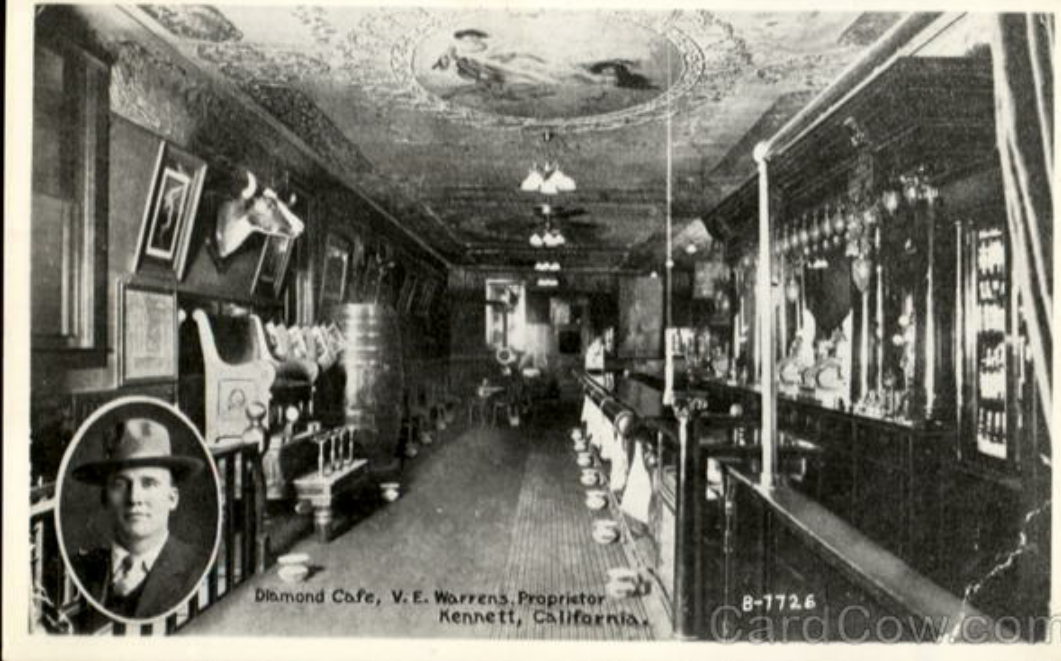
She attended a school, a little steepled building, in Kennett, which was also graced with a Methodist Church and the two-story Diamond Saloon and Hotel (V.C. Warrens, Prop.): an interior shot from a UC Davis collection shows a long bar with a militia-line of brass spittoons along the rail and an ornate ceiling with plump, gauzily and vaguely-dressed females and an attendant cherub or two for class.
Kennett was a tough town. Charlie Kircher was a tough man. The records note a “crippled right hand,” but he may have used the good one liberally. Nellie would divorce him and had remarried by 1906; although the three children would follow Charlie to Burbank in 1910, later, the youngest, Charlie Jr., would lie about his age to join the World War I Navy, quite probably to put some ocean between himself and his father.
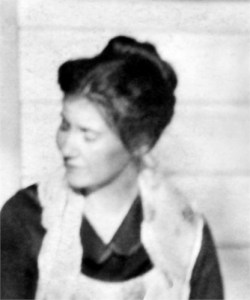
My great-grandmother, Nellie Wilson Kircher.
That’s when Charlie Kircher’s trail disappears. I can find no record of his death and my Grandmother never discussed him and very rarely discussed her early life. I never met her sister and brother.
I can pick up the thread of her life again in Taft, California, a town just over the San Luis Obispo county line that resembled Kennett in every way except for one: the source of wealth was oil, not gold.
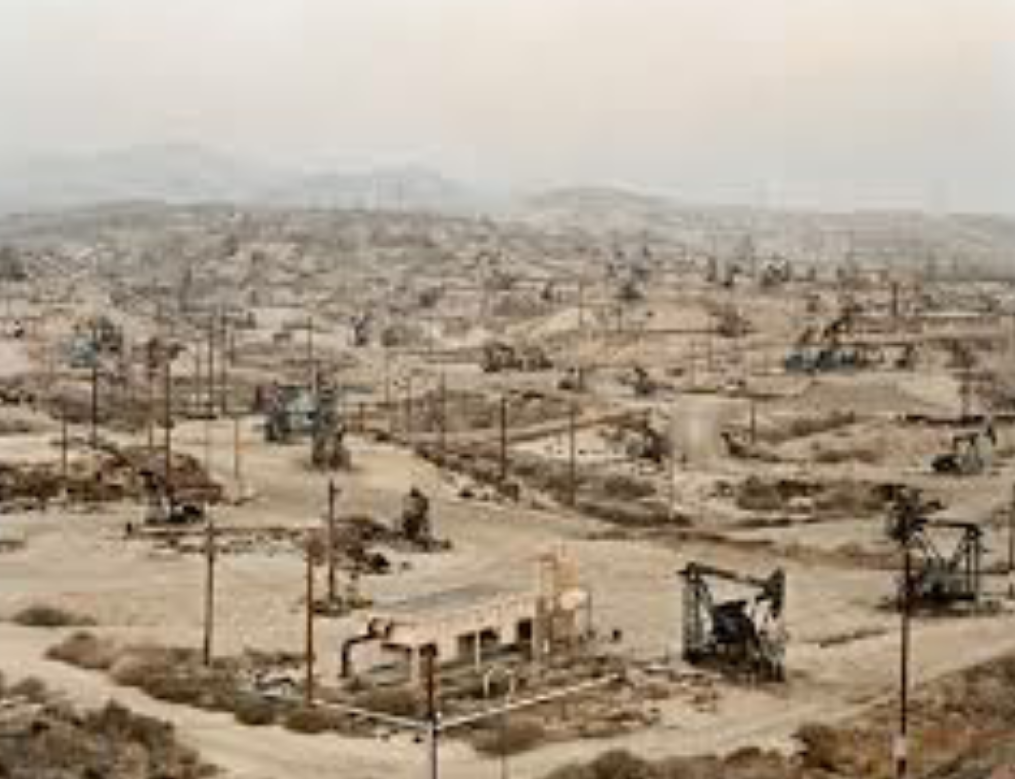
Emma Martha Kircher met my Grandfather—they’d marry in July 1920 in Bakersfield—whose job descriptions over the years more or less connect with the oil industry and also with the fact that he couldn’t seem to hold a job for very long.
There’s only one photograph of him, now missing—a handsome Irishman, Edmund Keefe, in a grand three-piece suit and a Homburg hat, his hands wrapped proudly around my toddler mother, Patricia Margaret Keefe. His eyes are fixed on her and the part of the face you can see below his hat brim is creased by a wide smile. Edmund’s father had come to North America as a Famine baby, but in a miraculous way: The Keefes’ English landlord, Lord Fitzwilliam, had paid the passage to Quebec for his starving County Wicklow tenants, an act of seeming generosity that would make my own life possible.
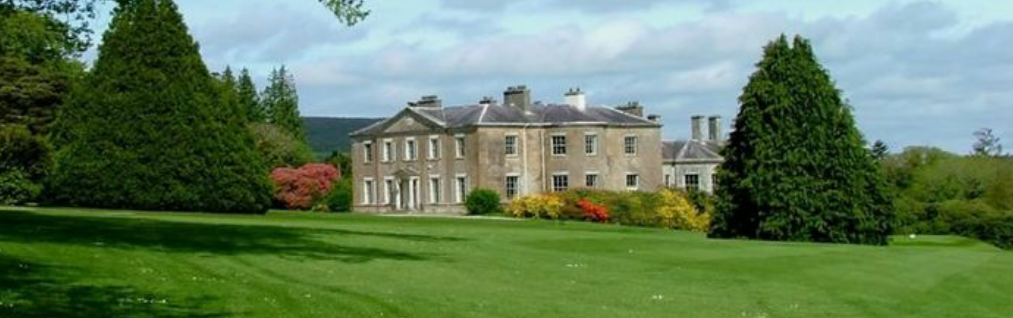
Fitzwilliam estate, Coolattin, County Wicklow
It also made it possible for Fitzwilliam to replace Irishmen with sheep–far more pliable and almost as cheap to feed.
The Keefes had farmed in Ontario and worked as migrant laborers in the Pennsylvania oilfields before the family settled and homesteaded for many years in Minnesota. Thomas Keefe married into another Wicklow family, the Foxes, so profoundly Catholic that they produced a somewhat frightening nun, Sister Loretto, who made it her life’s mission to minister to unwed mothers.
Sister Loretto, in an old newspaper photograph.
“He was a bad man,” my step-grandfather said of Edmund Keefe, and that’s about all I know of him. I know he liked to drink. I know he liked to borrow cars that didn’t belong to him, and I know that the Taft Police Department and the Kern County Sheriff knew him far better than I ever will. He disappeared in the 1920s—one version has him running off with Shell Beach restaurant owner and businesswoman Mattie Smyer.
Before she moved here, she was a whorehouse Madam in Taft. She became a restaurateur—today, Mattie’s old place is McLintock’s Restaurant. When the War came, Mattie’s contribution to defeating the Axis was a stable of girls behind the restaurant and in little multi-doored houses across Highway 101, near the sea.
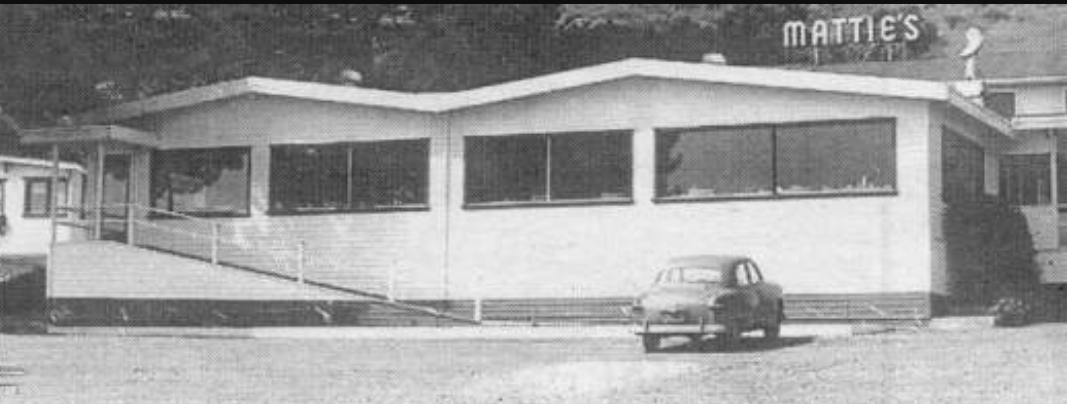
The Mattie connection was something we discovered years after, when my parents made the innocent mistake of taking Grandma to dinner to Mattie’s Restaurant for her birthday. Midway through the main course, after an epic personal struggle, her face began to twitch and she burst into tears. Much later, I found out why: Edmund Keefe may have been a bad man, but he was also, according to my uncle, the love of my grandmother’s life.
But none of us—not a private detective my parents hired, nor hours of research on my part—has ever uncovered what happened to him.
He wrote a one-act play about a young married couple, which he titled “Emmeline.” It, too, has disappeared.
So Emma Martha Keefe was a single mother in an oil boomtown and she was heartbroken. She worked as a waitress in a Taft 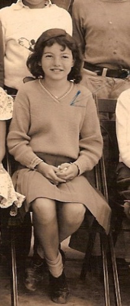 coffee shop where “extra sugar” meant a good stiff belt of Prohibiton-era Canadian whiskey—possibly landed at Spooner’s Cove at Montana de Oro–in your coffee. She and my mother lived close to the bone; their poverty is revealed in an old school picture of my Mom, a jaunty little beret on her head, sweater and pleated skirt–and that Irish smile I would grow to love so much–but her shoes are beaten and scuffed.
Emma resisted, but eventually accepted, the courting of another man, another Irishman, a Taft police constable, George Kelly, my step-grandfather, our Gramps. This man was my real grandfather. He was soft-spoken, gentle, tall and slender, a natural carpenter, gifted with children–I am so happy my toddler older son, John, got to meet him twenty-five years ago.
Gramps was a tough, too, and strong as an ox. He and my Uncle George, a big man and bigger than his Dad, used to have little handshaking contests every time they saw each other after an absence. Gramps always won: he was a bone-crusher. There’s a story of him getting jumped by three oilfield roughnecks in an alley during the 1930s, and of an assisting officer arriving at the scene to discover that Gramps was the only combatant both conscious and vertical.
It was Gramps who, at lunch one day, casually mentioned that Mattie was leaving Taft for Shell Beach, and she was putting on a big yard sale. The furniture was elegant. Grandma wouldn’t hear of it. “Not,” she sniffed, “from THAT woman.”
Later, she surreptitiously drove by the yard sale. She made a few more passes. Very slowly.
Fifty years later, when I spent the night at my uncle’s house near Sacramento, I slept on a Mattie Smyer couch in a living room surrounded by Mattie Smyer end tables, lamps, china cabinets and easy chairs. It was beautiful stuff–if one can use the word “voluptuous” to describe an elegantly curved floor lamp, then this was libido-driven furniture.
The Kellys eventually would move to Williams, in Colusa County, raise almonds, where the earliest memory I have is of falling down Gramps’s ranch-house steps. I still have the scar on my knee. I still remember the look of concern on Gramps’ face as he scooped me up in his arms.
When the pair came to visit us in Arroyo Grande, there was inside me the kind of trembling excitement a little kid feels on Christmas Eve. Grandma talked about politics, but also about Hollywood scandals–Elizabeth Taylor and Richard Burton seemed to share equal time with the Berlin Wall and the Mercury astronauts–and teased Gramps, a quiet man but a remarkably funny one, without mercy. He had learned after years of marriage how to be her straight man, Burns to her Gracie Allen. He adored her, and sometimes, in mid-needle, Grandma would stop suddenly and regard him with a smile. You could see that she had learned, after years of marriage, to adore him, too.
The only part I hated about their visits was when it came time for them to leave, and I would watch their car until it was gone, and still watch awhile after. Maybe, I must have thought, they’ve forgotten something and will have to come back.
When they retired to Cambria in a house built in large part by Gramps, then in his sixties, on a lot she’d been wise enough to buy when it was cheap, they lived quietly and putting on the Ritz consisted of going to an all-you-can-eat family restaurant off Highway 1. It wasn’t fancy. Grandma Kelly had no need for fancy. The wealth she had was in living life, in enduring unimaginable heartbreak and in enduring bleak poverty, and through all of that, she was most truly herself in those moments I caught her smiling at Gramps.
In those moments of delight, it was as if she was were five years old again but, somehow this time, her father, Charlie Kircher, was carrying her down Iron Mountain, carrying her away forever that horrific house on stilts and lifting her gently onto the back of the pony every little girl dreams of.

