• About
  • The Germans

A Work in Progress

A Work in Progress

Category Archives: Arroyo Grande

When mourning is what we need

14 Friday Aug 2020

Posted by ag1970 in Arroyo Grande, Uncategorized

≈ 3 Comments

I have been stunned, but not at all surprised, by the sadness so many of us feel at the closing of The Grad, the burger/bar/nightclub in an immense building that seemed to hold the south side of San Luis Obispo down for the last forty-five years.

The grief is authentic and I would like to argue that it’s justified, too. Even my wife had tears in her eyes last night: when we were young parents, lunch at The Grad was a supreme treat for our two little boys, who ran about like wildebeest on the dance floor and played video games and then, when they were very little, after their Junior Gradburgers, they’d fall asleep in the back of our VW Westphalia on the way home to Los Osos.
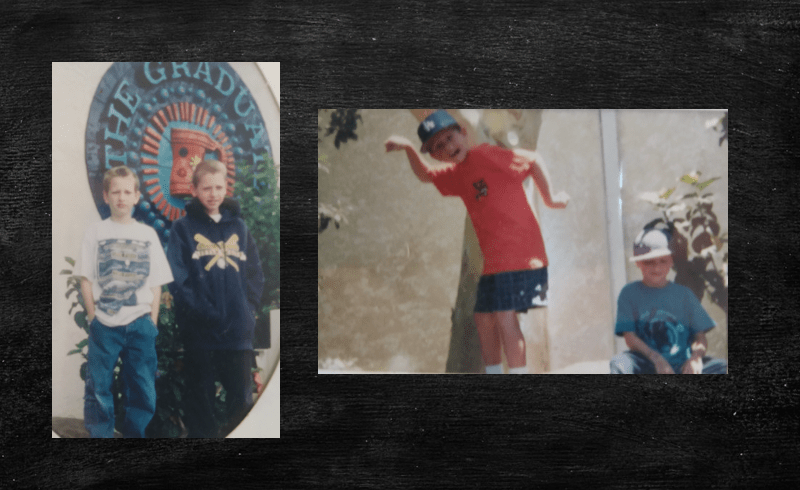
Grad lads. John is 31; Thomas is 29.


I had my share of burgers there–and beers, too, as a bachelor–with friends like David Cherry and Ricky Monroe and Cleo Cooper and with the fine young man, Rob Rosales, once a Grad bouncer, who would become my best man in 1986. My friend Randy Fiser, a fine teacher and a master of the pizza oven, was once a Grad bouncer, too. I didn’t need much bouncing back then, being a raging introvert. The dancing at night always disoriented me a little–I don’t do well with noise–but it was still fun and the girls were pretty and, as Hemingway would say, the bathrooms were (mostly) clean and well-lighted. And the bartenders were friendly.

But I mostly remember The Grad because of Elizabeth and our little boys.

And, being a lifelong devotee of bread products, I remember the fresh-baked Gradburger buns, which were exquisite, baked by a tiny lady whose eyes were intent behind thick glasses and who was the figurative grandmother to every young person who worked there. A kid took your order, and they were almost always cheerful, but seeing Herself in her bakery, in her stolidity, was assurance of permanence, like the Washington Monument or St. Patrick’s Cathedral. She was a monument, too. But a tiny one.

But nothing, of course, is permanent.
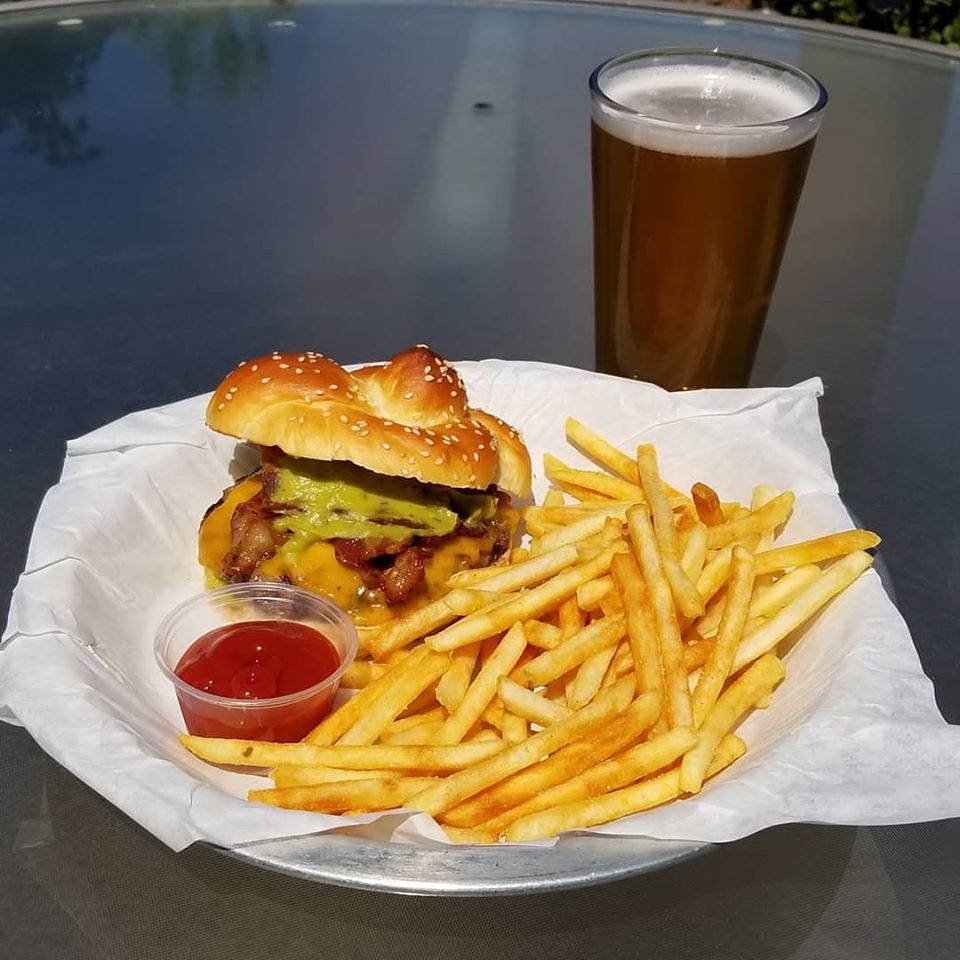

There are plenty of people, as cold-blooded as snakes but far less attractive, who are dismissive of us when something fundamental changes in our lives and we are saddened, even if it’s just a burger joint. Or even if it’s a place like Alex’s BBQ in Shell Beach, far older and just as homely as The Grad. But Alex’s had aromatic ribs whose smokiness you can still smell and it had industrial-strength Martinis that recalled its happily scandalous connections to Prohibition bootlegging. Alex’s was the last restaurant where my Dad and I shared a meal before his death. It was destroyed capriciously, with no more warning than the Japanese carrier task force gave Pearl Harbor.

Even though the snaky people are probably correct, I’d argue that
we have a right, if only for a moment, to mourn Progress. We have no power to stop it.

But we leave pieces of our lives in vacant buildings or in the powdered brick that rises from buildings broken up by wreckers as merciless at the Caterpillars that flattened Okie farmhouses in The Grapes of Wrath.

I long ago gave up trying to understand San Luis Obispo, where Progress, when measured in storefronts, is so constant and so fickle that it’s the historic equivalent of a strobe light, freezing us in one moment that’s gone in the next.

But here is where I left pieces of my life: The Sno-White Creamery on Monterey, where Mom took me for consolation after getting a doctor’s shot; Corcoran’s lunches with my mother and grandmother, where you raised a little Bear Flag to let the waitress know you were ready to order; Riley’s Department Store, where Santa, with soft whiskers and a crushed velvet suit, sat in a big chair expecting you; Gabby’s Bookstore, where my parents found a collection of Robert Frost poems, a Christmas gift now sixty years old;  Green Brothers clothing, where I rented my Prom tuxes and endured the sardonic but delightful humor of my favorite Green brother, Joe, as he measured me.

I even miss Aethelred’s, a bar where I left parts of myself that I never noticed were missing, including much of my hearing, and the Taco Bell on Santa Rosa, where 29-cent (or were they 19 cents?) tacos and burritos around the big round fire out front kept me sustained in my early college years.

I might miss, most of all, Muzio’s Market on Monterey Street, with its wooden floors and cramped colorful shelves and just-pink, just-sliced roast beef under the glass counter.

Joe Gularte of Corbett Canyon once delivered fresh strawberries to Muzio’s in a Model A pickup whose bench seat was lined with excited Gularte girls going to town.
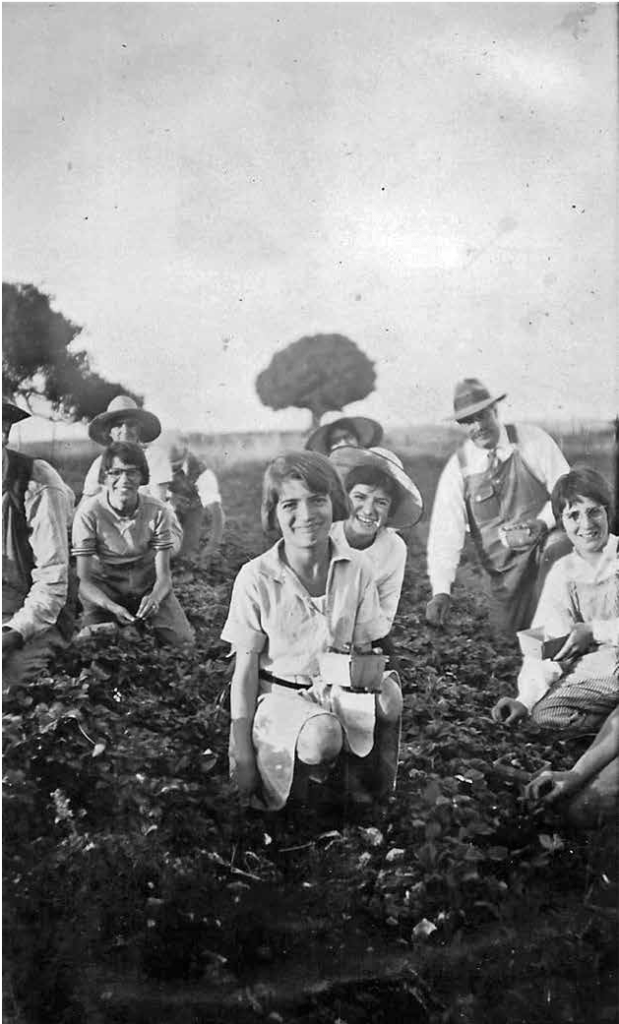
Joe Gularte and his daughters picking strawberries.


Joe’s son, Frank, died a decade later, in November 1944, during a firefight in the streets of a beautiful mountain French town, Merten, in the Moselle Valley along the German border. Frank’s last moments were chaotic. The first tank destroyer in his battalion to creep into Merten was fired on and returned fire, but then, in moving around a tank barrier,  it  got mired in the mud was destroyed by a German anti-tank crew. The next destroyer turned back, the third tumbled into a ditch and was set ablaze by enemy fire and the fourth’s gun jammed.
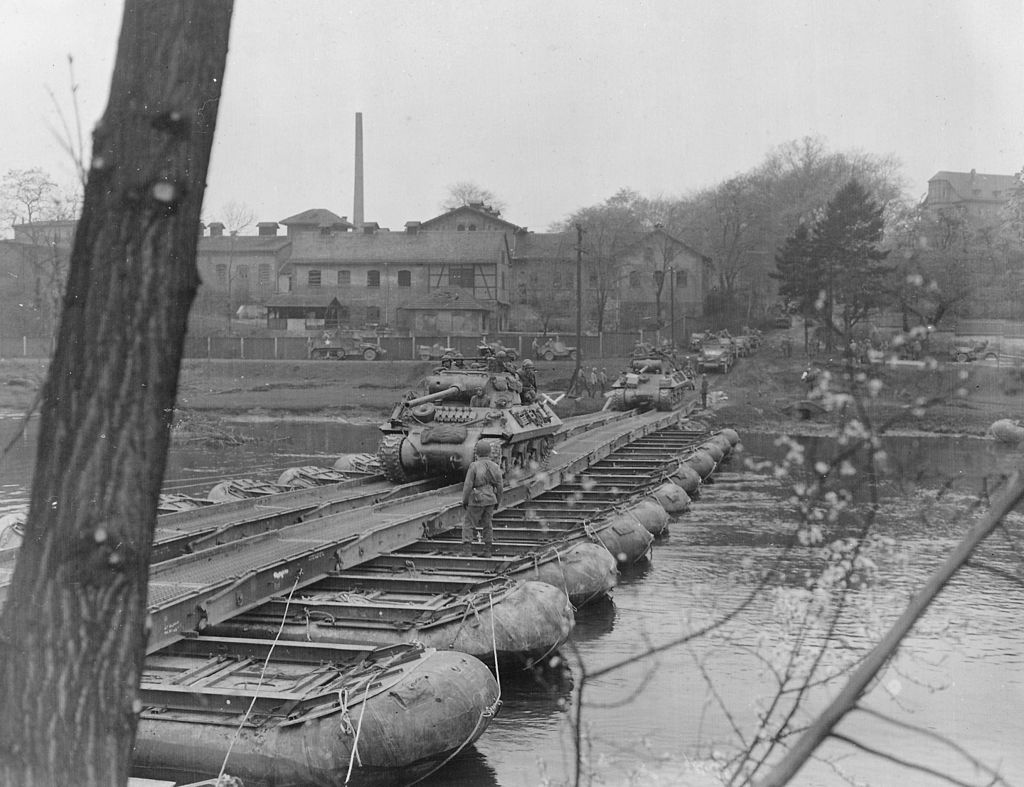
Tank destroyers from Frank Gularte’s unit make the river crossing across a pontoon bridge into Germany, April 1945.


Frank’s son, and Joe’s grandson, Frank Jr., was born in the Mountain View Hospital on Upper Marsh Street three days after the sniper robbed him of his father.

It took another week for the War Department telegram to come home to Corbett Canyon.

Progress hasn’t the time for details like these.

So this business about mourning the latest victim of Progress, The Grad, strikes me as perfectly sensible. What we’re mourning is a place where we’ve shared our lives. In a time when we are so bitterly divided against each other, with the kind of venom we haven’t seen since the Civil War, we will miss The Grad because it reminded us that we, all of us, belong most of all to each other.

Farmworkers

24 Friday Jul 2020

Posted by ag1970 in Arroyo Grande, Uncategorized

≈ Leave a comment

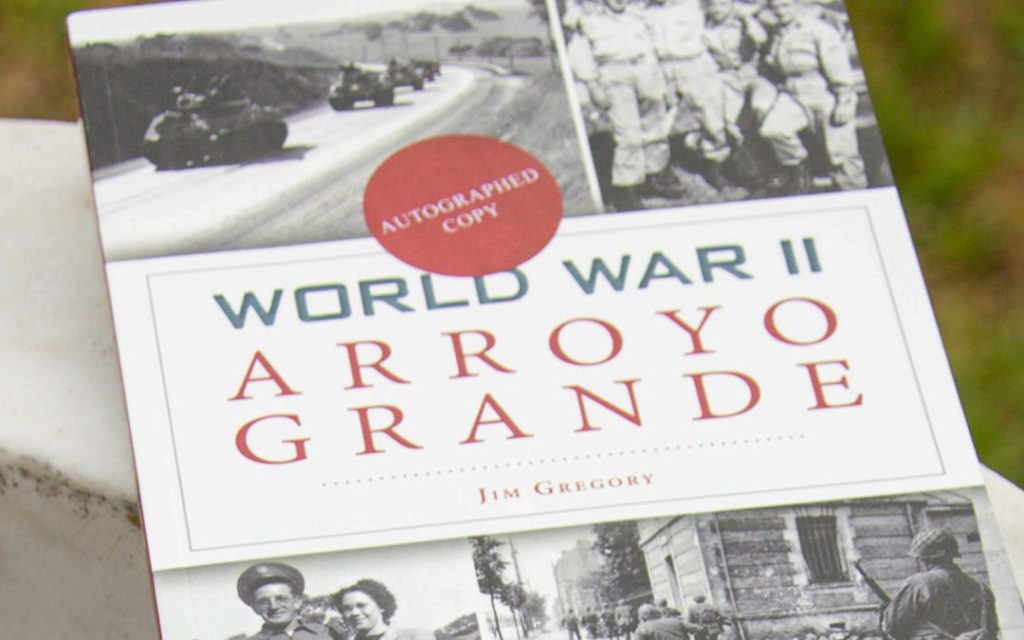
Adapted from the book World War II Arroyo Grande

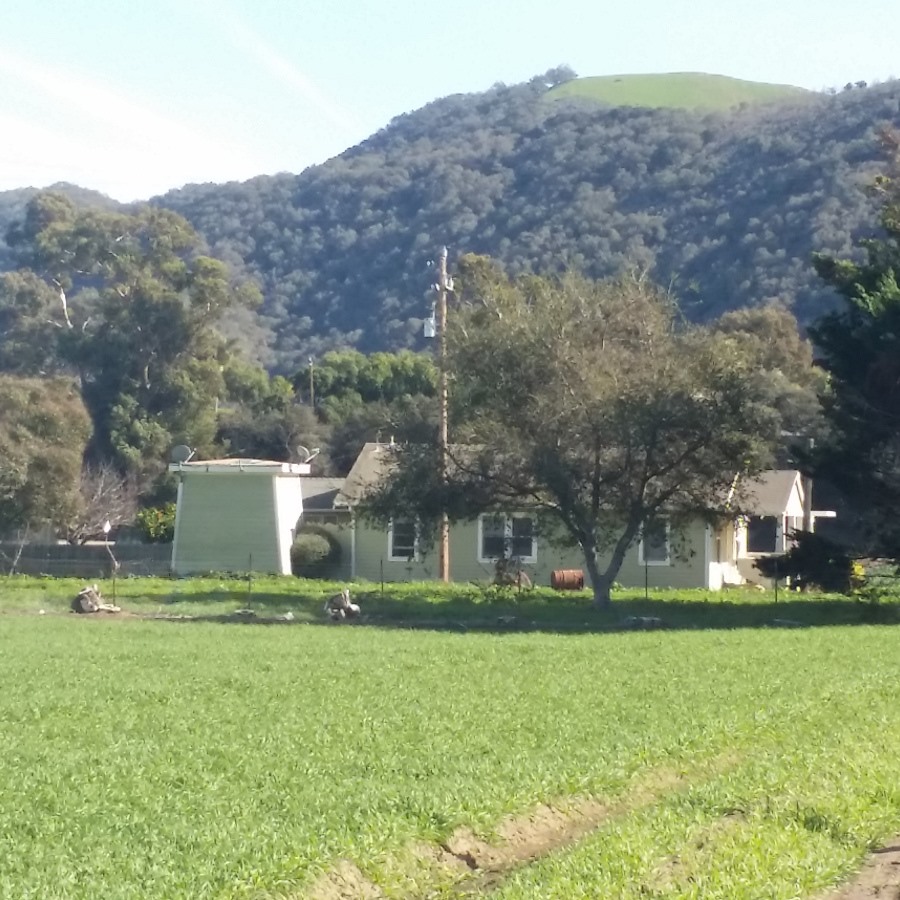
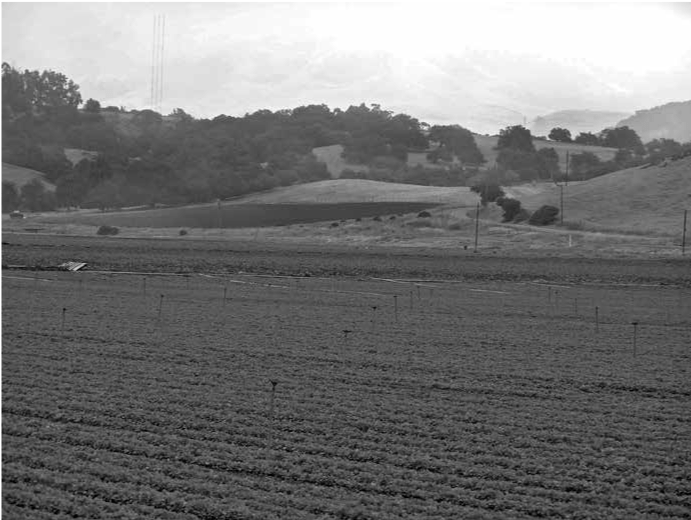
The Upper Arroyo Grande Valley, where I grew up.

…Just east of Old Arroyo, farm fields also bordered the house where I grew up during the 1950s and 1960s. With my big brother, I walked through them on my way to school, past men cultivating crops with el cortito, the “short hoe”—backbreaking work with a tool that would be outlawed in 1974. The soil of these fields is rich and loamy, alluvial deposits that are the gift of the Arroyo Grande Creek, which flows into the Pacific Ocean seven miles from its origins in the Santa Lucia Mountains.

During my childhood, the creek was my playground. My friends and I fished for rainbow trout in little eddies and in a beaver pond adjacent to farmer Kazuo Ikeda’s cabbages. In fact, steelhead trout still swam upstream to spawn; they are now gone this far south in California. I hooked one once when I was eleven, and the shock of the big fish hitting and then fighting made me nearly drop my pole. I had never seen anything quite so beautiful and so violent—so determined to escape and to live. She did both.

It was earning a living that absorbed my father; a brilliant man with a gift for numbers, he became an accountant who was determined that his children would not suffer anything like the poverty he’d seen among his neighbors in the Ozark foothills during the Great Depression. Beyond that, he was determined that they would all get a college education. His mother, our grandmother Gregory, had been a rural schoolmarm. My education began with two severe but gifted women at the two-room Branch Elementary School, another rural school, with some seventy-odd students in grades one through eight.

Though our teachers dressed like the women in Grant Woods’s Daughters of the American Revolution, they had none of the insipid smugness of Wood’s subjects. These women were teachers because they had the calling; their lives had purpose. Each had to choreograph teaching six subjects to four grades—first through fourth in one room, fifth through eighth in the other— and so they ran a tight ship. We would learn their way, a requirement for which, many years later, I would be deeply grateful.

My first teacher, however, was my mother, and she was remarkable. Her childhood had been a hard one. She grew up poor. Her ne’er-do-well Irish father deserted the family when she was a toddler in an oil boomtown, Taft, just over the county line. When I was very little, we played school. She even rang a hand bell—it had been Grandmother Gregory’s—when “recess” was over. On my first day of formal education, I remember realizing, with a little shock of pleasure, that I could read the names of my classmates as our teacher, Mrs. Brown, wrote them on the blackboard.

One lesson appeared to my mother in the form of a Mexican fieldworker, a bracero, who one day walked into our front yard and up to her. She kept her garden shears at port arms and shoved me behind her skirts. The man signaled that he wanted to fill an empty wine gallon jug with water for himself and his friends, who were working the pepper field adjacent to our pasture. His face, with a tiny Cantínflas mustache, radiated good humor. My mother relaxed and filled the jug from her garden hose. The water was cold. I knew that because of what she said next.

“Now, help him carry it back.”

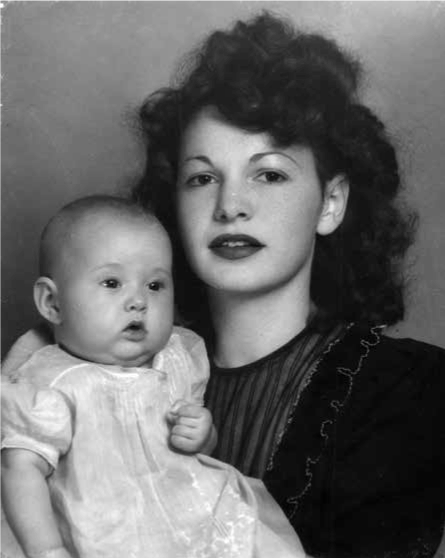
My mother and my bis sister, Roberta, about 1943.

So I did. And I stayed awhile. These men worked for George Shannon, a man of immense warmth, and on later visits to their barracks at Shannon’s farm—it smelled of earth and Aqua Velva and laundry soap—I learned a little Spanish from the braceros. They spread snapshots across their bunks of wives and girlfriends and children, and they laughed when I tried out  my new words in their language. That encounter would lead to my college studies’ focus, the history of Mexico and Latin America.

Year later, a Spanish professor—I am ashamed at how much of the language I’ve forgotten– at my Midwestern college took me aside after class and told me this:

“Mr. Gregory, you have a pronounced Mexican accent.”

It was one of the finest compliments I’ve ever received.


In the early summer of 1944—when Gen. Dwight Eisenhower receives his weather officer’s report for June 6 and says simply, “OK, we’ll go,” when Rome falls to Mark Clark’s armies and when horrified marines watch Japanese civilians leap to their deaths from the cliffs of Saipan—the war, for Americans at home, was both distant and, for grieving families, painfully intimate, but even the war could not touch the work to be done.

That month, in the upper Arroyo Grande Valley of coastal California, this is what you would see, possibly through the dense, cold morning fog: labor contractors drop off pickup loads of fieldworkers at the Harris Bridge, which spans the creek that nourishes and gives the valley its name.

The workers cross the bridge whistling, an incredibly beautiful, almost baroque whistling of Mexican folk tunes from the time of the revolution or love songs, as they walk down to the fields to their work with their lunches— wine jugs filled with drinking water and perhaps chorizo-and-egg burritos wrapped in wax paper, fuel for the kind of physical work that would make most men sit in the freshly turned field gasping within fifteen minutes and woefully regarding their quickly blistered hands.

Row crops, Upper Arroyo Grande Valley

Their summer work might be in a new bean field, where the whistling would eventually stop because it is such a tax on men who work hard, whose breathing soon becomes laborious and therefore precious. To begin a newly planted field of beans, the fieldworkers have to drive wooden stakes into precise parade-ground lines along the furrows, so that the bean vines can use the stakes to climb and twist—they will eventually bear delicate, bell-shaped flowers that stretch toward the sun. The sun invariably appears in late morning, when it burns the sea fog away, and the colors of the valley— wheaten hills and verdant bottomland where the crop is in—are reborn, vivid and sharply focused.

To drive the wooden stakes, the fieldworkers use a heavy metal tube, a driver, with a handle attached that resembles that of an old-time pump primer that nineteenth-century settlers used to draw water from the ground. So the whistling stops and is replaced by the rhythmic ring of the stake drivers as the workers pound hundreds of stakes into the field.

It is a musical sound. But of course, what you cannot hear are the grunts of the men at each stroke of the stake driver; what you cannot feel is the enormous weight that exhausted arms and shoulders soon take on; and what you cannot avoid, if you think about it sensibly, is admiration for the men who feed you.


Since World War II, agriculture here has changed—pole beans and the seemingly limitless groves of walnut trees that once competed with row crops are gone, the latter victims of a malevolent infestation of insect larvae. Today, farmers grow more exotic crops, like bok choy and kale, and along the hillsides given over to beef cattle as far back as the beginning of the nineteenth century, there are new farmers and new rows of wine grapes, profitable, lovely and greedy for water—a commodity that isn’t plentiful in California—multiplying every year. The beef cattle haven’t dominated the coastal hills since the 1860s, when the drought that periodically afflicts the state hit as hard as it ever has. The cattle, either killed outright by ravenous coyotes or mountain lions come down from distant folds in the hills or dead of thirst and hunger, would have covered the hills with their bones.

It was that kind of drought that may have brought a fieldworker, whose family had lived for generations in New Mexico, to these coastal valleys in 1940. Much of his native state in the years before had been swept away by the Dust Bowl. Winds had carried the copper-red soil as far east as the Mid- Atlantic to drop it, like gritty rain from a place that had none, onto ships still sailing freely between continents.

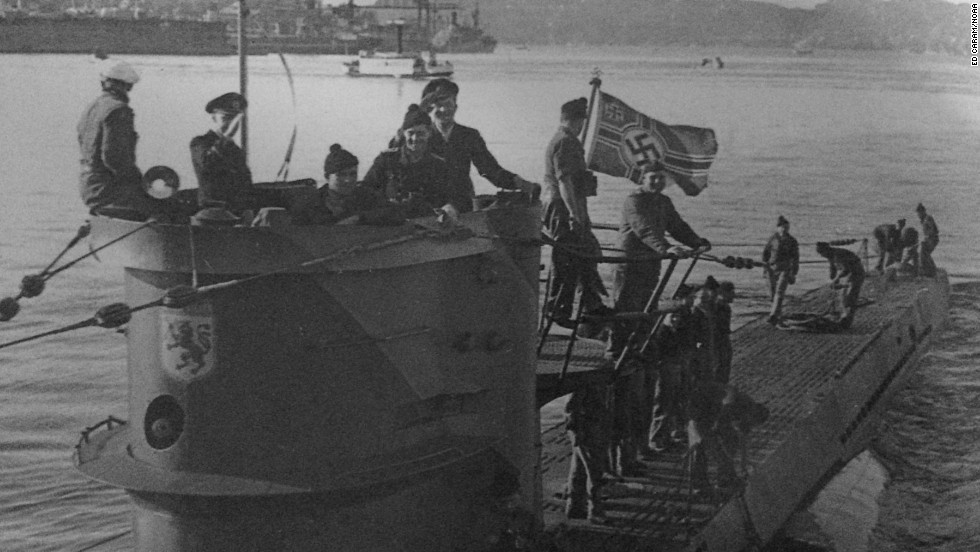
The German U-boat U-576 leaves harbor. She was later sunk with all hands off North Carolina.

Those ships would lose their freedom in the years immediately after, and the coyotes that hunted them without fear were U-boats come out    of their lairs in Kiel and later in Lorient. U-boat captains called this the “Happy Time.” The U-boats would someday kill that young fieldworker, if indirectly, as part of an inexorable chain of events that would lead him to Normandy, so far away from the fields that border Arroyo Grande Creek, and to pastures bound by hedges and grazed by fat dairy cows, cows that lowed piteously to be milked in what had become killing zones. One of them, dead in the crossfire, may have provided scant cover from the German machine guns that harvested crops of young men for fieldworker, now rifleman, Private Domingo Martinez.

A German artillery shell killed Pvt. Martinez near Bolleville, Normandy. He lies in the American Cemetery above Omaha Beach.

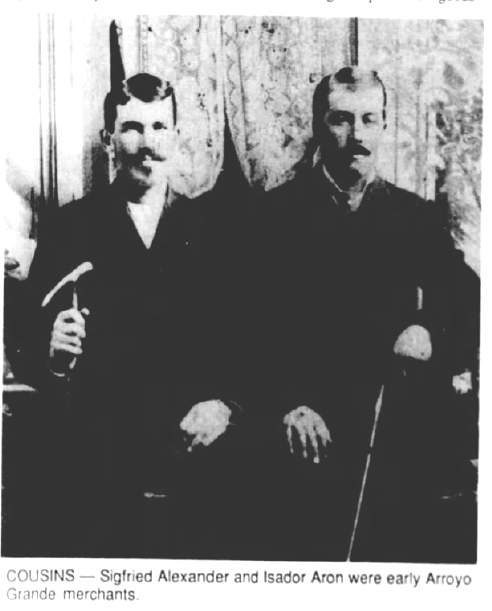
Aron and Alexander

24 Wednesday Jun 2020

Posted by ag1970 in Arroyo Grande, Uncategorized

≈ Leave a comment

There are times in any amateur historian’s research when you’re led in a direction you didn’t expect. If you’re lucky, that new direction will reward you with a lesson in our shared humanity–which, to me, is what history is all about, anyway.

The facts seem basic. Isidor Aron (1853-1909) and Siegfried Alexander (1856-1923), were cousins, from Posen, a province of Prussia until Bismarck completed Germany’s unification in The Hall of Mirrors at Versailles in 1871. This was the final act of a victory over Napoleon III’s France that would poison Europe. This moment made Verdun possible—the place where, beneath plexiglas panels in the floor of the battlefield ossuary, the unidentified bones of tens of thousands of French and German boys are stacked, orderly and ghastly.

The two cousins had emigrated to America two years before the Bismarck’s moment in the Hall of Mirrors—that’s good news— but not long after their adoptive nation’s near-annihilation in the Civil War. That’s bad news. German immigrants were not viewed kindly—my grandmother’s people came here from Baden-Wurttemberg—and the war had made them tragicomic. The Army of the Potomac’s XI Corps, after all, made up mostly of German immigrants (“We Fight Mits Sigel,” a popular song was titled, in honor of their commander, Franz Sigel), had collapsed under the weight of Stonewall Jackson’s stunning surprise attack at Chancellorsville in May 1863, in Lee’s greatest victory.

The Confederates had come bursting out of dense woods thought impassable, trilling their Rebel Yell and preceded by panic-stricken jackrabbits, foxes and deer who galloped through the Union soldiers at their suppers. The Germans trailed the animals in their flight, but not by much.

For a time, the only resistance on Hooker’s right seemed to be coming from a single cannon, also in retreat, but manned by a crew that would pause periodically to load and fire a canister charge, essentially, the artillery version of a shotgun shell, loaded with deadly steel balls, into their pursuers. The defiant artillery crew was directed by a German immigrant, Captain Hubert Dilger. A Southern artillerist described Dilger’s actions that day as “superhuman,” and the young Union officer would win the Medal of Honor.

It appears that Dilger was overshadowed by bad generalship and the resultant flight of XI Corps. It would take generations for their descendants—Eisenhower, Eichelberger, Spaatz, Nimitz—to redeem Chancellorsville.

For the rest of the war, XI Corps would be derisively referred to as “The Flying Dutchmen.” Ironically, it was a Confederate state—Texas, of all places—that would welcome German immigrants with open arms. Texas German is still spoken there.

German immigrant Isidor Aron came to California. Here’s a 1905 passport application, preparatory to the great adventure of his life, which includes the record of his immigration and citizenship.

Luckily, Isidor and his cousin Siegfried were far too young for Chancellorsville. They took up clerking in San Francisco, possibly attracted by the reputation of another successful German—another German Jew—the Bavarian-born Levi Strauss.

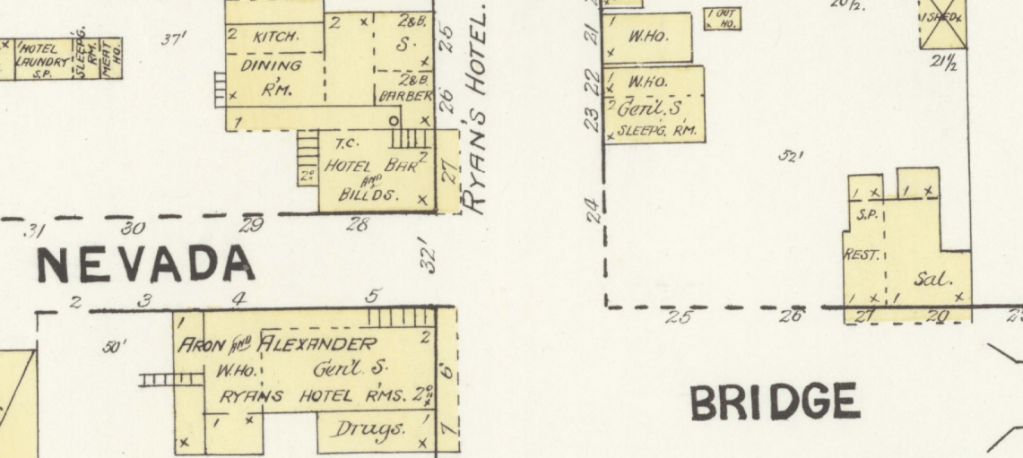
The cousins came to Arroyo Grande as merchants in the 1880s, setting up a haberdashery and dry-goods store on the corner of Branch and Bridge Streets, on the site of today’s “Something Different” store, which was once the Bank of America.

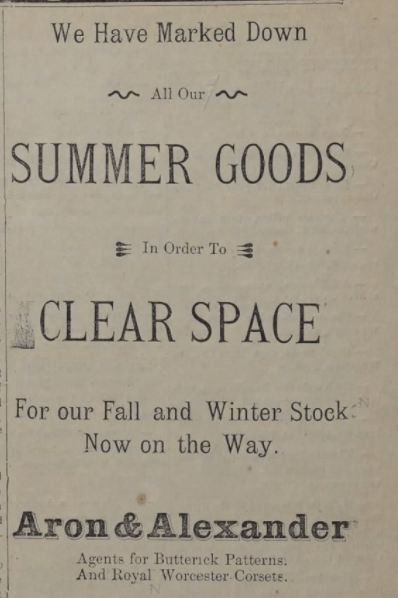
In August 1897, the cousins took out a rare display ad—they were given to more modest two-line blurbs that typified the advertising columns of small-town Victorian weeklies— in the Arroyo Grande Valley Herald-Recorder.

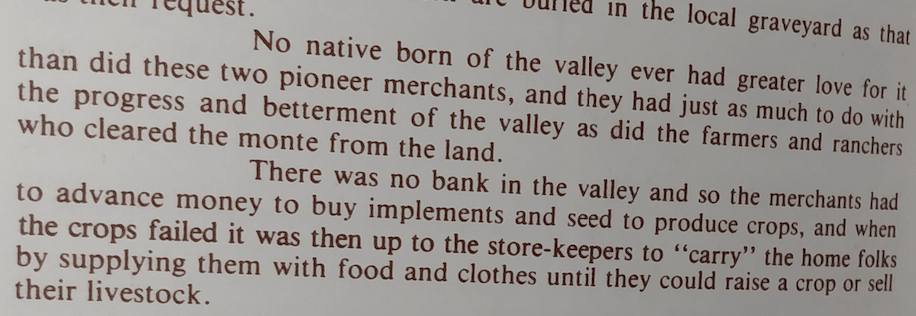
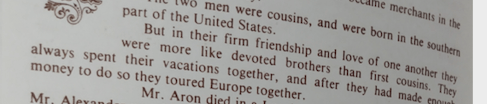
What is clear from the historical record is the popularity of Aron and Alexander—as men and fellow citizens, and not just as merchants. The venerable local historian Madge Ditmas wrote in one of her 1941 Herald-Recorder columns, just before veering off into one of her typical anti-FDR screeds, that these Germans weren’t seen as foreigners at all.

So the seemingly effortless generosity of the two—which had to have come, in reality, with tremendous effort—endeared them to Arroyo Grande.

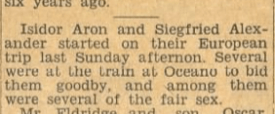
Sadly, the cousins would die far from their American home. A stroke killed Aron in 1909 Los Angeles; a heart attack ended Alexander’s life in 1922 San Francisco. But, as Ditmas notes, they loved to travel, and luckily, they managed to take what was called the Grand Tour together in 1905, four years before Aron’s death. Here’s a note from the Herald-Recorder that clearly indicates the presence of an Aron and Alexander Fan Club:


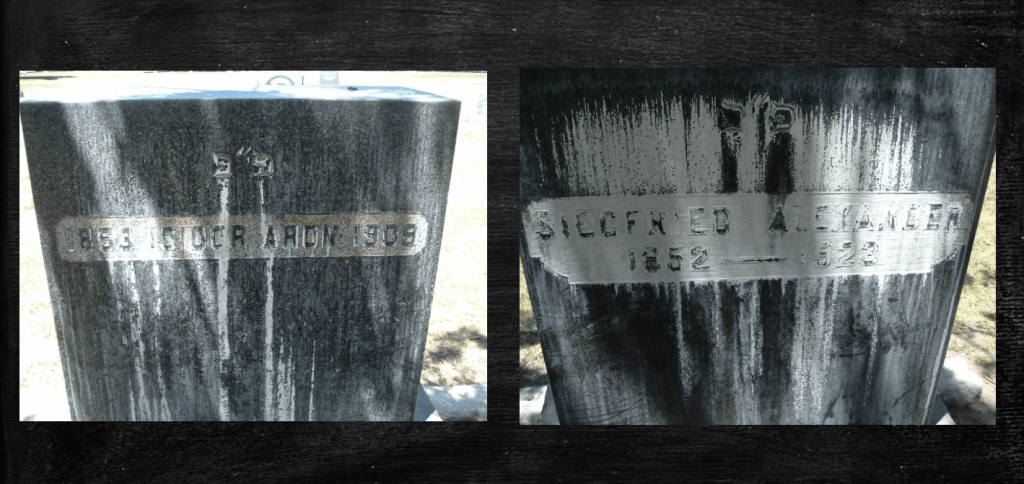
The cousins were eventually buried together. Aron is buried in Plot C8 in the Arroyo Grande District Cemetery; Alexander lies alongside, in C10. Atop their tombstones are the Hebrew letters that tell you

Here lies a son of God.

Of that, I am sure. To have made your way as a foreigner in a place as foreign as Arroyo Grande, on the continent’s edge, to have generated so much good will, speaks unwritten volumes beyond the simple profundity of their tombstones. They were certainly devoted to their business and to each other, but they were devoted—perhaps even more— to my home town. Their lives shaped ours in ways we may never fully understand or appreciate.


Close Encounters of the Prime Rib Kind

17 Friday Apr 2020

Posted by ag1970 in Arroyo Grande, Uncategorized

≈ 2 Comments

This was all provoked by Marlo Thomas and a St. Jude’s Hospital commercial. They always leave me little weepy. I immediately turn the channel, too, whenever they show the ASPCA abandoned dogs commercials. I’m just a wimp.

Anyway…

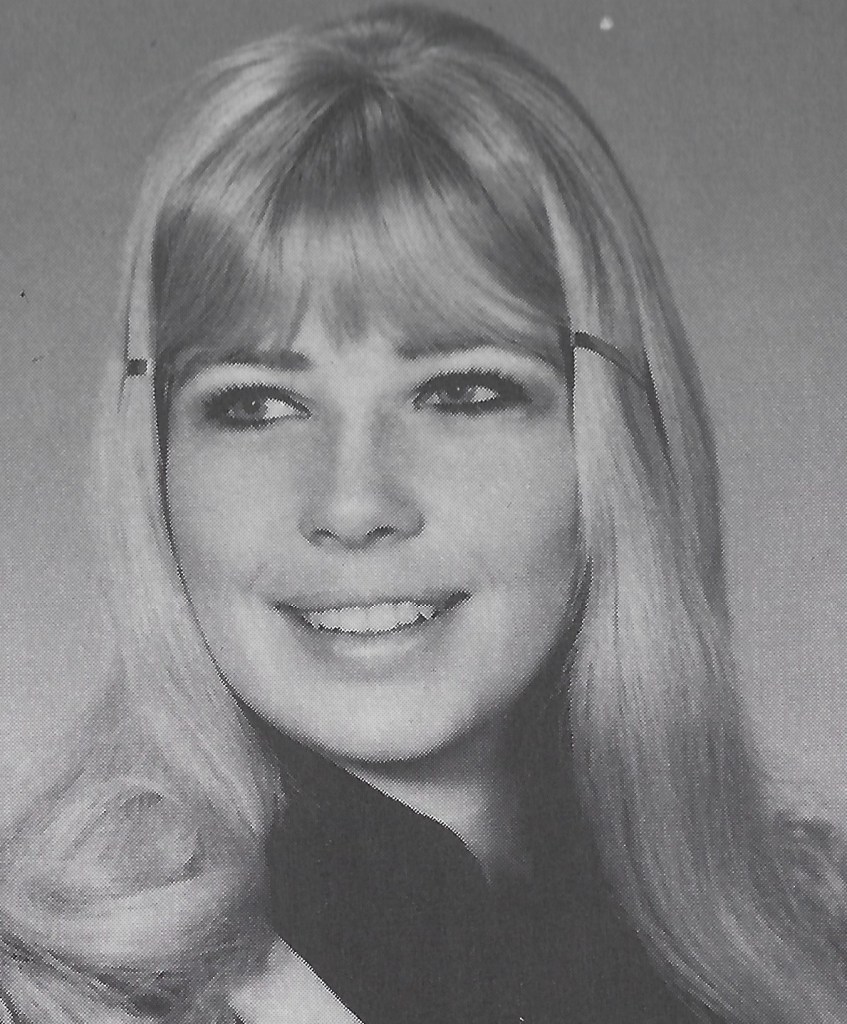
Jeri.

My woeful performance on the “Ten Famous People You Have Met and One You Haven’t” Facebook survey– my famous people were pretty anemic, including G.D. Spradlin, the actor who sent Martin Sheen Up the River in Apocalypse Now and the guy whom singer Trini Lopez portrayed in The Dirty Dozen. (“Lemon tree, verrry pret-ty…” Trini Lopez sang. The G.I. he portrayed blew stuff up.)

I remembered that Jeri was my date for the 1969 Arroyo Grande High School Winter Formal. She was very bright and had a refreshingly sardonic sense of humor that was about 23 years older than the rest of us. Jeri and I were just friends, with no romantic inclinations, except for the ones I felt for her car.

She drove a 1966 Mustang 2 +2 Fastback, with a classic short-block 289 V-8 under the hood. Sigh!

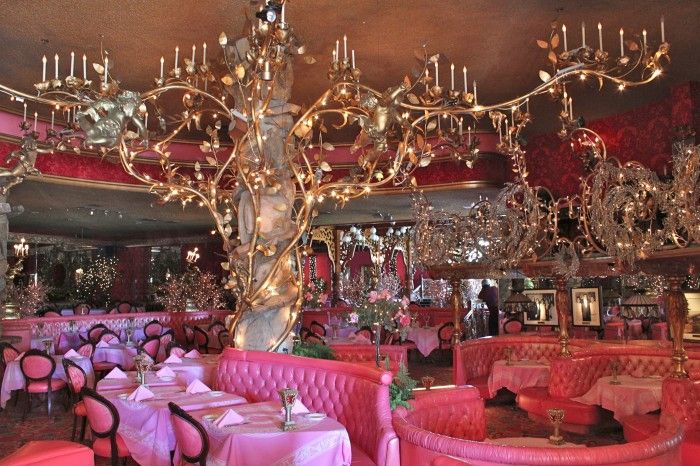
Alas, we went to the Madonna Inn for dinner in my father’s 1965 Chrysler, which, for those of you not up on your Chryslers, was roughly the size of the carrier USS Eisenhower.

Jeri and I on our way to the Madonna Inn.

No, Jeri was not a Famous People. We’ll get to that right after we order.

Yes, baked potatoes with sour cream, please.

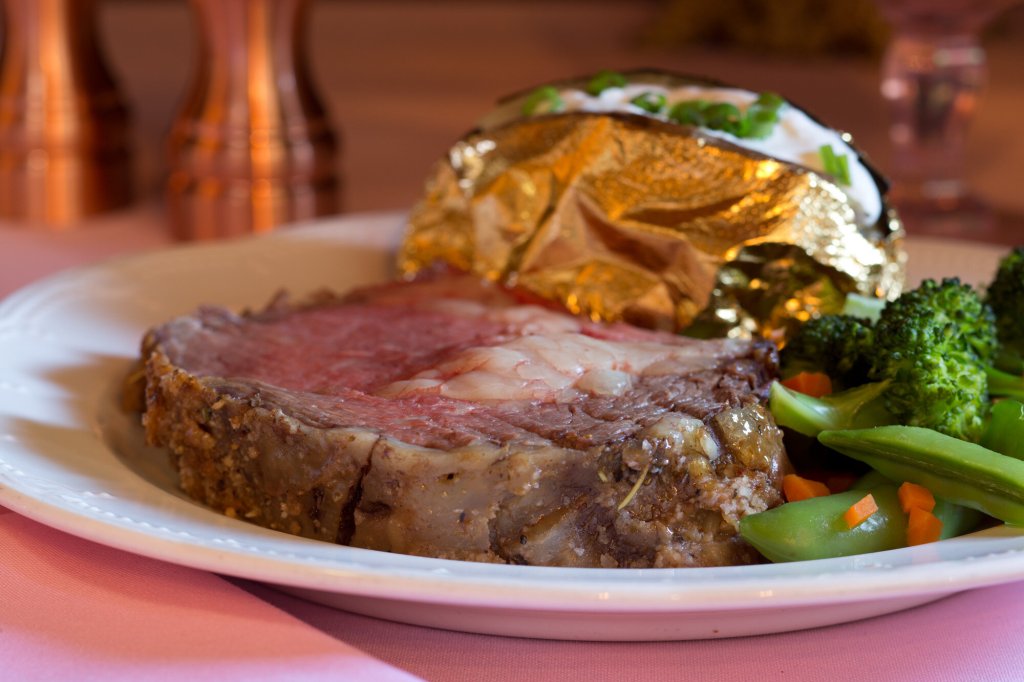
As we were beginning dinner (TWO prime rib dinners, $13.74. I kept the receipt), Jeri punched me in the arm. It wasn’t something wrong with the prime rib. It was DANNY THOMAS, sitting in a booth thirty feet away with Mrs. Madonna, and Jeri wanted his autograph. If Danny Thomas wasn’t exactly a celebrity on the scale of all four Cartwrights AND Marshal Dillon in the Madonna Inn Liberace Room on horseback, he was close enough for two kids from Arroyo Grande, California, USA.

The Madonna Inn–as always, casual and understated.

Now, I worked with Jeri on the school newspaper, and she’d punched me in the arm before. She could leave a bruise if you’d deserved it.

So, after about the third punch, I went over to the booth, introduced myself, blushing profusely and speaking in what must have sounded like Urdu (I knew Mrs. Madonna slightly; my Dad worked for Madonna Construction) and Mr. Danny Thomas provided the autograph.

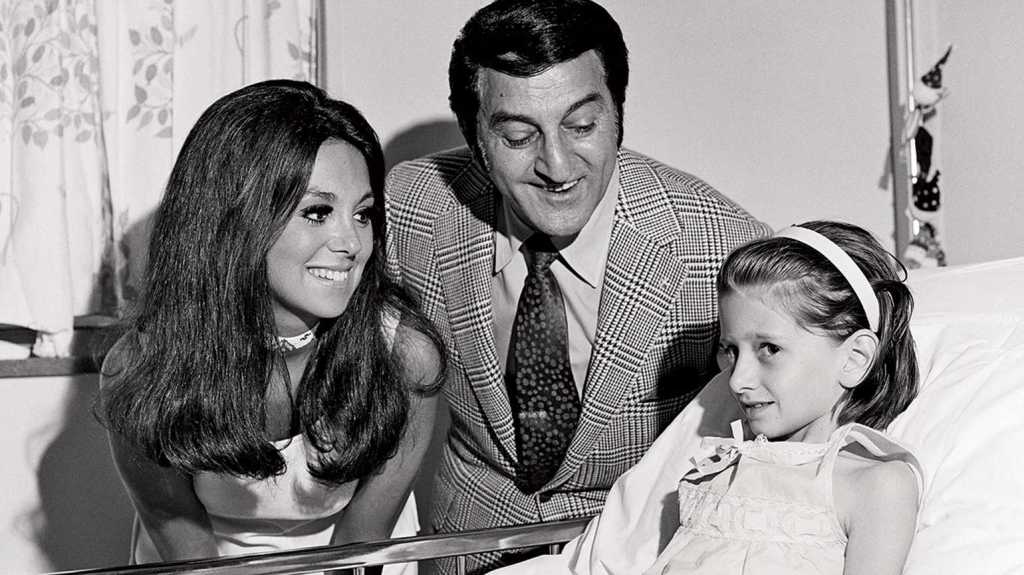
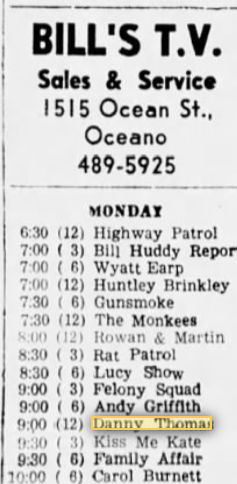
Danny Thomas and his lovely daughter, Marlo, at St. Jude’s, the incredible hospital Mr. Thomas founded. (Below) Mr. Thomas’s sitcom was at one point on opposite The Andy Griffith Show, which was awkward, because Thomas was Griffith’s executive producer.

That is not really the point of the story, but I have misplaced the point somewhere.

Oh, here it is: TWO prime rib dinners for $13.74!

Questions remain, Andy Hardy…

22 Wednesday Jan 2020

Posted by ag1970 in Arroyo Grande, Film and Popular Culture, Uncategorized

≈ Leave a comment

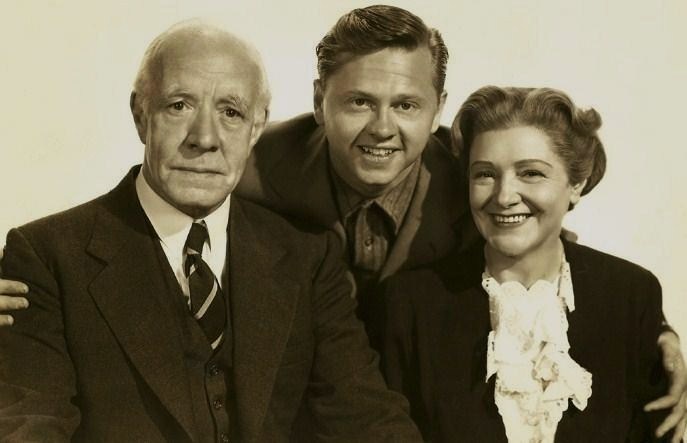
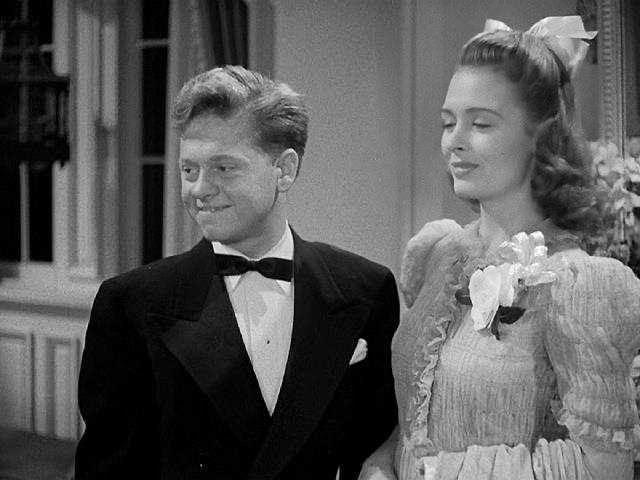
I have been undertaking a Serious Historical Study of the Andy Hardy movies that appear frequently on TCM. There were sixteen made between 1937 and 1958, during which Mickey Rooney’s Andy grew not an inch. Andy would go off to World War II but that part of his life is forgotten in favor of “I know what let’s do! Let’s put on a show!“

The films I’ve seen leave me with even more questions.

1. Did Andy ALWAYS wear a tie?

2. Did Americans once put that much sugar on their corn flakes?

3. Was that car as beautiful as I thought it was? Yes, it was. Andy’s high school graduation gift was a 1940 Plymouth convertible. Possibly it was a bribe offered Judge Stone, like the silver candlestick offered Thomas More in A Man for All Seasons.


4. Mrs. Hardy deserves far more credit. I think she irons Andy’s undershorts.

5. Judge Hardy is rarely in court. He mostly just hangs around and dispenses advice, like Ozzie Nelson did in Ozzie and Harriet. And, given Lewis Stone’s appearance, I would guess he was about 78 when his son Andy was born.


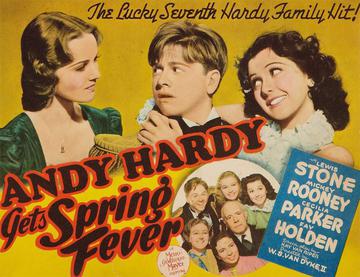
6. It seemed to take Andy about seven years to get through high school. Maybe that’s because in Andy Hardy Gets Spring Fever, he falls in love with his drama teacher, Helen Gilbert.


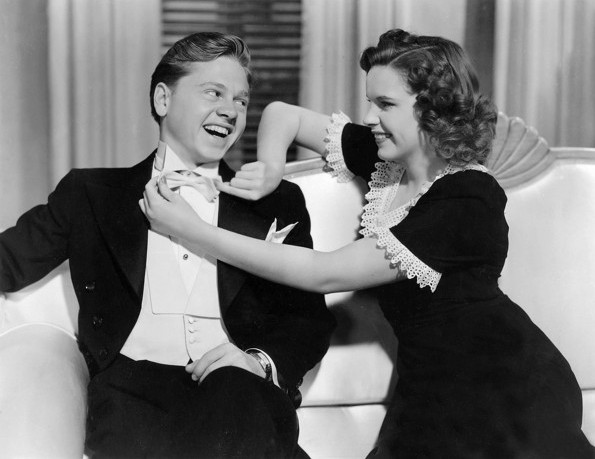
7. In one scene, Andy ties a BOW TIE while talking to Mrs. Hardy without the use of a mirror. That’s an Academy Award right there, as far as I’m concerned.


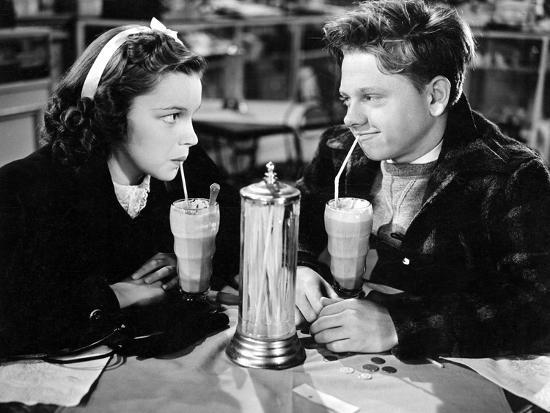
8. We need soda fountains to make a comeback. My father first met my mother in a soda fountain in 1939.


9. In Love Finds Andy Hardy, Andy offers to court a friend’s girlfriend while he’s away on a weeks-long family vacation so no other guys will Make the Moves on her. They haggle over the fee. They agree on eight bits (a dollar) or $18.36 in today’s money. Good Lord, money went a lot farther then.


10. In Andy Hardy’s Private Secretary, Andy and Polly go parking in what looks like Amazon rainforest in the 1940 Plymouth convertible. Judge Hardy and a good portion of the supporting cast suddenly pull up and hilarity ensues. If any OTHER Andy Hardy type had been caught by his Dad parking with Anne Rutherford (Polly), he would’ve been horsewhipped.

11. Judy Garland appears in only three of the films. Andy is dismissive of her, because she’s just a kid. I find that really difficult to believe. Donna Reed (below) appears one film, too, and that’s good, because that might’ve laid the groundwork for her casting opposite James Stewart in It’s a Wonderful Life.


12. The girl Andy dates for his friend (for $18.36 in 2020 money) in Love Finds Andy Hardy is Lana Turner. He finds her spoiled and selfish and, in my mind, no competition for Judy Garland. He breaks off the pseudo-relationship, which is good news because Lana Turner grows up to get her husband murdered and John Garfield sent to The Chair in “The Postman Always Rings Twice.”

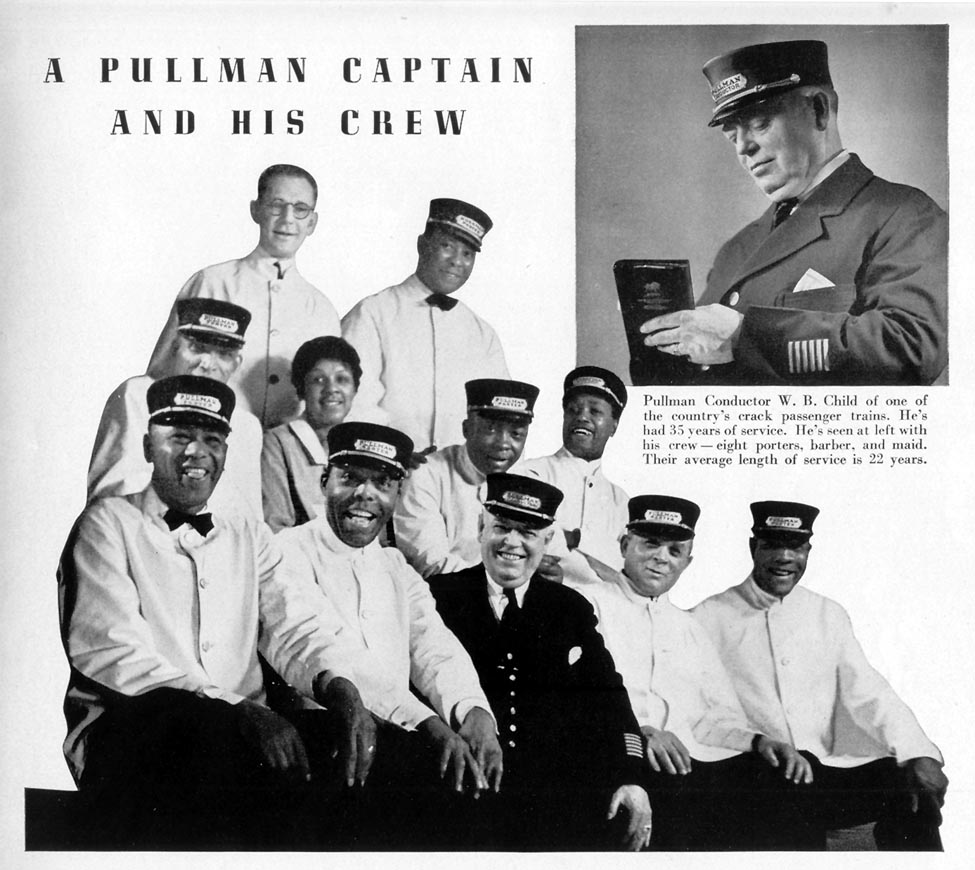
13. There are Black people in Andy’s hometown, Carvel, USA (like The Simpsons’ Springfield, it’s everywhere but nowhere in particular). They are all—all of them— Pullman porters, it seems. That part of the Andy Hardy myth is less appealing to me than Andy and Judy and their fountain soda.

Our Mountain

Featured

Posted by ag1970 in American History, Arroyo Grande, Uncategorized

≈ Leave a comment

This photo was taken near the intersection of Huasna Road and Lopez Drive, where I grew up. Here is the story of the mountain in the photo.

This view is what would we could see very morning from one of our living room picture windows, but, for the sake of accuracy, in this order:

  • Mom’s roses. Sutter Golds were among her favorites.
  • Pasture, with Morgans, whose discharge made the roses grow. Cars would stop to watch the foal, a little stallion made up of 78% legs.
  • Row crops, with the occasional crop duster dipping saucily beyond the power lines. Sometimes they were peppers, sometimes pole beans. A little up the Valley, Mr, Ikeda favored cabbages, which are blue. Just a tad to the left of the cabbages was the beaver dam into which I fell while fishing. Ineptly.
  • The Coehlo place (Kathy). Her Dad carved a model of the old St. Patrick’s Church that was astonishing.
  • The McNeil place.
  • The Shannon place.
  • Various pumphouses and barns.
  • The man who had an airplane in his yard. Just in case.
  • By the early 1960s, just a tad to the left and atop another hill, the Ikeda place.
  • In the late 1950s, Dona Manuela Branch’s redwood home–she’d come to the Arroyo Grande Valley, pregnant, in 1837–had been just a tad more to the left. When I was very little, the home burned in the night. It gave off a spark as bright as Venus. Only the palm trees that had shaded the home, its gardens and had once shaded the family at barbecue remain today. The Ikedas take respectful care of Manuela and her family, maintaining the graveyard up a little canyon five hundred yards away from the home her devoted children had built for her.

So I grew up with this mountain, sort of. It always looked to me like the top of a head with a receding oak tree hairline.

Once there was a brushfire that came up behind it and framed the top, like the sun’s aureola at full eclipse, and that became a passage, fifty years later, in a chapter about the Battle of Petersburg. It went like this:

The Third Battle of Petersburg began in the pitch-black pre-dawn of April 2, 1865. A Union army surgeon, watching the assault from a federal fort, could see nothing until the combined muzzle flashes of thousands of Confederate rifles lit the horizon the way a brush fire will when it crowns a hilltop. When a line of flashes went black again, the doctor knew that the Union assault had carried the Confederate entrenchments.

One day, when I was in my early teens, I decided to climb it. You could access it from behind the Cherry Apple Farm. I was by myself, which was stupid, and forgot about the poison oak, which was stupider.

It took me two hours.

When I reached the top of the mountain I considered to be very close to my own personal property–emotionally, if not legally–I found out I hadn’t reached the top at all.

What neither the photo nor my many morning views as a little boy revealed was that this was actually two mountains: There’s a razorback ridge in front and, behind it and beyond it, the bald man with his receding hairline of oak trees.

I was kind of angry. It took me until almost dark to get back down, by which time my family assumed I’d been eaten by cannibals, which meant that the Eskimo Pies brought us by Frank the Foremost Dairy delivery driver–a consistently cheerful man– would last a little longer.

So it turned out that I climbed mountains just as ineptly as I fished. I would live to climb a few more. I’d help the Mission Prep kids whitewash the “M” on San Luis Mountain and fell off it twice more, spraining an ankle both times. I am not going back.

Now people live on that mountain. This kind of audacity would never have occurred to me when I was thirteen. It may seem pretentious to call it a “mountain.” Visit the Midwest. It’d be a veritable Matterhorn to folks north of the Ozark Plateau.

You can still see the backside of this mountain, but from the Nipomo Valley, to the right off the 101, as you drive north from Santa Maria. The hairline is flipped as if it were a reversed photograph.

I hold it no hard feelings. Seen from Nipomo, it’s a little bare and humbled without the oak-studded proscenium seen from its Arroyo Grande side. This gave the mountain a little romance to a little boy looking sleepily out the window on a cold morning.

Climbing it–and then finding out that I hadn’t climbed it at all–taught me a lesson in humility that I need to re-learn every day of my life.

For Yoshi, who never came back

Featured

Posted by ag1970 in American History, Arroyo Grande, California history, History, Uncategorized, World War II

≈ 3 Comments

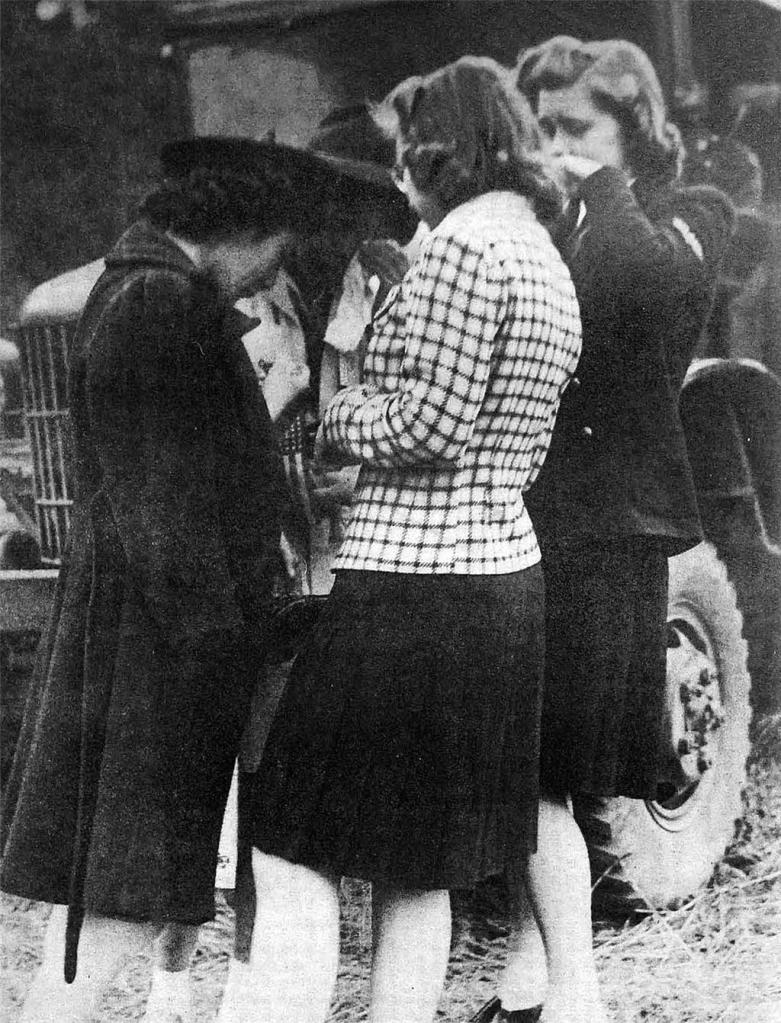
This photograph was taken on Bainbridge Island, Washington, on the day Executive Order 9066 was executed and these friends were separated.

There’s a good chance they never saw each other again.

When the buses came to take our Arroyo Grande, California, neighbors away on April 30, 1942, many of them—less than half—came back. I grew up here, and I don’t recognize many of the surnames in the old high school yearbooks.


One woman told me this: On the day the buses came to the high school parking lot, her mother saw a line of high-school girls, some Japanese, some not, walking up Crown Hill, walking up toward their high school, holding hands and sobbing.

Arroyo Grande’s Japanese-Americans went first to the Tulare County Fairgrounds, where they slept in livestock stalls, and then to the Rivers Camp in Arizona, where the temperature was at or above 109 degrees for twenty of their first thirty days there.

I interviewed a remarkable woman named Jean a few weeks ago. She is 94, is briskly intelligent, articulate and gracious. Her father owned the meat market on Branch Street in Arroyo Grande, population 1,090 in the 1940 census, and when his Japanese-American customers, farmers, came in to settle up before the buses came, he refused to take their money. “You keep it,” he told them. “You’re going to need it.”

When they came home three years later, he extended them easy credit until they could begin to bring in crops again. Jean showed me her father’s business ledgers, so I have no reason to doubt it when she told me that every one of those farmers paid her father back. In full.

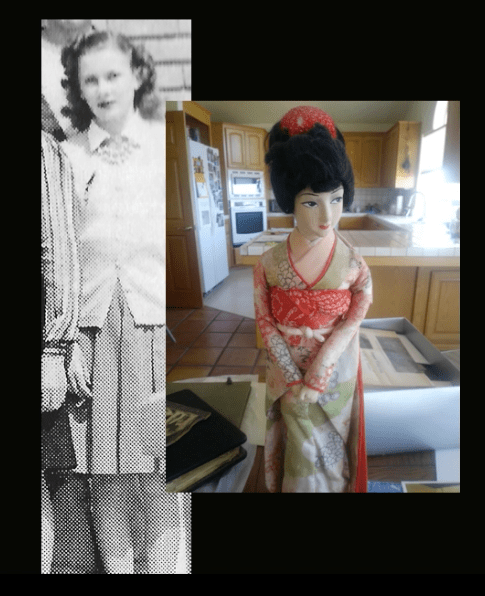
This is Jean as a high-school freshman. The doll, with her handmade kimono, came to Jean from Gila River in gratitude for her family’s friendship. For their loyalty.

At ninety-four, that loyalty runs in Jean as deeply as it ever has. One of her best high-school friends was named Yoshi. I can find a photo of the two together in second grade. I found a photo, too, of two second-grade boys in the Arroyo Grande Grammar School in 1926. They would die, about twelve minutes apart, on USS Arizona.

Yoshi’s brother became a war hero. He won a battlefield promotion to lieutenant when he went behind Japanese lines in China to rescue a downed American flier.

Yoshi’s brother brought that flier in and made him safe. Jean never saw Yoshi again and, because of April 30, 1942, there is a part of her that can never feel safe.

The war, at its outset for America, killed two of our sailors. It would claim many more local young men, killing them in Ironbottom Sound off Guadalcanal and on the beach at Tarawa. It would kill a young paratrooper in Holland during Operation Market Garden. It would kill, with a sniper’s bullet, a tank-destoyer crewman on the German frontier three days before his first child, a son, was born.

The war killed neither Jean nor Yoshi. They remain its casualties, nonetheless.

We had to stop the interview for a moment. In remembering her friend, Jean was fighting hard to stop the tears. One escaped. That moment taught me so much history, and with such intensity, that I almost couldn’t bear it.

The Lopez Canyon Feud, 1894-95

06 Wednesday Nov 2019

Posted by ag1970 in Arroyo Grande, Uncategorized

≈ 2 Comments

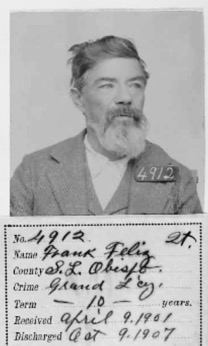
Feliz’s booking photo, Folsom Prison

On the morning of Friday, April 12, 1895, the proprietor of the Fashion Stables in San Luis Obispo discovered a body. It lay in a pool of blood—the back of the victim’s skull had been crushed—in a vacant lot behind The Palace, a “house  of ill fame,” near the intersection of Monterey and Morro Streets.

An Arroyo Grande man, Frank Feliz, was nearby, inside Sinsheimer’s store—today’s Giuseppe’s—and after he’d followed the gathering crowd to the vacant lot he identified the victim as Ygnacio Villa, a neighbor of his. Villa’s family was prominent but had fallen on hard times. Ygnacio’s father had been the master of the 30,000-acre Corral de Piedra rancho between Pismo Beach and the Edna Valley. Ygnacio, by contrast, homesteaded 160 acres in Lopez Canyon.

The sheriff’s deputy on the scene, Joseph Eubanks, would have had bad memories of Lopez Canyon. Eubanks had assisted Constable Thomas Whitely in the arrest of Peter and P.J. Hemmi for the 1886 murder of Eugene Walker. The Hemmis and Walker had been involved in a land dispute in the canyon; Hemmi had reportedly broken down fences and poisoned livestock to force Walker off land he believed to be his. On March 31, fifteen-year-old P.J. shot Walker and his young wife, Nancy, who died several months later.

On the night of the Hemmis’ arrest, Eubanks had to share Whitely’s humiliation when a mob, their faces covered by handkerchiefs, locked the two inside a Branch Street restaurant’s storeroom. The mob then stormed the little town jail and lynched the Hemmis from the PCRR trestle over Arroyo Grande Creek. It was schoolchildren who first discovered the hanging bodies the next day—April Fool’s Day.

After 1886, Arroyo Grandeans remembered Lopez Canyon for its bounty, rather than its violence.

A 1909 San Luis Obispo Morning Tribune portrait of the canyon was titled “Where Nature Has Been Lavish With Her Charms.” Local papers were frequently filled with little stories about Arroyo Grandeans taking extended hiking and camping trips or those who came back to town to brag about a big catch of trout, to show off trophy mule deer bucks or, in one case, four bird hunters who returned with “a wagon load” of pigeons.

But Deputy Sheriff Eubanks wasn’t done with Lopez Canyon. Within days of Ygnacio Villa’s murder, he would place Frank Feliz and two others under arrest. The killing was the apparent culmination of a year-long feud between two factions in the canyon—one led by Feliz and the other by a neighbor named Gerard Jasper.

There are repeated stories about the feud throughout local newspapers in 1894-95.  It began, as the Hemmi-Walker dispute had, because of conflicting claims over land. Neither side comes off looking innocent.

Gerard Jasper was a contrary man. In 1869, when he’d lived in Cambria, a deputation of local citizens was organized  to warn him not do bring his cattle into town during an outbreak of what was called “Texas Fever.” He appears frequently in county civil suits in subsequent years, but his contrariness took a new direction in Lopez Canyon: Jasper was accused, in the fall of 1894, of setting a string of arson fires. Pasturage, a neighbor’s wagon and twenty-five cords of wood went up in flames, and one of those fires burned land claimed by Frank Feliz.

At his San Luis Obispo trial, Jasper, according to one account, “offered a very vigorous defense, and at times branched out into philosophical utterances, which His Honor [Judge V.A. Gregg] was finally compelled to check.” Jasper’s character witnesses, which included prominent local men like Fred Branch and David Newsom, were more effective in his eventual acquittal.

After the trial, the Jasper-Feliz feud escalated in late 1894 and early 1895. Feliz was arrested and charged with assault with a deadly weapon. A comrade of Jasper’s, identified only as P. Morales, broke down a neighbor’s fence and smashed the windows and door of his little Lopez Canyon cabin. Morales had to be subdued by two deputies when he resisted arrest. Another friend of Jasper’s was a victim: he returned from town to find seven bullet holes in his front door and seven .44-caliber slugs embedded in the opposite wall.

It seemed that Frank Feliz was itching to make Ygnacio Villa a victim, too. Villa had testified against Feliz in the Jasper arson trial and, according to news accounts, Feliz accused Villa of stealing one of his cows. “I will kill him the first time I see him,” Feliz reportedly told Villa’s niece, Rafaela.

There was evidence that Feliz had done just that, according to trial accounts that dominated the news in August 1895.

Two prostitutes from the Morro Street houses saw Feliz and some companions verbally confront Villa the night he died (one of them was the first to find the body the next morning, but she didn’t report it). Evidently all of the men, Villa included, had spent much of Thursday night, April 11, drinking heavily in a nexus of saloons—one of them, ironically, was called the Olive Branch–along Monterey Street. There was physical evidence, as well: blood on Feliz’s overalls. On the witness stand, Feliz maintained the blood had come from slaughtering a steer several days before Villa’s murder.

The evidence wasn’t enough to convince the jury. On August 11, 1895, they acquitted Feliz. A few years later, Gerard Jasper died a natural death and the feud seemed to end with him.

Ironically, the crime that would finally doom Frank Feliz, in 1901, was the one he’d accused Ygnacio Villa of committing: cattle theft. On April 7, 1901, the Morning Tribune exulted in Feliz’s conviction and subsequent ten-year sentence to Folsom prison: time enough, the article opined, for Feliz to reflect on a brutal murder “in an alley back of a darkened street where evil flourished.”

Meditation on a silver Corvette

17 Tuesday Sep 2019

Posted by ag1970 in Arroyo Grande, Film and Popular Culture, Uncategorized

≈ Leave a comment


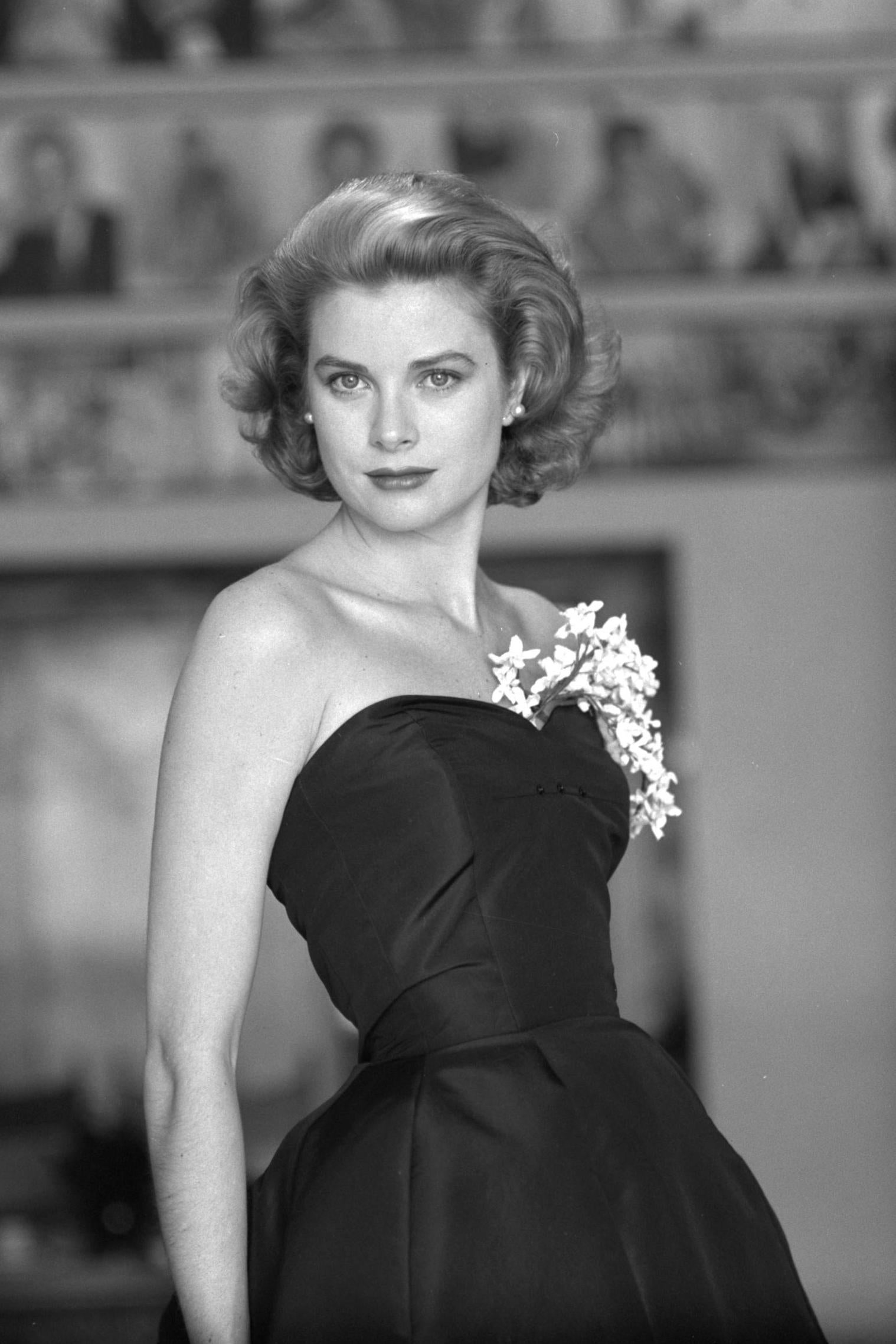
ext_GAN_deg04Usually when I’m under the Brisco Road underpass, I reflect nervously on the 1989 Loma Prieta Earthquake, when part of the Nimitz Freeway pancaked. Or, as you wish, tortilla’d.
[We felt that quake in Los Osos. I was feeding John in his high chair and noticed, suddenly, that I had to move the spoon to track his mouth, because he was swaying. I snatched him up and dragged him, mostly but not completely out of the high chair, into the safety of the hallway. John was unfazed. The boy likes to eat.]

Thank goodness, I did not think about the earthquake today. What I thought about instead was the vision just beyond my windshield.

It was a silver 2019 Corvette that looked just like the one above.  It was beautiful and it sounded glorious, too. The engine purred and then, when the driver accelerated, it growled.

There was a time in my very young life when I wanted to grow up to be a 1963 Corvette Stingray.


tumblr_po9clcycxw1ttxfeno1_400


The Corvette I saw today looked so futuristic I would not have been at all surprised to see George or Jane Jetson behind the wheel.

Amber Derbidge and I once took kids to Europe and one of our stops was in Monaco, where the biggest yacht in the basin was owned by a man in Ladies’ Underwear. That was his business, to clarify. Then we passed one of the biggest Ferrari dealerships in Europe, but there were so many Ferraris on display that they were kind of dull, like Ford Escorts in the Mullahey lot.

But if you see one good thing, say, Princess Grace’s grave, which was strewn with rose petals, or a shooting star Elizabeth and I once saw in an empty sky over Utah—or a silver Corvette you weren’t at all prepared to see—that’s a singular beauty. Oh, and as much as I love sports cars, there’s no beauty like Grace Kelly’s. None.


gettyimages-75876421

When a place gets under your skin

14 Saturday Sep 2019

Posted by ag1970 in Arroyo Grande, Uncategorized

≈ Leave a comment

I grew up in Arroyo Grande, California, but we didn’t get here–we relocated from a tough oil town, Taft–until 1955, and not 1953, as I’d earlier thought. I always felt a little ashamed since I grew up with friends whose families had been here since the 1840s or the 1880s. Some of my best friends have been, and are, and always will be, Japanese-Americans, and their families came here fifty years before mine did.

So when I write about the history of this town, going on five books now, I sometimes feel like an impostor, a poser. But, as I’ve written in one of those books, when we moved out to Huasna Road, east of town, in 1957, I recognized instantly, as a five-year-old, that this was Home.

And since most of my childhood was spent in delightful anarchy, in creekbeds and foothills and sometimes in and around abandoned houses, some of them adobe and some of them haunted, I discovered that I was an incurable explorer. So if not quite a native and nowhere near a Founding Family, I was, at least, a learner, and in learning the Arroyo Grande Valley I became entranced. It’s a love affair that began when I was five, and and here we are sixty-two years later.

This place gets under your skin. After many, many years away—twenty-six—I was so happy to come home again in 1996 and, best of all, to come home to teach young people. My parents are buried here, my schools still stand here and so do my memories. My friends, both living and dead, are never quite so much alive as they are in my imagination.

I am a lucky man to love a place so much.

I am thinking through a presentation to local students about the town’s history, and I tend to think vividly and visually in storyboards, so PowerPoint, as my high-school students would confirm, is the way I think history through.

So this is a very selective and in-the-rough history of Branch Street, Arroyo Grande, California, in my home town.

Branch Street

← Older posts
Newer posts →

Subscribe

  • Entries (RSS)
  • Comments (RSS)

Archives

  • January 2026
  • December 2025
  • November 2025
  • October 2025
  • September 2025
  • August 2025
  • July 2025
  • June 2025
  • May 2025
  • April 2025
  • March 2025
  • February 2025
  • January 2025
  • December 2024
  • November 2024
  • October 2024
  • September 2024
  • August 2024
  • July 2024
  • June 2024
  • May 2024
  • April 2024
  • March 2024
  • February 2024
  • January 2024
  • December 2023
  • November 2023
  • October 2023
  • September 2023
  • August 2023
  • July 2023
  • June 2023
  • May 2023
  • April 2023
  • March 2023
  • February 2023
  • January 2023
  • December 2022
  • November 2022
  • October 2022
  • September 2022
  • August 2022
  • May 2022
  • April 2022
  • March 2022
  • February 2022
  • January 2022
  • December 2021
  • November 2021
  • October 2021
  • September 2021
  • August 2021
  • July 2021
  • June 2021
  • April 2021
  • March 2021
  • February 2021
  • January 2021
  • December 2020
  • November 2020
  • August 2020
  • July 2020
  • June 2020
  • May 2020
  • April 2020
  • January 2020
  • December 2019
  • November 2019
  • October 2019
  • September 2019
  • August 2019
  • May 2019
  • April 2019
  • March 2019
  • February 2019
  • January 2019
  • December 2018
  • November 2018
  • October 2018
  • September 2018
  • July 2018
  • June 2018
  • May 2018
  • April 2018
  • March 2018
  • February 2018
  • January 2018
  • December 2017
  • November 2017
  • October 2017
  • April 2017
  • March 2017
  • December 2016
  • November 2016
  • October 2016
  • September 2016
  • August 2016
  • July 2016
  • June 2016
  • April 2016
  • March 2016
  • February 2016
  • January 2016
  • December 2015
  • November 2015
  • October 2015
  • September 2015
  • August 2015
  • July 2015
  • June 2015
  • May 2015
  • April 2015
  • March 2015
  • February 2015
  • January 2015
  • December 2014
  • November 2014
  • September 2014
  • August 2014
  • July 2014

Categories

  • American History
  • Arroyo Grande
  • California history
  • Family history
  • Film and Popular Culture
  • History
  • News
  • Personal memoirs
  • Teaching
  • The Great Depression
  • trump
  • Uncategorized
  • World War II
  • Writing

Meta

  • Create account
  • Log in

Blog at WordPress.com.

  • Subscribe Subscribed
    • A Work in Progress
    • Join 68 other subscribers
    • Already have a WordPress.com account? Log in now.
    • A Work in Progress
    • Subscribe Subscribed
    • Sign up
    • Log in
    • Report this content
    • View site in Reader
    • Manage subscriptions
    • Collapse this bar
 

Loading Comments...