• About
  • The Germans

A Work in Progress

A Work in Progress

Category Archives: Arroyo Grande

Our Mountain

Featured

Posted by ag1970 in American History, Arroyo Grande, Uncategorized

≈ Leave a comment

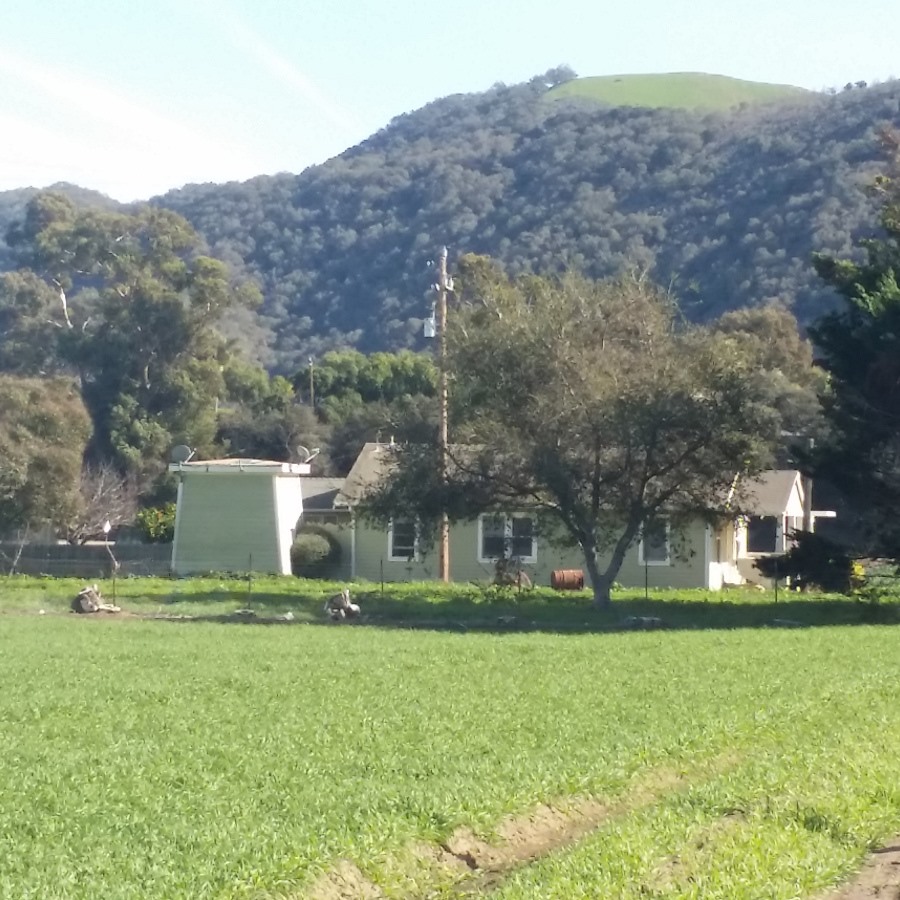
This photo was taken near the intersection of Huasna Road and Lopez Drive, where I grew up. Here is the story of the mountain in the photo.

This view is what would we could see very morning from one of our living room picture windows, but, for the sake of accuracy, in this order:

  • Mom’s roses. Sutter Golds were among her favorites.
  • Pasture, with Morgans, whose discharge made the roses grow. Cars would stop to watch the foal, a little stallion made up of 78% legs.
  • Row crops, with the occasional crop duster dipping saucily beyond the power lines. Sometimes they were peppers, sometimes pole beans. A little up the Valley, Mr, Ikeda favored cabbages, which are blue. Just a tad to the left of the cabbages was the beaver dam into which I fell while fishing. Ineptly.
  • The Coehlo place (Kathy). Her Dad carved a model of the old St. Patrick’s Church that was astonishing.
  • The McNeil place.
  • The Shannon place.
  • Various pumphouses and barns.
  • The man who had an airplane in his yard. Just in case.
  • By the early 1960s, just a tad to the left and atop another hill, the Ikeda place.
  • In the late 1950s, Dona Manuela Branch’s redwood home–she’d come to the Arroyo Grande Valley, pregnant, in 1837–had been just a tad more to the left. When I was very little, the home burned in the night. It gave off a spark as bright as Venus. Only the palm trees that had shaded the home, its gardens and had once shaded the family at barbecue remain today. The Ikedas take respectful care of Manuela and her family, maintaining the graveyard up a little canyon five hundred yards away from the home her devoted children had built for her.

So I grew up with this mountain, sort of. It always looked to me like the top of a head with a receding oak tree hairline.

Once there was a brushfire that came up behind it and framed the top, like the sun’s aureola at full eclipse, and that became a passage, fifty years later, in a chapter about the Battle of Petersburg. It went like this:

The Third Battle of Petersburg began in the pitch-black pre-dawn of April 2, 1865. A Union army surgeon, watching the assault from a federal fort, could see nothing until the combined muzzle flashes of thousands of Confederate rifles lit the horizon the way a brush fire will when it crowns a hilltop. When a line of flashes went black again, the doctor knew that the Union assault had carried the Confederate entrenchments.

One day, when I was in my early teens, I decided to climb it. You could access it from behind the Cherry Apple Farm. I was by myself, which was stupid, and forgot about the poison oak, which was stupider.

It took me two hours.

When I reached the top of the mountain I considered to be very close to my own personal property–emotionally, if not legally–I found out I hadn’t reached the top at all.

What neither the photo nor my many morning views as a little boy revealed was that this was actually two mountains: There’s a razorback ridge in front and, behind it and beyond it, the bald man with his receding hairline of oak trees.

I was kind of angry. It took me until almost dark to get back down, by which time my family assumed I’d been eaten by cannibals, which meant that the Eskimo Pies brought us by Frank the Foremost Dairy delivery driver–a consistently cheerful man– would last a little longer.

So it turned out that I climbed mountains just as ineptly as I fished. I would live to climb a few more. I’d help the Mission Prep kids whitewash the “M” on San Luis Mountain and fell off it twice more, spraining an ankle both times. I am not going back.

Now people live on that mountain. This kind of audacity would never have occurred to me when I was thirteen. It may seem pretentious to call it a “mountain.” Visit the Midwest. It’d be a veritable Matterhorn to folks north of the Ozark Plateau.

You can still see the backside of this mountain, but from the Nipomo Valley, to the right off the 101, as you drive north from Santa Maria. The hairline is flipped as if it were a reversed photograph.

I hold it no hard feelings. Seen from Nipomo, it’s a little bare and humbled without the oak-studded proscenium seen from its Arroyo Grande side. This gave the mountain a little romance to a little boy looking sleepily out the window on a cold morning.

Climbing it–and then finding out that I hadn’t climbed it at all–taught me a lesson in humility that I need to re-learn every day of my life.
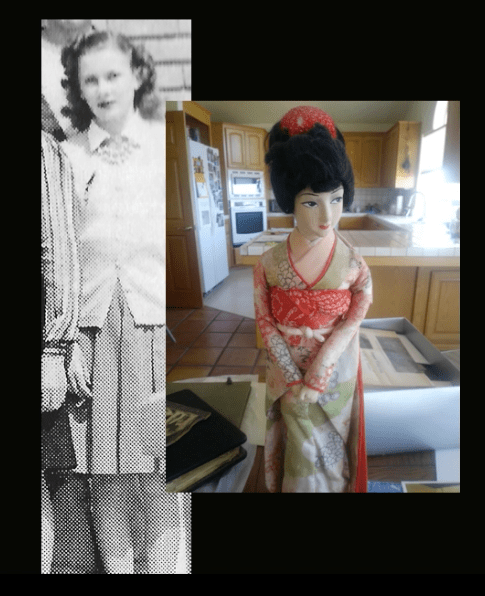
For Yoshi, who never came back

Featured

Posted by ag1970 in American History, Arroyo Grande, California history, History, Uncategorized, World War II

≈ 3 Comments

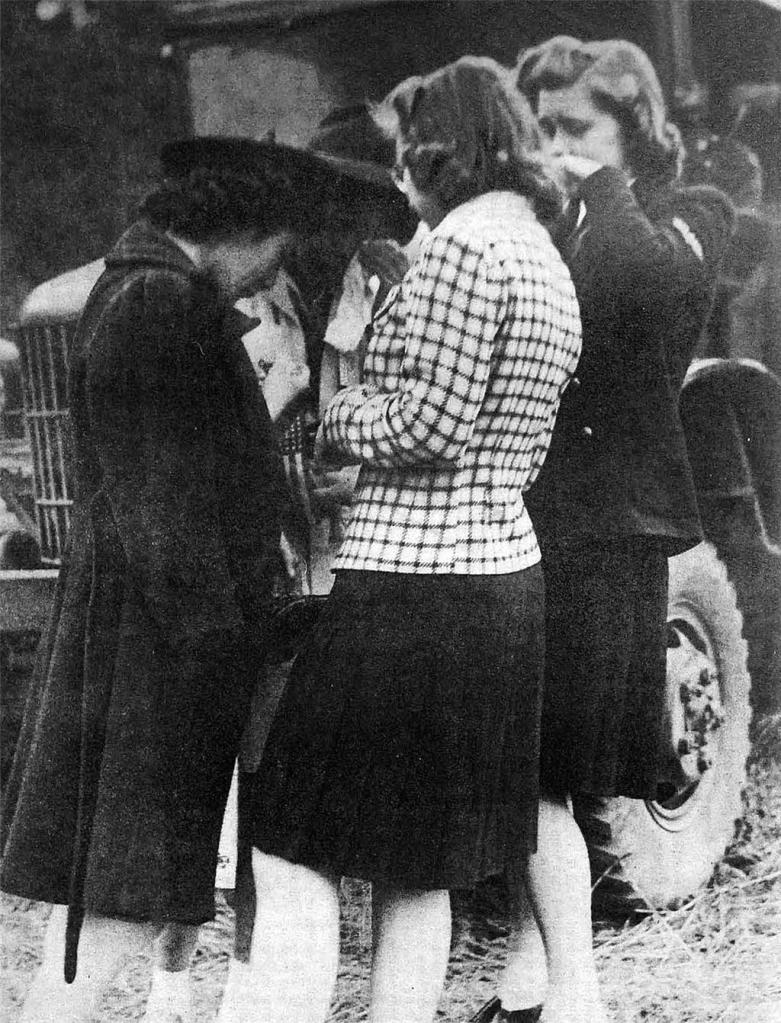
This photograph was taken on Bainbridge Island, Washington, on the day Executive Order 9066 was executed and these friends were separated.

There’s a good chance they never saw each other again.

When the buses came to take our Arroyo Grande, California, neighbors away on April 30, 1942, many of them—less than half—came back. I grew up here, and I don’t recognize many of the surnames in the old high school yearbooks.


One woman told me this: On the day the buses came to the high school parking lot, her mother saw a line of high-school girls, some Japanese, some not, walking up Crown Hill, walking up toward their high school, holding hands and sobbing.

Arroyo Grande’s Japanese-Americans went first to the Tulare County Fairgrounds, where they slept in livestock stalls, and then to the Rivers Camp in Arizona, where the temperature was at or above 109 degrees for twenty of their first thirty days there.

I interviewed a remarkable woman named Jean a few weeks ago. She is 94, is briskly intelligent, articulate and gracious. Her father owned the meat market on Branch Street in Arroyo Grande, population 1,090 in the 1940 census, and when his Japanese-American customers, farmers, came in to settle up before the buses came, he refused to take their money. “You keep it,” he told them. “You’re going to need it.”

When they came home three years later, he extended them easy credit until they could begin to bring in crops again. Jean showed me her father’s business ledgers, so I have no reason to doubt it when she told me that every one of those farmers paid her father back. In full.

This is Jean as a high-school freshman. The doll, with her handmade kimono, came to Jean from Gila River in gratitude for her family’s friendship. For their loyalty.

At ninety-four, that loyalty runs in Jean as deeply as it ever has. One of her best high-school friends was named Yoshi. I can find a photo of the two together in second grade. I found a photo, too, of two second-grade boys in the Arroyo Grande Grammar School in 1926. They would die, about twelve minutes apart, on USS Arizona.

Yoshi’s brother became a war hero. He won a battlefield promotion to lieutenant when he went behind Japanese lines in China to rescue a downed American flier.

Yoshi’s brother brought that flier in and made him safe. Jean never saw Yoshi again and, because of April 30, 1942, there is a part of her that can never feel safe.

The war, at its outset for America, killed two of our sailors. It would claim many more local young men, killing them in Ironbottom Sound off Guadalcanal and on the beach at Tarawa. It would kill a young paratrooper in Holland during Operation Market Garden. It would kill, with a sniper’s bullet, a tank-destoyer crewman on the German frontier three days before his first child, a son, was born.

The war killed neither Jean nor Yoshi. They remain its casualties, nonetheless.

We had to stop the interview for a moment. In remembering her friend, Jean was fighting hard to stop the tears. One escaped. That moment taught me so much history, and with such intensity, that I almost couldn’t bear it.

The Lopez Canyon Feud, 1894-95

06 Wednesday Nov 2019

Posted by ag1970 in Arroyo Grande, Uncategorized

≈ 2 Comments

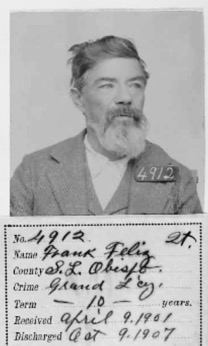
Feliz’s booking photo, Folsom Prison

On the morning of Friday, April 12, 1895, the proprietor of the Fashion Stables in San Luis Obispo discovered a body. It lay in a pool of blood—the back of the victim’s skull had been crushed—in a vacant lot behind The Palace, a “house  of ill fame,” near the intersection of Monterey and Morro Streets.

An Arroyo Grande man, Frank Feliz, was nearby, inside Sinsheimer’s store—today’s Giuseppe’s—and after he’d followed the gathering crowd to the vacant lot he identified the victim as Ygnacio Villa, a neighbor of his. Villa’s family was prominent but had fallen on hard times. Ygnacio’s father had been the master of the 30,000-acre Corral de Piedra rancho between Pismo Beach and the Edna Valley. Ygnacio, by contrast, homesteaded 160 acres in Lopez Canyon.

The sheriff’s deputy on the scene, Joseph Eubanks, would have had bad memories of Lopez Canyon. Eubanks had assisted Constable Thomas Whitely in the arrest of Peter and P.J. Hemmi for the 1886 murder of Eugene Walker. The Hemmis and Walker had been involved in a land dispute in the canyon; Hemmi had reportedly broken down fences and poisoned livestock to force Walker off land he believed to be his. On March 31, fifteen-year-old P.J. shot Walker and his young wife, Nancy, who died several months later.

On the night of the Hemmis’ arrest, Eubanks had to share Whitely’s humiliation when a mob, their faces covered by handkerchiefs, locked the two inside a Branch Street restaurant’s storeroom. The mob then stormed the little town jail and lynched the Hemmis from the PCRR trestle over Arroyo Grande Creek. It was schoolchildren who first discovered the hanging bodies the next day—April Fool’s Day.

After 1886, Arroyo Grandeans remembered Lopez Canyon for its bounty, rather than its violence.

A 1909 San Luis Obispo Morning Tribune portrait of the canyon was titled “Where Nature Has Been Lavish With Her Charms.” Local papers were frequently filled with little stories about Arroyo Grandeans taking extended hiking and camping trips or those who came back to town to brag about a big catch of trout, to show off trophy mule deer bucks or, in one case, four bird hunters who returned with “a wagon load” of pigeons.

But Deputy Sheriff Eubanks wasn’t done with Lopez Canyon. Within days of Ygnacio Villa’s murder, he would place Frank Feliz and two others under arrest. The killing was the apparent culmination of a year-long feud between two factions in the canyon—one led by Feliz and the other by a neighbor named Gerard Jasper.

There are repeated stories about the feud throughout local newspapers in 1894-95.  It began, as the Hemmi-Walker dispute had, because of conflicting claims over land. Neither side comes off looking innocent.

Gerard Jasper was a contrary man. In 1869, when he’d lived in Cambria, a deputation of local citizens was organized  to warn him not do bring his cattle into town during an outbreak of what was called “Texas Fever.” He appears frequently in county civil suits in subsequent years, but his contrariness took a new direction in Lopez Canyon: Jasper was accused, in the fall of 1894, of setting a string of arson fires. Pasturage, a neighbor’s wagon and twenty-five cords of wood went up in flames, and one of those fires burned land claimed by Frank Feliz.

At his San Luis Obispo trial, Jasper, according to one account, “offered a very vigorous defense, and at times branched out into philosophical utterances, which His Honor [Judge V.A. Gregg] was finally compelled to check.” Jasper’s character witnesses, which included prominent local men like Fred Branch and David Newsom, were more effective in his eventual acquittal.

After the trial, the Jasper-Feliz feud escalated in late 1894 and early 1895. Feliz was arrested and charged with assault with a deadly weapon. A comrade of Jasper’s, identified only as P. Morales, broke down a neighbor’s fence and smashed the windows and door of his little Lopez Canyon cabin. Morales had to be subdued by two deputies when he resisted arrest. Another friend of Jasper’s was a victim: he returned from town to find seven bullet holes in his front door and seven .44-caliber slugs embedded in the opposite wall.

It seemed that Frank Feliz was itching to make Ygnacio Villa a victim, too. Villa had testified against Feliz in the Jasper arson trial and, according to news accounts, Feliz accused Villa of stealing one of his cows. “I will kill him the first time I see him,” Feliz reportedly told Villa’s niece, Rafaela.

There was evidence that Feliz had done just that, according to trial accounts that dominated the news in August 1895.

Two prostitutes from the Morro Street houses saw Feliz and some companions verbally confront Villa the night he died (one of them was the first to find the body the next morning, but she didn’t report it). Evidently all of the men, Villa included, had spent much of Thursday night, April 11, drinking heavily in a nexus of saloons—one of them, ironically, was called the Olive Branch–along Monterey Street. There was physical evidence, as well: blood on Feliz’s overalls. On the witness stand, Feliz maintained the blood had come from slaughtering a steer several days before Villa’s murder.

The evidence wasn’t enough to convince the jury. On August 11, 1895, they acquitted Feliz. A few years later, Gerard Jasper died a natural death and the feud seemed to end with him.

Ironically, the crime that would finally doom Frank Feliz, in 1901, was the one he’d accused Ygnacio Villa of committing: cattle theft. On April 7, 1901, the Morning Tribune exulted in Feliz’s conviction and subsequent ten-year sentence to Folsom prison: time enough, the article opined, for Feliz to reflect on a brutal murder “in an alley back of a darkened street where evil flourished.”

Meditation on a silver Corvette

17 Tuesday Sep 2019

Posted by ag1970 in Arroyo Grande, Film and Popular Culture, Uncategorized

≈ Leave a comment


ext_GAN_deg04Usually when I’m under the Brisco Road underpass, I reflect nervously on the 1989 Loma Prieta Earthquake, when part of the Nimitz Freeway pancaked. Or, as you wish, tortilla’d.
[We felt that quake in Los Osos. I was feeding John in his high chair and noticed, suddenly, that I had to move the spoon to track his mouth, because he was swaying. I snatched him up and dragged him, mostly but not completely out of the high chair, into the safety of the hallway. John was unfazed. The boy likes to eat.]

Thank goodness, I did not think about the earthquake today. What I thought about instead was the vision just beyond my windshield.

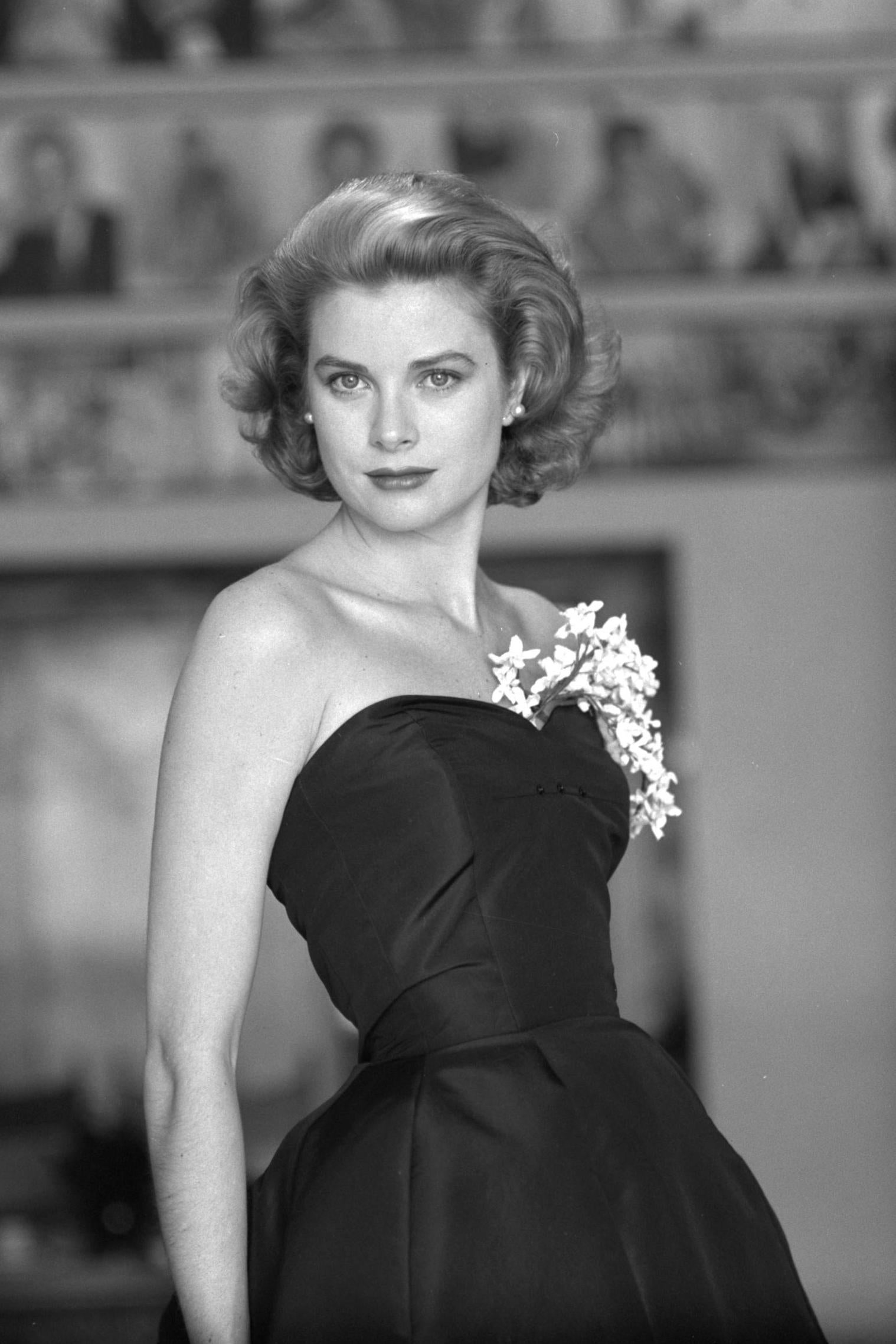
It was a silver 2019 Corvette that looked just like the one above.  It was beautiful and it sounded glorious, too. The engine purred and then, when the driver accelerated, it growled.

There was a time in my very young life when I wanted to grow up to be a 1963 Corvette Stingray.


tumblr_po9clcycxw1ttxfeno1_400


The Corvette I saw today looked so futuristic I would not have been at all surprised to see George or Jane Jetson behind the wheel.

Amber Derbidge and I once took kids to Europe and one of our stops was in Monaco, where the biggest yacht in the basin was owned by a man in Ladies’ Underwear. That was his business, to clarify. Then we passed one of the biggest Ferrari dealerships in Europe, but there were so many Ferraris on display that they were kind of dull, like Ford Escorts in the Mullahey lot.

But if you see one good thing, say, Princess Grace’s grave, which was strewn with rose petals, or a shooting star Elizabeth and I once saw in an empty sky over Utah—or a silver Corvette you weren’t at all prepared to see—that’s a singular beauty. Oh, and as much as I love sports cars, there’s no beauty like Grace Kelly’s. None.


gettyimages-75876421

When a place gets under your skin

14 Saturday Sep 2019

Posted by ag1970 in Arroyo Grande, Uncategorized

≈ Leave a comment

I grew up in Arroyo Grande, California, but we didn’t get here–we relocated from a tough oil town, Taft–until 1955, and not 1953, as I’d earlier thought. I always felt a little ashamed since I grew up with friends whose families had been here since the 1840s or the 1880s. Some of my best friends have been, and are, and always will be, Japanese-Americans, and their families came here fifty years before mine did.

So when I write about the history of this town, going on five books now, I sometimes feel like an impostor, a poser. But, as I’ve written in one of those books, when we moved out to Huasna Road, east of town, in 1957, I recognized instantly, as a five-year-old, that this was Home.

And since most of my childhood was spent in delightful anarchy, in creekbeds and foothills and sometimes in and around abandoned houses, some of them adobe and some of them haunted, I discovered that I was an incurable explorer. So if not quite a native and nowhere near a Founding Family, I was, at least, a learner, and in learning the Arroyo Grande Valley I became entranced. It’s a love affair that began when I was five, and and here we are sixty-two years later.

This place gets under your skin. After many, many years away—twenty-six—I was so happy to come home again in 1996 and, best of all, to come home to teach young people. My parents are buried here, my schools still stand here and so do my memories. My friends, both living and dead, are never quite so much alive as they are in my imagination.

I am a lucky man to love a place so much.

I am thinking through a presentation to local students about the town’s history, and I tend to think vividly and visually in storyboards, so PowerPoint, as my high-school students would confirm, is the way I think history through.

So this is a very selective and in-the-rough history of Branch Street, Arroyo Grande, California, in my home town.

Branch Street

Losing Janine

30 Tuesday Apr 2019

Posted by ag1970 in Arroyo Grande, Uncategorized

≈ 2 Comments

Screen Shot 2019-04-30 at 5.50.18 AM

Yes, I’m up at going on 3 a.m. after coming home from the doctor’s with good news. But whatever it is that’s still following me saps a lot of the energy out of me because it gets me out of bed at odd hours.

I almost didn’t want today’s news to be good news.

This is why. I was thinking all day of people like Janine Plassard and old friends like my teacher Jim Hayes or Jim Watson, a student Elizabeth and I just lost, and the news they got wasn’t good. Believe me, people prayed for them, too.

These are just three lives of so many that ended too early or are in such peril while my life is neither over nor in any imminent danger. It’s not fair.

So I’m angry with God now. Please allow me to be. We fight all the time; our arguments are fundamental to my faith. That’s the way He intended me to be when He gave me life.

Janine led the kind of life that gave life to others. So did my journalism professor at Poly, Jim Hayes, who made me a better writer and a better human being. It was Jim who first steered me toward teaching. When I was twenty, he made me a writing coach for other Poly journalism students. I found that I loved it, loved teaching. Jim knew that about me before I did.

Janine loved teaching, too. This was her profession, her passion, her vocation and, even though she’d hotly deny it, her ministry. Like Jim, she made better writers–there’s no better example than Kaytlyn Leslie, a superb Tribune reporter who has so much promise. Janine was her first journalism teacher at Nipomo High. She was Kaytlyn’s compass just as Jim was mine.

And just like Jim–we heard this over and over again at her celebration of life last weekend–Janine made better human beings, too.

Elizabeth and I were lucky enough to have dinner with Janine and our friends JIm and Cheryl and Mark and Evie at Rosa’s a few weeks before she died. She looked frail and was just a little subdued but every once in awhile she’d say something with a little barb to it so that it made you gasp momentarily and then laugh.

I looked down at her at the end of the table and it was obvious that she was enjoying her meal–we love Rosa’s–and her wine. She was savoring it. I think she was discerning the earth and the oak and maybe even the sunlight that had ripened the grapes.

She was eating like an Italian, who are masters of the unhurried meal. Italian food is intended to be savored like Janine’s wine. An Italian dinner is about watching your table-mate take that first bite of butternut squash ravioli, watching his eyes close momentarily with pleasure at the taste; it’s about being happy for him.

Then it’s your turn to eat.

But even the eating is secondary to Italians. Janine understood that. Good food is the pretext for bringing friends and family together, for enjoying each other, for telling stories and remembering those odd relatives that we all have; it’s about arguing over baseball. This is how you find life, at the table in other lives.

I don’t know why Janine had to give up her life and I’ve still got mine. I don’t know why I nearly died as a baby but didn’t. I was born in Taft premature and blue and strangling when the doctor, who’d been out of town, suddenly burst through the door and ordered my Dad out. He’d had a hunch. These are mysteries that both bewilder and anger me. It’s not fair.

At the end of the meal at Rosa’s, Janine and I hugged and it felt so good that I said to her: “Oh! I want to do that again!”

“You better.” she said, and she said it quickly. It was a retort, even an admonishment. She meant it. She meant, too, that she knew she didn’t have much time.

So I’m not thinking much today about my luck. I’m wishing I could watch that luck happen in other lives, filling them with life just the way that good ravioli does.

I wish I could say that then it’s my turn to eat. But, to tell you the truth, I’m not all that hungry.

I would rather rest my chin on my cupped hand, elbow on the table, and watch Janine down at the other end, watch the way she drinks wine and watch, too, her eyes close with pleasure at all the flavors she discovers in her first forkful of pasta.


Blackwell’s Corner

28 Sunday Apr 2019

Posted by ag1970 in Arroyo Grande, California history, Uncategorized

≈ 4 Comments

Screen Shot 2019-04-28 at 4.42.25 AM

Blackwell’s Corner is a gas station and little shop at the intersection of Highway 46, which will take you east to Bakersfield, and Highway 33, which will take you south to Taft, where I was born.

It is, in other words, so remote that it is nowhere.

I was a baby at home with Mom and so couldn’t see what was possibly the happiest thing that ever happened there. For some reason the bus had dropped off my Uncle George Kelly at Blackwell’s Corner. It must have been easy for my Dad, who’d come to pick him up, to see him. My uncle was and is tall and handsome and he would have been in his dress greens–this was during the Korean War–and he would’ve had his Army duffel bag slung over one shoulder and in the other hand there would’ve been grocery bag with twine handles and it would have been full of Government Issue property.

It was an official United States Army turkey. My uncle was an Army cook and it was Thanksgiving, so he’d come to spend some time in Taft with my Mom, his sister, and his parents–my Kelly grandparents.

Of course he would have called ahead both to arrange the rendezvous with Dad and to issue a good-natured warning to start the side dishes but lay off the turkey and dressing. He would bring the former–it must have been more than a little satisfying to choose a turkey when you had the time to inspect so many suspended on hooks inside a camp freezer. The Army is not necessarily kind to privates, so that would’ve made picking out the turkey even more satisfying.

As to the dressing, it would’ve been an original–my uncle cooked instinctually and decisively–and it would’ve been divine.

I’m not sure where he was based–it might have been Fort Ord–but there’s nothing better than a long bus ride for thawing a purloined turkey. It would’ve been densely wrapped, of course, and whoever sat next to Pvt. Kelly on the Greyhound and the Orange Line buses might’ve asked what was in the bag. Anybody who started a conversation with George was in for a long haul. Still, an Uncle George monologue would’ve colored the trip through severe bareness of the southern San Joaquin Valley.

He was a natural storyteller, and telling the turkey story would’ve led to another story and then George would ask a question of his seatmate who would tell a story of his own, and for every story you had, George had one to equal it.

His might’ve been about Army life or his attempt to work his way through Cal Poly by hustling pool or about the time his Dad, the cop, had won an unequal fistfight–unequal in the sense that only three oilfield roughnecks had attacked Taft police officer George Kelly Sr.  You needed to bring more guests to the table to win a fight with my grandfather.

The table in Taft, of course, at my Gramps and Grandma Kelly’s, would’ve been beautiful, dense with potatoes and  yams and string beans and gravy and Uncle George dressing and cranberry sauce. The centerpiece would have been the U.S. Army turkey and it would have been done perfectly, stuffed with apples and onions and dusted with sage and rosemary and with the breast meat still moist and tender.

In all honesty, the Army, for once, had done something precisely right because my uncle is a superb cook. And Pvt. Kelly, there at the table with his sleeves rolled up but with his Army tie tucked by regulation into his uniform blouse, would have been the handsomest man alive.

I was there and don’t remember any of this because I was in my high chair eating mashed potatoes with my hands and missing my mouth with most of them. But I’ve heard, growing up, the story of Dad finding my uncle at Blackwell’s Corner three or four times, So, oddly enough, I do remember exactly what was going on and how the table looked and, by the way, how beautiful my Mom was, and I can remember it like it was last week.

c5c0f31b-311d-408e-a5a5-20a55e4b9bc7

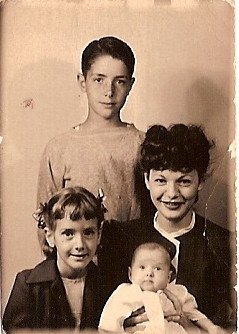
My Aunt Judy, Uncle George, Mom and my sister Roberta, about 1943

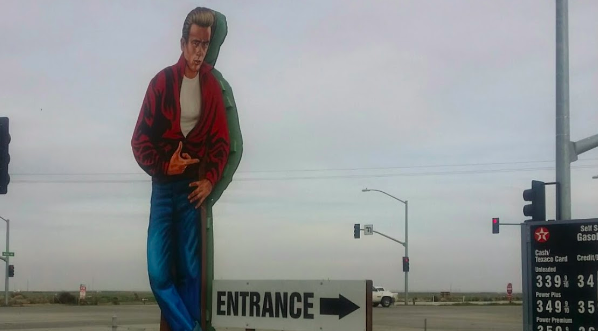
My next memory of Blackwell’s corner would have been about 1958, when we were on the road from Arroyo Grande to Bakersfield. That was three years after James Dean had made his last stop there before the Porsche Spyder’s fatal crash near Cholame. Today the Corner, then an unpretentious Atlantic Richfield gas station with a little store, is pure kitsch. There’s a figure of Dean out front, slouching slightly in his Rebel Without a Cause red jacket, and it’s obscene. I take my James Dean seriously. Neither my wife nor my U.S. History students had seen East of Eden until I showed them the film, released, of course, after his death, and the connection he made with all of them was both instant and lasting. They got him.

So Dean was three years gone and not yet a gift shop bobblehead when we stopped at Blackwell’s Corner as we did every trip to Bakersfield. This stop was at night, which was merciful, because driving at night on the 46 means you have nothing to look at out the car windows except for the scattered lights of isolated homes and metal sheds, the watchmen’s places for men who patrolled the fields with flashlights. The fields were populated otherwise only by coyotes, jackrabbits and Union Oil pumps, donkey pumps, that worked all night making Union Oil rich and powerful.

During the day you could see the pumps, most in perpetual motion and so the only signs of life in that desolate part of California where the dominant colors are a yellowish sand and purplish gray.  This is where locals, for both fun and for the rueful acknowledgement of the severity of their environment, celebrate Christmas by decorating tumbleweeds, spraying them with artificial snow and stringing them with little blinking lights. What had brought them to this severe place was oil; what had brought my Dad’s cousins here from the Ozark Plateau was oil, what had brought my mother’s father here, the son of Famine immigrants who’d worked oilfields in Pennsylvania in the 1870s, was oil.

We had gotten into the habit of stopping at Blackwell’s Corner because after an hour of staring at such a dry landscape, you  get intensely thirsty. So we would stop for a Coke for my Mom, a Pepsi for my big sister and Nehi orange sodas for my brother and me. Dad got a Coors.

By 1958 my Grandmother Gregory was sliding into dementia and increasingly fragile, so that must have been why we were driving the 46 at night. There was something wrong with Grandma Gregory.

screen-shot-2015-07-20-at-11-29-21-pm

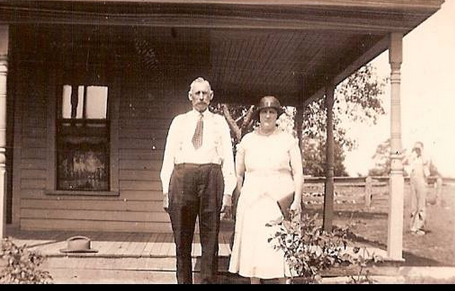
My Grandfather and Grandmother Gregory, Raymondville, MIssouri, at about at the time of his death. Grandma was a hard woman to knock down in a windstorm.

Grandma Gregory smelled like Ben-Gay and she told stories as profusely as Uncle George, but hers were all about dead people and precisely how they died and each story would end with a deep sigh and her adjusting the eyeglasses that made her eyes, now moist, so big behind the lenses. My mother called Grandma Gregory “Mother.” My father’s relationship with her was difficult, and it came from the time she’d called him back to the house when he’d been walking with my grandfather to a neighbor’s across the road. My grandfather was partly deaf and when he reached the road he never heard the Ford that killed him.

While Mom got the drinks I, being six, of course had to pee, so Dad took me into the men’s room. It was then that my epiphany happened, the beginning of my dread for this part of California. It doesn’t seem like much. But what had happened is that there’d been a sandstorm that day–the kind they describe in 1930s Oklahoma, where when you woke up there was a perfect outline of your head on the only clean part of the pillow.

The sandstorm that day at Blackwell’s Corner was so intense that the toilet bowl was filled with sand. For some reason this sight terrified me. I stood there for a long time with Dad waiting impatiently but I couldn’t make water. I told him I could hold it until we reached Bakersfield.

So we got back into our car, into the Oldsmobile, and continued east on the 46, where careless drivers forgot to dim their headlights and drunk drivers crossed into your lane and where cocky drivers miscalculated how quickly they could pass a semi truck. I don’t know that I was interested in my Nehi and I probably didn’t say much–I didn’t say much anyway–the rest of the way. I would have been thinking of sand and tumbleweeds and donkey pumps and after a few miles the irrational fear I’d felt in Blackwell’s Corner would’ve been replaced by a deep sadness.

If I was lucky, I would’ve gone to sleep. That meant, in those pre-seat belt days, asleep in the front with my feet in Dad’s lap and my head in Mom’s, with her gently stroking my hair. In my sleep, of course, I dreamed of seeing oak-studded hills and rows of crops, wet under sprinkler arcs; I would’ve dreamed most of all of seeing the ocean again.

Branch Street, Arroyo Grande, California

02 Saturday Mar 2019

Posted by ag1970 in Arroyo Grande, Uncategorized

≈ 1 Comment


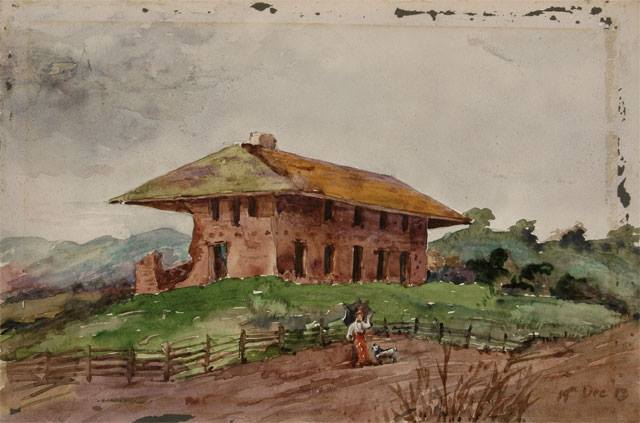
Branch adobe


I found this beautiful watercolor online of the Branch Adobe, decaying after the damage done to it by the 1857 Fort Tejon earthquake. It was near the junction of Branch Mill and School Roads in the Upper Arroyo Grande Valley, on a little rise that still commands the valley below. A little lower are palm trees and a clearing that was the foundation of the redwood house Branch’s sons built for their mother, Manuela, after the adobe had finally melted into the ground. Manuela’s home burned to the ground when I was a little boy; we woke and could see the incredible white light of the fire as CDF trucks sped by, too late to save it. A neighbor took me there the next day and all that was left was a burned-out foundation, smoke and ashes.

But what had been there began in 1837, the same year Victoria came to the throne five thousand miles away. That’s when Branch came to the Valley. He was in his mid-thirties, a gentleman now after a career as a Great Lakes boat captain, a mountain man, a trapper, a Santa Barbara businessman. With him was with his twenty-two-year-old wife, Manuela, and their little boy, who would someday build a home that is today the Talley Farms Winery tasting room. The Valley, even for a young woman as strong and loyal as Manuela, was too wild to bear her second child. Eight months pregnant, she rode home on horseback over the San Marcos Pass to Santa Barbara to deliver her baby where her parents would be close by.

What her husband first encountered were monstrous grizzly bears that carried off the seed of his hoped-to-be-fortune, bawling calves, so he began to kill the bears. His neighbor in the Huasna, another mountain man, George Nidever, gave up cattle ranching after he’d killed his one hundredth grizzly. (His successor there, Isaac Sparks, lost an eye to a grizzly.) You have to concede something to both Branch and Nidever: They’d gotten out of the fur trade at just about the same time British machine-made velvet replaced beaver pelts for gentlemen’s hats. But only Branch survived the bears.


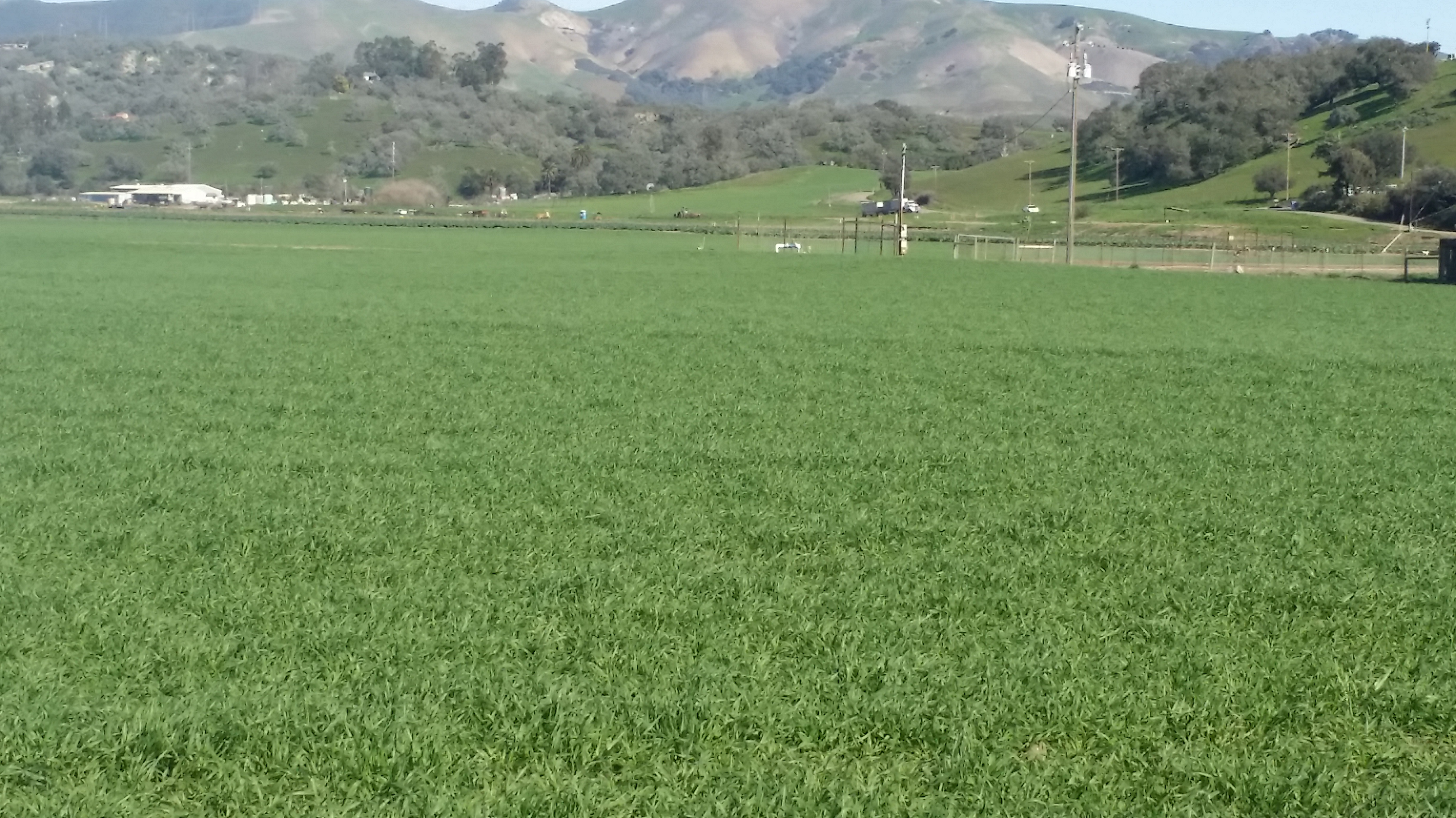
20160203_135211

The Upper Arroyo Grande Valley, San Luis Luis Obispo County, today. Branch’s adobe would’ve stood on the hillock at the right-center of this photograph.


Grizzlies weren’t the only obstacle in 1837. The Upper Valley then was dense with willow scrub—the californio word is “monte”—so dense and so punishing that leather chaps were invented to protect vaqueros like Branch’s from having their legs slashed to ribbons when they plunged into it to rescue strays. Branch cleared the monte and planted the crops he knew from his native New York: Wheat and corn, apple and peach trees. An Eastern corn-sheller was his proudest possession, and the base of the grindstone he used to mill the Valley’s flour still sits in Arroyo Grande’s Heritage Square. Both of them were landed at Cave Landing– what is today Pirate’s Cove, near Avila Beach.

His ranch hands—many of them Chumash, others mestizo—worked hardest at roundup in June, when the cattle were slaughtered, not for beef, but for their hides. The hides were stretched on racks and soaked with seawater until they were cured and as stiff as plywood. Then they were hauled, by cart, or careta, to Cave Landing, where they’d be tossed into the surf to be fetched by fearless men, often Hawaiians, who would haul them into longboats to hoisted up into the holds of Yankee brigs bound for Cape Horn and then to Boston Harbor and Boston’s shoe factories.

It was the Gold Rush that transmuted cattle from hides into beef, meat for hungry miners from New York and Sonora and France and Chile. All it took to get the meat to market was your life: Branch and John Price found the bodies of ten people murdered at Mission San Miguel because the innkeeper there had unwisely let drop how much gold dust he’d earned for the mutton he’d sold to the gold fields. Jack Powers and Pio Linares and “Zorro’s” inspiration, Salomon Pico, waylaid cattle brokers in the Cuesta Pass and Gaviota and in Drum Canyon near Los Alamos for the gold dust they carried from beef sold to the gold fields. Pico collected their ears. To fight men like these, Branch became a member of the San Luis Obispo Vigilance Committee, which was different in two respects from San Francisco’s: Our was a little later. We hanged more men.


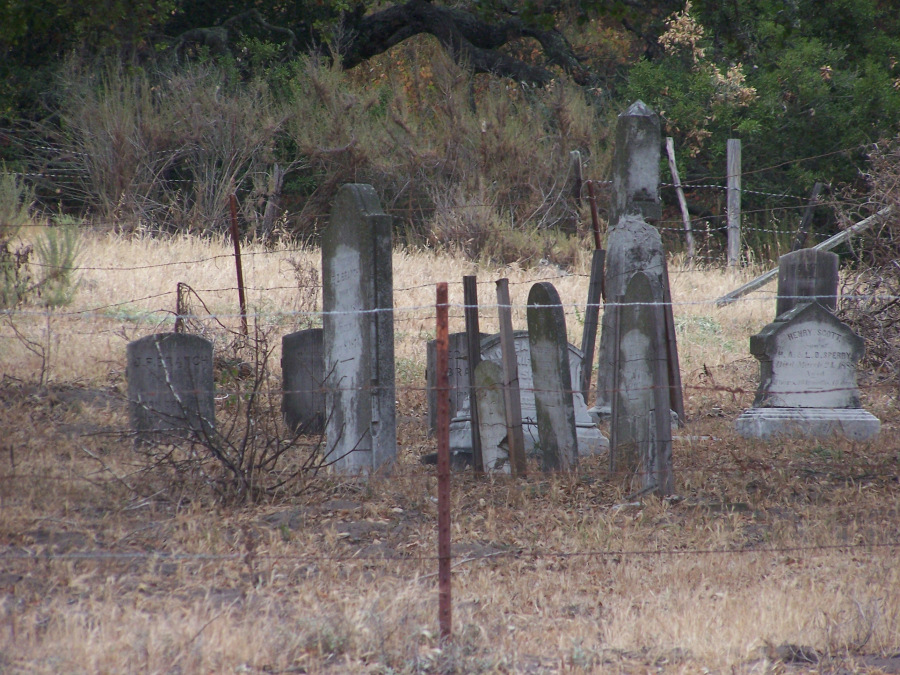
branch cemtery300

Francis Branch’s tombstone is at left-center; his three daughters’ tombstones are just to its right. The eldest was sixteen.


Branch was in San Francisco in 1862 when he got the message from Manuela. She’d given shelter to a traveler, common to ranch families then, and what he’d given the family in return was smallpox. Branch rode hard to get home again and by the time he did, exhausted and despondent, two of his little girls were dead and a third died soon after.


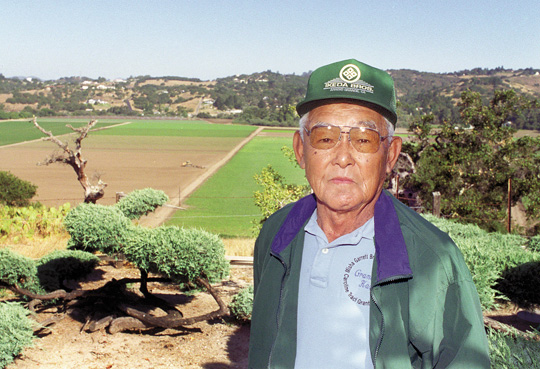
2000-07-28-Kaz-Ikeda

Kazuo Ikeda would come to farm  the land behind him in this photograph, once owned by Branch. After Kaz and his family came home from the internment camp at Gila River, they coached Little League and Babe Ruth, inaugurated youth basketball, organized the Rotary Club fish fry, which provides scholarships to local high school students, and restored the Branch family cemetery.


They are buried next to him today, three little tombstones, broken in the years since by cattle scratching itches, next to his big tombstone. Branch died twelve years after, so he would have given instructions to have his little girls close by him. It had to have been the biggest heartbreak of his life.


Screen Shot 2019-01-26 at 10.41.22 AM300

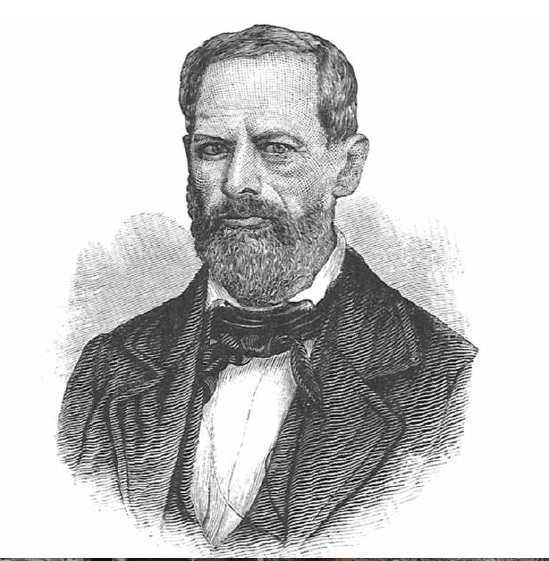
Francis Ziba Branch


Until the drought years of 1862-64. The vast herds of beef cattle he’d tended with such care for twenty-five years died on yellow, stubbled hillsides. Thirst and coyotes and ravenous mountain lions winnowed them down until they were gone. Branch lost the modern equivalent of eight million dollars.

What he hadn’t lost yet was himself, his wife, and his family. He was making the transition to row crops and tree crops and dairy farming and was dividing the Santa Manuela into sub-ranches run by ambitious sons and sons-in-law—men who were founding schools and building roads and raising churches—and then the immense energy this small, wiry, ambitious man had always taken for granted was finally taken from him, by pneumonia, in 1874.


Branch300

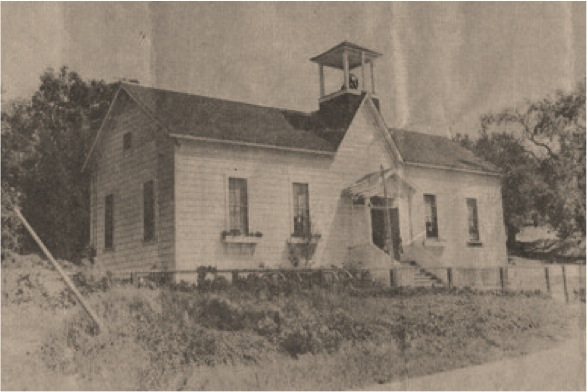
Branch Elementary School, the two-room schoolhouse where my education began in 1958.


So we have a street named for him today.

Yesterday I saw a pickup truck rear-end a sedan at the flashing crosswalk on Branch Street between Rooster Creek Tavern and the Branch Street Deli. Dozens of gawkers gathered to watch the culprit and the policeman and the fire trucks and the ambulance, thankfully, unneeded, as it turned out. Soon the gawkers dissipated and the commotion evaporated.

What was left, once the accident was cleared, was the name of the street. The folks involved, and the gawkers, too, most of them tourists, are to be forgiven, of course, given the situation, for not knowing a thing about the man for whom the street was named. Neither do the customers or the young and attractive waitresses at Rooster Creek Tavern or the sandwich-makers at Branch Street Deli.

But the street where they work is named for the man who once brought grizzly bears down with a Hawken rifle to make his cattle safe enough to the graze the land where he would build the adobe to raise the family, eleven children less three little girls, that would evolve into the beginning of a town—in 1869, one smithy, one general store, one school—that would someday name its main street for him. Yesterday, all that meant was headlight glass shattered in the crosswalk.


Screen Shot 2019-03-01 at 11.50.47 PM

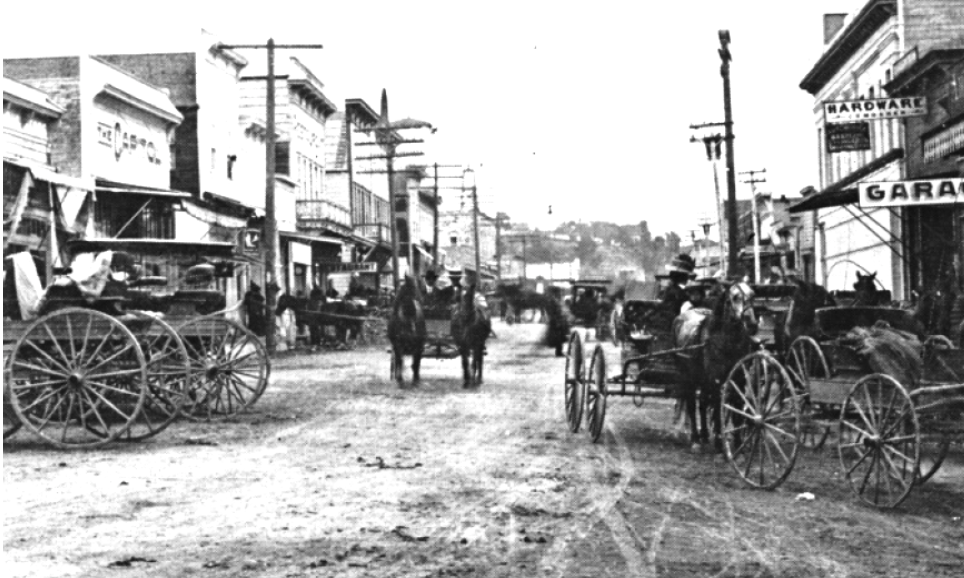
Branch Street, Arroyo Grande, about 1904.


The College Job

29 Thursday Nov 2018

Posted by ag1970 in Arroyo Grande, Personal memoirs, Uncategorized

≈ Leave a comment

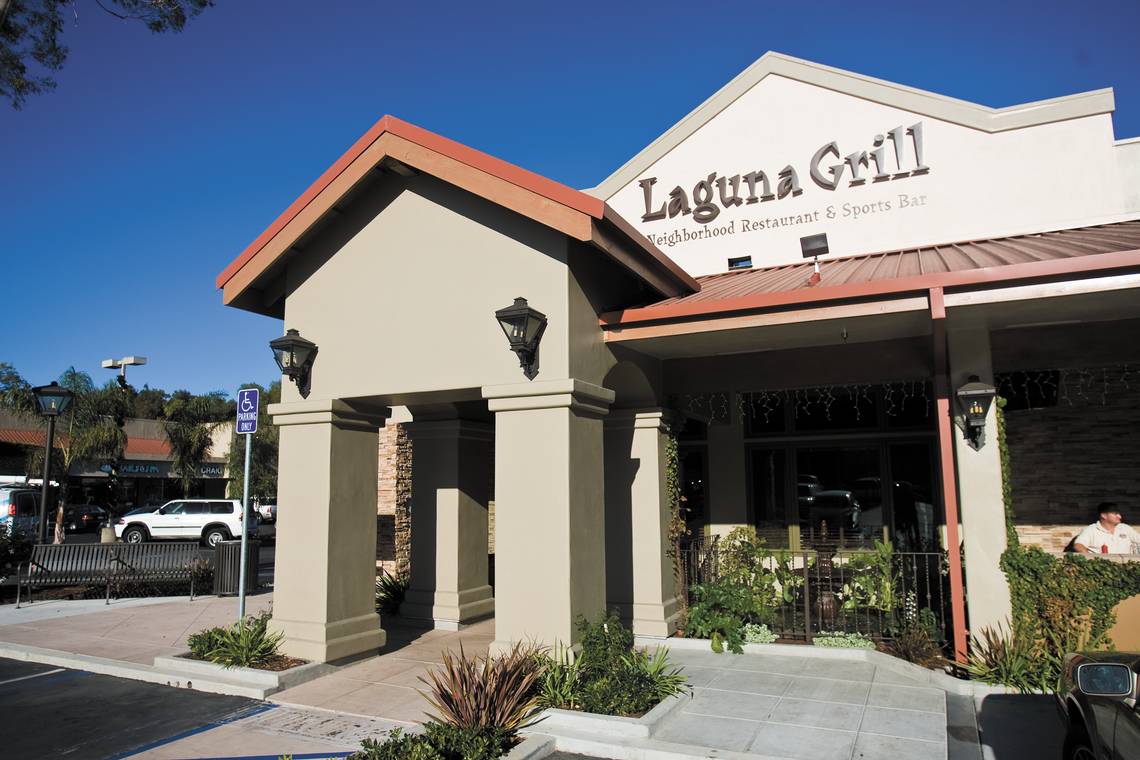
grill001.source.prod_affiliate.76

I worked, for many years, while going through Cuesta and then the teaching credential program at Poly, for Russ and Rich Bullock, who owned Laguna Liquors, on the site of today’s Laguna Grill. I liked most of my college jobs: working for the Missouri journalism school in a work-study job, stocking groceries at night (we were “Night Stockers”), except when a fellow worker jacked a load of maple syrup too high and thirty cases came crashing down, working on the “wham-bang machine” at the 3M plant. 3M makes Scotch Tape. We were making guided missile parts.

But I liked Laguna Liquors the best.

My bosses, Russ and Rich were both born in the little red house at the very end of French (now Madonna) Road, and they were two of the best bosses I’ve ever had.

I was reminded of all this because I saw another favorite boss of mine, Randy Bullock, and his wife Barb this weekend.

Back then, in the 1970s, the liquor store was pretty much the only market in the area. We were also the local bank, where folks came in to write twenty-dollar checks, which was an immense amount of money back then.

We were also part-time and totally unqualified psychiatrists: we got to know everyone for blocks around with a drinking problem, a marriage problem, a kid problem, a job problem.

We did a lot of listening, and we were, most of us, anyway, just liquor-store clerks in our twenties.

We also had a lot of fun, which frequently involved post-hours runs down to the Laguna Village Inn or the Oak Room.

We were engulfed by two waves of children in the afternoons: one from C.L. Smith and the second from Laguna Middle School, who swarmed around the candy rack like angry badgers. We even sold Pop Rocks and–I still can’t stand him–Reggie Bars.

This is where, actually, I found out that I liked kids, which is a good thing, because I spent thirty years teaching high school and liked them just as much at the end of my career as I had at the liquor store.

The wave Sunday mornings at 7 a.m. was almost as bad as the candy rush on weekday afternoons. There were always grouchy elderly men, some of them in their carpet slippers, lined up waiting for us to open so they could have their massive Sunday editions of the L.A. Times or the San Francisco Examiner/Chronicle.

But I didn’t like it when you realized an older customer wasn’t coming back. The philosophical Fuller Brush salesman took his own life. The sweetheart lady you were never supposed to sell to died of cirrhosis anyway.

The salesmen and route men were fascinating. Chet the Chip Man was an old Arroyo Grande High Classmate; Bob the Bread Man was the fastest stocker I’d ever seen; Tim from All-American beverage was the courteous, kind man who would someday become my brother-in-law. Brownie the Whiskey Guy once beckoned us into the back room, shushed us as if he were the Manhattan Project, and and poured each of us a blended whiskey that was going to be the next big thing.

It was so interesting, to me, as a young fellow, to be so integrated into the life of a neighborhood. I liked Mr. G.D. Spradlin, the general who orders Martin Sheen into the jungle in “Apocalypse Now.” He smoked Lark 100s.

I liked the elderly British couple who came down from See Canyon and loaded a shopping cart with Swanson’s Frozen Fish and Chips.

I liked the Poly professors mostly but not the arrogant ones. (Why aren’t you at Yale, you jerk?)

I learned that the favored breakfast of house painters is beer and Dolly Madison doughnuts.

I hated Hallowe’en. How do you card someone who looks like Wolfman?

I liked the hippies, gently edging into middle age, who once came to protest Diablo Canyon. One of them said Willie Nelson was coming, but he didn’t show up at the liquor store. We were sad.

I loved–absolutely loved–Willie the Golfer, an immensely charismatic black man who discovered the sport at the little nine-hole Laguna course. Willie had forearms the size of hams, and I wondered when he hit the ball if he didn’t turn it into powder.

I liked Forrest the Southern Pacific guy but never, ever figured out why he bought Burgie beer, which was incredibly cheap and tasted a little like what I thought embalming fluid might taste like (Budweiser was $1.69 a six-pack, by the way).

I used to hide from some customers, like Bob the Sherry Drinker, who did a dead-on imitation of Sgt. Schultz from “Hogan’s Heroes” but then liked to ramble, a lot and pretty loud.

I liked to listen to Russ talk about growing up in San Luis Obispo and delivering Golden State Creamery milk to the Red Light girls. I liked to listen when the old-timers came in to tell old, stories and complain about the guvmint and/or the mule deer who ate their garbanzo beans.

So I did a lot of listening, and I learned empathy, and I learned history, and I became a history teacher which is, after all, about telling the stories you’ve learned and telling them well. Working in that liquor store was one of the most important parts of my education.

The pretty girl in her prom dress, Camp Cooke, 1944

09 Tuesday Oct 2018

Posted by ag1970 in Arroyo Grande, Uncategorized

≈ Leave a comment

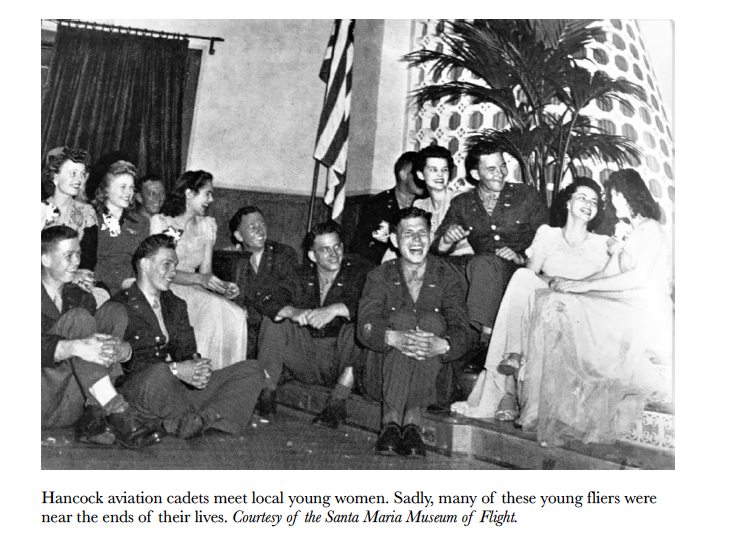
This is one of my favorite photos from the Central Coast Aviators in World War II book, and I got a little more insight into it today. These young women were more than likely USO guests of the Army Air Forces cadets at Hancock Field, Santa Maria, the site of today’s Hancock College. I see at least two girls–one of them looks a little like Betty Grable–with whom I would’ve fallen in love more or less instantly.

Screen Shot 2018-10-08 at 6.39.01 PM

The poignant part is in the caption. For every American infantryman killed in World War II, three were wounded.

For every American airman wounded in World War II, three were killed.

I was giving a talk today in Grover Beach on Central Coast Aviators to the volunteers at the Five Cities Food Bank, who, by the way, lay out a lunch to rival any of my grandmother’s, and I noticed, during the talk, an older woman looking at me narrowly. I thought I was bombing, so I didn’t look at her for fear of breaking out in the flop sweat so familiar to standup comedians.

I was wrong.

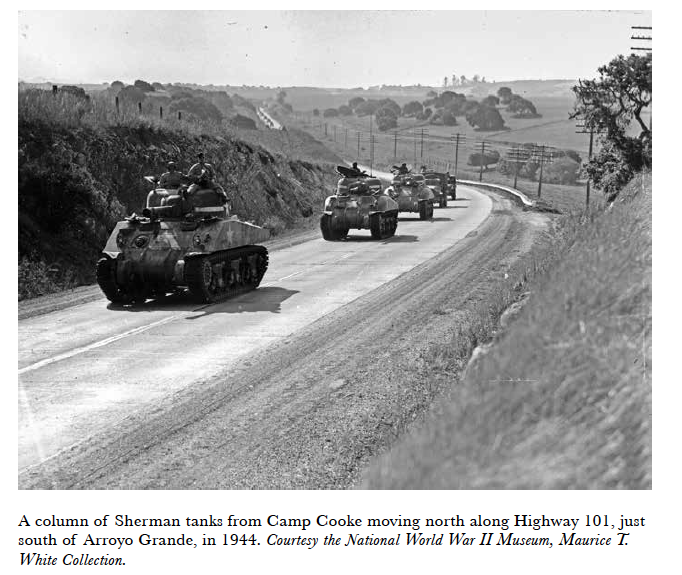
She came up to me after the talk and told me that she’d lived in Los Angeles during the War, and she was part of a USO visit to Camp Cooke, today’s Vandenberg Space Force base. In her time, in World War II, it had been a US Army armored training base, and she was one of the young women, densely chaperoned and caravaned north in Greyhound buses, who would visit the GIs, training to become tank crewmen, courtesy of the USO.

“We had dinner with them, and we went out to a dance, and then we went to church with them. And they were so happy to see us–I had a marvelous time!” Then she bought a book.

Screen Shot 2018-10-08 at 6.40.40 PM

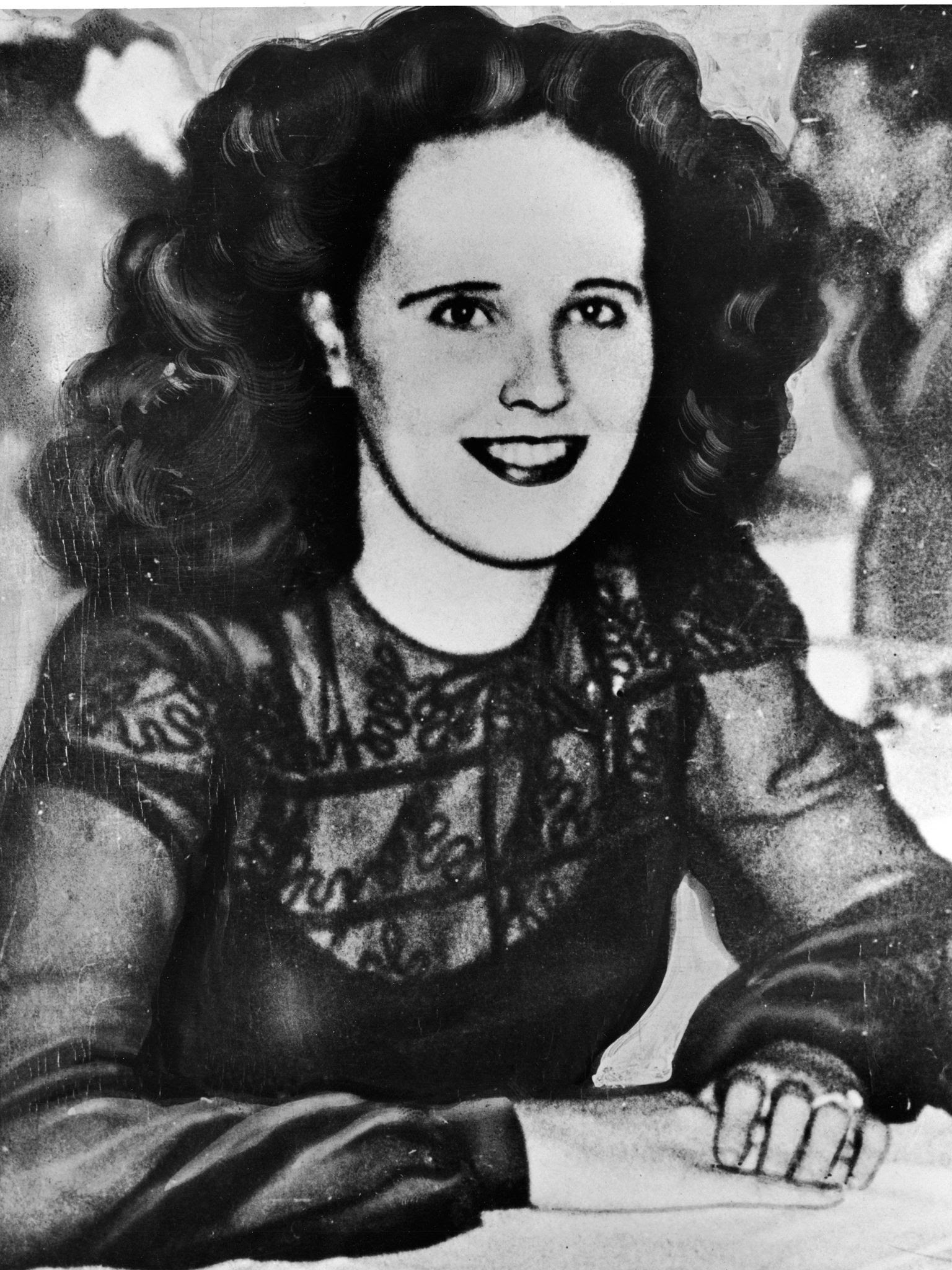
Before you think I’ve gone all soft in the head, I’m well aware that wartime was not an Andy Hardy movie. Illegitimacy skyrocketed, and so did juvenile delinquency. And one of the civilian workers at Camp Cooke–voted a “Camp Cooke Cutie” in the camp newspaper in 1944–was Elizabeth Short (below), the “Black Dahlia” murder victim three years later, which proves, sadly, that a tradition of trivializing women, and of brutalizing them, goes deep in American culture.

licensed-image
The doomed Elizabeth Short.

This woman’s experience was, thank God, vastly different, yet it was the same one I’d heard from a veteran Santa Maria Times reporter, Karen White, who once told me that her big sister went to USO dances at Camp San Luis Obispo. She, too had a marvelous time.

(As a high school history teacher, one of the best proms I ever chaperoned, when my wife and I taught at Mission Prep in San Luis Obispo, was at the Camp SLO Officers’ Club. The place is alive with the presence of officers and officers’ wives or fiancés from back home—they would’ve endured unbelievably uncomfortable wartime train trips—come all the way to California, from a long, long time ago. You can sense them there, sense the vitality of young lives interrupted. I remember feeling somehow comforted by the closeness of them. I’ve heard others talk about the same feelings I had.)

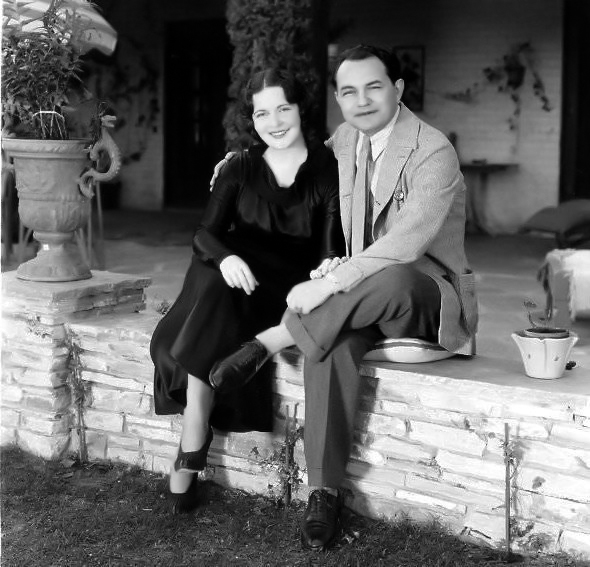
The graduation dances for Navy fliers who’d completed preflight training at Cal Poly—3,000 did during the war, while the civilian student population fell to eighty–had a special touch because the chaperone who brought the young women to Poly was none other than Mrs. Edward G. Robinson. It made sense, Edward G. had been a Navy man in the First World War, long before he became Scarface, long before Fred McMurray poured out his lifeblood and his murder confession to Edward G. in Double Indemnity.


Mr. and Mrs. Robinson.

So I was gifted today with story of a woman who went to a dance with young soldiers seventy-five years ago. For just the briefest of moments, she was, in my imagination and in her memory, a teenager again.

What a blessing.

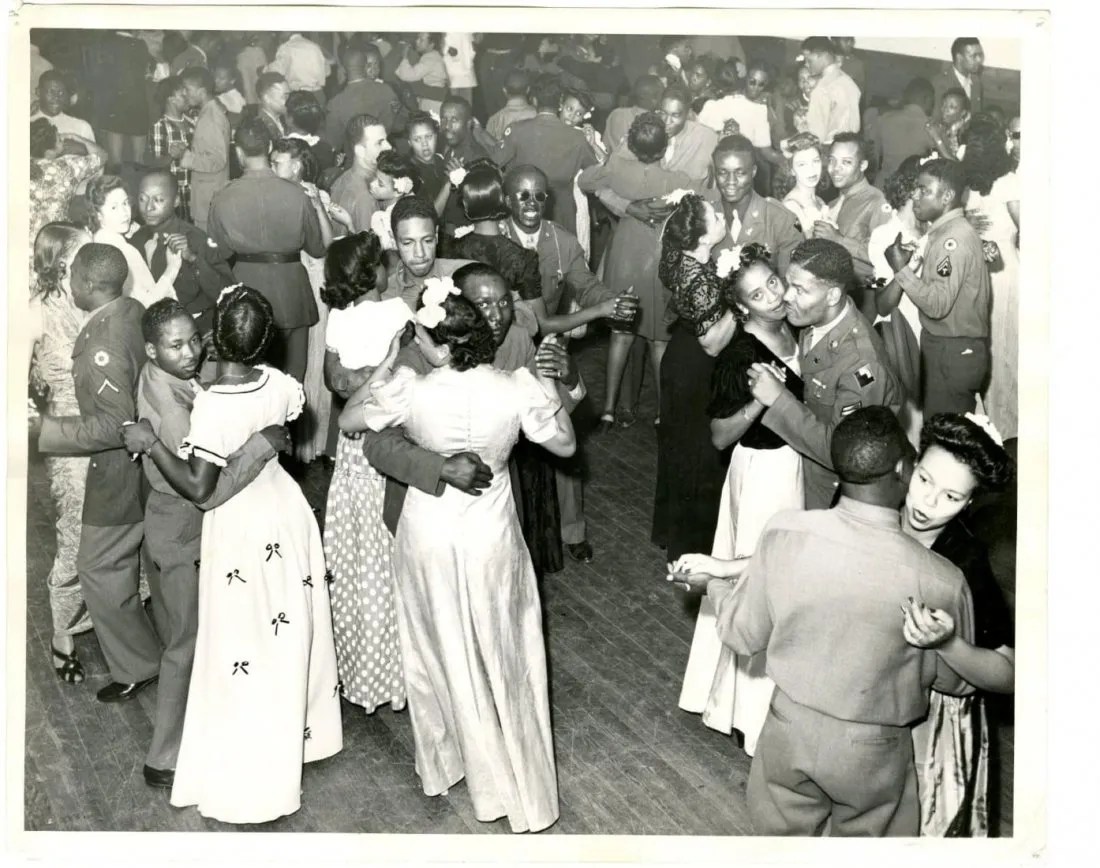
A wartime dance at the Black USO, San Luis Obispo; some of these GIs may belong to the 54th Coast Artillery, with batteries guarding Avila and Estero Bays. Courtesy Erik Brun
← Older posts
Newer posts →

Subscribe

  • Entries (RSS)
  • Comments (RSS)

Archives

  • June 2026
  • May 2026
  • April 2026
  • March 2026
  • February 2026
  • January 2026
  • December 2025
  • November 2025
  • October 2025
  • September 2025
  • August 2025
  • July 2025
  • June 2025
  • May 2025
  • April 2025
  • March 2025
  • February 2025
  • January 2025
  • December 2024
  • November 2024
  • October 2024
  • September 2024
  • August 2024
  • July 2024
  • June 2024
  • May 2024
  • April 2024
  • March 2024
  • February 2024
  • January 2024
  • December 2023
  • November 2023
  • October 2023
  • September 2023
  • August 2023
  • July 2023
  • June 2023
  • May 2023
  • April 2023
  • March 2023
  • February 2023
  • January 2023
  • December 2022
  • November 2022
  • October 2022
  • September 2022
  • August 2022
  • May 2022
  • April 2022
  • March 2022
  • February 2022
  • January 2022
  • December 2021
  • November 2021
  • October 2021
  • September 2021
  • August 2021
  • July 2021
  • June 2021
  • April 2021
  • March 2021
  • February 2021
  • January 2021
  • December 2020
  • November 2020
  • August 2020
  • July 2020
  • June 2020
  • May 2020
  • April 2020
  • January 2020
  • December 2019
  • November 2019
  • October 2019
  • September 2019
  • August 2019
  • May 2019
  • April 2019
  • March 2019
  • February 2019
  • January 2019
  • December 2018
  • November 2018
  • October 2018
  • September 2018
  • July 2018
  • June 2018
  • May 2018
  • April 2018
  • March 2018
  • February 2018
  • January 2018
  • December 2017
  • November 2017
  • October 2017
  • April 2017
  • March 2017
  • December 2016
  • November 2016
  • October 2016
  • September 2016
  • August 2016
  • July 2016
  • June 2016
  • April 2016
  • March 2016
  • February 2016
  • January 2016
  • December 2015
  • November 2015
  • October 2015
  • September 2015
  • August 2015
  • July 2015
  • June 2015
  • May 2015
  • April 2015
  • March 2015
  • February 2015
  • January 2015
  • December 2014
  • November 2014
  • September 2014
  • August 2014
  • July 2014

Categories

  • American History
  • Arroyo Grande
  • California history
  • Family history
  • Film and Popular Culture
  • History
  • News
  • Personal memoirs
  • Teaching
  • The Great Depression
  • trump
  • Uncategorized
  • World War II
  • Writing

Meta

  • Create account
  • Log in

Blog at WordPress.com.

  • Subscribe Subscribed
    • A Work in Progress
    • Join 69 other subscribers
    • Already have a WordPress.com account? Log in now.
    • A Work in Progress
    • Subscribe Subscribed
    • Sign up
    • Log in
    • Report this content
    • View site in Reader
    • Manage subscriptions
    • Collapse this bar

Loading Comments...