• About
  • The Germans

A Work in Progress

A Work in Progress

Category Archives: Arroyo Grande

The Ever Popular Pismo Poko Parlor, 1938-1942

20 Friday May 2022

Posted by ag1970 in Arroyo Grande, Uncategorized, World War II

≈ Leave a comment

A friend asked me about a token found–I presume by a man with a metal detector–that read “Club Poko, San Luis Obispo.” (You can find sometimes on eBay, similar tokens to one of Pete Olohan’s saloons on Branch Street.)

A search revealed no stories or ads on a Club Poko in San Luis Obispo.

However, there was Pismo Poko, an arcade/amusement parlor at 520 Cypress, Pismo Beach, which seems to have operated between 1938 and 1942. More on these places:

* * *

1930s Arcades

Arcade patrons flocked to coin-operated peep show machines, shooting galleries, grip and strength testers, stationary bicycles, slot machines (in some areas), machines that dispensed fortunes or candy, and other mechanical amusements they could play for as little as a penny.

During the 1930s, David Gottlieb’s Baffle Ball

(1931) and Raymond  Moloney’s Ballyhoo

(1932) introduced pinball to arcades. As pinball designers added bumpers, flippers, and thematic artwork, pinball surged in popularity, even as some local legislators banned the game because they associated it with gambling, organized crime, and delinquency. Nevertheless, over the next three decades arcade owners replaced many older mechanical novelty games with pinball machines and electromechanical baseball, target shooting, horse racing, shuffleboard, [foosball] and bowling games. Pinball machines ruled arcades until the late 1960s when new more sophisticated electromechanical games such as Chicago Coin’s Speedway.

–Rochester NY Democrat and Chronicle

Why “Poko?” From an article on arcade games:

Poko-Lite was produced by Glickman Co. in 1937. Glickman Co. released 19 different machines in our database under this trade name, starting in 1937.

Other machines made by Glickman Co. during the time period Poko-Lite was produced include Treasure, Sailorettes \’42, Scandals 1942, Anti-Aircraft, and Archery.

This game appears on a list of games manufactured between 1931-1939 which was published in the January 1940 issue of the Coin Machine Journal.

* * *

Pinball machines had an unsavory reputation in the 1930s-1940s; they were perceived as akin to slot machines, a form of gambling. A dozen were seized by the SLOPD in August 1941 for operating without a city license; in January, there’d been a spirited City Council debate on whether to allow them at all. They voted to license pinball but ban taxi dances. So it goes.

Here’s a display ad for the Pismo place from May 1940:
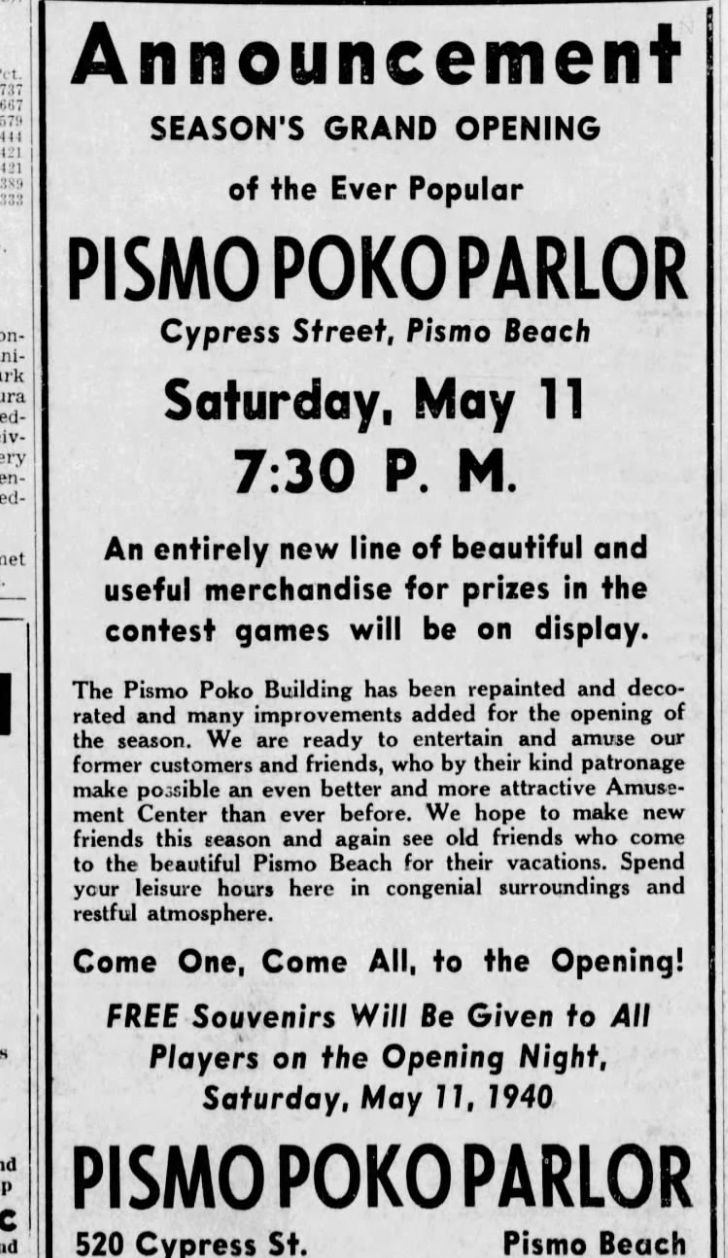


Another 1940 ad from the Telegram-Tribune:
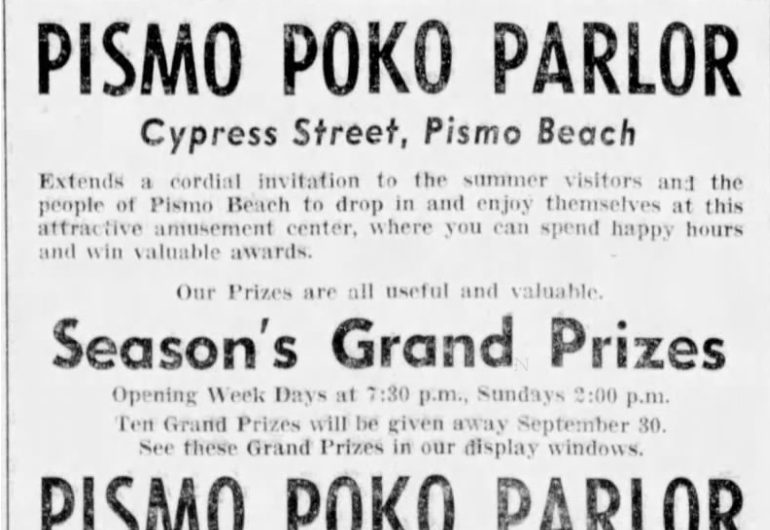
520 Cypress is today the site of a modern motel, which straddles the corner of Main and Cypress.

Why did Pismo Poko go out of business, evidently in 1942 (there are no newspaper references thereafter, but plenty of both display and classified ads between 1938 and 1942)? The influx of local soldiers would’ve made Henry T. Betsuin, Prop. a fortune.

So I looked him up. “Betsuin” sounded Filipino to me, which made sense, since Pismo had a vibrant Filipino community (almost all men; Filipinas were not allowed to immigrate.)

There wasn’t much on him except for this curious note on a ship arrival in San Francisco from Kobe:
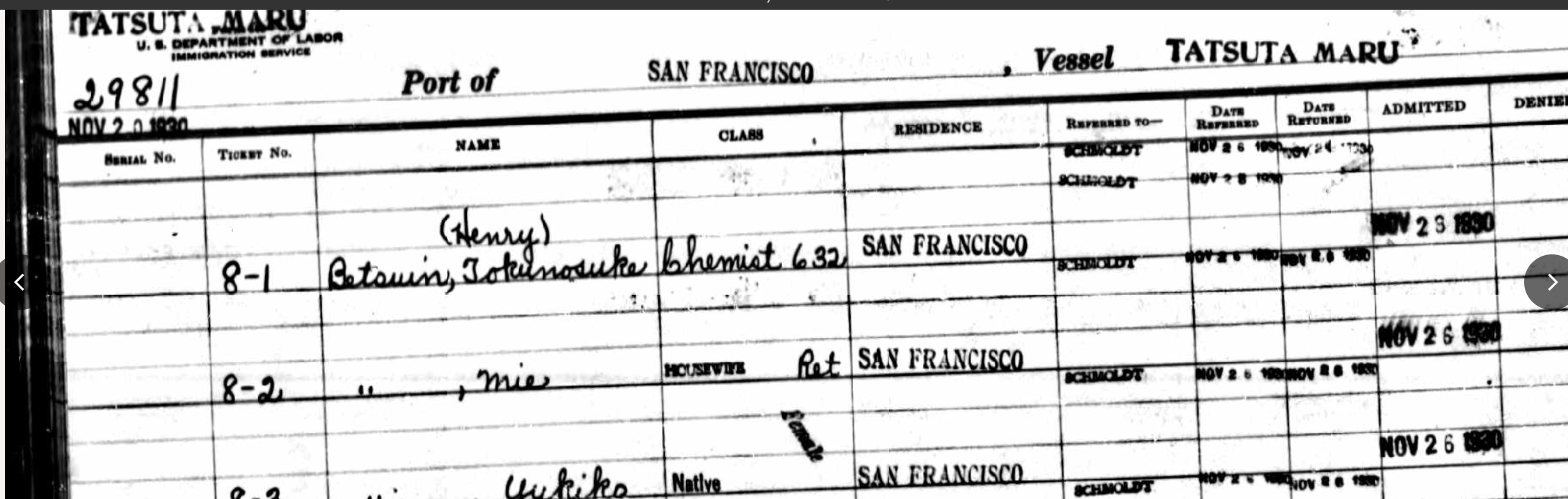

“Tokunosuke” is definitely a Japanese name; but he seems to have gone by “Henry T.” instead. If he was Japanese, that explains why Pismo Poko disappears after 1942. Henry T. would’ve been in an internment camp. 

So, if that didn’t exactly answer the question, it raised several new ones–and it led me down a sad path, to the impact of Executive Order 9066, whose 80th anniversary we’re observing this year.
My Spoon River Poem

30 Wednesday Mar 2022

Posted by ag1970 in Arroyo Grande, Uncategorized

≈ Leave a comment

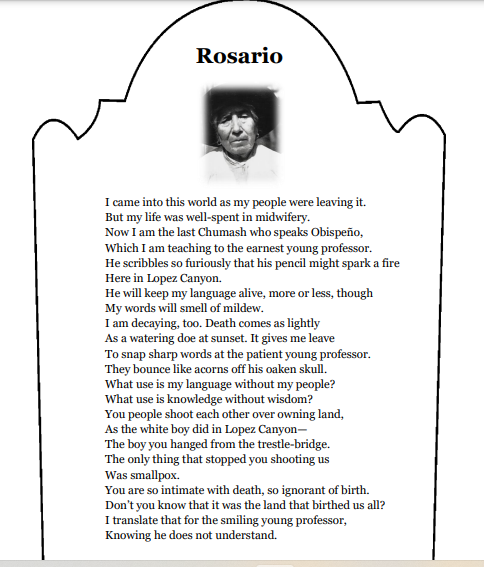
Based on the Edgar Lee Masters’ collection, this one’s about a woman a half-continent away from Illinois. Rosario Cooper was the last speaker of her dialect of Central California’s Chumash language. She was interviewed and some of her language taken down by anthropological linguist J.P. Harrington who, I guess—from reliable sources—was a jerk. But her language survives, if only in Cal’s Bancroft Library.

Rosario was a midwife and healer—her people’s knowledge of wild plant foods, herbs and curatives was vast and remains amazing to me, as was their understanding of the wild birds, the rainbow trout, the mule deer, jackrabbits, mountain lions, coyotes and, until the late 1870s, the grizzly bears that were part of their daily lives.

A land dispute near her, in Arroyo Grande’s Lopez Canyon, resulted in a double murder and then a double lynching of the suspects just below Arroyo Grande’s Crown Hill in 1886. A decade later, a second feud, also over land rights, led to the beating death of a man whose body was discovered by a prostitute out for her morning walk along Monterey Street in San Luis Obispo. The prime suspect was acquitted, but some justice was carried out ten years later, when he went to Folsom for horse theft.

All of this would have bewildered Rosario, who was the granddaughter of a “Mission Indian” born in the 1790s in a rancheria, or village, in the Upper Arroyo Grande Valley, near today’s Strother Park. Her grandfather may or may not have been a sailor; the marriage may or may not have been enforced by the Mission Fathers and the grandfather may or may not have been drowned at sea. So much was uncertain at the turn of that century.

The Chumash were acquainted with uncertainty: a terrible drought in what would become San Luis Obispo County forced them to become neophytes; it threatened to exterminate them before White men and their smallpox and cholera very nearly did.

Eighty years after the Mission’s founding, the City Fathers of San Luis Obispo hired a man and his wheelbarrow to cart the cholera victims up the hill that led to the Old Mission burying ground. His hard work is unrecognized, as are the human beings that were his freight. They are buried, in what must be compact stacks, like the soldiers’ bones in the Verdun ossuary, in a steeply-banked garden that faces the annex, the addition that gives the Old Mission a half-cruciform floor plan.

On the opposite side of the nave, in the Mission Gardens proper, the only legal hanging in San Luis Obispo County history was carried out in 1859. All the others, carried out by the 1858 Vigilance Committee, which has the dubious record of hanging two more men than San Francisco’s, happened facing the Mission, where a little bronze Chumash girl shares a fountain with a Grizzly. Given their propensity for carrying off rancheros’ bawling claves, the proximity of the little girl and the Grizzly might seem odd.

The statues might have made more sense to Rosario, who died in 1917 still understanding the fading natural world around her that was quickly being reduced to checkerboard ranches bounded by barbed wire. The events in Lopez Canyon, in her California, where men shot at each other over their barbed-wire fences—those White men events— would have bewildered her.

Justifiably so.

Note: The origin for this was a class I taught teens as part of the Central Coast Writers’ Conference. This was a model. The teens then chose a person from local history and wrote a “tombstone poem” for that person.

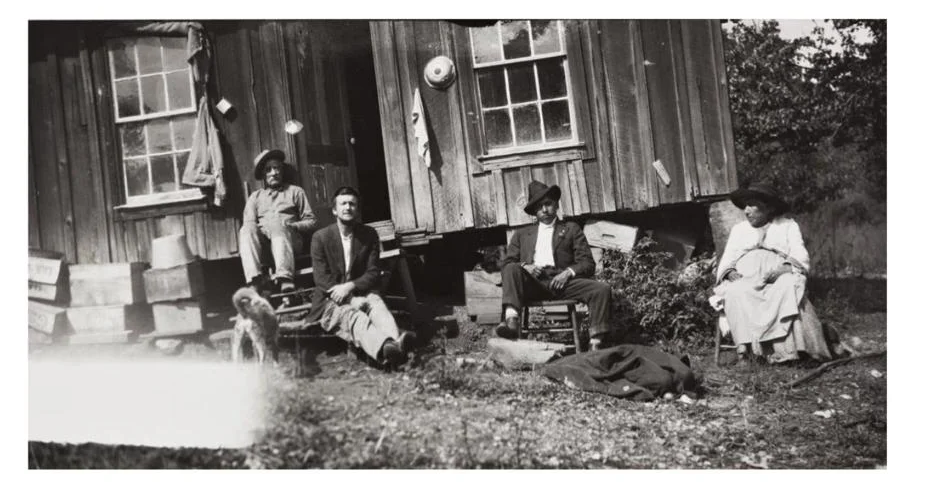
Lopez Canyon, 1916. L-R: Rosario’s husband, Mauro Soto, Anthropologist J.P. Harrington, Frank Olivas, Rosario’s son, and Rosario Cooper.

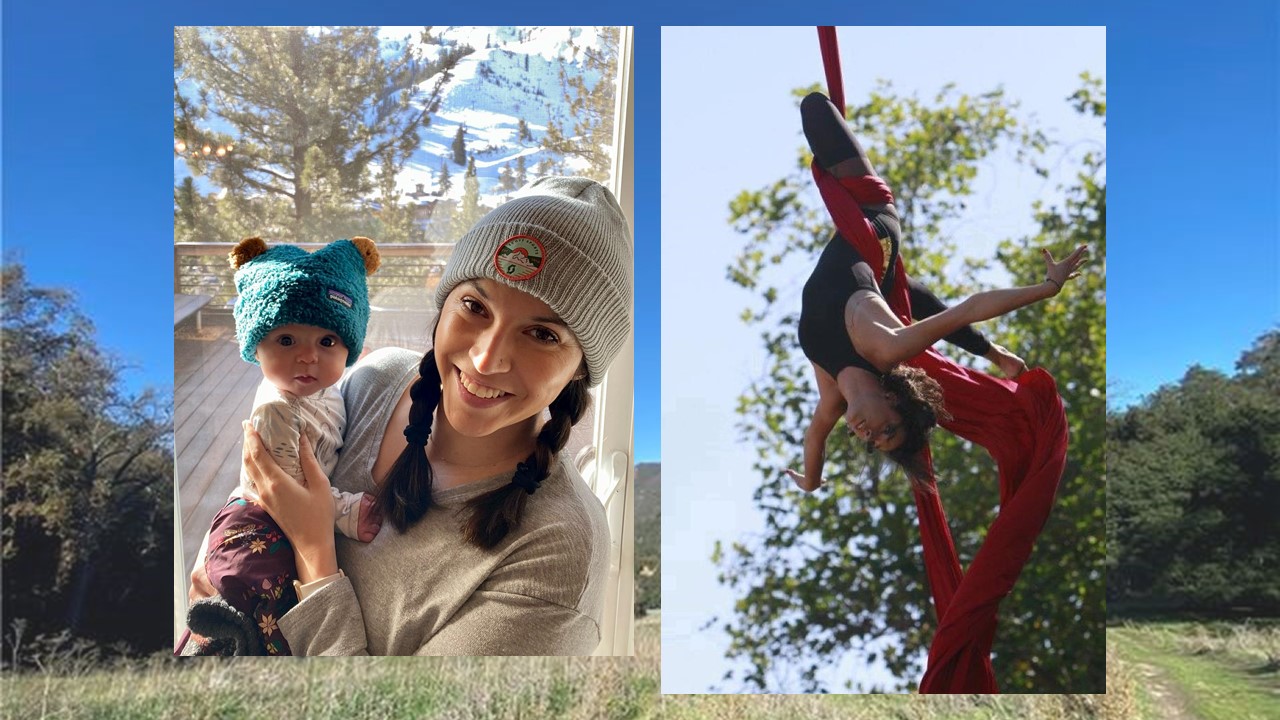
What amazed and pleased me to no end was realizing, years afterward, that I had taught two of Rosario’s great-great (great?) granddaughters in my history classes at Arroyo Grande High School.

McKenzie—with her little girl— and Hannah are beautiful, brilliant and generous young women. Beyond that, they are powerful in ways that I am sure are part of their DNA. I can’t help but think that Rosario would be even more proud of them than I am. I don’t doubt at all at the immensity of her love for them.

We are fixed on linear time: Rosario understood that time was cyclical, so she will watch over her babies, including McKenzie’s and including those not yet born. She will always be here for them. As we reckon time, Rosario Cooper died in 1917. I am convinced that the force of her life—one that gave life to newborn babies— endures.


The Medic

11 Friday Mar 2022

Posted by ag1970 in Arroyo Grande, Uncategorized, World War II

≈ 1 Comment

Pvt. Yoshihara’s grave, Guadalupe.

I’m speaking in Santa Maria next week about our county’s World War II commemoration—the eightieth anniversary of the war, and of Japanese internment—when I wondered if any Santa Maria Nisei (second generation Japanese-Americans) had been among the town’s 55 wartime casualties.

Because of his surname, Makoto Yoshihara was at the bottom of the list.

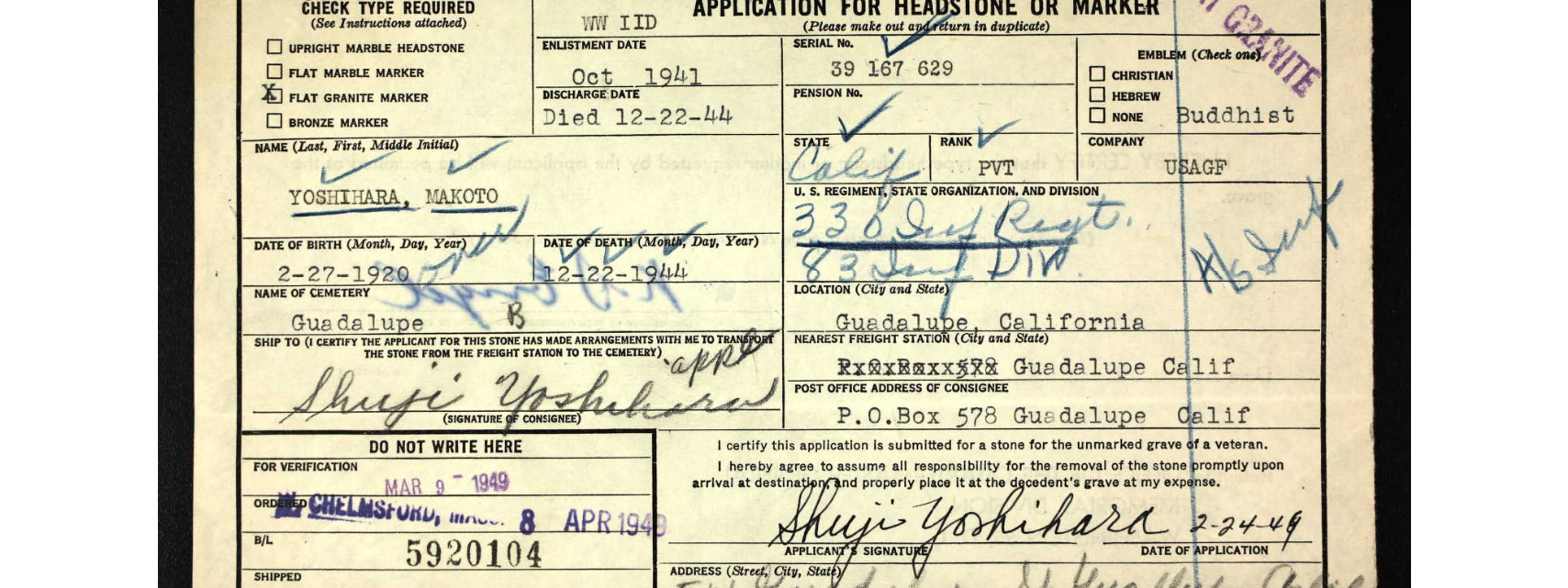
He was actually born in Morro Bay; his parents moved to Guadalupe where they ran a boarding housel and pool hall. Makoto played football for the Santa Maria Saints, joined or was drafted into the Army in October 1941. His parents, like our Arroyo Grande neighbors, went to the Rivers Camp in the Arizona desert. The photo below shows evacuation day in Guadalupe, and I knew that Guadalupe had a prominent Japanese-American presence, but the numbers surprised me: Two hundred people were taken from Arroyo Grande, 400 from Santa Maria, but 800 from little, beautiful Guadalupe.

April 30, 1942.

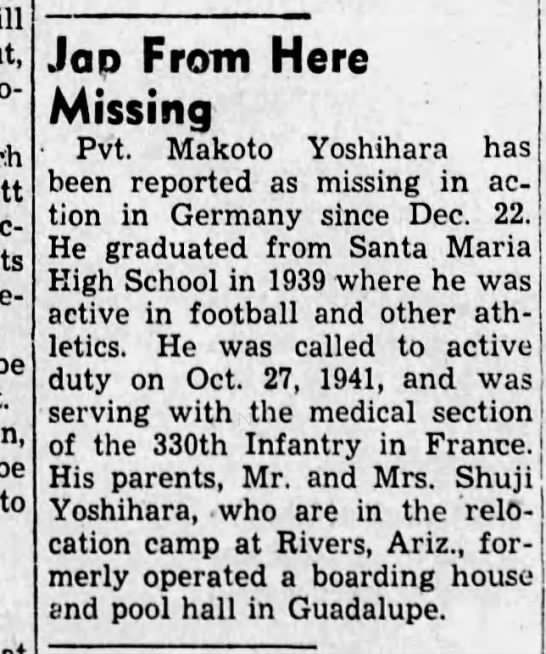
About two and a half years later, the insult heaped on our neighbors would be intensified by the headline that first reported Makoto’s fate. From the January 25, 1945, Santa Maria Times:

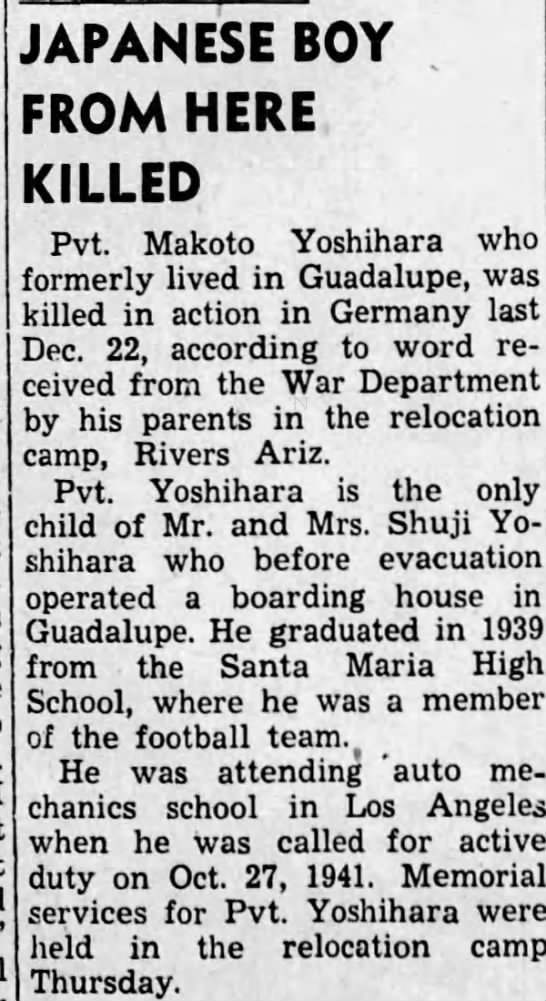
It is, of course, jarring to read. A month later, once Makoto’s death is confirmed, the newspaper softens its tone:

And you’re relieved at the slight change in tone until you read where his parents received that terrible telegram from the War Department. Everyone—everyone—behind barbed wire in the desert would’ve known almost instantly what had happened to Mr. and Mrs. Yoshihara’s son. The tarpaper barracks walls would’ve done nothing to soften the sound of a mother’s weeping for her only child.

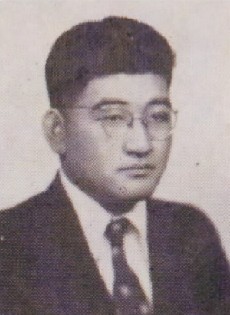
Makoto had wanted to be a mechanic. This must be his high school senior photo. He looks like a serious young man.


Which is why the Army—my father, a World War II veteran, would claim to be surprised by this—did something right. They made this serious young man a medic.

Another surprise came, at least for me, in the article with the insulting headline. Makoto was not a member of the famed 100th/442nd Regimental Combat Team, nor—since served in the European Theater—was he a Nisei intelligence officer, like so many local men were, the ones who underwent, at Camp Shelby, Mississippi, the same tough training that the 4-4-2 endured.

Makoto instead served in the 83rd Infantry Division, a unit that had a thoroughly White pedigree—the 83rd was traditionally an Ohio outfit, from the state that produced a batch of mediocre presidents, and here, probably the only Nisei among 10,000 White boys, was Makoto Yoshihara, the medic from Guadalupe, California. The Ohio boys probably had never seen the ocean. Makoto probably never got the chance to see fireflies, one of the natural wonders that make Midwestern summers, despite their oppressiveness, delightful.

He must’ve been lonely. And, if only at first, he must’ve endured racist attempts at humor.

The only other local Nisei G.I. I know of that served in a non-Nisei unit was Arroyo Grande’s Mits Fukuhara, who served in a tank battalion; Mits and his battalion missed the fighting because the war ended before they could join it.

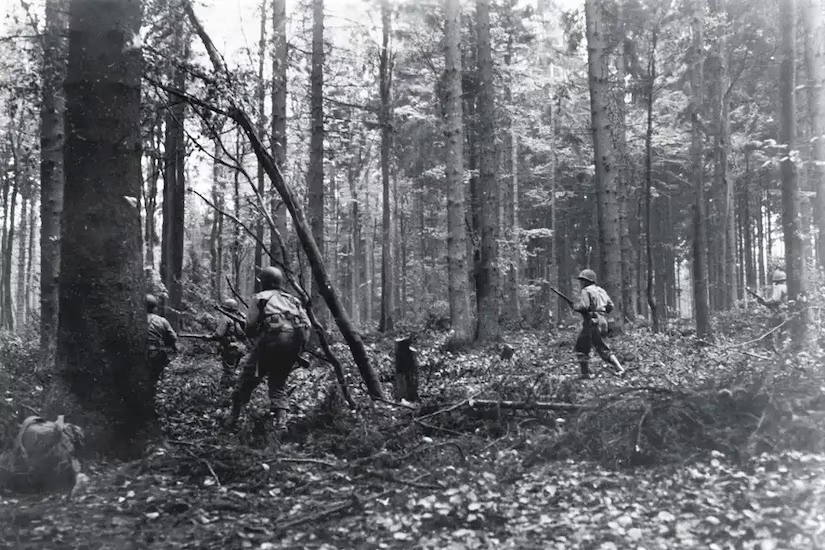
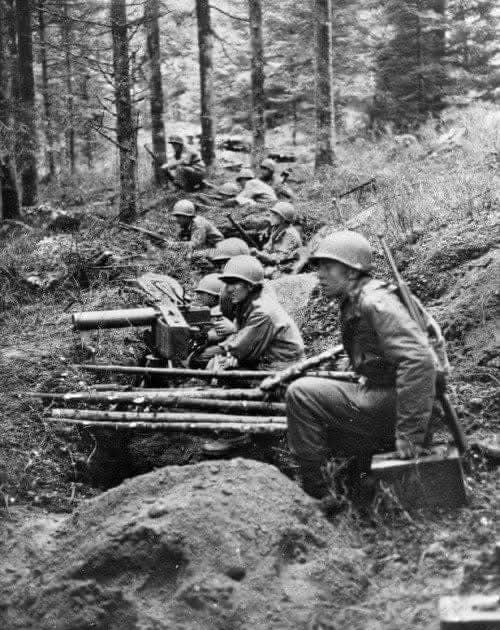
Makoto didn’t miss the fighting; in fact, he saw some of the worst combat of the Americans’ war. The 83rd and his regiment, the 330th Infantry, got into a slugging match with the Wehrmacht in the Huertgen Forest in September 1944—the photos below give an idea of the terrain there— in a horrific battle that would last for two months. The nearest approximate I can think of in the American experience would’ve been the Battle of the Wilderness in 1864, where dense forest broke Grant’s infantry companies down into little knots of men, separated by trees and dense foliage that made it impossible to see each other—or the enemy. Lee’s men appeared as shadows, mirages, and disappeared in the smoke, because the muzzle flashes from Enfields or Springfields set the Wilderness afire. The fires burned the wounded alive.
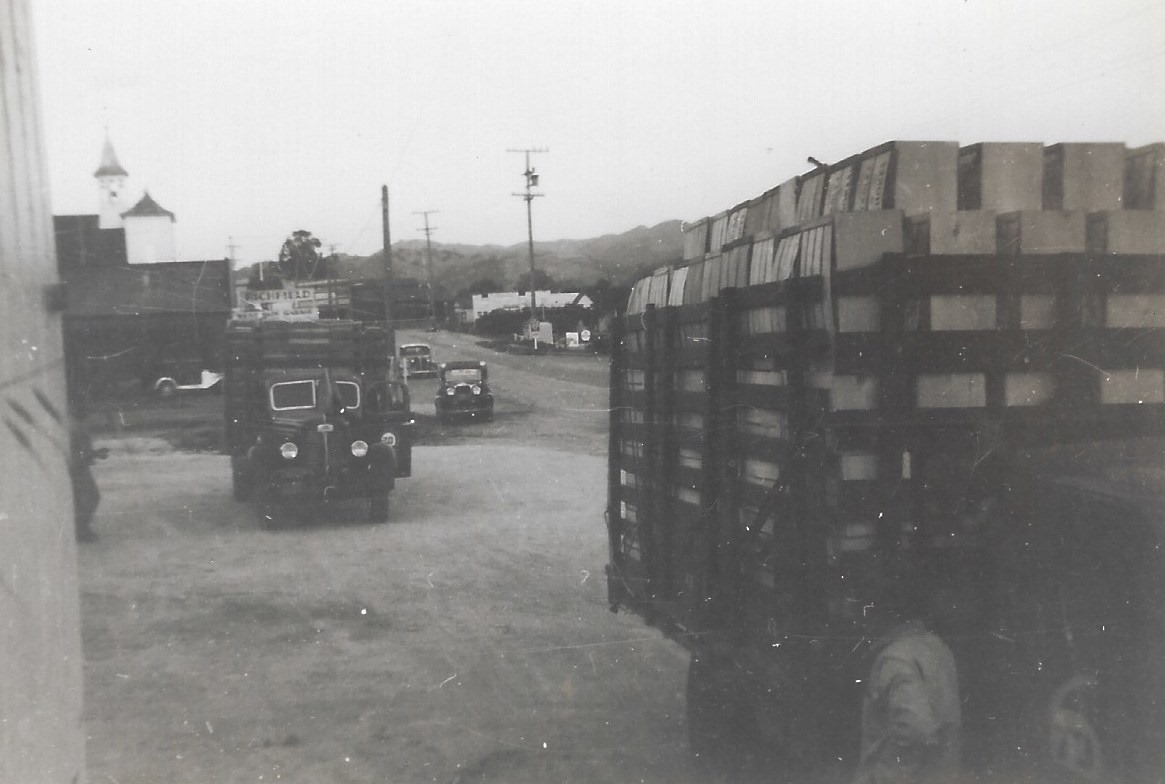


(In 1945, after Germany’s surrender, fires swept the Huertgen and detonated unexploded artillery shells. The war hadn’t ended at all for the scores of German civilians killed by buried ordnance that had been intended for soldiers.)

The battle for the Huertgen was a debacle. The Americans suffered nearly twice the casualties the German defenders did and they had to pull back and reorganize in December.
Somehow Makoto Yoshihara survived those two months in the forest.
And then, in December, the 83rd Division would face the Germans again in the massive offensive that we remember as the Battle of the Bulge, fought during one of the coldest winters in Europe in thirty years.

Makoto didn’t have to face that second, epic battle. Somewhere in the not-quite-lull in between, he died. The divisional after-action reports for the day he died, December 22, are bland; they suggested units relieving other units and the straightening of lines; battlefront housekeeping. But when you get down to the battalion level, the reports cite heavy German resistance, nighttime attacks, and cold. Always the cold.

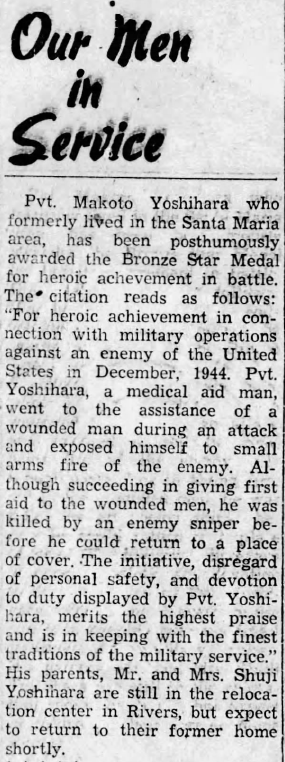
The way he died once again confirms the Army’s wisdom in assigning him to the 330th’s Medical Detachment. The Santa Maria Times kind of redeems itself, thanks to the Bronze Star citation’s wording, in this article from September 1945:

Makoto died saving a brother G.I.’s life because medics were favored targets for snipers; if you can kill a medic, the five or six wounded soldiers he might’ve saved will die, too.

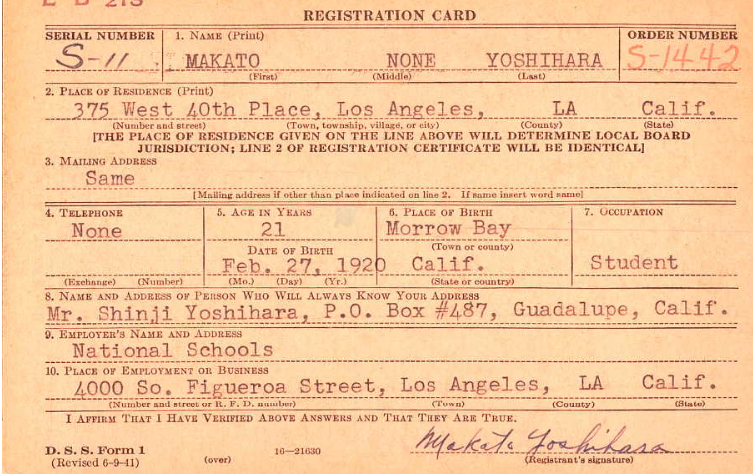
(Above): Tragic bookends: Makotto’s draft card, its spelling uncertain, and his family’s application for a military tombstone.


Makoto died 5,000 miles away from Guadalupe’s row crops, its Mexican restaurants, honky-tonks and the sand dunes and the vivid ribbon of ocean beyond.

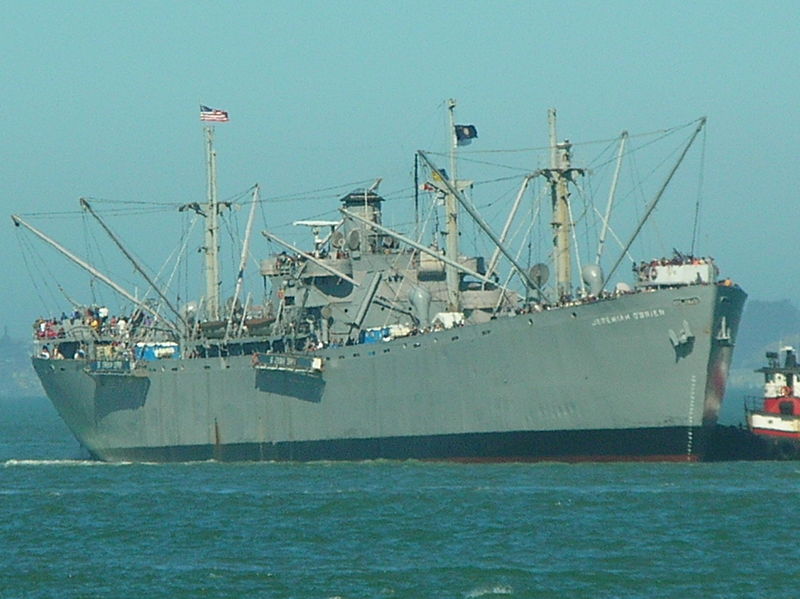
His body was returned to America in December 1948 aboard the prosaically-named Liberty Ship Barney Kirschbaum, one of the war’s industrial wonders; Kirschbaum’s duplicate, Jeremiah O’Brien, made the trip in reverse in 1994, sailing from her berth in San Francisco to England and then to the Normandy coast where she’d done duty in the invasion of the Continent in 1944; O’Brien is the last of the 6,000 ships that supported the D-Day landings.

Jeremiah O’Brien, one of three thousand Liberty Ships built during the war.


Accompanying Makoto’s coffin on Kirschbaum were the coffins of Orville Tucker of Arroyo Grande, killed on the second day of the Battle of the Bulge—five days before Makoto knelt over the wounded soldier— and Stanley Weber of Oceano, who died the next month in the counteroffensive that erased the Bulge and drove the Germans back.

The coffins, of course, would’ve been flag-draped. That’s an important detail, because belowdecks on Kirschbaum’s long voyage home, there were no “Japs;” no Ohioans, no Californians. These were our young men; even in death and even in the eighty years that separate our lives, they remind us that we, all of us, belong to each other.


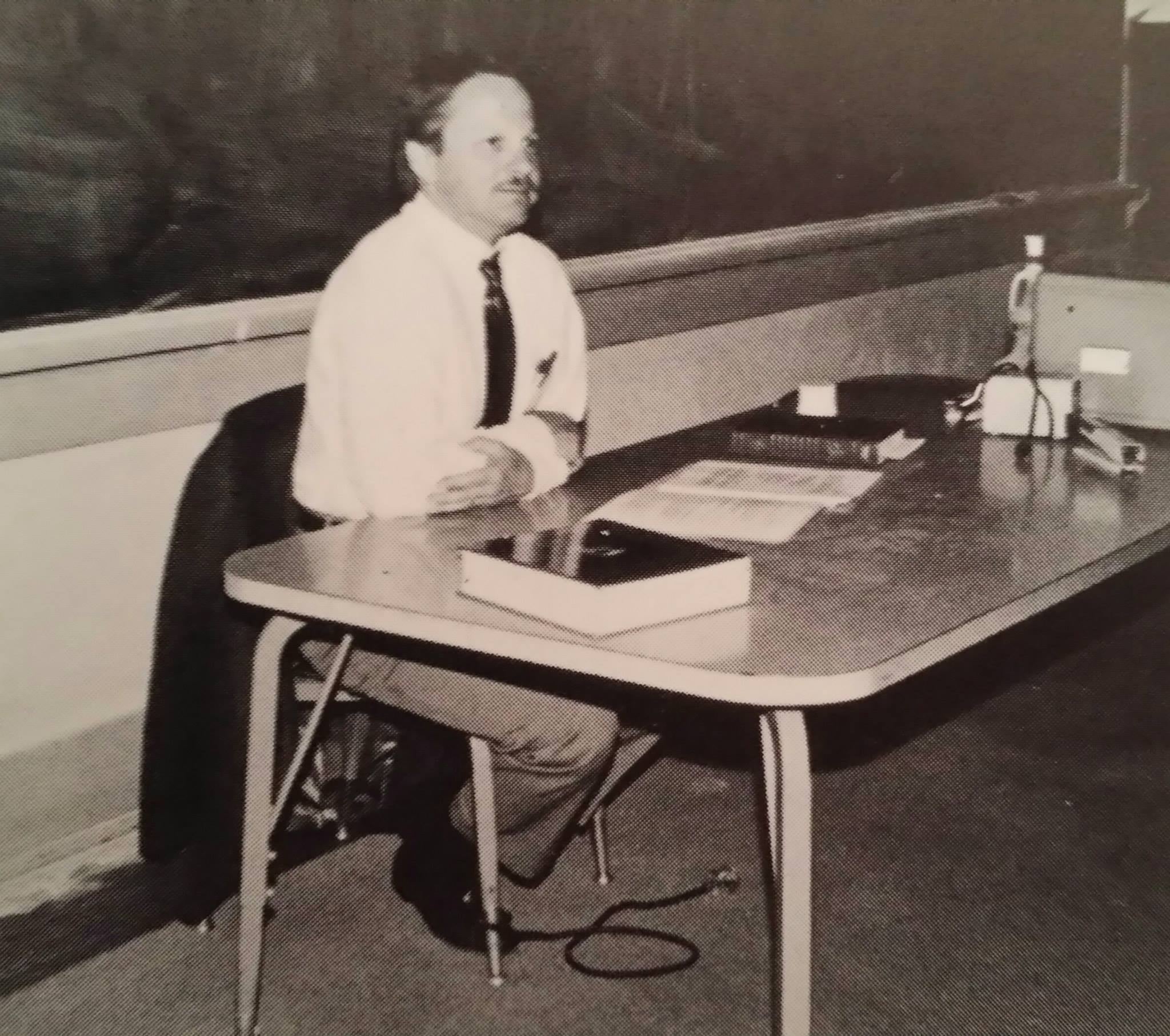
Mr. Burns, Branch School

07 Monday Feb 2022

Posted by ag1970 in Arroyo Grande, Personal memoirs, Teaching, Uncategorized

≈ Leave a comment

Courtesy of Michael Shannon


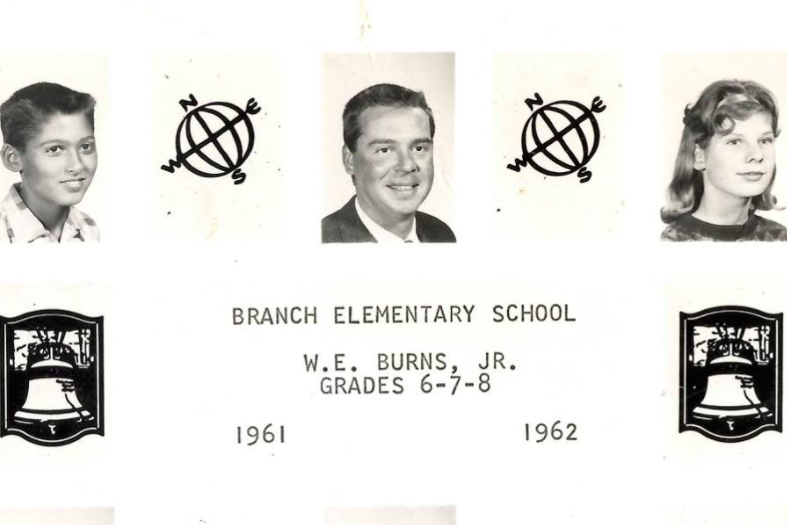
This photo comes from the year Dad was the clerk of the Branch School Board, and bids were being submitted for the new school. Mr. Burns drove a white-over-gold Dodge Polara with a big V-8. I have never forgotten seeing him speed down Huasna Road toward the four corners–he had to be doing 70 mph–because his passenger, picked up at the County Airport on Edna Road, was a construction company comptroller trying to get his boss’s bid in on time.

I don’t know whether the guy made it.

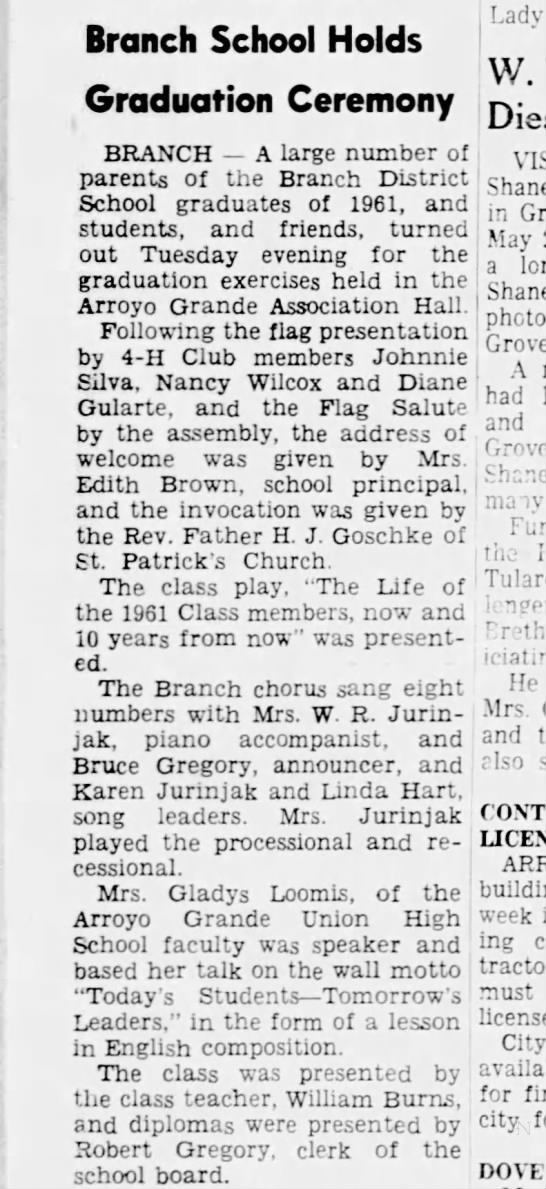
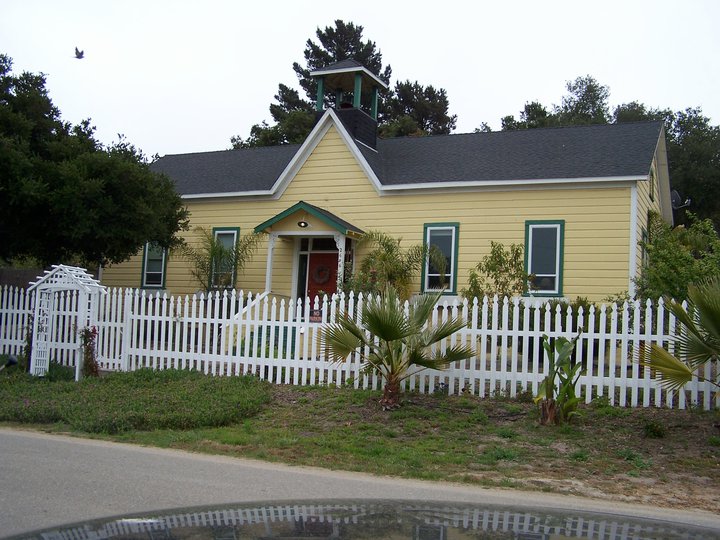
This article, from June 1961, cites Mr. Burns, my big brother and my Dad—and Mrs. Vard (Gladys) Loomis, who would’ve been a dignitary to us. She was a woman of great dignity, so the term “dignitary” fits exactly. The ceremonies were at the IDES Hall because the old 1880s two-room schoolhouse couldn’t hold any more kids–we were Boomers, after all, and there were immense and inconvenient numbers of us—so the big kids, 7th and 8th graders, had their classes at the Hall until the new school could be built.


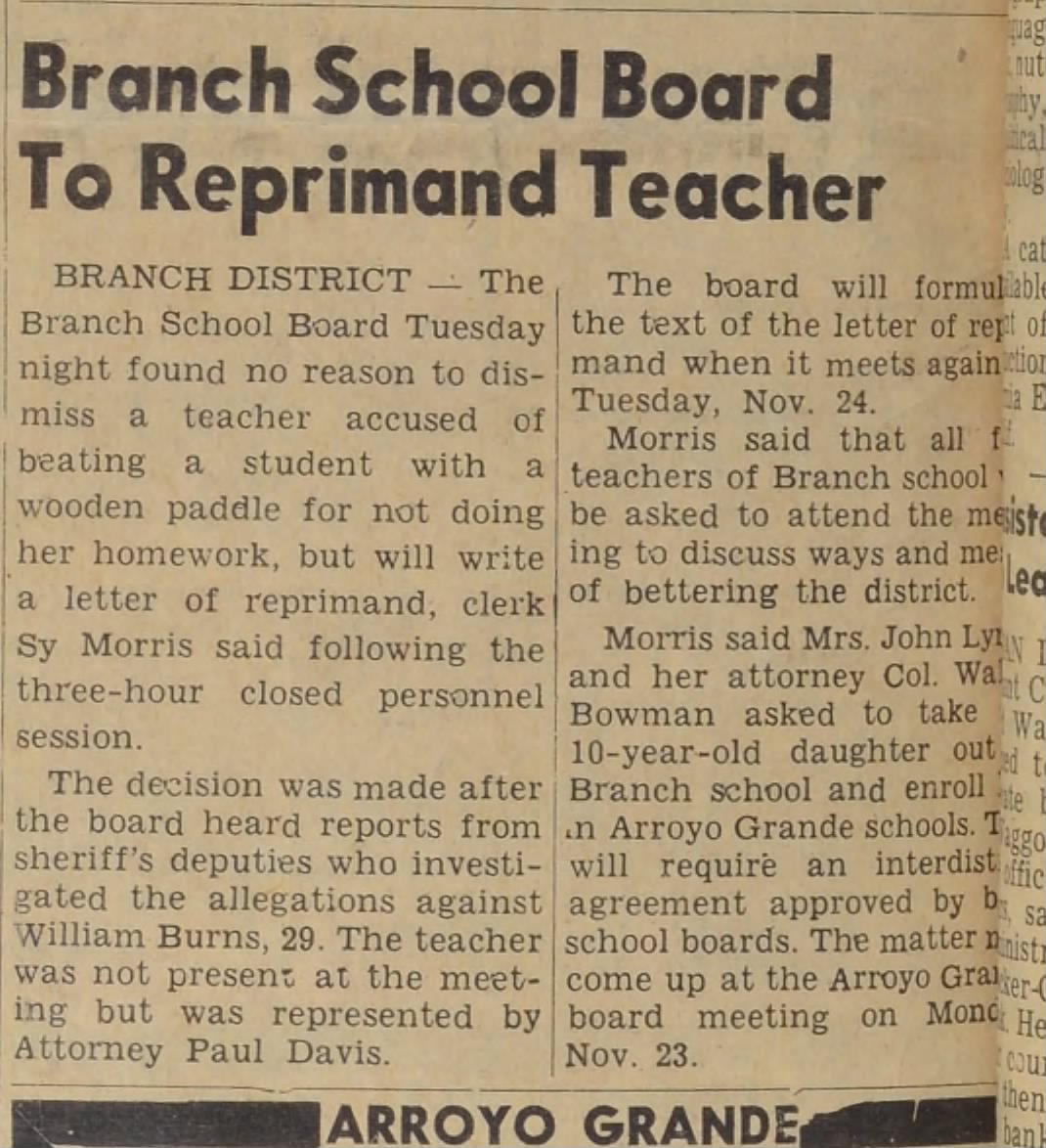
I wish this story had a happy ending. It doesn’t. Midway through one school year, Mr. Burns was fired. I’m still not sure of the cause, and I don’t want to know. No one talked about it then, and I don’t want to talk about it now. It may have involved his corporal punishment of a student who refused to do her homework. I don’t think that was the case because, just a few years before, I’d seen two Branch teachers, Mrs. Brown and Mrs. Fahey, work over Danny Hunt in the hallway of the old school. They used those hardwood rulers with the sharp copper inserts along the edges and Danny was crouched in the fetal position–and whimpering–while two teachers I loved worked him over like Bad Cop-Bad Cop. To say that I was shaken is an understatement. That was sixty years ago.

Nothing happened to them. Those were less litigious days, and country schools were their teachers’ fiefdoms.

The Old School. It was pink in our day.


So maybe Mr. Burns did something even worse than what the article below suggests.

From 1965.

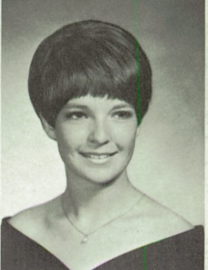
It’s absurd, of course, but I’ve been trying to look for him for years. I think I have an obituary, in Los Angeles, but I’m not sure of it. I think I have a wedding, in Monterey, in 1976, and she is lovely in her high school yearbook photo. It might just be the same William Edward Burns–the age, 36, fits. She is Marcia Katherine Ross, 25, and the two were married the day after Christmas.

And, of course, this couldn’t be Mrs. Burns, not at all. I don’t have any conclusive proof of what happened to him–or even any conclusive proof that he was heterosexual, which is irrelevant– not even after years when I periodically take time to look for him on genealogical and newspaper websites.

The point remains: He screwed up. He did something I never would’ve done as a teacher.

Mr. Koehn replaced him–he would be my algebra teacher later, in ninth grade, on Crown Hill, which remains the only year in my formal education that I enjoyed math. He decided, in P.E. to introduce us to golf and brought thirty aged short irons, some with wooden shafts, and a hundred whiffle golf balls to school and we fifth and sixth graders had the time of our lives, swinging without mercy. Our beloved bus driver and custodian, Elsie Cecchetti, was less than thrilled with the divots that swinging without mercy leaves behind. Many years later, when I took my students to Normandy and we saw the enormous craters left by the D-Day gunfire of Allied naval ships, I was suddenly reminded of what we kids had done to Branch School’s front lawn.

We missed Mr. Burns, though. He was charming and unforgiving, inspirational and demanding, sometimes generous and sometimes mean.

But my family, including my big sister, who taught with him at Branch, loved him. My big brother and I loved him because of his intelligence, his wit and his passion–and, frankly, because he was the first male teacher we’d ever had.

And what this flawed man wrote in that old Thesaurus remains one of the greatest gifts of my life:

Someday I expect to read great things by you.

Glory days at The Cuestonian, early 1970s

15 Saturday Jan 2022

Posted by ag1970 in Arroyo Grande, Personal memoirs, Uncategorized

≈ Leave a comment

I think–but I’m not sure–that this is the old Journalism classroom at Cuesta College, where classes were taught by a gifted instructor, Bob Tomlinson–gifted, most of all, in teaching the ethics of good reporting–and where the campus newspaper, The Cuestonian, was once produced. It was still in the Eleanor Roosevelt green-over-khaki paint scheme back in our days.

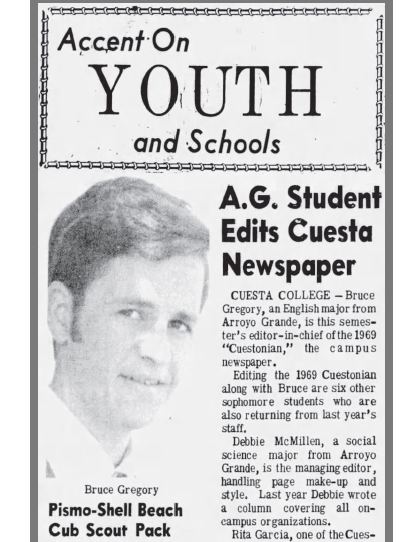
“Our days” because The Cuestonian is an old Gregory family tradition. My big brother Bruce, AGUHS ’66, was the editor in 1968-1969 and he developed a crush on one of his reporters. Fifty-two years later, Bruce and Evie are still married.


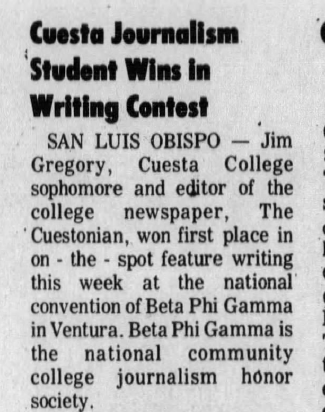
I, AGHS ’70, was the editor a few years later and we won, for such a little punky junior college operating out of World War II barracks, an embarrassing amount of awards, in statewide competitions, in writing, photography, graphics and page design.

You don’t judge a newspaper by its barracks.

This was the convention where one of the speakers gushed about a hot young television news talent named “Brokaw.“


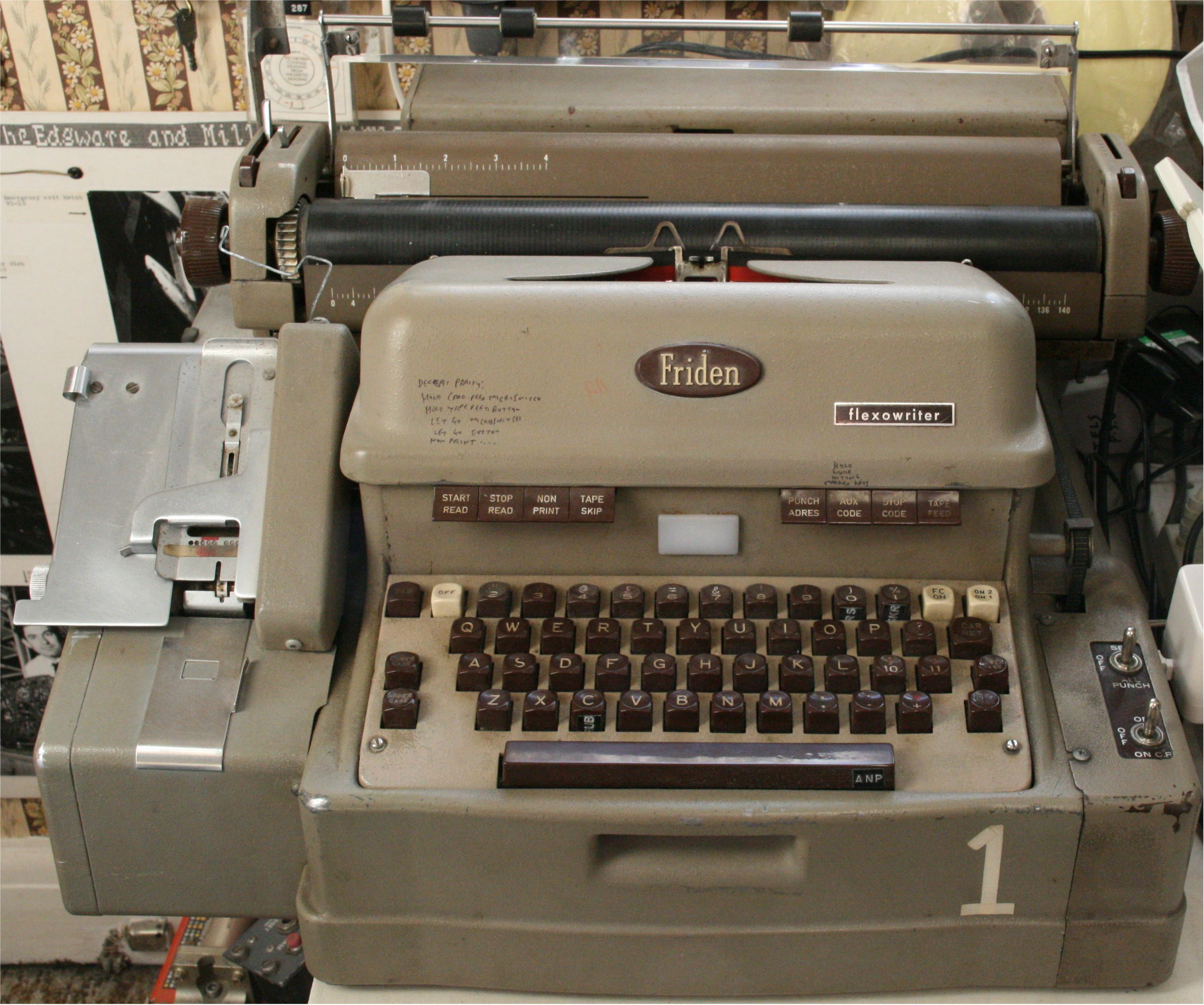
Once you went up the steps, Mr. T’s office was inside the window to the left. He had no more room than a submarine ensign, because most of the office was filled with a monstrous machine called a “Justowriter,” which allowed the keyboard operator to type up the news stories which emerged in a perforated pink ribbon and then, through some alchemy still mysterious to me, the pink ribbon was translated into news columns. (In my imagination, the Justowriter—that’s one of the great beasties below— was steam-powered and drove monstrous pistons, but’s that’s just my imagination.)


The window to the right was my turf and that of the News Editor. We had, at age nineteen or twenty, our own DESKS and so felt immensely important. We filled the room with clackety-clack typewriter noises and immense blue clouds of cigarette smoke–smoking was as fundamental a part of news reporting as were the press passes tucked into the ribbon of your fedora.

Oh, right. We didn’t wear fedoras anymore.

The biggest part of the building was the journalism classroom, edged with banks of tabletops. When it was time to go to press, the desks were cleared away–the process for staging a square-dance in a Victorian one-room schoolhouse was much the same–and the banks of tabletops came alight in the panes of glass that punctuated them.

That’s where you laid out the newspaper, on the glass panes. You’d lay down a big sheet of blue-checkered paper (blue doesn’t pick up in offset photography) and the news stories composed on the Justowriter appeared as long printed columns. They were affixed to the page, guided by the blue lines now transparent in the light, with wax and you rolled them onto the paper with little plastic rollers.When you needed more room, you clipped the end of the story, which is why journalists are trained to get all the good stuff into the lead, or first paragraph, and the ones just following.

Clipping the ends off of stories generated immense emotional anguish from the reporters who’d written them. Me too.

In the back of the building was the darkroom. The reporters did not go into the darkroom. That was the place for more alchemy and photographers (Nikons, Pentaxes, Minoltas)–the ones who used something called “film” that had “speeds,” like Pan X and Plus X–were a justifiably prickly lot.All of them kept the door to the darkroom shut not just out of necessity but because they remembered the story of the great combat photographer Robert Capa, who shot seven rolls of film on Omaha beach on D-Day, was nearly killed seven times, and when the film was shipped back to the darkroom in London, the processor ruined six of them. Even the seventh roll was damaged–it still produced the immortal image below.


So we left the photographers alone, out of respect.

I sometimes wondered if they might not be working out a way to make moonshine out of developer fluid back there.

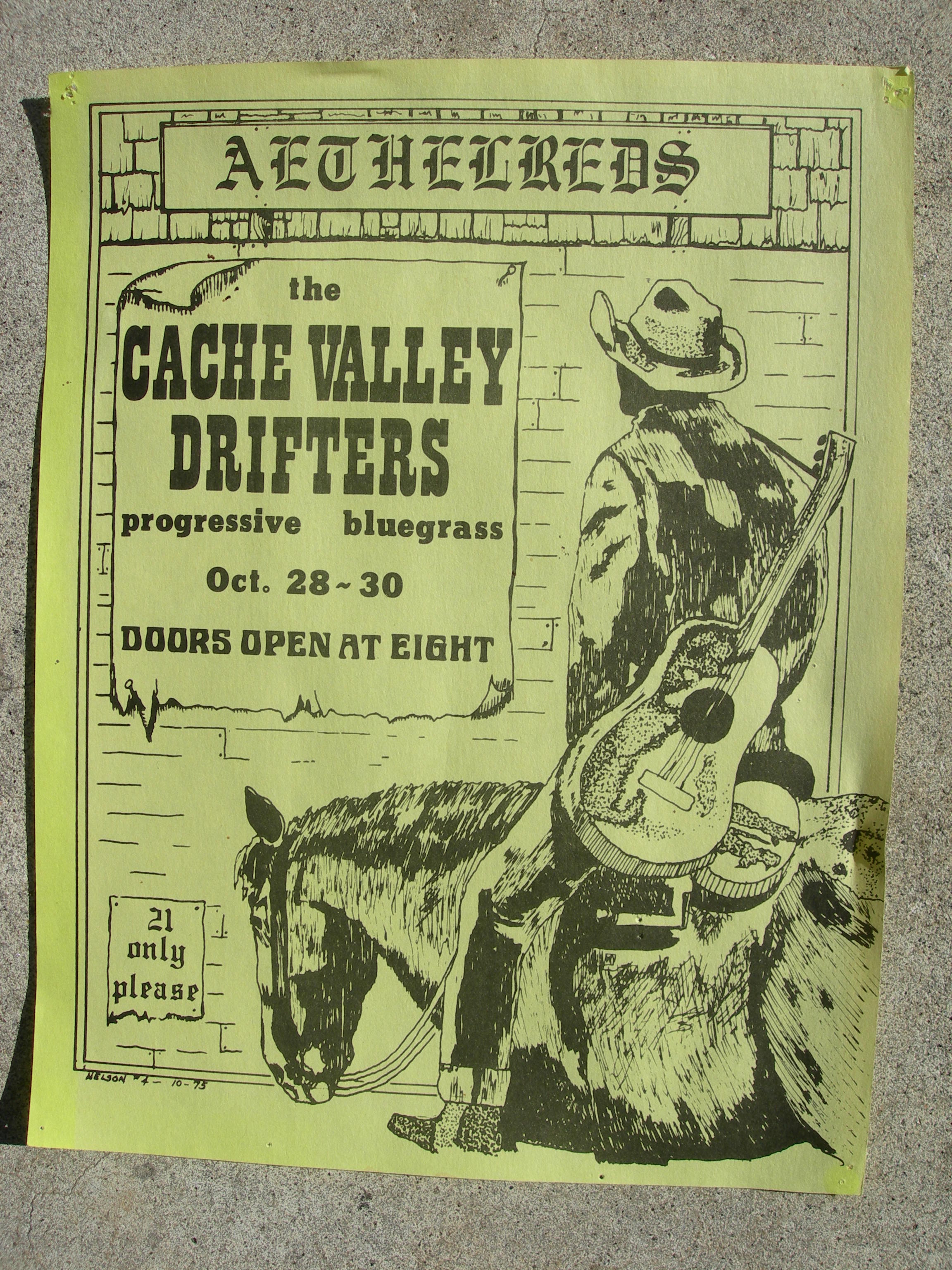
However, I was the only one who could actually go back there from time to time, because sometimes we had to trim headlines, not just stories, and we had a camera called a strip-printer that generated headlines along a strip of photographic paper one letter at a time–in Bodoni Bold. I got to be the Strip Printer Guy, which, just as Aethelred’s Bar on Monterey Street–the Hippie/Biker place that featured incredible bands- had a forever impact on my hearing, the strip printer did the same for my vision.


Putting the paper to bed–a process that sometimes lasted until the wee hours–meant me taking the assembled pages in a big box to Kent Blankenburg’s house–Kent and his brother, Dick published the Five Cities paper, which I still miss– in Arroyo Grande and pretty much throwing them out of the car onto his front porch.

Then I’d drive back to Madonna Plaza Shopping Center (Our Motto: “The wind doesn’t blow here. It sucks.”) to what I think was a Straw Hat Pizza Parlor where all of us would consume obscene amounts of pizza and a platoon or so of ice-cold pitchers of beer or Coca-Cola.

Ah, youth, when we had the metabolisms of muskrats.

We had some great news stories then. A small plane crashed into the roof of the gym where all of us Cuesta students pulled punch cards to register for classes. There was a Vietnam War protest with pallbearers carrying an empty black coffin and I interviewed one, a helicopter pilot in the war, who was both stricken by his experience and one of the most gentle persons I’ve ever met.

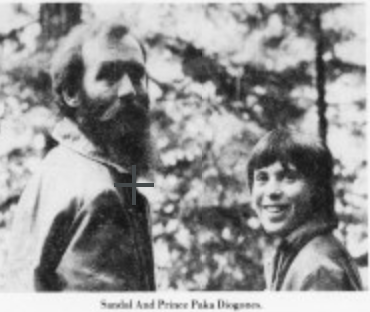
I got to interview a guy who lived on a boat in Morro Bay Harbor, and he was a happy fellow because of it. Moored nearby was the houseboat of two legends, Sandal and his son Paka, reclusive and gentle folks, artists, who took injured seabirds into their care and hand-fed them fish scraps until they were strong enough to fly again.


I got to interview the Black Panther Bobby Seale and the classic film director King Vidor and, during a journalism convention at a hotel in Sacramento–I was within a Frisbee toss of Gov. Ronald Reagan, the guest speaker– I accidentally stepped on state Attorney General Evelle J. Younger’s hand as he came up the stairs that I was descending and he tripped, falling flat on his face.


Evelle J. Younger was the California Attorney General. I didn’t like the way his bodyguards looked at me.

The cafeteria was just behind the journalism building, and the only good thing about the cafeteria was Ginger the Checkout Lady, given to smoking 100-mm cigarettes, wisecracking and referring to you as “Hon.” Ginger was a hoot. The food was not. Then the district somehow, either through divine intervention or Trustee Vard Loomis, one of my heroes, hired a European chef named Maurice who made marvelous lunches.

Swedish Meatball Day meant a throng of nineteen-year-old nouveaux Hippie peacenik students packed at the cafeteria doorway–another surplus Army building–trying to claw each other’s eyeballs out before Maurice ran out of meatballs.


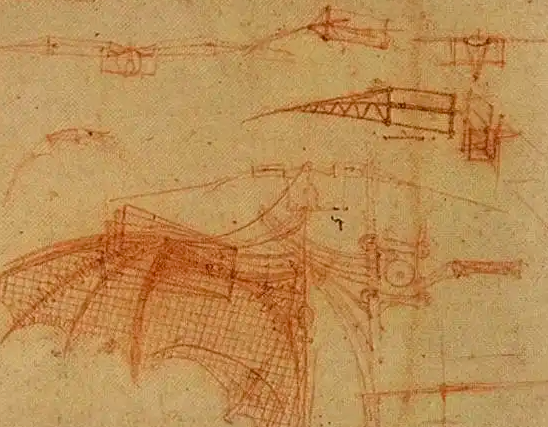
One of my favorite stories was about a slightly mad Canadian artist who took up residence in the Art Department–more barracks, the Art Department was, but augmented by Dali-esque murals–and began building an exquisite wooden replica of a Leonardo da Vinci flying machine. He was going to fly it. He gathered a little coterie of students who believed that he was going to fly it–one volunteered to be the co-pilot– and so they all worked on it merrily together, over there in the Art Department, and I still, to this day, believe it would’ve flown had not the mad artist’s sister driven down from British Columbia to take him, under sedation, back home.

The best part was The Cuestonian staff. I’ve read similar stories about Admiral Nelson’s captains, about the artists and writers who produced the classic Warner Brothers cartoons (Bugs Bunny, Daffy Duck, Elmer Fudd) and, in the book and film “The Right Stuff,” the Mercury astronauts. Gifted people in groups like these last no longer than snowflakes in March, so it remains one of the greatest honors of my life that I got to work with such talented, and now, from the great distance and advantage I have in age, such outrageously young women and men.

For Ormie, who never married.

07 Friday Jan 2022

Posted by ag1970 in Arroyo Grande, Uncategorized

≈ 4 Comments

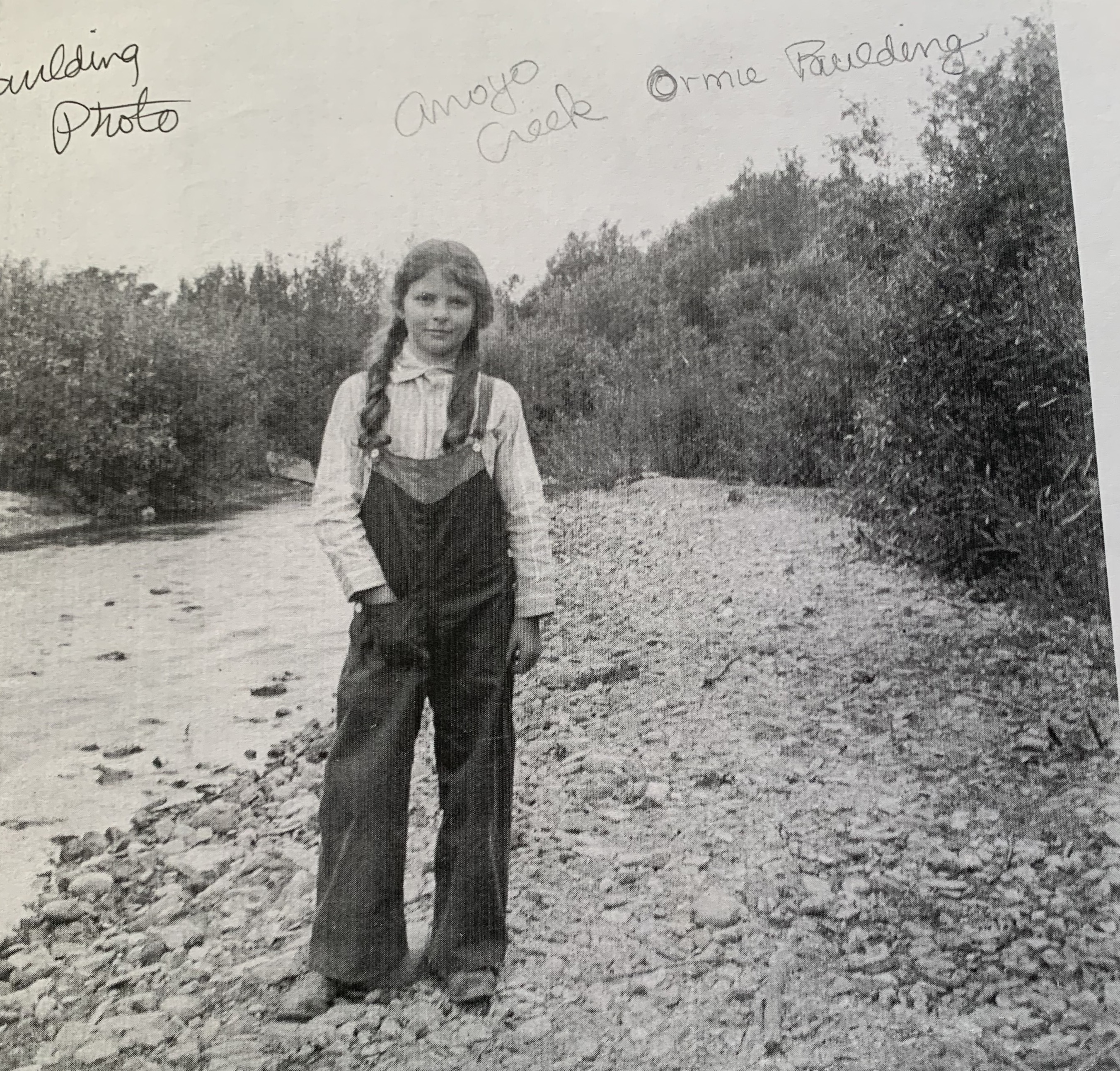
Mary Ormonde “Ormie” Paulding. From the Bennett-Loomis Archives.

She was born in 1883. As a nearly seventy-year-old who loves his sons but who’s bereft of daughters, I would have adopted her, given the chance. And had I a time machine able to go back to her time at about her age–perhaps twelve–I would’ve had a monstrous crush on her. The combination of overalls and pigtails would’ve been enough to reduce me to silly putty.

She grew up in a little farm town, Arroyo Grande, nourished by a beautiful creek which housed, in season, steelhead fighting upstream to spawn and, in another season, floods that once, in 1911, carried away a fourteen-year-old boy named Sam to his death.

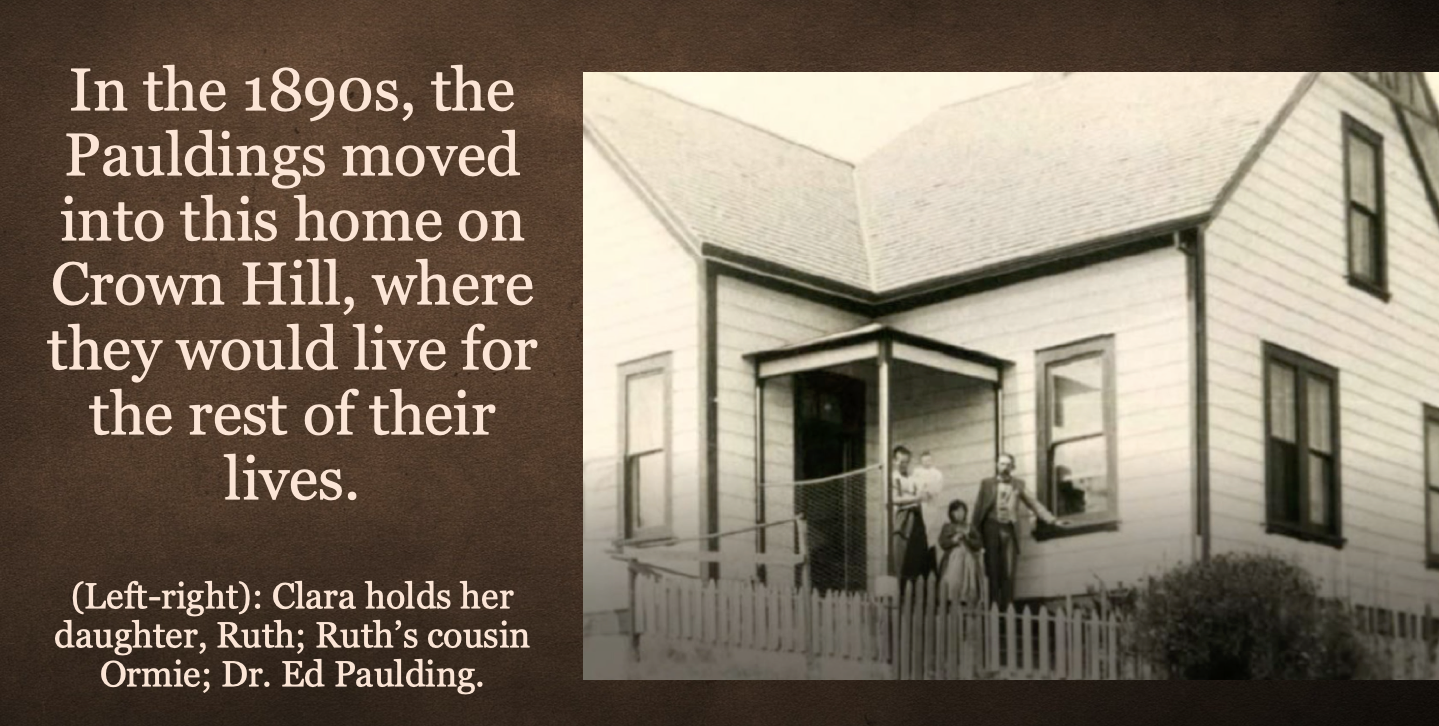
She had the comfort of intelligence–a dubious comfort, admittedly. Both her father and her uncle were medical doctors (another uncle was a pharmacist) the sons of missionaries, born in Syria, whose homes, if her uncle Dr. Ed’s is any indication, were filled with artifacts from the Neolithic Holy Land and Chumash California; homes dense with books, homes full of creative energy inside. Her uncle’s, outside, was bounded by an enormous garden—in dirt her Uncle Dr. Ed found joy— to the point where her Aunt Clara added a bathroom that made it impossible for her husband to re-enter the house without a bathtub stop first. It was only the second bathtub in Arroyo Grande. Sometimes Aunt Clara would hear a soft knock at the door. The folks on the porch asked politely if they could come in and see Ed and Clara’s bathtub.

Ormie’s Aunt Clara, as the saying goes, was a piece of work. She was Arroyo Grande’s foremost schoolteacher; she arrived here in the 1880s and began a career that lasted forty years. She was the descendant of the Puritan divine Jonathan Edwards, but she was an agnostic who just loved going to church. Ormie’s father was the medical director of Santa Barbara County who, in 1918, had the audacity to shut down the bars to stop the spread of the killer flu. He was not beloved.


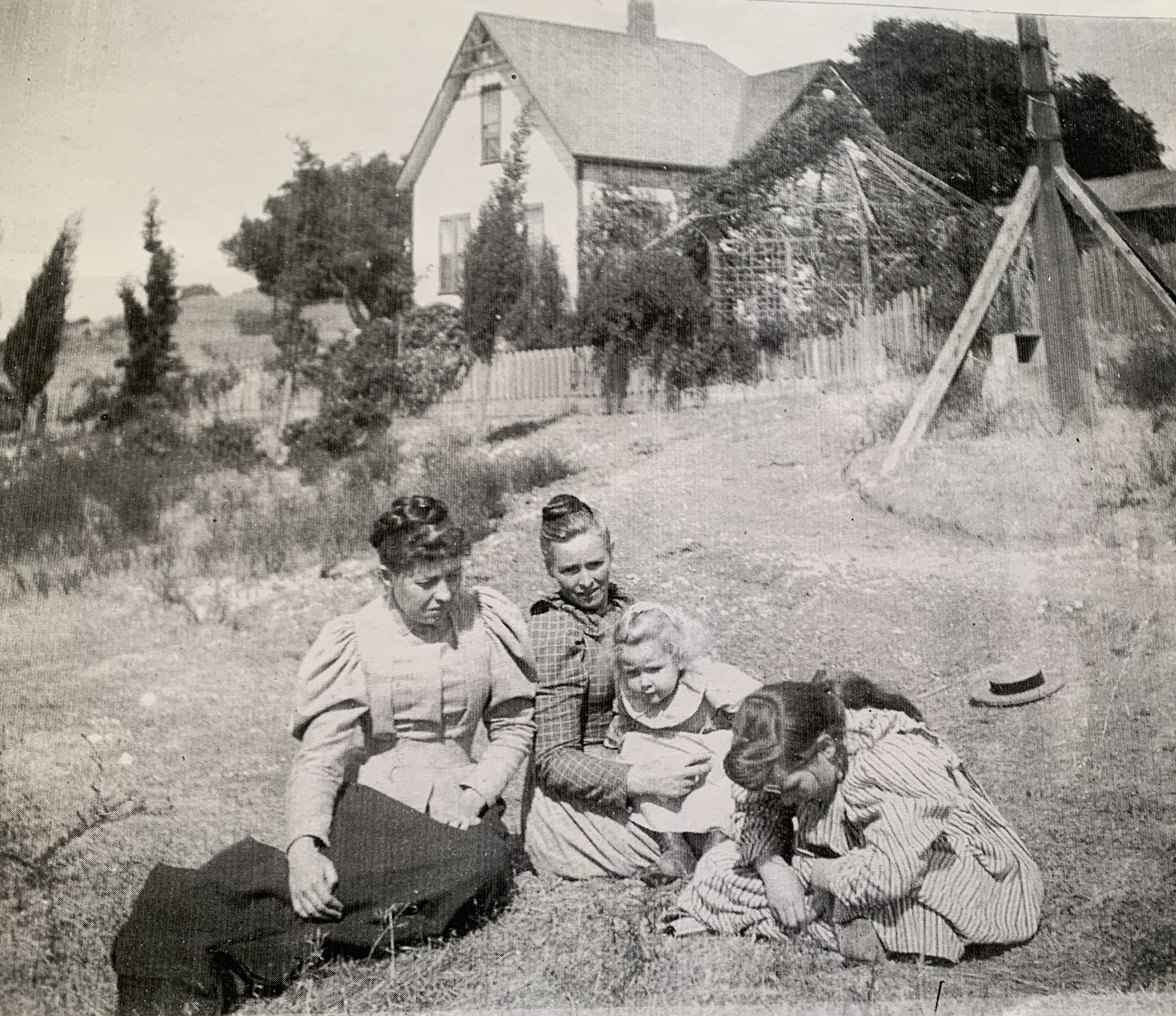
Ormie’s cousin, Ruth was very much beloved. She became such a transformative teacher, of languages, at the Arroyo Grande Union High School (where her commute, atop Crown Hill, consisted of walking across the street) that they would decide to name a middle school after her. That’s baby Ruth, the little blonde. Possibly that’s her cousin Ormie, on the right. The group is posed in the yard of the Paulding home, one that still stands today.

The scene is idyllic, but life, in the 1890s, wasn’t always. Ormie had another cousin, a little boy, the one who was to be first-born, but he was stillborn instead. Her uncle, Dr. Ed, buried him in the garden where he would be close to his parents. Ed planted flowers that gave life to the son who was robbed of the chance to live his.

From the Bennett-Loomis Archives

Ormie would move away from Arroyo Grande—but not very far, only twenty minutes or so today, by car—south to Santa Maria, where she would become a Santa Maria High School Saint, and then, years later, the high school’s librarian and then, after that, she worked for the Post Office.

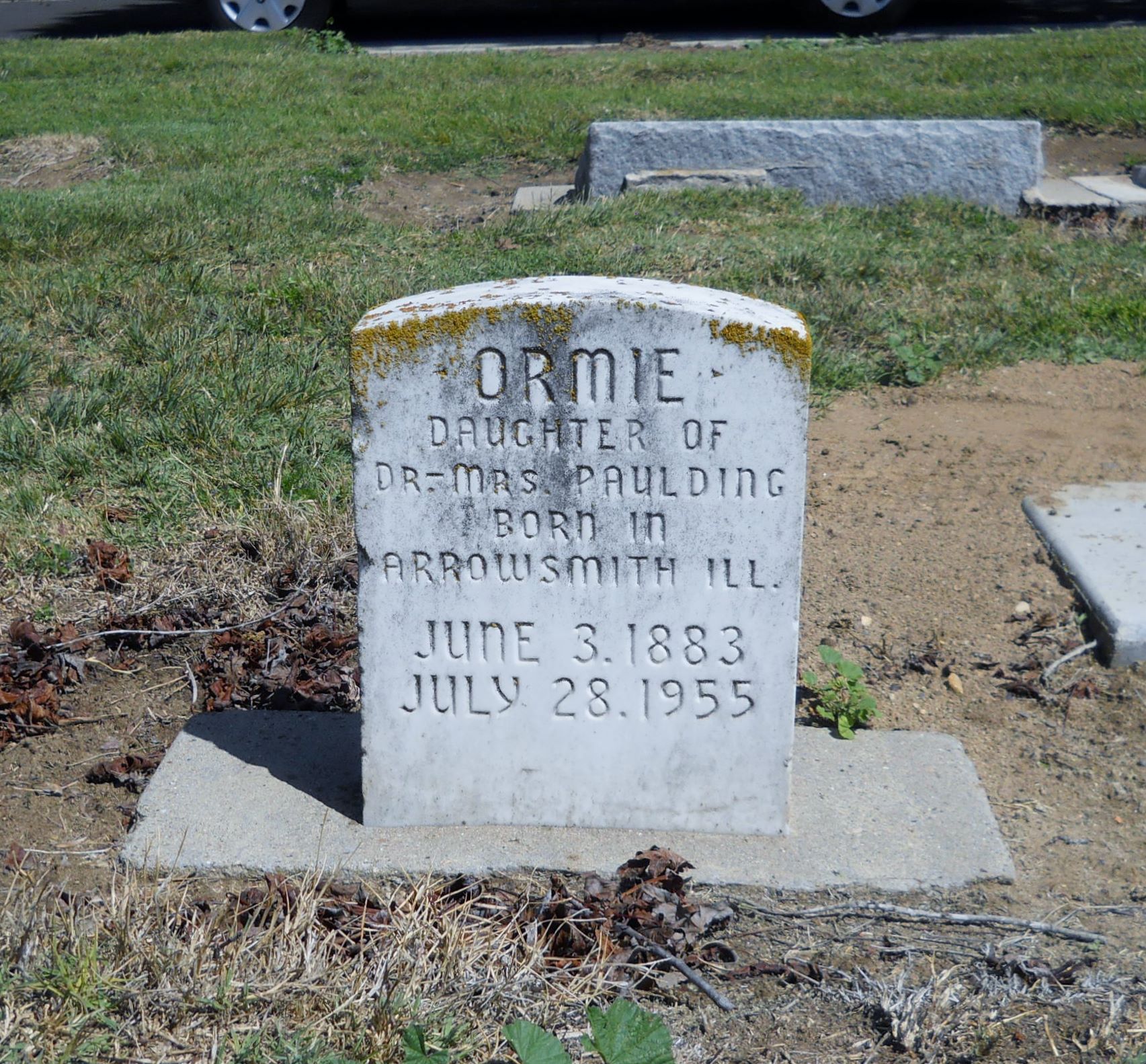
She died in 1955. Here is Ormie’s tombstone:


Death be not proud. The Arrogant Male in me regrets that she lived her life as a “Miss,” but this is what she did with her life: She served young people, who, if you haven’t noticed, are sometimes insufferable, and maybe introduced one, thanks to the school library, to The Arabian Knights or Willa Cather’s My Antonia or—on the chance that the Santa Maria High School Library even had it on their shelves–The Autobiography of Frederick Douglass. The power of school librarians is immense and compassionate, which is why the Far Right hates them so much.

And then she worked at the Post Office. Her obituary hints that even this seemingly mundane career gave her the chance to light up other lives. Post office patrons, it suggests, looked forward to buying a book of stamps from Miss Paulding. I think she had the power to reflect a person’s life back at him, in the instant of her look. You saw yourself welcomed in Miss Paulding’s eyes and so you were validated. I’ve known people like that. A friend who met the South African bishop, Desmond Tutu, a small man shaped, in his vestments, like a church bell, told me that he had that power.

In fact, her cousin, fragile and wheelchair-bound when I knew her, had the same kind of power, too. When I received communion at St. Barnabas, the Arroyo Grande Episcopal church, as a teenager, I would glance at the aged and fragile Miss Ruth Paulding as I returned to my pew. A smile from MIss Ruth carried the same freight as a priest’s blessing.

When World War II came, Ormie added a task not on her Post Office job description: She wrote hundreds of letters to servicemen overseas.

Hundreds.

The effort and the generosity of spirit implied in that task is a little overwhelming to me, living in a country where we observe a day—January 6—when patriotism and generosity were so debased.

Ormie’s generosity was boundless.

She loved animals. She was a charter member and a driving force in the Santa Maria Humane Society, and the lives she couldn’t save with letters, lives of young men lost in combat, she saved in the lives of the dogs and cats carelessly put aside. I can see her framing an abandoned mongrel’s face in her hands and looking into his eyes: the dog understands and looks back in the way dogs do, in absolute and unconditional adoration.

Hers was the same look that Ormie’s Post Office patrons saw.

And so she died a spinster—a terrible word—and I was born far too late to propose marriage to her, which I would have done, on the spot, when I was twelve. She didn’t need me. Women don’t need men to live lives that are graced by love, and filled by it, too. I think Ormie’s life was like that.

The life represented in that image, the little girl in overalls and pigtails, turned out to be more than a little miraculous. Women don’t need children any more than they need husbands. But without her knowing it—because I believe that kindness has the power to cross generations and so inform even unborn lives—we are, in a way, Ormie’s children.


Bonnie.

25 Thursday Nov 2021

Posted by ag1970 in Arroyo Grande, Uncategorized

≈ Leave a comment

Preview in new tab

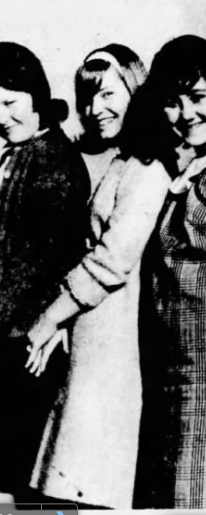
Bonnie (center)

Bonnie was in my ninth-grade art class on Crown Hill at Arroyo Grande High School in 1966. She was so lovely and so kind that I was immediately entranced by her. Not in the way you think. She was another guy’s girl. What I felt for her was more in the line of admiration rather than romance.

Of course, that previous sentence was a baldfaced lie, but there’s more to Bonnie than that.

Some people have the gift of reflecting your own worth back at you. I was never convinced, growing up, of my worth, but Bonnie saw it and communicated it without words. Sketching beside her on big sheets of newsprint bequeathed the most immense sense of belonging, at fourteen, that I’d ever felt.

She came to art class one day fighting tears because she was just a freshman and was therefore barred from going to the Christmas Formal with her boyfriend, an upperclassman.

And then some time in the spring, Bonnie didn’t come to class anymore. She vanished.

I found out later that she vanished because she was pregnant. Other than the whispers, which lasted just a short time, Bonnie was never heard from again.

I missed her so much that twenty years later, as a history teacher, I talked about her, when teaching American cultural history, to my students. They were appalled by the way she’d been treated, which, in their disgust at cruelty and hypocrisy, is yet another one of the dozens of reasons for why I love teenagers.

When I was growing up, a three-times-a-year treat for my family was driving from Arroyo Grande to Morro Bay for fish and chips at Bob’s on the Embarcadero. My goodness, you could still get abalone and chips at Bob’s. It took up a full Sunday, and, for somebody who grew up amid the cabbage fields of the Upper Arroyo Grande Valley, Morro Bay was exotic and enchanting. Abalone steak dipped in Tartar sauce–we drove out to the Rock to eat our lunches and to watch the fishing boats surge over the breakwater–was sublime.

So was the smell of the sea. Morro Bay was doubly enchanting when local farmers had just added a generous layer of turkey fertilizer to the row crops of the Upper Arroyo Grande Valley.

It had to be than twenty years gone before I went back to Bob’s for fish and chips—the abalone, of course, was gone, but the calamari was wonderful—and this time it was with Elizabeth, my wife. I guess we’d gone there a couple of times before but the third time, I recognized the waitress immediately.

It was Bonnie, and it was twenty years later, when I had the audacity to use her as a Primary Source in my classroom, and there she was with her short waitress skirt and order pad and pen. I could’ve easily been appalled, as was a brilliant friend of mine, a classmate, now a lawyer, when she found me working as a liquor-store clerk in the years when I was recovering from the end of a career and the end of a relationship. Most of my recovery was not recovery at all; my life lay instead in the consistent and generous anesthetization that the liquor store’s stock supplied

So my friend, the lawyer, stared blankly for a moment at me, ashamed, behind the counter. “Oh, Jim.” was all she said.

I never saw her again.

But when Elizabeth and I saw Bonnie, she was radiant. She blushed, as I had in the presence of my lawyer friend, for just moment, but the weekend rescued her. It was Poly’s graduation and the child that had been inside her in ninth grade was later that day to graduate with an engineering degree.

She was just as beautiful as I remembered and I saw in her eyes the validation I’d remembered in ninth grade. She was proud of me and proud of us, of Elizabeth and me, as a couple.

I don’t remember, of course, the rest of the meal at Bob’s.

It would be many years later when I learned that Bonnie had died. The news hurt doubly, because I learned that she’d taken her own life, and we teacher types frequently confuse ourselves with Jesus. Surely, I thought, there could’ve been something I could have said or done. Or something I could have done without saying anything at all: Didn’t she see, in the moment before she took our order that day at Bob’s, how immensely proud I was of her?

When we got to the 1960s in my U.S. History classes in the years after that day, I told my Bonnie story again, but I added Graduation Day as the ending I’d never had before. A good teacher can sense when he or she has touched the students in their care; Bonnie touched mine. She inspired them.

As much as teenagers hate cruelty and hypocrisy, they love righteousness. Teaching history, after all, is really about teaching the future, and Bonnie’s story resonated because it gave them the hope that the future in their care would be righteous.

Bonnie resonates to me, too, because she died the same way my mother did. I spent many years in therapy after I lost my Mom until I quit it when the psychiatrist opined that my mother, in taking her own life, was a selfish person.

That’s the last word I would use to describe either my mother or my friend Bonnie. Nobody can understand the immense power of clinical depression and the seductiveness that self-destruction promises when it’s the only reasonable, rational way left for you to fight back.

A high-school administrator—my boss— once smugly confided to me that she could never imagine taking her own life. She was taken instead by cancer. I doubt that she could ever have imagined that, either. But clinical depression and Stage Five cancer are coequals when it comes to conferring death.

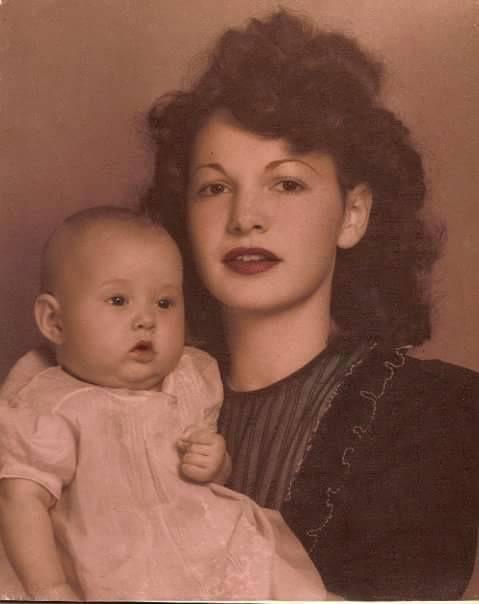
I keep a photo of my mother, holding my big sister when she was a baby, atop our mantle. She is breath-taking. So was Bonnie, in her white embroidered apron and red waitress mini-skirt and scuffed white tennis shoes, on the day that Poly graduated her daughter. I don’t know that there is a Heaven–I guess I’ll have to find that out on my own–but if there is, I want to hold my Mom very close. And then I want to ask directions.

My mother and big sister, 1942.


Where is Bonnie?

And then, given God’s grace, I will hold her very close, and tell her, in a private voice just above a whisper, how much her life has meant to me. And then, given God’s grace, we will get the chance to sketch again, holding soft-lead pencils that drift noiselessly across the paper of big newsprint pads, We’re close together, sitting on high stools. Every once in awhile, Bonnie might look at my sketchpad, then look at me, and smile.

Sgt. Harry Chapek, American.

13 Saturday Nov 2021

Posted by ag1970 in Arroyo Grande, Uncategorized, World War II

≈ Leave a comment

A lot on my mind with this one.

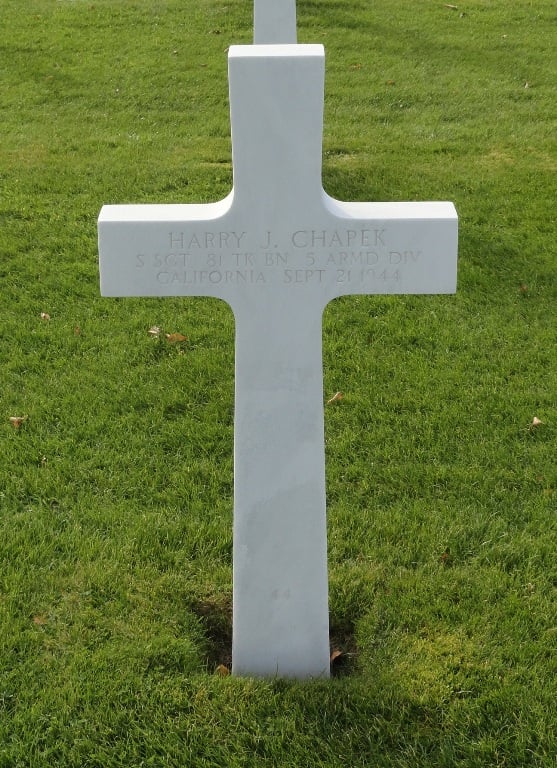
Harry Chapek was a young Arroyo Grande man killed in action on the Belgian-German border, near the Siegfried Line, in September 1944.

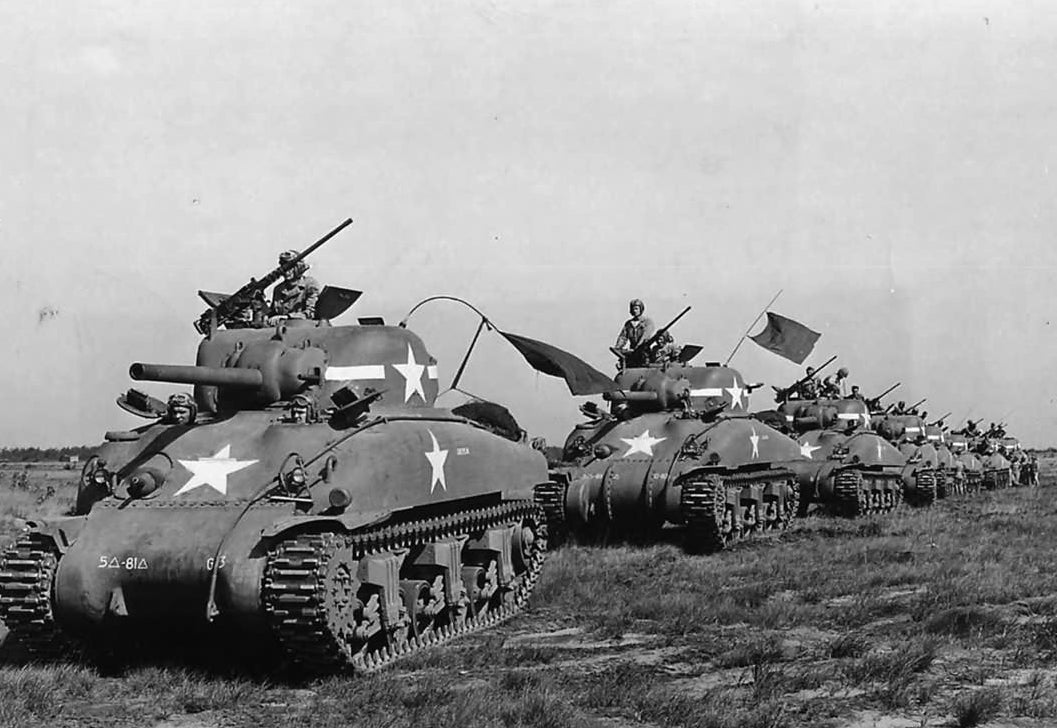
He was a member of the 81st Tank Battalion, 5th Armored Division and is buried at the American Cemetery at Henri-Chapelle, near Liege, Belgium.

Those are 81st Sherman tanks in the photo.

He was almost killed once before, in 1938. He was a driver for the Arroyo Grande Trucking Company, which stood at the site of today’s Bank of America–the photo of the site is courtesy of the Martin family. (That’s the old St. Patrick’s Catholic Church in the left background, built in the 1880s.) It was a vital part of the economy of our little farm town on California’s central coast, population 1,090 in the 1940 census.

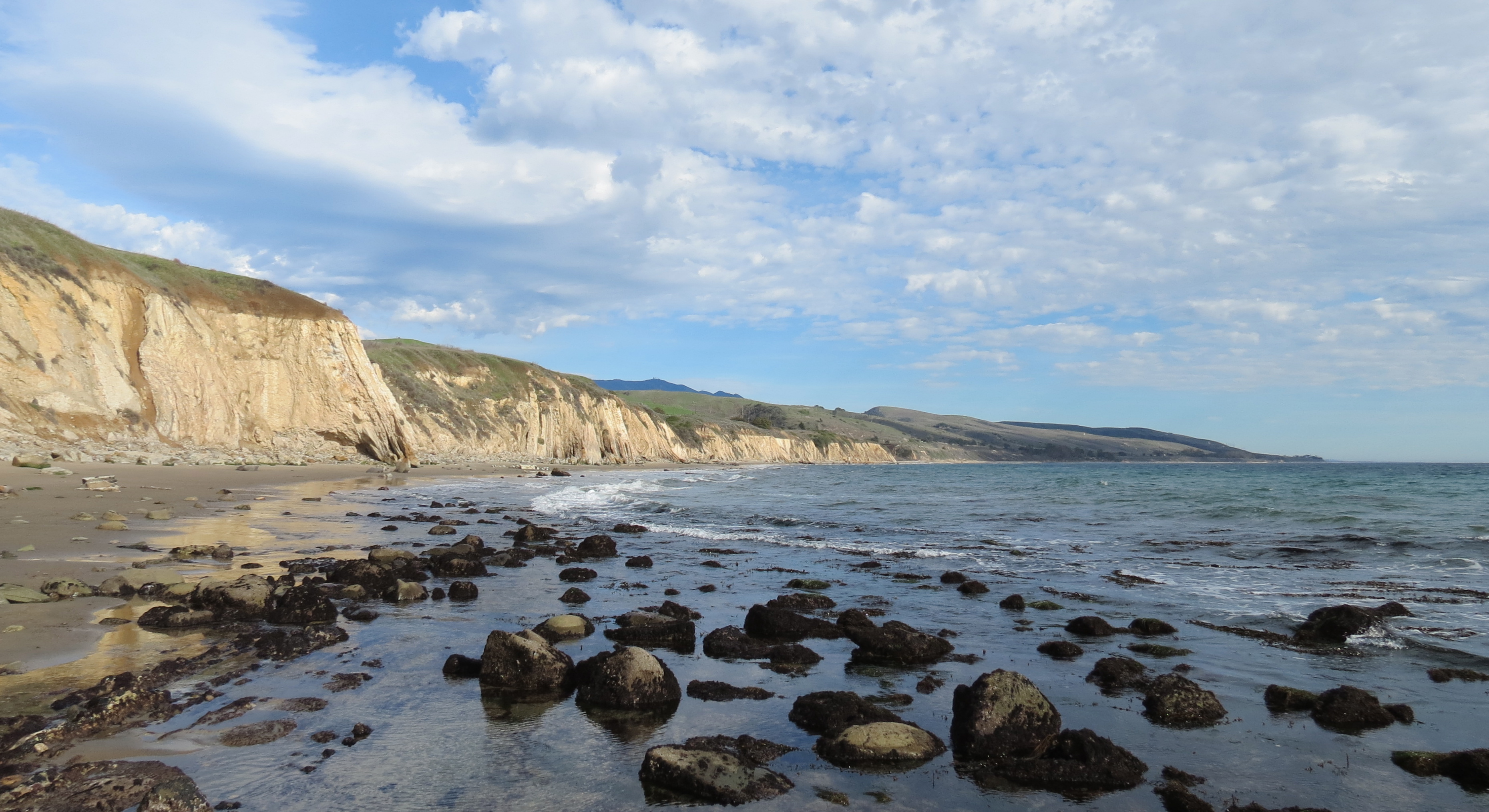
He was driving near Elwood, just south of the Gaviota Pass, and less than an hour north of another beautiful California place, Santa Barbara,  when a horse threw three little girls and galloped out into the highway in front of Chapek’s truck.

The impact killed the horse and the truck veered into a tree, where it caught on fire. Chapek was stuck in the cab, which in turn was buried by vegetable crates.

The California coast near the Gaviota Pass.

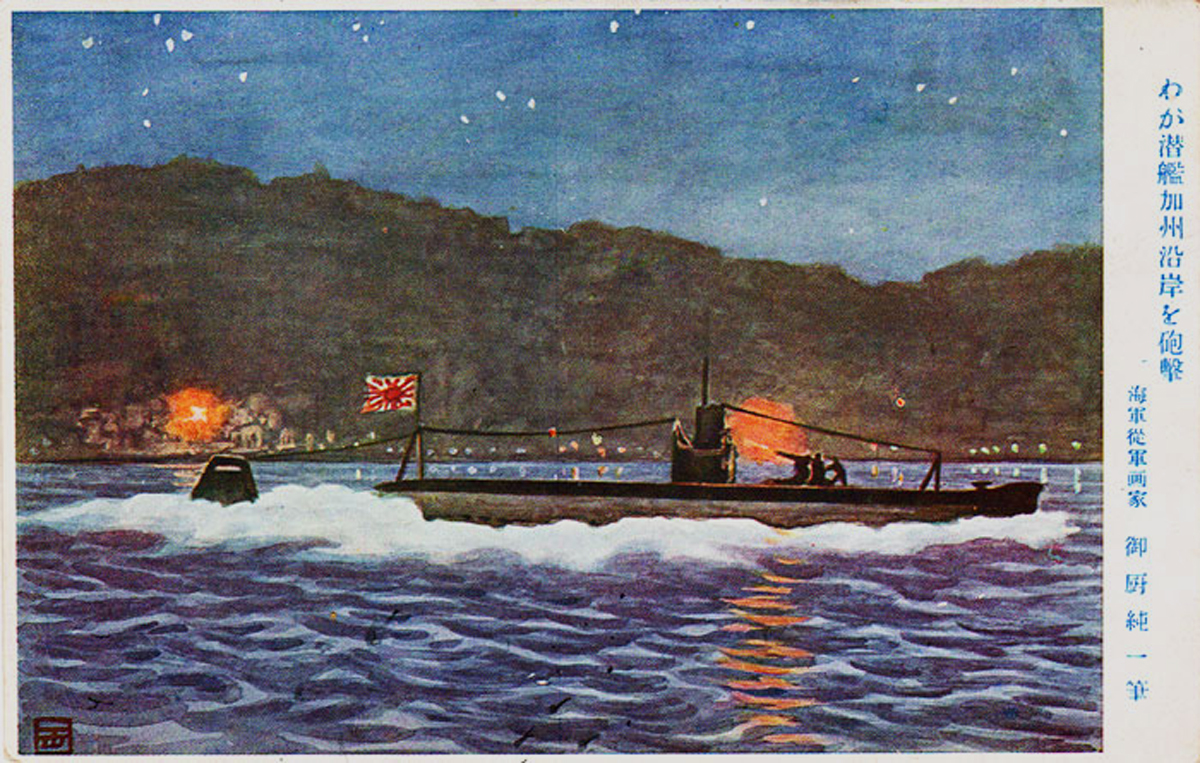
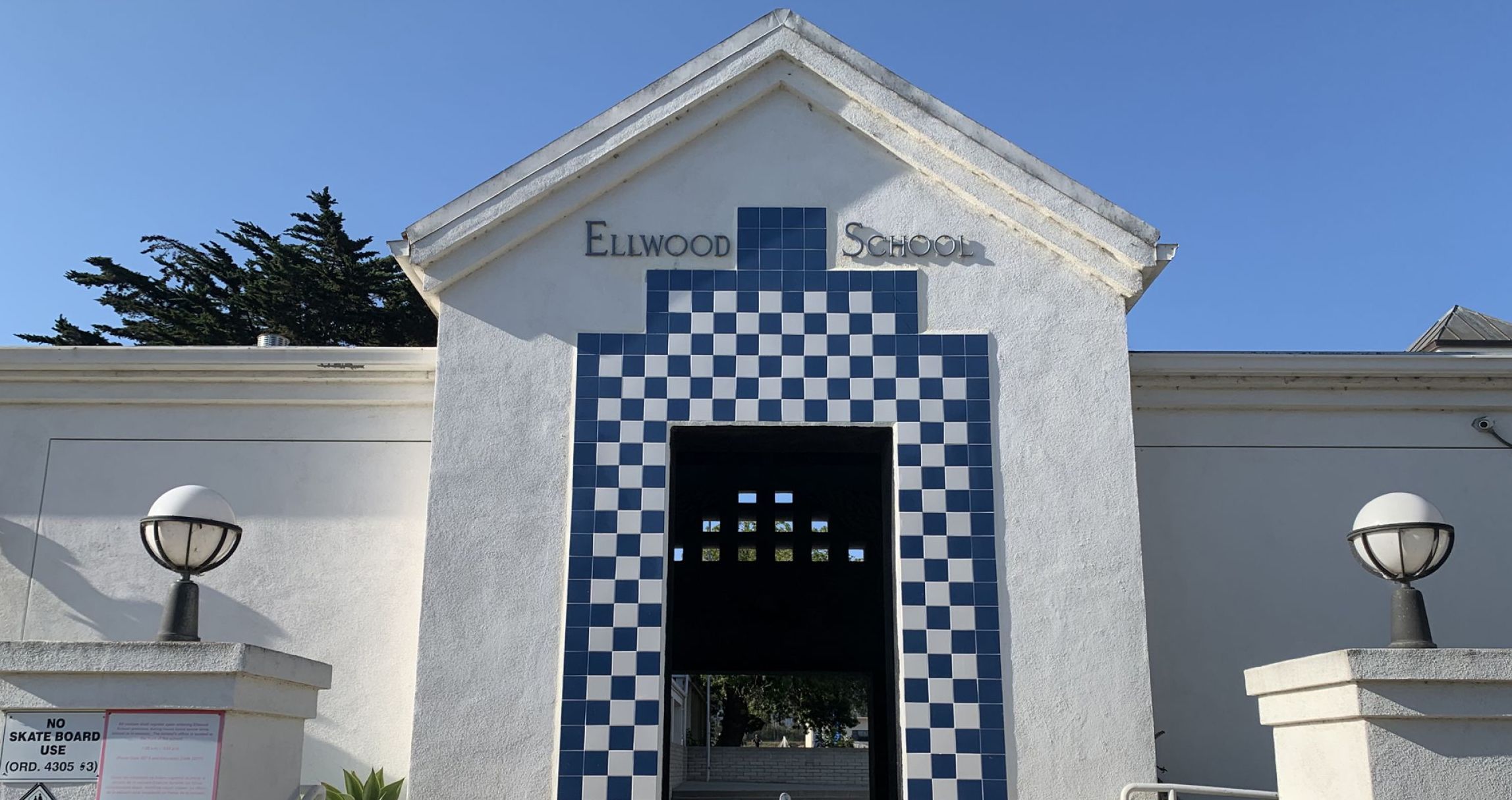
But that night there was a PTA meeting at the Elwood School, which is still there today, and a parent and a janitor ran out to the truck, dragged Chapek out–he was waving his arm out the cab window–and knocked the fire down with two of the school’s fire extinguishers. Four years later, a Japanese submarine shelled Ellwood.

The Elwood School today; a contemporary painting shows the submarine I-17 shelling the area in 1942. (from Goleta History)

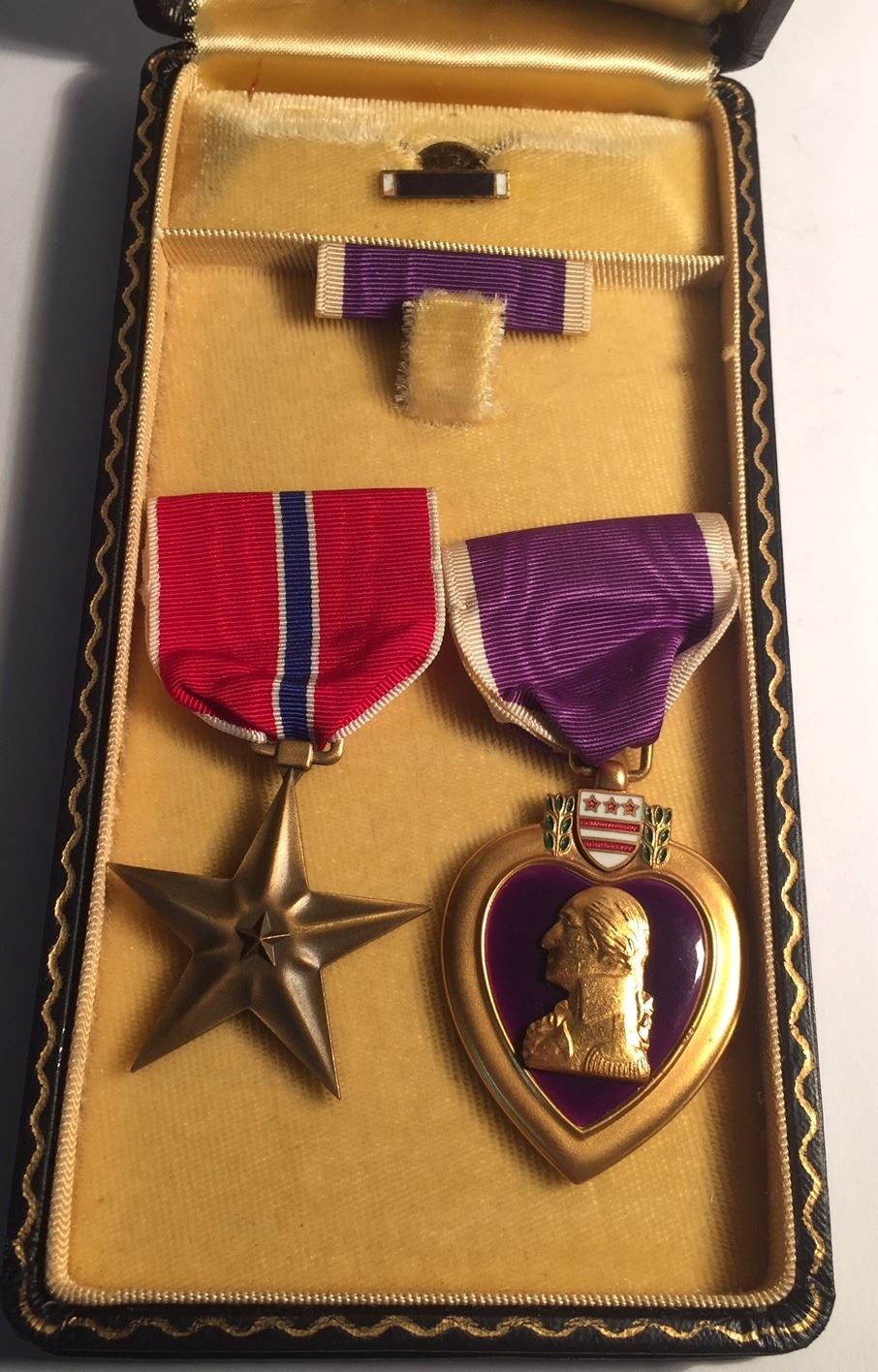
Six years later, a German artillery battery, covered by dense fog, fired a barrage that landed on the 81st’s “A” Company; it was probably the devastating explosion of .88 shells that killed Chapek, awarded a Bronze Star and a Purple Heart.

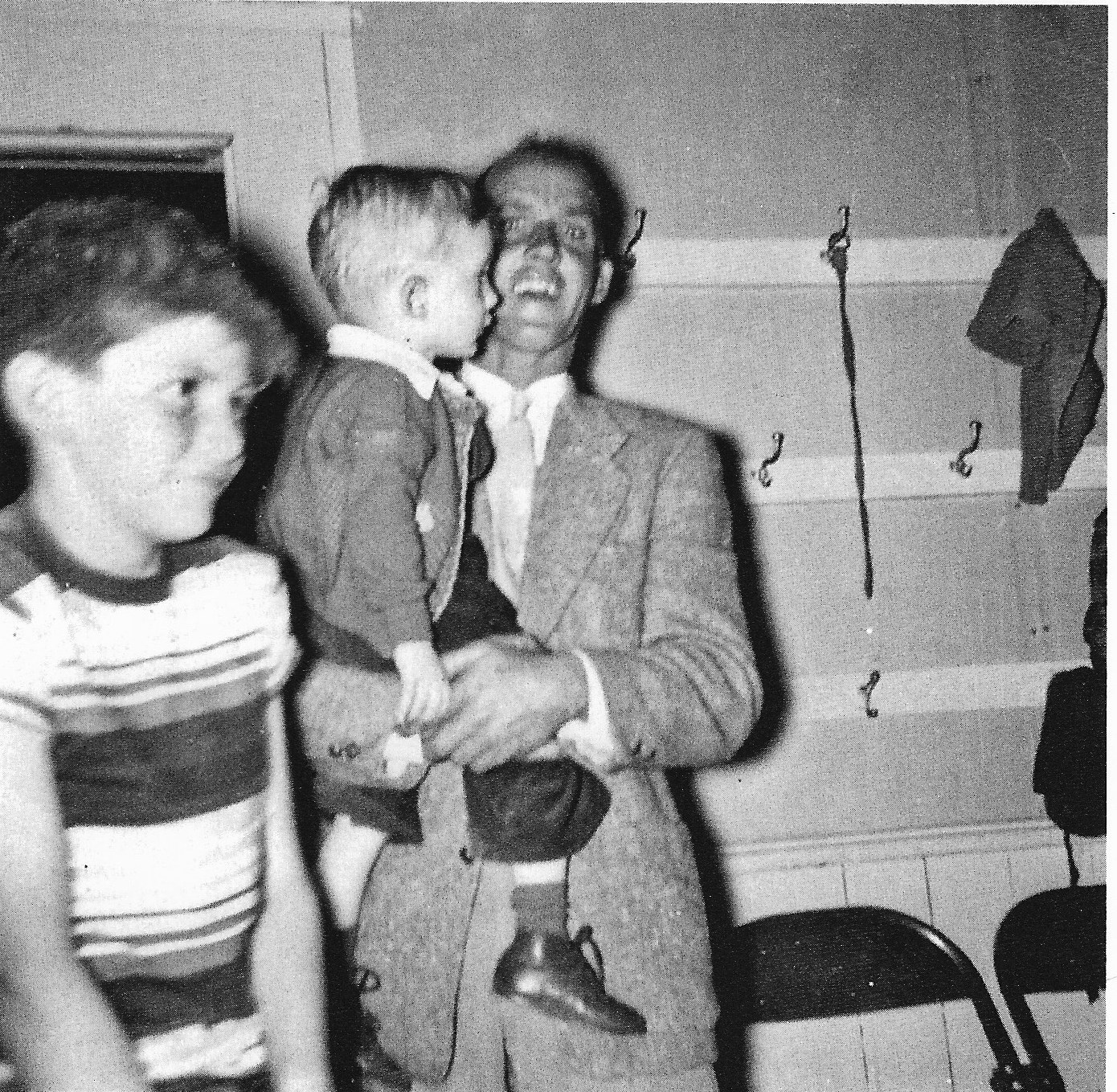
Growing up, he was a close friend of our friend George Shannon, who farmed near us in fields along Huasna and Branch Mill Roads, peppers and string beans and I think Brussels sprouts, among other crops. Mr. Shannon was an admirable man.

Farmer and neighbor George Shannon, with his son, Jerry, in the hallway between the two classrooms of Branch Elementary School, built in the 1880s. Shannon served as head of the school board.


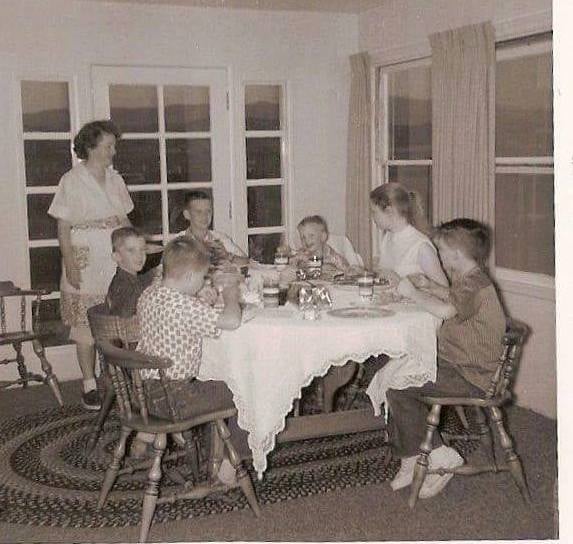
That’s my Mom serving dinner to us Gregory kids and to the three Shannon boys. You can tell how much she thought of them because dinner’s being served on the Irish lace tablecloth.

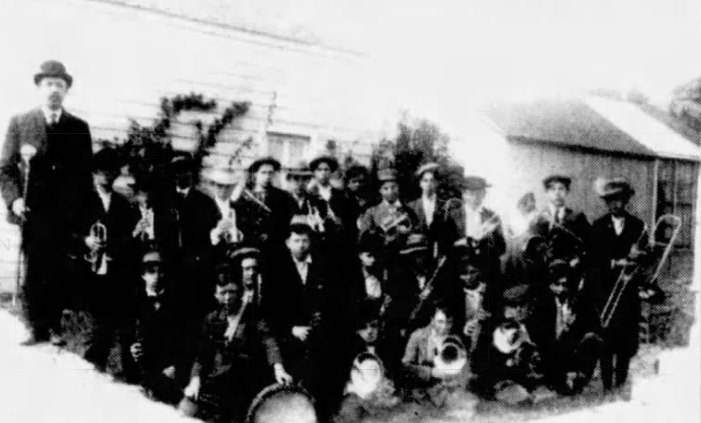
Chapek was an admirable man, too. As was his father, Matthias, or Mat. That’s Mat with the Arroyo Grande Boys’ Band about 1909. He probably lured potential juvenile delinquents away from a life of crime with a tuba or two.

He taught two generations of kids how to play musical instruments. Longtime teacher Ruth Paulding was one of them. The middle school’s named for her. Wayne Morgan, also an Eagle Scout, took up the violin thanks to Mr. Chapek. He was killed on December 7 on USS Arizona, along with another Arroyo Grande musician, Jack Scruggs, a trombonist in the battleship’s band.

I know something about the waves of immigration to Arroyo Grande, for example, from the Azores, Japan and the Philippines. Mat Chapek was from Bohemia– today’s Czech Republic.

It turns out that on upper Cherry Avenue–then called Leedham Lane–Arroyo Grande had a “Little Bohemia.” The Chapeks lived there, as did the Huebners, as did the Marsaleks.

That struck because one of my favorite books as a sophomore in Mrs. Flatt’s sophomore English class at AGHS, was Willa Cather’s My Antonia, about a girl from a family of Bohemian immigrants to Nebraska, to the Great Plains. It’s not more than six pages in before an inordinately large rattlesnake makes its appearance. That snake, and what I read later about the toll laundry and ironing took on frontier farm wives, bending their spines and hunching their shoulders—effectively and mercilessly transforming them into human question marks—remained with me always.

Arroyo Grande’s not much like Nebraska. The climate here is mild and the growing seasons overlap. But both places produce incredible wildflowers. This is field mustard near the foothills east of Arroyo Grande.

So Antonia and Chapek, the children of Bohemian immigrants, are linked in my mind now, even though Nebraska and California are so distant. The cemetery at Henri-Chapelle is more distant still—over 5,000 miles away from the foothills and the farm fields and the wild mustard that both Chapek and I grew up with. The distance, as the poet Whitman wrote, avails not. Sgt. Chapek’s life is now connected to mine. Time, Whitman also wrote, avails not. Arroyo Grande is my home town. Nearly eighty years after George Shannon lost his friend, our town survives both of them. It does so because of them.

It’s their gift to us, you see.

I a now a friend of the American Overseas Memorial Day Association Foundation in Belgium, which is a small honor. But that means I can now pay tribute to Sgt. Chapek on their website, and so draw recognition to the man with far greater honors.


Nun Hauntings and Exploding Light Bulbs

25 Monday Oct 2021

Posted by ag1970 in Arroyo Grande, Teaching, Uncategorized

≈ 1 Comment


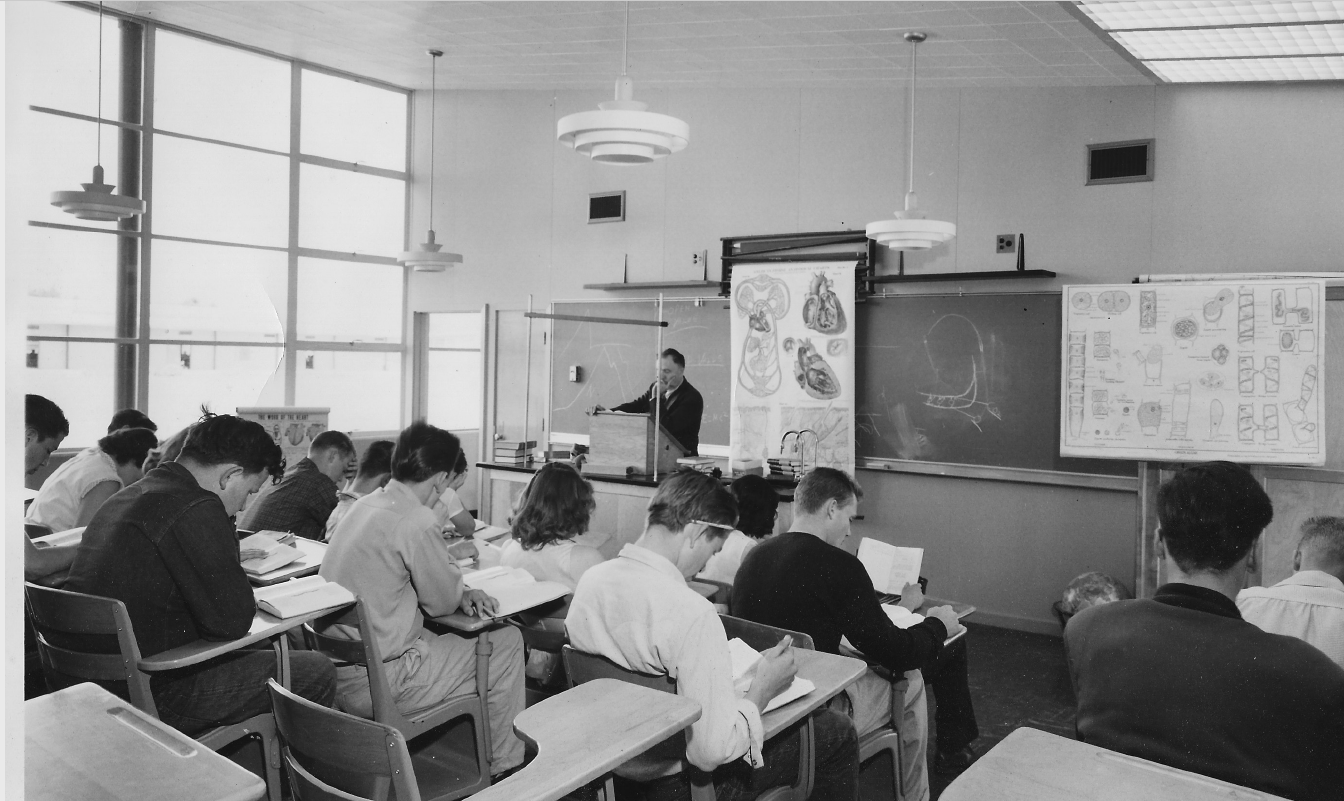
This is a science classroom at AGHS, about 1956, courtesy of Mr. Spin, who donated some vintage photos to me.

No STEM yet. Notice the overwhelming number of males. My sister, Roberta, a proud graduate of Arroyo Grande (Union) High School, was a math major at Poly, and sometimes she was the only female in her class section. Maybe two more, but not more than that. And Poly hadn’t caught up with coeducation, even in 1960. It was about a three-day horseback ride to the nearest women’s restroom.

And in 1960, math was a serious business. All those fellows with the flattops and Madras shirts were someday going to be rapidly but noiselessly sliding their slide rules, calculating exactly how long it would take an Atlas missile with a 1.44 megaton nuclear warhead to land in the swimming pool of Nikita Khrushchev’s dacha on the Black Sea.

(Khrushchev was the Russian leader who said ”We will bury you!” Vice President Nixon countered by informing Khrushchev that we made better color TVs than the Soviets did. Touché!)

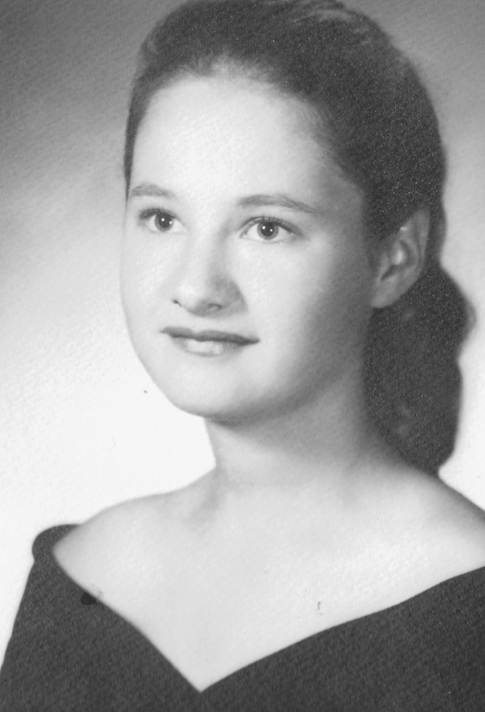
So I don’t think women were particularly welcome in Cal Poly math classes in 1960. Especially really bright ones. Roberta’s the fat puppy in the litter when it comes to smarts, and maybe that was resented by her classmates.


Roberta as a senior at AG(U)HS. Yeah, she’s kinda stunning.

Roberta decided that she wanted to be a teacher anyway. So she became an education major, then a third-grade teacher, and a no-nonsense one. You can ask Miss Sandy. Her classes at Poly made for over thirty years of very lucky third-graders, busy little sailors on the ship my sister sailed.

I love my big sister.

The other, less serious observation: See those lights? Those light bulbs are BIG, somewhere between a grapefruit and a basketball. I had lights just like those in my Mission Prep classroom–the one with only one electrical outlet, because the Immaculate Heart Sisters thought electricity was a modern convenience, a crutch for softies, like socialists or Presbyterians.

And of course, at least one of the deceased Sisters is supposed to un-decease herself upstairs, where my classroom was, and where my former and much-admired and beloved student Julie Newton now teaches English (that makes me feel real happy, that she’s in that classroom). The late sister is, of course, a ghost. Or one of them.

I told the Mission kids that an I-beam fell on her while they were building their school and flattened her like a tortilla. That was both irreverent and made up.

(I’ll bet she’s looking for knuckles to rap with her steel protractor ruler. The sister, not Julie. English teachers don’t have much use for protractor rulers.)

But Elizabeth, my wife, did hear loud construction noises as she came back from coaching a basketball game late one night. Bang bang. Drill drill. As soon as she opened the double doors that lead to the school’s main hallway, there was complete silence. Complete and dark dark silence, all the lights being turned off. She did a u-turn and went home.

The next day, She asked Mike, the maintenance man, if he’d been working that night. Nope.

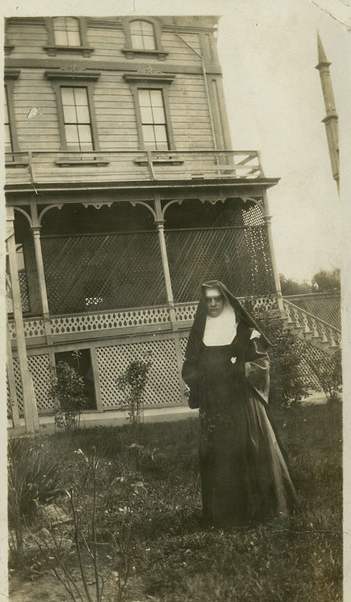
An Immaculate Heart Sister on the hunt for knuckles, early 1900s. SLO County Photograph Collection.

Anyway, there have been repeated Sister Sightings–some of ’em in flocks, if not quite whole convents–up there on the second floor over the years. A SLOHS girl, a guest at a school dance in the 1950s, took a look around between songs up on the second floor and came back to her friend, downstairs in the gym. She was thrilled, charmed by the cozy gathering around a warm stove that she’d seen upstairs.

“I didn’t know that the nuns lived here!” she told her friend.

They didn’t.

At another dance in the 1980s a teacher saw a shadowy figure dart around a corner, headed toward my classroom. He thought it might be a student up there messing around. When the teacher turned the corner, there was nothing but empty hallway..

In the 1990s, a French couple, tourists, were traveling through San Luis Obispo and they did what the French will do. They spread their sleeping bags on the Mission Prep front lawn, broke out a bottle of Bordeaux and some Camembert, and began talking about Proust. They were sleeping when the temperature suddenly dropped about thirty degrees. They woke up and it was pitch-black. Black black, and whatever the black was, it was hovering just above them. Then the black lifted, and then the black drifted, into the gym behind the lawn.

They found another place to sleep.

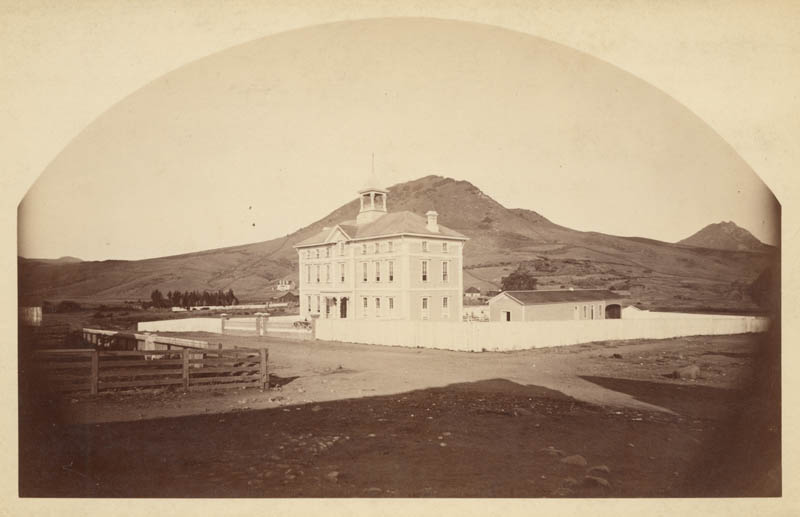
The school was built in 1926–it was sixty years old when I started, just as AGHS was sixty years old when I retired– over the site of the of Immaculate Heart of Mary Academy.


That earlier school was built in 1876. The sisters lived in a convent house behind the present Mission Prep, in what is now a parking lot.

There was a fire at Mission in the 1980s and it burned through the gym floor. There, underneath, was the foundation for the Academy. And a dead cat.

The Immaculate Heart Academy, Palm Street, San Luis Obispo, soon after it was built.


That was downstairs. I was upstairs.

So I was up there painting my room. At night. The biology teacher was around the corner and down the hall just a little ways, happy amid his labware and a year’s supply of dissectable frogs.

I finished up and decided my room looked pretty good. As I prepared to lock up, I called down to the biology teacher: “Barry, I don’t think this place is haunted at all.”

When I closed the door, one of those light bulbs exploded.

*BOOM!*

It was a good one. It was a detonation. It was a good emphatic detonation. My heart wasn’t the only thing that jumped.

I peeked back inside and decided it would wiser to sweep up all that broken glass the next day, in broad daylight. I bid the biology teacher farewell. It was a quick one.

I taught at Mission for eleven years. I never went upstairs at night by myself again.

Me, looking confident in that classroom. That’s because it was daytime.


Mad Dogs and Old Friends

24 Sunday Oct 2021

Posted by ag1970 in Arroyo Grande, Film and Popular Culture, Uncategorized

≈ Leave a comment

So I just rowed for 40 minutes on this thing thanks to a 60s playlist on my iPod Nano (yes, I still have a Nano. I once had a FOUR-track tape player, too). Now that I’ve crawled back to the computer–I don’t look quite as pleasant as this young woman– I was connecting old groups/songs with old friends.


Neil Young and Crazy Horse: Joe Loomis (Joe and I also loved “Tusk,” Joe because of the song “Sara,” and that’s because of his little sister.) Oh, and “Crosby, Stills and Nash,” with them on the porch. I later took a photo of Crosby with his arm around Elizabeth’s shoulders only to find out later that I’d run out of film.

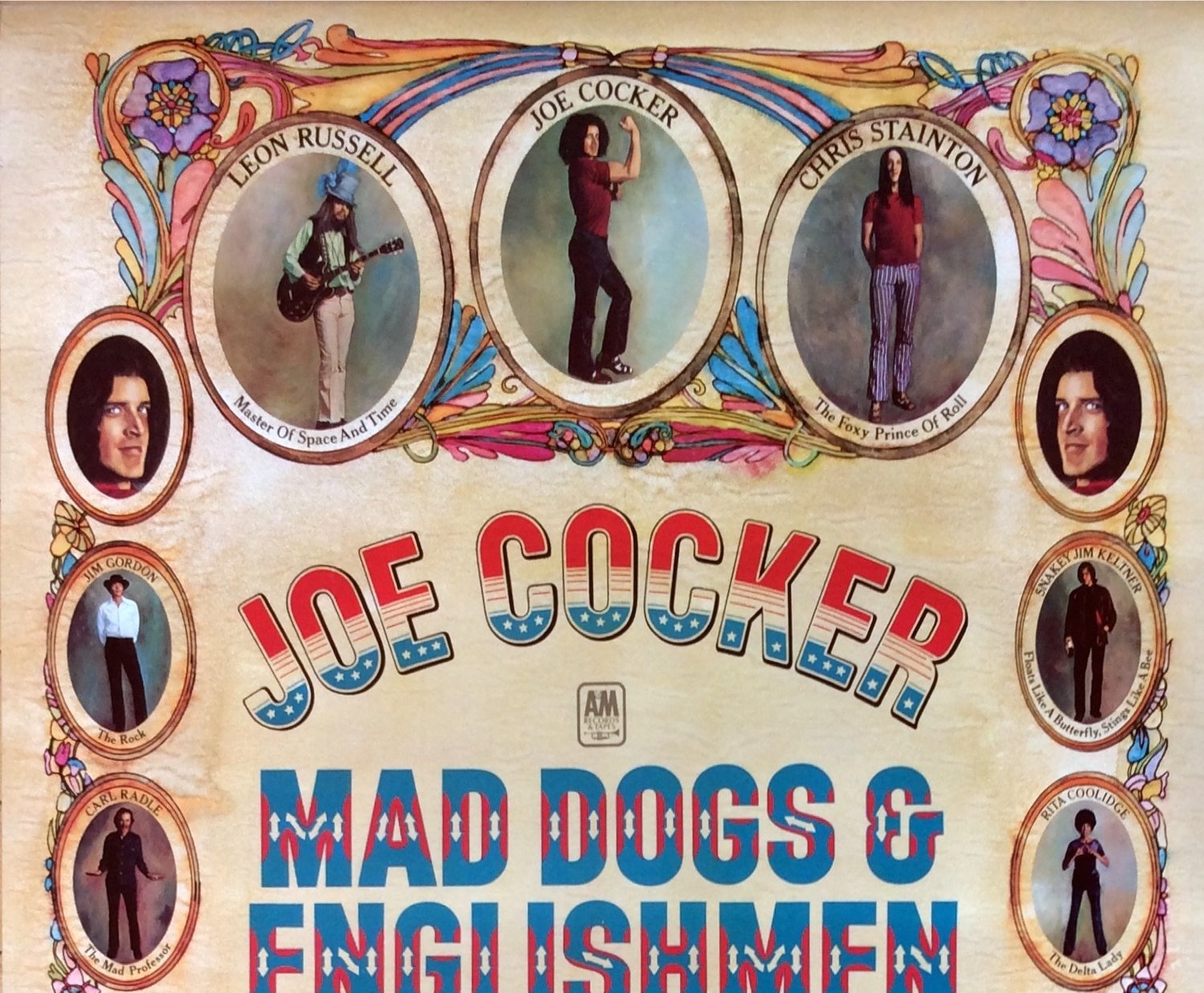
Joe Cocker: David Cherry. We listened to “Mad Dogs and Englishmen,” with Leon Russell (and Rita Coolidge) until you could see through it. I also owe David thanks for another album we played without mercy: Big Brother and the Holding Company, “Cheap Thrills.” Janis’s “Ball and Chain” is a kind of musical Chrysler Building or maybe Half Dome at Yosemite. Or, since she drove one, a Porsche 911.


The Beatles: “She Loves You.” Melvin Milton (I think I have the name right). He was an eighth-grade transfer to Branch and it took us awhile to get over the culture shock: He wore all black: Beatle boots, tight slacks, turtleneck under and a striped oxford shirt over. He took a lot of flak for that, but he was a kind and thoughtful young man.Totally Committed to the Fab Four. But you can’t run base-paths very well in Beatle boots.

Joni Mitchell: Oh, a girl I once knew.

Blood, Sweat and Tears: Robert Garza. He was crazy about “Spinning Wheel.” Robert was one of my best friends–still is–and we were fellow veterans of Kinney’s Shoes and the somewhat addled lady who was the store manager. Elbows flew when a girl in a miniskirt came in shoe-shopping. It could get ugly.

Cream (“Crossroads”) and Jon Mayall (“Room to Move”). No contest here. My old Sambo’s endless cuppa coffee buddy, Paul Hibbard.

Neil Diamond (Yes, I have Neil Diamond songs on my playlist–“Cherry, Cherry” is awesome): Linda DeVaurs. She was very bright, very funny and a total Neil Diamond freak. We dated, but just for a short time because there was no way I could measure up to Neil Diamond.

Simon and Garfunkel: Didn’t play any today, but Debbie Wizemann and Bonnie Silva (she’s no longer with us and I thought the world of Bonnie. I always will.) did a stellar speech presentation on The Poetry of Simon and Garfunkel for Miss Steigerwalt’s speech class. And we were all fans, of course, of “The Graduate.”

Eric Burdon and the Animals: Nobody in particular, but because EVERY LAST SCHOOL DANCE BETWEEN 1969 AND 1970 ended with “San Franciscan Nights.” Also, my ninth-grade art class collage (see below) was “We Gotta Get Out of This Place.” I still like The Animals. YouTube “House of the Rising Sun.”

The Beach Boys: Patsy Silva, Marilyn Machado and Carolyn Coehlo. These three were a year ahead of me at Branch and they’d have little dance parties at lunch in Mr. Lane’s room. And they KNEW HOW TO DANCE. They were so cool, and I think they are still cool. We were a little in awe of them–they were eighth-graders, after all. Okay, okay. Also, all us seventh-grade boys–all ten of us– had crushes on them.

The Rolling Stones: My big brother.

Linda Ronstadt: My big brother.

The Turtles: Liz Miller. Our ninth-grade art teacher asked us to make a collage representing a current popular song, and Liz’s was of two pairs of feet close together–a boy and girl sitting on a park bench–representing the Turtles’ “Happy Together.” Both the collage and the song were utterly charming.


← Older posts
Newer posts →

Subscribe

  • Entries (RSS)
  • Comments (RSS)

Archives

  • January 2026
  • December 2025
  • November 2025
  • October 2025
  • September 2025
  • August 2025
  • July 2025
  • June 2025
  • May 2025
  • April 2025
  • March 2025
  • February 2025
  • January 2025
  • December 2024
  • November 2024
  • October 2024
  • September 2024
  • August 2024
  • July 2024
  • June 2024
  • May 2024
  • April 2024
  • March 2024
  • February 2024
  • January 2024
  • December 2023
  • November 2023
  • October 2023
  • September 2023
  • August 2023
  • July 2023
  • June 2023
  • May 2023
  • April 2023
  • March 2023
  • February 2023
  • January 2023
  • December 2022
  • November 2022
  • October 2022
  • September 2022
  • August 2022
  • May 2022
  • April 2022
  • March 2022
  • February 2022
  • January 2022
  • December 2021
  • November 2021
  • October 2021
  • September 2021
  • August 2021
  • July 2021
  • June 2021
  • April 2021
  • March 2021
  • February 2021
  • January 2021
  • December 2020
  • November 2020
  • August 2020
  • July 2020
  • June 2020
  • May 2020
  • April 2020
  • January 2020
  • December 2019
  • November 2019
  • October 2019
  • September 2019
  • August 2019
  • May 2019
  • April 2019
  • March 2019
  • February 2019
  • January 2019
  • December 2018
  • November 2018
  • October 2018
  • September 2018
  • July 2018
  • June 2018
  • May 2018
  • April 2018
  • March 2018
  • February 2018
  • January 2018
  • December 2017
  • November 2017
  • October 2017
  • April 2017
  • March 2017
  • December 2016
  • November 2016
  • October 2016
  • September 2016
  • August 2016
  • July 2016
  • June 2016
  • April 2016
  • March 2016
  • February 2016
  • January 2016
  • December 2015
  • November 2015
  • October 2015
  • September 2015
  • August 2015
  • July 2015
  • June 2015
  • May 2015
  • April 2015
  • March 2015
  • February 2015
  • January 2015
  • December 2014
  • November 2014
  • September 2014
  • August 2014
  • July 2014

Categories

  • American History
  • Arroyo Grande
  • California history
  • Family history
  • Film and Popular Culture
  • History
  • News
  • Personal memoirs
  • Teaching
  • The Great Depression
  • trump
  • Uncategorized
  • World War II
  • Writing

Meta

  • Create account
  • Log in

Blog at WordPress.com.

  • Subscribe Subscribed
    • A Work in Progress
    • Join 68 other subscribers
    • Already have a WordPress.com account? Log in now.
    • A Work in Progress
    • Subscribe Subscribed
    • Sign up
    • Log in
    • Report this content
    • View site in Reader
    • Manage subscriptions
    • Collapse this bar
 

Loading Comments...