• About
  • The Germans

A Work in Progress

A Work in Progress

Category Archives: Arroyo Grande

For Ormie, who never married.

07 Friday Jan 2022

Posted by ag1970 in Arroyo Grande, Uncategorized

≈ 4 Comments

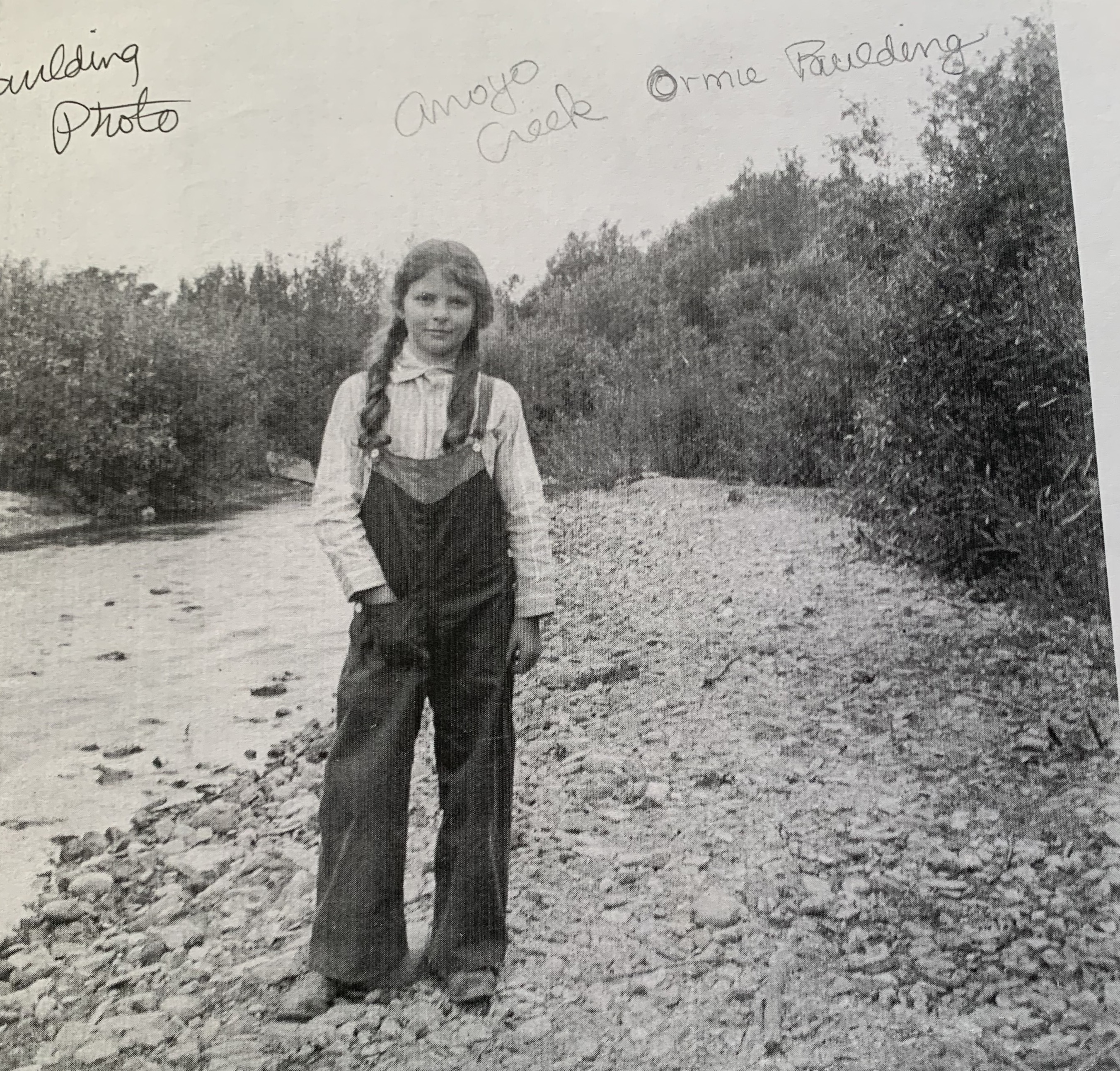
Mary Ormonde “Ormie” Paulding. From the Bennett-Loomis Archives.

She was born in 1883. As a nearly seventy-year-old who loves his sons but who’s bereft of daughters, I would have adopted her, given the chance. And had I a time machine able to go back to her time at about her age–perhaps twelve–I would’ve had a monstrous crush on her. The combination of overalls and pigtails would’ve been enough to reduce me to silly putty.

She grew up in a little farm town, Arroyo Grande, nourished by a beautiful creek which housed, in season, steelhead fighting upstream to spawn and, in another season, floods that once, in 1911, carried away a fourteen-year-old boy named Sam to his death.

She had the comfort of intelligence–a dubious comfort, admittedly. Both her father and her uncle were medical doctors (another uncle was a pharmacist) the sons of missionaries, born in Syria, whose homes, if her uncle Dr. Ed’s is any indication, were filled with artifacts from the Neolithic Holy Land and Chumash California; homes dense with books, homes full of creative energy inside. Her uncle’s, outside, was bounded by an enormous garden—in dirt her Uncle Dr. Ed found joy— to the point where her Aunt Clara added a bathroom that made it impossible for her husband to re-enter the house without a bathtub stop first. It was only the second bathtub in Arroyo Grande. Sometimes Aunt Clara would hear a soft knock at the door. The folks on the porch asked politely if they could come in and see Ed and Clara’s bathtub.

Ormie’s Aunt Clara, as the saying goes, was a piece of work. She was Arroyo Grande’s foremost schoolteacher; she arrived here in the 1880s and began a career that lasted forty years. She was the descendant of the Puritan divine Jonathan Edwards, but she was an agnostic who just loved going to church. Ormie’s father was the medical director of Santa Barbara County who, in 1918, had the audacity to shut down the bars to stop the spread of the killer flu. He was not beloved.
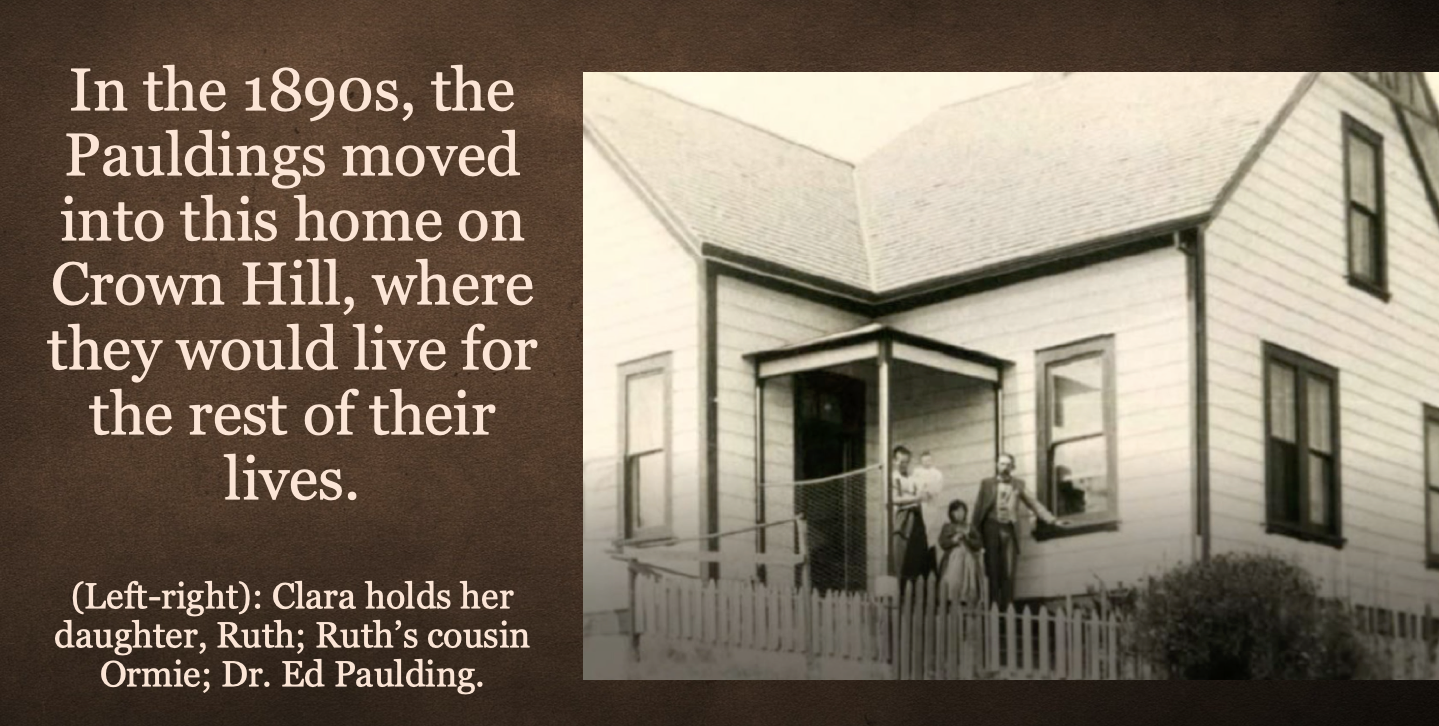

Ormie’s cousin, Ruth was very much beloved. She became such a transformative teacher, of languages, at the Arroyo Grande Union High School (where her commute, atop Crown Hill, consisted of walking across the street) that they would decide to name a middle school after her. That’s baby Ruth, the little blonde. Possibly that’s her cousin Ormie, on the right. The group is posed in the yard of the Paulding home, one that still stands today.

The scene is idyllic, but life, in the 1890s, wasn’t always. Ormie had another cousin, a little boy, the one who was to be first-born, but he was stillborn instead. Her uncle, Dr. Ed, buried him in the garden where he would be close to his parents. Ed planted flowers that gave life to the son who was robbed of the chance to live his.
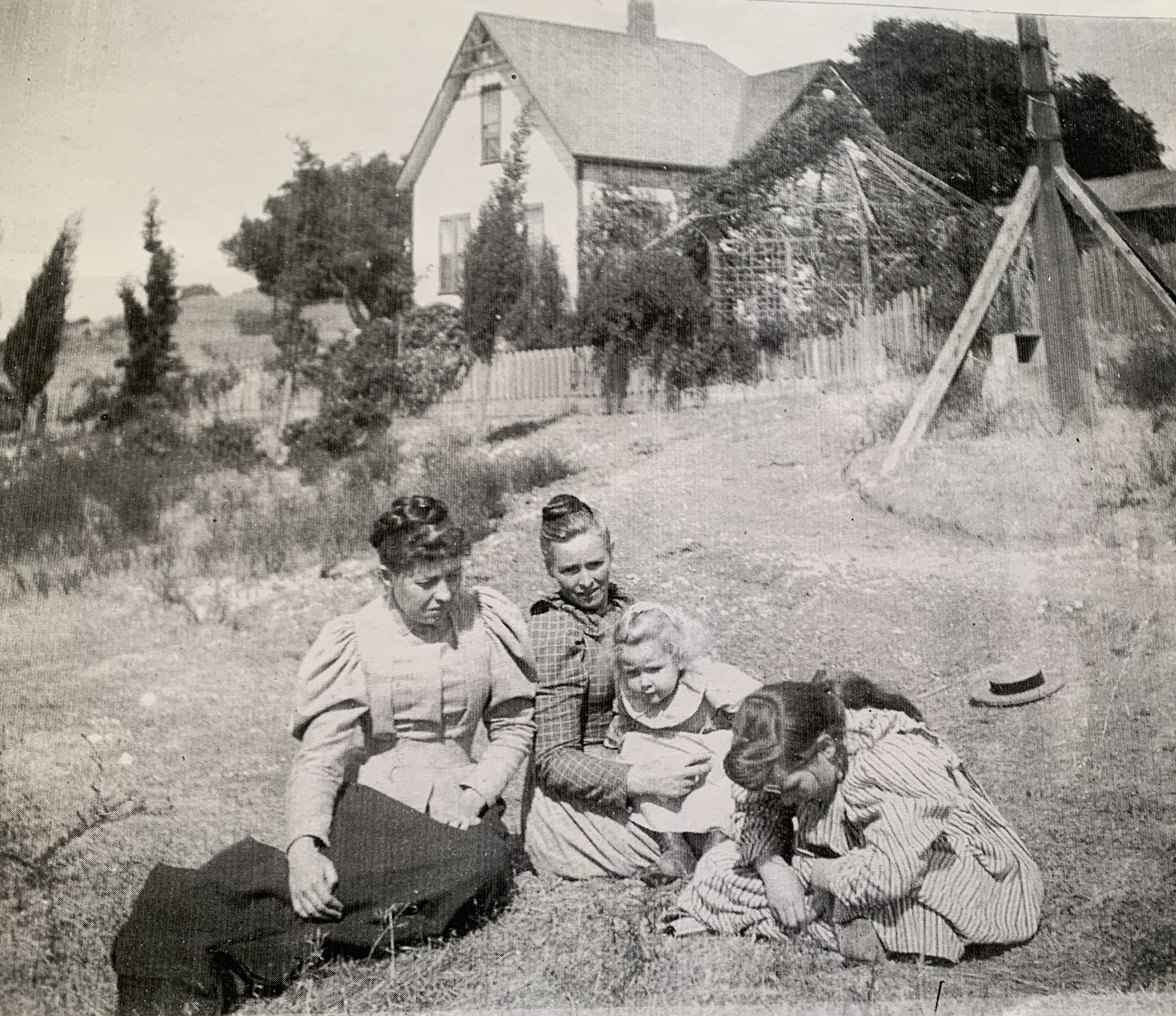
From the Bennett-Loomis Archives

Ormie would move away from Arroyo Grande—but not very far, only twenty minutes or so today, by car—south to Santa Maria, where she would become a Santa Maria High School Saint, and then, years later, the high school’s librarian and then, after that, she worked for the Post Office.

She died in 1955. Here is Ormie’s tombstone:
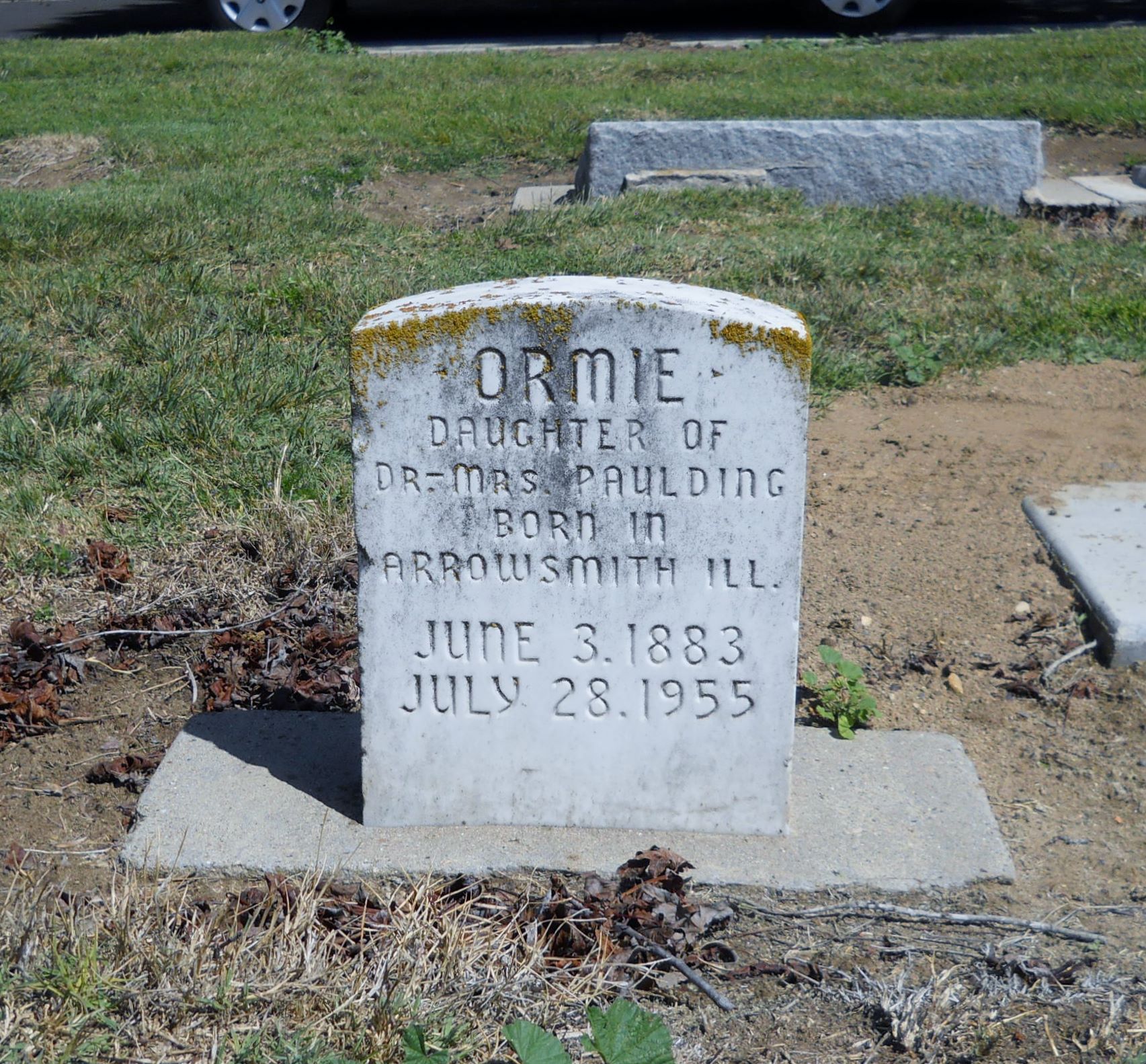

Death be not proud. The Arrogant Male in me regrets that she lived her life as a “Miss,” but this is what she did with her life: She served young people, who, if you haven’t noticed, are sometimes insufferable, and maybe introduced one, thanks to the school library, to The Arabian Knights or Willa Cather’s My Antonia or—on the chance that the Santa Maria High School Library even had it on their shelves–The Autobiography of Frederick Douglass. The power of school librarians is immense and compassionate, which is why the Far Right hates them so much.

And then she worked at the Post Office. Her obituary hints that even this seemingly mundane career gave her the chance to light up other lives. Post office patrons, it suggests, looked forward to buying a book of stamps from Miss Paulding. I think she had the power to reflect a person’s life back at him, in the instant of her look. You saw yourself welcomed in Miss Paulding’s eyes and so you were validated. I’ve known people like that. A friend who met the South African bishop, Desmond Tutu, a small man shaped, in his vestments, like a church bell, told me that he had that power.

In fact, her cousin, fragile and wheelchair-bound when I knew her, had the same kind of power, too. When I received communion at St. Barnabas, the Arroyo Grande Episcopal church, as a teenager, I would glance at the aged and fragile Miss Ruth Paulding as I returned to my pew. A smile from MIss Ruth carried the same freight as a priest’s blessing.

When World War II came, Ormie added a task not on her Post Office job description: She wrote hundreds of letters to servicemen overseas.

Hundreds.

The effort and the generosity of spirit implied in that task is a little overwhelming to me, living in a country where we observe a day—January 6—when patriotism and generosity were so debased.

Ormie’s generosity was boundless.

She loved animals. She was a charter member and a driving force in the Santa Maria Humane Society, and the lives she couldn’t save with letters, lives of young men lost in combat, she saved in the lives of the dogs and cats carelessly put aside. I can see her framing an abandoned mongrel’s face in her hands and looking into his eyes: the dog understands and looks back in the way dogs do, in absolute and unconditional adoration.

Hers was the same look that Ormie’s Post Office patrons saw.

And so she died a spinster—a terrible word—and I was born far too late to propose marriage to her, which I would have done, on the spot, when I was twelve. She didn’t need me. Women don’t need men to live lives that are graced by love, and filled by it, too. I think Ormie’s life was like that.

The life represented in that image, the little girl in overalls and pigtails, turned out to be more than a little miraculous. Women don’t need children any more than they need husbands. But without her knowing it—because I believe that kindness has the power to cross generations and so inform even unborn lives—we are, in a way, Ormie’s children.

Bonnie.

25 Thursday Nov 2021

Posted by ag1970 in Arroyo Grande, Uncategorized

≈ Leave a comment

Preview in new tab

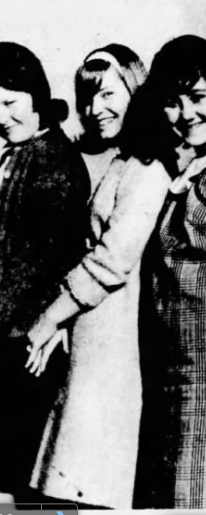
Bonnie (center)

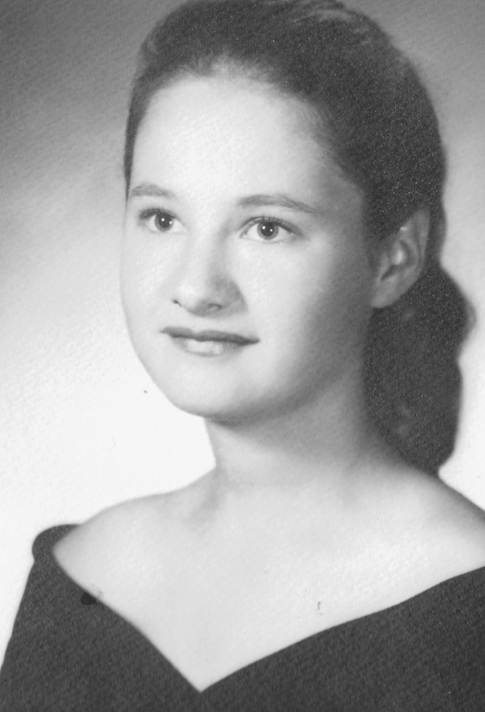
Bonnie was in my ninth-grade art class on Crown Hill at Arroyo Grande High School in 1966. She was so lovely and so kind that I was immediately entranced by her. Not in the way you think. She was another guy’s girl. What I felt for her was more in the line of admiration rather than romance.

Of course, that previous sentence was a baldfaced lie, but there’s more to Bonnie than that.

Some people have the gift of reflecting your own worth back at you. I was never convinced, growing up, of my worth, but Bonnie saw it and communicated it without words. Sketching beside her on big sheets of newsprint bequeathed the most immense sense of belonging, at fourteen, that I’d ever felt.

She came to art class one day fighting tears because she was just a freshman and was therefore barred from going to the Christmas Formal with her boyfriend, an upperclassman.

And then some time in the spring, Bonnie didn’t come to class anymore. She vanished.

I found out later that she vanished because she was pregnant. Other than the whispers, which lasted just a short time, Bonnie was never heard from again.

I missed her so much that twenty years later, as a history teacher, I talked about her, when teaching American cultural history, to my students. They were appalled by the way she’d been treated, which, in their disgust at cruelty and hypocrisy, is yet another one of the dozens of reasons for why I love teenagers.

When I was growing up, a three-times-a-year treat for my family was driving from Arroyo Grande to Morro Bay for fish and chips at Bob’s on the Embarcadero. My goodness, you could still get abalone and chips at Bob’s. It took up a full Sunday, and, for somebody who grew up amid the cabbage fields of the Upper Arroyo Grande Valley, Morro Bay was exotic and enchanting. Abalone steak dipped in Tartar sauce–we drove out to the Rock to eat our lunches and to watch the fishing boats surge over the breakwater–was sublime.

So was the smell of the sea. Morro Bay was doubly enchanting when local farmers had just added a generous layer of turkey fertilizer to the row crops of the Upper Arroyo Grande Valley.

It had to be than twenty years gone before I went back to Bob’s for fish and chips—the abalone, of course, was gone, but the calamari was wonderful—and this time it was with Elizabeth, my wife. I guess we’d gone there a couple of times before but the third time, I recognized the waitress immediately.

It was Bonnie, and it was twenty years later, when I had the audacity to use her as a Primary Source in my classroom, and there she was with her short waitress skirt and order pad and pen. I could’ve easily been appalled, as was a brilliant friend of mine, a classmate, now a lawyer, when she found me working as a liquor-store clerk in the years when I was recovering from the end of a career and the end of a relationship. Most of my recovery was not recovery at all; my life lay instead in the consistent and generous anesthetization that the liquor store’s stock supplied
So my friend, the lawyer, stared blankly for a moment at me, ashamed, behind the counter. “Oh, Jim.” was all she said.

I never saw her again.
But when Elizabeth and I saw Bonnie, she was radiant. She blushed, as I had in the presence of my lawyer friend, for just moment, but the weekend rescued her. It was Poly’s graduation and the child that had been inside her in ninth grade was later that day to graduate with an engineering degree.
She was just as beautiful as I remembered and I saw in her eyes the validation I’d remembered in ninth grade. She was proud of me and proud of us, of Elizabeth and me, as a couple.

I don’t remember, of course, the rest of the meal at Bob’s.

It would be many years later when I learned that Bonnie had died. The news hurt doubly, because I learned that she’d taken her own life, and we teacher types frequently confuse ourselves with Jesus. Surely, I thought, there could’ve been something I could have said or done. Or something I could have done without saying anything at all: Didn’t she see, in the moment before she took our order that day at Bob’s, how immensely proud I was of her?

When we got to the 1960s in my U.S. History classes in the years after that day, I told my Bonnie story again, but I added Graduation Day as the ending I’d never had before. A good teacher can sense when he or she has touched the students in their care; Bonnie touched mine. She inspired them.

As much as teenagers hate cruelty and hypocrisy, they love righteousness. Teaching history, after all, is really about teaching the future, and Bonnie’s story resonated because it gave them the hope that the future in their care would be righteous.

Bonnie resonates to me, too, because she died the same way my mother did. I spent many years in therapy after I lost my Mom until I quit it when the psychiatrist opined that my mother, in taking her own life, was a selfish person.

That’s the last word I would use to describe either my mother or my friend Bonnie. Nobody can understand the immense power of clinical depression and the seductiveness that self-destruction promises when it’s the only reasonable, rational way left for you to fight back.

A high-school administrator—my boss— once smugly confided to me that she could never imagine taking her own life. She was taken instead by cancer. I doubt that she could ever have imagined that, either. But clinical depression and Stage Five cancer are coequals when it comes to conferring death.

I keep a photo of my mother, holding my big sister when she was a baby, atop our mantle. She is breath-taking. So was Bonnie, in her white embroidered apron and red waitress mini-skirt and scuffed white tennis shoes, on the day that Poly graduated her daughter. I don’t know that there is a Heaven–I guess I’ll have to find that out on my own–but if there is, I want to hold my Mom very close. And then I want to ask directions.

My mother and big sister, 1942.


Where is Bonnie?

And then, given God’s grace, I will hold her very close, and tell her, in a private voice just above a whisper, how much her life has meant to me. And then, given God’s grace, we will get the chance to sketch again, holding soft-lead pencils that drift noiselessly across the paper of big newsprint pads, We’re close together, sitting on high stools. Every once in awhile, Bonnie might look at my sketchpad, then look at me, and smile.

Sgt. Harry Chapek, American.

13 Saturday Nov 2021

Posted by ag1970 in Arroyo Grande, Uncategorized, World War II

≈ Leave a comment

A lot on my mind with this one.

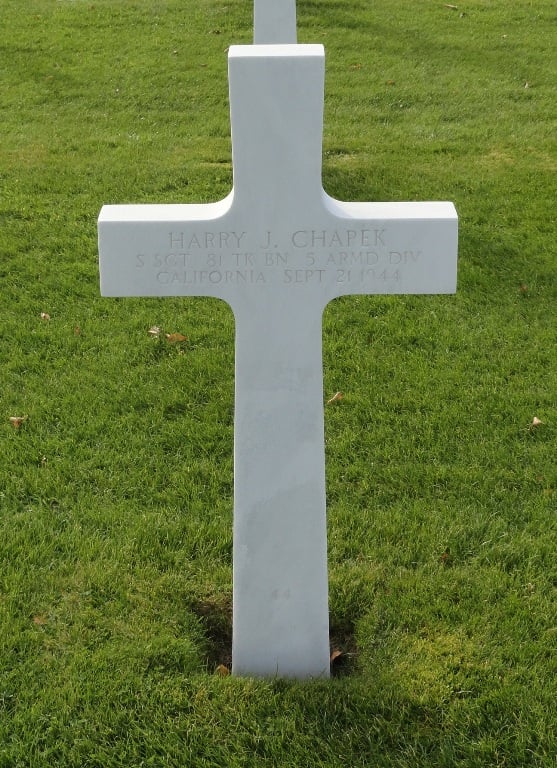
Harry Chapek was a young Arroyo Grande man killed in action on the Belgian-German border, near the Siegfried Line, in September 1944.

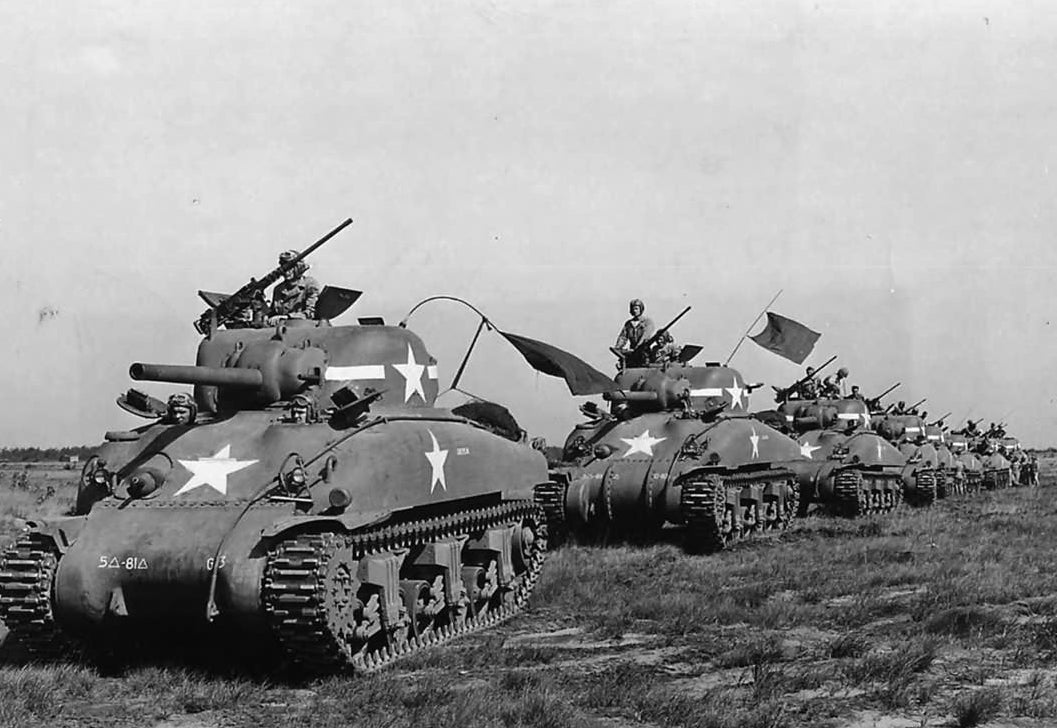
He was a member of the 81st Tank Battalion, 5th Armored Division and is buried at the American Cemetery at Henri-Chapelle, near Liege, Belgium.

Those are 81st Sherman tanks in the photo.

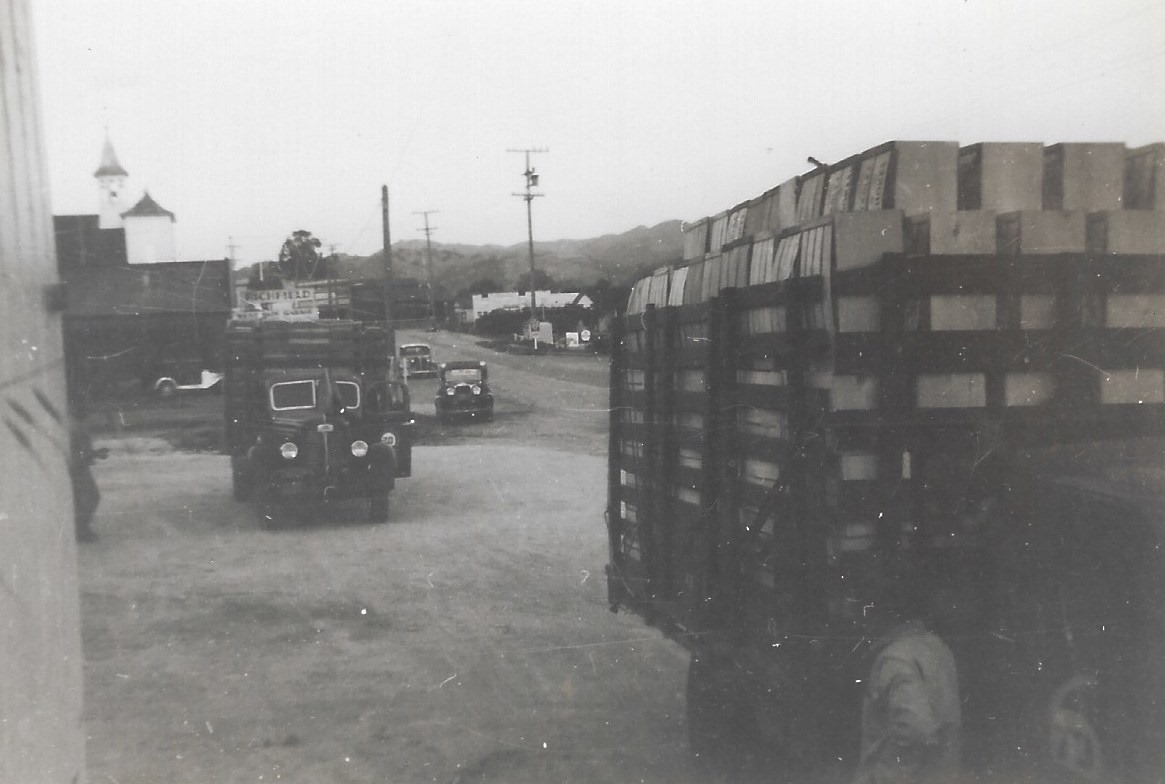
He was almost killed once before, in 1938. He was a driver for the Arroyo Grande Trucking Company, which stood at the site of today’s Bank of America–the photo of the site is courtesy of the Martin family. (That’s the old St. Patrick’s Catholic Church in the left background, built in the 1880s.) It was a vital part of the economy of our little farm town on California’s central coast, population 1,090 in the 1940 census.

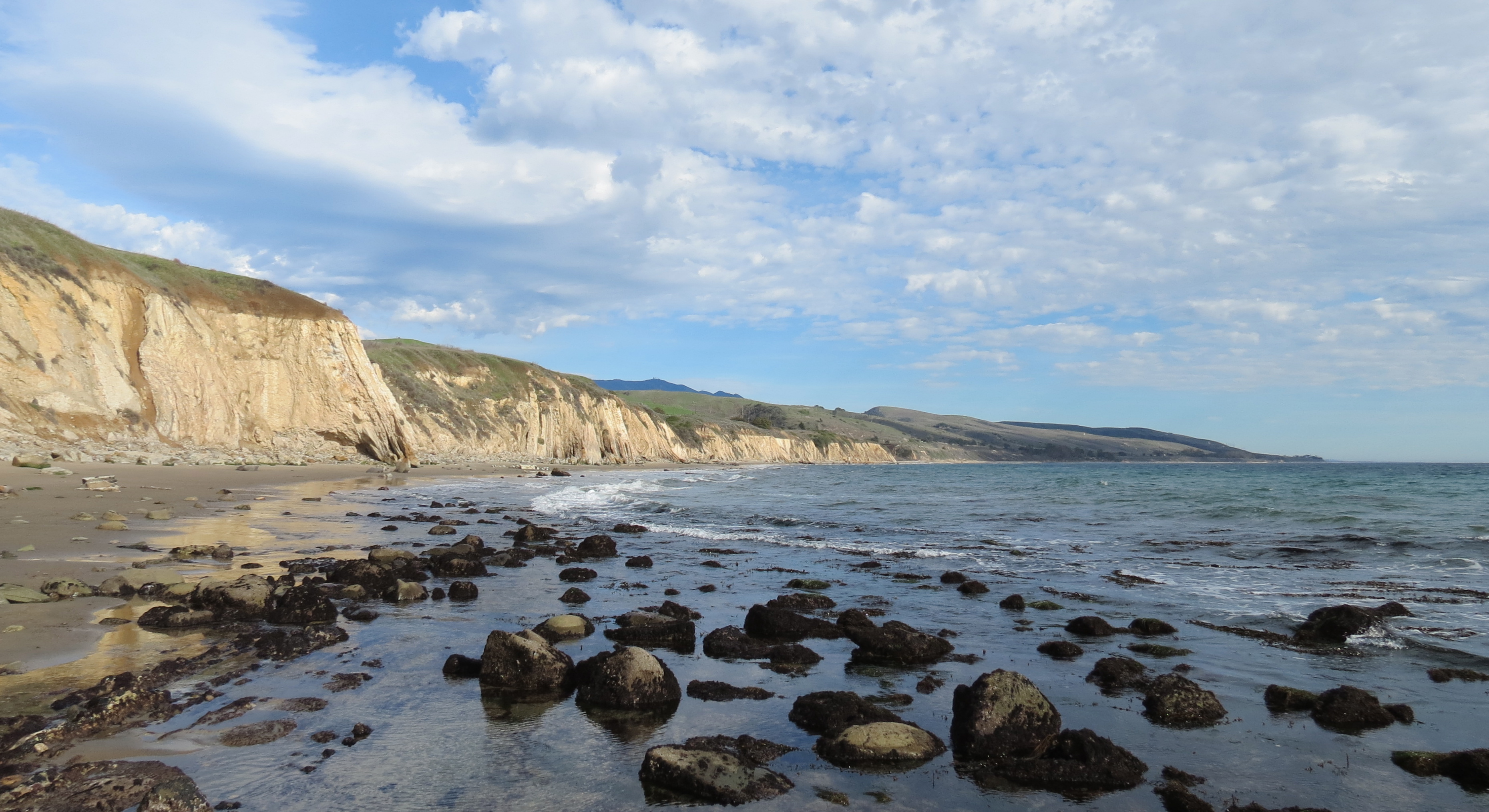
He was driving near Elwood, just south of the Gaviota Pass, and less than an hour north of another beautiful California place, Santa Barbara,  when a horse threw three little girls and galloped out into the highway in front of Chapek’s truck.

The impact killed the horse and the truck veered into a tree, where it caught on fire. Chapek was stuck in the cab, which in turn was buried by vegetable crates.

The California coast near the Gaviota Pass.

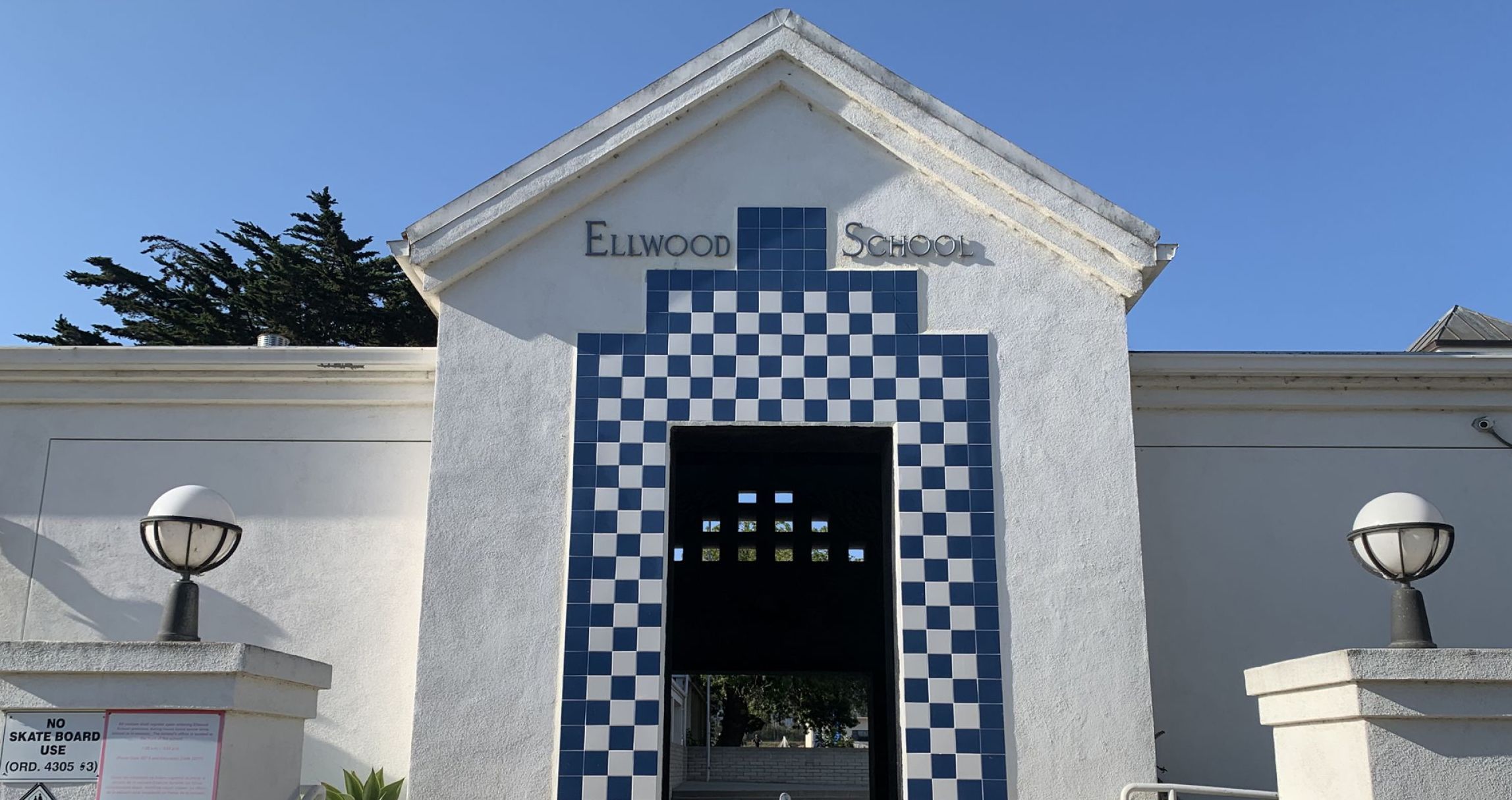
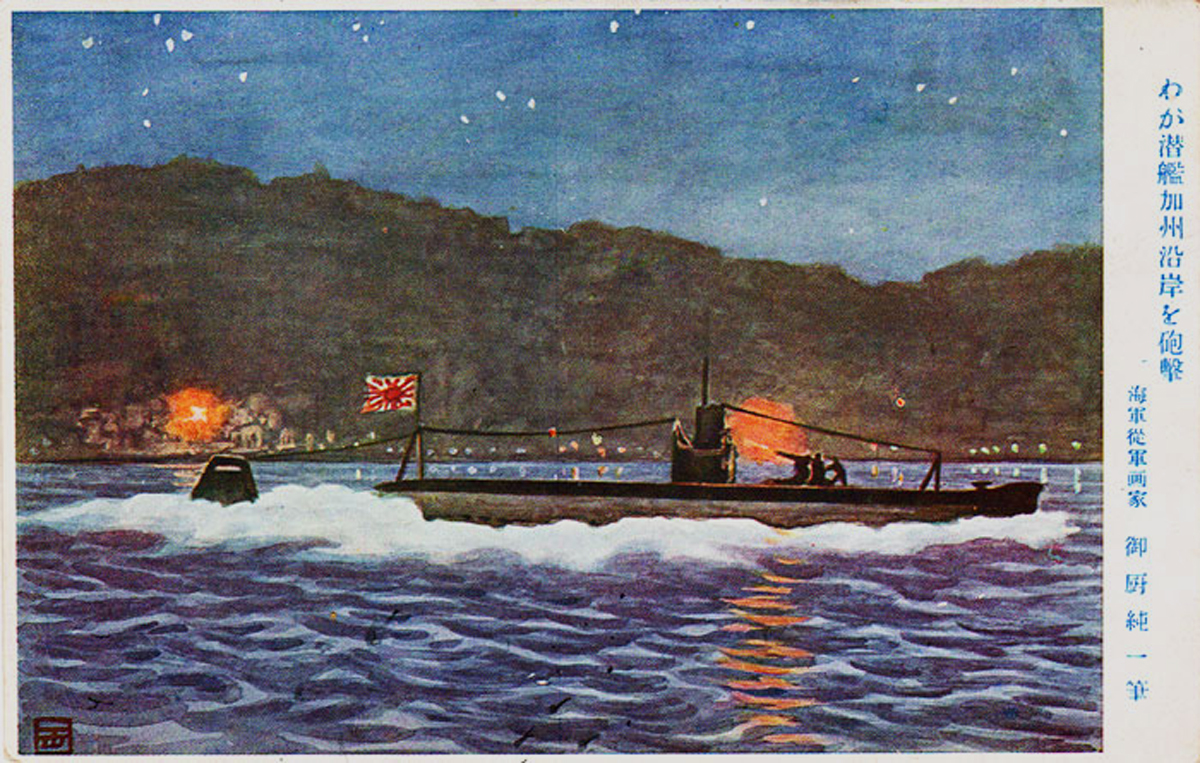
But that night there was a PTA meeting at the Elwood School, which is still there today, and a parent and a janitor ran out to the truck, dragged Chapek out–he was waving his arm out the cab window–and knocked the fire down with two of the school’s fire extinguishers. Four years later, a Japanese submarine shelled Ellwood.

The Elwood School today; a contemporary painting shows the submarine I-17 shelling the area in 1942. (from Goleta History)

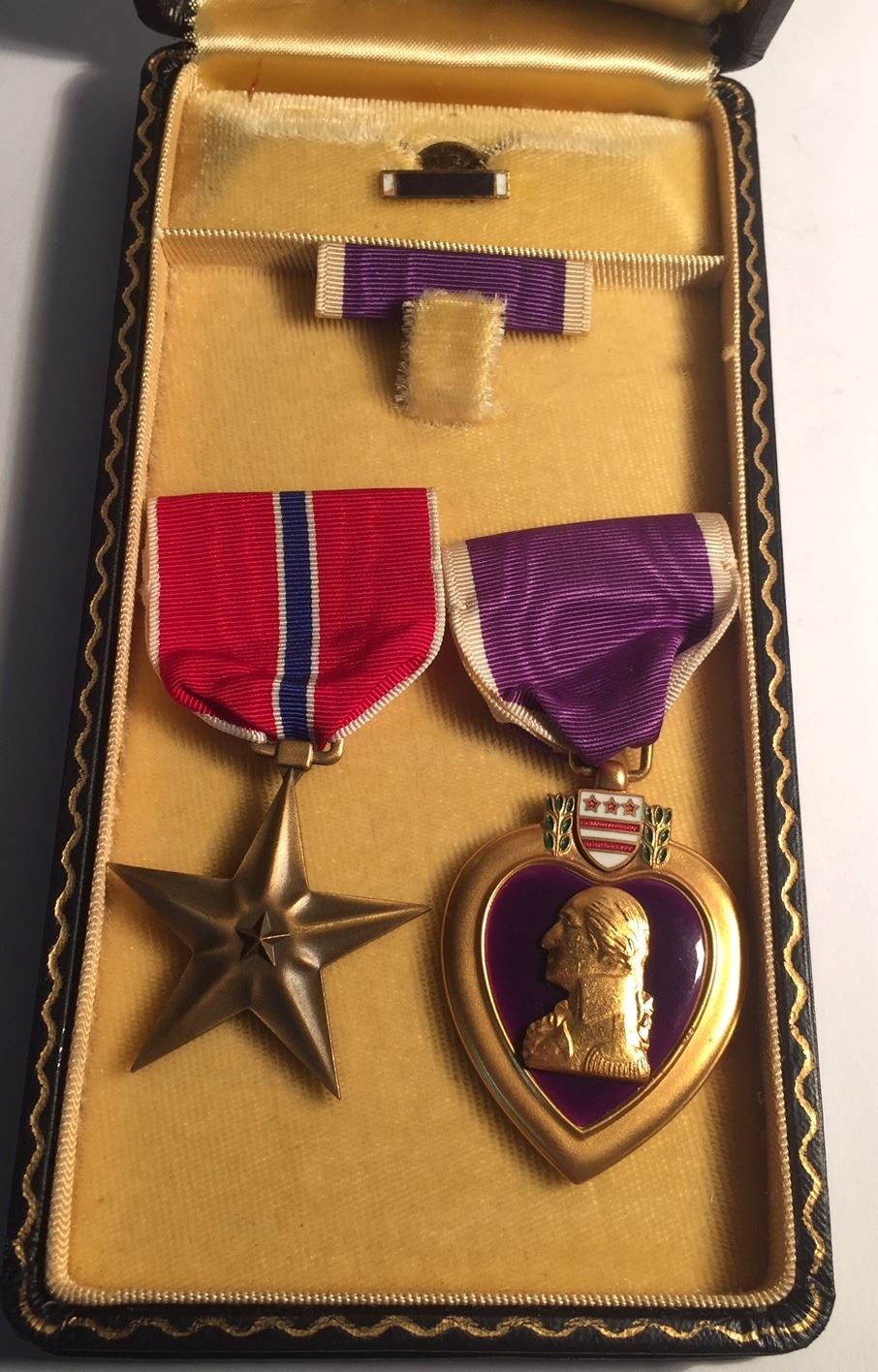
Six years later, a German artillery battery, covered by dense fog, fired a barrage that landed on the 81st’s “A” Company; it was probably the devastating explosion of .88 shells that killed Chapek, awarded a Bronze Star and a Purple Heart.

Growing up, he was a close friend of our friend George Shannon, who farmed near us in fields along Huasna and Branch Mill Roads, peppers and string beans and I think Brussels sprouts, among other crops. Mr. Shannon was an admirable man.

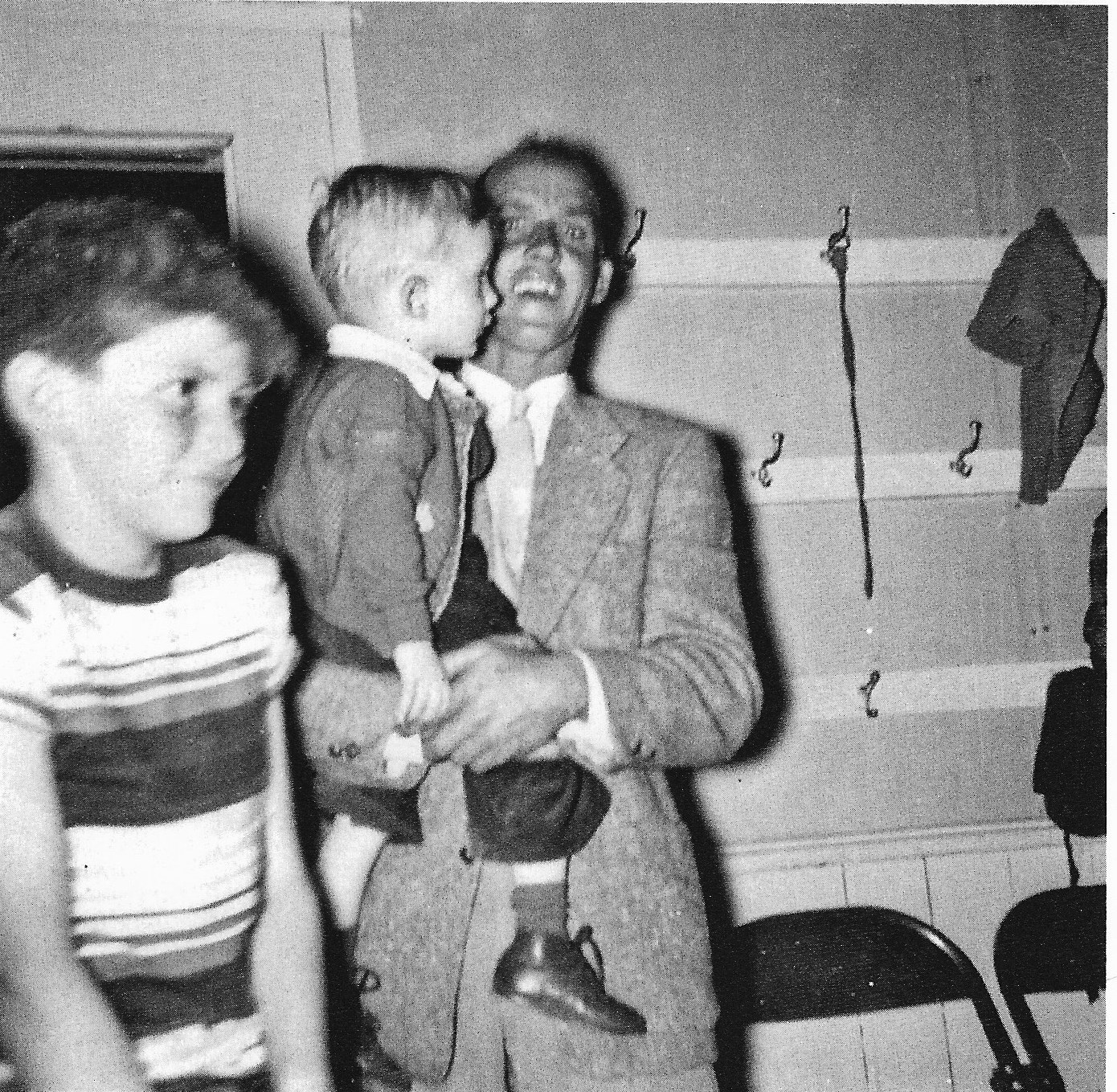
Farmer and neighbor George Shannon, with his son, Jerry, in the hallway between the two classrooms of Branch Elementary School, built in the 1880s. Shannon served as head of the school board.


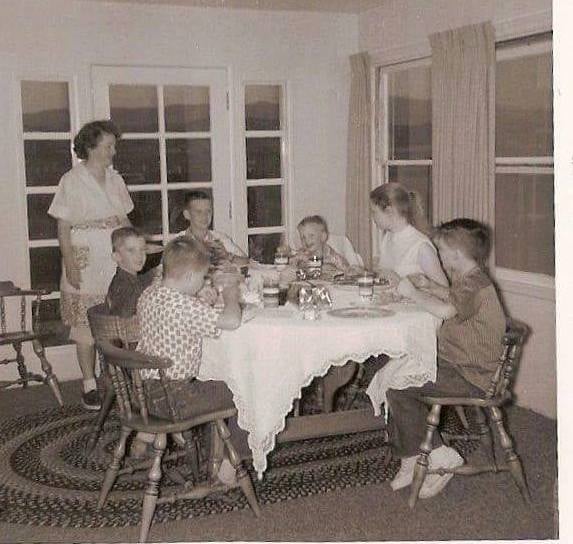
That’s my Mom serving dinner to us Gregory kids and to the three Shannon boys. You can tell how much she thought of them because dinner’s being served on the Irish lace tablecloth.

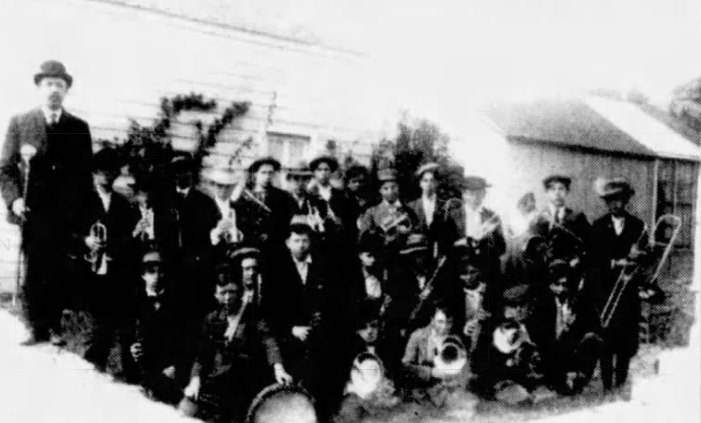
Chapek was an admirable man, too. As was his father, Matthias, or Mat. That’s Mat with the Arroyo Grande Boys’ Band about 1909. He probably lured potential juvenile delinquents away from a life of crime with a tuba or two.

He taught two generations of kids how to play musical instruments. Longtime teacher Ruth Paulding was one of them. The middle school’s named for her. Wayne Morgan, also an Eagle Scout, took up the violin thanks to Mr. Chapek. He was killed on December 7 on USS Arizona, along with another Arroyo Grande musician, Jack Scruggs, a trombonist in the battleship’s band.

I know something about the waves of immigration to Arroyo Grande, for example, from the Azores, Japan and the Philippines. Mat Chapek was from Bohemia– today’s Czech Republic.

It turns out that on upper Cherry Avenue–then called Leedham Lane–Arroyo Grande had a “Little Bohemia.” The Chapeks lived there, as did the Huebners, as did the Marsaleks.

That struck because one of my favorite books as a sophomore in Mrs. Flatt’s sophomore English class at AGHS, was Willa Cather’s My Antonia, about a girl from a family of Bohemian immigrants to Nebraska, to the Great Plains. It’s not more than six pages in before an inordinately large rattlesnake makes its appearance. That snake, and what I read later about the toll laundry and ironing took on frontier farm wives, bending their spines and hunching their shoulders—effectively and mercilessly transforming them into human question marks—remained with me always.

Arroyo Grande’s not much like Nebraska. The climate here is mild and the growing seasons overlap. But both places produce incredible wildflowers. This is field mustard near the foothills east of Arroyo Grande.

So Antonia and Chapek, the children of Bohemian immigrants, are linked in my mind now, even though Nebraska and California are so distant. The cemetery at Henri-Chapelle is more distant still—over 5,000 miles away from the foothills and the farm fields and the wild mustard that both Chapek and I grew up with. The distance, as the poet Whitman wrote, avails not. Sgt. Chapek’s life is now connected to mine. Time, Whitman also wrote, avails not. Arroyo Grande is my home town. Nearly eighty years after George Shannon lost his friend, our town survives both of them. It does so because of them.

It’s their gift to us, you see.

I a now a friend of the American Overseas Memorial Day Association Foundation in Belgium, which is a small honor. But that means I can now pay tribute to Sgt. Chapek on their website, and so draw recognition to the man with far greater honors.


Nun Hauntings and Exploding Light Bulbs

25 Monday Oct 2021

Posted by ag1970 in Arroyo Grande, Teaching, Uncategorized

≈ 1 Comment


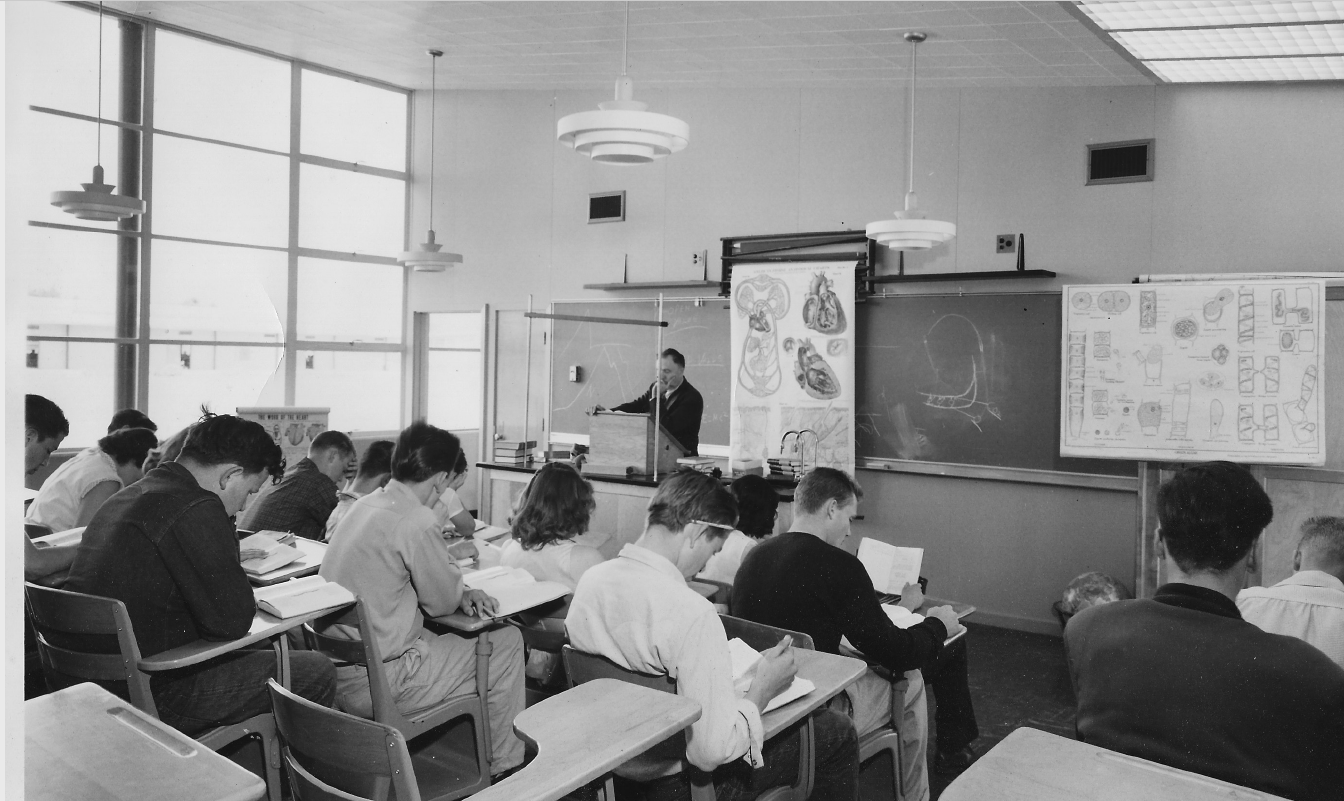
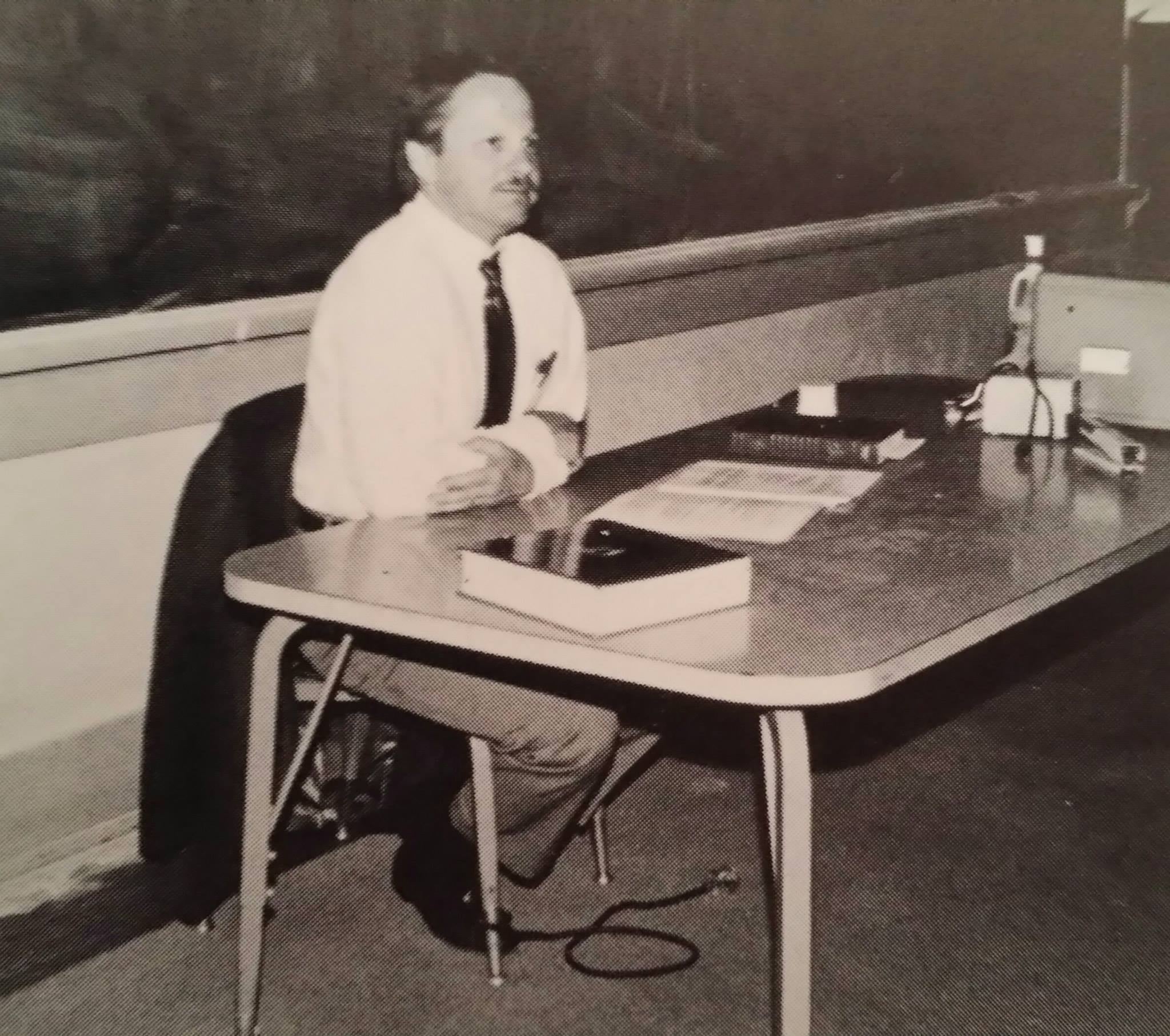
This is a science classroom at AGHS, about 1956, courtesy of Mr. Spin, who donated some vintage photos to me.

No STEM yet. Notice the overwhelming number of males. My sister, Roberta, a proud graduate of Arroyo Grande (Union) High School, was a math major at Poly, and sometimes she was the only female in her class section. Maybe two more, but not more than that. And Poly hadn’t caught up with coeducation, even in 1960. It was about a three-day horseback ride to the nearest women’s restroom.

And in 1960, math was a serious business. All those fellows with the flattops and Madras shirts were someday going to be rapidly but noiselessly sliding their slide rules, calculating exactly how long it would take an Atlas missile with a 1.44 megaton nuclear warhead to land in the swimming pool of Nikita Khrushchev’s dacha on the Black Sea.

(Khrushchev was the Russian leader who said ”We will bury you!” Vice President Nixon countered by informing Khrushchev that we made better color TVs than the Soviets did. Touché!)

So I don’t think women were particularly welcome in Cal Poly math classes in 1960. Especially really bright ones. Roberta’s the fat puppy in the litter when it comes to smarts, and maybe that was resented by her classmates.


Roberta as a senior at AG(U)HS. Yeah, she’s kinda stunning.

Roberta decided that she wanted to be a teacher anyway. So she became an education major, then a third-grade teacher, and a no-nonsense one. You can ask Miss Sandy. Her classes at Poly made for over thirty years of very lucky third-graders, busy little sailors on the ship my sister sailed.

I love my big sister.

The other, less serious observation: See those lights? Those light bulbs are BIG, somewhere between a grapefruit and a basketball. I had lights just like those in my Mission Prep classroom–the one with only one electrical outlet, because the Immaculate Heart Sisters thought electricity was a modern convenience, a crutch for softies, like socialists or Presbyterians.

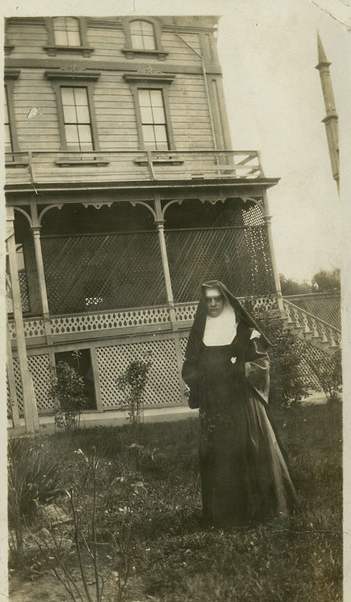
And of course, at least one of the deceased Sisters is supposed to un-decease herself upstairs, where my classroom was, and where my former and much-admired and beloved student Julie Newton now teaches English (that makes me feel real happy, that she’s in that classroom). The late sister is, of course, a ghost. Or one of them.

I told the Mission kids that an I-beam fell on her while they were building their school and flattened her like a tortilla. That was both irreverent and made up.

(I’ll bet she’s looking for knuckles to rap with her steel protractor ruler. The sister, not Julie. English teachers don’t have much use for protractor rulers.)

But Elizabeth, my wife, did hear loud construction noises as she came back from coaching a basketball game late one night. Bang bang. Drill drill. As soon as she opened the double doors that lead to the school’s main hallway, there was complete silence. Complete and dark dark silence, all the lights being turned off. She did a u-turn and went home.

The next day, She asked Mike, the maintenance man, if he’d been working that night. Nope.

An Immaculate Heart Sister on the hunt for knuckles, early 1900s. SLO County Photograph Collection.

Anyway, there have been repeated Sister Sightings–some of ’em in flocks, if not quite whole convents–up there on the second floor over the years. A SLOHS girl, a guest at a school dance in the 1950s, took a look around between songs up on the second floor and came back to her friend, downstairs in the gym. She was thrilled, charmed by the cozy gathering around a warm stove that she’d seen upstairs.

“I didn’t know that the nuns lived here!” she told her friend.

They didn’t.

At another dance in the 1980s a teacher saw a shadowy figure dart around a corner, headed toward my classroom. He thought it might be a student up there messing around. When the teacher turned the corner, there was nothing but empty hallway..

In the 1990s, a French couple, tourists, were traveling through San Luis Obispo and they did what the French will do. They spread their sleeping bags on the Mission Prep front lawn, broke out a bottle of Bordeaux and some Camembert, and began talking about Proust. They were sleeping when the temperature suddenly dropped about thirty degrees. They woke up and it was pitch-black. Black black, and whatever the black was, it was hovering just above them. Then the black lifted, and then the black drifted, into the gym behind the lawn.

They found another place to sleep.

The school was built in 1926–it was sixty years old when I started, just as AGHS was sixty years old when I retired– over the site of the of Immaculate Heart of Mary Academy.


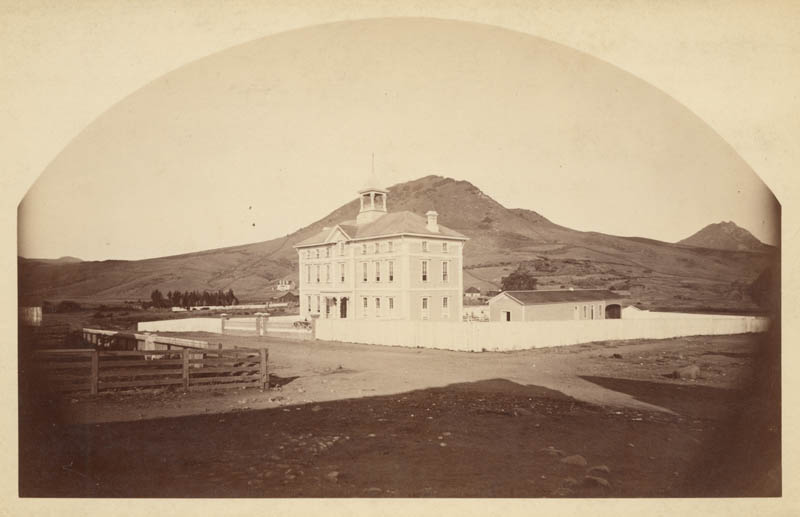
That earlier school was built in 1876. The sisters lived in a convent house behind the present Mission Prep, in what is now a parking lot.

There was a fire at Mission in the 1980s and it burned through the gym floor. There, underneath, was the foundation for the Academy. And a dead cat.

The Immaculate Heart Academy, Palm Street, San Luis Obispo, soon after it was built.


That was downstairs. I was upstairs.

So I was up there painting my room. At night. The biology teacher was around the corner and down the hall just a little ways, happy amid his labware and a year’s supply of dissectable frogs.

I finished up and decided my room looked pretty good. As I prepared to lock up, I called down to the biology teacher: “Barry, I don’t think this place is haunted at all.”

When I closed the door, one of those light bulbs exploded.

*BOOM!*

It was a good one. It was a detonation. It was a good emphatic detonation. My heart wasn’t the only thing that jumped.

I peeked back inside and decided it would wiser to sweep up all that broken glass the next day, in broad daylight. I bid the biology teacher farewell. It was a quick one.

I taught at Mission for eleven years. I never went upstairs at night by myself again.

Me, looking confident in that classroom. That’s because it was daytime.


Mad Dogs and Old Friends

24 Sunday Oct 2021

Posted by ag1970 in Arroyo Grande, Film and Popular Culture, Uncategorized

≈ Leave a comment

So I just rowed for 40 minutes on this thing thanks to a 60s playlist on my iPod Nano (yes, I still have a Nano. I once had a FOUR-track tape player, too). Now that I’ve crawled back to the computer–I don’t look quite as pleasant as this young woman– I was connecting old groups/songs with old friends.


Neil Young and Crazy Horse: Joe Loomis (Joe and I also loved “Tusk,” Joe because of the song “Sara,” and that’s because of his little sister.) Oh, and “Crosby, Stills and Nash,” with them on the porch. I later took a photo of Crosby with his arm around Elizabeth’s shoulders only to find out later that I’d run out of film.

Joe Cocker: David Cherry. We listened to “Mad Dogs and Englishmen,” with Leon Russell (and Rita Coolidge) until you could see through it. I also owe David thanks for another album we played without mercy: Big Brother and the Holding Company, “Cheap Thrills.” Janis’s “Ball and Chain” is a kind of musical Chrysler Building or maybe Half Dome at Yosemite. Or, since she drove one, a Porsche 911.


The Beatles: “She Loves You.” Melvin Milton (I think I have the name right). He was an eighth-grade transfer to Branch and it took us awhile to get over the culture shock: He wore all black: Beatle boots, tight slacks, turtleneck under and a striped oxford shirt over. He took a lot of flak for that, but he was a kind and thoughtful young man.Totally Committed to the Fab Four. But you can’t run base-paths very well in Beatle boots.

Joni Mitchell: Oh, a girl I once knew.

Blood, Sweat and Tears: Robert Garza. He was crazy about “Spinning Wheel.” Robert was one of my best friends–still is–and we were fellow veterans of Kinney’s Shoes and the somewhat addled lady who was the store manager. Elbows flew when a girl in a miniskirt came in shoe-shopping. It could get ugly.

Cream (“Crossroads”) and Jon Mayall (“Room to Move”). No contest here. My old Sambo’s endless cuppa coffee buddy, Paul Hibbard.

Neil Diamond (Yes, I have Neil Diamond songs on my playlist–“Cherry, Cherry” is awesome): Linda DeVaurs. She was very bright, very funny and a total Neil Diamond freak. We dated, but just for a short time because there was no way I could measure up to Neil Diamond.

Simon and Garfunkel: Didn’t play any today, but Debbie Wizemann and Bonnie Silva (she’s no longer with us and I thought the world of Bonnie. I always will.) did a stellar speech presentation on The Poetry of Simon and Garfunkel for Miss Steigerwalt’s speech class. And we were all fans, of course, of “The Graduate.”

Eric Burdon and the Animals: Nobody in particular, but because EVERY LAST SCHOOL DANCE BETWEEN 1969 AND 1970 ended with “San Franciscan Nights.” Also, my ninth-grade art class collage (see below) was “We Gotta Get Out of This Place.” I still like The Animals. YouTube “House of the Rising Sun.”

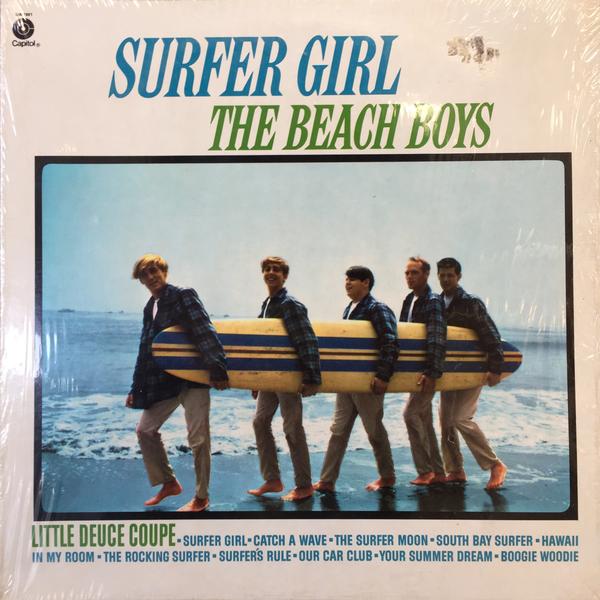
The Beach Boys: Patsy Silva, Marilyn Machado and Carolyn Coehlo. These three were a year ahead of me at Branch and they’d have little dance parties at lunch in Mr. Lane’s room. And they KNEW HOW TO DANCE. They were so cool, and I think they are still cool. We were a little in awe of them–they were eighth-graders, after all. Okay, okay. Also, all us seventh-grade boys–all ten of us– had crushes on them.

The Rolling Stones: My big brother.

Linda Ronstadt: My big brother.

The Turtles: Liz Miller. Our ninth-grade art teacher asked us to make a collage representing a current popular song, and Liz’s was of two pairs of feet close together–a boy and girl sitting on a park bench–representing the Turtles’ “Happy Together.” Both the collage and the song were utterly charming.


The baby doctor

16 Saturday Oct 2021

Posted by ag1970 in Arroyo Grande, Uncategorized

≈ Leave a comment

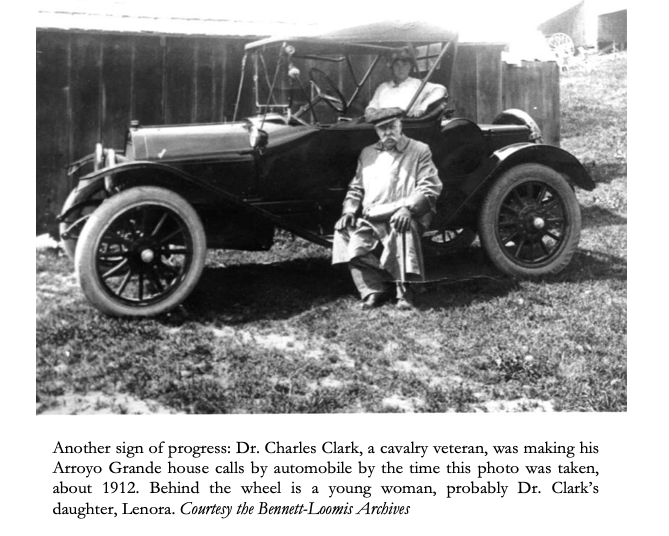
Dr. Charles Clark was Arroyo Grande’s “baby doctor” for many years until his death in 1916.

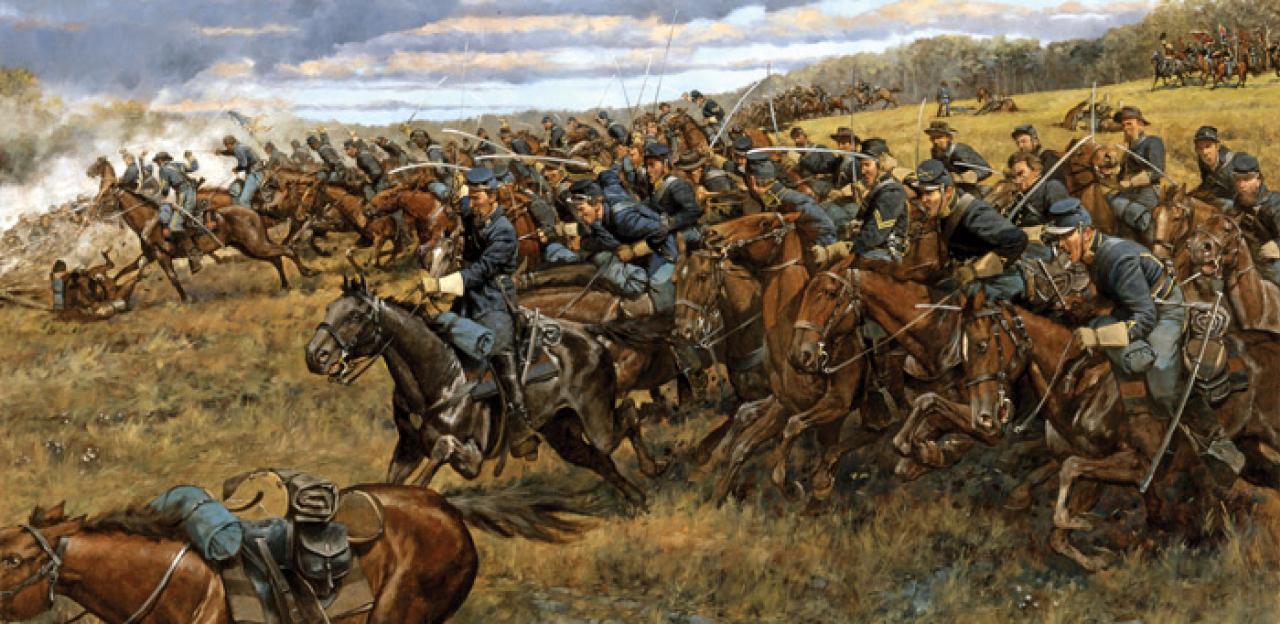
During the Civil War, he was a seventeen-year-old member of the 1st New Jersey Cavalry under George Custer–and he fought at Sailor’s Creek in 1865, the battle depicted in the painting.

Even after the war, Clark’s attention was turned toward the…er…south.

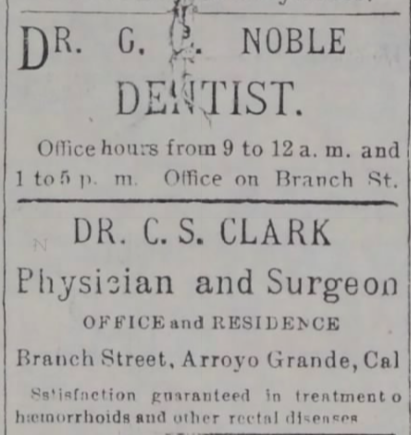
I’m seeing how much I can find about his practice–his office was on Branch Street, I think near today’s Branch Street Deli–and it’s kind of shocking. Doc Paulding seems to have been the town’s primary doctor–he was a superb orthopedist–but even pediatrician Clark had to sew up the occasional adult who had an extra smile added to his cheek, the result of a knife fight. (This one was the result of an argument between farm laborers in the Upper Arroyo Grande Valley.)


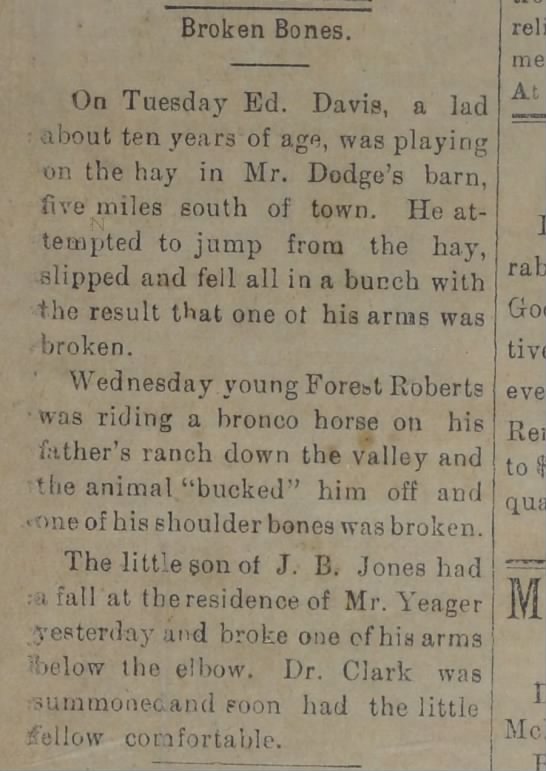
Being a child in the early 1900s wasn’t all that safe, either. I’m finding injuries caused to children by a mower (a bean-cutter killed one of our Civil War veterans in the Huasna Valley. He fell into it and his horses dutifully kept pulling), accidental shootings, runaway horses, burns caused by “manufacture of a steam engine out of a carbide can” by some future scientist (maybe not); he tended to his own son, Ed, a printer at the Arroyo Grande “Herald” whose fingers were caught in a press.

From 1894

The most tragic incident, because it could’ve happened to any of us, came when a young mother, tending to her kitchen, left her toddler alone in the parlor for a moment. The little girl fell into the fireplace. Clark was unable to save her life.

[Fire was a terrible hazard for Victorian and Edwardian widows. A year of mourning called for widow’s reeds of black taffeta, easily set alight by the open flame of a gas jet used to illuminate homes. All that was expected of widowers was a thick black silk armband around the sleeve of a suitcoat.]

Cars are dangerous, (Dr. Paulding never mastered his–it was dangerous when he was out and about on house calls) but so was travel by wagon. Clark tended to the victims of two wagon accidents. In one, a woman and daughter in a funeral cortege were thrown to the pavement and knocked unconscious when the wagon started suddenly and the rear seat tipped.

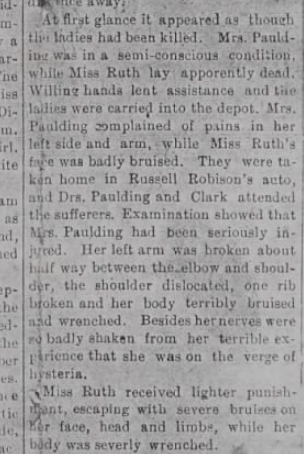
And in 1912, a PCRR electric utility car T-boned the carriage containing schoolteacher Clara Paulding and her daughter, future schoolteacher Ruth Paulding, for whom the middle school is named. The carriage was reduced to splinters–the horse, an admirable one, stayed in its traces–and Clark helped attend to the Pauldings. The family got a nice settlement from the railroad.

His death was an untimely one; he died at 70 on September 27, 1916. Two tears later, the Spanish Flu would arrive in Arroyo. The Paulding home became a temporary hospital, housing up to sixteen patients at a time, so my guess is that Dr. Clark was sorely missed.


Homely, yes. Important, too.

10 Sunday Oct 2021

Posted by ag1970 in Arroyo Grande, Uncategorized

≈ Leave a comment

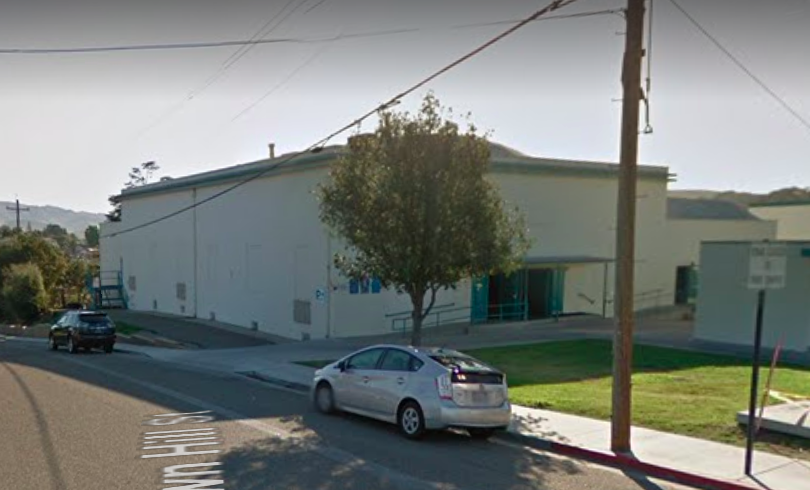
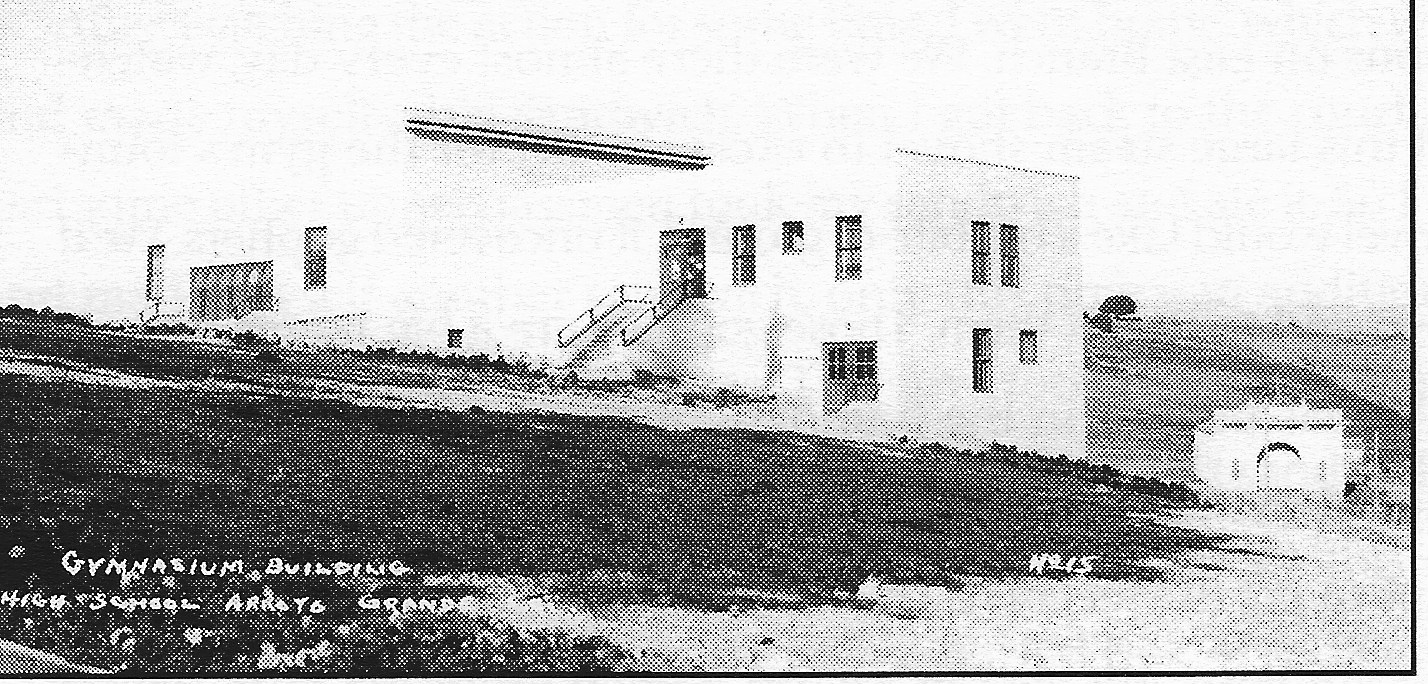
You wouldn’t think a structure as homely as this one—the Paulding Gym, taken from the Google Earth image—would be all that important. There was thought given to demolishing it at one time. That would be a mistake.

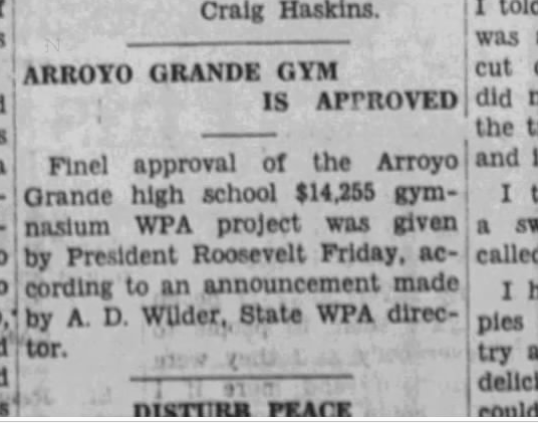
October 2, 1937, Arroyo Grande Valley Herald-Recorder

For one thing, Arroyo Grande sports fans had been wanting a high school gym—this would’ve been for the 1916 high school, atop Crown Hill—for many years. For another, it’s a legacy of American history, a small part (for a town of about 1,000 people in 1937, a big part) of American history. Along with the retaining wall below Paulding, the WPA stamps on Mason Street sidewalks and the stone fence around the town cemetery, it’s one of the last legacies of the New Deal.

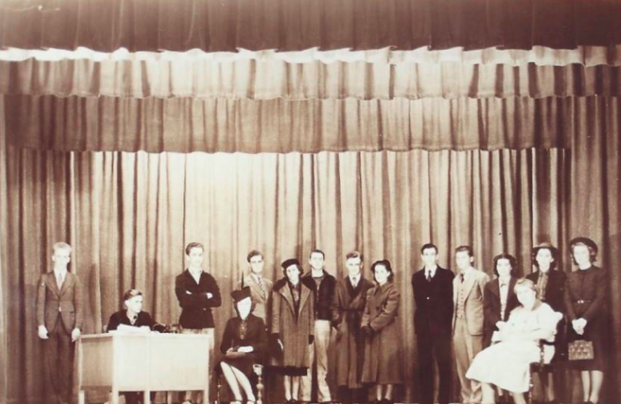
And in many ways, it hasn’t changed all that much. My son Thomas, then a Paulding student, acted in Mr. Liebo’s plays on the same stage these students are using in 1939.

And even the buildings nearby, at the base of Crown Hill, have some historical significance. Here’s another Google Earth image of the IDES Hall, built in 1948;

I don’t know that most people realize that this is the second IDES Hall, still a testament to the importance that Azorean immigration has had in Arroyo Grande’s past. Here’s another photo of the gym, from the 1930s, and at the right, you can see the first IDES Hall.

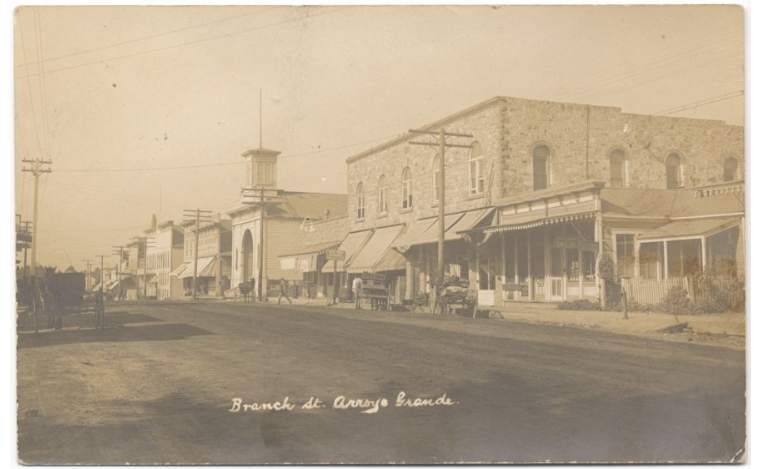
And that structure dates from the 1880s, built by the Phillips brothers, who owned a furniture store—one of their places is today’s Bill’s Place on Branch Street. But what you see in this photo is a sad remnant of a much grander, complete with steeple, Columbian Hall. Here it is, when it was still on Branch Street, in a photo taken about 1908.

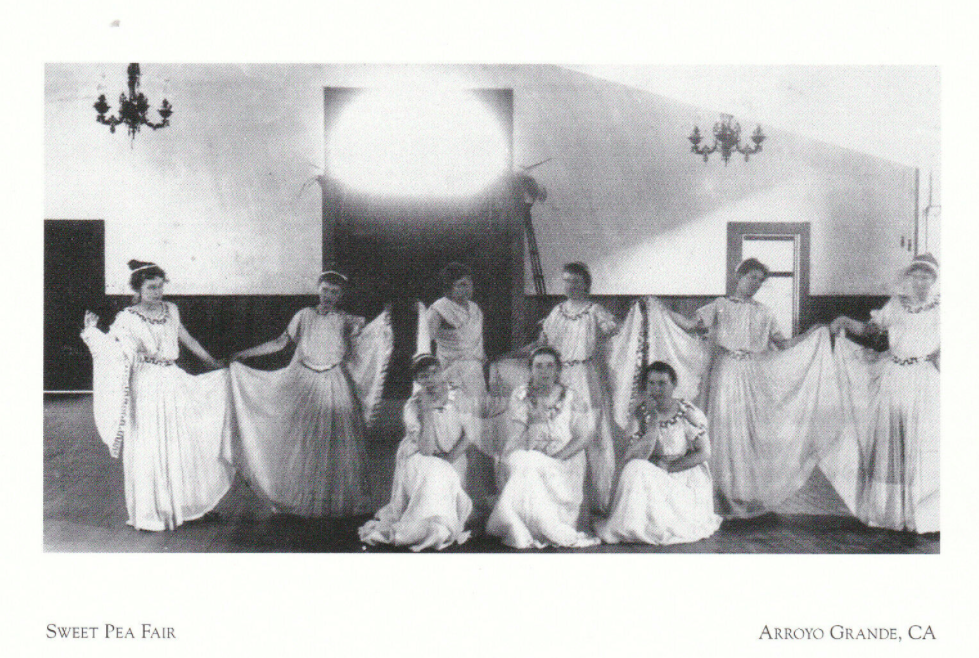
And the Columbia Hall was important—kind of an early 20th Century version of today’s Clark Center—that was the scene for everything from political meetings to Temperance lectures to recitals and plays. And dances: These young women, for all intents and purposes, are dancing in tribute to the local cash crop, the sweet pea, in the Columbian Hall.

By the 1930s, overcultivation of crops like sweet peas had just about done in the topsoil on the hillside around the Arroyo Grande Valley. 230 Civilian Conservation Crops youths from New York City, New Jersey and Delaware—their headquarters stood where today’s Woman’s Club stands–would begin to reverse the damage.


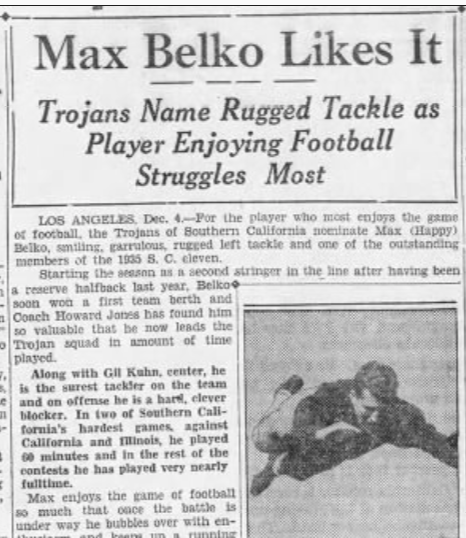
And by the 1930s, the new gym had a new coach. USC Trojan football star also coached basketball in that gym, and he brought a formidable reputation with him. Somehow, Belko, from a tough immigrant family, steelworkers, in Gary Indiana, had somehow escaped the attention of Notre Dame. USC was fine with that. His coach there, Howard Jones, called him “the finest example of a man I’ve ever coached,” and Belko, among other things, kicked a field goal against Montana in 1935. Inexplicably, USC wouldn’t kick another field goal for fifteen years. Frank Gifford kicked that one.

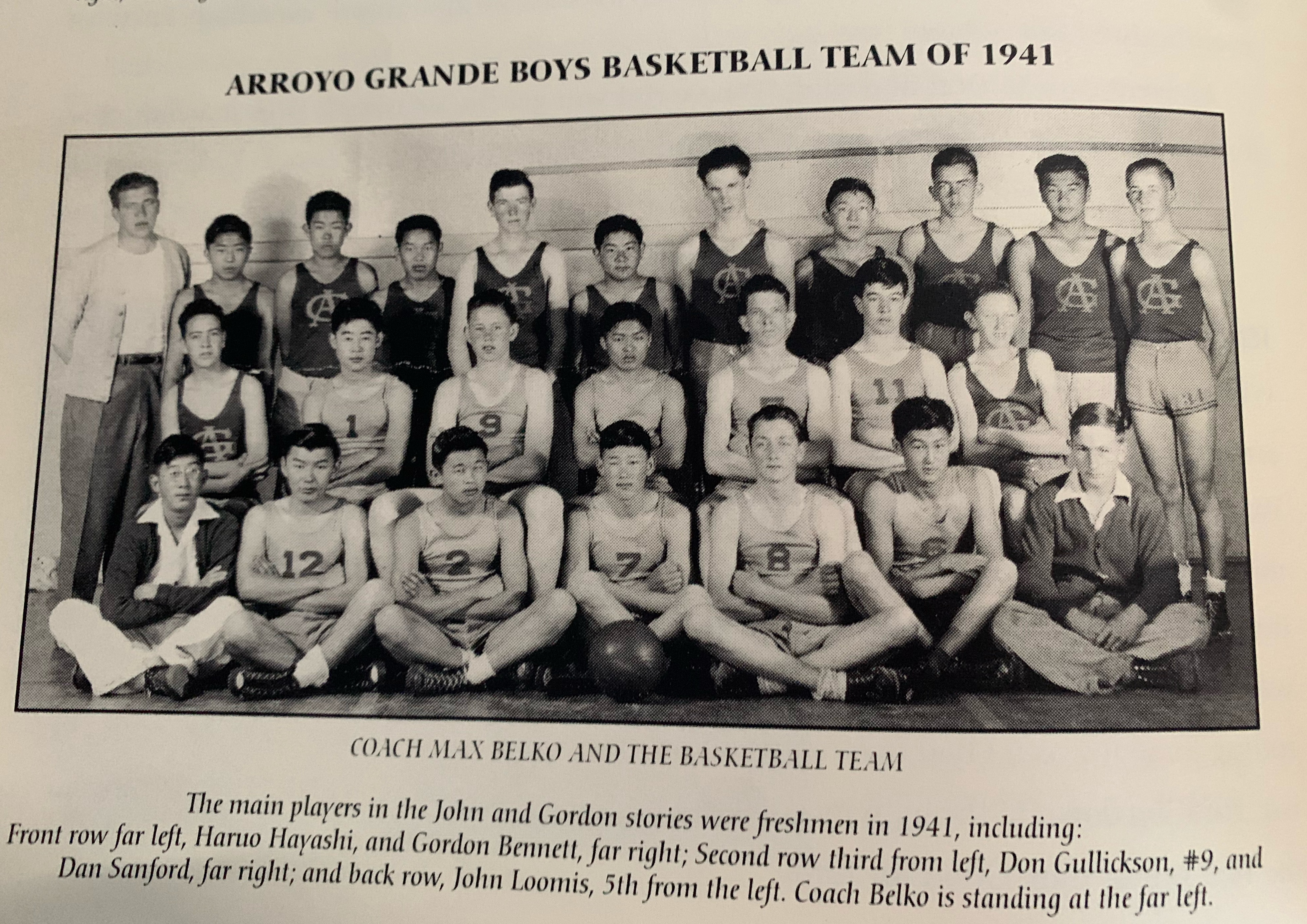
Here’s Belko and his basketball team, from Gordon Bennett and John Loomis’s book, The Old Days.

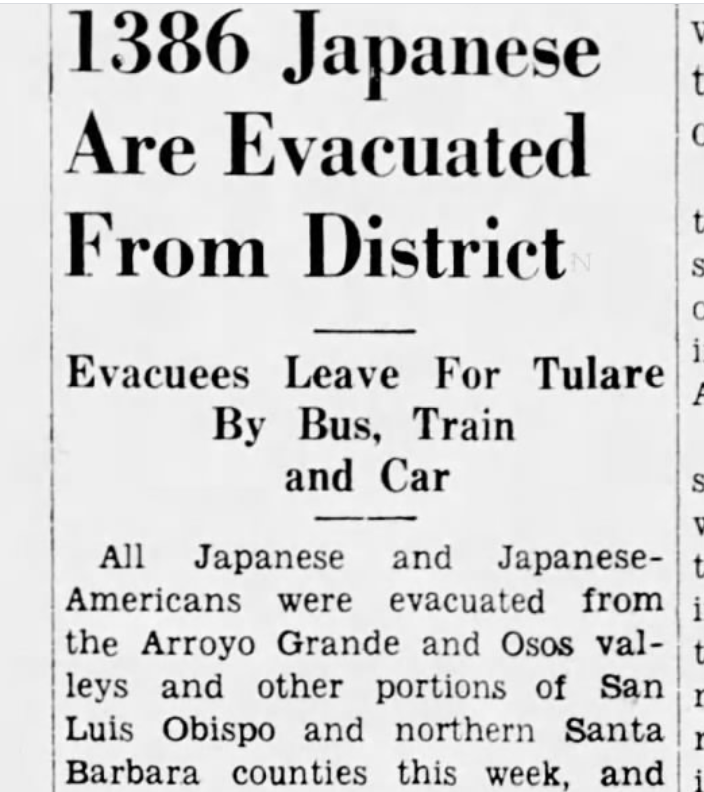
It’s not your imagination. There were a lot of Japanese-Americans who went out for basketball. That’s the next, tragic connection that the Paulding Gym has with history. On April 30, 1942, buses would assemble in the high school parking lot just outside to take local Japanese-Americans into internment. Among them were the Nisei seniors of the Arroyo Grande Union High School Class of 1942. There were fifty-eight seniors that year. Twenty-five were Japanese-Americans.

By then, Belko had left Arroyo Grande for a teaching position in Hanford. But the war would sweep him up, as well. The clipping below is from the August 14, 1944 edition of the Arroyo Grande Herald-Recorder.

There have been, of course, thousands of games played—volleyball and basketball—and hundreds of school dances and scores of plays in that old gym since Coach Belko’s time. And that’s been a long time ago. You wonder if the hopes and disappointments of the young people who once lived brief parts of their lives within its walls aren’t somehow still there, imprinted but invisible, invisible but powerful.


Mike and Julian, down by the Subaru…

05 Tuesday Oct 2021

Posted by ag1970 in Arroyo Grande, Uncategorized

≈ Leave a comment

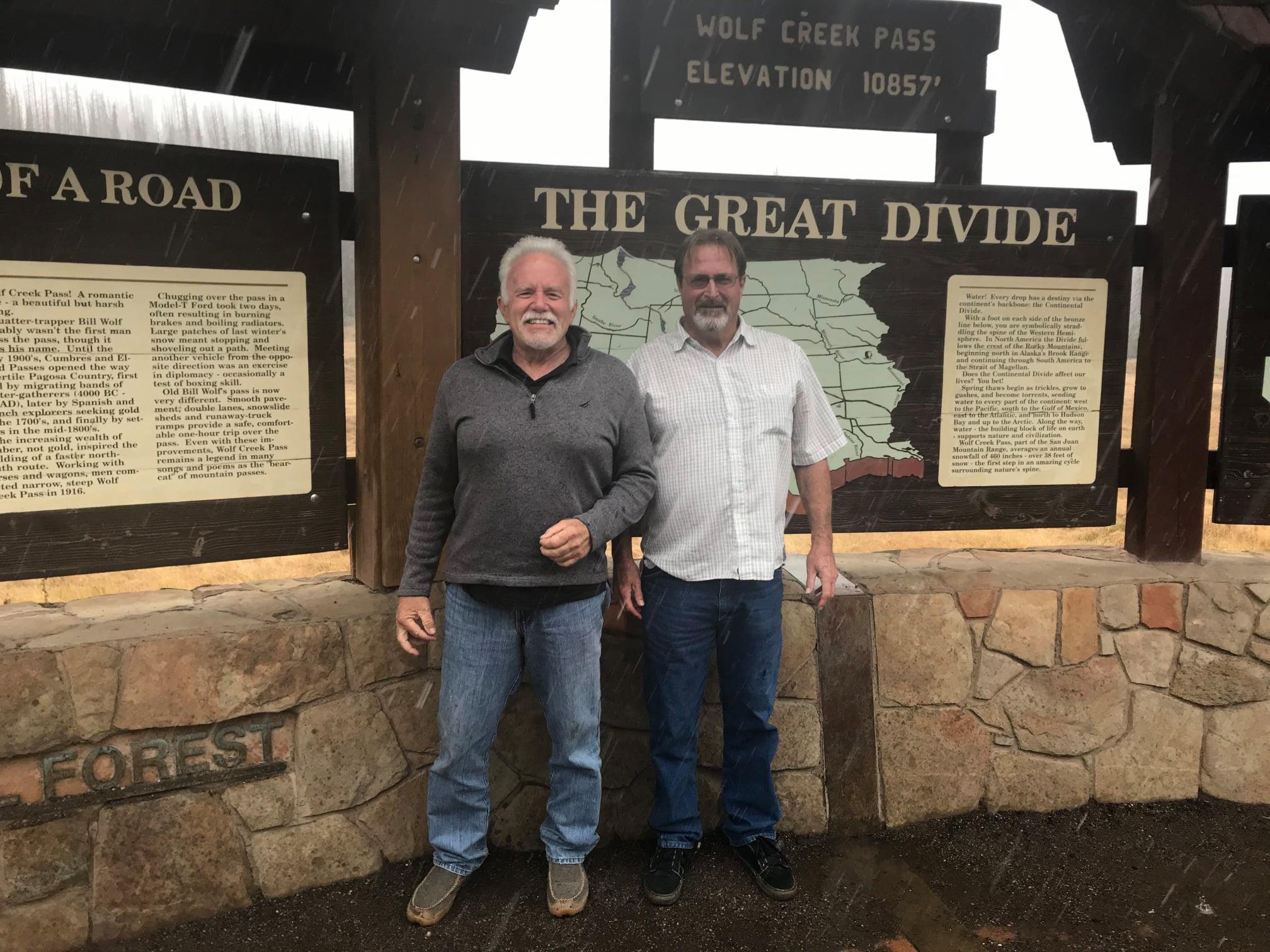
Mike Knecht and Julian Brownlee

Among my favorite human beings are my high-school classmates Julian Brownlee and Mike Knecht. Mike is a writer and a (real) cowboy; Julian—named for his grandfather, Cal Poly President Julian McPhee—a standout athlete (football, baseball) with a marvelously dry sense of humor with whom I smoked my first cigarette, a Marlboro, in the St. Patrick’s Parish Hall in 1965.

That wasn’t very humorous, but it was my owned damn fault. I turned green.

And then—to show you how obstinate I am—the same thing happened shortly after, this time with a cigar called a Rum Crook, in the Fair Oaks Theater, during a film in which the Disney actress Hayley Mills (the original Parent Trap) appeared in a scene that revealed her nude rear end. That, and the Rum Crook, proved too much for me to tolerate. I think somebody—I don’t really remember who—found me sprawled on the sidewalk beneath the Coming Attractions, took pity on me, and drove me home to Huasna Road.

A little later, in high school, I found that there was a little knot of us in the AGHS Class of 1970—Julian, Joe Loomis, John Porter and me—who all shared January birthdays as well as given names that began with “J.”

Anyway, Mike and Julian are currently on that road trip—Mike’s posting from time to time on Facebook—from San Luis Obispo County to North Carolina for a wedding, in Julian’s Subaru. (A fine car; we’ve owned three.)

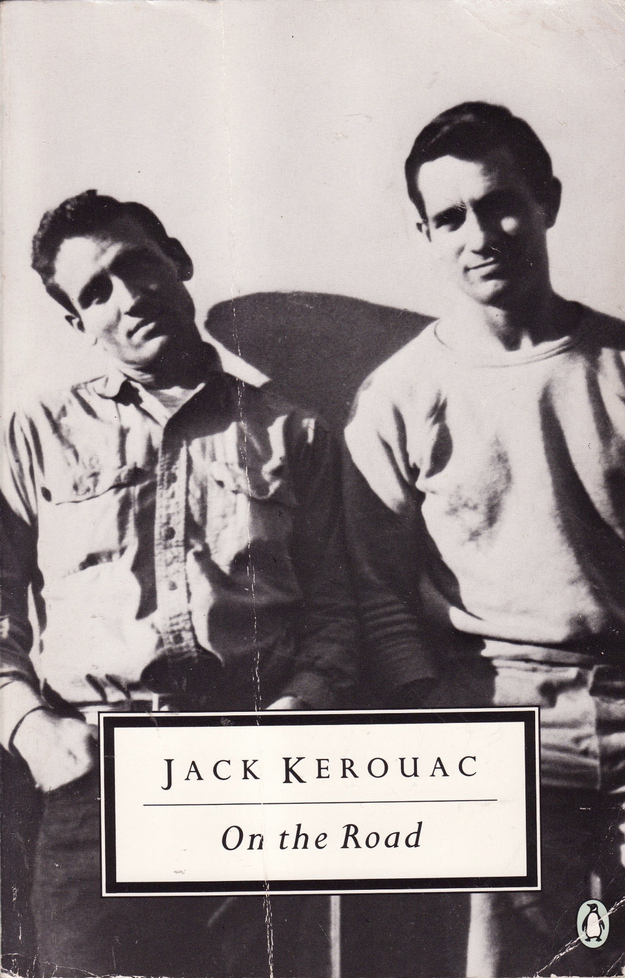
The photo shows them at the Great Divide. It has just occurred to me that they, heading east instead of west, are doing a Reverse Kerouac. These two may not know it, but not only are they are among my favorite human beings, but On the Road is among my favorite books.

Neal Cassady, left, and Jack Kerouac

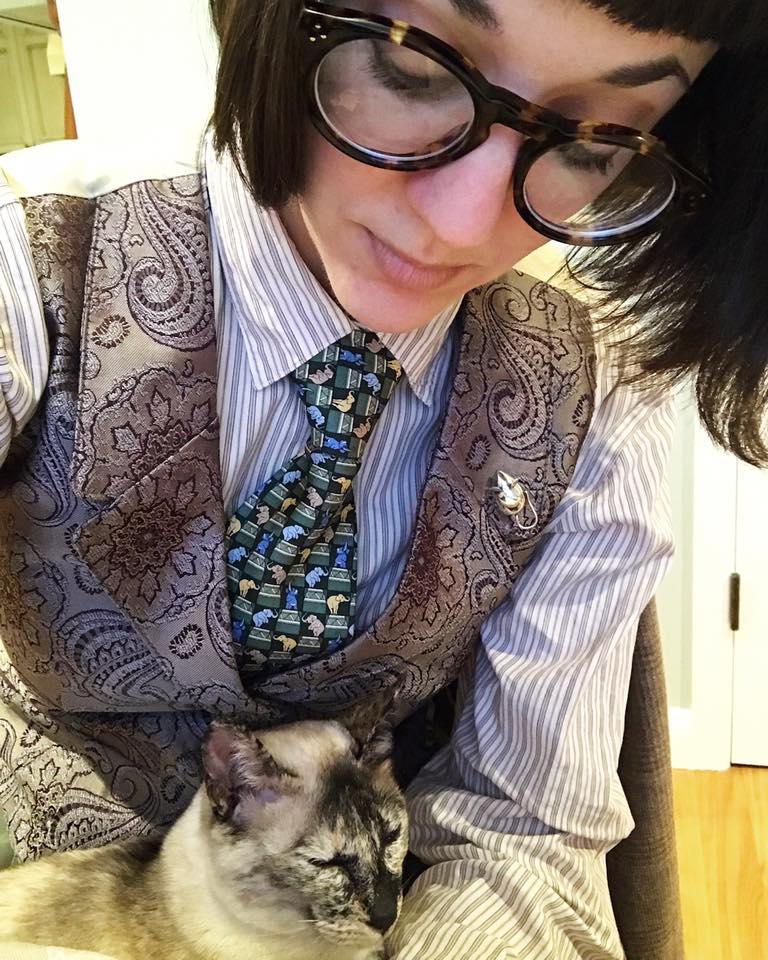
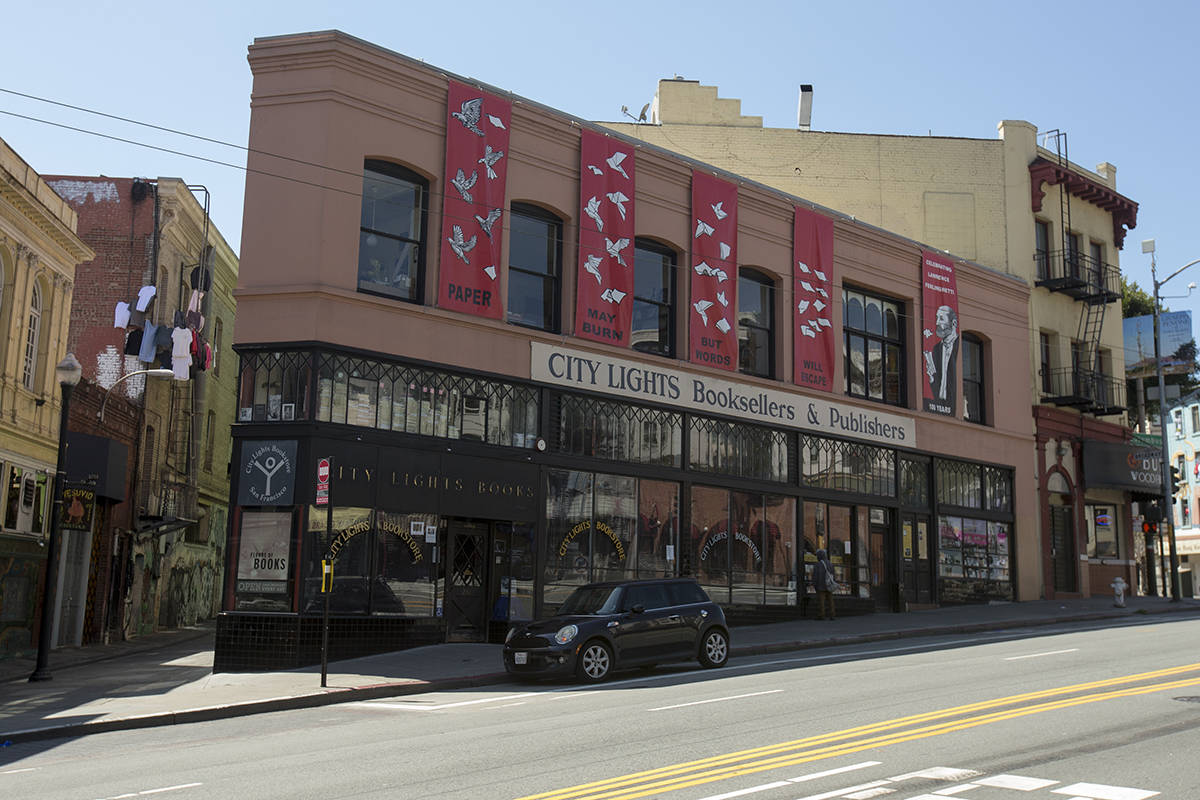
And Kerouac, while working as an SP brakeman, lived in San Luis Obispo for a short time. I get all Kerouacky when I go to my much-beloved San Francisco and visit the City Lights Bookshop, where another one of my favorite human beings, my former AGHS history student Erin Messer, works.

This is my favorite photo of Erin. We both like cats. Elizabeth and I acquired two cats early in our marriage, both calicos, named Hadley (after Hemingway’s first wife) and Bumby (the nickname for Hemingway’s eldest son).

It was a major gathering place for the Beats, including Kerouac, Cassady, Ginsberg and the City Lights founder, the poet Lawrence Ferlinghetti, who died recently.

I believe that he was more or less 140 years old.


The only bookstore that comes close to City Lights is Shakespeare and Company, founded by Sylvia Beach–from Altadena, California, of all places–and it stands just across the Seine from Notre Dame. I’ve been to Paris twice, but I was too intimidated to actually go inside the bookstore that was once frequented by Ernest Hemingway, Scott Fitzgerald, John dos Passos, Ford Madox Ford, Pablo Picasso, Gertrude Stein and Ezra Pound. I’m just a little fellow.

It was enough for me to sip a latte the size of a soup bowl at a sidewalk cafe, Les Deux Magots, and gaze fondly at Shakespeare and Company’s facade. (Hemingway would’ve done the same, but with a Pernod, a pad of yellow lined paper and a dozen #2 pencils sharpened with his pocketknife.)

After I’d finished my latte, I got moderately but happily lost in the Latin Quarter, the old university section, with my nose almost against the glass of shop windows and looking around corners up narrow alleyways—an alley, in Europe, is called a “close”— once prowled by belligerent university students, thinking it was Poly Royal, armed with cudgels and fortified by red wine. The alleys, always in shadow, are 14th-century relics that somehow escaped Baron Hausmann’s reconstruction of Paris in the time of Napoleon III.

That was a good Lost. I think Mike and Julian are reasonable navigators, so they won’t get lost. They might run into a little culture-shock, like the time the guy hollered at me from a pickup truck in the Ozarks:

“Hey, boy!”

Actually, it was more like:

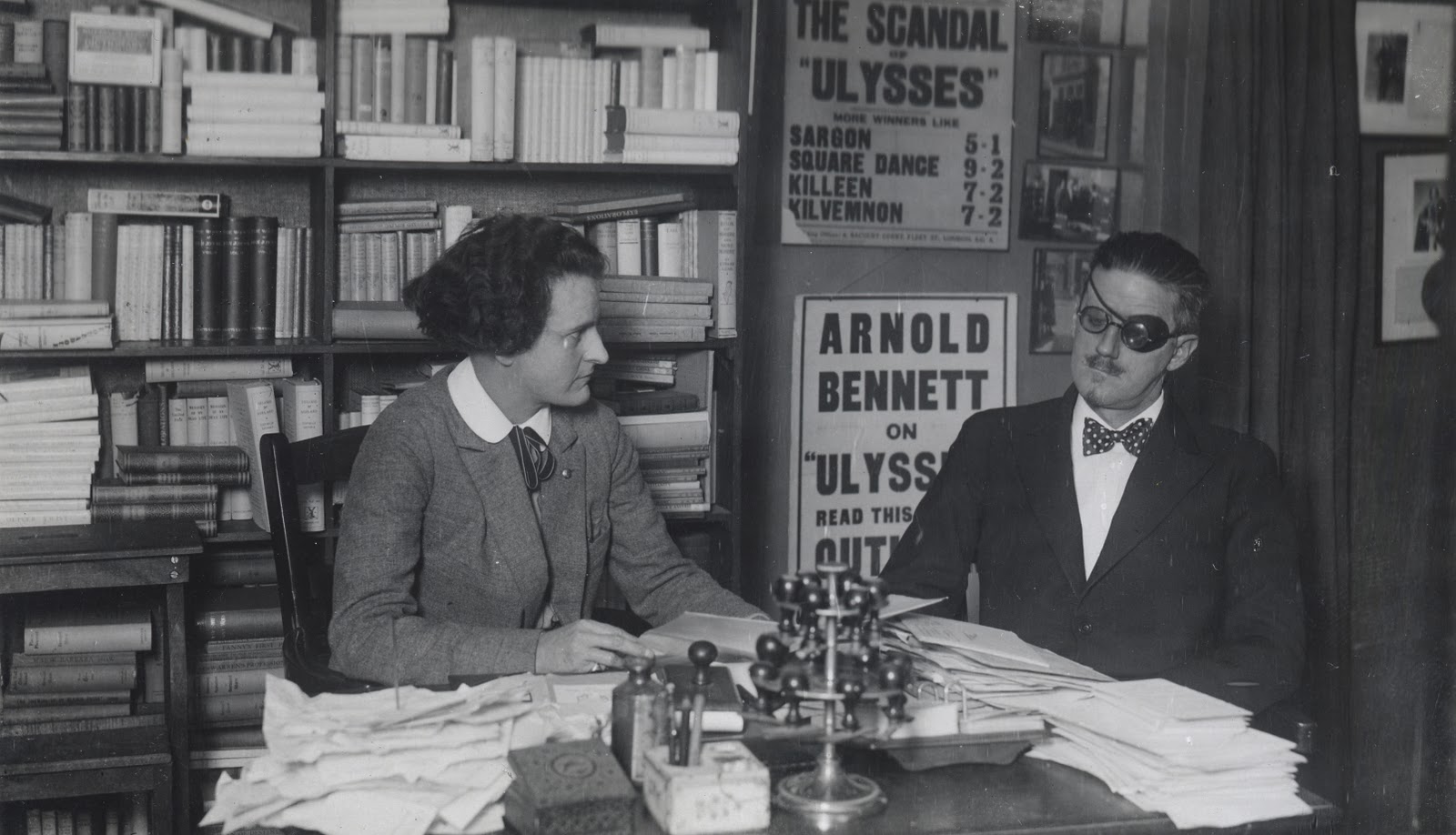
Sylvia Beach and James Joyce inside Shakespeare and Company

“Hey, BOY!“

I was 25 years old and walking to a hamburger stand in Licking, Missouri, for some French-fried mushrooms, an Ozark delicacy. I looked nervously for the Easy Rider Rifle Rack in the pickup’s cab, but it turned out that the man was just asking for directions.

But that’s another story. As to this current road trip with Mike and Julian, I don’t know which one is Kerouac and which is Neal Cassady. I don’t think that’s very important. It’s more important to have friends like these. We don’t see each other very much anymore, but every time Mike posts, our friendships are renewed.

It’s a gift, you see.

Dragonflies

03 Sunday Oct 2021

Posted by ag1970 in Arroyo Grande, Personal memoirs, Teaching, Uncategorized

≈ Leave a comment


This is a story I heard today. I won’t get the details exactly right, but even so, this is a true story.

A young woman went to visit her friend, afflicted with cancer. When she entered the sickroom, she knew immediately that the end was pretty close.

–Would you like to go outside for a bit?

–Yes. I’d like that.

So the visitor wheeled her friend out to the garden where there would be sunlight and warmth and a little breeze.


There would be flowers.

There were two dragonflies flitting about the flowers. The visitor pointed them out, but her friend, Dawn, had seen them first.

She knew who they were. Her father and grandmother had come to be with her, she announced with confidence from her wheelchair.

I think that death confers on people who’ve lived good and unselfish and courageous lives—all of these describe the Dawn’s life, the young woman in the wheelchair— a wisdom near the end that we cannot understand. It gives them a clarity of vision that allows them to see what we cannot see.

It wasn’t long until death came. The visitor—a real friend, the friend of this person, now dying—Dawn had always drawn people to her the way flowers draw dragonflies—-came to visit on the last day. It would be presumptuous to call it the “final” day, because I believe that all of us will embrace each other again someday, and it will be a long time before we let go and step back, smiling, to regard each other in perfect wonder.

But when that day was over, when Dawn summoned the courage to give up her struggle, the visitor left the sickroom and walked into the sunlit garden.

Just above her shoulder, there was a dragonfly.

“Hello, sister,” the visitor whispered.

My friend Dawn.


This is Hozier, and he’s singing an old Irish song of farewell, “The Parting Glass,” on an Irish talk show, dedicated to a health worker who died of Covid 19.


Coming Home

02 Saturday Oct 2021

Posted by ag1970 in American History, Arroyo Grande, History, Uncategorized, World War II

≈ Leave a comment

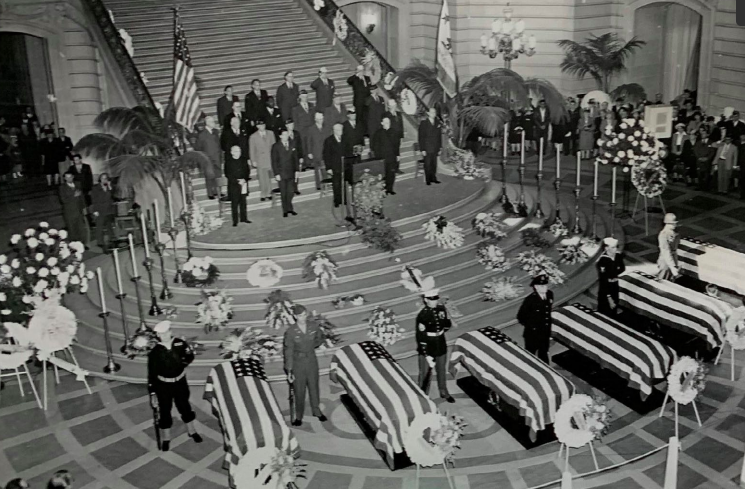
The first World War II American casualties to be repatriated, San Francisco, October 1947. US Dept. of Veterans’ Affairs

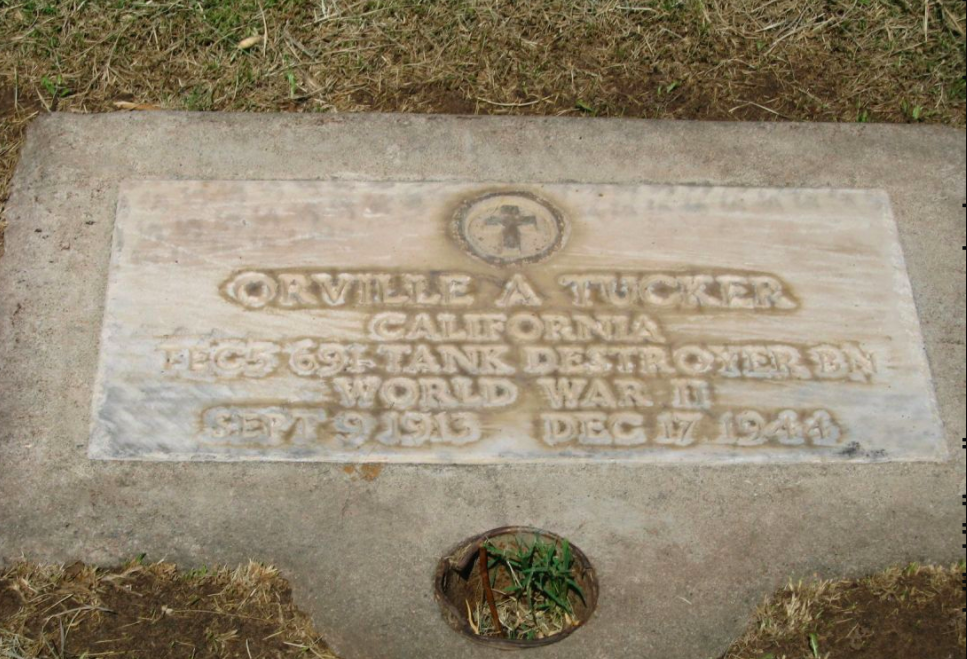
Of course I didn’t expect to meet him, but T5 Orville Tucker’s death crossed my life today. Here’s his grave, in the Arroyo Grande District Cemetery.

And there were a lot of things that struck me about him. The first was his date of death, and dates mean something to historians. We lost this American on the second day of Operation Wacht am Rhein, in what we now call the Battle of the Bulge.

It struck me, too, that he was part of a tank destroyer unit, like Frank Gularte, another Arroyo Grandean I know much better. Tucker was a member of the 691st TD Battalion, Gularte was part of the 607th. And the two soldiers died only days apart. Here’s what I wrote about Gularte on a website that memorializes fallen GI’s, killed in the war my father’s generation fought:

Sgt. Gularte served with the 607th Tank Destroyer Battalion and was killed in action 28 November 1944 near Metz, possibly outside the town of Merten. His son was born five days later in San Luis Obispo County, California. A memorial Mass was said in Sgt. Gularte’s memory at St. Patrick’s Church, Arroyo Grande, San Luis Obispo County, on Wed., 13 December 1944. Sgt. Gularte, before the war, was employed by E.C. Loomis and Son, a farm supply company; Gularte and his family were and are well-known and highly respected in the Arroyo Grande area.

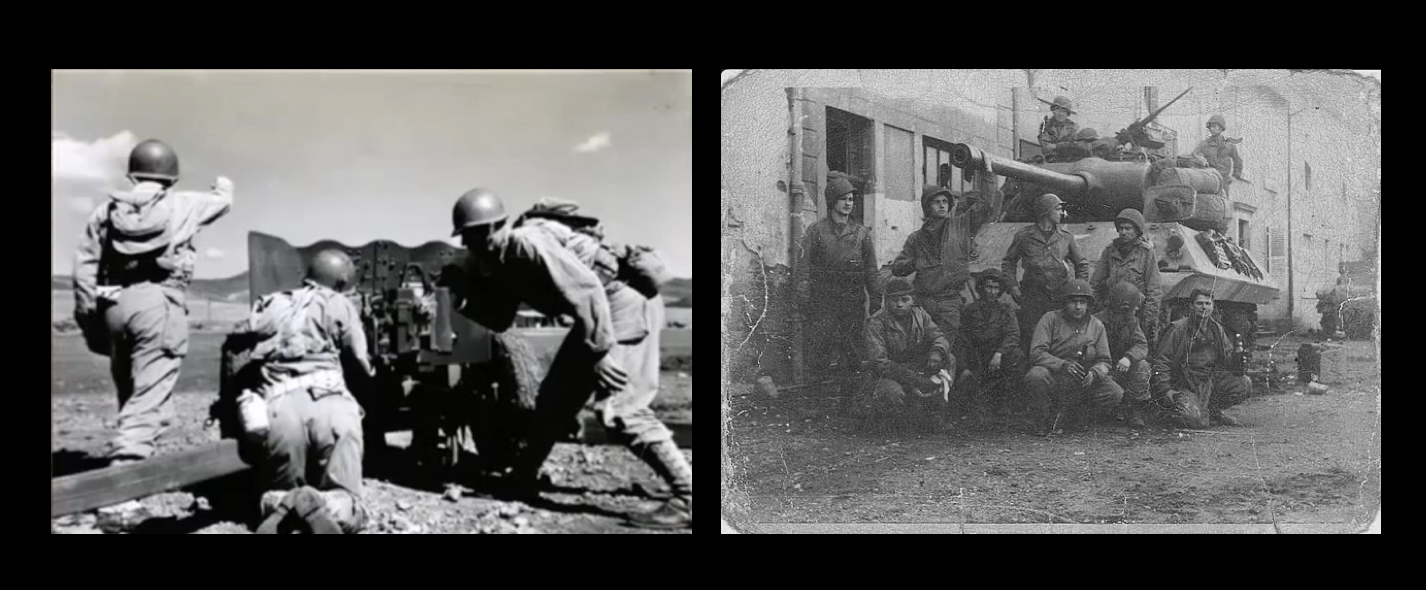
At the time of his death, Tucker’s battalion was still fighting enemy armor with the 57-mm artillery piece, like the one at left being manned by soldiers training at Camp San Luis Obispo in 1944. Frank’s 607th had graduated to the M36 tank destroyer–that’s a 607th TD in the other photo—built on the chassis and hull of the famed Sherman tank, but with a much more robust 90-mm gun.

But it was likely a Mauser rifle that killed Frank, in the hands of a German sniper, during an attack by the 607th that was to have been supported by infantry. They didn’t show, so Frank’s company went into action alone. German fire disabled three tank destroyers edging into Merten—a beautiful mountain town— and the American attack bogged down. Chaos ensued and it claimed Sgt. Gularte.

I don’t know yet how Orville died, but he’s got another tie to the Gularte family.

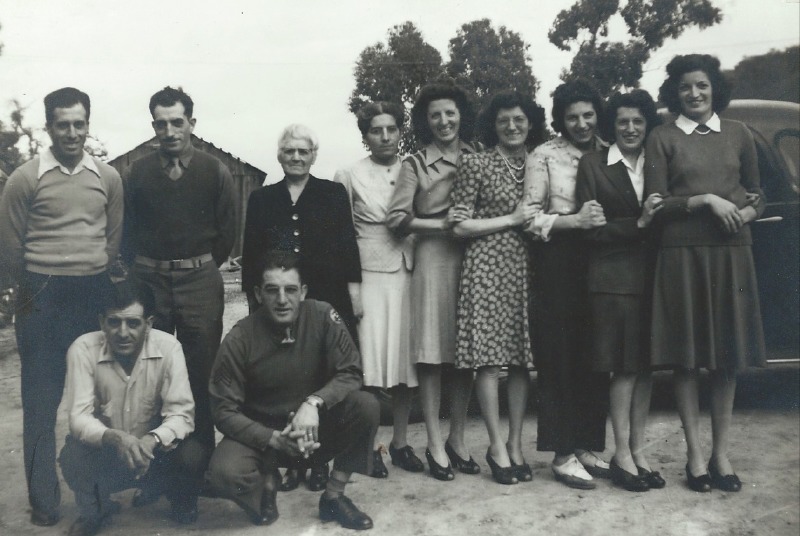
A family barbecue at the Gularte Ranch, behind the site of the IDES Hall just below Crown Hill. Manuel Gularte is standing; Frank is kneeling: Both are about to go to war in Europe.


As near as I can tell, in the opening hours of the Battle of the Bulge, Orville Tucker’s battalion was attached to the 28th Infantry Division. They were defending St. Vith, a Belgian town directly in the enemy’s line of advance and at the seam of two powerful German armies. Twenty-two thousand Americans were in the way of 100,000 Germans and their armor, including 500 tanks. The units that attacked St. Vith on December 17 included the 1st SS Panzer Division Leibstandarte SS Adolf Hitler, an SS unit that had it origins as the dictator’s bodyguard.

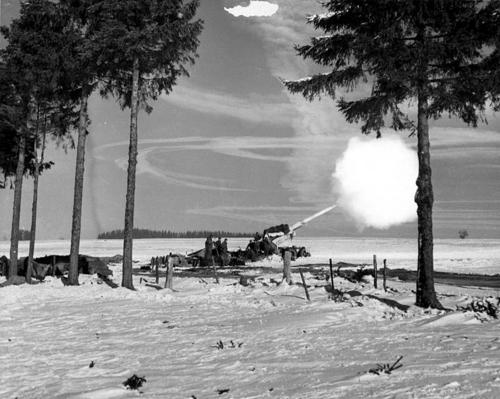
Their assignment was to take St. Vith by midnight December 17. It didn’t work out that way, partly in thanks to Orville Tucker and partly because of Frank’s brother, Manuel, also fighting to defend St. Vith. (Two Arroyo Grande settlers, Civil War veterans, had fought in separate regiments within 300 yards of each other at Gettysburg.) Manuel’s field artillery unit–they tended big 155-mm guns, updated versions of the artillery that stood guard over San Luis Bay here at home–and it was the accuracy and ferocity of their fire that delayed the German advance.

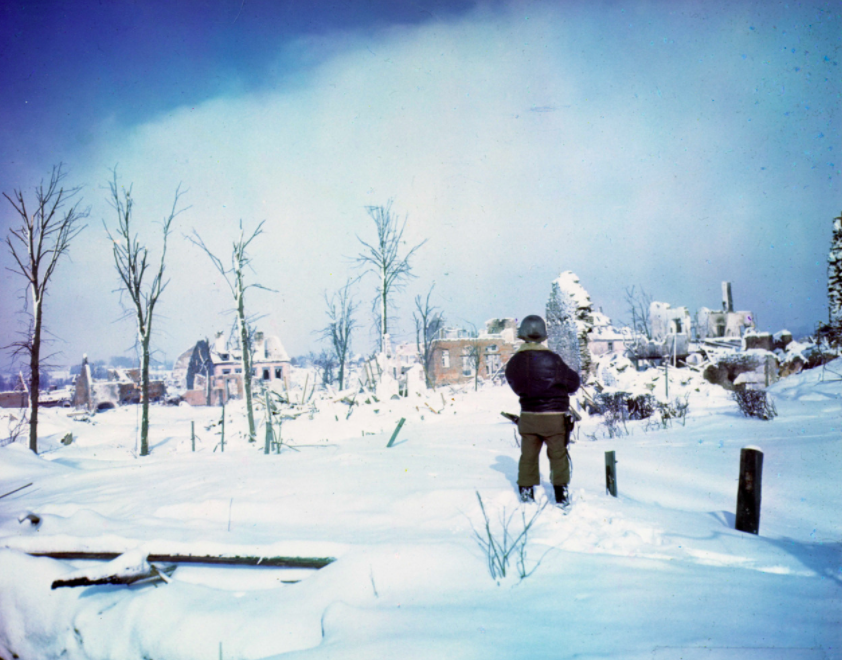
A 155-mm gun in action during the Battle of the Bulge; a GI on the outskirts of St. Vith in January 1945. The Battle of the Bulge was fought during the coldest winter in Europe in thirty years.

“Delay” was exactly what was needed. The panzers were fuel-poor (because Germany was: Berlin taxis were running on firewood in 1944) and the success of the Battle of the Ardennes depended on speed, on objectives seized promptly, even on the hopeful seizure of vast American stockpiles of gasoline.

Those might’ve been dispatched to the battlefield by my father, a lowly Quartermaster second lieutenant whose responsibilities included providing the African-American gasoline supply companies that kept the American army on the move.

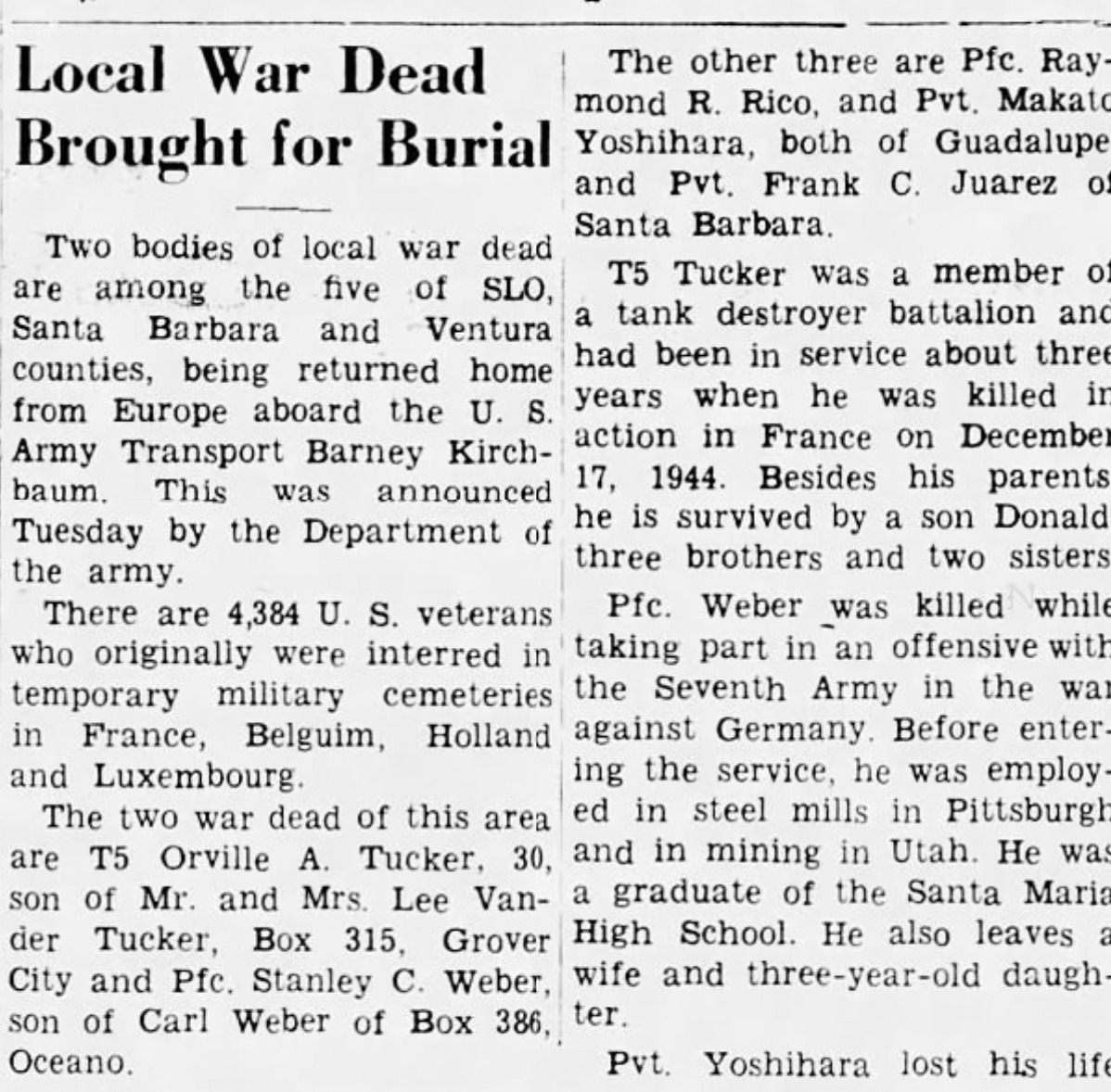
By the time the American army had stopped moving—backward—and flattened the Bulge salient, 20,000 GI’s were dead, among them Orville Tucker. And though he died 5,000 miles away, Tucker was evidently one of the first local GI’s to come home. This is from the December 31, 1948, edition of the Arroyo Grande Herald-Recorder:


A sniper killed Yoshihara on the German frontier as the young man, a medic, was trying to save a brother soldier.

And the ship that brought Orville’s body home, the Barney Kirschbaum, named for an American merchant mariner killed in a 1943 U-boat attack, was a Liberty Ship, one of the miracles of the war, one of 2,710 such freighters launched from American shipyards during the war. Kirschbaum would’ve looked exactly like San Francisco’s Jeremiah O’Brien, tied up at Pier 45. (In 1994, O’Brien had the distinction of returning to the European Theater—to Normandy, no less—where she’d been part of D-Day fifty years before.)

The war dead intersect with my father’s life, as well. Once the war had ended, his duty shifted to training GI’s, nineteen-year-olds, some of them grads from Class of ’44. They’d come to Europe prepared the fight Germans, but the war was over, so Dad’s work, and theirs, was in Graves Registration. He trained these soldiers in the ghastly work of identifying the young Americans the war had claimed. Those young men—forever young— were then to be buried in one of a network of American military cemeteries. Many of those casualties, like Orville Tucker, would eventually come home.

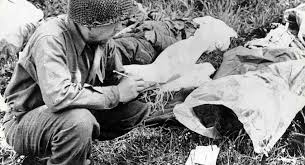
A Quartermaster, part of a Graves Registration unit, records the identities, soon after battle, of fallen soldiers.

One of the soldiers who came home after the war—in my family’s case to rural Missouri— was my father’s cousin, Roy.

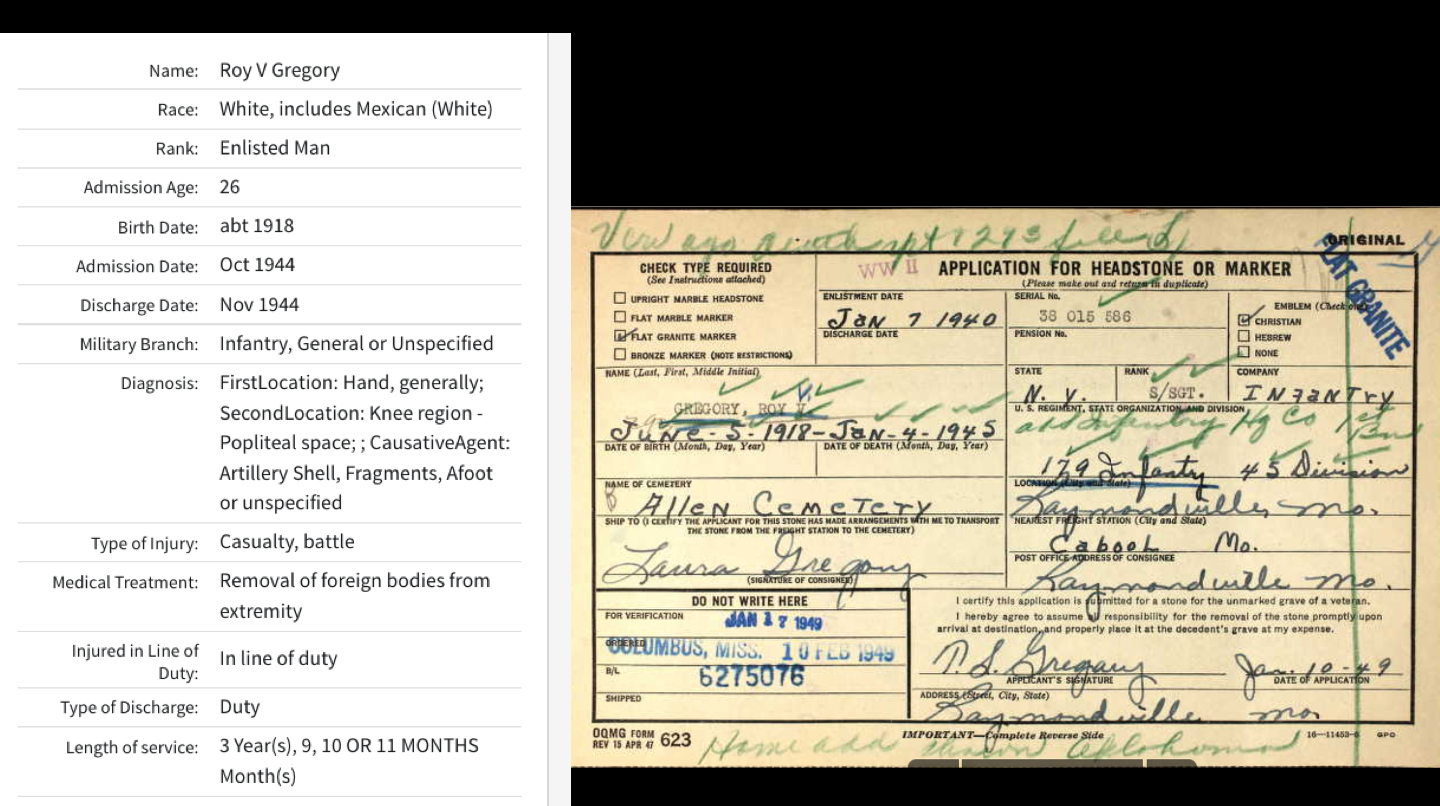
Roy was discharged from a field hospital, where he’d been treated for shrapnel wounds, in November 1944. He went back into action in Alsace, where, in January 1945, another elite SS unit essentially wiped out the headquarters company to which he was attached.

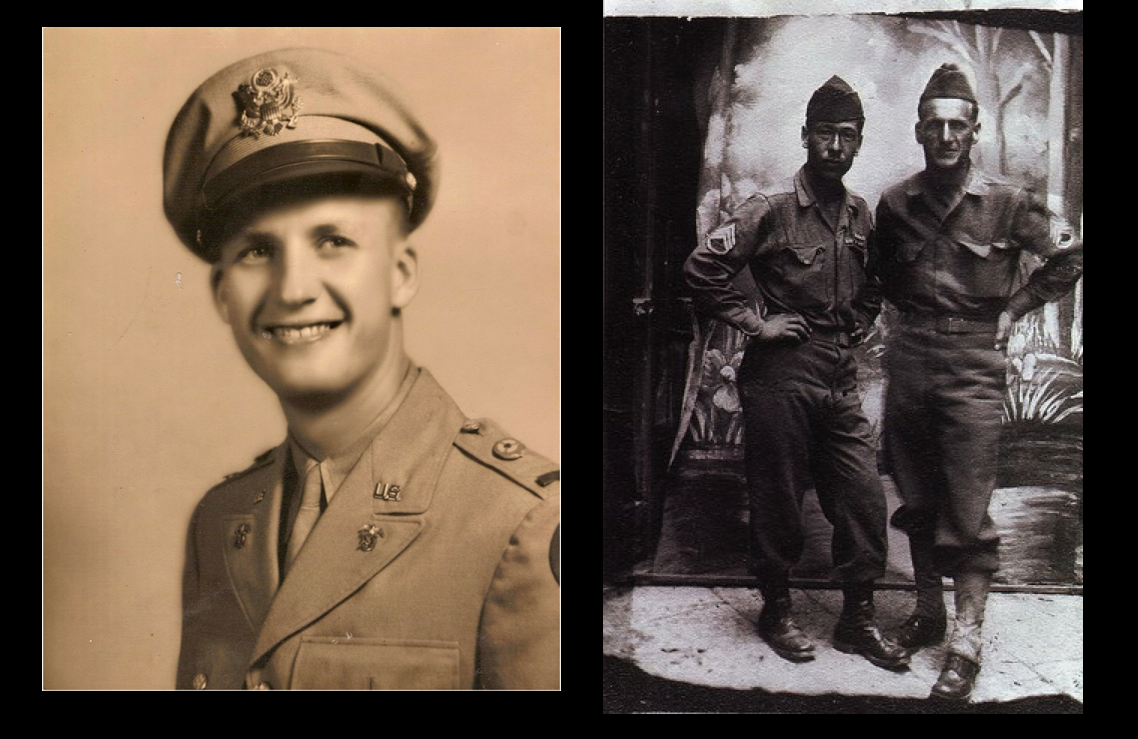
Roy—who’d fought with his buddy, Sgt. Chew, in Sicily, Italy, and finally France–looks remarkably like my Dad.

Sgt. Gregory’s hospital record; the family’s application for a military headstone. He is buried near my grandfather, John Smith Gregory.
My father as a lieutenant; Sgts. Chew and Gregory in a studio photograph taken in Italy.


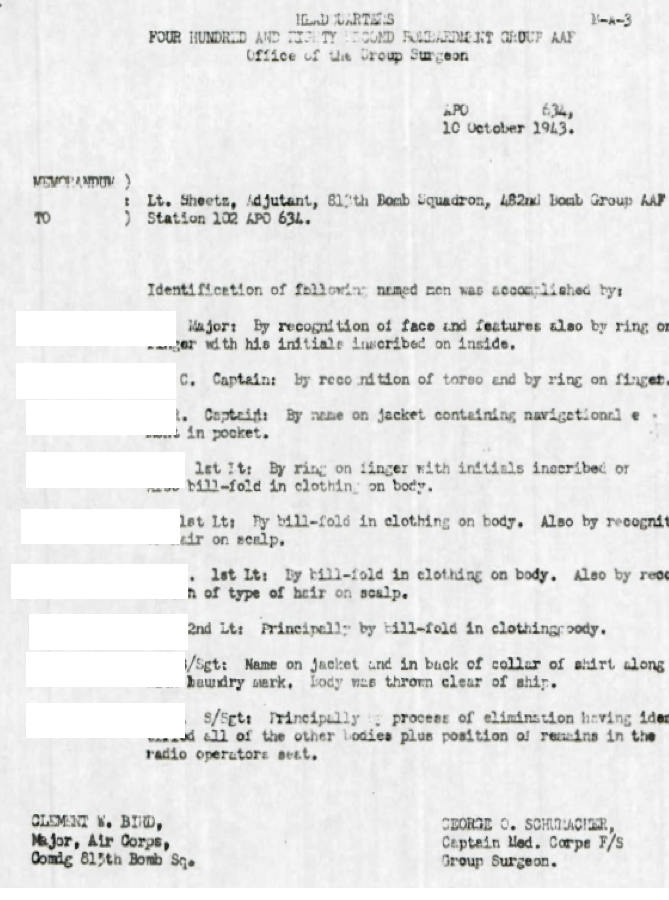
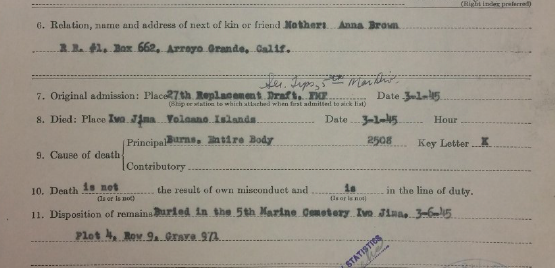
Graves registration work was ghastly, of course, because of the way these young men had died. Sometimes, in the Army Air Forces, when the flight surgeon of a bomb group had the duty of identifying the dead, the clues were circumstantial and almost always, as in the case of this Marine killed on Iwo Jima, the deaths were violent beyond imagination.

The dead recorded from this B-17 accident in northern England include Clarence “Hank” Ballagh, a young man whose ancestors came to Arroyo Grande in a covered wagon. He was the AGUHS valedictorian in 1938 and graduated from Cal with an engineering degree.
This young Marine, Louis Brown, was a farmer’s son from Corbett Canyon.

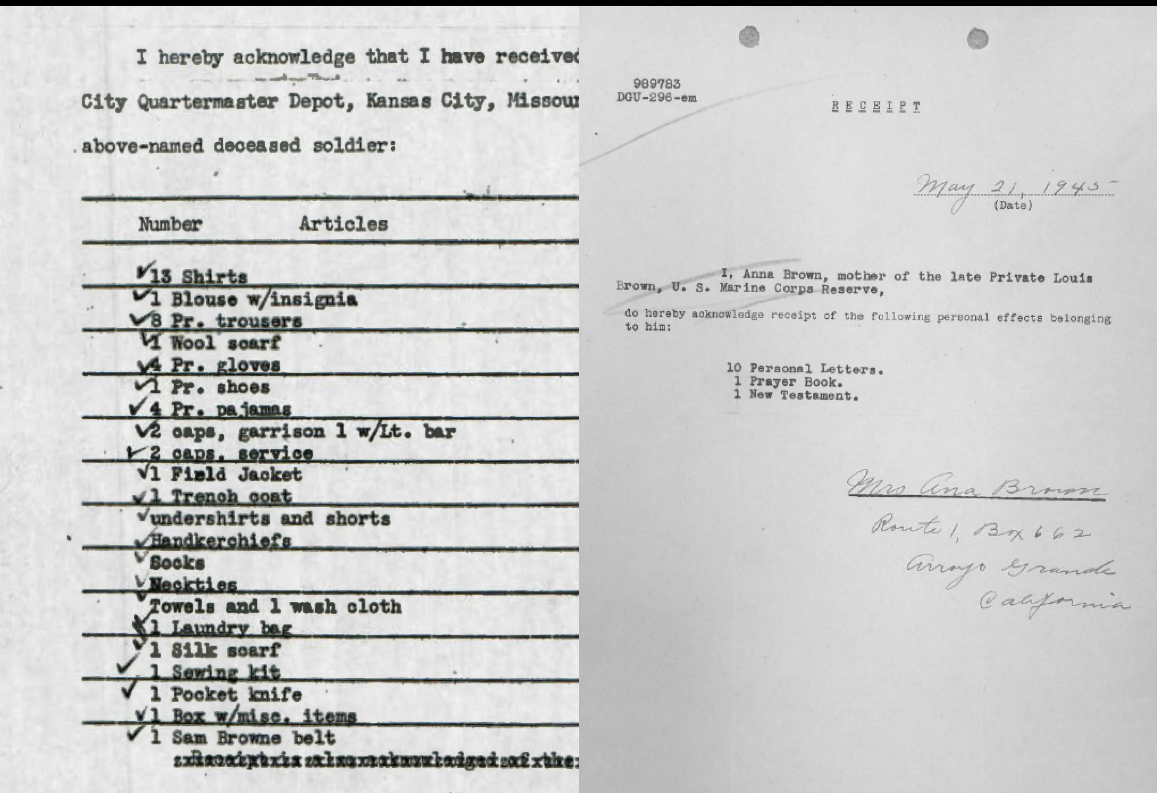
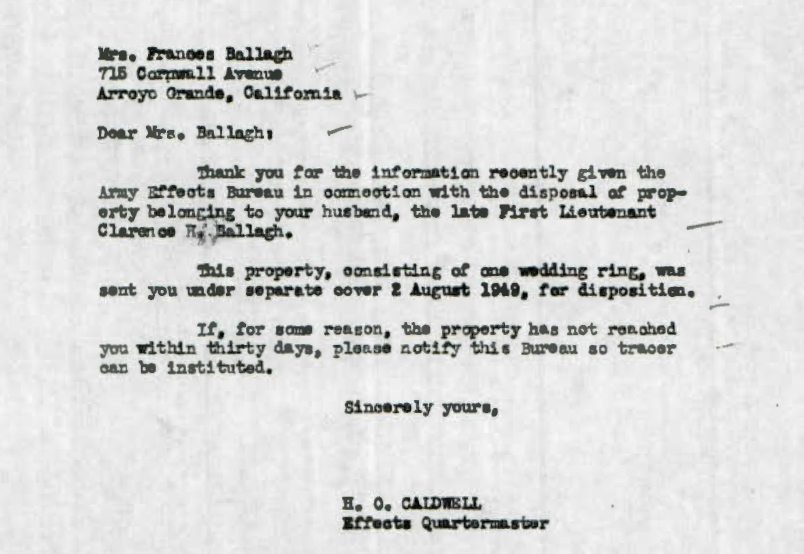
The Quartermasters also took charge of cataloguing a fallen man’s personal effects, and these reveal—with the possible exception of the Army Air Forces, where the sharp lines of rank blurred among bomber crews—that there remained a vast social gap between officers and enlisted men. These are the personal effects of Lt. Ballagh, the Berkeley grad, and Private Brown, who, like 64% of Americans in 1940, hadn’t finished high school:

Brown’s Rosary is listed in a separate Navy Department letter to his mother.

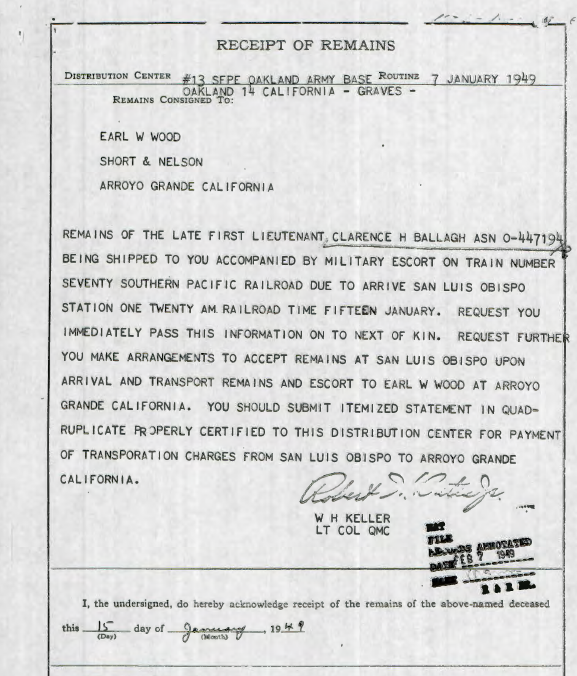
Ballagh was killed when his plane flew into the side of an English mountain; fragments of the B-17 remain there today. Brown was killed, most likely by a Japanese land mine, no more than 48 hours after he went into action on Iwo Jima. Both came home to Arroyo Grande, in a bureaucratic ballet in quadruplicate steps, that was unmistakably human. There’s no mistake that the Army wants Lt. Ballagh, even in death, to come home safely.

The records of the dead, I think, are important: they force us to confront a war now safely confined to history books and television screens. Beyond that, they reveal the terrible price that the living had to pay, as well.


← Older posts
Newer posts →

Subscribe

  • Entries (RSS)
  • Comments (RSS)

Archives

  • June 2026
  • May 2026
  • April 2026
  • March 2026
  • February 2026
  • January 2026
  • December 2025
  • November 2025
  • October 2025
  • September 2025
  • August 2025
  • July 2025
  • June 2025
  • May 2025
  • April 2025
  • March 2025
  • February 2025
  • January 2025
  • December 2024
  • November 2024
  • October 2024
  • September 2024
  • August 2024
  • July 2024
  • June 2024
  • May 2024
  • April 2024
  • March 2024
  • February 2024
  • January 2024
  • December 2023
  • November 2023
  • October 2023
  • September 2023
  • August 2023
  • July 2023
  • June 2023
  • May 2023
  • April 2023
  • March 2023
  • February 2023
  • January 2023
  • December 2022
  • November 2022
  • October 2022
  • September 2022
  • August 2022
  • May 2022
  • April 2022
  • March 2022
  • February 2022
  • January 2022
  • December 2021
  • November 2021
  • October 2021
  • September 2021
  • August 2021
  • July 2021
  • June 2021
  • April 2021
  • March 2021
  • February 2021
  • January 2021
  • December 2020
  • November 2020
  • August 2020
  • July 2020
  • June 2020
  • May 2020
  • April 2020
  • January 2020
  • December 2019
  • November 2019
  • October 2019
  • September 2019
  • August 2019
  • May 2019
  • April 2019
  • March 2019
  • February 2019
  • January 2019
  • December 2018
  • November 2018
  • October 2018
  • September 2018
  • July 2018
  • June 2018
  • May 2018
  • April 2018
  • March 2018
  • February 2018
  • January 2018
  • December 2017
  • November 2017
  • October 2017
  • April 2017
  • March 2017
  • December 2016
  • November 2016
  • October 2016
  • September 2016
  • August 2016
  • July 2016
  • June 2016
  • April 2016
  • March 2016
  • February 2016
  • January 2016
  • December 2015
  • November 2015
  • October 2015
  • September 2015
  • August 2015
  • July 2015
  • June 2015
  • May 2015
  • April 2015
  • March 2015
  • February 2015
  • January 2015
  • December 2014
  • November 2014
  • September 2014
  • August 2014
  • July 2014

Categories

  • American History
  • Arroyo Grande
  • California history
  • Family history
  • Film and Popular Culture
  • History
  • News
  • Personal memoirs
  • Teaching
  • The Great Depression
  • trump
  • Uncategorized
  • World War II
  • Writing

Meta

  • Create account
  • Log in

Blog at WordPress.com.

  • Subscribe Subscribed
    • A Work in Progress
    • Join 69 other subscribers
    • Already have a WordPress.com account? Log in now.
    • A Work in Progress
    • Subscribe Subscribed
    • Sign up
    • Log in
    • Report this content
    • View site in Reader
    • Manage subscriptions
    • Collapse this bar

Loading Comments...