For a proposed Memorial Day Speech at the Arroyo Grande Cemetery, May 29, 2023.
In 1963, my older brother went out for the wrestling team at what was then Arroyo Grande Union High School. That’s when he met arguably the toughest kid on the team—maybe the toughest athlete in the high school’s Class of 1966.
His name was Pete.
My brother was the son of an accountant; our Dad was the comptroller for Madonna Construction. Pete was a farmer’s son.
Dad’s ancestors migrated from England to Virginia in the 17th century; Pete’s father was an immigrant from the Philippines.
My brother was a hard worker, maybe happiest behind the wheel of our Ford garden tractor. Pete was a hard worker because he had to be.
Pete was a natural athlete. Neither my brother nor I are natural athletes. But here’s what my brother said about his wrestling teammate:
“He was nice to me, and he didn’t have to be.”
Please keep those words in mind for a few minutes.
“He was nice to me, and he didn’t have to be.”
Bear with me. I have to recite a few statistics.
The Vietnam War claimed eleven young South County men. Nine of them are near us today. One is buried in Santa Maria. One remains missing in action.
Thirty-four San Luis Obispo County men died in the Vietnam War.
Most of them were soldiers. Eight were Marines.
The ratio of Californians killed in Vietnam was twenty-eight deaths for every 100,000 residents. For San Luis Obispo County, it was thirty-two deaths for every 100,000 residents.
The average age of a Vietnam serviceman was twenty-two. At the times of their deaths, most County servicemen were twenty-one.
The most common cause of combat deaths was from grenades, which claimed eight of our young men. Whether hand-thrown or fired as RPG’s, this meant that fighting was at close quarters.
Mortar or artillery fire took six more.
The greatest number of county casualties—eleven—came in 1968, the year of the Tet Offensive. Nine more died the following year.
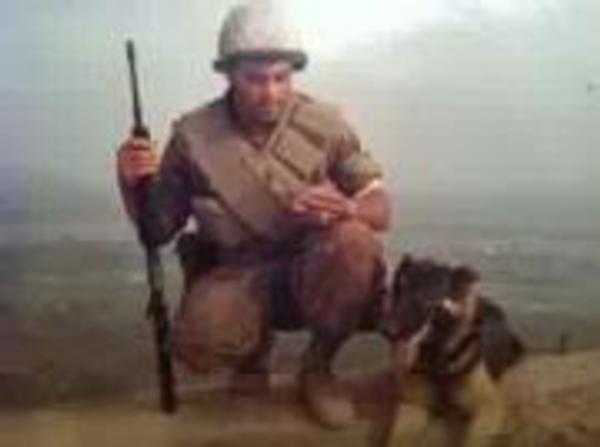
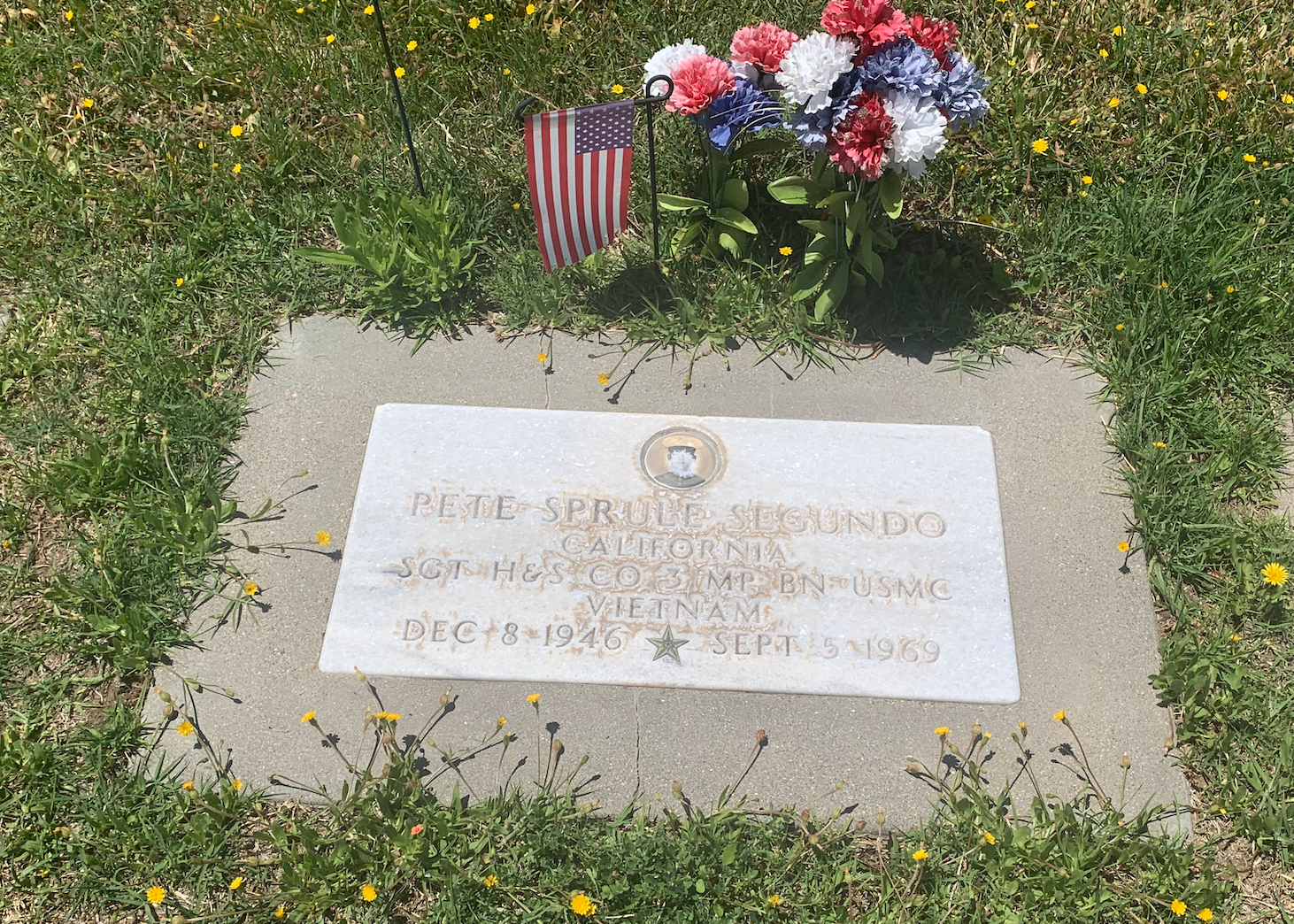
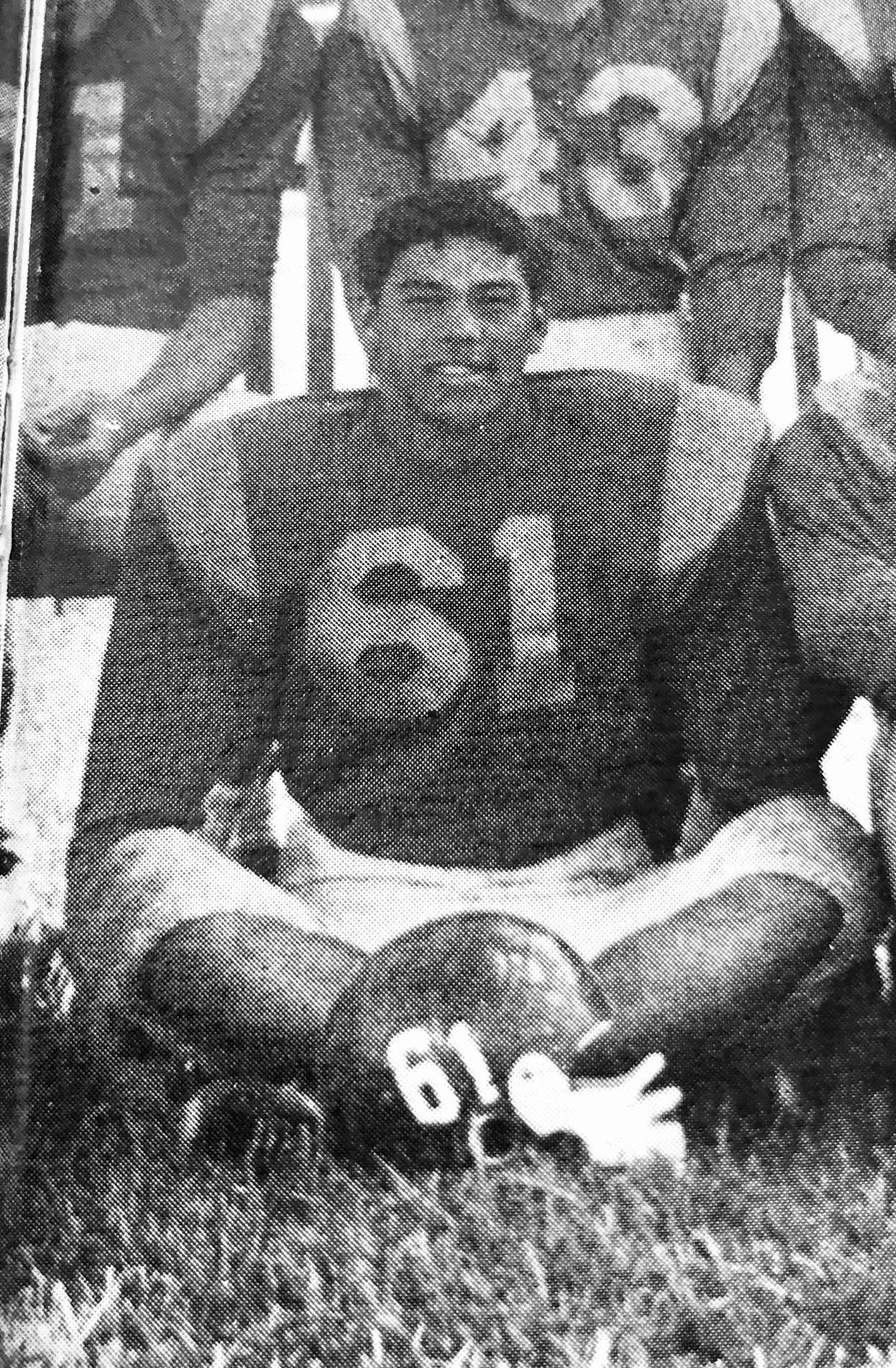
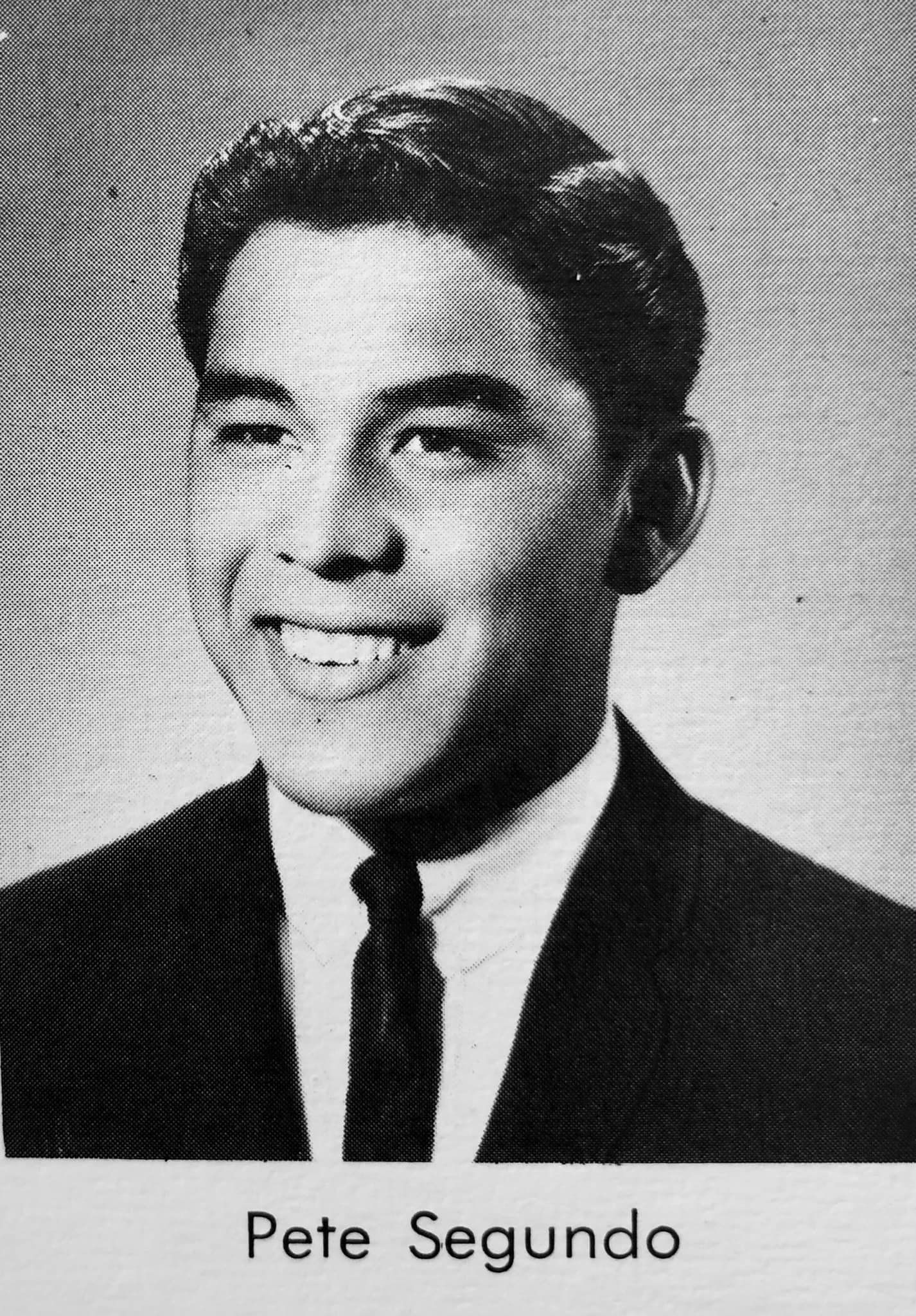
One of those killed in 1969 was Marine Sgt. Pete Segundo. His grave in this cemetery is directly above my parents’ graves. When I come to visit my Mom and Dad, I visit the young Marine I never met.
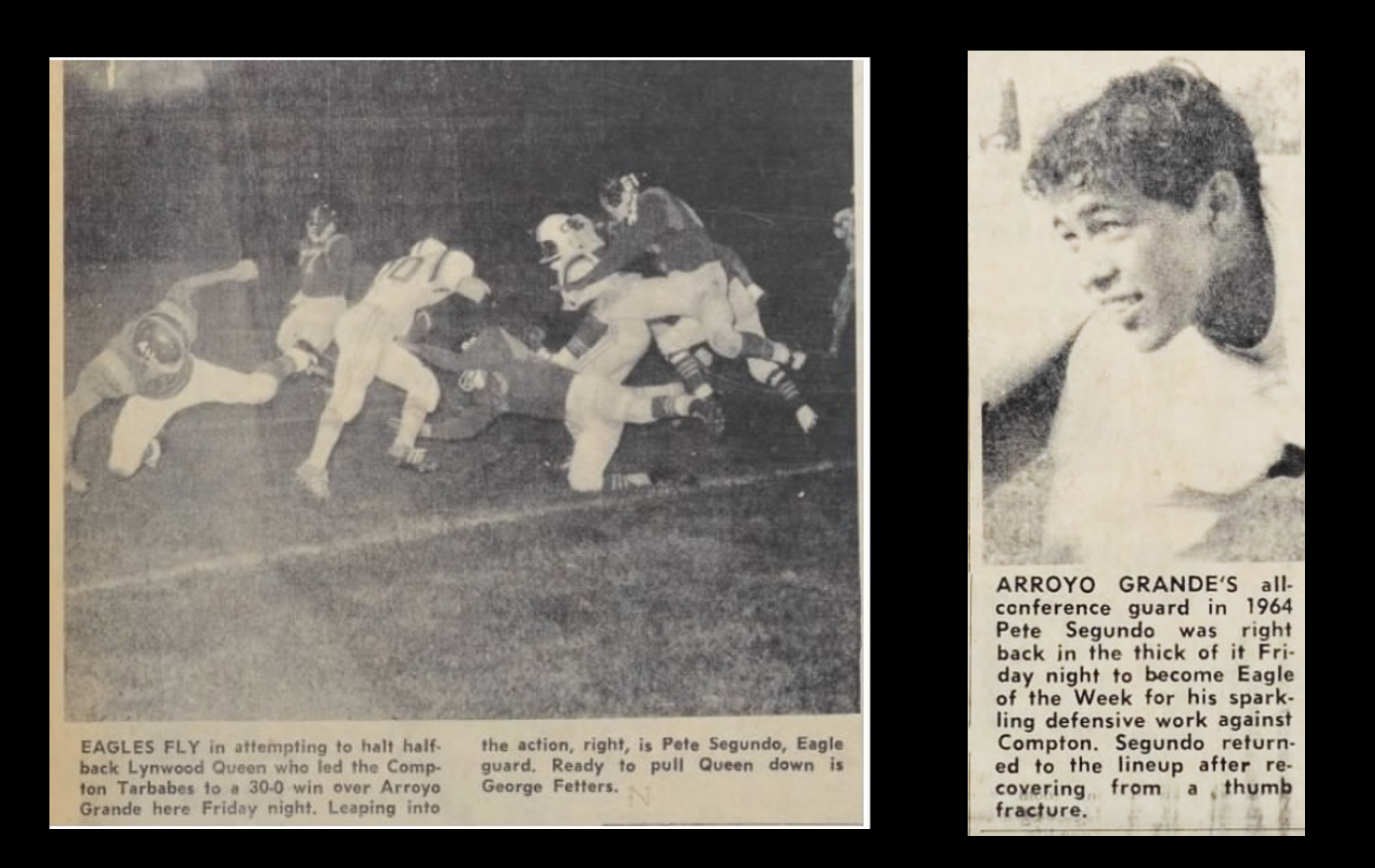
I’ve seen one yearbook photo that was typical of him: amid all the football guys trying to look tough, there’s their all-county guard with a big smile on his face.
In fact, there’s a big smile on his face in every one of his yearbook photos.
To know Pete, his classmates have told me, was to love him.
Photo courtesy of Shannon Ratliff-Evans
He was a standout athlete, especially in wrestling and football.
Otis Smith, a Civil War Medal of Honor winner, is buried here, too. His grandson, Johnnie, was awarded a Silver Star as a member of a World War II tank destroyer battalion.
In 1934, Johnnie was a Leiter Award winner, presented to the high school’s outstanding football player.
The Leiter Award went to Pete Segundo, too. Twice.
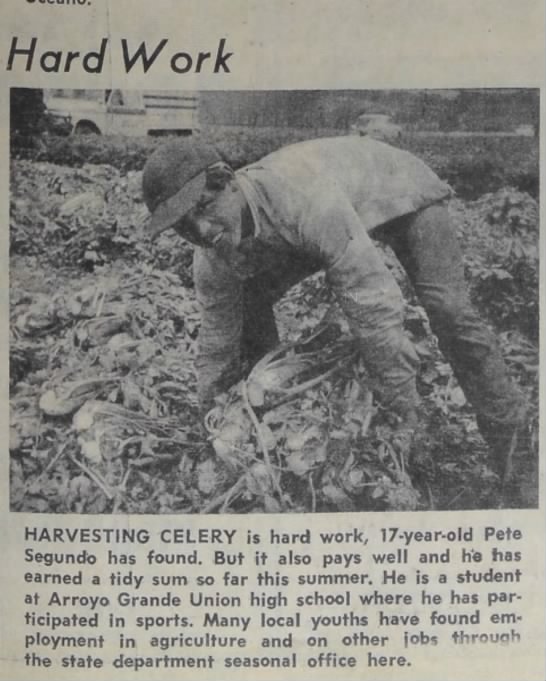
And while his classmates enjoyed a root-beer float and a burger at the Chu Chu Drive-In on Grand Avenue, Pete was in the fields chopping celery to help support his family.
A lifetime of hard work did nothing to diminish Pete’s smile. What ended it was an incident of friendly fire; Pete, a Marine dog handler, was shot while on patrol.
Sgt. Segundo, like most county Vietnam casualties, was twenty-one when he was killed.
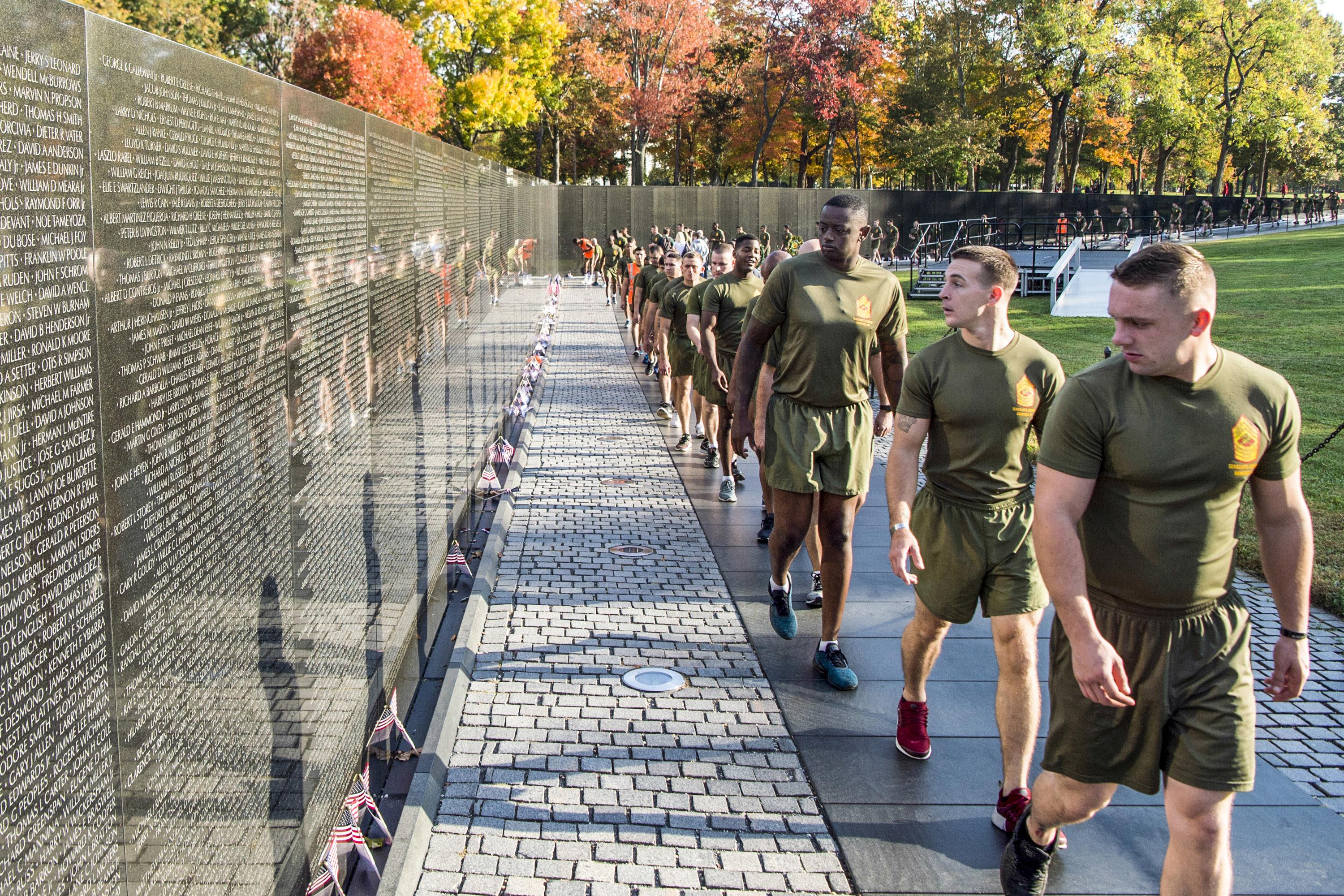
Marine sergeants in training at The Wall, Washington D.C. Photo by Dominique A. Pineiro
He’s a powerful example of how that war—how any war—cheats all of us. This war stole that young man from us. That young man gave his life for us.
But that was typical of his generosity of spirit.
“He was nice to me, but he didn’t have to be.”
My brother found this out the day he met his wrestling teammate, Pete Segundo.
Today was my big brother’s 75th birthday. He lives in Templeton with his wife, Evie. They’ve been married for 55 years.
Our Dad–brilliant, volcanic, alcoholic– was not easy to get along with, and he was hard on Bruce.
Once he slammed the car door on Bruce’s hand and yelled at him for bleeding. When, on Huasna Road, we had a bent pasture gate, Dad attempted to reshape it using a sledgehammer, with Bruce holding the bottom end, like John Henry’s shaker, and Dad taking big and not-always-accurate swings.
Bruce and I didn’t get along. I was a pain in the ass–I have just realized in the last few years that I am profoundly ADHD, and was given to manic episodes, repeatedly rolling a hassock across the living room floor and tackling it, as if I were an NFL defensive back, and spontaneous bouts of dancing for no particular reason.
So I sucked a lot of the air out of the family dynamic, and Bruce had to live with that. So he rode me pretty hard.
And then, suddenly, when he was about eighteen and I needed to learn how to drive a stick shift, everything changed. He was the best and most patient teacher I could ever hope for.
When he went to UCSB, I’d play hooky from AGHS just to visit him and Evie and maybe sit in on a real college class. I was entranced.
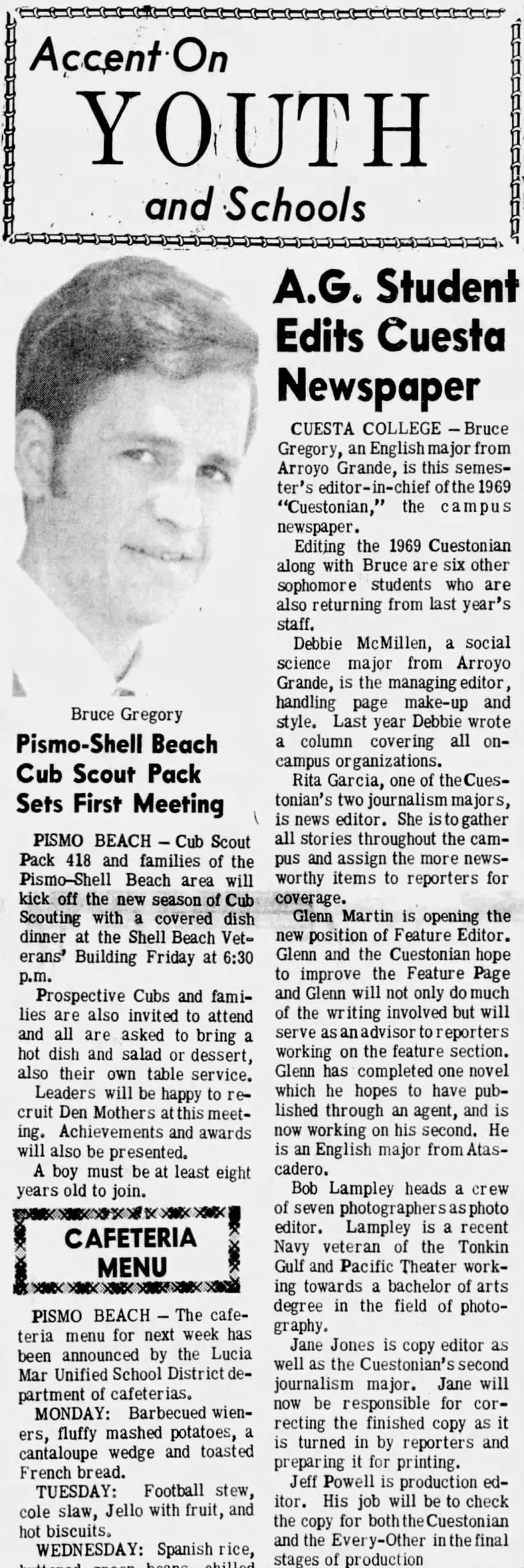
He met Evie when he was the editor and she a reporter on the Cuestonian, the Cuesta College newspaper. I inherited Bruce’s job four years later.
We are so much alike in one other way: our voices are indistinguishable over the telephone.
I have never known anyone who works as hard as my brother does. This was the way he dealt with Dad. He worked harder than any of us because, I guess, he wanted to prove himself.
I have only met one or two people who are as well-read as he is. He is a wonderful storyteller and comic–quirky and delightful– but he is serious about things like personal integrity.
This has gotten him, like me, into trouble with authority figures.
His college education was interrupted but he went back to UCSB, years later, to finish his English degree.
The man is determined.
He loves motorcycles and sometimes that worries me. But on a ride a few years ago he rode up to our grandparents’ farmhouse in Williams, Colusa County, and sent me back a photo.
My earliest memory is falling down the farmhouse steps and cutting my knee and having my Grandpa Kelly sweep me up in his arms to comfort me. I still have the scar on my knee. But I had long forgotten what the farmhouse looked like and Bruce’s photo brought Gramps back to me again.
We are not close–our lives as children were chaotic and sometimes dangerous, and so we are emotionally reserved.
But he is close to our wondrous son Thomas, the one given to spontaneously buying ice-cream cones for homeless people, for adopting and raising, including bottle-feeding, at 2 a.m., homeless kittens, for occasionally, to our surprise, putting up temporarily homeless friends on the sofa in our garage and sneaking out microwaved pizza to feed them, and like me, given to being a pain in the ass.
So on his seventy-fifth birthday, there is no adequate way to tell you how much I love my big brother.
My older brother Bruce brought this home in 1969 and played it. A lot. So did I. Who was this girl? Then he brought home a poster—a portion of it is below— and I think it alternated with a poster of Janis Joplin on his bedroom door at our house on Huasna Road.
Sadly, there’s no good live version of Rondstadt singing “Different Drum,” but at a tribute, Carrie Underwood did well. Here’s an excerpt:
I did not know until just now that Mike Nesmith of the Monkees wrote this song.
Okay, big brother, I grok you.
So this is thanks to my big bro’s outstanding musical taste (I would find out many years later, as we discussed Blind Faith, that my younger sister, Sally, has inherited the same gift), I began to follow this young woman. She never, ever, let me down.
Since I have so many chores to do to prepare for Mothers’ Day, I naturally chose to do the video. Ronstadt’s pipes are phenomenal—what continues to amaze, years later, is her versatility.
I am so glad that Bruce brought that record home from Brown’s Music in San Luis Obispo.
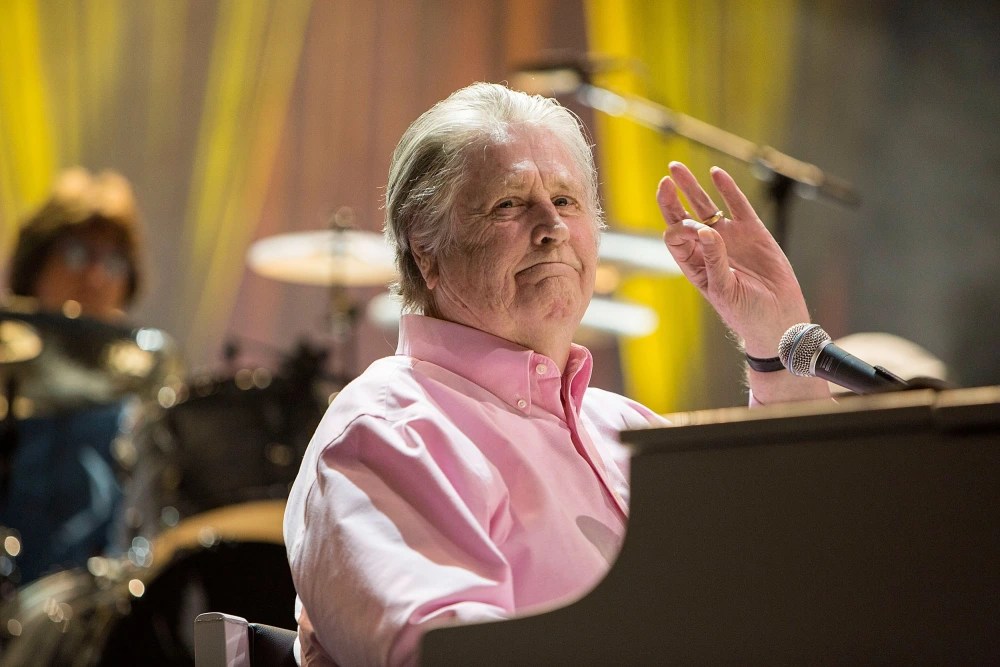
Brian Wilson died today, June 11, 2025. This was written two years ago.
I knew a little about Brian Wilson’s struggles, but I had never heard of his illness, called schizoaffective disorder, before the documentary Long Promised Road.
The Wilson brothers’ father contributed to his son’s emotional disorder, I am sure. He was abusive and a hearing loss in one of Brian’s ears has several explanations, but the most reasonable one, to me, is that his father hit him hard upside the head with the flat surface of an electric iron.
The blow to Brian’s ear was about the time the hallucinations began. Brian didn’t see things. He heard them. They were voices telling him terrible things about himself and suggesting that he do terrible things. I’ve heard those voices, all my life, but they were inside my head. Brian’s voices were out there in The World, and they were very real.
I did enough research to establish that the link between mental illness and creativity is nonsense. I still believe, though, that Wilson’s music is so beautiful because that was how he fought the voices. The only place, I think, where he could silence them was in the studio, recording music with his brothers and cousins and friends and with his wife and her sister.
I could not watch the rest of the PBS special because Brian is now so wooden. I lost my nerve. That was a bad decision on my part, but it was because The Brian Wilson that impacted my life made me all rubbery and jiggly and happy. You can’t NOT dance to, for example, “Help Me Rhonda” or “I Get Around.” I still remember, at Branch School, three lovely eighth-grade girls—Patsy Silva, Marilyn Machado, Carolyn Coehlo— (all of them from Azorean stock, by the way) dancing to Beach Boys 45’s in Mr. Lane’s room at lunchtime. I had crushes on all three, but I was just a punk kid.
That was a long time ago. As the documentary revealed, even if he’s seemingly diminished, Brian Wilson is very much alive.
And the fact that he’s even around—upright, breathing, performing, even though he’s tentative, afraid, monosyllabic—is a kind of miracle. I think the first three adjectives I just used are far more important than the last three. “God Only Knows” is the kind of music that vaporizes demons, both Brian’s and mine.
The “genius” stuff can take a back shelf. Wilson was not compared, in the documentary, to Mozart. The conductor of the Los Angeles Philharmonic chose Mahler and Schubert instead.
That’s labeling the man with not-very-faint praise. But what counts isn’t Brian Wilson’s genius. It’s his courage.
And those harmonies…
Brian could still Bring It many years later. With Al Jardine.
This song was just plain fun. From the TV show American Bandstand.
Imitation is the sincerest form of flattery: The Beatles answered “California Girls” with this song, a little more arch but just as fun. Paul McCartney in Red Square more than a few years ago.
Imitation is the sincerest form of flattery, Part II. A lovely song from Foxes (young women) and Fossils (guys my age).
Imitation is the sincerest…Part III. This live Fleetwood Mac cover of Wilson’s “Farmer’s Daughter” is haunting.
Thank you, Brian. Say hello to Sly Stone from me, will you?
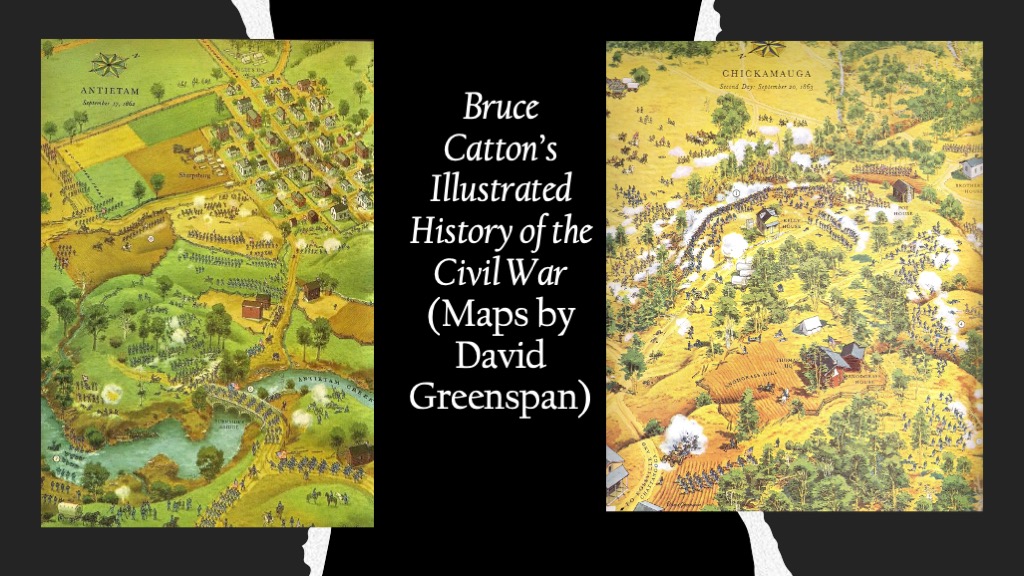
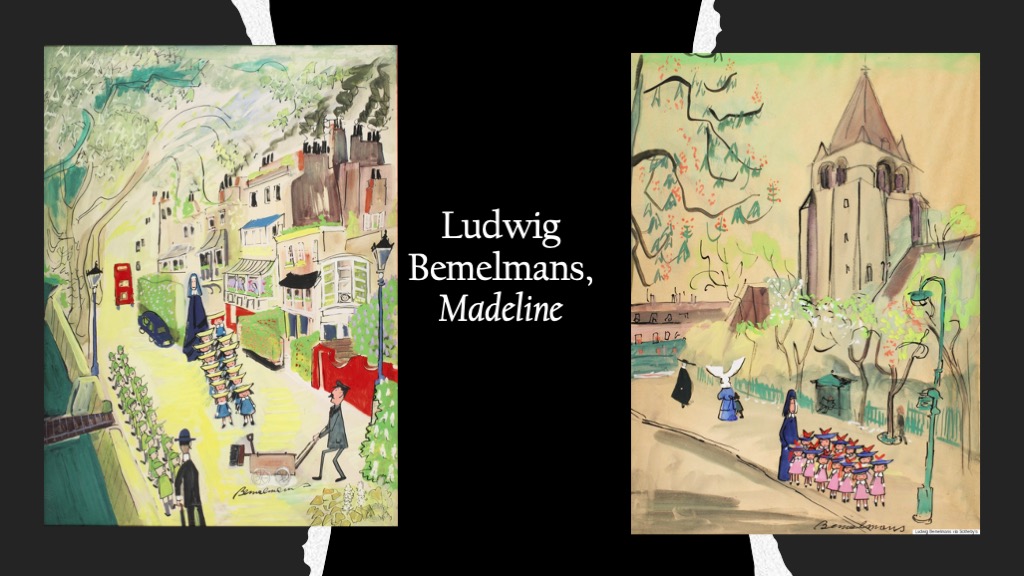
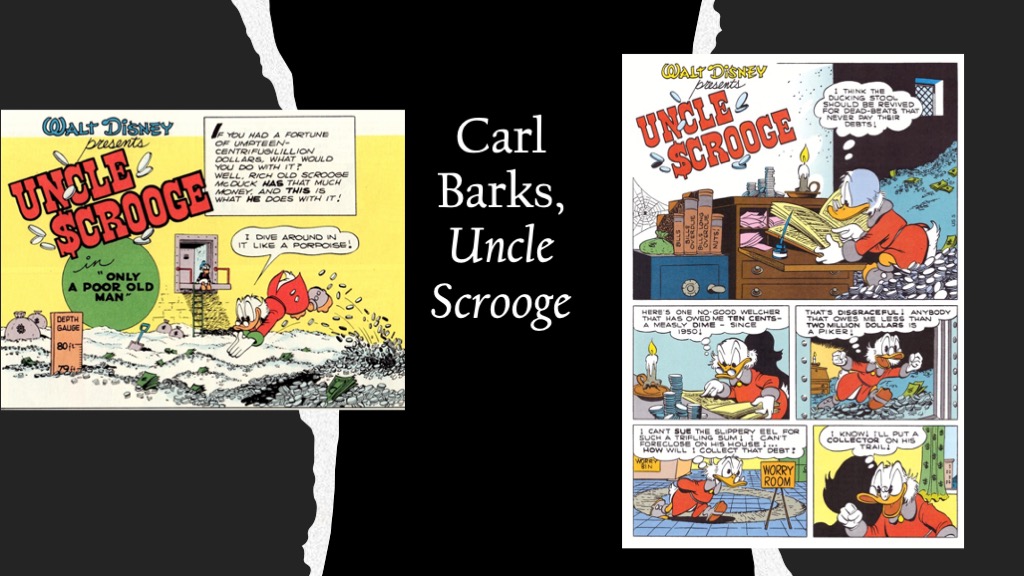
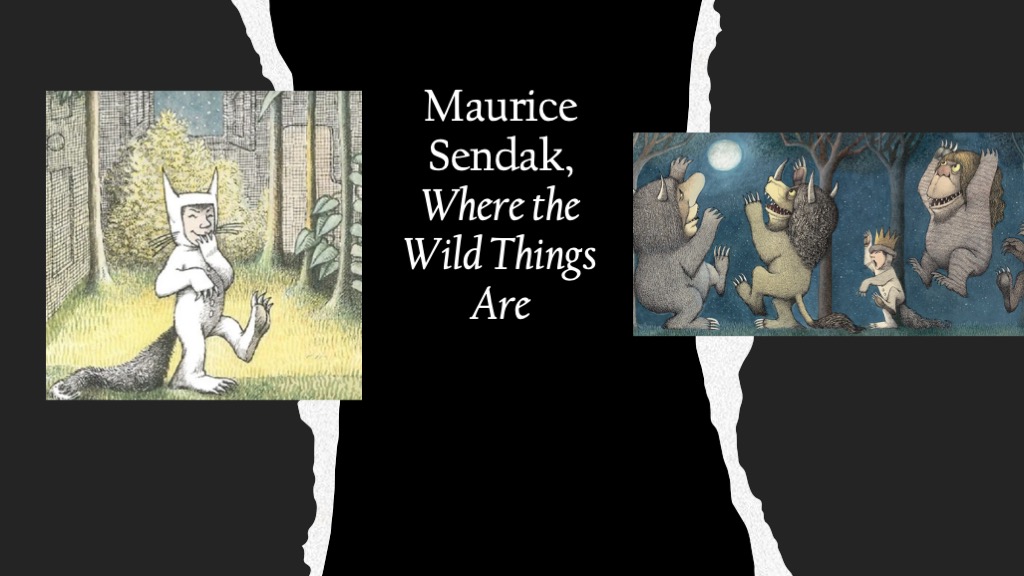
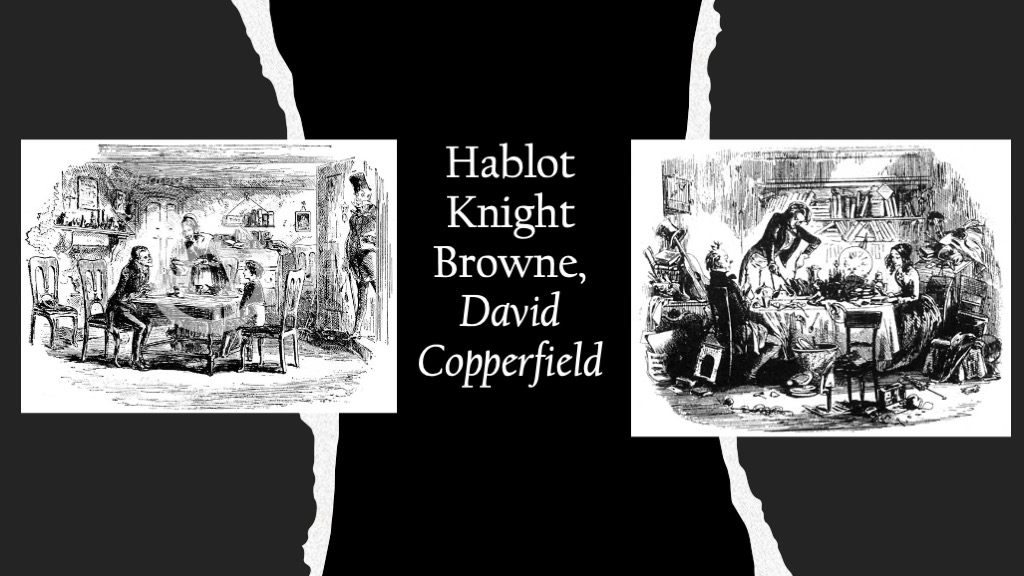
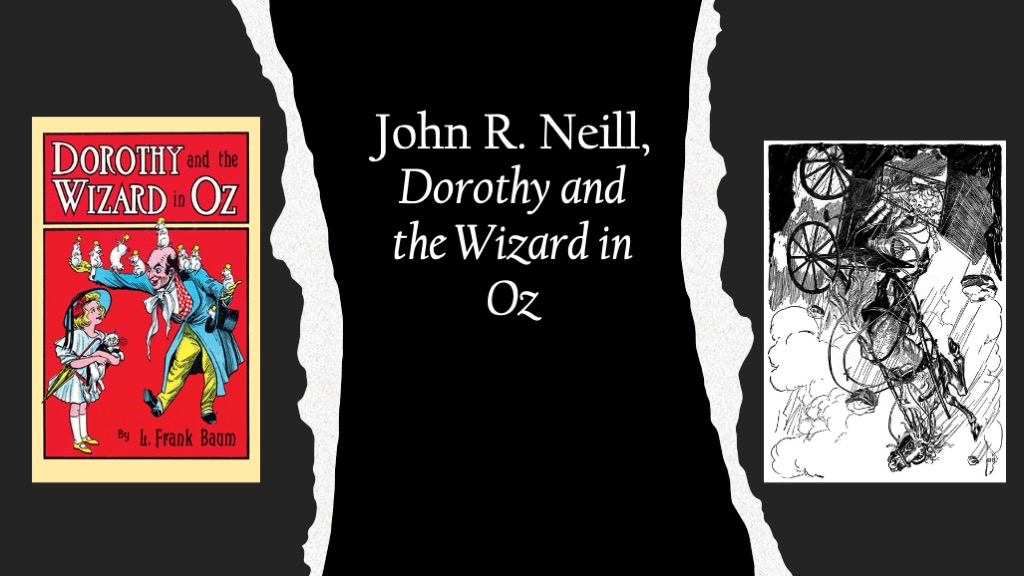
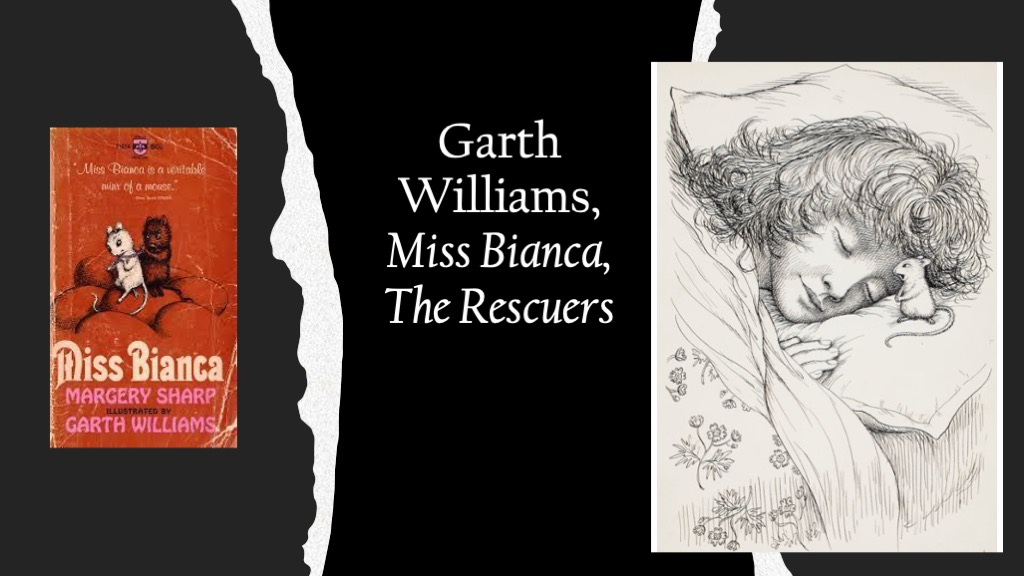
My friend Wendelin van Draanen just won a well-deserved award for her Young Adult novel The Peach Rebellion, and her writing made me reflect on the illustrators who influenced me as a child and ‘tweener. The one who doesn’t belong is Sendak, but I included him because there has never been a book that gave me greater joy to read aloud.
And “Classics Illustrated,” true, was an industry, not an artist, but their “War of the Worlds” scared the bejabbers out of me when I was ten. I don’t think I could’ve handled the Spielberg version unless they needed another screamer to give poor Dakota Fanning’s vocal chords a break.
My brother Bruce had an entire drawer in our bedroom full of neatly-stacked “Mad” magazines, probably in chronological order, which I, the messy one, raided.
We also had two enormous pull-out drawers beneath our bedroom closet stocked from keel to gunwales with Disney comics, “Classics Illustrateds,” and a long-forgotten anti-Commie series, “Blackhawk,” about an international cadre of fighter pilots who did cool tricks like standing up in the cockpit to lasso Russki jets in midair.
We even had some Dick Tracy comics. When one of Dick’s fugitives refused to come out of his motel room at the end of a wing, Dick simply used his tommygun to inscribe a capital “Z” in the exterior wall. End of fugitive. I don’t think he was Mirandized.
I’d forgotten how bluntly charming Garth Williams’s Miss Bianca illustrations were. Sadly, Disney made a cartoon version with Disney art at its low point–The Rescuers were two-dimensional cutouts and Bianca’s voice was provided by Eva Gabor, who was charming in “Green Acres,” a low point for American comedic television but several notches above “Gilligan’s Island.”
I have a brief Gabor story somewhere. Remind me.
Most of these artists have one thing in common: When you’re a little boy, you can get lost inside their work. They take you to another place.
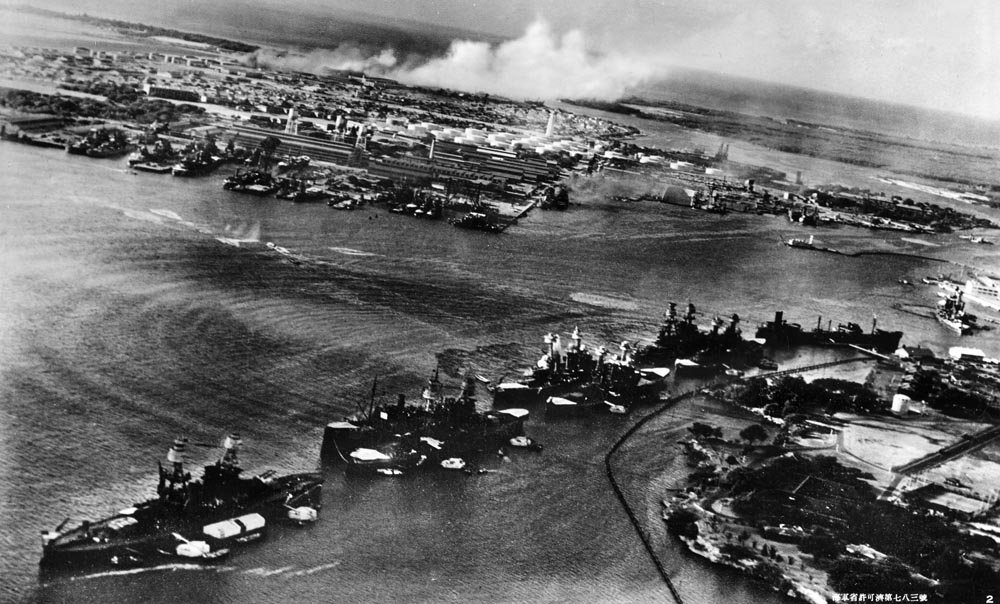
It’s one of the great stories of American naval history. At Pearl Harbor, here is the aging USS Nevada at the end of Battleship Row, at bottom left, just astern of Arizona, which is anchored inboard of the repair ship Vestal. You can see the concussions from torpedo hits on the outboard battleships ahead of Arizona. That ship has about twelve minutes to live.
The attack came during the morning Colors Ceremony, when bands played the National Anthem as each battleship hoisted its colors. The trombonist on Arizona’s band, Jack Scruggs, killed just after this photograph was taken, grew up in Arroyo Grande.
The Officer of the Watch on Nevada was Ens. Joseph Taussig, about Scruggs’s age, twenty-one or twenty-two. He was standing his very first watch while most of the ship’s senior officers were ashore. He was so green that he had to send a sailor over to Arizona to ask what size flag was appropriate to hoist for the morning formalities. Then the bombs began to fall.
Nevada’s band had begun to play the Anthem. They continued to play the Anthem. When machine-gun bullets began to splinter the teak deck, they paused for a moment, somehow resumed the song in unison, finished it, and then ran like hell for their action stations. (Arizona’s band ran for their stations in the No. 2 gun turret, near the bow and near where the fatal bomb hit. None survived.)
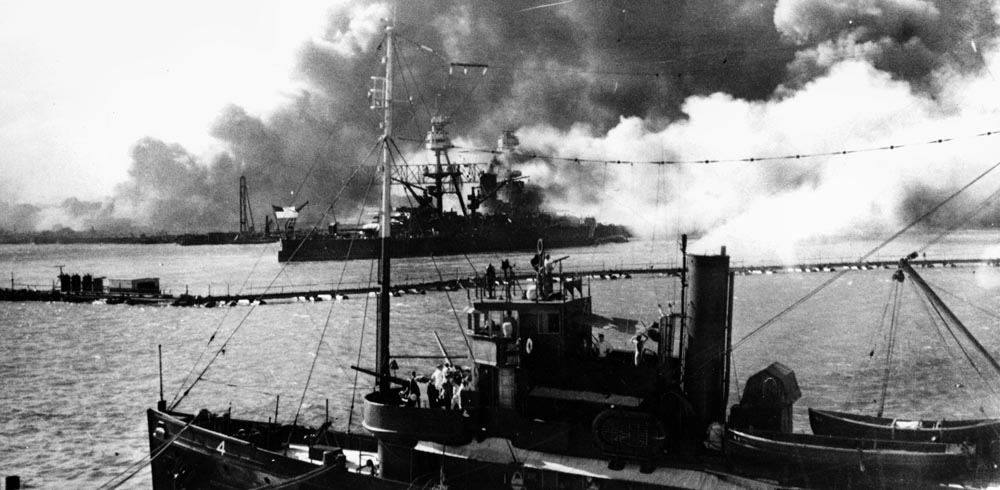
Lieutenant Lawrence Ruff was attending Mass on the hospital ship Solace at this moment. He immediately caught a launch back to Nevada, assumed command topside with Taussig as his anti-aircraft officer. The ensign had done something right, he would find out later: he’d left two of the battleship’s four boilers lit. It normally took a ship the size of Nevada two hours to come to full power, but two boilers were sufficient to get her underway. Ruff gave the command to make a run for the channel exit. The oldest ship on Battleship Row was the only one to steam away from the flames and smoke that blanketed the anchorage off Ford Island.
Sailors cheered as she passed.
Nevada during her run for the channel.
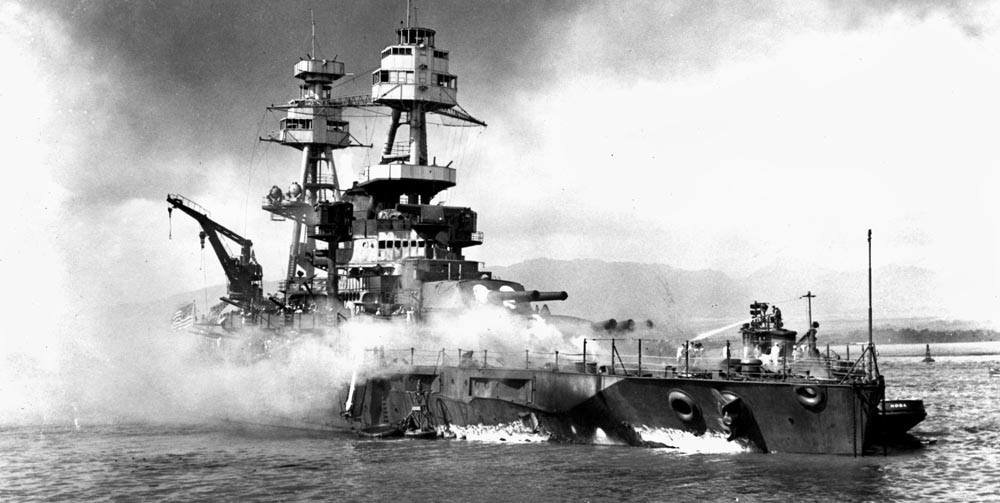
Nevada aground on Waipo Point.
Nevada didn’t make it to the open sea. Crippled by at least one torpedo and six bomb hits, she lost headway. Her run ended when Lieutenant Ruff ordered her beached on Waipo Point, leaving the narrow channel open.
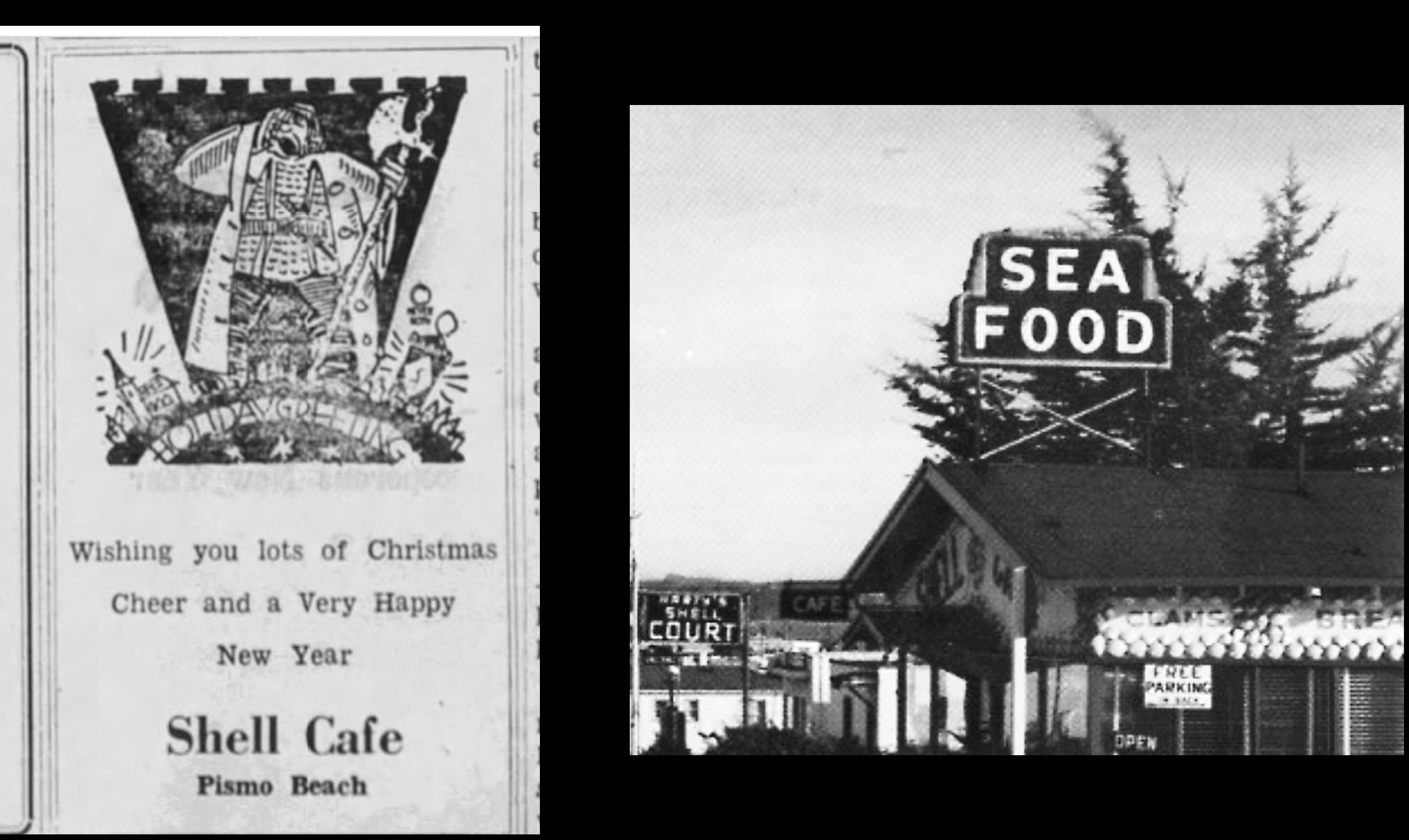
And that brings us to the Shell Cafe in Pismo Beach, at the north end of Price Street in those years. The Christmas ad is from a 1939 Arroyo Grande Herald-Recorder. (The Shell’s still around today, but in Grover Beach.)
The image of the Shell Cafe is from the Boeker Street Trading Company. Today it’s the Oasis Cafe.
It’s natural to focus on the horrific losses at Pearl Harbor, but the attackers took losses, too. Twenty-nine planes were shot down and five midget submarines sunk. Only one ship in the Pearl Harbor Striking Force, the destroyer Ushio, survived the war.
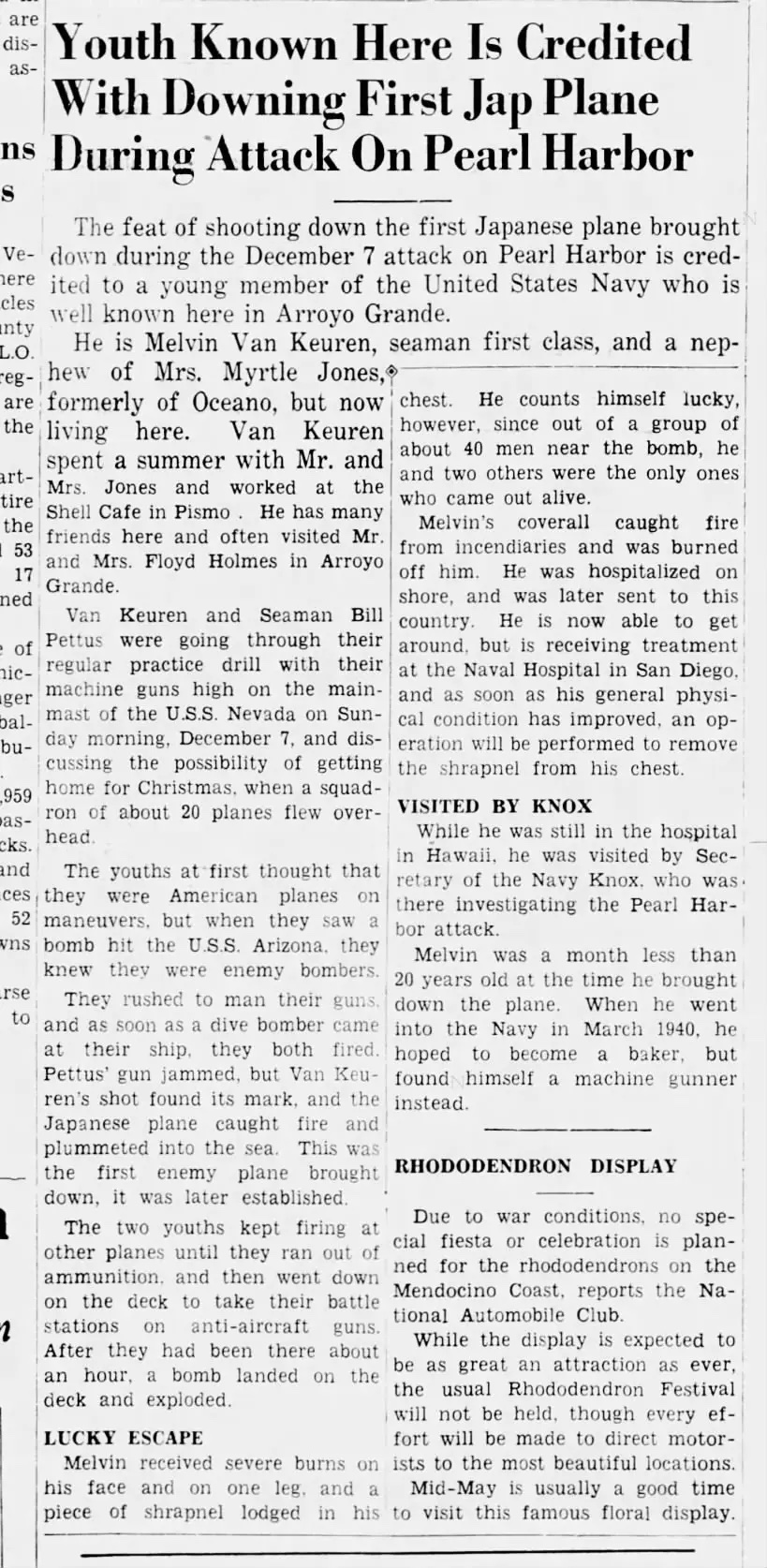
The first of the attacking planes shot down was claimed by USS Nevada. It’s better for me to let the newspaper article tell the story. From the May 8, 1942, Arroyo Grande Herald-Recorder:
“…he hoped to become a baker, but found himself a machine gunner instead.” That is a fine piece of writing.
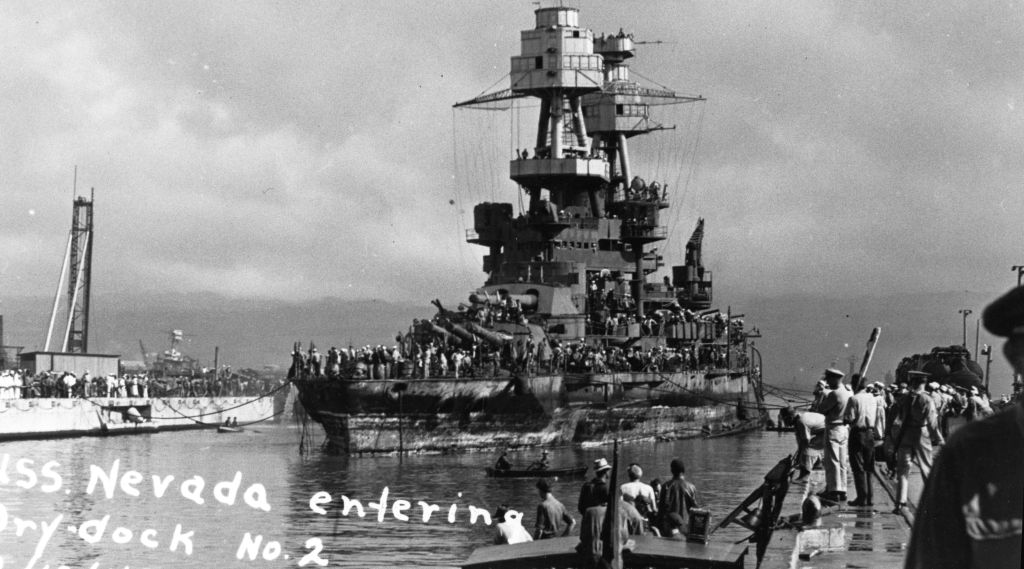
Both Melvin and his ship survived that terrible day. Here is Nevada approaching drydock after being refloated:
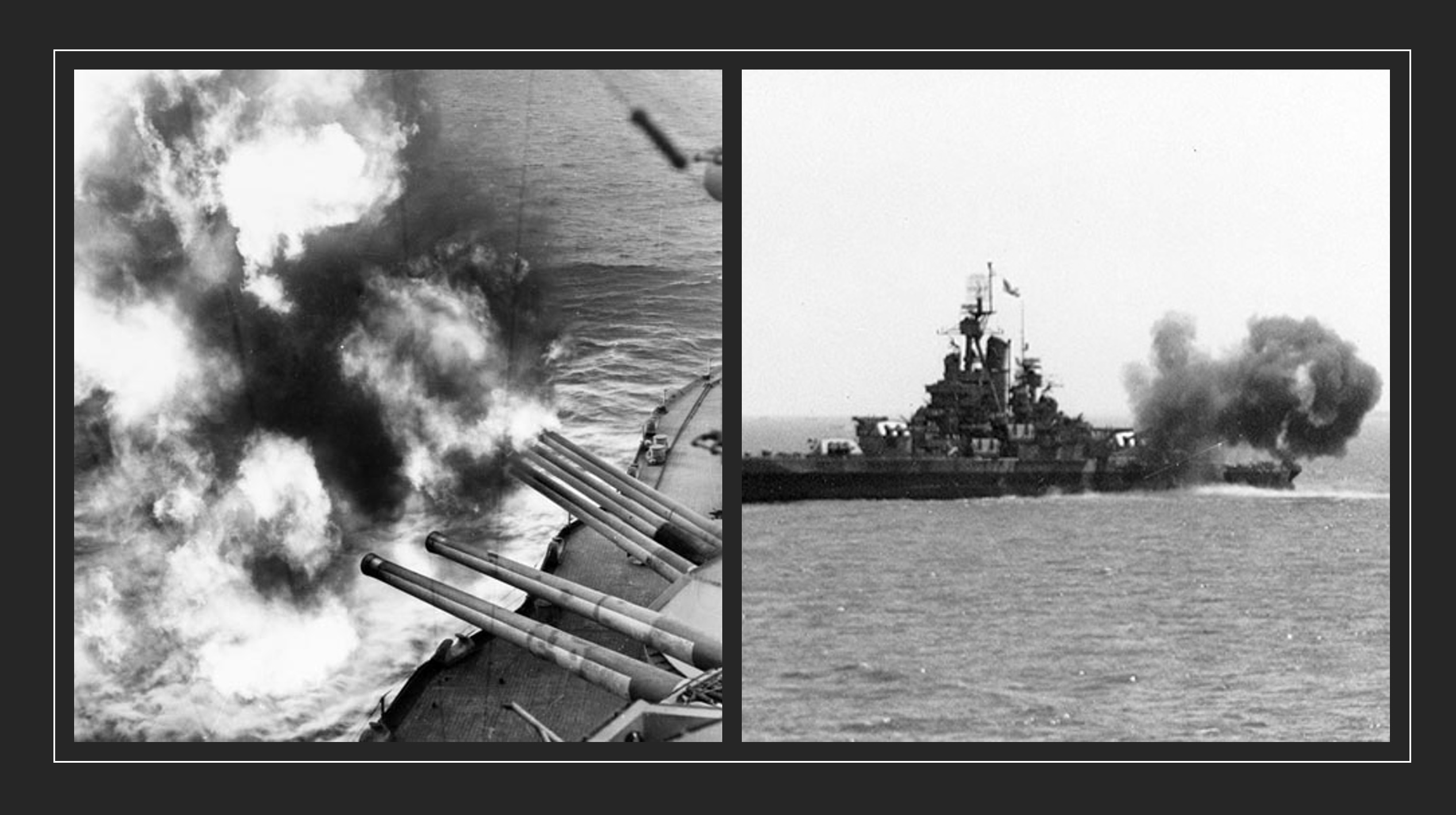
And these are her main batteries opening fire at German positions along Utah Beach on D-Day. Nevada was repaired at Pearl Harbor, overhauled and modernized at Puget Sound, and continued her war over 7,300 miles away and two and a half years removed from the place where the ship had revealed her heart in her run for the sea.
On June 6, 1944, Nevada was granted the honor of being the first ship to open fire on the invasion beaches.
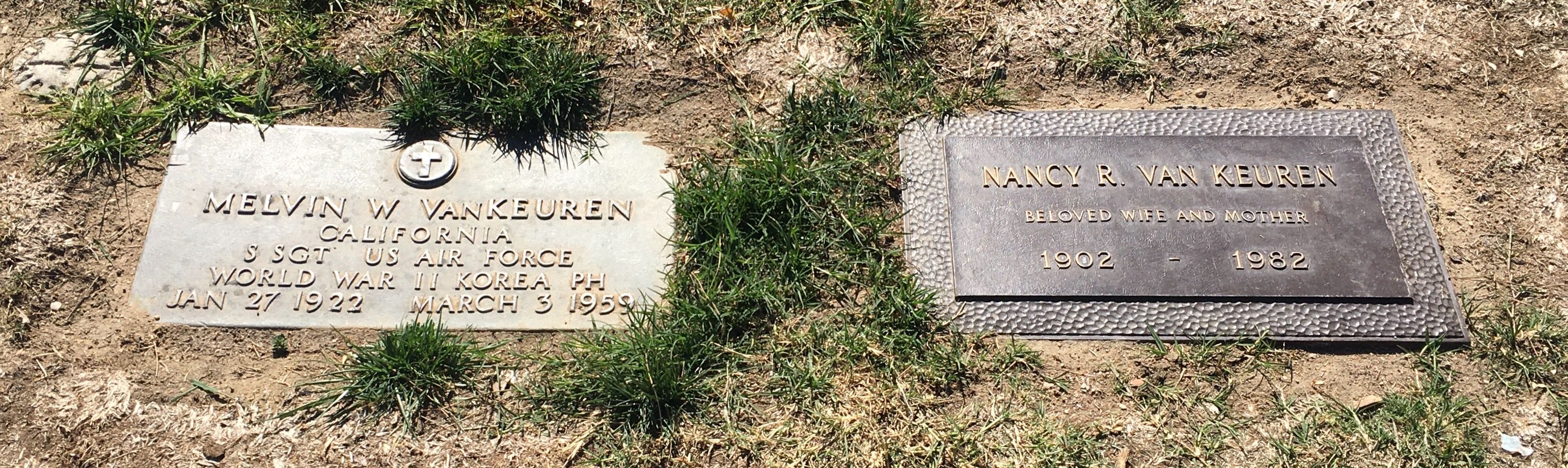
Melvin the hopeful baker survived his war, too, but his wounds sound severe. Maybe they were a factor in his premature death in 1959. He re-enlisted three times and, after the war, retired as an enlisted man in the United States Air Force. He’s buried at Forest Lawn, next to his mother.
This is his tombstone. Sadly, there’s not enough room on it to record the way he revealed his heart, too, on December 7, 1941.
In 1939, San Francisco’s Treasure Island was the site for the Golden Gate Exposition, a showcase dedicated to a world beginning to emerge from the Great Depression. The Exposition was a masterpiece of Art Deco design and, with California comfortably distant from Europe, tinges of optimism must’ve remained awhile; I imagine the fall of France ended all that.
The Exposition even won periodic mention in the little Arroyo Grande Herald-Recorder, including this October 1939 display ad. I think the Greyhound station was in the Olohan Building, whose basement is now home to Klondike Pizza. A Klondike pizza is also good for transient moments of optimism, if I may be allowed to editorialize.
What had to be a highlight of the Exposition came in June and July 1939, when most of the Pacific Fleet, just off maneuvers, sailed into San Francisco Bay for a visit. Many years ago, my wife and my sons and I spent a delightful visit to our favorite city during Fleet Week, when we saw the Blue Angels, sailors from twenty nations, and, on a Muni Bus, a bearded lady (who was very nice) and a man who could do 360s with his dentures. I preferred the visits to the submarine Pompanito and the Liberty Ship Jeremiah O’Brien, but I’m built that way, I guess.
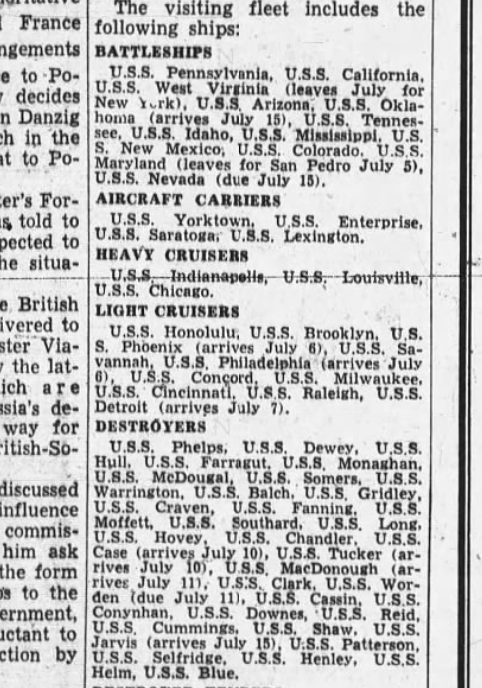
Here’s an article from an Oakland newspaper—with little seeming regard for what we’d call “national security” today— about the ships, and their 40,000 men, headed for the Exposition:
And here, also from British Pathe, is a remarkable video as the fleet arrives, led bybattleships, then a light cruiser and finally the preciuus carriers. And then, best of all, happy sailors coming ashore for liberty.
The scale of these ships is hard to imagine, even though they’re relatively small when compared to modern aircraft carriers. A Pennsylvania-class battleship, like the one in the video below, displaced 32,000 tons, was 600 feet long and carried a complement of about 60 officers, 70 Marines and 1,000 enlisted men. These ships were small cities. And small cities need the mail delivered, even in mid-Caribbean. This film is from the early 1930s:
And the battleship in the newsreel—you had to know this was coming—was, of course, USS Arizona, lost with 1100 crew, including two sailors who were raised in Arroyo Grande, on December 7, 1941.
Maybe it’s just me, but I am a devoted fan of American film, and as a cultural barometer, 1939 was a sign of renewed confidence in the same way the Exposition was. My parents began dating that year, when their movie dates might’ve included The Wizard of Oz, Stagecoach, Goodbye Mr. Chips, Ninotchka, Destry Rides Again and Gone With the Wind.
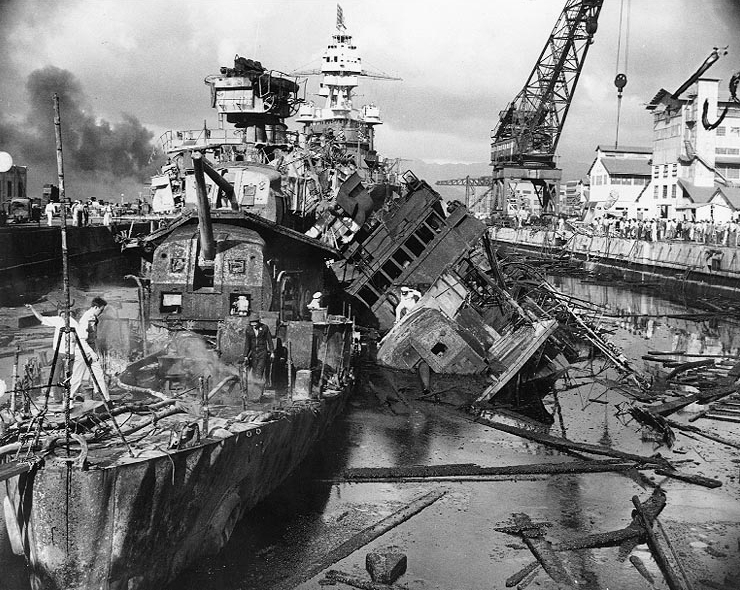
And that brief moment of renewed self-confidence, of hope, is what makes the images of these ships and their young men so poignant to me. These are the fates of some of the ships cited in the Oakland newspaper article above:
Downes and Cassin in the aftermath of the Pearl Harbor attack. The battleship Pennsylvania, also in drydock that day, is just beyond.
As devastating as the photograph above is, both destroyers were salvaged, rebuilt and returned to duty, as were the damaged battleships. One of them, Nevada, which made a heroic run under attack for the Pearl Harbor exit channel, was, on June 6, 1944, hurling 14-inch shells at the Germans defending the Normandy invasion beaches. Nevada, in fact, was granted the honor of firing the opening salvo that day.
One of my favorite lessons in U.S. History was devoted to the construction of the Oakland Bay Bridge, truly, to steal a term, an engineering marvel. It, and its sister bridge, are emblematic of the way we responded to the Great Depression.
We responded to the shattering of our confidence at Pearl Harbor with new ships and old ships pulled to the surface from Pearl Harbor mud and made new again. Vast fleets of warplanes, tanks, trucks, artillery and small arms, Spam and K-ration Lucky Strikes, a labor force that went to war— a third them women and many of them killed in factory accidents—and over 400,000 young men killed in combat, all of these made up our response.
These things happened because of a generation that, before the war, was dismissed by intellectuals as pleasure-seeking, selfish and shallow. This was my parents’ generation. My parents were hard-working, generous and deeply read. I became a history teacher because of the values they instilled in me.
Learning about the Exposition, in what remains—after a fair amount of European travel (Dublin, London, Edinburgh, Paris, Nice, Amsterdam, Munich, Salzburg, Florence, Venice, Rome) with twenty to forty of my closest teenaged friends, my students—the city I love the most. The Exposition reminded me of my mother and father and their generation. If this was a twilight time in our history, followed by four years of wartime dark, we were still here in the morning.
Someone is trying to tell me something and, for once, it’s not the typical condemnatory voice that I’ve lived with for seventy-one years. Today it was affirming. It began to creep up on me when I drove to do some grocery shopping at drove past a Muslim family at Elm Street Park. They had a blanket spread out in the shade and they were eating—men, women with their hair covered, little kids. When I drove back home, the blanket was folded and all of them were standing in a circle and holding hands and, I think, singing. To paraphrase a song by Sting: Muslims love their children, too.
It then dawned on me: Ramadan is over. That didn’t hit me until I got home and remembering my beloved student Leila, a devout Muslim, I got little tears in my eyes. Leila had tears in her eyes when, as part of a school assembly that honored retiring teachers, she presented me with a bouquet of roses. She is compassionate, considerate, respectful and she has a first-rate mind—an engineer’s mind, but one driven by a deeply humanitarian heart.
That was the second international moment. The first came when I saw this version of the !Xhosa wedding song on a South African variant of The Voice. The young woman, named Siki Jo-An, is twenty-five and she’s from Elizabethtown.
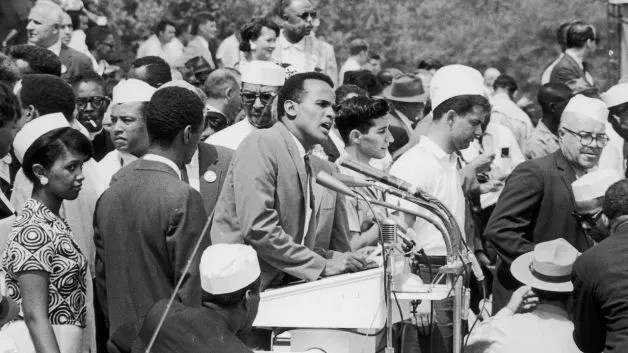
I first heard this song, performed by Miriam Makeba, whose clicks are profound, when I was a little boy on Huasna Road and Mom had both double albums of Harry Belafonte’s concerts at Carnegie Hall. Our cabinet stereo, big as a coffin, also served for the Stones albums I smuggled out of my brother’s bedroom and for my copy of the White Album, which, yes, I did play backward. Paul was dead.
But no albums were played so much as Belafonte’s. I realize now that the man was a fundamental part of my education, along with the braceros who worked the fields just beyond our pasture fence and the food–sopa, sushi, lumpias–that were part of what made growing up in Arroyo Grande so formative for me.
Belafonte’s songs ranged from “Hava Nagela” to “John Henry” to “Sylvie” to “La Bamba.” Since he was Jamaican, perhaps his most famous song endures because of the film Beetlejuice. It’s a marvelous moment.
Maybe it’s because of the braceros, but maybe my favorite song from those albums was his take on “La Bamba.” You can hear Belafonte dancing on the album, but it would be many, many year later, thanks to this video, that I got to see him dance. And, yes, is Spanish is beautiful.
So here’s a Mexican song performed by a Jamaican. Belafonte gave me the education I needed to marvel, sixty years later, at a Muslim family celebrating together, happy together, on the shaded lawn in the Elm Street Park in the town that is my home—and theirs.
Oh, and dinner? Pesto pasta. As American as my collateral ancestor, the president’s aunt, Mildred Washington.
Here are “Mas Que Nada,” from Brazil, by Jazz singer Carol Albert–she gets the song, as do her musicians (the trumpeter is incredible) and backup singers–and “Guantanemara,” from Cuba, by the wonderful Playing for Change people.
And I don’t want to end with even that song. An old American favorite was another South African song written in 1939. It became a Tokens hit in 1961 America. Ladysmith Black Mambazo, “discovered” by Paul Simon in the 1980s, performed the song here, circa 1990, with an a cappella group from London’s East End, the Mint Juleps.
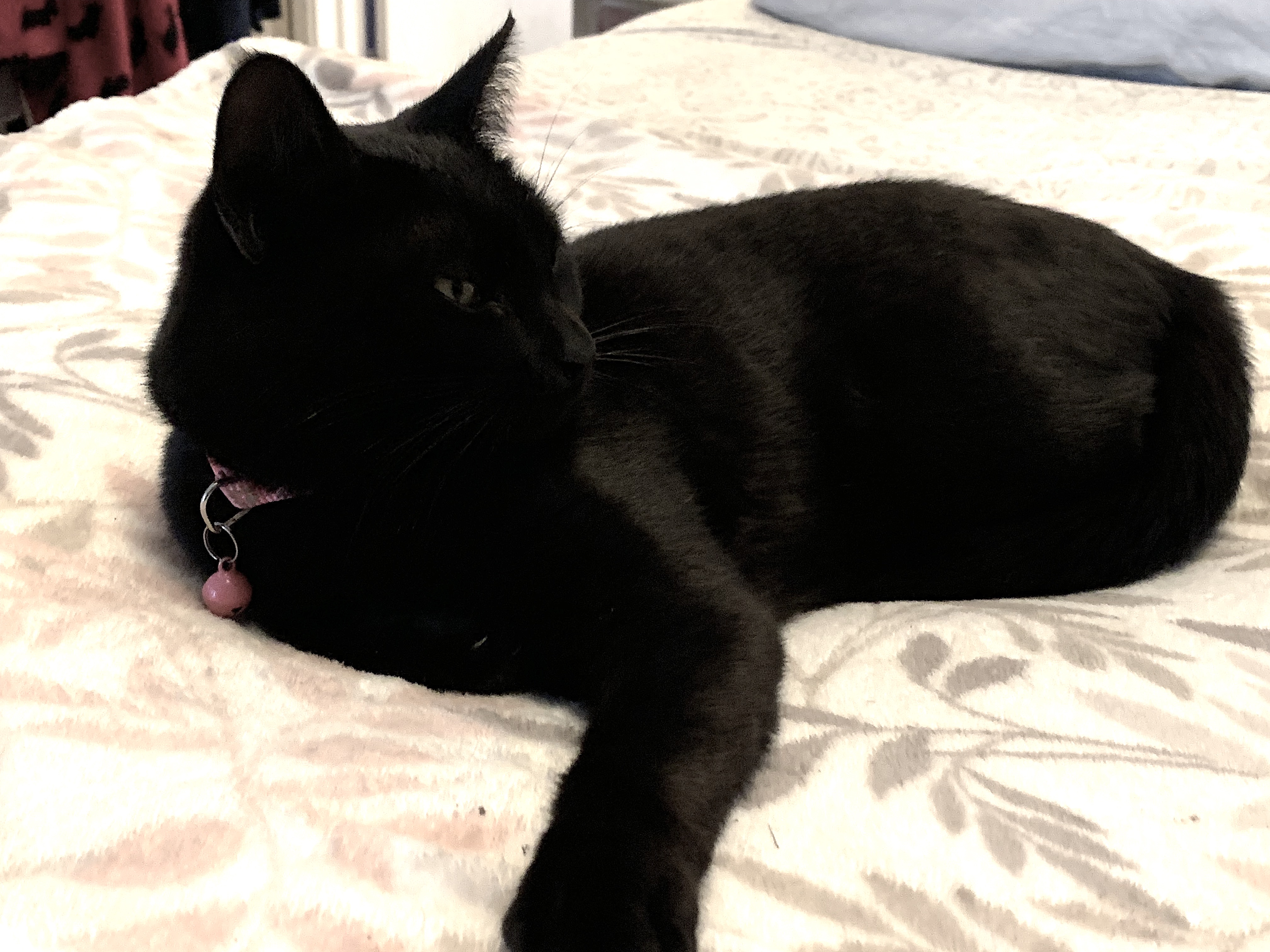
Hattie, whom I refer to, in greetings, as “Sweetie Pie.” Caveat: The girl’s a predator par excellence.
Hattie is just about ten months old. She’s the junior member of the family menagerie. She’s pretty quiet today, spent most of the day sleeping on our bed. I think I know why. Yesterday I found the field mouse she’d gifted us with behind the chair in one corner of the bedroom. Both Rigor and Mortis had set in. Poor mouse. He had a handsome tail.
I think he must’ve put up a helluva fight, because of the way Hattie’s behaving today. He might’ve been the mouse equivalent of the Quarry brothers, San Francisco fighters from more than a few years ago—Jerry and Mike—who also put up a helluva fight before, invariably, losing. Jerry, the heavyweight. lost to Muhammad Ali, which is nothing to be ashamed of.
I think that Mike, a middleweight, lived in San Luis Obispo for a time.
Fortunately, unlike the Quarrys, this mouse did not shed copious amounts of blood. Hattie must have killed him outside and brought him in for us—I looked but could not find a recipe for bacon-wrapped mousies—and then she kind of forgot. I’d already moved him when she went looking behind the chair, emerging with a slightly puzzled look.
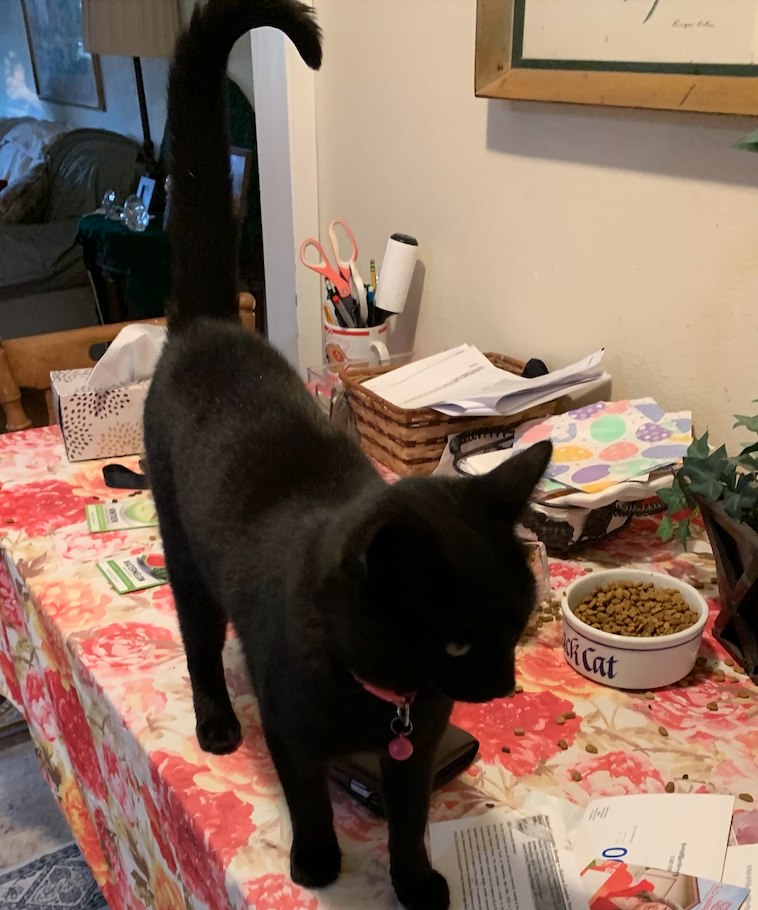
Hattie is an uncommonly beautiful cat—I love cats, especially black cats—but it’s really hard for me to compartmentalize the “Hello-Sweetheart” with the “Predator-Killer.” Elizabeth rescued what she thought was a hummingbird from her last week. It turned out to be a huge moth. Thank goodness. The bell collar has helped a little, but not before we discovered, behind the same chair, enough bird feathers for a Lakota chief’s war bonnet.
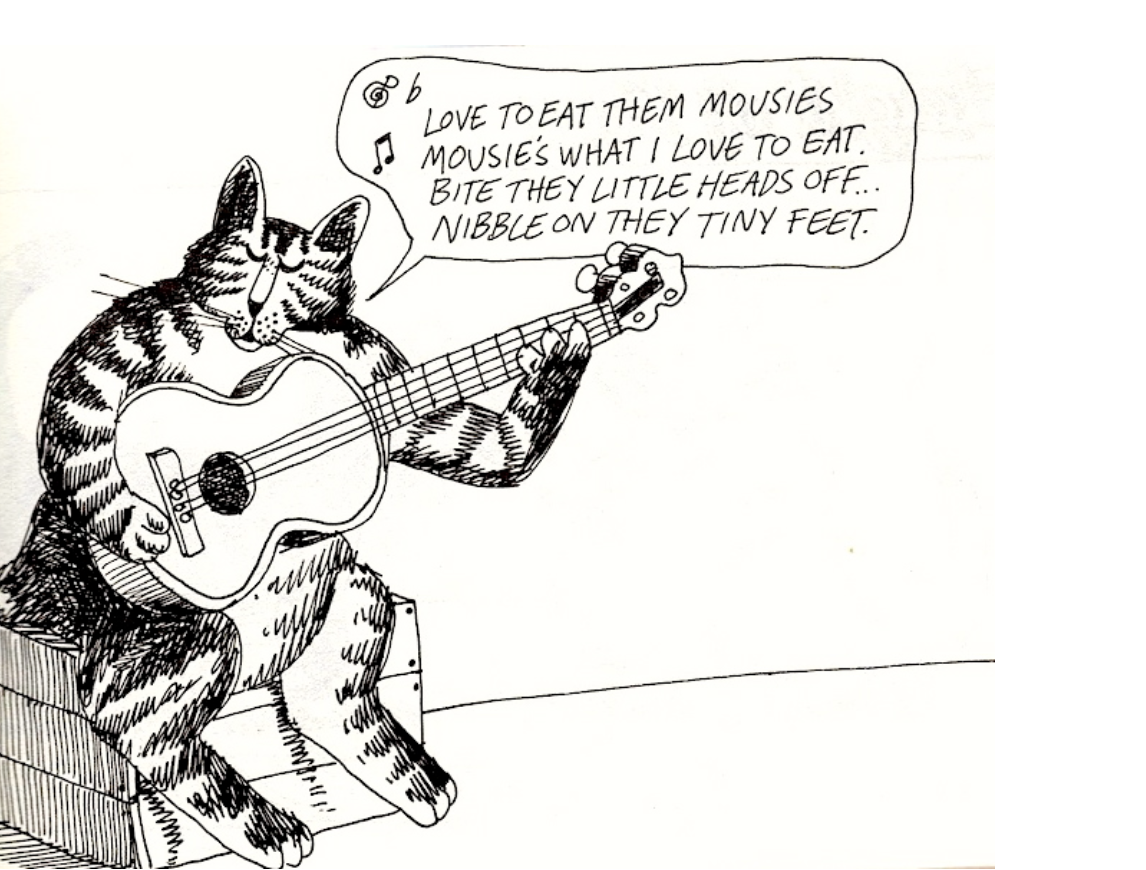
I was, of course, reminded of this classic Kliban cartoon:
The poor little fellow, wrapped inside a paper towel and buried in the trash to go out tomorrow, reminded me of the Notorious Gregory Mouse Story.
When the boys were little human-type fellows, we hit on the misguided idea of going to the pet store in Los Osos to buy them some mousies. “They’re males,” the clerk assured us. He was in error.
Within a short period of time—it seemed like about thirty minutes—our mousie cage in the kitchen of our home was alive with little, little, LITTLE mousies. They were adorable, true, but their numbers were alarming. As you know, Elizabeth and I love Irish Setters, and their litters are often around nine or ten puppies. Or more. Romy, in the photo below, became a Mommy to fifteen in Coventry, England.
Mousies demonstrate the same reproductive talent, but their litters arrive about every—oh, for the sake of argument–about every thirty minutes.
The plot thickened. Sometimes we’d turn on the back porch light and would be charmed at a little raiding party of raccoons, family units, who finally made us realize that we had to bring the dog kibble inside the house and not leave it in the garage. They look like little burglars, with their raccoon masks.
What we did not plan on were the wild field mice that were out there in the Los Osos Wilderness along with the raccoons, possums, skunks and the occasional Wildebeest.
The wild field mice—at least the Frat Brothers among them—somehow found their way into the kitchen and began Making Whoopee with our far more sedate domesticated pets. So our mouse family grew, but with a difference: the new generation, half-wild, had the most incredible leaping ability. Sometimes we’d wake at night and here soft little bonks.
Bonk.
Bonk.
Bonk.
Bonkbonkbonk.
We finally realized—if you’re sensing a certain denseness here, we were not expert rodent people–that the bonks were the sounds of their little skulls hitting the top of the mouse cage as they jumped up and down, with all the joy but not nearly the grace of dancing young Masai warriors.
There are some problems that won’t go away, and Elizabeth informed me, pointedly, that this was one of them. I’m a little ashamed because this is what I decided to do.
I took the bonk-bonk cage across South Bay Boulevard to a lovely vacant lot near Los Osos Middle School–cypress, sweet-smelling sage and sand. I do not remember how I did it, exactly, because it’s darned hard to hide a cage full of adrenalized half-wild mice. Maybe I had a big overcoat, I don’t know.
But I found a pleasant spot—a dell, you might call it—and opened the cage.
The mousies began to dart out like little furry punctuation marks. The less daring among them waited. Then there was a little furry river of mousies, Yearning to be Free.
And then, of course, I was even more shameless. As our mousies disappeared into the vastness of the Los Osos Savannah, I sang the theme to the film Born Free.
I am not making this up.
Hattie, of course, would have been overwhelmed. There’s only so much prey one little predator can handle, after all, all by herself. I feel badly for the gift she brought us, but, as cold as it might sound, one dead mouse is preferable to two dozen lively little bonk-bonks.
Oops. Make that two dead mousies. Elizabeth just found another.
The bulk of Hattie’s diet is on our kitchen table, in kibble and canned form.
For those of you keeping score at home, here’s the theme from Born Free (1966), a marvelous little film about Elsa the Lioness.
I had the most extraordinary experience yesterday, a beer-and-brats meeting with retired Arroyo Grande High School, California, teachers at Kulturhaus Brewing Company in Pismo Beach, a marvelous little restaurant owned by the daughter of one of those teachers. AGHS is both my Alma Mater and the place where I taught history for nineteen years.
I am not sure how to make the equivalence, but John F. Kennedy, probably courtesy of his speechwriter, Ted Sorensen, once made this remark at a White House dinner that honored several Nobel Prize awardees. I will paraphrase:
Never has there been, in this room, such a brilliant gathering. With the possible exception of when Thomas Jefferson dined here alone.
That was what my gathering yesterday was like. I was so incredibly honored to be in the presence of so many people who were—let’s face it, my heroes—math and English and Industrial Arts and history teachers.
I was stunned but not necessarily surprised when two of them said that they had subbed at our high school and would never do so again.
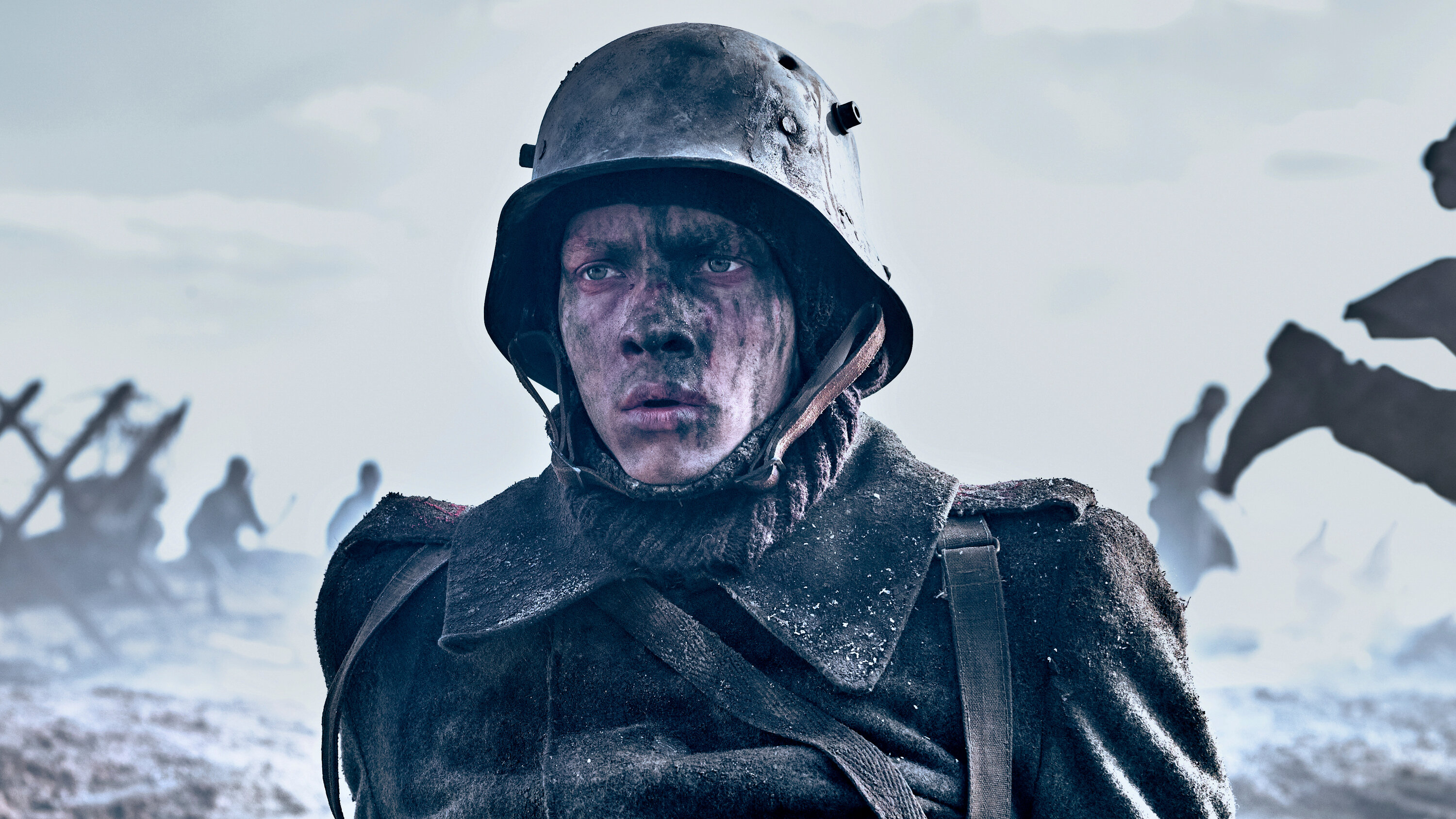
Of course, they reminded me immediately of one of the most formative novels of my sophomore year when I was a student at AGHS, All Quiet on the Western Front. The guilty party in that novel, sadly, is a teacher. His jingoism seduced the protagonist, Paul, into joining the army where, on the Western Front, everything he believes in is gradually destroyed by shellfire and poison gas. Finally, his idealism vanishes alongside the French poilu he watches die, slowly, in a shell-hole where dead rats the size of dogs remain afloat in the crater created by heavy artillery.
Teachers are suckers, like Paul. By that—I have to be careful here—I don’t mean that they are stupid. Paul wasn’t. They are instead idealistic and generous and self-denying. They work impossibly long hours that no one ever sees. Good teachers are good soldiers.
And, of course, All Quiet, the book about good soldiers, was banned by the Nazis once they’d come to power.
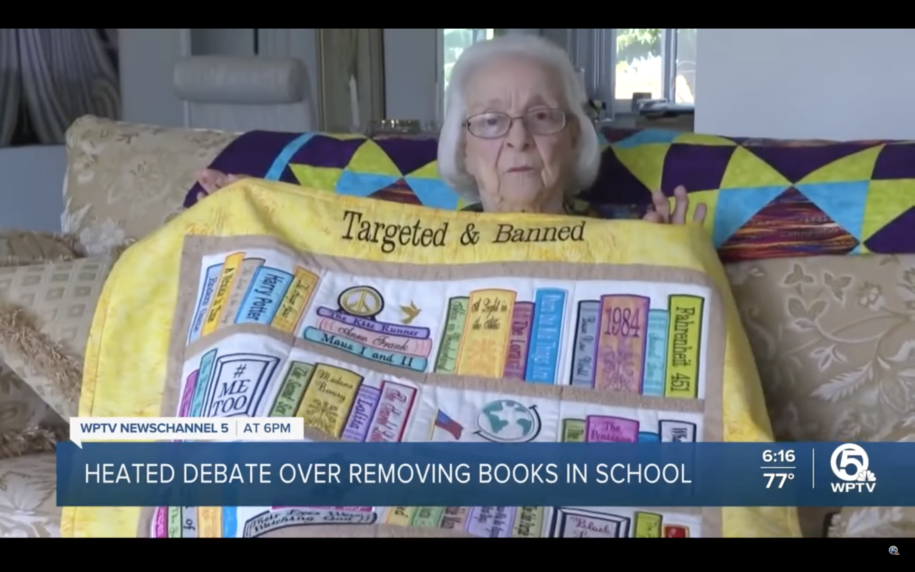
So are these books commonly taught in American classrooms today. The Florida widow of another soldier, killed in another war in 1944—she is now 100 years old—made this quilt to protest the censorship that now weighs heavily on American schools. Her husband died, she said, to preserve the freedom of thought that these books represent:
Ironically, one of the titles, Ray Bradbury’s Farenheit 451, is about burning books. Fire brigades are devoted, in Bradbury’s novel, to setting them afire, as good citizens once did, on Chester Avenue in Bakersfield, California, to a pyre made up of Steinbeck’s Grapes of Wrath, which they felt insulted their town for its treatment of migrant farmworkers.
A sign today that the walls that are closing in on teachers—particularly on history teachers—is the controversy over “Critical Race Theory,” which is taught in law schools or graduate schools. It is not taught in any K-12 school in any district in any part of the United States.
But the deliberately misinformed insist that it is. I once wrote this about perhaps the most threatening part of history, Black history, a discipline that may vanish, as Paul’s idealism did, in the rapidly contracting MAGA universe.
The passage refers to the student assessment, which required them to produce a computer-generated newspaper about what they’d learned about America in the 1920s.
When White 17-year-olds from Arroyo Grande, California, learned about the life of Louis Armstrong, a Black prostitute’s son from New Orleans, Louisiana, nearly every single newspaper at unit’s end had an article about Louis Armstrong.
They caught what a masterful trumpet player Bix Beiderbecke, the son of German immigrants—“Bix” is short for “Bismarck,” the Iron Chancellor— to Davenport, Iowa, caught one night when a Mississippi riverboat approached out of the fog on the great river’s surface. There was a jazz band aboard, and Beiderbecke heard the sweet—and saucy—notes of Armstrong’s cornet floating above the steamer’s superstructure. He was enchanted.
This is what I taught and what my teenagers learned.
When students learn that the hymn “Steal Away to Jesus” was the signal for carrying out a group escape from a slave plantation, when they learn about Crazy Horse’s generosity, after a big hunt, to Lakota widows and orphans; when they learn that one of the greatest frontier lawmen was a Mexican-American named Elfego Baca, or, in San Luis Obispo County, a sheriff named Francisco Castro; when they learn about the 54th Massachusetts driving up the beach toward Fort Wagner or the 442nd Regimental Combat Team advancing fearlessly under shellfire through the Vosges Forest in France; when they learn about Rosa Parks quietly refusing to give up her seat, they don’t feel ashamed to be Americans.
They are instead immensely proud.
They don’t feel ashamed because all of the people who perpetrated all of the cruelty that marks much of our history pass their knowing only briefly; these people are dead. But Louis Armstrong is alive to our children. He touches them.
There is nothing to be afraid of in teaching all of our past to all of our kids. It’s actually very hard to indoctrinate schoolchildren. What comes easy to children is recognizing needless cruelty—would you have us teach them to admire cruelty?– and, even more, kindred hearts. If we teach them to listen, then quiet ourselves, they’ll hear the cornet notes, sweet and saucy, clear and sharp, high and weightless above the river’s current.
It’s not safe to teach Louis Armstrong anymore.
And the classroom—once my sanctuary, the place where, in the course of my life, I was my truest self—is no longer safe, either.
What my retired friends were suggesting was something I’ve heard over and over from classroom teachers today. Whether it was the interruption of Covid, which retarded the socialization of young people for two years and when teaching was done remotely—both young people and teachers hated it—or the example of a president who mocked disabled people, there has been, I believe, a collapse in civility that is the societal equivalent of the climate crisis. Our future is in peril.
Both crises are being ignored.
Meanwhile, what teachers bring to the classroom are their open hearts, hearts that are open to America’s future.
But in many classrooms in America, every day in every way—whether it be by parents who challenge the teacher’s scholarship or by students who surreptitiously message their friends on iPhones hidden just beneath their desks, or by both teachers and students who come into the classroom with an immense and unassailable sense of entitlement—teachers are struggling with broken hearts.
I am a believer in Catholic education as well as public education, yet the many friends of mine who teach in four local parochial schools have seen the same decline in civility.
And so enrollment in teacher education programs has declined by a third in the last decade.
No wonder. If I could replace a broken windshield and get the thanks due me from a customer, I would fix windshields until I died.
Broken hearts are far more problematic than broken windshields.
And, to be honest, I didn’t teach history, not exactly. What I taught came from my heart: My classroom was a safe place where students could find acceptance. That allowed me to lead them toward a place where they could respect each other and, more, to travel to places they would never have the chance to visit and to meet people they’d never have the chance to meet. The people who’d inhabited those places were dead, you see. My job was to bring them to life again so that the young people I loved so much could meet them, wonder at them, honor them, remember them.
My classroom was a place where we could celebrate being human together. This was, for lack of a better word, my faith, which came from my mother.
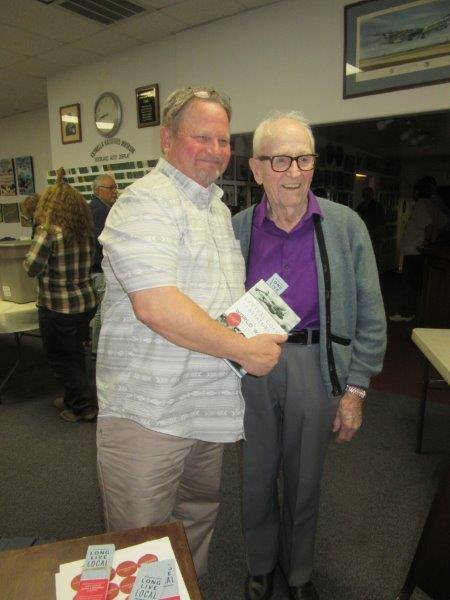
Just one example of my faith is this man, whom I will remember all my life. Al Findley Jr. was shot down as a B-24 radioman—shot down twice—in World War II, yet he became a lifer in the postwar Air Force, a Command Master Sergeant. After his career he became, with his wife, an antique collector with a shop in England and then another in Los Osos, California and when he died at 94, it broke my heart. I only knew the man briefly—he used to drive his retirement home G.I. buddies to breakfast every Sunday just up the coast to Morro Bay—but he became part of a book I wrote and, in the process, became as well one of the dearest friends of my life.
Al had let me touch the past, you see, and there are powerful and terrified men and women who want to draw a curtain across our past so that we can never see it honestly again.