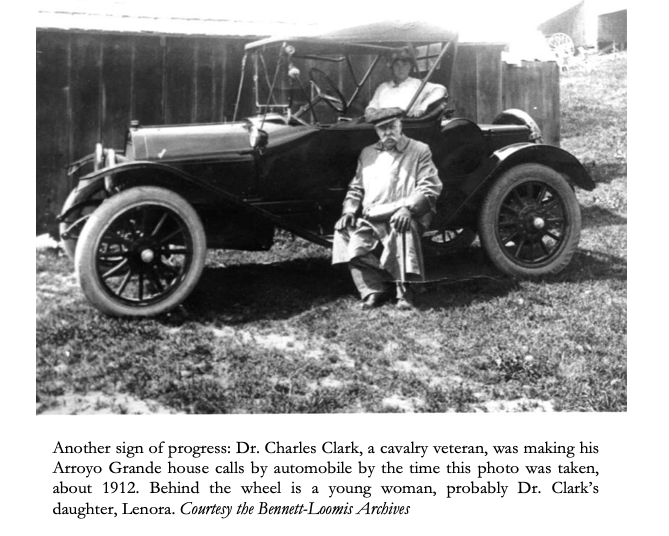
Dr. Charles Clark was Arroyo Grande’s “baby doctor” for many years until his death in 1916.
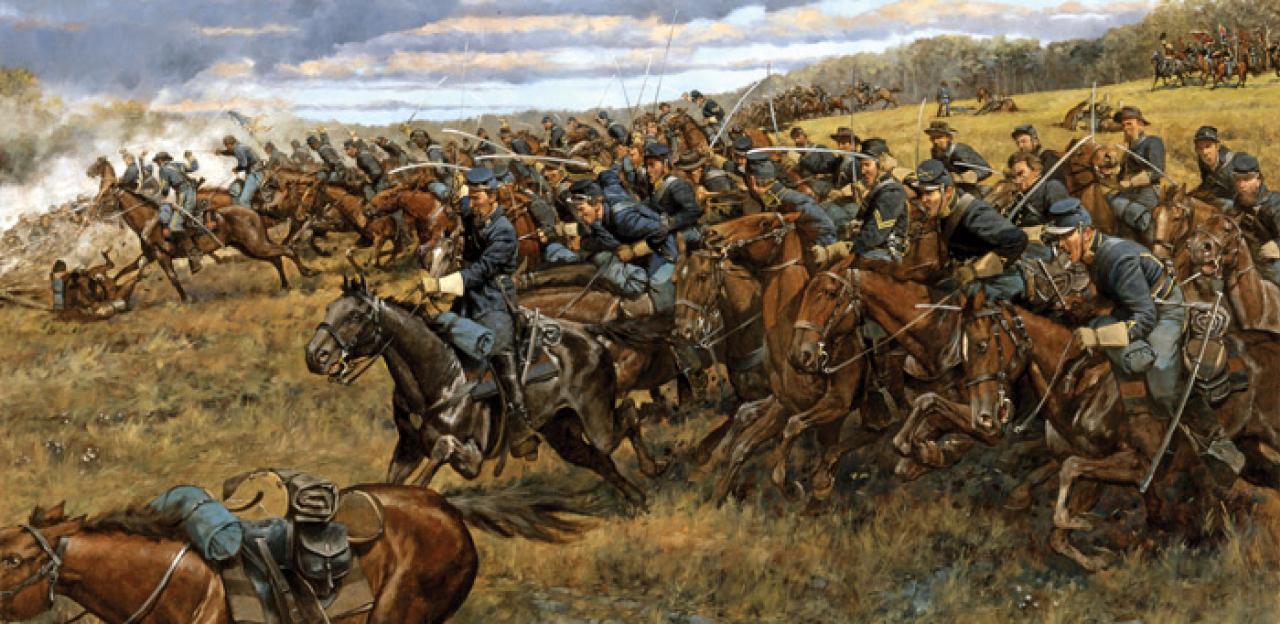
During the Civil War, he was a seventeen-year-old member of the 1st New Jersey Cavalry under George Custer–and he fought at Sailor’s Creek in 1865, the battle depicted in the painting.
Even after the war, Clark’s attention was turned toward the…er…south.
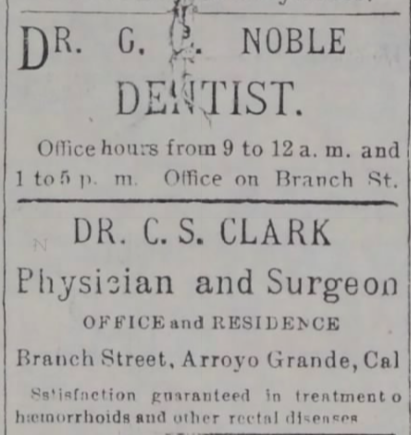
I’m seeing how much I can find about his practice–his office was on Branch Street, I think near today’s Branch Street Deli–and it’s kind of shocking. Doc Paulding seems to have been the town’s primary doctor–he was a superb orthopedist–but even pediatrician Clark had to sew up the occasional adult who had an extra smile added to his cheek, the result of a knife fight. (This one was the result of an argument between farm laborers in the Upper Arroyo Grande Valley.)
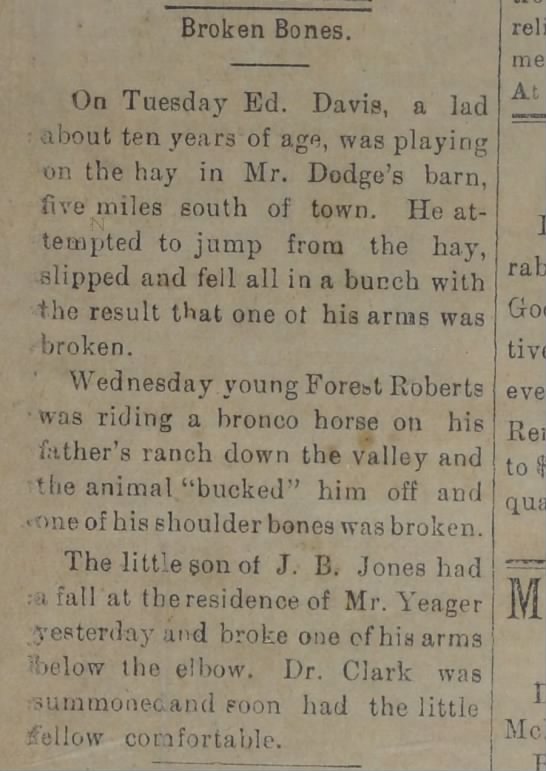
Being a child in the early 1900s wasn’t all that safe, either. I’m finding injuries caused to children by a mower (a bean-cutter killed one of our Civil War veterans in the Huasna Valley. He fell into it and his horses dutifully kept pulling), accidental shootings, runaway horses, burns caused by “manufacture of a steam engine out of a carbide can” by some future scientist (maybe not); he tended to his own son, Ed, a printer at the Arroyo Grande “Herald” whose fingers were caught in a press.
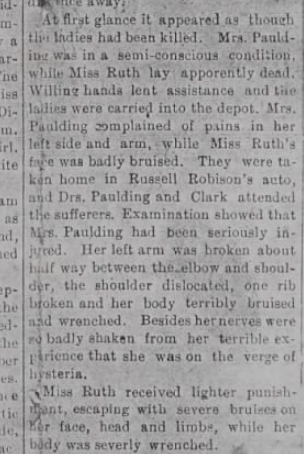
From 1894
The most tragic incident, because it could’ve happened to any of us, came when a young mother, tending to her kitchen, left her toddler alone in the parlor for a moment. The little girl fell into the fireplace. Clark was unable to save her life.
[Fire was a terrible hazard for Victorian and Edwardian widows. A year of mourning called for widow’s reeds of black taffeta, easily set alight by the open flame of a gas jet used to illuminate homes. All that was expected of widowers was a thick black silk armband around the sleeve of a suitcoat.]
Cars are dangerous, (Dr. Paulding never mastered his–it was dangerous when he was out and about on house calls) but so was travel by wagon. Clark tended to the victims of two wagon accidents. In one, a woman and daughter in a funeral cortege were thrown to the pavement and knocked unconscious when the wagon started suddenly and the rear seat tipped.
And in 1912, a PCRR electric utility car T-boned the carriage containing schoolteacher Clara Paulding and her daughter, future schoolteacher Ruth Paulding, for whom the middle school is named. The carriage was reduced to splinters–the horse, an admirable one, stayed in its traces–and Clark helped attend to the Pauldings. The family got a nice settlement from the railroad.
His death was an untimely one; he died at 70 on September 27, 1916. Two tears later, the Spanish Flu would arrive in Arroyo. The Paulding home became a temporary hospital, housing up to sixteen patients at a time, so my guess is that Dr. Clark was sorely missed.
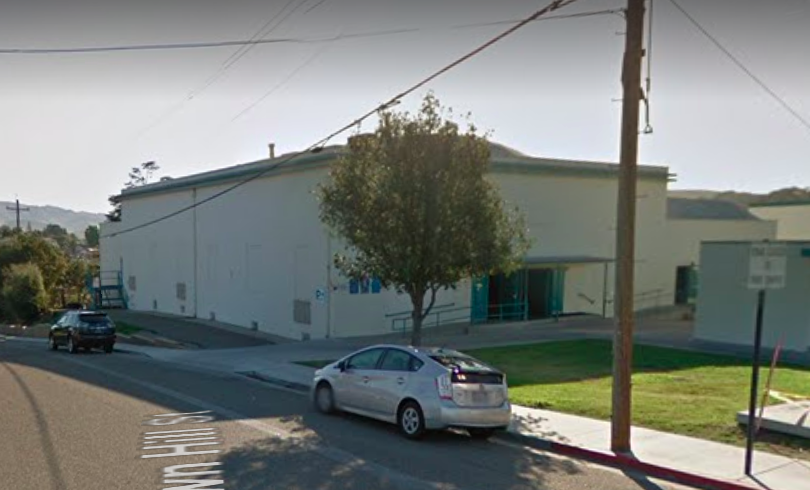
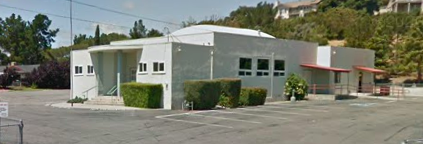
You wouldn’t think a structure as homely as this one—the Paulding Gym, taken from the Google Earth image—would be all that important. There was thought given to demolishing it at one time. That would be a mistake.
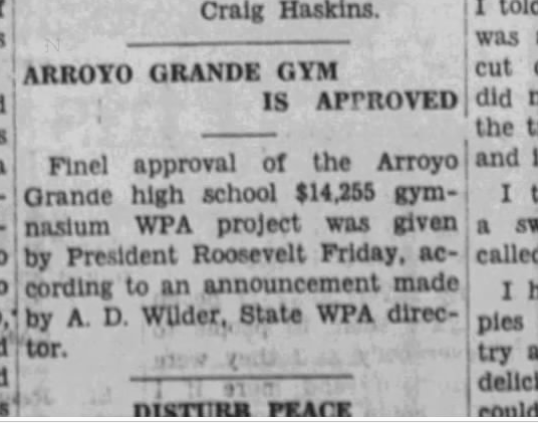
October 2, 1937, Arroyo Grande Valley Herald-Recorder
For one thing, Arroyo Grande sports fans had been wanting a high school gym—this would’ve been for the 1916 high school, atop Crown Hill—for many years. For another, it’s a legacy of American history, a small part (for a town of about 1,000 people in 1937, a big part) of American history. Along with the retaining wall below Paulding, the WPA stamps on Mason Street sidewalks and the stone fence around the town cemetery, it’s one of the last legacies of the New Deal.
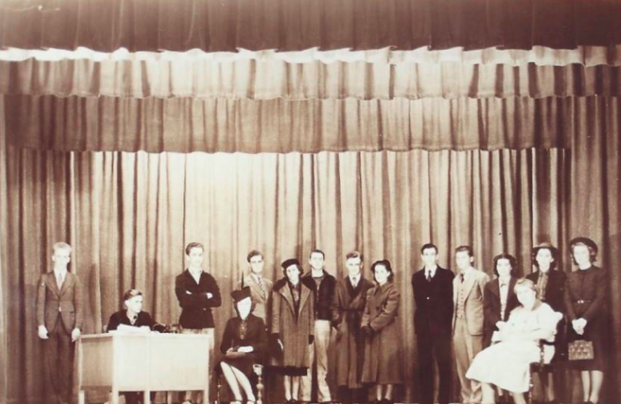
And in many ways, it hasn’t changed all that much. My son Thomas, then a Paulding student, acted in Mr. Liebo’s plays on the same stage these students are using in 1939.
And even the buildings nearby, at the base of Crown Hill, have some historical significance. Here’s another Google Earth image of the IDES Hall, built in 1948;
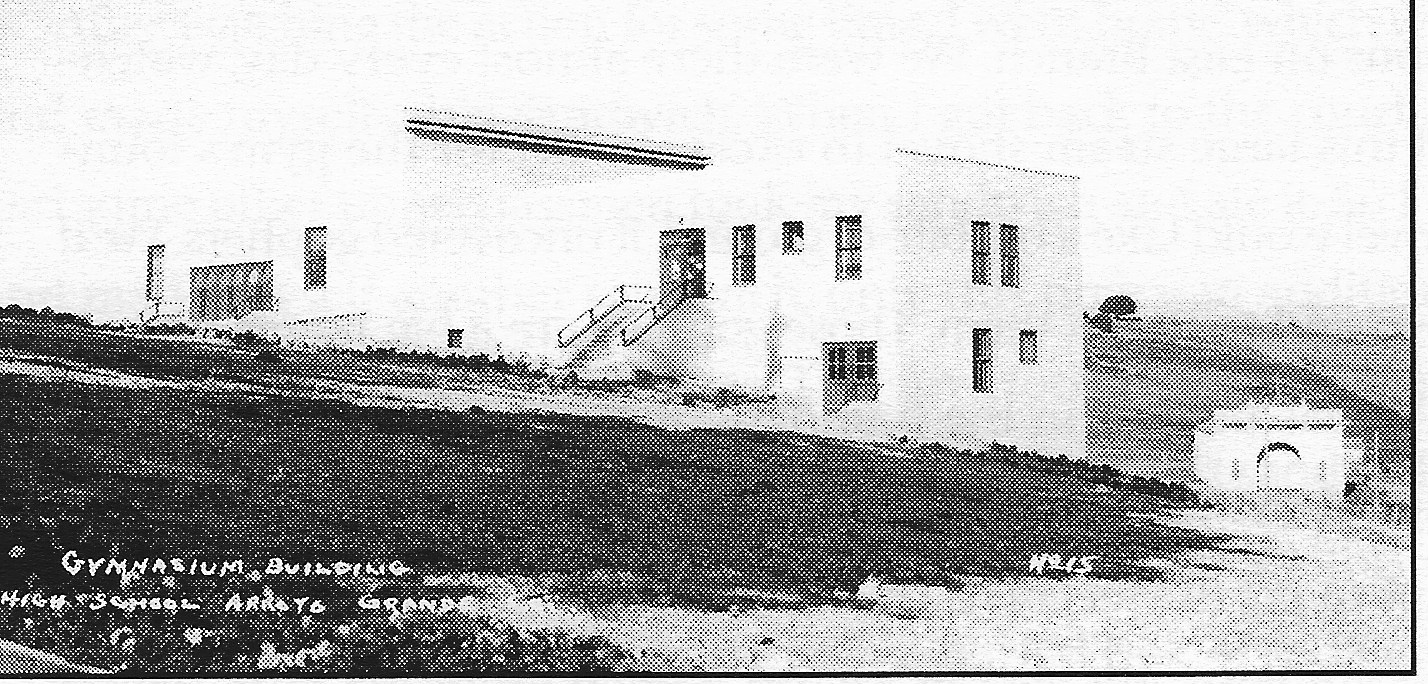
I don’t know that most people realize that this is the second IDES Hall, still a testament to the importance that Azorean immigration has had in Arroyo Grande’s past. Here’s another photo of the gym, from the 1930s, and at the right, you can see the first IDES Hall.
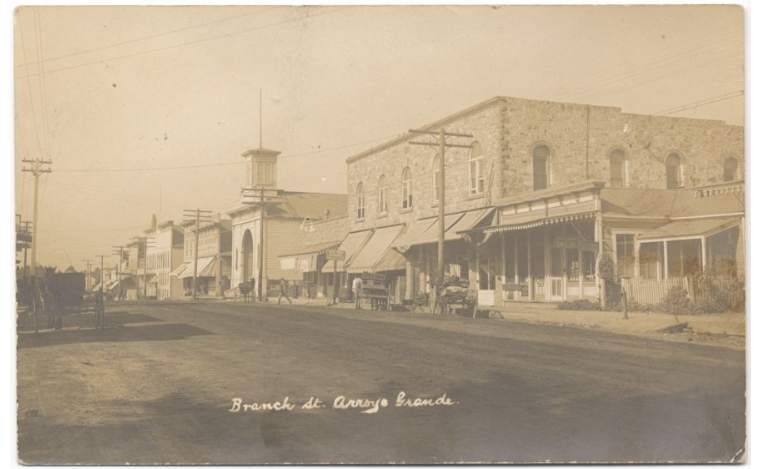
And that structure dates from the 1880s, built by the Phillips brothers, who owned a furniture store—one of their places is today’s Bill’s Place on Branch Street. But what you see in this photo is a sad remnant of a much grander, complete with steeple, Columbian Hall. Here it is, when it was still on Branch Street, in a photo taken about 1908.
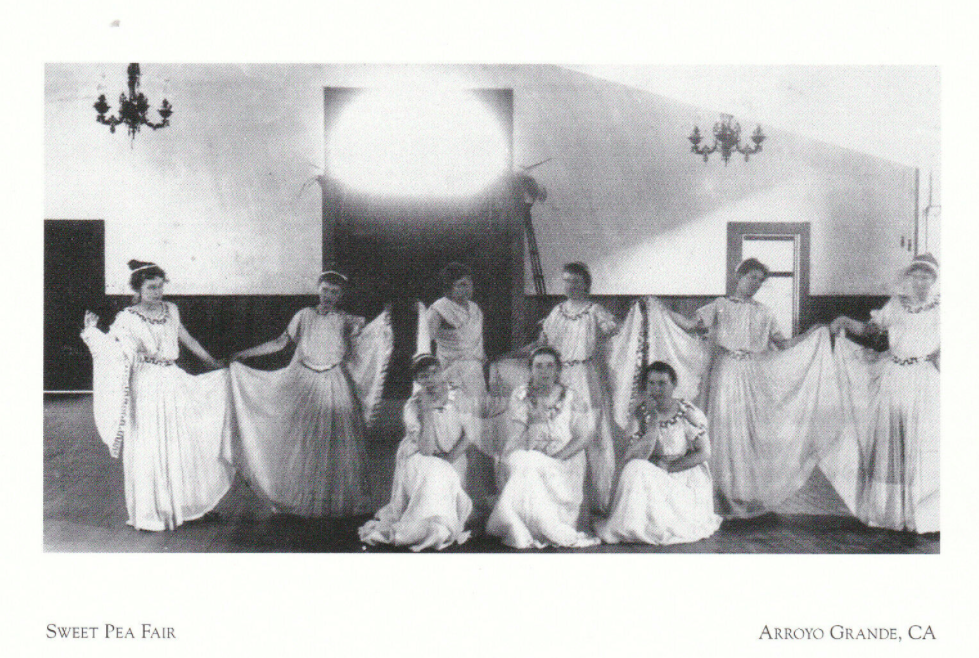
And the Columbia Hall was important—kind of an early 20th Century version of today’s Clark Center—that was the scene for everything from political meetings to Temperance lectures to recitals and plays. And dances: These young women, for all intents and purposes, are dancing in tribute to the local cash crop, the sweet pea, in the Columbian Hall.
By the 1930s, overcultivation of crops like sweet peas had just about done in the topsoil on the hillside around the Arroyo Grande Valley. 230 Civilian Conservation Crops youths from New York City, New Jersey and Delaware—their headquarters stood where today’s Woman’s Club stands–would begin to reverse the damage.
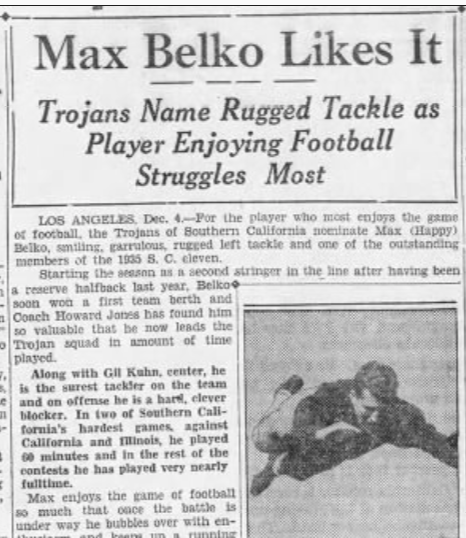
And by the 1930s, the new gym had a new coach. USC Trojan football star also coached basketball in that gym, and he brought a formidable reputation with him. Somehow, Belko, from a tough immigrant family, steelworkers, in Gary Indiana, had somehow escaped the attention of Notre Dame. USC was fine with that. His coach there, Howard Jones, called him “the finest example of a man I’ve ever coached,” and Belko, among other things, kicked a field goal against Montana in 1935. Inexplicably, USC wouldn’t kick another field goal for fifteen years. Frank Gifford kicked that one.
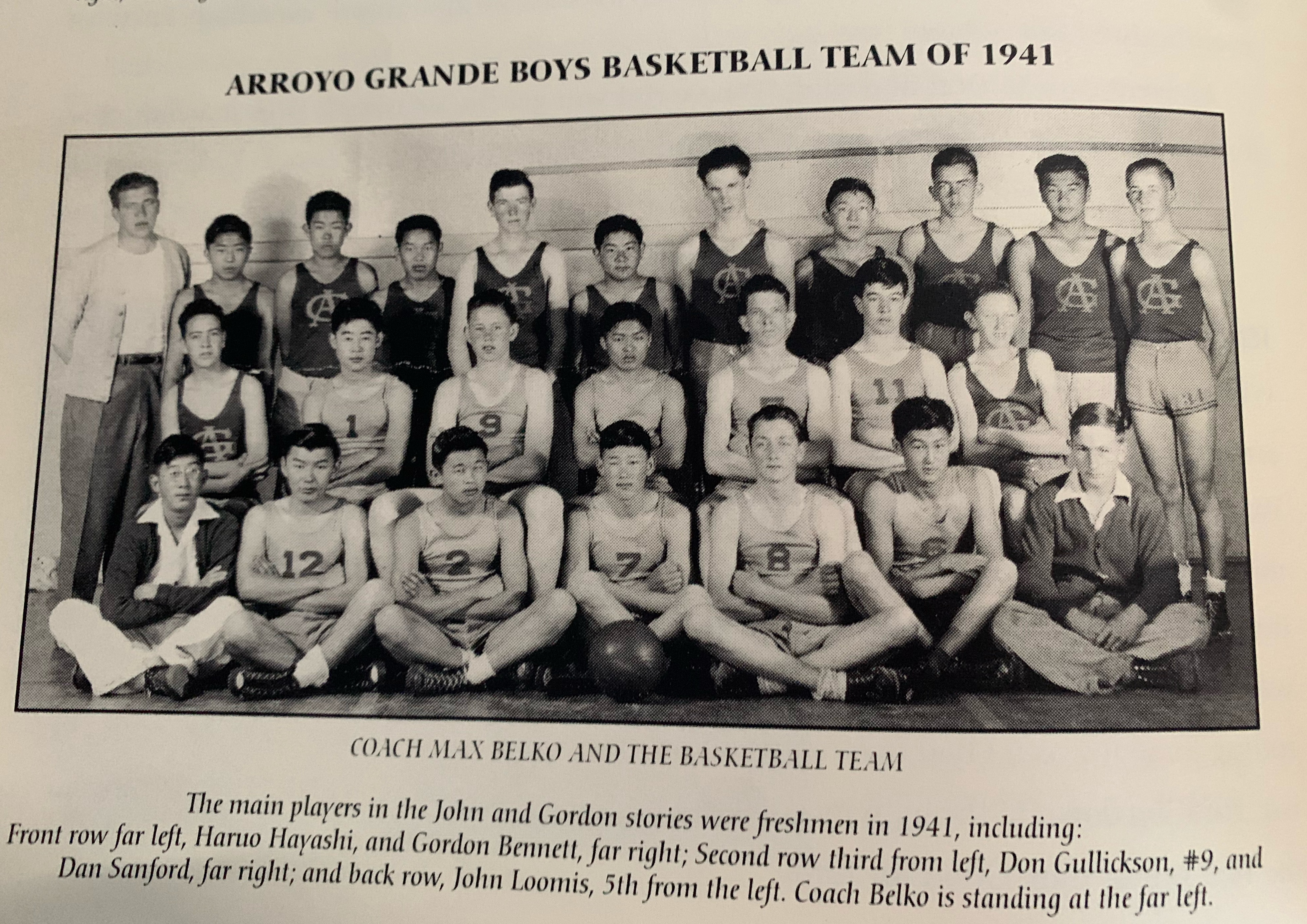
Here’s Belko and his basketball team, from Gordon Bennett and John Loomis’s book, The Old Days.
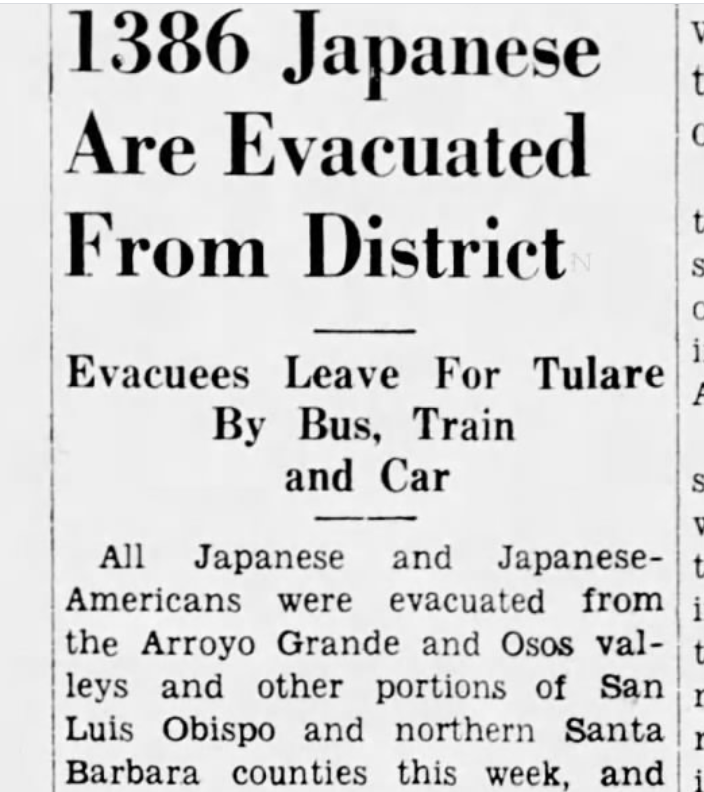
It’s not your imagination. There were a lot of Japanese-Americans who went out for basketball. That’s the next, tragic connection that the Paulding Gym has with history. On April 30, 1942, buses would assemble in the high school parking lot just outside to take local Japanese-Americans into internment. Among them were the Nisei seniors of the Arroyo Grande Union High School Class of 1942. There were fifty-eight seniors that year. Twenty-five were Japanese-Americans.
By then, Belko had left Arroyo Grande for a teaching position in Hanford. But the war would sweep him up, as well. The clipping below is from the August 14, 1944 edition of the Arroyo Grande Herald-Recorder.
There have been, of course, thousands of games played—volleyball and basketball—and hundreds of school dances and scores of plays in that old gym since Coach Belko’s time. And that’s been a long time ago. You wonder if the hopes and disappointments of the young people who once lived brief parts of their lives within its walls aren’t somehow still there, imprinted but invisible, invisible but powerful.
Among my favorite human beings are my high-school classmates Julian Brownlee and Mike Knecht. Mike is a writer and a (real) cowboy; Julian—named for his grandfather, Cal Poly President Julian McPhee—a standout athlete (football, baseball) with a marvelously dry sense of humor with whom I smoked my first cigarette, a Marlboro, in the St. Patrick’s Parish Hall in 1965.
That wasn’t very humorous, but it was my owned damn fault. I turned green.
And then—to show you how obstinate I am—the same thing happened shortly after, this time with a cigar called a Rum Crook, in the Fair Oaks Theater, during a film in which the Disney actress Hayley Mills (the original Parent Trap) appeared in a scene that revealed her nude rear end. That, and the Rum Crook, proved too much for me to tolerate. I think somebody—I don’t really remember who—found me sprawled on the sidewalk beneath the Coming Attractions, took pity on me, and drove me home to Huasna Road.
A little later, in high school, I found that there was a little knot of us in the AGHS Class of 1970—Julian, Joe Loomis, John Porter and me—who all shared January birthdays as well as given names that began with “J.”
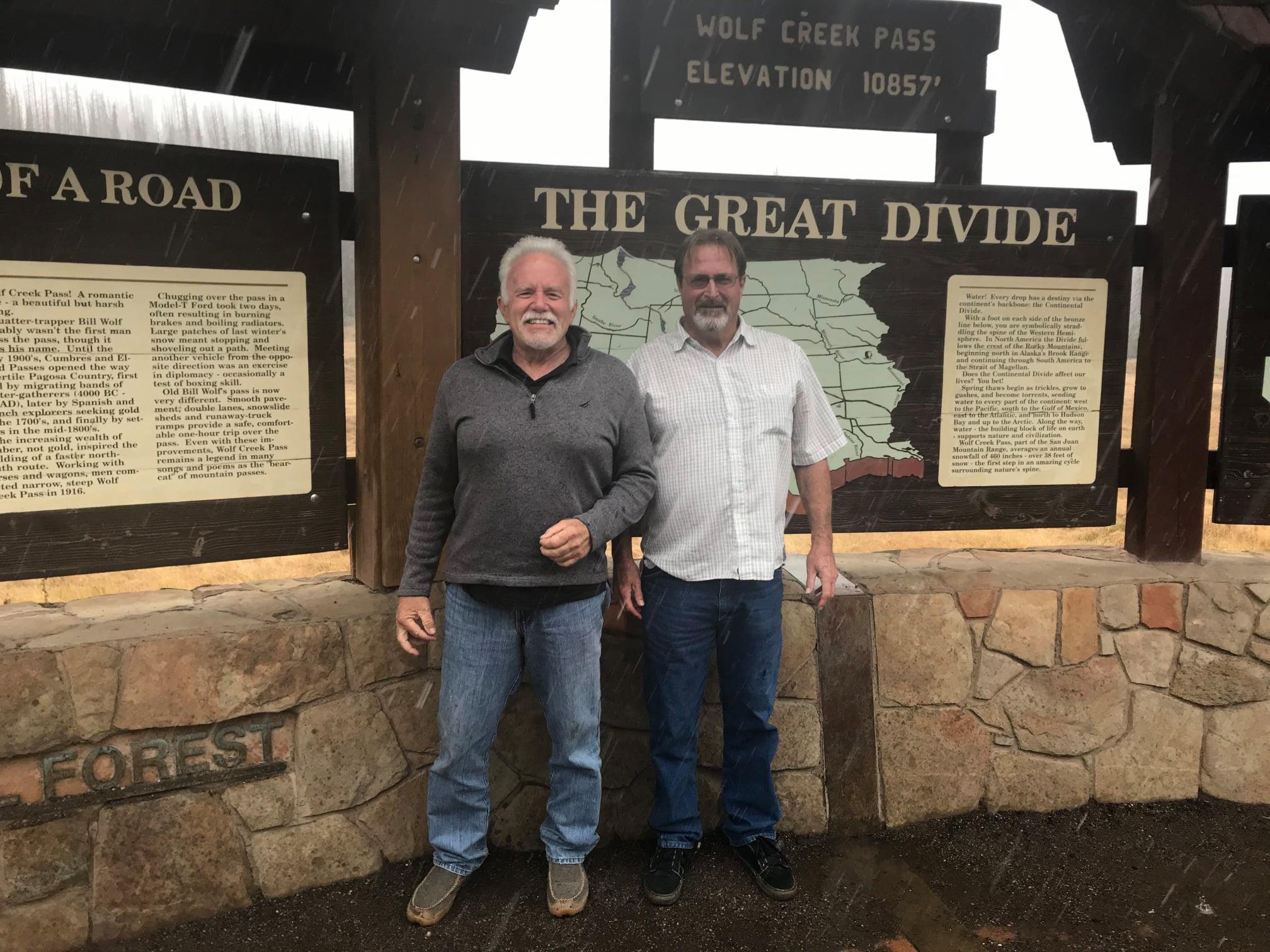
Anyway, Mike and Julian are currently on that road trip—Mike’s posting from time to time on Facebook—from San Luis Obispo County to North Carolina for a wedding, in Julian’s Subaru. (A fine car; we’ve owned three.)
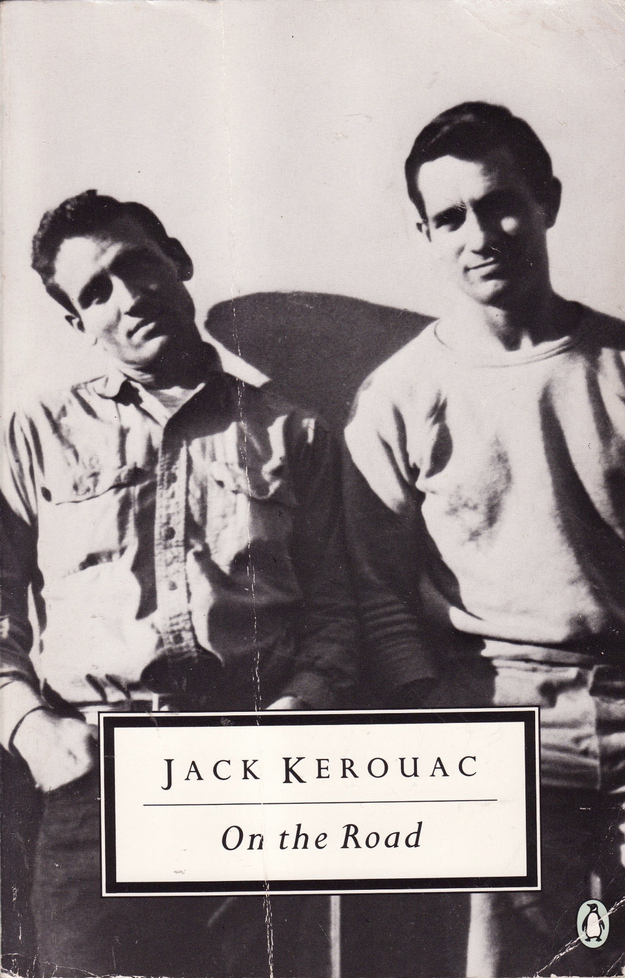
The photo shows them at the Great Divide. It has just occurred to me that they, heading east instead of west, are doing a Reverse Kerouac. These two may not know it, but not only are they are among my favorite human beings, but On the Road is among my favorite books.
Neal Cassady, left, and Jack Kerouac
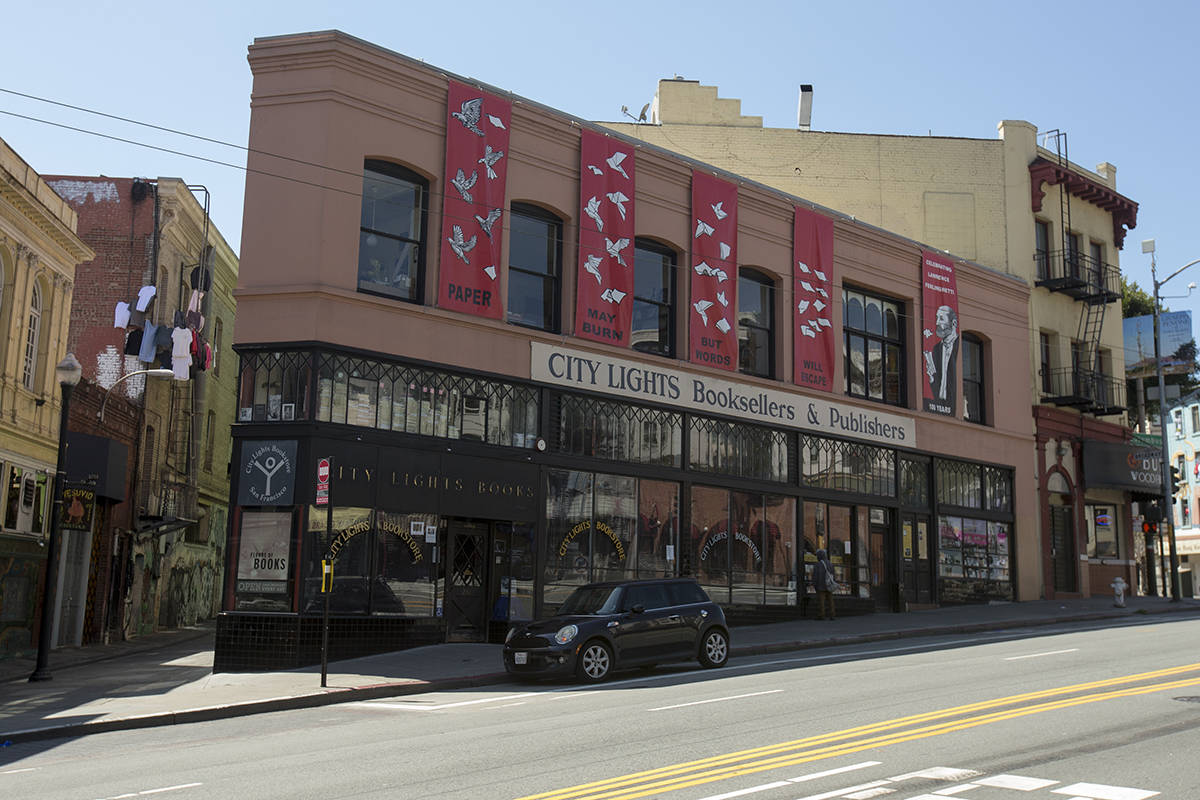
And Kerouac, while working as an SP brakeman, lived in San Luis Obispo for a short time. I get all Kerouacky when I go to my much-beloved San Francisco and visit the City Lights Bookshop, where another one of my favorite human beings, my former AGHS history student Erin Messer, works.
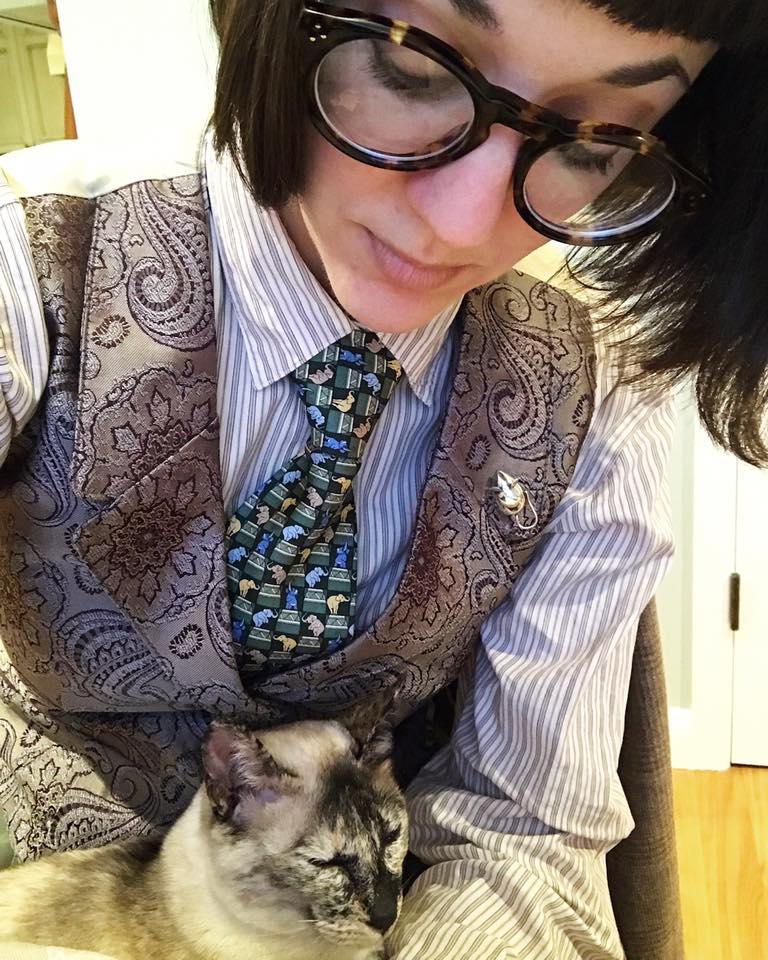
This is my favorite photo of Erin. We both like cats. Elizabeth and I acquired two cats early in our marriage, both calicos, named Hadley (after Hemingway’s first wife) and Bumby (the nickname for Hemingway’s eldest son).
It was a major gathering place for the Beats, including Kerouac, Cassady, Ginsberg and the City Lights founder, the poet Lawrence Ferlinghetti, who died recently.
I believe that he was more or less 140 years old.
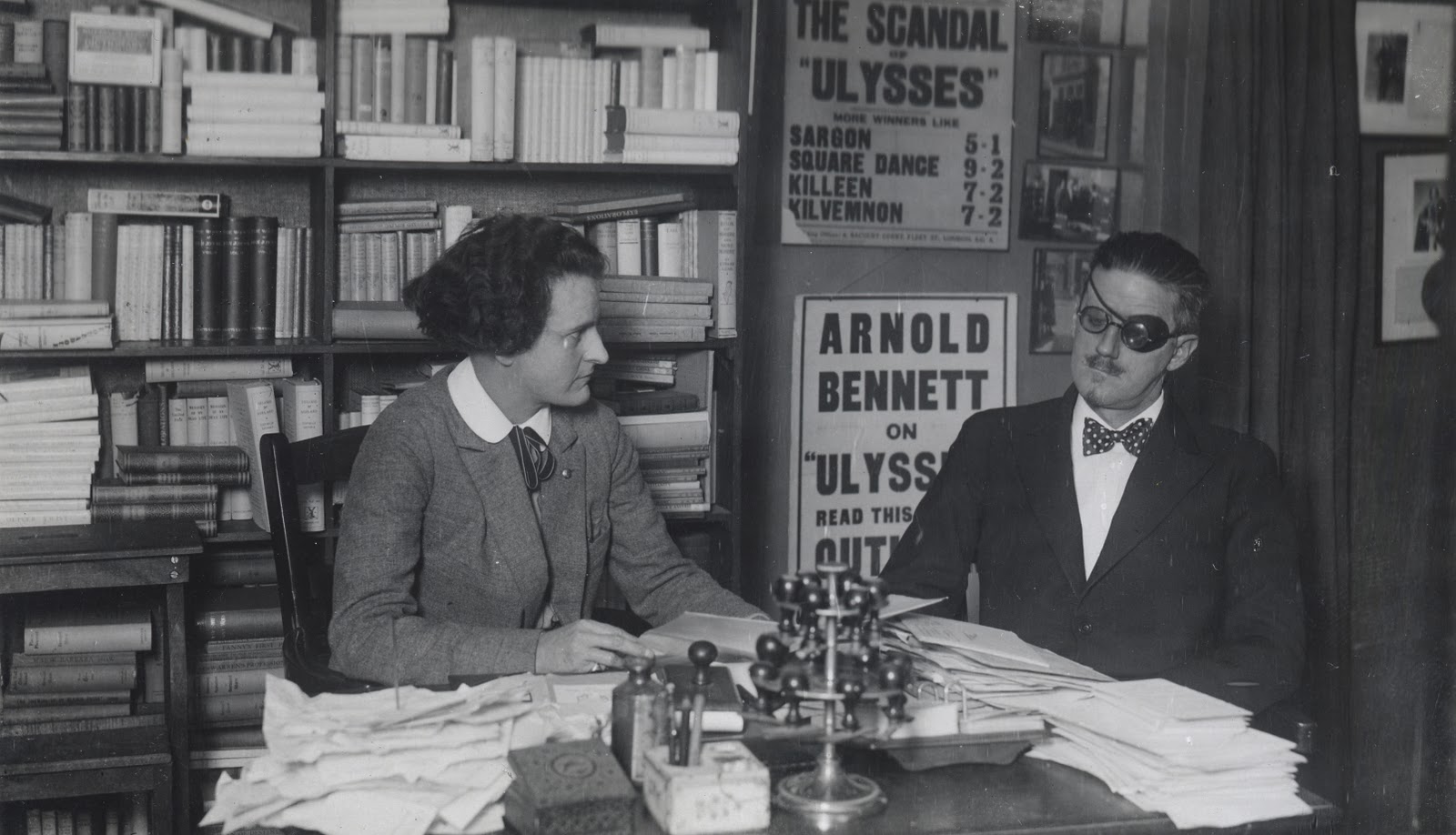
The only bookstore that comes close to City Lights is Shakespeare and Company, founded by Sylvia Beach–from Altadena, California, of all places–and it stands just across the Seine from Notre Dame. I’ve been to Paris twice, but I was too intimidated to actually go inside the bookstore that was once frequented by Ernest Hemingway, Scott Fitzgerald, John dos Passos, Ford Madox Ford, Pablo Picasso, Gertrude Stein and Ezra Pound. I’m just a little fellow.
It was enough for me to sip a latte the size of a soup bowl at a sidewalk cafe, Les Deux Magots, and gaze fondly at Shakespeare and Company’s facade. (Hemingway would’ve done the same, but with a Pernod, a pad of yellow lined paper and a dozen #2 pencils sharpened with his pocketknife.)
After I’d finished my latte, I got moderately but happily lost in the Latin Quarter, the old university section, with my nose almost against the glass of shop windows and looking around corners up narrow alleyways—an alley, in Europe, is called a “close”— once prowled by belligerent university students, thinking it was Poly Royal, armed with cudgels and fortified by red wine. The alleys, always in shadow, are 14th-century relics that somehow escaped Baron Hausmann’s reconstruction of Paris in the time of Napoleon III.
That was a good Lost. I think Mike and Julian are reasonable navigators, so they won’t get lost. They might run into a little culture-shock, like the time the guy hollered at me from a pickup truck in the Ozarks:
“Hey, boy!”
Actually, it was more like:
Sylvia Beach and James Joyce inside Shakespeare and Company
“Hey, BOY!“
I was 25 years old and walking to a hamburger stand in Licking, Missouri, for some French-fried mushrooms, an Ozark delicacy. I looked nervously for the Easy Rider Rifle Rack in the pickup’s cab, but it turned out that the man was just asking for directions.
But that’s another story. As to this current road trip with Mike and Julian, I don’t know which one is Kerouac and which is Neal Cassady. I don’t think that’s very important. It’s more important to have friends like these. We don’t see each other very much anymore, but every time Mike posts, our friendships are renewed.
This is a story I heard today. I won’t get the details exactly right, but even so, this is a true story.
A young woman went to visit her friend, afflicted with cancer. When she entered the sickroom, she knew immediately that the end was pretty close.
–Would you like to go outside for a bit?
–Yes. I’d like that.
So the visitor wheeled her friend out to the garden where there would be sunlight and warmth and a little breeze.
There would be flowers.
There were two dragonflies flitting about the flowers. The visitor pointed them out, but her friend, Dawn, had seen them first.
She knew who they were. Her father and grandmother had come to be with her, she announced with confidence from her wheelchair.
I think that death confers on people who’ve lived good and unselfish and courageous lives—all of these describe the Dawn’s life, the young woman in the wheelchair— a wisdom near the end that we cannot understand. It gives them a clarity of vision that allows them to see what we cannot see.
It wasn’t long until death came. The visitor—a real friend, the friend of this person, now dying—Dawn had always drawn people to her the way flowers draw dragonflies—-came to visit on the last day. It would be presumptuous to call it the “final” day, because I believe that all of us will embrace each other again someday, and it will be a long time before we let go and step back, smiling, to regard each other in perfect wonder.
But when that day was over, when Dawn summoned the courage to give up her struggle, the visitor left the sickroom and walked into the sunlit garden.
Just above her shoulder, there was a dragonfly.
“Hello, sister,” the visitor whispered.
This is Hozier, and he’s singing an old Irish song of farewell, “The Parting Glass.”
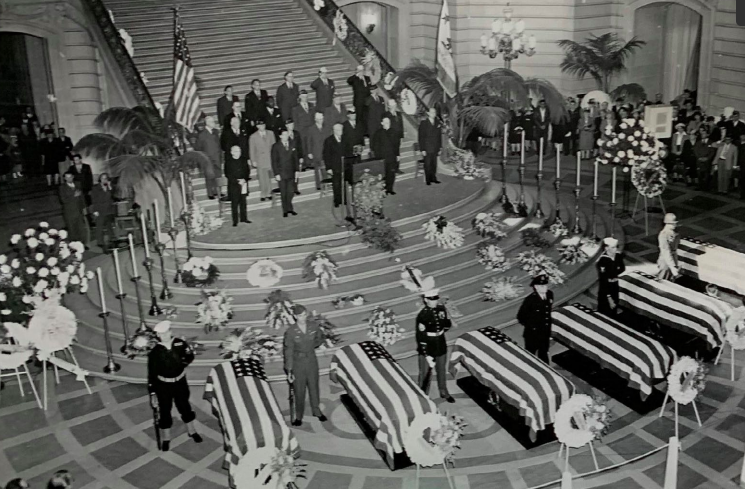
The first World War II American casualties to be repatriated, San Francisco, October 1947.US Dept. of Veterans’ Affairs
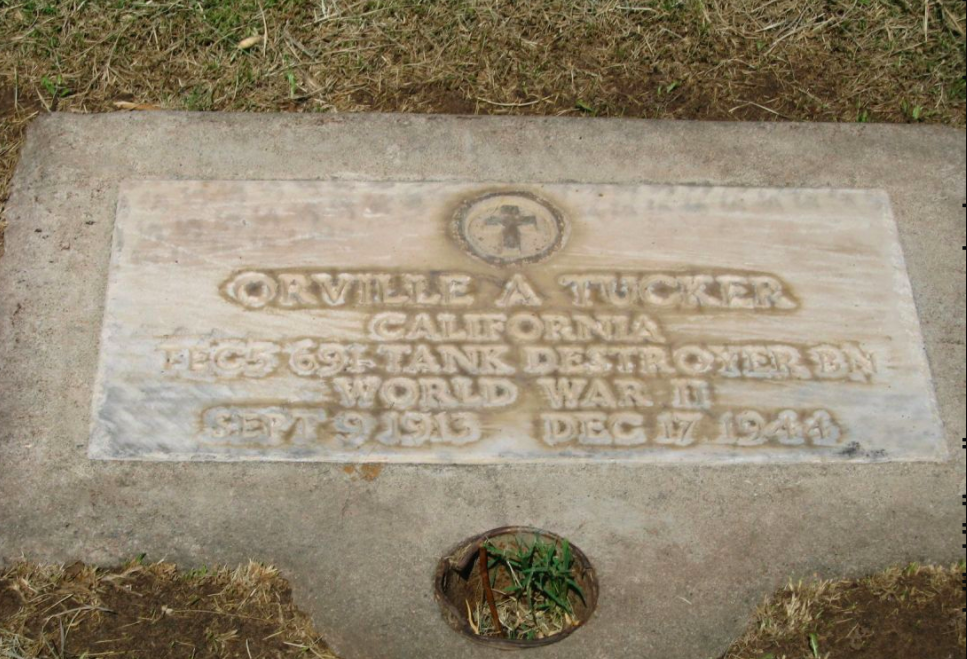
Of course I didn’t expect to meet him, but T5 Orville Tucker’s death crossed my life today. Here’s his grave, in the Arroyo Grande District Cemetery.
And there were a lot of things that struck me about him. The first was his date of death, and dates mean something to historians. We lost this American on the second day of Operation Wacht am Rhein, in what we now call the Battle of the Bulge.
It struck me, too, that he was part of a tank destroyer unit, like Frank Gularte, another Arroyo Grandean I know much better. Tucker was a member of the 691st TD Battalion, Gularte was part of the 607th. And the two soldiers died only days apart. Here’s what I wrote about Gularte on a website that memorializes fallen GI’s, killed in the war my father’s generation fought:
Sgt. Gularte served with the 607th Tank Destroyer Battalion and was killed in action 28 November 1944 near Metz, possibly outside the town of Merten. His son was born five days later in San Luis Obispo County, California. A memorial Mass was said in Sgt. Gularte’s memory at St. Patrick’s Church, Arroyo Grande, San Luis Obispo County, on Wed., 13 December 1944. Sgt. Gularte, before the war, was employed by E.C. Loomis and Son, a farm supply company; Gularte and his family were and are well-known and highly respected in the Arroyo Grande area.
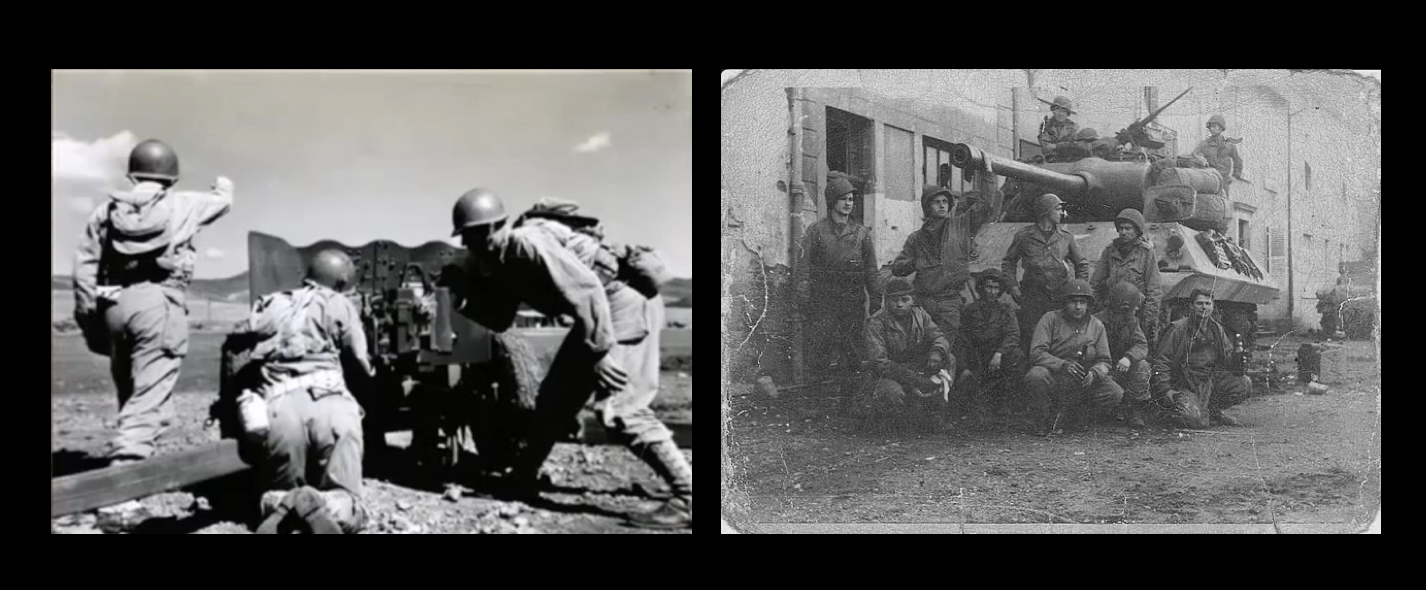
At the time of his death, Tucker’s battalion was still fighting enemy armor with the 57-mm artillery piece, like the one at left being manned by soldiers training at Camp San Luis Obispo in 1944. Frank’s 607th had graduated to the M36 tank destroyer–that’s a 607th TD in the other photo—built on the chassis and hull of the famed Sherman tank, but with a much more robust 90-mm gun.
But it was likely a Mauser rifle that killed Frank, in the hands of a German sniper, during an attack by the 607th that was to have been supported by infantry. They didn’t show, so Frank’s company went into action alone. German fire disabled three tank destroyers edging into Merten—a beautiful mountain town— and the American attack bogged down. Chaos ensued and it claimed Sgt. Gularte.
I don’t know yet how Orville died, but he’s got another tie to the Gularte family.
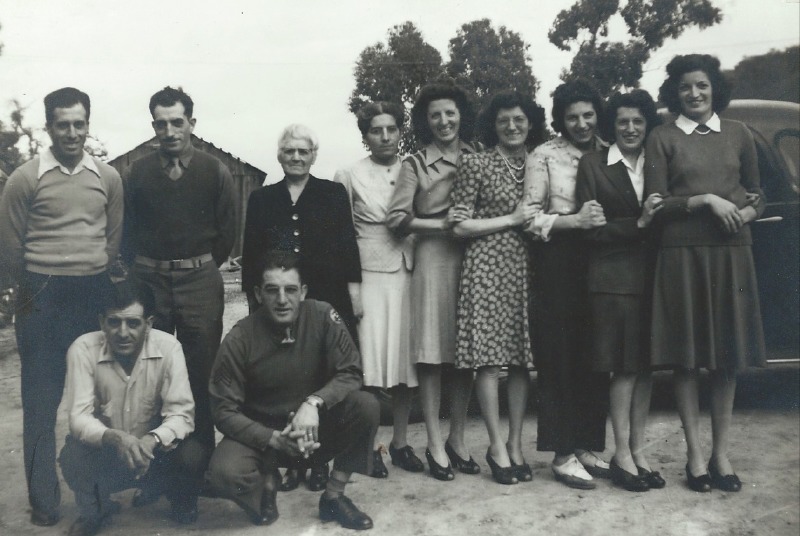
A family barbecue at the Gularte Ranch, behind the site of the IDES Hall just below Crown Hill. Manuel Gularte is standing; Frank is kneeling: Both are about to go to war in Europe.
As near as I can tell, in the opening hours of the Battle of the Bulge, Orville Tucker’s battalion was attached to the 28th Infantry Division. They were defending St. Vith, a Belgian town directly in the enemy’s line of advance and at the seam of two powerful German armies. Twenty-two thousand Americans were in the way of 100,000 Germans and their armor, including 500 tanks. The units that attacked St. Vith on December 17 included the 1st SS Panzer Division Leibstandarte SS Adolf Hitler, an SS unit that had it origins as the dictator’s bodyguard.
Their assignment was to take St. Vith by midnight December 17. It didn’t work out that way, partly in thanks to Orville Tucker and partly because of Frank’s brother, Manuel, also fighting to defend St. Vith. (Two Arroyo Grande settlers, Civil War veterans, had fought in separate regiments within 300 yards of each other at Gettysburg.) Manuel’s field artillery unit–they tended big 155-mm guns, updated versions of the artillery that stood guard over San Luis Bay here at home–and it was the accuracy and ferocity of their fire that delayed the German advance.
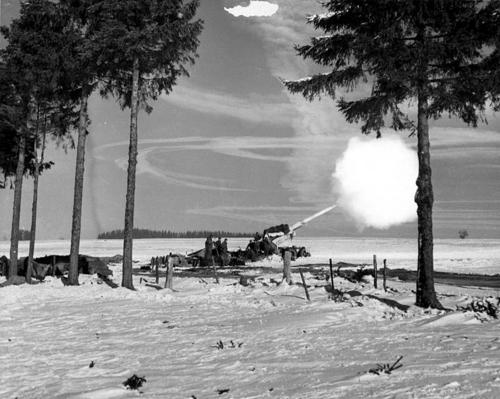
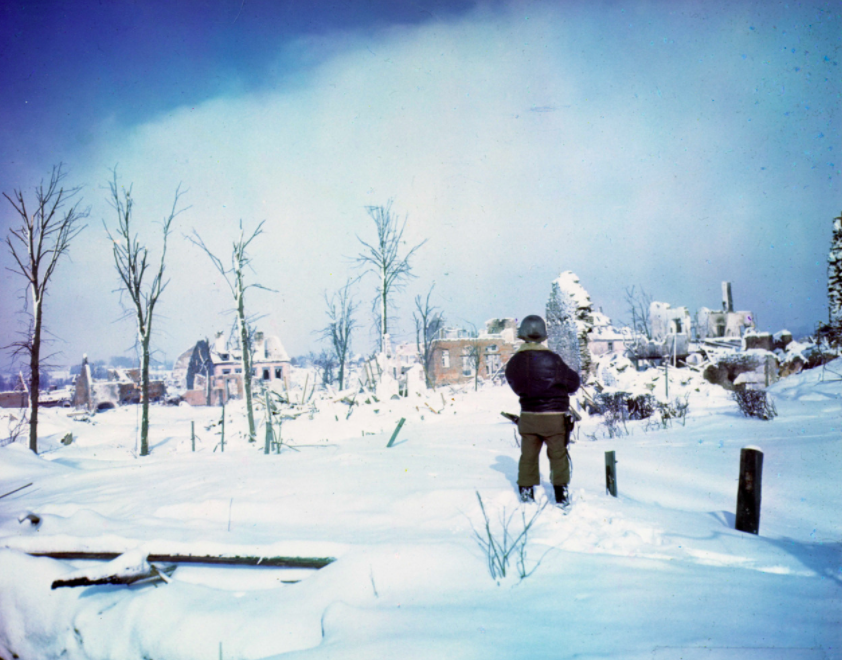
A 155-mm gun in action during the Battle of the Bulge; a GI on the outskirts of St. Vith in January 1945.The Battle of the Bulge was fought during the coldest winter in Europe in thirty years.
“Delay” was exactly what was needed. The panzers were fuel-poor (because Germany was: Berlin taxis were running on firewood in 1944) and the success of the Battle of the Ardennesdepended on speed, on objectives seized promptly, even on the hopeful seizure of vast American stockpiles of gasoline.
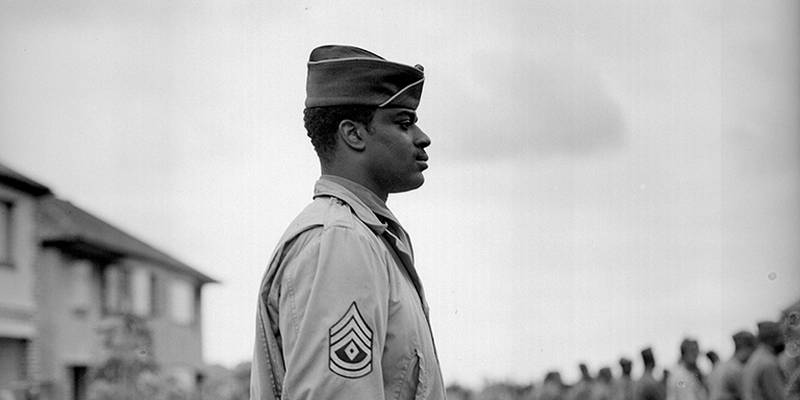
Those might’ve been dispatched to the battlefield by my father, a lowly Quartermaster second lieutenant whose responsibilities included providing the African-American gasoline supply companies that kept the American army on the move.
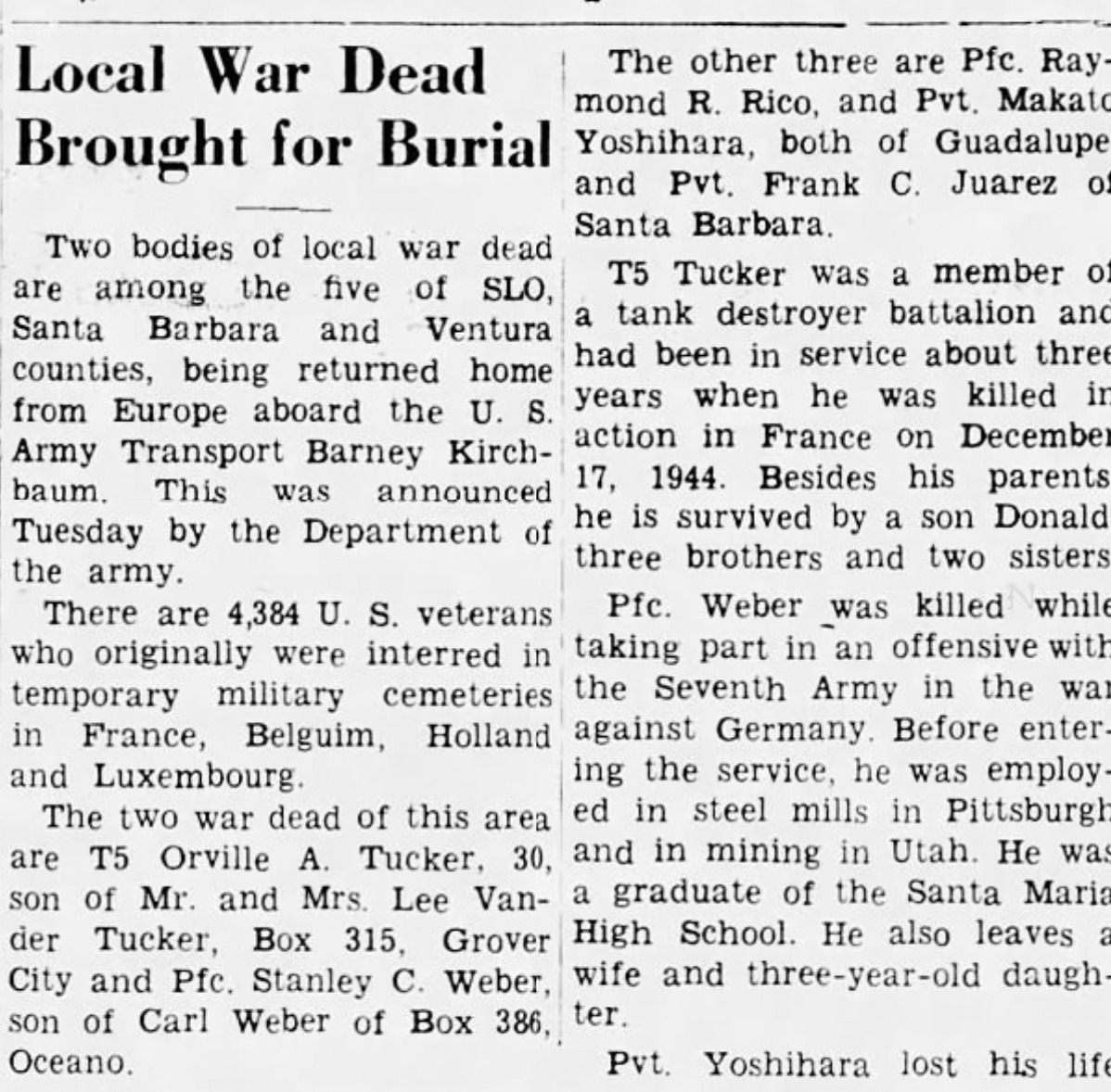
By the time the American army had stopped moving—backward—and flattened the Bulge salient, 20,000 GI’s were dead, among them Orville Tucker. And though he died 5,000 miles away, Tucker was evidently one of the first local GI’s to come home. This is from the December 31, 1948, edition of the Arroyo Grande Herald-Recorder:
A sniper killed Yoshihara on the German frontier as the young man, a medic, was trying to save a brother soldier.
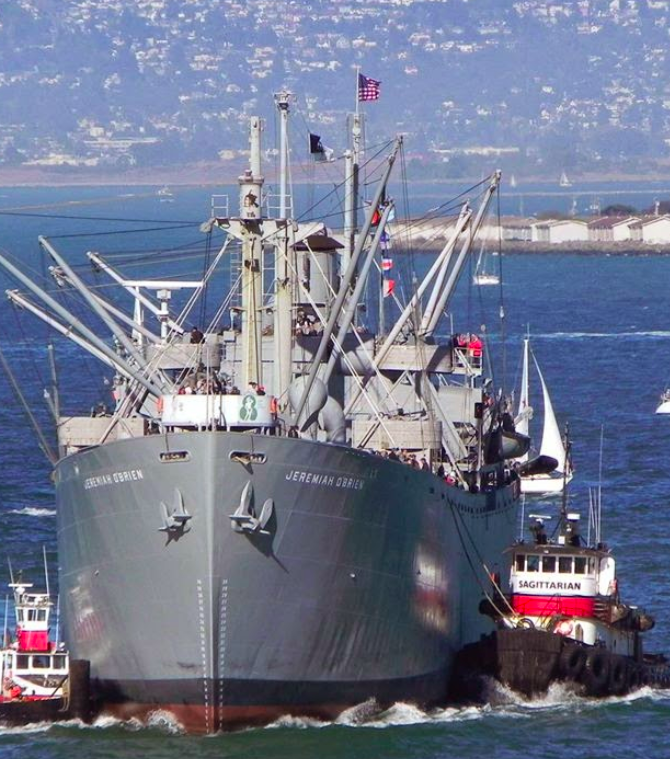
And the ship that brought Orville’s body home, the Barney Kirschbaum, named for an American merchant mariner killed in a 1943 U-boat attack, was a Liberty Ship, one of the miracles of the war, one of 2,710 such freighters launched from American shipyards during the war. Kirschbaum would’ve looked exactly like San Francisco’s Jeremiah O’Brien, tied up at Pier 45. (In 1994, O’Brien had the distinction of returning to the European Theater—to Normandy, no less—where she’d been part of D-Day fifty years before.)
The war dead intersect with my father’s life, as well. Once the war had ended, his duty shifted to training GI’s, nineteen-year-olds, some of them grads from Class of ’44. They’d come to Europe prepared the fight Germans, but the war was over, so Dad’s work, and theirs, was in Graves Registration. He trained these soldiers in the ghastly work of identifying the young Americans the war had claimed. Those young men—forever young— were then to be buried in one of a network of American military cemeteries. Many of those casualties, like Orville Tucker, would eventually come home.
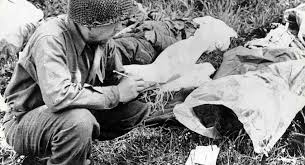
A Quartermaster, part of a Graves Registration unit, records the identities, soon after battle, of fallen soldiers.
One of the soldiers who came home after the war—in my family’s case to rural Missouri— was my father’s cousin, Roy.
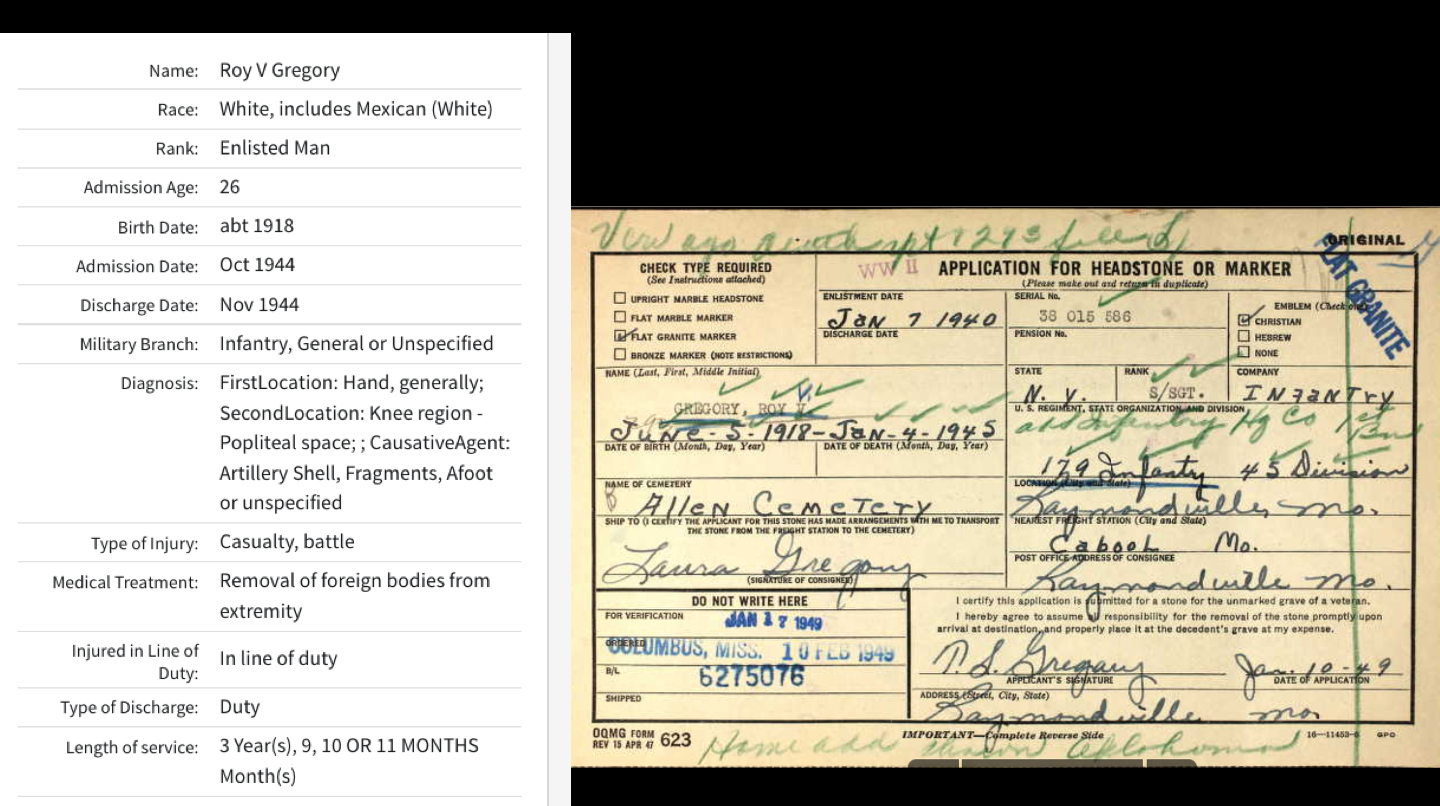
Roy was discharged from a field hospital, where he’d been treated for shrapnel wounds, in November 1944. He went back into action in Alsace, where, in January 1945, another elite SS unit essentially wiped out the headquarters company to which he was attached.
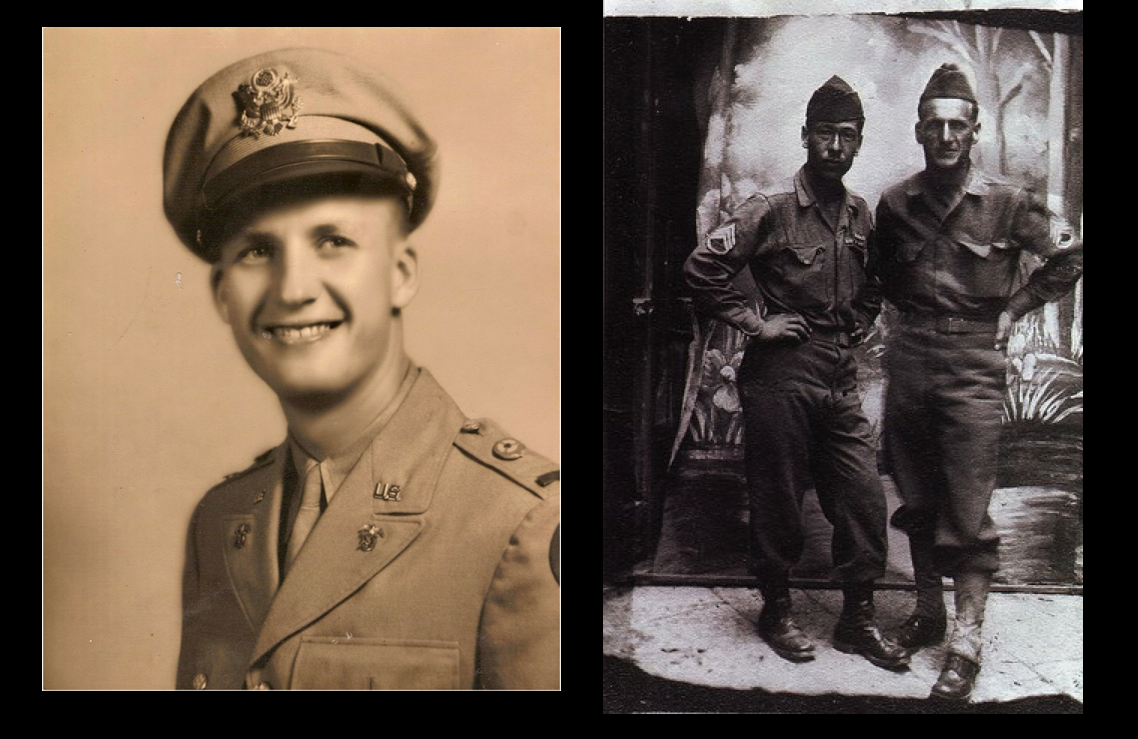
Roy—who’d fought with his buddy, Sgt. Chew, in Sicily, Italy, and finally France–looks remarkably like my Dad.
Sgt. Gregory’s hospital record; the family’s application for a military headstone. He is buried near my grandfather, John Smith Gregory.My father as a lieutenant; Sgts. Chew and Gregory in a studio photograph taken in Italy.
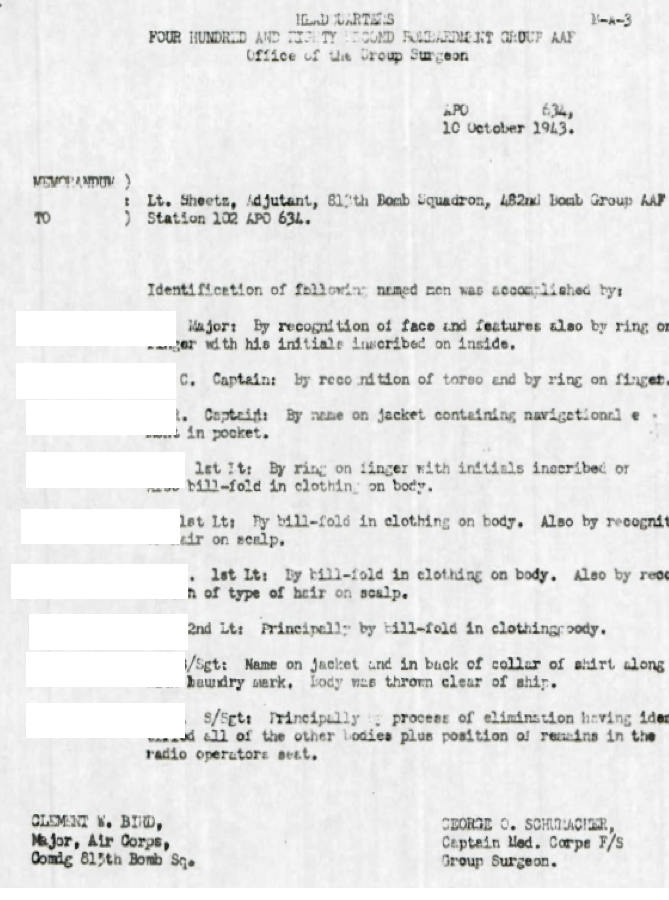
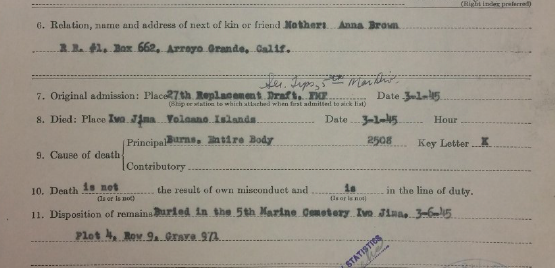
Graves registration work was ghastly, of course, because of the way these young men had died. Sometimes, in the Army Air Forces, when the flight surgeon of a bomb group had the duty of identifying the dead, the clues were circumstantial and almost always, as in the case of this Marine killed on Iwo Jima, the deaths were violent beyond imagination.
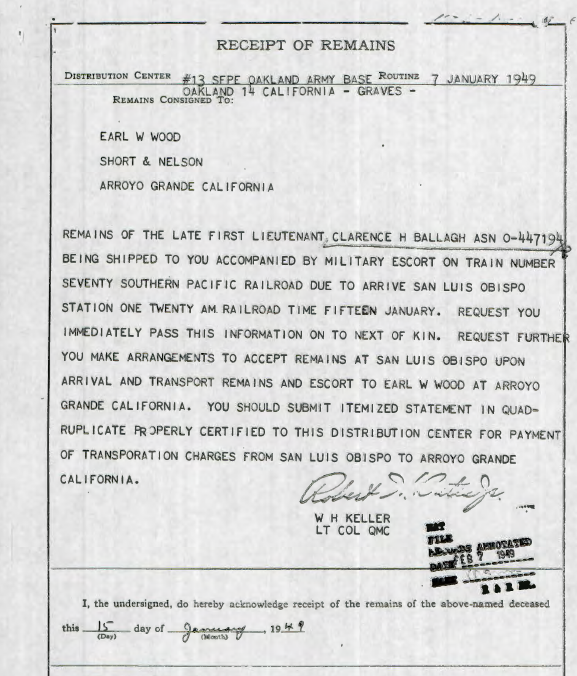
The dead recorded from this B-17 accident in northern England include Clarence “Hank” Ballagh, a young man whose ancestors came to Arroyo Grande in a covered wagon. He was the AGUHS valedictorian in 1938 and graduated from Cal with an engineering degree.
This young Marine, Louis Brown, was a farmer’s son from Corbett Canyon.
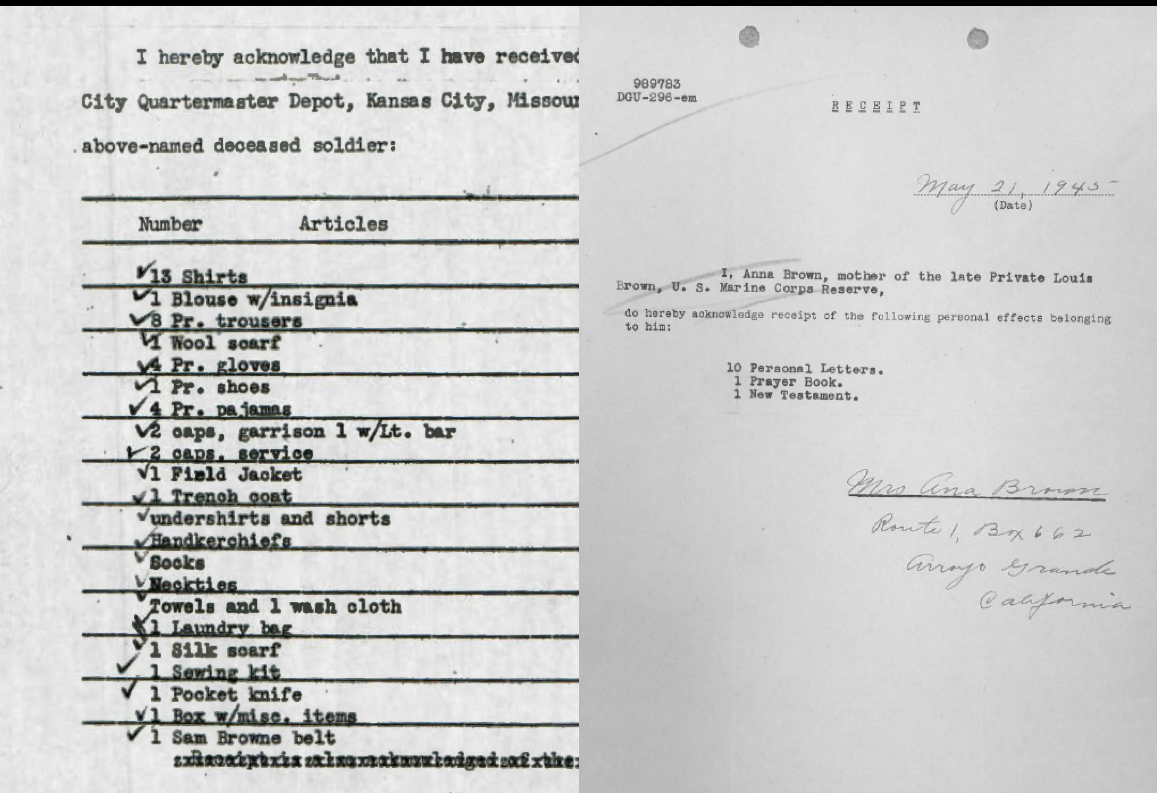
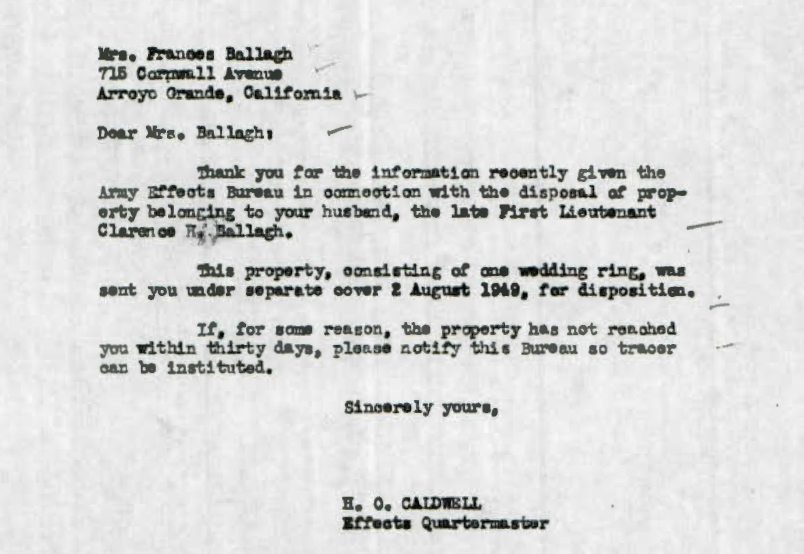
The Quartermasters also took charge of cataloguing a fallen man’s personal effects, and these reveal—with the possible exception of the Army Air Forces, where the sharp lines of rank blurred among bomber crews—that there remained a vast social gap between officers and enlisted men. These are the personal effects of Lt. Ballagh, the Berkeley grad, and Private Brown, who, like 64% of Americans in 1940, hadn’t finished high school:
Brown’s Rosary is listed in a separate Navy Department letter to his mother.
Ballagh was killed when his plane flew into the side of an English mountain; fragments of the B-17 remain there today. Brown was killed, most likely by a Japanese land mine, no more than 48 hours after he went into action on Iwo Jima. Both came home to Arroyo Grande, in a bureaucratic ballet in quadruplicate steps, that was unmistakably human. There’s no mistake that the Army wants Lt. Ballagh, even in death, to come home safely.
The records of the dead, I think, are important: they force us to confront a war now safely confined to history books and television screens. Beyond that, they reveal the terrible price that the living had to pay, as well.
A World War I-vintage 155-mm artillery piece could hurl a 95-pound shell 20,000 yards.
If you’d been driving north to San Luis Obispo on the old two-lane 101, there was a a battery of these beasts on the hillside to your right as the road begins to curve inland, headed for true north.
They were there to guard San Luis Bay and they were manned by G.I.’s from the 54th Coast Artillery, an African-American unit that had trained at Fort Fisher, North Carolina–taken from the Confederacy by the Union Army in January 1865–before some of them wound up serving in our county between 1942 and 1944.
I learned this today over lunch, a treat from military historian Erik Brun, who is researching the 54th during the unit’s stay here.
Erik told me that White North Carolinians were not at all fond of having Black G.I.’s close by–even though these soldiers were learning to handle guns that theoretically could inflict considerable discouragement on the U-boats hunting their quarry just offshore.
Those people had forgotten World War I, when 10 merchant ships were torpedoed off the Outer Banks.
In World War II, the U-boats claimed 80 ships. North Carolinians could easily see the glow of burning tankers in the shipping lanes off their coast.
They couldn’t see the crews thrown into the burning water.
So they didn’t want the 54th Coast Artillery anywhere near.
Detachments from the 54th would come to us instead, charged with defending Estero Bay as well as San Luis Bay. And so, for a brief time, Black G.I.’s were part of daily life here.
Some of the 54th’s soldiers played baseball against Arroyo Grande Union High School. A 54th officer–officers were White– married Lorna Folkerts of Arroyo Grande in a candlelit ceremony in a Camp San Luis Obispo chapel. And in 1943, an octet from the 54th sang for South Countians in a holiday concert at the Pismo Beach Army Recreation Camp. The barracks at the Rec Camp had once stood on the site of today’s Arroyo Grande Woman’s Club, where they were built in 1934 to house 230 Civilian Conservation Corps workers from Delaware, New Jersey and New York City.
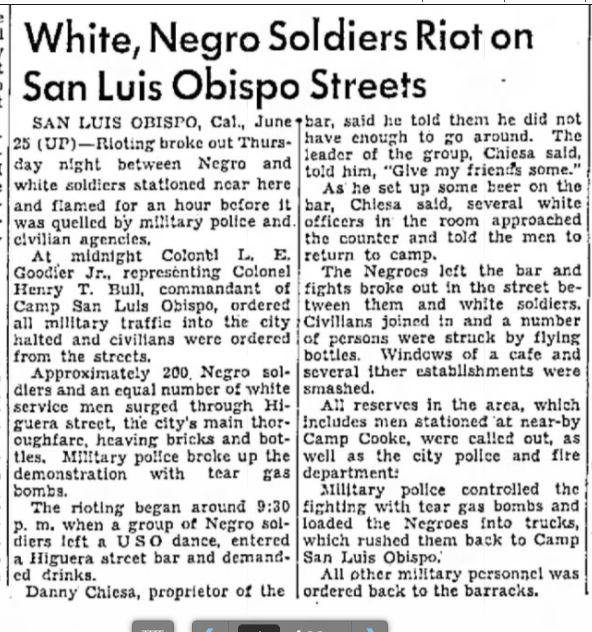
But the history of Black GIs in San Luis Obispo remains fraught. In June 1943, rioting broke out in San Luis Obispo and it made newspapers throughout America. This is from the June 25, 1943 Salt Lake City Tribune:
I have been trying to wrap my head around this. In an email to my friend Erik, I tried to explain it to myself.
* * *
It just occurred to me to look up the summer of 1943—what happened in SLO seems part of a national trend. There were race riots in —Mobile, Alabama (May 25) —Los Angeles (The Zoot Suit Riots, June 5-8) —Beaumont, Texas (June 15-17) —Detroit (June 20-22; 34 killed) —San Luis Obispo (June 24) —Harlem, NY (August 1-2)
It strikes me that racial tensions would’ve been intense hereand across the nation.
The movement of Black Americans into defense jobs during the war was a factor in Mobile and Beaumont, where Black and White shipyard workers worked. The population influx, resulting housing shortages and competition between Black and White defense workers generated increasing tensions as the shipyards reached full production.
The same was true in Detroit, which created thousands of defense jobs—the city was a focal point for the Great Migration, where you could once find entire city blocks settled by families from the same county in Mississippi —but where housing shortages were (and are) notorious in the Black community and casual but cruel racism was, in 1943, a constant.
A similar influx, but of soldiers, happened here, in a little town not fully equipped to deal with thousands of GIs, including a shortage of places to entertain them. Blacks and Whites coming together (and the latter in such large numbers) and in seeming competition might’ve led to the kind of hostility seen in the shipyards.
It strikes me, too, that racism,including the stereotyping of Black Americans, might’ve typified a town like San Luis Obispo, which had little experience in interacting with them, including the soldiers of the 54th.
There’s a faint similarity, then, to the background of the Zoot Suit riots. Los Angeles was growing in the late 1930s and the war (e.g. the aircraft industry) accelerated it; the city did not plan well and the kind of housing problems that marked Detroit—as well as racism and job discrimination—were common to the Mexican-American community, which included Chavez Ravine.
But it was the decision to place a Naval installation there that resulted in fraught relations between sailors—outsiders, many from the Midwest or the South, who had little understanding of the Mexican-American community— and local residents. The two groups were strangers to each other, as was White San Luis Obispo to the 54th. So the Ravine in L.A. and Danny’s Bar on Higuera became flash-points for two of the 1943 riots.
* * *
I guess because I took a year of the History of the American South in college, at the University of Missouri, I’ve always been fascinated by this part of our history, by which I mean Black History, by which I mean American History.
My Dad, a quartermaster officer who grew up in Texas County, Missouri, was a small part of that history.
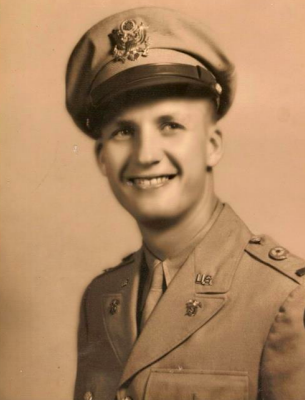
Lt. Robert W. Gregory, 1944
On the troopship to England, Dad was issued a .45 sidearm. It wasn’t for Germans. It was for Black soldiers, truckers, suffering belowdecks in the North Atlantic crossing. I wrote about this:
These were the men who would drive the deuce-and-a-half trucks on the Red Ball Express. It was my father’s job the organize and send some of these truckers, in gasoline supply companies, to the 1944 beachhead in Normandy, where details from George Patton’s Third Army would arrive regularly to kidnap them so that the great general would be the first to the Rhine, the natural border between France and Germany.
In this, Patton would succeed, but it was the Red Ball express that made his moment, captured by wire service photographers, possible.
Along the way, the black truckers died under artillery fire, died from worn out brakes and frayed tires and died from the irresistible urge to fall asleep on darkened roads that led irrevocably east, from the Seine Valley to the Ardennes.
To stay alive, they learned to drive at night without headlights. If a driver felt that sleep was too powerful to resist, he learned to switch seats with his passenger and comrade while the truck was moving. When the trucks didn’t move fast enough for the Red Ball drivers, they modified the governors on their trucks’ carburetors. When the trucks broke down, they resurrected them.
On a typical day, 900 trucks were on the road, spaced at sixty-yard intervals, to keep Third Army fed and its trucks and tanks fueled.
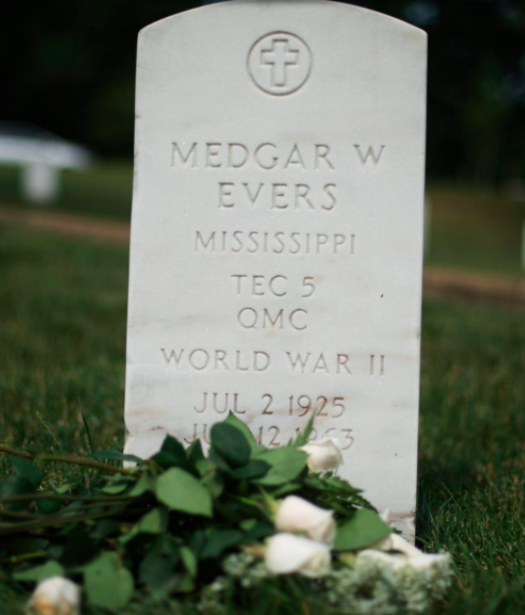
One of the Red Ball veterans was named Medgar Evers. After the war, he became a civil rights activist. A sniper took his life near Jackson, Mississippi, in 1963, with a Lee-Enfield rifle, the infantry weapon issued the British soldiers who became my father’s wartime friends.
Medgar Evers was thirty-seven years old. His wife, Myrlie, who would become a formidable activist in her own right, and his three children were at his graveside when he was buried at Arlington.
Medgar’s killer was convicted. It took thirty-one years.
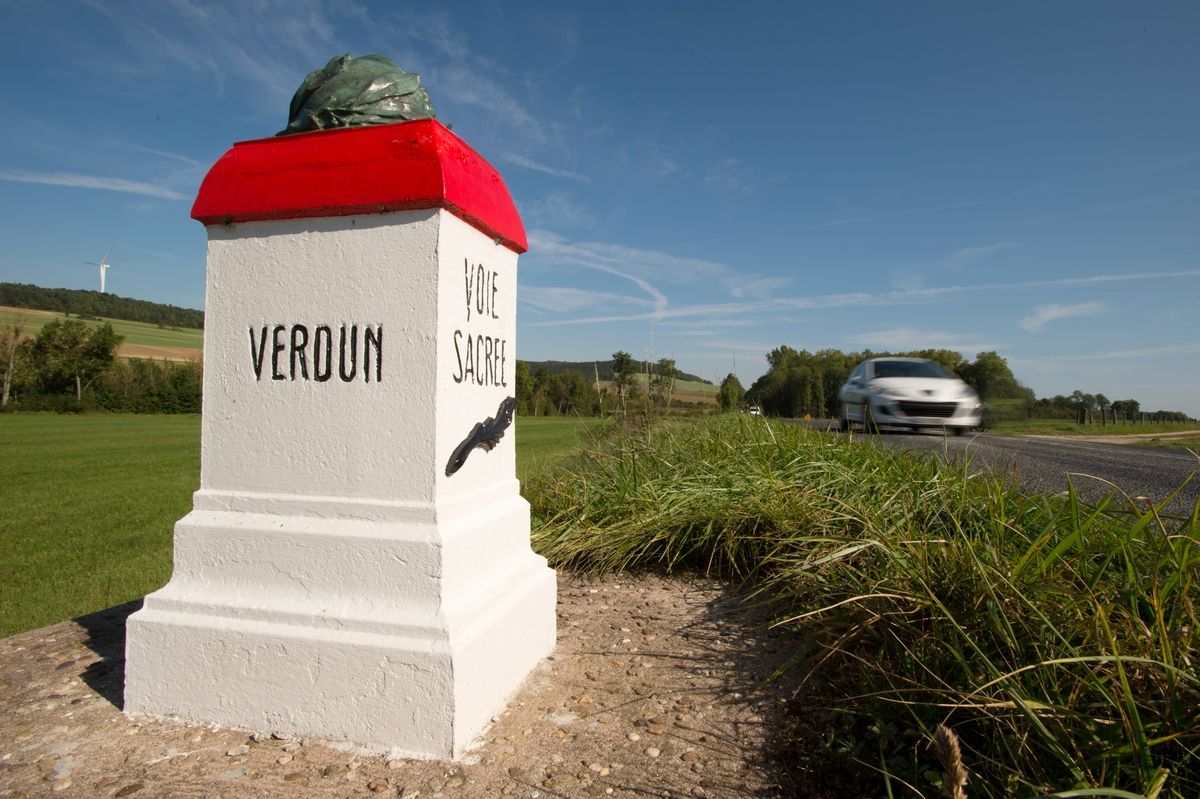
The 1916 Battle of Verdun was one of the ghastliest in twentieth-century history, claiming over 300,000 French and German lives and vaporizing seven French villages. But the French have honored their military truck drivers who were part of that terrible battle: The road to Verdun is called La Voie Sacree—The Sacred Way— and, as you approach the battlefield, which my students and I visited in 2010, markers commemorate French soldiers, the poilus, who drove the trucks.
So the French remember. What Arroyo Grande farmer Haruo Hayashi remembers during his time training with the 442nd Regimental Combat Team in Mississippi was the rigidity of Jim Crow. He couldn’t understand why Black soldiers weren’t allowed to watch USO shows inside the Camp Shelby (named after a Confederate cavalry officer) gymnasium. It bewildered him.
Haruo’s family was behind barbed wire at the Gila River internment camp.
So my time with Erik today gave me a lot to think about
This video shows a crew working the same kind of gun the 54th knew so well.
There used to be an A & W Root Beer restaurant on Grand Avenue. It isn’t there anymore. It was right across Grand from Young’s Giant Food, which isn’t there anymore, either.
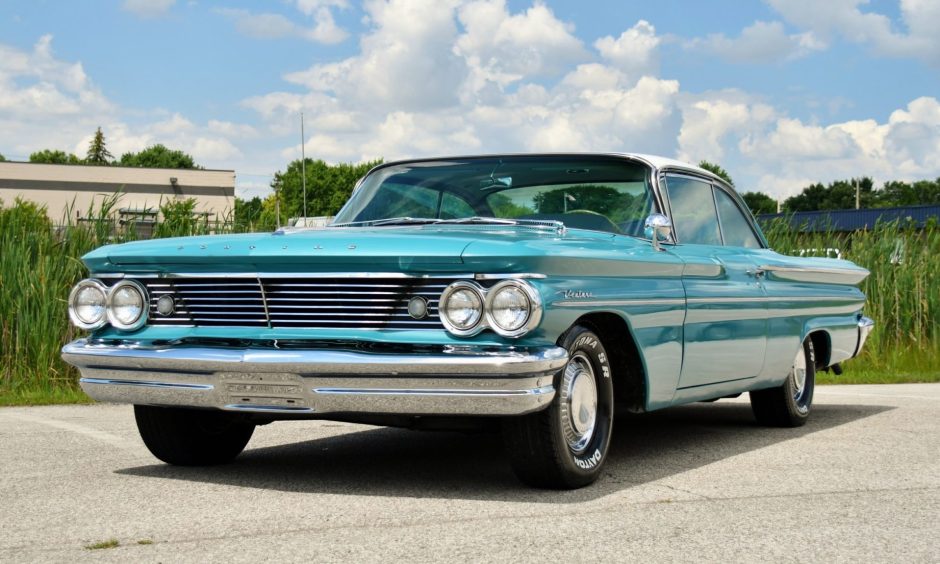
A Pontiac Ventura. My sister’s was red over white.
But when I was little, this was high living: My sister, Roberta, would take Mom and me and later little sister Sally to the A & W in her 1961 Pontiac Ventura.
I believe that it was dangerous to drive a 1961 Pontiac Ventura in the San Diego area. Fighter jets from the Naval Air Station might mistake it for an aircraft carrier and try to land.
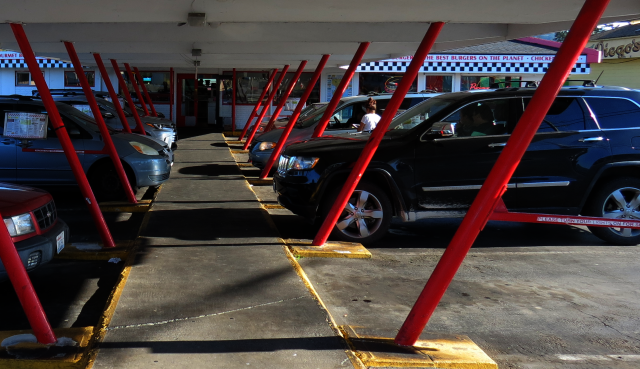
But a car that size was made for drive-in meals.
They had car hops, teenaged girls, at this A & W, and I believe, if I’m not mistaken, that they were on roller skates. They’d glide out to take your order and then glide back to place it. They’d hook a tray to the driver’s side door and, with great dignity, roll out again to lay the feast thereupon. It was Roberta, since she was driving, who distributed the goodies.
The smell, of burger and bacon and fries was unendurable. Roberta was never fast enough for me. Many years later, I saw the film Reefer Madness. At one point, one of the hopelessly addicted 1940s teenagers blurts “I NEED SOME REEFERS!” I was like that, but it was with hamburgers.
A nostalgic view. They’re all so white.
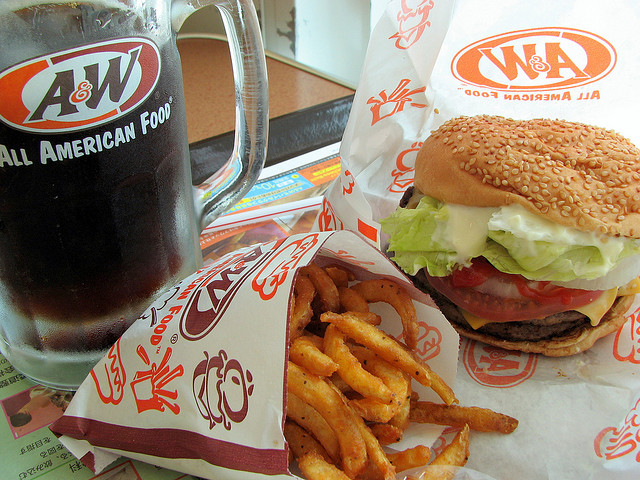
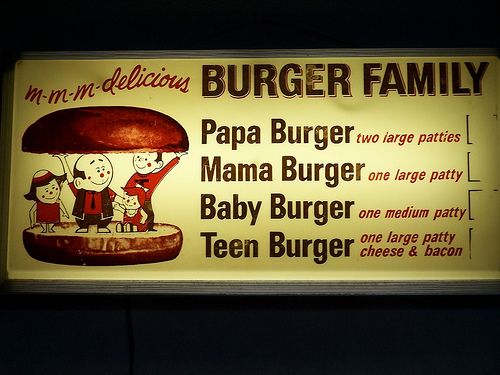
My invariable order: A root beer freeze, a Teen Burger (bacon and cheese, then a novel innovation) and fries. It was a substantial meal and required a nap afterward.
Alas, my cardiologist would whip me with a stethoscope if I ate a meal like that today.
Mom always got the Mama Burger and Sally the Baby Burger. Of course.
But it was a different America then. We had big cars like Pontiacs–eleven miles per gallon, thank you very much–so immense that they were mobile dining rooms, and we had vast and limitless cattle ranches devoted solely to Teen Burger production. There would always be plenty of gasoline, we believed, and you could always eat plenty of hamburgers.
Then they shot the president and the whole shebang started to unravel.
It’s sad–but no recriminations on my part–that the Harvest Festival was canceled this year. (There were cancellations during World War II, as well; the first Harvest Festival was in 1937). The Harvest Festival was an especially big deal when I was little, when my parents dropped me off and turned me loose for the day. The parade was the best part. My sisters, in matching mint-green outfits, appeared in at least one, in the pony cart with Obispo Telstar, one of Anne Westerman’s Welsh ponies, doing the work.
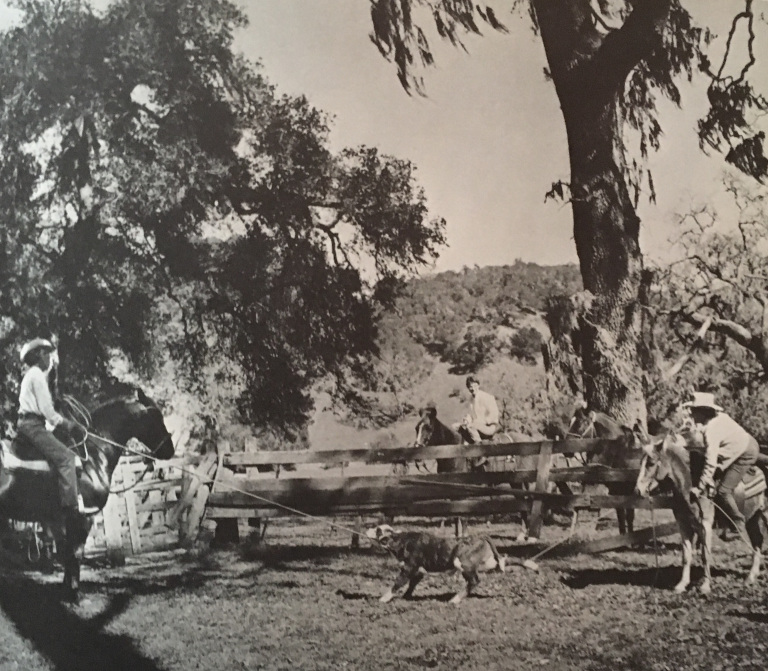
That’s my big sister in the center of the Jeanne Thwaites photograph, taken at Sid Spencer’s cattle ranch, now underneath Lopez Lake. Sid, on her Morgan–Roberta’s riding a Spencer Morgan mare–is on the left and her sister, Anne, on her pony, is on the right.
It was Sid Spencer who taught Sheila Varian how to work cattle. She was a good teacher. Sheila won the National Cow Horse Championship at the Cow Palace in 1961. She was the only woman competitor and her mare, Ronteza, was the only Arabian in a field of Quarter horses.Ronteza’s sire, Witez II, was a champion Polish Arab who plays a central role in a superb book, “The Perfect Horse,” about the American rescue of the Spanish Riding School’s Lipizzaner near the end of World War II.
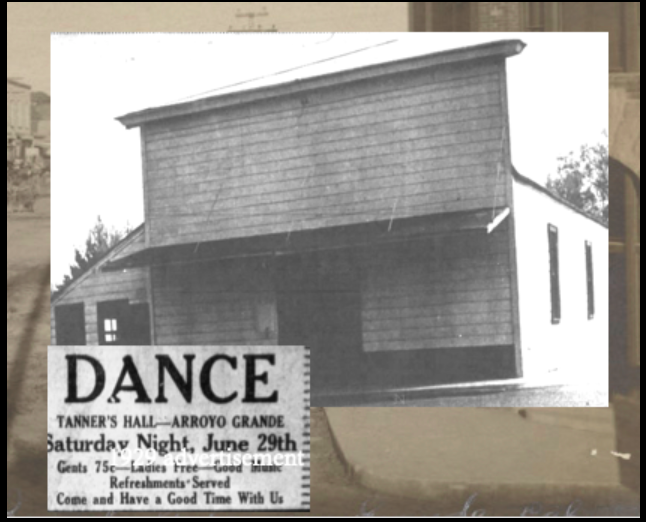
My favorite Harvest Festival equestrian unit was the one that veered off the parade route and entered Ralph and Duane’s. The horses were thirsty.My most vivid memory was the Harvest Festival of 1966, I think. I was a ninth-grader at the big old Paulding campus, having just graduated from Branch in a class of ten boys and three girls. I went to a dance in Tanner Hall, where City Hall now stands.Tanner Hall had been a dance hall since it was built by Beder Wood in 1894.
But in 1966, at that particular Harvest Festival Dance, I saw the second-most epic girl fight of my life. It was terrifying when you come from a graduating class of ten boys and three girls.
These city girls are lethal, I thought.
The most-epic Young Woman fight–note the change in word choice, reflective of the times– I ever saw was one I broke up as a student teacher at Righetti. I barely survived. Boy fights end when they get tired. If I hadn’t intervened at Righetti, those two Young Women would STILL be fighting.I was lucky to survive.
Tanner, or Tanner’s, Hall was also where locals went to watch silent movies, enormously popular by 1912, when the ad appeared in the Herald-Recorder. And Young Women in 1918–we know this from contemporary teenager letters– couldn’t wait for the flu pandemic to end because they missed the movies. High school, not so much.
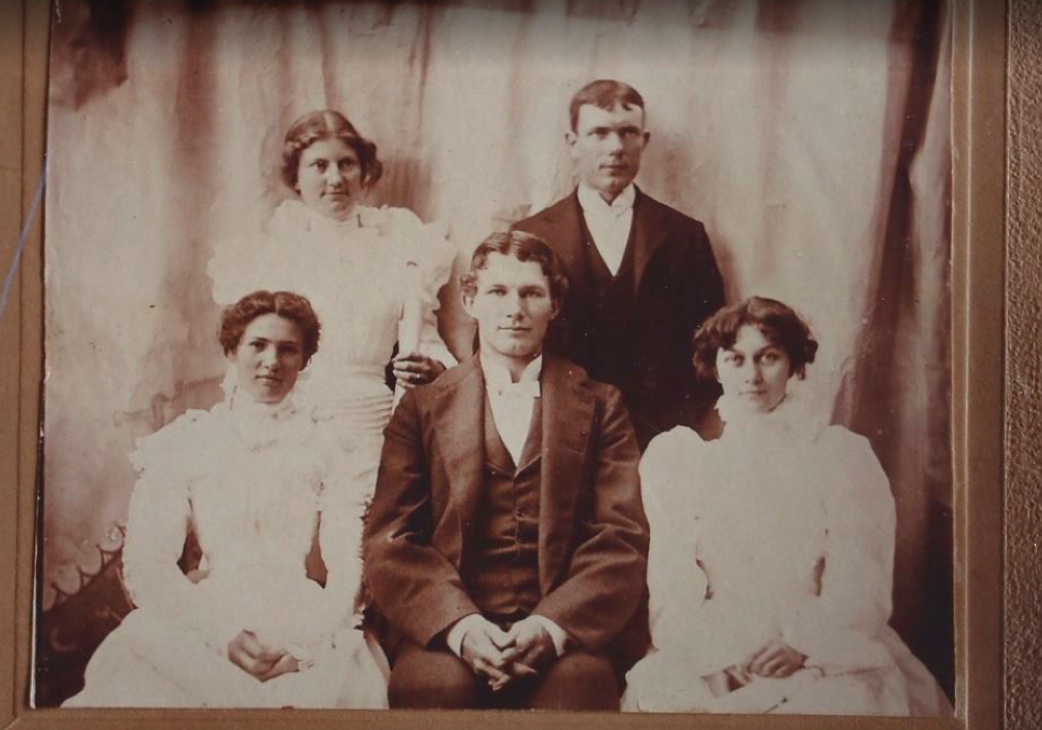
The Hall was also used for high-school graduations. The Hall, according to the Arroyo Grande Herald, “was filled to the point of suffocation” for the graduating class of 1898.All five of them. That’s the Class of ’98 in the photo.
Young Women wore white dresses to their graduations in those days. Fifty years after her graduation from Arroyo Grande Union High School, Ruth Paulding STILL fit into hers.
At the 1898 commencement, graduate Albert Ore delivered what the newspaper characterized as a stirring speech, “Spain and America!” about the then-current war still being played out in Cuba and the Philippines.
Ore gave that speech on June 30, 1898.The next day, Theodore Roosevelt’s Rough Riders, one of them from San Luis Obispo, followed the Buffalo Soldiers in to take the Spanish trenches atop Kettleman Hill in Cuba–misnamed “San Juan Hill.”
Albert Ore must have been thrilled. Look at what his speech did.
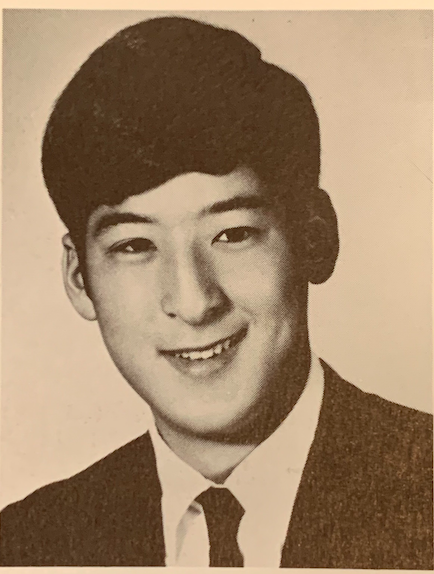
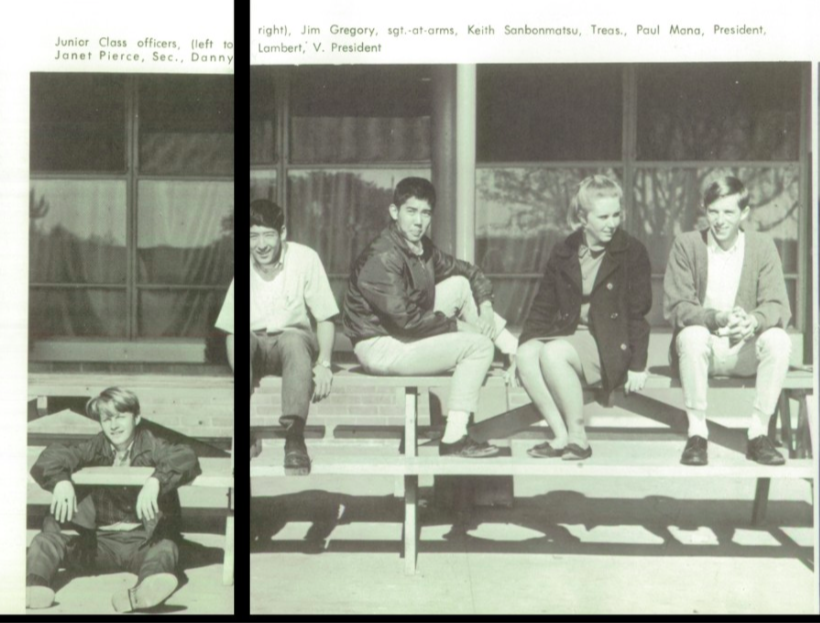
I didn’t learn until last night that my friend and AGHS classmate Keith Sanbonmatsu, AGHS ’70, has died after a motorcycle accident in Simi Valley.
I knew it couldn’t have been ‘natural causes.’ Keith was, throughout his life, an incredible athlete—a swimmer in high school, a relentless walker even as he approached seventy.
He was bright, unfailingly positive, with a sense of humor that flew like an arrow toward anything that was absurd or nonsensical.
He also had an integrity that was bedrock to his personality. I think it was Keith and Vard Ikeda we once saw as referees at a third-grade Biddy Basketball game, when one of the kids’ coaches was doing a terrible-tempered Coach Bobby Knight routine, stopping just short of throwing the folding chairs.
The refs called a time-out and had a very, very quiet talk–we couldn’t hear a word–with the offending coach. He was very, very quiet for the rest of the game.
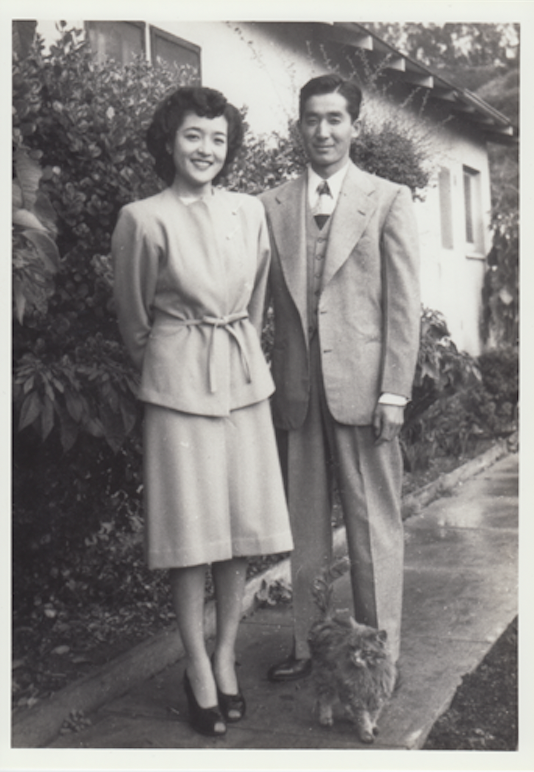
I love this photo. Keith’s parents, Nami Kobara Sanbonmatsu and Mitsuo Sanbonmatsu– and kitty. Mitsuo was a farmer and an artist, a painter.Keith Sanbonmatsu Collection, Cal Poly Re/Collecting Project
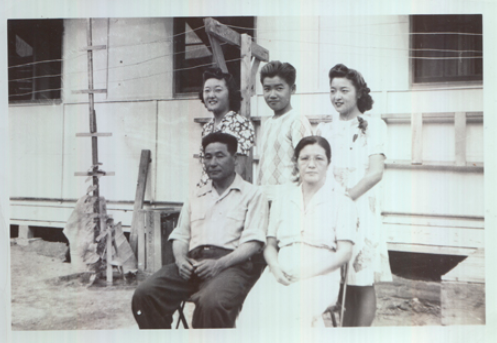
I know that one source of Keith’s integrity and strength of character came from his maternal grandparents, Shig and Kimi Kobara. Like our other Japanese-American neighbors, they were interned, at the Gila River Camp, during World War II. But Shig was such a successful farmer, and such a natural leader, that the FBI picked him up and took him away only days after Pearl Harbor.
The Kobara family at Gila River…
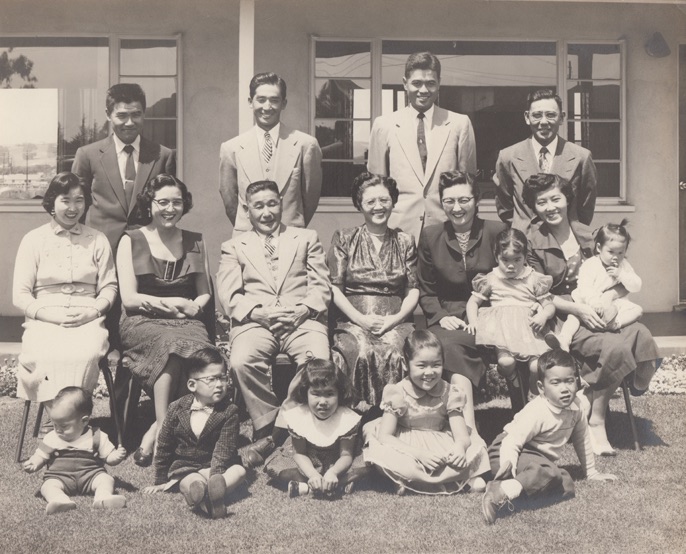
…and in a remarkable contrast–an image that celebrates a marvelous moral victory– The Kobara family a decade later.
Top row (left to right): Ken Kobara, Mitsuo Sanbonmatsu, Towru Kobara, Hilo Fuchiwaki. Middle (left to right): Mari Kobara, Nami Kobara Sanbonmatsu, Shigechika Kobara, Kimi Kobara, Iso Kobara Fuchiwaki, Lori Fuchiwaki, Fumi Kobara, Joan Kobara. Bottom row (left to right): Gary Kobara, Keith Sanbonmatsu, Dona Fuchiwaki, Susan Fuchiwaki, Steve Kobara. Lori Fuchiwaki Collection, Cal Poly Re/Collecting Project
That’s also why the War Relocation Authority, at the end of the war, made sure the Kobaras were the first to come home from Gila River. They had to sleep for several weeks in the interior hall of their home in the Lower Valley. They could hear gunshots in the night. As the other families began to come home, it was Shig and Kimi who gave them shelter until they could re-establish their own homes and farms. This proved to be a necessity because local hotels refused the Japanese-Americans shelter.
But in a story that was repeated over and over again in Arroyo Grande, farmer Joe Silveira looked after the Kobara family’s land and equipment during the war; I think it was Cyril Phelan who stayed from time to time in their home and let it be generally known that he was accompanied by a 30.06 rifle. That discouraged potential vandals.
Keith and his cousin, Dona Fuchiwaki, both related to Shig and Kimi, were an immense help to me in writing the World War II book. And it was Kimi, through an oral history interview, who provided me with this charming story, included in World War II Arroyo Grande, about what was truly a frontier couple:
…Arroyo Grande’s Ella Honeycutt, a longtime conservationist and a gifted agricultural historian, notes that by 1913, when Congress passed the first Alien Land Law, it was too late. Many local immigrant families had already acquired farms. They tended to concentrate in the Lower Arroyo Grande Valley, where they grew vegetables, especially bush peas and pole peas, and when the latter were hit by disease in the mid 1920s, they began to grow newer crops like celery, lettuce and Chinese cabbage.The newcomers had hunted for legal loopholes and found them: they formed corporations and bought land through them, or through friendly white intermediaries, or they bought land in the names of their American-born children, whose citizenship would be inviolable until Executive Order 9066 proved otherwise. The birth of that new generation of Japanese-Americans—the Nisei—was proof incarnate that the people from Kyushu intended to stay in the Valley and make it their home. This trend was made possible by a single premeditated and humane opening in the anti-Japanese laws. They allowed those men already in American to settle here with their wives, to send home for them, or to send, as if they came from the Sears Catalogue, for “picture brides.”
This is how Shigechika Kobara, one of the early immigrants to the Valley, and his wife Kimi began their lives together. Their fathers were neighbors in Kagoshima, and after a short negotiation and a longer courtship-by-letter, the match was made. Shigechika took a train north and was waiting on a Seattle dock, looking for his bride among the passengers on her ship as it began to berth. She was looking back. “I remembered his brother, a naval officer,” Kimi recalled, “and I found a man who resembled him. I thought that this was the man I was about to marry. From the deck I fixed my eyes on him, even though I had never met him. That is why it is called a ‘picture bride.’”
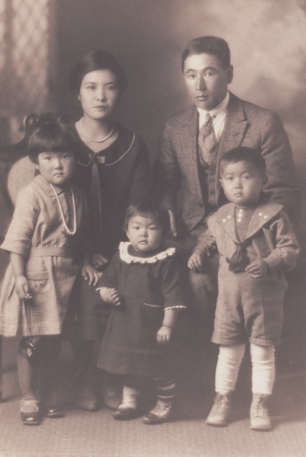
The young Kobara family, about 1930. Keith Sanbonmatsu Collection.
Learning the story of this family has been a grace to my life. I’ve been graced, too, in knowing their grandchildren, my friends and classmates, and in teaching their great-grandchildren in my history classroom. There’s some comfort to be found there when you’ve lost a friend who can’t be replaced.
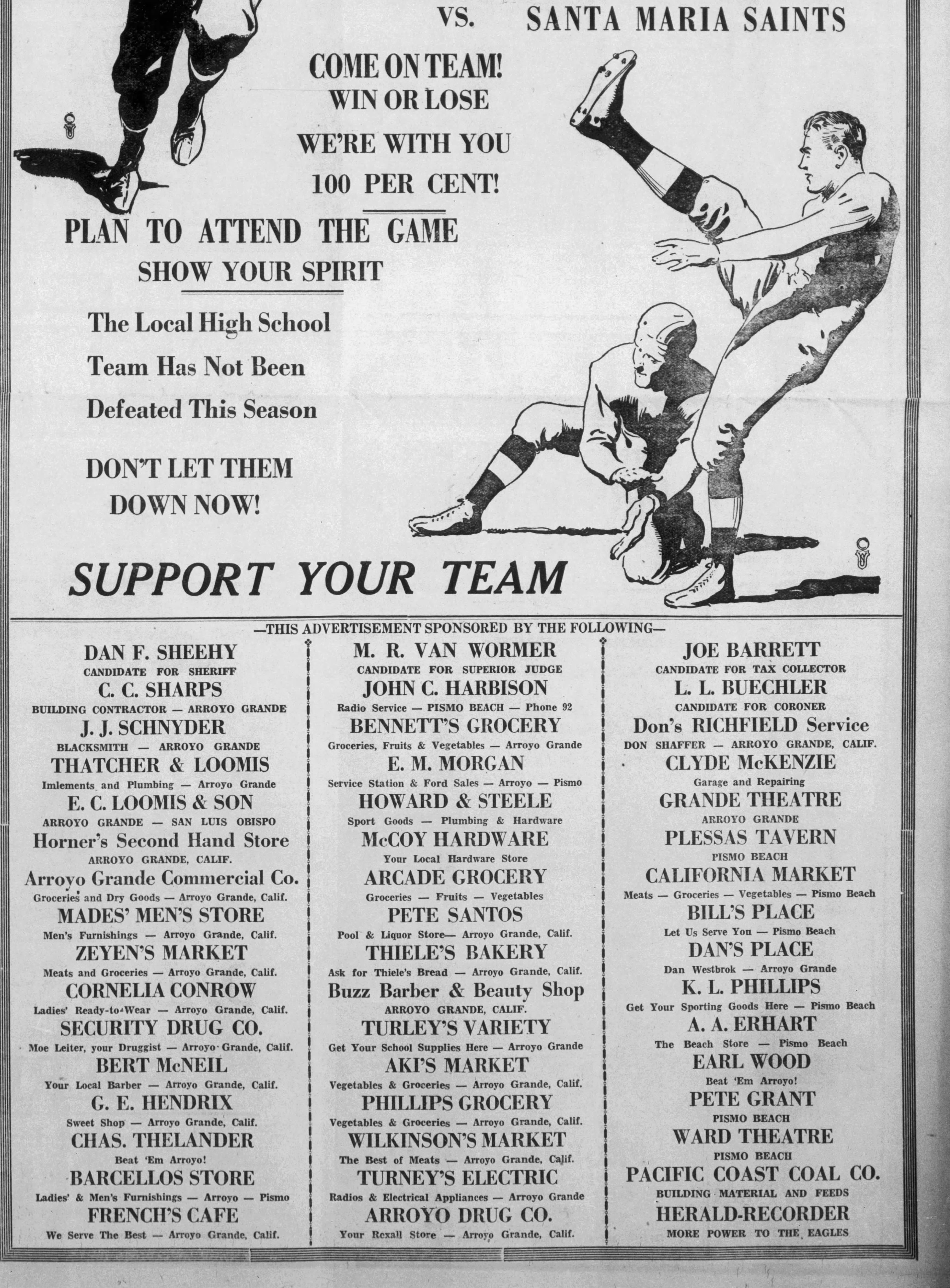
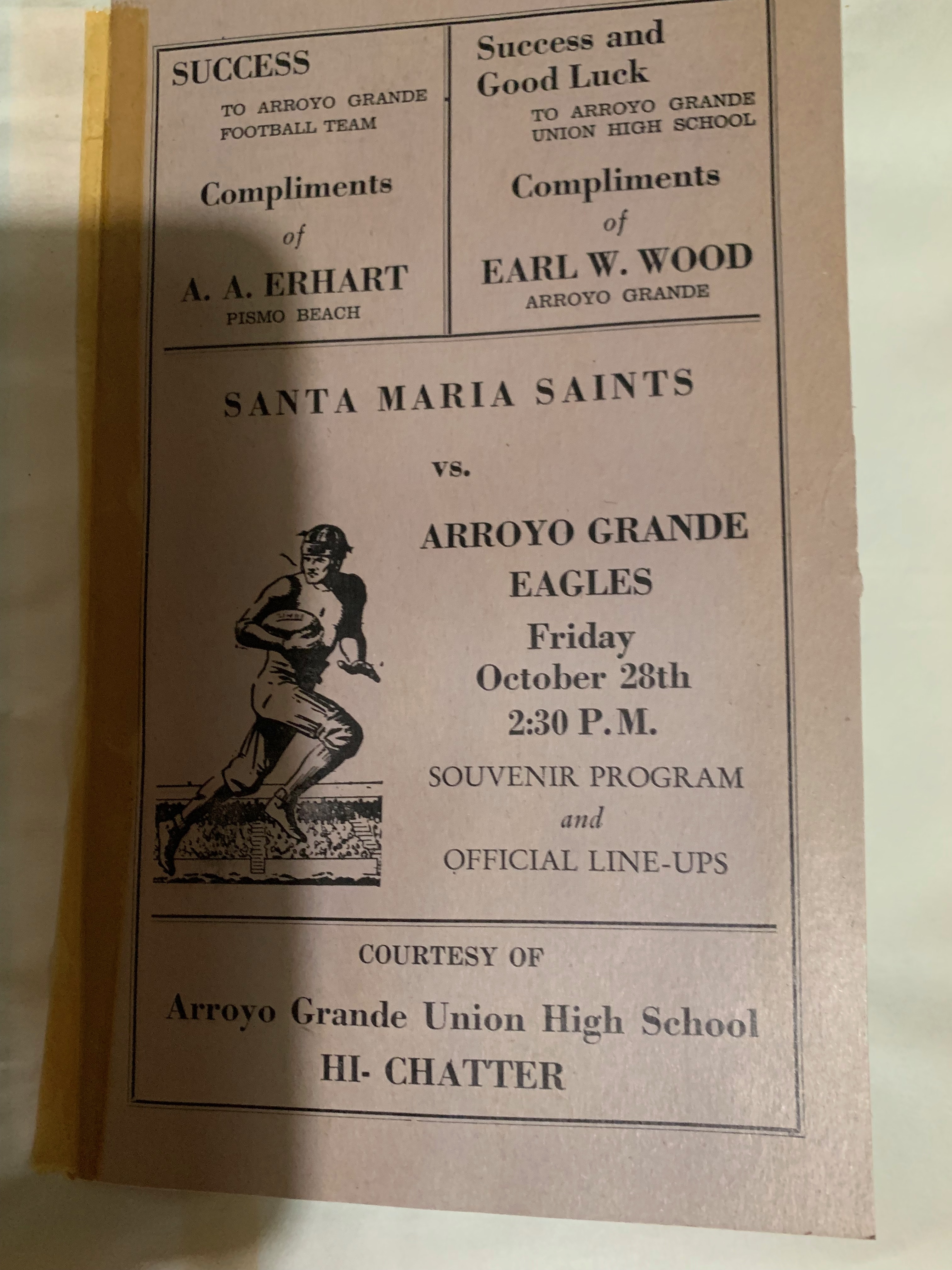
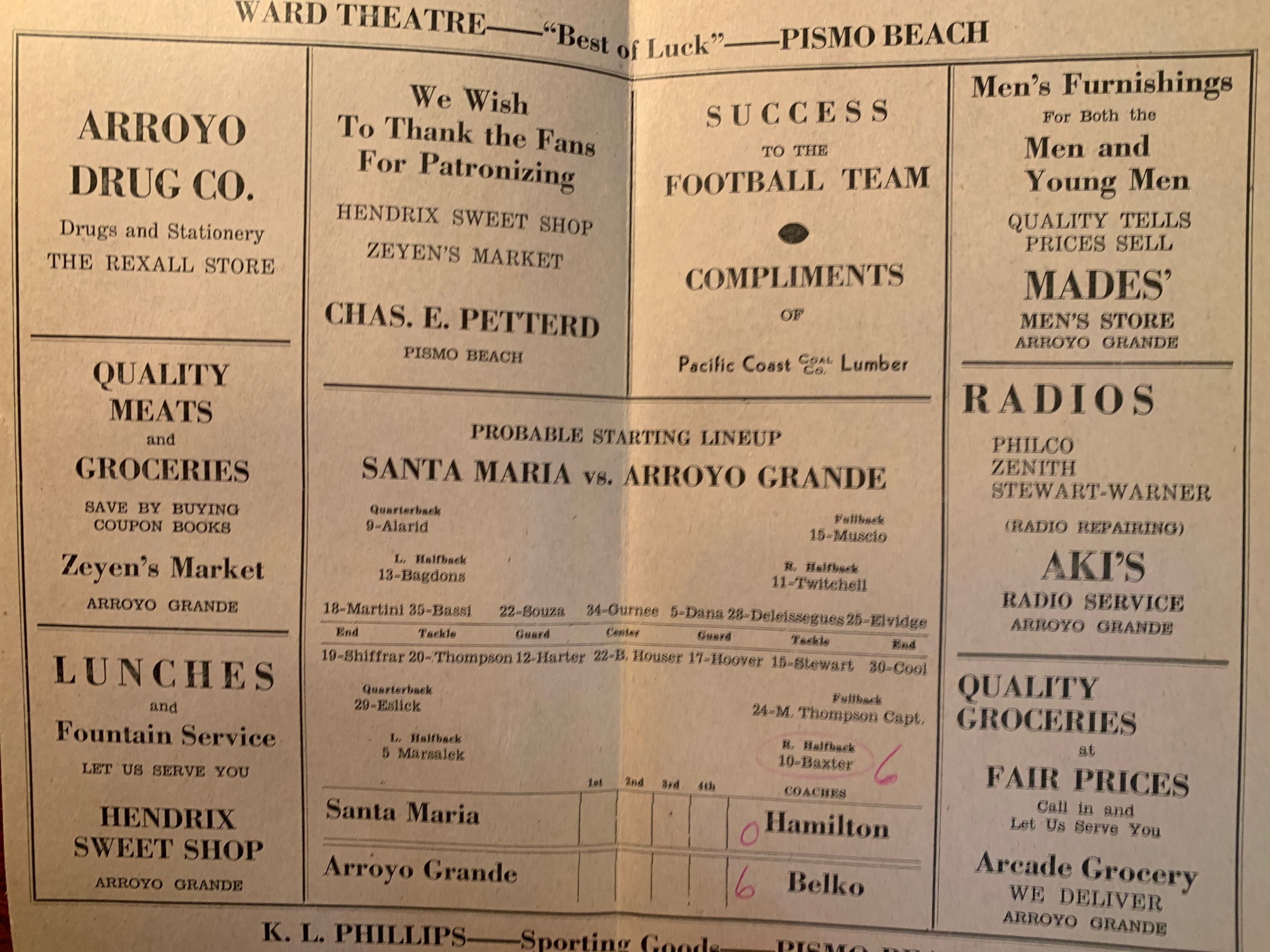
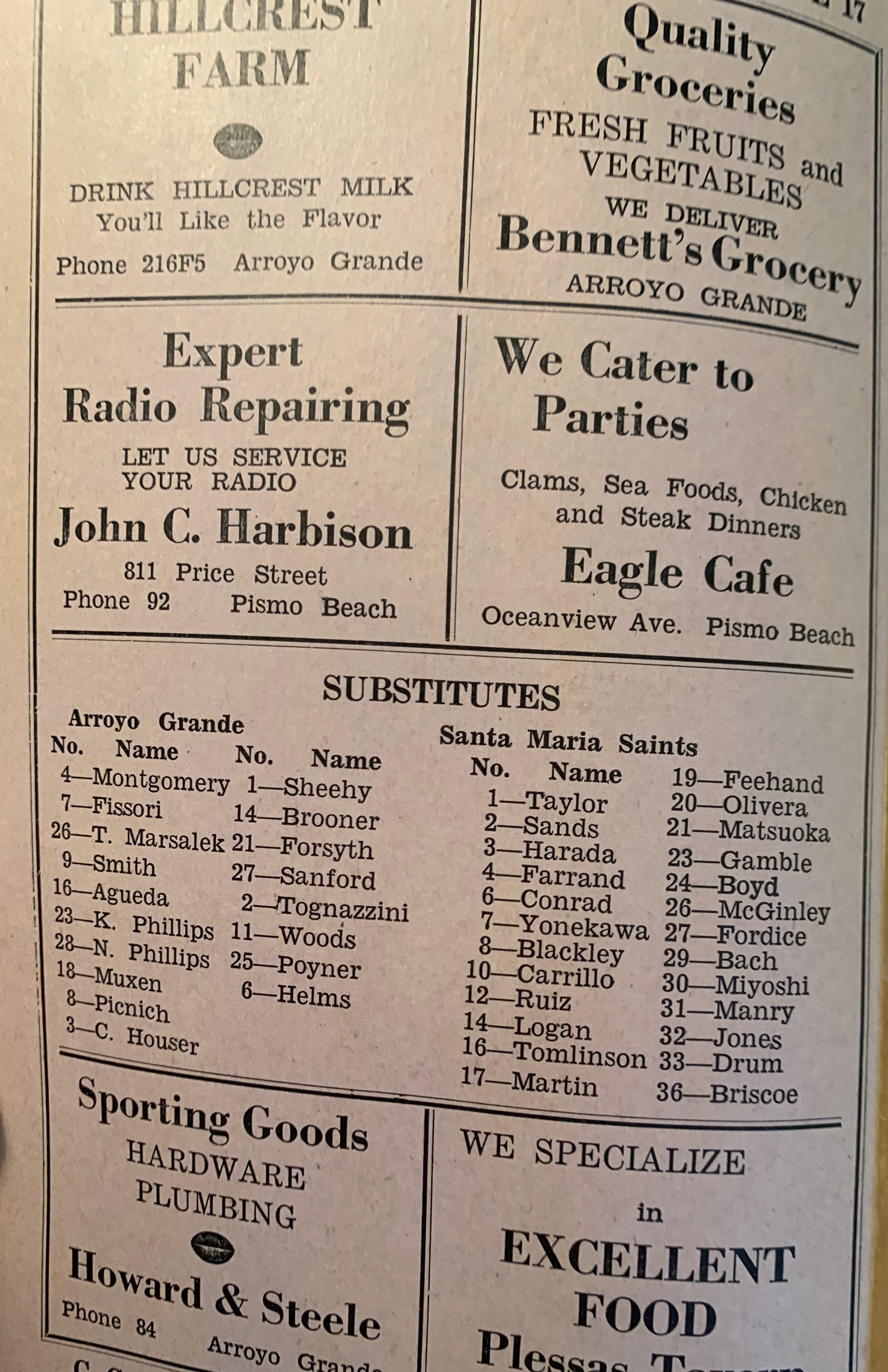
From 1938: A display ad from the Arroyo Grande Valley Herald-Recorder; below, the program for the game:
This is like a Rosetta Stone for local historians. To put this in context, 1938 was the year of the first Harvest Festival, indicative that the area was beginning to recover from the hit it had taken during the Great Depression, when San Luis Obispo County crop prices were halved between 1929 and 1933. And it’s in a kind of place of innocence, three years away from World War II, which will sweep up the little town, population 1,090 in the 1940 census.
A few examples among the advertisers in the newspaper ad, and this is just scratching the surface:
“J.J. Schnyder” was the kindly blacksmith who’d interrupt almost any paying job to fix a kid’s soapbox racer; he was responsible for funding the first swimming pool at Arroyo Grande High School because he wanted kids to have a place to play. When the Kobara family’s irrigation pump broke down in 1945, after their return from internment, Schyder insisted on fixing it immediately. It was Christmas Day.
“E.C. Loomis and Son:” The family would safeguard the land and equipment of their Japanese-American neighbors during the war; one son, Vard, had coached the Nisei Arroyo Grande Growers, a powerhouse baseball team, before the war. His catcher was Kaz Ikeda, whose image is included in the mural on the Mason Bar wall, and Kaz named one son “Vard.” E.C.’s grandson, John, was a Marine who fought at Pelileu and Okinawa who maintained a lifelong friendship with the other three of a kind of “Four Musketeers:” Don Gullickson, Gordon Bennett, and Haruo Hayashi.
“Horner’s Second Hand Store:” Ed Horner, an Eighth Air Force officer, had his B-17 shot down in 1944 and would be a POW until war’s end.
“Commercial Company:” This general-goods store stood on the site of today’s Mason Bar; it was later a grocery in the same building Mason Bar occupies. One of the owner’s sons, Elliott Whitlock, AGUHS ’40, won a Distinguished Flying Cross for bringing his B-17 safely home after it’d been set afire by flak over Berlin in March 1944.
“French’s Cafe:” On April 30, 1942, French’s prepared over 200 box lunches for local Japanese-Americans on the day buses took them to the Tulare Assembly Center. Only about half of our prewar neighbors would come back after the war.
“Bennett’s Grocery” (today, the Chic Salon): Two of Rusty and Muriel Bennett’s sons would serve–Jerry in the Army Air Forces, Gordon in the Navy.
“E.M. Morgan:” His Ford agency occupied today’s Doc Burnstein’s. Morgan’s son, Wayne, was killed December 7 on USS Arizona, along with his second-grade classmate, Navy bandsman Jack Scruggs.
“Aki’s Market,” next to the meat market, was owned by Akira Saruwatari, a member of perhaps the first Japanese immigrant family to settle in the Arroyo Grande Valley; they farmed land across from the Halcyon Store. He was interned at Gila River and would live his postwar life in Santa Barbara.
“Wilkinson’s Market:” Today’s meat market. When his Japanese customers came in to pay their bills just before internment, Leo Wilkinson would’t take their money. “You keep it; you’re going to need it,” he told them. This act of generosity was repaid, in full, after the war.
“Grande Theater,” in the building that today houses Posies in the Village, would’ve been where many local people, through newsreels, kept up with the war news. (A short distance up Branch was the Security Drug Company, today’s Village Grill, where moviegoers could order a milkshake or ice cream sundae after the movies.)
Earl Wood was the funeral director who would supervise the homecomings of many South County servicemen killed in Europe or the Pacific in the years after the war had ended; Louis Brown, for example, killed on Iwo Jima, came home in 1948.
In the program, the Arroyo Grande coach, Max Belko, was once a USC All-American. He kicked a field goal against Montana in 1935, a feat that wouldn’t be repeated for fifteen years, when Frank Gifford kicked the next Southern Cal field goal. Belko, a Marine lieutenant, was killed on Guam in 1944, but we still have a connection to him: He was Haruo Hayashi’s P.E. teacher. (There are many familiar surnames in the football program, but two, both Navy men during the war, offer a glimpse into postwar Arroyo Grande: Tony Marsalek was our longtime fire chief; Chuck Brooner was the pharmacist/owner of the Fair Oaka Pharmacy.)
The sports editor of the high school newspaper, the “Hi-Chatter,” was George Nakamura. As a twenty-year-old intelligence officer in China, he was awarded a Bronze Star for going behind Japanese lines to rescue a downed American flier and, after the war, a Congressional Gold Medal in recognition for his efforts, as an international businessman, to nurture the relationship between Japan and the United States.





 A Work in Progress