• About
  • The Germans

A Work in Progress

A Work in Progress

Category Archives: History

Pep Talk

17 Thursday Dec 2015

Posted by ag1970 in American History, California history, History, The Great Depression, Uncategorized, World War II, Writing

≈ Leave a comment

I have never been shy about writing fan letters, so I wrote one to the UC  Davis prof who’s written a terrific new book, Right Out of California, about political, economic and social conflict in 1930s California.

I also am a shameless little man, so I included the Domingo Martinez piece from the Arroyo Grande book and told her I was looking at writing about the 30s, too.

She emailed back later yesterday:

I’m so glad to hear that my book was relevant to you. I’m also very interested to learn about your own work. The central coast has some great stories from the interwar years to tell; and it seems, from the sample you provided me, that you’re the right person to tell them.

That’s nice. That’s not the clincher, though. My big sister, Roberta, wants me to write it, too.

So I guess I will.

What’s making me dawdle, before I pitch the book idea, is knowing how miserly the pay is. For each $21.99 copy of the World War II book, over a year’s work, I get about $1.50. And I’ve done the research, the writing, located 70+ images from all over the world, some which required me to buy usage rights, and I’ve done a good deal of the marketing.

So I feel like your basic oppressed proletarian.

The other factor: The sheer magnitude of the subject is daunting. World War II, as large-scale as it was, was chronologically compressed and its events already so familiar, so it was much more manageable.

So I think I’ll expand the scope of this book to include the 1920s. That sounds counterintuitive, but I realized that I don’t have the talent or the graduate assistants for a narrative history. What I can do is to generate a thematic overview of the interwar years, to tell good stories well. Themes might include Prohibition and crime; politics, Mr. Hearst, contrasted with the poor; the collapse of farm prices and that impact; daily life, especially of young people; dissidents and dropouts; the New Deal’s impact; the coming of the war.

I’ve got to expand the locale as well, so we’ll include material from Northern Santa Barbara County, even a little from Taft, from San Simeon, of course–but the bulk of the book would come from the area between San Luis Obispo and Nipomo.

[What’s hardest to come by, and what I hunger for, are statistical data that’ll give a snapshot of the Central Coast–everything from foreclosures to crop prices, housing starts to high school dropout rates. Those are hard to find.]

So it would be The Interwar Years on California’s Central Coast or something like that. Or maybe Pete’s Dragon.

Now I’ve got to generate a proposal and go back to my two most important secondary sources and organize the margin notes I’ve taken. I also need to read again David Kennedy’s Freedom from Fear.

Not a good day to feel under the weather.

20151217_084729

The Peas of Wrath

12 Saturday Dec 2015

Posted by ag1970 in American History, California history, History, The Great Depression

≈ Leave a comment

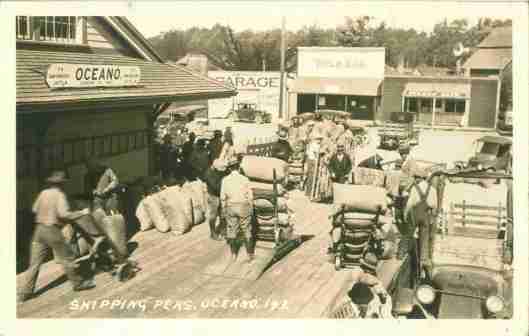
Shipping Peas

I’ve always been interested in social history, including women’s history, and military history. The same goes for a new area I’ve much to learn about but have always found fascinating: agricultural history.

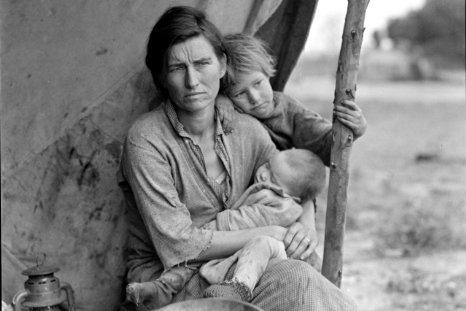
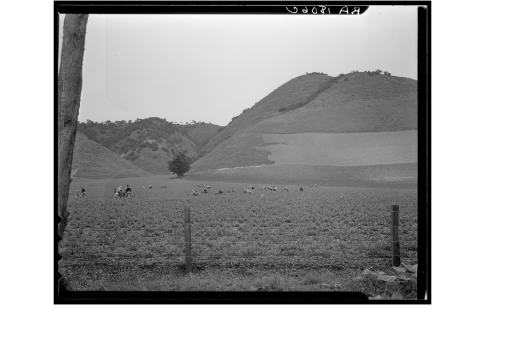
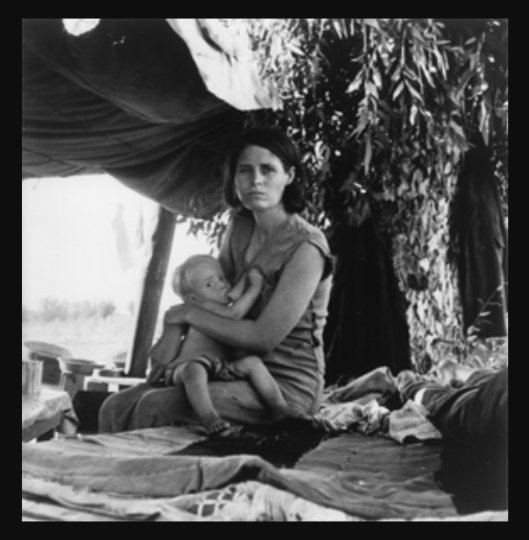
It wasn’t true when I was growing up in the Arroyo Grande Valley, but twenty years before, sweet peas had been the dominant crop in the South County, from the foothills east of Shell Beach to, of course, the Nipomo Mesa, where Dorothea Lange photographed “Migrant Mother” Florence Thompson. Thompson was 33 years old in 1936, struggling to survive in a crude squatters’ camp in the midst of two disastrous annual harvests–blighted by frosts and rains like the one in the closing pages of The Grapes of Wrath–that made the suffering here real. She looks closer to her actual age in this photo, one of six Lange took after passing the camp on her way north to San Francisco.

91soGAHxExL._SX466_

Lange already had boxes and boxes of negatives on the car seat next to her, ready to be processed, her next task, when she saw the sign for the pea pickers’ camp. She kept going. Something stopped her twenty miles up 101; she returned, took the six photographs, and left. Five were published soon after, including this one. The iconic image Lange kept. She must have been stunned with what she’d done when that version of Florence emerged in the lab. It was like a Raphael, an Our Lady of Poverty.

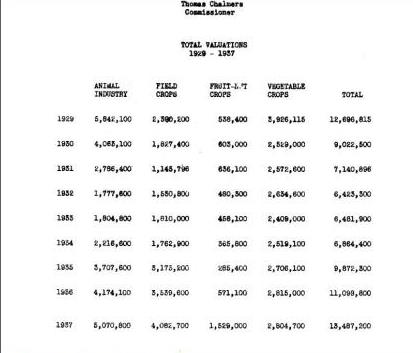
Despite that image, the Depression, I’d thought, couldn’t have been as acute here as it was in the East, where unemployment in Detroit was 50% and, at one point in Toledo, 80%. But then I found these figures from the County Agriculture Department. Statistically, they’re almost as poignant as Lange’s photography:

crop-valuations


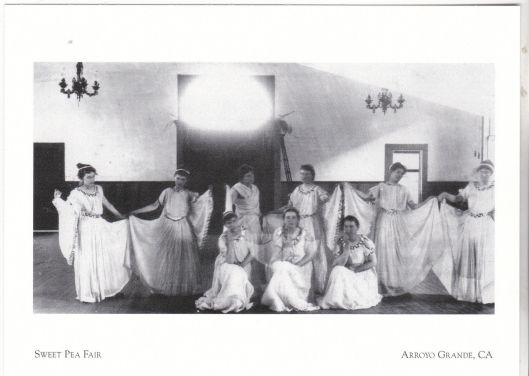
They are also appalling. The total valuation of San Luis Obispo County agriculture fell by half between 1929 and 1933, with the collapse of crop prices. Peas were the largest vegetable crop–about 5,000 acres, nearly all in the South County, were planted annually. [Lettuce came in second, at 3,000 acres planted.] Peas were important to the point of absurdity. This World War I-era postcard commemorates Arroyo Grande teen girls, like twentieth-century vestal virgins, “dancing at the Sweet Pea Fair.”

$_57.JPG


The 1929 crop was valued at $2.2 million dollars, but the harvest from roughly the same acreage four years later was valued at only $822,000. This collapse, prior to the arrival of AAA subsidies, contributed to another disaster.

Peas had been so enormously profitable during and after World War I that farmers, according to WPA Writers’ Project accounts, practiced little rotation and intensified cultivation of peas and, quite naturally, even expanded their acreage as prices began to fall after the Crash. This led to a crisis in soil erosion in places like Corbett Canyon–in 1937, the head of the Soil Conservation Service said the erosion in Arroyo Grande was among the worst he’d seen in the United States, and he’d seen Oklahoma. It would take intensive labor by CCC and WPA crews–building check dams, terraces, planting windbreaks–to save today’s Arroyo Grande from looking like today’s North Africa. It was an enormous effort and, I think, one of the most stunning achievements of the CCC, which employed young men 18 to 25 years old and paid them $27 a month, half of which they were expected to send home.

There were other kinds of crises:  bitter strikes in the South County by migrant pea workers–Filipino, some Mexican, and poor white migrants from as far east as Vermont–in 1934 and again in 1937. I have much more to learn, too, about those, but, by 1939, according to a migrant nurse’s report, wages were still low for pea-picking, at one cent a pound, thirty cents a hamper, and they were cut, by mid-season, to twenty-five cents. Growers estimated that they needed to clear 3 1/2 cents a pound to make a living; what struck me wasn’t the miserliness of growers–and that most definitely existed–but the enormity of shipping costs. A hamper of peas that sold for $3.45 on the East Coast cost $1.70 to ship there.  It reminded me of the days of the Populist movement, when it cost a farmer more to ship a bushel of wheat from Kansas to Chicago, by rail, than it did to ship that bushel from Chicago to Liverpool, mostly by ship.

By 1939, good years were beginning to return. A network of county camps, most on farmers’ land, operated either by labor contractors or camp bosses appointed by the contractors, housed 3,000 pea pickers at the height of the season, which ran from March through May. 426 families were “white,” 167 “Mexican” (Mexican labor had begun to return after massive deportations in 1931; many American citizens were deported during the anti-Mexican hysteria of the early Depression). There is no category for “Filipino,” but they were there in large numbers, too, though not as families. Filipinas were not permitted to immigrate: it would require Filipino men dying in combat, fighting for America in volunteer units–the first formed at Camp San Luis Obispo–to “earn” the right to marry, to bring home war brides from the islands, and to begin families, because before and during the war, California miscegenation laws prohibited their marrying outside their race.

download

A Filipino gang working peas near Pismo Beach, photo by Dorothea Lange.


There were children in the camps, too–569, to be exact. Teachers were brought in to give lessons in the Canada camp and in a Nipomo warehouse. The migrant nurse noted that older children looked wistfully every day as the Arroyo Grande Union High School bus passed one camp, slowed, and kept going. This woman had sand. She marched into Principal Clarence Burrell’s office–Burrell was a good man–who took up the issue with the Board of Trustees, which voted to begin picking up the migrant kids to bring them to school. There were only four weeks left in the school year, but you wonder about those kids, both at how enormous it must have been for them have classes in a “real school” and you wonder, too, about how they were treated. I remember how cruel kids can be, remember us calling a poor white family “Okies” when I was in elementary school.  The peas were gone, then, replaced by new Valley crops; bigotry has a long growing season.

download (1)

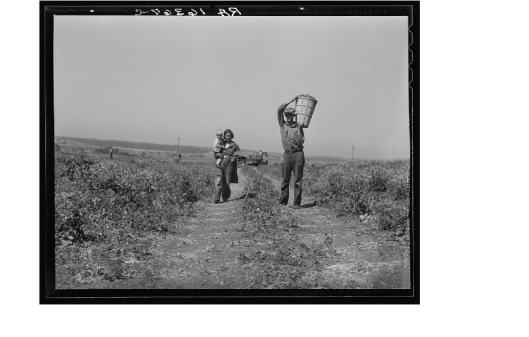
An Oklahoma father with a hamper of peas in Nipomo. Dorothea Lange photo

From Here to Eternity

10 Thursday Dec 2015

Posted by ag1970 in Film and Popular Culture, History, World War II

≈ 2 Comments


montgomery clift & burt lancaster - from here to eternity 1953

Montgomery Clift, as Prewitt, and Burt Lancaster, as Warden, share a bottle in the middle of the road.

From Here to Eternity was on television again last night and I watched it again; in fact, it may be catching up to John Ford’s The Searchers and Milos Forman’s Amadeus as among those films I’ve watched the most.

James Jones’s novel was brilliant and compelling, and Hollywood managed to make a film, an Academy-Award winner, that was just as good. It’s one of the most satisfying films for me to watch, which doesn’t mean it has happy endings: instead, everything that must happen to the major characters eventually happens. You don’t even necessarily root for them because you know full well that they’re all condemned, in some way, by forces too powerful for them to master and too complex for them to articulate, so any cheerleading is futile. But you genuinely admire them: this is my favorite Burt Lancaster film (Elmer Gantry is a close second) and what his Top Sergeant Warden shares with the defiant Montgomery Clift’s Prewitt is an incredible integrity and, in the end, a fierce devotion to The Company that will cost Prewitt his life.


46454859.cached

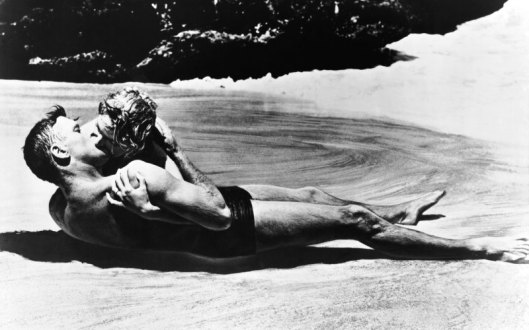
The kiss: Burt Lancaster and Deborah Kerr.

Of course, the most famous, and most parodied, scene in the film is the kiss in the surf between Warden and Karen Holmes, the frustrated, defeated wife of Capt. Holmes, the company commander so insistent on returning Pvt. Prewitt to the boxing ring. Holmes deserves everything he gets–one of the most enjoyable scenes is watching him get his just reward at the hands of Schofield Barracks’ C.O.–and it is Warden who gives Deborah Kerr’s Karen Holmes, if only briefly, the passion and the hope that you want her to have. She’s not a bad person–she’s made, in her marriage to a weak man, a bad choice. She knows it, which makes her decision at the film’s end noble, heroic, and tragic. She has integrity enough to match Warden’s.

This is the film, of course, that revived Frank Sinatra’s career, and he is terrific as Maggio. He has both a Brooklyn toughness and a kind of lost-puppy vulnerability and–that word again–his foolhardy integrity in standing up to the sadistic stockade sergeant, Fatso Judson, seems to be something that Maggio is compelled to do. It’s his destiny. When he finally does go to the stockade, where he’s beyond Prewitt’s protection, it’s a death sentence, and when he describes how he dies while in Prewitt’s arms, it’s a superb piece of acting.

So is the drunk scene between Lancaster’s Warden and Clift’s Prewitt. It is so arresting because it is so funny–you wonder if the two really were lit when they filmed it–but it’s also so revelatory because nowhere in the film, even with Karen Holmes, is Warden so tender and compassionate as he is with the company troublemaker, Prewitt. It’s this scene, and one shortly after, where bugler Prewitt plays two stanzas of the purest, most evocative version of “Taps” ever recorded, that makes the two protagonists’ devotion to The Company and to The Army so understandable.


Annex - Lancaster, Burt (From Here to Eternity)_05

Warden intercedes to protect Pvt. Maggio (right, Frank Sinatra) from stockade Sgt. “Fatso” Judson (Ernest Borgnine).

The film also has a compelling fight, though tame stuff by the standards of today’s gore, between the hapless Prewitt and a sadistic noncom, Sgt. Galovich, who proceeds to beat Prewitt to a pulp. Prewitt, who refuses to box for The Company, won’t fight back. When he finally does, with a flurry of body blows, you want to cheer, and when the tide begins to turn against Galovich, you don’t want the inept Capt. Holmes to stop it. You want Galovich obliterated. But when Holmes does finally step in, late, it’s the captain who’s the victim, because the fight has been witnessed by two of his superiors at Schofield who decide to investigate Holmes’s feckless command of The Company.

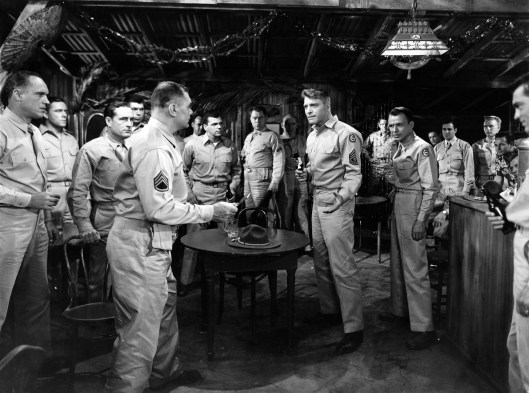
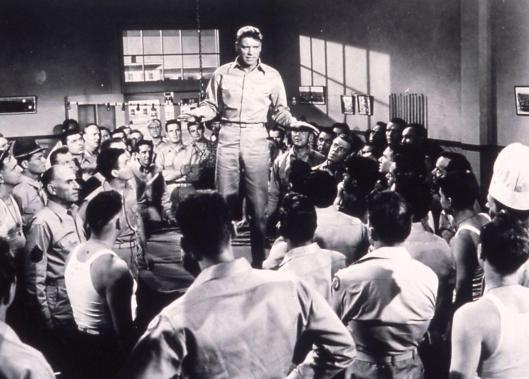
It’s Warden who is the real company commander. As a master of red tape, an almost clairvoyant anticipator of The Company’s crises and needs, contemptuous of weakness in his subordinate noncoms and even more contemptuous of all officers, especially his C.O., Warden is the perfect bureaucrat. Until Pearl Harbor. Then you see the Top Kick rise to the occasion and become the one man in The Company who keeps his head, giving rapid-fire and perfect orders to his men (“Make a pot–no, a barrel!– of coffee!” he snaps to the company cook.), then climbing to a barracks rooftop to bring down an attacking airplane with a .30-caliber machine gun. He becomes a warrior. Part of me doubts that Warden would survive the war, because so many good leaders like him would be weeded out by attrition as we learned to fight in places like Guadalcanal or North Africa, places with unforgiving learning curves. The war would cheat us of our Wardens.


77178-004-F46E8E0B

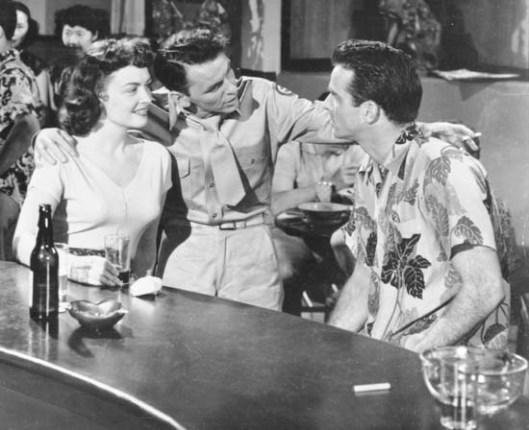
Lorene, Maggio and Prewitt at the bar of The Congress Club.

The only careless element in a terrific ensemble cast is, to me, Pvt. Prewitt’s love interest: Donna Reed’s character, Lorene, a working girl at The Congress Club, a bar/brothel that Schofield’s GI’s frequent. It’s as if the scriptwriters and director Fred Zinnemann can’t quite decide what to do with her. They’ve got to fly a prostitute under the radar of 1950s film standards, so she winds up coming off as more of an undergrad at a Midwestern university instead of a Honolulu bargirl. Her earnest, intellectual roommate has their house full of books. So she is unconvincing, which I don’t think is Reed’s fault: she’s a victim of the one bit of indecision and timidity in a film that is otherwise so honest.(To be honest, Reed may be a victim of my own Baby Boomage and her housewife/mother role from The Donna Reed Show, but Borgnine’s malevolent Fatso is sublime; he transcends his turn in McHale’s Navy.)

But Reed earns redemption as an actress in the film’s denouement, when she speaks of Prewitt as a war hero and you realize that Lorene, with her fantasy of making enough at The Congress Club to build herself and her mother a little home in Oregon, is and always has been gently unhinged. Nothing good will come of Lorene: she will drift away, like the leis the women toss onto the ocean’s surface from the rail of their steamer bound for the States. Only one character will never drift away and will always have a home, and that’s Top Sergeant Warden.


still-of-burt-lancaster-and-tim-ryan-in-from-here-to-eternity-(1953)-large-picture

Top Kick Warden takes command, December 7.


Gallery

A meditation on Pearl Harbor Day

07 Monday Dec 2015

Posted by ag1970 in American History, California history, History, World War II

≈ Leave a comment

This gallery contains 40 photos.


Pretty Eleanor, Bank Robber

25 Wednesday Nov 2015

Posted by ag1970 in American History, Arroyo Grande, California history, History

≈ 2 Comments

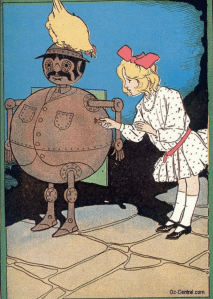
Eleanor Walling was an enchanting little girl—one can easily visualize her in a blouse with a sailor’s collar, with a big bow in her hair, like L. Frank Baum’s Dorothy. She was also a talent and a ticket-office draw for her father, a small-town impresario who owned the Lompoc Opera House, the setting for a 1912 rally for Bull Moose candidate Theodore Roosevelt. On that day, Eleanor enchanted the Lompoc Journal, too. The paper notes that

The program was introduced in a most pleasant manner by little Eleanor Walling, daintily clad and draped in a flag, stepping to the front of the stage and with her little violin leading the orchestra in the Star Spangled Banner in a way that carried the audience away.

20151127_022128
Illustrator John Rea Neill’s Dorothy, with Tik-Tok the mechanical man and Billina the hen, from L. Frank Baum’s 1907 Ozma of Oz

Eleanor was eight years old. Her mother had died young, but either she or J.O., Eleanor’s father, had bequeathed the little girl with extraordinary musical gifts. She was an actress as well as a violinist, appearing in her father’s plays, including The Moonshiner’s Daughter or in the title role in Editha’s Burglar, which “proved a hummer,” according to the Journal. Sometimes she shared the bill with silent films like Tobacco Mania.

Eleanor, born in Oregon, San Luis Obispo, or England, depending on the source, had, by World War I, joined her father and siblings in a new enterprise: the Walling Orchestra entertained at concerts and dances in a roadhouse owned by J.O. near Avila Beach. They were the band of choice when Arroyo Grande got its brand-new electric streetlights. But by 1920 or so, Eleanor had struck out on her own, for the vaudeville circuit, the story went.

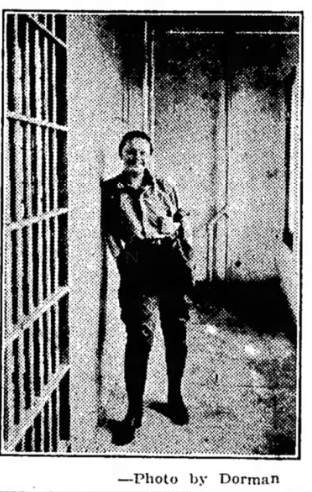
Pretty Eleanor was 20 years old and just as enchanting when she played the violin for her guards at the Kern County Jail in the spring of 1924. She’d been accused, with a male accomplice, of robbing a Taft bank of $5700. A revolver discharged during the robbery. Eleanor, much later, allowed that it might have been hers, but she wasn’t clear on who was holding it at the time. Then, after that, she suggested that she hadn’t been in the bank at all. Her story changed as often as her birthplace.

Screen Shot 2015-11-26 at 4.10.18 PM
An unrepentant-appearing Eleanor in the Kern County Jail, from the Bakersfield Californian.

But in the robbery’s immediate aftermath, she wasn’t suggesting anything. Detectives from both the sheriff’s office and the LAPD grilled her for two days. They got nothing. EFFORTS OF POLICE OFFICERS AMUSE GIRL HELD IN ROBBERY, a headline read. Her hair was cut short, like a Flapper’s, so she became the “Bobbed-Hair Bandit.” PRETTY ELEANOR SMILES AT OFFICERS AS THEY QUESTION HER, another headline announced. She decided to let her hair grow, now that she had the time. She pled “not guilty” in April.

She changed her plea in May. She might have been threatened by a defense witness called to testify on behalf of Bill Crockett, her accomplice, suspected of planning the bank robbery.

According to the prospective witness, a Folsom inmate, Eleanor had been with him when he had shot a “Dutchman” during an armed robbery in Los Angeles. He complained later that they’d paid doughboys $32 a month to kill Dutchmen, but they gave him 29 years, and he’d just wounded his. And his conviction came because Eleanor had turned state’s evidence. Now, he suggested, she’d been much more than an innocent bystander.

Meanwhile, the papers were reporting that she had been one of the robbers who’d  burst into the Taft State Bank on March 13, 1924, at 9 a.m., helping to round up customers and tellers. She’d been dressed as a man. She continued to dress that way—“her crossed legs garbed in khaki and long hiking boots”—after her arrest.

The Taft State Bank is today a popular sports bar.

Newspaper stories hinted that she wasn’t innocent in other ways. Both the defense witness and Bill Crockett were infatuated with her. So were the deputies at the Kern County Jail.

But by the time of the trial for the robbery, a reporter wrote, “gleaming hatred” appeared in Crockett’s eyes at the mere mention of her name. Crockett was unlucky in love and inept in crime: his mask had slipped as he herded the bank’s occupants into the vault, so a teller on the witness stand identified him without hesitation.  And while they’d made away with $5700–nearly $80,000 today–they’d overlooked another $30,000 nearby.

And not only had Eleanor confessed, but she’d led the detectives to the cash. They found a thousand buried under two railroad ties on General Petroleum property outside of Taft; another $1800 was buried at the base of a telephone pole.

Pretty Eleanor distanced herself from the robbery on the witness stand, when “every pair of eyes in the courtroom was directed at her,” as a Bakersfield newspaper reporter wrote. It’s a good bet that Bill Crockett’s eyes gleamed, him wishing he could burn holes in her, through that

…ponged blouse with a man’s collar, about which was knotted a shoestring “sheik tie.” Over her blouse she wore a brown and fawn-colored barred sports vest. A brown full silk skirt completed her ensemble.

She wasn’t there at all, she said. That was another man, Ray. All she’d done was to burn their clothes after and change the license plates on their car. Oh, and she’d buried the revolvers somewhere between Taft and Fellows.

Eleanor was giving one of her last performances for an audience of any size. They were rapt. She went to prison anyway.

Ironically, Bill Crockett was acquitted, only to be convicted later of a second robbery. He’d do time and so would two of his brothers, one a thief and the other a forger who, according to a family history, would do the hardest time of all, on Alcatraz.

Until Taft, Eleanor’s record was a clean one, with one exception: in 1920, she’d started an 18-month term in a Ventura reformatory. She hadn’t played the vaudeville circuit. She’d run away from home.

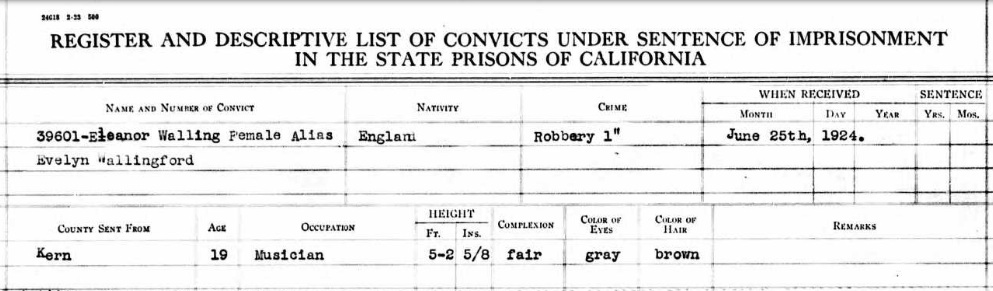
Her San Quentin term was five years to life. The “Bobbed-Hair Bandit” shared a cell with Clara, “The Girl with a Hammer,” after her murder weapon of choice. Eleanor had been an actress, but Clara was a drama queen: she tried to escape twice and failed both times, once breaking out of a town jail, once slashing her wrists with a razor blade she’d borrowed from a San Quentin matron. Eleanor did her time quietly.

Eleanor booking
Eleanor’s booking record, San Quentin.

After her parole, she lived in San Francisco, in the Noble Hotel, on a narrow block of Geary Street. The 1930 census lists her occupation as “musician.”

Two years after that, the Oakland Tribune reported that she’d been questioned and released for a bank robbery in the city. Some San Francisco police detective must’ve been disappointed, because he’d certainly done his homework and it must have looked like a good collar. The armed robbers had been two women, dressed as men.

Intimidation

08 Sunday Nov 2015

Posted by ag1970 in American History, California history, History, Writing

≈ Leave a comment

Filipino field workers thinning lettuce with the short hoe, Salinas Valley. Photograph by Dorothea Lange.

Filipino field workers thinning lettuce with el cortito, the short hoe, Salinas Valley. The tool would be outlawed in 1974. Photograph by Dorothea Lange.

I thought it would be a good idea to write about the Depression and New Deal, and I still think it is. What I wasn’t prepared for was the topic’s massiveness, the inchoate nature of local scholarship on the period, and the kind of conflict that, in some ways, is more hurtful than writing about the war.

I’m using Kenneth Starr’s series—if California has a Historian Laureate, it’s Starr, and he’s pretty even-handed—as a guide. But once you get into Starr’s depiction of the period 1934-37, the wheels start to come off your Comfort Train.

California was unique in so many ways in the Great Depression. The downturn didn’t have the wallop here that it did in the industrial Midwest, where at one point unemployment in Toledo was 80%, because California, in these prewar years, was still largely agricultural. It also, in large part thanks to a reactionary governor, Frank Merriam, resisted the New Deal–failing to stop FDR’s programs, but retarding their introduction into the state until long after they’d taken hold elsewhere. Around here, for example, the New Deal didn’t seem to have had real impact, except for the CCC, and, of course, except for AAA farm subsidies, until 1938 or 1939.

What California did have–and in spades–was a political right wing that veered, intermittently and locally, into a tight and militarized alliance between business and government: that’s a serviceable definition of corporativism–or Fascism.

This alliance had its beginning in the postwar years, with the Palmer Raids, Sacco-Vanzetti and, more locally, with the IWW and with San Francisco dockworkers’ agitation. By the mid-1930s, the right’s fear intensified, because there were communists among farm labor organizers–made manifestly clear by Steinbeck’s In Dubious Battle. In reality, the struggles of California workers at the time had little or nothing to do with ideology and everything to do with organizing for a living wage, for sanitary living conditions, and for a safer workplace.

That, according to the powerful elements in the state–the umbrella organization for big growers, Associated Farmers, Inc., the Union Pacific Railroad, Pacific Gas & Electric, and the City of Los Angeles, with the most aggressive “Red Squad” in the nation being the LAPD’s–that kind of agitation was communism, pure and simple.

The right had its roots in LA, although most of the earlier labor strife had come farther north. By the 1930s, the Imperial, San Joaquin and Salinas Valleys, and the Arroyo Grande and Nipomo Valleys, to a smaller extent, had become the front lines for fighting incipient Communism.

When Socialist Upton Sinclair ran for governor in 1934, it was the LA District Attorney who notified thousands of potential working-class voters, potential Sinclair voters, that they would have to appear and present legal proof of their residence. It was the LAPD who, in 1936, sent nearly 200 officers to entry points around the state’s borders with the extraconstitutional mandate to turn away travelers with “no visible means of support”–they waved through, for example, a gentleman in a brand-new Packard but detained, rousted, and turned away a poor family crammed into a 1921 modified Ford pickup. At night, they gathered hundreds of unemployed men–mostly very young men–handed them peanut-butter and baloney sandwiches, and put them on freight trains bound for the Arizona border.

In Salinas–there are rumbles about the 1936 strike in the old Arroyo Grande Herald-Recorders–lettuce workers were locked off the job while hundreds of scabs were brought in. The strikers threw rocks at the trucks bringing in the strikebreakers, which brought the Monterey County Sheriff, the California Highway Patrol, and hundreds of deputized citizens, armed with axe handles, onto the side of the growers. They beat strikers, men and women, senseless, used tear gas and nausea gas, set up machine gun nests, and when deputies mistakenly unloaded their shotguns on three carloads of strikebreakers, it took them all night and most of the next day to coax them out of the fields where they were hiding, terrified.

In an Imperial Valley strike, growers beat the attorney, on the courthouse steps, who was representing labor organizers indicted for criminal syndicalism. The sheriff and his deputies watched, waited, and then intervened, arresting the semiconscious attorney’s wife when she went to their car and retrieved a revolver. Another labor attorney–a Jesuit-educated Irishman, God love him–took over the case, and tore the prosecution to shreds: they had to drop four of the six charges against the organizers. The D.A. prosecuting the case had his term lapse, but was allowed to continue when the state attorney general named him a special prosecutor. The defense attorneys presented six hours of tightly-reasoned legal arguments (How can you send a man to prison, for example, for being a member of the Communist Party when the Communist Party was recognized by the state of California and regularly ran candidates?) while in his summation, the prosecutor–literally–clutched the courtroom flag to his breast and preached Americanism.

The jury deliberated sixty-six hours, brought back a handful of guilty verdicts, and recommended that the convicted be placed on probation. The judge ignored the jury and sentenced the defendants: one to eight years in prison. The women got the lesser sentences; the men went to San Quentin.

There were bitter strikes here, as well, in 1934 and again in 1937, when the CHP were imported to Nipomo, as they had been in Salinas, to protect strikebreakers and to intimidate strikers. The San Luis Obispo District Attorney, with a near-Dickensian name, van Wormer, and Sheriff Haskins felt confident enough to issue the strikers an ultimatum: Go back to work or go to jail, charged as vagrants.

99% of the workers, the Arroyo Grande Herald-Recorder proclaimed, with equal confidence, were eager and willing to go back to the pea fields, but they were intimidated by outside agitators.

The implacable 1%–doubtless, they were Communists–wanted forty-five cents a hamper to bring in the pea crop. The Herald-Recorder soberly reported that one worker maintained that twenty-five cents a hamper was more than enough to allow a family to support itself.

The final offer was presented, not by the growers, but by Sheriff Haskins: Thirty cents. Take it or leave it.

This research is going to lead me into dark places–and shining daylight there, even eighty years later, is going to make me enemies.
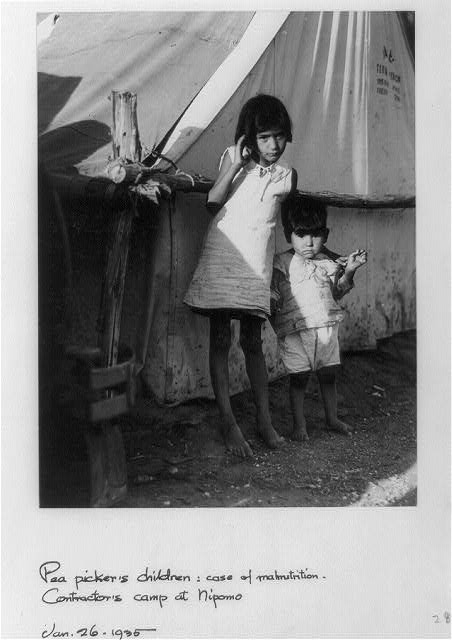
Pea pickers' children, Nipomo, 1935. The little girl's knocked knees are indicative of rickets, caused by a Vitamin D deficiency.

Pea pickers’ children, Nipomo, 1935. The little girl’s knocked knees are indicative of rickets, caused by a Vitamin D deficiency. Dorothea Lange photo.

Arroyo Grande’s Japanese-Americans and World War II

09 Friday Oct 2015

Posted by ag1970 in American History, California history, History, World War II

≈ Leave a comment

https://drive.google.com/file/d/0B05dFICUx2kGWTZnenpVTTdQR2c/view?usp=sharing

The American Girl

20 Sunday Sep 2015

Posted by ag1970 in American History, History, News, Teaching

≈ Leave a comment

Tags

Muslim-Americans

11890959_910767205680284_601602604436695615_nWhen I retired from teaching last year, it was time. I hadn’t lost my love for young people, or for teaching, but I couldn’t think of a better graduating class for my goodbyes than the Arroyo Grande High Class of 2015.

One of my very favorites—she’s just starting her freshman year at Poly—is named Leila. The smile you see on her face is a constant: she radiates the kind of warmth and openness that captures others, but there is nothing calculated in the capturing. Leila’s smile comes from Leila’s heart. At the end-of-the-year Senior Assembly, she gifted me with a farewell bouquet. She was fighting tears, and seeing her struggle to master her feelings was an even greater gift. It’s good to know the love you’ve spent means something to someone so important.

I have rarely read a college letter that brought me to tears, but Leila’s did. One part told of her family’s trip to Egypt, to visit her grandmother. I saw photos of the woman and she has a kind of Leila-ness about herself, as well.  You wonder if there are applications you can send for to become her adoptive grandson. Her health has not been good. She had to have surgery, and the passage I remember is when Leila volunteered to change the dressing on her wound. Her grandmother apologized for its appearance, but Leila did not hesitate and did not flinch, and I don’t think anything so clinical has been done with such gentleness and compassion.

The experience only reinforced Leila’s dream to become a doctor. We have common heroes–Doctors without Borders—and I could easily see Leila doing their work. I immediately thought of her while listening to an NPR story about a doctor who lost 19 of the first 20 patients he’d treated for Ebola in West Africa. It was heart-breaking, but this doctor was a man of spiritual depth. “Curing disease isn’t the most important thing a doctor does,” he said. “The most important thing a doctor can do is to enter into another’s pain.” Leila has that kind of empathy and she has the spiritual strength to sustain it.

I will come to the obvious part. Leila is an observant Muslim, and as captivating and welcoming as her smile is, there are those–some have been in the news lately–who are blind to kindness because it’s so threatening to the comfort they find in hating. Leila can take care of herself–she gets those reservoirs of strength from the deep wells her family has made for her–but she also is the kind of student who can provoke every paternal instinct a male teacher has.  You want to protect her from the blind and the bigoted who also have the unpleasant tendency to be loud.

The comfort is knowing that those people do not matter and have no enduring impact, unless you count, of course, the agonizing depth of the pain God feels when they broadcast their hatred.

I gained a lot of wisdom by talking to Haruo Hayashi in researching a book I’m writing about Arroyo Grande during World War II. In 1942, his family was among those interned Japanese-Americans who slept in stinking animal stalls at the Tulare County Fairgrounds; they were then sent to the remote Rivers Camp in the Arizona desert, where the hot winds, carrying the spores for Valley Fever, began to kill their grandparents.

When I visited the Hayashis, I saw three generations of a family whose bedrock is hard work relaxing on a Sunday, watching television, reading, raiding the refrigerator, and all of them were present, were living in the moment, and the devotion you sensed among them was unforced and unpretentious, which only made it more powerful. Haruo’s extraordinary wife, Rose, was dying. Her son, Alan, remained at her side, attentive but respectful and unobtrusive, his love for her a mirror-image of the love she’d always given so selflessly.

Haruo went through, after Pearl Harbor, the kind of bigotry that I fear so much. But, while the bigots were loud and threatening, they do not matter to him 75 years later. They were small people whose names he’s lost. He hasn’t lost the names of Don Gullickson or Gordon Bennett or John Loomis, constant friends whose constancy has lasted four lifetimes. He smiled when he remembered another name, of a tough classmate, Milton Guggia, who told Haruo he would personally beat the living crap out of any kid who called Haruo a “Jap.”

Milton Guggia. That’s a real American name.

As is Leila’s. She’s the girl who went to Proms, who served on the ASB, who played Powderpuff Football, who participated every year in Mock Trial, who played in the school band. Haruo played in the school band, too. And you can see him in a yearbook photo with the 1941 AGUHS Lettermen’s Club–his bad eyesight ruled out sports, but he managed for every team and earned his spot, with all the jocks, right next to Coach Max Belko, the kind of big, boisterous and indestructible coach whom every kid idolizes.

He was destructible, it turned out. Belko, a Marine lieutenant, died on Guam in 1944.

But there, and forever, in the old yearbook, are Max Belko and Haruo Hayashi, shoulder to shoulder: two real Americans. Leila—and Leila’s marvelous family, so much like Haruo’s—are no different. Their fidelity to each other, their quiet insistence on hard work and service to others, and the openness of their daughter’s heart–all of these have been blessings in my life. They are, I think, the kind of Americans we would all wish to be.

Newer posts →

Subscribe

  • Entries (RSS)
  • Comments (RSS)

Archives

  • January 2026
  • December 2025
  • November 2025
  • October 2025
  • September 2025
  • August 2025
  • July 2025
  • June 2025
  • May 2025
  • April 2025
  • March 2025
  • February 2025
  • January 2025
  • December 2024
  • November 2024
  • October 2024
  • September 2024
  • August 2024
  • July 2024
  • June 2024
  • May 2024
  • April 2024
  • March 2024
  • February 2024
  • January 2024
  • December 2023
  • November 2023
  • October 2023
  • September 2023
  • August 2023
  • July 2023
  • June 2023
  • May 2023
  • April 2023
  • March 2023
  • February 2023
  • January 2023
  • December 2022
  • November 2022
  • October 2022
  • September 2022
  • August 2022
  • May 2022
  • April 2022
  • March 2022
  • February 2022
  • January 2022
  • December 2021
  • November 2021
  • October 2021
  • September 2021
  • August 2021
  • July 2021
  • June 2021
  • April 2021
  • March 2021
  • February 2021
  • January 2021
  • December 2020
  • November 2020
  • August 2020
  • July 2020
  • June 2020
  • May 2020
  • April 2020
  • January 2020
  • December 2019
  • November 2019
  • October 2019
  • September 2019
  • August 2019
  • May 2019
  • April 2019
  • March 2019
  • February 2019
  • January 2019
  • December 2018
  • November 2018
  • October 2018
  • September 2018
  • July 2018
  • June 2018
  • May 2018
  • April 2018
  • March 2018
  • February 2018
  • January 2018
  • December 2017
  • November 2017
  • October 2017
  • April 2017
  • March 2017
  • December 2016
  • November 2016
  • October 2016
  • September 2016
  • August 2016
  • July 2016
  • June 2016
  • April 2016
  • March 2016
  • February 2016
  • January 2016
  • December 2015
  • November 2015
  • October 2015
  • September 2015
  • August 2015
  • July 2015
  • June 2015
  • May 2015
  • April 2015
  • March 2015
  • February 2015
  • January 2015
  • December 2014
  • November 2014
  • September 2014
  • August 2014
  • July 2014

Categories

  • American History
  • Arroyo Grande
  • California history
  • Family history
  • Film and Popular Culture
  • History
  • News
  • Personal memoirs
  • Teaching
  • The Great Depression
  • trump
  • Uncategorized
  • World War II
  • Writing

Meta

  • Create account
  • Log in

Blog at WordPress.com.

  • Subscribe Subscribed
    • A Work in Progress
    • Join 68 other subscribers
    • Already have a WordPress.com account? Log in now.
    • A Work in Progress
    • Subscribe Subscribed
    • Sign up
    • Log in
    • Report this content
    • View site in Reader
    • Manage subscriptions
    • Collapse this bar
 

Loading Comments...