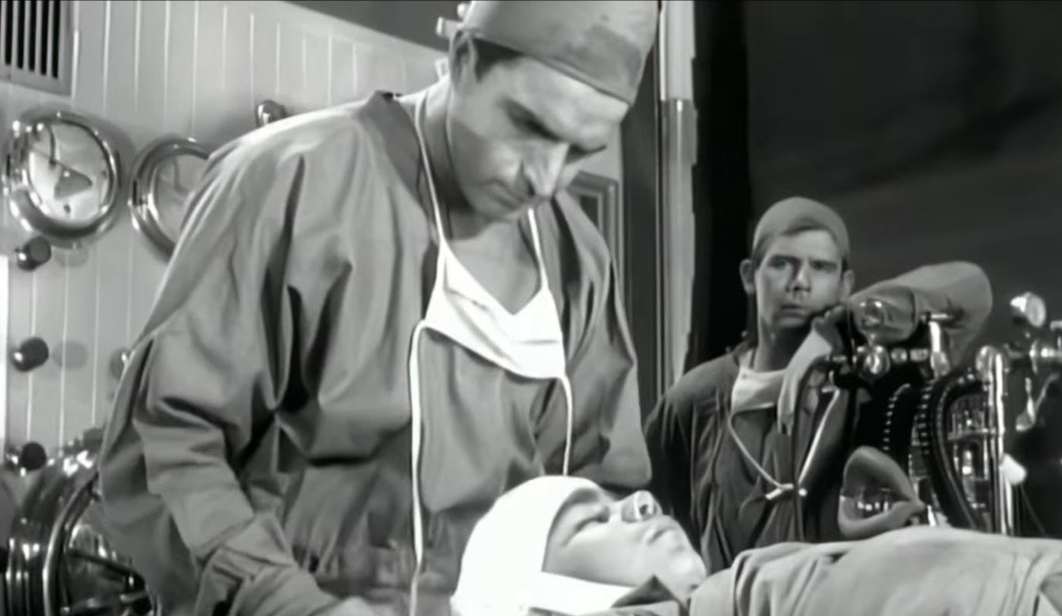
At the end of this post, you’ll see the opening credits to “Ben Casey,” a popular 1960s medical show about handsome Dr. Ben, a neurosurgeon, played by Vincent Edwards.
Dr. Ben deftly picked up the brain he’d dropped earlier in this little boy’s surgery.
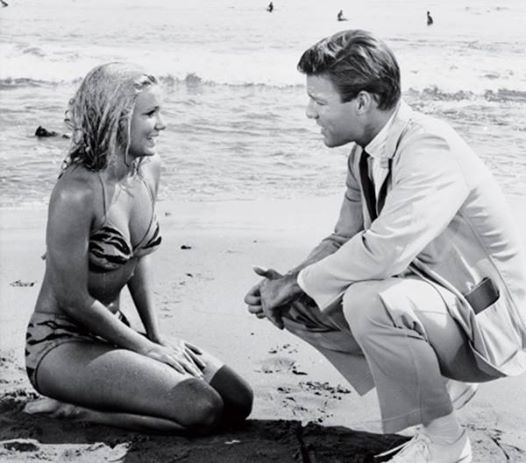
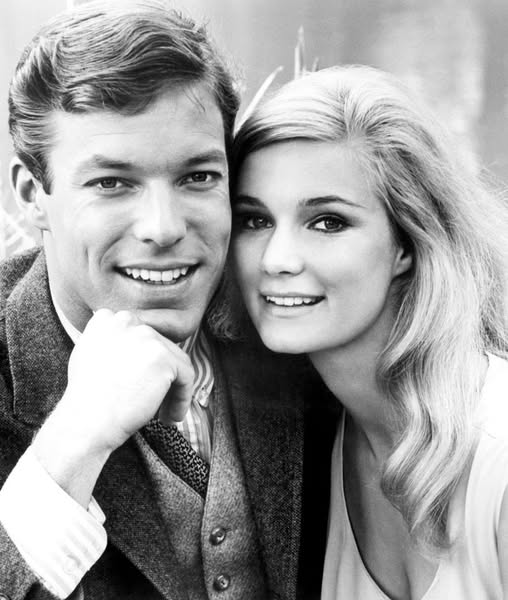
His competition was handsome Richard Chamberlain, on another network, as Dr. Kildare, whose love interests included the actress Yvette Mimieux. She was beautiful, and that didn’t prevent her from getting excellent reviews for her performance. (Okay, maybe the bikini helped a little.)
(Her character died, like every last ONE of the young women who set foot on the Ponderosa in “Bonanza.” Those Cartwrights were hell on women.)
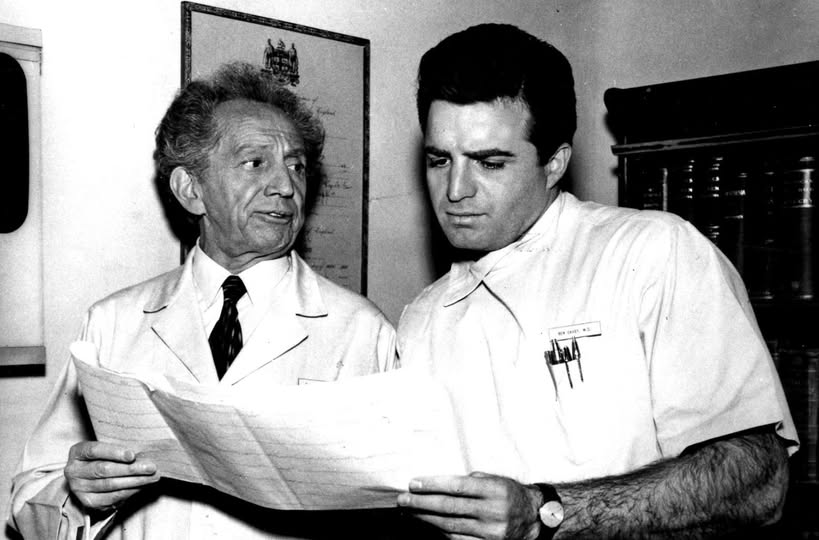
Ben Casey’s boss, writing on the blackboard in the video below, was Sam Jaffe, featured in 1939’s “Gunga Din.”
Jaffe as Gunga Din, with Cary Grant, about to swash and buckle.Jaffe, as Dr. Zorba, with Edwards, as Dr. Casey.
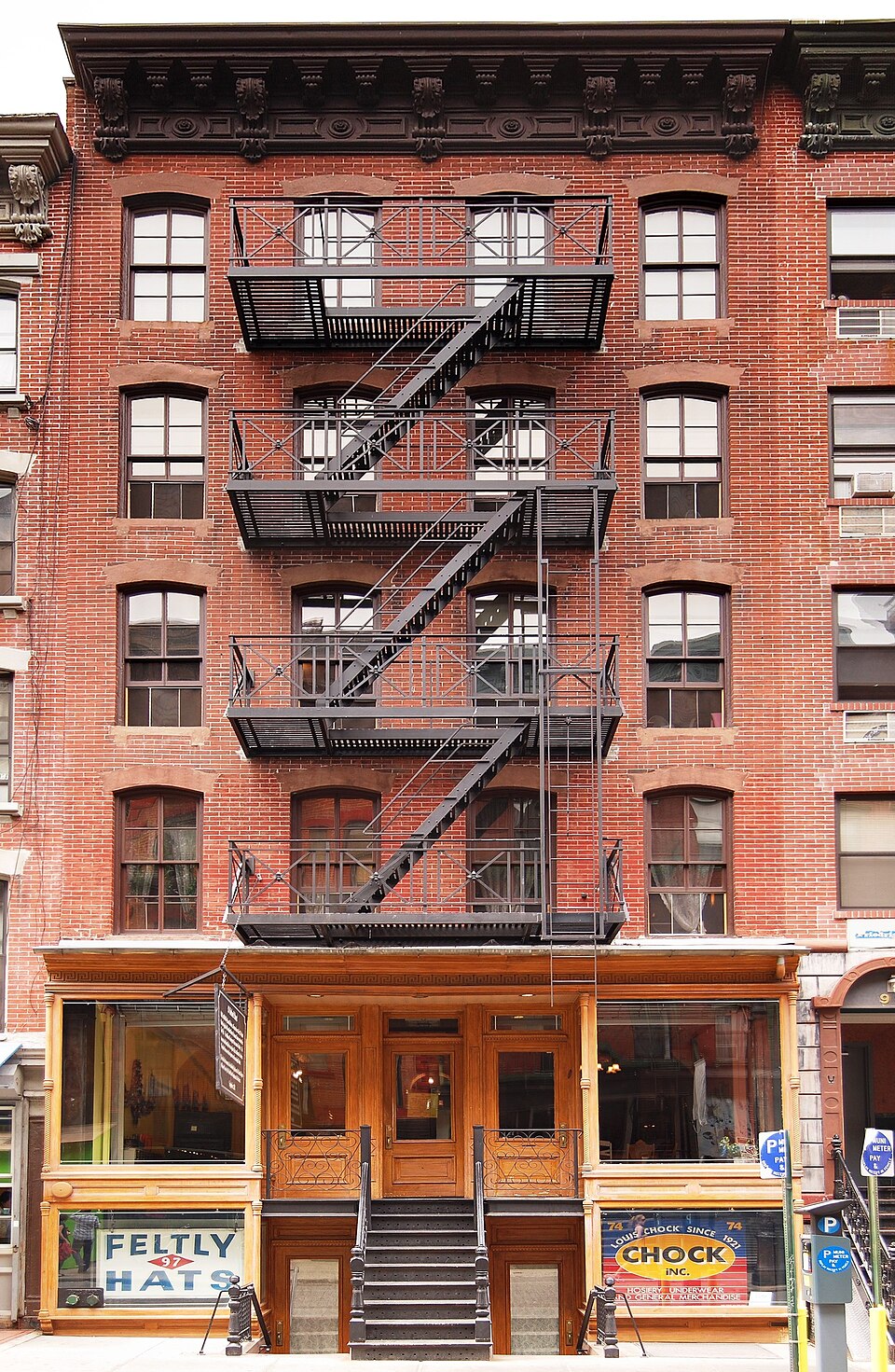
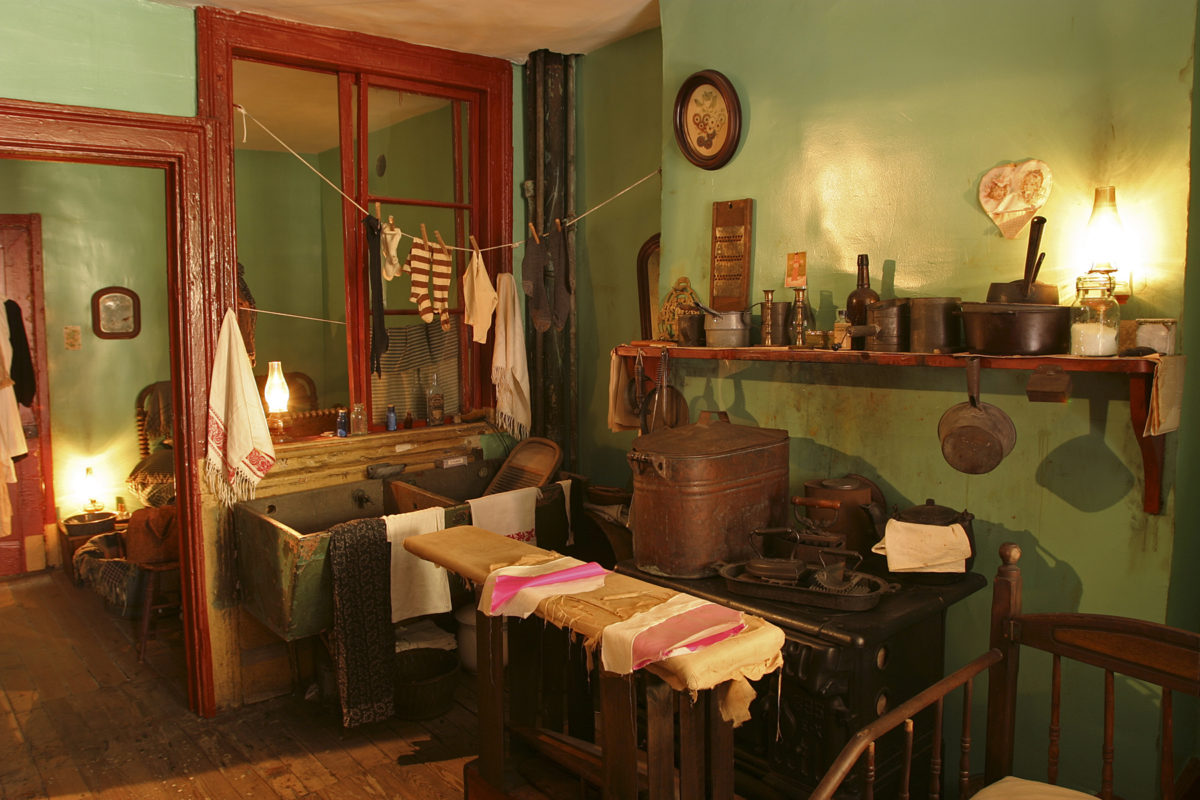
Jaffe, born in New York City of Ukrainian Jewish parents–his childhood tenement is today a museum*– was of course a natural choice to play Gunga, essentially an Indian collaborator with the Raj, but, hey, his buddies were Cary Grant, Victor McLaglen and Douglas Faibanks, Jr., so it’s all good.
*(The Tenement House Museum, on the Lower East Side. Pardon Mr. History Guy for finding Jaffe’s connection amazing.)
Anyway, I was thinking of Ben today because I’ve decided I will contact Stanford and go up there for a wee bit of brain surgery. First, the caveats:
1. I have a tumor, but it’s benign. Nonetheless, it can cause you to fall down, develop blurred vision, and it messes with your memory, like forgetting the name of the actor in the movie you just saw on TV (Robert Ryan) or the name of General Grant’s horse (Cincinnati).
2. It is not actually a “brain tumor.” It’s arises instead in the meninges, which lines the brain. Since “Meninges” sounded to me like an island group, like “Azores,” I have named my tumor Manny.
Immigrants from the Meninges.
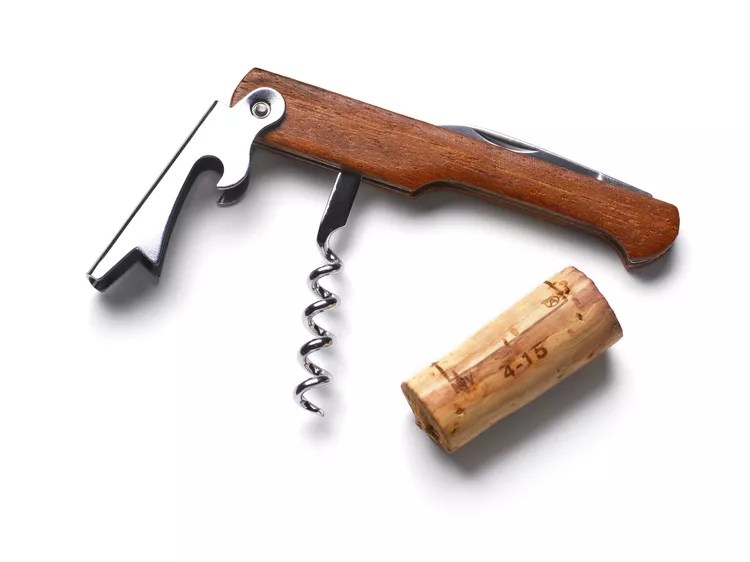
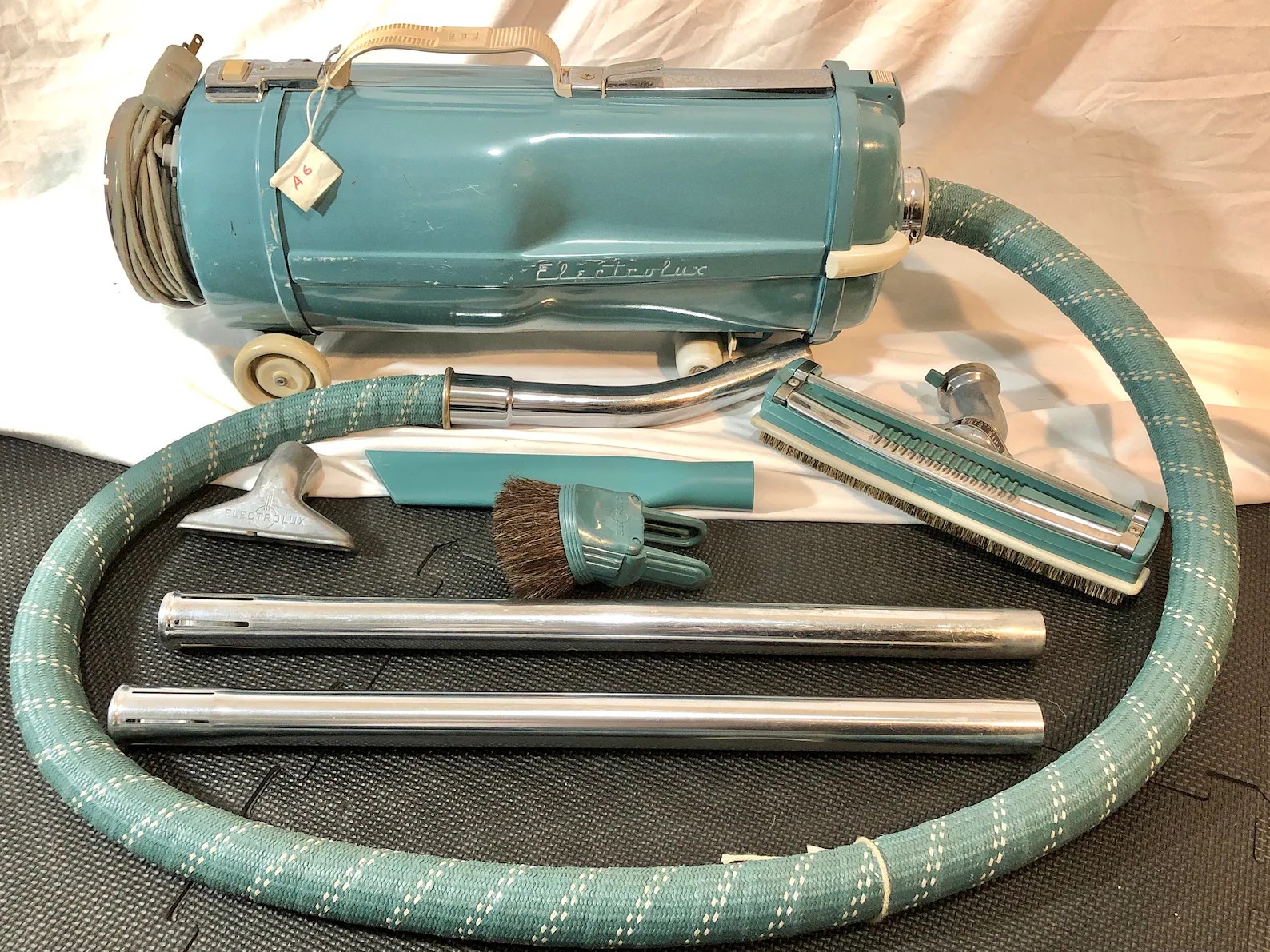
3. It’s a relatively simple procedure, requiring only a corkscrew and a 1960 Electrolux vacuum cleaner with an upholstery cleaner attachment.
4. Very high success rate, but recovery can be tough. It may involve people bringing me chiles rellenos or cheese enchiladas, sushi, Thai noodles with peanut sauce or ravioli for 60 days after the procedure. And maybe red velvet cake with cream cheese frosting.
5. Since it’s at Stanford, unless the surgeon loses the corkscrew inside, I’m sure there’s a chance that my IQ will go up, all the way to 100. I attended a week of classes at Stanford in 2004, on the Great Depression and World War II, and got to hold this X-ray of Hitler’s skull, from the Hoover Institution, so all of this is very symmetrical.
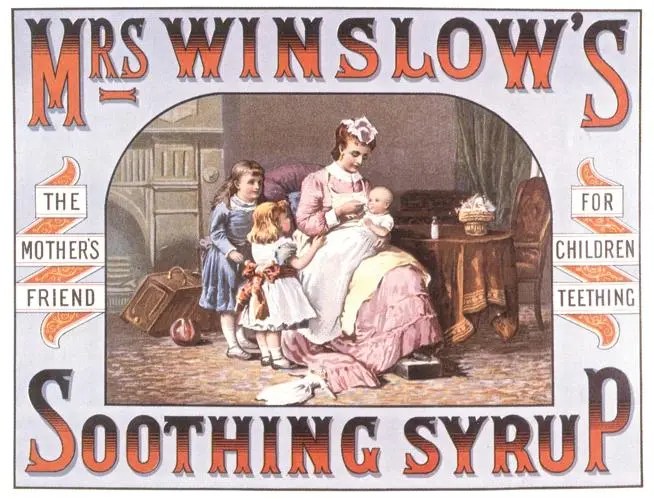
6. I get to have morphine, once a dandy additive to children’s medicine.
I’m still working up the courage, being a devout coward, to start the process that will lead to the surgery. It’s been two days now. I will try again tomorrow. I am posting this in part as an incentive for me to get off my rear end and get going.
It’s not even the Dollar Tree anymore. It’s the $1.25 tree. At least it doesn’t smell like mothballs, like the old, old Rasco store did, and it’s like Lee Chong’s grocery in Cannery Row. It’s a miracle of supply. You can find almost anything that fits your mood: animal crackers, birthday balloons, eyeglass repair kits, navy beans in a can.
I went there for some miniature American flags and plastic flowers.
The line at the checkstand was long. It always is. The couple ahead of me, a husband with tattoos up to his chin, the young wife with yoga pants—I averted my gaze—and the little girl wearing a ZOMBIE CROSSING medallion. The husband smiled at me. Then he called over my shoulder to a woman two customers back. The man between the woman and me —tiny, deeply tanned, with a wiry salt-and-pepper beard, was as stooped as a comma and he shook uncontrollably. Parkinson’s.
“How are you?” he called to the woman behind the tiny man. She smiled. Her upper teeth were irregular, kind of crenelated. “I’m doin'” she called back. “Job?” he asked.
“Still looking.” her smile dissipated.
“Why don’t you come over tonight?” the man said. His pretty wife agreed. “Yeah! We’re doing Mexican!” It was a going-away party for someone they knew. They asked the checker for a helium balloon, so he went to fetch it. When he came back to the checkstand, they invited him over, too. I think he’s going after his shift ends.
They paid for their cart—canned and boxed food—and the husband asked if he get could $50 over on his EBT Card, from the federal food assistance program. They needed to get the fresh stuff–carne asada, shredded cabbage and lettuce, cheese, onions and peppers–because they were doing Mexican.
The cash register took a long, long time to do the cash-back transaction. It was thinking. The old, old man behind me was shaking. I was liking the little family as they left the checkout. My turn.
These people, including the gracious young man with the tattoos up to his chin, are about to suffer. The woman he called to is jobless and looking, but I suspect that he, in using the EBT card, is among what are euphemistically called “the working poor.” He may work in the fields. Maybe not. If his little girl (who wants to be a zombie) gets sick, this family might be without the Medicaid they’d need for her.
The old man behind me will die. Very soon.
So they all might suffer. But they deserve it, don’t they? Their place in the the economy’s lower tiers (economics was once called “the dismal science”) is their own fault, isn’t it? My sons, who rely on Medical, might suffer as well. And Thomas uses his EBT card to supplement our food supply when the month, as it invariably does, outlasts the money. (My sons have jobs and work hard—John repairs water wells and Thomas drives a forklift.)
If the Present Administration goes after Medicare, and the rumblings suggest that they will, then I will suffer. I must deserve it.
Then I realize I’m being stupid. The United Kingdom, Australia, Canada, Sweden, Norway, Denmark, Brazil, France and Germany all subsidize health care. South Korea’s public health system is probably the best in the world.
Then there’s Social Security. The president said today that he will “love and cherish” Social Security. He says the same about women. Eighteen have accused him of sexual assault. And, by the way, “social security” is not some bleeding-heart liberal New Deal cushion for the retired (and therefore, according to Elon Musk, the unproductive. SEE: The film Soylent Green).
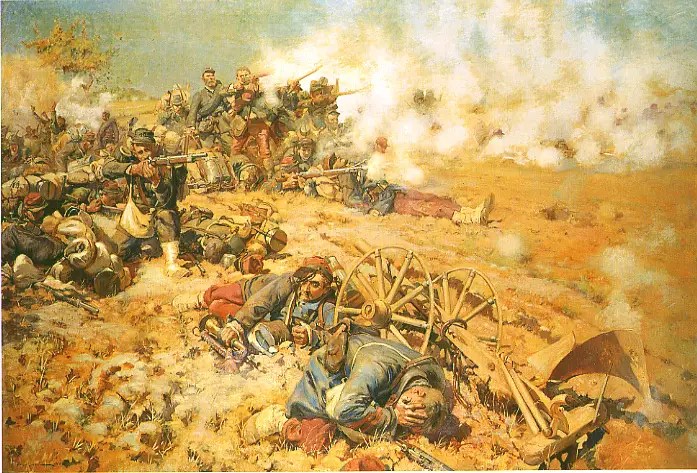
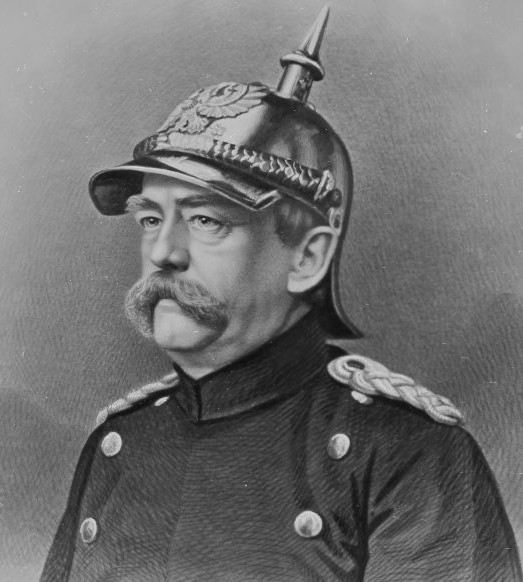
Here’s the man who invented Social Security, right after waging successful wars against Denmark, the Austrian Empire and France. He provoked all three wars and, in the process, had unified Germany by 1871. Otto von Bismarck, “The Iron Chancellor” brought an old-age pension program to Germany in 1889. The milk of human kindness, as you can see, flowed through his Prussian veins.
Above: A French defeat in the Franco-Prussian War, 1870-71; The “Iron Chancellor” who provoked it.
We need to go in a different direction than Bismarck’s. Our national resources need to be diverted to people like these. They deserve The Big Beautiful Bill.
I was thinking this and getting depressed, and angry, so to cheer myself up, I went to the cemetery.
I wanted to be with people who, like the man in line, were more far more generous than the billionaires.
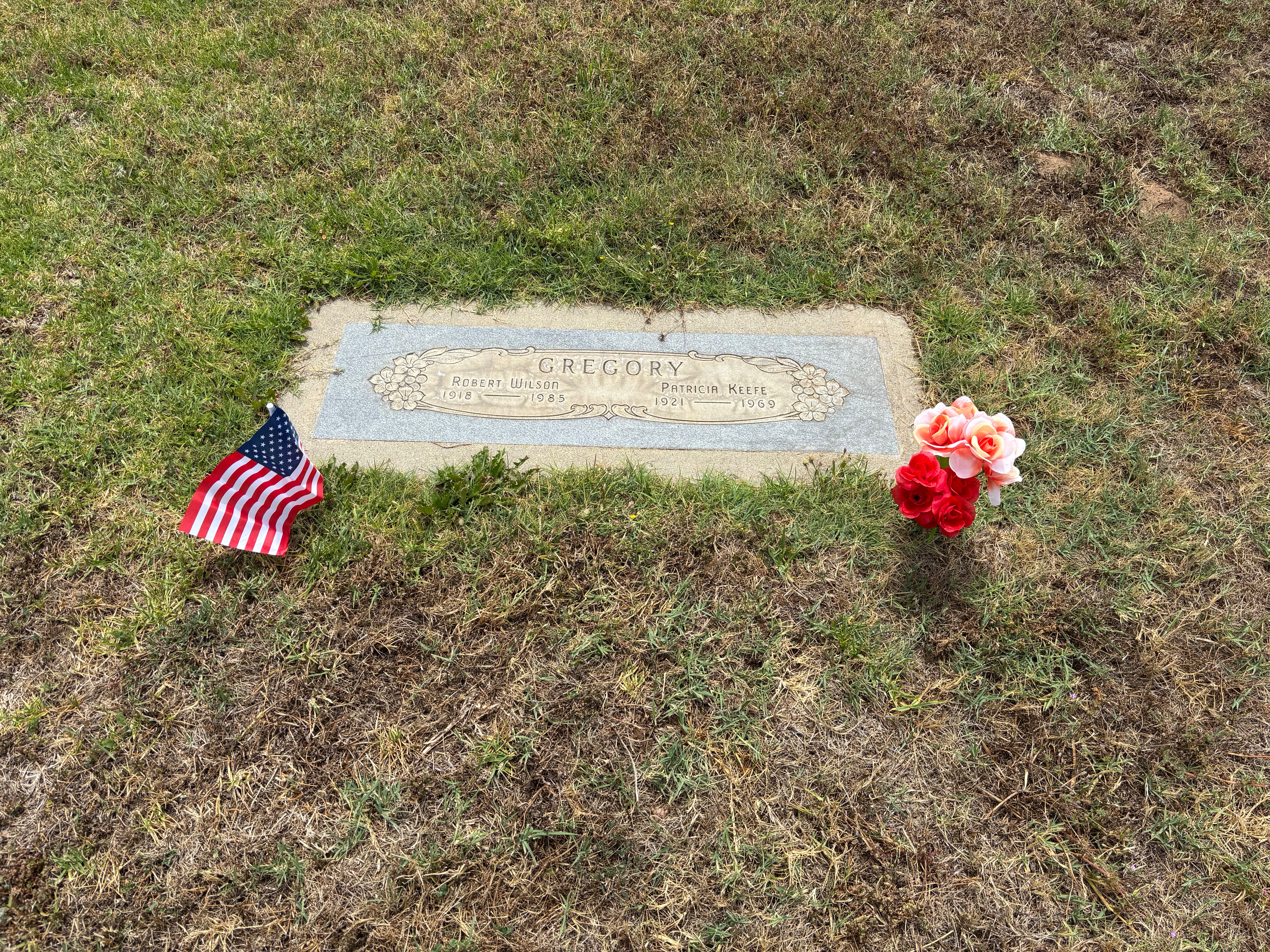
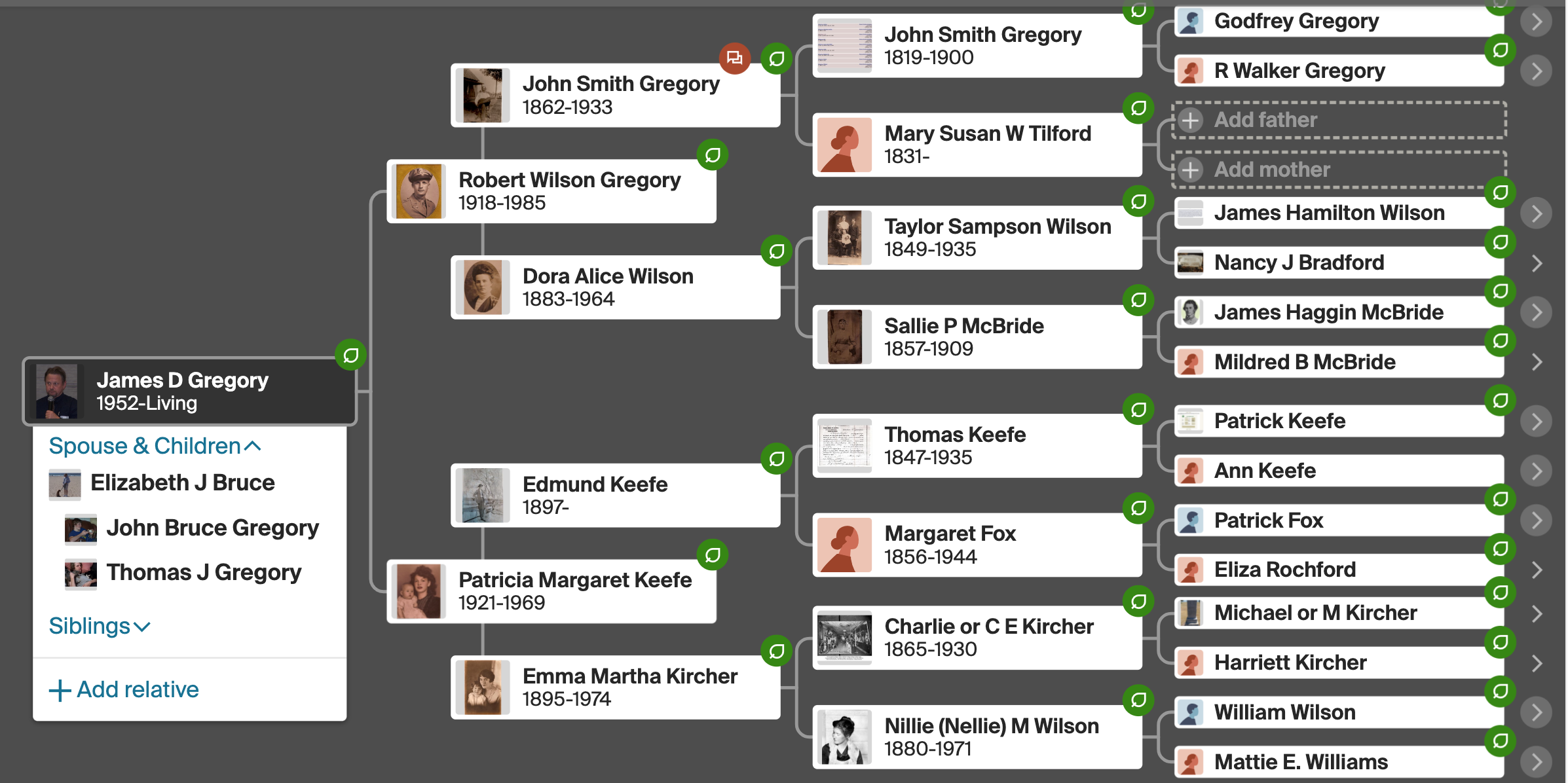
Of course, I found them. My Dad, Robert Wilson Gregory, taught me how to tell stories. Patricia Margaret Keefe was my Mom, named for two Irish Famine ancestors, Patrick Keefe and Margaret Fox. She had a fierce sense of social justice and a hunger to learn. These are the things she taught me.
I had to be a teacher.
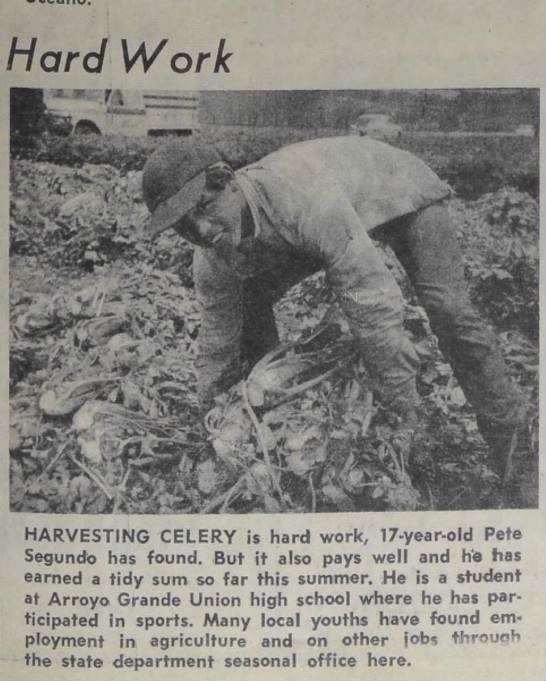
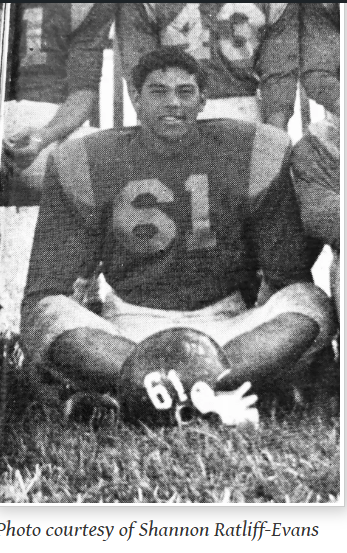
And then I looked for another young man, Pete, who was as generous to his friends as my parents were to me. “To know Pete was to love him.” I have heard that many, many times. Pete Segundo, AGUHS ’66, my big brother’s class, was an incredible athlete. He wrestled and played football. He was the Letterman’s Club president (in one yearbook photo, his arm’s broken and in a sling. He is grinning broadly). He showed a steer for FFA. While other kids went to the Choo-Choo Drive-In on East Grand after school, Pete went into the fields to chop celery.
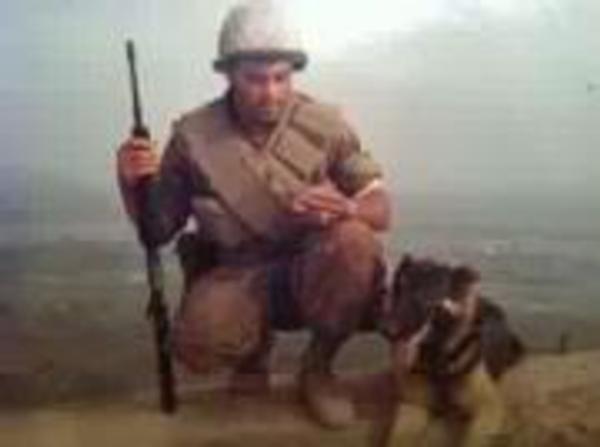
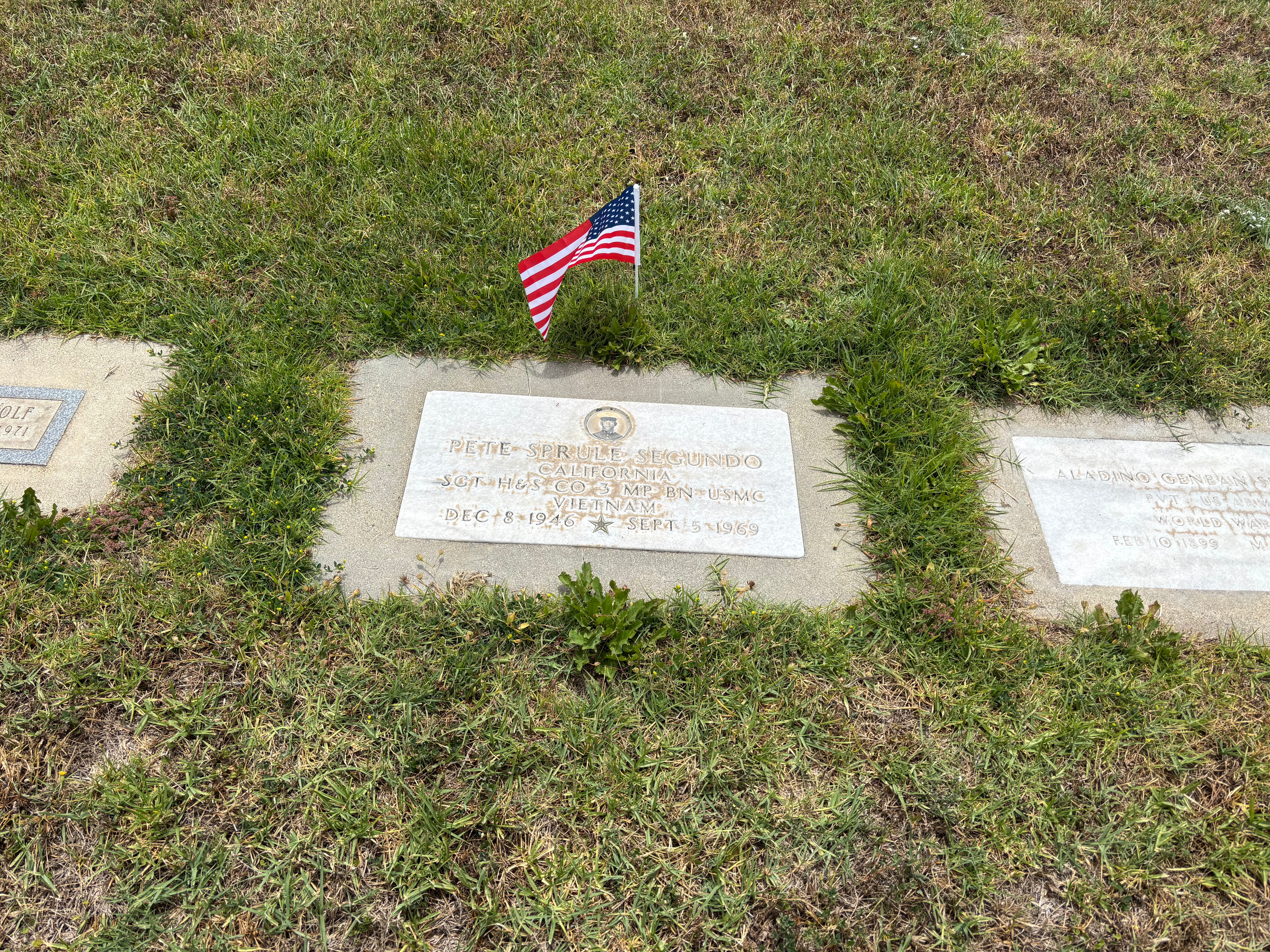
In 1969, the Marine Pete Segundo died in Vietnam, killed by “friendly fire,” which might be the worst euphemism of all for the greatest act of generosity that any American can give.
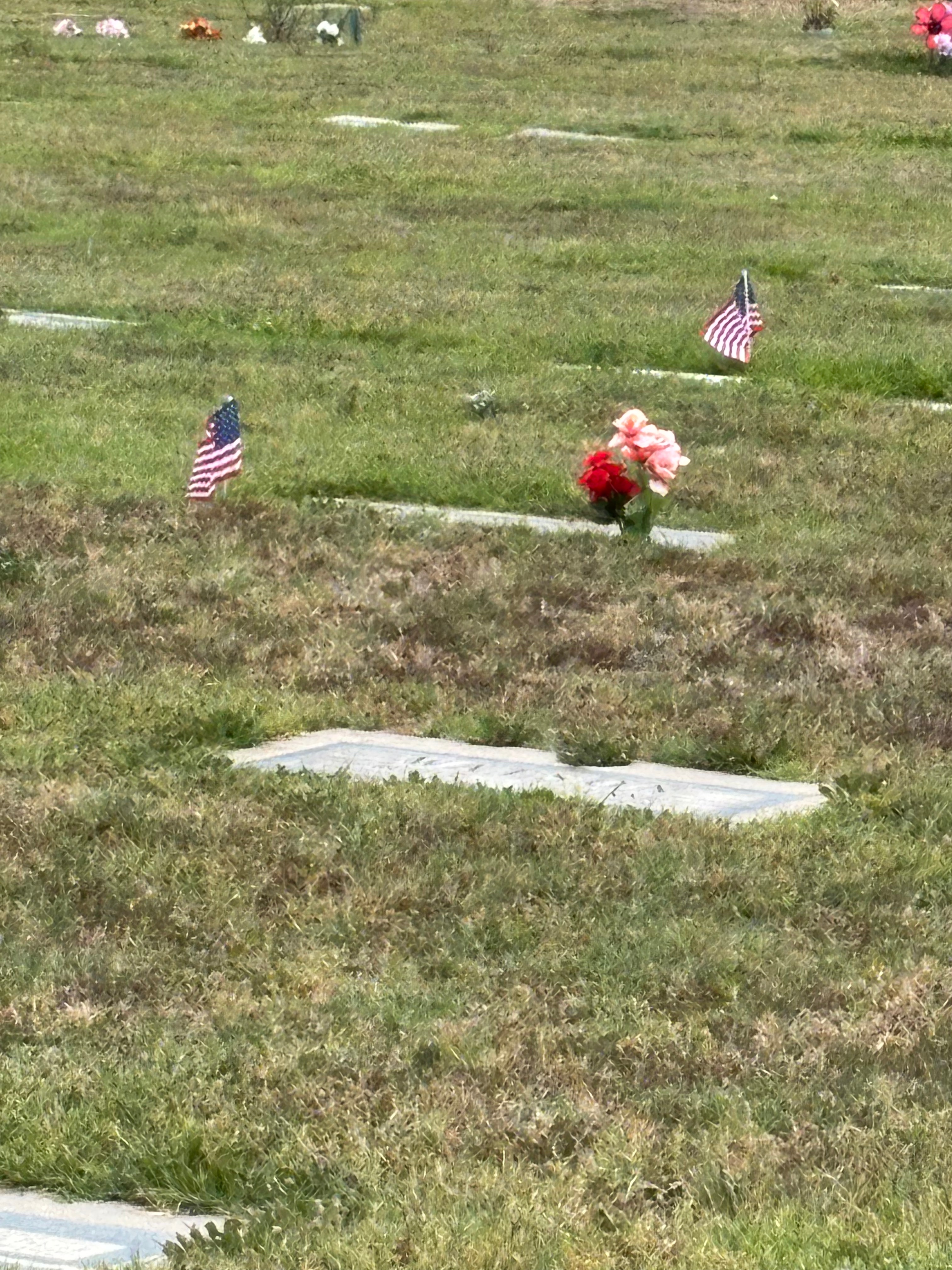
His grave was uncharacteristically bare. Usually it’s bright with flags, flowers, red-white-and-blue pinwheels spinning in the wind. Maybe they cleaned everything up after Memorial Day. Luckily, I had another American flag. I remembered, as I pushed into the turf, what my big brother said about Pete. Bruce went out for wrestling and Pete was already establishing himself as the next big thing for Coach Ruegg. Bruce was not going to be the next big thing. “Pete was nice to me,” he said once, “and he didn’t have to be.”
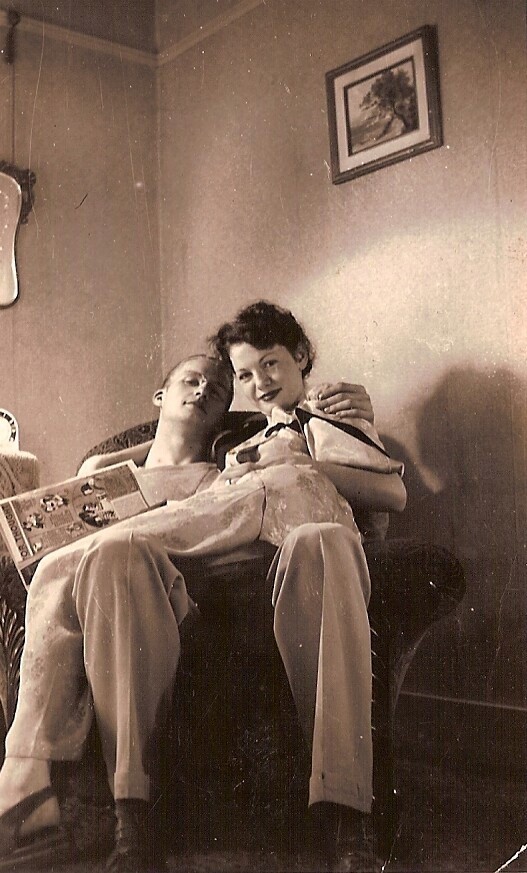
Above: My folks, with the Sunday funnies, about 1940; Pete’s grave is a row above theirs.
I was once a newspaper reporter and therefore, all my life, a news junkie. Part of my recovery from alcoholism means watching the news far less than I used to. We live in an age of meanness. I was raised to value kindness. Today I felt a little overwhelmed, so I made my deliveries, flowers and flags, and I spent more time than I ever have at the cemetery, talking to my parents, telling my Dad how proud I was of him, telling my Mom how much I loved her.
I was worried about the people in line at the Dollar Tree and thinking, painfully, about the way Pete had died.
I think my parents were whispering back to me. Suddenly, I felt at peace.
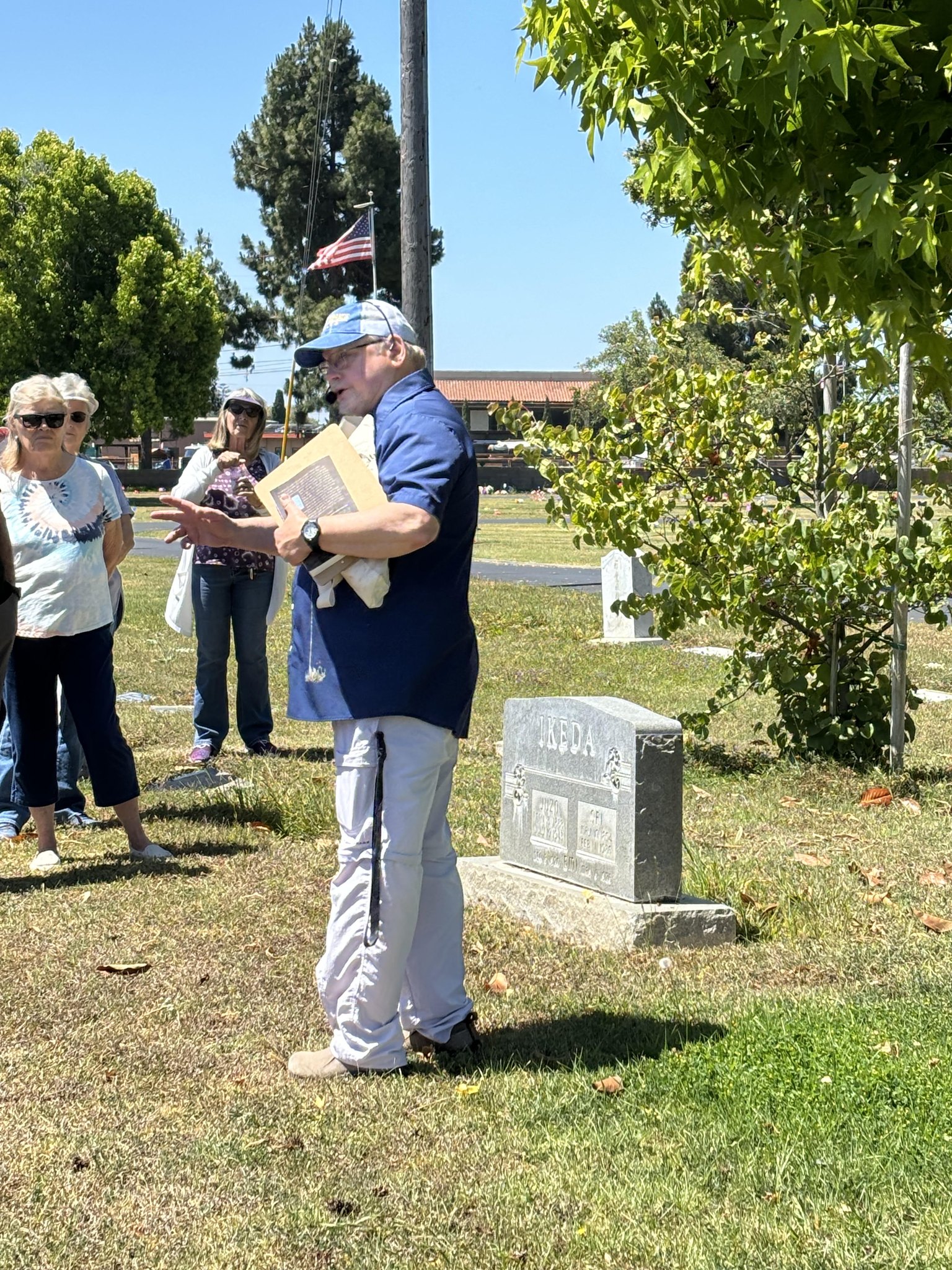
Me leading a cemetery tour for the South County Historical Society. The family I’m discussing embodied the generosity I admire so much.
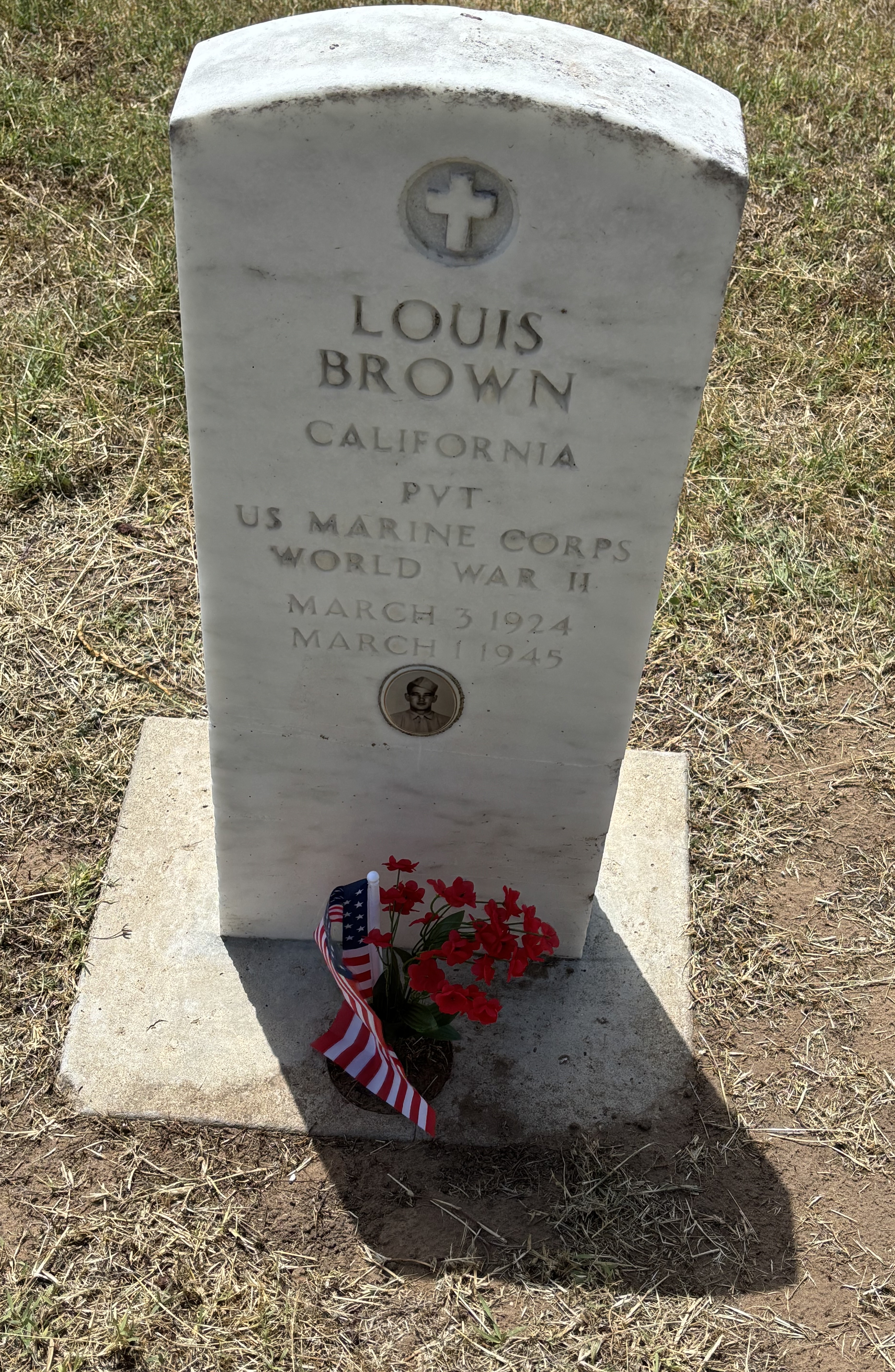
Postscript. I had one more American flag and a sprig of little red plastic flowers. My last stop was for this Marine, a Corbett Canyon farmer’s son, who died on Iwo Jima. Finding Louis Brown’s grave led to my first book. He was generous to me, to all of us, beyond imagining.
The “Sy-Renes” in O Brother Where Art Thou?My Sirens.
A little victory. Maybe two.
As to dinner, here’s the whole shebang.
–The roast chicken is stuffed with apples and rosemary from our own yard. –I don’t remember everything that went into the seasoning: Olive oil, red wine vinegar, salt, pepper, garlic salt, sage, paprika, cinnamon (I ALWAYS use cinnamon when I make chicken.) Wait. I DID remember! –Basic Corn on Le Cobbe, air-fried, butter, salt, pepper, basil. –The salad is kind of exciting: lettuce, tomatoes, diced apples, Persian cucumbers, celery, pistachios, kalamata olives, banana peppers.
This is the big deal: Today I did two things I almost never did unless I was drinking.
–Cooking. Some of the wine made it into the entree. The chef took care of the rest.
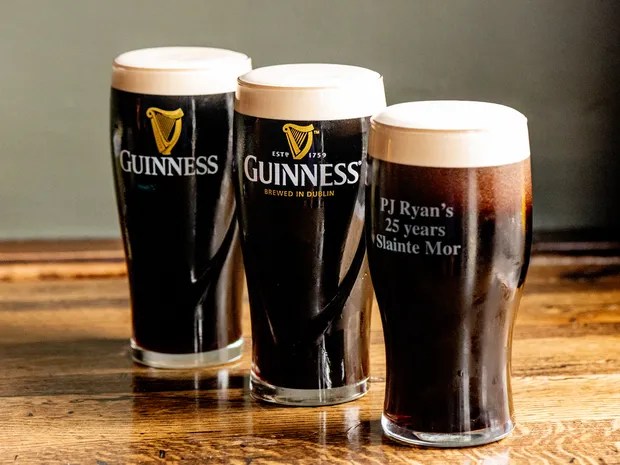
–Writing, my Irish Endeavor. (Always done with Guinness Stout alongside my laptop.)
In my hospital stay at Cottage, I was lucky to escape the worst symptoms of detoxing from alcohol abuse–no seizures, no delirium tremens, no vile headaches, no psychotic breaks. Trembling hands? Yes. But now, my lungs ache, as if beer was my oxygen and I can’t get enough of it. Another marker in my recovery at this early stage is bone-crushing exhaustion. I worked out with weights yesterday and at the end of each set I wanted to cry. Twice, I’ve almost fallen asleep while standing up.
The other thing I did, today, sober, was to write. Here’s a snapshot from today’s blog.
I have been drinking. A lot. Crystal Light sugar-free lemonade. Olaf, our new refrigerator, has an ice dispenser. He’s my sober bartender, and I return frequently for another round of lemonade. With ice. Lemonade reminds me of when I was little.
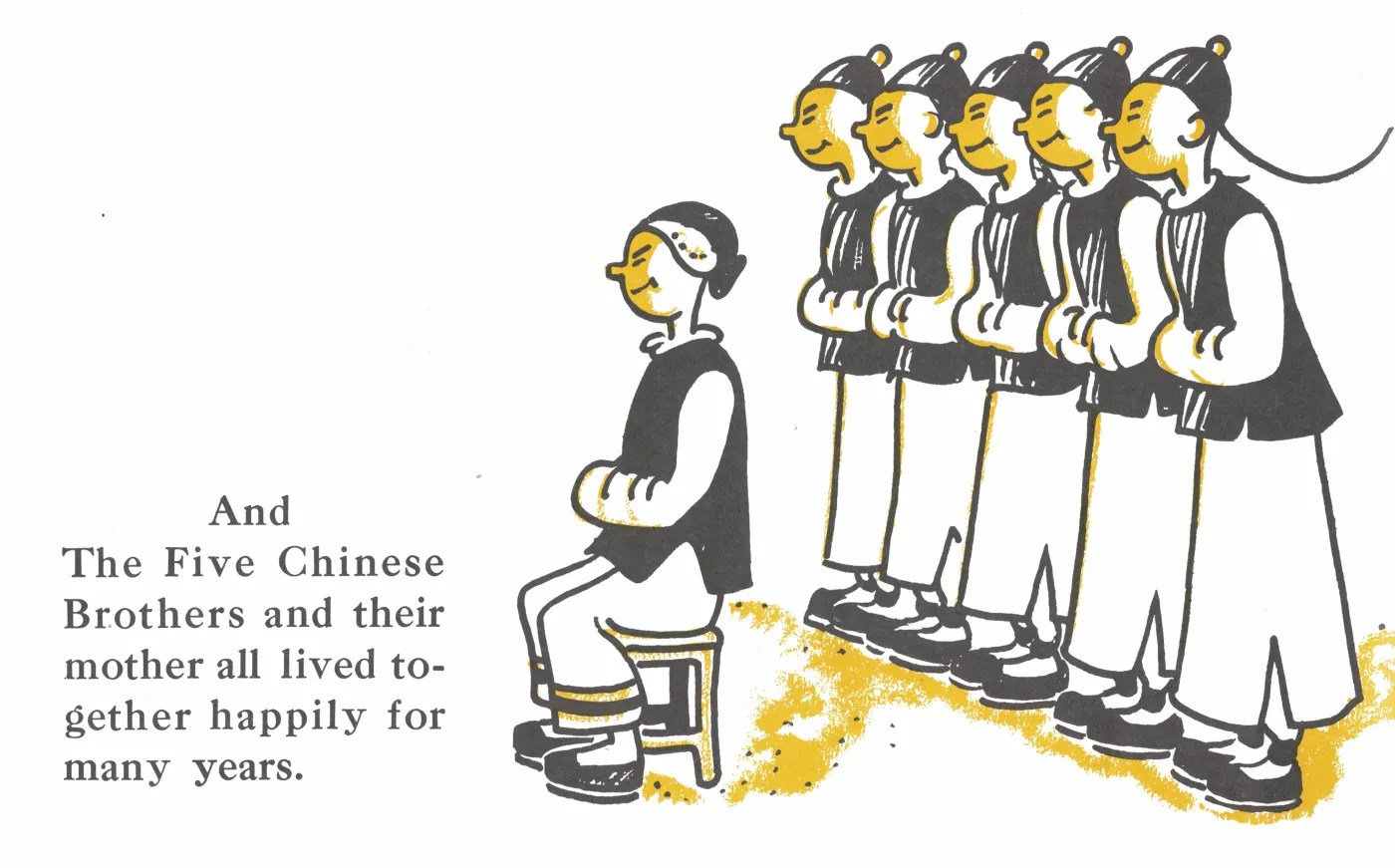
I remember, when I was little, loving the story of the five Chinese brothers (criticized, perhaps justly, for the stereotypical illustrations). They were condemned, unjustly, to execution, but they had superpowers. One brother couldn’t be burned, another couldn’t be beheaded, one more couldn’t be drowned (he swallowed the sea). Whatever you might think about the illustrations, from 1938, I love the ending.
Maybe I’m the sixth brother, and maybe my superpower is sobriety. And maybe, because of that, I will live with my family happily for many years. I’d like that.
I’ve been talking a lot, on Facebook, about my hospitalization, but there are some things I need to write down before I forget them. Eventually, I WILL be quiet, but I’ve been thinking about the nurses at Cottage—where I detoxed for five days– and about my friends who are nurses.
In short, my nurses were incredible. They were cheerful, accommodating if I asked for something, and vigilant about vital signs, blood draws, meds and so on.
Most of all, they were kind.
Yet they had to deal, as a group, with patients who were experiencing psychotic breaks, the kind where they had to clear us out of the halls for our safety.
There were two of these at the same time one morning and all the nurses closed ranks around those patients, talking them through their crises, but that morning they needed the help of four large security staffers, their backup. The security men later escorted the patients, one of them my short-term roommate, to a ward where they could get more intensive care and more potent medications.
So this is what I found out: Being a nurse can be scary. I didn’t realize this, and this was the guy who, during one stay in the ER, wanted to rip aside the room’s dividing curtain and pummel the doctor I overheard referring to the nurse assisting him as “sweetie.”
The nurses don’t know this, but they became my friends. I also made friends with the women who cleaned our rooms, Maria and Joanna. They were, like the nurses, unbelievably sunny. My ego demanded that I share a few words in Spanish with them, and they were admirably tolerant.
My new friends included a boy who couldn’t get through two sentences without suddenly putting his hand over his heart and starting to cry.
There was an older man who couldn’t get discharged and so was palpably, painfully sad. He owned everything he’d done while using, so maybe part of what looked like sadness was a actually a kind stoic strength. I guess wisdom, once it’s earned, hurts like hell. Thankfully, he finally got out early on the Friday I did. We shook hands and looked squarely at each other, the way that men do when they communicate the euphemism “regard” for each other when the proper and more accurate word is “love.”
There was a young woman, small and fine-boned, who spoke so softly that she affirmed my need for new hearing aids. She had the profile of a Nubian princess. She was very black and incredibly lovely. In fact, she was, I thought, one of the most beautiful young women I’d ever known, and thirty-plus years of teaching guarantees that I’ve known thousands of beautiful young women.
Phone Man was ALWAYS on the phone, making arrangements, keeping tabs, deciding decisions, I think all of it for his business. He was never really in the hospital, not at all. I did not like him.
Another young man—there were a LOT of young men—beamed proudly when, after four times, he remembered my name. He was very tall, sweet and unassuming, but I’m not sure if his mother had ever really loved him.
An older woman (my age) had been a world traveler, another was homeless. That woman’s life was scored by the deaths of those she loved the most, and the loss showed. She was a little stooped, had lost a few teeth, had lost one of the arms on her eyeglasses, had lost everything she owned except for the clothes she wore into the ward. She now wore the tan scrubs and static socks that Cottage provides.
Only twenty-four hours after coming in, and abstaining from drinking, I overheard a conversation she had with a nurse. The woman I’d pitied was intelligent, articulate, focused on her future after discharge. I was chastened. She was a remarkable person who needed, if just for a few days, a place where she could find herself again. “Remarkable” is almost the right word. “Miraculous” might be a better one for her.
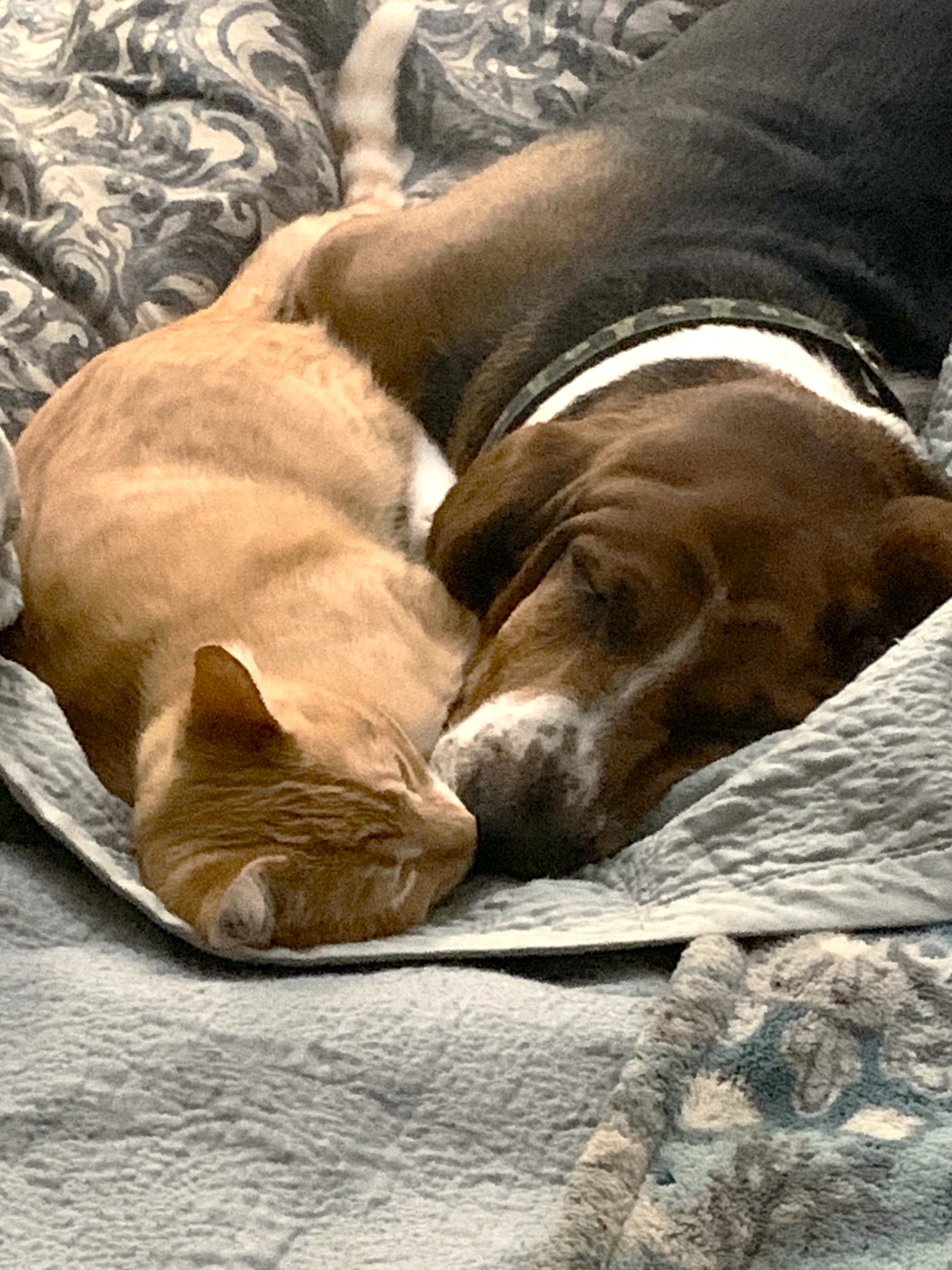
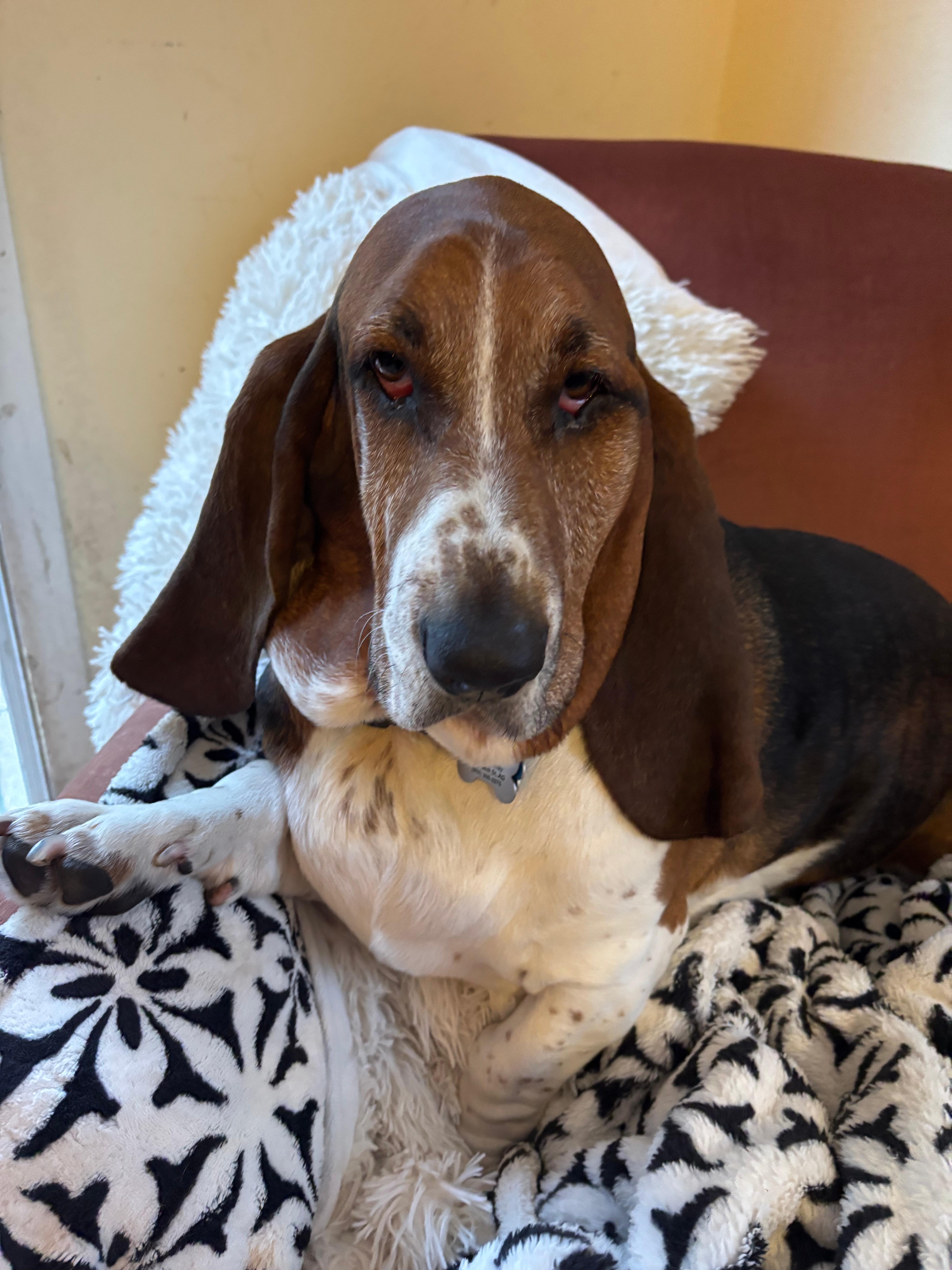
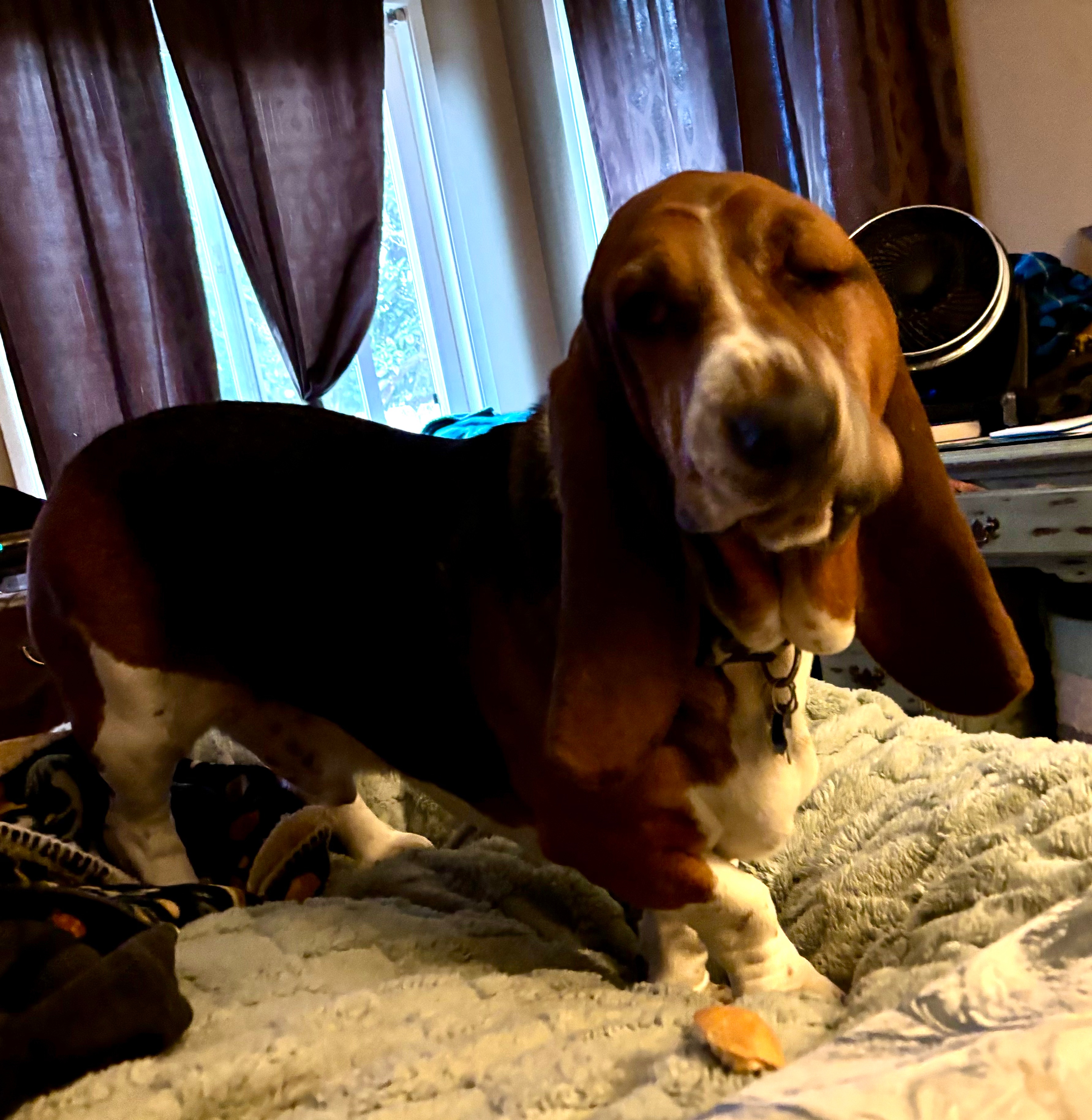
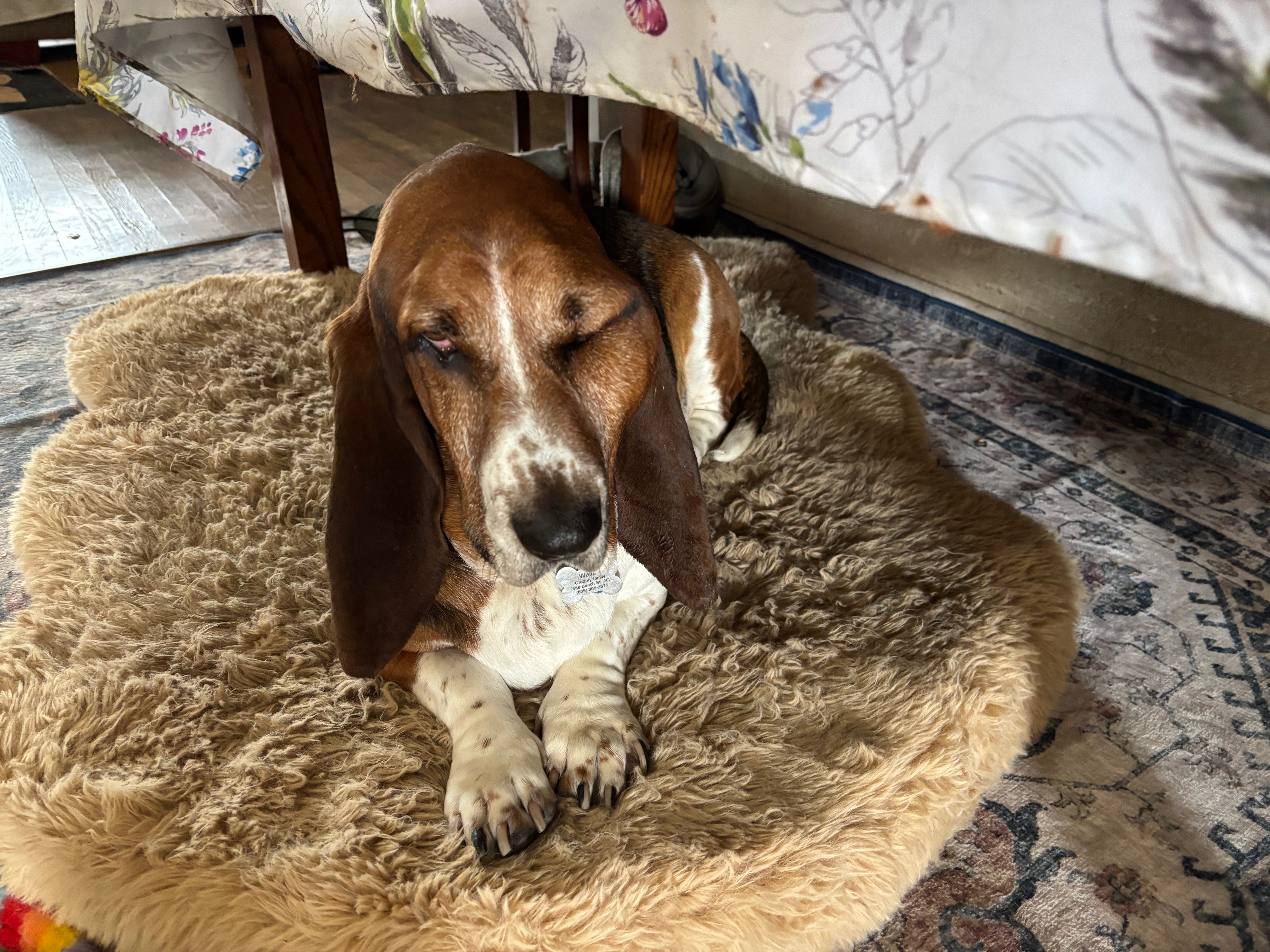
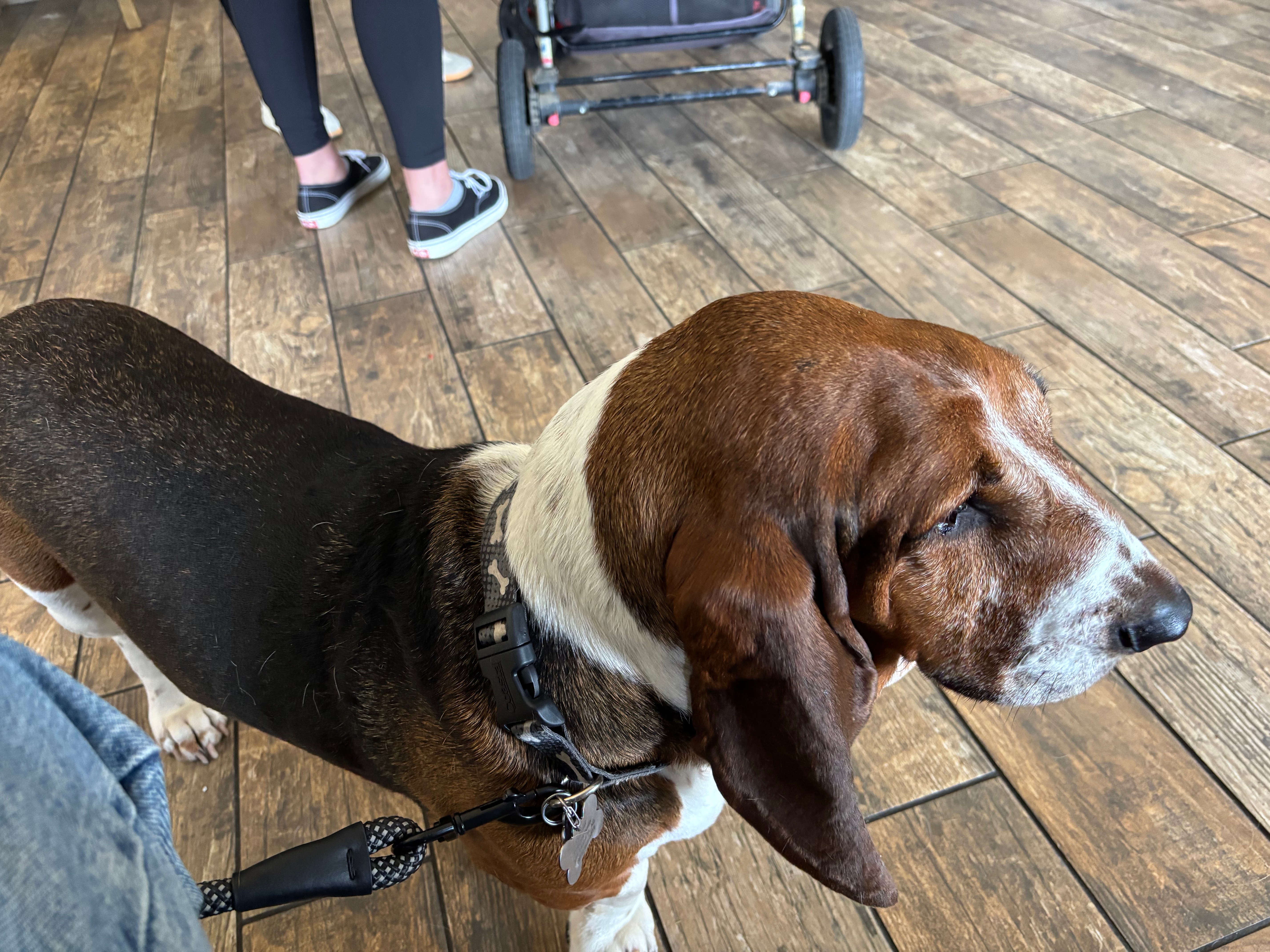
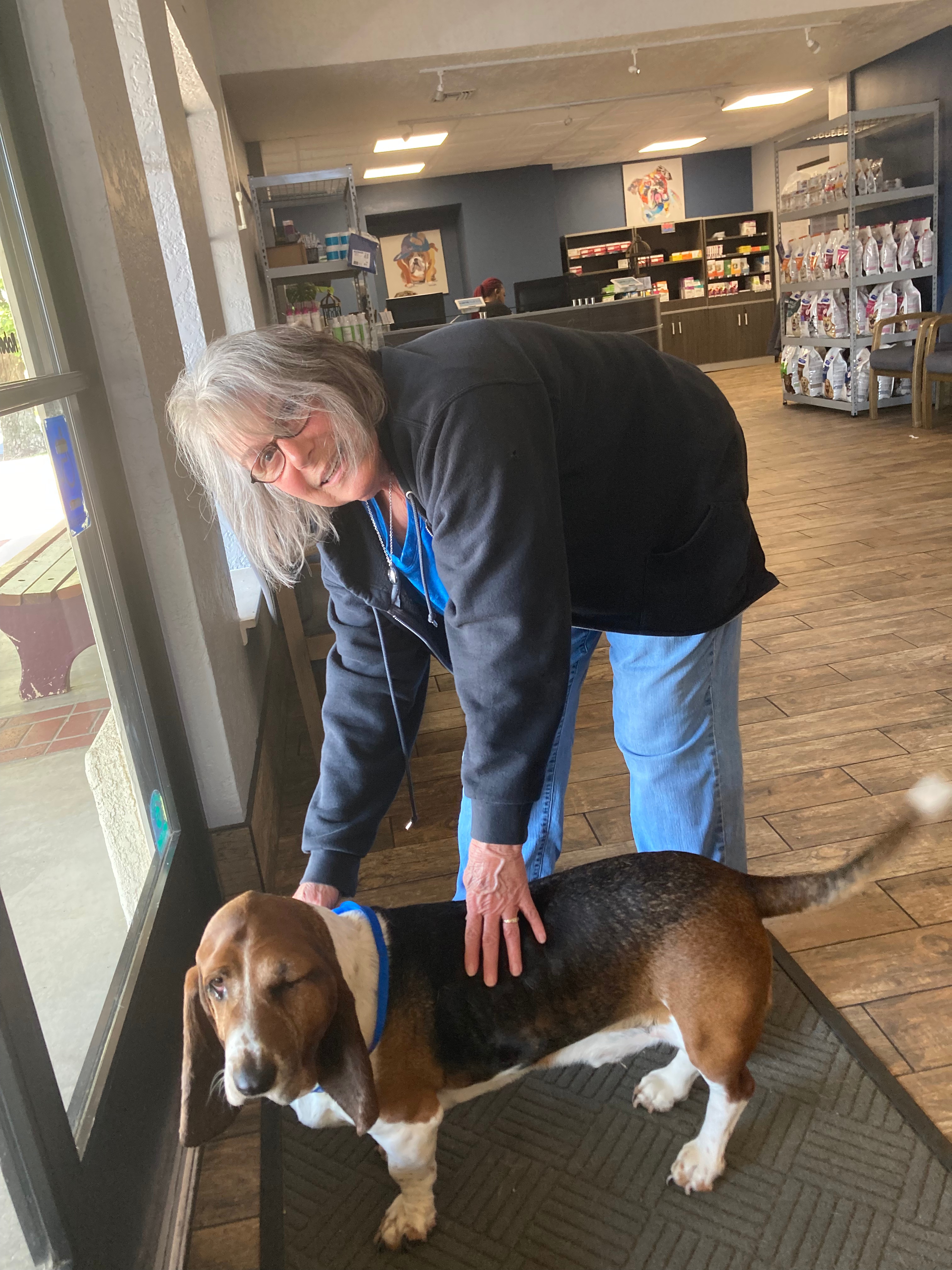
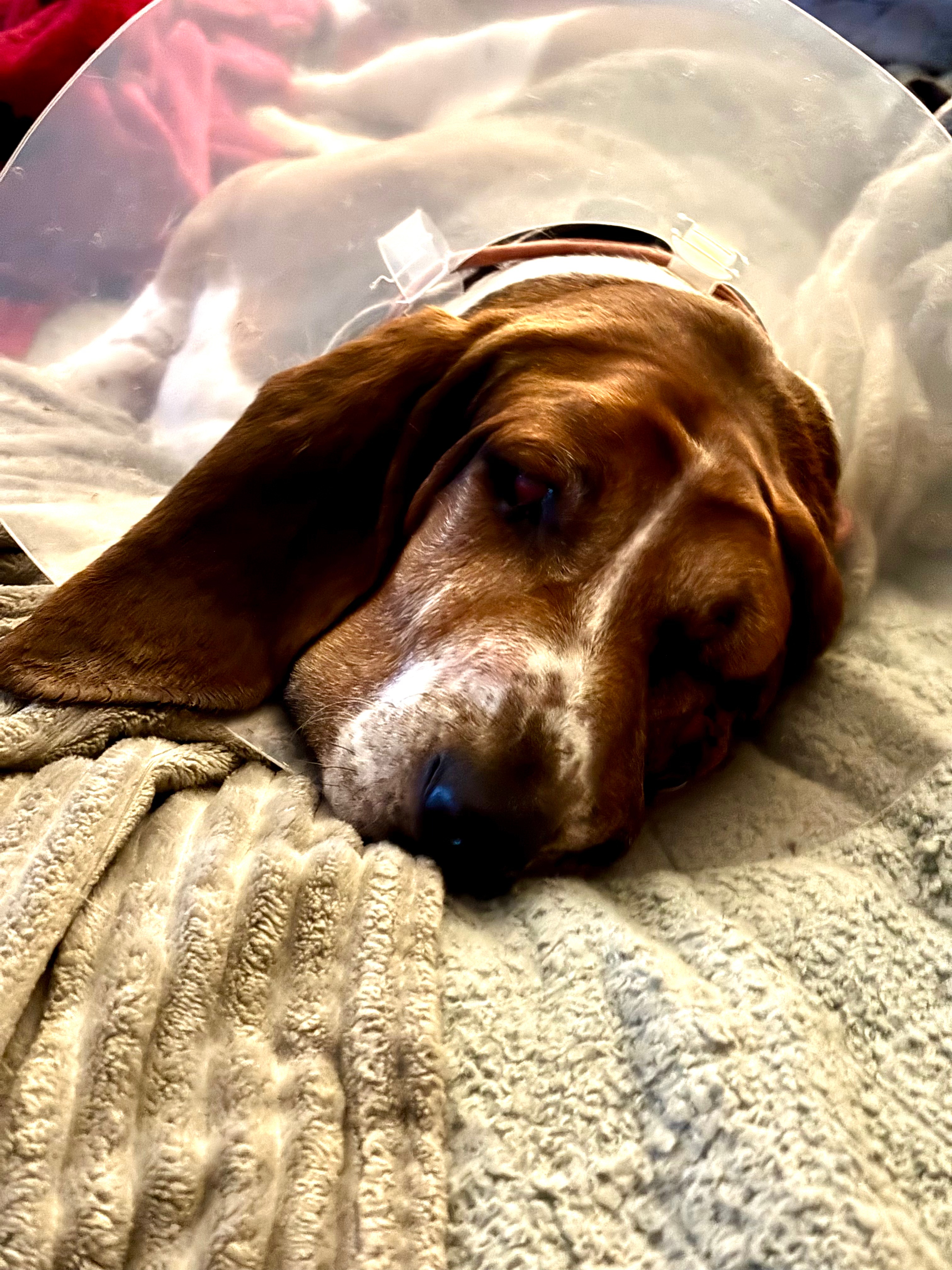
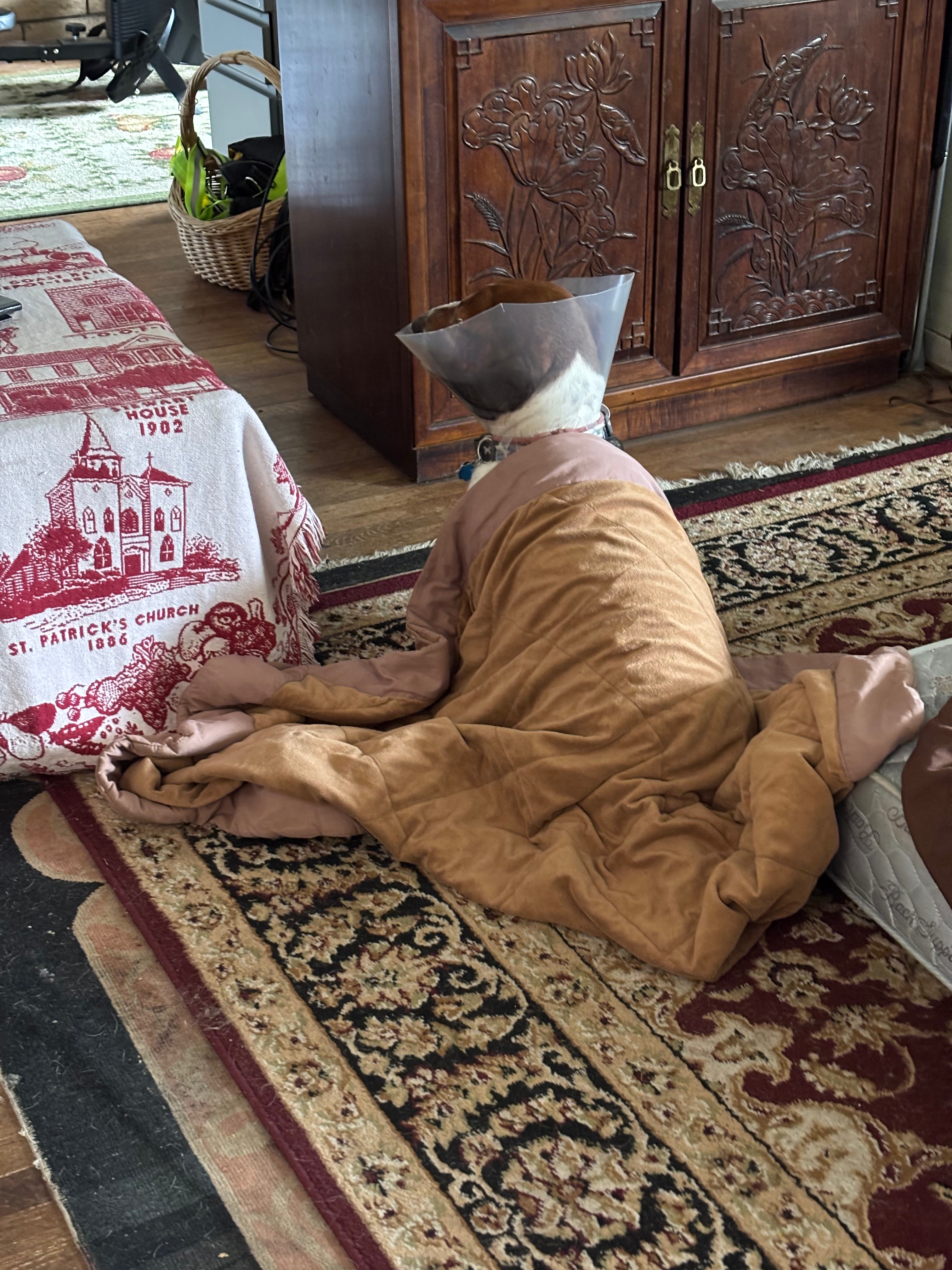
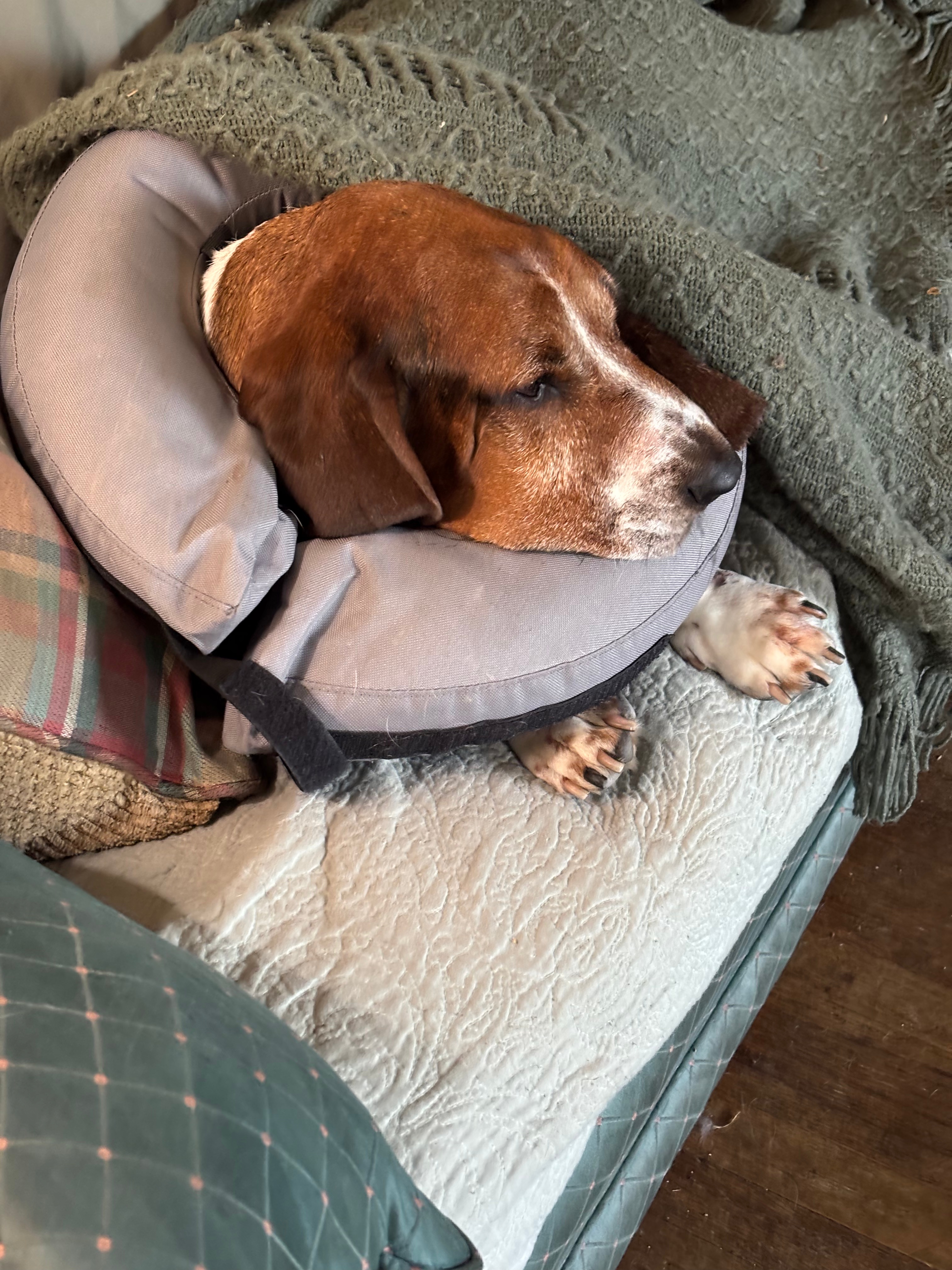
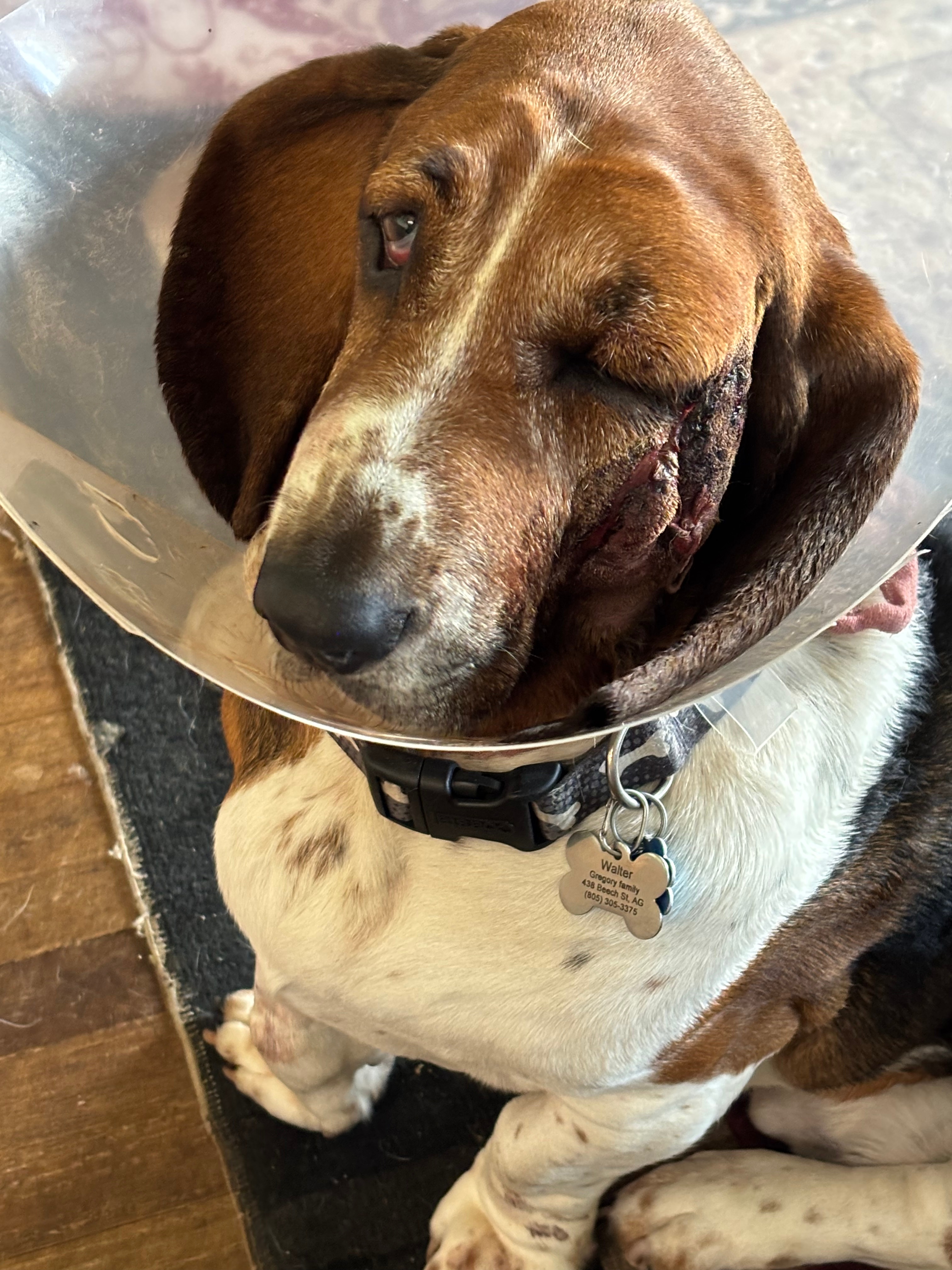
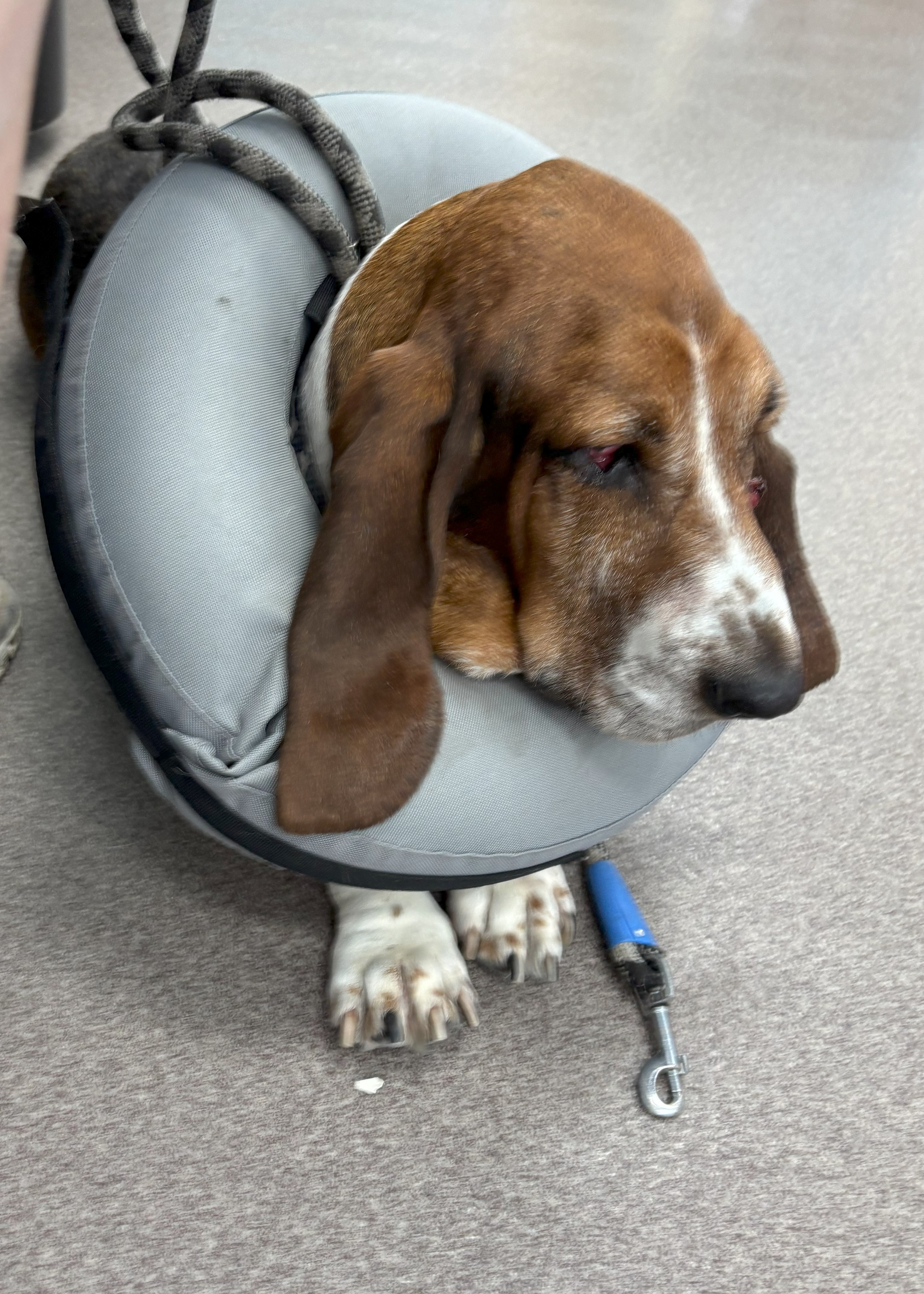
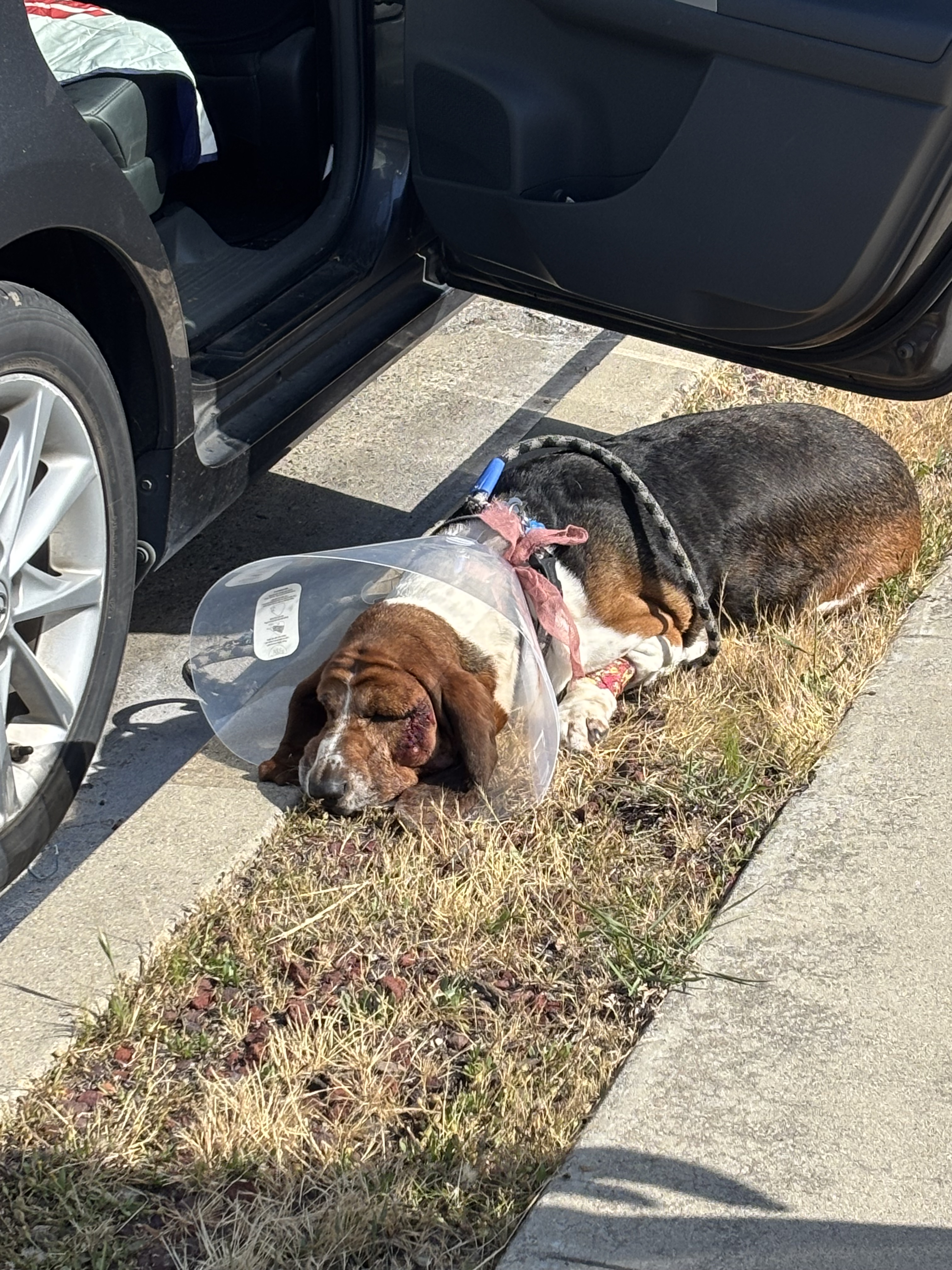
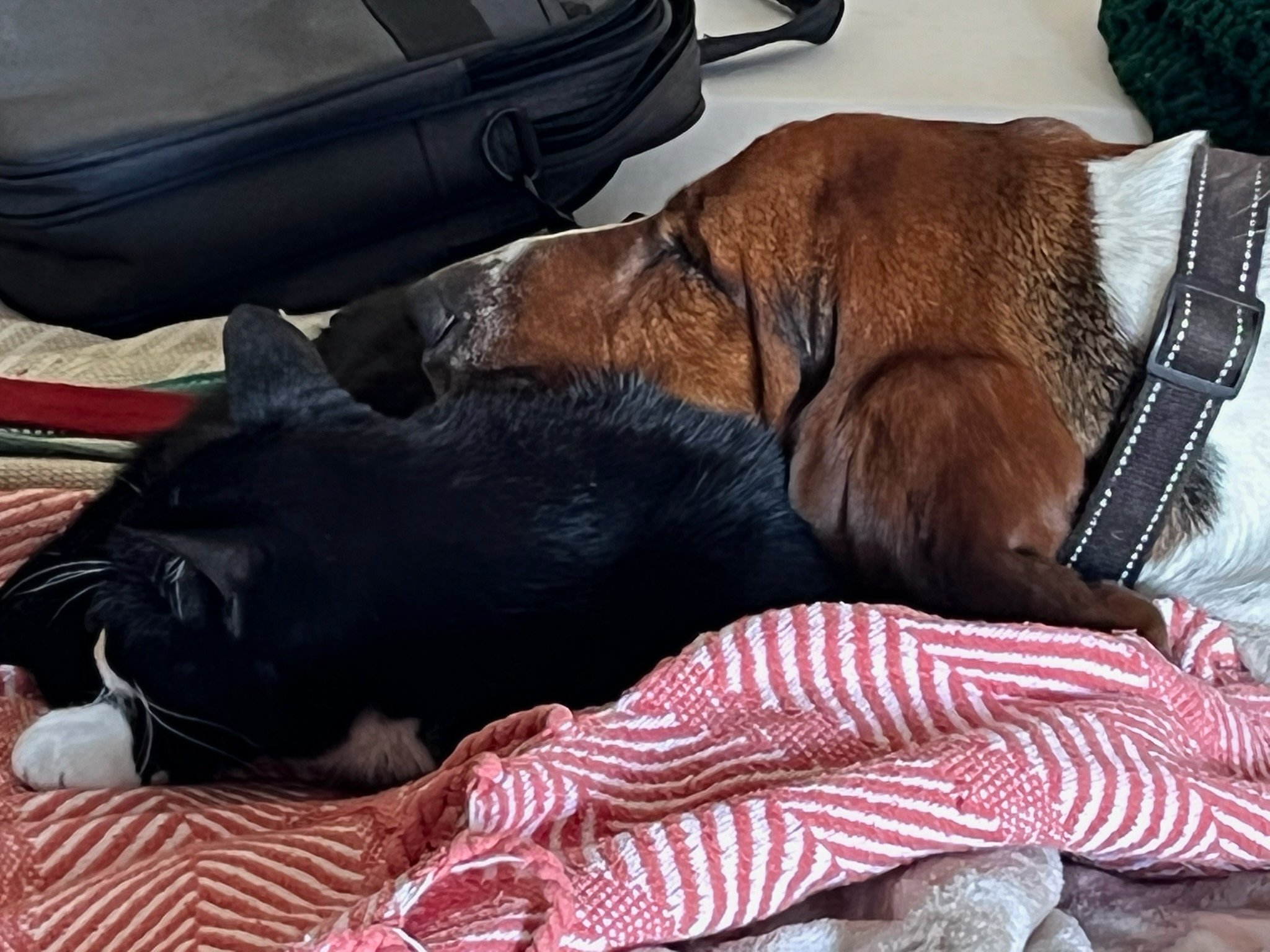
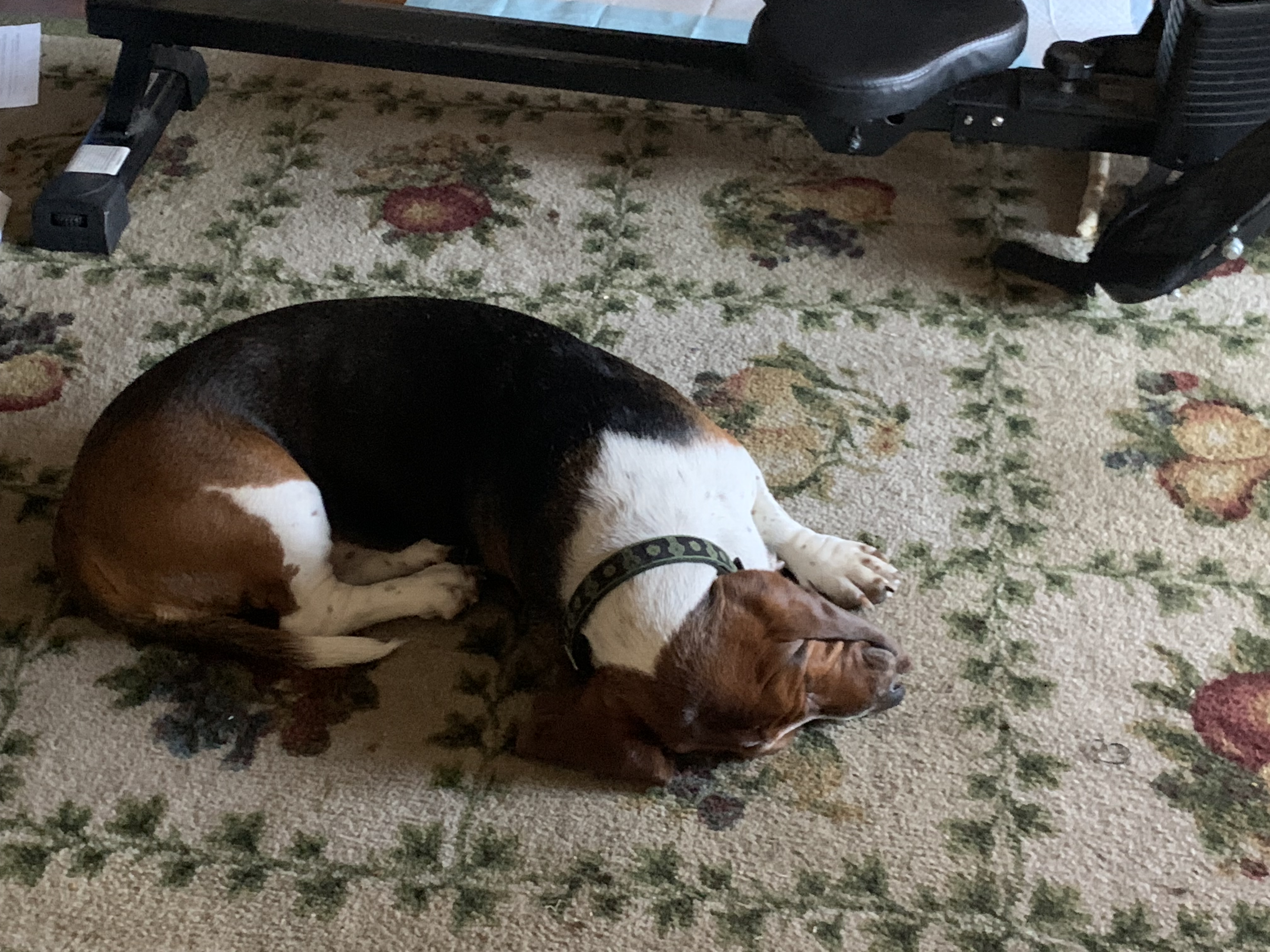
This is Walter, our four-year-old Basset Hound, having a snooze with his good buddy Winston the Cat. It’s been tough Walter week. It began on Sunday (in the first picture) and gradually got worse. One week and three vet trips later, what turned out to be an abscess is now an ordeal. Walter is very brave. Elizabeth and I are wrecks.
Sunday
\
Monday
Tuesday. Vet trip #1.
Thursday, after a long telephone vet consultation.
Friday, at the Atascadero Pet Hospital. Vet trip #2.
Aunt Evie’s morale-restoring visit, Friday.
Friday night. He whimpered a lot.
Saturday.
Saturday, on the bed we made for him on the floor.
Sunday morning: The drainage site came open.
Sunday, at the Arroyo Grande emergency vet. He’s there now; they’re going to have to sedate him, clean out the wound and hope to find any foreign object–a foxtail, a chicken-bone fragment–that might still be there. Vet trip #3.
Home from the vet, Sunday evening.
Fortunately, the emergency vet is Dr. Elizabeth Adam, one of Elizabeth Gregory’s students at St. Joe. She saved Winston the Cat’s life. She also found the foxtail, near Walter’s eye, that caused the infection.
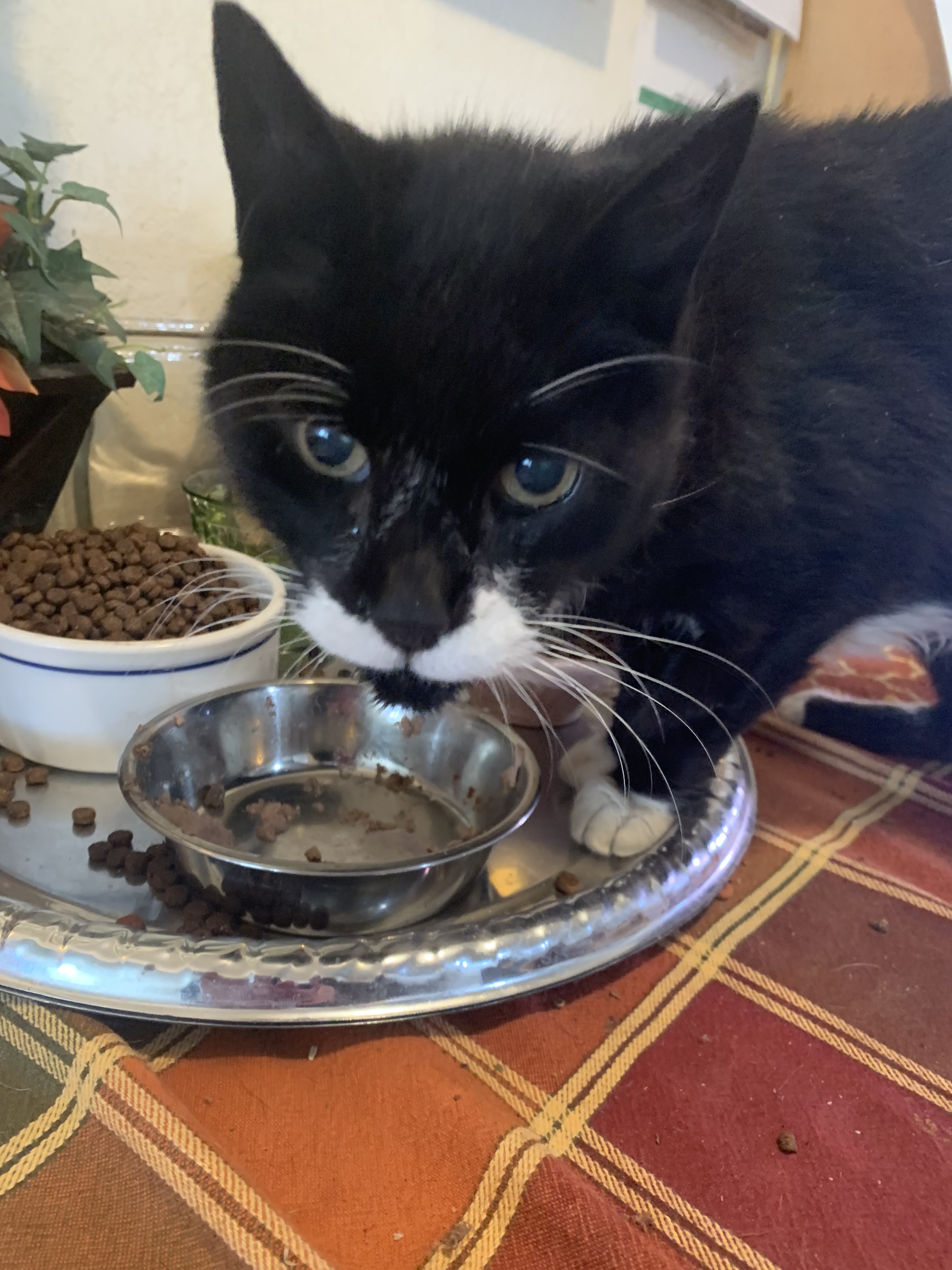
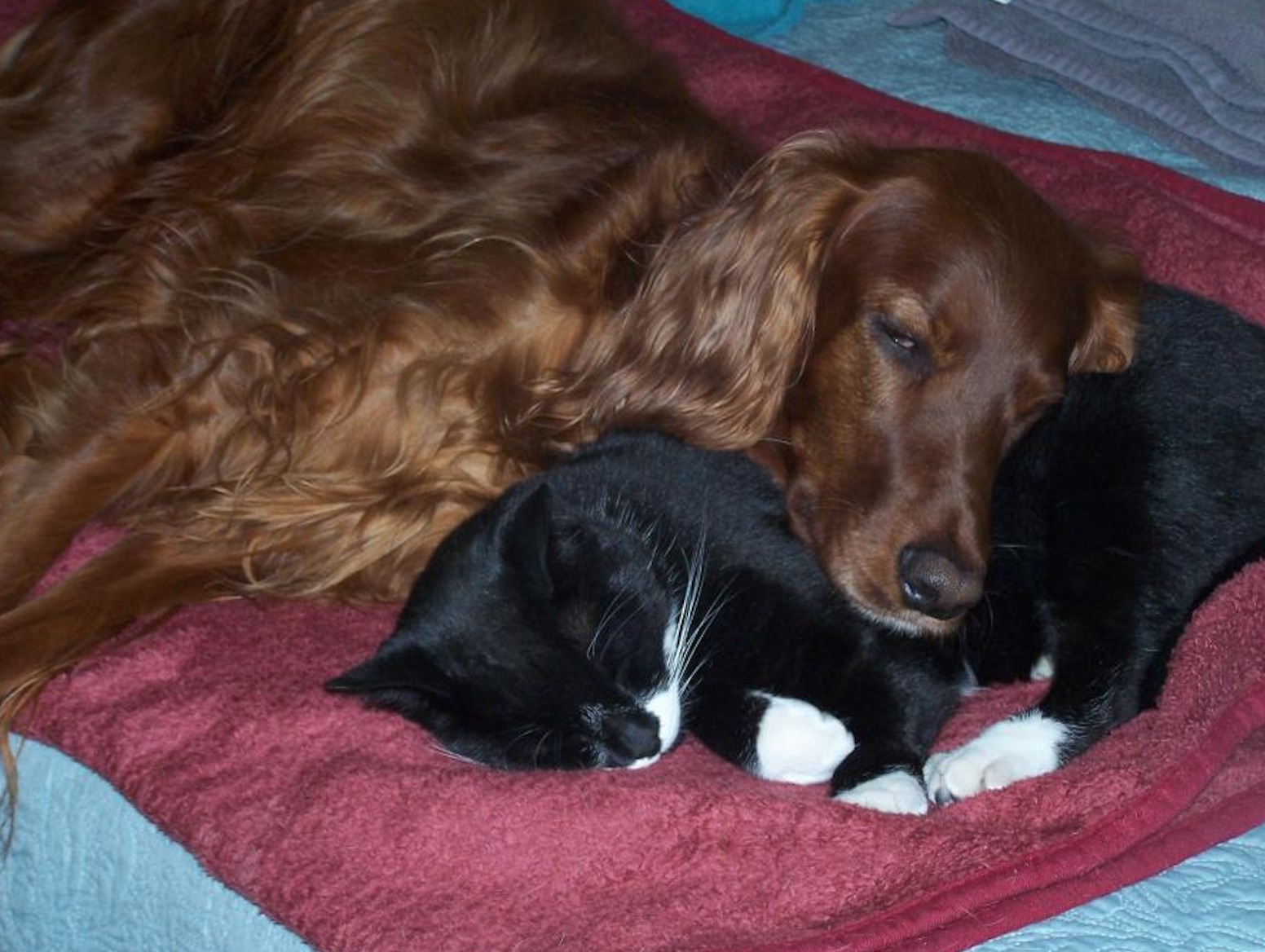
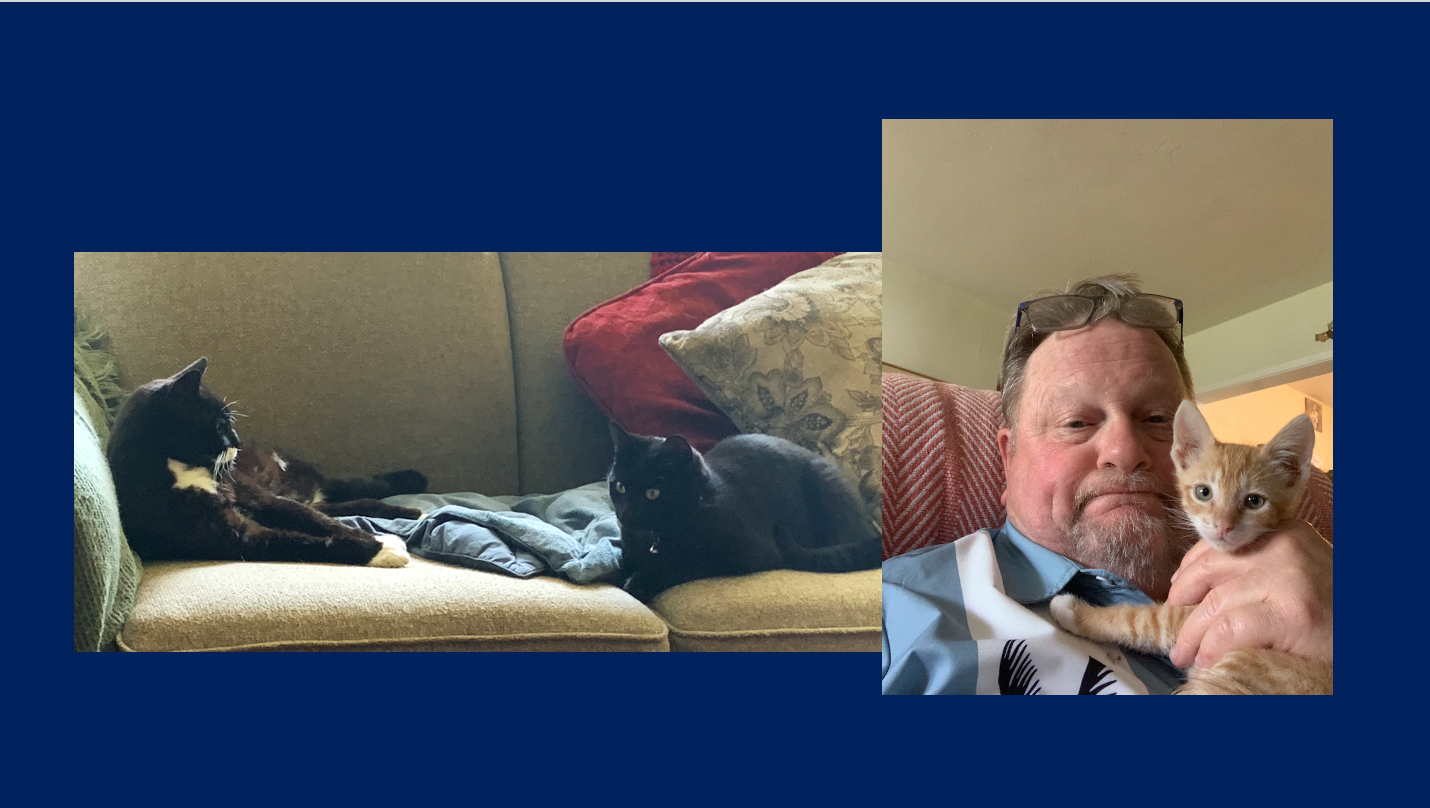
He was, of course, my fault. Every animal we’ve ever had, except for Honey the pit/lab and Winston the tabby kitten, has been my fault. I am a sucker, I guess. Mittens is our beautiful Tuxedo kitty, and he’s not doing well. He’s seventeen and has a respiratory problem we can’t seem to shake or ameliorate, and now his fur is in disarray, a sure sign that he’s not feeling well. He’s not necessarily the favorite cat in my life—he’s a bit standoffish, now, not feeling well, he turns to me for pets—but he’s one of the most beautiful.
We decided, seventeen years ago, to go look at the Humane Society of Santa Maria’s kitten adoption day. It was a moment of sheer abandon, of course. We went into the pet store and found the stack of metal cages in which the hopeful kittens were waiting. It was Mittens who immediately rushed to the front of the cage and began poking his nose out the grill and purring. The gray tabby in the same cage stayed in the shadows, in the rear. So it was Mittens who won us over.
Then the Humane Society volunteer casually (maybe not) informed us that the gray tabby was the tuxedo’s brother.
I shrugged. (“Oh, what the heck,” I was thinking.) So we brought them both home and they became Mittens and Pickles. Mr. “Pick me!” turned out to have an independent streak while his gray brother was very affectionate. We lost Pickles a few years ago to cancer and that was a hard experience, nearly as hard as losing my first Basset Hound, Wilson.
And now Mittens has gone out to scout the territory ahead where I will someday live. I’m not being maudlin here—just realistic—and I hope that I can be as dignified as he is and, like him, unafraid to reach out for comfort.
Thank you, Mittens, my friend.
* * *
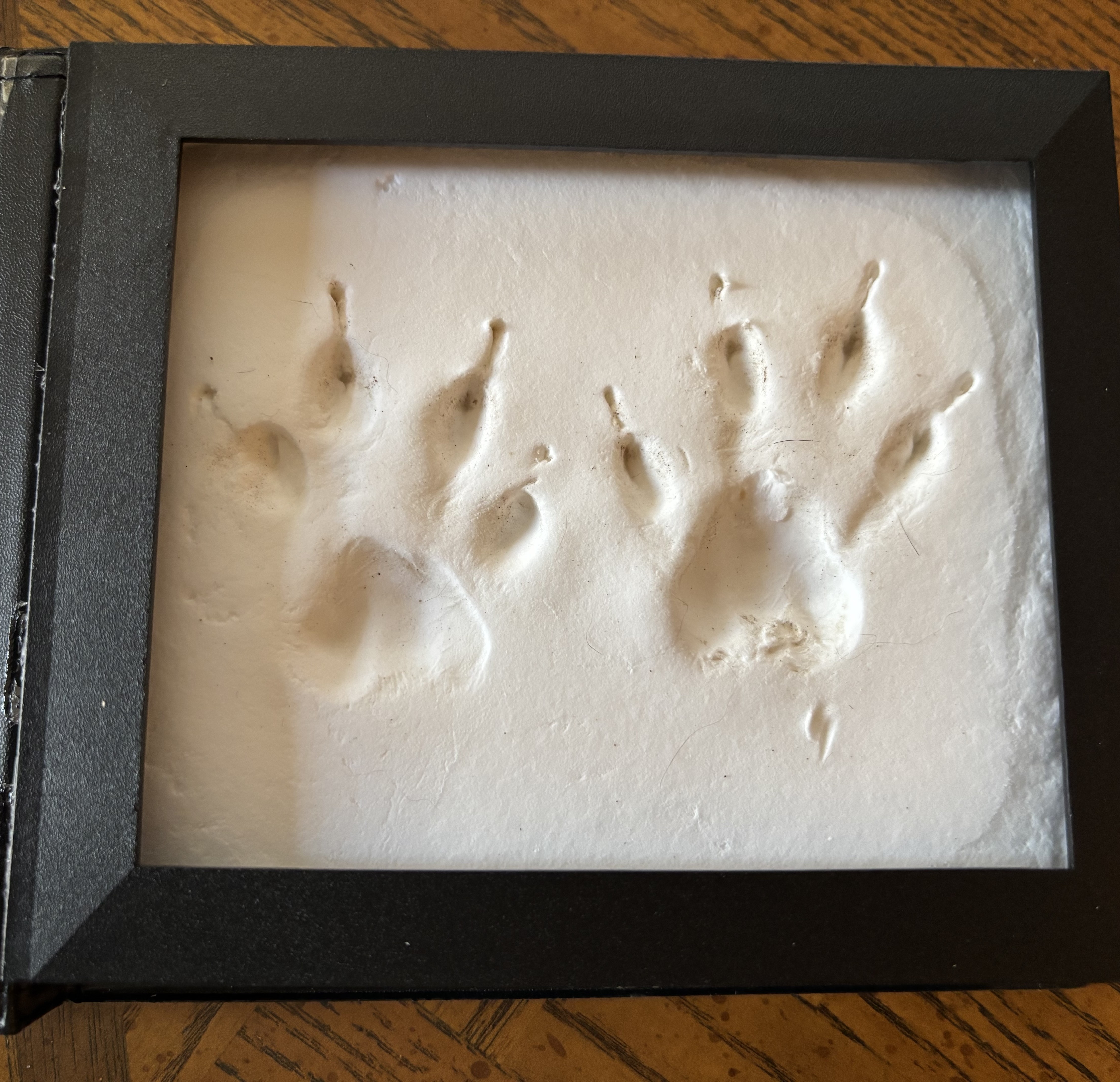
Mittens crossed over the Rainbow Bridge on December 2, 2024.
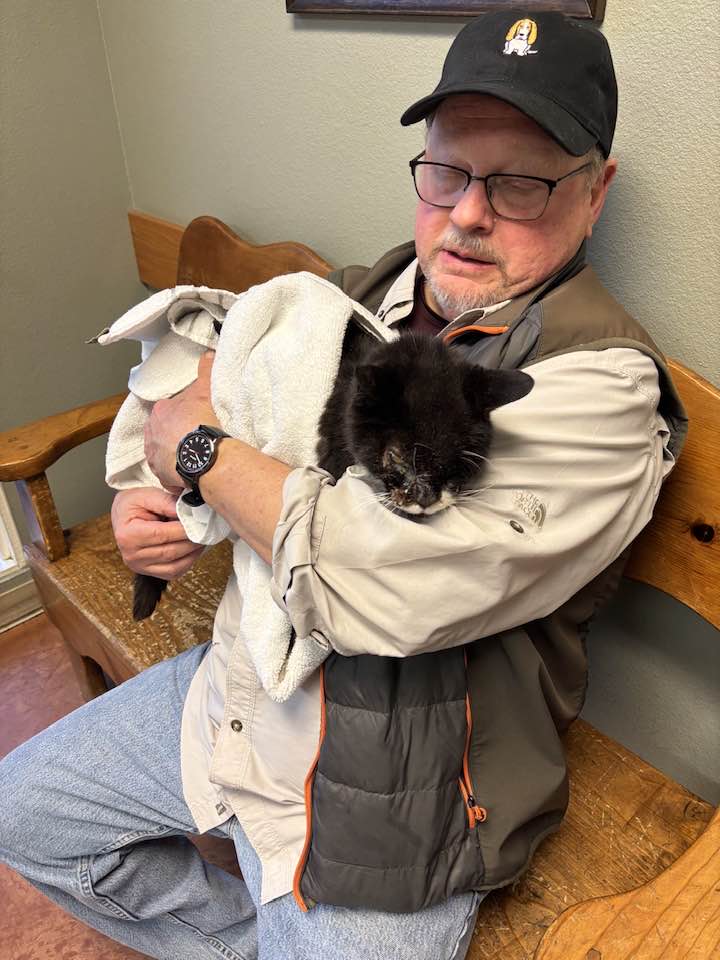
Mittens, getting sleepy, in our last few minutes together. The vet, who was magnificent, granted us this time.
Fifty years ago, this man was one of my best friends. I was working at a Western Auto in Lamont, right out of high school, and moving from Arroyo Grande to Lamont made me unhappy. I missed my hometown. I missed my friends. I missed my girlfriend.
Jorge saved me. We worked together at the Western Auto my father managed. That store stocked everything from bicycle derailleurs to Curtis-Mathes console televisions big as Orson Welles’ coffin and just as heavy, and Jorge, my co-worker,made me laugh. He taught me more Spanish, teased me, threw his arms up in the air when I mangled the language. When something needed to be done–moving a refrigerator, for example, from the store to somebody’s home, he’d put his arm around my shoulder and tell me, “okay, here’s the plan.”
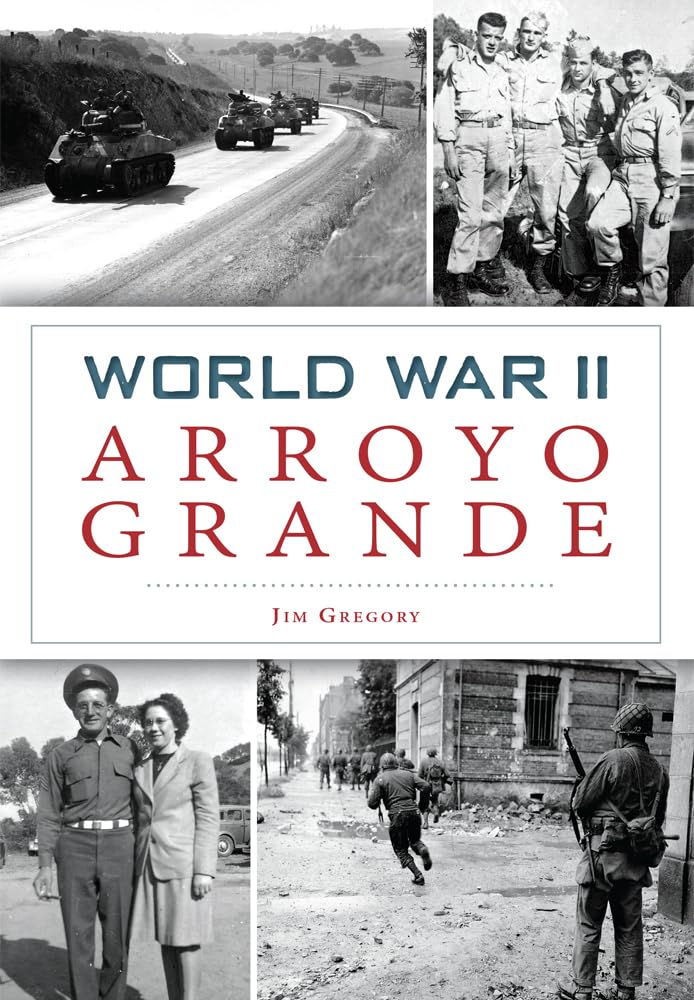
Jorge and I ate together. I discovered chorizo-and-egg burritos because of him, and they so impressed me that included them as a detail in a book I wrote about World War II.
He was a superb golfer. Like another Texan, Lee Trevino, he’d learned to hit low smoking fairway shots beneath the wind. When he messed up a shot, he laughed. When I messed up a shot–usually, a suicidal duck hook–he laughed. He had a beautiful swing, I remember.
I learned how to drive a three on the tree, the delivery truck, from him, how to get a furniture dolly through narrow doorways, but, given my ADHD, I never did learn how to tie a grape knot.
Going into a Mexican-American home in Bakersfield to make a delivery was, for me, like entering another world where I felt completely safe. The kids would be hopping up and down–a refrigerator!–and Grandfather would wave cheerily from his Western Auto recliner while the smells from the kitchen, thanks to Grandmother, were incomparable, chiles and onions and chicken or pork and fresh-baked tortillas. You could not leave without eating first.
There was always a dog, usually a shepherd mix, a statuette of Our Lady of Guadalupe, often with a votive candle, portraits of one or more Kennedys , and in heavy dark rose frames, sepia-toned portraits of los abuelos, the grandparents, on their wedding day. Grandfather was frequently in Army khakis, Grandmother’s face was framed in white lace. They looked serious.
Young men would be working on a car out front. Mom would be hanging laundry—it dries quickly in Bakersfield— on a line out back before she stopped to come in and greet us and her refrigerator (autumn gold or avocado or bronze; these were the seventies, after all).
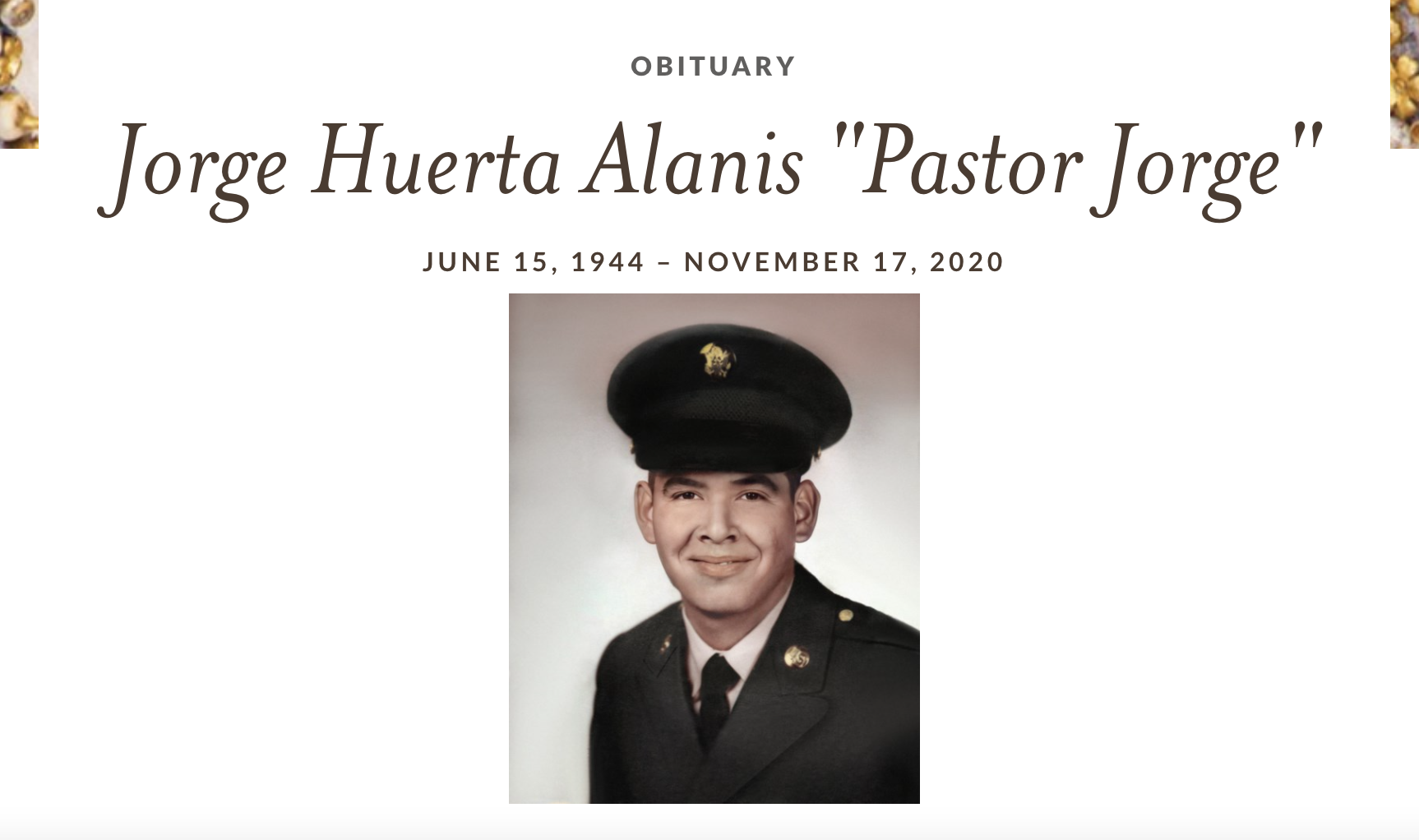
Years after the seventies, I knew that Jorge had become a pastor but I did not know until tonight that he’d died.
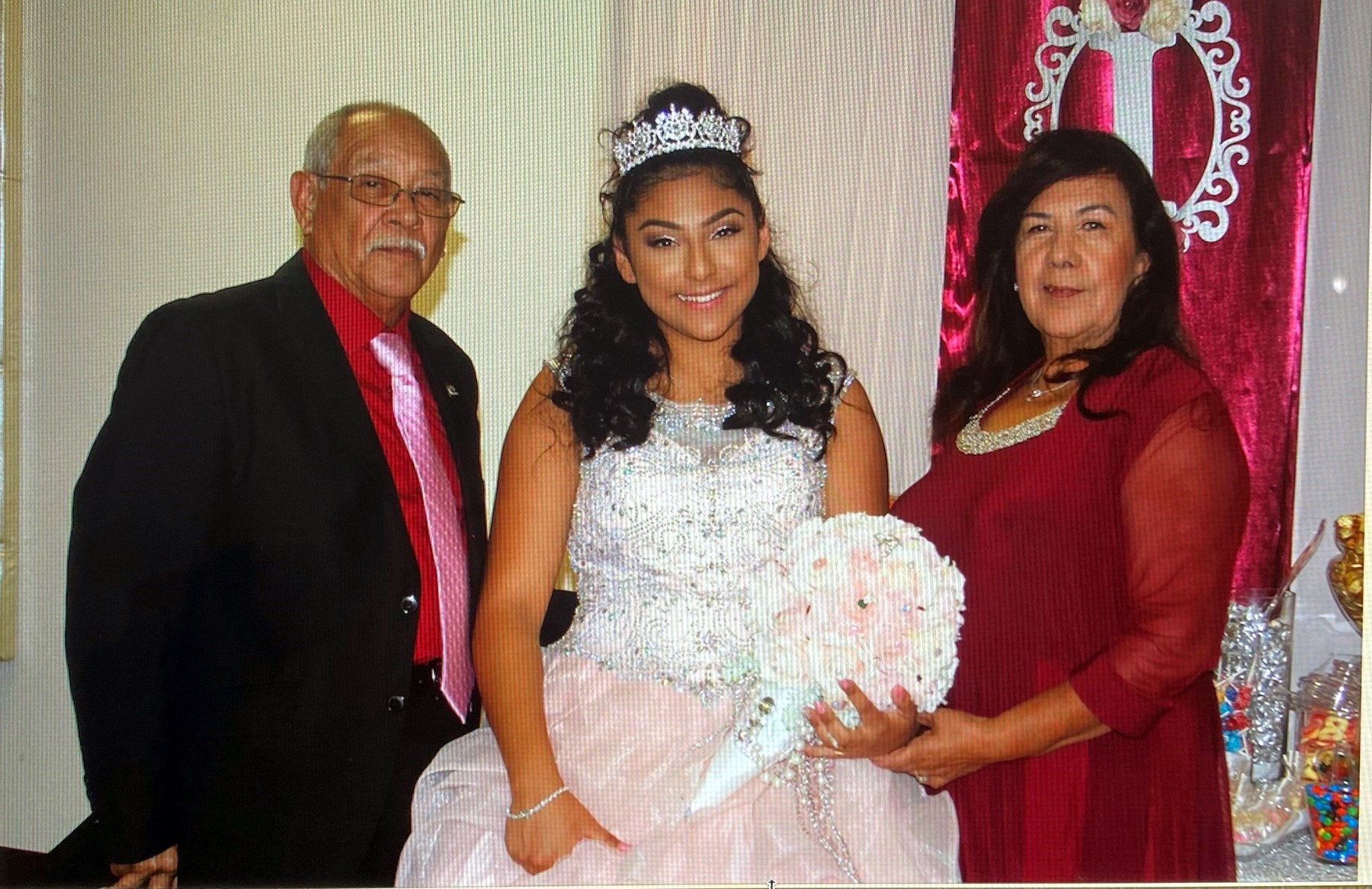
I wish you could have seen him in between that army portrait and the photos of him as an older man. He was handsome, with a small Cantinflas mustache that twitched when he was about to laugh. Or when he was about to make me laugh.
Jorge Huerta Alanis, you were one of the great men of my life. So many of the photos posted by your family show you at table, surrounded by your children and grandchildren and by the food I can almost smell.
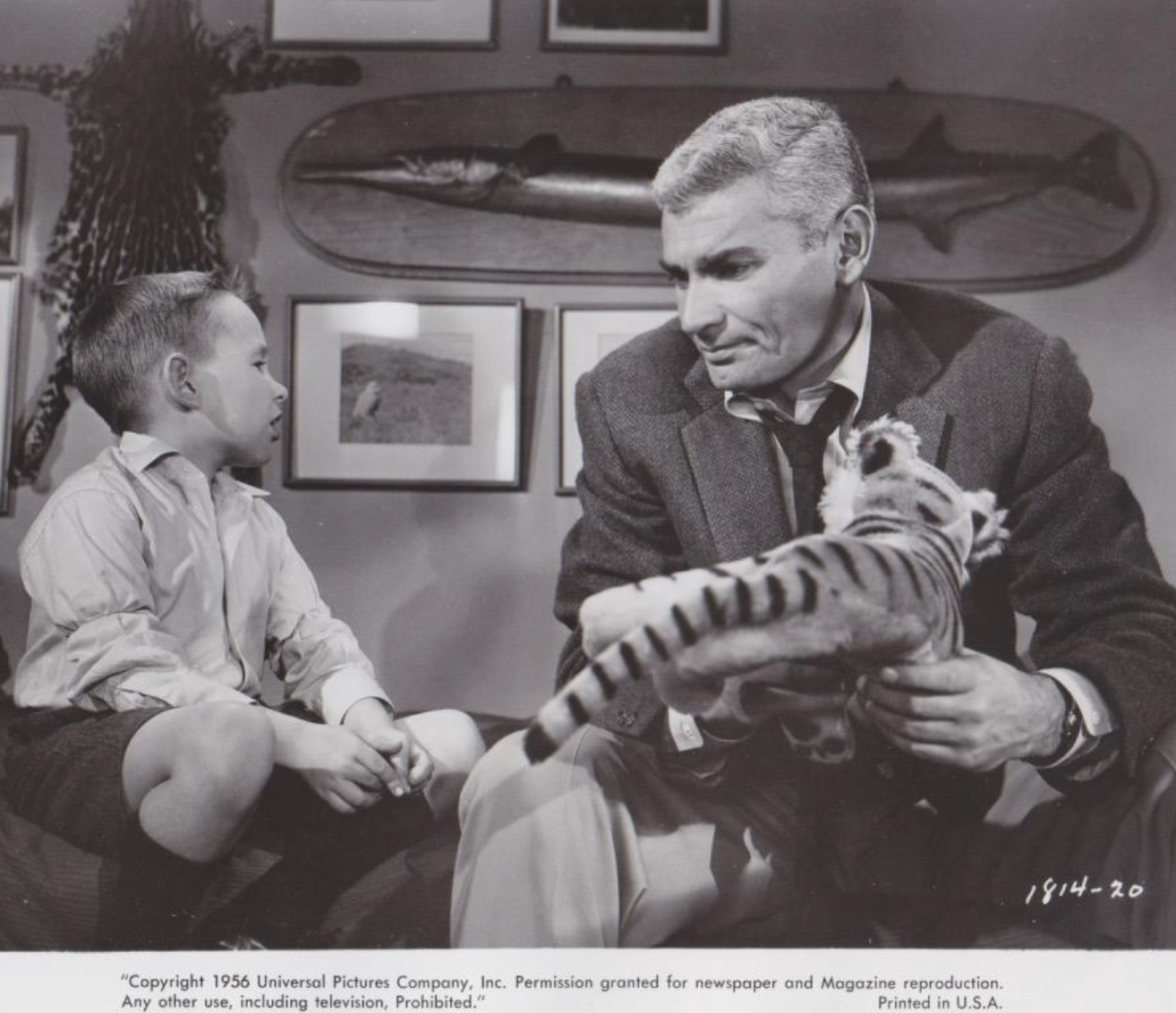
In 1956, Mom took me to the Fair Oaks Theater—just a short walk from where me and my family live today—to see a romantic comedy, Toy Tiger, starring Jeff Chandler.
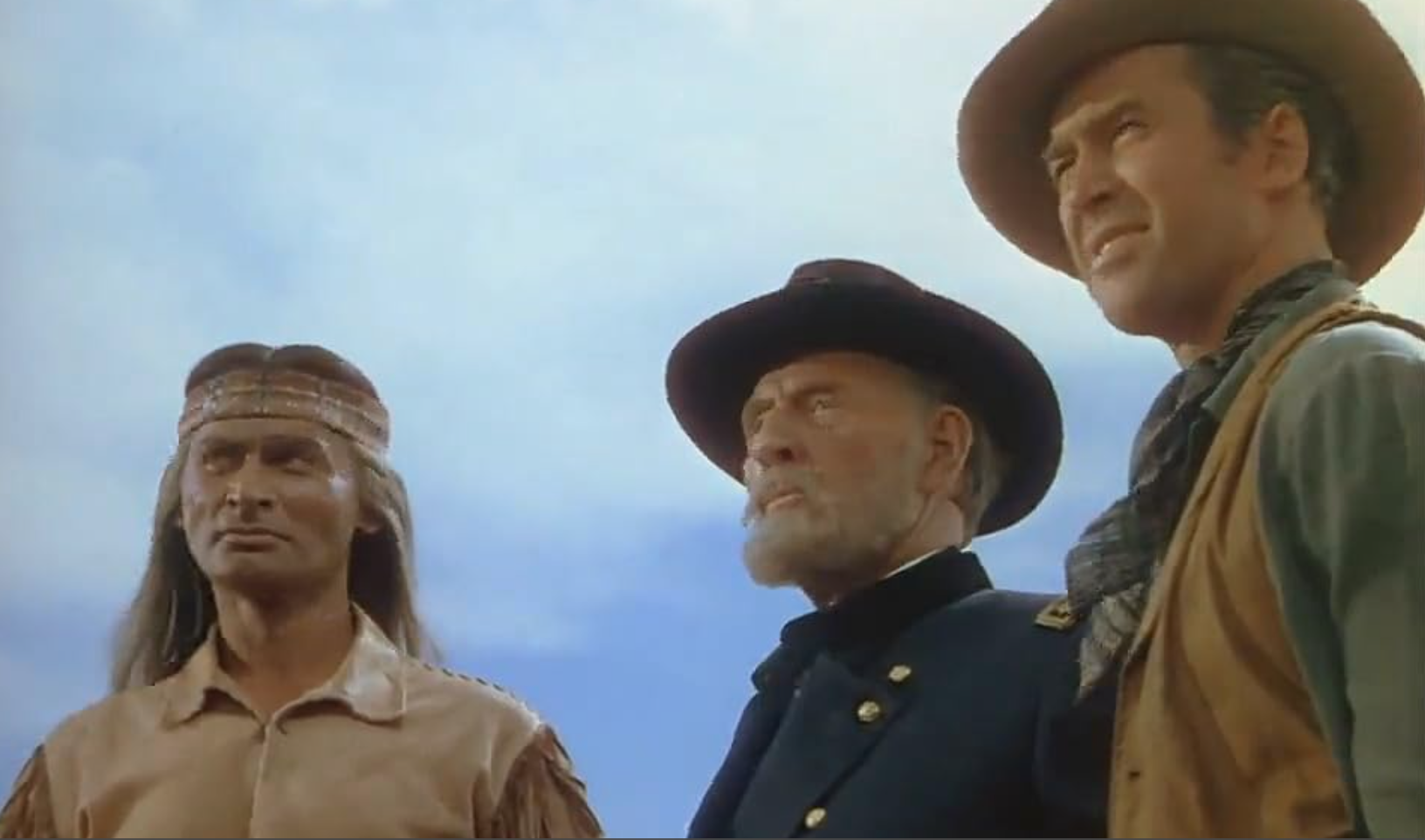
Chandler was not your romantic comedy kind of guy. Usually he was a Marine officer leading his rifle platoon onto a Central Pacific beach, or a lawman protecting a frontier town from evil gunslingers or an Apache chieftain. He was an awesome Apache chieftain.
Jeff Chandler, Basil Somebodyorother and James Stewart in Broken Arrow (1950).
But the Toy Tiger in the film was an early experiment in Hollywood merchandising. I don’t think the Scarlett O’Hara whalebone corsets went over so well. I fell for this one. Hard. I think he came into my life at Christmas.
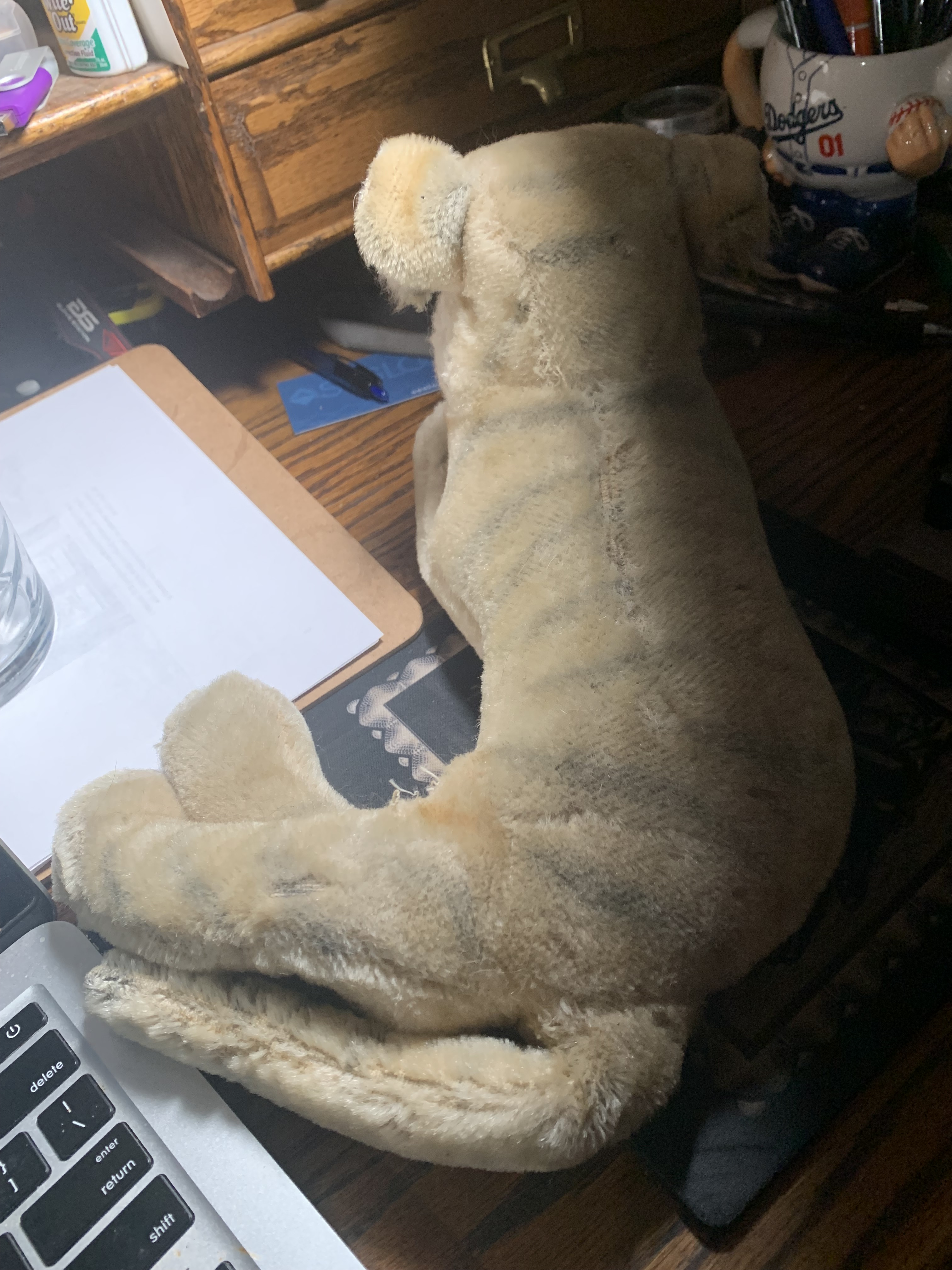
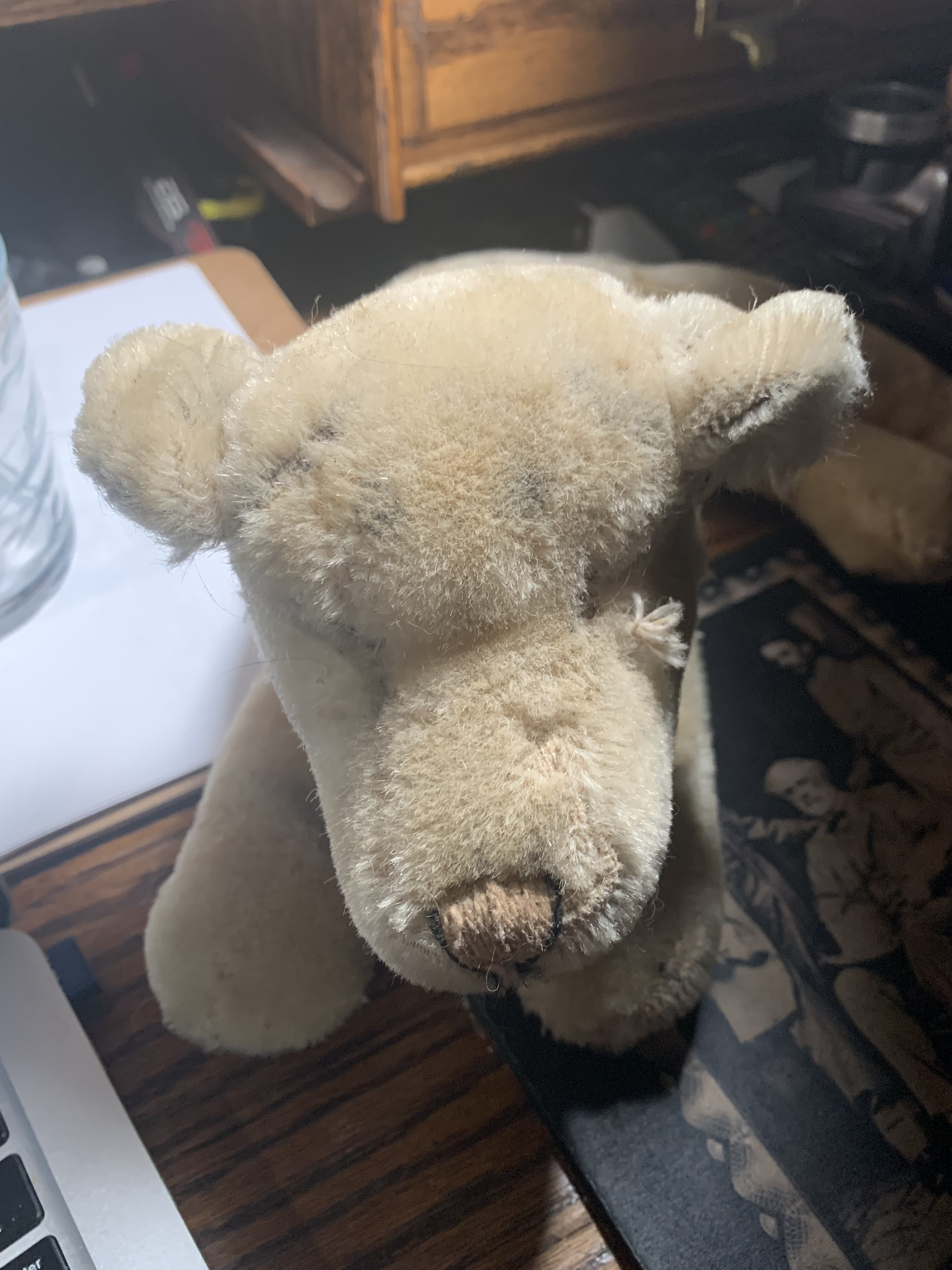
That’s the original Toy Tiger in the film still above and this is mine, sixty-seven years later. He’s blind and faded and some of his stuffing is starting to come out, but he’s always within reach, just above my computer. I needed him when I was four.
Walter fills a similar need today. Sometimes in the middle of the night I will feel a very cold Basset Hound nose pressing into the nape of my neck. It’s Walter sniffing to make sure I’m still there. I’ll turn over and gather him next to me and then we go back to sleep.
Walter doesn’t know this—-wait, maybe he does—but he makes me feel just as safe at seventy-one as Toy Tiger did when I was four.
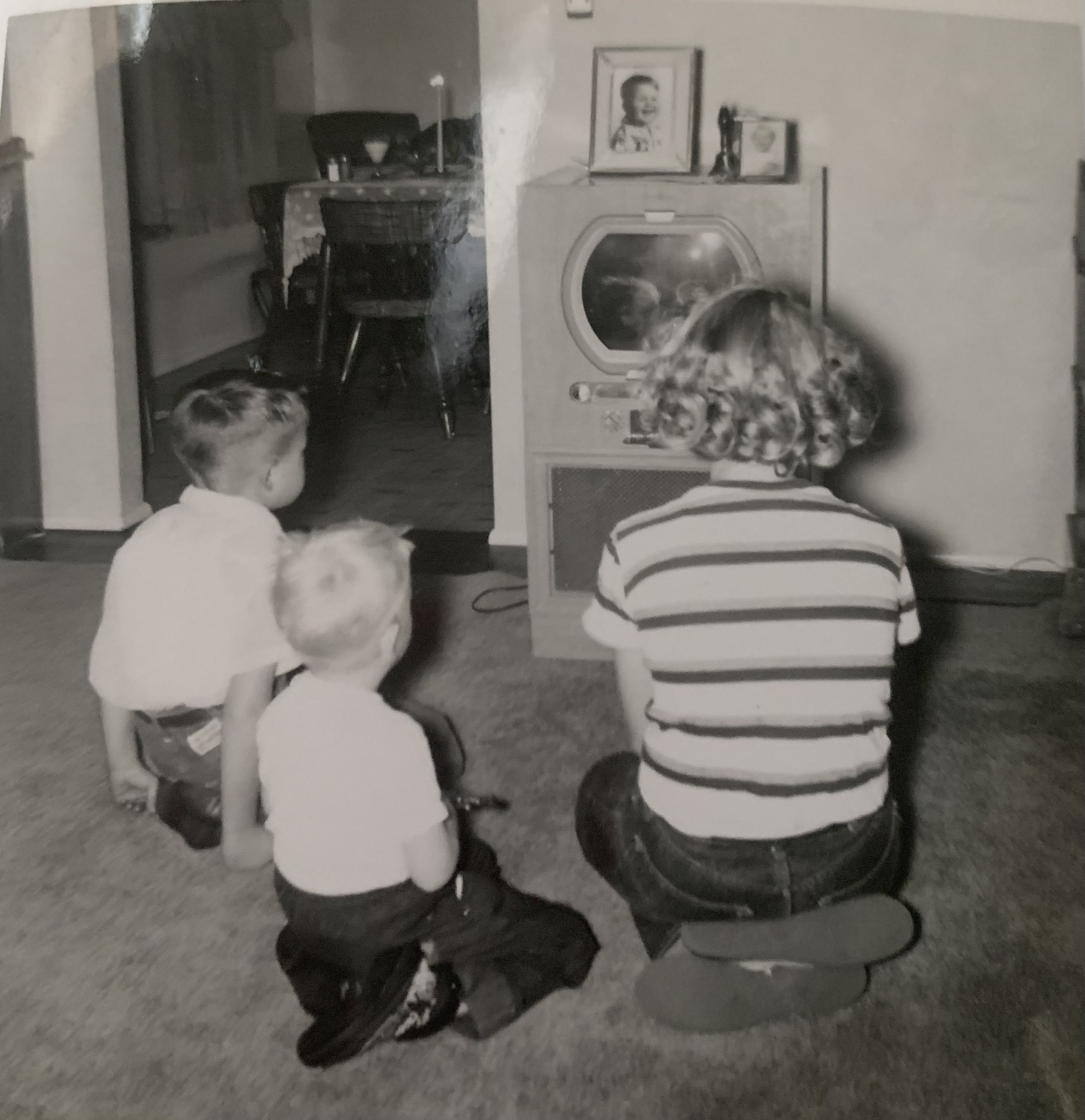
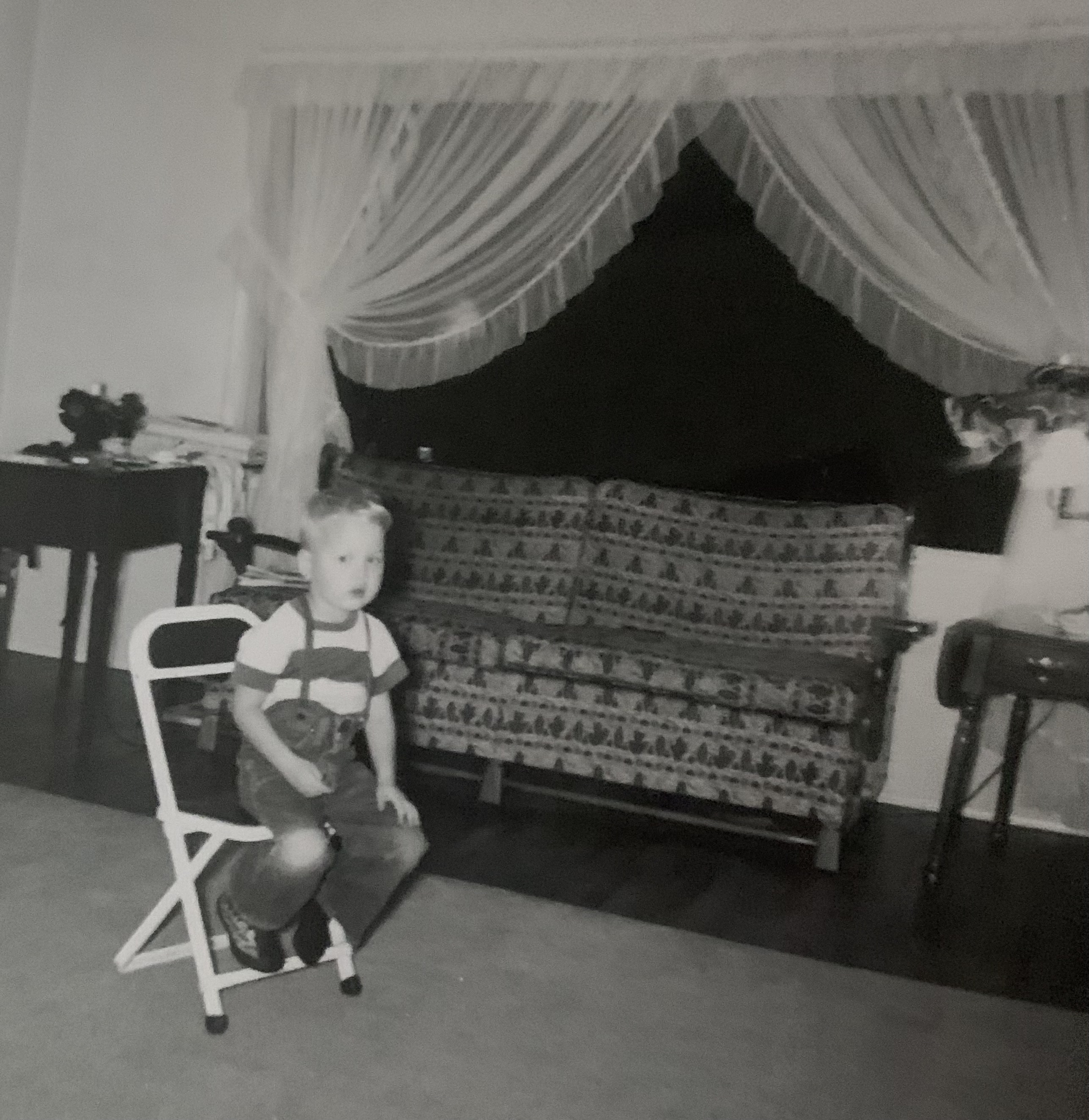
This was taken in 1956, when the as-yet-incomplete Gregory family (Sally would debut later, when we lived on Huasna Road) lived at 1063 Sunset Drive.
In the first photo in the gallery below, it appears that I have just been informed that the Soviets have the hydrogen bomb.
Either that or Bishop Fulton J. Sheen was on TV. He appeared fully vested and berobed, complete with skullcap. I think I confused him with Count Dracula.
I didn’t realize for years that Sheen was a kindly man whose spiritual bent tended toward the optimistic.
Or it might’ve been another favorite show of theirs, Liberace. He scared me, too.
Note Mom’s Singer showing machine, behind me at left.
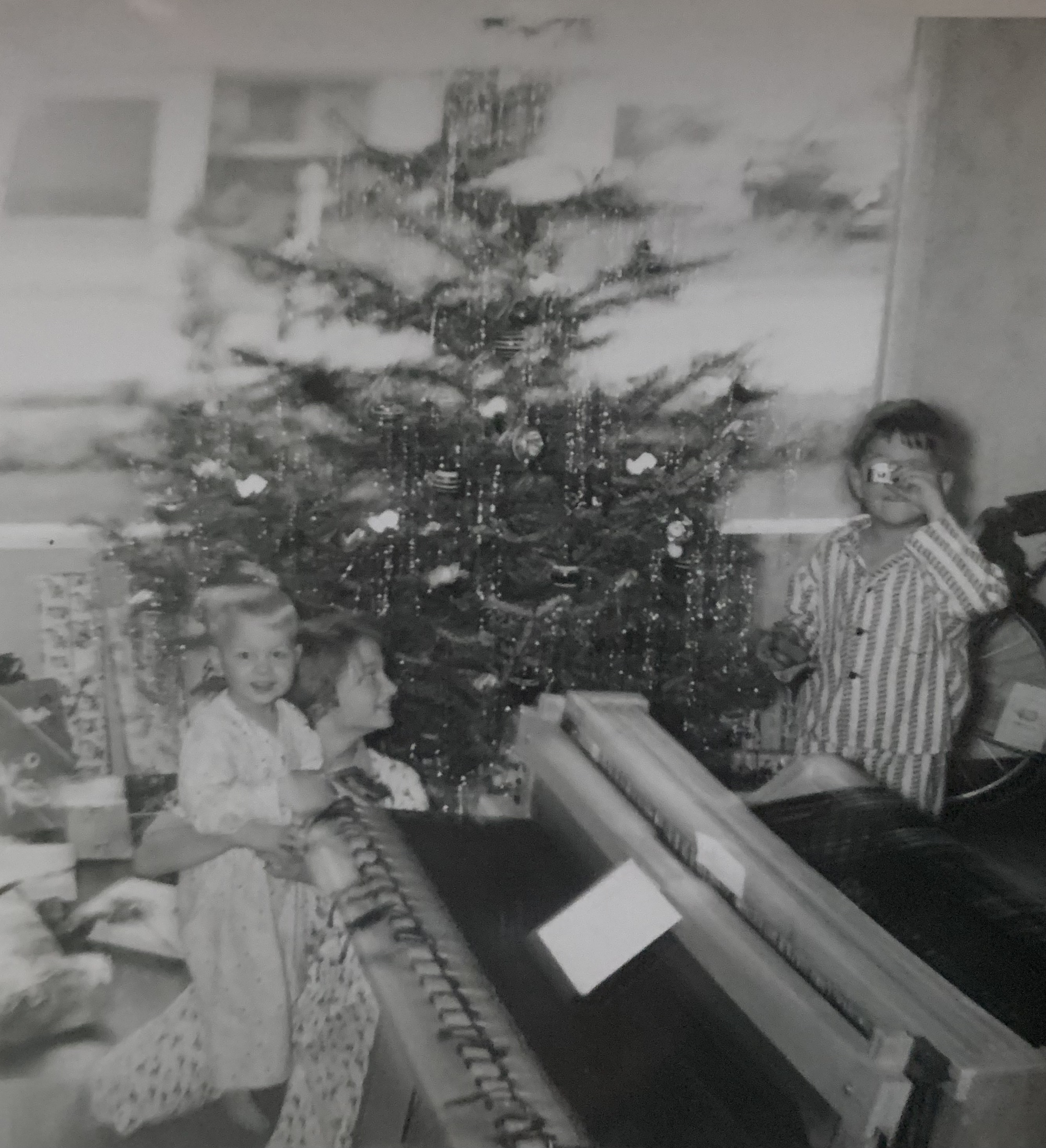
She also had a loom. Since the Industrial Revolution began in textiles, that made teaching that topic so easy for me fifty years later. I could explain power looms and flying shuttles and spinning jennies. The loom was a Christmas gift, seen in the photo above.
And Mom was kind of an artist: knitting, sewing, weaving, crocheting, a little needlepoint here and there.
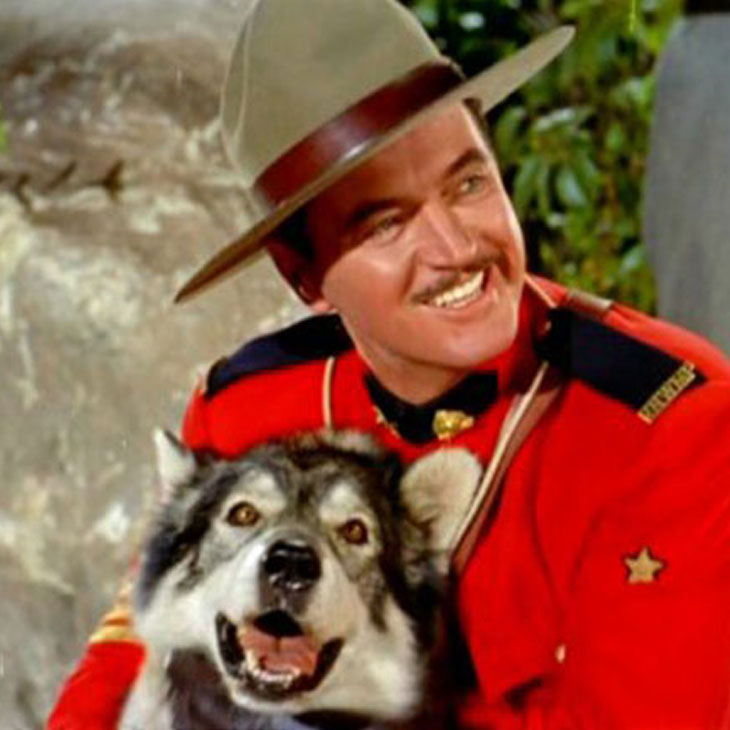
That is a washing machine we are watching in the photo at the top of the blog enrtry. We were simple folk. Just kidding. Sgt Preston of the Yukon must be on. With his dog, King.
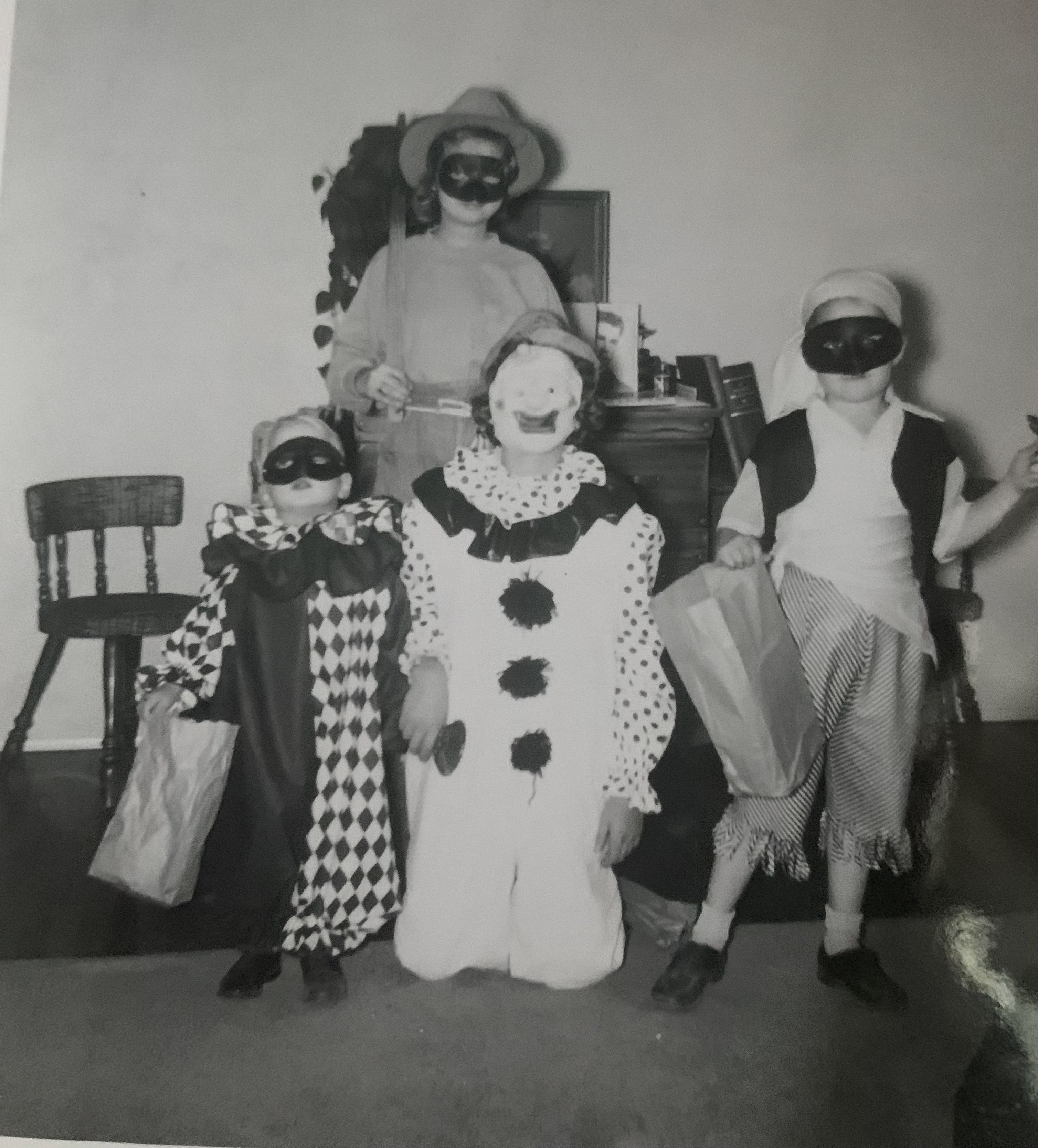
That’s me, Roberta as a hobo and Bruce as a pirate at Halloween. Roberta’s wearing Dad’s beautiful felt hat, which were just out fashion. That makes me sad. Men’s hats are one reason I love old movies so much. The other clown, holding my hand, was all grown-up. At least twelve. She was very kind to me.
Once Mom and Dad went out on a date and dropped me off at another very kind person’s house, an older lady (meaning ten-fifteen years younger than I am now.) She made me hamburger. She put a tomato slice in it. I shrugged and took a bite. When my parents came back to pick me up a couple of hours later, I was still raving about how good tomatoes on hamburgers were. Elizabeth pointed out that it probably was a home-grown tomato, because they taste so much better than the store-bought once, and I bet she’s right.
Once it snowed. Once I ran out the front door and realized I hadn’t put on my pants yet. That was embarrassing.
Once Mom dressed us all up, including the Cocker spaniel, as desert Bedouins. She used eyeliner, I think, to give Bruce and me curly mustachioes. Both Roberta and the Cocker, a little girl, had gauzy headdresses and the boys wore burnooses made out of dishtowels. We all wore our bathrobes. Yup. Mom was pretty cool.
And the Fair Oaks was pretty close. That’s where we saw Lady and the Tramp (the Cocker’s name was Lady, of course.) and also The Ten Commandments (hated it when Pharaoh’s horsies drownded in the Red Sea) and The Searchers (the Comanche attack scene, where you don’t see the Comanches, scared the hell out of me.)
We also saw a movie with Jeff Chandler, The Toy Tiger, and I still have mine, eyeless but more or less intact. We were gullible, what with Cocker spaniels and stuffed animals. I think I also watched a couple of Tammy movies with my big sister, and Darby O’Gill and the Little People. Scared the hell out of me.
Toy Tiger (1956). Mine looks (looked) just like this one. The stripes have faded some. Mine, too.
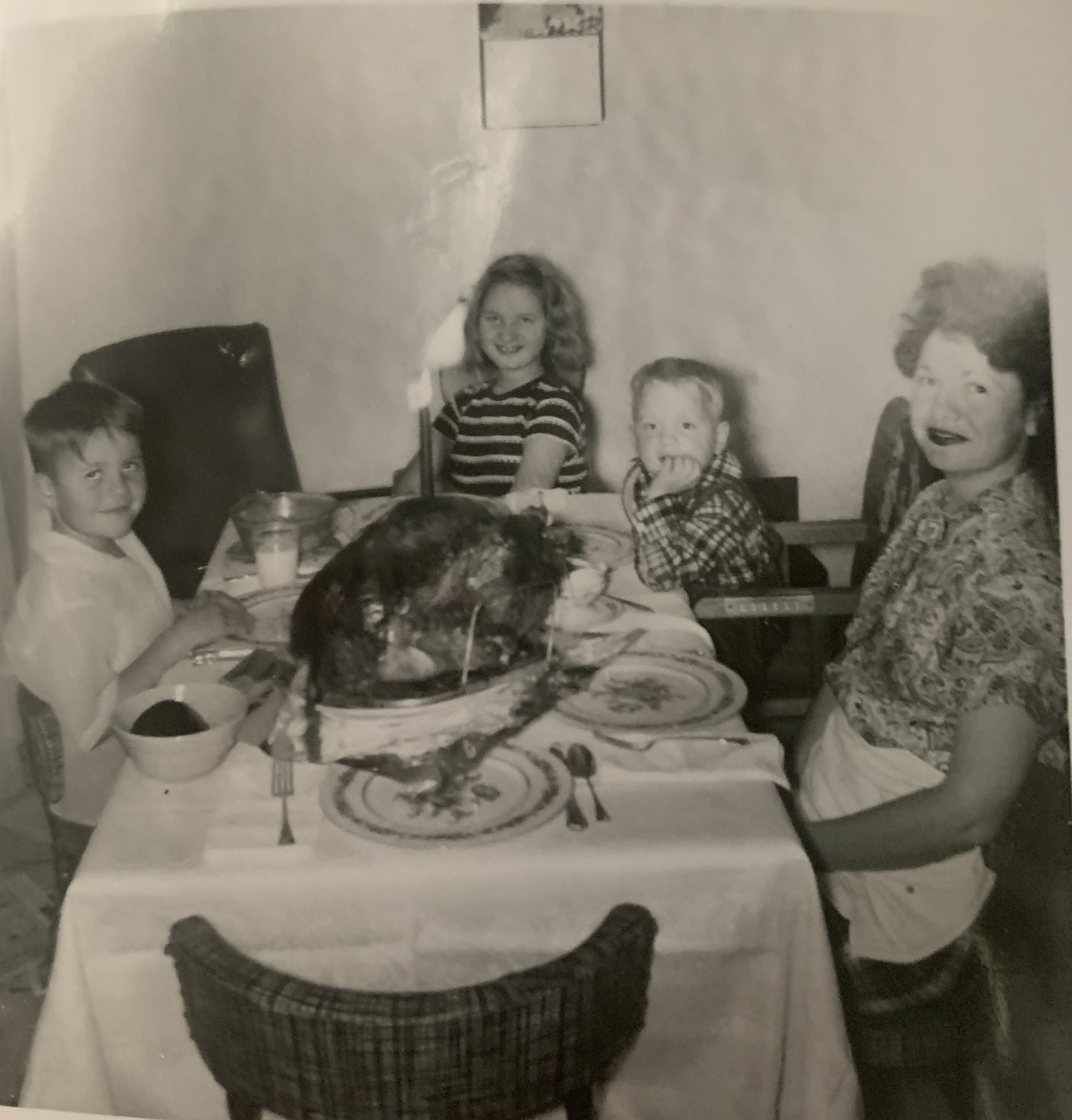
Note Dad’s love of large turkeys. Shipped overseas (Grandma Kelly STILL said “Clean your plate. Children in Europe are starving!”), one of ‘em would need its own container ship. That’s what nearly twenty years of Great Depression and wartime rationing did to Dad. We always ate well.
Speaking of food, I was a ham even then.
Sgt. Preston and his dog King. When he announced “King, this case is closed,” it was time for bed.
I was headed yesterday for the basement of the French Hospital Medical Plaza (with a name like that, they should have a Vegas floor show) and was waiting for the elevator doors to open. When they did, there was a young woman about twenty-five and about four months pregnant. I didn’t expect to see that. I could feel the smile start to spread across my face because she was so beautiful. Our eyes met and she smiled back. I was there for a cardiac test, and I could feel my heart, feel that little flush of pleasure that flooded it, that moment we all feel when we are happy. I was still smiling at the receptionist’s window.
I was thinking about Siena, a former student of whom I am very fond, who is just now expecting her second child (the first is a beautiful little blond girl). Siena reminds me of a quote from a Steinbeck short story: “God, a kid of hers is going to have fun!”
Part of recovery from alcoholism, I’ve discovered, involves re-wiring your brain, which, in most cases, including mine, has inside of it a voice with a megaphone that tells you insistently that you are a bad human being. I got one wire rewired yesterday at the elevator doors. We need to learn, as the old song goes, to accentuate the positive and part of that involves periodically stopping for a moment for recognizing–and articulating– those things that make us happy.
So here are some of mine, in no particular order and several hundred more should be on the list, but I had to limit myself. You don’t need a War and Peace blog entry.
1. Seeing a young mom-to-be when the elevator doors open.
We were asked today in group to name something that made us happy. I said
2. Seeing babies in the grocery store.
Here are some more, and I didn’t say this was going to be profound:
3. Dogs, of course. And puppies, especially these breeds, Basset Hounds, West Highland White Terriers, Irish Setters, and all of the Pound Puppies we’ve adopted. All of them have been important to my life. Seventy-one years of unconditional love.
4. Learning about my ancestors:
5. Friends.
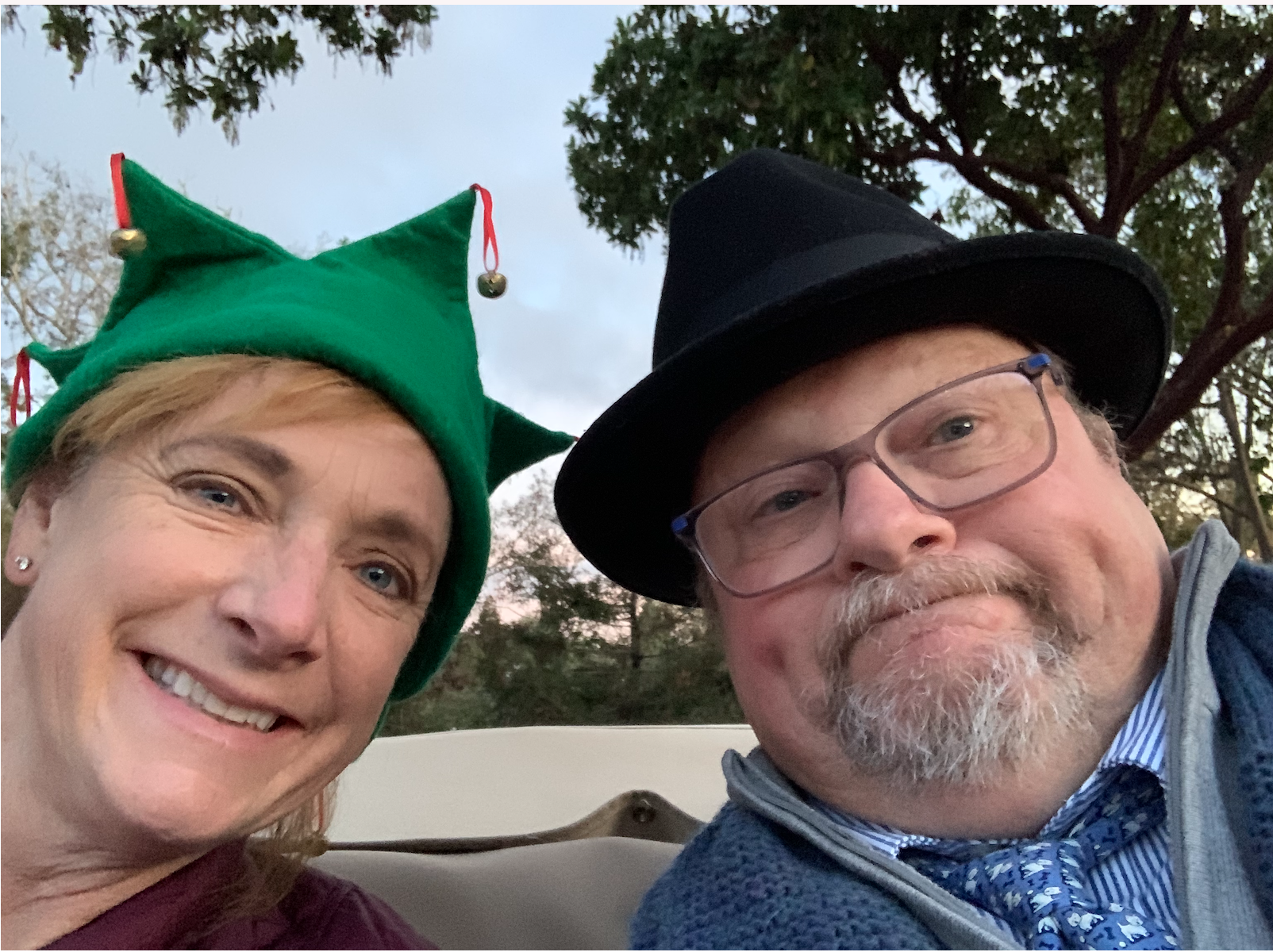
6. Family. My boys and of course Elizabeth. Here we are in the 2022 Arroyo Grande Christmas Parade.
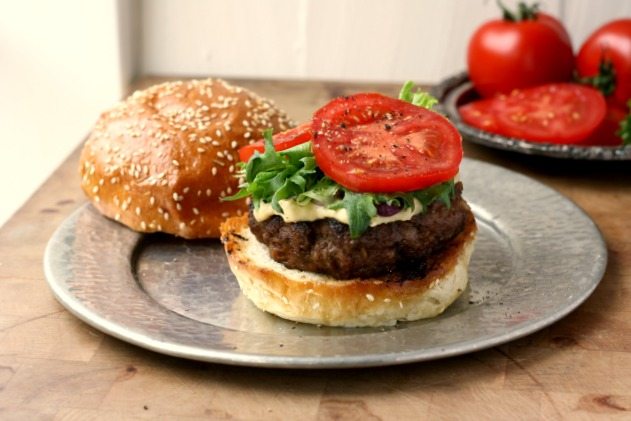
7. Food. Three favorites. I forgot butternut squash ravioli. Mmmm, hash browns.
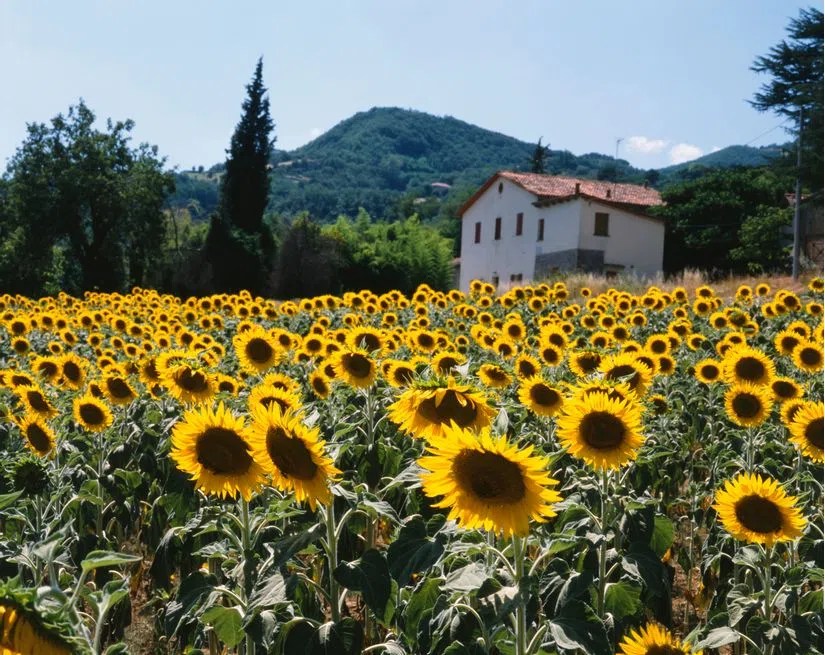
8. Fields of sunflowers in Tuscany or Umbria, with a medieval town atop a hill every ten miles or so.
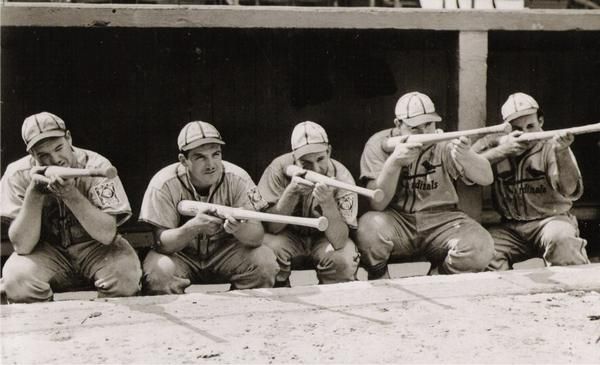
9. Baseball.These are the 1934 St. Louis Cardinals, the “Gashouse Gang.“
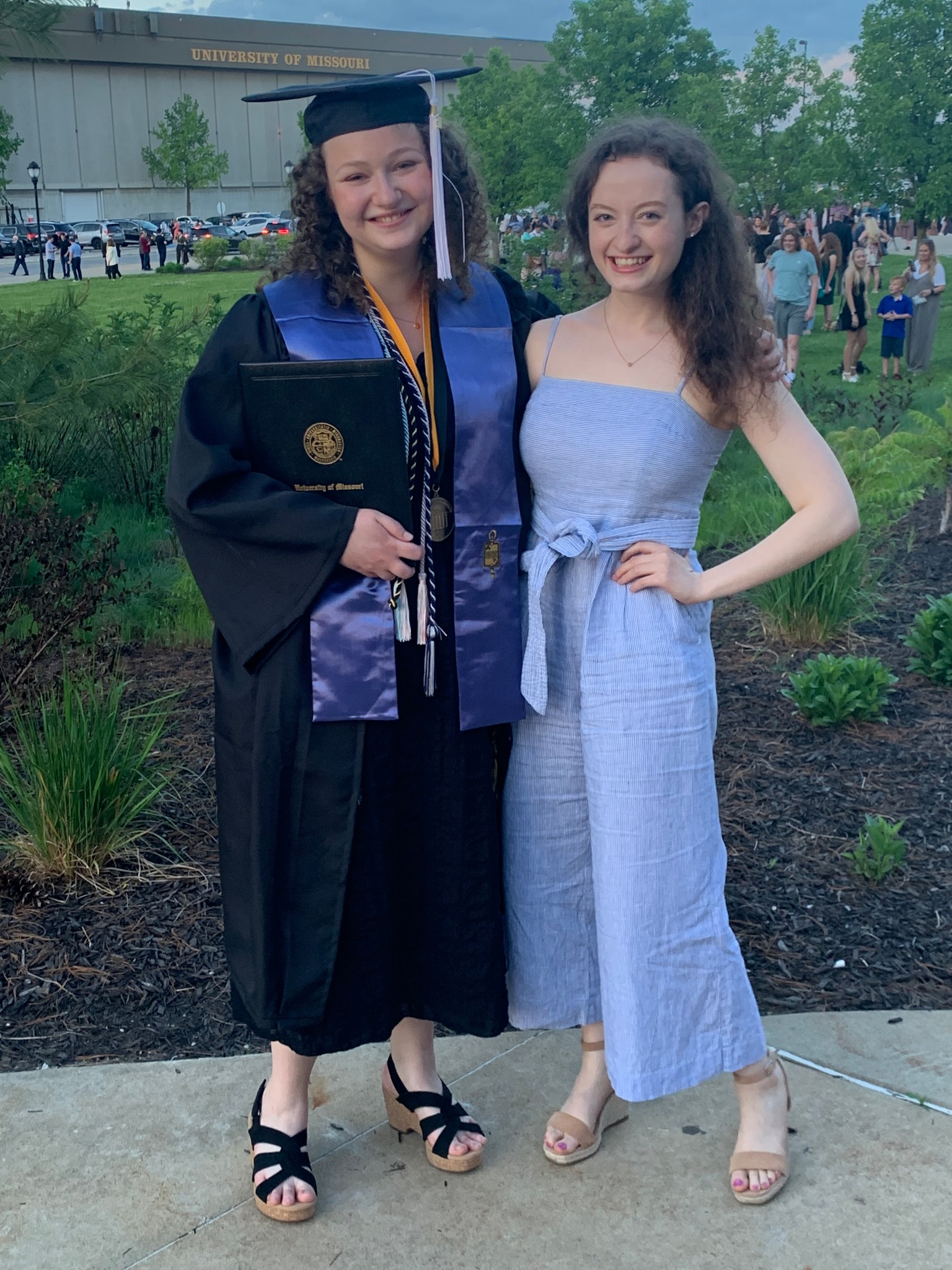
10. My nieces.
11. Writing.
12. World War II airplanes.
13. Cats.
14. Branch Street.
15. Music. This one, by Florence and the Machine, is five years old but I just discovered it, and a good thing, too. It’s about addiction.
… At seventeen, I started to starve myself I thought that love was a kind of emptiness And at least I understood then, the hunger I felt And I didn’t have to call it loneliness
… We all have a hunger We all have a hunger We all have a hunger We all have a hunger
… Tell me what you need, oh, you look so free The way you use your body, baby, come on and work it for me Don’t let it get you down, you’re the best thing I’ve seen We never found the answer but we knew one thing
… We all have a hunger (we all have a hunger) We all have a hunger (we all have a hunger) We all have a hunger (we all have a hunger) We all have a hunger (we all have a hunger)
… And it’s Friday night and it’s kicking in In that pink dress, they’re gonna crucify me Oh, and you in all your vibrant youth How could anything bad ever happen to you? You make a fool of death with your beauty, and for a moment
… I thought that love was in the drugs But the more I took, the more it took away And I could never get enough I thought that love was on the stage You give yourself to strangers You don’t have to be afraid Then it tries to find a home with people, or when I’m alone Picking it apart and staring at your phone
… We all have a hunger We all have a hunger We all have a hunger We all have a hunger
… Tell me what you need, oh, you look so free The way you use your body, baby, come on and work it for me Don’t let ’em get you down, you’re the best thing I’ve seen We never found the answer but we knew one thing
… We all have a hunger (we all have a hunger) We all have a hunger (we all have a hunger) We all have a hunger (we all have a hunger) We all have a hunger (we all have a hunger)
… And it’s Friday night and it’s kicking in In that pink dress, they’re gonna crucify me Oh, and you in all your vibrant youth How could anything bad ever happen to you? You make a fool of death with your beauty, and for a moment I forget to worry




















 A Work in Progress